
A one-bedroom apartment with thin walls and a crowded wireless network is the hardest place to run a baby monitor, not the easiest. The best audio baby monitors for small homes are the ones that skip WiFi entirely, send a closed digital signal straight between two handsets, and let you tune how loud a sound has to be before the parent unit reacts. Our pick for most small homes is the VTech DM221, which holds its connection through plaster and cinderblock and adds a vibrating alert that wakes a light sleeper without turning the volume up.
That matters more here than anywhere else. In a small home, the nursery is often twelve feet from your bed, the walls are shared with a neighbour, and the 2.4GHz band your router and your neighbour’s router are fighting over is the same air your monitor is trying to use. A WiFi camera monitor can drop out when the internet hiccups. A radio-based audio monitor simply does not care, because it never touches your network.
We went through the six sound-only monitors that hold up in this category, checked the ratings and the technical details, and looked closely at what each one does in tight quarters. We also read what parents say on forums like r/BabyBumps and r/Buyingforbaby, where the same advice keeps repeating: a simple VTech audio-only monitor beats an expensive camera system for most people, and the recurring complaint is never sound quality, it is false alarms from sound-activated mode.
Everything here runs without an app, an account or a monthly fee. If you want the video side of the picture, we cover that separately in our guides to video monitors with two cameras and WiFi monitors for smartphones, but for a small home the audio-only route is simpler and more dependable.
Table of Contents
Top 3 Best Audio Baby Monitors for Small Homes in 2026

Those three cover the realistic shortlist. The DM221 is the strongest all-rounder, with the highest rating in the group and features that specifically help in close quarters. The DM111 is the simplest and the most heavily reviewed, and its belt clip makes it the easiest to carry around a small floor plan. The Motorola AM21 is the entry-level route into DECT audio with a cry-detection alert built in.
All Six Picks Compared Side by Side (October 2026)
| Product | Specifications | Action |
|---|---|---|
| VTech DM221 |
|
Check Latest Price |
 VTech DM111 VTech DM111 |
|
Check Latest Price |
 VTech DM271-102 VTech DM271-102 |
|
Check Latest Price |
 Motorola AM21 Motorola AM21 |
|
Check Latest Price |
 Motorola PIP10 Motorola PIP10 |
|
Check Latest Price |
 Motorola PIP12 Motorola PIP12 |
|
Check Latest Price |
Every monitor on this list transmits on a dedicated radio link between the baby unit and the parent handset, so none of them depends on your internet connection, and none of them asks you to create an account.
1. VTech DM221 – The Best Overall Audio Baby Monitor for Small Homes
VTech Communications DM221 Audio Baby Monitor with up to 1,000 ft of Range, Vibrating Sound-Alert, Talk Back Intercom & Night Light Loop, White/Silver
DECT 6.0 digital audio
Up to 1000 ft range
Vibrating sound alert
Talk-back intercom
Night light
Pros
- Highest rating in the group at 4.6 stars across roughly 21900 reviews
- Vibrating alert wakes a light sleeper without raising volume
- Adjustable sensitivity filters out fans and white noise
- Holds connection through thick plaster and cinderblock
- Talk-back intercom plus a night light on the baby unit
Cons
- Short cordless runtime on the parent handset
- Single channel so it cannot pair with a second handset
- Night light auto-times-out after about 15 minutes
This is the monitor we keep coming back to for tight living spaces, and the reason is boring in the best way: it just works. The DECT 6.0 link between the two pieces is exclusive to that pair, so nothing else in your building can land on the same channel and turn your baby unit into a speaker full of static.
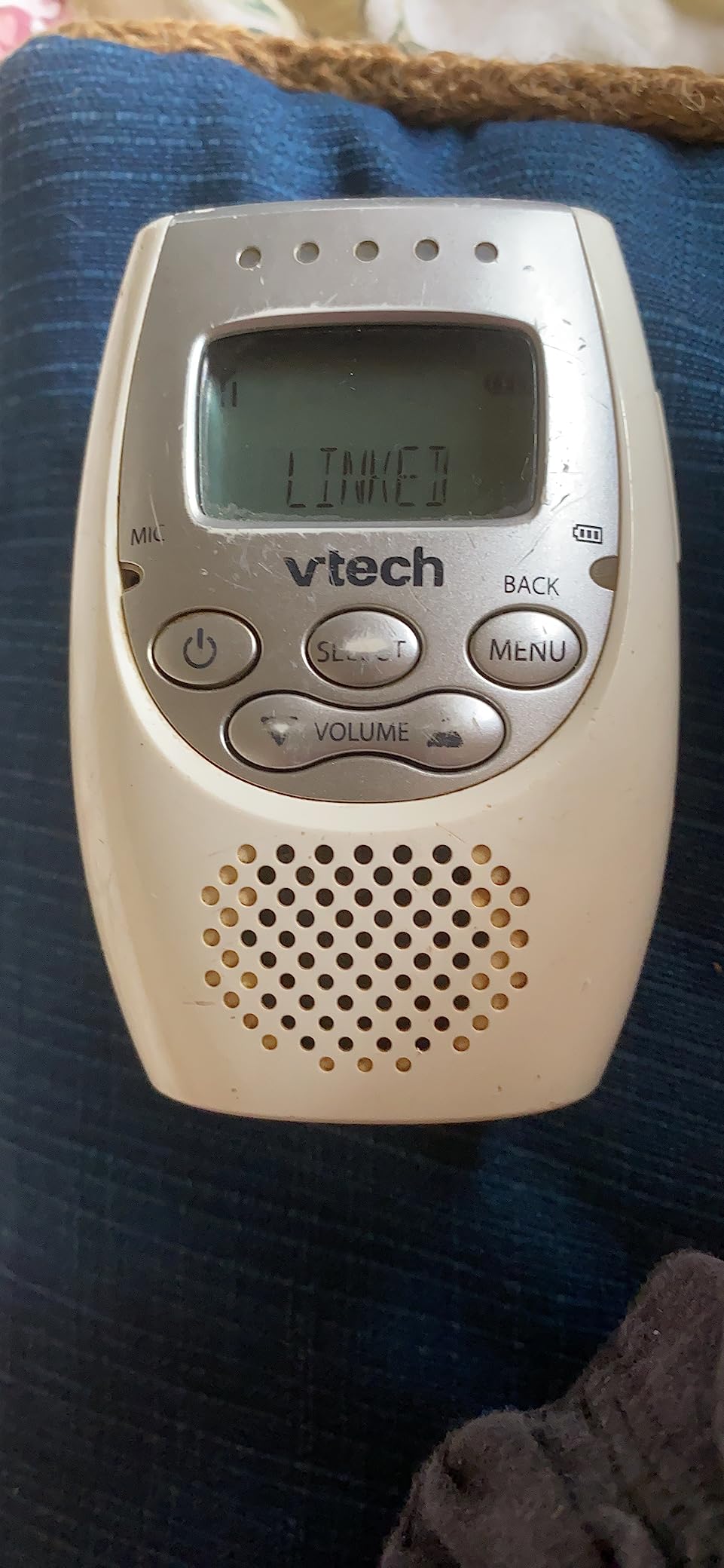
The vibrating sound alert is the feature that earns its place in a small home specifically. When the nursery is close to your room, a monitor that only makes noise wakes you, your partner, and sometimes nobody. This one buzzes in your hand instead. Long-term owners on Amazon report single monitors lasting a decade or more, and several use it to listen to elderly relatives as well as infants.
Sound sensitivity is adjustable, and reviewers specifically mention that the higher settings filter out a fan or a white-noise machine. In an apartment, sound bleeds through walls from both directions, so that filter is the difference between a monitor you trust and one you learn to ignore.
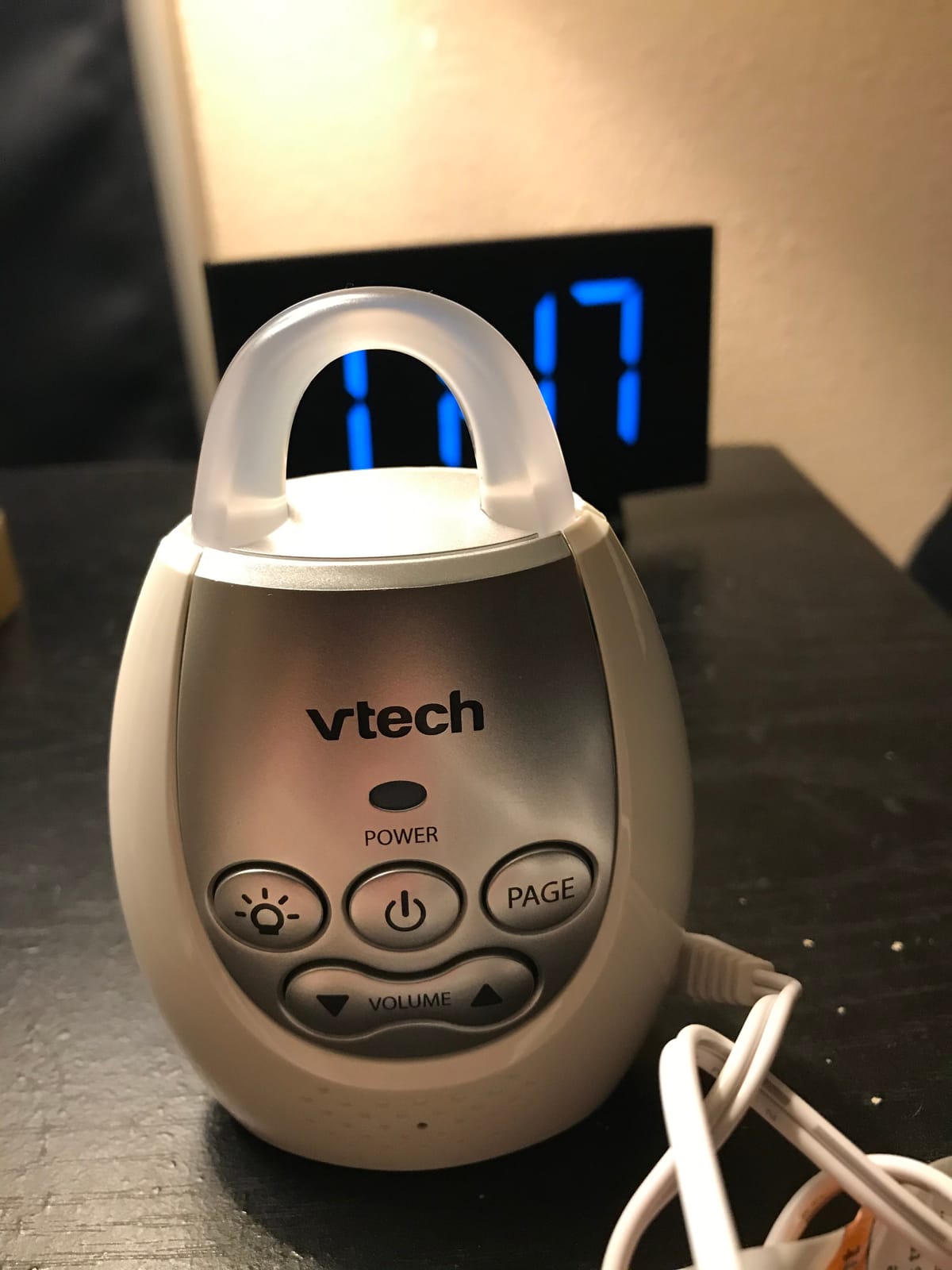
Owners also report it holding a connection through cinderblock, thick plaster and multiple floors, which is exactly where cheaper WiFi monitors in our other guides start to drop out. If you want to hear a baby through a small home with a shared wall, that reliability is what you are buying.
Is the DM221 a good fit for a one-bedroom apartment?
Yes, and the reasons are specific to that layout. The parent handset is light at 12.8 ounces, so you can carry it between the bedroom and the living room without it becoming a burden, and the 1,000-foot rating means your entire flat is well inside the usable range.
The talk-back intercom also has a real use in a studio or one-bedroom flat. If the baby is in the main room and you are in the kitchen or bathroom, you can talk without walking in and turning on the overhead light.
Where the DM221 falls short in a small home
It runs on a single channel, so it cannot be paired with a second baby unit or a second parent handset. If you and your partner are in different rooms on different nights, this is not the model that covers both of you.
Also, the parent handset has a short cordless runtime, so it is really an AC-powered device you pick up and carry around. The night light on the baby unit switches itself off after roughly 15 minutes unless you change the auto-lock setting in the menu, which is a fine design choice and an annoying surprise the first time.
2. VTech DM111 – The Simplest Monitor With the Most Reviews
VTech Audio Baby Monitor — No Static DECT 6.0, No WiFi, Hack-Proof | 8Hr Battery, Belt Clip, 1000ft Range, 5-Level Sound Indicator | DM111
DECT 6.0 encrypted FHSS channel
Up to 1000 ft range
8-hour rechargeable battery
5-level LED sound indicator
Pros
- Silent until the baby makes a sound
- Belt clip and pocket-sized parent handset
- Five LED levels let you check the nursery muted
- No app or account and pairs in about a minute
- Heavily reviewed with a long owner history
Cons
- Bright power-on LED can disturb a dark nursery
- Parent handset needs frequent recharging
- A minority of owners report intermittent static
- No sensitivity control or talk-back
With close to 50,000 reviews, the DM111 is the most examined sound-only monitor on the market, and the pattern in that review pool is consistent: owners love that it makes no noise at all until the baby does something, and they love the belt clip. In a small flat, a monitor you can clip to your waistband while you make a bottle is genuinely useful.
The link is an encrypted FHSS DECT 6.0 channel shared only between your two pieces. There is no app, no account and no cloud, and setup is automatic in about a minute. It also has two channels, which is a small but real advantage in shared housing where a neighbour is running the same model.
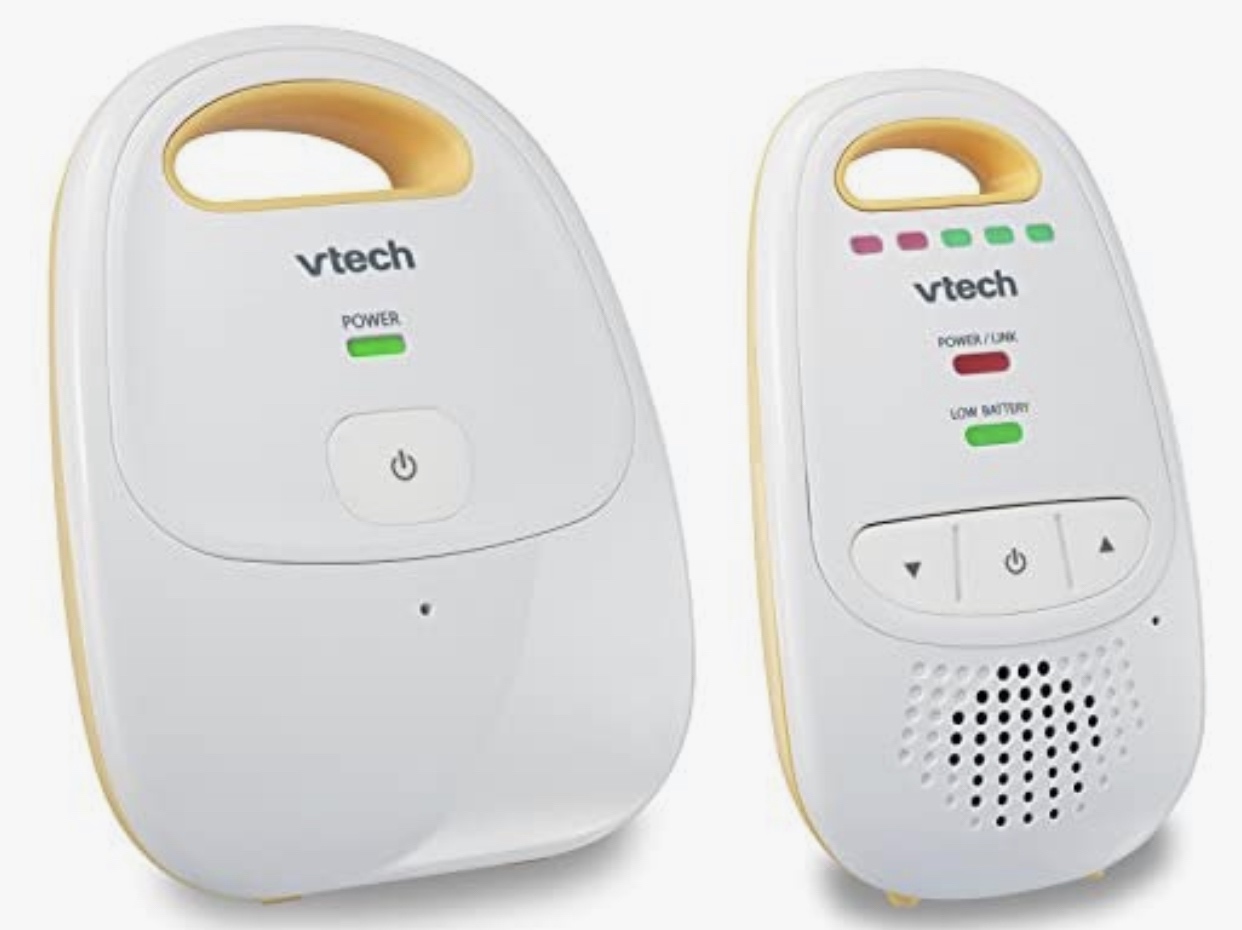
The five-level LED sound indicator is the feature small-space users mention most. It lets you leave the volume off and still see at a glance whether your baby is stirring or crying, which is the mode most people end up running in overnight. Parents on r/BabyBumps repeatedly recommend a simple VTech audio-only monitor over camera systems, and this is usually the model they mean.
It is also repurposed constantly. Reviewers describe using it for travel, for listening to grandparents in another room, and even for outdoor sound, which tells you the signal holds up better than the 1,000-foot figure suggests.
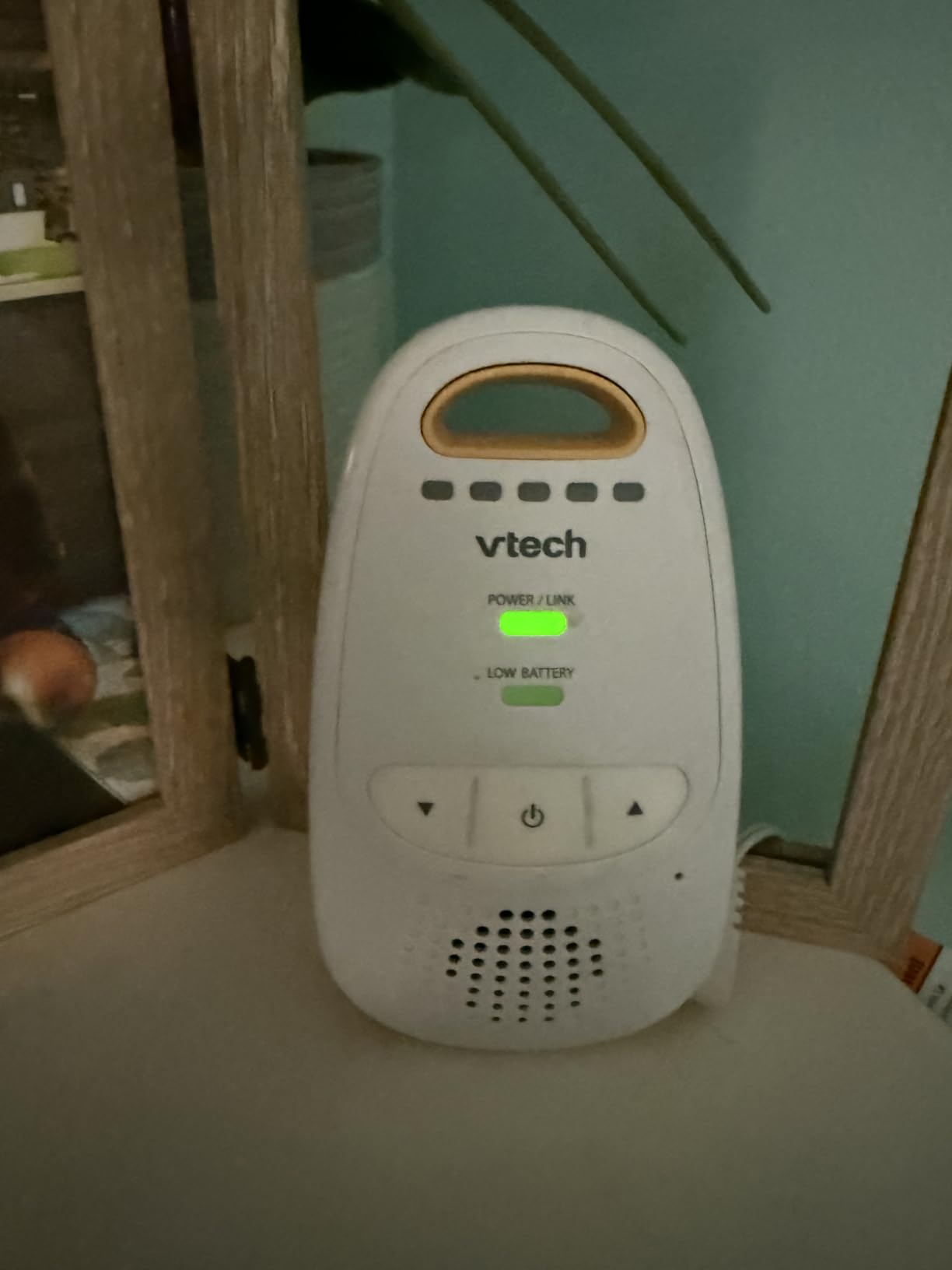
On the technical side, it runs on the 1.88-1.90GHz band with a digital tuner, so it rejects the analogue hiss that cheap radio monitors produce in a crowded apartment block. Two AAA batteries are included in the box, along with both pieces and a quick start guide.
Who should buy the DM111 instead of the DM221?
Buy the DM111 if you want one handset, no menus, and nothing to think about. It is the monitor you hand to someone who does not want to fiddle with settings, and it costs the least attention of anything on this list.
It is also the one I would pick for a small home where the baby unit is in the same room as the parent handset most of the time. The belt clip means you can move around the kitchen and hallway without leaving the feed behind.
What you give up on the DM111
There is no sound sensitivity control, which in a thin-walled flat is the single most useful setting. If you run a white-noise machine or a fan, the monitor will react to that as readily as to your baby.
The bright power-on LED is a recurring complaint, and several owners tape over it for a dark nursery. The parent handset battery is also short-lived on a single charge, and a small number of owners report intermittent static or units that stopped working early. The handset measures 1.9 by 4.6 by 2.6 inches, which is genuinely pocket-sized.
3. VTech DM271-102 – The One With a Door and Window Alert
VTech DM271-102 Audio Baby Monitor with Glow-on-Ceiling Night Light, Open or Closed Door/Window Sensor, Vibrating Sound-Alert, Talk Back Intercom & Belt Clip
DECT 6.0 secure link
Up to 1000 ft range
Door and window sensor
Glow-on-ceiling light
Pros
- Door and window sensor logs open and closed events with the time
- Ceiling projector keeps the baby unit off crowded surfaces
- Built-in lullabies and a talk-back intercom
- Clear audio that filters ambient noise
- Belt clip included
Cons
- Small review pool limits long-term reliability data
- Several owners report sound cutting out at close range
- Projector times out and cannot be controlled from the parent handset
- Some units have failed within months
This is the most unusual monitor in the group, and in a small home its headline feature is the one that makes the most sense. The baby unit carries a door and window sensor that logs when something opens or closes, with a date and time record on the parent handset. Parents of night-walkers and of autistic children mention this as the reason they bought it.
For a flat where the baby’s room opens onto a hallway, or where you want to know a child has stepped outside onto a balcony, that timestamped log is information no other audio monitor here gives you.
The other small-space-friendly feature is the glow-on-ceiling night light. It projects stars and a moon with an adjustable angle, which means the baby unit does not need shelf space or a table surface. In a small nursery, removing one surface is worth more than it sounds.
Is the door sensor worth it in an apartment?
If your baby sleeps in a room you pass through, yes. It tells you when the door has been opened rather than when someone has made noise, which catches the quiet exits that a microphone alone misses entirely.
It also works as a safety net for a toddler rather than a newborn, which is a different and often more useful window of parenting.
Where this model disappoints
The review pool is small, 128 reviews, so there is less long-term reliability evidence here than for the VTech DM111 or DM221. Buyers describe audio as clear and well filtered, some saying it does not even pick up a white-noise machine.
Against that, a number of owners report the sound cutting in and out randomly even at close range, and some had units fail within months. The projector timing out and not being controllable from the parent handset is a repeated irritation. If you cannot live with a reliability question mark, pick one of the two heavily reviewed VTech models instead.
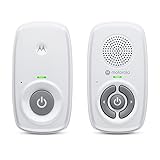
4. Motorola AM21 – The Budget DECT Monitor With Cry Detection
Motorola Nursery Audio Baby Monitor, No WiFi, Long Range 1000 ft, Volume Control, DECT Private Connection, Cry Detection, Portable Battery Parent Unit, Ideal for Safe Monitoring, No App, AM21
DECT connection with no WiFi
Up to 1000 ft range
Cry detection
LED status lights
Pros
- DECT encryption with no app or account needed
- High-sensitivity microphone picks up subtle sounds
- Five channels reduce clash with neighbouring monitors
- Light parent handset moves easily around a flat
- Direct volume control with no menu to navigate
Cons
- Parent handset runs on AAA batteries not included
- LED indicators only with no sound-level bar
- One-way audio with no talk-back or night light
- Disposable batteries make it awkward for all-night monitoring
Motorola’s entry-level audio monitor here does something the VTech DM111 does not: cry detection. The high-sensitivity microphone is tuned to raise an alert for a crying baby specifically, rather than for any sound above a threshold. In a small home, that is a meaningful difference, because it cuts down on alerts triggered by household noise.
The link is DECT on the 1.88-1.90GHz band, and the parent handset has five channels. Those channels matter more in an apartment than in a detached house, because a neighbouring family running the same kind of monitor can be picked up on a single-channel model. Five channels make that unlikely.
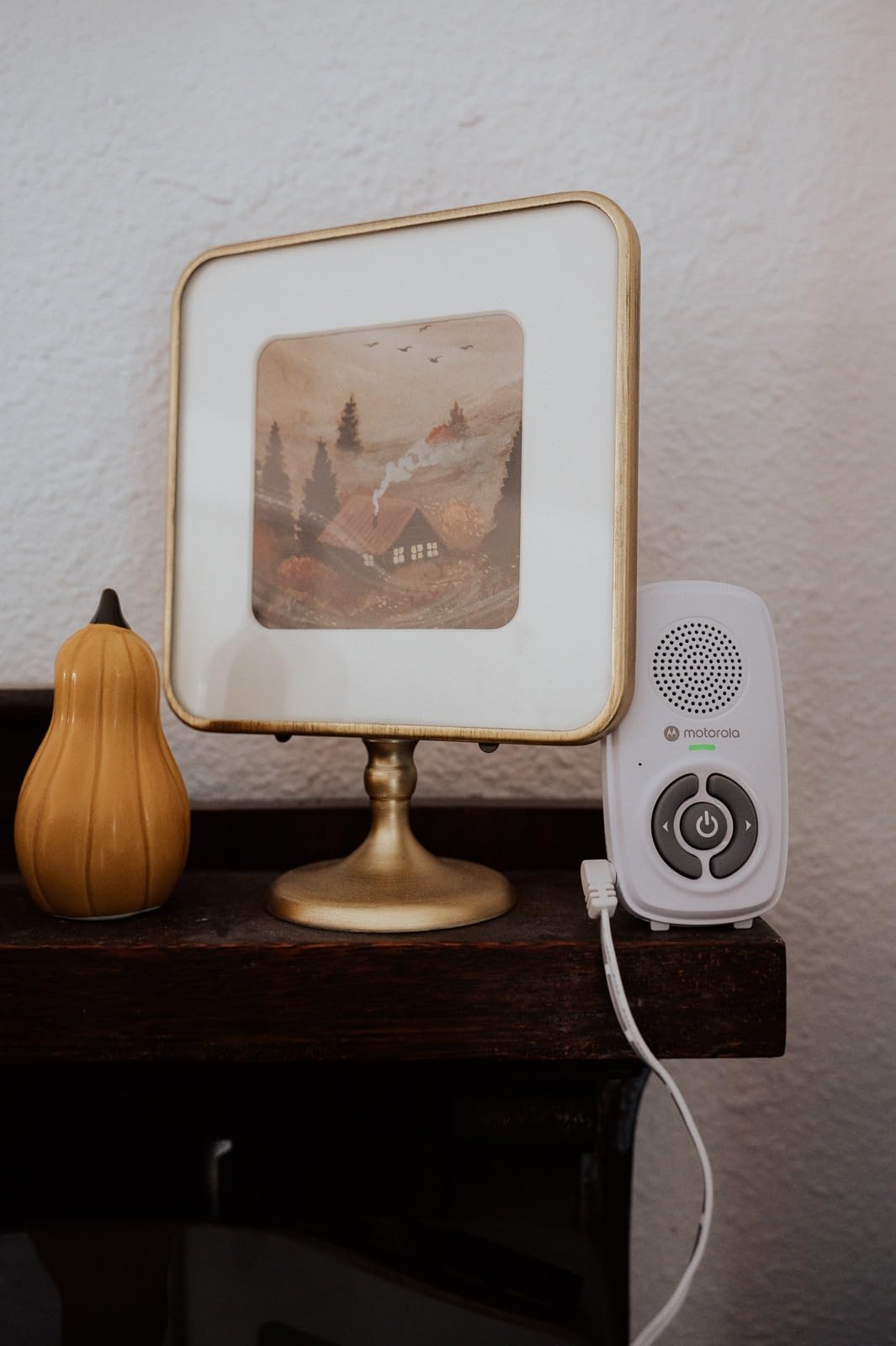
It weighs 0.27kg, so moving it between rooms takes no thought. Volume is a physical control rather than a menu, which is the right call for a handset you pick up half-asleep at three in the morning, and there are LEDs for power, sound detection and out-of-range status.
On forums, parents who dislike camera monitors tend to land here or on the DM111. The recurring frustration on r/Buyingforbaby is paying monthly cloud-storage fees for video, and this monitor simply has no mechanism for charging you.
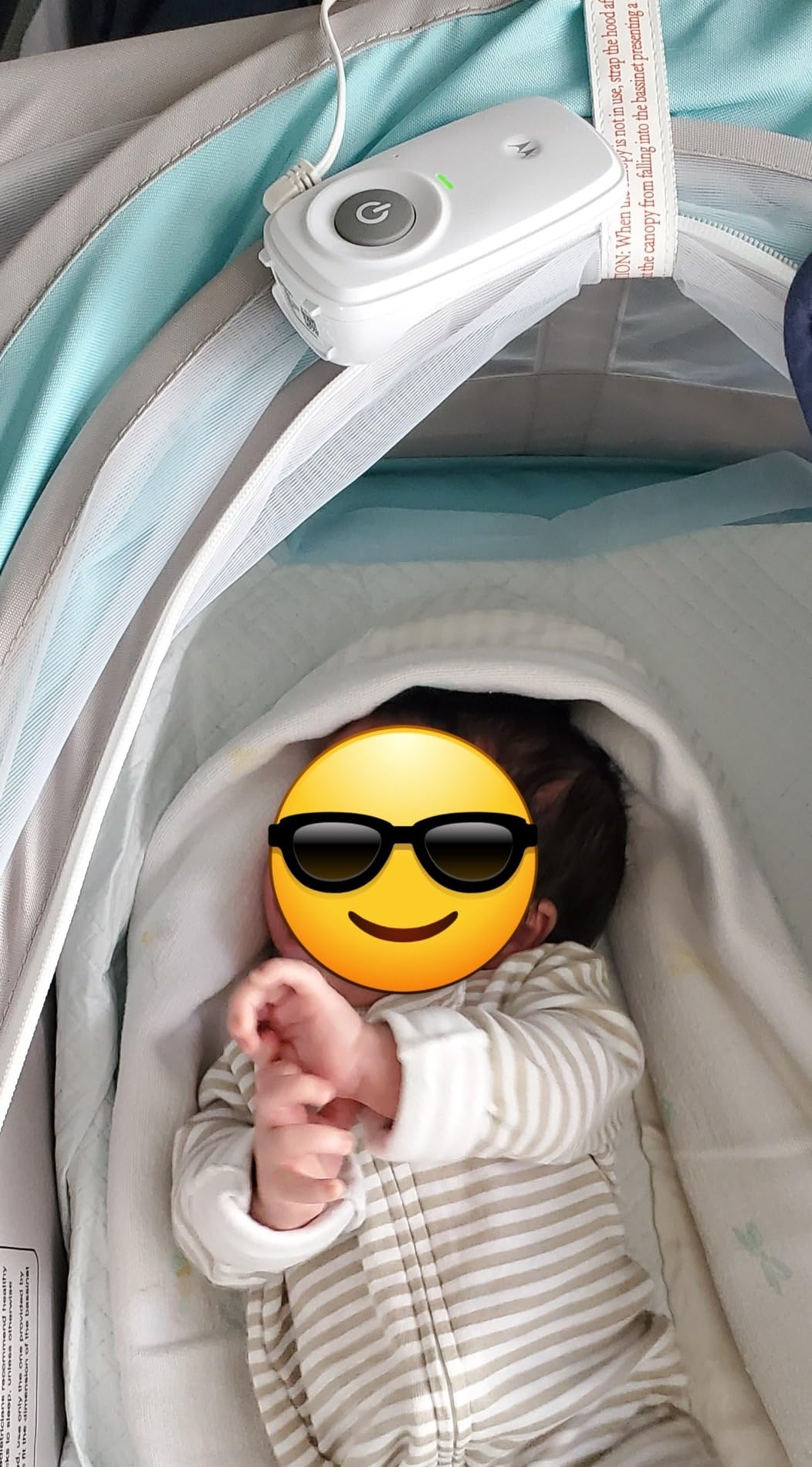
Technically it sits in the same class as the VTech DM111: a dedicated 1.88-1.90GHz digital link, 1,000-foot maximum range, and audible noise rated at 30db. The rating sits at 4.2 stars from 977 reviews, with 68% five-star and 8% one-star, a solid budget profile rather than a standout one.
Is the AM21 good enough as your only monitor?
Yes, for overnight listening in one room. The cry detection is genuinely useful and the five channels keep the signal clean in a shared building, which are the two things most likely to frustrate you in a flat.
For naps elsewhere in the home, the light handset makes it easy to carry, and parents use it that way. If you want to soothe your baby from another room, this is the wrong tool, because there is no talk-back.
What the AM21 cannot do
The parent handset runs on a single AAA battery, which is not included, so a long night means getting up to replace it. That single point is the main reason the rechargeable models exist, and it is worth weighing before you buy.
There is also no visual sound-level bar, only simple LEDs, and no talk-back intercom and no night light. If your partner wants a handset of their own, you would need a second matching monitor, since the AM21 is sold as a single set.
5. Motorola PIP10 – The Smallest Handset, Built for a Second Room
Motorola Nursery Audio Baby Monitor, No WiFi, 1000ft Range, Cry Detection, Portable Parent Unit, DECT, PIP10
DECT link with no WiFi
Up to 1000 ft range
Cry detection
IP66 rated
Pros
- Small and light at 0.3kg for pocket or bedside use
- No WiFi or app so home network problems cannot affect it
- Reception reported through two walls and across floors
- LED power
- mute and out-of-range indicators
- 26-month warranty for quality-related issues
Cons
- Maximum volume is modest and the control is confusing
- Can emit random very loud connection beeps
- Parent handset needs AAA batteries
- One-way audio with no talk-back or night light
- Battery compartment is very hard to open
The PIP10 is the handset we would put on the bedside table and forget about. At 0.3kg it is small enough to move between a bedroom, a hallway and a sofa without thinking about it, which is the whole point in a home where every room is within earshot of the nursery anyway.
It runs on a DECT link at 1920 to 1930MHz with no WiFi or app involved at all, so a congested router two floors down cannot affect what you hear. Cry detection comes as standard, and owners report reception through two walls and across floors of a two-storey house, which suggests the 1,000-foot rating has plenty of headroom for a flat.
The warranty is 26 months for quality-related issues, longer than the one-year cover on the VTech models, and the whole unit is IP66 rated against water, which helps in a bathroom or a humid nursery.
Why buy a second handset for a small home?
Because in a small home you are rarely in the same room twice. One handset for the sofa and one for the bedside table means neither parent has to hunt for it, and the small size makes a second purchase much less annoying than it would with a video monitor.
Parents on r/Parenting describe exactly this setup, running a video monitor for the picture and a cheap audio monitor as the always-on backup. The PIP10 is small and light enough to serve as that second, always-listening device.
Where the PIP10 frustrates owners
The most common complaint is unexpected loud connection beeps, which are genuinely disruptive next to a sleeping adult, and several owners find the maximum volume modest with a confusing volume control. The battery compartment is also reported to be extremely difficult to open.
Like the AM21, it is one-way audio with no talk-back and no night light, and the parent handset takes two AAA batteries that are not included. It also has no visual sound-level bar, only LEDs for power, mute and out-of-range.
6. Motorola PIP12 – The Best Pick for Travel and Two-Way Talk
Motorola Nursery Audio Baby Monitor, No WiFi Needed, Two-Way Talk, Portable and Rechargeable, 1500ft Range, HD Sound, Water-Resistant Travel Case, PIP12
Up to 1500 ft range
Two-way talk with HD audio
USB-C rechargeable handset
Pros
- Longest stated range in the group at 1500 ft
- Rechargeable USB-C parent handset with no disposable batteries
- Two-way talk for soothing from another room
- Water-resistant case and magnetic back for real portability
- Back-up cells keep the baby unit alive through a power cut
Cons
- Baby unit beeps loudly if plugged in while switched on
- Battery life often falls short of the stated 10 hours
- Real-world range is cut by walls and obstructions
- Magnet on the back is described as weak
- Audio only with no camera
The PIP12 is the only pick here with a rechargeable parent handset and USB-C charging, and that single fact changes the overnight experience. Owners call the battery life repeatedly excellent, and the absence of a routine of opening a battery door at two in the morning is worth more in a small flat than any extra feature.
It also has two-way talk with HD audio, so you can soothe your baby by voice from another room, and reviewers say the talk audio does not sound distorted to children. Combined with a magnetic back and an included water-resistant travel case, it moves between the nursery, a car nap and a holiday rental without becoming a second piece of luggage.
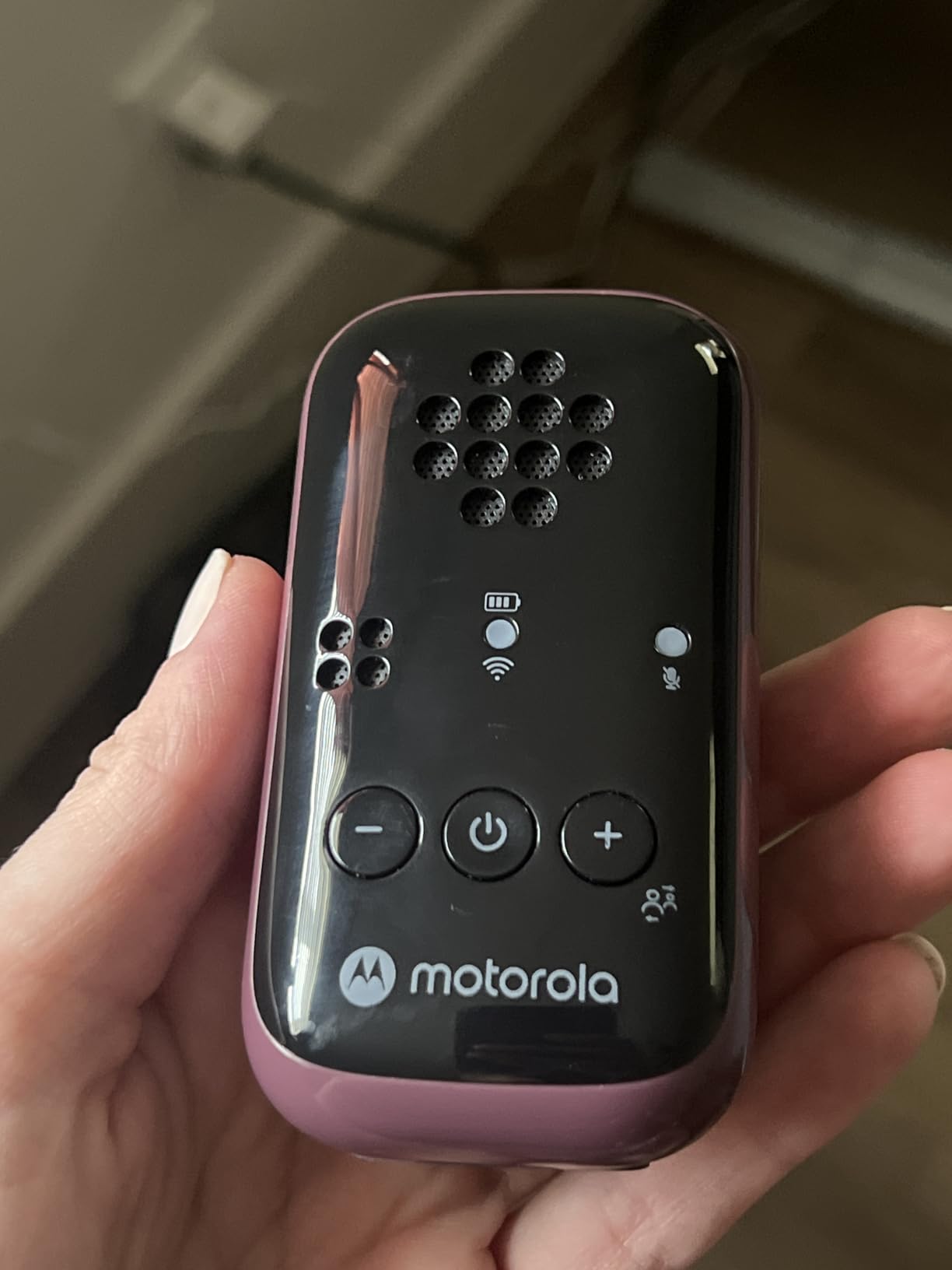
The stated range is up to 1,500 feet, the longest figure in this group, with out-of-range alerting. In a small home you will never approach that, and the practical note from owners is that walls and heavy obstructions reduce real reach, so some wish for more coverage outdoors. Nobody is complaining in a one-bedroom flat.
Because it needs no WiFi, app or account, it works abroad on a network you do not control. That is the same reason parents on forums distrust cloud-based monitors, and the same reason they trust this one.
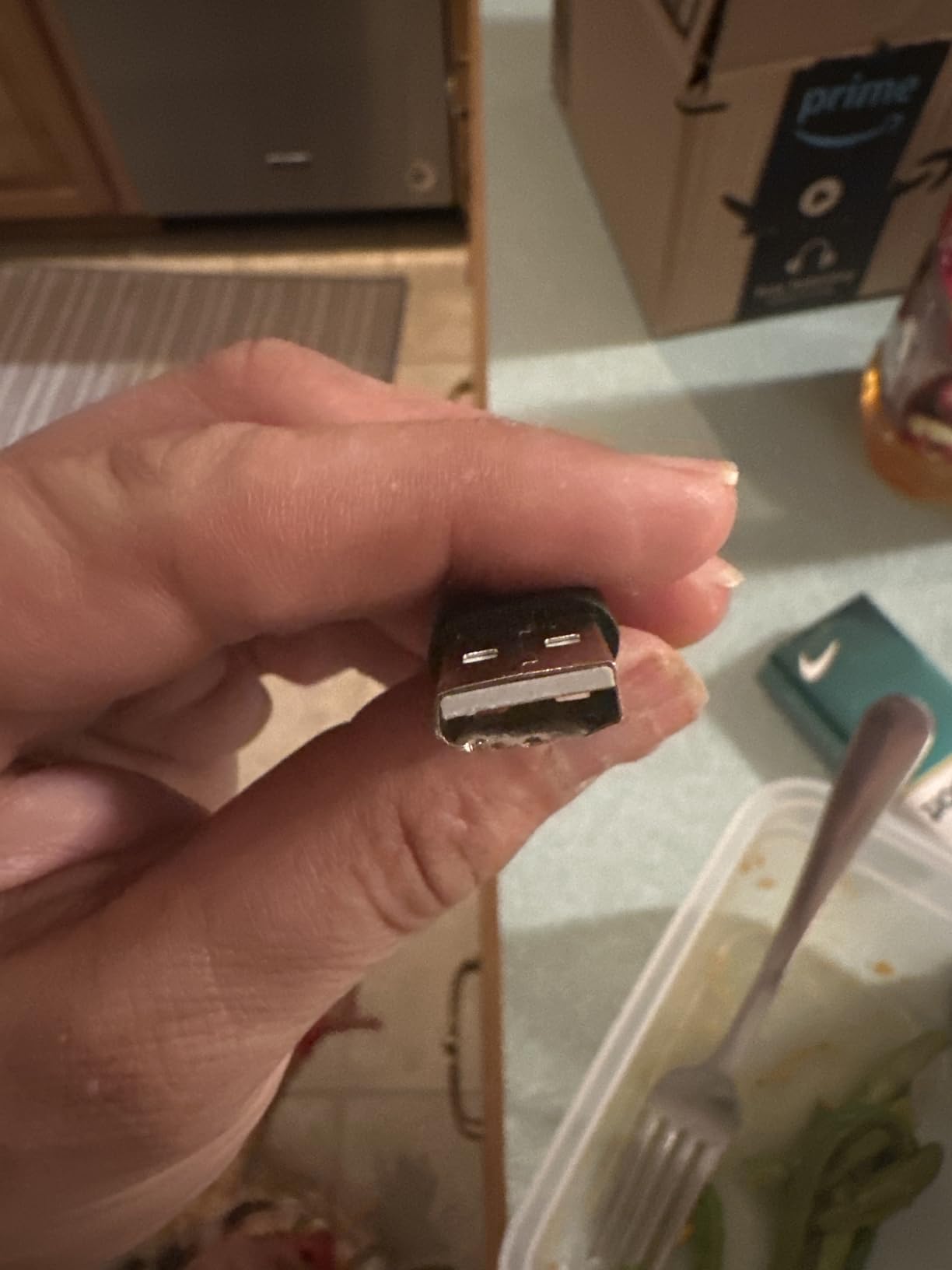
Back-up cells in the baby unit keep it working through a power cut, which is a small feature in a flat where the baby sleeps in the same building as your distribution board. The rating is 4.3 stars from 388 reviews, with 67% five-star.
Is the PIP12 worth it for a small home?
If you want one monitor that does everything, yes. The rechargeable handset, the two-way talk and the portability cover travel, naps away from home and elderly relatives without needing a second purchase.
It is also the natural second handset if your partner is in a different room, since it will not need batteries swapped overnight. The trade-off is that its review pool of 388 is far thinner than the thousands behind the VTech DM111 and DM221.
What to watch out for with the PIP12
The baby unit emits a loud beep if it is plugged in while switched on, which is more noticeable in a quiet flat than in a house. Several owners report battery life falling short of the stated 10 hours, especially away from an outlet, and the magnet on the back is described as weak.
Real-world range is noticeably reduced by walls and obstructions, and this is an audio-only monitor, so if you want a picture you will need one of our video monitor guides instead.
Buying Guide: What Actually Matters in a Small Home
DECT 6.0 vs FHSS vs WiFi: What Interference Looks Like in an Apartment
Every monitor on this list uses a dedicated digital radio link rather than your WiFi network. That single decision removes the most common complaint parents have about smart monitors, which is that they stop working when the internet does. Forum threads on r/Buyingforbaby are full of parents who switched off cloud video monitors precisely because of storage fees and outages.
DECT 6.0 operates in a band around 1.88 to 1.90GHz, a slice of spectrum that sits below the 2.4GHz band used by most routers and microwaves. The VTech models also run an encrypted FHSS channel, meaning the transmission hops between frequencies to make interception difficult and to reject interference.
The practical upshot for a flat: your monitor will not collide with your neighbour’s WiFi, and it will not degrade when someone three doors down starts a video call. Can a baby monitor interfere with WiFi? Occasionally a poorly shielded 2.4GHz device can add noise, which is one more reason to pick a DECT model that operates below the WiFi band entirely.
Range Numbers Are Marketing: What 1000 Feet Really Means
Range figures are measured in open air with a clear line of sight, which describes almost no apartment. Every unit here is rated at 1,000 feet except the Motorola PIP12 at 1,500 feet, and in a one-bedroom flat all six will comfortably cover the whole property.
What actually reduces usable range in a small home is materials: cinderblock, thick plaster and multiple floors. Owners of the DM221 specifically report it holding a connection through cinderblock and thick plaster, which is exactly the construction you find in older apartment buildings.
So treat the number as reassurance rather than a specification. If your flat is small, you can ignore it and instead concentrate on sensitivity, alerts and power.
Tuning Sound Sensitivity So Thin Walls Do Not Set Off False Alarms
This is the small-home problem nobody writes about. In close quarters, sound-activated or VOX mode picks up the washing machine, the extractor fan, a television two rooms away and the neighbour’s footsteps, and every one of those is an alert that trains you to ignore the real thing. The forum complaint about false alarms from sound activation appears in almost every thread we read.
Set the sound sensitivity as high as your baby’s breathing allows. On the DM221 it is adjustable in the menu; higher thresholds ignore ambient noise.
Switch off or move any white-noise machine away from the baby unit, since a sound machine close to the microphone is the most common trigger of constant alerts.
Keep the baby unit on a hard surface rather than soft bedding, which muffles the microphone and makes it more sensitive to room noise.
Run the monitor muted with the LED sound indicator as your primary readout overnight, and turn the volume up only when the lights start flashing.
Do the same test before you need it. Lie in your bed for twenty minutes with the monitor muted and check how often it lights up for something other than your baby.
For a monitor with no sensitivity control, such as the DM111 or the Motorola AM21, start with the sound machine off and the handset as far from a shared wall as the room allows. That is the workaround those models need.
One Parent Handset or Two: A Small-Space Reality Check
In a small home the question is not really how many rooms you need to cover, it is how many people need to listen at once. If both parents work shifts and one of you is downstairs, a second handset is the answer. If you are both in the same flat at night and one handset will do, one unit is simpler and takes up less drawer space.
Check compatibility before buying a second, because it is not universal. The VTech DM221 is a single-channel model and cannot be paired with a second baby or parent piece. The DM111 has two channels, and the Motorola AM21 and PIP10 list five channels, which also helps against a neighbour running the same model.
You can also run one audio monitor and one video monitor side by side, which several parents describe as their ideal setup. If that is your situation, our guide to WiFi baby monitors for smartphones covers the picture side, and this list handles the sound.
Power, Charging and the Overnight Routine
Decide who is responsible for a battery at two in the morning before you buy, because this is where the models separate. The Motorola PIP12 charges over USB-C and owners rate the battery life highly. The VTech DM221 runs cordless only briefly and is best kept plugged in, which is fine if it lives on a bedside table.
Disposables are the weakest point of this group. The VTech DM111 has an eight-hour rechargeable battery, but the Motorola AM21 and PIP10 both run on AAA cells that are not included, so an all-night session means getting up.
Two further small-home details: check that the baby unit has back-up cells, as the PIP12 does, and look for a wall-mount or belt-clip option so the handset is not lost down the side of a sofa.
A Setup Checklist for Apartments and Small Homes
Before the first night, walk the property and place the baby unit in the nursery away from any window, then take the parent handset to the furthest corner. Listen in the spot where you will actually sit rather than the spot with the best reception.
Check that the pair is not sitting right next to each other, since close placement can trigger interference beeping on some models. Test the alert at the volume you would use at night, not during the day.
Finally, agree on what happens when the light goes from green to amber. In a small flat where both adults are tired, the monitor only helps if the response is obvious. And if you also want a picture for naps outside the bedroom, a dedicated monitor such as one of our breathing monitors covers a different need entirely.
Frequently Asked Questions
What is the best audio only baby monitor?
For most small homes the VTech DM221 is the best audio only baby monitor. It uses a DECT 6.0 link between the two pieces, holds the connection through thick plaster and cinderblock, and adds a vibrating alert that wakes a light sleeper without raising the volume. Adjustable sound sensitivity also helps filter out household noise.
Are audio only baby monitors still good?
Yes, and for apartments they are often better than video monitors. An audio monitor needs no app, no account and no internet, so it keeps working when your WiFi is congested or down, and it carries no subscription. What you give up is the picture, which matters more for daytime naps and a child who can leave the crib.
How far will a baby monitor transmit?
Most sound-only monitors are rated at 1,000 feet, with the Motorola PIP12 rated at 1,500 feet. Those figures are measured in open air with a clear line of sight, so real coverage depends on walls and floors. In a small home or apartment, every monitor on our list covers the whole property easily.
How to stop interference on a baby monitor
First, choose a digital DECT or FHSS model rather than an analogue radio, since digital rejects household noise. Keep the two pieces apart, at least a few feet, since placing them side by side causes beeping on several models. Move the baby unit away from microwaves, WiFi routers and cords. Finally, raise the sound sensitivity threshold and run the handset muted using the LED sound indicator overnight.
Do I need two parent units?
Only if two people need to listen in different places. In a small home one handset usually covers the whole flat, so a second is only worth buying if you or your partner are in a separate room on different nights. Check compatibility first, because some single-channel models cannot be paired with a second handset at all.
The Verdict for Small Spaces
The best audio baby monitors for small homes in 2026 are the ones that stay off your WiFi and let you control how easily they react to noise. The VTech DM221 is our overall choice: the highest rating in the group, a connection that survives thick walls, adjustable sensitivity and a vibrating alert that suits close quarters better than anything else here.
Pick the VTech DM111 if you want the simplest, most heavily reviewed option with a belt clip. Choose the Motorola AM21 for the entry-level DECT route with cry detection, and the PIP12 if you need rechargeable power, two-way talk and real portability. Set the sensitivity as high as you can, run the handset muted with the LED lights overnight, and you will get a monitor that behaves in a flat rather than against you.