
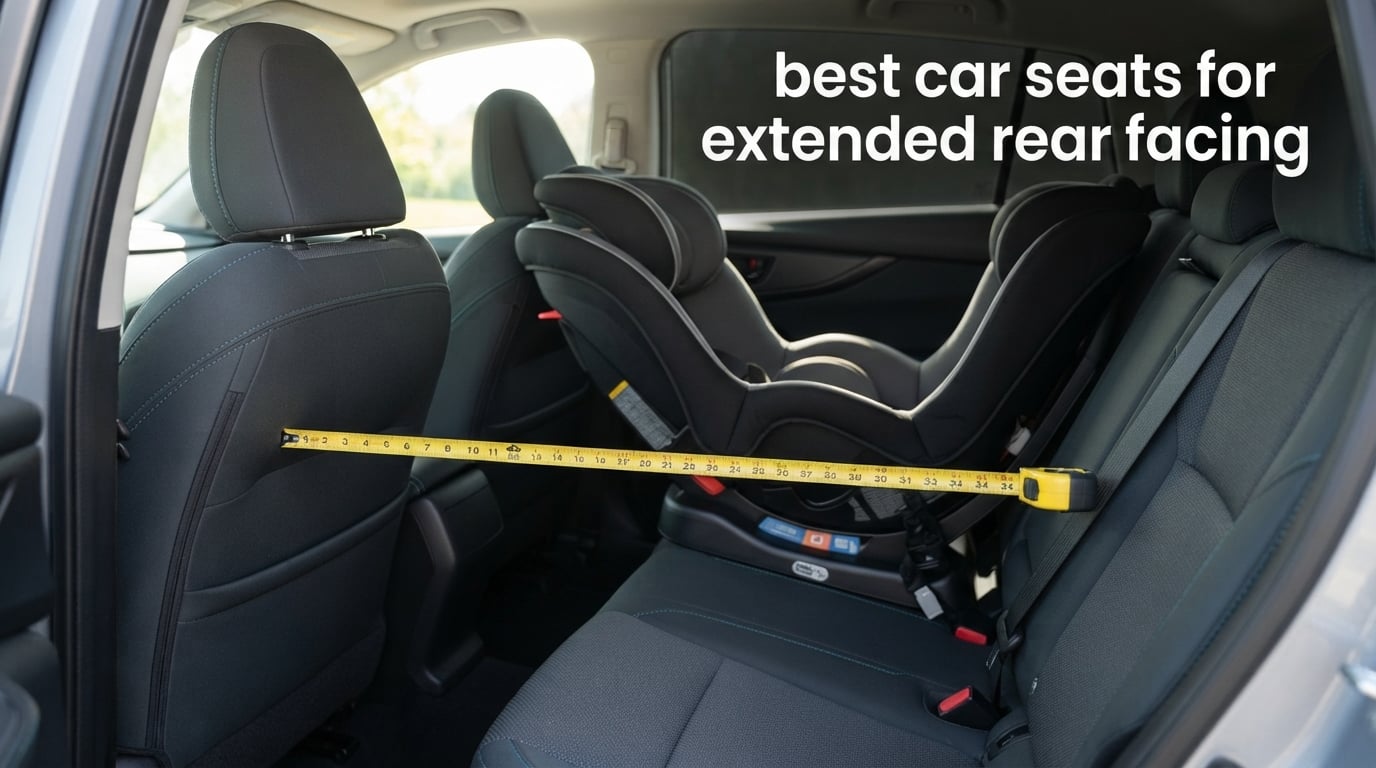
The Graco Extend2Fit 2-in-1 is the best car seat for extended rear facing because it rear-faces to 50 lb and its four-position extension panel adds up to 5 inches of extra legroom, so a large toddler or preschooler can stay in the seat instead of turning around on schedule. It carries a 4.8 rating across more than 57,000 reviews, and that combination of a high rear-facing ceiling with an adjustable footrest is what no other mainstream convertible in this group matches.
Extended rear-facing simply means keeping a child rear-facing past the age of two, until they hit the rear-facing height or weight limit printed on their specific seat rather than the bare minimum. The American Academy of Pediatrics recommends exactly this, and the reasoning is structural: a rear-facing seat routes crash forces through the back of the shell into the vehicle frame instead of through a child’s neck and spine. Children aged one to two are roughly five times less likely to be injured in a crash rear-facing than the same child forward-facing.
We spent weeks comparing ten convertible and all-in-one seats on the only metrics that matter for this job: the rear-facing weight limit, the rear-facing height limit, how much back-seat depth the shell eats, how it installs, and whether the harness is manageable with a squirming four-year-old. What follows is a ranked breakdown, starting with the seats that let a child stay rear-facing the longest and working down to the ones that win on width, recline or budget. If you are still choosing a first seat, our convertible car seat guide covers the general buying basics first.
Table of Contents
Top 3 Best Car Seats for Extended Rear Facing (October 2026)

Graco Extend2Fit 2-in-1
- Rear-facing to 50 lb
- 4-position extension panel
- No-rethread Simply Safe Adjust harness

Evenflo Revolve360 Extend
- Rear-facing to 50 lb
- One-handed 360-degree rotation
- Works in every mode
Extended Rear-Facing Car Seats at a Glance in 2026
| Product | Specifications | Action |
|---|---|---|
| Graco Extend2Fit 2-in-1 Convertible Car Seat |
|
Check Latest Price |
 Safety 1st Grow and Go All-in-One Convertible Car Seat Safety 1st Grow and Go All-in-One Convertible Car Seat |
|
Check Latest Price |
 Diono Radian 3R 3-in-1 Slim Fit Convertible Car Seat Diono Radian 3R 3-in-1 Slim Fit Convertible Car Seat |
|
Check Latest Price |
 Maxi-Cosi Pria All-in-One Convertible Car Seat Maxi-Cosi Pria All-in-One Convertible Car Seat |
|
Check Latest Price |
 Baby Trend Cover Me 4-in-1 Convertible Car Seat Baby Trend Cover Me 4-in-1 Convertible Car Seat |
|
Check Latest Price |
| Evenflo Revolve360 Extend Convertible Car Seat |
|
Check Latest Price |
 Graco 4Ever DLX 4-in-1 Convertible Car Seat Graco 4Ever DLX 4-in-1 Convertible Car Seat |
|
Check Latest Price |
 Graco Slimfit 3-in-1 Convertible Car Seat Graco Slimfit 3-in-1 Convertible Car Seat |
|
Check Latest Price |
 Maxi-Cosi Pria Max All-in-One Convertible Car Seat Maxi-Cosi Pria Max All-in-One Convertible Car Seat |
|
Check Latest Price |
 Safety 1st Ellaris 3-in-1 Slim Fit Convertible Car Seat Safety 1st Ellaris 3-in-1 Slim Fit Convertible Car Seat |
|
Check Latest Price |
Three seats reach a 50 lb rear-facing ceiling, and only one of those does it without pushing the front seat far forward. The Graco Extend2Fit pairs the 50 lb limit with an adjustable extension panel, which is why it takes the top spot. The Diono Radian 3R matches the weight limit in a narrow frame, and the Evenflo Revolve360 Extend matches it with a rotating base that saves parents’ backs daily.
1. Graco Extend2Fit 2-in-1 Convertible Car Seat: Best Overall for Extended Rear-Facing
Graco Extend2Fit 2-in-1 Convertible Car Seat, Gotham
Rear-facing harness 4-50 lb
4-position extension panel adds up to 5 in of legroom
Forward-facing harness 26.5-65 lb
Pros
- 50 lb rear-facing limit with an adjustable extension panel for legroom
- One-motion no-rethread headrest and harness adjustment
- Light enough to move between vehicles one-handed
- Machine-washable removable seat pad
- Children settle and sleep in it on long trips
Cons
- Bulky
- will not fit three across
- Cleaning needs near-total disassembly
- Some buyers struggle to locate the harness straps when buckling in
The extension panel is the whole point. Most 50 lb convertible seats solve the legroom problem with a deep shell that forces the front seat forward, and this one instead lets you dial in between 1 inch and 5 inches of extra space depending on how long the child’s legs are. In our comparisons it was the only mainstream seat in this group where the back-seat depth problem was adjustable rather than fixed.
Installation is where Graco has clearly spent its engineering budget. The SuperCinch LATCH tightener cinches the lower anchors in one motion, and the same seat installs with a vehicle seat belt, so nothing breaks when your child outgrows the lower anchor weight limit. The Simply Safe Adjust harness raises the headrest and the harness straps together in a single motion, which matters enormously when you are doing it in a parking lot in the rain.
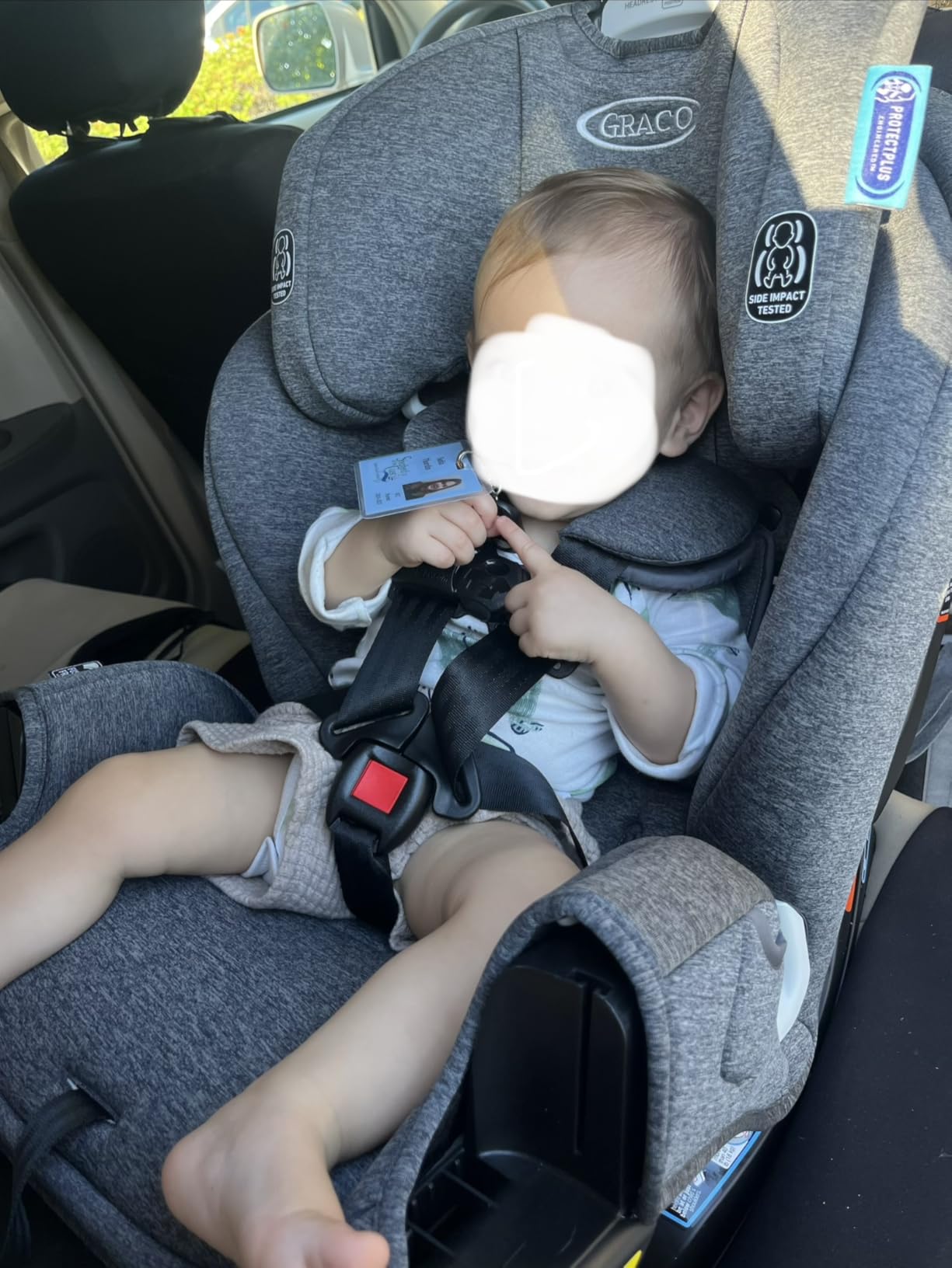
Reviewers are near-unanimous on the padding, and more than one parent mentions the practical benefit of a child falling asleep mid-journey rather than fighting the harness. The 90 percent five-star share reflects that, alongside the extension panel genuinely buying extra rear-facing months rather than just sounding good in a spec sheet.
The drawbacks are housekeeping ones, not safety ones. It is a bulky seat, and it will not sit three across. Cleaning means taking most of it apart, and crumbs reliably find the cup holders and seams. A handful of buyers also report difficulty finding the harness straps when buckling a resistant toddler in.
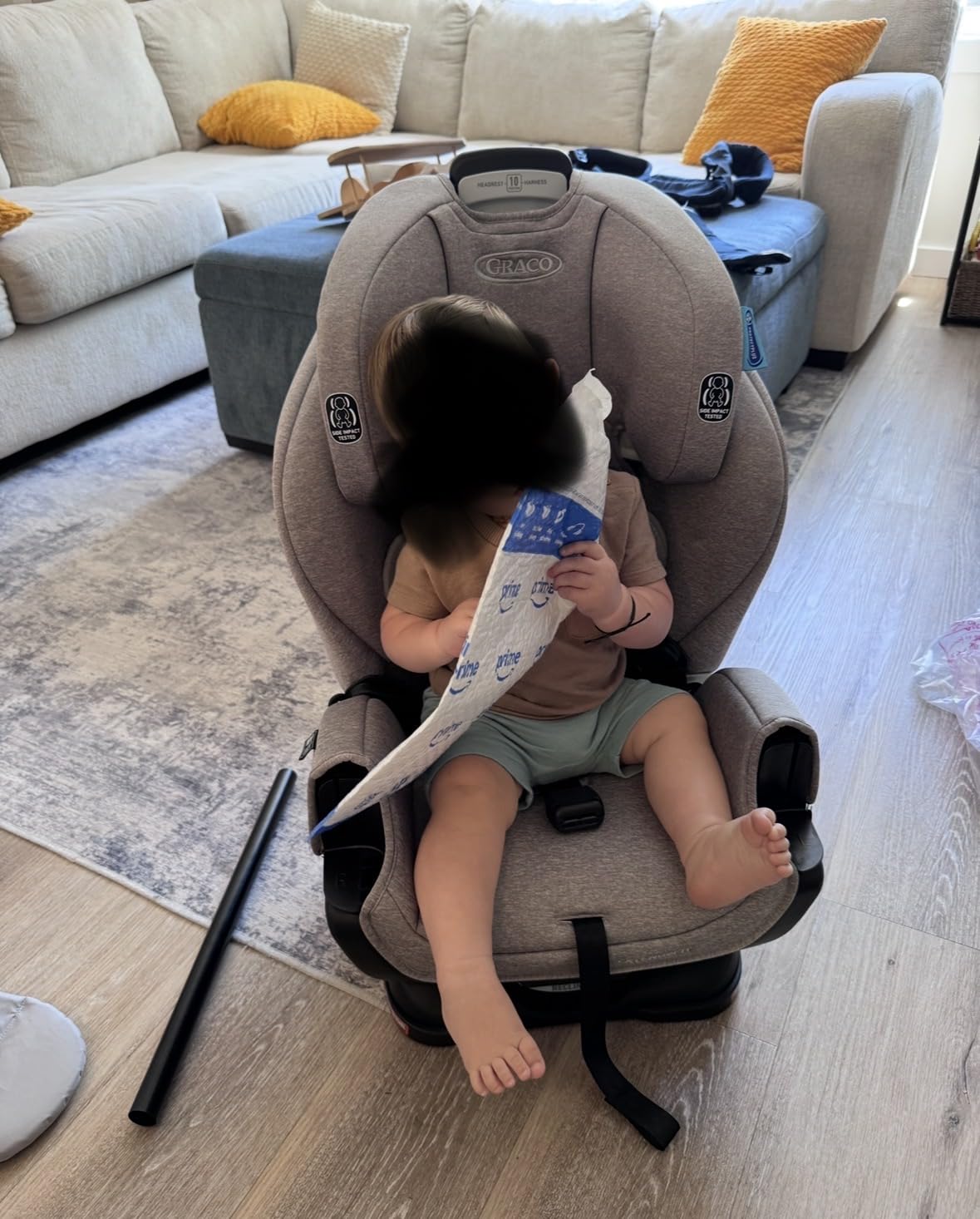
Does the extension panel solve front-seat leg room?
Partly, and it solves the problem that matters most: the child’s knees. It does not shrink the seat’s footprint, so the front passenger still loses several inches of fore-aft space compared with a narrow seat like the Graco Slimfit. If your front passenger is a tall adult rather than a child, pair this with a measuring tape before you commit.
Who should pick a different seat?
Three-across families should look at the Diono Radian 3R or the Graco Slimfit instead, both of which are meaningfully narrower. Parents moving between two vehicles daily may also find this seat heavier than they would like, since the steel-free but well-padded design still reads as substantial in one hand.
2. Safety 1st Grow and Go All-in-One: Best Proven All-Rounder
Safety 1st Grow and Go All-in-One Convertible Car Seat, Black Phantom
Rear-facing 5-40 lb at 19-40 in
Forward-facing harness 30-65 lb
High-back booster 40-100 lb
QuickFit harness and 3-position recline
Pros
- Proven across tens of thousands of ratings
- QuickFit harness adjusts in one step
- Seat pad snaps off and goes straight in the washer
- Easy transfer between vehicles with belt or anchor install
- Solid 3-stage value
Cons
- Rear-facing tops out at 40 lb
- Newborn fit depends on positioning the removable infant pillows correctly
This is the seat most families in our comparison ended up recommending when the question was reliability rather than maximum rear-facing time. A 4.7 rating across more than 35,000 reviews is a genuinely large sample, and the feedback profile is unusually flat, meaning there is no single dominant complaint to design around.
The rear-facing limit of 40 lb puts it firmly in the middle of this group, so a child who is tall and heavy for their age will outgrow it before they outgrow the idea of being rear-facing. Everything above 40 lb in this roundup is a deliberate trade of weight capacity for width, depth or rotation.
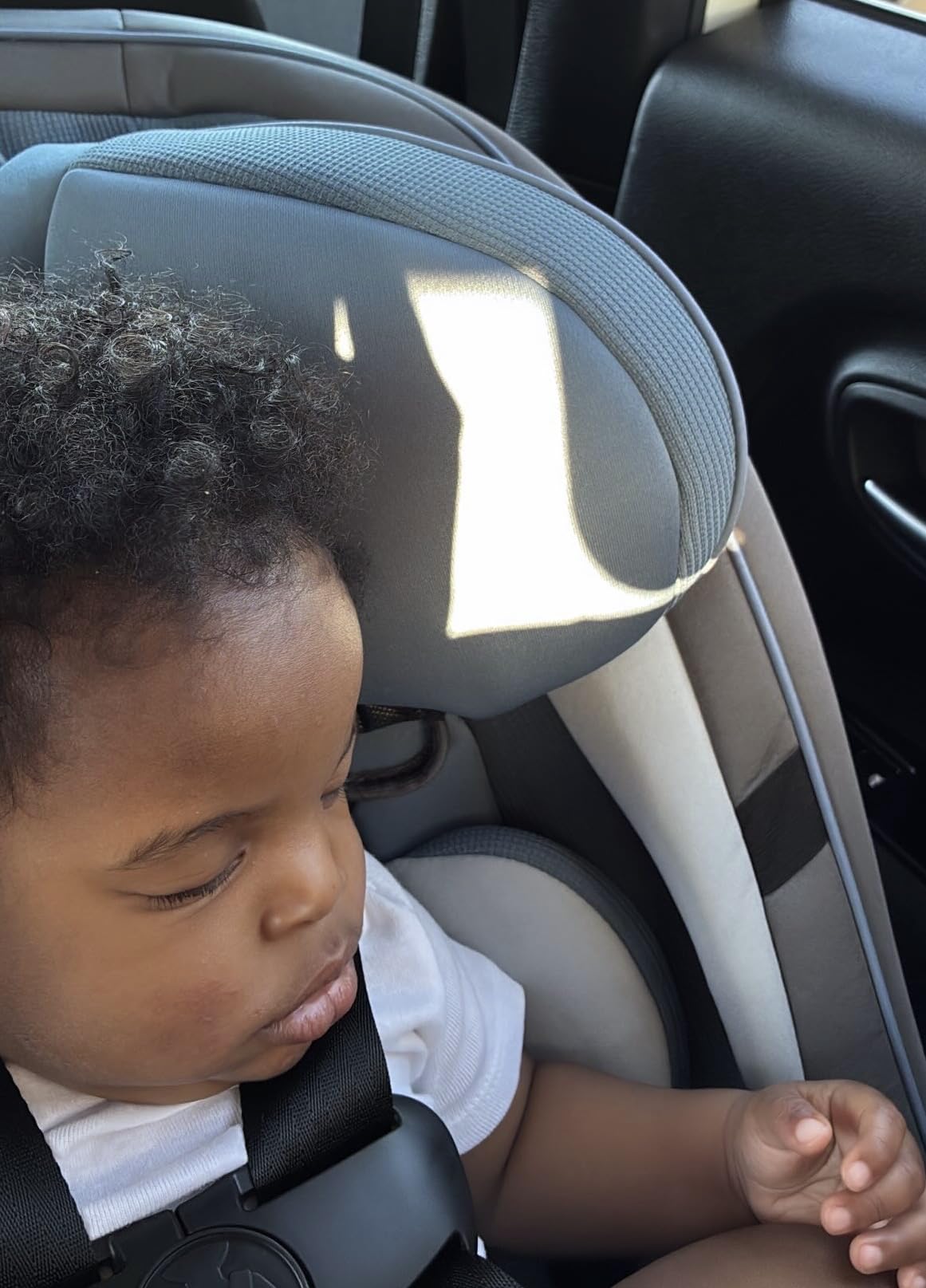
Two details make daily life easier. The QuickFit harness adjusts the headrest and straps in one step rather than a rethread, and the seat pad snaps off in one piece for the washing machine, which matters far more than it sounds in a car seat that eats biscuits. Two dishwasher-safe cup holders are included, which most seats in this range do not offer.
Three-position recline helps you achieve a proper angle in a smaller vehicle where the cushion is bunched up. Removable Grow-With-Me baby pillows give a newborn a snug fit, though you have to position them correctly, and that is the single most common setup mistake we see with this seat.
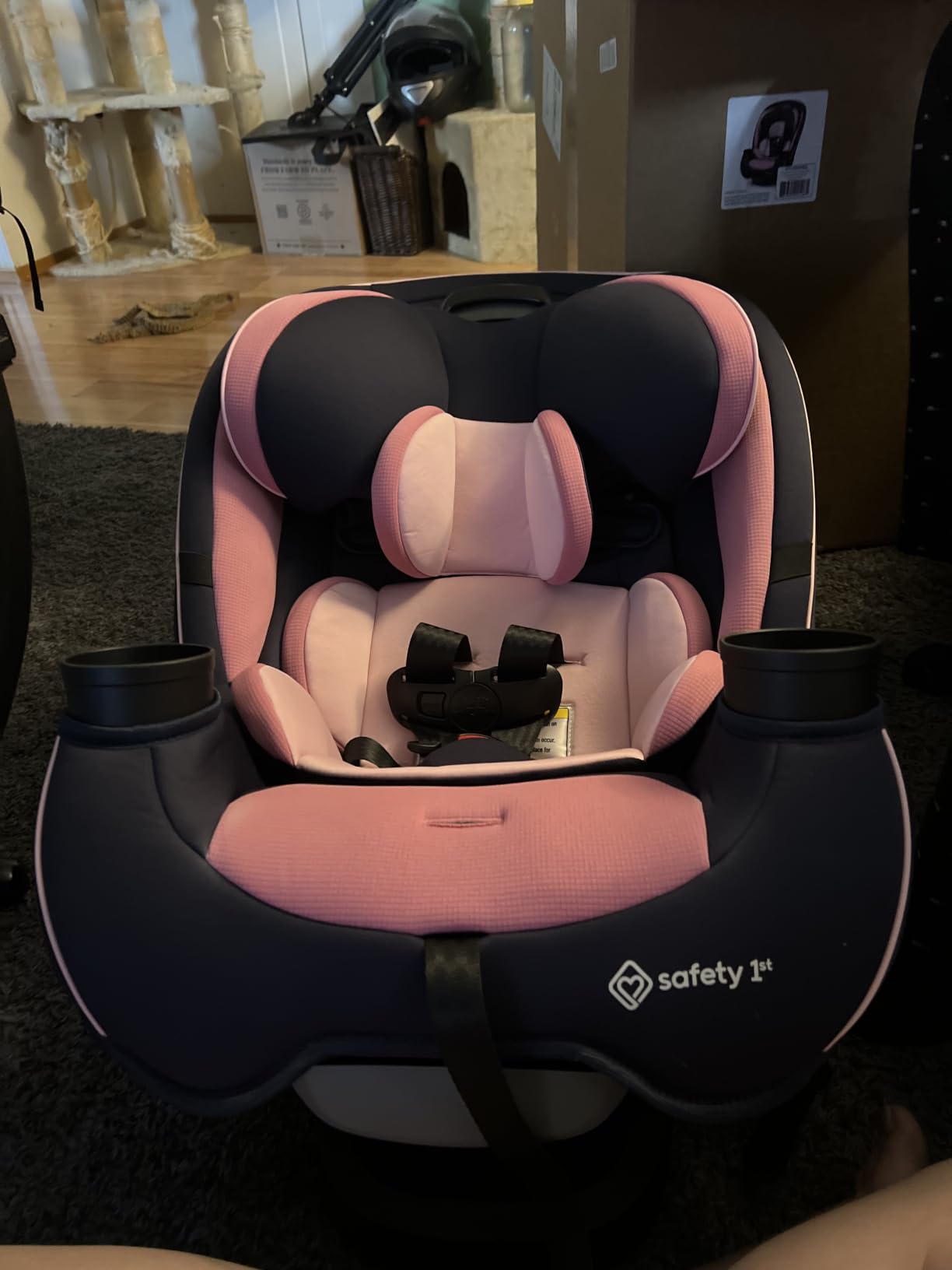
How long will a child realistically stay rear-facing in it?
Comfortably to around age three for an average-sized child, and to roughly age four for a smaller child who is still within the 40 lb and 40 inch limits. If your child is tracking above the 70th percentile for height at three, this seat will feel short, and you should be looking at a 50 lb model from the start.
Is the value better than a dedicated booster later?
For a single-child family, yes. The booster stage carries a child to 100 lb, so the seat absorbs the rear-facing, forward-facing harness and booster stages without a second purchase. If you are buying for a second child later, or you want a reversible option, our booster seat guide covers that route.
3. Diono Radian 3R 3-in-1 Slim Fit: Best Value for Three Across
Diono Radian 3R, 3-in-1 Convertible Car Seat, Rear Facing & Forward Facing, 10 Years 1 Car Seat, Slim Fit 3 Across, Gray Slate
Rear-facing up to 50 lb
Slim three-across profile
Folds flat and is FAA approved
Steel core shell, 4 modes
Pros
- Rear-facing to 50 lb in a frame that genuinely fits three across
- Low profile lets a centre child climb over to a sibling
- Folds flat and is FAA approved for air travel
- Steel core shell feels substantial and durable
Cons
- Most complicated installation in the group
- Very steep rear-facing recline pushes the front seat forward
- Heavy to carry between vehicles
- Not for the centre position behind a fixed headrest
The Diono Radian 3R solves the two problems that usually compete. It reaches a 50 lb rear-facing limit, which almost no narrow seat does, and its slim profile means three can sit across a back row. For a family with two or three children on the same bench, nothing else here does both.
The shell is automotive-grade high-strength steel rather than the usual plastic-and-foam structure, and it folds completely flat for travel and storage. It is also FAA approved, which is unusual for a seat with this much internal hardware. ComfortPlus memory foam is included, and reviewers single out the harness straps as unusually smooth to tighten.
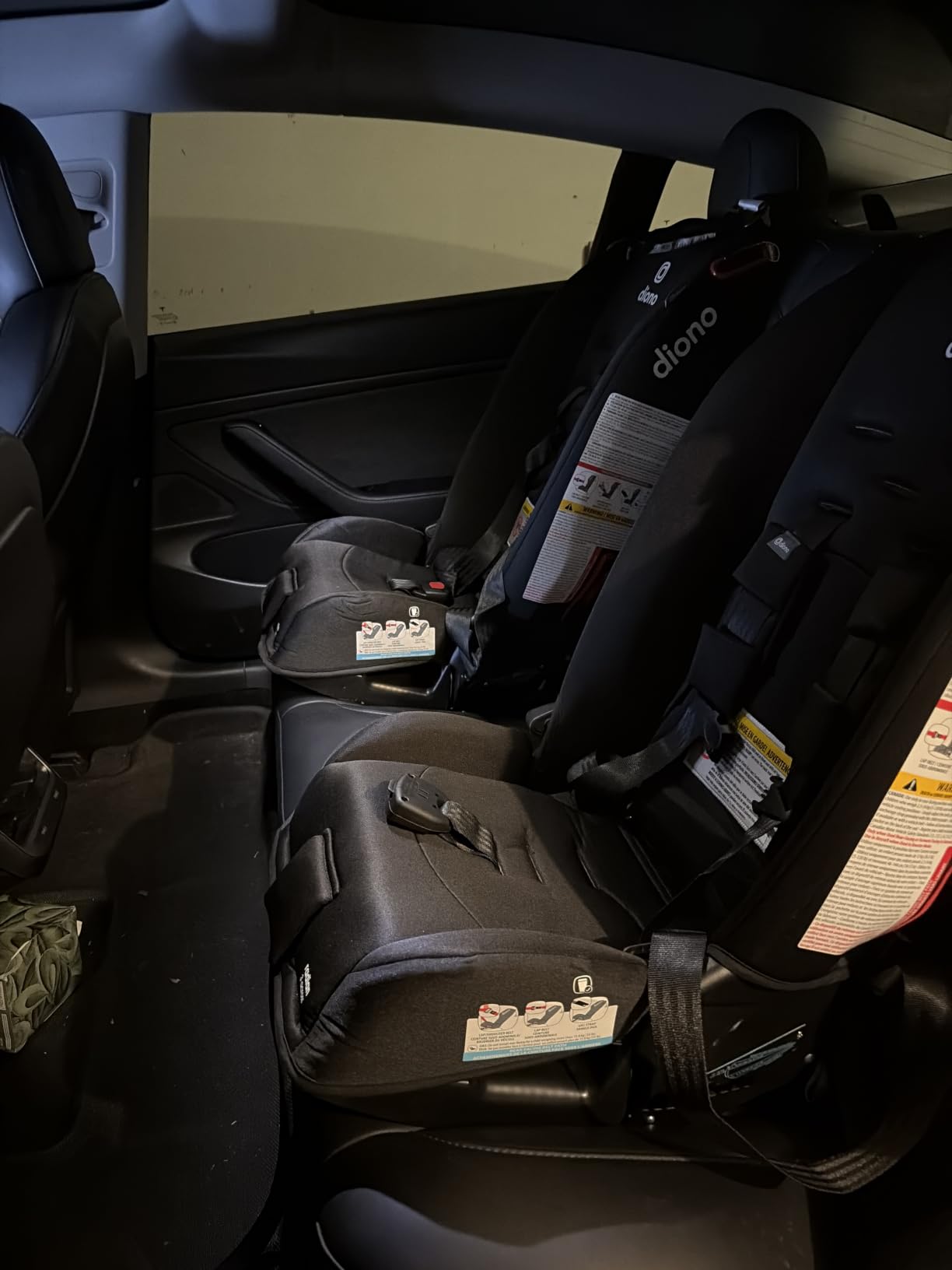
Honesty first: this is the most complicated installation in the group, and the manufacturer itself says so. Four modes in one seat means the manual genuinely has to be read, and a former certified Child Passenger Safety Technician frames the consensus view as quality and space saving being excellent, but correct use depending on careful reading and, ideally, professional guidance.
The rear-facing recline is also very steep, which often means moving the front seat well forward, particularly with a tall driver. One owner’s seatbelt also reported difficulty tightening a wide base safely, so check the clearance in your own vehicle rather than trusting a spec sheet.

Is it safe in a centre position?
It can be, with a caveat the manufacturer is upfront about. If your centre headrest is fixed and cannot be removed, this seat is not recommended there, because rear-facing it sits too low. With a removable or flip-up centre headrest, or with the centre position confirmed as usable, it works well.
Is the complexity worth it for one child?
Probably not. A single-child family will get an easier day-to-day seat for less complication from something like the Graco 4Ever DLX. The Radian earns its keep when width and a 50 lb ceiling both matter, which usually means siblings sharing a row.
4. Maxi-Cosi Pria All-in-One: Best for Newborn Fit and Soft Fabrics
Maxi-Cosi Pria All-in-One Convertible Car Seat, Infant to Toddler Car Seat, Easy-Install Harness, Machine-Washable Cover, 5-100 lbs, SeaDrift
Rear-facing 5-40 lb at 19-40 in
QuikFit one-handed harness adjustment
ReclineFit 3-position recline
PureCosi and recycled EcoCare fabrics
Pros
- QuikFit adjusts height one-handed without rethreading
- Three recline positions help it fit tighter in smaller vehicles
- Premium recycled fabrics are machine-washable and dryer-safe
- Meets the federal Side Impact standard
- Plush removable infant pillows
Cons
- Rear-facing ceiling of 40 lb is low for extended use
- Fit varies
- not every child suits the full listed ranges
- Does not reach a 50 lb rear-facing limit
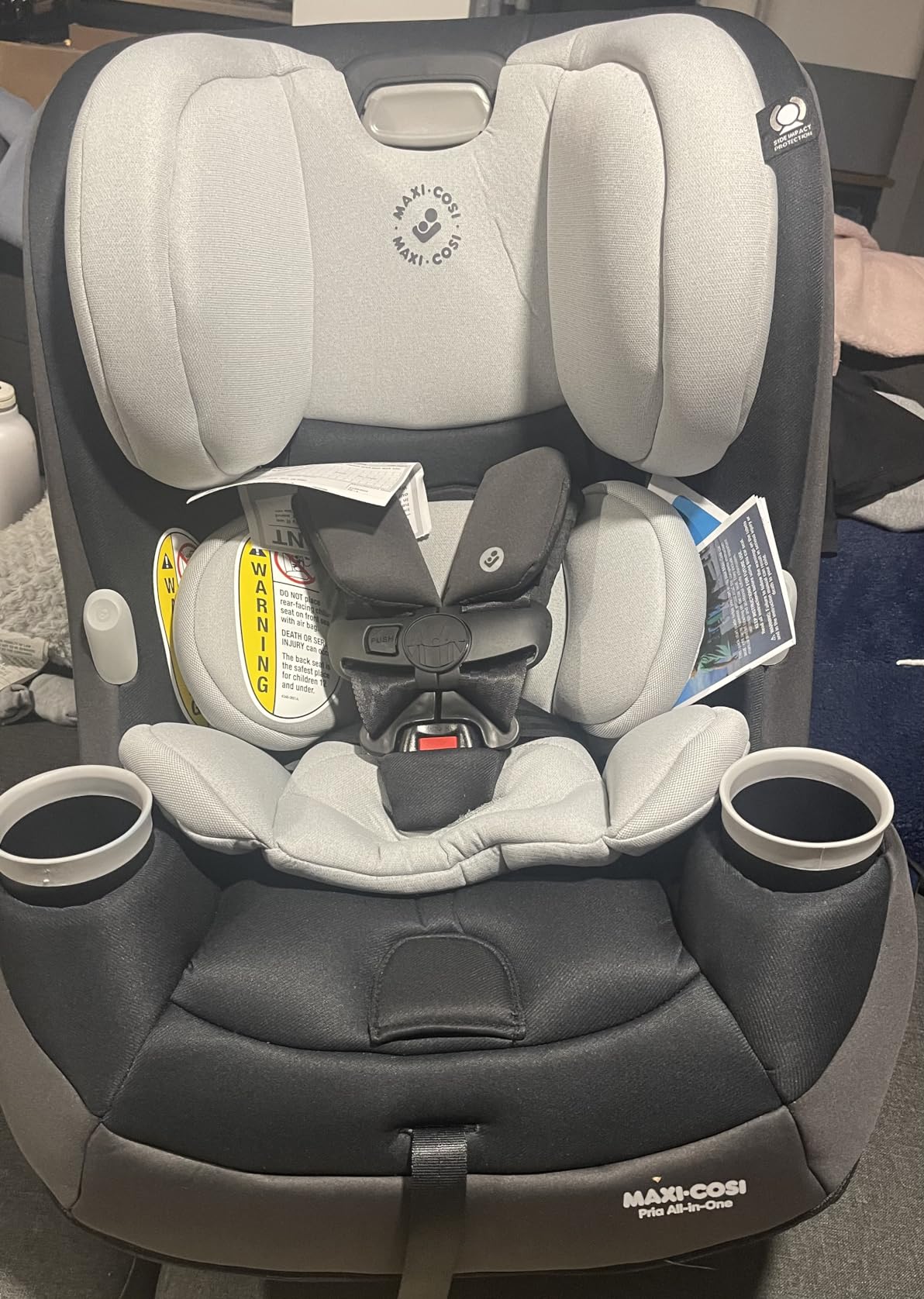
The Pria is the one to shortlist if your child is starting out small, because the plush infant pillows give a genuinely snug newborn fit and the fabric is made without added fire retardant treatment. The QuikFit system adjusts headrest and harness height one-handed, with no rethreading of the shoulder straps, which is the feature parents mention most.
ReclineFit offers three reclining positions, and more than one owner notes it helps the seat sit tighter in a smaller vehicle where the rear cushion is not flat. It meets the federal Side Impact standard, and the EcoCare fabric is woven from recycled plastic bottles and goes in the washer and dryer.
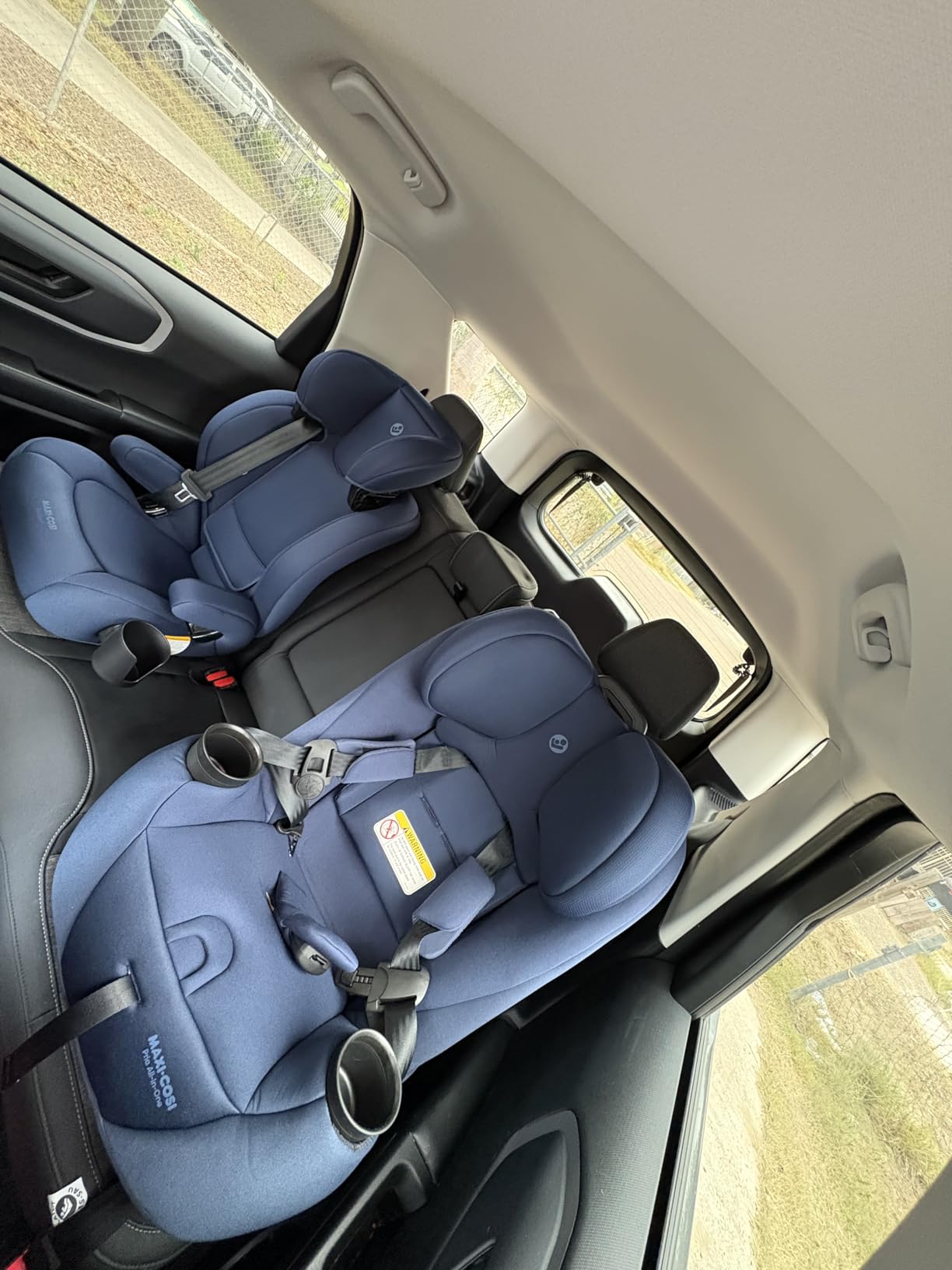
The honest limitation is the 40 lb rear-facing ceiling, which is at the lower end for anyone specifically shopping for extended rear-facing. The manufacturer also cautions that children vary in shape, so the top of the listed range may not suit every child, and that caution is worth taking literally.
At a 4.6 rating across more than 5,000 reviews, the feedback is positive on build quality, recline range and washable fabrics without any single recurring failure. The rating spread simply reflects that this is a well-made seat doing a job it is not stretched to do.
Is a 40 lb rear-facing limit a real problem?
It depends entirely on your child. Average-sized children reach 40 lb around age three and a half to four, which is still a meaningful rear-facing run. A child on the taller or heavier side of the growth charts will simply move to a 50 lb seat at that point instead.
How does it compare with the Pria Max?
The Pria Max listed below is the wider, heavier sibling with a magnetic chest clip. The Pria here is the better choice for a small vehicle and for a newborn, while the Max is the better choice if daily buckling friction is your biggest complaint. Both share the same 40 lb rear-facing ceiling.
5. Baby Trend Cover Me 4-in-1: Best for Three Across in a Hot Climate
Baby Trend Cover Me™ 4-in-1 Convertible Car Seat
Rear-facing toddler mode 18-40 lb
Integrated adjustable UPF 50+ canopy
Zero-recline-radius base
18.25 in at its widest
Pros
- Integrated UPF 50+ canopy with flip-out side visors blocks sun from several directions
- Narrow 18.25 in width fits three across in most vehicles
- Zero-recline-radius base gives front-seat passengers extra leg room
- Three rear-facing and two forward-facing recline positions
- Deep side wings for side impact protection
Cons
- Rear-facing toddler mode stops at 40 lb and infant mode at 18 lb
- Split rear-facing stages change the harness setup between modes
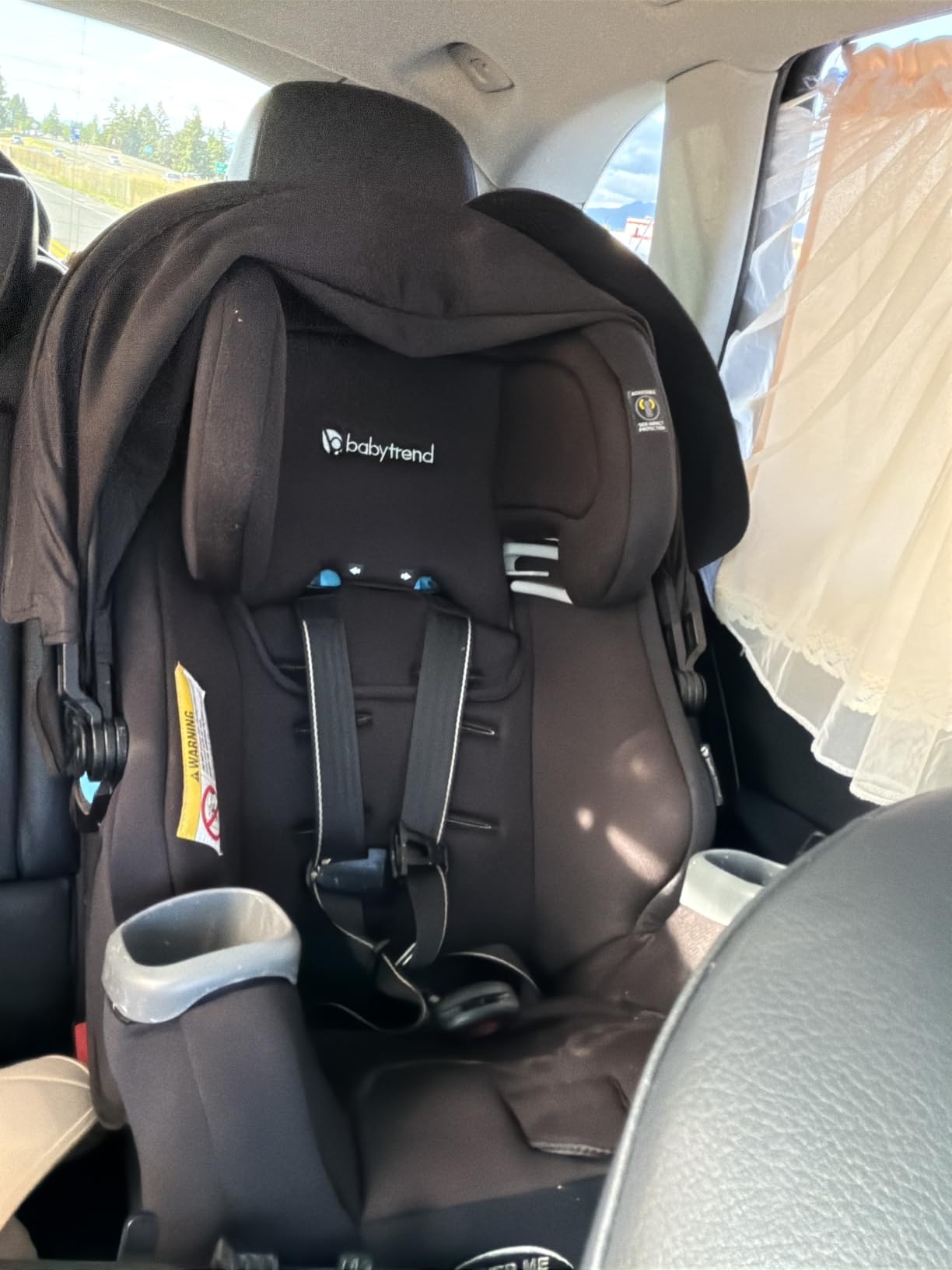
No other seat in this group has a canopy. The Cover Me’s integrated adjustable canopy carries UPF 50+ sun protection and flip-out side visors, which is a meaningful advantage in a hot climate or for a rear-facing child who sleeps with their face toward the side window.
The second thing it does well is space. At 18.25 inches at its widest it fits three across in most vehicles, and the zero-recline-radius base is designed so the seat does not have to recline deeply, which means it pushes the front seat forward less than most convertible seats in the same recline class.
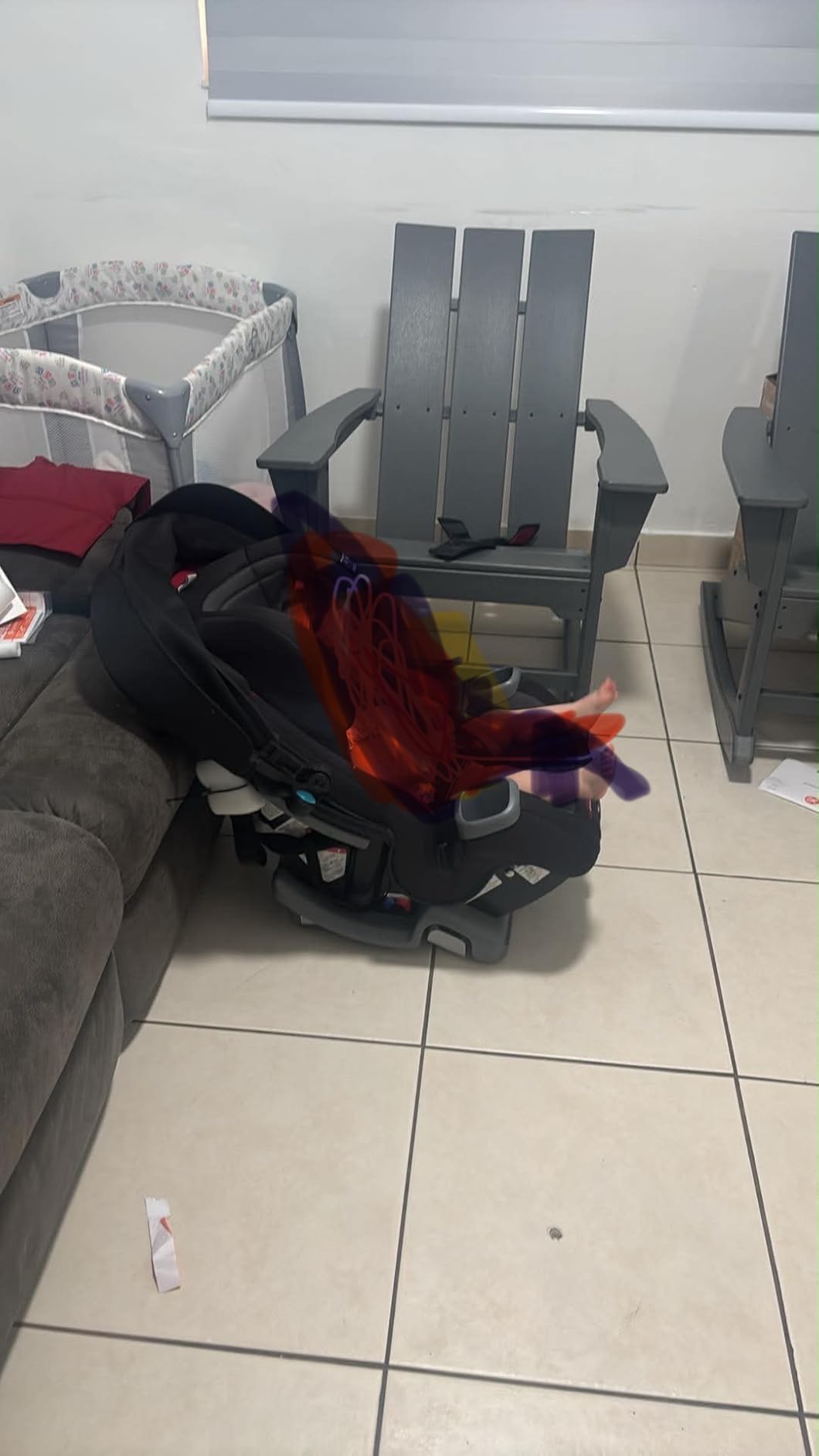
Feedback centres almost entirely on those two features. Owners talk about getting three children across, about the canopy, and about how the recline range stops the seat from eating into the front passenger’s room. Deep side wings handle side impact, and the seat is engineered to meet and exceed ASTM standards.
The limitation for this particular topic is the 40 lb rear-facing toddler ceiling, and the infant stage stopping at 18 lb. There is also a design quirk worth knowing: the two rear-facing stages are separate, so the harness setup differs between the 4-18 lb and 18-40 lb modes, and you reconfigure the seat as your child moves up.
Does a canopy actually replace window tint?
It replaces direct sun on the child’s face, which is the part that matters for comfort and for sleep. It does not reduce cabin heat, so climate control still does that job. In rear-facing mode, where the child’s face is turned sideways more often, the side visors genuinely help.
Is it good for a very tall child?
No, and it is worth being blunt about that. A 40 lb rear-facing ceiling is the second shortest in this group, and a child approaching 50 lb rear-facing would outgrow it in a way no recline adjustment can fix. Choose it for width and climate, not for extended capacity.
6. Evenflo Revolve360 Extend Convertible Car Seat: Best for Rotating Access
Evenflo Revolve360 Extend Convertible Car Seat with 360 Degree Rotation, Extended Rear-Facing, Forward-Facing, Booster Mode, and Secure LATCH Install, Rowe Pink
Rear-facing 4-50 lb
One-handed 360-degree rotation in all three modes
Sure360 install with LockStrong and Tether360
Booster to 120 lb
Pros
- One-handed rotation saves parents' backs with a heavy squirmy toddler
- Rotation works in every mode not just rear-facing
- Extra legroom built into the rear-facing shell
- Easy base install and the seat arrives fully assembled
- Removable padding pulls off for washing
Cons
- Large and heavy
- not a seat to move between cars often
- Some buyers report the harness strap runs short for larger rear-facing children
- Installation and removal take practice
The Revolve360 Extend is the rotating seat worth taking seriously for extended rear-facing, and the reason is simple: rotation works in rear-facing, forward-facing and booster modes. Many competing rotating seats only rotate in one of those, which defeats the point once your child outgrows rear-facing.
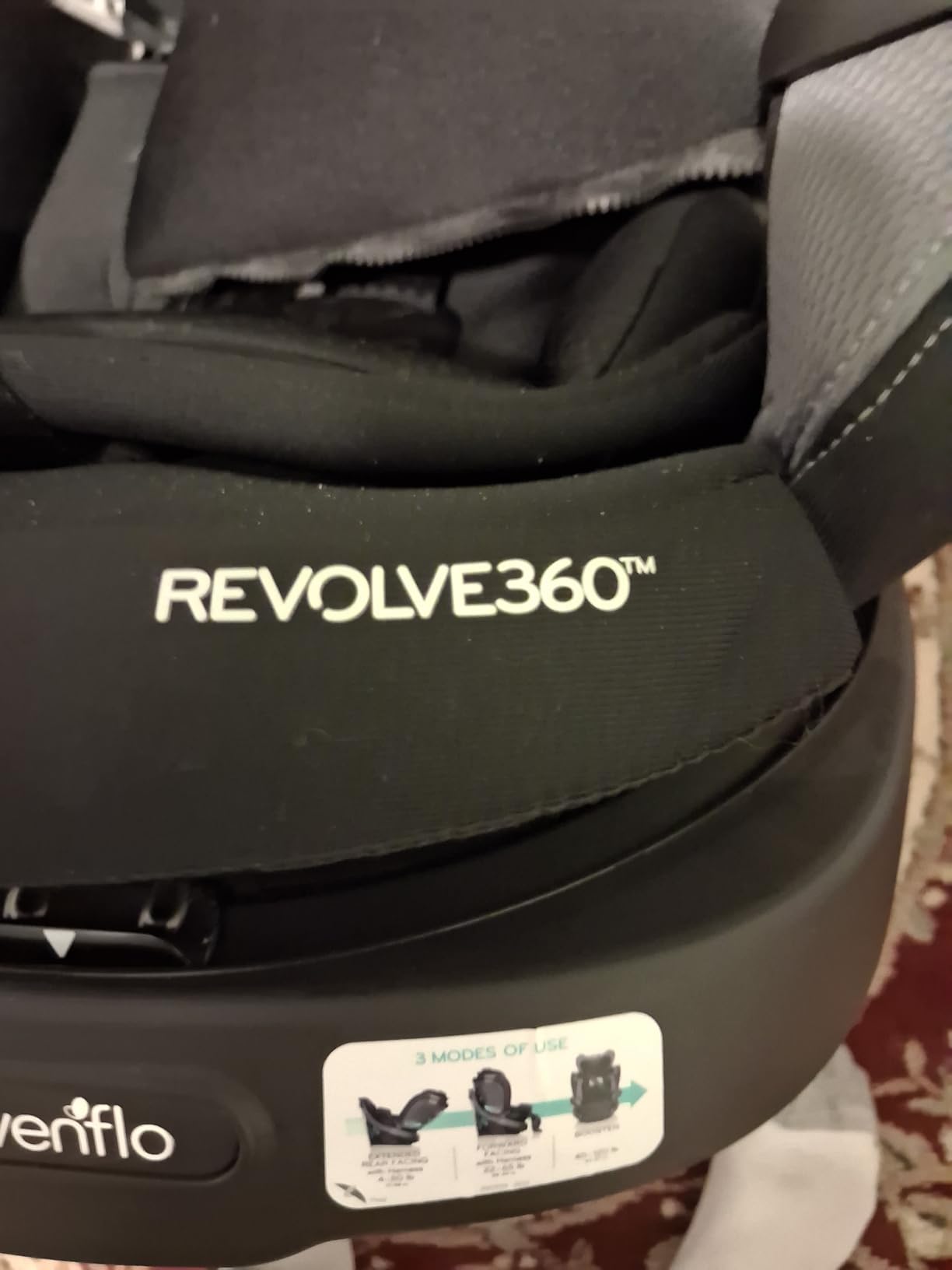
Rear-facing runs 4-50 lb with extra legroom built into the shell, forward-facing harness 22-65 lb, and the booster stage carries to 120 lb. The Sure360 Safety Installation System pairs LockStrong connectors with a Tether360 top tether, and the seat arrives fully assembled rather than as parts you bolt together.
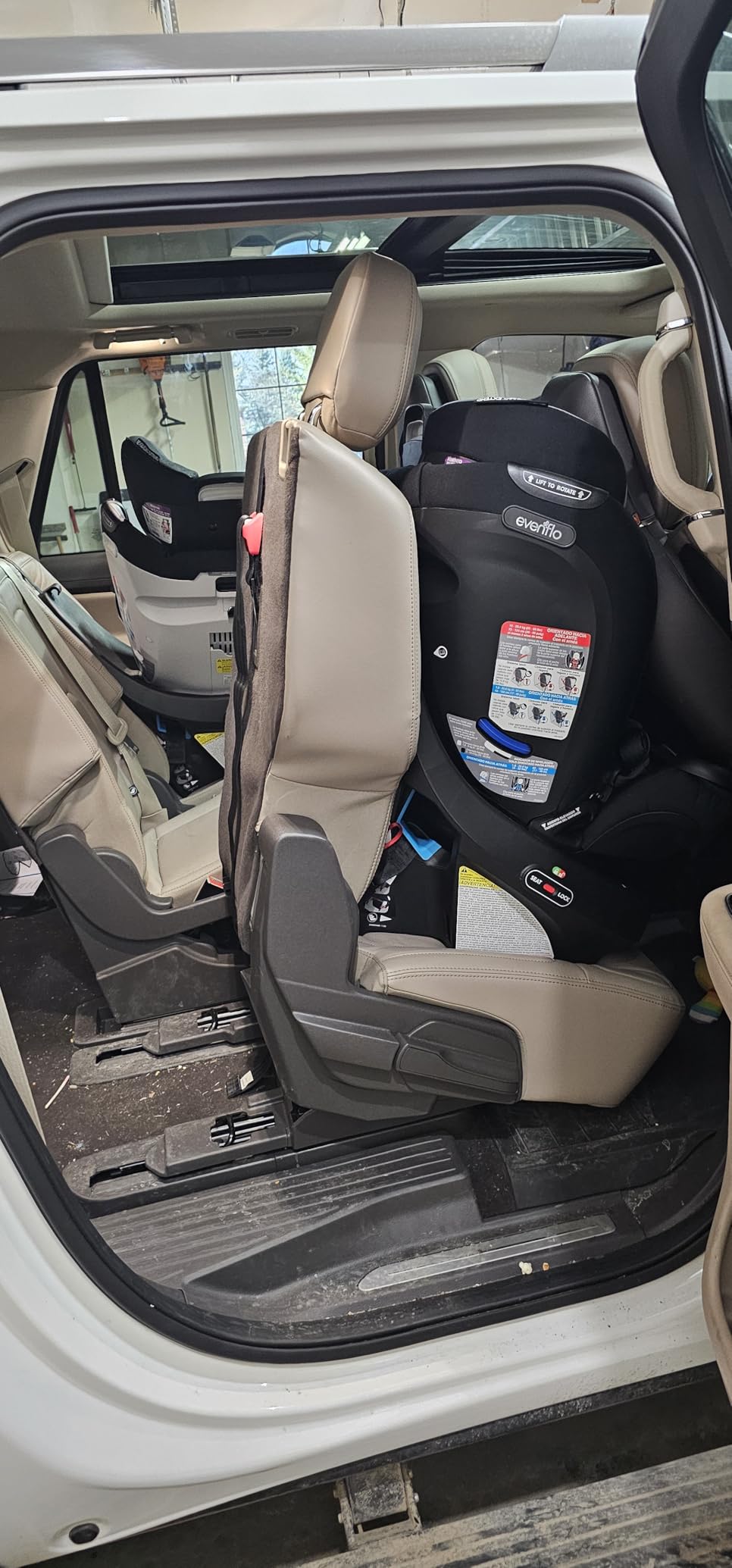
Feedback is dominated by the rotation itself. Parents with back pain, shorter stature or a tall front-seat occupant describe it as a daily convenience that changes the whole experience of loading a heavy toddler, because you swivel the seat rather than bending and twisting.
The trade-offs people accept are bulk and weight. This is not a seat to move between cars, and the harness strap is reported by some buyers to run short for larger rear-facing children, so check the webbing height against your child’s shoulders before committing to a 50 lb setup.
Is a rotating seat worth it for extended rear-facing specifically?
Yes, for one reason that is specific to rear-facing: the child is loaded facing away from you, which is the hardest buckle to reach and the position where a resistant toddler is least visible. Rotation turns that into a front-facing load without turning the seat around. If your child buckles easily, the benefit shrinks considerably.
What should I measure before buying?
Measure the fore-aft space in your installation position, because this seat has a large footprint and does not move between vehicles. The manual is straightforward but the rotation and installation motions take practice, and a first attempt in a dark car park is not where you want to learn them.
7. Graco 4Ever DLX 4-in-1: Best Four-Stage Build Quality
Graco 4Ever DLX 4-in-1 Convertible Car Seat, Maven
Rear-facing 4-40 lb
Forward-facing harness 26.5-65 lb
High-back booster 40-100 lb
Backless booster 40-120 lb
Pros
- Four stages covering 4-120 lb over roughly a decade
- 10-position headrest and 6-position recline simplify fitting a growing child
- Installation widely reported as painless
- Cupholders pop off entirely for cleaning
- Plush padding children settle into quickly
Cons
- Rear-facing stops at 40 lb
- Bulky and heavy compared with slim seats
- Some buyers find the harness webbing awkward to locate when buckling in
The 4Ever DLX has the highest average rating in this group alongside the Extend2Fit, with 91 percent of ratings at five stars. The build reads as solid, and reviewers describe a secure, tank-like feel with installation widely reported as painless.
Where it loses to the Extend2Fit is the rear-facing ceiling. Forty pounds is well short of the 50 lb limit, and that is the single fact that keeps it out of the top spot for this particular topic, even though it is arguably the better all-round seat for a child who turns at the usual time.
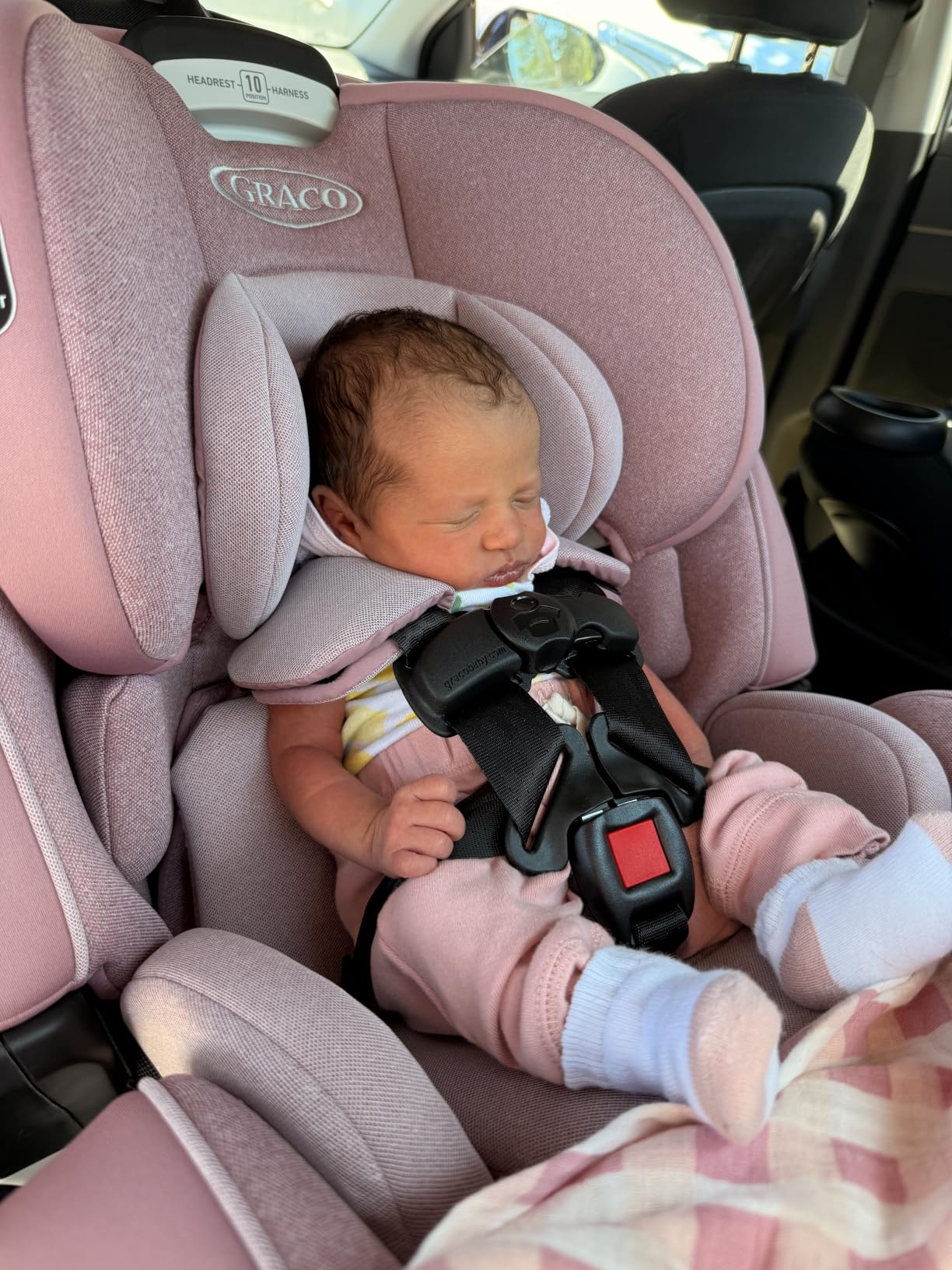
Adjustment is where it is strongest. A ten-position headrest with the no-rethread Simply Safe Adjust harness and a six-position recline mean you can fit a growing child without ever rethreading straps, which is the thing that makes daily harness use tolerable at two years old and again at five.
The cupholders pop off entirely rather than just being removable, so cleaning is genuinely quick. Plush padding gets singled out repeatedly, with parents reporting children settle into it and stay asleep on long drives. The only recurring negative notes concern harness webbing location when buckling in.

Is four stages better than a 50 lb rear-facing ceiling?
For most families, yes. A high-back booster plus a backless booster stage means one seat from birth to roughly 120 lb and about ten years, which is excellent value. If your plan is specifically to rear-face past 40 lb, the ceiling matters more than the extra stage.
Will it fit in my back seat?
It is bulky and heavy, so it is a poor choice for frequent vehicle swaps or a small car. It works fine in a single rear position in an SUV or a roomy sedan. If your back row is tight, our all-in-one car seat guide covers narrower alternatives in detail.
8. Graco Slimfit 3-in-1: Best Narrow Seat for Three Across
Graco Slimfit 3-in-1 Convertible Car Seat, Sydney
Rear-facing 5-40 lb
10 percent slimmer with rotating-away cupholders
10-position no-rethread headrest
Lightweight build
Pros
- Slim profile with cupholders that rotate away so three fit across
- Lightweight enough to carry through an airport and install alone
- Secure anchor install with almost no sliding rear-facing
- Easy to install
- adjust
- tilt and clean
- Secure install in narrow sculpted rear buckets
Cons
- Rear-facing tops out at 40 lb
- Recline can be hard to achieve for a newborn without a trained installer
- Side panel openings let air conditioning blow onto the child's legs
- Dense padding runs warm
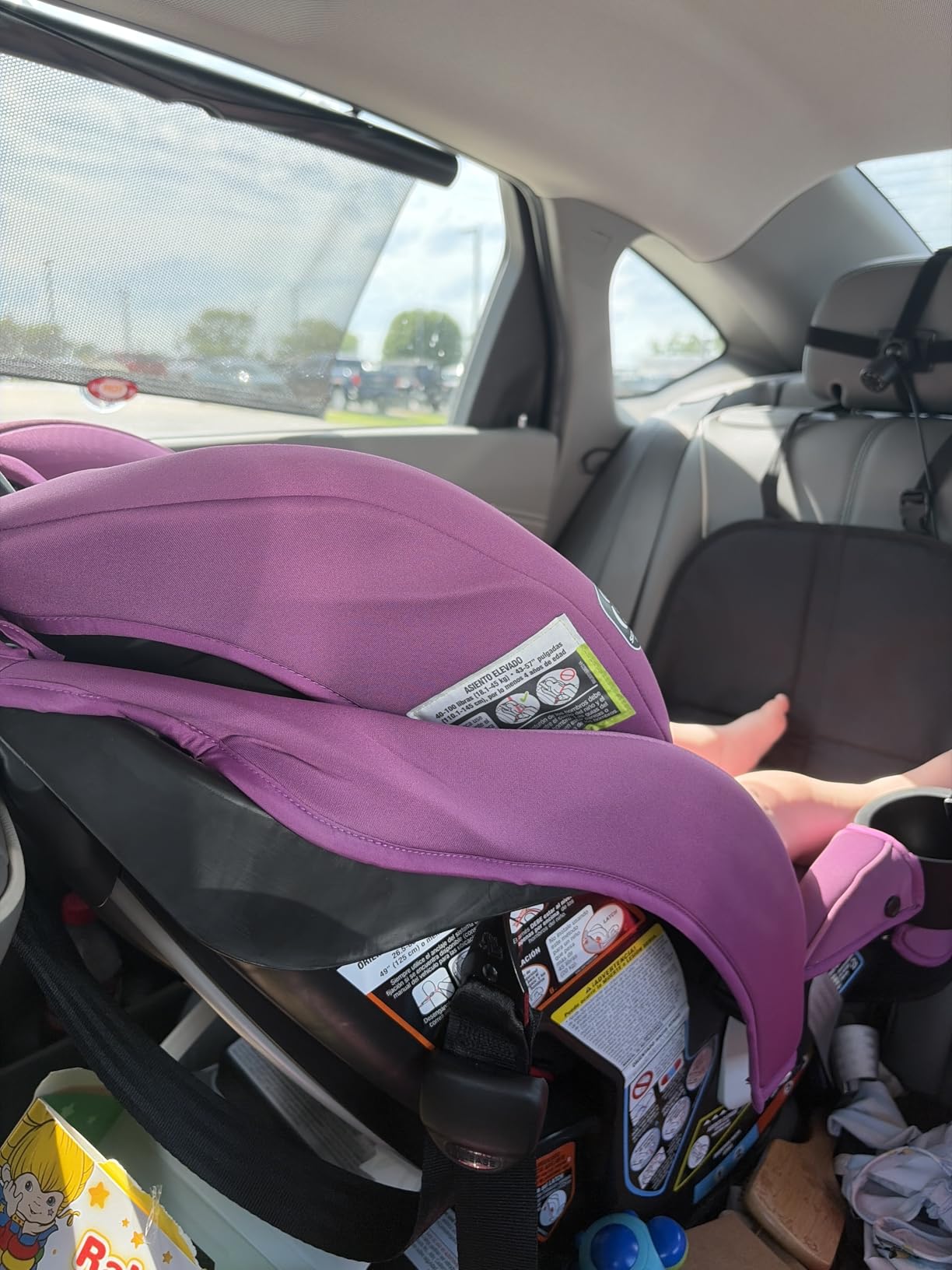
The Slimfit is the Graco answer to the Diono Radian’s width advantage, and it is the one to buy if you need three across but want a simpler seat. Dual integrated cupholders rotate away, making the seat about 10 percent slimmer than the standard shell, and owners report fitting three across in a sedan and a truck.
It is also the lightest seat in this group. Several reviewers mention carrying it through an airport and installing it unaided, which is the deciding factor for anyone moving between two vehicles or flying with a toddler.
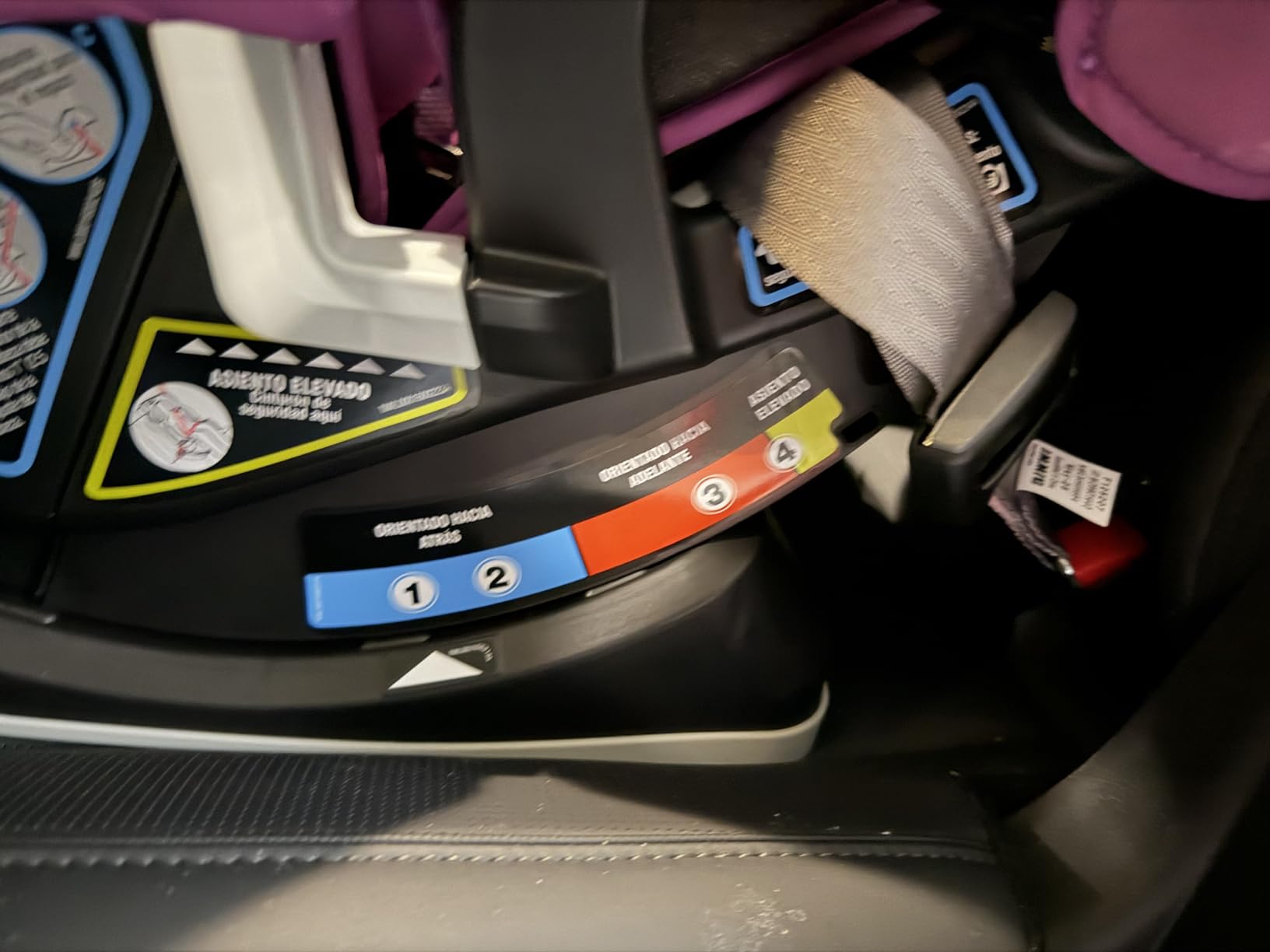
Installation feedback is unusually clean for a narrow seat: secure anchor installs with very little sliding or slipping in rear-facing mode, and it holds a secure install in narrow sculpted rear buckets such as a Ford Mustang, where most wide seats simply will not sit. Cleaning, tilting and adjusting are all reported as straightforward.
The criticisms are about comfort in heat. Dense padding runs warm, and the openings on the side panels mean air conditioning blows directly onto the child’s legs. A few buyers also found the newborn recline hard to achieve without help, so do not attempt the first installation alone.
How does it compare with the Diono Radian 3R for three across?
The Radian carries a 50 lb rear-facing ceiling and a steel shell; the Slimfit carries 40 lb and a lighter frame. The Radian is the choice for a large child, the Slimfit for simpler installation, lighter handling and heat in a warm climate.
Is the light weight a safety compromise?
It reflects different internal materials, and the seat still uses the same no-rethread Simply Safe Adjust harness and Graco ProtectPlus side and frontal impact engineering as the larger models. The narrower width and lighter shell are design choices for space, not stripped-down safety features.
9. Maxi-Cosi Pria Max All-in-One: Best for One-Handed Buckling
Maxi-Cosi Pria Max All-in-One Convertible Car Seat, Rear Facing Car Seat (4-40 lbs), Forward Facing Car Seat (22-65 lbs), High Back Booster Seat (40-100 lbs), Pure COSI, Essential Graphite
Rear-facing 4-40 lb at 19-40 in
ClipQuik magnetic chest clip
Out-of-the-way harness routing
High-back booster 40-100 lb
Pros
- Magnetic ClipQuik chest clip opens one-handed
- Out-of-the-way harness routing reduces strap fumbling
- Soft PureCosi inserts and multiple parents report naps
- Easy headrest and seat back adjustment
- Relatively light for a convertible seat
Cons
- Wide and bulky in small sedans
- Some buyers report a strong chemical smell from the packaging
- Recline hard to hold once installed
- One 40 lb base was too wide to tighten safely with LATCH
The magnetic ClipQuik chest clip is the reason to consider this seat. It opens one-handed, which removes the single most common point of daily friction in any car seat, and combined with the out-of-the-way harness routing it means fewer seconds of wrestling with straps and buckles when your child is at their most uncooperative.
For rear-facing specifically, that friction is worse than in forward-facing, because the buckle sits further away and lower. On a 4-in-1 seat running 4-40 lb rear-facing, 22-65 lb forward-facing harness and a 40-100 lb high-back booster, the clip does the most work in exactly the stage this article is about.
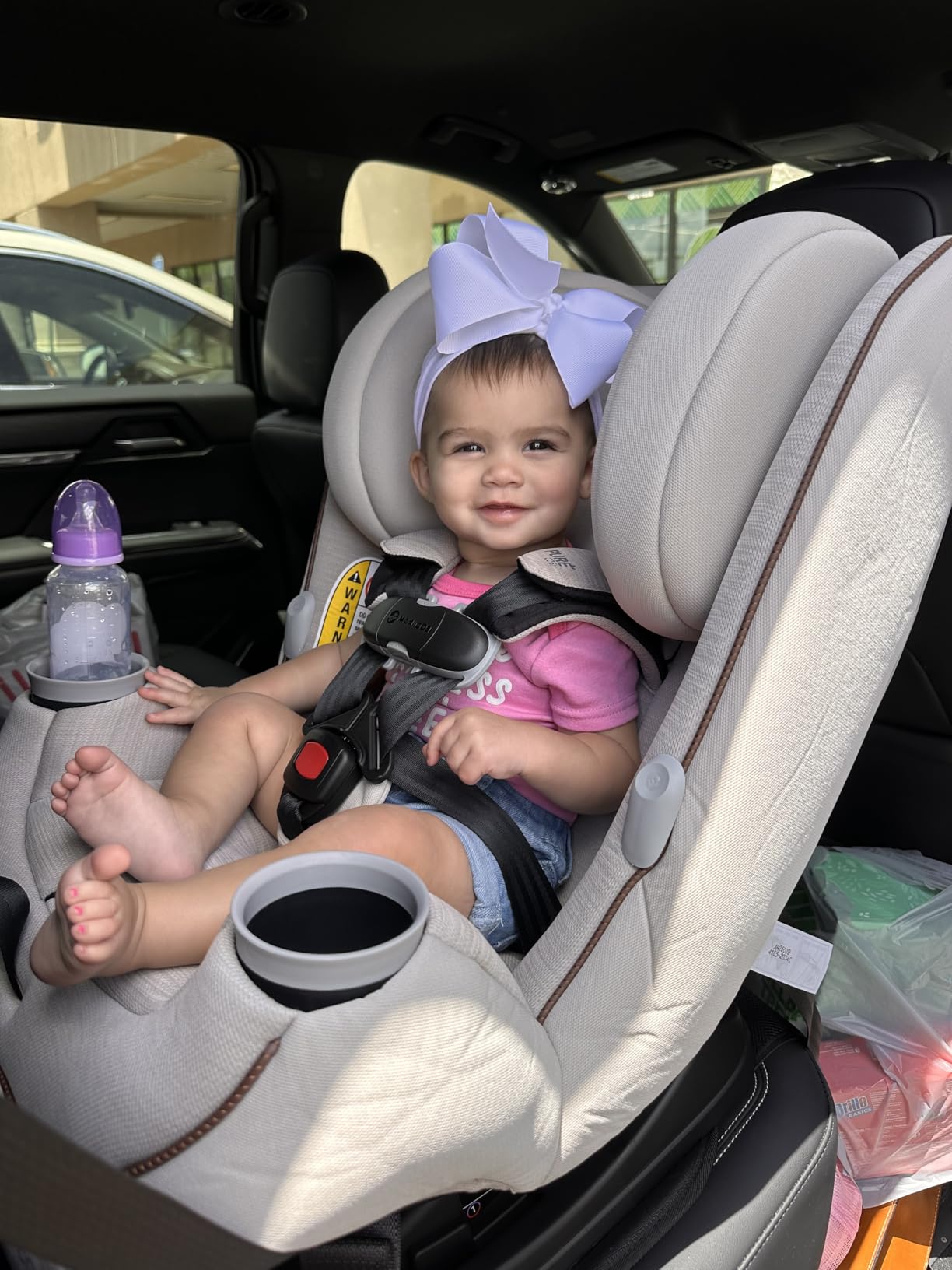
It carries the lowest average rating here at 4.5, and the reason is visible in the rating spread: 7 percent one-star. Parents who fit the seat well love the clip and the plush inserts, with several reporting their child falls asleep in it, but the negative threads are consistent rather than one-off.
Those threads are width, a chemical odour straight out of the packaging, and a recline that is hard to hold once installed, with the seat not staying in positions two or three. One owner also reported a 40 lb base too wide to tighten safely with LATCH, which is a fit problem rather than a design flaw but is worth checking in your own car.

Is a magnetic chest clip a safety compromise?
It is a standard chest clip with a magnetic assist, not a magnetic buckle replacing the harness, and the five-point restraint still does the work. Check the chest clip sits at armpit height every time you buckle, exactly as you would with any other seat.
Should I air it out before first use?
Yes, and give it a day or two in a ventilated space regardless of seat. A number of buyers reported a strong chemical smell on arrival, which usually fades, but it is easier to deal with before a child is sitting in it regularly.
10. Safety 1st Ellaris 3-in-1 Slim Fit: Budget Pick with a Short Rear-Facing Runway
Safety 1st Ellaris 3-in-1 Convertible Car Seat, Slim Fit Design, Rear & Forward-Facing, 5-Position Headrest, Travel-Friendly with Machine-Washable Seat Pad, Smokey Haze
Rear-facing infant 5-30 lb, toddler 30-40 lb
5-position no-rethread headrest
Meets Side Impact standard
Installed width just over 19 in
Pros
- Lowest cost in the roundup while still meeting the Side Impact standard
- Lightweight and easy to move between vehicles
- 5-position headrest adjusts without rethreading
- Machine-washable seat pad and dishwasher-safe cup holders
- Airplane ready and compact for travel
Cons
- Rear-facing stops at 40 lb
- Found wider and deeper than its slim label suggests
- Headrest has noticeably more play than comparable seats
- Highest one-star share of the group
The Ellaris is the cheapest way into this list and it does meet the federal Side Impact standard, which a surprising number of budget seats do not. It is lightweight, the headrest adjusts across five positions without rethreading, and the pad goes in the washer and dryer.
It also has the shortest rear-facing runway here, and it is worth being clear about why. The rear-facing infant stage stops at 30 lb and the toddler stage at 40 lb, so a child moving quickly through that range will be ready to turn around before most parents expect.
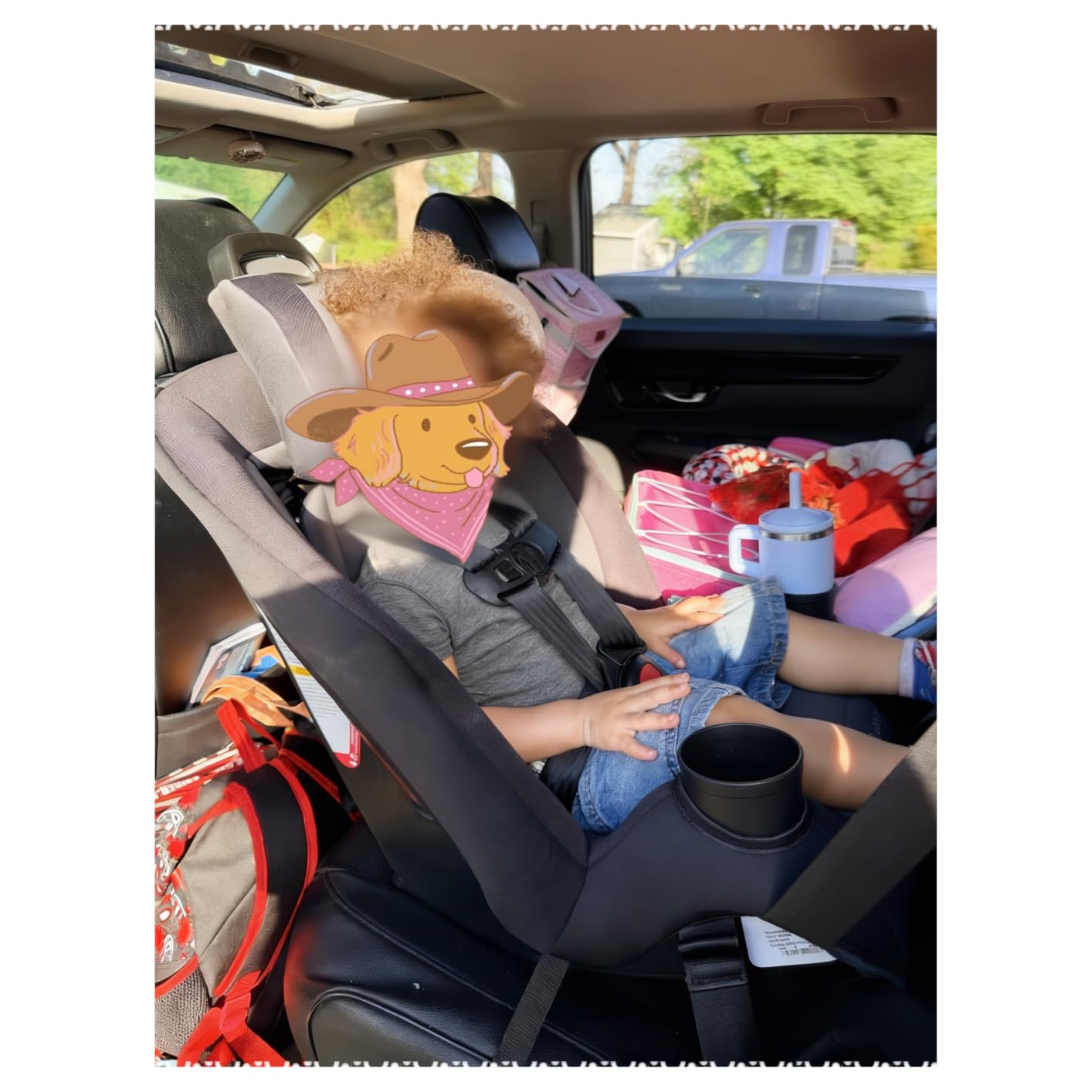
The critical feedback is about fit rather than safety. Despite the slim positioning, several buyers found it wider and deeper than expected at just over 19 inches installed, and reported that it broke up an otherwise workable three-across arrangement. The headrest is also reported as wiggly, with more play than comparable Graco seats.
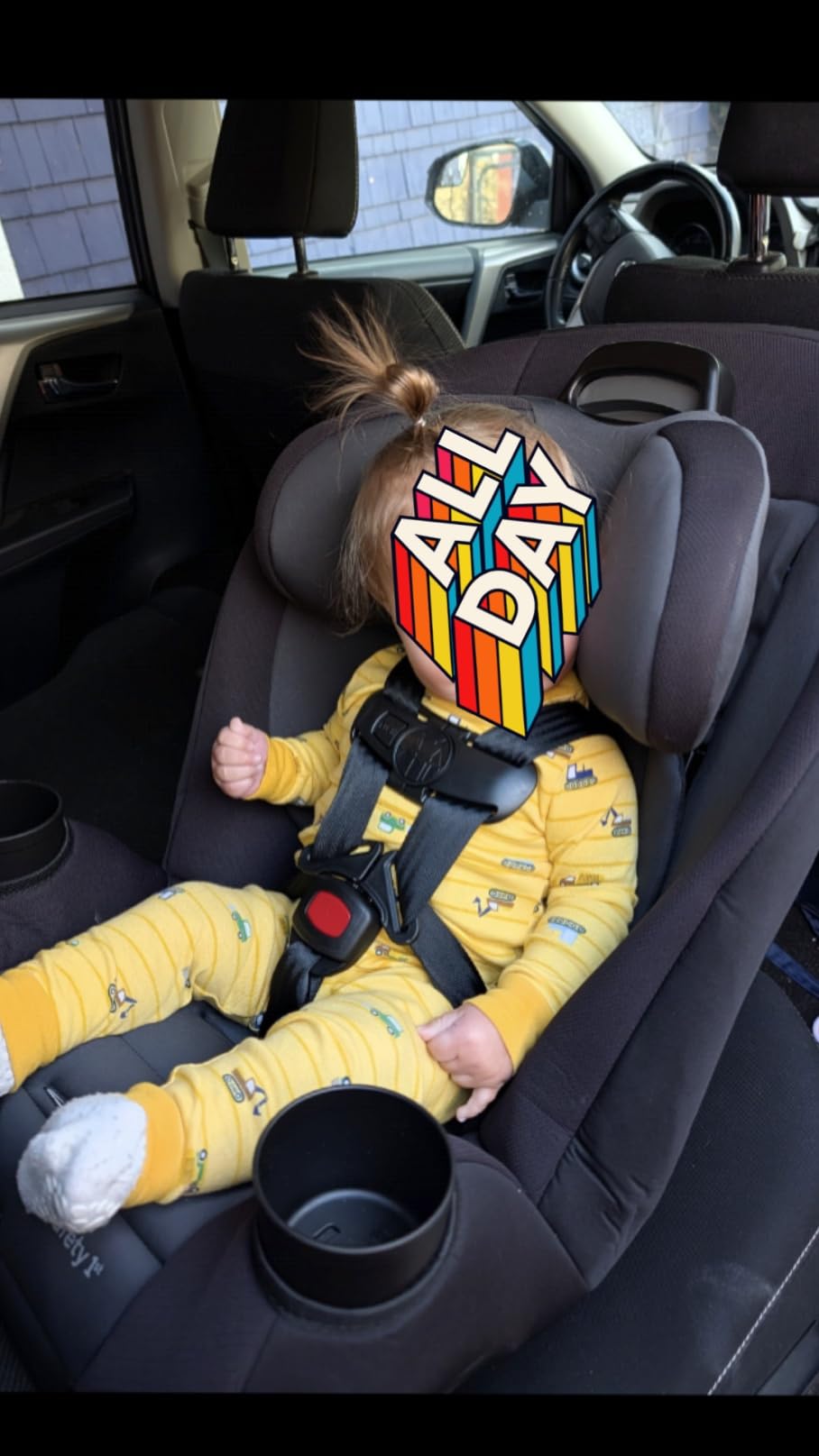
At 4.3 with an 8 percent one-star share, it is the lowest-rated seat in this group, and the strap tensioning button being hard to reach adds a daily irritation. Value buyers do rate it highly for the price, the light weight and the easy installation.
Is it safe enough for extended rear-facing?
It is a legitimate FMVSS-compliant seat that meets the Side Impact standard, so yes, within its 40 lb limit. The issue is capacity and build refinement rather than compliance, and the extra headrest play is the part we would want a technician to look at.
When does this make more sense than paying more?
When the seat is a short-term solution for a smaller child, or when weight matters more than capacity, such as a grandparent’s car or a travel kit. If you expect to keep a child rear-facing past 40 lb, spending more now avoids buying a second seat in two years.
How to Choose an Extended Rear-Facing Car Seat
Rear-facing weight limit vs rear-facing height limit
Weight is the number most parents check first, but the height limit decides when you actually turn around. A child can be within the weight range and still be physically too tall, and the rule is simple: the top of the head should be within about 1 inch of the top of the seat shell. Check the height limit printed on your specific seat, because it is not standardised across models.
Look for both numbers together. In this roundup, 50 lb and a generous height limit is the combination that genuinely buys extended time, because a 50 lb child who is also tall is the one who needs the extra months.
Vehicle depth and front passenger leg room
Measure before you buy, not after. Sit the child in the seat rear-facing in the back row, then measure the gap between the front edge of the installed seat and the back of the front seat. If that gap is under a few inches, a deep extended rear-facing seat will force the front seat forward and eat your front passenger’s leg room. If the driver is the one losing room, our cushions for car seats guide covers the relief options that do not involve moving the seat.
The extension panel on the Graco Extend2Fit is the best answer to this problem in the group, because it makes the child’s legroom adjustable. The Diono Radian’s very steep rear-facing recline works against you here, and the Evenflo Revolve360 Extend simply has a large footprint that you must measure around.
Lower anchor limits and the switch to a seat belt
Vehicle lower anchors are commonly rated to a combined child and seat weight of around 30 to 45 lb, which is well below the 50 lb rear-facing capacity of the seats at the top of this list. Practically, this means many families install with LATCH for the first year or two and switch to the seat belt for the extended rear-facing phase.
That switch is not a downgrade, as long as you install with the belt correctly. Choose a seat with a clear built-in lockoff so you can lock the belt at the correct height without relying on the shoulder latch alone, and confirm the installation tightens to under 1 inch of movement at the belt path.
Recline, head slump and the upright-seat worry
Compact extended rear-facing seats sometimes sit more upright than parents expect, and the worry that a slumping child is unsafe is one of the most common questions parents ask. The answer is that a child who has outgrown the shell height is the real problem, because their head is no longer contained. Within the height limit, some slumping in a very upright seat is normal and is not itself a safety issue.
What does help is harness fit. Keep the harness snug at armpit height, use the insert if the manufacturer provides one, and check that the top of the head stays inside the shell as the child grows. Seats with a genuine recline range, like the Maxi-Cosi Pria and the Baby Trend Cover Me, give you more room to solve it with angle instead.
Width, three across and the rotating question
If two or three children share the back row, width decides everything and the shortlist shrinks fast. The Diono Radian 3R and the Graco Slimfit are the two that hold a 50 lb or near-50 lb ceiling in a narrow frame, and the Baby Trend Cover Me is narrower still at 18.25 inches. Measure your back bench before assuming a slim label is accurate.
Rotating seats are a genuinely different proposition, and the trade-off is depth for convenience. The Evenflo Revolve360 Extend rotates in every mode, which is what makes it useful across a long rear-facing stretch, but it commits you to one vehicle position. Our infant car seat guide covers the carrier-based alternative if you only need rotation for the first year.
Expiry, used seats and buying hard-to-find brands
Check the manufacture date before anything else. Convertible seats commonly carry a lifespan of around ten years from manufacture, and an extended rear-facing seat that you buy for a three-year-old should still have most of that window left. A seat that is already several years old when it arrives is a poor buy for this specific purpose.
Used seats are a poor choice for extended rear-facing, because crash history is invisible and the expiry clock keeps running. If you must buy second-hand, a certified Child Passenger Safety Technician can inspect it, check for recalls and confirm the manufacture date. Canadian parents should note that many extended rear-facing brands outside North America are hard to source, and our comparisons found the widely available convertible seats above to be the realistic option there.
Installing an Extended Rear-Facing Seat: LATCH or Seat Belt
How to install with LATCH
Most parents in this comparison use lower anchors for the first stage and move to the seat belt for the extended phase, because the anchors run out of rated capacity well before the seat does. The Graco Extend2Fit’s SuperCinch mechanism tightens both anchor straps at once, which is the fastest correct method we used.
Route the straps through the belt path at or below the child’s shoulders, attach to the correct anchors, then pull the adjuster until the seat moves less than 1 inch at the belt path. If it moves more, the anchor weight limit or the vehicle seat cushion is the likely cause, not a fault in the seat.
How to install with a seat belt
Use the rear-facing belt path, buckle the vehicle belt, and then engage the seat’s own lockoff, which clamps the belt at the correct height. Relying on the shoulder latch alone is not acceptable for a rear-facing install. The Diono Radian 3R offers a SuperLatch belt-path option for the same reason.
Check that the headrest cannot move up into the belt and let the belt creep higher over time, and recheck the install after any significant growth. If the seat needs a rolled towel or a pooled pool noodle under it to achieve the right angle, remove the foam before the child is old enough to reach it.
Frequently Asked Questions
What is the longest rear-facing car seat?
The longest rear-facing options are the Graco Extend2Fit 2-in-1, the Diono Radian 3R and the Evenflo Revolve360 Extend, all of which rear-face to 50 lb. The Graco Extend2Fit is the strongest overall pick because its four-position extension panel adds up to 5 inches of extra legroom, so a 50 lb child can actually sit comfortably. The Diono achieves the same limit in a narrow three-across frame, and the Evenflo adds one-handed 360-degree rotation.
Should a 3 year old still be rear-facing?
Yes, if they are still within the seat’s rear-facing weight and height limits. The American Academy of Pediatrics recommends keeping children rear-facing until they reach the maximum rear-facing height or weight limit for their seat rather than turning around at the earliest permitted age. A typical 3 year old is within a 40 lb seat’s limits, and a taller child may still fit a 50 lb seat at that age.
How much safer is extended rear-facing?
Rear-facing children aged one to two are roughly five times less likely to be injured in a crash than the same child forward-facing. The seat routes crash forces through the back of the shell into the vehicle frame rather than through the child’s neck and spine, and it contains the head in both frontal and side impacts. That is the entire basis for the recommendation to stay rear-facing to the seat’s limits.
What is the safest seat for a rear-facing car seat?
Safety comes from correct fit and installation rather than a specific model, so look for a seat that meets the federal Side Impact standard, has a steel or reinforced frame, and fits your child within the printed limits. In this roundup the Graco Extend2Fit stands out for its 50 lb rear-facing limit combined with an adjustable extension panel, while the Diono Radian 3R has an automotive-grade steel core shell and a 50 lb limit in a narrow frame.
Can you use LATCH for extended rear-facing?
You can, but only until you reach the vehicle’s lower anchor weight limit, which is commonly a combined child and seat weight of around 30 to 45 lb. Almost every extended rear-facing seat here rear-faces to 50 lb or 40 lb, so many families switch to seat belt installation partway through. Use the seat’s built-in lockoff and recheck the fit after each growth spurt.
Are rotating car seats good for extended rear-facing?
They can be, and the Evenflo Revolve360 Extend is the strongest example in this roundup because its 360-degree rotation works in rear-facing, forward-facing and booster modes. Rear-facing is the hardest buckle position to reach, so rotating to load the child face-to-face makes a genuine daily difference, especially for parents with back pain. The trade-off is bulk, weight and committing to a single installation position.
Final Verdict
The Graco Extend2Fit 2-in-1 is the best car seat for extended rear facing in 2026, because it is the only mainstream seat here that pairs a 50 lb rear-facing limit with an adjustable extension panel that solves the legroom problem instead of hiding it. Pick the Diono Radian 3R if you need three children across a back row, the Evenflo Revolve360 Extend if reaching a rear-facing buckle hurts your back, and the Safety 1st Grow and Go if you want the most proven, lowest-friction option under a 40 lb ceiling.
Whichever you choose, check the manufacture date, measure your back seat before the seat arrives, and plan on switching from lower anchors to a seat belt as your child approaches the anchor weight limit.