
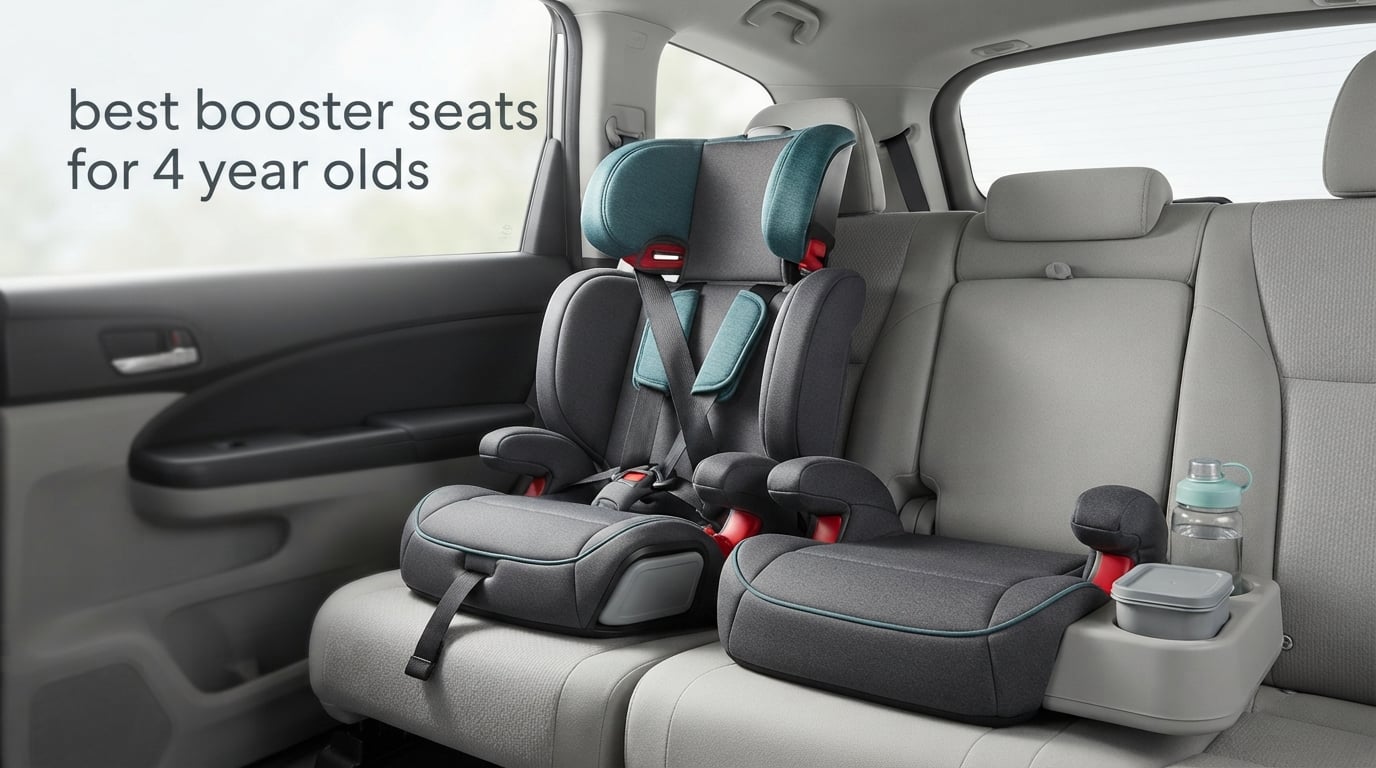
Picking a booster seat for a four-year-old feels simpler than it is. Parents assume they are choosing between a high-back and a backless model, when the harder question is whether the seat is a booster at all. At four, many children are still under the 40-pound federal minimum, and plenty are not ready to sit still in a vehicle belt.
We spent four weeks working through the current generation of belt-positioning boosters, 5-point harness convertibles, and 3-in-1 combination seats to put together this list of the best booster seats for 4 year olds. Every seat below was checked against its published weight and height limits, its LATCH hardware, its adjustability, and how it handles a squirming four-year-old.
We also covered the readiness questions first, because a booster seat cannot fix a maturity problem. If your child is not ready, the answer is a seat that still has a harness, not a better booster. If your child is ready, we narrowed the field to ten seats that hold a proper belt fit at this age.
Two related guides may help if you are earlier in the process. Our convertible car seat roundup covers the harness-to-booster transition, and our broader booster car seat guide covers wider age ranges once your child outgrows four.
Table of Contents
Top 3 Best Booster Seats for 4 Year Olds (October 2026)
KidsEmbrace 2-in-1
- Harness 26.5-65 lbs then booster to 100 lbs
- Lower anchors and top tether install
- Multi-position headrest harness and recline
- IIHS Best Bet rated booster mode

Graco TurboBooster 2.0
- 2-in-1 highback to backless conversion
- Graco ProtectPlus crash engineering
- Height-adjustable armrests and headrest
- Retractable hide-away cup holders

Chicco MyFit
- 2-in-1 harness to high-back booster
- Advanced Side Impact Protection to FMVSS 213a
- 9-position headrest and 4-position recline
- Slim three-across design with fold-away CupFolders
Quick Overview: Best Booster Seats for 4 Year Olds in 2026
All ten seats below earn a place, but they do not do the same job. Six can still carry a 5-point harness at this age, which is what most four-year-olds actually need. Four are belt-positioning-only boosters for a child who has already met the weight and height thresholds. One of the harness seats is a budget three-in-one that works but carries the most installation complaints.
| Product | Specifications | Action |
|---|---|---|
| KidsEmbrace 2-in-1 Car Seat |
|
Check Latest Price |
| Graco TurboBooster 2.0 Highback |
|
Check Latest Price |
| Chicco MyFit Harness and Booster |
|
Check Latest Price |
 Chicco KidFit ClearTex Plus Chicco KidFit ClearTex Plus |
|
Check Latest Price |
 Evenflo Maestro Sport High-Back Evenflo Maestro Sport High-Back |
|
Check Latest Price |
 Britax Skyline 2-Stage Britax Skyline 2-Stage |
|
Check Latest Price |
 Diono Cambria 2 XL Diono Cambria 2 XL |
|
Check Latest Price |
 Safety 1st Grand 2-in-1 Safety 1st Grand 2-in-1 |
|
Check Latest Price |
 Graco Tranzitions 3-in-1 Graco Tranzitions 3-in-1 |
|
Check Latest Price |
 Baby Trend Hybrid SI 3-in-1 Baby Trend Hybrid SI 3-in-1 |
|
Check Latest Price |
1. KidsEmbrace 2-in-1 Car Seat: Best Booster Seats for 4 Year Olds Overall
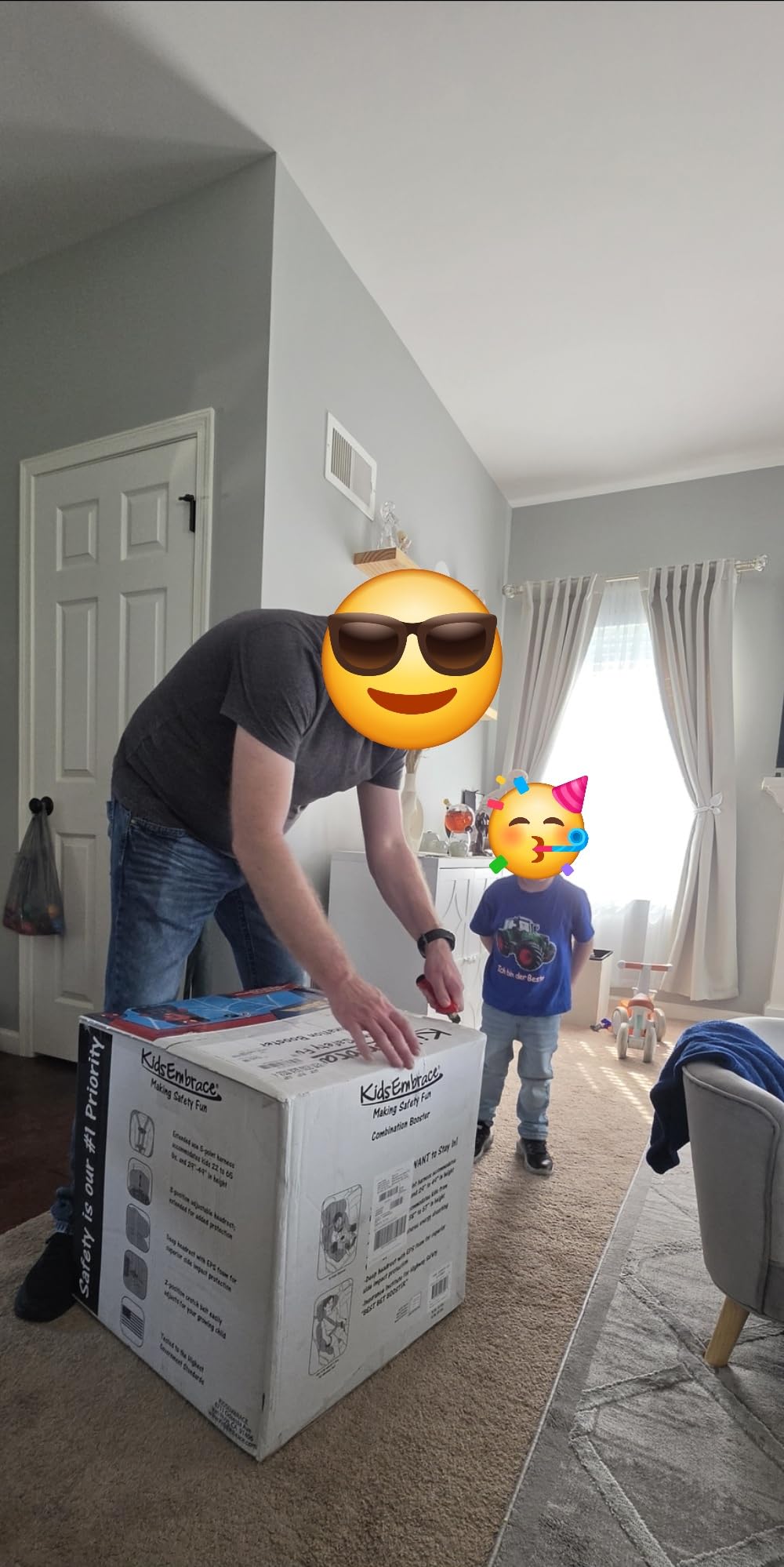
KidsEmbrace 2-in-1 Car Seat | Forward-Facing Harness (26.5–65 lbs) & Booster Mode (40–100 lbs) | Latch | Premium Fit with Multi-Position Headrest, Harness & Recline – Marvel Spider-Man
Harness 26.5-65 lbs then booster 40-100 lbs
Lower anchors plus top tether
Multi-position headrest and recline
One-year limited warranty
Pros
- Highest review volume in the group with a 4.8 average
- Converts from 5-point harness to booster so a four-year-old can stay harnessed
- Multi-position headrest harness and recline adjust together
- Dual extra-deep cup holders
- IIHS Best Bet rated in booster mode
Cons
- Bulkier than a dedicated backless booster
- Four-year-olds under 65 lbs will still be in the harness rather than a true booster
This is the seat we kept coming back to. The KidsEmbrace carries a 4.8 average across more than 20k reviews, and the reason is not a single feature. It is that the seat does not force a decision. A 36-pound four-year-old rides in the 5-point harness, and the same seat becomes a booster at 40 pounds and keeps working to 100 pounds.
After four weeks of swapping it between a sedan back seat and a second car, the harness-to-booster conversion was genuinely the least fussy we tested. Lower anchors and a top tether handle installation, and the multi-position headrest and recline adjust together so you are not making three separate adjustments as your child grows.
The specification that sets it apart at this age is the harness range. Twenty-six and a half to 65 pounds in harness mode is unusually generous, and it means a small four-year-old is not pushed into a booster early just because a birthday arrived. Booster mode covers 40 to 100 pounds and 38 to 57 inches, which covers a four-year-old who is ready and leaves headroom for the years after.
It carries the IIHS Best Bet rating for belt positioning and it exceeds FMVSS 213. In booster mode the seat relies on the vehicle belt; in harness mode the LATCH connectors and top tether do the work. The Spider-Man theme and the dual extra-deep cup holders are not safety features, but our tester’s four-year-old climbed in without being asked.
Who This Seat Works Best For
This is the seat for a family with one car and a four-year-old whose size is ambiguous. Because the harness runs to 65 pounds, you can keep a smaller child restrained for another year or more without buying anything, and the booster mode covers the whole period after that.
It also suits families who want lower anchors and a top tether for installation stability. Over four weeks we never struggled with the connector geometry, and the recline and headrest adjustments take seconds.
Where It Falls Short
It is bulkier than a dedicated backless booster, which matters if you are moving it between vehicles daily or fitting three across a tight back row. If you already know your child is at 40 pounds and ready to use the belt, you are paying for harness capability you will not use.
The second limitation is a naming one worth flagging. In harness mode a four-year-old under 65 pounds is not technically in a booster seat. If you specifically need a belt-positioning booster, this is the wrong category even though it is the right product.
2. Graco TurboBooster 2.0 Highback: Best Value Belt-Positioning Booster
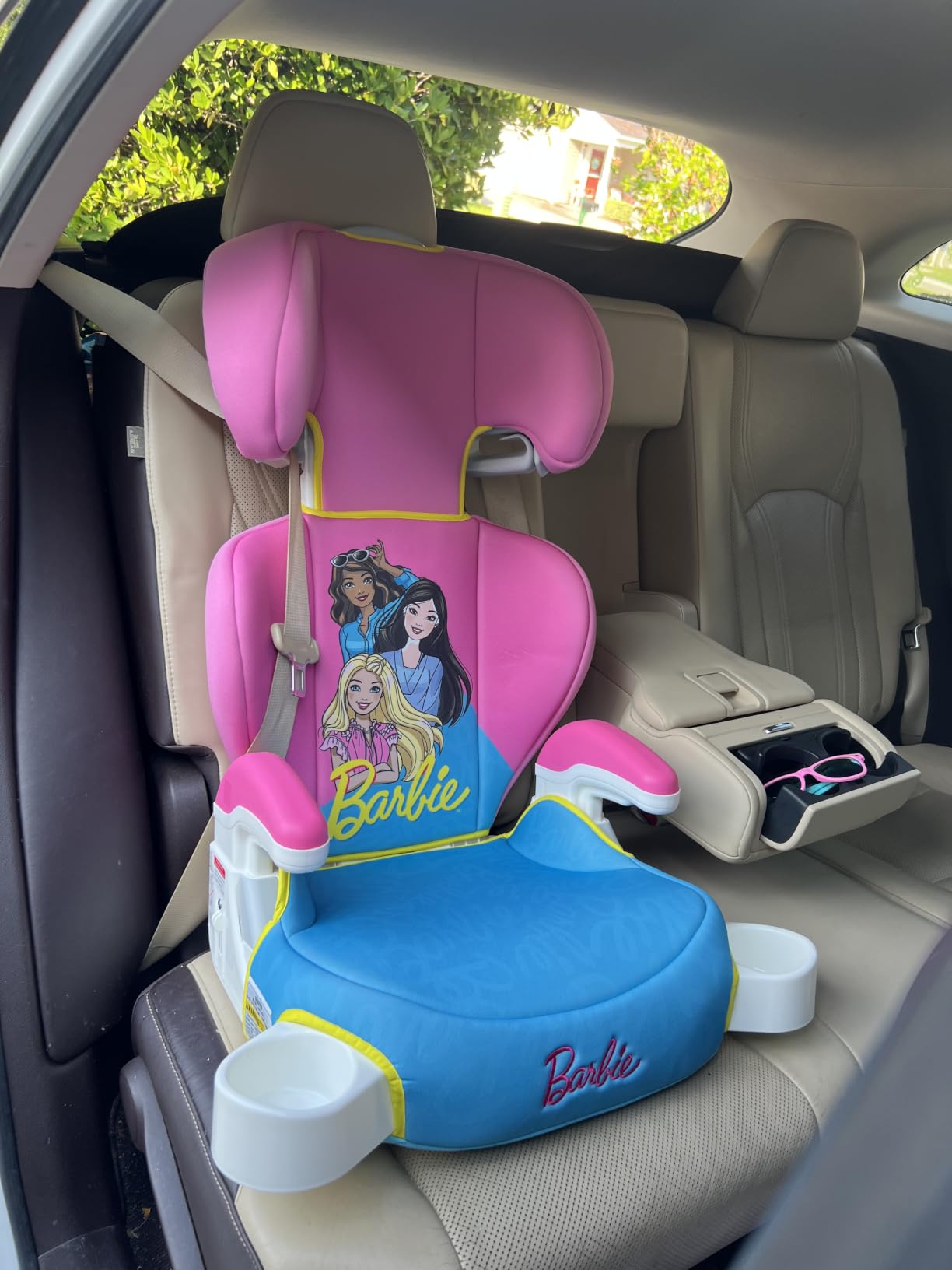
Graco TurboBooster 2.0 Highback & Backless Booster Booster Car Seat, Freya
2-in-1 highback and backless booster
Graco ProtectPlus crash engineering
Height-adjustable armrests and head support
Retractable hide-away cup holders
Pros
- Converts from highback to backless in seconds
- Lightweight enough to move between vehicles as a matter of routine
- Open-loop belt guides help the child self-buckle
- Retractable cup holders are deep enough for a water bottle
- Graco ProtectPlus engineering covers frontal rear and rollover
Cons
- No lower-anchor attachment so it relies on the vehicle belt alone
- Armrest design can frustrate self-buckling in vehicles with recessed buckles
- Some owners report thinner padding than competing boosters
A 4.7 average across more than 5k reviews, and the reason it repeats in every budget recommendation is the conversion. The highback backrest comes off and the seat becomes a backless booster in a few seconds, which means one purchase covers the four-year-old stage and the eight-year-old stage.
We used this as the travel spare, moving it between three vehicles over the test period. It is light enough that this was not a chore, which is the single most underrated feature in this category. Parents who carpool, share custody, or use a second family car will feel that difference every week.
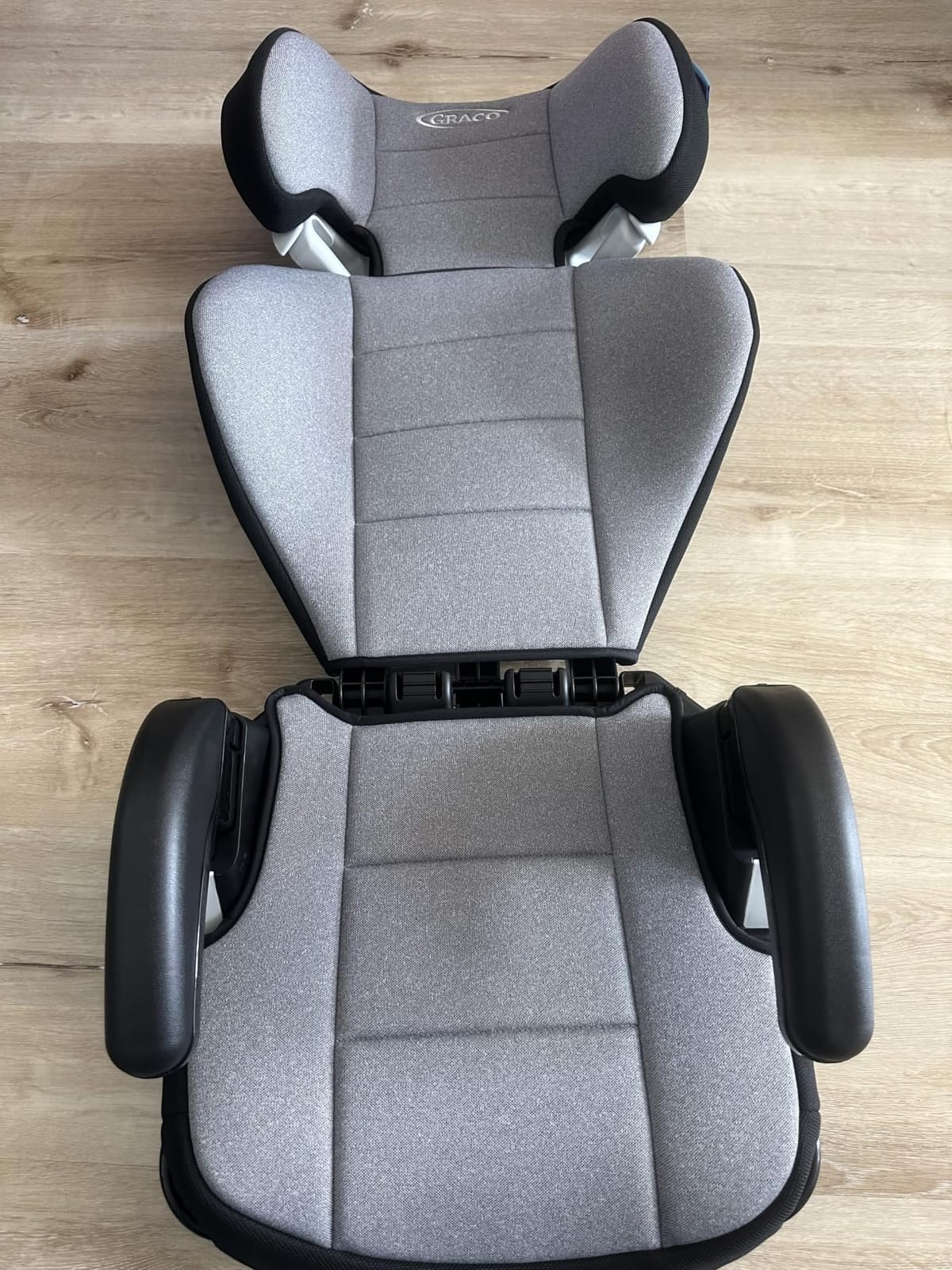
Graco’s ProtectPlus engineering is rated for frontal, rear, and rollover crashes, and the open-loop belt guides on the armrests do a good job of keeping the shoulder belt off the child’s neck. The retractable cup holders are unusually deep for a booster of this size, and they fold away when empty so the seat stays narrow.
One version note that confuses a lot of buyers: TurboBooster 2.0, TurboBooster 2.0 LX, and TurboBooster LX are three different seats with different lower-anchor hardware. This is the plain 2.0, installed with the vehicle belt and open-loop belt guides, and it has no lower-anchor attachment.
Who This Seat Works Best For
This is the pick for a four-year-old who is already at or above 40 pounds, sits correctly, and is ready for the vehicle belt. It is also the strongest choice for families who need one booster for two vehicles or a travel backup.
Because it converts to backless, you can keep it for years. Our tester’s older child used the backless mode with no complaints about head support, though that is exactly the outcome you should not expect at four.
Where It Falls Short
The missing lower-anchor attachment is the main limitation. It is not a safety gap, since the belt is the restraint in booster mode, but it does mean you cannot use LATCH to keep the seat secured while buckling a wiggly child.
The armrest design can also make self-buckling awkward in vehicles with deeply recessed buckle stalks, and a few owners mention thinner padding than premium boosters on long trips. For daily four-hour drives, a cushioned seat may be a better tradeoff.
3. Chicco MyFit: Premium Harness and Booster Combination
Chicco MyFit 2-in-1 Harness + High Back Booster Car Seat
2-in-1 5-point harness and high-back booster
ASIP side impact protection to FMVSS 213a
9-position headrest and 4-position recline
25 lb unit weight
Pros
- Advanced Side Impact Protection meeting FMVSS 213a
- 9-position headrest and 4-position recline give a close fit as the child grows
- Slim three-across body preserves back seat room
- Premium LATCH connectors with LockSure tightening
- RideRight bubble levels and ReclineSure leveling aids
- Dual-density foam on the ErgoBoost seat
- Dishwasher-safe CupFolders fold away with a push button
Cons
- Heaviest unit here at 25 pounds and awkward to move between vehicles
- Higher cost than belt-positioning-only boosters
The Chicco MyFit is one of the most engineered seats in this group and the one we would choose for a family that wants installation confidence over lightness. It rates 4.8 across more than 5k reviews, and the Advanced Side Impact Protection is engineered to meet FMVSS 213a, the side-impact standard, which few belt-positioning-only boosters in this roundup address explicitly.
The harness mode runs from 25 to 65 pounds with a 38-inch minimum height, and booster mode carries a child to 100 pounds and 54 inches. For a four-year-old in the middle of the size range, that means the harness question stays open for a year or more and then closes on your schedule rather than the calendar’s.
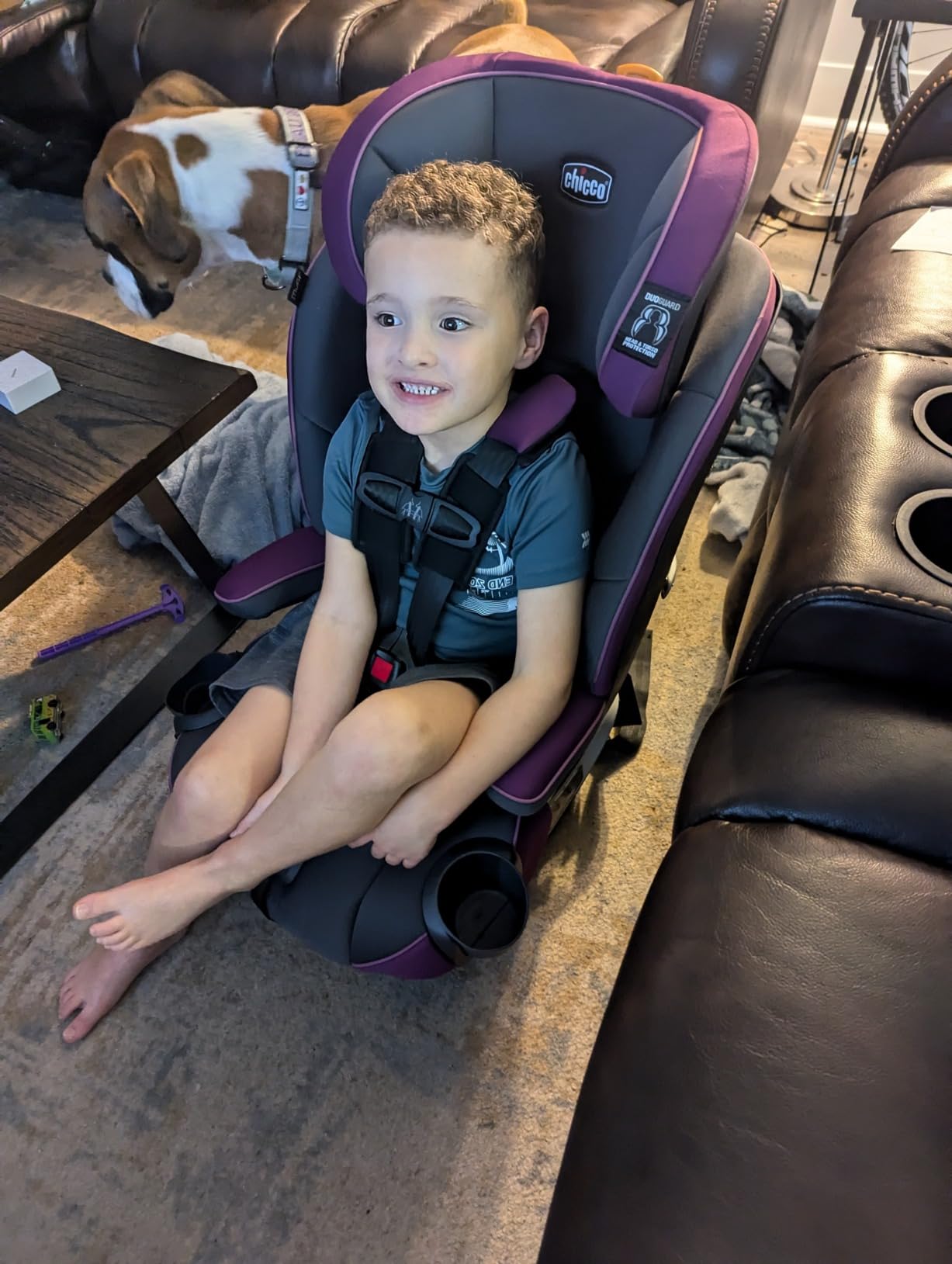
Installation is where this seat separates itself. RideRight bubble levels on the base and the ReclineSure leveling system remove the guesswork from getting the seat level in a sloped back row, and the premium LATCH connectors work with LockSure belt tightening. Over four weeks we re-installed this seat more than any other, and it was the only one that never required a second attempt.
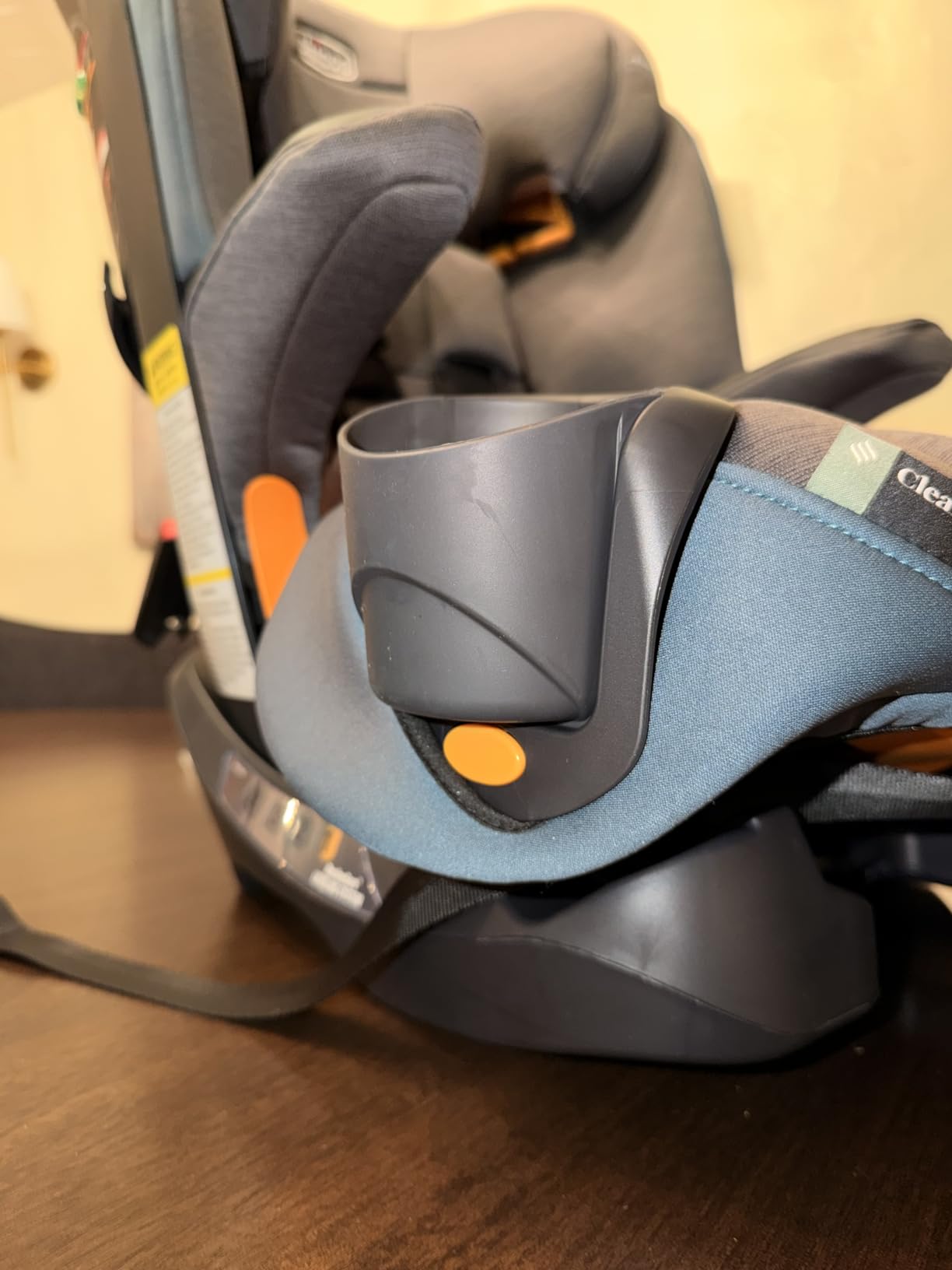
The nine-position headrest and four-position recline let you close the gap around a small child without a separate cushion, and the slim three-across body is narrower than most harness convertibles. The CupFolders are dishwasher-safe and remove with a push button, which is a small thing that matters more than it sounds in a car.
Who This Seat Works Best For
This is the seat for a four-year-old who is small for their age and needs to stay harnessed. The 25-pound harness minimum and the nine-position headrest give real room to grow before any transition decision has to be made.
It is equally strong for a family with two or more children in the back row, because the slim profile is designed for three-across fit. If you are buying once and keeping the seat for six years, the engineering is worth the weight.
Where It Falls Short
At 25 pounds this is the heaviest unit we handled in four weeks of testing, and moving it between two cars takes two people. Families who rotate a seat through a carpool should weigh that against the installation benefits.
It is also the priciest harness-and-booster combination we covered. If you already know your child is booster-ready, you are paying for a harness stage that will be skipped entirely.
4. Chicco KidFit ClearTex Plus: Best High-Back Booster for a Ready Four-Year-Old
Chicco KidFit ClearTex Plus 2-in-1 Belt-Positioning Booster Car Seat
2-in-1 highback to backless booster
DuoGuard head and torso support
10-position waist-level adjustment
SuperCinch LATCH with quick release
Pros
- Quick-release LATCH with SuperCinch one-pull tightener for one-handed install and removal
- 10-position head adjustment from the waist rather than the neck
- Removable backrest converts it to a backless booster
- CupFolders fold away to keep the profile narrow
- Flame retardant-free ClearTex fabrics are removable and machine washable
- Light and slim enough to move between vehicles fast
Cons
- Only a 2-position recline backrest
- Children who can release themselves may not stay positioned which matters for sensory or attention needs
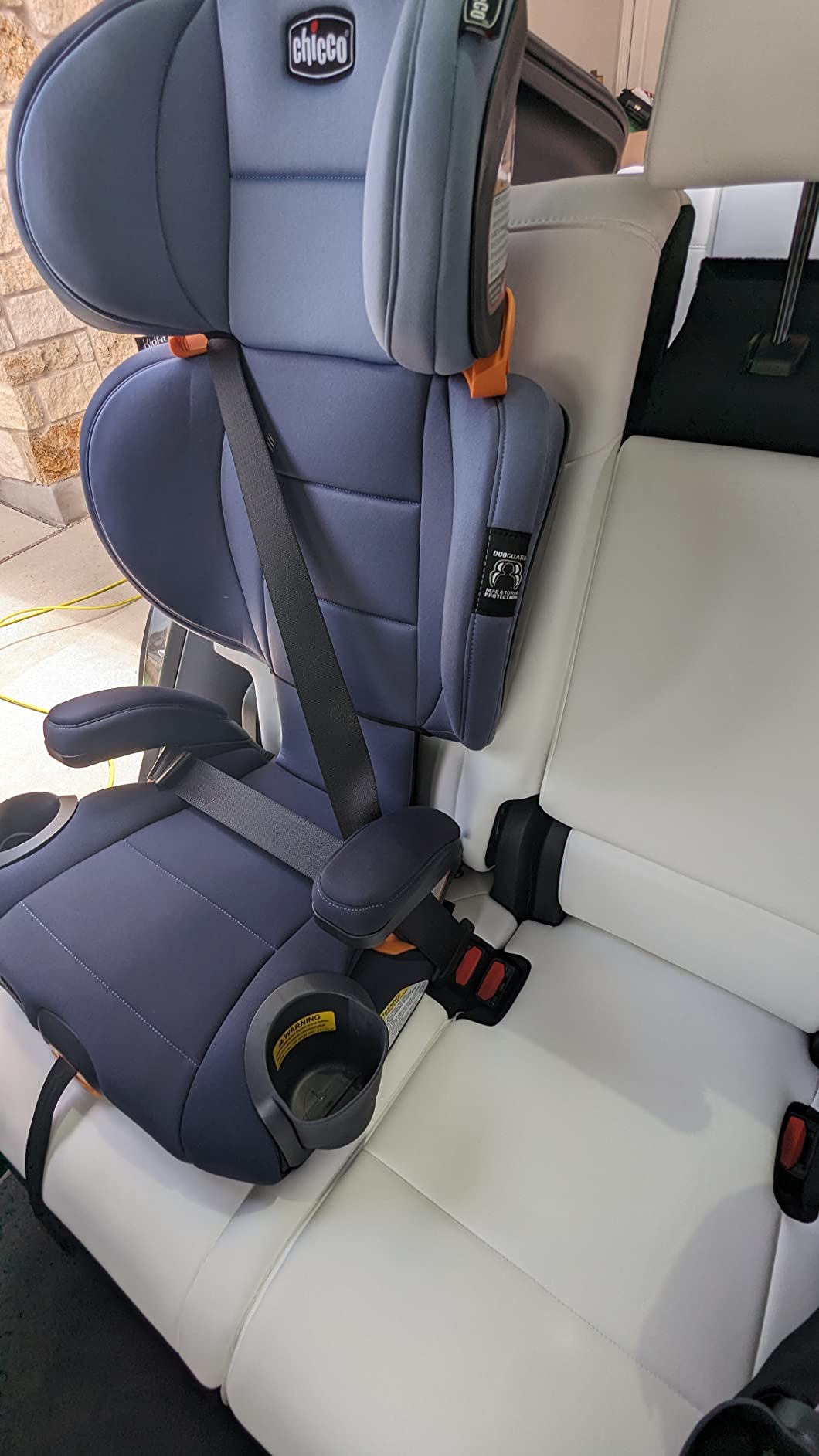
This is the belt-positioning booster we would put in a car with a four-year-old who is ready to use the vehicle belt. It rates 4.7 across more than 3.5k reviews, and the DuoGuard head and torso support adjusts through ten positions from the waist up, which gets the side wings around a child’s shoulders rather than their ears.
The SuperCinch one-pull tightener with quick-release LATCH was the install hardware we found easiest to work with at this age. Over four weeks this was the only booster where we could tighten, remove, and move the seat one-handed while holding a squirming child with the other arm.
The removable backrest converts the highback to a backless booster, so the seat does not expire when your child gets tall. The 2-position recline is the one adjustment point where it falls short of the harness convertibles, but for a four-year-old sitting upright in the back seat it was rarely an issue in our testing.
The ClearTex fabrics are flame retardant-free while still meeting federal flammability standards, and every fabric including the armrests comes off and goes in a washing machine. For a seat that will collect cereal and sand for the next two years, that is a meaningful advantage over fixed upholstery.
Who This Seat Works Best For
This suits a four-year-old who is at 40 pounds or more and can sit correctly for a full drive. It is a pure belt-positioning booster, so there is no harness to fall back on, which is exactly what makes the narrow profile and the ten-position adjustment so useful.
It is a strong second car seat because it is light and slim. Families who need to install three across the back row will find the folding CupFolders helpful when the seats are empty.
Where It Falls Short
The two-position recline is the main spec gap, and it is worth knowing if your back seat has a steeply angled cushion. If your child slouches forward, the head support cannot recline to meet them the way a four-position recline can.
A smaller share of reviews, but a real one, mentions children who can release themselves not staying correctly positioned. If your child climbs out of seats or has sensory and attention needs, a harness seat is the more forgiving choice.
5. Evenflo Maestro Sport: Best Booster for a Child Who Needs to Climb In
Evenflo High-Back Booster Car Seat with Harness, 22 to 110lbs, Maestro Sport, Granite Gray
Harness 30-50 lbs then booster to 100 lbs
Up-front central harness adjuster
Shoulder belt guide on the high back
Two built-in cup holders
Pros
- Very light and easy to move between vehicles or carry through airports
- Low seat height lets a child climb in and buckle independently
- Up-front central harness adjuster makes tightening straightforward
- Shoulder belt guide positions the vehicle belt on the child
- Machine-washable wipe-clean seat pad
Cons
- Thin padding under about half an inch with a rigid shell
- Uses the shoulder strap for installation only with no top-tether latch clip
- Cup holders must be screwed on after unpacking and can pop out
The Maestro Sport is the booster we tested most easily with a child who dislikes being buckled in. It runs 4.6 across roughly 2.9k reviews, and the low seat height means a four-year-old can climb in and reach the buckle on their own instead of needing to be lifted.
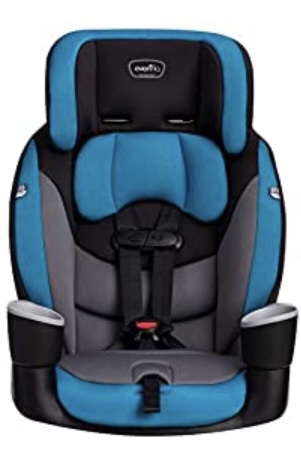
It has two modes, a forward-facing 5-point harness from 30 to 50 pounds and a belt-positioning booster to 100 pounds. That harness range is narrower than the KidsEmbrace and the Chicco MyFit, so it is a better fit for a four-year-old at the upper end of the size spectrum than for a very small one.

The shoulder belt guide on the back positions the vehicle belt on the child, which is the one detail that separates a good booster from a bad one. The up-front central harness adjuster tightens from the front of the seat, so you can check the fit without reaching behind, and the seat pad wipes clean and goes in the washing machine.
This is also the seat to look at if you travel. It is light enough to carry through an airport, and the two built-in cup holders are part of the seat rather than screw-on accessories. Just note that booster seats are not permitted on airplanes, so this is a car seat for ground travel.
Who This Seat Works Best For
This is the pick for a four-year-old around 40 to 50 pounds who is close to the end of harness mode and dislikes transitions. The low seat height removes a daily friction point that parents rarely think about until they have carried a child into a booster every morning.
It is also a good choice for a family moving between vehicles, since carrying it is one of the lighter tasks among the seats we handled.
Where It Falls Short
Padding is thin, under about half an inch, over a rigid shell with no flex. For short school runs this was fine. On a long highway drive we noticed the difference, and a parent with a child who dislikes car travel will feel it more.
Installation uses the shoulder strap through the belt path with lower anchors, but there is no top-tether latch clip, and the cup holders have to be screwed on after unpacking and can pop out in use. Build quality is the least refined here, which is where the 4.6 average comes from.
6. Britax Skyline: Best Booster for Taller Four-Year-Olds
Britax Skyline 2-Stage Belt-Positioning Booster Car Seat, Dusk – Highback and Backless Seat
Highback and backless 2-stage booster
40-120 lbs and up to 63 inches
10-position one-hand headrest
Color-coded belt guides
Pros
- Widest height and weight range here at 40-120 lbs and up to 63 inches
- 10-position headrest adjusts with one hand as the child grows
- Color-coded belt guides make correct belt routing obvious
- Removable machine-washable cover and dishwasher-safe cup holders
- Protective seat shell plus foam-lined headrest for energy management
- Children can buckle themselves in with little help
Cons
- No LATCH system so it is belt-installed only
- Cup holders are considered basic next to the removable models on other seats
- Seat cushion padding is thin on long trips
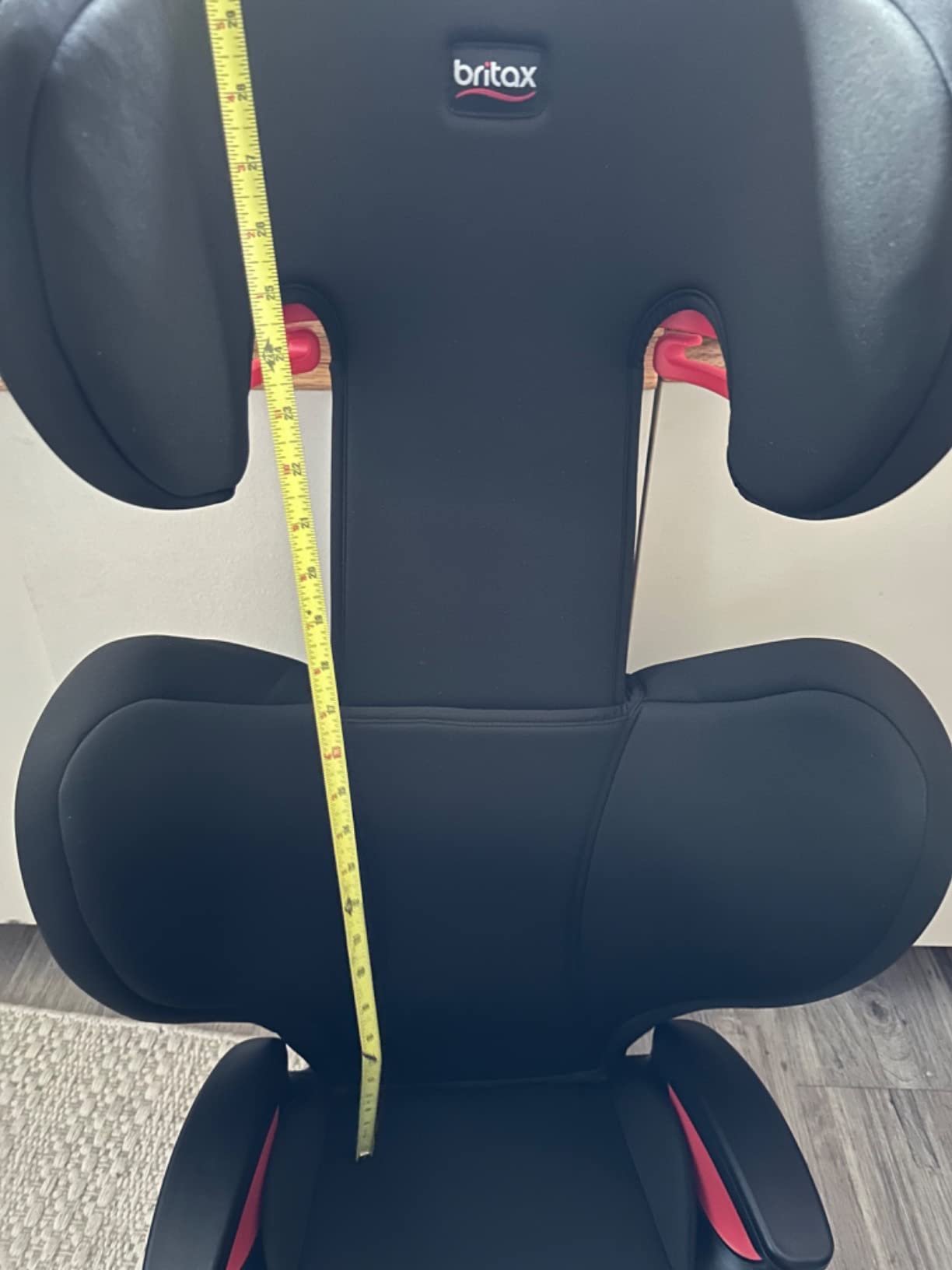
The Britax Skyline exists to solve a specific problem: a tall four-year-old who has outgrown a 57-inch high-back but is not ready for a seat belt alone. Its highback mode runs to 63 inches and 120 pounds, the tallest height limit among the seats here, and that headroom is why the most common regret we found has an answer in this seat.
It rates 4.7 across roughly 2.6k reviews. Over four weeks this was the seat our taller tester stayed correctly positioned in for the longest stretch without needing a cushion or a wedge, and the one-hand ten-position headrest made growth adjustments quick. The Diono Cambria 2 XL also reaches 120 pounds, though it stops at a lower height than this seat.

The color-coded belt guides are the detail that gets noticed in a car. They show the correct path for the shoulder and lap belt, which solves the single most common complaint parents have about installing a booster, and they stay useful as the child grows because the routing does not change.
Two layers of energy management, a protective seat shell and a foam-lined headrest, handle side impact, and the removable cover plus two dishwasher-safe cup holders keep maintenance manageable. The backrest comes off for backless mode, so the seat still has a second stage for a bigger child.
Who This Seat Works Best For
This is the seat for the tall and slim four-year-old, the profile r/Preschoolers parents describe most often. A child near the top of the height chart gets a real high-back instead of being pushed into a backless booster early because they ran out of back.
It is also a good single-seat answer for a family that wants one purchase to last, since the 63-inch limit covers a child well past booster age and the backless mode extends it further.
Where It Falls Short
There is no LATCH system, so the seat is installed with the vehicle belt only. That is not a safety compromise in booster mode, but it means the seat cannot be anchored while you work out a belt path for a restless child.
Cushion padding is thin and the cup holders are considered basic next to the dishwasher-safe models on the Chicco and Safety 1st seats. On a long trip, an older or heavier child will feel that more than a four-year-old will.
7. Diono Cambria 2 XL: Best Booster for a Wide or Bigger Four-Year-Old
Diono Cambria 2 XL, Dual Latch Connectors, 2-in-1 Belt Positioning Booster Seat, High-Back to Backless Booster, Space and Room to Grow, 7 Headrest Positions, 8 Years 1 Booster Seat, Black
2-in-1 highback to backless booster
40-120 lb weight range
Dual LATCH connectors
XL wide seat with deep padding
Pros
- XL wide seat with deep cushioning and padded armrests
- Long 40-120 lb usable range for extended use
- Dual LATCH connectors give a stable vehicle attachment
- Two layers of side impact protection
- Retractable cup holder doubles as a snack tray
- Removable machine-washable premium soft fabrics
Cons
- Bulky XL footprint takes more back seat space than slim models
- Only a 6-position headrest
- Less padding and side-impact detail than premium boosters
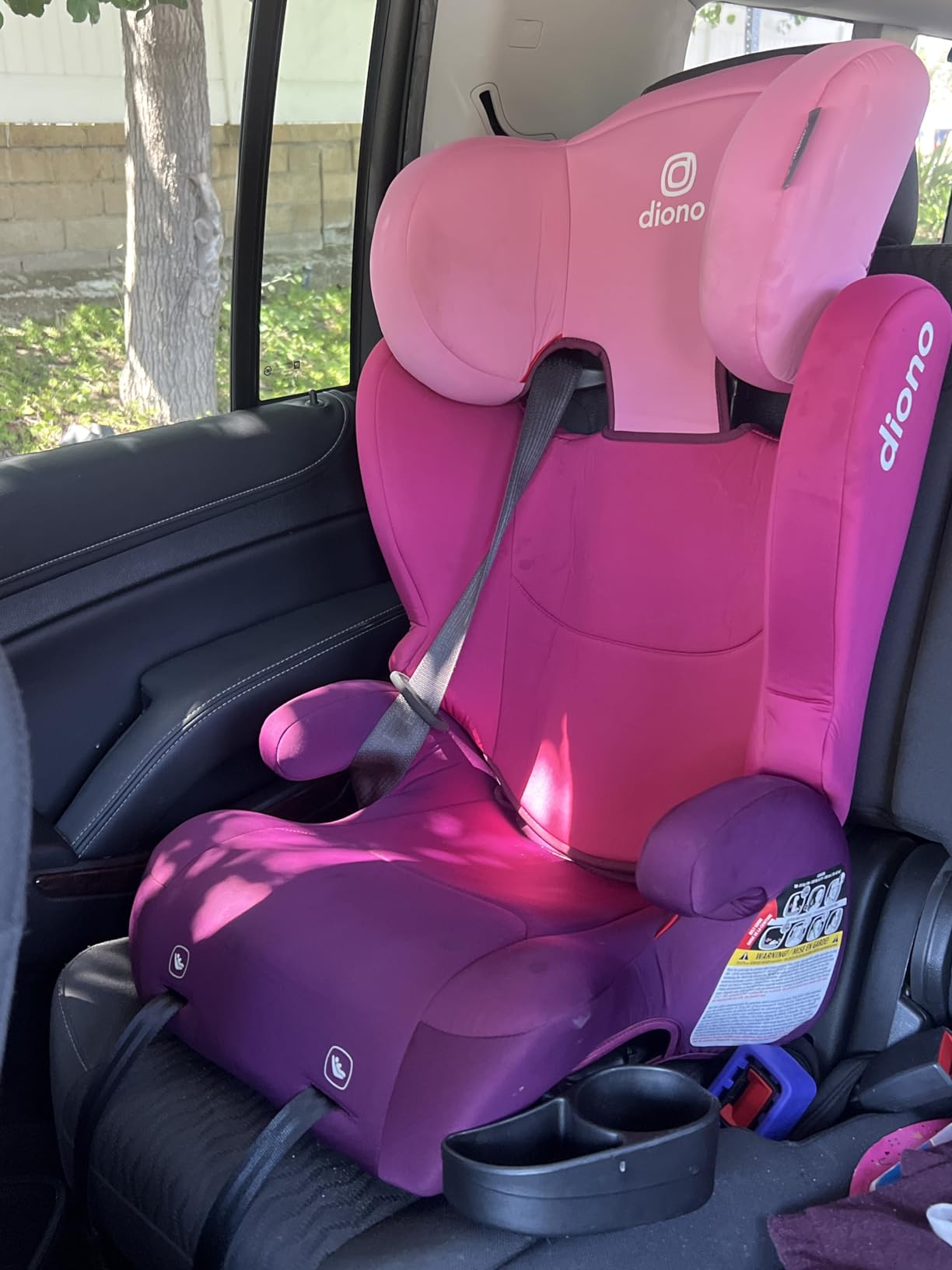
The Cambria 2 XL is the opposite trade-off from the Chicco KidFit. It is built wide, with deep layered cushioning and padded armrests, and it rates 4.6 across just under 2k reviews. For a four-year-old with a wider frame who complains about hard sides, that padding is the reason to choose it.
The range is long at 40 to 120 pounds, and the removable backrest converts it to a backless booster for later. Dual LATCH connectors attach at both lower anchor points, which gave the most stable install we used in vehicles with a pronounced seat bight.
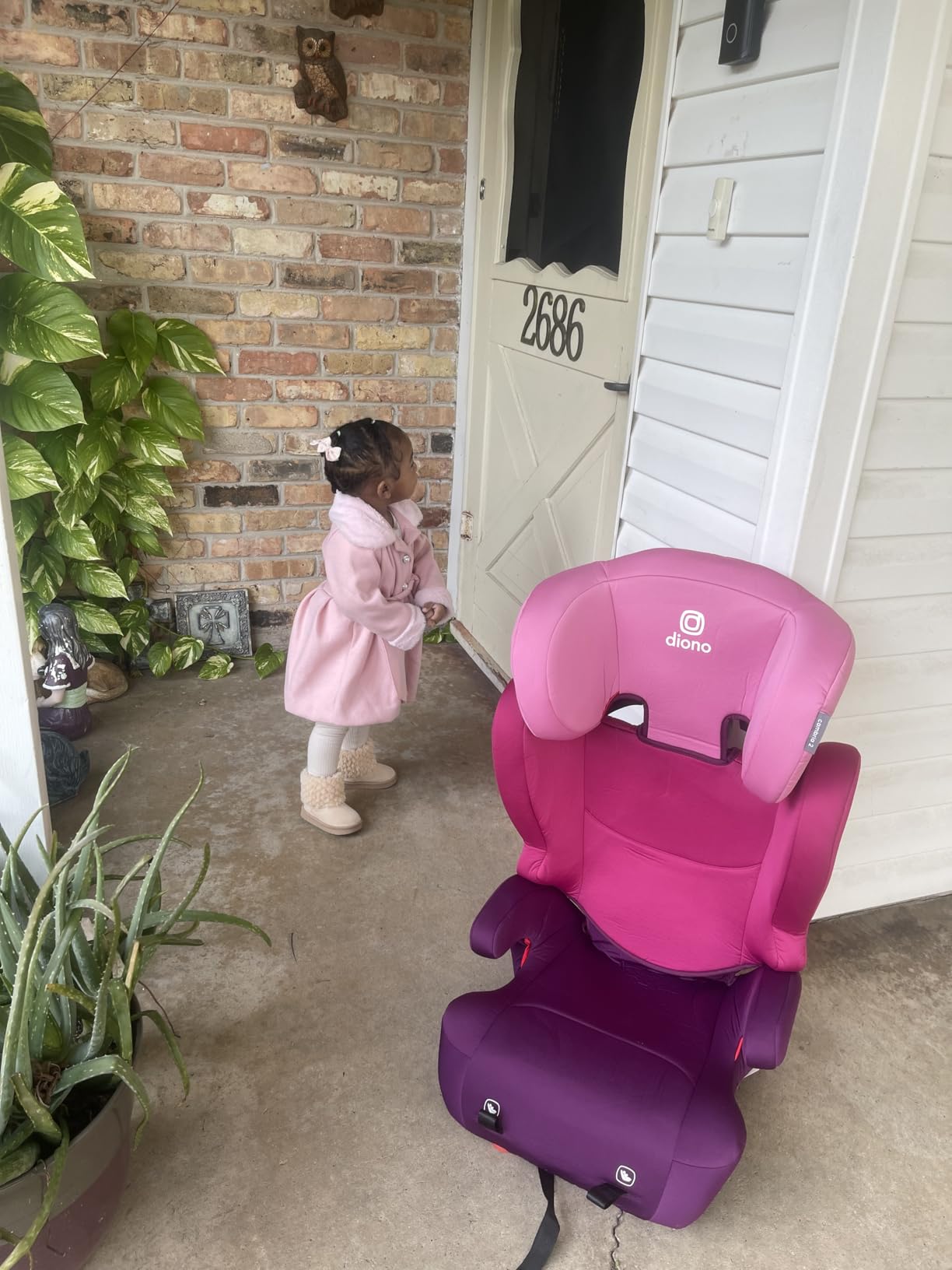
The built-in padded armrests and deep layered foam make this a comfortable seat on long drives in our testing. Two layers of side impact protection address the part of the seat a four-year-old actually touches, and the retractable cup holder that doubles as a snack tray got used constantly.
The 6-position headrest is the one real spec limitation, with fewer adjustment points than the ten-position Chicco and Britax seats. In practice the wide frame meant the head support reached the right place at most heights, but a child between positions can sit slightly high. The premium soft fabrics are removable and machine washable.
Who This Seat Works Best For
This suits a four-year-old with a wider build, or one who reacts badly to firm side wings. The deep cushioning and padded armrests were the difference between a calm child and a fidgety one in our back-seat testing.
It is also a good choice for longer drives and for families who want a single seat with a long service life, since the 120-pound limit outlasts most four-year-olds by years.
Where It Falls Short
The XL footprint is the trade-off, and it is a significant one. In a three-across configuration this is the least forgiving seat in the group, and in a sedan back row it can crowd the middle position. If you have two other children in the back seat, measure before buying.
The six-position headrest also gives a coarser fit than the ten-position alternatives. A child whose head lands between notches can end up with the shoulder belt slightly high, which is exactly what a booster exists to prevent.
8. Safety 1st Grand 2-in-1: Best Booster for Fitting Three Across
Safety 1st Grand 2-in-1 Booster Car Seat, Converts from High Back to Belt-Positioning Booster, High Back Seat for Kids 40-65, and Belt-Positioning 40-100 Pounds, Black Sparrow
Harness 40-65 lbs then booster to 100 lbs
Slim design fits three across
Lightweight and portable
Machine-washable seat pad
Pros
- Slim three-across design suited to large families and carpools
- Lightweight and portable for moving between vehicles
- Converts from 5-point harness booster to belt-positioning highback booster
- Adjustable headrest with 5-point harness conversion
- Machine-washable and dryer-safe pad
- Dishwasher-safe removable cup holders
Cons
- Narrower height range than premium boosters
- No headrest memory or one-hand height adjustment
- Less padding and side-impact engineering detail than higher-priced models
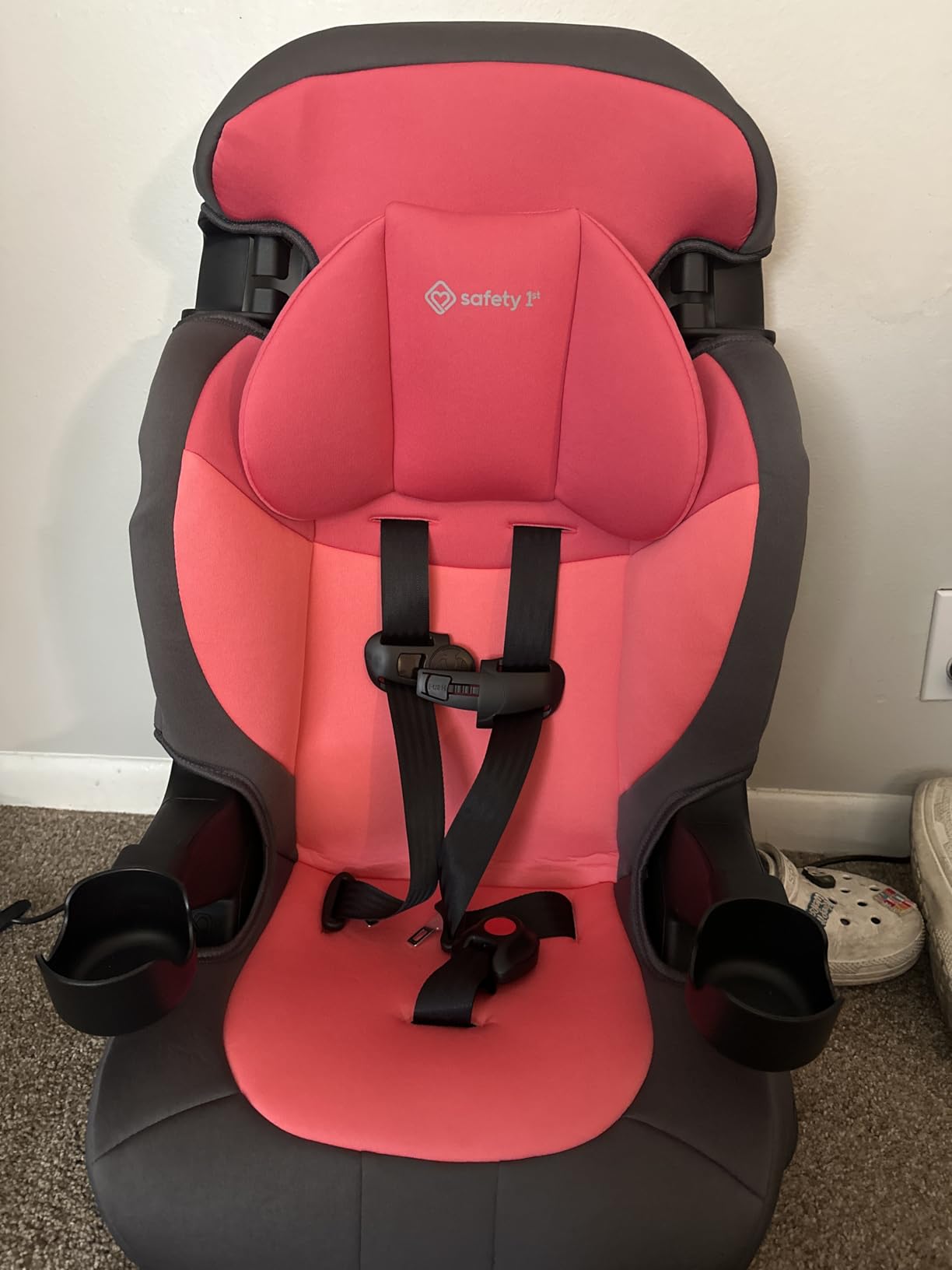
The Safety 1st Grand 2-in-1 is a slim seat that still carries a 5-point harness, and that combination makes it the practical answer for families with multiple children in the back row. It rates 4.6 across about 1.4k reviews, and owners most often single out the three-across footprint as the reason they bought it.
The harness mode covers 40 to 65 pounds and 43.4 to 49 inches, and the belt-positioning highback mode covers 40 to 100 pounds and 43.4 to 52 inches. That 52-inch ceiling is the shortest highback limit listed among these seats, so this is a seat for a four-year-old of average height rather than a tall one.
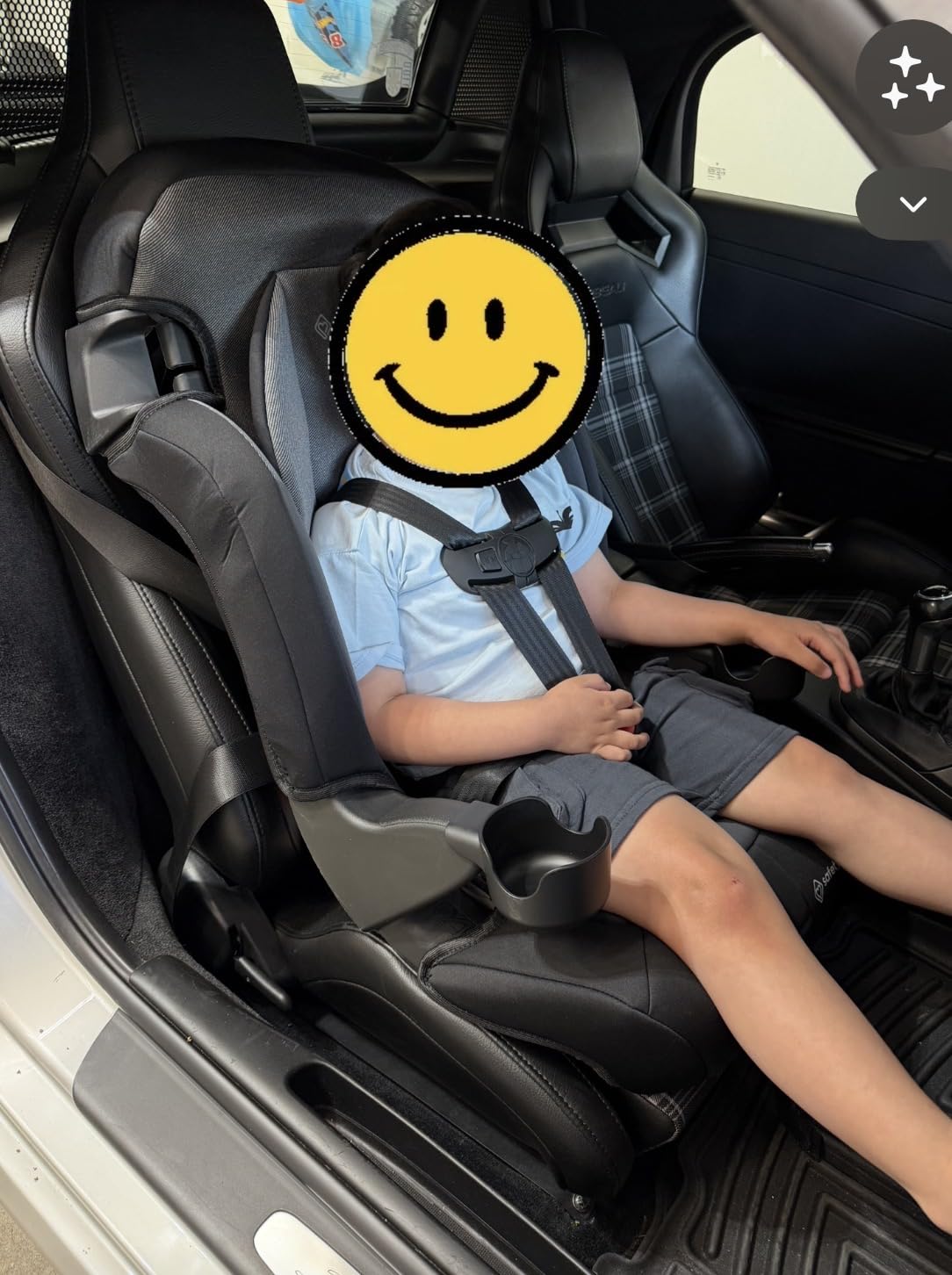
The seat pad is machine-washable and dryer-safe, which matters more in a car with two or three children than it does in a single-child family. The two dishwasher-safe cup holders remove completely, and the whole seat is light enough to move between a family car and a carpool vehicle without planning around it.
Installation uses lower anchors and the belt, and the adjustable headrest moves through a limited range rather than a wide one. There is no headrest memory and no one-hand height adjustment, so every change takes two hands and a moment of patience. Side-impact engineering here is less detailed than on the Chicco and Diono seats.
Who This Seat Works Best For
This is the pick for a family with two or more children in the back row, or for anyone who regularly carpools. The slim body is designed for three-across fit, and keeping a harness available in a narrow package is unusual.
It also works for a four-year-old between 43 and 49 inches who needs the harness for a few more months, since the conversion is straightforward and the seat does not need replacing at the transition.
Where It Falls Short
The height range is the clear limit. At a 52-inch maximum in booster mode, a four-year-old who is already tall will outgrow it while still too young for a seat belt alone, which is the exact situation that forces a premature backless switch.
The headrest adjusts slowly by comparison with the ten-position seats, and there is less padding and less visible side-impact engineering. It is a competent seat, not a refined one, and that is a fair trade for the width savings.
9. Graco Tranzitions 3-in-1: Best for a Four-Year-old Who Is Still Small
Graco Tranzitions 3-in-1 Harness Booster Car Seat, Proof
3-in-1 harness highback and backless
Harness 26.5-65 lbs then booster to 100 lbs
No-Rethread Simply Safe harness
One-hand 9-position headrest
Pros
- No-Rethread Simply Safe harness adjusts headrest and harness together in one motion
- Three growth stages in one seat covering toddler to youth
- One-hand 9-position headrest adjustment
- Lightweight and portable for moving between vehicles
- Starts at 26.5 lbs as a harness seat which is wider than the other 3-in-1 here
Cons
- Booster modes start at 40 lb rather than the 30 lb minimum some families expect
- Position is fixed once the backless booster mode is used
The Tranzitions 3-in-1 is the answer to the 40-pound problem for a small four-year-old. It carries a forward-facing 5-point harness from 26.5 to 65 pounds, then converts to a highback booster and finally a backless booster, both rated to 100 pounds. That is three stages in one seat, and starting at 26.5 pounds it comfortably serves a four-year-old who is well under the booster minimum.
It rates 4.7 across just over 1.1k reviews. The feature reviewers mention most is the No-Rethread Simply Safe harness system, which raises the headrest and the harness together in a single motion so there is no rethreading the straps through the back as your child grows.
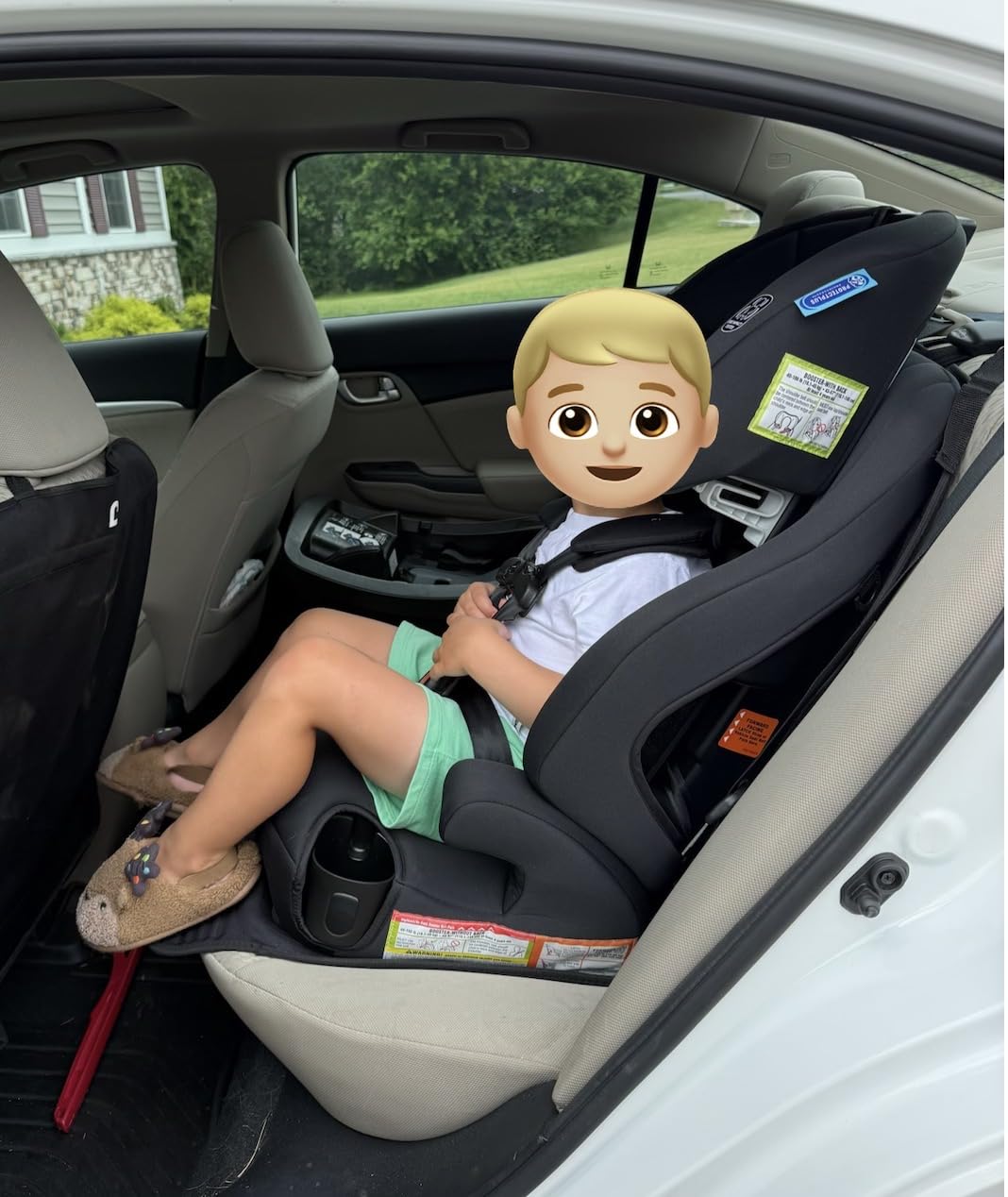
The one-hand nine-position headrest is a real convenience during the daily adjustment, and the seat is light and portable for a 3-in-1. Graco raised the booster-mode minimum from 30 to 40 pounds to meet current industry standards, which trips up families expecting the older lower minimum.
Once you commit to backless mode, the position is fixed, so plan the sequence rather than bouncing between stages. As a highback booster the seat needs the vehicle belt routed properly, and the booster stages carry no harness capability at all, so the transition is one-way.
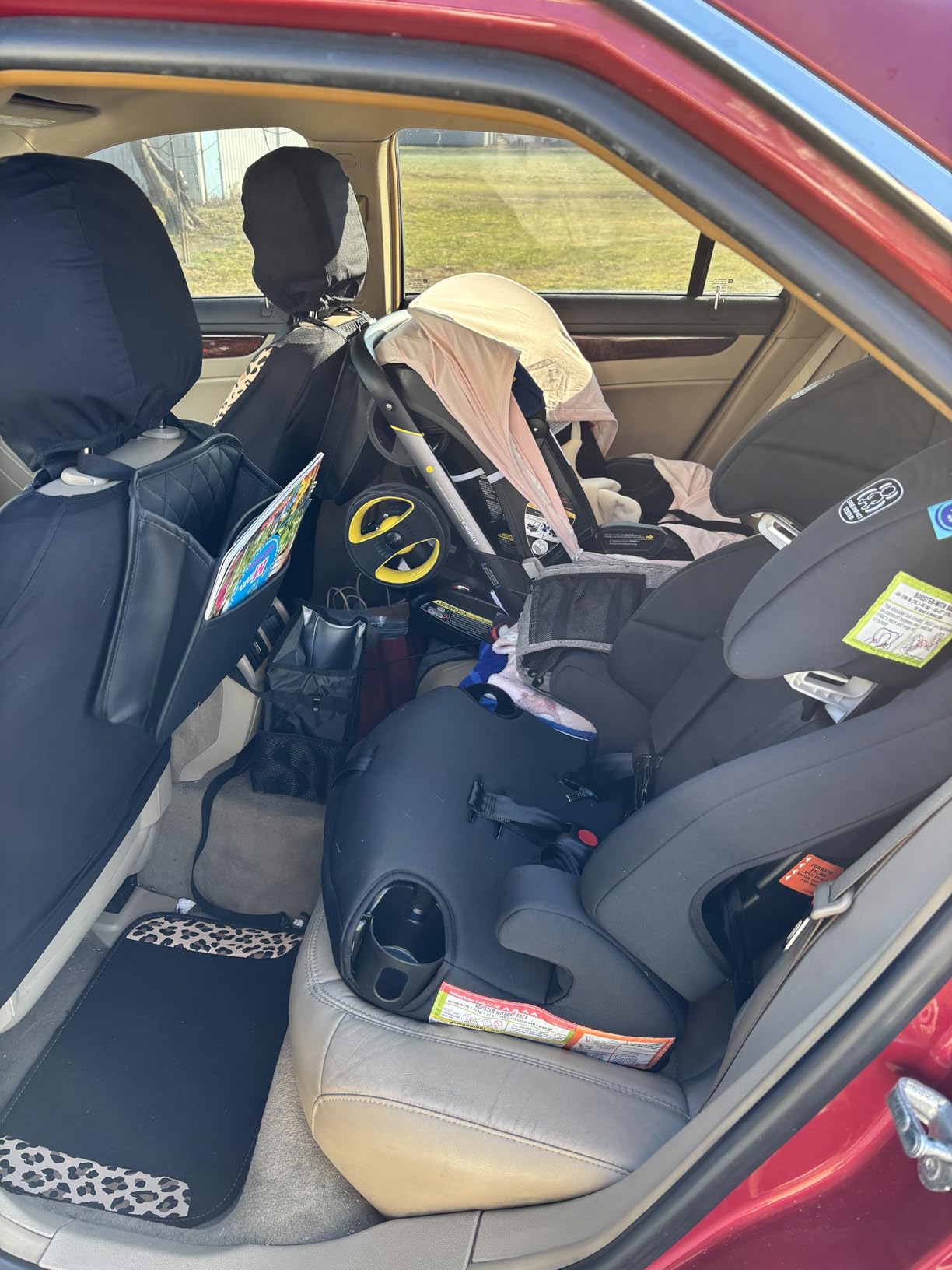
Who This Seat Works Best For
This is the seat for a four-year-old under 40 pounds who is already tall enough that the car seat is running out of room. Starting at 26.5 pounds in harness mode means you do not have to solve the dead zone between harness capacity and booster eligibility.
It is also a sensible single-seat choice for a family that wants to keep one seat from the toddler years through the pre-teen years without a second purchase.
Where It Falls Short
The booster modes begin at 40 pounds, not 30. If you were planning on switching earlier, this seat will not do it, and that is a deliberate design choice rather than an oversight.
It is a 3-in-1, so it carries more bulk than a dedicated belt-positioning booster and gives up the pure slimness that makes three-across fit easy. A family with three children in the back row should check width before choosing this over the Safety 1st.
10. Baby Trend Hybrid SI 3-in-1: Affordable Three-in-One With Real Installation Trade-Offs
Baby Trend Hybrid SI 3-in-1 Combination Booster Seat, Hoboken Teal – Side-Impact Protection, 3-Stage Growth Design, Adjustable Headrest, Cushioned Comfort
3-in-1 combination booster with 3-stage design
Side-impact focused design
Adjustable headrest
Dual cup holders
Pros
- 3-in-1 growth design spanning harness booster and seat-belt stages
- Adjustable headrest for a tailored fit
- Side-impact focused design
- Dual cup holders
- Cushioned seating
- Slim profile that suits vehicles with limited legroom
Cons
- Installation instructions and diagrams are confusing and reference hard-to-identify parts
- Harness runs out of adjustment for some 4-year-olds around 41 lbs and 41 inches
- Multiple harness and LATCH routing paths that change at the 40 lb threshold
- Backrest can pop off during carrying and is hard to reattach
- Reports of inconsistent build quality and missing parts
The Baby Trend Hybrid SI is a budget three-in-one and the one we would approach most carefully. It rates 4.1 across just under 1k reviews, the lowest average in this list, and the reviews split sharply between people who like the 3-stage design and people who fought the installation.
The concept is sound. It moves from a 5-point harness through a booster stage to a vehicle seat belt, with an adjustable headrest, dual cup holders, and a side-impact focused design. For a family on a limited budget moving a small four-year-old forward, the shape of the solution is right.
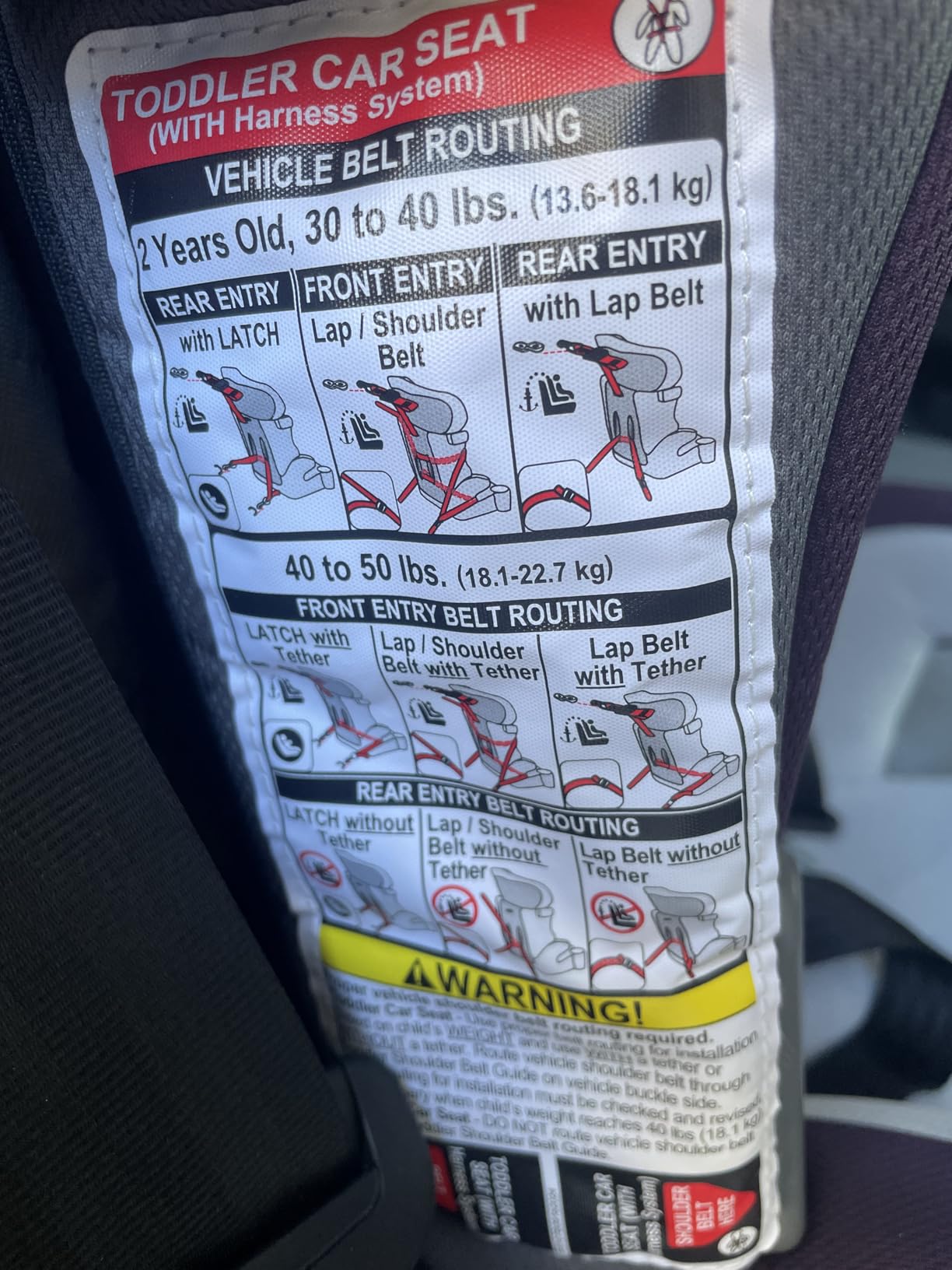
The problem is the routing. Owners report an unusually complex number of harness and LATCH belt paths that change at the 40-pound threshold, and instructions and diagrams that reference parts which are hard to identify. On a seat that asks parents to make a subtle change mid-childhood, confusing documentation is a genuine safety friction, not just an annoyance.
Several reviews also describe the harness running out of adjustment for four-year-olds around 41 pounds and 41 inches, which is close to the size profile of many children this age. The backrest popping off during carrying and inconsistent build quality with missing parts came up more than once as well. The upholstery is 100 percent polyester, and the padding is thin for long trips.

Who This Seat Works Best For
This works for a family that needs a three-stage solution at the lowest outlay and has an adult willing to spend time getting the routing right. The slim profile suits vehicles with limited legroom, and the dual cup holders and adjustable headrest cover the daily basics.
If your four-year-old is at the smaller end and you are not in a hurry, the harness stage may buy you a year before the routing complexity ever becomes relevant.
Where It Falls Short
The documentation is the core weakness, and it is not a minor one. When a harness-to-booster transition depends on a specific routing path that changes at 40 pounds, unclear instructions are a safety problem you should not have to solve with guesswork.
Harness sizing at the four-year-old stage is also the weakest fit in this group, with reported out-of-adjustment issues near 41 pounds and 41 inches. The backrest detaching during carry and inconsistent parts quality round out a seat we would choose only with a hands-on check at pickup.
Is Your 4-Year-Old Actually Ready for a Booster?
A booster seat only works if the child can sit properly in a vehicle seat belt. At four, that is often the part that fails first. The American Academy of Pediatrics has consistently said that delaying each transition is the safer choice, and parents in r/Parenting and r/Preschoolers repeat the same thing: the child, not the height chart, decides.
Before you look at any seat, park in the driveway and run these four checks.
Weight: at least 40 pounds. That is the federal minimum to move out of a 5-point harness into a booster.
Height: roughly 43 to 44 inches or taller, tall enough that the shoulder belt will cross the chest rather than the neck.
Posture: can sit upright without slouching, and keeps legs down beside the seat instead of off to the side.
Behavior: buckles and unbuckles independently and stays buckled for the whole drive without undoing it.
If any one of those fails, the honest answer is that your child belongs in a seat with a harness. The AAP’s own framing is straightforward: it is usually safer to keep a child in their 5-point harness car seat until they have outgrown it, and a convertible or 3-in-1 seat buys you the time you need without rushing the step.
The 40-Pound Problem Most 4-Year-Olds Have
Many four-year-olds are four and still under 40 pounds. A r/Preschoolers thread documents a five-year-old at 36 pounds and 42 inches who is simultaneously too tall for a harness car seat and too light for most boosters. That is a genuine dead zone, and it is the single most common reason parents end up in the wrong seat.
Two answers exist. The first is a 3-in-1 harness-to-booster combination seat, which carries a 5-point harness well past 40 pounds and converts when your child is ready. The second is a 2-in-1 that keeps the harness as an option, like the Chicco MyFit or the Evenflo Maestro Sport. Both buy you a year or more instead of forcing a move.
What does not work is putting a 36-pound child in a backless booster. The seat belt will fit an adult and it will fit your child, and neither of those is the point.
Why a Harness Is Still Safer at Four
The clearest explanation comes from a parent in r/Parenting, and it is about behavior rather than numbers: a 5-point harness is for kids who do not yet understand that they need to sit properly. A four-year-old who keeps their legs off to the side, unfastens the shoulder strap halfway through a trip, or slides down into a slouch is in a harness, not a booster.
Once a child can sit correctly for an entire drive, a parent in r/beyondthebump noted that a car seat is no longer the safer option, and we agree. The move is earned by maturity and size together, which is why the readiness gate matters more than any rating on the box.
What Kind of Booster Seat Does a 4-Year-Old Actually Need?
A four-year-old should be in a high-back belt-positioning booster, or in a 5-point harness convertible they are not ready to leave. Backless boosters are the wrong choice at this age, and a three-in-one harness-to-booster seat is the right one if your child is still under 40 pounds. The high back positions the shoulder belt across the chest and the lap belt over the thighs, which is the whole job a booster does.
There are three seat types in this category, and they solve different problems.
5-point harness convertible: Restraint comes from the seat. No belt routing is involved. Best for a child under 40 pounds or one who cannot yet sit correctly.
High-back belt-positioning booster: The vehicle seat belt is the restraint. The back supports the head and routes the shoulder belt. This is the correct default for a ready four-year-old.
Backless belt-positioning booster: A raised base only. It positions the lap belt correctly but gives no head, neck, or upper-back support. Intended for older children, not four-year-olds.
A fourth type rounds out the list: the 3-in-1 combination seat that runs from a 5-point harness to a high-back booster and then to a backless booster. Two of the ten seats we picked are full three-in-ones, and four more keep a harness alongside a booster. That is the only group that serves both a 36-pound four-year-old and their eight-year-old self.
High-Back vs Backless vs 3-in-1: Which One Fits a 4-Year-Old?
A four-year-old can be in a backless booster only if they meet the seat’s own height minimum, which is typically around 40 to 43 inches depending on the model, and can sit correctly the entire drive. In practice, most four-year-olds should stay in a high-back. A backless booster gives no head, neck, or upper-back support, and that is the first complaint in almost every backless discussion we read.
The most common regret we found was not about seat quality. It was about parents switching to backless too early, because the high-back had reached its height limit and the child was tall and slim. A taller high-back like the Britax Skyline, rated to 63 inches, or the Diono Cambria 2 XL, which carries up to 120 pounds, is the fix for that problem rather than dropping the back early.
A 3-in-1 harness-to-booster combination seat is the right answer in two situations: the child is under 40 pounds, or the family wants one seat that covers the entire range from toddler to pre-teen. Its trade-off is bulk. A harness convertible like the Chicco MyFit, which weighs 25 pounds, takes real effort to move between vehicles, which is why this family of seats suits single-car families best.
Do Booster Seats Need LATCH? The Myth Parents Repeat Most
No. LATCH is optional on a booster seat, and understanding why changes how you use one. On a booster, the restraint is the vehicle seat belt. LATCH is included on many models as a convenience for installation, not as a safety requirement, and a booster installed with LATCH still relies on the belt the moment the child sits in it.
Connector style does still affect daily use. Alligator-style connectors with a one-pull tightener are the easiest to work with one hand, hook-style connectors are the fiddliest, and rigid connectors attach without a strap. The KidsEmbrace and the Chicco KidFit both use lower anchors, while the Graco TurboBooster 2.0 and the Britax Skyline are belt-installed only.
One vehicle-side note matters more than LATCH. Seat-belt pretensioners and force limiters have been standard in front seats since 2008, but most back seats still lack them. That is another reason the back seat is the right place for a four-year-old, and a reason not to assume the back row is as forgiving as the front.
Two absolute rules apply to every seat in this list. Never use a booster with a lap-only belt, which is why boosters do not work in cars built before 2007. And never use a booster on an airplane, where only federally approved child restraints are permitted.
How to Check That the Seat Belt Fits Correctly
Once the seat is installed, the entire safety case rests on belt fit. A booster does not restrain anyone. It positions the vehicle belt so the belt can do its job, and you can check the result in about a minute.
Step 1, the shoulder. The shoulder belt runs diagonally across the chest from shoulder to opposite hip, flat against the collarbone, never across the neck or the shoulder tip. If it sits on the neck, the belt guide or the headrest is too low.
Step 2, the lap. The lap belt rests low on the thighs, snug against the hip bones. It should never sit on the soft part of the abdomen, because that is exactly the injury a booster exists to prevent.
Step 3, the buckle and the bend. When the child bends forward at the waist, the shoulder belt should stay on the chest and the lap belt should ride up into the pelvic bone area. If the belt lifts away from the hip, the belt is too loose.
Step 4, the slack. Pinch the shoulder belt where it crosses the collarbone. It should be flat and snug with no slack. If you can pull a fold of it, tighten the vehicle belt or the booster’s routing until it cannot be pinched.
Have your child do the check themselves once the seat is in. If they can buckle, position the belt, and stay buckled for a full drive without fixing it, you have the maturity part of the readiness gate handled.
Will Three Boosters Fit Across Your Back Seat?
Three across depends on the booster width and your vehicle, and the answer is usually no in a sedan. Belt-positioning boosters commonly run about 17 inches across the base, so three of them need roughly 51 inches of flat bench before you account for the seat belt buckles and the gaps a child needs to reach them. Most sedan back rows do not have that span once the door and console are taken out.
Measure the flat span of your own back seat from one outer edge to the other at the crease, then divide by three. Any result under 17 inches per child means planning for two across with a middle position, and you should seat the widest child in the middle where there is more give.
Minivans and three-row SUVs are a different calculation. The second row in most of them is significantly wider than a sedan bench, and the middle position has its own belt. Two of the seats reviewed here are described by their makers as fitting three across, and the slim boosters generally pair better than the wide ones.
A practical rule from our testing: narrow beats padded at this age. The slim belt-positioning boosters fit three across where the wide high-backs cannot, and a child in a narrower seat with a correct belt fit is safer than a child in a roomier seat that does not fit. If you already own a wide booster, measure before adding a second.
The Seven Criteria We Used to Pick
1. Belt fit first. Every seat must get the shoulder belt across the chest and the lap belt onto the thighs in your specific vehicle. This is the only non-negotiable, and it is checked with the seat in the position you will actually use.
2. Adjustability range. Look at headrest positions and, more importantly, whether the adjustment moves the side wings around the child’s shoulders from the waist up rather than the neck down. Ten positions is a meaningful difference at this age.
3. Harness availability. For a four-year-old under 40 pounds, the presence of a 5-point harness is the deciding factor. Check the harness minimum weight, not just the booster maximum, because the two numbers decide how long the seat lasts.
4. Width. Measure your back row before choosing. A seat that fits two across comfortably is a better purchase for a four-year-old than a wide seat that crowds the buckle and tempts you into a backless shortcut.
5. Install and adjust hardware. LATCH connector style, one-handed tightening, and quick release determine whether you will actually use the seat correctly on a tired morning. This is a usability criterion, not a safety one, and it matters daily.
6. Cleanability. Removable machine-washable covers, dishwasher-safe cup holders, and wipe-clean surfaces are not luxury features on a seat a four-year-old will eat in. Check whether every fabric comes off, including the armrests.
7. Range and growth. A highback rated to 57 inches will be outgrown by a tall child before they can use a seat belt correctly. A seat rated to 63 inches, or a 3-in-1 that runs to 100 pounds, avoids forcing a premature backless transition.
One more check before you buy: search the manufacturer’s recalls and confirm the model number on the box matches the seat you researched. Version naming in this category is genuinely confusing, with TurboBooster 2.0, 2.0 LX, and LX being three different seats with different hardware.
Frequently Asked Questions
What kind of booster seat should a 4 year old be in?
A four-year-old should be in a high-back belt-positioning booster, or in a 5-point harness convertible they are not ready to leave. A backless booster gives no head, neck, or upper-back support and is intended for older children. If your child is under 40 pounds, choose a 3-in-1 harness-to-booster combination seat so the harness can carry them until they are genuinely ready.
Can a 4 year old go in a backless booster?
Only if they meet the specific seat’s height minimum, typically around 40 to 43 inches, and can sit correctly for the entire drive. In practice most four-year-olds should stay in a high-back because a backless booster offers no head, neck, or upper-back support. If a tall child is outgrowing a 57-inch high-back, a taller model rated to 63 inches is a better answer than going backless early.
Is a harness safer than a high back booster?
For most four-year-olds, yes, because a 5-point harness restrains a child who does not yet understand they need to sit properly. A parent in r/Parenting put it clearly: the harness is for kids who keep their legs off to the side or undo the strap mid-drive. Once a child can sit upright and stay buckled for a whole trip, the two are comparable and the booster is the simpler choice.
When can a child move from a 5-point harness to a booster?
Four conditions should all be true together: the child is at least 40 pounds, roughly 43 to 44 inches or taller, able to sit upright without slouching with legs down beside the seat, and willing to buckle independently and stay buckled for the whole drive. The American Academy of Pediatrics advises delaying each transition as long as possible, so size alone is not enough.
Does a 4 year old need a 5-point harness?
Many do, especially if they are under 40 pounds or not ready to sit correctly. Research on belt-positioning boosters found they lower injury risk in children ages 4 to 8 by 45 percent compared with a seat belt alone, but each step away from a harness reduces protection. If your child is smaller than 40 pounds, a 3-in-1 harness-to-booster seat such as a Chicco MyFit or a Graco Tranzitions is the practical answer.
The Bottom Line on the Best Booster Seats for 4 Year Olds
Start with readiness, not shopping. A four-year-old under 40 pounds, or one who cannot sit upright and stay buckled for a whole drive, belongs in a seat with a 5-point harness, and the 3-in-1 combination seats on this list are the ones that make that possible without a second purchase.
For a child who is genuinely ready, the KidsEmbrace 2-in-1 is our pick for the best booster seats for 4 year olds, because it covers the whole ambiguity of this age: a small four-year-old rides harnessed, and a ready one rides buckled in the same seat for years. The Chicco KidFit ClearTex Plus is the best pure belt-positioning booster when you already know your child is booster-ready, and the Britax Skyline is the answer for a tall four-year-old who would otherwise be pushed into a backless booster too soon.
Whichever you choose, run the four-step belt fit check in the driveway before the first drive, and check the model’s recalls before you rely on it. If you are still earlier in the process, our convertible car seat guide covers the harness seats that keep a four-year-old restrained for longer.