
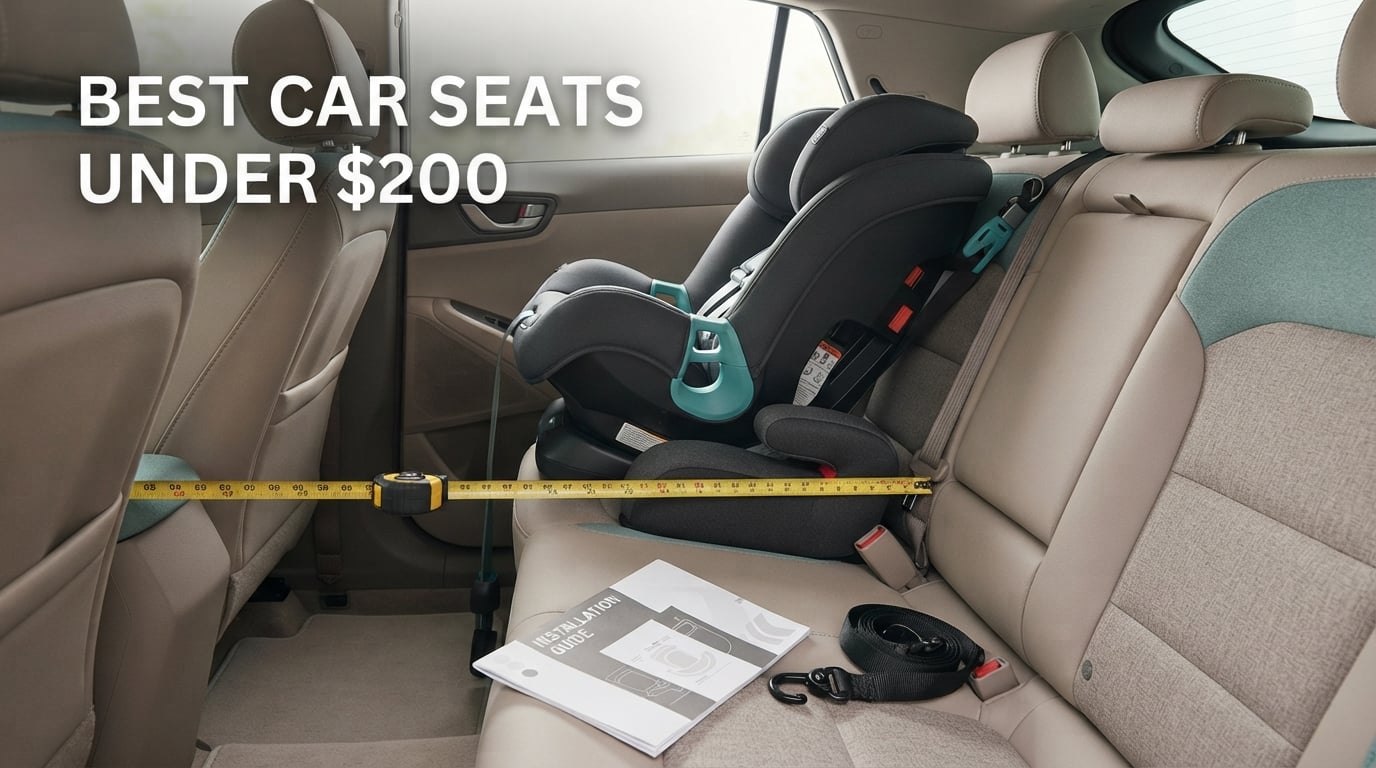
Every car seat sold in the United States has to clear the same federal bar, and that bar does not care what you paid. FMVSS 213 is the motor vehicle safety standard covering child restraints, and a seat that clears it performs to the same minimum in frontal, side and rollover testing whether it costs 50 dollars or 550 dollars. What your money changes is not core crash protection. It changes weight, fabric quality, recline range, how wide the shell is, and whether the harness needs rethreading.
So the question behind the best car seats under 200 dollars is not whether you can find something safe. You can. The question is which compromises you can live with, and for how many years. We compared 12 seats across convertibles, all-in-one 3-in-1 frames and boosters, weighed the published weight and height limits, and read the complaint patterns in the reviews rather than the headline numbers.
The short version: the Graco Extend2Fit 2-in-1 Convertible is the best car seat under 200 dollars for most families, because it holds a 50-pound child rear-facing and carries a 4.8 star average across more than 57k reviews. If you want one seat for a single child from newborn to booster, the Safety 1st Grow and Go covers 5 to 100 pounds. If you need something you can carry one-handed into a second car, the Evenflo Tribute LX is the one to buy.
For the stage-by-stage versions of this question, our separate guides on convertible car seats, all-in-one car seats and infant car seats go deeper on the specs for each group.
Table of Contents
Are Budget Car Seats as Safe as Expensive Ones?
Yes, in the way that actually matters. FMVSS 213 sets the same minimum performance thresholds for every child restraint sold here regardless of price, and NHTSA publishes the ratings on an open database so you can check any model yourself before you buy.
Where budget seats differ is ergonomics and longevity. A cheaper seat often has a shorter rear-facing shell, which forces a child forward-facing sooner than the American Academy of Pediatrics would like. It may have fixed padding that runs warm, a wiggly headrest, or a recline indicator nobody can read in a parking lot.
The single biggest real-world safety failure we found in research is not a bad seat. It is a loosely installed seat. Nearly 4 in 5 child restraints checked at inspection events are installed with more than an inch of movement at the belt path. A free installation check by a certified Child Passenger Safety Technician is worth more than any dollar you might save by cutting the model tier, and many hospitals and fire stations run them at no cost.
Top 3 Picks for the Best Car Seats Under 200 (October 2026)

Graco Extend2Fit 2-in-1 Convertible
- Rear-facing to 50 lb
- 5 inch extension panel for legroom
- No-rethread harness

Safety 1st Grow and Go All-in-One
- 5 to 100 lb in three modes
- QuickFit harness
- Machine-washable pad

Evenflo Tribute LX Convertible
- Light compact two-mode seat
- Upfront harness adjuster
- Wipes clean easily
Every Pick at a Glance
| Product | Specifications | Action |
|---|---|---|
| Graco Extend2Fit 2-in-1 Convertible |
|
Check Latest Price |
| Safety 1st Grow and Go All-in-One |
|
Check Latest Price |
| Evenflo Tribute LX Convertible |
|
Check Latest Price |
 Cosco Topside Backless Booster Cosco Topside Backless Booster |
|
Check Latest Price |
 Diono Radian 3R 3-in-1 Convertible Diono Radian 3R 3-in-1 Convertible |
|
Check Latest Price |
 Baby Trend Cover Me 4-in-1 Convertible Baby Trend Cover Me 4-in-1 Convertible |
|
Check Latest Price |
 Chicco KidFit ClearTex Plus Booster Chicco KidFit ClearTex Plus Booster |
|
Check Latest Price |
 Evenflo Maestro Sport Harness Booster Evenflo Maestro Sport Harness Booster |
|
Check Latest Price |
 Graco Slimfit 3-in-1 Convertible Graco Slimfit 3-in-1 Convertible |
|
Check Latest Price |
 Safety 1st Ellaris 3-in-1 Convertible Safety 1st Ellaris 3-in-1 Convertible |
|
Check Latest Price |
 Safety 1st Grand 2-in-1 Booster Safety 1st Grand 2-in-1 Booster |
|
Check Latest Price |
 Evenflo GoTime LX Booster Evenflo GoTime LX Booster |
|
Check Latest Price |
1. Graco Extend2Fit 2-in-1 Convertible Car Seat – Best Overall
Graco Extend2Fit 2-in-1 Convertible Car Seat, Redmond
Rear-facing 4-50 lb, forward-facing 26.5-65 lb
4-position extension panel adds 5 inch of legroom
No-rethread harness
Pros
- Rear-facing to 50 lb
- among the higher limits in this price band
- Extension panel adds real legroom for a tall toddler
- Headrest and harness move together in one motion
- 4.8 star average across more than 57k reviews
Cons
- Shell is bulkier than slim-fit convertibles in a three-across install
- Upper end of the sub-200 convertible range
The Extend2Fit is the seat we kept coming back to while building this list. Ninety percent of its reviews are five-star, and the reason is not marketing copy, it is the extension panel. Four positions of extra legroom mean a child who would normally outgrow a rear-facing shell at 30 or 40 pounds can keep riding rear-facing to 50 pounds.
That single feature is worth more to most parents than anything else in this price range. Rear-facing to 50 pounds roughly adds a year and a half of the safest possible seating position, and it is exactly what a tall toddler needs.
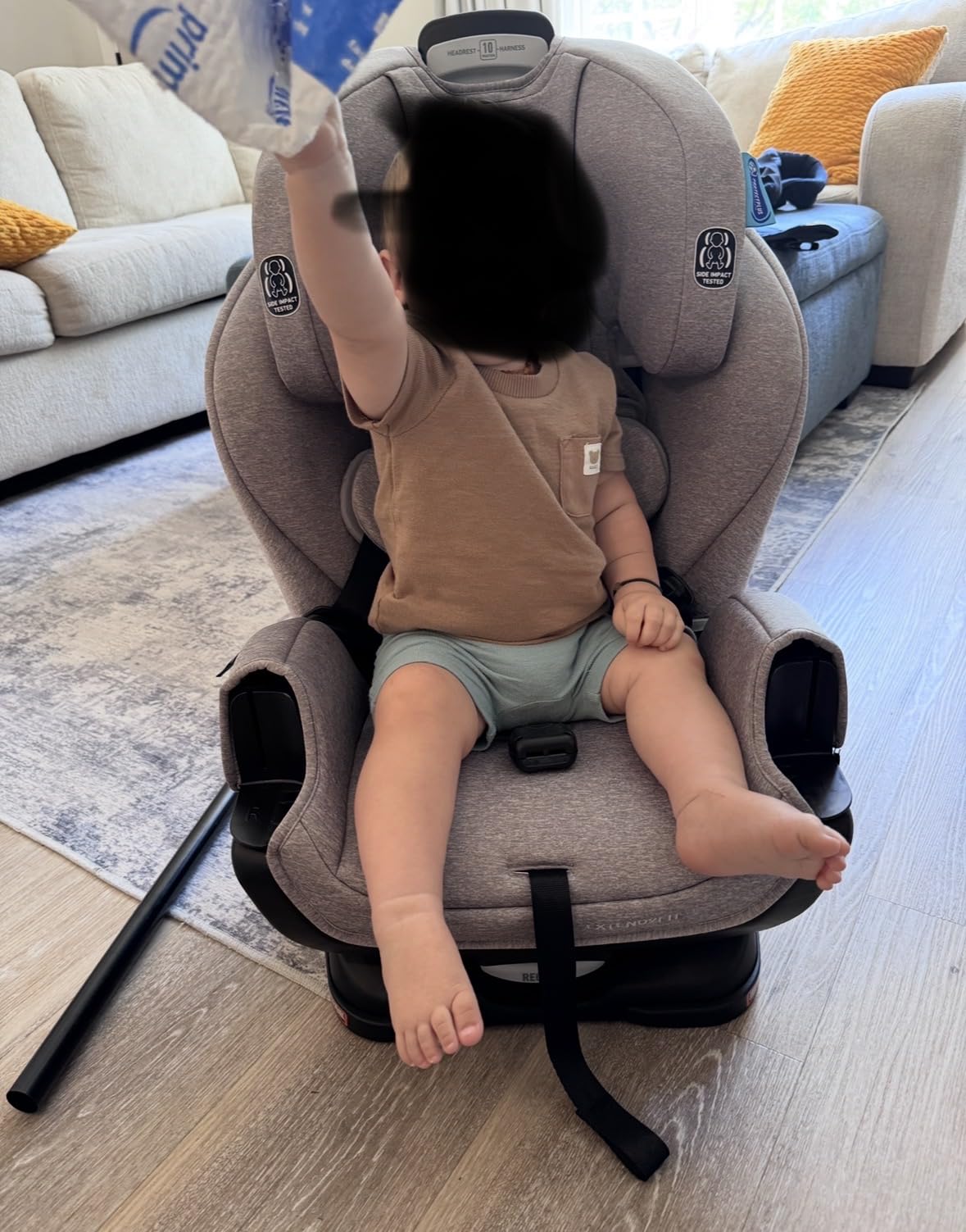
The no-rethread Simply Safe harness is the second thing owners mention most. You pull one strap at the front of the seat and the headrest rises or drops with the harness, so there are no loose straps tucked behind the seat back to fish out. Over years of daily use, that difference is bigger than it sounds.
Crash testing here goes beyond the federal minimum. Graco puts this shell through frontal, side, rear and rollover conditions, and the 4.8 average across 57k reviews is the largest sample of any seat we evaluated for this roundup.
What you gain by spending the top of the range
You gain rear-facing runtime. A parent whose child is 30 pounds and still compact will get a lot more usable time out of this seat than from most sub-200 convertibles, which commonly cap out at 40 pounds.
You also gain the widest recline in the lineup, which matters in a sloped rear bench where a fixed-angle seat leaves a small baby with their head flopped forward.
Where it falls short
The shell is deeper and wider than the slim models, so a three-across install in a compact sedan takes real measuring. Two across is comfortable. Three across is possible but tight.
It is also not the lightest seat here, which matters if you are recovering from a C-section and moving seats between two cars. Read our booster and convertible guides if weight is your deciding factor.
2. Safety 1st Grow and Go All-in-One Convertible Car Seat – Best One-Seat Solution
Safety 1st Grow and Go All-in-One Convertible Car Seat, Alaskan Blue
Rear-facing 5-40 lb, forward-facing 30-65 lb, booster 40-100 lb
QuickFit harness
Washer-safe pad and cup holders
Pros
- One seat covers 5 to 100 lb across three stages
- Seat pad snaps off and goes in the washer and dryer
- QuickFit harness adjusts fast
- Removable baby pillows help small infants fit
Cons
- Wide and deep shell limits three-across fit
- Heavier than most sub-200 all-in-one seats
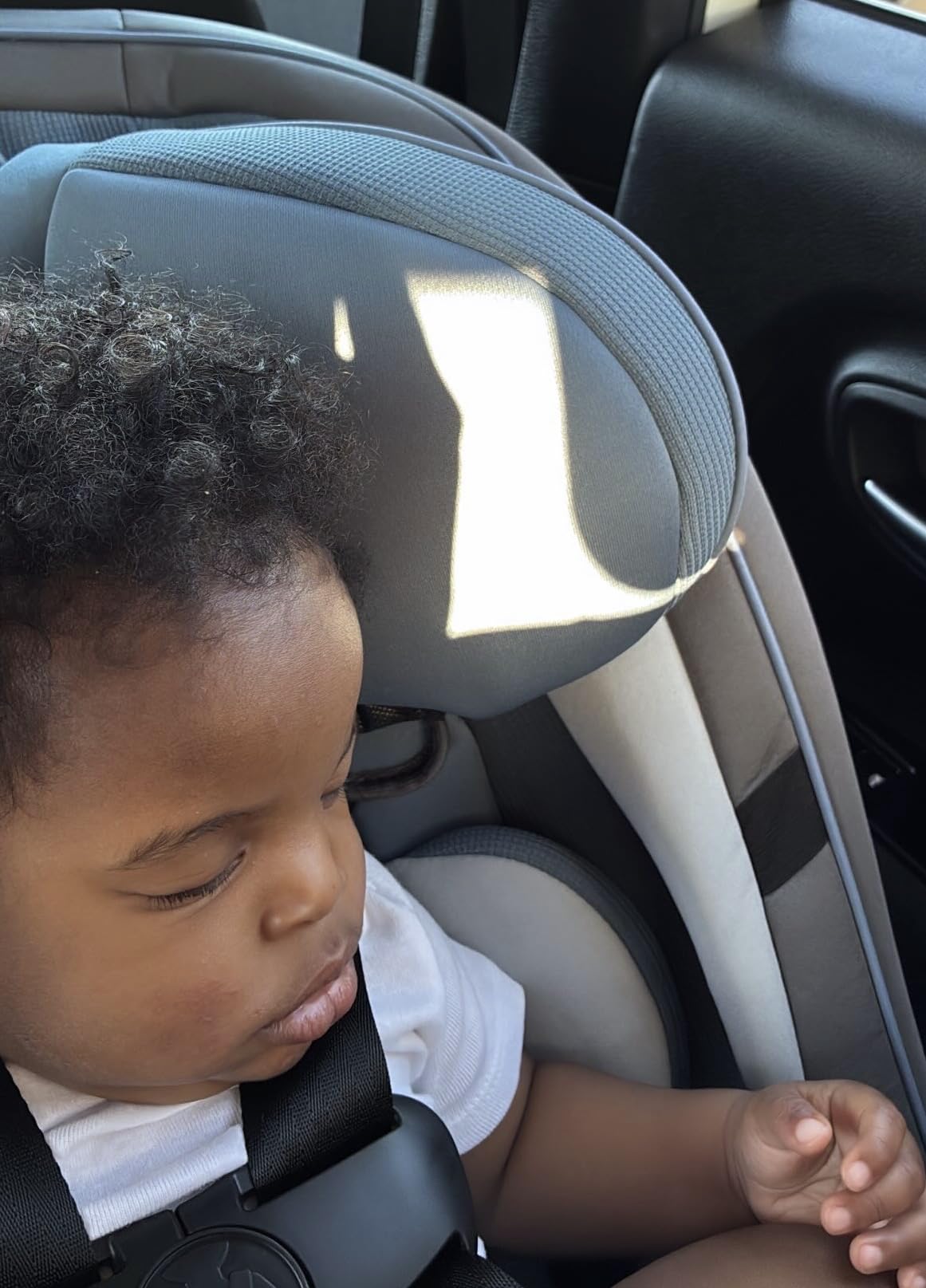
If you want to buy exactly one car seat and never think about it again, this is the pick. The Grow and Go runs rear-facing from 5 pounds, forward-facing with a harness to 65 pounds, then converts to a belt-positioning booster that carries a child to 100 pounds and 52 inches.
For a family with one child and no plans to buy another seat, the arithmetic is hard to argue with. A separate infant seat plus a convertible plus a booster is three purchases, and you will use the first one for roughly a year.
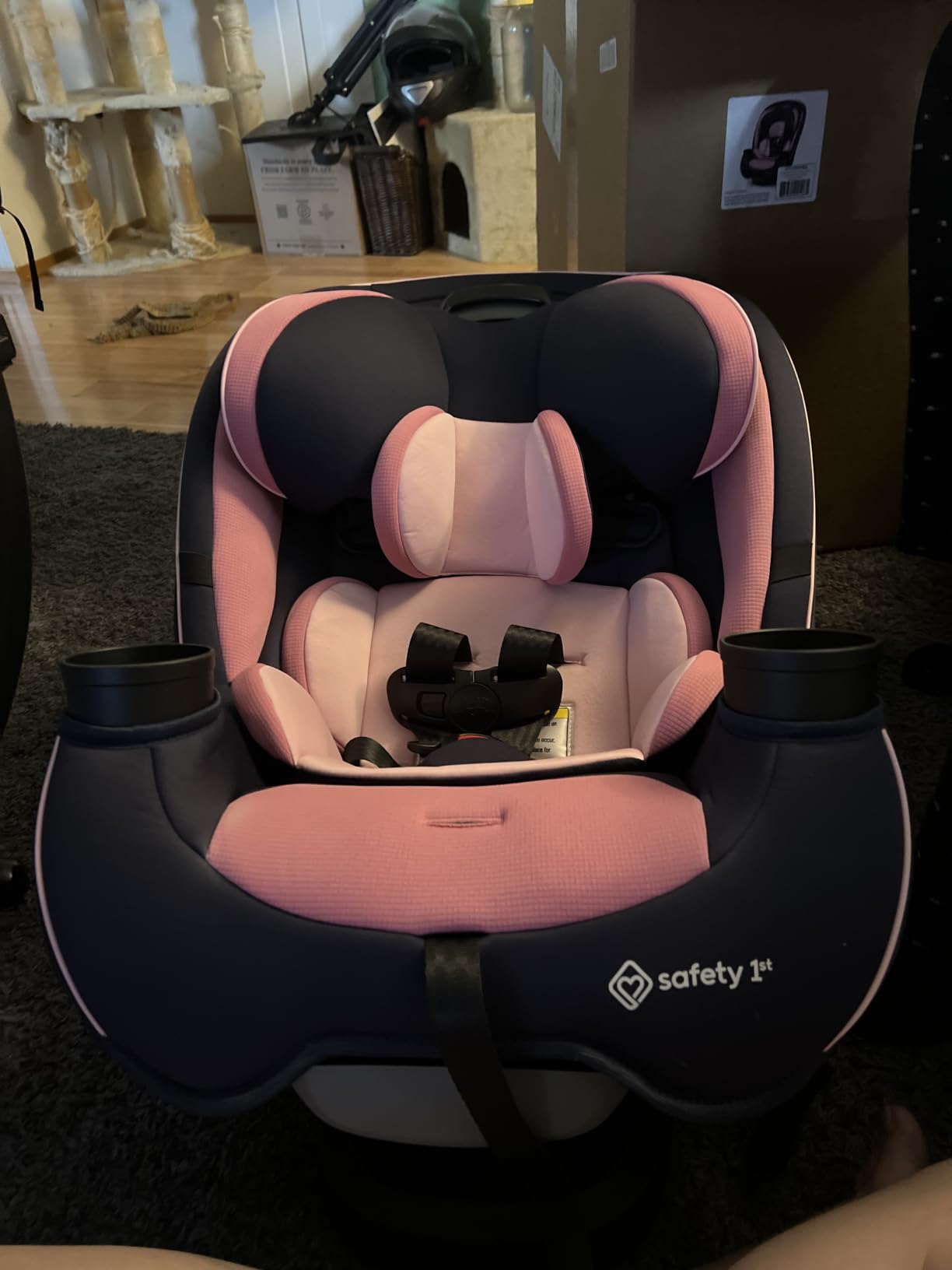
Cleanup is where this seat quietly wins. The pad snaps off and goes into the washer and dryer, and both cup holders are dishwasher safe. That matters more than it sounds, because fabric that cannot be washed is the complaint that pushes parents toward a replacement seat early.
Three-position recline and removable Grow-With-Me pillows handle a newborn properly, which several cheaper all-in-one seats do not. The QuickFit harness makes daily tightening a two-second job.
When the all-in-one format earns its keep
One child, one seat, no plan to upgrade. If that is you, the mode coverage from 5 to 100 pounds is genuinely useful and you stop shopping after a single purchase.
It also transfers between cars with no fuss, which helps grandparents or a second household that already has a convertible in the trunk.
When it is the wrong format
Seat width is the honest drawback. Reviewers buying it as a second seat for a three-across bench report that the shell is wide and deep, and the booster mode does not solve that.
The seat is also on the heavy side for this price band. If you expect to move it more than once a week, the lighter options later in this list will serve you better.
3. Evenflo Tribute LX Convertible Car Seat – Best Value
Evenflo Tribute LX Convertible Car Seat, Venus
Rear-facing and forward-facing harness
Compact design for small cars
Upfront harness adjuster with 4 shoulder positions
Pros
- Very light and easy to carry one-handed
- Compact footprint fits small cars and narrow benches
- Cover removes and wipes clean
- Lowest cost of a full harness convertible here
Cons
- Minimal padding is uncomfortable on long trips
- Low-contrast molded recline arrow is hard to read
- Detachable cup holder feels flimsy
The Tribute LX exists to solve a very specific problem: you need a real convertible harness seat, you carry it regularly, and you drive something small. It answers all three. Reviewers treat it as a budget second seat or a travel seat, and several have bought a second one for a second vehicle.
Two-mode design is rear-facing harness and forward-facing harness. There is no booster stage, which is fine if you plan to buy a booster later for under 50 dollars, and a waste of money if you were hoping one seat covered everything.

The upfront harness adjuster tightens from the front of the seat instead of behind it, so you are not reaching through the child to find a strap. Four shoulder harness positions cover a reasonable growth range.
Cleaning is simple. The cover comes off and wipes down, and you are left with a plastic base that wipes with a damp cloth. That is a real advantage over fabric-only seats in this price range.

Who should buy this seat
Anyone moving between vehicles, using taxis and rideshares, or recovering from surgery and managing lifting restrictions. It is the lightest genuine convertible we found in this band.
It also suits a second seat in a small car, where a wider all-in-one simply will not sit next to another child seat.
Where you will feel the savings
Padding is thin. Expect complaints about comfort on long drives, and the harness straps can tighten unevenly without the strap covers to spread the load across the shoulders.
The molded recline indicator is a low-contrast arrow, and some installers find the latch directions confusing the first time. Budget an extra ten minutes at the first install.
4. Cosco Topside Backless Booster Car Seat – Budget Pick Booster
Cosco Topside Backless Booster Car Seat, Lightweight Booster Seats for Cars 40-100 lbs, Backless Booster Seat for Car, Rainbow
Booster for 40-100 lb and 43.4-57 inch
Lightweight backless design
Extra-plush padding
Pros
- Lowest cost of any seat in this roundup
- Very light and simple for carpools and travel
- Backless design preserves adult legroom
- Raised base positions the vehicle belt correctly
Cons
- No harness
- so only usable once a child is ready for a vehicle belt
- Hand-wash-only fabric cover
- Fixed foam padding on long trips
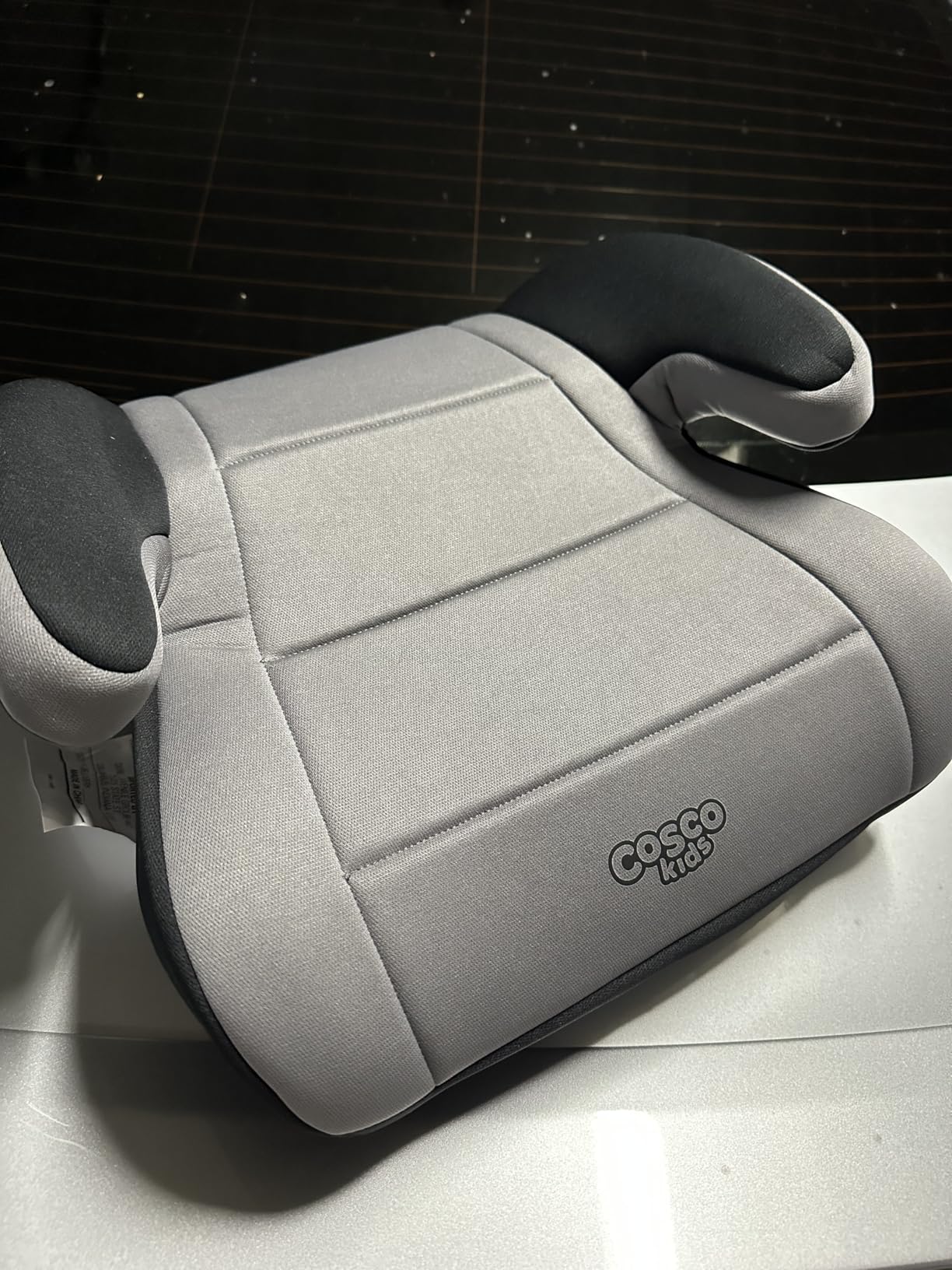
Once your child is past the harness stage, this is the cheapest safe thing you can put in the back seat. The Topside is a backless booster rated for 40 to 100 pounds and 43.4 to 57 inches, and it does one job: it lifts a child so the vehicle belt lands across the hip and shoulder correctly.
It is not a step backward in safety. A backless booster positions the adult three-point belt, which is the next step up from a harness, not a compromise.
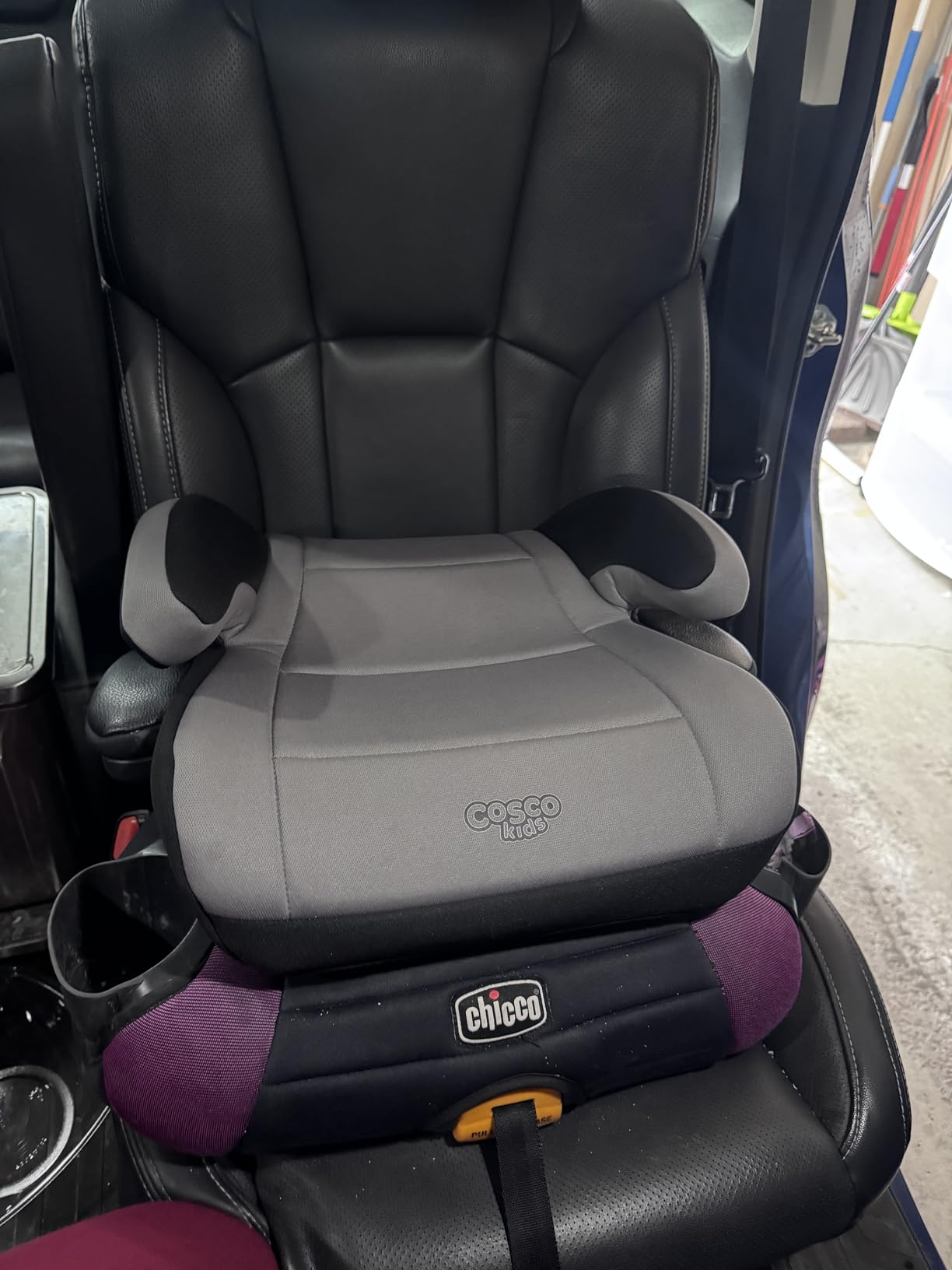
Reviewers buy these in bulk, one per vehicle, because the whole seat is trivial to carry and trivial to stow behind a front seat. Parents running carpools and shared custody arrangements like that flexibility.
The raised base is the detail that matters most. It brings the lap belt down onto the thigh instead of the stomach, which is the entire reason a booster exists.
Check the fit before you commit
Confirm your child can sit all the way back with their back against the vehicle seat and still pass the belt fit test. If they cannot, stay in a high-back booster with a headrest for another year.
Backless boosters also work best with a vehicle seat that has a fairly upright angle and head restraints rather than a sloped bench.
What you give up
There is no harness. A child who still needs a five-point harness should be in the Evenflo Maestro Sport or a convertible, not here.
The cover is hand-wash only, which is a nuisance in a seat that is likely to collect spills. The fixed foam padding is comfortable for a 6-year-old and marginal for a 10-year-old on a four-hour drive.
5. Diono Radian 3R 3-in-1 Convertible Car Seat – Best for Three Across
Diono Radian 3R, 3-in-1 Convertible Car Seat, Rear Facing & Forward Facing, 10 Years 1 Car Seat, Slim Fit 3 Across, Blue Sky
Rear-facing up to 50 lb, four modes to 120 lb
Slim three-across steel shell
Folds flat and is airline approved
Pros
- Slim enough for three across in a mid-size sedan
- Steel-reinforced frame feels solid
- Four modes spanning 5 to 120 lb
- Folds flat for travel and is airline approved
Cons
- Heavy steel construction is poor for frequent seat swapping
- Mode and belt-path rules are easy to configure wrong
- Deep rear-facing recline pushes the front seat forward
- Some buyers report cover fabric tearing early
The Radian 3R exists to solve the one problem most seats in this price range cannot: fitting three child seats across a rear bench. Its slim profile and reinforced automotive-grade steel frame let families run three of them in one mid-size sedan, and several repeat owners do exactly that.
It is also a genuine all-in-one. Four modes cover 5 to 120 pounds, rear-facing to 50 pounds, forward-facing with a harness, a high-back booster and a backless booster.
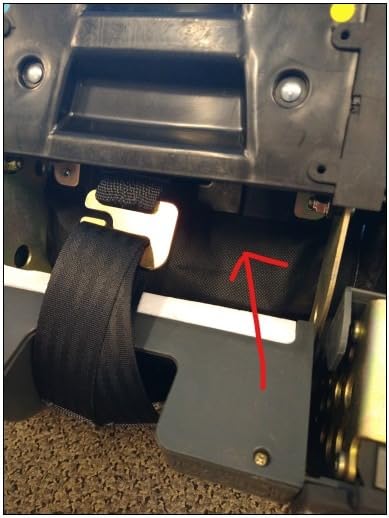
The steel core is the reason this seat feels different in the hand. It is the most solid-feeling shell we evaluated, and the harness straps adjust smoothly instead of needing a constant re-tug.
It folds flat and carries airline approval, so travel is realistic in a way it is not for most convertibles. The ComfortPlus memory foam adds to that.
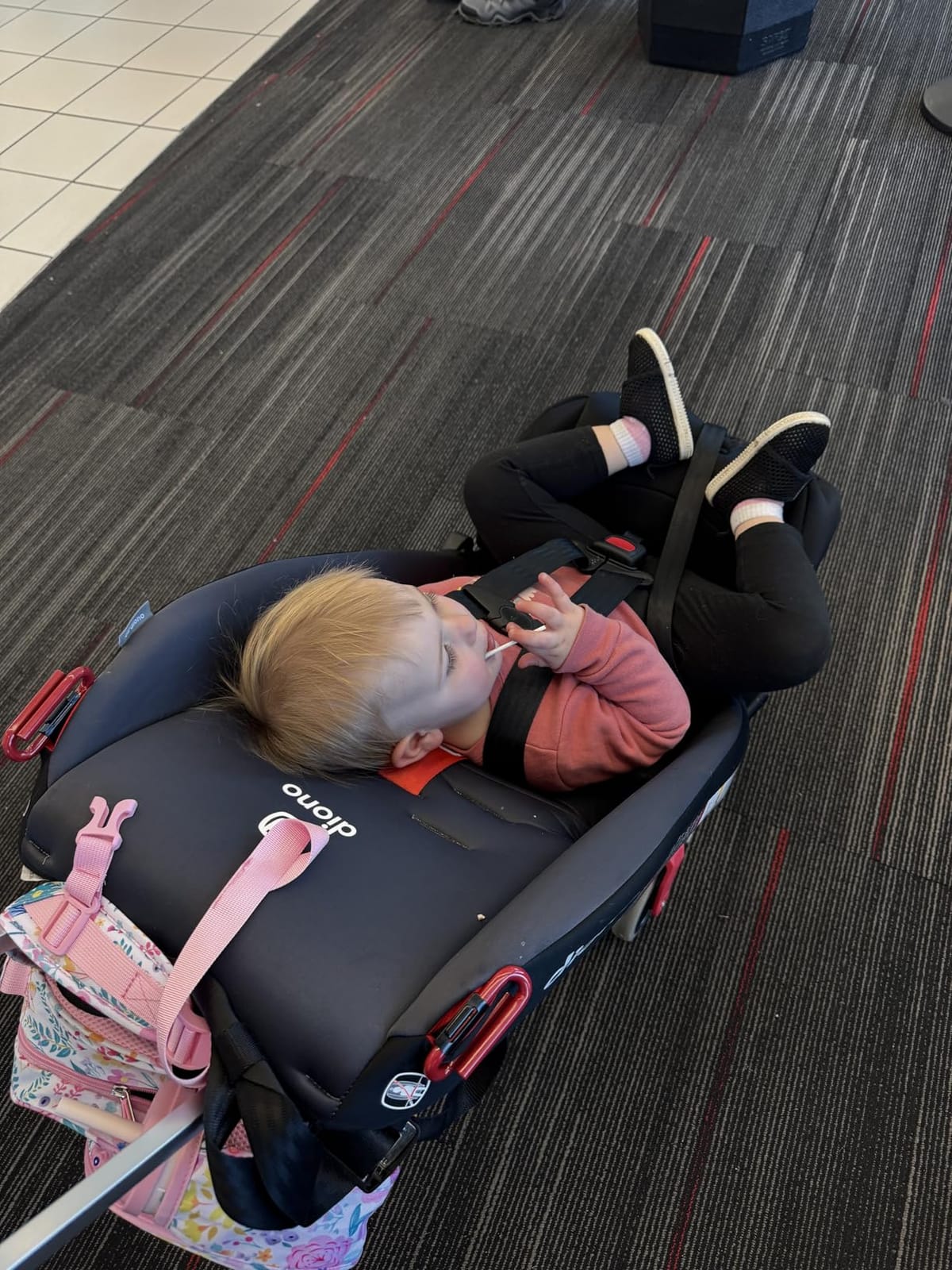
Why three-across fit changes everything
Families with two or three children in harnesses are otherwise stuck buying one premium seat and two cheap ones, which looks mismatched. A slim design that fits three solves the whole back row in one family.
It also opens up the middle position, which is the safest spot in the vehicle and often the one that gets blocked by a wide seat.
The real caveat is configuration
The mode and belt-path rules on this seat are unusual, and a certified Child Passenger Safety Technician we read about flagged that they are easy to set up wrong without careful reading. Budget for that free installation check.
It is heavy for a grab-and-go seat, the rear-facing mode reclines far enough to push the front seat forward, and in the center position it works rear-facing only on vehicles with a fixed headrest.
6. Baby Trend Cover Me 4-in-1 Convertible Car Seat – Best Built-In Canopy
Baby Trend Cover Me™ 4-in-1 Convertible Car Seat
4 stages from 4 to 100 lb
Integrated UPF 50+ canopy with side visors
18.25 inch at its widest
Pros
- Integrated UPF 50+ canopy shades the child from either side
- Four use stages in one seat
- No-rethread harness with integrated headrest
- Slim at 18.25 inch for three-across fit
- Deep side wings for side impact protection
Cons
- Generous padding runs warm in hot weather
- Rear openings let cabin air blow onto the child legs
- Zero-recline base is awkward for newborns
This is the only seat in our lineup with an integrated canopy, and it is not a gimmick. Parents use it to hold shade over a sleeping toddler and to keep glare off a child facing sideways in the back seat during a long afternoon drive.
The stage coverage is genuinely four-in-one: rear-facing infant from 4 to 18 pounds, rear-facing toddler from 18 to 40, forward-facing harness from 30 to 65, then a belt-positioning booster from 40 to 100 pounds.
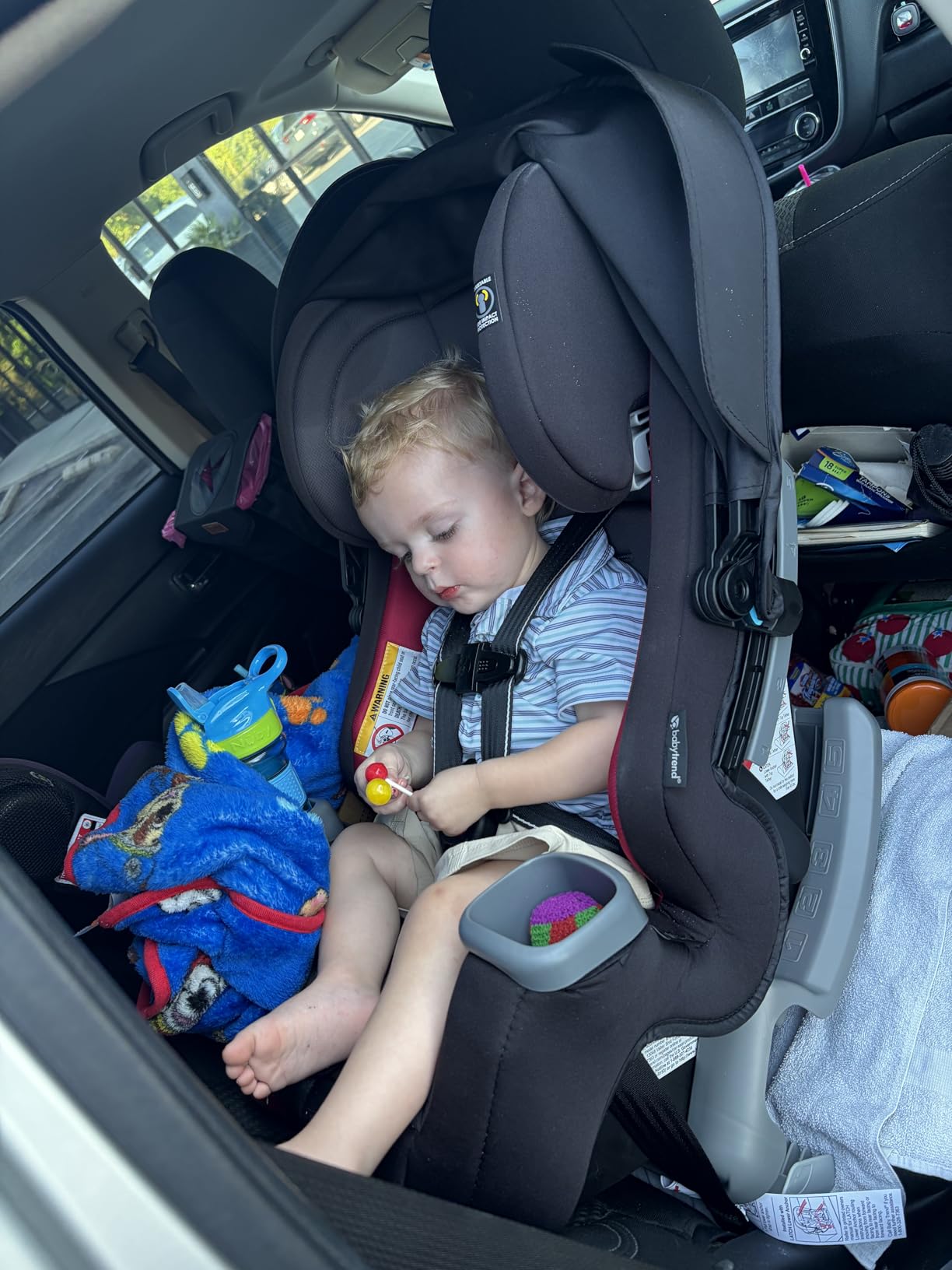
At 18.25 inches at its widest, it is narrow enough to fit three across in most vehicles, which surprises people who assume a seat with a canopy is bulky. The no-rethread harness with an integrated headrest removes the strap-pulling step entirely.
The side wings are deeper than most seats at this price, and the manufacturer markets them specifically for side impact protection. Backward is a fair word for the padding, which is the Comfort Cabin setup.
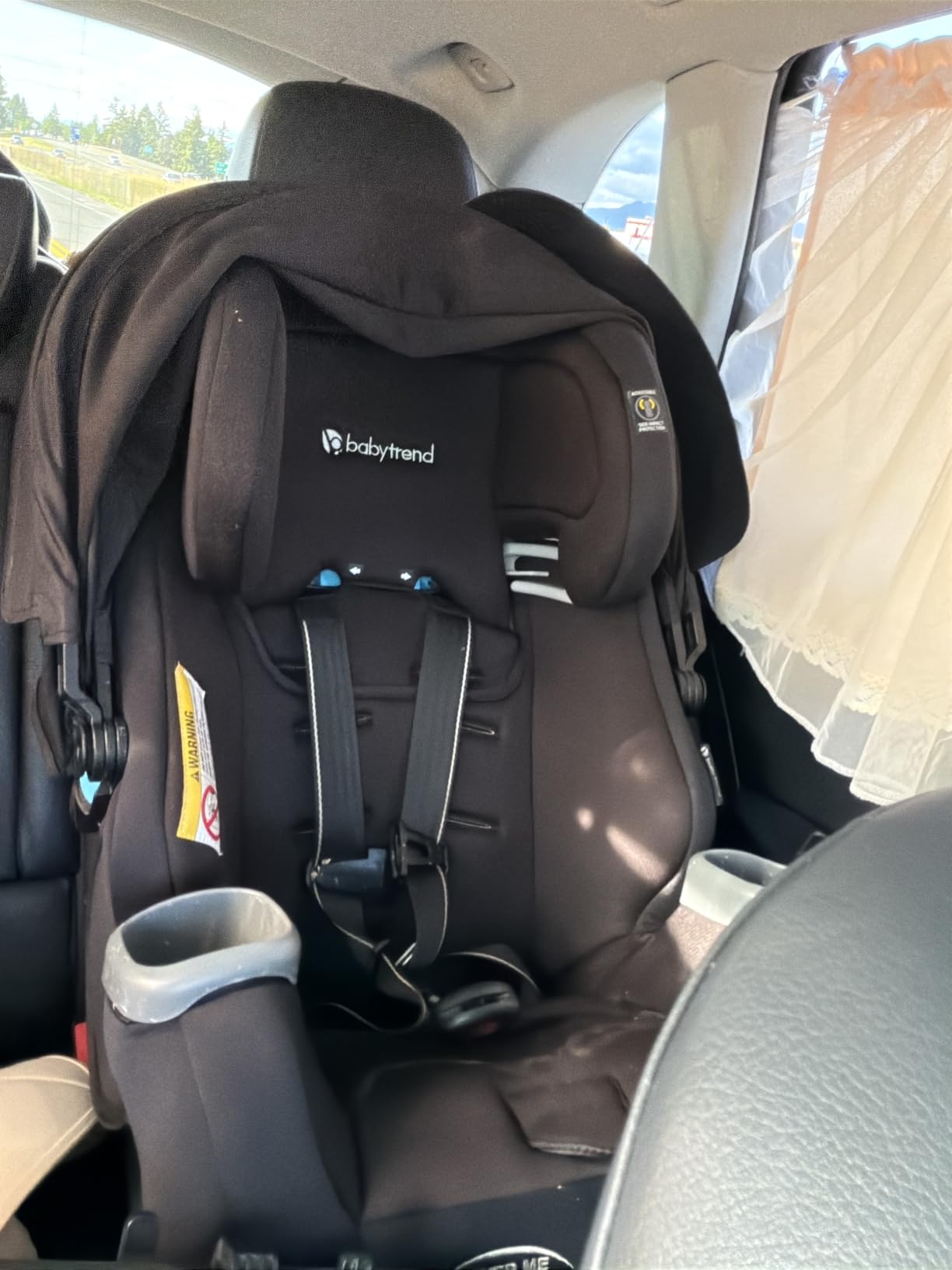
Best for warm climates and rear-facing toddlers
Flip-out side visors mean the child is shaded whether the seat is rear-facing or forward-facing, and many families add a sun shade over the window as well.
A rear-facing toddler at 18 to 40 pounds with a canopy is a genuinely different experience at three in the afternoon than the same child in an open shell.
Flaws but not dealbreakers
That thick padding runs warm. On a hot day your child will sweat more in this seat than in a slimmer one, and it is worth knowing before a summer road trip.
Openings at the back of the seat let air conditioning blow directly onto the child legs, and the zero-recline-radius base can be awkward to angle far enough for a small newborn without a second pair of hands.
7. Chicco KidFit ClearTex Plus 2-in-1 Booster – Best for Flame Retardant-Free Fabric
Chicco KidFit ClearTex Plus 2-in-1 Belt-Positioning Booster Car Seat
High-back or removable-backless configuration
10-position height adjustment from the waist
ClearTex fabrics, all machine washable
Pros
- Light for a booster yet solidly built
- One-hand quick-release LATCH makes swaps fast
- Slim profile and folding cup holders free back seat space
- No flame retardant chemicals in the ClearTex fabrics
- Backrest removes to extend useful life
Cons
- No built-in harness
- so only usable once a child is ready for a vehicle belt
- Some children can unbuckle or climb out of the high-back
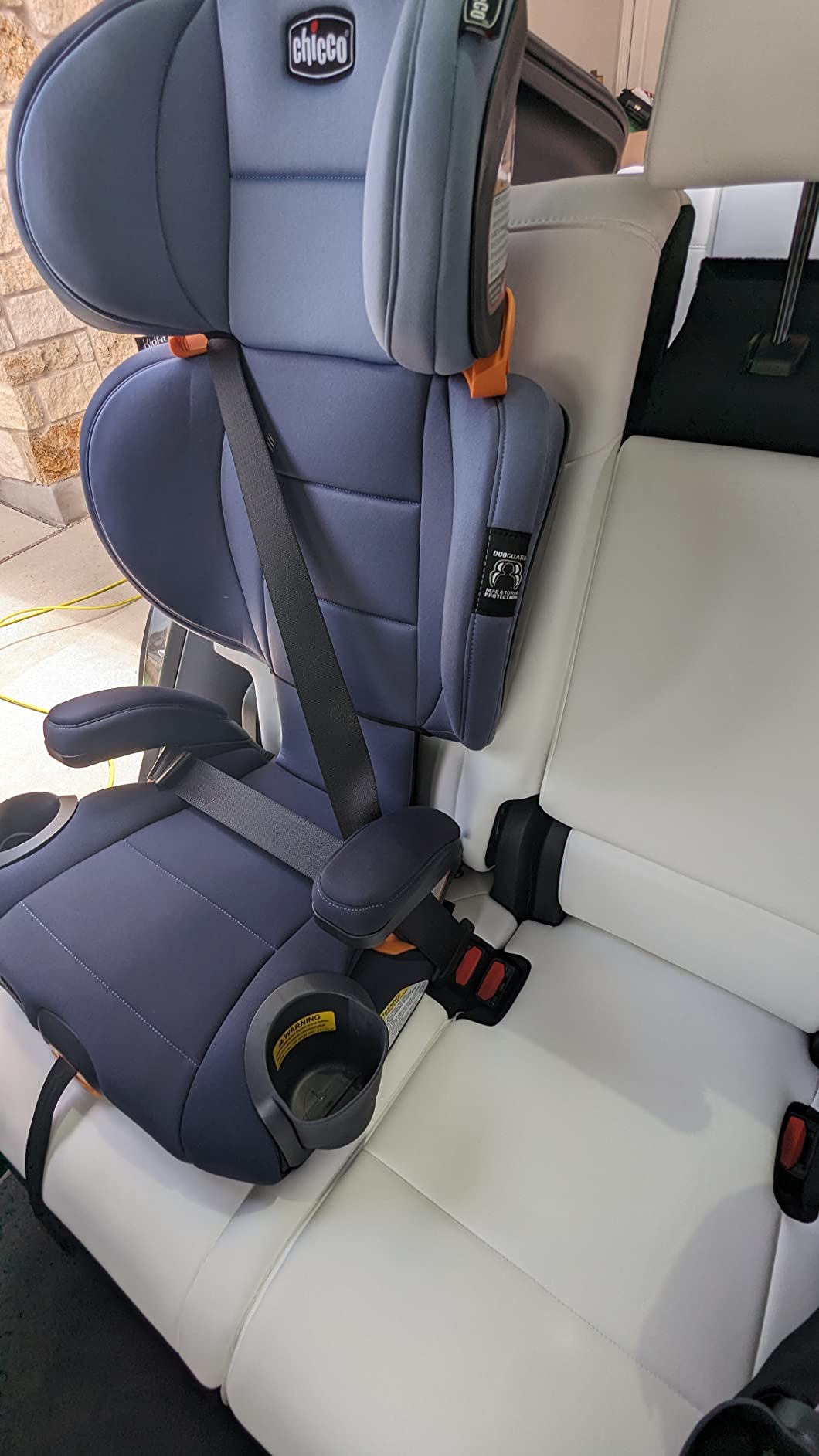
The KidFit is the booster to buy if you care about what is in the fabric. The ClearTex materials contain no flame retardant chemicals, and every fabric piece including the armrests comes off and goes in the washing machine.
Our broader booster guide covers the category in full, but this model stands out for install mechanics. The LATCH connectors have a one-hand quick release, so moving it between cars takes seconds rather than the usual two-handed struggle.

Height adjustment runs from the waist rather than the neck, ten positions, and the ErgoBoost contoured seat has double foam padding. The DuoGuard system covers both head and torso, which is more than most boosters at this level claim.
Two dishwasher-safe cup holders fold in when you do not want them, and the backrest removes entirely to turn the seat into a backless booster, extending its life another couple of years.
When a removable backrest is the deciding feature
That backrest is what turns a one-stage purchase into a two-stage one. You run it high-back while your child needs head support, then strip the backrest off when the vehicle belt fits properly.
For a family moving across the country or jumping between vehicles, that plus one-hand LATCH is the most practical combo in the roundup.
What to watch for
There is no harness. If your child is not yet ready for the vehicle three-point belt, this is the wrong stage and you need a convertible or the Maestro Sport.
A handful of reviewers report a child who could unbuckle the vehicle belt or climb out of the high-back configuration. That tends to sort itself at booster age, but it is worth watching.
8. Evenflo Maestro Sport Harness Booster – Best Bridging the 30-50 Pound Gap
Evenflo High-Back Booster Car Seat with Harness, 22 to 110lbs, Maestro Sport, Granite Gray
Five-point harness 30-50 lb, converts to booster to 100 lb
Up-front central harness adjuster
Shoulder belt guide for the vehicle belt
Pros
- Affordable booster with a real five-point harness
- Light and easy to move between vehicles
- Up-front adjuster tightens without reaching behind
- Deep padding and high side profile suit a tall 3-year-old
Cons
- Padding is under half an inch
- so long drives are hard
- Rigid shell with no flex
- No lower-anchor belt clip between the seat and cushion
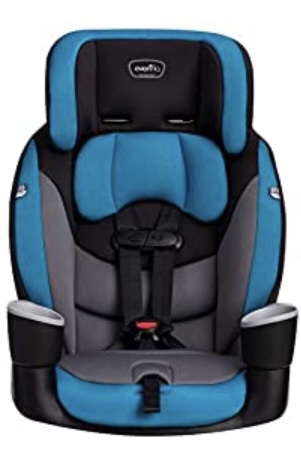
There is a gap in the market between a 65-pound convertible limit and the 40-pound floor of most boosters, and this seat is built to sit in it. The Maestro Sport runs forward-facing with a five-point harness from 30 to 50 pounds, then converts to a belt-positioning booster up to 100 pounds.
That means a child can stay in a harness through the stage where many parents panic and turn forward-facing too early, without buying a full convertible.

The up-front central harness adjuster tightens the straps without reaching behind the seat, and the shoulder belt guide auto-positions the vehicle belt in booster mode. Two built-in cup holders are within reach for the back seat.
Owners like that a small child can climb in unaided and buckle up. Several use it as a shared second seat that moves between cars without a fight.
The case for a harnessed booster
A harness holds a 3-year-old in place in a way a belt cannot. If your child is between 30 and 50 pounds and still small enough for a harnessed booster, this is the cheapest safety upgrade available to you.
The high side profile and deep padding also suit a tall 3-year-old better than a low-profile backless booster, which can leave a big head unsupported.
Where it feels inexpensive
Padding is under half an inch in most places. Fine for school runs, less fine for a five-hour highway drive with a sleeping child.
The shell is rigid with no flex, some buyers attach a cup holder that pops out of place, and there is no lower-anchor belt clip between the seat and the vehicle cushion.
9. Graco Slimfit 3-in-1 Convertible Car Seat – Best for Small Cars
Graco Slimfit 3-in-1 Convertible Car Seat, Jarret
Rear-facing 5-40 lb, forward-facing 26.5-65 lb, booster 40-100 lb
Slim 3-in-1 shell with rotating cup holders
10-position headrest
Pros
- Slim enough for three across
- including narrow sculpted rear buckets
- Easy install and easy harness adjustment
- Lower-anchor install stays secure rear-facing
- Owners keep the same seat across multiple children
- Rotating cup holders fold away
Cons
- Thick padding runs hot
- Openings in the seat back blow air onto the child legs
- Reaching the right recline for a newborn takes practice
The Slimfit is the Graco answer to the Diono problem, and at a 4.8 star average it is the highest-rated seat in this roundup. Its shell is engineered about 10 percent slimmer so it can sit three across in tight rear buckets, including the narrow sculpted benches in cars like the newer Ford Mustang.
It covers three stages: rear-facing harness from 5 to 40 pounds, forward-facing harness from 26.5 to 65, then a high-back booster from 40 to 100 pounds.
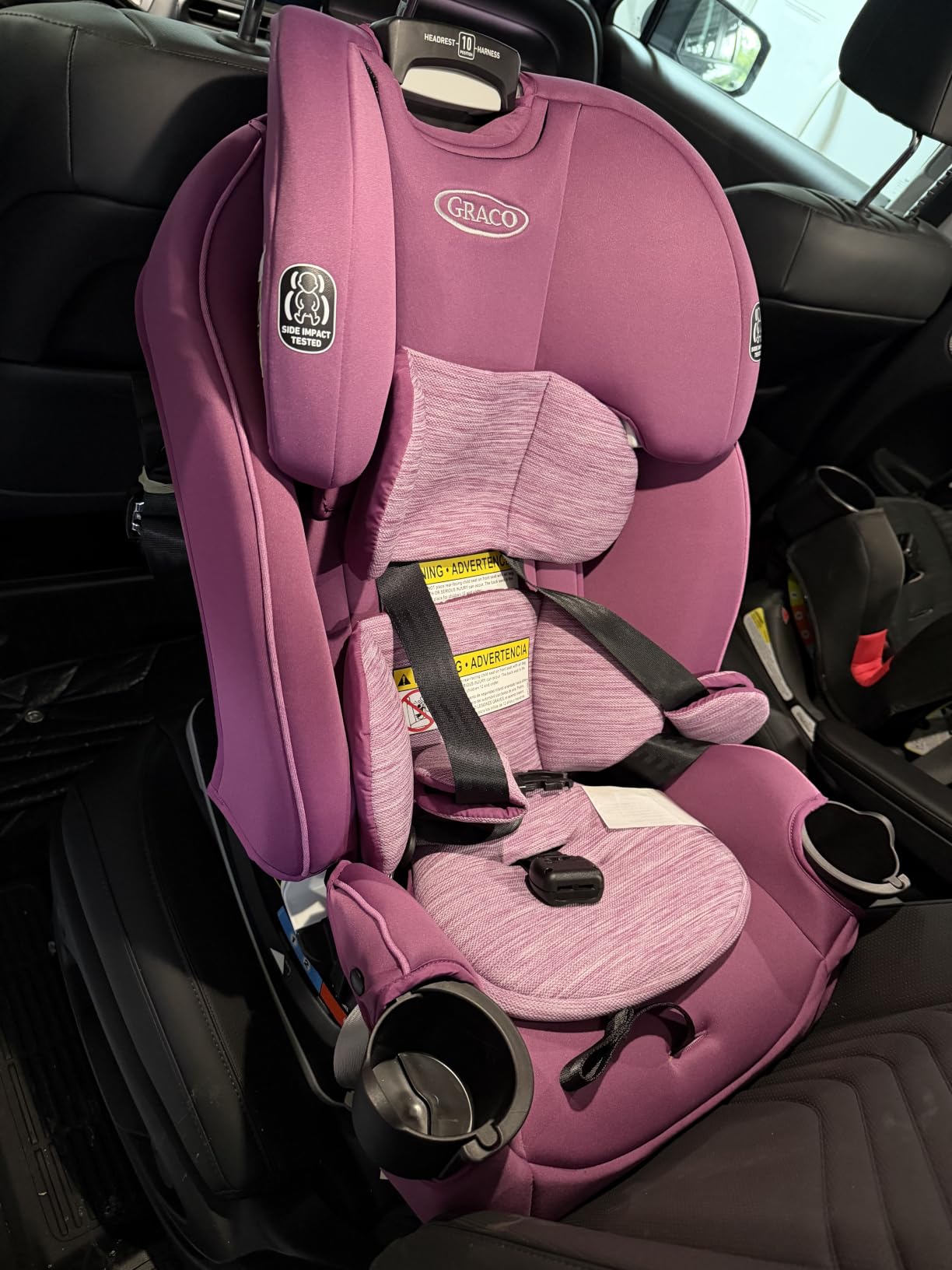
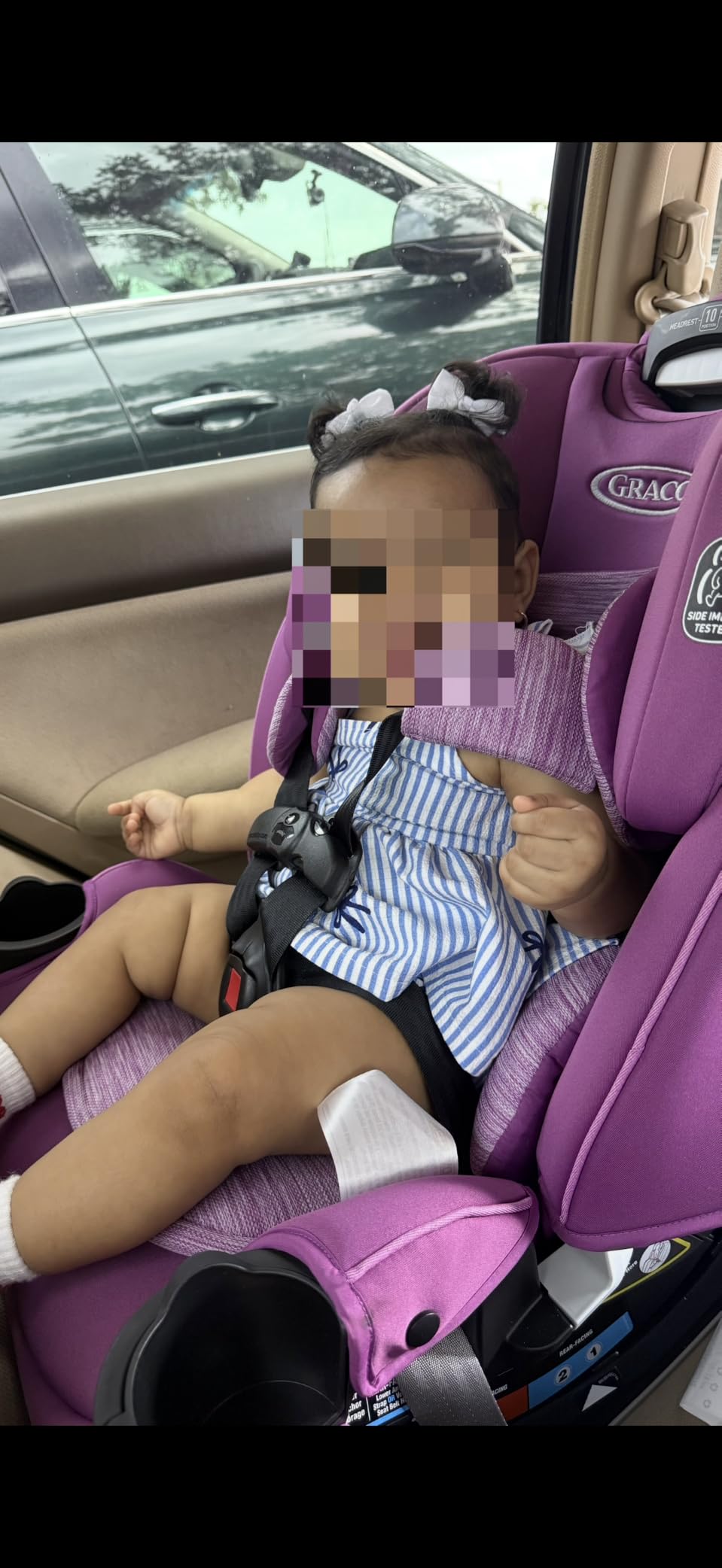
Install is straightforward and the lower-anchor setup stays put rear-facing with almost no sliding, which matters when a squirming toddler is pushing on the shell at every light.
The no-rethread Simply Safe harness moves the headrest and straps together, and 89 percent of reviews are five-star. Repeat owners describe buying the same seat for every child in the family.
When slim beats everything else
If you need three child seats, or two plus an adult in the middle, the physical width is the only feature that matters. This seat delivers it without giving up a booster mode.
It also carries the Graco crash engineering package, tested against frontal, side and rollover conditions.
The heat problem is real
Well-padded seats run warm, and this is the most common complaint in the reviews by a distance. Add a seat gap filler and a sun shade and it becomes manageable.
Openings in the seat back let air conditioning blow straight onto the child legs, and finding the right recline for a newborn without help is genuinely fiddly the first few times.
10. Safety 1st Ellaris 3-in-1 Convertible Car Seat – Best Entry All-in-One
Safety 1st Ellaris 3-in-1 Convertible Car Seat, Slim Fit Design, Rear & Forward-Facing, 5-Position Headrest, Travel-Friendly with Machine-Washable Seat Pad, Smokey Haze
Rear-facing infant 5-30 lb, toddler 30-40 lb, forward-facing 30-65 lb
5-position headrest
Washer-safe pad and dishwasher cup holders
Pros
- Very affordable against comparable three-stage seats
- Light enough to move between vehicles
- No-rethread headrest adjustment
- Machine-washable pad and sturdy cup holders
- Airplane ready and compact for travel
Cons
- Wider than 19 inch with deep side wings
- Headrest feels wiggly next to Graco seats
- Tighten-and-loosen button is hard to reach
- Not as slim as the slim-fit name implies
The Ellaris is the most straightforward first car seat you can buy for a first child, and the most common reaction from owners upgrading from 500 or 600 dollar seats is that the quality surprised them.
It runs three stages: rear-facing infant from 5 to 30 pounds, rear-facing toddler from 30 to 40, then forward-facing harness from 30 to 65 pounds. There is no booster mode, so you will buy a booster later.

Setup is familiar. Hook-style LATCH, a 5-position adjustable headrest and harness, a machine-washable and dryer-safe pad, and two removable dishwasher-safe cup holders. It is compact enough to call airplane ready.
It is also one of the lighter convertible-style seats here, which is why several parents bought it as a grandparent or second-vehicle seat.
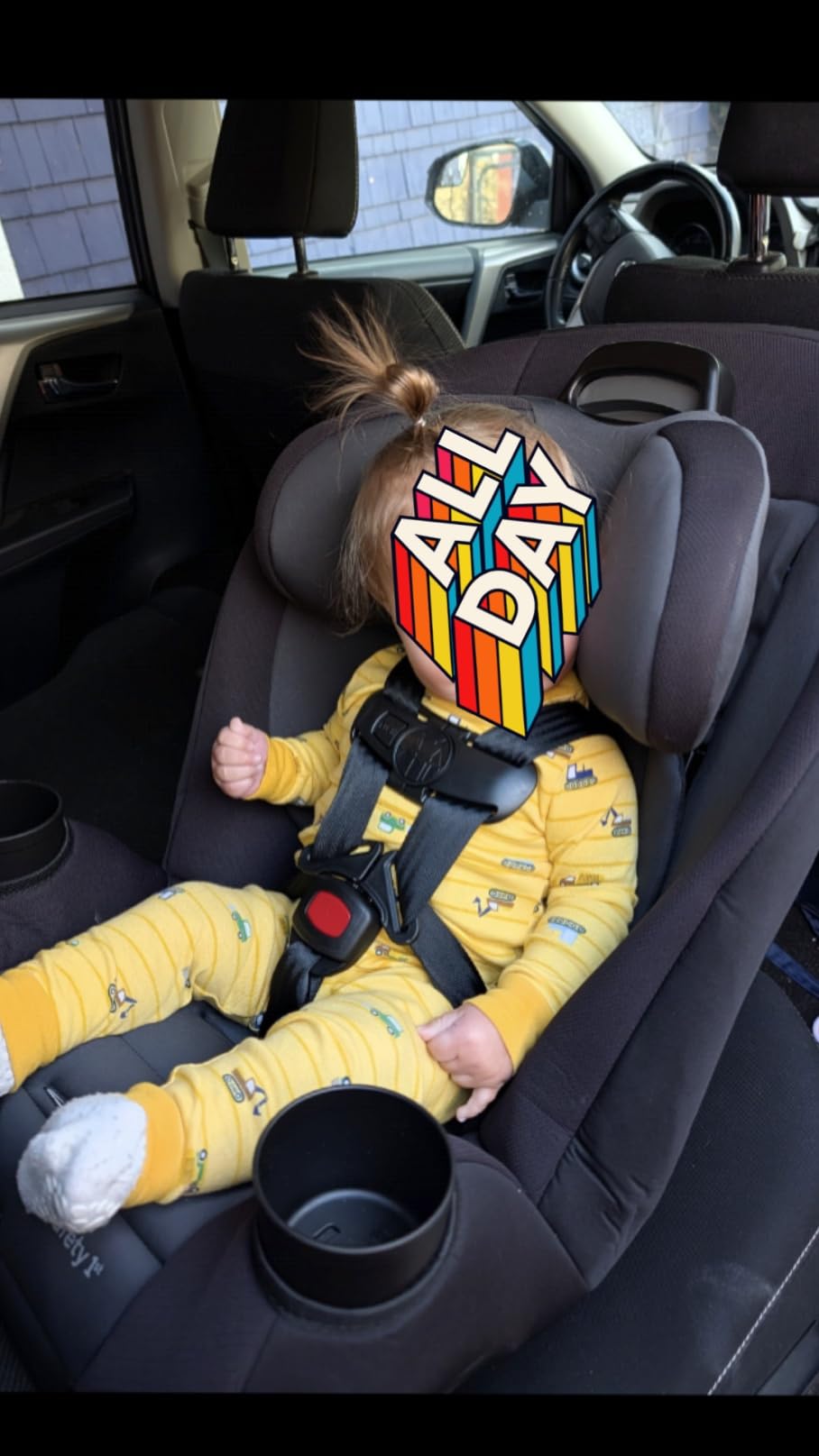
Where the money goes
You get a genuine three-stage range, a washable pad and decent cup holders for a price that leaves room in the budget for a stroller. On pure value per stage, few seats here match it.
Safety-wise it is engineered and tested to meet or exceed federal standards, including the federal side impact standard.
The honest complaints
It is wider than 19 inches with deep side wings, so three-across is not happening despite the slim-fit framing in the name. Measure your bench first.
The headrest has noticeably more play than comparable Graco seats, and the harness tighten-and-loosen button sits somewhere a front-seat child cannot reach easily. It carries a 4.3 average with an 8 percent one-star share, the highest one-star share in this group.
11. Safety 1st Grand 2-in-1 Booster Car Seat – Best Three-Across Booster
Safety 1st Grand 2-in-1 Booster Car Seat, Converts from High Back to Belt-Positioning Booster, High Back Seat for Kids 40-65, and Belt-Positioning 40-100 Pounds, Old Soul
Harness booster 40-65 lb, converts to high-back booster 40-100 lb
Slim design fits three across
Machine-washable pad and dishwasher cup holders
Pros
- Converts from harness booster to belt-positioning high-back
- 40 to 100 lb in one unit
- Slim profile fits three across in most vehicles
- Light enough to move car to car
- Machine-washable pad and dishwasher-safe cup holders
Cons
- Booster mode adds little beyond the harness mode
- No one-hand LATCH release like the KidFit
- Adjustment feels less refined than Graco or Chicco
The Grand fills a specific gap: a booster that starts with a five-point harness at 40 to 65 pounds and 43.4 to 49 inches, then converts to a belt-positioning high-back booster carrying a child to 100 pounds and 52 inches.
Its headline feature is the slim footprint, which lets three fit across a back row. That is the reason to pick it over a bulkier booster in this list, and the reason not to pick it if you have one child.

Everything is designed for a long clean life: a machine-washable, dryer-safe seat pad and two removable dishwasher-safe cup holders. The adjustable headrest supports a growing child with five-point harness support as the first stage.
It is light enough to move between cars without hassle, which suits a shared custody or grandparents-house setup.
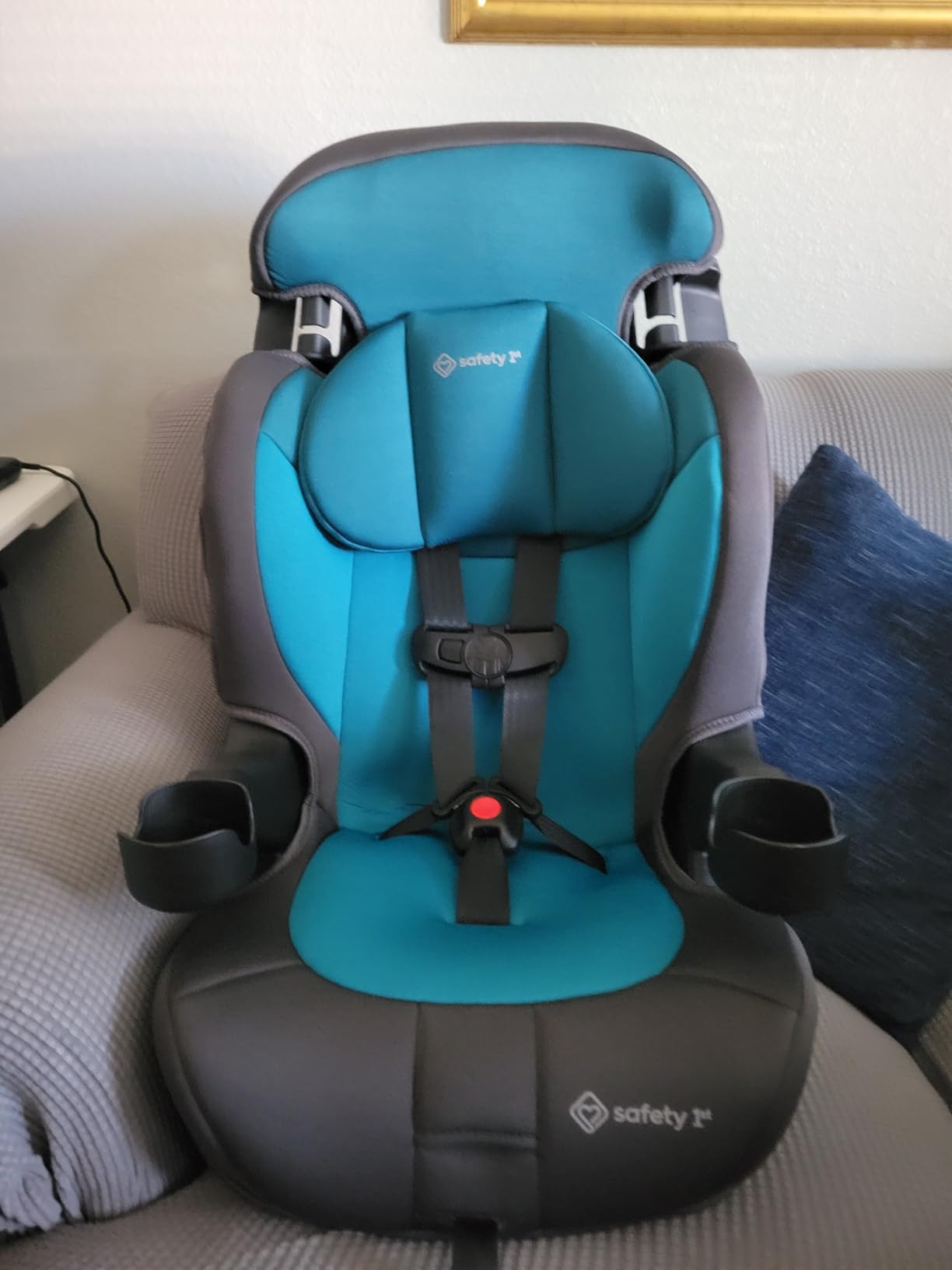
Why the harness stage is worth paying for
A booster with a harness keeps a small child restrained for another year or two. That is a real safety gain over going straight to a belt-positioning booster at 40 pounds.
For a family with a 45-pound 4-year-old who is still small, this is a straightforward way to hold that stage.
Keep your expectations straight
The conversion to belt-positioning mode is not a dramatic change in capability. You are buying the harness window and the narrow width, not a smarter booster.
None of the reviews in our set flag a real defect, but adjustment hardware does not feel as refined as the Graco or Chicco alternatives. Check the LATCH fit yourself rather than assuming.
12. Evenflo GoTime LX Booster Car Seat – Best for Rideshares and Travel
Evenflo GoTime LX Booster Car Seat (Astro Blue)
High-back to backless for children 5 and up, 40-120 lb
One-hand 7-position height adjustment
Deep overlapping side support
Pros
- Very low cost for a booster reaching 120 lb
- Seven-position one-hand height adjustment
- Light and easy to move between vehicles
- High back detaches for backless use
- Two cup holders and a machine-washable cover
Cons
- Arrives unassembled and the joints fit very tightly
- Minimal padding exposes hard plastic as the headrest rises
- Ridged plastic back panel is uncomfortable
- Back panel pieces cannot be separated once snapped
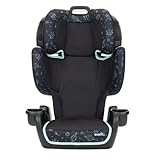
The GoTime LX goes further than most boosters on paper. It runs from a high-back booster to a backless booster for children at least 5 years old, from 40 to 120 pounds, which is the highest ceiling in this roundup.
The one-hand height adjustment across seven positions is the detail that makes it work as a travel seat. No crouching behind the seat, no counting clicks in a parking lot.
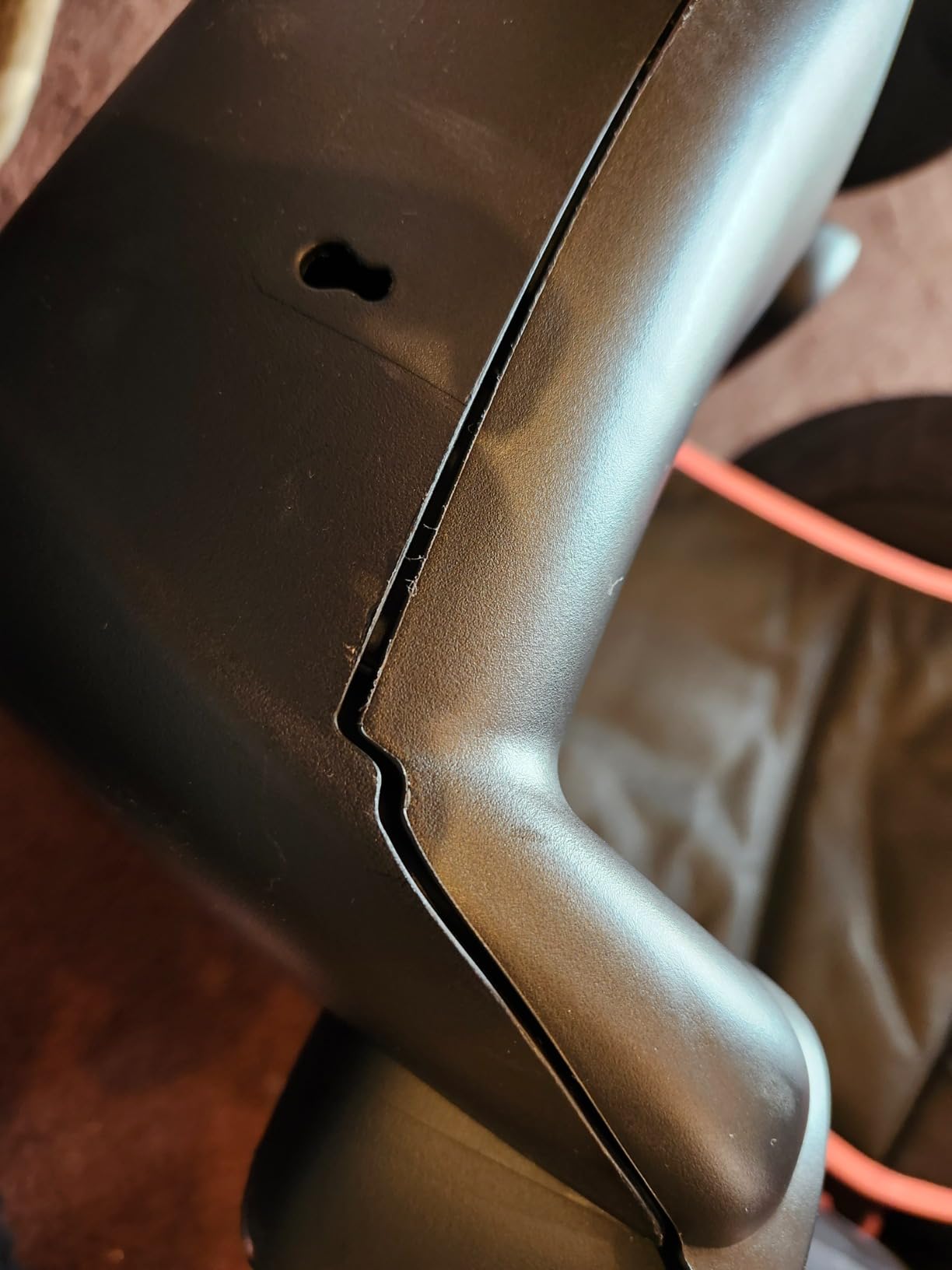
The deep design with overlapping head and body sides adds support and meets or exceeds applicable federal safety standards. The high back detaches easily when a child is ready to drop it, which turns it into a stowable travel seat.
Two built-in cup holders and a removable machine-washable cover round out an unusually complete package at this price.
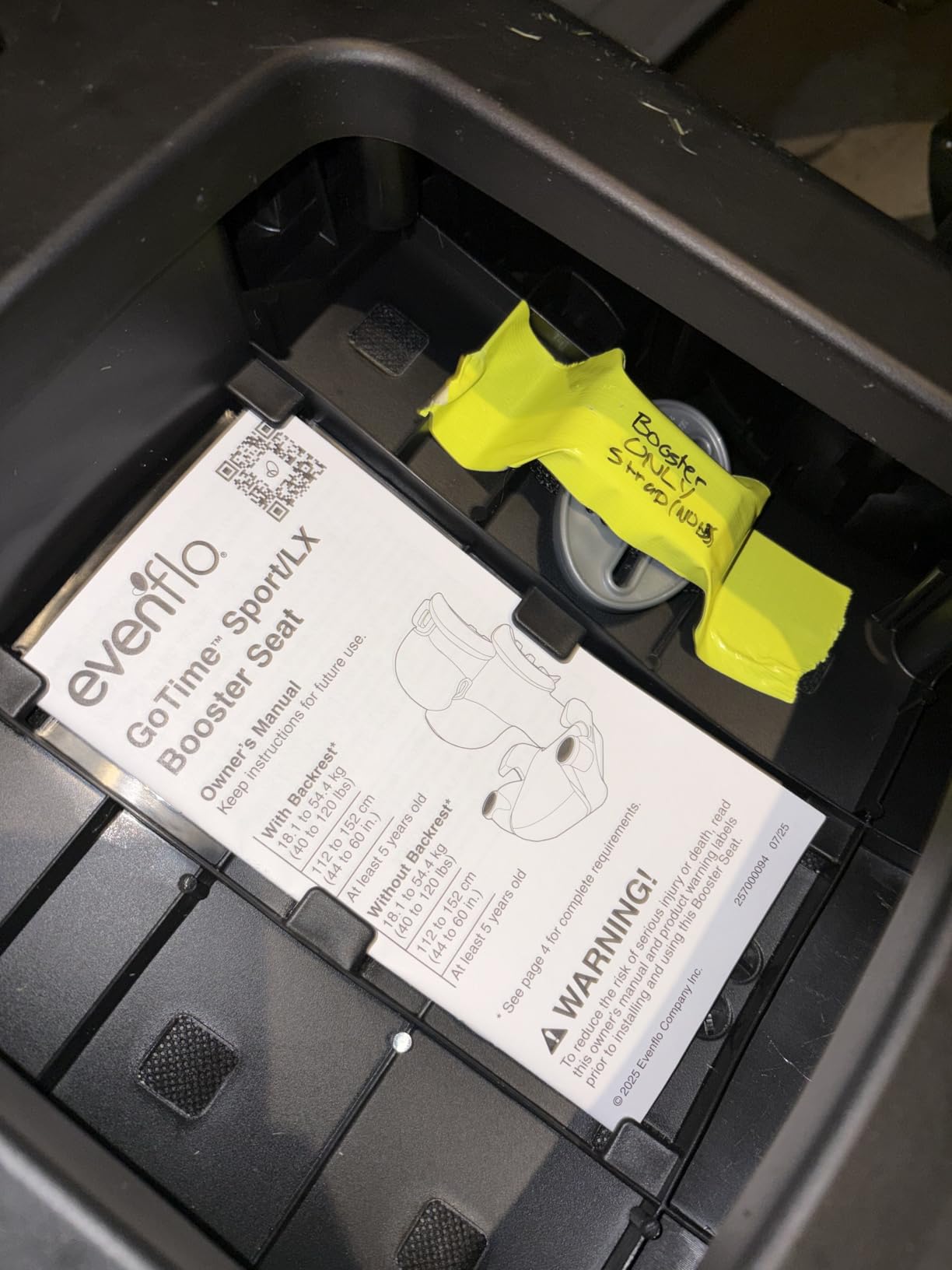
Best for shared custody and multiple vehicles
Light weight and one-hand adjustment mean a babysitter, a rideshare regular or a grandparent can move it correctly without a tutorial. That is worth a lot when the seat changes hands often.
The backless mode has a manual storage compartment, though the strap used in that mode has no clip to hold it in place, so keep an eye on it.
Plan for assembly and comfort
It arrives unassembled and the plastic pieces fit very tightly, so plan on two adults and a few minutes. Reviewers split sharply on this point.
Padding is minimal and more hard plastic becomes exposed as the headrest rises. The straight ridged back panel is uncomfortable for some children on long trips, and children near the 44 inch height minimum often sit at the lowest setting with imperfect belt fit when they slouch.
How to Choose a Car Seat in This Price Band
Start with the stage your child is actually in
Buy for the next 18 months, not for the next eight years. A newborn needs a seat rated from 4 or 5 pounds, an 18-month-old needs a five-point harness, and a 6-year-old needs a booster.
The fastest way to overspend or underspend is buying a 3-in-1 all-in-one when a plain convertible would cover the years you actually need. The all-in-one is worth it for one child who will grow through all three stages. For two children at different ages, a convertible for the younger and a booster for the older is usually less money for better fit.
Rear-facing as long as the seat allows
The American Academy of Pediatrics recommends rear-facing until a child reaches the maximum height or weight for their specific seat, and ideally to at least age two. The seat’s own limit, not the child’s age, is the rule that matters.
This is where budget seats differ most. The Graco Extend2Fit and Diono Radian 3R both carry children rear-facing to 50 pounds. The Baby Trend Cover Me tops out at 40. That difference can be a full extra year of the safest seating position.
Check the highest harness slot and the headrest limit before buying, and check the booster mode’s minimum height. Some budget 3-in-1 seats have a materially shorter booster window than the mode name suggests.
LATCH versus the seat belt
Lower anchors and tethers, better known as LATCH, are easier and more consistent than a seat belt install, but most vehicles cap their lower-anchor weight limit at 40 pounds. Above that, you use the vehicle seat belt.
Whichever you use, check for less than an inch of movement at the belt path, and check again at the headrest. Nearly four in five seats inspected at safety events are installed too loosely, and this is the single highest-value thing a parent can fix for free.
Always attach the top tether when forward-facing, even with lower anchors. For a rear-facing seat, check whether your vehicle requires the tether for the base.
Weight and three-across fit
Weight is a real purchase driver in this band. If you move seats between cars, have lifting restrictions after a C-section, or plan for a grandparent to install it, a 12-pound compact seat beats a 25-pound convertible, and our back pain guidance for caregivers covers the fitting side of that.
For width, measure your rear bench before you commit to a three-across plan. The Diono Radian 3R and Graco Slimfit are built for it, the Baby Trend Cover Me comes in at 18.25 inches at its widest, and the Safety 1st Ellaris and Grow and Go are not candidates. Our booster seat guide has the same comparison for older children.
Expiration dates, recalls and used seats
Never buy a used car seat. You cannot verify its crash history, its expiration date or whether it was involved in a collision, and that risk has no upside against a new seat in this price range.
Most seats carry a 10-year lifespan from the date of manufacture, printed on a label on the seat shell. Check it on day one and set a calendar reminder for the month before it expires. Materials and harness webbing degrade with heat and UV exposure even in a temperate climate.
Before you buy, run the model number through the NHTSA recalls database at nhtsa.gov. A 4.7 rating is a comfort signal, not a recall check. If a recall applies, do not use the seat until the remedy is done.
Where the deals land
The same convertible fluctuates across Target, Walmart and Amazon on the same day, which is why parent forums on r/beyondthebump and the What to Expect community are full of price comparisons rather than model opinions. Retailer trade-in events, Prime Day and Black Friday are the predictable windows when a 200 dollar seat shows a meaningful cut.
Check the price on all three, and buy during a sale event if you are not in a rush. Car seats are one of the few baby purchases where waiting a week costs you nothing and the discount is real.
One forward-looking note: NHTSA’s updated side-impact testing requirements are scheduled to take effect in late 2026, and the higher forward-facing minimum weights that follow will narrow the field of usable budget seats. Buying a current model now avoids that transition entirely.
Frequently Asked Questions
Are cheap car seats as safe as expensive ones?
Yes, within the same federal minimum. Every car seat sold in the US must meet FMVSS 213, which sets identical crash performance thresholds regardless of price. What price changes is weight, fabric, recline range, shell width and harness convenience, not the core crash protection. A loosely installed seat is a bigger risk than a cheaper model.
What is the best car seat for the money under 200 dollars?
The Graco Extend2Fit 2-in-1 Convertible is our best overall pick. It holds a child rear-facing to 50 pounds, carries a 4-position extension panel for extra legroom, and has a 4.8 star average across more than 57k reviews, the largest review base in this roundup. If you need one seat for a single child from newborn to booster, the Safety 1st Grow and Go covers 5 to 100 pounds.
How long can a car seat be used before it expires?
Most seats carry a 10-year lifespan measured from the date of manufacture, and the date is printed on a label on the seat shell. Materials and harness webbing weaken with heat and UV exposure even without a crash. Check the label when you buy and set a reminder for the month before the date. Never use a seat past its expiration date, even if it looks perfect.
Can I buy a used car seat?
No. A used seat has an unknown crash history, an unverifiable expiration date, and no way to confirm whether a recall remedy was ever completed. Against a new seat in this price range there is no financial upside and a real safety risk. If a family member offers you one, politely decline and explain the expiration and history problem.
How do I know if my car seat is installed tightly enough?
Grip the seat at the belt path near the anchors and pull hard. If you can move it more than an inch in any direction, it is too loose. Do the same at the top of the seat near the harness. Nearly four in five seats checked at child passenger safety events are installed too loosely, so this one check matters more than most buying decisions. A free check by a certified Child Passenger Safety Technician is available at many hospitals and fire stations.
What is the LATCH weight limit?
Most vehicle lower anchor systems are rated to 40 pounds, and many owner manuals cap combined LATCH and seat belt use at that weight. Above 40 pounds you install with the vehicle seat belt. Always attach the top tether when forward-facing, even with lower anchors in use, and check whether your vehicle requires the tether for a rear-facing base.
Which of these seats is easiest to move between cars?
The Evenflo Tribute LX is the lightest genuine convertible in this group and is built for a compact footprint, making it a common second-car or travel seat. Among boosters, the Cosco Topside and Safety 1st Grand are both very light, and the Evenflo GoTime LX has one-hand height adjustment so anyone can reposition it correctly. Heavier steel-framed seats like the Diono Radian 3R are built for safety and three-across fit rather than portability.
Bottom Line
The best car seats under 200 dollars are safe, and the choice comes down to the stage your child is in and the width of your back seat. The Graco Extend2Fit wins for most families because 50 pounds of rear-facing and a no-rethread harness buy you the most usable years. The Safety 1st Grow and Go wins for a one-child family who wants a single purchase. The Diono Radian 3R and Graco Slimfit win if three seats have to fit across.
Then spend your remaining effort on the free installation check rather than on the model tier. A correctly installed budget seat outperforms a premium seat installed in a hurry, and that one hour costs nothing.