
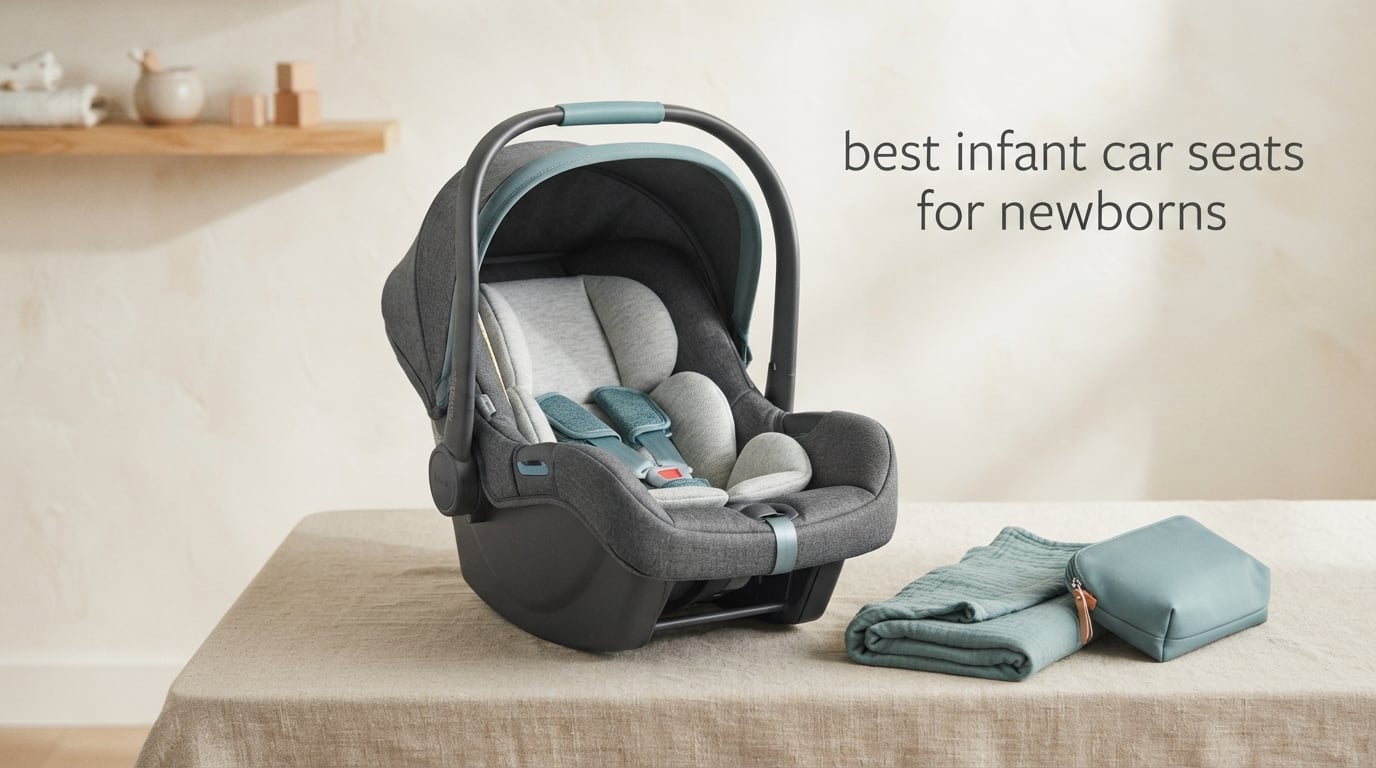
Few purchases arrive with more anxiety attached than the seat your newborn rides home in. On the r/CPST and r/BabyBumps threads I read while putting this list together, the same fear surfaced again and again: not that the wrong seat was chosen, but that the right seat gets installed wrong in a dark garage at 9pm with a crying baby on your hip.
That anxiety is well founded. Federal research on car seat misuse shows most seats in use are installed with at least one critical error, which means how confidently you can install the seat you bought matters at least as much as the feature list on the box. A carrier with a self-tightening connector and a visible tightness indicator removes more risk than any premium fabric ever will.
So that is how I ranked these. I compared 12 rear-facing infant car seats on three things that actually decide whether a seat works for a newborn: whether it fits a 4 to 7 lb baby without gaps, whether a tired parent can install it correctly the first time, and how heavy it feels when you are carrying the seat plus the baby plus a diaper bag. Below is the full breakdown of the best infant car seats for newborns in 2026, plus the buying guide I wish I had read before the baby arrived.
Table of Contents
What Is an Infant Car Seat for a Newborn?
An infant car seat is a rear-facing, bucket-style car seat that holds a baby from about 4 to 30 pounds and up to roughly 32 inches tall. It consists of a removable carrier with a 5-point strap system that clicks into a separate base, or installs directly with the vehicle seat belt. It must meet the federal motor vehicle safety standard FMVSS 213.
That is the whole concept in two sentences, and it is worth internalising before you read any roundup. Every seat below meets the same federal standard. The differences between them are fit, installation hardware, weight and materials.
Top 3 Best Infant Car Seats for Newborns (October 2026)
These three cover the most common situations: a family that wants one product to do everything, a family that wants the most-reviewed seat in the category, and a family that wants the lightest daily carrier.

Doona Car Seat and Stroller
- Car seat to stroller in seconds
- 3-layer side impact protection
- Anti-rebound bar
- TUV and FAA approved

Graco SnugRide SnugLock LX
- SnugLock base installs in under a minute
- 4 recline positions
- FMVSS 213a side-impact tested
- 4-30 lb up to 32 inches

Safety 1st OnBoard FLX
- Weighs under 8 lbs
- 1-pull front strap adjustment
- Machine-washable and dryer-safe pad
- 4-30 lb up to 32 inches
Best Infant Car Seats for Newborns in 2026
All 12 seats in one place below, with the specification differences that matter most for a newborn: weight range, install hardware, and what each base actually does to make the install tighter.
| Product | Specifications | Action |
|---|---|---|
| Doona Car Seat and Stroller |
|
Check Latest Price |
| Graco SnugRide SnugLock LX |
|
Check Latest Price |
| Safety 1st OnBoard FLX |
|
Check Latest Price |
 Baby Trend EZ-Lift Plus Baby Trend EZ-Lift Plus |
|
Check Latest Price |
 Chicco KeyFit 30 ClearTex Chicco KeyFit 30 ClearTex |
|
Check Latest Price |
 Joie Rue Joie Rue |
|
Check Latest Price |
 Baby Trend Secure-Lift Baby Trend Secure-Lift |
|
Check Latest Price |
 Baby Trend Ally Baby Trend Ally |
|
Check Latest Price |
 UPPAbaby Mesa V3 UPPAbaby Mesa V3 |
|
Check Latest Price |
 Safety 1st onBoard Insta-Latch DLX Safety 1st onBoard Insta-Latch DLX |
|
Check Latest Price |
 Baby Jogger City GO 2 Baby Jogger City GO 2 |
|
Check Latest Price |
 Evenflo LiteMax 30 Evenflo LiteMax 30 |
|
Check Latest Price |
1. Doona Car Seat and Stroller – Best All-in-One for Travel-Heavy Families
Doona Car Seat & Stroller, Nitro Black – All-in-One Travel System
4-30 lb rear-facing
Seat and stroller 17.2 lb
Base 9.7 lb
TUV and FAA approved
Pros
- Converts from car seat to stroller in seconds
- Near-flat ergonomic infant insert
- Only unit certified as seat stroller and carrier
- Fits under standard airplane seats
Cons
- Heavier than a standard carrier due to integrated wheels
- Wheels need a specific twist to re-lock
- Tall babies outgrow it early on height
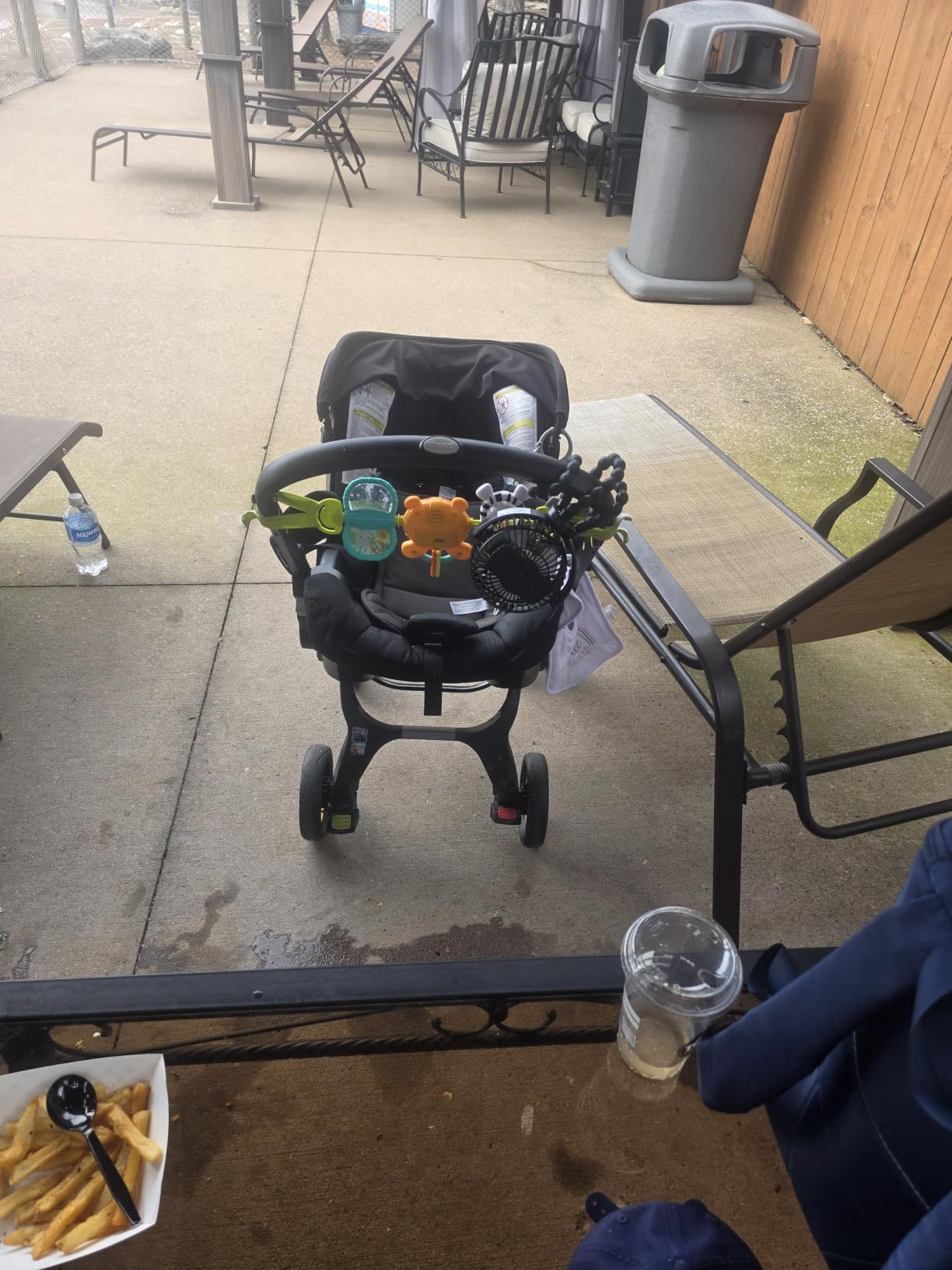
The Doona is the only product in this list that I would describe as genuinely different rather than incrementally better. It is a rear-facing car seat, a stroller and an infant carrier approved for aircraft use, and the transition between those modes takes seconds without waking the baby.
Owners are near-universal about that one mechanism. The fold is intuitive after the first two attempts, the one-click conversion does what the diagram says, and the near-flat ergonomic insert supports a newborn spine and neck in a way that a bucket-style seat rarely does. At 15400 reviews averaging 4.8 stars, this is also by a wide margin the most reviewed seat in the category, and the review base is consistent rather than padded.
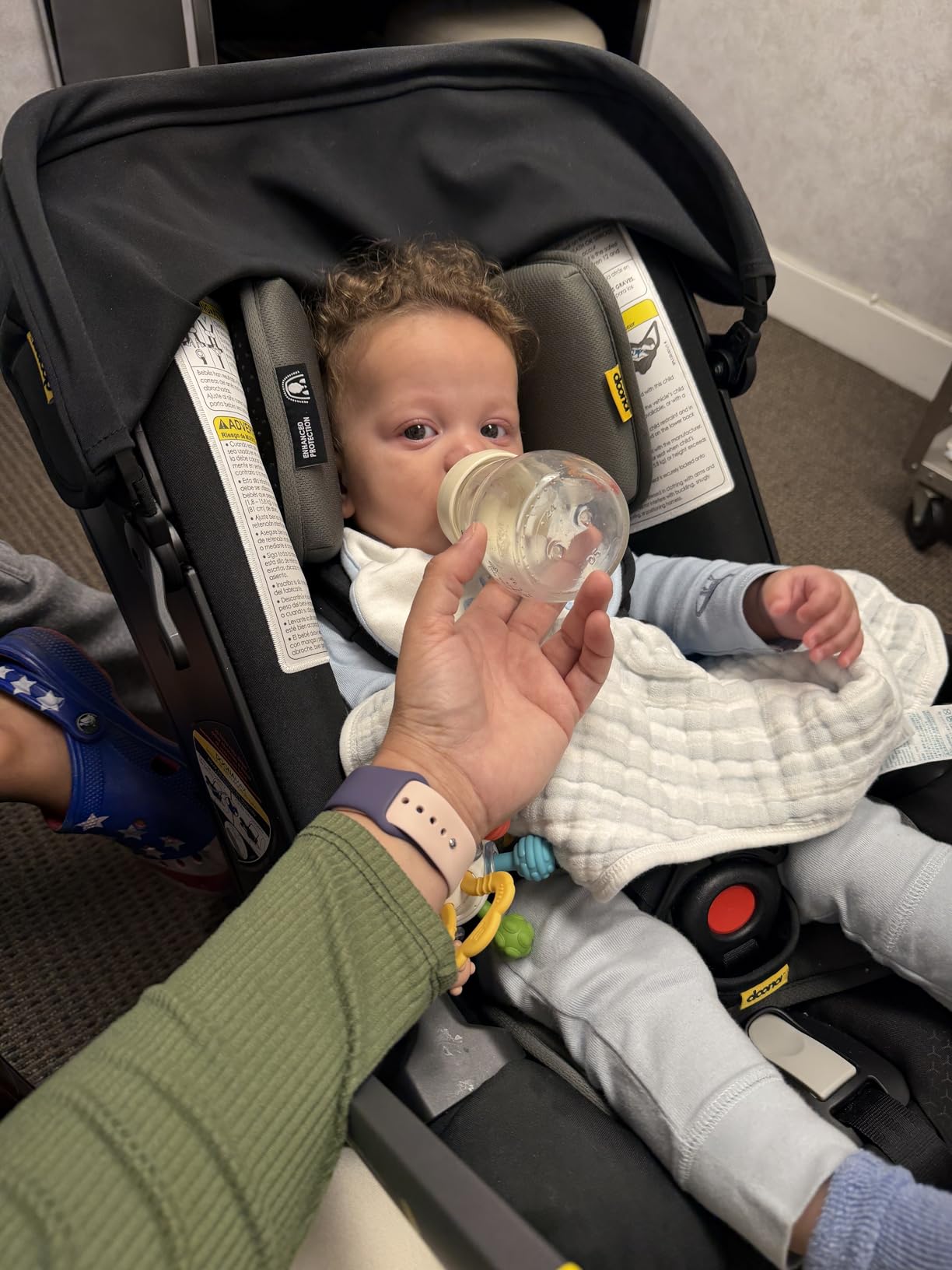
What you give up for that versatility is weight. The seat and stroller together weigh 17.2 lb, and the base adds 9.7 lb more. A 12 lb baby in the stroller mode is a 29 lb carry, which is a real number to hold in mind if you are recovering from a C-section, climbing apartment stairs, or moving between rooms several times a day.
The construction underneath the convenience is solid. Fiber-reinforced polymers and rust-free aluminum, three layers of side-impact protection, an anti-rebound bar built into the crash structure, a 5-point strap system and a UPF 50+ water-repellant canopy. It is TUV and FAA aircraft approved, and it fits under a standard airplane seat rather than in the overhead bin.
Who this seat suits best
If you travel by air more than twice a year, or your childcare involves a lot of car-to-sidewalk transitions, the Doona removes an entire category of problem. There is no base to forget in a trunk, no question about whether the stroller frame accepts the carrier, and no waking the baby at a kerb.
It is also a strong choice for a family splitting duties between two homes, because the second location needs nothing beyond a vehicle seat belt and a click.
Where it falls short
The height limit bites early on this seat. Parents report taller babies hitting the top of the shell before they reach the weight ceiling, which for a 4.8-star product with this many reviews is the single most repeated drawback. Plan on roughly a year of use rather than the year and a half you might get from a longer-tub carrier.
The wheel re-lock also takes practice, and a few buyers report that the vehicle seat protector colour does not always match the finish they ordered. Neither is serious, but both are the kind of small friction you notice daily rather than once.
2. Graco SnugRide SnugLock LX – Best Overall Value
Graco SnugRide SnugLock LX Infant Car Seat, Rear Facing Baby Car Seat featuring TrueShield Technology, Baby Registry Must Have, Great Gift for New Parents
4-30 lb up to 32 inches
SnugLock base fits belt or LATCH
4 recline positions
Level indicator
Pros
- SnugLock base installs in under a minute
- Rapid-remove from base
- Removable quilted newborn supports
- Strong Silent Shade canopy
- Clicks into Graco strollers
Cons
- Heavier to carry by the handle
- Side grip can be awkward in the hand
- Tight fit in a center back seat position
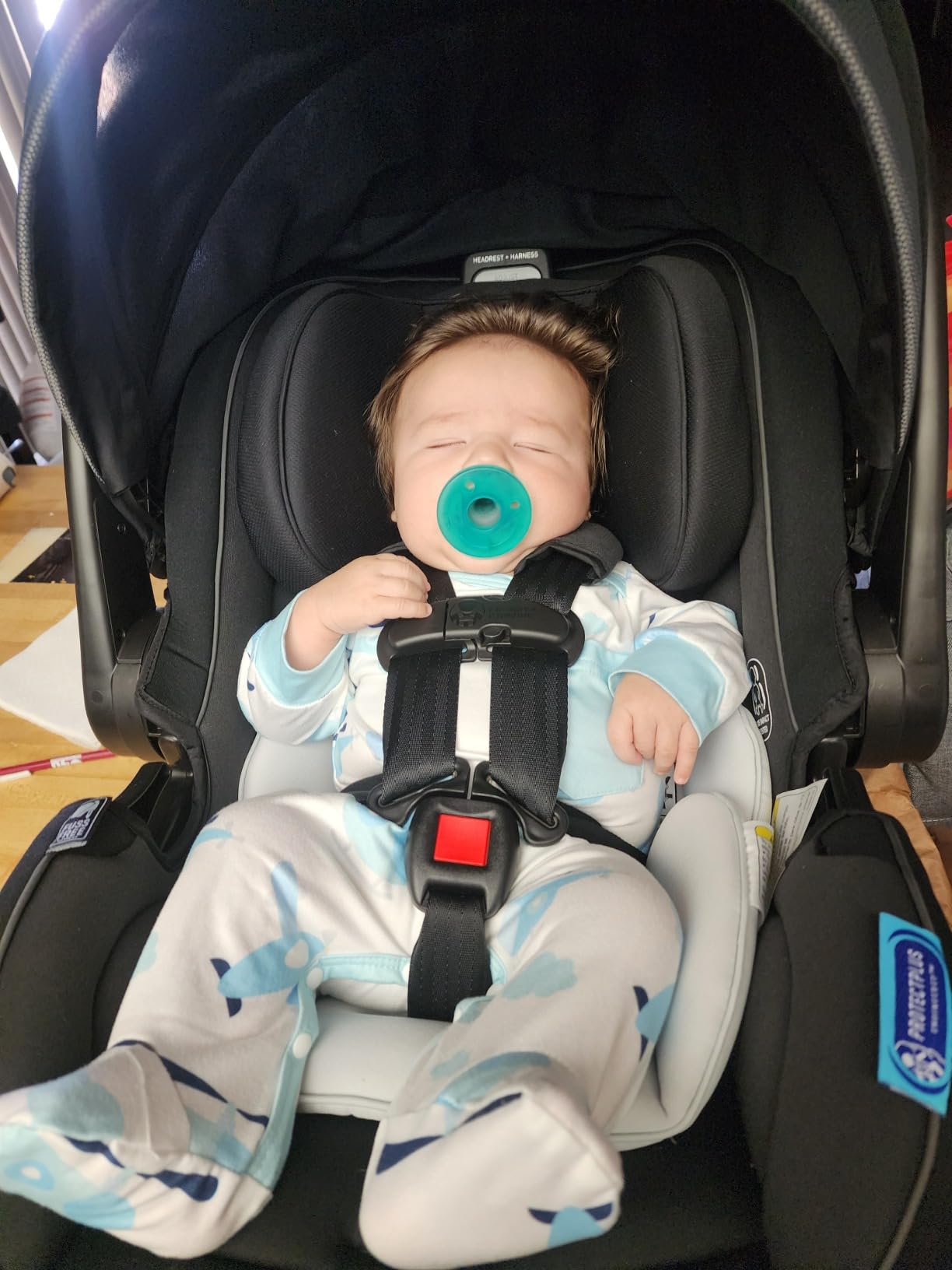
Graco is the most repeated brand in the shopping results for this query, and the SnugRide SnugLock LX is the reason. It covers 4 to 30 lb up to 32 inches rear-facing, includes a base that installs with either the vehicle belt or LATCH, and it is side-impact tested to FMVSS 213a with TrueShield protection running from head to hips.
At 6276 reviews and 4.8 stars it is the second most reviewed seat on this list, and the pattern in the reviews is consistent: people buy it because the base goes in fast and stays tight, then stay because the canopy is genuinely dark and the newborn supports are removable quilted pieces rather than a permanent pad.
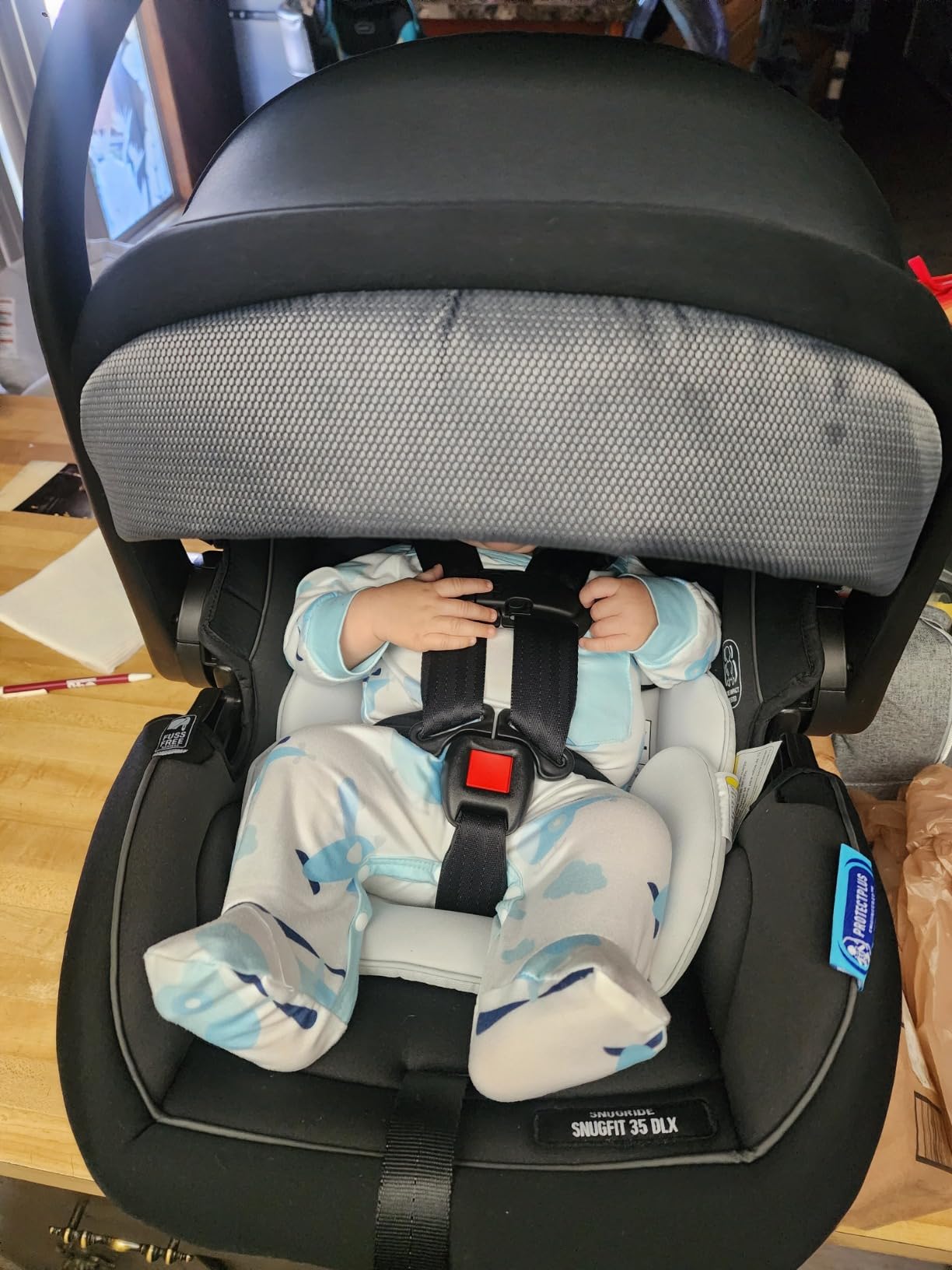
The SnugLock base is the centrepiece. Owners time the install at well under a minute, the carrier rapid-removes with one hand, and the adjustable base offers 4 recline positions with an easy-to-read level indicator so you are not guessing at the angle in a dim car.
The 5-point strap system is built in, and the Silent Shade canopy gives unusually strong sun coverage for a seat at this end of the range. It also clicks into compatible Graco strollers with audible locking clicks, which removes the usual fitting guesswork.
Why this is the value pick
Compare the feature set against seats priced well above it: FMVSS 213a side-impact testing, a recline indicator, removable newborn supports and a one-minute base. For most families that combination is everything the seat needs to do, and the review volume gives you a large sample of long-term owners rather than a handful of early adopters.
If you already own a Graco stroller, this is the most frictionless path of any seat here. The audible click is a genuine safety feature at the car-to-stroller moment.
What to watch out for
Carry weight is the recurring complaint, at roughly 9 lb. Reviewers also note that the side grip position can be awkward to hold one-handed, and that a tight fit in a centre back seat position makes loading harder if you are parked in an awkward spot.
Those are ergonomic rather than safety drawbacks. On the safety side the review base is large, positive and specific, which is the profile you want from a seat that will run a child for a year and a half.
3. Safety 1st OnBoard FLX – Best Lightweight Most Versatile
Safety 1st OnBoard FLX Infant Car Seat with Base, Lightweight Baby Car Seat for Travel, Monument 4
4-30 lb up to 32 inches
Under 8 lb
LATCH-equipped
Made in Columbus Indiana
Pros
- Weighs under 8 lb
- Good padding for newborn days
- Washable and dryer-safe seat pad
- Front strap adjustment
- QuickClick stroller fit
Cons
- Tall babies can reach the 32 in cap early
- Bulkier shell than slim newborn inserts
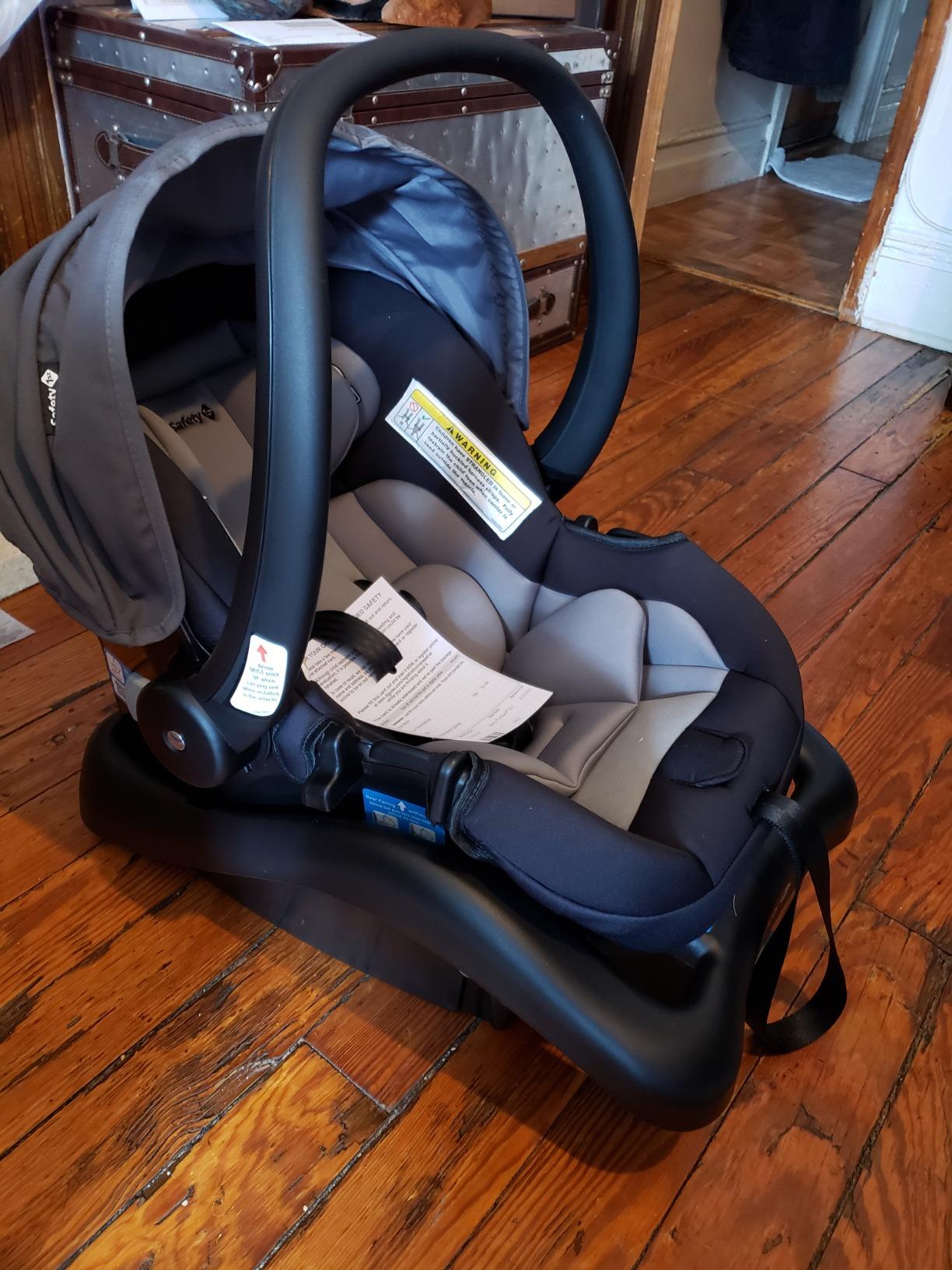
If the number that matters most to you is the one on your back, this is the seat. It weighs under 8 lb, covers the standard 4 to 30 lb range up to 32 inches, and it is manufactured in Columbus, Indiana rather than assembled from imported components.
3593 reviews at 4.6 stars is a large sample, and the recurring theme is weight. Parents describe the OnBoard FLX as the seat they can move between vehicles and grandparents without thinking about it, which matters for anyone doing school runs, shared custody or frequent car-to-stroller transfers.
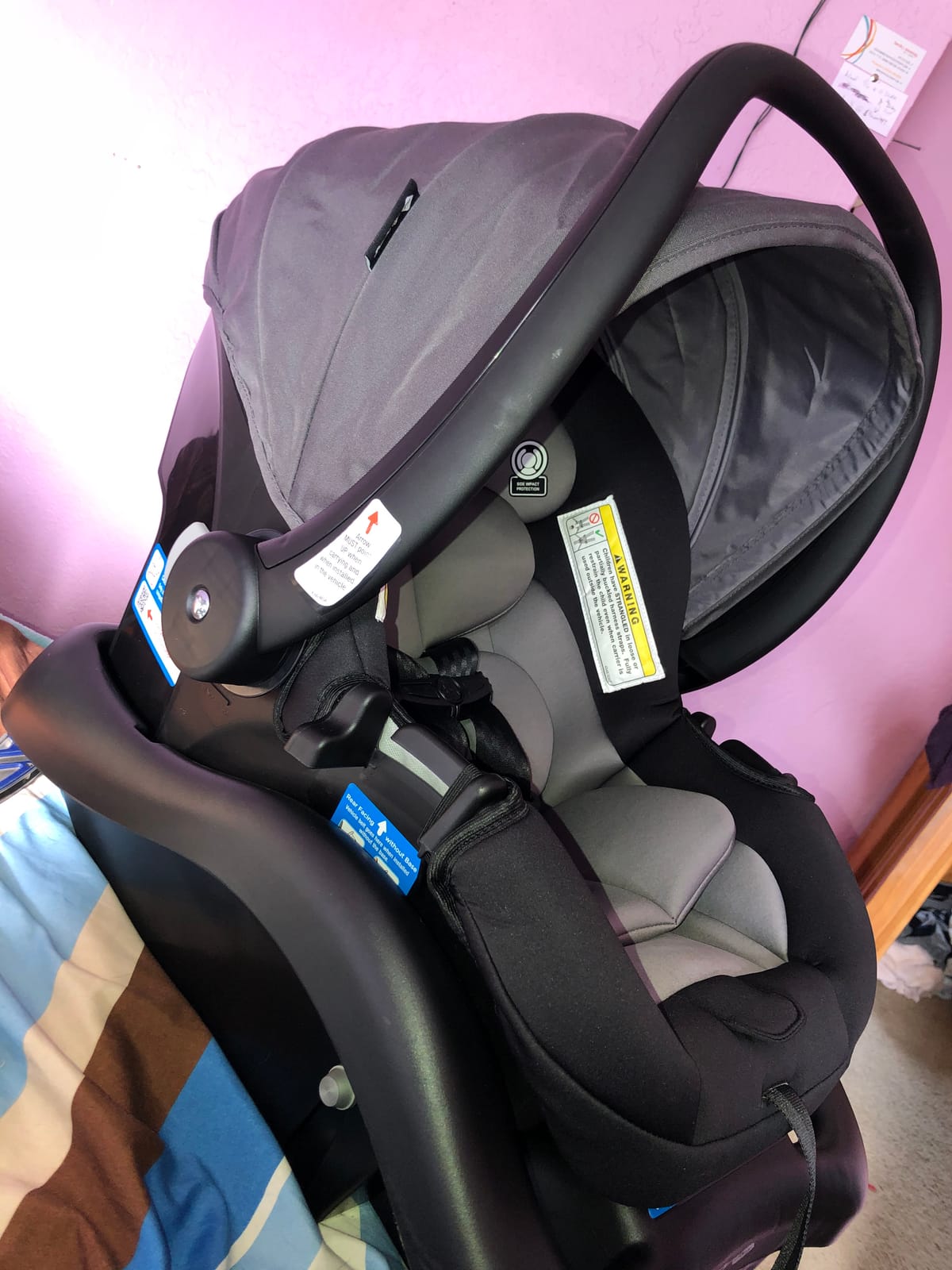
The details are sensible for the tier. LATCH-equipped with 1-pull front strap adjustment means you do not reach behind the seat to tighten, four strap heights give room as the baby grows, and removable newborn head and body inserts handle the first weeks. Side-impact protection uses deep sides with energy-absorbing materials.
The seat pad is machine washable and dryer safe, and at least one reviewer put it through a home bath wash and reported it looking new. That is not a glamorous feature, but newborn seats get spilled on constantly.
Best for light carry and daily use
Under 8 lb is the number to focus on here. When two carriers differ by three or four pounds, that difference is felt every time you lift the seat, particularly during the first weeks when you are also managing stairs and a napping baby. This seat also offers QuickClick stroller compatibility, so the light weight does not have to mean a separate baby seat for the stroller.
It is the one budget seat here where the compromise is size rather than safety hardware, which is the right trade for a first-year seat.
Where it runs out
The 32-inch height limit catches tall babies before the weight limit does, and this is the most repeated limitation across reviews. It means some children move to a convertible seat on height around 12 months even though they could legally carry on.
The shell is also bulkier than seats that use slimmer newborn inserts, which can matter in a tight back seat. Both are fit issues rather than protection issues, and the 4.6 rating reflects owners accepting the trade rather than disliking the seat.
4. Baby Trend EZ-Lift Plus – Best for a Low-Outlay First Setup
Baby Trend EZ-Lift™ Plus Infant Car Seat, Dash Black – Newborn Comfort Padding, Lightweight Carry Build, Adjustable Harness System
Seat and base included
Newborn comfort padding
Lightweight carry build
100% polyester
Pros
- Base included in the box
- Newborn comfort padding
- Light build for car-to-stroller moves
- Adjustable strap system grows with baby
Cons
- Spends longer than most budget seats
- Limited side-impact detail in the listing
The EZ-Lift Plus exists to solve one problem: getting a complete, working setup with a base for the least outlay. At 2074 reviews and 4.7 stars, buyers treat it as a solid budget starter rather than a compromise they regret.
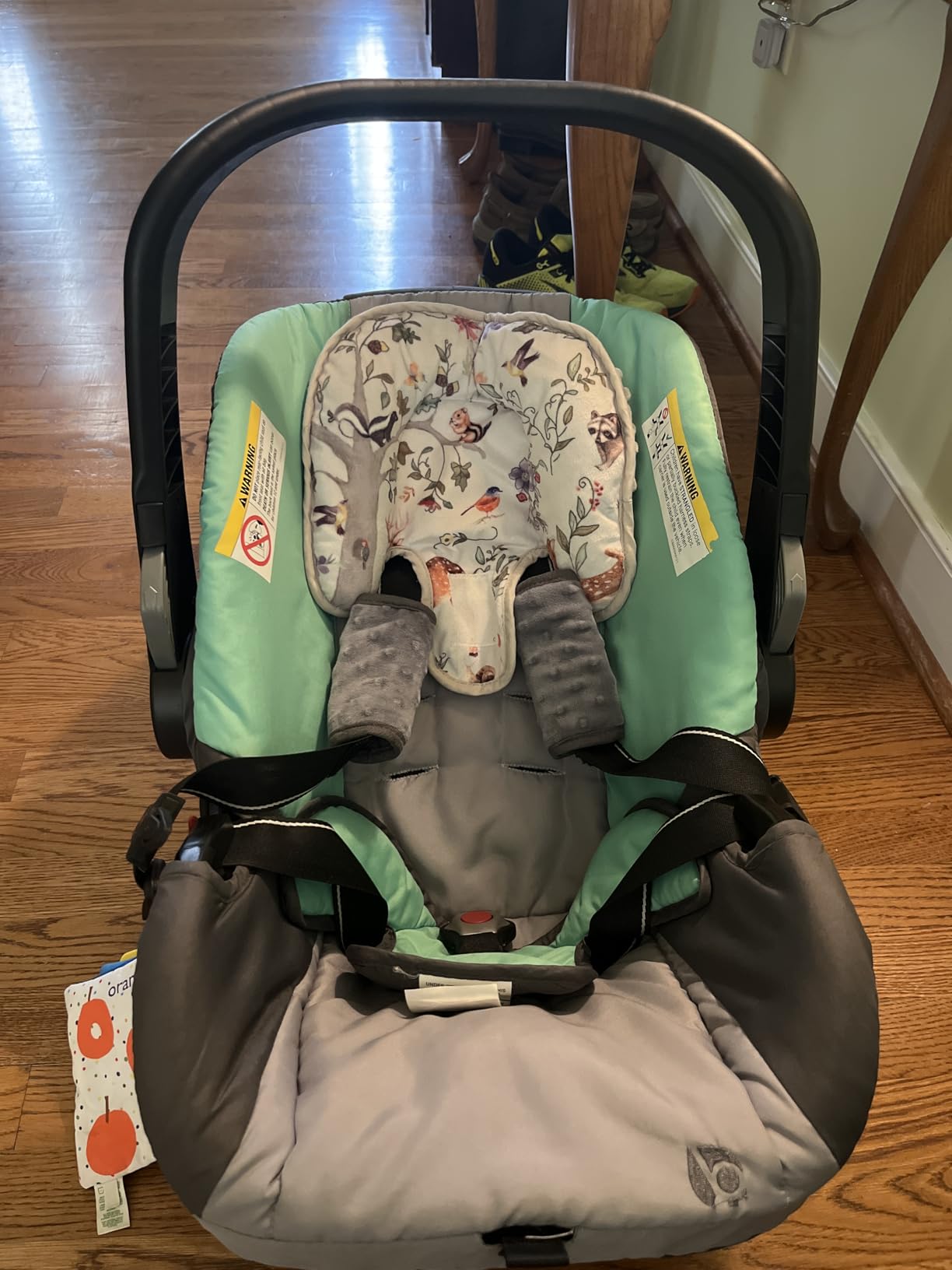
What you get is a lightweight carry build, newborn comfort padding for day-one support, an adjustable strap system that grows with the baby, and 100% polyester construction. The box contains both the infant car seat and the base, so there is nothing else to buy before the hospital run.
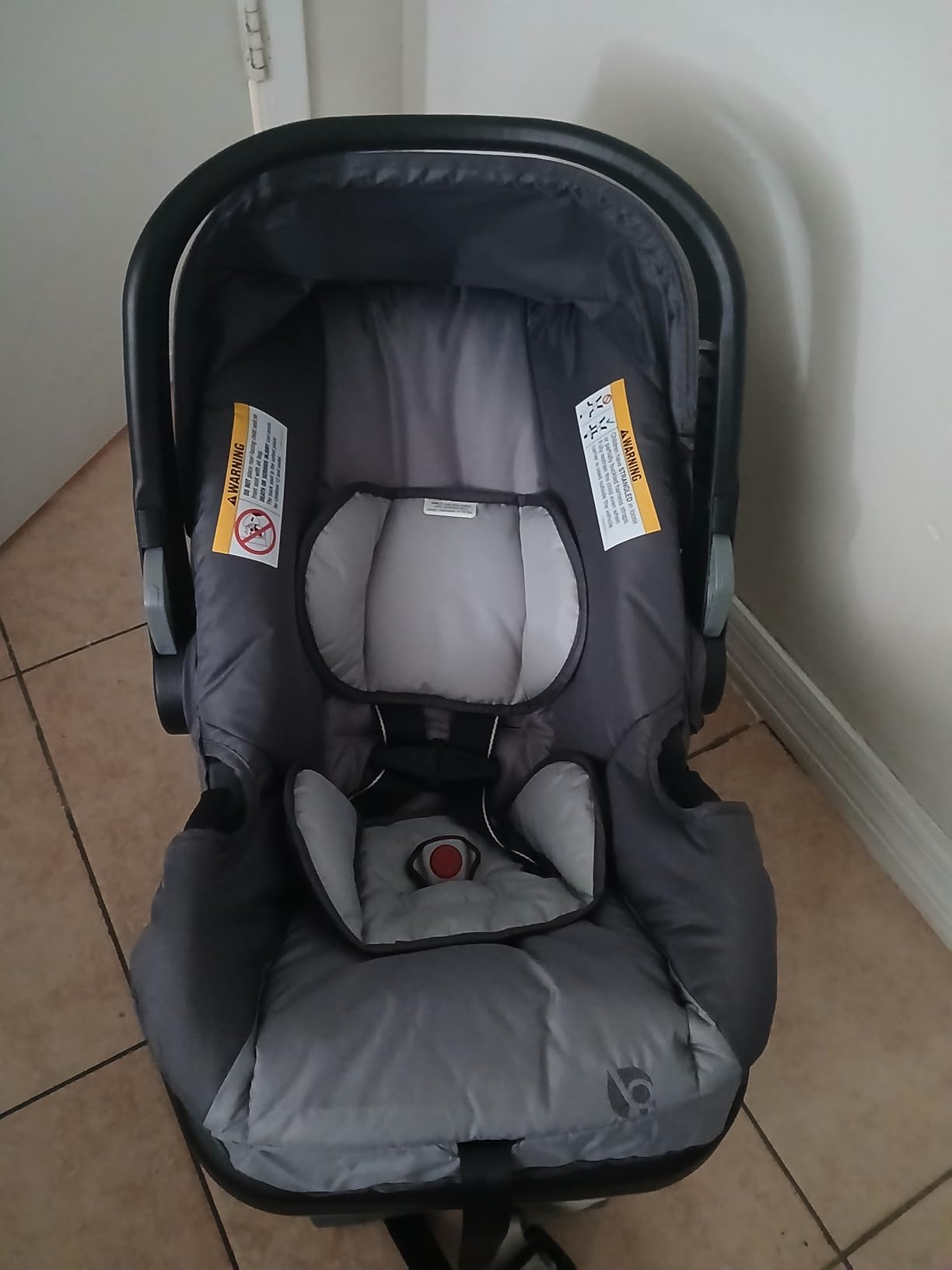
Owner reviews focus on exactly the things you would hope. The light build makes car-to-stroller transitions easier, the newborn padding is comfortable enough for daily use from the start, and the adjustable strap lets the fit change as the baby grows without buying a new seat.
It is also one of the few genuinely entry-level seats in this roundup that still arrives as a complete system rather than a carrier you have to pair with a base separately.
When this is the right call
If budget is the deciding factor and you need a base in the box, this is the shortest path. It suits a first car seat for a first baby, a grandparent backup, or a second vehicle where the premium options above would be paying twice for the same job.
The general guidance we use in our full infant car seat roundup applies here too: buy the seat whose install you can repeat correctly when you are tired, not the seat with the longest brochure.
Where it runs out
The feature set is basic compared with the seats above it, and the product listing gives limited detail on side-impact protection, which makes it harder to compare on the spec that matters most. You are buying on simplicity rather than on documented crash engineering.
If your newborn will spend long stretches in the seat, or you want materials you can verify, look at the Chicco KeyFit 30 or the Joie Rue further down instead. For a first year of ordinary trips, this one does the job.
5. Chicco KeyFit 30 ClearTex – Best for Chemical-Free Fabrics
Chicco KeyFit 30 ClearTex Rear-Facing Infant Car Seat with Base
GREENGUARD Gold ClearTex
SuperCinch LATCH tightener
Two bubble levels
EPS foam liner
Pros
- SuperCinch makes repeat installs accurate
- Flame retardant-free fabric
- Clicks into Chicco strollers
- One-hand release handle
- Machine washable pad
Cons
- LATCH-centric base suits domestic use better
- Inserts must be removed as baby grows
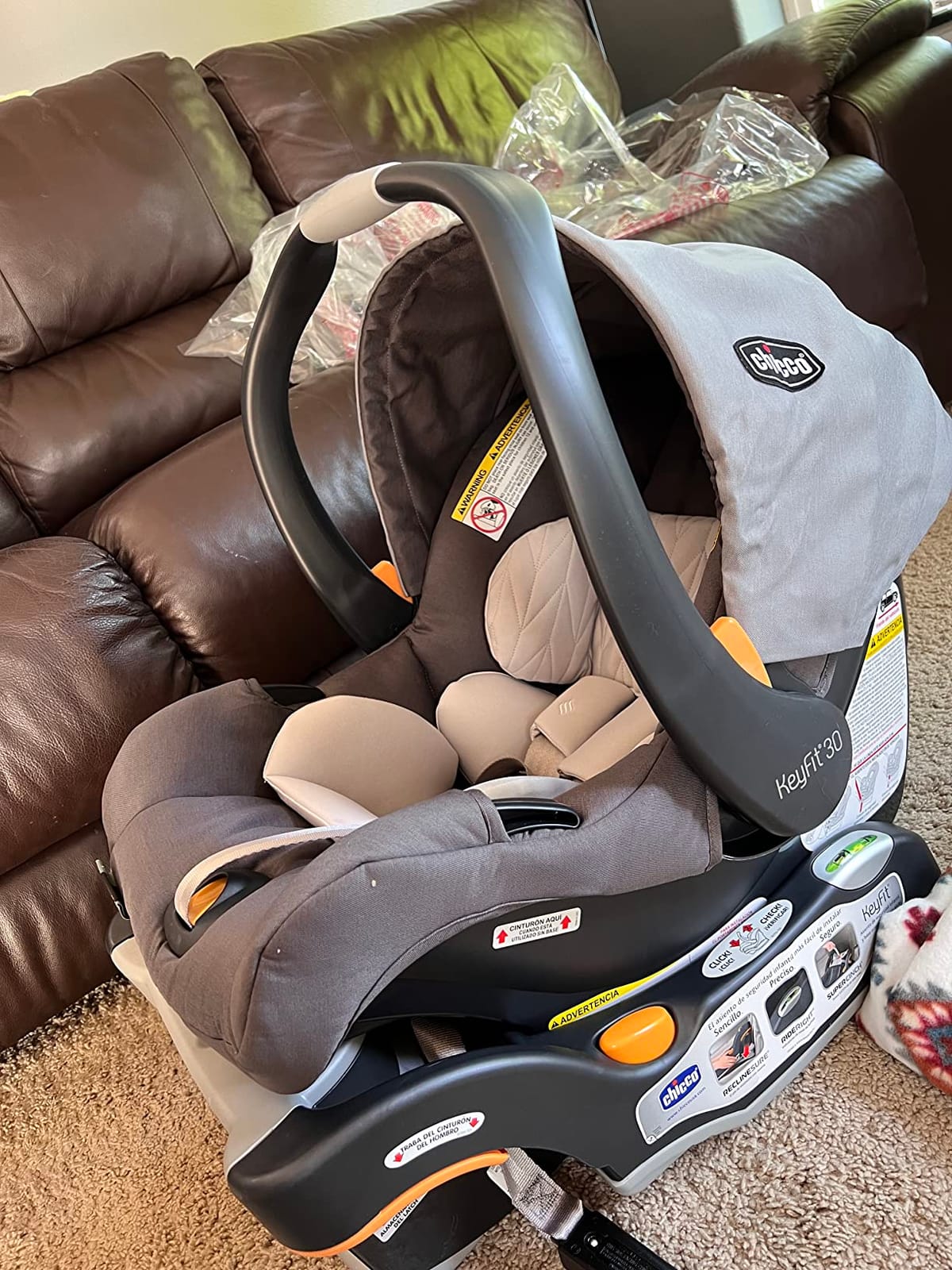
The KeyFit 30 ClearTex is the pick for parents who are specifically looking at what a newborn is breathing in for the first year. The fabric is flame retardant-free, carries GREENGUARD Gold certification, and the carrier shell includes an EPS energy-absorbing foam liner.
That material question comes up repeatedly in parent forums, where off-gassing and flame retardants in a newborn’s first environment is a genuine concern. This seat answers it with a certification rather than a marketing line, which is why it earns its place on this list despite a smaller review count of 485.
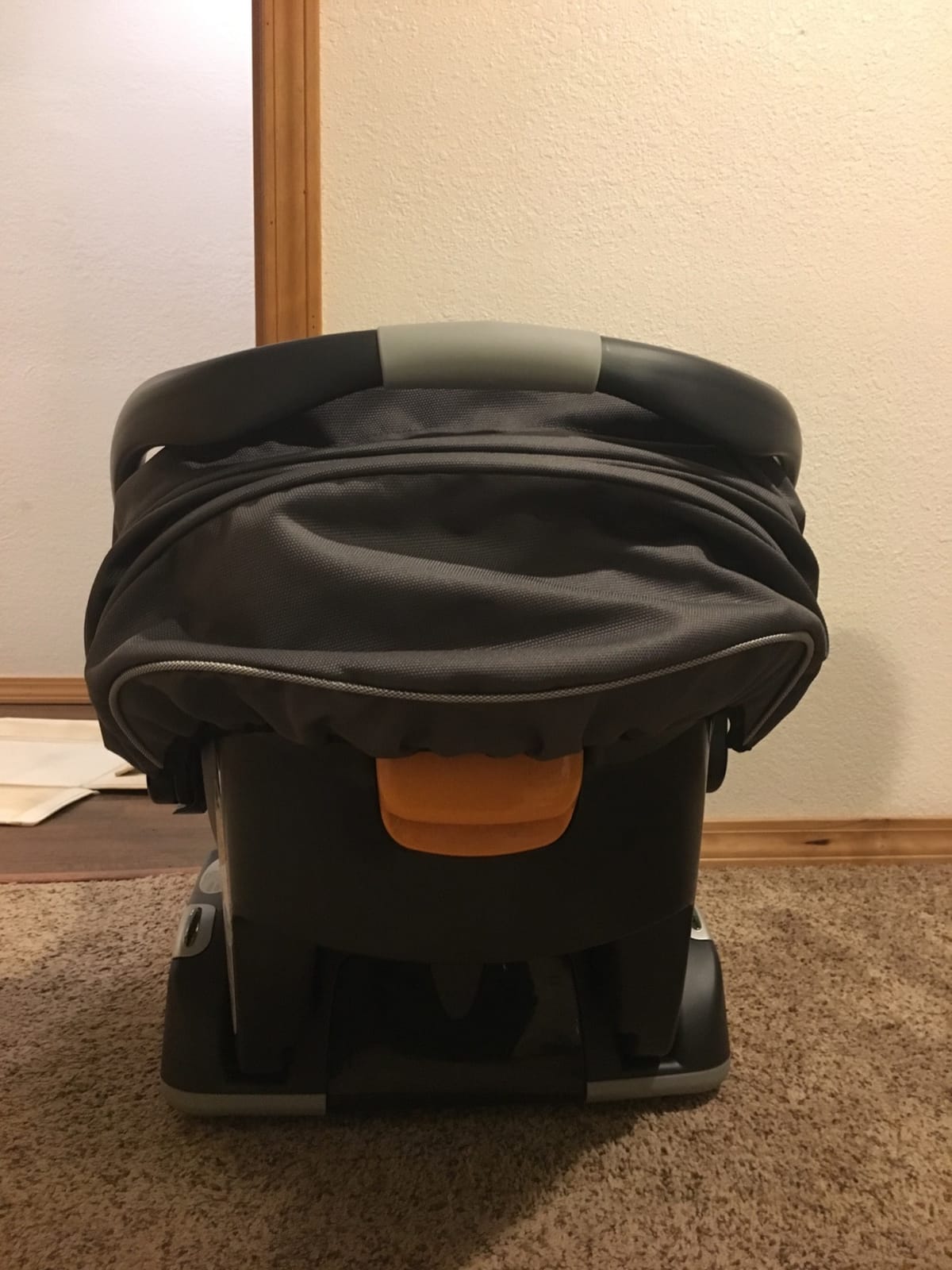
The base is the reason most owners single it out. The SuperCinch force-multiplying LATCH tightener removes the single most common installation error, which is a loose LATCH strap, by tightening the connector rather than the strap. Two bubble-level indicators and a spring-loaded leveling foot mean you are not eyeballing the angle.
It clicks into compatible Chicco strollers and the stay-in-car base, the two-position carry handle releases with one hand, the canopy is large and removable, and the seat pad is machine washable.
What makes the base different
SuperCinch is a force multiplier, which means a fraction of the effort at your hand produces full tension at the anchor. For a parent installing alone, at night, in a low vehicle, that is a genuine safety gain and not a convenience feature.
The combination of SuperCinch plus two bubble levels is the most verifiable install setup in this roundup alongside the UPPAbaby Mesa V3, and it is the reason this seat appeals to anyone nervous about getting the install right alone.
Where it runs out
The LATCH-centric base design is less convenient for international travel, where lower anchors are not standard, and reviewers report minimal drawbacks beyond that. The removable inserts also need to come out as the baby grows, which is normal but worth budgeting for as a small step change in comfort.
At 485 reviews the volume is far below the Graco, so you are trusting a smaller body of owner experience. The rating is still 4.8 across those reviews.
6. Joie Rue – Best Lightweight Seat With a Built-In Anti-Rebound Bar
Joie Rue Infant Car Seat & Anti-Rebound Base, Lightweight
7.7 lb seat
16 lb with base
FMVSS 213a and 213b
Built-in anti-rebound bar
Pros
- One of the lightest seats at 7.7 lb
- Anti-rebound bar built into the base
- Lower anchors integrated in the base
- Three-piece removable inserts
- UPF 50+ canopy
Cons
- Base adds roughly 8 lb to total carry weight
The Joie Rue pairs the second-lightest carrier here with a feature that most bases leave out. The anti-rebound bar is built into the base rather than sold as a separate accessory, and the base also has integrated lower anchor attachments so you need no separate hardware.
An anti-rebound bar limits how far the seat can rotate back into the vehicle seat after the initial impact in a collision. At 7.7 lb for the seat, you get that protection in one of the lighter packages on this list.
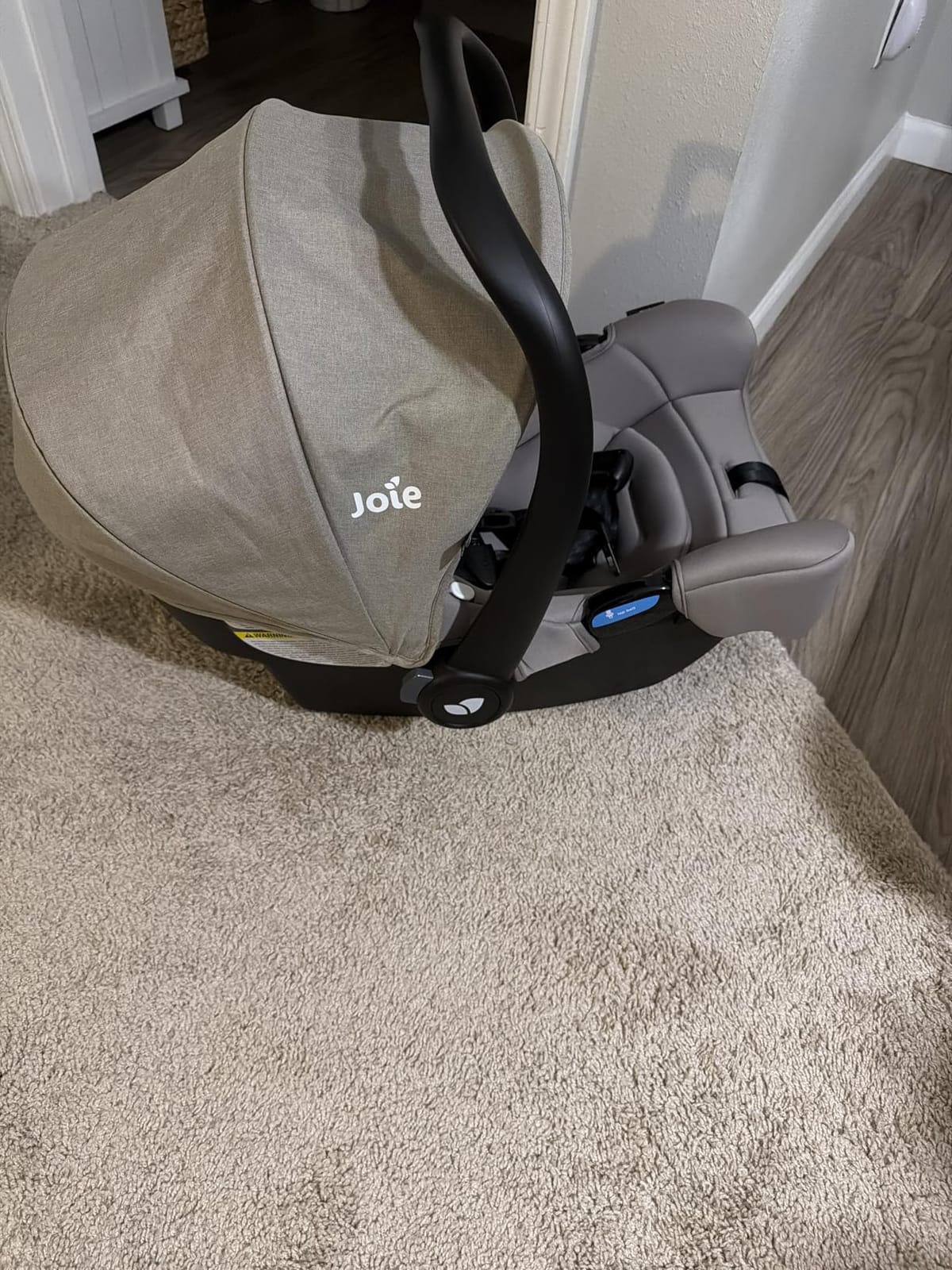
The rest of the spec sheet is built for a newborn. FMVSS 213a and 213b certification, removable three-piece inserts comprising head support, body support and an infant wedge, breathable knit fabrics and a UPF 50+ canopy. It is also travel-system compatible, which matters if you own Joie frames.
Dimensions are 25.75 in long by 17.5 in wide by 16 in high, rising to 22.8 in high with the base fitted, which puts it among the narrower shells if you need room in a tight back seat.
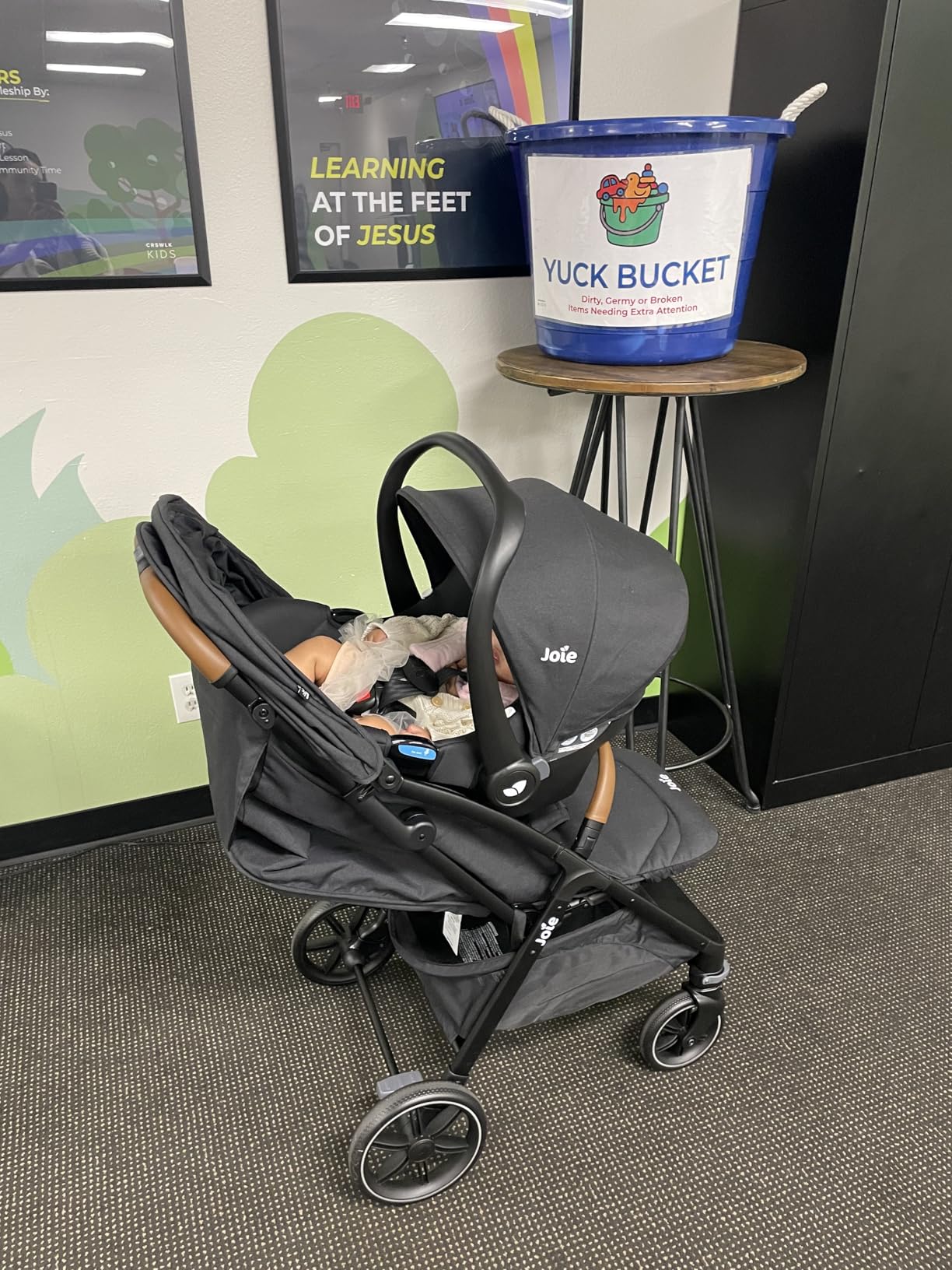
Why weight and anti-rebound rarely arrive together
Anti-rebound protection adds structure, and structure adds weight. The Joie Rue manages 7.7 lb for the carrier by keeping the mechanism in the base, which is the part you leave in the car. The trade is that the base pushes total weight to 16 lb, so the number that matters for your back is the base number, not the seat number.
For a family with one car and a garage, that is an easy trade. For anyone hauling the seat up stairs or between vehicles daily, a carrier in the Safety 1st range keeps more of the weight out of the base.
Where it runs out
At 268 reviews the sample is the second smallest here, so the 4.8 rating rests on a limited number of long-term owners. The single most-cited practical drawback is the base weight, and buyers also mention that fulfilment can take longer than the fastest options.
Also worth knowing: the height limit is 30 inches, the tightest on this list. Expect the transition to a convertible seat to arrive sooner than with the 32-inch seats.
7. Baby Trend Secure-Lift – Best for Compact Daily Errands
Baby Trend Secure-Lift Infant Car Seat, Dash Black – Compact Lightweight Carrier, Infant Comfort Cushioning, Adjustable Harness Fit
Seat and base included
Compact carrier
Infant comfort cushioning
Adjustable strap fit
Pros
- Compact carrier is easy to move
- Comfort cushioning for daily use
- Strap adjustment personalises the fit
- Base included in the box
Cons
- Sparse specification detail in the listing
- Less featured than higher-tier carriers
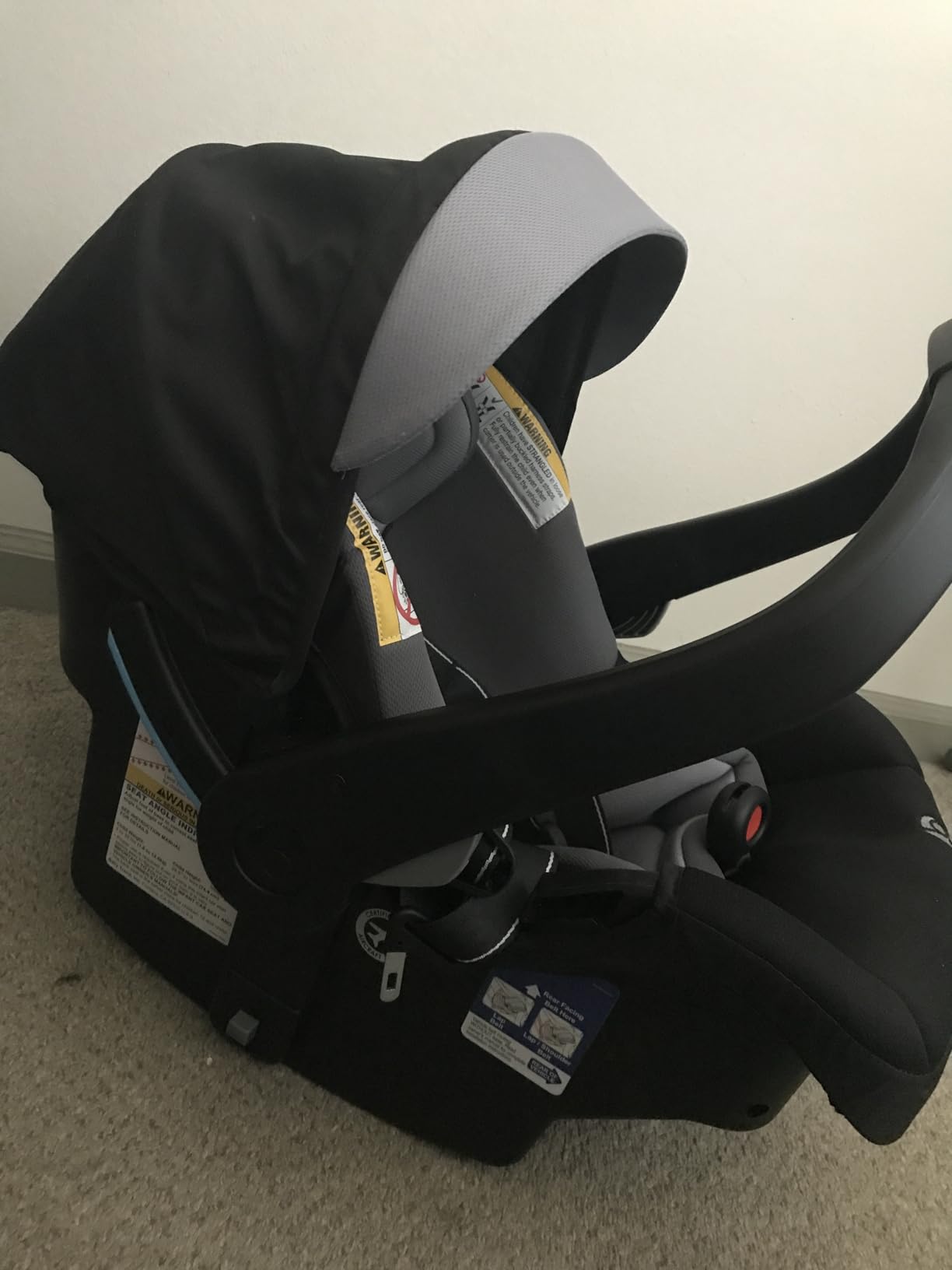
The Secure-Lift is the sibling option to the EZ-Lift Plus, and the difference is framing rather than function. Where the EZ-Lift Plus is the low-cost complete setup, the Secure-Lift is the compact carrier for short, frequent trips.
At 263 reviews and 4.6 stars, owners describe it as a straightforward, compact budget carrier with comfortable padding and an included base. That is exactly what a lot of families actually need, and it is refreshing to see a product that does not pretend to be more.
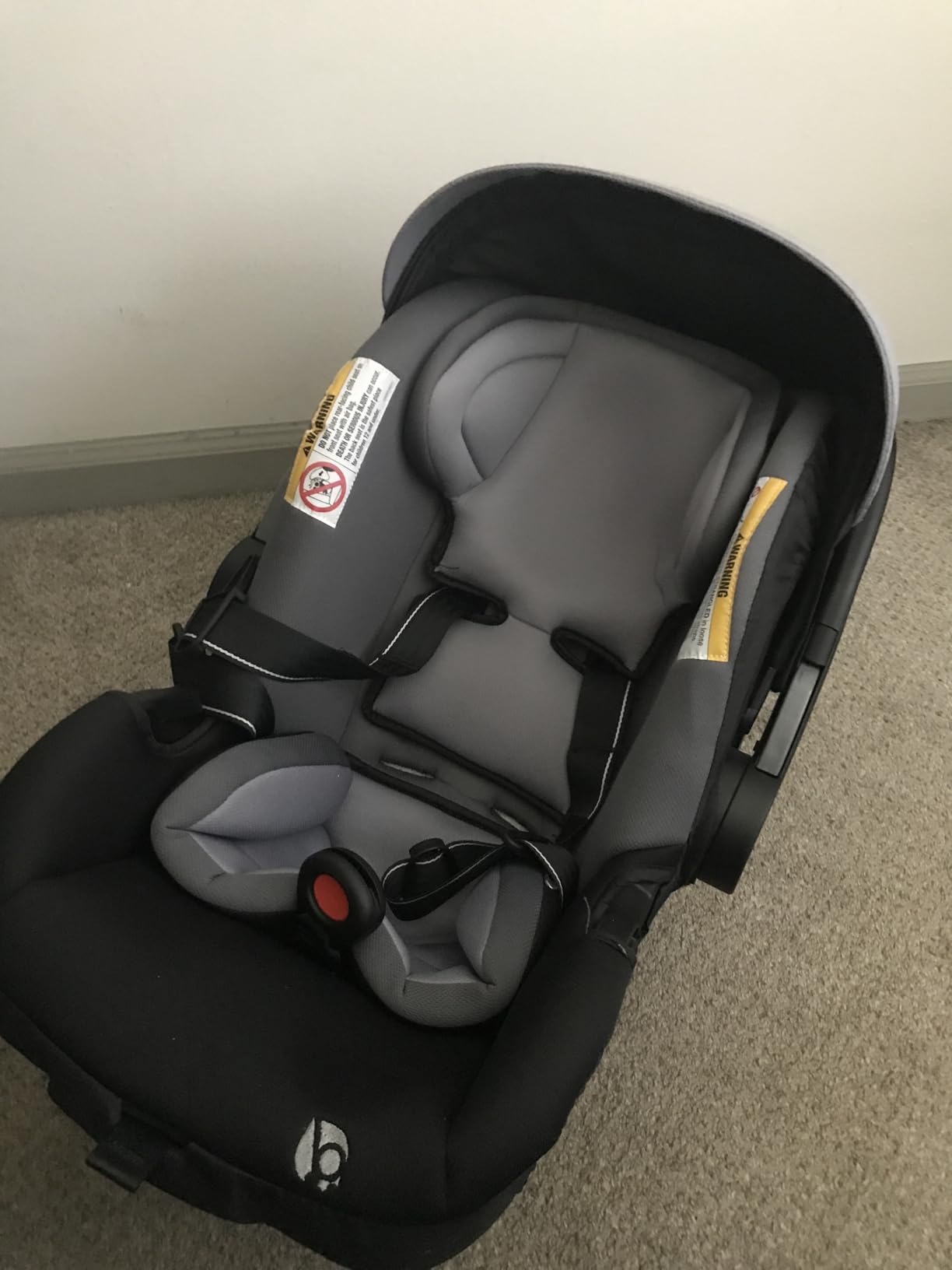
The box includes the infant car seat and the base. The design is a compact lightweight carrier with infant comfort cushioning, an adjustable strap fit and a supportive seating design for everyday trips. The compact build is the point, since it is easier to lift in and out of a car and simpler to move between a vehicle and a stroller.
It is the practical choice for a second car, a grandparents house, or a family doing short school runs and shopping trips where the seat is in and out of the vehicle several times a day.
Where this fits in a two-car household
The most common way we see this kind of seat used is as the second or third seat, alongside a premium carrier in the main vehicle. Parents on parent forums are explicit that a premium seat in the household car does not mean a premium seat in the second car, because it will live in a garage and be installed in a hurry.
For that job, a compact carrier with an included base and a washable-in-place design is the sensible specification. The catch is that you are choosing on simplicity rather than documented side-impact engineering.
Where it runs out
The honest limitation is information. The product listing is sparse on specification and feature detail, which makes it hard to compare against the Joie Rue or the Chicco KeyFit on the numbers that describe protection. Fewer options than the higher-tier Baby Trend and Graco seats is the trade.
With 263 reviews and a 4.6 rating, the consensus is positive but not detailed enough to answer a hard technical question. If you want a documented side-impact specification, choose a seat that publishes one.
8. Baby Trend Ally – Best for Reuse With a Second Baby
Baby Trend Ally Newborn Baby Infant Car Seat with Cover and Harness, Khaki
4-35 lb capacity
Built-in belt lock-off
EPS foam
Includes a cozy seat cover
Pros
- 4-35 lb range extends past most infant seats
- Cozy cover included for cold months
- Fabric washes well in a bathtub
- Fits Baby Trend double strollers
- No-rethread strap adjustment
Cons
- Belt lock-off is fiddly to line up
- Plastic connectors can be stiff
Most infant seats cap at 30 lb. The Baby Trend Ally runs 4 to 35 lb up to 32 inches, and that extra five pounds is the reason families use it for two babies in a row instead of buying a second seat.
That is a genuine cost saving over a 30 lb ceiling, and parents mention it directly. At 439 reviews and 4.7 stars, the second-use pattern is common enough that the seat has an unusually settled owner base rather than constant early-adopter churn.
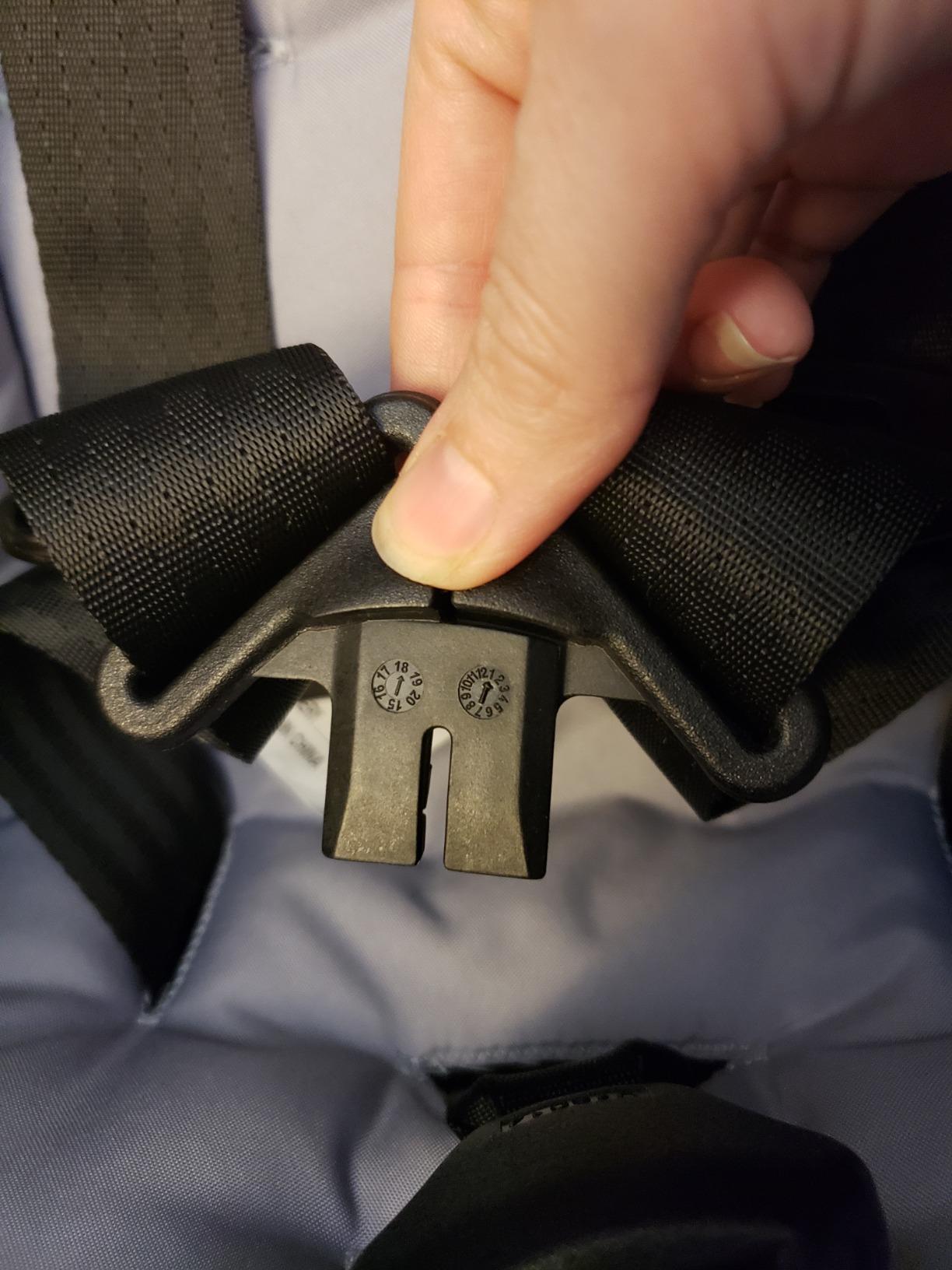
The construction details are better than the price tier suggests. EPS energy-absorbing foam for side-impact head protection, a 4-position push-button adjustable base, dual bubble level indicators and a 5-point no-rethread adjustable strap system. Dimensions are 27 by 18.5 by 25 inches, so it is a full-size shell.
The included cozy car seat cover is unusual at this price and gets mentioned often for autumn and winter newborns. The extra-large 2-panel adjustable canopy, multi-grip carry handle, one-hand seat release and integrated connector storage round out a well-equipped package.
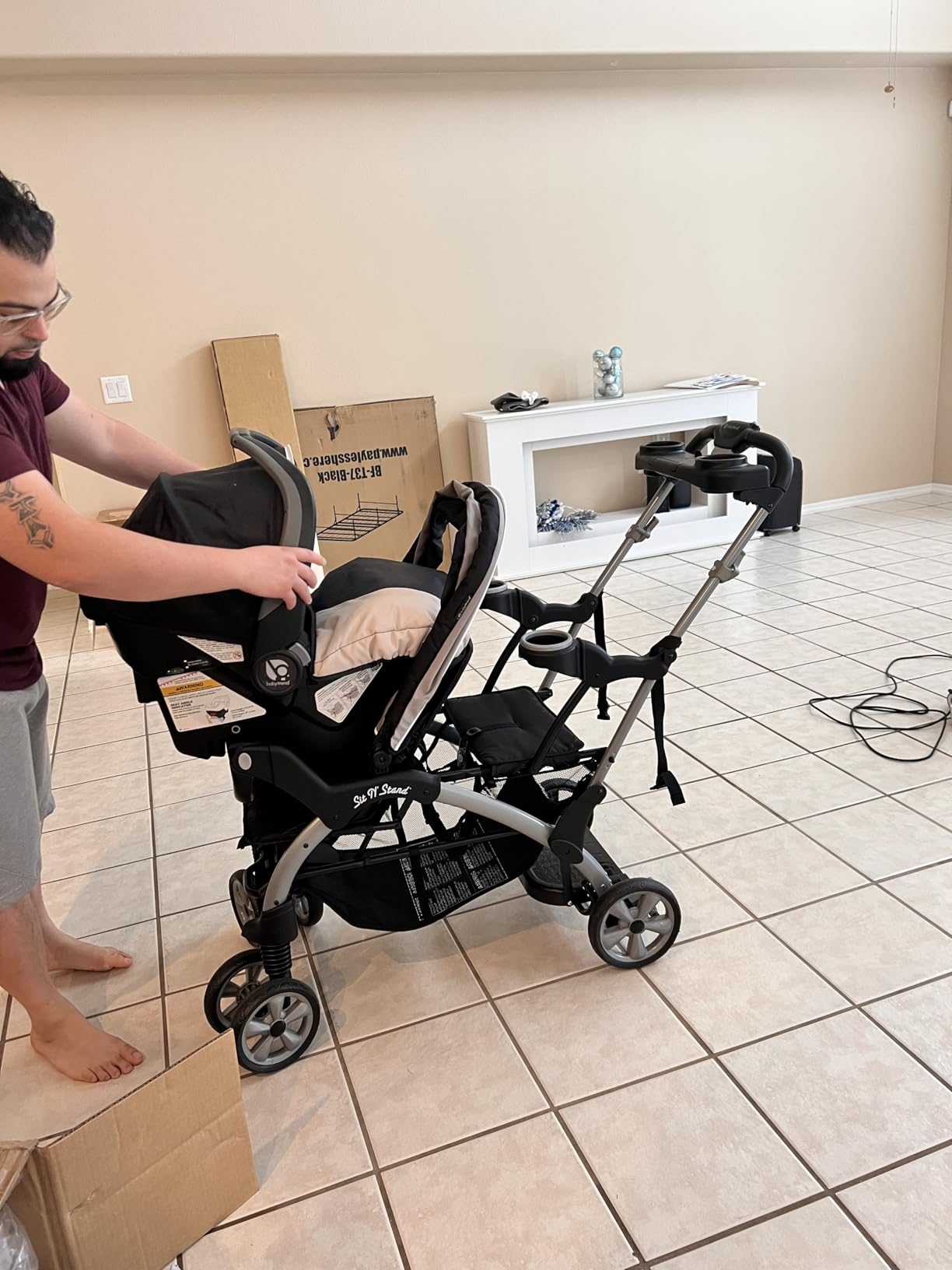
Why the 35 lb ceiling changes the maths
An infant seat typically gets outgrown on height at around 12 to 14 months, not weight. A 35 lb ceiling delays the height outgrow slightly for bigger children and, more importantly, means the seat has useful life left when the second baby arrives, provided the expiration date still allows it.
That is why our broader infant car seat guide treats expiry dates as a purchasing consideration rather than an afterthought. A seat you will use twice needs more remaining life than one you will use once.
Where it runs out
The most common complaint is the built-in belt lock-off. With a baby in the seat, lining the lock-off pieces up is fiddly, which is a real issue in a dark car. Plastic connectors can also be stiff to attach the first few times.
Both are learnable in a day, but if you expect frequent belt installs rather than base use, a seat with a self-tightening base will suit you better.
9. UPPAbaby Mesa V3 – Best for Verifiable Installation
UPPAbaby Mesa V3 Infant Car Seat with Base, Insert & SmartSecure – Ada
FMVSS 213A and 213B
SmartSecure LATCH indicator
25-position headrest
Insert fits 4-11 lb babies
Pros
- Red-to-green tightness indicator
- 25-position no-rethread headrest
- Fire-retardant-free washable fabric
- European routing for base-free install
- Magnetic buckle holder
Cons
- Premium build sits at the top of this range
- Inserts sized 4-11 lb must be swapped as baby grows
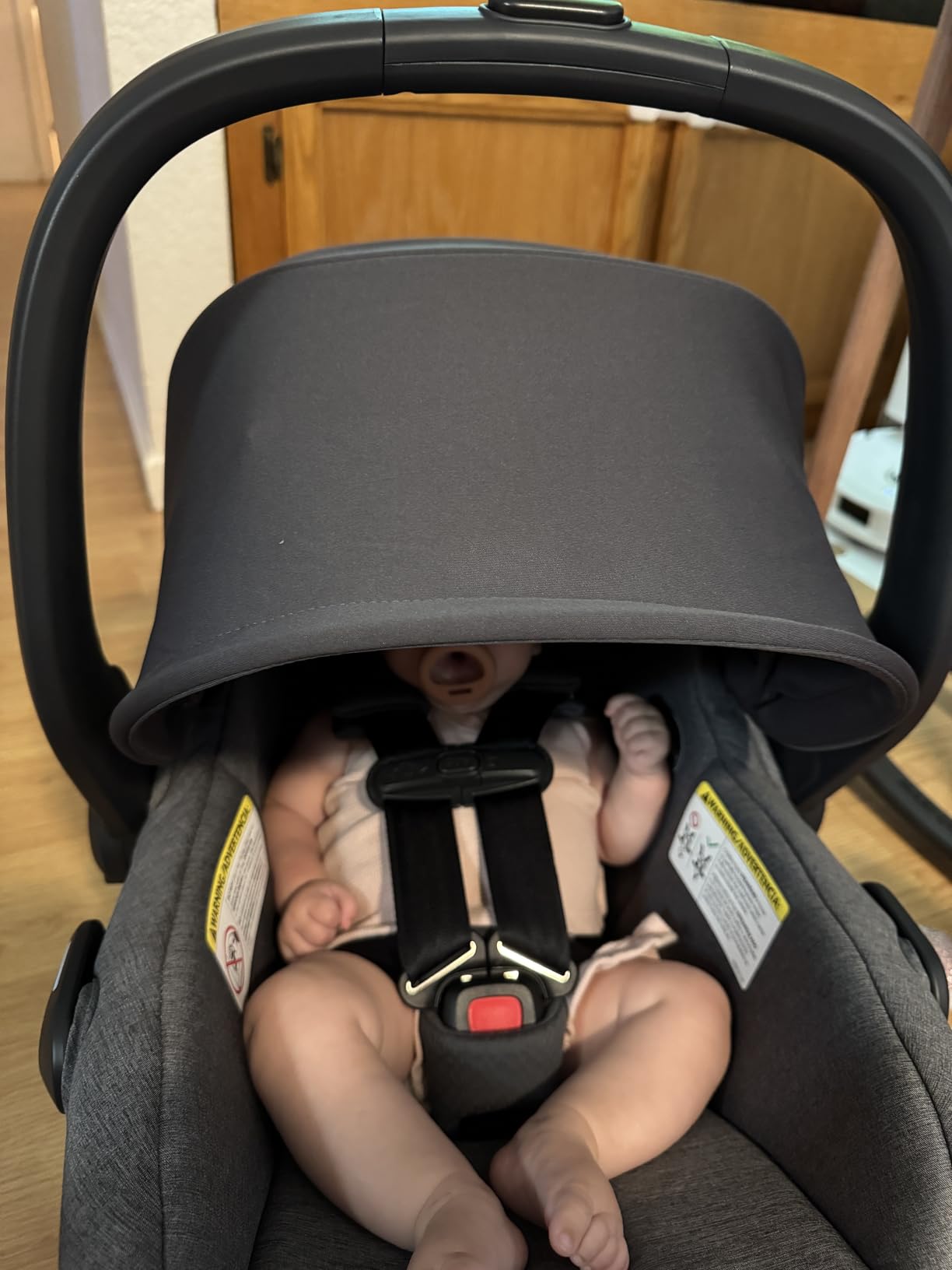
The Mesa V3 is the seat we would point a nervous first-time parent toward if the budget stretches, because it removes guesswork from the two places people most often get it wrong: how tight the base is and whether the base is level.
SmartSecure is an auto-retracting LATCH system with a red-to-green tightness indicator, so the base tells you when it is secure instead of you judging by feel. It meets the new FMVSS 213A and 213B standards, is GREENGUARD Gold certified, and uses fabric free from fire retardant chemicals. Advanced side-impact protection uses energy-absorbing EPP foam.
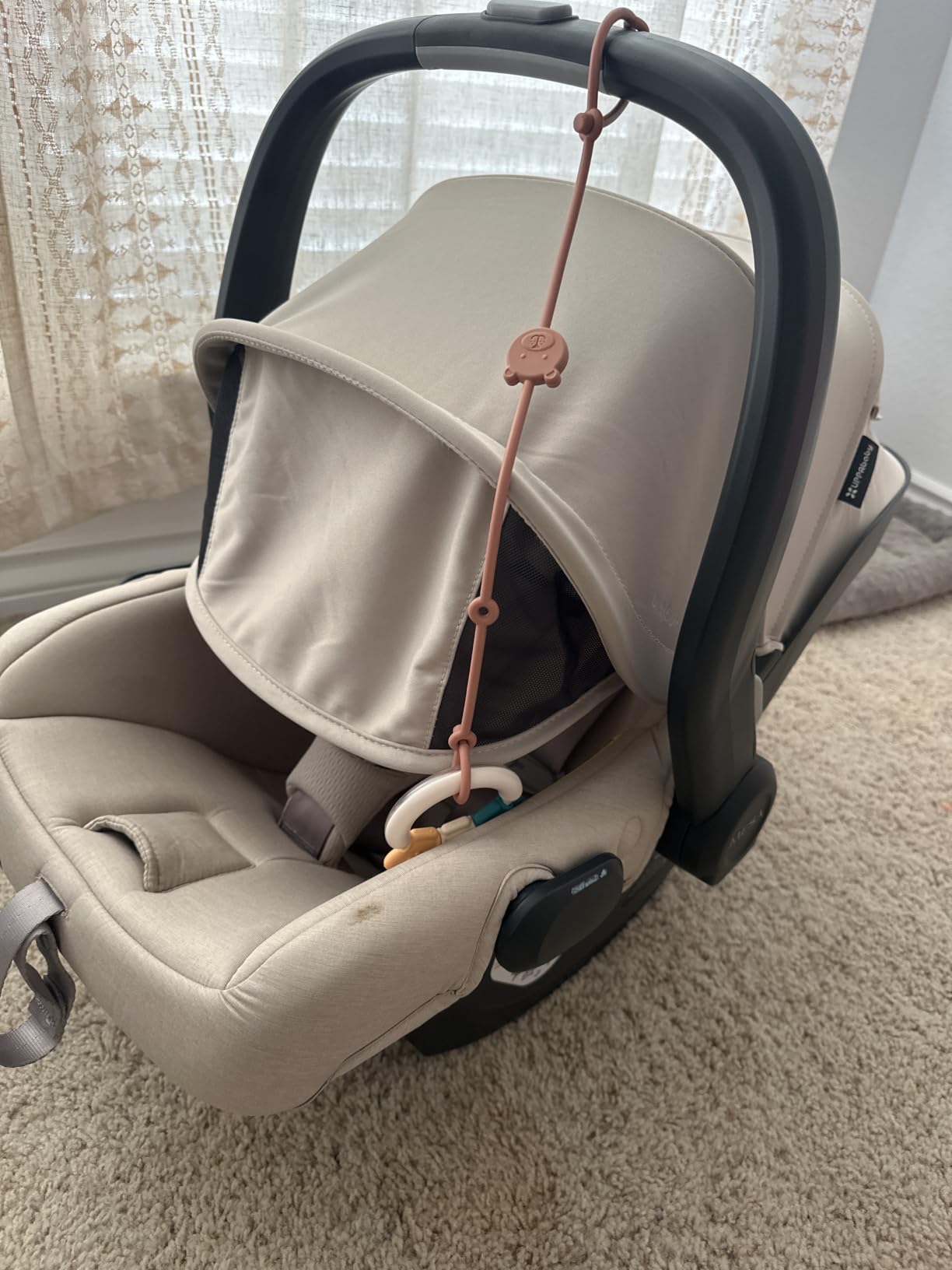
Other install-friendly touches: a 4-position adjustable base foot, European belt routing that allows a secure carrier-only installation when you do not have the base, and a 4th carry handle position set up for anti-rebound use. The magnetic buckle holder keeps the straps out of the way while you buckle, which is a small thing that saves a small struggle every single time.
Fit is the other strength. A 25-position headrest with a no-rethread 5-point system and two crotch buckle positions means the seat grows with the baby rather than forcing early removal, and the deluxe UPF 50+ canopy has mesh ventilation and a peek-a-boo window. It fits Vista and Cruz strollers, with adapters for Minu and Ridge.
Who pays extra for this and why
The premium build sits at the top of this range, and on parent forums cost is the reason buyers of seats at this level are pushed toward budget alternatives for second vehicles. For a first seat that will be installed dozens of times in the first year, the argument is different.
A visible tightness indicator converts the most common failure in car seat misuse from a guess into a check. If you are installing without a second pair of hands, that is worth paying for. The insert is rated for roughly 4 to 11 lb babies, so remove it when your baby outgrows it.
Where it runs out
The insert sizing is the detail most often mentioned by owners, and it catches people out at around 11 lb if they are not watching. Cost is also the real limit for families who need two or three seats, which is a common situation.
At 188 reviews the sample is on the small side, though the 4.8 rating is consistent across it. The brand-ecosystem point is real too: if you already own a UPPAbaby stroller, this is the frictionless option, and if you do not, the compatibility advantage is much smaller.
10. Safety 1st onBoard Insta-Latch DLX – Best for Plush Newborn Padding
Safety 1st onBoard™ Insta-Latch™ DLX Infant Car Seat with Base, Baby Car Seat for 4-30 lbs., Rear Facing Car Seat, Beach Rose
4-30 lb under 32 inches
One-click Insta-LATCH
Under 8 lb
Red-to-green base indicators
Pros
- Insta-LATCH simplifies install to a few steps
- Red-to-green indicators confirm tightness
- Under 8 lb on frequent carries
- Plush quilted cushioning suits preemies
Cons
- Inserts need removing as baby grows
- Fixed 4 strap heights are less fine-grained
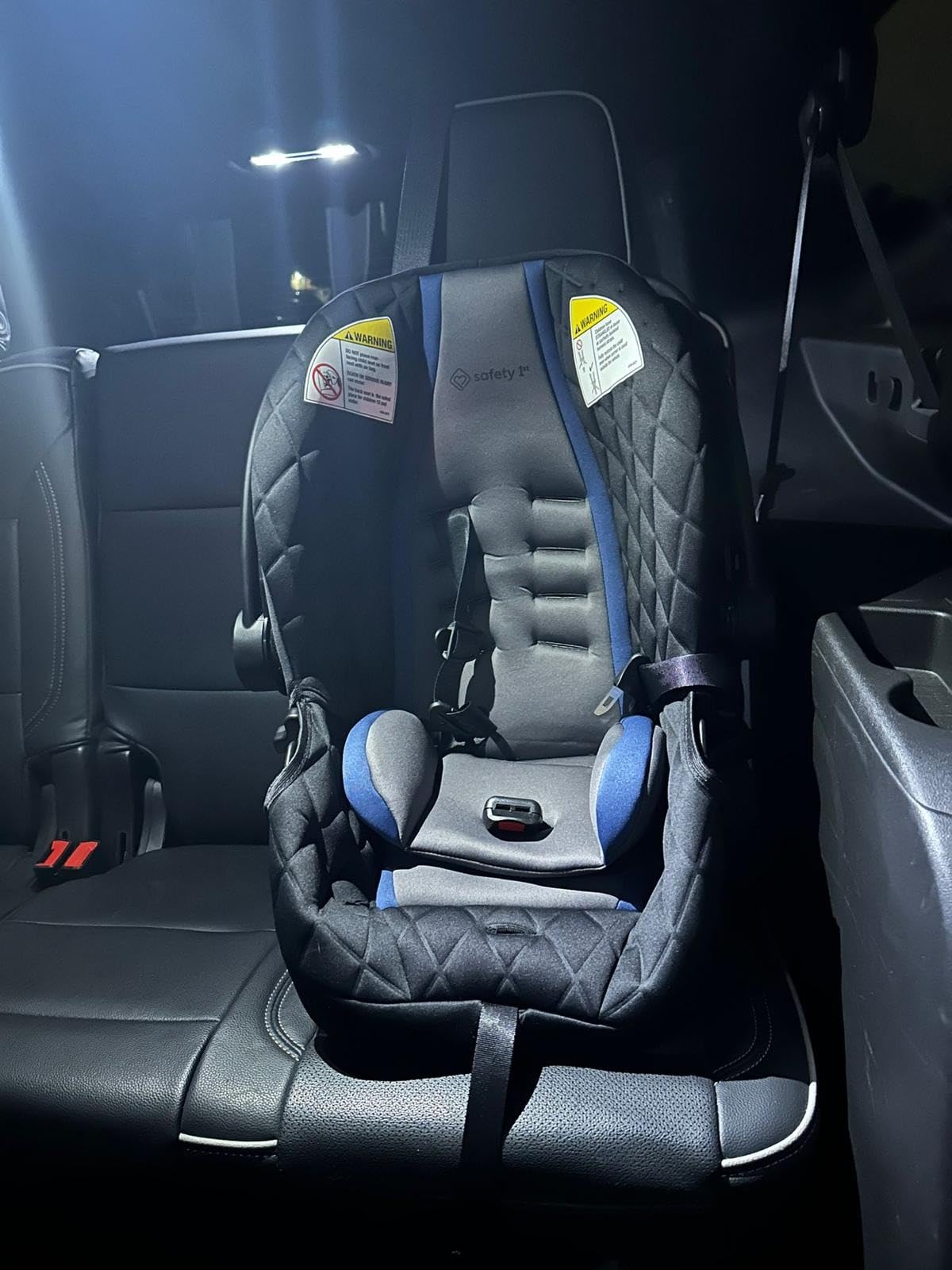
Where the Safety 1st OnBoard FLX prioritises weight, the onBoard Insta-Latch DLX prioritises the base. The one-click Insta-LATCH connectors are self-retracting, which means you push them onto the anchors and they tighten themselves, and SecureTech red-to-green indicators on the base confirm the install is tight.
At 188 reviews and 4.7 stars, owners single the Insta-Latch base out as the standout feature for quick, repeatable installs, and separately note that the seat is light enough to carry without back strain.
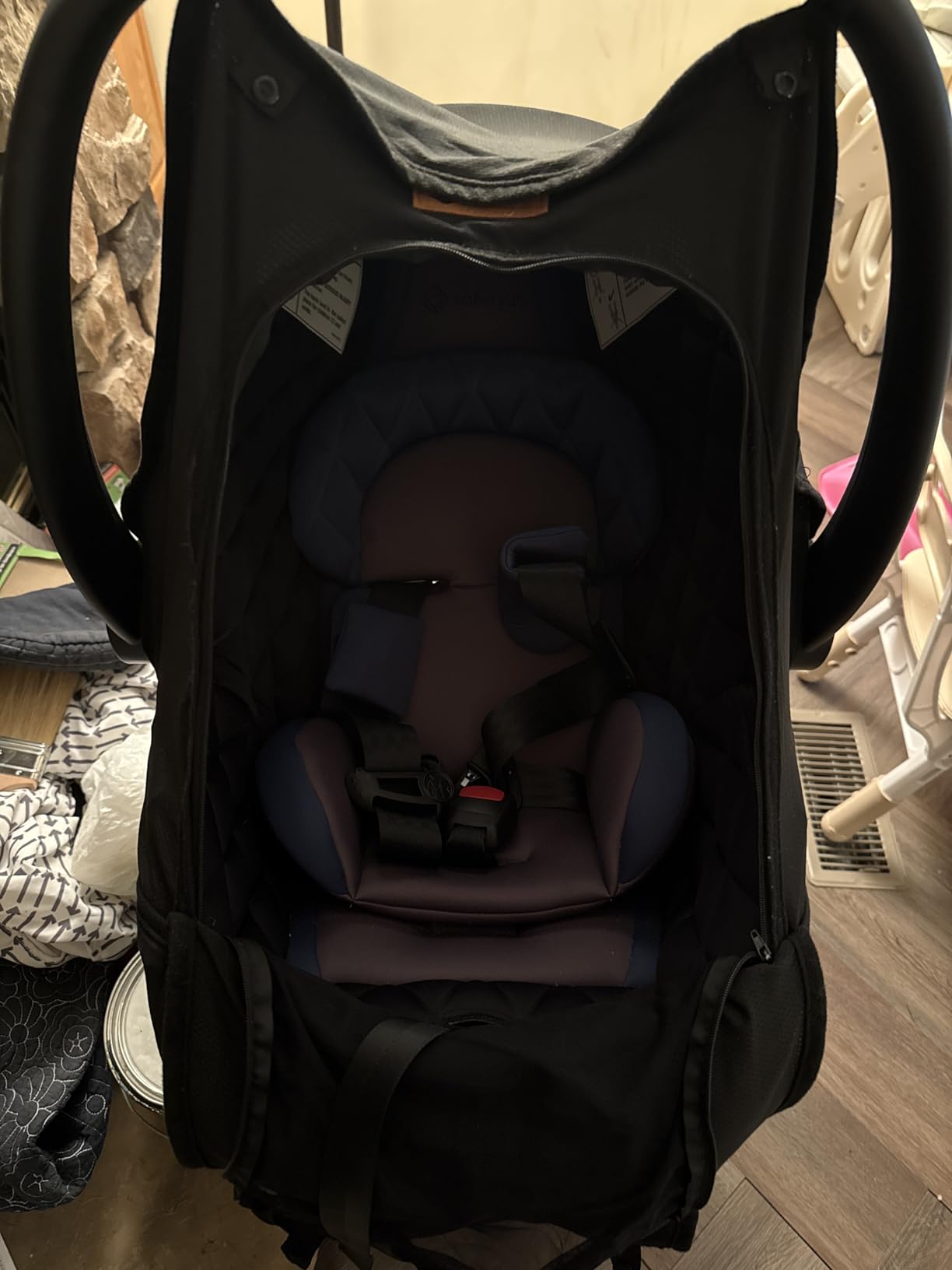
It covers 4 to 30 lb for babies under 32 inches, rear-facing, with four strap heights and front-pull adjustment. Removable head and body inserts sit inside plush padding and soft fabrics, and the whole seat comes in under 8 lb with the base included in the box.
For a small or premature newborn, that combination of a light carrier and thick padding is the practical version of a good fit. A baby who starts at 4 lb does not have room for a thin shell, and a very small baby is easier to secure in a seat with real cushioning around the head and body.
Installation confidence without a level indicator
The red-to-green system works differently from a bubble level. Rather than telling you the base angle, it tells you the outcome that matters, which is whether the base is tight enough. For most parents that is the more useful of the two checks, because tightness is where installation errors cluster.
It is also the closest budget option here to the install confidence of the UPPAbaby Mesa V3, and comparing the two side by side is the clearest illustration of what the premium tier buys you.
Where it runs out
The insert components need removing as the baby grows, and the four fixed strap heights are less fine-grained than the 25-position headrest on premium competitors. That is a minor fit limitation that mostly shows up if you want a snug, custom fit rather than a usable one.
Note the naming, because two similarly named Safety 1st seats appear in this roundup. The OnBoard FLX above is the lighter everyday carrier, and this onBoard Insta-Latch DLX is the one with the self-tightening base.
11. Baby Jogger City GO 2 – Best for a Baby Jogger Travel System
Baby Jogger® City GO 2 Infant Car Seat, Lunar Black – Lightweight Rear-Facing Infant Car Seat, Travel System Compatible, Taxi-Safe
4-35 lb up to 32 inches
TRUE Test Plus and FMVSS 213
Taxi-safe belt path
SecureStop anti-rebound bar
Pros
- Taxi-safe belt path for base-free installs
- One-hand headrest with no-rethread design
- SecureStop anti-rebound bar
- Quiet canopy leaves baby settled
Cons
- Lowest average rating in this group
- Sits above the tier of most non-premium carriers
The City GO 2 covers 4 to 35 lb up to 32 inches rear-facing, meets FMVSS 213, and adds TRUE Test Plus crash testing. The SecureStop anti-rebound bar is built into the shell, which is the feature most often cited by owners alongside the belt path.
That taxi-safe belt path is the genuinely useful part. It allows a secure installation without the base, which is exactly what you need in a cab, a rental car, or any vehicle where you do not want to leave a base behind.
For home use, the RAPIDLOCK base installs in seconds and the seat attaches directly to Baby Jogger strollers as a travel system. If you already own a Baby Jogger frame, that pairing is the reason to choose this seat over a similarly priced competitor.
The one-hand adjustable headrest uses a no-rethread design, and the quiet canopy avoids the rustling that wakes babies in a moving stroller.
Who should choose this seat
Choose it if you own a Baby Jogger stroller, or if you spend real time in taxis and rental cars. The base-free belt path means you are not installing a base in the back seat of a vehicle you will leave in ten minutes.
Our all-in-one car seat guide covers the same travel-system logic at the next stage, when your baby outgrows the carrier shell and you are choosing between a convertible seat and a single seat that grows with them.
Where it runs out
This seat carries the lowest average rating in the group at 4.5 across 185 reviews, and it sits in a higher tier than most non-premium carriers. The rating reflects a smaller and somewhat less consistent review base rather than a specific documented defect.
The practical gap is that it does not give you the self-tightening connector or the tightness indicator found on the Graco, Chicco, UPPAbaby and Safety 1st Insta-Latch options, even though it sits above some of them in the tier. That is the reason it places eleventh rather than higher.
12. Evenflo LiteMax 30 – Best for a 3 Pound Baby
Evenflo LiteMax 30 Infant Car Seat (River Stone)
3-30 lb
Lowest minimum weight in this group
4 strap positions
Base with belt lock-off
Pros
- Accepts babies from 3 lb
- Very light shell
- Handle sits well in the crook of the arm
- Full coverage canopy for all weather
Cons
- Only one colourway listed
- Four strap positions are coarse for a premium fit
Every other seat in this roundup starts at 4 lb. The LiteMax 30 starts at 3 lb, which makes it the only one here that fits the smallest babies, and that single specification earns it a place on any best infant car seats for newborns list.
If your baby is born under 4 lb, in a delivery suite, after a complicated pregnancy, this is the category to shop in rather than treating it as a preference. A 160-review base at 4.6 stars is small, but the fit range is a documented specification rather than a marketing claim.
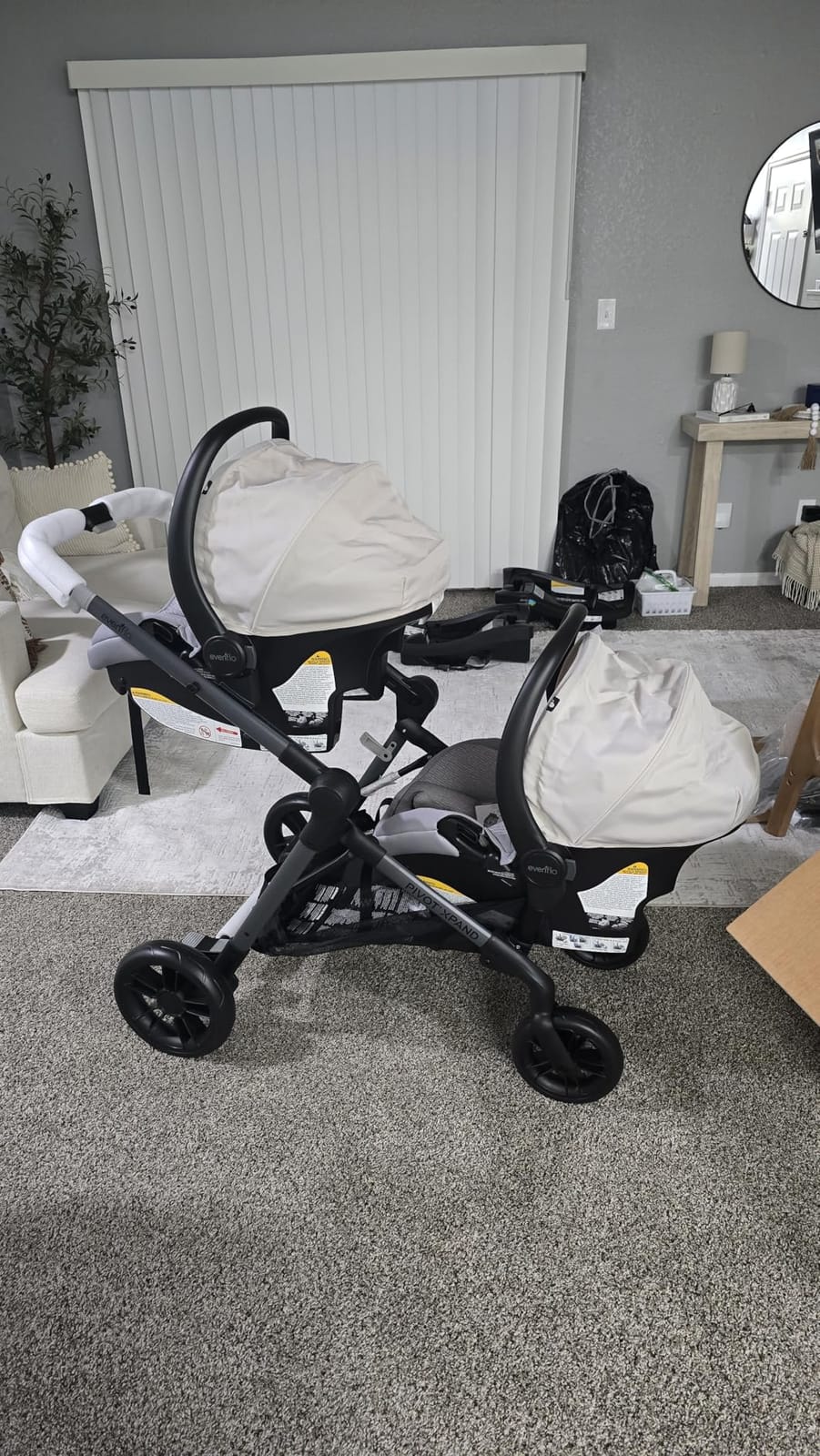
The other thing owners mention is the handle. It is designed to sit in the crook of the arm, and combined with the ultra-lightweight shell it makes this one of the easier seats to carry one-handed while holding a door open. That is a bigger deal in the first month than any feature list suggests.
The base uses a vehicle belt lock-off, there are four shoulder strap positions, and the full coverage canopy shields from sun, wind and rain. Evenflo also reports additional testing for structural integrity, rollover and temperature effects, beyond the applicable federal standards.
Fitting a very small newborn
A 3 lb baby is not a normal fitting problem. The harness needs to sit at or below the shoulders because there is no chest height to speak of, the head needs filling so it does not move laterally, and the recline needs to be right for an airway that is still developing.
Hospital staff run what is often called a car seat tolerance test for these babies, where the newborn sits in the seat for a period before discharge. Bring the seat to the hospital, install it, and ask the nurse to check the fit. That is a normal request and the staff are used to it.
Where it runs out
The four strap positions are coarse compared with premium seats, and only one colourway is listed, so finish choice is effectively none. If your baby is born at a typical weight, the extra capability here goes unused and you would be better served by a seat with a finer headrest.
Buy it for the 3 lb specification, not for the canopy.
How We Chose These 12 Seats
Every seat here meets the same federal standard for infant seats, so the spec sheet alone will not separate them. We weighted three things above everything else, based on the concerns that dominate parent discussions: newborn fit, installation confidence, and carry weight.
Newborn fit was the first filter. We recorded the minimum weight, the height limit, the insert design and whether the harness adjustment is fine-grained enough for a small baby. That single pass moved several otherwise popular seats down the list, because a 4 lb minimum is a hard line for a smaller baby.
Installation confidence was the second. We prioritised seats with self-tightening connectors, built-in lock-offs, tightening indicators or level indicators, because federal research consistently shows loose installation as the most common critical error. A seat that verifies itself is worth more than a seat with a longer brochure.
Carry weight was the third, and it is where the arithmetic in the buying guide below comes from. Carrier weight is quoted for the seat alone in most listings, while what you actually lift is the seat plus the baby, and that number is the one that decides whether you use the seat or resent it.
Finally, we kept a genuine con on every product. Parents distrust roundups that only list upsides, and a list of twelve seats that are all wonderful tells you nothing about which one to buy.
Buying Guide: How to Choose an Infant Car Seat for a Newborn
What FMVSS 213, 213a and 213b actually cover
FMVSS 213 is the federal motor vehicle safety standard that every infant car seat sold in the United States must meet. It sets the dynamic crash test requirements for the seat, including how it performs in a rear-facing position in a frontal impact, and the head excursion and chest acceleration limits it must satisfy.
FMVSS 213a adds a side-impact pulse test and rollover testing, and 213b is the companion requirements standard. These are the newest and least familiar numbers in the category, which is why they are worth naming precisely rather than describing side-impact protection vaguely.
The practical takeaway is that all the seats on this list meet the same federal floor, and that all the seats below them meet it too. Crash test ratings from independent bodies can help you compare above that floor, but installation error remains the dominant factor in real-world outcomes. A seat you install correctly in an ordinary base beats a seat with a better test result and loose anchors.
Fitting a 4 to 7 lb newborn
Most newborns arrive between 6 and 8 lb, and a 4 lb minimum leaves headroom. The questions that matter are whether the harness slots reach low enough to sit at or below the shoulders, whether the head support fills the sides without pushing the head forward, and whether the insert can be removed in stages as the baby grows.
A good rule of thumb is the one certified safety technicians use: if you cannot get the straps into the correct slot position for your baby without removing the insert, the insert is the wrong shape for that baby. Inserts are not automatically helpful, and a thick one on an average newborn can push the head forward and compromise the airway.
For babies under 4 lb, shop the 3 lb seats first rather than trying to make a 4 lb seat work. And bring the seat to the hospital, install it there, and ask staff to check the fit before you leave. The fit test they run for small babies is routine, not a judgment on your parenting.
Rigid LATCH versus flexible push-on LATCH, and baseless installs
Rigid LATCH connectors are hard plastic arms that click directly into the anchor points. Flexible push-on LATCH connectors are webbing straps with a metal jaw that you hook onto each anchor and then pull tight. This is the single most consequential piece of jargon in the category, because the two behave very differently.
Flexible connectors depend entirely on strap tension. Pull too hard and the webbing stretches or twists; pull too little and the seat is loose. Loose LATCH is the most common critical installation error, which is why every newer base design on this list is built around preventing it: SuperCinch tightens the connector instead of the strap, SmartSecure retracts automatically, Insta-LATCH clicks on and self-tightens, and SnugLock guides the belt into place.
A baseless install means putting the carrier into the vehicle without a separate base. Some seats do it with the vehicle belt through a lock-off, some with built-in lower anchors, and the Baby Jogger City GO 2 does it with a taxi-safe belt path. For frequent rideshare, air travel, or a second vehicle you do not want to store a base in, this removes a real friction point.
If you want the full procedure, it is worth learning once, because almost every base belt install is the same five steps. If the seat offers a baseless route, you can skip the base entirely for some trips.
Load leg versus anti-rebound bar
These two are frequently confused and they do different jobs. A load leg extends forward from the base onto the vehicle floor, transferring crash forces into the floor pan and reducing how far the base can slide or rotate in a frontal impact. It is only usable in vehicles with a flat, level floor and a storage compartment, which is why not every seat in this roundup has one.
An anti-rebound bar or handle position limits rearward rotation, which happens in the rebound phase after the main impact. It is a bar that extends from the base, or a fourth carry handle position set up for the purpose. The Joie Rue and the Baby Jogger City GO 2 have one built in, and the UPPAbaby Mesa V3 has the fourth handle position.
Neither is a substitute for a tight install. Both help a correctly installed base stay correctly installed through the whole crash sequence, which is why we treat them as tie-breakers rather than headline features.
No-rethread versus rethread harness
A rethread harness requires you to pull the strap through the shell from the back to change height, which is a two-person job with a newborn in the seat. A no-rethread system moves the harness height from the front of the seat, usually by a handle or a button, so one parent can adjust it alone.
The Baby Trend Ally and the Baby Jogger City GO 2 use no-rethread designs, and the UPPAbaby Mesa V3 pairs one with a 25-position headrest and two crotch buckle positions. Budget seats such as the Safety 1st OnBoard FLX and the onBoard Insta-Latch DLX use front-pull adjustment with four fixed positions, which is coarser but entirely workable for a first year.
Carrier weight and the transfer arithmetic
Listings quote carrier weight for the seat alone, but what you actually lift is the seat plus the baby. Two seats that differ by three pounds feel very different by month four, when a baby weighs 15 lb and you are lifting it in and out of the car a dozen times a day.
A 15 lb baby in an 8 lb carrier is a 23 lb transfer, and in a 9 lb carrier it is 24 lb. The whole spread between the lightest and the heaviest carrier on this list adds about 10 lb to every single lift, repeated twenty times a day, and that is the difference between a seat you use willingly and one you stop wanting to pick up.
If you are recovering from a C-section, climbing stairs, or doing single-parent transfers, weight deserves more weight in your decision than any list gives it. For longer journeys and for back comfort during longer carries, our guide to cushions for car seats covers the setup side of the same problem.
Stroller fit and travel systems
A travel system means the car seat clicks directly into the stroller frame, so the baby is never moved between a seat and a separate infant seat. It removes a transfer and therefore a risk, at the cost of locking you into one brand ecosystem.
Brand lock-in is a live frustration in parent forums, where people who already own a stroller feel pushed toward that brand’s car seat regardless of the spec. The honest answer is to check the stroller first and buy the car seat that fits it, because adapters for competing brands exist but add a step and a failure point.
Worth noting: the Doona on this list needs no stroller at all, because it becomes one. If you are starting from nothing, a paired system such as this is the cleanest setup, and if you are starting from an existing frame, the Chicco, Baby Trend, Baby Jogger and UPPAbaby options all click straight in.
When to skip the infant seat entirely
This is the question that comes up most often in the discussions we read, and it deserves an honest answer rather than a defensive one. Certified child passenger safety technicians frequently recommend that expectant parents skip the bucket seat and start with a convertible seat used rear-facing from birth, because several convertibles genuinely fit a newborn and last far longer.
The argument is straightforward economics and longevity. Most infant seats are outgrown on height at 12 to 14 months, and you then buy a convertible anyway. Starting with a convertible used rear-facing from the hospital gets you one seat instead of two, and you can then read our convertible car seat reviews before the transition.
What you give up is the convenient carrier, because a convertible installed in the vehicle cannot be carried. For parents who travel often, do most trips on foot from the car, or have a second caregiver doing solo transfers, the carrier is a real convenience that a convertible cannot replicate.
There is also a fit caveat worth stating. A bucket seat rated from 4 lb with a dedicated newborn insert is a well-understood, low-risk way to bring a newborn home. Not every convertible fits a 4 lb or 5 lb baby properly, so if you go that route, verify the specific minimum weight and the insert before you buy rather than after.
Expiration, hand-me-downs and counterfeits
Car seats expire, typically six to ten years from the manufacture date, which is printed on the certification label on the seat shell. Foam and plastics degrade over time even when the seat is never used, and a crash of any kind means the seat is finished regardless of age.
Beyond that, a seat with an unknown crash history should never be used, which rules out most second-hand seats even when the expiration date is fine. Family hand-me-downs between your own children are the reasonable exception, provided the date is valid and the history is fully known to you.
Counterfeit and relabelled seats are a real problem on open marketplaces. Red flags include listings far below the published figure, missing certification labels, no manufacture date, unknown sellers, and seats with no model number anywhere on the shell. Buy from authorised retailers, check the certification label, and register the seat with the manufacturer so recall notices reach you.
Positional asphyxia and how long a newborn can be in the seat
An infant seat is built for travel, not for sleep, and the reason is airway position. A semi-reclined newborn has a heavy head on a soft neck, and if the head slumps forward the airway can compress. This is called positional asphyxia, and it is the reason the American Academy of Pediatrics advises limiting continuous time in a semi-reclined infant seat to around two hours.
The practical rule is to break up long journeys with stops, and to move the baby to a flat, firm sleep surface when you get home. The seat can recline, and a well-fitted recline for a newborn is part of the installation, but no recline angle makes prolonged car sleeping risk-free. If your baby falls asleep in the seat, take them out when the car stops.
How to Tell if Your Car Seat Is Installed Correctly
These six checks take about three minutes and catch nearly every installation error. Work through them in order, in daylight if you can, before the baby is in the seat.
1. Check the recline. Use the base’s level indicator, bubble levels or red-to-green window to confirm the correct angle for your vehicle seat. A newborn needs a more reclined position than an older infant, and a seat that is too upright pushes the head forward.
2. Check tightness with the one-inch test. At the belt path, the point where the vehicle belt or LATCH strap enters the carrier, pull the installed base upward. It should not move more than one inch in any direction. If it does, that is the most common critical error and the first thing to fix.
3. Confirm the lock-off or retractor is engaged. If you used the vehicle belt, either the retractor locked at the belt path or the built-in lock-off clipped around the belt webbing. Pull the belt hard; it should not feed back through the retractor.
4. Check harness height. Straps should be at or just below the shoulders for rear-facing. Above the shoulders is wrong for rear-facing, and an insert that pushes the straps up is the usual cause.
5. Verify the belt path geography. The belt should follow the path labelled in the manual and nothing else. Misrouted belts are common when a seat is installed from a different model and they can reduce protection substantially.
6. Get a second set of eyes. Search for a certified child passenger safety technician through the NHTSA car seat inspection locator and book a free or low-cost check before the baby arrives. This is the single most-repeated piece of advice across the parent forums we read, and it catches what a self-check cannot.
Frequently Asked Questions
What type of car seat is recommended for a newborn baby?
A rear-facing infant car seat, used from the first trip home from the hospital, holding your baby from about 4 to 30 pounds and up to roughly 32 inches tall. It has a removable carrier with a 5-point strap system that clicks into a base, or installs directly with the vehicle seat belt. Choose a seat rated from 3 pounds if your baby is under 4 pounds, and have the install checked by a certified technician before the baby comes home.
What car seat is safest for newborns?
Every infant car seat sold in the United States must meet FMVSS 213, and the newer FMVSS 213a adds a side-impact pulse test. So no seat is meaningfully unsafe, and no single seat is the safest. Real-world protection is decided by correct installation more than by the seat itself, so prioritise self-tightening connectors, a tightness indicator and a correct recline. Two features help beyond the federal minimum: a load leg and an anti-rebound bar.
What is the best car seat for a newborn baby?
For most families, the best overall pick is the Doona Car Seat and Stroller, which converts from a rear-facing car seat to a stroller in seconds, is FAA approved, and carries three layers of side-impact protection. The best value pick is the Graco SnugRide SnugLock LX, with a base that installs in under a minute and side-impact testing to FMVSS 213a. The best lightweight pick is the Safety 1st OnBoard FLX at under 8 pounds.
What is the #1 rated infant car seat?
By owner rating and review volume, the Doona Car Seat and Stroller leads this group with a 4.8 star average across 15400 reviews, followed by the Graco SnugRide SnugLock LX at 4.8 across 6276 reviews. If your priority is the tightest install you can repeat on your own, the UPPAbaby Mesa V3 earns its place with an auto-retracting LATCH system and a red-to-green tightness indicator.
What is the best-rated car seat for newborns?
Ratings come from three different places and they do not agree. Retailer star ratings measure owner satisfaction, independent crash test ratings measure protection, and expert panel picks measure fit and usability. On owner rating, the Doona leads with 4.8 stars across 15400 reviews. On install verification, the UPPAbaby Mesa V3 and the Chicco KeyFit 30 ClearTex offer the clearest tightening feedback. Check all three before deciding.
How long can a newborn be in a car seat?
An infant car seat is for travel, not for sleep. The American Academy of Pediatrics advises limiting continuous time in a semi-reclined infant seat to around two hours, because a heavy newborn head on an unsupported neck can fall forward and compress the airway, which is called positional asphyxia. Break long journeys with stops, and move your baby to a flat firm sleep surface once you arrive. Reclining the seat helps fit but does not make extended car sleep risk-free.
How do I install an infant car seat without a base?
Route the vehicle belt through the labelled belt path, buckle it, then pull the shoulder belt fully out to switch the retractor into locking mode. Press the carrier into the vehicle seat while feeding the belt back in, then tighten and check that the base moves no more than one inch at the belt path. Seats with a built-in lock-off, integrated lower anchors or a taxi-safe belt path make this easier, and you can also use a self-tightening LATCH base without a separate belt install.
Do infant car seats expire?
Yes. Infant car seats typically expire six to ten years from the manufacture date, printed on the certification label on the seat shell. Foam and plastics degrade over time even if the seat is never used, and any crash means the seat should be replaced regardless of age. A second-hand seat with an unknown crash history should not be used, though a family hand-me-down between your own children is reasonable if the date is valid.
Do I need an infant car seat or a convertible car seat?
Infant car seats fit newborns from day one and are the default recommendation, and most babies outgrow them on height at 12 to 14 months. A quality convertible seat used rear-facing from birth is a legitimate alternative that certified safety technicians often recommend, since it means buying one seat instead of two. You lose the convenience of a portable carrier. If you go that route, verify the specific minimum weight and insert for your baby before buying.
How do I know if my car seat is installed correctly?
Check five things. First the recline indicator, since a newborn needs more recline than an older infant. Then the one-inch test at the belt path, where the installed base should not move more than one inch. Confirm the lock-off or retractor is engaged. Check that harness straps sit at or just below the shoulders. Finally, confirm the belt follows the labelled path. Then book a free certified technician check through the NHTSA car seat inspection locator.
Final Thoughts
Choose the Doona Car Seat and Stroller if you travel, move between car and stroller constantly, or want one certified product instead of a system. It is our best infant car seat for newborns overall, and the only seat here that is also its own stroller.
Choose the Graco SnugRide SnugLock LX if you want the most reviewed, best-documented conventional setup, or the Safety 1st OnBoard FLX if carry weight is the factor that will decide whether you enjoy using the seat. If you are installing alone and want the seat to tell you it is tight, look at the UPPAbaby Mesa V3 or the Chicco KeyFit 30 ClearTex. If your baby is under 4 pounds, the Evenflo LiteMax 30 is the only seat here rated from 3 lb.
Whichever you choose, install it before the baby arrives, work through the six checks above, and book a certified technician through the NHTSA car seat inspection locator. That last step is free, takes an hour, and is the single highest-value thing you can do in your first month. Once your baby outgrows the carrier, our booster seat guide covers the stage after that.