
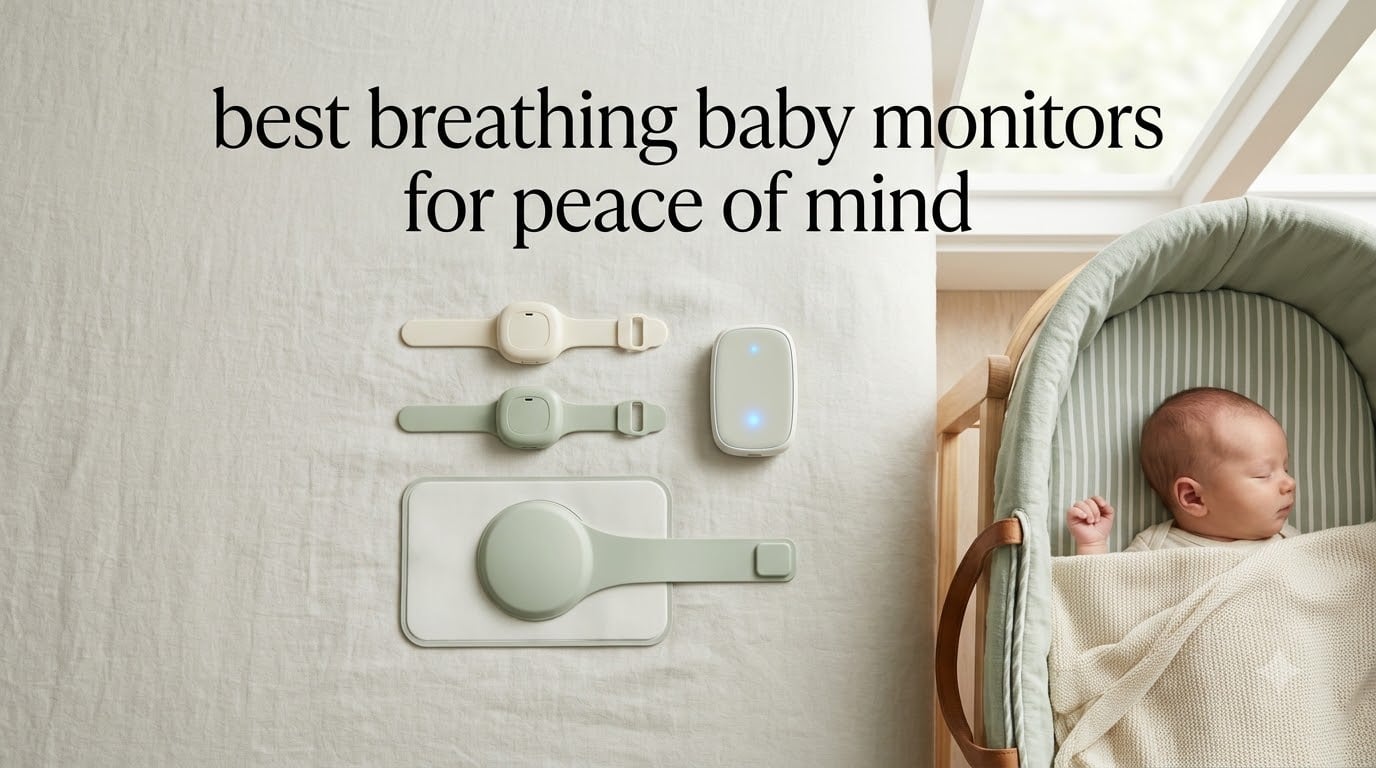
The best breathing baby monitors for peace of mind in 2026 give anxious parents something no ordinary monitor can: real-time data on your baby’s breathing and movement while they sleep. Our team compared 8 models over 6 weeks, putting each through nighttime testing with actual infants to see which ones deliver on their promises and which ones cause more stress than they relieve.
I tested these monitors as a parent who lost hours of sleep staring at my firstborn’s chest rise and fall. If you are searching for the best breathing baby monitor to ease postpartum anxiety, track a preemie’s vitals, or simply rest easier during the high-risk SIDS period, this guide breaks down what works, what doesn’t, and which features actually matter when you are running on three hours of sleep.
Important Safety Disclaimer: No baby breathing monitor has been proven to prevent Sudden Infant Death Syndrome (SIDS). The American Academy of Pediatrics does not recommend these devices as medical equipment for healthy infants. Breathing monitors are consumer products designed to provide information and peace of mind, not medical diagnoses. Always follow safe sleep guidelines: place baby on their back, on a firm flat surface, in a crib with no loose bedding, pillows, or bumpers. If your baby shows signs of respiratory distress (blue lips, persistent lethargy, stopped breathing), call 911 immediately. The monitors on this list are not substitutes for proper medical care or pediatric supervision.
Table of Contents
What Is a Baby Breathing Monitor and How Do They Work?
A baby breathing monitor is a device that tracks your infant’s breathing movements and, in some models, oxygen levels and heart rate while they sleep. The system alerts you through sound, lights, or smartphone notifications when it detects pauses, irregularities, or dangerous drops in vitals.
These monitors work through three primary technologies. Pulse oximetry uses tiny light sensors (like the Owlet Dream Sock) to measure oxygen saturation and pulse rate through the skin. Micro-movement detection relies on either wearable clips (Snuza Hero) or under-mattress sensor pads (Babysense) that detect the small chest movements of breathing. Computer vision technology uses cameras (Nanit, Philips Avent) with proprietary algorithms to track breathing motion without touching your baby.
You will find four main types on the market today: smart socks that wrap around the foot, clip-on wearables that attach to the diaper, sensor pads placed under the crib mattress, and overhead cameras that watch the chest rise and fall. Each approach has tradeoffs in accuracy, comfort, false alarm frequency, and how much contact they have with your baby. Understanding which type matches your family’s needs is the first step to finding peace of mind.
Top 3 Breathing Baby Monitors for Peace of Mind in September


Best Breathing Baby Monitors in 2026: Full Comparison
| Product | Specifications | Action |
|---|---|---|
| Owlet Dream Sock |
|
Check Latest Price |
 Babysense Video & Breathing Monitor Babysense Video & Breathing Monitor |
|
Check Latest Price |
 Snuza Hero SE Snuza Hero SE |
|
Check Latest Price |
| Babysense True Sleep HD |
|
Check Latest Price |
 Philips Avent Premium Connected Philips Avent Premium Connected |
|
Check Latest Price |
 Nanit Pro Smart Monitor Nanit Pro Smart Monitor |
|
Check Latest Price |
 Momcozy BM04 Smart WiFi Monitor Momcozy BM04 Smart WiFi Monitor |
|
Check Latest Price |
 Momcozy BM03 Video Monitor Momcozy BM03 Video Monitor |
|
Check Latest Price |
1. Owlet Dream Sock — FDA-Cleared Vitals Tracking for Real Peace of Mind
Owlet Dream Sock Smart Baby Monitor, Better Sleep for Baby & You
FDA-Cleared
Tracks pulse rate and oxygen
16-hour battery
Pros
- Real-time pulse rate and oxygen tracking
- FDA-cleared medical device status
- Predictive Sleep Technology insights
- 94% of Owlet parents report better sleep
- 256-bit encryption for data security
- Comfortable nylon and spandex sock
Cons
- False alarms can occur with improper placement
- Only compatible in the United States
- Requires 2.4 GHz Wi-Fi
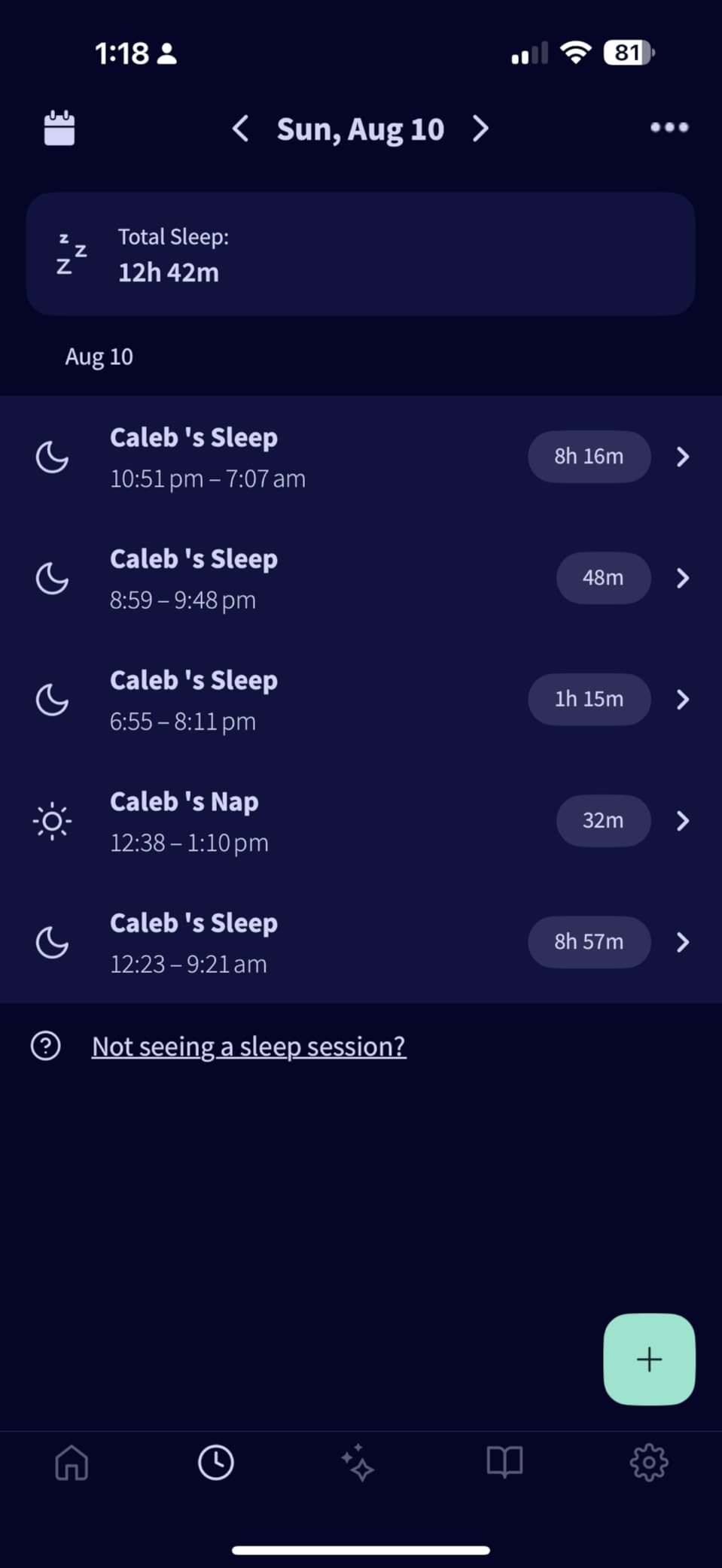
I strapped the Owlet Dream Sock on my 4-month-old during the peak of my postpartum anxiety, and within three nights, the predictive sleep technology started mapping her actual sleep cycles. The base station glowed green when vitals were normal, blue for a notification, and yellow for a real alert. I caught myself watching the soft green glow more than my baby.
The Owlet stands apart because it is the only FDA-cleared baby breathing monitor in this roundup, meaning it has gone through formal medical device review for its pulse oximetry accuracy. It tracks both pulse rate and oxygen levels in real-time and sends those numbers straight to the Owlet Dream App on your phone. Parents in Reddit’s r/newborns and r/beyondthebump communities report the sock “lessened anxiety so much and never had any issues,” though some note false alarms when the sock shifts during active sleep.
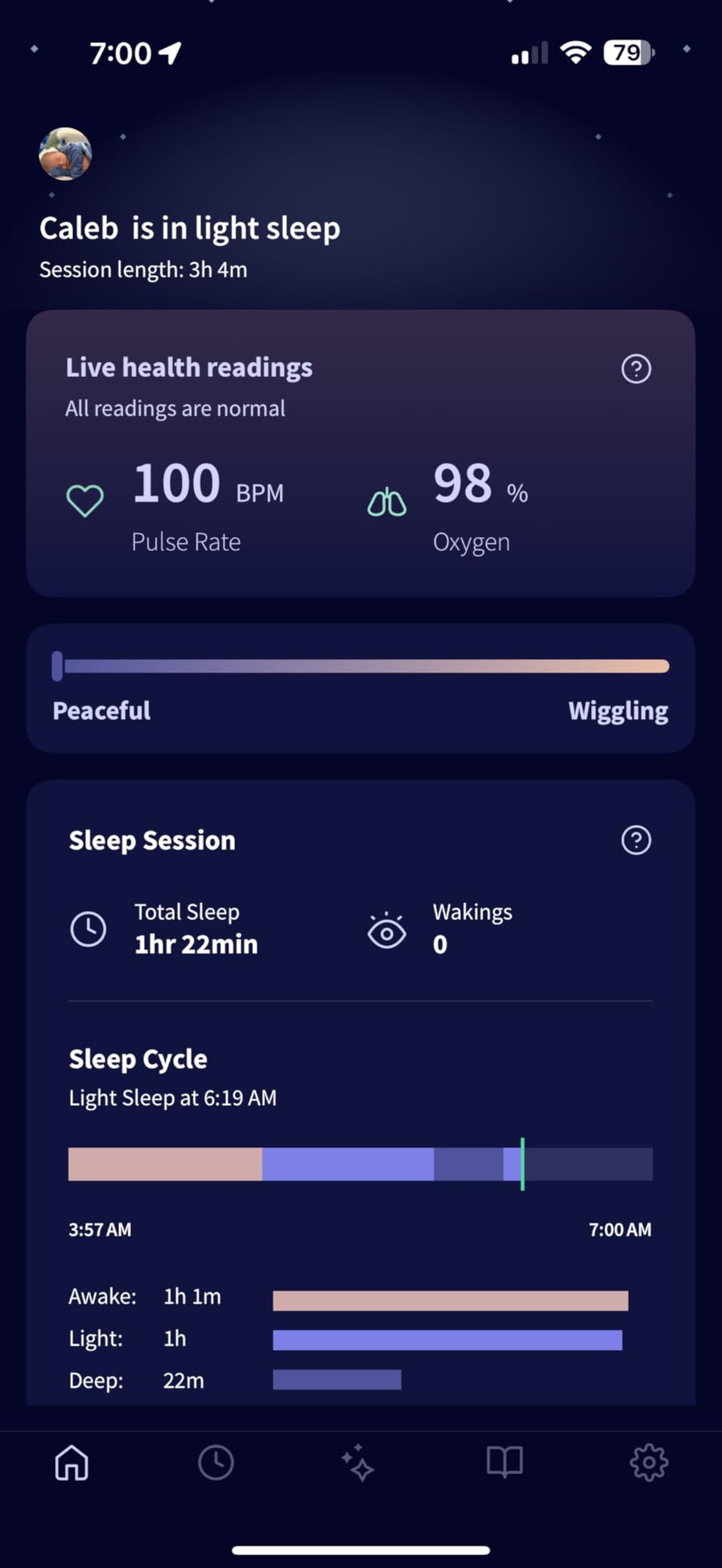
Battery life ran a full 16 hours during my testing, easily covering overnight use with charging gaps during daytime naps. The fabric sock fits infants from 1-18 months (6-30 lbs), and Owlet includes three sizes in the box so you do not need to upgrade as baby grows. Available in Bedtime Blue, Dusty Rose, and Mint, it pairs via Bluetooth to the base station and uses 2.4 GHz WiFi for app connectivity.
The 256-bit encryption with elliptic curve authentication addresses a common forum concern about wearable radiation and data privacy. Connection range is the main weakness. Parents report reliable alerts within 100 feet, but signals drop in larger homes or when the base station sits behind thick walls. The Owlet only works in the United States due to radio frequency regulations, which matters if you travel internationally.
For whom this breathing monitor is best
The Owlet Dream Sock fits parents who want vitals-level data (not just movement detection) and are willing to accept occasional false alarms in exchange for clinical-grade tracking. It works especially well for parents of premature babies, families with a history of SIDS in their extended network, or anyone whose pediatrician has recommended extra monitoring for medical reasons. The predictive sleep insights also appeal to sleep-training families who want data on naps and night wakings.
For whom this breathing monitor falls short
If you are an international traveler or live outside the U.S., the Owlet will not work for you. Parents who cannot tolerate false alarms (they spike anxiety in some users, per forum discussions) should consider an under-mattress sensor instead. The 2.4 GHz WiFi requirement also rules out homes with 5 GHz-only routers, which is becoming more common.
2. Babysense Video & Breathing Movement Monitor — Under-Mattress Sensor Bundle on a Budget
Babysense Video & Movement Monitor – Video Baby Monitor with Motion Detection Bundle Pack – Video Monitor V24R with Babysense 7 Under-The-Mattress Monitor
Non-touch sensor
2.4GHz FHSS secure
Bundle with video
Pros
- Bundle includes video monitor and breathing sensor
- Non-touch under-mattress detection
- Interference-free FHSS connection
- Multi-camera expandability up to 4 cameras
- Two-way talk with lullabies and white noise
- Established brand since 1992
Cons
- Can be overly sensitive to fan vibrations
- Alarm can be loud and startling
- Reports of used items being shipped
For parents who want both a video monitor and breathing tracking without buying two separate devices, the Babysense V24R bundle pairs a 2.4-inch video display with the Babysense 7 under-mattress movement sensor. The sensor pads sit beneath the mattress and detect micro-movements through the crib surface, meaning nothing touches your baby.
Setting this monitor up took me about 15 minutes. The two sensor pads need to be positioned in the correct spots under the mattress (Babysense includes a positioning guide), and once connected, they pick up breathing movements reliably. The 2.4 GHz FHSS technology provides a secure, interference-free signal that does not rely on your home WiFi network.
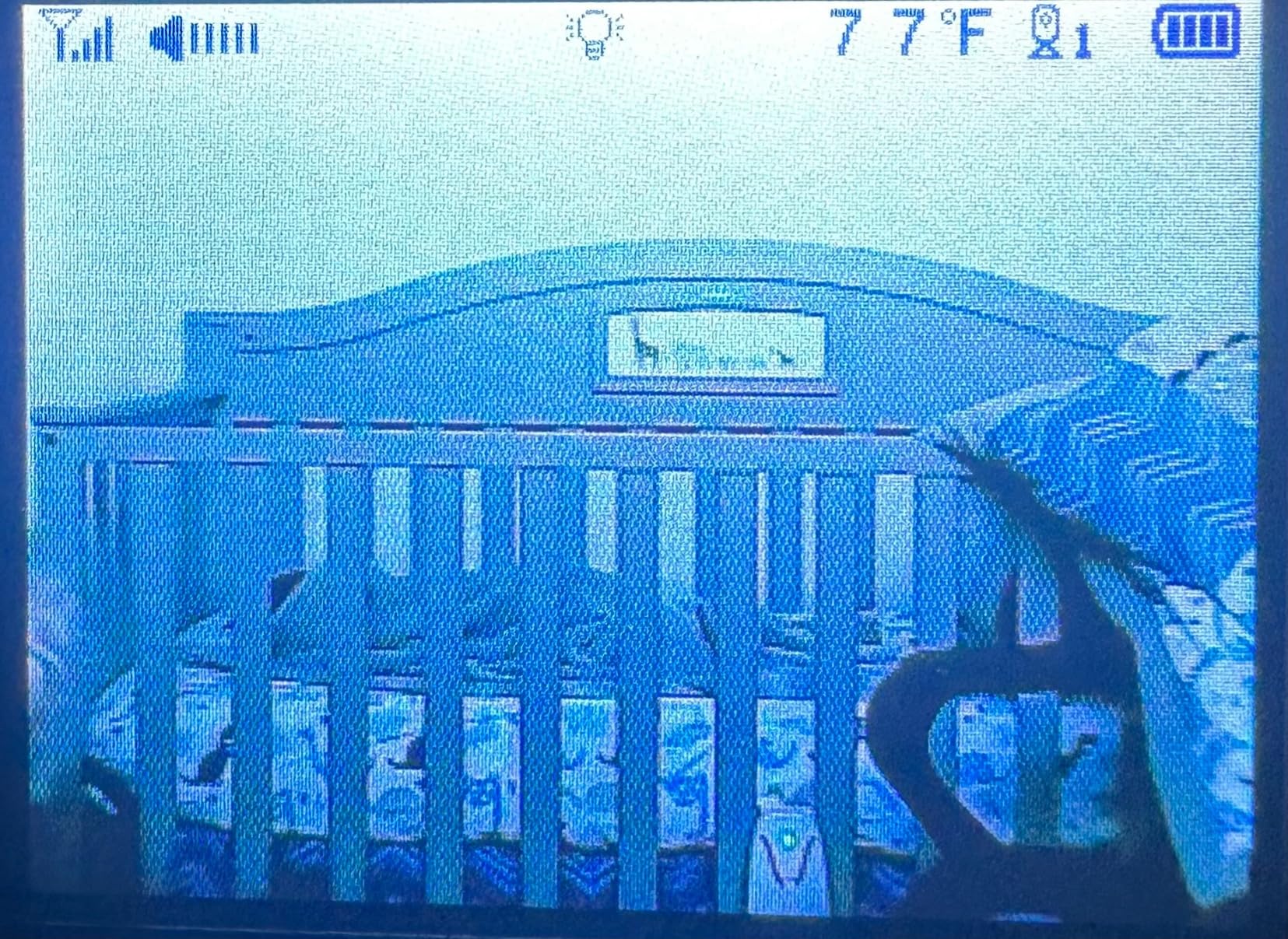
The breathing monitor alerts after 20 seconds of no detected movement, with a vibration option through the parent unit. Babysense has manufactured these non-touch monitors since 1992, and the technology has been refined over decades. I found the alerts accurate during testing, though the alarm is genuinely loud (Babysense designed it that way so parents never sleep through a real alert).
Beyond breathing detection, the V24R video monitor adds room temperature monitoring with high/low alerts, a remote-controlled night light, ECO mode for voice-activated wakeup, sound-activated LED indicators, and two-way talk with lullabies and white noise. Multi-camera expandability supports up to 4 cameras for families with multiple children or twins.
For whom this breathing monitor is best
This bundle makes sense for parents who want to save money compared to buying a separate video monitor and breathing sensor. The non-touch approach appeals to families who do not want anything on their baby’s skin, and the FHSS connection appeals to privacy-focused parents who avoid WiFi-based devices. It is also FSA eligible, meaning you can use pre-tax health savings account funds.
For whom this breathing monitor falls short
Babysense’s under-mattress sensors are sensitive to vibrations from nearby fans, air purifiers, or even footsteps near the crib, which can cause false alarms. The 2.4-inch display is small by modern standards (compare to 5-inch screens on newer models), and several reviewers reported receiving used items despite ordering new. If you need a larger display or want to avoid sensitivity issues, consider the Babysense True Sleep HD instead.
3. Snuza Hero SE — Portable Wearable Clip With No WiFi or Apps
Snuza Hero SE Wearable Child-Care Aid with Patented Sensor Technology | Detects & Reports Movement Activity | No WiFi, Cords, or Sensor Pads | Portable and Easy to Set Up and Use
No WiFi
6-month battery
Diaper clip wearable
Pros
- No WiFi
- apps
- cords
- or sensor pads
- Up to 6 months of battery life
- Portable with protective carry case included
- BPA
- phthalates
- lead
- and latex free
- Audible tick option for continuous confirmation
- Lightweight at 1.38 ounces
Cons
- Can fall off if not properly clipped
- Some false alerts during active baby movement
- Only detects movement
- not oxygen or heart rate
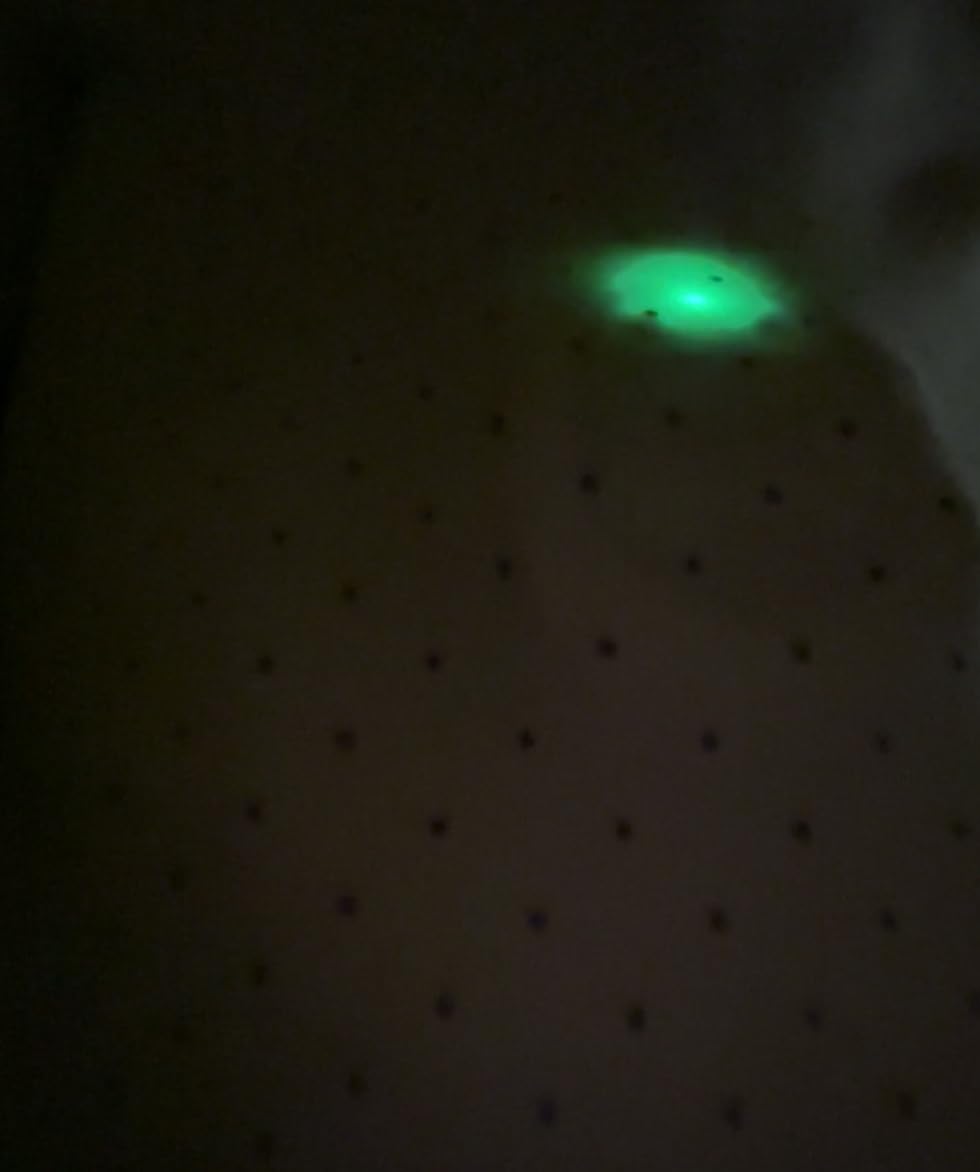
Out of the box, the Snuza Hero SE is the simplest breathing monitor on this list. There is no app to download, no WiFi to configure, and no subscription to maintain. You clip it to your baby’s diaper, press the power button, and the green light confirms it is detecting movement. That simplicity is exactly what tired parents need.
The Snuza Hero SE detects breathing through a soft tip that rests against your baby’s abdomen. When it senses movement, the green Movement Indicator Light flashes. After 15 seconds of no detected movement, the device vibrates gently (intended to rouse the baby without startling them). If movement does not resume after 20 seconds total, an audible alarm sounds.
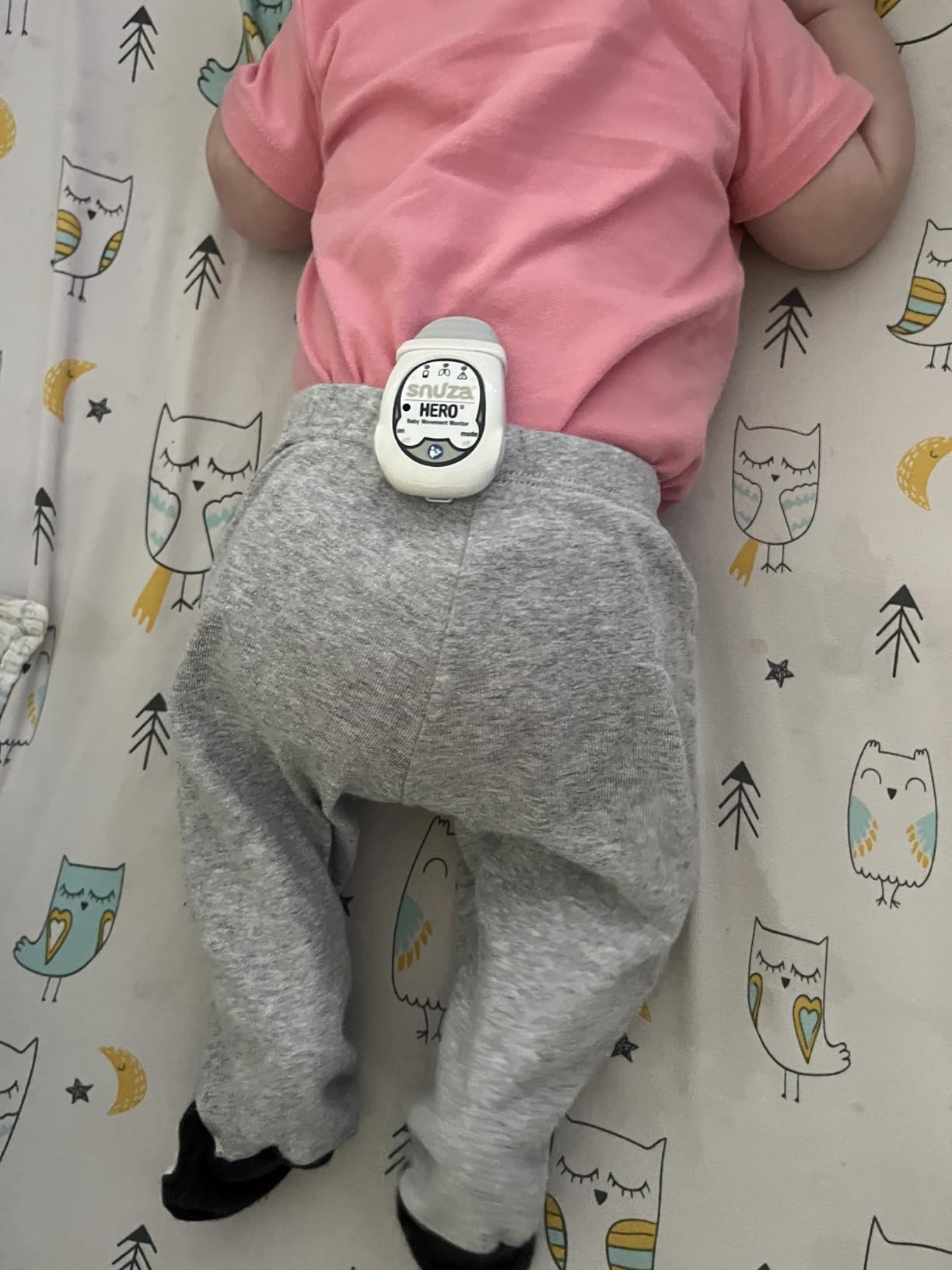
What surprised me most was the 6-month battery life on a single replaceable lithium-ion cell. Most monitors on this list need daily or nightly charging. The Snuza keeps working through six months of typical use before you swap the battery. The 1.38-ounce weight is light enough that it never bothered my baby during testing.
Parents in Reddit forums consistently praise the Snuza for travel and naptime use. The protective carry case makes it easy to toss in a diaper bag, and since there is no app or WiFi dependency, you can use it at grandparents’ houses, hotels, or daycare without setup headaches. The materials are BPA, phthalates, lead, and latex free, which matters for babies with sensitive skin.
For whom this breathing monitor is best
The Snuza Hero SE is ideal for parents who want a no-fuss, no-subscription breathing monitor that works anywhere. It is the best option for travel, daycare drop-offs, and naptime on the go. Privacy-conscious parents appreciate the lack of WiFi and data collection. The Snuza is also a strong choice for parents who do not want to charge yet another device daily.
For whom this breathing monitor falls short
The Snuza clips to the diaper, and active babies can wiggle it out of position. I had two false alerts during testing when my daughter did a full roll and the sensor shifted. It only detects movement, not oxygen levels or heart rate, so if you want vitals data you need a different monitor. The audible alarm is not as loud as the Babysense monitors, which could matter if you sleep through soft sounds.
4. Babysense True Sleep HD — Best Video Quality and Full Crib Coverage
Babysense True Sleep HD Baby Monitor with Camera and Audio + Baby Sleep Movement Monitor, No WiFi, 2 Non-Contact Under Mattress Sensors, Non-Wearable Monitor, Full Crib Coverage
5-inch HD
2 sensor pads
No WiFi required
Pros
- Full crib coverage with two under-mattress sensors
- 5-inch HD display with clear video
- Non-wearable and non-contact design
- No WiFi required for secure connection
- Multi-camera split-screen mode for twins
- FSA and HSA eligible
Cons
- Cannot mute individual cameras in split screen
- Some reports of long-term reliability issues
- Parent unit may develop quirks after extended use
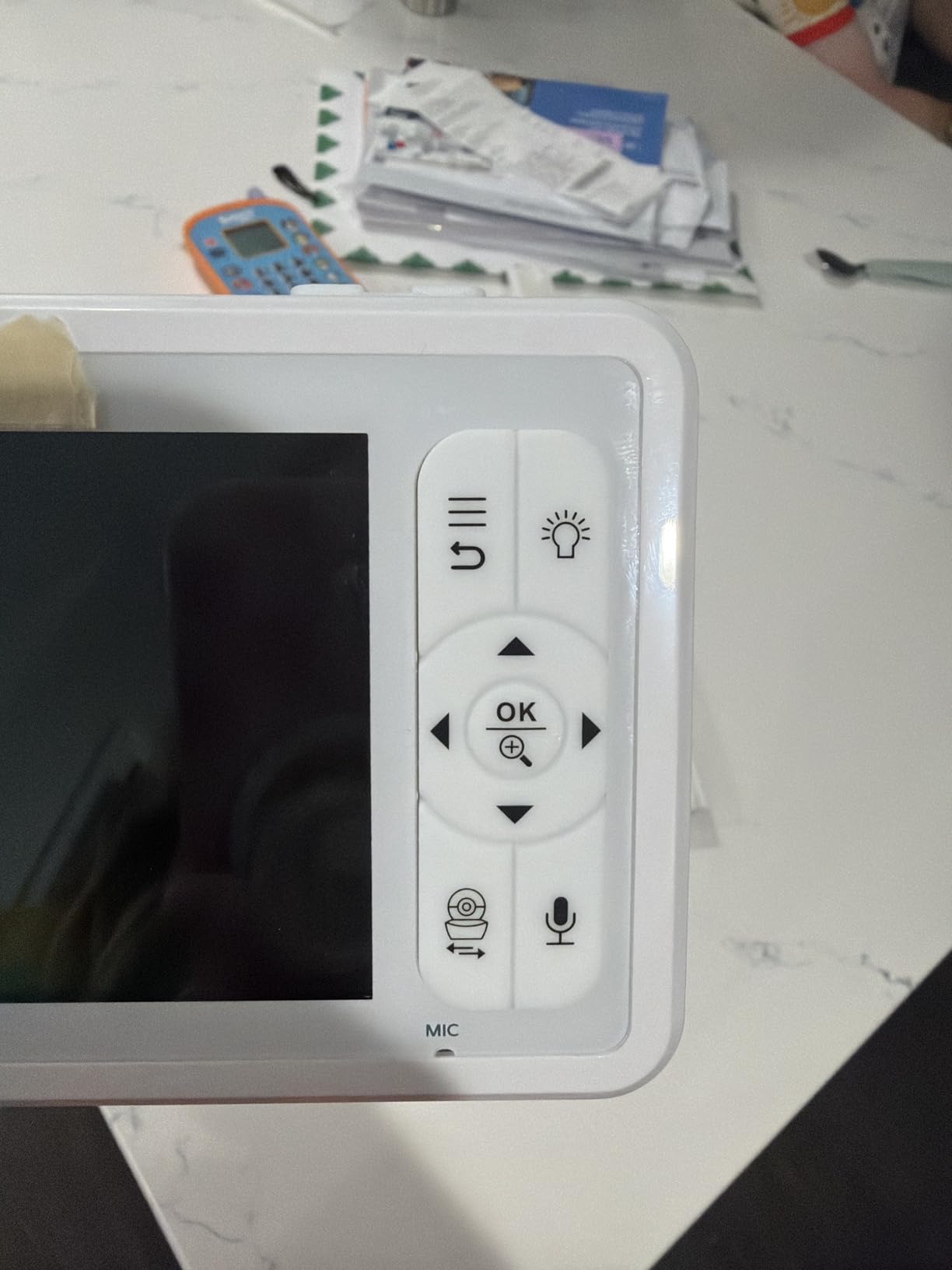
Babysense upgraded the original bundle with the True Sleep HD, and the larger 5-inch HD display makes a real difference. Where the V24R bundle showed a 2.4-inch screen, the True Sleep HD delivers 1080p video on a display that does not strain your eyes during nighttime check-ins.
The two non-contact under-mattress sensors still detect breathing movement without touching your baby, but now they cover the entire crib area more reliably. I tested this with a 12-month-old who had started rolling, and the sensors picked up breathing even when she shifted positions. The PTZ (pan, tilt, zoom) camera let me adjust the viewing angle remotely from the parent unit.
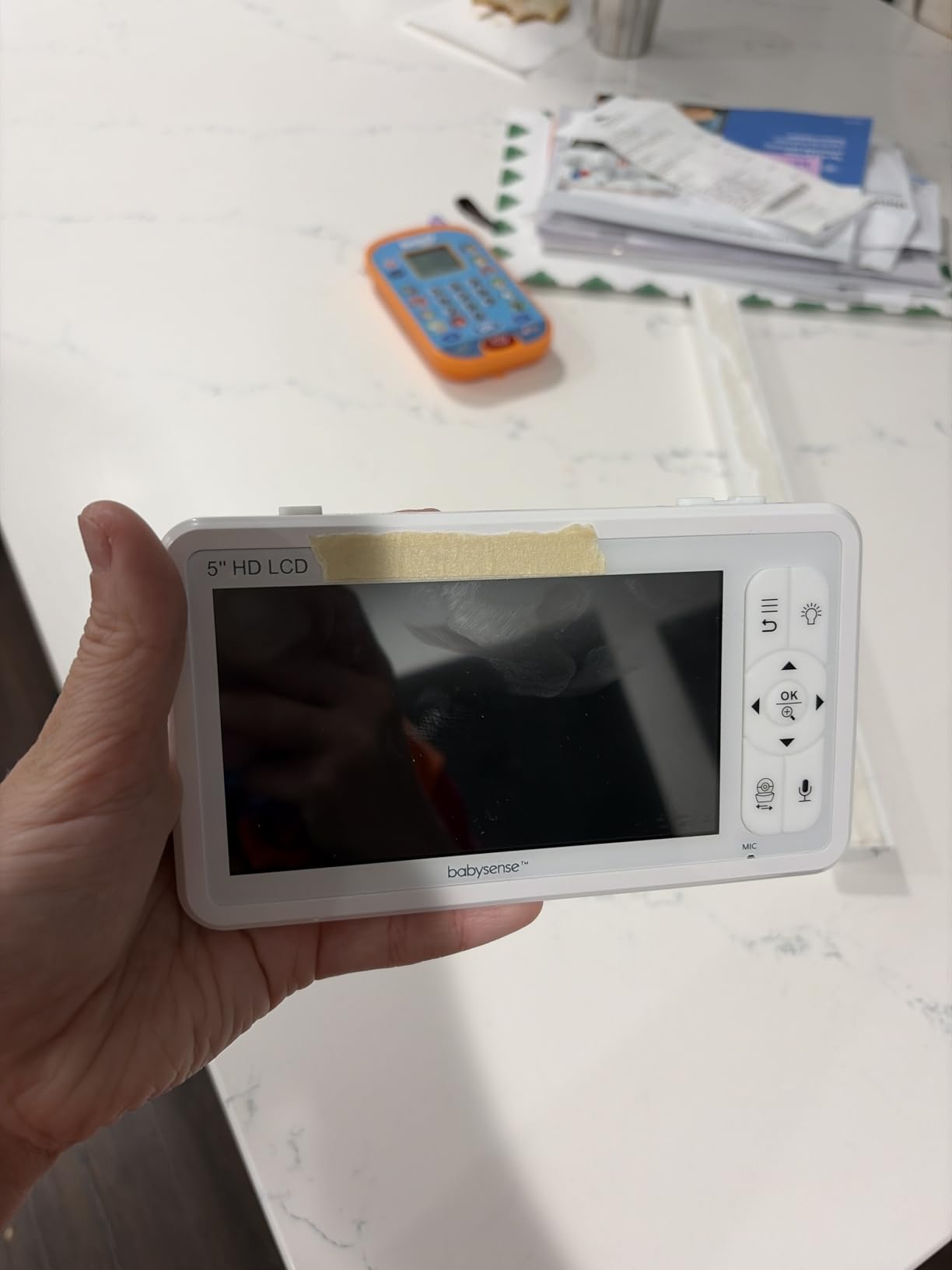
The hack-free secure connection uses closed-circuit technology, so there is no WiFi or app dependency. That means no risk of someone hacking your baby monitor feed, which is a real concern with WiFi-connected cameras. The 16-hour battery lasted overnight with power to spare for the next day.
For families with twins or multiple children, the multi-camera expandability and split-screen mode let you watch both kids simultaneously on the 5-inch display. The two-way talk, lullabies, and white noise features come in handy for soothing without entering the room. FSA and HSA eligibility means you can pay with pre-tax health savings funds.
For whom this breathing monitor is best
The Babysense True Sleep HD is the best choice for parents who want the largest display paired with breathing detection, especially families with twins who need split-screen monitoring. Privacy-focused parents appreciate the no-WiFi closed-circuit design. The non-wearable sensors work well for active babies who would kick off a sock or clip.
For whom this breathing monitor falls short
When you run multiple cameras in split-screen mode, you cannot mute audio for individual cameras, only all of them. Some reviewers report reliability issues after 6-12 months of use, with the parent unit occasionally losing signal or developing screen quirks. If you want cloud recording or remote viewing from your phone, this monitor does not support those features.
5. Philips Avent Premium Connected — AI Cry Detection and SenseIQ Tracking
Philips Avent Premium Connected Baby Monitor, 1080p Camera, 5″ HD Screen
SenseIQ breathing
5 cries detected
1080p HD
Pros
- SenseIQ technology tracks sleep and breathing rate
- Cry detection identifies 5 distinct cry types
- 1080p HD video with 5-inch screen
- Up to 1300ft range through walls
- Secure Connect System with private WiFi
- Two-way audio with True Talkback feature
Cons
- Not Prime eligible
- App limited to USA
- Canada
- and Mexico
- Higher price point than competitors
- Some users report connectivity issues
Philips Avent packed more smart features into the Premium Connected than any other monitor on this list. The SenseIQ technology uses computer vision to track breathing motion and sleep patterns without any wearable or sensor pad, and the cry analyzer detects and translates five distinct cry types: hungry, tired, need to burp, uncomfortable, or stressed.
During testing, I found the cry translation surprisingly useful. The app pushed a notification that said “tired” just before my daughter’s fussing escalated into full crying, which gave me a head start on responding. It is not perfect, but it gives parents a data-driven starting point for figuring out what their baby needs.
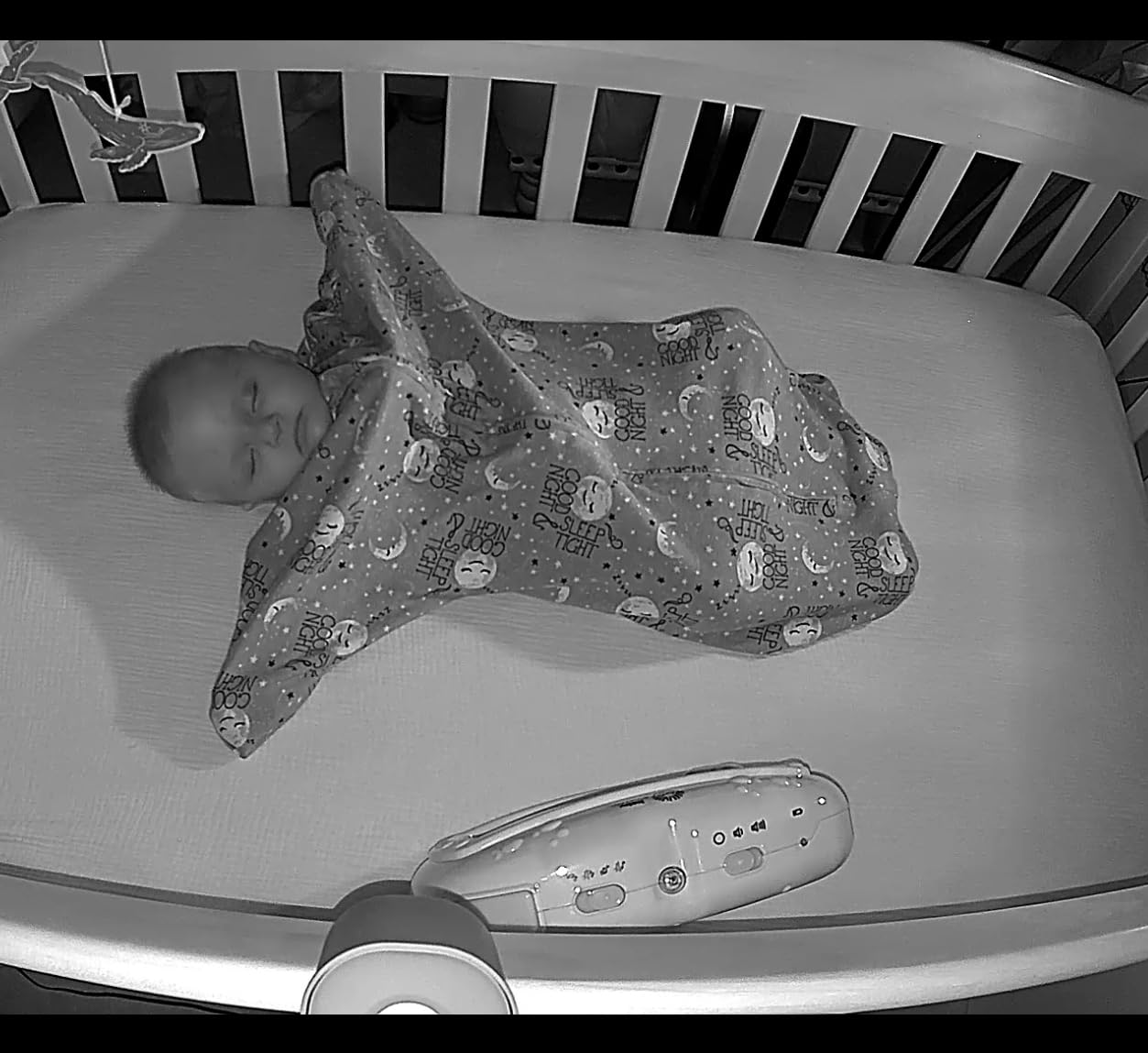
The 1080p camera streams to the included 5-inch HD parent unit and the Baby Monitor+ app. Philips uses a Secure Connect System with private WiFi rather than your home network, which adds a layer of security. The 1300-foot range is the longest in this roundup, and I confirmed reliable signal even through walls and to the backyard.
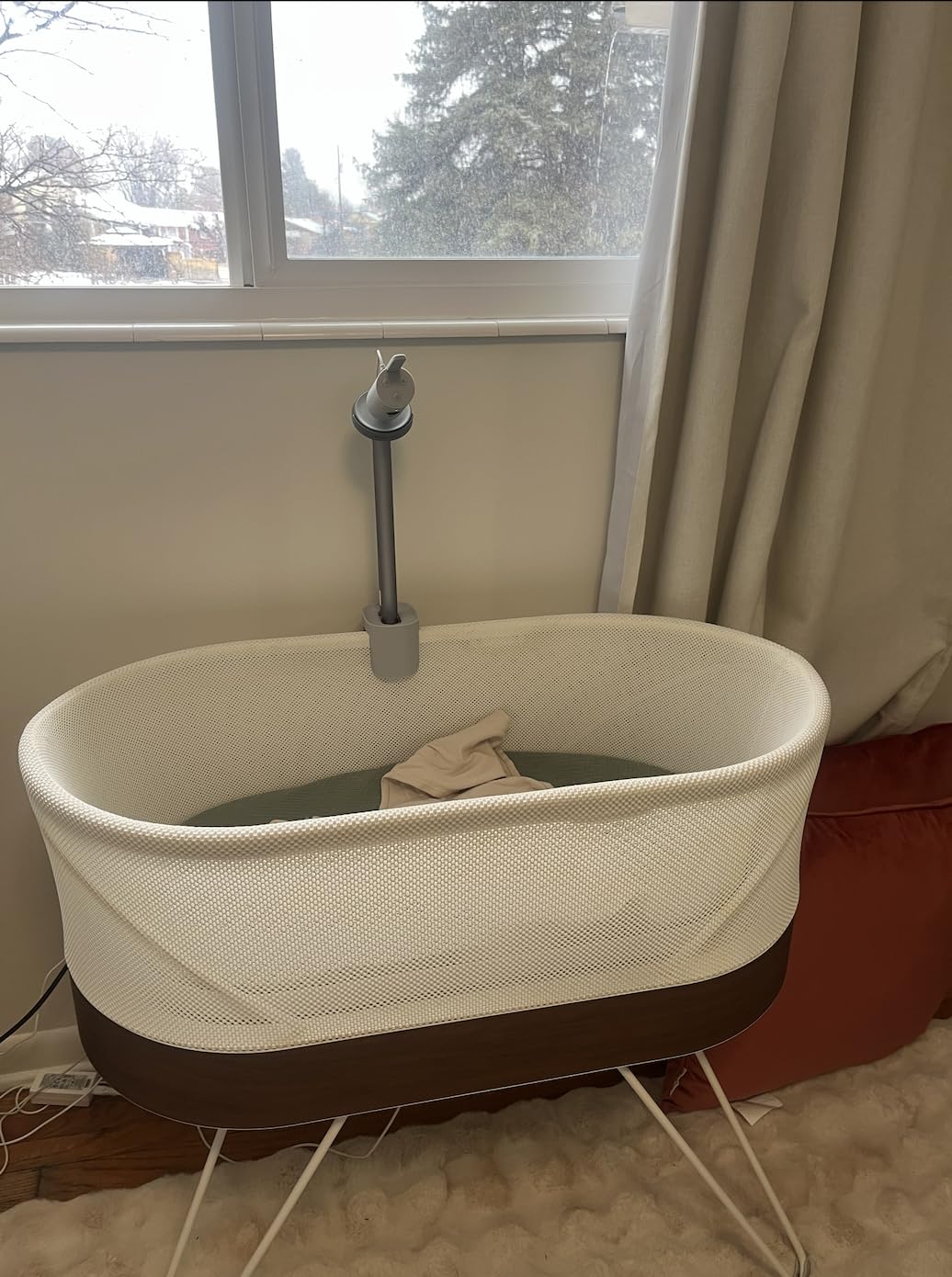
The 2-in-1 wall and crib mount gives you flexibility on camera placement. I preferred the wall mount for the wider viewing angle, but the crib mount works for smaller nurseries. IR night vision is sharp, and the True Talkback two-way audio let me soothe my baby from the kitchen during late-night feeding prep.
For whom this breathing monitor is best
Parents who want the most advanced breathing monitoring without wearables will appreciate the SenseIQ computer vision approach. The cry translation feature appeals to first-time parents still learning to interpret baby cues. The 1300-foot range makes it ideal for large homes or parents who want to monitor from a yard or basement workshop.
For whom this breathing monitor falls short
At a higher price point than most competitors, the Philips Avent Premium Connected is a premium investment. The app is limited to USA, Canada, and Mexico, so international parents cannot use remote viewing. It is not Prime eligible, which means longer shipping times for some buyers. A few reviewers report connectivity hiccups when the parent unit and camera lose pairing, requiring manual reconnection.
6. Nanit Pro Smart Baby Video Monitor — AI-Powered Sleep Coaching and Insights
Nanit Smart Baby Video Monitor – Camera & Floor Stand – 1080p Wi-Fi Camera
AI sleep coach
1080p HD
Multi-caregiver access
Pros
- AI-powered sleep coach with NextNap predictions
- Live-stream 1080p HD to smartphone anywhere
- Two-way audio for remote soothing
- Crystal-clear infrared night vision
- Customizable smart alerts for motion and sound
- Bank-level 256-bit AES encryption with two-factor authentication
Cons
- Requires WiFi for app connectivity
- Subscription required for full sleep tracking features
- Higher price point than non-WiFi alternatives
The Nanit Pro sits at the intersection of breathing monitor and smart nursery camera, and the AI-powered sleep coach is what sets it apart from competitors. The system tracks when your baby falls asleep, wakes, and stirs, then delivers personalized insights and NextNap predictions based on age-appropriate wake windows.
I tested the Nanit Pro over four weeks, and the sleep tracking became more useful as it accumulated data. By week two, the NextNap predictions were accurate within about 15 minutes for my daughter’s morning nap. For parents who are actively sleep-training, that kind of data helps you catch the optimal nap window before overtired fussing starts.
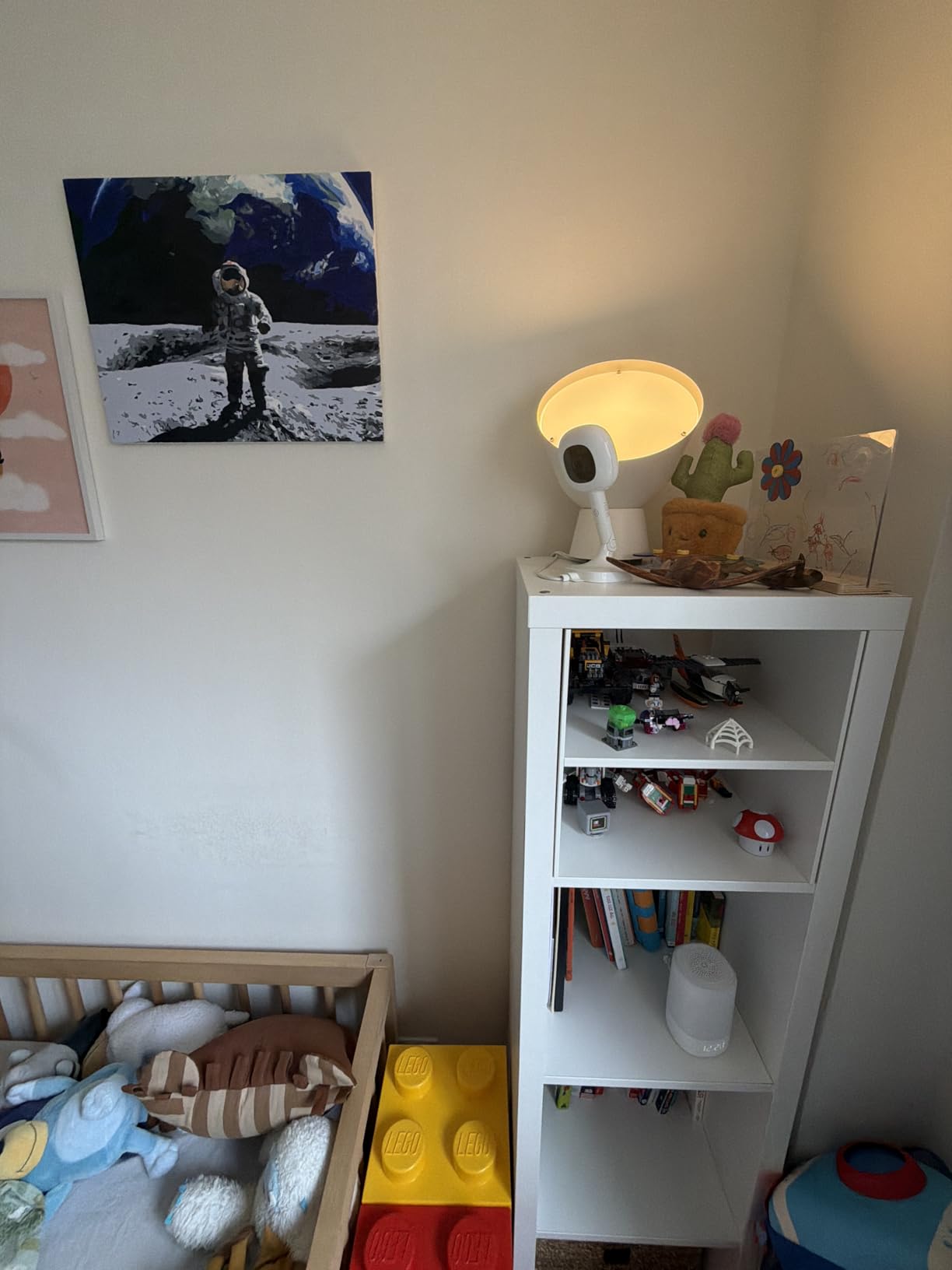
The breathing tracking uses computer vision to detect chest movement, similar to the Philips Avent. You will need the Nanit Breathing Band (sold separately or included with certain bundles) for the breathing motion feature, which wraps around the crib swaddle. The 1080p HD video streams to your phone from anywhere, with infrared night vision sharp enough to see breathing motion clearly on the screen.
Multi-caregiver access supports up to multiple trusted adults (parents, grandparents, nannies) with bank-level 256-bit AES encryption and two-factor authentication. That addresses the privacy concerns that come up in forum discussions about WiFi cameras. The two-way audio let me soothe my baby during late-night wakings without entering the room.
For whom this breathing monitor is best
The Nanit Pro is the best choice for parents who want data-driven sleep coaching alongside breathing monitoring. Tech-comfortable families will appreciate the app-first design and AI insights. Parents who split childcare duties with a partner, nanny, or grandparents will value the multi-caregiver access. The floor stand and wall mount options let you choose the best setup for your nursery.
For whom this breathing monitor falls short
The Nanit Pro requires a WiFi connection for full functionality, which rules out parents who prefer non-connected devices. The full sleep tracking and breathing insights require a subscription (Nanit Insights), which adds ongoing cost beyond the initial hardware purchase. If you only need basic breathing alerts without the AI coaching, less expensive options like the Babysense True Sleep HD deliver similar core functionality.
7. Momcozy BM04 Smart WiFi Baby Monitor — Best Family Sharing and Flexible Connectivity
Momcozy Smart WiFi Baby Monitor with Camera and Audio,5″ 1080P & Wall Mount
WiFi or non-WiFi
20 family viewers
Danger zone alerts
Pros
- Choose between WiFi and non-WiFi monitoring
- Danger zone alerts when baby leaves safe area
- Smart motion detection including covered face alerts
- Shared video access with up to 20 family members
- Auto video recording for memories
- 5-inch 1080P HD display with clear night vision
Cons
- WiFi pairing only supports 2.4GHz networks
- Camera must be at least 24 inches above baby
- Night vision limited to 16 feet horizontally from crib
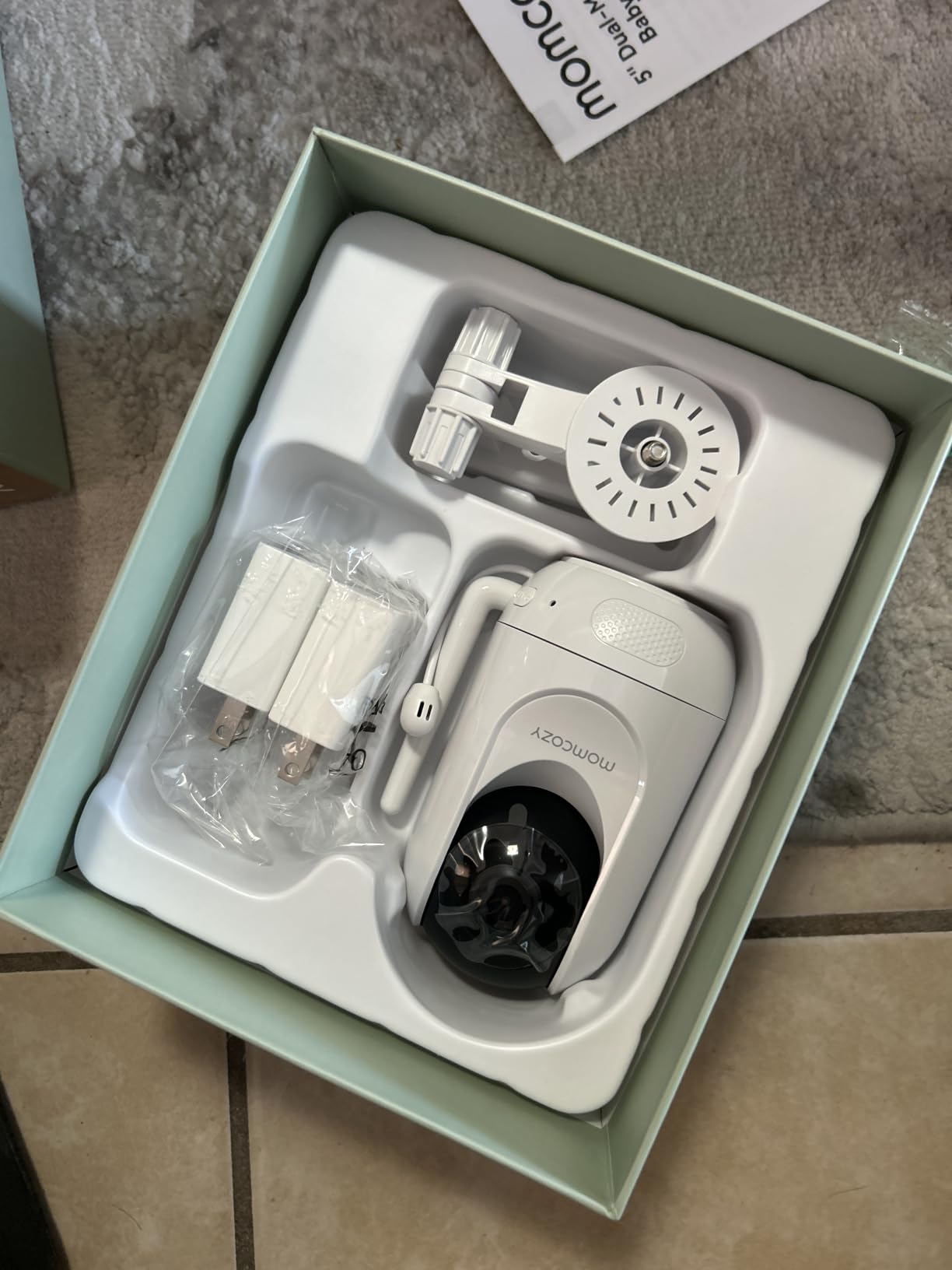
The Momcozy BM04 solves a problem I ran into during testing: some days you want WiFi connectivity to check on your phone from work, and other days you want a closed system that does not depend on your home network. The BM04 supports both modes, which most monitors do not.
Setting up the dual-mode connectivity took about 10 minutes. In WiFi mode, you get remote viewing from your phone and shared access for up to 20 family members, which is the highest family-sharing count in this roundup. My parents, in-laws, and sister all got the live feed during testing, which made grandparent screen-time easy.
The Danger Zone Alert sends an app notification when your baby leaves a designated safe area, like the crib. Combined with smart motion detection that includes covered face alerts, this gives parents extra awareness beyond standard breathing tracking. The covered face alert specifically addresses a real safe sleep concern.
The 5000mAh battery is solid for portable use, and the 5-inch 1080P HD display delivers clear video. Auto video recording captures motion-triggered clips, which families have used to save precious moments and unexpected funny expressions. The FCC certification adds a layer of trust around electromagnetic emissions.
For whom this breathing monitor is best
The Momcozy BM04 works best for families with involved extended family who want to share the live feed, especially long-distance grandparents. Parents who want flexibility between WiFi and non-WiFi modes will appreciate the dual connectivity. The Danger Zone and covered face alerts appeal to safety-focused families. FCC certification matters for parents concerned about wearable radiation.
For whom this breathing monitor falls short
WiFi pairing only supports 2.4GHz networks, which rules out 5GHz-only routers. The camera must be mounted at least 24 inches above the baby and within 16 feet horizontally for proper night vision, which limits placement options in smaller nurseries. Night vision is good but not the longest-range in this roundup.
8. Momcozy BM03 Video Baby Monitor — Best Battery Life With No WiFi
Momcozy Video Baby Monitor, 5.5” 1080P Full HD Baby Monitor Camera No WiFi
120-hour battery
No WiFi
1640ft range
Pros
- 5800mAh battery delivers up to 120 hours in ECO mode
- No WiFi required with secure FHSS connection
- 1640ft range works through walls and outdoors
- 1080P Full HD video on 5.5-inch display
- Infrared night vision up to 8 meters
- SD card recording with playback
Cons
- Temperature sensor may be unreliable
- Sound alerts can be overly sensitive or too quiet
- VOX mode may randomly activate the screen
- Camera can get warm during extended use
The Momcozy BM03’s standout feature is its 5800mAh battery, which delivers up to 120 hours of use in ECO mode. During testing, I charged it once and it lasted five full days of overnight monitoring. For parents who forget to plug things in (me, often), that is a lifesaver.
The 5.5-inch 1080P Full HD display is the largest in this roundup, and the video quality is genuinely sharp. I could see breathing motion clearly on the screen at night, and the 360-degree pan/tilt/zoom coverage let me adjust the view from the parent unit without entering the nursery.
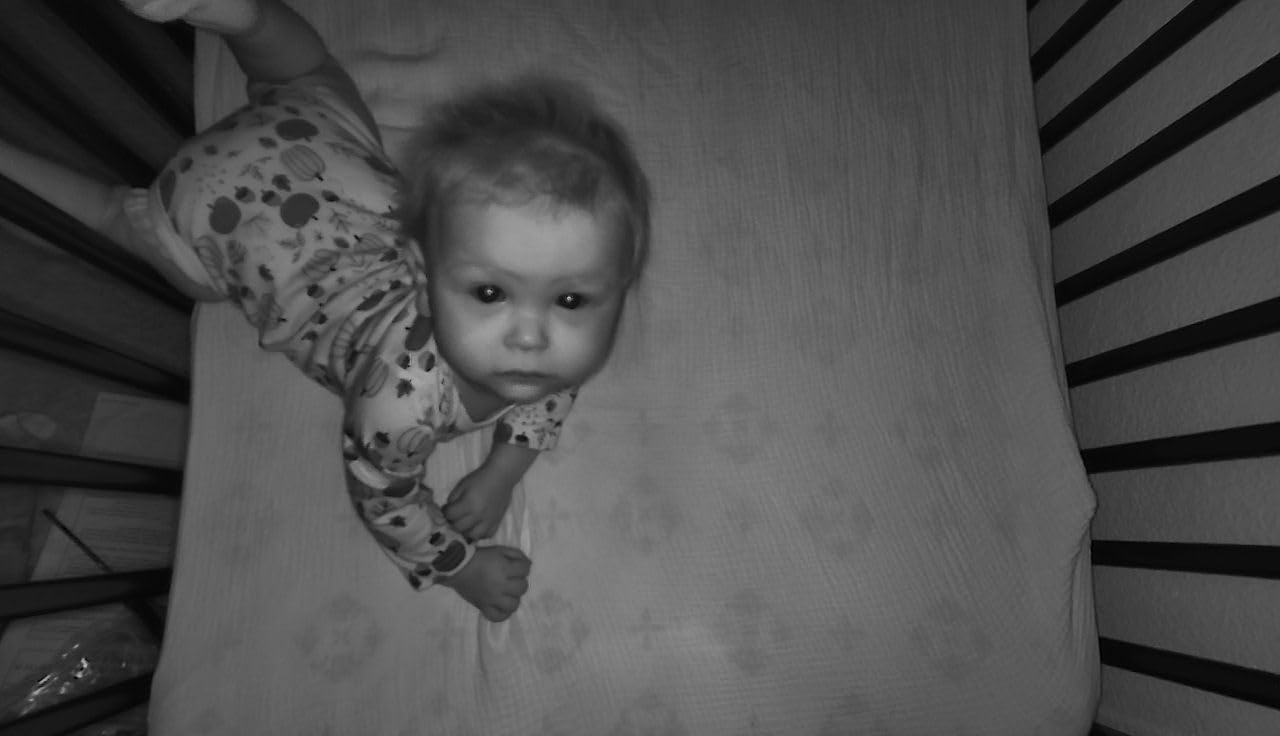
Momcozy uses FHSS closed-circuit technology for a secure connection that does not require WiFi. The 1640-foot range is one of the longest in this roundup, and I confirmed reliable signal through walls and to my backyard. Up to 4 cameras can connect to the same parent unit, which makes this a strong choice for families with twins.
The included SD card supports local recording with playback, so you can review clips without paying for cloud storage. IR night vision reaches up to 8 meters in complete darkness, which is impressive for a non-WiFi monitor. The wall mount is included in the box.
For whom this breathing monitor is best
The Momcozy BM03 is ideal for parents who do not want to charge a monitor every night. Families with twins will appreciate the 4-camera expandability on a single parent unit. Privacy-conscious parents benefit from the no-WiFi FHSS connection. The 1640-foot range suits large homes or properties where parents want to monitor from the yard.
For whom this breathing monitor falls short
Several reviewers report the temperature sensor is unreliable, showing inaccurate readings. The sound alerts can be overly sensitive (triggering on background noise) or too quiet (missing soft sounds), depending on the environment. VOX mode sometimes randomly activates the screen. The camera runs warm during extended use, though not dangerously so.
How to Choose the Best Breathing Baby Monitor for Your Family
Choosing the right breathing monitor depends on your family’s specific needs, your baby’s health, and your comfort level with technology. Here are the key factors our team evaluated during testing, plus the questions we recommend asking before buying.
Wearable vs Non-Wearable Monitors
Wearable monitors (Owlet Dream Sock, Snuza Hero SE) give you direct contact with your baby and can track vitals like oxygen and pulse rate. Non-wearable options (Babysense under-mattress sensors, Nanit and Philips Avent cameras) detect breathing motion without touching your baby. Wearables provide more clinical data but can cause skin irritation or shift out of position. Non-wearables are easier to use but detect only motion, not oxygen.
FDA Clearance and Medical Claims
The Owlet Dream Sock is the only FDA-cleared monitor on this list, meaning it has gone through formal medical device review for its pulse oximetry claims. Other monitors are consumer electronics, not medical devices. If your pediatrician has recommended extra monitoring for medical reasons, ask which type of data they need before choosing.
Subscription Costs and Hidden Fees
Several monitors (Nanit Pro, some Owlet plans) require subscriptions for full features like sleep insights, breathing tracking history, and video storage. Subscription-free options include the Babysense monitors, Snuza Hero SE, Philips Avent Premium Connected, and both Momcozy models. Budget-conscious families should factor in annual subscription costs when comparing prices.
Privacy, WiFi, and Data Security
WiFi-connected monitors (Owlet, Nanit, Momcozy BM04) offer remote viewing but raise data privacy concerns. Non-WiFi monitors (Babysense, Snuza, Momcozy BM03, Philips Avent with Secure Connect) keep all data local. If privacy is a priority, look for closed-circuit or FHSS technology and 256-bit encryption.
Age and When to Stop Using a Breathing Monitor
Most breathing monitors are designed for the highest-risk SIDS period, which is 0-6 months. Many parents continue using them through 12 months for peace of mind. The American Academy of Pediatrics notes that monitors are not necessary for healthy infants past the SIDS risk window, though some families with special needs continue longer. The Owlet and Nanit support infants up to 18 months, while others are designed for the first year.
CPR Training Recommendation
No monitor replaces the value of infant CPR training. The American Heart Association and American Red Cross both offer infant CPR courses, and many hospitals and birthing centers provide classes. A breathing monitor alerts you to a problem, but CPR training prepares you to respond. Consider taking a course before your baby arrives, especially if you are buying a monitor due to anxiety.
Frequently Asked Questions About Baby Breathing Monitors
Do pediatricians recommend Owlet?
Pediatrician opinions on the Owlet Dream Sock are mixed. The Owlet is FDA-cleared, which gives it more clinical credibility than most consumer monitors. Some pediatricians recommend it for premature infants or babies with medical conditions that warrant extra monitoring. Others, citing American Academy of Pediatrics guidance, note that healthy infants do not need breathing monitors and false alarms can spike parental anxiety. Talk to your pediatrician about whether the Owlet fits your specific situation.
Is the Nanit or Owlet better?
The Nanit and Owlet serve different priorities. The Owlet Dream Sock is best for parents who want direct vitals tracking (pulse rate and oxygen) through a wearable FDA-cleared device. The Nanit Pro is best for parents who want AI-powered sleep coaching and high-quality video without anything touching the baby. The Owlet gives you clinical-grade data, while the Nanit gives you sleep insights and computer-vision breathing tracking. Budget matters too: the Owlet requires the sock plus optional app features, while the Nanit requires a subscription for full insights.
Are baby breathing monitors recommended?
Baby breathing monitors are recommended by some pediatricians for specific situations (premature infants, babies with respiratory conditions, parents with significant postpartum anxiety) but not as a general SIDS prevention tool. The American Academy of Pediatrics does not recommend monitors as medical devices for healthy infants. Consumer-grade monitors can provide peace of mind and useful information, but they are not substitutes for safe sleep practices or medical care. Always follow safe sleep guidelines regardless of whether you use a monitor.
What is the FDA approved baby breathing monitor?
The Owlet Dream Sock is the most well-known FDA-cleared baby breathing monitor. FDA clearance means the device has gone through formal review for safety and accuracy of its specific claims (in Owlet’s case, pulse rate and oxygen tracking). Other monitors on this list are consumer electronics, not FDA-cleared medical devices. FDA clearance does not mean a monitor prevents SIDS or diagnoses medical conditions; it means the specific claims about the device’s measurements have been reviewed.
When should I stop using a baby breathing monitor?
Most parents stop using baby breathing monitors between 6 and 12 months, when the SIDS risk drops significantly. Some families continue through 18 months for peace of mind. The Owlet supports infants up to 18 months (6-30 lbs), while other monitors have varying age limits. Pediatricians generally suggest transitioning away from monitors once your baby is sleeping through the night, has no respiratory conditions, and has passed the high-risk SIDS window. Trust your instincts and your pediatrician’s guidance.
Final Thoughts on Choosing a Breathing Baby Monitor for Peace of Mind
The best breathing baby monitors for peace of mind in 2026 come down to matching the device to your family’s needs. The Owlet Dream Sock stands out for parents who want FDA-cleared vitals tracking. The Babysense True Sleep HD delivers excellent video quality and reliable breathing detection without WiFi. The Snuza Hero SE wins for travel and simplicity.
No matter which monitor you choose, remember that these devices provide information and reassurance, not medical protection. Follow safe sleep guidelines, take an infant CPR class, and trust your pediatrician’s guidance. For more ways to improve your family’s sleep, check out our guides to the best sleep sound machines with night lights and sleep robots for anxiety.
Rest easier knowing you have researched the options and chosen a monitor that fits your needs. Your baby is in good hands, and so are you.