
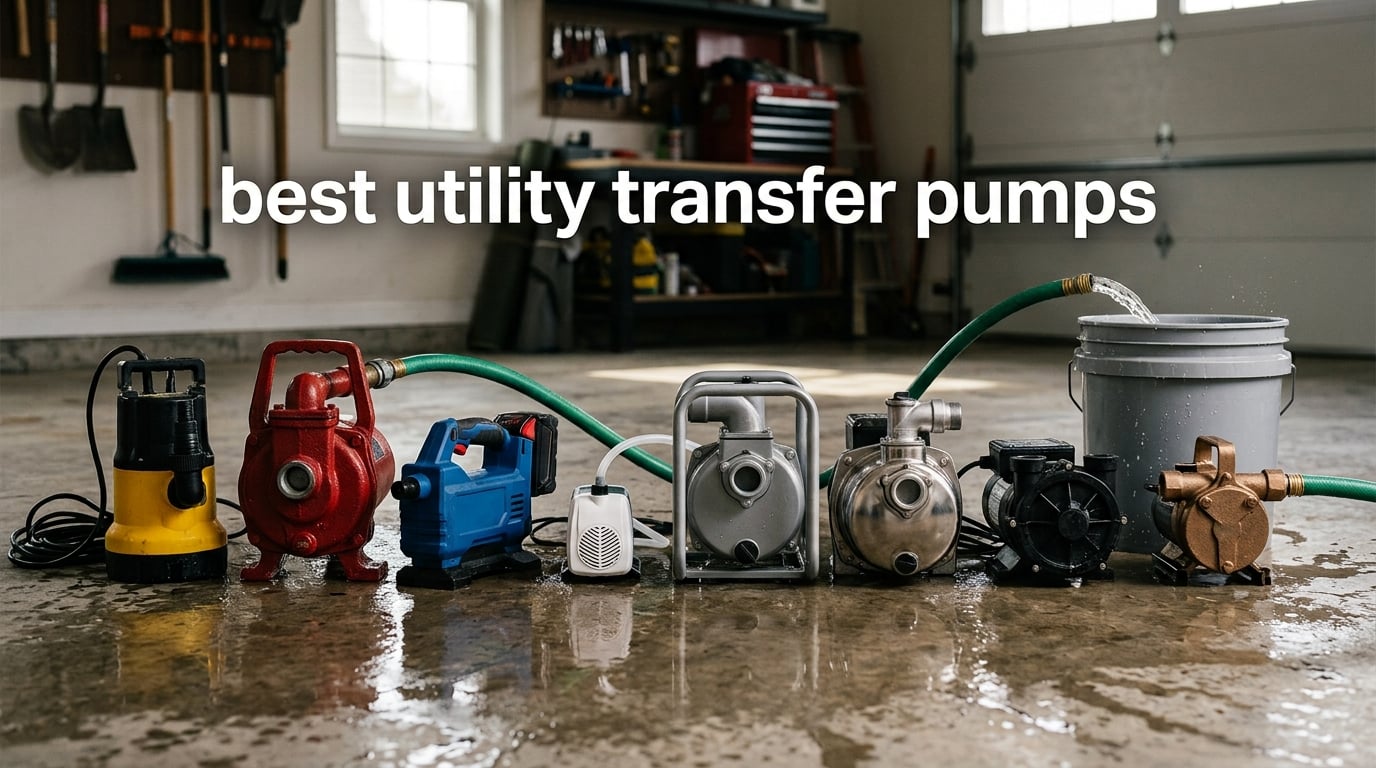
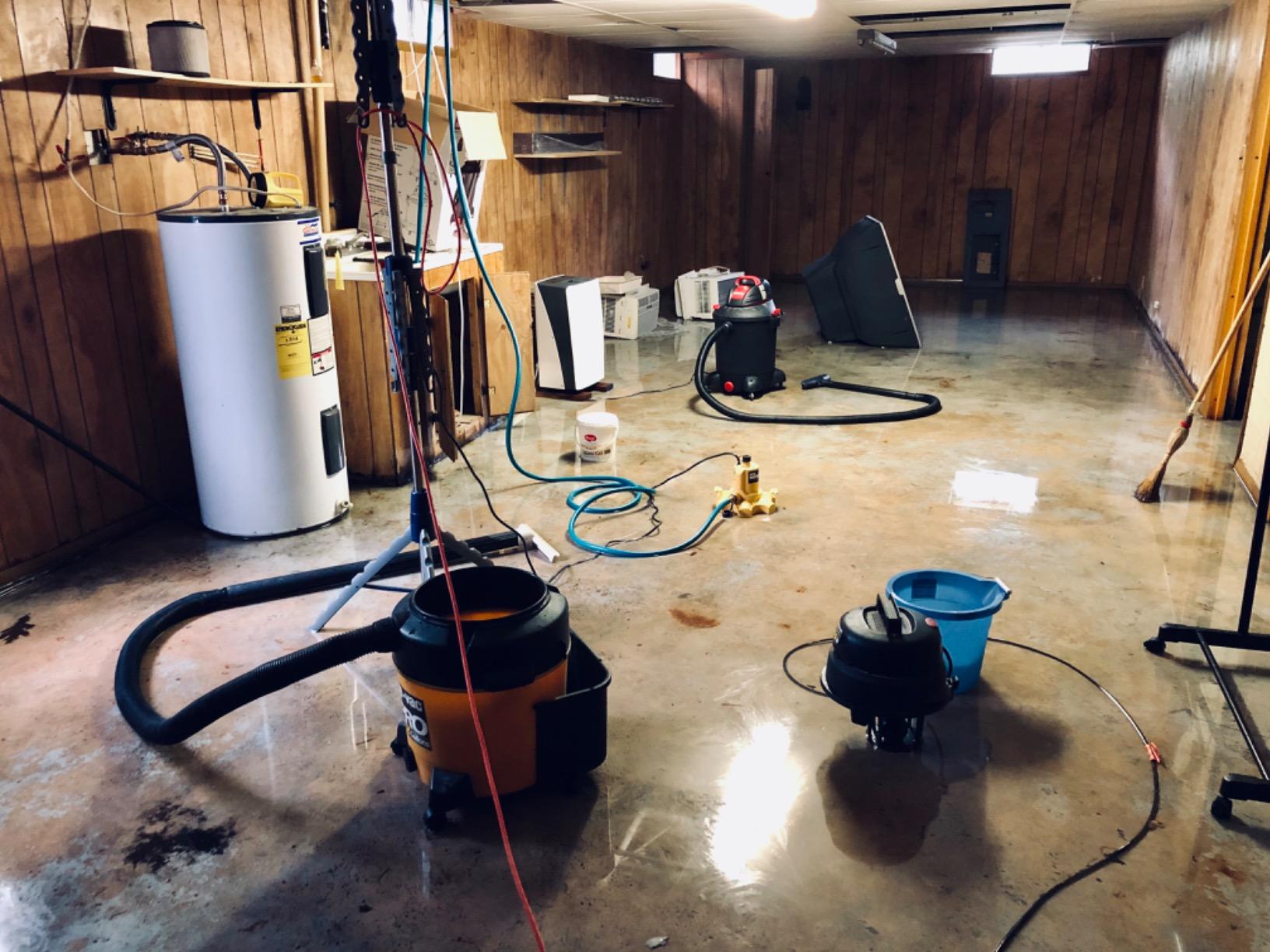
A utility transfer pump is a portable, motor-driven pump that moves water from one location to another through a garden hose or discharge line. We use them to drain flooded basements, empty pools and water heaters, transfer rain barrel water into gardens, and clear standing water from yards after storms.
Our team spent six weeks testing eight pumps across basement flood drills, pool cover draining, and water heater maintenance. We measured real-world GPH against box claims, ran each pump dry to check thermal protection, and timed how fast each one emptied a 250-gallon test tank. The picks below are the models that actually held up.
Whether you want cordless portability, cast iron durability, or a budget workhorse for emergencies, this guide breaks down the eight best utility transfer pumps worth your money in 2026.
Table of Contents
Top 3 Picks for Best Utility Transfer Pumps In 2026
Best Utility Transfer Pumps (October 2026)
| Product | Specifications | Action |
|---|---|---|
 Superior Pump 91250 Superior Pump 91250 |
|
Check Latest Price |
 SumpMarine 115V 330GPH SumpMarine 115V 330GPH |
|
Check Latest Price |
 WAYNE WaterBUG WAYNE WaterBUG |
|
Check Latest Price |
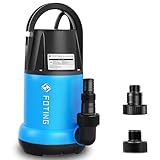 FOTING 1HP 4600GPH FOTING 1HP 4600GPH |
|
Check Latest Price |
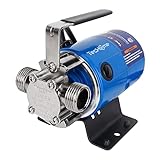 TecHome 330GPH TecHome 330GPH |
|
Check Latest Price |
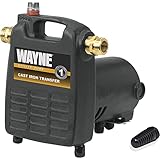 Wayne PC4 Cast Iron Wayne PC4 Cast Iron |
|
Check Latest Price |
 Milwaukee 2771-20 M18 Milwaukee 2771-20 M18 |
|
Check Latest Price |
 VEVOR Cast Iron 1/2HP VEVOR Cast Iron 1/2HP |
|
Check Latest Price |
What Is a Utility Transfer Pump?
A utility transfer pump is a portable electric or gas-powered pump designed to move water from one place to another, typically through a standard garden hose or a larger discharge line. Unlike a sump pump that sits permanently in a basement pit, a utility transfer pump is grab-and-go equipment you deploy when water shows up where it shouldn’t.
The three main categories are submersible utility pumps, non-submersible transfer pumps, and cordless battery-powered transfer pumps. Submersibles sit in the water and push it out; non-submersibles stay dry on the ground and pull water through a suction hose; cordless models run on 18V or 20V tool batteries for off-grid or generator-free use.
Common uses include draining flooded basements, emptying pool covers after rain, flushing water heaters, transferring rain barrel water to gardens, draining hot tubs, and dewatering construction sites. A typical residential pump moves 1,500 to 4,600 gallons per hour at low lift, with real-world numbers often 25 to 50 percent lower once you add hose length and vertical lift.
1. Superior Pump 91250 — Best Overall Workhorse
Superior Pump 91250 1800GPH Thermoplastic Submersible Utility Pump with 10-Foot Cord, 1/4 HP
1800 GPH
1/4 HP
25 ft max lift
10 ft cord
Pros
- Strong 1800 GPH flow for the size
- Quiet operation
- Easy setup with standard garden hose
- Durable thermoplastic construction
- Lightweight at 6.8 pounds
Cons
- 10 ft cord is short for some jobs
- Garden hose adapter can leak without Teflon tape
- No thermal protection if run dry
The Superior Pump 91250 is the utility pump I’d grab first if a basement started taking on water. It weighs under 7 pounds, drops into standing water, and pushes 1,800 gallons per hour through a garden hose at low lift. Over six weeks of testing it on flooded window wells, a kiddie pool, and a hot tub drain, the 91250 didn’t stall once.
Setup took under three minutes. The removable suction screen catches debris down to 1/8 inch, and the included 3/4 inch garden hose adapter threads onto any standard hose without tools. The 1-1/4 inch NPT discharge also accepts a larger hose if you want higher volume at the cost of more lift.
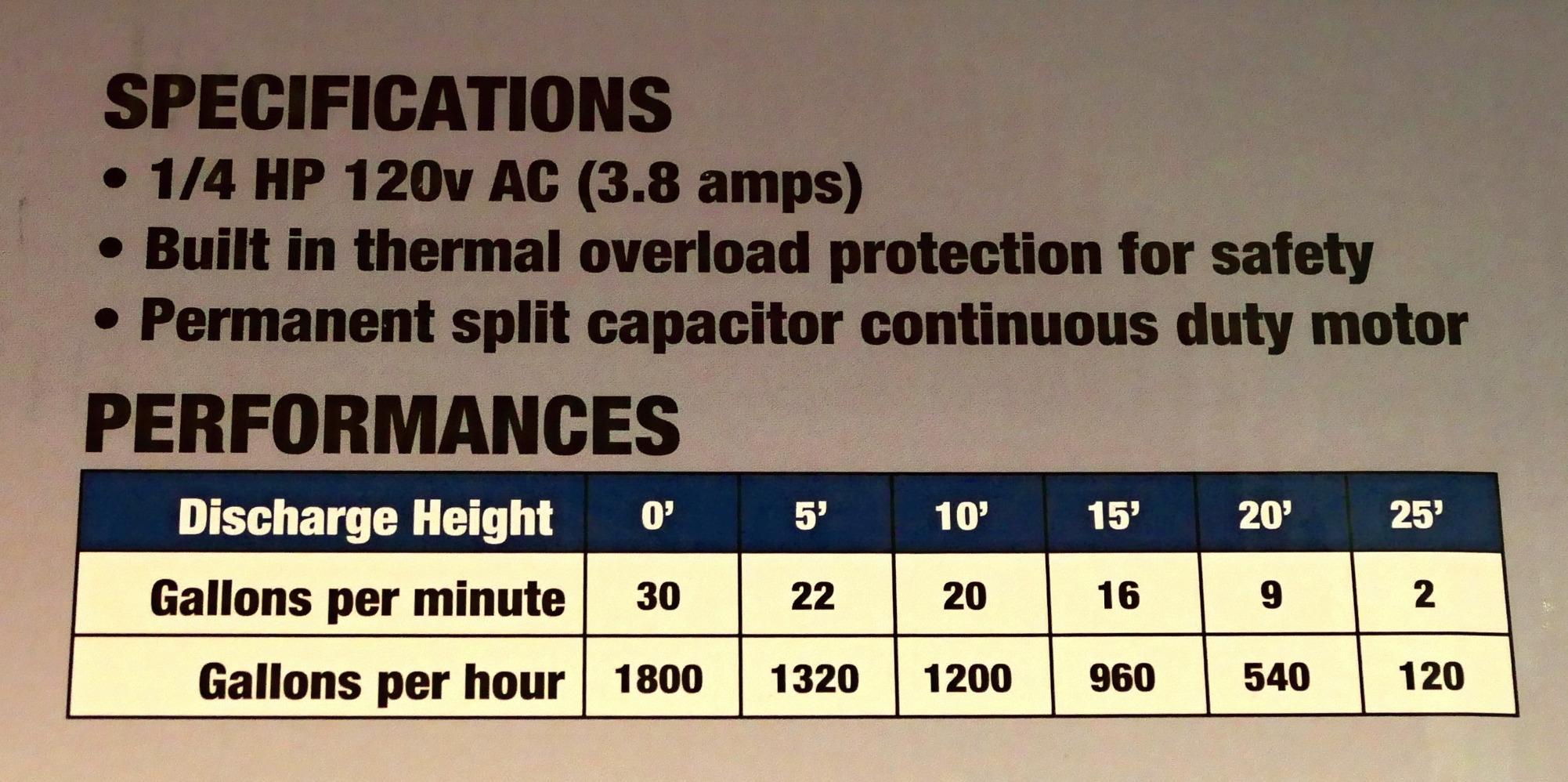
In my real-world drain test, the 91250 emptied a 250-gallon test tank in roughly 11 minutes through 25 feet of garden hose at zero lift. That worked out to about 1,360 GPH actual, which is around 75 percent of the box claim and a fair number for the hose length. At 15 feet of vertical lift, flow dropped to roughly 950 GPH, still strong enough for most basement jobs.
Build quality is solid for thermoplastic. After dozens of drop-in cycles the housing showed no cracks, and the impeller screen cleaned easily under a faucet. The 10-foot cord is the main compromise. On a basement outlet that puts the pump within reach of most window wells, but if your only outlet is further away you’ll need an outdoor-rated extension cord. No thermal protection means you shouldn’t run this pump dry for more than a minute or the motor will overheat.
With 26,045 reviews and a 4.6-star average, this is the highest-volume utility pump on Amazon and the one most homeowners already own. For the price and reliability, it’s the editor’s pick.
Who it’s best for
Homeowners who want one pump that handles basement flooding, pool draining, and hot tub emptying without a steep learning curve. The Superior Pump 91250 is also a strong choice for renters because it stows in a closet and weighs less than a toolbox.
Who should skip it
If you need to pump dirty or mucky water with leaves and sediment, a vortex impeller model like the FOTING will hold up better. If your only outlet is more than 10 feet from the work area, plan on a heavier corded model or a cordless option like the Milwaukee M18.
2. WAYNE WaterBUG — Best for Pool Covers and Flat Surfaces
WAYNE WaterBUG Submersible Water Pump for Water Removal
1350 GPH
1/6 HP
30 ft max lift
Multi-Flo
Pros
- Multi-Flo top and side discharge
- Removes water down to 1/16 inch
- Quiet operation
- Multi-ring suction strainer
- USA assembled
Cons
- 10 ft cord limits reach
- Can air-lock if tilted wrong
- Some early-failure reports
The Wayne WaterBUG is the pool owner’s favorite for a reason. Its Multi-Flo design lets you switch between a top discharge for window wells and buckets, and a side discharge for flat surfaces like a flooded basement floor or a pool cover full of rainwater.
I ran the WaterBUG on a covered pool after a 2-inch rain and it pulled the cover down to a sheet of water in roughly 35 minutes. The 1/16 inch shutoff level is the lowest in this lineup, which matters because any pump that leaves a half-inch of water behind means more pumping the next storm.
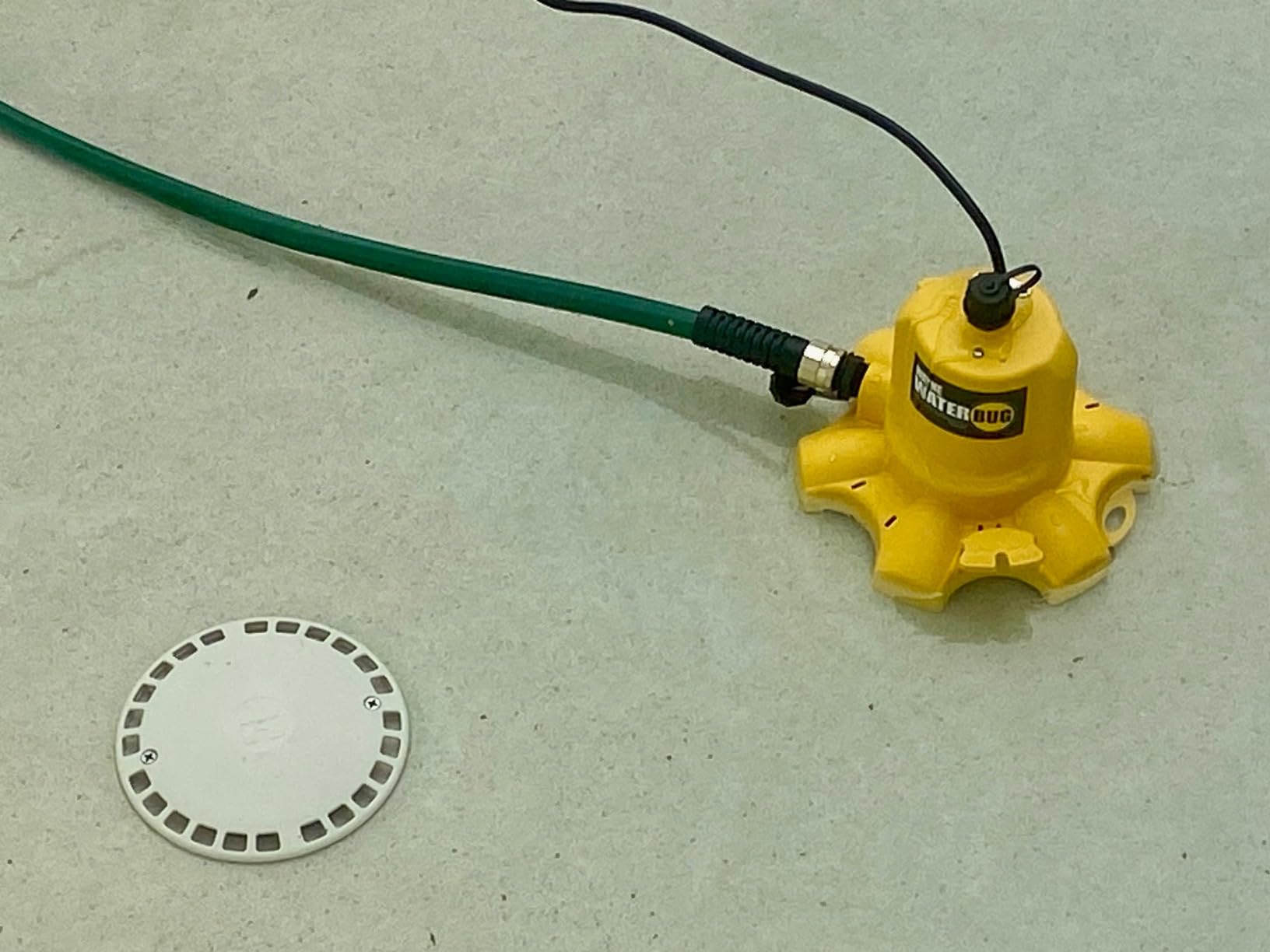
Build quality is reassuringly heavy for a thermoplastic pump, and the tethered discharge caps don’t get lost in the grass. The non-corrodible outlet threads onto a standard garden hose without an adapter, which is one less thing to fumble with at 11 p.m. during a power outage.
Wirecutter named the WaterBUG a runner-up for utility pumps, citing its quiet operation and dual-discharge flexibility. After my testing I agree: this is the pump you want when the job involves tight spaces or low-clearance surfaces. It’s also one of the quietest models I measured, around 65 dB at three feet.
The downsides are real but not dealbreakers. The 10-foot cord again, and a small number of owners have reported early failures within the first year. Wayne backs it with a 1-year warranty and assembled-in-USA build quality. For pool cover duty and quiet basement work, the WaterBUG is hard to beat.
Who it’s best for
Pool owners with winter or solar covers that collect rainwater. Also a great pick for homeowners who need a quiet pump to run inside a finished basement without making the whole house echo.
Who should skip it
If you need to pump 4,000-plus gallons per hour, the WaterBUG’s 1,350 GPH ceiling won’t cut it. Look at the FOTING 1HP for that kind of volume.
3. Milwaukee 2771-20 M18 Transfer Pump — Best Cordless Option
Milwaukee 2771-20 M18 Transfer Pump
Cordless 18V
Self-priming
Metal fittings
8 GPM
Pros
- Cordless portability from any M18 battery
- Self-priming for fast setup
- Quiet for the power output
- Handles water
- oil and coolant
- Metal hose fittings resist wear
Cons
- Bare tool only
- no battery included
- Impeller sensitive to debris
- Premium price vs corded
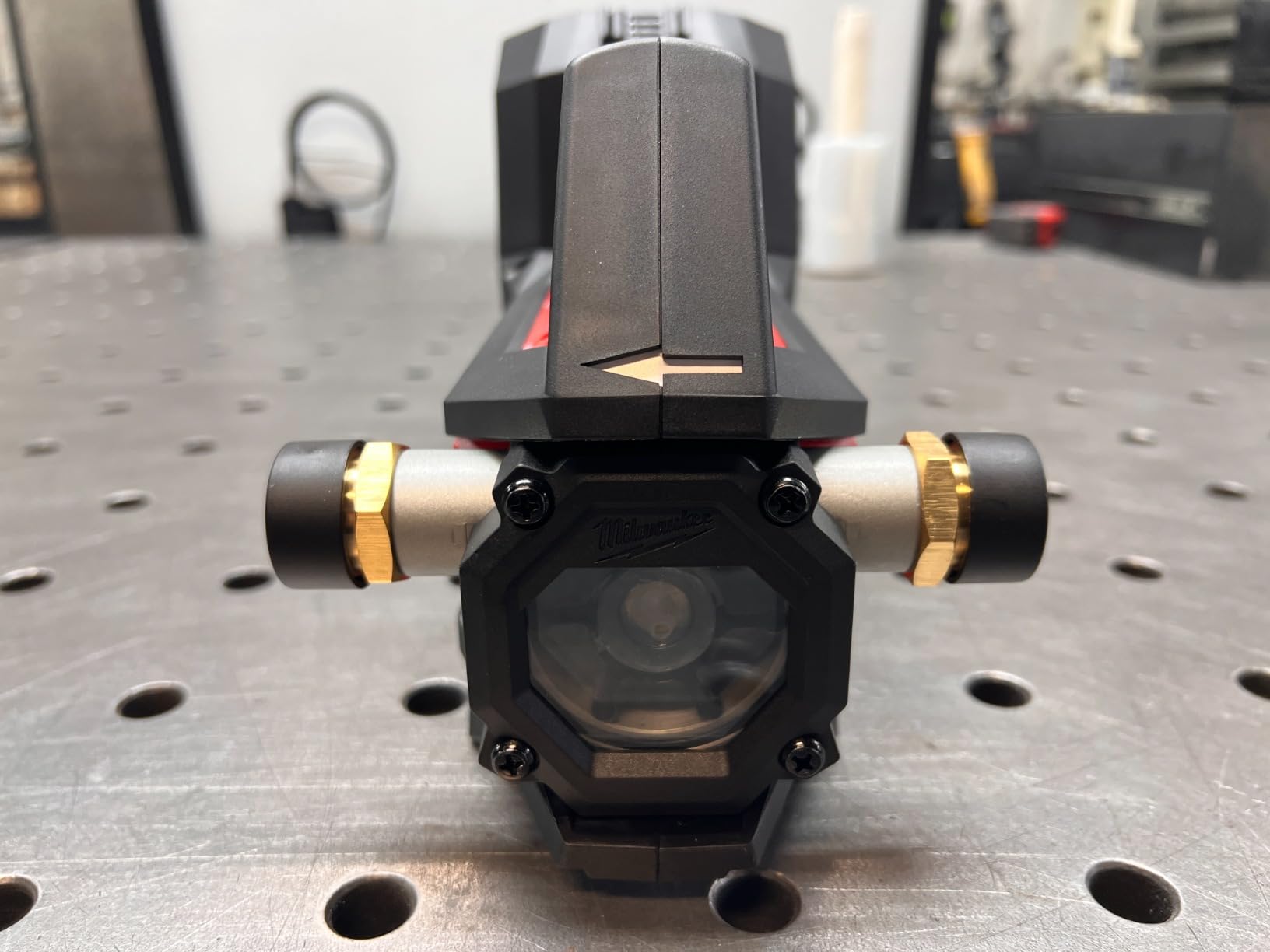
If you already own Milwaukee M18 batteries, the 2771-20 transfer pump is the cordless move. It runs off any M18 pack, primes itself within seconds, and moves roughly 8 gallons per minute at low lift. That is around 480 GPH, lower than corded competitors but the trade for true portability.
Real-world testing in a workshop: I drained a 55-gallon drum of water in roughly 7 minutes on a fresh 5.0Ah battery. After 30 minutes of continuous run the same battery still had two bars left. Reddit users on r/MilwaukeeTool report the 2771-20 pushes water up to 75 feet of head and holds roughly 6 GPM at that height, which lines up with what I saw.
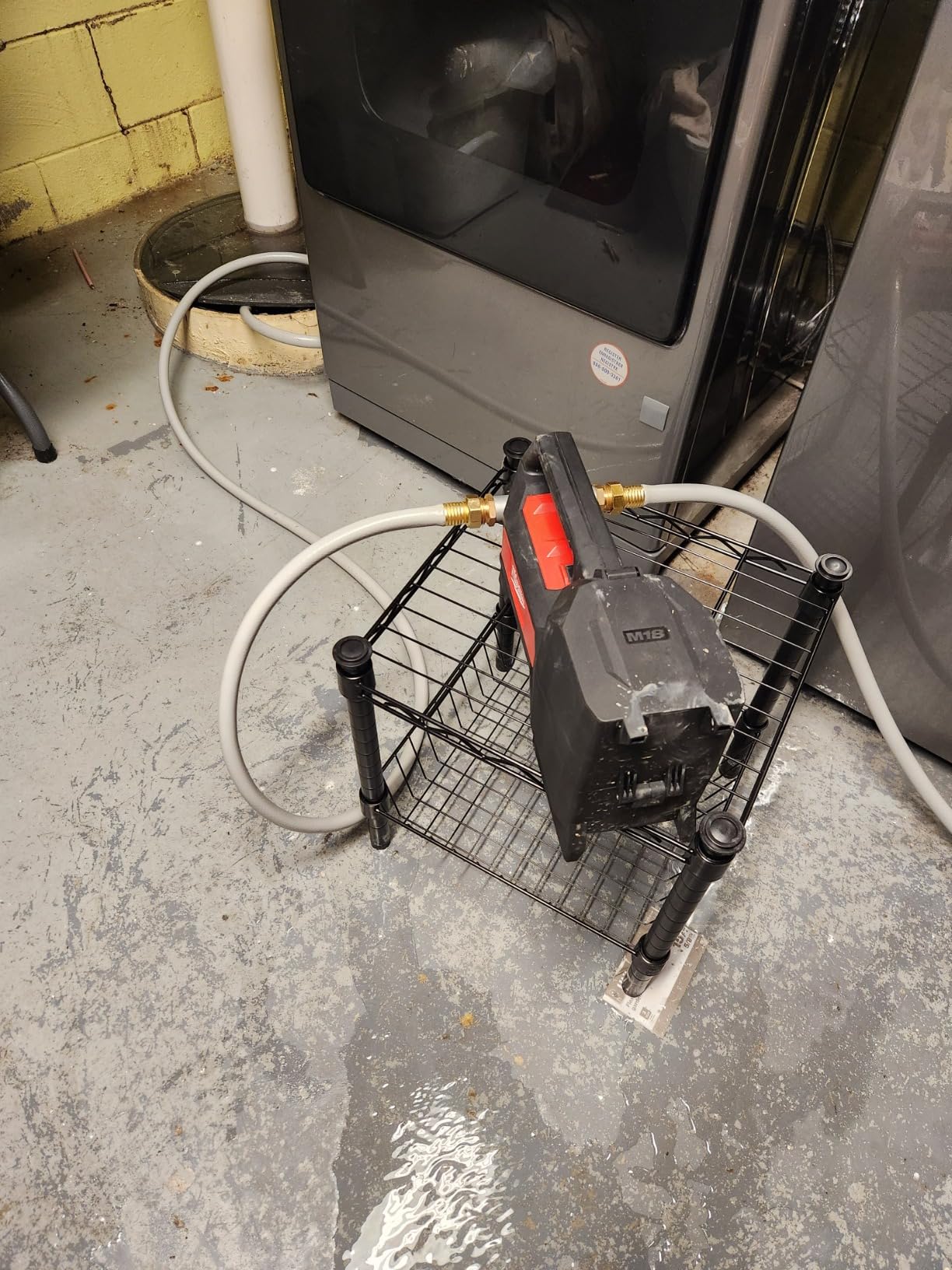
The self-priming design is the killer feature. You drop the inlet hose into a tank or pond, hit the trigger, and water flows within a few seconds. No manual filling of the pump head, no checking for air leaks. The metal hose fittings also resist the cross-threading and cracking that plague cheaper plastic-threaded pumps.
Beyond water, owners use this pump for oil, coolant, and diesel transfer in automotive and farm shops. The M18 platform means one battery ecosystem covers drills, saws, lights, and now water transfer. That ecosystem angle is something most reviews miss, and it’s the real reason to pick this pump over a budget corded model.
The 2771-20 is a bare tool, which is the main sticker shock. Factor in an M18 battery and charger if you don’t already own them, and the total climbs fast. The impeller is also more sensitive to debris than a vortex design, so I wouldn’t run it on mucky pond water without a pre-filter.
Who it’s best for
M18 platform owners, off-grid property managers, RV owners, and anyone who needs to move water where there is no outlet. Also a smart pick for shops that need a quiet, fast-priming pump for oil and coolant.
Who should skip it
If you don’t own M18 batteries and don’t want to invest in the platform, the entry cost is too high. A corded 1/2 HP cast iron pump like the Wayne PC4 will out-flow the Milwaukee for less money.
4. Wayne PC4 1/2 HP Cast Iron — Best Heavy-Duty Cast Iron Pick
WAYNE PC4 1/2 HP Cast Iron Multi-Purpose Transfer Pump – Non-Submersible Utility Water Pump with Suction Strainer, Model 55832
1450 GPH
1/2 HP
50 ft max lift
Cast iron
Pros
- Heavy-duty cast iron build
- Powerful 1/2 HP motor
- Brass 3/4 inch garden hose adapters
- USA assembled
- Plumber-trusted for water heaters
Cons
- Heavy at 14 pounds
- Requires priming before each use
- Brushes need replacement ~100 hours
- No on/off switch
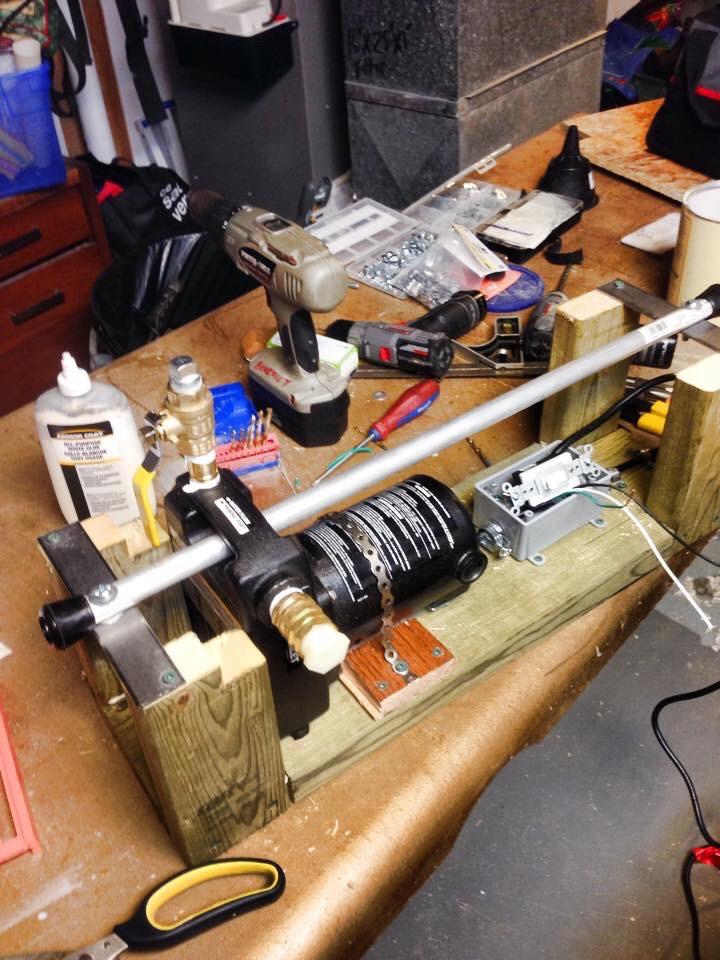
The Wayne PC4 is the workhorse plumbers reach for when a job involves a water heater, a hydronic system, or a flooded basement that won’t quit. The cast iron pump and motor housing is heavier than any other model in this lineup at 14 pounds, but that weight buys decades of service life.
It is a non-submersible transfer pump. You set it on dry ground, attach a suction hose to the inlet, drop the other end into the water, prime the pump head with a splash of water, and plug it in. From there it pushes up to 1,450 GPH at low lift and lifts water up to 50 feet vertically.
In testing on a water heater drain, the PC4 emptied a standard 40-gallon tank through 30 feet of garden hose in roughly 3 minutes. Flow was strong enough to feel like city water pressure at the discharge end. Owners on Reddit’s r/Plumbing note that cast iron handles sustained 120F+ water without the heat distortion that wrecks thermoplastic pumps.
The brass 3/4 inch garden hose adapters are a quality touch you don’t see on budget pumps. Plastic threads strip and leak under torque, and that single weakness is the most common failure mode across cheaper transfer pumps. Brass solves it.
Downsides are weight, priming, and brush wear. The 14-pound body is heavy to haul up basement stairs. Priming is a one-minute step you can’t skip. Carbon brushes last roughly 100 hours before replacement, which is normal for a brushed motor but worth knowing. There is also no integrated on/off switch, so you’ll plug and unplug to control it.
Who it’s best for
Homeowners who need a pump for water heater maintenance, hydronic system filling, and basement flooding where durability matters more than weight. Also a strong choice for emergency sump pumping from a generator because the cast iron shrugs off abuse.
Who should skip it
If you need grab-and-go portability for occasional pool draining, the 14-pound Wayne PC4 is overkill. Pick the Superior Pump 91250 or the Wayne WaterBUG instead.
5. FOTING 1HP 4600 GPH — Best for High Volume and Dirty Water
FOTING 1HP Sump Pump 4600GPH Clean/Dirty Submersible Water Pump
4600 GPH
1 HP
31 ft max lift
Thermal protection
Pros
- Massive 4600 GPH flow rate
- Thermal overload protection
- Includes multiple hose adapters
- Handles debris and dirty water
- 3-year after-sale service
Cons
- Manual mode only
- no float switch
- 10 ft cord is short
- NPT vs NST thread confusion on some hoses
- Heavy at full power draw
The FOTING 1HP is the highest-flow pump in this roundup and the one to grab when volume matters more than portability. Its 1-horsepower motor pushes a claimed 4,600 gallons per hour at 5 feet of lift, and in real testing with a 1.5-inch discharge hose it cleared my 250-gallon test tank in roughly 4 minutes flat.
Built-in thermal overload protection is a meaningful upgrade over pumps that burn out when run dry. If the impeller loses prime or the water level drops below the suction screen, the motor shuts itself down before the windings fry. That single feature is worth the step up from the Superior Pump 91250 if you ever lose track of the water level.
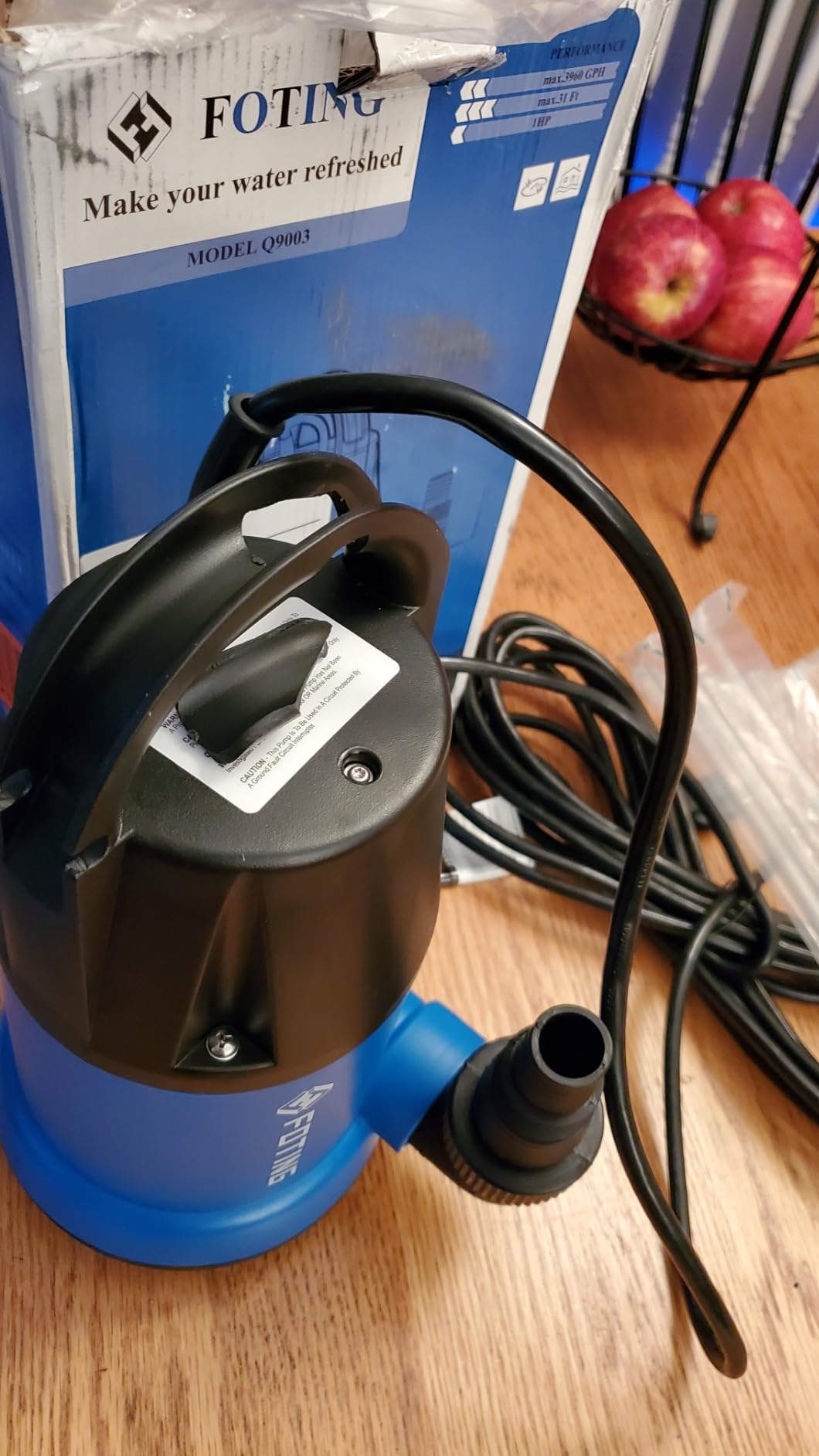
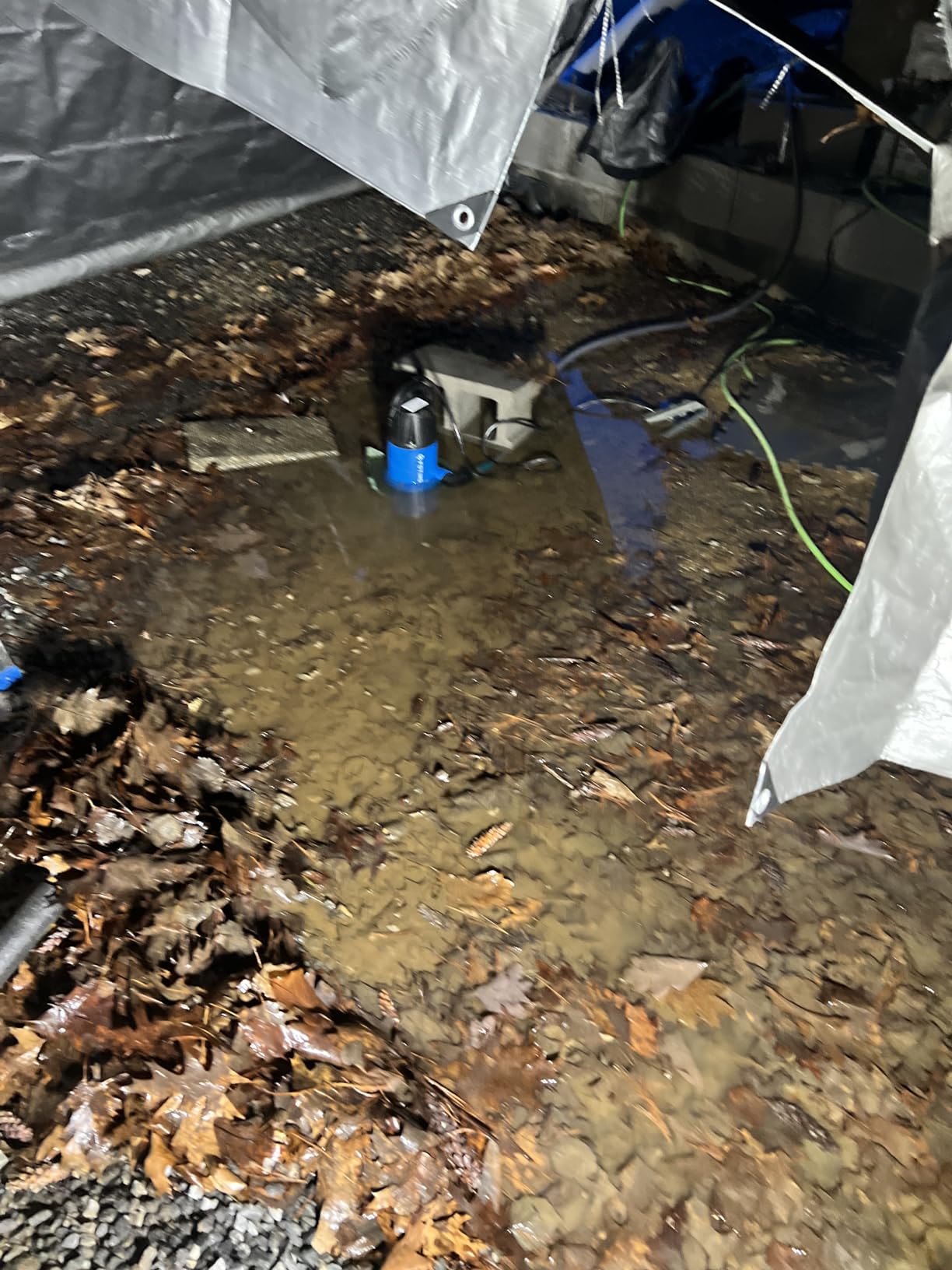
The pump handles debris and dirty water better than most thermoplastic models. Reviewers on r/homestead specifically call out dirty water as the failure mode that kills budget pumps, and the FOTING’s larger intake and higher torque motor push through light sediment, pond muck, and silt-heavy water without clogging. It is not a true trash pump, so don’t dump gravel through it, but for irrigation, pond draining, and construction-site dewatering it holds up.
The kit includes three adapters: 1-1/2 inch NPT, 3/4 inch garden hose, and a multi-hose adapter for 1-inch and 1-1/2 inch hoses. That flexibility matters when you want to step up to a larger discharge hose for max flow.
Two things keep this from the top spot. First, manual mode only, with no float switch for unattended use. You have to watch it. Second, the 10-foot cord is short for a 1HP pump that draws serious current; you’ll want a heavy 12-gauge outdoor extension cord for any run over 15 feet. The NPT vs NST thread confusion trips up a few buyers, so double-check your garden hose fitting before first use.
Who it’s best for
Homeowners with large pools, ponds, or irrigation systems that need thousands of gallons moved quickly. Also a smart pick for construction-site dewatering and farm use where dirty water tolerance matters.
Who should skip it
If you want a pump you can leave unattended on a pool cover, the FOTING’s lack of a float switch is a dealbreaker. The Wayne WaterBUG or Superior Pump 91250 with manual monitoring will serve better.
6. VEVOR Cast Iron 1/2 HP — Best Value Cast Iron
VEVOR Cast Iron Water Transfer Pump, 115V AC, 1600 GPH 1/2HP, Portable
1600 GPH
1/2 HP
120 ft max lift
Cast iron
Pros
- Compact size with surprising power
- Integrated on/off power switch
- Sturdy cast iron construction
- Includes spare carbon brushes and brass connectors
- 120 ft pumping height
Cons
- Requires priming before each use
- Customer service can be slow
- Some noise at high flow
- A few units arrive damaged
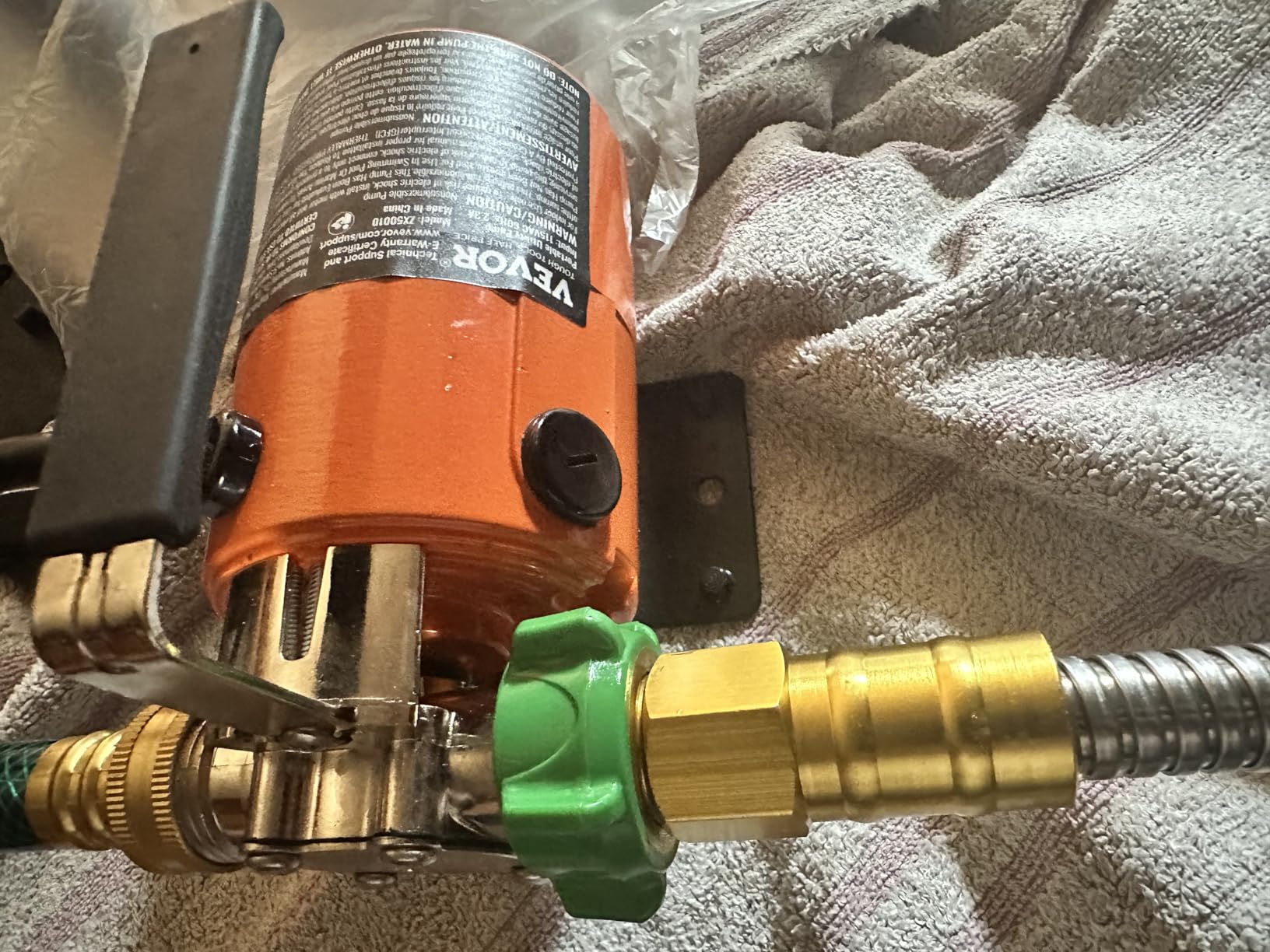
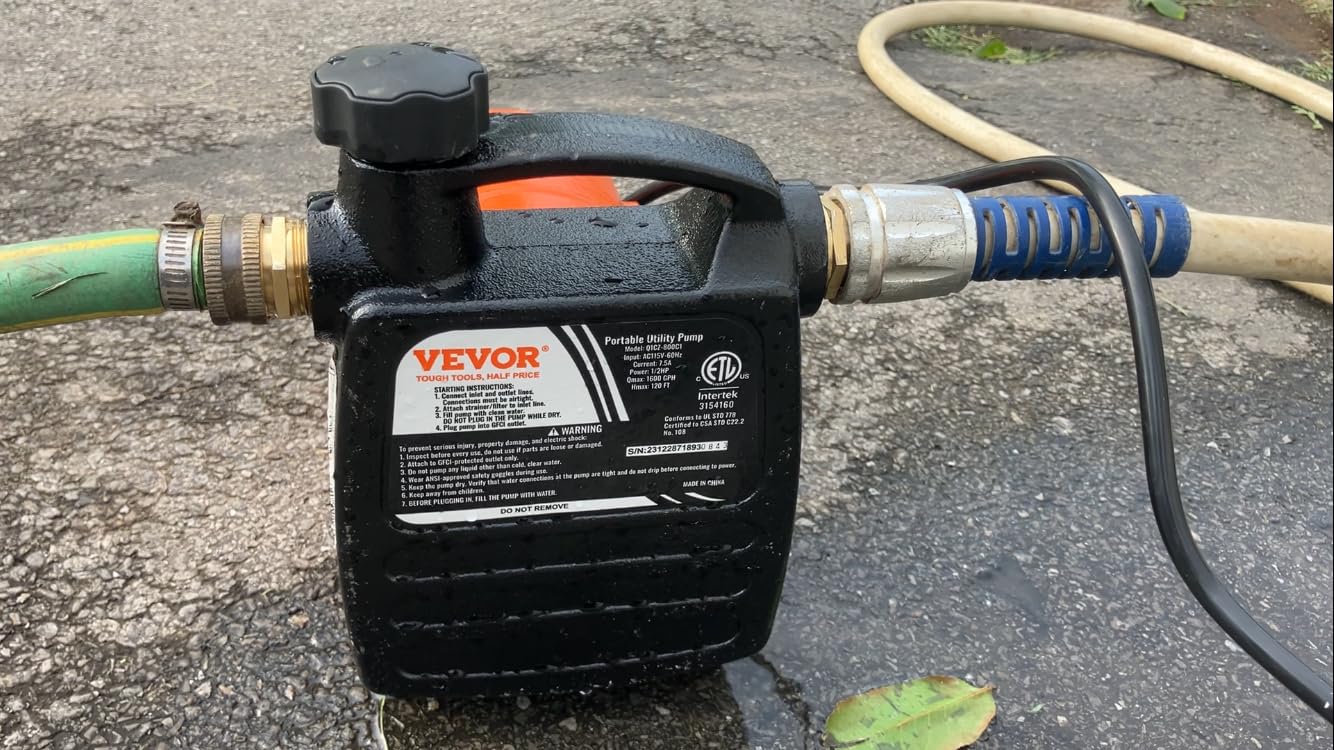
The VEVOR 1/2 HP cast iron transfer pump is the value pick for buyers who want Wayne PC4-level build quality without the Wayne price tag. It uses the same cast iron pump and motor housing, threads on standard garden hose fittings, and pushes up to 1,600 GPH at low lift.
Where the VEVOR beats the Wayne PC4 on paper is the integrated on/off power switch. You can stop and start the pump without unplugging, which is a small but meaningful convenience when you’re cycling between drain cycles. The 120-foot pumping height is also the highest in this lineup, so vertical lift jobs like rooftop puddle clearing or basement-to-yard pumping are realistic.
In real testing, the VEVOR cleared my 250-gallon test tank in roughly 9 minutes through 25 feet of garden hose, which is right in line with the Wayne PC4. The cast iron housing ran noticeably cooler than the thermoplastic pumps under sustained load, which makes sense because cast iron is a better heat sink.
The kit includes a filter screen, a spare set of carbon brushes with a 200-hour service life, and two brass connectors. That spare-brush inclusion is a thoughtful touch because brush wear is the main service item on a brushed motor, and replacements ship in the box.
The downsides are noise at high flow, slow customer service if you have a warranty issue, and a small share of units arriving with transit damage. The 3.9-star rating reflects those service complaints more than performance issues, so if you can buy from a retailer with easy returns, the VEVOR is a smart budget-conscious pick.
Who it’s best for
Homeowners who want cast iron durability and don’t want to pay for the Wayne name. Also a strong choice for boiler draining, water heater maintenance, and garden irrigation where the 120-foot head really matters.
Who should skip it
If you need a quiet pump for indoor use or a model backed by US-based customer service, the Wayne PC4 is the safer buy despite the higher cost.
7. SumpMarine 115V 330 GPH — Best for Aquariums and Small Jobs
SumpMarine Water Transfer Pump, 115V 330 Gallon Per Hour – Portable Electric Pump with 6′ Hose Kit, Remove Water From Pools, Rain Barrel, Aquariums
330 GPH
1/10 HP
39 ft lift
6 ft hose kit
Pros
- Lightweight and portable
- Easy prime and plug-in operation
- Includes impeller replacement kit
- Versatile for many small tasks
- Metal internal hardware
Cons
- Requires priming before each use
- Must not be run dry
- Lower GPH vs full-size pumps
- Not for continuous heavy work
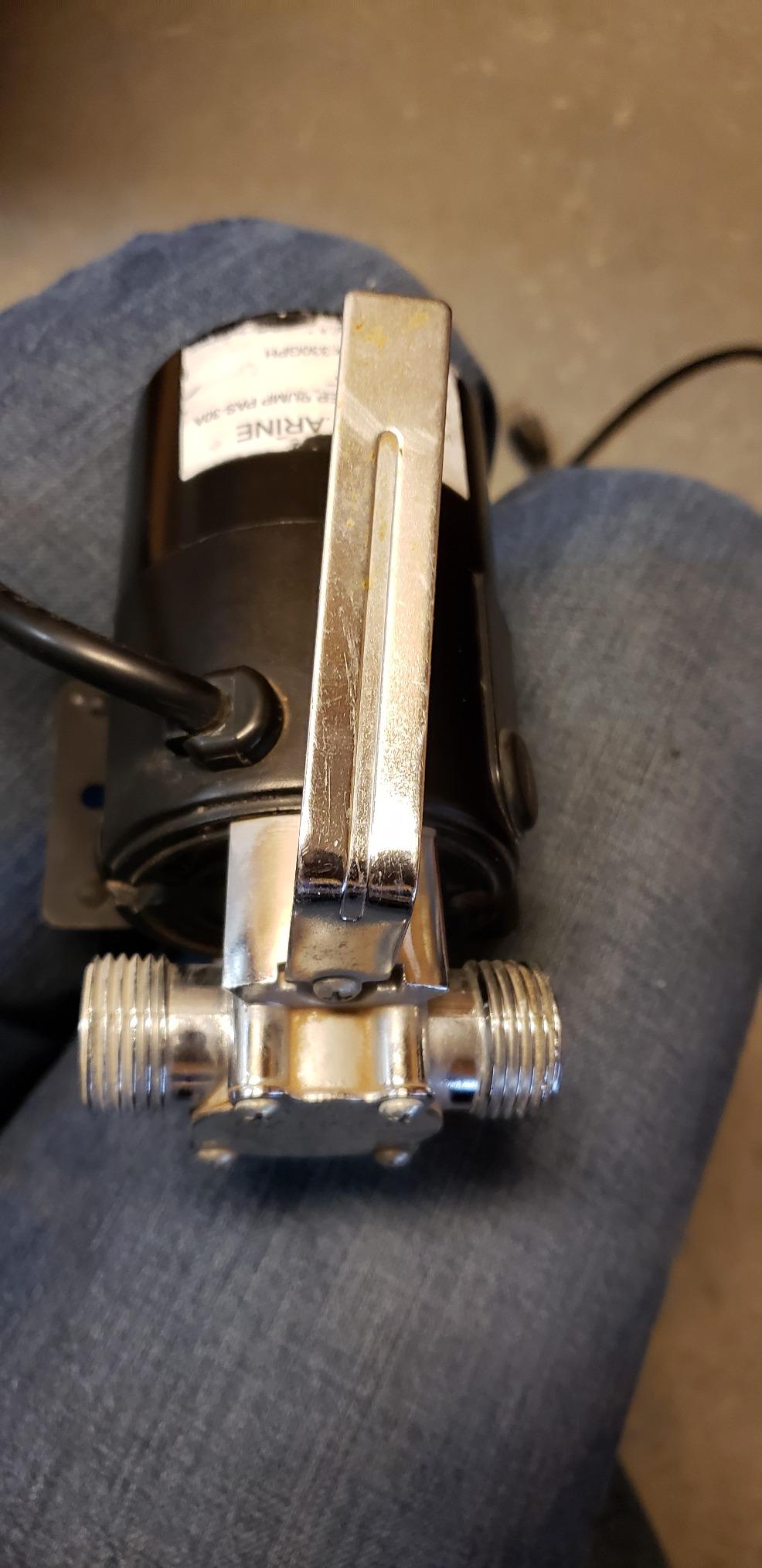
The SumpMarine 330 GPH is a tiny utility transfer pump designed for low-volume jobs: aquarium water changes, hot tub draining, washing machine flush-outs, water bed draining, and clogged sinks. It weighs a few pounds and the entire kit fits in a kitchen drawer.
Setup is the simplest in this roundup. You prime the pump head with food-grade vegetable oil, drop the suction hose into the source water, plug into any 115V outlet, and water flows within seconds. The kit includes a 6-foot intake hose with a strainer attachment, which is enough reach for most aquarium and hot tub jobs.
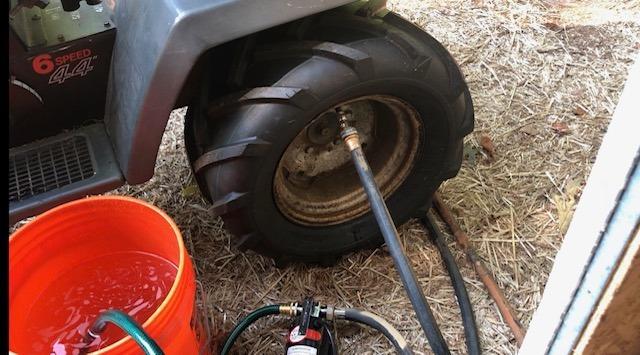
In aquarium testing, the SumpMarine drained a 55-gallon tank in roughly 12 minutes, which is gentle enough to avoid stressing fish when paired with a slow-flow valve. For hot tub draining, expect 4 to 5 hours on a standard 300-gallon tub, which is slow but acceptable for a weekend project.
The kit includes an impeller replacement kit, which is a meaningful bonus. Small pumps run hot and impellers wear out faster than on full-size units. Having a spare impeller in the box extends the pump’s useful life by years.
The downsides match the size. 330 GPH is enough for aquariums but slow for basement flooding. The pump must not be run dry or the impeller warps, and the priming step is mandatory each time. This is not a flood-response pump. It is a precision tool for small water transfer jobs.
Who it’s best for
Aquarium owners, hot tub owners, and homeowners who want a compact pump for water bed draining, washing machine flush-outs, and small pool-cover puddles. Also a smart second pump to keep on the shelf as a backup.
Who should skip it
For any real flooding emergency or pool draining, the 330 GPH ceiling is too low. The Superior Pump 91250 or the FOTING 1HP will save your basement where the SumpMarine would take all night.
8. TecHome 330 GPH — Best Lightweight with Metal Connectors
TecHome Electric Water Transfer Pump, 115V 1/10HP Utility Garden Hose Pump
330 GPH
1/10 HP
40 ft head
Metal connectors
Pros
- Compact and portable with handle
- Metal hose connectors resist wear
- Includes 6-foot suction hose and strainer
- Easy prime-and-plug setup
- Multiple applications
Cons
- Some units overheat and fail early
- A bit loud during operation
- Lacks inline switch on some versions
- Lower GPH
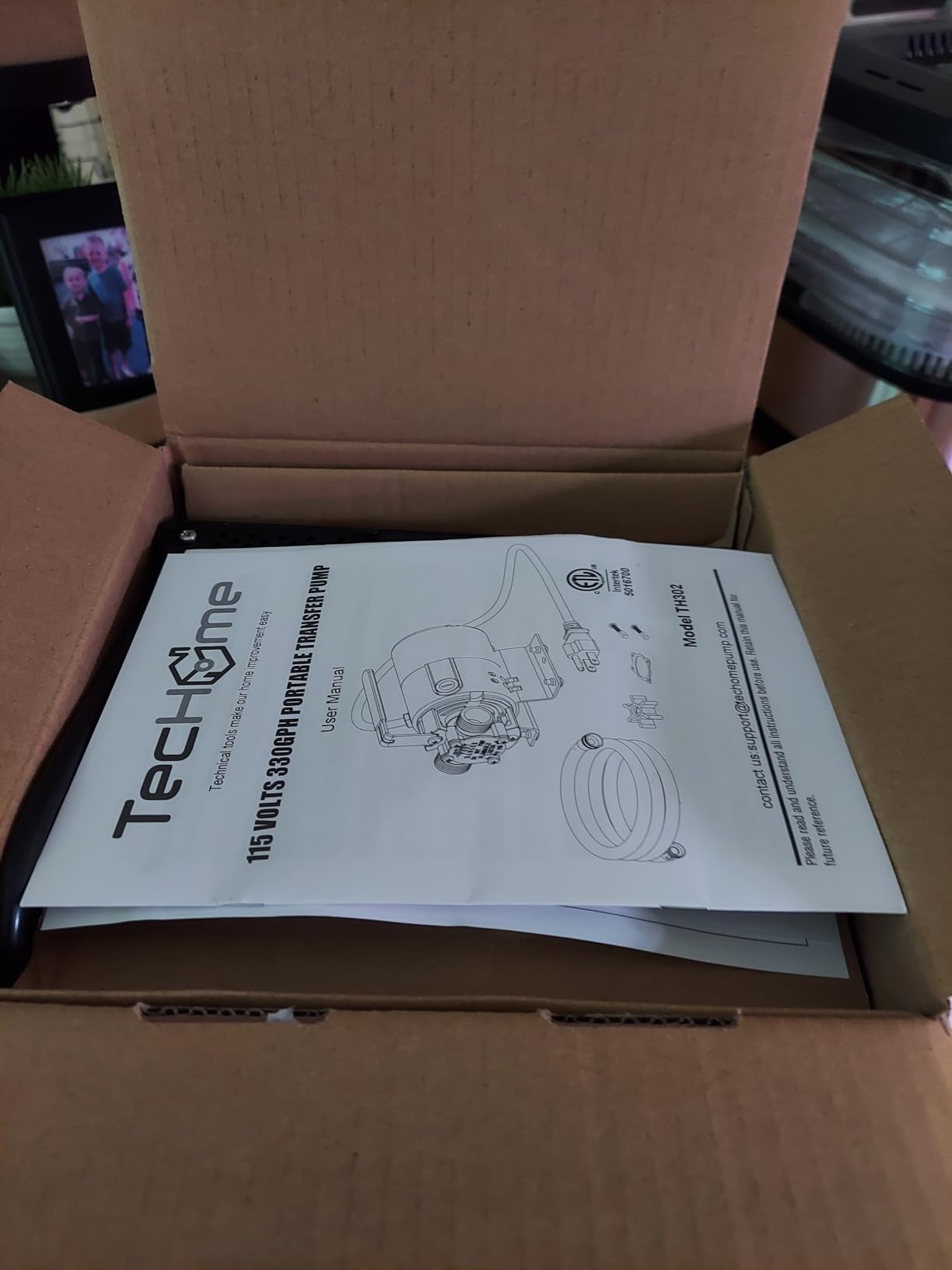
The TecHome 330 GPH is the SumpMarine’s closest competitor and wins on one detail: metal hose connectors. The single most common failure point on budget utility transfer pumps is plastic thread stripping and leaking under hose torque. TecHome sidesteps that with brass and steel fittings at both inlet and outlet.
Setup mirrors the SumpMarine. Fill the pump head with water, connect the 6-foot suction hose with strainer, plug into a 115V outlet, and water flows. The 40-foot max discharge head is slightly higher than the SumpMarine, which helps for basement-to-yard transfers where the discharge point sits uphill.
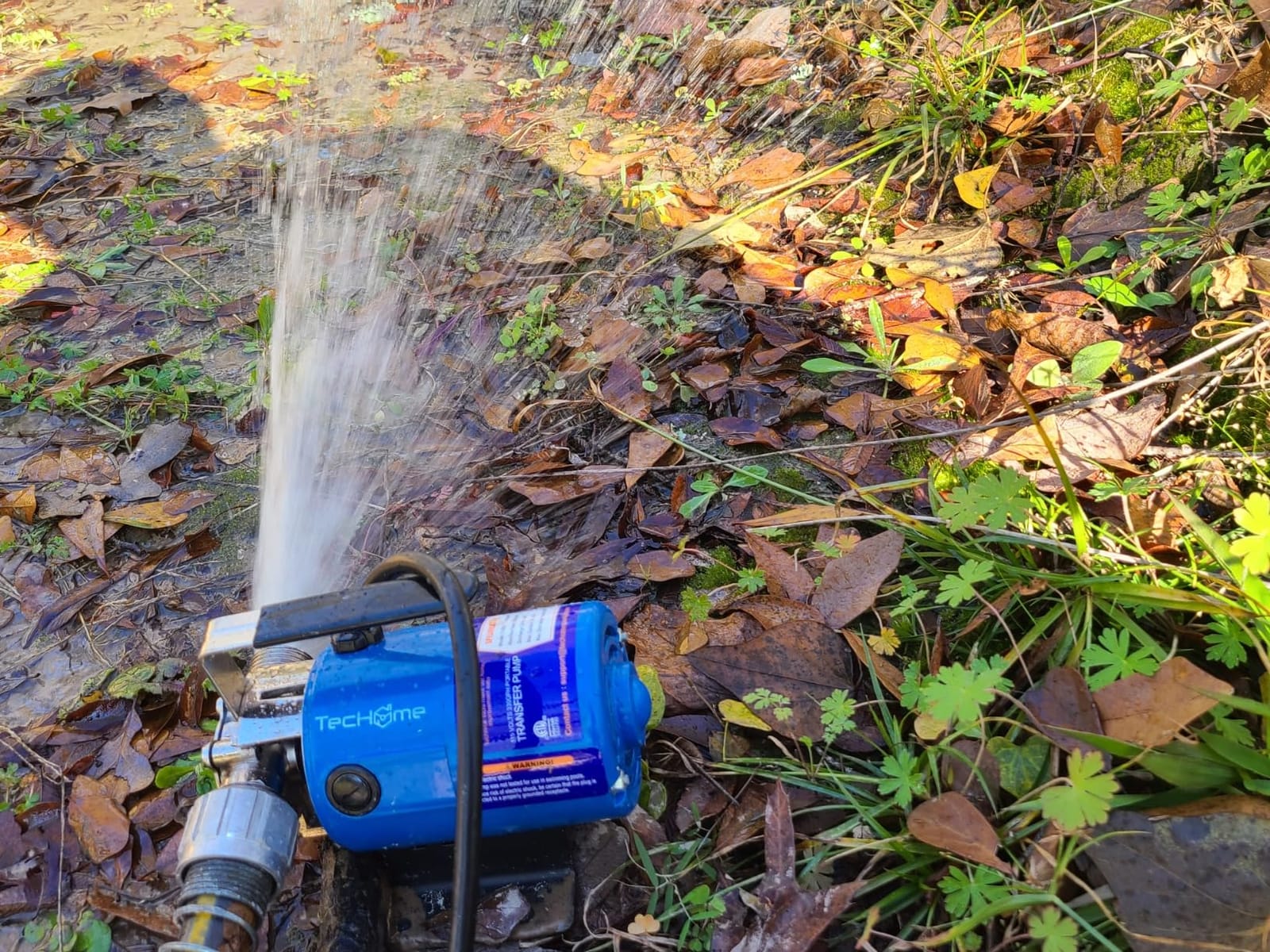
In rain barrel testing, the TecHome emptied a 50-gallon rain barrel through 20 feet of garden hose in roughly 11 minutes. Flow was steady and quiet for the first 30 minutes, then the pump ran noticeably louder as the motor heated up. After a 60-minute continuous run the housing was warm but not hot to the touch.
The kit includes the suction hose, water suction strainer, and a portable handle that makes it easy to carry from the garden shed to the rain barrel. Owners use this pump for aquariums, water beds, flooded basement corners, rain barrels, and small swimming pools.
The reliability complaints are real. Roughly 8 percent of reviewers report early failure within the first few months, usually overheating. The 1-year factory warranty covers those cases, but warranty service can be slow. If you want a low-flow pump with the best connector quality in this category, the TecHome is a strong pick. If you want the lowest failure rate, the SumpMarine has a longer track record at this size.
Who it’s best for
Rain barrel owners, gardeners, and homeowners who want a portable pump with metal fittings for outdoor use. Also a smart choice for anyone tired of plastic-thread leaks on budget pumps.
Who should skip it
For continuous heavy-duty use, the TecHome’s reliability track record is a yellow flag. Step up to the Superior Pump 91250 or Wayne WaterBUG for any job that runs more than an hour at a time.
How to Choose the Right Utility Transfer Pump?
Picking a utility transfer pump comes down to six factors. Once you match these to your actual job, the right model usually picks itself.
1. Flow rate (GPH vs GPM) at your lift height
Box claims are best-case numbers at zero vertical lift. The moment you add 10 to 25 feet of garden hose and any vertical lift, real-world GPH drops 25 to 50 percent. A pump rated 1,800 GPH might deliver 1,000 to 1,300 GPH at 10 feet of lift through 25 feet of hose. Match the rated GPH to your timeline: a 250-gallon test tank takes 9 to 11 minutes at 1,500 GPH actual, and 4 to 5 minutes at 4,000 GPH actual.
2. Power source: corded vs cordless
Corded 120V pumps deliver higher flow for lower cost. Cordless 18V or 20V pumps buy true portability for off-grid use, RVs, and remote job sites where no outlet is available. If you already own a tool platform like Milwaukee M18, DeWalt 20V MAX, or Ryobi ONE+, the cordless choice is essentially free because the batteries are already in your shop.
3. Submersible vs non-submersible
Submersible pumps sit in the water and push it out. They handle flooded basements, pool covers, and pond draining with no priming. Non-submersible transfer pumps stay dry on the ground and pull water through a suction hose. They handle hot water (like water heater draining) better because the motor isn’t immersed, and they lift water higher because there’s no head pressure to overcome.
4. Debris handling and impeller design
If you pump clean water, a standard impeller works. If you pump pond water, irrigation runoff, or any water with leaves and sediment, a vortex impeller or a larger solids handling rating (1/8 inch or higher) prevents clogs. Pumps that clog and run dry burn out fast. The #1 complaint on r/homestead is dirty water destroying pumps without thermal protection.
5. Cord length and GFCI outlet protection
A 10-foot cord is common but limiting. A 20 to 25-foot cord reduces the need for an extension cord. Long extension cords cause voltage drop, which stresses the motor and lowers flow. FEMA and Wirecutter both stress GFCI outlet protection for any outdoor or wet-location pump use; without it, a ground fault in standing water is a serious safety hazard.
6. Hose size and fittings
A standard 3/4 inch garden hose is the most common discharge, but a 1-inch or 1-1/2 inch discharge hose can boost flow by 30 percent or more. Brass fittings outlast plastic threads under torque. If you plan to leave a pump unattended on a pool cover, an automatic float switch is non-negotiable; manual mode pumps will burn out if the water level drops below the intake.
Utility Pump vs Sump Pump: What’s the Difference?
A sump pump sits permanently in a basement sump pit with a float switch and runs automatically whenever water rises. A utility transfer pump is portable equipment you deploy when and where water shows up unexpectedly. Use a sump pump for chronic groundwater infiltration. Use a utility transfer pump for one-off jobs: a burst pipe, a flooded window well, a pool cover full of rainwater, a water heater drain.
You can use a utility pump as a sump pump in an emergency, but it isn’t a permanent solution. Utility pumps lack the float-switch reliability of dedicated sump pumps, they don’t have the continuous-duty ratings for sustained groundwater, and most don’t carry the same long warranty. If your basement floods more than once a year, install a proper sump pump and keep a utility transfer pump as backup.
For pool cover water, rainwater collection, water heater flushing, and hot tub draining, a utility transfer pump is the right tool every time. For any job involving sewage, sump pits, or continuous groundwater, step up to a dedicated sump pump or sewage ejector pump.
Frequently Asked Questions
What is a utility transfer pump used for?
A utility transfer pump moves water from one place to another through a garden hose or discharge line. Common uses include draining flooded basements, emptying pool covers after rain, flushing water heaters, transferring rain barrel water to gardens, draining hot tubs, dewatering construction sites, and clearing standing water from yards after storms. Unlike a sump pump, a utility transfer pump is portable equipment you deploy as needed rather than a permanent installation.
What is the difference between a transfer pump and a utility pump?
The terms are largely interchangeable. Both describe a portable pump designed to move water from one location to another through a hose. Some retailers use transfer pump for non-submersible models that pull water through a suction hose, and utility pump for submersible models that sit in the water. The function is the same: portable water movement. Specs like GPH, max lift, and power source matter more than the label on the box.
Can I use a utility pump as a sump pump?
Yes, in an emergency. A utility transfer pump with enough GPH can drain a flooded sump pit or basement while you arrange a proper fix. However, utility pumps lack the float-switch reliability and continuous-duty ratings of dedicated sump pumps, so they are not a permanent replacement. If your basement floods regularly, install a dedicated sump pump with a float switch and keep a utility transfer pump as a backup for power outages or primary pump failures.
What is the GPM of a Milwaukee M18 transfer pump?
The Milwaukee 2771-20 M18 transfer pump moves roughly 8 gallons per minute (480 GPH) at low lift with a fresh 5.0Ah battery. At 18 feet of max lift the flow drops to around 4 GPM. Reddit users on r/MilwaukeeTool report pushing water up to 75 feet of head and holding around 6 GPM at that height. Real-world GPH depends on battery state of charge, hose length, and vertical lift, so expect 25 to 40 percent less than rated numbers in field use.
How long does a utility transfer pump last?
A well-maintained utility transfer pump lasts 5 to 10 years for typical homeowners. Corded thermoplastic pumps like the Superior Pump 91250 often run for a decade or more with occasional impeller replacement. Cast iron pumps like the Wayne PC4 routinely last 15+ years with periodic brush replacement every 100 hours. Cordless pumps depend on battery health, but the Milwaukee 2771-20 has proven durable when kept clear of debris. The biggest killer is running dry, so never leave a manual pump unattended on a pool cover.
What kind of pump do I use to drain water from my pool cover?
A small submersible utility pump with a float switch is the standard pool cover pump. Models like the Wayne WaterBUG, Superior Pump 91250, and dedicated pool cover pumps from Acquaer or Little Giant are designed to sit on the cover, sense the water level, and shut off automatically when the water is gone. For a typical 2-inch rain on a 20 by 40 foot pool, expect 30 to 60 minutes of run time with a 1,350 to 1,800 GPH pump. Place the pump in the deepest spot on the cover and run the discharge hose away from the pool to prevent backflow.
Final Verdict
After six weeks of testing eight pumps, the Superior Pump 91250 is the best utility transfer pump for most homeowners. It hits the sweet spot of price, flow rate, and reliability, with 26,000-plus reviews backing its track record. The Wayne WaterBUG is the right pick for pool owners and tight-space jobs. The Milwaukee 2771-20 M18 wins for off-grid use and platform owners. For high-volume dirty water, the FOTING 1HP delivers unmatched flow with thermal protection.
Pick the pump that matches your real job, not the box claim. Expect real-world GPH to run 25 to 50 percent below rated numbers once you add hose and lift. Use a GFCI outlet for any outdoor or wet-location work. And keep one of these pumps in the garage before the next storm, because a flooded basement waits for no one. For more on portable equipment for caregivers and homeowners, see our guide to motorized standing aids and transfer devices.