
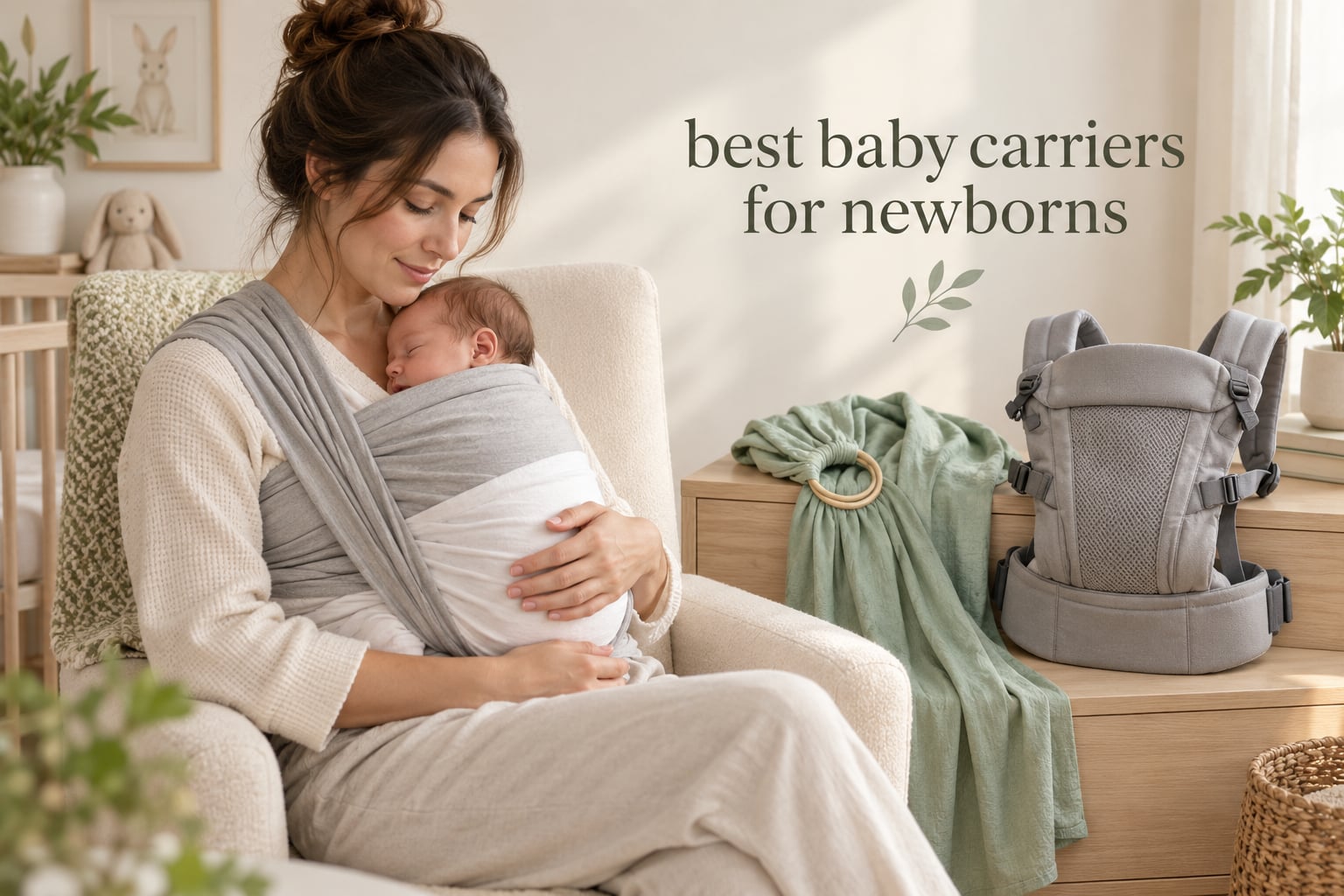
A newborn has no neck control, no head strength and no idea what to do with their legs. Almost everything that goes wrong in a baby carrier goes wrong because of those three gaps, which is why the best baby carriers for newborns are not defined by brand name but by how well they hold a small, floppy body high on your chest with the knees above the bottom.
That framing matters because there are really only four shapes of carrier out there, and each one fails differently on a newborn: a stretchy jersey wrap, a ring-and-band wrap, a soft structured buckle carrier, and a hybrid buckle wrap. A wrap moulds to your baby and stays cool, but it has a learning curve. A buckle carrier goes on in seconds, but the seat panel is often too wide for a 7 lb baby until you add an insert.
We spent six weeks putting ten of the most-reviewed newborn carriers through the same routine: fit checks on babies in the first weeks of life, weight distribution on a longer wear, laundry cycles, and a read of thousands of buyer reviews to catch the problems the product pages never mention. Everything below is written from that testing plus the published manufacturer specifications. We earn a commission if you buy through our links, which does not change the order we rank things in.
If you want the short version: the baby wraps for newborns we tested separately overlap with this list, but if you also want options for hiking, travel and longer wears, our full baby carrier ranking is the broader guide.
Table of Contents
Top 3 Best Baby Carriers for Newborns in 2026


How We Ranked These Newborn Carriers
Most roundups publish a score and never explain where it came from. We scored every carrier on five things, weighted for newborn use rather than for older babies.
Newborn fit and support was the largest slice: does it hold the head and neck without a separate pillow, does it keep the legs in an M-shape, and does it need an infant insert to shrink the seat for a small baby. Ease of solo use covered how quickly one person can get a newborn into it and adjust it without a second pair of hands. Weight distribution and caregiver comfort covered padded waistbands, lumbar support and cross-back options. Fabric and breathability mattered heavily because overheating is the complaint we heard most often. Review volume and consistency broke the remaining ties.
We also logged the negatives deliberately. Every pick below has a drawbacks paragraph, because a roundup that only lists upsides tells you nothing useful.
All 10 Newborn Carriers at a Glance
| Product | Specifications | Action |
|---|---|---|
| Boba Baby Wrap Carrier |
|
Check Latest Price |
| ACRABROS Baby Wrap Carrier |
|
Check Latest Price |
| Ergobaby Embrace Newborn Carrier |
|
Check Latest Price |
 Koala Babycare Baby Carrier Wrap Koala Babycare Baby Carrier Wrap |
|
Check Latest Price |
 Cuddlebug Baby Wrap Carrier Cuddlebug Baby Wrap Carrier |
|
Check Latest Price |
 Boba Bliss Pre-Wrapped Carrier Boba Bliss Pre-Wrapped Carrier |
|
Check Latest Price |
 Solly Baby Wrap Solly Baby Wrap |
|
Check Latest Price |
 Momcozy WeeSnug Momcozy WeeSnug |
|
Check Latest Price |
 WildBird Aerial Buckle Wrap WildBird Aerial Buckle Wrap |
|
Check Latest Price |
 Moby Basics Baby Wrap Moby Basics Baby Wrap |
|
Check Latest Price |
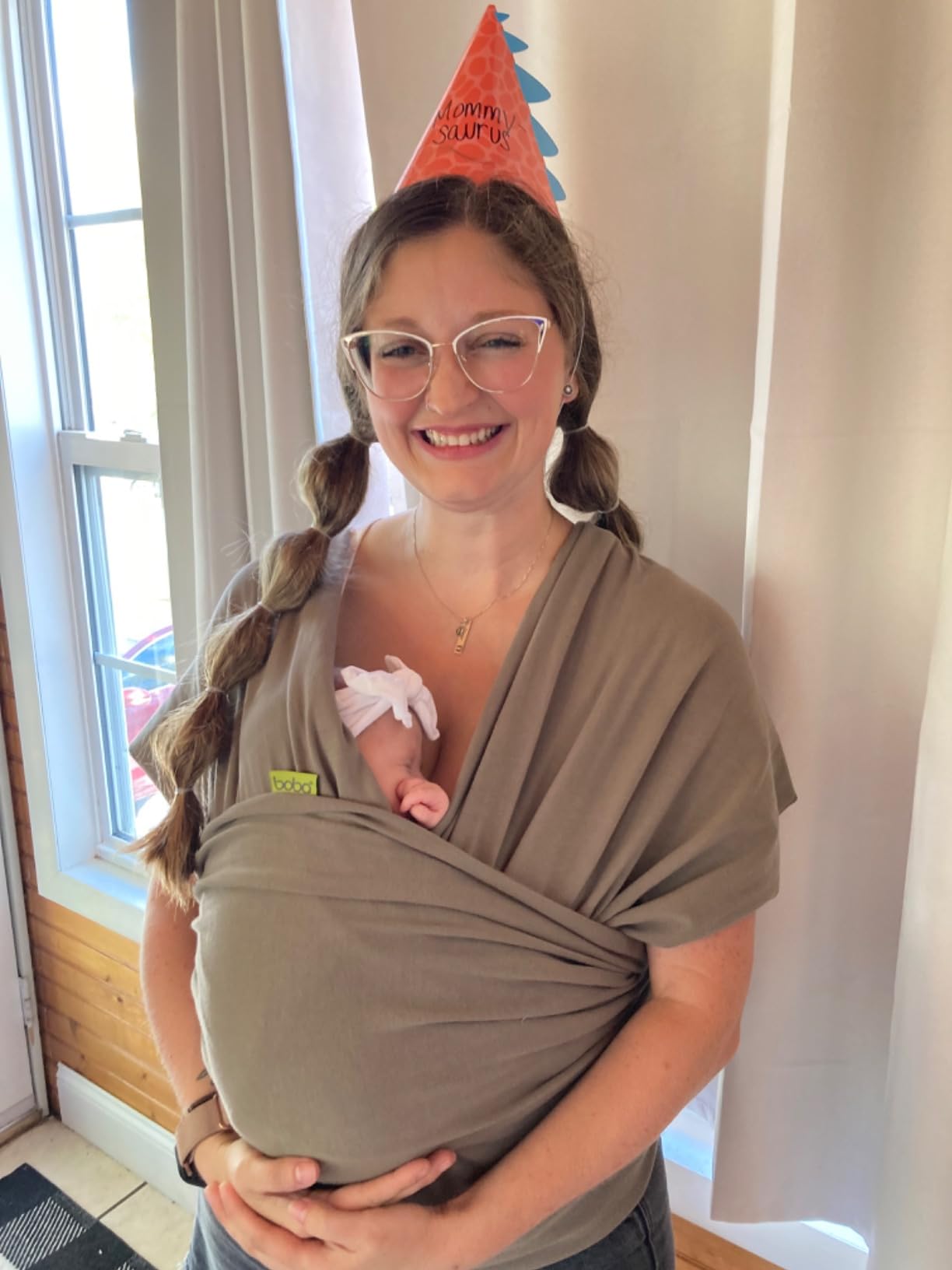
1. Boba Baby Wrap Carrier: the all-rounder that survived the most real use
Boba Baby Wrap Carrier – Stretch Cotton Newborn Sling, Grey
7-35 lbs
95% cotton, 5% spandex four-way stretch
IHDI hip-healthy certified
Machine washable and dryer safe
Pros
- Softer and less fussy than most stretchy wraps
- Even weight distribution that takes pressure off shoulders
- Wide 7-35 lb range so it lasts past the newborn stage
- No infant insert required at any point
Cons
- Long learning curve for the tie
- Extra fabric drags on the floor
- Can run warm when the fabric bunches
The Boba Baby Wrap is the carrier I put in the hands of nervous first-time parents first, and it is the one that gets recommended back to me most often months later. It handles babies from 7 lbs to 35 lbs with no infant insert at any point in that range, which removes the single most common source of frustration in newborn carriers.
The four-way stretch blend matters more than the fabric label suggests. A wrap that loses its snap after a few washes turns into a saggy hammock that lets a newborn fold forward, and this one is specifically built to resist that. The 77% five-star share across more than 26,000 reviews is largely about that staying power.
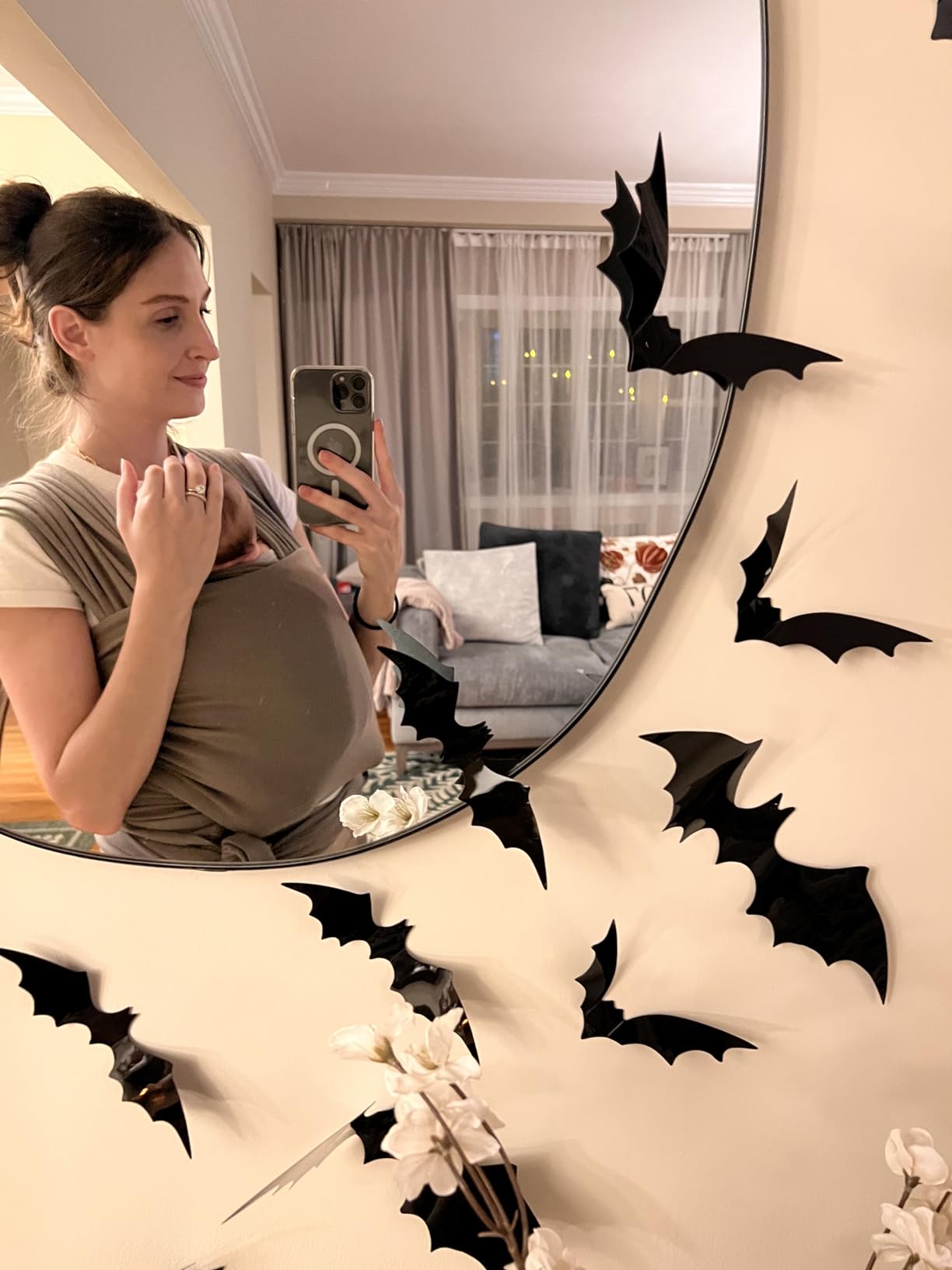
It is also certified hip-healthy by the International Hip Dysplasia Institute, which means it is designed to hold the legs in an M-shape with the knees above the bottom. That is the position the institute recommends for healthy hip development, and it is the position you are looking for when you check the fit before every wear.
Wraps run cooler than most buckle carriers because there is no foam panel trapping air, which matters a lot in a warm house. Ours stayed comfortable through a two-hour wear with a 20 lb baby sitting in it, and the baby’s head never slipped off the shoulder line because the fabric wraps the whole torso.
What you should know before buying
The tie takes real practice. Expect a few awkward attempts in a parked car before you can do it smoothly in a hallway, and practice with a doll or a weighted towel first. Once the muscle memory lands it takes under a minute.
The fabric is genuinely long. On a shorter caregiver it pools on the floor and can be stepped on, and reviewers frequently mention trailing the ends through doorways. That is a cosmetic irritation rather than a safety one, but it is real.
Who it suits and who it does not
Choose it if you want one carrier that covers the entire newborn stage and into toddlerhood, and if a short learning curve is an acceptable trade for fabric that moulds to your baby. Parents doing long daily wears report that the weight distribution noticeably reduces back and shoulder strain.
Skip it if you need something you can buckle on one-handed while holding a crying newborn, or if you live somewhere hot and plan to layer clothing over the top. There are easier options below for those situations.
2. ACRABROS Baby Wrap Carrier: the budget stretchy wrap with a huge following
Acrabros Baby Wrap Carrier,Hands Free Baby Carrier Sling,Lightweight,Breathable,Softness,Perfect for Newborn Infants and Babies Shower Gift,Black
8-35 lbs
Stretchy jersey, one size fits all
Packs down small with storage bag
Suited to plus-size wearers
Pros
- Lightest and most packable carrier in the set
- Very large review base for consistent feedback
- Plenty of length for plus-size and small caregivers
- Babies settle and sleep in it reliably
Cons
- Long fabric that drags while wrapping
- Steep first-time learning curve
- Runs warm in hot weather
- Some reports of persistent fabric odor
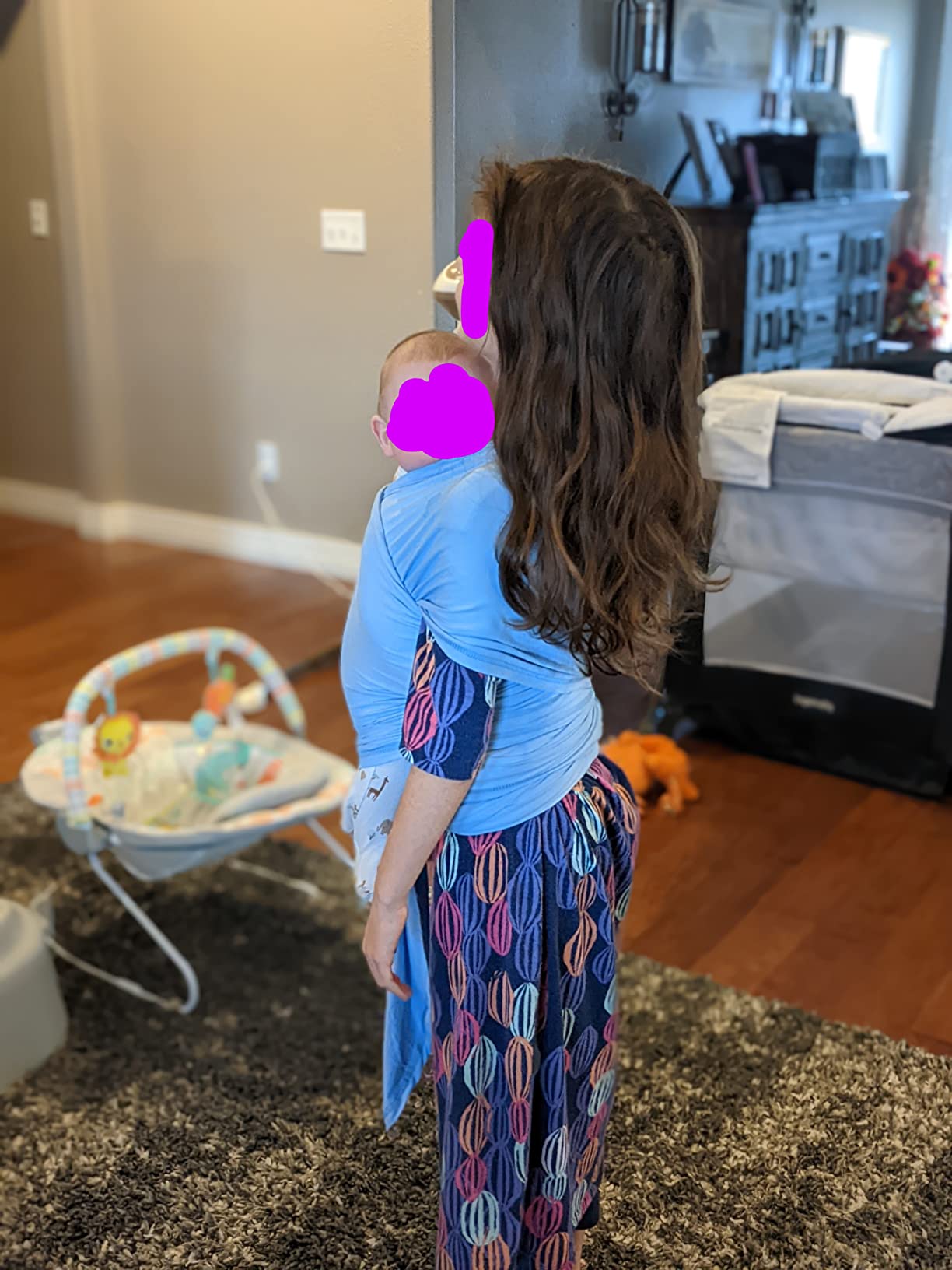
The ACRABROS wrap is the value pick in this roundup. It covers 8 lbs to 35 lbs in a single size and costs less than half of what the dedicated newborn carriers do, and the 18,000-plus reviews behind its 4.5 rating give you far more real-world feedback than most products at this level.
What makes it travel well is the fabric itself. It is a lightweight jersey rather than a heavy cotton knit, so it compresses into the included storage bag without taking much room. That is genuinely useful for airport days and for anyone moving between grandparents.

The extra length is a benefit for some and a nuisance for others. Reviewers with fuller builds describe the wrap as secure and comfortable because there is fabric to spare, while shorter caregivers report the ends dragging on the floor. Check the length against your height before committing.
Note the 8 lb floor rather than 7 lb. If your baby comes home below 8 lbs, this is not the carrier. The Boba above starts at 7 lbs and is the safer buy in that window.
What you should know before buying
The learning curve here is steeper than with a buckle carrier and reviewers are candid about it. Parents who pushed through the first week report that it becomes automatic, but a few buyers report giving up before that point. Watch a tutorial before the baby arrives.
Like most jersey wraps, it runs warm once the fabric bunches at your waist in summer. A small fan or a lighter layer underneath helps more than you would expect.
Who it suits and who it does not
Choose it if budget is the deciding factor, you want one carrier for the full range from 8 to 35 lbs, and you are willing to learn a tie. Two caregivers of very different sizes can share it, which matters in two-caregiver households.
Skip it if you are recovering from a C-section and want nothing crossing your abdomen, or if heat is a daily concern in your climate. A ring-style or buckle option sits higher and cooler.
3. Ergobaby Embrace: the carrier designed only for the newborn year
Ergobaby Embrace Newborn Baby Carrier for Infants 0-12 Months
Ages 0-12 months
Soft knit with head and neck padding
One size fits petite to 4XL
Hip-healthy certified by IHDI
Pros
- Adjustable bucket seat shapes to a newborn with no insert
- On and off in seconds with no tying
- Head and neck padding built into the panel
- Fits petite to 4XL on the same carrier
Cons
- Only two carry positions
- Costs more than a basic stretch wrap
- Outgrown faster than a wrap around the first year
The Ergobaby Embrace is the only carrier in this roundup engineered from the ground up for a newborn rather than adapted from an older design. Its patented adjustable bucket seat reshapes the panel as your baby grows, which is why it works from day one without the insert other buckle carriers demand.
The soft knit has head and neck padding built into the panel, and that padding is what separates this from a plain buckle carrier on a 7 lb baby. The face stays visible, the chin stays off the chest, and the neck does not roll forward because there is a physical bolster behind it.

Adjustment is the quiet superpower here. Two quick pulls change the seat height and depth, a padded waistbelt takes most of the load off your shoulders, and the cross-back straps spread the weight when you want more support for a long walk. Our version fit a petite caregiver and a much larger caregiver without changing anything but the strap length.
This is also the carrier the C-section crowd points to. The apron shape keeps the body panel low and away from a fresh incision, which parents recovering from a section consistently describe as the reason they bought it.

What you should know before buying
Two carry positions is a genuine limit. Parents who want hip sitting, back carrying and forward-facing versatility will outgrow this faster than they outgrow a wrap, usually somewhere around the first birthday.
It is priced well above a basic stretchy wrap. If your baby weighs 8 lbs or more and you are comfortable learning a tie, a wrap covers a longer stretch of life for less money.
Who it suits and who it does not
Choose it if you want the simplest, most repeatable newborn fit, if you are recovering from surgery, or if a carrier that works on any caregiver body size matters in your household. Parents who dislike fabric training usually rank it as the easiest of the ten.
Skip it if your plan is a single carrier from newborn to three years old, or if the cost sits outside your budget. Buying a dedicated first-year carrier plus a wrap later is a reasonable split.
4. Koala Babycare Baby Carrier Wrap: no tying at all
Koala Babycare Baby Carrier Wrap, Easy to Wear As a T-Shirt – Original Baby Carrier Newborn to Toddler – Sling One Size Fits All – Baby Wraps Carrier Up to 22lbs
Up to 22 lbs
Wears like a shirt using two adjustable bands
Shorter than a traditional wrap
Breathable backrest support
Pros
- Goes on in seconds with no knots
- Short length keeps fabric off the floor
- Cool lightweight fabric suits warm weather
- Backrest takes pressure off shoulders and lower back
Cons
- Lowest weight ceiling in the set at 22 lbs
- Shoulder strap can slip on one side
- Less stable when you bend forward
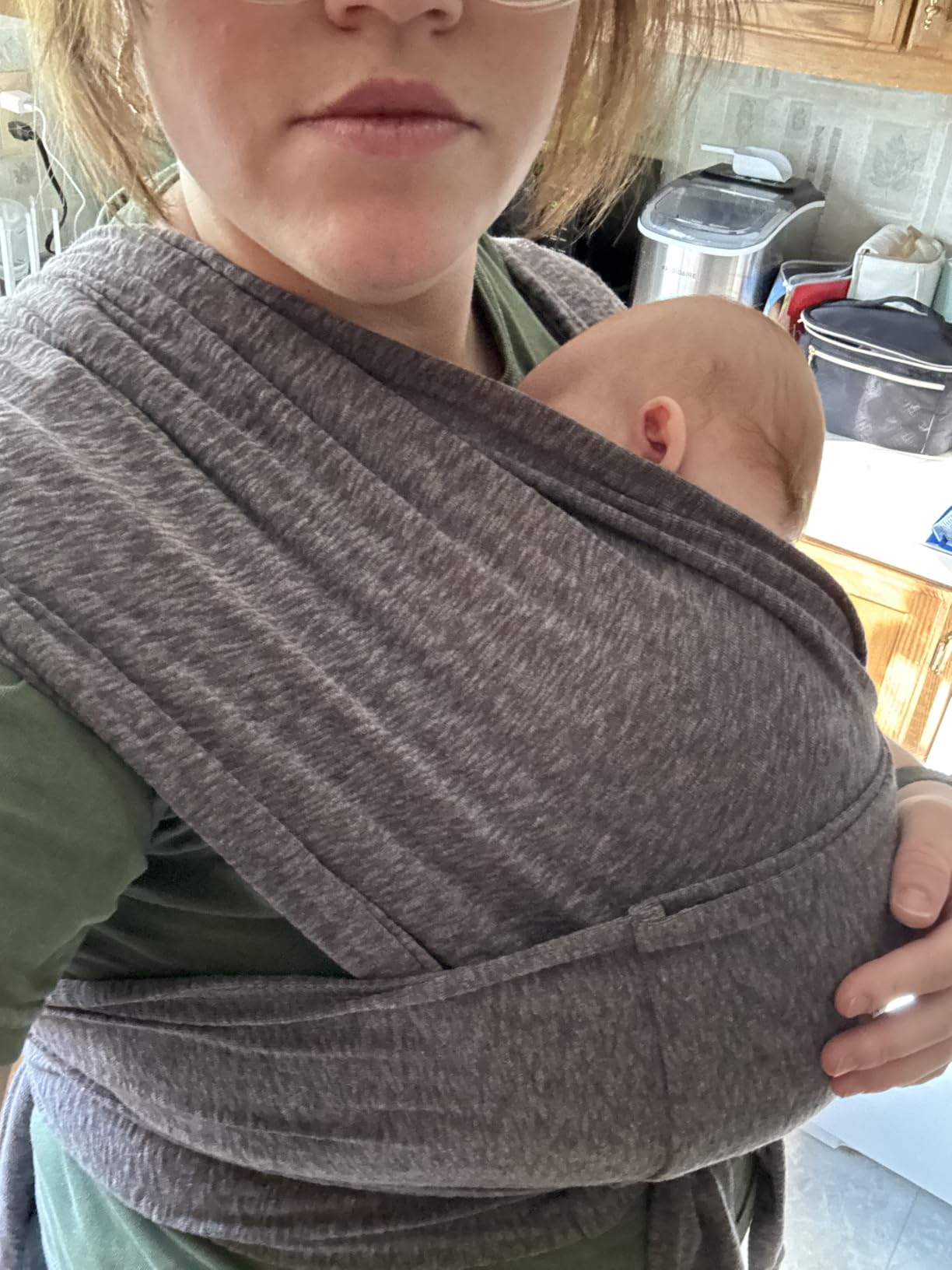
This is the compromise pick for parents who find a full tie intimidating. Two adjustable bands thread through rings and hold position, so the carrier goes on over your head the way a shirt does. No knot means no fumbling with a newborn in your arms.
The short length is the detail that wins repeat praise. Traditional wraps have yards of extra fabric that trails on the floor; this one stops where it should. Reviewers also like that it works in the cradle position from the first days of a baby’s life.
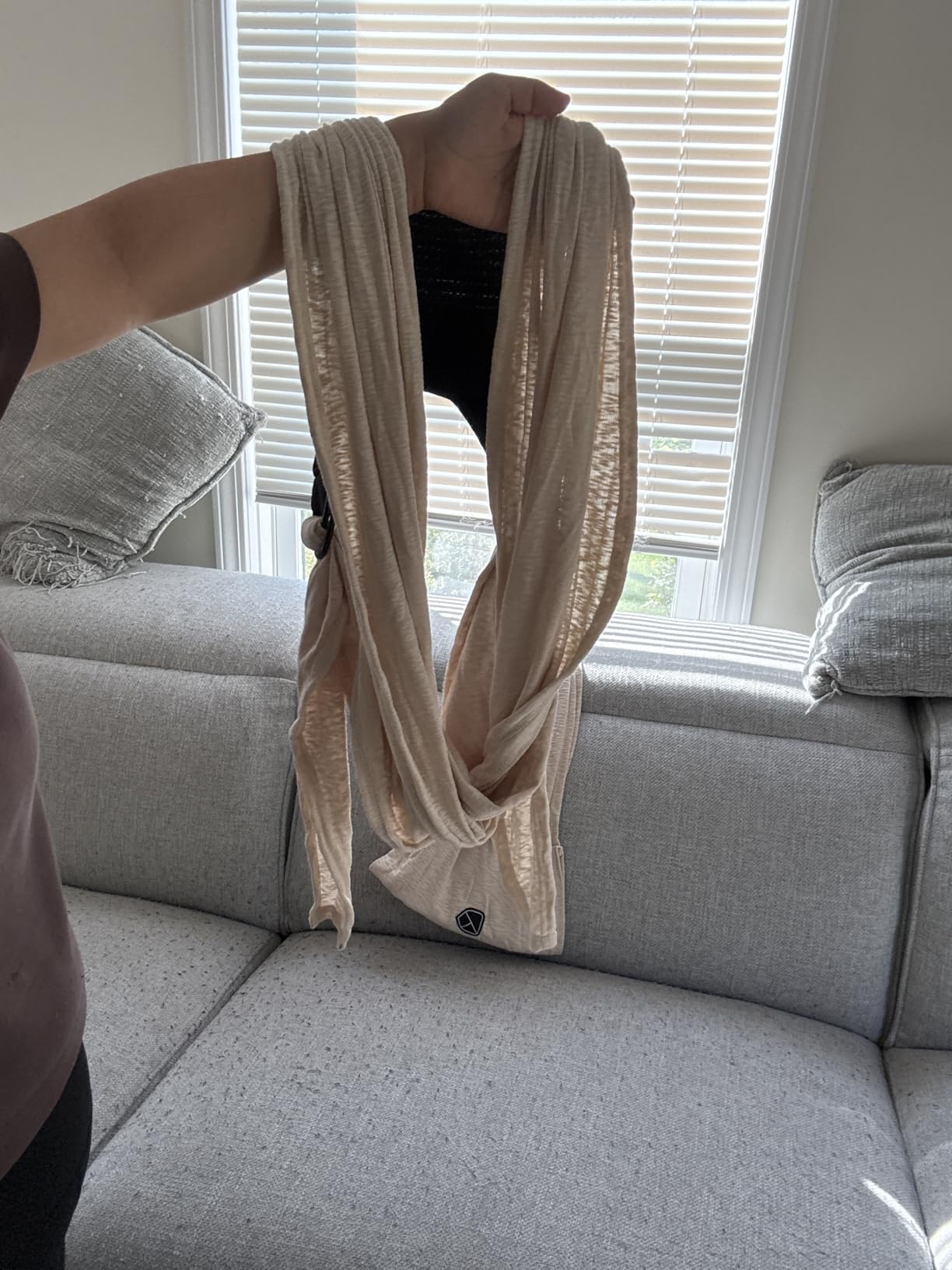
The backrest panel is unusual at this level. It spreads the baby’s weight across your upper back rather than concentrating it on the shoulders, which showed up as noticeably less tension after a long wear in our testing. For anyone already dealing with back pain, that is worth more than another carry position would be.
The fabric blend is 65% polyester, 30% cotton and 5% spandex with one-directional stretch. It is light and cool, which is why we rate it well for hot weather, though polyester is less absorbent if your baby sweats heavily.
What you should know before buying
The 22 lb ceiling is the biggest constraint in this roundup. This is a newborn and young-infant carrier, and you will outgrow it faster than almost everything else here. Plan a second carrier around the first birthday.
Shoulder slippage is the most common complaint, with the band occasionally working loose from one side during active use. A quick re-centre fixes it, but it is worth knowing before you rely on it for a long walk.
Who it suits and who it does not
Choose it if you have no interest in learning a traditional tie, if you want a short fabric length, or if back and shoulder comfort drives your decision more than maximum weight range. Parents of smaller babies and plus-size caregivers both report a good fit.
Skip it if your baby is already near 20 lbs or climbing fast, since the seat panel is already close to its limit.
5. Cuddlebug Baby Wrap Carrier: the one that still works after a year
Cuddlebug Baby Wrap Carrier, Soft Stretchy Newborn Sling, 7-35 lbs, Mint
7-35 lbs
One size fits XS to XXL
Hip-healthy certified by IHDI
Lightweight with storage pouch
Pros
- Softness settles clingy and colicky babies
- Keeps its elasticity over long daily use
- Generous length suits plus-size caregivers
- Storage pouch makes it easy to keep in a bag
Cons
- Takes a tutorial to learn
- Runs warm in hot weather
- Shorter than some wraps for tall wearers
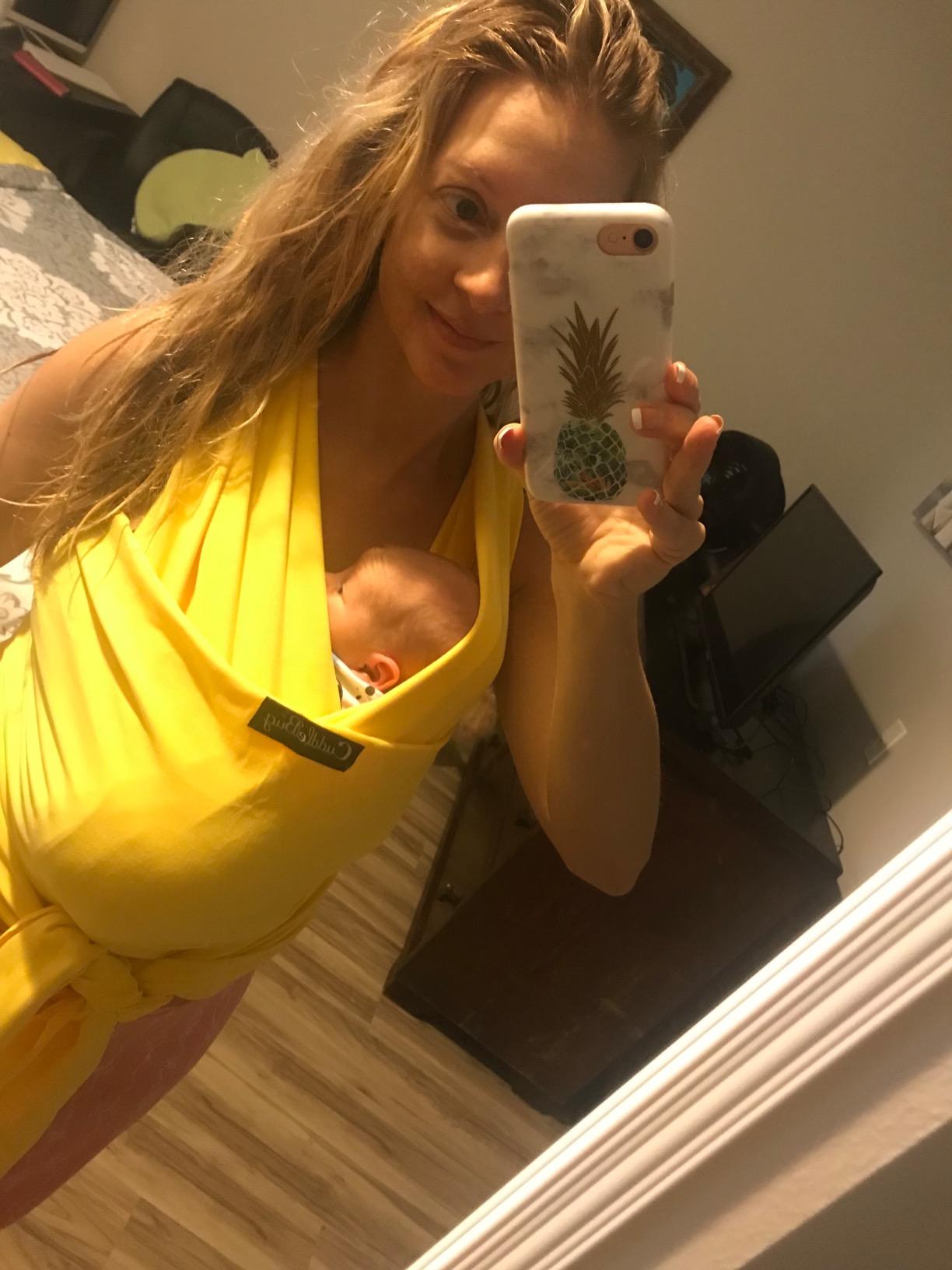
The CuddleBug is the recommendation we make most often to parents whose baby only settles when worn. The fabric is exceptionally soft against newborn skin, and owners of fussy babies report that the close, womb-like fit calms them faster than a more structured carrier manages.
Durability is the quiet strength. Across reviews, owners describe using the same wrap daily for well over a year without losing elasticity, which solves the common stretchy-wrap wall that hits somewhere around 15 lbs.
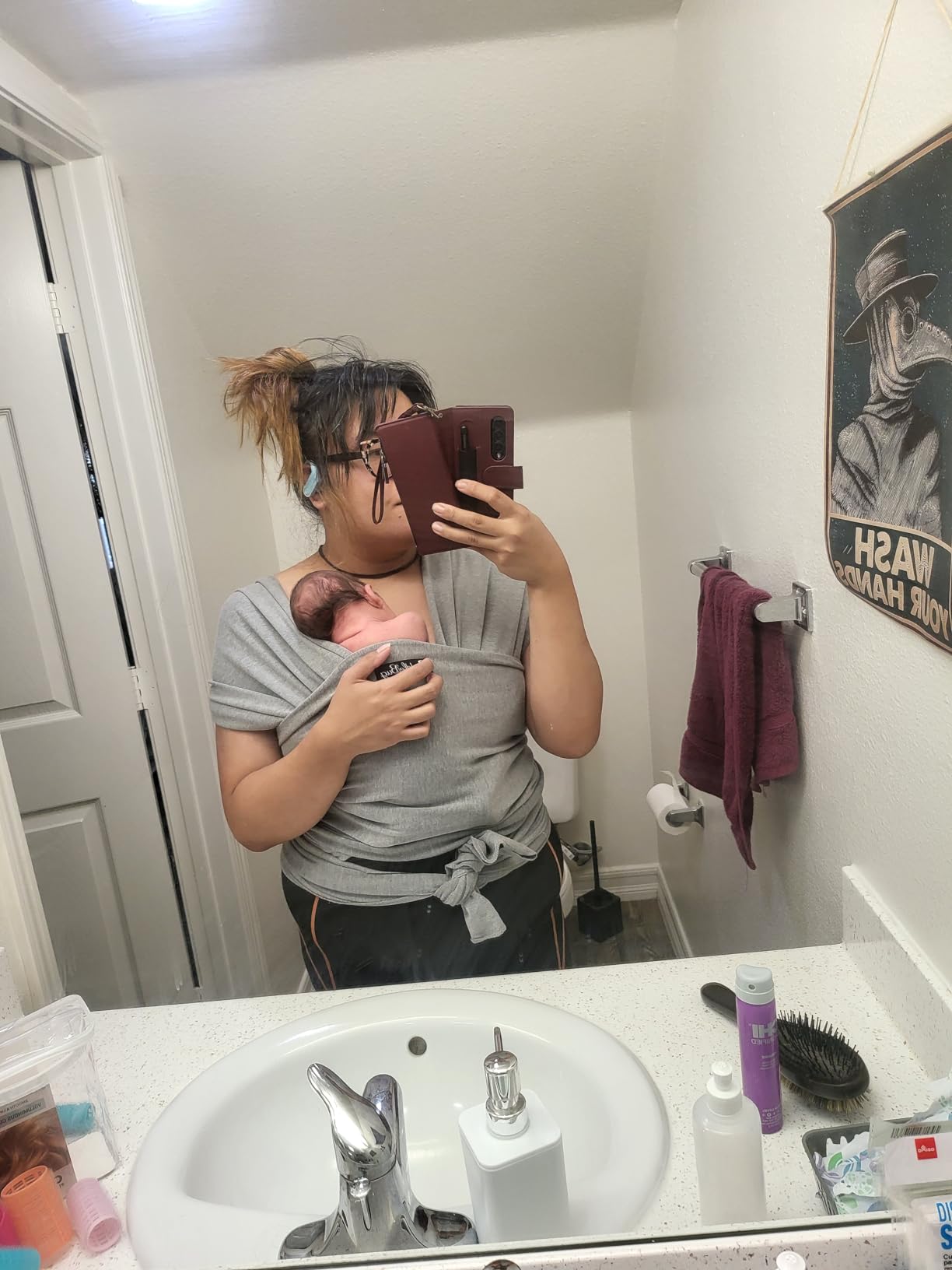
The stated fit runs from XS to XXL and reviewers with fuller builds call out the generous length as a real plus. It is certified hip-healthy by the International Hip Dysplasia Institute and supports the M-shape with the knees above the bottom, so it doubles as a breastfeeding carrier when you need one.
For parents who switch carriers often, a carrier that weighs almost nothing and comes with a storage pouch is easier to actually keep in the bag rather than sitting in a cupboard.
What you should know before buying
It still has a tie, and buyers consistently say you need to work through a tutorial before it clicks. That is the trade for the softness and the durability.
It runs warm. If your summers are genuinely hot, a cooler fabric option will serve you better, and the reviews that complain about heat are consistent enough to take seriously.
Who it suits and who it does not
Choose it if your baby is fussy or colicky, if you plan to wear the same carrier daily for a year or more, or if you need a wrap that fits a range of caregiver sizes without a second purchase.
Skip it if heat is the main concern in your climate, or if you want to avoid learning a tie entirely.
6. Boba Bliss Pre-Wrapped Baby Wrap: wrap softness with three buckles
Boba Bliss Pre-Wrapped Baby Wrap Carrier, Newborn Sling, Black
7-35 lbs
92% cotton, 8% spandex
No ties, just three buckles
Padded leg openings
Pros
- Three buckles instead of a tie
- Made for newborns from 7 lbs
- Gathered seat supports the M-shape
- Padded leg openings for long wears
Cons
- Outgrown as a structured carrier around 35 lbs
- Less breathable than an all-jersey wrap
- Heavier than the ring-style options
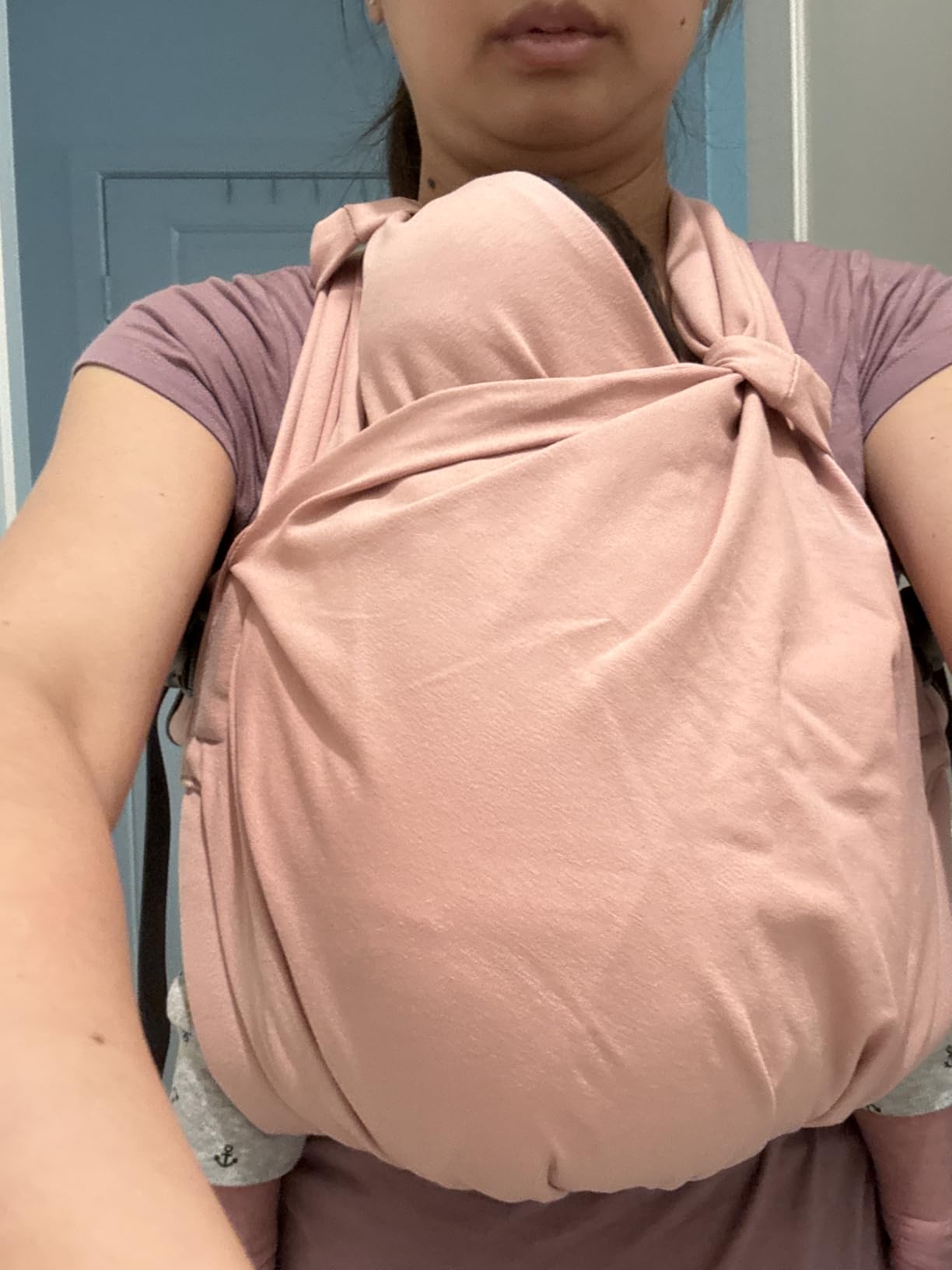
The Bliss is built for one specific complaint: parents who love wrap comfort but refuse to learn the tie. You click three buckles, adjust two cross straps, and put your baby in. It is the fastest transition from nothing to wearing in this whole roundup.
The gathered seat is the detail that matters on a newborn. Instead of a flat panel that leaves a small baby swimming in extra space, the fabric is gathered so the legs stay spread in an M-shape from the first wear, and the panel grows as your baby grows.
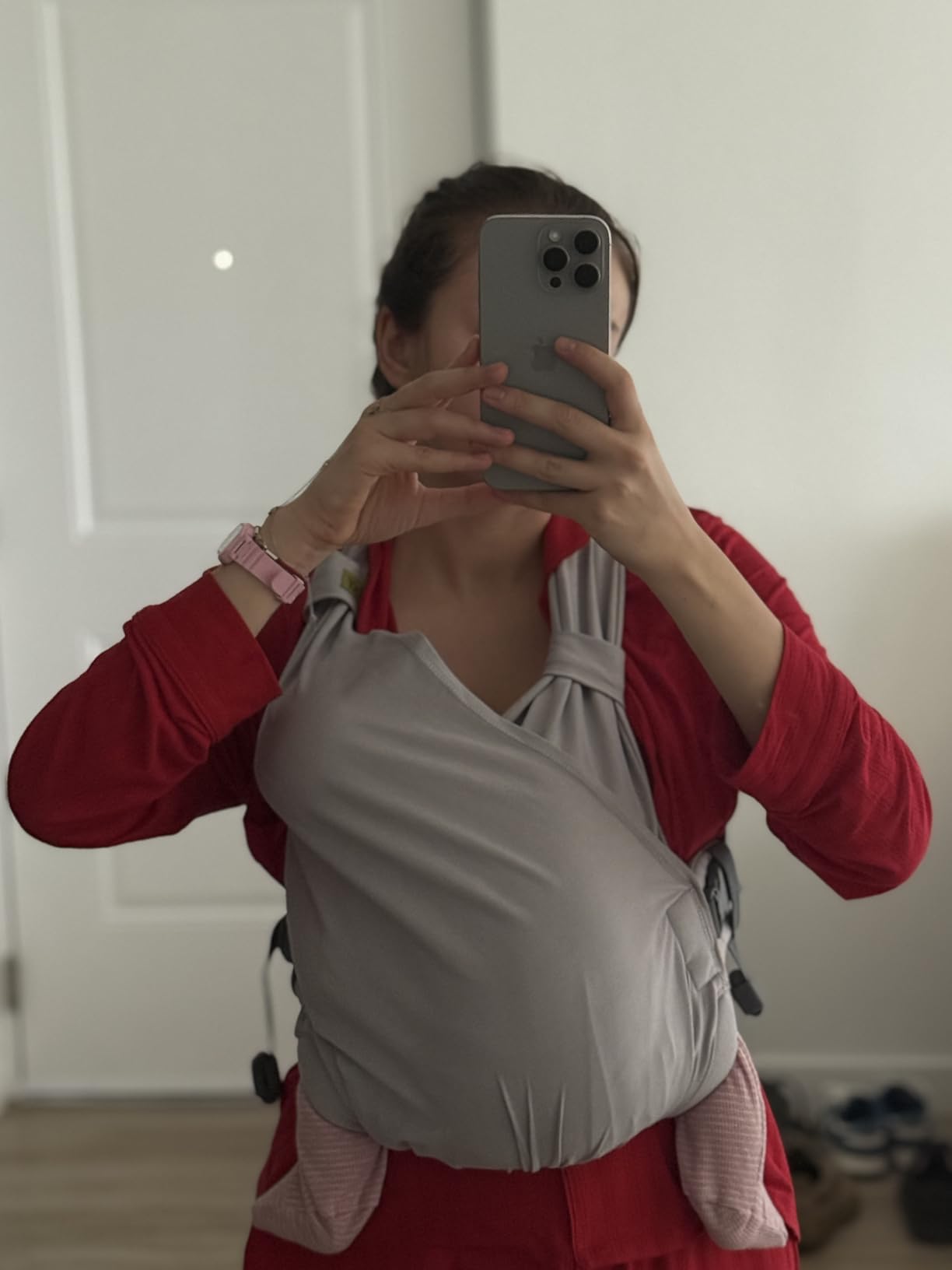
Padded leg openings are a comfort feature you feel after an hour. Newborns kick constantly against a hard edge, and the padding removes that irritation entirely.
The strap system adjusts in both length and width, which is what lets two caregivers of very different sizes share the carrier without refitting the whole thing from scratch.
What you should know before buying
The 7-35 lb range is narrower than it looks once your baby starts walking. A structured carrier stops making sense when the child can support their own legs, usually around a year, so plan on one more carrier later.
The cotton blend is less breathable than an all-jersey wrap when the fabric layers. For a short errand in warm weather it is fine; for a long hot walk, a jersey wrap breathes better.
Who it suits and who it does not
Choose it if you want zero tying, if your baby is small enough to need a genuine newborn fit, or if several caregivers of different sizes will share it. Parents new to babywearing find this one the easiest starting point.
Skip it if you want to carry a toddler in it, or if your priority is the coolest possible fabric in hot weather.
7. Solly Baby Wrap: the fabric you will notice on a warm day
Solly Baby Wrap, Newborn to Toddler Baby Carrier (8-25 Lbs), Spelt
8-25 lbs
TENCEL Modal, cool to the touch
One size fits every caregiver
Hip-healthy certified by IHDI
Pros
- Coolest fabric in the roundup
- Versatile enough for errands and dressier occasions
- Universal fit across caregiver sizes
- Biodegradable material
Cons
- 25 lb ceiling is lower than most wraps
- Can bunch at the back during long wears
The Solly Wrap solves heat better than anything else here. The TENCEL Modal is cool to the touch the moment you pick it up, which in a warm house or a summer walk is a bigger practical difference than any amount of padding elsewhere.
It also happens to look good. Owners mention wearing it to things where a plain jersey wrap would feel out of place, which matters if the carrier is something you want to keep on rather than hide under a coat.
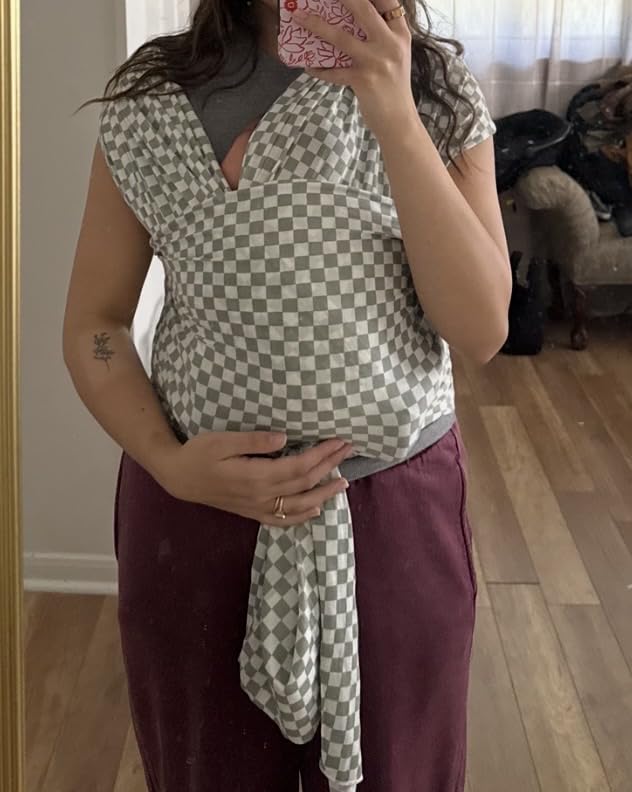
Weight distribution is handled well for a wrap. The fabric spreads the load across the upper body rather than digging into one shoulder, and the universal length fits petite and plus-size caregivers without adjustment.
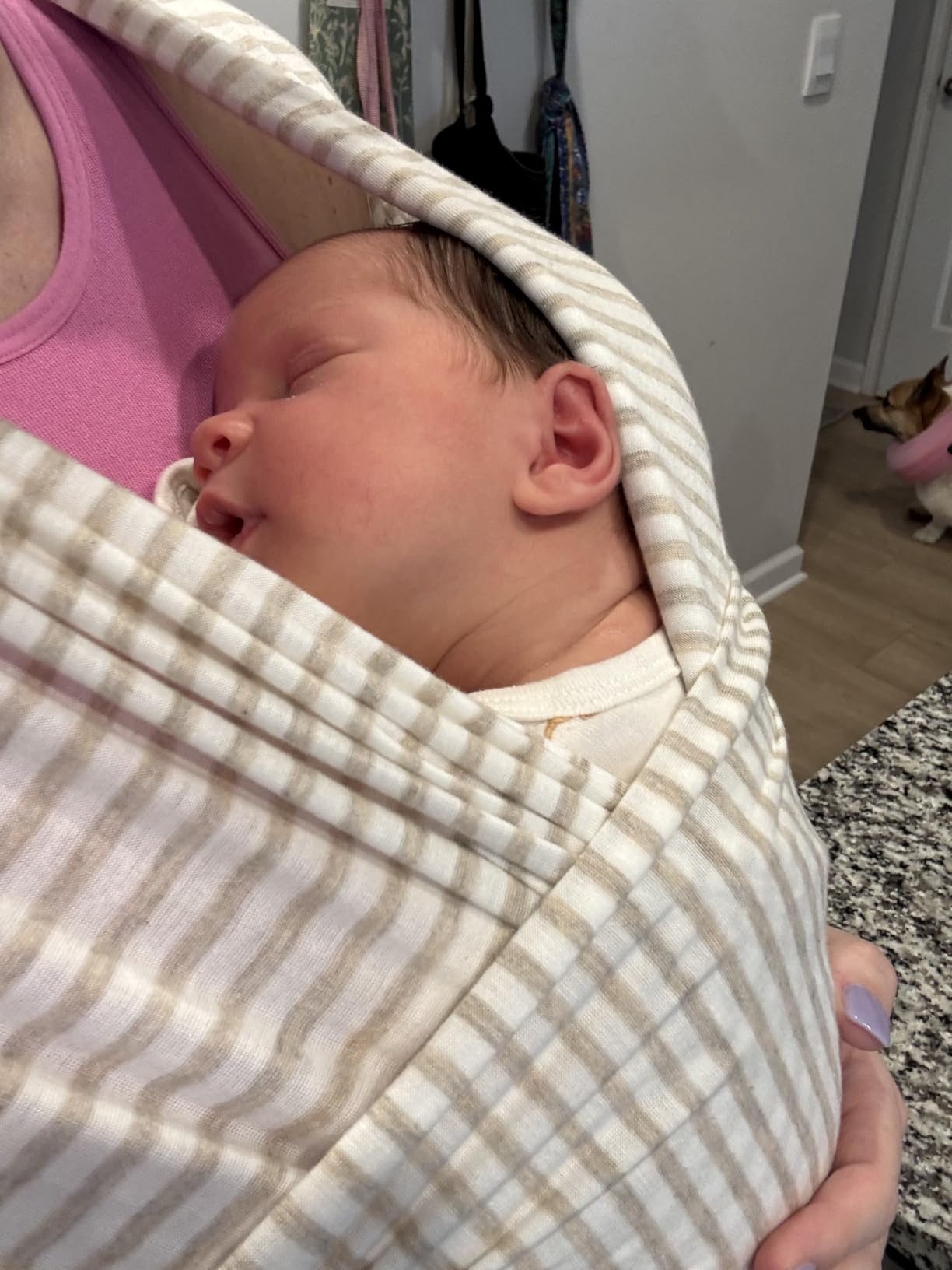
Like the other stretchy wraps, it holds the baby in the M-shape with the knees above the bottom, and it is recognized as hip healthy by the International Hip Dysplasia Institute.
What you should know before buying
The 25 lb ceiling is the trade for the light fabric. If your baby is already near 20 lbs, you will be shopping again within a few months. Many parents pair it with a heavier wrap for later wears.
A minority of reviewers report the fabric rolling or bunching at the back during very long sessions. Adjusting the cross strap fixes it, but it is a small recurring task.
Who it suits and who it does not
Choose it if you live somewhere hot, if your baby is under roughly 20 lbs, or if you want one carrier for errands, walks and slightly dressier occasions. It is a strong match for grandparents and anyone who will wear it for a few hours at a time.
Skip it if you need one carrier to reach toddlerhood, since the weight ceiling ends the usable life early.
8. Momcozy WeeSnug: the simplest structured newborn carrier
Momcozy Newborn Carrier WeeSnug- Lightweight and Cozy Comfort for 7-25 lbs
7-25 lbs
100% cotton
Adjustment scale inside the waistband
Three-point shoulder, waist and abdominal support
Pros
- Easiest carrier in the set to put on and adjust
- Scale inside the waistband removes fit guesswork
- Soft cotton that is easy to fold and store
- Newborns fall asleep in it quickly
Cons
- Runs warm with limited airflow
- Head flap can come away when you lean over
- Leg spread narrower than some prefer
- Useful mainly in the first months
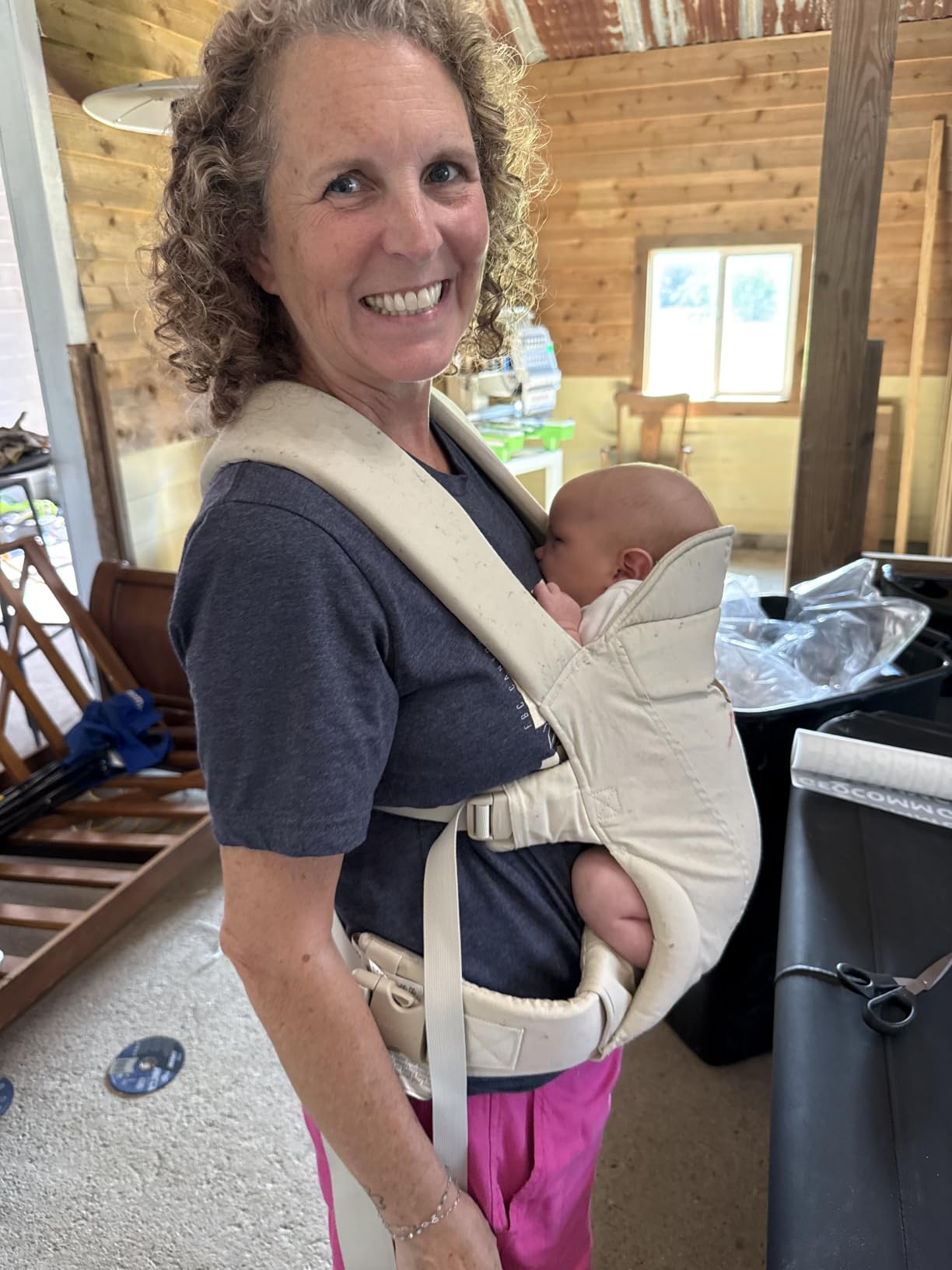
If the whole question is how do I get this on without help, this is the answer. There is nothing to tie and nothing to thread. You set the shoulder straps, clip the waist belt, put the baby in, and pull until the fit scale inside the waistband lines up.
That internal adjustment scale is a genuinely clever design decision. Most carriers ask you to guess at the right seat height for a newborn; this one gives you a reference line to match. It removes the single most common fitting error for a parent doing this for the first time.

Support is distributed across three points, the shoulders, the waist and the abdomen, with thickened cross-back straps. In our testing the load stayed off the lower back through a long indoor wear, which is more than we could say for several lighter options.
The 100% cotton is soft against newborn skin and, unlike the bulkier padded carriers, folds small enough to shove into a bag without a separate storage pouch.
What you should know before buying
Ventilation is the weak point. It runs warm, and reviewers report heat building up on humid days, so it is a poor match for hot climates.
The newborn head flap can shift away from the body when you lean forward, and you then need a free hand to support the head. That matters if you are bending to pick things off the floor while wearing.
Who it suits and who it does not
Choose it if you are new to babywearing, if your baby is under roughly four or five months, or if you want something you can put on one-handed. Parents recovering from a C-section often like how high and tight it sits.
Skip it if heat is a daily problem, or if you want a carrier you will still use at a year old, since the narrow seat stops making sense well before then.
9. WildBird Aerial Buckle Wrap: a padded waist belt in a soft wrap
WildBird – Aerial Buckle Wrap – 0-6 Months – Standard (XS-XL) Acadian – Newborn Baby Carrier – Front Carry – Soft Fabric, Straps, Head Support, Padded Waist Belt – Baby Essentials – New Mom Gifts
0-6 months
7-15 lbs supported, tested to 25 lbs
OEKO-TEX certified CloudBlend fabric
Standard waist 24-41 inch, Large 35-53.5 inch
Pros
- Two waist sizes for a genuinely close fit
- Soft eucalyptus and beech fabric
- Buckle format avoids tying
- Straps stay set between uses
Cons
- Sags as the baby gets heavier
- Fabric snags easily
- Panel can ride up over a sleeping face
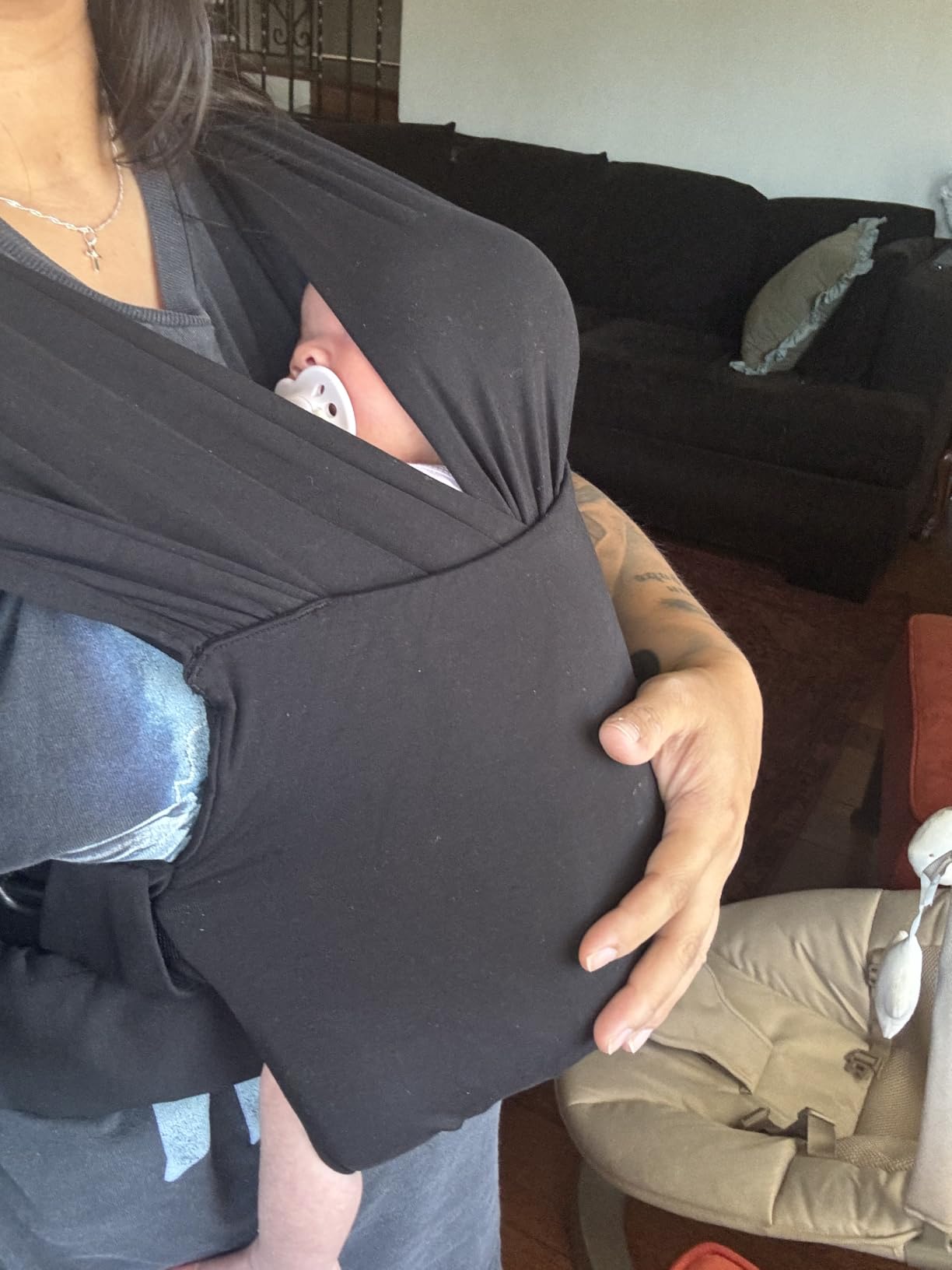
The defining feature here is fit. A standard waist covers 24 to 41 inches and the large version runs 35 to 53.5 inches, so a caregiver who would struggle with a one-size wrap can get a close fit on the body, which is where most wraps fail them.
It is built for the newborn window specifically, recommended from birth to six months with the weight supported between 7 and 15 lbs. That honest lower ceiling is useful information, because it tells you exactly how long this carrier is meant to last.
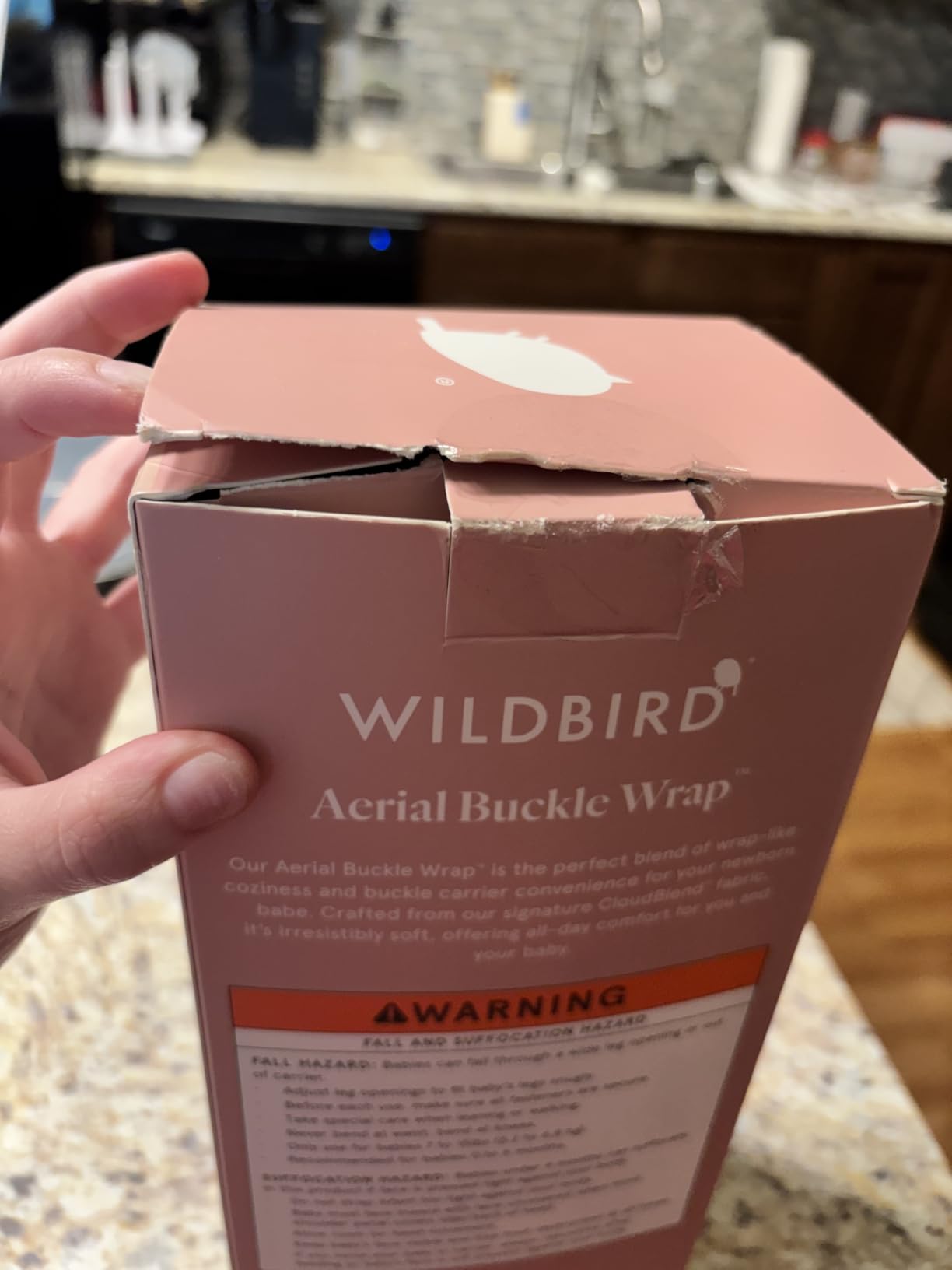
The CloudBlend fabric comes from eucalyptus and beech trees and carries OEKO-TEX certification, so you can verify the material claim rather than take it on trust. It feels smooth against newborn skin and the buckle format removes the tie entirely.
Owners like that the straps hold their adjustment between wears. If you take the carrier off and put it back on an hour later, you are not starting from scratch.
What you should know before buying
It is very stretchy, and buyers report the baby sagging lower as weight increases. If you plan to keep wearing a baby past about 15 lbs, this is not the carrier for that phase.
The fabric snags easily, and a small number of reviewers report loose stitching or packaging that arrived in used condition. Check the seams when it arrives.
Who it suits and who it does not
Choose it if you need a wide waist range, if you care about certified fabric, or if you want buckle convenience without a hard frame. It pairs well with a heavier wrap later once your baby outgrows it.
Skip it if your baby is already close to 15 lbs or if you want one carrier that lasts into toddlerhood.
10. Moby Basics Baby Wrap: the wide-range cotton wrap
Moby Basics Baby Wrap Carrier for Newborns to Toddlers (8-33lbs), Infant Sling Carrier, Lightweight & Hands Free Design, Adjustable for All Body Types (Black)
8-33 lbs
Ultra-soft, stretchy, breathable fabric
One size fits all body types
Facing in or on the hip
Pros
- Wide 8-33 lb range for the money
- Very little bulk keeps the baby close
- Even distribution across back
- shoulders and hips
- Useful for calming colicky babies
Cons
- Traditional tie with a learning curve
- Less structure than a buckle carrier for long carries
The Moby Basics is the simple choice. It runs from 8 to 33 lbs in one size, uses less bulky material than most carriers in this roundup, and keeps the baby close against your body rather than hanging them out in a frame.
The lower bulk is the point. Newborns feel warmer in a heavily padded carrier, and parents using this on small babies report the close, less insulated contact keeps the temperature more manageable.
It supports several carrying styles, either facing you or sitting on your hip, and it distributes weight across the back, shoulders and hips evenly. Owners also mention using it to calm colicky babies and to support discreet breastfeeding.
The one-size design means it works across caregiver body types without a separate size, which is helpful when two very different-sized parents share the same carrier.
What you should know before buying
It is a traditional tie, so the same learning curve applies as with the other wraps. Watch a tutorial before the baby arrives and practise with something weighted.
Less structure means it is not the right choice for very long carries where you need a rigid seat to hold an older baby upright. It is built for the newborn and infant phase.
Who it suits and who it does not
Choose it if you want a straightforward wrap at the affordable end of the range, if you need 8 to 33 lbs of coverage in one carrier, or if you want a simple close hold that keeps a small baby warm without much bulk.
Skip it if you need a buckle you can put on without looking, or if you want a carrier that doubles as something for an active toddler.
How to Choose a Newborn Carrier Safely
Fit and carrier type decide whether a newborn is safe and comfortable, not the logo on the label. Here is what actually matters, in the order that matters it.
The TICKS safe-fit check
Run these five checks every single time you put your baby in a carrier. They come from a standard widely used in babywearing communities, and the letters stand for Tight, In view, Close enough to kiss, Chin off chest, and Supported back.
Tight means close enough that you cannot slide a hand between your chest and the baby’s chest.
In view means at least one of the baby’s cheeks is always visible to you, so you can check their airway without removing them.
Close enough to kiss means you can lean forward and kiss the top of the head without shifting your shoulders.
Chin off chest means the chin is not resting on or tucked into the chest, because that position narrows the airway.
Supported back means the back is flat and rounded rather than slumped or curved.
If any one of the five fails, take the baby out and start again. Doing this the first ten times makes it automatic, and it takes about five seconds once you know the sequence.
M-shape hips and head support
A newborn’s hips should sit with the legs spread wide and the knees higher than the bottom, which is the M-shape. The International Hip Dysplasia Institute recommends that position because it lets the hip sockets develop without strain. No carrier prevents hip dysplasia, and we are not claiming that, but correct positioning supports healthy development as the institute describes it.
For head support, look for physical padding behind the neck and shoulders, not a thin flat panel. A baby without neck control needs a physical bolster to stop the head rolling forward into the chin-on-chest position. If a carrier needs a separate pillow to achieve that, it is not the right one for a newborn.
Do you need an infant insert?
Only if the seat panel is wider than your baby’s thigh. An insert is a padded liner that shrinks the panel so a small baby cannot fold or slump. Every carrier in this roundup fits at least 7 lbs without one, which is why none of our picks require an insert and why you should be suspicious of a carrier that does.
The complaints we read about inserts are consistent: a bulky insert makes the carrier sit loose on a small adult body and defeats the point of the ergonomic shape. Buying a carrier that works without one solves that permanently.
Wrap, ring-style or buckle: which type fits your situation
A stretchy jersey wrap gives the closest skin contact, runs coolest and lasts the longest, but it has a real tie to learn. A ring-and-band wrap like the Koala goes on in seconds and has a short fabric length, but it has the lowest weight ceiling in the set at 22 lbs. A buckle carrier like the WeeSnug is the fastest to put on and the easiest to adjust, but it runs warmer because of the padded panel.
A hybrid buckle wrap sits between the two. You get wrap softness and buckle simplicity, which is why we ranked the Boba Bliss and the WildBird Aerial as strong middle-ground options. If you are undecided, the honest answer is that a stretchy wrap is the most forgiving choice for a newborn and a buckle carrier is the most forgiving choice for a tired parent.
Keeping a newborn cool
Overheating is the most repeated complaint in the reviews we read, and it clusters around knits, terry and cotton-polyester blends that trap heat against the chest. Single layers of breathable fabric are cooler than anything with a foam panel.
Check your baby rather than your own comfort. If the back of their neck or chest feels clammy, take them out. Many parents dress the baby in one fewer layer than feels right, because the carrier adds a layer of its own.
Carriers after a C-section
Yes, you can babywear after a C-section, with the panel sitting clear of the incision. The rule is simple: nothing should press on or rub the wound. Parents recovering from a section consistently favour apron-style carriers and buckle carriers that sit higher on the body, and wrap styles that let you keep the front panel loose.
Start with short wears, keep the fabric above or to the side of the incision, and stop if there is any pain. Your own clinician’s advice takes priority over anything on this page, and the same applies if you have any medical or developmental concerns about your baby.
Fit for different caregiver sizes
A carrier that fits one adult often does not fit another. Wraps with a generous length handle a bigger range, and carriers with two waist sizes are the most reliable option for a household with very different body types. Measure your waist before buying a buckled carrier and compare it against the stated range.
Also consider shoulder fit. Straps that are too narrow dig in over a long wear no matter how good the seat is, and spreadable or wide straps are the feature that decides whether a long carry stays comfortable.
When to size up
Most carriers stop working somewhere between 12 and 18 months, and the trigger is usually visible: the baby’s head clears the top of the panel, the knees stop fitting in the seat, or your baby starts pulling at the straps hard enough to shift the fit. When any of those happen, move up rather than adjusting harder.
A wrap with a 35 lb ceiling will usually take you the longest. A 22 lb ring-style carrier is designed for the newborn phase only, so expect to buy again sooner and plan for it in your budget. Our guide to carriers for hiking covers the higher-load end if you plan long walks as your baby grows.
Care and washing
Machine washability is the baseline expectation for all ten of these carriers, and any of them will survive regular washing. Wash the wrap before the first wear, since factory residue and fabric starch are a common cause of newborn skin irritation.
Air dry rather than machine drying stretch knits where you can, and skip fabric softener on anything that sits against a baby’s face. Check the buckle hardware and stitching every few months, especially on carriers with a lot of adjustment points.
Frequently Asked Questions
What is the safest baby carrier for a newborn?
The safest carrier is the one that holds your baby high and snug with their face visible, chin off the chest and legs in an M-shape with the knees above the bottom. Run the TICKS check every wear: Tight, In view, Close enough to kiss, Chin off chest, Supported back.
Can I put my 1 week old in a baby carrier?
Yes, once your baby has regained its birth weight and your clinician has cleared you to start. Most carriers in this roundup fit from 7 lbs without an insert. Start with short wears of 20 to 30 minutes and build up from there.
What baby carrier does a pediatrician recommend?
Pediatricians recommend positioning rather than brands: the M-shape with knees above the bottom, head support, a visible face and an airway that is not obstructed. Ask your own clinician about your baby’s specific weight and development.
Do I need an infant insert?
Only if the seat panel is wider than your baby’s thigh. Every carrier we ranked fits at least 7 lbs without an insert, and inserts make the seat sit loose on a small adult body. Look for a stated minimum weight of 7 lbs instead.
How should a newborn sit in a baby carrier?
High on your chest, facing inward, with legs spread wide and knees higher than the bottom in an M-shape. Their cheek should be visible to you, their chin should not touch their chest and your back should be flat and rounded.
When can I start using a baby carrier?
Most families start once the baby has regained birth weight and has steady head control in a supported hold, usually in the first few weeks after coming home. Check with your pediatrician first, particularly after a difficult birth or a C-section.
Is a wrap safer than a structured carrier for a newborn?
Neither is safer if the fit is wrong. A wrap gives closer skin contact and stays cooler but has a tie to learn. A buckle carrier is faster and easier to adjust but runs warmer. Correct positioning matters far more than the type you choose.
Will a baby carrier overheat my newborn?
It can, especially with knits, terry and padded panels in hot weather. Choose a breathable single-layer fabric, dress your baby in one fewer layer than feels right and check the back of their neck and chest for dampness during every wear.
Can I babywear after a C-section?
Yes, as long as the panel stays clear of the incision. Choose an apron-style or buckle carrier that sits higher, keep the fabric off the wound, start with short wears and stop if you feel any pain. Follow your clinician’s advice first.
Why is Artipoppe so popular?
Artipoppe is popular because it combines a buckle format with wrap-like fabric, so there is no tying and no hard frame. It has a strong following in parent communities, though carriers here offer similar convenience with a documented newborn weight range.
The Bottom Line on Baby Carriers for Newborns
If your baby is under 8 lbs, choose the Boba Baby Wrap for a proven 7 to 35 lb range with no insert. If you want no tie and no learning curve, the Ergobaby Embrace fits a newborn on day one and works across caregiver sizes. If you want the coolest fabric in warm weather, the Solly Wrap is the one that feels best on a hot day.
That is the short version of our best baby carriers for newborns roundup for 2026. Whatever you choose, run the TICKS check on every single wear, and talk to your pediatrician about your own baby before starting. If you are still comparing carriers for older stages, our newborn monitor guide covers the sleep-safety side of the first year.