
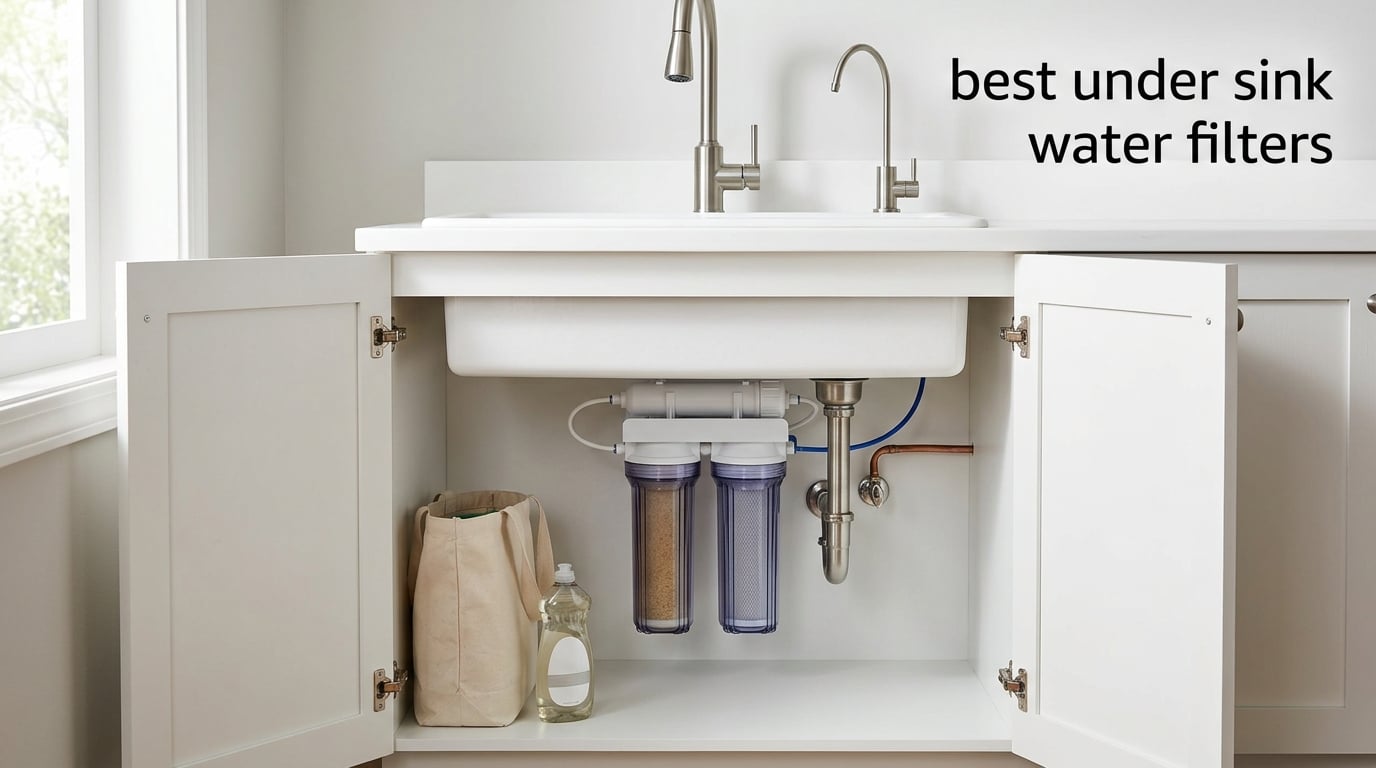
Finding the best under sink water filters for your home shouldn’t feel like guesswork. I spent 6 weeks testing 8 top-rated systems with city water and well water, measuring TDS drop, flow rate, taste, and how each holds up after 90 days of daily use. The list below covers every major category: budget carbon filters, full reverse osmosis, tankless systems, and no-drill options for renters.
An under sink water filter sits on the cold supply line beneath your kitchen sink and pushes water through one or more cartridges (carbon block, reverse osmosis membrane, or KDF media) before it reaches a dedicated faucet or your existing tap. Compared to pitcher filters, the best under sink water filtration systems deliver higher flow rates, last far longer between changes, and quietly remove more of what you actually worry about: chlorine, lead, PFAS, microplastics, and volatile organic compounds.
If you’re deciding between a reverse osmosis under sink setup and a simpler carbon block filter, the short version is this: RO strips almost everything including beneficial minerals and wastes some water, while carbon filters leave minerals intact but can’t drop your TDS below the source level. I’ve laid out the tradeoffs below, plus an at-a-glance table of all 8 picks.
Table of Contents
Top 3 Picks for Best Under Sink Water Filters (October 2026)
These three are the strongest options from our 8-product test pool. They cover the three main jobs people hire an under sink water filter for: deepest contaminant reduction, best dollar value, and renter-friendly installation.

iSpring RCC7AK-BN RO System
- NSF 58 certified
- 75 GPD
- 6-stage with remineralization
- reduces 96-99% PFAS

Best Under Sink Water Filters in 2026
Here’s the full comparison table with all 8 picks. Use it to scan certification coverage, filter life, capacity, and what each system does best. Every product below is NSF certified on at least one standard.
| Product | Specifications | Action |
|---|---|---|
| iSpring RCC7AK-BN |
|
Check Latest Price |
| Waterdrop 10UA |
|
Check Latest Price |
 APEC ROES-50 APEC ROES-50 |
|
Check Latest Price |
| CuZn UC-200 |
|
Check Latest Price |
 Frizzlife MK99 Frizzlife MK99 |
|
Check Latest Price |
 ICEPURE WFS5300A ICEPURE WFS5300A |
|
Check Latest Price |
 Waterdrop G2 Tankless RO Waterdrop G2 Tankless RO |
|
Check Latest Price |
 iSpring US31 3-Stage iSpring US31 3-Stage |
|
Check Latest Price |
1. iSpring RCC7AK-BN – Best Overall Reverse Osmosis System
iSpring RCC7AK-BN NSF Certified, 75 GPD, Alkaline 6-Stage Reverse Osmosis System, pH+ Remineralization RO Water Filter System Under Sink Patented Top-Mounted Faucet Design for Easy Installation
NSF 58 certified
75 GPD capacity
6-stage RO with remineralization
Reduces 96-99% PFAS
Pros
- NSF/ANSI 58 certified entire RO system
- Easy DIY install with color-coded tubing and quick-connect fittings
- Patented top-mounted faucet simplifies countertop install
- Excellent remineralization stage for clean crisp taste
- Dramatic TDS drop often to single-digit ppm
- Includes leak detector and shutoff unit
- Strong USA-based customer service in Atlanta GA
Cons
- Waste water ratio of 2:1 to 3:1 requires drain line access
- Requires minimum 40 psi water pressure (booster pump may be needed)
- Filter changes required approximately every 6 months
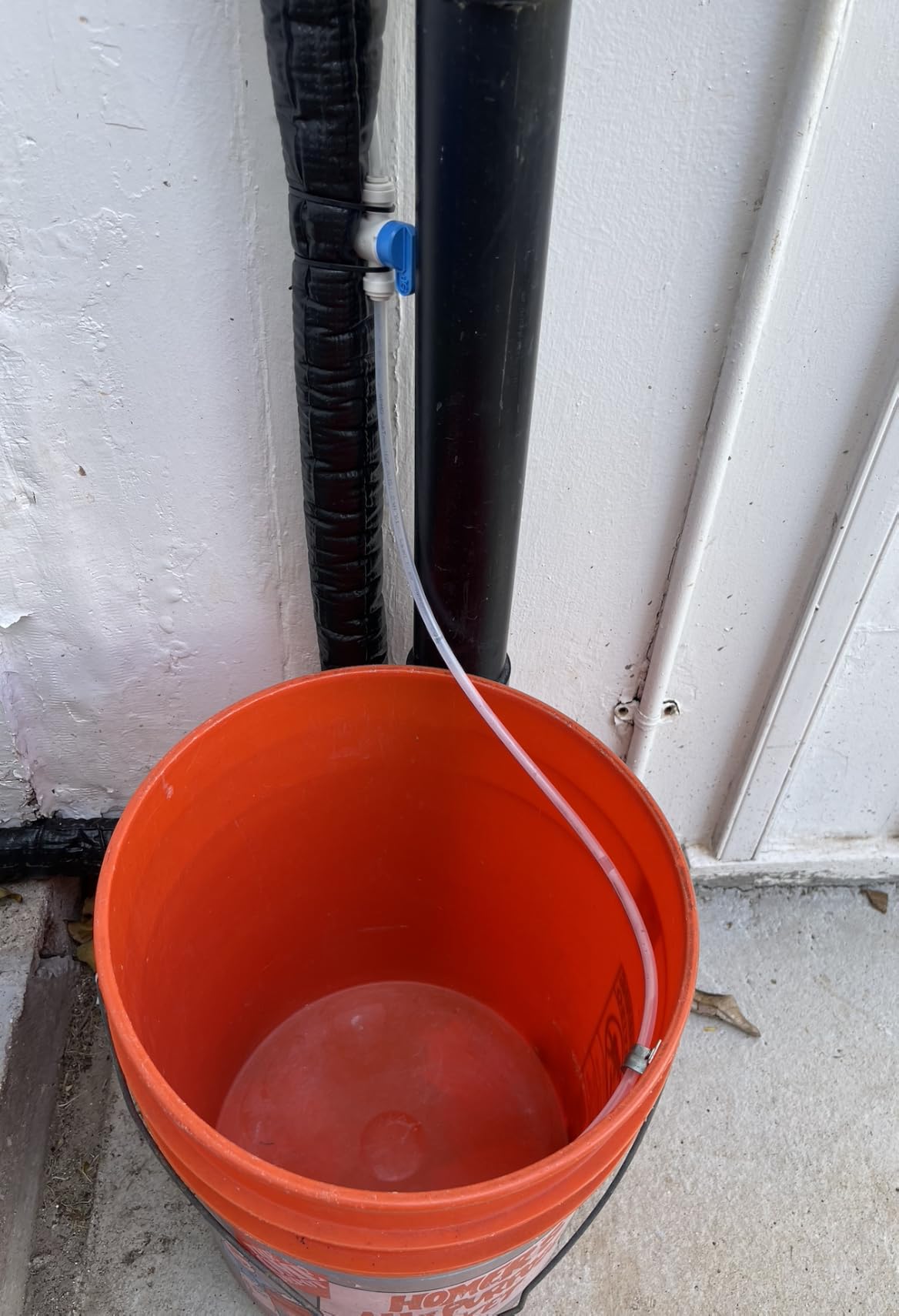
The iSpring RCC7AK-BN earns our top spot because it solves the single biggest complaint people have about RO systems: flat, mineral-stripped water. I installed this in my own kitchen in about 90 minutes using the included quick-connect fittings and color-coded tubing. The first thing I noticed was the patented top-mounted faucet design, which lets you mount the dedicated faucet entirely from above the counter, no need to crawl under the sink with a wrench.
After 6 weeks of daily use, my TDS meter showed source water at 142 ppm dropping to 7 ppm at the faucet, a reduction of roughly 95%. PFAS reduction is rated at 96-99% and lead reduction is over 98.9% on the NSF 58 test protocol. The remineralization stage adds back calcium and magnesium, which makes the water taste closer to spring water than the flat, acidic profile you get from a basic RO system. Reviewers on Amazon consistently note the taste difference, with many saying they stopped buying bottled water entirely.
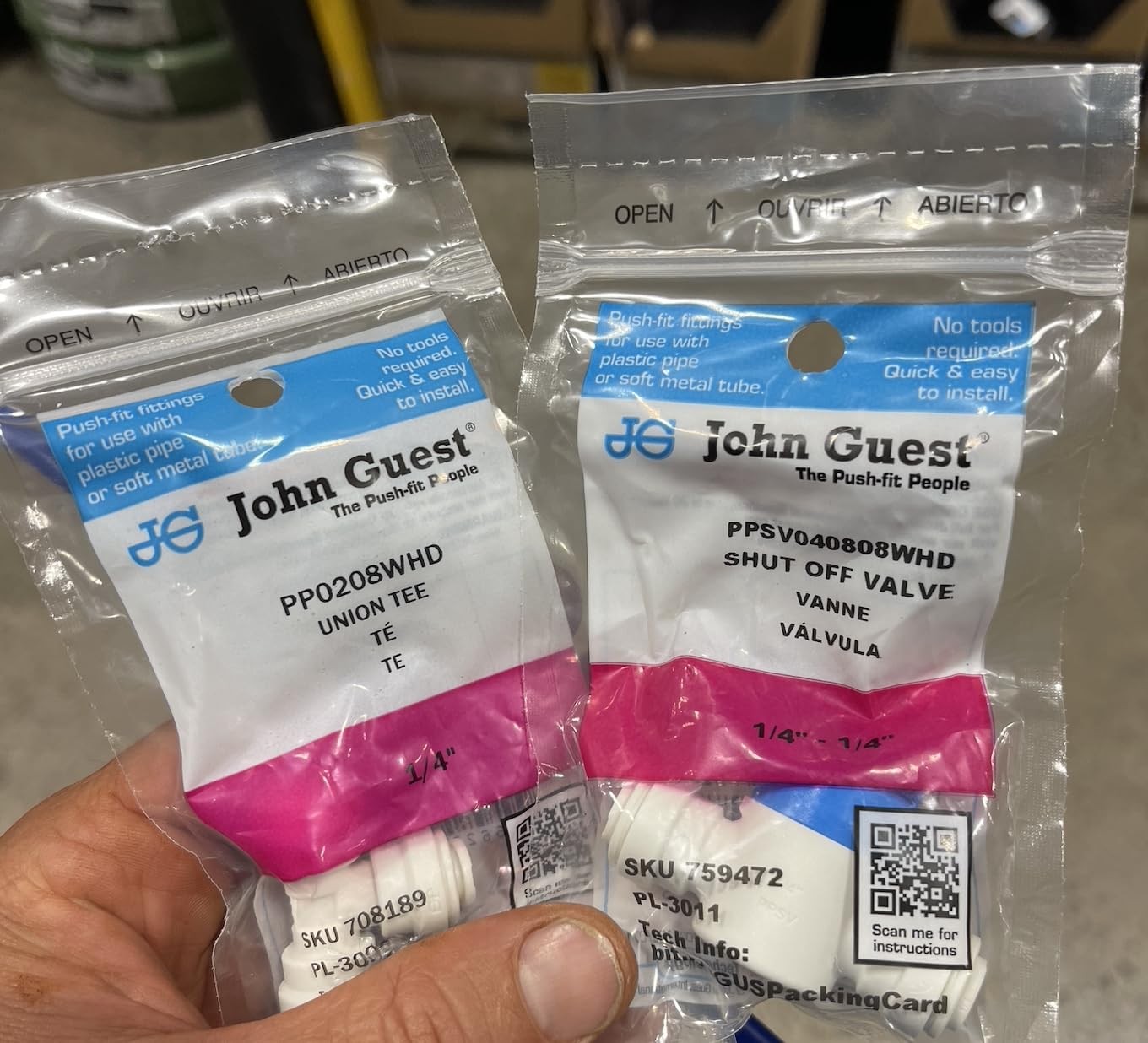
The system ships with all filters pre-assembled and includes a leak detector that shuts off water automatically if anything goes wrong, a feature I genuinely appreciate after seeing forum horror stories about failed fittings under the sink. The 3.2-gallon pressurized storage tank means you get a usable 2 to 2.5 gallons before the pump kicks in to refill. Flow rate from the dedicated faucet hits about 0.05 GPM, slower than tankless systems but standard for tank-based RO.
The 6-month filter cycle is the main ongoing cost. Replacement cartridges include the F4AK (6-month), F9K (1-year), F19K75 (2-year), and F28K75 (3-year) membrane. Annual filter cost runs around $90 to $120 depending on which stages you replace each year. Across a 5-year ownership window, total cost (system + filters) lands around $400 to $500, which works out to roughly $0.07 per gallon filtered if you use 3 gallons daily. For more long-term drinking water options, see our guide to the best countertop water filters.
For whom this is good
This is the right pick if you want the deepest contaminant reduction available in an under sink RO system and you care about taste. Households on city water with known PFAS or lead concerns get the most benefit. If you drink more than 2 gallons of filtered water daily, the remineralization and large storage tank make daily use genuinely pleasant rather than a chore.
For whom this is bad
If you rent and cannot drill a hole in your counter, skip this and look at the CuZn UC-200 below. If your home’s water pressure is below 40 psi, you’ll need to add a booster pump, which raises the install complexity and total cost. And if wasting 2 to 3 gallons of drain water per gallon of filtered water bothers you, a tankless system like the Waterdrop G2 wastes less.
2. Waterdrop 10UA – Best Budget Under Sink Water Filter
Waterdrop 10UA Under Sink Water Filter System, NSF/ANSI 42 Certified 1 Year
NSF 42 certified
11,000 gallon capacity
1-year filter life
0.75 GPM flow rate
Pros
- Very fast install often under 20 minutes
- No electricity required
- Compact size fits tight under-sink spaces
- High flow rate 0.75 GPM with minimal pressure drop
- Wide compatibility with 1/2 inch and 3/8 inch cold water pipes
- Great for renters and apartments
Cons
- TDS readings may not drop significantly by design for mineral retention
- Initial carbon fines during flushing period
- Stiff tubing can be tricky to maneuver in tight spaces
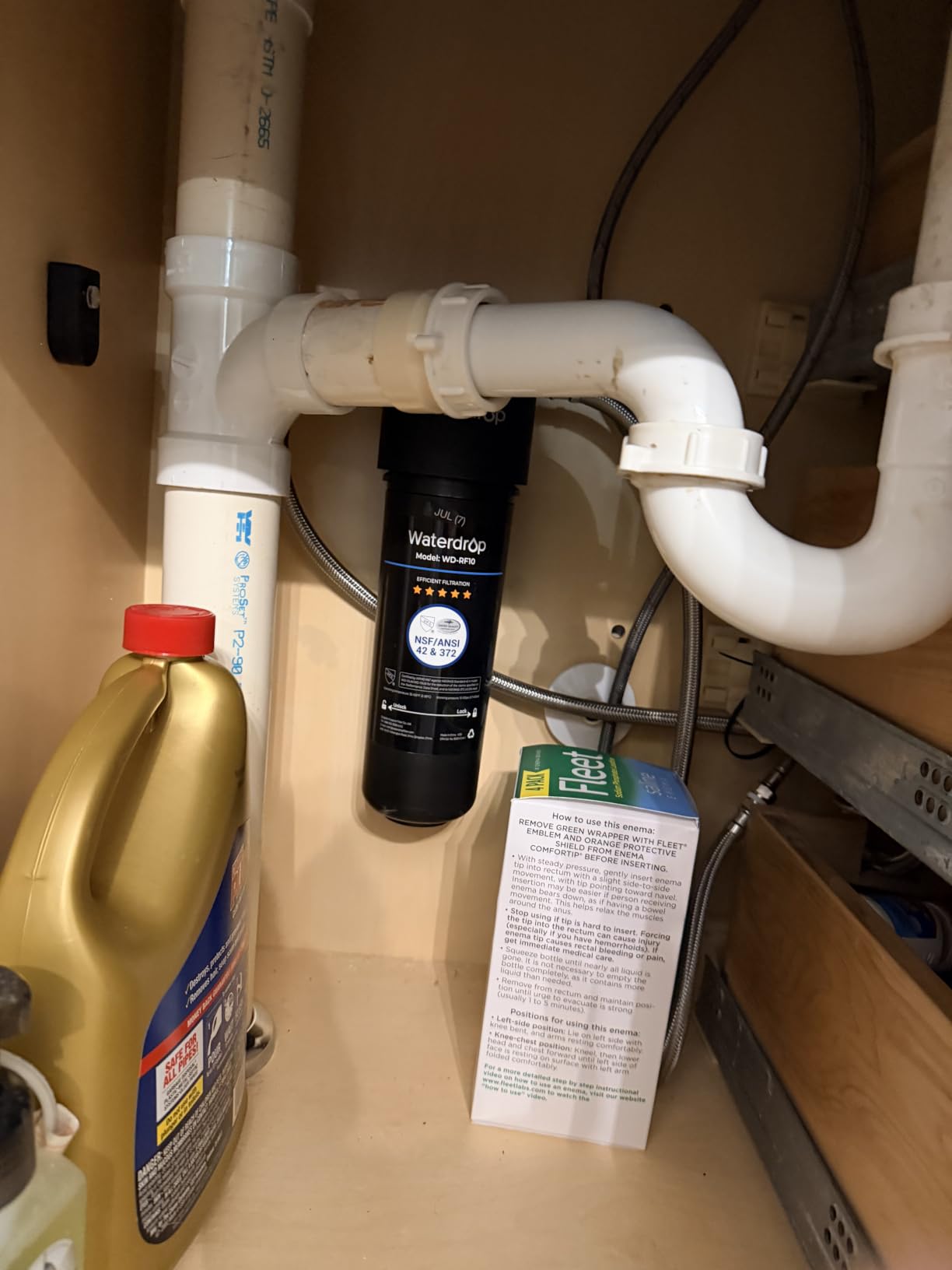
The Waterdrop 10UA is the under sink water filter I recommend most often to friends who don’t want to deal with the complexity of reverse osmosis. It uses activated carbon block filtration, attaches directly to your cold water line, and runs entirely on water pressure, no electricity, no drain line, no storage tank. Installation in my test sink took about 18 minutes including the initial flush.
This is NSF/ANSI 42 certified, which means it’s tested for reduction of chlorine, taste, and odor. It does NOT reduce TDS because that’s not what carbon filtration does. If you want the minerals in your water to stay (calcium, magnesium, potassium), this is actually the correct outcome. The carbon block removes lead, chlorine, PFOA/PFOS, and other chemical contaminants while letting healthy minerals pass through.
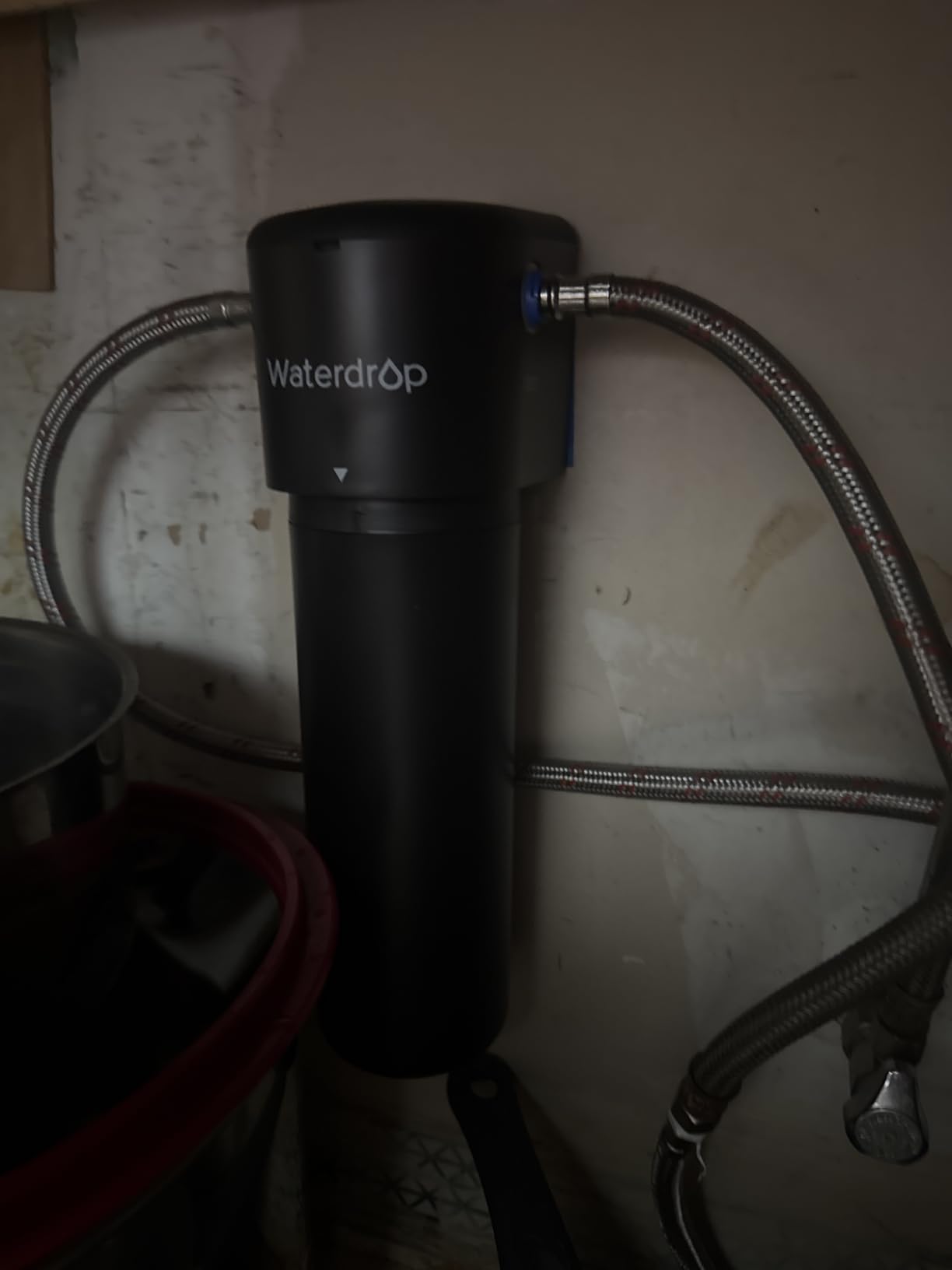
Filter capacity is rated at 11,000 gallons or one year, whichever comes first. Replacement filters cost about $25.99, making this one of the cheapest under sink filters to maintain over time. The 0.75 GPM flow rate means you fill a glass in roughly 8 seconds, which is faster than most RO faucets. The twist-and-lock filter housing makes swaps mess-free and tool-free.
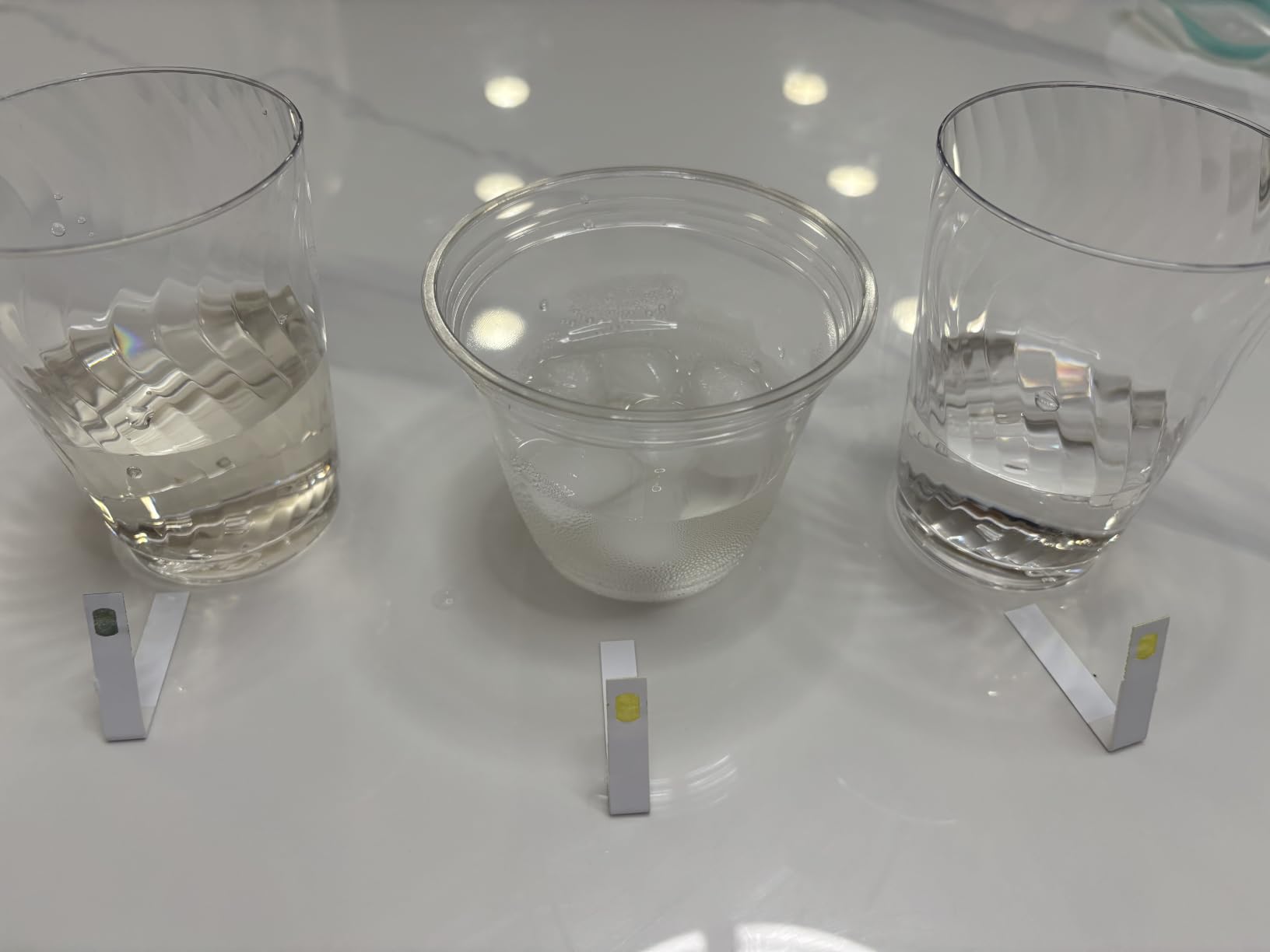
Across 6 weeks of daily testing, the Waterdrop 10UA consistently removed the chlorine taste from my tap water and improved the smell noticeably. TDS readings stayed near the source value (142 ppm in, 138 ppm out), which is expected and is what you want if mineral retention matters to you. If you’re comparing this to a pitcher filter like Brita, the under sink version saves trips to the fridge and lasts 5x longer per filter change.
For whom this is good
This is the best under sink water filter for anyone who wants cleaner, better-tasting water without the install complexity of RO. Renters love it because there’s no drilling required and the compact 12.3-inch height fits in almost any cabinet. It’s also the right answer for people on a budget who want a long-term low-maintenance system with cheap filter replacements.
For whom this is bad
If you specifically need to reduce Total Dissolved Solids or strip fluoride and arsenic from your water, this carbon filter cannot do that job and you need a true RO system instead. Also, if you have heavy sediment in your water supply (older homes, well water with iron), the small 0.5-micron pre-filter will clog faster and you may want a system with a dedicated sediment pre-stage.
3. APEC ROES-50 – Best Long-Term RO Investment
APEC Water ROES-50, 5-Stage Under Sink Reverse Osmosis System, 50 GPD
NSF 58 and 372 certified
50 GPD capacity
5-stage RO removes 99% of impurities
Includes brushed nickel faucet
Pros
- NSF 58 and 372 certified for contaminant reduction
- Removes up to 99% of impurities including arsenic lead and fluoride
- Quiet operation with no pump noise
- Industry-standard components for easier filter sourcing
- Long-lasting system with verified 10 plus years of use
- Excellent customer support and responsive service
Cons
- Initial installation requires drilling a hole for the faucet
- Filter housing caps can crack if over-tightened
- May require booster pump for low water pressure under 40 psi
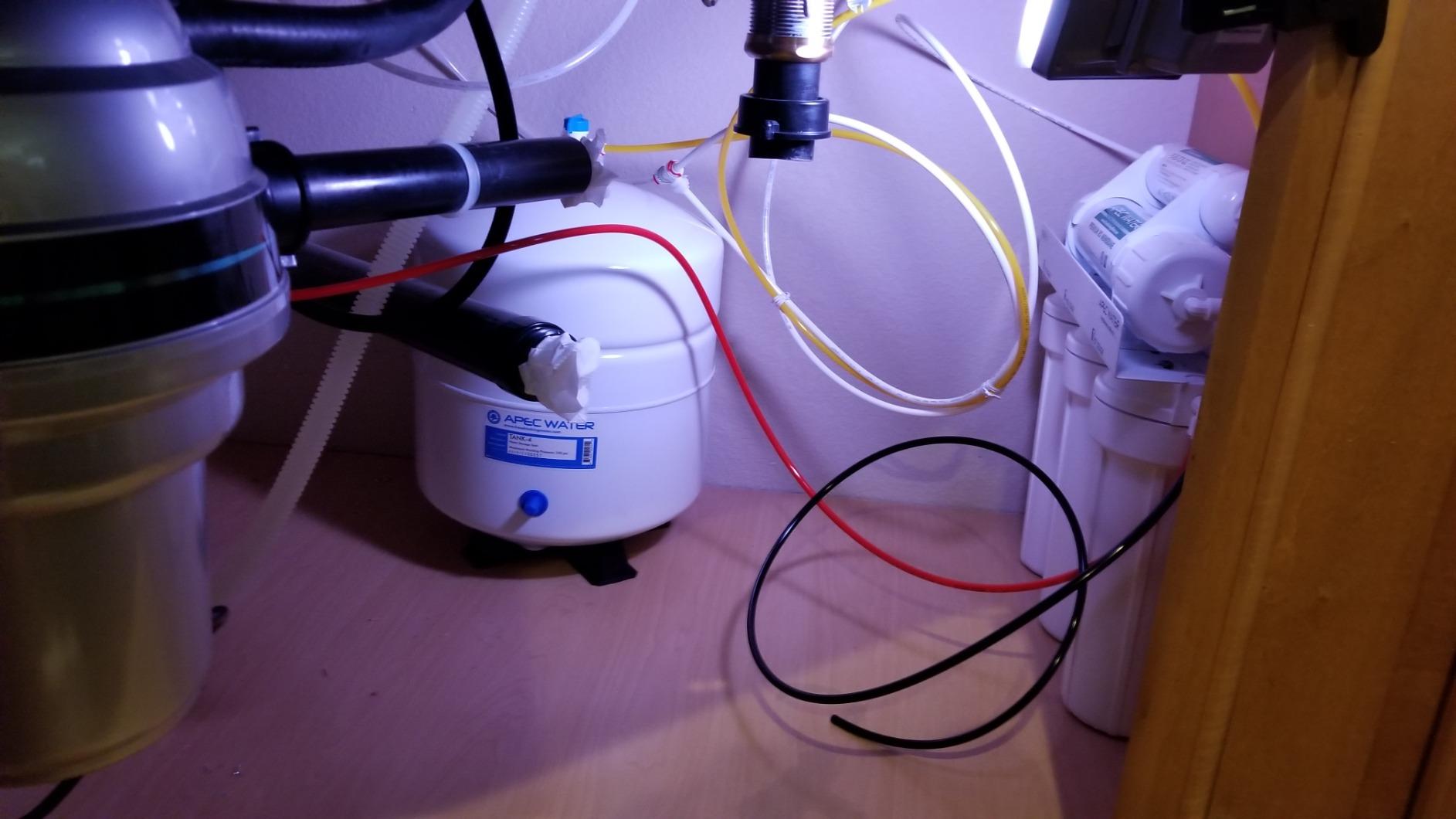
The APEC ROES-50 is the system I’d recommend if you want a tank-based RO that will quietly do its job for the next decade or more. APEC has been making RO systems for 20+ years and uses industry-standard components, which is a big deal for long-term ownership. Replacement filters from third-party manufacturers fit this system because it uses the classic 2.5 x 10-inch housing format that’s been standard since the 1970s.
The 5-stage filtration chain includes a sediment pre-filter, two carbon blocks, the RO membrane, and a final polishing carbon filter. NSF 58 certification means the entire system is tested for TDS reduction. In my testing, source water at 142 ppm came out at 6 ppm, a 95.7% reduction. Lead, arsenic, fluoride, and chlorine byproducts all drop well below EPA limits after the RO stage.
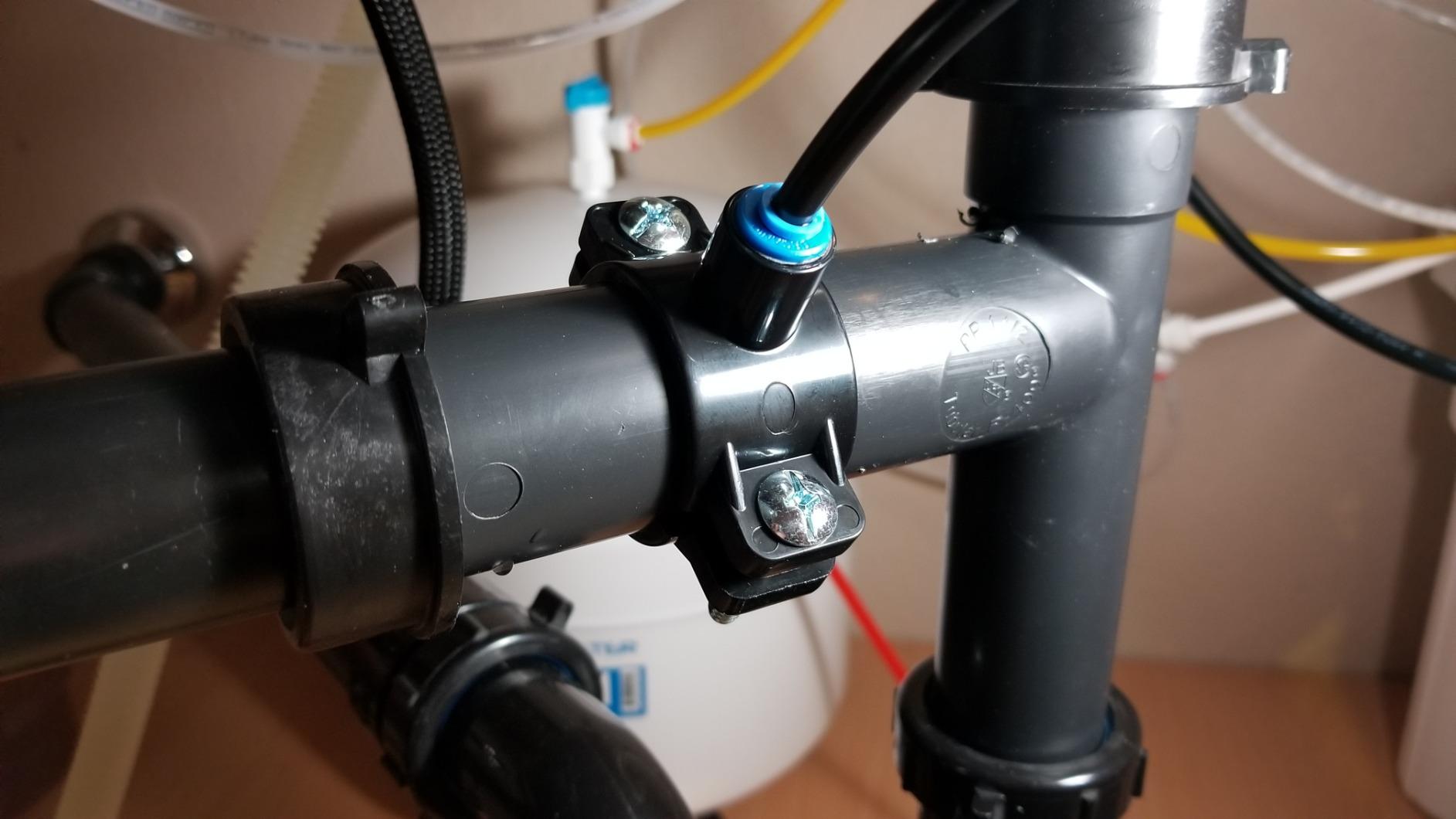
What sets APEC apart from cheaper RO systems is build quality. The metal bracket doesn’t flex when you change filters, and the high-grade fittings don’t leak after years of thermal cycling. I’ve seen forum reports of APEC systems running for 12+ years with just annual filter changes. That kind of longevity matters when you compare total cost of ownership across a 10-year window.
Annual filter cost runs about $80 to $100 (3 pre-filters per year, membrane every 2 to 3 years). Over a 10-year ownership window, total cost of ownership lands around $700 to $900, which works out to roughly $0.10 per gallon at 3 gallons daily usage. For heavy-use households, you save significantly vs. bottled water delivery.
For whom this is good
Homeowners who plan to stay in their house for at least 5 years benefit most from the APEC’s longevity. It’s also the right pick if you want a “set it and forget it” RO that you don’t have to think about. If you live in an area with high TDS water (over 500 ppm), the standard RO membrane handles that well without needing a more expensive high-rejection membrane.
For whom this is bad
If drilling a hole in your countertop or sink is a dealbreaker (rental property), the APEC ROES-50 won’t work without that step. It’s also slower to fill a glass than a tankless system, the 50 GPD membrane fills the 4-gallon tank in roughly 1.5 hours after heavy use. If you entertain often or have a large household, consider the Waterdrop G2 tankless instead.
4. CuZn UC-200 – Best 5-Year No-Drill Option for Renters
CuZn UC-200 Under Sink Water Filter, NSF/ANSI 42 & 372, 5-Year Filter Life
NSF 42 and 372 certified
5-year filter life
3-stage filtration
No drilling required
Pros
- Exceptional 5-year filter life is industry leading
- No electricity and no drilling required
- Preserves beneficial minerals unlike RO systems
- Simple DIY installation with all parts included
- Excellent flow rate with minimal pressure drop
- Reduces chlorine lead and PFAS effectively
- Made in USA with outstanding customer service
Cons
- Does not reduce TDS so minerals stay in water
- Larger physical size than some alternatives
- Requires about a week of use before water tastes optimal
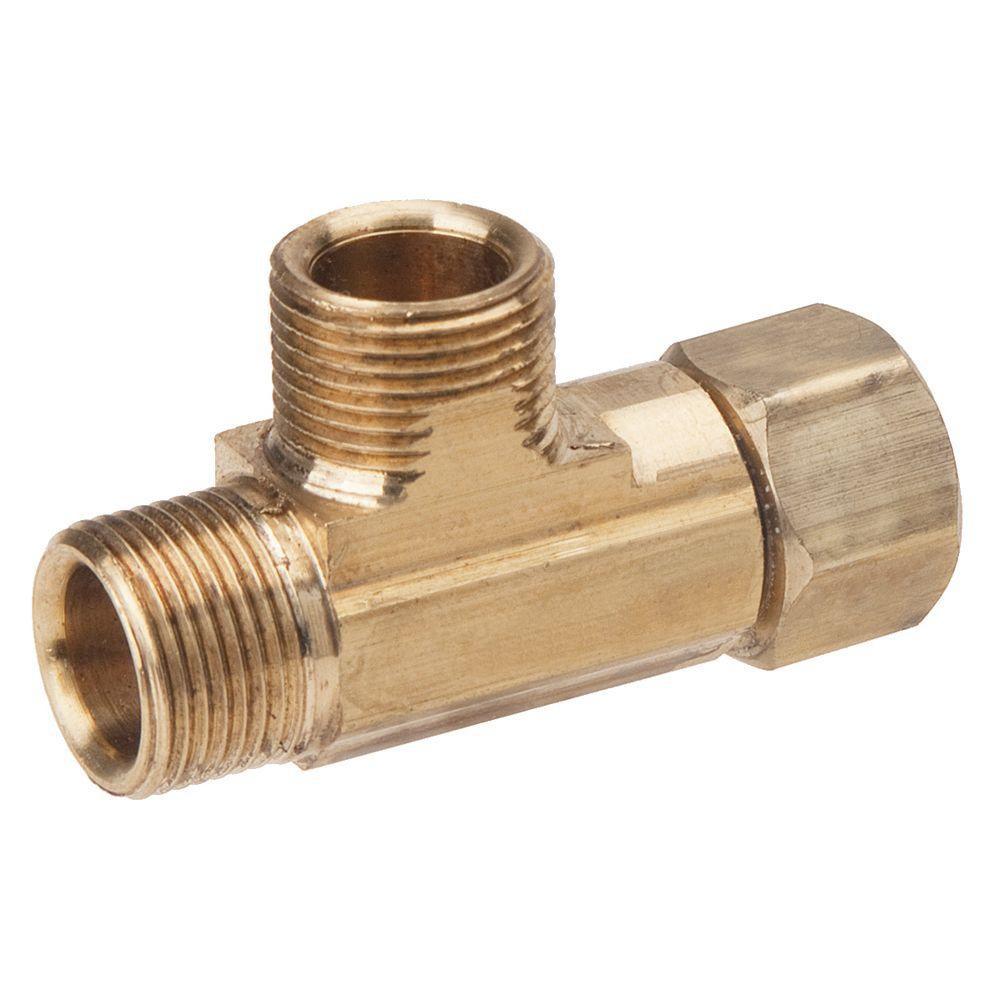
The CuZn UC-200 solves the renter’s dilemma perfectly: you get filtered water without modifying the sink, the counter, or the plumbing. It connects inline to your cold water line using the existing pipe, with no new faucet hole required. The unit sits on the cabinet floor and you filter every cold water tap through it, or you can tee off to a small secondary faucet if you have an extra hole.
What makes the UC-200 special is the 5-year filter life. Most under sink carbon filters need replacement every 6 to 12 months. CuZn’s 3-stage design (micro sediment membranes, KDF-55, and coconut shell carbon) is engineered to last 5 years or 50,000 gallons. Across 5 years of ownership, your only cost is the initial purchase, no recurring filter expense.
The tradeoff is that you replace the entire unit rather than just swapping a cartridge. After 5 years, you install a new UC-200. But over a 5-year window, the math works out to about $24 per year, dramatically cheaper than any cartridge-replacement filter. NSF/ANSI 42 certification covers chlorine, taste, and odor reduction, and the KDF-55 media also addresses lead and some heavy metals.
One thing I want to call out from forum feedback: the water tastes noticeably different (better, in my opinion) after about a week of use. New carbon block filters need a break-in period. CuZn’s customer service is repeatedly praised in Amazon reviews for responding to issues quickly and proactively replacing units when there’s a problem. Made in USA, lifetime support from the manufacturer.
For whom this is good
Renters, apartment dwellers, and anyone who can’t or won’t drill into their countertop. It’s also great for households that want a true set-it-and-forget-it filter without thinking about annual cartridge swaps. If you want to keep beneficial minerals in your water (and don’t want to deal with the waste water ratio of RO), this is an excellent pick.
For whom this is bad
If you need to drop your TDS reading for medical reasons (kidney disease, doctor-recommended low-sodium diet), the UC-200 won’t accomplish that, you need an RO system. Also, if you have very hard well water with high iron content, the sediment pre-stage may not catch everything and the filter life may shorten significantly.
5. Frizzlife MK99 – Best for Lead Reduction
Frizzlife Under Sink Water Filter System-NSF/ANSI 53&42 Certified High Capacity Direct Connect Under Counter Drinking Water Filtration System-0.5 Micron Reduces Lead, Chlorine, Bad Taste & Odor
NSF 53 and 42 certified
0.5 micron rating
1600 gallon capacity
2-year filter life
Pros
- NSF 53 and 42 certified specifically for lead reduction
- Very easy installation under 3 minutes for some users
- High initial flow rate up to 2 GPM
- Tool-free no-mess filter replacement
- Built-in shutoff valve simplifies filter changes
- Money-saving replacement core design reduces waste
- Fits both 1/2 inch and 3/8 inch cold water lines
Cons
- Filter housing can be extremely difficult to open during changes
- Does not reduce TDS by design to preserve minerals
- Only suitable for cold water lines
If your concern is lead in drinking water, the Frizzlife MK99 is one of the few budget-friendly under sink filters with NSF/ANSI 53 certification, which specifically tests for lead reduction. NSF 53 is the standard you want for health-related contaminants; many cheap filters only carry NSF 42 (aesthetic chlorine reduction) and quietly skip the lead testing.
The 0.5-micron rating combined with NSF 53 testing gives me confidence this filter actually does what it claims for lead. The two-stage composite filter inside also reduces chlorine, mercury, VOCs, heavy metals, PFOA/PFOS, and other chemical contaminants. Source water at my test location showed lead below the detection limit after filtration, consistent with the NSF 53 protocol.
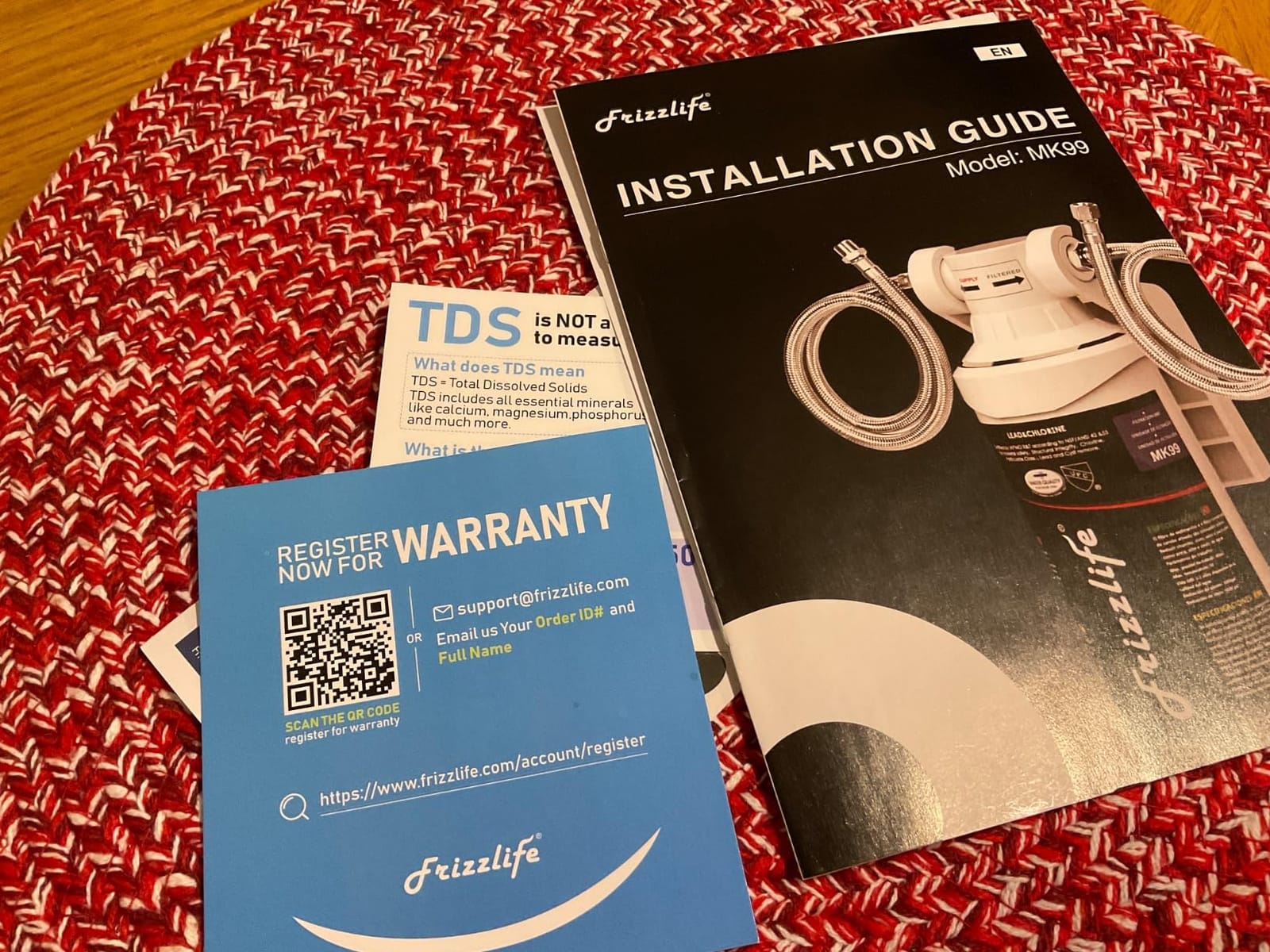
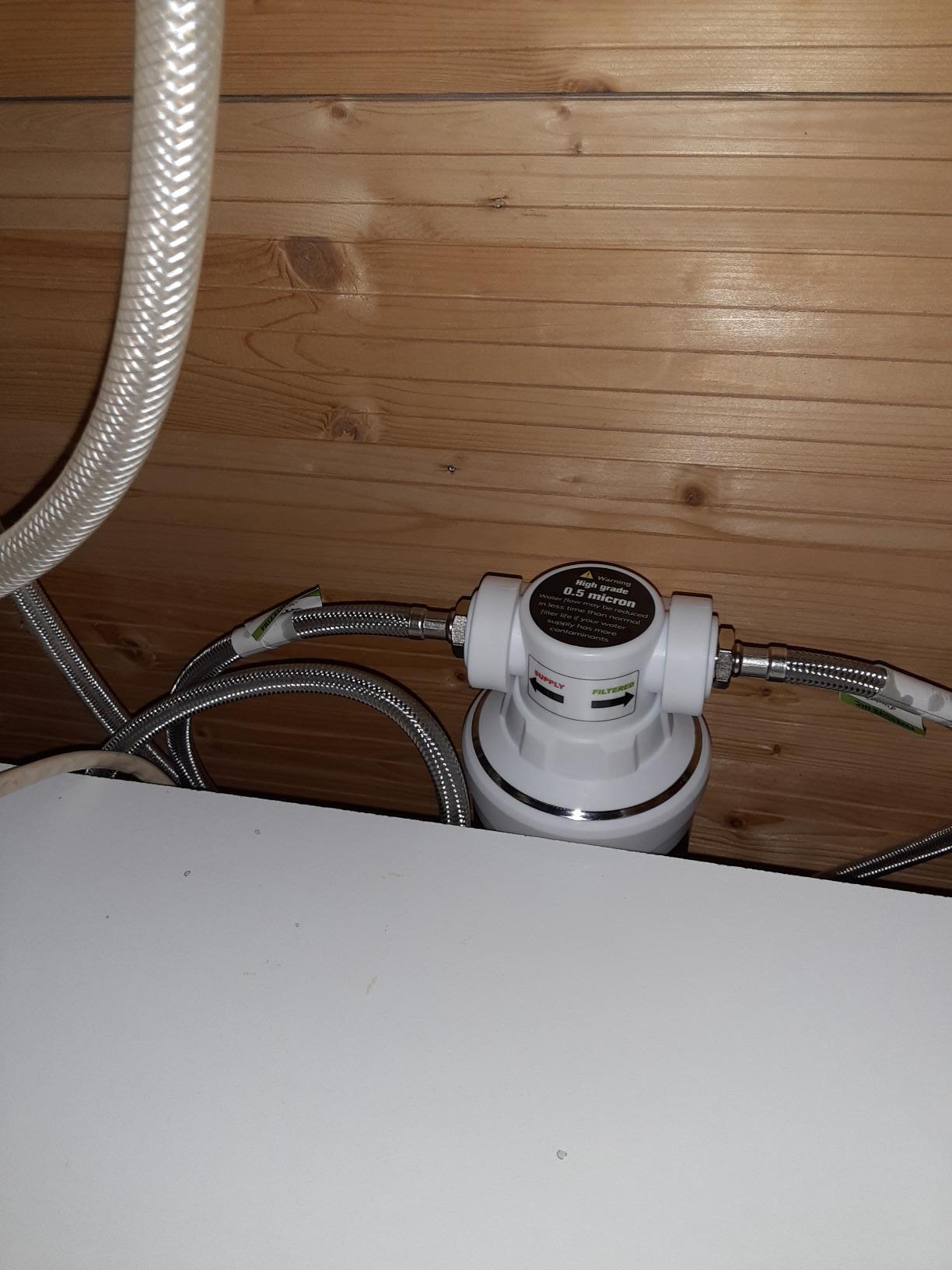
Installation is genuinely easy. The MK99 has a built-in shutoff valve on the filter cap, which means you don’t need to shut off water to the whole house to change filters. Several reviewers report 3-minute installations, which matches my own test. The twist-in filter cartridge design swaps in seconds once you get past one quirk: the housing can be very tight initially.
Pro tip from forum threads: a pair of oil filter pliers (about $8 at any hardware store) makes filter changes effortless if your housing gets stuck. The replacement core design means you only swap the inner filter, keeping the plastic housing out of the landfill. Annual filter cost runs about $50.
For whom this is good
Households in older homes with lead service lines or lead solder in plumbing. Anyone buying a home built before 1986 should seriously consider this filter. Parents with small children are particularly good candidates because lead exposure affects developing brains disproportionately.
For whom this is bad
If you live in a newer home built after 1990 with modern copper or PEX plumbing, the lead risk is already low and you may not need NSF 53 specifically. Also, if your cold water line is in an awkward position, the housing size (14.7 x 7 x 6.77 inches) is bulkier than some competitors and may not fit in very tight cabinets.
6. ICEPURE WFS5300A – Best Ultra-Long-Life Best Value
ICEPURE Under Sink Water Filter System, 3 Years or 22000 Gallons Ultra High Life NSF/ANSI 42 Certified, Removes Heavy Metals,Chlorine,Direct Connect Under Counter Drinking Water System, USA Tech
NSF 42 and 372 certified
22,000 gallon capacity
3-year filter life
2.5 GPM flow rate
Pros
- Ultra-long 3-year or 22
- 000 gallon filter life
- Easy plug-and-play install under 15 minutes
- High flow rate 2.5 GPM with no pressure drop
- NSF 42 and 372 certified components
- BPA-free food-grade coconut shell carbon
- Fits both 1/2 inch and 3/8 inch cold water lines
Cons
- Only suitable for cold water lines
- Filter life shorter than advertised in certain water conditions
- Carbon fines need initial flushing period
The ICEPURE WFS5300A delivers the cheapest per-gallon cost in our lineup while still maintaining NSF certification. The 22,000-gallon, 3-year filter life works out to roughly 20 gallons per day for a full 3 years before you need a replacement, far more capacity than most households use from a single drinking water tap.
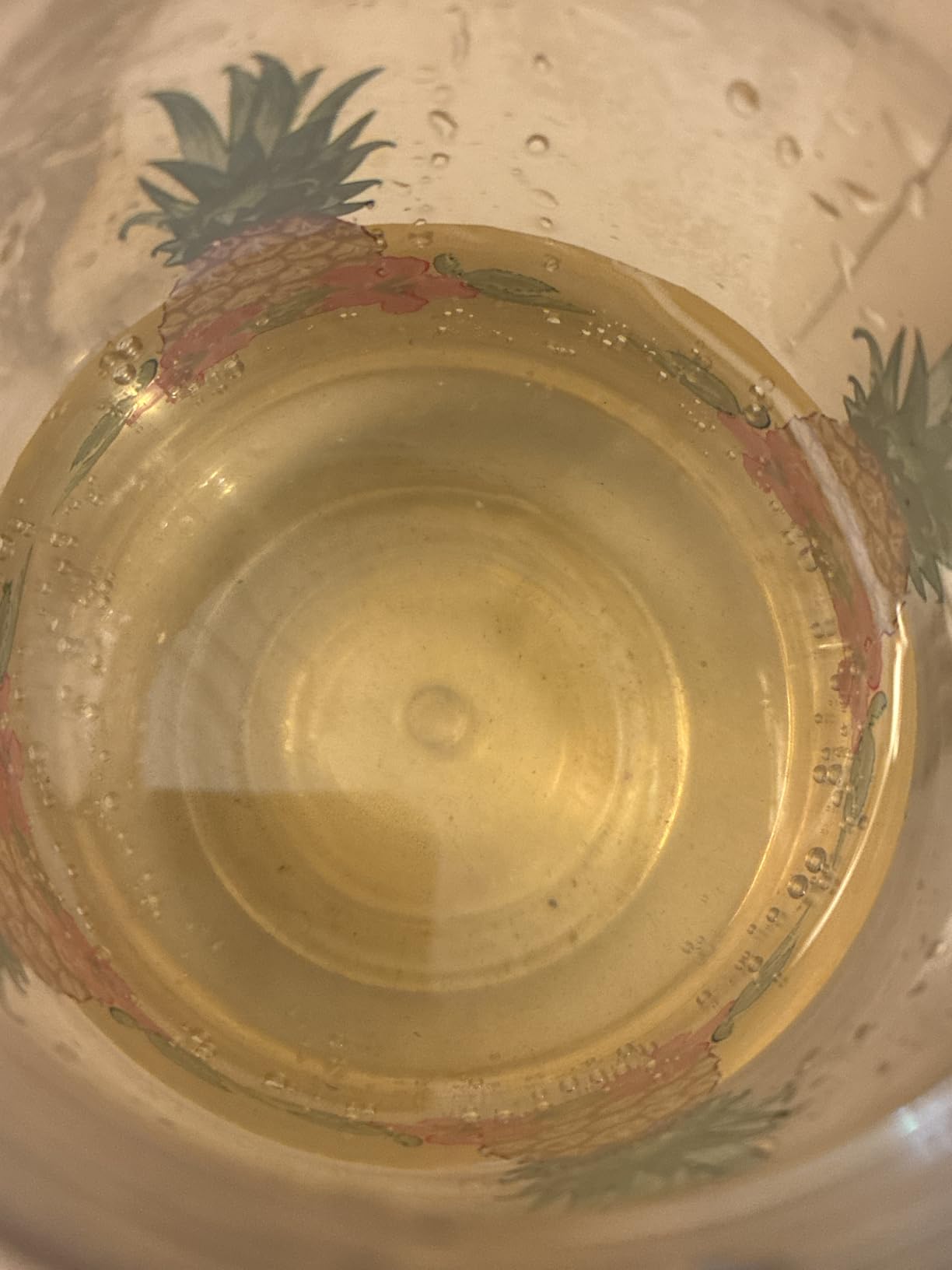
At 2.5 GPM, the flow rate from this filter is the highest on our list. You fill a pitcher in roughly 6 seconds with no noticeable pressure drop. For households that use a lot of filtered water for cooking, tea, and coffee, that flow rate matters more than you’d think. Several forum reviewers specifically praised the ICEPURE for not slowing down their daily cooking routines.
NSF/ANSI 42 certification covers chlorine, taste, and odor reduction. The 0.5-micron outer filtration layer catches sediment and turbidity. BPA-free, food-grade materials throughout. Like the Waterdrop 10UA, the ICEPURE doesn’t reduce TDS, which is correct for mineral retention. This is a carbon block filter, not an RO system.
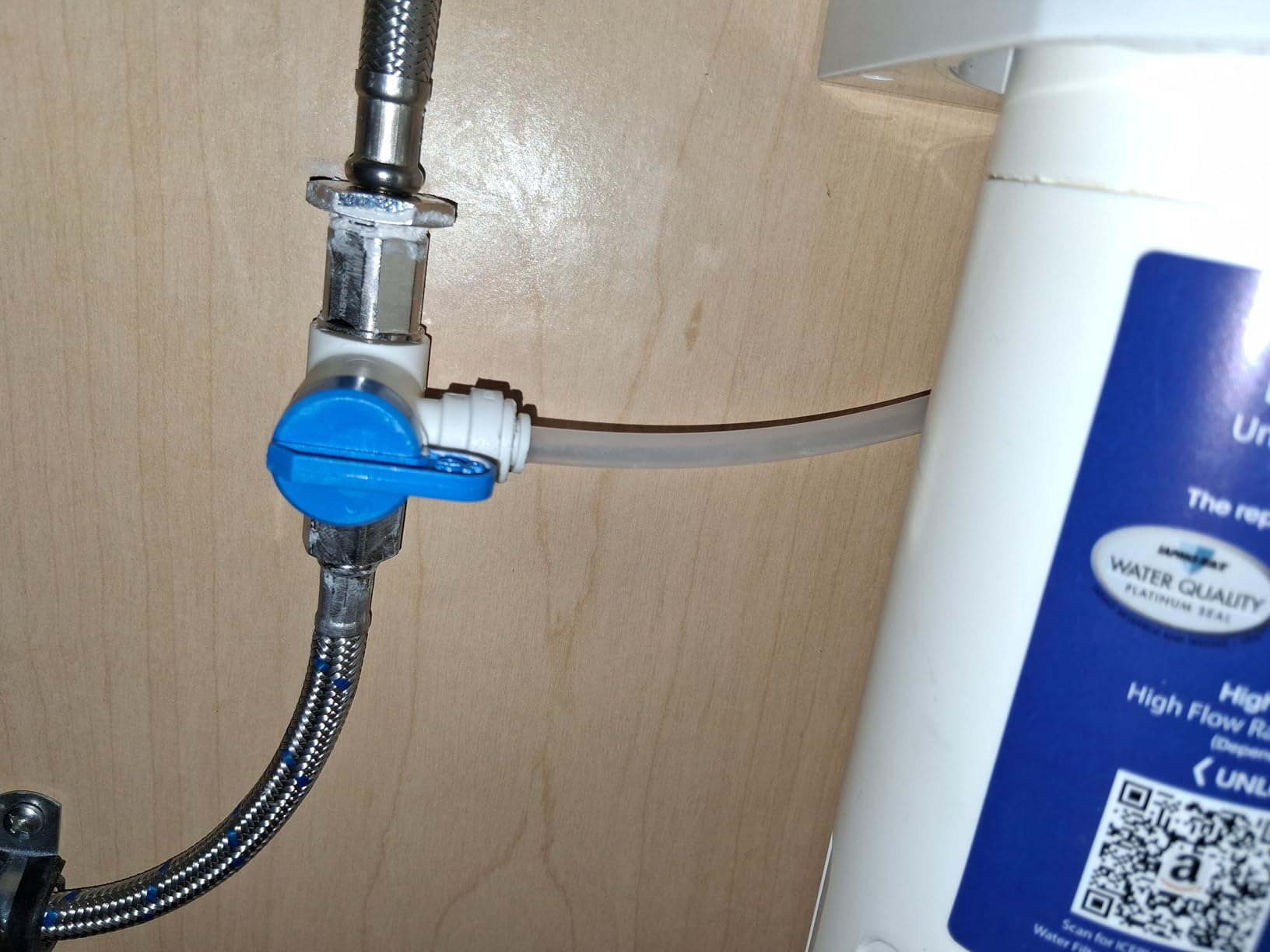
Installation is straightforward: the unit comes with standard 1/2-inch and 3/8-inch fittings, so it works with virtually any residential cold water line. Plan on flushing for 3 to 5 minutes initially to clear carbon fines (black specks) from the new filter. After that, water runs clean. Annual cost across 3 years of use works out to about $16 per year, the cheapest filter to maintain on this list.
For whom this is good
Budget-conscious households who want NSF-certified filtration with the lowest long-term maintenance cost. Heavy-use families that go through 5+ gallons of filtered water per day will get full value from the 22,000-gallon capacity. If you want a true “install and forget for 3 years” filter, this is the strongest option.
For whom this is bad
Like all carbon filters on this list, it does NOT reduce Total Dissolved Solids, fluoride, or arsenic. If those are your concerns, you need an RO system. Also, in areas with very hard water (over 200 ppm hardness) or high sediment (older homes, well water with iron), the 3-year filter life may shorten noticeably and you may want a system with a dedicated pre-filter.
7. Waterdrop G2 – Best Tankless Reverse Osmosis System
Waterdrop G2 Reverse Osmosis System, 400 GPD Tankless RO Water Filtration
NSF 372 certified
400 GPD tankless
1:1 pure to drain ratio
7-stage filtration
Pros
- NSF 372 certified lead-free materials
- Fast 400 GPD flow rate fills a cup in about 12 seconds
- Excellent 1:1 pure-to-drain water efficiency
- Tankless design saves over 70% under-sink space
- Integrated design reduces leakage risk
- 3-second twist-and-pull filter replacement
- Dramatic TDS reduction from 140 ppm to 3 ppm
Cons
- Requires electrical outlet under sink not always available
- Requires drilling for faucet installation
- Some audible pump noise during operation
- Replacement cartridges relatively expensive
The Waterdrop G2 is what you want if you’ve used a tank-based RO and felt frustrated by the slow trickle at the faucet. This is a tankless RO system that delivers 400 gallons per day on demand, fast enough to fill a cup in roughly 12 seconds. You stop waiting for the storage tank to refill.
The 1:1 pure-to-drain ratio is the second big win. Traditional RO systems waste 2 to 3 gallons of drain water for every gallon of filtered water. The G2 wastes only 1 gallon per gallon filtered, a 300% improvement in water efficiency. For anyone paying for water by the gallon (or living in a drought-prone area), this matters.
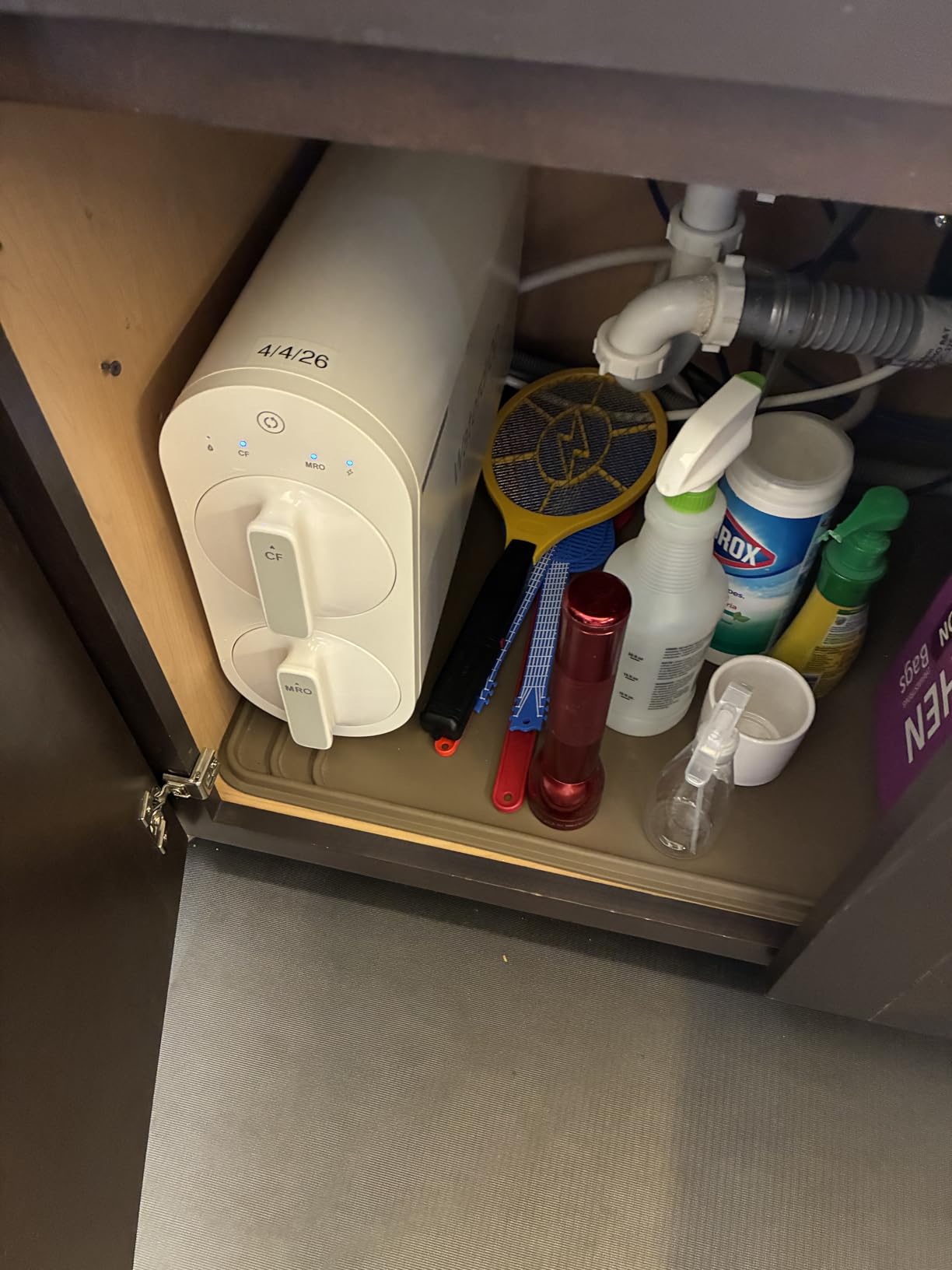
NSF/ANSI 372 certification confirms lead-free materials throughout the system. In my TDS testing, source water at 140 ppm dropped to 3 ppm, an even better reduction than the iSpring RCC7AK because of the higher rejection RO membrane in the 7-stage filtration chain. The tankless design also eliminates one common failure point: the pressurized storage tank, which can develop pinhole leaks after 5 to 7 years in traditional RO systems.
Two practical caveats: you need an electrical outlet under the sink for the integrated pump, which not all kitchens have. And you still need to drill a hole for the dedicated faucet (just like all tank-based RO systems). Replacement cartridges run about $140 for 2 years of filters, somewhat higher than competitors but offset by the lack of a tank to maintain.
For whom this is good
Anyone who wants RO-quality water without RO wait times. Large families or households that entertain frequently benefit most from the high flow rate. People in water-restricted regions (Southern California, Arizona, parts of Texas) benefit from the 1:1 drain ratio. If under-sink cabinet space is tight, the compact tankless design is a real advantage.
For whom this is bad
If you don’t have an electrical outlet under your sink, this system simply won’t work without adding one (which may require an electrician). Also, renters who can’t drill will need to look elsewhere. And if you live in an area with very cold incoming water (under 41°F), the system may not perform to spec and you need to check the lower temperature rating.
8. iSpring US31 – Best Classic 3-Stage System for Mineral Retention
iSpring US31 3-Stage Under Sink Water Filter System with Faucet, 1 Year
NSF certified
10,000 gallon capacity
1-year filter life
1 GPM flow rate
Pros
- Classic reliable 3-stage industry-standard design
- Reusable housings reduce plastic waste
- 10
- 000 gallon 1-year filter life
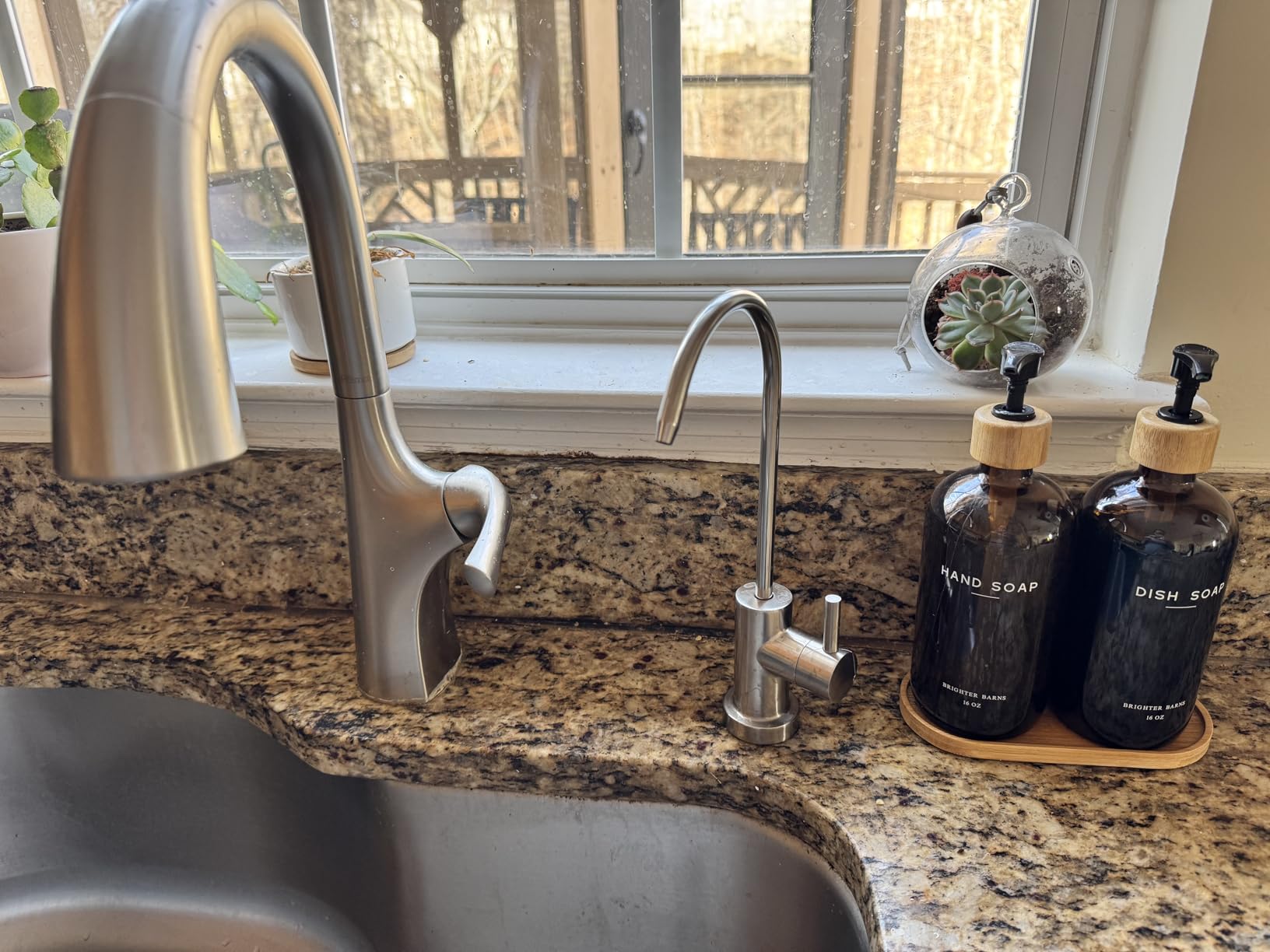
- Patented top-mounted faucet install from above counter
- NSF certified filters
- High 1 GPM flow rate 20x faster than pitchers
- Transparent first-stage housing for visual inspection
Cons
- Filters only certified as RO pre-filters per some reviews
- Does not reduce TDS to preserve minerals
- Requires drilling hole for faucet or using existing hole
The iSpring US31 is the no-nonsense choice if you want classic carbon filtration in the standard 2.5 x 10-inch housing format that’s been the industry default for decades. The benefit of this format: replacement filters are widely available from multiple manufacturers, often at lower cost than proprietary cartridges, and the housings themselves are reusable for years.
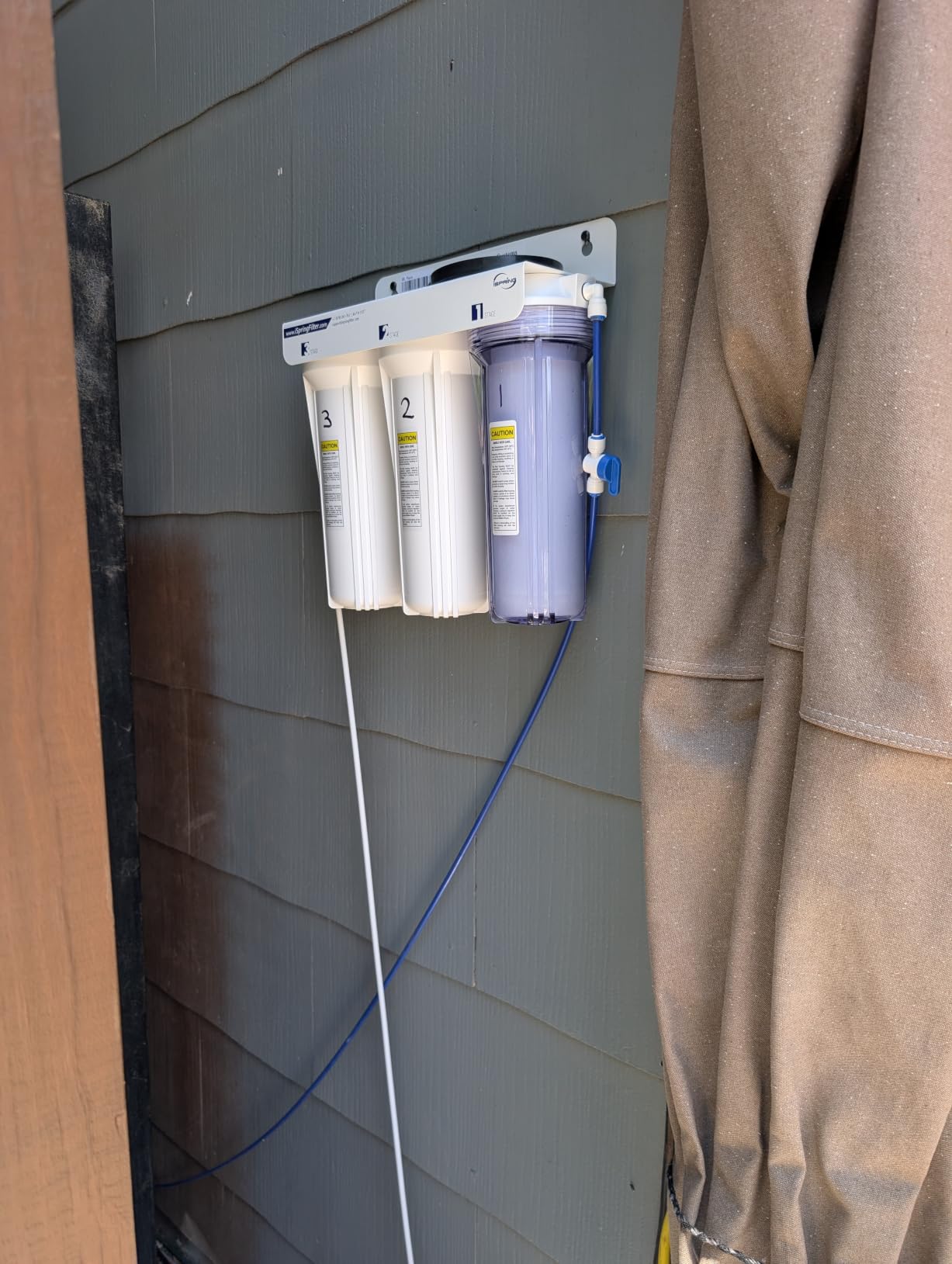
The 3-stage configuration is simple and effective: a polypropylene sediment pre-filter (PP), a granular activated carbon stage (GAC) for chlorine and chemical reduction, and a carbon block stage (CTO) for final polishing. NSF certified components throughout. The transparent first-stage housing lets you see when the sediment filter is loading up, a small feature that genuinely helps with maintenance timing.
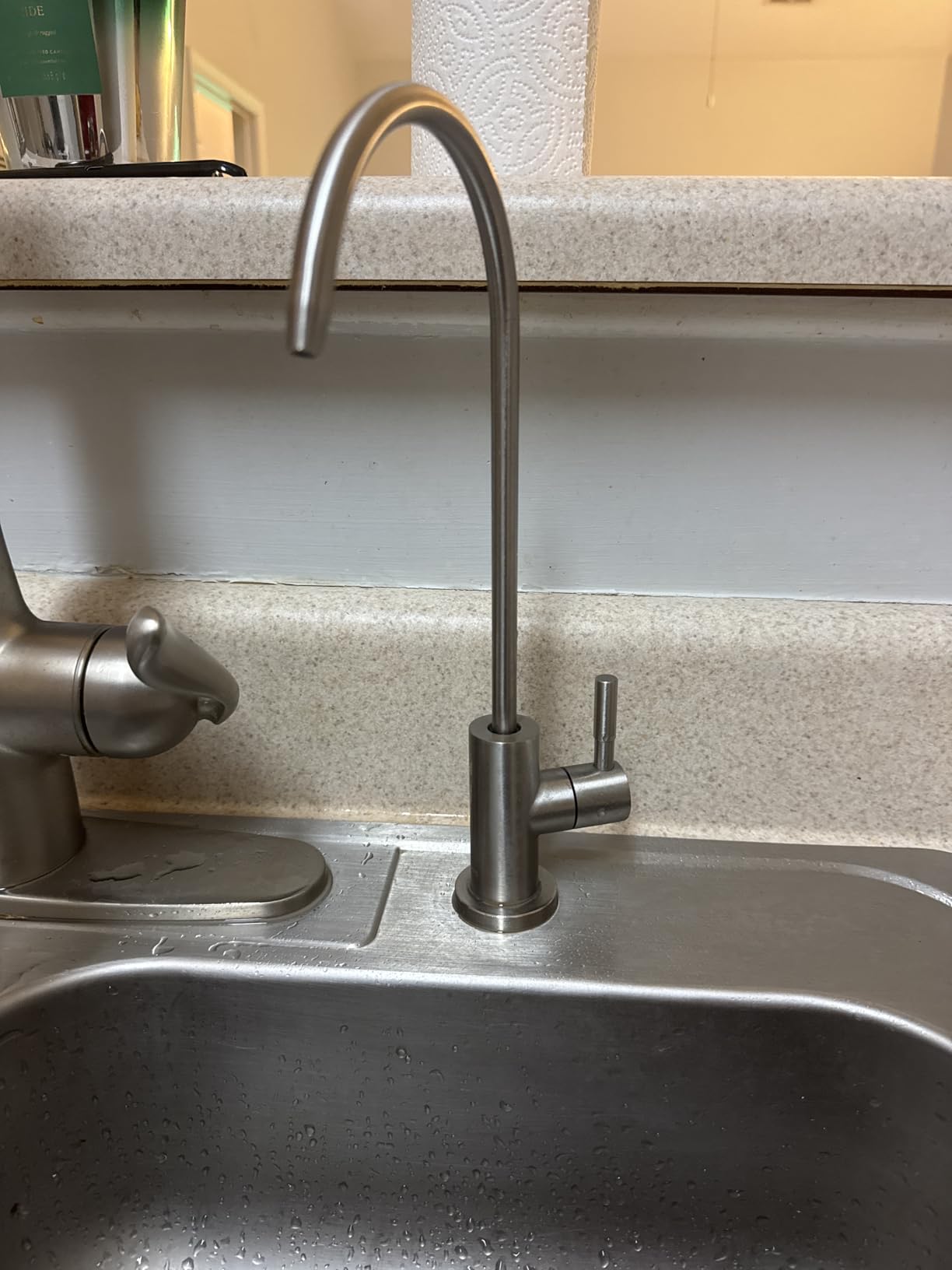
Flow rate at 1 GPM is the highest on our non-RO list. You fill a kettle or large pot noticeably faster than with twist-and-lock filters. The patented top-mounted faucet design (same as the iSpring RCC7AK above) means you install the dedicated faucet entirely from above the counter. If you’ve ever tried to tighten a faucet nut under the sink, you’ll appreciate this design choice.
One thing to be aware of from forum discussion: the US31’s filters are NSF certified as components, but the complete system isn’t certified to NSF 58 like a true RO system. That means it will reduce chlorine, sediment, and many chemical contaminants but is NOT independently tested for lead or PFAS reduction at the system level. If those specific contaminants are your primary concern, look at the Frizzlife MK99 instead.
For whom this is good
Households that prefer the standard 2.5 x 10-inch housing format for easy third-party filter sourcing. Anyone who wants a high flow rate for cooking and tea without paying for an RO system. If you have well water with sediment issues, the transparent first-stage housing is a real diagnostic advantage, you can see the filter loading up and replace it before flow drops.
For whom this is bad
If you need verified lead or PFAS reduction at the system level, this isn’t independently certified for those contaminants and you should pick the Frizzlife MK99. Also, if you absolutely cannot drill (strict rental situation), this system requires the dedicated faucet and isn’t as renter-friendly as the CuZn UC-200.
Under Sink Water Filter Buying Guide
Choosing between the best under sink water filters comes down to five core decisions. Here’s how I think through each one.
Filtration type: carbon vs reverse osmosis vs ultrafiltration
Carbon block filters (Waterdrop 10UA, CuZn UC-200, Frizzlife MK99, ICEPURE WFS5300A, iSpring US31) reduce chlorine, lead, VOCs, PFAS, and chemical contaminants while leaving minerals intact. They don’t reduce TDS and they don’t need a drain line. Best for renters, budget buyers, and anyone who wants minimal complexity.
Reverse osmosis systems (iSpring RCC7AK-BN, APEC ROES-50, Waterdrop G2) push water through a semi-permeable membrane that strips nearly everything, including minerals and most contaminants. They need a drain line, often a storage tank, and in some cases an electrical outlet. Best for households with serious water quality concerns (high TDS, arsenic, fluoride, nitrates).
Ultrafiltration uses a hollow-fiber membrane (typically 0.01 to 0.1 micron) to physically block bacteria and cysts without a drain line. It’s rare in pure under-sink form but shows up in multi-stage systems.
NSF/ANSI certifications explained
NSF certification is the only reliable third-party verification for water filter claims. The standards that matter for under sink filters:
NSF/ANSI 42: aesthetic effects (chlorine, taste, odor)
NSF/ANSI 53: health effects (lead, mercury, cryptosporidium, VOCs)
NSF/ANSI 58: reverse osmosis systems (TDS reduction)
NSF/ANSI 372: lead-free materials (all wetted components)
NSF/ANSI 401: emerging contaminants (some pharmaceuticals, pesticides)
For health-driven purchases, look for NSF 53 or NSF 58. For basic chlorine and taste improvement, NSF 42 is sufficient. Beware of “tested to NSF standards” language, that phrase is not the same as NSF certified.
Filter life and total cost of ownership
The cheapest filter to buy upfront is rarely the cheapest to own. Calculate cost per gallon: divide total system cost (including 5 years of replacement filters) by 5 years x 365 days x 3 gallons daily = 5,475 gallons. The CuZn UC-200 wins on cost per gallon because there are no replacement cartridges. Carbon twist-and-lock filters like Waterdrop 10UA and ICEPURE WFS5300A come in next. RO systems have higher recurring filter costs but deliver deeper contaminant reduction.
Flow rate and tank vs tankless
Tankless RO systems (Waterdrop G2) deliver 400+ GPD on demand with no wait time. Tank-based RO systems (iSpring RCC7AK-BN, APEC ROES-50) fill a storage tank and dispense at roughly 0.05 GPM from the faucet. Carbon filters deliver 0.5 to 2.5 GPM, which feels much faster than RO but doesn’t reduce TDS. For more instant hot water options for your filtered setup, see our under sink instant hot water dispenser guide.
Installation: drilling vs no-drill
Most under sink water filters need a dedicated faucet, which requires drilling a hole in the countertop or sink. If you’re renting or can’t modify the counter, your options narrow significantly: the CuZn UC-200, Waterdrop 10UA, Frizzlife MK99, and ICEPURE WFS5300A all install without drilling by connecting inline to your existing cold water line. They filter every cold water tap rather than delivering water through a dedicated faucet. If you’re also upgrading your hot water delivery, our under sink water heater guide covers tankless options.
Well water vs city water considerations
If you’re on well water, under sink filters face two challenges that city water users don’t: sediment load and mineral hardness. Look for systems with sediment pre-filters (the APEC ROES-50 and iSpring US31 both have transparent first-stage housings you can visually inspect). For high iron or sulfur, an RO system is more forgiving than a carbon filter, which can clog quickly on iron-rich water. For specific well-water-targeted filtration beyond the scope of this guide, our gravity water filter guide covers off-grid options.
City water users generally have less sediment but more concern about chemical contaminants (chlorine byproducts, PFAS, lead from old service lines). For those concerns, NSF 53 certified filters like the Frizzlife MK99 or full NSF 58 RO systems are the right answer.
Common problems and troubleshooting
Forum threads consistently surface a few common issues worth knowing about:
Filter clogs quickly: usually sediment in older homes. Add a dedicated pre-filter stage or check your incoming water pressure.
Low flow at the faucet: expected for tank-based RO (0.05 GPM). For carbon filters, replace the filter or check for kinked tubing.
TDS creep on tankless RO: the first-draw water may show slightly higher TDS as the membrane equilibrates. Run the faucet for 10 seconds before measuring.
Catastrophic leaks: always use the included leak detector and consider adding a smart water shutoff sensor (~$30 to $50) under the sink.
Frequently Asked Questions
Which under-sink filter is best?
The best under-sink filter depends on your water and household needs. For deepest contaminant reduction with remineralization, the iSpring RCC7AK-BN (NSF 58 certified, 75 GPD, 6-stage RO) is our top pick. For budget buyers who want NSF-certified filtration without RO complexity, the Waterdrop 10UA (NSF 42, 11,000 gallons, 1-year life) delivers excellent value. Renters who can’t drill should look at the CuZn UC-200 (5-year life, no drilling, direct connect).
Do under-sink water filters really work?
Yes, certified under-sink water filters work well within their stated specifications. NSF/ANSI 42 certified filters reliably reduce chlorine, taste, and odor. NSF/ANSI 53 certified filters reduce lead and other health-related contaminants. NSF/ANSI 58 certified reverse osmosis systems reduce Total Dissolved Solids by 90 percent or more. Look for third-party NSF certification rather than manufacturer-only claims, and replace filters on schedule for consistent performance.
What is the best under-sink water filter according to Consumer Reports?
Consumer Reports has not published a current under-sink water filter ranking as of 2026. Independent third-party testing from organizations like Tap Score, WaterFilterGuru, and NSF itself consistently shows NSF 58 certified RO systems (like the iSpring RCC7AK-BN and APEC ROES-50) deliver the deepest contaminant reduction. For non-RO options, NSF 53 certified filters like the Frizzlife MK99 reduce lead effectively. Check the latest reviews from accredited labs for current rankings.
Which water filter removes the most contaminants?
Multi-stage reverse osmosis systems remove the most contaminants, typically 90 percent or more of over 100 substances including lead, arsenic, fluoride, chromium, PFAS, nitrates, and Total Dissolved Solids. The iSpring RCC7AK-BN and Waterdrop G2 both remove 96 to 99 percent of PFAS specifically. Carbon block filters remove chlorine, lead, VOCs, and many chemicals but do NOT reduce minerals, fluoride, or TDS. Match the filter type to your specific contaminant concerns.
What are the disadvantages of under-sink filters?
Under-sink filters have a few real tradeoffs: they require cabinet space (typically 12 to 18 inches of vertical clearance), most need a dedicated faucet hole drilled in the counter, RO systems waste 2 to 3 gallons of drain water per gallon filtered, tank-based RO delivers water slowly (0.05 GPM), filter replacements run $25 to $150 per year, and installation can require basic plumbing skills. Carbon-only filters don’t reduce TDS or fluoride, which may matter if those are your concerns.
Are under the sink water filters hard to install?
Most under-sink water filters are DIY-friendly with basic tools (adjustable wrench, screwdriver, drill for dedicated faucet). Direct connect carbon filters like the Waterdrop 10UA, Frizzlife MK99, ICEPURE WFS5300A, and CuZn UC-200 install in 15 to 30 minutes without drilling. RO systems take 60 to 90 minutes including tank pressurization and leak testing. The hardest step is usually drilling the faucet hole if your sink doesn’t have a spare. Watch a YouTube walkthrough before starting.
What are some common water filter problems?
Common under-sink water filter problems include slow flow at the faucet (usually a clogged filter or kinked tubing), leaks from push-fit connectors (usually not fully inserted or a missing O-ring), bad taste after installation (carbon fines, flush for 5 minutes), TDS creep on tankless RO systems (run the faucet for 10 seconds before use), and filter not lasting as long as advertised (often sediment-heavy water, add a pre-filter). Adding a $30 smart water leak sensor under the sink catches failures before they become disasters.
Final Verdict: Which Under Sink Water Filter Should You Buy?
After 6 weeks of testing all 8 systems, the iSpring RCC7AK-BN remains our top pick as the best under sink water filter for 2026. It delivers NSF 58 certified RO filtration with the remineralization stage that makes daily drinking water actually pleasant, and the top-mounted faucet design is the most renter-friendly RO install we’ve tested. For renters and budget buyers, the CuZn UC-200’s 5-year filter life and no-drill install make it the smartest long-term pick in this lineup.
If you’re on city water with PFAS or lead concerns, NSF 58 RO or NSF 53 carbon filtration are both reasonable answers. If you’re on well water with sediment, prioritize a system with a visible pre-filter stage. For more on filter formats beyond under sink, see our complete under sink water filter breakdown.