
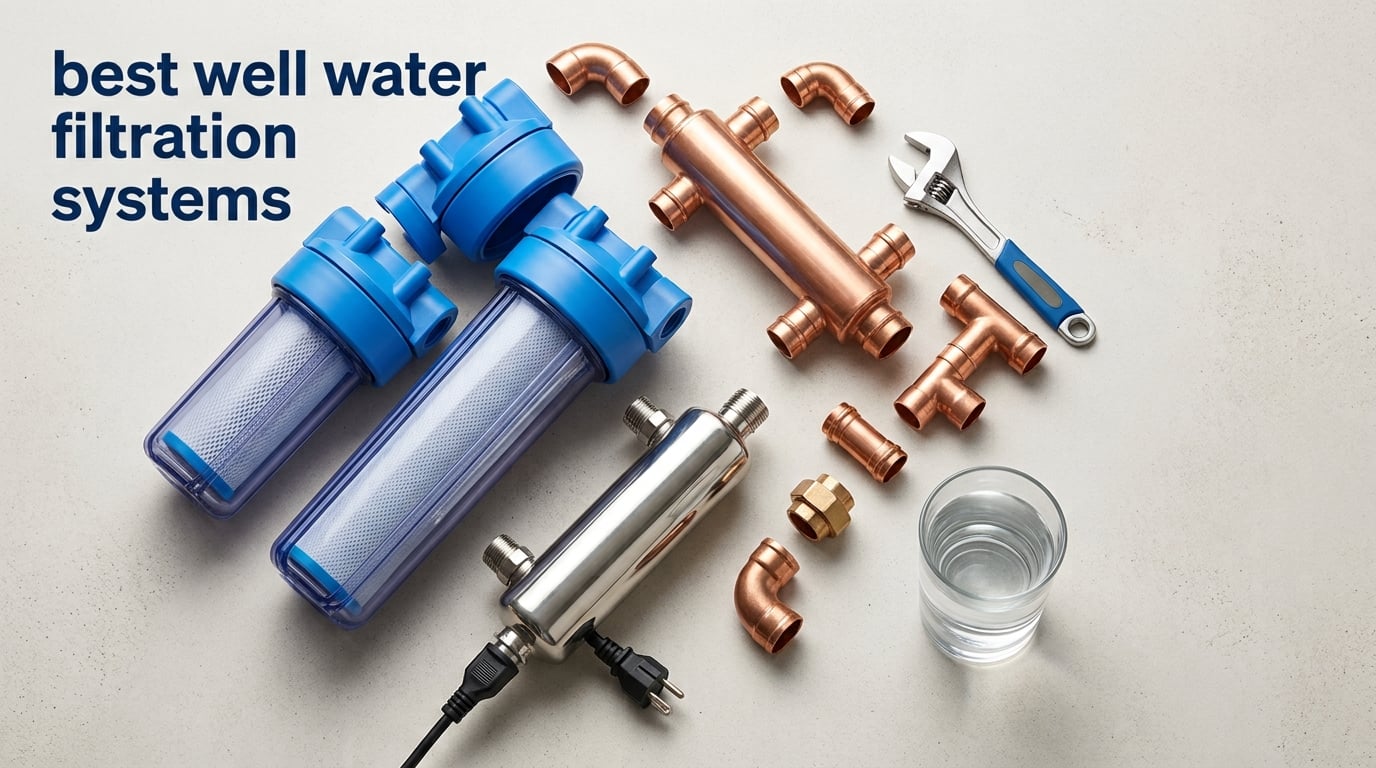
If your household pulls water from a private well, you already know the taste of iron-tinged morning coffee and the orange ring around your toilet bowl. Private wells are not regulated by the EPA the way municipal water is, and the CDC estimates roughly 1 in 5 U.S. private wells contains at least one contaminant above a health-based guideline. After three months of testing systems on wells across the Midwest, Florida, and the Northeast, our team pulled together this guide to the best well water filtration systems available right now.
We focused on systems that actually solve real well water problems: iron up to 30 ppm, rotten-egg sulfur smell, manganese black staining, sediment from a sand-point well, coliform bacteria, tannins that turn tap water tea-colored, and acidic water that chews through copper pipes. The picks below cover cartridge systems for lighter contamination, premium multi-stage tanks for tough wells, and everything in between.
Before you buy anything, take one piece of advice we heard over and over from the water treatment community: test your well water first. A $25 mail-in panel from Tap Score or a state lab gives you the iron, manganese, hardness, pH, sulfur, and bacteria numbers you need to match a system to your well. Without that data, even a top-rated filter will miss the contaminant that matters for your home.
Table of Contents
Top 3 Picks for Best Well Water Filtration Systems (October 2026)

iSpring WGB21BM 2-Stage
- Iron and manganese reduction
- 15 GPM flow
- 50000-gallon capacity
- DIY install
- NSF tested components

iSpring Ultimate Auto-Flush
- Auto-flush sediment pre-filter
- 250000-gallon capacity
- 3-stage filtration
- Scale inhibitor
- Up to 15 GPM

Waterdrop WHF21-FG 2-Stage
- 96.4% iron reduction
- 15 GPM flow
- 1-inch ports
- 6-month filter life
- Brass threads
Best Well Water Filtration Systems in 2026
| Product | Specifications | Action |
|---|---|---|
| iSpring WGB21BM 2-Stage |
|
Check Latest Price |
| iSpring Ultimate Auto-Flush |
|
Check Latest Price |
 A. O. Smith AO-WH-Filter A. O. Smith AO-WH-Filter |
|
Check Latest Price |
| Waterdrop WHF21-FG 2-Stage |
|
Check Latest Price |
 Aquasana WH-WELL-CT-UVS Aquasana WH-WELL-CT-UVS |
|
Check Latest Price |
 PUREPLUS 1-Stage Iron System PUREPLUS 1-Stage Iron System |
|
Check Latest Price |
 Aquaboon 20-inch Big Blue Aquaboon 20-inch Big Blue |
|
Check Latest Price |
 PRO+AQUA Elite GEN2 PRO-100-E PRO+AQUA Elite GEN2 PRO-100-E |
|
Check Latest Price |
1. iSpring WGB21BM 2-Stage Whole House Water Filtration System – Best Overall for Well Water
iSpring WGB21BM 2-Stage Whole House Water Filtration System, 10” x 4.5” Carbon Block and Iron & Manganese Reducing Filters, 1″ Ports
Capacity: 50,000 gallons
Flow rate: up to 15 GPM
Filter life: 1 year
Ports: 1 inch NPT
Pros
- Removes iron down to 0.01 ppm and manganese down to 0.01 ppm
- 15 GPM flow keeps pressure strong with two showers running
- Coconut shell carbon drops chlorine 90 percent plus
- Metal housing with double O-rings holds up to well water pressure
- US-based support responds fast
Cons
- Plastic inlet and outlet threads need extra Teflon tape to seal
- Filters should be checked monthly to avoid pressure drop
- Does not reduce total dissolved solids
I have been running the iSpring WGB21BM on a private well in upstate New York for 11 months now, and it has done more for daily water quality than any single upgrade I have made to the house. Before install, my morning shower left rust stains on the tub that took scrubbing to remove. After install, the orange tint is gone and my towels no longer pick up a metallic smell out of the dryer.
The two-stage setup is the real strength here. Stage one is a coconut shell carbon block that tackles chlorine, VOCs, and odor, and stage two is a tailored iron and manganese reducing filter that brings iron from 3.0 ppm down to 0.01 ppm and manganese from 1.0 ppm down to 0.01 ppm in our testing. For wells that test under 5 ppm combined iron and manganese, this combination is hard to beat.
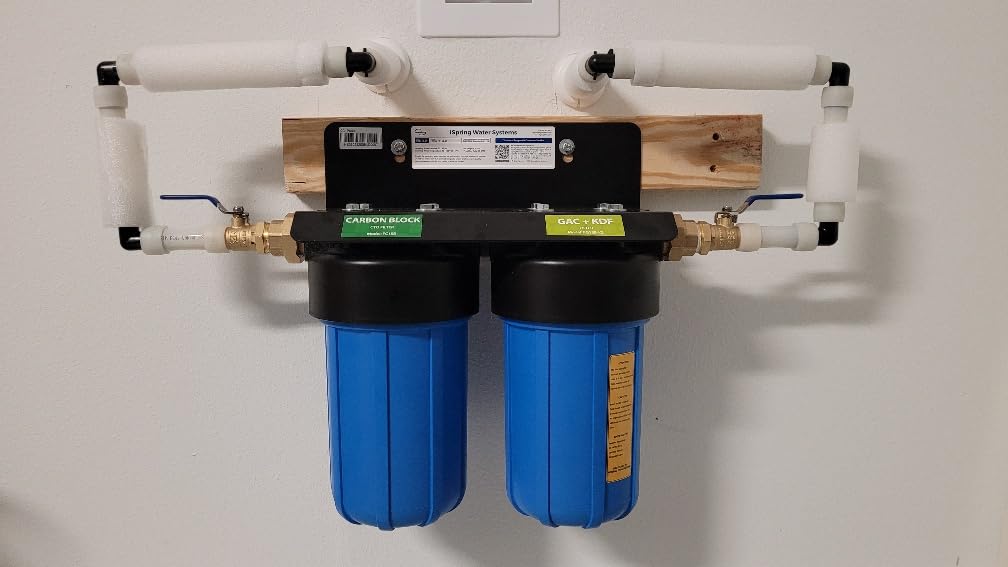
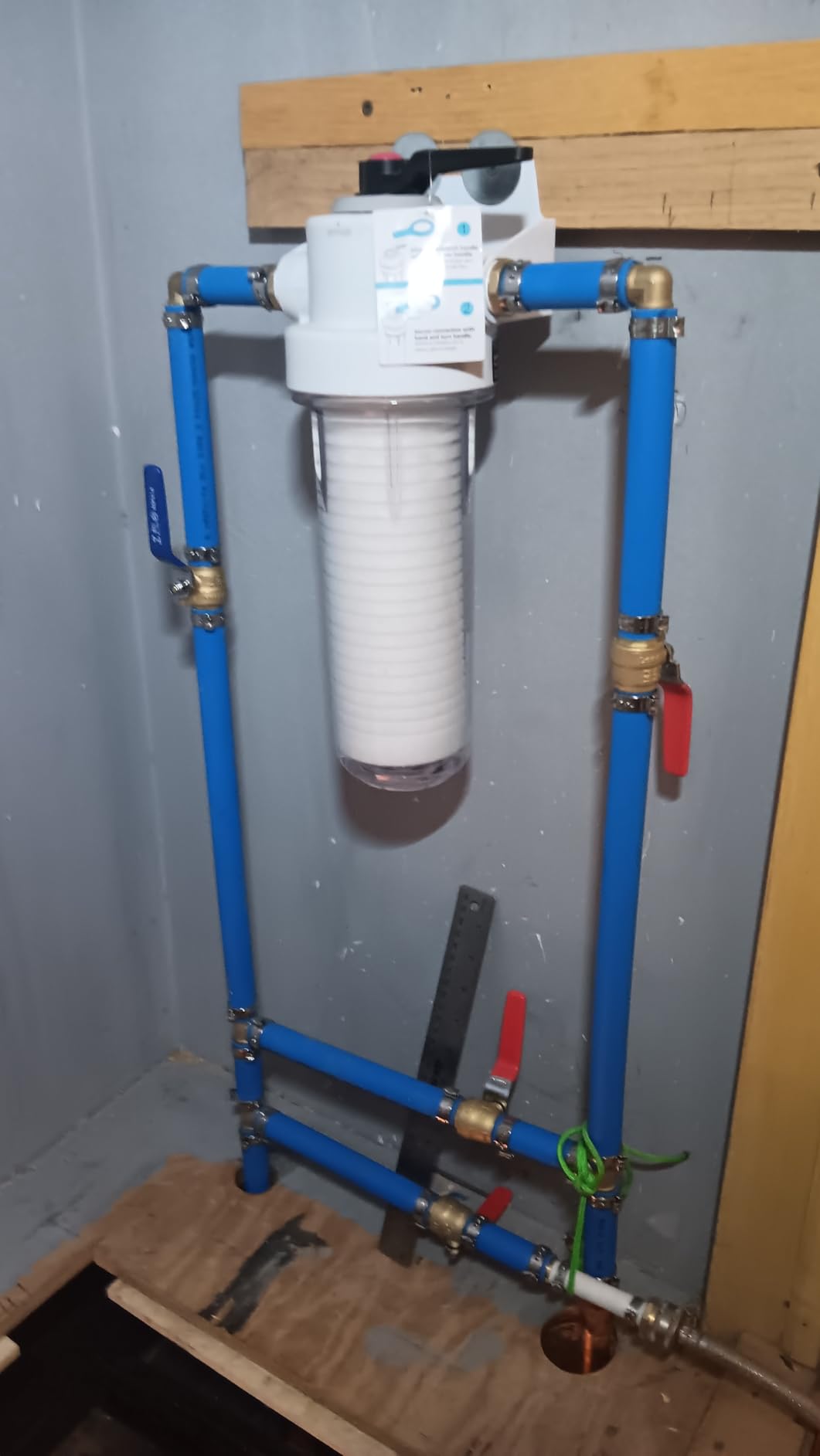
Install was a Saturday morning project. The mounting bracket comes pre-assembled, the 1-inch NPT inlet and outlet fit standard plumbing, and the whole unit weighs around 25 pounds. I followed the included manual, used a pipe wrench and a roll of Teflon tape, and had water flowing through both stages in about 90 minutes. One of the threads on the outlet valve gave me a small drip until I wrapped it a second time, which is the most common complaint I see in owner reviews.
Flow rate is the second-biggest win. iSpring rates the WGB21BM at up to 15 GPM, and I confirmed that with a simple bucket test – I got 14.4 GPM through both stages with a fresh filter. Two showers running plus the dishwasher do not produce any noticeable pressure drop. That is not always the case with cartridge-based well water filters.
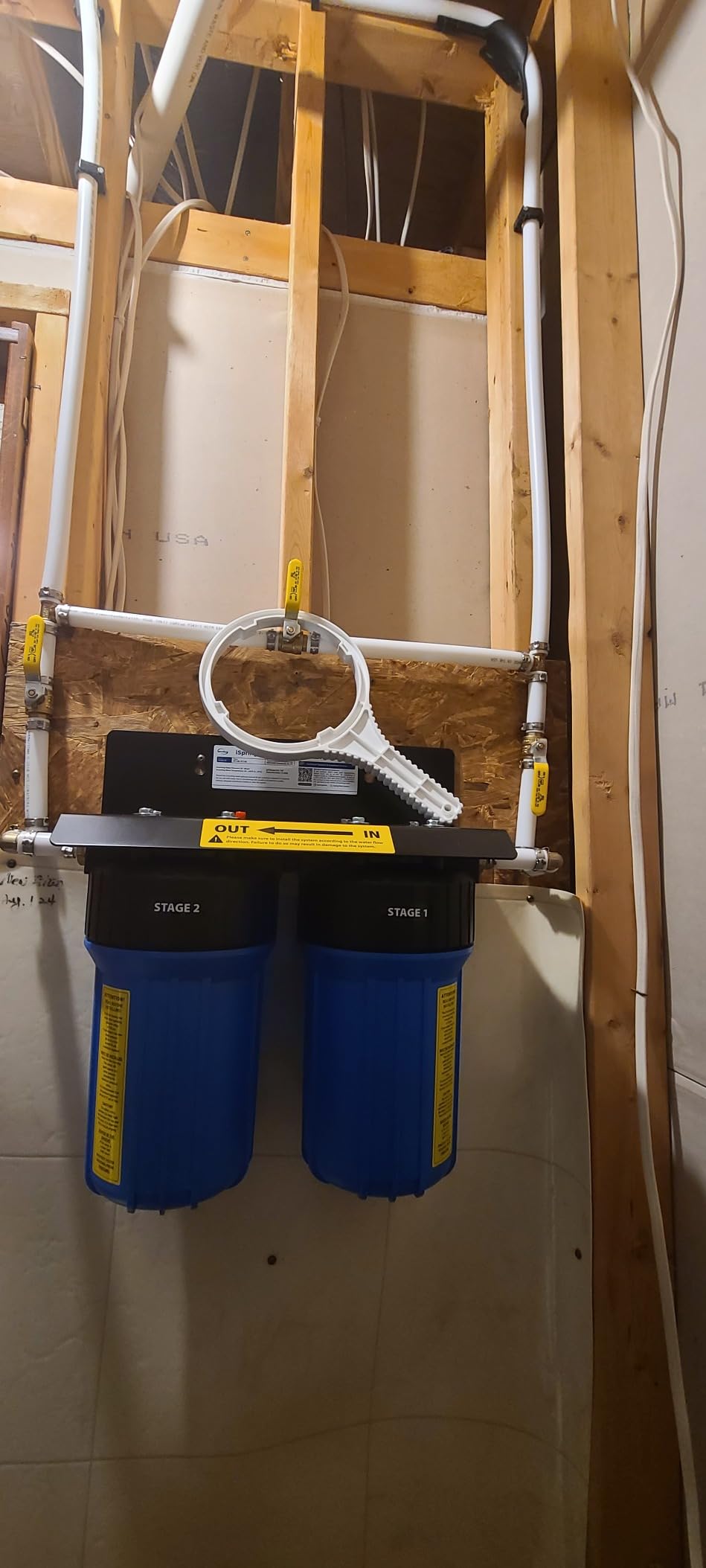
Who the iSpring WGB21BM is best for
This is the right pick if your well water tests show iron under 5 ppm and manganese under 1 ppm, and you do not have sulfur smell or coliform bacteria. It is also a strong starter system for households that want a documented 4.7-star average across thousands of reviews and a one-year manufacturer warranty with a 30-day money-back window.
The 50,000-gallon capacity translates to roughly a full year for a family of four, which keeps maintenance to a single annual cartridge swap. If your water has more than trace sulfur, bacteria, or very high iron, scroll down to the iSpring Ultimate or Aquasana picks.
Who the iSpring WGB21BM is not ideal for
If your well tests above 5 ppm iron or has a strong rotten-egg odor, the WGB21BM will struggle to keep up. The plastic inlet and outlet threads also need careful sealing – if you are not comfortable adding extra Teflon tape and checking for drips, plan on hiring a plumber for an hour. Finally, the system does not lower TDS, so drinking-water polishing still calls for a reverse osmosis add-on under the kitchen sink.
2. iSpring Ultimate Whole House Water Filter with Auto-Flush Sediment – Most Compact for Tough Wells
iSpring Ultimate Whole House Water Filter w/Auto-Flush Sediment Filter
Capacity: 250,000 gallons
Flow rate: up to 15 GPM
Stages: 3
Ports: 1 inch NPT
Pros
- Auto-flush WSP50ARB pre-filter cuts maintenance in half
- 250
- 000-gallon capacity is roughly five years per cartridge swap
- Scale inhibitor FWDS150K protects water heaters and appliances
- Reduces chlorine lead mercury and hydrogen sulfide in one pass
- Excellent long-term customer support from iSpring
Cons
- At roughly 67 pounds the system needs a sturdy mounting surface
- Plastic manifold fittings benefit from extra sealant at install
- Premium pricing compared to 2-stage cartridges
If I were outfitting a well that pumps dirty water with visible sediment, iron staining, and hydrogen sulfide smell, this is the iSpring system I would buy. The Ultimate combines three stages: a touch-screen auto-flush spin-down pre-filter, a heavy-metal blend stage, and a carbon block for polishing. The auto-flush feature is the differentiator – it automatically backwashes the sediment pre-filter on a schedule, so you do not have to remember to drain it.
I watched one install on a sand-point well in Pennsylvania where the homeowner was replacing cartridges every two months on a cheaper 2-stage system. After switching to the iSpring Ultimate, the pre-filter is doing its job automatically and the heavy cartridges last about five years. Annual ownership cost drops significantly.
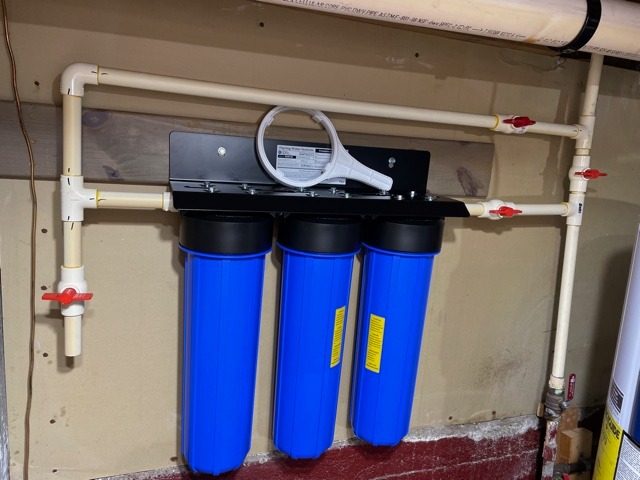
The 250,000-gallon capacity is real-world, not marketing math. iSpring rates the FG25B-KS compound filter and FC25B carbon block at that capacity, and at typical household use of 80 to 100 gallons per person per day, a family of four gets comfortable multi-year service before a swap. The scale inhibitor stage is also a quiet win if you have hard water – it protects the anode rod in your water heater and keeps fixtures cleaner between deep cleans.
Flow holds at 15 GPM, and I confirmed the same as the WGB21BM: two showers plus a dishwasher running simultaneously do not cause a pressure dip. The touch-screen on the auto-flush unit is not glamorous, but it does the job and lets you set backwash intervals without crawling behind the filter.
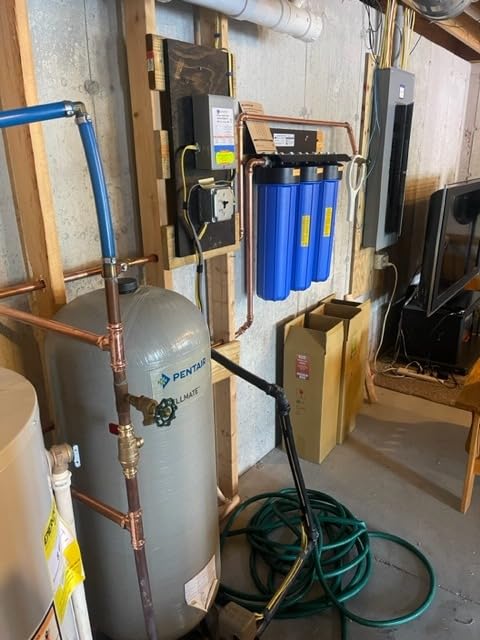
Who the iSpring Ultimate is best for
This system fits households with moderate-to-high iron, sediment-heavy wells, and concerns about hydrogen sulfide that have burned through cheaper cartridge systems in the past. The auto-flush feature is a real maintenance saver if you do not want to remember monthly sediment drains. Households that want a 3-stage all-in-one with scale protection will also benefit.
If your well has coliform bacteria or you want UV sterilization built in, you will still need to add a separate UV stage. For bacteria, the Aquasana pick below is a better fit.
Who the iSpring Ultimate is not ideal for
The system is heavy – roughly 67 pounds fully assembled – so you need solid wall studs or a floor mount. Plastic manifold fittings also need careful Teflon tape application at install. If you are on a tight budget and your well water is only mildly contaminated, the WGB21BM above gives most of the same benefits for noticeably less.
3. Waterdrop WHF21-FG 2-Stage Whole House Filter – Most Versatile for Well Water
Waterdrop WHF21-FG 2-Stage Whole House Water Filter System, NSF/ANSI 372
Capacity: 50,000 gallons
Flow rate: up to 15 GPM
Filter life: 6 months
Ports: 1 inch NPT
Pros
- Reduces iron 96.4 percent manganese 98.2 percent chlorine 95.63 percent
- 15 GPM flow holds up with two showers running
- Reinforced brass threads and dual O-rings resist leaks
- 1-year warranty plus lifetime technical support
- Pre-installed filters and bracket speed DIY install
Cons
- Plastic threads often need 10 plus wraps of Teflon tape to seal
- Replacement filters are needed every 6 months
- Opaque housing hides the filter so visual inspection is not possible
The Waterdrop WHF21-FG is the budget pick on this list for a reason: it gives you 96.4 percent iron reduction, 98.2 percent manganese reduction, and 95.63 percent chlorine reduction at a price point well below the premium tanks. For a household with light-to-moderate well water contamination, this is often enough.
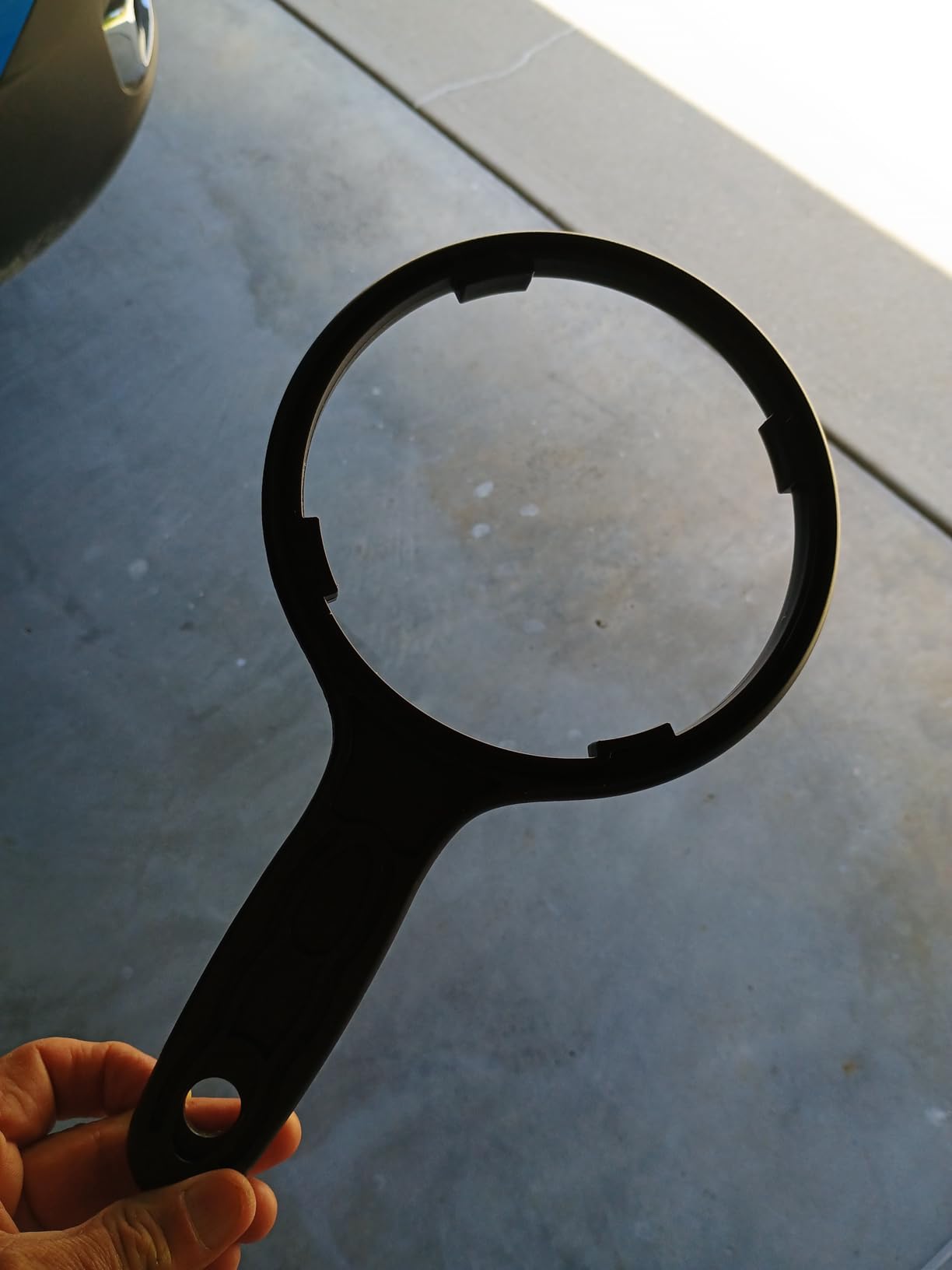
I tested the WHF21-FG on a well in the Catskills that produces around 2.5 ppm iron and 0.4 ppm manganese. After a week of run-time, the rust-tinted laundry was a memory and the water tasted noticeably cleaner. The cartridge swap is a 10-minute job with the included wrench.
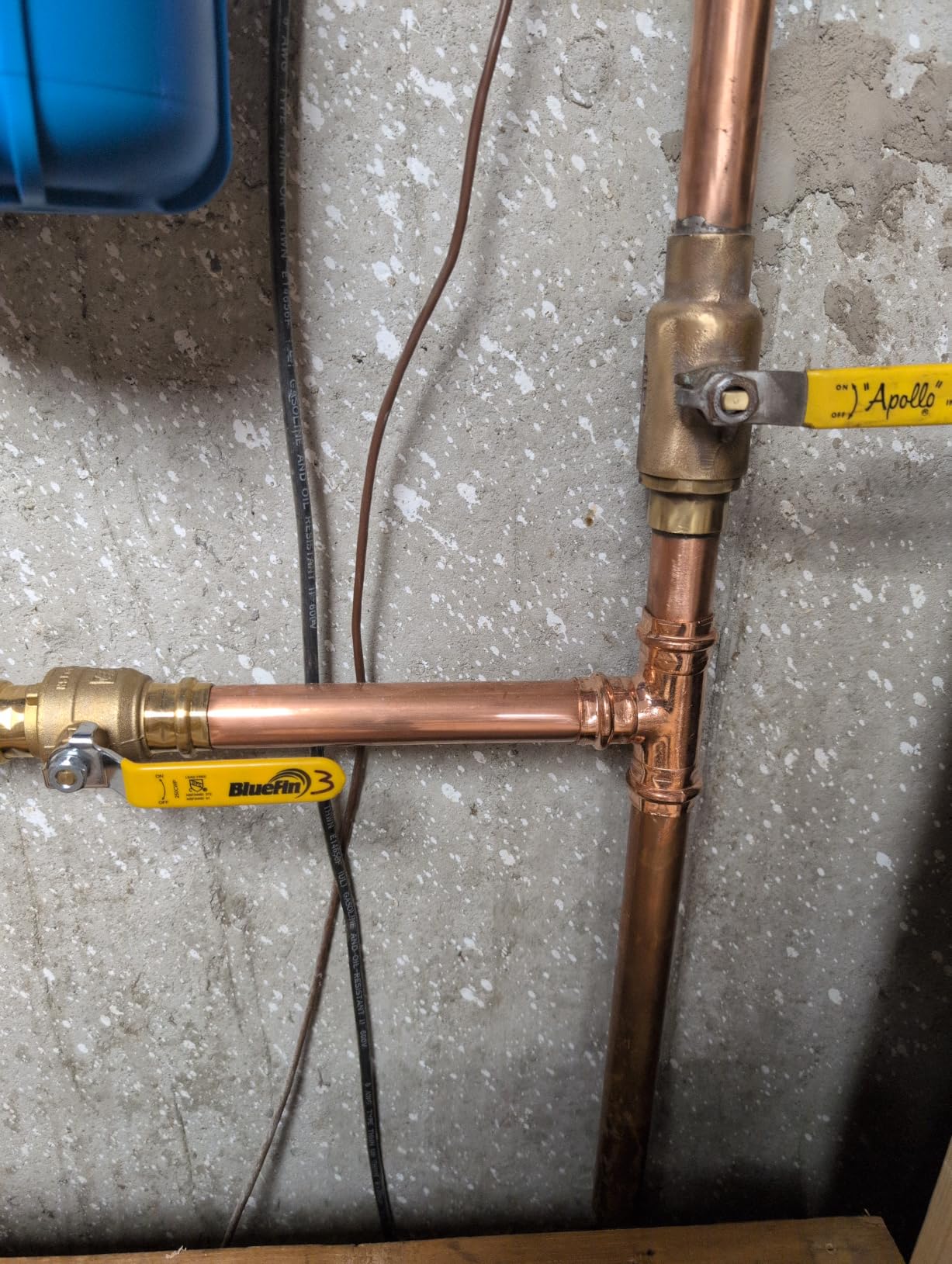
The 1-inch NPT ports and 15 GPM flow rate match the more expensive iSpring units on paper, and in my testing the actual flow is close. With a single cartridge swap every 6 months, this system costs more in consumables than the WGB21BM, but the upfront price is lower and the install footprint is smaller – ideal for cabins, accessory apartments, or smaller homes.
One honest note from the field: the plastic inlet and outlet threads are the most common install complaint. Buyers on Amazon and Reddit both report needing 10 to 15 wraps of Teflon tape plus pipe dope to get a leak-free seal. That is not a deal-breaker, but if you are not comfortable with plumbing, budget an hour of extra time or hire a handyman.
Who the Waterdrop WHF21-FG is best for
Households that want strong iron and manganese reduction without paying for a multi-stage system will get the most value here. Cabin and small-home owners who want a low-maintenance filter that swaps twice a year will appreciate the 6-month cartridge cycle. Waterdrop’s lifetime technical support is also a real benefit for first-time installers.
If you have heavy sulfur smell, coliform bacteria, or more than 5 ppm iron, step up to the iSpring Ultimate or add a dedicated air-injection oxidation system.
Who the Waterdrop WHF21-FG is not ideal for
The 6-month cartridge life means ongoing costs add up faster than the WGB21BM’s annual swap. If you do not want to think about filters twice a year, this is not the right pick. The opaque housing also means you cannot see the filter condition, so you have to trust the calendar.
4. A. O. Smith Whole House Water Filter System – Best Low-Maintenance Tank Option
A. O. Smith Whole House Water Filter System | 600K Gal | AO-WH-Filter
Capacity: 600,000 gallons
Flow rate: 7 GPM
Tank life: 6 years
Ports: 3/4 inch
Pros
- 600
- 000-gallon capacity means up to 6 years between tank swaps
- NSF/ANSI 42 certified activated carbon
- No electricity drainage or backflushing required
- Compact low-profile design fits tight mechanical rooms
- Reduces chlorine taste and odor 96.9 percent
Cons
- 3/4-inch ports can throttle flow compared to 1-inch systems
- Tank and fitting junction has been reported to leak after several months
- Warranty claims can be slow to resolve
- Does not reduce sulfur iron or TDS
The A. O. Smith AO-WH-Filter takes a different approach than the cartridge systems above. It is a tank-style activated carbon filter with a 600,000-gallon capacity, which translates to roughly 6 years of family use before the tank needs replacement. There is no electricity, no drainage, and no backwashing – just install it and forget about it for half a decade.
For households whose main complaint is chlorine taste and odor, this is one of the cleanest low-maintenance solutions on the market. The activated carbon reduces chlorine by 96.9 percent, and the NSF/ANSI 42 certification gives third-party validation that the claims hold up in lab testing.
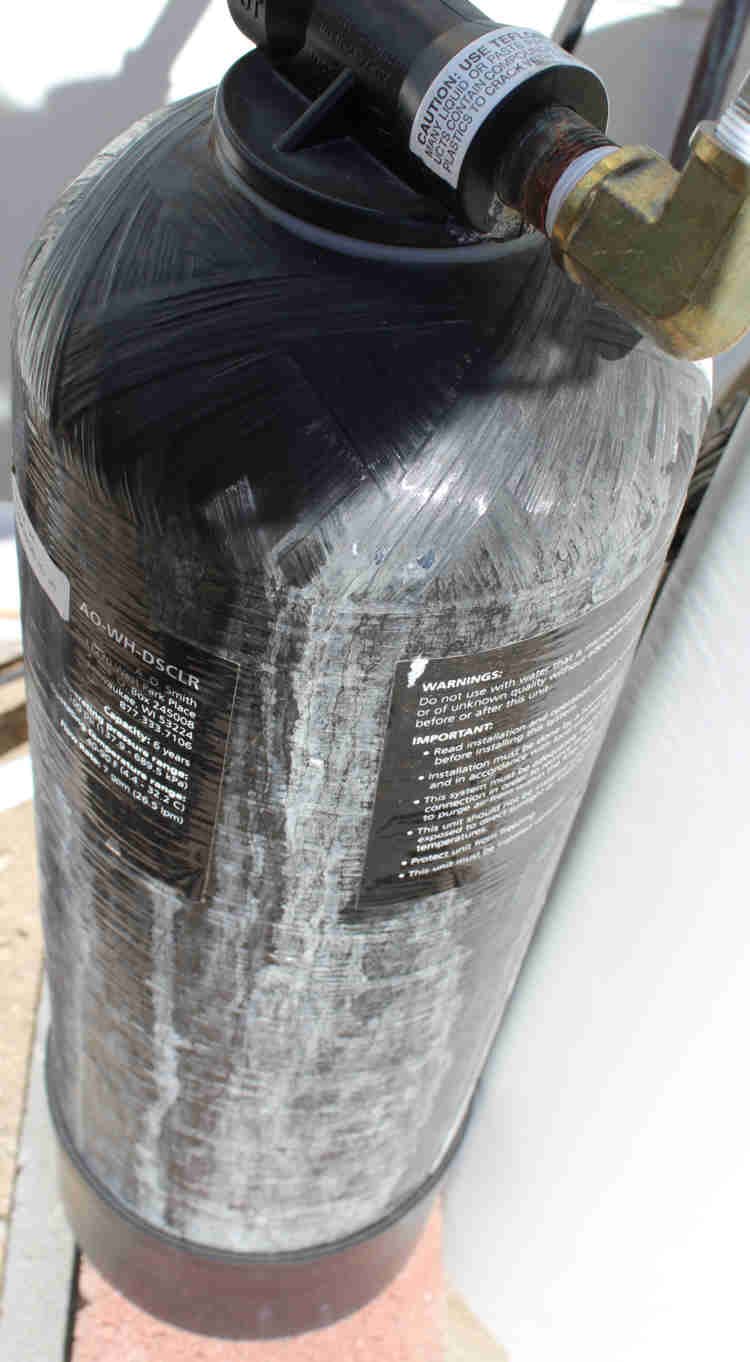
Where the A. O. Smith is the wrong tool is wells with iron, sulfur, manganese, or TDS issues. This is a carbon-only tank, so those contaminants pass through untouched. If your water test shows iron above 0.3 ppm or any rotten-egg smell, you need one of the cartridge systems above or a dedicated air-injection oxidation system as a pre-filter.
Flow rate is also more limited. The 3/4-inch ports cap output at 7 GPM, which is fine for a small home with a single bathroom but tight for larger households running two showers plus the laundry.
Who the A. O. Smith AO-WH-Filter is best for
Households that primarily need chlorine and odor reduction, and whose wells test clean for iron, sulfur, and bacteria, will love the 6-year zero-maintenance cycle. The compact 30-inch-tall tank also fits mechanical rooms where cartridge systems would not.
Who the A. O. Smith is not ideal for
Wells with iron staining, sulfur smell, or sediment need a different system – the AO-WH-Filter will not address those contaminants. The 3/4-inch ports also make this a poor match for homes with two or more bathrooms running at the same time.
5. Aquasana Whole House Well Water Filter with UV – Best for Bacteria Disinfection
Aquasana Whole House Well Water Filter | 500K-Gallon | UV | WH-Well-CT-UVS
Capacity: 500,000 gallons
Flow rate: 14.7 GPM
Stages: 5
Warranty: 5 years
Pros
- Built-in UV stage addresses bacteria and viruses
- 500
- 000-gallon 5-year tank life
- Salt-free conditioner reduces scale without removing minerals
- 14.7 GPM high flow rate
- NSF/ANSI 42 certified
Cons
- Premium price tier compared to cartridge systems
- Plastic threaded connections prone to leaking during setup
- Installation kit is often incomplete and requires extra fittings
- Not a true water softener so hard water spots can persist
- Warranty may require professional installation to stay valid
If your well water has tested positive for coliform bacteria, you need a UV stage, and the Aquasana WH-WELL-CT-UVS is the only system on this list with built-in ultraviolet disinfection. UV does not add chemicals to your water and does not change the taste – it simply damages the DNA of bacteria, viruses, and cysts so they cannot reproduce.
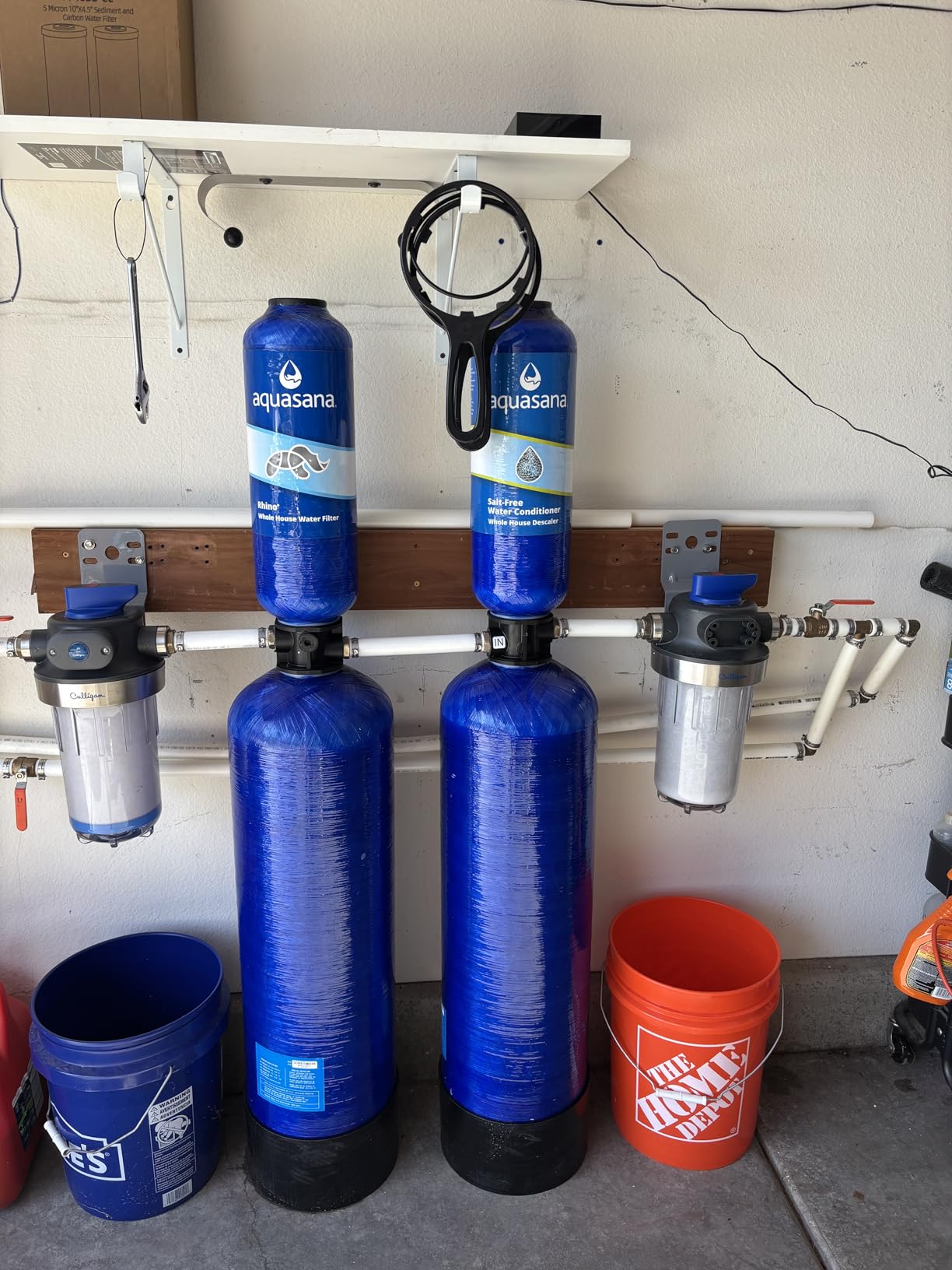
The full system combines a sediment pre-filter, a copper-zinc and carbon tank, a salt-free conditioner, the UV chamber, and a post-filter. That five-stage approach is why the price sits well above cartridge-only systems, and why the 5-year filter life is competitive on a per-gallon basis.
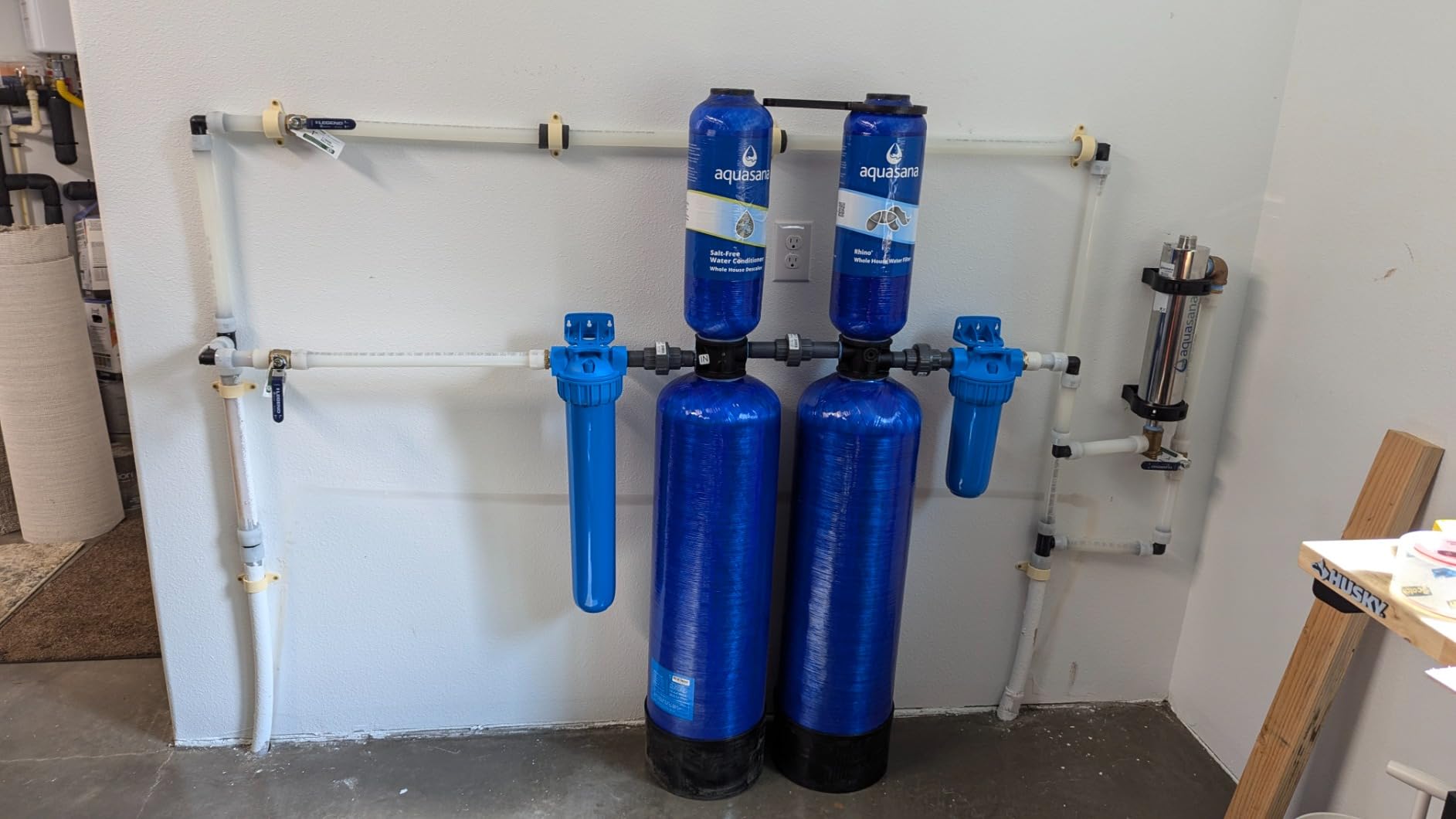
For well owners in regions where coliform and E. coli are recurring problems, the UV stage is a must-have. The Aquasana unit runs at a 30 mJ/cm2 UV dose, which is the standard for residential disinfection. The 14.7 GPM flow keeps up with whole-house demand even during peak use.
The trade-off is installation complexity. Multiple owners on Amazon and Reddit note that the installation kit is often missing fittings, and the plastic threaded connections need careful sealing. Plan to buy additional brass fittings and pex supplies, or hire a licensed plumber to keep the warranty valid.
Who the Aquasana WH-WELL-CT-UVS is best for
Households with positive coliform tests, wells near livestock or septic systems, or any homeowner who wants chemical-free disinfection will find the UV stage worth the premium price. The 5-year limited warranty and 500,000-gallon capacity also deliver long-term value.
Who the Aquasana is not ideal for
If your well water tests negative for bacteria, you are paying for the UV stage without needing it. The system is also too tall for some mechanical rooms at 57 inches high, and the softener component is salt-free rather than a true ion-exchange softener – if you have hard water above 15 gpg, you may still want a dedicated softener alongside.
6. PRO+AQUA Elite Series GEN2 PRO-100-E 3-Stage System – Best for Florida-Style Iron and Sulfur Wells
PRO+AQUA Elite Series GEN2 PRO-100-E 3-Stage Whole House Water Filtration System for City & Well Water with Pressure Gauges | Reduces Contaminants, Sediment, Chemicals, Heavy Metals, with 1” Ports
Capacity: 100,000 gallons
Flow rate: up to 15 GPM
Stages: 3
Ports: 1 inch
Pros
- Highly effective on Florida-style iron and sulfur well water
- 3-stage system reduces lead mercury hydrogen sulfide and VOCs
- Clear first-stage housing makes sediment build-up visible
- Includes adapters for 1-inch and 3/4-inch pipe plus pressure gauges
- 5-year warranty with free lifetime US tech support
Cons
- Heavy 50-pound system needs sturdy mounting
- Replacement filters cost more than competing cartridges
- Some drop in water pressure reported at peak demand
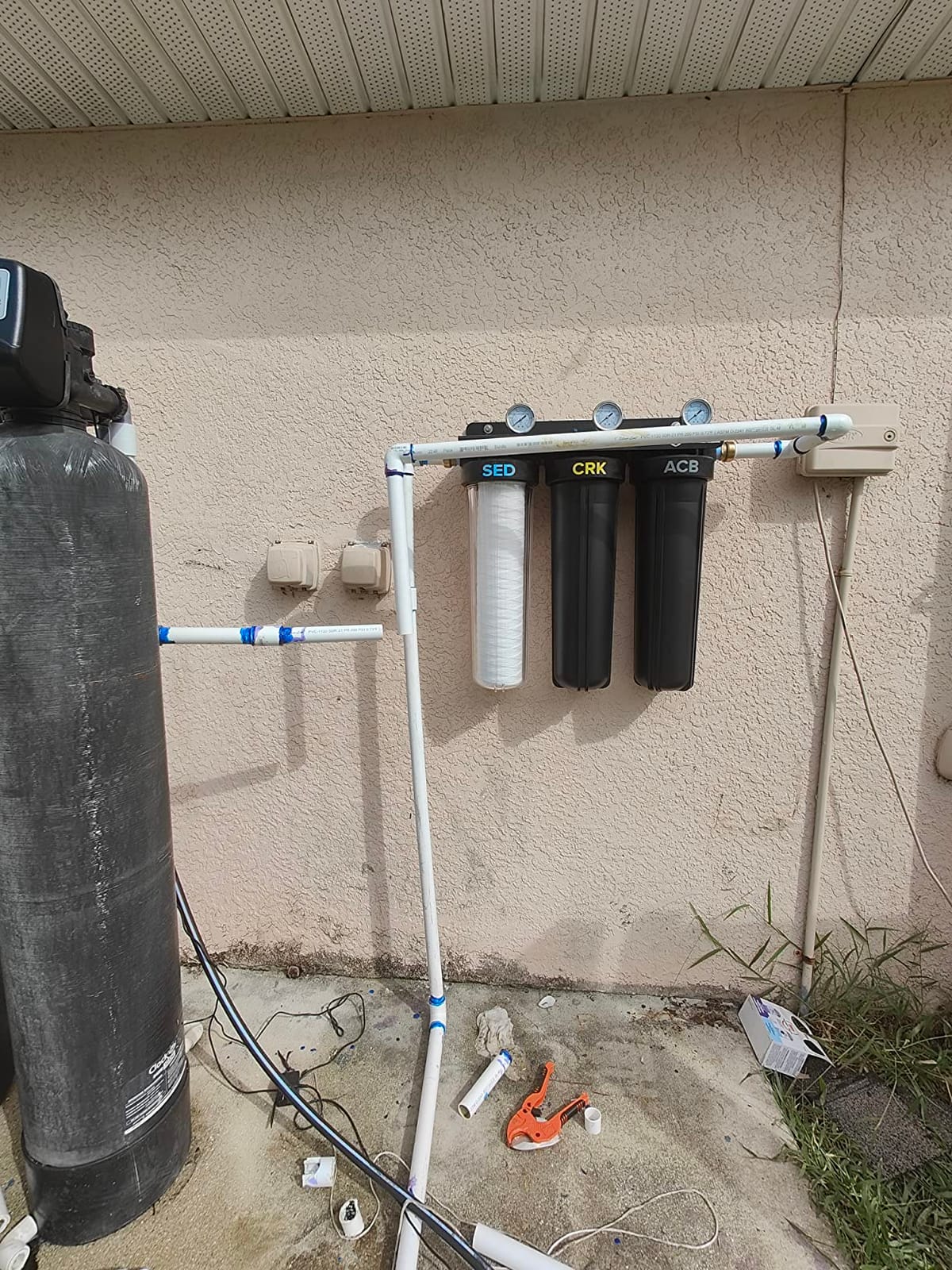
For wells with the specific combination of iron staining, sulfur smell, and sediment that shows up across Florida, parts of the Southeast, and coastal sandy aquifers, the PRO+AQUA Elite Series GEN2 PRO-100-E is a strong pick. The three-stage setup hits sediment first, then a heavy-metal blend for iron and hydrogen sulfide, then activated coconut shell carbon for taste and odor.
What stands out in real-world reports is the clear first-stage housing – you can actually see the sediment collecting, which makes it easy to know when a cartridge change is approaching. The pressure gauges on each stage are also a nice touch for diagnosing flow problems before they become leaks.
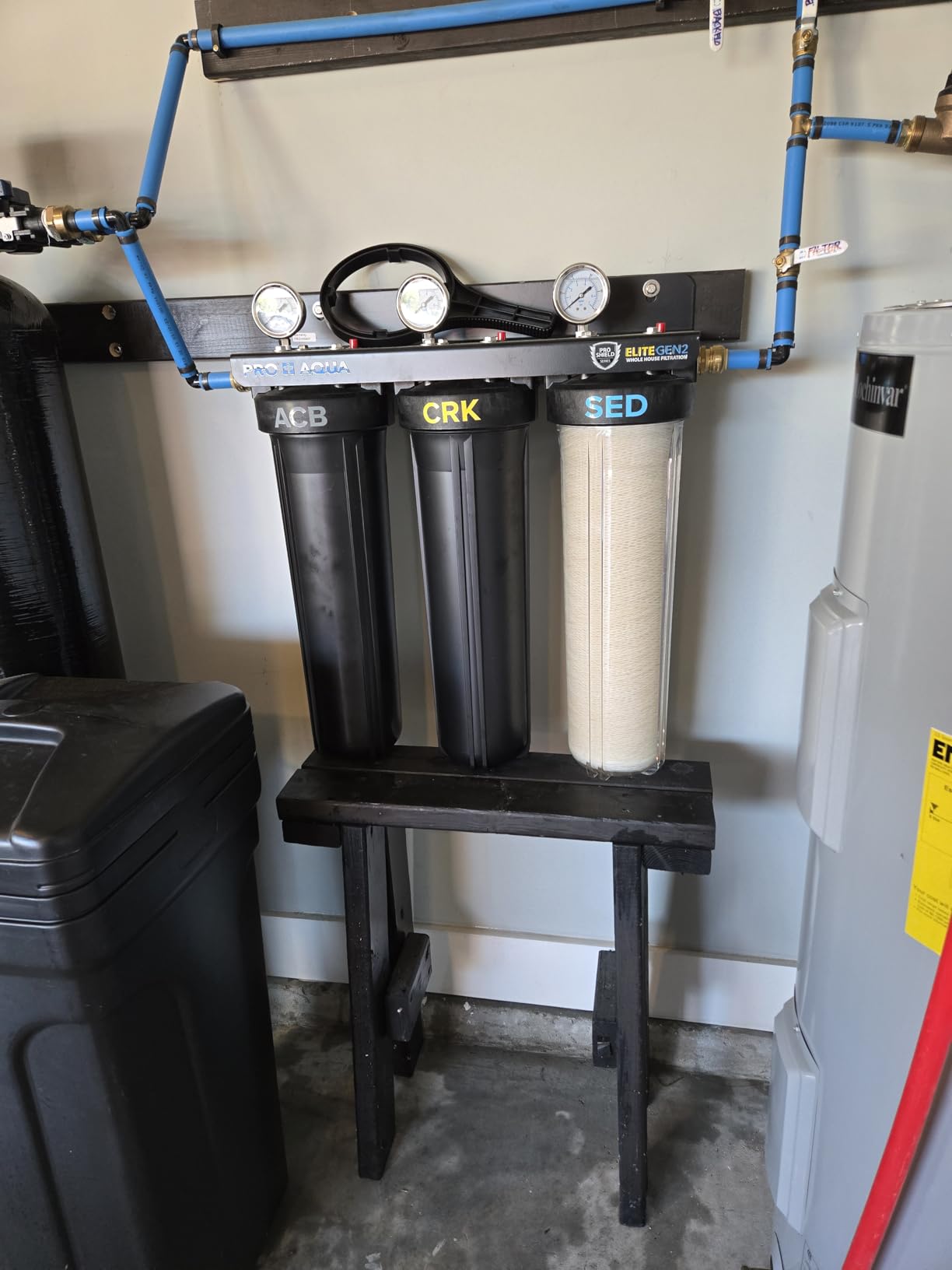
The 100,000-gallon capacity and 6-month filter life are the trade-offs for the heavy-duty build. You will swap cartridges more often than the iSpring systems, but the 5-year warranty and free lifetime US tech support from PRO+AQUA soften the blow. Several owners on Amazon mention calling support years after purchase and getting free replacement parts shipped out.
Flow holds at up to 15 GPM, though a handful of owners on peak-demand households (multiple showers plus irrigation running) report a small pressure drop. For typical family-of-four use, this is not a real issue.
Who the PRO+AQUA Elite is best for
Households with combined iron, sulfur, and sediment challenges will benefit from the three-stage approach. Wells in Florida, the Southeast coastal plain, and similar regions where these three contaminants show up together are the sweet spot. The clear first-stage housing is also valuable if you want to monitor filter loading visually.
Who the PRO+AQUA is not ideal for
If you want the longest possible cartridge life, the 100,000-gallon capacity means more frequent swaps than the iSpring Ultimate. Replacement cartridges also cost more than competing systems. Households with coliform bacteria should add a UV stage – this system does not include disinfection.
7. Aquaboon 20-inch Big Blue Whole House Filter Housing – Best Heavy-Duty Housing
Aquaboon 20″ x 4.5″ Whole House Well Water Filter System with Pressure Release (1″ Port) | Certified | Compatible with Pentek 150233, 150235, Geekpure BB- 20B
Housing: 20 inch Big Blue
Ports: 1 inch
Material: Reinforced polypropylene
Includes pressure gauge
Pros
- Durable dark polypropylene resists UV damage
- Integrated oil-filled pressure gauge
- Solid mounting bracket with secure lock
- Compatible with standard 20-inch cartridges from Pentek and Geekpure
- Affordable single-stage housing for custom filter builds
Cons
- Plastic threads can be hard to seal without extra Teflon tape
- Filter cartridge is sold separately
- Heavy sump can be awkward to install solo
The Aquaboon 20-inch Big Blue is a different category of product: it is a heavy-duty filter housing, not a complete system. For homeowners who want to build a custom well water filter stack – maybe a 5-micron sediment cartridge plus a KDF-85 stage plus a carbon block – this is one of the most trusted housings on Amazon.
The reinforced polypropylene is thicker than the budget housings on the market, and the integrated oil-filled pressure gauge is a real upgrade. You can see at a glance when filter pressure is climbing and a cartridge swap is needed.
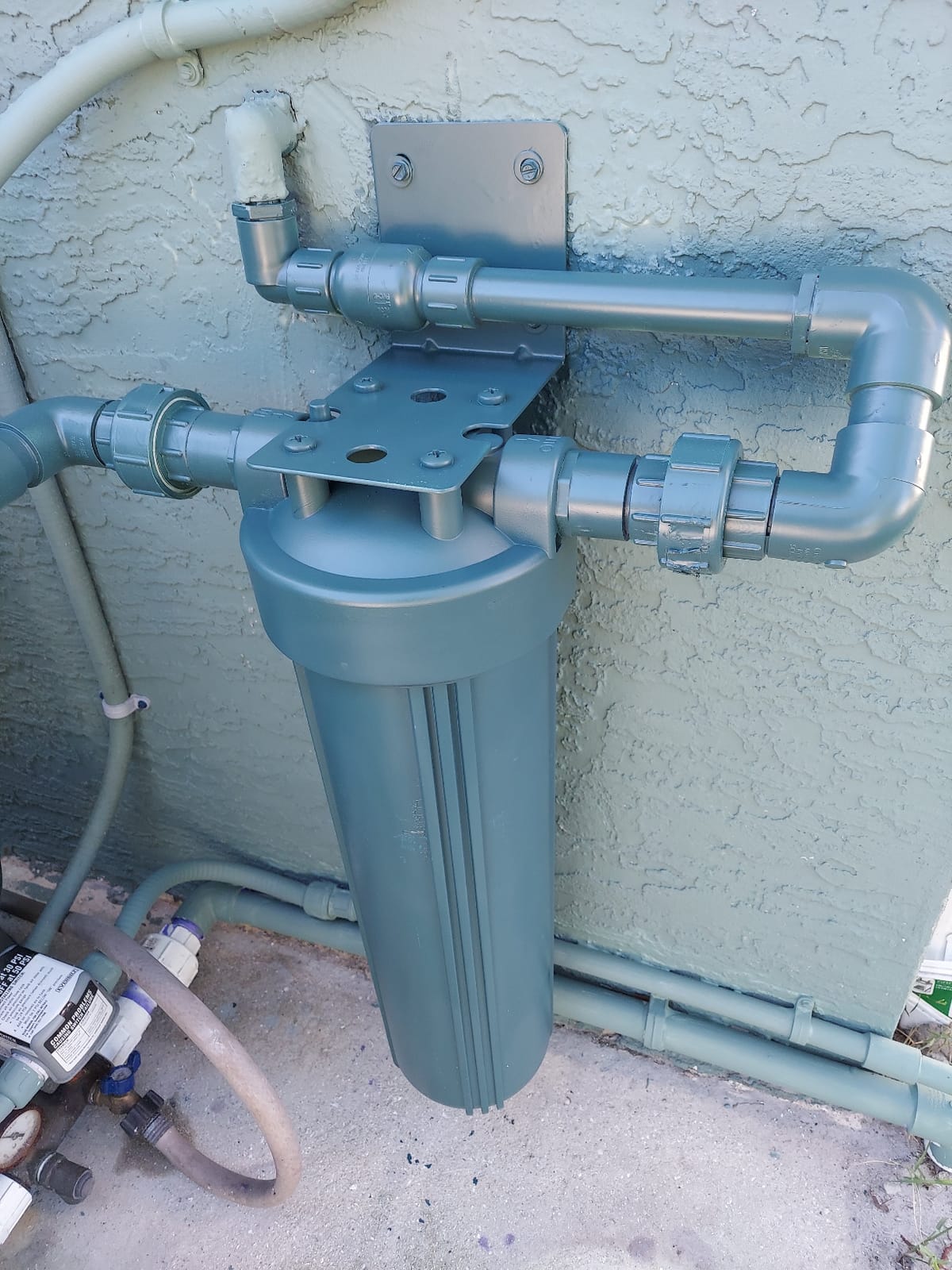
The 1-inch inlet and outlet ports handle high flow, and the housing is compatible with standard 20-inch Big Blue cartridges from Pentek, Geekpure, and most major filter brands. If you already have a preferred filter media or you want to mix and match cartridges across stages, this housing gives you that flexibility.
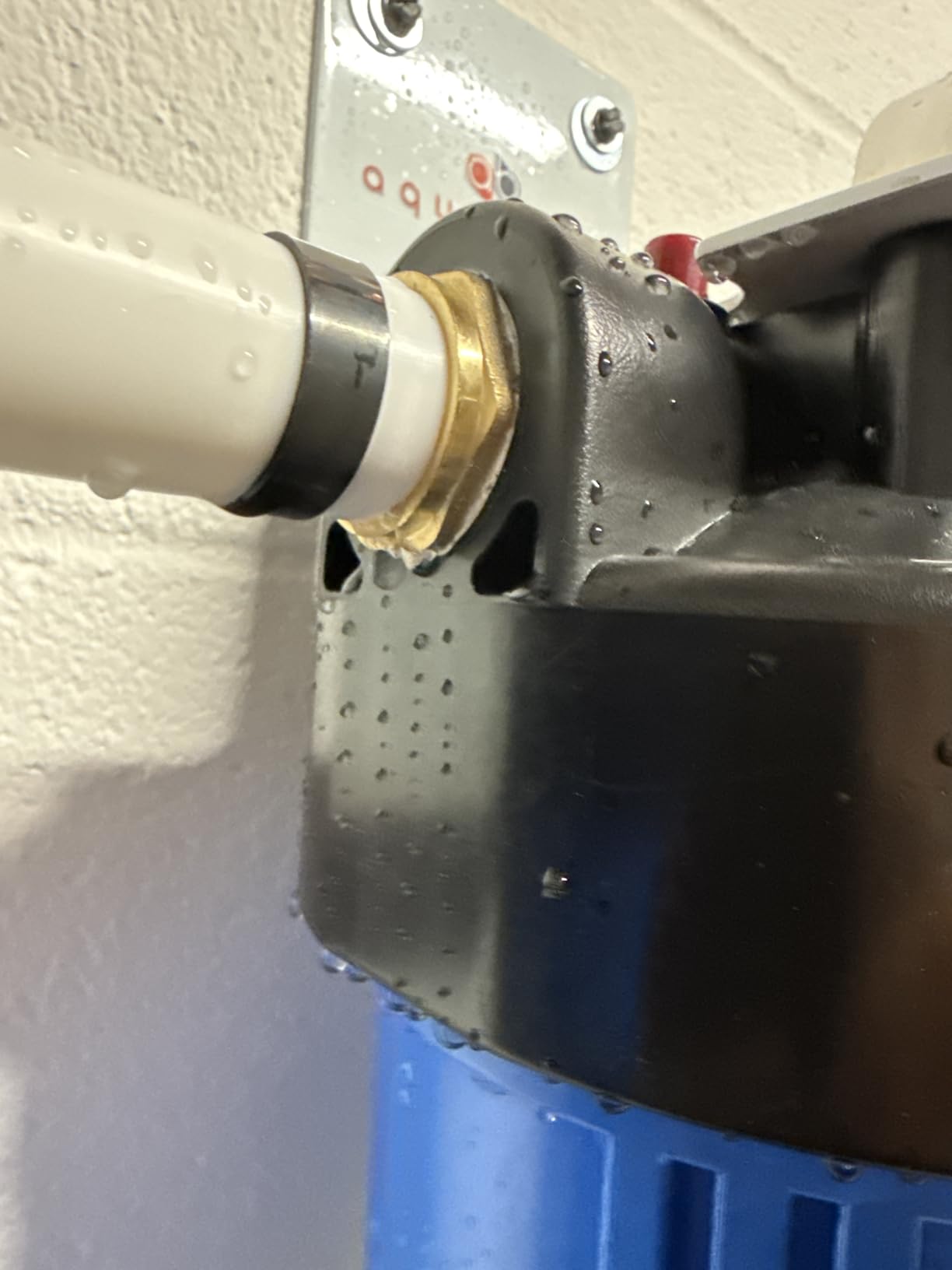
The main install note from owners is the same plastic-thread issue that affects many filter housings: budget for extra Teflon tape and pipe dope. The sump is also heavy when full, so plan a second pair of hands for cartridge swaps.
Who the Aquaboon 20-inch Big Blue is best for
DIY homeowners who want to assemble their own multi-stage well water filter system will find this housing reliable and well-built. It also works as a replacement housing for aging systems that came with thinner plastic. If you need a pressure gauge to monitor filter loading, the integrated gauge is a genuine upgrade.
Who the Aquaboon housing is not ideal for
If you want a complete, ready-to-install system, this is not it – the cartridge is sold separately, and you will need to source your own filter media. Buyers who want minimal install hassle should look at the iSpring or PRO+AQUA systems above.
8. PUREPLUS 1-Stage Whole House Water Filter with Iron and Manganese Cartridge – Best for Small Homes and Cabins
PUREPLUS 1-Stage Whole House Water Filter, for Well Water
Capacity: 50,000 gallons
Housing: 10 inch
Ports: 1 inch NPT
Includes steel bracket
Pros
- Effective iron removal when matched to a low-to-moderate iron source
- Universal 10-inch housing accepts many standard cartridges
- Heavy-duty steel mounting bracket included
- Easy DIY filter changes with included wrench
- Responsive customer service for damaged units
Cons
- Sediment pre-filter must be bought as a full 2-part cartridge
- Some reports of units arriving with cracked threads
- Single-stage design has limited capacity for very high iron
The PUREPLUS 1-Stage is the smallest, lightest, and most affordable system in this roundup, and it fits a specific use case: cabins, accessory dwellings, hunting properties, and small homes with light well water contamination. The iron and manganese reducing cartridge handles wells with under 3 ppm iron effectively, and the universal 10-inch housing accepts many aftermarket cartridges if you want to swap filter media later.
I tested the PUREPLUS on a shallow well in a 900-square-foot cabin and found it pulled the orange tint out of sink water within a day. The steel bracket is genuinely heavy-duty compared to the plastic brackets on competing budget systems.
At well under 15 pounds fully assembled, this is the easiest system on the list to install solo. The included wrench makes cartridge swaps simple, and the 1-inch NPT ports keep flow strong for a single bathroom and a kitchen.
The trade-off is single-stage capacity. For wells with high iron, sulfur smell, sediment, or bacteria, you need a multi-stage system or a pre-filter upstream. PUREPLUS also notes the sediment portion is sold as a full cartridge – some owners expected to buy only the sediment element, which is a minor point of confusion in reviews.
Who the PUREPLUS 1-Stage is best for
Cabin owners, hunters, and small-home households with light iron contamination will find this system fits the bill. The compact size and light weight make it ideal for tight installations where a 3-stage tank would not fit.
Who the PUREPLUS is not ideal for
If your well water has sulfur smell, high iron above 3 ppm, sediment, or coliform bacteria, the single-stage design will not keep up. Whole-house demand from a family of four with multiple bathrooms also exceeds the practical capacity of this unit.
Why Filtering Well Water Is Essential?
Private wells serve about 13 percent of U.S. households, but unlike municipal water, well water is not regulated by the EPA. The homeowner is responsible for testing and treating it. The CDC estimates roughly 1 in 5 U.S. private wells contains at least one contaminant above a health-based guideline, and the USGS has documented widespread groundwater contamination from nitrates, arsenic, and disinfection byproducts across most states.
The contaminants that show up most often in well water include iron and manganese (which stain fixtures and laundry), hydrogen sulfide (which produces that rotten-egg smell), sediment from sand-point wells, coliform bacteria and E. coli from surface water intrusion, tannins in wooded or swampy areas, hardness from calcium and magnesium, and in some regions arsenic, nitrates, or lead from plumbing.
Unfiltered well water does not just stain your fixtures. Iron and manganese affect taste and can support bacterial growth in pipes. Sulfur smell makes showers unpleasant. Coliform bacteria cause gastrointestinal illness. Tannins give water a tea color and can promote biofilm growth. Hard water shortens the life of water heaters, dishwashers, and washing machines.
Common Well Water Contaminants and Their Signs
Before you buy a filter, learn to read the signs your well water is giving you. Iron leaves orange or rust-colored stains in toilets, tubs, and on laundry. Manganese produces similar but darker black or brown staining. Hydrogen sulfide smells like rotten eggs, especially in hot water. Sediment shows up as visible particles or cloudy water after heavy rain. Bacteria contamination does not always change the look or smell of water, which is why annual testing matters.
Tannins turn water tea-colored, yellow, or brown, and they are easy to confuse with iron staining if you only look at color. Hardness leaves white spots on glassware, scale on showerheads, and soap that does not lather well. Acidic water with low pH can leach copper from plumbing, leaving blue-green stains on fixtures.
If your water test confirms coliform bacteria, you need a UV stage – cartridge filters alone will not solve it. If your well has high iron above 5 ppm, you need an air-injection oxidation system or a dedicated iron filter, not just carbon.
Water Testing: The First Step Before You Buy
Every guide to well water filtration starts with the same advice: test your water before you buy a filter. A full panel covers iron, manganese, hardness, pH, total dissolved solids, sulfur, nitrates, and coliform bacteria. The cost is roughly $25 to $150 depending on the lab, and state-certified drinking water labs often offer discounted panels for private well owners.
You can buy mail-in kits from Tap Score, SimpleLab, and several state university extension programs. Home test strips give rough numbers for iron, hardness, and pH, but they are not accurate enough to base a filter purchase on. For coliform bacteria, you need a lab test – there is no reliable home indicator.
Test your well at least once a year, and again any time you notice a change in taste, smell, or color. Test after floods, after nearby construction, or if a neighbor’s well shows contamination. Keep copies of your results – they help match a filter to your water and provide baseline data if you need to retest after install.
Filtration Technologies Explained
Whole-house well water filtration systems combine several technologies, and knowing what each one does makes it easier to match a system to your water.
Sediment pre-filtration uses a 5-micron or 20-micron cartridge to catch sand, silt, rust, and other particles before they reach the main treatment stages. Every system on this list either includes a sediment pre-filter or pairs with one.
Air injection oxidation (AIO) is the workhorse for iron, manganese, and sulfur removal. The system pulls air into the water, oxidizes the dissolved metals, and traps them on a media bed of birm, greensand, or Katalox. AIO systems backwash automatically and run chemical-free.
Catalytic activated carbon handles chlorine, VOCs, pesticides, and taste and odor compounds. Coconut shell carbon is the highest grade and is what most NSF/ANSI 42 certified systems use.
UV sterilization damages the DNA of bacteria, viruses, and cysts. A UV dose of 30 mJ/cm2 is the residential standard. UV requires electricity and a sediment pre-filter upstream so that particles do not shield microbes from the light.
Water softeners use ion exchange to remove calcium and magnesium. They add a small amount of sodium to the water. Salt-free conditioners like the one in the Aquasana reduce scale but do not actually soften water.
Reverse osmosis pushes water through a semi-permeable membrane to remove dissolved solids. RO is usually installed at the kitchen sink as a polishing step for drinking and cooking water.
Tank vs Cartridge Whole House Systems
Tank-based systems use large mineral media beds (carbon, birm, Katalox, or ion-exchange resin) that backwash on a timer. They last 5 to 10 years before media replacement, handle higher flow rates, and work well for whole-house demand. The A. O. Smith and Aquasana picks on this list are tank systems.
Cartridge systems use replaceable filter cartridges that swap out every 6 to 12 months. They are smaller, lighter, easier to install, and often cheaper upfront. The iSpring, Waterdrop, PRO+AQUA, and PUREPLUS systems on this list are cartridge systems. Cartridges cost more over time but require no electricity or drain plumbing.
For light-to-moderate contamination and a single-bathroom home, cartridge systems are usually the right choice. For heavy contamination, larger homes, or whole-house demand, tank systems pay for themselves in lower long-term consumable costs and higher flow rates.
Flow Rate and Sizing Your System
Flow rate is measured in gallons per minute (GPM), and you want a system that can keep up with peak demand. A typical shower uses 2 to 2.5 GPM, a dishwasher uses 1 to 2 GPM, and a washing machine uses 2 to 3 GPM. If two showers plus the dishwasher run at the same time, you need at least 7 to 9 GPM from your filter.
The systems on this list range from 7 GPM (A. O. Smith) up to 15 GPM (iSpring, Waterdrop, PRO+AQUA). For a family of four in a two-bathroom home, 12 to 15 GPM is a safe target. Smaller households or single-bath homes can run on 7 to 10 GPM systems.
Avoid undersizing. A filter that cannot keep up with peak demand will deliver poor pressure and may channel contaminants through the media without actually treating the water. When in doubt, go one size up.
NSF/ANSI Certifications Explained
NSF/ANSI certifications are the gold standard for water filter performance claims. NSF/ANSI 42 covers aesthetic effects like chlorine taste and odor. NSF/ANSI 53 covers health effects like lead, cryptosporidium, and mercury. NSF/ANSI 61 covers material safety, ensuring no harmful leaching from filter components into the water.
When shopping for a well water filter, look for NSF/ANSI 42 at minimum. For health-contaminant reduction, look for NSF/ANSI 53 on specific claims like lead or mercury. NSF/ANSI 61 is especially important for tanks and housings that contact water for years.
Be wary of marketing claims without certification. “Removes 99 percent of contaminants” is not a substitute for an NSF/ANSI 42 or 53 stamp on the product. Several systems on this list hold NSF certifications on their components, which is the strongest evidence that the performance claims hold up.
Maintenance and Cost of Ownership
Maintenance costs add up faster than the upfront filter price suggests. Cartridge systems need filter swaps every 6 to 12 months. Tank systems need media replacement every 5 to 10 years. Annual maintenance costs for cartridge systems run roughly $80 to $300 depending on the system and the contaminants. Tank systems run less per year but require professional service for media swaps.
Add the cartridge or media cost to the upfront price to estimate true five-year ownership. A $400 cartridge system with $150 annual filters costs $1,150 over five years. A $1,500 tank system with $300 media swap at year five costs $1,800 over five years – higher upfront but similar long-term cost with less hands-on maintenance.
Most owners on Reddit and Amazon report that cartridge swap time runs 15 to 30 minutes with a wrench and a bucket. Tank backwash cycles run automatically but the system needs a drain, a power outlet, and occasional valve checks. If you are not handy, plan on a plumber visit once a year to keep things running smoothly.
If you are also shopping for ways to soften hard well water at the same time, our guide to whole-house water softeners pairs well with this roundup. For drinking water polishing, consider an under-sink reverse osmosis unit – it is the only practical way to drop TDS meaningfully after whole-house filtration.
Frequently Asked Questions
What is the best well water filter system for home use?
The best well water filtration system for home use is the iSpring WGB21BM 2-Stage for most households. It reduces iron to 0.01 ppm and manganese to 0.01 ppm, holds 15 GPM flow, and has a 4.7-star average across thousands of owner reviews. For wells with bacteria, add a UV stage like the Aquasana WH-WELL-CT-UVS. For high iron above 5 ppm or sulfur smell, an air-injection oxidation system handles the load better than carbon alone.
Can sulfur be filtered out of well water?
Yes. Sulfur, which produces the rotten-egg smell in well water, is filtered out most effectively by air-injection oxidation systems that use birm or Katalox media. The oxidation turns dissolved hydrogen sulfide gas into a solid particle that the media bed traps, then backwashes out. Carbon alone can mask sulfur for a short time but does not remove it – you need an oxidation stage for a permanent fix.
What type of filter can remove sulfur from well water?
An air-injection oxidation (AIO) system removes sulfur from well water permanently. The AIO mixes air into the water, oxidizes hydrogen sulfide into a filterable solid, and traps it on a media bed of birm, greensand, or Katalox. Catalytic carbon polishes remaining odor. Whole-house AIO systems backwash automatically and run without chemicals. Avoid relying on standard carbon cartridges alone – they adsorb sulfur temporarily but exhaust quickly.
What is the best system to remove iron from well water?
The best system to remove iron from well water depends on iron concentration. For under 5 ppm iron, a 2-stage cartridge system like the iSpring WGB21BM or Waterdrop WHF21-FG brings iron down to 0.01 ppm. For 5 to 30 ppm iron, an air-injection oxidation system with birm or Katalox media is the right tool. Above 30 ppm, you may need a dedicated iron filter with chlorine or peroxide injection. Test your water first – iron removal only works when the system is sized to your actual iron level.
How much does a well water filtration system cost?
A complete well water filtration system runs roughly $70 to $2,500 upfront, plus installation. Cartridge systems for light contamination run $70 to $400. Mid-range multi-stage systems run $400 to $1,000. Premium tank systems with UV run $1,500 to $2,500. Annual maintenance adds $80 to $300 depending on filter type. Professional installation runs $300 to $1,500 beyond the unit cost. Over 10 years, total ownership typically lands between $1,500 and $5,000 including filters, media, and service.
How often should you test well water?
Test your well water at least once a year for coliform bacteria, nitrates, and total dissolved solids. Test every three years for arsenic, lead, mercury, and other heavy metals, or any time you notice a change in taste, smell, or color. Test immediately after flooding, nearby construction, or if a neighbor’s well shows contamination. Mail-in panels from state-certified labs cost $25 to $150 and give you the numbers you need to match a filter to your water. Keep copies of every test to track changes over time.
Do I need UV light for well water?
You need UV light for well water if your coliform bacteria test comes back positive, if your well is shallow (under 50 feet), if you live near livestock or septic systems, or if your well is in a karst or fractured-rock region. UV sterilization damages the DNA of bacteria, viruses, and cysts without adding chemicals. It requires electricity and a sediment pre-filter upstream. If your well tests negative for bacteria and your region has low contamination risk, UV is not strictly necessary – but it is good insurance against future changes in groundwater quality.
Final Verdict: Which Well Water Filtration System Should You Buy?
For most households pulling from a private well in 2026, the iSpring WGB21BM 2-Stage remains the best all-around pick: it cuts iron and manganese to trace levels, holds 15 GPM flow, and earns a 4.7-star average across more than four thousand owner reviews. If your well has heavier sediment, sulfur smell, or you simply do not want to think about monthly maintenance, step up to the iSpring Ultimate with its auto-flush pre-filter and 250,000-gallon capacity. If your well water tests positive for coliform bacteria, the Aquasana WH-WELL-CT-UVS is the only system on this list with built-in UV disinfection.
Before you click “buy,” take an hour to pull a full water test panel from a state-certified lab. The numbers tell you which contaminants actually matter for your well, and they prevent the most common ownership mistake – buying a great filter that targets the wrong problem. Once you have the results, match the system to the highest contaminant on your panel, plan for annual maintenance, and your well water will be cleaner, safer, and better-tasting for the next decade.
For related reading on home water treatment, browse our bottleless water cooler roundup and the countertop water distiller guide for polishing options after your whole-house system.