
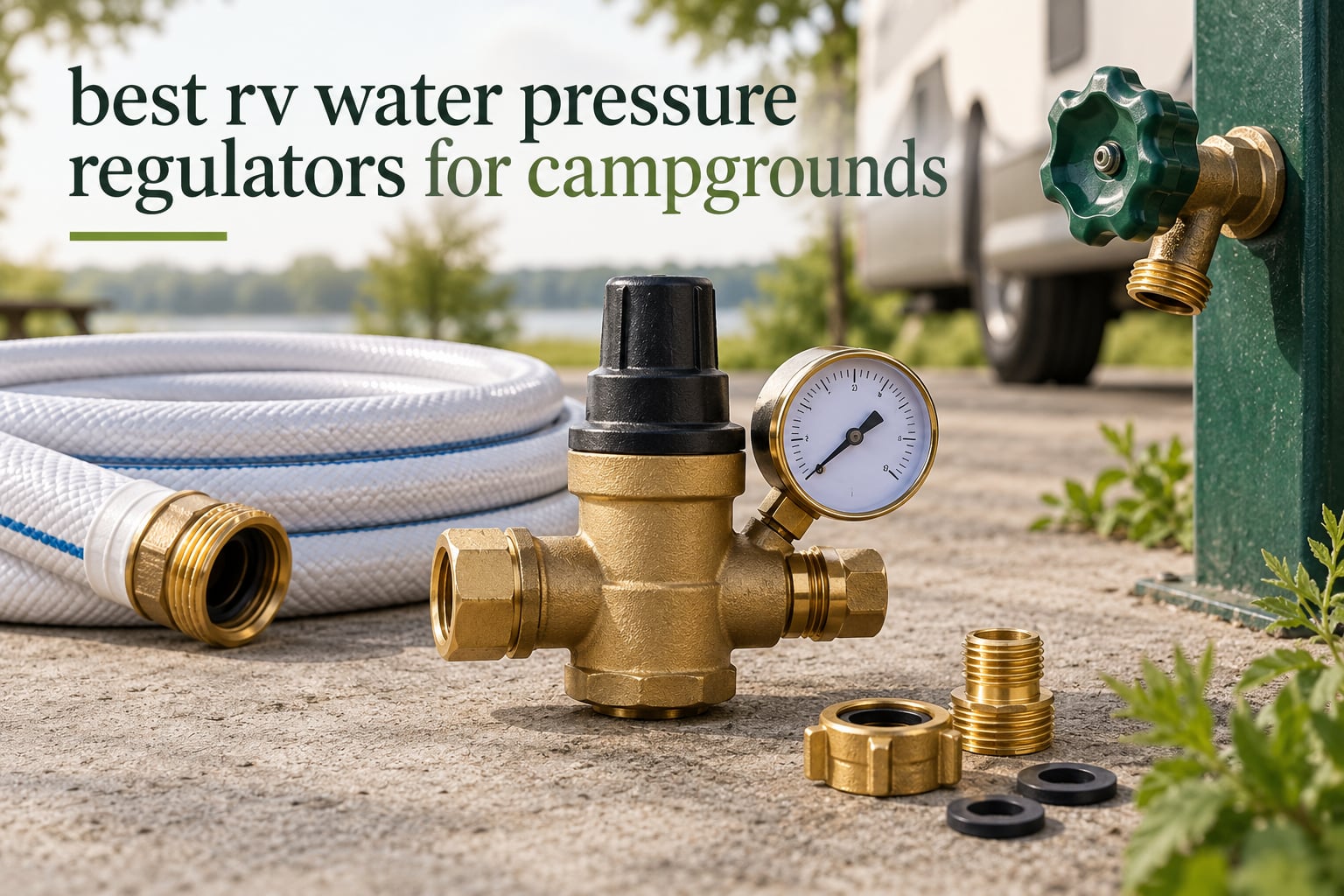
An RV water pressure regulator caps campground water pressure at a safe level so a high-pressure spigot cannot burst your plumbing. Most RV water systems are built for roughly 60 PSI, while campground taps routinely sit at 80 to 100 PSI with nothing requiring them to be regulated.
That gap is how a brand-new coach ends up with water coming through a wall. A friend of ours connected to a spigot pushing 95 PSI with a tired fitting at the city water inlet, and the leak found the cabinetry before anyone noticed. Thousands in damage came out of one bad connection that took minutes to develop.
This roundup covers the 12 best RV water pressure regulators for campgrounds, from fixed units you never touch to adjustable models with a dial you can read at the spigot. Every pick below is brass, lead-free, and made for a 3/4 inch garden hose thread, which is what nearly every American campground hookup uses.
We also cover the question owners argue about most: what PSI to set. Short version is 40 to 60 PSI, with 50 to 55 PSI the practical target for most rigs. If you want more water somewhere else in your system, our notes on water pressure booster pumps cover the other side of that equation.
Table of Contents
Top 3 RV Water Pressure Regulators for Campgrounds (October 2026)
Our top three cover the three situations most RVers fall into: you want the proven simple option, you want to tune pressure to the campground, or you want an adjustable unit without paying for the premium tier.

Camco 40055 Brass Regulator
- Preset 40-50 PSI
- Lead-free brass
- CSA NSF 372
- No adjustment needed

Renator M11-0660R Adjustable
- 45 PSI to 160 PSI
- Liquid-filled steel gauge
- Inlet screen filter
- Brass body
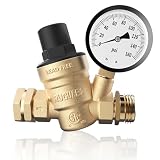
RVGUARD ARGWPR001 Adjustable
- Factory set 45 PSI
- Large readable gauge
- CSA and NSF 372 brass
- Screwdriver adjustment
Quick Overview of All 12 Regulators
Every model in the table below is lead-free brass and sized for a 3/4 inch garden hose connection. The differences come down to whether you can change the pressure, whether you can read it, and where the outlet pressure sits.
| Product | Specifications | Action |
|---|---|---|
| Camco 40055 Brass Regulator |
|
Check Latest Price |
| Renator M11-0660R Adjustable |
|
Check Latest Price |
| RVGUARD ARGWPR001 Adjustable |
|
Check Latest Price |
 Camco 40064 with Gauge Camco 40064 with Gauge |
|
Check Latest Price |
 Hourleey LCG35QSADZ Adjustable Hourleey LCG35QSADZ Adjustable |
|
Check Latest Price |
 Hourleey RV-REG Fixed Hourleey RV-REG Fixed |
|
Check Latest Price |
 Valterra A01-1120 Fixed Valterra A01-1120 Fixed |
|
Check Latest Price |
 STMOUTUO MT-PRV01 Adjustable STMOUTUO MT-PRV01 Adjustable |
|
Check Latest Price |
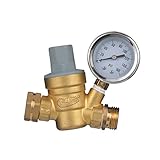 Valterra A01-1117VP Adjustable Valterra A01-1117VP Adjustable |
|
Check Latest Price |
 Boltigen AH45 Handwheel Boltigen AH45 Handwheel |
|
Check Latest Price |
 CircleCord Hi-Flow Regulator CircleCord Hi-Flow Regulator |
|
Check Latest Price |
 Kohree HY1730 Handwheel Kohree HY1730 Handwheel |
|
Check Latest Price |
1. Camco 40055 Brass Regulator – Best Overall for Most Campgrounds
Camco Brass Marine/RV Water Pressure Regulator – Drinking Water Safe
Brass body
3/4 inch garden hose thread
Preset 40-50 PSI
Handles 125 PSI incoming
Pros
- Drinking water safe lead-free brass certified to NSF/ANSI 372
- Preset 40-50 PSI needs no adjustment
- Largest review base in the category
- Compact enough to live in a wet bay
Cons
- Fixed pressure with no gauge to read line pressure
- Can reduce flow enough to bother appliance pressure sensors
- 3/4 inch threads do not fit non-US taps
The Camco 40055 is the regulator we recommend to most people, and it is the one we keep two of in the storage bay. It has been on the market long enough that RV supply counters and campground store shelves carry it, and it does exactly one job without any adjustment to think about.
Its internal PSI Guard is preset to hold outlet pressure in a 40 to 50 PSI band and it accepts incoming pressure up to 125 PSI. That covers nearly every municipal hookup and most private well-fed campground spigots you will run into.
At 1.8 ounces and one inch on each side, it stores in a pocket of a pass-through storage bay. The threads are straight 3/4 inch female iron pipe on both ends, so it goes on the campground spigot and the hose connects to the other side in the familiar way.
One detail worth planning for is the absence of a gauge. You will not be able to tell what the campground is pushing unless you carry a separate gauge, and you cannot lower the setting if a specific appliance wants more.
Where the Camco 40055 fits best
For full-time RVers and anyone who wants protection they never have to think about, this is the safest purchase in the list. It is lead-free brass certified to NSF/ANSI 372 and CSA, which matters because this water becomes drinking water in your glass.
Several reviewers use the same unit on garden hoses and outdoor taps, where a house bib can be far above 50 PSI. If you are camping in older rigs with marginal plumbing, the fixed 40 to 50 PSI band matches what those systems were designed around.
Where the Camco 40055 falls short
Owners of appliances with hose-end pressure switches report that the reduced pressure can trigger false leak codes. If you carry a washing machine hooked to the city water inlet, check its manual before you settle on a fixed low-band regulator.
The 3/4 inch garden hose thread is a US standard. A handful of international reviews note that it simply will not mate with a British or European tap connection.
2. Renator M11-0660R Adjustable Regulator – Best Accurate Gauge
Renator RV Water Pressure Regulator for RV Camper. Brass Lead-free Adjustable Water Pressure Regulator with Gauge for Camper Travel Trailer, Reducer Valve W Filter. M11-0660R.
Brass body
Liquid-filled stainless gauge
45 PSI preset to 160 PSI
Inlet screen filter
Pros
- Liquid-filled gauge stays steady and matched a reference gauge
- Large internal bore preserves flow
- Adjustable across a wide range with steady holding
- Screened inlet and responsive US support
Cons
- Gauge only updates while water is moving
- Some units show calibration drift after seasons
- May need an extra washer to seal at the spigot
The Renator M11-0660R is the regulator we reach for when a campground has us guessing. Its stainless steel liquid-filled gauge is the one dial we trust most, and the fact that you can turn pressure up or down on site is what makes it worth the step up over a fixed unit.
It ships preset at 45 PSI and adjusts up to 160 PSI. Owners who measured against a calibrated reference report the dial tracks closely, and the silicone oil fill keeps the needle from fluttering every time a neighbor’s toilet flushes.
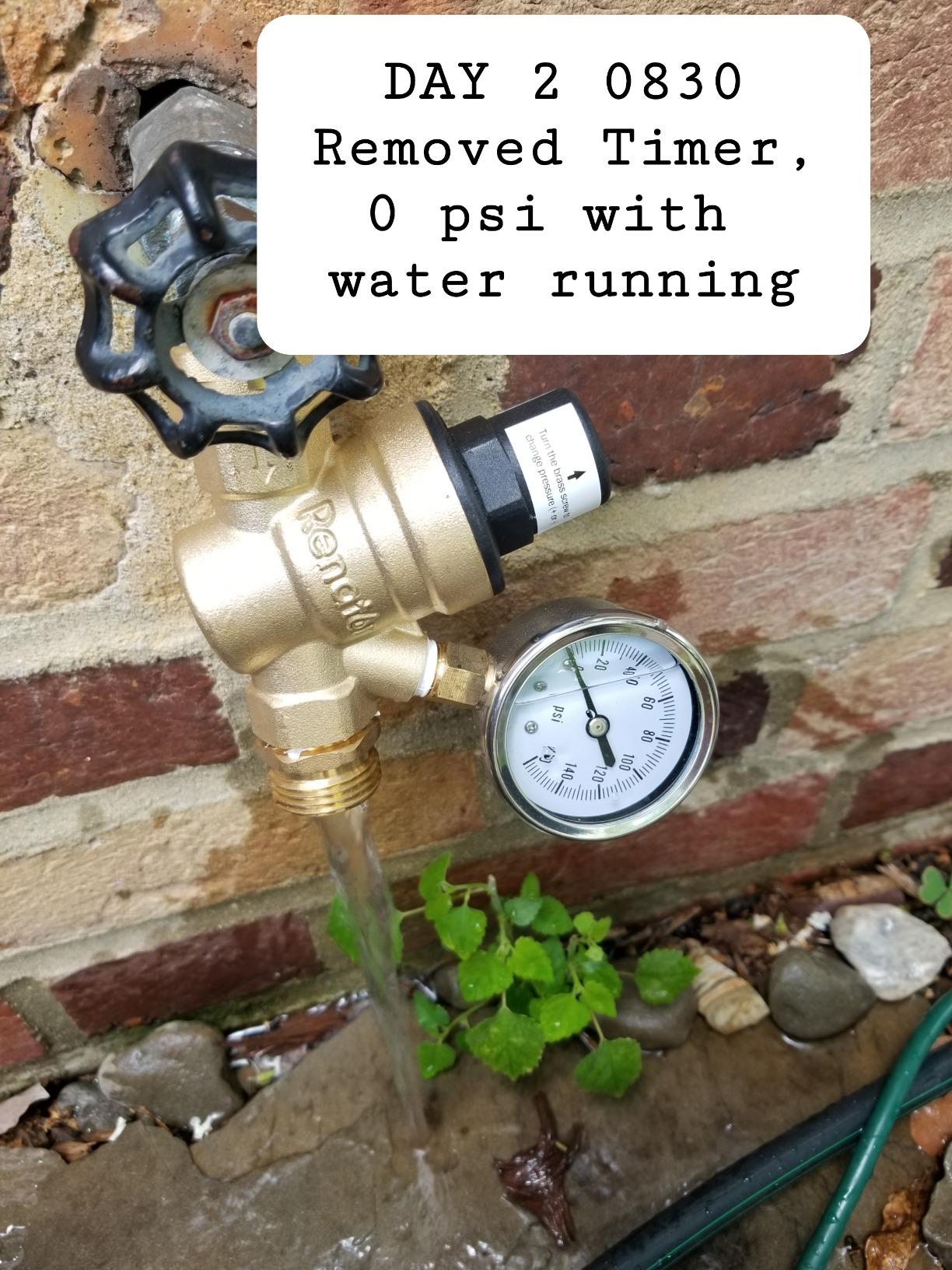
The brass body has a noticeably larger internal flow opening than most of the fixed regulators here, which shows up as a stronger shower. Each batch is tested to contain less than 0.13 percent lead, and an inlet screen catches debris that would otherwise reach your RV plumbing.
One operating habit catches people out. The gauge only registers a change while water is actually flowing, so after you turn the adjustment screw you need to open a faucet, let it run, and only then read the dial.
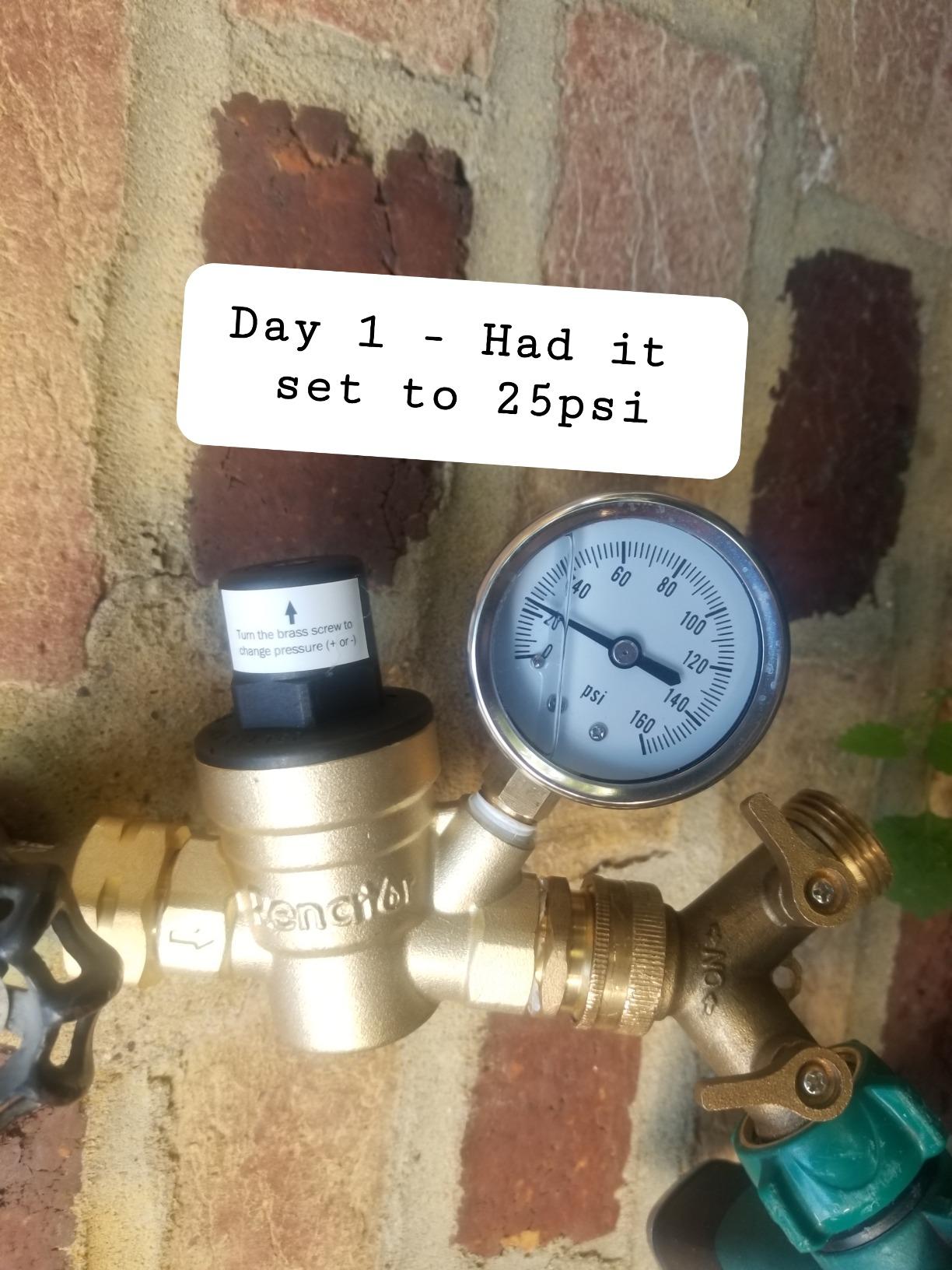
Why the Renator gauge earns its place
A readable dial changes how you camp. You can watch line pressure at a busy park during breakfast rush and at midnight, and you can tell instantly whether a weak shower is the regulator or the park supply running out of capacity.
Long-term owners describe it as well built with flow preserved, and the packaging doubles as a storage case so the regulator does not rattle around a wet bay. An illustrated guide is included for the adjustment procedure.
Where the Renator is imperfect
Because the dial is the wear item, some units report calibration drift after multiple seasons. The gauge is replaceable, but it is the part to watch if readings ever stop matching what you expect.
It also shows a higher share of one-star reviews than the fixed units in this roundup, and at the spigot the threaded connection occasionally needs an extra washer to seal cleanly.
3. RVGUARD ARGWPR001 Adjustable Regulator – Best Value Adjustable
RVGUARD RV Water Pressure Regulator Valve, CSA Approved, Lead-Free Brass
Lead-free brass
CSA and NSF 61 and 372
Factory set 45 PSI
3/4 inch garden hose thread
Pros
- Large readable gauge shows campground pressure at a glance
- Solid brass with no plastic internals
- Holds its adjusted setting without leaking
- Extra gaskets and inlet screen in the box
Cons
- Needs a flat-head screwdriver for every adjustment
- Setting can drift with big temperature swings
- Must be brought inside before freezing
The RVGUARD ARGWPR001 is the middle of the road that works. It gives you the adjustable behavior and readable gauge most people want, in C46500 lead-free brass hot-cast to NSF/ANSI 61 and NSF/ANSI 372, without the premium name on the valve.
The factory setting is 45 PSI and you change it with a screwdriver. Clockwise raises pressure, counterclockwise lowers it, and once set it holds steady with no weeping at the connections.
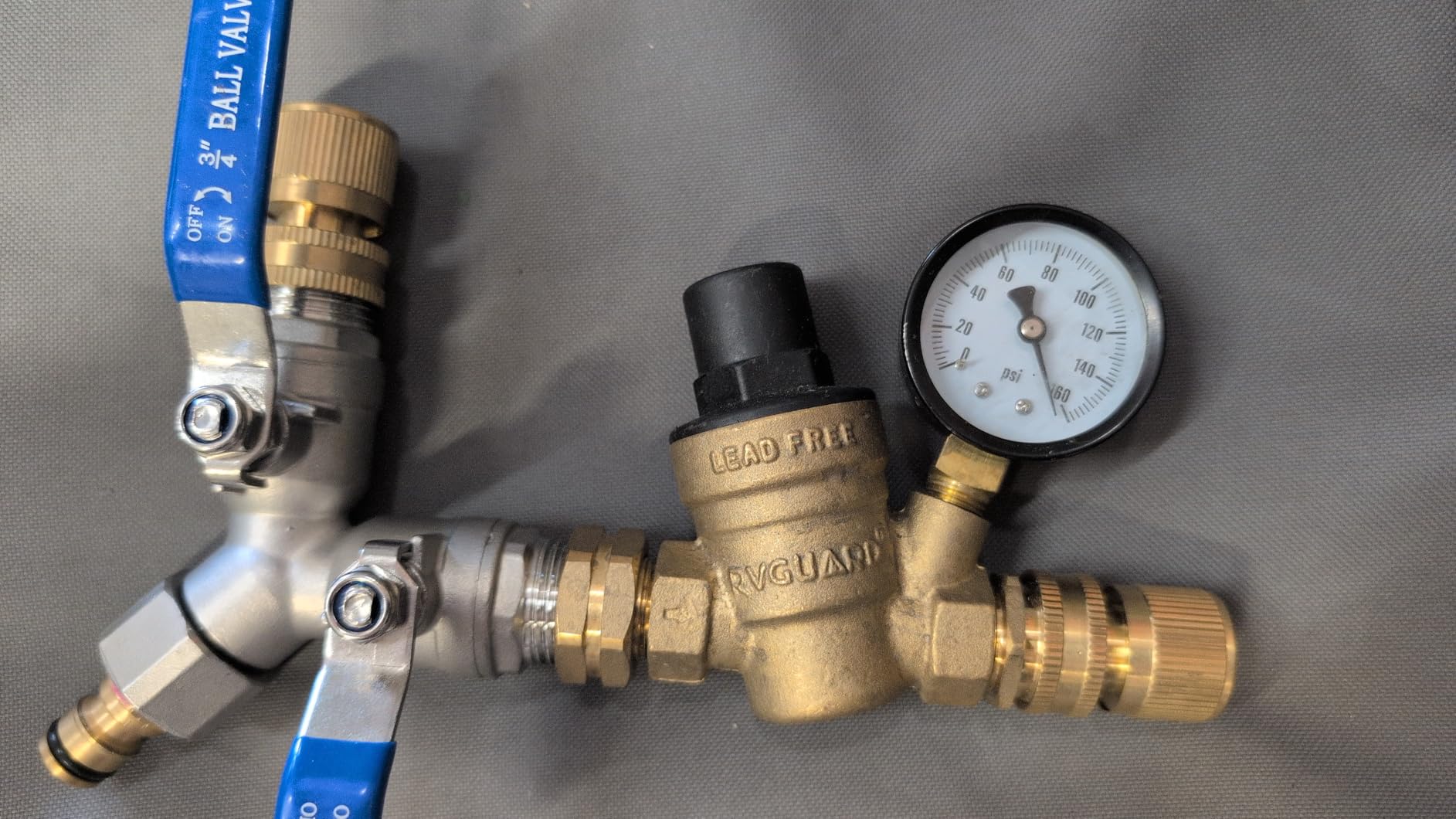
The gauge is the reason owners like this one. It is larger than most dials in the category and legible from arm’s length, which means you can check campground water pressure while kneeling next to the spigot.
An inlet screen filter keeps sediment out of the valve, and the box includes extra gaskets and filters so a torn washer does not end your trip.
Who should buy the RVGUARD
This is the pick for full-timers who move between parks with wildly different supply pressure. When one campground gives you 35 PSI and the next pushes 90, an adjustable regulator is the difference between a usable shower and a frustrating one.
Reviewers describe it as one of the more dependable adjustable regulators they have used, praising build quality, gauge legibility and steady flow after installation. Support staff answer questions by phone and email from the US.
Where the RVGUARD will disappoint
A screwdriver for every tweak is a real annoyance when your hands are wet and cold. If you adjust often, one of the handwheel designs further down this list is a better fit.
It does not tolerate freezing. Bring it inside before winterizing, and remove it from the spigot when you disconnect the hose rather than leaving it hanging overnight. It also fits 3/4 inch connections only, so it will not serve a 1/2 inch residential line.
4. Camco 40064 Regulator with Color-Coded Gauge – Best With Gauge
Camco Brass Water Pressure Regulator with Gauge- Helps Protect RV Plumbing and Hoses from High-Pressure City Water – Easy Read Gauge (40064)
Brass with easy-read gauge
Preset 40-50 PSI
Handles 125 PSI inlet
Tabbed hose collar
Pros
- Color-coded dial shows campground pressure instantly
- Much smaller footprint than adjustable regulators
- Clean brass threads that seal properly
- Quick release collar for connect and disconnect
Cons
- Gauge can read low versus the advertised band
- Pressure is preset and cannot be raised
- Plastic gauge lens feels fragile
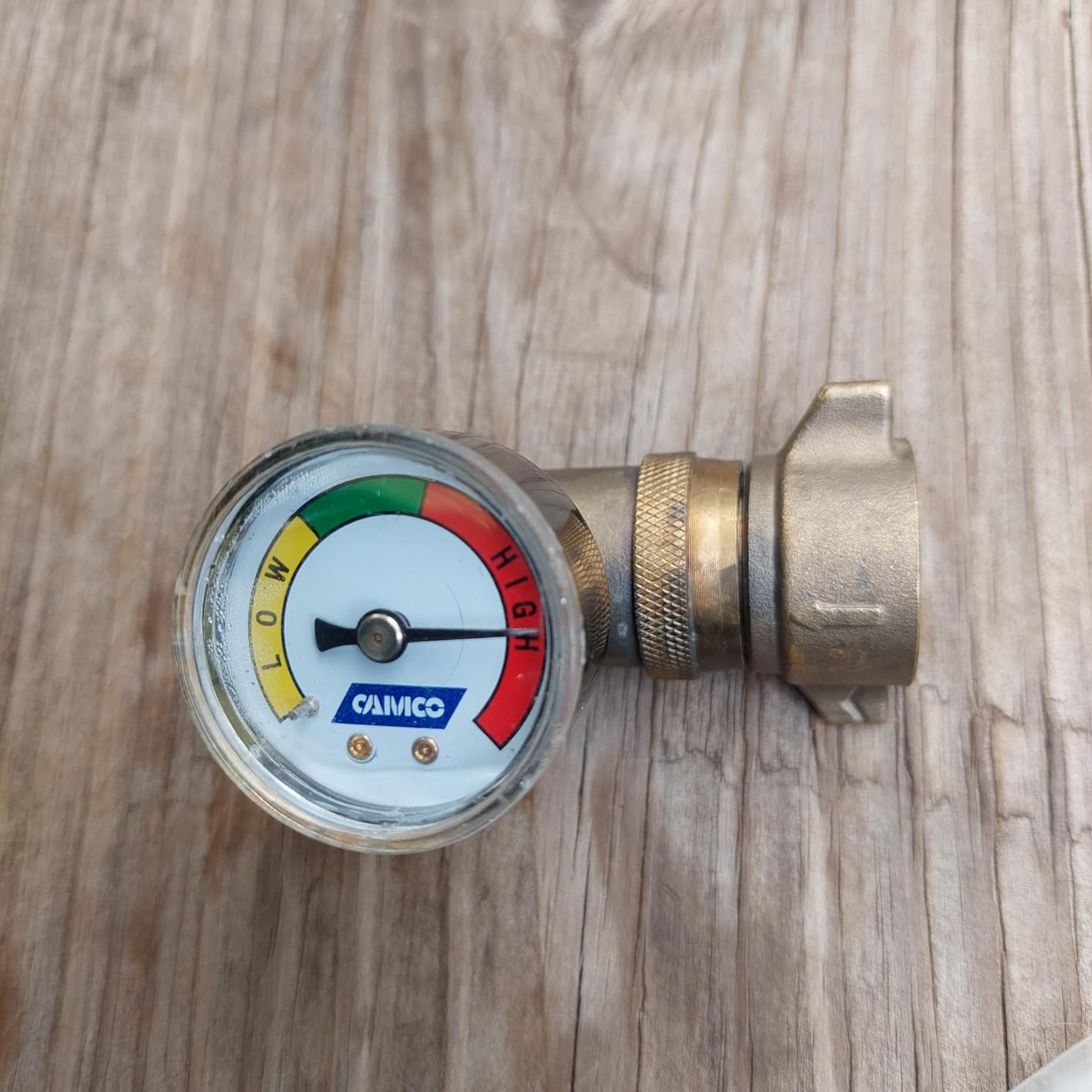
When storage space is the deciding factor, the Camco 40064 is hard to ignore. It measures 2.4 by 4.1 by 5.8 inches and weighs 6.4 ounces, which is far smaller than most adjustable regulators, yet it still puts a gauge on the front of the unit.
The dial is color-coded rather than marked with numbers. Green, then a caution band, then red, which is enough information for most people at a glance and removes the guesswork about what the park is delivering.
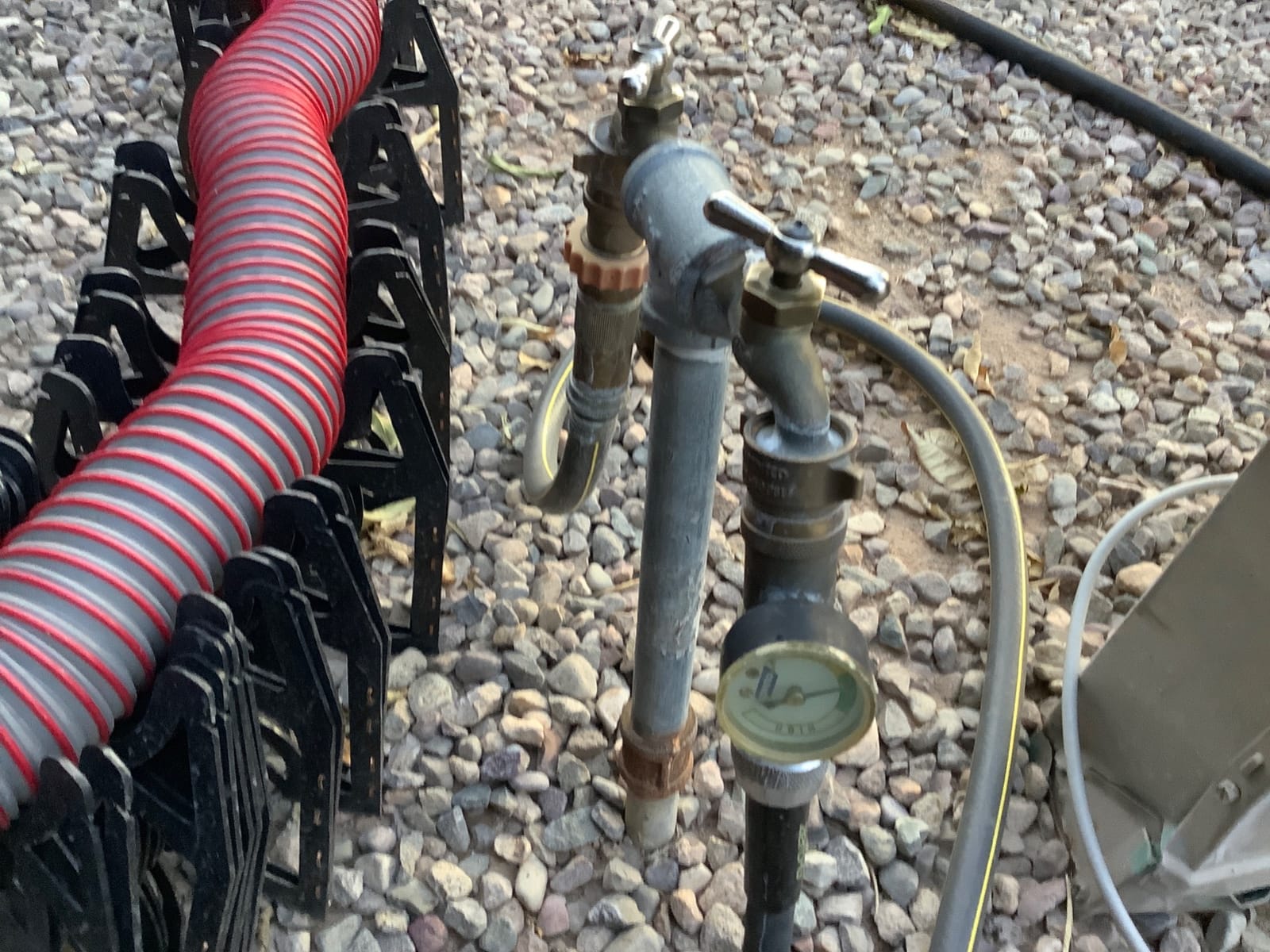
Behind that dial is the same PSI Guard concept as the Camco 40055, holding outlet pressure in a 40 to 50 PSI band from an inlet up to 125 PSI. The tabbed hose collar makes installation and removal faster than a plain thread.
Construction is all brass with clean threads, and the product carries a one year limited warranty from the manufacturer.
Where the Camco 40064 makes sense
Small travel trailers and pop-up campers with a cramped wet bay benefit most here. You get a pressure reading and the protection of a fixed preset in a package that disappears into a shelf cubby when the season ends.
Owners value the at-a-glance tri-color gauge because it settles the question of whether low shower pressure comes from the campground supply or from your own plumbing.
Where it falls short
The most common criticism is accuracy. Some units measure closer to 35 PSI than the advertised 40 to 50 PSI band, so the delivered pressure can feel weaker than an adjustable unit set to 50 PSI.
Because the pressure is preset, you cannot raise it if you want more flow. The gauge lens is plastic and feels fragile, and the color coding has no numeric scale for a precise reading.
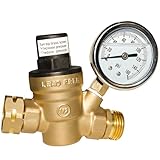
5. Hourleey LCG35QSADZ – Best Full-Range Adjustment
Hourleey Water Pressure Regulator Valve, RV Brass with Gauge and Inlet Screened Filter for Camper Trailer
Lead-free brass
Clear oil-filled gauge
0 to 160 PSI adjustable
3/4 inch threaded joint
Pros
- Full 0 to 160 PSI adjustment span
- Clear oil-filled gauge is easy to read
- Screen inlet blocks debris from campground lines
- Solid all-brass build
Cons
- Some pieces fail to hold an adjusted setting
- Gauge reading is approximate
- O-rings leak if tightened too hard
The Hourleey LCG35QSADZ covers the full 0 to 160 PSI span end to end. The screw on top moves outlet pressure from 0 up to 160 PSI, so you can start very low for a delicate appliance run and turn it up later without swapping hardware.
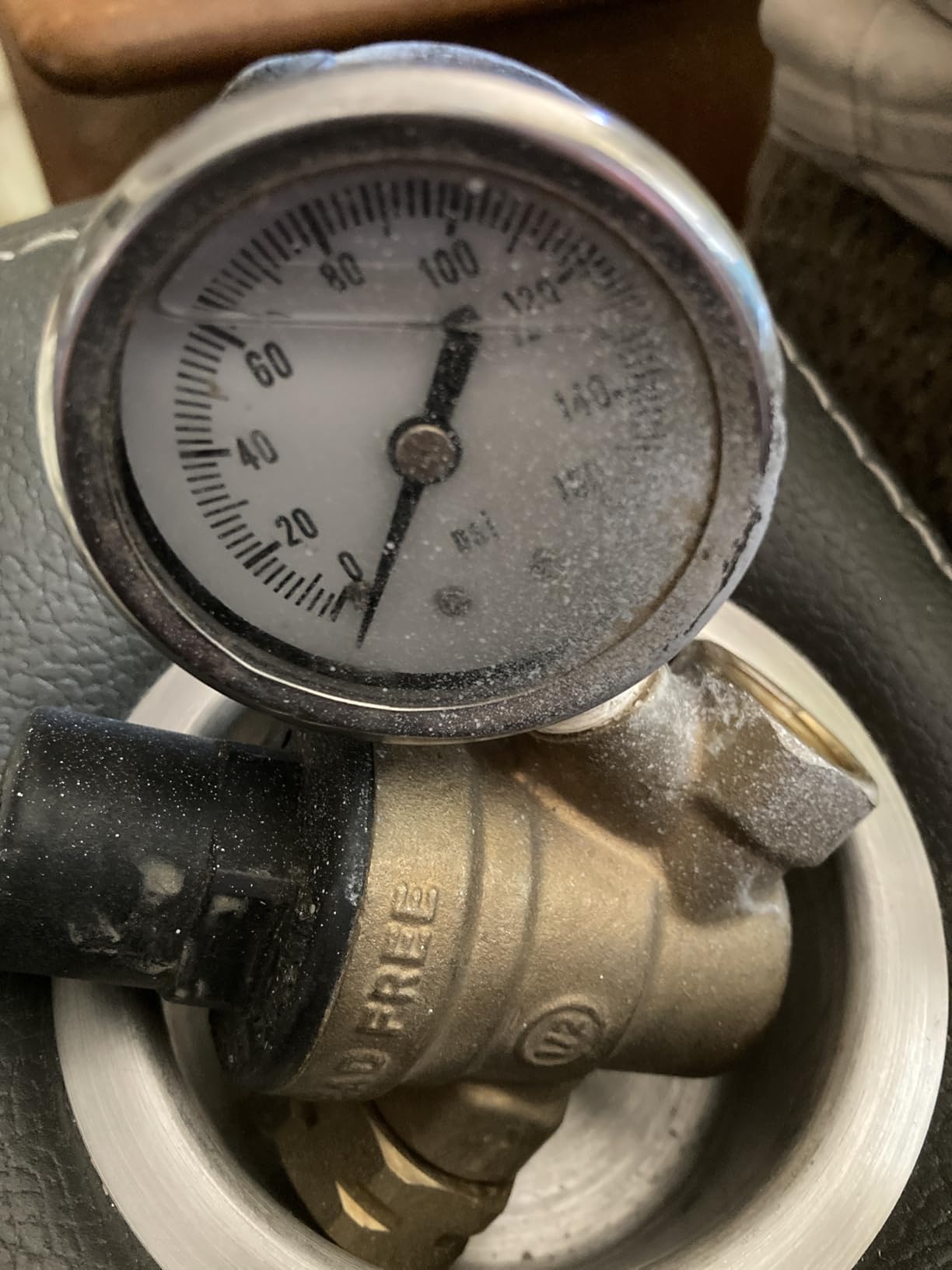
The body is lead-free brass with lead content under 0.13 percent, and the clear oil-filled gauge reads line pressure directly. The 3/4 inch threaded joint fits all American water hose.
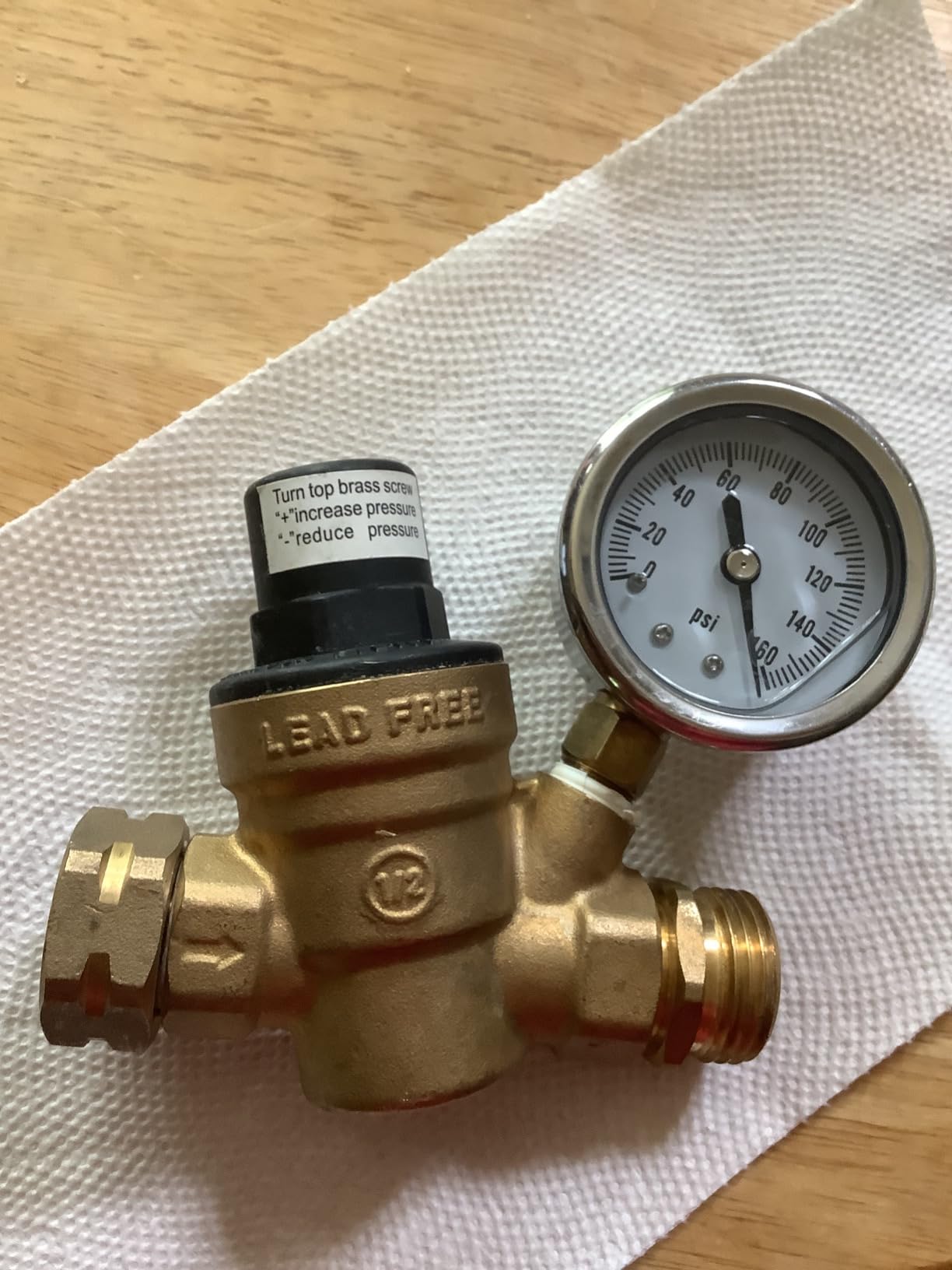
A screened inlet sits ahead of the valve to keep particulate from campground lines out of the moving parts. Satisfied owners emphasize solid construction and easy top-screw adjustment for the money.
The manufacturer notes that temperature changes or shaking can put bubbles in the gauge. That is normal on a liquid-filled dial and does not indicate a leak.
Where the Hourleey wide range helps
If you move between a campground with generous pressure and a park that barely reaches 40 PSI, the ability to turn the outlet down very low is useful. Most of the adjustable units in this roundup do not reach the bottom of their range.
Owners report this regulator successfully taming high RV park pressure that had been pushing water into a weak hose connection, which is exactly the failure mode we set out to prevent.
Where it falls short
The recurring complaint is that some pieces do not take an adjustment and stay pinned at the preset. A smaller group report outright failure or units that arrived dead.
The gauge is approximate rather than precise, and the same owners who like the adjustment often warn that over-tightening the top screw can damage the o-ring and cause a leak. Finger-tight plus a quarter turn with a little lubricant on the o-ring is the common fix.
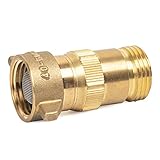
6. Hourleey RV-REG Fixed Regulator – Best Simple Brass Pick
Hourleey Brass RV Water Pressure Regulator, Water Regulator for RV Camper with Filter Screen, Protector for Campers, Travel Trailers, RV Plumbing System, 40-50 PSI
Brass body
Fixed 40-50 PSI
Stainless filter screen
3/4 inch NPT threads
Pros
- Brass body resists pressure and is built for long service
- Stainless screen protects the valve from debris
- Holds a safe 40-50 PSI with no adjustment
- Compact and simple to install
Cons
- No gauge to read campground pressure
- Fixed range cannot be tuned for more flow
- Only fits 3/4 inch hose threads
The Hourleey RV-REG does the same job as the Camco 40055 in a smaller, simpler package, and with an 81 percent five-star share it is one of the most consistently well-liked units in this group. It clamps pressure into a 40 to 50 PSI band and never asks you to touch it again.
A stainless steel filter screen sits ahead of the valve, which is a nice touch at campgrounds where the supply line may carry sediment from a well or a municipal main.
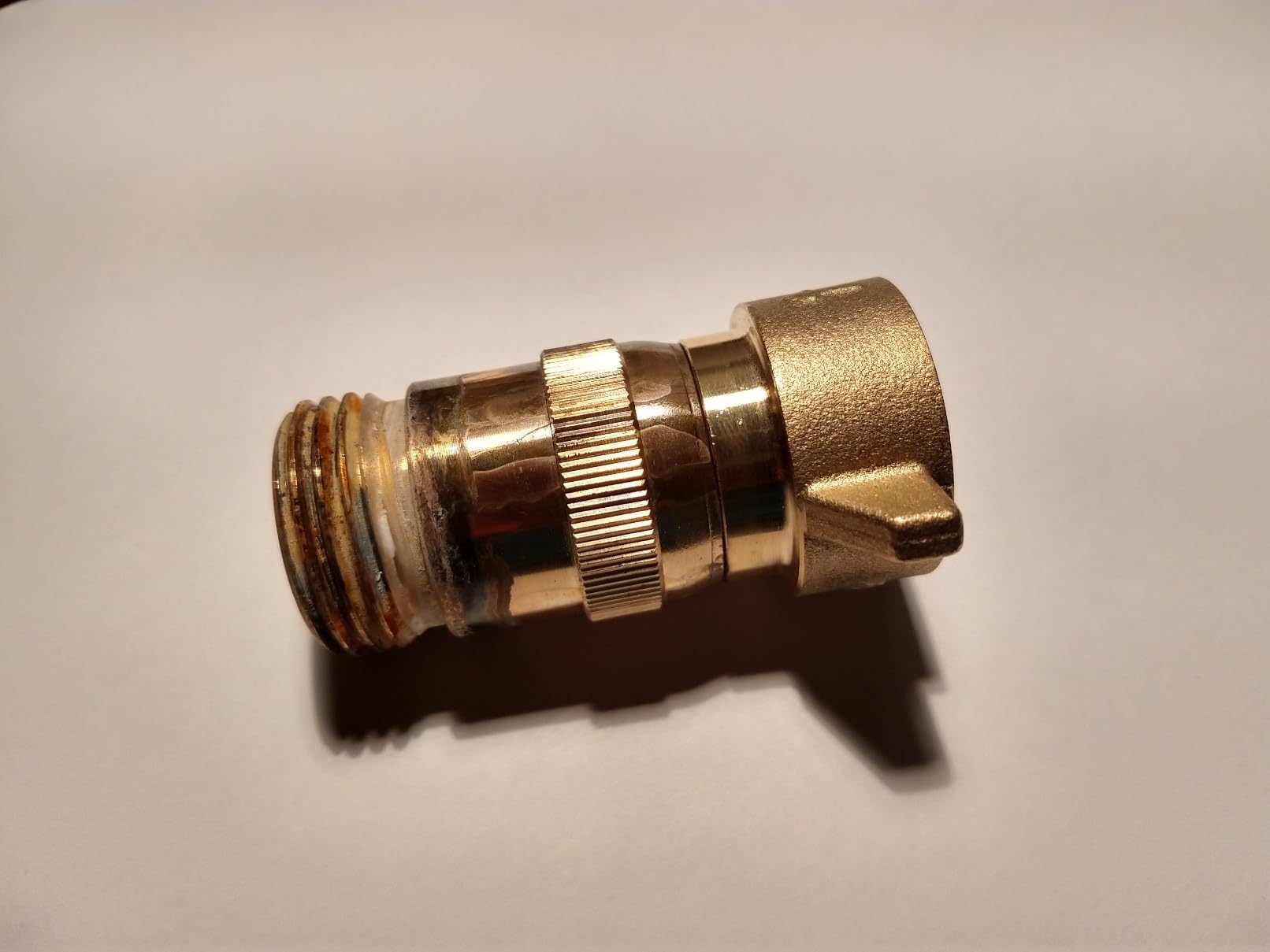
The body is lead-free brass with CSA low lead content certification, and the company backs it with a one year manufacturer warranty. At roughly 0.79 inches on each side and 150 grams, it is about the size of a tennis ball.
Owners value it for doing one job well: holding high campground pressure down to a safe band without adjustment knobs or dials to fiddle with.
Who should buy the Hourleey RV-REG
Occasional weekend campers and anyone outfitting a second trailer will appreciate not paying more for features they will never use. The protected pressure range is the same one most RV manufacturers specify.
If you also need to understand how your system performs under pressure, start with the water pressure tank guide we keep on the site, since it explains how supply capacity and pressure interact.
Where it falls short
There is no gauge, so incoming campground water pressure stays invisible unless you carry a separate one. You also cannot raise the setting if a specific use needs more flow.
The fitting is 3/4 inch only. If your RV has a 1/2 inch city water inlet rather than the common 3/4 inch, this will not mate without an adapter.
7. Valterra A01-1120 Fixed Regulator – Best for Older RV Plumbing
Valterra RV Water Regulator, Lead-Free Brass Water Regulator for Camper, Trailer, RV Plumbing System, 40-50 psi
Lead-free brass
Fixed 40-50 PSI
5.6 ounces
NPT connection
Pros
- Durable lead-free brass that resists rust
- Regulates to 40-50 PSI suited to older plumbing
- Owners report it outlasting larger brands
- Also works on outdoor taps and garden hoses
Cons
- Fixed pressure with no gauge
- Plastic tightening ring can clash with some faucet handles
- Small unit with an internal nylon-type part in some variants
The Valterra A01-1120 is the one owners keep recommending when durability comes up. Multiple reviewers describe it outlasting regulators from larger brands across several years, and the company positions it specifically for older RVs whose plumbing predates current pressure standards.
It regulates to 40 to 50 PSI, attaches directly to a standard campground spigot, and reduces pressure feeding through the hose into your coach. The lead-free brass conforms to federal and state rules for drinking water fixtures.
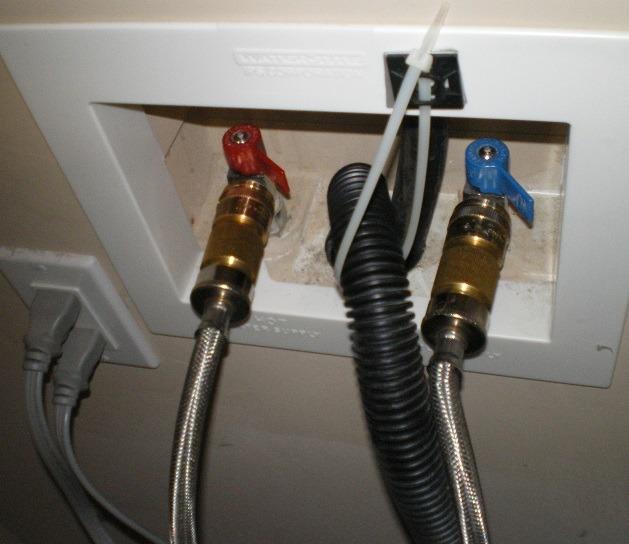
At 5.6 ounces and under half an inch on each side, it fits in the tightest storage compartments we deal with. Rust resistance is the other recurring theme in the reviews.
Several owners use it off the RV entirely, as a regulator for a high-pressure home tap that was splitting garden hoses.
Where the Valterra fixed unit fits
Older travel trailers built with thinner plumbing runs are the clearest case for this regulator. The 40 to 50 PSI band matches what those systems were designed to handle, and no adjustment means nothing to accidentally knock loose.
If you are not fussy about seeing campground water pressure, this is a regulator you can install once and forget for the season.
Where it falls short
There is no gauge and no adjustment, so you have no way to read or change the outlet pressure. If you want to run closer to 55 PSI for a better shower, this is the wrong tool.
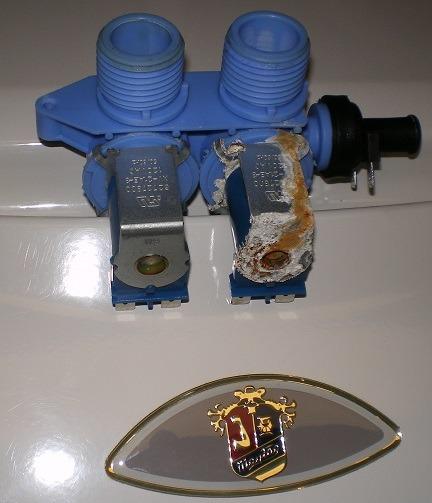
A few details surface in reviews. The orange plastic hand-tightening ring can interfere with certain faucet handles, and one reviewer reported a Prop 65 warning on the packaging. Some variants include a nylon-type internal component, which is worth knowing if you care about long service life.
8. STMOUTUO MT-PRV01 – Best Tool-Free Knob Adjustment
STMOUTUO RV Water Pressure Regulator Valve for Camper. Lead-Free Brass.
Lead-free brass
Pull-and-turn top knob
0-160 PSI gauge
Two spare inlet filters
Pros
- Substantial brass build heavier than most in its range
- Knob adjusts fast with no screwdriver
- Wide 0-160 PSI gauge stays accurate against a reference
- Box includes spare filters and thread tape
Cons
- Adjustment reaches only about 20 PSI below line pressure
- Gauge can take on water in heavy rain exposure
- Some owners report failure after one season
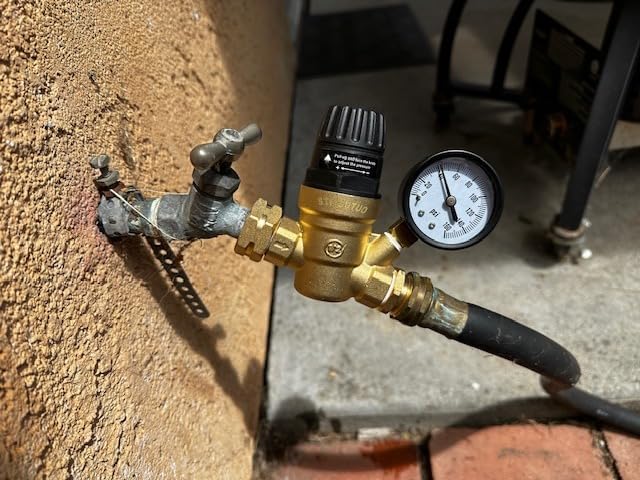
The STMOUTUO MT-PRV01 solves the single most common complaint about screw-adjust regulators. You pull the top knob and turn it by hand, which means changing pressure at a wet spigot in cold weather is a two second job instead of a tool hunt.
It is factory preset to 45 PSI with a wide 0 to 160 PSI gauge across the dial. The lead-free brass complies with NSF/ANSI/CAN 372:2024 Section 3.1, and every piece is tested below 0.13 percent lead.
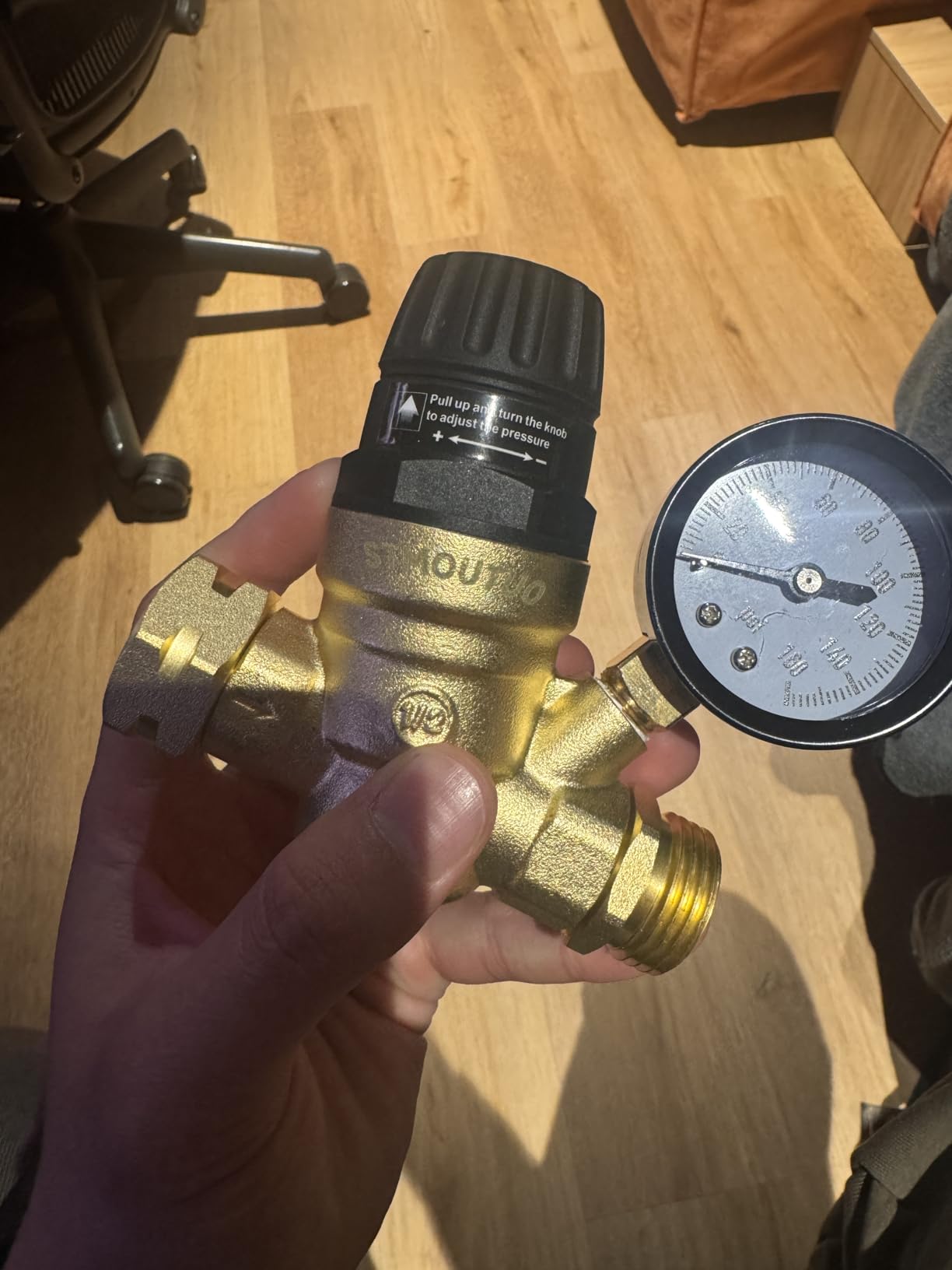
Owners praise the heft. At roughly 1.4 pounds it feels more substantial than many pieces in this group, and it holds its position hanging off a spigot without drooping or weeping at the joint.
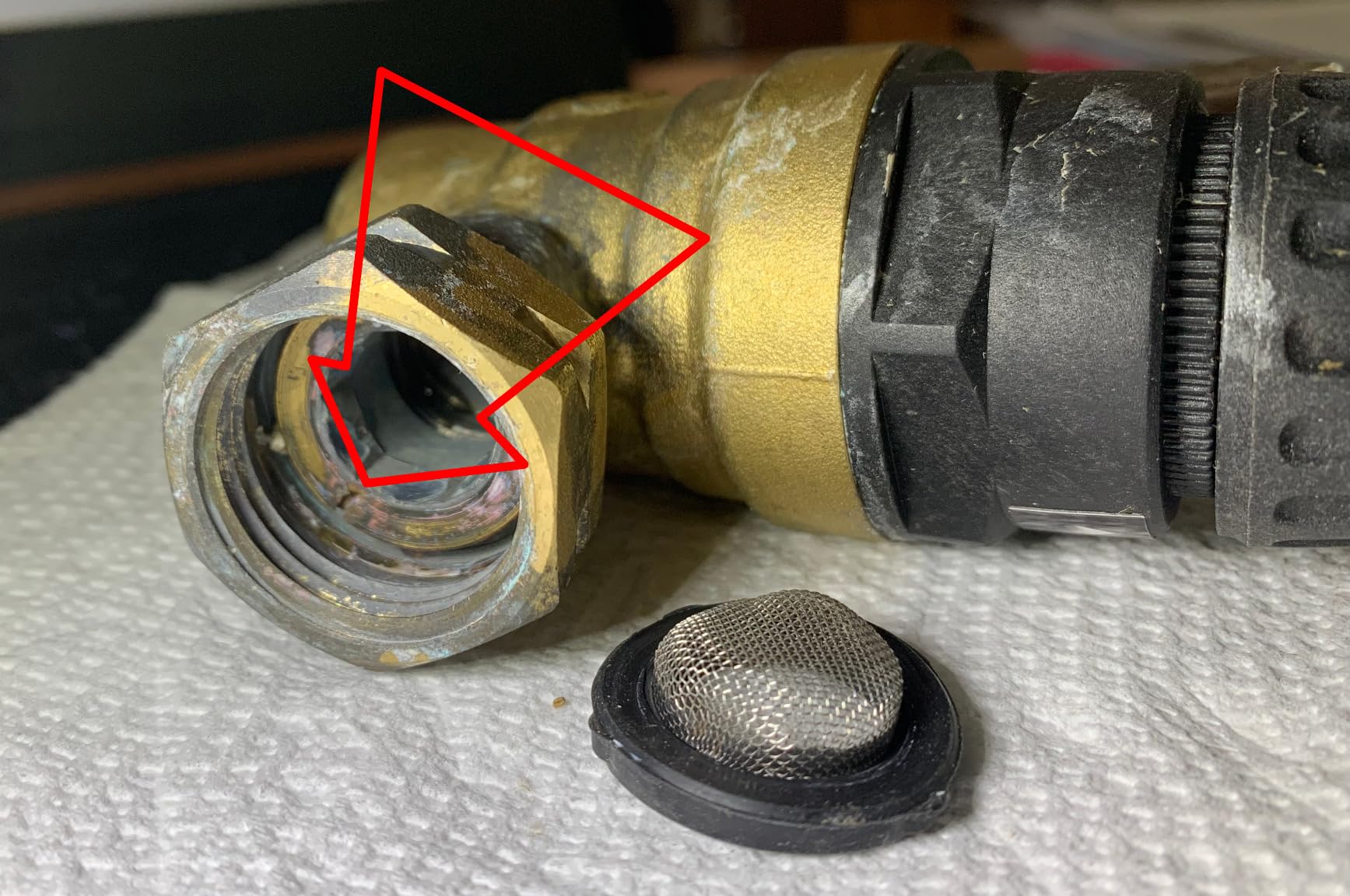
The box is unusually generous. You get two spare inlet filter cartridges and a roll of thread tape, so a mid-trip clog or a weeping connection is handled without a supply stop.
Where the STMOUTUO stands out
Travelers who adjust often notice the difference immediately. Owners who moved from screwdriver designs describe the knob as a clear upgrade, and some report it outperformed pieces from better known brands.
The gauge is wide range and reportedly holds accuracy against a reference meter, which makes it useful when you want to know exactly what the park is delivering.
Where it falls short
Adjustment reaches only about 20 PSI below the incoming line pressure. On a spigot pushing 90 PSI, that still leaves plenty of room, but it is a limit to know about at high-pressure sites.
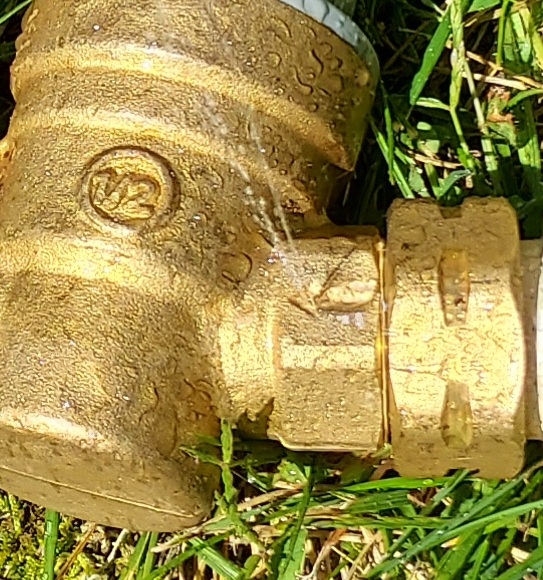
The gauge can take on water after heavy rain exposure and needs tilting to drain. A smaller number of owners report complete failure after a single season of use, so if you full-time it, keep it on the replacement list.
9. Valterra A01-1117VP – Best for 1-Inch Hookups
Valterra RV Water Regulator, Lead-Free Brass Adjustable Water Regulator with Pressure Gauge for Camper, Trailer, RV Plumbing System
Lead-free brass
Adjustable with gauge
1 inch FNPT inlet
One year warranty
Pros
- Adjusts to your preferred pressure instead of a fixed band
- Gauge lets you monitor and dial in supply pressure
- Lead-free brass is rust resistant and long lived
- Sets directly on a standard campground spigot
Cons
- Bulky body at 1 by 5 by 4 inches and 16 ounces
- Thread sizing differs from the common 3/4 inch standard
- Lowest rating in the roundup
- tied with one other model
The Valterra A01-1117VP solves a specific problem: hookups where the common 3/4 inch garden hose pattern does not fit. Its inlet is 1 inch female NPT, which makes it one of the few regulators here suited to a larger commercial spigot or a custom adapter setup.
The pressure is adjustable to your preference, and the included gauge lets you watch campground supply pressure while you dial it in. The lead-free brass is rust resistant and built for long service, with a one year warranty.
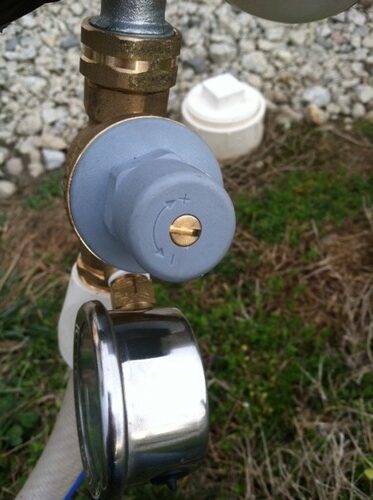
The trade-off is size. At 1 by 5 by 4 inches and 16 ounces, this is one of the bulkiest regulators here, and it is the piece we would think hardest about before strapping into a small trailer.
Buyers who want to choose their own pressure rather than accept a fixed band rate the solid brass and gauge highly. The size and weight draw repeated criticism.
Where the Valterra adjustable unit fits
If your campground spigot is a larger fitting and your RV inlet needs an adapter, this is the pick. It also suits anyone who wants to set pressure deliberately rather than inherit a factory band.
The gauge is genuinely useful for diagnosing an RV. Our write-up on shower heads for low water pressure covers the downstream end of the same problem.
Where it falls short
It carries one of the highest shares of one-star reviews in this roundup, and its rating of 4.3 sits at the bottom, tied with the Kohree. That is worth taking seriously if you are deciding between two similar options.
Thread sizing differs from the 3/4 inch garden hose standard that most campgrounds use, so verify your spigot before you commit.
10. Boltigen AH45 Handwheel Regulator – Best for Shower Pressure
Boltigen RV Water Pressure Regulator with Gauge Lead-Free Brass Knob Adjustable Water Pressure Reducer Valve, for Camper Travel Trailer RV Drinking Water Pressure Adjust, Protecting Plumbing System
Lead-free brass
Tool-free handwheel
45 PSI preset to 160 PSI
Gauge included
Pros
- Handwheel adjustment needs no tools
- Adjusts above the fixed 40 PSI band owners want
- Screened inlet filter blocks sediment
- No leaks when properly seated
Cons
- Gauge oil can leak after about a season
- Setting can drift and is hard to dial in
- Sediment can block the unit after extended use
The Boltigen AH45 is the pick when your complaint is shower pressure rather than burst protection. Because it adjusts above the 40 PSI band that fixed regulators lock you into, you can run the outlet near 60 PSI and get a noticeably stronger stream.
The handwheel on top is turned by hand with no tools. To raise pressure, keep the inlet open and the outlet closed and turn the wheel clockwise. To lower it, close both sides, open the outlet to release pressure, turn the wheel down to lowest, then reopen.
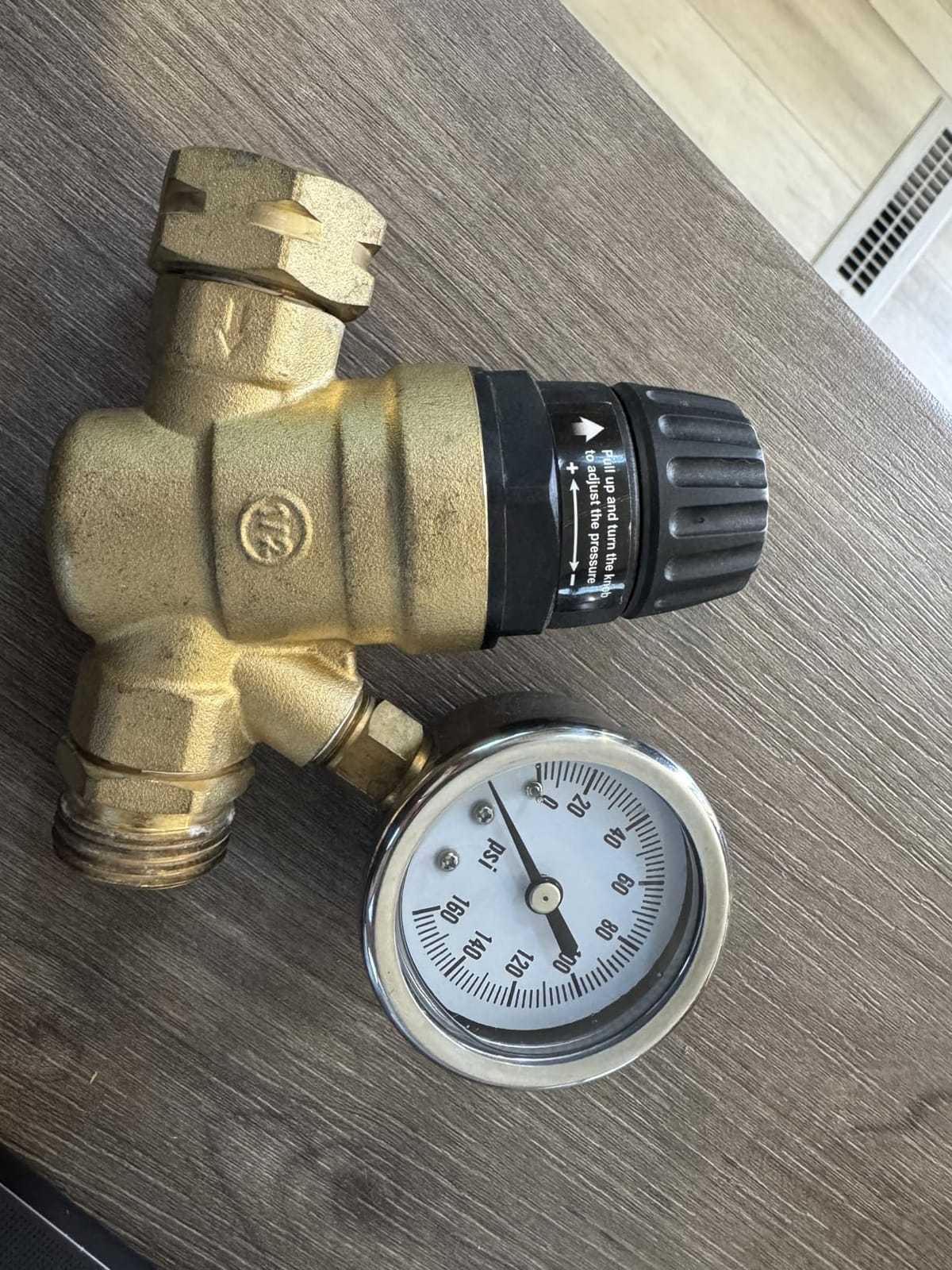
The body is C46500 lead-free brass from a hot-cast process, NSF/ANSI 372 compliant and tested under 0.13 percent lead. Factory setting is 45 PSI with adjustment up to 160 PSI, and the fittings are 3/4 inch hose female inlet and 3/4 inch hose male outlet.
The kit includes one regulator, two inlet screened filters and a roll of thread sealing tape, which is a sensible amount of spares for a part that lives outdoors.
Why owners who upgrade pick this one
People replacing screw-adjust regulators call the handwheel a clear upgrade, and that is not just convenience. Being able to run above 40 PSI is what makes the difference between a shower you tolerate and one you enjoy.
The gauge makes campground water pressure visible so you can fine-tune flow rather than guessing at the cause of a weak stream.
Where it falls short
The gauge is the recurring weak point. Owners report the oil leaking out after roughly a season, which leaves the needle unreliable and the dial cloudy.
Deducing the correct pressure takes practice because you have to close both valves and bleed the outlet. The setting can also drift, and sediment from campground lines may block the unit after a season of use.
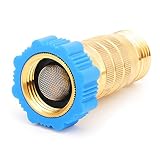
11. CircleCord Hi-Flow Regulator – Best for Higher Flow
RV Hi-Flow Water Pressure Regulator 50-55 psi
Lead-free brass
Fixed 50-55 PSI
Screened inlet
3/4 inch GHT and NH threads
Pros
- Higher factory setting gives 15 to 20 percent more flow
- Delivers stronger showers than a 40-45 PSI unit
- Holds pressure where adjustable units drifted
- Lead-free C46500 brass with screened inlet
Cons
- No gauge to verify campground pressure
- Fixed setting cannot be lowered further
- One owner reported a piece that cut flow to a trickle
The CircleCord Hi-Flow regulator takes a different approach to the flow problem. Instead of an adjustable mechanism, it sets the factory pressure higher at 50 to 55 PSI, which the manufacturer rates as 15 to 20 percent more water flow than a 40 to 45 PSI unit.
That is the entire strategy. There is no adjustment, no gauge, and nothing to drift out of calibration, just a stable inline reducer that holds a higher band than the fixed 40 to 50 PSI units most competitors sell.
Several experienced campers report explicitly preferring this over their previous adjustable, gauge-equipped regulators because those drifted over time. If you have already owned an adjustable unit that wandered, that complaint probably sounds familiar.
Who should buy the CircleCord Hi-Flow
If your only problem is a weak shower and you do not care about reading campground water pressure, this solves it with fewer parts. The C46500 lead-free brass is hot-cast and each piece is tested below 0.13 percent lead.
Owners report it has tamed even very high commercial spigot pressure, and the screened inlet filter helps keep particles from blocking the unit.
Where it falls short
With no gauge you cannot verify what the park is delivering, and the fixed setting gives you no way to lower pressure further if a specific need requires it.
One owner received a piece that cut flow to a trickle and questioned whether the listing rating was accurate. Treat that as an isolated report rather than a pattern, but it is the reason we would not hand this to a full-timer as the only regulator.
12. Kohree HY1730 Handwheel Regulator – Two-Layer Inlet Filter
Kohree Adjustable RV Water Pressure Regulator for RV Camper
Lead-free brass
Pull-and-turn knob
0-160 PSI with gauge
Two-layer inlet screen
Pros
- Tool-free pull-and-turn knob is quick to operate
- Wide 0-160 PSI range with a 45 PSI default
- Two-layer inlet screen blocks campground sediment
- C46500 brass tested under the NSF lead limit
Cons
- Lowest average rating in the roundup
- tied with one other
- Adjustment may need water flowing to take effect
- Dial markings are hard to read in low light
The Kohree HY1730 finishes our list as a solid adjustable option built around a two-layer inlet screened filter, which blocks debris twice before it reaches the valve. Its C46500 lead-free brass is hot-cast and tested to contain less than 0.13 percent lead.
Adjustment works by pulling up the knob and turning it. Clockwise raises pressure, counterclockwise lowers it, and the dial spans 0 to 160 PSI from a 45 PSI factory setting.
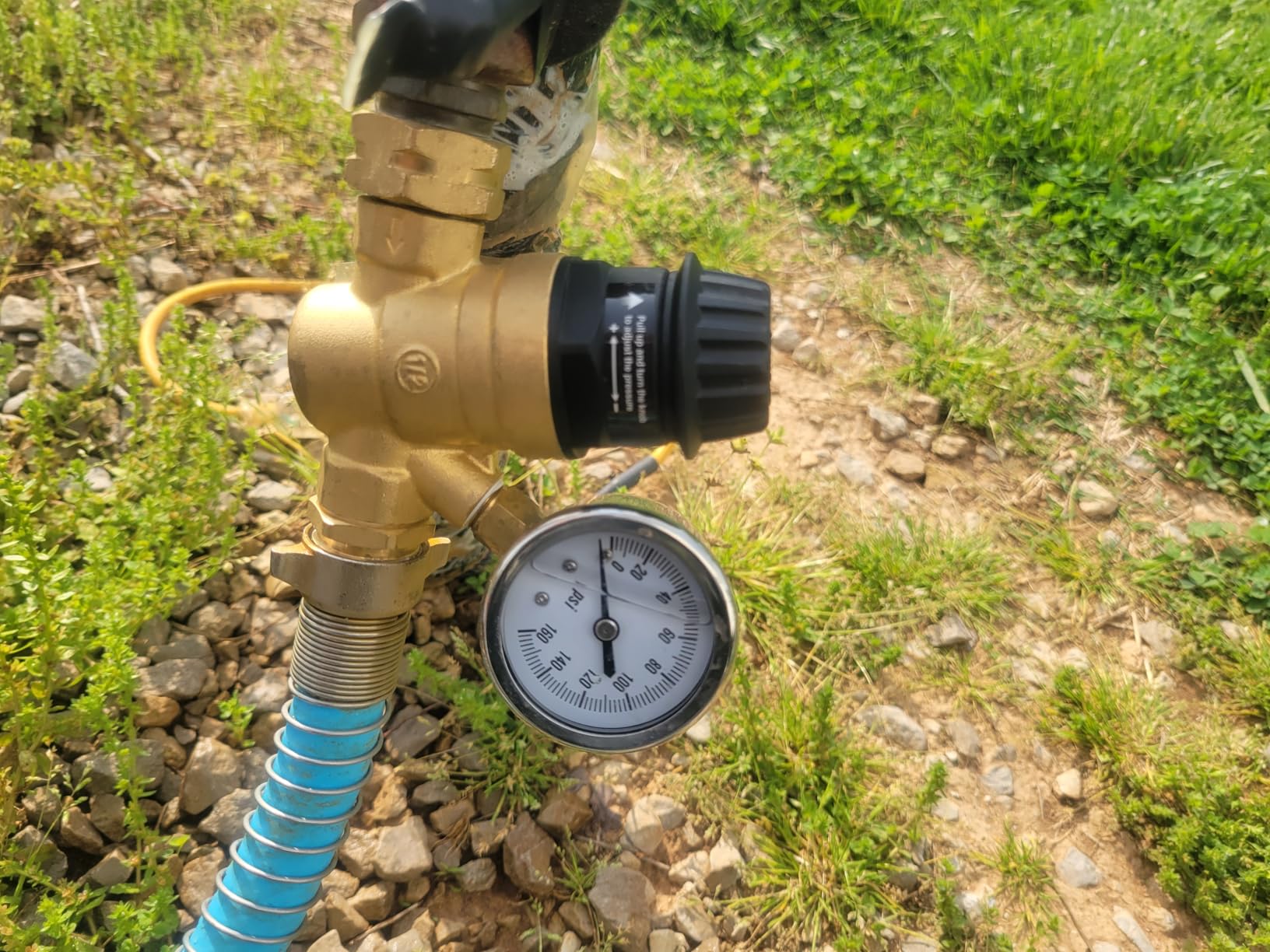
Owners who like it point to the no-tool knob, the wide adjustment range and the filtration as good value. It weighs 310 grams and measures under four inches on each side, which is compact for a gauge-equipped unit.
The connections are 3/4 inch GHT and NH on both inlet and outlet, fitting standard American hose and water systems.
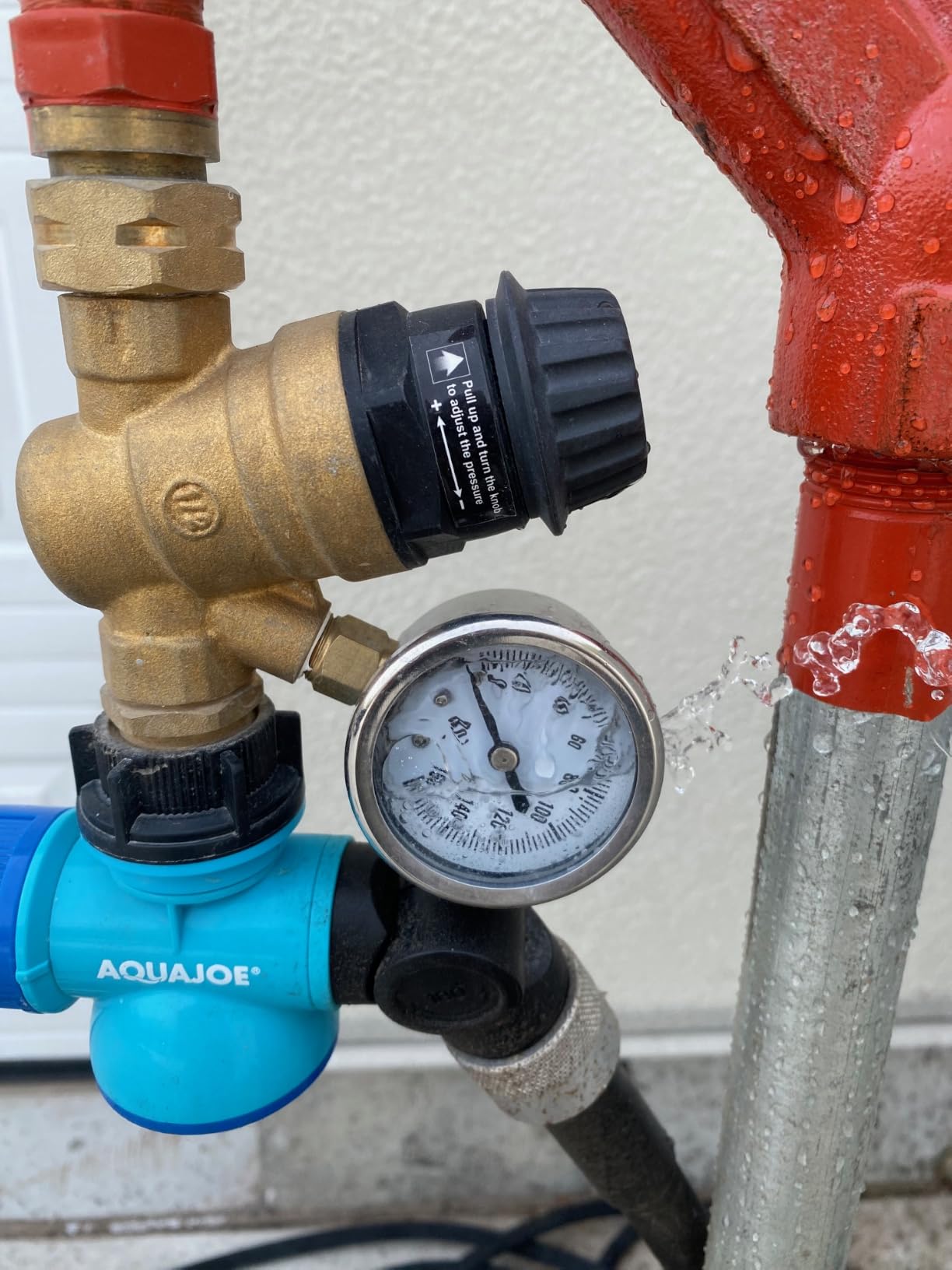
Where the Kohree works well
The two-layer inlet screen is genuinely useful at campgrounds drawing from a well or a system with known sediment. If your inline filter clogs repeatedly, this regulator addresses the source rather than the symptom.
It also backs the pressure claims with a one year manufacturer warranty, which is worth noting given where it sits in the ratings.
Where it falls short
This carries the lowest average rating in the roundup at 4.3, tied with one other model, alongside a comparatively high share of one-star reviews. Feedback is more mixed than for the better-known brands, with recurring complaints about setting accuracy and failures after limited use.
Adjustment can require water to be flowing before it takes effect, and the dial and body markings are hard to read in low light. It is also heavier than the small fixed regulators at that.
What PSI Should You Set Your RV Water Pressure Regulator At?
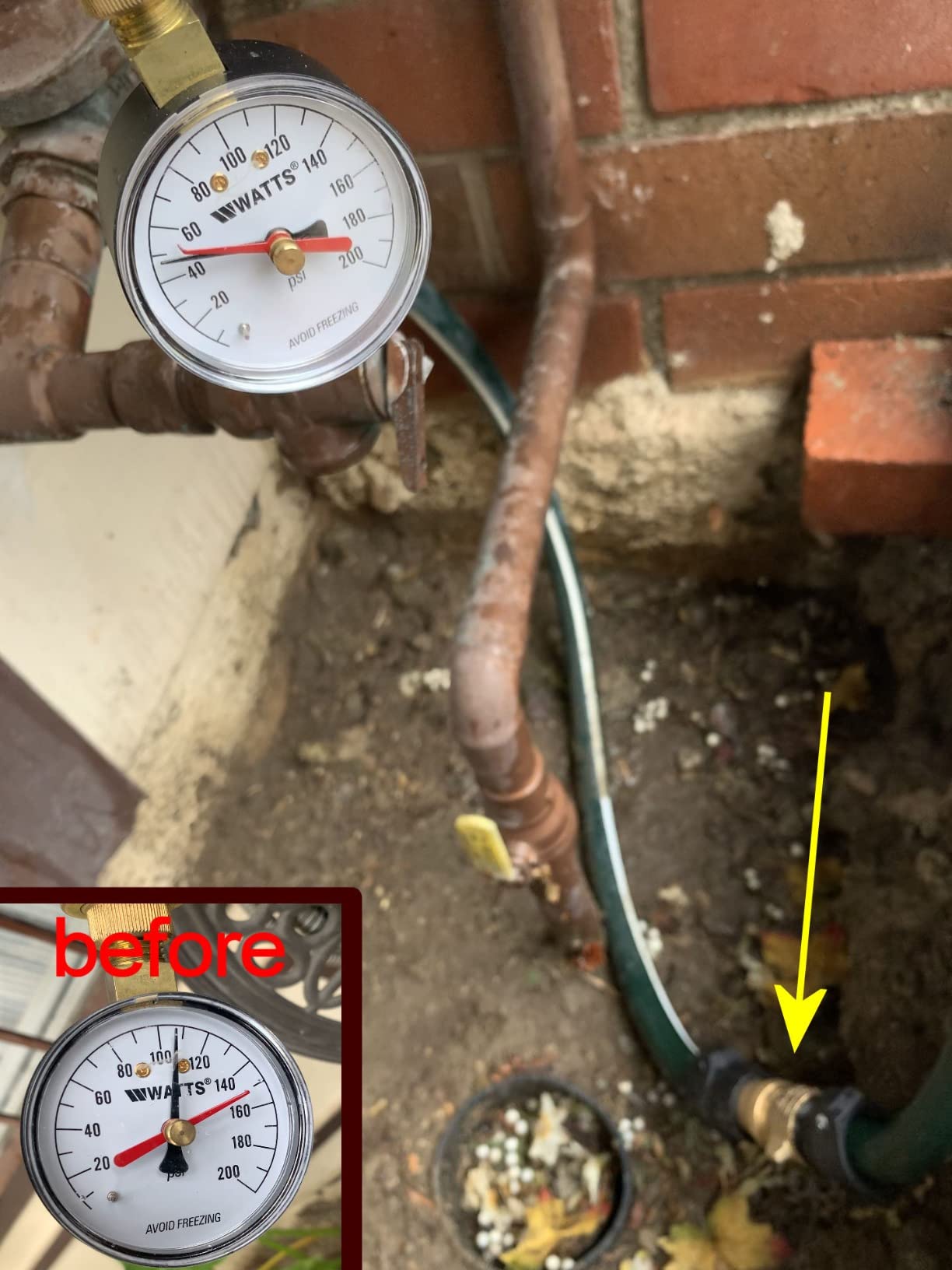
Set your regulator between 40 and 60 PSI. For most RVs the practical target is 50 to 55 PSI, which sits comfortably above the 40 PSI on-point of a typical Shurflo 4008 freshwater pump and below the pressure most manufacturers consider safe for the plumbing.
Winnebago recommends that regulators control to no more than 50 PSI, and many other manufacturers land in the same neighborhood. Check your owner manual before you change anything, because your rig’s recommendation is the number that matters.
The reason for the range is simple. Too low and appliance pressure switches start throwing leak codes and your shower becomes a trickle. Too high and you are back to the problem the regulator exists to solve.
One piece of advice to ignore: cracking the campground spigot open partway does not reduce incoming pressure. It only lowers flow, and it makes your problem look fixed while the pressure behind it stays exactly where it was.
How to Set Up an RV Water Pressure Regulator Step by Step
Setup takes a few minutes and no tools beyond your hands. Work in this order and you will never spray water across the coach.
1. Shut off the campground spigot completely before touching anything. Confirm it is off by opening the faucet on your RV and watching for flow to stop.
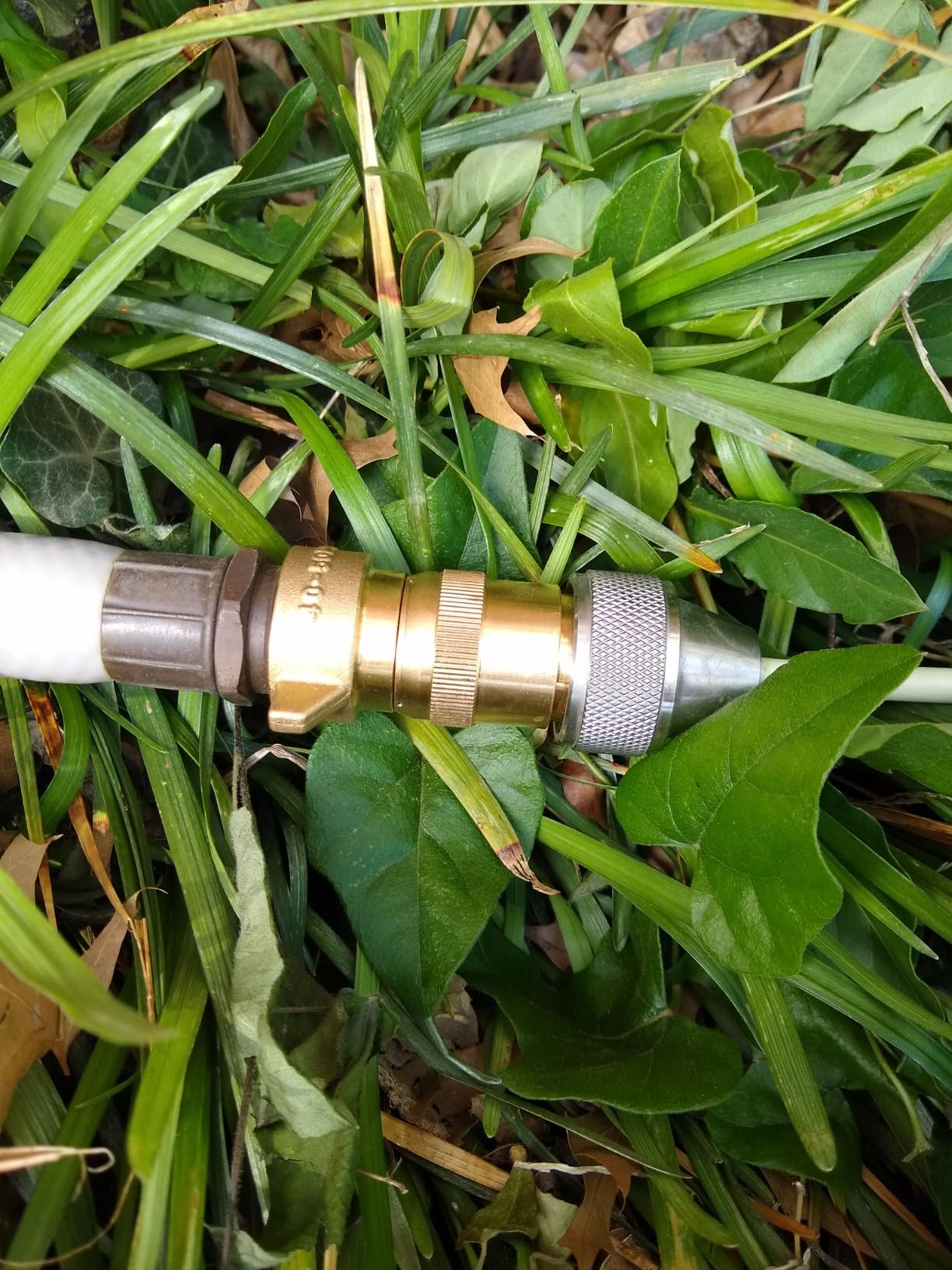
2. Connect the regulator to the spigot. Most pieces screw directly onto a 3/4 inch male spigot. If the connection weeps, add the washer or a thin wrap of thread tape.
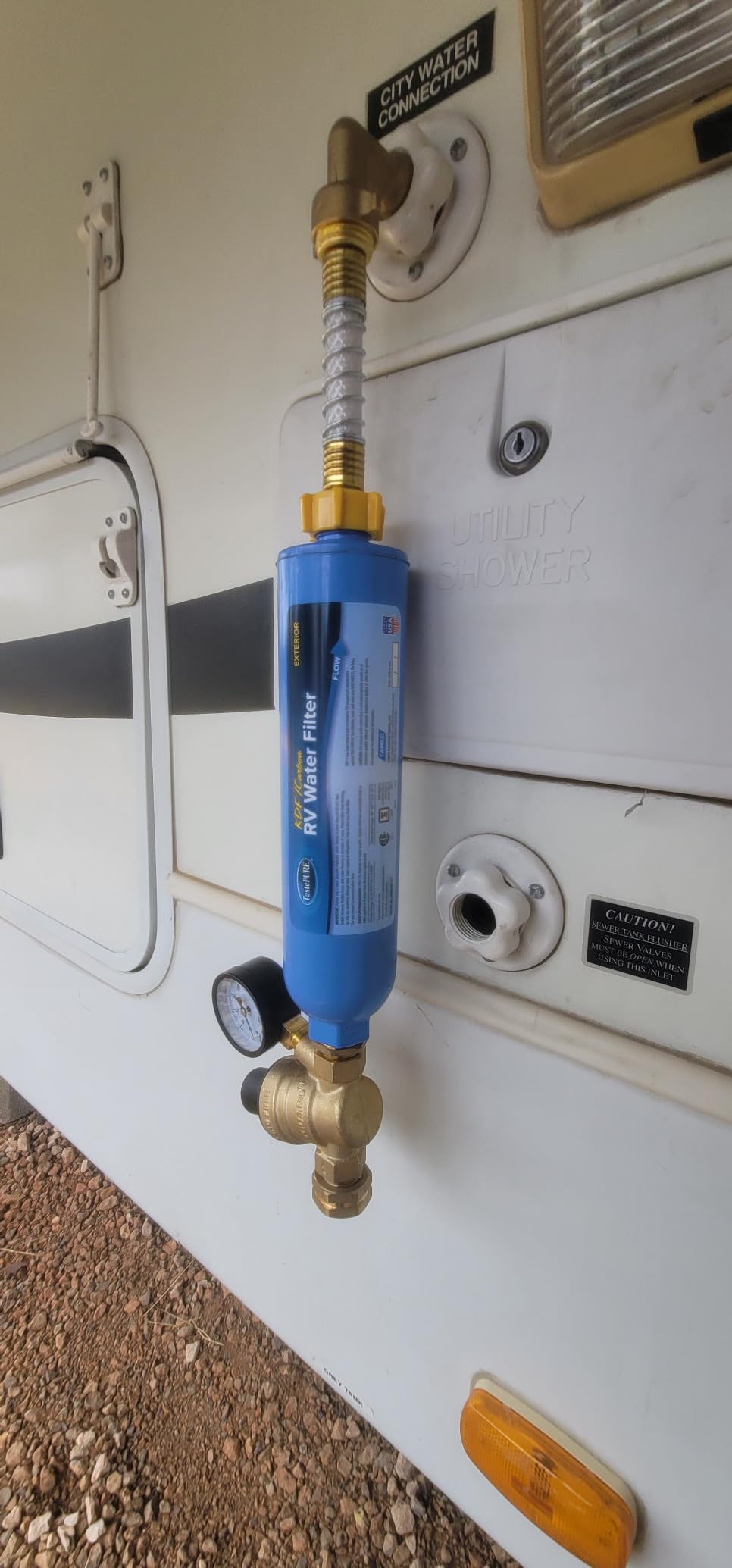
3. Attach your potable water hose to the outlet side of the regulator, then run the hose to your RV city water inlet. Keep the regulator on the spigot end of the hose so you can read the gauge at the source.
4. If you use an inline water filter, put the regulator between the spigot and the filter. That protects both the filter housing and the hose from high pressure.
5. Open the spigot slowly, then open a cold faucet inside the RV to bleed air and let the pressure stabilize. Wait until the gauge needle stops moving.
6. Adjust if your regulator allows it. With an adjustable model, open a faucet so water is moving, then turn the screw or handwheel slowly in small steps until the reading lands in your target range. Close the faucet to confirm the setting holds.
7. Fill the fresh tank, run a short shower to confirm the flow you want, and check the gauge once more at breakfast and at bedtime if the park is busy.
Buying Guide: Eight Things to Check Before You Buy
Adjustable or fixed. A fixed unit holds a factory band and never drifts, which is why it suits older rigs and campers who do not move often. An adjustable unit is worth the step up if you travel between parks with inconsistent supply, because you can match pressure to what each site delivers.
Do you need a gauge. A readable dial tells you what the campground is pushing and turns weak shower pressure from a mystery into a diagnosis. If you will ever troubleshoot, buy the gauge.
Material. Brass wins on every dimension that matters here. It resists pressure, does not rust, tolerates a season of sun and weather, and does not crack in cold the way plastic bodies do. Every unit in this roundup is brass.
Certification. Look for lead-free compliance to NSF/ANSI 372 or the newer NSF/ANSI/CAN 372 standard, plus CSA where offered. This water becomes drinking water, so treat a missing certification as a reason to pick a different piece.
Thread standard. Nearly all American campground spigots use 3/4 inch garden hose thread. NH and NPT fittings also appear, and one regulator here uses a 1 inch inlet. Confirm your spigot before you buy.
Inlet screen. A screened inlet keeps sediment out of the valve and is the single cheapest way to avoid a clogged regulator. The Kohree and Boltigen both ship with two spare screens.
Gauge type. Oil-filled dials stay steady when a neighboring site draws water. Dry gauges are lighter and cheaper but the needle flutters, and some owners report oil leaking out after a season.
Does your RV already have one. Many RVs include a built-in regulator at the city water inlet. Check your owner’s manual before buying. A built-in unit is often fixed and ungauged, which is exactly the situation where an external adjustable regulator earns its place.
If you are weighing an onboard pump strategy instead of city water, our guide to well pressure tanks covers how storage and pressure behave when you stop relying on a campground supply.
Flow Rate and Shower Pressure in 2026
A regulator protects your plumbing by restricting flow, which is why the same piece that saves your cabinetry can make a shower disappointing. The tradeoff is real, and it is the single most common complaint in RV forums.
Pressure and flow are different things. PSI is the force pushing on the walls of your plumbing. Flow, measured in gallons per minute, is how much water actually reaches the showerhead in a given second.
A fixed regulator set at 40 PSI delivers noticeably less water than one set at 50 PSI. That is why the CircleCord Hi-Flow and any adjustable unit set near 55 PSI produce the strongest showers in this roundup.
If a good regulator still leaves you unsatisfied, a booster pump is the next tool rather than a bigger regulator. Our roundup of water pressure booster pumps covers when that step makes sense.
Regulator Placement: Before or After the Inline Water Filter
Put the regulator between the campground spigot and your inline water filter. That position protects the filter housing, the cartridges inside it, and the potable water hose from whatever pressure the park is supplying.
The order we use is spigot, regulator, hose, inline filter, RV city water inlet. If you put the filter first, it absorbs pressure that your plumbing was never designed to handle.
Keep the regulator on the spigot end rather than at the RV end. That way the gauge reads source pressure, and you can disconnect everything without wrestling the regulator loose in a tight plumbing bay.
Common Regulator Problems and How to Fix Them
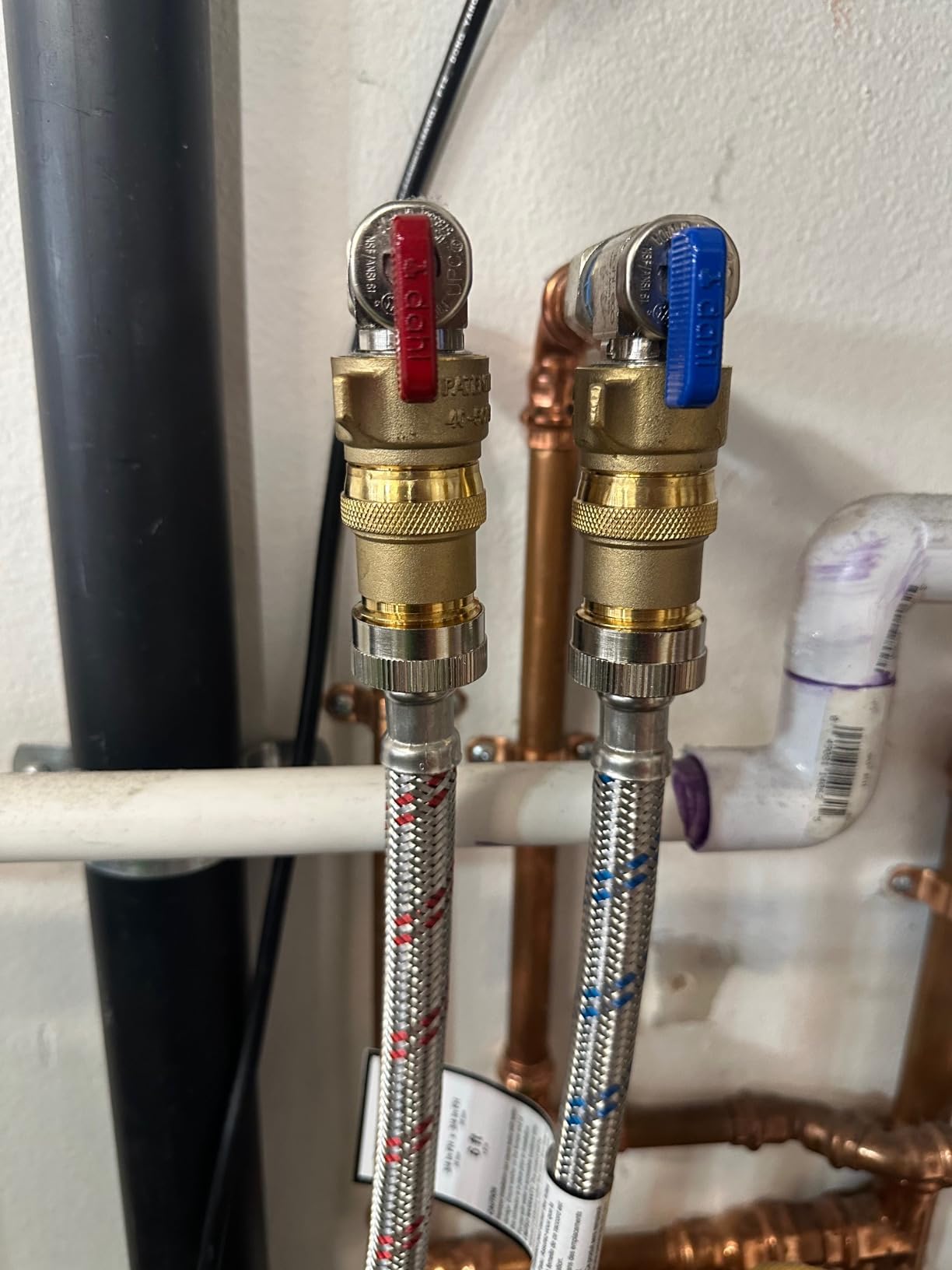
Frozen or cracked gauge. This is the most reported failure of all. Water in the dial freezes, the lens cracks, and the reading is gone. Bring the regulator inside before winterizing, or install a short pipe nipple, a tee and a ball valve between the regulator and the gauge so you can drain it in cold weather.
Pressure reads low. Check whether the park supply simply cannot keep up. When several fixtures run at once, campground pressure drops sharply and owners often blame the regulator. Test with one faucet open before you swap anything.
Setting will not hold. Adjustment mechanisms drift or stick. Turn the adjustment screw with water flowing, work in small increments, and confirm the reading with a cold faucet open before closing it back up.
Leaking at the fittings. Most leaks are a missing or damaged washer rather than a failed valve. Replace the washer, and do not overtighten. If an o-ring is involved, a little lubricant and finger-tight plus a quarter turn solves most complaints.
Weak or absent regulation. Irrigation-grade and plastic units sometimes pass straight through whatever the source delivers. Replace them with a brass unit certified to a lead-free standard.
Forgotten at the spigot. More than one owner has driven away without the regulator still attached to the campground. Unscrew it from the spigot when you disconnect the hose and pack it immediately.
Frequently Asked Questions
Do I really need a water pressure regulator for my RV?
Yes, if you ever connect to campground or city water. RV plumbing is typically rated near 60 PSI, but campground spigots frequently deliver 80 to 100 PSI with no requirement that they be regulated. You cannot see or anticipate the pressure at an unfamiliar spigot before you connect, so a regulator is inexpensive protection against a flooded coach.
What is the recommended water pressure for an RV in PSI?
Between 40 and 60 PSI, with 50 to 55 PSI the practical target for most rigs. Winnebago recommends regulators controlling to no more than 50 PSI, and many manufacturers give a similar figure. Check your owner manual, because your rig’s recommendation is the number that governs.
What should my RV water pressure regulator be set at?
Most adjustable regulators ship factory set at 45 PSI, which is a good starting point. Adjust with water flowing, turn the screw or handwheel in small steps, and read the gauge with a cold faucet open. That way you are measuring the pressure actually reaching your plumbing.
Can a water pressure regulator be adjusted?
Only adjustable models can. Fixed regulators hold a factory band, usually 40 to 50 PSI, and cannot be changed. Adjustable regulators use either a screwdriver screw or a tool-free handwheel and typically cover 0 to 160 PSI with a 45 PSI factory setting.
Why does my RV have low water pressure when hooked to city water?
Two causes account for most cases. The campground supply cannot keep up when several fixtures run at once, or your regulator is set too low and cutting flow to your showerhead. Test with a single faucet open before you buy anything, since a booster pump is only useful if the source pressure is actually there.
What are the common problems with RV water pressure regulators?
The most common issues are gauges that crack in freezing weather, adjustment settings that drift, leaks from worn washers or o-rings, and clogs from sediment that a screened inlet would have caught. Failures also happen when the regulator is left attached to the campground spigot and drives away without it.
Final Verdict on the Best RV Water Pressure Regulators for Campgrounds
The Camco 40055 is our pick for most RVers because it protects your plumbing without asking anything of you, and it carries the largest review base in the category. If you travel between parks with inconsistent supply, the Renator M11-0660R gives you the most trustworthy gauge and real adjustment. The RVGUARD ARGWPR001 delivers that same adjustable behavior at a lower tier.
For shower pressure specifically, set an adjustable unit near 55 PSI or choose a fixed regulator with a higher factory band. Whatever you pick, bring it inside before freezing weather and carry a spare, because regulators get left at spigots.