
Most people searching for the best mosquito repellent devices in 2026 want one thing: a patio, deck or campsite where the bugs leave you alone. The confusing part is that the category mixes two machines that do completely different jobs. Heat-activated spatial repellers clear a zone around you in about 15 minutes. UV bug zappers kill insects in the air, all night, without clearing any zone at all. They get compared constantly and they should not be.
Our team worked through the spec sheets, the review histories and the forum threads behind ten of the best-known devices in the category for this October 2026 update, then sorted them by what they actually do. Our top pick is the Thermacell Fuel-ZoneGuard Patio Shield, the widest zone comes from the Thermacell E-ZoneGuard Patio Max, and the strongest property-wide machine is the Flowtron 40W outdoor zapper. Each one below carries a badge explaining which job it does well, plus a section on who it is wrong for.
If your problem is less about insects and more about sitting for hours outdoors, we have related reads on posture correcting devices and sciatica stretching devices, since a long evening on a patio chair and a long evening at a desk are the same problem wearing different clothes.
Table of Contents
Top 3 Picks for the Best Mosquito Repellent Devices in 2026
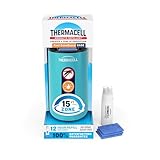
Thermacell Patio Shield
- 15 ft protection zone
- 12 hr per fuel cartridge
- Unscented DEET-free mats
- Reaches full effect in 15 min

Thermacell E-ZoneGuard Patio Max
- 20 ft protection zone
- Rechargeable 12 hr battery
- Charging dock included
- DEET-free refills

Flowtron 40W Outdoor Zapper
- Up to 1 acre coverage
- 40W UV plus octenol attractant
- 5600V shock grid
- 100 hr cartridge included
How Mosquito Repellent Devices Work?
A spatial repellent device heats a small pad saturated with metofluthrin, a synthetic pyrethroid registered with the EPA for mosquito control. The heat vaporizes the chemical into the surrounding air, and mosquitoes avoid the treated zone rather than being killed.
Two numbers matter here. The first is the protection zone, typically 15 or 20 feet, which is the bite-free radius around the device itself. The second is warm-up time, about 15 minutes from cold to fully effective. Users plan their whole evening around that window, as one r/Austin poster described putting the device outside about 15 minutes before heading out and simply accepting that it has no massive range.
Zones are also honest about their limits. A 15-foot zone comfortably covers a round table with four to six people sitting close. It does not cover a 20-foot deck with chairs spread along the rail. Owners on r/AustinGardening make the same point: the device works well if you are not moving around too much and it is not too windy.
Do Ultrasonic Mosquito Repellers Actually Work?
No. Plug-in ultrasonic repellers do not reduce mosquito bites in any meaningful way. They cost almost nothing to run, make no noise, and put nothing on your skin, which is exactly why they keep appearing in roundup lists.
The mechanism does not hold up. These units emit high-frequency sound intended to interfere with mosquito flight and feeding. Controlled testing has not shown a bite reduction attributable to the sound, and shoppers frequently report that a unit running for weeks makes no difference in how many bites they get the next morning. If you want a device that works without touching your skin, the evidence points to heat-activated spatial repellers, not sound.
One partial exception is a sealed indoor room, where a plug-in unit may make a small difference for flying insects. Outdoors, the effect disappears entirely, because an open wall or window removes whatever the sound was doing. That indoor-outdoor gap is the source of most positive-sounding claims.
Why UV Bug Zappers Catch Flies but Miss Mosquitoes
A zapper works by pulling insects toward a light source and killing them on a high-voltage grid. Mosquitoes hunt for carbon dioxide and body heat, not ultraviolet light, so a plain UV bulb mostly draws in moths, gnats and flies. That is the whole explanation for the common owner complaint of filling the tray with bugs and still getting bitten.
Adding an attractant such as octenol, which mimics ruminant breath, measurably improves mosquito catch rates. Even so, zappers reduce numbers slowly and unevenly, they kill beneficial insects along with mosquitoes, and the audible snap of larger insects on the grid is disruptive during outdoor dining. Owners on r/sandiego describe the practical reality plainly: zappers help, and a fuel-based repeller on the table works better.
So, is a Thermacell device more effective than a bug zapper? For protecting people who are sitting still, yes, decisively. For lowering the mosquito population across a whole property over several weeks, a trap-based machine earns its keep. Those are different jobs, and treating them as substitutes is the most common buying mistake in this category.
Best Mosquito Repellent Devices at a Glance (October 2026)
| Product | Specifications | Action |
|---|---|---|
| Thermacell Fuel-ZoneGuard Patio Shield |
|
Check Latest Price |
| Thermacell E-ZoneGuard Patio Max |
|
Check Latest Price |
| Flowtron 40W Outdoor Bug Zapper |
|
Check Latest Price |
 GOOTOP 4200V Bug Zapper GOOTOP 4200V Bug Zapper |
|
Check Latest Price |
 LiBa 2800V Indoor Bug Zapper LiBa 2800V Indoor Bug Zapper |
|
Check Latest Price |
 Thermacell Mosquito Repellent Lantern Thermacell Mosquito Repellent Lantern |
|
Check Latest Price |
 DynaTrap DT2030SR Outdoor Trap DynaTrap DT2030SR Outdoor Trap |
|
Check Latest Price |
 OnBeam Solar Bug Zapper OnBeam Solar Bug Zapper |
|
Check Latest Price |
 AMUFER 18W 4400V Bug Zapper AMUFER 18W 4400V Bug Zapper |
|
Check Latest Price |
 ASPECTEK 20W Electric Bug Zapper ASPECTEK 20W Electric Bug Zapper |
|
Check Latest Price |
1. Thermacell Fuel-ZoneGuard Patio Shield – Best Overall Repeller for a Small Patio
Thermacell Fuel-ZoneGuard Base Patio Shield Mosquito Repeller, Glacial Blue
15 ft protection zone
Up to 12 hr per fuel cartridge
3.4 x 3.4 x 6.5 inch base
9.6 oz
Pros
- Most owner feedback of any device here
- Single button heat activation with no setup steps
- Scent-free with no smoke and no flame
- Visible color-change cue on depleted mats
Cons
- Mats run about 4 hours each
- Vapor disperses in wind
- 15 ft zone is smaller than the Patio Max
This is the device most people end up buying, and reading the full review history makes it easy to see why. It is a small square base you set on a patio table, press once, and forget about. Nothing sprays, nothing smokes, and there is no scent, which matters when you are eating outside next to it.
Reviewers consistently describe the same result: a calm evening on the patio, about 15 minutes after pressing the button, and the mosquitoes that were circling the table are gone. One r/Hawaii owner described a backyard going from constant bites within ten minutes to none, and an r/LosAngeles user runs two of them and says they do the job for outdoor hangs.
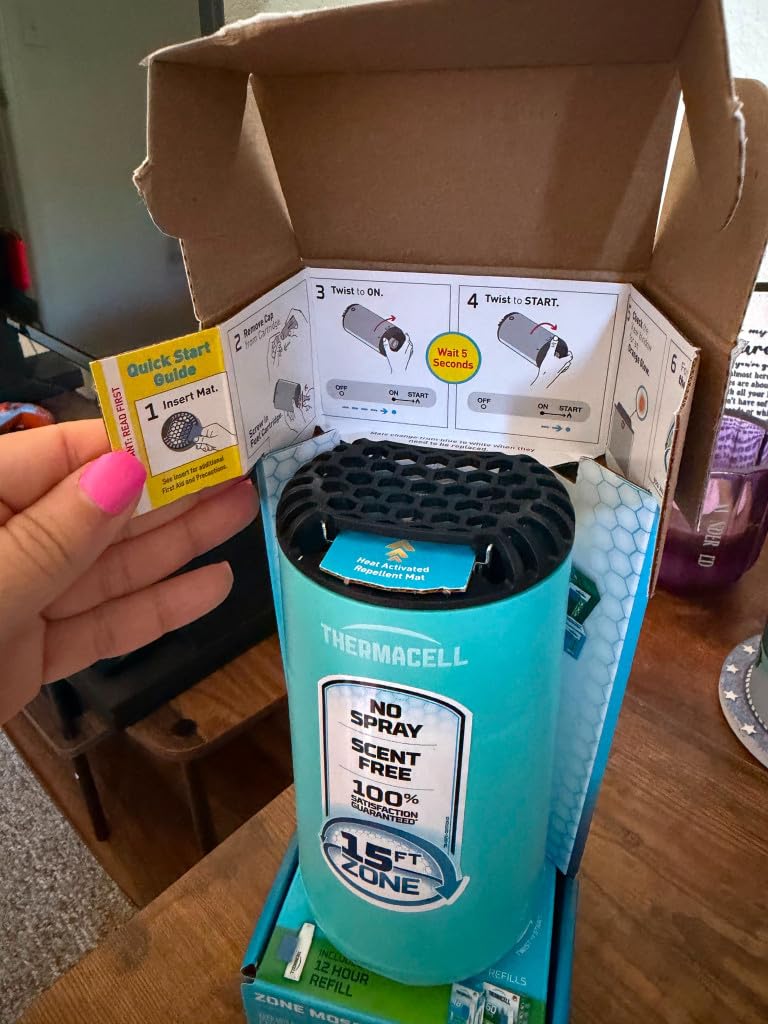
The honest weakness is consumables. The unscented repellent mat lasts up to four hours and the fuel cartridge runs up to twelve, so a long evening means swapping mats. Forum users mention refill cost more than any other complaint, and it is a real running expense rather than a one-time purchase cost.
Physical design is simple in a good way. At 3.4 by 3.4 by 6.5 inches and 9.6 ounces, it moves between the table, the grill and the porch without effort. Mat holders on top make swapping obvious, and the color change on a spent mat removes the guesswork of whether it is still working.
What a 15-foot zone actually covers
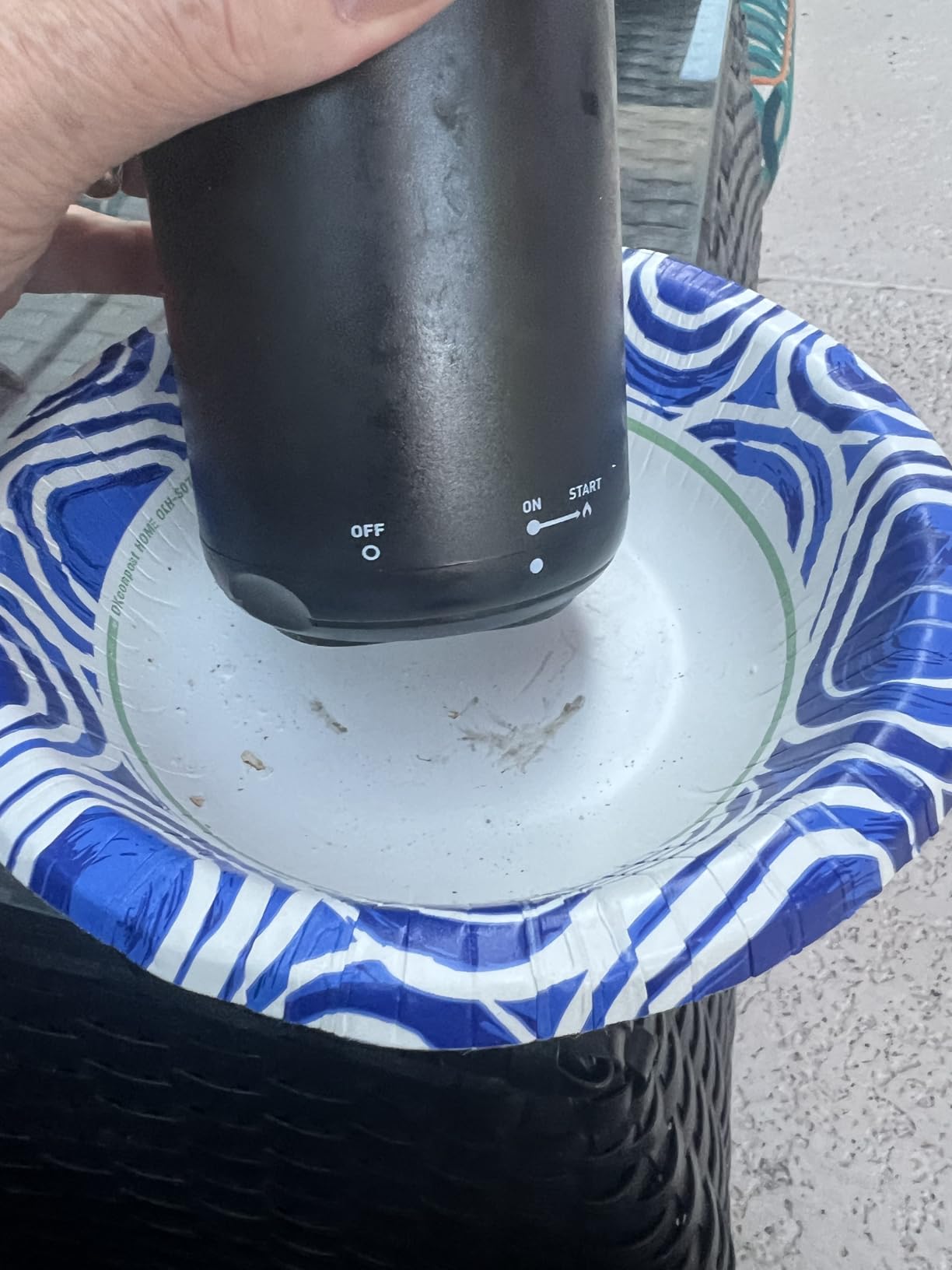
Plan on a circle roughly 30 feet across, centered on the device. That comfortably handles a round patio table with four to six people sitting close together, or a couple of Adirondack chairs near the house. It is the right shape for dinner outside, not for a deck where guests spread out along the perimeter.
If your seating area is wider, running two devices at opposite ends does more than one device in the middle. The two zones do not merge into a single large bubble, so you are simply covering the two areas where people actually sit.
When it disappoints
Wind is the main failure mode. The vapor is carried away from the unit, and the effective radius shrinks noticeably in a breeze. Users on r/AustinGardening condition every recommendation on the weather, and that caution is the correct reading of the spec sheet.
The second disappointment is timing. Twelve hours of runtime is not twelve hours of protection from the moment you unbox it, because the first fifteen minutes are warm-up. If you forget the button, the whole evening is unprotected, and the device gives you no reminder.
2. Thermacell E-ZoneGuard Patio Max – Widest Protection Zone on the Market
Thermacell E-ZoneGuard Patio Max Mosquito Repellent 12Hr Bat + Chrging Dock
20 ft protection zone
Up to 12 hr rechargeable battery
Charging dock included
12.9 x 9 x 14.6 inch
Pros
- Widest protection radius in this lineup
- No fuel cartridges to buy or store
- Silent and scent-free
- 36 hour refill in the box
Cons
- Cannot run while charging
- Full charge takes hours
- Wind still shortens the radius
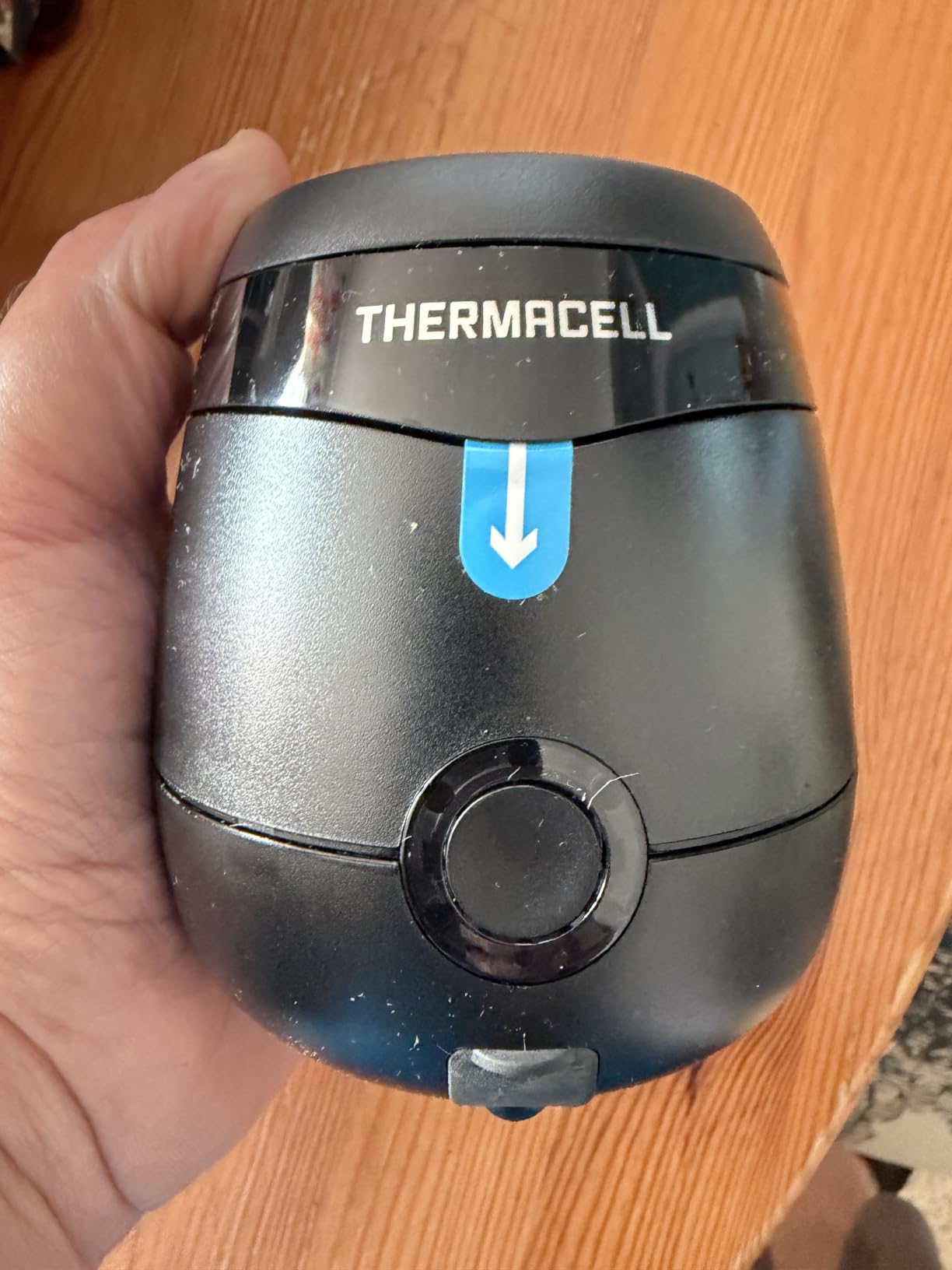
This is the same heat-activated idea as the Patio Shield, scaled up and moved off fuel. A rechargeable lithium-ion battery delivers up to 12 hours of run time, and the stated protection zone is 20 feet, the widest in the EPA-registered line according to the manufacturer.
Owners frequently report going bite-free on a covered porch once the 15-minute warm-up completes, and the rechargeable base removes the fuel cartridge from the running cost entirely. The all-black hardware also disappears on a dark patio better than a bright blue unit does.
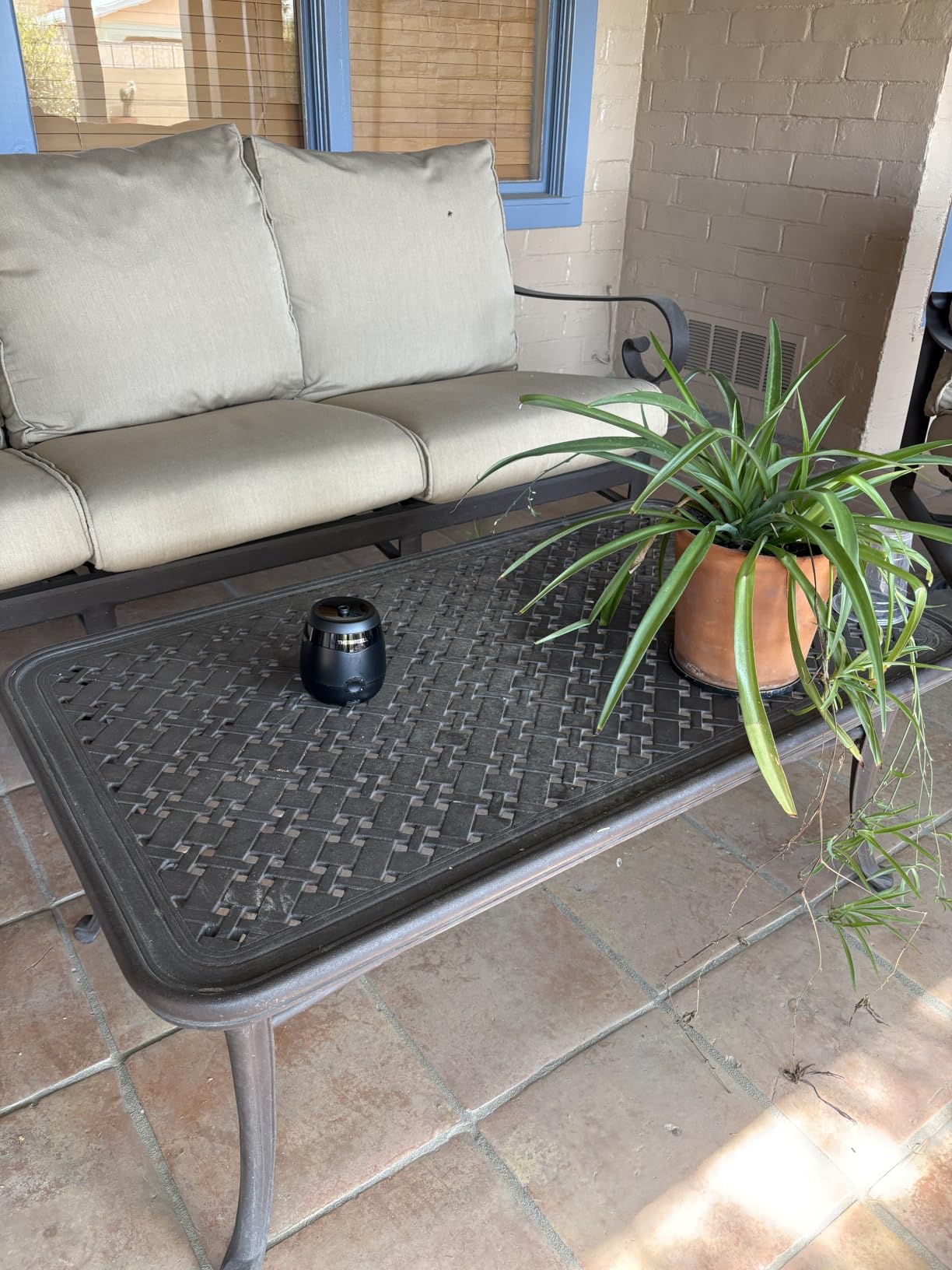
The trade is charging logistics. It cannot operate while plugged in, so a full charge takes hours and the device is out of service during them. If you plan to run it from mid-afternoon through a long dinner, you need to remember to top it up earlier in the day.
Refill cartridges remain an ongoing expense, and the instructions are a commonly cited source of confusion around charging states and cartridge removal. At 12.9 by 9 by 14.6 inches it also claims a good deal more table space than the smaller base, which matters on a patio where the surface is already crowded.
Rechargeable versus butane, in practice
Rechargeable wins on convenience over a season. You charge it, you press a button, and there is no fuel to store, no cartridge to swap at hour six, and nothing to leak in a bag. Users with several devices across a property tend to prefer it for that reason alone.
Butane wins on nothing being left to chance. A cartridge device can be topped off in ten seconds and run for twelve hours with no outlet involved, which matters at a campsite, a tailgate or a spot far from an outdoor socket.
Who should skip it
Anyone whose seating area is small. Paying for a 20-foot zone and then placing the device inside a 10-foot zone produces the same result as the smaller unit at a lower cost. The wider radius only pays off if the people you are protecting are actually spread out across a wide deck.
It also suits people with no outdoor outlet poorly, and it is not a backpacking weight despite the rechargeable format. At those dimensions it is a patio and porch device, not a pack device.
3. Flowtron 40W Outdoor Bug Zapper – Best Machine for a Large Yard
Flowtron Electric Bug Zapper, 1 Acre Outdoor, 40W UV, 5600V Zap, Black
Up to 1 acre coverage
40W UV plus octenol attractant
5600V non-clogging grid
2 year warranty
Pros
- Up to 1 acre with an attractant cartridge
- Octenol raises the catch rate over UV alone
- Weatherproof housing for all seasons
- Chemical-free with no residue
Cons
- Power cord is roughly 6 inches
- No on/off switch
- Octenol cartridges cost money to replace
This is the machine to buy when the goal is lowering mosquito numbers across a property rather than protecting one table. Forty watts of UV black light combined with an octenol attractant cartridge, rated for up to one acre, and a 5,600-volt non-clogging grid.
Long-term owners emphasize durability above all else. One owner logged more than 10,000 hours of continuous operation, and the weatherproof polycarbonate housing is described as handling rain, snow, sleet and ice without complaint. The unit rinses clean with a hose, which matters more than it sounds.
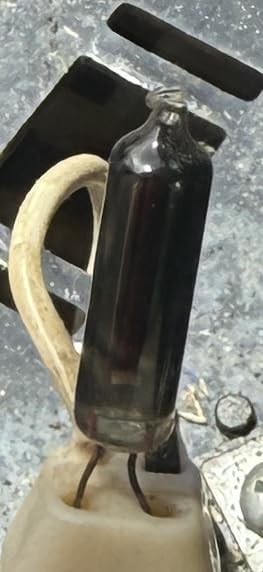
The octenol cartridge is the reason this outperforms a plain UV zapper. That attractant mimics ruminant breath, which is closer to what mosquitoes actually hunt for than light is, and a 100-hour cartridge is included. Replacement cartridges are the recurring cost here and they are not cheap.
Two practical annoyances get repeated: the power cord is very short, so an extension is usually required, and there is no on-off switch, which makes a timer advisable. The 110V-only design also means it will not work on 220 to 240V power outside North America.
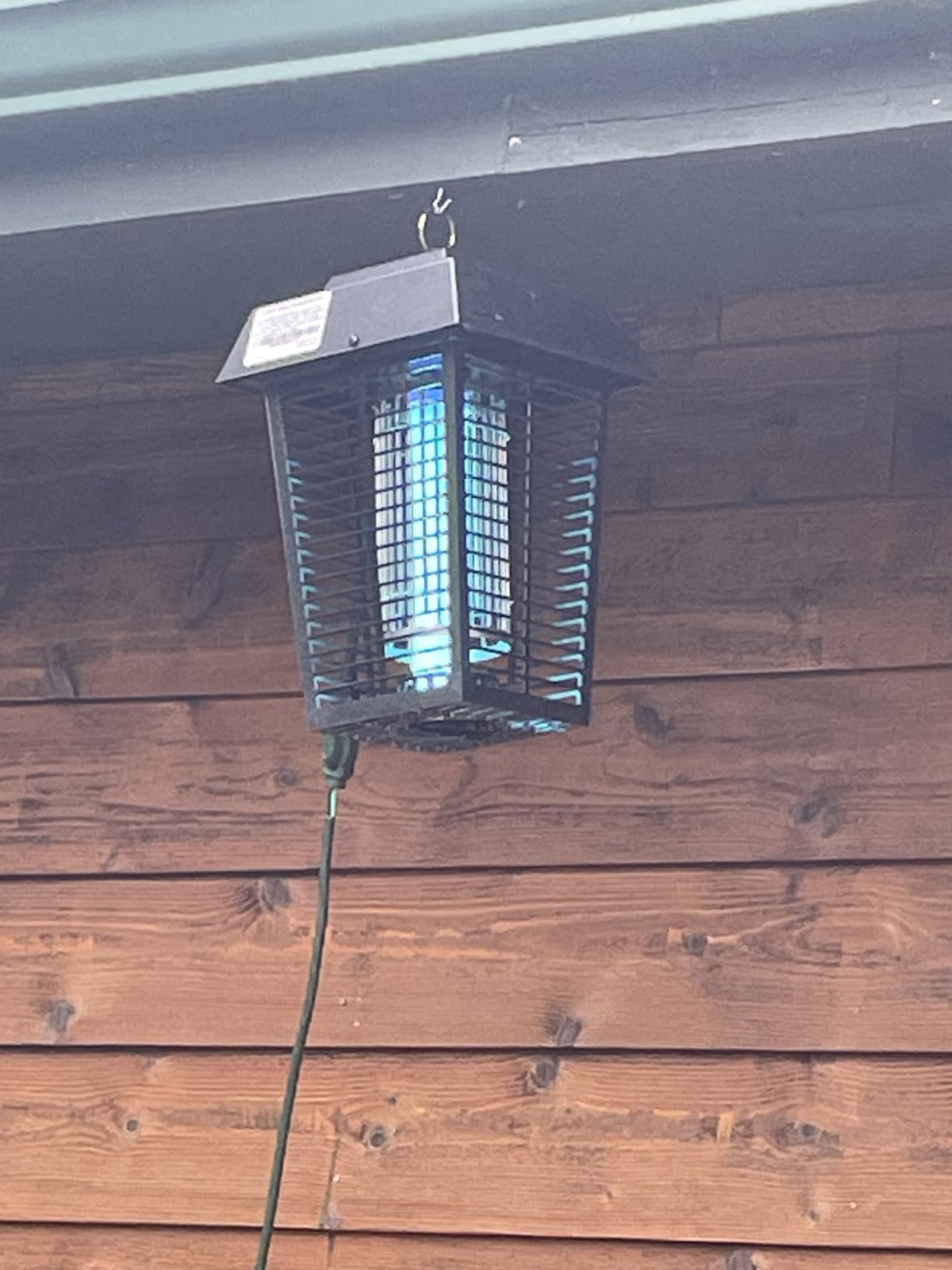
What one acre of coverage really means
One acre is a lure radius for the property, not a bite-free zone around your chair. It means a steady background reduction in mosquito activity that compounds over weeks as breeding cycles are disrupted. Nothing about it protects you in the first hour.
Placement is the variable that decides whether it works. Put it where mosquitoes are already feeding, near vegetation and standing water rather than on an open patio, and give it a clear line of sight into the space you care about.
Why it is not a table device
It makes a sharp snap when an insect hits the grid, and owners of zappers in general describe the noise as disruptive during outdoor meals. More importantly, a light-based machine cannot clear the air around a specific group of people the way a heat-activated repellent can.
Bycatch is worth thinking about too. Owners report non-target creatures including frogs reaching into the cage, and the unit kills moths and beneficial insects indiscriminately. For a household that cares about pollinators and night insects, that trade is real.
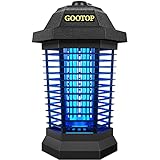
4. GOOTOP 4200V Bug Zapper – Best Value for a Half-Acre Patio or Deck
GOOTOP Bug Zapper Outdoor, Mosquito Zapper, 4200V 3 Prong Plug in Electric Fly Zapper, Mosquito Killer, Fly Traps, Flying Insects Zapper Indoor Outdoor, ABS Plastic Outer (Black)
15W replaceable UV bulb
4200V high-voltage grid
Up to 1/2 acre
7.5 x 6.7 x 12 inch
Pros
- Over 30k reviews at 4.4 stars
- Light at just over 2 pounds
- Replaceable bulb extends unit life
- Removable tray with cleaning brush
Cons
- Works best only at night or in darkness
- UV alone underperforms with an attractant
- Corded power limits placement
The GOOTOP sits near the top of the bug zapper category by review volume, and the reasons are straightforward. A 15-watt replaceable UV bulb draws insects to a 4,200-volt grid, and the whole unit weighs just over two pounds, so it hangs anywhere without hardware.
Maintenance is the part owners like. Dead insects drop onto a removable tray, and a cleaning brush is included, so a week of use comes apart in under a minute with no chemicals and no residue. Coverage is stated at up to half an acre.
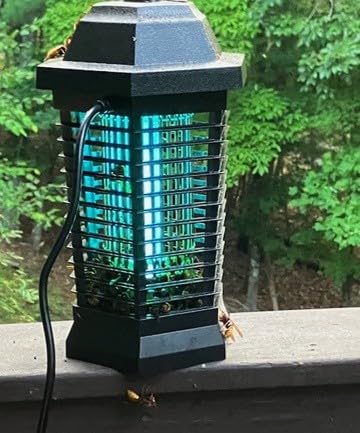
The limitation most reviewers name is conditions. It works best at night or in a dark space, because a bright ambient environment reduces the contrast between the bulb and the surroundings. In a sunlit backyard in the afternoon it does very little.
There is also no attractant cartridge, and that is the difference between this and the Flowtron when mosquito pressure is heavy. Light alone pulls in more moths and gnats than mosquitoes, which is the same mechanism issue described earlier in this guide.
When a simpler zapper is the right call
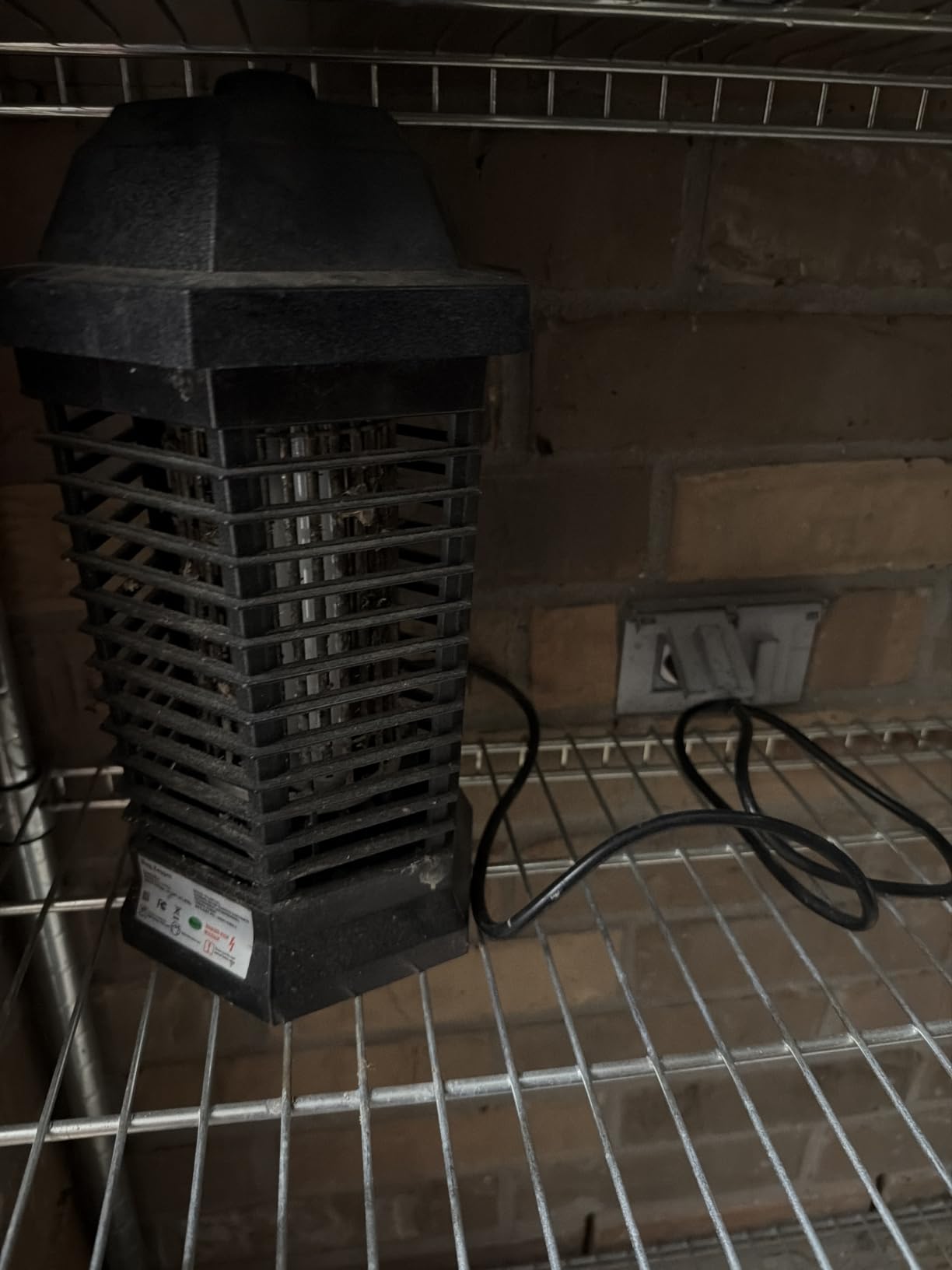
This is a sensible pick for a covered porch, a deck with a power outlet, or a screen house where you want the flying-insect population down without chemicals. Half an acre is a meaningful slice of a suburban yard, and the lightweight body means repositioning between areas is effortless.
It also works well as a secondary device alongside a spatial repellent. The repeller clears the air where people sit, and the zapper quietly reduces the ambient insect load around it, which is a combination owners describe as the most effective setup.
What to check before you buy
Confirm you have a standard US outlet within reach, because it is corded only and placement is otherwise dictated by the cord. If your mosquito problem is severe and mostly in daylight hours, look for a model with an attractant cartridge rather than UV alone.
Check the bulb situation too. The bulb is replaceable, which extends the life of the unit, but the replacement is a separate purchase and the grid needs brushing as insects accumulate.
5. LiBa 2800V Indoor Bug Zapper – Best for Kitchens and Porches Indoors
LiBa Bug Zapper 2800V Indoor, with 2 Extra Replacement Bulbs
2800V grid with safety screen
Two spare bulbs included
Five foot cord
15 x 3.5 x 10.6 inch
Pros
- Two bonus replacement bulbs included
- Five foot cord plus chain for flexible hanging
- Safety screen protects small fingers
- No chemicals at all
Cons
- Indoor use only
- Lower 2800V output than outdoor models
- Suited to one room only
This is the indoor member of the family, and it fills a gap the outdoor zappers leave. UV bulbs draw flying insects to a 2,800-volt grid, and a safety screen keeps small fingers away from the discharge area while still allowing air through.
The box includes two bulbs plus two spare replacements, which is generous and extends usable life substantially. A five-foot cord and an included chain give real flexibility on where it hangs, and a removable debris tray keeps cleanup simple with no sprays involved.
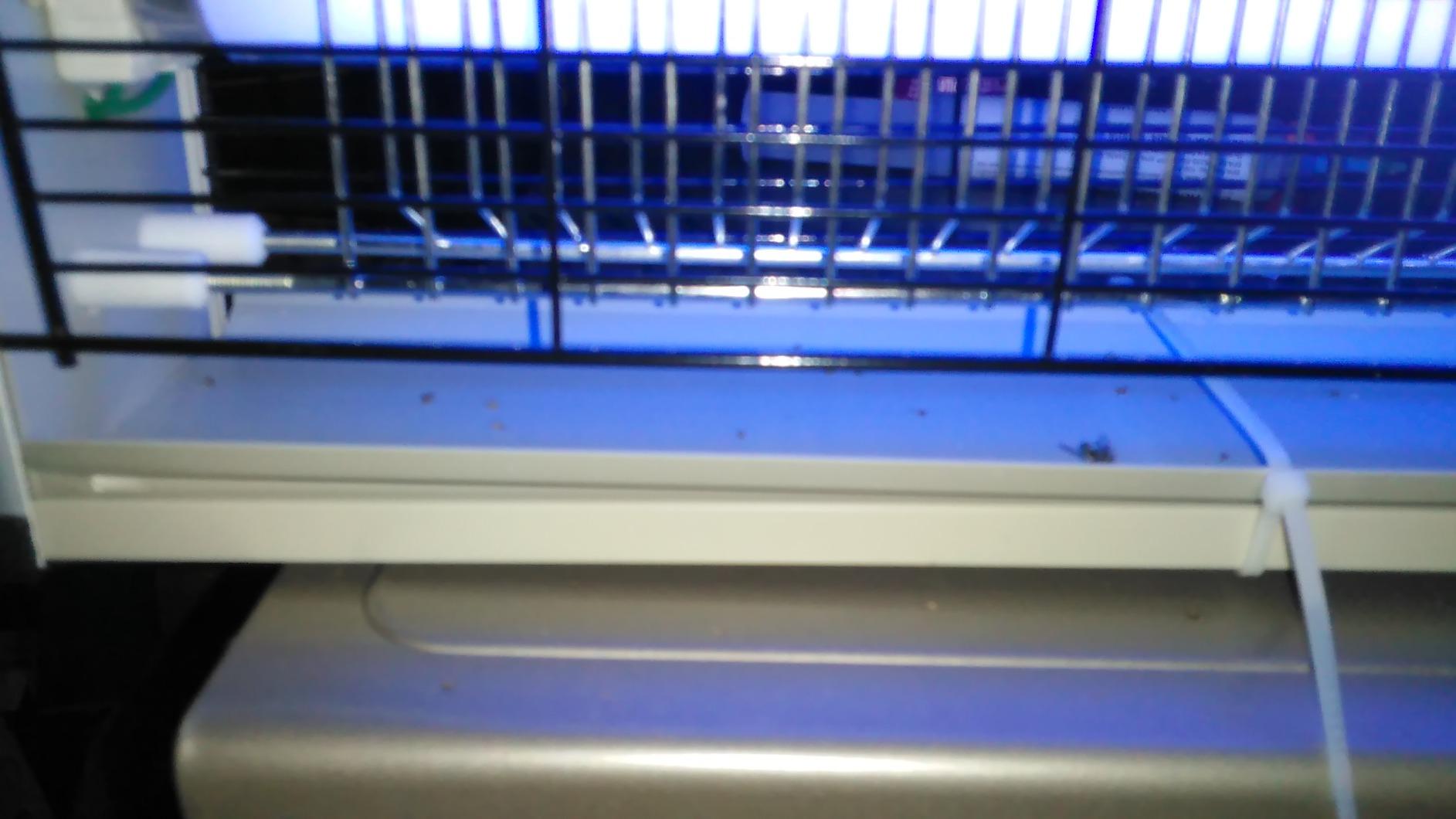
The defining constraint is that it is strictly indoor. It is not waterproof or water-resistant, so a screened porch that gets rain on it is a poor spot. The most repeated limitation in reviews is exactly this, and it is a hardware limit rather than a placement preference.
At 3.3 pounds in a metal body it is heavier than most plastic zappers, and 2,800 volts is a lower output than the outdoor models in this roundup. It is built to clear a single room such as a kitchen or workshop rather than an entire property.
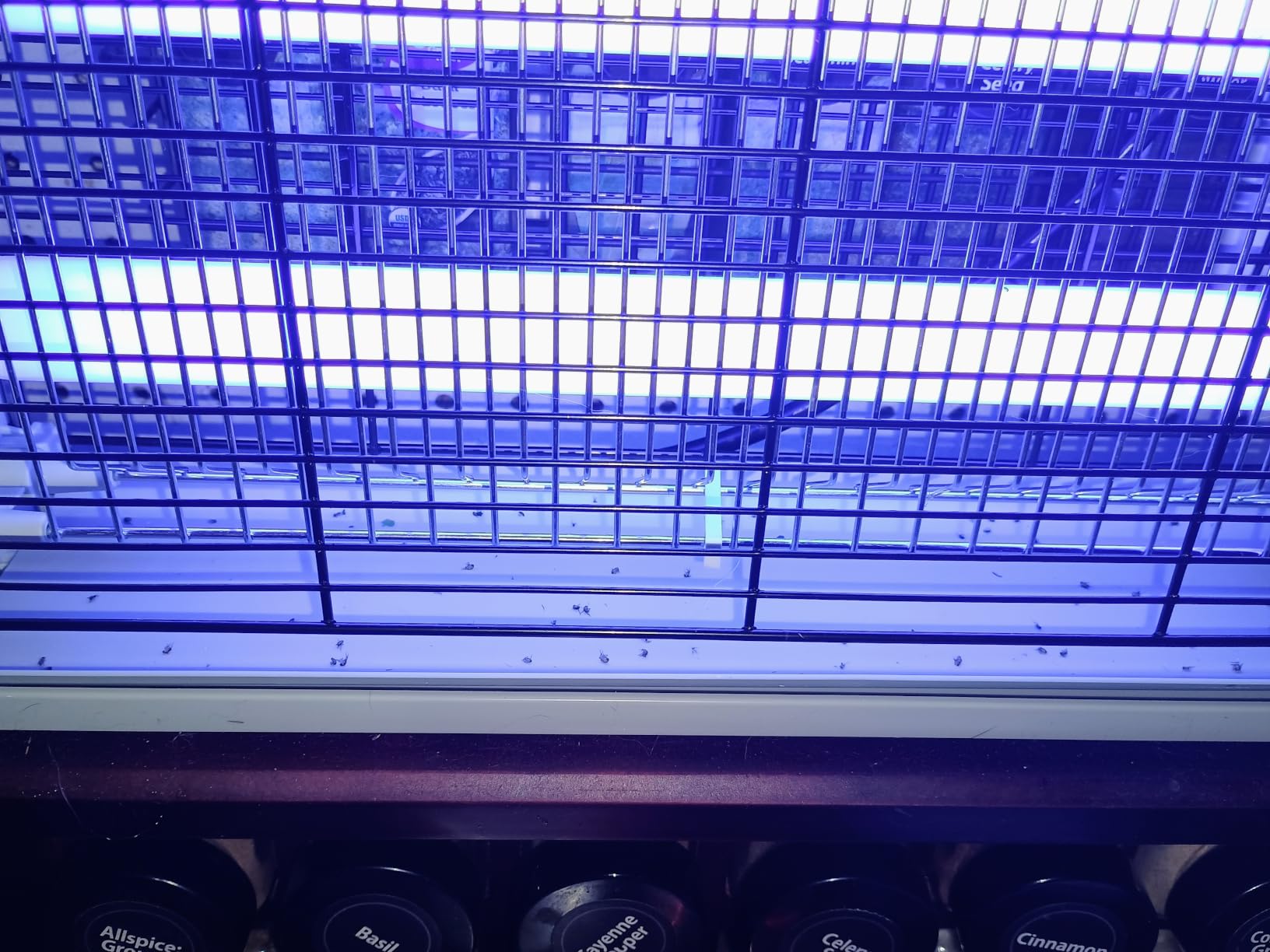
Where indoor zappers genuinely help
Kitchens are the strongest case. Fruit flies and gnats are drawn to light rather than to breath and heat, which is the one situation where a UV zapper matches the target insect. The same applies to small flying insects around a trash area or a workshop door.
Screened rooms and covered porches work well too, as long as the unit stays dry. For anyone trying to replace smelly indoor sprays with something chemical-free, the appeal is simple and the reviews support it.
Where it will not help
Outdoor mosquito control is out of scope, and so is a large open space. Even a large room is a stretch, because the light falls off quickly and the intended targets are the smaller indoor fliers rather than mosquitoes.
If your household has small children, note that the safety screen is a barrier rather than a lock, and placement high out of reach remains the sensible approach even with the screen in place.
6. Thermacell Mosquito Repellent Lantern – Best for Ambience Instead of a Candle
Thermacell Fuel-ZoneGuard Fuel Powered Mosquito Repeller Lantern; 15FT Zone of Scientifically Proven Outdoor Protection; Patio Shield; 12-Hr Refill; Bug Spray Alternative; Scent Free; Small; DEET-free
15 ft protection zone
Up to 12 hr runtime
Two brightness light settings
9.6 oz
Pros
- Replaces a citronella candle with no smoke
- 36 hour refill in the box
- Doubles as a working light
- Refills interchange across Thermacell devices
Cons
- Fuel cartridge and mat both need replacing
- About 10 to 15 minutes to establish
- No lid so it must be stored indoors
The lantern is the same spatial repellent technology in a housing that also gives off light, with two brightness settings. Owners like that it is a chemical-free citronella candle alternative with no smoke and no flame, which matters for anyone bothered by either.
Many owners describe it as the mosquito product that finally let them use their yard or patio again, and the integrated light is a frequently praised bonus rather than a gimmick. A 36-hour refill is in the box, so it is usable the same evening it arrives.
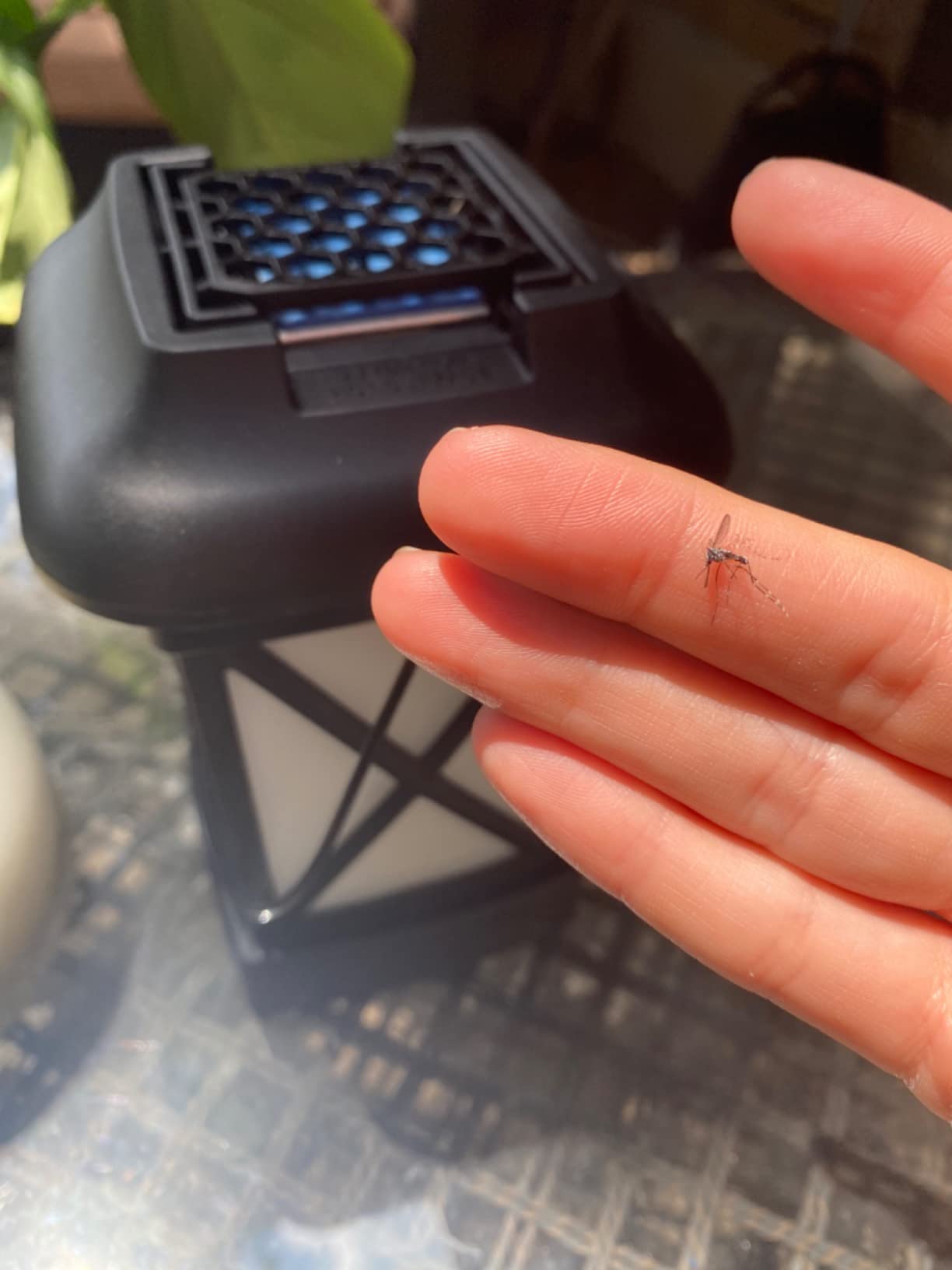
It needs the same 10 to 15 minutes to establish its protection perimeter, and the light itself is small and plastic. It is a functional light, not decorative hardware, so anyone buying it for looks alone will be disappointed.
Refill cost is the recurring complaint, since both the fuel cartridge and the repellent pad are consumables. There is also no top cover, so it needs to come inside when it is not in use, and a small number of owners report units that stop lighting after roughly five months.
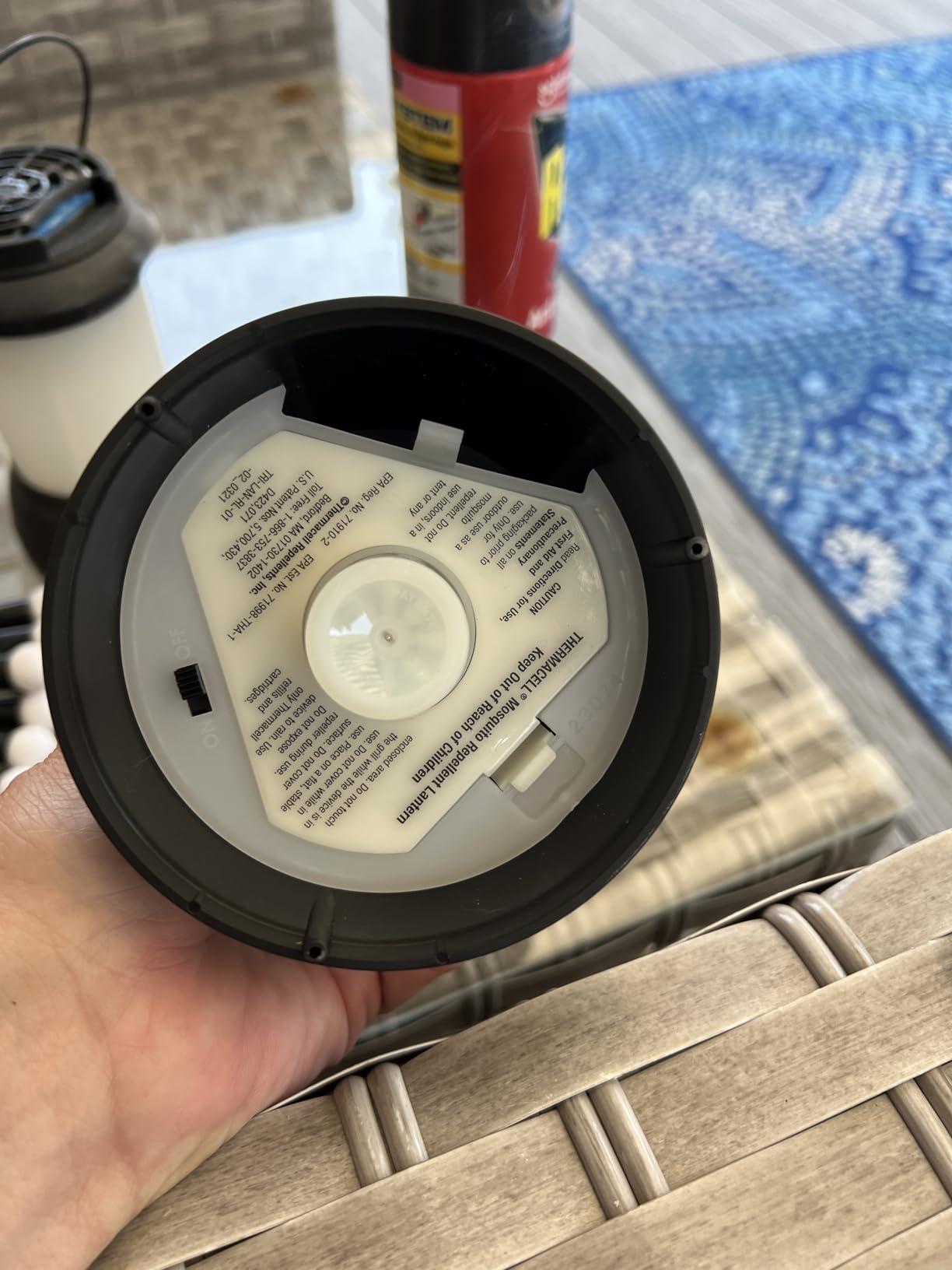
When the light function changes the purchase
If you are already running a patio lantern, a fire pit, or string lights, this replaces one of them. You are not adding a separate light source to a table that already has one, which is the practical case that makes the double function feel like a feature rather than a novelty.
It is also the option to look at for anyone who wants to avoid smoke near food. There is no flame and no ash, so it works on a table where a citronella candle would be unwelcome.
What it shares with the rest of the line
Refills interchange across Thermacell products, which matters more than it sounds for households running two or three devices. Owners frequently worry about compatibility between fuel cartridges and mats across models, and here the consumables carry over.
The protection zone is 15 feet, the same as the Patio Shield, so the same sizing rules apply. It is a table device, not a yard device, and buying two of them is a better use of money than buying one and stretching it across a large deck.
7. DynaTrap DT2030SR – Best Quiet Trap for Yards Where Noise Matters
Dynatrap DT2030SR Fly Traps Outdoor – Mosquito & Flying Insect Killer for 1 Acre – Kills Mosquitoes, Flies, Gnats, Wasps – Bug Zapper Alternative – Black
Up to 1 acre coverage
UV-LED with quiet fan
Trap and collect basket
12 x 12 x 14.52 inch
Pros
- No high-voltage grid and no insect pile
- Whisper-quiet fan capture
- Touch-button basket emptying
- LED bulb rarely needs replacing
Cons
- The highest outlay in this group
- Results build slowly over days
- Less of an instant protection device
The DynaTrap takes a different approach from a zapper. A UV-LED attractant light pairs with a whisper-quiet fan that vacuums insects into an enclosed basket, so nothing is electrocuted and there is no pile of dead bugs to deal with on the ground.
It is the only machine here built specifically for quiet operation. A 360-degree smooth black finish also blends into yard and patio decor better than a bright plastic zapper, and the LED bulb is rated for long service with rare replacement.
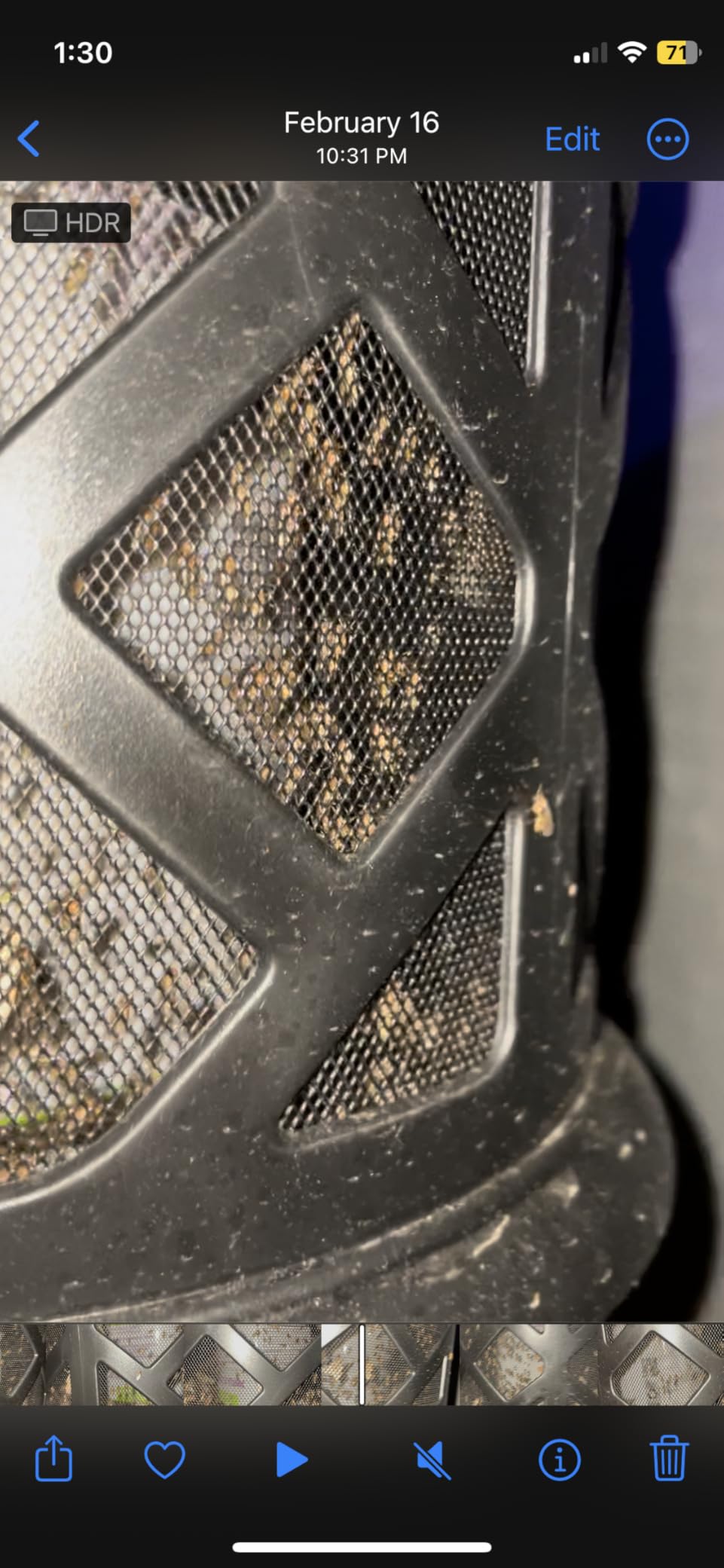
Owner feedback on this one is also thinner than the models above it, so the consensus is narrower. What those owners do agree on is the touch-button basket emptying, which makes maintenance quick and mess-free.
Expect slow results. Fan capture accumulates a reduction over nights and weeks, not minutes, and the basket needs emptying as it fills. Treated as an instant personal-protection device it will disappoint, because it is built as a background reduction tool for up to one acre.
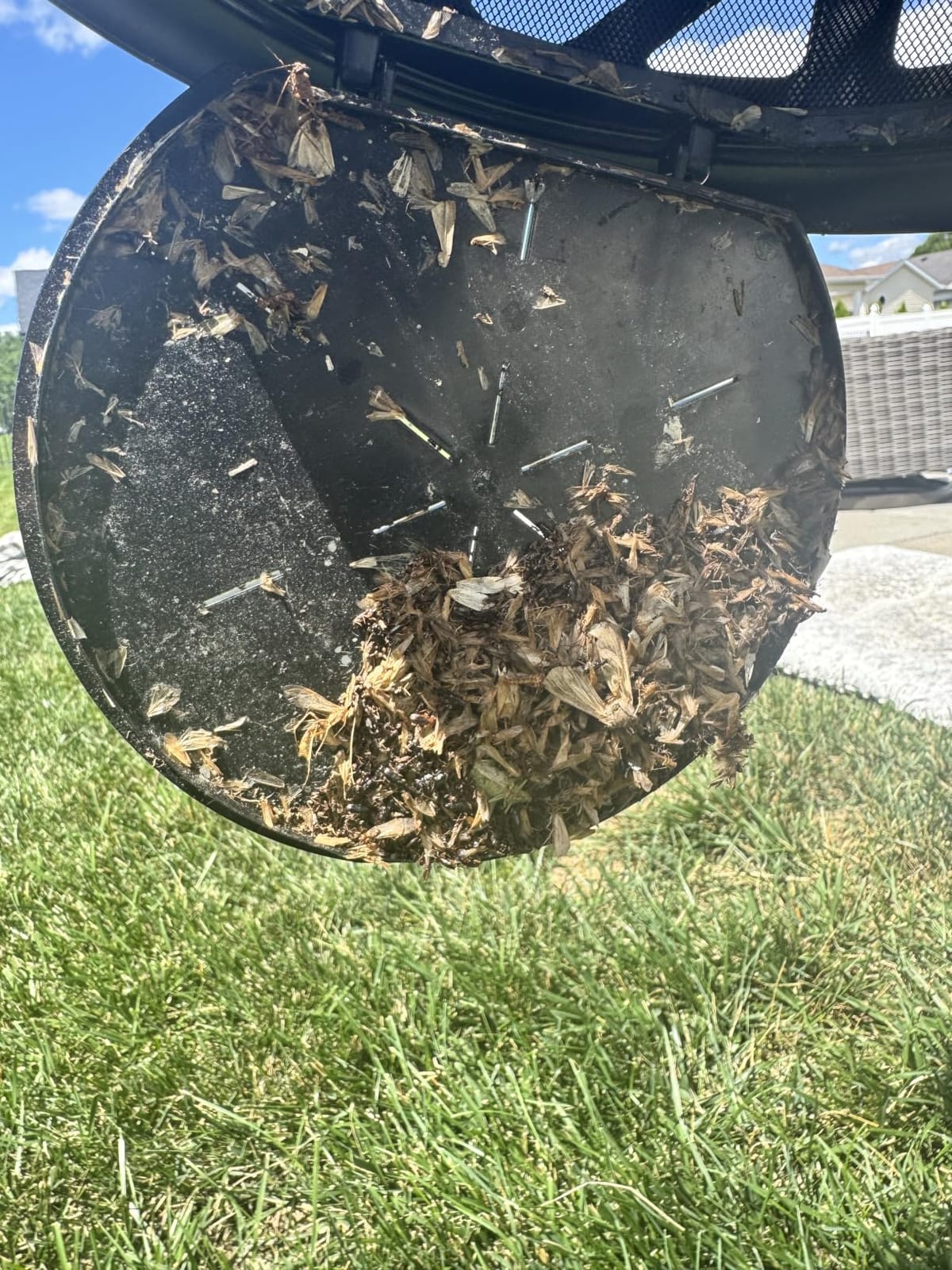
Trap and collect versus zap
The difference is visible in the tray, or in this case the basket. A zapper leaves a mess of insect fragments and needs a stiff brush. This collects whole insects in a removable basket that empties with a touch, which is kinder to anyone who is squeamish about the result.
It is also chemical-free in the sense that matters most here. There is no attractant cartridge, no vapor and no residue, so it can sit near food, pets and children without a placement argument. Only the LED and the fan are doing the work.
Who this is wrong for
Anyone with a single evening of outdoor plans. The device needs days of running to show a difference, and it will not clear the air around a table on the night you unbox it. Pair it with a spatial repellent if your plans are immediate.
It is also the premium-priced option in this roundup, and that outlay only makes sense if quiet operation, appearance and whole-insect capture are priorities for you.
8. OnBeam Solar Bug Zapper – Best Off-Grid Device with No Cords
OnBeam Solar Bug Zapper Outdoor, 4500V Mosquito Zapper Fly Trap for Patio
4500V grid with mesh guard
Solar plus USB-C charging
Up to 12 hr runtime
IPX5 aluminum frame
Pros
- Solar and USB dual charging
- AUTO dusk mode starts at nightfall
- IPX5 waterproof frame
- Chain and stakes and extension cable included
Cons
- No timer
- so it can run past midnight
- UV alone catches mostly moths
- Grid needs regular brushing
This is the one machine here that needs no outlet and no batteries you manage yourself. A 10-watt monocrystalline solar panel charges a 4,000mAh battery, and a USB-C port tops it up in three to four hours with the included cable.
The AUTO dusk mode is the feature that makes it work hands-off. It activates at nightfall and runs for hours on a full day of sun, and the IPX5 aluminum frame handles weather far better than any plastic zapper. It also includes a chain, ground stakes and a 10-foot panel extension cable.
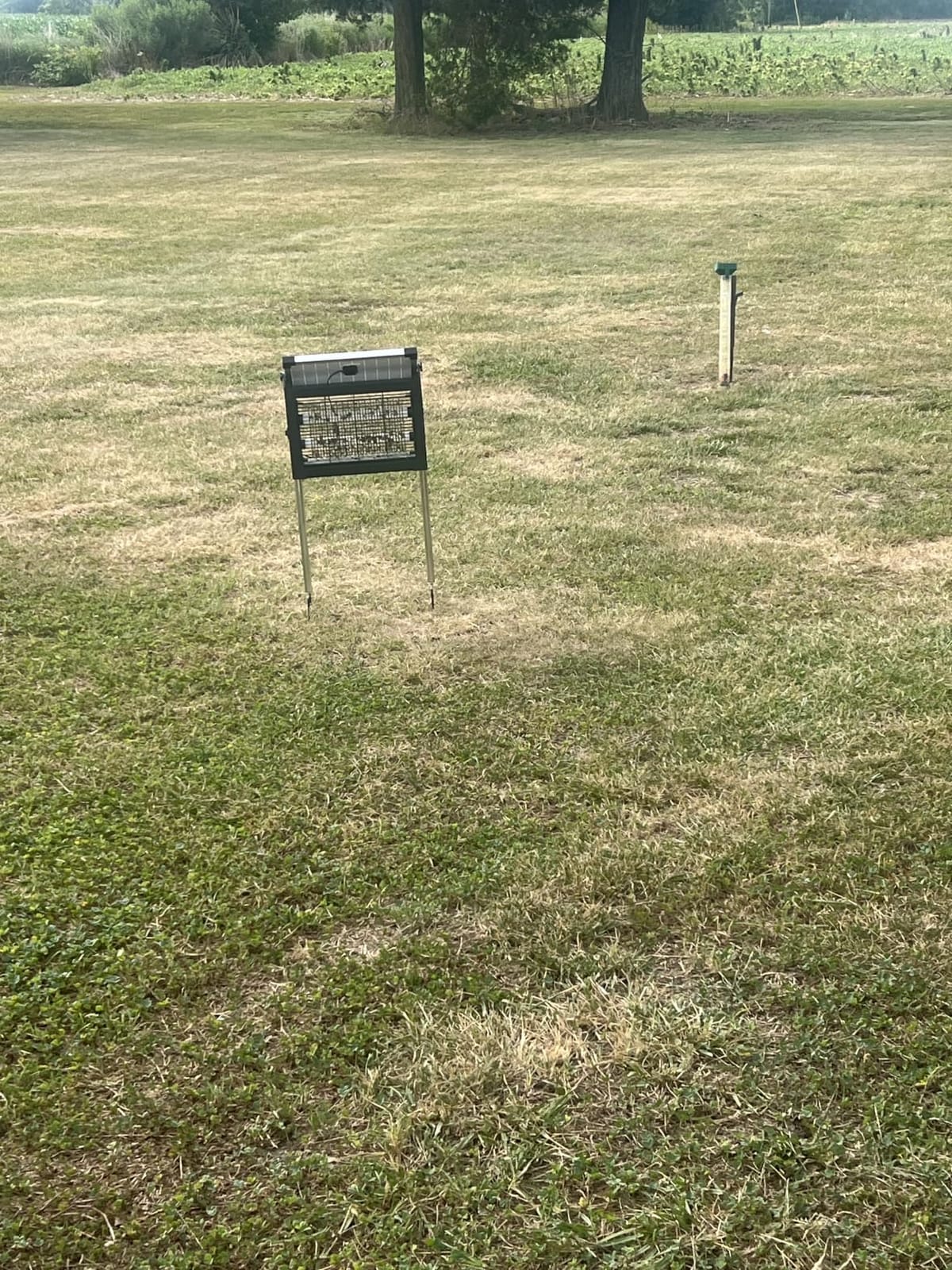
Two LED bulbs at 365 to 395 nanometers attract insects to a 4,500-volt grid with a protective mesh, and a V0-grade housing keeps it safe around children and pets. Several owners note a noticeable drop in insects around a deck or porch once it has run for a few nights.
Skeptical reviews raise the familiar point. UV light with no lure and no octenol cartridge mostly catches moths and other non-biting insects rather than mosquitoes, so the reduction is real but not specifically a mosquito reduction. There is also no timer, which means it can run well past midnight.
When solar is genuinely the right choice
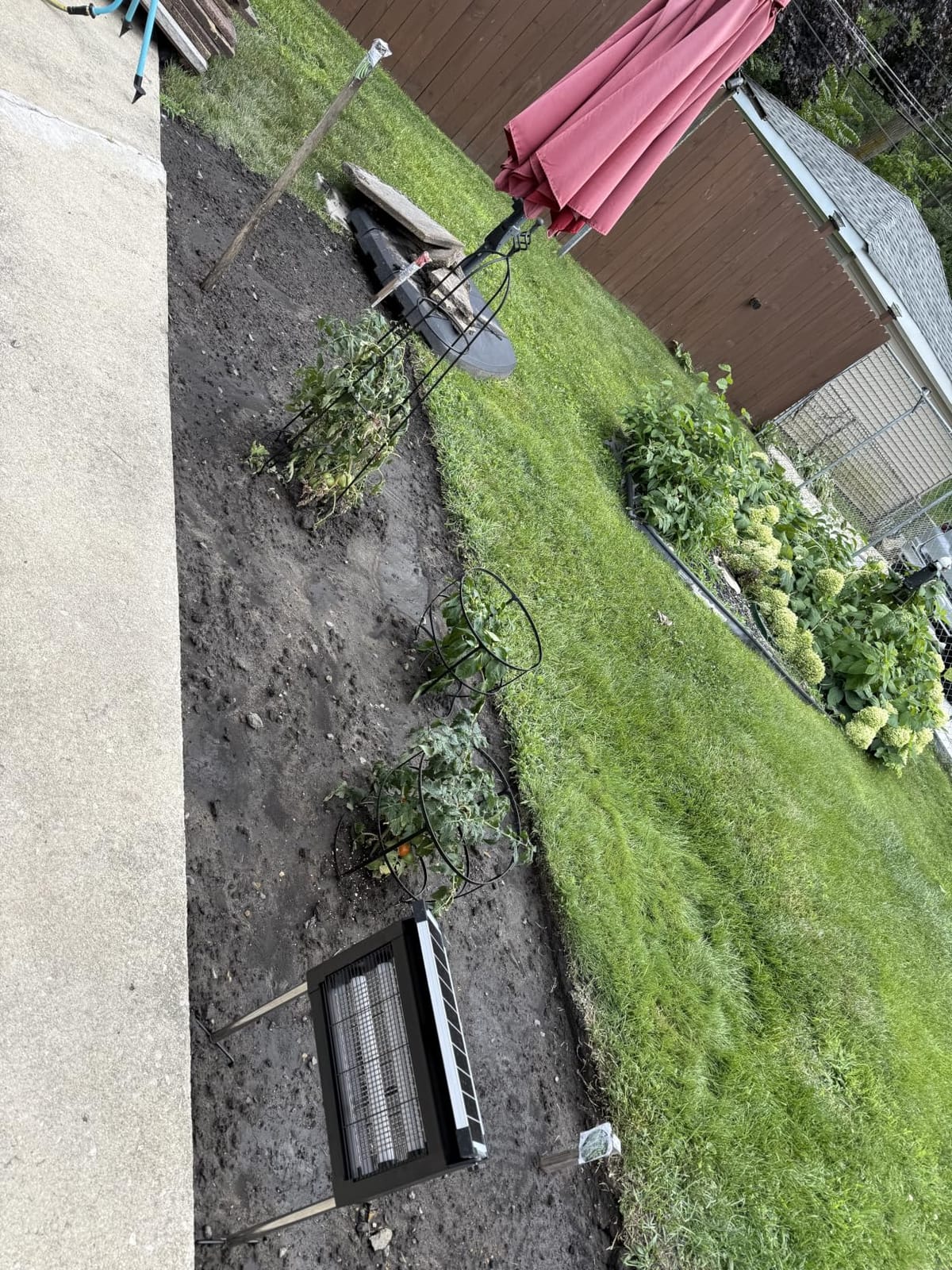
Campsites, RV hookups, a garden with no power, or a rental where running a cord across a walkway is not an option. The included stakes mean you can put it in a flower bed where a cord could never reach, and it stays quiet in the sense that there is no wiring to manage.
Runtime depends on sun. A full day of direct sun gives up to 12 hours of continuous protection, and the USB-C fallback covers a stretch of cloudy weather or a shorter trip.
What to set expectations on
Do not buy it as a mosquito solution. Buy it as a general nighttime flying-insect reducer for a spot with no power, and read the catch as mostly moths, gnats and small flies rather than a mosquito count.
There is no catch tray, so debris drops to whatever is underneath and the grid needs regular brushing as insects accumulate. That maintenance is more frequent outdoors, and the lack of a timer means you will be turning it off manually.
9. AMUFER 18W 4400V Bug Zapper – Best for Switching Between Indoors and Outdoors
AMUFER Bug Zapper Outdoor Indoor with18W Power & 4400V Instant Grid
18W blue-violet bulb
4400V grid, 30% larger area
Up to 1/2 acre
7.8 x 6.8 x 12.8 inch
Pros
- Rated 4.5 stars with 78 percent five-star ratings
- Works indoors and outdoors
- Two year manufacturer warranty
- IPX4 waterproof with a 5.5 ft cord
Cons
- Grid clogs fast outdoors
- Needs an uncommon 5/32 inch socket to clean
- 110V only design
- Audible snap on larger insects
The AMUFER is the most flexible zapper here because it is at home in both settings. An 18-watt blue-violet bulb covering the 330 to 420 nanometer UVA range feeds a 4,400-volt instant-shock grid with 30 percent more grid area than comparable designs, rated for up to half an acre.
Owners report running it continuously for years and seeing visible bite reductions within days. It carries a two-year manufacturer warranty with responsive replacement support, and the build quality shows up in the galvanized steel grid and V0 fireproof ABS shell.
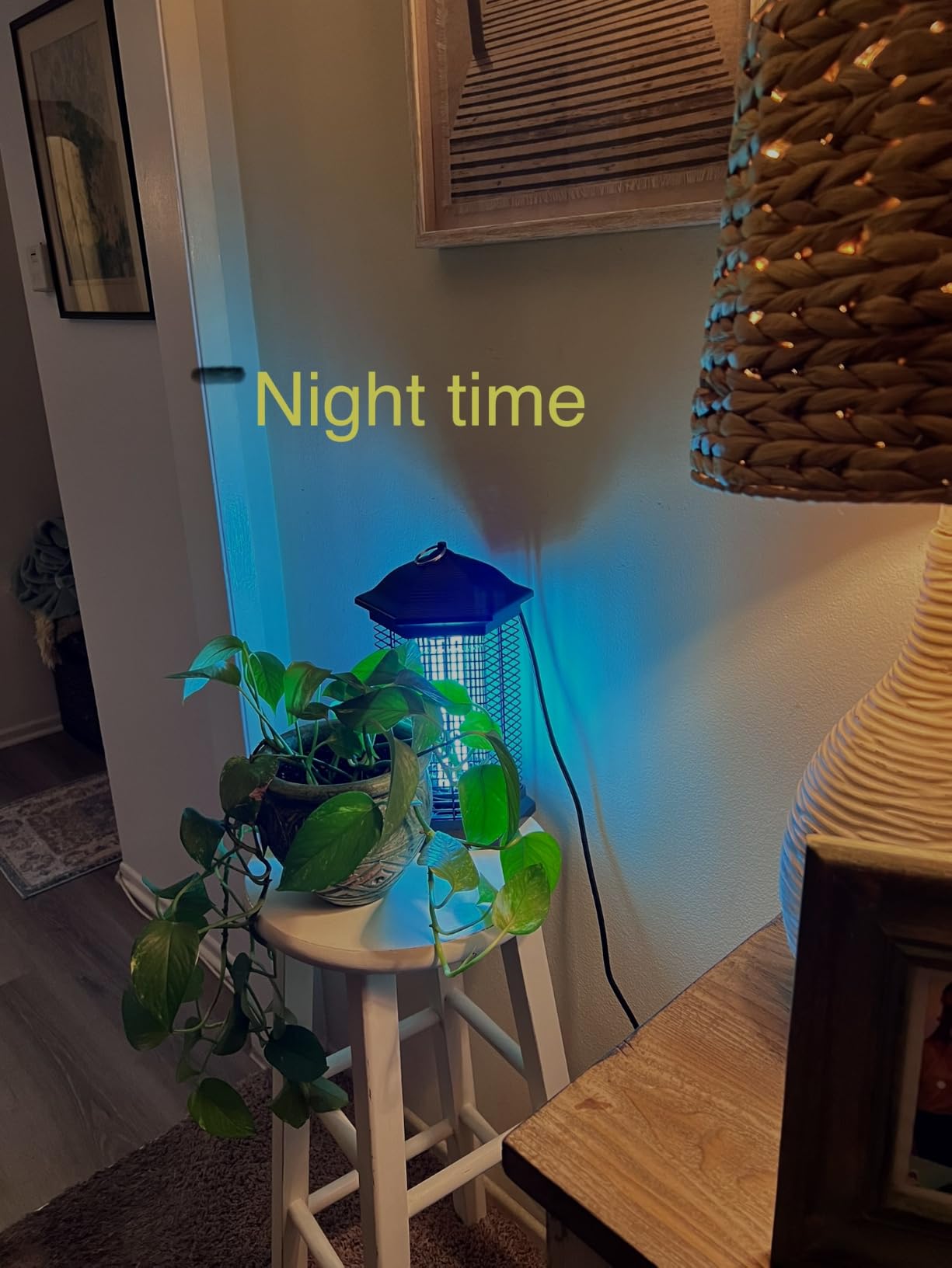
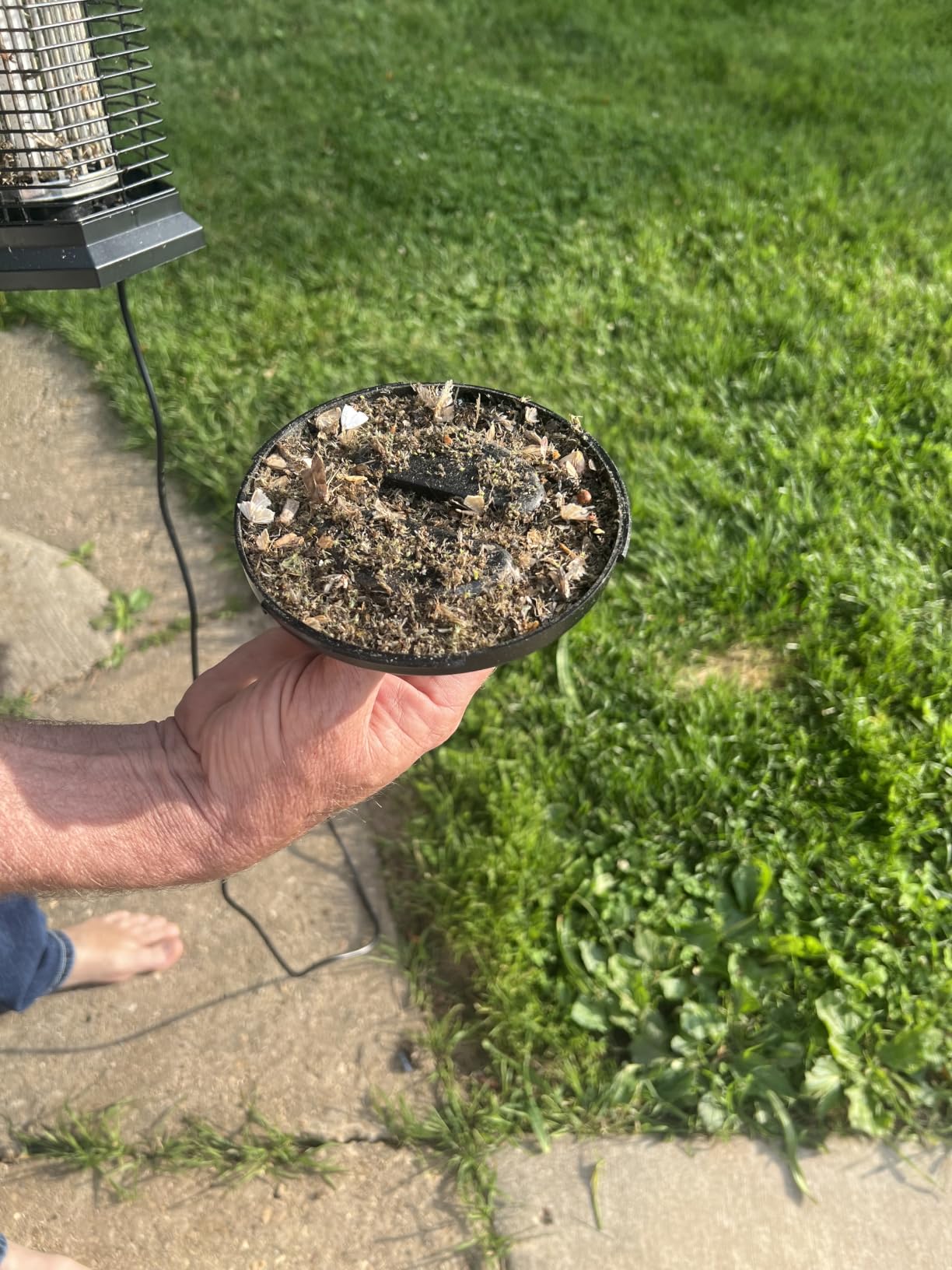
Outdoor performance has a catch. The grid clogs quickly when the unit runs outside, and disassembly for cleaning requires an uncommon 5/32 inch socket, which is an irritating detail that catches owners out the first time.
The unit also snaps audibly when it kills larger insects, and the design is 110V only, so it will not work on 220 to 240V power. The 5.5-foot cord is longer than most here, which is helpful for reach but not a substitute for an extension.
When one device for two rooms makes sense
If you want insect control in a kitchen in the spring and a covered porch in the summer, buying one well-built unit that works in both beats two cheap indoor-only models. Several owners describe exactly that use, moving the same unit as the season changes.
It is also a good fit for a workshop or garage where UV light plus high voltage handles the full mix of flying insects rather than mosquitoes alone.
The maintenance reality
Plan on a weekly brushing routine when it runs outside. The larger grid area that makes it effective is also what catches more debris, and the uncommon socket size is a small thing that will annoy you repeatedly if you are not prepared for it.
It is UL 1599 tested and US EPA certified, and the bulb is tested for more than 13,000 hours, so hardware longevity is not the concern here. Cleaning discipline is.
10. ASPECTEK 20W Electric Bug Zapper – Best for Bulb Longevity and Covered Patios
ASPECTEK 20W Electric Bug Zapper, Fly Trap and Mosquito Killer for Indoor and Covered Outdoor Spaces, Patio, Garage, Includes 2 Replacement Bulbs, Effective Gnat, Moth and Insect Control
20W UV tubes
Up to 4000 sq ft coverage
Two replacement bulbs included
15.16 x 3.15 x 10.63 inch
Pros
- Bulbs still working after ten years for some owners
- Two spare bulbs in the box
- Aluminum body feels sturdier than plastic
- Detachable tray for fast cleaning
Cons
- UV light is bright enough for a bedroom
- Loud zapping can startle pets
- Some flies are stunned not killed instantly
- Covered spaces only
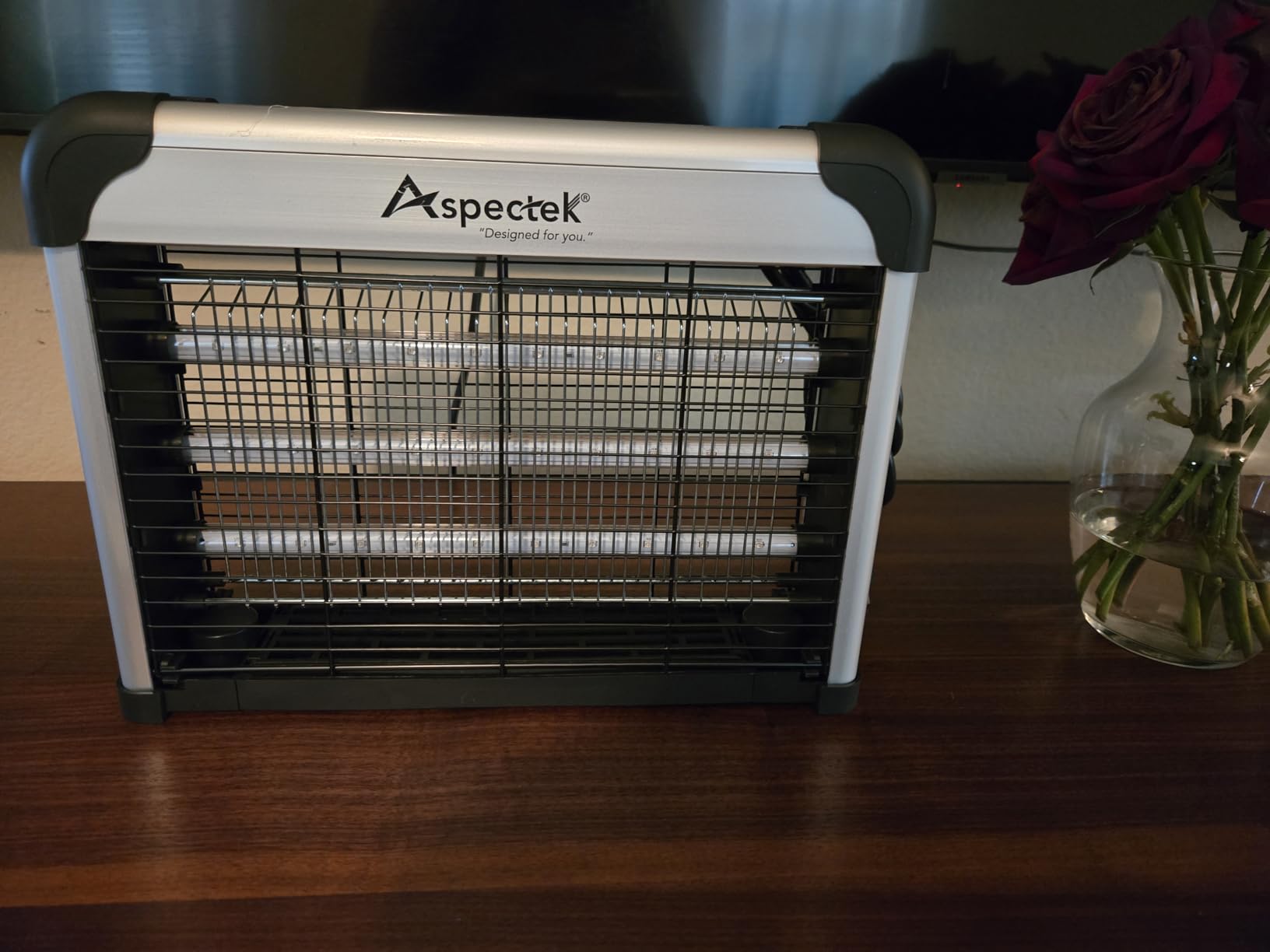
This is the durability pick. A 20-watt UV tube array feeds a high-voltage grid inside an aluminum body rather than plastic, and the tubes are rated for 2,500 to 3,000 hours of continuous use. Owners report original bulbs still running more than ten years later.
The 360-degree dual-side open-grid design attracts from both sides, so a wall-hung position still works, and the narrow-gap outer mesh screen is built with kids and pets in mind. Two spare bulbs are included, and the detachable bottom tray makes cleaning and sanitizing fast.
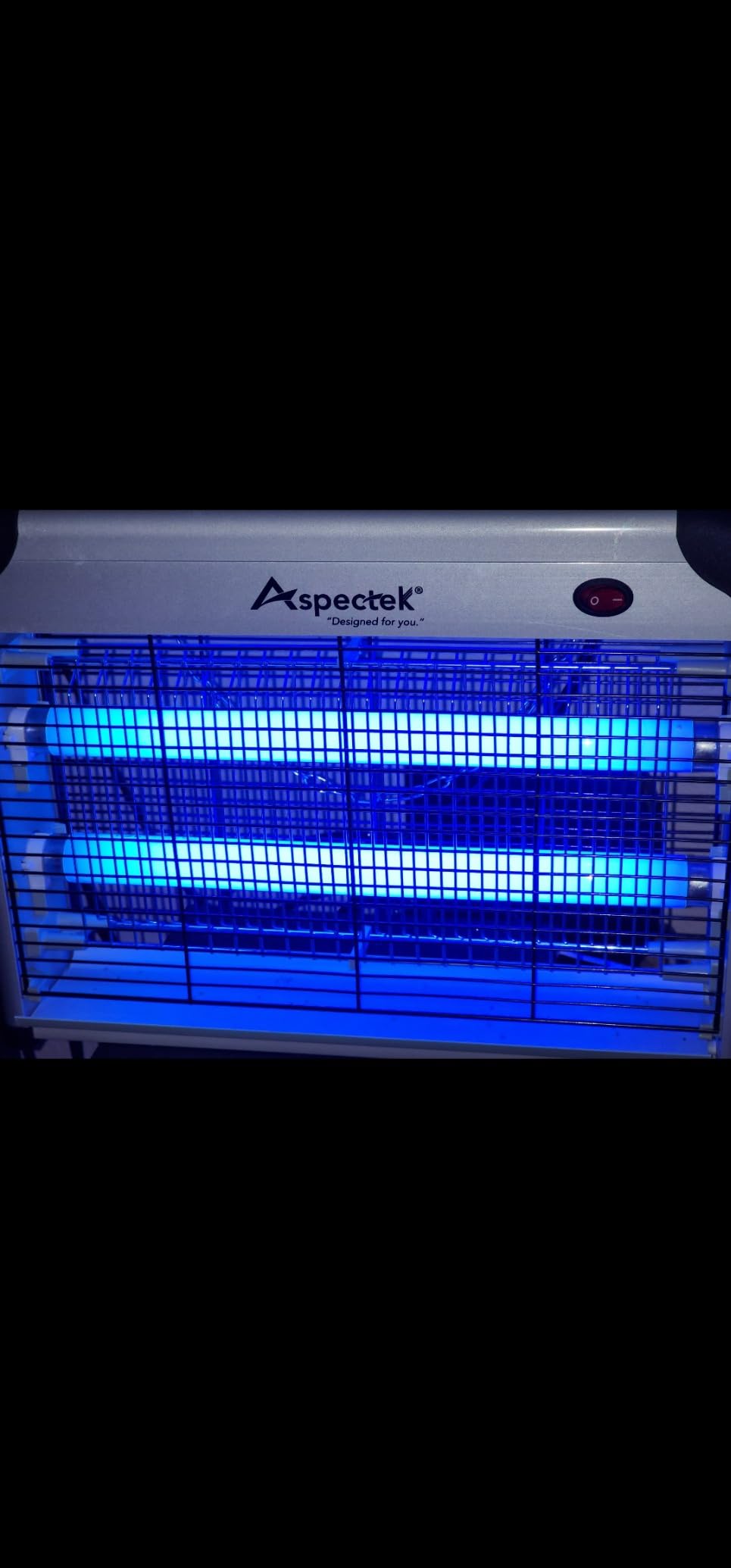
What it catches goes well beyond mosquitoes. Reviewers describe flies, moths, gnats, stink bugs, ants and even spiders ending up in the tray, which is the argument for a zapper when your household has a general flying-insect problem rather than one species.
Coverage is stated at up to 4,000 square feet for indoor and covered outdoor spaces. That is generous for a home, but the rating is for covered areas only, so an exposed patio in the rain is outside what it is built for.
Why covered spaces are the sweet spot
A screened porch, a garage, a covered patio or a kitchen is where a 20-watt unit earns its power. The light works best in low ambient light, and a roof over the device both improves catch rates and keeps the unit out of the weather it is not rated for.
It is also a strong option for anyone who wants a single unit to handle mosquitoes and the general flying-insect population at once, rather than chasing one species.
Two things to know before hanging it
The light is bright. Reviewers warn it is unsuitable for a bedroom, which is the most common placement mistake people make with a unit this wattage. Plan to hang it in a room where nobody is trying to sleep.
The zapping sound is loud, and owners specifically mention it startling pets. Some larger flies are stunned rather than killed instantly and die shortly after, which is worth knowing if you are judging results in the first few minutes.
How to Choose a Mosquito Repellent Device
1. Decide between a repeller and a trap first. If you need people to stop being bitten while sitting somewhere specific, you want a heat-activated spatial repellent. If you want mosquito pressure to fall across a whole property over weeks, you want a trap or zapper. They are not substitutes, and mixing them up is the most expensive mistake in the category.
2. Measure your actual area, not the stated coverage. A 15-foot zone is a 30-foot circle. It covers a round table with four to six people sitting close, and it does not cover a 20-foot deck with chairs spread along the rail. Zapper coverage numbers, up to half an acre or one acre, are lure radii for a property rather than bite-free bubbles, so treat them as a background reduction claim.
3. Budget for consumables before you commit. Fuel cartridges and repellent mats are the single most repeated complaint in forum threads about this category, and the cost adds up over a season. A rechargeable unit removes the fuel cartridge from the equation but keeps the mat. A trap with an octenol attractant has its own cartridge cycle. Set up the calendar for what the device costs to run, not just what it costs to buy.
4. Check the power source against your location. Corded zappers need a standard outlet, several designs are 110V only and will not run on 220 to 240V power, and the Flowtron has a very short cord that usually calls for an extension. Rechargeable units free you from fuel but cannot run while charging. Solar models suit off-grid spots but depend on direct sun for their full runtime.
5. Think about wind and altitude honestly. Vapor repellers lose effectiveness in a breeze because the treated air disperses, and every forum recommendation for them is conditioned on calm weather. High elevation and moving air both reduce performance, so if your evenings are typically breezy, a trap-based device is the more reliable investment.
6. Consider noise if you will be eating outside. Grid zappers snap audibly when an insect hits, and owners report the sound starting pets. A trap-and-collect design such as the DynaTrap runs on a quiet fan and leaves no insect fragments on the table, which is the quieter choice for dining.
7. Check safety for kids, pets and food. The heat-activated repellers here are scent-free with no smoke and no flame, which makes them easy to run near a cookout. Zappers need a mesh guard or safety screen and sensible placement out of reach. Any device that uses UV light should be hung where nobody sleeps beside it, since the light is bright enough to be genuinely disruptive.
8. Allow two to four weeks for traps and fifteen minutes for repellers. This timeline difference explains most of the confusion in this category. A spatial repellent changes your evening immediately. A trap changes the following three weeks. Decide which problem you have before you buy, then judge the device on the right clock.
If mosquitoes are the symptom and the underlying cause is a longer evening of sitting, our guides to cervical traction devices and fall detection devices cover other parts of the same long-sitting routine.
Frequently Asked Questions
What is the most effective mosquito repellent machine?
The most effective mosquito repellent machine for protecting people who are sitting still is a heat-activated spatial repellent, and the Thermacell Fuel-ZoneGuard Patio Shield is our top pick for a typical patio. It clears a 15-foot zone in about 15 minutes, runs silently, puts nothing on your skin and needs no power outlet. If your goal is lowering mosquito numbers across a whole property rather than shielding one table, a trap-based machine such as the Flowtron 40W outdoor zapper is the more effective tool, but it works over weeks rather than minutes.
Do electronic mosquito repellers actually work?
Plug-in ultrasonic repellers do not reduce mosquito bites in a way that testing has been able to detect. They emit high-frequency sound intended to interfere with mosquito flight and feeding, and shoppers regularly report running one for weeks with no change in bite count the next morning. The one category where such units can make a difference is a sealed indoor space, and even that effect is inconsistent. For a device that works without touching your skin, heat-activated spatial repellers have the evidence behind them and sound repellers do not.
Is a Thermacell device more effective than a bug zapper?
For protecting people who are sitting still, yes and by a wide margin. A heat-activated spatial repellent clears a 15 or 20 foot zone within about 15 minutes, while a UV bug zapper only reduces the ambient insect population and never creates a bite-free area around you. A zapper becomes the better choice when the goal is lowering mosquito pressure across a property over several weeks, or when you need general flying-insect control indoors. The best results usually come from running both at once.
Why do people not use bug zappers anymore?
Three reasons come up repeatedly. Mosquitoes hunt for carbon dioxide and body heat rather than ultraviolet light, so a plain UV bulb catches moths, gnats and flies far more effectively than mosquitoes. The devices also kill beneficial insects along with mosquitoes, which matters to anyone who cares about pollinators and night-flying moths. Finally, the audible snap of larger insects on the grid is disruptive during outdoor meals, and traps that collect rather than zap are now an option for people who want quiet operation.
How long do mosquito repellent device refills last?
It depends on the consumable. A Thermacell fuel cartridge runs up to 12 hours on a setting, while the unscented repellent mat on the same units lasts up to about 4 hours and changes color when it is spent, so a long evening means swapping mats. A rechargeable unit such as the Thermacell E-ZoneGuard Patio Max delivers up to 12 hours of battery runtime and still needs a replacement mat. A zapper with an octenol attractant cartridge, such as the Flowtron, includes a 100-hour cartridge that needs regular replacement.
The Bottom Line on Mosquito Repellent Devices in 2026
Start with the job, not the brand. If you want your patio table usable tonight, a heat-activated spatial repellent is the only device family that clears air around seated people, and the Thermacell Fuel-ZoneGuard Patio Shield is the one we would buy first. It carries the most owner feedback of any device here, a 15-foot zone that matches a normal outdoor dining area, and no setup beyond one button.
Going wider costs you something else: the Thermacell E-ZoneGuard Patio Max covers 20 feet and drops the fuel cartridge, at the cost of charging time. Then add a trap rather than replacing the repellent, because a zapper reduces pressure over weeks while the repellent handles the evening. The Flowtron 40W is the strongest property-wide unit, the DynaTrap is the quiet one, and the OnBeam solar model is the answer when there is no outlet anywhere near the spot.
Whatever you pick, plan for the consumables, run repellers only when the air is calm, and give traps two to four weeks before judging them. The best mosquito repellent devices in 2026 are the ones matched to the space you actually sit in, and most people need one of each type rather than three more of the same.