
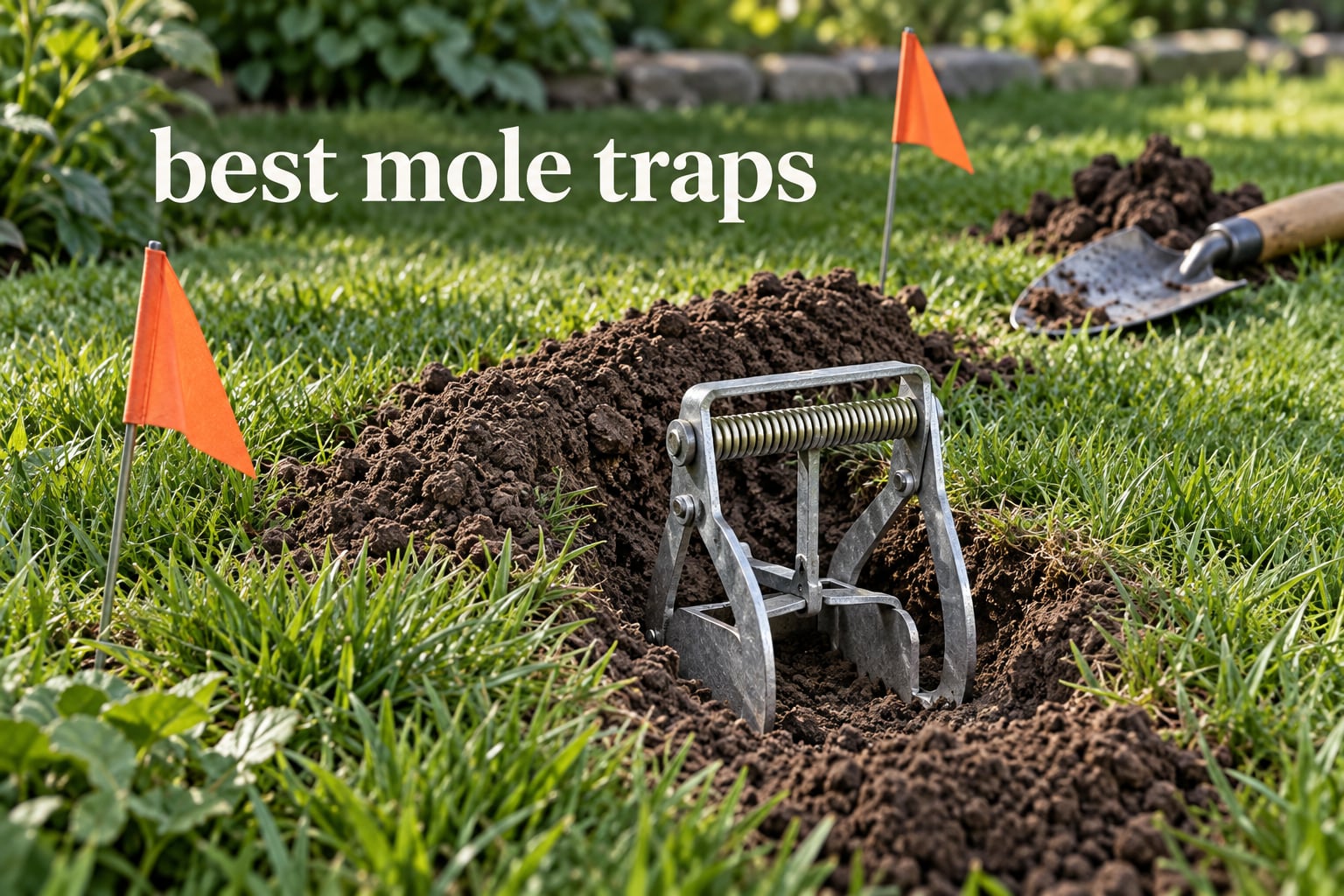
Every spring the same thing happens. You walk out to a lawn that looked immaculate in fall and find raised tunnels tearing across it like veins, plus a scattering of fresh mounds near the foundation. By midsummer the turf is uneven enough that mowing becomes a genuine hazard, and one user on r/lawncare described turning an ankle on ground his own mower had created. The fix most people reach for first is poison bait, and most people regret it.
We spent weeks sorting through the best mole traps on the market, reading thousands of buyer reviews and weighing the design differences that actually decide whether a trap fires. The short answer surprised us. Almost every trap in this guide is mechanically sound, and almost every complaint we found traced back to setting technique rather than hardware. So the best mole traps are not the fanciest ones. They are the ones you can set confidently into a run that a mole used yesterday.
This guide covers all four mainstream trap mechanisms, twelve specific products, how to set them, why they fail to fire, and how many you actually need. It also covers what most roundups skip: whether a trap is safe around a dog that likes to dig, and whether an honest answer about set-and-forget is even possible.
Table of Contents
Top 3 Best Mole Trap Picks (October 2026)
If you want one trap and nothing else, the Wire Tek 1001 EasySet is the one to buy. It is the most reviewed trap in this guide by a wide margin, and reviewers consistently credit its heavy gauge steel and no-dig installation. If you plan to cover several runs at once, the POlAFLEX two-pack spreads your effort better. If you want the least commitment per trap, the Gonzo 5001 dead-end works at the mouth of a single hole.

Wire Tek 1001 EasySet Mole Eliminator
- Heavy gauge steel body
- Sets without digging
- Limited lifetime warranty

POlAFLEX 2 Pack Galvanized Scissor Trap
- Galvanized steel
- Rust-proof and reusable
- One-minute step set
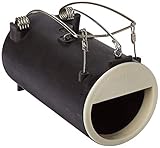
Gonzo 5001 Dead-End Mole and Gopher Trap
- Sets at one active hole
- No bait required
- No digging
Best Mole Traps in 2026: Quick Comparison
Every trap below is chemical-free and reusable. The columns that matter most are the mechanism and the setting method, because those two facts decide whether a trap suits your soil and your patience.
| Product | Specifications | Action |
|---|---|---|
| Wire Tek 1001 EasySet Mole Eliminator |
|
Check Latest Price |
| POlAFLEX 2 Pack Galvanized Scissor Trap |
|
Check Latest Price |
 POlAFLEX Scissor Mole Trap 2 Pack POlAFLEX Scissor Mole Trap 2 Pack |
|
Check Latest Price |
 YARDDOG Scissor Mole Trap 2 Pack YARDDOG Scissor Mole Trap 2 Pack |
|
Check Latest Price |
 Garsum Scissor Mole Trap Single Garsum Scissor Mole Trap Single |
|
Check Latest Price |
| Gonzo 5001 Dead-End Mole and Gopher Trap |
|
Check Latest Price |
 Wanqueen 2 Pack Scissor Mole Traps Wanqueen 2 Pack Scissor Mole Traps |
|
Check Latest Price |
 POlAFLEX Black Stainless Scissor 2 Pack POlAFLEX Black Stainless Scissor 2 Pack |
|
Check Latest Price |
 DPOD Cast Iron Scissor Trap 2 Pack DPOD Cast Iron Scissor Trap 2 Pack |
|
Check Latest Price |
 Nash 100 Choker Loop Mole Trap Nash 100 Choker Loop Mole Trap |
|
Check Latest Price |
 NoMol Wire Tong Underground Trap 4 Pack NoMol Wire Tong Underground Trap 4 Pack |
|
Check Latest Price |
 Victor Out O’ Sight Mole Trap 4 Pack Victor Out O’ Sight Mole Trap 4 Pack |
|
Check Latest Price |
Mole Trap Types Explained: Scissor, Choker, Dead-End and Wire Tong
The most efficient mole trap is the scissor-jawed step-on trap, and that is the consensus of both the forums and the review data here. It snaps shut on contact, it needs no digging, and a person with any yard experience can learn it in a single attempt. If you only remember one mechanism from this article, remember that one.
Three other mechanisms are worth understanding, because each solves a specific problem. A choker loop kills with a wire noose driven into the ground by a powerful spring, which makes it the choice for deep travelling runs and large moles. A dead-end trap sits at the mouth of one hole and requires no bait. A wire tong trap goes fully underground, which is the only design in this list you can mow directly over.
Harpoon and plug traps complete the traditional set. A harpoon drives a spike down into the mole, a plug trap drops a metal cap into the tunnel behind it. Both work, but they are the designs most owners find unpleasant to handle, and forum users frequently describe avoiding spear-style traps for that reason alone. None of the twelve products below use a spike mechanism, which is itself a meaningful signal about what buyers now choose.
Scissor traps win on handling and speed, choker loops win on depth and reach, dead-end traps win on simplicity, and wire tongs win on mowability. Everything else in this guide is a variation on those four ideas.
1. Wire Tek 1001 EasySet Mole Eliminator: Best Overall Mole Trap
Wire Tek 1001 EasySet Mole Eliminator Trap (1)
Steel body
16 oz weight
6 x 6 x 12 inch
Limited lifetime warranty
Pros
- Heavy gauge steel built for years of service
- Sets into a run with no digging at all
- Chemical-free and accepted on organic farms
- Rated 4.2 across more than 8700 ratings
Cons
- Sold as a single trap so multiple runs need multiple purchases
- Can be fiddly to set and re-arm without practice
This is the trap most people end up with, and the reason is volume. With a 4.2 average across more than 8,700 ratings, it has been bought, argued about and re-set by essentially everyone who has ever trapped a mole. Sixty-five percent of buyers give it five stars and only nine percent give one star, which is a tight spread for a tool that depends on the user doing it right.
What reviewers praise most is the construction. The body is heavy gauge steel, listed at 16 ounces, and the manufacturer backs it with a limited lifetime warranty against defects in materials and workmanship. The company also states it is effective on all species of moles worldwide and is accepted for use on organic farms, ranches and nurseries, which matters if you grow food or keep animals.
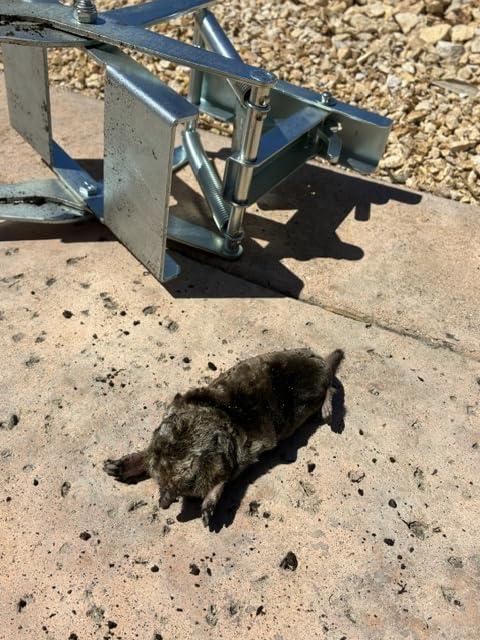
The reason it tops this list is the setting method. It is one of the few mole traps described as able to enter the tunnel without any digging at all. You flatten a run, drive the trap straight down into the open burrow with your foot, and the spring arms behind you. That single design choice removes the step that causes most failures.
The setting does need practice. Reviewers describe the first attempt as awkward and the fifth as automatic, which is normal for a spring-loaded foot mechanism. The other recurring complaint is quantity, since one trap covers one location and a serious infestation usually means a dozen locations. Buying a small number and repeating is how most owners do it.
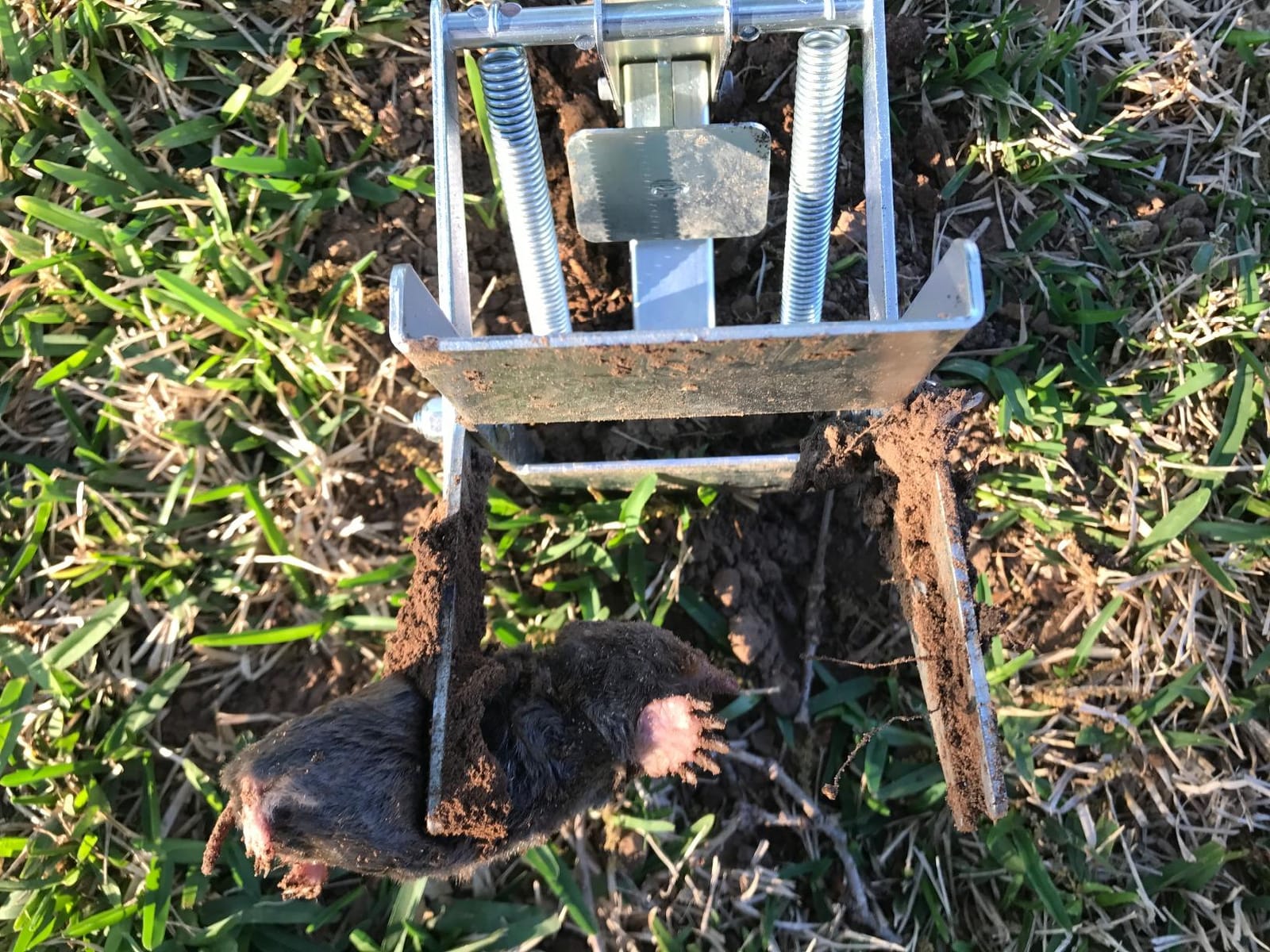
How to tell it is actually set
Look at the trigger plate before you walk away. On this trap the plate should sit level with the surrounding soil and the jaws should be fully open, not partly closed. A half-latched trap is the reason r/lawncare users report setting a Wire Tek and catching nothing over several days.
Also confirm the plate is not buried under a loose plug of soil. The trap enters an open hole, so if you tamp the surrounding dirt before the plate is seated, the extra weight can stop the mechanism from completing its throw.
Where it falls short
It ships as a single trap, which makes a multi-run yard expensive in effort. If your lawn has more than two active runs, a two-pack spreads the walking and lets you check everything in one loop.
It is also a step-on design, so it is not mow-over safe. In a large lawn you will be dodging visible markers, and a foot can trip on one of them. The choker and wire tong options cover the opposite need.
2. POlAFLEX 2 Pack Galvanized Steel Scissor Trap: Best Value for Multi-Run Yards
2 Pack Mole Traps,Galvanized Steel Scissor Trap,Reusable Mole Trap Killer,Easy Set Trap for Lawns
Galvanized steel body
2 traps per pack
5.7 pounds
6.5 x 4 x 6 inch
Pros
- Galvanized steel resists rust for repeated reuse
- One-minute step-set install with no digging
- Works on moles
- voles and rats
- Chemical-free and non-toxic around children and pets
Cons
- Hinge and side adjustment nuts often need loosening to trigger reliably
- Needs firm foot strength and balance to set
- Traps need periodic cleaning of packed dirt
This is the two-pack answer to the quantity problem. At a 4.0 average from 2,421 ratings, 62 percent of buyers give it five stars, and the reviews split cleanly between people who followed the recommended method and people who did not. That split is informative rather than a defect.
The buyers who succeed share a routine. Flatten a tunnel to confirm activity, set the trap while wearing gloves, and loosen the side adjustment nuts so the trigger is not over-tightened. Those three steps account for most of the difference between a catch and a trap that never fires. Owners following them report multiple moles within days.
Material is the main argument for this trap over cheaper scissor designs. The body is galvanized steel, described by the manufacturer as rust-proof and weather-resistant, and the whole pack weighs 5.7 pounds, which tells you how much metal is actually in the jaws. That weight is what closes the trap cleanly instead of partially.
The broad target list is a real bonus if you have more than one problem. The manufacturer lists gopher, mole and rat as target species, so the same two traps can cover surface runs and edge damage. Users also mention catches within hours of setting on an active tunnel, which is a faster expectation than most mechanical methods promise.
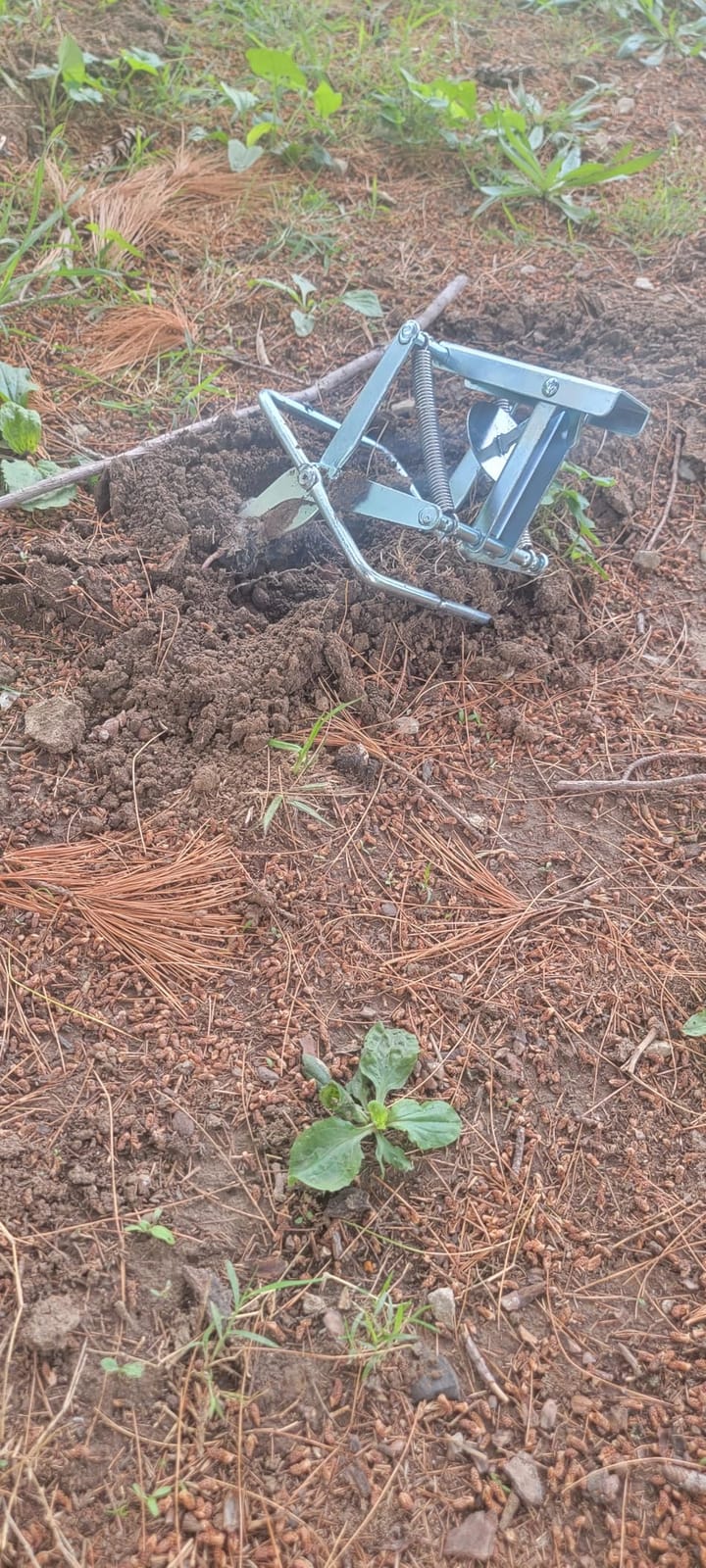
Getting the side nuts right before you set
Turn each side adjustment nut a fraction at a time until the trigger plate moves with a light touch. If the plate does not move when you nudge it, the jaws are already under tension and the trap will sit there without ever completing a strike.
Check the same thing again after a week outdoors. Soil packing into the hinge is the most common reason a working trap stops working, and a quick clean of packed dirt at the hinge restores it in most cases.
Where it falls short
It needs a firm foot and reasonable balance. Reviewers with smaller frames describe the setting motion as hard, and the trap sits at a height that makes it awkward in very compacted ground. The manufacturer’s own guidance is that it works best in straight, near-surface tunnels, so deep or winding runs are a poor match.
Releasing a caught animal is also the most common post-catch complaint. Buy a pair of gloves you do not mind ruining, and wear them for the handling as well as the setting.
3. POlAFLEX Scissor Trap 2 Pack: Best for Moist, Loose Soil
Mole Trap Scissor 2 Pack, Polaflex Mole Traps for Lawns, Step-Set
Metal scissor jaws
2 traps plus 2 flags
5.2 pounds
Three-year warranty
Pros
- Includes two marking flags to find set traps later
- Scissor jaws deliver quick decisive kills
- Poison-free and family-safe around children and pets
- Three-year warranty plus free pest control consulting
Cons
- Requires firm downward foot pressure and finesse to latch
- Best in moist loose soil and hard or clay ground needs loosening first
- Side nuts can arrive too tight
The manufacturer states the operating condition for this trap plainly: moist, loose to moderately firm soil. If your lawn is that kind of ground, this is among the smoothest setting experiences available, and the 4.0 average from 2,016 ratings includes a best-seller rank higher than any other scissor trap we reviewed.
Two details make it more practical than a bare trap. The pack includes two marking flags, which sounds minor until you consider that you will not find a low-profile trap in a lawn without a marker, especially after rain. And the company backs it with a three-year warranty plus free pest control consulting, which is unusually generous support for this category.
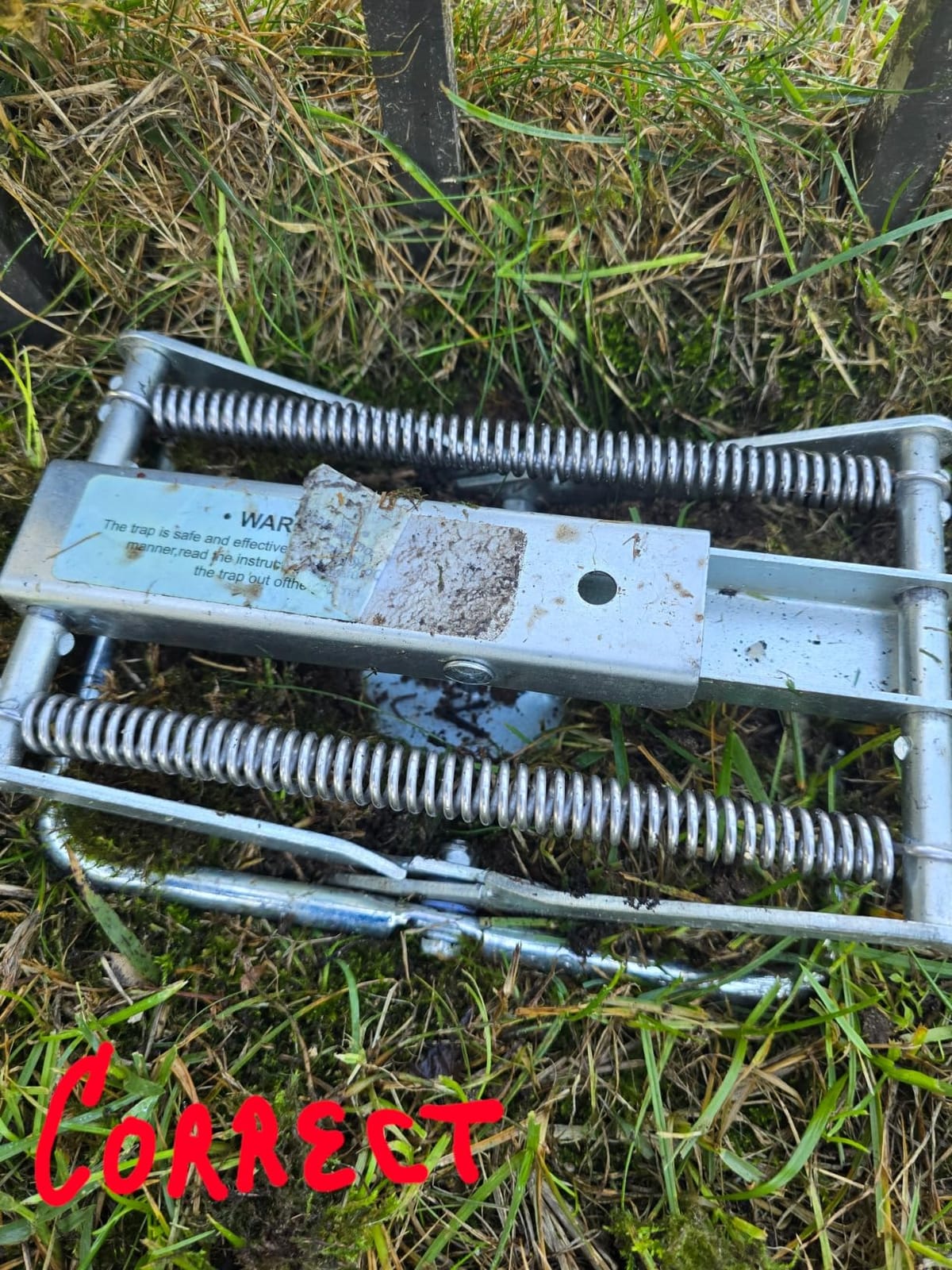
The setting instruction from the brand is the part worth memorising. Push the tunnel down before you set, make sure the trigger sits flat, and apply firm downward foot pressure. On soft ground that is straightforward. The trap measures 6.5 by 6.4 by 15.9 inches, so the visible body is taller than most and easier to spot, which is a genuine benefit when you are checking a yard in low light.
Buyers praise the speed of the kill. Scissor jaws close the moment a mole touches the trigger, and 64 percent of ratings are five stars. The recurring caveat, again, is finesse. It is not a trap you can set one-handed while distracted, and a trap that is nearly latched is a trap that will not fire.
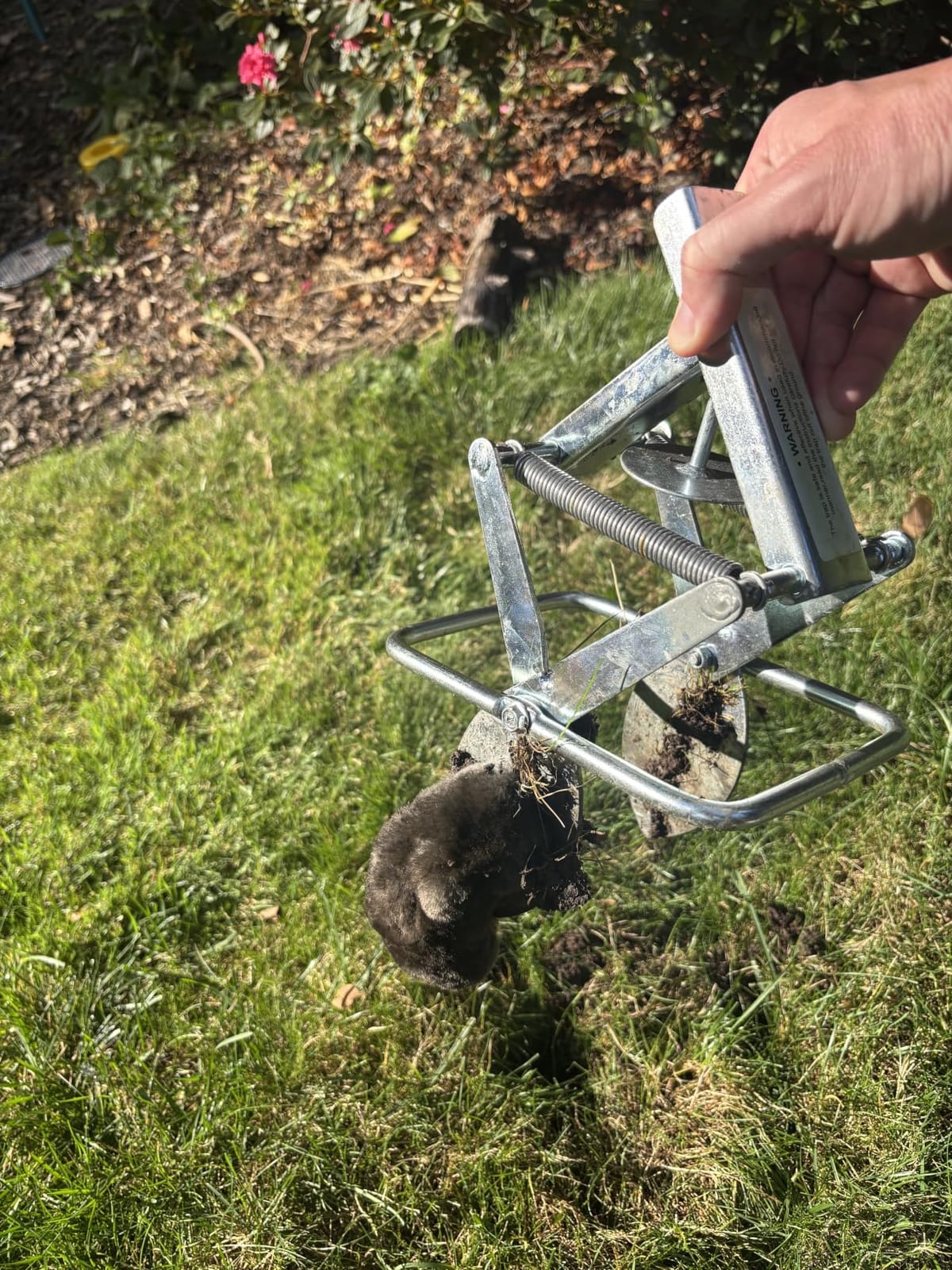
Whether the flags are worth anything
More than you would expect. Step-on traps sit almost flush with the soil, and a lawn that looks uniform on Monday can hide six set traps by Wednesday. The flags turn a search into a quick walk between markers, which matters most in a yard with shrubs or uneven ground.
Use the flags to note the date you set each one. Traps checked on a rhythm catch more moles than traps checked when you remember, and a flag is the easiest way to keep that rhythm.
Where it falls short
It is the wrong choice for hard or clay soil, and the manufacturer says so. In compacted ground the trap will not seat properly and the jaws may not clear the tunnel wall, so loosen a section with a garden fork and add water the day before.
A two-pack is more than a small yard needs. If you have two active runs, one trap does the job and the second is a spare for a month from now.
4. YARDDOG Scissor Mole Trap 2 Pack: A Straightforward Step-On Design
YARDDOG Mole Traps that Kill Best – Mole Scissor Trap Steel (2 Pack)
Coated alloy steel
2 traps per pack
6 x 6 x 13 inch each
Step-to-activate
Pros
- Simple step-to-activate setup with no digging
- Coated steel resists rust and handles repeat use
- Compact size is easy to place in a yard or garden
- Precision scissor mechanism for a firm strike
Cons
- Lowest rated trap we reviewed at 3.8 with 17 percent one-star ratings
- Catch results are inconsistent across buyers
- Can be set off by foot traffic in high-traffic areas
We are including this one with a clear caveat. It scores 3.8 across 1,263 ratings, and seventeen percent of buyers give one star, the largest one-star share of any trap in this guide. That split is not noise. It reflects a trap that works for people who place it carefully and disappoints people who place it quickly.
The design itself is straightforward. Each trap measures 6 by 6 by 13 inches, is built from coated alloy steel described as commercial-grade, and activates by stepping on it with no digging. The scissor mechanism is described as precision-cut, and the pack includes two traps so you can cover two runs in one pass.
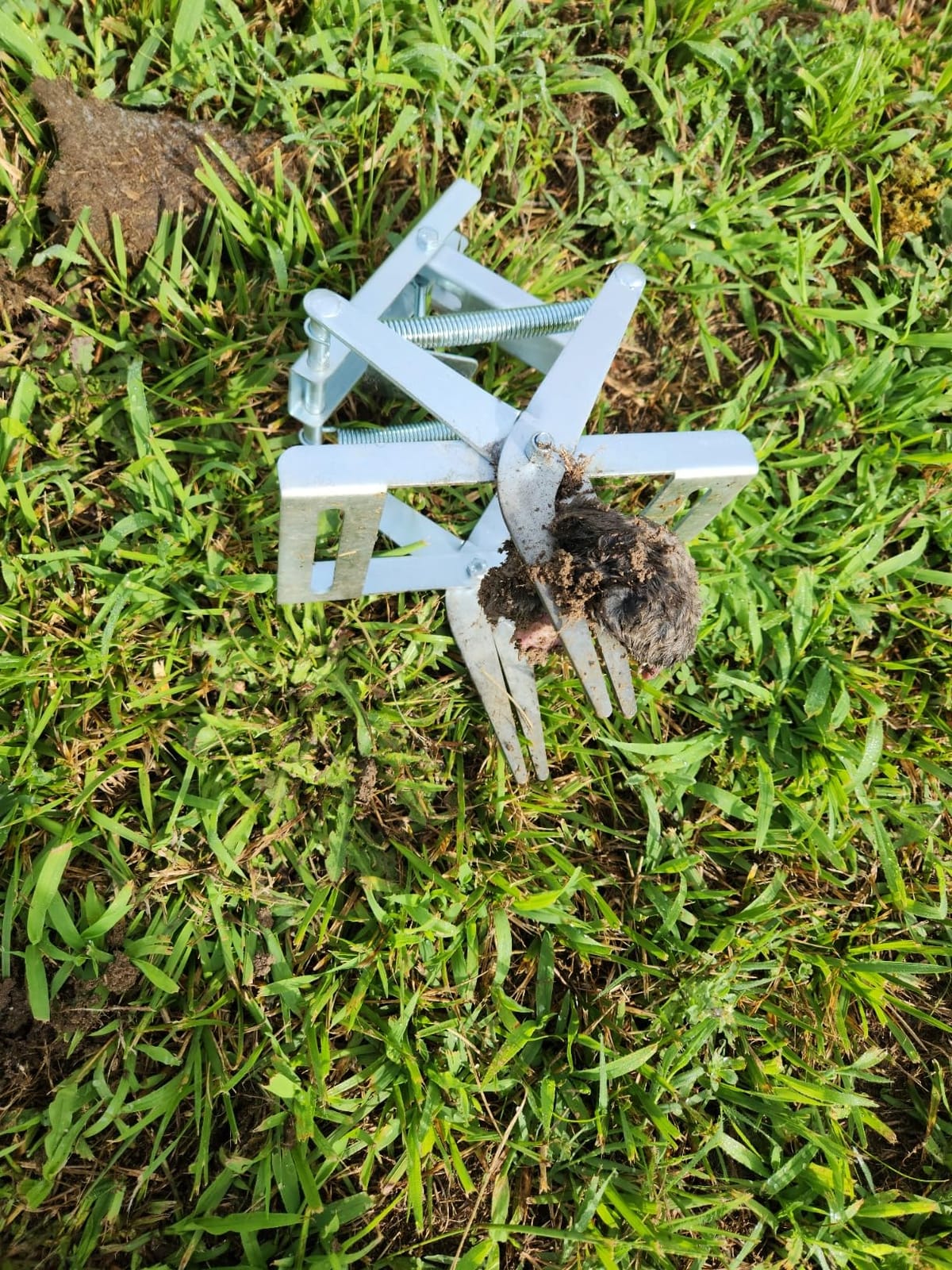
What separates the happy buyers from the unhappy ones is run quality, not hardware. Owners who confirm an active run first, then set, report consistent catches. Owners who set on a repaired-looking tunnel report nothing at all, which matches the pattern we saw across every scissor trap in this guide.
There is one specific risk worth naming. The manufacturer instructs you to place the trap in high-traffic mole areas, and in a yard where people walk the same path every day, a foot can trigger the trap or a shoe can disturb the set. Pick spots along an active run that are away from footpaths, not in the middle of one.
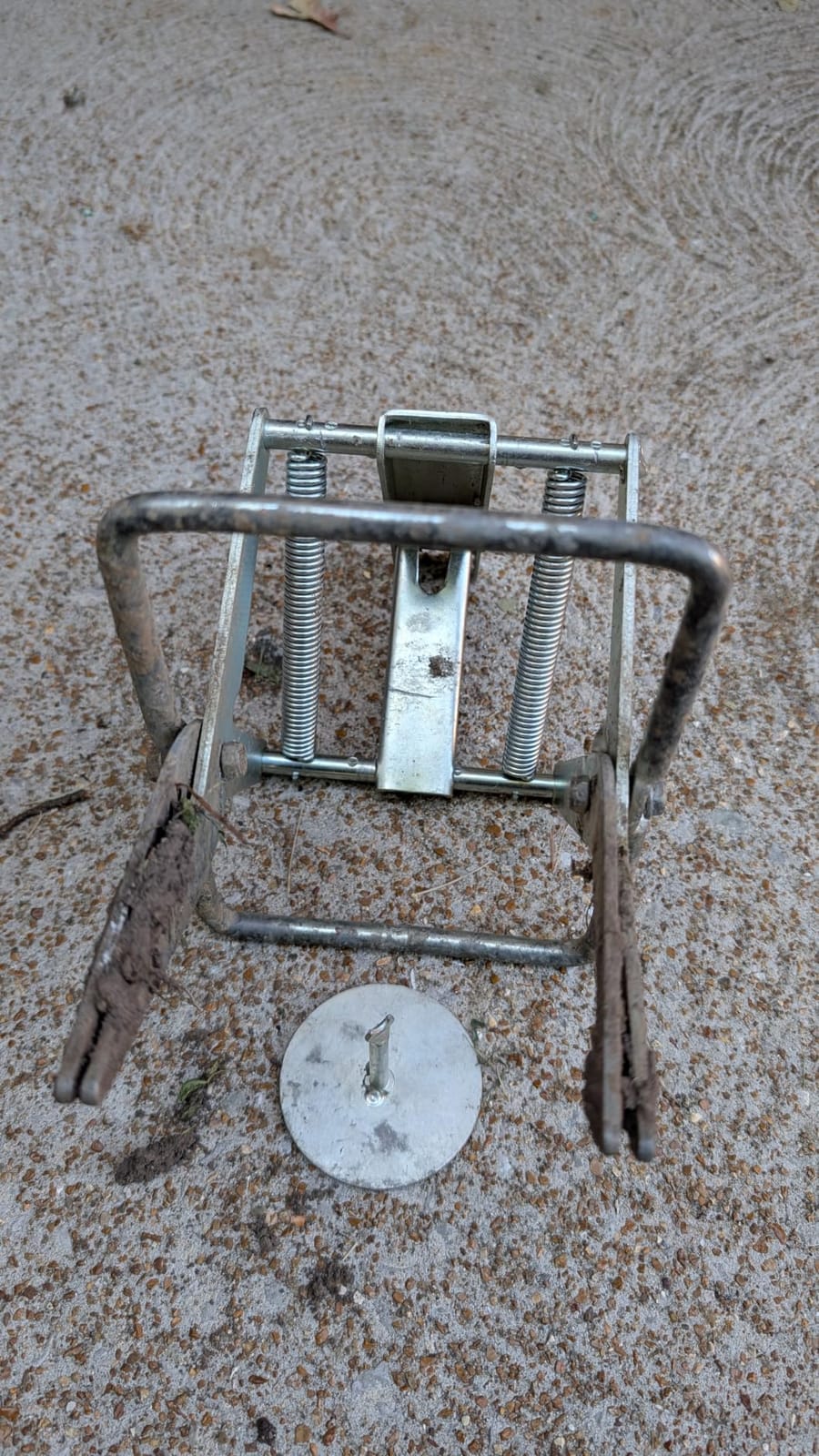
Whether a 3.8 rating should stop you
Only if you plan to set it and walk away. The rating reflects inconsistency, not breakage, and the mechanism itself is not the problem. If you intend to push a run flat, mark it, set carefully and check every day or two, the design will do its job.
If you want a trap you can set and genuinely forget, the Wire Tek at number one has a far tighter spread of outcomes. Consistency is the whole game when you are not checking daily.
Where it falls short
Catch results vary a lot between owners, and a nontrivial share report no catches at all despite correct-looking setups. Treat the first week as a diagnostic period rather than proof the trap does not work.
The height also makes it more visible in a lawn than slimmer designs, which is a minor cosmetic issue and a minor tripping issue on an already uneven surface.
5. Garsum Scissor Mole Trap: Best Single Trap for Sandy Ground
Garsum Scissor Mole Trap for Lawns, Mole Kill for lawns, EasySet Eliminator Vole Gopher Traps, Reusable Quick and Clean Kill,1 Scissor Trap
Galvanized steel
1 trap plus 2 flags
6 x 6 x 12 inch
One-year warranty
Pros
- Galvanized steel works in varied soil including loess and sandy ground
- Widened release clip holds the trigger more stably
- Sharp scissors respond to slight movement
- Two red flags and an instruction manual included
Cons
- One trap per pack so covering several tunnels needs repeat purchases
- Very low sales rank compared with the scissor-trap field
This is the trap to consider when your ground is loose. The manufacturer states the galvanized steel body works in all soil types including loess and sandy soil, and it holds a 4.0 average from 1,009 ratings with sixty percent five-star and twelve percent one-star, a solid if unremarkable profile.
Its distinguishing feature is the widened release clip. Rather than a single contact point, the clip has a larger surface area, which the manufacturer says holds the trigger more stably in the ground. In practice that means the trap stays armed longer without soil shifting enough to close it by accident, which is exactly the failure that sandy ground causes.
The scissor response is also described as reacting to slight movement, so the strike does not require a full-force body impact. A 4.0 rating tells you the mechanism delivers what it promises most of the time, and the material holds up across seasons rather than pitting after one wet spring.
The box is practical. Two red marker flags locate the trap, and an instruction manual is included, which sounds like a low bar until you have tried to find a flush trap in tall grass. A one-year warranty is shorter than some competitors offer but still covers the first season.
This trap also carries an explicit warning to wear gloves while setting, because moles have an excellent sense of smell. That advice applies to every trap in this guide and costs nothing to follow.
Whether sandy soil really is the deciding factor
Yes, for the mechanism. Sandy soil shifts more than clay, and a loose-ground trap that depends on a stable hold benefits from a wider contact surface. The manufacturer names sandy and loess ground explicitly, which makes this the trap with the clearest written soil guidance in the group.
Note the contrast with the choker loop at number ten, which reviewers report performing poorly in heavy sandy soil because the tunnel collapses into the wire. If your soil is loose, choose a step-on scissor design like this one rather than a digging trap.
Where it falls short
One trap per pack means a real cost in effort for a yard with several runs, and it is the least established product here by sales rank. If consistency across multiple runs matters, a two-pack saves the walking.
The catch rate is ordinary rather than outstanding. Expect to set several over a season rather than solving a heavy infestation with two.
6. Gonzo 5001 Dead-End Mole and Gopher Trap: The Simplest Trap to Use
Gonzo 5001 Dead-End Mole & Gopher Trap
Dead-end design
1 trap
0.33 kg
6.5 x 3.5 x 3.5 inch
Pros
- Dead-end design needs only one hole instead of a row of them
- No bait required and setup is a single placement
- Compact body is easy to carry and place
- Smallest footprint in the group
Cons
- No published instructions for removing a captured animal
- Latch loop can slip off the spring and disable the trap
- Fills with dirt unless kept fully shielded from light
A dead-end trap is set into one active hole rather than into a run, and that single fact makes it the least effort-intensive option here. No digging a slice, no measuring, no digging out a tunnel to expose it. The 4.0 rating from 1,077 ratings reflects a trap that people either get the hang of immediately or abandon after one catch.
The trap weighs 0.33 kg and measures 6.5 by 3.5 by 3.5 inches, small enough to carry in one hand and set by hand. No bait is required, which removes the question of whether a pet will dig it up. The manufacturer describes it as a non-poisonous defence against moles, gophers and rodents, made with stainless steel components.
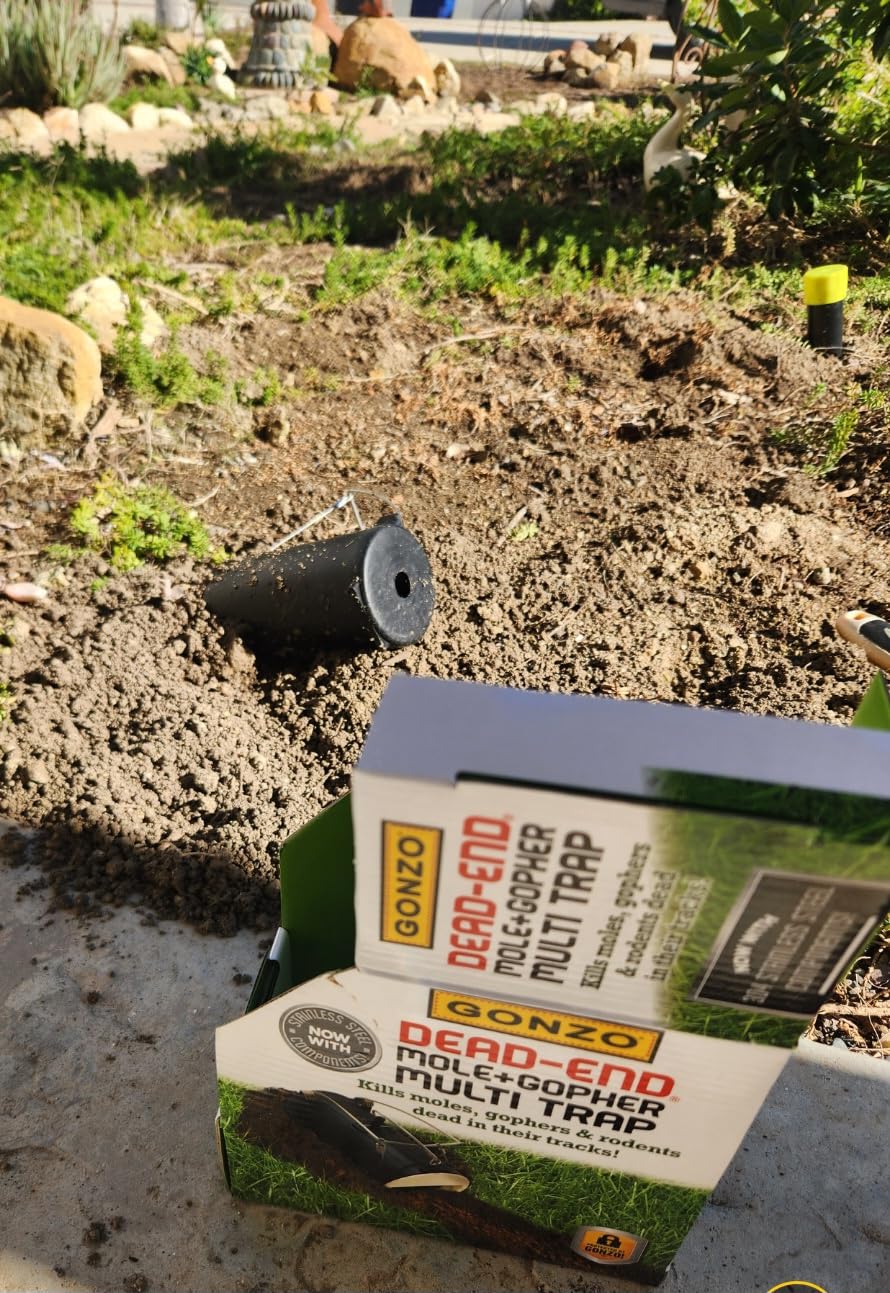
Buyers who succeed share one habit. They dig out around the hole, keep the trap completely dark, and set it at the mouth of an active hole rather than an old one. Done that way, reported catches range from hours to four days. The darkness matters because a trap exposed to light fills with dirt, and a dirt-filled trap will not fire.
The reason it is worth buying even as a first step is scale. It asks the least of you, so it is a low-commitment way to find out whether trapping suits your yard at all before you set a dozen step-on units. One trap answers the question in under a week.
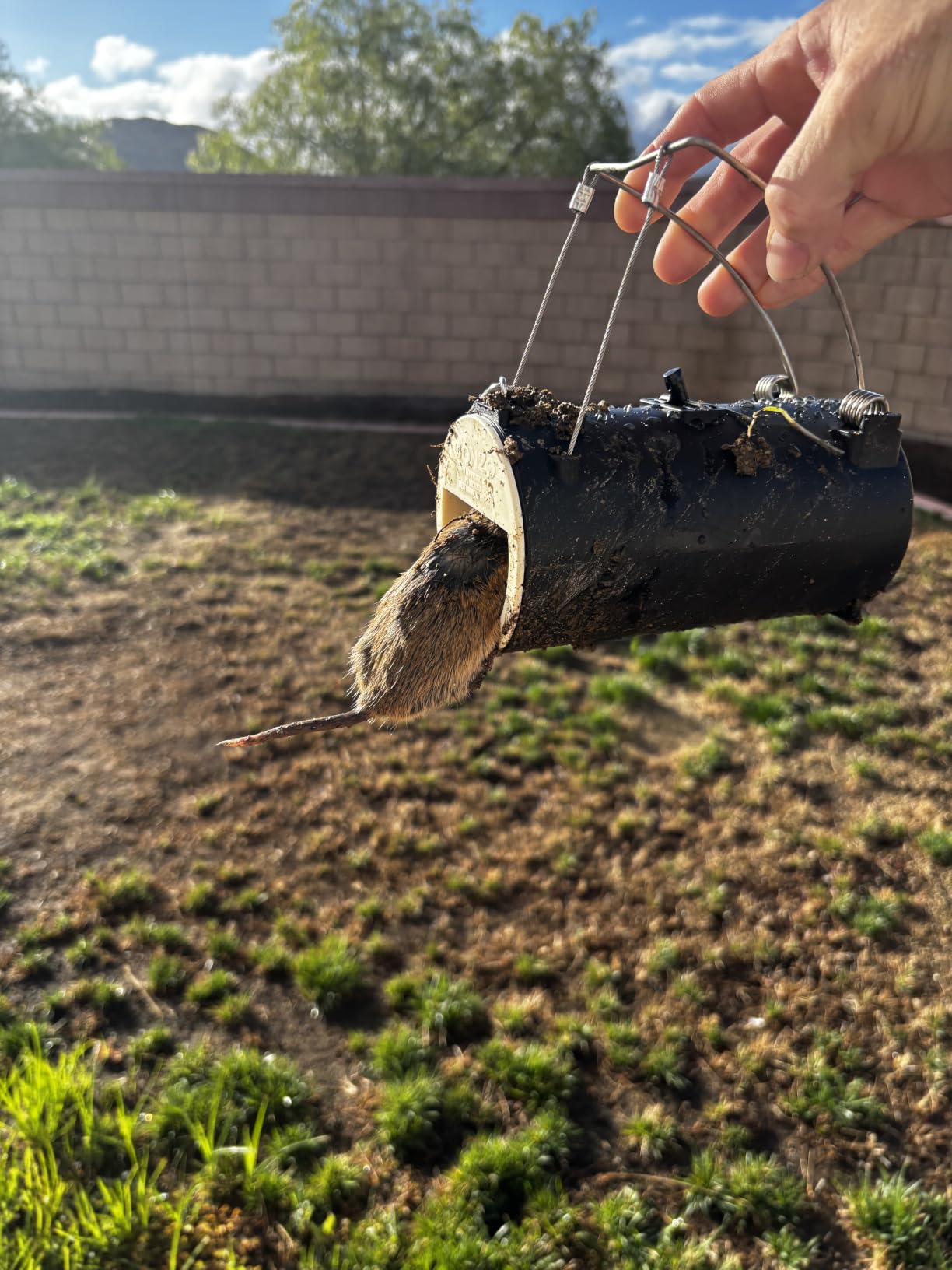
Why keeping it dark matters more than it sounds
Light reaches a set trap, soil works into the mechanism, and the trigger stops moving freely. Reviewers who shaded the hole with a piece of cardboard or a pot report far better results than those who kept it open. It is a thirty-second action with a large effect.
Check it in the same condition each time. A trap you inspect once in daylight and once in the dark is being evaluated on two different setups, and you will draw the wrong conclusion about it.
Where it falls short
The most repeated criticism is that there is no instruction anywhere for emptying the trap once an animal is caught, and many buyers report the catch cannot simply be shaken free. Practise opening it before you need to. The latch loop can also slip off the spring and render the trap inoperable.
It is sized for gophers and small rodents, not squirrels or other larger animals, and the target species listed by the manufacturer is gopher. Treat it as a companion to a scissor trap rather than a replacement for one.
7. Wanqueen 2 Pack Scissor Mole Traps: The Best-Rated Trap in the Group
2 Pack Mole Traps that Kill Best, Vole Traps Outdoor Use Scissor for Lawns
Galvanized steel
2 traps per pack
6.1 x 6.1 x 15.75 inch
Waterproof and rust-proof
Pros
- Highest rating in this group at 4.4 with 73 percent five-star
- Waterproof galvanized steel holds up in rain
- Simple foot-stepping motion sets it with no digging
- Reacts on contact so the mole cannot escape
Cons
- Only a two-pack configuration is offered with no larger bundle
- Far fewer ratings than the best-reviewed traps in the group
On consistency of results, this is the standout. It holds 4.4 across 912 ratings, with 73 percent five-star and only six percent one-star. Every other trap we reviewed has a one-star share between nine and seventeen percent, so the gap in satisfaction reliability is real and not a rounding artefact.
The rain performance is the practical reason to like it. The manufacturer describes the galvanized steel as waterproof and rust-proof and specifically says rainy days do not affect performance. For anyone trapping in a wet spring or scheduling a check that gets postponed by weather, that is a genuine advantage over uncoated designs.
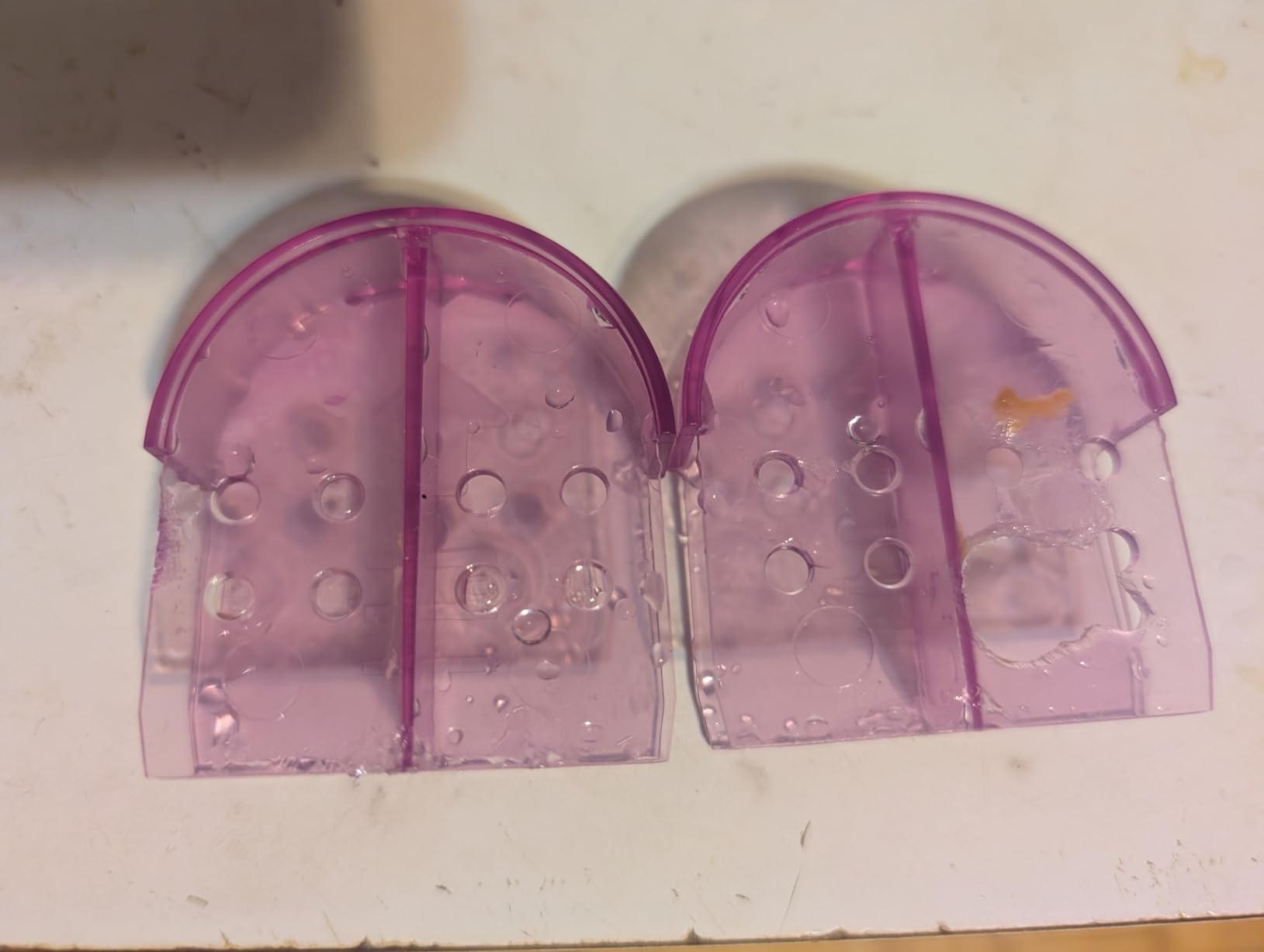
Setting is described as no complicated steps and no digging, just a foot-stepping motion to set the trap safely underground. The mechanism reacts immediately on contact and holds the mole so it cannot escape, which addresses the two failure modes that produce the long tail of negative reviews on cheaper scissor traps.
It is also listed as working for moles, voles and gophers, and is described as suitable for organic farms, ranches and nurseries. Buyers credit the reusable, non-toxic design as the reason they keep setting the same two traps season after season instead of replacing them.
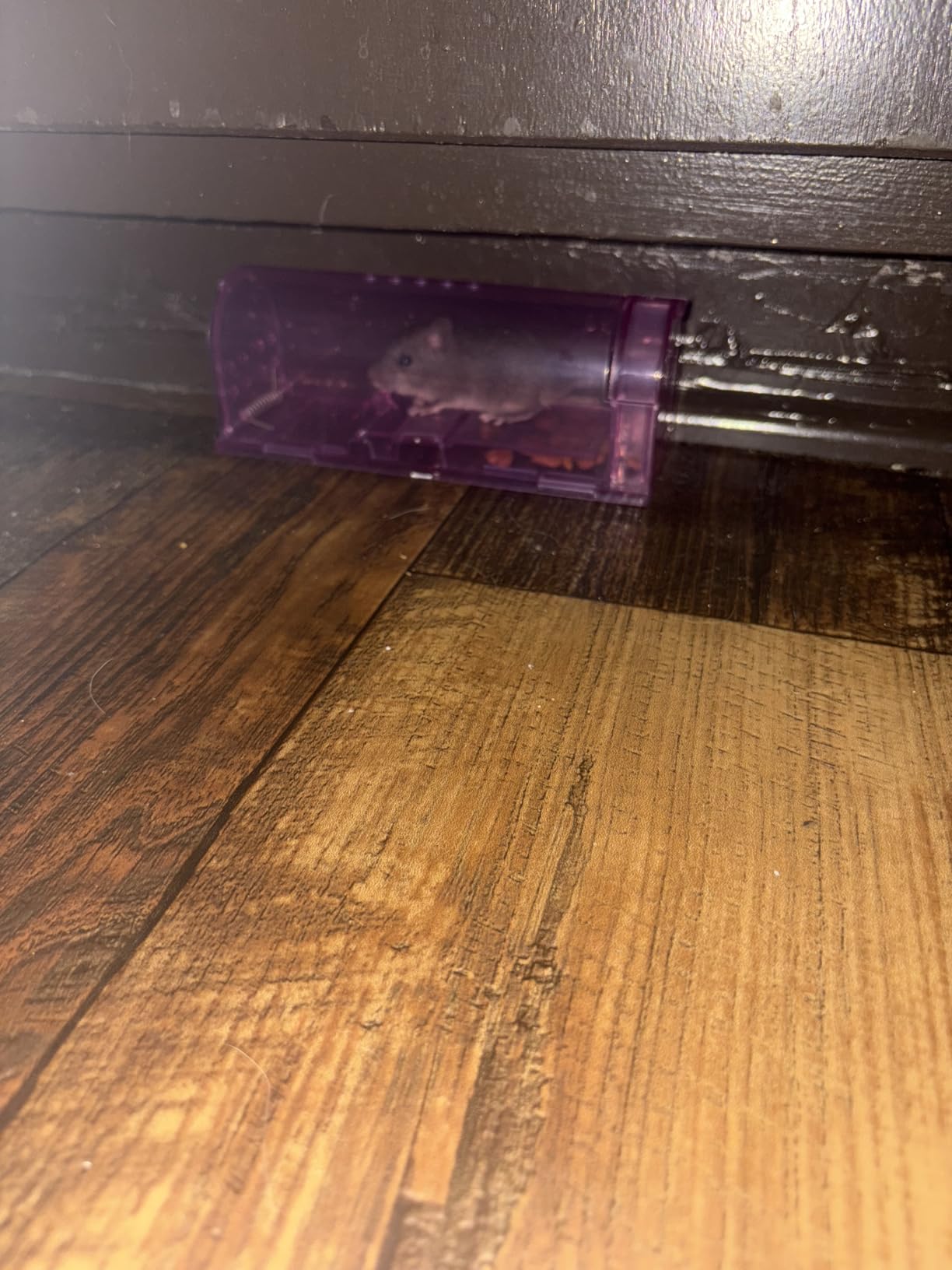
Whether to trust a smaller review base
Partly. Nine hundred ratings is enough to show a pattern, but the sample is a fraction of the Wire Tek’s, so treat the 4.4 as a good sign rather than a guarantee. What raises our confidence is that the one-star share is six percent, which is where the real information is in any review pool.
If you want to hedge, the two-pack gives you two chances to prove the design to yourself before committing to a larger program. That is the sensible way to read a strong rating on a newer product.
Where it falls short
Only a two-pack configuration is shown, so covering a large yard takes repeat purchases. It also has the least sales rank of any trap here, which usually means a newer design with thinner long-term field history than the older mechanisms.
It is a step-on design, so it is not mow-over safe. If you mow a full acre of lawn regularly, plan around visible markers.
8. POlAFLEX Black Stainless Steel 2 Pack: Best for Corrosive Ground
Mole Traps that Kill Best, 2 Pack Scissor Mole Trap, Sleek Black Stainless Steel Finish
Black stainless steel
2 traps per pack
5.2 pounds
8.1 x 5.4 x 12.6 inch
Pros
- Black stainless steel resists corrosion in tough soil
- Intuitive set mechanism with no digging or tools
- Replaces chemical repellents and is safe for family and pets
- Free pest control consulting included
Cons
- Fifteen percent of buyers give one star
- Catch consistency is mediocre with several reporting traps that would not arm
- Bulkier than the standard 6 by 6 inch scissor traps
The finish is the reason to consider this one. The body is black stainless steel, specified by the manufacturer for superior corrosion resistance in the toughest soil conditions, and it is the only scissor trap here with that specification. If your soil is acidic, wet, or simply hard on metal, the finish is the thing that will matter in year three.
Results are mixed. It scores 3.9 from 721 ratings, with 58 percent five-star and 15 percent one-star, the second-highest one-star share in the group. The pattern in the reviews is that sensitivity varies between individual traps, and several buyers report buying more units after a first trap that would not arm before catching consistently.
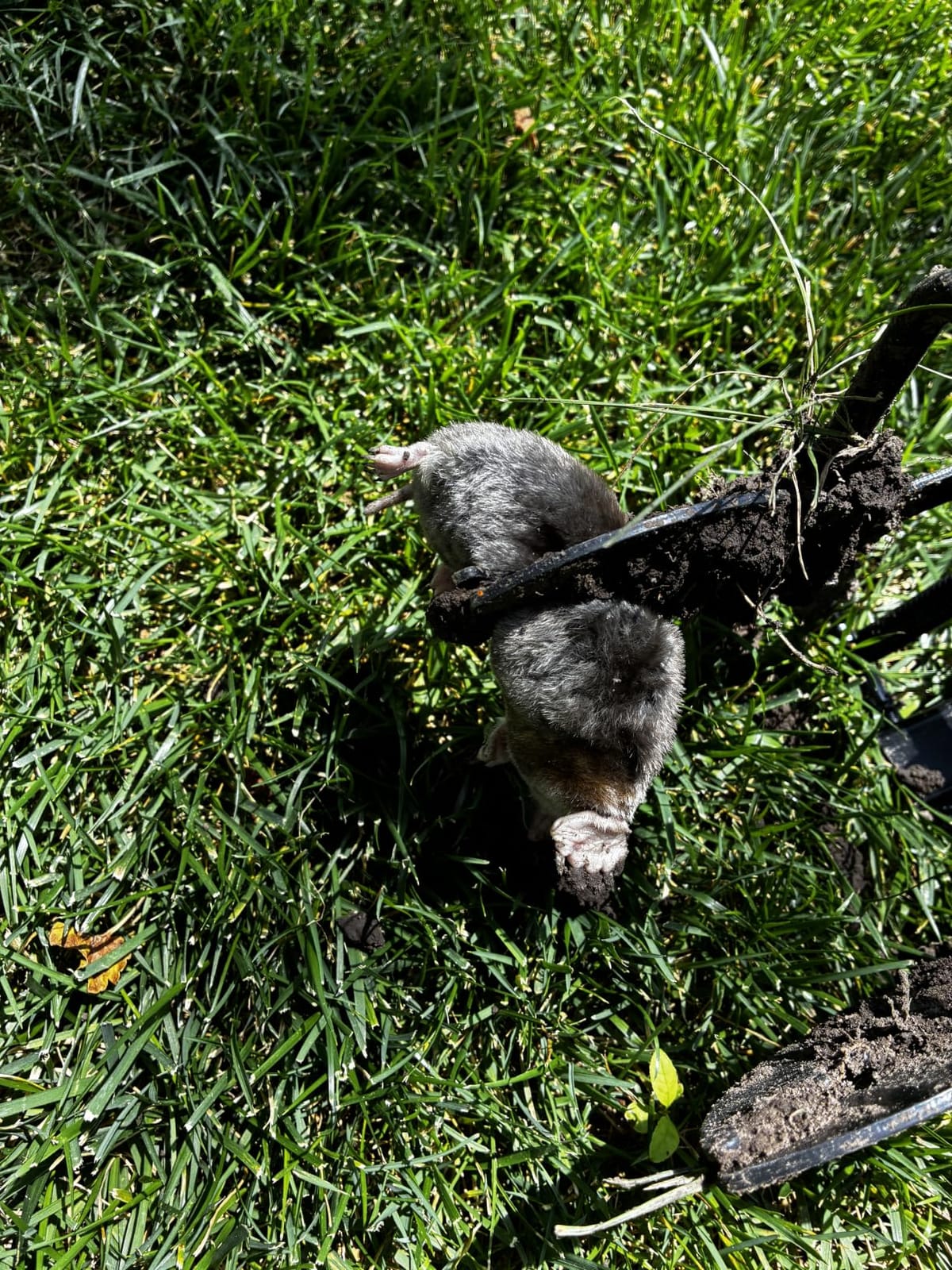
Setting is described as intuitive with no digging and no complex tools, and the spring action is described as strong enough to deliver an immediate result. The company also includes free pest control consulting and repeats the same glove advice every POlAFLEX listing carries, because moles detect human scent and will tunnel around an unguarded trap.
The packaging tells you it is a two-pack at 5.2 pounds, which is a substantial weight per trap. That mass is what drives the jaws closed firmly rather than partway, and it is a reasonable explanation for why owners who stick with it eventually get consistent results.
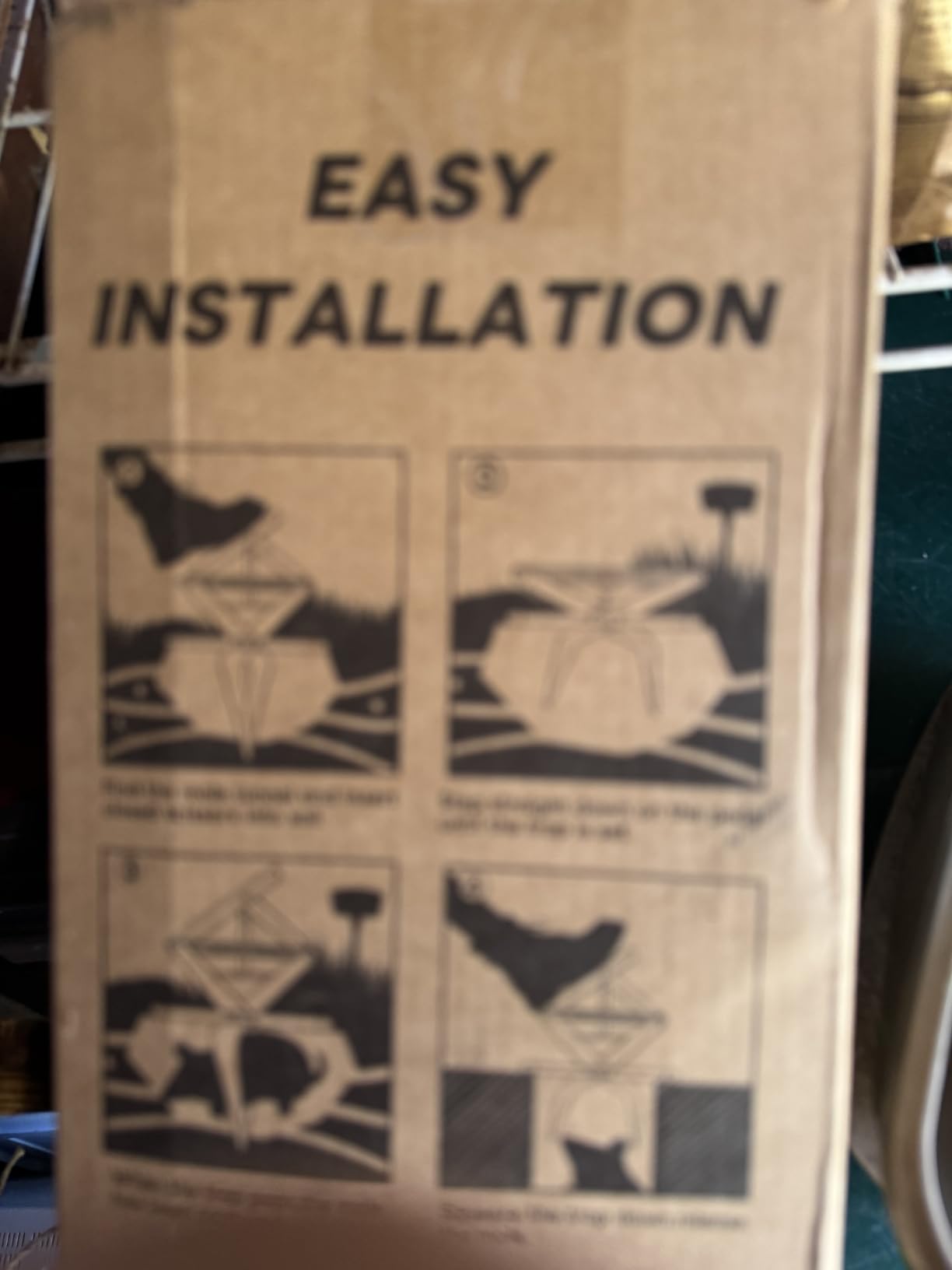
What to do if a new trap will not fire
Before you blame the mechanism, check the trigger plate sits flat and the jaws are fully open. Then check the side adjustment and loosen it a fraction, because a trap that is under tension from the factory will sit armed and never complete its throw.
If it still does not respond to a light touch, do not keep setting that unit. Reviews suggest sensitivity varies between individual traps, so swap it for the second trap in the pack rather than repeating the same placement with one that will not arm.
Where it falls short
Consistency is the weakness. A fair share of buyers report needing more than one trap before landing a reliable set, which turns a two-pack into a trial rather than a solution.
The footprint is also larger than a standard scissor trap at 8.1 by 5.4 by 12.6 inches. On a narrow vegetable bed or a tight bed edge that extra width is a real constraint.
9. DPOD Cast Iron 2 Pack: Best When You Want to Tune the Trigger
Mole Traps 2 Pack, Scissor Mole Trap that Kill Best for Lawns Ground,Black
Black painted cast iron
2 traps per pack
8.1 x 5.4 x 12.6 inch
Adjustable side screws
Pros
- Painted iron resists rain sun and frost
- Setup takes about 60 seconds with no tools
- High-sensitivity mechanism triggers instantly
- Trigger sensitivity can be tuned with the side screws
Cons
- Tied for the lowest rating here at 3.8 with 15 percent one-star
- Effectiveness depends on finding a genuinely active tunnel and tuning it
- Bulky 8.1 x 5.4 x 12.6 inch footprint
The distinguishing feature here is adjustability. The side screws let you tune trigger sensitivity, and the manufacturer makes an explicit claim that this significantly improves the catch rate. In a group where most traps are fixed-response, that is a genuine option to have when a trap will not fire on a run you know is active.
Construction is black painted iron, described as resistant to rain, sun and frost for long-term performance. Iron carries more mass than the steel alternatives in this guide, and that extra weight works in your favour at the moment of closure.
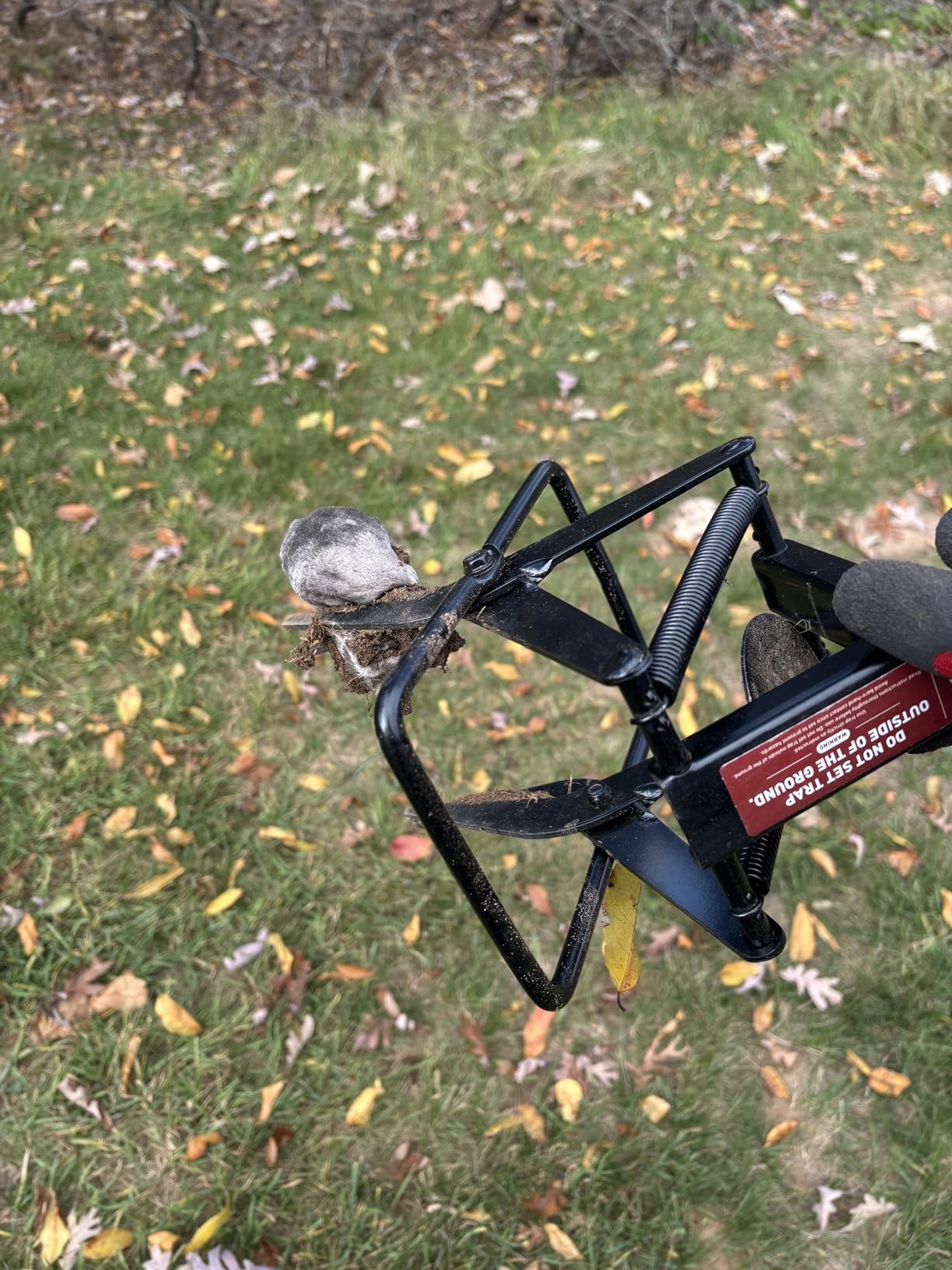
Results are split. It holds 3.8 across 537 ratings, with 52 percent five-star and 15 percent one-star. Reviewers who locate a fresh active tunnel and adjust the side screws report quick, decisive closures. Those who skip the tuning step report inconsistent firing, which suggests the adjustment is the variable that decides the outcome rather than a nicety.
The setup is genuinely fast. The manufacturer’s claim is about sixty seconds from locating a tunnel to a set trap, with no tools and no expertise needed, and the scissor jaws are inserted into the run and stepped down into position.
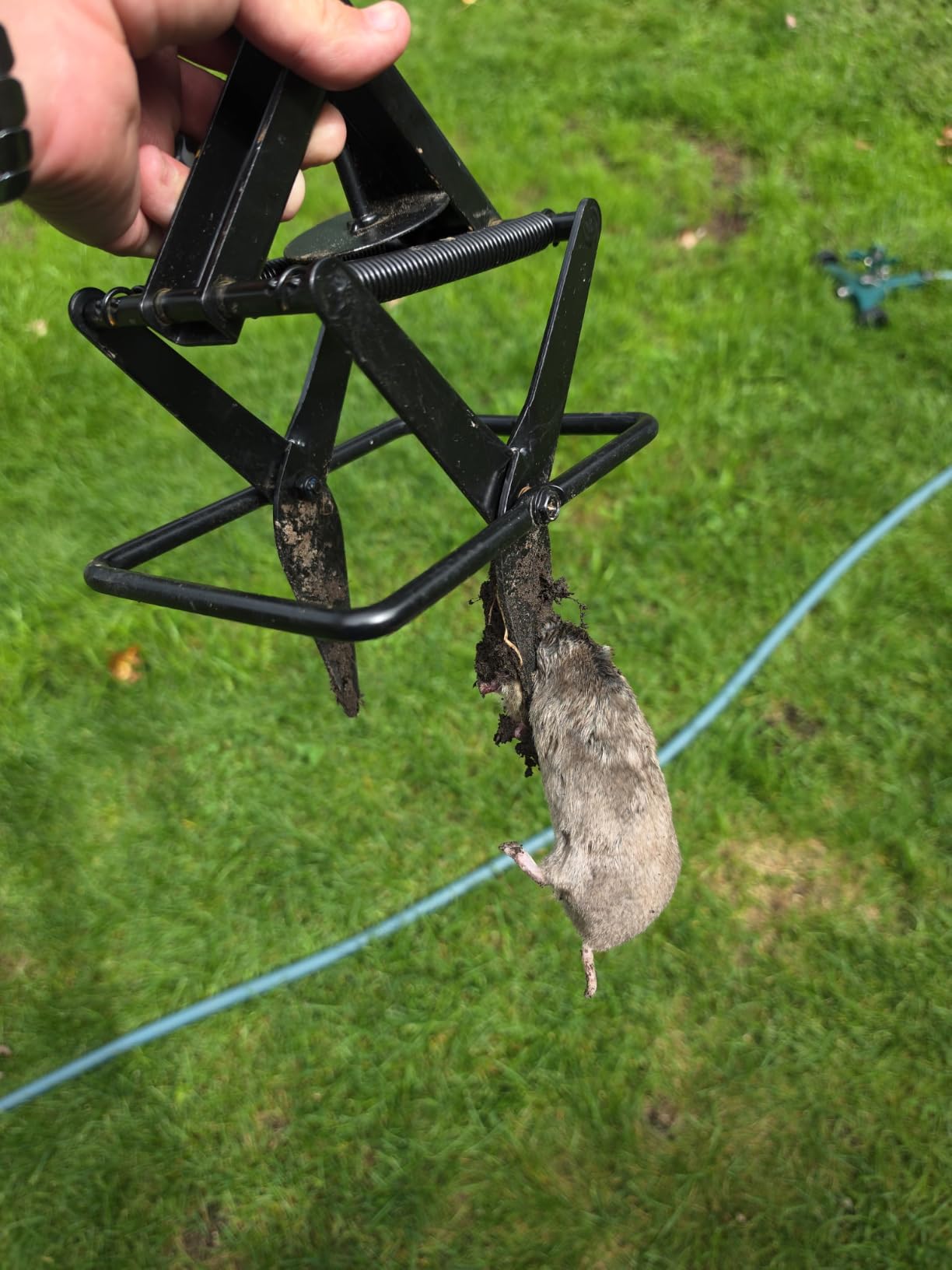
When tuning is worth the extra minute
It matters most when you have confirmed an active run and the trap still does not fire. A run that a mole rebuilt within a day is active, and a trigger that is slightly too stiff will be stepped over by a mole moving quickly along a familiar path.
Turn the screws in small increments and test after each one. Once the plate moves with a light touch, set it and tamp the surrounding soil so the body is stable rather than rocking.
Where it falls short
The rating sits at the bottom of this group alongside two others, and the one-star share is high. The bulk of the negative feedback points at the same thing: results depend heavily on finding a genuinely active tunnel and tuning the trigger, and buyers who skip either step feel misled.
It is also one of the widest traps here at 8.1 inches, which limits where you can place it in a narrow bed.
10. Nash 100 Choker Loop Mole Trap: Best for Deep Runs and Pet-Safe Yards
Nash 100 Choker Loop Mole Trap
Cast aluminum and galvanized steel
1 trap
1 pound
9.25 x 9.5 x 6.75 inch
Pros
- Moving parts stay underground to protect children and pets
- Catches moles in shallow runs and deep travelling tunnels
- Design unchanged in principle since 1894
- Every trap is hand tested before it leaves the factory
Cons
- Very stiff spring that is difficult and hazardous to set
- Requires digging a correctly spaced slice so it is slower to set
- Performs poorly in heavy sandy soil
- Cannot be placed under a fence run or low obstacle
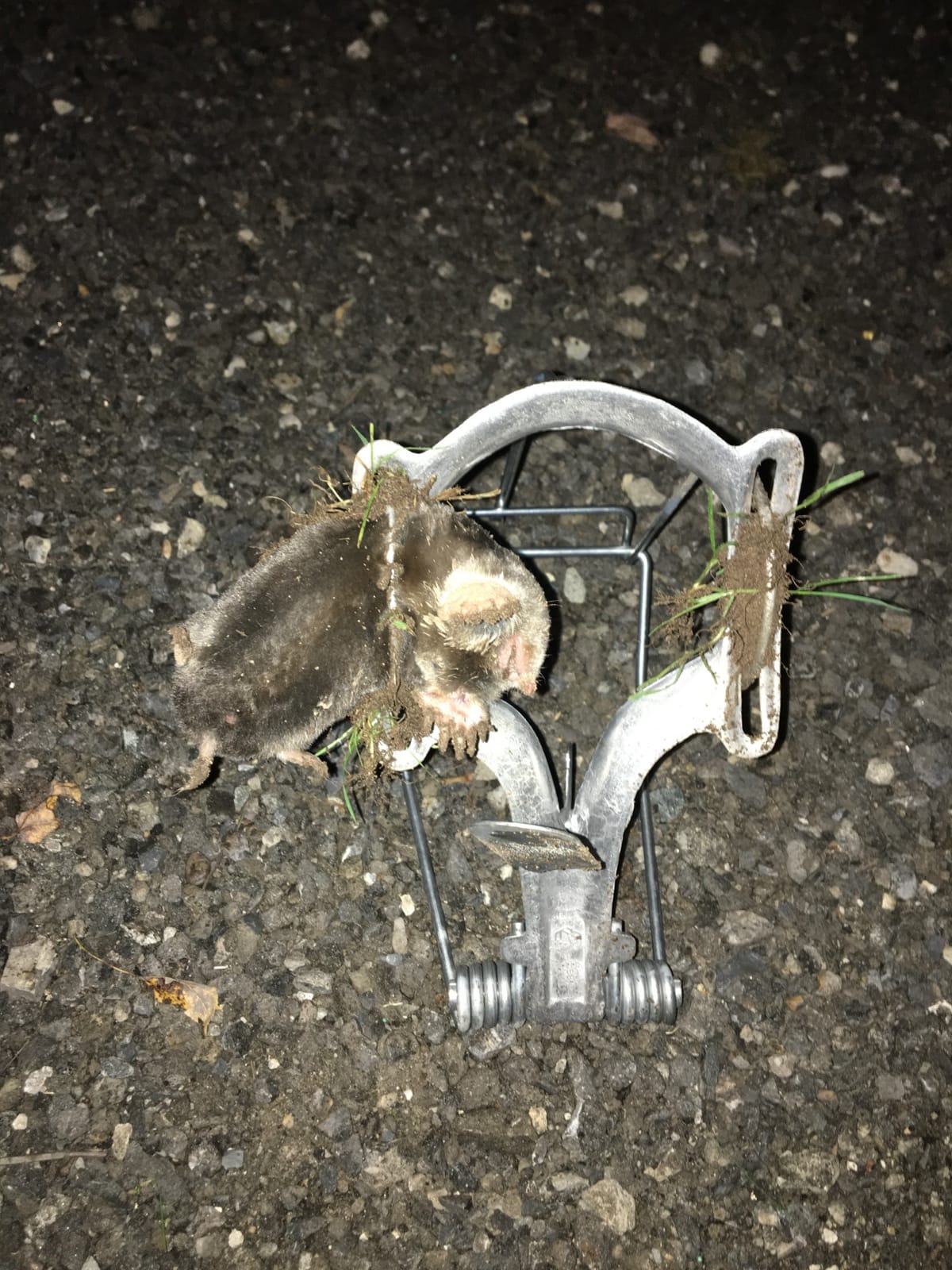
It is the only non-scissor, non-dead-end design in the group, and it solves a specific problem: deep travelling tunnels that a shallow step-on trap never reaches. Long-term users report ninety-plus catches over several years and describe it as the most effective option in deep, open runs, including for large moles.
Safety is the second argument. All moving parts sit underground, which the manufacturer states reduces the risk of injury to children, pets and wildlife other than moles. For a household with a digging dog, that is a meaningful difference from a trap with an exposed spring at the surface.
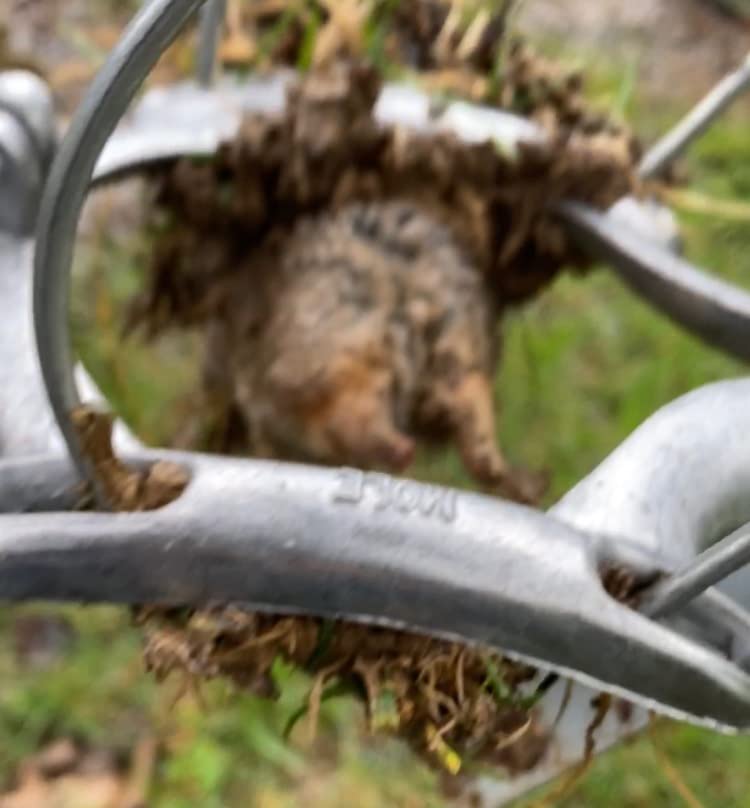
The heritage is real rather than marketing. It is the original choker loop design, in use since 1894 with only minor changes, made from a cast aluminum base with galvanized steel components, manufactured in the USA by veteran-owned manufacturing. Each trap is individually hand tested before shipping, and property managers and pest control professionals are named as users.
There is a cost to all that, and it is effort. Reviewers describe the spring as very stiff and powerful, and multiple owners call setting and releasing it dangerous without care. You will need a spade and a clear plan, and you should keep your hands out of the loop area when setting.
Where a choker loop beats a scissor trap
In deep, open runs that a mole uses as a highway rather than a surface feeding tunnel. A scissor trap sits in the upper soil layer, and a mole travelling two or three hand-widths down can pass underneath it all day without ever meeting the jaws.
It is also the right answer for a lawn you mow constantly, because nothing is left protruding from the surface. The trap is placed in the tunnel and the slice is closed over it.
Where it falls short
Setting it takes longer than any step-on trap here because you must dig out and expose a straight section of tunnel at the right depth. In sandy ground the tunnel collapses into the loop and performance drops off badly, which is the opposite of the sandy-soil advice for the scissor designs.
It also cannot be placed under a fence run or any low-clearance obstacle. Plan the set location before you dig.
11. NoMol Wire Tong 4 Pack: Best for Large Yards and Deep Tunnels
NoMol Mole Trap 4-Pack – Wire Tong Underground Spring Trap for Moles, Voles & Shrews – Rust-Resistant, Reusable, Mow-Over Design – Professional Lawn & Garden Pest Control by WCS
4 wire tong traps plus 4 stakes
1-1/4 inch opening
Rust-resistant coating
Underground set
Pros
- Sits completely underground so the lawn can be mowed right over it
- Reaches deep tunnels that surface traps cannot
- Works in all soil types
- Rust-resistant coating allows years of reuse
Cons
- Requires digging down to expose and open the tunnel before setting
- Stiff spring makes the trigger sensitive so instructions call for a paper test
- Labelled a lethal trap and must be kept away from children and pets
The only design in this guide you can mow directly over. Unlike spike or scissor traps that protrude above ground, this wire tong trap sits entirely inside the tunnel, which makes it the practical choice for a large lawn on a regular mowing schedule. It holds 4.0 from 293 ratings with 57 percent five-star.
The four-pack includes four wire tong traps and four wooden marking stakes, and the recommended method is to set them in pairs, one facing each direction. That pairing logic matters because a mole can approach a single trap from behind and walk straight past it, which is a common cause of a deep-set trap appearing not to work.
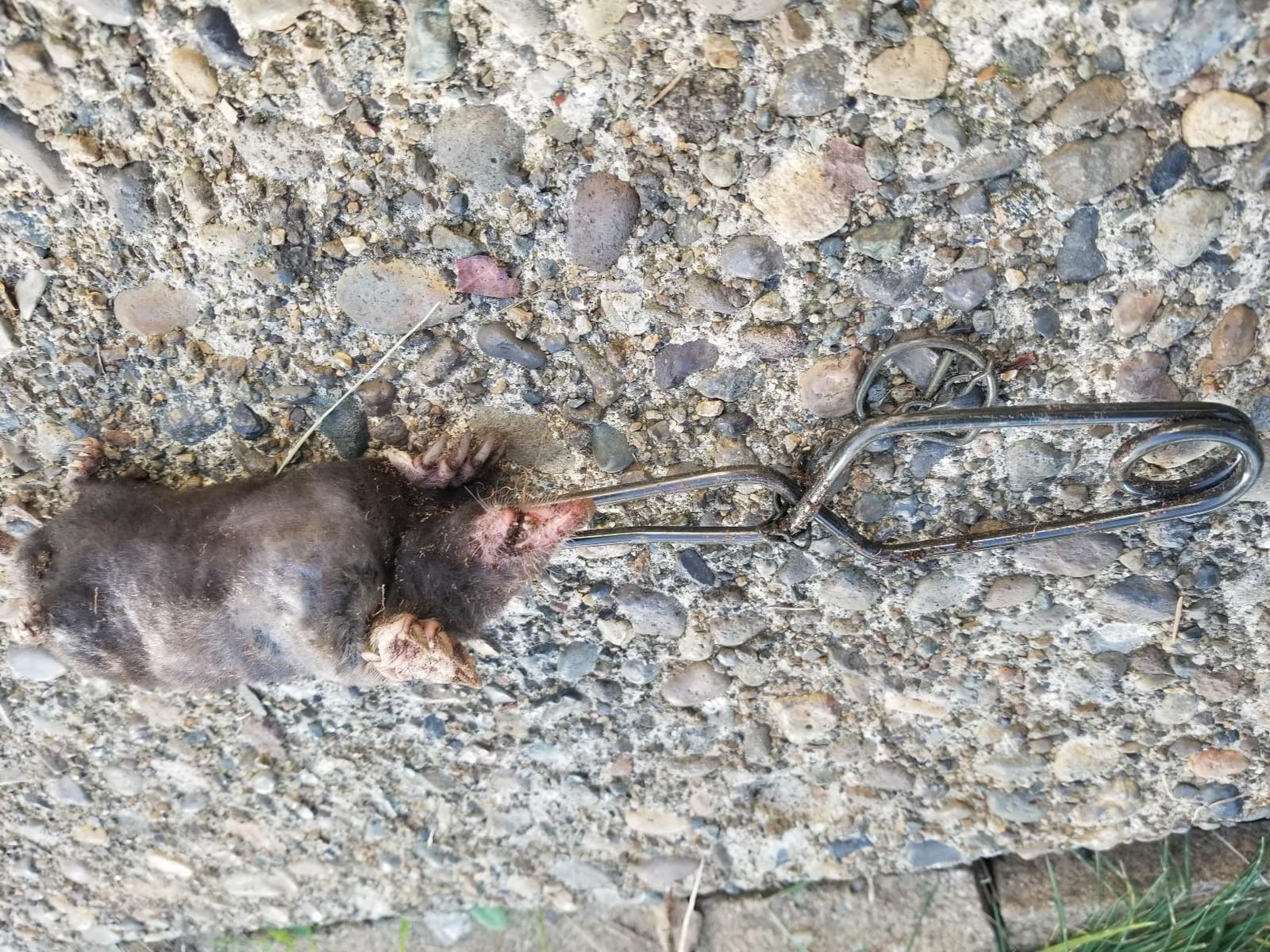
Deep-tunnel coverage is the genuine capability here. The manufacturer states it works in all soil types and reaches deep tunnels where surface traps cannot, and one customer reports nearly 40 catches over several years with almost no misses. That is a long-term use record from a real yard, not a lab claim.
There is a second benefit to a mechanical trap that owners rarely mention: the catch is visible and immediate. You know within days whether a program is working, which is a very different feedback loop from poison bait where results stay ambiguous for weeks.
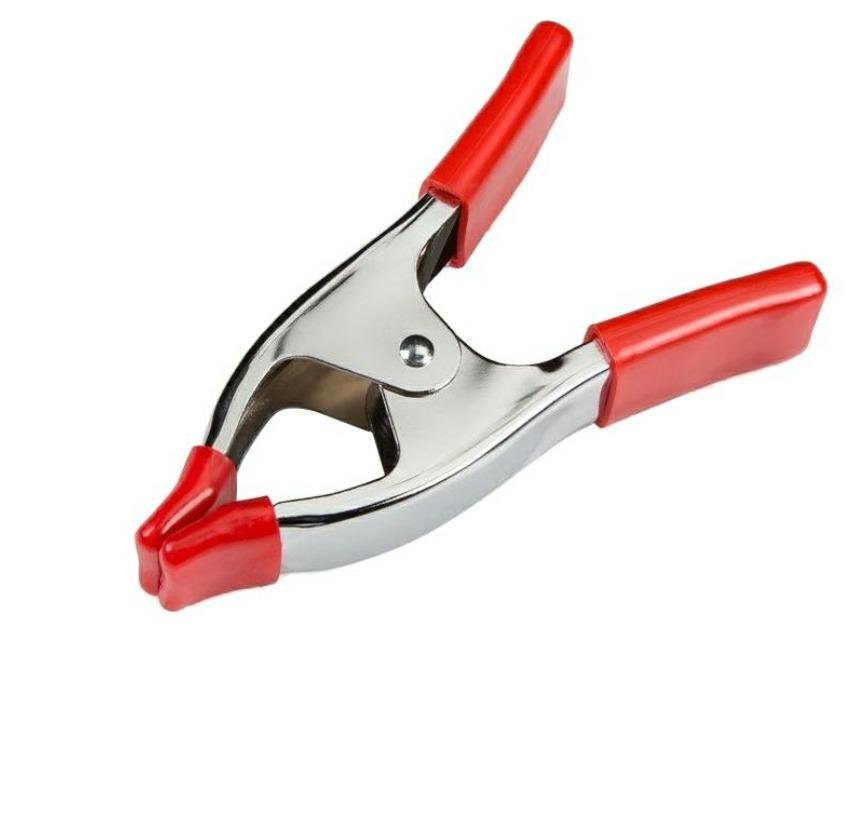
How to test the trigger before you commit
The instructions call for testing with paper before setting for real. A sheet of paper dragged across the trigger plate should tear, and if it does not, the spring is too tight to be useful. Back the sensitivity off until the paper test passes.
Tie a retrieval rope to the ring on the trap before you close the tunnel over it. Reaching a fully buried trap later means breaking open the entire slice again, which is the part that makes people give up on underground designs.
Where it falls short
It is explicitly labelled a lethal trap and the manufacturer directs you to keep it away from children and pets. Underground placement reduces exposure but does not remove it, and it is the least forgiving option for a household with a curious dog.
Setup is the most involved of any trap here because you must dig down to expose and open the tunnel. It also demands persistence to find genuinely active tunnels, which is why the check interval given is every two to three days.
12. Victor Out O’ Sight Mole Trap 4 Pack: The Professional-Grade Underground Option
Victor Out O’ Sight Mole Trap, Below Ground Rodent Trap, 4 Pack
Iron construction
4 traps per pack
2 pounds
Below-ground set design
Pros
- Iron construction works in all soil types
- Professional-grade design trusted by pest control operators
- Fast decisive kill once the mole reaches the trap
- Four traps per pack cover several tunnels at once
Cons
- Lowest sales rank and smallest review base in this guide
- 3.8 average with a 15 percent one-star share
- Underground traps require digging to set
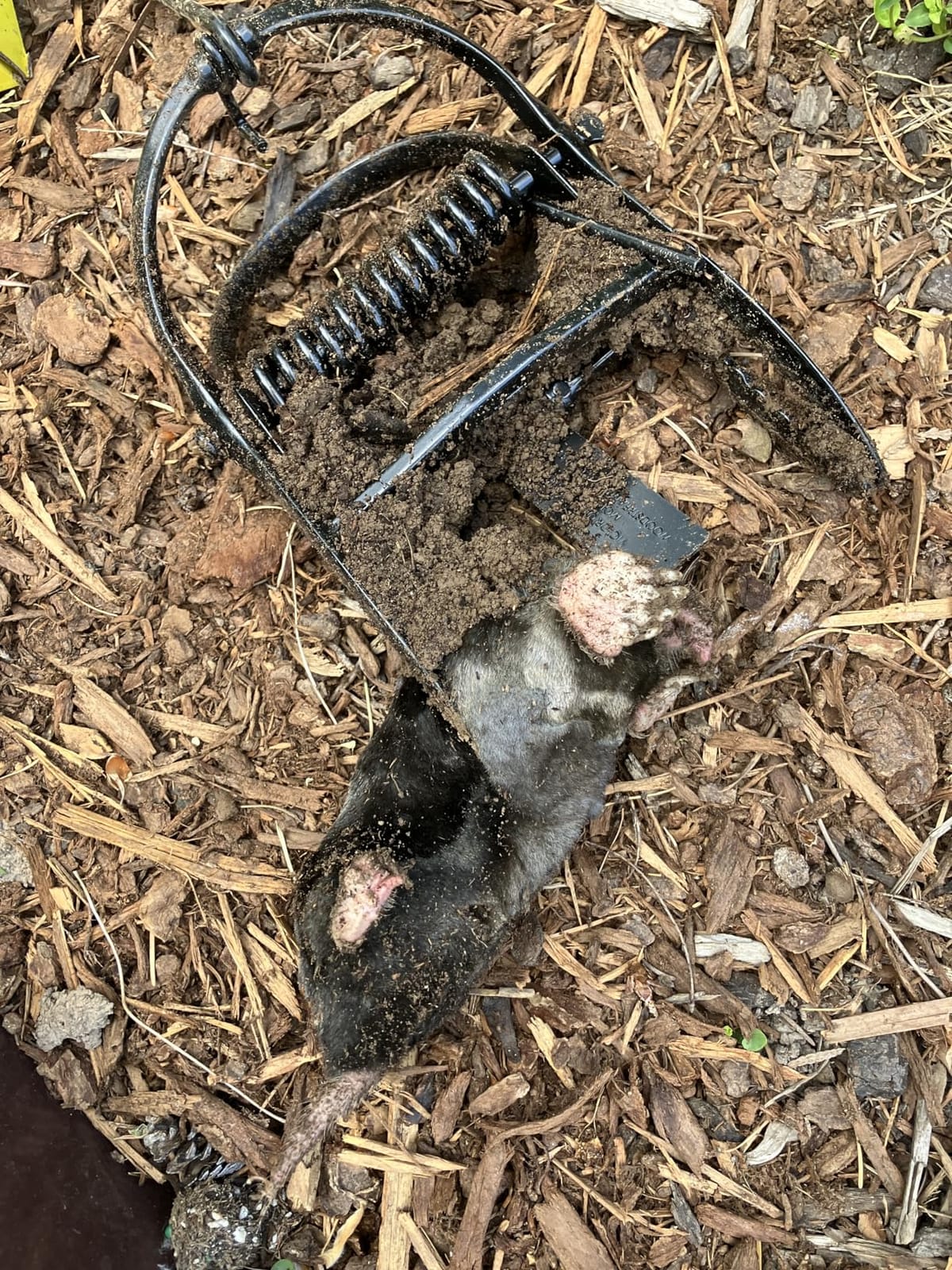
This is the specialist option and we want to be straight about that. It holds 3.8 from 246 ratings, the smallest review base in this guide, and it ranks last in the category. Buyers tend to treat it as a tool for a serious infestation rather than a general yard solution, and that is a fair reading.
What it offers is iron below-ground construction, and the manufacturer states plainly that it works in all soil types. That is the single broadest soil claim in the group, and it is the reason to consider this trap if you genuinely do not know what you are dealing with.
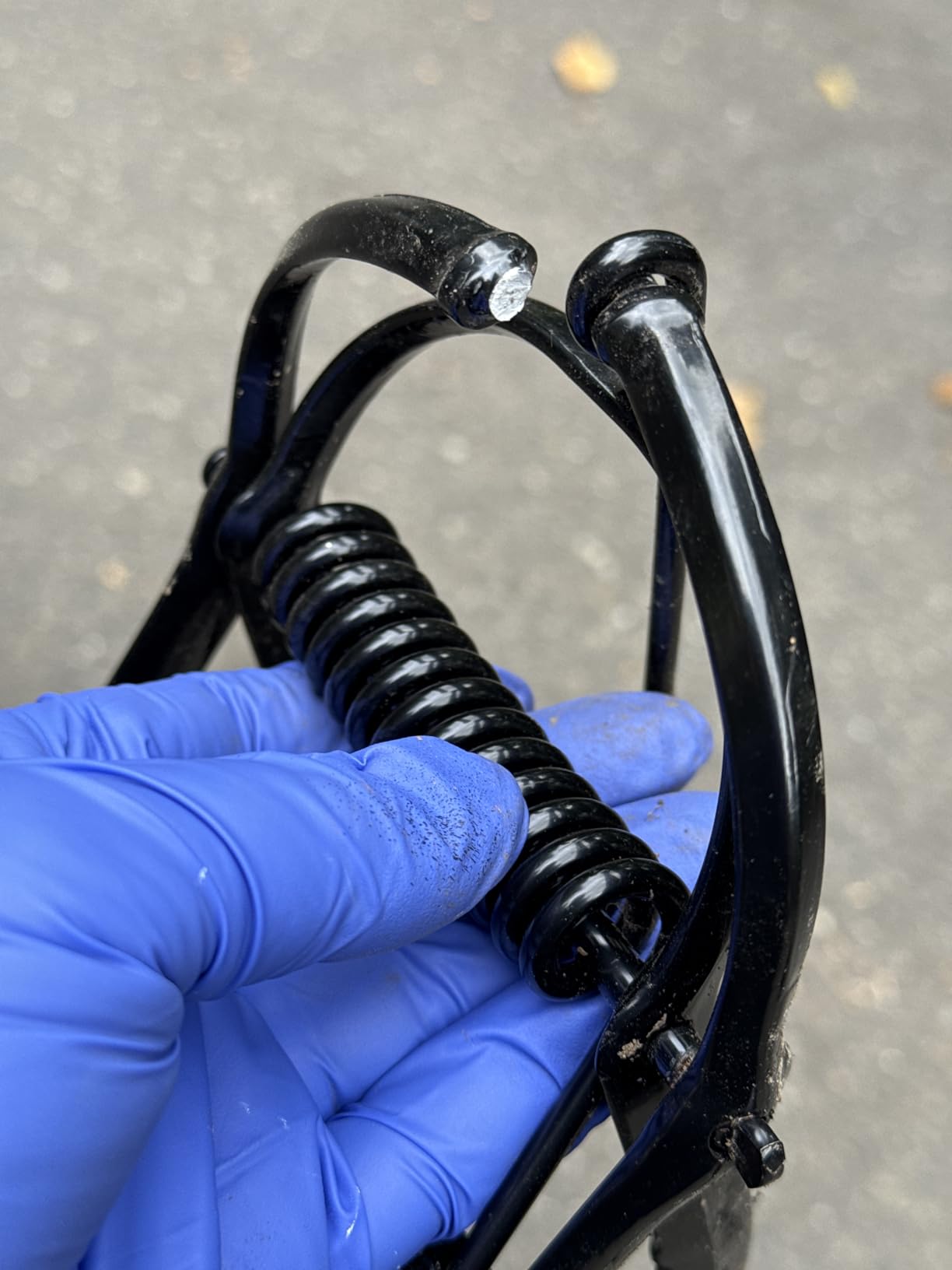
It is also described as the professionals’ trap of choice, which matters because pest control operators work soil conditions that rarely appear in a suburban lawn. Where a homeowner sees one problem area, an operator may be managing a network of tunnels across several soil types in a single property.
The four-pack is the practical format. Four traps let you cover multiple tunnels at once rather than repeating the same set four times over a season, and the iron body at 2 pounds for the pack has the mass to close decisively.
Whether all-soil claims should change your mind
Only if your soil is genuinely unknown to you. A trap that tolerates every soil is also a trap with no specific advantage over a good galvanized steel scissor trap in the soil you actually have, and it takes more work to set.
If your ground changes across the property, from clay in one corner to sandy in another, the broad tolerance becomes genuinely useful. Otherwise it is insurance you rarely collect.
Where it falls short
The rating sits at 3.8 with a 15 percent one-star share, so a meaningful group of owners had a poor experience. The smallest review pool in the guide also means the feedback is thinner and less reliable as a guide.
It requires digging to set, like the choker and wire tong designs. If you have never set a trap before, this is not where you want to learn, because there is no forgiving step-on action to recover a mistake.
How to Set a Mole Trap in 6 Steps
Every trap in this guide works the same way at the point of setting. The trap goes into a run, a mole passes through, and contact closes the jaws. The difference between a catch and a frustrating month is almost entirely in these six steps.
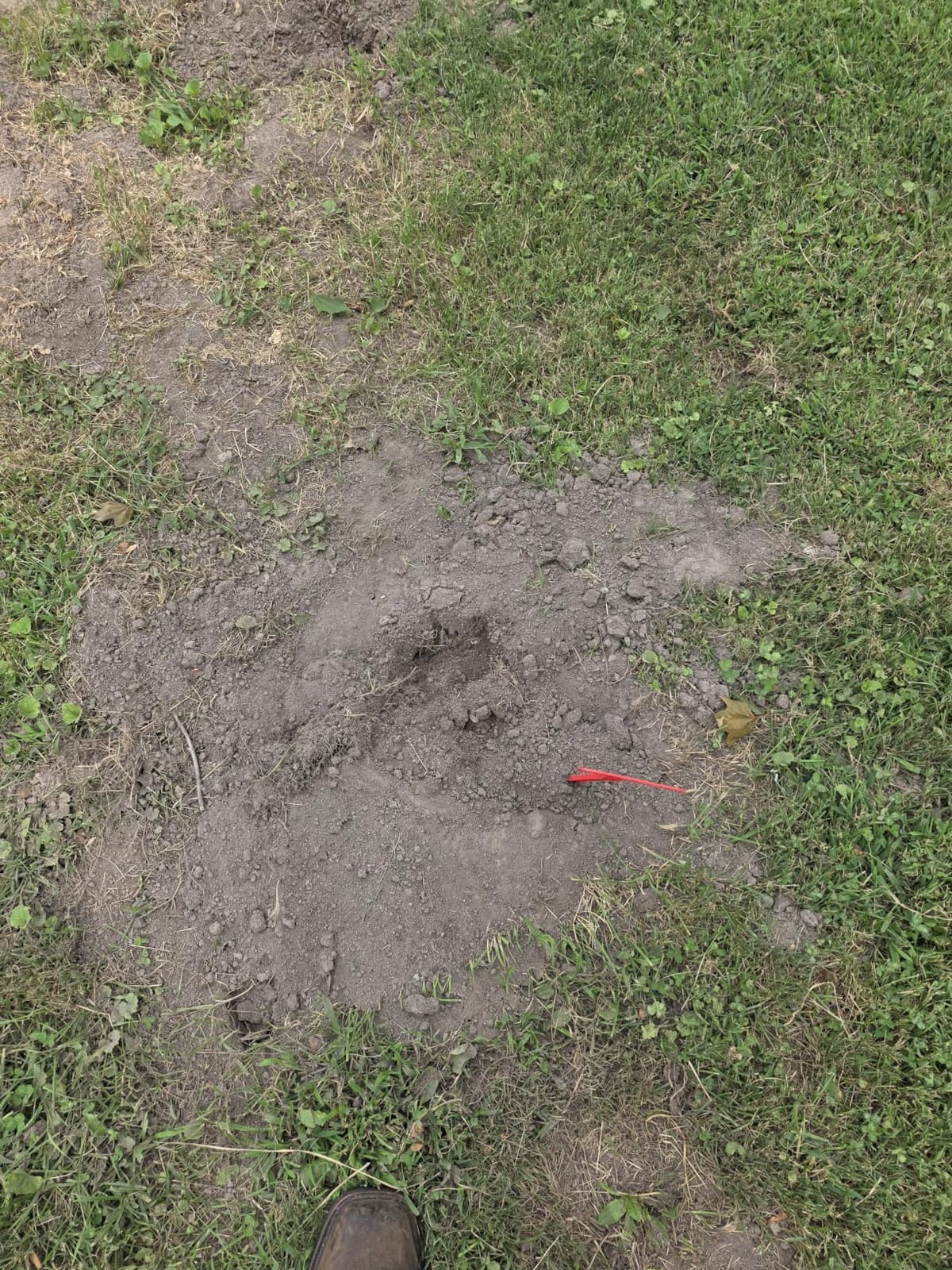
Find a straight, flat section of run. Moles push up surface feeding tunnels that look like raised ridges, and the flatter, straighter sections are where you can work. Avoid the mound itself and avoid sections with lots of roots.
Push the run down and check it is active. Flatten a section with the back of a shovel or your boot and mark both ends. Come back in a day. If the mole rebuilt the run, that section is live and worth trapping. If it stayed flat, move down the line and try again.
Put on gloves before you open anything. Moles have an excellent sense of smell and will tunnel around a trap that carries human scent. Every listing in this guide repeats the same warning, and the manufacturers are not exaggerating.
Set the trap to the depth of the run. For step-on designs, drive the trap straight down into the open burrow with your foot until the trigger plate sits level with the surrounding soil. For digging designs, open the tunnel to the right depth and place the trap inside it.
Check that it is fully armed. The trigger plate should move with a light touch and the jaws should be completely open. A part-latched trap will sit there indefinitely.
Tamp the surrounding soil and mark the spot. Firm soil around the body stops the trap rocking, and a flag or stake means you can find it again. Then check it every one to three days.
On the question of stomping tunnels down: yes, do it, and do it as a test rather than as a seal. Stomping marks the run for you and lets you confirm in 24 to 48 hours whether the mole uses it. Packing the soil hard enough to close the run permanently works against you, because a mole that cannot find its usual route may simply dig a new one at a new depth.
Expect a realistic timeline. One caught mole proves the run was live, not that the problem is solved, because a single male can patrol a wide network. Most yards in our review data needed several traps set across several runs over a period of weeks, not a single trap and a single morning.
Why Your Mole Trap Is Not Firing: 6 Fixes
Non-firing traps are the most common complaint in every forum we reviewed, and the r/lawncare thread specifically carries repeated reports of Wire Tek Mole Eliminator traps set with no catches. The pattern is almost always one of the six causes below rather than a defective trap.
The run was not active. You set on a repaired-looking tunnel. A mole rebuilt the run within a day before you set, so the run is live. A tunnel that stayed flat for a day is dead and holds nothing.
You did not wear gloves. Human scent on the soil or the trap body will push a mole to route around the trigger instead of through it.
The trigger plate is not seated flat. Push the tunnel down first, then set. A trap set into a bulged tunnel sits at the wrong angle and the plate never completes its throw.
The side adjustment nuts are too tight. Several brands ship with the adjustment tightened. Loosen a fraction at a time until the plate moves with a light touch, then set it.
You set at the wrong depth. Moles travel at varying depths. A surface trap set in a deep run will be stepped over, and a deep set in a surface run will sit below the path entirely.
You are not checking often enough. Moles repair runs fast, and a trap that has been triggered or shifted can stop working without you noticing. Check daily for the first week, then every two to three days.
Two more practical notes. Soil packing into the hinge and trigger is the most common reason a working trap stops working, so clear packed dirt at the mechanism during each check. And a trap that never fires in a spot where you are certain the run is active is probably a faulty unit, so swap it rather than repeating the same placement.
Moles vs Voles vs Gophers: Picking the Right Trap
Buying the wrong trap is the most expensive mistake in this category, because a mole trap set in a vole run will never fire and vice versa. The three animals look similar in a damaged lawn and behave completely differently underground.
Moles are the true burrowers. They push up raised surface runs and fan-shaped mounds, they live almost entirely underground, and they eat grubs, earthworms and insects. Their runs are straight, dug just below the surface, and often reused like a road. Mole tunnels have a distinct plough shape and the animal itself is a pointed, velvety brown creature with a snout like a pig and forefeet built for digging.
Voles stay above ground. They make narrow surface trails a couple of inches wide rather than raised ridges, and they eat plant stems and bulbs rather than grubs. A small brown rodent with a blunt face and visible ears does the damage, and surface traps are the right answer, not mole traps.
Gophers are solitary, larger, and dig from a single underground chamber, producing one fan-shaped mound at a time rather than a network of runs. Gopher traps are set at the mouth of a burrow opening after the hole has been dug out and reset, which is a completely different method from mole trapping. As the California Department of Food and Agriculture notes, very few traps are designed to work for both species, so a mole trap in a gopher hole is a wasted trap.
The fast triage: a raised continuous ridge is a mole. A narrow worn trail through the grass is a vole. A single conical mound with a plugged centre hole is a gopher.
How Many Mole Traps You Actually Need
Most people under-trap. A single mole patrols a network of runs that can cover a large part of a lawn, so one trap on one run will produce a catch and then silence while the animal works a different part of the system.
A workable rule is to set one trap on every confirmed active run you can find, in both directions where the run is straight, and to re-confirm activity every few days as new tunnels appear. As a working guide, a residential lawn with light damage usually means three to five traps cycling through a season, and a yard with daily new mounds needs closer to ten or more active positions.
Yard size matters less than people expect. What determines trap count is the number of live runs, not square footage. A small yard with five active runs needs more traps than a large yard with one, and the reason to keep a few spare traps is that new runs appear as you clear old ones.
On the idea of set-and-forget, the honest answer is that it does not exist for moles. A trap that sits untouched for a month in a repaired run is a trap that has been quietly disabled, and the r/lawncare users who asked for a set-and-forget solution are the ones most often reporting no results. A realistic substitute is a rhythm: set everything on one day, then a short walk across the yard every two or three days for a few weeks.
Mole Trap Buying Guide: Soil Type, Safety and Timing
Match the trap to your soil. Soft, moist, loose ground is the easiest case and suits every step-on scissor trap in this guide. The POlAFLEX scissor two-pack is the one whose manufacturer explicitly names moist loose to moderately firm soil as its operating condition. Sandy and loess ground is also straightforward for scissor designs, and the Garsum trap names loess and sandy soil specifically. Compacted clay is the hard case: a trap will not seat properly, so loosen the ground with a garden fork and water it the day before. Deep sandy soil is the one situation where a scissor trap is a poor match, because a digging trap at depth collapses into the tunnel walls.
Decide step-on versus digging before you buy. Step-on scissor traps need no digging, which is why they dominate buyer preference. Digging designs, including the choker loop and the wire tong trap, reach deeper travelling tunnels that surface traps miss. If your surface feeding runs produce catches, stay with step-on. If you set traps on confirmed active runs repeatedly and get nothing, the problem is depth, and a digging design is the answer.
Think about pets and children. Set-on-the-surface designs have exposed moving parts, so keep them out of reach of a digging dog. The Nash 100 addresses this directly by keeping all moving parts underground, and the wire tong trap sits fully inside the tunnel, though it is labelled lethal and the manufacturer directs you to keep it away from children and pets. Every trap in this guide is chemical-free, which removes the bait-poisoning risk that forum users worry about most. The more common real hazard is a child or animal digging up a buried dead-end trap, so mark it.
Trap at the right time of year. Early spring is the strongest window. Moles are active near the surface as the soil warms, which is when surface runs are easiest to find and confirm. Fall trapping is a second window, as moles push new tunnels before winter. Mid-summer catches are less predictable because many species spend heat deep in the soil where a shallow trap cannot reach them.
Treat grubs as the complement, not the fix. Moles eat grubs and earthworms, so a healthy food supply keeps them in your yard. Garden.org users describe moles as migratory and needing to move once they have eliminated their local food supply, which is why grub control reduces pressure without removing every visitor. One veteran poster on that forum put it plainly: the only reliable thing they have found is a standard mole trap, and you must be diligent about setting them. Grub treatment is the long game; traps are the answer to the tunnels you have now.
Know what professionals do. Golf course superintendents and grounds managers work the same traps in far greater numbers, spread across many tunnels simultaneously, on a fixed checking schedule. The Nash 100 is named as a trap preferred by property managers and pest control professionals, and the Victor Out O’ Sight is described as the professionals’ trap of choice. Nothing about their method is secret. It is volume, correct placement on confirmed active runs, and consistency of checking.
Frequently Asked Questions
What is the most efficient mole trap?
A scissor-jawed step-on trap is the most efficient design for most homeowners. It enters an open mole run without digging, arms by foot pressure, and closes on light contact. The Wire Tek 1001 is the strongest single example, with the most ratings of any trap we reviewed. Traps that require digging perform better in deep travelling tunnels, but take more effort per set.
How effective are scissor mole traps?
Scissor mole traps are effective when set into a run a mole used within the last day or two. Review data for this group shows a 3.8 to 4.4 rating range, with the highest scores going to traps that are galvanized against rust and set with the trigger plate seated flat. Failures are almost always placement errors rather than mechanism faults, so confirming an active run matters more than the model you choose.
What do professionals use to get rid of moles?
Golf course superintendents and grounds crews use mechanical traps of the same types sold to homeowners, deployed in volume across many tunnels at once. The Nash 100 choker loop and the Victor Out O’ Sight are both described as traps preferred by pest control professionals. The professional difference is not the hardware but the routine: traps on every active run, checked on a fixed schedule without exception.
What do golf courses use to kill moles?
Golf courses rely on repeated mechanical trapping rather than poison, partly because turf cannot tolerate the lingering effect of bait and partly because a visible catch confirms control immediately. Below-ground iron and choker loop traps suit open, deep runs on maintained turf, while step-on scissor traps work on the surface feeding runs that appear after rainfall or irrigation.
Should you stomp down mole tunnels?
Stomp down a section of run to test whether it is active, not to seal the yard. Mark a flattened section and check it again within 24 to 48 hours. If the mole rebuilt it, that run is live and worth trapping. If it stayed flat, move further along the line. Packing a run shut can push the mole to dig somewhere new, which creates more damage rather than less.
What is the fastest way to get rid of moles in your yard?
Confirm two active runs, set a scissor trap on each while wearing gloves, and set one more trap as a spare. Check daily for the first week, then every two to three days, and reset any trap that has been triggered. Grub control in the lawn reduces the food supply that draws moles in, but traps handle the tunnels you already have. Removing one mole proves the run was live, not that the yard is clear.
Are mole traps safe for pets and children?
Mechanical mole traps are safer than poison bait because there is no toxicant a pet can dig up and eat, but they still require care. Step-on designs have exposed moving parts, so keep them away from a digging dog and mark every set location. Traps with moving parts buried underground, such as the Nash 100 choker loop, reduce exposure further, though they are labelled lethal and should stay away from children and pets.
Which mole scissor trap is the best?
The Wire Tek 1001 is the best-supported scissor trap by review volume, with a 4.2 average across more than 8,700 ratings and a limited lifetime warranty. The Wanqueen two-pack scores highest on satisfaction consistency at 4.4 with only 6 percent one-star ratings. The POlAFLEX two-pack is the strongest choice when you want to cover several runs at once, and the Garsum trap is the one with the clearest written guidance for sandy and loess ground.
The Best Mole Traps for 2026: Our Verdict
The best mole traps for a typical lawn are the ones you can set without digging into a run you confirmed was active yesterday. The Wire Tek 1001 wins that test on evidence: heavy gauge steel construction, an installation that needs no excavation, chemical-free operation accepted on organic farms, and a limited lifetime warranty behind the most heavily reviewed trap in the category.
Buy the two-pack variant if your lawn has several live runs, because the walking is what wears people out. Add a dead-end trap like the Gonzo 5001 if you want a low-commitment way to test whether trapping suits your yard, and move up to a choker loop or wire tong design only if surface traps keep coming up empty, because that result points to depth rather than to a faulty trap.
Whatever you choose, wear gloves, push the run down before you set, and check on a rhythm rather than when you remember. That routine is worth more than any model on this list.