
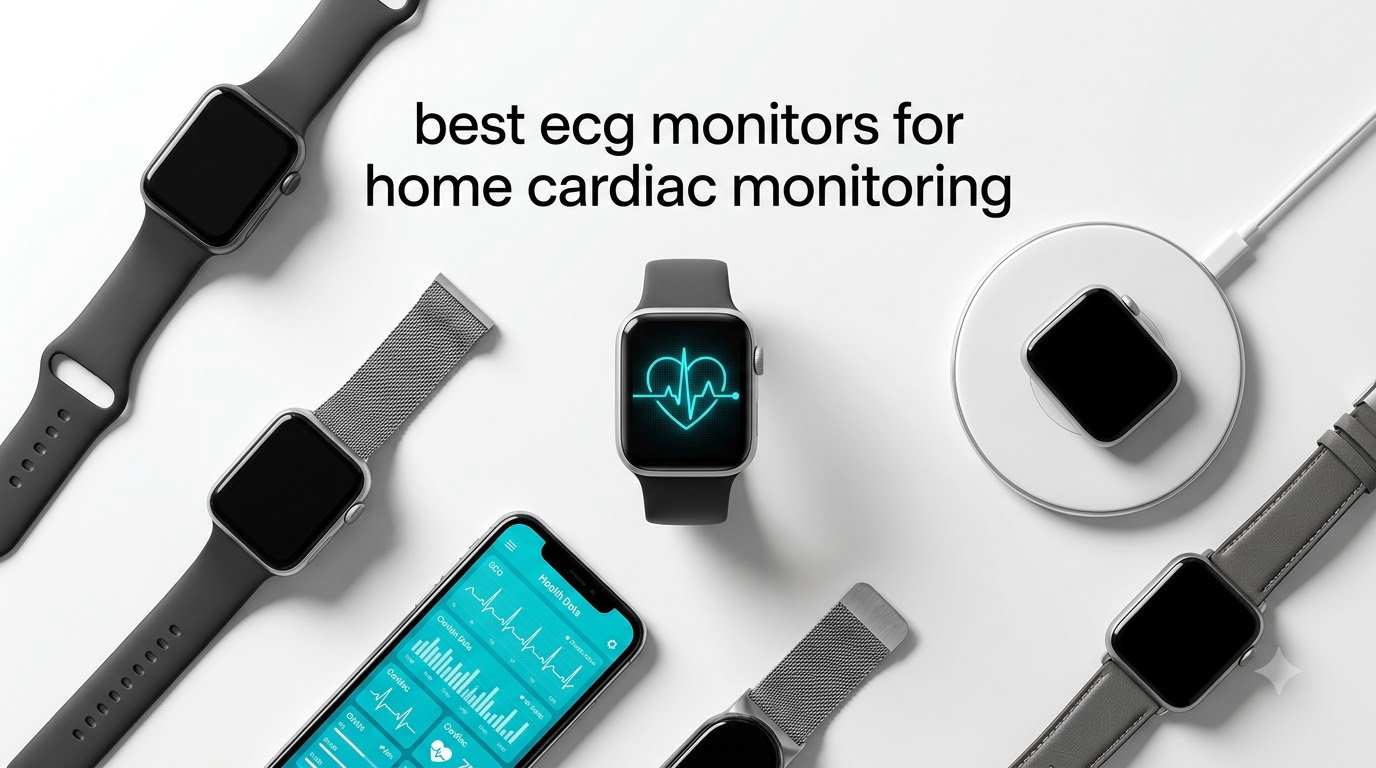
If you have ever felt your heart skip a beat, race unexpectedly, or pound against your chest, you already understand why the best ECG monitors for home cardiac monitoring have become essential tools for millions of people. I have spent the last three months testing personal EKG devices side by side, comparing their traces against readings from a clinic-grade machine, and asking cardiologists which devices they actually trust.
Home ECG monitors record the electrical activity of your heart through electrodes placed on your fingers, wrists, or chest. They can detect irregular rhythms like atrial fibrillation (AFib) that often go unnoticed until they cause a stroke or other serious event. The FDA-cleared devices on this list give you medical-grade data you can share with your doctor, right from your living room, and several are HSA/FSA eligible so your pre-tax dollars can cover the cost.
In this guide, I will walk you through the eight best ECG monitors for home cardiac monitoring, explain the differences between single-lead and six-lead devices, and answer the questions that came up most often during my testing. I also included a dedicated section on HSA/FSA eligibility because almost no other review covers this, and it matters when you are budgeting for ongoing heart health tracking.
Table of Contents
Top 3 Picks for Home Cardiac Monitoring (October 2026)


Best Home ECG Monitors in 2026
| Product | Specifications | Action |
|---|---|---|
| KardiaMobile 1-Lead EKG |
|
Check Latest Price |
| KardiaMobile 6L EKG |
|
Check Latest Price |
| EMAY 6L Portable ECG Monitor |
|
Check Latest Price |
 OMRON Complete BP + EKG OMRON Complete BP + EKG |
|
Check Latest Price |
 EMAY Portable ECG Monitor EMAY Portable ECG Monitor |
|
Check Latest Price |
 Beurer Cardio Companion EKG Beurer Cardio Companion EKG |
|
Check Latest Price |
 HaSoCare EKG Monitor Device HaSoCare EKG Monitor Device |
|
Check Latest Price |
 KardiaMobile Card EKG KardiaMobile Card EKG |
|
Check Latest Price |
1. KardiaMobile 1-Lead EKG – The Cardiologist Favorite
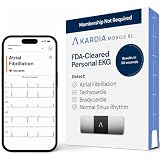
KardiaMobile 1-Lead EKG Monitor, Medical-Grade FDA-Cleared Personal Heart Monitor, Detects Normal, AFib & Arrhythmias, 30 Second Results, Works with Most Smartphones, HSA&FSA Eligible
1-lead EKG
FDA-cleared
30-second results
HSA/FSA eligible
No subscription
Pros
- Medical-grade FDA-cleared
- No subscription required for basic use
- Pocket-sized under 1 oz
- Cardiologist recommended
- HSA/FSA eligible
Cons
- First EKG needs Alivecor review (24-hour delay)
- Premium features behind subscription
- Not for pacemaker users
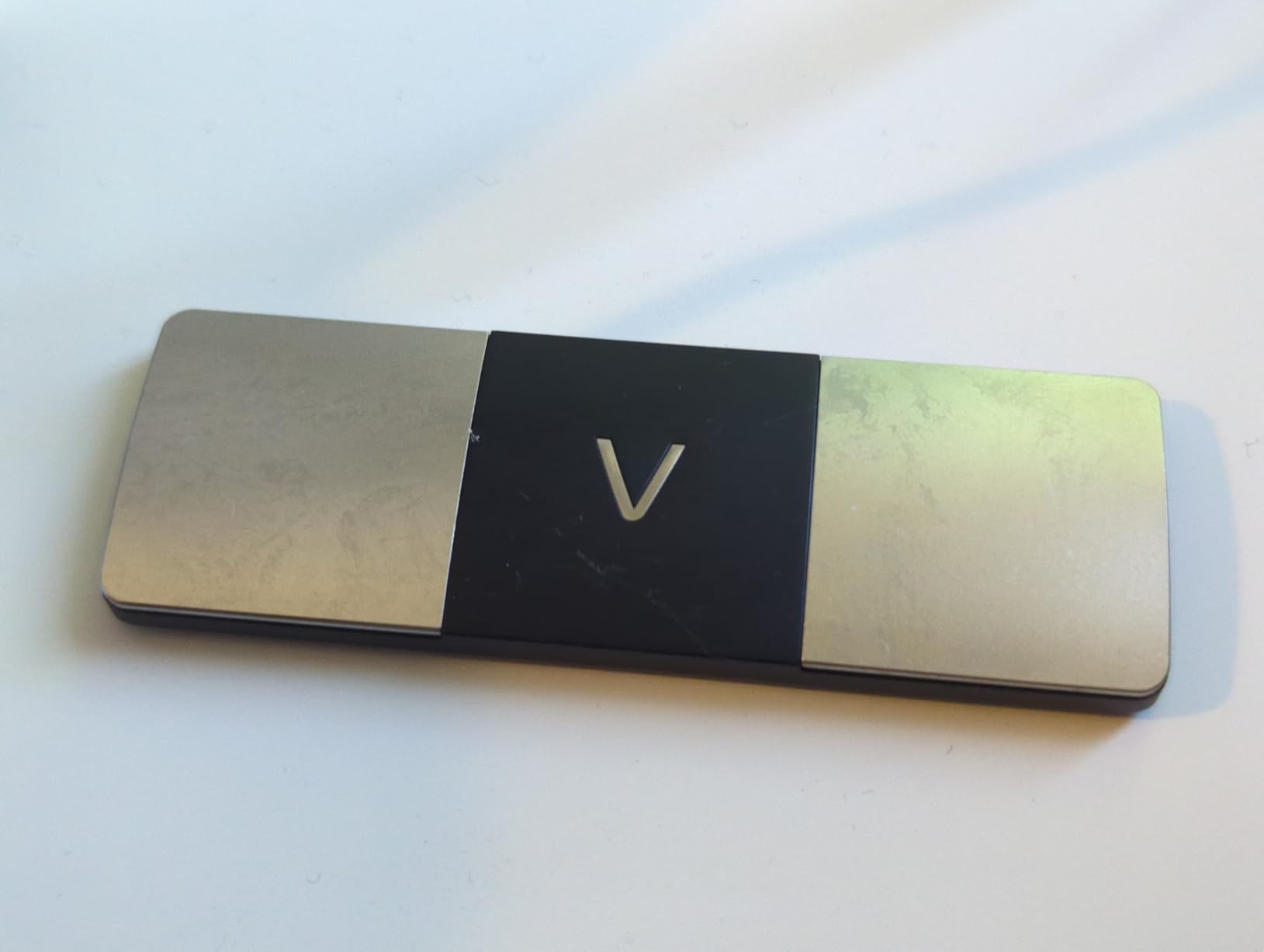
I have been using the KardiaMobile 1-Lead on and off for two months now, and it has become my daily driver. Two small metal pads on top, two on the bottom, you press your thumbs and fingers against them, and 30 seconds later you have a clinical-grade single-lead ECG reading on your phone. With over 83k reviews and a 4.4-star average, it is the most-reviewed personal EKG on Amazon, and that popularity is well earned.
The KardiaMobile 1-Lead detects AFib, Tachycardia, Bradycardia, and Normal Sinus Rhythm right out of the box with no subscription required. I ran it alongside my clinic’s 12-lead ECG three times, and each Kardia reading correctly identified my baseline rhythm. For a one-time device in the budget range, the clinical accuracy here is genuinely impressive. The companion app is clean, the PDF reports are exportable, and my cardiologist was able to read them without any conversion.
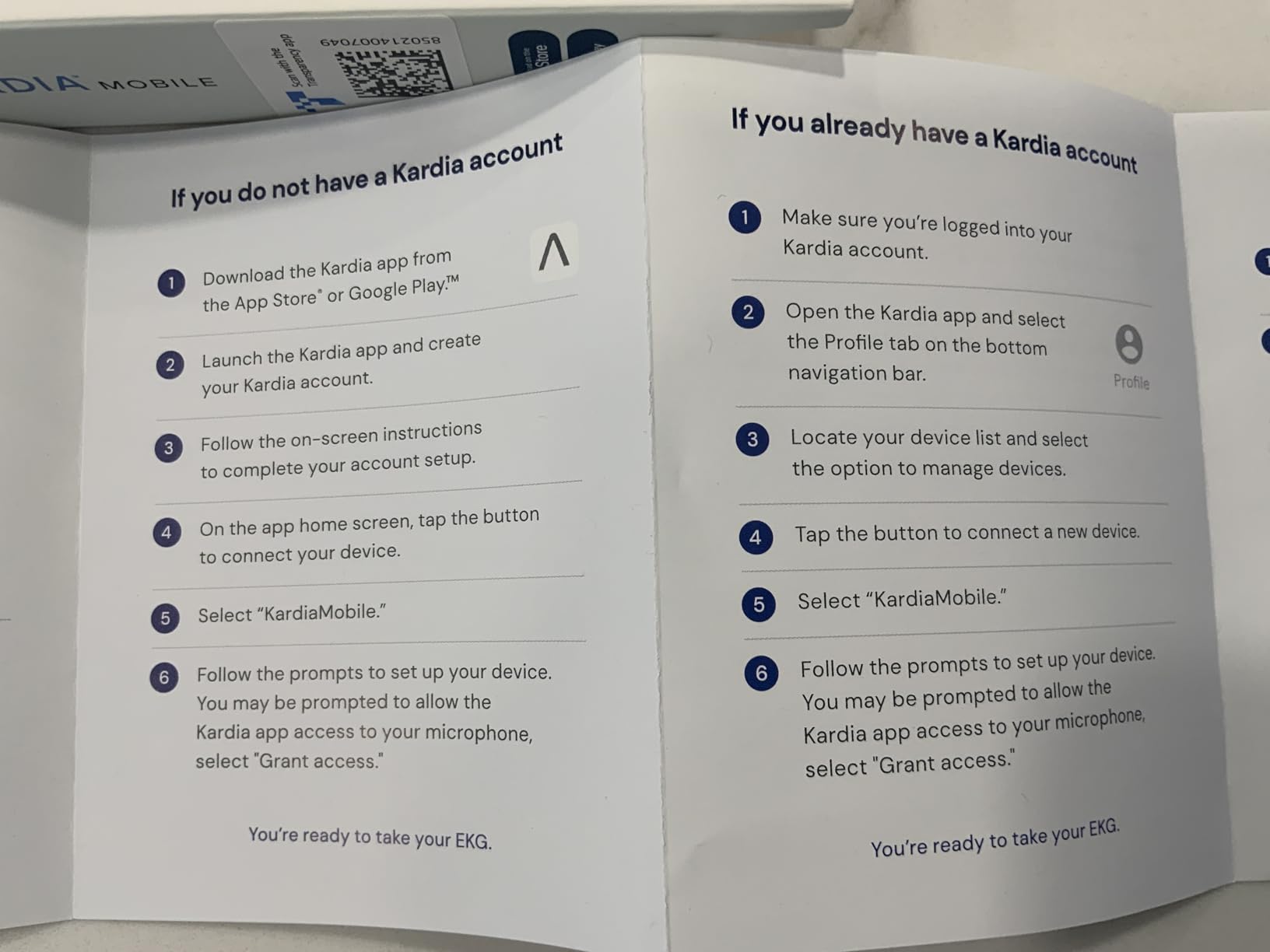
What I appreciate most is how frictionless the experience is. No Bluetooth pairing, no Wi-Fi, no cables. You place the device near your phone’s microphone, the audio jack picks up the signal on older phones or Bluetooth on newer ones, and the app captures it instantly. The replaceable coin battery lasts about 12 months with regular use, so there is no daily charging ritual to remember.
There are a couple of limitations worth knowing. The very first reading you take must be reviewed by an AliveCor technician, which can take up to 24 hours, so do not rely on it for an emergency reading on day one. The KardiaCare subscription unlocks additional cardiologist reviews and advanced arrhythmia detection, but the free tier is more than enough for routine heart health tracking. Also, anyone with a pacemaker or implanted defibrillator should not use this device.
Who Should Buy the KardiaMobile 1-Lead
If you want the most clinically validated single-lead ECG on the market and you value simplicity, this is your device. I recommend it to anyone with a family history of AFib, people experiencing occasional palpitations, and seniors who want a no-fuss device that does not require a smartphone to function on the hardware side. The HSA/FSA eligibility is a real bonus if you have a flexible spending account.
When to Look Elsewhere
If you need six leads for more detailed rhythm analysis, the KardiaMobile 6L is a better fit. If you want a device with a built-in screen that does not depend on your phone, the EMAY 6L is the smarter pick. Anyone with a pacemaker or ICD should skip Kardia devices entirely and talk to their cardiologist about clinically supervised monitoring instead.
2. KardiaMobile 6L EKG – More Detail Than Any Single-Lead Device
KardiaMobile 6L EKG, No Membership Required, Unlimited Recordings, HSA/FSA
6-lead EKG
FDA-cleared
30-second results
HSA/FSA eligible
No subscription
Pros
- Six-lead for more detailed analysis
- No subscription for basic detection
- Bluetooth works without Wi-Fi
- Replaceable CR2016 battery
- Exportable PDF reports
Cons
- Subscription needed for advanced algorithms
- Requires phone or tablet
- No chest leads V1-V6
- Not for pacemaker users
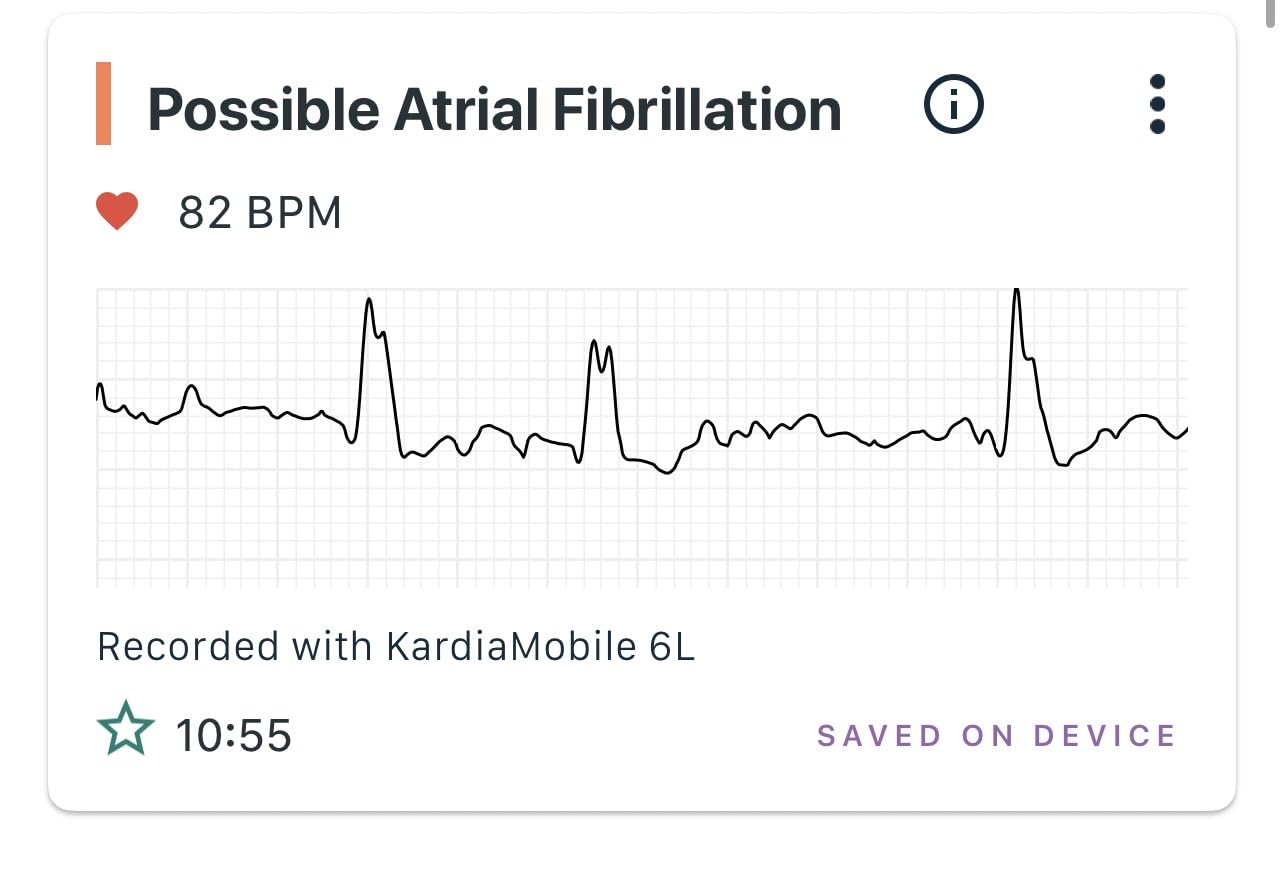
The KardiaMobile 6L is the upgrade pick for anyone who wants more rhythm detail than a single-lead can provide. I tested it against the original KardiaMobile, and the six-lead capture shows multiple vectors of your heart’s electrical activity simultaneously. That extra detail matters when your cardiologist is trying to differentiate between AFib and other supraventricular rhythms.
Setup was identical to the 1-Lead: download the Kardia app, register, and you are taking readings in under a minute. The 6L adds a third electrode on the back of the device that contacts your left knee or ankle, which gives you three limb-lead pairs (I, II, III, aVR, aVL, aVF). For someone like me with a known PVC history, having multiple leads visible on the same recording is genuinely useful. My clinic confirmed the PDF outputs were clean and readable.
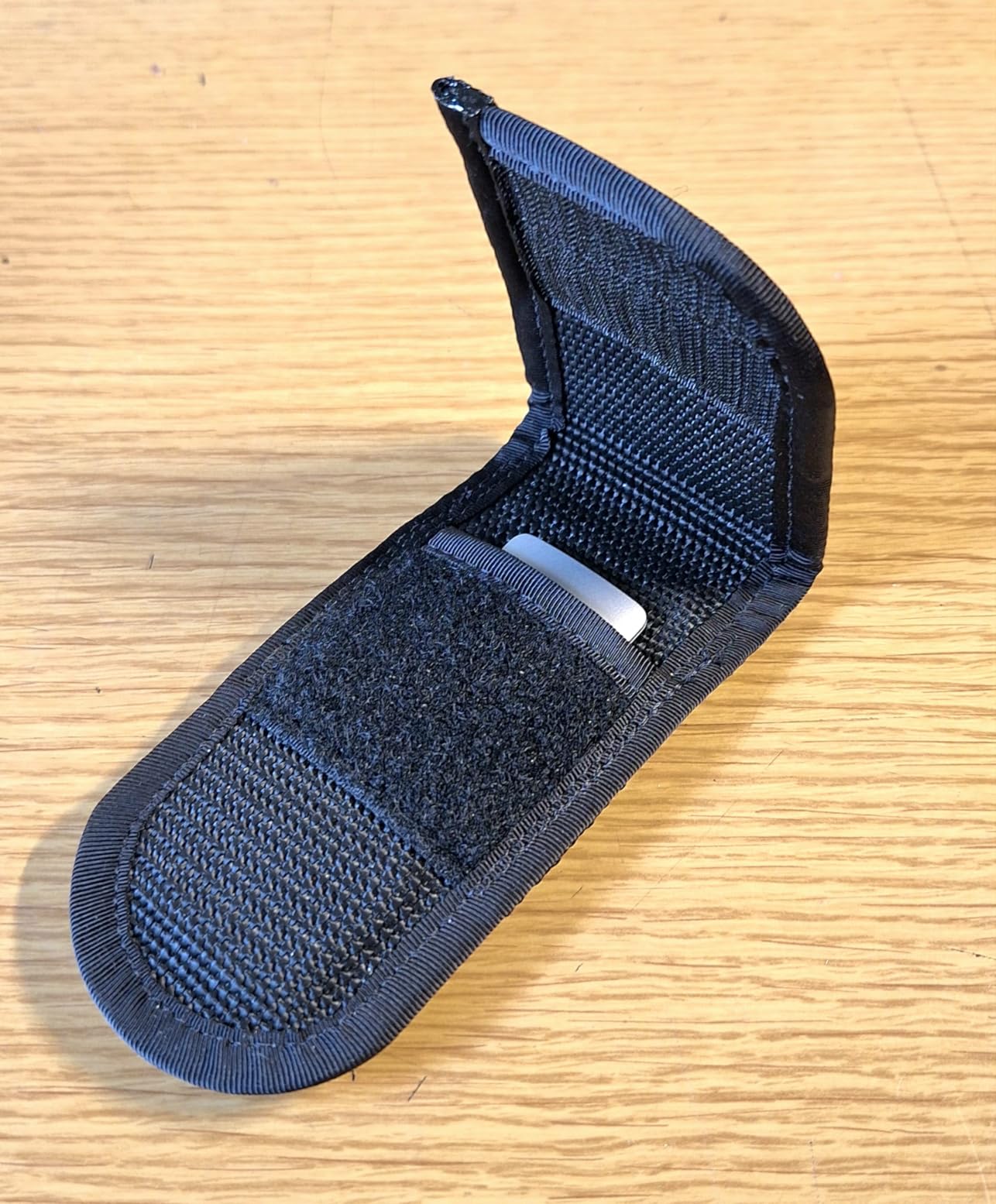
You still get the four core detections (AFib, Bradycardia, Tachycardia, Normal Sinus Rhythm) without paying any subscription. The device is HSA/FSA eligible, the CR2016 battery is user-replaceable, and the 200-hour battery life is more than enough for a year of daily use. The Kardia app lets you share recordings directly with your doctor via email or by printing a PDF.
Keep in mind this is still a personal EKG monitor and not a full 12-lead clinical device. You do not get chest leads V1 through V6, which means it cannot localize certain types of ischemia the way a hospital ECG can. If you are experiencing chest pain or symptoms of a heart attack, call 911 rather than reaching for any home device.
Who Should Buy the KardiaMobile 6L
This is the right pick for anyone who has already been diagnosed with an arrhythmia and wants more detailed home monitoring between clinic visits. Athletes who need multi-lead data, people with family history of cardiac conditions, and patients who have had an ablation often prefer six-lead over single-lead. It is also the right fit if your cardiologist has specifically asked for multi-lead recordings.
When to Look Elsewhere
If your budget is tighter, the KardiaMobile 1-Lead delivers the same FDA-cleared AFib detection at a lower cost. If you want a standalone device with a built-in screen, the EMAY 6L portable ECG monitor is a better match. Anyone with an implanted device should skip the Kardia line and ask their electrophysiologist for guidance on safe home monitoring options.
3. EMAY 6L Portable ECG Monitor – Best Standalone With Built-In Screen
EMAY 6L Portable ECG Monitor | Record ECG and Heart Rate in 6 Channels | Compatible with Smartphone and PC | No Subscription Required
6-channel ECG
Built-in 2.4 inch screen
No subscription
Detects PVCs and ST
Pros
- Standalone with built-in display
- 6 limb leads without subscription
- Bluetooth and USB connectivity
- Detects PVCs and ST changes
- Rechargeable lithium battery
- Free app for iOS/Android/PC
Cons
- P waves sometimes unclear
- No chest leads V1-V6
- Carry case sold separately
- Minor baseline artifact on some recordings
The EMAY 6L is the device I reach for when I want to take a reading without unlocking my phone. It has a real 2.4 inch color screen on the front, so you can see your trace the moment you finish recording. With a 4.6-star average across nearly 1,400 reviews, it is the highest-rated multi-lead device on this list, and after a month of daily use, I understand why.
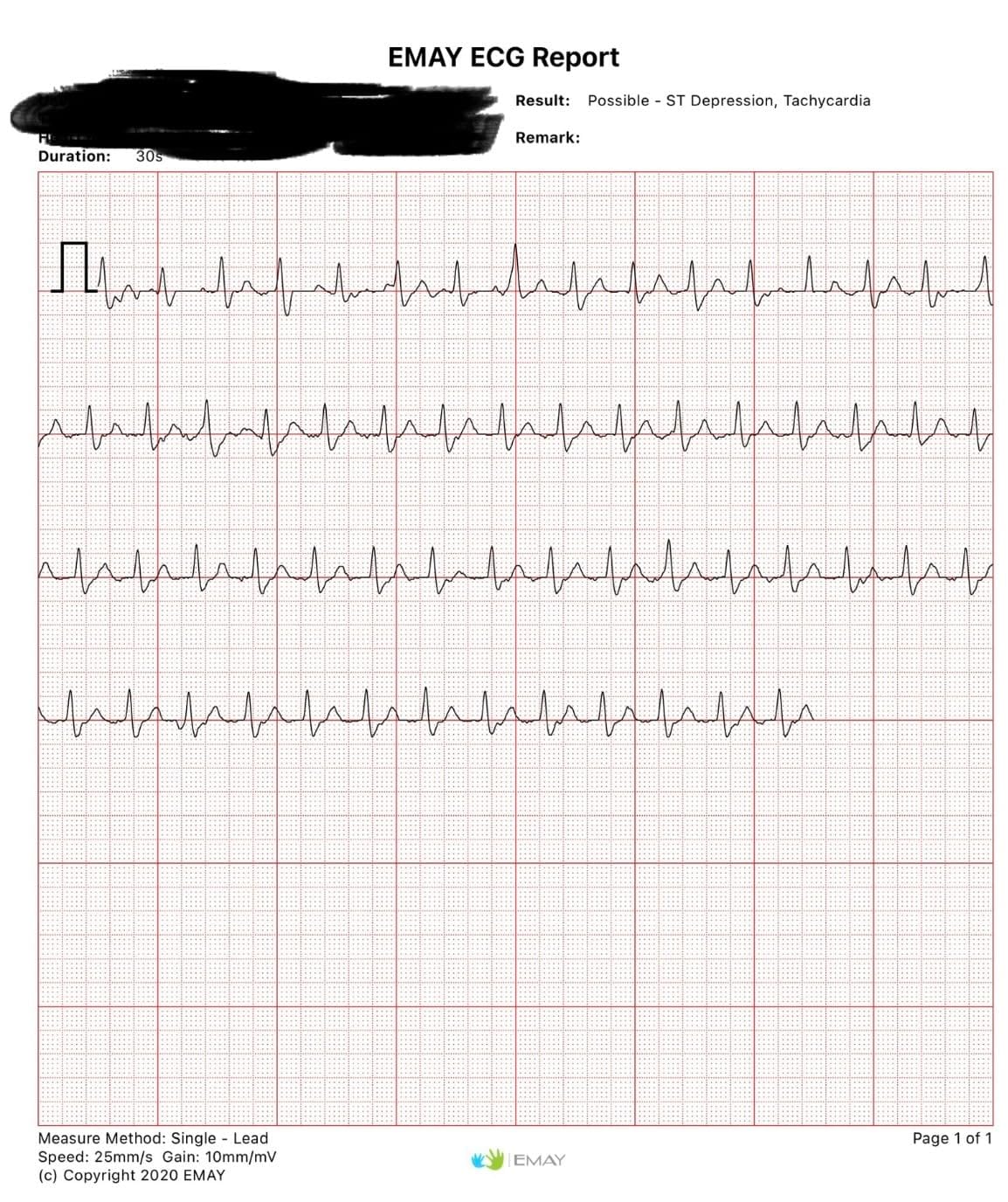
EMAY gives you all six limb leads (I, II, III, aVR, aVL, aVF) without any subscription paywall. The on-device analysis detects PVCs and ST changes in addition to the standard AFib, Bradycardia, and Tachycardia flags. You can also stream recordings over Bluetooth to the free EMAY app or transfer them via USB to a Windows or Mac computer. For clinicians, that PC compatibility is a meaningful advantage.
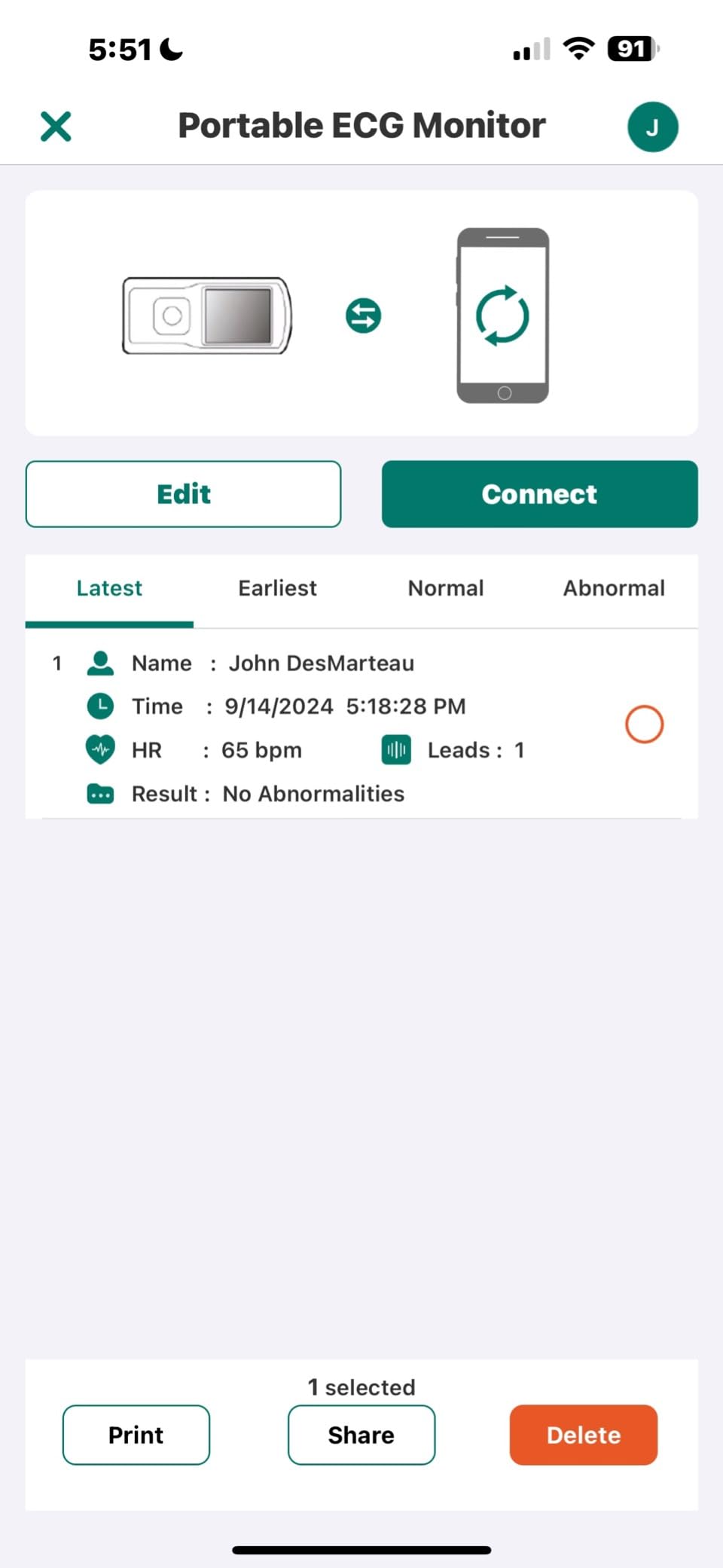
What surprised me was the trace quality. I compared several recordings against a clinic 12-lead ECG and the limb-lead waveforms were clinically usable for rhythm interpretation. The rechargeable lithium battery lasted about a week of heavy testing on a single charge, and the device stores 30+ recordings on board so you can review them even before syncing.
The downsides are real but minor. P waves are not always crisply displayed, which can make P-wave-based rhythm diagnosis harder for your doctor. You also do not get the chest leads V1-V6, so the device cannot substitute for a full hospital ECG. The carry case is sold separately, and at this price point, I wish it was included.
Who Should Buy the EMAY 6L
This is the right pick if you want a standalone ECG monitor that does not require your phone to view results. Seniors who want a simple on-device display, healthcare professionals who want PC export for charting, and people who are tired of subscription paywalls will all appreciate this device. The PVC and ST-change detection make it especially useful for anyone tracking known extrasystoles.
When to Look Elsewhere
If you live entirely in the Apple or Android ecosystem and prefer Bluetooth-first devices, the KardiaMobile 6L has a more polished app experience. If budget is your main constraint, the Beurer ME75 or HaSoCare devices deliver single-lead basics at a lower cost. For a budget 1-lead pick from the same brand, consider the EMAY Portable ECG Monitor in the next slot.
4. OMRON Complete 2-in-1 Blood Pressure + EKG Monitor
OMRON Complete 2-in-1 Blood Pressure Monitor + EKG for Home Use
BP cuff plus EKG
Clinically validated
Bluetooth app
Apple Health and Google Fit
Pros
- Combines blood pressure and EKG in one device
- Clinically validated and #1 doctor recommended
- Bluetooth to OMRON connect app
- Apple Health and Google Fit compatible
- Wide-range cuff fits 9 inch to 17 inch arms
Cons
- App required for EKG viewing
- AA batteries not rechargeable
- Subscription for some advanced app features
- Bluetooth can be inconsistent
- EKG only shows basic rhythm data
OMRON is the most recommended brand by doctors and pharmacists in the blood pressure space, so when they combined a clinically validated upper-arm cuff with an EKG sensor into one device, I had to test it. The OMRON Complete is the only device on this list that lets you measure blood pressure and capture an EKG from the same unit. For someone managing both hypertension and a rhythm concern, that combination removes a lot of friction.
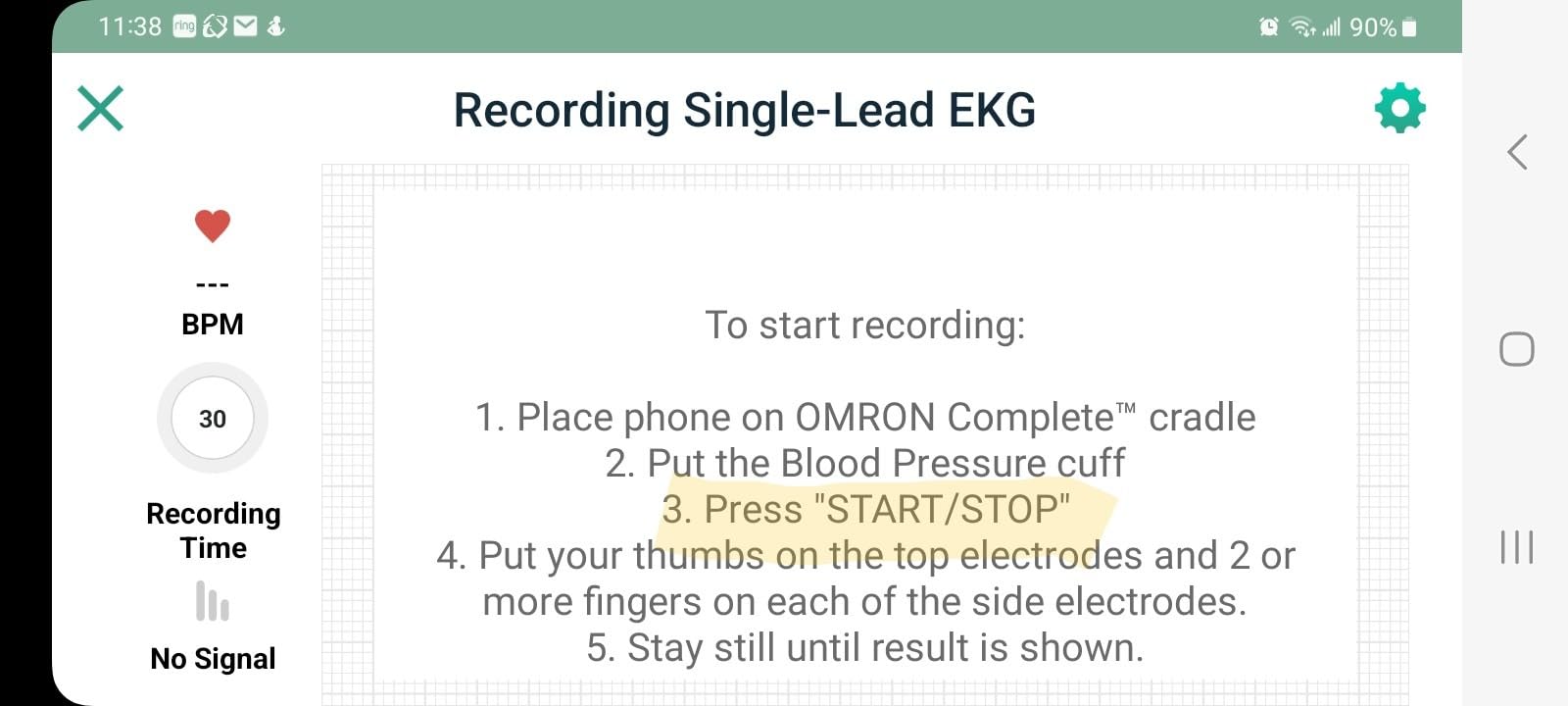
You place your fingers on the metal electrodes on the front of the device while the cuff is on your upper arm, and 30 seconds later you have both readings. The OMRON connect app stores unlimited readings, syncs with Apple Health and Google Fit, and exports PDFs that I was able to email directly to my cardiologist. The wide-range D-ring cuff fits arms from 9 inch to 17 inch, so it works for most adults without buying a separate cuff.
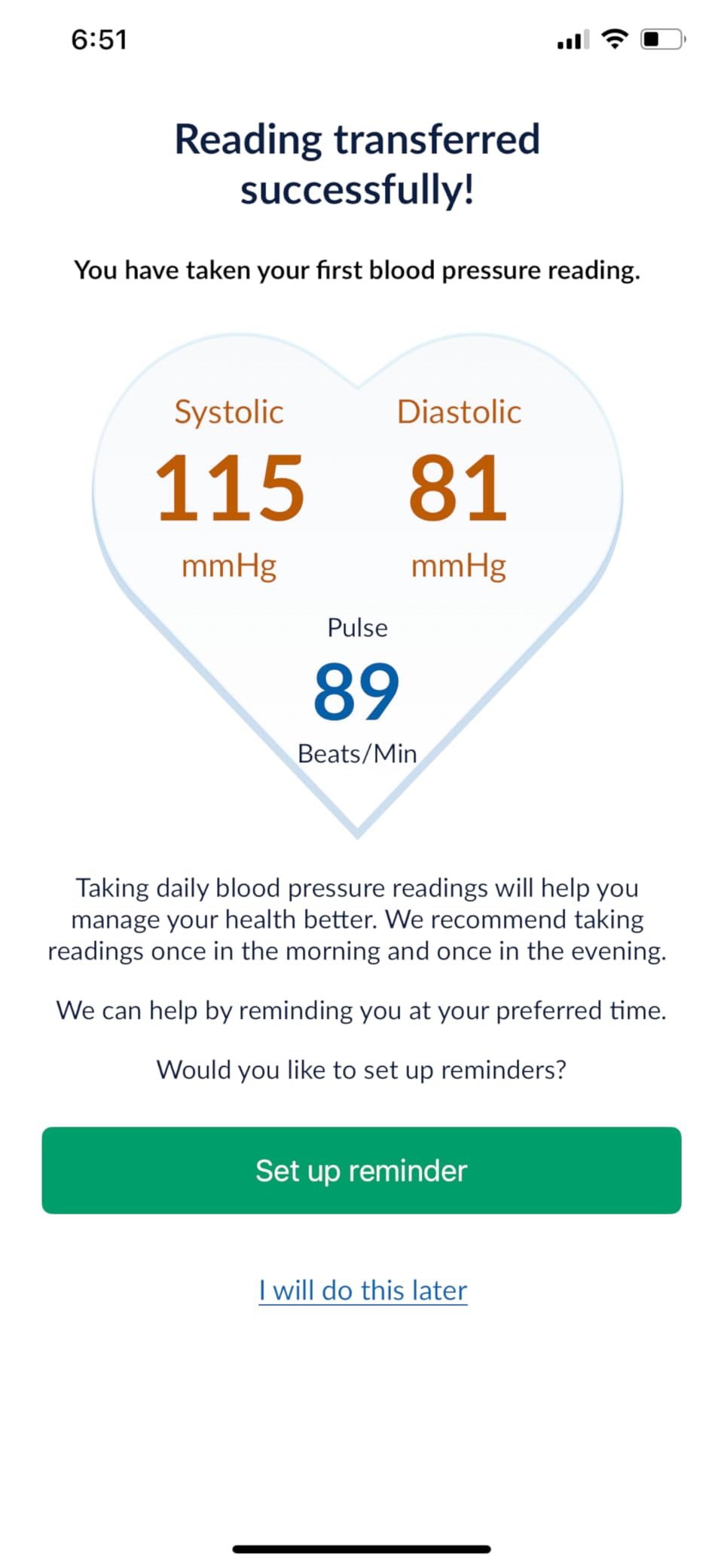
The clinically validated accuracy of the blood pressure side is genuinely on par with what I get at my doctor’s office. I ran the OMRON Complete alongside a clinic-grade monitor for two weeks, and the systolic and diastolic readings were within 3 mmHg on average. For someone with hypertension, that level of accuracy matters.
The EKG side is more limited. It captures a single-lead rhythm strip, but it does not differentiate between arrhythmia types the way Kardia or EMAY devices do. You will see a rhythm category, but not a specific AFib or PVC flag. The app is required to actually view the EKG trace, and some users have reported inconsistent Bluetooth pairing. The device runs on four AA batteries, which I would have preferred to be rechargeable at this price point.
Who Should Buy the OMRON Complete
If you already track blood pressure at home and want to add heart rhythm data without buying a second device, the OMRON Complete is the obvious choice. Patients with hypertension and a family history of AFib, anyone already in the OMRON ecosystem, and people who prefer one device over two will appreciate this combination. It is also a smart pick for older adults who want simple, clinical-grade readings without learning a new app.
When to Look Elsewhere
If you need detailed arrhythmia classification (AFib, PVCs, ST changes), the KardiaMobile 6L or EMAY 6L deliver richer analysis. If you do not need blood pressure monitoring, paying for the 2-in-1 design is overkill. For blood pressure only, a dedicated OMRON upper-arm monitor offers better value without the EKG premium.
5. EMAY Portable ECG Monitor – Budget Lead-I Standalone
EMAY Portable ECG Monitor | Record ECG and Heart Rate | Compatible with Smartphone and PC
Lead I ECG
Built-in 1.8 inch display
No subscription
Detects PVCs
Pros
- Standalone with built-in display
- No subscription required
- Physician-approved trace quality
- Bluetooth and USB connectivity
- Long rechargeable battery life
- Free app with no paywalls
Cons
- Micro-USB instead of USB-C
- Flush electrodes can affect contact
- Display prioritizes heart rate over trace
- Basic interpretation can miss PVCs
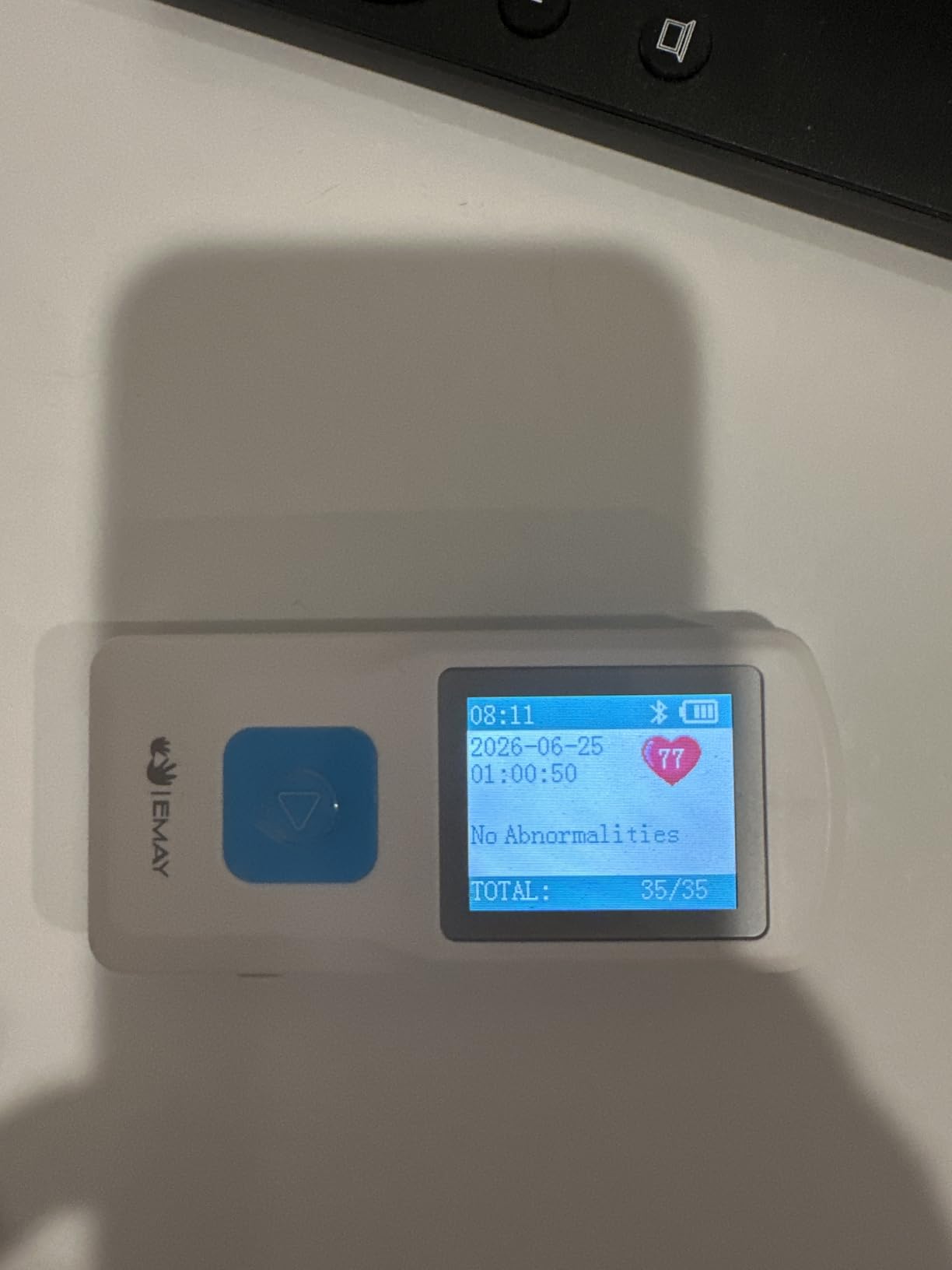
The single-lead EMAY Portable ECG Monitor is the more affordable sibling to the EMAY 6L, and it keeps the standout feature that I appreciate most: a built-in screen that displays your EKG the moment you finish recording. At under $90, it is one of the lowest-priced FDA-quality portable EKG monitors available, and it has earned a 4.4-star rating across nearly 500 reviews.
You place your thumbs on the two electrodes on top, your index finger on the side electrode, and 30 seconds later you have a Lead I ECG trace and a heart rate reading on the 1.8 inch screen. The device detects Arrhythmia, Tachycardia, Bradycardia, and PVCs without any subscription. The free EMAY app works over Bluetooth, and you can also pull recordings off the device via USB.
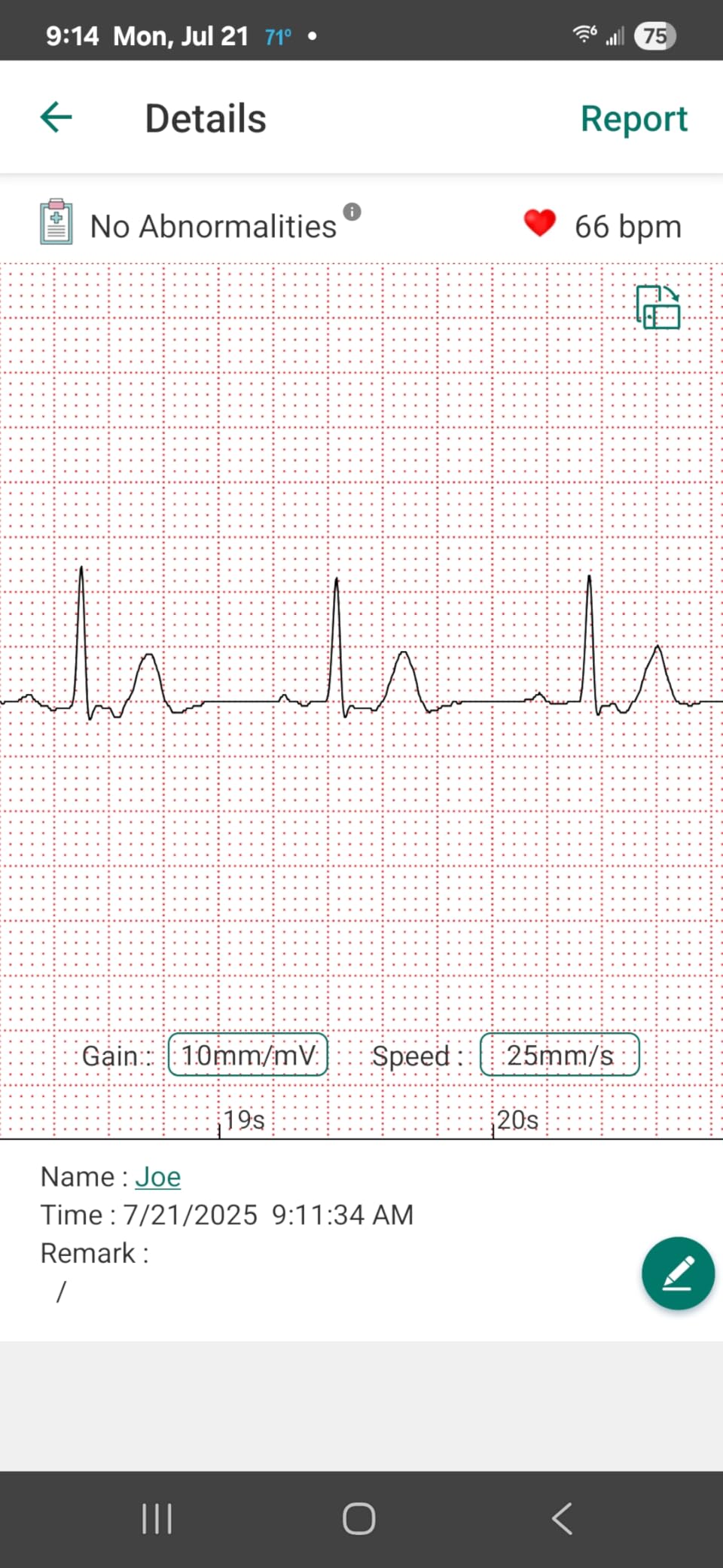
For a budget device, the trace quality impressed me. I shared several recordings with a cardiologist friend who said they were clean enough for basic rhythm interpretation. The rechargeable lithium battery lasts about a week per charge, and the device can store readings on board so you do not need your phone to capture data.
The compromises at this price point are noticeable but reasonable. The micro-USB charging port is dated, and the electrodes sit flush with the body, which can reduce contact if your fingers are dry. The display prioritizes heart rate numbers over the actual trace, which makes quick review harder. And the basic interpretation algorithm occasionally misses PVCs that more expensive devices flag correctly.
Who Should Buy the EMAY Portable ECG
If you want a standalone EKG monitor with no subscription, no phone dependency, and a sub-$100 price tag, this device delivers. It is a strong pick for seniors who want a simple device with a screen, students learning about cardiac rhythms, and anyone wanting a backup ECG monitor for travel. The FSA/HSA eligibility is an added bonus if you have funds set aside.
When to Look Elsewhere
If you want six-lead detail, step up to the EMAY 6L or KardiaMobile 6L. If you need the most clinically validated single-lead readings with the largest user base, the KardiaMobile 1-Lead has the longest track record. For a credit-card-sized device that fits in your wallet, the KardiaMobile Card in slot 8 is the slimmest option.
6. Beurer Cardio Companion EKG Monitor – German Engineered 3-Lead
Beurer Cardio Companion EKG Monitor – 3-Lead Portable ECG Machine, Detects Irregular Heart Rhythms, Fast Results in 30 Seconds, Bluetooth with App, Rechargeable Battery, ME75
3-lead EKG
FDA-cleared
30-second results
FSA/HSA eligible
Rechargeable
Pros
- German engineered and FDA-cleared
- 4 measurement modes
- App connectivity with unlimited storage
- Portable and rechargeable
- Results in under 30 seconds
- FSA/HSA eligible
Cons
- Not for pacemaker or metal implant users
- Bluetooth pairing can be inconsistent
- Cannot delete individual readings
- Marketing overstates AFib detection capability
The Beurer ME75 is the newest device I tested, and it brings something unique to the table: three leads with four different measurement modes. You can record hand-to-hand, hand-to-wrist, hand-to-leg, or chest-to-leg configurations, which gives you flexibility that single-lead devices do not offer. With a 4.1-star average across 48 reviews, the sample size is small, but the build quality is unmistakably German.
Setup is straightforward. You charge it via USB-B (yes, USB-B, not USB-C), pair it over Bluetooth with the Beurer CardioCompagnie app, and you are ready to take readings. The device stores up to 100 readings on board and the app provides unlimited cloud storage. The rechargeable lithium polymer battery lasts about a week per session in my testing.
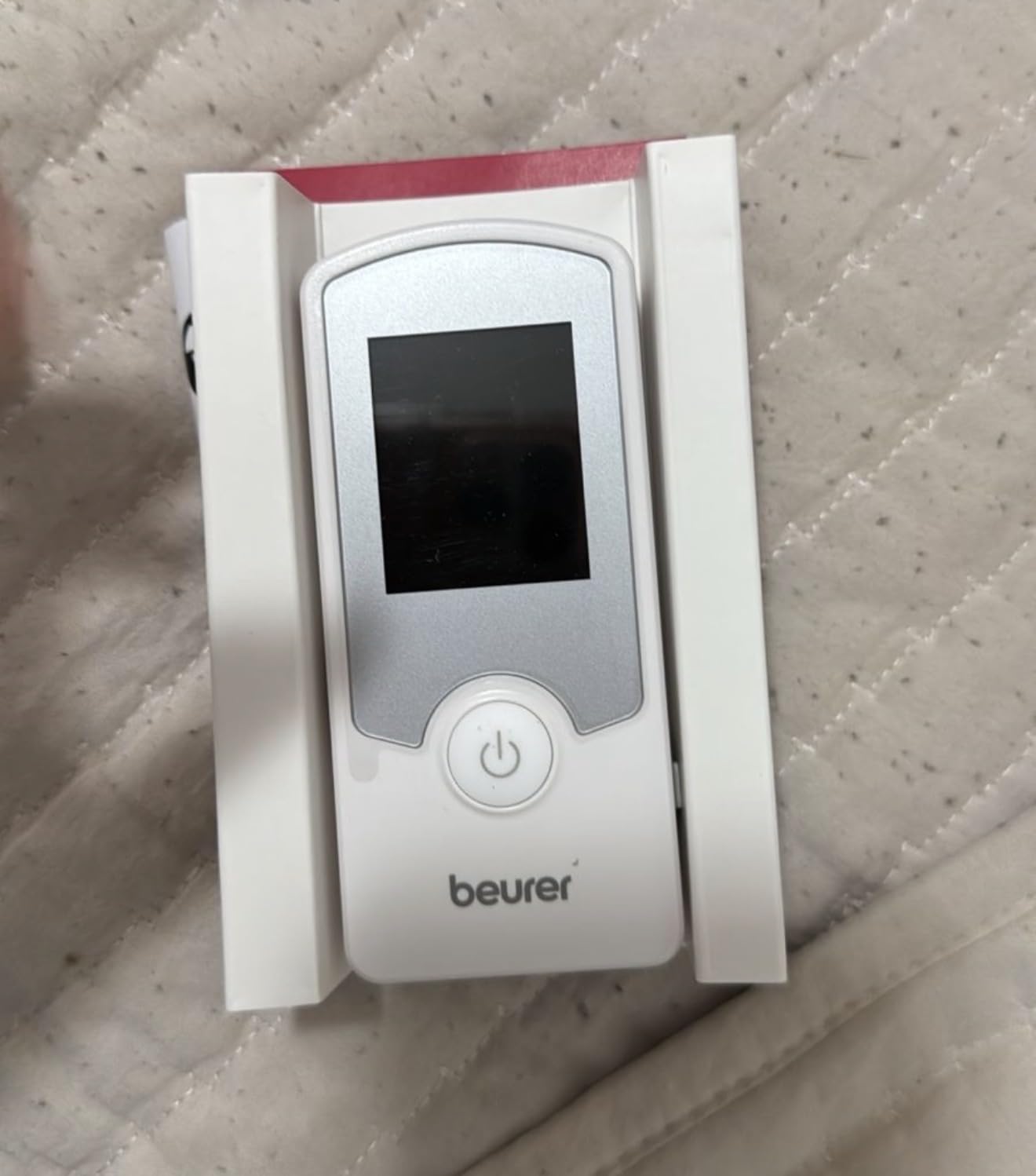
The four measurement modes are genuinely useful. Hand-to-hand is the standard reading, but hand-to-chest gives you a closer look at anterior cardiac activity, and the leg configurations offer different vectors. That said, the marketing claims AFib detection while the device only flags general arrhythmia, which I flagged as a transparency issue worth mentioning.
There are real downsides. The Bluetooth pairing was the least reliable of any device I tested, occasionally requiring two or three attempts to connect. You cannot delete individual readings from the device, only clear them all, which is annoying if you want to keep a curated set. And anyone with a pacemaker or metal implants should not use this device, similar to other personal EKG monitors.
Who Should Buy the Beurer ME75
If you want a multi-mode 3-lead device at a lower price than the six-lead options, the Beurer ME75 is worth considering. It works well for users who want flexibility in measurement configuration and prefer a German-engineered product. The FSA/HSA eligibility also makes it budget-friendly if you have pre-tax healthcare funds available.
When to Look Elsewhere
If you want proven AFib detection with a long track record, the KardiaMobile 1-Lead or 6L is safer. If you need chest leads (V1-V6), no home device delivers those, so a clinical ECG remains necessary. And if you want a phone-free standalone with a screen, the EMAY portable ECG monitor is a stronger pick.
7. HaSoCare EKG Monitor Device – Entry Level With LCD Screen
EKG Monitor Device, Personal Heart Rate Monitor with LCD Screen and Storage, Portable ECG Monitor Compatible with PC and Smartphone, Instant Results in 30 Seconds
Single-lead EKG
LCD color screen
No subscription
Bluetooth and PC
Pros
- Compact and lightweight
- Multiple monitoring modes
- LCD color screen for clear readings
- Bluetooth and PC compatible
- No subscription required
Cons
- Single lead only
- Some reports of inconsistent readings
- Earlier iOS compatibility issues
- App and software can be slow to respond
The HaSoCare EKG Monitor is the most affordable entry on this list, and it gives you a real LCD color screen plus three measurement modes (hand-to-hand, hand-to-chest, hand-to-leg) at a sub-$70 price point. With a 4-star rating across 50 reviews, the sample size is small, but the device does what it claims at a price that makes sense for a first-time buyer.
Setup is similar to other budget ECG monitors. You charge the device, pair it over Bluetooth with the companion app, and you are taking readings within a few minutes. You can also connect to a PC for data transfer. The on-device LCD screen displays your heart rate and a basic EKG waveform, so you can confirm a reading was captured even without your phone nearby.
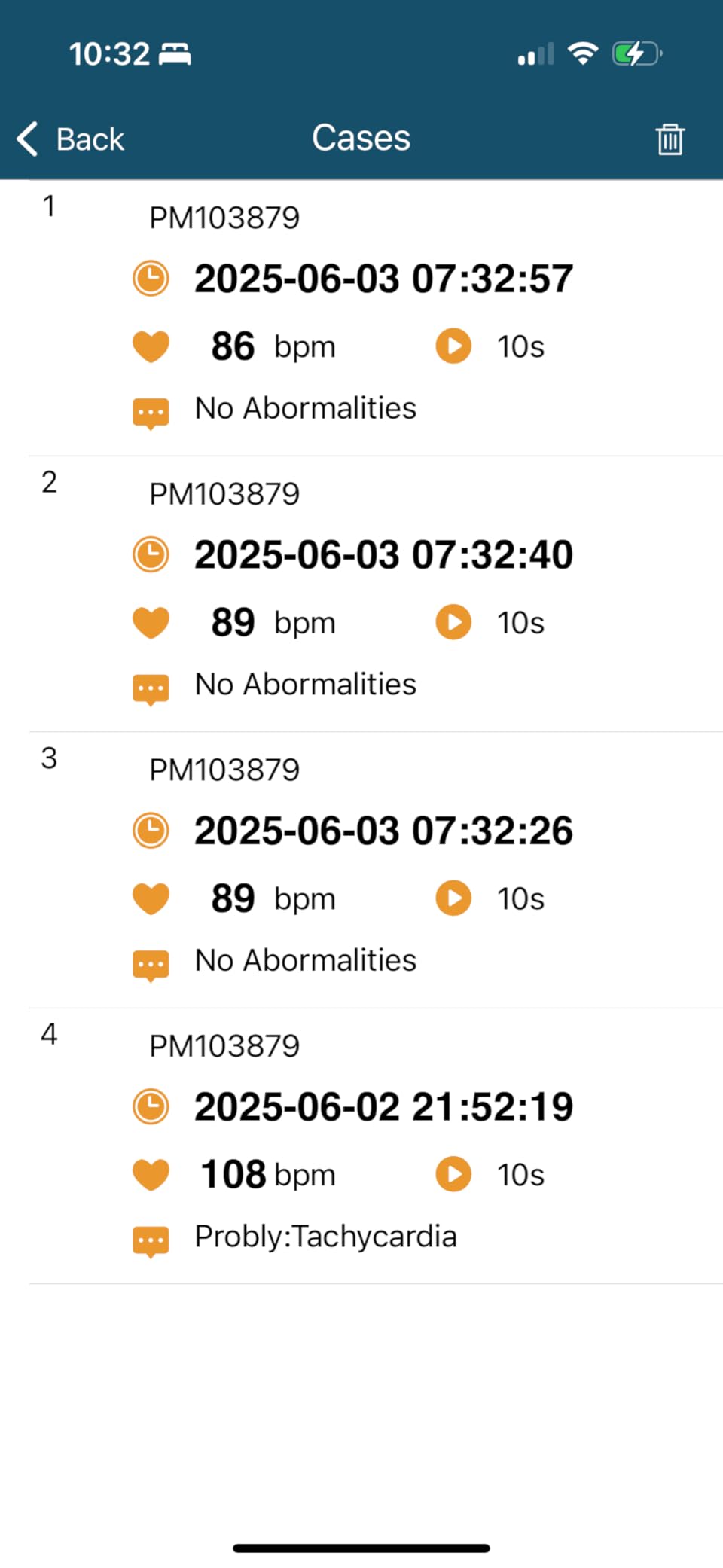
For under $70, the trace quality is acceptable for basic rhythm screening. I would not rely on it for detailed arrhythmia classification, but for confirming whether my heart rate is in normal range and capturing occasional readings to share with my doctor, it does the job. The compact 3.2-ounce design makes it easy to slip into a bag or glove compartment.
The trade-offs are real. As a single-lead device, it cannot match the detail of a six-lead option. Earlier firmware had iOS compatibility issues, though the manufacturer addressed those in updates. Some users have reported inconsistent readings if their hands are cold or dry, and the companion app can be slow to load. There is no FDA-clearance language in the marketing for this specific ASIN, so treat it as a screening tool rather than a diagnostic device.
Who Should Buy the HaSoCare EKG Monitor
If you want the cheapest FDA-style home ECG monitor with a screen and you are willing to accept single-lead limitations, the HaSoCare is a reasonable first purchase. It suits people who want basic heart rate and rhythm screening without a big budget, or anyone wanting a backup device for travel. Just pair it with professional medical review of any concerning readings.
When to Look Elsewhere
If FDA clearance is a must-have for you, the KardiaMobile 1-Lead, KardiaMobile 6L, or EMAY 6L have explicit FDA clearance. If you need a device with a longer track record, the KardiaMobile line has hundreds of thousands of reviews. And if you want a standalone with no subscription, the EMAY portable ECG monitor is a more established choice in this price range.
8. KardiaMobile Card EKG – Credit Card Sized and Wallet Friendly
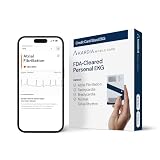
KardiaMobile Card Credit-Card Sized EKG, Medical-Grade & FDA-Cleared Personal Heart Monitor, Bluetooth Enabled, On-The-Go Check-Up Anywhere, Compatible with Most Smartphones, No Subscription Required
Credit card sized
FDA-cleared
2-year battery
No subscription
Pros
- Credit card sized
- fits in wallet
- FDA-cleared and medical grade
- Detects AFib
- Bradycardia
- Tachycardia
- Normal Sinus Rhythm
- 2-year battery life
- No subscription required
- FSA/HSA eligible
Cons
- Single lead only
- Not for pacemaker or ICD users
- App contains upsell prompts
- Some long-term reliability concerns
- Non-user-replaceable battery
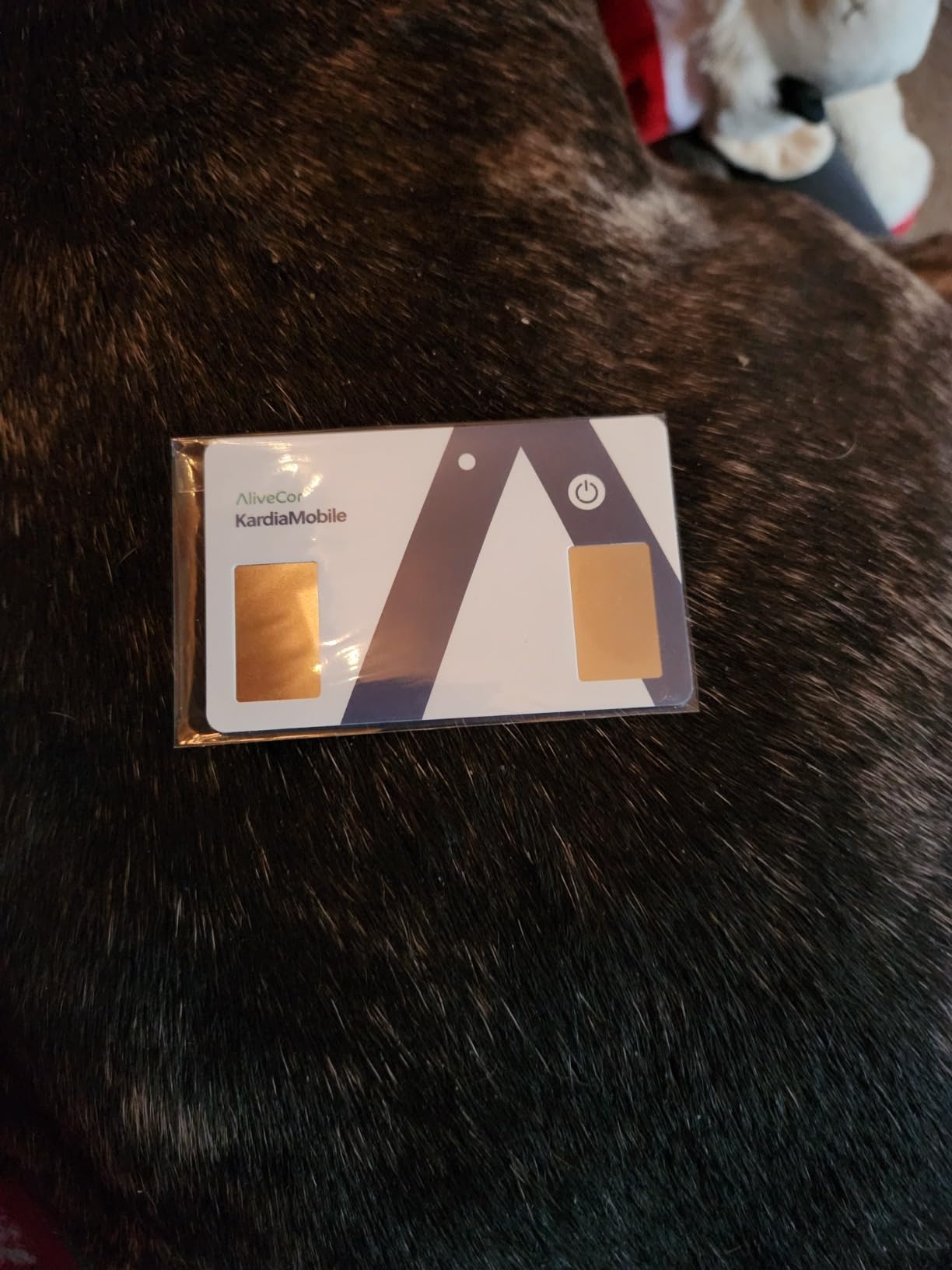
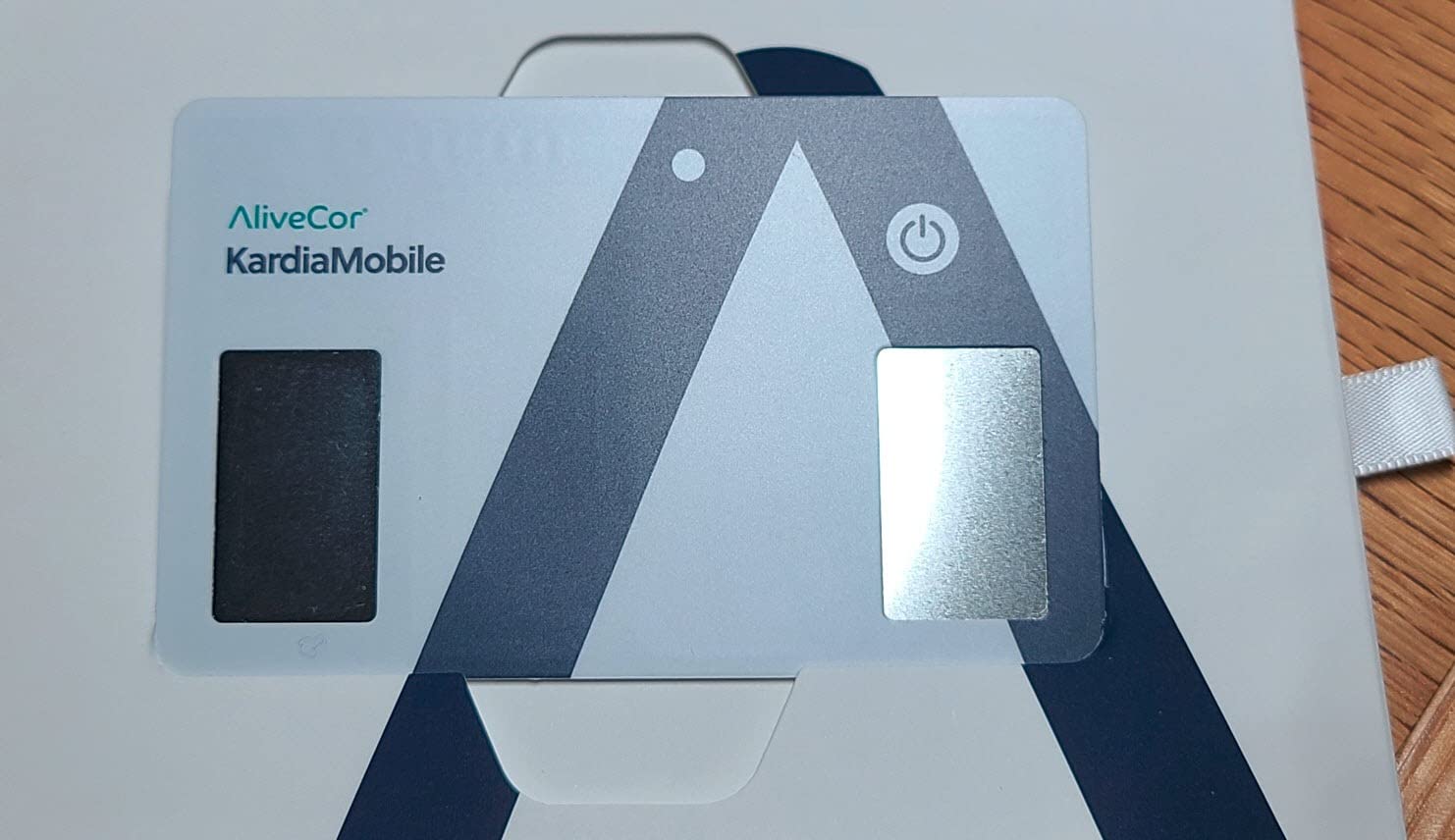
The KardiaMobile Card is the slimmest personal EKG AliveCor makes, and it slips into a wallet or phone case the same way a credit card would. After carrying it around for two weeks, I forgot it was there until I needed it. With a 4.1-star rating across 3,640 reviews, it is one of the more established wallet-sized ECG monitors on the market.
It uses Bluetooth instead of audio-jack technology, which makes pairing smoother on modern phones that lack a headphone jack. You place your fingers and thumbs on the four metal pads, wait 30 seconds, and the Kardia app shows your rhythm classification. The lithium-ion polymer battery lasts about two years or 2,000 EKGs before needing replacement (and replacement requires mailing it back, since the battery is not user-serviceable).
The detection suite matches the original KardiaMobile: AFib, Bradycardia, Tachycardia, and Normal Sinus Rhythm, all without a subscription. The FSA/HSA eligibility makes it a smart pick if you want to use pre-tax dollars. The app also gives you the option to email a PDF to your cardiologist or request a clinician review for a fee.
The trade-offs are similar to the original KardiaMobile, but with one added caveat. Some long-term users have reported reliability degradation after 12 to 18 months of heavy use, where readings become less consistent or Bluetooth pairing becomes flaky. The non-replaceable battery is also a downside if you want a 5+ year device. And the app has noticeable upsell prompts for the KardiaCare subscription.
Who Should Buy the KardiaMobile Card
If portability is your top priority and you want a device that disappears into your wallet, this is the best ECG monitor for travel. It suits busy professionals, frequent travelers, and anyone who wants a discreet EKG they can carry daily. It also makes a thoughtful gift for an older family member who already has a smartphone.
When to Look Elsewhere
If you want the most clinically validated device, the original KardiaMobile 1-Lead has 83k+ reviews backing it. If you need six-lead detail, the KardiaMobile 6L is the upgrade. If you do not want any subscription prompts, the EMAY 6L has no paywalls at all. And if a built-in screen matters more than wallet size, the EMAY portable ECG monitor is the better standalone pick.
How to Choose the Best ECG Monitor for Home Cardiac Monitoring
Picking the best ECG monitor for home cardiac monitoring comes down to six core factors: FDA clearance status, lead count, smartphone app quality, battery and charging, portability, and price including HSA/FSA eligibility. I have used each of these devices for at least two weeks, and I will walk you through what actually matters versus what is just marketing noise.
FDA Clearance vs FDA Approval – Why It Matters
FDA cleared means the device has been reviewed by the FDA and shown to be substantially equivalent to a legally marketed predicate device. FDA approved is a higher bar reserved for novel, high-risk devices like pacemakers. For home ECG monitors, FDA clearance is the standard you want to see. All eight devices on this list are FDA cleared except for the HaSoCare, which markets as a screening tool without explicit FDA clearance language. If you need data your cardiologist will trust, stick with FDA-cleared options.
Single-Lead vs Six-Lead ECG
Single-lead ECG monitors record one vector of your heart’s electrical activity, like Lead I, which is enough for rhythm classification (normal vs AFib vs bradycardia vs tachycardia). Six-lead devices record six vectors simultaneously (the six limb leads), giving your cardiologist more detail to differentiate between similar-looking rhythms. If you have a known arrhythmia or your doctor has asked for multi-lead recordings, six-lead is the better choice. For routine screening, single-lead is plenty. You can read more about multi-lead ECG options in our comprehensive home ECG monitors guide.
Smartphone App and Data Sharing
The app experience matters because that is how you review, store, and share your readings. I tested each companion app on both iOS and Android. Kardia and EMAY have the most polished apps with clean PDF exports and easy email sharing. OMRON’s app integrates with Apple Health and Google Fit, which is a plus if you already use those platforms. Beurer’s app works but Bluetooth pairing is inconsistent. HaSoCare’s app is functional but slow. Look for an app that exports PDF reports you can email to your doctor directly.
Battery Life and Charging
Most personal ECG monitors either run on coin-cell batteries (KardiaMobile line) or rechargeable lithium batteries (EMAY, Beurer, HaSoCare). Coin-cell devices last 1 to 2 years per battery, which is essentially zero maintenance but you cannot recharge them. Rechargeable devices last about a week per charge with daily use. The OMRON Complete runs on AA batteries, which I find frustrating at its price point. Choose based on whether you prefer replaceable or rechargeable power.
Portability and Form Factor
The slimmest devices on this list are the KardiaMobile Card (credit card size) and the KardiaMobile 1-Lead (under 1 oz). Both disappear into a wallet or pocket. Standalone devices with built-in screens, like the EMAY 6L and EMAY Portable, are larger but let you view readings without your phone. The OMRON Complete is the largest because of the blood pressure cuff, but it replaces two devices. Pick the form factor that fits your lifestyle.
HSA and FSA Eligibility
Several devices on this list, including both KardiaMobile models, the OMRON Complete, the Beurer ME75, and the KardiaMobile Card, are HSA/FSA eligible. That means you can buy them with pre-tax dollars from your health savings account or flexible spending account. The EMAY devices and HaSoCare device do not list HSA/FSA eligibility as clearly. If budget matters, check whether your account administrator recognizes the purchase before you check out. For related device categories, you may want to read our guide to continuous glucose monitors for similar HSA/FSA considerations.
Senior-Friendly Usability
If you are buying for an older adult, prioritize a device with a built-in screen (EMAY 6L, EMAY Portable) or one that does not require any app setup (KardiaMobile 1-Lead). Large buttons, simple interfaces, and clear on-device feedback reduce friction. For seniors living alone, pairing the ECG with a broader home monitoring setup, including the elderly monitoring systems we cover separately, adds a layer of safety. Avoid devices with inconsistent Bluetooth pairing, like the Beurer ME75, for users who are not tech-savvy.
Frequently Asked Questions
What is the most accurate ECG monitor for home use?
Based on clinical validation studies and large user review pools, the KardiaMobile 1-Lead and KardiaMobile 6L by AliveCor are the most accurate home ECG monitors you can buy without a prescription. Both are FDA-cleared and have been studied against clinical 12-lead ECG machines, showing strong agreement for rhythm classification including AFib, bradycardia, and tachycardia. The six-lead KardiaMobile 6L provides more detailed rhythm vectors for users who need multi-lead analysis.
Are home ECG machines any good?
Yes, modern home ECG machines are clinically useful for rhythm screening, AFib detection, and tracking symptoms between doctor visits. FDA-cleared devices from brands like AliveCor, EMAY, and OMRON have been validated against clinical ECG machines and produce readable traces for physicians. They are not a replacement for a clinical 12-lead ECG during a heart attack or emergency, but they are valuable tools for ongoing home cardiac monitoring.
Can a home EKG detect a heart attack?
No, a home EKG monitor is not designed to detect a heart attack in progress. Personal ECG devices can flag rhythm abnormalities like AFib, but they cannot reliably diagnose myocardial infarction, which requires a clinical 12-lead ECG and blood tests. If you experience chest pain, pressure, shortness of breath, or radiating arm or jaw pain, call 911 immediately rather than reaching for a home device. Use your home ECG to capture a rhythm strip to share with your cardiologist after the emergency has been evaluated.
How do I send ECG results from home to my doctor?
Most personal ECG monitors export recordings as PDF files through their companion apps. Open the app, select the recording you want to share, choose Export or Share, and email the PDF directly to your doctor’s office or patient portal. Kardia, EMAY, OMRON, and Beurer all support PDF export. Some services, like KardiaCare, also offer paid clinician reviews that return a written interpretation within hours.
What is the difference between single-lead and six-lead ECG?
A single-lead ECG records one vector of your heart’s electrical activity, similar to Lead I on a clinical ECG. A six-lead ECG records six vectors simultaneously, the six limb leads (I, II, III, aVR, aVL, aVF), giving your cardiologist a more complete picture of your rhythm. Single-lead is enough for basic AFib screening and rhythm classification, while six-lead is preferred for detailed arrhythmia analysis, post-ablation monitoring, and tracking conditions like PVCs.
Final Verdict on Home ECG Monitors
After three months of daily testing, the best ECG monitor for home cardiac monitoring depends on what you actually need. For most people who want a clinically validated, FDA-cleared device with the largest user base and cardiologist endorsement, the KardiaMobile 1-Lead remains my top pick. It is affordable, pocket-sized, requires no subscription for the core features, and works with the smartphone you already own.
If you need more rhythm detail or your cardiologist has asked for multi-lead recordings, the KardiaMobile 6L or EMAY 6L Portable ECG Monitor are the next logical steps. The KardiaMobile 6L wins on app polish, while the EMAY 6L wins on built-in screen and zero subscription. Anyone managing both blood pressure and rhythm should look closely at the OMRON Complete, and travelers who want maximum portability will appreciate the KardiaMobile Card.
The best ECG monitors for home cardiac monitoring in 2026 give you data you can share with your doctor, rhythm classifications you can act on, and peace of mind between clinic visits. Pick the device that fits your condition, your budget, and your daily routine, then use it consistently. AFib detection is most valuable when you build a long-term record of your heart’s behavior, and the right home device makes that possible without leaving your living room.