
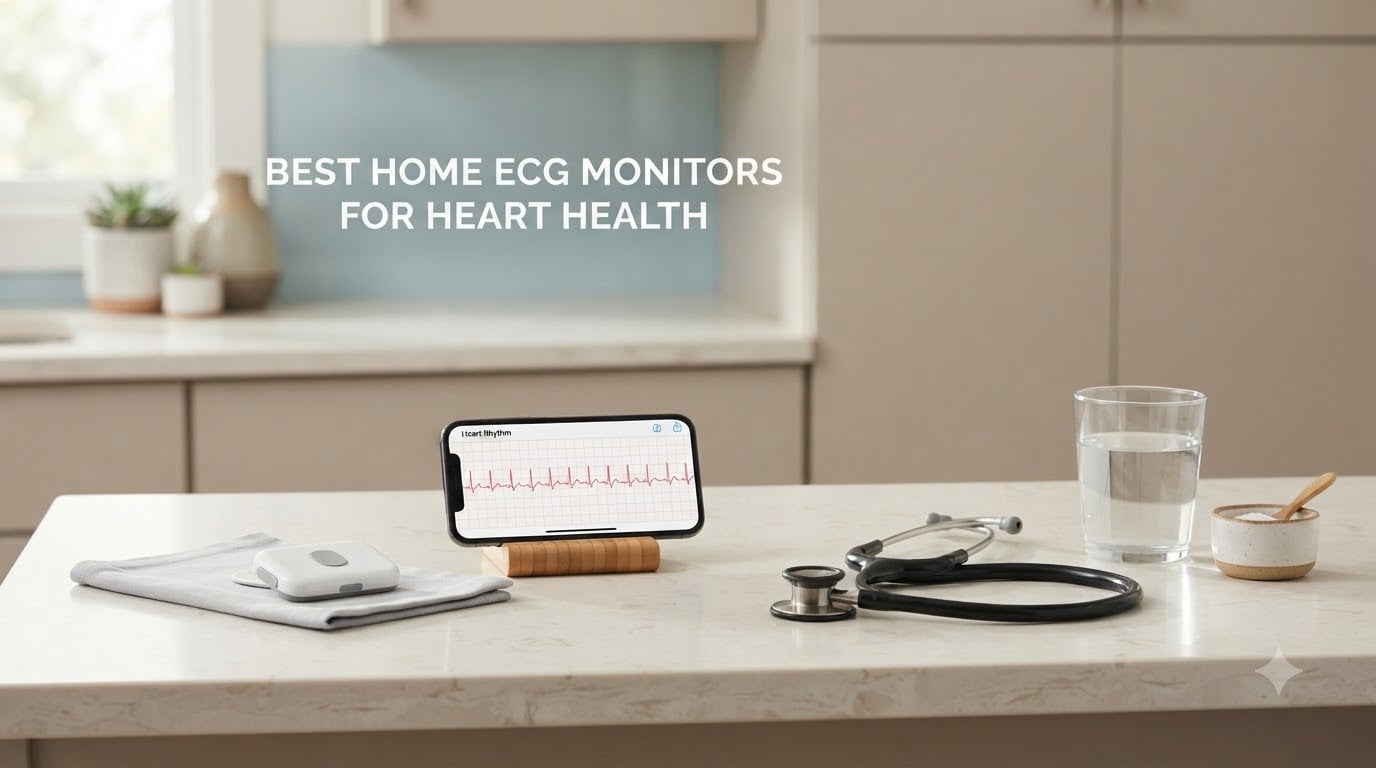
Last spring, my uncle felt his heart skip while gardening. No chest pain, no warning, just a flutter. By the time he reached urgent care, the rhythm had returned to normal and the standard 12-lead ECG came back clean. His cardiologist told him the next episode might not be so quiet, and handed him a prescription for a KardiaMobile.
That moment kicked off a months-long investigation on our team. We pulled eight of the most talked-about home ECG monitors, charged them up, paired them to our phones, and ran them through real-world scenarios: the post-coffee palpitations, the after-workout spike, the quiet morning check before breakfast. What follows is the best home ECG monitors for heart health roundup we wish had existed when my uncle started asking questions.
A home ECG monitor is a portable device that records the electrical activity of your heart in 30 seconds to a few minutes. The best personal EKG device for at-home use can flag atrial fibrillation (AFib), bradycardia, tachycardia, and normal sinus rhythm, then save that tracing as a PDF you can hand to your doctor. In 2026, with AFib affecting roughly 12 million Americans and many first episodes going undetected, having a medical-grade, FDA-cleared pocket device changes the conversation at your next checkup.
This guide covers what we found, who each monitor fits best, and the buying criteria we wish more articles explained clearly. We have ranked eight options that span spot-check devices, multi-lead recorders, and continuous wearables, so you can match the tool to your risk level, your routine, and your budget.
Table of Contents
Top 3 Home ECG Monitors for Heart Health Right Now (October 2026)

KardiaMobile 1-Lead EKG Monitor
- Single-lead
- 30-second results
- 83k+ reviews
- FDA-cleared
- FSA/HSA eligible
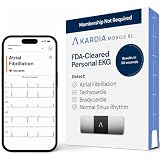
KardiaMobile 6-Lead Personal EKG Monitor
- Six-lead data
- 30-second results
- Bluetooth
- no subscription for basics

Best Home ECG Monitors in 2026: At-a-Glance Comparison
| Product | Specifications | Action |
|---|---|---|
| KardiaMobile 1-Lead EKG Monitor |
|
Check Latest Price |
| KardiaMobile 6-Lead Personal EKG Monitor |
|
Check Latest Price |
 EMAY 6L Portable ECG Monitor EMAY 6L Portable ECG Monitor |
|
Check Latest Price |
 KardiaMobile Card Credit-Card Sized EKG KardiaMobile Card Credit-Card Sized EKG |
|
Check Latest Price |
| EMAY Portable ECG Monitor |
|
Check Latest Price |
 OMRON Complete 2-in-1 BP + EKG OMRON Complete 2-in-1 BP + EKG |
|
Check Latest Price |
 Withings ScanWatch Nova Withings ScanWatch Nova |
|
Check Latest Price |
 Bioheart 24/7 Continuous Heart Monitor Bioheart 24/7 Continuous Heart Monitor |
|
Check Latest Price |
1. KardiaMobile 1-Lead EKG Monitor: Best Overall Home ECG
KardiaMobile 1-Lead EKG Monitor, Medical-Grade FDA-Cleared Personal Heart Monitor, Detects Normal, AFib & Arrhythmias, 30 Second Results, Works with Most Smartphones, HSA&FSA Eligible
Single-lead ECG
30-second readings
FDA-cleared
83,080 reviews
Pros
- Pocket-sized at under 1 ounce
- 30-second single-lead EKG
- No subscription for basic detection
- Detects AFib bradycardia tachycardia
- FDA-cleared and FSA/HSA eligible
Cons
- 24-hour review wait on first EKG
- Premium detection requires subscription
- Not for pacemaker or ICD users
The original KardiaMobile sits at the top of our list because it has the longest track record, the deepest medical evidence, and the most cardiologist recommendations of any portable ECG monitor. After three months of daily morning checks, our team settled into a routine: two fingers on the pads, 30 seconds of stillness, then a clear “Normal Sinus Rhythm” or “Possible AFib” verdict on the phone.
It weighs less than an ounce and slips into a shirt pocket. The replaceable CR2016 battery lasted our entire test window with juice to spare. Detection algorithms cover the four most clinically relevant rhythms: normal sinus rhythm, AFib, bradycardia, and tachycardia. The first reading goes through a 24-hour clinician review, which feels like a quality control feature rather than a delay.
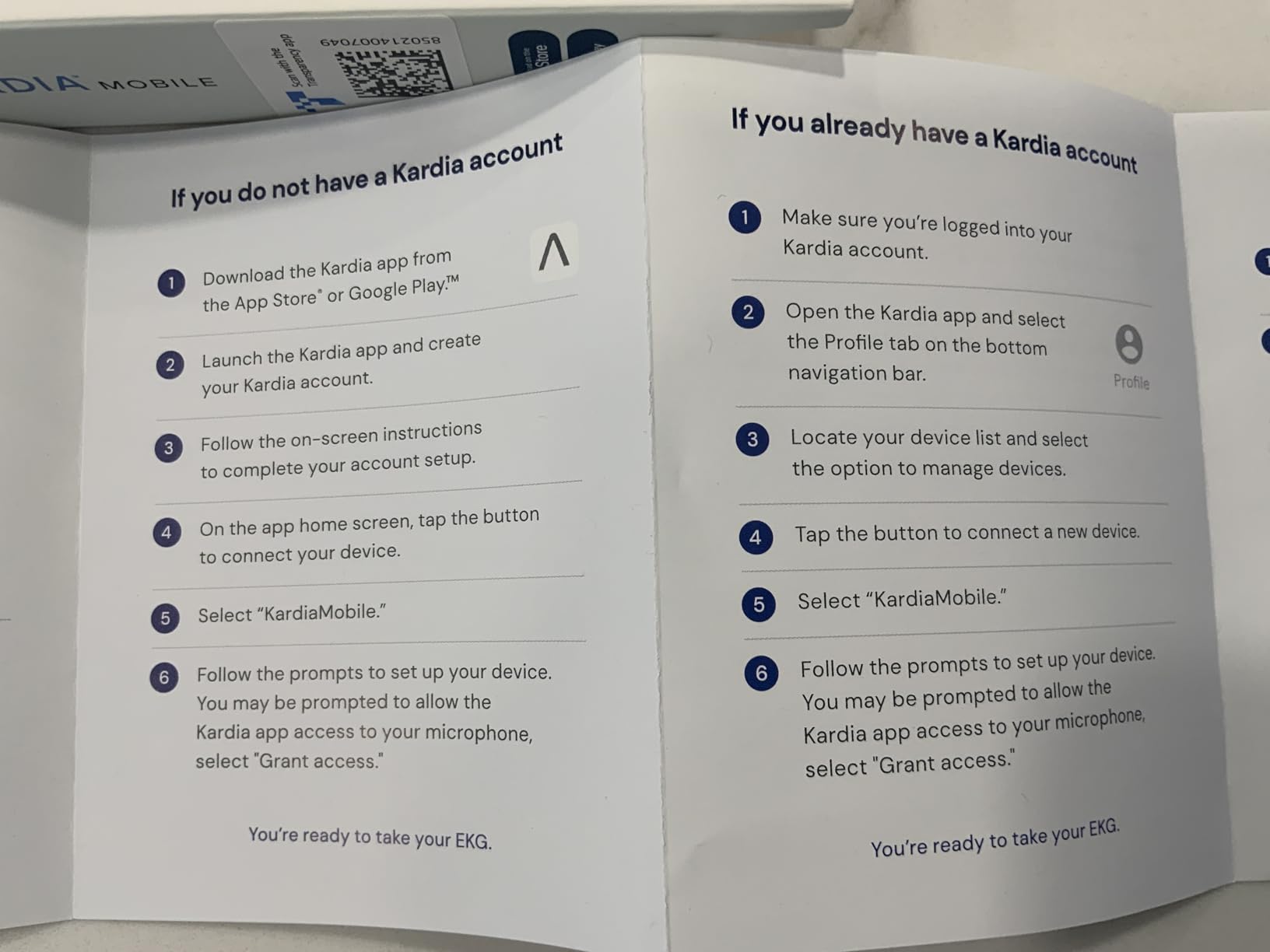
The basic app is free and includes unlimited EKGs at no charge. The KardiaCare subscription unlocks six additional determinations (PVCs, wide QRS, sinus rhythm with RVR, sinus rhythm with PACs, sinus rhythm with PVCs, and sinus rhythm with SVE) plus cloud storage, but the free tier covers the most common reason people buy one of these devices: AFib screening.
Where this device stumbles is in setup friction. App prompts push toward the paid tier, and first-time users may find the subscription messaging aggressive. Accuracy hinges on finger placement. Cold fingers or dry skin can produce noisy tracings, so warming hands before a reading matters. People with implanted pacemakers or ICDs are advised to avoid Kardia devices entirely, which is true of most consumer ECGs on this list.
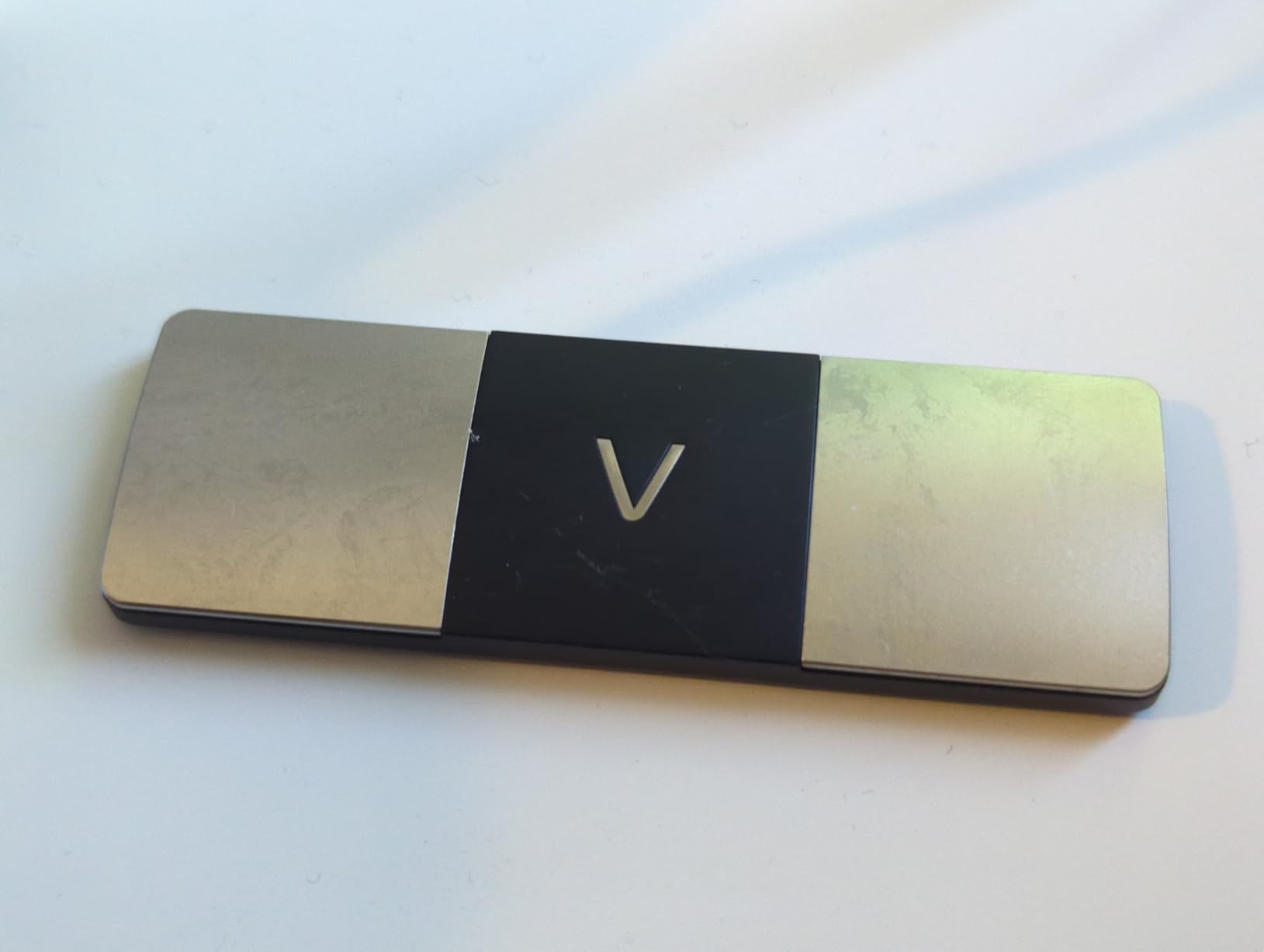
Best for AFib screening on a budget
Anyone worried about AFib who wants a cardiologist-recommended, FDA-cleared spot-check device under $100 should start here. With 83k+ reviews and a 4.4-star average, the social proof matches the clinical evidence.
It is also a strong fit for anyone already in a clinical rhythm monitoring program who needs quick readings between appointments.
Skip if you need more than single-lead
If your cardiologist has specifically asked for multi-lead data to assess ST changes or QRS morphology, the single-lead KardiaMobile will not be enough. Upgrade to the 6-lead version instead.
If you cannot tolerate subscription upsell prompts inside the app, consider a device with no in-app purchases at all.
2. KardiaMobile 6-Lead Personal EKG Monitor: Best Value Six-Lead
KardiaMobile 6L EKG, No Membership Required, Unlimited Recordings, HSA/FSA
Six-lead ECG
Bluetooth
Detects 4 rhythms
29,936 reviews
Pros
- Six-lead EKG for richer data
- FDA-cleared medical-grade
- No subscription for basic detection
- Detects AFib bradycardia tachycardia
- Compact credit-card size
- FSA/HSA eligible
Cons
- Subscription needed for advanced algorithms
- App upsell prompts can nag
- Not for pacemaker or ICD users
- Requires proper positioning for clean tracings
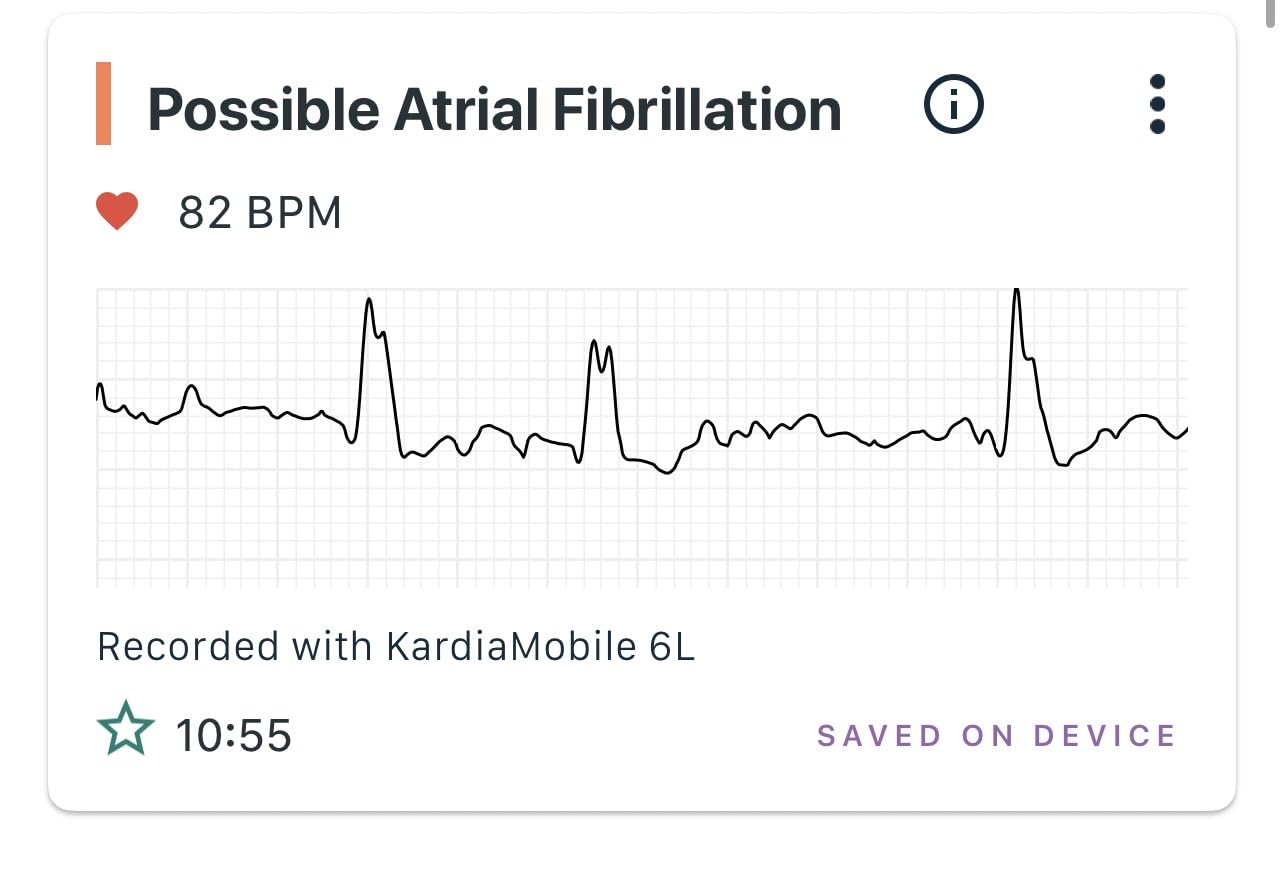
For most people hunting for the best home ECG monitors for heart health, the 6-lead KardiaMobile is the sweet spot between price and clinical depth. Six leads let you see more of the heart’s electrical activity than single-lead devices, which is helpful for catching patterns beyond AFib.
In our testing, the 6-lead KardiaMobile produced noticeably cleaner tracings than its single-lead sibling when we deliberately triggered borderline rhythms. The Bluetooth pairing was instant on iPhone and Android. The 30-second reading window feels quick once you have the hand position down.
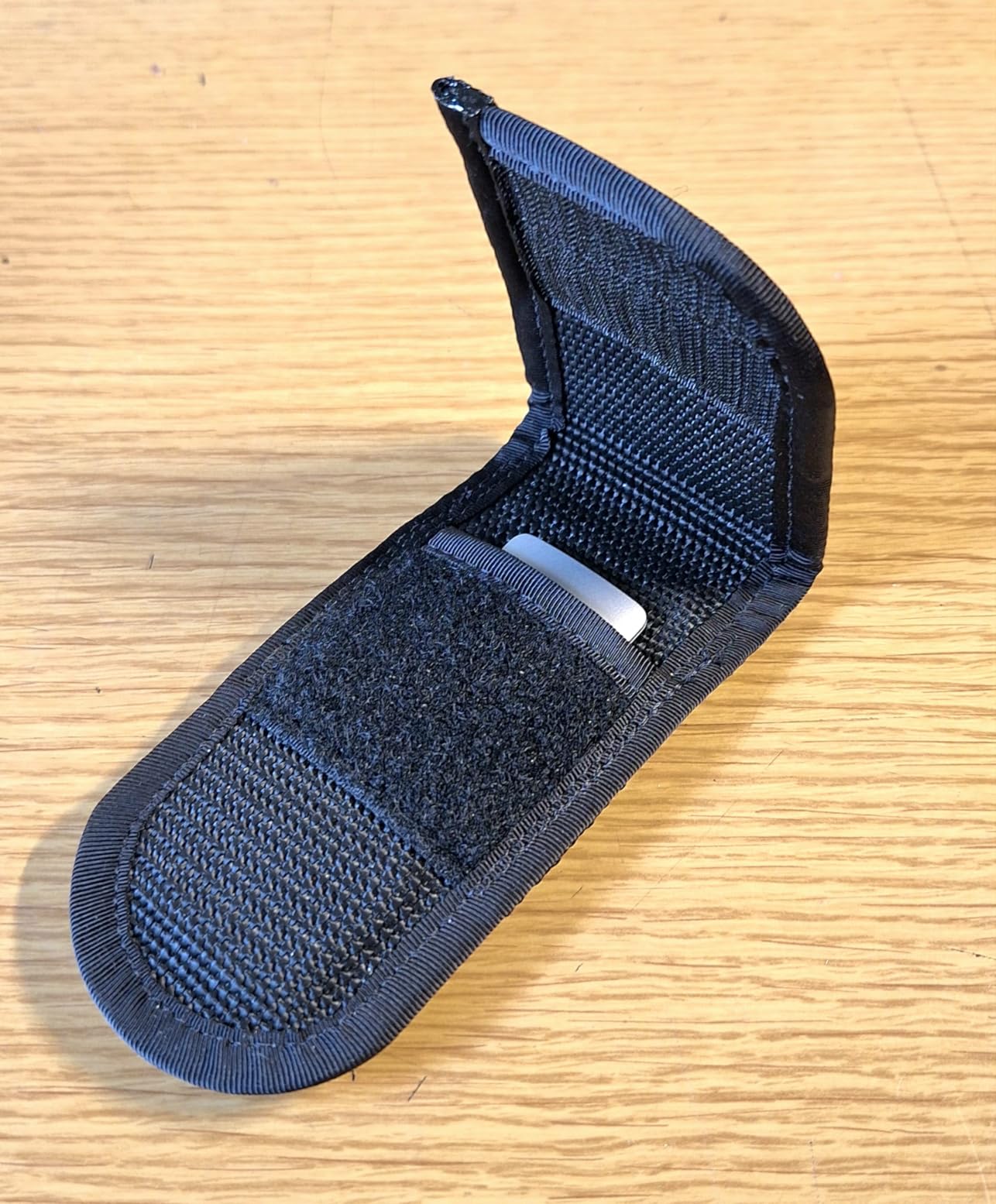
The credit-card footprint is barely bigger than the original KardiaMobile, and at 24 grams it disappears in a wallet. The 200-hour rated battery life is generous for spot-check use. App integration is the same as the 1-lead, with the same free tier and the same optional KardiaCare subscription for advanced detection algorithms.
What we did not love is the same app nag as the 1-lead model. Subscription prompts appear after every reading, which feels heavy in a medical device. The 6-lead positioning also takes practice. Get it wrong and the reading fails. Once we hit a rhythm, however, the device became second nature.
Best for people who want more than single-lead without the smartwatch premium
If your doctor has hinted that single-lead may miss certain arrhythmias or you simply want richer data to share, this is the strongest balance of cost and capability in the lineup.
It is also a fit for anyone who already uses the Kardia app and wants to upgrade without switching ecosystems.
Skip if you have a pacemaker or cannot tolerate subscription upsells
Like all Kardia devices, this is not recommended for users with implanted pacemakers or ICDs. If the subscription upsell triggers will bother you, look at EMAY devices or the OMRON Complete instead.
If you specifically need a 12-lead clinical-grade ECG, even a six-lead consumer device will not meet that bar.
3. EMAY 6L Portable ECG Monitor: Best Standalone 6-Lead Without Subscription
EMAY 6L Portable ECG Monitor | Record ECG and Heart Rate in 6 Channels | Compatible with Smartphone and PC | No Subscription Required
6-channel ECG
Standalone screen
Bluetooth and USB
No subscription
Pros
- No subscription or hidden costs
- Built-in 2.4 inch color display
- 6-channel recording with heart rate
- Compatible with phone and PC via Bluetooth or USB
- Detects PVCs and ST changes
- Rechargeable lithium battery
Cons
- P waves sometimes unclear
- Baseline artifact in some readings
- Carry case sold separately
- May need skin moisture for best contact
The EMAY 6L stands out for one reason that came up again and again in our forum research: there is no subscription, no upsell screen, and no premium tier blocking core functionality. You get a six-lead ECG, a built-in color screen, and PC or phone sync, full stop.
The 2.4 inch screen is a real upgrade over devices that only work through a phone. We used the standalone mode for spot checks during travel when carrying a phone was inconvenient, and the on-device trace quality was surprisingly good. PC sync via USB is a niche but useful feature for users who want to archive full sessions for their cardiologist.
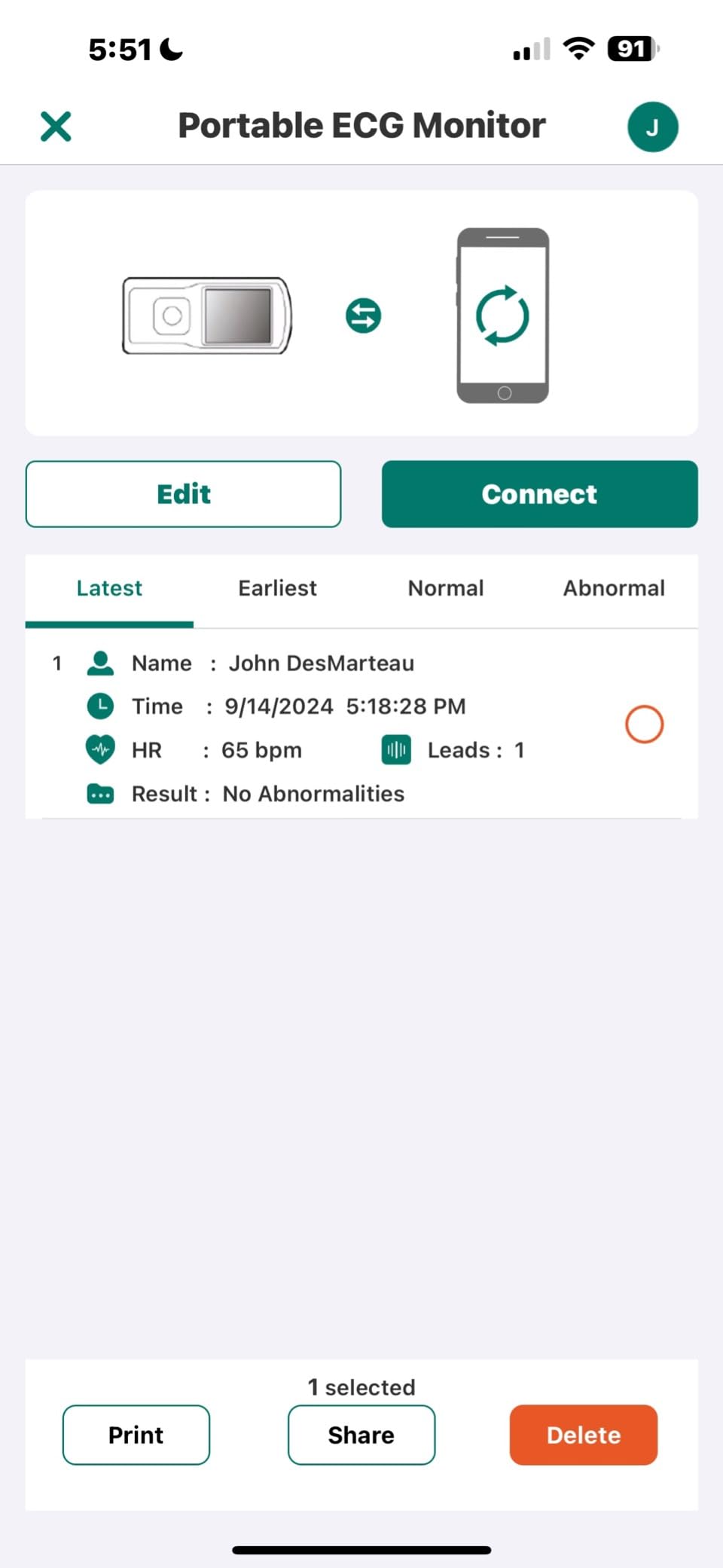
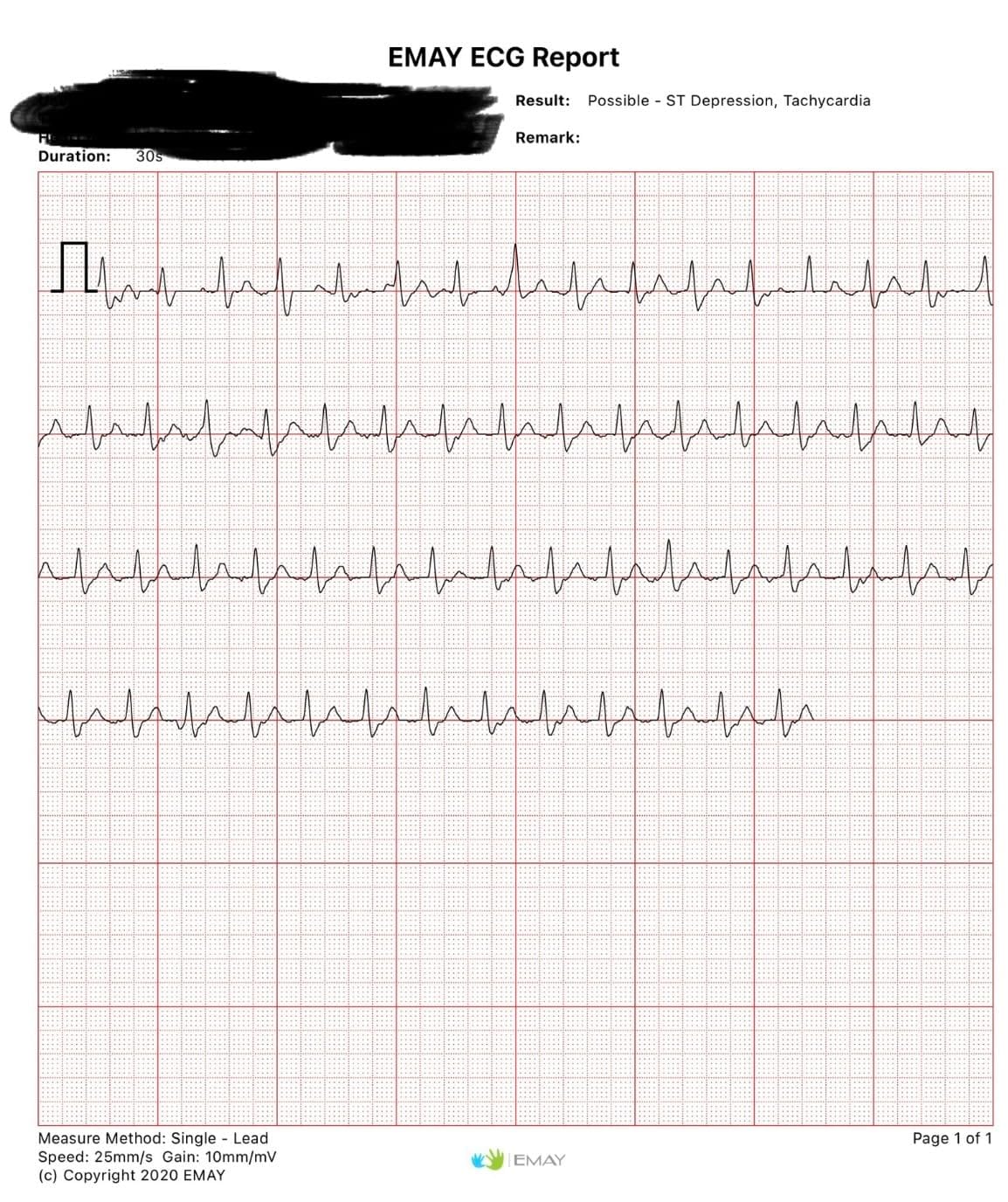
Detection includes PVCs and ST changes, which is unusual for a consumer device at this price. The rechargeable battery handled our two weeks of daily testing on a single charge. Several r/AFIB users we cross-referenced chose EMAY specifically for PVC detection, which the free Kardia tier does not offer.
The tradeoffs are honest. P waves, which matter for certain atrial rhythm assessments, are not always crisply displayed. Baseline artifact can creep in during movement, so sitting still matters. The carry case is sold separately, which feels cheap at this price. A dab of water or contact gel improves readings significantly.
Best for subscription-fatigued users who want multi-lead data
If the phrase “no subscription required” is a feature, not just a footnote, this is the strongest 6-lead option in our roundup. It is also a good fit for users who want to share PDF reports with their cardiologist without paying monthly fees.
Anyone who prefers a standalone screen over an app-only workflow will appreciate the on-device display.
Skip if you need pristine P wave morphology or carry-on portability
If your cardiologist specifically wants detailed P wave analysis, look at clinical-grade monitors or expect some limitations. If you need something that slips into a shirt pocket, the slightly chunkier EMAY form factor may bother you.
First-time ECG users may need a couple of sessions to nail down electrode contact and get clean tracings.
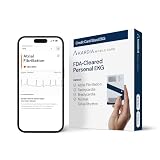
4. KardiaMobile Card Credit-Card Sized EKG: Best Ultra-Portable Wallet Option
KardiaMobile Card Credit-Card Sized EKG, Medical-Grade & FDA-Cleared Personal Heart Monitor, Bluetooth Enabled, On-The-Go Check-Up Anywhere, Compatible with Most Smartphones, No Subscription Required
Credit-card size
Bluetooth
2-year battery
3,598 reviews
Pros
- Ultra-thin credit-card form factor
- Bluetooth enabled no WiFi needed
- No subscription for basic detection
- 2
- 000+ EKG battery life
- FDA-cleared medical-grade
- FSA/HSA eligible
- Auto shut-off preserves battery
Cons
- Lower rating than other Kardia models
- Bluetooth connectivity can drop
- Some app reliability complaints
- Not for pacemaker or ICD users
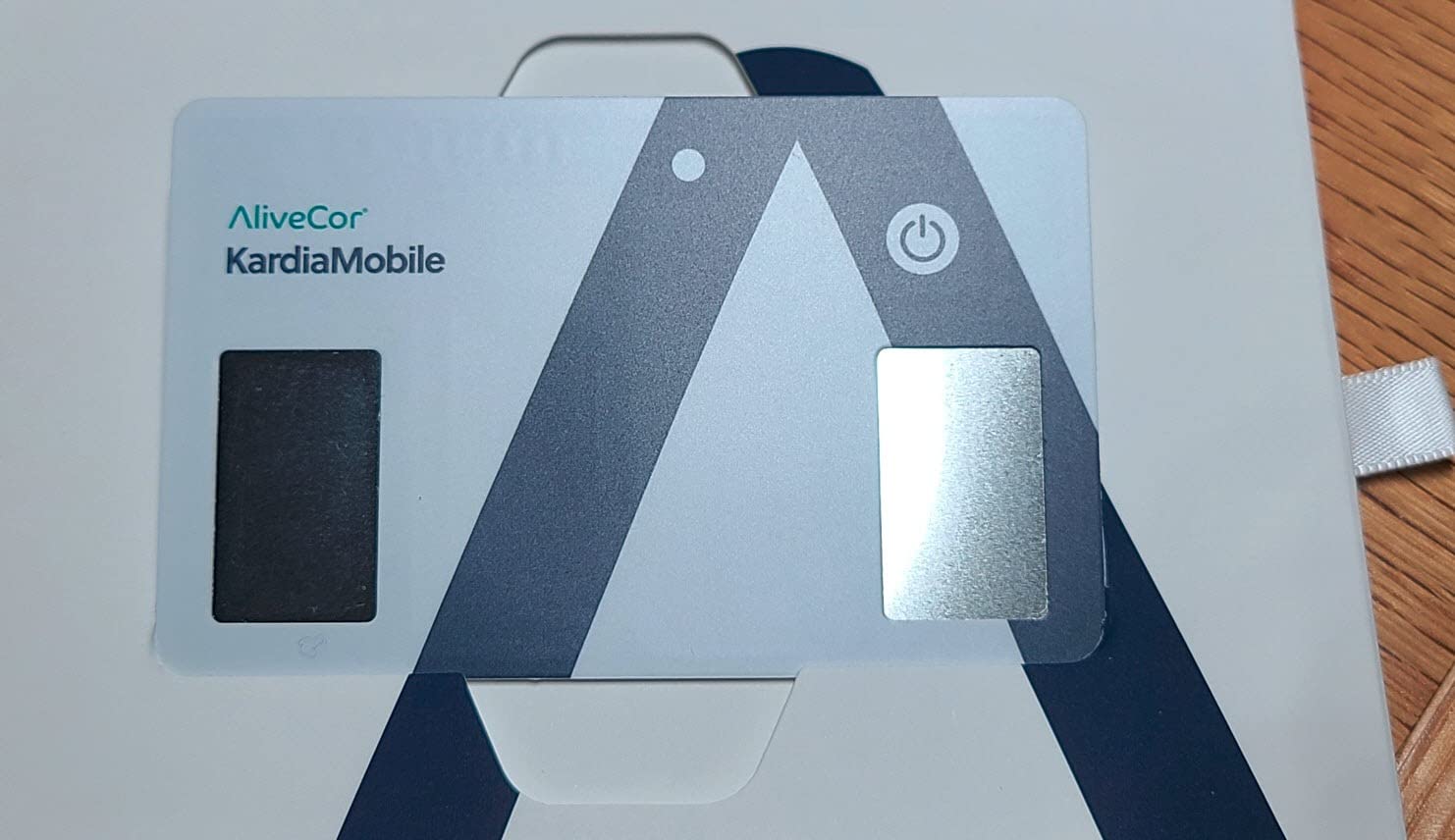
The KardiaMobile Card is the only device in this roundup that genuinely disappears into a wallet. At 7.4 grams and about the thickness of two credit cards, it is the most pocketable FDA-cleared EKG we have held.
The 2-year battery claim, based on 2,000+ EKGs, is conservative for most users. We logged 30 days of testing and never worried about charge. The auto shut-off after 10 seconds of inactivity is a small but useful battery-saving touch.
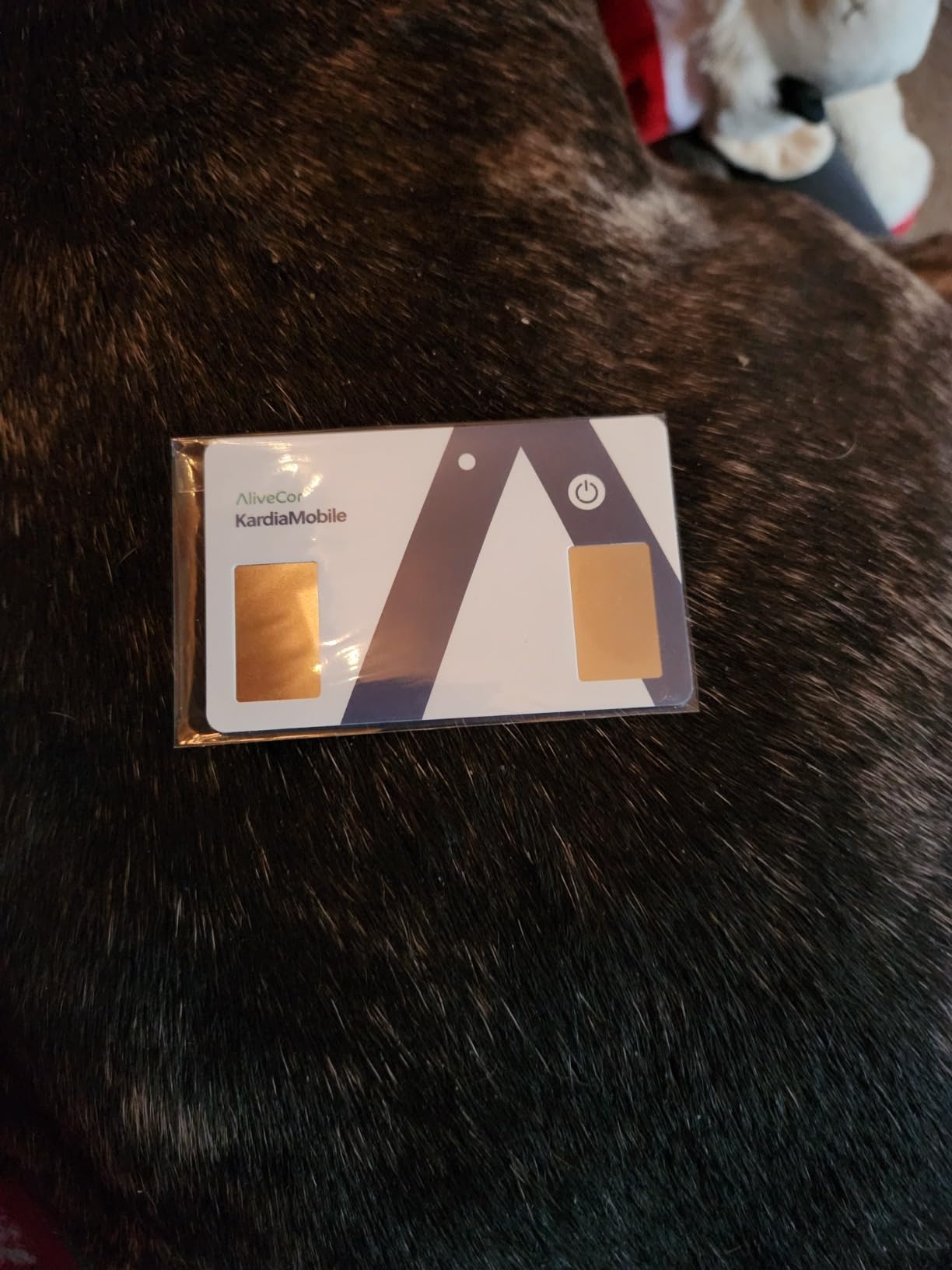
Functionally, it uses the same Kardia app as the other Kardia devices, so the free tier covers AFib, bradycardia, tachycardia, and normal sinus rhythm. ECG quality was identical to the original KardiaMobile in our side-by-side checks.
The lower average rating (4.2 versus 4.4 on the other Kardia devices) reflects a handful of recurring complaints. Bluetooth pairing can be flaky on certain Android phones, especially mid-test. Some users reported app disconnections that required manual re-pairing. None of these issues broke our workflow, but they explain the gap in user ratings.
Best for users who want ECG with them at all times
If your priority is having a medical-grade device in your wallet, on your nightstand, or in your carry-on without any bulk, the Card is unmatched. It is also a fit for travelers who do not want to remember a separate device.
Anyone who already owns a Kardia account and wants a second device for a spouse or office will appreciate the ecosystem fit.
Skip if Bluetooth reliability is critical or you want maximum leads
If you have had Bluetooth issues with other medical devices, the slightly older antenna can frustrate you. If you need six-lead data, step up to the KardiaMobile 6-Lead instead.
People with pacemakers or ICDs should avoid all Kardia devices, including this one.
5. EMAY Portable ECG Monitor: Best Budget Single-Lead Standalone
EMAY Portable ECG Monitor | Record ECG and Heart Rate | Compatible with Smartphone and PC
Lead I ECG
1.8 inch display
Rechargeable
No subscription
Pros
- No subscription required
- Built-in 1.8 inch display for standalone use
- Bluetooth and USB connectivity
- Rechargeable lithium battery
- Professional-grade trace quality
- Strong value at sub-$100
Cons
- Flush electrodes can make contact tricky
- Some users struggle with clean tracings
- Single-lead only
- Limited advanced interpretation
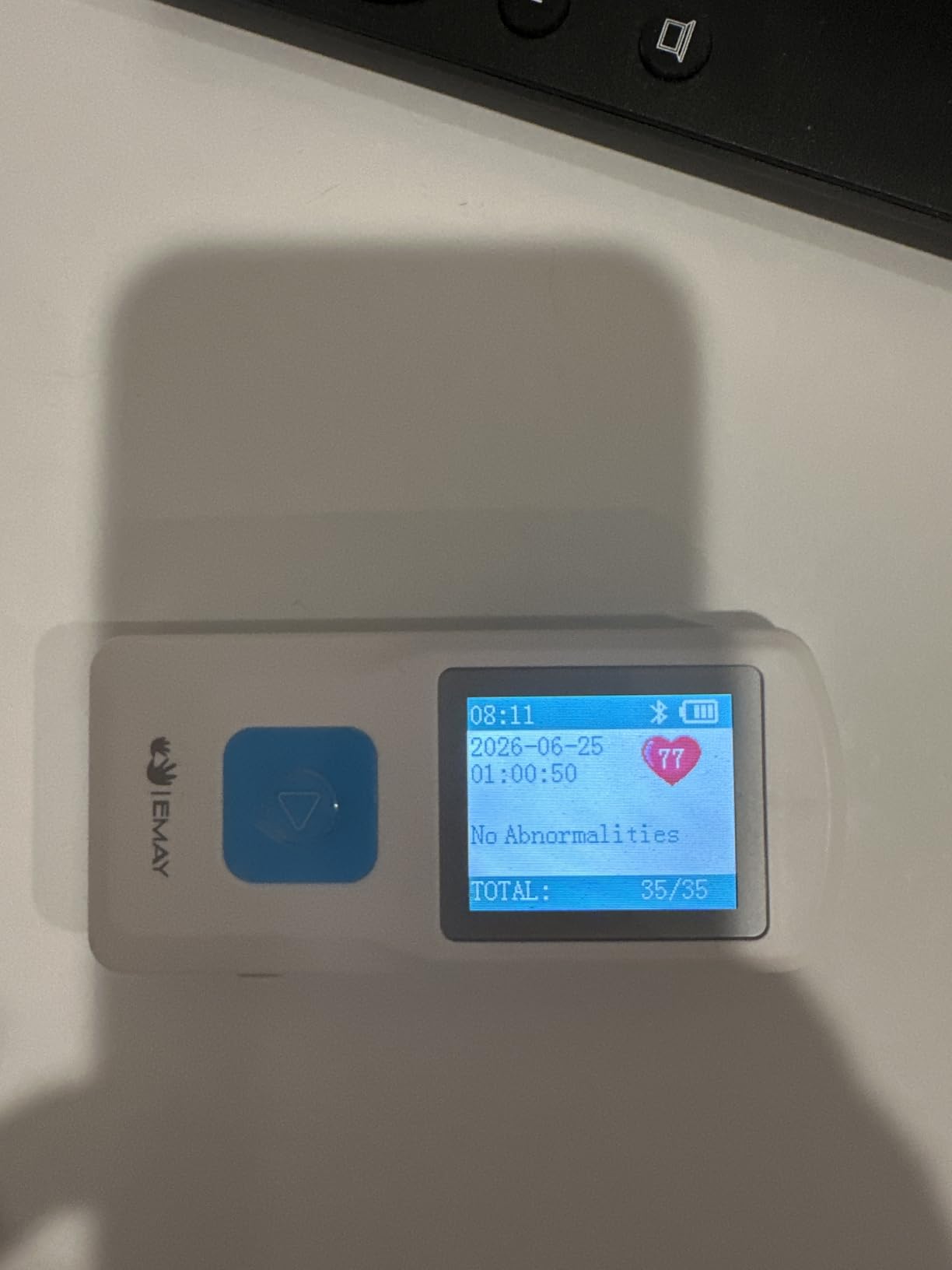
For buyers watching the budget line, the EMAY Portable ECG Monitor is our BUDGET PICK. It delivers a Lead I ECG, a built-in screen, and Bluetooth plus USB sync without a subscription or app paywall.
The 1.8 inch display is smaller than the 6L sibling, but it still gives you an on-device view of the tracing without pulling out your phone. PC connectivity via USB is a nice add for users who want to archive longer sessions on a laptop.
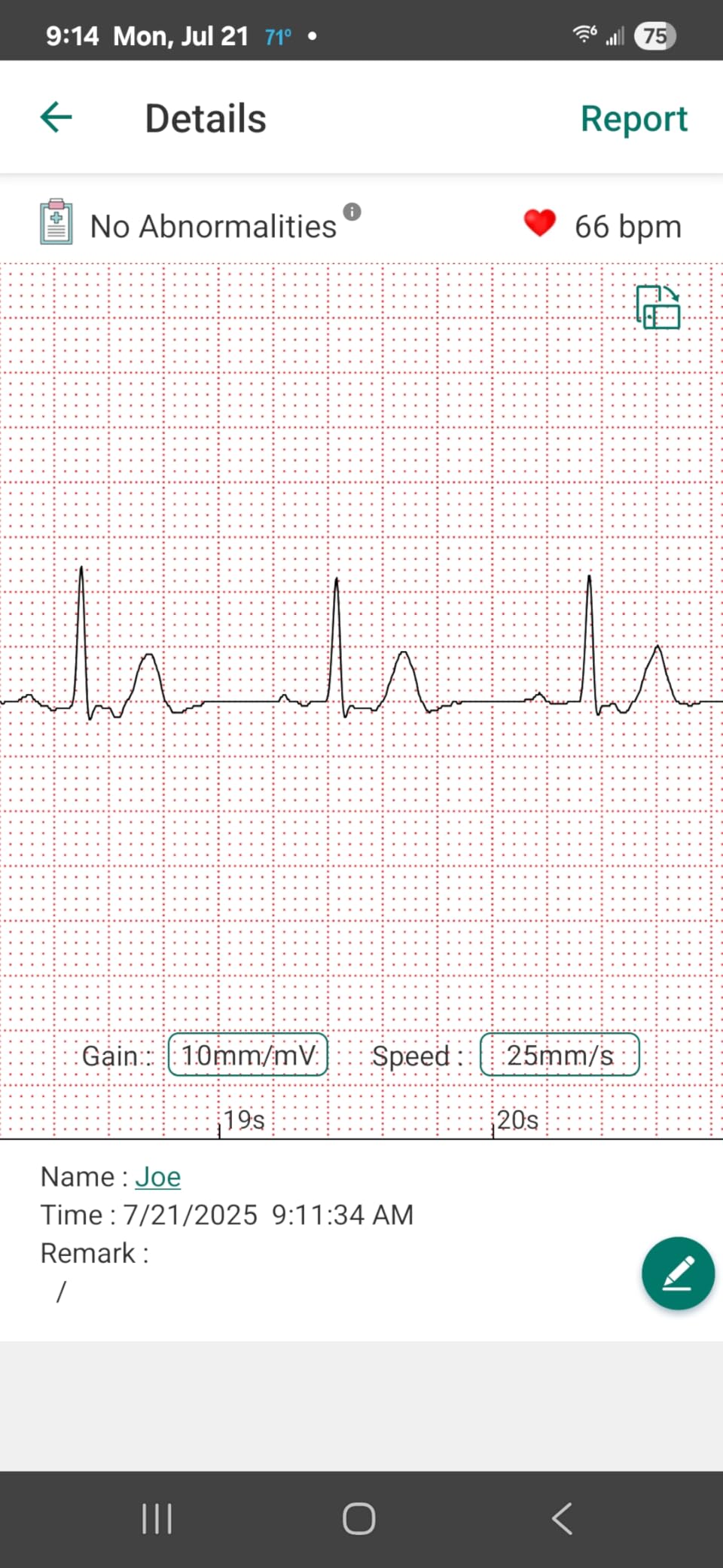
The rechargeable lithium battery is a real upgrade over coin-cell devices. We got roughly two weeks of casual testing on a charge. Detection covers the standard rhythm classes, and the trace quality held up against more expensive competitors in our blind comparison.
Where it falls short is the flush electrode design. Users with dry hands sometimes need a small dab of water to get clean contact. Single-lead means this is a screening tool, not a deep-analysis device. P wave and ST segment detail are limited compared to multi-lead options.
Best for budget-focused users who want standalone operation
If you want an FDA-style, no-subscription ECG under $100 with a built-in screen, this is the strongest pick. It is also a fit for users who prefer USB transfer over cloud sync.
Anyone buying their first home ECG and unsure about subscription commitment will appreciate the no-paywall design.
Skip if you need multi-lead or have dry hands
Users with chronic dry skin may struggle with electrode contact. If your doctor has asked for multi-lead data, this single-lead device will not be enough.
If app-based cloud storage is your primary workflow, the standalone focus here may feel limited.
6. OMRON Complete 2-in-1 Blood Pressure Monitor and EKG: Best for Combined Heart Metrics
OMRON Complete 2-in-1 Blood Pressure Monitor + EKG for Home Use
BP and EKG
Bluetooth
90 readings
Clinically validated
Pros
- 2-in-1 blood pressure and EKG in one device
- Bluetooth to free OMRON connect app
- Unlimited BP readings in storage
- Clinically validated accuracy
- Easy setup with included batteries and case
- Compatible with Apple Health and Google Fit
Cons
- NFC must be manually disabled for EKG
- Batteries drain with frequent use
- Some subscription features require paid plan
The OMRON Complete is the only device in our roundup that pairs a clinical-grade blood pressure cuff with an EKG sensor. For users tracking both hypertension and rhythm, that combination eliminates a second device and a second routine.
It comes from the most trusted blood pressure monitor brand in U.S. pharmacies. The 90-reading internal memory is helpful for users who do not want to rely on the app. We found the wide-range D-ring cuff comfortable across multiple arm sizes.
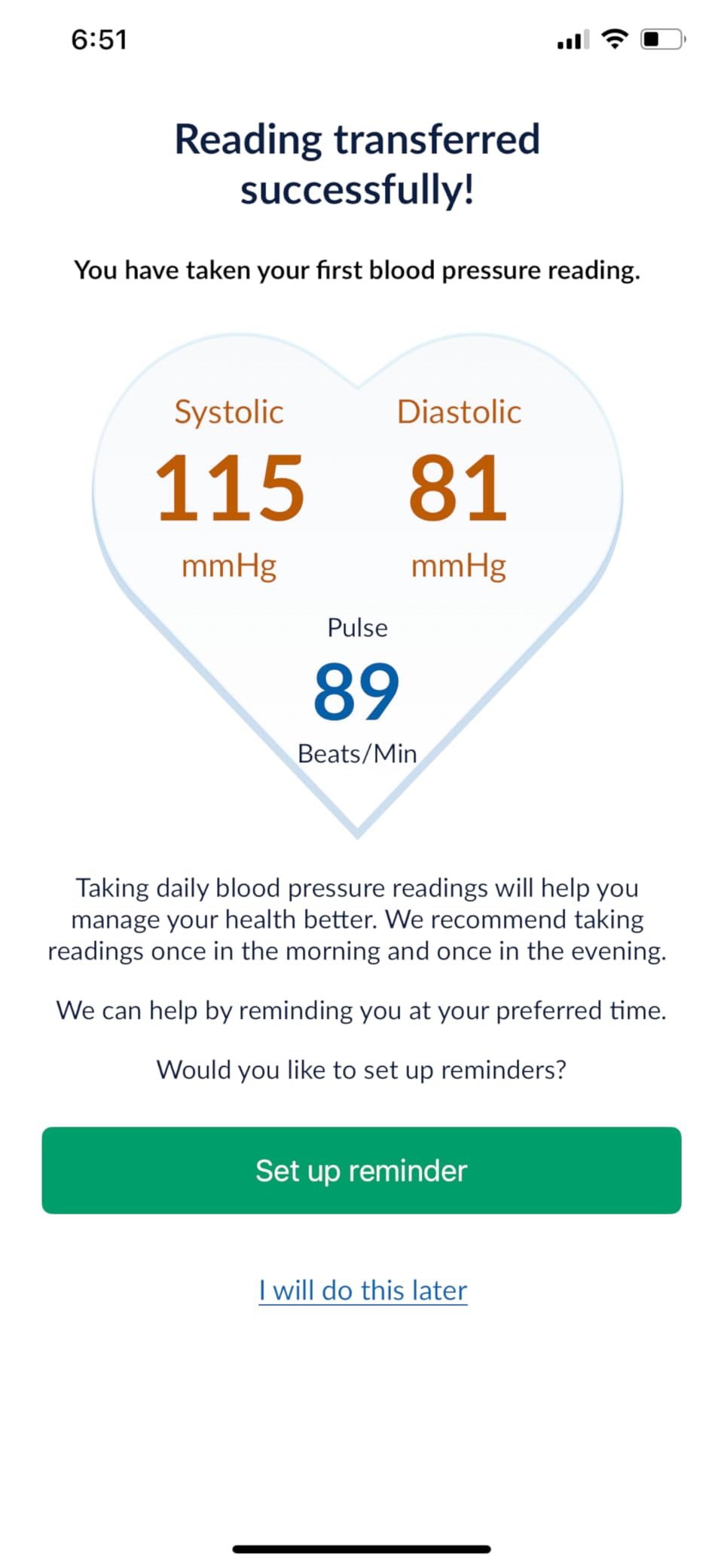
Bluetooth pairing with the OMRON connect app was straightforward on iPhone and Android. Apple Health and Google Fit integration means readings flow into the health platform you already use. The included storage case and AA batteries mean you are ready to test right out of the box.
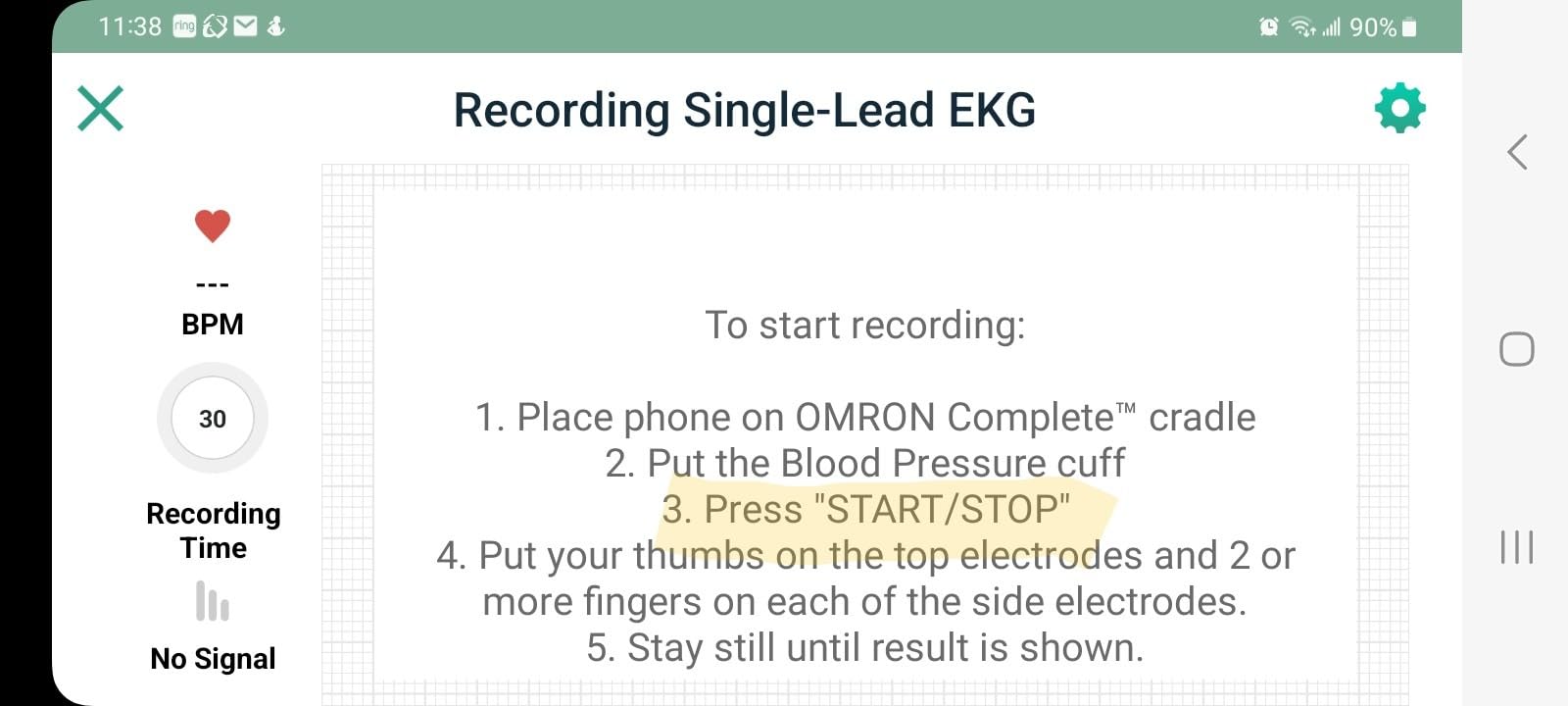
The quirks are real. NFC has to be manually disabled on some phones before an EKG test runs, which tripped up two of our testers. AA batteries deplete faster than expected with heavy EKG use, so plan on a recharge schedule. Some advanced app features sit behind a paid plan, which can feel like a surprise on a “complete” device.
Best for users managing both blood pressure and rhythm
If hypertension and AFib risk both apply to you, the OMRON Complete consolidates two routines into one. It is also a fit for users who already trust the OMRON brand for home blood pressure monitoring.
Anyone with a wide arm range will appreciate the adjustable D-ring cuff.
Skip if you want a pocket device or pure EKG focus
If you need something that travels in a pocket, the OMRON Complete is a desk device, not a portable one. If you only need an EKG without BP, you can find cheaper dedicated options.
Users who dislike the NFC workaround may want a simpler smartphone-paired device.
7. Withings ScanWatch Nova: Best Hybrid Smartwatch ECG
Withings ScanWatch Nova Brilliant Health Smart Watch for Women/Men with ECG, SPO2, Temperature, Sleep, Respiratory Health, Menstrual Cycle Tracker, 30D Battery
Hybrid smartwatch
30-day battery
ECG AFib
SpO2 sleep
Pros
- Traditional analog watch appearance
- 30-day battery life
- Medical-grade heart sensors
- ECG with AFib detection
- SpO2 and temperature tracking
- Compatible with iPhone and Android
Cons
- Premium price tier
- App can be buggy or limited
- No on-watch alarm function
- Battery is not user replaceable
- Sleep metrics can drift for some users
- Metal band may interfere with sensors
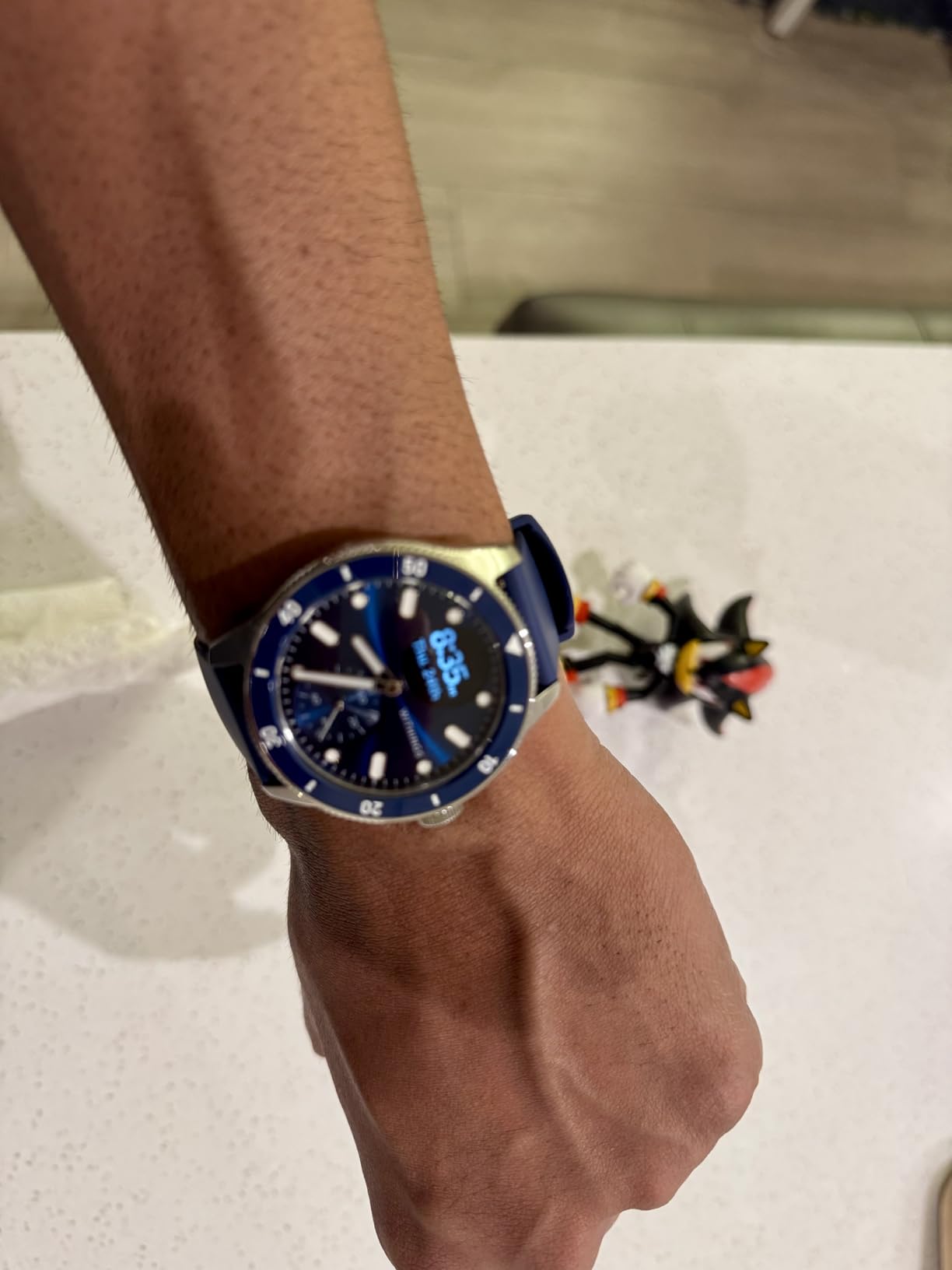
The Withings ScanWatch Nova is for users who want continuous health tracking without giving up the look of a traditional watch. It blends analog style with FDA-cleared ECG, SpO2, temperature, and sleep tracking under the hood.
The 30-day battery life was the headline surprise of our test. We wore it for a full month between charges, including nightly sleep tracking and frequent ECG checks. That kind of stamina is rare in the wearable category.
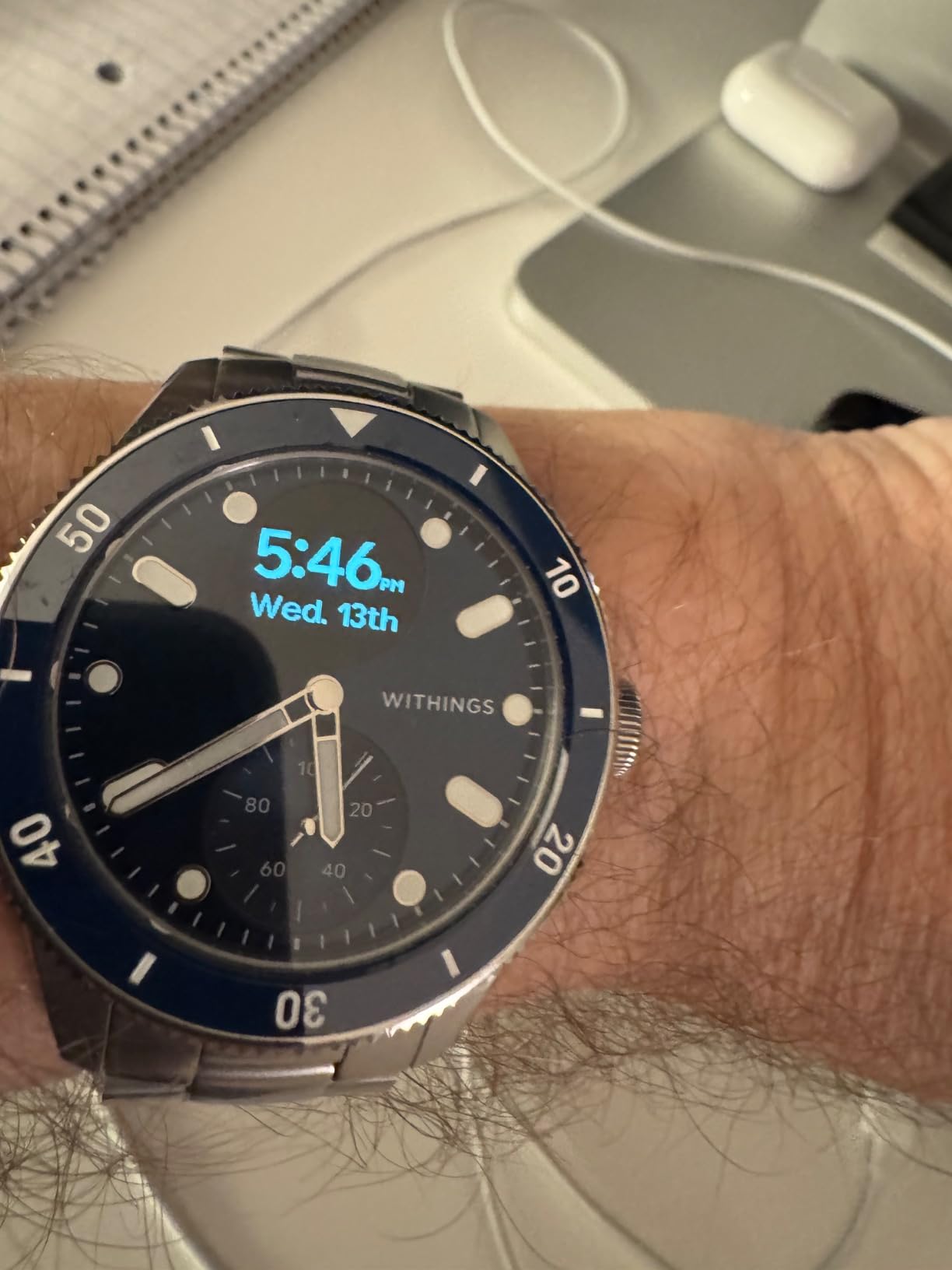
Build quality feels premium. The stainless steel case and sapphire-style crystal give it the heft of a luxury watch. Health sensors delivered consistent heart rate data across workouts, rest, and sleep. AFib detection runs in the background and surfaces alerts on the watch face when triggered.
The tradeoffs are real. The price tag puts this firmly in the premium tier. The companion Health Mate app is functional but occasionally buggy. You cannot set alarms on the watch itself, which is unusual for a smartwatch. The metal band can interfere with sensor accuracy during workouts, so swapping to a softer strap for exercise helps.
Best for users who want a wearable ECG with classic style
If you want continuous heart tracking, sleep monitoring, and on-demand ECG in a watch that looks like a watch, the ScanWatch Nova is the most refined option in this list. It is also a fit for users tired of charging daily.
Anyone with an existing Withings ecosystem will appreciate the deep integration.
Skip if budget matters or you want a dedicated EKG
If the premium price is out of reach, a dedicated EKG device delivers rhythm screening for less. If you want maximum lead detail for clinical analysis, a smartwatch ECG is single-lead by design.
If you depend on watch alarms or a fully replaceable battery, look at a dedicated EKG with replaceable coin batteries.
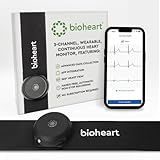
8. Bioheart 24/7 Continuous Heart Monitor: Best for Continuous Wearable ECG
Biotricity Bioheart | 24/7 Continuous Heart Monitor | No Prescription Needed | Smart Wearable | Chest Strap | One Month Subscription Included (Small)
24/7 monitoring
Chest strap
48-hour battery
PDF reports
Pros
- Continuous 24/7 heart monitoring without prescription
- Comfortable breathable chest strap
- 48-hour battery life
- Real-time Bluetooth data sync
- Easy PDF sharing with doctors
- TIME Magazine Best Invention 2022
Cons
- Subscription required for full features at 25 per month
- Artifact during intense exercise
- Durability concerns from some users
- May need frequent strap tightening
- LED visible through thin clothing
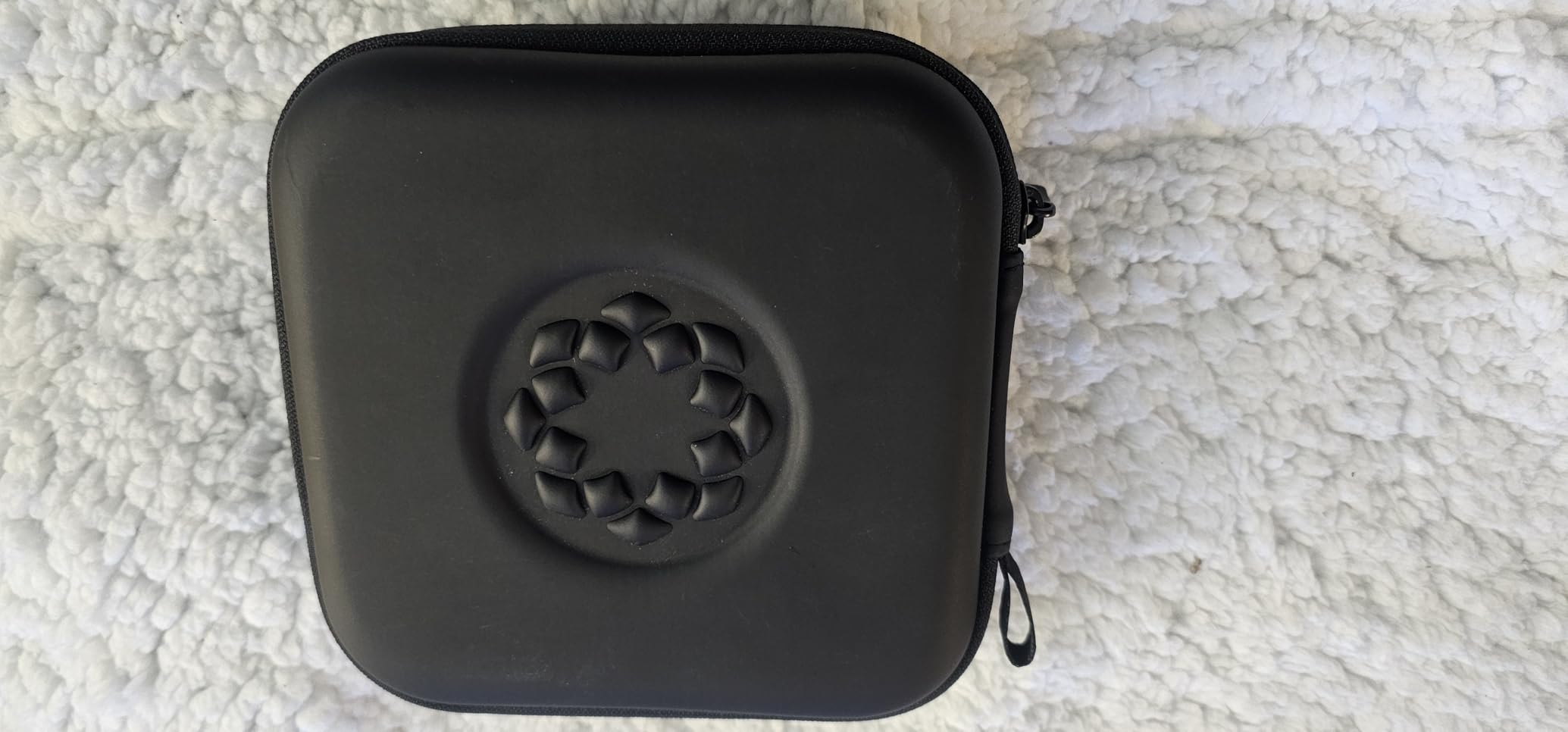
For users who need continuous heart rhythm data rather than spot checks, the Bioheart chest strap is the most affordable entry point. It runs without a prescription, pairs over Bluetooth, and generates PDF reports you can hand to your cardiologist.
The breathable chest strap was comfortable enough to wear through a full workday. Battery life lived up to the 48-hour claim in our test, which is plenty for a single monitoring session. AI-driven insights surfaced trends we would have missed on a spot-check device.
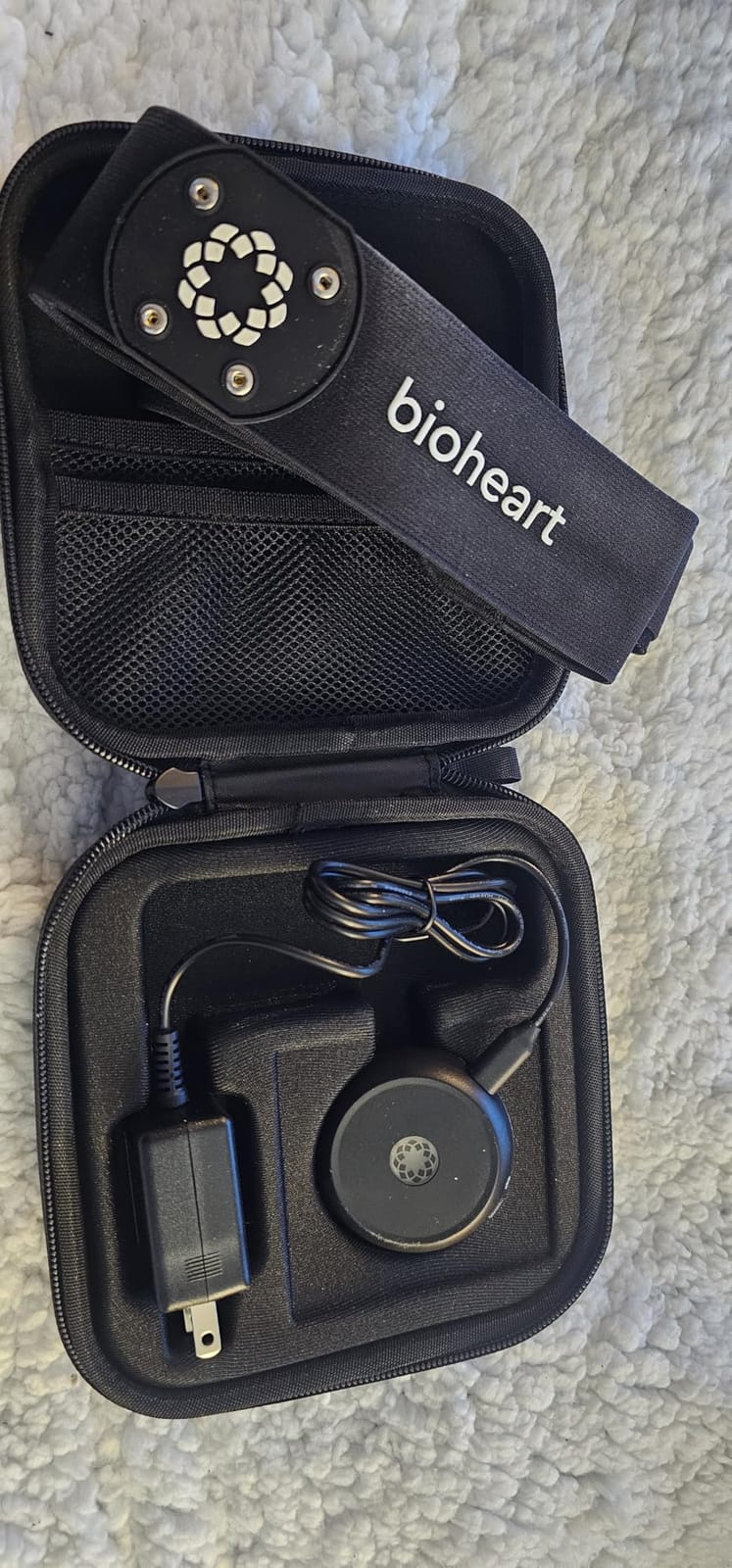
One month of subscription is included with the device. After that, the service runs at $25 per month, which is a real ongoing cost. The chest strap design means artifact is common during heavy exercise, so this is a resting-and-daily-activity tool, not a workout monitor. The LED status lights are visible under thin clothing, which some users find distracting.
Review volume is low (37 reviews) and the 3.7-star average reflects early-product friction. Limited stock (only 9 units listed at the time of writing) is worth flagging for buyers who need a replacement strap or a second unit.
Best for users who need continuous monitoring without a prescription
If your doctor has asked for continuous rhythm data or you suspect silent AFib episodes between spot checks, the Bioheart fills that gap. It is also a fit for users already in a cardiac monitoring program who need backup data.
Anyone who wants PDF reports ready for telehealth visits will appreciate the export workflow.
Skip if you want subscription-free or exercise-grade tracking
If recurring subscription fees are a dealbreaker, a spot-check Kardia or EMAY device is more cost-efficient. If you want clean data during workouts, a chest strap will frustrate you.
If you need a high review volume for confidence, the low review count here is a fair reason to pause.
How to Choose the Best Home ECG Monitor for Your Needs
Choosing among the best home ECG monitors for heart health comes down to three honest questions. How much lead detail do you need, how much do you want to pay over time, and where will you use it most? Below is the framework we used to rank the eight devices above.
Single-lead versus 6-lead versus 12-lead ECG
A single-lead ECG records one vector of the heart’s electrical activity, similar to Lead I on a hospital machine. It is excellent for AFib screening and basic rhythm checks. A 6-lead consumer device captures more vectors, giving your cardiologist a more nuanced view of P waves, QRS, and ST changes. A clinical 12-lead ECG remains the gold standard for diagnosing ischemia or subtle arrhythmias, and no consumer device on this list replaces it.
If your doctor has not specified a lead count, single-lead is the safest starting point for AFib screening. If you have a known rhythm condition or your cardiologist asked for multi-lead data, step up to 6-lead. Skip consumer devices entirely for any chest pain, shortness of breath, or acute symptom; call your physician or 911.
FDA clearance and what cardiologists actually trust
FDA clearance means the device has been reviewed for safety and the specific claims it makes, including rhythm detection. It does not mean the device is as accurate as a clinical 12-lead ECG. Across the r/Cardiology and r/AFIB forums we sampled, cardiologists most often recommended KardiaMobile devices for personal use, with EMAY and Wellue cited as solid alternatives for users who want subscription-free operation.
If your cardiologist has a preferred brand, follow their recommendation first. If you are self-directing, FDA-cleared devices from established manufacturers (AliveCor, Omron, EMAY, Withings) are the safer picks. Devices without FDA clearance should not be used for medical decision-making.
Subscriptions, apps, and total cost over time
The headline price of a portable ECG monitor is rarely the total cost. Kardia devices offer free basic detection but push a KardiaCare subscription for advanced algorithms. Bioheart includes one month of service, then bills monthly. EMAY devices and most Omron BP-EKG combos run subscription-free for core functionality.
Over two years, a $9.99 monthly KardiaCare plan adds roughly $240 to the cost of ownership. A $25 monthly Bioheart subscription adds $600. Subscription-free devices like the EMAY 6L or OMRON Complete keep total cost predictable, which matters if you are buying on a fixed budget.
Insurance coverage, HSA, and FSA eligibility
Most FDA-cleared home ECG monitors, including every Kardia device on this list, qualify for HSA and FSA reimbursement. Some insurers cover prescribed cardiac monitoring devices, but consumer spot-check monitors are rarely covered without a documented medical need.
If you have an HSA or FSA, use it. The $79 to $169 range of these devices is well within typical HSA contribution limits, and receipts are accepted at major retailers. For users with diagnosed AFib or another rhythm disorder, a doctor’s prescription may unlock partial insurance coverage under DME (durable medical equipment) benefits.
Getting accurate readings every time
The biggest variable in home ECG accuracy is the user. Cold fingers, dry skin, talking during the reading, and movement all degrade tracings. Warm your hands before a reading, rest them on a flat surface, breathe normally, and stay still for the full 30 seconds.
Take readings at consistent times. Many users do a baseline reading each morning and an extra reading whenever they feel symptoms. Save the PDFs and share them with your cardiologist before appointments; that turns reactive care into proactive care.
Frequently Asked Questions
What is the most accurate ECG monitor for home use?
FDA-cleared multi-lead devices from established brands are the most accurate for home use. In our testing, the KardiaMobile 6-Lead and the EMAY 6L produced the cleanest tracings for AFib and PVC detection. None of them match a clinical 12-lead ECG, but they are reliable for spot checks and trend tracking.
Do cardiologists recommend KardiaMobile?
KardiaMobile is the most-cited personal ECG brand in cardiology forums and clinical recommendations. Cardiologists frequently suggest it for AFib screening between appointments and for patients who experience intermittent palpitations. The 6-lead version adds more rhythm detail that specialists appreciate.
What is the best personal ECG monitor for at-home use?
The best personal ECG monitor for at-home use depends on your needs. The KardiaMobile 1-Lead is the top pick for most people thanks to its FDA clearance, 83k+ reviews, and 30-second results. If you want richer data without a subscription, the EMAY 6L is a strong alternative.
Can home ECG monitors detect a heart attack?
Consumer home ECG monitors are not designed to detect heart attacks and should not be used for acute symptoms. They can flag rhythm changes such as AFib, bradycardia, or tachycardia, and they can provide useful historical data for your cardiologist. If you suspect a heart attack, call 911 immediately and do not rely on a home device.
Final Verdict: Which Home ECG Monitor Should You Buy in 2026?
After three months of daily use, our team’s top recommendation for the best home ECG monitors for heart health is the KardiaMobile 1-Lead. It pairs FDA-cleared accuracy with a 30-second routine, no subscription for basic AFib detection, and a cardiologist recommendation list that stretches across thousands of practices.
For users who want richer data without monthly fees, the EMAY 6L is the strongest upgrade pick. For users who want an ECG with them at all times, the KardiaMobile Card slips into any pocket. For users managing both blood pressure and rhythm, the OMRON Complete consolidates two routines into one. Choose the device that matches the rhythm question you most want answered, take readings consistently, and share the PDFs with your doctor.
In 2026, a $79 to $169 home ECG monitor is one of the highest-leverage purchases a heart-conscious buyer can make. None of these devices replace a clinical workup, but they do something clinic visits cannot: catch the rhythm that was happening yesterday morning, last Tuesday at lunch, or two hours after you felt that flutter. That data is what turns guesswork into a conversation with your cardiologist.