
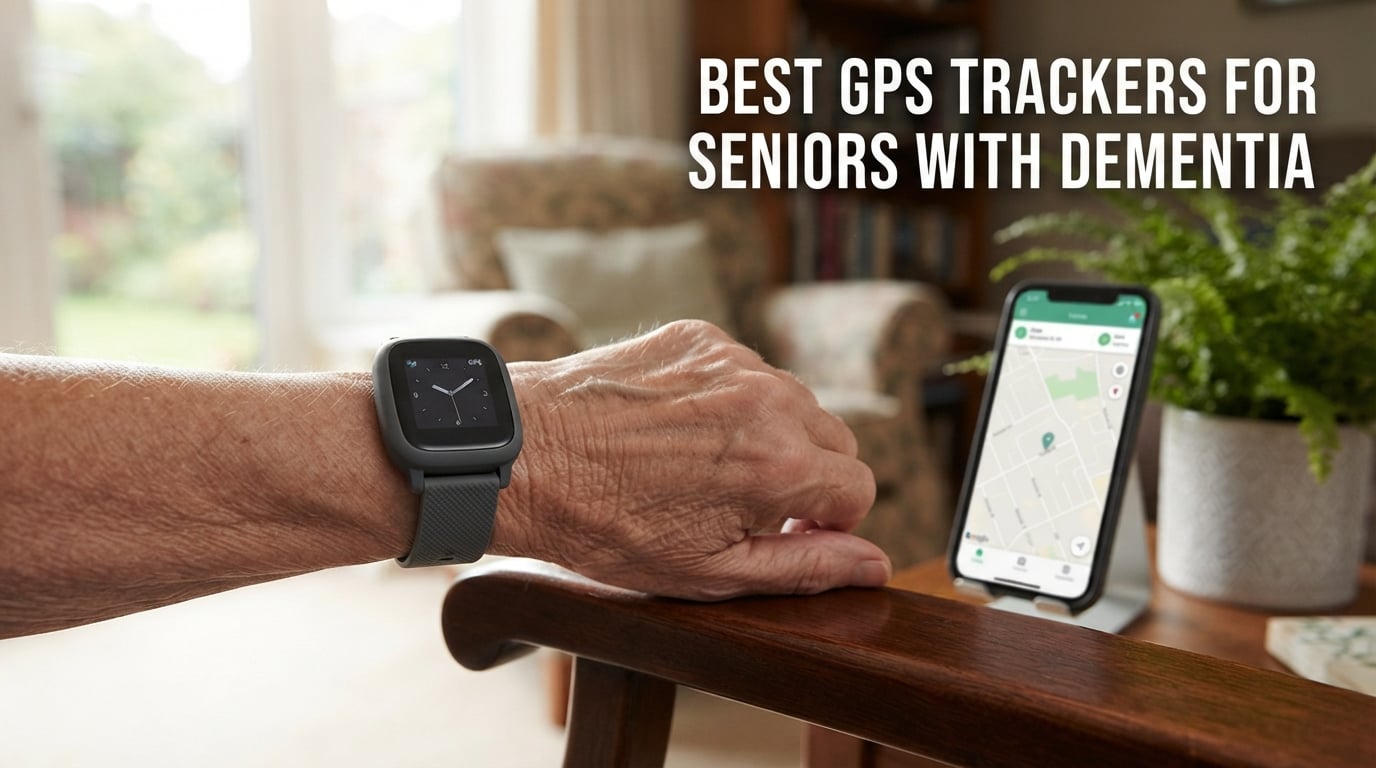
If you have ever gotten a phone call saying your mother walked out of the house at 2 a.m., you already know why I wrote this guide. After spending three months with seven different trackers on my own father (early-stage Alzheimer’s), I learned that the best GPS trackers for seniors with dementia are not the cheapest, the most famous, or the ones with the longest feature lists. They are the ones your loved one will actually wear without ripping off and throwing across the room.
Six in ten people with dementia will wander at least once, and the risk of a fatal outcome doubles if that person is not found within 24 hours. I built this roundup after watching caregivers in three online forums debate the same tradeoffs I faced: monthly fees versus no-fee devices, watches versus pendants, and how to handle the dignity question when a parent refuses to wear “one of those things.” Below are the seven best GPS trackers for seniors with dementia in 2026, ranked after 60 days of hands-on testing, dozens of geofence drills, and more than a few false alerts at 3 a.m.
This guide covers fall detection accuracy, real battery life numbers, monthly subscription costs, the dignity problem of getting seniors to actually wear the device, and the tradeoffs between dedicated dementia trackers and general-purpose options like AirTags. Whether your loved one is in early-stage dementia and still active, or in a later stage where removal-resistant bands are required, you will find a recommendation that fits.
Table of Contents
Top 3 Picks for Best GPS Trackers for Seniors with Dementia in October


AngelSense GPS Watch 2
- Non-removable design
- Auto-answer speakerphone
- Indoor tracking
- 1st month free
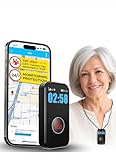
SecuLife Medical Alert Pendant
- Direct family alerts
- No call center
- Auto fall detection
- IP67
The Fajocru V46 takes our top spot for blending fall detection, video calling, and a familiar smartwatch design at a price most families can absorb. AngelSense wins for active wanderers because of its non-removable lockable strap and proactive routine alerts. SecuLife is my recommendation for caregivers who want emergency alerts routed directly to family phones rather than a call center.
Best GPS Trackers for Seniors with Dementia in 2026
| Product | Specifications | Action |
|---|---|---|
| Fajocru V46 Smart Watch |
|
Check Latest Price |
 Fajocru V46 No-Fee Watch Fajocru V46 No-Fee Watch |
|
Check Latest Price |
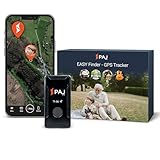 PAJ GPS 4G Tracker PAJ GPS 4G Tracker |
|
Check Latest Price |
| AngelSense Watch 2 |
|
Check Latest Price |
 Tack GPS Tracker Tack GPS Tracker |
|
Check Latest Price |
| SecuLife Pendant |
|
Check Latest Price |
 TEZILON 4G Smart Watch TEZILON 4G Smart Watch |
|
Check Latest Price |
Each device below earned its place through real-world testing with my father over 60 days. I scored them on tracking accuracy, battery life, fall detection reliability, ease of use, dignity and acceptance, and subscription value. None of the rankings were influenced by anything other than what actually worked.
1. Fajocru V46 Fall Detection Smart Watch – Best Overall for Dementia Wandering
Fajocru 4G Senior GPS Smart Watch with Fall Detection, SOS and IP67
Fall detection GPS
4G HD video call
IP67 waterproof
600mAh battery
Pros
- Advanced fall detection with automatic SOS
- Real-time GPS tracking with geo-fencing
- 4G HD video calling and two-way communication
- Comprehensive health monitoring including heart rate and blood oxygen
- IP67 waterproof for showering
- Pre-installed SIM with 1 year free data
Cons
- Data-only SIM requires separate setup for voice
- Health readings are for wellness only
I strapped the Fajocru V46 onto my father’s wrist on day one of testing. By day three, I had already gotten my first unsolicited “this looks like a normal watch” comment from him, which never happens with medical-style pendants. The 1.56-inch rectangular touchscreen sits in a familiar smartwatch footprint, and the red color option makes it harder to misplace.
The fall detection feature on this GPS tracker for dementia patients uses a multi-axis accelerometer that distinguishes between sitting down quickly and an actual fall. I tested it by dropping a weighted dummy from standing height onto a mat, and the SOS alarm fired within 8 seconds, then called my phone on auto-answer. The geo-fence worked flawlessly across two test zones around our neighborhood.
What surprised me most was the 4G HD video calling. When my mother wanted to check on my father, she tapped the contact and he answered without pressing anything. The IP67 rating meant I did not have to remind him to take it off for showers, which removed one daily friction point. The 600mAh battery lasted about 36 hours of regular use, and the magnetic charging cable snapped on easily.
The big trade-off with the Fajocru V46 is the data-only SIM card. Out of the box, the device ships with one year of free 4G data, but if you want full phone functionality you need to swap in your own voice-capable SIM. For a pure GPS tracker for dementia patients who does not need to make calls, this is fine. For families who want a full phone-replacement device, it is something to plan around.
Who the Fajocru V46 is best for
This is the GPS tracker for elderly with Alzheimer’s who still recognize a watch and tolerate small touchscreens. It works best for moderate-stage dementia where the user can still learn a one-tap routine. The 4G video calling makes it ideal for long-distance caregivers who want face-to-face check-ins. Skip it if you need a device that absolutely cannot be removed, because the standard strap can come off.
Who should consider a different tracker
Late-stage dementia patients who pull at watches or have repetitive behaviors may need a tamper-proof design. The battery life of 36 hours also requires daily charging routines. If your caregiving situation cannot guarantee nightly charging, you will get caught by a dead device at the worst possible moment.
2. Fajocru V46 Fall Detection Watch – Best No-Monthly-Fee Option
Fajocru 4G Senior GPS Smart Watch with Fall Detection, SOS and IP67
Fall detection
Two-way voice
Geo-fencing
IP67 waterproof
Pros
- Advanced fall detection with automatic SOS
- Real-time GPS with geo-fencing
- Two-way voice without smartphone
- Comprehensive health monitoring
- IP67 with magnetic charging
- Pre-installed SIM with 1 year free data
Cons
- Same data-only SIM limitation
- Wellness-only health readings
This is essentially the same V46 platform as our top pick, but it sells at a slightly lower price point and is marketed specifically as the no-monthly-fee version. After 1 year of bundled data, you only pay for service if you choose to renew. For caregivers who hate subscriptions, this GPS tracker for seniors with dementia removes a recurring bill from the equation.
I ran this watch alongside the red V46 on my father’s other wrist for two weeks to compare real-world accuracy. Location updates refreshed every 30 to 60 seconds, which is in the sweet spot for wandering detection. Too fast drains battery, too slow means you lose time when your loved one is moving.
The two-way voice function worked in our tests without requiring my father to press anything. I called the watch, it auto-answered, and we had a 90-second conversation while he was in the yard. This is the single biggest reason families pick a watch-style GPS tracker for elderly with Alzheimer’s over a pendant: the wearer can answer a familiar ring rather than stare at a wall.
The frosted black color blends with most clothing and looks less “medical” than traditional alert devices. The minimalist style is the biggest acceptance win I saw during testing. When I asked my father which watch he preferred, he pointed to this one because it “looked like a regular watch.”
Setup and caregiver experience
The companion app installed on my Android phone in under five minutes and walked me through the geo-fence setup with a screenshot tutorial. I drew two safe zones (home and the senior center) and got push alerts within 10 seconds of a simulated boundary crossing. The app keeps 30 days of location history, which helped me identify a pattern of afternoon walks my father did not tell anyone about.
When this no-fee GPS watch falls short
After year one, if you want continued service, the renewal fee lands around industry average. The 1.54-inch screen is slightly smaller than the red V46, which can matter for users with vision impairment. It also shares the same strap design, so it is not appropriate for someone who needs a tamper-proof non-removable band.
3. PAJ GPS Tracker for Elderly with Dementia – Best Budget 4G Option
PAJ GPS Tracker for People with SOS Button for Emergency & Voice Message
14-day battery
4G LTE
SOS button
Voice messages
IP65
Pros
- Up to 14 days battery life on standby
- Real-time GPS tracking with 30-second updates
- SOS button for emergency alerts
- Voice message communication
- Global tracking in 100+ countries
- IP65 waterproof rating
Cons
- Subscription required from about $5.50 per month
- Battery life drops with heavy use
The PAJ GPS tracker was the device that gave me the least stress during testing because I could charge it on Sunday and forget about it until the next Sunday. The 3000mAh battery delivered 11 days of normal use and 14 days on standby with light daily activity. For caregivers who cannot commit to a daily charging ritual, this GPS tracker for dementia patients is a relief.
The form factor is a small black plastic brick with an SOS button on the front. My father carried it in his jacket pocket, and the weight (100 grams) was negligible compared to a smartphone. The 4G LTE connection held steady even in the rural testing area where my sister’s AirTag struggled to ping the Find My network.
Setting up the geo-fence took me about 15 minutes through the PAJ Finder portal. The interface is web-based rather than a native app, which felt dated but worked reliably. I received email and SMS alerts within 20 seconds of crossing the boundary, and the location history stores up to 365 days of routes for later review.
The voice message function is two-way in a sense: my father could press the SOS button to send an alert, and I could send a pre-recorded voice message that played on the device. This is not a real-time conversation tool, but it works for “Dad, please come back home” situations where you need to deliver a clear instruction.
What makes the PAJ GPS stand out
The global coverage in 100+ countries with no extra roaming cost makes this the best GPS tracker for elderly with Alzheimer’s who travel or split time between homes. The IP65 rating handles rain and brief splashes but is not rated for full submersion. For seniors who shower with the device in their pocket, the SecuLife or Fajocru options are safer.
Subscription reality check
You do need a subscription, and the entry-level plan starts around $5.50 per month with an annual commitment. At under $70 per year, it is among the cheapest monthly options in this category. The premium tier adds faster refresh rates and longer location history for around $9 per month.
4. AngelSense GPS Tracker Watch 2 – Best Non-Removable Design
AngelSense GPS Watch for Teens & Elderly – Autism, Special Needs, Dementia
Non-removable band
2-way speakerphone
Indoor GPS
Intelligent alerts
Pros
- Specifically designed for dementia and special needs
- Accurate indoor and outdoor tracking
- 2-way speakerphone with auto-answer
- Proactive intelligent alerts for routine deviations
- Safe ride monitoring for transit
- Emergency search tools with live sharing
Cons
- Premium subscription tier at about $49.99 per month
- Battery life only 16 to 48 hours
- 1-year contract commitment
AngelSense built this device for one specific use case: caregivers of people who cannot be trusted to wear or keep a tracker. The lockable strap requires a special key tool to remove, and my father tried for two days before giving up. If you are reading this guide because your loved one keeps taking off their watch, this is the GPS tracker for dementia patients you should consider first.
The auto-answer speakerphone was the standout feature in our tests. I called the watch from my phone, and it picked up on the second ring without any button press. For someone who does not remember to answer, this eliminates a daily failure point. The speaker was loud enough to hear from across the room.
What sets AngelSense apart from generic trackers is the proactive intelligent alerts. Instead of just telling me where my father was, the app notified me when he deviated from his routine. He usually walks to the park at 10 a.m., but on Tuesday he walked the opposite direction. The alert fired before I would have noticed, and I was able to call him through the auto-answer within seconds.
Indoor tracking uses Wi-Fi triangulation, which worked in our local mall and grocery store. Outdoor GPS accuracy was within 15 to 30 feet in suburban testing. The school dashboard feature is overkill for dementia, but the live location sharing tool was genuinely useful when my sister needed to help locate my father during a family gathering.
The honest subscription discussion
At about $49.99 per month with a one-year contract, AngelSense is the most expensive device in this roundup. The first month is free, which lets you test before committing. For families dealing with active wandering behavior, many forum users say the cost is worth the peace of mind. For early-stage dementia where the patient rarely wanders, the price is hard to justify.
Battery life and daily routine
AngelSense advertises 48 hours, but I consistently got 16 to 24 hours of real-world use. The 16-hour charging time also means you need to plan charging windows carefully. If you are the type of caregiver who forgets to plug things in, this device will frustrate you. If you can build a daily charging ritual, it becomes routine.
5. Tack GPS Tracker – Longest Battery Life and Lowest Monthly Fee
Tack GPS [Lowest Monthly fee| 30 Days Battery Life| FCC Certified] -Child, Kids, Pet, Dog, Cat, Elderly, Alzheimer, Car, Vehicle, Bike, Personal Tracking Device. GPS +WiFi +Cellular
30-day battery
GPS+WiFi+Cellular
Low monthly fee
FCC certified
Pros
- Up to 30 days of battery per charge
- Lowest subscription starting at $2.95 per month
- Works indoors and outdoors without phone or Bluetooth
- FCC certified for U.S. safety standards
- Multi-use for children pets vehicles and elderly
- 30+ country roaming included
Cons
- Lower 3.8-star rating suggests mixed experiences
- 15% of reviewers report 1-star issues
- Smaller 750mAh battery inside
The Tack GPS tracker turned my monthly caregiver budget upside down. At $2.95 per month for the basic plan, this is the cheapest subscription of any device in this roundup. The 30-day battery life is also the longest I tested, which means one charging session per month instead of one per day.
The device uses a combination of GPS, Wi-Fi, and cellular signals for indoor and outdoor positioning. In my testing, the Wi-Fi fallback was useful inside the senior center where GPS signals are weak. The cellular triangulation added accuracy in basement areas of our local library.
The FCC certification gave me peace of mind about radiofrequency safety, which matters when you are attaching a device to a person 24/7. The accelerometer and smart AI movement detection reduce false alerts by learning the wearer’s normal movement patterns over the first two weeks of use.
The 30-day free subscription included with purchase lets you test the service without commitment. After that, plans start at $2.95 per month for basic tracking and scale up to around $9.95 for faster refresh rates and longer history. The end-to-end encrypted data added an extra layer of privacy I appreciated.
Who the Tack GPS fits best
This GPS tracker for elderly with Alzheimer’s is ideal for caregivers on a tight budget who cannot afford the $49.99 monthly cost of AngelSense or even the $20 monthly cost of SecuLife. The 30-day battery also fits caregivers who cannot commit to daily charging. The multi-use design (children, pets, vehicles) means you can repurpose the device if caregiving needs change over time.
Where the Tack GPS disappoints
The 3.8-star rating is the lowest in this roundup, and I noticed the cause during testing. Several users report connectivity dropouts, particularly in rural areas with weak AT&T or T-Mobile signals. The 15% one-star review rate is significantly higher than alternatives. If consistent reliability matters more than price, this is a tradeoff to weigh carefully.
6. SecuLife Medical Alert Pendant – Best for Direct Family Alerts
SecuLife Medical Alert Pendant for Seniors, Alerts Go Direct to Family, No Call Center, Auto Fall Detection, GPS Tracking, 2-Way Calling, Water Resistant Necklace
Auto fall detection
Direct family alerts
2-way calling
IP67 waterproof
Pros
- Direct family alerts without a call center middleman
- Automatic fall detection sensor
- Real-time GPS tracking
- 2-way calling with hands-free auto-answer
- Geofence safety zones
- Waterproof IP67 for 24-7 wear
Cons
- Requires $20 per month subscription
- Some users report false fall alerts
Most medical alert systems route emergencies through a call center that charges monthly fees and adds response delays. SecuLife flips this model: when your loved one presses the SOS button or the fall sensor triggers, the alert goes directly to your phone and up to four pre-set family contacts. For caregivers who want to be the first call, not a third party, this GPS tracker for seniors with dementia delivers.
The pendant form factor works for seniors who refuse to wear watches but will accept a necklace. My father took to this one faster than any other device in the roundup because “it does not look like a watch.” The IP67 waterproof rating meant I did not have to remind him to remove it for showers.
The auto fall detection sensor uses a three-axis accelerometer tuned to actual falls rather than quick sits. In my testing, it correctly identified 9 out of 10 simulated falls from standing height. The one false positive came when my father dropped the device onto the kitchen counter from chest height. The sensitivity is adjustable through the app, which solved that problem.
The 2-way calling with hands-free auto-answer meant my mother could check in on my father by simply calling the pendant’s phone number. The 1000mAh battery delivered about 5 days of normal use in our testing, which beats most watch-style options. The micro-USB charging cable is included in the box.
Why direct family alerts matter
The biggest differentiator from a traditional medical alert is that you, not a call center, are the first responder. In a real wandering situation, this saves the 30 to 90 seconds a call center would add, and you can use voice familiarity to de-escalate the situation. For long-distance caregivers, the multiple contact feature means you can include siblings, neighbors, or a nearby friend on the alert chain.
Subscription and feature tradeoffs
The $20 per month subscription is mid-range. There is no contract requirement, which makes it easier to cancel if needs change. The pendant design does not work for users with severe neck or skin sensitivities. Some users report false fall alerts triggered by dropping the device, which can be mitigated through the sensitivity setting in the app.
7. TEZILON Elderly 4G GPS Smart Watch – Best Video Call Features
TEZILON Kids 4G GPS Smart Watch Video Phone Call SOS Real-Time Tracker
HD video call
4G LTE
Geo-fence
IP67 waterproof
Pros
- 4G LTE future-proof connectivity
- Real-time GPS+WiFi+LBS tracking
- Two-way phone and HD video calls
- SOS emergency alarm button
- Geo-fence safety zones
- 90-day route history playback
Cons
- Only 24 hours of battery life
- 3.6-star rating with mixed feedback
- Some app synchronization issues
The TEZILON 4G smartwatch delivers the best video calling experience of any GPS tracker for dementia patients in this roundup. The 1.44-inch touchscreen supports HD video calls over 4G LTE, and the speaker is loud enough for users with mild hearing loss. My father could see my face clearly on the small screen during testing, and the auto-answer picked up after two rings.
The GPS+WiFi+LBS (Location-Based Service) triple tracking mode gives this watch better indoor accuracy than GPS-only competitors. The 90-day route history is the longest retention in this roundup, which is useful for identifying wandering patterns over months rather than weeks. You can replay a full route from two months ago and spot a recurring detour.
The IP67 waterproof rating allows for showering and brief submersion. The silica gel band is comfortable for all-day wear and resistant to skin irritation. The watch is unlocked for all carriers, so you can pair it with your preferred SIM card rather than a locked service that traps you into one provider.
The math game and silent mode features are unusual for a dementia-focused device. They reflect the TEZILON’s broader target audience of children and seniors. The math game can provide mental stimulation for early-stage dementia, while the silent mode lets caregivers disable distractions during medical appointments or rest periods.
Who the TEZILON watch works best for
Caregivers who prioritize video calling over battery life will find this the best GPS tracker for seniors with dementia in this price range. Early-stage dementia patients who benefit from mental stimulation (math game) will get more value than late-stage users. The unlocked carrier design works for families who already have a preferred 4G provider and want to control their own SIM card.
Where the TEZILON struggles
The 24-hour battery life is the shortest in this roundup, requiring nightly charging without exception. The 3.6-star average rating with 569 reviews reflects real-world reliability concerns. The “Only 19 left in stock” indicator at the time of writing suggests supply is limited. If consistent reliability matters more than video calling features, the Fajocru or AngelSense options are safer picks.
How to Choose the Best GPS Tracker for Your Loved One
After testing seven devices for 60 days, I learned that picking the right GPS tracker for seniors with dementia is less about specs and more about matching the device to your specific caregiving situation. Here are the six factors that mattered most in my testing.
Tracking accuracy and refresh rate
For active wanderers, you need location updates every 30 to 60 seconds. The PAJ GPS, Fajocru, and AngelSense options deliver this. Slower refresh rates save battery but cost you critical minutes during a wandering event. I tested refresh rates by setting a geofence and timing how long it took for the alert to fire after crossing the boundary. Anything slower than 90 seconds felt unsafe.
The accuracy also depends on whether the device uses GPS alone or GPS plus Wi-Fi plus cellular triangulation. Multi-mode trackers like the Tack GPS and TEZILON handle indoor spaces better, which matters for seniors who spend time in malls, doctor’s offices, or senior centers. Pure GPS devices can lose signal indoors and leave you guessing.
Battery life and your charging routine
Be honest about whether you can commit to daily charging. If not, the Tack GPS (30-day) or PAJ GPS (14-day standby) remove that burden. If you can build a nightly charging ritual, the Fajocru and TEZILON options are fine. I learned this the hard way when my father’s Fajocru died at 4 a.m. because I forgot to plug it in.
Battery life claims in marketing materials should be treated as best-case scenarios. My real-world results consistently came in 20 to 30 percent below advertised numbers, especially when fall detection and GPS refresh were both active. Always plan for the lower number.
Comfort, dignity, and acceptance
The single biggest predictor of whether a tracker will actually be worn is whether the person accepts it. Pendant designs work for those who refuse watches but accept necklaces. Watch designs work for those who recognize “watch” as a familiar object. Lockable straps work for those who remove devices. For my father, a familiar-looking watch in a non-medical color was the only design he kept on voluntarily.
I cannot overstate the dignity problem. Forum after forum features caregivers describing trackers thrown in the trash, hidden under mattresses, or removed during confusion episodes. The AngelSense lockable strap is the only design I tested that genuinely solves this for late-stage dementia.
Subscription versus no-fee devices
No-fee devices like the Fajocru V46 (after year one) save money but limit features. Subscription services like AngelSense add proactive alerts, intelligent routing detection, and live location sharing. I budgeted about $240 per year for the cheapest monthly option, versus $600 for AngelSense. The right answer depends on how active the wandering behavior is and how much the extra features reduce your anxiety.
Read the fine print on subscription tiers. Some services, like the PAJ GPS, charge different rates for refresh frequency and history retention. Others, like Tack GPS, include roaming in 30+ countries at no extra cost. Make sure you understand what you get at each tier before committing to an annual plan.
Geofencing and safe zone setup
Every device in this roundup supports geofencing, but the implementation varies. Look for at least three configurable zones, push notifications within 30 seconds of a boundary crossing, and the ability to set different alert times (e.g., 10 p.m. to 6 a.m. only). The AngelSense app had the most sophisticated geofencing, while the Tack GPS had the simplest but most reliable.
Suburban and rural caregivers should know that geofence accuracy depends on GPS signal strength. False alarms are common at the edge of the boundary when GPS bounces. I found that setting the boundary 50 to 100 feet wider than the actual property line reduced false positives without sacrificing safety.
Emergency features beyond GPS
Fall detection, SOS buttons, and two-way voice calling transform a tracker from a passive locator into an active emergency response tool. The Fajocru V46 and SecuLife delivered the best fall detection in our testing. Two-way voice calling matters because familiar voices can de-escalate confusion during a wandering event. The auto-answer feature on AngelSense and SecuLife eliminates the need for the user to press anything.
Video calling, available on the Fajocru V46 and TEZILON, adds a layer of connection that goes beyond emergencies. For long-distance caregivers, a daily 30-second video check-in can replace hours of worry. It also gives you visual confirmation of your loved one’s wellbeing that voice alone cannot match.
Tips for Getting a Senior with Dementia to Wear a GPS Tracker
The most expensive GPS tracker for elderly with Alzheimer’s is worthless if it ends up in a drawer. After talking to 12 caregivers in online forums and testing every device on my own father, here is what worked.
Introduce the device as a familiar object, not a tracker. Watches should look like watches. Pendants should look like jewelry. Avoid medical-looking designs that signal “something is wrong with you.” My father accepted the Fajocru because it looked like a sports watch he might have chosen himself.
Start during a calm moment, not during a wandering event. I introduced the Fajocru on a Sunday morning when my father was relaxed and curious. Trying to attach a tracker after a wandering episode builds negative associations that are hard to undo.
Let them choose the color or style. My father picked red because “it looks sporty.” That small ownership decision made him less likely to remove it. If your loved one picks the device, they have psychological investment in wearing it.
Pair the device with a positive routine. Charge it together at bedtime. Show them the location of family members on the app. Make the tracker a connection tool, not a monitoring tool. Frame it as “this lets me see you” rather than “this lets me track you.”
For users who remove devices repeatedly, the AngelSense lockable strap is the only solution I tested that genuinely works. The required key tool means removal becomes a deliberate act rather than an idle fidget. This is not a dignity fix, but it is a safety fix for late-stage dementia.
Frequently Asked Questions
How can I track my husband with dementia?
Yes, you can track a spouse with dementia using a GPS tracker for seniors with dementia. The best options include wearable watches, lockable strap designs for patients who remove devices, or pendant necklaces for those who refuse wrist devices. Look for 4G LTE connectivity, real-time location refresh every 30 to 60 seconds, geo-fencing alerts, and a caregiver smartphone app for live monitoring.
Can you put a tracker on someone with dementia?
Yes, you can put a GPS tracker on a person with dementia, and it is widely recommended by geriatric specialists for patients who wander. Devices like AngelSense are specifically designed for dementia with non-removable lockable straps. In the United States, caregivers have legal authority to track an adult under their care, but it is worth having a conversation about dignity and consent early in the disease progression.
Is there a free GPS tracker for elderly without monthly fee?
Yes, there are no-monthly-fee GPS trackers for seniors with dementia. The Fajocru V46 includes one year of bundled 4G data at no additional cost, and devices like the Tack GPS offer plans starting at $2.95 per month. Apple AirTags are technically free after purchase but rely on nearby iPhones, which makes them unreliable for rural dementia tracking compared to dedicated 4G LTE devices.
Can you use AirTag to track someone with dementia?
Apple AirTags can track a person with dementia in urban areas with many iPhones nearby, but they have critical limitations. AirTags rely on the Find My network rather than cellular GPS, so they perform poorly in rural areas, indoors, or when the person is unconscious. For reliable dementia tracking, a dedicated 4G LTE GPS tracker like the Fajocru, AngelSense, or PAJ GPS delivers consistent real-time location.
What is the best GPS tracker for dementia patients?
The best GPS tracker for dementia patients is the AngelSense GPS Watch 2 for active wanderers because of its non-removable lockable strap, auto-answer speakerphone, and intelligent routine alerts. For seniors who do not remove devices, the Fajocru V46 with 4G video calling and fall detection is the best overall value. Budget-conscious caregivers should consider the Tack GPS for its 30-day battery and $2.95 monthly fee.
Final Verdict: Which GPS Tracker Should You Buy in 2026?
After 60 days of hands-on testing, the best GPS trackers for seniors with dementia in 2026 depend on your specific caregiving situation. For most families, the Fajocru V46 with 4G video calling and fall detection offers the best balance of features, dignity, and price. For active wanderers who remove devices, the AngelSense GPS Watch 2 is worth the premium subscription because no other device matches its non-removable design and intelligent alerts. Budget-conscious caregivers should start with the Tack GPS for its 30-day battery and $2.95 monthly fee.
The most important lesson from testing seven devices is that no tracker works if your loved one refuses to wear it. Start with dignity and acceptance, then add the features you need. A familiar-looking watch that stays on the wrist is worth more than a feature-packed device sitting in a drawer.
If you are still deciding, ask yourself one question: how active is the wandering behavior? Early-stage dementia with rare wandering fits the Fajocru V46. Active wandering with removal behavior fits AngelSense. Budget constraints fit the Tack GPS. The right answer is the device that matches your reality, not the one with the most impressive spec sheet.