
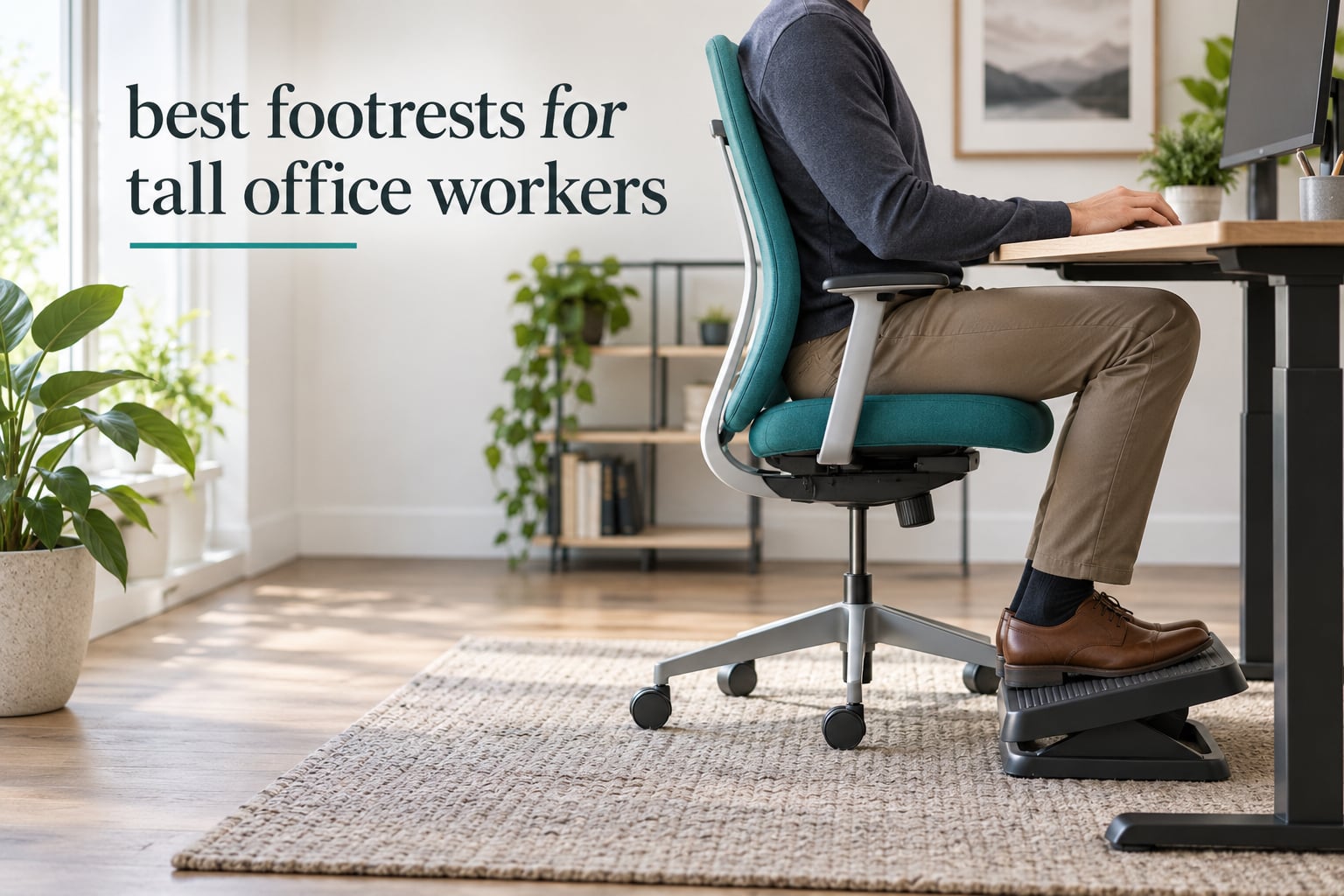
If you are six feet or taller and your feet still dangle when you sit down to work, you have probably already tried the obvious answer. You lowered the chair, the desk looked wrong, and the footrest you bought turned out to be a low plastic wedge that left you still hovering a few inches off the floor. That gap is the single most common complaint in office ergonomics forums, and the fix is more specific than a product name.
This is a roundup of the best footrests for tall office workers, sorted by the one number that matters most to you: maximum elevation in inches. A footrest built around a 5 foot 4 inch body tops out near four inches, which does nothing for a longer inseam. We went through ten models and compared stated height ranges, platform depth, weight capacity, materials and adjustment mechanisms, so you can match the spec to your actual foot-floor gap instead of guessing.
A few of the picks here reach six inches or more, which is the threshold most tall workers need. If you are still choosing between categories, our broader office footrest guide covers the general case, and our gaming footrest picks cover long unbroken sessions in a different kind of chair.
One thing we will say early, because it saves people money: in many cases the chair is the real fix and the footrest is the second move. We explain when that is true below, and when a footrest genuinely earns its place under your desk.
Table of Contents
Top 3 Footrests for Tall Office Workers (October 2026)
Our top three share a trait that matters more than star ratings: all three have a large enough review base to trust, and all three have a platform deeper than 15 inches, which is what most longer feet need to sit flat rather than perch on the front edge.
Quick Elevation Comparison: All 10 Footrests in 2026
| Product | Specifications | Action |
|---|---|---|
| EUREKA ERGONOMIC Tilt Footrest |
|
Check Latest Price |
 VIVO Height Adjustable Foot Rest Platform VIVO Height Adjustable Foot Rest Platform |
|
Check Latest Price |
 StrongTek Wooden Footrest 4 Heights StrongTek Wooden Footrest 4 Heights |
|
Check Latest Price |
 HUANUO Adjustable Footrest with Tilt HUANUO Adjustable Footrest with Tilt |
|
Check Latest Price |
 Mind Reader Height Adjustable Footrest Mind Reader Height Adjustable Footrest |
|
Check Latest Price |
 ErGear Adjustable Footrest 3 Heights ErGear Adjustable Footrest 3 Heights |
|
Check Latest Price |
 ComfiLife Memory Foam Foot Stool ComfiLife Memory Foam Foot Stool |
|
Check Latest Price |
 ErgoFoam Adjustable Foot Rest ErgoFoam Adjustable Foot Rest |
|
Check Latest Price |
 Mount-It! Large Platform Footrest Mount-It! Large Platform Footrest |
|
Check Latest Price |
 StrongTek Wooden Rocking Footrest StrongTek Wooden Rocking Footrest |
|
Check Latest Price |
Read the elevation column first, not the price. The order below runs from the tallest reach to the shortest, so the products that can close a six inch foot-floor gap sit at the top, and everything that tops out near three or four inches sits lower. If your gap is under three inches, the bottom half of this list is all you need to look at.
Do Tall Office Workers Actually Need a Footrest?
Most tall workers do not need a footrest, and pretending otherwise costs you posture rather than saving it. If your feet rest flat on the floor with your knees at roughly 90 degrees while you type, the chair is already correct and any platform you add only pushes your knees upward. The honest answer is that a footrest helps tall users in two specific situations, and outside those two it is a workaround for a badly adjusted chair.
Situation one: the desk is too low. Your fixed-height desk is shorter than your ideal typing height, so you drop the chair to get your thighs under the tabletop. Now your knees are bent well past 90 degrees and the back of your thighs presses into the seat edge. A footrest that lifts your feet to meet the seat height reopens the knee angle and takes that compression off your lower back.
Situation two: a shared sit-stand desk set to someone else. The desk rises to a comfortable height for a shorter colleague, and now you are the one folding. This is where a tall-platform footrest earns its place, because it converts a low fixed desk into a workable one without touching the desk controls.
The case where the chair is the fix: your feet reach the floor flat at keyboard height but your seat still feels cramped, usually because the seat depth is wrong for a longer femur. Our guide to ergonomic office chairs for tall people covers seat height range and backrest height in detail, and it is the more important purchase in that situation. If your combined load is high, our picks for big and tall office chairs for heavy users address the same build differently.
1. EUREKA ERGONOMIC Tilt Adjustable Footrest – Best All-Round Pick for Long Legs
EUREKA ERGONOMIC Tilt Adjustable Footrest, Foot Rest for Under Desk at Work with Massage Surface, Office Foot Rest Under Desk with 20 Degree Tilt No Locking, Metal Frame
0-20 degree tilt
Massage texture surface
Metal frame
15.35 x 11.81 x 3.35 inches
Pros
- Adjustable tilt across 0-20 degrees
- Textured massage surface
- Metal frame resists flex
- Non-slip rubber feet
- 4656 reviews at 4.5 stars
Cons
- No tilt lock
- Lowest elevation ceiling in the set
- Only 15.35 inches of platform depth
This is the one we keep coming back to, and the reason is the floating tilt rather than the height. A platform that rocks gently through 0 to 20 degrees keeps your ankles moving through the day instead of holding one static angle, and for someone with a long femur sitting on a slightly high chair that movement is worth more than another two inches of lift.
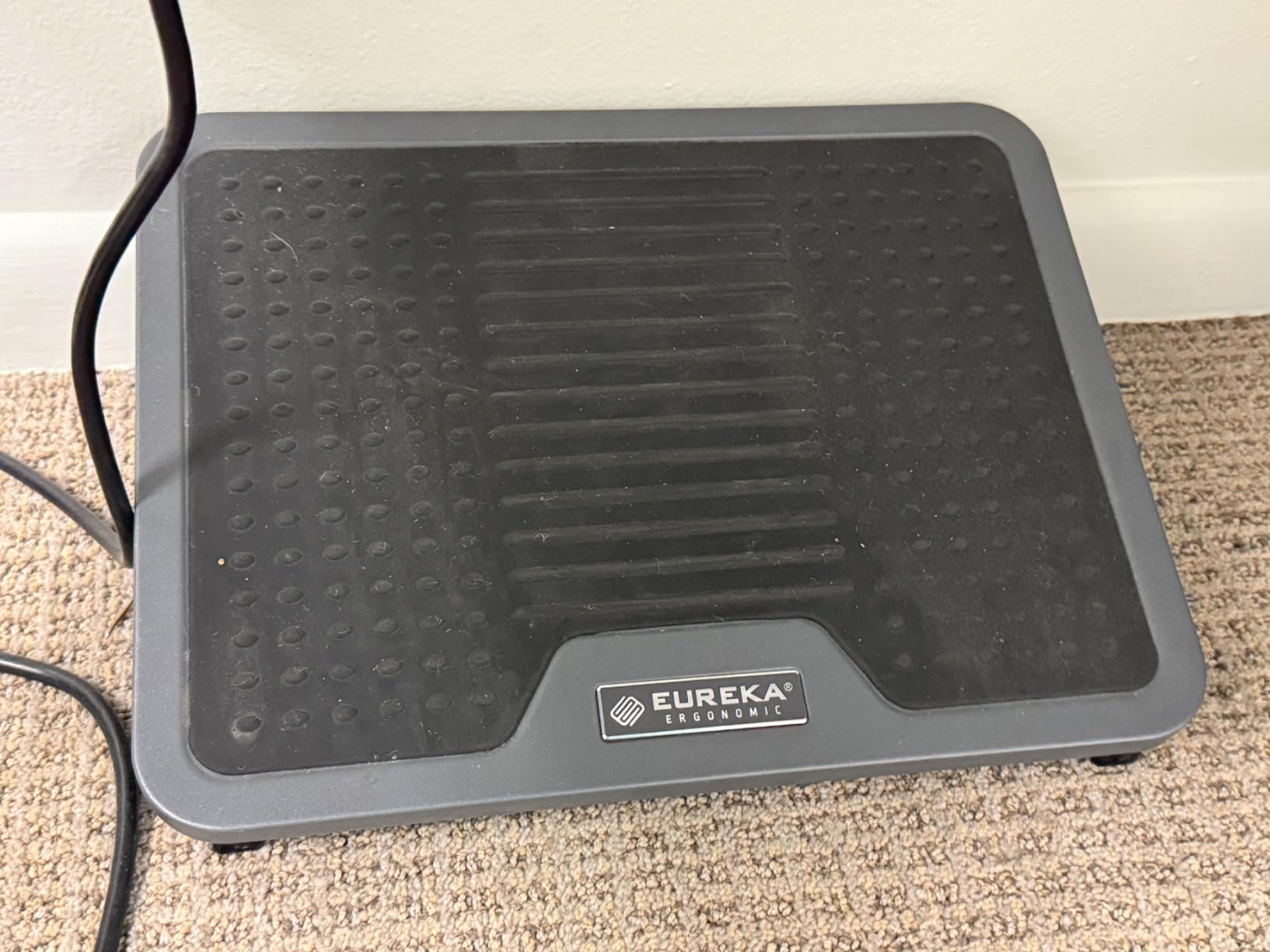
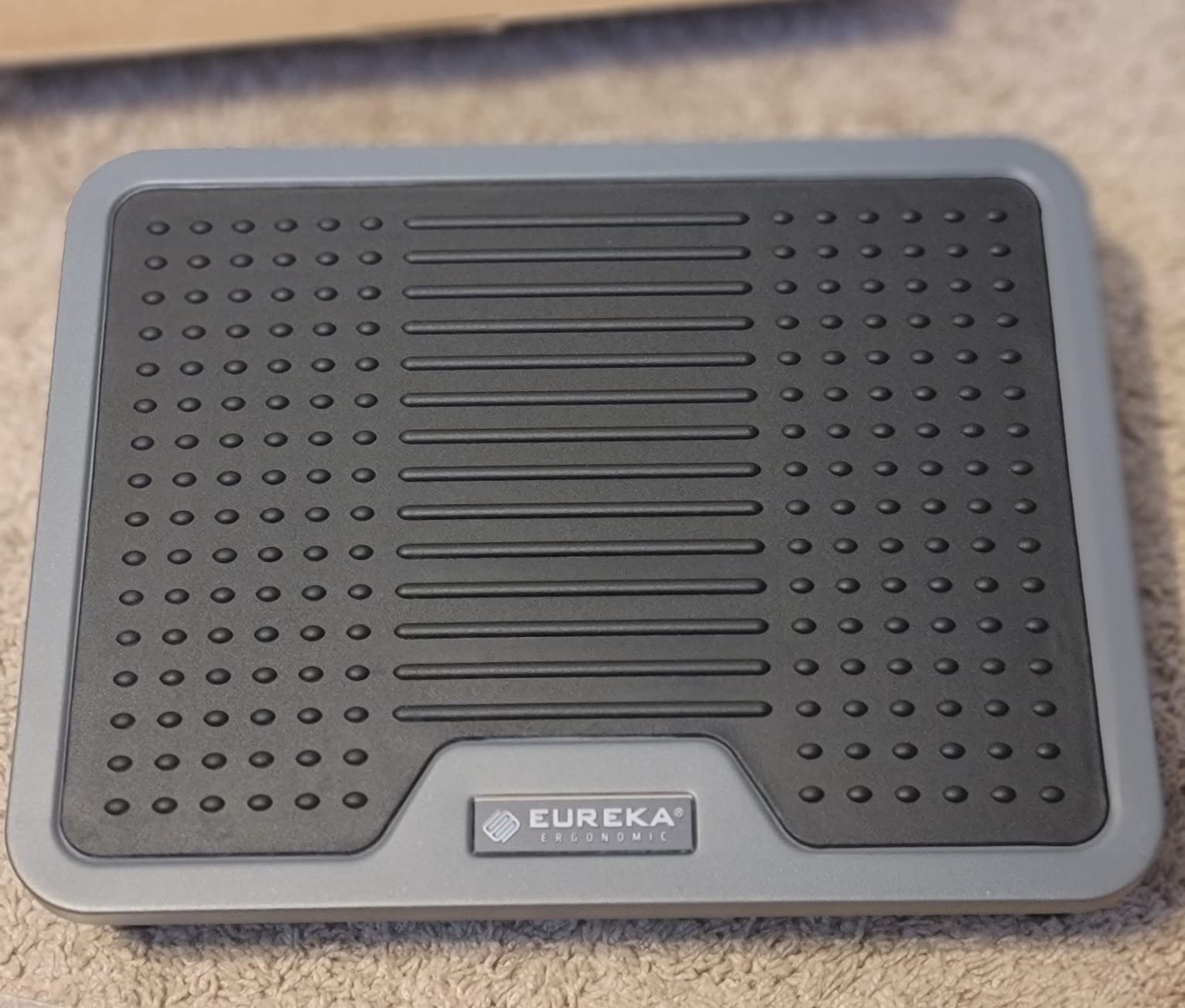
Build quality is the other reason. The metal frame does not flex the way the plastic platforms in this roundup do, and at 15.35 by 11.81 inches the platform is wide enough to hold both feet side by side without the heels hanging off the back. The textured surface adds a mild massage stimulus that most people notice as pleasant rather than distracting.
Where it falls short is elevation. The platform sits just over three inches at its highest, so it closes a small gap or adds a modest lift. It does not solve a five or six inch foot-floor gap on its own, and no amount of tilting changes that.
Who this suits
This suits a tall person whose chair is already at the right height and who wants gentle movement rather than more lift. It is a good match for a shared sit-stand desk, where you can set the desk once and use the tilt to stay comfortable across its range.
Who should skip it
Skip it if your feet hang six inches or more off the floor with the chair at maximum. A low-angle tilt platform cannot substitute for real elevation, and buying it in that situation is the most common wasted purchase in this category.
2. StrongTek Wooden Rocking Footrest 350 lb – Best for Active Movement
StrongTek Under Desk Footrest, Wooden Rocking Foot Rest, 350lbs, Non-Slip
Wooden rocking platform
350 lb capacity
17.7 x 10.5 x 4.4 inches
3.4 pounds
Pros
- Rocking motion encourages micro-movement
- 350 lb load rating
- Solid wood stays rigid
- Works as a stretching and balance tool
- Doubles as a calf stretcher
Cons
- Rough surface for bare feet
- Rockers can migrate on hard floors
- Modest elevation ceiling
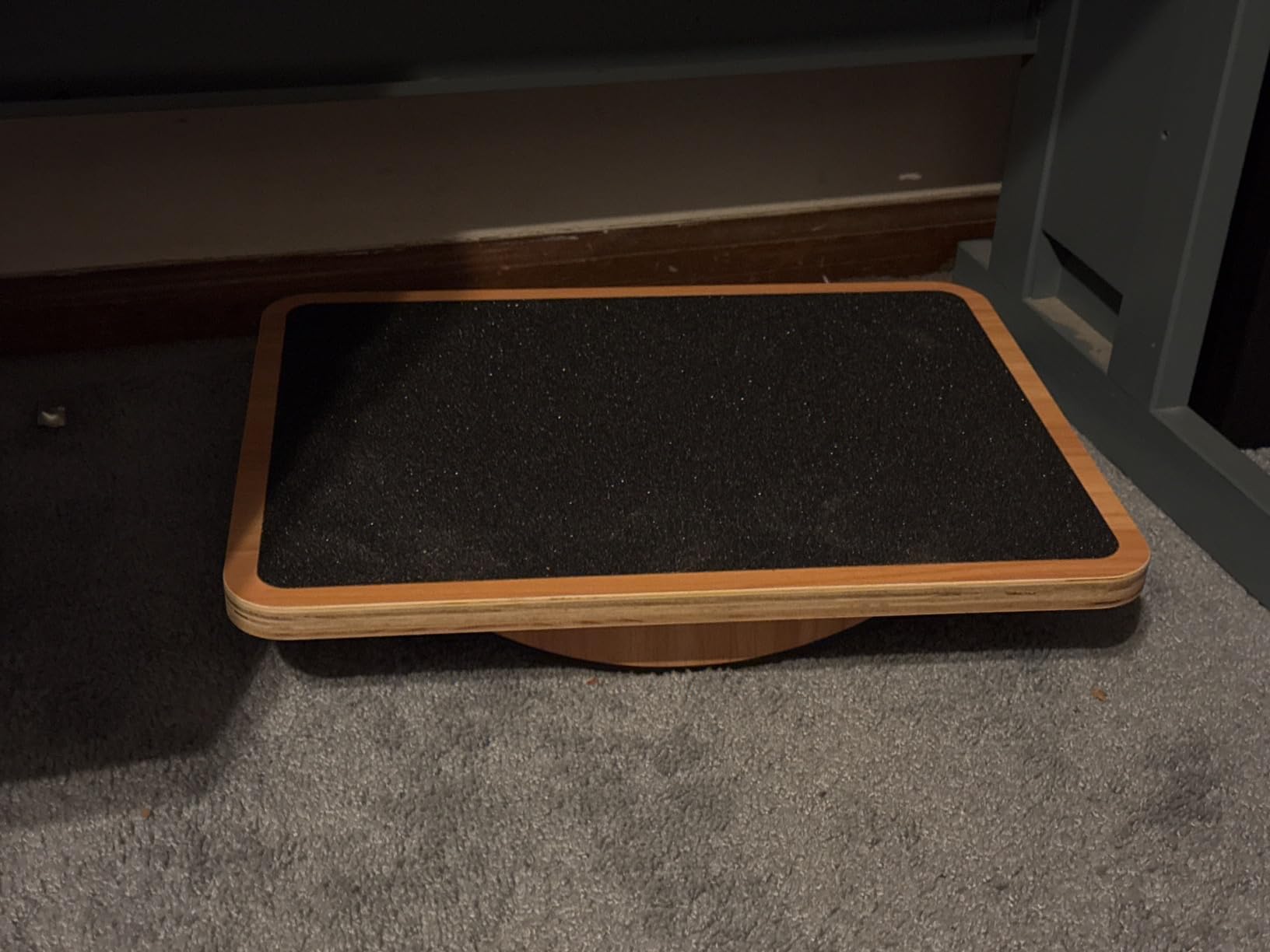
The rocking action here is larger and more deliberate than the EUREKA tilt. Instead of a controlled angle, the whole platform pivots on two curved feet, which turns a work break into a few seconds of ankle and calf movement without you leaving your chair. Reviewers frequently describe it doubling as a stretching tool at the end of the day.
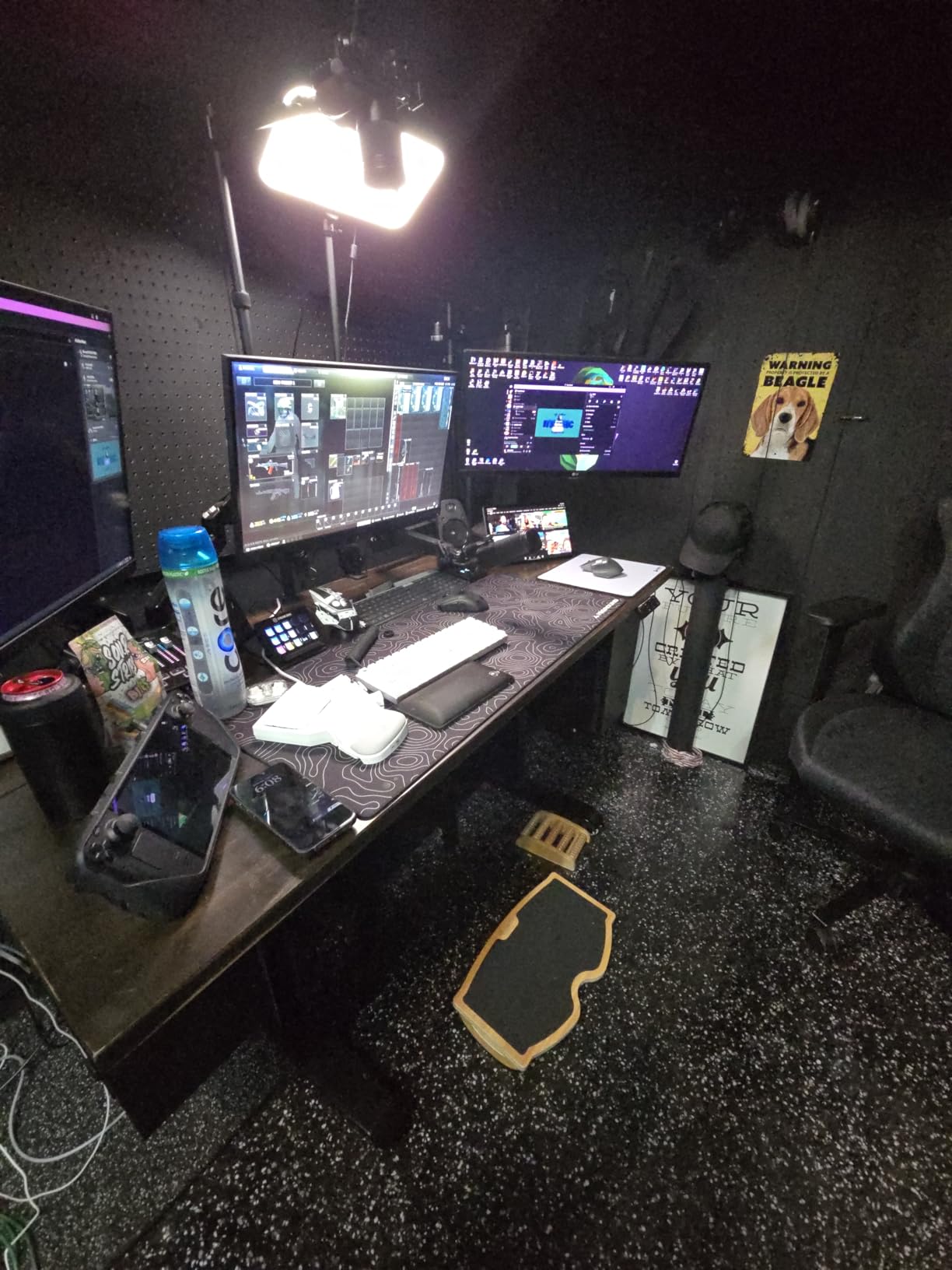
At 4.7 stars across 3186 reviews, this is one of the best-rated entries in the roundup, and the wood is a genuine upgrade over plastic for stability. It weighs only 3.4 pounds, so moving it between rooms or taking it to a shared desk is easy.
The surface is grip tape, which is where the complaints live. Bare feet and thin socks find it abrasive, and reviewers consistently recommend wearing slippers or shoes. On hardwood or laminate the rockers can creep, so a thin rug or non-slip pad under it helps.
Who this suits
This suits a tall user who wants their legs moving and wears shoes or slippers all day, which is most office settings. The 350 lb rating also makes it a sensible pick for larger users who put more load through the platform.
Who should skip it
Skip it if you work barefoot at home, since the grip surface is the opposite of what you want there. It is also not a solution for a large foot-floor gap, as the platform sits below four inches.
3. Mind Reader Height Adjustable Footrest – Budget Pick for a Real Height Range
Mind Reader Foot Rest, Under Desk at Work, Ergonomic, Height Adjustable, Office, Plastic, 17″L x 13″W x 6.25″H, Black
Adjusts 3.25 to 6.25 inches
17 x 13 inch platform
5.5 pounds
Pre-assembled
Pros
- Genuine 3 inch height adjustment
- Large 17 by 13 inch platform
- No assembly required
- 18803 reviews prove long-term use
Cons
- Plastic build
- No tilt adjustment
- Single discrete height setting at a time
At 18803 reviews this is the most widely used footrest in the roundup by a wide margin, and that volume is itself useful information. It means a decade of daily office use has gone into a simple plastic platform, so you are not guessing how it ages.
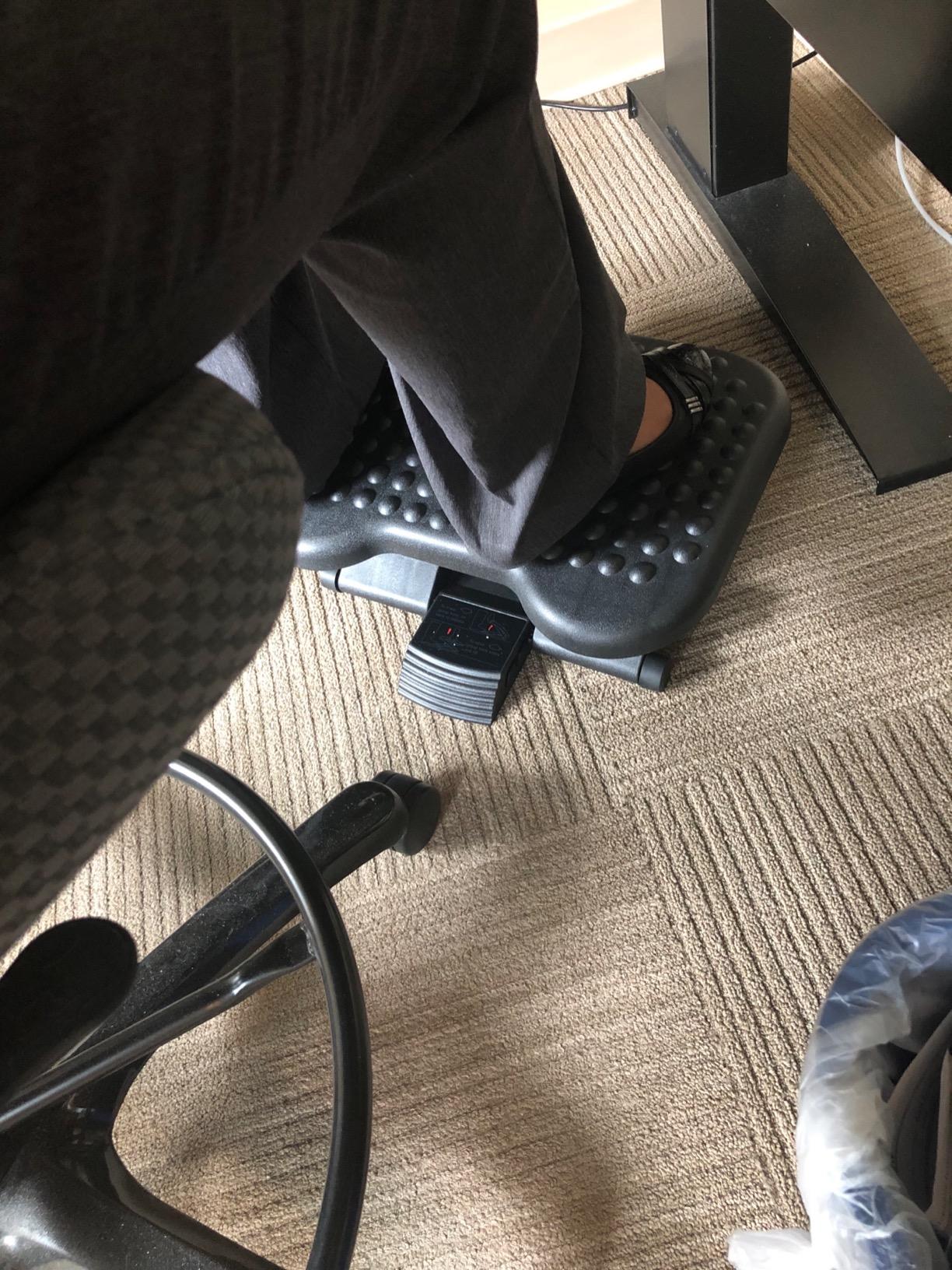
For a tall user the important detail is the 3.25 to 6.25 inch range. That is a full three inches of real elevation, which is more travel than most adjustable models in this category offer, and at the top setting it closes the kind of gap a six-foot worker hits when the chair is set high but not maximum.
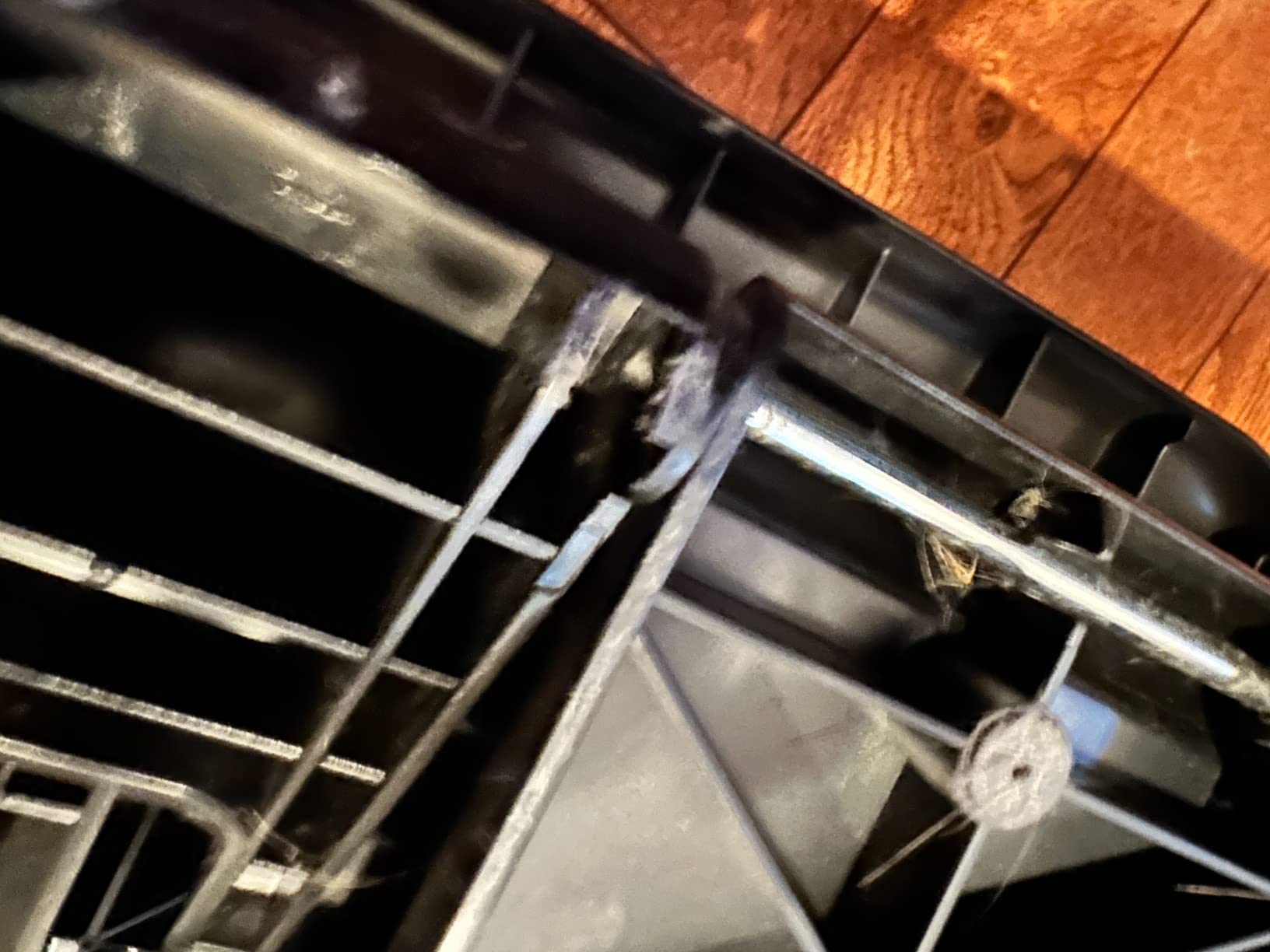
The compromises are honest ones. It is plastic, so it feels less refined than the wood and foam options, and there is no tilt adjustment at all, only a fixed angle per height setting. Reviewers also report some durability concerns on units that have been in service for several years.
Who this suits
This suits a tall worker on a strict budget who needs real height travel and a large platform, particularly anyone working from a dorm room or a first home office where a simple solution wins. The 17 by 13 inch surface comfortably fits larger feet.
Who should skip it
Skip it if you spend long stretches barefoot, because a textured plastic platform with no cushioning gets uncomfortable quickly. Those users should look at the foam options further down instead.
4. HUANUO Adjustable Footrest with Tilt – Best for Multi-Height Shared Desks
HUANUO Adjustable Foot Rest for Under Desk with Massage Surface and Tilt
3 heights at 4.3, 5.5 and 6.7 inches
Tilt from -30 to +30 degrees
17.13 x 13.19 inch platform
Pros
- Three discrete height settings
- Very wide tilt range
- Large 17.13 inch platform
- Pre-assembled
- 13235 reviews
Cons
- No tilt lock
- Plastic construction
- Height mechanism can wear over time
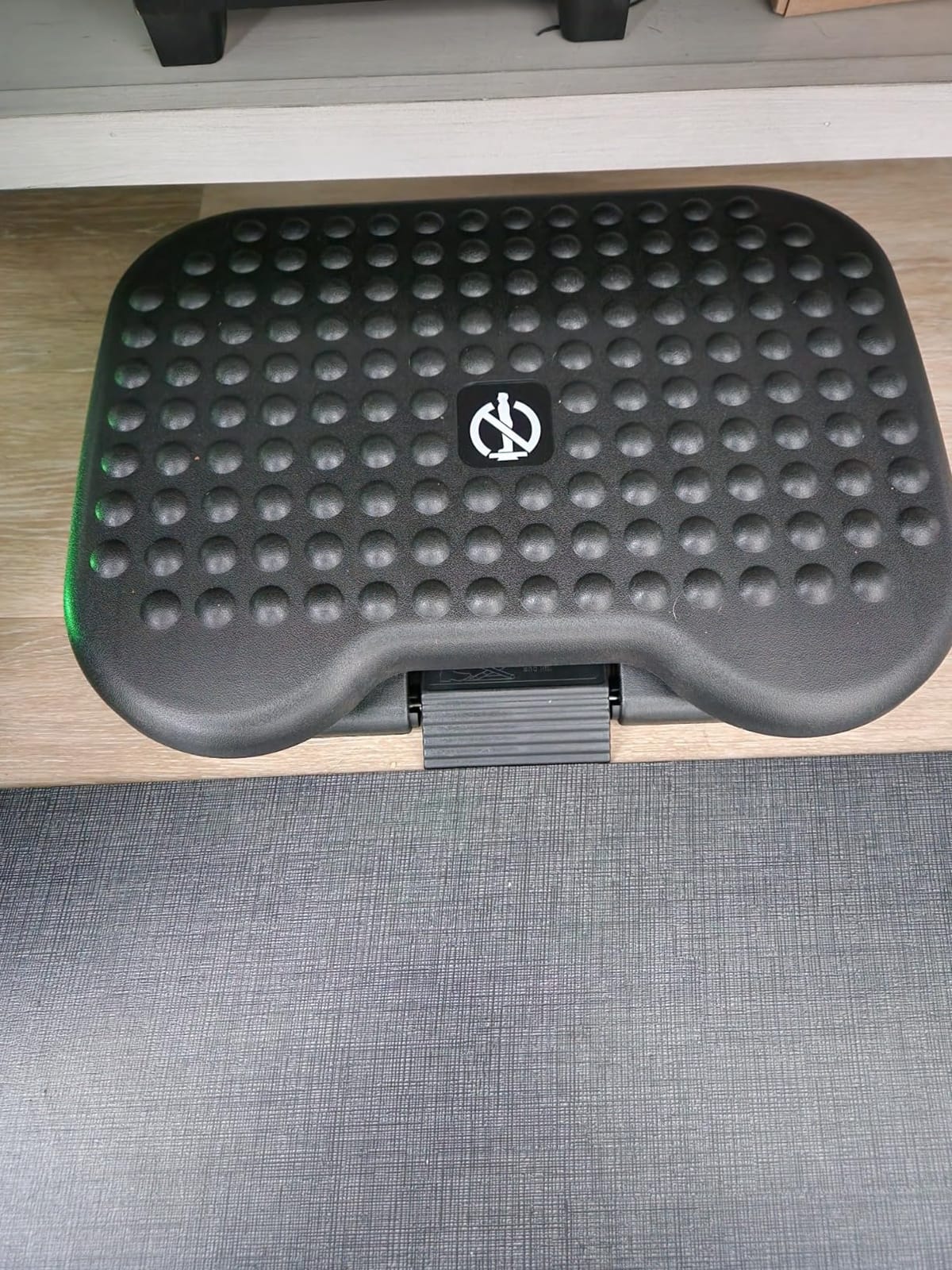
The six-point-seven inch top setting is the second-highest elevation in this roundup, and paired with a 30 degree tilt in either direction it covers more ground than most. That combination makes it a strong choice when your desk height changes through the day or is shared with someone shorter.
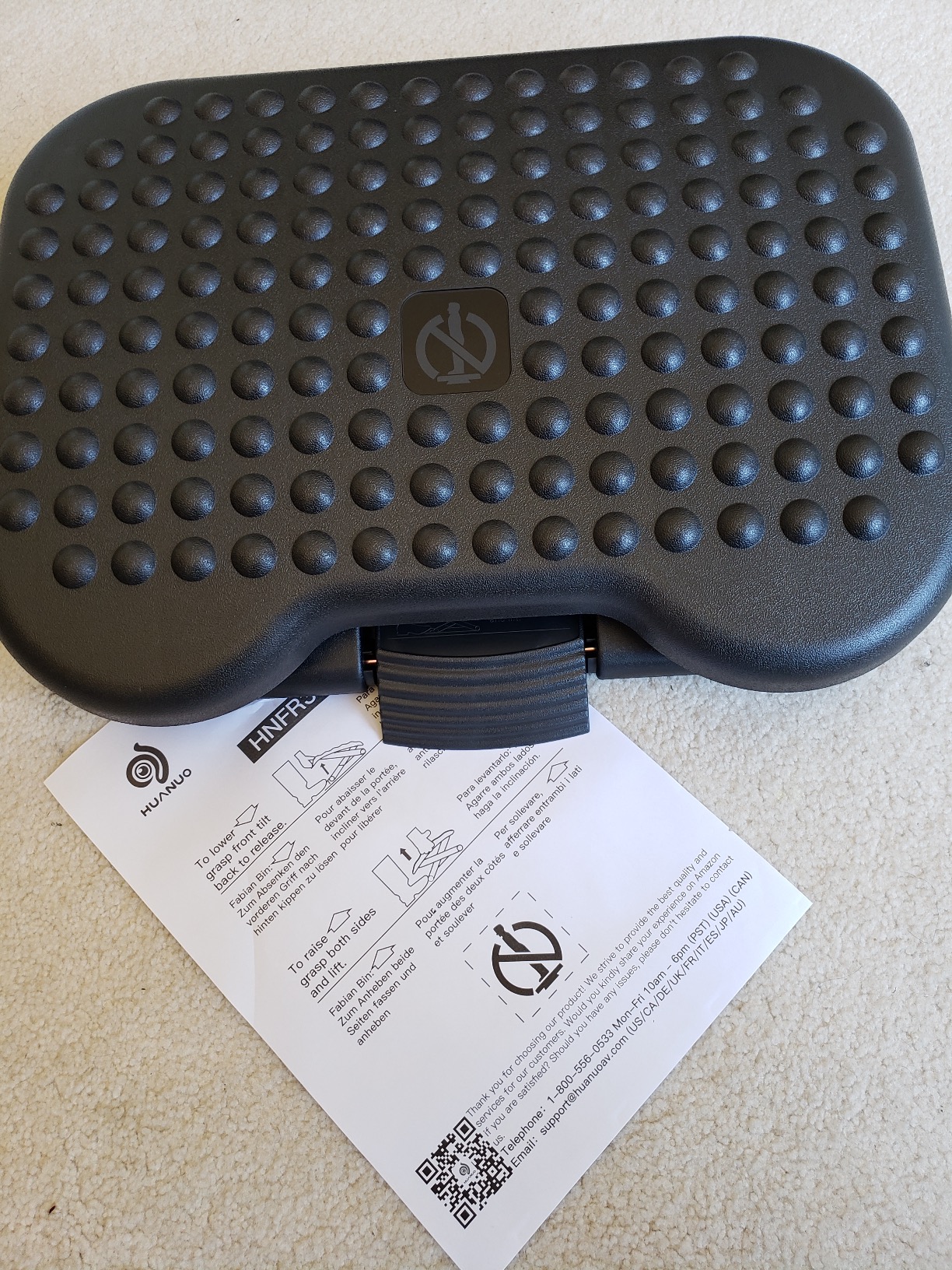
Platform size is another strength. At 17.13 by 13.19 inches it is among the largest here, and that extra width lets you change leg position during the day without repositioning the whole unit, which matters when you have longer legs and less hip clearance.
The tilt is free-floating with no lock, so it drifts where your weight pushes it. Most reviewers treat that as a feature and it does promote circulation. If you prefer a fixed angle, this is the wrong pick, and some users have also reported the height adjustment mechanism wearing over years.
Who this suits
This suits a tall user on a shared or frequently adjusted desk who wants to move between a 4.3 inch and a 6.7 inch platform in seconds. It also works well with larger feet because of the platform dimensions.
Who should skip it
Skip it if you want a locked-in, static platform for a specific posture, or if you need a load rating well above what plastic offers. The same three heights appear on a cheaper model further down this list.
5. StrongTek Wooden Footrest with 4 Heights and 400 lb Capacity – Best for Heavier Users
StrongTek Wooden Under Desk Footrest, 4 Heights, 400 lb, Office Foot Rest
4 height and angle settings
400 lb capacity
Solid wood
16.46 x 11.22 x 7.2 inches
Pros
- Highest load rating in the roundup at 400 lb
- Four height and angle combinations
- Solid wood stays rigid
- Good fit for higher chairs
Cons
- Assembly required
- Heavier at 6.19 pounds
- Fixed angles only
- Smaller review base
This is the one we recommend when body weight is the deciding factor. A 400 lb rating is the highest in the roundup, and combined with a solid wood frame it is the least likely of any option here to flex, creak or shift under a heavy load over years of daily use.
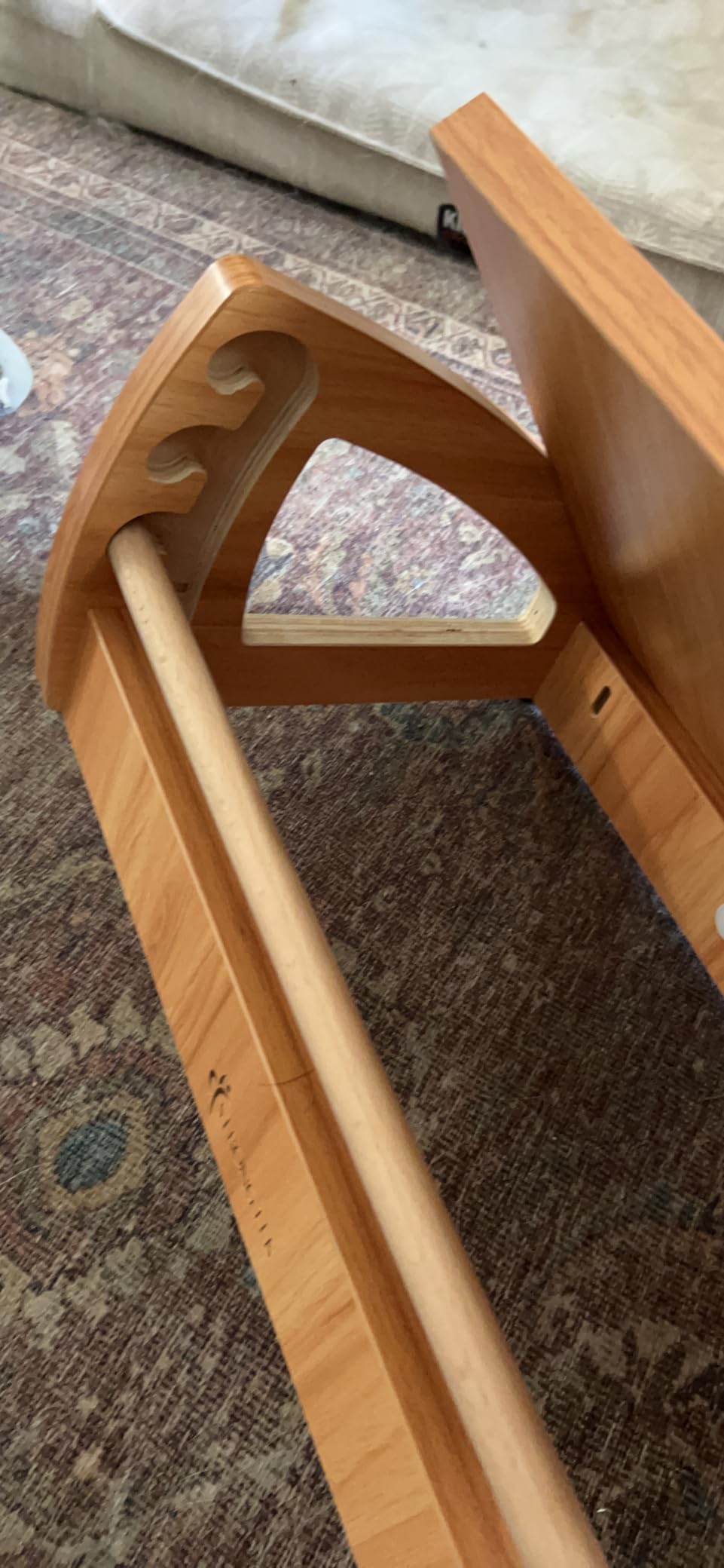
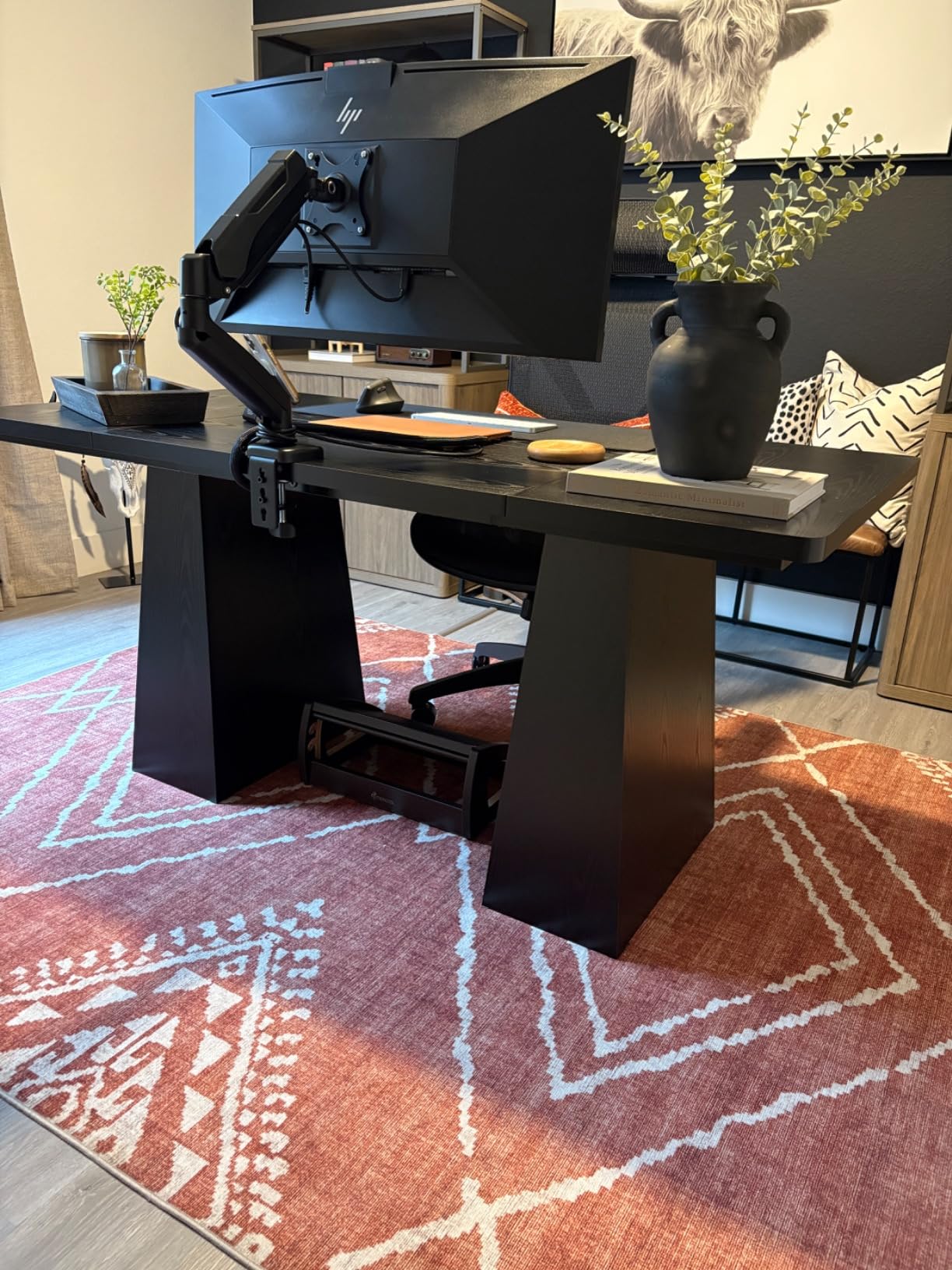
Four discrete height and angle settings give more usable positions than the two or three offered by most rivals, and the tallest position lands close to the seven-and-a-quarter inch mark in overall height. For a tall user on a high-set chair, that is real elevation rather than a suggestion of it.
Be aware it needs assembly, and at 6.19 pounds it is the heaviest platform here, so moving it between desks takes a moment. The angles are fixed positions rather than continuous adjustment, and the 1476-review base is thinner than most of this list, so we are relying on the build rather than the volume of feedback.
Who this suits
This suits a tall, heavier user who wants genuine elevation and a platform that will not deform. It pairs well with a high-seat task chair, where the extra height closes the remaining gap.
Who should skip it
Skip it if you need something you can move between rooms daily or carry to a shared desk. It is also unnecessary if you shift weight lightly through your feet, since the four settings are not fine-grained.
6. VIVO Height Adjustable Foot Rest Platform – Best for Sit-Stand and Drafting Setups
VIVO Black Ergonomic Height Adjustable Foot Rest Platform, STAND-FT01
5 to 10.25 inch height range
Steel frame
9.8 by 15.7 inch platform
3-year warranty
Pros
- Tallest elevation range in the roundup
- Steel frame construction
- Textured anti-slip surface
- 3-year warranty
- Multiple height points
Cons
- Only rated to 55 lb so seated use only
- Deep footprint
- Limited review count at 868
This is the tallest platform in the roundup by a wide margin, reaching ten and a quarter inches. That figure belongs to a steel frame built for drafting and standing-height seating, not a normal under-desk footrest, and it is why this one solves a foot-floor gap that nothing else here can.
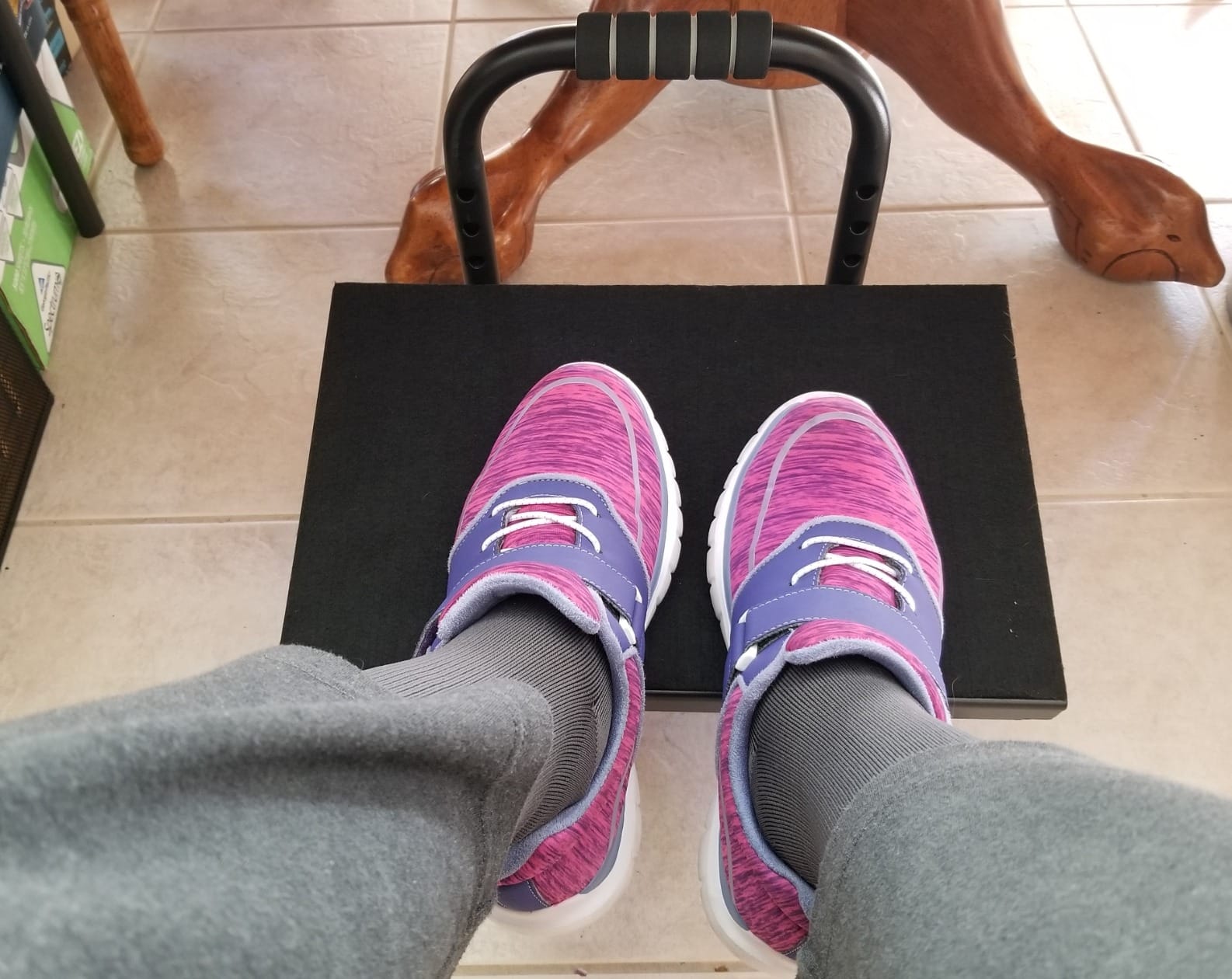
For a tall user on a sit-stand desk, a drafting stool, or a chair with a built-in foot ring, that reach is the whole point. The steel frame and padded base keep it stable at height, and the three-year warranty is among the longer commitments in this category.
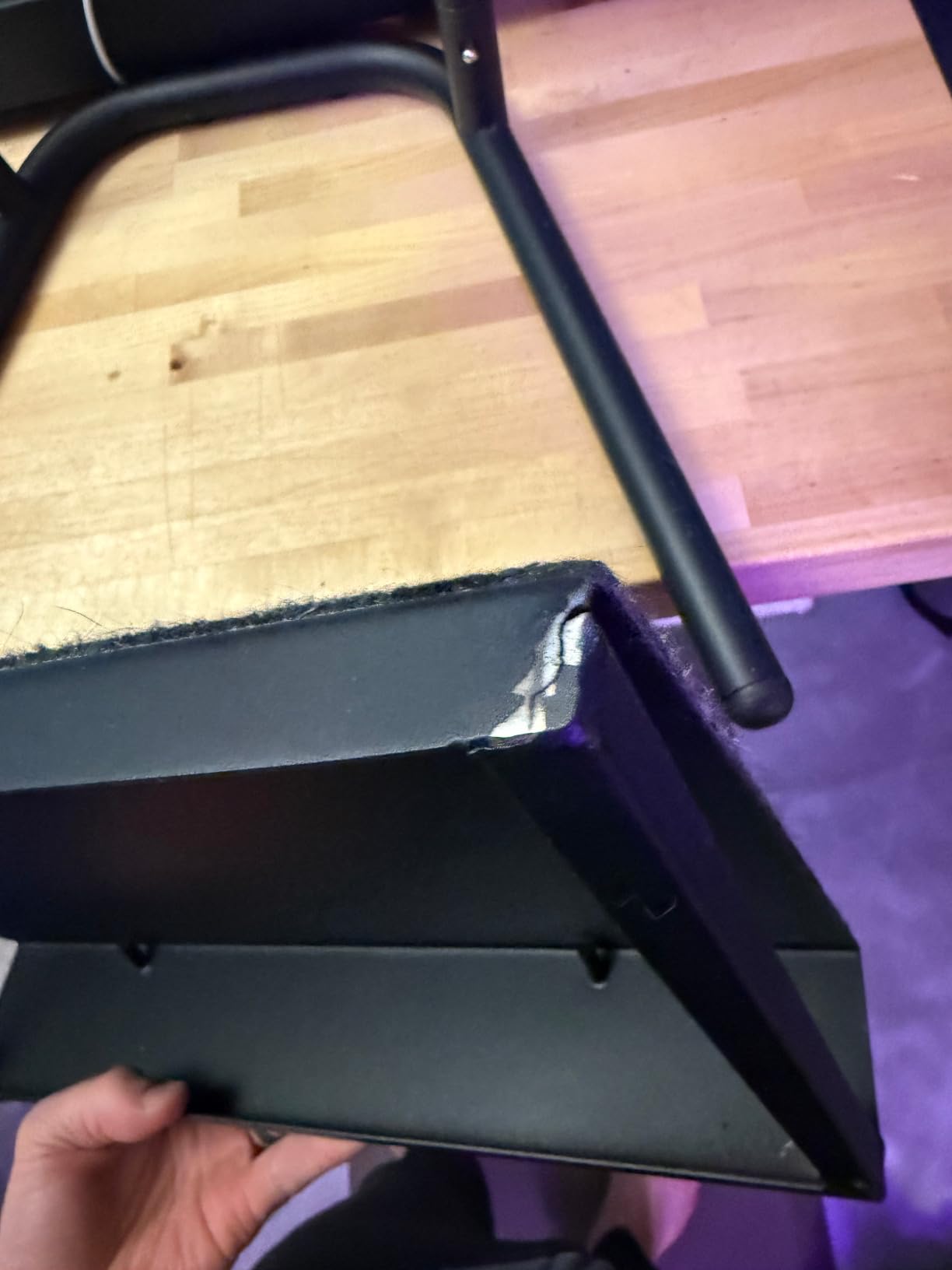
Read the load rating carefully. At 55 lb this is a seated-use platform only, and standing on it is not what it is built for. The 14.4 inch width is also narrower than several cheaper options, so check it fits your larger foot before committing.
Who this suits
This suits a tall user at a drafting stool, a high-seat task chair, or a foot-ring chair, and anyone whose gap is large enough that a five inch platform would still leave their feet hanging. It also handles the shared sit-stand case better than anything else here.
Who should skip it
Skip it if you need a shallow footprint that slides easily under a desk with a low crossbar, or if your under-desk clearance is tight. At 9.8 pounds empty it is a stationary piece rather than a portable one.
7. Mount-It! Large Platform Footrest – Best for Larger Feet
Mount-It! Foot Rest Under Desk, Large 17.5×13.5 in, 20° Tilt & Texture
17.5 x 13.5 inch platform
Plus or minus 20 degree tilt
Lifetime manufacturer warranty
Pros
- Largest platform area in the roundup
- Tilts to match leg length
- Lifetime warranty with US support
- Rubber grip base
- Ready to use out of the box
Cons
- Fixed height at 3.75 inches
- No tilt lock
- Plastic build
- Reported lifespan of a few years
Platform depth is the reason this one is here. At 17.5 by 13.5 inches it is the largest surface in the roundup, and for someone with a size twelve or thirteen foot that extra room is the difference between resting your heels and perching on the front edge all day.
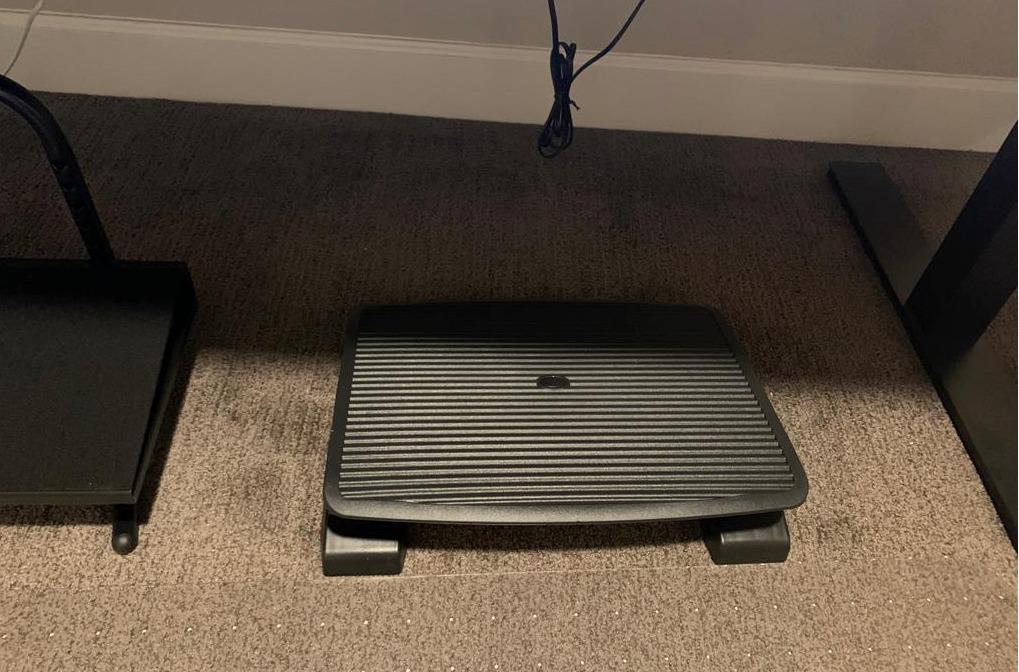
The tilt runs to plus or minus 20 degrees without a lock, so you can rock it forward to raise the toes and encourage ankle movement, or sit it flatter for a fixed posture. The raised ridge texture adds grip, and the rubber base holds on hard flooring better than bare plastic feet usually do.
It arrives fully assembled, which is a genuine convenience, and the lifetime manufacturer warranty is the strongest coverage listed here. The trade-offs are the fixed three-and-three-quarter inch height and a plastic frame that reviewers describe as lasting a few years rather than a decade.
Who this suits
This suits a tall user with larger feet who wants room to reposition through the day and does not need much elevation. It is also a good pick if you dislike assembly and want a warranty that does not expire.
Who should skip it
Skip it if you have a real foot-floor gap, because there is no height adjustment at all here. Anyone needing lift should go to one of the height-adjustable models instead.
8. ErgoFoam Adjustable Foot Rest – Best Dual-Mode Design for Long Sessions
ErgoFoam Foot Rest for Under Desk at Work Adjustable – Chiropractor-Endorsed, High-Density Foam, Velvet (Black)
High-density foam core
Arch support or rocker mode
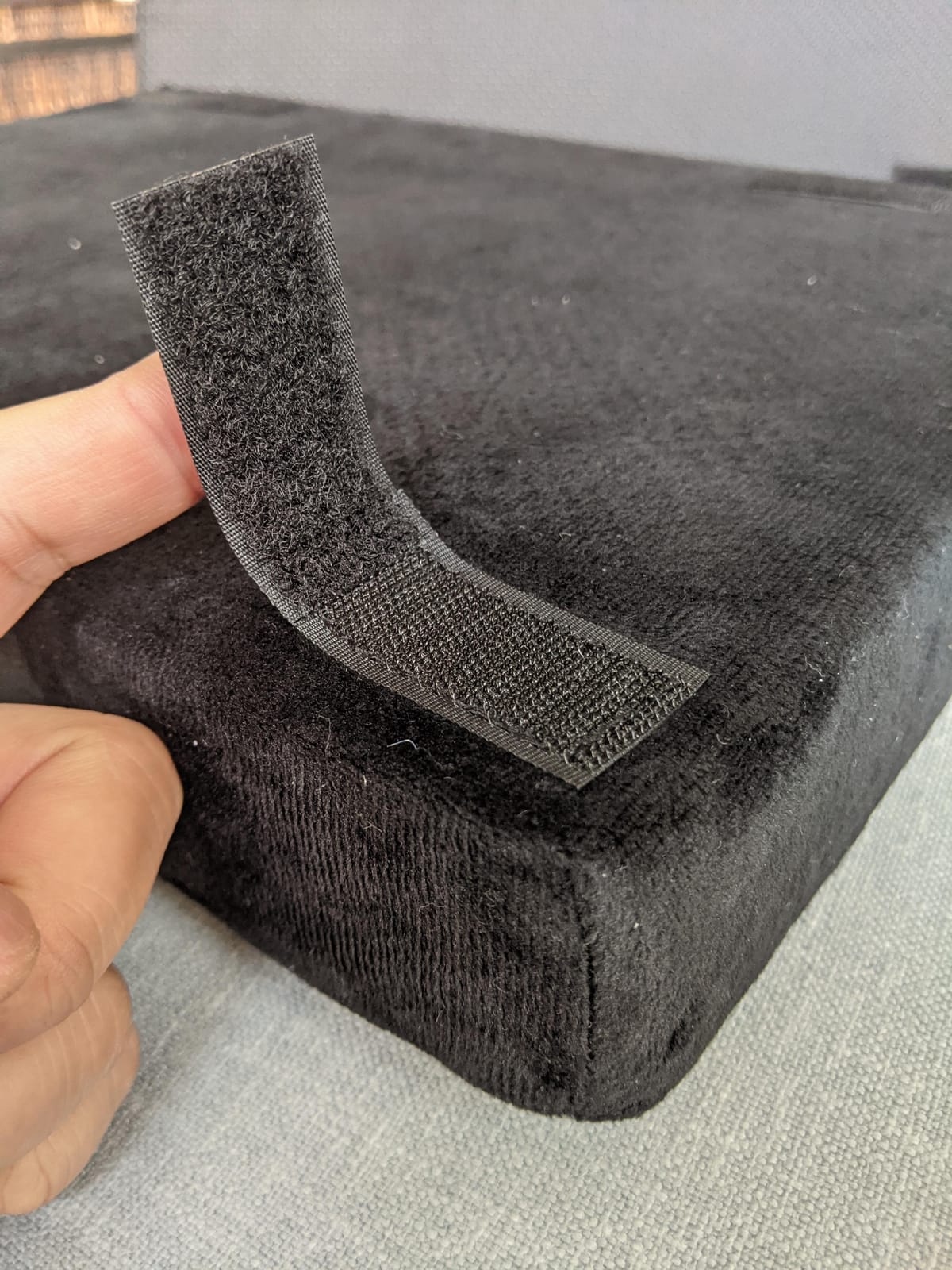
Machine washable velvet cover
17.3 x 11.5 x 5.9 inches
Pros
- Switches between arched support and rocker mode
- High-density foam resists flattening
- Machine washable cover
- Double-sided non-slip base
- 4.7 stars across 7902 reviews
Cons
- Height adjustment means removing the insert
- Firm at first for some users
- Velvet attracts lint
The two-in-one design is what separates this from the plastic platforms. Turn it one way and the foam is arched under your heels; flip it and it becomes a rocker. Reviewers like being able to change mode mid-day without reaching for a second object under the desk.
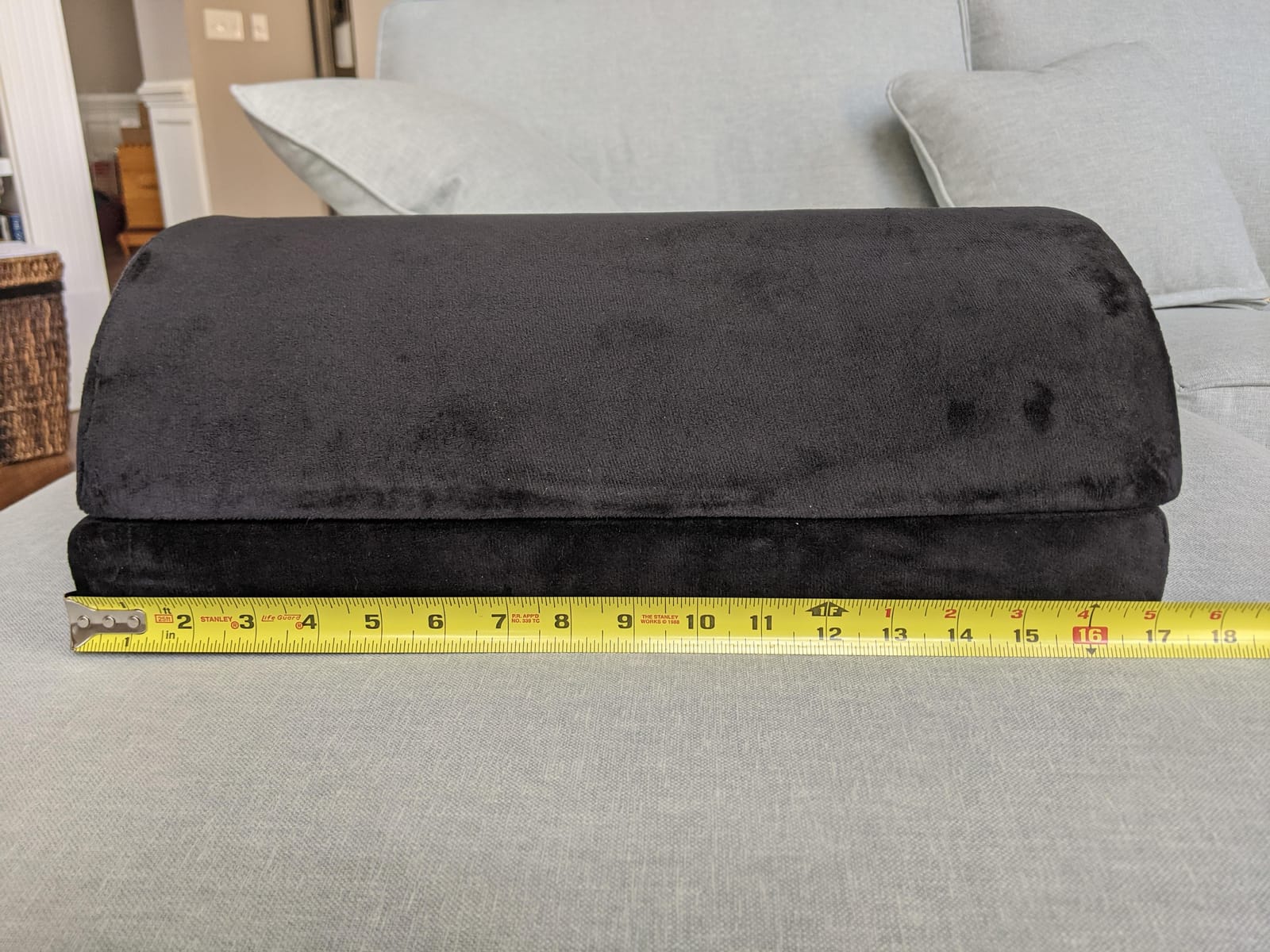
High-density foam is the material choice, and it holds its shape far better than the low-density foam that gives this category a bad reputation. At 4.7 stars across 7902 reviews it is tied for the highest rated product in the roundup, and the double-sided non-slip base keeps it planted on a hard floor.
Height changes are less convenient. You remove the foam insert rather than flipping a lever, so a mid-session adjustment takes ten seconds. The velvet cover is washable but collects lint and pet hair, and the foam can feel firm during the first week before it settles.
Who this suits
This suits a tall user who works barefoot or in thin socks and wants cushioning under the heels for long sessions. It is also a good fit for anyone who likes to change position rather than hold one.
Who should skip it
Skip it if you wear heavy shoes all day, because foam under a shoe sole feels compressed and pointless. It is also a poor match if you need a large elevation change you can apply in a second.
9. ComfiLife Adjustable Height Memory Foam Foot Stool – Most Popular Choice
ComfiLife Foot Rest for Under Desk at Work – Adjustable Height Memory Foam Foot Stool for Under Desk, Office Chair & Gaming Chair – Ergonomic Footrest for Back & Hip Pain Relief (Black)
High-density memory foam core
Adjustable height via removable insert
17.5 x 12 inch half-moon platform
Pros
- 14061 reviews at 4.6 stars
- Adjustable height
- Large 17.5 by 12 inch platform
- Built-in carry handle
- Works as footrest or knee support
Cons
- Memory foam retains heat
- Half-moon shape does not suit everyone
- Insert removal for height change
The combination of a 4.6 rating and more than fourteen thousand reviews makes this the most proven option here, and for a tall user the half-moon profile matters more than it does for a shorter person. The raised centre supports your heels while your toes rest lower, which reduces the ankle angle at the point where a long shin meets a high seat.
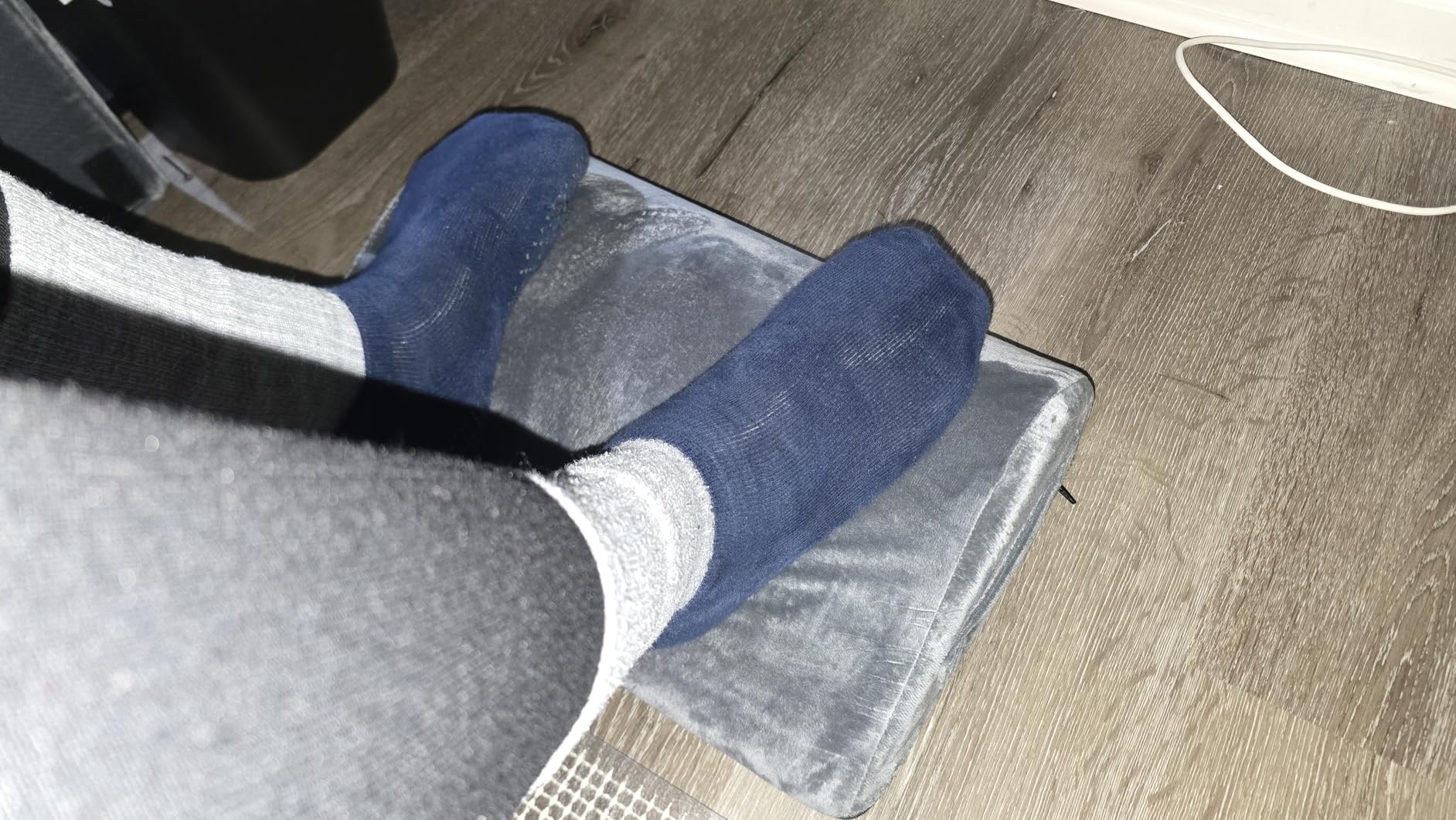
Height is adjustable by removing the foam insert, and the platform is large at 17.5 by 12 inches. The foam conforms to the shape of each foot, which keeps pressure spread across the arch rather than concentrated under the heel bone.
Memory foam has two drawbacks worth naming. It traps heat over a long afternoon, and a half-moon contour does not suit every foot shape. Some users also find the firmness varies more than they would like across the surface.
Who this suits
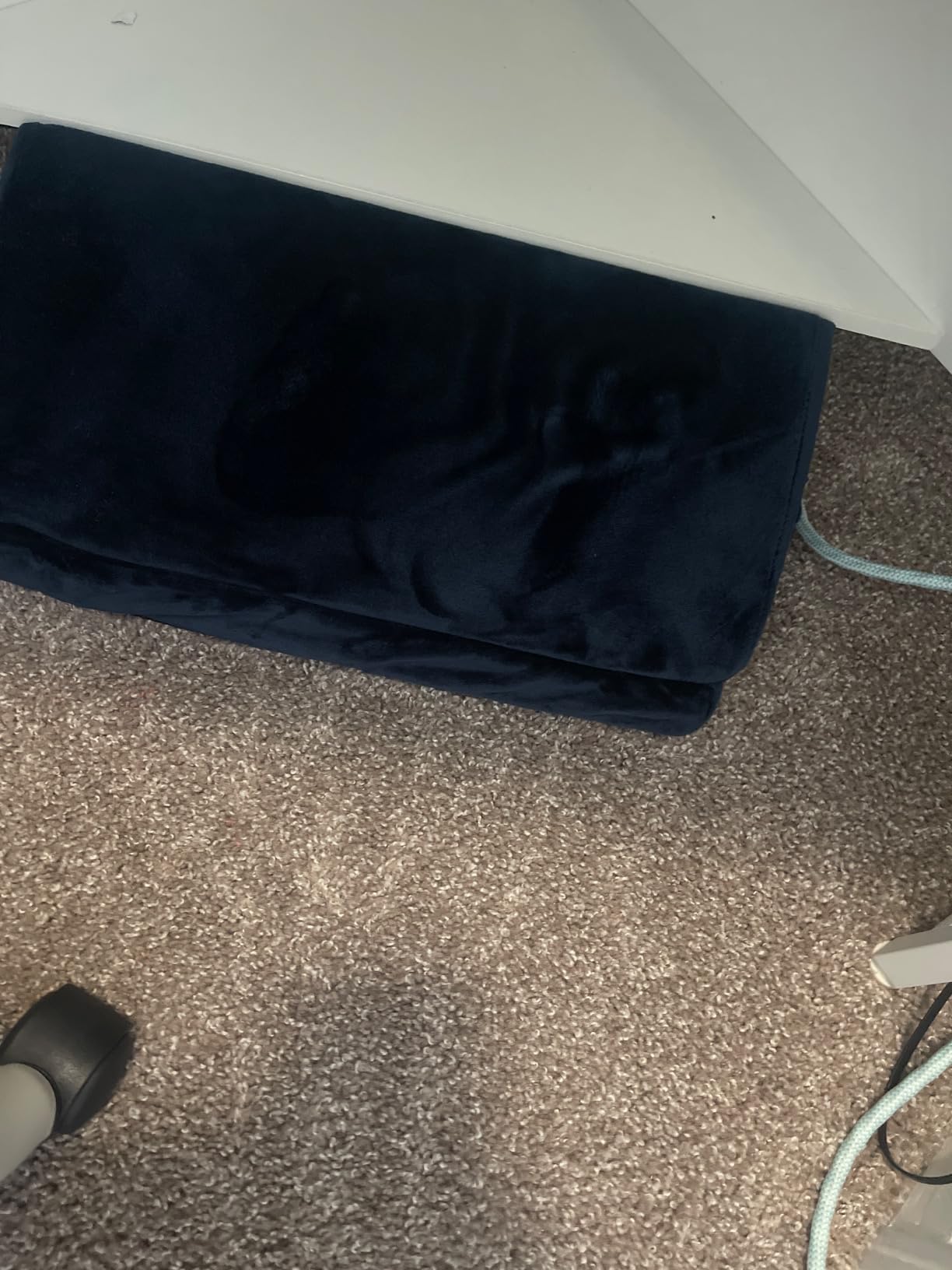
This suits a tall, barefoot-at-home worker who wants a cushioned surface that adapts to their foot rather than a hard platform. It is also a sensible pick if you move between a home and a shared office, thanks to the carry handle.
Who should skip it
Skip it if you wear shoes continuously, or if you need the platform to reach higher than a medium elevation. Foam compresses under a heavier, concentrated load in a way wood does not.
10. ErGear Adjustable Footrest with 3 Height Settings – Best Budget Multi-Height Pick
ErGear Adjustable Footrest Under Desk with 3 Height Settings
3 heights at 4.3, 5.5 and 6.7 inches
Plus or minus 30 degree tilt
17.13 x 13.19 inch platform
Pros
- Three usable height settings
- Very wide 30 degree tilt range
- Large platform
- Pre-assembled and ready to use
Cons
- Newer with 317 reviews
- No tilt lock
- Shares a manufacturer with the HUANUO
- Plastic build
This is the entry point into multi-height footrests, and it gets the two things a tall user actually needs: real elevation travel and a genuinely wide tilt range. The top setting at 6.7 inches is higher than most products in this category reach at all.
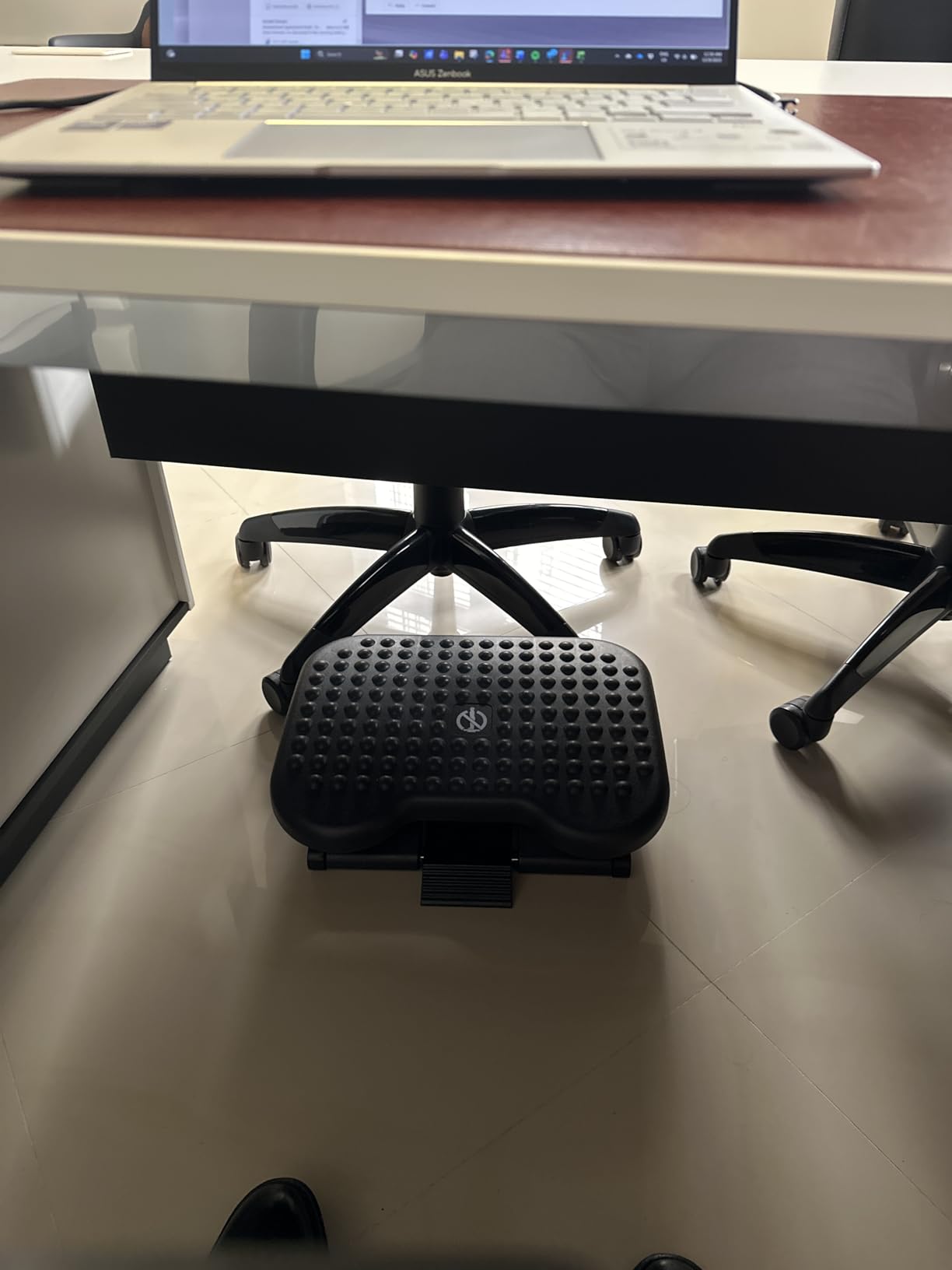
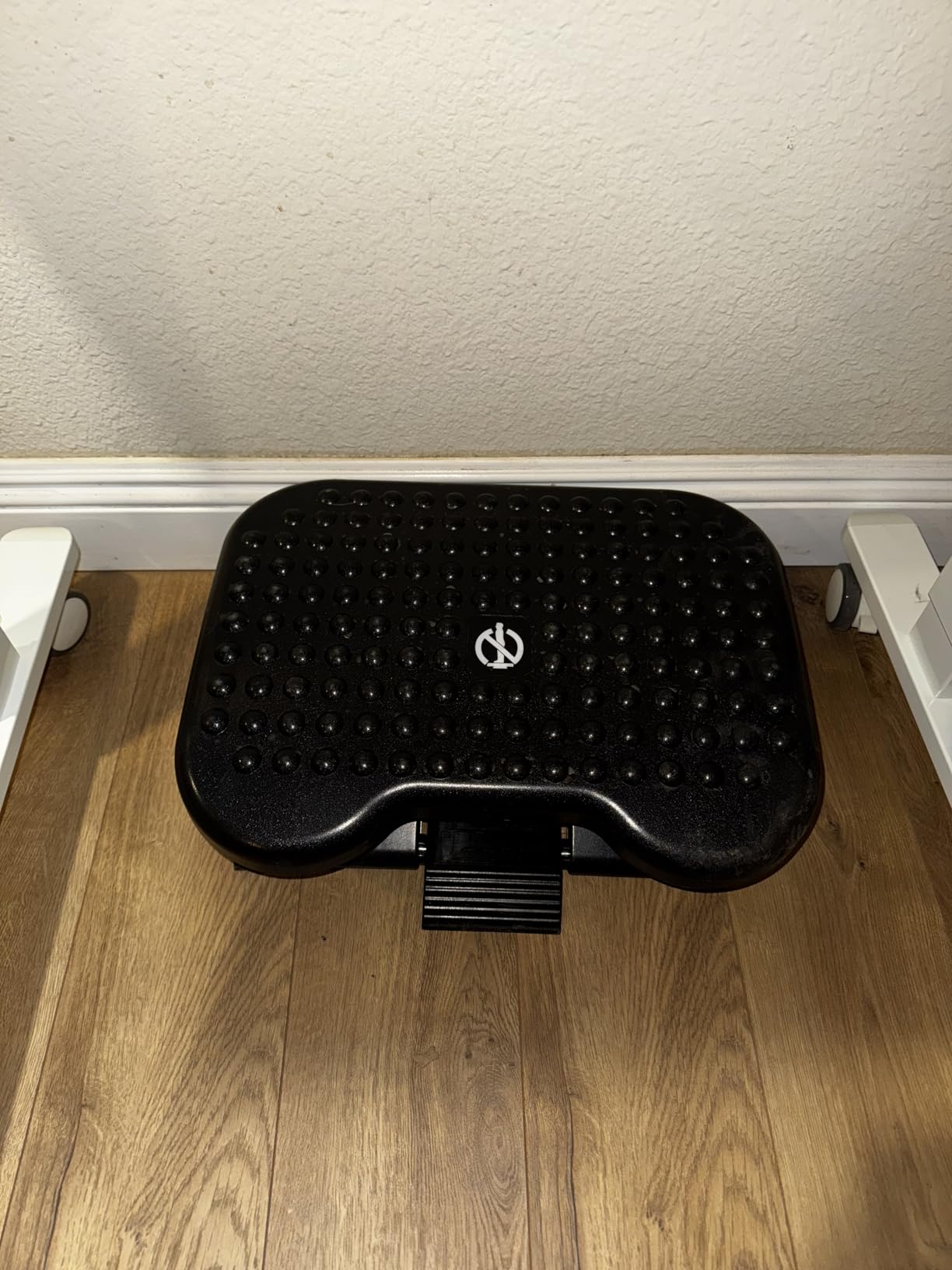
It arrives pre-assembled and the platform is a full 17.13 by 13.19 inches, so functionally it covers the same ground as the HUANUO above it. If you are working to a tight budget and want discrete heights, that makes it the sensible buy.
The limitation is evidence. With 317 reviews it is the newest product in this roundup, so there is less long-term feedback, and it shares a manufacturer with the HUANUO model, which means the durability questions we flagged there apply here too. The angles float rather than lock.
Who this suits
This suits a tall user on a limited budget who needs the top height setting to be six-plus inches rather than three. It is a good fit for a first office setup or a student room.
Who should skip it
Skip it if you want a product with a long track record or a locked angle, and consider the wooden option if you care more about how it holds up in five years than how it performs today.
How to Measure the Footrest Height You Actually Need
Every recommendation above collapses into one number if you measure it, and that number is the gap between your heels and the floor. Here is the four-step method that gets you there, and it takes about five minutes with a tape measure.
Step one: measure your inseam. Sit against a wall with your knees together and roughly 90 degrees, place a book spine-down between your legs, and measure from the top of the book to the floor in inches. That is your inseam, and it is the single best predictor of your ideal seat height.
Step two: set your chair at that seat height. Raise the seat so the top of it is a knuckle to a fist below the crease of your knee, roughly inseam minus two to three inches. This is the height your feet are working from, and it should be set before anything else.
Step three: measure the foot-floor gap. With the chair at that height and your feet flat on the floor, the gap is what remains between the underside of your foot and the surface below. If you are sitting on a carpet, measure to the carpet, not the subfloor.
Step four: that gap is your required elevation. Match it against the height ranges in the comparison table. A three inch gap works with most of these products; a six inch gap narrows your shortlist to the two tallest platforms, and a gap above seven inches means you are better served by a drafting stool or a high-seat task chair than by any under-desk footrest.
What to Look for in a Footrest Built for Long Legs
Most buying guides for footrests are written for people who are five foot six and have two inches of dangling to solve. These eight factors are the ones that actually change the outcome for a longer body, listed roughly in the order they matter.
1. Maximum elevation, stated in inches. This is the number to buy on, and it is the one most listings bury. Ignore the word adjustable and find the top measurement. Under six inches is the point at which tall users start reporting the platform is not tall enough, which is the most common complaint in office chair forums.
2. Platform depth. Look for 15 inches or more of front-to-back length. Larger feet need the full length or the heels hang off the rear edge, which pushes the ankle into a sharp angle and undoes the benefit. Two of the products here are 17 inches or wider for exactly this reason.
3. Weight capacity. Tall users tend to be heavier, and a plastic platform rated well below your body weight will flex or creep. Look for 300 pounds or more, and note that wood holds a higher rating than plastic at a similar price.
4. Tilt or rocker rather than a fixed angle. A floating platform that moves through ten to thirty degrees keeps your ankles from holding a single static angle all day, which supports circulation through the lower legs. A lock is optional, though useful if you work in one fixed posture.
5. Material and how it behaves with shoes. This is where tall users differ from the average buyer, because you are more often working in shoes and putting more load through a smaller contact area. Solid wood and steel stay rigid and handle shoe soles well. Memory foam suits barefoot work and compresses under a shoe. Grip-tape wood is fine in shoes and unpleasant on bare feet.
6. Base grip on your floor type. Hardwood, laminate and tile are unforgiving, and a light plastic platform will slide under a heavier load. Look for rubber feet, a non-slip base, or accept that you will be adding a thin rug underneath.
7. Under-desk clearance and footprint. A sit-stand desk with drawers or a low crossbar may not physically accept a deep platform. Measure the space between the floor and the underside of your desk before buying, and check the depth of the unit against it.
8. How the height actually changes. A lever or a set of discrete notches is fast. A foam insert you have to lift out is slower but usually quieter and more stable. Continuous adjustment is rare, and listings that say adjustable without giving the range are worth skipping.
When a footrest makes things worse. Over-elevating is a real error, and it is the one this article warns about most. If your platform lifts your feet so high that your knees sit above your hip line, you compress the hip flexors and the small of your back takes the load instead. The goal is knees at roughly 90 degrees and level with or just below the hips, not maximum lift at any cost. If you have to reach for the highest setting to get comfortable, the real problem is seat height and you should raise the chair instead.
Wood, plastic or foam. For a taller, heavier user working in shoes, solid wood is the most durable and the most stable under load, and it stays rigid for years. Plastic gives you more height settings and lighter weight but flexes over time and carries lower capacity ratings. Memory foam is the most comfortable barefoot and the least durable under a shoe, though high-density foam holds up considerably better than low-density foam. Our two wood picks are the ones we would buy for a tall, heavier user working long days in shoes.
Footrests for Drafting Stools, Foot Rings and Sit-Stand Desks
If you already own high-seat seating, you are the user most likely to need a genuine high-elevation platform rather than an under-desk wedge. Drafting stools and task chairs with foot rings put your feet in mid-air with a large gap below, and a three inch wedge barely registers.
The VIVO platform in this roundup reaches over ten inches and is the only unit here built for that range, which makes it the natural match for a drafting stool or a foot-ring chair. The retractable footrests built into gaming and drafting chairs are widely considered a poor solution in office chair forums, and a separate steel platform of this kind is the better fix.
For a shared sit-stand desk, the challenge is a mismatch rather than a permanently low surface. Anyone sharing a sit-stand desk with a shorter partner can leave the desk at one height and use a tall platform on their side, which is easier than renegotiating the desk setting every morning. The tallest wooden option in this roundup also handles that case, since it reaches past seven inches overall.
One practical note for sit-stand users: the footprint is often the binding constraint rather than the height. Measure the gap between the floor and your desk’s lowest crossbar before you buy, since a deep platform that will not slide under the desk is a frequent source of frustration in this category.
Frequently Asked Questions
Do tall people need a footrest?
Usually not. If your feet rest flat on the floor with your knees at roughly 90 degrees while you type, your chair is already correct and a footrest would push your knees above hip level. Tall users genuinely need one in two situations: a fixed desk that is too low, forcing the chair down and compressing the back of the thighs, or a shared sit-stand desk set to another person’s height. In both cases the footrest is the second move after adjusting the chair seat height.
How high should a footrest be for a tall person?
High enough to close the gap between your heels and the floor once your chair is already set to your correct seat height. Measure that gap with a tape and match it to the product’s maximum elevation. For a six-foot worker on a low desk, that usually means a platform that reaches six inches or more at its top setting. Anything topping out under four inches will not close the gap.
How do I measure the right footrest height?
Measure your inseam by sitting at 90 degree knees with a book between your legs and measuring from the book to the floor. Set your chair seat about two to three inches below that inseam figure. Then measure the remaining gap between the underside of your feet and the floor. That gap is your required footrest elevation, and it is the number to match against a product listing.
Should a footrest be flat or angled?
Angled or tilting is generally better because it encourages small movements through the ankle, which supports circulation in the lower legs. A flat platform is fine if you hold one fixed posture or are mainly using it for comfort. A slight upward tilt between ten and twenty degrees is usually more comfortable for tall users with longer femurs than a steep angle, since it keeps the shin and thigh line consistent.
What is a good high leg rest for under my desk?
One that starts at four inches or more and reaches six inches at maximum, with a platform at least fifteen inches deep and a weight capacity of 300 pounds or above. Those four specs separate a footrest that works for a tall body from a standard model that tops out near three inches. Platform depth matters as much as height, because feet that overhang the rear edge lose the support that makes the whole device worthwhile.
Can a footrest fix back pain from sitting?
It can reduce load on the lower back by correcting your knee angle and taking pressure off the back of your thighs, but it is not a treatment for back pain. If your feet already reach the floor flat, the more likely cause of discomfort is a chair with the wrong seat height, seat depth or backrest height for your frame, and fixing the chair will do more than any footrest. Persistent pain is worth discussing with a qualified clinician.
What footrest works with a drafting chair or standing desk?
You need a high-elevation platform, not a standard under-desk wedge. Look for a steel-framed unit that reaches at least eight inches at maximum and check the load rating, since a drafting setup invites more weight through the platform than a seated desk does. Our tallest pick in this roundup reaches over ten inches on a steel frame. Also measure the clearance under your desk, because a deep platform will not fit beneath a low crossbar or drawer unit.
Final Verdict: Which Footrest Fits Your Height
Measure your foot-floor gap first, because it eliminates most of this list instantly. Under three inches and almost any platform works, which is why the EUREKA tilt footrest is our first pick for movement and metal build in this roundup of the best footrests for tall office workers. Between three and six inches and you want a real height range, which points to the HUANUO, the Mind Reader, or the StrongTek wooden model. Above six inches and the shortlist is the VIVO steel platform or the four-setting wooden option. Heavier users working in shoes push toward wood, barefoot users toward high-density foam, and anyone on a shared desk or drafting stool toward the tallest platforms we listed.
Set the chair before you set the footrest, and do not over-elevate. If your knees end up above your hips, you have added a problem rather than solved one. We earn a commission on qualifying purchases, and none of that changes which of these ten we would put under our own desk.