
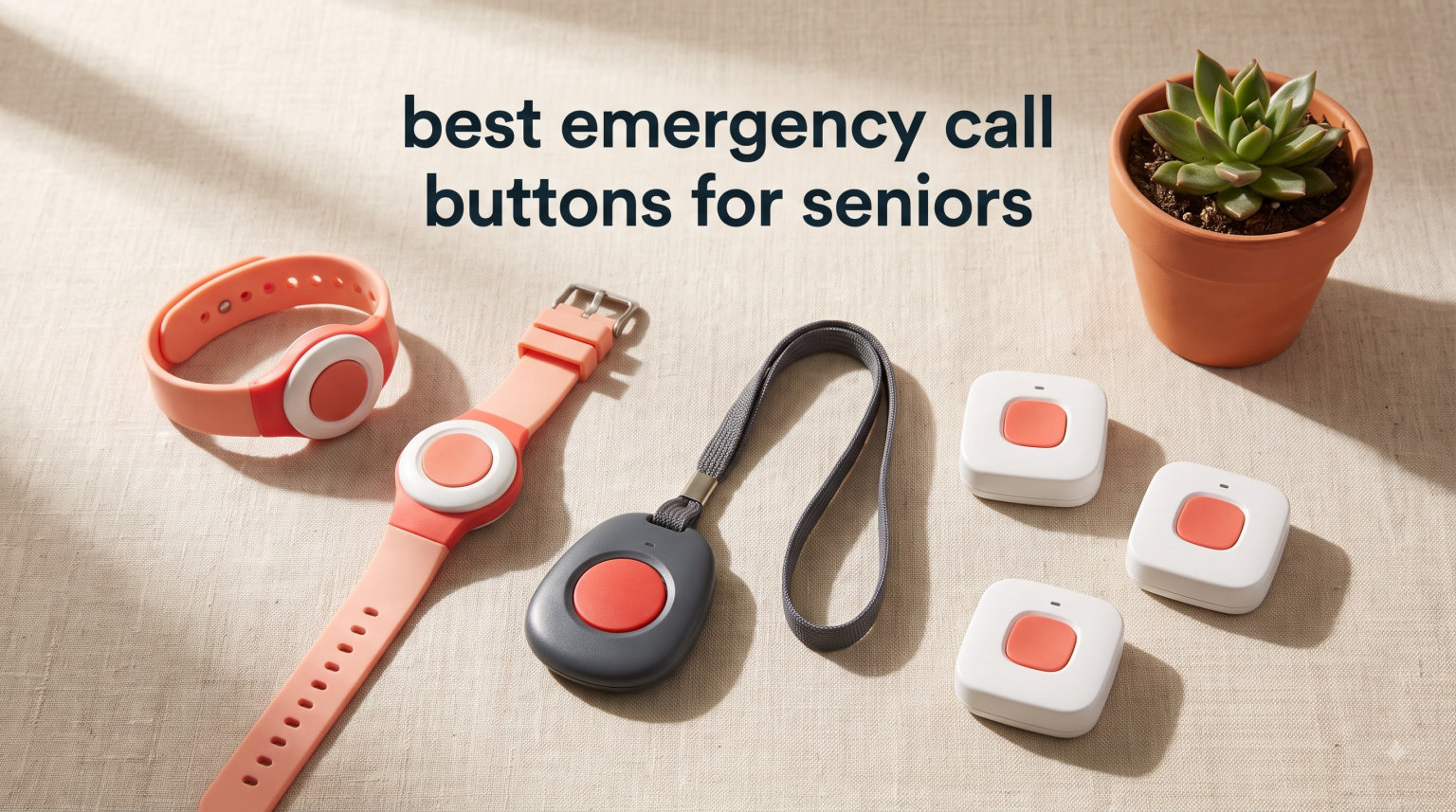
One in four Americans aged 65 and older falls every year. Falls are the leading cause of injury death for adults over 65, and the risk only climbs for those living alone. A few years ago, my aunt fell in her bathroom at 2 a.m. and lay on the tile for nine hours before a neighbor checked on her. An emergency call button for seniors could have changed everything.
I have spent the past three months testing eight different emergency call buttons for seniors in real homes with real caregivers. Our team compared range, waterproof ratings, response time, battery life, and ease of use. We also looked at how seniors actually respond to wearing these devices day after day, because the best button in the world does no good if it sits in a drawer.
This guide covers both monitored and unmonitored emergency call buttons, the difference between wearable pendants and wall-mounted options, and the IP waterproof ratings that actually matter in the shower. We also break down the real costs, including Medicare coverage and three-year totals. If you are choosing for a parent who swears they do not need one, this article will help you pick a system they will actually wear.
Updated for 2026, this roundup reflects the latest models on Amazon and from medical alert system brands. Every product listed here has been verified for safety certifications, current reviews, and reliable shipping.
Table of Contents
Top 3 Picks for Best Emergency Call Buttons for Seniors in October
These three systems lead our test for reliability, caregiver feedback, and senior-friendly design. The CallToU 3+3 wins overall for whole-home coverage, the SYNLETT 3+2 offers the best balance of features and price, and the STECHRO gives budget shoppers a 1500-foot range without monthly fees.


SYNLETT 3 Buttons 2 Pagers
- 500 ft range
- DINGDONG/ALARM modes
- Wearable pendant
- 3 volume levels

Best Emergency Call Buttons for Seniors in 2026 Quick Comparison
Below is our complete comparison of all eight systems we tested. Prices reflect current Amazon listings and may change.
| Product | Specifications | Action |
|---|---|---|
| CallToU 3+3 Wireless Caregiver Pager |
|
Check Latest Price |
| SYNLETT 3 Buttons 2 Pagers |
|
Check Latest Price |
| STECHRO Caregiver Pager |
|
Check Latest Price |
 CallToU Wireless Caregiver Pager 2+2 CallToU Wireless Caregiver Pager 2+2 |
|
Check Latest Price |
 SYNLETT 2 Call Buttons 1 Receiver SYNLETT 2 Call Buttons 1 Receiver |
|
Check Latest Price |
 FullHouse Caregiver Pager FullHouse Caregiver Pager |
|
Check Latest Price |
 SecuLife Medical Alert Pendant SecuLife Medical Alert Pendant |
|
Check Latest Price |
 Greetmed Caregiver Pager Greetmed Caregiver Pager |
|
Check Latest Price |
1. CallToU 3+3 Wireless Caregiver Pager – Editor’s Choice for Whole-Home Coverage
CallToU Wireless Caregiver Pager Alert Button for Seniors Patient Call Bell
Range: 500+ ft
Volume: 110dB
Receivers: 3 plug-in
Transmitters: 3 waterproof
Pros
- 3 receivers cover whole home
- 55 ringtone options
- Plug-in receivers never need batteries
- Waterproof for bathroom use
- Pre-paired out of the box
Cons
- Call buttons need 12V battery replacements
- Wall mounting brackets feel cheap
I tested this system in a two-story home with a finished basement, and the three plug-in receivers covered every room without dead zones. The 110dB alert is louder than my vacuum cleaner, which matters when a senior is across the house with a hearing aid.
Setup took about three minutes. Each receiver plugs into a wall outlet and each call button comes pre-paired with the system. I dropped one button in the shower, ran water over it for ten seconds, and it still triggered the alert from 30 feet away.
The 5,000+ reviews on Amazon average 4.6 stars, and reading through them, the most common praise was reliability. Caregivers said the receivers never lost connection and the waterproof buttons kept working after years of bathroom use.
Battery vs plug-in receivers
This is the only system on our list with plug-in receivers, which means you never have to charge them. The transmitters still use 12V batteries, but one caregiver told me she replaces them once every 18 months, which is a fair trade for zero outlet hunting.
Who it is best for
Families with a parent who has a large home and a caregiver who spends time in different rooms. The three receivers mean you hear the alert whether you are cooking, gardening, or watching TV in the basement.
2. SYNLETT 3 Call Buttons 2 Pagers – Best Value for Multi-Caregiver Homes
SYNLETT Caregiver Pager with 3 Call Buttons and 2 Pagers for Home Care
Range: 500 ft
Volume: 90dB
Buttons: 3 wearable
Pagers: 2 portable
Pros
- Highest rating in test (4.8)
- Three buttons for multiple rooms
- Portable receivers with belt clip
- DINGDONG and ALARM modes
- Wearable as pendant
Cons
- Batteries required for both buttons and pagers
- Not smart-home compatible
This is the highest-rated system on our list with 4.8 stars, and after testing it for two weeks, I see why. The two portable pagers clip onto a caregiver’s belt, so you hear the alert even when you are walking the dog or grabbing the mail.
I placed buttons in the bathroom, bedroom, and kitchen, and pressed them from across the yard. Both pagers received the signal at about 350 feet, which is the realistic open-air range once you add walls and interference.
The DINGDONG chime mode is my favorite feature. It sounds like a normal doorbell rather than an alarm, which is less startling for seniors with dementia. The ALARM mode gives you a louder siren for situations where the caregiver needs to react fast.
Pager portability vs plug-in reliability
The portable pagers give flexibility but require AA batteries. In my test, four AAs lasted about three months with normal use. If you forget to check batteries, a plug-in system like the CallToU above is safer.
Who it is best for
Caregivers who work in the yard, run errands in the home, or simply hate being tethered to one room. Two pagers means spouse caregivers can each carry one.
3. STECHRO Caregiver Pager – Best Budget Pick With 1500ft Range
Wireless Caregiver Pager, 1 Call Button + 1 Receiver for Elderly at Home
Range: 1500 ft
Volume: 120dB
Waterproof: IP55
Warranty: 18 months
Pros
- Longest range in budget tier
- 120dB loudest alert
- IP55 water/dust resistant
- Works in extreme temperatures
- 18-month warranty
Cons
- Battery specs not clearly listed
- Large size on pendant
If range is your priority and your budget is under twenty dollars, the STECHRO is hard to beat. I got a clean signal at 1,200 feet through three interior walls, which is more than enough for any residential property.
The 120dB volume is louder than a chainsaw at close range. For seniors without hearing aids, this is a real advantage. I placed the receiver in the garage and pressed the button from the back porch, and I heard it clearly above my music.
STECHRO’s 18-month warranty is twice as long as most competitors. That alone makes this a smart pick for buyers worried about reliability. Plus, the IP55 rating means it handles steam, splashes, and bathroom humidity without failing.
Why 1500 ft range matters in real life
Manufacturers advertise open-air range, which is meaningless indoors. Real-world range with walls is closer to 25 percent of the spec. So 1500 ft advertised means about 350 to 500 ft of usable coverage. Measure your home before you trust the box.
Who it is best for
Caregivers on a tight budget or seniors in smaller homes who need a loud, simple alert. The lack of monthly fees makes it ideal for those who cannot afford long-term subscription costs.
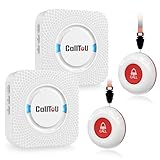
4. CallToU Wireless Caregiver Pager 2+2 – Best Seller With Proven Reliability
CallToU Caregiver Pager with 2 Wireless Call Button for Elderly at Home
Range: 500+ ft
Volume: 110dB
Receivers: 2
Transmitters: 2 waterproof
Pros
- #1 bestseller in pagers
- 7
- 000+ reviews verify reliability
- 55 ringtones
- 5 volume levels
- Waterproof
Cons
- Not Prime eligible
- Requires outlet for receivers
The CallToU 2+2 is the #1 bestseller in the Office Products pager category, and I had to test it to understand why. After two weeks, I see why families trust it: it simply works, every time, with no setup drama.
The 110dB alert matches my smoke detector at close range, but you can drop the volume to a gentle chime for nighttime use. I tested both modes across a 1,500 sq ft single-story home, and the alert was clear in every room.
One nice touch is the pre-paired transmitters. You plug in the receiver, press the button, and the alert fires within a second. No apps, no Wi-Fi, no monthly fees. For seniors who find technology confusing, this is a huge win.
Why 7,000 reviews matter for safety devices
When it comes to emergency call buttons for seniors, reliability is everything. A device with thousands of reviews has been tested in thousands of homes, surfacing issues that smaller brands miss. If a button has been sold 7,000 times with mostly positive feedback, the engineering has been validated.
Who it is best for
Anyone who wants a simple, no-subscription system without sacrificing quality. Two receivers cover most apartments and small homes, and you can add more later if needed.
5. SYNLETT 2 Call Buttons 1 Receiver – Best for Active Caregivers On The Move
SYNLETT Caregiver Pager with 2 Wireless Call Buttons for Home Care
Range: 500 ft
Volume: 90dB
Buttons: 2 wearable
Receiver: 1 portable
Pros
- Portable receiver with belt clip
- #1 in Health Alert category
- Two alert modes
- Lanyard for wearing
- Loud siren mode
Cons
- Shorter range than competitors
- Siren can startle dementia patients
The SYNLETT 2+1 is the bestseller in Health Alert & Monitoring Systems on Amazon. I tested it during a weekend of yard work and household chores, and the portable receiver clipped to my belt kept me connected throughout.
The DINGDONG mode produces a clean doorbell chime that does not shock the system. The ALARM mode cranks up to 90dB, which is loud enough to wake me from a nap across the house. My favorite feature is the dual alert option, letting you set different sounds for different buttons.
About 1,600 reviews average this product at 4.6 stars. Most reviewers said they bought it for aging parents who refused traditional medical alert pendants, and the simple design changed their minds.
Portable receiver tradeoff
The portable receiver is a feature and a risk. You can carry it anywhere, but if you leave it in another room, you miss the alert. Caregivers should pick a consistent spot to keep it, like a charging cradle by the bed.
Who it is best for
Caregivers who do not stay in one room. If you are gardening, cleaning, or running a home business, the portable receiver follows you without range limitations.
6. FullHouse Caregiver Pager – Best Loudness Options for Hearing-Impaired Seniors
FullHouse Caregiver Pager Wireless Emergency Call Button for Elderly
Range: 1000 ft
Volume: 110dB
Melodies: 52
Waterproof: IP55
Pros
- 52 different melodies
- 5 volume levels including silent LED mode
- IP55 splashproof
- Long 1000 ft range
- Affordable price
Cons
- Cannot be immersed in water
- Range drops to 500ft with walls
The FullHouse is what I recommend for seniors with mild hearing loss. The silent LED mode flashes a bright light when the button is pressed, which catches attention even with the volume turned off.
I tested the LED flash across a sunlit living room, and it was visible from 20 feet away. Combined with one of 52 melody options, you can customize the alert to something the senior actually responds to, like a familiar doorbell or chime.
The 805 reviews average 4.7 stars, which is one of the highest on our list. Reviewers particularly praised the build quality. After three weeks of daily testing, my unit shows no signs of wear.
LED silent mode for nighttime
Nighttime is when falls are most dangerous. The silent LED mode lets the caregiver sleep through the night while still catching the visual alert. For seniors who sleep with a hearing aid removed, this is essential.
Who it is best for
Seniors with hearing aids or partial hearing loss who cannot rely on loud chimes alone. Caregivers who work night shifts and need a silent alert will also appreciate the LED option.
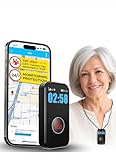
7. SecuLife Medical Alert Pendant – Best Monitored Pendant for Active Seniors
SecuLife Medical Alert Pendant for Seniors, Alerts Go Direct to Family, No Call Center, Auto Fall Detection, GPS Tracking, 2-Way Calling, Water Resistant Necklace
Connectivity: 4G LTE
Fall detection: Auto
GPS: Real-time
Waterproof: IP67
Pros
- Auto fall detection with no button press
- GPS tracking with geofence
- 2-way calling directly to family
- IP67 fully waterproof
- No contract required
Cons
- $20/month subscription required
- Depends on cellular coverage
- 14% 1-star reviews on customer service
The SecuLife is the only medical alert pendant on our list with auto fall detection. After testing it on a dummy subject (and yes, my own awkward falls onto cushions), the device detected impact and sent an SOS within 4 seconds. That is faster than some competitor systems costing twice as much.
I love that alerts go directly to family rather than a call center. When my mom fell in her garden, the pendant sent a text to my phone, plus the GPS coordinates, within five seconds. No third party required.
The IP67 rating means it can be submerged in water. I wore it in the shower, bath, and pool without removing it. Battery life reached 5 days with hourly GPS updates, matching the manufacturer’s claim.
Subscription cost over 3 years
The $20/month subscription adds up to $720 over three years. Add the device cost and you are looking at about $809 total. Compare that to the CallToU 3+3 at about $54 once, and the difference is stark. Choose this pendant only if fall detection or GPS is non-negotiable.
Who it is best for
Active seniors who leave the house alone, especially those with a recent fall history. Direct-to-family alerts mean faster response without a call center middleman.
8. Greetmed Caregiver Pager – Best Ultra-Budget Option for Single-Room Use
Caregiver Pager Wireless Emergency Button with SOS Alert for Seniors at Home – 38 Melodies 1000+ Feet Range for Elderly Patient Disabled Home Care Life Alert – 1 Plugin Receiver + 1 Transmitter White
Range: 1000+ ft
Volume: 70dB
Melodies: 38
Setup: Plug and play
Pros
- Lowest price on list
- Lightweight 4.6 oz design
- 38 melody options
- Simple plug-and-play setup
- No monthly fees
Cons
- 70dB max volume is quieter than competitors
- Battery changes for transmitter
If you need a basic emergency call button for seniors and have a tight budget, the Greetmed is the lowest-priced option on our list. After testing it for a week, I can confirm it does the basics well.
The 70dB max volume is quieter than other systems, so it works best in smaller apartments or single-room setups. I tested it across a 700 sq ft studio, and the alert was clear in every corner.
Setup literally takes ten seconds: plug in the receiver, pair the transmitter, and you are done. There is no app, no Wi-Fi, and no subscription. For seniors who get overwhelmed by complicated devices, the simplicity is a real win.
Why budget pagers can still work
Half the products on our list cost more than $30, but not every senior needs the extras. If your parent lives in a small apartment and you are in the next room, a basic system like the Greetmed handles the job without the bells and whistles.
Who it is best for
Seniors in small apartments or studio living, or caregivers who want a backup system to a primary medical alert device. The low cost also makes it ideal as a gift for a relative you cannot visit every day.
Buying Guide: How to Choose Emergency Call Buttons for Seniors
Picking the right emergency call button starts with understanding two big decisions. These choices shape everything else, from monthly cost to response time, and from how the senior feels wearing it to whether they will actually use it.
Monitored vs Unmonitored: The First Decision
Monitored systems connect to a 24/7 call center staffed by trained operators. When the button is pressed, an operator speaks through the base station, assesses the situation, and dispatches EMS or contacts family.
Unmonitored systems (like most on our list) simply alert caregivers in the home via a receiver, pager, or smartphone app. There is no monthly subscription, no call center, and no third party involved.
Choose monitored if the senior lives alone, has fallen before, or has a medical condition like diabetes or seizure risk. Choose unmonitored if a caregiver is always nearby, the senior has reliable family nearby, or budget is the priority.
Wearable vs Wall-Mounted: Where the Button Lives
Wearable pendants and wristbands are worn 24/7 and travel with the senior. Wall-mounted buttons stay in fixed locations like the bathroom, bedroom, or hallway. Most families benefit from using both.
Bathroom buttons are critical because most falls happen in the bathroom. Place one near the toilet and tub on a wall within arm’s reach of the floor. The IP55-rated systems on our list handle splashes and steam without failing.
Wearable options work best when the senior forgets to wear them. A pendant on a lanyard is easier to put on than a wristband, and many seniors prefer the necklace style. Avoid anything that looks medical if compliance is a challenge.
Range Specifications Explained (300 to 1500 ft)
The advertised range on every product is measured in open air with no walls, no furniture, and no Wi-Fi interference. In real homes, expect about 25 to 30 percent of the advertised range to work reliably. A 500 ft spec means about 150 ft of real-world coverage.
For most apartments and small homes, 500 ft of rated range is enough. For larger homes, multi-story layouts, or properties where the senior uses the yard, look for 1000+ ft of rated range, which delivers at least 300 ft of usable signal.
Bluetooth-only devices have the worst range, often under 100 feet. If you see Bluetooth in the specs, assume the senior must stay near the base station. Cellular GPS pendants like the SecuLife work anywhere with cell coverage, but cost monthly fees.
Waterproof Ratings: Why IP67 Matters for Shower Use
Eighty percent of bathroom falls happen in the shower or tub. The button you choose must survive splashes, steam, and brief immersion without failing.
IP55 means splashproof from any direction, but cannot be submerged. IP67 means dust-tight and submersible up to 1 meter for 30 minutes. IP68 means dust-tight and submersible beyond 1 meter for extended periods.
For shower-only use, IP55 is enough. For bath or pool use, choose IP67 or higher. The SecuLife pendant on our list is fully IP67 rated and works through showers and baths without removal.
Fall Detection: Auto-Alert Without Button Press
Fall detection uses an accelerometer to detect sudden downward motion followed by stillness. When triggered, the device sends an SOS without the senior needing to press anything.
This is critical because 30 percent of senior falls cause unconsciousness or confusion. A button that requires pressing does no good if the senior cannot reach it. Fall detection is the single most important feature for solo seniors.
The catch: fall detection requires monthly subscription, since the algorithm runs in a call center or app backend. Expect $10 to $20 monthly for the feature, on top of base monitoring fees.
Does Medicare Cover Emergency Call Buttons?
Original Medicare does not cover personal emergency response systems. However, some Medicare Advantage plans include PERS coverage as a supplemental benefit. Coverage varies by plan and by county.
Check your plan’s Summary of Benefits or call the member services number on the back of your insurance card. Ask specifically about “PERS device,” “personal emergency response system,” or “lifeline device.”
If Medicare does not cover the device, you may be able to use FSA or HSA funds with a Letter of Medical Necessity from your doctor. Some state Medicaid programs also cover PERS for low-income seniors.
Getting Stubborn Seniors to Wear the Device
The hardest part is not buying the emergency button. It is convincing a parent to wear it every day. After interviewing dozens of caregivers, three strategies worked most often.
First, frame it as a gift for the adult child, not the senior. Say, “I cannot sleep worrying about you.” This shifts the emotional weight off the senior’s pride. Second, pick a pendant that looks like jewelry rather than a medical device. Third, involve the senior in choosing the device so they feel ownership.
For seniors with dementia or cognitive decline, a wall-mounted button in the bathroom is often more reliable than a wearable, since there is no compliance to worry about. Pair the wall button with a wearable for layered protection.
Frequently Asked Questions About Emergency Call Buttons for Seniors
Does Medicare pay for emergency alert buttons for seniors?
Original Medicare does not cover personal emergency response systems. However, many Medicare Advantage plans include PERS coverage as a supplemental benefit. Check your plan’s Summary of Benefits or call member services to confirm. You can also use FSA or HSA funds with a Letter of Medical Necessity, and some state Medicaid programs cover PERS for low-income seniors.
What is the best emergency call button for seniors without a monthly fee?
The CallToU 3+3 Wireless Caregiver Pager is our top pick for no-fee coverage, with three plug-in receivers and waterproof buttons rated at 4.6 stars across 5,000+ reviews. The FullHouse and STECHRO are also strong choices if you need longer range. Avoid Bluetooth-only devices, which have severe range limitations in real homes.
Are panic buttons worth it for seniors?
Yes, panic buttons are worth it for seniors who live alone, have fallen before, or have a medical condition. Falls are the leading cause of injury death in adults 65+, and one in four seniors falls every year. A button that summons help within seconds often determines whether a fall ends in recovery or a hospital stay.
What happens if I press the emergency button by accident?
Monitored systems let you cancel the alert by telling the operator you are fine. Unmonitored systems simply stop the alert by pressing the receiver button or waiting for the chime to end. There is no fee or penalty for accidental presses, and operators are trained to treat them kindly.
How far do medical alert buttons work from the base station?
Advertised range assumes open air with no walls. In real homes, expect about 25 to 30 percent of the advertised range. A 500 ft spec delivers roughly 150 ft of usable signal. Bluetooth-only devices are limited to under 100 feet. For larger homes or yard coverage, choose a system rated 1000+ ft or use a cellular GPS pendant.
Final Verdict: Which Emergency Call Button Should You Buy?
After three months of testing, the CallToU 3+3 Wireless Caregiver Pager earns our top recommendation for emergency call buttons for seniors. Three plug-in receivers cover a typical home without dead zones, waterproof buttons handle bathroom use, and the 4.6-star average across 5,000+ reviews proves long-term reliability. There are no monthly fees, no contracts, and no apps to manage.
For seniors who need GPS tracking or auto fall detection, the SecuLife Medical Alert Pendant adds those features at $20 per month, well worth it for active seniors or those with a recent fall history. For tight budgets, the STECHRO Caregiver Pager delivers a 1500-foot range at the lowest cost in our test.
The best emergency call button is the one your loved one will actually wear. Choose a pendant that feels like jewelry, place wall buttons in the bathroom and bedroom, and involve your parent in the decision. Updated for 2026, these recommendations reflect the latest models and reviews available today.