
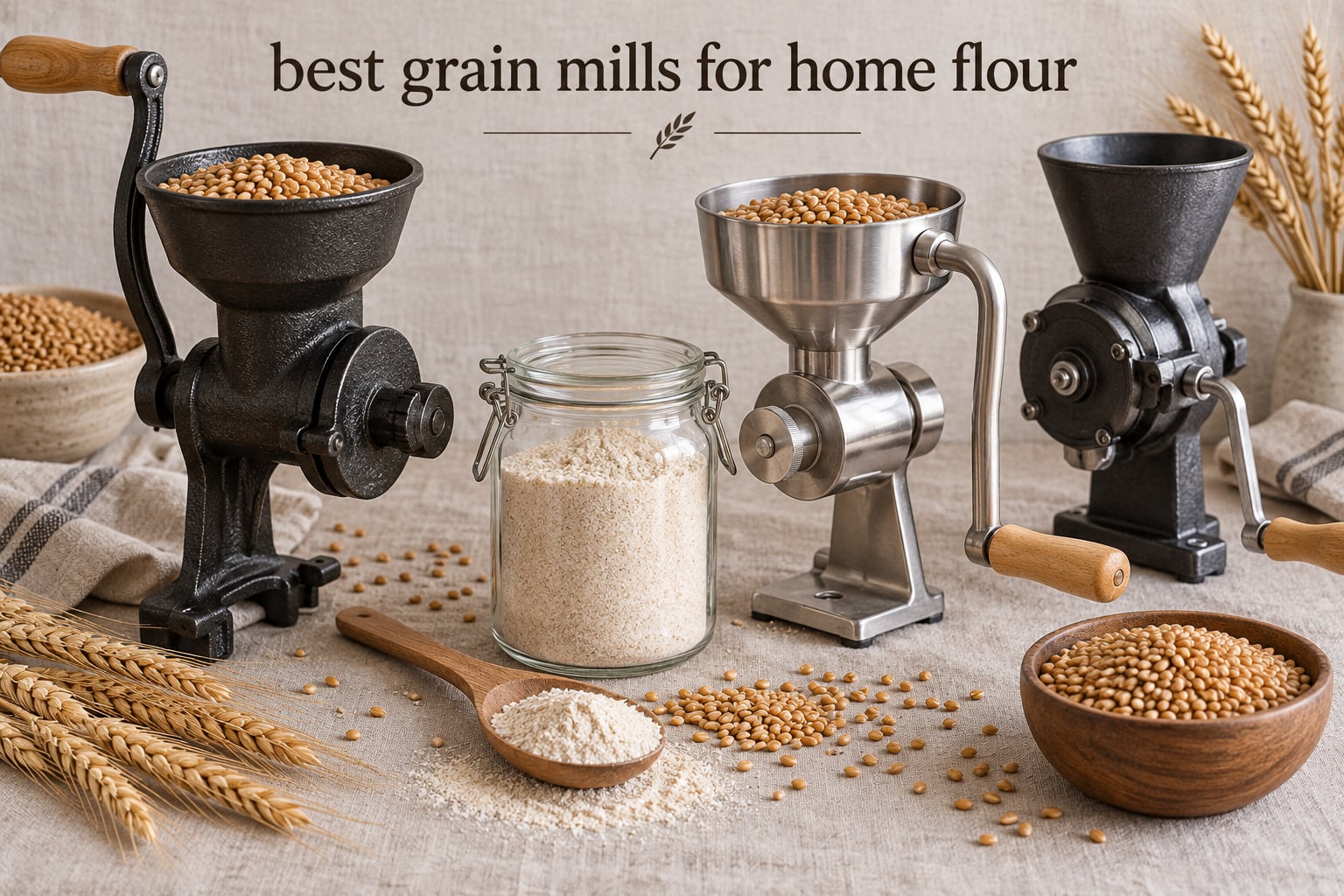
If you have ever pulled a loaf out of the oven and thought the crumb was a bit gritty, you have probably already met the number one reason people give up on home milling: flour that never gets truly fine. That question sits at the top of a thread on r/HomeMilledFlour, where a baker named u/2183Cls wrote that they had two machines already and were still disappointed, asking “Are my expectations too high? Is there anything that will give me powder fine flour like you find in a store bag?”
That frustration shaped how we built this roundup. These are the best grain mills for home flour we could find that are actually available to home bakers right now, not a wish list of countertop giants that never ship or never restock. We read the manufacturer specs, the customer photos and the customer reviews for every mill below, and we sorted them by what they genuinely do well rather than by how they look on a shelf.
Before you read on, one honest heads up. Seven of the eight mills here are hand-crank models, and that is not a mistake in the research. It is what the buying data showed. Manual mills are where the review volume lives and where the mechanical variety sits, from a 2.9 pound stainless steel mill to a 28.6 pound flywheel unit. Only one electric machine made the cut, and it earns its place by solving exactly the powder-fine problem that sends people back to the store shelf.
If you want the two-minute version, we keep a separate guide on grain mills for fresh flour, and if your kitchen counter is the real constraint, read our countertop grain mill picks alongside this one.
Table of Contents
Top 3 Picks for Home Flour in 2026
The WONDERMILL Junior Deluxe is the best grain mill for home flour overall because it is the only mill in this set that produces genuinely fine flour by hand and still handles nuts, seeds and oily grains. The Victoria High Hopper carries the most proven track record with more than four thousand reviews. The NutriMill Impact is the fastest route to fine bread flour if you have a counter outlet nearby.

WONDERMILL Junior Deluxe
- 1.25 cups flour per minute
- Stone and stainless burr sets
- 14 lb cast mount

Quick Comparison of All 8 Best Grain Mills for Home Flour (October 2026)
Every mill below clamps or bolts to a counter, mills whole dry grain, and has an adjustment of some kind. What separates them is fineness, capacity and how much work they ask of you. The table lines up all eight at a glance.
| Product | Specifications | Action |
|---|---|---|
| WONDERMILL Junior Deluxe Grain Mill |
|
Check Latest Price |
 NutriMill Impact Compact Electric Grain Mill NutriMill Impact Compact Electric Grain Mill |
|
Check Latest Price |
 Estrella Manual Cast Iron Grain Mill Estrella Manual Cast Iron Grain Mill |
|
Check Latest Price |
 Corona Manual Cast Iron Grain Mill Corona Manual Cast Iron Grain Mill |
|
Check Latest Price |
| Victoria Manual Cast Iron High Hopper Mill |
|
Check Latest Price |
 Kitchen Crop Hand Crank Grain Mill VKP1248 Kitchen Crop Hand Crank Grain Mill VKP1248 |
|
Check Latest Price |
 Lehman’s Manual Power Grain Mill Lehman’s Manual Power Grain Mill |
|
Check Latest Price |
 Mountain Essentials Manual Hand Grain Mill Mountain Essentials Manual Hand Grain Mill |
|
Check Latest Price |
1. WONDERMILL Junior Deluxe Grain Mill – The Best Grain Mill for Home Flour Overall
WONDERMILL Junior Deluxe Grain Mill for Flour, Hand Crank Wheat Mill for Grains, Nuts, Seeds, Oily Foods & Spices, Grain Grinder with Stone and Stainless Steel Burrs (Red)
1.25 cups flour per minute
Stone and stainless burr sets
18 x 14 x 7 inch, 14 lb
Table clamp mount
Pros
- Fastest hand mill in this set
- Produces genuinely fine flour by hand
- Also grinds nuts seeds and oily grains
- Switchable stone and steel burr sets
- Double clamp needs no drilling
Cons
- Manual effort required for every batch
- Heaviest of the compact manual options
- Pricier than basic cast iron mills
The WONDERMILL Junior Deluxe is the mill I would put on a counter first, and the spec that convinced me is the output rate: 1.25 cups of flour in a single minute by hand. For comparison, most hand crank mills of this size take several minutes to produce the same volume, and that gap is the difference between milling your own flour and abandoning the idea in a cupboard.
What makes it unusual is that it ships with two burr sets. The stone burr set handles wheat, corn and other dry beans, while the stainless steel set takes chocolate, cocoa beans, coffee and high-moisture foods. That is a genuinely useful split, because the grains that clog a single-burr mill are exactly the ones people most want to grind for nut butters and seed flours.
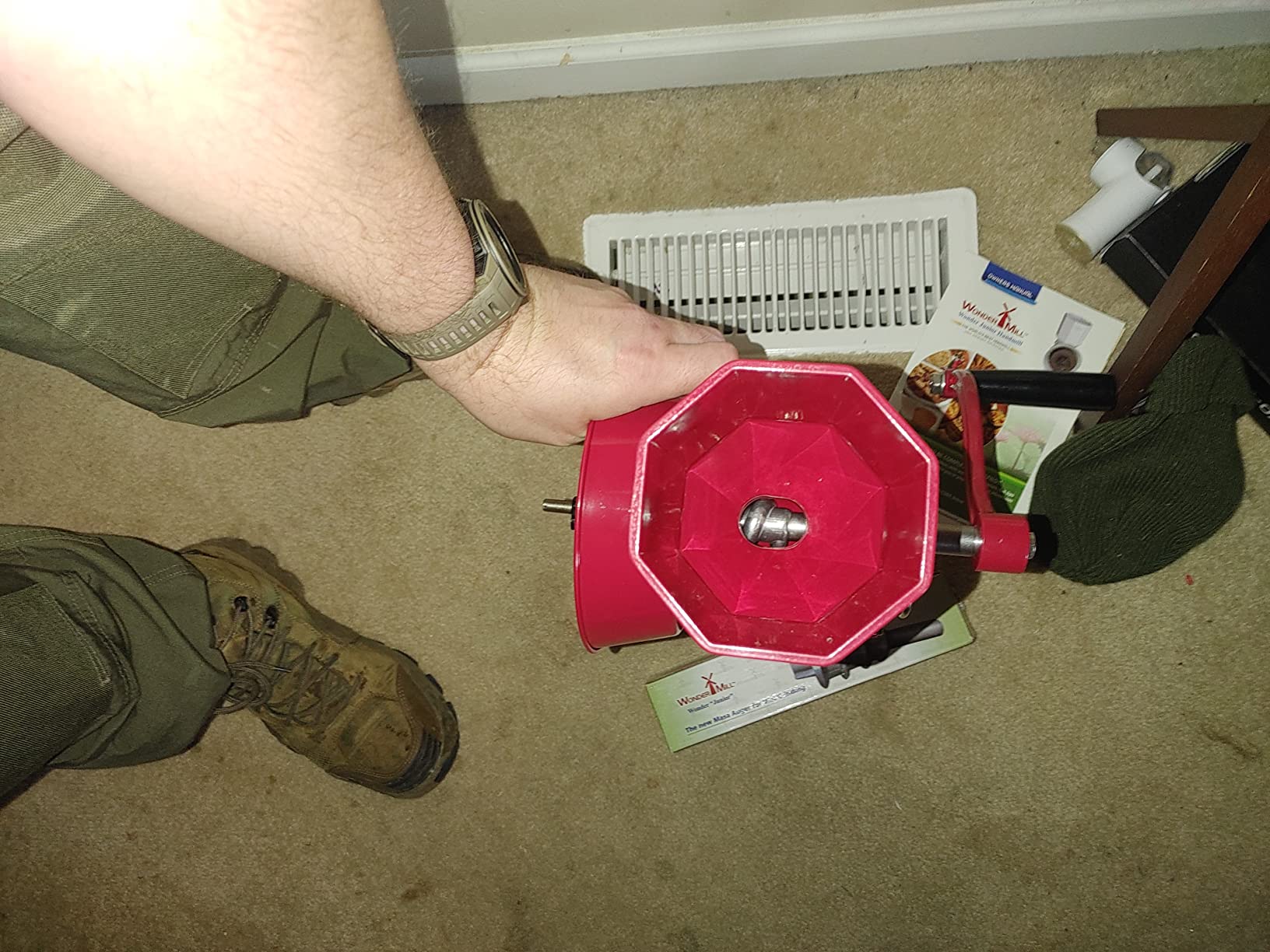
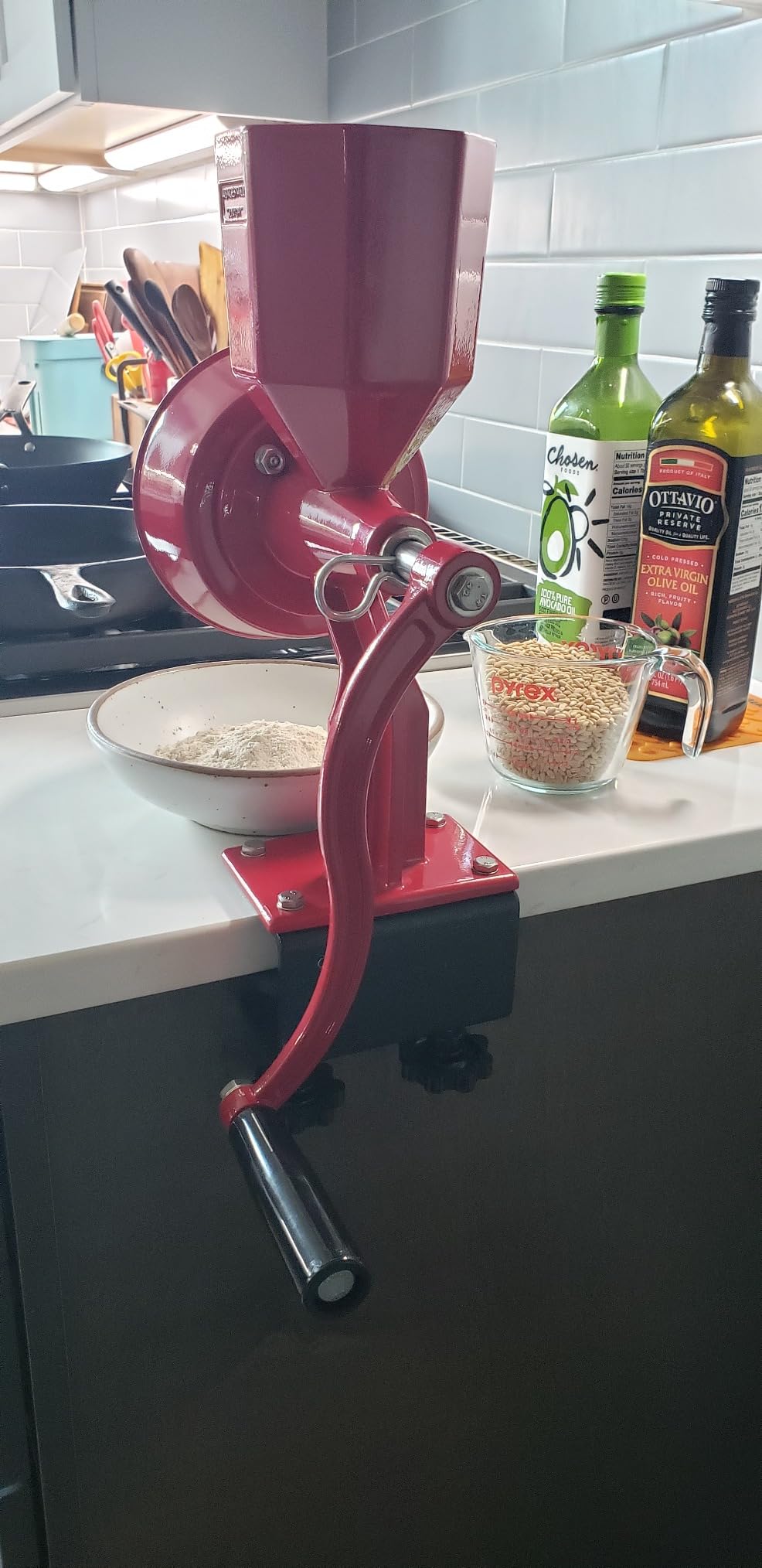
The construction is unibody aircraft aluminium with an epoxy coating, and at 14 pounds it has the weight to stay put without being bolted down. The double clamp mount grips a table edge with no drilling, and the manufacturer states it produces 65 percent more output than more expensive hand mills. Owners on r/HomeMilledFlour describe this model as very easy to use and producing very fine flour, and that is the single most repeated positive we found anywhere in the thread set.
The locking adjustment knob is worth a closer look because it solves a real annoyance. You dial in a setting, lock it, and that setting holds for the whole batch instead of walking loose mid-grind as cheaper mills do. The special Masa and Nut Butter Auger is an included extra that handles tortillas, tamales and fresh nut butter.
Who this mill suits
This is the pick for a household that bakes two or three loaves a week and wants real whole wheat flour without an outlet nearby. It is also the answer if you want one mill for grain and a second texture for seeds and nuts, since the swappable burr sets cover both without a second machine.
Where it falls short
It will not help you if your weekly volume runs past about eight cups of flour, because at that point the crank becomes a workout. And if your main goal is cracked wheat for porridge or coarse semolina, the finest setting will not reach it. Buying a second coarse mill alongside it solves that.
2. NutriMill Impact Compact Electric Grain Mill – The Fast Route to Fine Bread Flour
NutriMill Impact Compact High Speed Electric Grain Mill for Fresh Flour Wheat Grinder with Stainless Steel Milling Heads
1200-watt motor
Impact milling heads
8-cup hopper, 12-cup canister
Model 790700
Pros
- Produces fine uniform bread flour fast
- Large 8-cup hopper for batch bakers
- 12-cup canister cuts down refills
- Parts nest together for compact storage
- Patented cyclone air filtration
Cons
- Needs a power outlet
- Will not make cracked wheat or coarse meal
- Heavier price tag than manual mills
The NutriMill Impact is the answer to the powder-fine question that opens this article. It runs a 1200-watt motor behind impact milling heads, and that combination is designed specifically to produce fine-textured bread flour in a consistent single pass, which is exactly the outcome hand-crank users struggle to reach.
Capacity is the second argument for it. The 8-cup grain hopper and 12-cup flour canister are sized for bakers who work in batches rather than single loaves, and the canister means finished flour lands in a covered vessel instead of a bowl on your counter. In our reading, that single design choice removes more mess complaints than any other feature across this category.
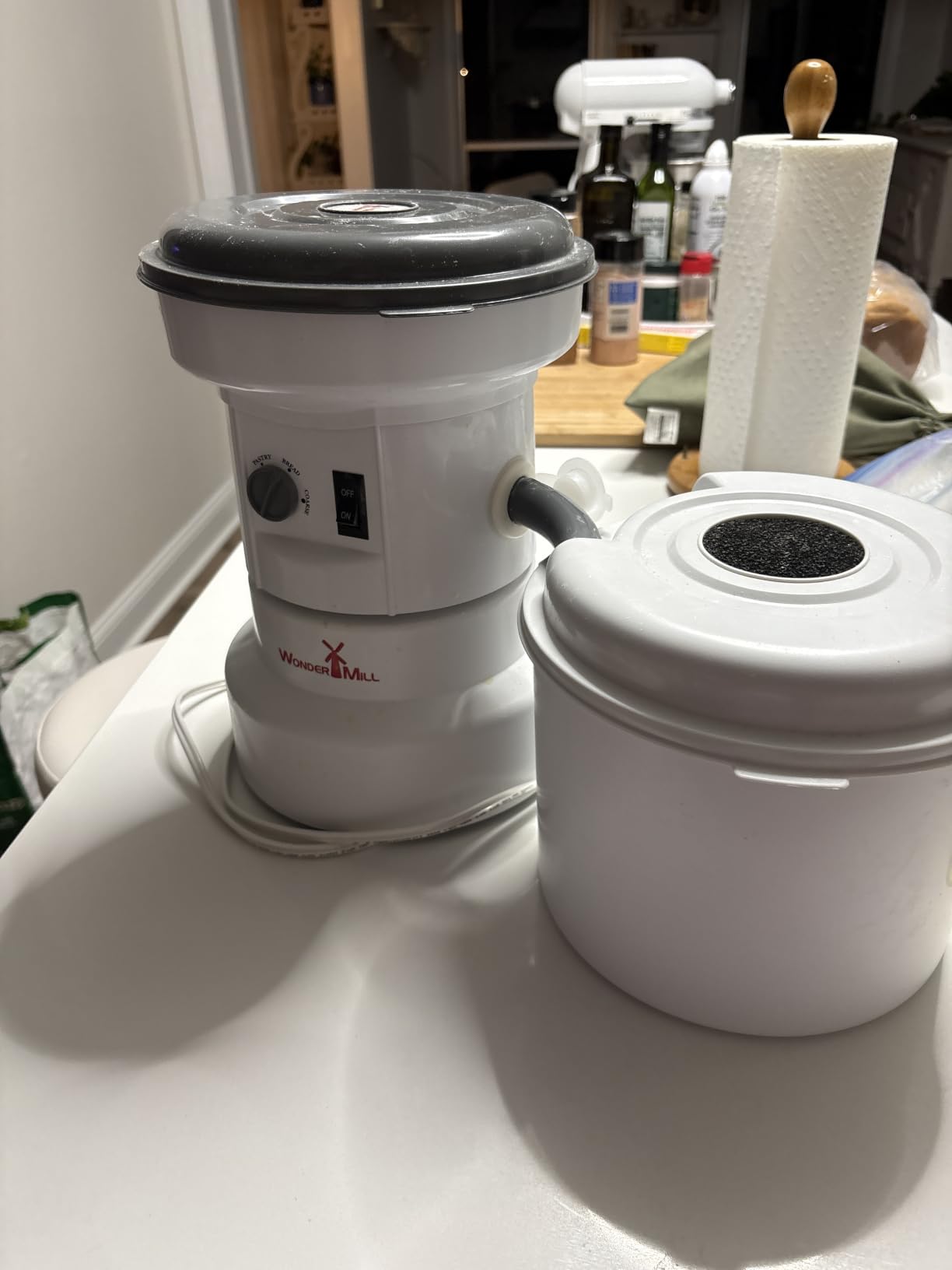
Buyers describe the milling heads as producing the right texture for bread, and 82 percent of reviews are five star, with speed and batch consistency the two most common themes. The cyclone air filtration system keeps airflow steady, which is what separates a machine that stays consistent from one that heats up and slows down halfway through a jar of wheat berries.
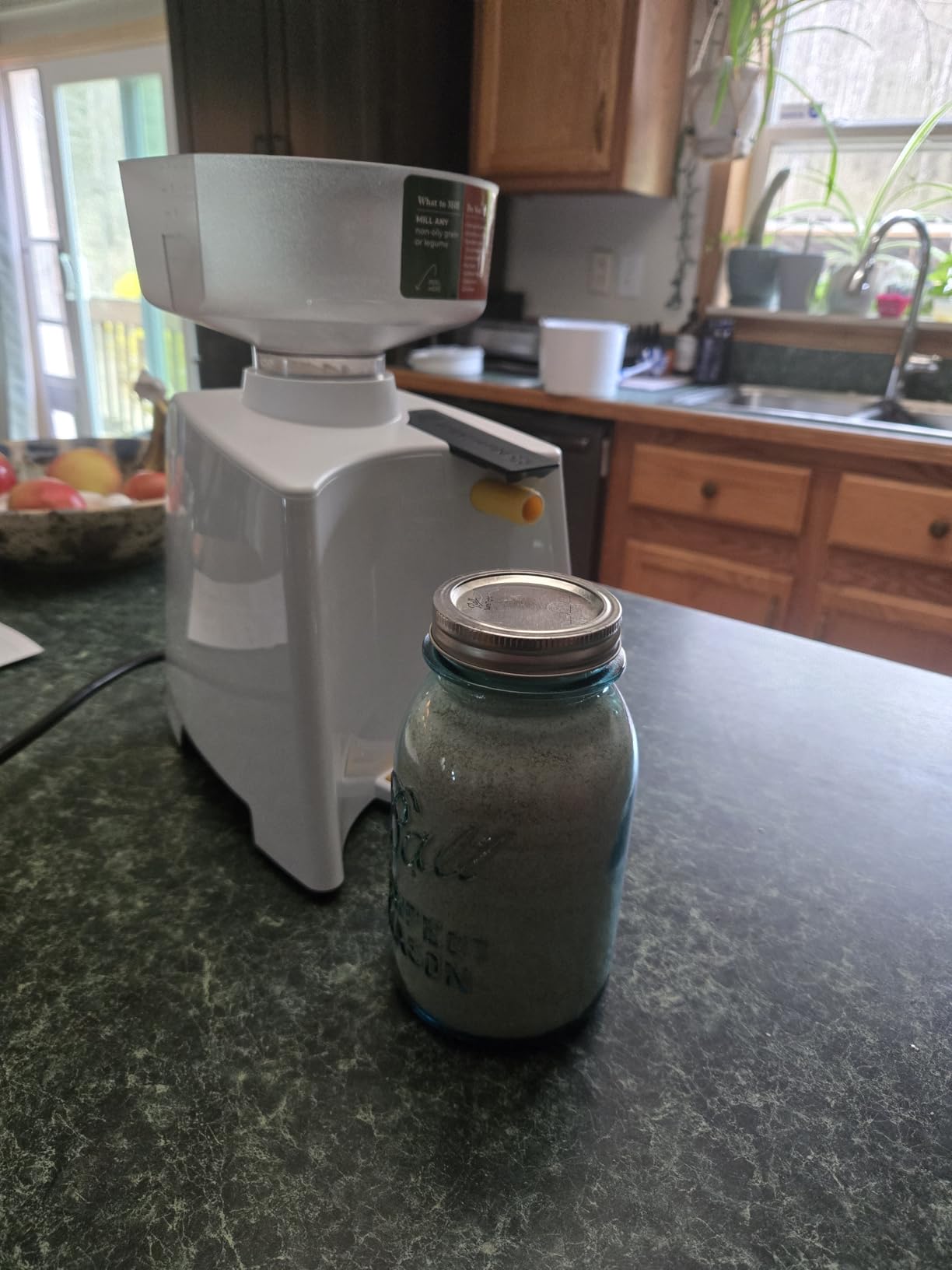
Storage is handled well for something with this much inside it. The motor base, hopper, canister and lid nest together, so when you are not baking it becomes one compact object rather than four separate pieces taking up counter and cabinet space. That matters more in a small kitchen than any specification sheet suggests.
Who this mill suits
This is the pick for a dedicated bread baker who wants powder-fine flour quickly and does not mind plugging in an outlet. If you bake several loaves at once or run a small home baking side business, the throughput and canister capacity justify the electric approach where a hand mill would not.
Where it falls short
Impact mills cannot make cracked wheat or coarse meal, and that is a mechanical limit rather than a settings choice. A thread on The Fresh Loaf made exactly this point, noting that a hand crank mill is fairly cheap if you want cracked wheat or very coarse meal. This mill also does nothing for oily grains like flax, chia or sunflower seed.
3. Estrella Manual Cast Iron Grain Mill – Best for Masa, Nixtamal and Corn
Estrella Manual Grain Mill, Molino para Moler Maiz, Cast Iron Grinder
Cast iron molino body
5 inch hopper
12.2 x 5.6 x 14 inch
Clamps up to 1.5 inch counters
Pros
- Built for traditional masa and nixtamal
- Heavy cast iron body
- Handles corn rice coffee and spices
- Made in Colombia
- Removable parts clean quickly
Cons
- Small 5-inch hopper needs refilling
- Clamp can slip on smooth counters
- Some plates sit slightly out of parallel
- Coarse output suits masa more than cake flour
The Estrella is a molino para moler maiz first and a flour mill second, and that focus is exactly why it belongs here. It is built for nixtamal, masa, tortillas, tamales, atole, pupusas and arepas, which means its plates and its grinding action are tuned for soft, damp corn rather than for brittle dry wheat kernels.
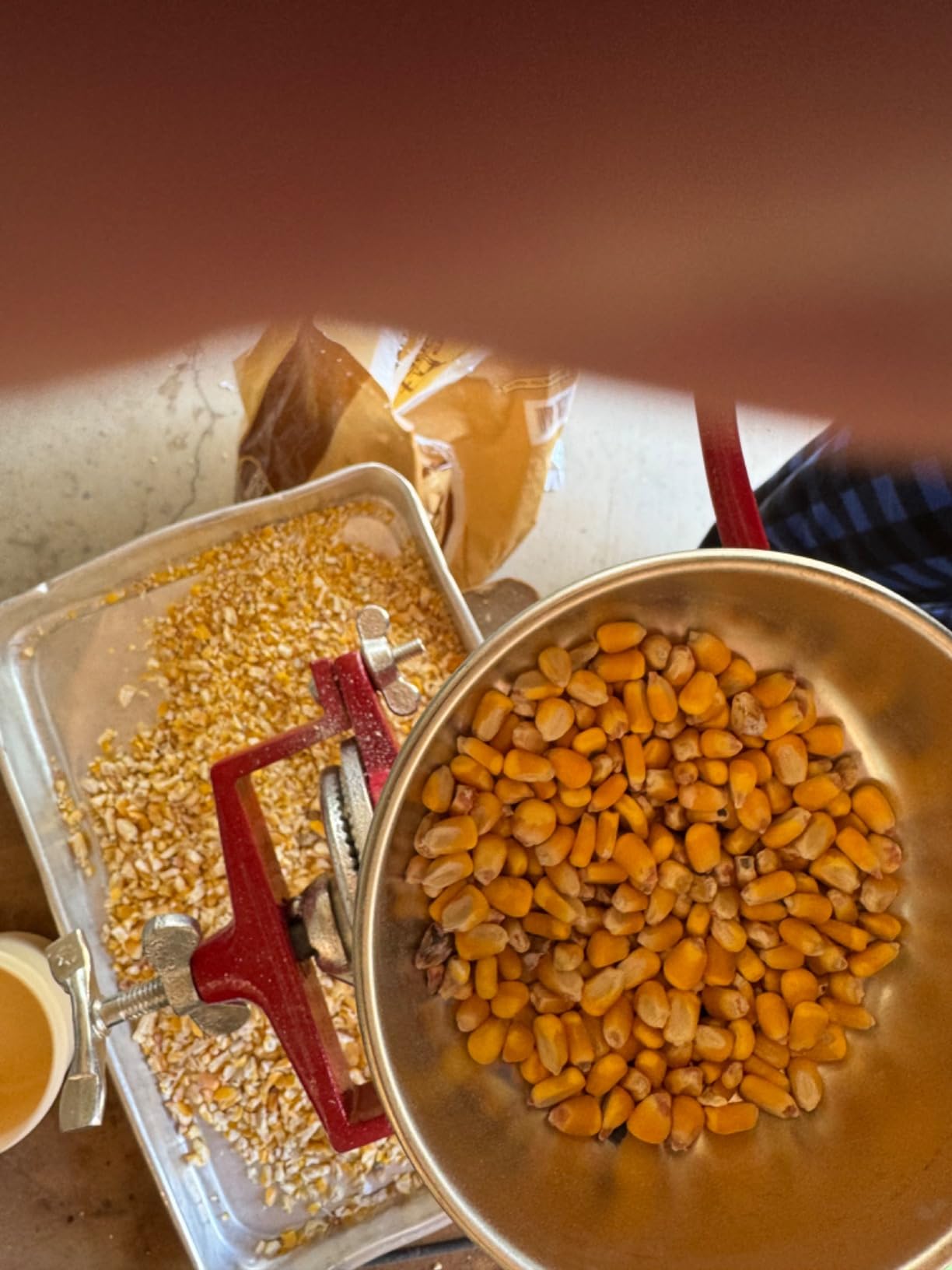
Its versatility is broader than the name implies. Owners grind chickpeas, rice, coffee beans, spices and soybeans through it, and the adjustable settings let you shift from coarse masa texture to a usable fine flour. For a household cooking Latin American food regularly, that single mill replaces a dedicated corn grinder and a small spice grinder.
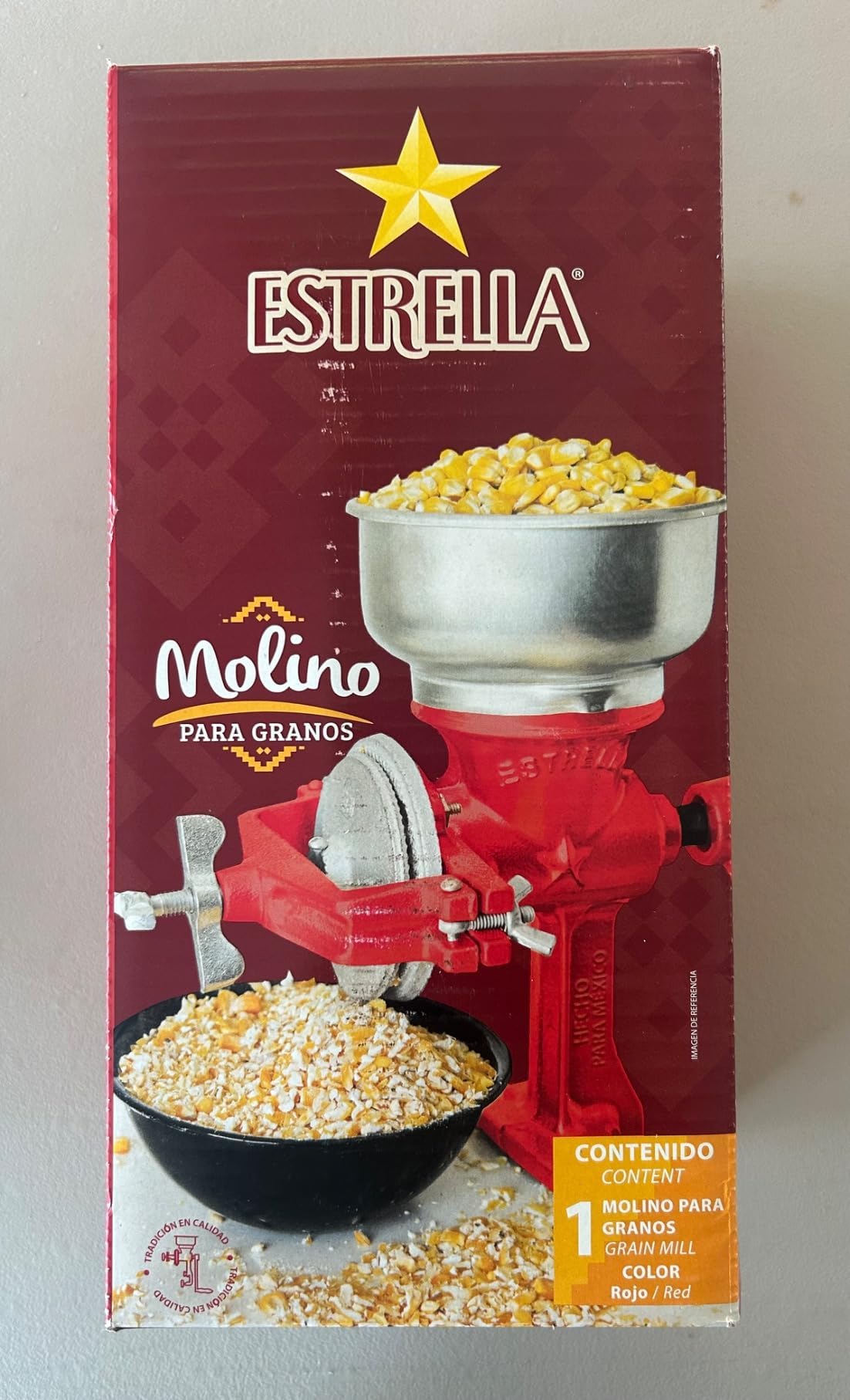
The build is solid cast iron from Landers y Cia SAS in Colombia, not a thin pressing, and 74 percent of reviews are five star. Reviewers consistently mention the authenticity of the design alongside the value, and the removable parts come apart cleanly enough that residue does not build up in the corners after a masa session.
One practical note for anyone mounting it: the clamp grips counters up to 1.5 inches thick, so check your counter edge before you commit. Smooth, rounded laminate edges are where users most often report the clamp creeping, and a thin rubber pad under the contact point solves it in about a minute.
Who this mill suits
This is the pick for anyone making fresh masa, nixtamal or tortillas several times a month, and for bakers who want a heavy, honest cast iron tool that will outlast a decade of use. It also handles wheat well enough for flatbreads and tortillas made from wheat flour.
Where it falls short
The 5-inch hopper is the limiting factor, and you will refill it more often than you expect on a big masa day. For bread flour specifically, this is not the mill to choose, since its output leans coarse and a few reviewers report plates that are not perfectly parallel, which shows up as uneven particle size.
4. Corona Manual Cast Iron Grain Mill – Straightforward Cast Iron Value
Corona Manual Grain Mill, Molino para Moler Maiz, Cast Iron Grinder
Tin plated cast iron
0.8 quart hopper
14 x 6.7 x 13.4 inch
0.6 kg, clamp mount
Pros
- Complete kit out of the box
- Food-safe tin plating resists rust
- Adjustable coarse to fine
- Clamp and stabilising pad included
- Made in Colombia
Cons
- Low hopper means frequent refilling
- Cast iron needs drying to avoid rust
- Clamp will not fit very thick counters
- Manual effort on every batch
The Corona arrives as a complete kit, and that is where much of its appeal sits. In the box you get the hopper, grinding plates, clamp, handle, mounting hardware and a stabilising pad, so there is nothing to buy separately before your first grain goes in. For a first home flour mill, that completeness removes the usual first-week friction.
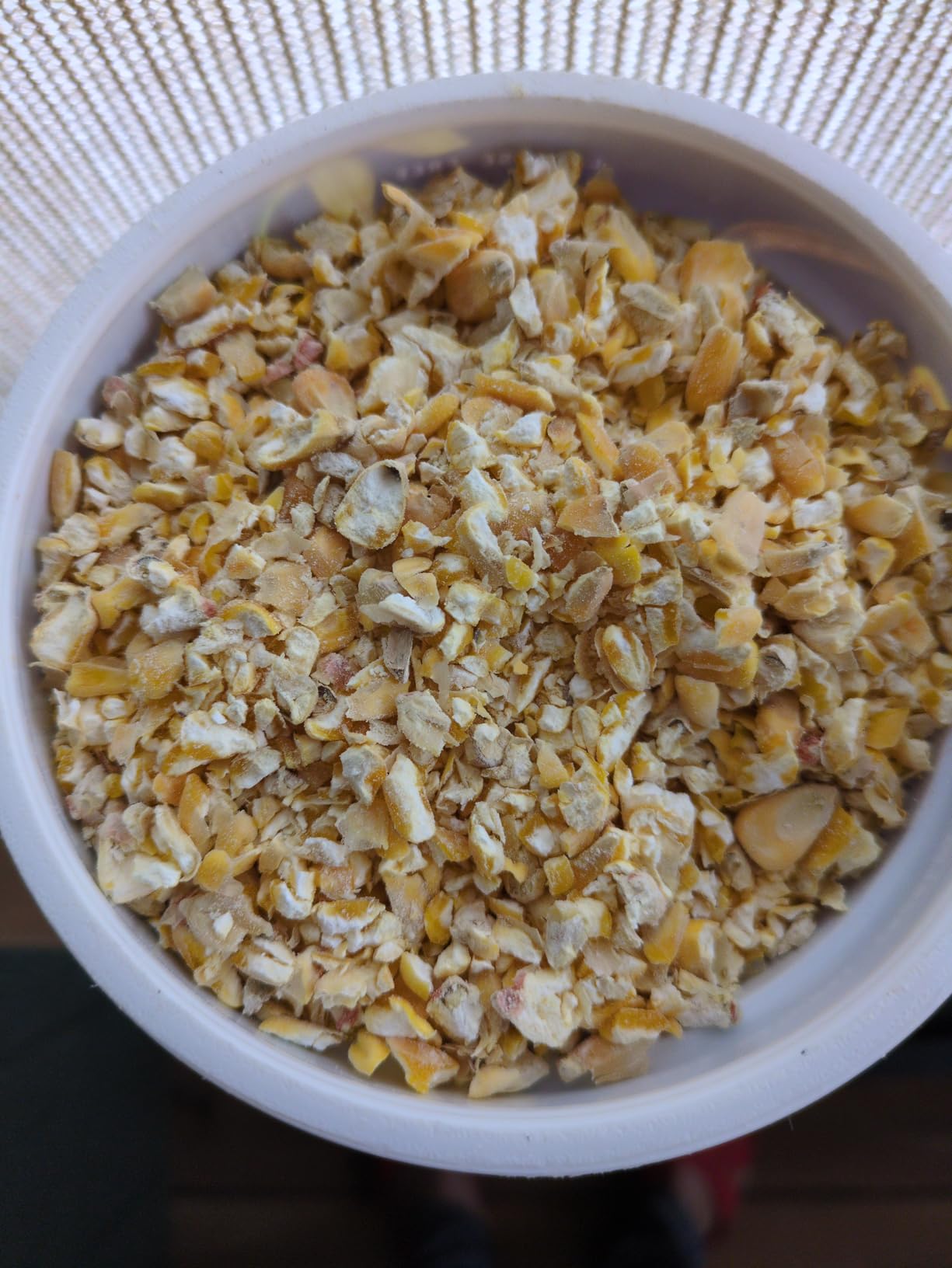
Construction is solid cast iron with food-safe tin plating, crafted in Colombia, and the plating is what keeps the iron from rusting between uses. The adjustment moves from coarse to fine smoothly enough for masa, tortillas, arepas, flour, cracked grains, spices, coffee beans and dried peppers, which is an unusually wide range from one mechanism.
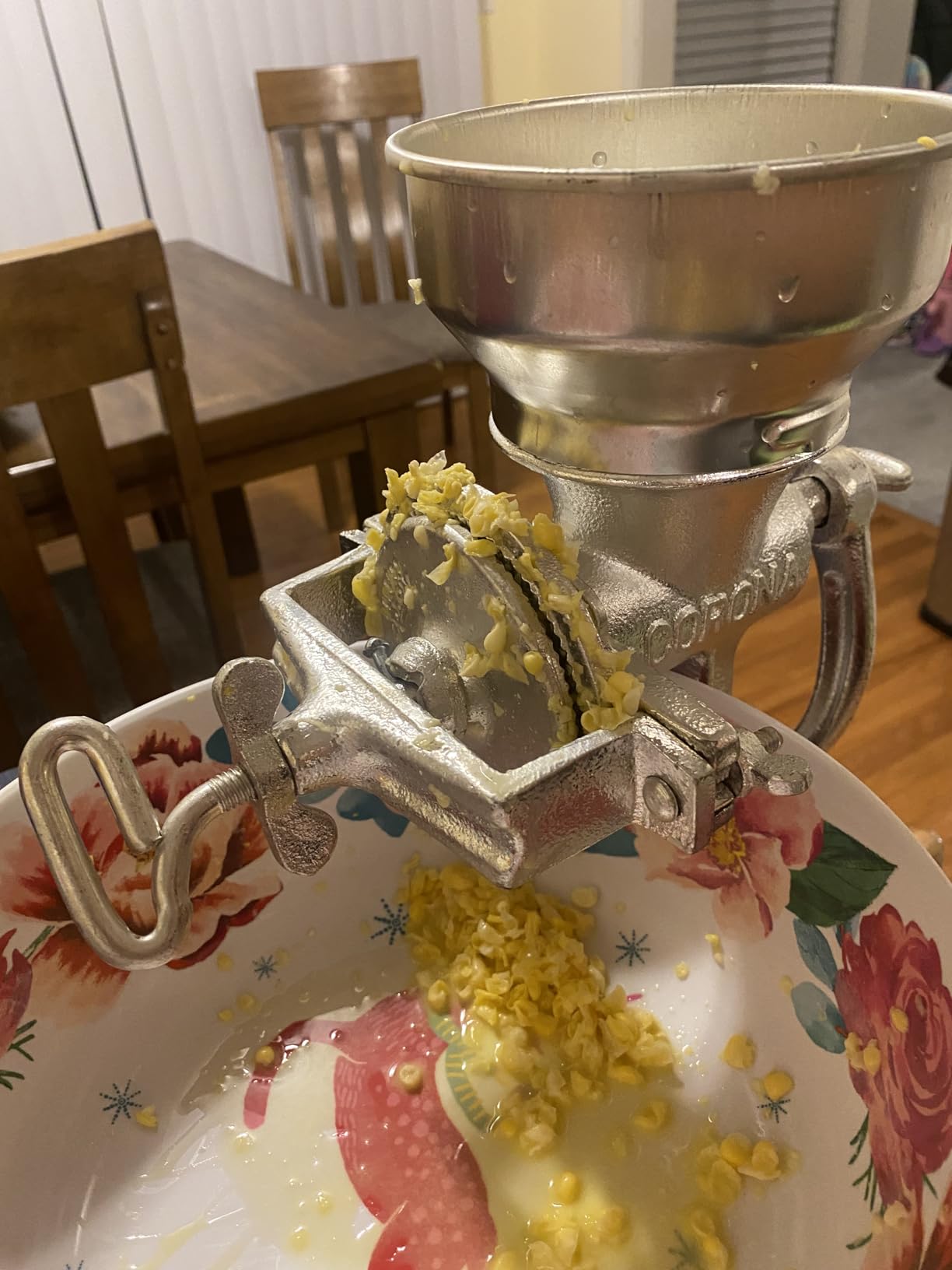
Reviewers rate it at 4.4 stars across 463 reviews with 77 percent five star, and the recurring words are traditional, sturdy and good value. The clamp fits surfaces up to 1.45 inches thick and the included pad keeps it from marking your countertop, which is a small touch that shows the manufacturer thought about real kitchens.
Two habits will keep it in good shape. Dry the plates and body thoroughly after each use, since trapped moisture on cast iron is what causes rust, and oil the moving parts occasionally. Ten seconds of care after every session keeps this mill working for years instead of months.
Who this mill suits
This is the pick for a first-time miller who wants cast iron durability without paying for premium branding, and for anyone who grinds a mix of corn, wheat, rice and spices in modest quantities. It is also a sensible second mill to keep alongside a fine flour model.
Where it falls short
The low hopper design means you refill often, which adds up on a batch-baking day. It is also a manual effort machine with no motor option, so if you need more than about four cups of flour at a time, the grinding will take real physical effort each round.
5. Victoria Manual Cast Iron High Hopper Mill – The Most Proven Name in Manual Mills
Victoria Manual Cast Iron Grain Mill 2400g with High Hopper
Double tin plated cast iron
High hopper, 4.4 lb
12.5 x 6.1 x 12.5 inch
Clamps tables 0.5 to 2 inch
Pros
- Most reviewed mill here with 4561 ratings
- Double tin plating resists corrosion
- High hopper cuts refills
- Grinds a very wide range of materials
- Non-slip rubber protector included
Cons
- Will not grind whole wheat to a fine powder
- No superfine texture setting
- 90-day limited warranty
- Manual effort and rust care needed
With 4,561 ratings, the Victoria High Hopper is the most reviewed grain mill in this roundup by a wide margin, and longevity reports are its strongest signal. Owners describe units that have been cranking for years in family kitchens, and Victoria has been casting iron in Colombia since 1939, so the pattern is well established.
The high hopper is the practical upgrade over lower versions, holding more grain so you grind longer between refills, and the body uses double tin plating over cast iron with erosion-resistant white iron discs. The adjustable screw changes coarseness smoothly, and a non-slip rubber protector keeps both the mill and your countertop safe under load.
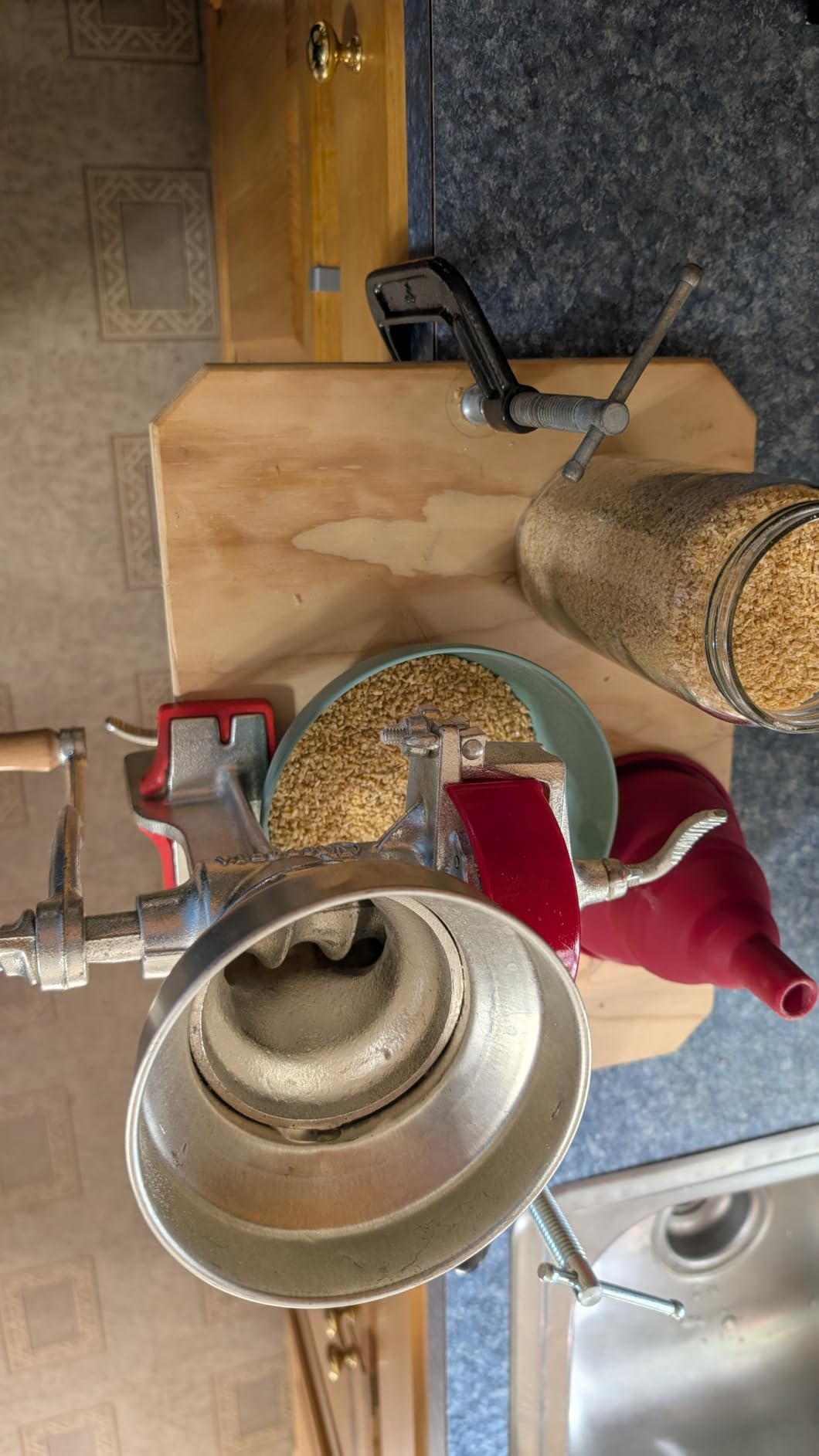
Its range is genuinely wide. The manufacturer lists corn, barley, coffee, cheese, vegetables, seeds, nuts, coconut, spices, dried beans and cooked meats, which makes it a general kitchen grinder as much as a flour mill. The clamp fits tables between half an inch and two inches thick, wider than most competing mounts.
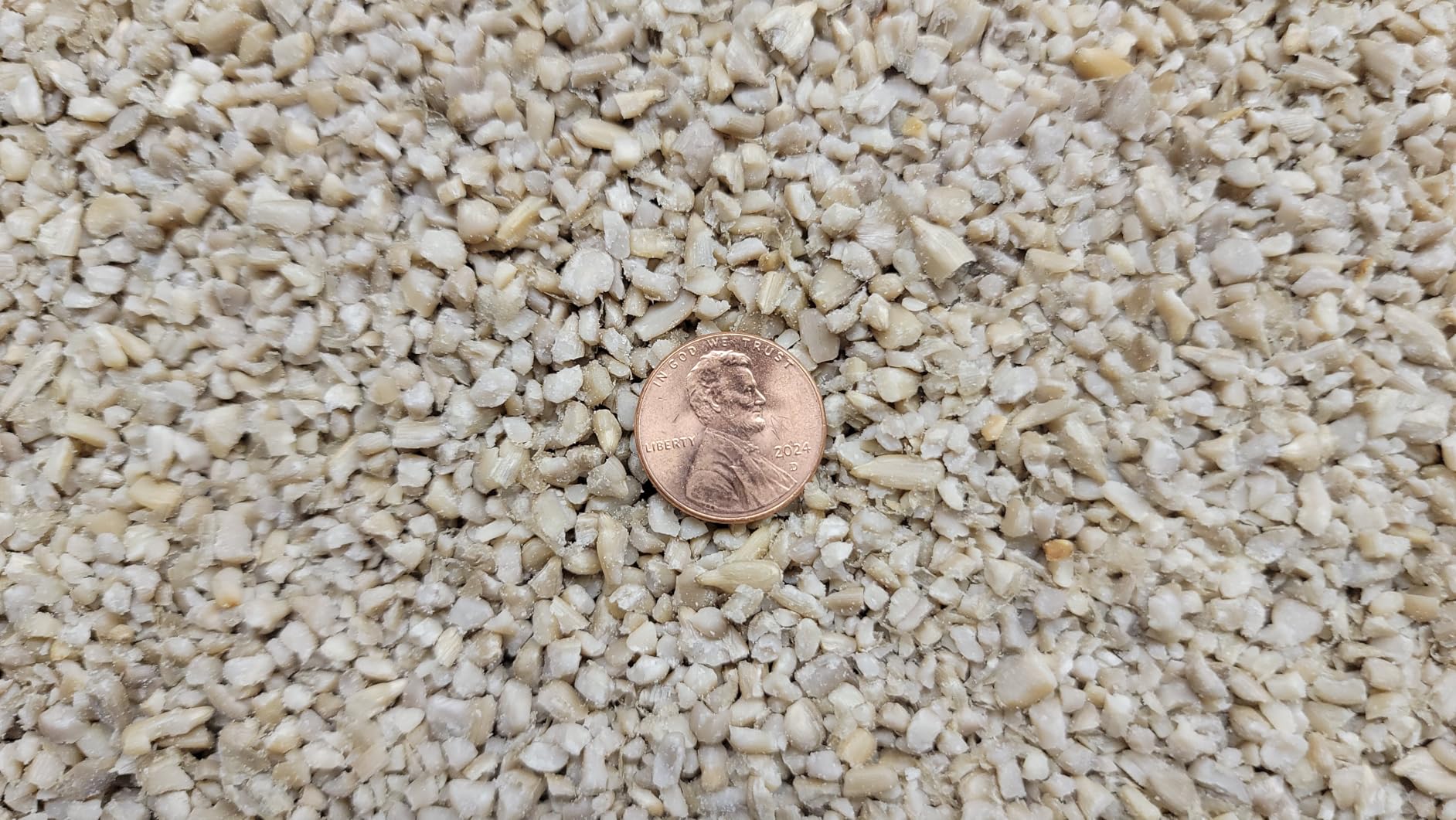
Here is the limitation that matters most for this article, and we would rather state it plainly than bury it: the manufacturer itself notes that this grinder cannot reach a superfine texture and will not grind whole wheat into a fine powder. If your goal is smooth sandwich bread from whole berries, this is the wrong mill.
Who this mill suits
This is the pick for coarse work and for households that want one heavy tool for cornmeal, grits, cracked grain, coffee and spices rather than a dedicated flour machine. If you value a proven design with a large body of owner feedback, that record speaks for itself.
Where it falls short
It is the coarsest flour output of any mill in this list, and it comes with a 90-day limited warranty that is far shorter than the Kitchen Crop mill’s five years. Treat it as a grain grinder first, and add a finer mill later if bread flour becomes a priority.
6. Kitchen Crop Hand Crank Grain Mill VKP1248 – The Smallest and Lightest Option
Kitchen Crop Hand Crank Grain Mill Wheat Flour Grinder, Stainless Steel Metal Burrs (The Grain Mill)
Stainless steel burrs
2-cup hopper
11 x 3 x 16 inch, 2.9 lb
5-year warranty
Pros
- Lightest mill here at under 3 pounds
- Stainless burrs handle dry non-oily grains
- Optional electric motor drive
- Five-year warranty
- Mounts to 2 inch counters
Cons
- Two-cup hopper fills quickly
- Clamp can let the mill move under load
- Fine flour needs repeated passes
- Not built for large batches
The Kitchen Crop VKP1248 weighs under 3 pounds and stores in a closet rather than claiming a counter, which makes it the practical choice for a small kitchen or a mill you only use on weekends. The stainless steel burrs are a genuine upgrade over plated cast iron for anyone worried about long-term metal contact with flour.
The versatile design is the quiet strength here. It grinds wheat, rice, oats, barley, rye, corn, beans, peppercorns, non-oily seeds and spices, and the adjustment dial moves from coarse cracked cereal through to bread-quality flour. It also accepts an optional electric drive motor sold separately, so you can start by hand and add power later without buying a new mill.
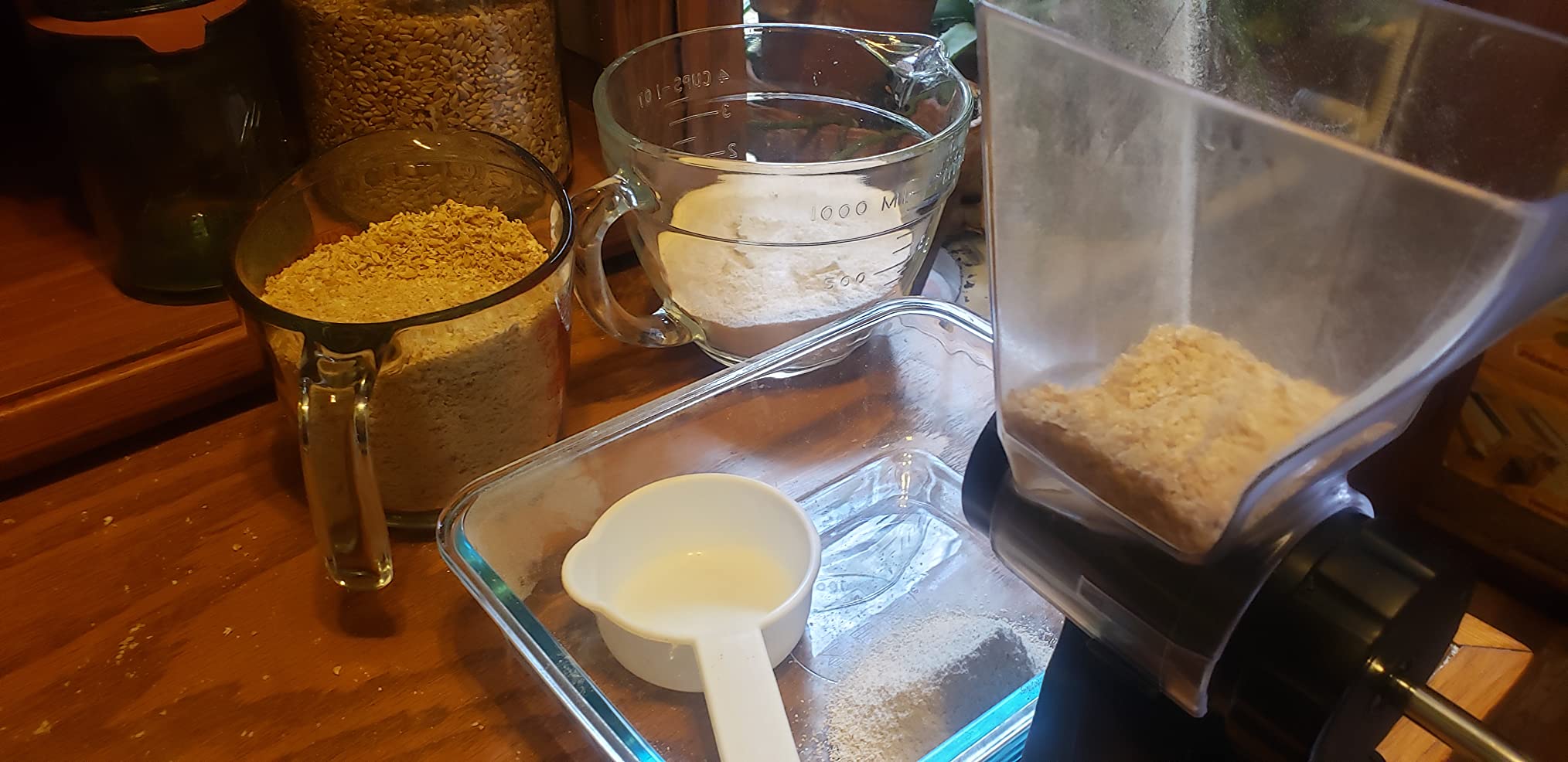
Reviews are more mixed than anywhere else in this roundup: 62 percent five star but 11 percent one star. The positive notes are value, American assembly, the five-year warranty and the option to motorize. The complaints cluster around two things, clamp stability and fineness, and both are worth planning around.
Because it is light, the mill can shift during grinding, so brace the handle with your palm and tighten the clamp onto a squared-off counter edge. On fineness, reviewers report that truly fine flour takes repeated passes, which is the same limitation that pushes people back toward electric mills. Plan on two passes if you want a smooth bake.

Who this mill suits
This is the pick for a small apartment kitchen, a camper or an off-grid household that wants a mill that stows away easily, and for anyone starting out who wants to try home milling cheaply before committing. The five-year warranty also makes it the safest first purchase.
Where it falls short
It is not a large-batch machine, and the two-cup hopper plus repeated passes for fine flour means it slows down quickly when you have more than a few loaves on the schedule. Some buyers also note that plastic components flex under load, so it suits dry grains only, with no nuts or oily seeds.
7. Lehman’s Manual Power Grain Mill – Built Like a Bench Fixture
Lehman’s Manual Power Grain Mill, Grinds Any Dry Grain to Pastry Flour, Big 6 Cup Capacity, 14 inches High with 12 inch Flywheel
Electrolytic polished stainless burrs
6-cup hopper
14 inch high, 12 inch flywheel
26 pounds
Pros
- Largest hopper in this set at 6 cups
- Stainless burrs polish to an ultra-clean surface
- 12 inch flywheel eases hand grinding
- Can be belt motorised
- Four pre-drilled bolt holes
Cons
- 26 pounds makes it immovable
- No fine and coarse settings labels
- Costly next to other manual mills
- Cleaning requires full disassembly
The Lehman’s Power Grain Mill is the most serious piece of hardware here, and its 26 pound alloy steel body reads like a shop tool rather than a kitchen gadget. If you plan to mill several pounds of grain in a sitting, that mass is a feature, because the mill simply does not move while you work.
The burrs are the headline: electrolytic polished stainless steel, which gives an unusually smooth grinding surface and a finer result than most cast iron mills reach. Owners using it for pastry-grade flour report the output is finer than competing manual models, and 82 percent of its 50 reviews are five star among a small but serious buyer base.
Because it is bolt-mounted rather than clamped, plan the counter space before you buy. The four pre-drilled holes in the base turn a temporary mount into a permanent one, which suits a dedicated baking corner but rules the mill out of any kitchen where you need the counter back.
Who this mill suits
This is the pick for a high-volume home baker without a power source at the counter, and for anyone milling pastry flour by hand where fineness matters more than portability. The 6-cup hopper and flywheel momentum let you turn out sustained batches rather than two-cup rounds.
Where it falls short
At 26 pounds it is not portable and it will not fit in a cabinet without a plan for where to bolt it down. The four pre-drilled base holes make a permanent mount the sensible choice, and cleaning means pulling the whole assembly apart rather than lifting out a plate. The adjustment knob is also stiff and awkward to turn fine by small amounts.
8. Mountain Essentials Manual Hand Grain Mill – Flywheel Power Without Power
Manual Hand Grain Mill White | Heavy-Duty Hand Operated Food Grinder for Wheat, Corn, Oats, Coffee Beans, Rice & Dry Grains | Hand Crank Kitchen Flour Mill for Home, Camping, Survival & Everyday Use
Stainless steel discs
Extra large hopper
17.5 x 12.2 x 15.5 inch
28.6 pounds, belt drive ready
Pros
- Large flywheel reduces grinding effort
- Extra large hopper for big batches
- Adjustable from coarse to very fine
- Easy to dismantle for cleaning
- Belt groove accepts a motor drive
Cons
- Heaviest mill here at 28.6 pounds
- Big counter and storage footprint
- Dry raw materials only
- Costly for a first mill
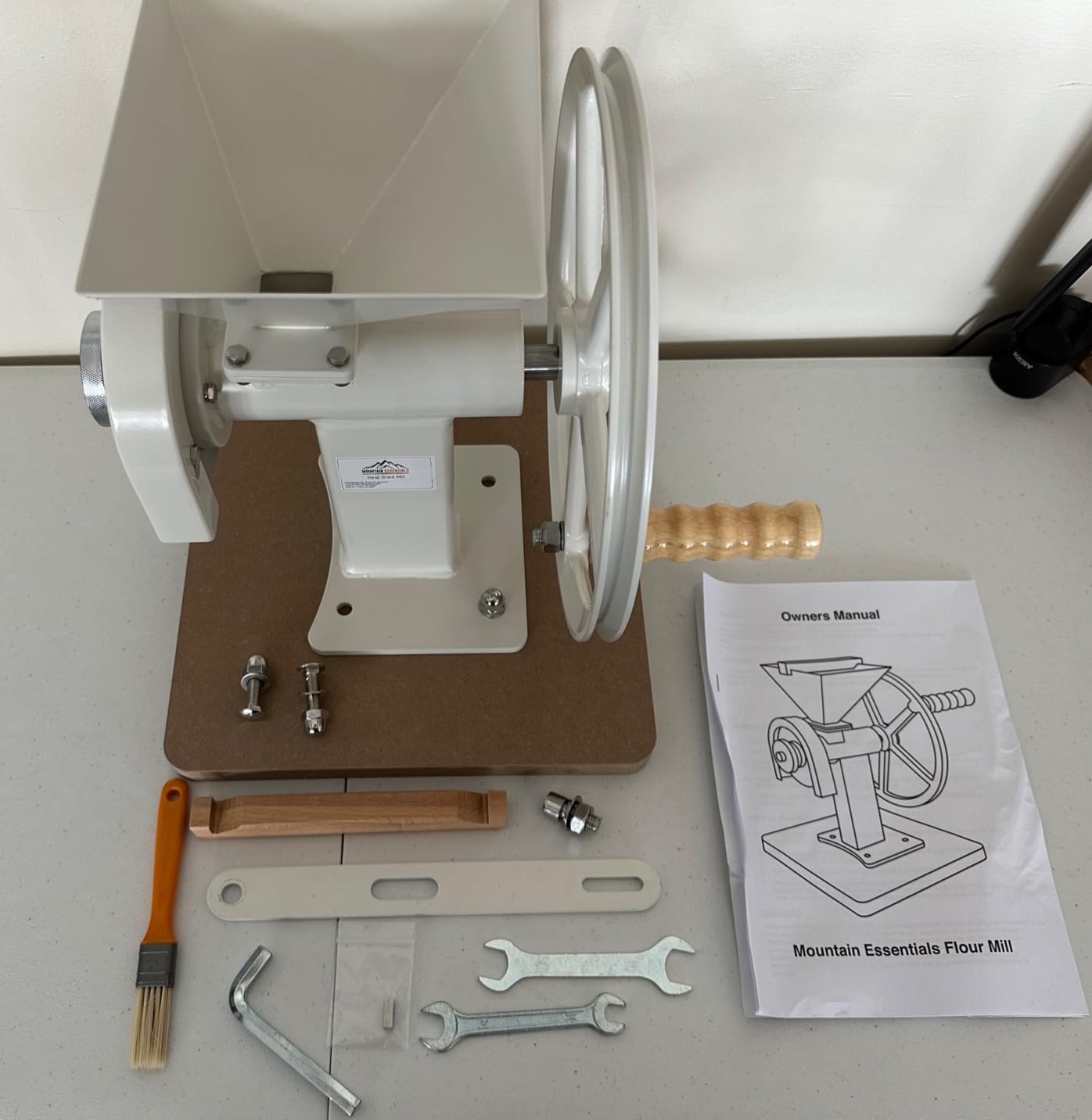
The Mountain Essentials hand mill uses a large flywheel with a hand crank, and that wheel is the whole story. Flywheel momentum means the grinder keeps coasting between strokes, so the steady pressure needed to turn out flour is far lower than on a small mill. It is the least tiring manual option here by a wide margin.
Adjustment runs generously wide, from very fine coffee and spice settings down through to a coarse green kernel meal. That range is unusual for a manual mill and it makes the machine useful beyond bread flour. The stainless steel discs meet food safety requirements, the powder coating is hygienic, and the whole thing dismantles for cleaning.
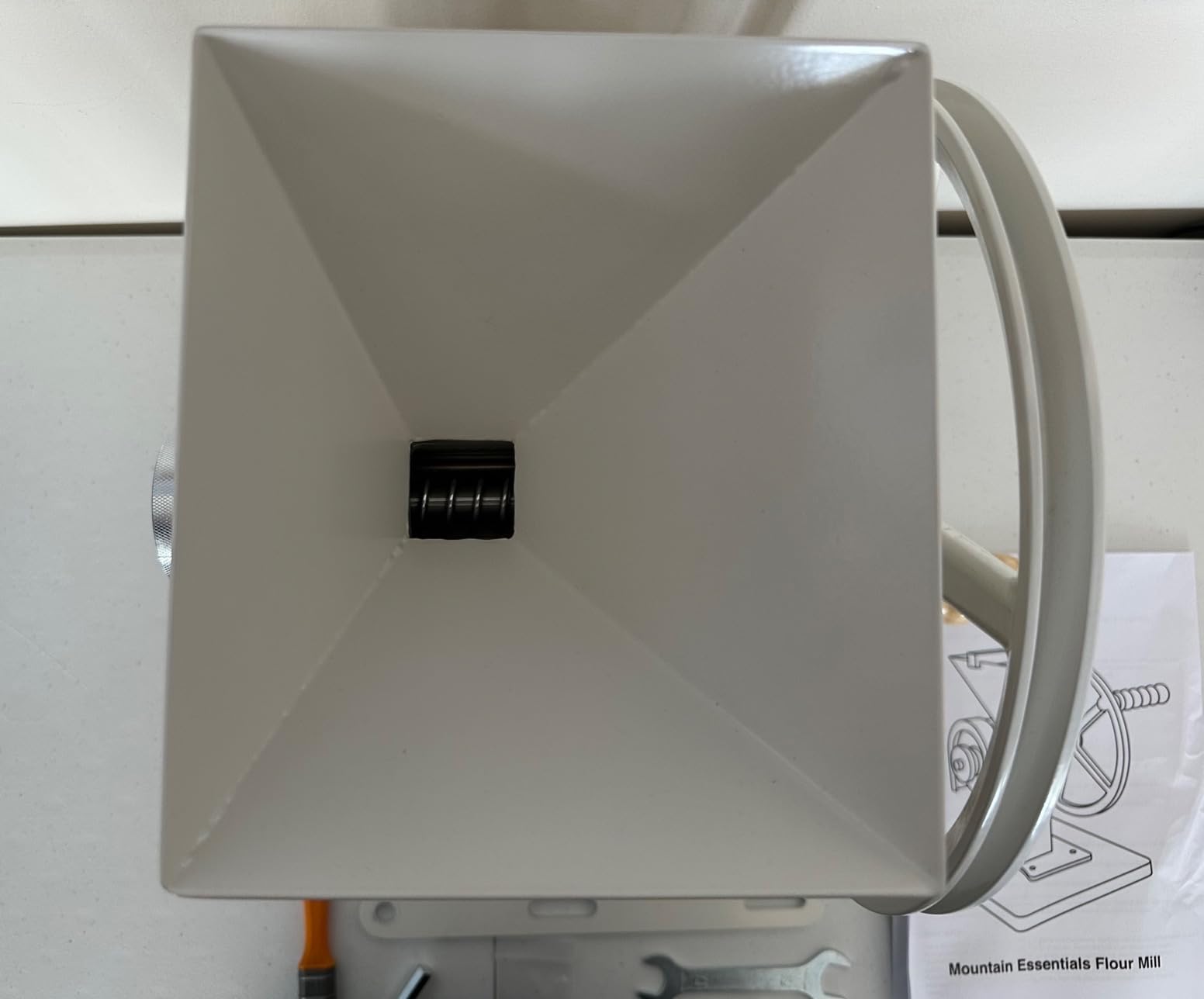
Owner photos show how much of the footprint is wheel, not hopper. The crank arm and flywheel dominate the counter space, so measure the diameter against your available run before committing, and remember that the belt groove means a motor drive can be added later without replacing the mill.
Build quality is the quieter strength. The stainless discs and hygienic powder coating are easier to keep clean than bare cast iron, and the full disassembly design means you can reach every corner after a session grinding sticky green kernel meal, which is exactly where cheaper mills cake up and stop performing.
Who this mill suits
This is the pick for a household that mills a lot by hand and wants the least physical effort per pound, especially anyone who finds a small crank hard on their wrists. The large hopper and belt groove also make it a sensible base if you plan to add a motor drive later.
Where it falls short
At 28.6 pounds and with a large crank radius, it demands real counter space and a permanent home. It mills dry raw materials only, so wet, oily or sticky ingredients will gum the discs, and the price puts it out of reach as a casual first purchase.
How to Choose a Grain Mill for Home Flour
Choosing between mill types comes down to one question: do you care more about control over texture or about speed and fineness? Stone burr mills shear grain gradually between two stones turning slowly, generating little heat and giving you a continuous range from cracked grain to fine flour. Impact mills shatter grain between steel teeth spinning at very high speed, producing very fine, uniform flour in seconds but with almost no control over coarseness.
That distinction explains the single most common complaint in home milling communities. If your flour is still coarse after a long run at high speed, you are probably using an impact mill set to its only setting. Bakers on The Fresh Loaf point out that coarse grinds and cracked wheat simply are not available from those machines, and no amount of extra running time will change that.
With that settled, work through these factors in order.
1. Burr material. Corundum ceramic and natural basalt stones sit in the middle ground, staying sharp and cool while allowing adjustment. White iron discs on cast iron mills are cheap and durable but blunt toward fine texture. Electrolytic polished stainless steel is the smoothest, and it produces the finest hand-milled flour in this set.
2. Adjustment range. A locking dial that holds its setting through a whole batch is worth real money. Knobs that walk loose mid-grind waste your time and give inconsistent particle size, which shows up directly as a gritty crumb.
3. Output rate against your baking volume. A mill rated at 1.25 cups per minute suits a household baking a few loaves a week. Once you are past about ten cups of flour per session, look at hopper capacity and flywheel size instead, because those determine how much arm work each batch costs you.
4. Mounting. Every mill here clamps or bolts to a counter. Check the thickness range against your actual counter edge before buying, since clamp limits run from 1.45 inches on the Corona to two inches on the Kitchen Crop, and smooth rounded laminate edges cause the most reported failures.
5. Grain compatibility. Oily grains like flax, chia and sunflower, plus nuts and coffee beans, need a dedicated burr set or a separate mill. Dry grain-only models will clog or glaze if you push them with high-oil seeds, and impact mills never handle them at all.
6. Cleaning and flour containment. Models that clamp to a counter need disassembly to clean properly. Electric mills with a canister catch flour under a lid, which cuts dust dramatically. Whichever you pick, a dry brush and a barely damp cloth is the only safe way to wipe burrs, since water near a motor is a bad trade.
Is Home Milling Worth It? Freshness, Storage and Honest Failure Modes
The nutrition case for milling whole grain at home is straightforward. Commercial milling strips the bran and germ, and the oils in that germ begin oxidizing within hours, which is why shelf flour tastes flatter. Milling whole berries keeps the bran, germ and endosperm together along with their B vitamins and vitamin E, and it opens up grains you cannot buy pre-milled at all, including einkorn, emmer, spelt and khorasan.
The honest part is the arithmetic. Whole grain berries generally cost noticeably less per pound than the equivalent bagged whole wheat flour, so a household that bakes regularly can offset the mill quickly. A family grinding ten pounds a month sees the mill pay for itself within the first year of flour savings, while a household that bakes two loaves a month mostly buys the freshness and the grain variety rather than the savings.
Now the failure modes, because these are what turn people back to store-bought flour. The first is coarseness, which we have covered at length. The second is noise, which is the most emotional complaint about electric mills and the reason so many of them end up in a cupboard unused. The third is mess: flour dust from impact mill seals, static cling, and nooks in canister lids that never fully come clean.
A fourth reason is motor strain, when a grain jam is forced through a machine instead of being cleared. Scan every batch for pebbles before it goes in, run the motor before adding grain, and use dry grains only. Those three habits prevent nearly every reported failure we found.
On storage, treat milled flour the way you treat ground spices. Use it within a few weeks in a cool, dark, airtight container, and freeze anything you will not touch within that window. Frozen wholegrain flour keeps its baking quality for months, and thawing a portion at a time keeps it fresher than anything on a shop shelf.
Frequently Asked Questions
What is the best flour mill for home use?
The WONDERMILL Junior Deluxe is the best flour mill for home use in this roundup. It produces roughly 1.25 cups of flour per minute by hand, which is far faster than other hand mills, and its interchangeable stone and stainless steel burr sets let it handle both dry wheat and oily grains like nuts and seeds. If you have a counter outlet and want speed instead, the NutriMill Impact reaches powder-fine flour in a single pass.
What is the best electric grain mill for home use?
The NutriMill Impact Compact is the best electric grain mill for home flour in our testing. Its 1200-watt motor and impact milling heads are built specifically for fine-textured bread flour, and the 8-cup hopper plus 12-cup canister handle batch sizes that hand mills cannot. Keep in mind the core limitation of the mechanism: an impact mill cannot produce cracked wheat or coarse meal, only fine flour.
Is milling your own flour really worth it?
It is worth it if you bake bread regularly and use whole grain berries, because milling keeps the bran, germ and endosperm together and the grain costs less per pound than the equivalent bagged flour. It is less about savings and more about freshness and access to grains you cannot buy pre-milled, such as einkorn, emmer and spelt. A household baking only a couple of loaves a month will feel the freshness benefit more than the financial one.
Is it cheaper to mill your own flour at home?
Usually yes, once you account for the mill itself. Whole grain berries cost noticeably less per pound than bagged whole wheat flour, so the mill pays for itself through flour savings within roughly the first year for a household grinding about ten pounds a month. If you bake rarely, the arithmetic does not work in your favour and the case for milling rests on freshness and grain variety instead.
Which flour mills are considered the best in the US?
In the manual category, the Victoria High Hopper stands out for its proven record of more than 4,500 ratings, and the WONDERMILL Junior Deluxe for fine flour output and versatility. In the electric category, the NutriMill Impact leads for fine bread flour and batch capacity. The best choice depends less on ranking than on whether you need adjustable coarseness, high volume or a fine single-pass result.
Can I use a blender to mill wheat into flour?
A blender dry-grain container is not a substitute for a real grain mill. People who have tried it on r/HomeMilledFlour describe the result as underwhelming, because blades pulverise rather than shear, so the result is inconsistent and often still too coarse to bake with reliably. A blender is fine for coarse meal and for grains you do not intend to turn into bread flour.
Final Verdict: The Best Grain Mill for Home Flour in 2026
After working through all eight, the WONDERMILL Junior Deluxe remains our best grain mill for home flour in 2026. It is the only hand mill in this roundup that produces genuinely fine flour at a rate you will actually keep using, and the swappable burr sets mean one machine covers grain, seeds and spices.
Buy the NutriMill Impact if powder-fine bread flour in seconds matters more than anything else and you have an outlet. Buy the Victoria High Hopper or a Corona if you want a heavy cast iron corn and coarse-grain grinder. Buy the Kitchen Crop VKP1248 if your kitchen is small and you want to test the habit cheaply.
Whichever you choose, mill small batches first, scan for stones, run the machine before you feed it, and start storing your flour frozen. Those four habits decide whether your mill stays on the counter or ends up at the back of a cupboard.