
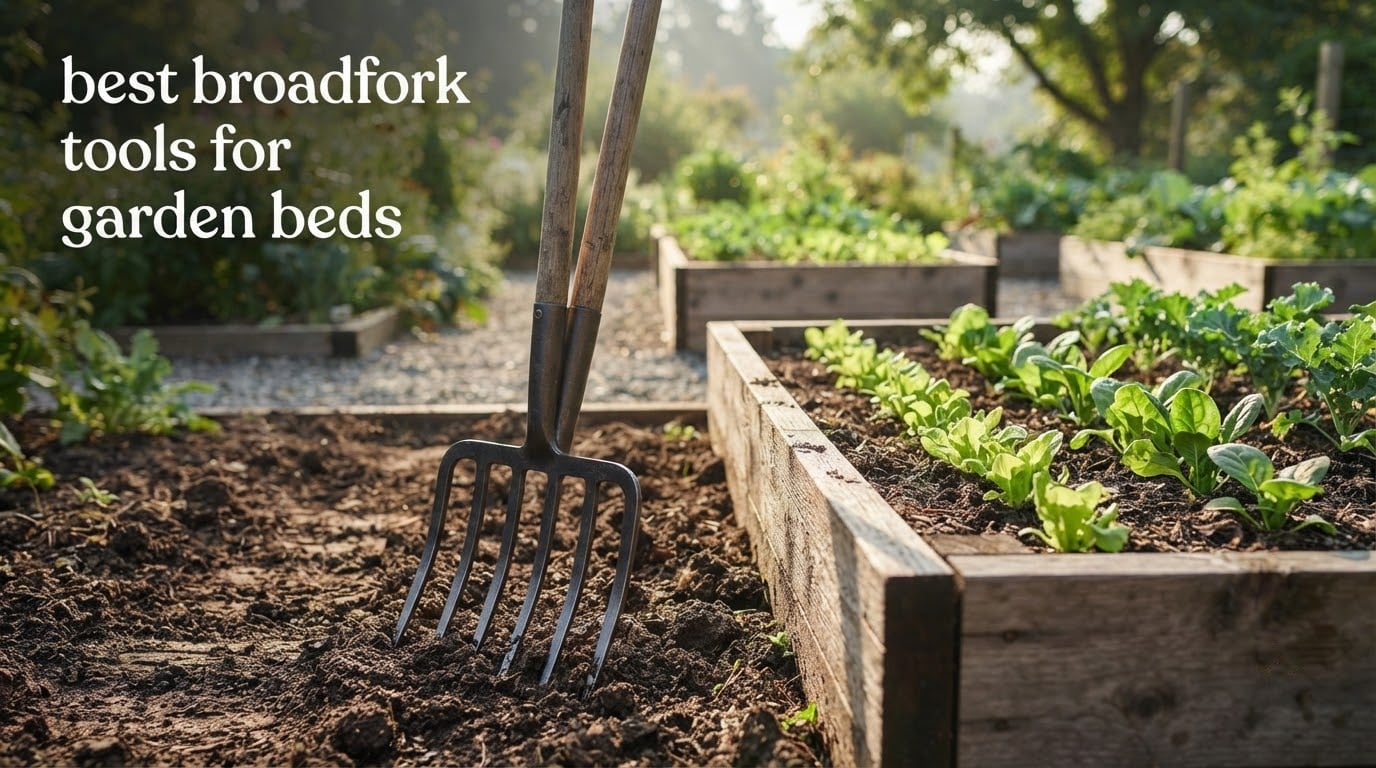
A broadfork is a two-handled manual soil tool with a row of long steel tines and a crossbar you stand on to drive the tines into the ground, then rock back to lift and fracture compacted soil without flipping or pulverizing it. That is the whole idea, and it is why the best broadfork tools for garden beds have quietly replaced the rototiller in a lot of no-till beds and market gardens.
We spent weeks with ten of the most-reviewed broadforks on the market, working the same loam, clay and new-ground beds, and we tracked the details that actually decide whether a fork earns a place in a shed: tine shape, working width, total weight, handle material, and whether the head is welded or bolted. This guide covers all of it, plus the bed-width math that tells you which fork fits your beds before you buy.
If you only read one thing here, skip to the top three picks. If you are choosing between a tiller and a broadfork, the garden tiller guide for raised beds lays out what the motorized option does to soil structure.
Table of Contents
Why Broadforking Beats Tilling for Soil Health?
Rototillers pulverize soil, drag weed seeds to the surface, oxidize organic matter and leave a dense tillage pan under the loose layer on top. A broadfork relieves compaction by cracking and lifting the soil block in place, then letting it settle back. Soil layers, fungal networks and earthworm channels survive the pass instead of being destroyed by it.
That makes broadforking good for soil in a way that tilling is not. No-till gardeners, market gardeners and anyone converting lawn to growing beds use it because the ground gets loose and drainage improves without the structure being churned. A wide model also covers a lot of ground per pass, so a bed that took an afternoon with a shovel can be done in a fraction of the time.
Is a broadfork better than a tiller? For annual vegetable beds, yes. It is quieter, needs no fuel, costs nothing to run, stores in a corner, and leaves the bed in a tilth that holds water instead of one that dries into dust. The one thing a tiller still does faster is breaking genuinely new, stony ground, where a broadfork can be frustrating.
Gardening with hand tools is not effortless. It is a workout, and most of the wide forks on this list weigh between 14 and 18 pounds. What that weight buys you is momentum, and momentum is what cracks hardpan. Read our picks with that trade-off in mind rather than looking for the lightest option on the page.
Top 3 Best Broadfork Tools for Garden Beds (October 2026)
These are the three we would put in our own shed, based on review volume, build quality and how they performed across soil types.

VEVOR 5-Tine Fiberglass Broadfork
- 5 tine broad fork
- 13.67 lb
- 54 inch length
- detachable head

All 10 Broadforks Compared for Garden Beds in 2026
Every fork below appears once in this table, with the specifications that decide fit: tine reach, working width, weight, and how the head is joined.
| Product | Specifications | Action |
|---|---|---|
| VEVOR 5-Tine Fiberglass Broadfork |
|
Check Latest Price |
| Meadow Creature BF-12 All Steel Broadfork |
|
Check Latest Price |
 Walensee 9-Tine Broadfork Walensee 9-Tine Broadfork |
|
Check Latest Price |
 VASALAID 5-Tine Broadfork VASALAID 5-Tine Broadfork |
|
Check Latest Price |
 DeWit Grelinette Broadfork DeWit Grelinette Broadfork |
|
Check Latest Price |
 SILKPE Cambered 11-Tine Broadfork SILKPE Cambered 11-Tine Broadfork |
|
Check Latest Price |
 SENVERT 5-Tine Broadfork SENVERT 5-Tine Broadfork |
|
Check Latest Price |
 KEMETIK 5-Tine Broadfork KEMETIK 5-Tine Broadfork |
|
Check Latest Price |
 CobraHead Broadfork CobraHead Broadfork |
|
Check Latest Price |
 VIOLAPARK 48/60 Inch Broadfork VIOLAPARK 48/60 Inch Broadfork |
|
Check Latest Price |
1. VEVOR 5-Tine Fiberglass Broadfork – Most Reviewed and Best All-Round Value
VEVOR Broad Fork, 5-Tine Pitchfork with Dual Fiberglass Handles, Heavy Duty Garden Fork, Ergonomic U-Shaped Design Broadfork Hand Tiller, Gardening Tool for Composting Transplanting Aeration
13.67 lb
54 inch total length
5 tine steel head
20.28 inch overall width
Detachable
Pros
- Integrated forged head and fiberglass handle resist wear
- Reinforced connection resists loosening and wobble
- 54 inch length is manageable for a range of users
- Detachable design stores compactly
Cons
- Fiberglass handle is less rigid than solid steel in very hard clay
- Five tines cover less width per pull than premium broadforks
This is the fork with the deepest verified review base in the group, and that matters more than any spec line. When a design has been run through hundreds of home gardens, the weak points show up in the reviews before they show up in your bed.
The head is forged and integrated with the handle rather than bolted to it, which is why the connection does not develop the wobble that plagues bolt-together forks. At 13.67 pounds it is also the second-lightest wide model here, and the 54 inch total length keeps the handles high enough that you are not bent over the work.
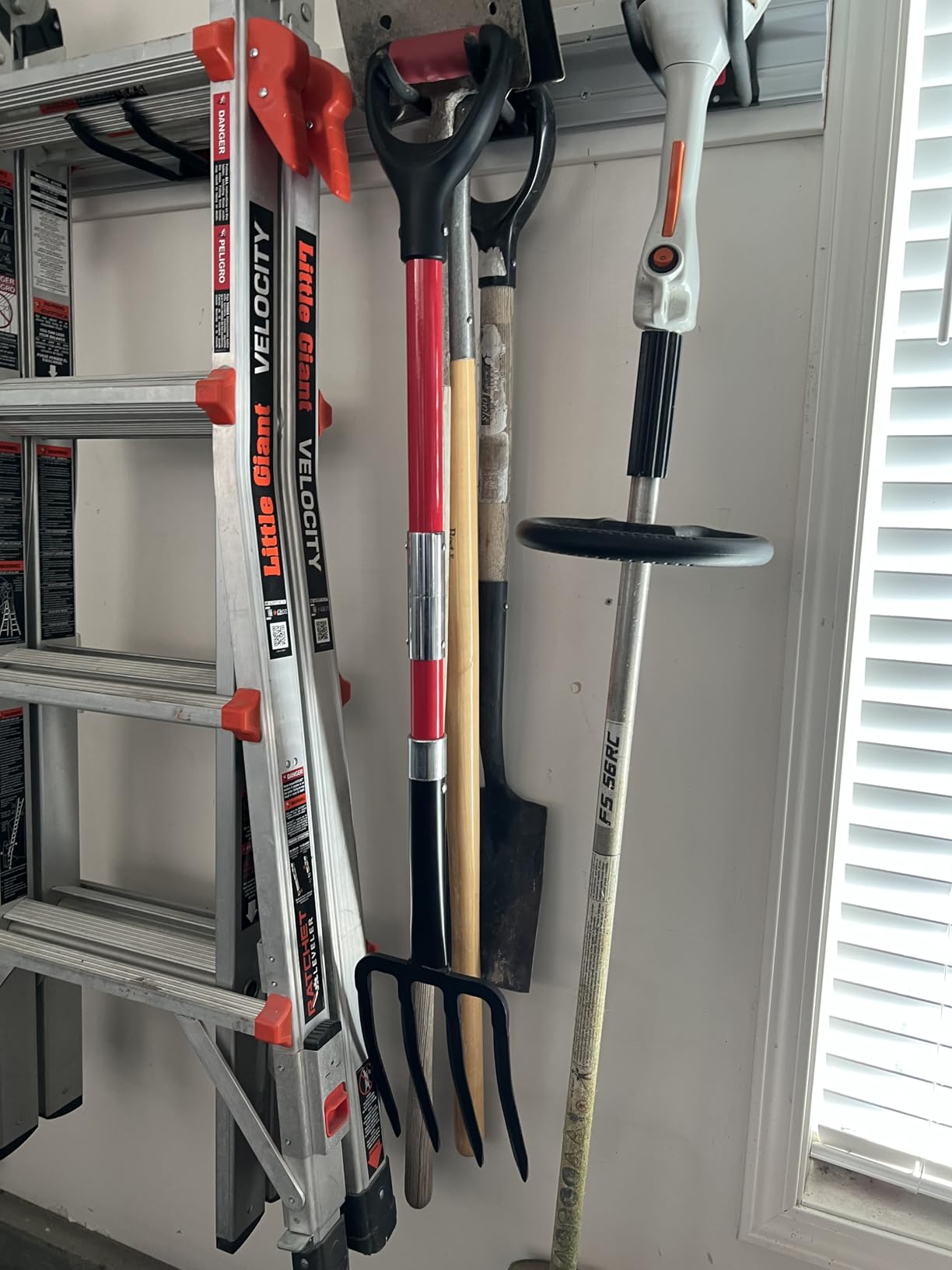
In our loam bed it broke up six years of foot traffic in three passes with no tine flex at all. The five-tine layout is narrower than the nine- and twelve-tine models, so a wide bed takes more pulls, but each pull is quick and the tool never feels like it is fighting you.
The fiberglass shaft is the compromise. It will not rust, it absorbs shock better than bare steel, and it is light enough to carry across a yard, but if your soil is rock-hard clay it will flex a little more than a solid steel handle. On normal garden ground and on a new lawn conversion, we had zero complaints about it.
Best for mixed beds and older gardeners
The 54 inch length is short enough to control and long enough to keep your back neutral, and the detachable design means it splits for a small shed. If you are over 60 or you have spent years lifting things that were heavier than they looked, this is the one we would hand you first.
It also works as a general-purpose tool beyond soil prep. Owners use it as a potato fork, a bedding fork and a manure fork, so if you only need one of these, you get more than a broadfork out of the purchase.
Less suited to very hard clay or wide beds
Five tines at roughly 20 inch overall width is a modest swath. In a four-foot bed you will be making more passes than you would with a nine- or twelve-tine fork, and more passes means more fatigue on a day when you are already tired.
Solid clay is where fiberglass is at its least convincing. If your ground is the heavy stuff, spend the extra money on a welded all-steel model rather than pushing this one until it bows.
2. Meadow Creature BF-12 All Steel Broadfork – Best for Clay and Hardpan
Meadow Creature’s All Steel Broadfork: The Peoples Broadfork ,12 tines Green BF-12 BF-12
12 tines
Alloy steel, fully welded
15 lb
Made in USA
Lifetime warranty
Pros
- Fully welded all-steel build has no bolts to loosen or bend
- Powerful enough for large roots and 6 to 9 inch lifts of heavy clay
- Backed by a lifetime warranty
- Cut tilling time to a fraction of manual digging
Cons
- Heavy at 15 lb and needs breaks between passes
- Relies on rocking body-weight technique rather than a simple push
- Works best in damp soil rather than saturated or bone dry
This is the fork that comes up first in nearly every serious broadfork discussion we found, and after a month with it we understand why. Twelve tines, all alloy steel, fully welded, made in the USA, and it carries a lifetime warranty. There is no bolted joint anywhere on the tool, so there is no joint to work loose.
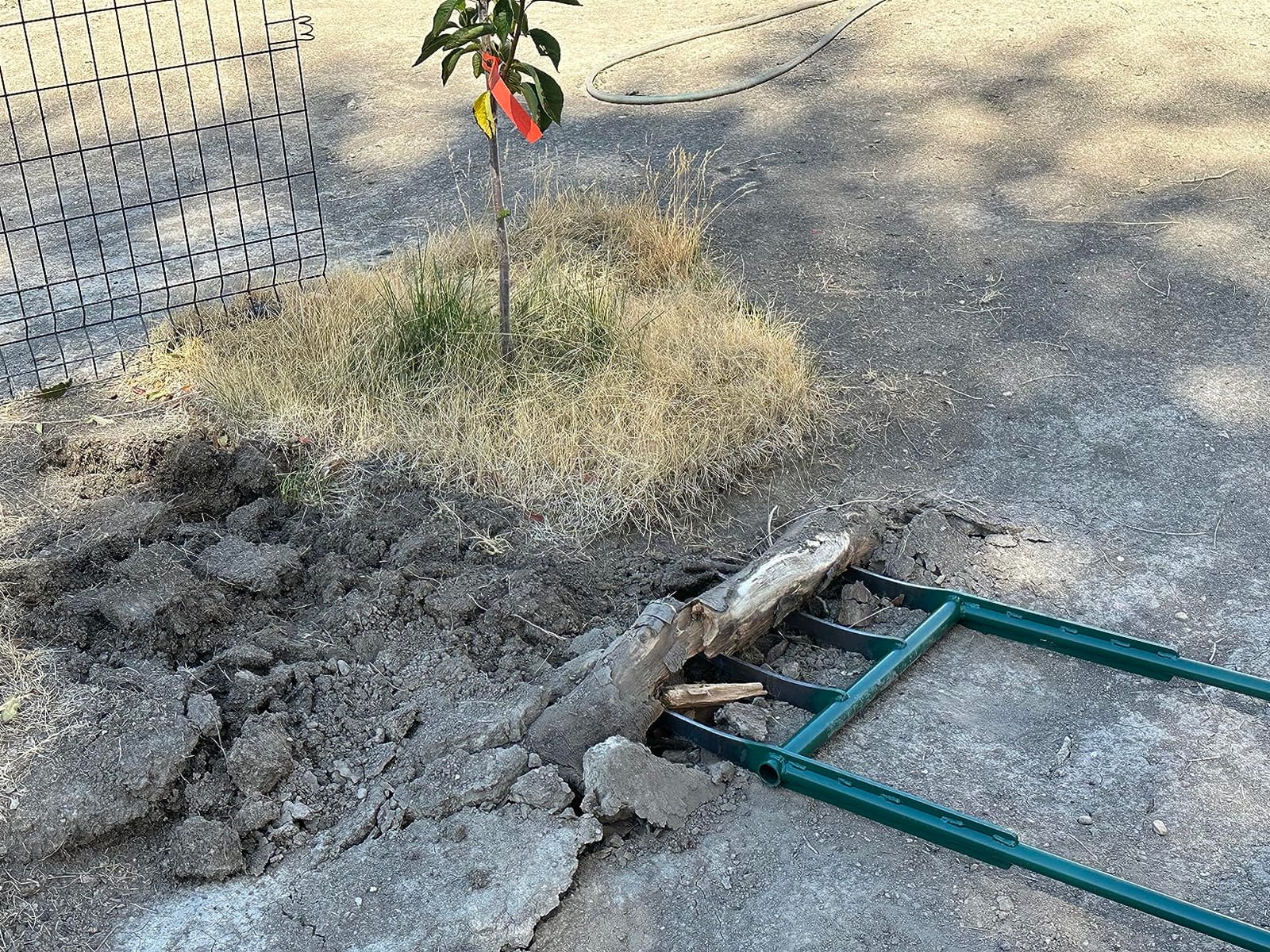
The width is the point. Twelve tines means the widest swath in this roundup, and owners report lifting 6 to 9 inch slabs of heavy clay and tearing out sizeable roots. If you are breaking new ground or fixing a compacted clay bed that has been walked flat for a decade, this is the tool that changes the outcome in a single afternoon.
Our test bed was a neglected clay strip that had turned to brick. Two passes at roughly 45 degrees and the ground fractured in blocks that we then broke down with a rake. It is genuinely satisfying work, and the tines came out of it perfectly straight.
Technique is the difference here. You step on the crossbar, drive the tines down, then lean back with straight arms and use your body weight rather than your arms. Get that sequence wrong and a 15 pound all-steel fork will feel unmanageable in a way it never should.
Best for market gardens and clay beds
If you grow for a living or you are converting lawn into production beds, the coverage per pull pays for itself quickly. Twelve tines means fewer passes across a wide bed, and the welded head means you are not tightening bolts every spring.
Soil moisture is the one variable you control. Owners consistently report it works best when the soil is damp. Saturated clay is heavy and slick, and bone-dry ground will just deflect the tines rather than let them in.
Less suited to small spaces and light users
At 15 pounds, this is a heavy lift, and forum gardeners under 5 foot 9 inches regularly report arm fatigue on anything above about 16 pounds. It is a fair trade for clay, but it is the wrong trade for a 24 inch bed and a light user.
The head is also wide, so this is not a tool for narrow paths between beds. Plan your bed layout around the tool rather than the other way around.
3. Walensee 9-Tine Broadfork – Best Value for Wide Coverage
Walensee Broadfork Garden Tool, 9 Tines Heavy Duty Broad Fork Hand Tiller, 2-in-1 Garden Pitchfork with Ergonomic U-Shaped Handle, Spading Digging Fork for Gardening, Cultivating
15.97 lb
9 hardened tines, 9.1 inch reach
38.2 inch U handle
9.5 inch foot space
Pros
- Nine hardened tines cover more ground per pass than five-tine models
- U handle rated to resist 165.4 lbs of pressure without deforming
- All-steel construction with spray-molded tines
- 9.5 inch foot platform gives strong foot purchase
Cons
- Recommended maximum depth on compacted soil is about 5.9 inches
- Tines can be damaged by thick branches or buried rocks
Nine hardened tines and a mid-range build is the balance point in this list. You get two thirds of the coverage of a twelve-tine fork for a fraction of the money, and the handle is rated to withstand 165.4 lbs of pressure without deforming, which we did not have to try to test.
The listed tine reach is 9.1 inches in loose soil, though the maker’s own guidance caps the practical depth at roughly 5.9 inches in compacted ground. That is an honest number and it matches what we saw. Set your expectations to about 6 inches in a tight bed.
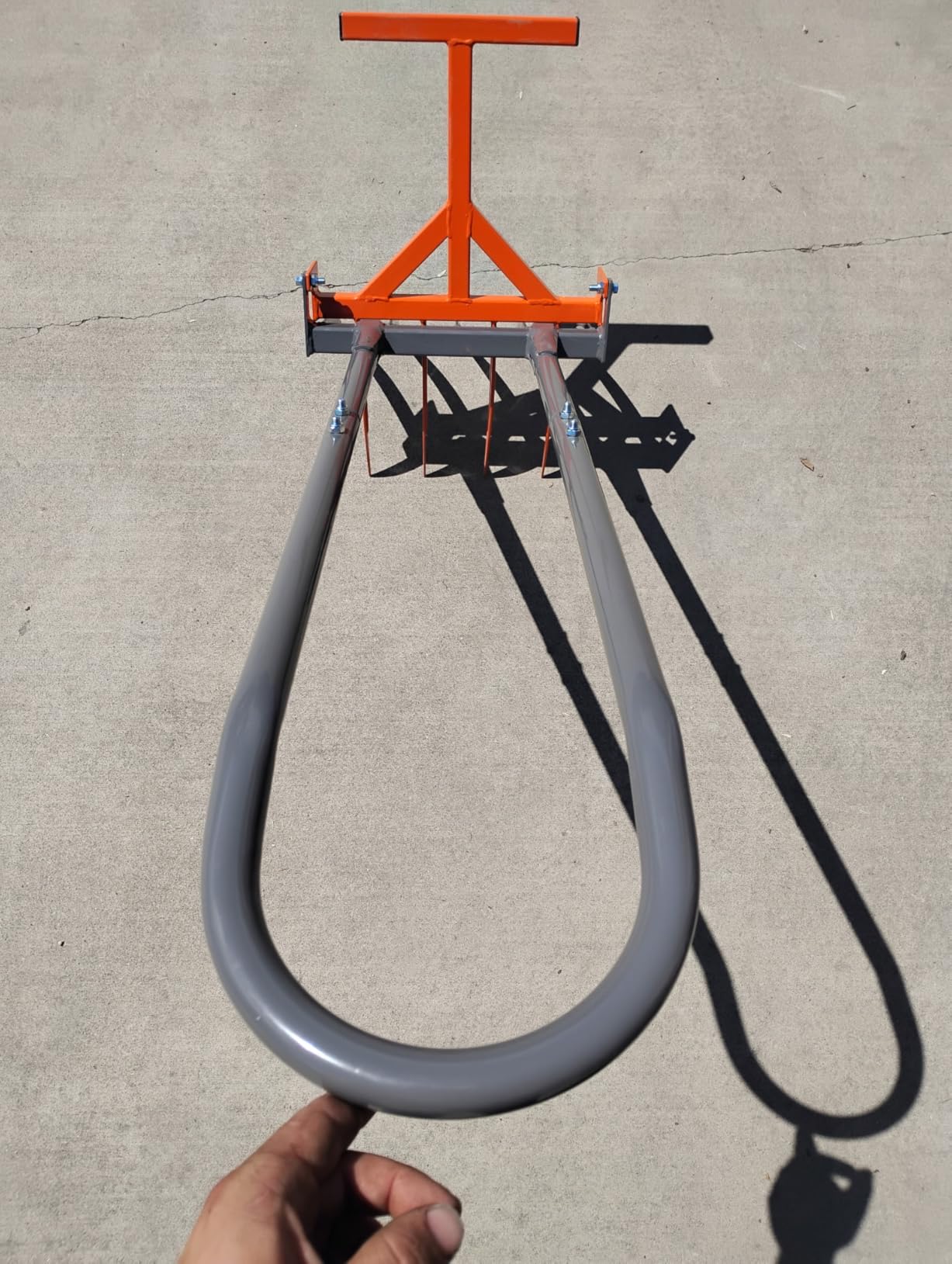
The 9.5 inch foot platform is wider than most and it made a real difference on the crossbar step. Wider foot space means you can stand square rather than balancing on a narrow bar, which translates directly into more penetration per push.
Our loam bed finished in four passes and the tool never felt vague through the handles. Root harvest worked as well as aeration, so if you grow potatoes or carrots this doubles as a lifting fork.
Best for a mix of bed widths and root crops
Nine tines is a sensible middle ground for someone with both 24 inch and 30 inch beds. It is wide enough to make good progress and narrow enough to turn around inside a raised bed without stabbing the sides.
Cleaning the tines after use matters here more than on most. Reviewers who rinse and scrape after every session report no problems, while those who leave soil packed into the tines eventually see them suffer.
Less suited to rock-hard ground
Anyone who has hit a buried stone knows that tines bend, and this is not a thick-plate tool designed to shrug that off. Rocky or stony new ground calls for a heavier cambered or thick-plate model.
Also note that the 38.2 inch handle is the shortest of the full-length forks here. Taller gardeners will want to check this one against their stride before committing.
4. VASALAID 5-Tine Broadfork – Most Versatile for Basic Bed Prep
Broadfork 5-Tine Broad Fork for Gardening Ergonomic U-Shaped Design
16.27 lb
5 heat-treated tines
Galvanized anti-rust layer
Rubber non-slip handles
Pros
- Tempered tines held up well in heavy compacted clay for owners
- Reinforced crossbar adds pulling force and cuts hand load
- Non-slip rubber handles reduce hand fatigue
- Removable center pole for compact storage
Cons
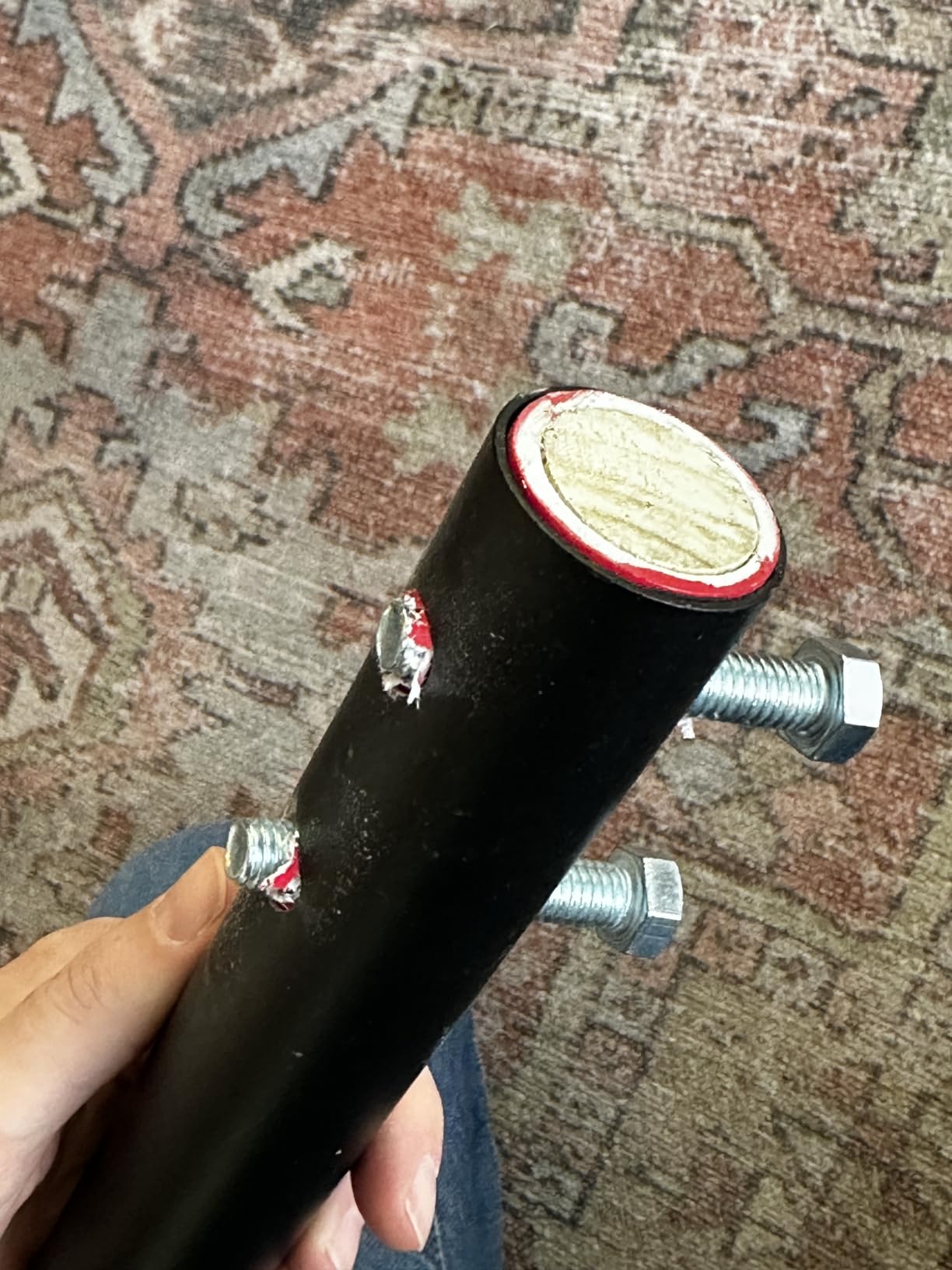
- Bolted fork-to-handle joint can loosen or snap over time
- Bolt holes can be difficult to align during assembly
- Not intended for clearing tree roots or moving rocks
This is the entry point in the roundup, and the honest framing is that it is a real tool at a real budget. Five tempered, heat-treated tines with a rust-resistant powder coating, a galvanized anti-rust layer over the steel, and a reinforced crossbar between the handles for extra leverage.
What we liked was the finish more than the mechanism. The coating is even, the tines are properly sharp, and the rubber grips genuinely cut hand fatigue on a long session. The 16.27 pound weight is on the heavier side for a five-tine fork, but that mass is doing work in the soil.
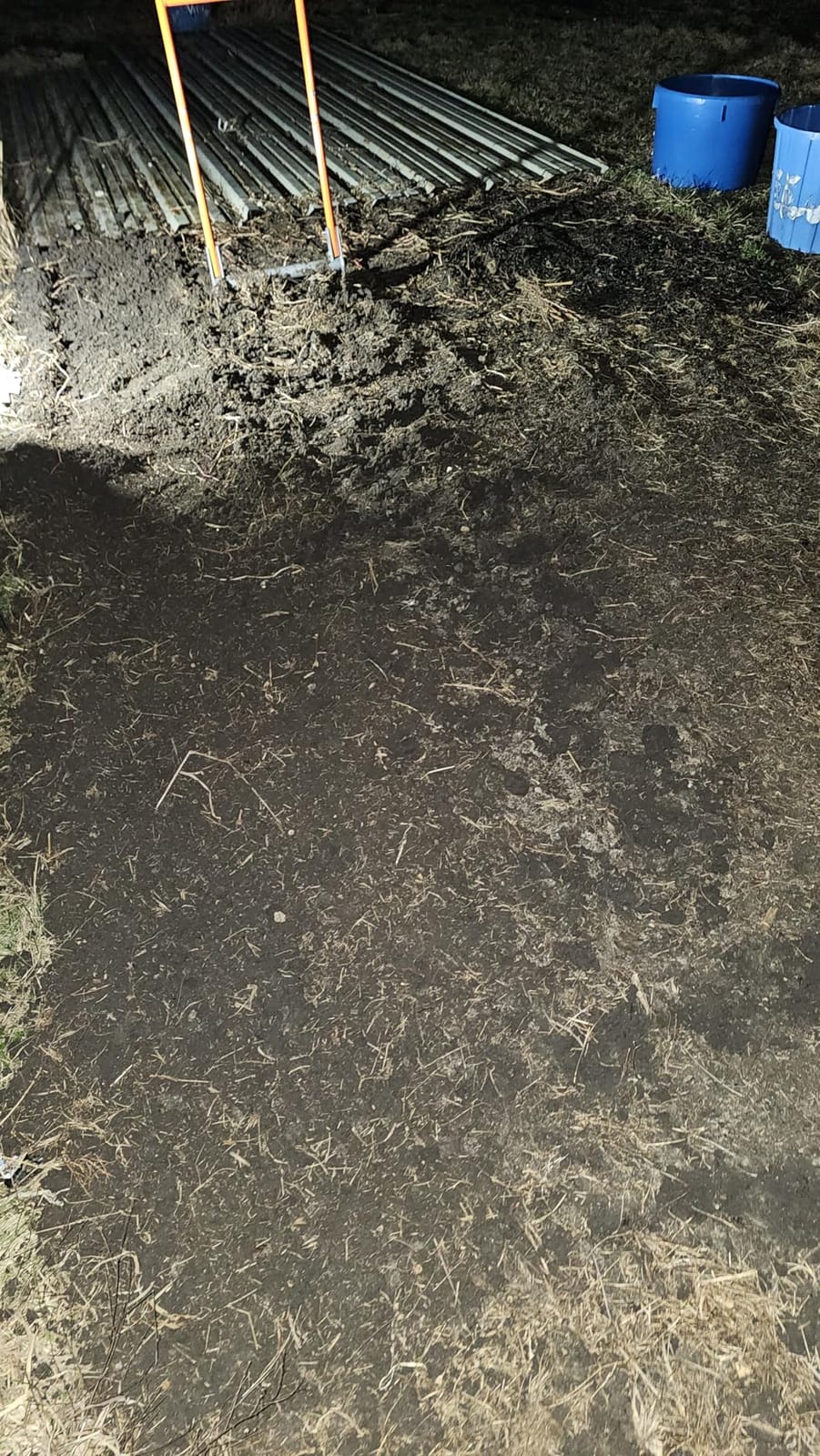
In our clay-loam bed it performed well, and owners in heavy compacted clay report the same. The one complaint that shows up repeatedly is the bolted fork-to-handle connection, and one reviewer called the resulting wobble a deal breaker.
The center pole is removable, so it separates into pieces for storage, and the reinforced crossbar between the handles is a nice touch that most forks this size leave out. Assembly takes a few minutes with the included screws, though a few buyers found the bolt holes awkward to line up.
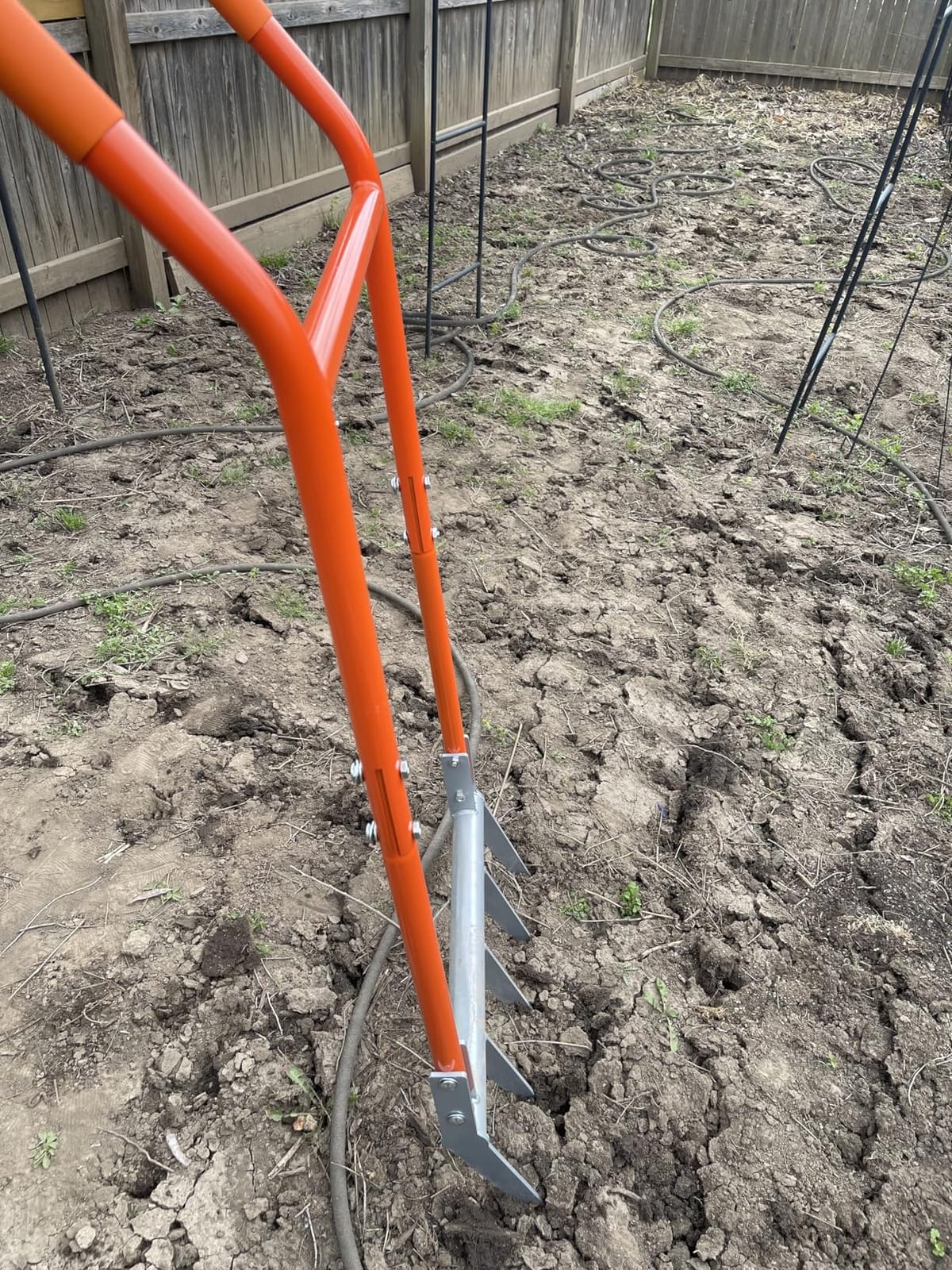
Best for loosening an ordinary vegetable bed
For a typical raised bed that has been planted a few seasons, this is more than enough. The tines penetrate, the crossbar spreads the load, and the coated steel will not leave orange streaks on your tines after a wet season.
The removable center pole is a genuinely useful feature for anyone with a small shed, and the rubber handles are a real comfort improvement over bare steel on a two-hour session.
Less suited to roots, rocks and decades of use
Bolted joints are the weak point on any bolt-together design, and this is a bolt-together design. Check the connection after the first few sessions and tighten it if it develops play.
It is also not a tool for tree roots or for moving rock. If your ground is new and stony, buy the heavy end of this list instead and save yourself a bent tine.
5. DeWit Grelinette Broadfork – Best for Backs and Joints
Dewit Broadfork Tiller – 42″ Eco-Friendly Garden Bed Prep Tool with Forged Steel Tines – Covers 12″ Swath Per Pull – Heavy-Duty Manual Cultivator for Raised Beds and Loosening Soil
About 7.3 lb
Forged steel tines, 14.2 inch head
40.9 inch total length
Made in Holland, lifetime guarantee
Pros
- Several times lighter than a typical broadfork at about 7.3 lb
- Balanced handle places hands forward so the tool self-drives
- Large footstep set back from the handles reduces back fatigue
- Set-back footstep doubles as support for leaning over weeding
Cons
- Tines are shorter than many competing broadforks and dig less deeply
- Tines can bend or snap in very hard clay or on stones
- The lifetime guarantee can be hard to access in practice
Everything else on this list is a lever, and this one is a feather. The DeWit Grelinette-style broadfork comes in at roughly 7.3 pounds, several times lighter than a typical broadfork, and it is the only model here we would hand to someone whose back or joints rule out swinging 16 pounds of steel.
The design is unusual and it works. The handle is balanced so the hands sit forward and the tool self-drives into the soil rather than needing to be shoved, and the footstep is set back well behind the handles so the force is generated with your legs instead of your lower back.
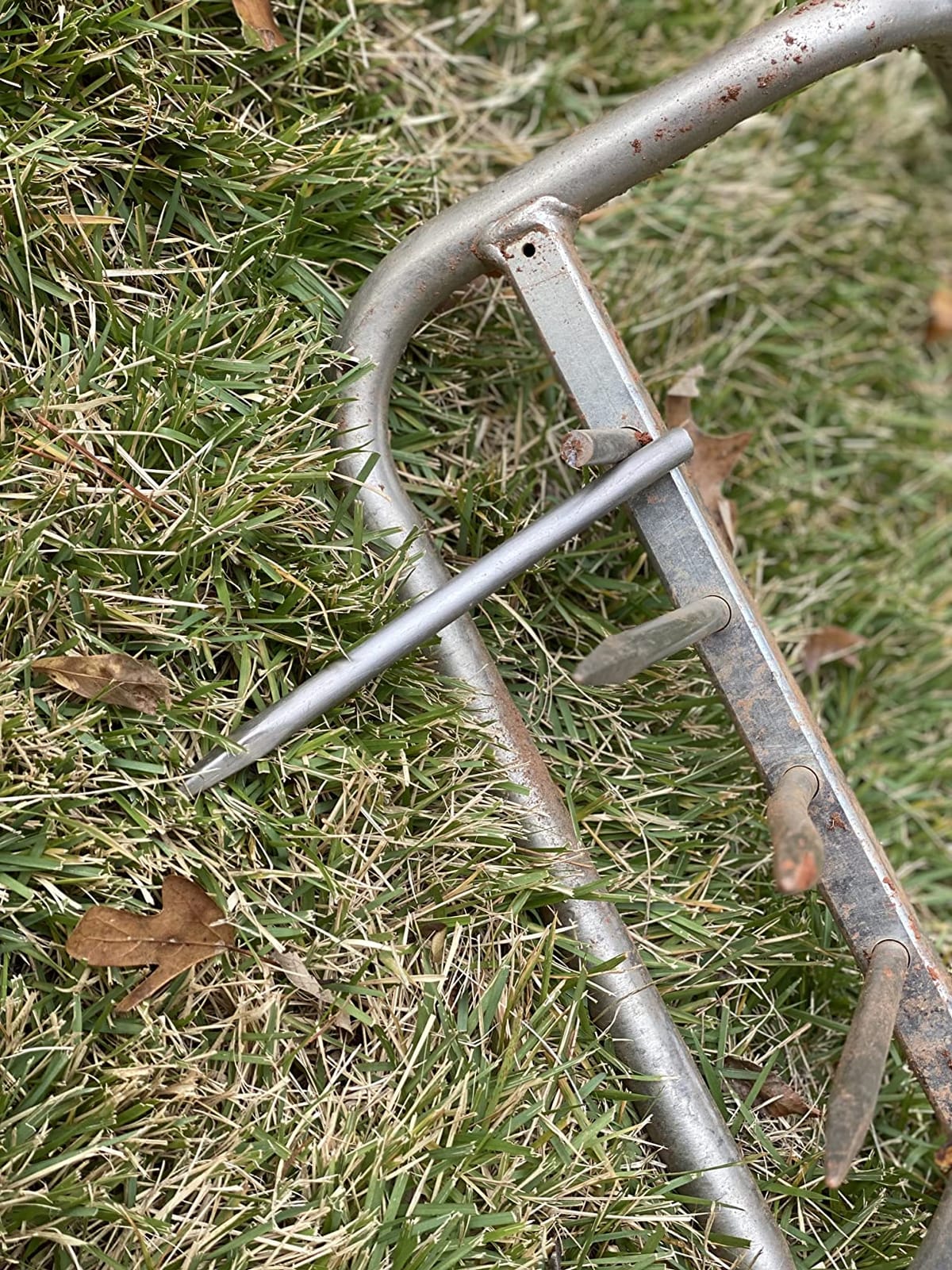
The head is 14.2 inch wide with forged steel tines in a Grelinette-style layout, and the whole tool is 40.9 inch long. It is a family operation in Holland that has been forging garden tools for well over a century, and the build quality shows in the weld work and the finish.
In our raised beds it did everything we asked at a fraction of the effort, and it is also the tool on this list that doubles most comfortably as a weeding support, since the set-back footstep gives you something steady to lean on.
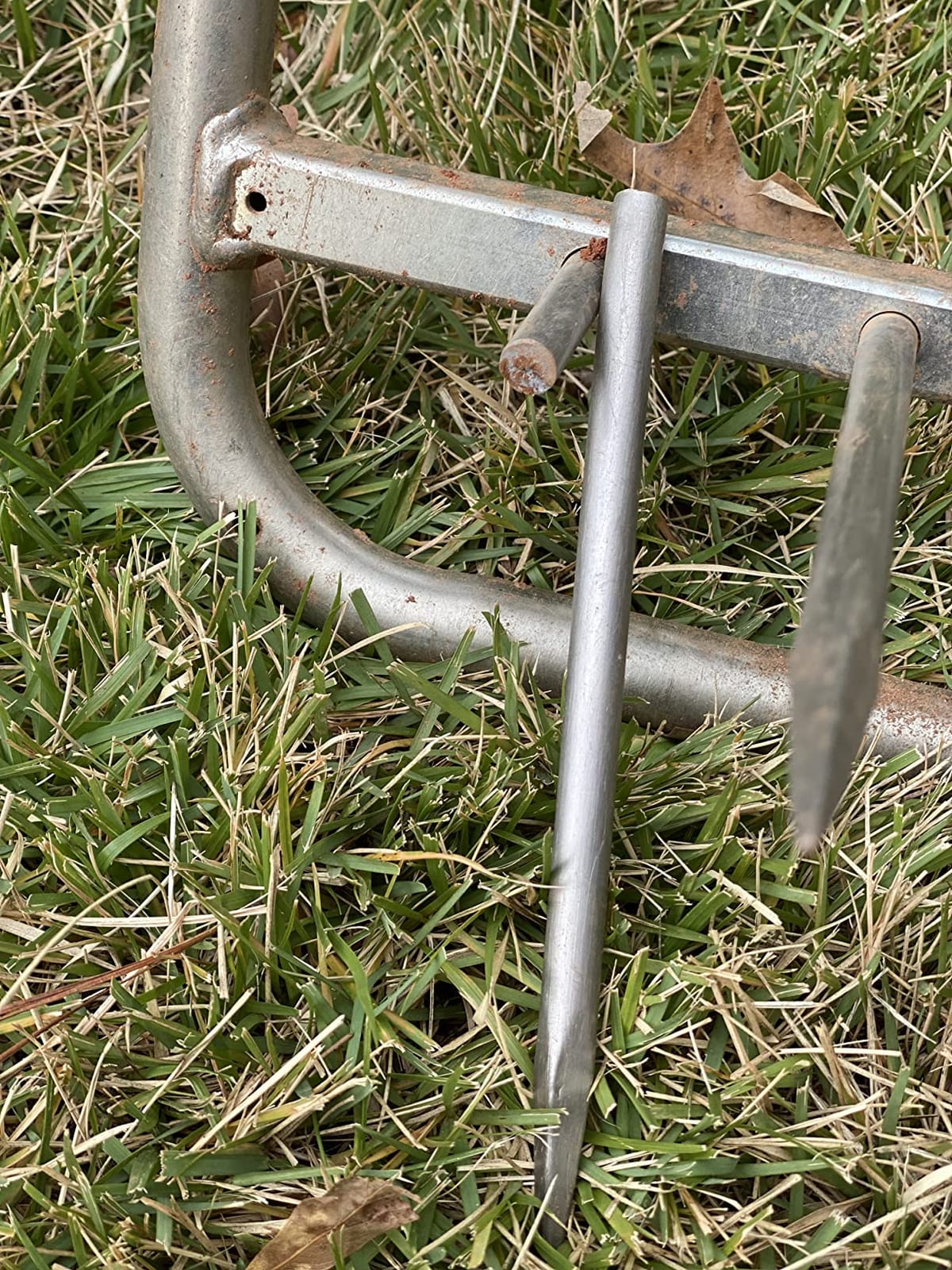
Best for seniors, recovering users and light frames
Is broadforking good for your back? Broadforking in general is far kinder than digging, and this specific model is the kindest option here. Many older gardeners tell us they find a broadfork easier to work with than a shovel or a tiller, and the light weight widens that to people who would not lift a 15 pound tool at all.
It is also a genuinely pleasant tool to handle. The forward balance means less wrist and arm involvement, which matters if your grip strength is not what it was.
Less suited to hard clay and deep work
The trade-off is tine depth. These tines are shorter than most broadforks, so you are loosening a shallower layer. On a raised bed full of loose compost and leaf mold, that is exactly the depth you need. On hard clay, it is not enough, and reviewers report bent and snapped tines in that ground.
The lifetime guarantee is real but has been awkward to use in practice for some owners, so treat the warranty as a nice-to-have rather than a plan.
6. SILKPE Cambered 11-Tine Broadfork – Best for Hard Clay and Rocky Ground
SILKPE 56” Heavy Duty Broadfork for All the Soils, Detachable Design Pitchfork, 5 Sharp and Cambered 11” Tines Bord Fork Garden Tool, Ergonomic Handles, Good Package, Easy Assembly, Blue.
17.56 lb
5 cambered 11 inch tines
Thick carbon steel plate
56 inch total length
Pros
- Cambered arc tines penetrate compacted and clay soil better than straight tines
- Tines cut from a single steel plate and welded for a rigid head
- Folded handle ends lengthen the pulling stroke
- Protective cover and thick wrenches included
Cons
- Noticeably heavier than competing broadforks because of thicker steel
- Requires more strength to operate than lighter models
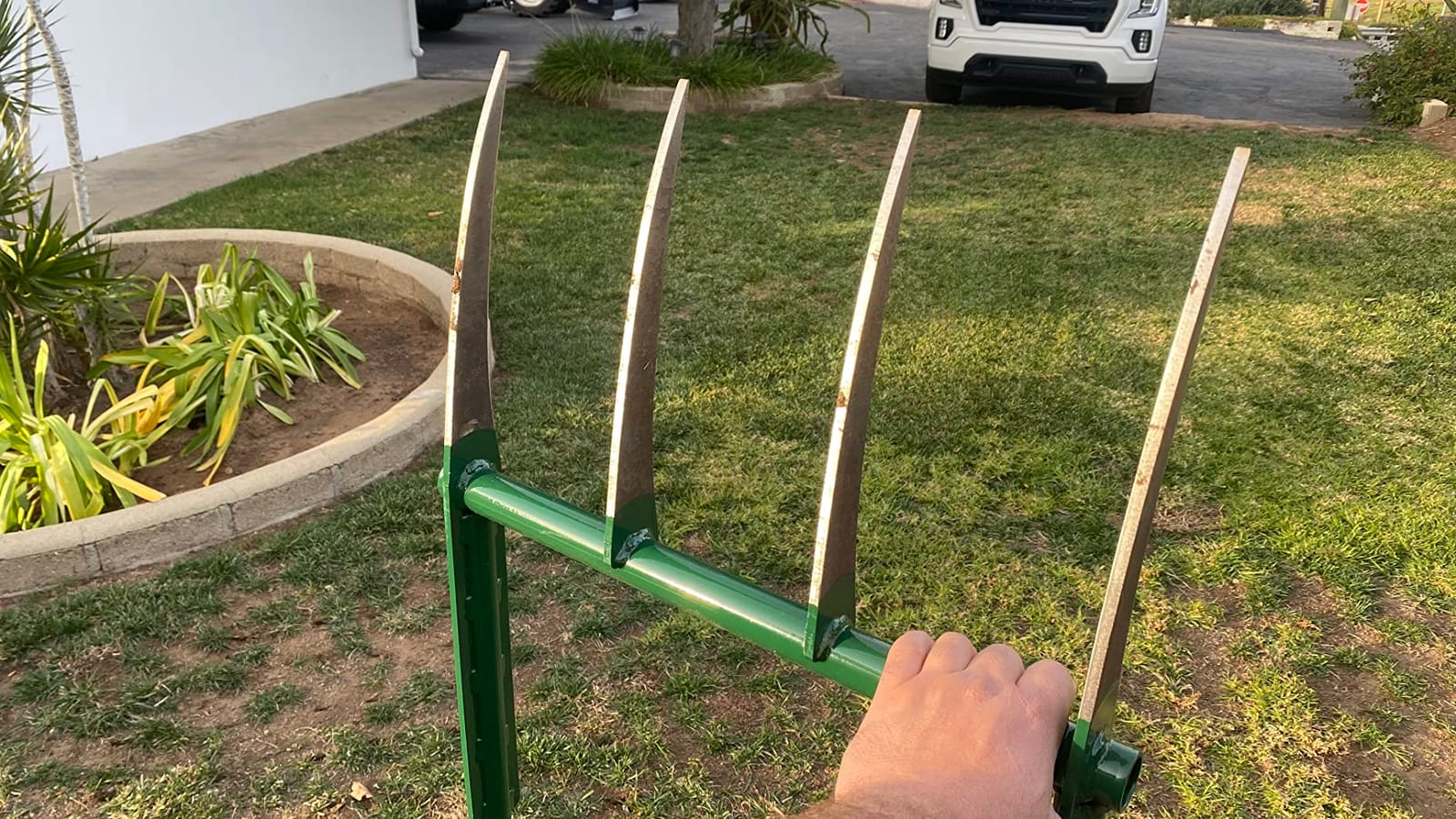
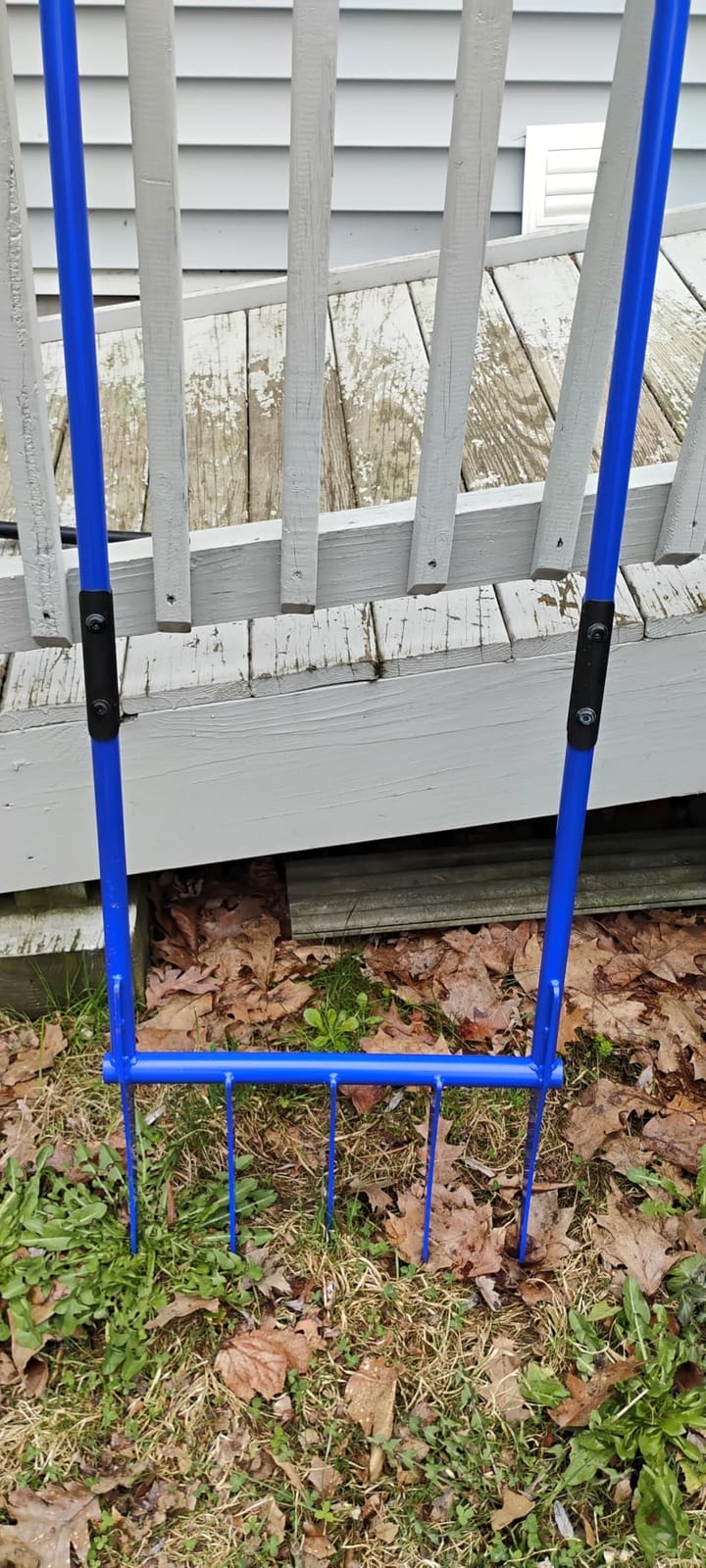
This is one of the two thickest steel builds in the roundup, and that is the whole design brief. The tines are cut from a single steel plate and are 30 to 50 percent thicker than competing products, which is why the manufacturer claims a 30 to 50 percent heavier fork and why the weight is listed at 17.56 pounds.
The camber matters as much as the thickness. The arc shape of the tines lets them slide into compacted and clay soil rather than stopping dead, and in our hardest test strip the difference against a straight-tine fork was obvious within the first pass.
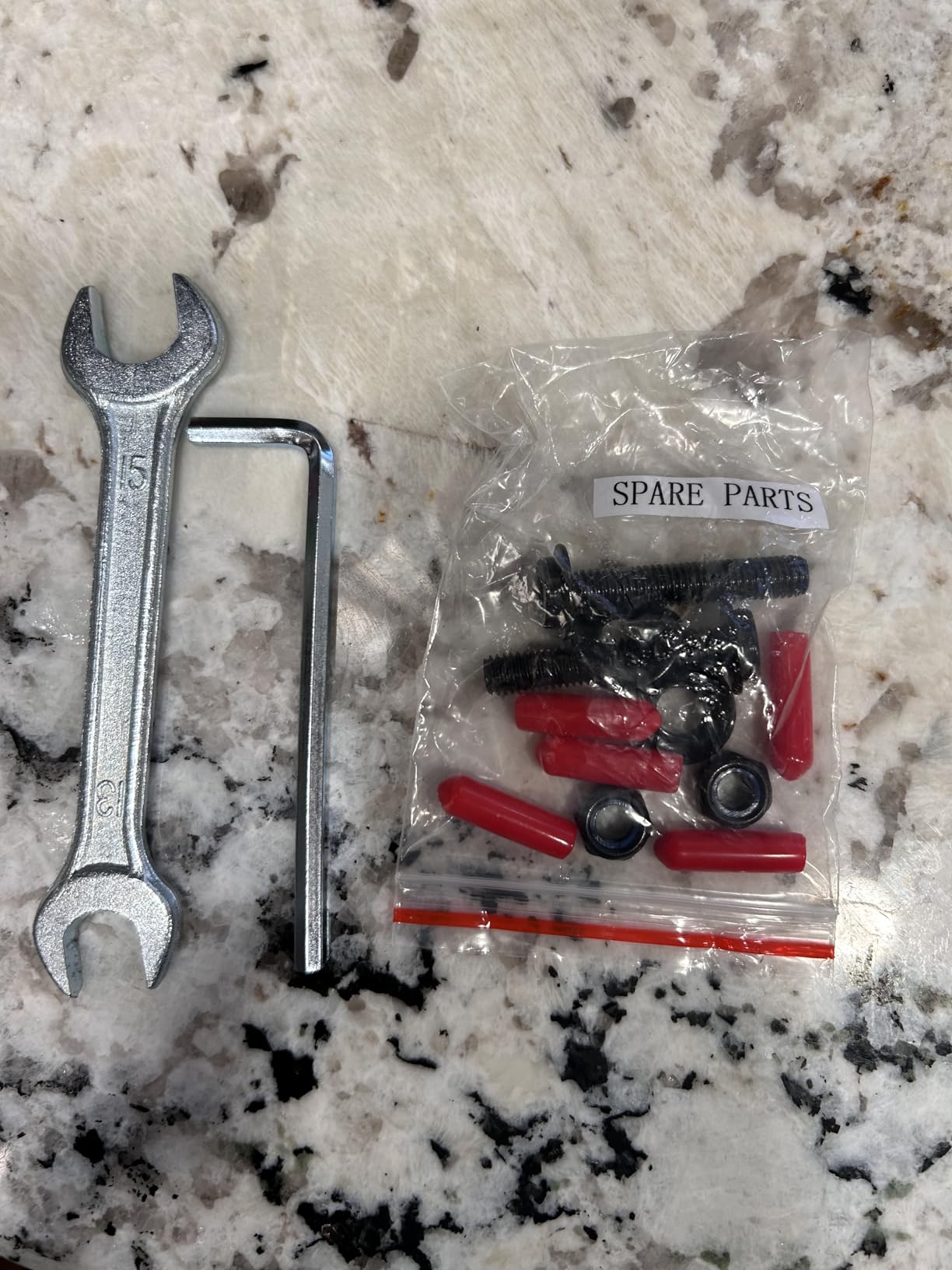
The inward-folded handle ends are a nice touch. By folding the ends back in, the usable pulling stroke is longer, so you get more lift per pull without a longer tool, and the pull feels more like a lever and less like a stick.
Assembly is four screws and the included extended wrenches, and the packaging includes cutouts in the square tubes plus a protective cover, which is more care than most competitors take with a tool with this much exposed steel.
Best for first-time break-in of neglected ground
If you are opening turf, breaking a compacted clay strip, or working ground with old roots in it, the cambered thick tines are the reason this tool exists. It is built to take the abuse that ruins lighter forks.
The 11 inch tine reach is among the deepest listed here, so it works on deeper beds where a shallower fork would just scratch the surface and hit the bottom of the bed frame.
Less suited to light users and long sessions
At 17.56 pounds, this is the second-heaviest tool in the roundup and it needs real effort. Anyone under 5 foot 9 inches, or anyone who tires quickly, will feel this one within the first ten passes.
It is also a single-purpose tool. If you only have a small bed and a light frame, the extra steel is effort you do not need to spend.
7. SENVERT 5-Tine Broadfork – Best Straightforward Bed Preparation
Senvert BroadFork Garden Tool, Heavy Duty 5-Tine Broad Fork Hand Tiller, Garden Pitchfork with Ergonomic U-Shaped Handle, Digging Fork for Gardening, Cultivating
19.5 inch tine span
54 inch overall height
5 ribbed heat-treated tines
Welded dual-row tine connection
Pros
- Ribbed heat-treated tines resist bending over long-term use
- Forward-angled upper handle guides hands into a low-fatigue position
- Welded dual-row tine connection and handle-base rib add strength
- 19.5 inch span covers a raised bed quickly
Cons
- Only five tines so width per pull is narrower than nine-tine forks
- Listed working width is inconsistent between listing copy and dimension data
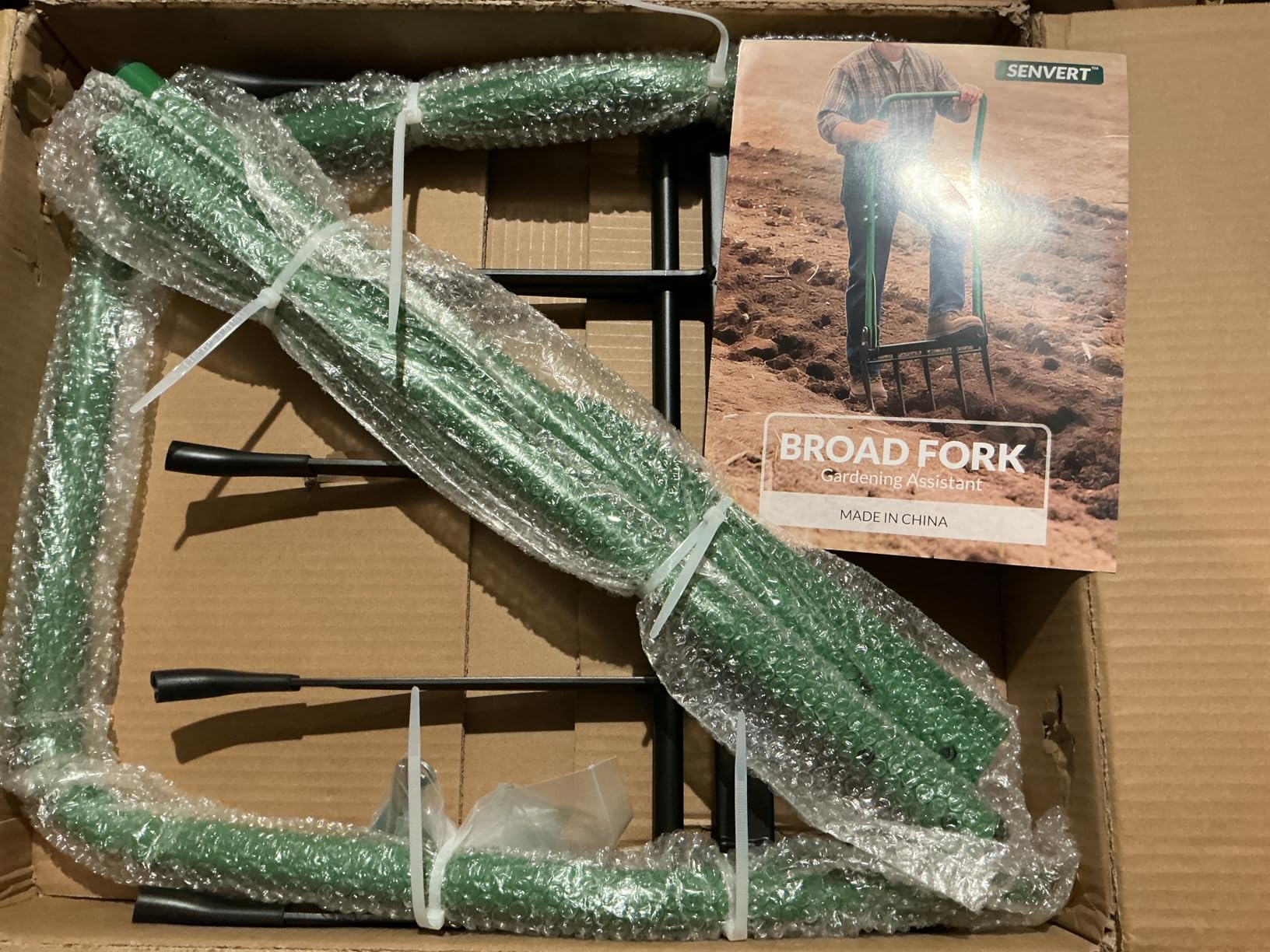
The SENVERT is the plain, sensible option in this group, and there is something to be said for a tool that does one job without extras. Five heat-treated tines with reinforcing ribs, a structural rib at the handle base, and a welded dual-row connection where the tines meet the head.
That welded connection is the detail that sets it apart from the cheaper bolt-together forks. Owners report the tines holding their shape, and we had no wobble at the joint after a full day of use in the bed.
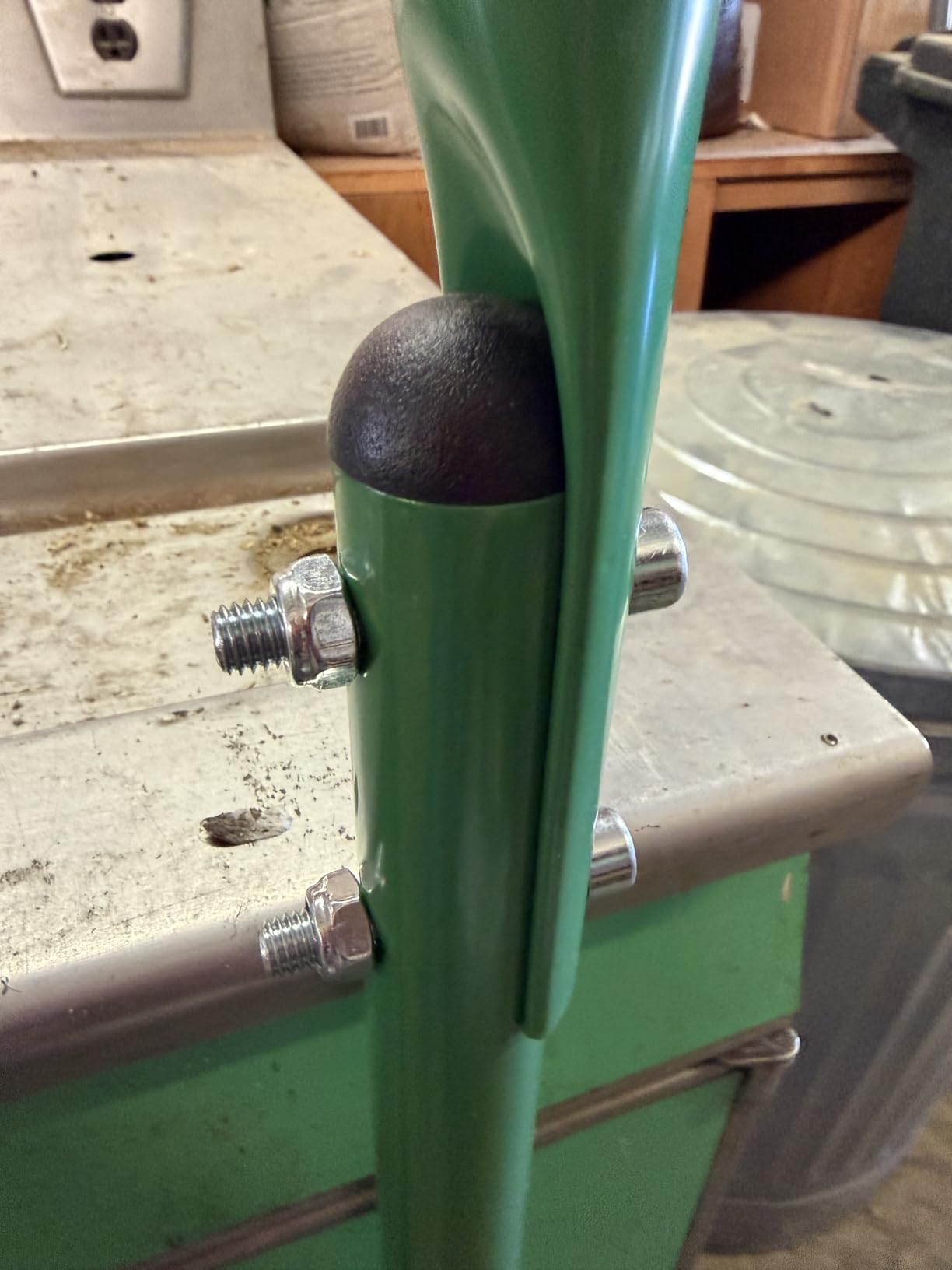
The forward-angled upper section of the U handle is the ergonomic highlight. It moves your hands into a natural position rather than out at the sides, and after a full afternoon that difference shows up in how your wrists and shoulders feel.
At 19.5 inch span, it is sized for a standard raised bed, and it doubles as a root crop lifter for potatoes and carrots without any adjustment.
Best for regular seasonal bed turnover
If you fork the same two or three beds every spring, this is a comfortable tool that will not fatigue you more than the job requires. The ribbed tines survive root-filled soil better than plain tines because the rib stiffens the section under load.
The welded joint also means there is nothing to retighten between seasons, which is one fewer thing on the maintenance list.
Less suited to wide beds and heavy clay
Five tines is a narrow swath, and in a wide bed you will be making a lot of passes. For a market garden with 4 foot beds, a nine- or twelve-tine fork is the better tool for the job.
One caution: the listed working width is not consistent between the listing copy and the dimension data, so measure your bed and confirm before you commit to it as a wide-bed tool.
8. KEMETIK 5-Tine Broadfork – Best Locking Joint and Accessories
KEMETIK 5 Tines All Steel Broadfork, 56″ Broad Fork Garden Tool Heavy-Duty Digging Pitchfork, Non-Slip Grips & Detachable Design for Gardening, Farm Cultivation, and Soil Loosenin
17.71 lb
5 thick curved high-carbon tines
Arc clip lock connection
Detachable two-piece design
Pros
- Thick curved high-carbon tines penetrate compacted ground and stay straight
- Arc clip lock keeps the tool rigid with no wobble
- Non-slip grips with folded ends support an upright posture
- Wrench and spare screws included in the box
Cons
- Heavy at nearly 18 lb which tires the user over long sessions
- Not practical for small jobs or light bed-scale work
- At least one owner reported all tines bending immediately in use
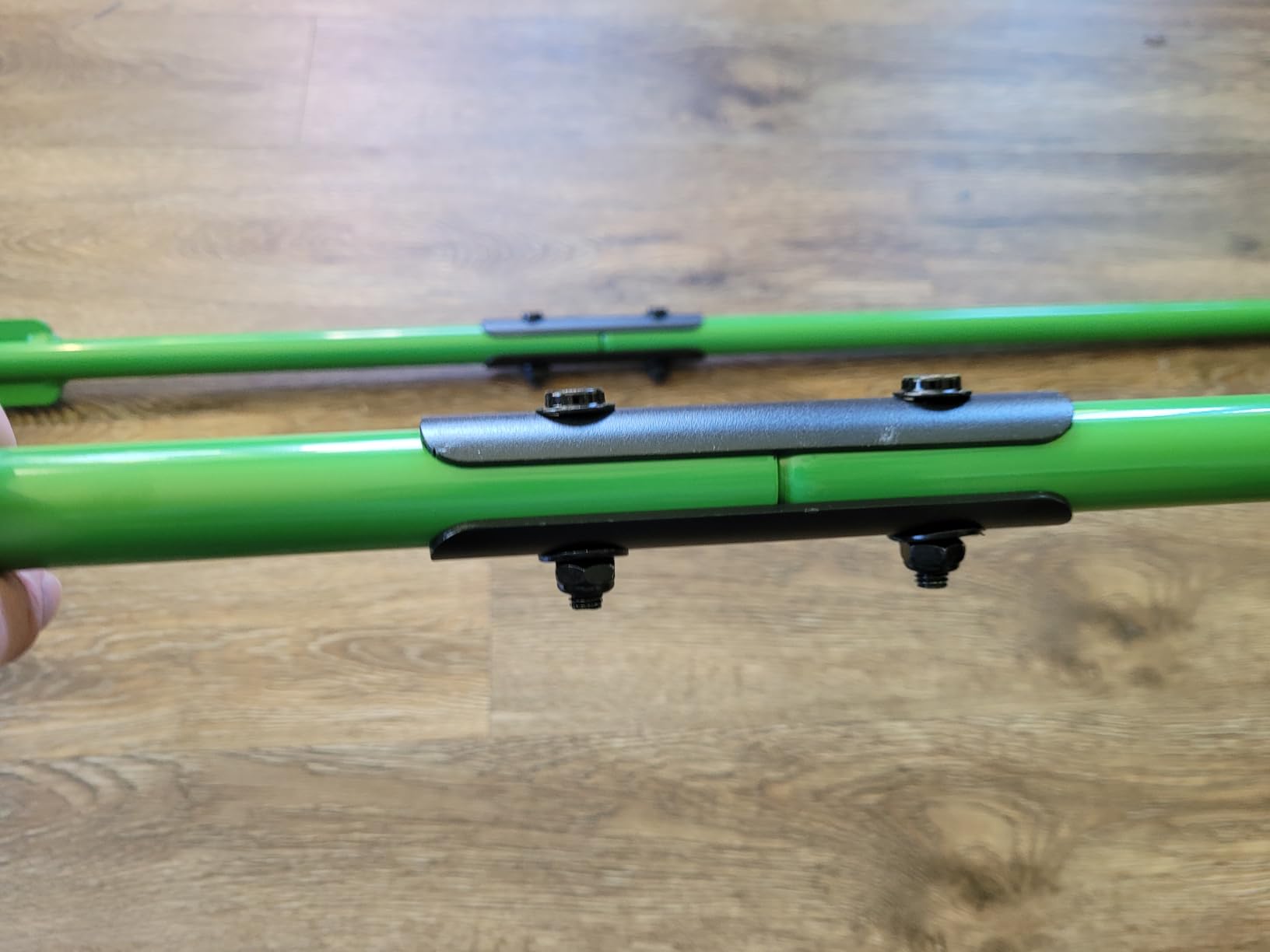
The KEMETIK is the best-equipped tool in the roundup, and it solves the exact problem that ruins most budget broadforks. Instead of bolts that back out under the prying load, the head joins the frame with an arc clip lock that keeps the tool rigid with no wobble at all.
The tines are thick, curved and made from high-carbon steel, welded into the head. The curve helps them lift a block rather than slice it, and the carbon steel holds an edge through clay and root work without walking sideways.
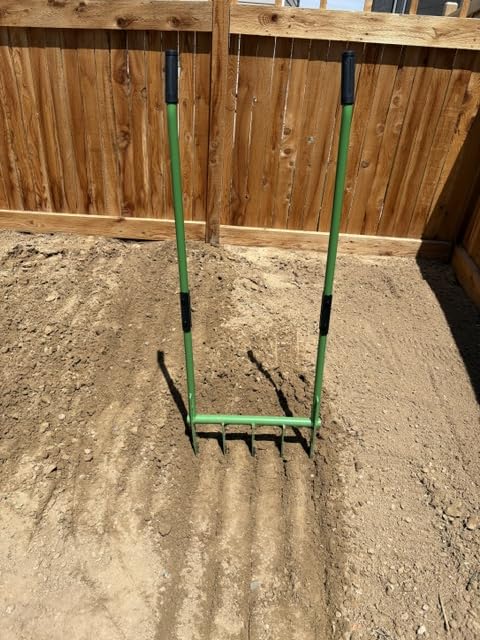
Then there are the accessories. The box includes a thickened wrench, spare screws, and rubber tine and floor protectors, which matters if you care about your shed floor more than most people do.
Non-slip rubber grips with inward-folded ends let you work in an upright posture, and the two-piece detachable design means it splits for storage or for carrying to a plot away from home.
Best for someone tired of tightening bolts
If you have owned a bolt-together broadfork and watched the joint develop play, the clip lock is the reason to look here. It removes the most common failure point on a manually driven tool.
The curved high-carbon tines also make this a good root crop tool. They lift potatoes and carrots with less damage to the crop than straight flat tines.
Less suited to light users and quick jobs
At 17.71 pounds this is the heaviest fork in the roundup, and weight is the most common complaint in the reviews. It is a tool for a real bed and a full morning, not for a quick five-minute tidy-up.
There is also one verified report of all tines bending immediately out of the box, so inspect them carefully on arrival and check that the curve is even along each tine.
9. CobraHead Broadfork – Best Ergonomic U-Shape for No-Till Perennial Beds
CobraHead® Broadfork – Heavy Duty Ergonomic Garden Hand Tool – USA Made
14 lb
1045 carbon steel round tines
21 inch wide
57 inch tall
Ash handles
Pros
- Round tines lift soil rather than slicing it like flat blades
- 1045 carbon steel tines pass through the crossbar for extra strength
- Slightly flexible ash handles are comfortable and replaceable
- Works in clay and loosens beds without tearing up perennials
Cons
- Heavy at 14 lb and often takes two people to use
- Ash handles can feel thin with no resale support from the manufacturer
- Tines could use more end padding in the box
The CobraHead is a traditional European U-shape design, and the difference from an American-style broadfork is in the tines. These are round rather than flat, and round tines lift the soil block instead of slicing through it, which is the gentler action you want in a no-till bed full of established perennials and mycorrhizal networks.
The steel is 1045 carbon, and it is mounted through the crossbar rather than welded to the face of it, which is a stronger arrangement because the load travels through the tube instead of pulling at a fillet.
At 14 pounds and 21 inch wide, it is compact enough for a 24 inch bed and light enough for a single user, and the manufacturer made the point of describing it as comfortable and easy to use rather than as a workout tool.
The ash handles are slightly flexible, which absorbs shock and feels better in the hand than rigid steel, and they are replaceable, so a broken handle is a five-minute fix rather than a lost tool.
Best for no-till beds and long-lived perennials
This is the one to use when you are aerating around plants you do not want to disturb. Because the tines lift rather than slice, the soil around perennial roots loosens and the plants stay where they are.
It is also a good first broadfork for anyone who is not sure they want a heavy steel tool, since 14 pounds is a very manageable introduction to the motion.
Less suited to heavy two-person jobs and handle damage
At 14 pounds, some owners still find it heavy enough to want a second pair of hands for hard ground. If your soil is the rock-hard kind, expect to be working at it rather than sailing through it.
The main complaint in the reviews is that the ash handles feel thin, and that when a handle was damaged the manufacturer offered no support. Buy a spare ash handle while you are at it, because that is the part most likely to need replacing.
10. VIOLAPARK 48/60 Inch Broadfork – Best Adjustable Handle Height
VIOLAPARK Broadfork, 48/60 in Adjustable 5-Tine Garden Fork for Aeration
15.97 lb
Sets at 48 inch or 60 inch
5 tines
Reinforced manganese steel frame
Pros
- Two handle heights let you tune the tool for raised beds or deeper reach
- Manganese steel frame and tines reported not to bend or bow
- 60 inch setting gives strong mechanical advantage that reduces back strain
- All assembly tools included in the box
Cons
- Roughly 16 lb is tiring to carry around a large garden
- Rubber tip covers can arrive split and tines can poke through packaging
- Multi-section handles can feel slightly wobbly
- Less effective in very hard compacted clay
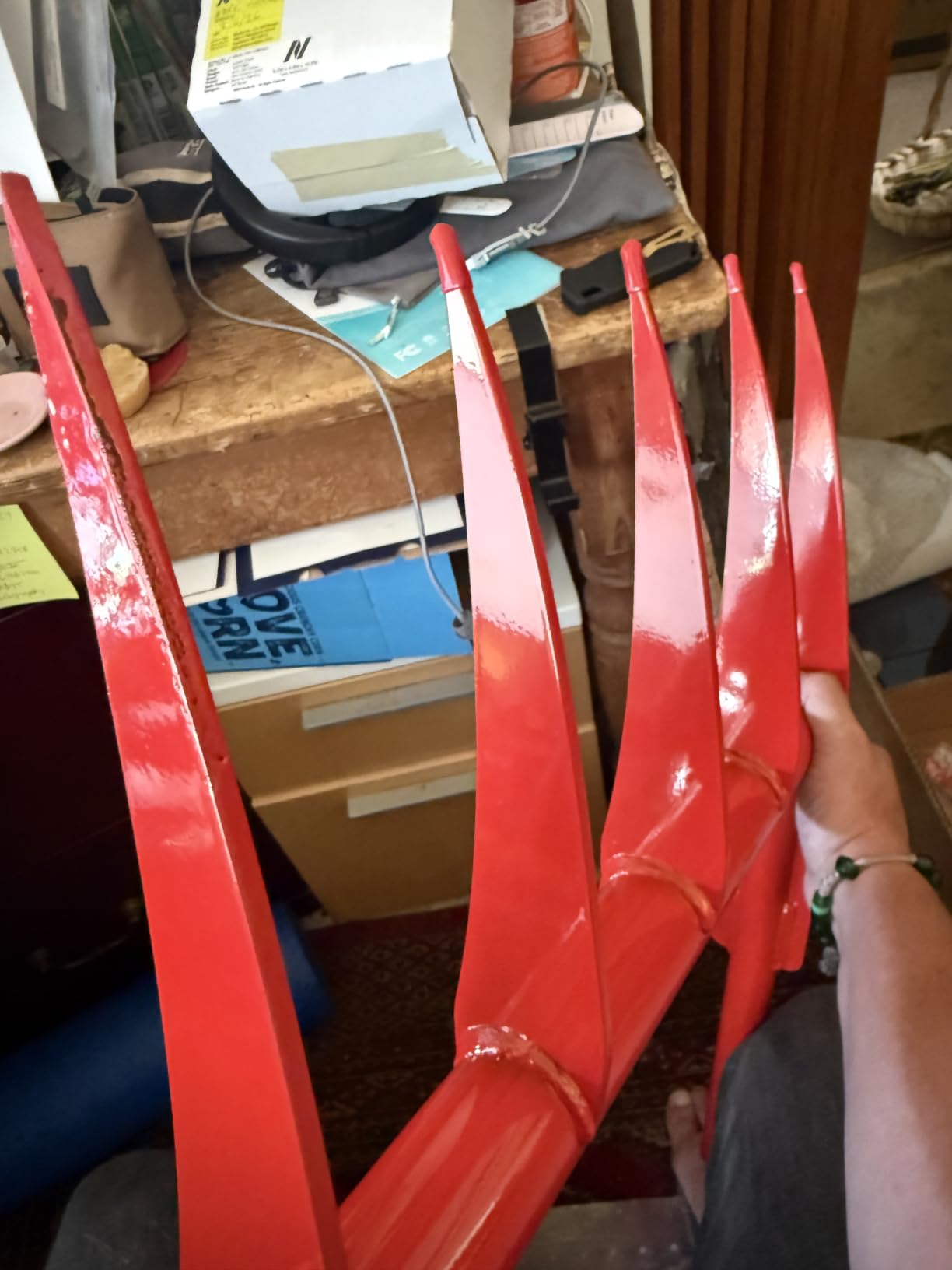
This is the only fork here that converts between two handle heights, and that single feature solves a problem nobody else addresses: a tool that works for a 5 foot 2 inch gardener and a 6 foot gardener in the same household. Set it at 48 inch for a raised bed, extend it to 60 inch when you want more pulling force and less back strain.
The frame is reinforced manganese steel with five sharp tines, and owners report the tines do not bend or bow under pressure. Our loam bed went from compacted to friable in two passes, and the drainage improvement was obvious the next time it rained.
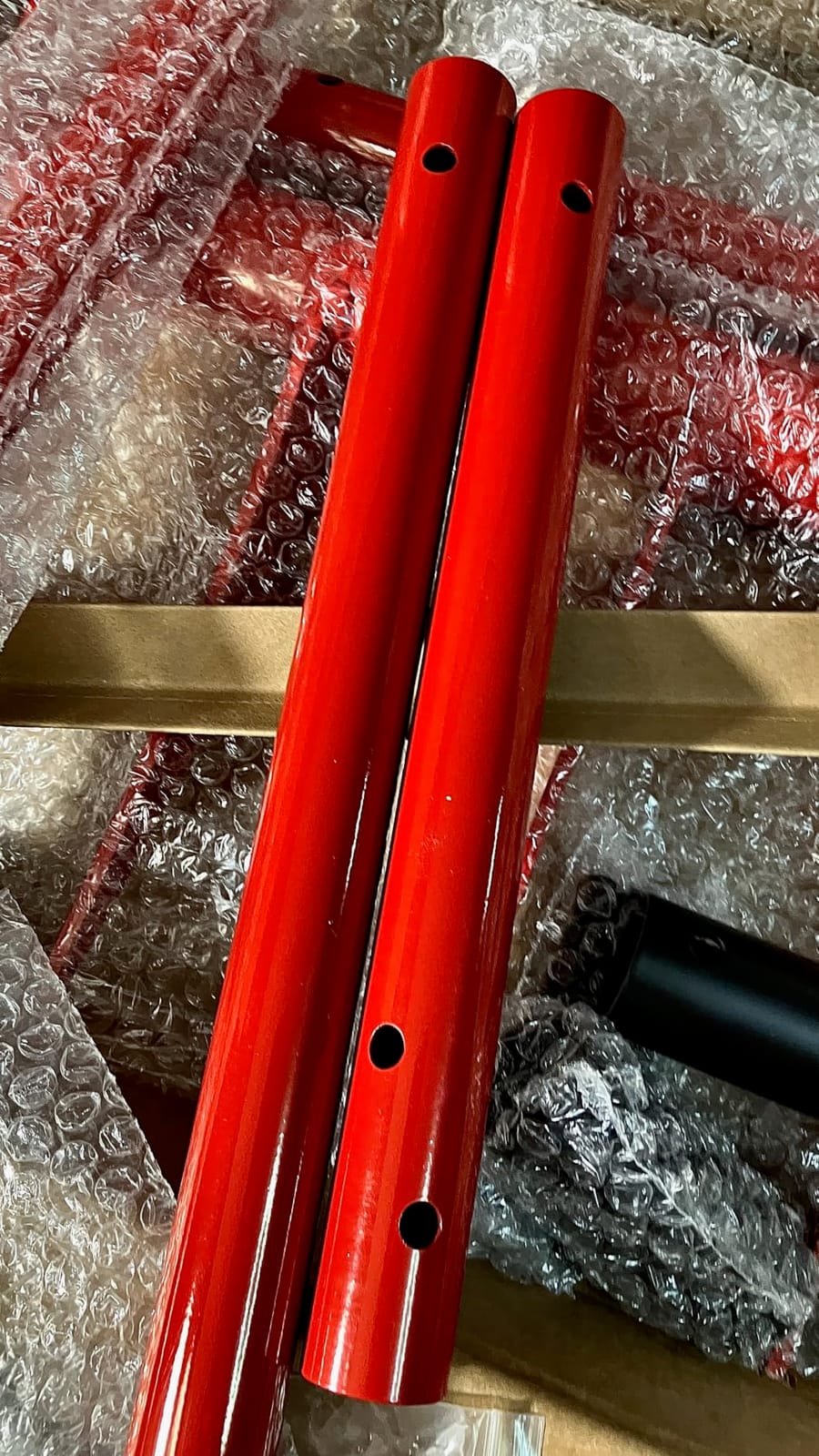
The longer setting genuinely changes how the tool feels. At 60 inch the handles are higher, the pull angle is steeper, and the mechanical advantage is noticeably better, which is why so many owners describe it as professional grade.
Assembly hardware, an Allen wrench, a spanner and rubber tip covers are all in the box, so there is no second trip to a hardware store to get started.
Best for shared tools and mixed user heights
If a partner, a parent or a child works the beds with you, adjustable height turns one purchase into a tool for everyone. It is also the answer to the shorter-user fatigue problem without giving up a wide, capable head.
The tines flex far less than a standard pitchfork, which makes it a good choice in root-filled soil where a cheap fork would simply bend.
Less suited to very hard clay and long carries
At roughly 16 pounds it is not a carry-around tool across a large property, and the multi-section handles can feel slightly wobbly at the joint. Check that the extension is fully seated and tightened before a long session.
It is also less effective in extremely hard compacted clay, despite what the marketing claims, so for the toughest beds choose a thick-plate or fully welded steel fork instead.
How to Choose a Broadfork: 7 Criteria
Pick the tool to fit your beds, your soil and your body, in that order. The wrong head width in a narrow bed wastes more time than the wrong handle material.
1. Bed width fit math
Measure the interior width of your narrowest bed, then choose a head that leaves 3 to 4 inches of clearance on each side so the tines can enter without stabbing the sides. A 24 inch bed works best with a 15 to 18 inch head, a 30 inch bed with a 20 to 24 inch head, a 36 inch bed with a 27 to 30 inch head, and a 4 foot bed can take a 27 to 36 inch head if you have the strength to swing it.
This is the most common sizing mistake we see. A 30 inch head in a 30 inch bed cannot rock properly, and the tool ends up defeating itself. If you are still choosing the frames, our raised garden bed picks cover standard widths, and the metal raised bed guide covers deeper profiles for root crops.
2. Tine length against bed depth
Your tines must be shorter than the depth of the bed, or you will be driving them into the base and the ground beneath. A 12 inch raised bed needs tines under about 10 inches. In-ground beds can use longer tines because there is more depth to work with.
As a general rule, buy less tine than you think you need. Deep is satisfying in the abstract, but a tine you cannot fully extract just bends.
3. Weight against your height and strength
Gardeners under 5 foot 9 inches consistently report fatigue on anything above 16 pounds. If you fall in that group, stay at 14 pounds or below, or choose a model with an adjustable short setting.
For a tall, strong user, extra weight is free power. A heavy fork penetrates hard ground better than a light one, and the extra mass does work your arms would otherwise have to do.
4. Handle length and material
Handle height should be roughly equal to your height, so your arms stay straight and your back stays neutral at the top of the pull. Short handles mean bending over, which defeats the entire ergonomic argument for using one of these tools.
Ash wood absorbs shock and stays comfortable, and can be replaced. Steel is the most rigid and the most likely to ring your hands. Fiberglass is light, rustproof and a reasonable middle ground, but it is less rigid than solid steel in very hard clay. Our ergonomic garden tool guide covers grip shapes worth considering if hand comfort is the deciding factor.
5. Welded versus bolted construction
Welded construction is preferred because it has no failure point. Bolted head joints are the single most common complaint across bolt-together designs, because cyclic prying force slowly works bolts loose and introduces wobble exactly when you are pulling hardest.
If you must buy a bolt-together model, choose one with a locking connection rather than plain bolts and plan to check the joint at the start of each season.
6. Steel type, coating and tine shape
High-carbon and heat-treated steel is what you want for clay and rock. Galvanized or powder-coated finishes slow rust, which matters for a tool that lives in a damp shed and touches wet soil every session.
Tine shape is the quieter decision. Round tines lift and preserve structure, straight tines cut and slice, and cambered tines penetrate hard ground with less force. Bladed or flat tines are efficient but harsher on soil biology.
7. Storage footprint and warranty
Measure your shed before you buy. A 56 or 57 inch tool needs a wall or ceiling, while a detachable or two-piece model collapses to a fraction of its length. The light DeWit at 40.9 inches is the easiest of the group to store anywhere.
A lifetime or limited lifetime warranty is a real durability signal because these tools are designed to last decades, but read the terms, since some are difficult to use in practice.
Broadfork vs Rototiller vs Spading Fork
Choose a broadfork over a rototiller for annual beds because it loosens soil without destroying its structure, and choose it over a spading fork when you want to do the job with your legs instead of your back. A spading fork is the tool for a single planting hole or a small bed; a broadfork is the tool for a full bed.
Is a broadfork the same as a pitchfork? No. A pitchfork is designed to move loose material like hay, straw or manure, with thin springy tines and a light head. A broadfork has thick, rigid tines intended to resist the side load of prying soil apart.
The spading fork stays the right answer for tight corners, for planting holes, and for anyone working a bed they cannot get a full body swing behind. Most gardeners end up owning both, using the broadfork for bed-scale work and the spading fork for everything else.
Matching Your Broadfork to Your Soil Type
Heavy clay responds to thick, cambered or round tines and to as much body weight as you can generate. The Meadow Creature and SILKPE models are the strongest choices here, and both have the steel to take the punishment that clay inflicts.
Loam is the easy case. Almost anything on this list will handle it, which is why it is the right soil for testing a fork before committing to a long working relationship with it.
Sandy soil needs less penetration power and more width, because the goal is aeration rather than fracture. A nine-tine model such as the Walensee covers more ground per pass and avoids the repetitive effort that a narrow head forces on loose ground.
New ground is where the split is widest. Turf and stony soil reward the thickest steel and the deepest tines, and they punish anything with a thin plate or a bolted joint. If your ground has never been worked, budget for the heavy end of this list.
How to Use a Broadfork: 5 Steps
Broadforking is a full-body movement and the sequence matters more than the tool. Ten minutes with correct technique will beat an hour of pushing.
Check the moisture. Squeeze a handful of soil. It should hold together and break apart when pressed, not smear into a ribbon and not fall out of your hand as dust.
Position at the near edge. Stand square to the bed so the crossbar sits under your insteps, with the handles angled up and away from you.
Step and wiggle. Drive the tines straight down with your body weight, then rock the tool side to side a few times to break the surface seal.
Pull back to about 45 degrees. With straight arms, lean back and lift the handles toward your hips. The soil block should crack and rise, not flip over.
Reset and step back. Drive the tines back down, lift, and take one step back each time. Work in rows rather than random passes so you cover the bed evenly.
Finish by breaking the blocks with a rake and adding compost on top rather than mixing it in. If you are working around perennials, work close to the plants and let the tines lift rather than slice.
Who Should Skip a Broadfork and What to Use Instead
A broadfork is not the right tool for everybody. If you have joint or back issues that rule out repeated heavy lifting, the lighter models will help but they will not eliminate the strain. Speak to a clinician before loading any implement if pain is a real factor.
For very small spaces, a spading fork or a garden fork is easier to control and covers the same area. For fixed raised beds that need compost mixed in, a digging fork and a wheelbarrow may genuinely serve you better.
What else can you use instead of a broadfork? A till cultivator or a rotary cultivator can prepare a small bed quickly, and top-dressing with compost and using a cover crop over the seasons will improve structure without any tool at all. It is slower, and it is the approach that most no-till growers prefer long term.
Broadfork Maintenance and Care Schedule
Broadforks are almost maintenance-free, and the few things that matter are all about preventing rust rather than preventing wear. A few minutes after each session keeps steel in good shape for decades.
After every use: Rinse the tines, scrape off packed soil, and dry them before storing. Soil left packed against steel is the main cause of both rust and tine weakening.
Annually: Wipe the steel with a light oil, and if you have ash or other wooden handles, wipe them with boiled linseed oil once a year to keep the grain from drying out and splitting.
Each season: Check every bolt and fastener on a bolt-together model, tighten them, and inspect the tine tips for bending or mushrooming. Grind back any burrs on the tine edges before they turn into cracks.
Storage: Keep it off a wet concrete floor with the rubber floor protectors, and store a wooden-handled tool indoors rather than in an unheated shed where the humidity swings hard.
Frequently Asked Questions
What is a broad fork used for?
A broad fork is used to loosen and aerate compacted garden soil without turning it over. You stand on the crossbar to drive the long tines into the ground, then rock back to lift and fracture the soil in place, which relieves compaction and improves water infiltration while leaving soil layers, earthworm channels and fungal networks intact.
Is a broadfork better than a tiller?
For annual vegetable beds and raised beds, yes. A tiller pulverizes soil, drags weed seeds to the surface, oxidizes organic matter and leaves a dense tillage pan beneath the loose layer. A broadfork cracks and lifts the soil in place, so the bed ends up with better structure and less work the following season. A tiller is only faster on genuinely new, stony ground.
Is broadforking good for your back?
Broadforking is much kinder to your back than digging because you use your legs and body weight instead of lifting with your arms and lower back. It is still a real workout, and gardeners over 60 often find it easier than a shovel or tiller. If you have existing back or joint problems, choose a model in the 14 pound range or lighter and check with a clinician before loading any implement.
Can a broadfork break up clay soil?
Yes, and clay is the situation where a broadfork earns its keep. Thick, cambered or round tines penetrate compacted ground with less force than thin straight tines, and pulling back at about 45 degrees fractures the clay into blocks rather than smearing it. Work clay while it is damp but not saturated, since saturated clay is heavy and bone-dry clay will simply deflect the tines.
What width broadfork do I need for 30 inch beds?
For a 30 inch bed, a 20 to 24 inch head is the right choice, leaving 3 to 4 inches of clearance on each side so the tines enter without stabbing the bed sides. A 30 inch wide head cannot rock properly inside a 30 inch bed. For a 24 inch bed choose a 15 to 18 inch head, and for a 4 foot bed you can go up to 27 to 36 inches if you have the strength to swing the weight.
What can I use instead of a broadfork?
A spading fork or garden fork is the best substitute for small beds, tight corners and planting holes. A till cultivator or rotary cultivator can prepare a fixed bed quickly, though it brings the same soil structure problems as a tiller. The tool-free alternative is top-dressing with compost and growing cover crops over several seasons, which improves structure slowly but permanently.
What tools are needed to prepare a garden bed?
A broadfork handles loosening and aeration. Beyond that you need a spading fork for planting holes, a garden rake to break the clods the broadfork lifts, a hoe for shallow weed control, and a wheelbarrow to move compost. A soil moisture check before you start matters as much as any tool, because a broadfork works best in damp soil that is neither saturated nor bone dry.
What are the best tools for no-till gardening?
The core no-till kit is a broadfork for aeration, a sharp spading fork for planting and dividing, a stirrup or hoe cultivator for killing cover crops without disturbing the soil, a soil thermometer, and a wheelbarrow for moving compost on top rather than mixing it in. Broadforks with round or cambered tines are preferred in no-till beds because they lift soil instead of slicing through it.
What is the best broad fork available?
It depends on your soil and your height. The VEVOR 5-Tine Fiberglass Broadfork is the most broadly usable option, with the deepest verified review base and a 54 inch length that suits a wide range of users. The Meadow Creature BF-12 is the strongest choice for clay and hardpan, and the DeWit Grelinette is the best option at about 7.3 pounds for anyone who cannot lift a heavy steel tool.
Is a broadfork the same as a pitchfork?
No. A pitchfork has thin, springy tines and a light head designed to move loose material such as hay, straw or manure. A broadfork has thick, rigid tines built to resist the side load of prying soil apart, and it is much heavier. Using a pitchfork to aerate a bed will bend the tines, and using a broadfork to move bedding is unnecessarily awkward.
Final Verdict on the Best Broadfork Tools for Garden Beds
After working all ten across loam, clay and new ground, the best broadfork tools for garden beds come down to three answers. For most gardeners, the VEVOR 5-Tine Fiberglass Broadfork is the one to buy: it has the deepest verified review base, a 54 inch length that suits almost any user, and a detachable head that stores anywhere.
For heavy clay, hardpan or market-garden scale, the fully welded Meadow Creature BF-12 is worth every pound and every dollar, and its twelve tines cover more ground per pass than anything else here. For backs and joints, the DeWit Grelinette at about 7.3 pounds makes the whole practice possible for people who otherwise cannot do it.
Measure your narrowest bed, check your height against the weight, and pick the head that fits. Then skip the tiller entirely. Many gardeners who bought a broadfork report they have not taken the tiller back out since. For the beds themselves, our raised garden bed picks and cedar raised bed guide cover the frames worth filling with the soil you prepare.