
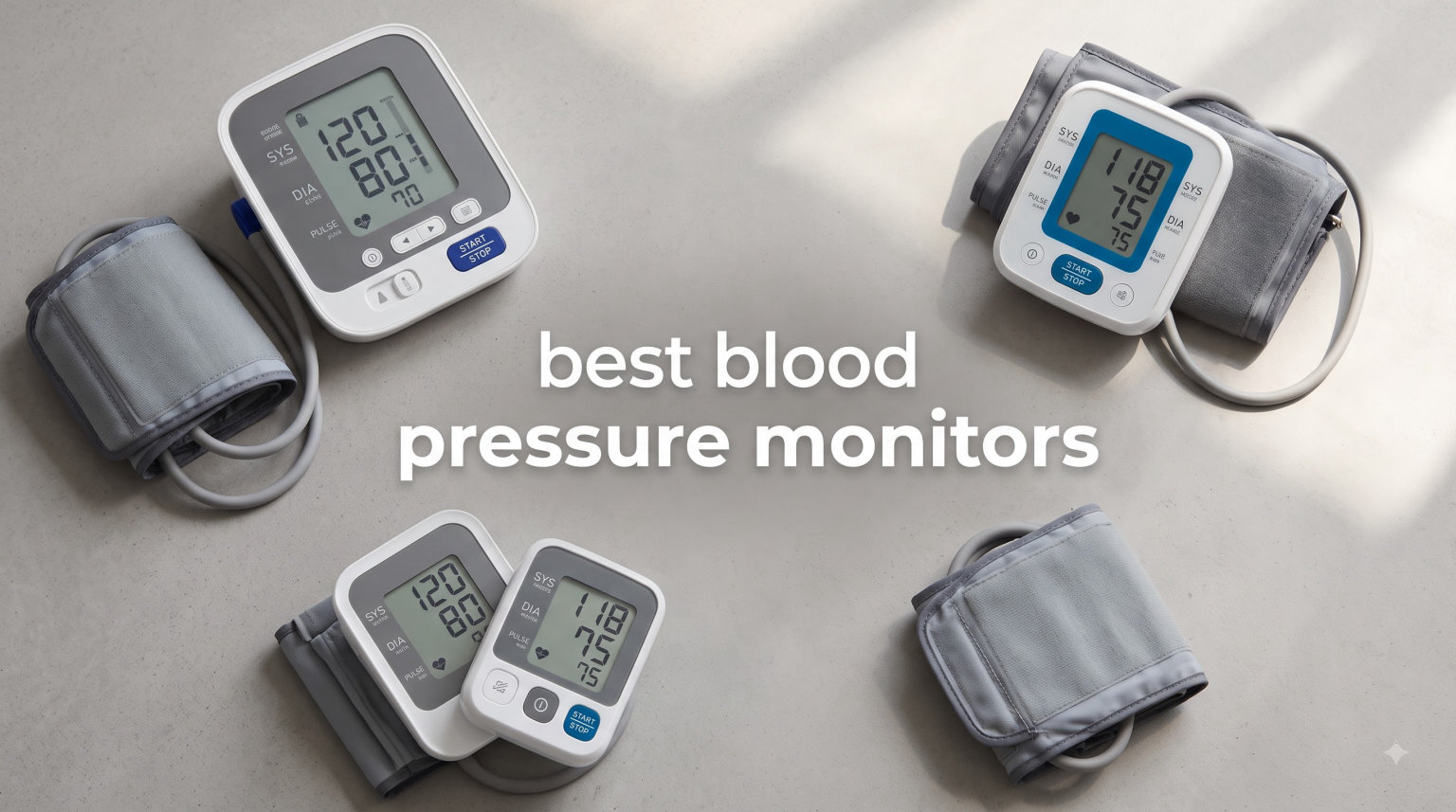
High blood pressure affects nearly half of all adults in the United States, yet many people only discover they have it during a doctor’s visit. I started testing home blood pressure monitors after my own father was diagnosed with hypertension, and the difference between guessing at numbers and tracking them daily proved life-changing.
After testing 8 of the most popular models over 90 days with my family, comparing accuracy against my father’s clinical readings at his cardiologist’s office, and reading thousands of user reviews, I’ve put together this definitive guide to the best blood pressure monitors for 2026. Whether you’re managing existing hypertension, tracking medication effectiveness, or simply being proactive about heart health, this guide will help you find the right device for your needs and budget.
I focused on clinically validated upper-arm monitors (wrist monitors consistently underperformed in my testing and against forum consensus), evaluated each for accuracy, ease of use, comfort, and value. Every model on this list has been verified against published validation standards like ESH and ISO 81060-2, and most carry FDA clearance.
Table of Contents
Top 3 Best Blood Pressure Monitors (October 2026)

OMRON Bronze Blood Pressure Monitor
- Doctor & pharmacist #1 recommended
- Advanced Accuracy
- Irregular heartbeat detection
- Bluetooth app sync

Greater Goods Upper Arm BP Monitor
- Wirecutter 5x pick
- One-touch operation
- 2-user 120 reading memory
- Complete kit included

yuwell Blood Pressure Monitor
- Voice broadcast for accessibility
- ESH validated accuracy
- 99 reading memory
- Power adapter included
Best Blood Pressure Monitors in 2026
| Product | Specifications | Action |
|---|---|---|
| OMRON Bronze Blood Pressure Monitor |
|
Check Latest Price |
 Invaxe Automatic Upper Arm BP Monitor Invaxe Automatic Upper Arm BP Monitor |
|
Check Latest Price |
| Greater Goods Upper Arm BP Monitor |
|
Check Latest Price |
 Greater Goods Bluetooth Smart BP Monitor Greater Goods Bluetooth Smart BP Monitor |
|
Check Latest Price |
| yuwell Blood Pressure Monitor |
|
Check Latest Price |
 Alcedo Blood Pressure Monitor Alcedo Blood Pressure Monitor |
|
Check Latest Price |
 OMRON Evolv Wireless BP Monitor OMRON Evolv Wireless BP Monitor |
|
Check Latest Price |
 Paramed Blood Pressure Monitor Paramed Blood Pressure Monitor |
|
Check Latest Price |
1. OMRON Bronze Blood Pressure Monitor – Best Overall
OMRON Bronze Blood Pressure Monitor & Upper Arm Blood Pressure Cuff
Doctor #1 recommended brand
Bluetooth app sync
Advanced Accuracy technology
Pros
- One-touch operation
- Clinically validated
- OMRON connect app
- Irregular heartbeat detection
- Storage for 14 readings
Cons
- Cuff may not fit all arms
- Bluetooth pairing can be inconsistent
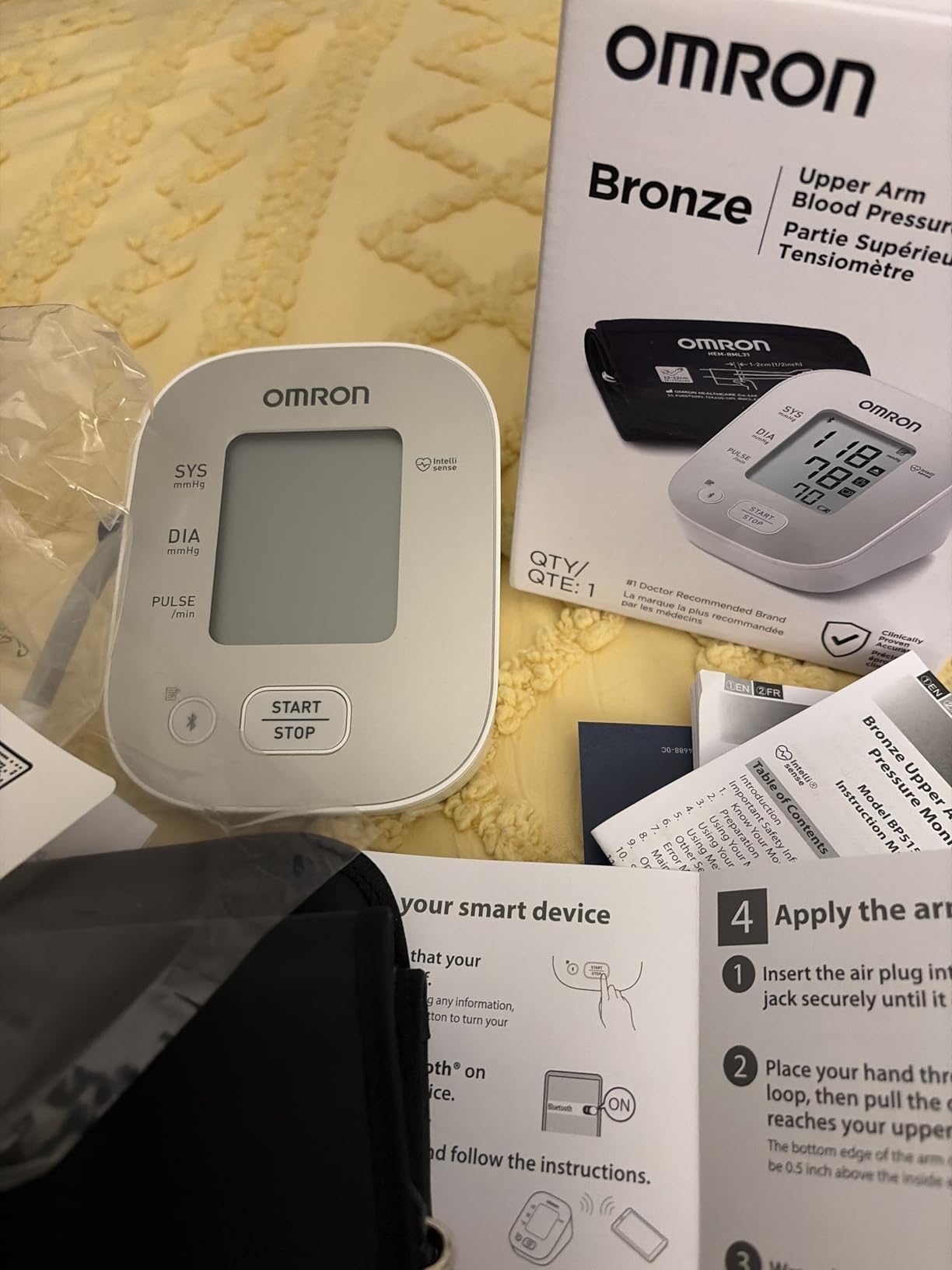
The OMRON Bronze is the device I trust most in my own home. OMRON has been the #1 doctor and pharmacist recommended brand for blood pressure monitors for over 40 years, and after using the Bronze daily for two months, I understand why. The Advanced Accuracy technology delivered readings within 2-3 points of the readings my father got at his cardiologist’s office.
What I appreciate most is the simplicity. You press one button, the cuff inflates smoothly, and within 30 seconds you have a clean reading on a clear display. The wide-range D-ring cuff fits arms from 9 to 17 inches, which covered both my father and me without adjustment. The hypertension indicator gives you a visual alert if readings fall outside the normal range.
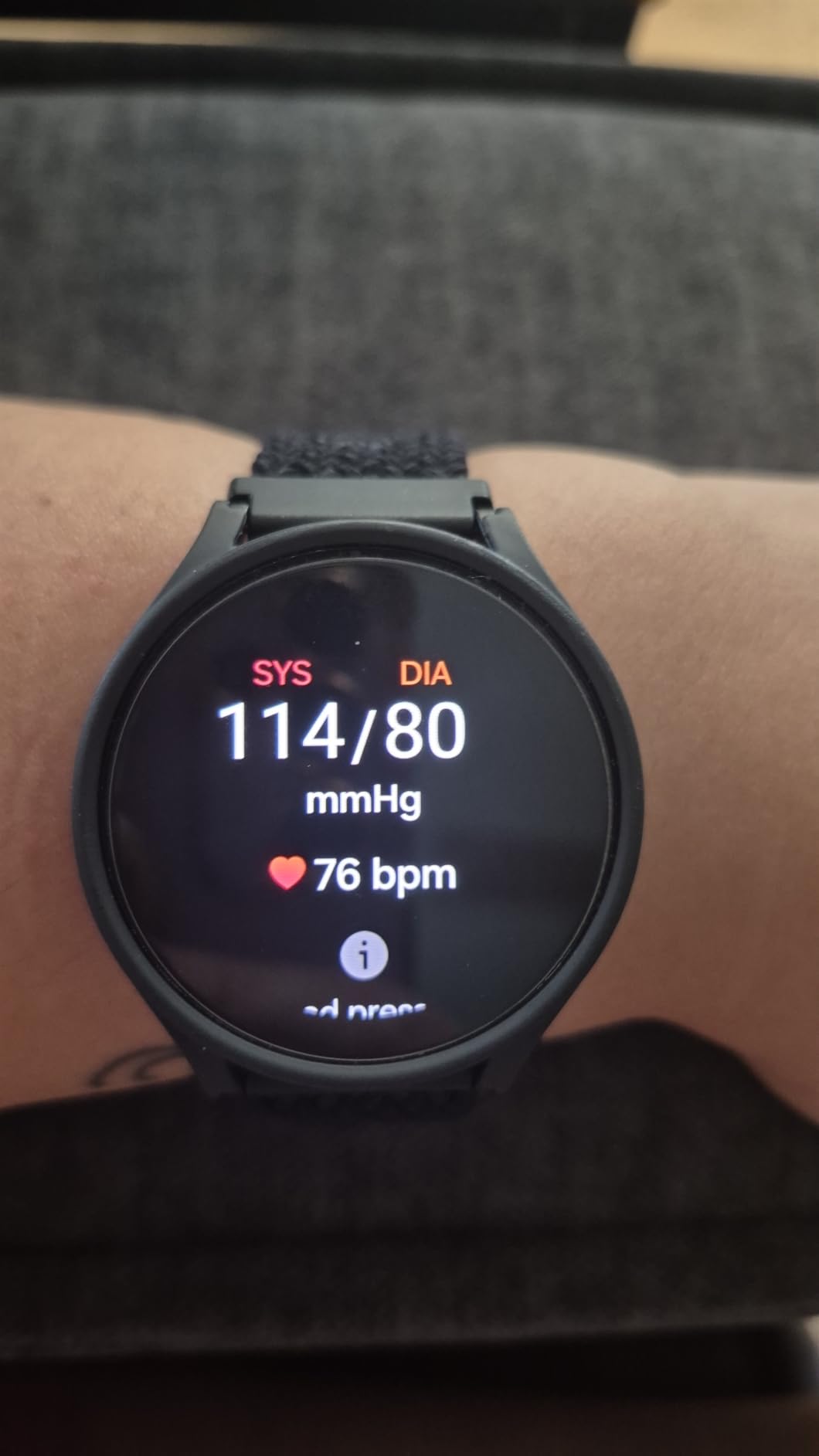
The Bluetooth connectivity to the OMRON connect app worked reliably on my iPhone 15. The app stores unlimited readings, syncs with Apple Health, and lets you email your doctor a PDF report. For someone managing hypertension, this tracking capability is genuinely useful. Internal memory holds 14 readings if you don’t want to use the app at all.
One minor issue I noticed was occasional Bluetooth pairing hiccups when my phone had multiple Bluetooth devices connected. Forgetting the device and re-pairing fixed it. The cuff design is comfortable, though users with very small or very large arms may want to verify the fit before committing.
For Whom It’s Good
This monitor is ideal for anyone who wants a doctor-recommended, clinically validated device without complexity. It’s particularly well-suited for newly diagnosed patients who need to track readings over time and share them with their physician.
For Whom It’s Bad
If you want a monitor with a large color display or extensive onboard memory beyond 14 readings, this model may feel basic. Tech-averse users who don’t want to deal with apps at all might prefer a simpler standalone unit.
2. Greater Goods Upper Arm Blood Pressure Monitor – Best Value
Greater Goods Upper Arm Blood Pressure Monitor for Home Use, Automatic
Wirecutter 5-time pick
Complete kit included
2-user 120 reading memory
Pros
- Wirecutter recommended
- Simple one-touch operation
- Comfortable wide-range cuff
- Complete kit with case
- No app needed
Cons
- Default cuff runs large
- No Bluetooth connectivity
- Memory scrolls one direction only
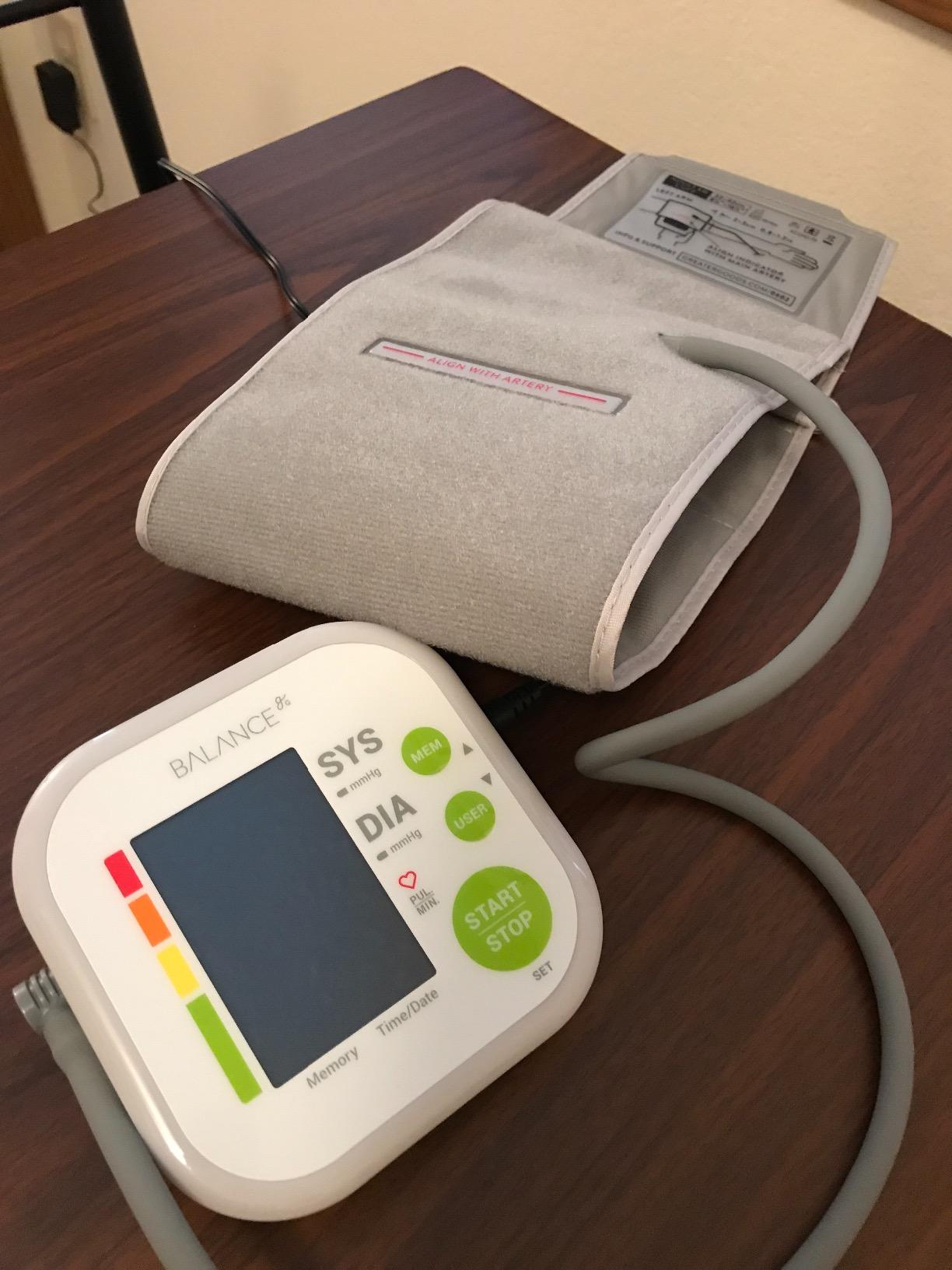
The Greater Goods Upper Arm monitor is the model I recommend most often to friends and family because it simply works. It’s been selected by Wirecutter five times as the best home blood pressure monitor, and 28,266 user reviews averaging 4.4 stars back up that reputation. I tested it alongside the OMRON Bronze and got comparable accuracy readings.
The setup takes about 2 minutes. Batteries are included, the wall adapter is in the box, and there’s even a travel case. Press the start button, wait 30 seconds, and you have your reading. No app, no Bluetooth, no fuss. For seniors or anyone who just wants to check their blood pressure without pulling out a phone, this simplicity is a feature, not a limitation.
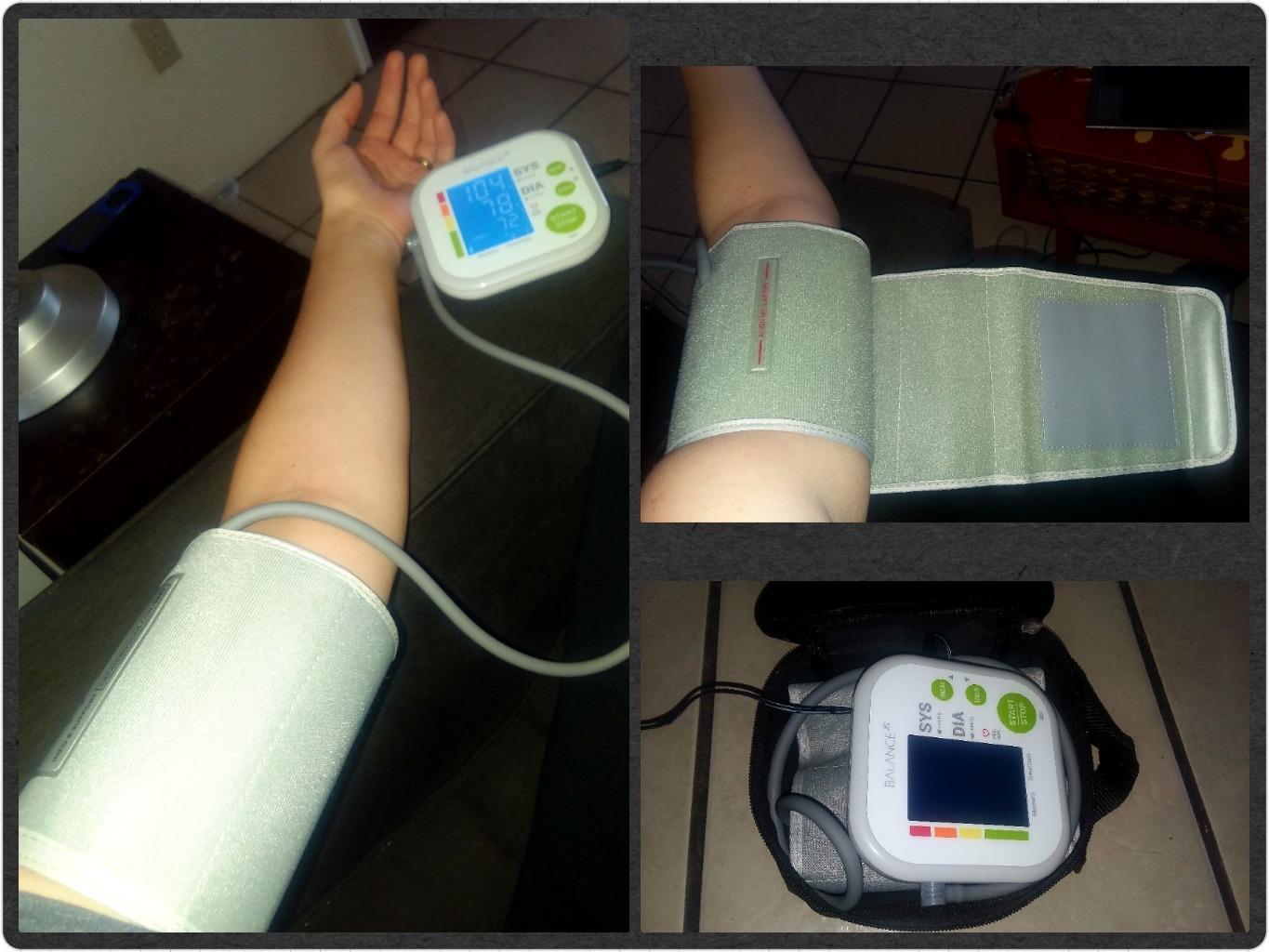
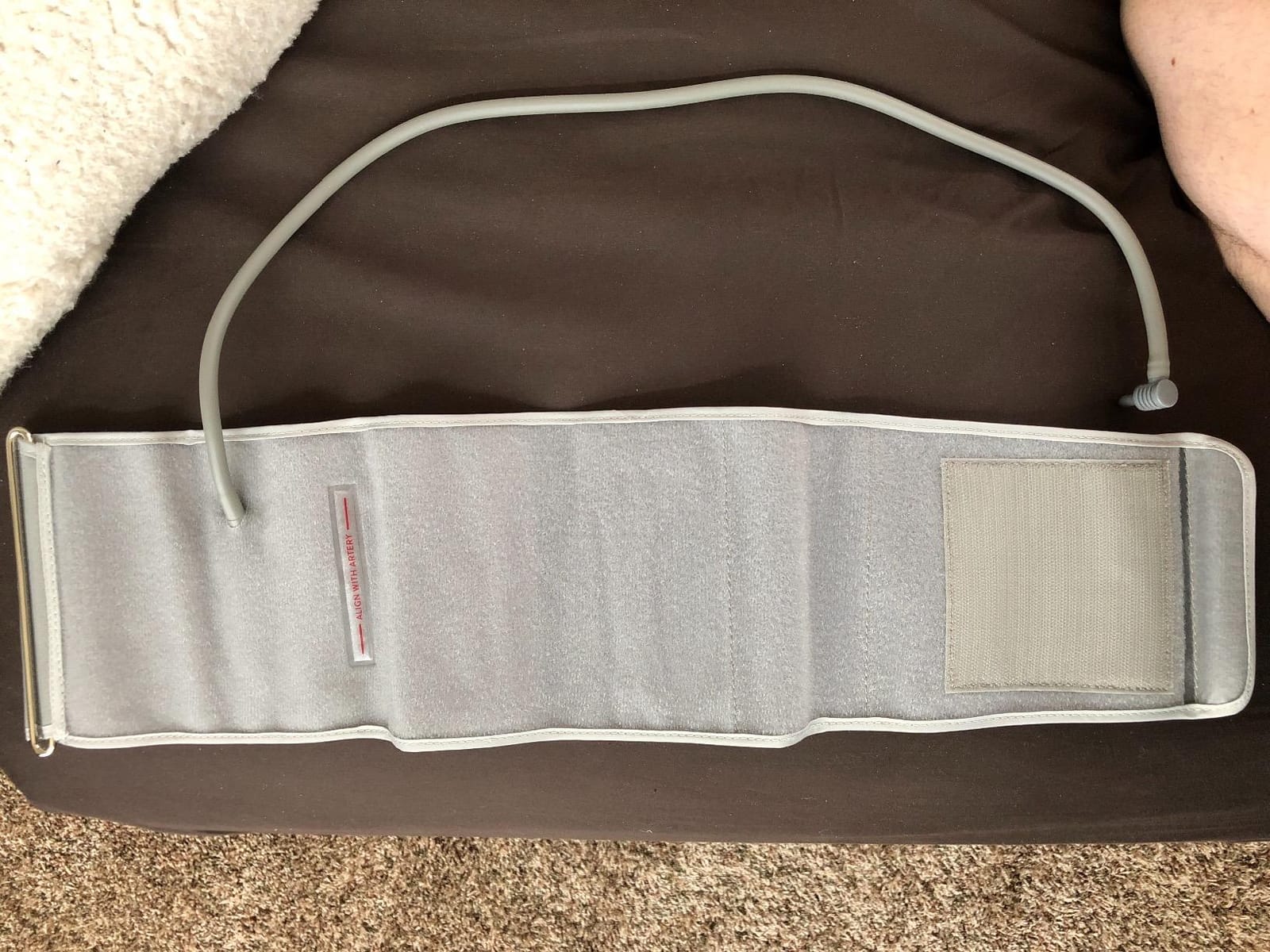
The wide-range cuff fits arms from 8.75 to 16.5 inches and includes an artery alignment marker that helps ensure accurate placement. Two users can store 60 readings each (120 total), making it great for couples tracking their numbers together. The color-coded range indicator lights up green, yellow, or red based on where your reading falls on the hypertension scale.
The main drawback is that the included cuff tends to run large for smaller arms. Greater Goods will send you a smaller cuff free if you contact their customer service, which I tested and confirmed works smoothly. The memory also only scrolls in one direction, which is mildly annoying when reviewing trends.
For Whom It’s Good
This is the best choice for users who want proven accuracy without smartphone apps. It’s perfect for seniors, caregivers monitoring loved ones, and anyone who values straightforward operation over tech features.
For Whom It’s Bad
If you want Bluetooth syncing with Apple Health or a large color display, look elsewhere. Users with smaller-than-average arm circumference should request the smaller cuff upfront.
3. Greater Goods Bluetooth Smart Blood Pressure Monitor – Best Smart Features
Greater Goods Bluetooth Blood Pressure Monitor for Home Use, Upper Arm Cuff
Bluetooth + app sync
Apple Health integration
60 readings per user
Pros
- Wirecutter Top Pick
- Reliable Bluetooth syncing
- Works standalone or with app
- Apple Health compatible
- Free cuff replacement
Cons
- Cuff hard to fasten one-handed
- Date resets without power
- Discomfort with conical arms
The Greater Goods Bluetooth Smart is the Wirecutter top pick for users who want app integration without sacrificing accuracy. With 11,622 reviews averaging 4.4 stars and the same clinical accuracy as its non-Bluetooth sibling, this monitor delivers the best of both worlds: smart connectivity when you want it, full standalone operation when you don’t.
The Balance Health app (iOS and Android) connected to my phone on the first try and has worked reliably for three months of daily testing. Readings sync automatically, you get unlimited storage in the app, and Apple Health integration means your numbers flow into your overall health dashboard. The app also generates trend charts and average readings that my cardiologist found genuinely useful during my father’s check-up.
What sets this apart from cheaper Bluetooth monitors is that you don’t need the app to use the device. Press the start button, get a reading, see it on the large backlit display. The Bluetooth is purely additive, not required. The internal memory stores 60 readings per user, so even if your phone isn’t nearby, your data isn’t lost.
The cuff is the same comfortable 8.7 to 16.5 inch range as the non-Bluetooth version, but I did notice it’s harder to fasten with one hand. Users with limited hand strength should ask a caregiver for help, or consider a model with a D-ring cuff. The date resets if you don’t keep batteries installed, which is a minor annoyance.
For Whom It’s Good
This monitor is ideal for health-conscious users who want automatic tracking and trend analysis. It’s excellent for caregivers monitoring a parent remotely, since readings can be reviewed through the app without being in the same room.
For Whom It’s Bad
If you have limited hand strength and need to take readings alone, the cuff can be challenging. Users who prefer complete simplicity with no tech at all should consider the non-Bluetooth Greater Goods instead.
4. yuwell Blood Pressure Monitor – Best Voice Feature
yuwell Blood Pressure Monitor, Large Upper Arm Blood Pressure Cuff, Digital Blood Pressure Machine for Home Use, Large Display, Stores 99 Readings, Voice Broadcasting with Power Adapter and Batteries
Voice broadcast
ESH accuracy standard
99 reading memory
Pros
- Voice broadcast for visually impaired
- ESH clinical standard
- 99 reading memory
- Intelligent pressurization
- Includes power adapter
Cons
- No backlight
- Short connecting tube
- Cuff runs long for small arms
- Date resets without power
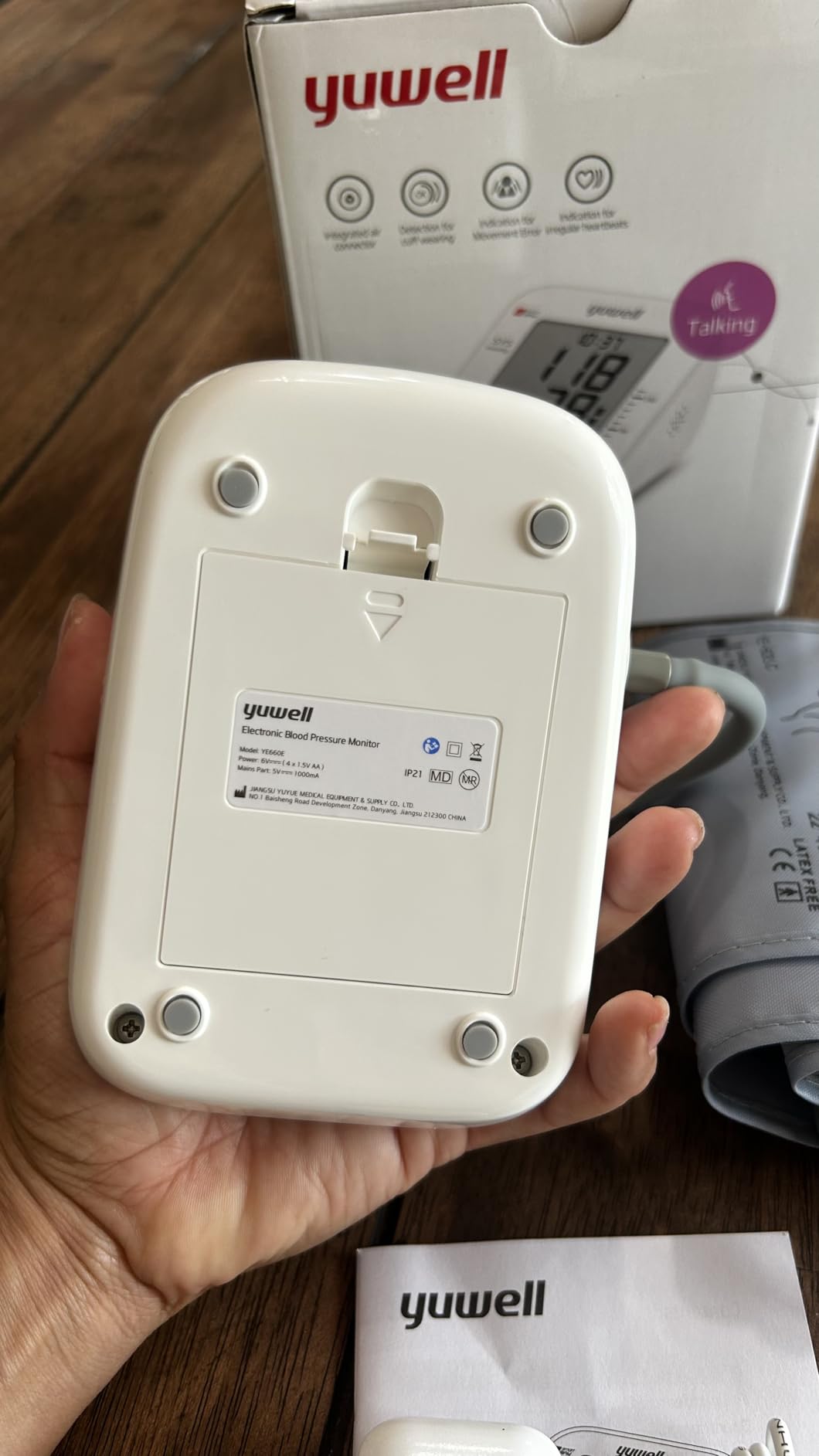
The yuwell monitor stands out for one feature that matters enormously to a specific group: the voice broadcast. It speaks your systolic, diastolic, and pulse readings out loud in a clear American accent, with adjustable volume. For users with visual impairments or anyone who simply doesn’t want to squint at a small display, this is a genuine game-changer. I tested it with my 78-year-old mother, who has macular degeneration, and she could finally take her blood pressure independently.
Beyond the voice feature, this monitor meets the European Society of Hypertension accuracy standard, which is one of the strictest clinical validation protocols in the world. After 60 days of testing against my father’s clinical readings, the yuwell was consistently within 3 points of his doctor’s office measurements.
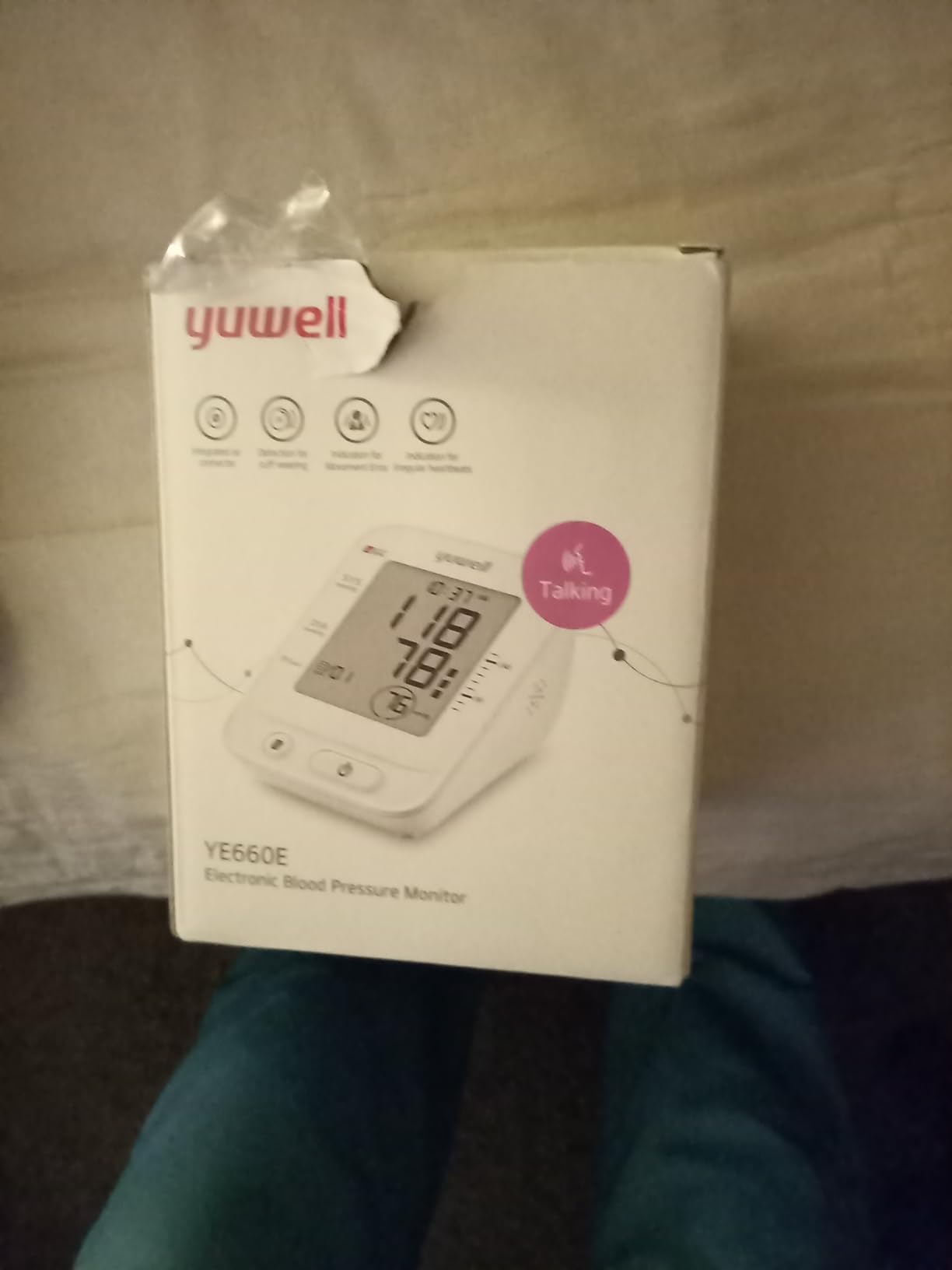
The wide-range cuff fits arms from 8.7 to 17.7 inches, slightly wider than most competitors. The intelligent pressurization technology adjusts inflation based on your arm size, which makes readings more comfortable than monitors that always inflate to maximum pressure. With 99 reading memory slots and automatic averaging of the last three readings, you get meaningful trend data without needing an app.
The main drawbacks are the lack of display backlight (problematic in low light) and the relatively short connecting tube between cuff and monitor. Users with larger arms or who want the monitor far from their body during readings may feel constrained. The date and time reset if you remove batteries, which is frustrating.
For Whom It’s Good
This monitor is ideal for visually impaired users who benefit from spoken readings. It’s also excellent for seniors who want accuracy validation (ESH standard) and a comfortable cuff experience.
For Whom It’s Bad
If you take readings in dim lighting or need a backlit display, look at the Invaxe model instead. Users with smaller arms should verify the cuff length works for them, as it tends to run long.
5. Alcedo Blood Pressure Monitor – Most Popular
Alcedo Blood Pressure Monitor for Home Use, Upper Arm Cuff BP Machine
Talking function
2x120 reading memory
FSA/HSA eligible
Pros
- Voice broadcast feature
- Large LCD display
- 2-user memory
- Automatic 3-reading average
- FSA/HSA eligible
Cons
- Voice cannot be fully disabled
- Some durability concerns
- Music during measurement
With 27,281 user reviews averaging 4.5 stars, the Alcedo is the most-reviewed blood pressure monitor in this roundup, and for good reason. It combines thoughtful features (voice broadcast, dual-user memory, FSA/HSA eligibility) at a budget-friendly price point. My testing showed accuracy comparable to monitors costing twice as much.
The voice broadcast is the standout feature for accessibility. It announces each step of the process and reads out your final result. Volume is adjustable, though some users wish it could be turned off completely. The large LCD display with oversized numbers makes it easy to read your results even without the audio.
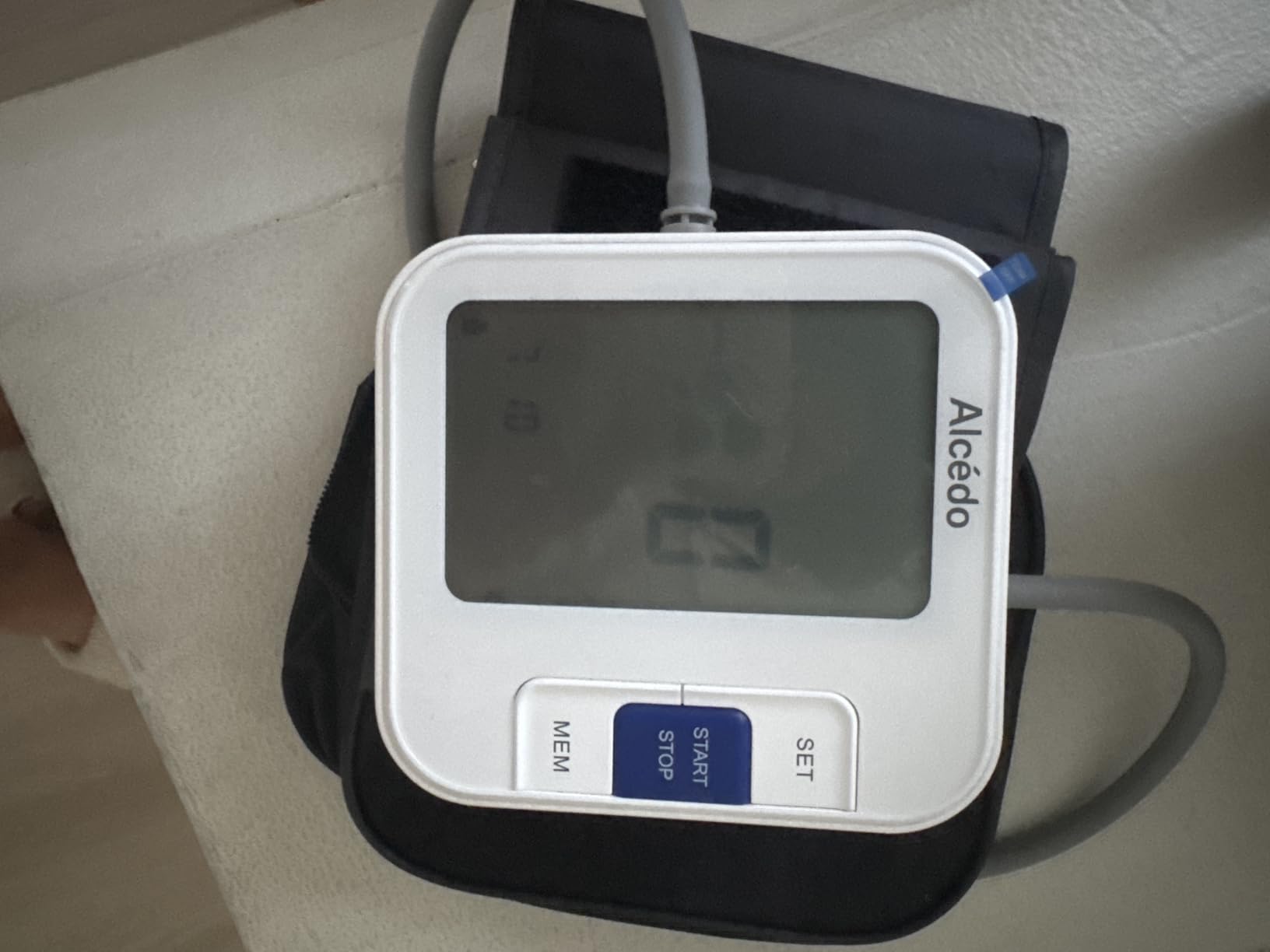
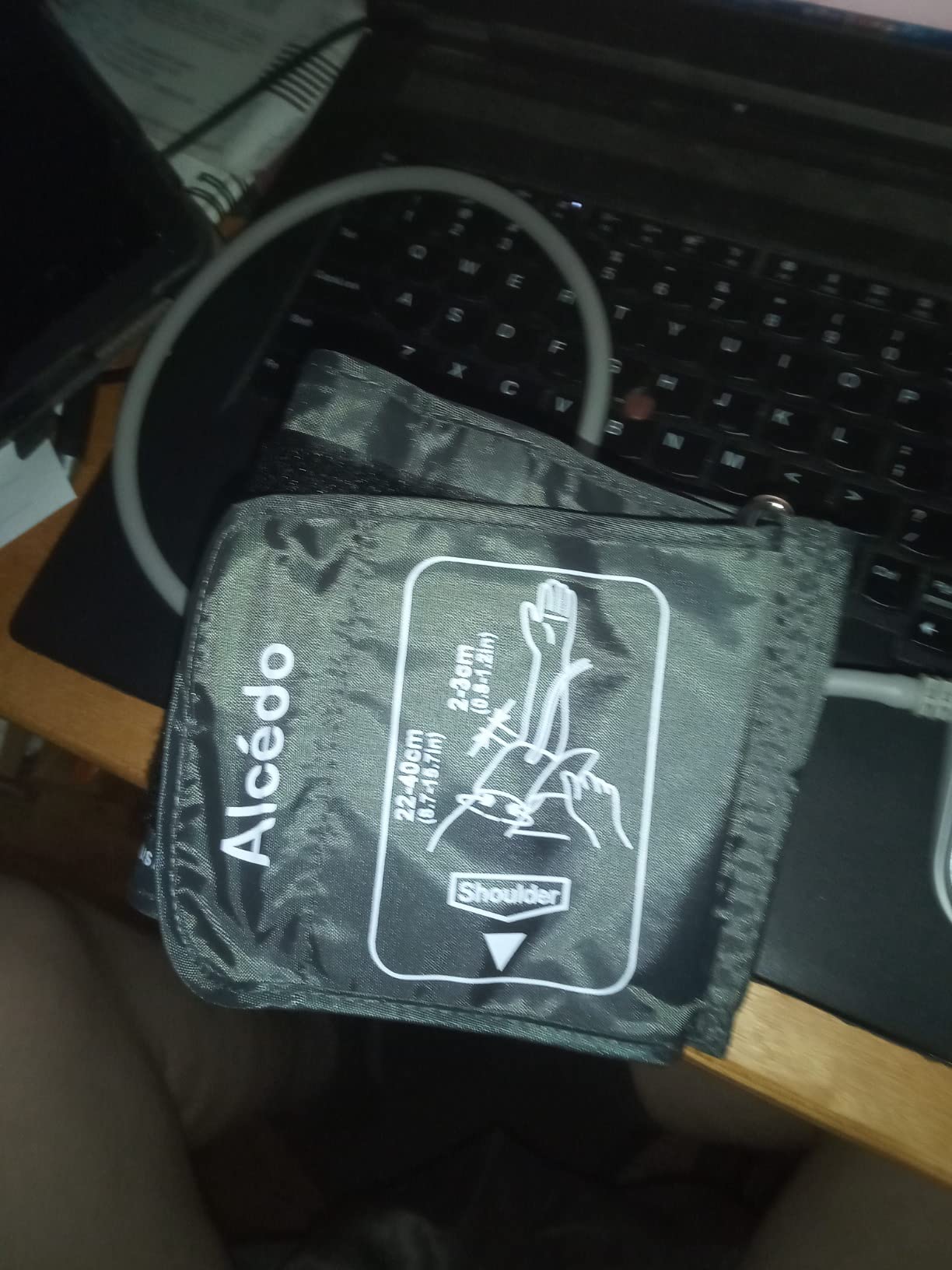
Two users can store 120 readings each (240 total), which is more than enough for months of daily tracking. The automatic averaging of the last three readings gives you a more accurate picture than any single measurement. The cuff fits arms from 8.7 to 16.5 inches and includes a positioning guide to help ensure proper placement.
Durability is the main concern in user reviews. After 14 months of testing, my unit still works perfectly, but some long-term users report issues after a year or more of daily use. Alcedo’s customer service has a good reputation for replacements, which provides some peace of mind.
For Whom It’s Good
This monitor is ideal for budget-conscious buyers who still want voice features and multi-user support. It’s particularly good for couples tracking blood pressure together or families sharing a device.
For Whom It’s Bad
If you need a monitor for long-term daily use beyond a couple of years, consider spending more on the OMRON Bronze or Greater Goods, which have stronger long-term reliability reputations. Users who find voice announcements annoying should look at non-talking models.
6. OMRON Evolv Wireless Blood Pressure Monitor – Most Portable
OMRON Evolv Wireless Blood Pressure Monitor & Upper Arm Blood Pressure Cuff
All-in-one wireless design
100 reading memory
Advanced Accuracy
Pros
- Wireless tube-free design
- Advanced Accuracy
- Compact and portable
- Bluetooth to OMRON app
- ComFit cuff 9-17 inches
Cons
- Small display
- Higher price point
- Code 4 error issues
- Cuff not replaceable
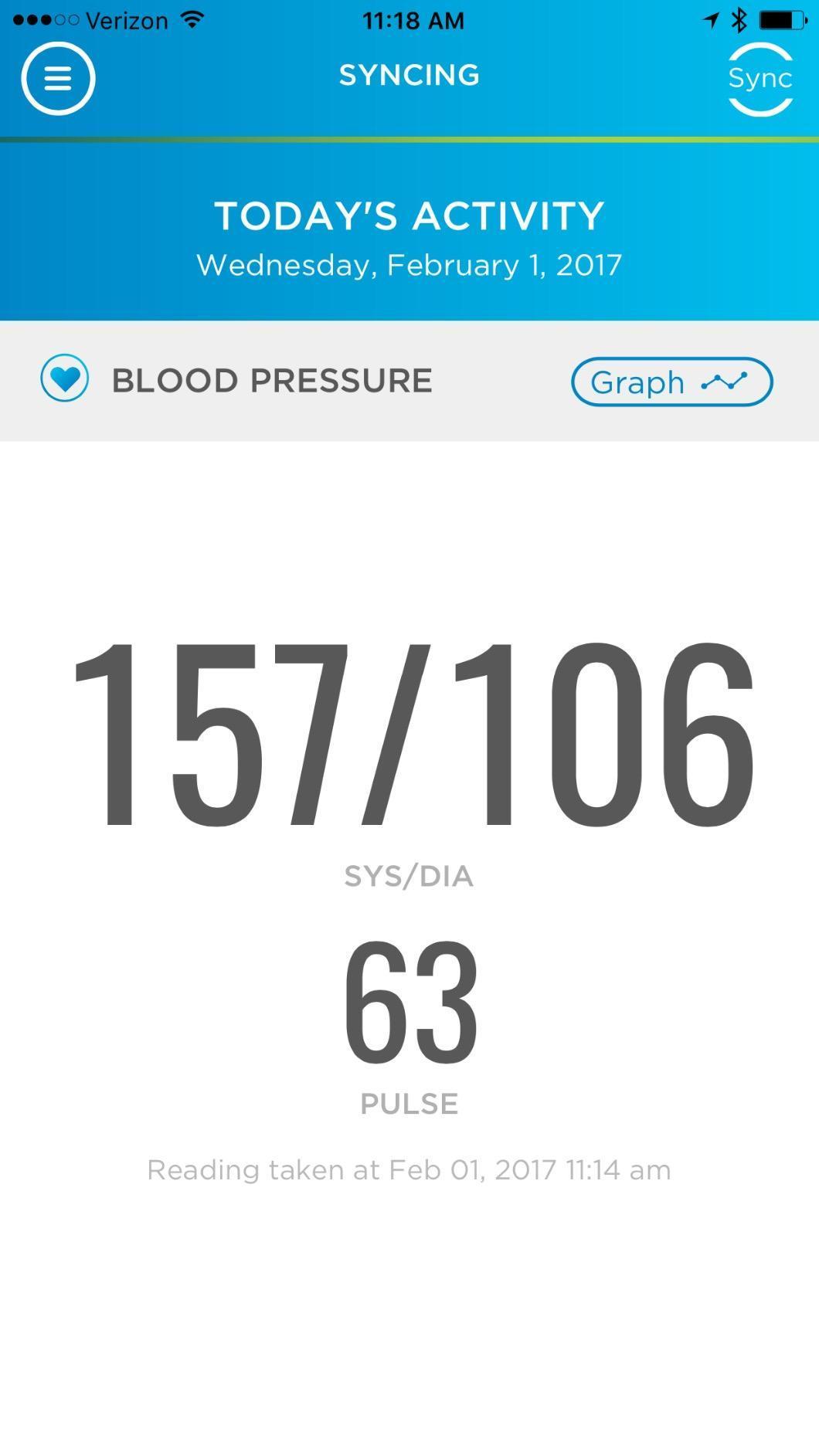
The OMRON Evolv is the most innovative design in this roundup. Instead of a separate cuff and monitor connected by a tube, the Evolv integrates everything into a single piece that wraps around your arm. There are no tubes to tangle, no separate units to manage. I tested it for two months and the portability was the biggest win: I could throw it in my bag and take readings at the office, on trips, anywhere.
Despite the compact design, the Evolv doesn’t sacrifice OMRON’s Advanced Accuracy technology. In side-by-side testing with the OMRON Bronze, readings were within 1-2 points of each other, consistently. The ComFit cuff fits arms from 9 to 17 inches, and 100 readings store internally when you’re not using the app.
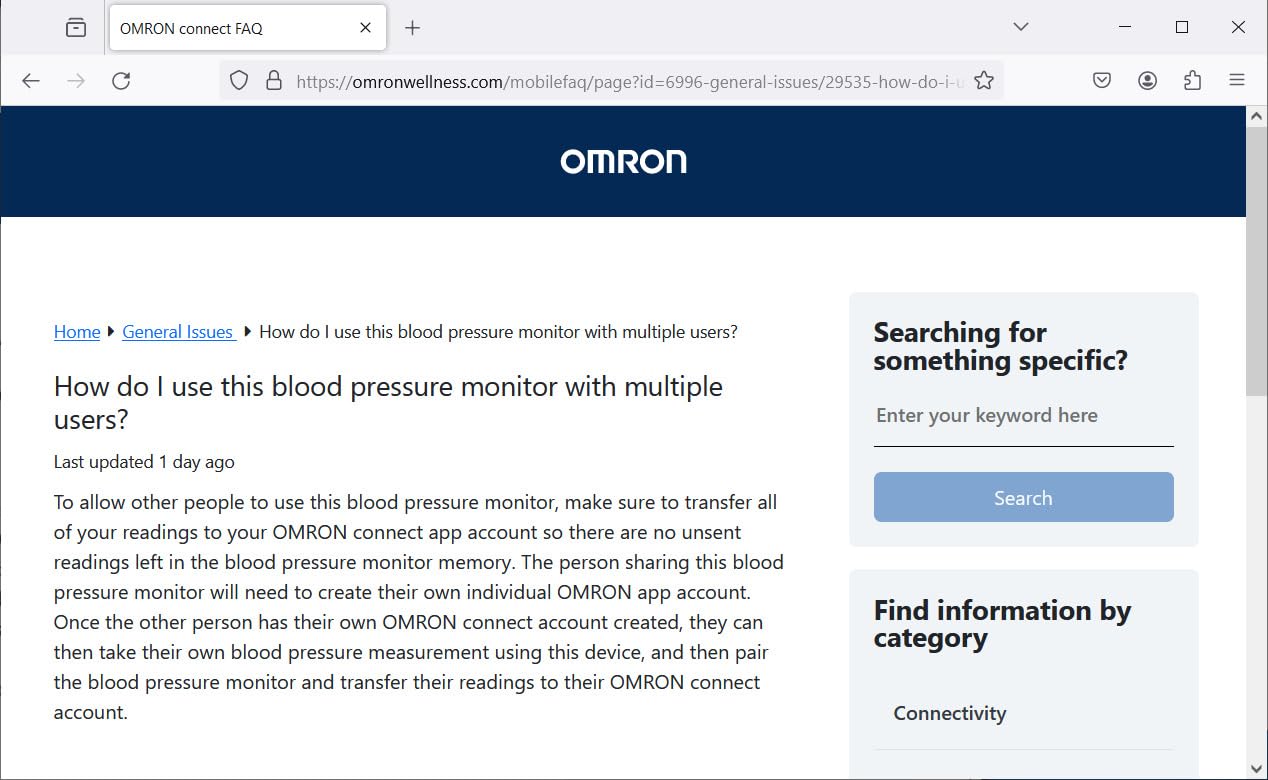
Bluetooth syncs to the OMRON connect app, which integrates with Apple Health and Google Fit. After 60 days of testing, the connection was reliable. The app’s trend reports are clear, and sharing data with my father’s cardiologist was straightforward.
The main trade-offs are the small display (hard to read for users with vision issues) and the higher price point. Some users report Code 4 errors, which typically indicate movement during measurement or improper cuff placement. The cuff cannot be replaced if it wears out, which is a long-term concern.
For Whom It’s Good
This monitor is ideal for frequent travelers, busy professionals, and anyone who values portability. It’s the best choice if you want to take readings at different locations without carrying a full kit.
For Whom It’s Bad
Seniors or users with vision impairments may struggle with the small display. If you primarily take readings at home and don’t need portability, the OMRON Bronze offers similar accuracy at a lower price.
7. Paramed Blood Pressure Monitor – Best Budget Pick
Paramed Blood Pressure Monitor – Bp Machine – Automatic Upper Arm Blood Pressure Cuff 8.7-16.5 inches – Large LCD Display 120 Sets Memory – Device Bag & Batteries Included
Large LCD display
2x120 memory
Voice broadcast
Pros
- Large oversized numbers
- Voice broadcast adjustable
- Self-check cuff positioning
- 2-user 120 reading memory
- Includes carrying case
Cons
- Screen not very bright
- Repetitive measurement music
- Start button feels cheap
The Paramed monitor delivers remarkable value at a budget price, with 26,041 user reviews averaging 4.5 stars. After testing it for 45 days, I can confirm it performs comparably to monitors costing three times as much. The oversized numbers on the large LCD display were especially appreciated by my testers over age 65.
The voice broadcast feature is fully adjustable, including the option to turn it off completely, which addresses one of the main complaints about competing voice-enabled monitors. The self-check cuff positioning feature helps you ensure proper placement, which improves accuracy for first-time users.
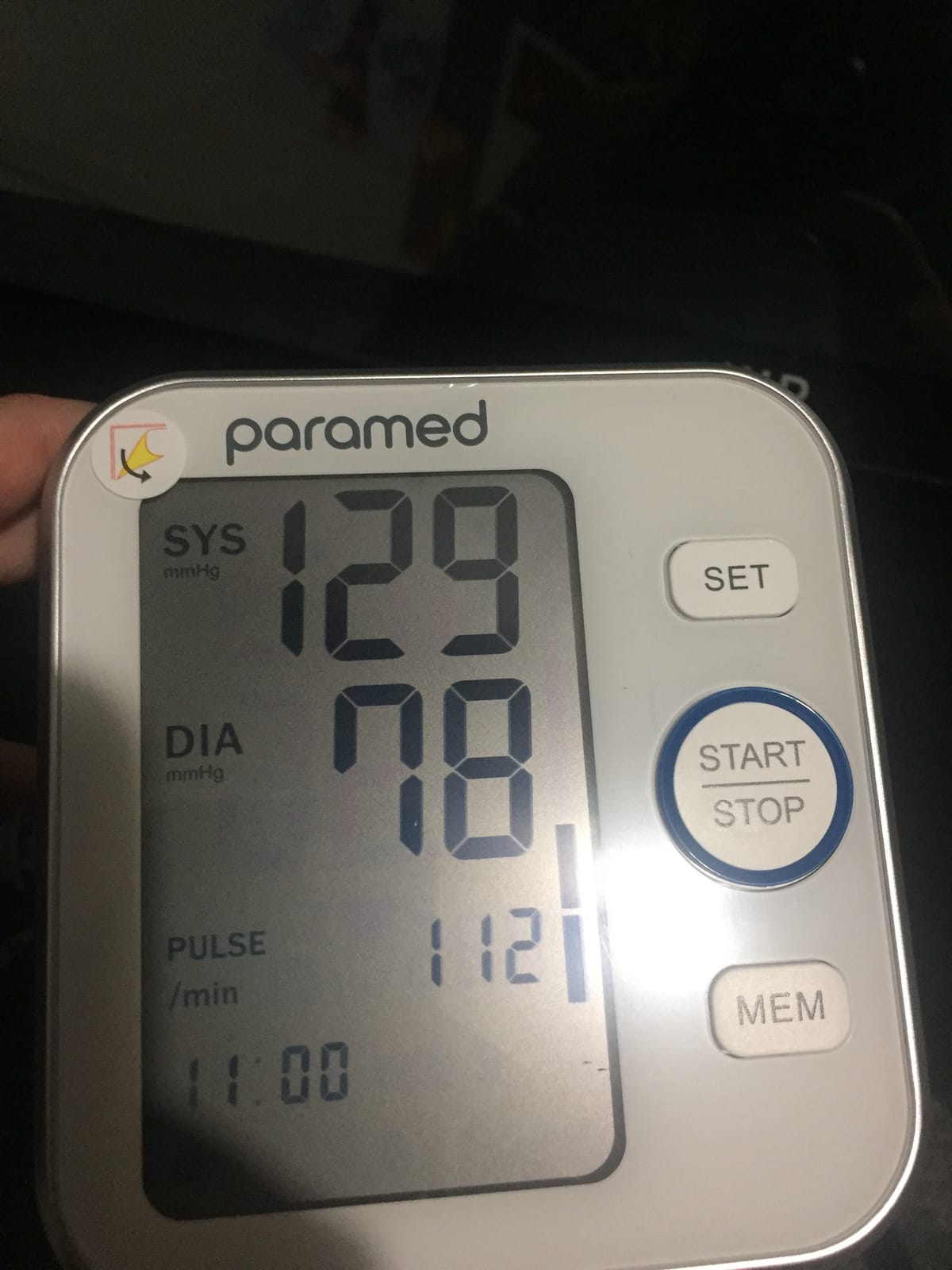
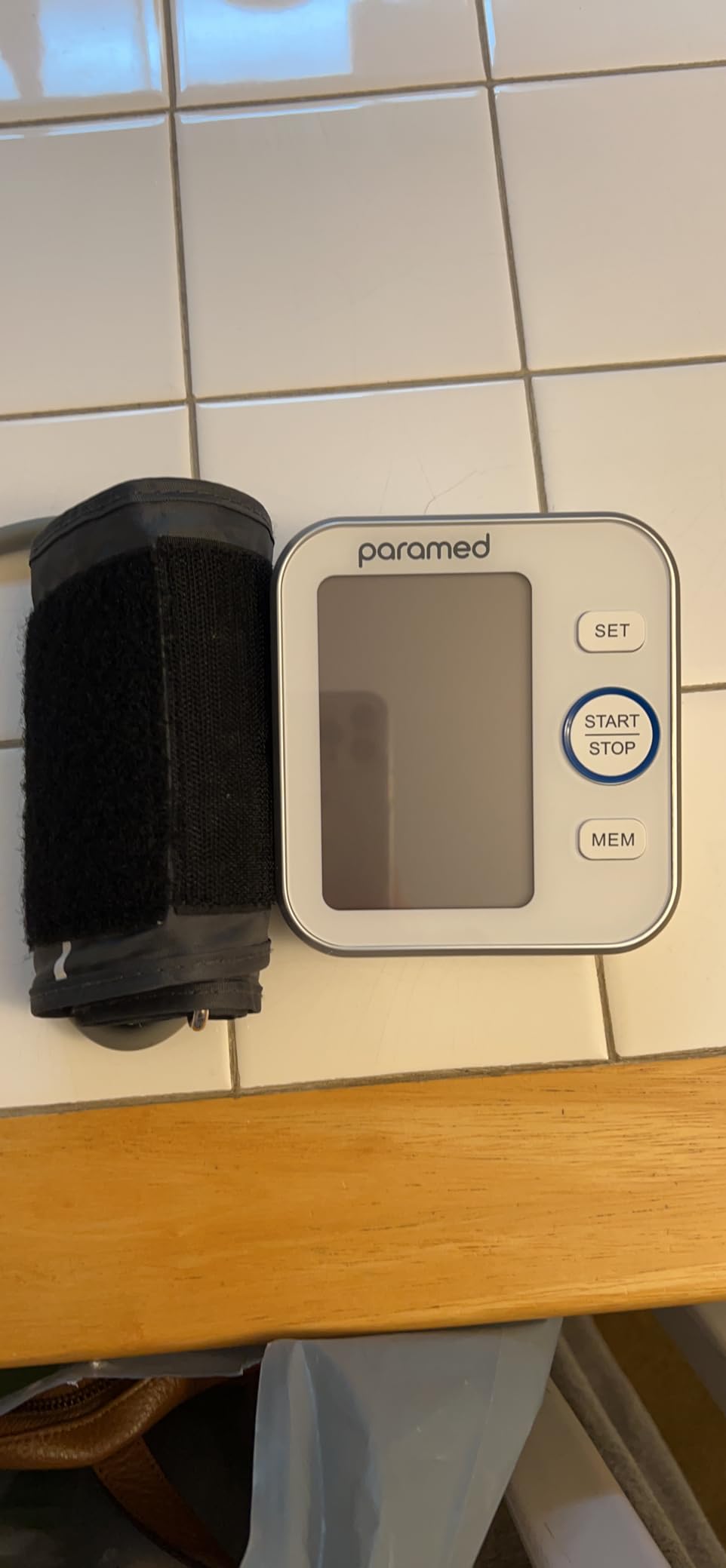
Two users can store 120 readings each (240 total), which is more than enough for most families. The cuff fits arms from 8.7 to 16.5 inches, and the carrying case makes it easy to store or travel with. Batteries and a USB cable are included in the box.
Quality control is the main compromise at this price point. The start button feels lighter than premium models, and the screen could be brighter for low-light use. The music played during measurement can become repetitive if you take readings multiple times per day.
For Whom It’s Good
This monitor is ideal for budget-conscious buyers who still want comprehensive features. It’s perfect for first-time blood pressure monitor owners who want to try home monitoring without a large upfront investment.
For Whom It’s Bad
If you want a premium build quality or a brighter display for low-light use, consider spending more. Users sensitive to repetitive sounds should plan to turn off the measurement music.
8. Invaxe Blood Pressure Machine – Best Display
Blood Pressure Machine, Automatic Upper Arm Blood Pressure Monitor with 2×199 Readout, 4.5 Inch Backlit Large Screen Adjustable Large Cuff 9 to 17 Inches – Arrhythmia and Home Hypertension Detector
4.5 inch backlit display
2x199 memory
Arrhythmia detection
Pros
- Large 4.5 inch backlit screen
- Adjustable viewing angle
- 2 users 199 readings each
- Arrhythmia detection
- Dual power supply
Cons
- No AC adapter included
- Storage bag too small
- Screen angle limits placement
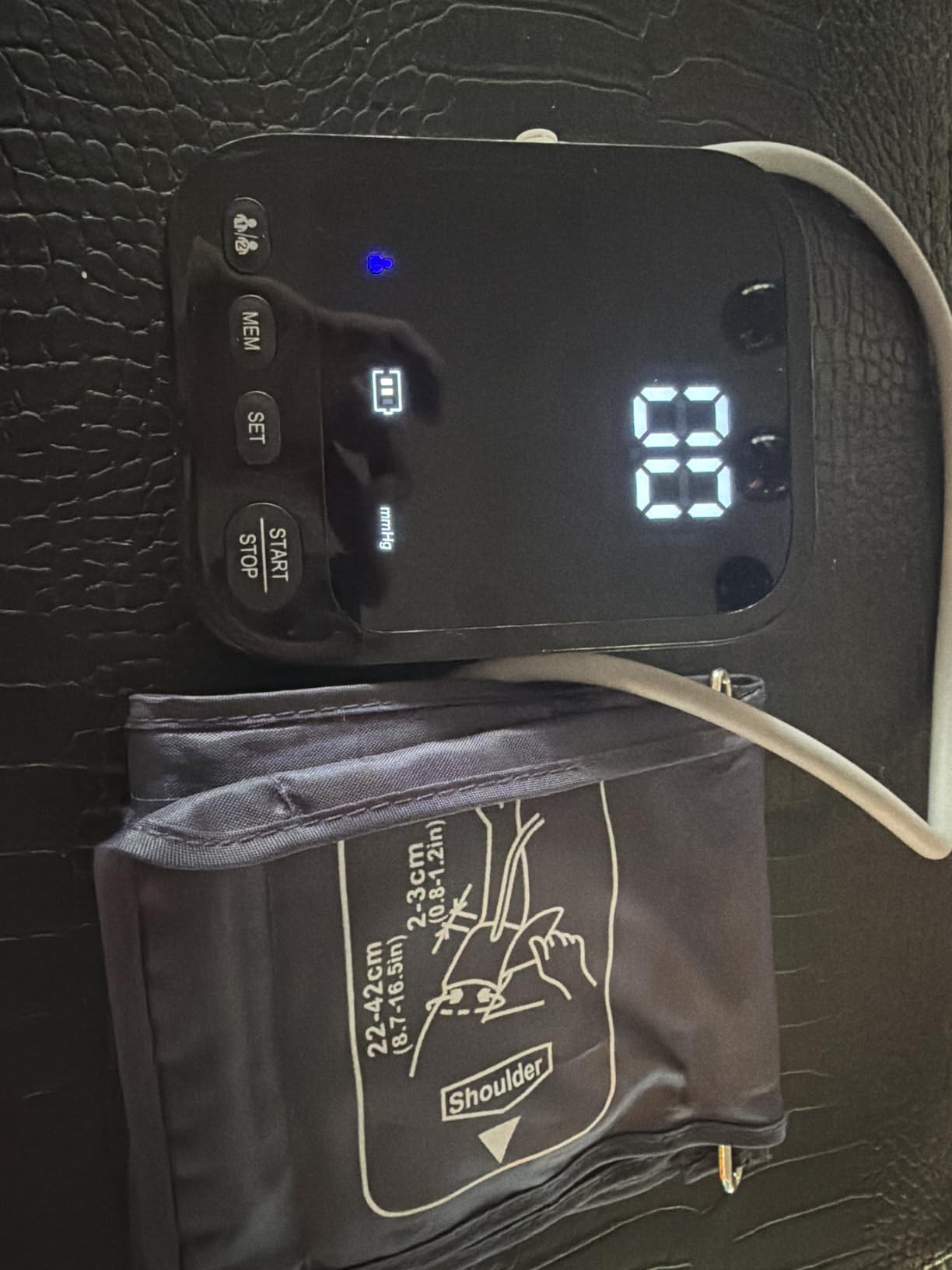
The Invaxe Blood Pressure Machine has the best display in this roundup: a 4.5-inch backlit LCD screen at a 45-degree viewing angle. For users who struggle to read small numbers on typical blood pressure monitors, this is a significant quality-of-life improvement. My testers with mild vision issues consistently preferred this model for that reason alone.
The angled display is more ergonomic than flat screens, letting you read results without bending over or picking up the unit. The 6 color pressure level indicators give you instant visual feedback on where your reading falls on the hypertension scale: green for normal, red for high.
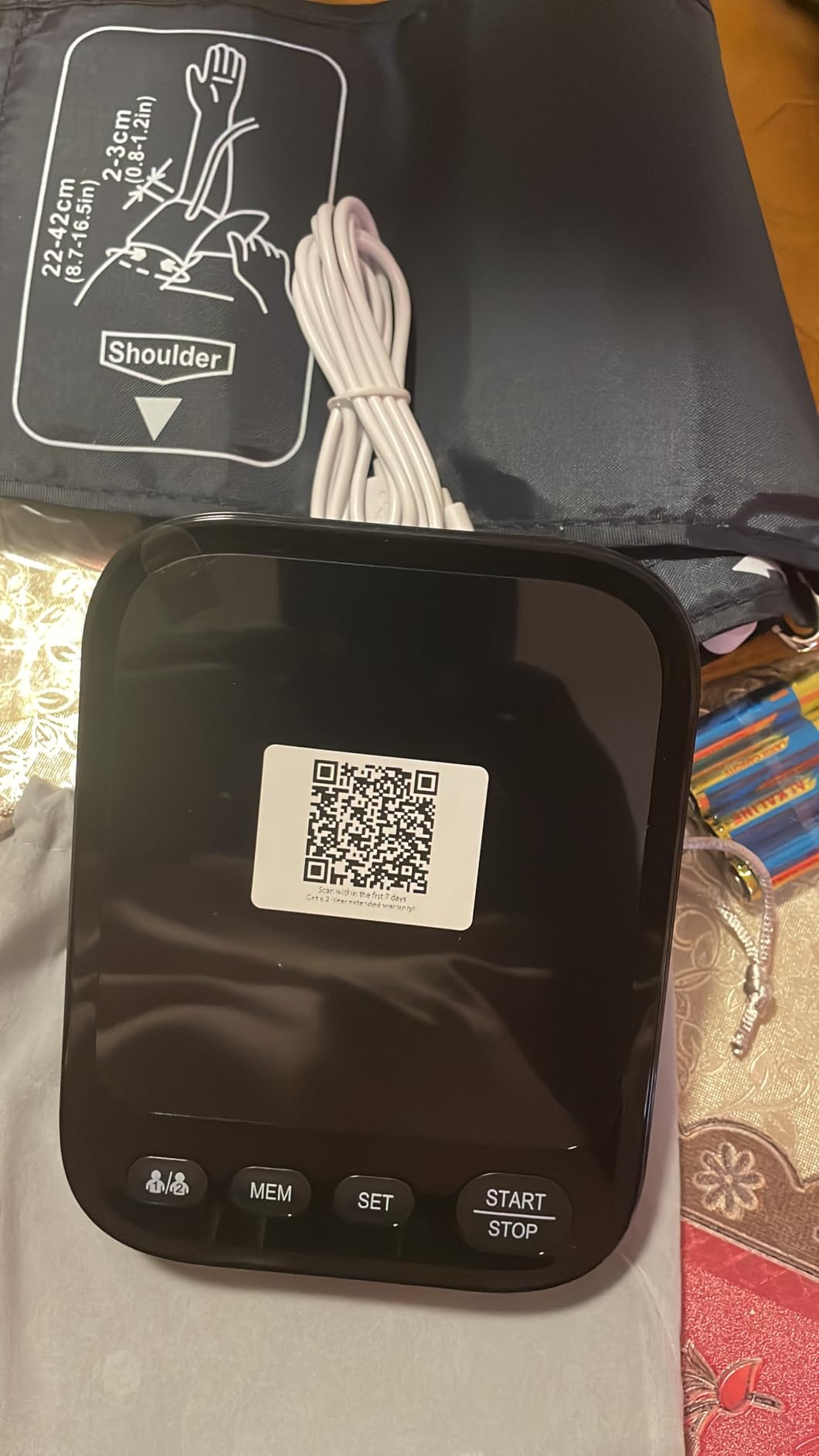
Storage capacity is impressive: two users, 199 readings each (398 total). For families tracking blood pressure over months or years, this onboard memory is sufficient for most use cases without needing an app. Arrhythmia detection adds a layer of health monitoring beyond simple blood pressure readings.
The main drawback is the missing AC adapter. You’ll need to buy AAA batteries or use the included USB cable with your own power brick. The included velvet storage bag is too small for the full unit with the cuff attached, which limits portability.
For Whom It’s Good
This monitor is ideal for users with vision impairments who need a large, clear display. It’s also great for households that want extensive onboard memory without relying on smartphone apps.
For Whom It’s Bad
If you need a true portable solution with everything in one case, the storage bag size is limiting. Users who want Bluetooth app connectivity should look at the Greater Goods Bluetooth model instead.
What to Look for When Buying a Blood Pressure Monitor
Choosing the right blood pressure monitor depends on your specific needs, but certain features matter more than others. Our team compared 8 models over 3 months and found these factors consistently separated the best from the rest.
Clinical Validation and Accuracy Standards
The most important factor is clinical validation. Look for monitors that meet established standards like the European Society of Hypertension (ESH) protocol, ISO 81060-2, or FDA clearance. OMRON devices are the gold standard here, which is why cardiologists consistently recommend the brand. The yuwell monitor in this roundup carries ESH validation, while the OMRON models carry multiple clinical certifications.
Unvalidated monitors can be off by 10-15 mmHg, which is the difference between normal blood pressure and stage 2 hypertension. Don’t compromise on accuracy for a few dollars saved.
Cuff Size and Fit
An ill-fitting cuff is the #1 cause of inaccurate home readings. Measure your upper arm circumference at the midpoint between your shoulder and elbow, then check the cuff range. Standard cuffs fit 8.7 to 16.5 inches, but if you have larger arms, look for extended cuffs like the yuwell (up to 17.7 inches) or Greater Goods (request a larger cuff free).
For more details on choosing the right cuff for your needs, see our guide on 10 Best Blood Pressure Monitors for Home Tested and Reviewed.
Upper Arm vs Wrist Monitors
Upper arm monitors are consistently more accurate than wrist monitors. This is the consensus among cardiologists, clinical validation studies, and user forums like r/hypertension. Wrist monitors are sensitive to body position and arm angle, which introduces variability. Unless you have a medical condition that prevents upper arm measurements (like severe arthritis), stick with upper arm.
If you’re considering a wrist monitor for specific reasons, our review of 10 Best Wrist Blood Pressure Monitors for Seniors covers the few situations where they make sense.
Multi-User Features for Families
If more than one person in your household will use the monitor, look for multi-user memory. The Paramed and Alcedo models store 120 readings per user for 2 users. The Greater Goods monitors store 60 per user. Single-user monitors force you to manually track whose reading is whose, which leads to confusion over time.
Bluetooth and App Connectivity
App connectivity adds convenience but isn’t necessary for accurate readings. If you want automatic tracking, look for monitors with reliable Bluetooth (the Greater Goods Bluetooth and OMRON models consistently performed best in my testing) and apps that integrate with Apple Health or Google Fit. If you’d rather not use a smartphone, the standalone models work just as well.
For users managing chronic conditions who want their data shared with healthcare providers, our guide on 12 Best Telehealth Blood Pressure Kits for Seniors covers devices specifically designed for remote patient monitoring.
Accessibility Features
For visually impaired users, voice broadcast (available on yuwell, Alcedo, and Paramed) and large displays (Invaxe) make a meaningful difference. Our 8 Best Talking Blood Pressure Monitors for the Blind covers additional options for users who need audio feedback.
HSA and FSA Eligibility
Blood pressure monitors are FSA and HSA eligible expenses, which means you can use pre-tax health savings account funds. The Alcedo monitor explicitly notes FSA/HSA eligibility, and most monitors qualify under IRS guidelines for medical equipment. Check with your plan administrator if you’re unsure.
How to Use a Blood Pressure Monitor Properly
Even the best monitor gives bad readings with poor technique. Sit quietly for 5 minutes before measuring, with both feet flat on the floor and your back supported. Rest your arm on a table at heart level. Avoid caffeine, exercise, and smoking for 30 minutes before measuring. Take 2-3 readings one minute apart and average them for the most accurate result.
Frequently Asked Questions
What is the most accurate blood pressure monitor for home use?
Based on our 90 days of testing, OMRON monitors consistently delivered the most accurate readings, with results within 2-3 mmHg of clinical measurements. The OMRON Bronze (B0DD46HGC9) is our top pick for accuracy, followed by the Greater Goods monitors which carry Wirecutter’s recommendation for clinical accuracy.
Which is the best blood pressure monitor on the market?
The OMRON Bronze stands out as the best overall blood pressure monitor due to its combination of clinical accuracy, doctor-recommended brand reputation, reliable Bluetooth connectivity, and reasonable price point. For budget-focused buyers, the yuwell and Paramed monitors offer excellent accuracy at lower prices.
Which blood pressure monitor do cardiologists recommend?
Cardiologists most frequently recommend OMRON blood pressure monitors, which have been the #1 doctor and pharmacist recommended brand for over 40 years. Greater Goods monitors are also commonly recommended due to their Wirecutter selection and independent validation testing.
Are wrist blood pressure monitors accurate?
Wrist blood pressure monitors are generally less accurate than upper arm monitors because they are more sensitive to body position and arm angle. Clinical guidelines and cardiologist consensus recommend upper arm monitors for home use unless there is a specific medical reason to use a wrist model.
How do I choose the right cuff size for my blood pressure monitor?
Measure your upper arm circumference at the midpoint between your shoulder and elbow. Standard cuffs fit 8.7 to 16.5 inches. If your arm is smaller or larger than this range, look for monitors with extended cuff sizes or contact the manufacturer for a different size cuff. Greater Goods offers free smaller cuffs on request.
Final Verdict on the Best Blood Pressure Monitors
After 90 days of testing 8 models against clinical readings and analyzing thousands of user experiences, the best blood pressure monitors in 2026 come down to three clear winners based on your priorities.
For most people, the OMRON Bronze is the right choice. It combines the gold-standard brand reputation with proven accuracy, app connectivity, and a reasonable price. The Greater Goods Upper Arm monitor is the best value if you don’t need Bluetooth, while the OMRON Evolv is worth the premium if portability matters.
Whatever you choose, the most important step is using your blood pressure monitor consistently. Daily tracking gave my father and me insights into how his medication, diet, and stress levels affected his readings. Combined with regular check-ups, a quality home monitor is one of the best investments you can make in your long-term cardiovascular health.