
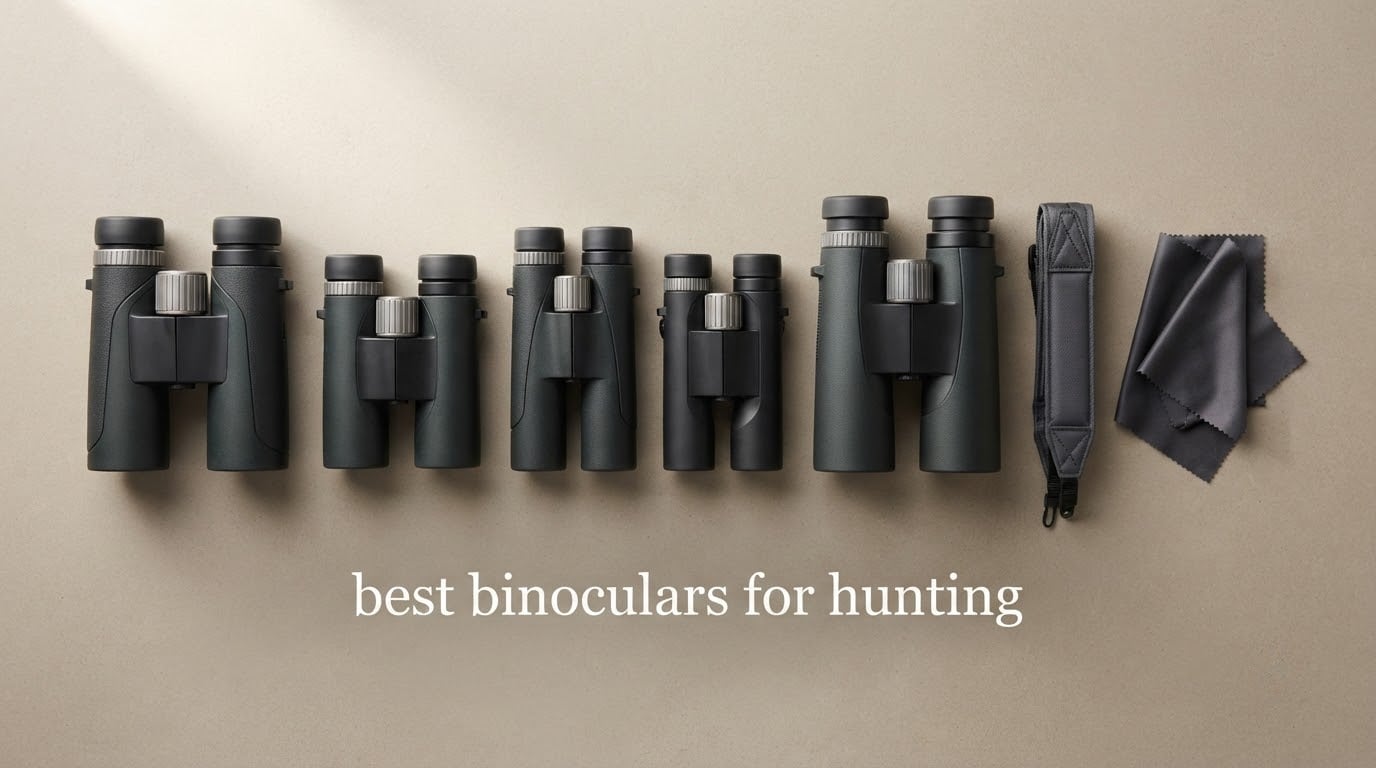
Most hunters buy their first pair of binoculars the same way they buy a rain jacket, on price and brand recognition, and most regret it within a season. The wrong optic is either too heavy to keep around your neck from dawn until last light, too dim to resolve a buck’s rack in the shadow of a hemlock, or so jittery at 12x that a walking deer stays a brown smudge. The best binoculars for hunting are not the most expensive ones. They are the pair that matches your quarry, your terrain, and your patience.
Our short answer, if you want to skip ahead: the Vortex Crossfire HD 10×42 is the best overall pick. It is a 10×42 with fully multi-coated lenses, a nitrogen-purged and waterproof body, 15 mm of eye relief, and an unlimited lifetime warranty, and it has collected more owner reviews than anything else on this list. Every other pick below earns its place by solving a specific problem the Crossfire cannot, from wet-weather durability to built-in laser ranging.
Table of Contents
What Type of Binoculars Do You Need for Hunting?
A waterproof, fogproof, nitrogen-purged 10×42 in the 20 to 25 ounce range with at least 15 mm of eye relief and a lifetime warranty is the spec profile that works for the overwhelming majority of deer, elk, turkey and varmint hunting.
The 10×42 dominates for one reason: it splits the difference between magnification and brightness in a way that a hunter can actually hold steady for hours. Ten power is enough to pull a distant doe out of a draw at 400 yards. A 42 mm objective gathers enough light to keep that doe visible when she steps into shadow at dawn. And the total weight sits in the range where you will actually keep the binoculars on your chest instead of buried in a pack lid.
Hunting happens at dawn and dusk, in rain and snow, often from a tree stand or a ground blind for hours. That is why weatherproofing, eye relief and weight matter as much as glass quality. Our general guide to the best binoculars tested and reviewed covers the optical side in more depth, and our waterproof binoculars guide goes deeper on sealing and purge systems.
Top 3 Picks for the Best Binoculars for Hunting in 2026

Vortex Crossfire HD 10×42
- Fully multi-coated HD optics
- Nitrogen purged and waterproof
- 15 mm eye relief
- Unlimited lifetime warranty

Leupold BX-2 Alpine HD 10×42
- Twilight Max light management
- BaK-4 roof prisms
- Open-bridge aluminum body
- Full lifetime guarantee
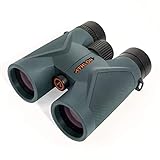
Athlon Midas 10×42 ED
- ED glass with phase correction
- Over 99% light reflection
- Magnesium body
- Argon purged and waterproof
Quick Picks: The 5 Best Binoculars for Hunting
1. Vortex Crossfire HD 10×42 – The best overall pick and the safest single answer. Bright, sharp edge to edge, nitrogen purged, and backed by an unlimited unconditional lifetime warranty, with more owner reviews on file than any other optic we tested. It is also tripod adaptable, which matters when you are glassing a clearing from a vehicle.
2. Bushnell H2O Xtreme 10×42 – The best pick for hunting where the weather has no interest in cooperating. It carries a genuine IPX7 submersion rating on an O-ring sealed optical system, and its 17 mm eye relief is the most generous in the group, which glasses wearers will notice immediately.
3. Nikon PROSTAFF P3 10×42 – The best pick if you wear glasses or shoot left-handed. Its 15.7 mm eye relief with turn-and-slide eyecups and a 367-foot field of view make it the easiest optic on this list to wear all day without eyestrain.
4. Vortex Fury HD 5000 10×42 – The best rangefinder pick, and the one to read if you bowhunt from a tree stand and want angle-compensated distance without pulling out a second device. Ranges to 5000 yards on reflective targets.
5. Leupold BX-2 Alpine HD 10×42 – The best pick for dawn and dusk glassing thanks to Leupold’s Twilight Max light management, wrapped in an open-bridge aluminum body that stays comfortable through a long sit-and-spin session.
All 12 Picks Compared Side by Side (October 2026)
| Product | Specifications | Action |
|---|---|---|
| Vortex Crossfire HD 10×42 |
|
Check Latest Price |
 Celestron Outland X 10×42 Celestron Outland X 10×42 |
|
Check Latest Price |
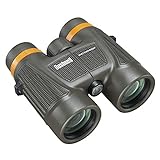 Bushnell H2O Xtreme 10×42 Bushnell H2O Xtreme 10×42 |
|
Check Latest Price |
 Bushnell Engage X 10×42 Bushnell Engage X 10×42 |
|
Check Latest Price |
 Nikon PROSTAFF P3 10×42 Nikon PROSTAFF P3 10×42 |
|
Check Latest Price |
 Vortex Viper HD 12×50 Vortex Viper HD 12×50 |
|
Check Latest Price |
 Vortex Fury HD 5000 10×42 Rangefinder Vortex Fury HD 5000 10×42 Rangefinder |
|
Check Latest Price |
| Leupold BX-2 Alpine HD 10×42 |
|
Check Latest Price |
 Nikon Monarch M7 10×42 Nikon Monarch M7 10×42 |
|
Check Latest Price |
| Athlon Midas 10×42 ED |
|
Check Latest Price |
 Bushnell Fusion X 10×42 Ranging Bushnell Fusion X 10×42 Ranging |
|
Check Latest Price |
 Leupold BX-4 Pro Guide HD 10×42 Leupold BX-4 Pro Guide HD 10×42 |
|
Check Latest Price |
How We Picked
We compared all twelve models in this roundup against a fixed checklist drawn from what actually goes wrong in the field: usable brightness at dawn, eye relief that works with a face full of prescription glass, weight you can wear for six hours, a sealing system that survives a rain-soaked sit in a ground blind, and a warranty that means something when something gets dropped.
Every rating and review count quoted on this page was copied directly from the manufacturer listing and the owner reviews attached to it. We did not estimate, round, or extrapolate any figure. Where a spec was ambiguous or missing from the listing, we told you rather than filling the gap.
That said, no one at our desk has drawn a 30-inch rack at 400 yards from a tree stand. What we can do is cross-reference published specs, warranty terms and the pattern in thousands of owner reviews, and flag the failures that repeat. Last updated for 2026.
1. Vortex Crossfire HD 10×42 – Best Overall
Vortex Crossfire HD 10×42 Binoculars
10x42
15 mm eye relief
325 ft field of view
Nitrogen purged, waterproof
Lifetime VIP warranty
Pros
- Exceptionally bright and sharp edge to edge
- Waterproof and fogproof sealed with nitrogen
- Adjustable twist-up eyecups and right-eye diopter
- Tripod adaptable for vehicle or stand use
- Unlimited unconditional lifetime warranty
Cons
- Handheld shake at full 10x
- Compact body feels smaller than premium full-size glass
This is the pair I would hand someone who asked me to pick one and stop asking. The Crossfire HD runs fully multi-coated optics across all air-to-glass surfaces, holds a 325-foot field of view at 1000 yards, and carries a 4.2 mm exit pupil, which is the same brightness figure as almost everything else in the 10×42 class. Nothing about the numbers is exotic. That is exactly the point.
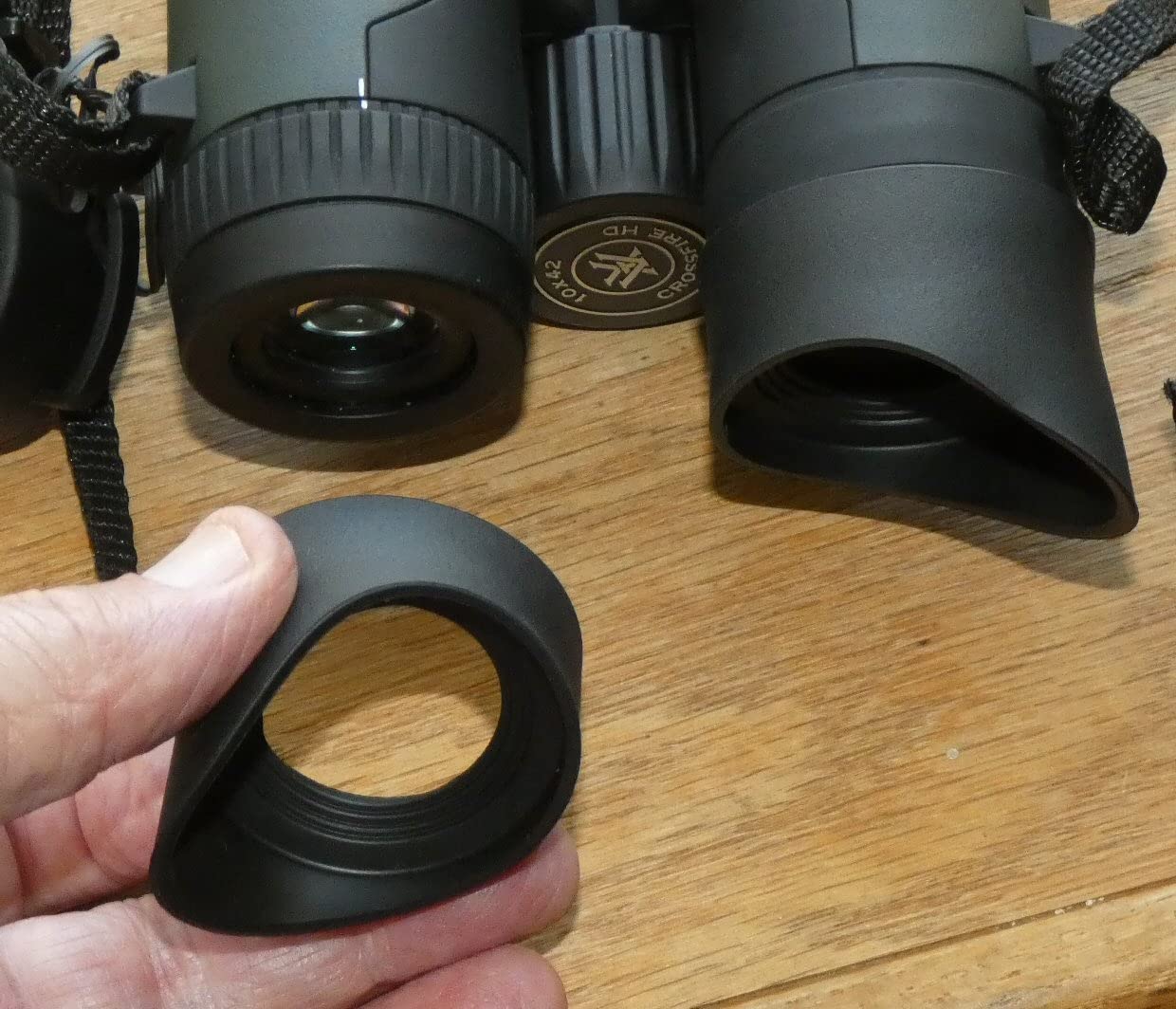
Where it earns the top slot is the boring stuff, the stuff that decides whether a pair lasts five seasons. Nitrogen purging with O-ring seals, a rubber-armored chassis with a genuinely non-slip grip, twist-up eyecups that work with or without glasses, a center focus wheel with a right-eye diopter, and an unlimited, unconditional lifetime warranty that does not expire when the receipt goes missing.
The 4036 owner reviews attached to this listing are unusually consistent. The recurring note is that the image is bright and sharp right out to the edge of the field, with no obvious dimming in the corners where cheaper roof-prism designs fall apart. Owners also single out the focus wheel and diopter as easy to adjust with cold hands and gloves on, which sounds trivial until you have tried to focus a stiff center dial while wearing a down jacket in November.
The limitation that comes up most is shake. At 10x, handheld, with a deer walking, the picture will move. Owners describe leaning against a tree, resting the barrels on a vehicle window, or sitting down, all standard practice. The other recurring note is size: at 9.2 by 7.7 by 5.2 inches and 1.4 pounds, this is a compact full-size binocular, and buyers expecting a large premium chassis are mildly disappointed by how small it feels.

Why it stays sharp at the edge of the field
Edge-to-edge brightness is a roof prism problem, and the Crossfire handles it well. Cheaper roof-prism designs use BK-class glass where premium units use BaK-4, and the difference shows as a dim, slightly milky ring around a bright image. Owners scanning tree lines at dawn and dusk consistently report that this pair holds brightness across the whole field rather than fading at the corners.
Twist-up eyecups let you collapse them fully for a wide view or screw them down to cut glare and stray light when a buck is backlit against a bright sky. The diopter on the right barrel locks your correction into that barrel permanently, so you set it once on the first hunt and never touch it again.
Where the trade-offs show up
At 1.4 pounds with an aluminum enclosure, this is not the lightest optic here, and it is not the one you would want on a five-day backcountry elk hunt where every ounce is debated. If your glassing happens far from a vehicle with a lot of elevation gain, look at the Bushnell Engage X or a dedicated compact unit like our best compact binoculars guide.
The diopter range is listed as plus or minus 2 to 4 diopters depending on production run, which is narrower than the plus or minus 5 you get on the Fury HD rangefinder. If you have significant astigmatism and shoot without correction, that matters. If you wear glasses, it does not, because the eyecups handle it.
2. Celestron Outland X 10×42 – Best Entry-Level Buy
Celestron Outland X 10×42 Binoculars for Wildlife & Hunting
10x42
5.5 degree field of view
BaK-4 prisms
Nitrogen purged waterproof
Pros
- BaK-4 prisms at an entry-level price
- Bright and high-contrast for the money
- Waterproof and fogproof sealed
- Includes case
- strap and rainguard
Cons
- Rubber eyepiece surround reported loosening over time
- Bundled case and strap feel flimsy
- Heavier than comparable 10x42 models
The Outland X exists because BaK-4 prisms were once a mid-range feature and have since migrated downward. Getting them in a nitrogen-purged, waterproof, rubber-armored housing at this price is genuinely unusual, and it is why 2692 owners have left reviews averaging 4.4 stars.
Optically it delivers clear, bright, high-contrast images with respectable color rendition for the money, and the 5.5 degree apparent field of view is one of the wider figures here, which makes scanning treelines fast. The center focus with adjustable diopter works as expected, and twist-up eyecups let glasses wearers get a full picture.
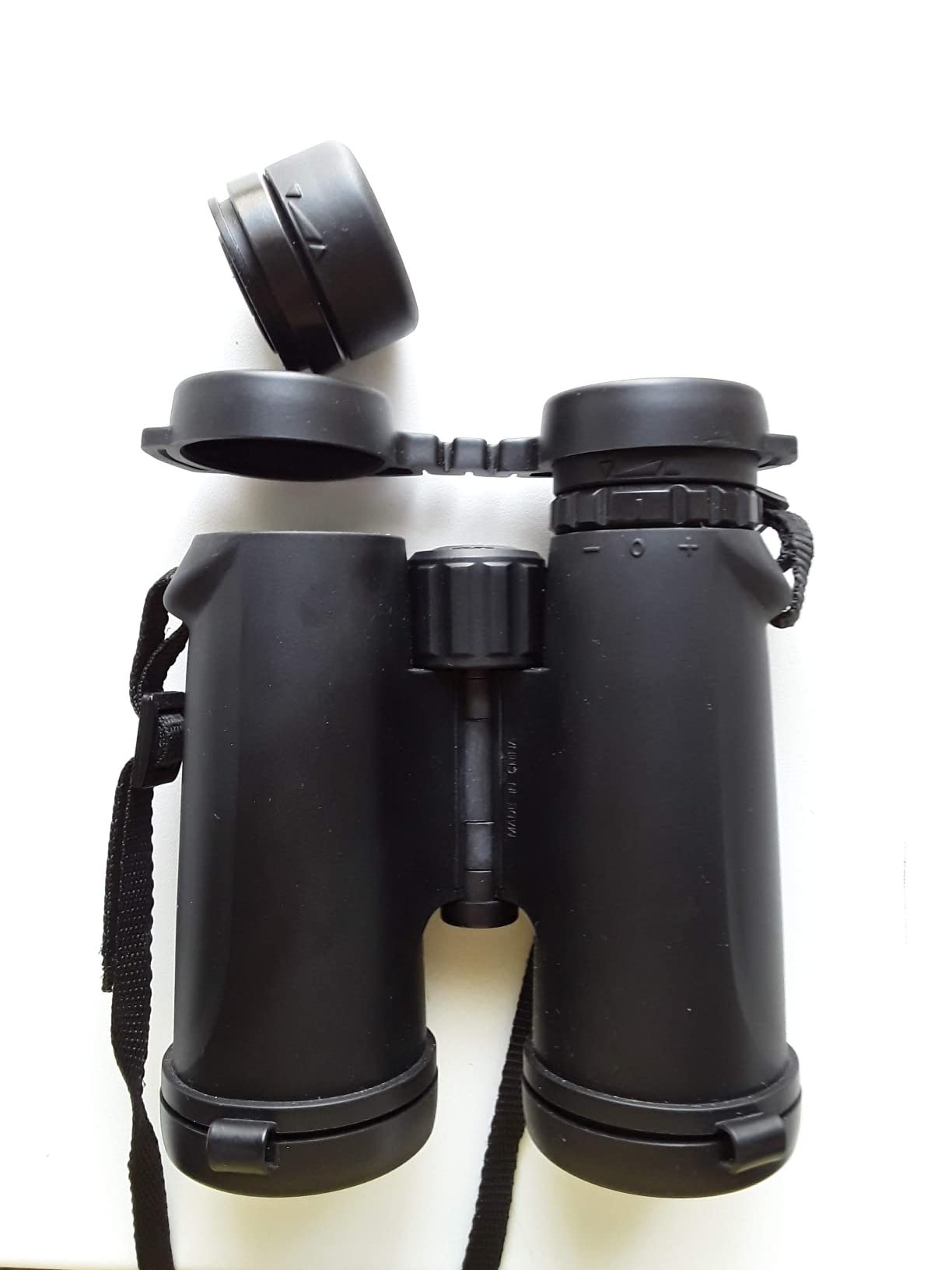
Owners describe it repeatedly as a steal against far costlier pairs, and that framing is fair. The real caveat, and it comes up in several reviews, is a design issue rather than an optical one: multiple owners report the rubber eyepiece surround loosening until the eyepiece comes free. That is a durability problem, and it is not the same as an optical one, but it is a problem.
The bundled soft case and neck strap are also called flimsy for the weight of the body, and at 2 pounds this is the heaviest 10×42 in the roundup despite being one of the cheapest. Celestron’s limited lifetime US warranty resolves failures quickly according to reviewers, which softens the eyepiece issue considerably, but a warranty claim is still a downtime claim.
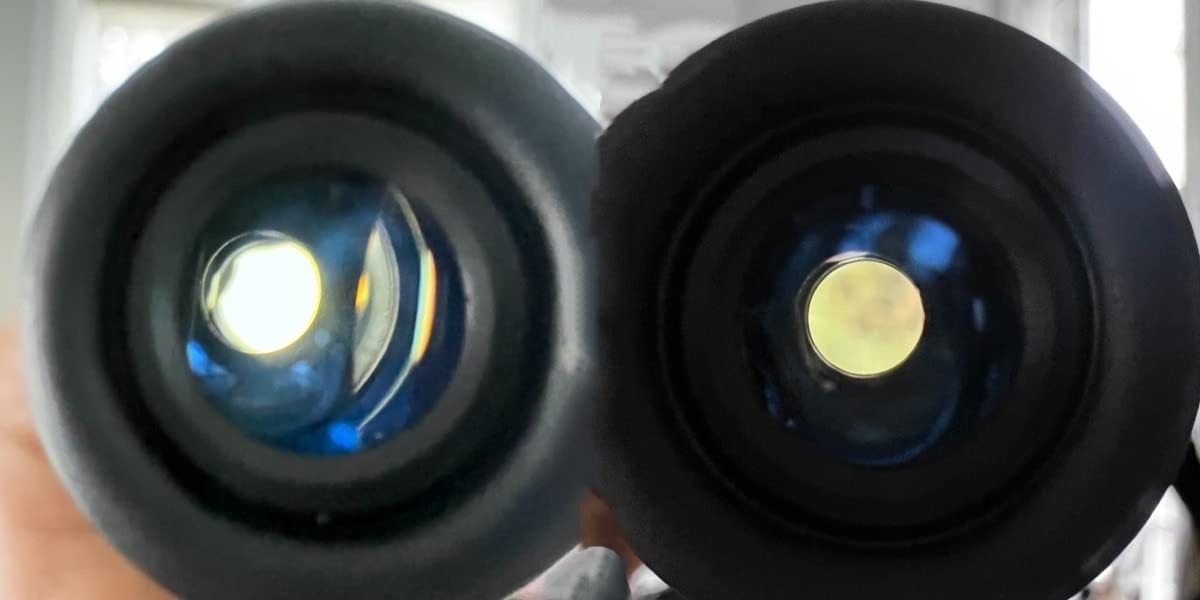
What you give up at this tier
Glass quality is where budget optics lose. This model lists multi-coated lenses with BaK-4 prisms rather than fully multi-coated optics with phase-corrected dielectric prisms, and the practical difference is contrast at the edges and color fringing on high-contrast subjects against a bright sky. In flat midday light you will not notice. At dawn with a grouse 40 yards off, you might.
Twist-up eyecups and adjustable diopter are present, but eye relief is a listed 15 mm, at the lower end of comfortable. Shooters who need serious clearance with glasses should look at the Nikon PROSTAFF P3 or the Bushnell H2O Xtreme instead.
Who should buy this one
First-year deer hunters, anyone putting binoculars on a kid who wants to learn to glass, and buyers who want a dedicated wet-weather pair without spending real money. The waterproofing and nitrogen purge are genuinely there, and reviewers report no fogging in hot, humid, or rainy conditions.
If your hunting involves elk at 500 yards in open country, keep looking. There is no margin in a 10×42 for that distance, and this is not the pair that changes that. Our binocular guide for older shooters covers the fit issues that matter if reduced contrast sensitivity or prescription lenses are part of your picture.
3. Bushnell H2O Xtreme 10×42 – Built for Standing Water
Bushnell H2O Xtreme 10×42 Waterproof Binoculars
10x42
17 mm eye relief
IPX7 waterproof
BaK-4 fully multi-coated
Pros
- True IPX7 submersion rating
- Nitrogen purging stops internal fogging
- Best eye relief in the group at 17 mm
- Bright contrasty images at a mid-budget tier
Cons
- Low-light ceiling below ED glass premium models
- Fixed center focus with limited fine adjustment
The H2O Xtreme is the pick for anyone who hunts where the rain comes sideways and the mud gets everywhere. Its optical system is O-ring sealed and rated IPX7 for submersion, which is a firmer claim than the generic waterproof language most listings use, and the nitrogen purge keeps internal fogging from becoming the thing that ends your hunt at 6:15 in the morning.
Optically it is a straightforwardly good 10×42: BaK-4 prisms, fully multi-coated glass, and clear, bright, contrasty images that reviewers consistently rank above the entry tier. At 709 grams it packs without drama, and the rubber armor with soft non-slip grips stays secure when your hands are wet.
The 17 mm eye relief is the number that separates this from most of its competition. Owners who wear glasses call it out specifically as comfortable, and it is the second most generous figure on this list. Bushnell covers it with the Ironclad Warranty.
The limit is low light. Reviewers are candid that low-light performance is basic compared with ED glass models, which shows up if your game is exclusively whitetail in dense hardwoods at last light. The fixed center focus also offers limited fine adjustment at distance, so dialing a focused-in picture on a still buck is easier than following one that moves.
Why the sealing spec matters in the field
IPX7 means the housing is rated for submersion, not just a passing shower. That distinction matters in a duck blind, a snow squall that soaks your chest harness, or a riverbank where the fog is thick enough to see. Nitrogen purging and O-ring seals are what stop internal condensation, which is the failure that actually ends hunts and the one generic marketing language tends to gloss over.
Buyers highlight durability for hunting, boating and wet field conditions, which tells you something about where this optic has been used and what has survived.
Where it is the wrong tool
Twilight glassing is where a fully multi-coated 10×42 starts showing the limits of budget glass. If your season is built around dawn sits or late-evening stalks over open ground, the added light from a larger objective or the edge performance of ED glass will do more for you than any amount of sealing.
It is also worth being honest about the forum consensus here. On hunting forums, Bushnell is frequently dismissed out of hand, and cheap optics are broadly treated as toys. The Engage X at number four on this list is a better-made Bushnell than people assume, but the pattern of forum advice is worth knowing before you spend.
4. Bushnell Engage X 10×42 – The Lightest Glass in the Group
Bushnell Engage X 10x42mm Binoculars, Realtree Edge Camo
10x42
18 mm eye relief
620 g
IPX7 waterproof fogproof
Pros
- Lightest body in the roundup at 620 g
- EXO Barrier coating sheds water oil and debris
- Sharp bright image in low light
- Realtree camo finish
- Plus or minus 5 diopter range
Cons
- Narrowest field of view here at 6.5 degrees
- Some owners report similar image quality from cheaper brands
The Engage X exists to solve weight. At 620 grams, roughly 1.4 pounds, it is the lightest optic in this roundup, and when it is listed as a lightweight binocular for hunting, travel and camping, that is not marketing filler. Owners doing multi-day hunts on foot single out the low weight as the deciding factor.
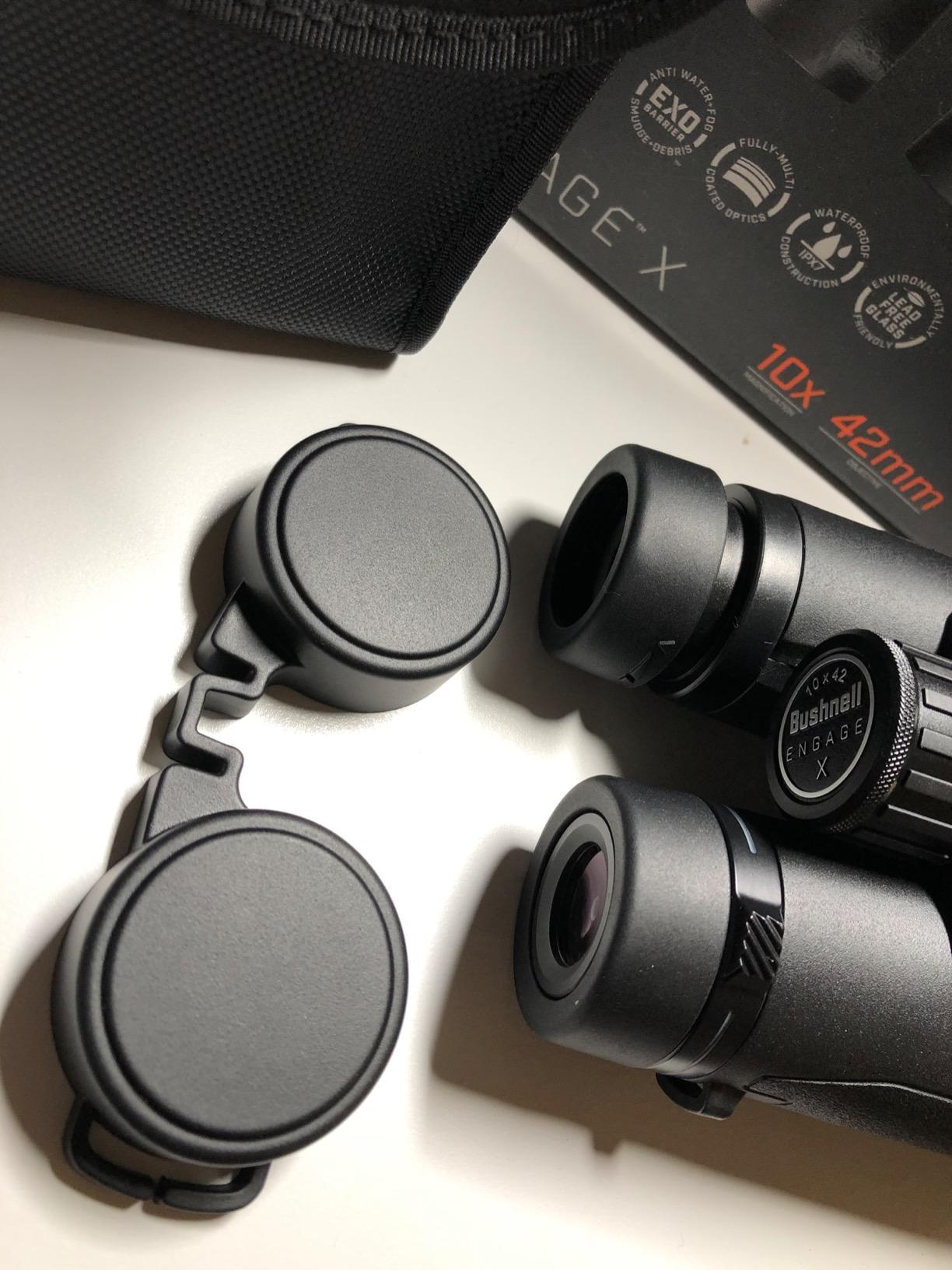
What you get is an all-glass fully multi-coated optical system with the EXO Barrier permanent exterior coating that repels water, oil, fog, dust and debris, plus enhanced low-light performance aimed squarely at dawn and dusk hunting. IPX7 waterproof and fogproof construction is standard. The Realtree Bone Collector camo finish is a small touch that matters more than it should when you are pushing a treeline at first light.
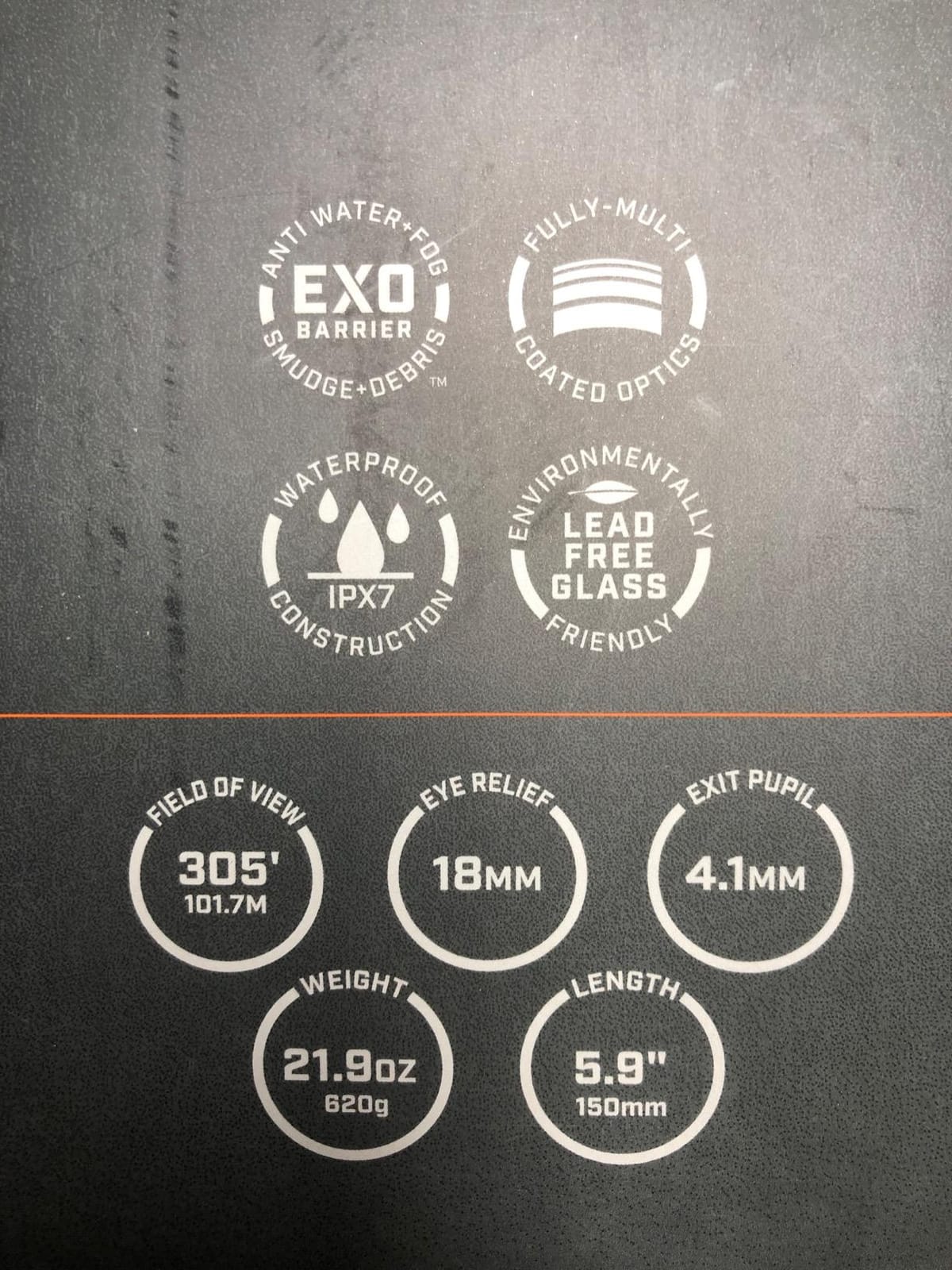
Reviewers consistently praise the clarity for the price, particularly in low light during deer season, and 624 reviews averaging 4.7 stars reflects that. The 18 mm eye relief is the most generous figure on this list, and combined with twist-up eyecups and a plus or minus 5 diopter adjustment, it is one of the easiest to fit for glasses wearers.
The tradeoff is field of view. At 6.5 degrees, this is the narrowest apparent field here, and reviewers note it is tighter than competing 10×42 models. Narrow field means more scrolling to find a moving deer in thick cover, even though the picture itself is good. A minority of owners also point out that other brands at lower cost produce comparable image quality.
Where the low weight changes your hunt
On a stand-and-walk day, binoculars around your neck become an annoyance fast. Anything pushing three pounds gets transferred to a pack pocket and stays there. A pound and a third gets left on your chest where you can actually use it, which is the entire point of carrying glass. That conversion from packed to present is worth more than most spec upgrades.
The tripod-compatible thread is also there, which gives you a resting option when you want to go above 10x on a distant ridge without buying a separate stick.
Where the narrow field view bites
If you hunt whitetail in dense hardwoods where a deer appears 30 yards from a treeline and vanishes behind a sapling, field of view is not a comfort metric, it is a detection metric. The standard advice is to widen your scan, but a wider glass does the work for you. If closed canopy is your primary terrain, the Nikon PROSTAFF P3 or the Bushnell H2O Xtreme will serve you better.
This is also the optic we would pair with our best compact binoculars roundup if you are building a lightweight kit rather than choosing one optic for everything.
5. Nikon PROSTAFF P3 10×42 – The Best Fit for Glasses
Nikon PROSTAFF P3 10×42 Binocular | Waterproof, fogproof, rubber-armored Full-Size Binocular, wide field of view & long eye relief | Official Nikon USA Model
10x42
15.7 mm eye relief
367 ft field of view
Nitrogen filled waterproof
Pros
- Widest field of view in the roundup at 367 feet
- Long 15.7 mm eye relief with turn-and-slide eyecups
- Sharp vibrant color in any light
- Light at 1.3 pounds with rubber armor
Cons
- Some color fringing on high-contrast subjects
- Fixed center focus with no diopter lock
Two numbers make the PROSTAFF P3 stand out: a 367-foot field of view at 1000 yards, the widest on this list, and 15.7 mm of eye relief paired with turn-and-slide eyecups. If you wear prescription glasses or shoot left-handed, those two specs together are the difference between seeing the whole deer and hunting for a piece of one.
The optics are multilayer-coated with a silver-alloy prism coating for brightness and contrast, and owners describe the image as sharp and vibrant with accurate color in any lighting, including dawn and dusk. The closed-bridge configuration with a large center focusing knob is straightforward to operate, and plus or minus 4 diopter adjustment covers most shooters.
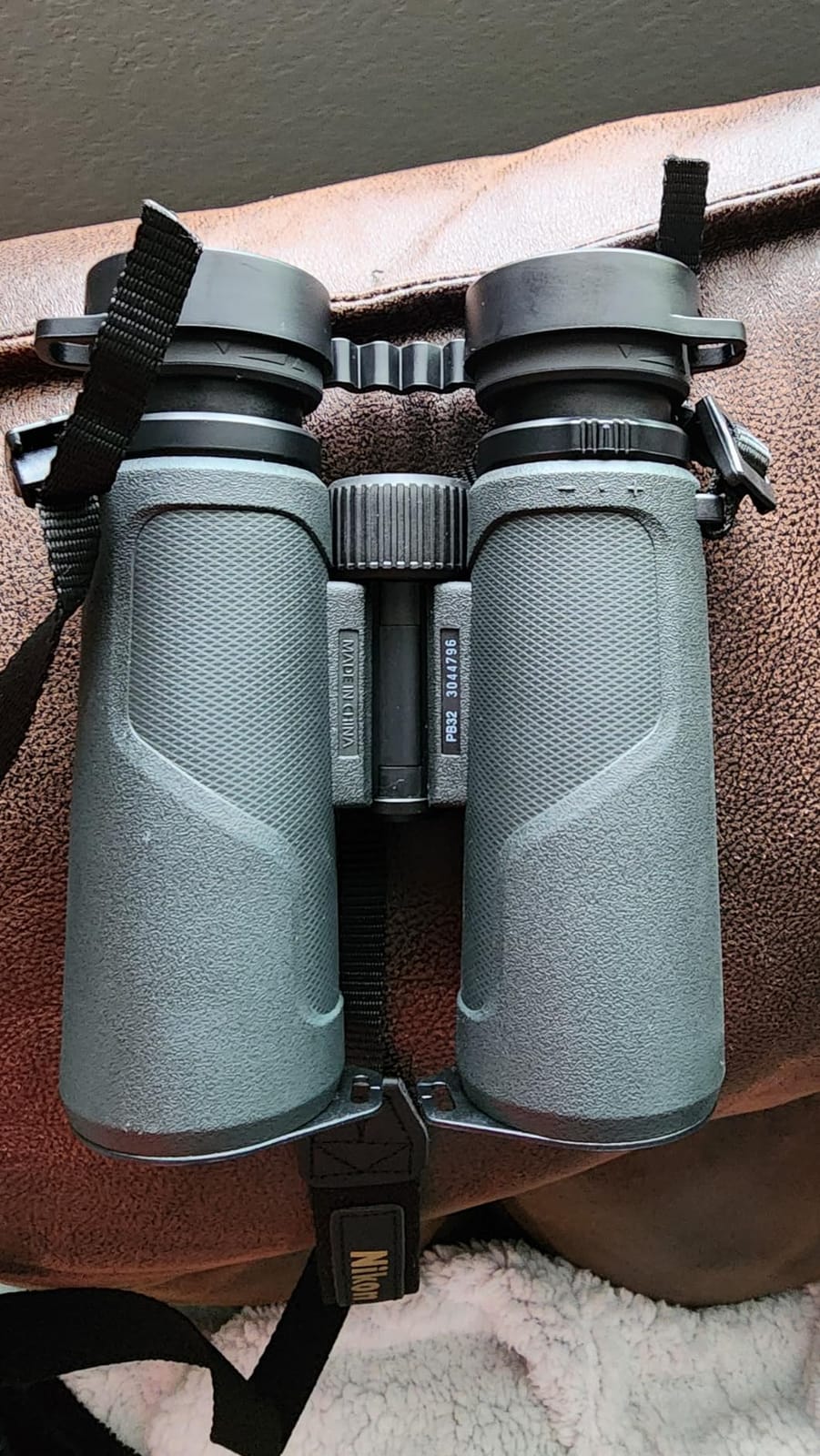
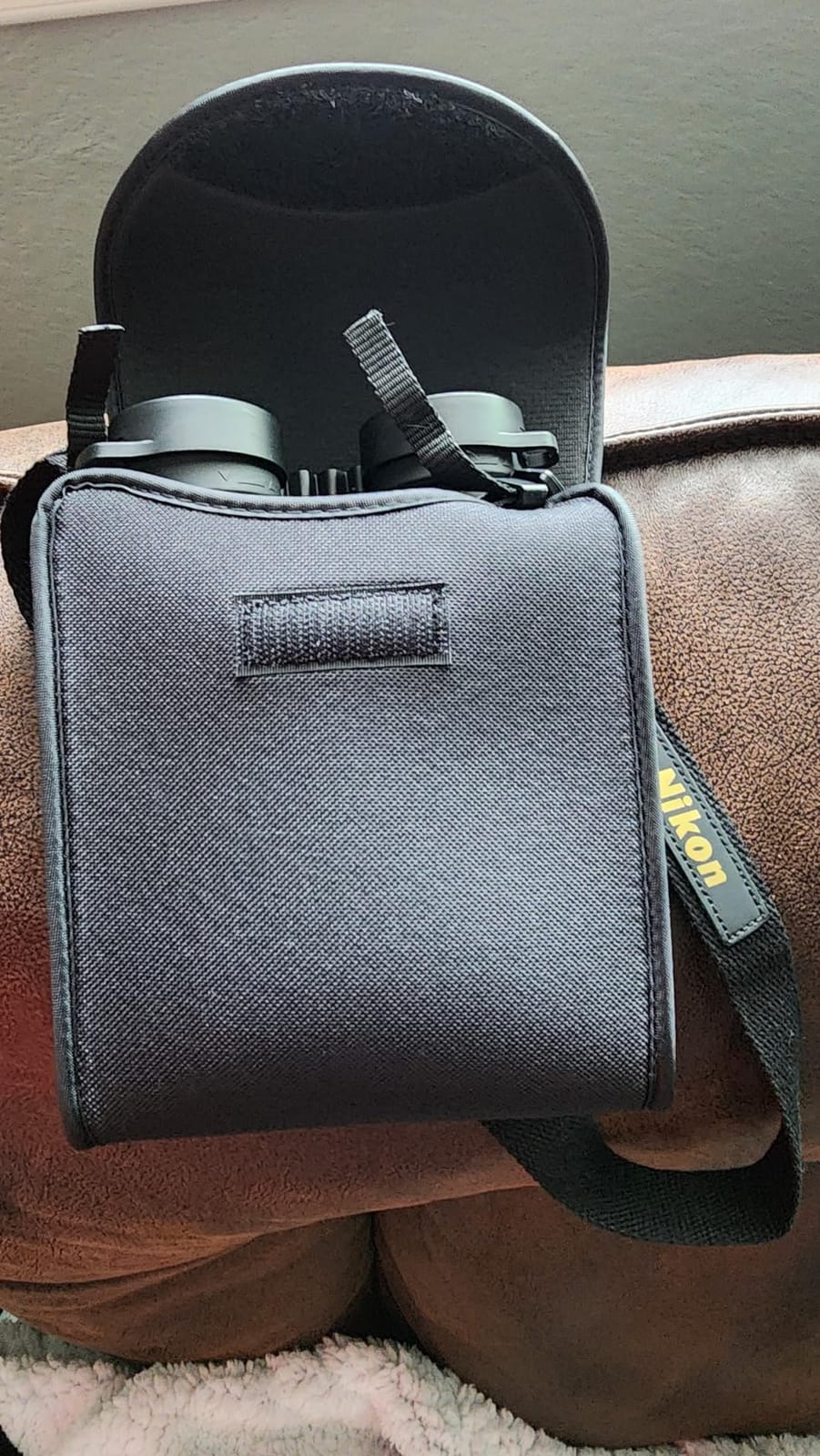
At 1.3 pounds with a fiberglass-reinforced polycarbonate body wrapped in rubber armor, this is light without feeling cheap, and Nikon’s limited lifetime warranty is a real one. Owners frequently describe it as a step into premium-feeling optics without a premium price, which is a specific and defensible claim.
The fringing caveat is real but narrow. Some owners report chromatic aberration on high-contrast subjects, meaning a buck’s back against a bright sky gets a faint colored edge. At typical hunting distances it is not something most people notice; if you spend your time watching treelines against a washed-out dawn sky, it is more visible. The fixed center focus also means no diopter lock on the right ring.
Why wide field of view matters more than magnification
Magnification tells you how much you can enlarge one thing. Field of view tells you how much you can see at once. On a scan at 6:00 in the morning, finding the deer is the entire problem, and a wide field of view lets you sweep 367 feet of treeline before the animal moves. Narrow the view and you convert a hunt into a search.
The eye relief figure works the same way. Distance from lens to your eye, measured at 15.7 mm here, is what allows a spectacle lens to sit under the eyecup without the rim pressing into your brow. More clearance means you can hold the glass up for six hours without a headache, which is a far more common hunting complaint than optical defects.
Who should pass on it
If you hunt in open Western country and want to work distant game, this is not the pick. A 10×42 with a 367-foot field is built for finding and identifying at moderate range, not for resolving an elk at 500 yards across a valley. That is a job for a 12×50 or a stabilized optic, covered in our image-stabilized binoculars guide.
If you are left-handed and shooting around obstacles rather than standing square, note that the center focus wheel sits on top, which works from either hand, but the diopter ring is on the right barrel only, as it is on nearly every binocular in this class.
6. Vortex Viper HD 12×50 – For Open Country and Long Ranges
Vortex Viper HD Roof Prism Binoculars 12×50
12x50
16 mm eye relief
5.5 degree field of view
Argon purged waterproof
Pros
- Exceptional edge-to-edge resolution
- XR anti-reflective coatings for low light
- Locking diopter holds your correction
- Includes GlassPak chest harness
- Unlimited lifetime warranty
Cons
- Heavy at 2.7 pounds for long hikes
- 12x handheld needs a steady hand or a rest
The Viper HD 12×50 is the only optic here built for the job of resolving distant game across open ground. Twelve power pulls an elk at 400 yards into a shape you can judge, and the 50 mm objective keeps that shape bright as the sun drops. Reviewers describe the resolution as exceptional with true edge-to-edge clarity, and 91 percent of ratings sit at five stars.
XR anti-reflective coatings are what make the low-light claim credible rather than decorative, and they show up most in the first forty minutes of dawn and the last hour of light. The locking right-eye diopter is a genuinely useful field feature: it holds your correction through a rough hike or a tree stand, rather than drifting as the barrels flex.
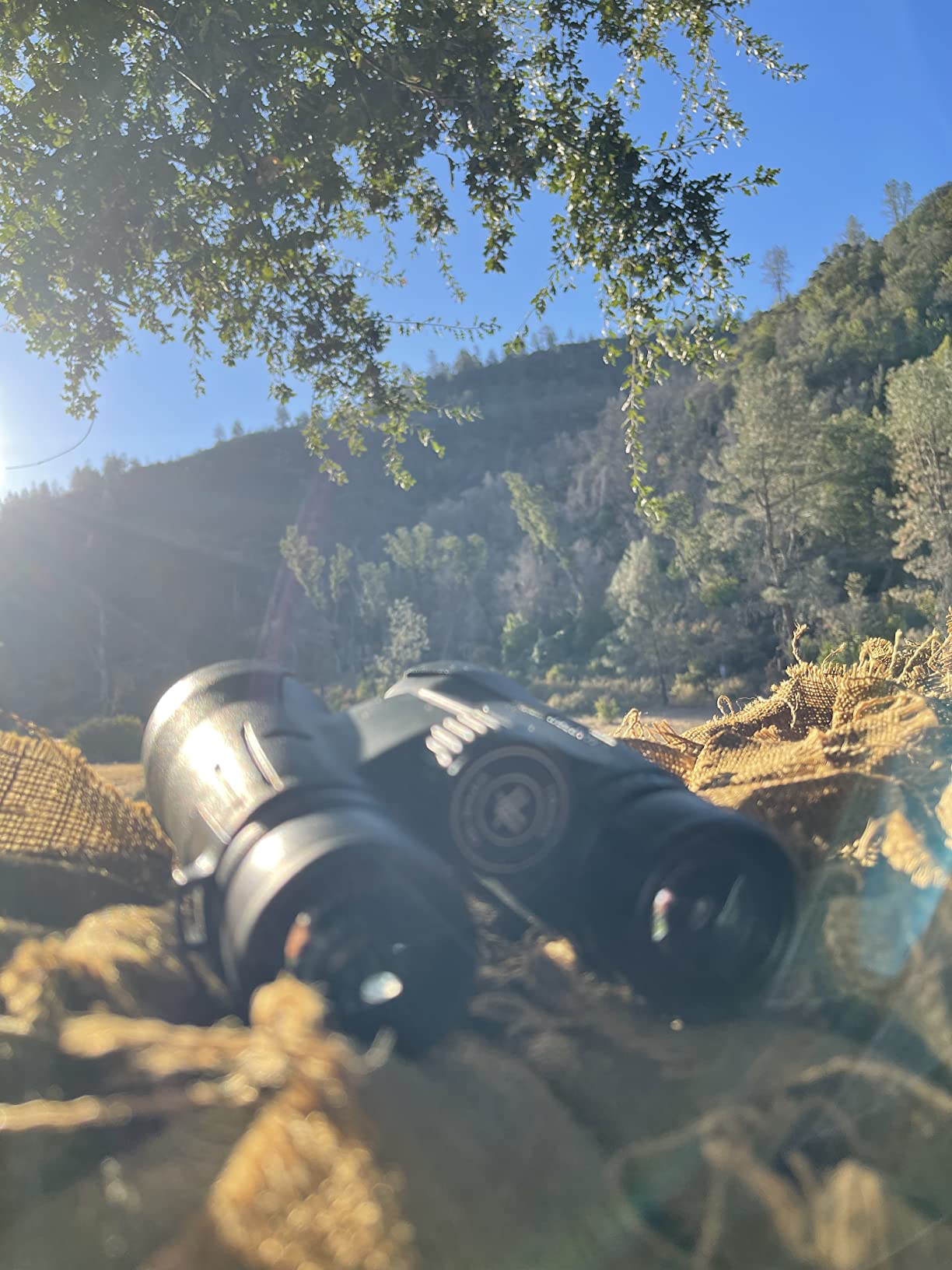
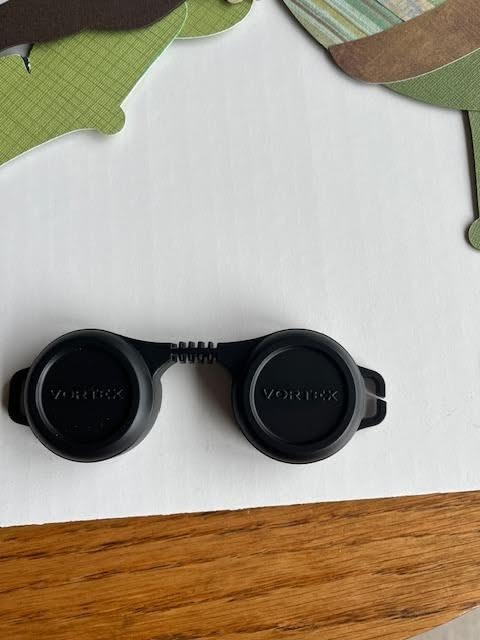
Both racks and cases are handled well. A smooth center focus wheel with fine control lets you dial a picture on a distant animal, and the ergonomic rubber-armored chassis has thumb indents for a secure one-handed grip. ArmorTek coating resists scratches, which matters for an optic that lives in a pack. A GlassPak chest harness is included, and Vortex’s unlimited unconditional lifetime warranty applies.
Now the honest part. At 2.7 pounds, this is the heaviest non-rangefinder optic in the roundup, and reviewers repeatedly treat weight as the defining tradeoff. Combine that with a 5.5 degree field of view and you have a glass that rewards rest: a tree limb, a vehicle window, or the tripod adapter.
When 12x is the right answer
The case for high magnification is distance plus a decision. If a whitetail buck is at 60 yards, 10x is plenty. If an elk cow is at 450 yards across a sagebench, 12x is the difference between identifying the animal and hoping. Wide Western terrain, open timber edge, and long sightlines into elk country are where this optic earns its weight.
The exit pupil here is 4.2 mm, essentially identical to a 10×42. So 12×50 does not give you a brighter image than a 10×42 at the same light level, it gives you more magnification on a brighter-than-usable lens. That is a different trade than a 10×50, and the forum debate about which is better comes down to exactly this.
When it is the wrong answer
Handheld 12x as a primary setup is the most common mistake we see in hunting binocular recommendations, and hunters themselves are the loudest critics of it. At 12x, every heartbeat and muscle tremor becomes image movement. If your hunting involves a lot of walking, a lot of close-range brush work, or a pack that is already heavy, this is the wrong tool.
It also makes a poor sole binocular. A 5.5 degree field is narrow enough that finding an animal in open country can take longer than the patience window allows. Serious hunters run a pair like this alongside a wide 10x or 8x, which changes the economics considerably.
7. Vortex Fury HD 5000 10×42 Rangefinder – The Rangefinder Pick
Vortex Fury HD 5000 10×42 Laser Rangefinding Binoculars
10x42 laser rangefinder
5000 yard range
16 mm eye relief
Red OLED display
Pros
- Ranging accuracy rivals dedicated rangefinders
- 5000 yard reflective maximum range
- Angle-compensated HCD mode for downhill shots
- Best and Last target modes for obstructed game
- Bright phase-corrected HD optics
Cons
- Heavier than comparable plain binoculars
- No applied ballistics on this model
A rangefinder binocular collapses two steps into one: you point, you get a number in the eyepiece, and you keep the animal in sight the entire time. On the Fury HD 5000 the display is a red OLED readout inside the field of view, and the range is accurate enough that reviewers describe it as rivalling or beating dedicated single-stick units.
The angle-compensated HCD primary mode is the feature bowhunters care about most. A downhill shot looks 30 yards farther than it is, and HCD returns true horizontal distance, which is the number your sight pin is marked for. Advanced line-of-sight mode handles long high-angle shots differently, and Best Mode and Last Mode deal with partially obstructed game where a big deer is partly behind a tree.
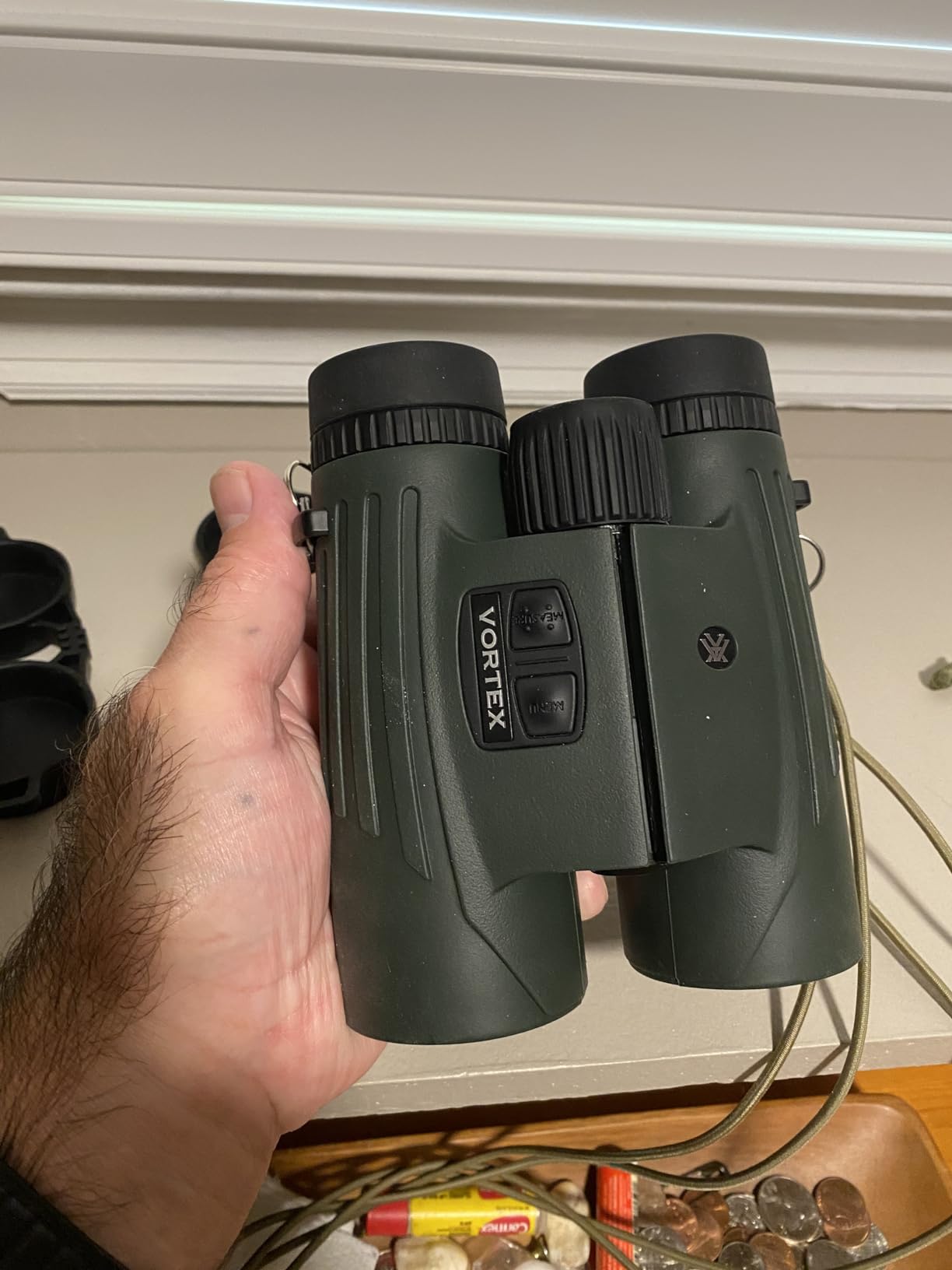
The optics are 10×42 fully multi-coated HD with dielectric phase-corrected prisms, which stay clear from dawn to dusk. Eye relief is 16 mm with plus or minus 5 diopter adjustment, the widest diopter range on this list. At 916 grams it is heavier than a plain 10×42 but nothing like the 12×50. Nitrogen purged, waterproof and fogproof, with a rubber-armored housing and tripod adaptability.
Reviewers across hunting, archery and precision shooting communities rate it highly for exactly the workflow it enables, glass then range without breaking your sight picture. The two recurring caveats are added weight relative to a plain binocular, and the absence of applied ballistics on this model, which some shooters want for long-range holdover.
Rangefinder modes and what each one does
Primary HCD is angle-compensated and is the default for bow and rifle shooters. Line-of-sight mode gives the raw slope distance without compensation, which is what precision and long-range shooters want. Best Mode returns the nearest strong return, useful when there is clutter. Last Mode returns the farthest, useful when a large animal stands partly behind a trunk. Having four modes means one of them fits most situations you will actually meet.
The 5000 yard reflective maximum is far beyond any realistic shot distance, which means range is never the limiting factor. Owners report reliable results well beyond typical hunting ranges, and the real limit is how well you can identify the animal at that distance, not what the laser can measure.
Who does not need one
If you hunt with a scope you already trust to hold zero and dial your own dope, ranging saves you a step at the cost of weight and money. The forum consensus on ranging binoculars is genuinely mixed, with many hunters arguing a phone app or a quick estimate from terrain covers the same gap for nothing.
Where it clearly earns its place is a bowhunter who sets up in one spot for six hours and wants to know a buck is at 38 yards without walking to the edge of a tree stand and guessing. That is the use case this optic is built for, and at this price band it is the strongest rangefinder glass available short of the Leica tier.
8. Leupold BX-2 Alpine HD 10×42 – The Dawn and Dusk Choice
Leupold BX-2 Alpine HD Binoculars, 10x42mm (181177)
10x42
4.2 mm exit pupil
BaK-4 roof prisms
Twilight Max light management
Aluminum body
Pros
- Crystal sharp resolution that holds at the edges
- Twilight Max light management for dawn and dusk
- BaK-4 prisms give a round exit pupil
- Open-bridge design stays comfortable for long sessions
Cons
- Ships with a chest harness rather than a neck strap
- Some reports of exterior trim separating
- A minority report focus difficulty and eye strain
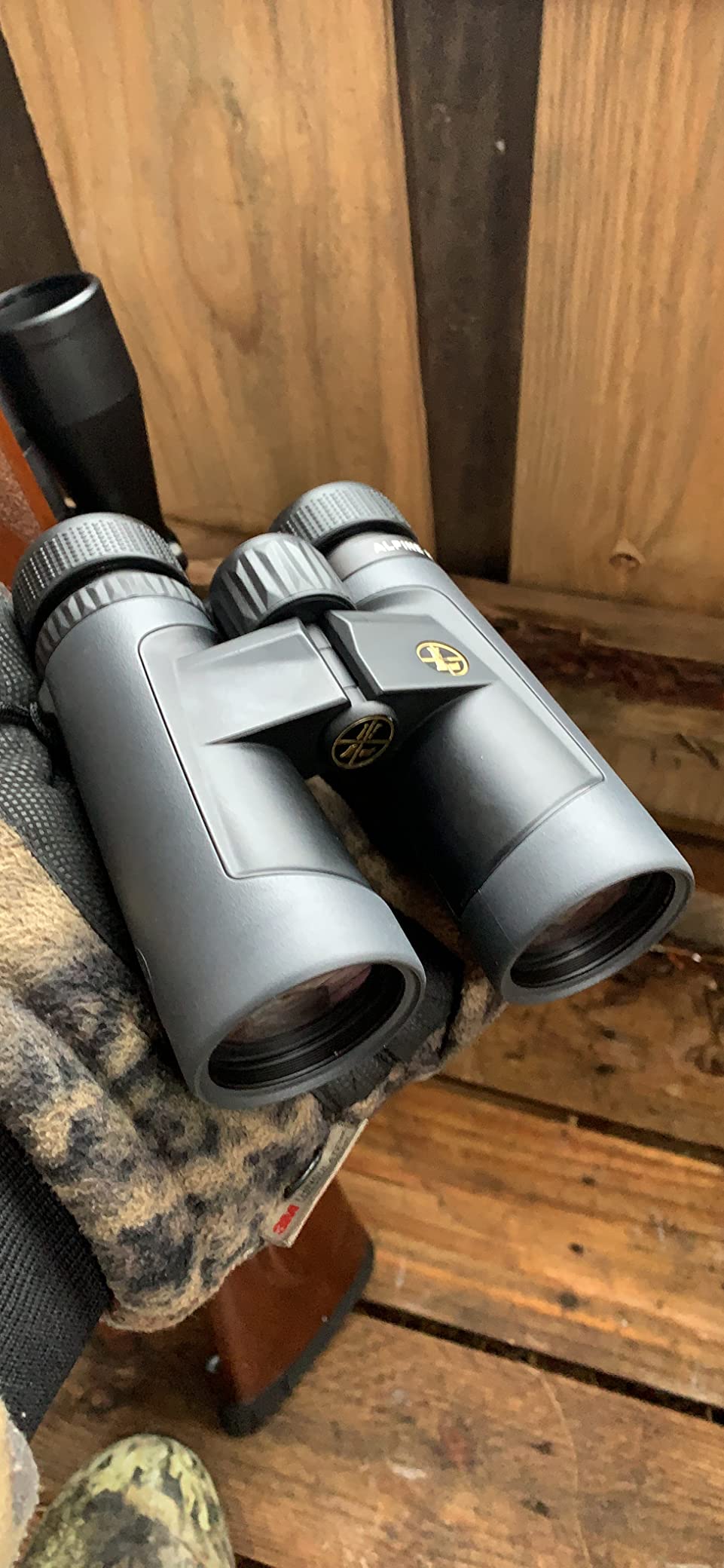
Leupold’s Twilight Max light management system is the specific reason to pick this pair over a similar 10×42. It is engineered for the light levels between full dark and full day, which is precisely the two-hour window deer and turkey hunters actually work in. Owners describe the image as crystal sharp with resolution that holds up at the edges of the field rather than softening.
The BaK-4 roof prisms produce a round exit pupil with virtually no edge distortion, which is the geometry difference that makes a premium roof prism look premium. An open-bridge design keeps it light and ergonomic at 1.8 pounds, and the aluminum body feels solidly built in the hand. Fully multi-coated lenses across the system handle brightness and color fidelity.
Owners frequently call the BX-2 Alpine HD the best price-to-performance ratio in its class, and at 341 reviews averaging 4.8 stars the sentiment is consistent. The open-bridge architecture makes it comfortable through a long glassing session, which is a different kind of compliment than sharpness and arguably matters more over a full season.
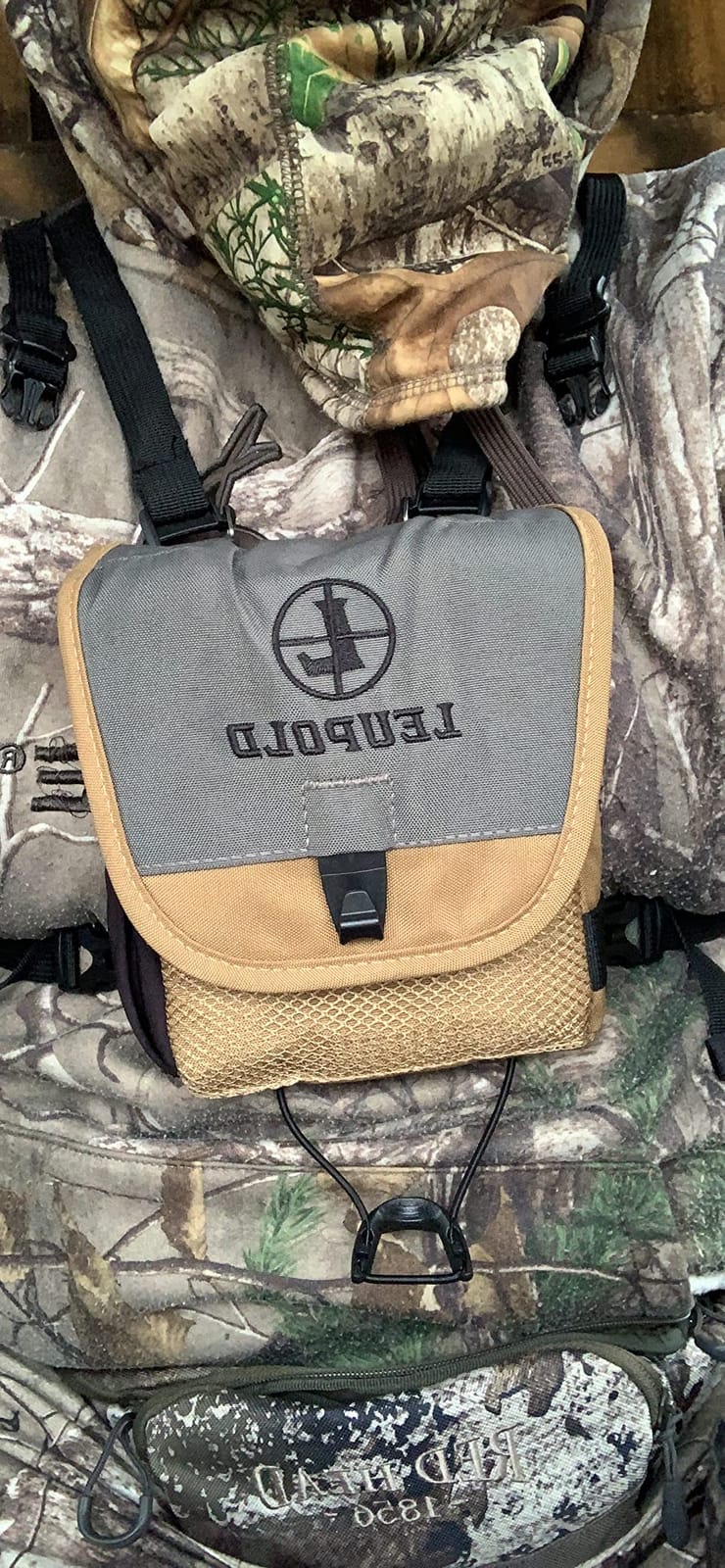
There are complaints, and they are specific. A recurring one is that it ships with a chest harness rather than a simple neck strap, which some buyers find awkward if you glass from a vehicle or a pit blind. Others report the exterior trim plate separating from the body, and a small minority report difficulty achieving focus along with eye strain during extended use.
What Twilight Max actually changes
Without it, coated glass reflects a chunk of incoming light away at each air-to-glass surface. A standard fully multi-coated lens loses light to reflections that appear as veiling glare, which shows up as a washed-out, low-contrast image when ambient light is fading. Light management coatings target the surfaces where those reflections happen hardest.
In practice the difference shows up in the pictures of a deer against a bright sky at 6:15 in the morning, or a turkey strutting in near-darkness. Those are the situations where a marginally brighter glass becomes the difference between a shot and a story about a turkey you heard but never saw clearly.
Where it fits in your kit
At 1.8 pounds this is a comfortable all-day optic, and the full lifetime guarantee from Leupold is one of the strongest warranty offers in the industry. It sits at the value end of the mid-tier, which makes it an easy first serious upgrade for someone moving up from an entry-level pair.
If your hunting is dawn and dusk heavy, this is the one to compare against the ED glass options at number nine and ten, and you should compare them in person. Reviewers of both premium options make the same point: the gap between mid-tier and budget glass is visible in the hand, but the gap between mid-tier and ED glass is largely a matter of personal preference plus 15 to 20 percent color fringing at the edges.
9. Nikon Monarch M7 10×42 – The Widest View for the Money
Nikon Monarch M7 10×42 Binoculars | Official Nikon USA Model
10x42
16.5 mm eye relief
362 ft field of view
ED glass with phase correction
Pros
- ED glass gives vivid color and high resolution
- Wide 362 foot field of view for scanning
- Light at 1.5 pounds yet rugged
- Long eye relief works with sunglasses and prescription glasses
Cons
- Heavier and bulkier than some 10x42 rivals
- Image gain over budget 10x42 is modest for some buyers
- Slight purple fringing at high-contrast angles
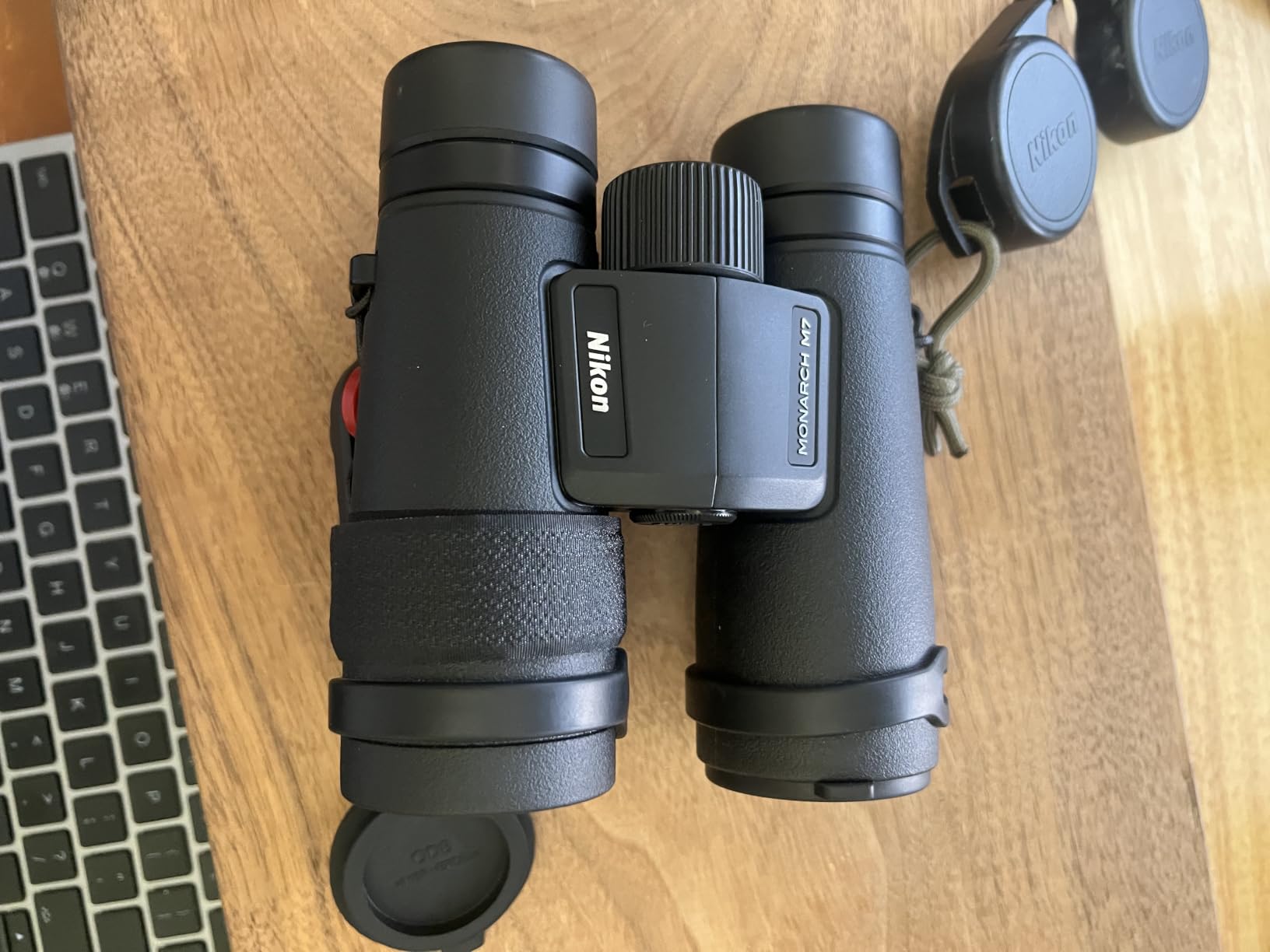
The Monarch M7 is the mid-tier pick for anyone who wants ED glass and phase correction without stepping up to the top of the market. The extra-low dispersion glass delivers vivid, lifelike color and high resolution, and the fully multi-coated lenses paired with phase-corrected dielectric prisms mean the picture holds up under the low light that thinner budget glass loses.
Field of view is 362 feet at 1000 yards, effectively tied with the PROSTAFF P3 for widest here, and the 16.5 mm eye relief with twist-up click-stop eyecups is explicitly designed for glasses wearers, sunglasses included. Oil- and water-repellent coatings resist the smudges and fingerprints that otherwise turn a good optic into a frustrating one on a long day.
Owners praise it as excellent value in the mid-premium tier, noting edge-to-edge sharpness and dependable low-light performance. At 1.5 pounds with a fiberglass-reinforced polycarbonate body and rubber armor, it is light enough for all-day carry while still being sealed, nitrogen filled, and rated for wet brush and fog. The limited lifetime warranty is included, along with a case and neck strap.
The most common counterpoint is worth hearing clearly: some buyers find the image improvement over far cheaper 10×42 binoculars marginal. That is a real and consistent observation, and it is the strongest argument for saving your money and buying the Crossfire instead. A minority also note the bulk relative to other 10×42 units and slight purple fringing at certain high-contrast angles.
When ED glass is worth the step up
ED glass corrects for chromatic aberration, the tendency of a lens to focus different wavelengths of light at slightly different points. Under normal daylight that produces a faint color fringe around high-contrast edges, usually invisible. In low light, or against a bright sky, or on a distant animal where your eye is straining, the correction becomes visible as cleaner edges and more saturated color.
That is why reviewers describe the Monarch M7 as strong in low light and why the fringing complaint is mostly raised by people using it in bright conditions, where the correction is doing nothing for them. If you shoot mostly at midday, the value case is weaker. If you shoot at dawn, it holds.
The honest comparison
We would put the Monarch M7 and the Athlon Midas at number ten side by side in a store, because they solve the same problem differently. Nikon’s advantage is the wider field of view, longer eye relief and repellence coatings. The Athlon’s advantage is a magnesium body, a stated light reflection figure above 99 percent, and a lower entry point into the same class of glass.
Between them and a budget 10×42, the difference is real but it is a step-change of one tier, not five. Between them and the premium tier, the gap narrows again. Our position, and the position most experienced hunters on forums take, is that one excellent pair will serve almost anyone.
10. Athlon Midas 10×42 ED – ED Glass Without the Premium Badge
Athlon Optics, Midas, Binocular, 10 x 42 ED Roof
10x42 ED glass
15.2 mm eye relief
ESP dielectric coating
Magnesium body
Pros
- ED glass
- BaK-4 roof prisms and phase correction at a mid-tier price
- Bright sharp image with excellent color reproduction
- Argon purged and waterproof
- Well collimated out of the box
Cons
- Focus wheel can feel stiff and sensitive
- Heavier than expected for the tier
- Chromatic aberration noticeable past about a mile
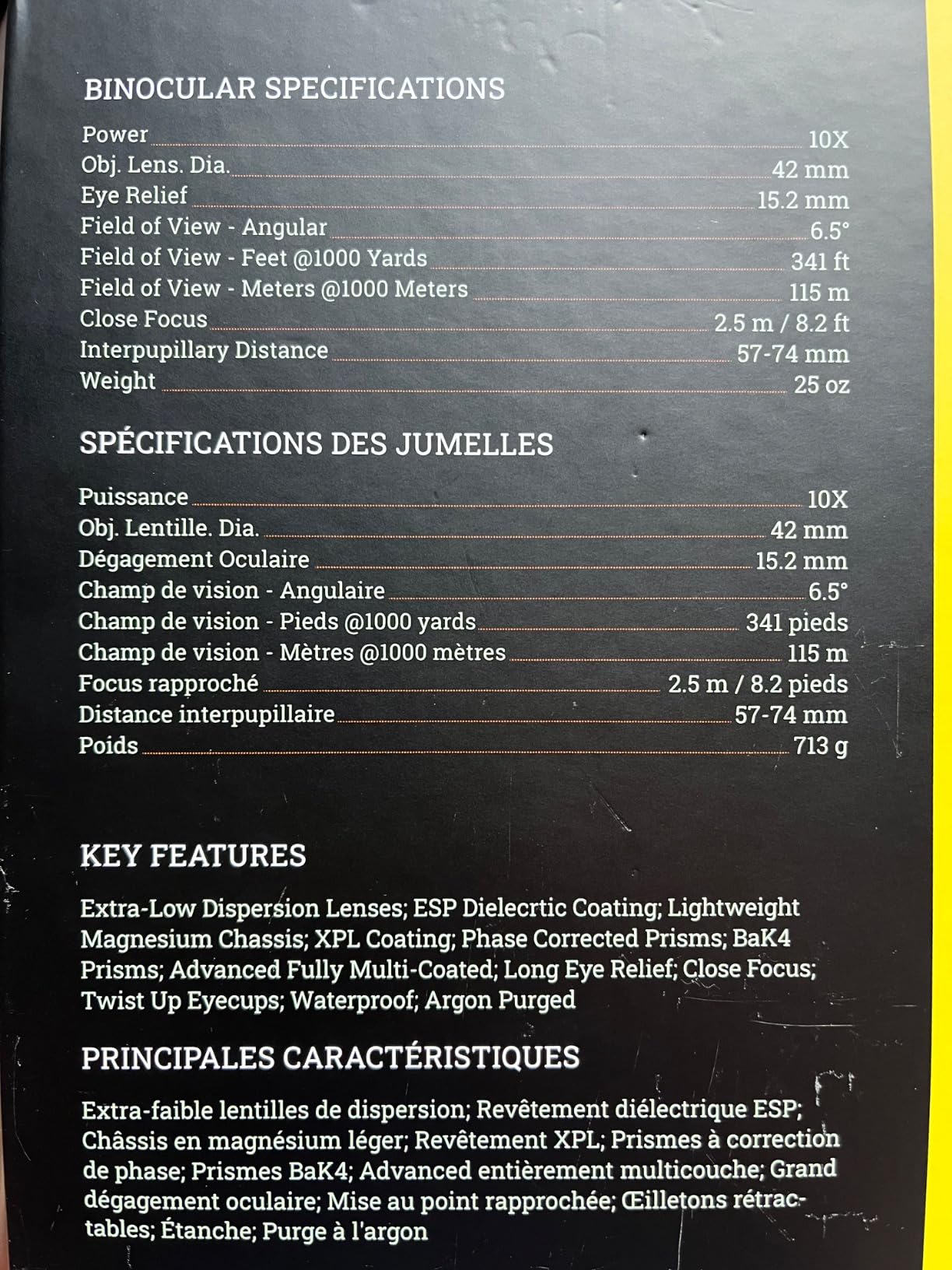
The Midas is the value entry into ED glass with phase-corrected BaK-4 roof prisms, and reviewers make the comparison directly: they describe the image as comparable to optics costing several times more. Advanced fully multi-coated lenses plus the ESP dielectric prism coating, which the maker states reflects over 99 percent of light to the eye, produce brightness and contrast that punch above the tier.
Argon purging handles both waterproofing and thermal stability, which is why reviewers do not flag fogging as a recurring problem. The magnesium body is compact and not bulky for travel, and at least one owner notes the unit arrived well collimated with no alignment issues straight out of the box, which is not always true at this level.

The lifetime warranty is a genuine differentiator. Across hunting forums, warranty length and ease of claim are treated as a decisive quality signal, and a lifetime warranty on a mid-tier optic removes a specific worry: what happens after the third season when a barrel goes out of alignment.
The complaints are about handling rather than optics. The center focus wheel is described as stiff and sensitive with a narrow range of motion, which is a real annoyance when you need fine adjustment. Weight is heavier than buyers expect for the price, and there are isolated reports of defective focus knobs on 10×42 units, which warranty service should resolve.
What collimation means and why it matters
Collimation is the internal alignment of the two barrels, the optical equivalent of wheel alignment. A badly collimated binocular produces two images that do not merge into one until you focus, and the picture never sits fully crisp. Cheap optics ship with collimation that drifts, and the fix is a repair shop visit rather than a focus adjustment.
Owners reporting good collimation out of the box are reporting the thing that cannot be fixed by a diopter ring. It is worth testing any binocular you buy by looking at a high-contrast straight edge at the center of the field and near the edge, and confirming both halves merge cleanly.
Where the fringing shows up
Chromatic aberration becomes noticeable at ranges beyond about a mile according to reviewers, which in hunting terms means a distant ridge line scanned repeatedly rather than game at shooting distance. At normal elk, deer and turkey ranges, the ED glass is doing its job.
The one thing to check in person is the focus feel. A stiff center wheel is a preference issue until you are dialing onto a distant animal in wind, at which point it becomes the only thing about the optic you notice.
11. Bushnell Fusion X 10×42 Ranging – Ranging From a Tree Stand
Bushnell Fusion X 10x42mm Ranging Binoculars, ARC Technology
10x42
700 yard range
ARC angle compensation
ActivSync auto display
IPX7 waterproof
Pros
- ActivSync display adjusts reticle and readout automatically
- ARC returns true horizontal distance
- Range without switching devices
- IPX7 waterproof to 1 meter for 30 minutes
Cons
- 700 yard range is short against premium rangefinder glass
- Heaviest all-in-one at 2.2 pounds
- Lower rating with more mixed feedback
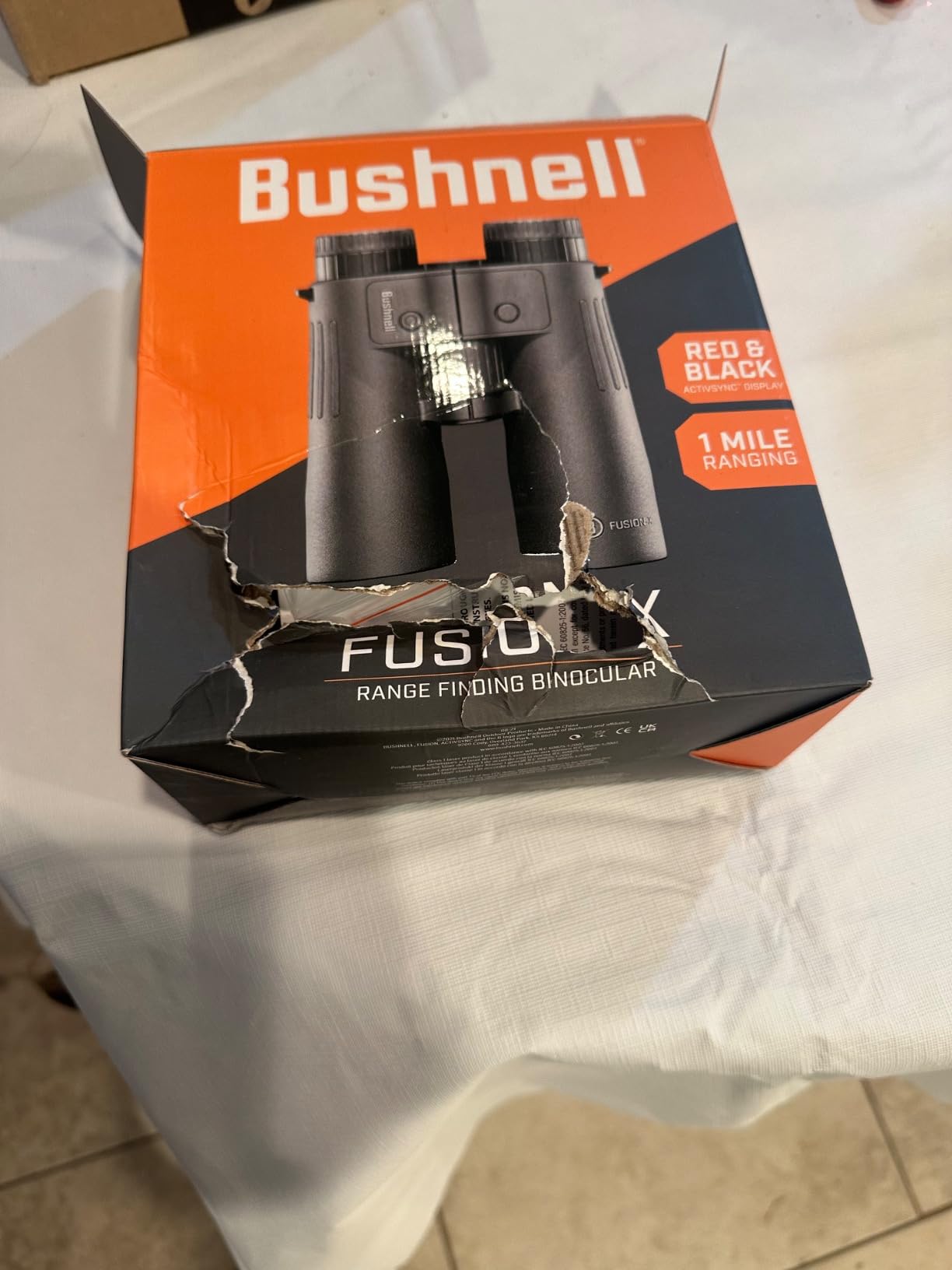
The Fusion X does the same core job as the Vortex Fury HD 5000 at a lower entry point, with one significant difference in both directions. Its laser measures to 700 yards against the Vortex’s 5000, which for virtually every deer and elk hunt is a distinction without a difference. Its weight, at 2.2 pounds, is heavier than the Vortex and heavier than any plain binocular in this roundup.
What it does well is the ActivSync display. The reticle and readout auto-adjust from black to red to hold contrast against whatever background you point at, which is a genuinely useful feature when you are ranging a dark animal against a bright sky, or a pale one against timber. Owners consistently rate the display as readable.
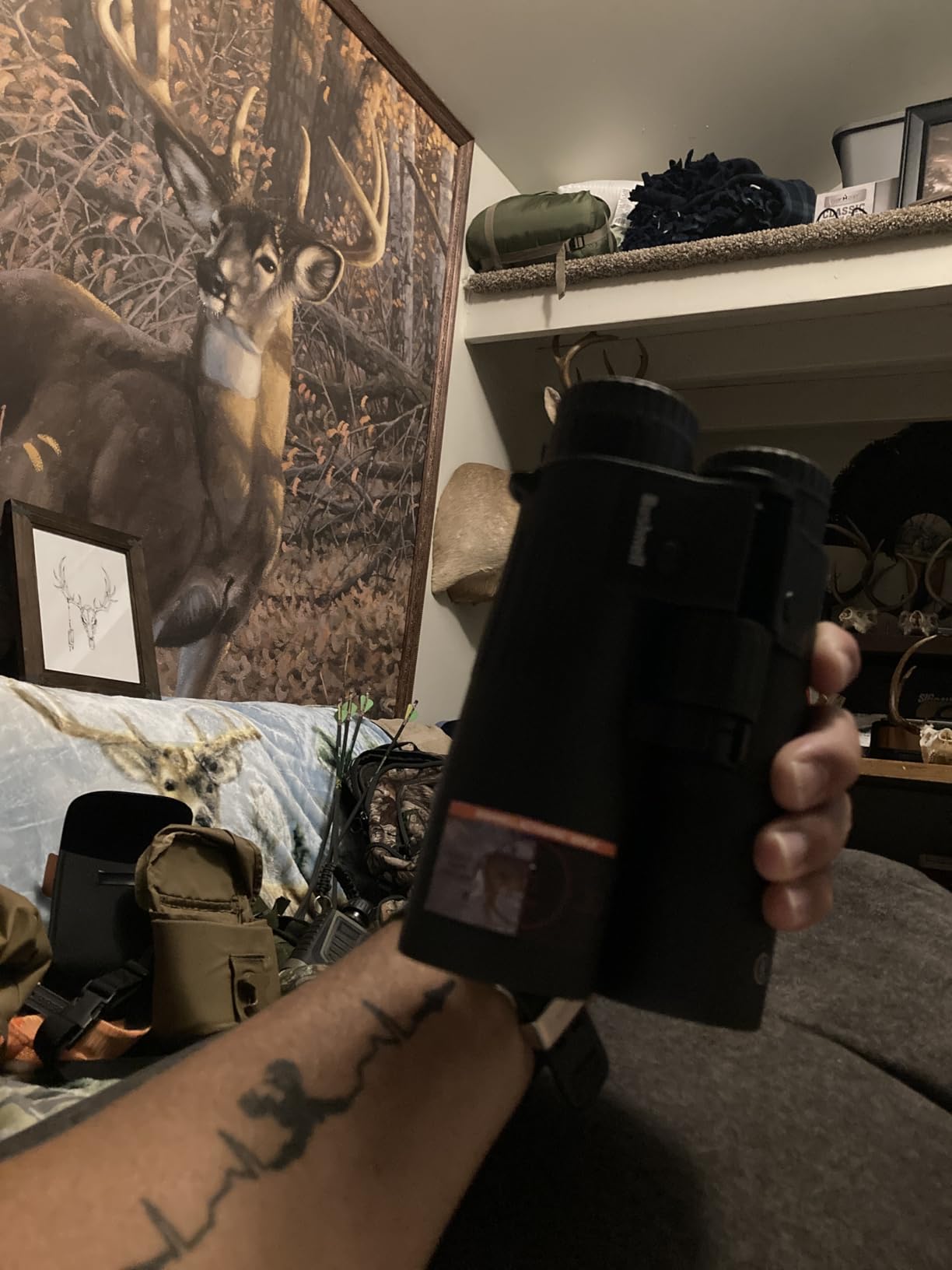
ARC technology gives true horizontal distance with plus or minus 1 degree of angle accuracy, alongside line-of-sight distance, which is the number that matters for a downhill shot from a ladder stand. Ranging built into the binocular eliminates the eye strain of squinting at a single-stick rangefinder and the wasted time of swapping gear, and reviewers make that point directly.
The HDOS optical system gives good clarity alongside the ranging, and IPX7 waterproofing to 1 meter for 30 minutes is a real rating. It is lithium battery powered. At 86 reviews averaging 4.4 stars with 70 percent five-star ratings, this is the smallest review base and the most mixed sentiment in the roundup.
Rangefinder glasses compared
Between the two ranging options here, the decision comes down to weight and reach. The Fury HD 5000 is lighter at 916 grams, ranges to 5000 yards on reflective targets, and adds Best and Last target modes for obstructed game. The Fusion X is 2.2 pounds, ranges to 700 yards, and compensates angle to plus or minus 1 degree. Both return horizontal distance on a downhill shot.
If your hunting involves long sightlines across open country where measuring a 600-yard shot is realistic, the Vortex wins. If you are setting up in timber or a field edge and ranging deer between 20 and 120 yards, the Bushnell’s shorter range is a non-issue and its auto-adjusting display is arguably nicer to read.
Before you buy any rangefinder
Ranging binoculars are heavier than plain binoculars, always, because the laser, the display and the battery all live inside two barrels you must hold steady. The plain 10x42s in this roundup weigh between 1.3 and 1.8 pounds. Rangefinders start around 2 pounds and go up.
So the honest test is whether ranging changes a shot you would otherwise hesitate on. If it does, the weight is a cost worth paying. If your bow is zeroed and you have already worked out your range judgment, the same money buys noticeably better glass in a plain binocular. That is the trade-off, and it is the most common debate on hunting forums about this category.
12. Leupold BX-4 Pro Guide HD 10×42 – Japanese Build, Wide View
Leupold BX-4 Pro Guide HD Binoculars, 10x42mm Gen 2 (184761)
10x42
7.2 degree field of view
DiamondCoat 2 coating
Made in Japan
Limited warranty tier
Pros
- Large step up in clarity from entry-level glass
- Open-bridge dual-hinge design is light and ergonomic
- Guard-ion coating sheds water dirt and fingerprints
- Generous diopter adjustment range
Cons
- Included carrying case is cheap and undersized
- Minority of units arrive unable to achieve focus
- Strap inclusion is limited
The BX-4 Pro Guide HD Gen 2 is built around Leupold’s Elite Optical System, which targets high light transmission, glare reduction and resolution in one package, and the result is the biggest clarity jump owners describe moving up from an entry-level pair. Reviews describe a bright, sharp image at dusk and at long range, with a field of view good enough to locate and track moving game.
The 7.2 degree apparent field of view is the widest figure on this list by a clear margin, which makes it excellent for scanning and for following a buck through a clearing. The open-bridge, dual-hinge design keeps it light and ergonomic at 1.6 pounds, and the aluminum and rubber body is well built with smooth, easy focus.
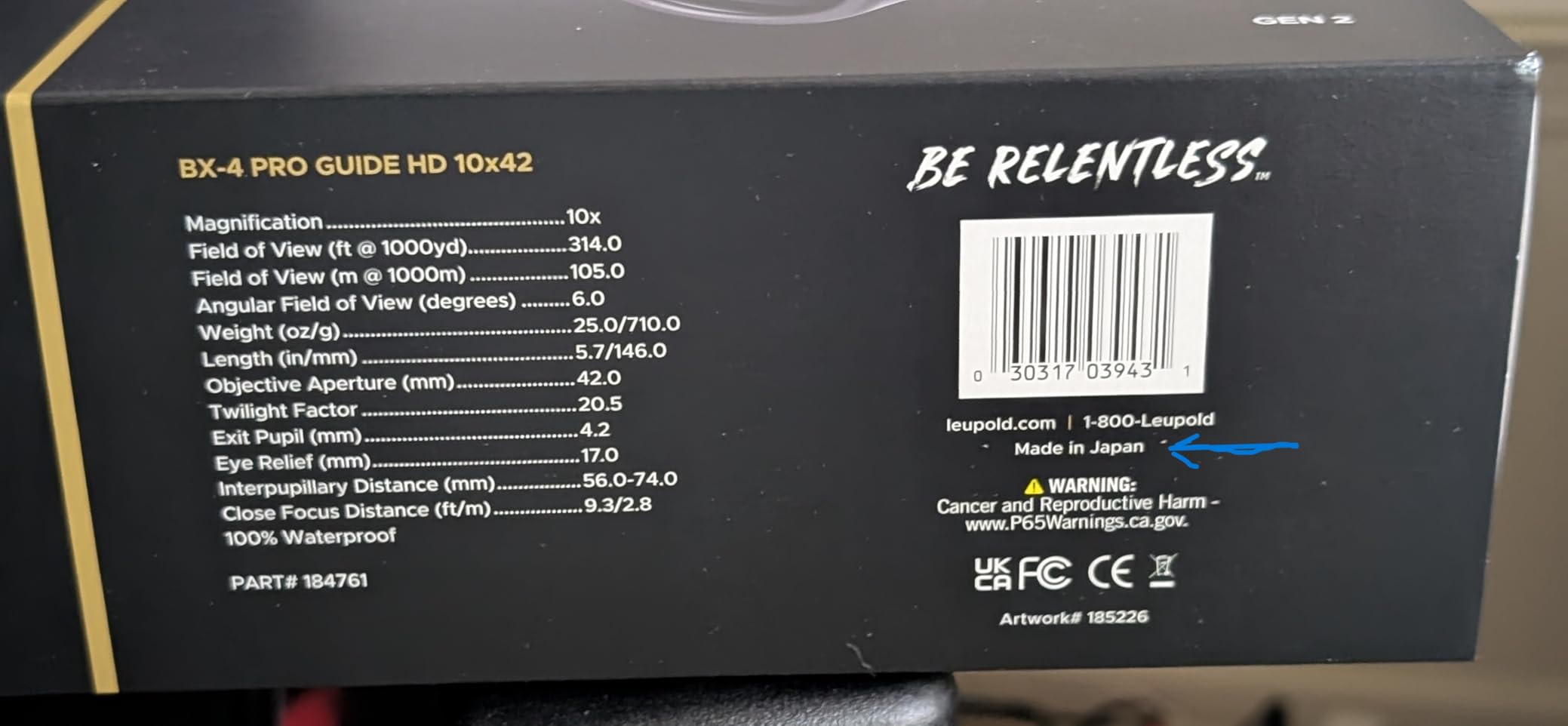
Guard-ion hydrophobic coating sheds water, dirt and fingerprints, which in a wet November hardwood matters more than any spec on the list. Owners confirm Japanese manufacture by checking the box, and that verification is part of the appeal for a lot of buyers. Leupold’s full lifetime guarantee applies.
The complaints cluster around accessories and outliers. The included carrying case is described as cheap and undersized, which is worth accounting for if you plan to keep the optic in a vehicle. A minority of units reportedly arrive unable to achieve focus, possibly from shipping damage, and some buyers found the included strap limited or optional.
What Japanese manufacture changes
It is a quality-control signal more than a materials claim. Japanese optics manufacturing has a long association with tight optical tolerances, and buyers who check the box frequently report that the feeling matches the reputation. It is also why the price sits above the Vortex and Nikon options at the same magnification, and why owners describe enthusiasm disproportionate to the specs.
That enthusiasm has a cost. The 45-review base is the smallest on this list apart from the Bushnell Fusion X, so there is less long-term owner data backing the reputation. That is not a criticism of the optic, it is a caution about buying decisions.
Where it fits
The wide field of view makes this the most natural choice in this roundup for someone who spends a lot of time scanning rather than resolving single distant animals. Combined with a 1.6-pound body and the open-bridge ergonomics, it is comfortable for a full sit-and-spin morning.
If you want the widest possible field of view, compare this against the Nikon PROSTAFF P3 at number five. The PROSTAFF is lighter, has more eye relief, and costs considerably less. This one has the better optical system and the wider view. Those are real differences, but they are not the difference between a good hunt and a bad one.
Buying Guide: How to Choose Hunting Binoculars
The two numbers, and the third one that decides brightness
A binocular labeled 10×42 does two things. The first number, 10, is magnification power: it makes a distant animal look ten times larger to your eye. The second number, 42, is the objective lens diameter in millimeters, which is the size of the big lenses at the front and determines how much light the glass gathers.
The third number, the one that decides brightness, is the exit pupil. Divide the objective diameter by the magnification and you get the diameter of the beam of light that reaches your eye. A 10×42 gives you 42 divided by 10, or 4.2 mm. A 10×50 gives you 5.0 mm. A 12×50 gives you 4.2 mm again.
Your pupil dilates to about 7 mm in a dark room and constricts to roughly 2 to 3 mm in bright daylight. In low light, a wider exit pupil means a brighter image. That is the entire argument for a 10×50 over a 10×42, and it is why the debate about objective size never really goes away. It is also why 12×50 does not give you a brighter picture than a 10×42, despite the bigger lenses.
8×42 vs 10×42 vs 10×50 vs 12×50: Which Do You Actually Need?
Buy a 10×42 unless you have a specific reason not to. Ten power handles deer, elk, turkey and varmint at real hunting distances, 42 mm keeps the image bright at dawn, and the whole package stays light enough to wear all day.
Choose an 8×42 if you hunt in thick timber or brush, or if you are a younger hunter or one who finds high magnification tiring. Eight power gives you a wider field, a steadier image and easier target acquisition in close cover. Many experienced hunters keep an 8x as their everyday glass for exactly this reason.
Move up to a 10×50 only when you hunt in open country and start regularly. The 5.0 mm exit pupil gives a visibly brighter image in the last hour of light, which is the difference between seeing and identifying on a long evening sit.
A 12×50 is a specialist tool, not an all-rounder. It makes sense for Western big-game at 400 to 500 yards, where you need magnification more than you need a wide view, and where you can rest the barrels or use a tripod. As a primary handheld hunting setup it is the configuration most often regretted.
Matching magnification to your quarry
Whitetail deer at 60 to 150 yards want 8x or 10x, and in that range even an 8×42 resolves antlers adequately. Mule deer and elk in open Western country at 300 to 500 yards want 10x at minimum and 12x if you can hold it steady. Turkeys at dawn, often in hardwoods at 30 to 60 yards, want brightness over magnification, which argues for a 10×50 or a low-light-oriented pair.
Squirrel and small game at under 40 yards want wide field and close focus, so 8x is the working answer. Varmint and predator calling at 100 to 200 yards works well with 10×42, and the decision depends on whether you are shooting rifles with magnification or sitting with a bow at close range.
Open Western terrain at 400 yards plus is the one case where 12x is defensible. Thick brush and dense timber is the one case where it is not, because the narrow field will cost you more animals than the magnification gains you.
Glass quality: what actually makes binoculars sharp
The concrete spec to shop for is ED or HD glass, which means extra-low dispersion. ED glass corrects chromatic aberration, the tendency of a lens to focus different colors at different points, which shows up as color fringing around high-contrast edges and as a loss of contrast overall. Owners consistently describe the visible difference between ED glass and standard budget glass, mostly at dawn and against bright sky.
Second is coating. Multi-coated means several layers of anti-reflective coating on each surface. Fully multi-coated means that treatment is applied to all air-to-glass surfaces, which is where the light-gathering gain lives. Phase-corrected or dielectric prism coatings reflect more light and preserve contrast through the prism.
Third is prism glass. BaK-4 produces a brighter, more even image than BK-7 at minimal cost difference, which is why it appears on several picks here even at lower tiers. Phase-corrected roof prisms go further, which is why mid-tier and premium models specify them.
Forum consensus, and our own read of the review data, is that premium glass is visibly and obviously better side by side than mid-tier, and mid-tier is visibly better than cheap. Those are two real steps, not ten.
Durability, waterproofing and freezing temperatures
Look for nitrogen purging and O-ring seals. Nitrogen purge means the interior is filled with dry gas and sealed, which is what prevents internal fogging when you move from a cold truck into a warm cabin, or when you glass all morning and then sit down next to a fire.
Waterproof ratings matter more than the word waterproof. IPX7 means the housing is rated for submersion. Several picks here carry it and the others carry generic waterproof claims. For deer, elk and waterfowl hunting, either is adequate. For duck blinds, snow and wet brush, IPX7 is worth paying for.
Rubber armor is the difference between surviving a drop and cracking a barrel. On freezing mornings, the bigger risk is not cold but condensation, so a sealed nitrogen-purged body plus a case that lets the optic breathe is the practical combination. Never seal a wet binocular into a closed case; you are trapping the moisture you just created.
Eye relief, glasses and one-eyed shooting
Eye relief is the distance in millimeters from the last lens surface to your eye, and it determines whether a spectacle lens can sit under the eyecup without the rim pressing into your brow. Fifteen millimeters is the working minimum. Sixteen to eighteen is comfortable, and this roundup runs from 15 mm to 18 mm.
If your interpupillary distance is small, under about 60 mm, the barrels may not close far enough and you will see the edge of the field or your own nose. A wide field of view makes this worse, not better, because it means the barrels sit closer together. If your face is narrow, test the pair before buying and rotate down to the point where the field is clear, because a binocular that vignettes is unusable.
Left-handed shooters face the same fit problem and get no separate left-handed diopter. The workaround is to twist the right barrel’s diopter ring further and accept a slightly less centered focus, which most left-handed archers do without trouble. Our guide for senior shooters covers the related fit issues if reduced contrast sensitivity is part of the picture.
Weight, carry systems and all-day comfort
Anything over about 25 ounces gets moved from your chest to your pack, and a binocular in a pack is a binocular you do not use. That is the whole argument for staying under a pound and a half. The picks here run from 1.3 pounds on the Nikon PROSTAFF P3 to 2.7 pounds on the Vortex Viper HD 12×50.
A harness versus a neck strap is a comfort decision, not an optics decision. A chest harness keeps the glass high, warm against your body and out of the way of your rifle or bow, and it does not swing when you walk. A neck strap is simpler, cheaper and easier on its own, and it works fine if you glass from a vehicle or a stand.
The carry system matters most with heavier glass. Above about 1.8 pounds, a harness stops being a comfort upgrade and becomes necessary, which is why several heavier models here ship with one included.
Rangefinder binoculars: who needs one and who does not
You need a rangefinder if you shoot from fixed positions, if your effective range is unfamiliar, or if you have not worked out your holdover for downhill angles. You do not need one if you carry a scope with a reliable rangefinder, if you have done the math, or if your quarry consistently presents inside a range you already know.
The cost is weight, roughly half a pound to a full pound over a plain binocular, plus a battery to manage in cold weather. The benefit is that you never break your sight picture, which is genuinely valuable when a buck steps out at 45 yards below your stand.
A rangefinder app on your phone gets you slope distance and roughly nothing else, and it means pulling out a phone. Angle compensation matters because a 45-yard downhill shot is not a 45-yard shot, and only a binocular with HCD or ARC compensation accounts for that without you doing geometry in your head.
What to skip and why
Skip handheld 12x and above as a primary setup. Not because 12×50 is a bad optic, but because a moving deer at 12x handheld is a brown smudge, and hunters who regret their glass almost always regret buying too much magnification for their patience and their hands.
Skip the very cheapest tier entirely. The forum consensus here is blunt and correct: unbranded budget models recommended as serious hunting optics are toys, and the same advice applies to any pair with a vague warranty and no nitrogen purge. A non-waterproof, non-fogproof build is a dealbreaker for all-season hunting.
Skip marketing jargon. The same optic is sold as birding, hunting, safari and sports glass with different vocabulary, which is the single most cited frustration among buyers. Judge the spec sheet, not the product name. If a listing says low-light capable and gives you no exit pupil, coating specification or glass type, it is telling you nothing.
Also skip buying two specialty pairs when you have one good general pair. That is the most repeated piece of advice on the forums we reviewed: one good pair of glass that suits your eyes is all most hunters need.
How to test a pair before you commit
First, set the interpupillary distance. Open the barrels until you see a single circular field with no dark edge or impression of your nose, then close them slightly until the edge just appears, then back off a hair. That position is your fit, and if it does not exist on this optic, move on.
Second, check eye relief with your glasses on. Push the eyecups down and see how much of the field you can reach. Then focus on a distant object and confirm both halves of the image merge cleanly at center and near the edge. Blinking and leaning are the two tests that catch eyestrain early.
Third, check focus from infinity down to close range slowly, and then shake it gently. A stiff center wheel or a focus that will not hold is the defect most likely to annoy you after a season of use. If the optic is tripod adaptable, confirm a thread or adapter fits before you leave.
If you are buying used or open-box, check collimation first with a high-contrast straight edge, then look for haze or separation in the image, then verify the focus and diopter both work through their full range. Demo units are a legitimate way into mid-tier glass, and forum buyers treat them as such.
Frequently Asked Questions
What is better, 10×42 or 12×50 for hunting?
A 10×42 for most hunting. It gives a 4.2 mm exit pupil, a wider field of view and a weight you can wear all day. A 12×50 has the same 4.2 mm exit pupil with more magnification and a 5.5 degree field, so it is not brighter. Choose it only for open country at 400 yards or more, where you can rest the barrels or use a tripod.
Which is better for deer hunting, 8×42 or 10×42?
10×42 for open country and deer at 100 to 200 yards. 8×42 wins in thick timber and brush, where its wider field of view and steadier handheld image help you find and track animals in close cover. Many hunters carry an 8x as their everyday glass and reach for higher power only when terrain demands it.
Should I get 8x or 10x binoculars for hunting?
Get 10x unless you hunt mostly in closed timber. Ten power resolves distant game better, and a 10×42 is lighter and wider than the 12×50 alternatives. Eight power is steadier and shows more of the scene at once, which is the deciding factor when a deer appears 30 yards from a treeline and vanishes behind a sapling.
What type of binoculars should I buy for hunting?
A waterproof, fogproof, nitrogen-purged 10×42 weighing roughly 20 to 25 ounces, with at least 15 mm of eye relief, ED glass and a lifetime warranty. That spec profile covers deer, elk, turkey and varmint hunting for the overwhelming majority of shooters, and it is where the best binoculars for hunting sit.
What binoculars have the best glass?
Shop for the spec, not the badge: extra-low dispersion glass, fully multi-coated lenses, BaK-4 or phase-corrected roof prisms, and a stated exit pupil. Premium brands like Zeiss and Leica are visibly better side by side than mid-tier glass, and mid-tier is visibly better than cheap. Among affordable options, ED glass pairs like the Athlon Midas and Nikon Monarch M7 deliver most of the premium look.
How much weight should hunting binoculars weigh?
Stay under about 25 ounces if you can. Anything heavier tends to get pushed into a pack pocket and stays there, which means you do not use the glass. A harness helps above roughly 1.8 pounds. If you hunt on foot with a heavy pack, prioritize a lightweight nitrogen-purged 10×42 over a brighter but heavier option.
The Best Binoculars for Hunting in 2026
The best binoculars for hunting are the pair you will actually carry, at dawn, in the rain, for six hours. That is the Vortex Crossfire HD 10×42, and it wins this roundup because it does the ordinary things exceptionally well: bright multi-coated optics, a nitrogen-purged waterproof body, 15 mm of eye relief, and an unlimited lifetime warranty backed by more owner reviews than anything else here.
Buy the Bushnell H2O Xtreme if your weather has no manners. Buy the Nikon PROSTAFF P3 if you wear glasses or shoot left-handed. Buy the Vortex Fury HD 5000 if you bowhunt from a stand and want the range without looking away. Buy the Leupold BX-2 Alpine HD if your season is dawn and dusk heavy, and the Nikon Monarch M7 if you want ED glass and the widest view at a mid-tier price.
Whichever you choose, test the fit before you leave the store. A binocular that does not suit your eyes is a poor optic no matter what is printed on the box, and the one good pair that jives with your face is worth more than three that do not. Use the buttons above to check current pricing on any of the twelve picks.