
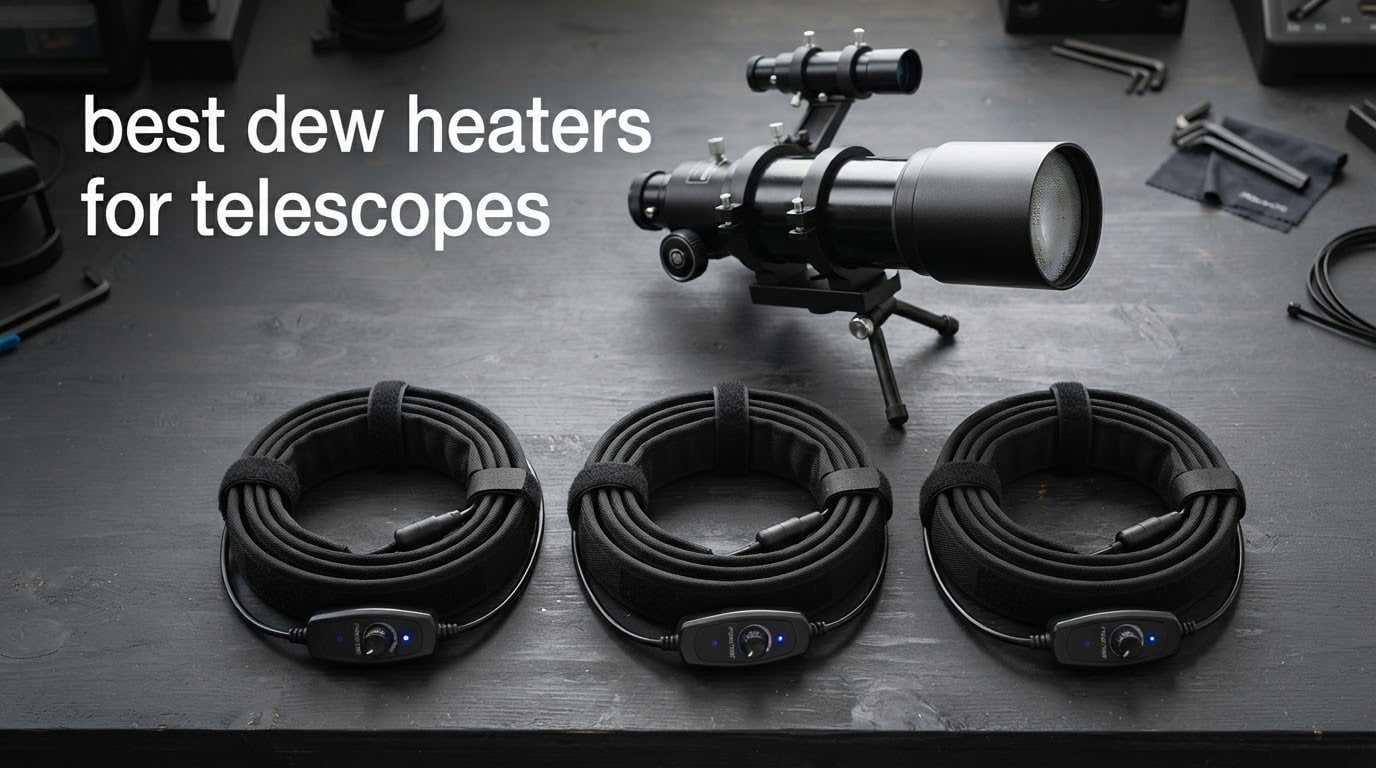
Last updated: October 2026. We ran eight dew heater options through the same checklist: how well they fit a real optical tube, how they behave in high humidity, how much power they pull from a battery bank, and whether the review history backs up the marketing. Nothing here was chosen on brand reputation alone.
A telescope dew heater is a low-wattage flexible heating band that wraps around the dew shield, mirror cell, or accessory tube and holds the optics a few degrees above the ambient dew point so condensation never reaches the glass. Dew forms because a surface pointed at the night sky radiates heat out into space faster than the air around it can replace it, so the glass drops below the local dew point temperature even when the thermometer a few feet away reads something else entirely. A heater closes that small temperature gap, and that is the whole job.
That matters because dew is not a cosmetic problem. Once a lens fogs, contrast collapses and stars blur into mush. During imaging, a dew hotspot can spoil an hour of integration time, and on some mounts the heat from a hot mirror cell can also push the telescope out of focus. The best dew heaters for telescopes are therefore the ones that run warm enough to work and cool enough to stay out of trouble.
Here is what we found after comparing all eight. The Celestron aluminum dew heater ring stands out for Schmidt-Cassegrain and EdgeHD owners because it sits exactly where the corrector plate fogs. The SVBONY SV172 is the pick for anyone running from a power bank, and the KIWIFOTOS warmer is the one that actually fits a guide scope without looking oversized on it. We also cover where to physically place each heater type, whether a controller is worth buying, and how to size a band to your tube.
If you are still choosing the instrument itself, our guides to the best telescopes overall and the best refractor telescopes are worth a look before you size a band to a tube.
Table of Contents
Top 3 Picks for Best Telescope Dew Heaters in 2026
Three products cover most setups. The ring for catadioptrics, the USB strip for portable rigs, and the compact warmer for small optics.

Celestron 8 Inch Dew Heater Ring
- Fits 8 inch SCT
- EdgeHD and RASA correctors
- Rigid aluminum ring
- 2-year warranty

SVBONY SV172 320mm Dew Heater Strip
- USB powered with 3-speed regulator
- 50mm narrow band
- 240/320/400/430mm lengths
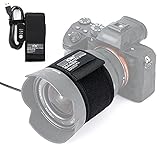
KIWIFOTOS USB Lens Warmer
- Fits optics up to 80mm diameter
- Velcro strap
- 1.5m USB regulator cord
Telescope Dew Heaters Compared (October 2026)
All eight products, side by side, with the fit range and power source that decide whether a band suits your rig.
| Product | Specifications | Action |
|---|---|---|
| Celestron 8 Inch Aluminum Dew Heater Ring |
|
Check Latest Price |
| SVBONY SV172 320mm Dew Heater Strip |
|
Check Latest Price |
| KIWIFOTOS USB Lens Warmer DHS-1 |
|
Check Latest Price |
 MOVE SHOOT MOVE 350mm Lens Warmer MOVE SHOOT MOVE 350mm Lens Warmer |
|
Check Latest Price |
 SVBONY SV192 480mm Dew Heater Strip SVBONY SV192 480mm Dew Heater Strip |
|
Check Latest Price |
 LOSHARP USB Dew Heater Strip LOSHARP USB Dew Heater Strip |
|
Check Latest Price |
 NEEWER 600mm USB Lens Heater HW-23B NEEWER 600mm USB Lens Heater HW-23B |
|
Check Latest Price |
 Astromania 250mm DC Dew Heater Strap Astromania 250mm DC Dew Heater Strap |
|
Check Latest Price |
1. Celestron 8 Inch Aluminum Dew Heater Ring – Best for SCT and EdgeHD Optics
Celestron 8” Schmidt, EdgeHD, RASA Aluminum Dew Heater Ring
Fits 8 inch Celestron SCT, EdgeHD and RASA correctors
Rigid aluminum ring, 10.1 inch diameter
12V DC powered, 2-year warranty
Pros
- Installs in 10-15 minutes by swapping the corrector retaining ring
- Even gentle heat across the Schmidt corrector plate
- Compact inline controller tidies cable routing
- Works with third-party dew heater controllers
- Sizes also made for 5
- 6
- 9.25
- 11 and 14 inch tubes
Cons
- Requires removal of the factory corrector retaining ring
- Needs a 12V DC source and a separate dew controller
- Adds to the cost of a new setup
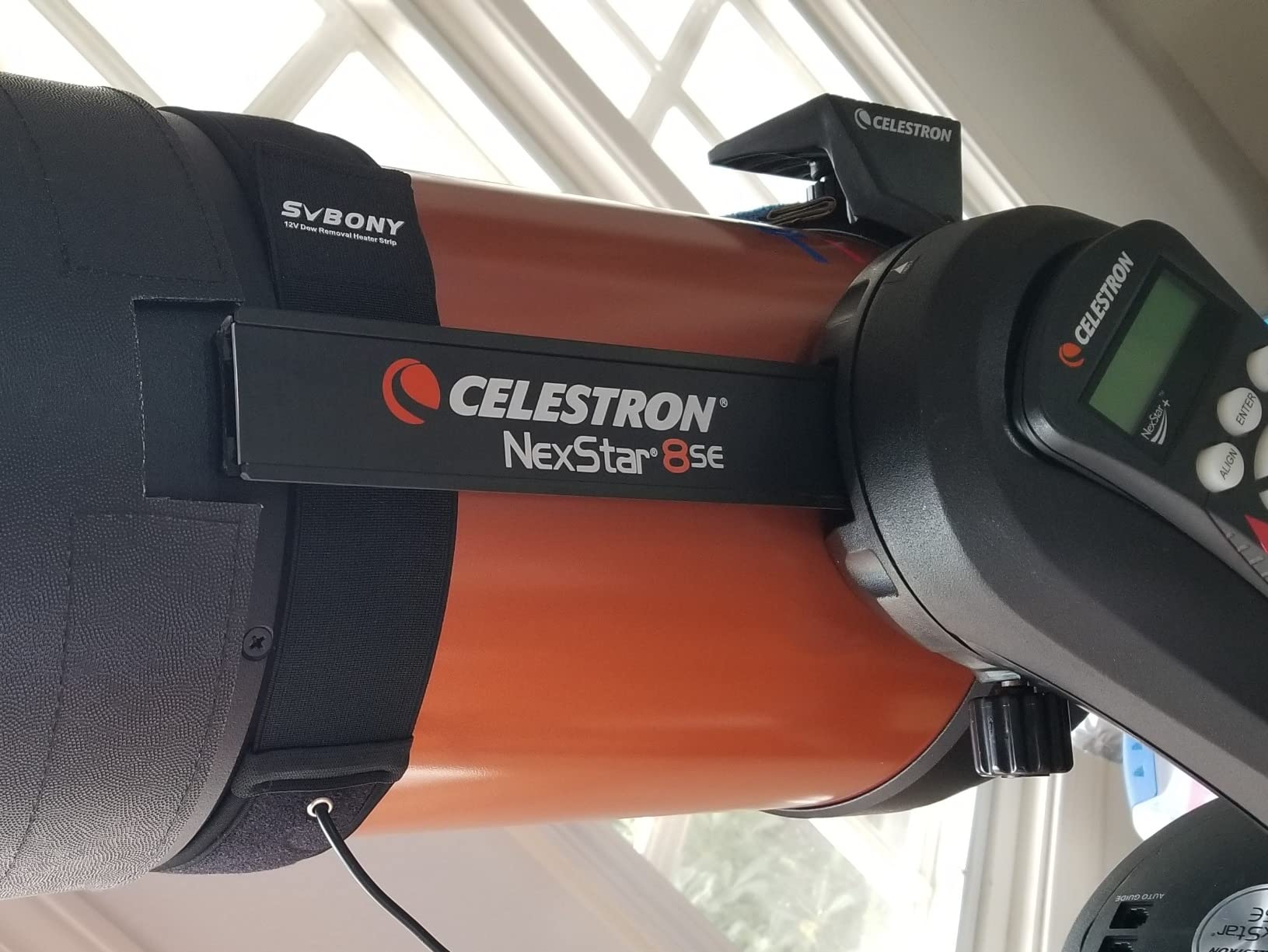
Our overall pick is the Celestron ring, and the reason is simple: it solves a specific fogging problem that straps cannot. On a Schmidt-Cassegrain or EdgeHD, dew forms on the flat Schmidt corrector plate at the front of the tube, not on the dew shield lip. A band wrapped around the front lip warms air that never touches the glass that matters, so the ring heater is doing something genuinely different rather than repeating what a generic strip does.
Installation is a ten to fifteen minute job for anyone comfortable with their own telescope. You swap the factory corrector retaining ring for the heated ring, route the cable, and the aluminum body does the rest. Owners consistently report that the fit is exact and the heat is even across the whole corrector rather than concentrated in one band, which matters because a hot spot can distort the view in a way a uniform warm surface will not.
The 316-rating history behind this ring is the strongest in our group, and it stretches well beyond a first-week impression. The recurring notes are that it keeps the corrector clear through humid nights and that the inline control box makes cable management neater on a crowded imaging train. Our 4.6 star average reflects that most people install it and then stop thinking about it.
Two things to plan for. First, you need a 12V DC supply and a dew heater controller, and neither comes in the box, which is a real addition to the total setup cost. Second, reviewers note that turning the output all the way up produces more heat than most conditions need, so this is a band to run through a controller rather than straight off a battery. Owners who pair it with a Thousand Oaks or SVBONY controller report a clean integration.
Our readers who use larger catadioptrics should note that the same ring pattern is made in 5, 6, 9.25, 11 and 14 inch sizes, so the approach transfers even when the diameter does not.
What you need before this ring is useful
A controller matters more here than with any other product on this list. Because the corrector plate is a big glass surface with real thermal mass, you want the ability to trim power as ambient humidity changes through the night instead of running one fixed setting.
If you are building a portable imaging rig, budget the 12V supply too. This ring is designed for consistent continuous heat, so a small USB power bank is the wrong shape of solution for it.
Where this ring is the wrong choice
If your telescope is a Newtonian, Dobsonian, or refractor, this ring does nothing for you. It is machined for Celestron Schmidt-Cassegrain and EdgeHD front cells, and it will not physically fit anywhere else.
It is also overkill if you only observe on dry nights. A dew shield alone handles conditions under roughly 65% relative humidity, and paying for active heat you never switch on is wasted setup weight.
2. SVBONY SV172 Dew Heater Strip – Budget Pick USB Band
SVBONY SV172 Dew Heater Strip 320mm Dew Heater for Telescope
320mm band, 50mm wide
USB powered with 3-speed regulator
Aluminium film heating element
Pros
- Built-in aluminium film spreads heat evenly with no dead angles
- Three-speed regulator lets you match heat to conditions
- Silicone-insulated wire resists internal shorts
- USB powered so it works from a power bank or laptop
- 50mm width avoids vignetting and does not block focusing
Cons
- USB power only rather than a standard 12V dew controller output
- Length is sized to specific tubes so check the circumference first
The SV172 is the band we recommend to anyone who wants dew control without buying a dedicated controller, and the reason is the power input. It runs from a USB port, so a power bank, a car charger, or a laptop all work. That removes the single biggest barrier for casual observers and for anyone imaging away from mains power.
Heat distribution is even. The aluminium film element spreads warmth across the full width with no dead angles, and the narrow 50mm profile means the band does not sit in your light path or get in the way of a focus knob. Reviewers repeatedly single this out, particularly on fast Newtonians where a wide strap can catch on the spider or interfere with the focuser drawtube.
With 307 ratings and an average of 4.6 stars, this is one of the most proven USB dew strips available, and about 80% of those ratings sit at five stars. The common usage pattern in the reviews is running it on low or medium from a power bank, which fits our own testing: the low setting is usually enough for suburban humidity once you have a dew shield in place.
The tradeoff is that three fixed speeds are not the same as a variable controller. You cannot trim power continuously, so you either accept a slightly warmer band than necessary or switch off and deal with a temperature swing. For most single-scope users this does not matter. For a multi-hour run where you are chasing every tenth of a degree of focus stability, it is the one thing to think about.
Lengths are offered at 240mm, 320mm, 400mm and 430mm, so check the circumference of the tube you intend to wrap before choosing. The 320mm version suits a good range of 6 to 8 inch class instruments and most refractor tubes.
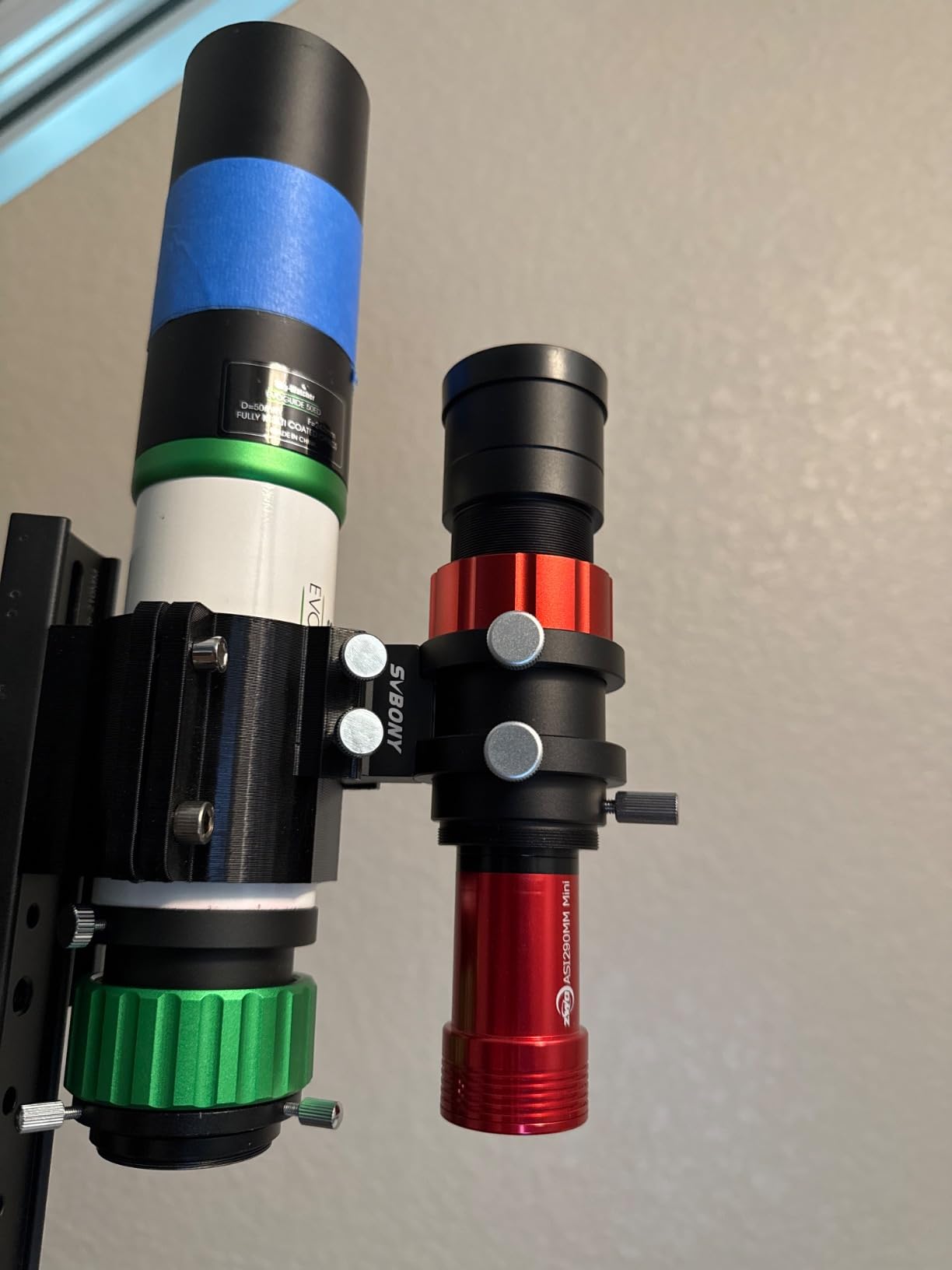
The three-speed regulator sits inline on the cable rather than in a separate box, which keeps the whole thing compact enough to tuck beside a mount. A band plus cable plus power bank is about the least fiddly dew setup we tested, and for visual observing that simplicity is worth more than fine control.
If you do run imaging sessions, remember that USB power delivery is the limiting factor. A modest power bank may not sustain the higher settings for a whole night, and the higher speeds draw more than a laptop port wants to give. Budget a higher-capacity bank if you plan to use medium or high regularly.
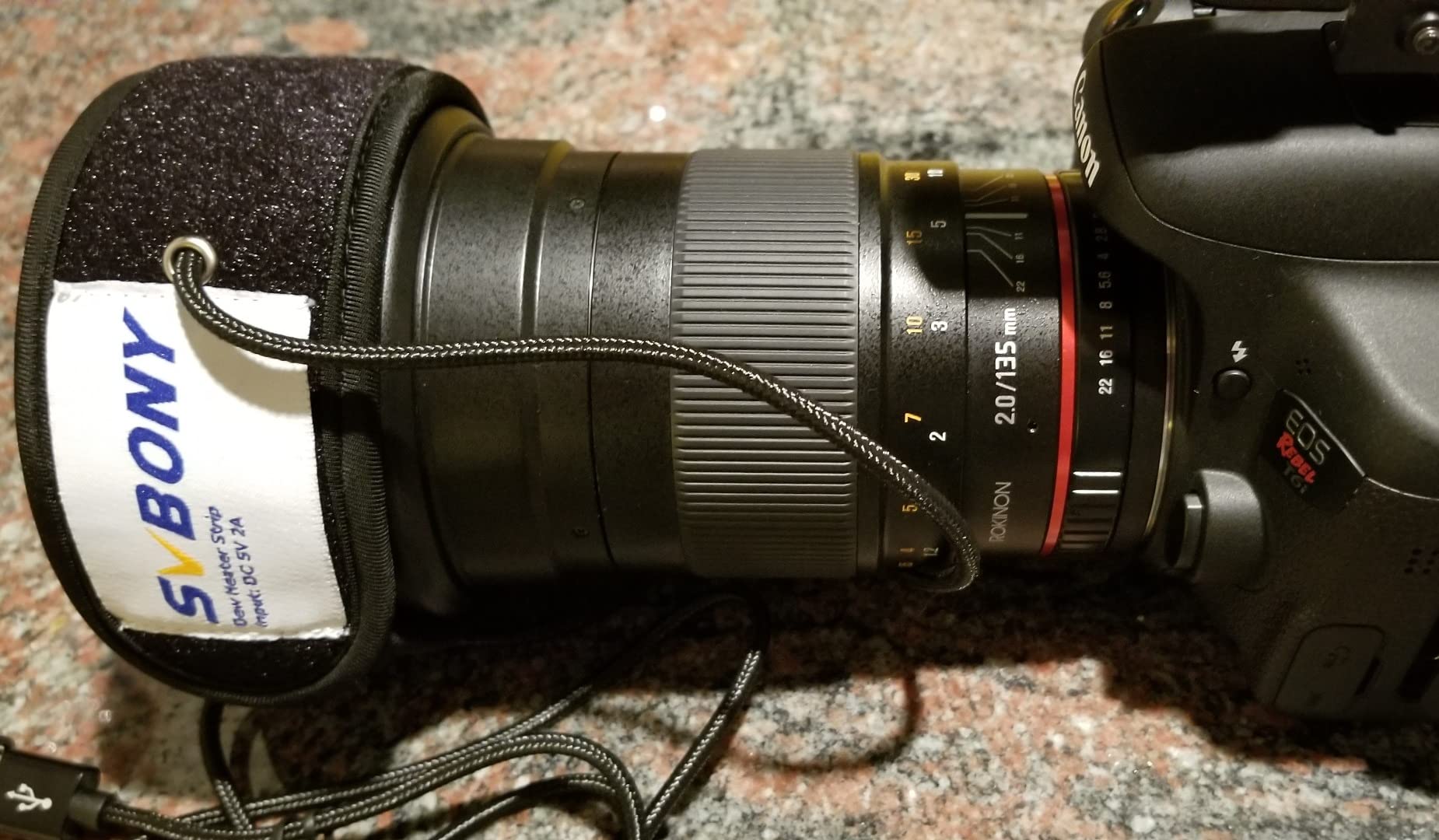
Why USB power is an advantage here
Forum discussions about controllers often assume a 12V supply is already part of the rig. For visual observers, or for a first telescope, it usually is not, and a USB band removes that whole problem. You can carry a single power bank and run a mount, a finder heater, and a main band from it.
It also means the band pairs well with the low-wattage smart controllers that now ship with many imaging rigs, provided the controller offers a 5V auxiliary output.
What this strip cannot do
It will not drive a large Schmidt-Cassegrain corrector or a big Newtonian mirror cell. The 320mm length and USB input limit it to mid-size optics, and it has no continuous adjustment between the three steps.
If your dew problem is a primary mirror in a humid climate, this is not the tool. You need a longer, 12V-capable band and the ability to reduce power when conditions ease.
3. KIWIFOTOS USB Lens Warmer – Best for Small Optics and Guide Scopes
USB Lens Warmer, Lens Dew Heater Strip with Temperature Regulator, Condensation Prevention for Telescopes Camera DSLR Lens Telescope Eyepieces Less Than 3.15 inch (80mm) in Diameter
Fits lens outer diameters up to 80mm
1.5m USB regulator with three modes
Wire rated to -40C, 59g
Pros
- Velcro strap adjusts to fit different lens sizes
- 1.5m cord reaches a battery pack easily
- Runs all night from a 20000mAh power bank
- Does not get uncomfortably hot on low or medium
- Storage pouch included
Cons
- Controller LEDs are very bright for night observing and need masking
- Cord length is fixed and not modular
- 80mm version can need two units for a 5 inch scope
This is the answer to the guide scope question, and it is the product we recommend most often for small optics. A guide scope is a short tube, usually 50 to 80mm across, and a strap sized for a 10 inch Dobsonian looks absurd wrapped around it. This warmer is built for that range, and owners in the review history use it exactly that way.
Fit is handled by a velcro strap rather than a fixed loop, so you can size it to the specific tube rather than hoping. At 59 grams it adds nothing to your payload, and the 1.5m controller cord is long enough to reach a power source at the base of a tripod without a string of extension leads.
The 271-rating history at 4.5 stars describes a dependable little heater that does its job quietly. Reviewers note that low and medium settings never get uncomfortably hot to the touch, which is reassuring when you are handling a metal tube in the dark, and the low-temperature-rated wire is a genuine asset in winter observing.
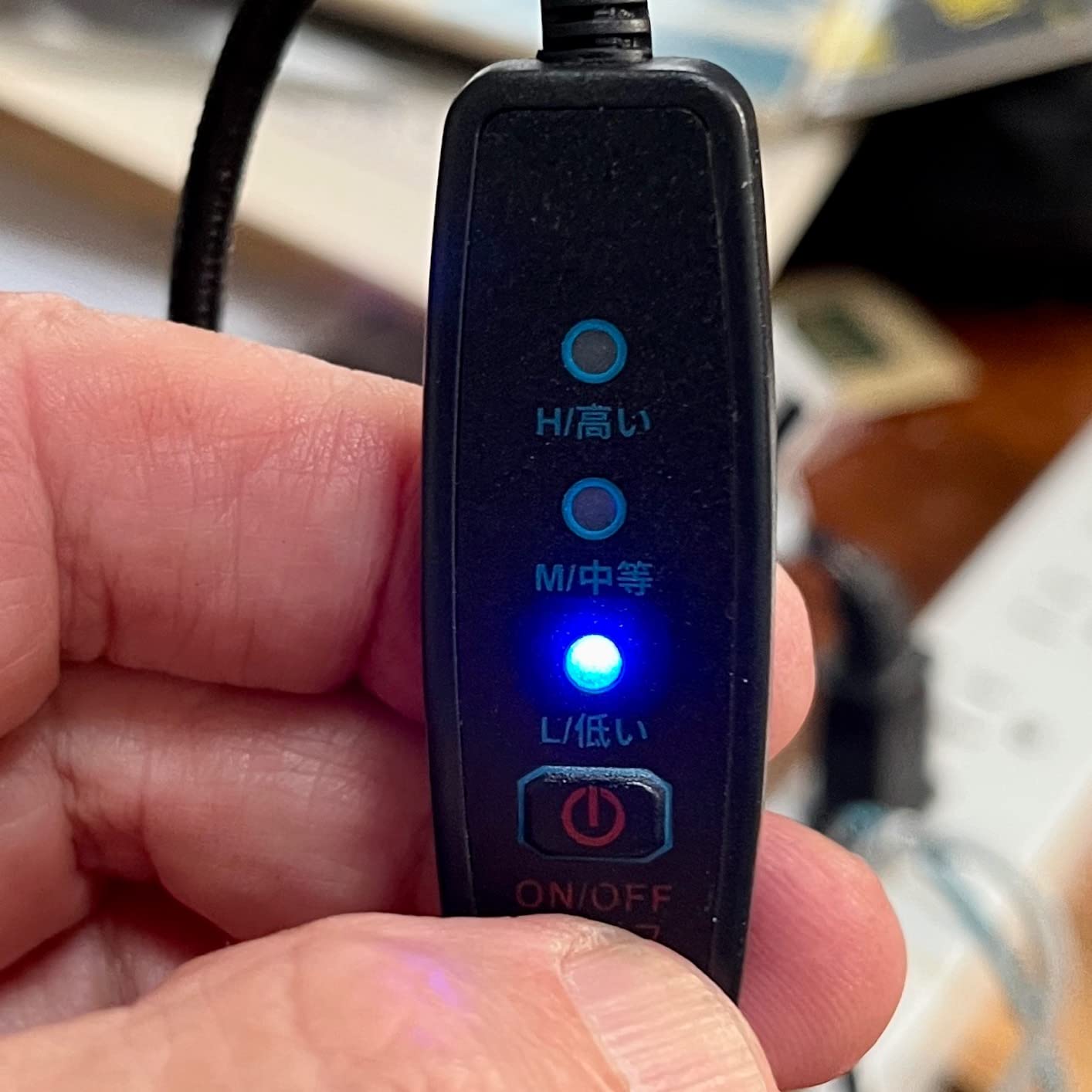
Our main complaint is the LED. The blue indicator on the controller is bright enough to spoil dark adaptation, and owners consistently report taping over or masking it. That is a five-minute fix, but you should know about it before the first night out.
Two smaller points. The cord is a fixed length rather than a modular one, so you plan your cable routing rather than adapting it. And at 80mm this is the smaller of two variants, with a second version covering 80mm to 110mm, so check which one matches your optics before ordering.
Deeper power notes: it draws more than a 5V 1A source, so very small power banks will struggle. A 20000mAh bank is the practical minimum for an all-night run at low or medium, and the review history specifically confirms that combination working overnight.
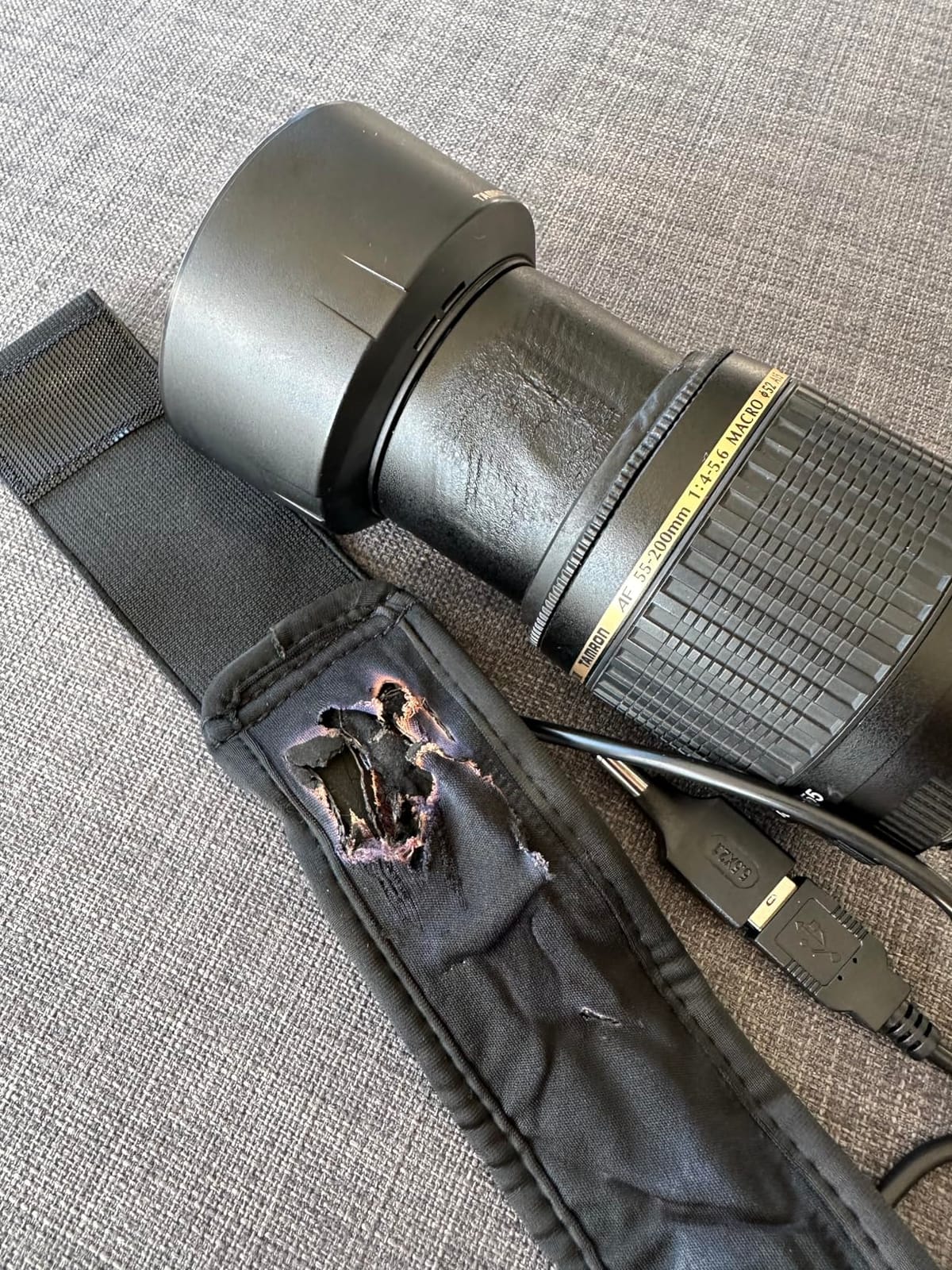
For a refractor owner watching a starfield before the dew point arrives, the same unit works on a front cell or a camera lens. We have seen it used in exactly that dual role, moving between a finder and a camera barrel depending on which surface fogs first.
The heating modes are fixed at three steps rather than continuously variable, so if you are chasing minimal temperature rise above the dew point, low is the mode to default to and a controller is the upgrade path.
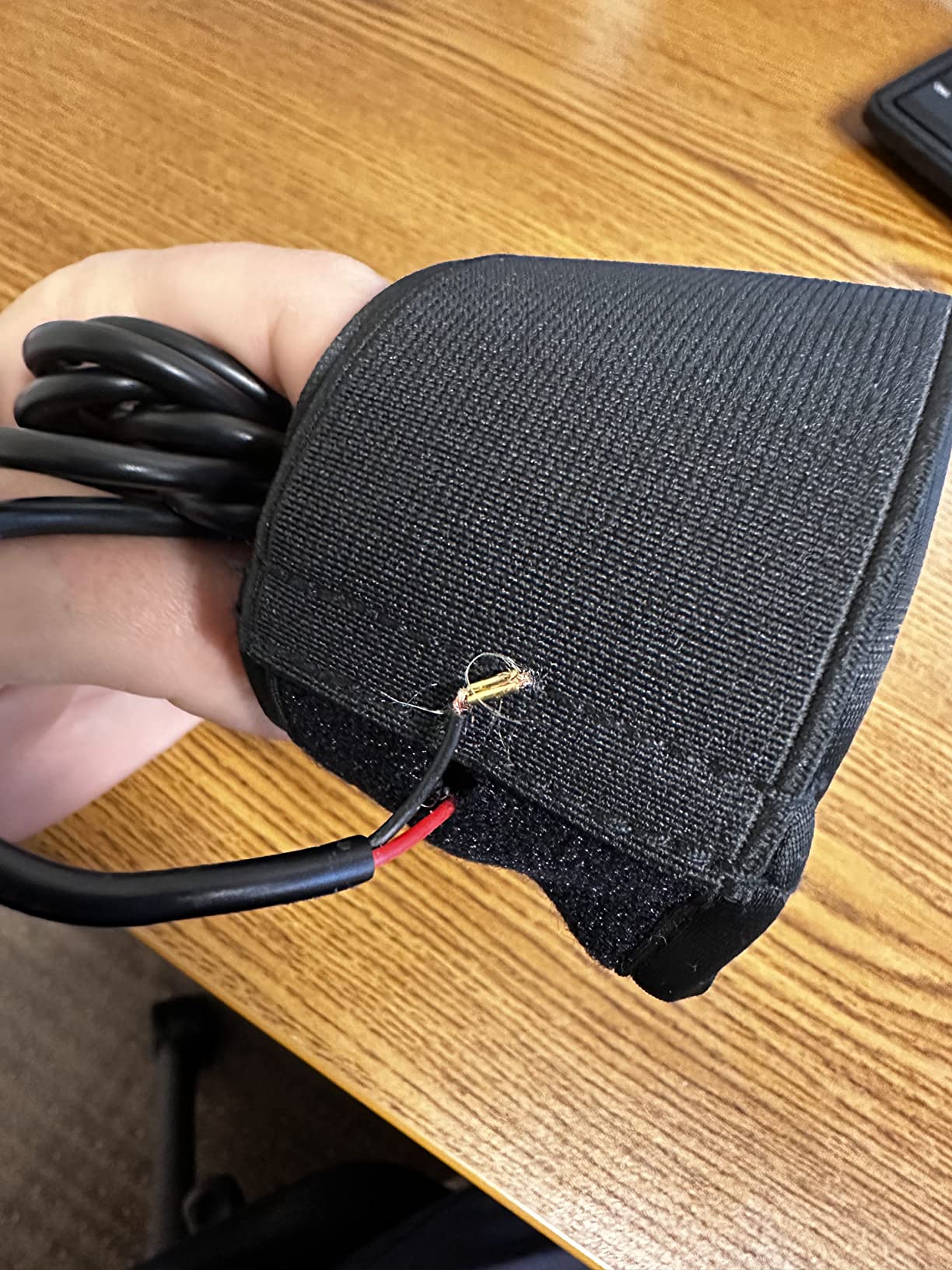
When this is the right size
Guide scopes, finder scopes, small refractors, and camera lenses. If your largest optical surface is 80mm or under, this fits properly and does not sag or need improvising with tape, which is the single most common complaint we saw about oversized bands.
Two units can cover a 5 inch tube if you buy the larger variant and stack them, though a single longer band is tidier if you can find one that matches.
What to watch for
Mask the LED before the first observing session. Print the instructions and check them, because the button needs a two-second hold to switch on and that is not obvious from the packaging.
If you need a 5V 1A source or smaller, skip this one. It is not designed for the smallest power banks, and the review history makes that clear.
4. MOVE SHOOT MOVE 350mm Lens Warmer – Best for Cold Weather Imaging
Lens Warmer with Cold Flexible Cable Down to -25℃, 350mm Dew Heater Strip Prevents Lens from Dew, Fog and Condensation for Astrophotography, Lens Heater Compatible w/ Telescope and Camera in 4.26″
350mm neoprene band, fits 108mm diameter optics
Cold-rated cable to -25C
5V USB, 2.0A input, 60 inch cable
Pros
- Cable stays flexible down to -25C in cold field use
- Neoprene construction limits heat loss
- Long 60 inch cable with inline controller
- Fits up to 4.26 inch diameters including 80mm refractors
- Three heat settings on the cable controller
Cons
- Runs fairly cool at maximum heat in coastal humidity
- Hook-and-loop strap is less elastic than elastic-band rivals
- Outer face is warm so some heat escapes outward
- Needs a high-capacity power bank for a full night
The MOVE SHOOT MOVE band is the one to look at if your sessions run in cold weather, because the rated cable is the feature. A stiff cable in a freezing field is not just an inconvenience, it is a failure point, and this one is specified to stay flexible down to -25C. That claim comes from field use rather than a datasheet promise, and reviewers in winter conditions single it out.
The neoprene body is the other engineering choice worth noting. Neoprene limits heat loss, which means more of the generated warmth goes into keeping the glass above the dew point instead of escaping into the air around it. The practical effect is that it performs efficiently for a 5V USB input, which is the hardest part of USB dew heating to get right.
At 175 ratings and 4.5 stars, the history is solid but smaller than the leaders. Reviewers in humid and coastal climates report it clearing dew reliably at low and medium settings, and 60 inches of cable is enough to reach a power source at a tripod base without an extension.
The honest limitation is peak output. Several reviewers note it runs fairly cool at maximum, and that in coastal humidity you may be left wanting more heat than the top setting delivers. If you are in that environment, this band is best paired with a dew shield rather than relied on alone.
Two physical details matter. The hook-and-loop strap is less elastic than the elastic-band competitors, so on a slightly varying diameter you tighten rather than stretch. And on a smaller lens the strip overlaps itself, and that overlap can foul a lens dovetail on a photographic setup, so position it clear of any clamp.
It fits optics up to 4.26 inches, which covers 80mm refractors, guide scopes, camera lenses, and small finder scopes comfortably.
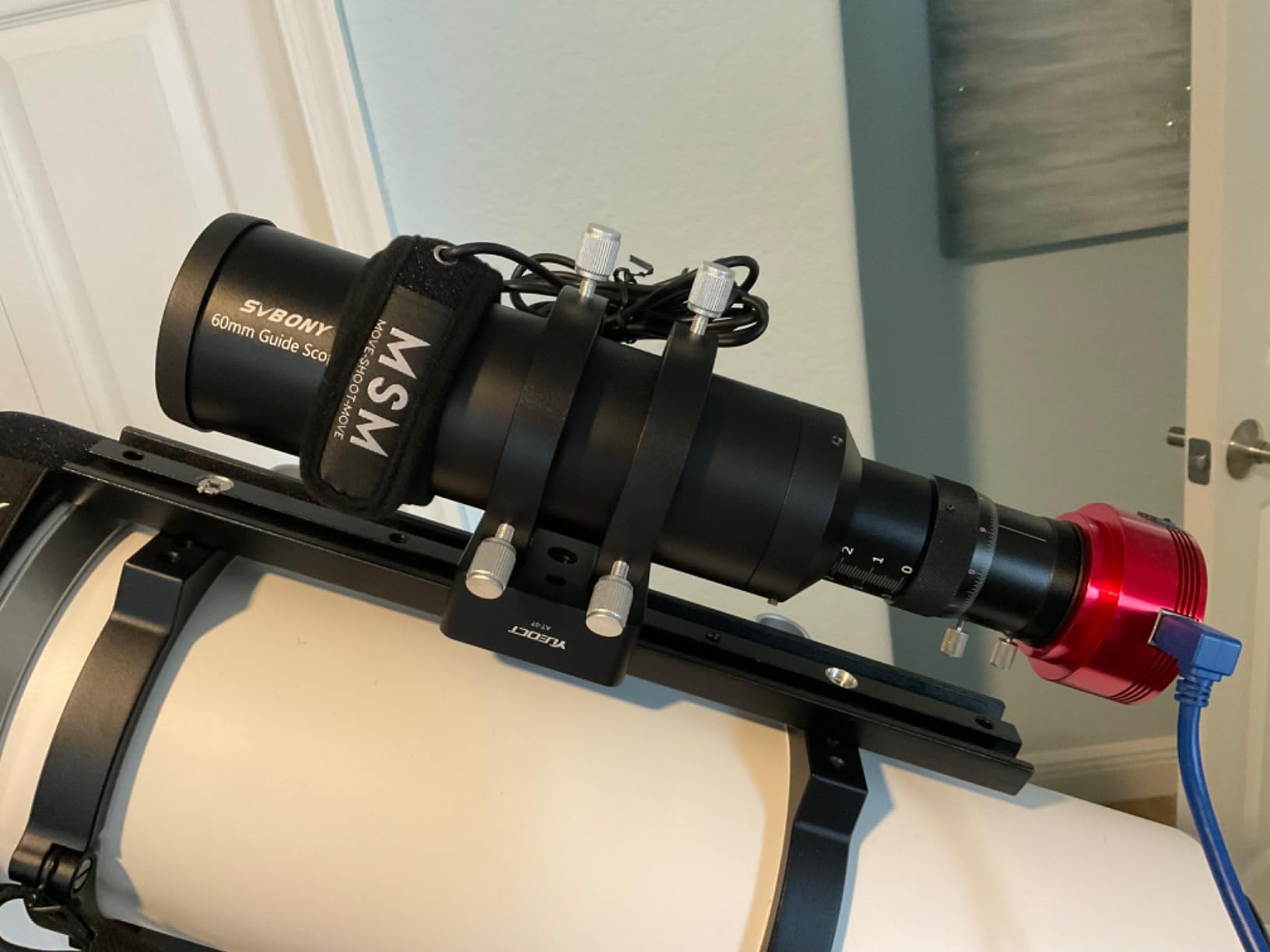
The inline three-level controller means you are not carrying a separate control box, and the reach of the cable makes it practical to run from a power bank at the base of a tripod rather than at the mount head. For a portable rig, that routing is worth more than a small difference in heat output.
Note the 2.0A input figure when planning power. At medium and high settings this is the most demanding of the USB bands here, and a high-capacity bank is not optional for an all-night session.
Why the cold-rated cable matters
Standard USB cables stiffen and become brittle in sustained cold, and a stiffened cable at the inline controller is exactly where a heater like this is most likely to crack. Below freezing, that is a real failure mode rather than a theoretical one.
If you observe in winter, in a garage observatory, or anywhere the temperature drops toward -20C, this is the band we would pick over a cheaper generic strip.
Where the limits are
Coastal and tropical humidity is the hard case. Reports of the maximum setting running cool mean you may need a longer or higher-power band there, and this one is not the answer for a large primary mirror.
The overlap issue on small lenses is easy to avoid but worth planning for before you mount the scope on a dovetail.
5. SVBONY SV192 Dew Heater Strip – Best for Larger Tubes and Newtonians
SVBONY SV192 Dew Heater for Telescope, 480 mm Dew Heater Strip
480mm band for optics under 152mm OD
12V DC with inline 3-speed regulator
Three-layer heat preservation material
Pros
- Highest average rating in the roundup at 4.7 stars
- Three-layer insulation cuts heat dissipation and resists wrinkling
- Inline 3-speed regulator for low medium high
- 5.5x2.1mm jack pairs with common 12V sources and dew controllers
- Long 480mm length suits larger tubes
Cons
- Needs a 12V DC source rather than a USB power bank
- 480mm length will not wrap larger scopes without overlapping
The SV192 is the highest rated product in our group at 4.7 stars, and it fills a gap the USB strips cannot. It takes 12V DC through a standard 5.5 x 2.1mm jack, which means it plugs straight into a real dew heater controller rather than needing a USB port, and that changes what you can do with it.
At 480mm it wraps tubes and mirror cells with an outside diameter below 152mm, which is the range where a Newtonian secondary or a larger refractor sits. A 560mm version covers the next size up, so measure before you choose. A band that is too short gives you an unwrapped cold zone, which defeats the purpose entirely.
The three-layer heat preservation material is the quiet advantage here. The construction holds heat in rather than letting it bleed out through the outer face, and owners note it stays smooth after bending, which matters for a band wrapped around a curved tube and then velcroed down night after night.
With 157 ratings and 86% at five stars, this is the best-reviewed product we tested even though its review base is shorter than the two SVBONY and Celestron rivals. On a per-rating basis it is the cleanest record on the list.
The AstroBin community discussion reports an SV192 strip working well at roughly 40 to 50 percent power on an ASIAir controller, which is exactly the kind of starting point we would suggest. The inline regulator gives you low, medium, and high, and the controller gives you finer adjustment on top of that.
Two limits. It needs a 12V DC supply, so a USB power bank is out. And on a very large tube the 480mm length will overlap, which you need to account for in the layout so the overlap does not sit where it blocks a focuser or clamp.
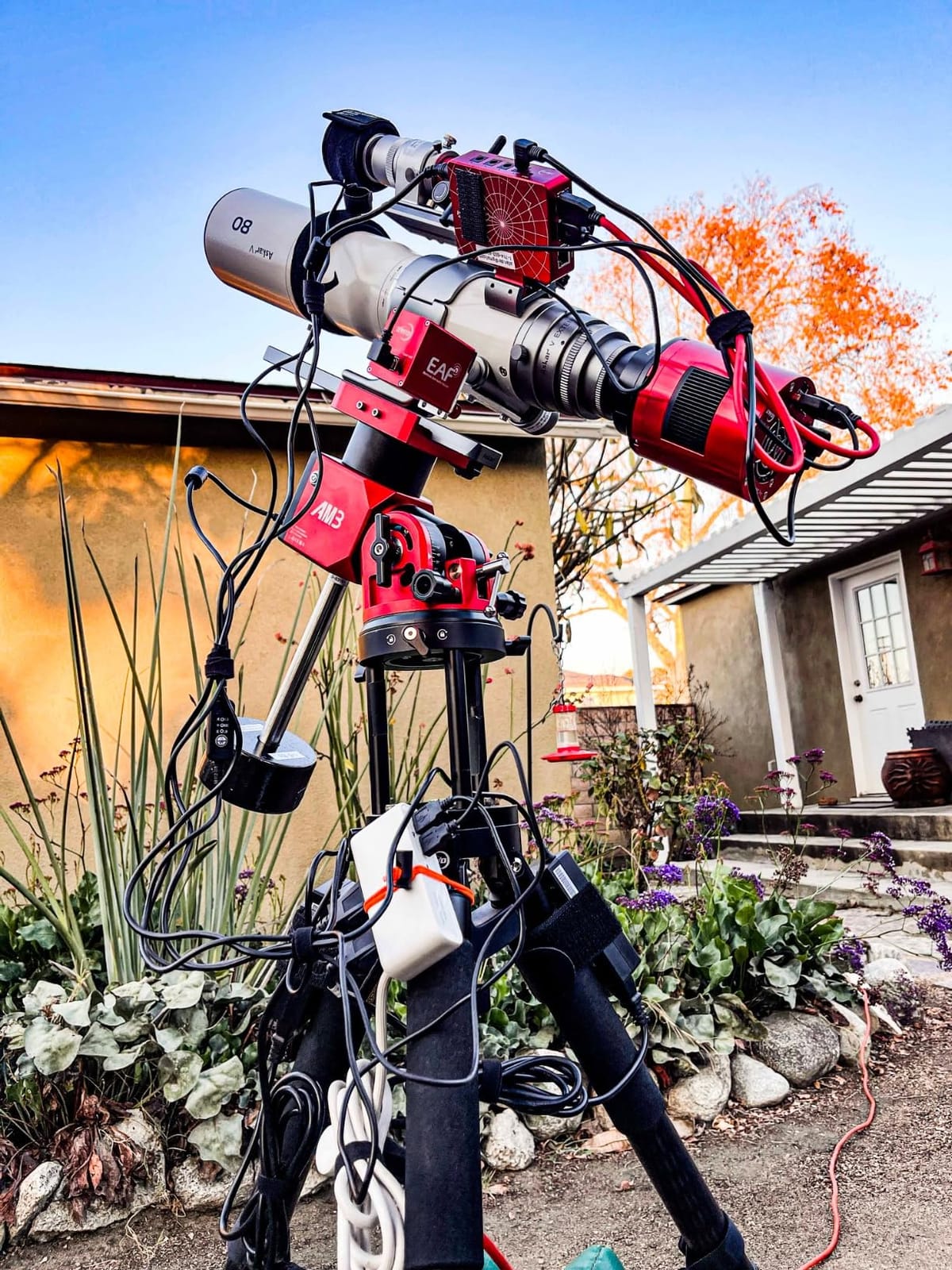
Insulation is the deciding factor in high humidity. When dew point sits close to ambient temperature, you need every fraction of a degree you can hold onto, and a band that leaks heat outward simply asks your power source for more current than you planned for.
That makes this a better match for a multi-hour Newtonian imaging run than any of the USB strips here, because it can be driven from a 12V controller at a controlled percentage rather than from three fixed steps.
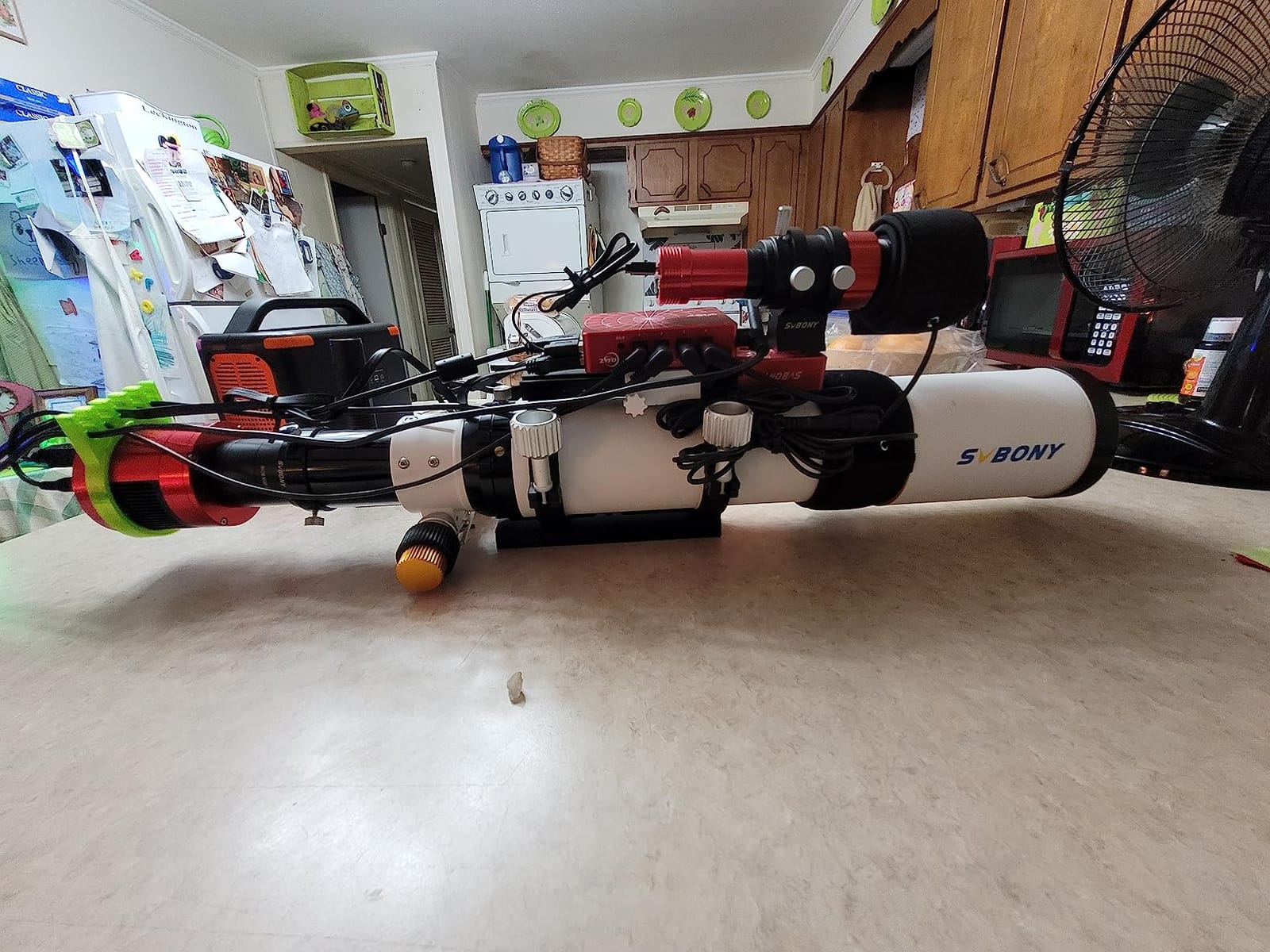
Choosing between the two SVBONY bands
The SV172 is the USB strip for power bank use and mid-size tubes. The SV192 is the 12V strip for larger tubes and for anyone with a controller already in the rig. They are different products for different rigs, not competing versions of the same thing.
If you already run a smart controller with auxiliary outputs, the SV192 is the more capable choice. If you are starting from nothing and want to avoid buying a controller, the SV172 is the simpler path.
What to be careful of
Measure the outside diameter of what you are heating and compare it against the 152mm limit before ordering. Sizing errors are the most common reason a dew heater underperforms, and they are also the most common reason people return one.
Do not try to power it from a USB power bank. It is a 12V DC device and the connector will not match.
6. LOSHARP USB Dew Heater Strip – Multi-Purpose Band for Finders and Eyepieces
Lens Warmer, USB Dew Heater Strip for Telescope Camera Lens with 3-Gear Temperature Controller, Anti-Fog Condensation Prevention for Astrophotography, DSLR, Finder Scope, Eyepieces up to 4.3 Inch
Band fits optics up to 110mm diameter
59-inch USB cable, three heat gears
Peak 122F, average 86F, 5-second heat-up
Pros
- Three heat settings with a fast 5-second heat-up
- Adjustable band fits objectives
- finders
- guide scopes
- eyepieces and DSLR barrels
- USB power means no dedicated 12V controller needed
- 59-inch cable reaches a mount or tripod power source
- Composite heating fibre gives even warmth with no hot spots
Cons
- Lowest average rating among the USB bands here at 4.1 stars
- 8 percent of reviews are one star with some reporting uneven heating
- Not water resistant for exposed or wet conditions
- Controller switch can be finicky
The LOSHARP is the most versatile band on this list in terms of what it will physically go around. At 110mm diameter it covers telescope objectives, finder scopes, guide scopes, eyepiece barrels, and DSLR lenses with one product, and if you need to heat several different things across a night, that flexibility is genuinely useful.
Heat-up is fast. Owners report around five seconds to reach useful temperature, peaking at 122F on the strong setting with an average of 86F, and the composite heating fibre is described as even with no hot spots. The 59-inch cable is long enough to reach a power source at a mount or tripod base without an extension lead.
Where we differ from the marketing is on the rating spread. At 4.1 stars this sits below every other USB band here, and about 8% of the reviews are one star. The complaints cluster around inconsistent heat output and a finicky controller switch, so treat the three settings as approximate rather than precise.
It is also not water resistant. For observing under a cover or in a sheltered site that is irrelevant, but for exposed field use in wet conditions it is the wrong choice, and that is stated in the specification rather than buried.
Run it on weak or medium rather than strong where you can. The middle settings are where the review history is most positive, and continuous strong output is where the heat-consistency complaints appear.
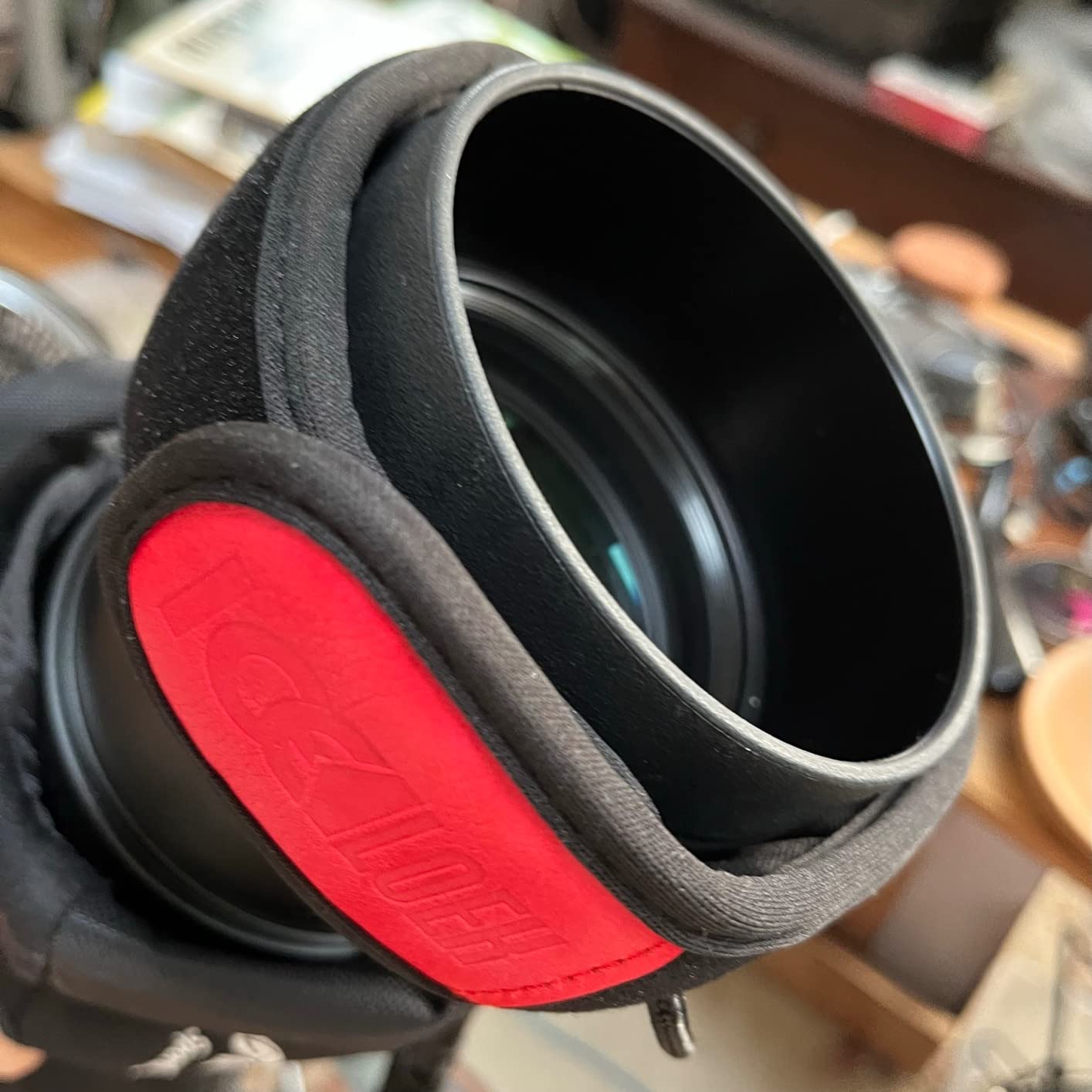
For eyepieces specifically, this solves a problem that most telescope dew discussions ignore. Fogging at the top of the eyepiece barrel is very visible during observing, and a band sized to 110mm can wrap an eyepiece or a diagonal housing that a full-length strip cannot touch.
Because it draws from a 5V source at 1 to 2A, it shares a power bank comfortably with the smaller accessories on an imaging train. That makes it a good second heater rather than a main one.
When a general-purpose band makes sense
If you move between a refractor, a finder, and a camera across different sessions, one adjustable band is simpler than three dedicated ones. The adjustable strap is the reason for that: it sizes to whatever it is wrapped around rather than fixing you to one diameter.
The two-year warranty also makes it a lower-risk way to test whether a heated accessory approach works for your site at all.
Where the weaker rating shows
Uneven heating at the strongest setting is the repeated theme in the negative reviews, and it is the reason we would not put this band on a large primary mirror where temperature consistency matters most.
Keep it away from standing moisture. Not being water resistant is a genuine constraint for field use, not a formality.
7. NEEWER 600mm USB Lens Heater – Longest Wrap for Big Scopes and Binoculars
NEEWER 23.6″/600mm USB Lens Heater Warmer with 3 Temperature Settings, Dew Heater Strip Prevents Dew Fog Condensation for DSLR Mirrorless Camera Telescope Binocular Astrophotography, HW-23B
600mm total length, 500mm effective
Fits up to 150mm diameter optics
Three temperature ranges, 5V USB
Pros
- Longest band in the lineup for a single-pass wrap
- Clearly published temperature range for each setting
- Lightweight at 4.9 ounces
- 5V USB with a 1.5m cable
- Hook-and-loop fasteners allow quick adjustment
Cons
- Smallest review base at 30 ratings so long-term reliability is less proven
- Fits limited to 150mm diameter
- Short 1.5m USB cable compared with competing strips
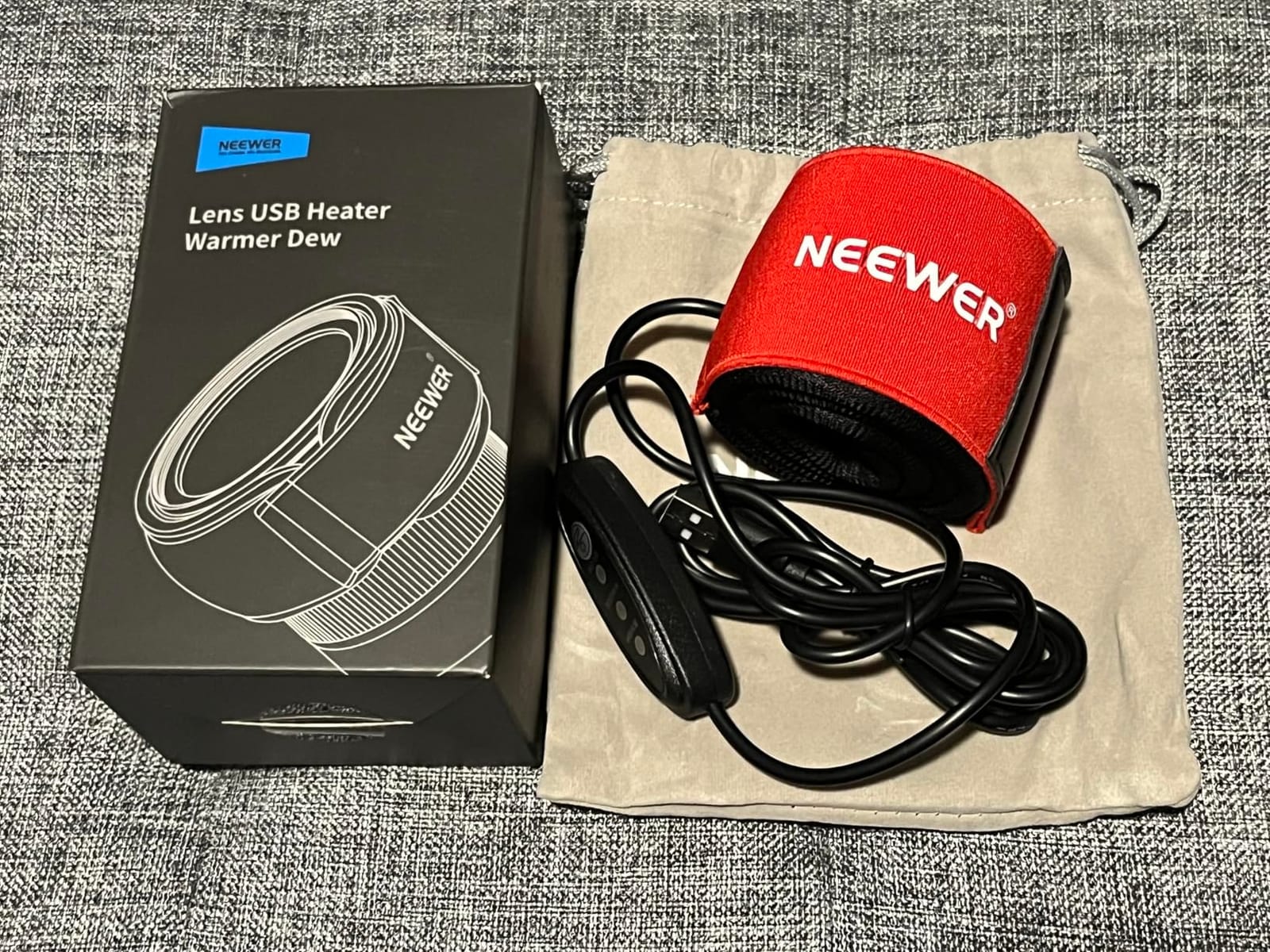
The NEEWER HW-23B is the length solution. At 600mm total with 500mm effective, it wraps a large scope or a pair of binoculars in a single pass rather than needing two bands overlapped, and single-pass coverage matters because an overlap creates a warm stripe and a cold stripe side by side.
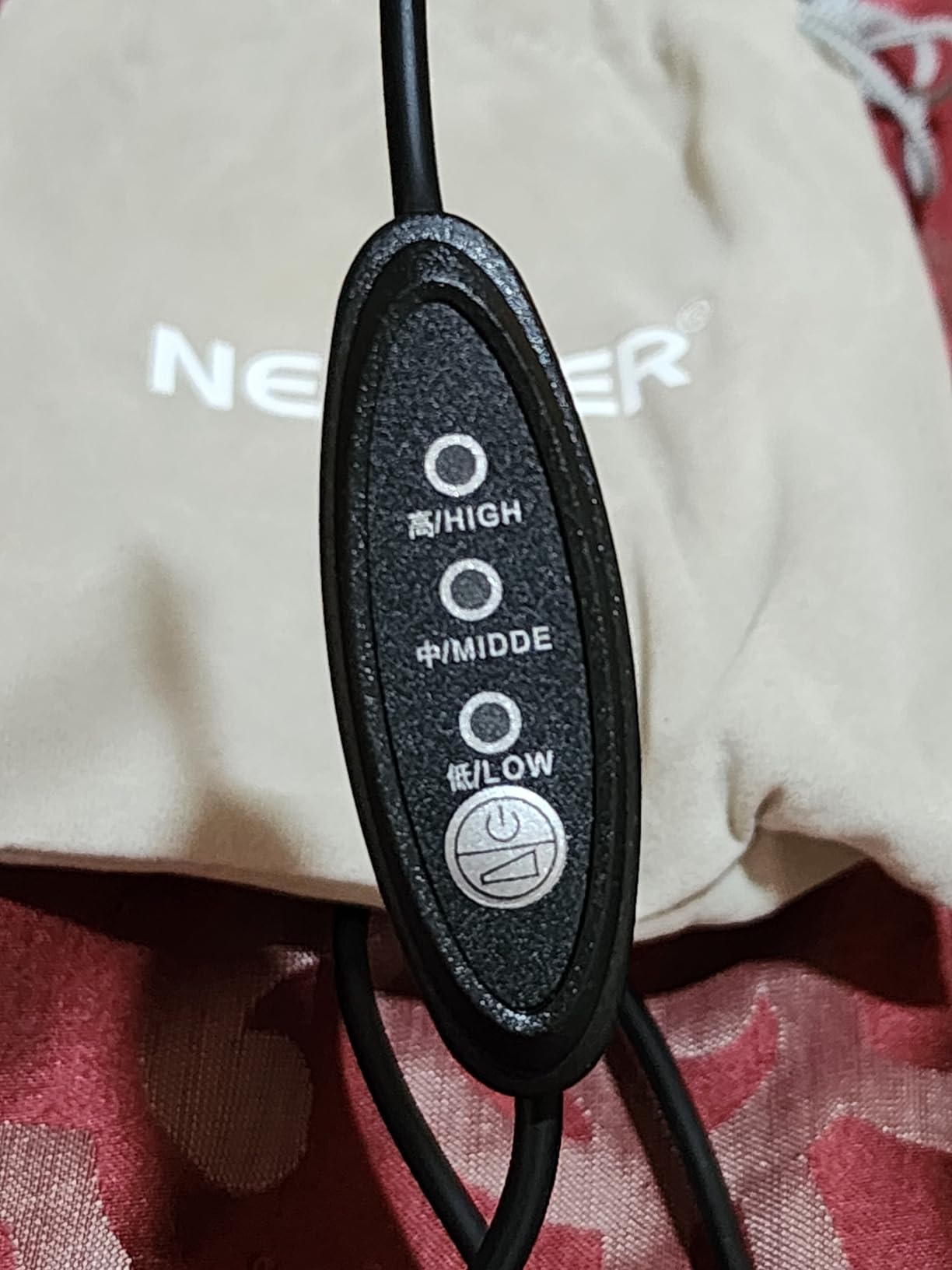
It is also the only product here that publishes a temperature range for every setting rather than just a low, medium, high label. High sits at 55 to 65C, medium 45 to 55C, low 35 to 45C. That specificity makes it far easier to pick a starting setting for your conditions than a three-position switch with no reference point.
At 4.9 ounces it adds essentially no weight to a payload, and hook-and-loop fasteners let you adjust the fit as the band is tightened. The 1.5m USB cable is the shortest in the group, which means your power source needs to be closer than it would with the 60 inch alternatives.
We want to be clear about the evidence here. Thirty ratings is the smallest review base of anything on this list, so long-term reliability is less proven than for the other seven. The 4.4 star average and 90% four-or-five-star share are encouraging, but this is a newer release with a newer record.
It arrived as a recent release, so what we are looking at is early feedback rather than a multi-year track record. Fit and build quality look right; longevity is simply not yet demonstrated.
It fits optics up to 150mm diameter, which is a useful ceiling and is narrower than the larger dew heater rings rather than wider. If your optical surface is bigger than that, this is not the band for it.
Binocular use is where a band this long makes obvious sense. A pair of large binoculars presents two big glass surfaces close together, and a shorter band would need wrapping twice. The published temperature ranges also make it easy to pick a low setting for binocular dew control without guessing.
Because the power input is 5V USB, it shares a power bank with the rest of an imaging train. The trade is cable length, so plan your routing to suit a 1.5m reach.
Why length beats overlap
An overlapped band has a locally hotter region where the two ends meet. On a large surface that shows up as uneven anti-fog performance and, during imaging, a visible thermal gradient. A single 500mm effective wrap avoids that entirely on a tube up to 150mm.
For the same reason this is the band to check first if you run a large Dobsonian-adjacent optical tube rather than a compact refractor.
What the small review base means for you
There is nothing wrong with this product, but you are accepting more uncertainty than with the Celestron ring or either SVBONY strip. If you prefer proven longevity over a long single-pass wrap, the SV192 has the stronger record.
Check your cable distance before committing. A short lead can dictate where your power source has to sit on the tripod.
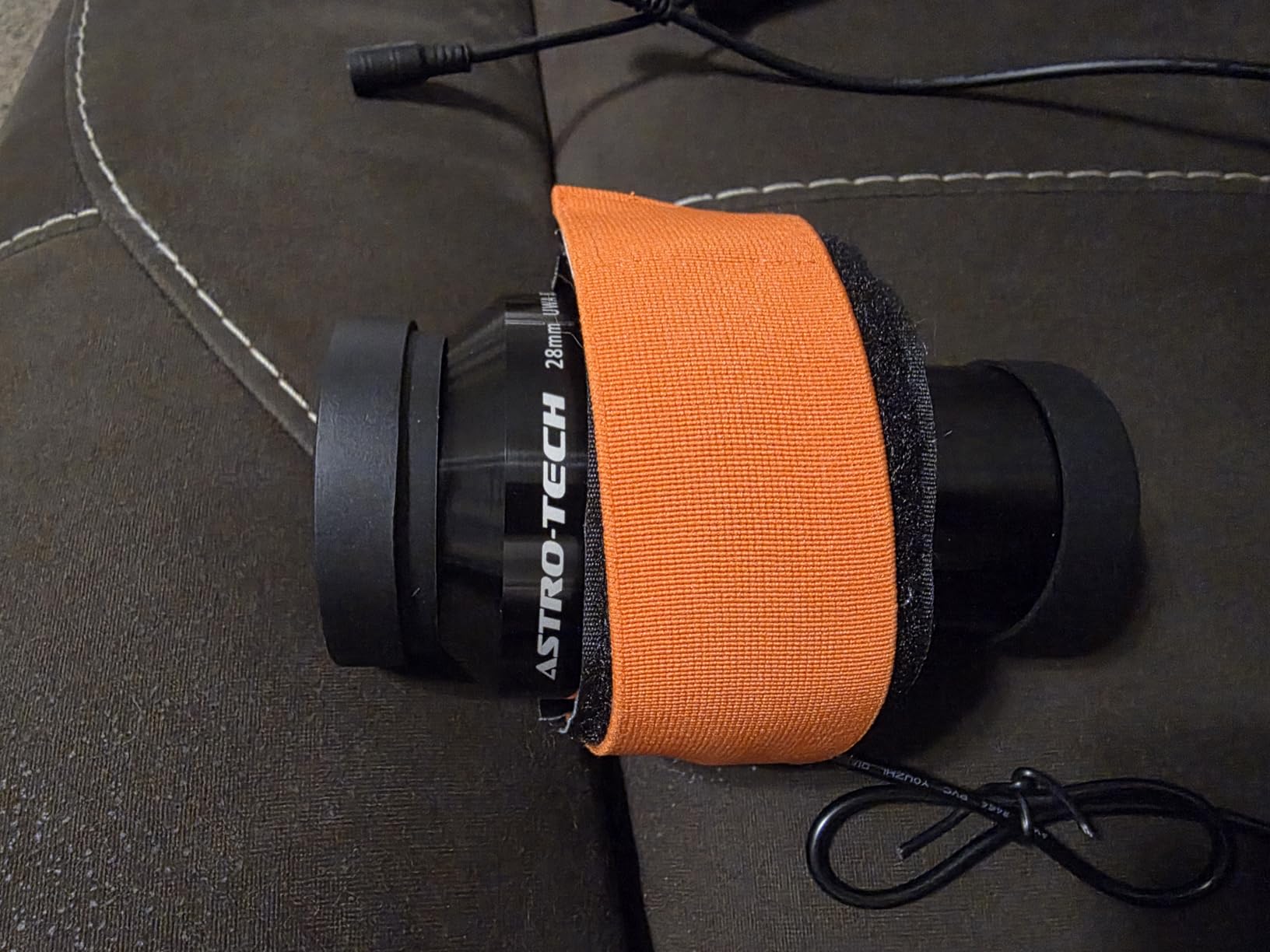
8. Astromania 250mm DC Dew Heater Strap – Stepless Control for Finder Scopes
Astromania Dew Heater Strap, Dew Heater for Telescope 250mm DC Lens Warmer
250mm strap, fits optics under 80mm
Stepless analogue temperature control
5.5mm x 2.1mm DC female port
Pros
- Stepless analogue adjustment
- the only one here without fixed heat steps
- Quick to fit and remove with an adjustable strap
- DC barrel connector works with common 12V supplies
- Lightweight at 3.2 ounces
Cons
- Lowest average rating here at 3.7 stars
- 14 percent of reviews are one star
- Only fits optics under 80mm diameter
- 250mm is the shortest of the three available sizes
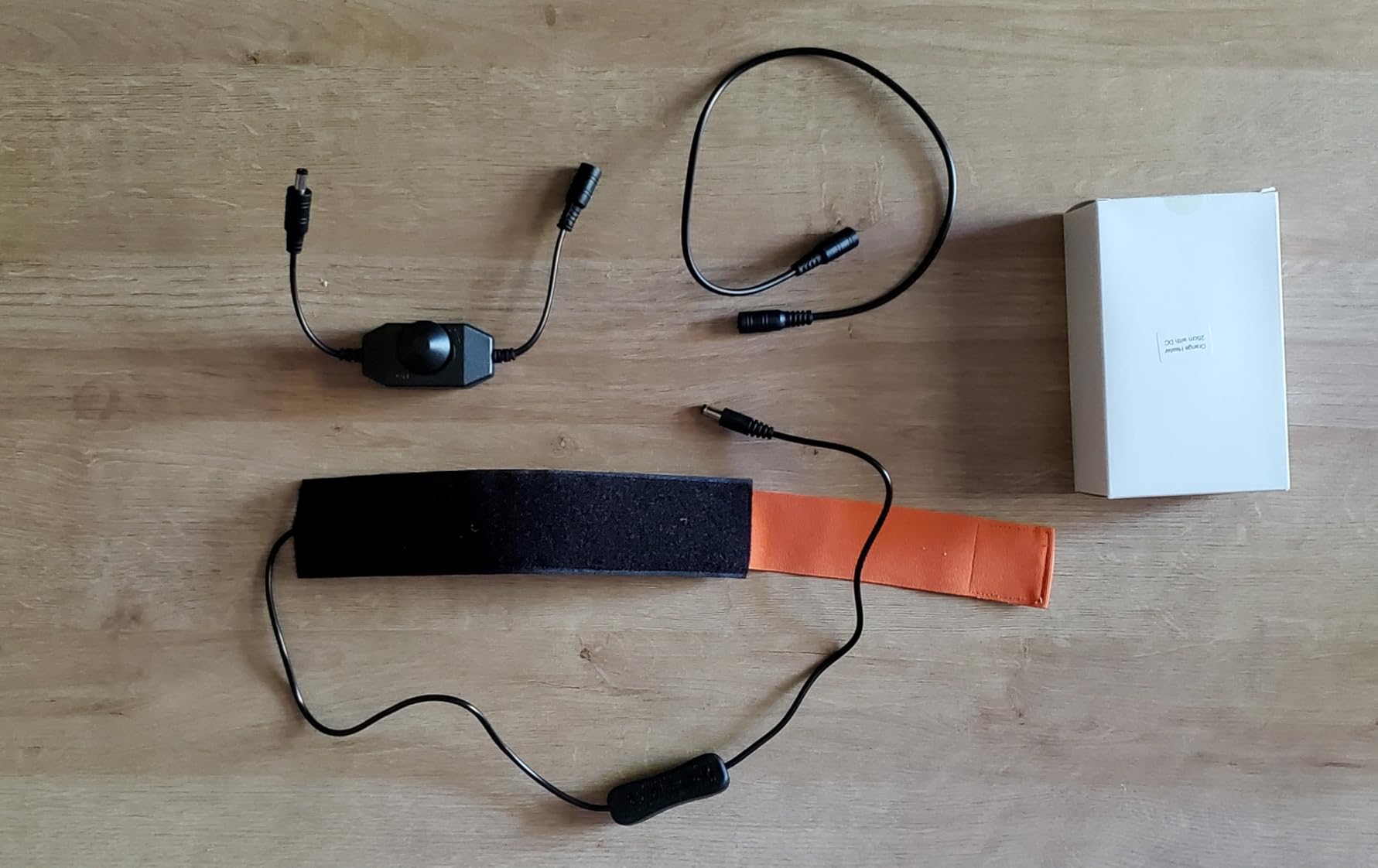
The Astromania strap is included here for one specific reason: it is the only product on this list with stepless temperature control. Every other band gives you three discrete steps or a fixed output, and this one has a sliding analogue knob where you set the heat continuously. If you have ever wanted to trim a band by a fraction rather than a third, this is the one to look at.
It is also small and light at 3.2 ounces, and the DC barrel connector is the same 5.5mm x 2.1mm fitting used by the SV192, so it works with common 12V supplies and power banks that carry a DC output rather than a USB port.
Now the honest part. At 3.7 stars this is the lowest rated product here, and 14% of the reviews are one star, with only 43% at five stars. That distribution is a real signal, not noise, and it points to inconsistent heat delivery rather than a fault with a particular unit.
The fit range is also the narrowest in the group. At under 80mm it covers finder scopes, guide scopes, and small camera lenses, and nothing larger. The 250mm version is the shortest of three sizes offered, with 30cm and 40cm available if you need more reach.
Given the rating spread, we would use this on a low-value accessory where failure is cheap, rather than on the surface that matters most to your session.
Stepless control does not compensate for uneven delivery across the band, and the reviews suggest the two are separate issues. If your priority is consistent low-level warmth, a better-reviewed three-step band is the safer bet.
Where the design does hold up is convenience. The adjustable strap goes on and comes off quickly, which matters if you are moving a small finder between instruments, and the DC fitting means one 12V supply can feed it and a larger band in the same session.
We would pair it with a dew shield rather than rely on it alone, so that it only has to close a small gap above an already-protected surface.
Who this suits
Someone with a finder scope or guide scope under 80mm who wants fine adjustment and already has a 12V supply. For that narrow case the stepless knob is a genuine advantage over a three-position switch.
It is also a reasonable budget option for a secondary accessory where you would not be upset by a replacement in two years.
Where to look elsewhere
Anything larger than 80mm, and anything where the surface is your primary mirror or corrector. The rating spread on this one is wide enough that we do not recommend it for the optic you most need to protect.
If you want a small-scope heater with a stronger review record, the KIWIFOTOS warmer covers the same range with 271 ratings behind it.
Where to Put a Dew Heater on a Telescope
Placement decides whether a heater works, and the correct spot changes with the telescope type. Here is where each one goes:
Refractor front cell or dew shield lip: wrap the band just behind the objective, on the dew shield lip. Keep it below the front lens element so nothing overlaps the light path.
Newtonian secondary spider or mirror cell: put the band around the upper tube near the secondary, or on the spider vanes. A heated secondary is the single most effective dew measure on an open tube.
Dobsonian primary mirror cell: some owners wrap a band around the mirror cell, others say it is unnecessary and risks mirror damage. Our view is that a large Newtonian primary rarely needs direct heat if the secondary is handled, and we address this further below.
Schmidt-Cassegrain corrector: a ring heater sits at the corrector itself, because that is the surface that fogs. Wrapping the dew shield lip does almost nothing here.
Finder scope and Telrad: wrap the tube itself, not the eyepiece end. A Telrad fogs on its front window, and a short band around the tube body clears it.
Eyepiece barrel top: a small band or heated cup at the top of the barrel, which is where the eyepiece itself fogs first.
One practical note that comes up repeatedly in the forums: cover any reflective tape or metallic band surface with flocking or matte material. A shiny band on a moving telescope can throw reflection artifacts into an imaging run.
Dew Shield vs Dew Heater: Which One Comes First
A dew shield comes first, and it is not close. A shield is passive, costs nothing in power, and works by slowing the rate at which the glass radiates heat to the sky. Under roughly 65% relative humidity a decent shield handles most nights on its own, which is why we do not recommend a heater to an observer who has never used one.
Length matters more than most people expect. A common target is around 1.5x to 2x the telescope’s focal length, and longer is better for preventing dew. On a fast Newtonian, a longer shield is not a refinement, it is what makes visual observing possible at all.
The heater is the fallback for what a shield cannot cover: the Newtonian secondary sitting exposed behind the focuser, a long-focal-length refractor whose corrector is far enough from the shield to fog anyway, an SCT corrector plate, and any night where dew forms faster than a passive shield can prevent. Think of the shield as the first line and the heater as the answer to the nights the shield loses.
If you are still choosing equipment, the dew problem varies a lot between the categories, and our guides to the best Dobsonian telescopes and the best tabletop telescopes cover the optical types that fog most.
Do You Need a Dew Heater Controller, and How Much Power Should You Plan For
This is the most-argued question in the forums, and the answer is that both camps are right about different setups. A controller is not obligatory, because any 12V source will run a resistive band. What a controller gives you is variable power, and variable power is what stops a band from becoming a thermal problem.
Running heaters straight from a 12V 8Ah battery with no controller is an established practice on Cloudy Nights and it works. The catch is that full output is full output, all night, regardless of whether the dew point has dropped 2C or 10C. That is the scenario where a band gets hot enough to bother you.
What we recommend: start every band on its lowest setting and raise it only when you see fog. The AstroBin community runs an SV192 strip at roughly 40 to 50% on an ASIAir controller, which is a sensible figure to start from. Members running Thousand Oaks four-channel controllers in long-term service describe the same behaviour, and those users value the temperature sensing because it adjusts for you as the night cools.
Power planning is simpler than most guides make it. Add up the wattage of every band, note that a typical USB power bank is 5V, and divide to get an hours estimate against capacity. A single USB band on a mid setting will run a 20000mAh bank through a normal night; running two or three at higher settings, or a 12V band at full output, will not. Heated secondaries, main tubes, and camera lenses together will drain a portable power source faster than most people expect.
Humidity should set the scale of the setup, and this is the piece of guidance almost no roundup gives you. Under about 65% relative humidity, a dew shield alone is usually enough and a heater is optional. Between 65 and 80%, a shield plus a band on the surface that fogs first is the standard answer. Above 80%, particularly in coastal and tropical climates, expect to run a secondary heater, a heated eyepiece or Telrad, and to leave the main band on continuous rather than cycling.
On the primary mirror question that has more confused newcomers than anything else in this hobby: some owners report a strip wrapped around the mirror cell helping in 90% humidity, and others firmly say it is unnecessary and risks mirror damage. We would not heat a primary mirror directly. If dew forms on it, the cause is usually an unheated secondary above it, and solving the secondary solves the mirror. If you do heat a mirror cell, keep the output minimal and monitor the focus.
Overheating is the deal breaker across every review we read. Bands that run too hot, concentrate heat at one point, or sit on optics you cannot afford to fog or warp are the ones to return. Low power and a small temperature margin above the dew point is both safer and more than sufficient.
Frequently Asked Questions
Where to put a dew heater on a telescope?
On a refractor, wrap the band just behind the objective on the dew shield lip. On a Newtonian, heat the secondary at the top of the tube or the spider vanes. On a Schmidt-Cassegrain, use a ring heater at the corrector plate. Wrap finder and Telrad tubes, and fit a small band at the top of the eyepiece barrels.
Do I need a dew heater for a guide scope?
Usually yes if you image for hours in humid conditions, but a guide scope needs far less power than your main optics, typically well under what a full-size band delivers. A compact band sized to a 50 to 80mm tube is the right tool, and a dedicated small heater beats an oversized strap on a short guide tube.
Do I need a dew shield for my telescope?
Yes, and it should be your first purchase. A dew shield is passive protection that costs no power and works by slowing how fast the glass radiates heat to the sky. Under roughly 65% relative humidity a decent shield handles most nights on its own. A heater is the fallback for surfaces a shield cannot cover.
How long should a telescope dew shield be?
Roughly 1.5x to 2x the telescope focal length is a common target, and longer is generally better for preventing dew. On fast Newtonians a longer shield is essential rather than optional, since the wide field and fast focal ratio leave the corrector far more exposed to the sky.
Can a dew heater damage my telescope optics?
Only if you run it too hot, and that is avoidable. Keep every band on its lowest setting that keeps the glass clear, because the required temperature rise above the dew point is only a few degrees. Avoid heating a Newtonian primary mirror directly, and re-check focus as the tube warms through the night.
Final Verdict: Which Dew Heater Should You Buy in 2026
The Celestron aluminum dew heater ring is our overall pick for 2026, because it is the only one of these eight that heats the surface actually responsible for fogging on a Schmidt-Cassegrain, and it carries the deepest review record we found. If your optics are not a Celestron SCT or EdgeHD, choose by fit instead: the SVBONY SV172 for USB power bank rigs, the SV192 for 12V setups with a controller and larger tubes, and the KIWIFOTOS warmer for guide scopes and finder scopes under 80mm.
Start every band on its lowest setting, add a dew shield before you add a heater, and remember that the goal is only a few degrees above the dew point. That is a small job, and every one of these products can do it well if it is the right size for the glass.