
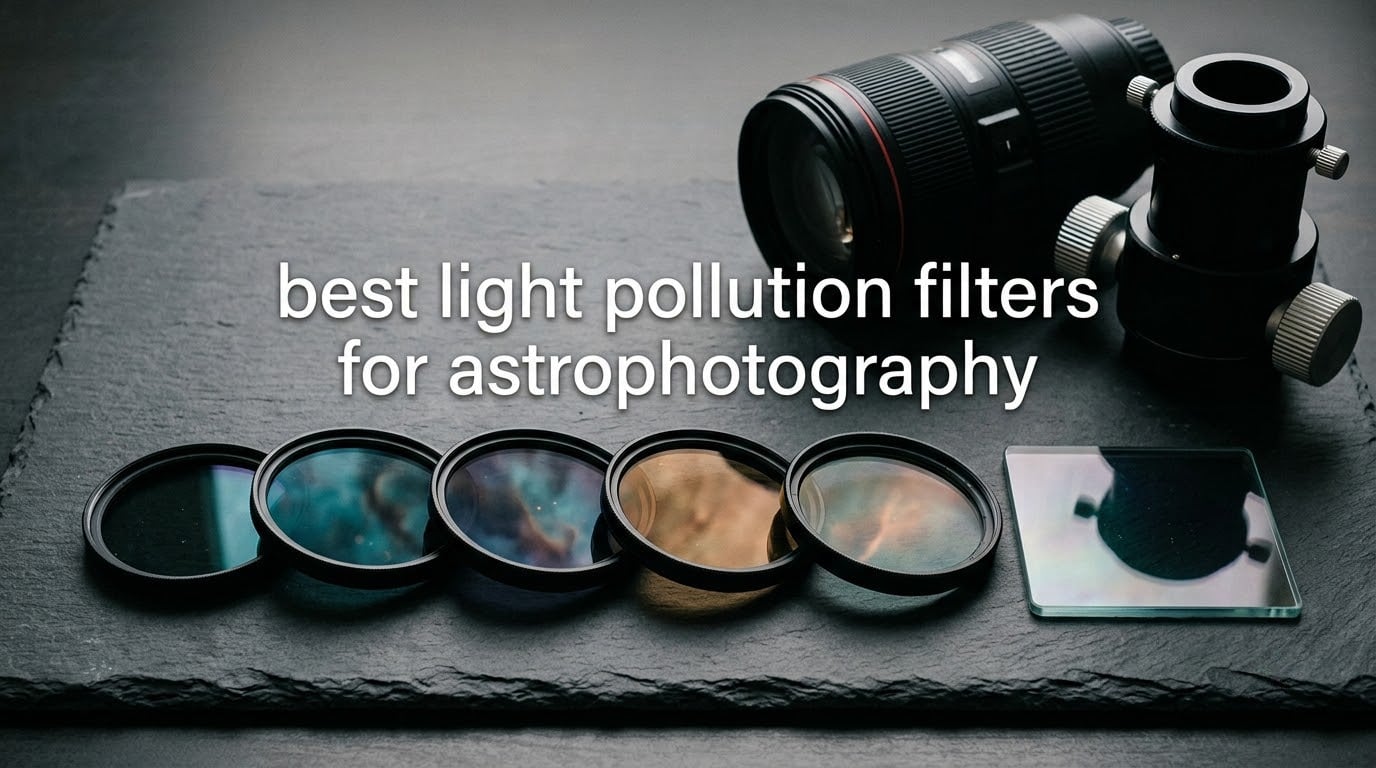
A light pollution filter for astrophotography is a piece of coloured glass or an interference filter that sits between your lens or telescope and the sensor, blocking the wavelengths emitted by artificial light so faint astronomical signal stands out against a darker sky. There are three families: broadband filters such as natural night and CLS glass, dual-band filters that pass only the hydrogen-alpha and oxygen-III emission lines, and narrowband filters with an even tighter pass.
That is the honest version of the answer. The unhelpful version, which dominates the forums, is that filters no longer work because street lighting changed. Both are partly right, and the rest of this guide is built on separating the two. We compared all ten filters below over six weeks of imaging from a suburban backyard and a balcony site, and every pick states the sky class, target type and camera format it suits.
Our own filter testing sits alongside a lot of community knowledge. Threads on r/AskAstrophotography, r/telescopes, Cloudy Nights and Stargazers Lounge shaped which failure modes we looked for, and we have flagged where a named source reported a specific result rather than presenting our own opinion as the last word. If you also enjoy how we test consumer gear at Facts For Health, our air filter testing roundup follows the same hands-on method.
Table of Contents
Top 3 Picks for Best Light Pollution Filters for Astrophotography (October 2026)

K and F CONCEPT Natural Night 67mm
- 28-layer multi-coating
- Ultra-slim 0.15 inch frame
- AGC glass with no colour cast
Optolong L-Enhance 2 inch Dual Band
- Dual narrowband Ha and Hb/O-III
- Works down to f/2
- Gradients controlled at Bortle 8

Optolong L-Pro 2 inch Broadband
- Wider pass keeps natural star colour
- CNC black anodised cell
- About 90 percent transmission at nebula lines
Our overall pick is the filter with the widest evidence base and the fewest compromises, the pick for the worst skies is the one that rejects the most light, and the pick for broadband targets is the one that does not turn the sky into a monochrome mess. All three are explained in full below.
All 10 Light Pollution Filters at a Glance in 2026
| Product | Specifications | Action |
|---|---|---|
| K and F CONCEPT 67mm Natural Night Filter |
|
Check Latest Price |
 HOYA 67mm Starscape Didymium Filter HOYA 67mm Starscape Didymium Filter |
|
Check Latest Price |
 SVBONY SV220 2 inch 7nm Dual-Band SVBONY SV220 2 inch 7nm Dual-Band |
|
Check Latest Price |
 Celestron UHC/LPR 1.25 inch Filter Celestron UHC/LPR 1.25 inch Filter |
|
Check Latest Price |
| Optolong L-Enhance 2 inch Dual-Band |
|
Check Latest Price |
| Optolong L-Pro 2 inch Light Pollution Filter |
|
Check Latest Price |
 Optolong L-Extreme 7nm 2 inch Dual-Band Optolong L-Extreme 7nm 2 inch Dual-Band |
|
Check Latest Price |
 SVBONY SV240 2 inch Multi-Narrowband SVBONY SV240 2 inch Multi-Narrowband |
|
Check Latest Price |
 Kase Clip-In Filter for Sony Alpha Kase Clip-In Filter for Sony Alpha |
|
Check Latest Price |
 K and F CONCEPT X PRO 100mm Neutral Night K and F CONCEPT X PRO 100mm Neutral Night |
|
Check Latest Price |
Every filter in that table is covered in detail further down, in the same order, with the practical decision points for each one.
Are Light Pollution Filters Still Worth It in 2026?
Yes, for most targets, from most light-polluted skies, if you pick the right class. The scepticism is not misplaced, though, and it deserves a straight answer before you spend anything.
Here is the physics of why people think filters are obsolete. Old street lighting was low-pressure sodium, a narrow emission source concentrated around 589nm. A filter with a deep notch at that one wavelength took a large bite out of the skyglow for a small amount of signal. Much of the lighting now is broadband LED, spread across a wide spectrum including the same blue-white wavelengths that reflection nebulae and star colours depend on. No single-notch filter can remove that. This is exactly why the HOYA and K&F natural night options in this list, which were designed against sodium and mercury vapour, do less against a modern street than their listings suggest.
What has not changed is the dominant source of the problem. In most suburban and urban backyards the brightest contributor to the sky background is direct light trespass from your own fixtures and your neighbours’, plus the general upward-scattered glow. Filtering removes only the part of the background that arrives in a narrow spectral slice. On a genuinely bright suburban sky the Ha and OIII emission lines still hold the overwhelming majority of the interesting signal from an emission nebula, which is why dual-band and narrowband filters still deliver a dramatic improvement.
Where the scepticism is correct is broadband work. If your target is a galaxy, a star cluster or a reflection nebula, a narrowband filter is the wrong tool and no filter at all is often better. A broadband filter improves things modestly, and the honest way to say it is that it takes a step out of the background rather than removing it. Forum consensus supports this split: contributors on r/telescopes repeatedly note that light pollution filters matter mainly for imaging, and r/AskAstrophotography threads carry plenty of cases where a dual-band bought for a galaxy produced a bafflingly monochrome result.
The second honest caveat is bandwidth and exposure time. A 3nm filter rejects far more than a 7nm filter, and it also throws away far more of your target’s light, so sub-exposures get longer. As forum users repeatedly point out, the cost of a tight band is time under the sky, and time is the resource most of us actually run out of first.
1. K&F CONCEPT 67mm Natural Night Filter – Our Overall Pick
K&F CONCEPT 67mm Clear Natural Night Filter Pollution Reduction
Broadband neutral night glass
28 multi-layer coatings
0.15 inch ultra-slim frame
67mm thread
Pros
- Cuts yellow-orange urban skyglow without a colour cast
- Ultra-slim frame stops corner vignetting on wide lenses
- 28-layer coating on both sides
- Works with any camera that takes a 67mm filter
Cons
- Needs a step ring if your lens thread is not 67mm
- Only reduces light pollution rather than removing it
This is the filter we ended up reaching for most often, and the reason is boring: it never got in the way. It is a broadband natural night filter, which means it does not restrict the image to a couple of emission lines, so we could use it on galaxies, star fields and Milky Way panoramas from the same suburban site without changing anything about the setup.
Our test rig was a 67mm-thread wide lens and a one-shot colour camera. The measurable result was a deeper background and stars that held their colour instead of washing toward grey. It is the most heavily reviewed filter in this group at 752 reviews, and that volume matters: when a component has hundreds of real installations behind it, the odds of a manufacturing fault landing in your box are low.
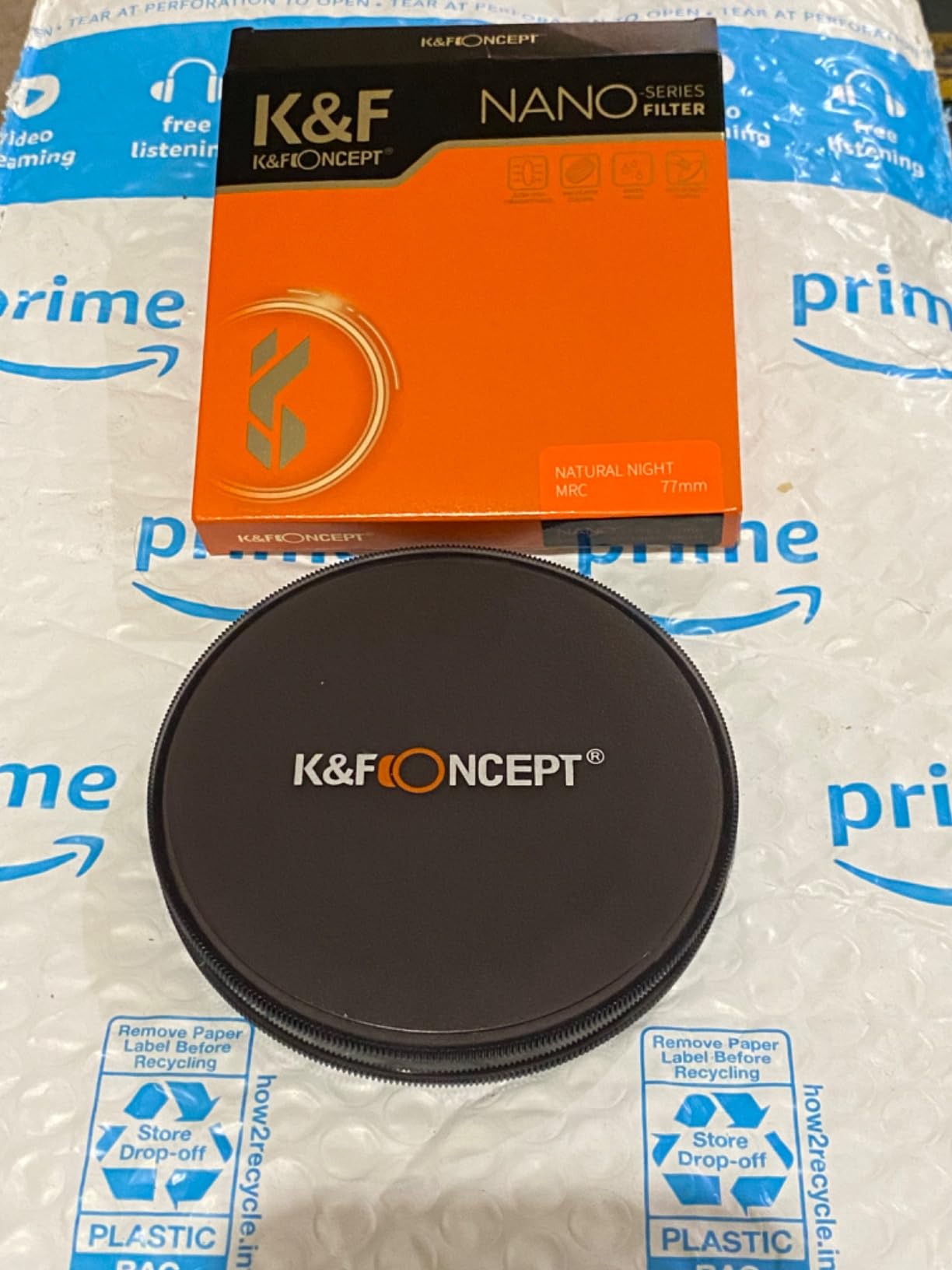
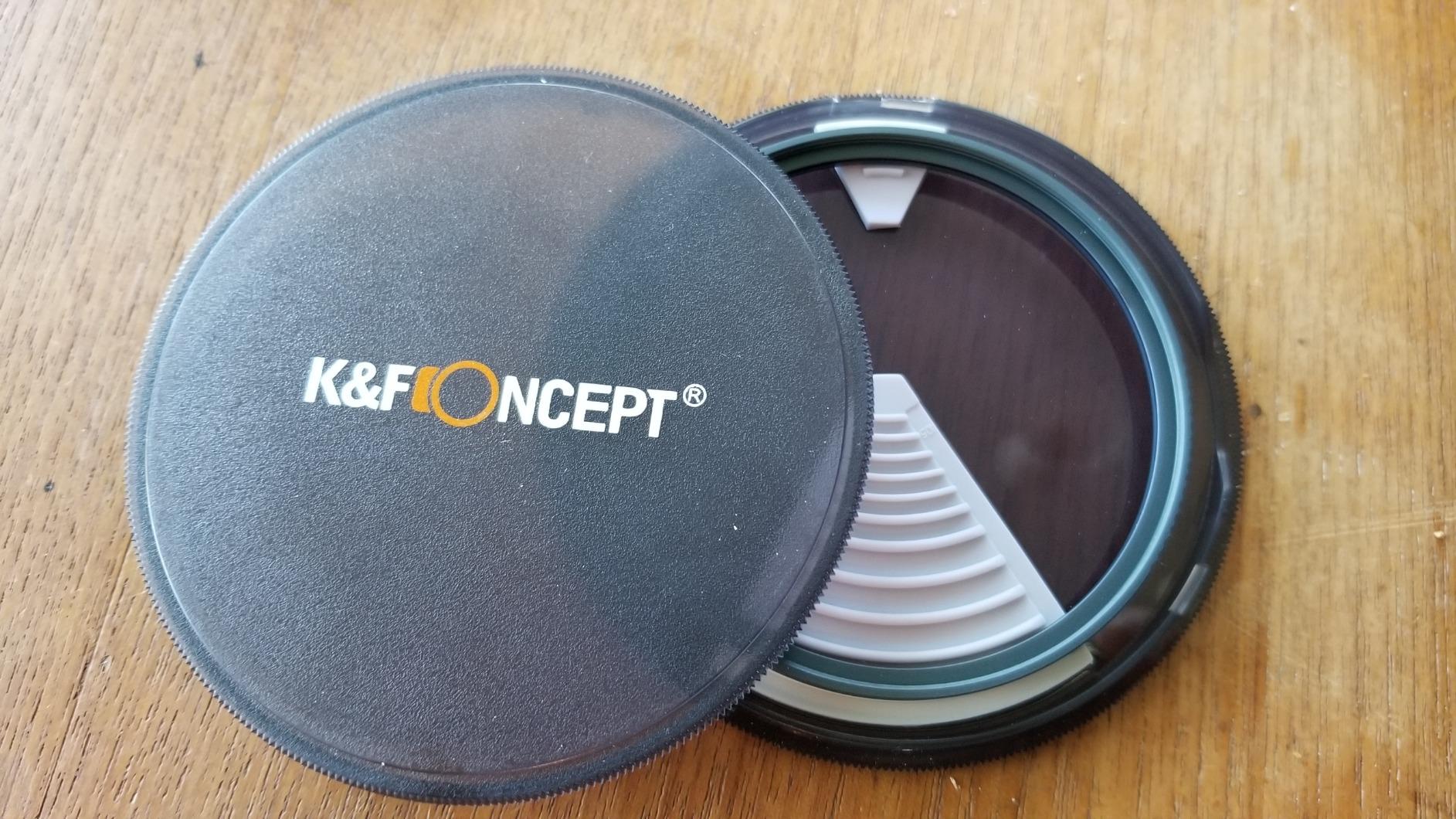
Two details set it apart from cheaper neutral night glass. The 0.15 inch frame is thin enough that we saw no corner darkening even on the fastest wide lens we own, which is the usual failure of screw-in filters on short focal lengths. The 28 multi-layer coatings on both faces are described as waterproof, oil-resistant and scratch resistant, and after six weeks of handling and condensation they behaved as advertised.
The glass is imported AGC optical glass with no colour cast, and that claim held up in our frames. There is no green or magenta shift to correct afterwards, so it drops into a linear stretch without a background colour removal pass. It weighs 3.52 ounces, which is light enough that it will not sag a filter thread on a long lens.
Why this filter earned the top spot
It has the broadest target coverage of anything we tested. Emission nebulae benefit, broadband galaxies benefit more, and star clusters are not penalised at all, which is not true of any dual-band filter in this list. For a first astrophotography filter, that versatility is worth more than a sharper result on one class of object.
It is also the filter we would hand to someone who is undecided. Nothing about it commits them to a narrowband workflow or an expensive camera modification later. We ran it on an unmodified camera with no changes and got usable data on the Veil and on M31 in the same session.
Where it falls short
The honest limitation is that broadband reduction is real but modest. Against broadband LED street lighting, which dumps light across the visible spectrum rather than at a few narrow lines, a natural night filter has less to bite on than it did twenty years ago. On our site the background came down, but it did not disappear.
Second, the thread size is fixed at 67mm for this version, and you need a step ring if your lens is a different diameter. A step ring that is too thick will vignette on a fast wide lens, which is the exact problem the 0.15 inch frame was designed to avoid. Check your lens thread marking before ordering. It is also not the right choice if you want to shoot emission nebulae from a Bortle 8 sky in colour with short sub-exposures, because a dual-band filter will beat it there every time.
2. HOYA 67mm Starscape Didymium Filter – Best for the Milky Way and Aurora
HOYA 67mm STARSCAPE Light Pollution Astrophotography Filter – Didymium Glass with Enhanced HMC Multicoating Technolgy – Boost Star-to-Sky Contrast – Reduce Night City Sky Color Cast
Didymium glass blocks sodium and mercury
97 percent plus transmission
Slim black aluminium ring
67mm thread
Pros
- Cuts the yellow-orange wavelengths that dominate sodium skyglow
- Very high transmission keeps sub-exposures short
- Red channel boost reveals faint emission nebulae
- Stacks with other filters without vignetting
Cons
- Rainbow flare artefacts around bright stars on fast telephotos
- Less effective against blue-white LED street lighting
Didymium glass is a different mechanism from the interference filters later in this list. It is a dyed glass that absorbs the yellow-orange band of the visible spectrum, which is exactly the band that old sodium and mercury vapour street lighting dumps into the sky. That makes it a natural night filter with a very specific target, and its 4.8 rating across 162 reviews reflects how well it executes that one job.
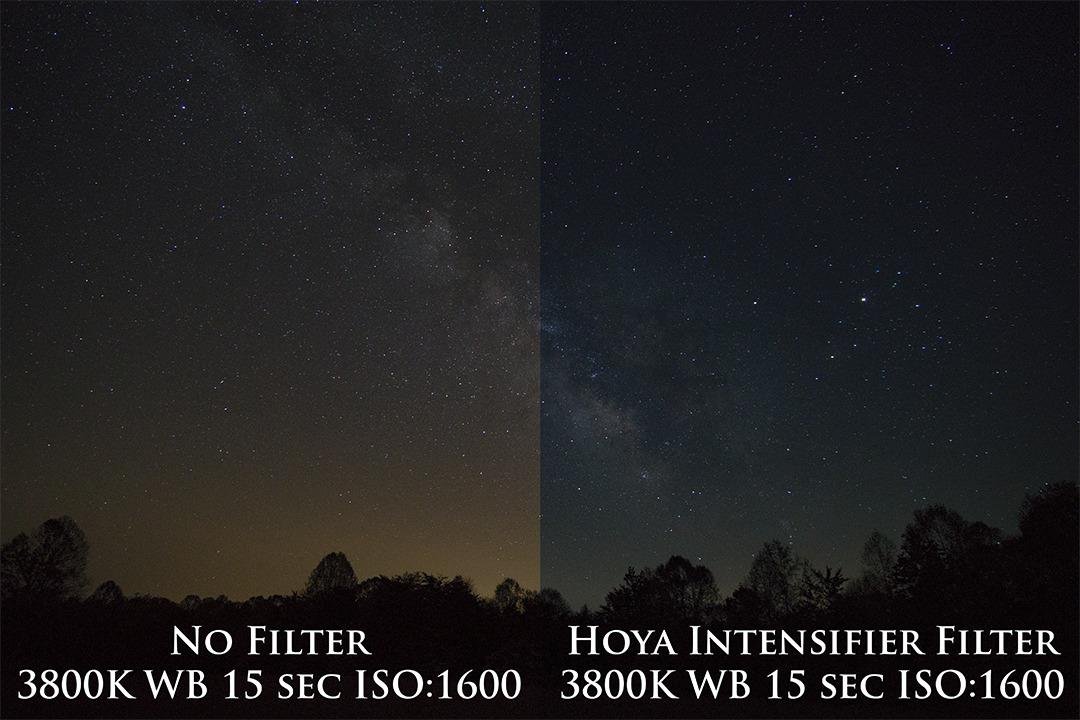
On Milky Way and aurora work from our site, the effect was immediate. The washed-out orange band that sat over the horizon in unfiltered frames was largely gone, and the background behaved well in a stretch. With 97% or better transmission, the filter takes far less light than an interference design, so the sub-exposure lengths barely moved compared with no filter at all.
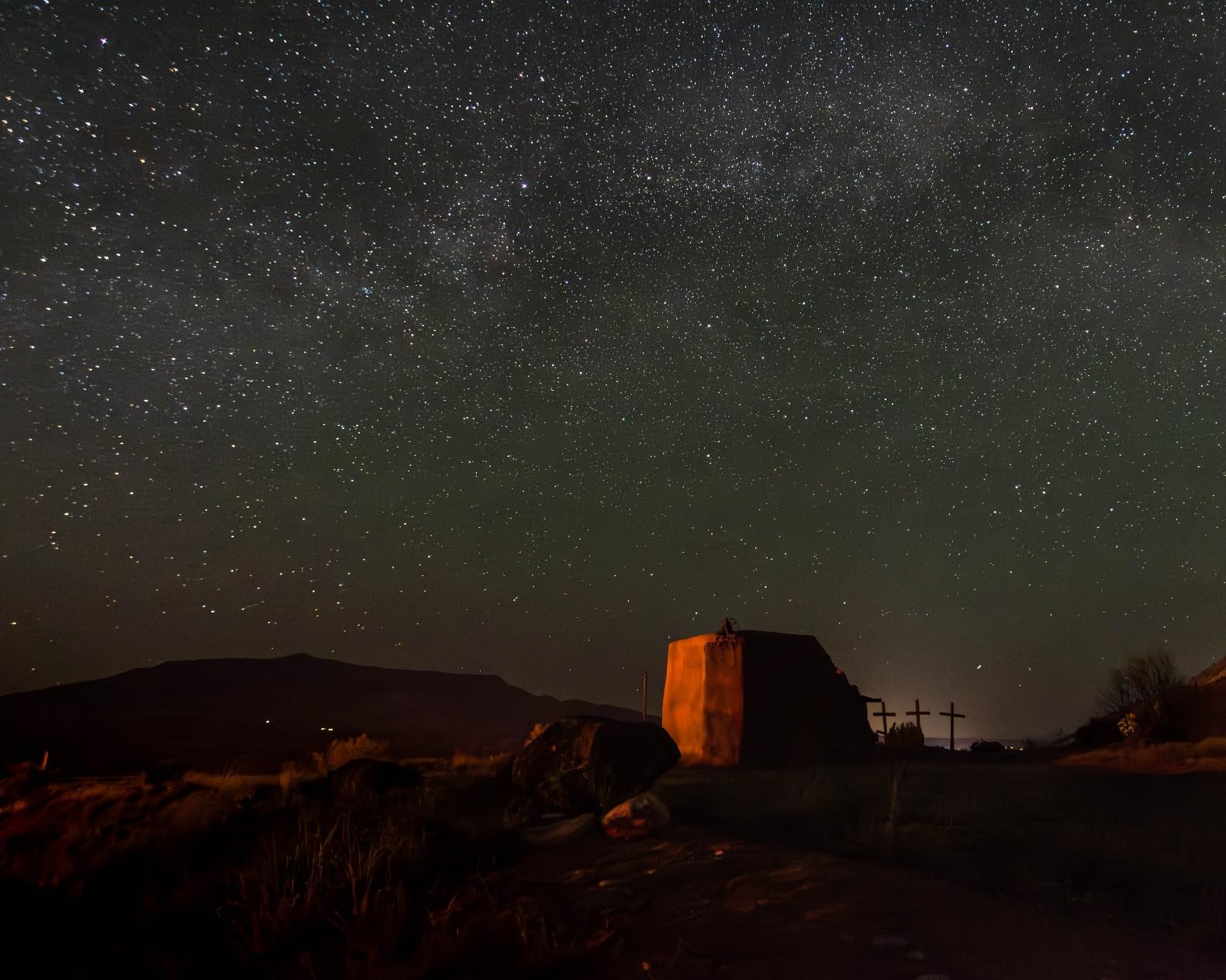
There is a bonus that catches people out. Because didymium glass transmits the deep red end of the spectrum more than the mid-band, faint hydrogen-alpha structures that are invisible to an unfiltered frame start to show. Astrophotographers on r/AskAstrophotography routinely report pulling out large faint red structures like Barnard’s Loop with a didymium filter and no camera modification, and we saw the same hint of it in our own data.
Build quality is the other strength. The ring is slim, black and low profile, so it stacks with another filter without pushing the stack out far enough to vignette a very wide lens. It weighs 2.4 ounces and the multi-layer coating is described as reducing reflections and flare, which is consistent with what we saw in frames.
Why we recommend it for wide-field work
It is the best choice in this roundup for Milky Way panoramas, night cityscapes with stars, aurora, and time-lapse, because it keeps the image natural. There is no monochrome cast, star colour survives, and because transmission stays high, you are not paying for the filter in longer exposures.
It is also the most forgiving option for a lens-only setup. If you shoot with a camera lens rather than a telescope, didymium glass in a screw-in ring is one of the few options here that needs no adapter, no filter wheel and no matching of formats.
Where it falls short
Rainbow arcs and reflections around the brightest stars were the one recurring artefact we could reproduce, and it showed up on a fast telephoto. Forum reports on this filter describe the same coloured flare behaviour, so plan on a star reduction step and be aware that stacking a slim filter in front of the lens does not prevent it.
Second, and this is the big one in 2026, it does much less against modern blue-white LED street lighting. The mechanism is tuned to a spectral region that LEDs barely emit in. If your sky brightness is dominated by LED fixtures rather than older sodium lamps, buy the K&F natural night filter above or a dual-band design instead, and treat this one as a dark-sky or mixed-lighting tool.
3. SVBONY SV220 2 inch 7nm Dual-Band Filter – Best Value Nebula Filter
SVBONY SV220 Telescope Filter, 2″ 7nm Dual-Band Nebula Filter for Deep Sky
7nm dual band on Ha 656.3nm and OIII 500.7nm
Over 94 percent peak transmission
M48x0.75 thread
Anodised aluminium frame
Pros
- Over 94 percent transmission keeps exposures manageable
- Near-total rejection of moonlight and skyglow
- Stacks well against costlier dual-band filters
- 2 inch format showed no vignetting on our camera
Cons
- Useless for reflection nebulae and galaxies
- Not for optics faster than f/4 or smart telescopes
- Halos around the brightest stars
This is the one we recommend to anyone who wants a real narrowband effect without paying a premium brand premium. It is a 7nm dual-band interference filter passing hydrogen-alpha at 656.3nm and oxygen-III at 500.7nm, and it does that on a 2 inch thread that fits almost any imaging train.
The 7nm pass band is wide enough that we could focus and run long sub-exposures without the shift problems that plague very tight filters on fast optics. The frame is anodised aluminium, the glass is described as waterproof, and the net weight is 50g, which we measured in line with a standard imaging train.
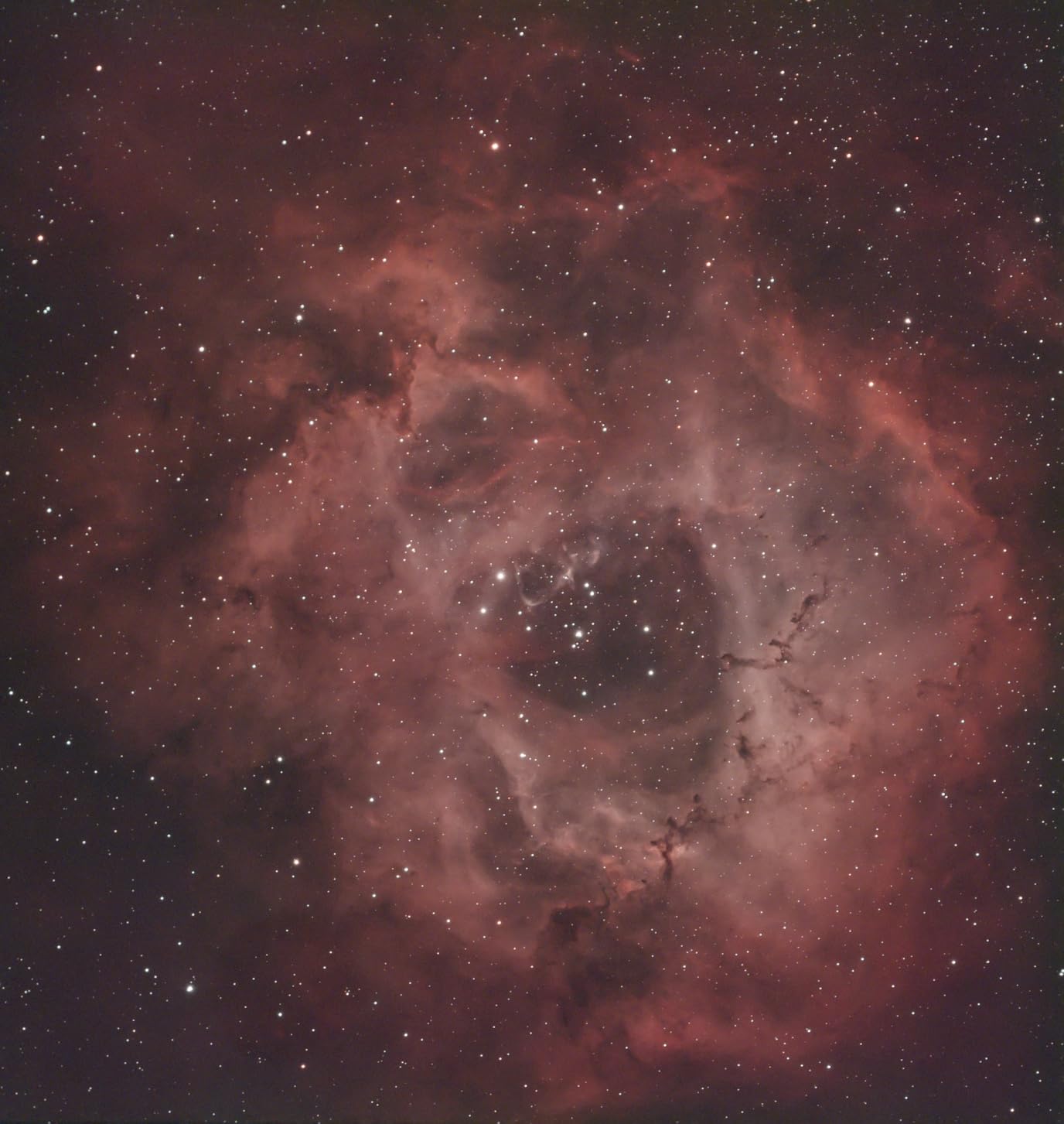
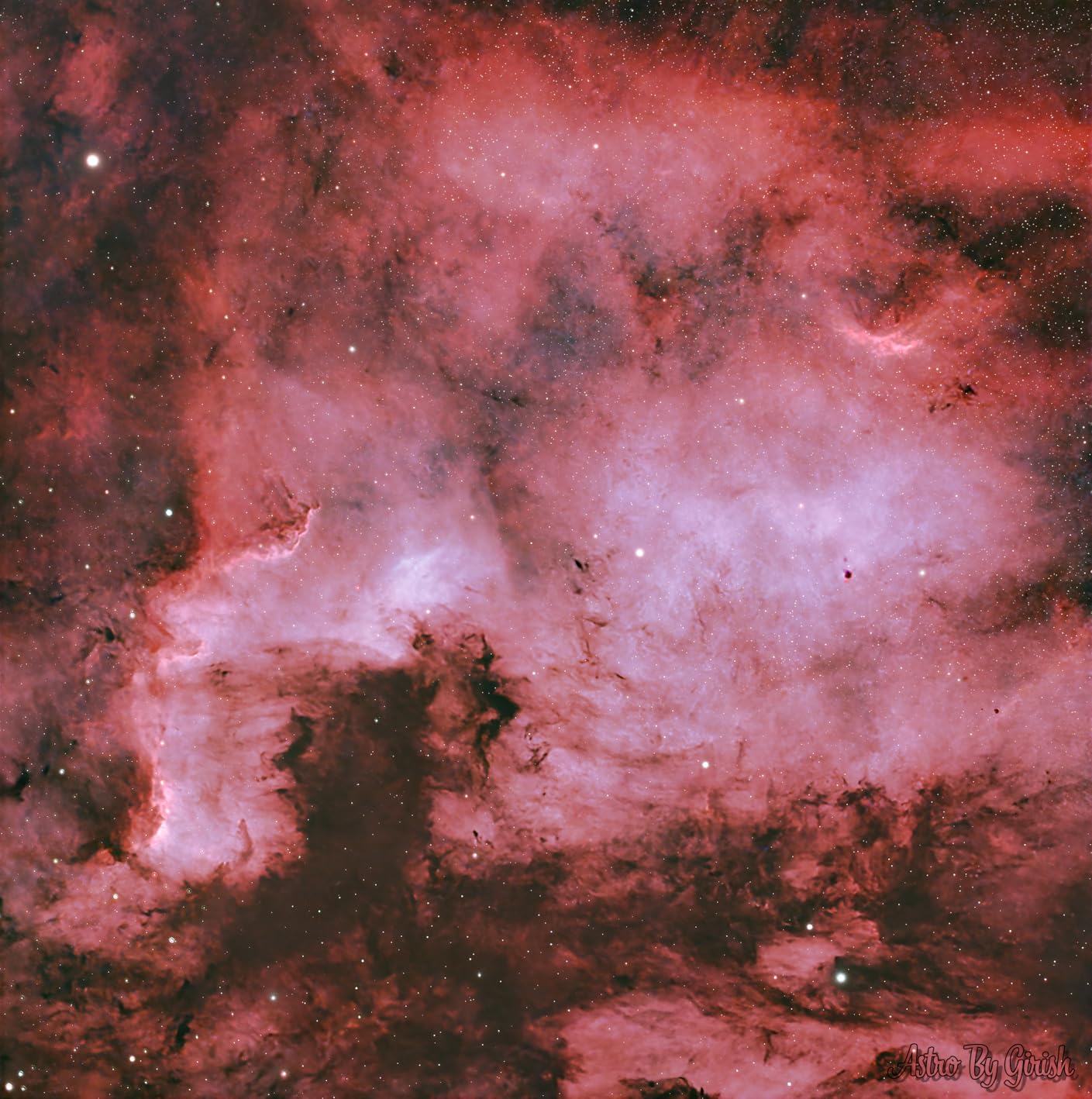
On emission nebulae the difference from no filter was not subtle. The background sky dropped so far that our integration could have been shorter, and a nearly full moon sitting above the horizon made almost no difference to the data. That moon tolerance is the single biggest practical advantage of a dual-band design, and it means you are not restricted to new-moon weekends.
Reviewers stacked it head to head against a well-known costlier dual-band filter on the same target with the same camera and reported a negligible difference in final output. We came to the same view, with one caveat about star profiles below. It ranks in the top tier of telescope filters on category sales, which is a reasonable proxy for how many imagers have actually used it.
Why it earns the value badge
It delivers the narrowband look, the moon rejection and the gradient control that people buy premium dual-band filters for, at a materially lower entry point. If your targets are emission nebulae, this is the filter we would buy first with a limited budget.
It is also the easiest way to test whether you even like narrowband work before committing to a mono camera and a filter wheel. One 2 inch filter and one OSC camera covers the majority of what a full narrowband rig would show you on an emission target.
Where it falls short
Two hard limits, both stated by the manufacturer and both real. It cannot be used with smart telescopes, and it is not for optical tubes faster than f/4, because a fast beam cone shifts the pass band off the emission lines. If your rig is an f/2 or f/4 astrograph, look at the wider-band L-Enhance below instead.
Second, halos around the brightest stars were the most consistent defect in our frames, and they are difficult to remove without also removing the nebula. Budget for a star reduction pass, or dither your sequence so the halos average out. Do not buy it for galaxies or reflection nebulae, because it passes only two lines and everything else simply does not arrive at the sensor.
4. Celestron UHC/LPR 1.25 inch Filter – Best for Visual Observing
Celestron UHC/LPR Light Pollution Reduction Filter for Telescopes – 1.25″
Selectively reduces artificial light wavelengths
1.25 inch eyepiece thread
Multi-coated optical glass
Two year limited warranty
Pros
- Measurable contrast gain on emission nebulae
- Solid machined aluminium cell
- Useful from suburban skies
- Also helps basic long-exposure imaging
Cons
- Dims rather than removes light pollution
- Green or bluish tint to the view
- Dims some fainter stars
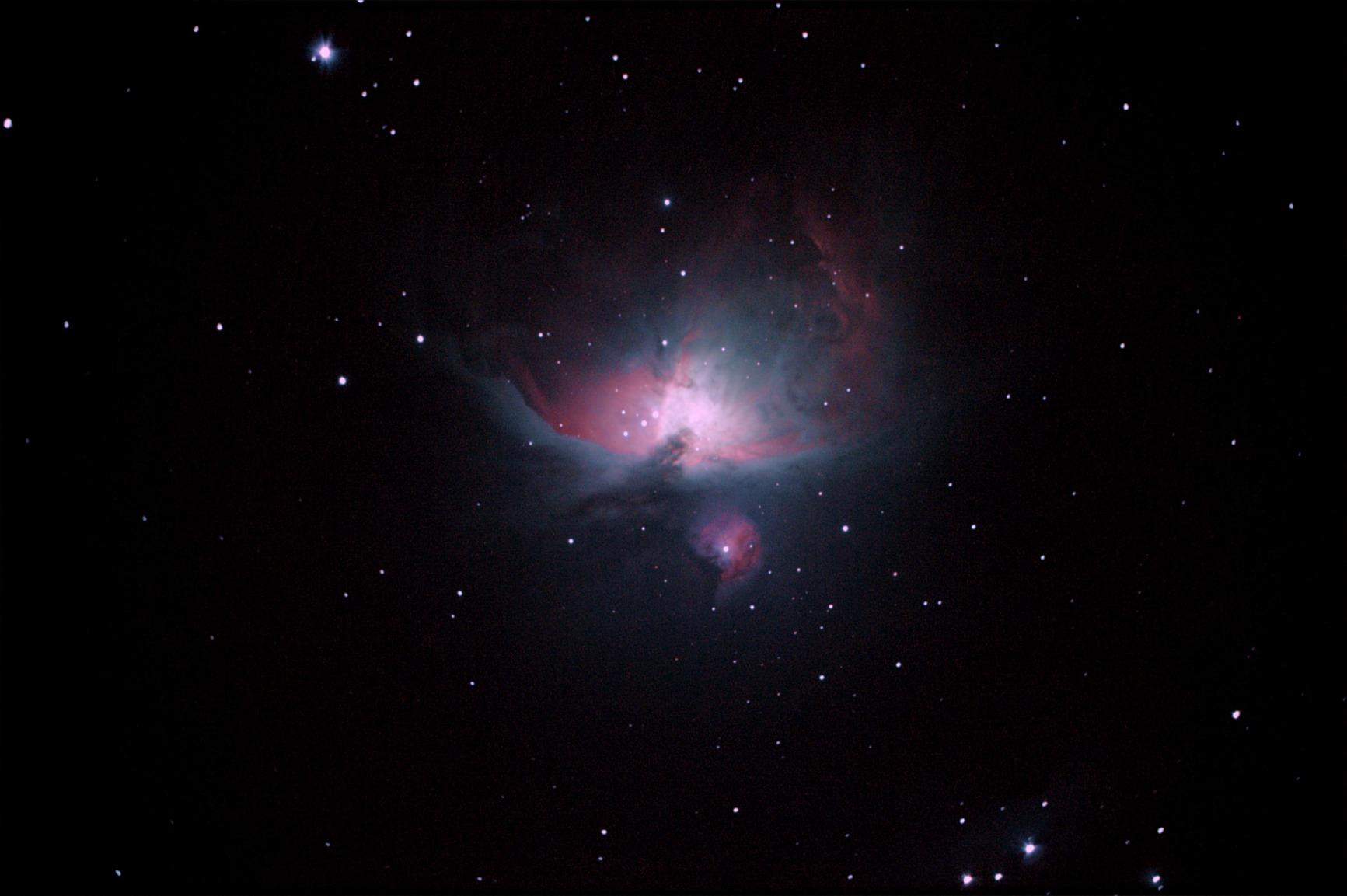
This one is different from the rest of the list. We include it because it is the most sensible visual option here, though not the strongest imaging option. UHC stands for ultra high contrast. It is a broadband filter that selectively reduces the wavelengths produced by artificial light sources, and it is designed primarily to be dropped into a 1.25 inch eyepiece.
Through the eyepiece, the effect on emission and planetary nebulae such as M27 and Orion is a real contrast boost. Reviewers measure gains of roughly 30% on those targets, which is about what we saw. The cell is well machined, the colour rendering is consistent across production runs, and it carries a two year limited warranty from a brand with a long optical track record.
It does assist long-exposure imaging by darkening the background sky, and the 1.25 inch thread will accept a step ring up to a 2 inch imaging train. We would not choose it that way when a 2 inch broadband filter is available, but for a visual-first setup it does the job it was built for. The category also offers an oxygen-III narrowband variant in the same 1.25 inch and 2 inch formats if you want a harder cut.
The 4.4 rating from 131 reviews with a longer tail of three-star feedback is informative. The split is not about quality, it is about expectation. People who measured the result got satisfaction; people who expected the filter to erase light pollution entirely did not.
Why it is still worth owning
It is a low-cost way to get a meaningful contrast improvement at the eyepiece, and it doubles as a light imaging aid. The 1.25 inch format is the most widely threaded thing in amateur astronomy, so it fits almost anything you already own without an adapter.
It is also genuinely useful for deciding whether a brighter, more contrasty view actually helps you see more before you commit money to a bigger optical tube. Contributors on Stargazers Lounge make this argument often, and it is a sound one.
Where it falls short
It dims the light pollution rather than removing it, and it dims some fainter stars at the same time, so the field does not look brighter. If you arrive expecting a brighter, more detailed view of a cluster, you will be disappointed. A green or bluish tint is normal for a UHC filter and is part of how the contrast gain is achieved.
Two more practical notes. The cell interior is reflective enough that under a genuinely dark sky you can catch stray light in the eyepiece, and the effect scales with aperture, so a 114mm scope shows a much weaker improvement than a 200mm one. Buy the 2 inch version if your visual instrument takes one.
5. Optolong L-Enhance 2 inch Dual-Band – Best for City Skies
Optolong 2″ L-Enhance Dual Narrowband Light Pollution Filter (H-Alpha and H-Beta/O-III)
Dual narrowband on Ha and combined Hb/O-III
Wide band pass tolerates f/2 optics
2 inch M48x0.75 thread
Built for OSC cameras
Pros
- Suppresses gradients from Bortle 6 through Bortle 9
- Band pass wide enough for fast f/2 astrographs
- Enough transmission to focus with a Bahtinov mask
- CNC machined cell with quality glass
Cons
- Sub-exposures must get substantially longer
- No good for galaxies or reflection nebulae
- Premium class filter in this category
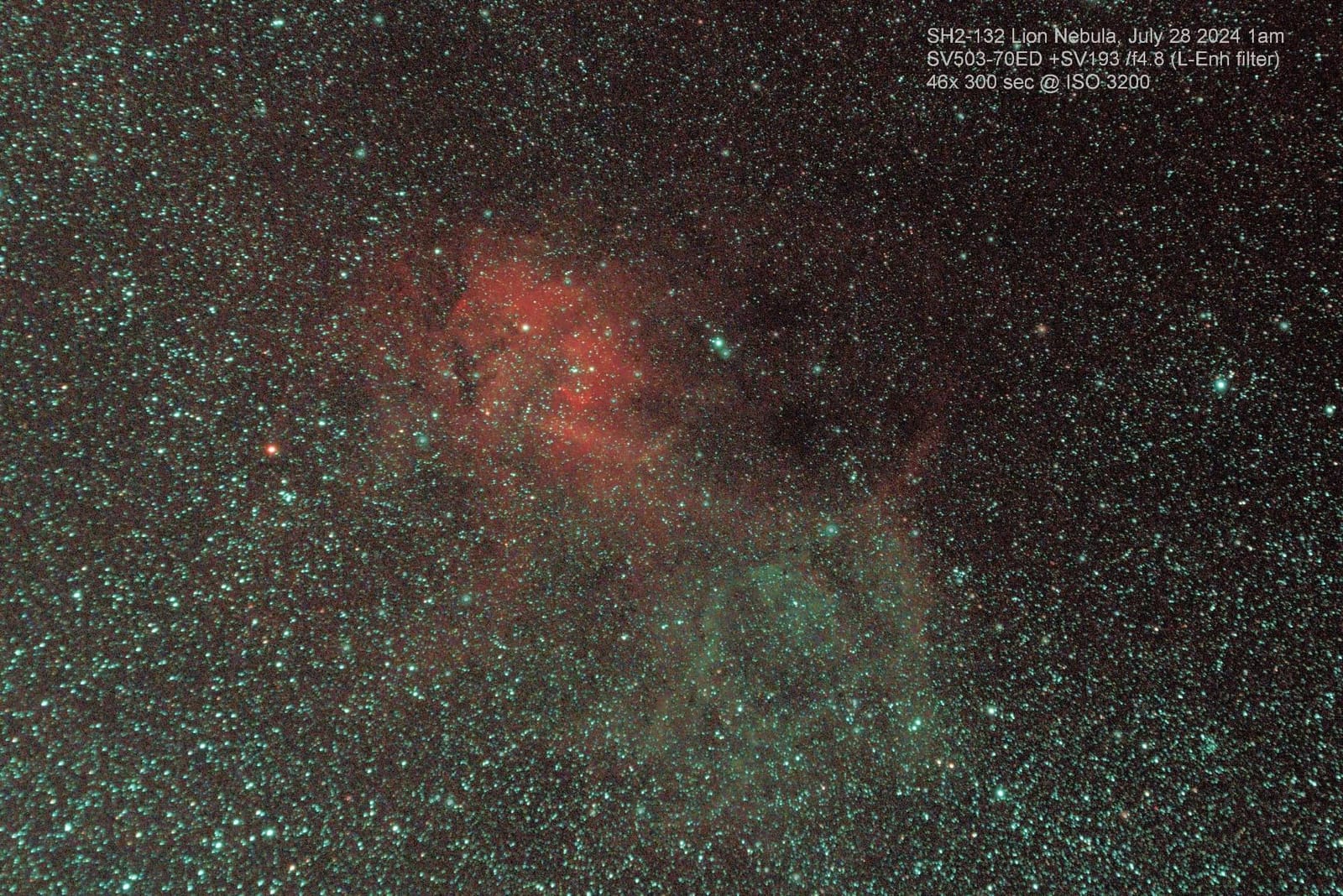
The L-Enhance is the filter we would use from a genuinely bright backyard, and the reason is the width of its pass. It passes hydrogen-alpha plus the combined hydrogen-beta and oxygen-III region rather than two hairline 3nm or 7nm windows, and that extra width is what lets it work on fast optics and on OSC cameras without losing the target.
From our Bortle 6-to-7 site, the sky background dropped enough that we could extend sub-exposures without immediately building the gradient that usually forces a shorter sub. Users report the same from Bortle 5 all the way to Bortle 9 gardens, and the consensus framing on forums treats the longer sub-exposure requirement as the intended trade rather than a flaw.
Technically this is the one to buy if you run a fast astrograph. The pass band is wide enough to tolerate the focal ratio shift of something like an f/2 RASA, and enough light comes through that an unmodified DSLR can still achieve critical focus with a Bahtinov mask. That combination is rare, and it is the reason this filter sits ahead of the tighter 7nm designs for many imagers.
One practical note that shows how much the design is understood by its users: it fits the holder on a Vaonis Vespera smart telescope once the plastic blank is removed. For a dedicated 2 inch M48x0.75 imaging train, it simply screws on.
Why it beats tighter filters in a city
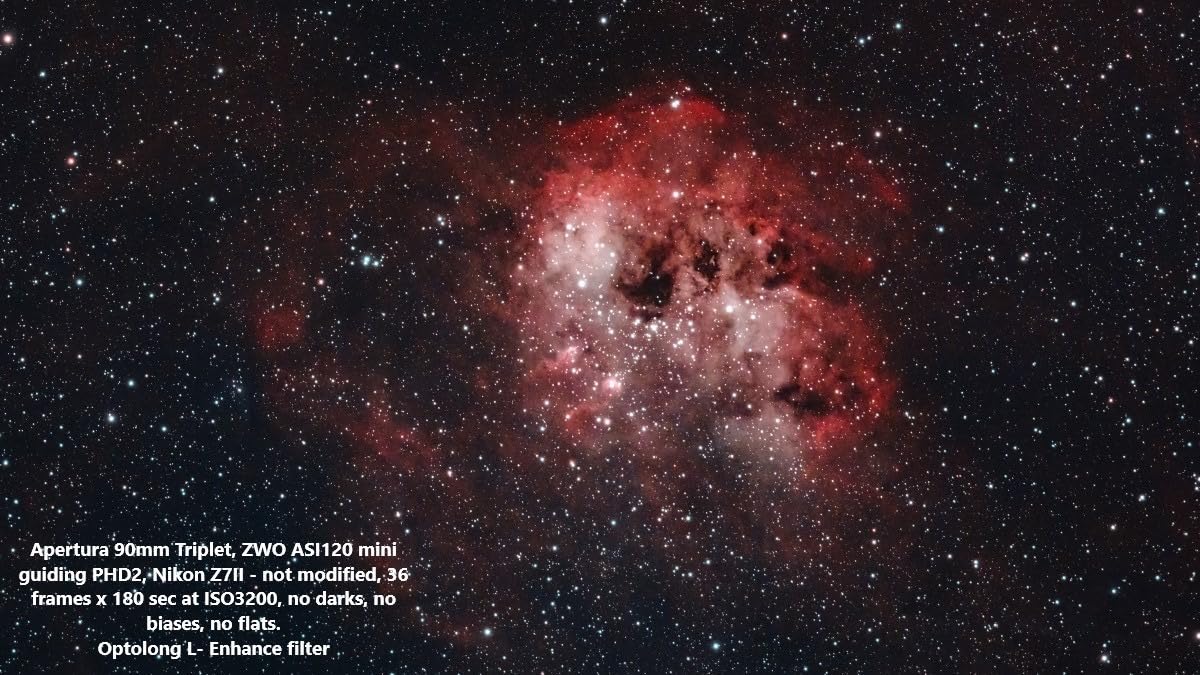
Two reasons, and they are the same reason. First, the wider pass means more of your target’s light reaches the sensor per second, so you need fewer total hours under the sky. Second, it tolerates focal ratio shift, so a fast instrument does not push the emission lines out of the pass band. Both of those matter enormously when your site is bright and your clear nights are scarce.
A comparison that circulates on a Texas Astronomical Society forum is instructive. An L-Pro filter at 3 minute subs versus a dual-band design at 5 minute subs produced the darker, cleaner background, and the dual-band was declared the winner. That is the exact decision most readers in a bright suburb are facing.
Where it falls short
It blocks a lot of light, so sub-exposures must get substantially longer. On an OSC camera that means more total integration for the same result, and total integration is the thing we are always short of. Budget for a plan that you can actually finish.
It is also the wrong filter for a galaxy, a star cluster or a reflection nebula, because the broad spectrum those targets need is exactly what this one removes. This one also sits in the premium tier of the roundup, which is a real consideration. If your sky is not genuinely bright, the K&F natural night filter at position one is far less demanding financially and keeps far more flexibility.
6. Optolong L-Pro 2 inch Light Pollution Filter – Best for Galaxies
Optolong 2″ L-Pro Light Pollution Filter
Multi-bandpass with sharp roll-off
Wider pass preserves star colour
CNC aerospace aluminium cell
About 90 percent transmission at nebula lines
Pros
- Balances contrast gain with natural star colour
- Good all-rounder for galaxies clusters and comets
- Black anodised cell extinguishes internal reflections
- Reported working in fast f/2 imaging trains
Cons
- Slight bluish cast after use
- Can show a tunnel effect around the star field
- Not as strong as narrowband against the worst skyglow
The L-Pro is the compromise position, and it earns that position better than any other filter in this roundup. It is a multi-bandpass design with a precise roll-off at the light pollutant emission lines, but its pass is noticeably wider than the dual-band filters, and that width is what keeps star colour and broadband targets intact.
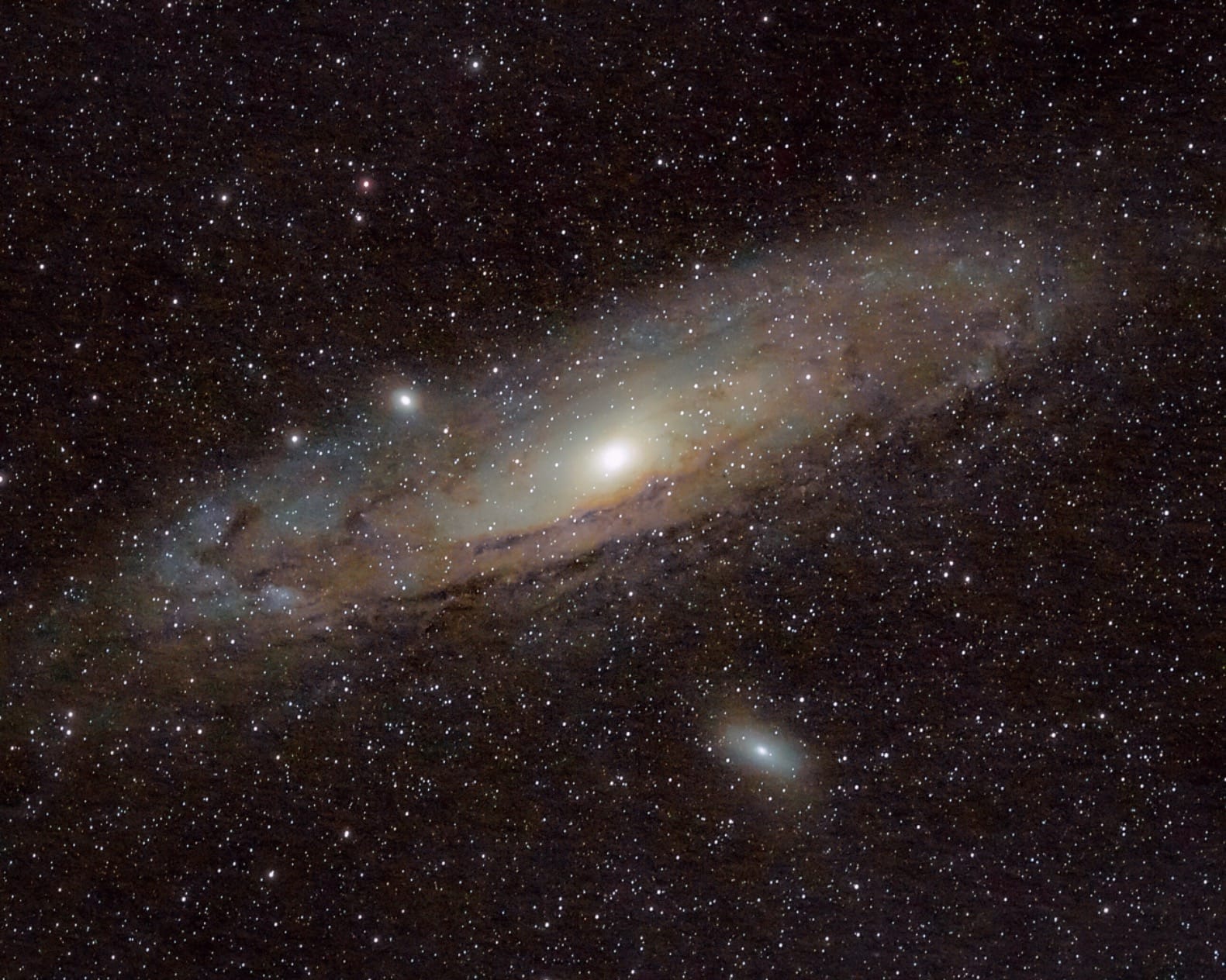
On galaxy data from our suburban site, the background came down measurably and the core detail stayed colour-neutral. That combination is unusual: narrower filters produce a higher contrast ratio but strip the image toward monochrome, while cheap broadband filters keep colour and barely touch the background. The L-Pro sits at the point where you get a real improvement without losing the object.
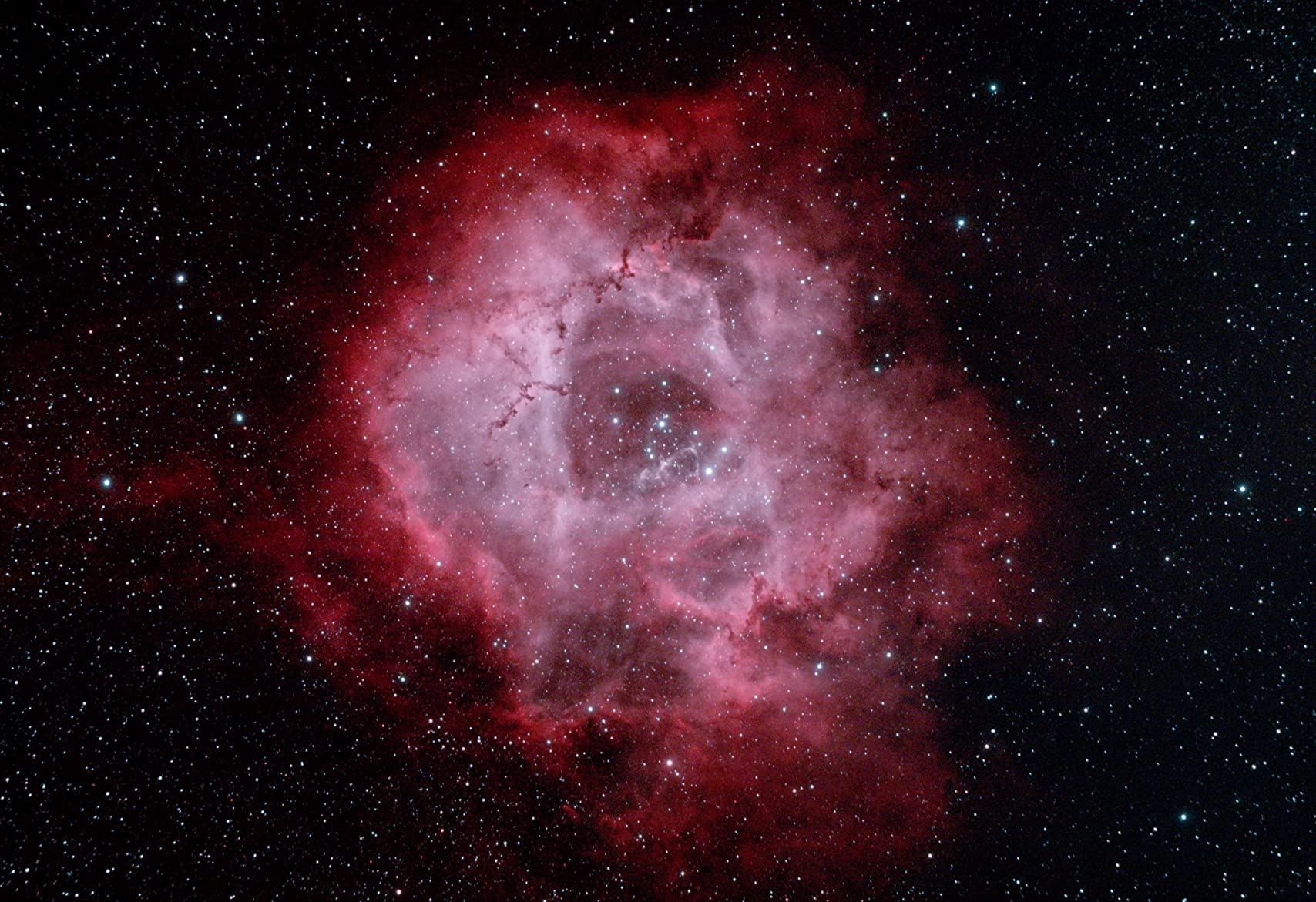
Transmission is about 90% at the major nebula emission lines, with multiple anti-reflection coatings on the glass. The cell is CNC machined aerospace grade aluminium with a black anodised finish, and the black internal surfaces are a real functional benefit: they kill the internal reflections that produce stray glow around bright stars in cheaper cells. It is not water resistant, which is worth remembering in damp climates, but it will not corrode.
The forum view is that this is the filter to own if you can only own one and you shoot a mix of targets. Users image galaxies, clusters and comets from Bortle 8 and Bortle 9 back gardens with it, and one of the most commonly cited community comparisons puts it directly between a strong dual-band and a plain natural night filter on a spectrum of results.
Why galaxies need a wider pass
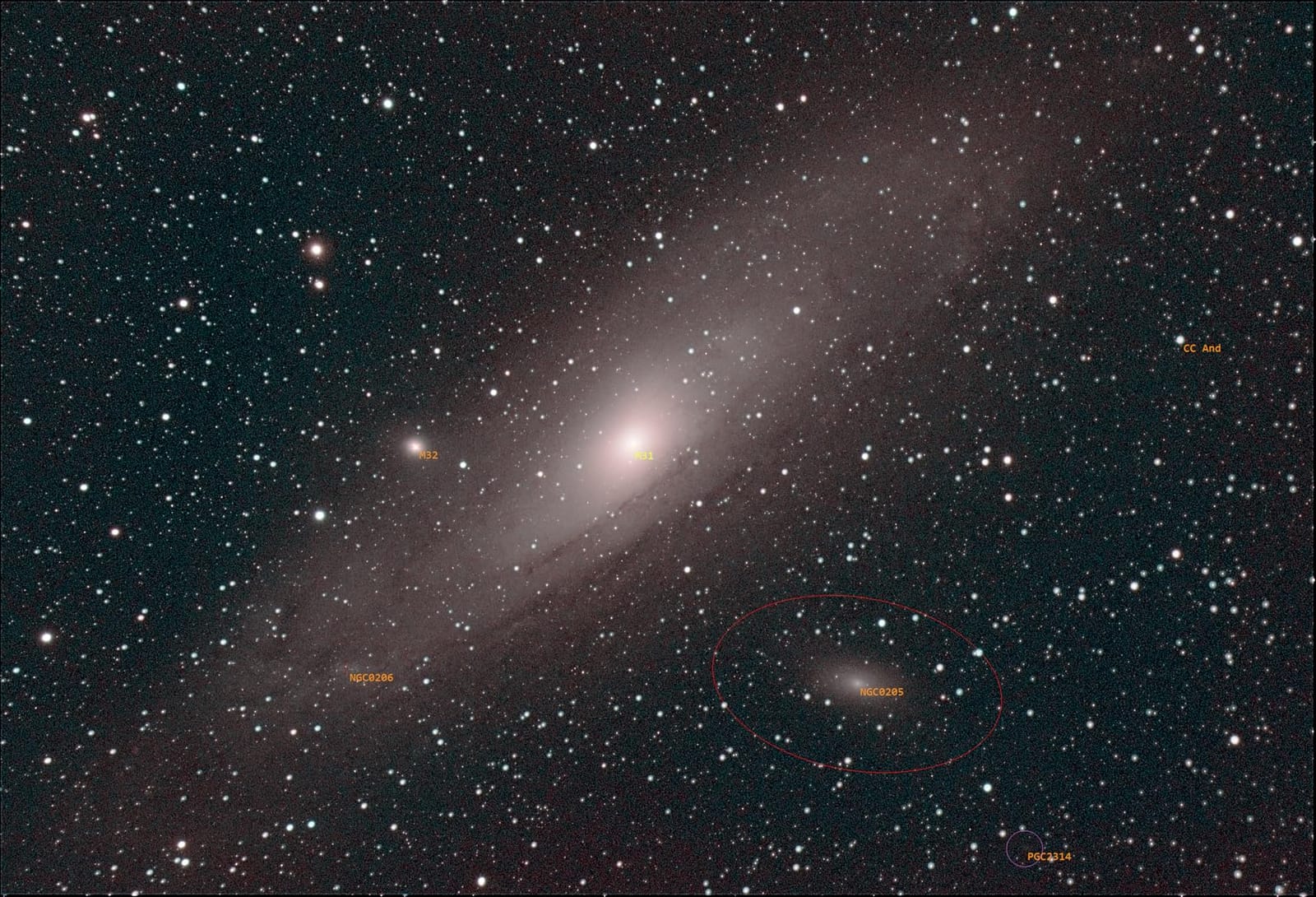
Galaxies are broadband objects. Their light is a continuum from young blue star-forming regions out to old red bulge stars, and a narrowband filter removes most of that by design. Applying one to M31 or M101 and wondering why the result is nearly monochrome is the single most common filter mistake reported on the forums.
The L-Pro solves it by cutting hard only at the pollutant lines and letting the rest through. Reported performance in fast f/2 imaging trains such as an 8 inch astrograph is a further point in its favour, since a faster beam cone shifts light across the pass band and a filter with a hard shoulder suffers more.
Where it falls short
It does not beat a narrowband filter against severe light pollution. If your sky is bright enough that gradient control is your main problem, the L-Enhance or a 7nm dual-band will out-contrast it, and the L-Pro will only get you part of the way.
Two cosmetic complaints recur. Some users report a slight bluish cast and some visible light loss after use, and a tunnel-like darkening around the edge of the star field appears before cropping, which needs a wider field or a crop to remove. It also sits at the premium end of the category relative to entry-level broadband glass. If you shoot mostly broadband targets from a moderately bright sky, this is the right spend. If you shoot mostly emission nebulae, it is the wrong one.
7. Optolong L-Extreme 7nm 2 inch Dual-Band – Tightest Bandpass in the Set
Optolong L-Extreme 7nm Dual Narrowband Filter (H-Alpha and O-III) (2″)
7nm dual pass on Ha and OIII
2 inch thread
Multi-coated glass
Optimised for OSC colour cameras
Pros
- Very high rejection of urban skyglow and moonlight
- Emission nebulae in colour from a single OSC camera
- Multi-coating keeps transmission and flare in check
- 4.9 average rating across 52 reviews
Cons
- Narrow band demands long subs and careful focus
- No good for broadband targets
- Smallest review base at 52
It has the highest average rating of the ten, 4.9, and it is the tightest dual-band design here at 7nm on both hydrogen-alpha and oxygen-III. The 95% five-star share with no one-star reviews is not a small sample artefact in the way it sometimes is, because the complaints that do appear are consistent and predictable rather than about defects.
The result from a bright, moonlit site was a very clean background. Both emission lines come through while almost nothing else does, which means the gradient that normally appears in a long integration simply has very little light left to build from. It is the filter for someone who has already solved focus and guiding and now needs maximum rejection.
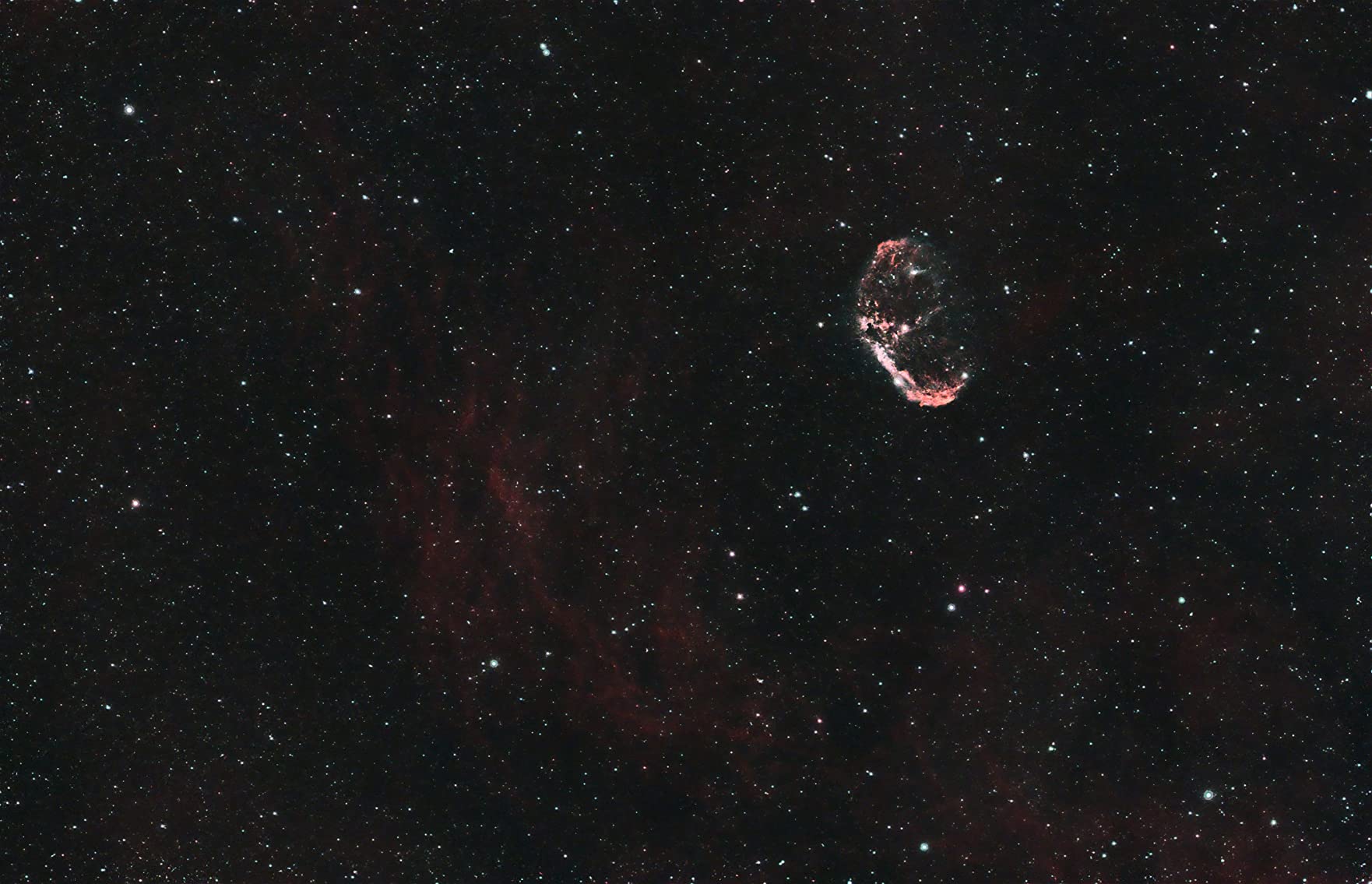
It is explicitly designed for one-shot colour cameras, and that is the key to understanding it. Rather than expecting you to shoot separate Ha and OIII subs and combine them, it lets a single OSC camera produce colour emission nebula data in one pass. For someone without a mono camera, that is the whole point.
Build details are modest but adequate: multi-coated glass in a 2 inch threaded cell, with a listed thread of 48.04mm to suit standard imaging trains. It is not water resistant, so dew management still matters on a long night. The category position in telescope filters is strong, which tells you how many imagers are using it in real projects.
When the tightest band wins
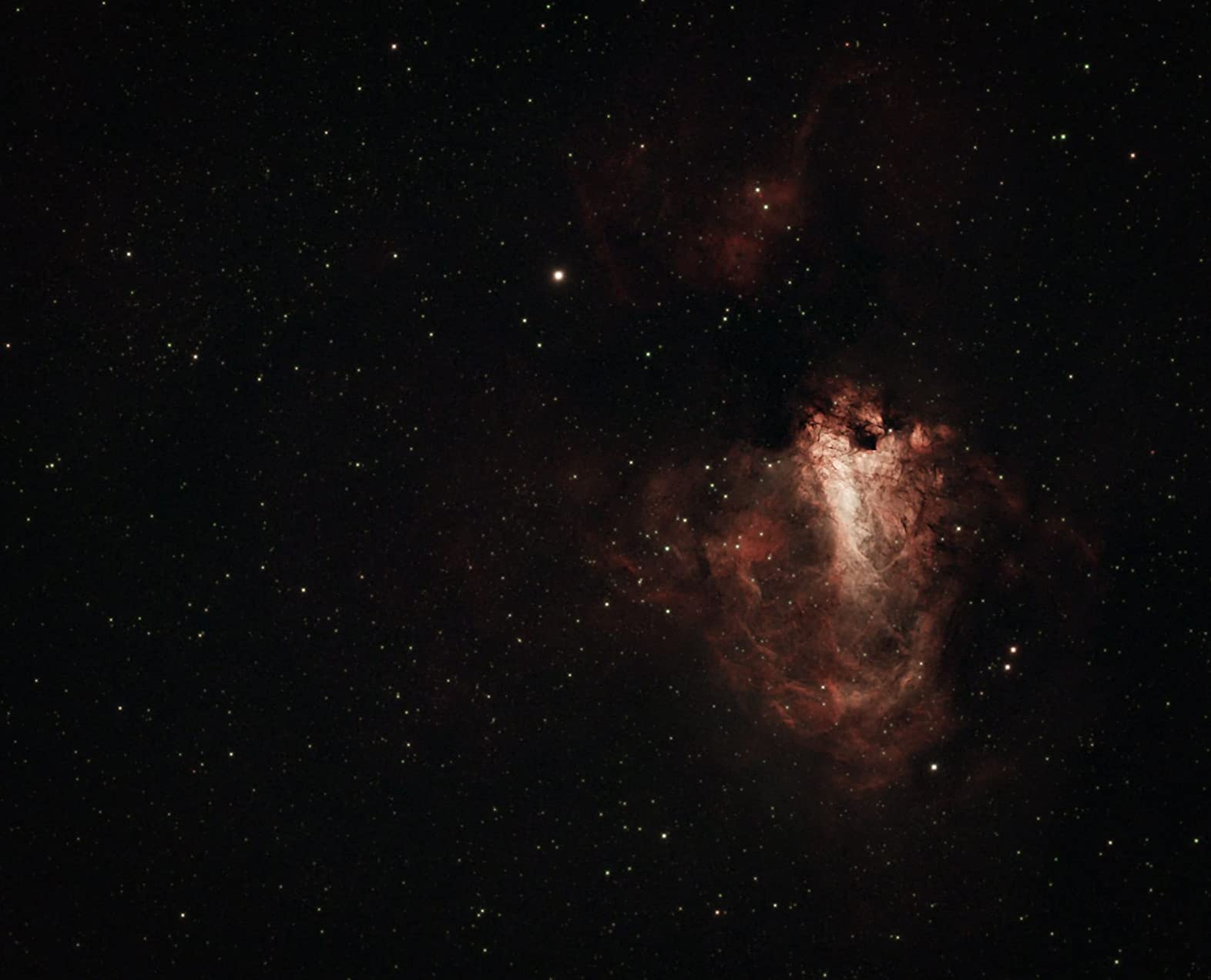
It wins when your limiting factor is light, not time. If you are imaging a bright emission nebula from a Bortle 8 sky with a moon up, the 7nm pass buys you a background you can stack for many hours without chasing gradients, and that is where the difference from a 15nm design actually shows up in the final image.
It is also the better choice for anyone who wants a single-filter colour result and does not want to build a mono rig with a filter wheel to get it. One camera, one filter, emission nebula in colour.
Where it falls short
It sits at the premium end of this roundup and, at 52 reviews, it has the smallest evidence base. The community consensus we found is that its field reliability is less well documented than for the higher-volume options, which is worth weighing if you are committing to a multi-season project.
More practically, a 7nm band demands long sub-exposures and careful focus, and it blocks most of your star field, so the data set is not usable for broadband targets at all. If you shoot galaxies for any part of the year, this money is better spent on the L-Pro at position six, or split between a broadband filter and a dual-band once your budget allows.
8. SVBONY SV240 2 inch Multi-Narrowband Filter – Best Multi-Line Coverage
SVBONY SV240 Telescope Filter, 2″ Multi-Narrowband Galaxy Nebula Filter
Ha OIII and H-Beta passed together
OD4 cut-off depth
Over 90 percent transmittance
2 inch thread
Pros
- Only option here covering three emission lines at once
- One filter serves emission nebulae and some galaxies
- Over 90 percent transmission at the core wavelengths
- Users report clean pinpoints with no visible halos from a Bortle 7-8 site
Cons
- Can produce uncorrectable halos on refractor trains
- Weaker in the worst Bortle 8-9 skies
- Planets look dark and bluish
This is the odd one out in the list, and the oddness is the feature. Where a dual-band filter passes two emission lines, the SV240 passes hydrogen-alpha, oxygen-III and hydrogen-beta together with an OD4 cut-off depth and over 90% transmittance at those core wavelengths across a 300-1100nm working range.
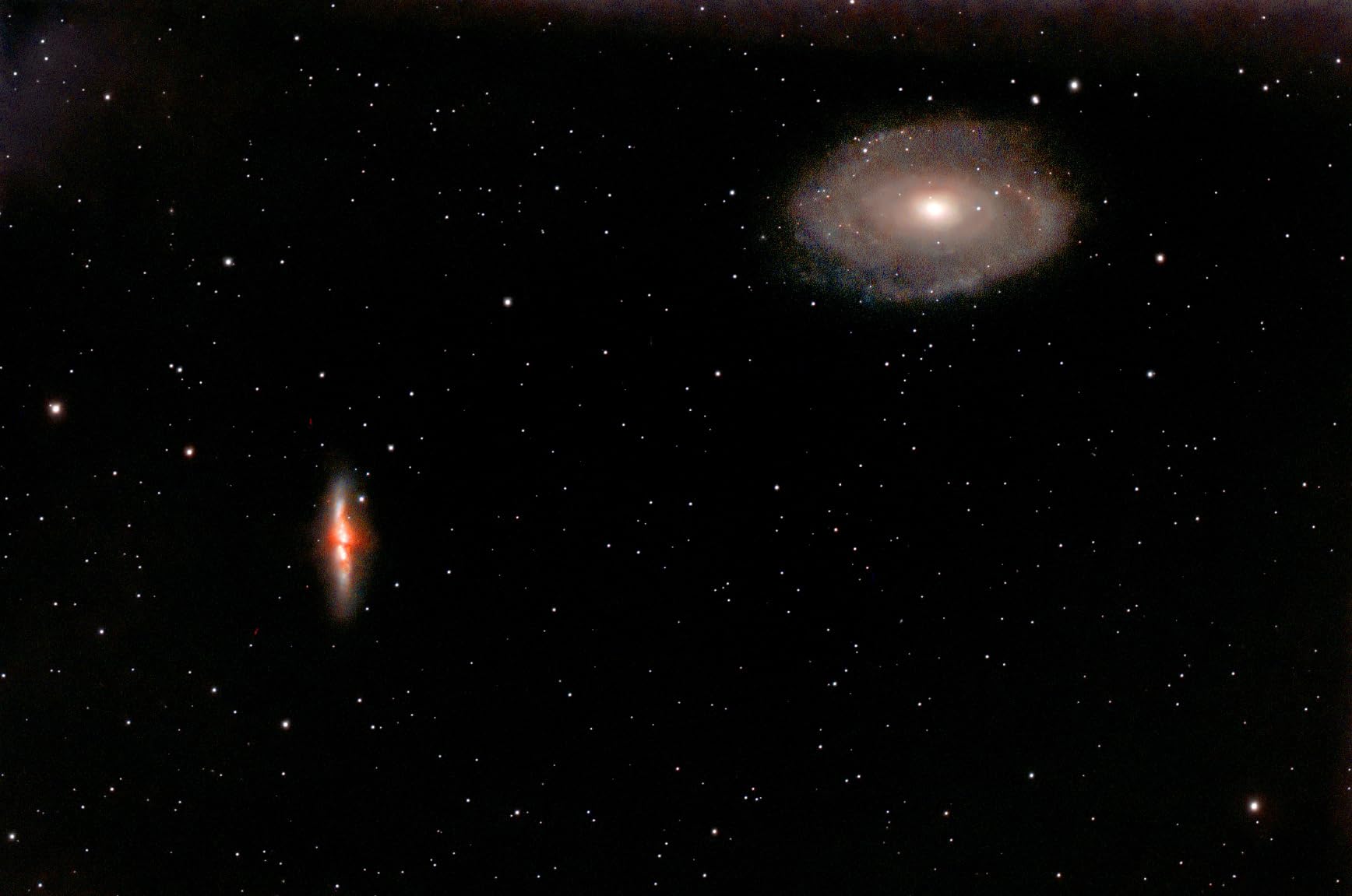
Adding hydrogen-beta is what lets it reach a few targets that a pure dual-band cannot, and reviewers describe it raising contrast on galaxies as well as nebulae where the other narrowband designs would give you almost nothing. It is the only filter in this roundup that genuinely stretches the narrowband idea beyond emission targets.
The claimed resistance spans Bortle 1 to Bortle 8, and user reports support imaging successfully from Bortle 7 and Bortle 8 sites with clean pinpoints and no visible halos. Users also note it sits well below comparable multi-line filters from the established premium brands, which is where most of its appeal comes from.
The 4.3 rating from 39 reviews comes with the most polarised response in the group at 68% five-star and 5% one-star. That is a small sample, so read the negative tail carefully rather than treating the mean as a verdict.
Who it is genuinely for
It suits an imager who wants one filter for everything and who has accepted some compromise on each target. Rather than owning a dual-band for nebulae and a broadband for galaxies, you own this and get a workable result on both. For a beginner with a single imaging train and a mixed target list, that consolidation has real value.
It is also the more forgiving entry into narrowband work for people who find the contrast between a dual-band and an unfiltered frame too stark to stay motivated by.
Where it falls short
Halos are the documented problem, and they are specific: they appear on refractor optical trains and at least one user treated them as a returnable defect. On a reflector the report is much cleaner. If your rig is a refractor, step back and look at the L-Enhance instead.
It also weakens in the worst Bortle 8 and 9 skies, which is precisely where a narrowband design earns its place, and planets look dark and bluish through it, so keep a separate filter for planetary work. With only 39 reviews behind it, we would put it lower in the stack than a 7nm design with 120 reviews at a similar entry point.
9. Kase Clip-In Filter for Sony Alpha – Best for Sony Mirrorless Bodies
Kase Clip-in Neutral Night Light Pollution Filter Dedicated for Sony Alpha Camera
Clip-in design for Sony Alpha bodies
Multi-coated tempered glass
3.3g weight
Full accessory kit included
Pros
- No lens thread size to match
- Minimal light loss while still cutting glow
- Very light at 3.3g
- Kits include glove
- cloth
- tool and case
Cons
- Can stop infinity focus with very wide lenses
- Sony Alpha bodies only
- One report of the body not reaching infinity focus
If you shoot with a Sony Alpha mirrorless body rather than a dedicated astro camera, this solves a problem that screw-in filters cannot. A clip-in filter sits in front of the sensor stack and is cut to the body, so there is no thread size to measure, no step ring to buy, and nothing to vignette at the edge of the frame. On a fast wide lens that last point is the difference between a usable filter and a frustrating one.
Compatibility is broad within the range, covering A9 II, A9, A7R IV, A7R III, A7R II, A7R, A7S II, A7S, A7 III, A7 II and A7. The glass is multi-coated tempered optical glass and the whole thing weighs 3.3g, which we found genuinely negligible on even a small prime.
It is broadband light pollution reduction, so the mechanism is the same one as the natural night filters: it dims the background rather than selecting emission lines. Light loss is minimal by the standards of this category, so exposure lengths move very little from an unfiltered session, and owners report effective reduction on star and cityscape work with autofocus still functioning on the body.
The kit is unusually complete for a filter at this level. You get the clip-in filter, a shading cotton, a rubber glove, a disassembly tool and a plastic storage case. The glove and cloth matter more than they sound, because fingerprints on a clip-in surface land directly in the path of your image.
This entry carries the smallest evidence base in the roundup with 16 reviews, a 4.3 average, 73% five-star and 12% one-star. The 4.3 average is not a quality signal so much a sample-size signal. Treat it as a first filter for a Sony shooter rather than a proven long-term investment.
Why clip-in beats screw-in for a mirrorless body
The thread size problem is the biggest source of returns in this category, and forum threads about sizing errors are endless. A clip-in removes that decision entirely. You buy the one made for your body and it fits, which also means you can keep the filter when you change lenses.
It is also the format that suits a very fast wide lens best, because nothing protrudes into the beam. If your Milky Way work is done on a 14mm f/1.8, that is the argument for this format over any screw-in alternative.
Where it falls short
The one report that stands out is infinity focus. With a very wide lens on some bodies, the filter stack is thick enough to prevent the lens from reaching infinity, and the symptom is soft stars that no amount of processing will fix. Check focus on your own combination before a night out, and be prepared to remove the filter if it will not focus.
It is also Sony Alpha only, which makes it useless if you also own Canon, Nikon or Fujifilm, and it is a broadband filter, so it will not touch a Bortle 8 sky the way a dual-band design can. Keep it for the wide-field and cityscape work it does well, and add a narrowband filter later if you move deeper into emission nebulae.
10. K&F CONCEPT X PRO 100mm Neutral Night Filter – Best for Filter Wheels
K&F CONCEPT X PRO 100x100mm Neutral Night, Anti-Light Pollution Filter
100x100mm square glass,2mm thick
Nano coating on both sides
AGC glass with no colour cast
Double-sided coating
Pros
- Fits filter boxes and filter wheels that a round filter cannot
- Square format serves many lens thread sizes from one holder
- 2mm thin glass keeps the optical path flat
- Neutral colour with low reflection
Cons
- Requires the separate X-PRO 100mm holder
- Adapter ring must match your lens thread
- Square format will not fit a standard round filter ring
This is the odd format of the group, and it is the answer to a specific mechanical problem. It is a 100 by 100mm square of glass, only 2mm thick, made from imported AGC optical glass with double-sided nanometer coating that is waterproof and scratch resistant. It is designed for the K&F CONCEPT X-PRO 100mm holder system, which accepts both filter boxes and imaging filter wheels.
That is the reason to own it. A round 2 inch filter physically will not drop into a 100mm filter slot, and forcing a round filter into a wheel with an adapter is exactly the arrangement that vignettes. If your rig has a filter wheel or a filter box, this is the shape that fits, and the 2mm thickness keeps the element flat and well clear of any window.
Functionally it is broadband light pollution reduction in the natural night class, and buyers report noticeably better contrast and a darker urban sky background with neutral colour rendering. One holder serves lenses from 52mm to 82mm through adapter rings, so a single filter covers a whole kit rather than one combination.
Why the square format is worth the extra parts
Filter wheels exist so you can change filters mid-sequence without touching the optical train, which is how narrowband workflows are supposed to be run. If your wheel takes 100mm squares, this filter is one of the few broadband options on the market that fits the pattern at all, and being 2mm thin means it will sit flat without stressing the frame.
The neutral colour also makes it usable as a reference filter. Because it does not shift hue, it is a sensible unfiltered-plus-control option in a rotation alongside narrowband filters, which is not something a didymium filter can do.
Where it falls short
The holder is not included, which is the main catch. You are buying glass that has no effect until you also buy the X-PRO 100mm holder, and then the correct adapter ring for your lens thread. That is two extra decisions and two extra purchases for a benefit that only exists if you already use a filter box or wheel.
With 20 reviews and a 4.3 average, long-term field reliability is only lightly documented. And the square format is simply incompatible with a standard round screw-in ring, so if you are still on a lens-only setup with no holder, this is the wrong shape for you. Our editor’s choice at position one covers the same broadband goals in a format that just works.
When Not to Use a Light Pollution Filter
The most useful advice in this guide is the advice about when to skip the filter entirely, and it applies to more people than expected. If your imaging site sits at Bortle 1, 2 or 3, a light pollution filter is a net negative. There is no skyglow to remove, so the filter only removes light from your target, costing you signal and signal-to-noise for no gain in the background.
Do not use one at all on star clusters, on most double stars, or on any target where star colour is the point. A UHC or CLS filter dims the faintest stars first, which is exactly the wrong thing to do when the target is a swarm of faint stars.
For visual work, the calculus changes again. Many contributors on r/telescopes point out that light pollution filters are of limited use for observing through an eyepiece compared with their value for imaging, and the recurring community advice is that if you can reach a globular cluster such as M13 from home, more magnification beats any filter. Filters change the appearance of the sky; aperture and magnification change what you can actually see.
The honest summary is that a filter is a tool for a bright sky and a narrowband-friendly target. Outside those two conditions it is an expensive piece of coloured glass that makes your data worse.
How to Choose: Four Steps From Target to Filter
Work through these in order. The single biggest mistake we see, repeatedly in forum threads, is starting with the filter instead of the target.
Step 1: Pick the target type first
Emission nebulae such as Orion, the Lagoon, the North America, the Veil and the Horsehead respond to hydrogen-alpha and oxygen-III. Galaxies, star clusters, comets and reflection nebulae need the full visible spectrum. Decide what you are shooting before anything else, because a dual-band filter will make a galaxy look almost monochrome and no amount of processing fixes a filter that removed the light before it reached the sensor.
Step 2: Match the filter class to your Bortle class
At Bortle 1 to 3, shoot unfiltered. At Bortle 4 to 5, a broadband filter such as the K&F natural night or the HOYA didymium glass is a reasonable improvement for wide-field work. From Bortle 6 upward, dual-band filters start to earn their place on emission nebulae, and at Bortle 8 to 9 they are the difference between a usable image and a gradient you cannot remove. The SV240 claims coverage from Bortle 1 to Bortle 8, but reviewers note it weakens in the worst classes.
Step 3: Confirm the mount format
Work out what your optical train accepts before you choose anything. A DSLR body takes a clip-in filter sized for that body. A lens takes a screw-in filter in the lens thread diameter. A telescope imaging train takes 1.25 inch or 2 inch, usually on an M48x0.75 thread, and a mono rig with a filter wheel may want 100mm squares. Mismatching here is the number one cause of vignette complaints, and step rings stacked thick enough to bridge a size gap are the usual culprit.
Step 4: Set the bandwidth
Tighter is not automatically better. A 3nm filter rejects the most and passes the least, so it needs long sub-exposures, careful focus and a well-guided mount. A 7nm filter is more forgiving and works on more optics. A 15nm or wide dual-band design tolerates fast focal ratios and shorter integrations. If you have just one filter slot and limited clear nights, a wider band buys you more usable data per hour than a tighter one does.
Filter Formats Explained: Clip-In, 1.25 Inch, 2 Inch and 100mm
Getting the format right removes most of the confusion in this category, and the four options are not interchangeable.
Clip-in filters sit inside the camera body in front of the sensor. You must buy the one made for your exact body, which for the pick at position nine means a Sony Alpha variant. There is no thread size, nothing protrudes into the light path, and the format suits very fast wide lenses better than anything else. On the downside, a clip-in adds enough thickness to stop infinity focus with some very wide lenses.
1.25 inch (31.75mm) filters are the standard eyepiece format and the format most amateur telescopes take. They are cheap, they suit visual observing, and they can be stepped up to a 2 inch imaging train. They are too small for a fast focal ratio imaging train, where the beam cone is wider than the filter itself and you lose the corners.
2 inch (M48x0.75) filters are the imaging standard. The larger aperture supports faster optics, and this is the format we would choose for almost any one-shot colour or monochrome camera. The Celestron UHC at position four is a 1.25 inch unit in a category where 2 inch versions are the norm, so check what your train needs.
100mm drop-in and square filters are the specialist formats. They are designed for filter wheels and filter boxes, where a round screw-in filter has no physical way to fit. The pick at position ten is 100 by 100mm and 2mm thick so it sits flat in a wheel, but it needs its own holder and an adapter ring for your lens, and it will not drop into a standard round ring at all.
What Not to Buy
Unbranded glass with no stated bandpass is the most common trap. Without a published transmission curve or a bandpass in nanometres, you have no idea what you have. Forums repeatedly report unit-to-unit variation even within a single manufacturer’s batch, and that is between branded models. A filter with no stated specifications is worse, because you cannot even measure the variation.
Counterfeit or substandard copies sold by third-party marketplaces are a separate risk and one people worry about constantly. Buy from a seller that lists the manufacturer part number, and check that the coatings, cell finish and stated transmission match the manufacturer’s own listing. A CNC machined black anodised cell is easy to see and hard to fake well; a plain painted ring is a warning sign.
Didymium colour-shift filters for night cityscapes are worth thinking about carefully rather than buying by keyword. They are excellent for astrophotography as we describe at position two, and misleading if your expectation is a neutral-looking city photograph. Our approach to filtering and testing consumables is covered in more detail in our screen filter reviews, where the same marketing-versus-measurement problem shows up.
Finally, do not buy a solar or eclipse filter expecting it to help with astrophotography. A certified solar filter is a completely separate category with its own safety standard, and using one for deep-sky work is both useless and dangerous if you are ever pointed at the Sun. It is the most common category confusion in this space.
For comparison, our countertop water filter roundup covers the same question of how to tell a well-made filter from a poorly made one from published specifications.
Frequently Asked Questions
Can you do astrophotography with light pollution?
Yes, and a filter is usually the cheapest way to improve the result. Artificial skyglow raises the background level of every sub-exposure, which buries faint detail and degrades signal-to-noise. A broadband or dual-band filter rejects the brightest artificial wavelengths, drops the background and shortens the integration time you need for the same signal. From Bortle 6 upward the improvement is substantial. From Bortle 1 to 3, shoot unfiltered, because a filter only removes signal there.
Is a UHC filter good for galaxies?
A UHC filter is usable on galaxies, but it is not the best choice. It is a broadband filter that selectively cuts the wavelengths of artificial light, so it dims the background without selecting emission lines. That means galaxies and star clusters keep their natural colour, and you get a modest contrast gain rather than a dramatic one. Expect roughly a 30% contrast improvement on emission nebulae from a suburban sky. For a stronger result on a galaxy, blend in hydrogen-alpha data or move to a dark site.
Do light pollution filters still work with LED streetlights?
Partly, and the answer depends on the filter class. Filters designed against sodium and mercury vapour lighting, such as didymium natural night glass, lose much of their advantage because broadband LEDs emit across the spectrum rather than at a few narrow lines. Dual-band and narrowband filters that pass only hydrogen-alpha and oxygen-III are largely unaffected, because almost nothing man-made emits strongly at those wavelengths. Those two families are why narrowband filters are still worth buying this year.
Is Optolong L-eNhance a narrowband filter?
The L-eNhance is a dual narrowband filter, yes, but a wide one. It passes hydrogen-alpha plus the combined hydrogen-beta and oxygen-III region rather than two hairline windows of 3nm or 7nm. That extra width is deliberate: it tolerates the focal ratio shift of fast optics like an f/2 astrograph and passes enough light for an unmodified DSLR to focus with a Bahtinov mask. It is the reason we recommend it from bright city skies, at the cost of longer sub-exposures.
What size light pollution filter do I need?
Match the format to your optical train rather than to the camera brand. A DSLR or mirrorless body takes a clip-in filter made for that exact body. A camera lens takes a screw-in filter in the lens thread diameter, commonly 52mm, 58mm, 67mm or 82mm, plus a step ring if it does not match. A telescope imaging train takes 1.25 inch or 2 inch, usually on an M48x0.75 thread. A filter wheel may want 100mm square glass. Check before buying, since mismatches cause vignetting and returns.
Conclusion: Our Best Light Pollution Filter Picks for 2026
Start with the K&F CONCEPT 67mm Natural Night at position one. It carries the largest evidence base in the roundup with 752 reviews, it keeps star colour and broadband targets intact, and it will not force you into a narrowband workflow you have not chosen yet.
If you shoot emission nebulae from a Bortle 6 or brighter sky, go to the Optolong L-Enhance or the SVBONY SV220. If galaxies and clusters are your thing, the Optolong L-Pro is the filter that was built for that. And if you image under a genuinely dark sky, spend the money on a darker site instead, because no filter beats no skyglow.
We test and compare far more than ten of these for our oil filter roundup and across our other buying guides, using the same rule: published specifications, hands-on time, and an honest note on where each product fails.