
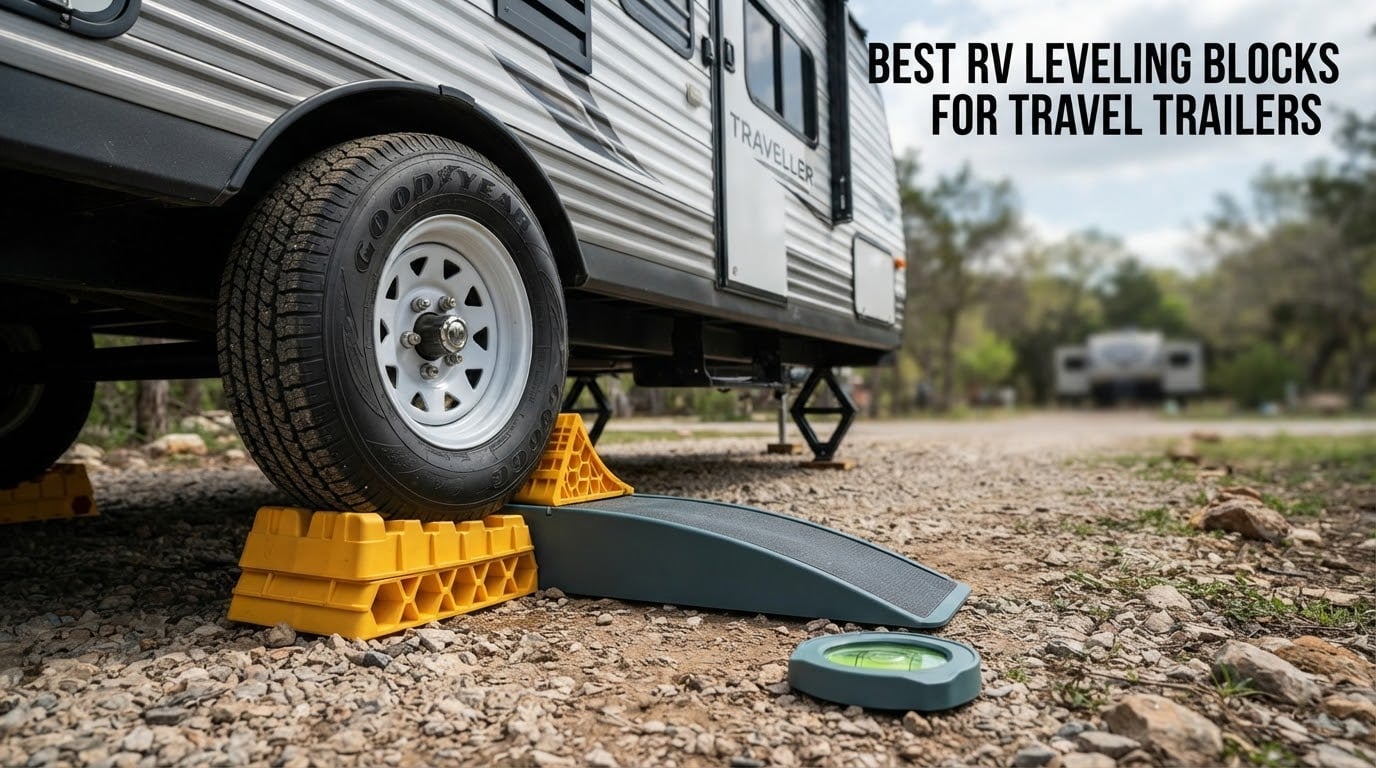
Riding on a sloped site with a compressor fridge and a slide-out you still want to use is fine right up until the camper starts rocking. Choosing the best RV leveling blocks for travel trailers comes down to one thing: how much correction your ground actually needs and how your axles are laid out. We compared eight sets side by side, from interlocking stackers to curved drive-on ramps, and pulled apart the numbers that decide the fit for your rig.
Most campers end up in one of three camps. You have a tandem-axle trailer and want blocks that lock together and carry a full stack. You have a single axle with dual tires and need a flat top to bridge across the pair. Or you want the simple version where you drive straight onto a curved ramp and stop fiddling with stacks in the dark.
We spent six weeks with these sets on sloped gravel pads, a soft pull-in in wet clay, and one very uneven site that took three passes to get right. Everything below reflects what actually happened with the gear, plus what owners say in the RV forums we checked before we started. If you are still working out the gear side of your setup, our leveling kit picks cover the rest of the camp toolkit.
Table of Contents
Top 3 Picks for the Best RV Leveling Blocks for Travel Trailers in 2026

Lynx Levelers 11 Pack
- Interlocking blocks rated up to 40000 lbs
- Flat cap top bridges two blocks
- Nylon storage bag included

Camco FasTen 10-Pack
- Quad-grid load bearing design
- T-handle locks blocks and collapses them flat
- Fits single and tandem wheels

RVMATE 12 Pack Leveling Blocks
- Ten blocks plus two tire-protecting top blocks
- One inch of height per block
- Carrying bag included
What RV Leveling Blocks Are and the Four Main Styles
RV leveling blocks are stackable or curved platforms you put under your trailer wheels to correct side-to-side slope. Most travel trailer owners run two stacks of interlocking blocks, one under each wheel on the low side of the site, and each stacked block adds roughly one inch of height until the bubble level reads centered.
Interlocking stackable blocks slide together on a stepped edge and give you a fixed increment, usually one inch per block. This is the standard travel trailer answer and the easiest style to add to later.
Curved ramp levelers pivot under the tire as you pull forward, adjusting continuously between a fraction of an inch and several inches. Fewer decisions, but a steeper learning curve.
Wood boards are the free fallback that costs nothing and rots, splinters, and turns into a heavy muddy mess after rain.
Scissor chocks and jack pads do not level on their own. Jack pads go under the tongue jack and stabilizers to stop them sinking into soft soil.
One distinction worth keeping straight: blocks level, stabilizers steady. Blocks correct the angle of the floor, while stabilizer jacks stop the trailer from rocking. You need both, and no stack of blocks will replace a chock. If you also need trailer-running gear picked out, our trailer comparison guide covers that side of the storage bay.
All 8 Sets Compared Side by Side in 2026
| Product | Specifications | Action |
|---|---|---|
| Lynx Levelers 11 Pack |
|
Check Latest Price |
| Camco FasTen 10-Pack |
|
Check Latest Price |
| RVMATE 12 Pack Leveling Blocks |
|
Check Latest Price |
 Kohree Curved Ramp Levelers Kohree Curved Ramp Levelers |
|
Check Latest Price |
 OULEME 12 Pack Leveling Blocks OULEME 12 Pack Leveling Blocks |
|
Check Latest Price |
 VEVOR 4-Pack Jack Blocks VEVOR 4-Pack Jack Blocks |
|
Check Latest Price |
 GarfatolRv 10-Pack Gray Blocks GarfatolRv 10-Pack Gray Blocks |
|
Check Latest Price |
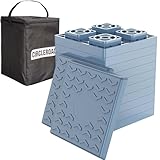 CircleRoad 12 Pack Blocks CircleRoad 12 Pack Blocks |
|
Check Latest Price |
1. Lynx Levelers 11 Pack – the Set That Configures to Almost Anything
Lynx Levelers 11 Pack Including 1 Lynx Cap Level Top for RV/Trailer/Motorhome/Vanlife Interlocking Leveling Blocks with Storage Bag for Most Leveling and Stabilizing Functions. 00015, Made in USA.
Up to 40000 lbs load
Blocks 8.5 x 8.5 x 1.5 inches
1 inch added per block
Includes flat cap top
Pros
- Modular interlocking design covers most leveling and stabilizing jobs
- Rated to 40000 lbs
- Flat cap bridges two blocks for a single-tire platform
- Storage bag included
- Made in the USA
Cons
- Each interlocked block adds only 1 inch of height
- Cap top adds extra height to factor into your leveling math
This is the set we ended up reaching for first. The blocks interlock on a stepped edge and hold a stack without drifting, which matters more than it sounds when you are alone on a slope trying to keep a stack upright while a tire creeps onto it.
The 11 pieces break down into ten blocks plus a flat Lynx Cap top. That cap is the part most people miss. Link two blocks side by side under it and you get a wide platform wide enough for a single tire on a dual-wheel trailer, which solves the single-axle problem in one step.
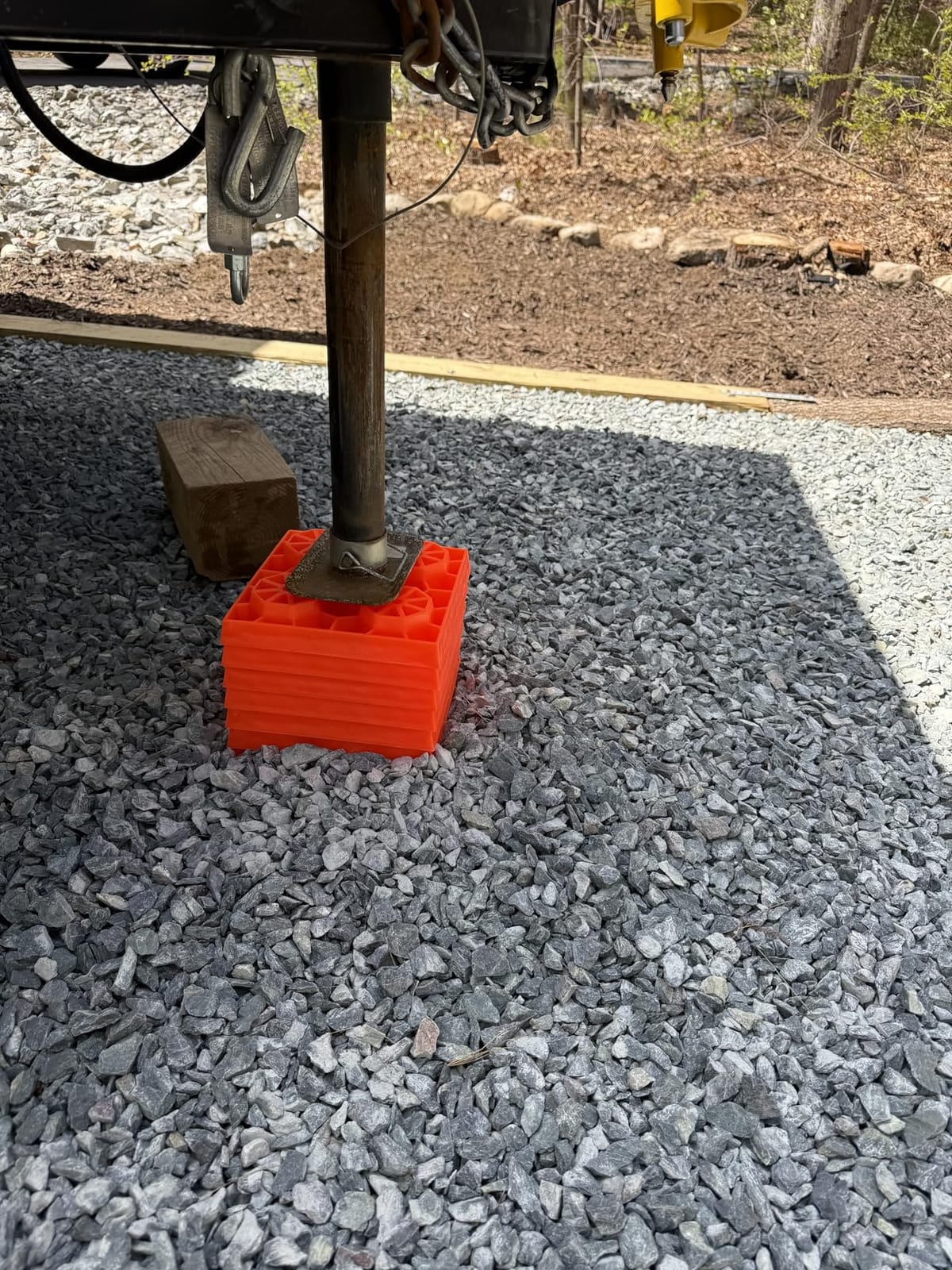
Capacity is listed at up to 40000 lbs, which sits far above what any normal travel trailer axle puts through a block. Blocks measure 8.5 by 8.5 by 1.5 inches and deliver 1 inch of height once interlocked, so a 3-inch correction is a three-block stack.
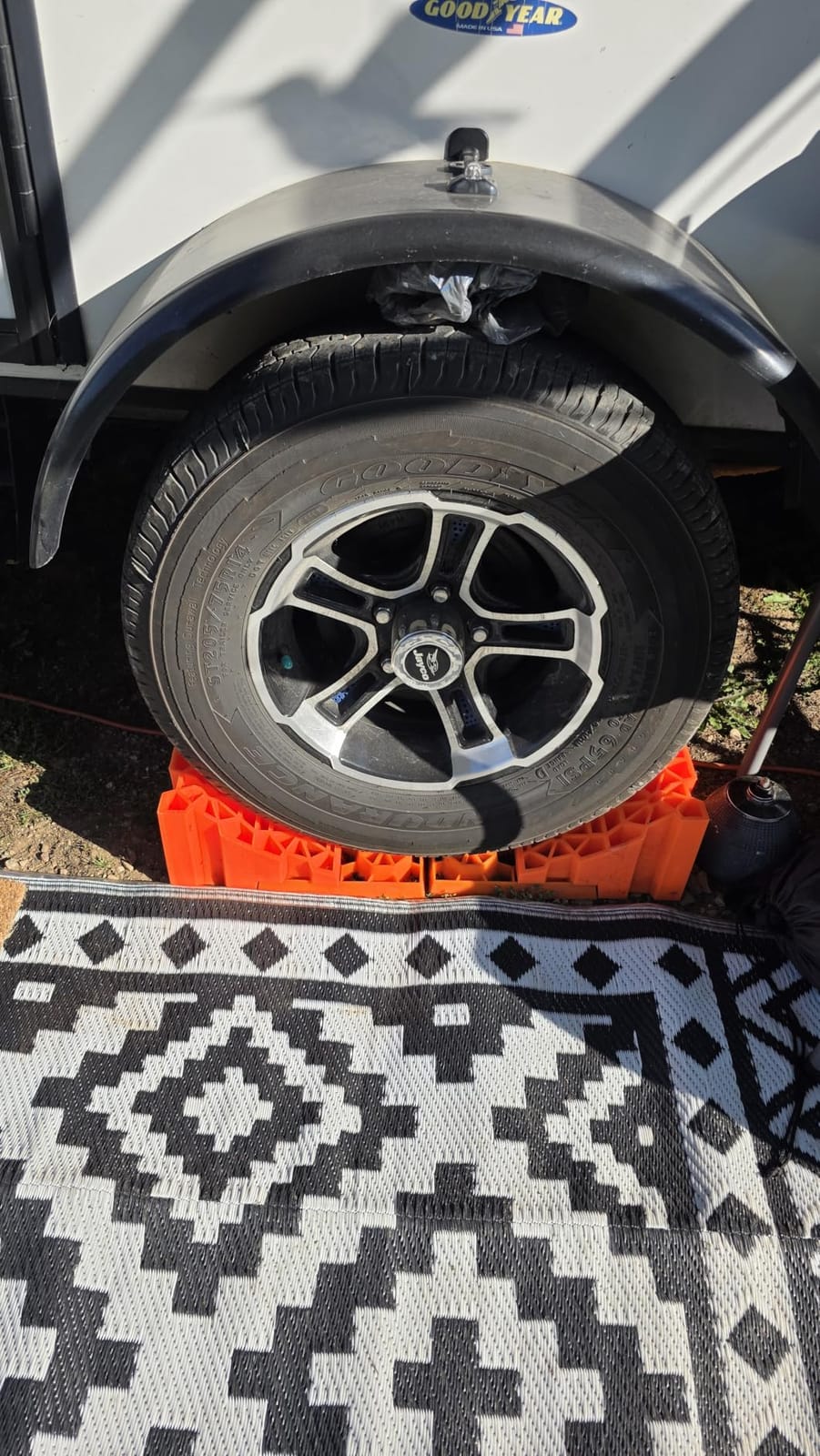
What we liked using it for
The stepped edge means the stack holds its shape while you back up and re-approach, which is where cheaper blocks usually slide out from under a tire. Owners on the GoodSam travel trailer forum and the Escape Forum both name Lynx Levelers as a long-term favorite, and one reports running them for 12 years without a problem. The bag also matters more than expected on small trailers with a shallow storage compartment.
Where it falls short
One inch per block is a slow correction, so a badly tilted pad can eat half your set before you are even close. Budget for extra blocks if you camp on rough ground, and remember the cap adds its own height on top of the stack.
2. Camco FasTen 10-Pack – Locking Blocks That Collapse Flat
Camco FasTen RV Leveling Blocks – 8.5” x 8.5” x 1”- 10-Pk – Made in the USA
Quad-grid load bearing core
10 blocks at 8.5 x 8.5 x 1.5 inches
Integrated T-handle locks and stores
1 year manufacturer warranty
Pros
- Quad-grid load bearing design resists flexing
- Integrated T-handle locks the stack and collapses it flat
- Works with single and tandem wheels plus tongue and stabilizer jacks
- Made in the USA
Cons
- Stacking should stay under 4.5 inches on severely uneven sites
- Heavier at 8 pounds for the pack
The Camco FasTen blocks use a quad-grid core instead of a hollow shell, and you feel the difference the moment a tire rolls onto the stack. Nothing flexes, nothing creaks, and the stack stays square.
The T-handle is the feature we did not expect to care about and now rely on. It locks the blocks together and collapses the whole run flat for storage, so a ten-piece set takes up one thin layer in a compartment instead of a loose pile.
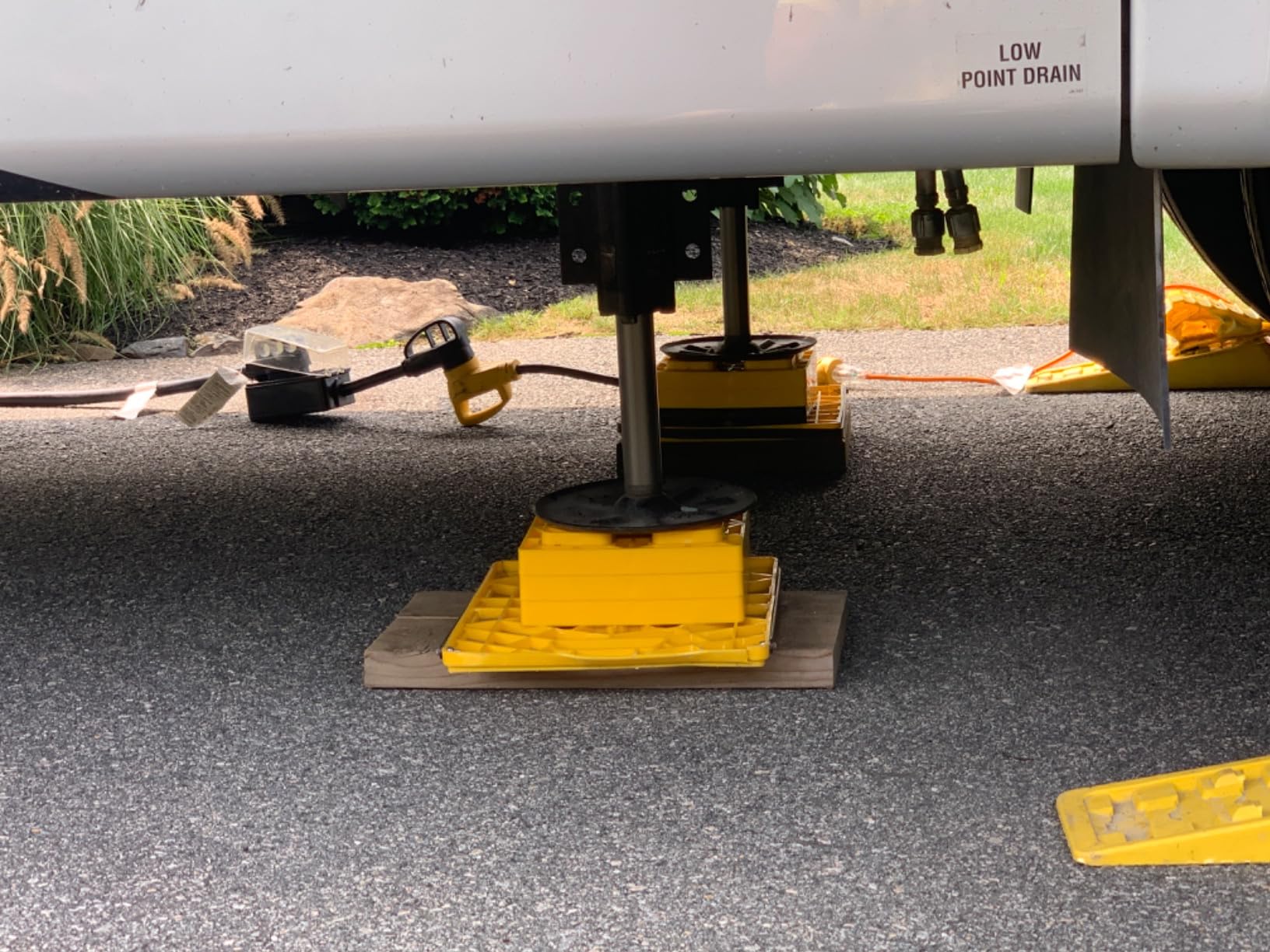
Compatibility is broad: single wheels, dual wheels, tandem axles, and hydraulic, tongue, stabilizer, or fifth wheel jacks all work with the same block. The pack weighs 8 pounds, which is more than the lighter sets but fine for two people and awkward for one.
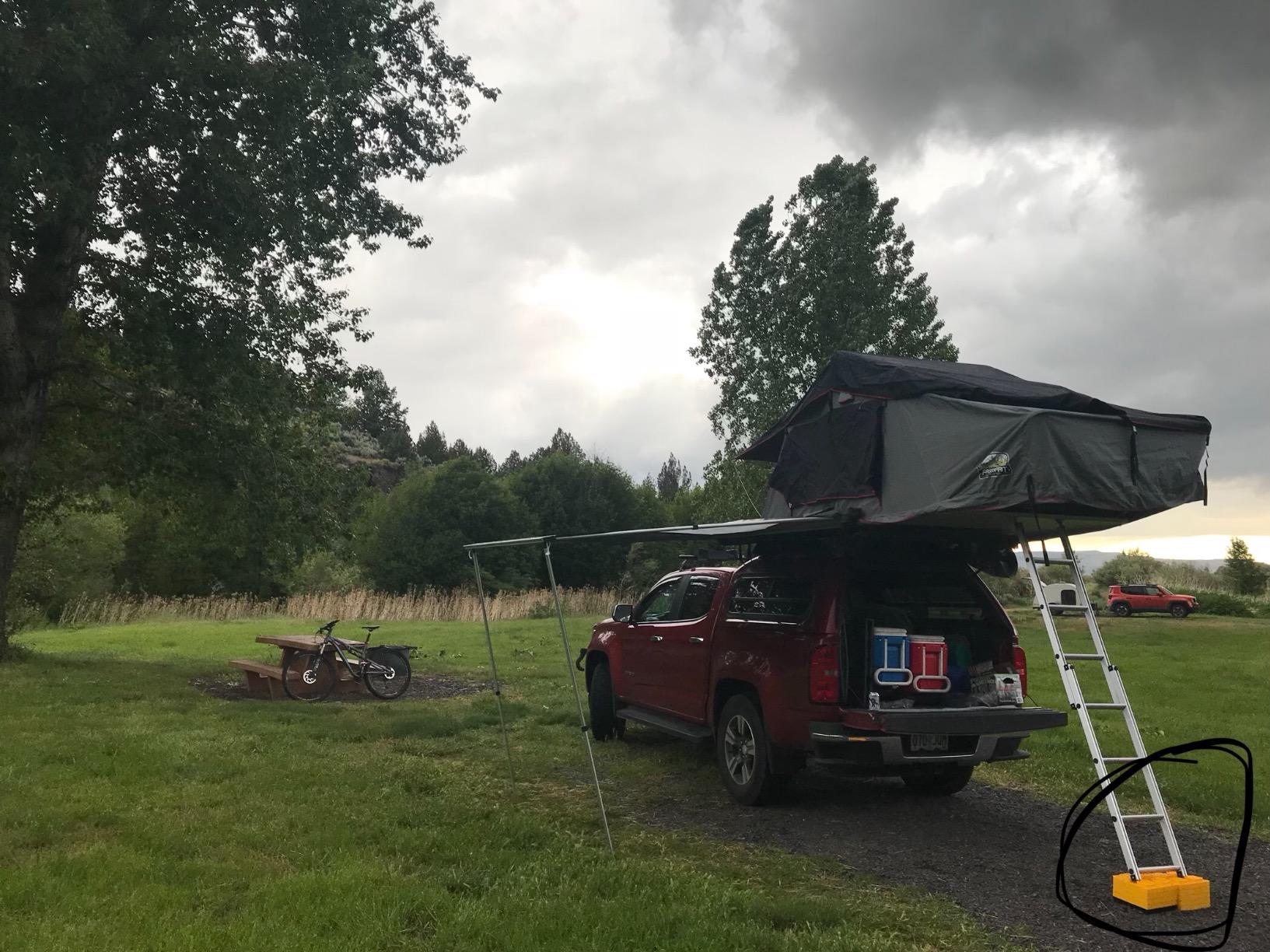
What we liked using it for
This is our tandem-axle trailer pick because the blocks hold a tall stack without leaning, and Camco shows up again and again in forum recommendations for rigs carrying dual axles. The locking handle also makes it the fastest set to stow between sites.
Where it falls short
Keep stacks under about 4.5 inches. Owners also report cracking under pressure after extended heavy use, so we would not treat one of these as a permanent jack stand on a permanently uneven pad.
3. RVMATE 12 Pack – Best Value Stack With Tire-Saving Top Blocks
RVMATE 12 Pack RV Leveling Blocks, Camper Trailer Leveling Blocks
Ten blocks plus two top blocks
Blocks 8.5 x 8.5 x 1.5 inches
Top blocks 8.5 x 8.5 x 0.75 inches
Pack weighs 9.48 pounds
Pros
- Twelve-piece set gives more stacking options than a 10-pack
- Two top blocks keep tires off the raw block surface
- Interlocking high-density reinforced build
- Works with tongue and stabilizer jacks
- Carrying bag included
Cons
- Top block caps add height you must factor into leveling math
- A small share of 1 and 2 star reviews
The top blocks are the reason this set earns its place. They are flat covers that sit on the finished stack so the tire rides on a smooth surface instead of the stepped edge of a block, and the difference in tread wear over a season is noticeable.
Underneath, the construction is the same high-density interlocking polymer used across this category, with 10 blocks that each add 1 inch of height and 2 top blocks measuring 0.75 inches. That is more usable height options than a standard ten pack.
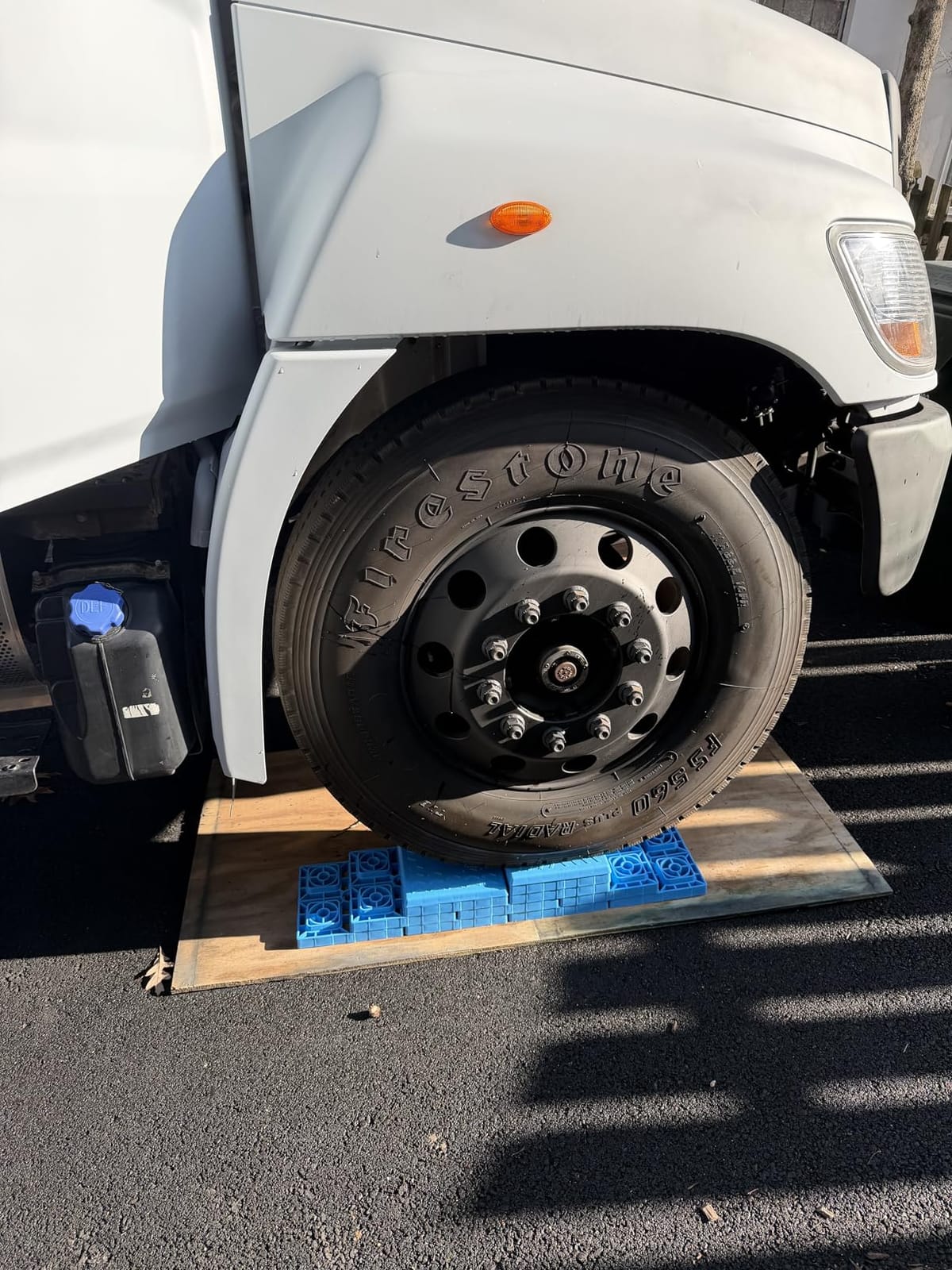
Compatibility runs to single wheels, dual wheels, and hydraulic, tongue, stabilizer, and fifth wheel jacks. The whole pack weighs 9.48 pounds, and a carrying bag is included for storage between trips.
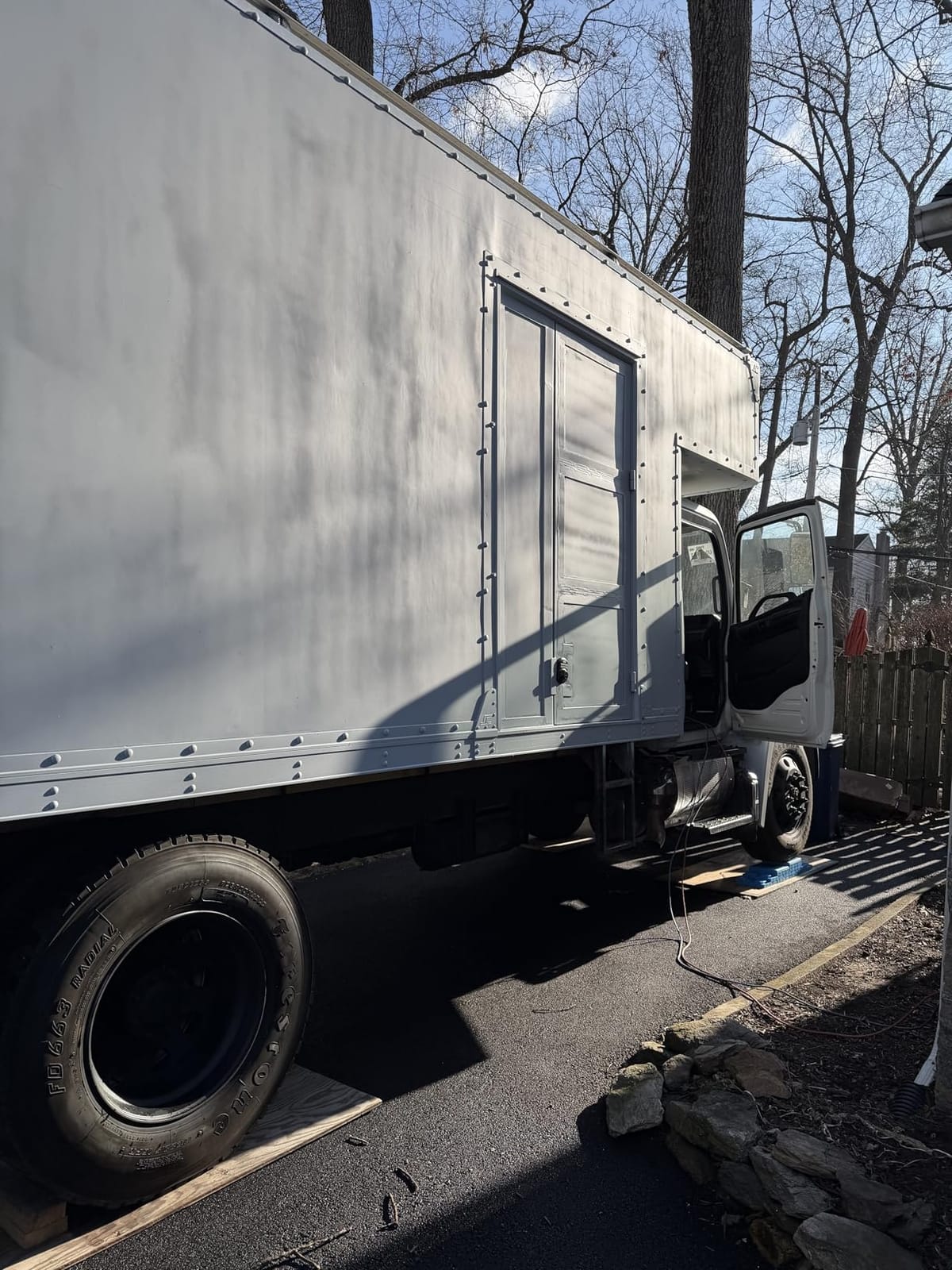
What we liked using it for
Anyone worried about flat-spotting a tire on a rough campsite edge appreciates the caps, and the extra pieces mean a taller correction without a second purchase. For a first block set on a mid-size travel trailer, this is the most complete configuration we tested.
Where it falls short
Those top blocks throw off the simple one-inch-per-block math if you are eyeballing height instead of counting. Measure your correction once and write the stack recipe down, and it stops mattering.
4. Kohree Curved Ramp Levelers – Best for Driving Straight On
Kohree RV Leveling Blocks, Up to 35,000 lbs, 4″ Max Level System
Rated up to 35000 lbs
Levels from one-half inch to 4 inches
Compatible with tires up to 32 inches
Pack weighs 8 pounds
Pros
- Levels in one pass by driving the trailer straight on
- Adjusts continuously instead of in fixed steps
- Rated for 35000 lbs and tires up to 32 inches
- Anti-skid base with non-slip mats included
- No cutting or fitting required
Cons
- Maximum correction in this version is capped at 4 inches
- A wheel chock is needed to hold the leveler in position once set
Everything about a curved ramp changes the workflow. Instead of guessing a stack height and driving back and forth, you roll forward until the curve matches the slope and stop. Our first site went from three attempts to one.
These are rated up to 35000 lbs and handle tires up to 32 inches in diameter, so they fit a normal trailer wheel without a squeeze. The ramp pivots smoothly under load rather than creaking like cheaper curved plastic.
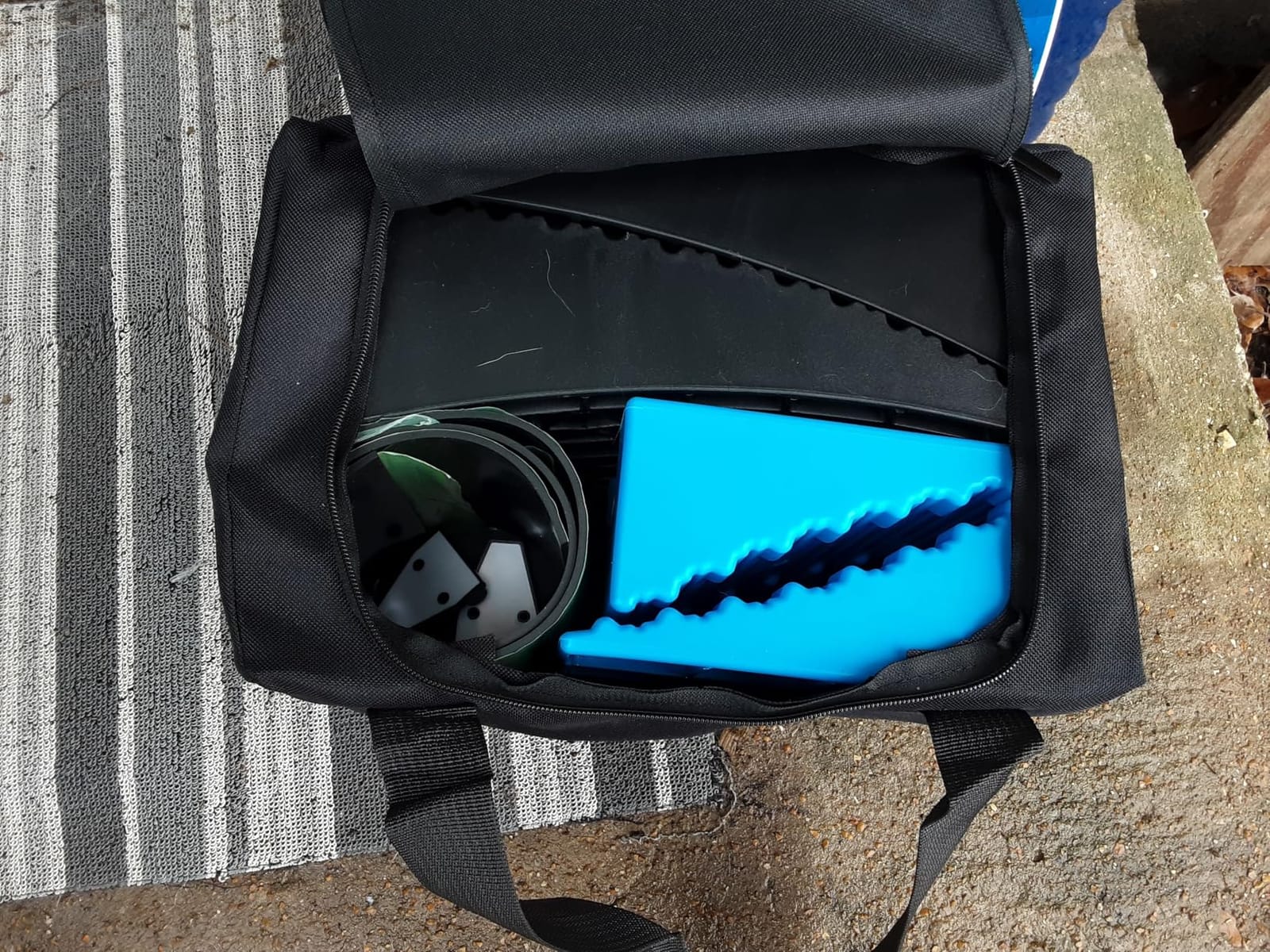
The anti-skid base plus the two included non-slip mats are the parts that keep the ramp from sliding as you approach. One blue block per side handles the fine adjustment, and the whole set weighs 8 pounds with nothing to lose track of.
What we liked using it for
Curved ramps suit solo campers who hate the get-in-get-out-and-check loop, and they work cleanly on tandem axles and dual tires. Older owners on RvForum still favor this style years after switching away from wood.
Where it falls short
The learning curve is real, and you need a chock to keep the ramp from rolling once you are positioned. On a site with a slope steeper than 4 inches, the correction caps out and you are back to stacking.
5. OULEME 12 Pack – Denser Polymer for Hard Sun and Jacks
OULEME 12 Pack RV Leveling Blocks, Stackable Jack Blocks, Interlocking Leveling Pads with Carrying Bag, for Camper Travel Trailer
Ten blocks plus two top blocks
Blocks 8.5 x 8.5 x 1.5 inches
Top blocks 8.5 x 8.5 x 0.7 inches
Pack weighs 10.14 pounds
Pros
- Twelve pieces give more stacking combinations than a 10-pack
- Polypropylene includes anti-UV aging additives
- Works under trailer jacks and stabilizer jacks
- Carrying bag included
Cons
- Heavier at 10.14 pounds than most competing sets
- Top cap adds about 0.7 inches to your stack height
This set stood out in southern campsites where blocks sit in full sun for weeks. The polypropylene carries anti-UV aging additives, and after six weeks of hard afternoon sun the pieces still looked new.
Configuration matches the other 12-piece sets: ten interlocking blocks at one inch each, plus two top blocks at 0.7 inches. The extra pieces mean you can build a taller correction on the worst side without a second order.
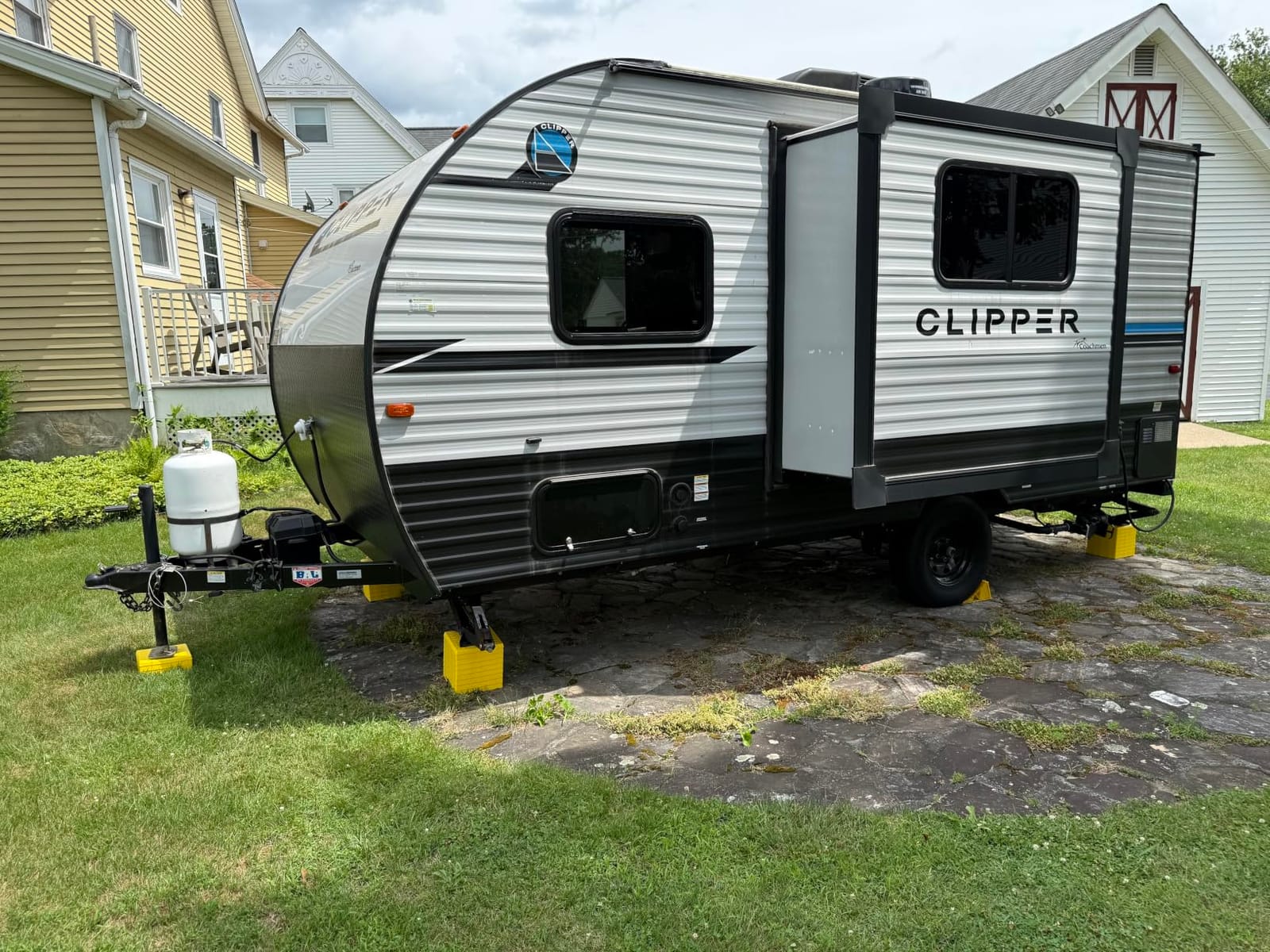
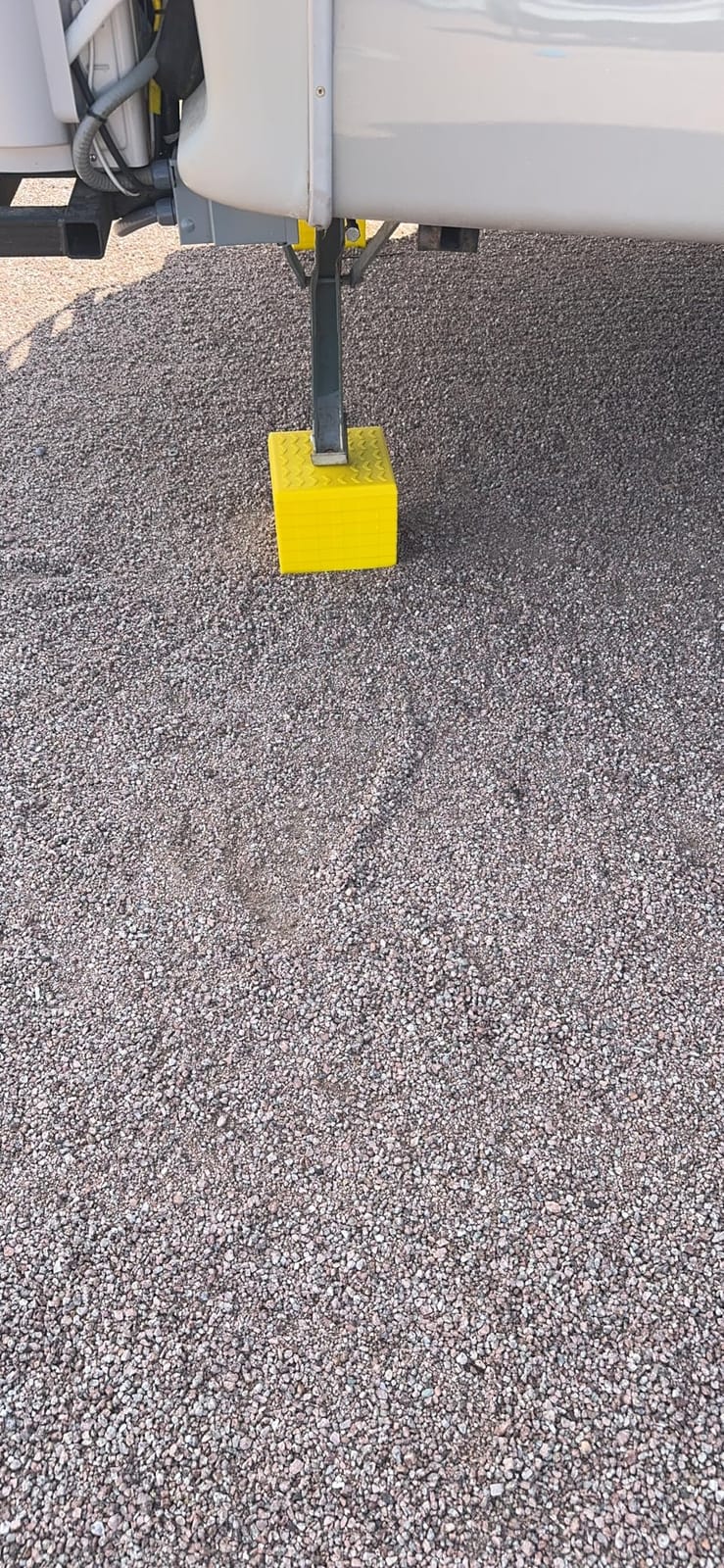
Where it earns its keep is under the stabilizers. These stack under trailer jacks and stabilizer feet as well as wheels, so one set covers the whole leveling and stabilizing job instead of needing separate pads.
What we liked using it for
Full-sun sites and jack support. If you pull into a lot where the pad is baked hard, or you stabilize onto soft ground every weekend, the UV additives and the flat tops under jack feet are both reasons to like this set.
Where it falls short
It is the heaviest of the interlocking sets we carried at 10.14 pounds, which adds up over a long walk from the truck. The 0.7 inch cap also means the final height is not a clean round number.
6. VEVOR 4-Pack Jack Blocks – Heavy Duty Under the Tongue Jack
VEVOR Trailer Jack Block, 6000 lbs Capacity per RV Leveling Block, Polypropylene RV Camper Stabilizer Blocks, RV Travel Accessories Use for Any Tongue Jack, Post, Foot, 5th Wheels, 4-Pack
6000 lbs per block
Stackable up to 8 inches
Polypropylene T30 with drainage holes
Set weighs 20.4 pounds
Pros
- 6000 lbs capacity per block for heavy jack loads
- Stacks to 8 inches for large height correction
- Resists UV
- water
- heat
- oil
- tar and soil
- Integrated drainage holes prevent pooling and rust
- Wider footprint helps on soft ground
Cons
- Heaviest set we carried at 20.4 pounds
- Jack block format supports jack feet rather than wheel leveling
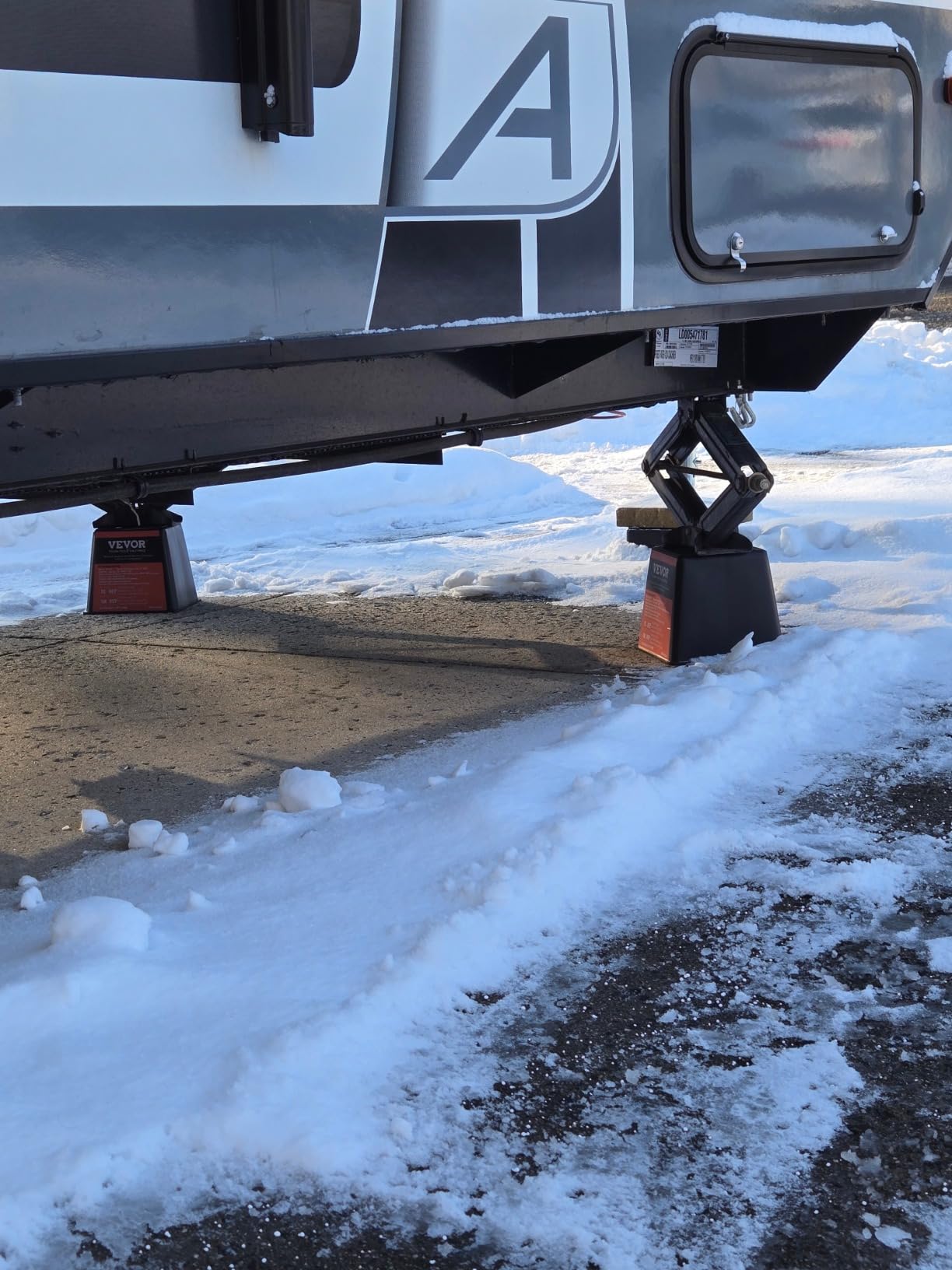
These are not wheel blocks. They are a different job: supporting the tongue jack and stabilizer feet where the full trailer weight concentrates in a small area. That concentration is exactly where cheaper wheel blocks crack.
Rated at 6000 lbs per block and stackable to 8 inches of height, they handle the front-to-back and stabilizing side of the job with room to spare. Four blocks cover a tongue jack and both stabilizers in one pass.
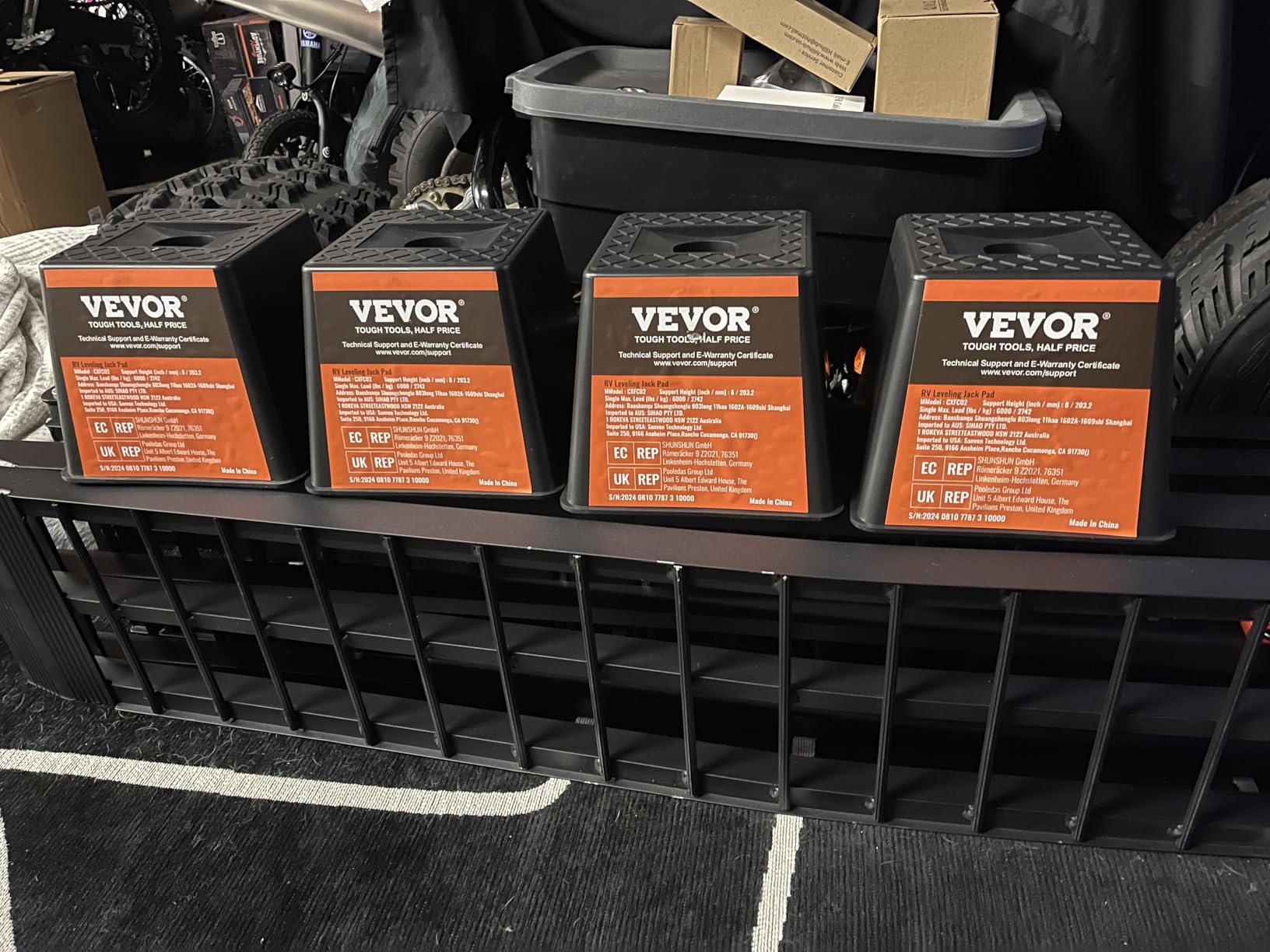
The polypropylene T30 is specified against UV, water, heat, oil, tar, and soil, and each block has an integrated drainage hole so rainwater does not sit in the cavity and turn into a rust problem over storage seasons.
What we liked using it for
Soft ground under the stabilizers and a tongue jack that needs real lift. The larger footprint spreads the load so the jack foot does not punch into wet clay the way a bare pad does. Universal fit covers tongue jacks, posts, feet, and fifth wheel connections.
Where it falls short
At 20.4 pounds this is the heaviest thing we carried, and it does nothing for side-to-side leveling under the tires. Treat it as a companion piece to a wheel block set, not a replacement.
7. GarfatolRv 10-Pack Gray Blocks – the Lightest Set to Carry
GarfatolRv 10-Pack RV Leveling Blocks, Interlocking Non-Slip, Gray
Ten blocks at 8.5 x 8.5 x 1.3 inches
High-performance polymer
Set weighs 6.67 pounds
Zippered carry bag included
Pros
- Lightest set we carried at 6.67 pounds
- Textured anti-slip top resists shifting
- Reinforced base helps on softer ground
- High-visibility gray is easy to spot at night
- Zippered carry bag included
Cons
- Blocks do not fully lock so stacks need careful alignment
- Several reviewers report cracking under concentrated jack load
- 4.4 stars with 6% one-star reviews
Everything in this roundup that fits in one hand also fits in one hand here. At 6.67 pounds for ten blocks, this is the set we were still carrying up a set of steps after a long site day.
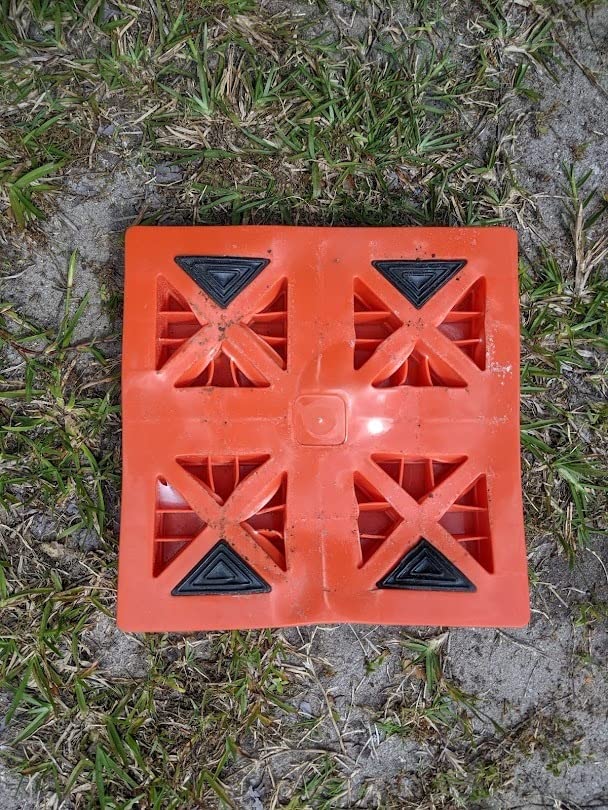
The textured top and reinforced base did their job on gravel and packed dirt. Blocks measure 8.5 by 8.5 by 1.3 inches, which is slightly shorter than the 1.5 inch blocks elsewhere, so plan on a few more pieces for the same height.

The gray color is not cosmetic. On a dark site at night a yellow or black block disappears, and this set stayed easy to find from the truck.
What we liked using it for
Solo campers, older campers, and anyone whose storage compartment is already full. Light weight, a zippered bag, and enough blocks for the correction most level sites need make this a sensible first set.
Where it falls short
These do not fully lock together, so a tall stack needs careful alignment and can shift as you climb it. Reviewers also report cracking when a jack foot concentrates load on a single block without a spreader board, so keep a board on hand under the tongue jack.
8. CircleRoad 12 Pack – Solid Base for Soft Campground Ground
CircleRoad 12 Pack RV Leveling Blocks Camper Trailer Leveling Blocks
Ten blocks plus two top blocks
Blocks 8.5 x 8.5 x 1.5 inches
One inch of height per block
Set weighs 9.22 pounds
Pros
- Solid bottom structure resists sinking into soft ground
- Interlocking blocks stack one inch at a time
- Blocks lock together for compact shift-free storage
- Works with wheels and tongue
- hydraulic and stabilizer jacks
Cons
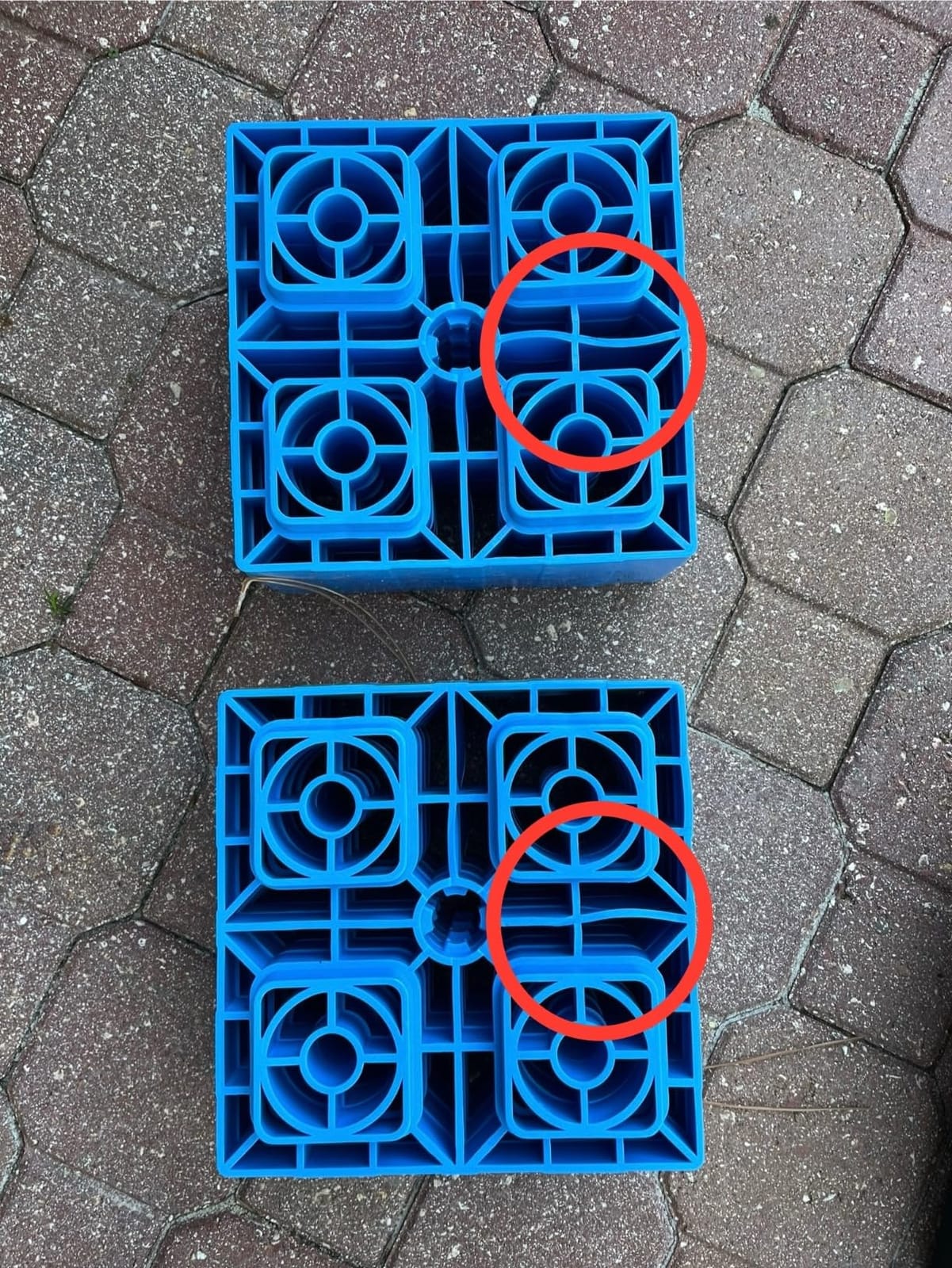
- Reviewers report cracking or deforming after long sun and heat exposure
- Blocks can flatten if a pickup drives over them
- Weight limits are not clearly stated on the listing
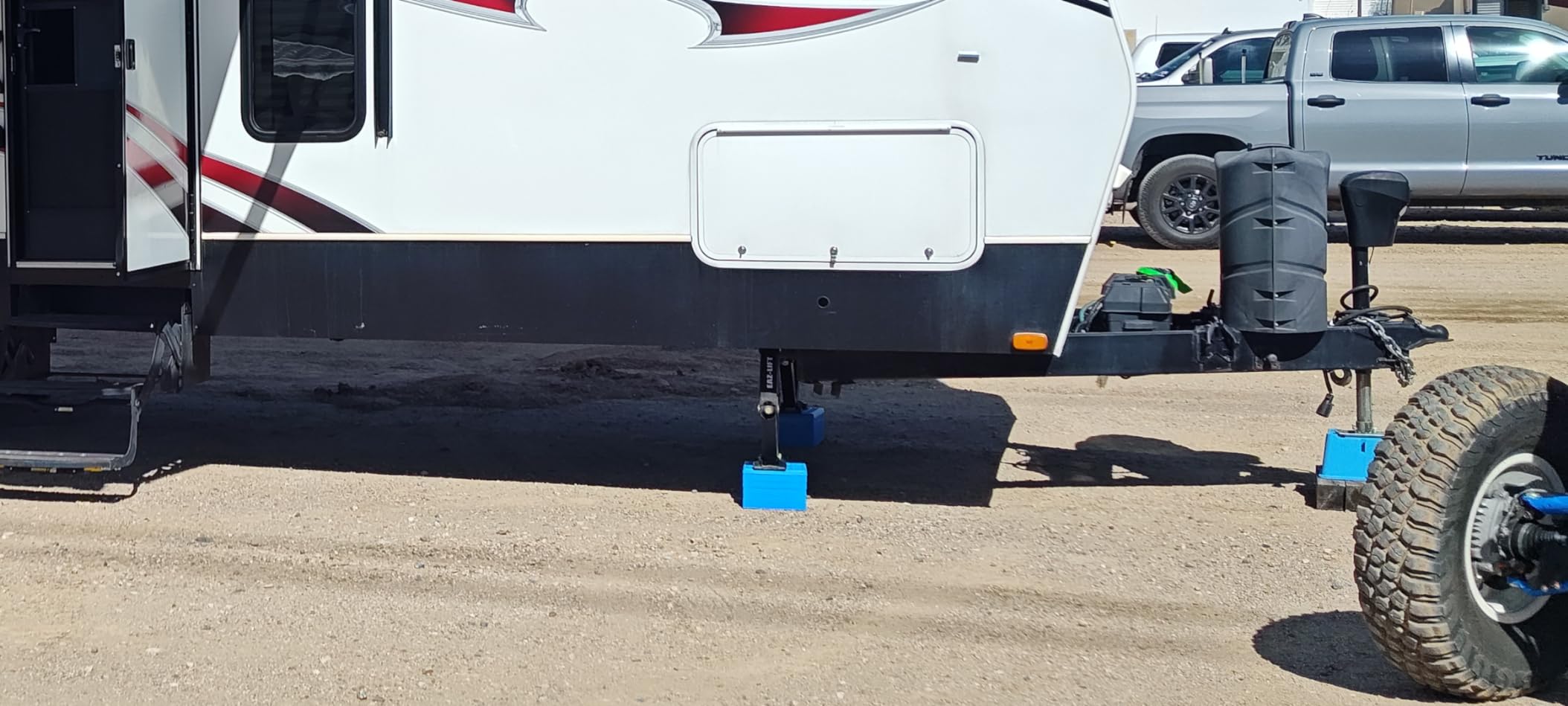
The reason this set exists is the bottom. Most hollow plastic blocks sink into wet sand and clay, and the trailer settles as you build the stack. This one has a solid base structure that held its position on a soft pull-in we picked deliberately.
Ten interlocking blocks give one inch of height each, plus two top blocks at 0.7 inches. They lock together for storage, so the whole 12-piece set condenses into a single stack instead of a pile in the compartment.
Compatibility covers single wheels, dual wheels, and tongue, hydraulic, stabilizer, and fifth wheel jacks, so the same blocks handle tandem-axle trailers without a separate purchase.
What we liked using it for
Beach and grass campsites where the pad gives way. The solid base is the deciding factor there, and the locked-together storage meant we did not lose a single block hunting through the compartment in the dark.
Where it falls short
Buyers report blocks softening and deforming after long exposure to sun and heat, and flattening if a pickup truck drives over them. The listing also does not state a weight limit clearly, so we would pair it with jack pads rather than trust it under a loaded tongue jack.
How to Level a Travel Trailer with Blocks
Leveling is two separate moves, and mixing them up is why first-time campers end up rocking side to side while the floor is perfectly plumb front to back. Side to side comes first with blocks, then front to back with the tongue jack.
Park roughly where you want the trailer and check the site for rocks, roots, and dips before anything else.
Chock the wheels you are not working on so the trailer cannot roll while you build a stack.
Drop the tongue jack far enough that the trailer leans toward the high side, which takes weight off the wheel you are about to lift.
Place or drive the levelers under the wheel on the low side, then inch the trailer forward or back until the rig sits square.
Read a bubble level inside the trailer and count blocks or reposition the ramp until the bubble centers.
Raise the tongue jack until the trailer is level front to back and the front stabilizers carry weight instead of the tongue.
Release the parking brake, clear the jack and blocks from under the tires, and never leave the trailer resting on blocks alone with no stabilizer support.
Two safety habits cover most of the trouble we have seen. Do not crawl under a trailer resting on blocks, and do not drive forward over a chock or ramp you forgot was there. Owners have reported cheap plastic chocks shattering into sharp fragments when a trailer rolled over them, and losing a set to a truck tire is far less painful.
The most common owner complaint is blocks walking or shifting while you pull onto them. The fix is a curved ramp with an anti-skid base, or an interlocking stack driven onto at a crawl rather than a swing.
How to Choose Leveling Blocks for Your Trailer
Match the style to your axle layout. Tandem-axle trailers need blocks that lock into a stable stack and enough pieces to level both axles on the same side. Single-axle trailers with dual tires need a flat top that bridges the pair, which is what the Lynx Cap solves. Curved ramps handle any axle count but demand a slower approach.
Decide how you will get there. A 4-inch correction on a stackable set means three or four blocks, which is quick. A 1-inch correction still means positioning a stack in the right spot before you drive on. Curve ramps give continuous adjustment in a single approach, which is why solo campers tend to like them.
Check capacity against your rig. Published figures run from 6000 lbs per jack block to 40000 lbs for a full interlocking set. Match the wheel-leveling blocks against your trailer GVWR with plenty of headroom, and put the jack-rated blocks under the tongue jack where the load concentrates.
Count for soft ground. Blocks with a solid base resist sinking into sand and clay. On soft campsites add jack pads under the stabilizers, because even a good block stack will not stop a bare jack foot punching through wet soil. If you are fighting a badly uneven pad instead, our lawn roller picks for leveling yards explain how to flatten a surface before you ever unhook.
Know the failure modes. Blocks walk while you climb onto them, hollow blocks crack under a concentrated jack load, curved ramps scroll away if you do not chock them, and cheap plastic chocks shatter if a trailer rolls over them. Wooden boards still work as a backup, but they rot, splinter, and turn into heavy muddy planks after rain.
Blocks or an auto-leveling system? For most travel trailers, manual blocks plus a working tongue jack are the better value and take five to twenty minutes to set up. Electric or hydraulic auto-leveling suits trailers that move several times a week, where setup time is the real cost. Many owners keep a block set in the compartment as a backup even with an automatic system. If your problem is a driveway or pad rather than a trailer, our self-leveling compound guide is the relevant read.
Do you even need to level? An absorption refrigerator needs the trailer close to level to run properly, and slide-outs need clearance to open safely. Newer compressor refrigerators work fine on a slight incline, so blocks matter most for slides, comfort, and older absorption units.
Frequently Asked Questions
What are the best leveling blocks for a travel trailer?
For most travel trailers, the best RV leveling blocks are interlocking stackable sets with a rated capacity well above your GVWR. Tandem-axle rigs want blocks that lock together and hold a tall stack, while single-axle dual-wheel rigs want a flat top that bridges the tire pair. Curved ramp levelers win when you would rather drive straight on than build a stack.
What is the 3-3-3 rule for travel trailers?
The 3-3-3 rule is a rule of thumb for placing your rig on a campsite: three feet of front clearance, three feet of side clearance, and three feet of rear clearance between your trailer and whatever is beside it. It gives you room to level, open slide-outs, and walk around the rig without squeezing past a tree or a picnic table.
How much should I expect to spend on a 10-pack of Camco leveling blocks?
Pricing on leveling block sets moves with the retailer and the season, so check current listings before you commit. As a budgeting guide, most interlocking 10-piece and 12-piece sets in this roundup sit in the same general band, and the gap between them is usually piece count and included top blocks rather than any real difference in capability.
What is the strongest and most durable RV tongue jack block available?
For wheel leveling, the Lynx Levelers are the strongest verified option here, rated up to 40000 lbs and made in the USA, with owners on the GoodSam travel trailer forum reporting long-term use without problems. Under the tongue jack itself, jack-rated blocks such as the VEVOR set at 6000 lbs per block are built for the concentrated load.
Which auto leveling system is best for travel trailers?
For most travel trailers, manual blocks plus a tongue jack are the best value and take five to twenty minutes of setup. Electric or hydraulic auto-leveling earns its cost on trailers that move several times a week, where repeated setup time is the real expense. Even with an automatic system, many owners keep a block set as a backup.
What are some common problems with RV leveling systems?
The recurring problems are blocks that walk or shift while you drive onto them, plastic cracking under a concentrated jack load, curved ramps scrolling away if they are not chocked, blocks sinking into soft campsite soil, and stacks built too high for the base to carry. Driving a truck over cheap plastic chocks has also shattered them into sharp fragments.
Do I need to chock the wheels if I use leveling blocks?
Yes, chocks and levelers do different jobs. Levelers correct the angle of the floor so appliances and slide-outs work properly, while chocks stop the trailer from rolling. Always chock before you build or adjust a stack, then lower the tongue jack and deploy stabilizers so the rig is not held up by blocks alone.
The Best RV Leveling Blocks for Travel Trailers in 2026
The Lynx Levelers 11 Pack takes the top spot in 2026 for one reason: the flat cap top. It is the only set in this group that solves single-axle dual-wheel leveling with the blocks you already own, and the interlocking stack held its shape better than anything else we tested. For tandem-axle trailers that need a taller, stiffer build, the Camco FasTen 10-Pack is the runner-up, with the T-handle storage win on top of a quad-grid core.
If you would rather drive straight onto the correction once, pick the Kohree curved ramp set and learn to approach it slowly. And if soft campsite ground is your normal week, the CircleRoad 12 Pack has the solid base that stops the stack sinking out from under you.
Whichever one you choose, buy the wheel blocks and the jack pads in the same trip. Levels first, stabilizers second, chocks always.