
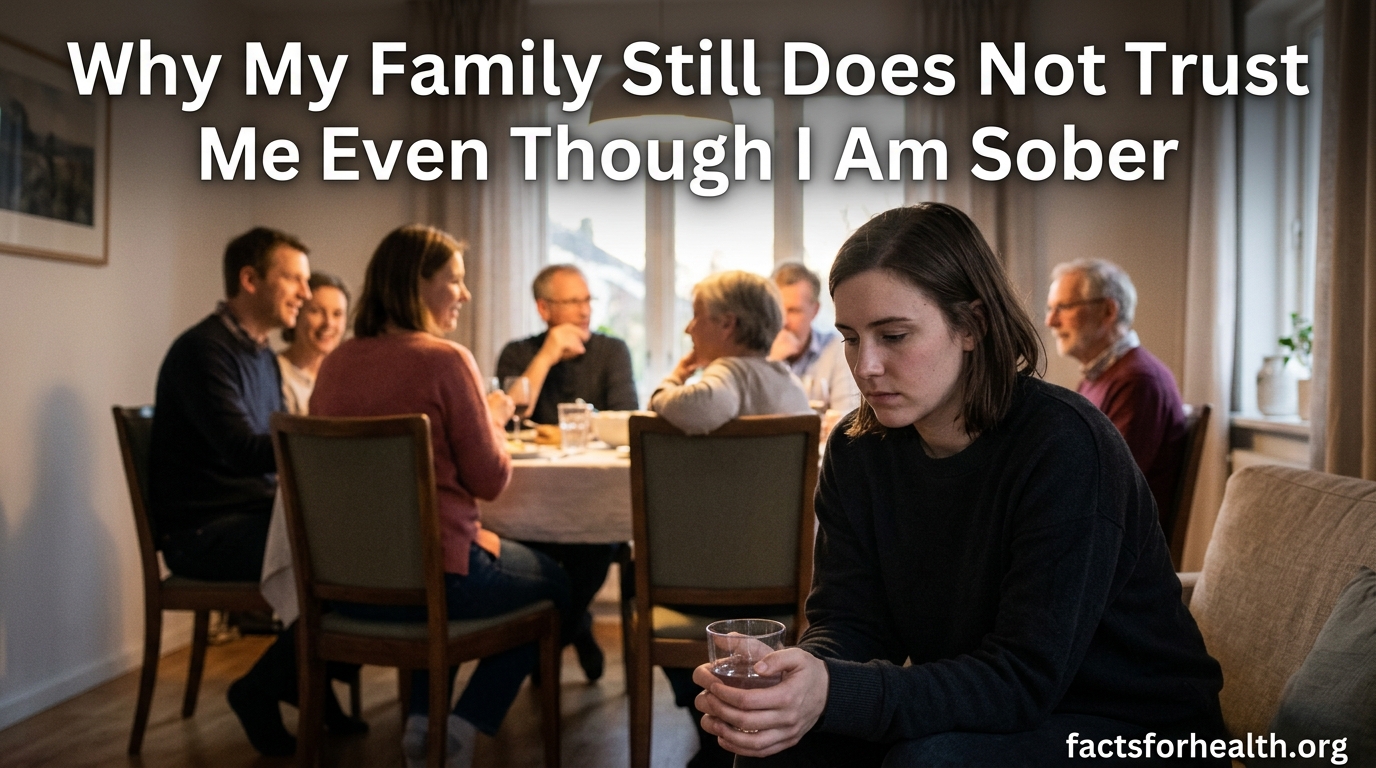
If you are sober and asking why your family still does not trust you, you are far from alone. Trust is not restored the moment substance use stops. It is earned back slowly through consistent, honest behavior repeated over months and years, because the people who love you were hurt repeatedly during active addiction and their nervous systems are still protecting them from that pain.
Your family’s lack of trust is not proof that your sobriety is failing. It is proof that trust operates on a different timeline than recovery. Stopping the substance use is the first step, not the final one. Every lie, broken promise, and missed moment during addiction created a wound, and those wounds do not heal simply because you stopped drinking or using.
This is one of the hardest truths about getting clean. You did the work to get sober, and it can feel like nobody noticed. Friends and family members in recovery communities across the country describe this exact experience, and we want you to know that feeling hurt, frustrated, or devastated by it does not make you weak. It makes you human.
Table of Contents
Understanding Why Your Family Still Does Not Trust You Even Though You Are Sober
When your family still does not trust you even though you are sober, the reason almost always comes down to one thing: trust was broken many times before, and rebuilding it requires more than just abstinence. Your family members lived through the addiction too, and they carry their own invisible injuries from that period.
Think of trust like a bank account. During active addiction, that account was drained by repeated overdrafts. Every broken promise, every lie about where you were, every missed birthday or holiday, every time you said things would change and they did not. Each of those moments was a withdrawal. Getting sober stops the withdrawals, but it does not automatically put deposits back into the account. That takes sustained, positive action over time.
Your family also carries a deep, often unspoken fear of relapse. Studies on addiction recovery show that relapse rates during the first year of recovery can range from 40 to 60 percent. Your family members may know these statistics instinctively, even if they have never read them. They have seen relapse happen before, sometimes multiple times, and their protective instinct is to guard against being hurt again. This is not cruelty or punishment. It is self-preservation born from real pain.
It is also important to understand that addiction creates trauma for everyone close to it. Spouses, children, parents, and siblings often develop their own anxiety, hypervigilance, and emotional wounds from living with someone in active addiction. Mental Health America notes that it is entirely normal for family members, especially children, to struggle with trust long after the person gets sober. Their trauma does not disappear just because the substance use stopped.
Sobriety is the starting line of rebuilding trust, not the finish line. When you understand this, it becomes easier to see that your family’s distance is not a rejection of your recovery. It is a natural response to repeated harm that has not yet been counterbalanced by enough consistent, trustworthy behavior.
The Emotional Impact When Your Family Still Does Not Trust You Even Though You Are Sober
The emotional toll of being sober but still not trusted is enormous, and very few people talk about it openly. You may feel like you are doing everything right and it is still not enough. That feeling is valid, and sitting with it is one of the hardest parts of early recovery.
Many people in recovery describe the pain of being treated like a liar even when they are telling the truth. You walk through the door and your spouse checks your eyes. You call your parents and they sound distant and guarded. You ask to see your kids and the answer is still no. Each of these moments is a reminder that the shadow of addiction follows you even after you have stepped into the light of sobriety.
It is common to feel a deep sense of isolation during this period. You may have removed substances from your life, but the relationships that matter most still feel broken. Some people describe feeling more alone in early sobriety than they did during active addiction, because at least then they had the substance to numb the pain. Now you are feeling everything fully, and the rejection from family can feel unbearable.
There is an important distinction to make here. Your family not trusting you is different from your family not caring about you. Many family members who maintain distance are doing so because they care deeply and cannot bear to be hurt again. Their walls are a defense mechanism, not an absence of love. Understanding this distinction can help reduce the feelings of abandonment that often surface during this period.
Self-forgiveness is a critical piece of this emotional puzzle. You may be carrying enormous guilt for what you put your family through, and that guilt can become even heavier when you see that they are still hurting. Being gentle with yourself is not about excusing past behavior. It is about recognizing that you are doing the work now, and that beating yourself up will not rebuild trust any faster. In fact, shame often gets in the way of the consistent, grounded behavior that actually repairs relationships.
Understanding Trust Timelines in Recovery
One of the most common questions in recovery communities is how long it takes for family trust to return. The honest answer is that there is no universal timeline, but understanding general patterns can help you manage your expectations.
During the first 30 to 90 days of sobriety, family members are typically still in full protective mode. This is the period with the highest relapse risk, and families who have been through addiction know this. Expecting deep trust at this stage is unrealistic, and that is not a failure on your part. It is simply where the process begins.
Between 90 days and one year, some family members may begin to cautiously re-engage. You might notice small signs like longer conversations, fewer suspicious questions, or occasional invitations to family events. These are deposits into the trust account, and they should be acknowledged even if they feel small.
At the one-year mark and beyond, families who see consistent sobriety often begin to relax their guard more significantly. However, deeper trust, the kind where family members stop second-guessing your every word, often takes multiple years of sustained change. One person in a recovery forum shared that at almost three years sober, their family still gave them sideways looks, and they had come to accept that restoring trust might take as many years as the addiction lasted.
It is also worth noting that different family members will move at different speeds. A spouse may rebuild trust on a different timeline than a parent, and children often take the longest because their emotional development was directly impacted. Comparing one relationship to another will only add frustration to an already difficult process.
Practical Steps to Rebuild Family Trust After Addiction
Rebuilding trust is not about grand gestures or dramatic declarations. It is about the accumulation of small, consistent, honest actions repeated over time. Here are the steps that recovery professionals and people with lived experience consistently recommend.
Step 1: Accept That Trust Takes Time Without Resentment
The foundation of rebuilding trust is accepting that it will take time, and doing so without building resentment toward your family. This is incredibly difficult, but it is essential. If you approach trust rebuilding with an attitude of entitlement, thinking you deserve trust because you got sober, family members will sense that energy and it will actually slow the process down.
Instead, try to hold the perspective that your family’s mistrust is a natural response to real harm. You do not have to like it, but accepting it allows you to approach the situation with patience rather than frustration. This shift in mindset alone can change how you show up in family interactions.
Step 2: Show Consistency Through Small Daily Actions
People in recovery communities repeatedly emphasize one principle above all others: show them, do not tell them. Words lost their meaning during addiction, so actions are what will eventually restore credibility. This means doing exactly what you say you will do, every single time, no matter how small the commitment.
Show up on time. Call when you say you will call. Follow through on every promise, even trivial ones. If you say you will bring groceries on Tuesday, bring groceries on Tuesday. These small actions are the deposits that gradually refill the trust account. One recovery community member put it simply: keeping promises, even small ones, matters more than anything else.
Step 3: Communicate Openly and Honestly About Your Recovery
Open communication is a powerful trust builder, but it has to be done right. This does not mean over-explaining or trying to convince your family you are sober. It means being honest about your recovery journey, including the difficult parts.
If you are struggling, say so. If you had a hard day and thought about using, tell someone. Pretending everything is fine when it is not is exactly the pattern your family experienced during addiction. Vulnerability and honesty, even when uncomfortable, demonstrate that the old patterns of hiding and minimizing are gone.
Use I statements when discussing difficult topics. Instead of saying you never give me a chance, try I feel hurt when my honesty is questioned, and I understand why it happens. This approach acknowledges both your feelings and your family’s reality.
Step 4: Make Amends Without Expecting Immediate Forgiveness
Making amends is a core part of many recovery programs, and it plays a key role in rebuilding family trust. However, the purpose of amends is not to extract forgiveness. It is to acknowledge the harm you caused and take responsibility for it.
When you make amends, do so without any expectation of a specific response. Your family member may accept your apology, they may need more time, or they may not be ready to engage at all. All of those responses are valid. What matters is that you owned your behavior and expressed genuine remorse. The seed has been planted, even if you cannot see it growing yet.
Step 5: Respect Boundaries Your Family Members Set
Your family members may set boundaries during this period, and respecting those boundaries is one of the most powerful trust-building actions you can take. If your spouse asks you not to attend a specific event, respect that. If your former partner limits visitation with your children, follow the agreement without complaint.
Respecting boundaries, even when they hurt, demonstrates that you are no longer the person who bulldozed over other people’s needs during addiction. It shows that you can hold someone else’s comfort as important, even when it conflicts with what you want. That is the exact behavior that rebuilds trust over time.
Step 6: Consider Family Therapy or Counseling
Professional help can make a significant difference in the trust rebuilding process. Family therapy provides a structured, safe environment where both you and your family members can express feelings, process trauma, and work toward understanding with the guidance of a trained professional.
Many addiction treatment centers offer family therapy programs, and organizations like Al-Anon and Nar-Anon provide support specifically for family members of people in recovery. Even if your family is not ready to attend sessions together, individual therapy for you can help you process the emotional weight of this period and develop healthy coping strategies.
Step 7: Know What to Do When Family Refuses to Engage
In some cases, family members may refuse to engage at all, and this is perhaps the most painful scenario. If you find yourself here, the most important thing to remember is that you cannot force someone to trust you or to be in a relationship with you. What you can do is continue living your recovery, maintaining your sobriety, and leaving the door open.
As one person in a recovery forum wisely noted, they did not get sober for other people. Whether your family believes you or accepts you is outside your control. What is within your control is how you live your life today, the recovery work you do, and the person you are becoming. Focus on that, and let the rest unfold as it will.
What to Do When Your Family Accuses You of Using
One of the most triggering experiences in recovery is being falsely accused of using. Your first instinct may be anger, defensiveness, or the urge to argue. Understanding how to handle these moments can prevent them from escalating and can actually serve as trust-building opportunities.
First, stay calm. Reacting with anger or defensiveness, while completely understandable, can reinforce your family’s fears because it mirrors the behavior they saw during active addiction. Take a breath and remind yourself that their accusation comes from fear, not malice.
Second, acknowledge their concern without confirming the accusation. You might say something like, I can see you are worried, and I understand why. I want you to know I am sober, and I am committed to my recovery. I cannot control whether you believe me, but I will keep showing up and proving it through my actions.
Third, offer reasonable transparency. If it feels appropriate, you might offer to take a drug test or share your meeting attendance. However, be thoughtful about this. You do not need to subject yourself to ongoing surveillance that feels degrading. Reasonable transparency early in recovery can help, but over time, the goal is for your consistent behavior to reduce the need for such measures.
Finally, remember that you cannot control whether someone believes you. Your job is to live honestly and consistently. Their acceptance of that truth is their process, not yours.
FAQs
Why do my family members ignore me?
Family members may ignore you after addiction because they are protecting themselves from further emotional pain. During active addiction, they likely experienced repeated hurt from broken promises, lies, or unpredictable behavior. Their distance is often a defense mechanism, not a lack of love. They may also be afraid that getting close again will make a potential relapse even more devastating. Giving them time and demonstrating consistent, trustworthy behavior is the best way to help them feel safe enough to re-engage.
Why do I have trust issues with my family?
You may have trust issues with your family because of how they treated you during active addiction or because of their current reaction to your sobriety. Family dynamics during addiction are often marked by conflict, broken communication, and emotional pain on all sides. Additionally, if your family still treats you with suspicion despite your sobriety, it can create feelings of resentment and defensiveness. Individual therapy can help you process these feelings and develop healthier ways of relating to your family.
How to deal with family not accepting you?
Dealing with family who does not accept you in recovery requires focusing on what you can control: your own sobriety, your own growth, and your own behavior. Accept that their acceptance is outside your control. Continue attending support meetings, working with a sponsor or therapist, and living your recovery daily. Set healthy boundaries for yourself, and respect the boundaries they set. Surround yourself with supportive people in recovery who understand what you are going through. Over time, your consistent actions may help family members reconsider, but your recovery should not depend on their approval.
What does it mean when your family doesn’t care about you?
It can feel like your family does not care about you, but in many cases, their distance is actually a sign of how much they were hurt. Family members who pull away during your recovery are often protecting themselves from the fear of being hurt again if you relapse. Their behavior may look like indifference, but it is frequently rooted in love that has been damaged by repeated pain. However, if your family is genuinely unsupportive or toxic, it may be necessary to build a chosen family through your recovery community and focus on relationships that support your sobriety.
You Are Not Alone in This
If you came to this article wondering why your family still does not trust you even though you are sober, the most important thing to take away is this: your sobriety matters, regardless of how your family responds to it. Trust rebuilding is a marathon, not a sprint, and the timeline belongs as much to your family members as it does to you.
Focus on what you can control. Show up consistently. Communicate honestly. Respect boundaries. Keep doing the recovery work that brought you this far. The deposits you make into the trust account today may not be visible for months or even years, but they are not wasted.
Your recovery has value independent of whether your family recognizes it right now. If you are struggling, reach out to a sponsor, therapist, support group, or recovery hotline. You have already done one of the hardest things a person can do by getting sober. Be patient with yourself, and be patient with the people who love you, even when their patience has not yet caught up with your progress.
For additional support, organizations like Al-Anon and Nar-Anon offer resources specifically for families affected by addiction, and SAMHSA’s National Helpline at 1-800-662-4357 provides free, confidential support and treatment referrals 24 hours a day. You do not have to navigate this alone.