
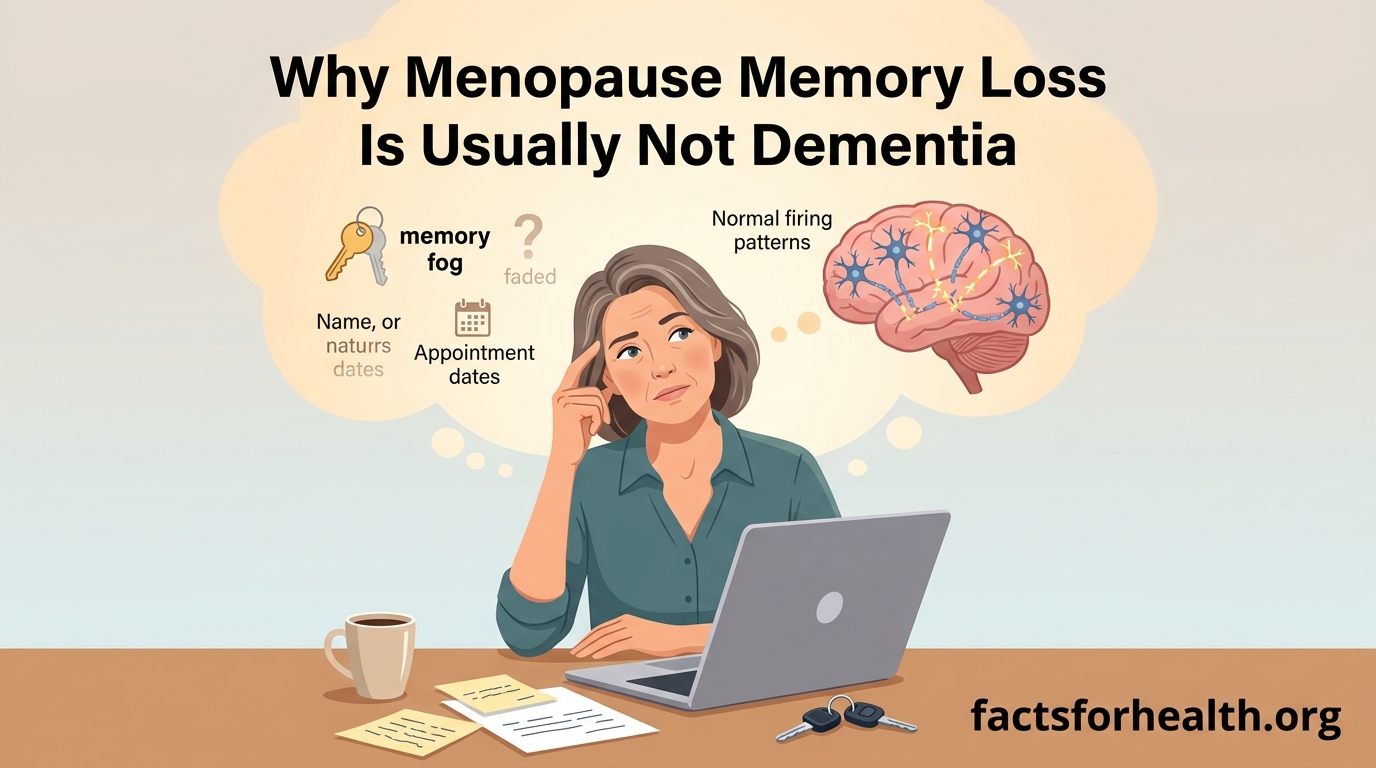
Walking into a room and forgetting why. Losing your train of thought mid-sentence. Searching for a word that sits just out of reach. If you are in perimenopause or menopause and these moments are happening more often, you are not alone. Studies show that up to 60% of women experience cognitive symptoms during the menopausal transition.
For many women, these lapses trigger a quiet fear: is this early dementia? It is one of the most common concerns we hear, and it makes complete sense. Memory problems feel frightening at any age, but they carry extra weight in midlife.
The good news, backed by substantial research, is that menopause memory loss is usually not dementia. What you are experiencing is a well-documented, temporary, and treatable condition tied to hormonal changes. In this article, we will explain exactly why menopause brain fog happens, how it differs from dementia, and when you should actually be concerned.
Table of Contents
What Menopause Memory Loss Actually Feels Like
Menopause brain fog is not your imagination. It is a real, measurable cognitive symptom that researchers have documented in clinical settings. Women consistently describe a specific set of experiences that differ from normal aging.
You might find yourself forgetting appointments, misplacing keys more frequently, or struggling to focus during conversations. Many women report difficulty with multitasking, losing their place while reading, or feeling like their thinking is slower than usual. One woman we spoke with described it as having a fuzzy TV signal in her head that used to come in crystal clear.
These symptoms tend to cluster around the perimenopausal years, the transition period leading up to menopause. Research from the Study of Women’s Health Across the Nation (SWAN) found that women in early perimenopause performed measurably worse on tests of processing speed, verbal memory, and working memory compared to their premenopausal baseline.
What makes these cognitive changes distinctly menopausal is their timing and pattern. They appear alongside other menopausal symptoms like hot flashes, night sweats, and irregular periods. They fluctuate with your hormonal cycles rather than following a steady decline.
Perhaps the most important characteristic is this: you notice the problem. Women with menopause brain fog are acutely aware that their memory is not performing the way it used to. This self-awareness is actually a strong indicator that something hormonal is at play rather than a neurodegenerative process.
The Hormonal Science Behind Menopause Brain Fog
To understand why menopause memory loss is usually not dementia, you need to understand what estrogen actually does in the brain. Estrogen is far more than a reproductive hormone. It is a powerful neuroactive compound that influences brain function in ways scientists are still mapping.
Estrogen receptors are distributed throughout brain regions critical for memory and cognition, including the hippocampus, prefrontal cortex, and amygdala. When estrogen binds to these receptors, it supports verbal memory, attention, and executive function. The hormone also promotes the growth of dendritic spines, the branch-like structures on neurons that allow brain cells to communicate with each other.
During perimenopause, estrogen levels do not simply decline in a smooth line. They fluctuate dramatically, sometimes spiking higher than normal and other times dropping sharply. These wild swings are what disrupt cognitive function. Your brain is essentially recalibrating to a new hormonal environment, and during that recalibration, memory and concentration take a hit.
Estrogen also plays a role in brain energy metabolism. Research from the University of Arizona showed that declining estrogen affects how efficiently brain cells use glucose, their primary fuel source. When this energy supply becomes less efficient, you experience it as mental fatigue, slowed thinking, and difficulty concentrating.
This is fundamentally different from what happens in dementia. In Alzheimer’s disease and other forms of dementia, neurons are progressively damaged and destroyed by protein accumulations, neurofibrillary tangles, and plaques. The brain tissue itself degenerates. In menopause brain fog, the neurons are intact and healthy. They are simply operating in a changed chemical environment.
Think of it like a computer running an application with a temporarily reduced power supply. The hardware is fine, but performance slows because the system is adjusting. Once the hormonal environment stabilizes, cognitive function typically returns to its previous level.
Why Menopause Memory Loss Is Usually Not Dementia
The direct answer to this question comes down to mechanism, progression, and outcome. Menopause memory loss is caused by hormonal fluctuations that affect how well your brain functions in the moment. Dementia is caused by structural brain damage that progressively destroys neural tissue. These are fundamentally different processes.
When researchers follow women through the menopausal transition and beyond, they find something reassuring. Cognitive performance that dips during perimenopause tends to recover after menopause. A landmark analysis published in the journal Menopause tracked women across the transition and found that the cognitive decline associated with perimenopause was not permanent. Once women reached postmenopausal status, their test scores stabilized and in some areas improved.
This pattern of temporary decline followed by recovery is the opposite of dementia. Dementia is characterized by continuous, progressive worsening. If your memory problems come and go, improve on good days, and are worse when you are tired or stressed, that pattern points strongly toward hormonal causes rather than neurodegeneration.
Age also matters. Dementia before age 65 is rare, accounting for only about 5% of all cases. The average age of menopause in the United States is 51, and perimenopause can begin in the early to mid-40s. Women experiencing brain fog in their 40s and early 50s are in the prime window for hormonal cognitive symptoms but well outside the typical age range for early-onset dementia.
Additionally, the type of memory problems differ significantly. Menopause brain fog primarily affects working memory, attention, and verbal recall. You might forget a word or lose focus during a task. Dementia affects episodic memory, the ability to form new memories of events. A person with dementia may not remember a conversation from that morning, while a woman with menopause brain fog will remember it once reminded.
Key Differences Between Menopause Brain Fog and Dementia
Recognizing the differences between menopause brain fog and dementia can provide significant peace of mind. Here are the key distinguishing features.
Self-Awareness vs. Lack of Insight
Women experiencing menopause brain fog are usually the first to notice and complain about their memory problems. They feel frustrated, worried, and motivated to fix the issue. In contrast, people with early dementia often do not recognize their own cognitive decline. Family members typically notice the changes first, and the person may become defensive when concerns are raised.
Word-Finding vs. Word Substitution
During menopause, you might pause to search for the right word. The word is on the tip of your tongue, and you usually find it or remember it later. In dementia, people may substitute incorrect words entirely or use vague language like thing or stuff without realizing the error.
Fluctuating vs. Progressive Decline
Menopause brain fog varies from day to day and even hour to hour. You might feel sharp in the morning but foggy after a poor night’s sleep. Dementia follows a steady downhill trajectory. The cognitive problems do not improve on good days.
Retrieval vs. Encoding Problems
With menopause brain fog, the memory is stored in your brain but is temporarily harder to retrieve. A hint or reminder usually brings it back. With dementia, the brain fails to encode the memory in the first place. Reminders do not help because the memory was never formed.
Preserved Daily Function vs. Functional Decline
Despite the frustration of brain fog, women in menopause continue to manage their jobs, finances, and daily responsibilities effectively. They might need more reminders or strategies, but they function independently. Dementia eventually interferes with the ability to perform familiar tasks like cooking, managing money, or navigating to known locations.
Other Factors That Worsen Memory During Menopause
Hormonal changes are the primary driver of menopause brain fog, but they are rarely the only factor. Several other menopause-related conditions compound cognitive difficulties.
Sleep disruption is perhaps the biggest contributor. Up to 60% of women in perimenopause report sleep problems, often caused by night sweats and hot flashes. When your sleep is repeatedly interrupted, your brain cannot consolidate memories properly. Chronic sleep deprivation mimics many of the same symptoms as brain fog, including slowed thinking, poor concentration, and forgetfulness.
Stress and anxiety also play a significant role. The menopausal transition coincides with a life stage that often includes career pressures, aging parents, teenage children, and shifting relationships. Chronic stress elevates cortisol, which at sustained high levels can impair the hippocampus and interfere with memory formation.
Mood changes during menopause further complicate the picture. Depression and anxiety during perimenopause are common, affecting roughly 20% to 40% of women. Both conditions can cause concentration problems, difficulty remembering details, and a sense of mental slowness that mimics or amplifies brain fog.
Even the hot flashes themselves may have a direct cognitive impact. Research from the University of Illinois found that women who experienced more frequent and severe hot flashes performed worse on memory tests. The physiological stress of vasomotor symptoms appears to tax cognitive resources independently of sleep disruption.
What the Research Says About Long-Term Cognitive Health
One of the most common questions women ask is whether menopause brain fog predicts future dementia. The research offers strong reassurance that it does not.
The SWAN study, which has followed thousands of women across the menopausal transition for over two decades, provides the most comprehensive picture. Researchers found that while cognitive performance dips during perimenopause, it does not continue to decline after menopause. Women’s scores on memory, processing speed, and attention tests stabilized in the postmenopausal period.
A separate study published in PLOS ONE followed nearly 2,000 women and found no evidence that the temporary cognitive changes of menopause increased the risk of later cognitive impairment or dementia. The authors concluded that menopausal cognitive symptoms should be viewed as a transitional phase, not a warning sign of neurodegeneration.
Research on hormone therapy has also produced interesting findings. Some studies suggest that estrogen therapy, when started during the early menopausal transition, may have a protective effect on cognitive health. The timing hypothesis proposes that estrogen is beneficial when the brain is still responsive to it, but may not help if started years after menopause. However, hormone therapy is not currently recommended solely for cognitive protection, and decisions about its use should be individualized with a healthcare provider.
It is also worth noting that dementia risk is influenced by factors that are largely independent of menopause. Cardiovascular health, physical activity, education level, diabetes, and genetic factors like APOE4 status all play much larger roles in determining long-term cognitive outcomes than the temporary brain fog of perimenopause.
How to Manage and Reduce Menopause Brain Fog
While menopause brain fog is temporary, that does not mean you have to simply wait it out. Several evidence-based strategies can help you manage symptoms and protect your cognitive health during this transition.
Prioritize Sleep Quality
Treating sleep disruption is one of the most effective ways to reduce brain fog. If night sweats are waking you, talk to your doctor about options including environmental changes, layered bedding, and medical treatments. Keeping your bedroom cool, avoiding caffeine and alcohol before bed, and maintaining a consistent sleep schedule all support better cognitive function.
Get Regular Aerobic Exercise
Exercise is one of the most powerful tools for brain health at any age, and it may be especially helpful during menopause. Studies show that regular aerobic exercise improves executive function, processing speed, and memory. Aim for at least 150 minutes of moderate-intensity activity per week. Walking, swimming, and cycling are all excellent options.
Focus on Brain-Healthy Nutrition
The Mediterranean diet, rich in vegetables, fruits, whole grains, fish, and healthy fats, has been associated with better cognitive performance in midlife and beyond. Omega-3 fatty acids from fish or supplements may support brain function. Limiting processed foods, refined sugar, and excessive alcohol can also help stabilize energy and focus.
Use Memory Strategies and External Tools
There is no shame in using tools to support your memory during this phase. Calendars, phone reminders, note-taking apps, and to-do lists can reduce the cognitive load and free up mental energy. Breaking tasks into smaller steps and tackling one thing at a time can also help compensate for reduced multitasking ability.
Manage Stress Actively
Since chronic stress amplifies brain fog, stress management is not optional. Mindfulness meditation, yoga, deep breathing exercises, and therapy can all reduce cortisol levels and improve cognitive performance. Even 10 minutes of daily mindfulness practice has been shown to benefit attention and working memory.
Stay Socially and Mentally Active
Social engagement and mental stimulation are protective for brain health. Learning new skills, reading, doing puzzles, taking classes, and maintaining meaningful relationships all keep neural networks active and resilient. Retirement or empty-nest periods can reduce cognitive stimulation, so it is worth intentionally seeking out activities that challenge your brain.
Discuss Treatment Options With Your Doctor
If brain fog is significantly affecting your quality of life, talk to your healthcare provider. Hormone therapy may be appropriate depending on your age, symptom severity, and personal health history. Non-hormonal medications, cognitive behavioral therapy, and treatment for underlying mood disorders can also make a meaningful difference.
When to See a Doctor About Memory Problems
Most menopause-related memory changes are normal and do not require urgent medical evaluation. However, certain signs should prompt a conversation with your doctor.
See a doctor if your memory problems are getting progressively worse rather than fluctuating. If you start forgetting important personal information, getting lost in familiar places, or struggling with routine tasks like cooking or managing finances, these are red flags that warrant professional assessment.
Talk to your doctor if family members are expressing concern about your memory or cognition. As we discussed earlier, lack of self-awareness about cognitive decline is more characteristic of dementia than of menopause brain fog.
Seek evaluation if your symptoms are accompanied by other concerning signs such as personality changes, difficulty with language beyond occasional word-finding, confusion about time or place, or problems with judgment and decision-making.
Also consult your doctor if brain fog is severe enough to interfere with your daily functioning, work performance, or relationships. Even if the cause is hormonal rather than neurological, you deserve support and treatment options to help you through this transition.
A doctor can rule out other treatable causes of memory problems, including thyroid dysfunction, vitamin B12 deficiency, medication side effects, depression, and sleep apnea. A simple blood panel and cognitive screening can provide reassurance and direction.
FAQs
Can menopause cause memory loss and confusion?
Yes. Up to 60% of women experience memory problems and difficulty concentrating during perimenopause. This is caused by fluctuating estrogen levels, which affect brain regions involved in memory and attention. The symptoms are typically temporary and improve after menopause.
Does menopause brain fog go away?
For most women, yes. Research from the SWAN study shows that cognitive performance dips during perimenopause but stabilizes and often improves after women reach postmenopausal status. Brain fog is a transitional symptom, not a permanent condition.
How can I tell the difference between menopause brain fog and dementia?
Menopause brain fog fluctuates from day to day and primarily affects attention, multitasking, and word retrieval. You remain aware of the problem and can function normally. Dementia causes progressive decline, affects daily functioning, and often involves a lack of self-awareness. Memory problems in dementia do not come and go.
At what age should I worry about memory loss being dementia?
Early-onset dementia before age 65 accounts for only about 5% of all cases. Women experiencing brain fog in their 40s and early 50s are in the typical window for menopause-related cognitive symptoms. If memory problems are progressive, worsen over time, or interfere with daily tasks, consult a doctor regardless of age.
Can hormone therapy help with menopause brain fog?
Some studies suggest that estrogen therapy started during early menopause may help with cognitive symptoms. However, hormone therapy is not recommended solely for brain fog and carries risks that must be weighed individually. Talk to your doctor about whether it is appropriate for your situation.
What helps menopause brain fog naturally?
Evidence-based strategies include prioritizing sleep, getting regular aerobic exercise, eating a Mediterranean-style diet, managing stress through mindfulness or therapy, staying socially and mentally active, and using external memory tools like calendars and reminders.
Conclusion
If you take away one thing from this article, let it be this: menopause memory loss is usually not dementia. The brain fog you are experiencing is a real, well-documented, and temporary consequence of hormonal change, not a sign of permanent cognitive decline.
Research consistently shows that the cognitive dip of perimenopause stabilizes after menopause. Your brain is adjusting, not deteriorating. Understanding the hormonal mechanisms, recognizing the key differences from dementia, and knowing when to seek medical advice can transform fear into informed confidence.
If your symptoms are affecting your quality of life, talk to your doctor about treatment options. In the meantime, sleep well, move your body, eat brain-healthy foods, manage stress, and give yourself grace. This transition is challenging, but it is also temporary, and your cognitive health is far more resilient than brain fog would have you believe.