
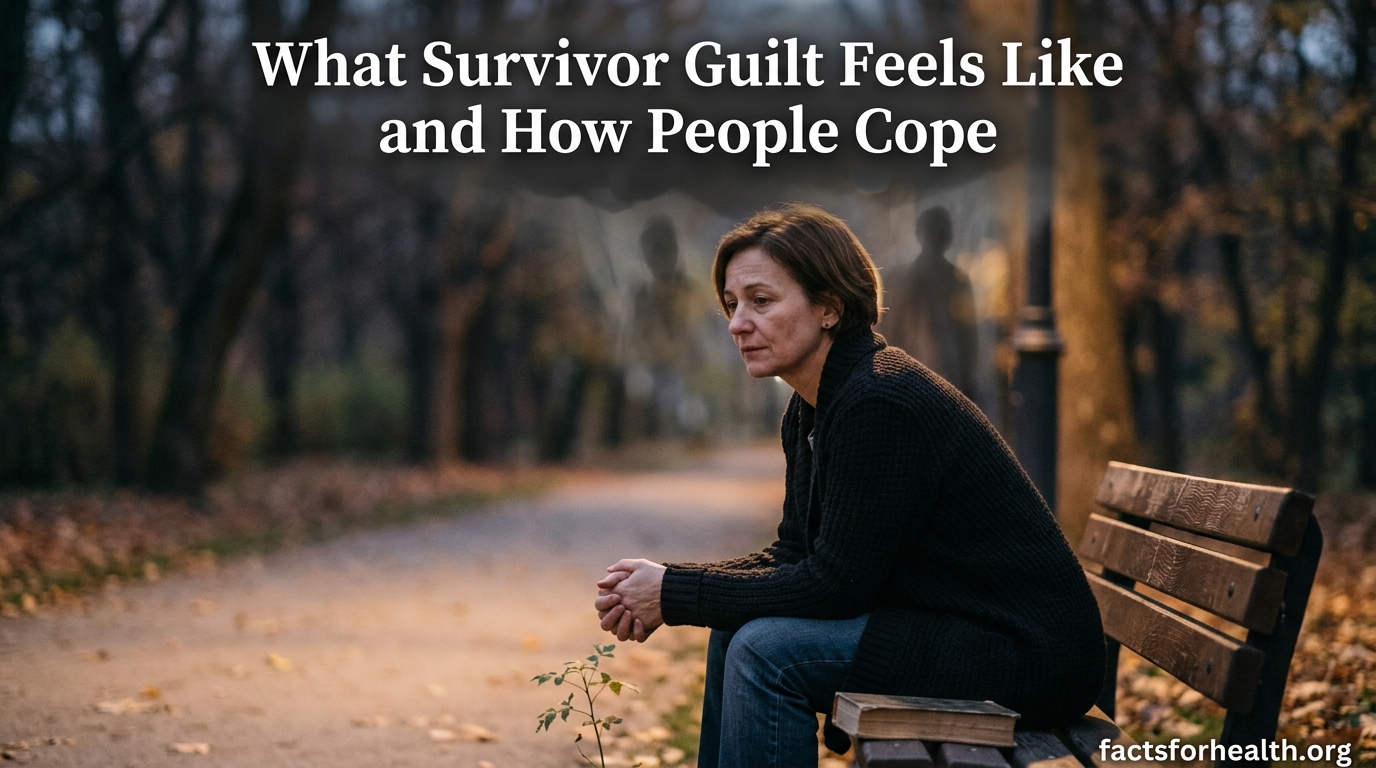
Imagine walking away from something devastating while others did not. The relief is real, but so is a heavy, quiet ache that settles into your chest and refuses to leave. That ache has a name: survivor guilt.
Survivor guilt is one of the most confusing emotional responses a person can experience after trauma. You survived, and logically you know that is a good thing. But some part of you keeps asking why you made it when someone else did not. The question feels impossible to answer, yet your mind replays it on an endless loop.
If you are reading this because you feel guilty for being alive, I want you to hear something clearly before we go further. What you are experiencing is a recognized, documented, and treatable psychological response to trauma. You are not broken for feeling this way, and you are far from alone in feeling it.
In this guide, our team breaks down exactly what survivor guilt feels like from the inside, why your brain responds this way, and the coping strategies that genuinely help people heal. Whether you are navigating this yourself or trying to support someone who is, the information here is meant to meet you where you are.
Table of Contents
What Survivor Guilt Feels Like
Survivor guilt does not announce itself with a label. It arrives as a feeling, and for many people, it takes time to even recognize what that feeling is. The experience is different for everyone, but certain emotional threads run through almost every survivor’s account.
Many people describe it as a persistent sense that they do not deserve to be here. The guilt feels almost physical, like a weight pressing down on your chest or a tightness in your throat that shows up without warning. One survivor described it perfectly in a forum discussion: a sense of guilt pours all over you because you keep wondering why you were the lucky one.
Then there are the thoughts. Constant, looping, exhausting thoughts. What if I had done something differently. I should have been the one who did not make it. Why them and not me. These intrusive thoughts do not respond to logic. You can know intellectually that you could not have changed the outcome, and still feel guilty for being alive.
Some people feel numb instead. Emotional numbness is a common response, where joy, connection, and even sadness feel muted or unreachable. Life continues around you, but participating in it feels wrong, almost like a betrayal of the people who did not survive.
Others describe a deep sense of unfairness, not just at the world but at themselves. Feeling guilty for surviving can make ordinary moments feel unbearable. Laughing at a joke, eating a good meal, enjoying time with loved ones, all of it can trigger a wave of shame. The inner voice says you should not be allowed to feel happiness when others lost everything.
Anger is another layer that surprises many people. Anger at the situation, at the universe, at whoever or whatever caused the trauma, and sometimes at the people who did survive alongside them. That anger can turn inward and become self-blame, which is where survivor guilt gets its sharpest edge.
Perhaps the loneliest part of the experience is the isolation. Many survivors withdraw from friends and family because they believe no one could possibly understand. The guilt becomes a wall between them and the people who care most. Breaking through that wall starts with understanding what is actually happening in your mind.
What Is Survivor Guilt?
Survivor guilt is an emotional response to surviving a traumatic event when others did not. It is characterized by persistent feelings of shame, self-blame, and a belief that you did not deserve to survive. Mental health professionals recognize it as a common reaction to loss and trauma rather than a personal failing.
The concept first drew clinical attention after World War II, when researchers observed concentration camp survivors struggling with deep guilt long after liberation. Since then, the psychological community has studied survivor guilt across many contexts, from natural disaster survivors to combat veterans to people who lost a loved one to suicide.
The Two Types of Survivor Guilt
Clinicians generally identify two forms of survivor guilt. Understanding which one you are experiencing can help you find the right path forward.
The first type is existential survivor guilt. This is a broad, philosophical sense of guilt about being alive when others suffered or died. It is not tied to a specific action you took or failed to take. Instead, it stems from the sheer randomness of survival. Why was I spared? This form can feel vague but pervasive, coloring your entire relationship with being alive.
The second type is significant survivor guilt. This form is connected to a specific belief that you somehow contributed to the outcome. Maybe you think you should have acted faster, warned someone, made a different decision in the moment. The guilt is attached to a particular action or inaction, even if your role was objectively minimal or nonexistent.
Both types are valid. Both are painful. And both respond to the coping strategies we will cover later in this article.
Where Survivor Guilt Shows Up
Survivor guilt is not limited to large-scale catastrophes. It can surface after:
- Natural disasters like earthquakes, floods, and wildfires
- Military combat and active-duty service
- Car accidents, plane crashes, and other transportation tragedies
- Mass shootings and acts of violence
- Cancer survival or recovering from a serious illness
- Losing a coworker, friend, or family member to suicide
- Surviving a heart attack or overdose when a peer did not
- Pandemic survival, including losing colleagues or loved ones to illness
- Workplace layoffs where you kept your job while others lost theirs
That last one surprises many people. Workplace survivor guilt is real and increasingly recognized in organizational psychology. When layoffs happen and you remain employed while capable colleagues are let go, the same emotional machinery activates. You may feel guilty, anxious about your own job security, and disconnected from work, all at once.
Signs and Symptoms of Survivor Guilt
Recognizing survivor guilt in yourself or someone else starts with knowing what to look for. The symptoms fall into three categories: emotional, physical, and behavioral.
Emotional Symptoms
- Intense guilt and shame: A persistent belief that you did something wrong by surviving
- Sadness and grief: Mourning the people lost, layered with guilt about your own survival
- Anxiety and fear: Worrying constantly that something else terrible will happen
- Anger and irritability: Frustration directed at yourself, the situation, or even other survivors
- Emotional numbness: Feeling disconnected from joy, pleasure, or connection
- Helplessness: A sense that nothing you do matters or can change what happened
Physical Symptoms
- Sleep disturbances, including nightmares and insomnia
- Headaches and unexplained body pain
- Fatigue and low energy that rest does not fix
- Changes in appetite, eating much more or much less than usual
- Racing heart, shortness of breath, or panic-like symptoms
- Tense muscles and jaw clenching
Behavioral Symptoms
- Social withdrawal: Pulling away from friends, family, and activities you used to enjoy
- Obsessive replaying: Repeatedly mentally revisiting the event, searching for what you could have done differently
- Risk-taking or self-sabotage: Putting yourself in dangerous situations or undermining your own success
- Substance use: Using alcohol or drugs to numb the guilt and quiet intrusive thoughts
- Overworking: Trying to earn the right to be alive by being constantly productive
- Avoidance: Steering clear of people, places, or reminders connected to the trauma
If you are nodding along to several of these, that recognition is actually a positive first step. Naming what you are experiencing gives you something concrete to work with. These symptoms are how your mind and body are processing trauma, not evidence that something is fundamentally wrong with you.
Common Triggers and Who Experiences It
Survivor guilt does not discriminate. It affects people across ages, backgrounds, and circumstances. What triggers it is always the same core dynamic: you survived something that someone else did not, and your brain is struggling to reconcile that fact.
Combat Veterans
Military service members are among the groups most studied for survivor guilt. Losing fellow soldiers in combat creates a bond of shared experience that makes survival feel like a betrayal. Veterans often replay tactical decisions, wondering if a different choice would have saved a comrade. This form of survivor guilt frequently coexists with post-traumatic stress disorder and can persist for decades without treatment.
Cancer Survivors
Cancer survivorship brings its own version of guilt. Patients who go into remission sometimes feel guilty when others in their support group or treatment ward do not. Parents who survive cancer may feel guilty for the emotional toll their illness took on their children. The guilt can be especially acute when a fellow patient you bonded with during treatment passes away.
Accident Survivors
People who walk away from car crashes, plane accidents, or building collapses often experience intense guilt. The randomness of survival is difficult to accept. You were in the same car, the same building, the same flight. Why did you walk away when the person next to you did not? The brain searches for reasons that simply do not exist.
Mass Shooting and Violence Survivors
Survivors of mass violence face a particularly complex form of guilt. Many replay every decision they made during the event, wondering if they could have warned others, helped more people escape, or somehow prevented the tragedy. This is often compounded by public scrutiny and media attention, which can intensify feelings of responsibility.
Pandemic and Illness Survivors
The COVID-19 pandemic created a new wave of survivor guilt. Healthcare workers who lost patients, families who lost relatives while they recovered, and people who survived severe illness all reported feelings of guilt. This type of survivor guilt can be especially isolating because the scale of loss feels overwhelming.
Suicide Loss Survivors
When someone dies by suicide, the people left behind often experience a particularly complicated form of guilt. Family members, friends, and even classmates or coworkers may obsess over missed warning signs or conversations they wish they had handled differently. People who themselves survived a suicide attempt and later lost someone else to suicide face an especially heavy emotional burden.
Children and Teenagers
Children experience survivor guilt too, though they may lack the vocabulary to express it. A child who survives a car accident that injured a sibling may blame themselves silently for years. Kids who survive school shootings, natural disasters, or the loss of a parent often show their guilt through behavioral changes rather than words. Withdrawal, regression to earlier developmental stages, anger, and declining school performance can all be signs that a child is struggling with guilt they cannot articulate.
If a child in your life has been through a traumatic event, professional support from a trauma-informed therapist can make a meaningful difference. Children often need help processing emotions they do not fully understand yet.
How to Cope with Survivor Guilt
Coping with survivor guilt is not about erasing the feeling overnight. It is about learning to live alongside it without being consumed. The strategies below are drawn from clinical research, therapeutic practice, and the lived experience of survivors who have found their way forward.
1. Name what you are experiencing. Simply identifying your feelings as survivor guilt can reduce their intensity. Instead of a vague, nameless weight, you now have a framework. Research shows that labeling emotions, a practice psychologists call affect labeling, activates the prefrontal cortex and reduces the amygdala’s stress response. Tell yourself: what I am feeling is survivor guilt, and it is a normal response to an abnormal event.
2. Challenge the should-haves. Survivor guilt thrives on counterfactual thinking, the mental habit of replaying what you could have or should have done. When these thoughts arise, practice examining them with curiosity rather than acceptance. Ask yourself: did I actually have the information, ability, or power to change the outcome? Almost always, the honest answer is no. Writing these thoughts down and responding to them on paper can make the exercise more concrete and effective.
3. Connect with others who understand. Isolation feeds guilt. Support groups, whether in person or online, connect you with people who have walked a similar path. Hearing another survivor describe the exact thoughts you have been having can be profoundly validating. Organizations like the American Red Cross, the PTSD Foundation, and disease-specific foundations often host support groups for survivors. Online communities on platforms like Reddit also provide spaces where people share their experiences without judgment.
4. Practice self-compassion. This is harder than it sounds, but it is essential. Self-compassion means treating yourself with the same kindness you would offer a friend going through the same situation. If a loved one came to you with these feelings, would you tell them they were selfish for surviving? Of course not. Try extending that same grace to yourself. Self-compassion meditation and guided exercises can help build this skill over time.
5. Honor the people who did not survive. Many survivors find meaning in channeling their guilt into purpose. This does not mean you owe anyone anything. But finding a way to honor those who were lost, whether through volunteering, advocacy, creating art, or simply living fully in their memory, can transform guilt into something that feels less like punishment and more like purpose. One veteran we read about started a mentorship program for other survivors. A cancer survivor began fundraising for research in her friend’s name. The action itself matters less than the intention behind it.
6. Use grounding techniques when thoughts spiral. When intrusive thoughts take over, grounding exercises can pull you back to the present moment. Try the 5-4-3-2-1 technique: name five things you see, four things you hear, three things you can touch, two things you smell, and one thing you taste. Deep breathing exercises, where you inhale for four counts, hold for four, and exhale for six, activate the parasympathetic nervous system and reduce the physiological stress response.
7. Limit triggers when possible. If certain media, conversations, or anniversaries intensify your guilt, it is okay to set boundaries. You are not obligated to watch news coverage of similar events, attend memorial services that feel destabilizing, or engage with people who dismiss your feelings. Protecting your peace is part of the healing process, not avoidance.
8. Establish a routine that includes small joys. Guilt often convinces people they do not deserve comfort or pleasure. Pushing back against that voice by intentionally building small positive moments into your day is powerful. A morning walk, a favorite meal, time with a pet, or a creative hobby all send your nervous system the message that safety and joy are allowed.
How to Help Someone with Survivor Guilt
If someone you care about is struggling with survivor guilt, your support matters more than you might realize. The way you show up can either ease their burden or inadvertently add to it. Here is what helps and what to avoid.
What to say: Focus on validation and presence. Simple statements work best. I am here for you. I cannot imagine how hard this is, but you do not have to go through it alone. What you are feeling makes sense given what you experienced. You do not need to have the right words. Your willingness to sit with them in the discomfort is what counts.
What not to say: Avoid statements that minimize or redirect. You should be grateful you are alive. Everything happens for a reason. At least you survived. It was not your fault. Even when these comments come from a place of love, they can feel dismissive. The person already knows they should feel grateful. That knowledge is part of what makes the guilt so painful.
Listen without trying to fix. The instinct to problem-solve is natural, but survivor guilt is not a problem you can solve for someone else. What they need most is to feel heard. Let them talk about the event, their feelings, their intrusive thoughts, without rushing to reassure them or change the subject. If the conversation feels heavy, that is because it is. Your ability to stay present in that heaviness is a gift.
Encourage professional support gently. If the person seems stuck, declining, or in crisis, gently suggest that a therapist who specializes in trauma could help. Offer to help them find someone, make the first appointment, or drive them there. Frame it as an act of care, not correction.
Check in consistently. Do not disappear after the initial crisis passes. Many survivors report that the hardest period comes weeks or months after the event, when everyone else has moved on but the guilt remains. A simple text saying I am thinking about you can make a significant difference.
When to Seek Professional Help
Survivor guilt is a natural response to trauma, but that does not mean you should navigate it alone, especially when symptoms are severe or persistent. Professional help is not a sign of weakness. It is a sign that you are taking your healing seriously.
Consider reaching out to a mental health professional if you experience any of the following:
- Guilt that does not lessen over time or intensifies as months pass
- Intrusive thoughts or flashbacks that disrupt your daily life and sleep
- Withdrawing from relationships and activities that previously brought you joy
- Using alcohol, drugs, or other substances to cope with the feelings
- Thoughts of self-harm or believing you do not deserve to live
- Difficulty functioning at work, school, or in your relationships
- Physical symptoms like chronic insomnia, panic attacks, or unexplained pain
Several evidence-based therapies have proven effective for survivor guilt and related trauma responses:
Cognitive Behavioral Therapy (CBT) helps you identify and reframe distorted thought patterns. A CBT therapist will work with you to examine the beliefs driving your guilt and replace them with more balanced, realistic perspectives. This is one of the most widely researched and effective approaches for trauma-related guilt.
Eye Movement Desensitization and Reprocessing (EMDR) uses bilateral stimulation, typically guided eye movements, to help the brain reprocess traumatic memories. EMDR is particularly effective for trauma that feels stuck or frozen, where you intellectually understand the event was not your fault but emotionally still feel responsible.
Somatic experiencing focuses on how trauma is stored in the body. This approach helps you release physical tension and complete stress responses that got interrupted during the traumatic event. For survivors who feel physically stuck in fight-or-flight mode, somatic work can be transformative.
Group therapy and support groups connect you with others navigating similar experiences. The shared understanding in these spaces reduces isolation and provides practical coping strategies from people further along in their healing journey.
If you are in immediate distress, crisis resources are available right now:
- 988 Suicide and Crisis Lifeline: Call or text 988 from any phone in the United States, available 24 hours a day, 7 days a week
- Crisis Text Line: Text HOME to 741741 to connect with a trained crisis counselor
- Veterans Crisis Line: Dial 988, then press 1, or text 838255
You can also contact a local crisis center, emergency department, or mental health hotline in your area. Reaching out for help is a brave and necessary step when the weight feels too heavy to carry alone.
Does Survivor Guilt Ever Go Away?
This is one of the most common questions survivors ask, and the honest answer is nuanced. Survivor guilt does not have a fixed expiration date. For some people, the intensity fades gradually over months. For others, it surfaces in waves for years, triggered by anniversaries, news stories, or even seemingly unrelated events.
But here is what the research and lived experience consistently show: the guilt changes. It does not necessarily vanish, but it transforms. With support, self-compassion, and time, the sharp, daily pain of guilt softens into something more manageable. You learn to carry it without it defining you.
Many survivors eventually reach a stage that psychologists call post-traumatic growth. This is not about being grateful for the trauma or finding a silver lining. It is about recognizing that surviving something devastating can lead to a deeper appreciation for life, stronger relationships, new priorities, and a sense of resilience you did not know you possessed.
One survivor shared in a support forum: I do not think I will ever fully stop feeling guilty. But it went from consuming every waking thought to being something I notice occasionally, like an old scar. It is part of me, but it is not all of me.
That kind of integration is the goal, not erasure. You do not need to eliminate survivor guilt to live a full, meaningful life. You need to build a relationship with it where it no longer controls your choices or steals your capacity for joy.
Frequently Asked Questions
How do people with survivors guilt act?
People with survivor guilt often withdraw from social connections, replay the traumatic event repeatedly in their minds, and struggle to enjoy life. Behavioral changes can include isolation, avoidance of trauma reminders, overworking to earn their survival, substance use to numb pain, and difficulty sleeping. Some people become irritable or angry, while others appear emotionally flat and disconnected.
Does survivors guilt ever go away?
Survivor guilt does not have a fixed timeline, but it does change and lessen with time and support. For many people, the intense daily guilt gradually softens over months or years. With therapy, self-compassion, and connection with others, most survivors reach a point where the guilt becomes a smaller part of their experience rather than something that controls their daily life.
How to cope with survivor guilt?
Effective coping strategies include naming and accepting the feeling, challenging counterfactual thoughts about what you should have done, connecting with support groups, practicing self-compassion, honoring those who were lost through meaningful action, using grounding techniques during spirals, and seeking trauma-focused therapy like CBT or EMDR. Building small positive routines into each day also helps retrain your nervous system to accept safety and joy.
What are the two types of survivor guilt?
The two types are existential survivor guilt and significant survivor guilt. Existential survivor guilt is a broad sense of guilt about being alive when others suffered, without being tied to a specific action. Significant survivor guilt is connected to a specific belief that you somehow contributed to the outcome, such as thinking you should have acted faster or made a different decision during the event.
Moving Forward
Survivor guilt is one of the heaviest emotional burdens a person can carry. Feeling guilty for surviving does not make you weak, selfish, or ungrateful. It makes you human. Your brain is doing what brains do after trauma: searching for sense in something that defies sense.
What we hope you take from this guide is that survivor guilt is both real and treatable. The vivid, visceral experience of guilt you feel has been shared by countless survivors before you, and many of them have found their way to a place where the guilt no longer runs the show. That path looks different for everyone, but the common ingredients are consistent: naming the experience, connecting with others, challenging distorted thoughts, practicing self-compassion, and seeking professional support when the weight is too heavy.
If you are supporting someone else through survivor guilt, your patience and presence matter more than any specific words you could find. Keep showing up. Keep checking in. Keep holding space for feelings that are messy and slow and non-linear.
And if you are the one carrying the guilt right now, please remember this. You did not earn your survival by being perfect, and you do not lose the right to it by feeling guilty. You deserve support, you deserve healing, and you deserve to live a full life. The guilt may always be part of your story, but it does not have to be the whole story.
If you are in crisis or having thoughts of self-harm, please reach out now. Call or text 988 to reach the Suicide and Crisis Lifeline, or text HOME to 741741 to connect with the Crisis Text Line. Help is available, and you do not have to carry this alone.