
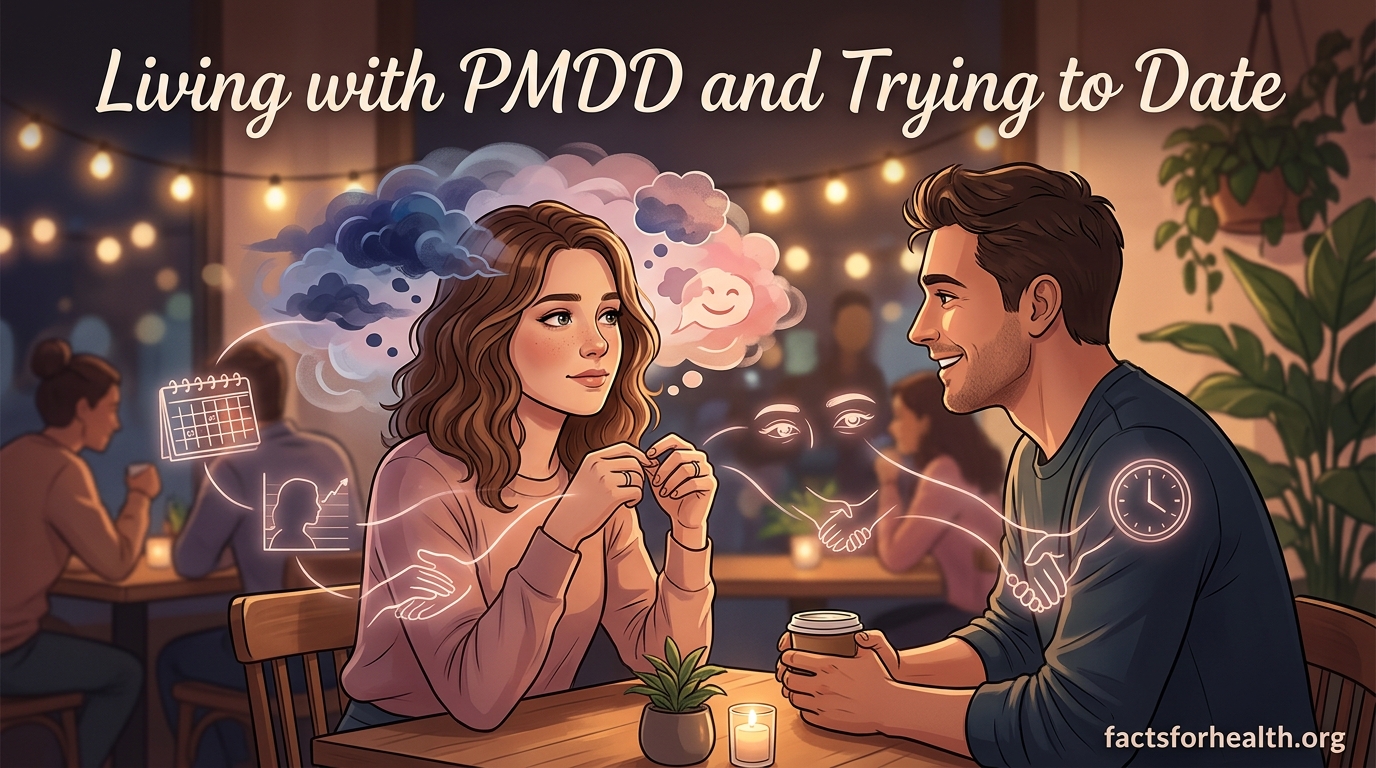
Dating is already complicated. Add Premenstrual Dysphoric Disorder into the mix, and it can feel like you are navigating a minefield every single month. If you are living with PMDD and trying to date, you already know that the gap between how you feel during your good weeks and your symptomatic weeks can be enormous.
One week you feel confident, connected, and excited about someone new. The next week, the same person’s text message can send you into a spiral of anxiety, doubt, or rage. You are not crazy, and you are not broken. You are dealing with a recognized neurobiological condition that affects an estimated 3 to 9 percent of people who menstruate.
This guide is for anyone navigating the intersection of PMDD and romantic relationships. Whether you are newly diagnosed, suspects you have PMDD, or have been managing it for years, the strategies here will help you date with more confidence and less self-blame.
We will cover what PMDD is, how it specifically affects dating, when and how to disclose it, communication strategies that actually work, and how to protect both your relationship and your mental health. Living with PMDD and trying to date is challenging, but it is absolutely possible to build healthy, lasting connections when you have the right tools.
Table of Contents
What Is PMDD and How It Affects Dating
PMDD (Premenstrual Dysphoric Disorder) is a severe, hormone-based mood disorder that occurs during the luteal phase of the menstrual cycle, typically the one to two weeks before menstruation begins. It is not just bad PMS. PMDD causes extreme emotional and physical symptoms that can disrupt work, relationships, and daily functioning.
During the luteal phase, hormone fluctuations trigger an abnormal response to neurotransmitters in the brain, particularly serotonin. This neurological sensitivity creates a cascade of symptoms that appear predictably each cycle and resolve shortly after menstruation starts. The cyclical nature is what distinguishes PMDD from other mood disorders.
Common PMDD symptoms include severe mood swings, intense irritability, depression, anxiety, emotional hypersensitivity, fatigue, brain fog, and in some cases, rage. Physical symptoms can include bloating, breast tenderness, joint pain, and headaches. For some, the emotional symptoms are overwhelming enough to trigger suicidal ideation during symptomatic episodes.
Why PMDD Hits Dating Especially Hard
Dating requires emotional availability, vulnerability, and the ability to regulate your responses to new people. PMDD directly interferes with all three. During the luteal phase, your nervous system is essentially primed to perceive threats where none exist.
A delayed text reply that would not bother you during your follicular phase can feel like rejection during your luteal phase. A minor disagreement can spiral into catastrophic thinking about the relationship’s future. Emotional sensitivity is dialed up so high that neutral interactions can feel deeply personal.
This creates a confusing experience for both you and the person you are dating. You may genuinely feel different emotions toward them depending on where you are in your cycle. Learning to recognize this pattern is the first step in separating PMDD-driven feelings from your actual relationship reality.
PMDD Versus PMS: Understanding the Difference
Many people confuse PMDD with typical PMS, and this misunderstanding can cause real problems in dating. PMS causes mild to moderate physical and emotional discomfort in the days before a period. PMDD causes severe, sometimes debilitating symptoms that can last up to two full weeks each cycle.
The emotional intensity of PMDD is what sets it apart. Someone with PMS might feel a bit irritable or weepy. Someone with PMDD might experience depressive episodes, rage episodes, panic attacks, or a complete loss of emotional control. Understanding this distinction helps you explain your experience to partners in terms they can grasp.
The Unique Challenges of Dating with PMDD
Living with PMDD and trying to date presents a specific set of challenges that people without the condition rarely understand. Forum discussions on Reddit communities like r/PMDD and r/PMDDpartners reveal consistent themes that deserve to be addressed directly.
The Confidence Rollercoaster
During your follicular phase, you may feel attractive, social, and genuinely excited about dating. You might swipe on apps, agree to dates, and feel optimistic about connections. Then the luteal phase arrives, and that same confidence evaporates overnight.
People with PMDD frequently report feeling unattractive, unlovable, or fundamentally flawed during symptomatic weeks. The contrast between how you see yourself in your good weeks versus your bad weeks can be jarring. This whiplash makes it hard to maintain a consistent sense of who you are in the dating world.
One person on a PMDD support forum described it perfectly: they feel like two completely different people depending on the week. The confident, social version of themselves makes plans and starts conversations. The symptomatic version cancels those plans, doubts everything, and wants to hide from the world.
Fear of Being a Burden
One of the most common pain points among people dating with PMDD is the fear that they are somehow unfair to the people they date. You might wonder whether it is ethical to involve someone in the turbulence of your cycle, especially before you fully understand the condition yourself.
This guilt is real and widespread. Many people with PMDD have considered giving up on dating entirely because they do not want to subject a partner to their symptomatic episodes. Some have actually stopped dating after diagnosis, taking months or years to find the right treatment combination before re-entering the dating world.
But here is the truth: everyone brings challenges to a relationship. PMDD is a medical condition, not a character flaw. With proper communication and management, it is entirely possible to be a loving, supportive partner who also happens to have a hormone-based mood disorder.
Not Trusting Your Own Judgment
Perhaps the most insidious challenge of dating with PMDD is the way it undermines your ability to trust your own perceptions. During the luteal phase, you might feel certain that something is wrong with the person you are seeing. They seem distant, uninterested, or even manipulative.
Then your period starts, the symptoms lift, and suddenly those concerns evaporate. You are left wondering which version of reality was accurate. This cycle of doubting your own judgment can make it nearly impossible to evaluate whether someone is actually right for you.
Learning to identify when PMDD is coloring your perceptions is a skill that takes time to develop. Cycle tracking becomes essential not just for symptom management, but for reality checking during dating.
Exhaustion and Social Withdrawal
PMDD does not just affect your mood. It drains your physical energy, too. During the luteal phase, fatigue can be so profound that the idea of going on a date feels impossible. Brain fog can make conversation difficult. Physical symptoms like bloating or pain can destroy your desire to be seen or touched.
This exhaustion often leads to social withdrawal right when a new relationship needs momentum. You might cancel dates, go quiet on messaging apps, or seem disinterested. Without context, the person you are dating may interpret this as rejection or game-playing.
Planning around your cycle becomes an essential dating strategy. Knowing when your symptomatic weeks fall allows you to schedule dates during your better phases and plan low-energy activities when you are struggling.
Dating App Anxiety and PMDD
Dating apps add another layer of complexity. The constant evaluation, rejection, and comparison inherent in app-based dating can trigger anxiety in anyone. For someone with PMDD, that anxiety becomes amplified tenfold during the luteal phase.
During symptomatic weeks, every unanswered message can feel like confirmation that you are unlovable. Every mismatch can trigger a spiral of self-criticism. The gamified nature of dating apps interacts poorly with the emotional vulnerability that PMDD creates.
Many people with PMDD benefit from deleting or pausing dating apps during their luteal phase. This is not avoidance. It is a strategic boundary that protects your mental health during your most vulnerable window.
When and How to Tell Someone You Have PMDD
One of the most searched questions about dating with PMDD is when to disclose the condition to a new romantic interest. There is no single right answer, but there are guidelines that can help you navigate this conversation with confidence.
The Timing Question
Telling someone about PMDD on a first date is generally not necessary. You are still getting to know each other, and dumping heavy medical information too early can overwhelm someone who has not yet had the chance to see who you are as a person.
On the other hand, waiting too long can feel like a betrayal of trust, especially if the person has already been confused or hurt by your symptomatic behavior. The sweet spot is usually somewhere between the third and fifth date, or whenever you sense the relationship is moving toward exclusivity or regular contact.
A good rule of thumb is to disclose before the person experiences your symptoms without context. If you know your luteal phase is approaching and you will likely be less communicative or more sensitive, that is the time to have the conversation. Giving someone a framework for understanding your behavior before it happens builds trust.
What to Say: Practical Scripts
Having a script ready can make the disclosure conversation far less daunting. You do not need to deliver a medical lecture. The goal is to give the person enough information to understand what PMDD is and how it might affect your interactions.
Here is one approach that works well: keep it simple, factual, and forward-looking. Tell them you have a condition called PMDD that causes severe mood symptoms during the one to two weeks before your period. Explain that during that time, you might be more sensitive, irritable, or withdrawn, and that it is not about them.
You can say something like: I want to share something with you because I like where this is going. I have PMDD, which is a hormone-based condition that affects my mood for about a week or two each month. During that time, I might seem more distant or reactive than usual. I am working on managing it, and I wanted you to know so it does not catch you off guard.
This framing is honest without being apologetic. It positions PMDD as something you are actively managing rather than suffering from. It invites the other person into awareness without making them responsible for fixing anything.
Reading Their Reaction
How someone responds to your PMDD disclosure tells you a lot about whether they are worth your time. A supportive partner will ask questions, express empathy, and want to learn more. They might not fully understand the condition immediately, but their willingness to try is what matters.
Red flags include dismissiveness, minimization, or implying that you are overreacting. If someone responds by saying every woman gets PMS or suggesting you just need to relax, they are signaling an unwillingness to take your experience seriously. That response is valuable information about the relationship’s long-term potential.
One Reddit user shared that their partner was upfront about PMDD from the beginning of their relationship. Because the partner had explained how their brain works during symptomatic episodes, the user felt prepared and equipped to handle the hard days. Early, honest disclosure built the foundation for a strong partnership.
Communication Strategies for Dating with PMDD
Effective communication is the single most important skill for anyone living with PMDD and trying to date. Without it, even the most caring partner will struggle to understand your experience. With it, PMDD becomes a shared challenge rather than a source of conflict.
Cycle Tracking as a Communication Tool
Cycle tracking is not just for managing symptoms. It is a communication tool that can transform how you navigate dating with PMDD. When you know exactly when your luteal phase begins and ends, you can plan accordingly and give your partner a heads-up.
Many couples create a simple system. The person with PMDD sends a quick text when they feel symptoms starting, something as simple as luteal phase entering the chat. This gives the partner context for the next week or two and signals that extra patience and care may be needed.
Tracking apps like Clue, Flo, or Me v. PMDD can help you identify patterns over time. After a few months of data, you may notice that your worst days consistently fall on specific cycle days. This predictability allows you to schedule dates around your best days and plan quiet, low-pressure activities during your hardest ones.
Creating a PMDD Communication Plan
A communication plan is a set of agreements you establish with a partner about how to handle your symptomatic phases. Rather than improvising during a crisis, you decide in advance how to communicate when things get difficult.
Your plan might include agreements like: during symptomatic days, we will avoid having serious relationship conversations. If I need space, I will tell you directly rather than going silent. If I seem irritable, you can ask if it is a PMDD day, and I will answer honestly. We will revisit any disagreements after my period starts.
The key is to create these agreements during your follicular phase, when you are thinking clearly. Trying to negotiate communication rules during a luteal phase rage episode rarely goes well. Write the plan down, keep it visible, and revisit it regularly.
The Pause Button: When Not to Talk
One of the most valuable communication strategies for PMDD dating is knowing when to stop talking. During the luteal phase, your perception is compromised. Conversations that feel urgent and necessary at 11 PM on day 24 of your cycle may feel completely irrelevant a week later.
Implement a pause rule for serious relationship discussions. If a difficult conversation arises during your symptomatic phase, give yourself permission to table it. Tell your partner you want to revisit this topic, but you would prefer to wait until you can think clearly.
This strategy prevents PMDD-driven arguments from causing real damage to your relationship. It also models emotional regulation and self-awareness, which are attractive qualities in any partner.
Explaining What You Need
Partners of people with PMDD often feel helpless during symptomatic episodes. They want to help but do not know how. Giving clear, specific instructions about what you need can bridge that gap.
Some people with PMDD need physical comfort and reassurance during bad episodes. Others need space and quiet. Some need practical help with meals and household tasks. Others need their partner to simply not take their irritability personally.
Tell your partner directly what helps and what does not. You might say: during my bad days, I need you to just listen without trying to fix anything. Or: when I am symptomatic, please do not ask me to make decisions. Taking the guesswork out of supporting you reduces frustration on both sides.
Managing Text Communication During Luteal Phase
Texting is where many PMDD-affected relationships hit trouble. The lack of tone and body language in text messages leaves enormous room for misinterpretation, which PMDD amplifies. A simple ok response can read as cold or angry when your brain is in luteal phase overdrive.
Consider implementing texting boundaries during your symptomatic phase. You might switch to phone calls instead of texts, use voice messages to convey tone, or simply tell your partner you will be less responsive for a few days. Setting this expectation prevents your silence or brevity from being misread.
If you find yourself drafting an emotional text during a symptomatic episode, wait. Sleep on it. Write it in your notes app instead of sending it. Revisit it when your symptoms have lifted, and you may find that the urgency has completely evaporated.
Protecting Your Relationship During Symptomatic Phases
PMDD can place enormous strain on even the strongest relationships. Research published in peer-reviewed journals has documented significant impacts on relationship satisfaction, intimacy, and communication during the luteal phase. But relationships do not have to be casualties of PMDD.
Distinguishing PMDD Feelings from Real Relationship Issues
One of the hardest parts of dating with PMDD is figuring out which of your feelings are valid and which are symptom-driven. During the luteal phase, you might become convinced that your partner does not care about you, that the relationship is doomed, or that something is fundamentally wrong.
A useful tool is the two-week rule. If a relationship concern arises during your luteal phase, write it down but do not act on it. Wait until after your period starts and see if the concern still feels valid. If it does, it is worth addressing. If it fades, it was likely PMDD talking.
This practice is not about dismissing your feelings. It is about recognizing that your emotional baseline shifts during symptomatic phases. Giving yourself time to evaluate concerns from a non-symptomatic perspective protects both you and your relationship.
Rebuilding After a Symptomatic Episode
Even with the best communication strategies, PMDD episodes can cause damage. You might say things you do not mean, push your partner away, or create conflict that lingers after your symptoms resolve. Having a repair process in place helps you move forward.
Acknowledge what happened without excessive guilt. Apologize for specific behaviors, not for having PMDD. A simple statement works: I know I was short with you yesterday, and I am sorry. My symptoms were bad, and I should have taken space instead of snapping.
Then focus on reconnection. Plan something enjoyable together. Have a conversation about what could help next time. The goal is not to erase the episode but to show your partner that you are actively working on patterns and that the relationship is worth the effort.
When Partners Need Support Too
PMDD does not just affect the person who has it. Partners often feel confused, hurt, or helpless during symptomatic episodes, and they may need their own support systems. Communities like r/PMDDpartners exist specifically for partners navigating these challenges.
Encourage your partner to learn about PMDD independently. Point them toward reputable sources and support communities. The more they understand about the condition’s neurobiological basis, the less they will take symptomatic behavior personally.
Some couples benefit from couples counseling, particularly if PMDD has created patterns of conflict that persist even during non-symptomatic phases. A therapist who understands PMDD can help both partners develop strategies for navigating the cycle together.
Recognizing Real Red Flags Versus PMDD Noise
PMDD can make you hypersensitive to your partner’s behavior, but it can also make you tolerant of behavior you should not accept. During the follicular phase, when you feel good, you might minimize genuine concerns because you are just relieved to feel normal again.
Learning to distinguish PMDD noise from real red flags requires honest self-reflection. A partner who is occasionally clueless about your PMDD is not necessarily a problem. A partner who consistently dismisses your condition, uses it against you during arguments, or refuses to accommodate your needs is showing you something important.
Watch for patterns that persist across all phases of your cycle. If you feel unsafe, unheard, or disrespected during your follicular phase too, that is not PMDD. That is information about the relationship that deserves your attention.
Self-Care Strategies for Dating with PMDD
Taking care of yourself is not selfish. It is the foundation that makes healthy dating possible. When you manage your PMDD effectively, you reduce the intensity of symptoms and give yourself more capacity for connection.
Treatment Options That Support Dating
PMDD is treatable, and finding the right treatment can dramatically improve your dating experience. The most commonly prescribed treatments include selective serotonin reuptake inhibitors (SSRIs), which can be taken continuously or only during the luteal phase. Many people report significant symptom reduction with SSRIs.
Hormonal treatments, including certain oral contraceptives, can also help by suppressing ovulation and stabilizing hormone fluctuations. Finding the right hormonal option often requires trial and error, and some people find that certain birth control formulations actually worsen their symptoms.
Lifestyle approaches, including regular exercise, targeted supplementation, and dietary adjustments, can complement medical treatment. Cognitive behavioral therapy (CBT) has shown effectiveness for managing the anxiety and depressive symptoms associated with PMDD.
Building a PMDD Toolkit
A PMDD toolkit is a collection of strategies and resources you can turn to during symptomatic phases. Your toolkit should be personalized to your specific symptoms and needs, and it should be accessible before symptoms hit.
Your toolkit might include a list of low-energy date ideas that do not require you to be your best self. It might include pre-written message templates for communicating with a partner during bad days. It might include comfort items, relaxation apps, emergency contacts, and reminders of what has helped in the past.
The point is to do the planning when you feel well, so you do not have to make decisions when you are struggling. A well-stocked toolkit can be the difference between surviving a luteal phase and letting it derail your relationship.
Setting Dating Boundaries Around Your Cycle
Protecting your dating life means setting boundaries that respect your cyclical nature. This might mean declining invitations during your symptomatic phase, choosing lower-energy date formats, or being honest about needing to reschedule.
Some people with PMDD choose to pause dating app activity entirely during their luteal phase. Others schedule first dates only during their follicular phase, when they can present their most authentic, energized selves. There is no one-size-fits-all approach, but the principle is the same: work with your cycle, not against it.
Communicate these boundaries early. If you are seeing someone regularly, let them know that you may need to reschedule or take things slower during certain weeks. A partner who respects these boundaries is demonstrating exactly the kind of understanding you need.
Cultivating Self-Compassion
The most important self-care strategy for dating with PMDD is self-compassion. PMDD feeds on shame, telling you that you are too much, too difficult, too broken to be loved. Those messages are symptoms, not truths.
Remind yourself that PMDD is a medical condition recognized by the DSM-5 and the ICD-11. It has a neurobiological basis. You did not choose it, and you are not weak for having it. The fact that you are navigating dating while managing a chronic mood disorder is genuinely impressive.
Surround yourself with people who understand. Online communities like r/PMDD provide validation and practical advice from people who get it. Connecting with others who share your experience can reduce isolation and remind you that you are far from alone.
Knowing When to Pause Dating
Sometimes the healthiest choice is to step back from dating entirely. If you are in the middle of finding the right treatment, processing a new diagnosis, or going through an particularly severe cycle, taking a break from dating can give you the space you need to stabilize.
One forum user shared that they stopped dating for over a year after their PMDD diagnosis. That time was spent finding the right combination of medication, therapy, and self-care strategies. When they returned to dating, they were better equipped to manage symptoms and communicate their needs.
Pausing is not giving up. It is prioritizing your health so that when you do date, you can show up as your full self. There is no timeline, and there is no rush.
FAQs
Is it hard to date someone with PMDD?
Dating someone with PMDD can be challenging because the condition causes severe mood swings, irritability, and emotional sensitivity during the luteal phase each month. However, with open communication, cycle awareness, and mutual effort, many couples build strong, lasting relationships. The key is education and patience from both partners.
Can you live a normal life with PMDD?
Yes, many people with PMDD live full, normal lives with proper treatment and management. Treatment options include SSRIs, hormonal birth control, therapy, and lifestyle strategies. Cycle tracking, communication planning, and self-care routines help most people manage symptoms effectively enough to maintain careers, relationships, and social lives.
How to help girlfriend with PMDD?
Support a partner with PMDD by learning about the condition, tracking her cycle together, asking what she needs during symptomatic days, and not taking mood changes personally. Avoid giving unsolicited advice during episodes. Offer practical help with meals and tasks, give space when requested, and reassure her that she is not a burden. Couples counseling can also help both partners develop coping strategies.
Can PMDD ruin a relationship?
PMDD can strain relationships, especially when it is undiagnosed or unmanaged, but it does not have to ruin them. Research shows that couples who communicate openly about PMDD, track cycles, and seek treatment together report higher relationship satisfaction. The biggest risk comes from untreated symptoms and lack of understanding, not from the condition itself.
When should I tell someone I am dating that I have PMDD?
The best time to disclose PMDD is typically between the third and fifth date, or before the person experiences your symptoms without context. Share it when you feel the relationship has potential but before your luteal phase creates confusion. Keep the explanation simple, factual, and forward-looking.
How do I explain PMDD to a man I am dating?
Explain PMDD as a hormone-based medical condition recognized by the DSM-5 that causes severe mood symptoms during the one to two weeks before your period. Use simple language: it is not normal PMS, it is a neurological sensitivity to hormone changes, and it is treatable. Focus on how it might affect your interactions and what he can do to support you.
Conclusion
Living with PMDD and trying to date is genuinely difficult, but it does not have to mean choosing between your mental health and your love life. Understanding your cycle, communicating openly with partners, and building a strong self-care toolkit can transform your dating experience.
You are not too much for the right person. The strategies in this guide, from disclosure scripts to cycle tracking to boundary setting, give you practical tools to navigate dating with PMDD. Keep showing up for yourself, and remember that healthy love is possible on your terms.