
You wake up with your heart pounding. For a split second, you cannot tell if it really happened. The taste of alcohol lingers, the buzz feels real, and the guilt hits before you even open your eyes. Then you realize you are in your own bed, sober, and it was just a dream.
If this sounds familiar, you are far from alone. Drunk dreams in early recovery are one of the most common experiences people share in recovery communities, support groups, and therapy sessions. They can feel so vivid and unsettling that many people wonder whether they signal a hidden desire to drink or an impending relapse.
They do not. Understanding what drunk dreams are and why they happen in early recovery can turn a terrifying experience into a reassuring sign that your brain is doing exactly what it needs to do. In this guide, we break down the science behind drinking dreams in sobriety, why they peak during the first weeks and months, and practical steps you can take when one jolts you awake.
Table of Contents
Quick Answer: What Are Drunk Dreams and Why Do They Happen?
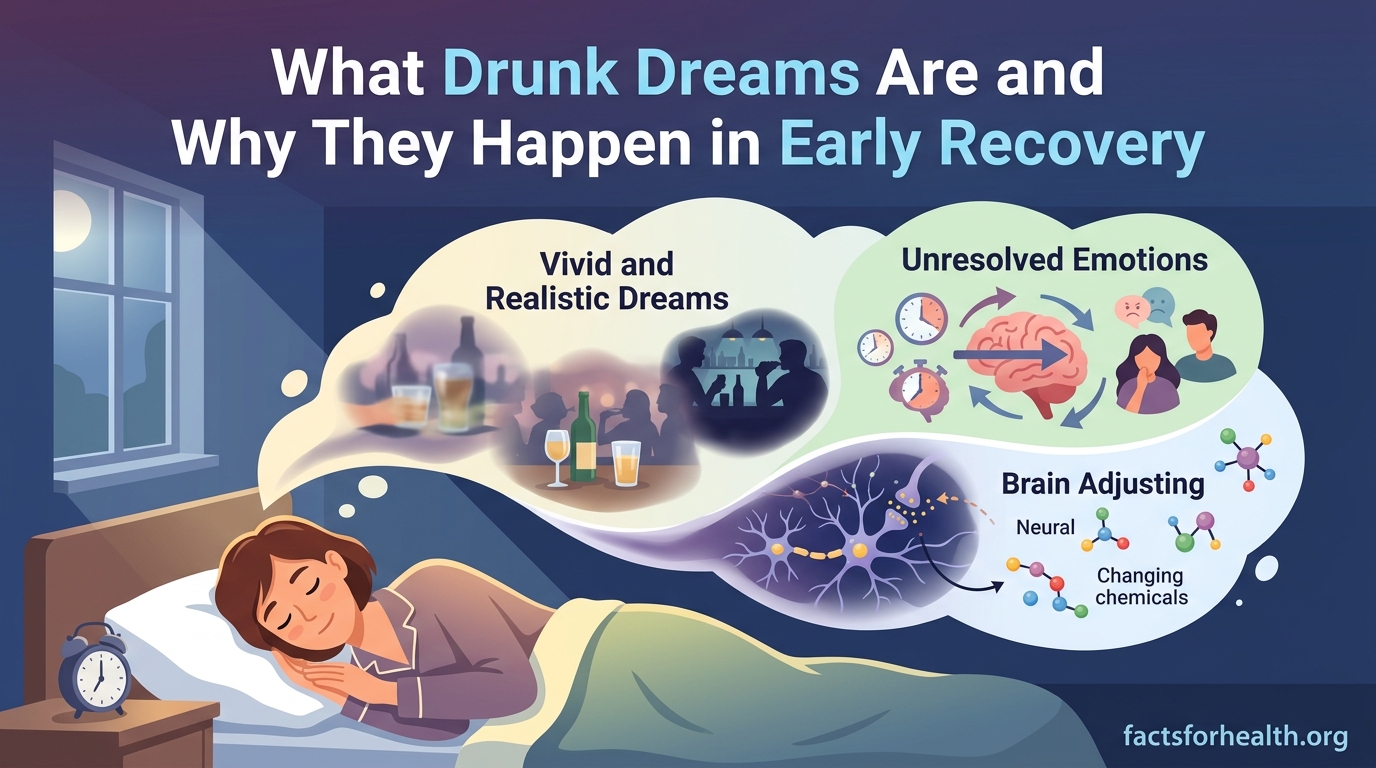
Drunk dreams, also called relapse dreams or drinking dreams, are vivid dreams about consuming alcohol that occur during recovery. They happen primarily because of REM rebound: when you stop drinking, your brain compensates for suppressed dream sleep by producing intensely vivid dreams. They are a normal part of brain healing and do not mean you are relapsing.
What Are Drunk Dreams?
Drunk dreams, also known as relapse dreams, drinking dreams, or using dreams, are vivid dreams in which you consume alcohol or feel the effects of being intoxicated. They typically occur during early recovery from alcohol use disorder, though they can surface at any stage of sobriety. The dreams often feel incredibly real, complete with the taste, smell, and physical sensation of drinking.
People frequently describe waking up confused, panicked, or guilty. Some report that the dream felt so authentic they had to check their surroundings to confirm they had not actually relapsed. This confusion is one of the hallmarks that separates drunk dreams from ordinary dreaming.
On recovery forums like r/stopdrinking and r/alcoholicsanonymous, thousands of people share nearly identical stories. An eight-days-sober member describes intensely vivid dreams about alcohol for the first time. Someone at 24 days sober reports frequent dreams about giving in to a drink or being offered one. A person with nine years sober recalls that drunk dreams bothered them constantly in early recovery but now rarely happen.
Drunk Dreams vs. Normal Dreams
Not all vivid dreams in recovery are drunk dreams. Normal dreams can be strange, emotional, or memorable without involving alcohol. The distinction matters because it helps you understand what your brain is processing.
Here are the key differences between drunk dreams and ordinary vivid dreams:
1. Specific substance content. Drunk dreams involve alcohol or the sensation of intoxication. Normal dreams may involve any theme, person, or scenario without substance-related elements.
2. Physical sensations. Many people report tasting alcohol, feeling the buzz, or experiencing a hangover sensation within the dream. Normal dreams rarely produce such specific sensory detail.
3. Emotional aftermath. Drunk dreams tend to leave a lingering emotional residue: guilt, shame, relief, or anxiety that can last for hours. Ordinary dreams typically fade quickly after waking.
4. Confusion upon waking. The momentary belief that you actually drank is almost unique to relapse dreams. This disorientation rarely happens with standard dreams.
5. Recovery context. Drunk dreams specifically occur in people recovering from substance use. They are tied to the recovery process, not just general sleep patterns.
Common Themes in Drinking Dreams
The content of drunk dreams varies from person to person, but several themes appear repeatedly across recovery communities:
Drinking by surprise: You suddenly realize you have a drink in your hand with no memory of picking it up. This theme often produces the most intense panic upon waking.
Being offered a drink: Friends, strangers, or family members offer you alcohol, and the dream focuses on your internal struggle to accept or refuse.
Relapsing at a specific location: Many people dream about drinking at a favorite bar, party, or social setting tied to their drinking history.
Refusing the drink: Some people dream that they successfully turn down alcohol. Recovery communities often view this as a positive sign of growing commitment to sobriety.
Drinking without consequence: The dream shows drinking as enjoyable and consequence-free, which can be especially triggering because it glosses over the reality of addiction.
Why Do Drunk Dreams Happen in Early Recovery?
What causes drunk dreams comes down to a combination of sleep science, neurochemistry, emotional processing, and stress. The brain undergoes massive changes when alcohol is removed, and those changes directly affect sleep architecture and dream content.
Here are the four primary reasons drunk dreams occur during early sobriety:
1. REM Rebound: The Sleep Science Behind Drunk Dreams
REM rebound is the single most important factor in understanding why drunk dreams happen. During active alcohol use, alcohol suppresses REM sleep, the stage of sleep where most dreaming occurs. When you stop drinking, your brain tries to recover the lost REM sleep by producing more of it, and more intensely, than before.
This phenomenon is well-documented in sleep research. The brain essentially makes up for lost time, flooding your nights with dense, vivid, emotionally charged dreams. The intensity of REM rebound dreams is why so many people report that their dreams became dramatically more vivid after quitting alcohol, even within the first week.
REM rebound explained simply: Think of REM sleep like a spring. Alcohol pushes down on the spring, compressing it. When you remove alcohol, the spring releases, bouncing back with extra force. That bounce is REM rebound, and the vivid dreams are the result.
REM rebound typically peaks within the first one to two weeks of sobriety, which aligns perfectly with when most people report their most intense drinking dreams. As the brain adjusts and sleep architecture normalizes, the intensity of REM rebound gradually decreases.
2. Brain Healing and Neurochemical Changes
Alcohol fundamentally alters brain chemistry. It enhances GABA, a calming neurotransmitter, and suppresses glutamate, an excitatory one. Over time, the brain adapts to this artificial balance. When alcohol is removed, the brain must recalibrate its own neurotransmitter production.
This recalibration period is marked by significant neurochemical changes. GABA levels drop, glutamate levels rise, and the brain works to restore its natural equilibrium. During this transition, brain activity during sleep can be erratic and intense, contributing to vivid dreams and nightmares.
The brain is also rebuilding neural pathways damaged by chronic alcohol use. Memory consolidation, emotional regulation, and sleep-wake cycling all undergo repair. This healing process can surface memories, emotions, and sensory experiences associated with drinking, which the sleeping brain weaves into dream content.
Research published in the National Center for Biotechnology Information supports this understanding. Studies on drinking and drug-using dreams show that these dreams are more common among individuals more seriously impacted by substance use, suggesting a link between the severity of neurological changes and dream frequency.
3. Emotional Processing and Memory Reprocessing
One of sleep’s core functions is emotional processing. During REM sleep, the brain sorts through experiences, consolidates memories, and regulates emotional responses. In early recovery, the brain has a massive backlog of unprocessed emotions and memories that alcohol had been numbing.
Without alcohol acting as an emotional anesthetic, feelings surface. The brain processes years of suppressed emotions, cravings, stressors, and experiences related to drinking. Some of this processing manifests as drunk dreams, where the brain rehearses, reprocesses, or works through the emotional weight of alcohol use.
This is why drunk dreams can feel so emotionally charged. They are not random. They represent your brain actively working through the psychological impact of addiction and recovery. A study from the Universite de Geneve on dreams and fear processing found that REM sleep helps diminish the emotional intensity of fearful memories, which may explain why drunk dreams, while disturbing, actually serve a therapeutic function.
4. Stress, Cravings, and Recovery Triggers
Early recovery is stressful. The body and mind are adjusting to life without alcohol, and that adjustment comes with anxiety, cravings, sleep disruption, and emotional turbulence. Stress is a known trigger for vivid dreaming, and the heightened stress of early sobriety can amplify dream intensity.
Cravings themselves may also influence dream content. If you experience cravings during the day, your brain may continue processing those urges during sleep. This does not mean the dream is a craving in sleep form. It means your brain is engaging with the concept of alcohol as part of its ongoing recovery work.
External triggers play a role too. Stressful events, encounters with people or places associated with drinking, or even passing a liquor store can plant seeds that the dreaming brain later incorporates. The Journal of Substance Abuse Treatment has published research indicating that relapse dreams reflect the internal conflict between old habits and new recovery goals.
The Emotional Impact of Drunk Dreams
The psychological aftermath of a drunk dream can be just as intense as the dream itself. Many people in recovery describe waking up genuinely unsure whether they had relapsed. That moment of confusion, followed by the rush of relief, is a shared experience across recovery communities.
But the relief does not always last. Common emotional reactions include:
Guilt and shame: Even though you did nothing wrong, the dream can trigger feelings of failure. You may question your commitment to sobriety or feel like you somehow let yourself down. This shame is completely unwarranted, but it is a nearly universal response.
Fear of relapse: One of the most common fears is that a drinking dream predicts an actual relapse. People ask: do drunk dreams mean I want to drink? The answer is no. Dreams reflect brain activity, not conscious desires or behavioral predictions.
Lingering anxiety: Forum members frequently describe emotions echoing throughout the day after a drunk dream. The anxiety can make it hard to focus, increase irritability, or heighten sensitivity to triggers.
Sleep avoidance: Some people become afraid to sleep, anticipating another disturbing dream. Sleep avoidance creates a vicious cycle, as sleep deprivation worsens dream intensity and emotional regulation.
Isolation: Shame about drunk dreams can prevent people from sharing them. Many forum users describe not telling their sponsor because they felt embarrassed. This isolation amplifies the emotional toll.
Here is the reassuring truth from recovery communities: drunk dreams are universally described as normal. Experienced members consistently reassure newcomers that the dreams decrease over time. Sharing the dream with a sponsor, therapist, or support group significantly reduces its emotional power.
Are Drunk Dreams a Warning Sign?
This is one of the most frequently asked questions in recovery forums. The short answer is no. Drunk dreams are not a warning sign of relapse on their own.
However, context matters. A drunk dream becomes worth paying attention to when it occurs alongside other warning signs, such as:
Intensifying cravings during waking hours that you are not addressing. Withdrawing from your support system or skipping meetings. Romanticizing past drinking rather than remembering its consequences. Experiencing significant unmanaged stress or emotional turmoil.
In these cases, the dream is not causing the risk but may reflect the underlying stress your brain is processing. The dream itself is neutral. Your overall recovery picture determines whether additional support is needed.
Recovery communities have a useful term for drunk dreams that occur without other warning signs: a freebie. A sponsor on a recovery forum described it perfectly: a drunk dream is a freebie. You did not drink. You woke up sober. The dream cost you nothing.
How Long Do Drunk Dreams Last?
This is the question that brings people to search engines late at night after a disturbing dream. The anxiety is real, and the desire for a timeline is completely understandable.
The answer depends on individual factors, but general patterns emerge from clinical experience and recovery community reports:
Week 1 (Days 1 to 7): This is typically when drunk dreams begin, if they are going to occur. REM rebound starts as alcohol leaves the system. Dreams may be intense, frequent, and emotionally overwhelming. Sleep disruption is common.
Weeks 2 to 4: Dream frequency often peaks during this window. The brain is in active healing mode, and REM rebound is at its strongest. Many people report dreaming about alcohol every night or nearly every night. The vividness can be startling.
Months 1 to 3: Dreams typically begin to decrease in frequency and intensity as sleep architecture normalizes. You may still have occasional drinking dreams, but they become less frequent and less disturbing. The emotional aftermath also shortens.
Months 3 to 6: Most people report a significant drop in drunk dream frequency. When they do occur, they tend to be less vivid and less emotionally charged. The brain has made substantial progress in recalibrating sleep patterns and neurochemistry.
Months 6 and beyond: Drunk dreams become infrequent for most people. Long-term sober members of recovery communities confirm that dreams diminish significantly over time. A person with nine years of sobriety shared that drunk dreams used to bother them constantly in early recovery but now rarely happen.
It is worth noting that drunk dreams can reappear at any point, especially during stressful periods, major life transitions, or at sobriety milestones. Some people report a cluster of drinking dreams around their one-year sobriety anniversary. These recurrences are normal and do not indicate regression.
What to Do After a Drunk Dream
Having a step-by-step plan for what to do after a drunk dream can significantly reduce its emotional impact. When you know exactly how to respond, the dream loses much of its power to derail your day.
Here is a practical five-step process to follow when you wake up from a drinking dream:
Step 1: Ground yourself immediately. Before you reach for your phone or start analyzing the dream, confirm your reality. Look around your room. Say out loud: I am sober. I am in my bed. I did not drink. This simple grounding exercise interrupts the anxiety spiral and brings your nervous system back to the present.
Step 2: Remind yourself that the dream is normal. Tell yourself: this is my brain healing. It is not a relapse. It is not a warning. It is REM rebound. Repetition of this fact helps counter the automatic guilt response.
Step 3: Write it down. Journaling after a drunk dream helps process lingering emotions. Write what happened in the dream, how you felt upon waking, and how you feel now. Getting the experience out of your head and onto paper reduces its emotional charge. Many forum members credit journaling as the single most effective tool for coping with drinking dreams.
Step 4: Talk about it. Share the dream with your sponsor, a trusted friend in recovery, your therapist, or your support group. Saying it out loud strips away the shame. The most consistent advice from experienced community members is this: tell someone. Dreams thrive in isolation and lose their power when shared.
Step 5: Focus on your recovery that day. Do not let the dream consume your day. Attend a meeting, connect with your support network, engage in self-care, and reaffirm your commitment to sobriety through action. A dream is not a setback. Your response to it is what matters.
Self-Care Strategies to Reduce Drunk Dream Intensity
While you cannot eliminate drunk dreams entirely, certain self-care practices can reduce their frequency and intensity:
Build a consistent sleep routine. Go to bed and wake up at the same time every day. A regular sleep schedule helps normalize sleep architecture and reduces sleep fragmentation, which contributes to dream intensity.
Avoid screens before bed. Blue light disrupts melatonin production and sleep quality. Give yourself at least 30 minutes of screen-free time before sleep.
Exercise regularly. Physical activity improves sleep quality and reduces stress, both of which support healthier dream patterns. Even a daily walk can make a difference.
Practice relaxation techniques. Meditation, deep breathing, yoga, and progressive muscle relaxation calm the nervous system before sleep. Lower stress levels going into sleep can reduce the emotional intensity of dreams.
Limit caffeine, especially in the afternoon. Caffeine worsens sleep quality and can increase anxiety, both of which amplify dream vividness.
Address stress proactively. Unmanaged stress is a major contributor to intense dreaming. Whether through therapy, journaling, or talking with support people, processing stress during waking hours means your brain has less to process at night.
When to Seek Professional Help
Most drunk dreams are normal and manageable with self-care and peer support. However, certain situations warrant professional attention:
Drunk dreams that cause severe sleep deprivation or sleep avoidance. Dreams accompanied by intense, persistent anxiety or depression. Drinking dreams that trigger strong, unmanageable cravings during waking hours. Any thoughts of self-harm or hopelessness, whether related to dreams or not.
A therapist specializing in addiction recovery can help you process the emotional impact of drunk dreams and develop personalized coping strategies. If you are in a treatment program, bring up the dreams with your counselor. If you are in medication-assisted treatment, talk to your prescribing provider, as some medications can affect sleep and dream patterns.
There is no shame in seeking help. In fact, reaching out is one of the strongest indicators of long-term recovery success.
FAQs
What causes drunk dreams?
Drunk dreams are caused by a combination of REM rebound (the brain compensating for suppressed dream sleep), neurochemical changes as the brain recalibrates without alcohol, emotional processing of suppressed memories, and stress during early recovery.
Why is it hard to sleep in early sobriety?
Sleep is difficult in early sobriety because alcohol withdrawal disrupts sleep architecture. The brain is recalibrating GABA and glutamate levels, REM rebound causes intense dreaming, and withdrawal symptoms like anxiety and restlessness interfere with falling and staying asleep.
Why are my dreams so weird when I’m sober?
When you stop drinking, REM rebound causes your brain to produce more intense, vivid dreams than usual. This is your brain recovering from alcohol-suppressed REM sleep. The weirdness and intensity typically peak in the first one to two weeks and gradually decrease over the following months.
Are drunk dreams a sign of relapse?
No. Drunk dreams are not a sign of relapse. They are a normal part of brain healing during recovery. Recovery communities often call them a freebie because you did not actually drink. They only warrant attention if they occur alongside other relapse warning signs like intensified cravings or withdrawal from support systems.
Do drunk dreams mean I secretly want to drink?
No. Drunk dreams reflect brain activity during sleep, not conscious desires. They are caused by REM rebound and emotional processing, not hidden cravings. Dreaming about alcohol does not mean you are not committed to your recovery.
Should I tell my sponsor about my drinking dream?
Yes. Sharing a drunk dream with your sponsor or support group is one of the most effective ways to reduce its emotional impact. Experienced members consistently advise telling someone because dreams lose their power when spoken aloud. There is no shame in having a drinking dream.
Conclusion
Drunk dreams in early recovery are a normal, expected, and temporary part of the healing process. They are caused by REM rebound, neurochemical recalibration, emotional processing, and stress, not by hidden desires or impending relapse. Understanding what drunk dreams are and why they happen in early recovery transforms them from a source of fear into evidence that your brain is doing its job.
If you are experiencing drinking dreams, know that you are in good company. Thousands of people in recovery have walked this exact path, and the overwhelming consensus is clear: the dreams fade, the intensity decreases, and they become nothing more than an occasional reminder of how far you have come. Share your dream with someone you trust, take care of yourself that day, and keep moving forward. Your brain is healing, one dream at a time.