
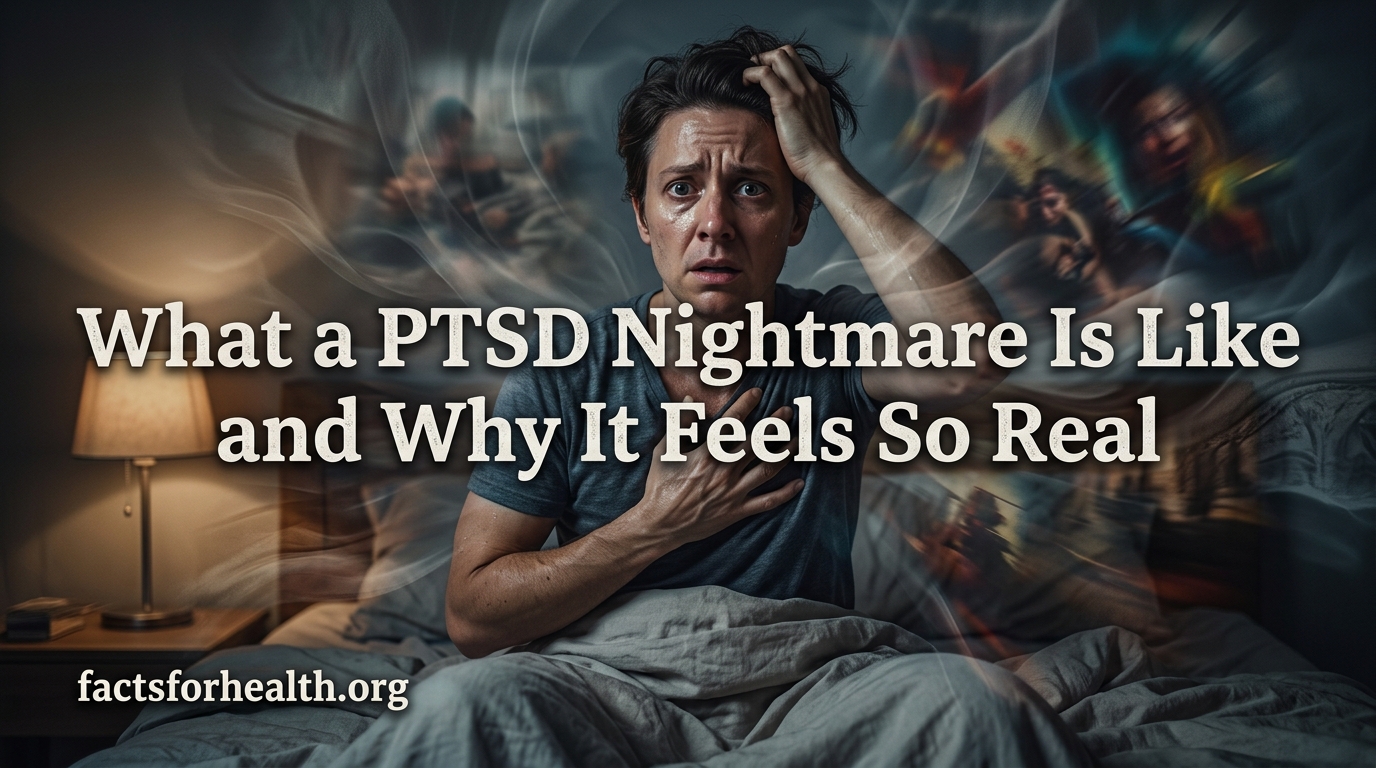
If you have ever woken up gasping, drenched in sweat, heart pounding so hard it feels like it might break through your chest, you may have experienced a PTSD nightmare. These are not ordinary bad dreams. They are intensely vivid, sensory-rich experiences that can leave you shaken for hours, sometimes days, afterward. Understanding what a PTSD nightmare is like can help you or someone you love feel less alone in this experience.
PTSD nightmares feel so real because the brain’s fear center, the amygdala, becomes overactive during sleep in people with PTSD. This hyperarousal keeps the body’s threat-detection system running at full speed, even while unconscious. The brain essentially relives the emotional reality of trauma rather than processing it safely, making the dream feel like an actual event unfolding in real time.
In this article, our team breaks down exactly what a PTSD nightmare is like, why the brain creates these immersive experiences, how they differ from regular nightmares, and what you can do about them.
Table of Contents
What a PTSD Nightmare Is Like
A PTSD nightmare is like being dropped into the center of a memory you never asked to revisit. The experience is immersive in a way that regular dreams simply are not. Every detail feels sharp, immediate, and physically present.
People who experience these nightmares often describe sensory details that linger long after waking. You might smell something from the traumatic event, feel physical sensations like pressure or pain, or hear sounds with startling clarity. The visual quality alone can be striking. One person described it as “more real than reality itself.”
What makes these nightmares especially distressing is the emotional intensity. The fear, helplessness, or horror you felt during the original trauma comes flooding back at full force. There is no dreamlike distance or awareness that you are sleeping. Your brain responds as though the threat is happening right now.
Physical reactions are common and intense. Many people wake up sweating through their clothes, trembling, or with a racing heart that takes 20 or 30 minutes to calm down. Some people thrash or move violently during the nightmare and wake up with bruises, sore muscles, or even minor injuries from hitting the headboard or falling out of bed.
Others describe sensations of paralysis, screaming without sound, or being trapped in a body that will not move. These experiences can be so overwhelming that some people develop a genuine fear of falling asleep.
Why PTSD Nightmares Feel So Real
The short answer comes down to brain chemistry and how trauma rewires the neural pathways involved in sleep and fear processing. Several brain regions work together to create the terrifying realism of a PTSD nightmare.
The Amygdala Goes Into Overdrive
The amygdala is the brain’s alarm system. Its job is to detect threats and trigger fear responses to keep you safe. In people with PTSD, the amygdala becomes hyperactive, meaning it fires too often and too intensely, even during sleep.
During a typical nightmare, the prefrontal cortex, which handles logical thinking and emotional regulation, helps keep the dream in perspective. But in a PTSD nightmare, the overactive amygdala essentially overrides this calming influence. Your brain processes the dream content as a genuine, immediate threat rather than a constructed scenario.
Hyperarousal Keeps the Body on High Alert
Hyperarousal is a core symptom of PTSD. It means your nervous system stays stuck in a state of heightened readiness, constantly scanning for danger. This does not switch off when you fall asleep.
The locus coeruleus, a small cluster of neurons in the brainstem, plays a key role here. It regulates the body’s stress response and releases norepinephrine, a chemical that increases alertness and prepares the body for action. In PTSD, this system stays chronically activated, which means your body is physiologically primed for threat detection even during REM sleep, the stage where most vivid dreaming occurs.
Failed Memory Consolidation
Sleep normally helps the brain process and file away memories, moving them from short-term storage into long-term consolidation. This process, called memory consolidation, helps strip away some of the raw emotional charge from difficult experiences over time.
In PTSD, this system malfunctions. The hippocampus, which organizes and contextualizes memories, does not function properly. Instead of filing the traumatic memory away as something that happened in the past, the brain keeps reliving it as though it is happening now. The memory remains raw, unprocessed, and emotionally charged.
The REM Sleep Disruption Factor
Most vivid nightmares occur during REM sleep, the stage associated with intense dreaming. Research shows that people with PTSD often have fragmented, disrupted REM sleep. Instead of smooth cycling through sleep stages, the brain gets stuck or abruptly interrupted during REM.
This disruption may explain why PTSD nightmares feel more vivid and emotionally intense than regular nightmares. The brain is caught in a state between dreaming and waking, where the dream imagery mixes with conscious awareness, amplifying the sense of reality.
PTSD Nightmares vs Regular Nightmares
Understanding the difference between PTSD nightmares and regular nightmares matters for recognizing when to seek help. While both can be unpleasant, they operate on completely different levels of intensity and impact.
Regular nightmares typically occur occasionally and stem from everyday stressors, anxiety, or even something as simple as eating too close to bedtime. They fade quickly after waking. Within a few minutes, you usually realize it was just a dream, and the emotional intensity dissipates.
PTSD nightmares are different in several key ways. They tend to recur frequently, sometimes nightly, and follow repetitive themes or content connected to the trauma. The emotional intensity does not fade quickly. Many people report feeling unsettled, anxious, or on edge for hours or even the entire day after an episode.
The physical aftermath also differs significantly. Regular nightmares rarely cause sweating through clothing, racing heart rates lasting more than a few minutes, or physical injuries from thrashing. PTSD nightmares routinely produce these reactions.
Memory of the nightmare content offers another distinction. Regular nightmares often blur or disappear from memory shortly after waking. PTSD nightmares tend to be remembered in vivid, precise detail, sometimes for years. The content replays in waking thought much like an intrusive memory.
Perhaps most importantly, regular nightmares do not typically cause a fear of going to sleep. PTSD nightmares frequently do. Sleep avoidance becomes a coping mechanism, which only worsens the underlying condition by deepening sleep deprivation and amplifying daytime symptoms.
Not All PTSD Nightmares Replay the Trauma
One of the most misunderstood aspects of PTSD nightmares is the assumption that they always replay the traumatic event in literal detail. Many people, including some healthcare providers, expect PTSD nightmares to be exact recreations of what happened.
The reality is far more complex. Many people with PTSD report that their nightmares never directly depict the actual trauma. Instead, the dreams take the emotional core of the experience, fear, helplessness, loss of control, and translate it into entirely different scenarios.
Common themes emerge across people who have never met each other. Being chased by something you cannot escape. Searching endlessly for someone or something that is never found. Being trapped in a situation with no way out. Encountering violence or threat in unfamiliar settings that have no connection to the actual event.
One person shared that their worst nightmares were “made-up versions of the event with never any real detail.” Another described dreams of being stabbed or wandering through endless corridors, scenarios completely unrelated to their specific trauma but carrying the same emotional weight.
This symbolic nature confuses many people. They wonder whether their nightmares truly count as PTSD-related if they are not literal replays. The answer is yes. The brain processes trauma through metaphor and symbolism, especially during sleep. What matters is not whether the nightmare matches the event, but whether it carries the same emotional signature of terror and helplessness.
If you have been doubting whether your nightmares qualify as PTSD-related because they do not replay your trauma exactly, this misunderstanding is incredibly common. The emotional intensity, physical symptoms, and repetitive nature of the dreams are what define them, not literal accuracy to the original event.
What Waking Up From a PTSD Nightmare Feels Like
The moment of waking from a PTSD nightmare is often as distressing as the dream itself. This is an area where existing coverage falls short, so let us address it directly.
Many people describe the transition from nightmare to waking as violent and disorienting. You may jolt awake suddenly, sometimes screaming or gasping for air. For several seconds or even minutes, the boundary between dream and reality stays blurred. You know you are awake, but your body has not caught up.
Your heart races so fast you can feel it in your throat. Breathing comes fast and shallow. Sweat may have soaked through your shirt and sheets. Your hands might be shaking. Some people describe a sensation of overwhelming heat or cold that they cannot control.
Disorientation is intense. You may not immediately recognize where you are. Your bedroom, a place that should feel safe, suddenly feels threatening. The darkness can feel suffocating. Every sound, the house settling, a tree branch against the window, registers as a potential threat.
For many people, the hardest part is what comes next. Returning to sleep feels impossible. Every time you close your eyes, fragments of the nightmare replay behind your eyelids. The fear of falling back into the same dream keeps you wired and alert when your body desperately needs rest.
This is how the cycle of sleep avoidance begins. Night after night of this experience trains the brain to associate bedtime with dread rather than rest. Over time, chronic sleep deprivation compounds every other PTSD symptom, making the waking hours harder to manage too.
The Impact on Daily Life
PTSD nightmares do not stay contained in the nighttime hours. Their effects ripple outward into every part of daily functioning, often in ways people do not immediately connect to the nightmares themselves.
Chronic sleep deprivation is the most obvious consequence. When you are afraid to fall asleep, or when your sleep is repeatedly shattered by nightmares, you never reach the deep, restorative stages your body and brain need. This leads to persistent daytime fatigue, difficulty concentrating, and slower reaction times.
Many people describe a heightened state of anxiety during the day that traces directly back to poor sleep. Small stressors feel overwhelming. Emotional regulation becomes harder. Irritability increases. For some, this creates a feedback loop where daytime anxiety makes nighttime sleep even more difficult, which in turn worsens the next day.
The fear of bedtime itself becomes a significant issue. Some people delay going to sleep as long as possible, staying up until they literally cannot keep their eyes open. This strategy backfires because extreme exhaustion can lead to deeper, more intense REM sleep, which often triggers more vivid nightmares.
Relationships can suffer too. Partners may be woken by screaming, thrashing, or restless movement. Some people feel embarrassed or ashamed of their symptoms and begin to isolate. The exhaustion can make socializing, working, and maintaining connections feel like insurmountable challenges.
Treatment and Coping Strategies
The good news is that PTSD nightmares are treatable. Several evidence-based approaches have shown real effectiveness in reducing both the frequency and intensity of trauma-related nightmares.
Imagery Rehearsal Therapy
Imagery Rehearsal Therapy, or IRT, is one of the most specifically targeted treatments for PTSD nightmares. The process involves writing down the nightmare, then consciously rewriting the ending to be safe or neutral. You rehearse this new version during waking hours, which gradually trains the brain to follow the revised script during sleep.
Studies show IRT can significantly reduce nightmare frequency within a few weeks of consistent practice. It does not require processing the trauma directly, which makes it accessible for many people.
EMDR Therapy
Eye Movement Desensitization and Reprocessing, known as EMDR, uses bilateral stimulation, typically eye movements, to help the brain reprocess traumatic memories. By addressing the root trauma, EMDR can reduce the frequency and intensity of nightmares over time as the brain learns to file the memory properly.
Cognitive Behavioral Therapy for Insomnia
CBT-I targets the sleep avoidance cycle directly. It helps reestablish healthy sleep patterns and addresses the anxiety surrounding bedtime. Since poor sleep amplifies PTSD symptoms, improving sleep quality can create meaningful improvements across the board.
Grounding Techniques After Waking
For immediate coping when you wake from a nightmare, grounding techniques help pull your brain out of the fear response. Try the 5-4-3-2-1 method: name five things you can see, four things you can physically feel, three sounds you hear, two things you smell, and one thing you taste. This engages your senses and reminds your brain that you are safe in the present moment.
Splashing cold water on your face, holding an ice cube, or pressing your feet firmly into the floor can also help reactivate the prefrontal cortex and calm the overactive amygdala.
Medication Options
In some cases, healthcare providers may recommend medication. Prazosin, a blood pressure medication, has shown promise in reducing PTSD nightmare frequency for some people by blocking the adrenaline response during sleep. Other medications may be prescribed depending on individual circumstances and should always be discussed with a qualified healthcare provider.
When to Seek Professional Help
If nightmares are happening frequently enough to affect your daily life, it is worth talking to a professional. You do not need to wait until things become unbearable.
Warning signs that indicate it is time to seek help include nightmares occurring multiple times per week, persistent fear of falling asleep, chronic exhaustion affecting your work or relationships, or waking up with injuries from thrashing. If you find yourself avoiding sleep entirely or using alcohol or substances to force unconsciousness, these are clear signals that you need support.
A trauma-informed therapist can help you understand what is happening and develop a treatment plan tailored to your specific needs. Recovery is possible. Many people see significant improvement in their nightmare symptoms with consistent treatment.
FAQs
Why do PTSD nightmares feel so real?
PTSD nightmares feel so real because the amygdala, the brain’s fear center, becomes overactive during sleep in people with PTSD. This hyperarousal keeps the body’s threat-detection system running at full speed, even while unconscious. The brain processes the dream content as an actual threat rather than a constructed scenario, making the experience feel dangerously real.
How to tell if nightmares are PTSD?
PTSD nightmares tend to recur frequently, follow repetitive themes connected to trauma, and produce intense physical reactions like sweating, racing heart, and trembling. Unlike regular nightmares, the emotional distress lingers for hours or days after waking. If nightmares cause a fear of falling asleep or significantly impact your daily functioning, they may be PTSD-related. A mental health professional can provide a proper evaluation.
What does it feel like to wake up from a PTSD nightmare?
Waking up from a PTSD nightmare often feels violent and disorienting. Your heart races, breathing comes fast and shallow, and you may be drenched in sweat. For several minutes, the line between dream and reality stays blurred. You may not immediately recognize your surroundings, and every sound in the room can register as a threat. Returning to sleep often feels impossible.
Do PTSD nightmares ever go away?
Yes, PTSD nightmares can improve significantly with treatment. Imagery Rehearsal Therapy, EMDR, CBT for insomnia, and in some cases medication like prazosin have all shown effectiveness in reducing nightmare frequency and intensity. Many people experience substantial improvement within weeks to months of consistent treatment. Recovery is possible, and seeking help from a trauma-informed therapist is the best first step.
Conclusion
Understanding what a PTSD nightmare is like and why it feels so real can be a turning point. These experiences are not signs of weakness or imagination running wild. They are the result of a brain doing exactly what trauma trained it to do, staying on high alert even when you are trying to rest.
If you are living with PTSD nightmares, you are not alone, and this is not something you have to endure forever. Effective treatments exist, and many people see real improvement with consistent care. The first step is reaching out to a trauma-informed professional who can help you build a path forward.
Sleep should be a place of rest, not a place of fear. With the right support, it can be again.