
If your mood crashes, your anxiety spikes, or your depression deepens every month right before your period, you have probably stumbled into the confusing world of premenstrual mood disorders. You might have been told you have PMDD. You might have been told you have something called premenstrual exacerbation. Or you might have been told something different every time you asked.
The truth is that PMDD (Premenstrual Dysphoric Disorder) and PME (Premenstrual Exacerbation) look almost identical on the surface. Both cause severe emotional and physical symptoms in the one to two weeks before menstruation. Both can make you feel like a completely different person during that window of your cycle. But they are fundamentally different conditions with different causes, different diagnostic criteria, and critically, different treatment paths.
This guide walks you through PMDD versus premenstrual exacerbation in plain, practical terms. You will learn what each condition is, how to tell them apart, which existing conditions PME can worsen, how hormone fluctuations drive both, how to track your symptoms the right way, and why getting the correct diagnosis changes everything about your treatment.
Research suggests that up to 40 percent of women who believe they have PMDD actually have PME. That means a huge number of people are trying treatments designed for the wrong condition and wondering why nothing is working. If that sounds familiar, this article is for you.
Whether you are trying to understand a recent diagnosis, preparing for a conversation with your doctor, or simply trying to figure out why you feel the way you do each month, the information here will help you make sense of it. Let us start with clear definitions so we are on the same page.
Table of Contents
What Is PMDD (Premenstrual Dysphoric Disorder)?
PMDD is a severe premenstrual mood disorder formally recognized in the DSM-5 under the category of Depressive Disorders. It is not just bad PMS. It is a serious, cyclical condition that causes significant emotional and physical distress during the luteal phase of the menstrual cycle, which is the one to two weeks between ovulation and the start of your period.
The defining feature of PMDD is that symptoms appear only during the luteal phase and disappear within a few days after menstruation begins. During the follicular phase, which is the first half of the cycle after your period ends, you feel like yourself. The symptoms are not there. This on-and-off pattern is what separates PMDD from other mood disorders.
According to DSM-5 criteria, a PMDD diagnosis requires at least five of eleven specific symptoms, including at least one mood-related symptom. The emotional symptoms include marked mood swings, irritability or anger, depressed mood, feelings of hopelessness, anxiety, and a sense of being overwhelmed or out of control. Physical symptoms can include fatigue, changes in appetite or food cravings, sleep disturbance, breast tenderness, bloating, and joint or muscle pain.
For the diagnosis to be official, these symptoms must cause significant interference with your daily life, relationships, work, or school. They must be confirmed through prospective symptom tracking over at least two menstrual cycles, not just retrospective recall. PMDD affects an estimated 3 to 8 percent of women of reproductive age, which means millions of women worldwide deal with this condition.
The underlying mechanism involves an abnormal sensitivity to normal hormonal fluctuations. Women with PMDD do not necessarily have different hormone levels than women without it. Instead, their brains respond differently to the natural rise and fall of estrogen and progesterone that happens every cycle. This heightened hormonal sensitivity is the core biological driver.
What Is Premenstrual Exacerbation (PME)?
Premenstrual exacerbation, or PME, is the premenstrual worsening of symptoms from a preexisting condition. Unlike PMDD, which is its own distinct disorder, PME is not a standalone diagnosis. It is a pattern in which an underlying condition you already have, such as depression, anxiety, bipolar disorder, or another psychiatric condition, gets noticeably worse during the luteal phase.
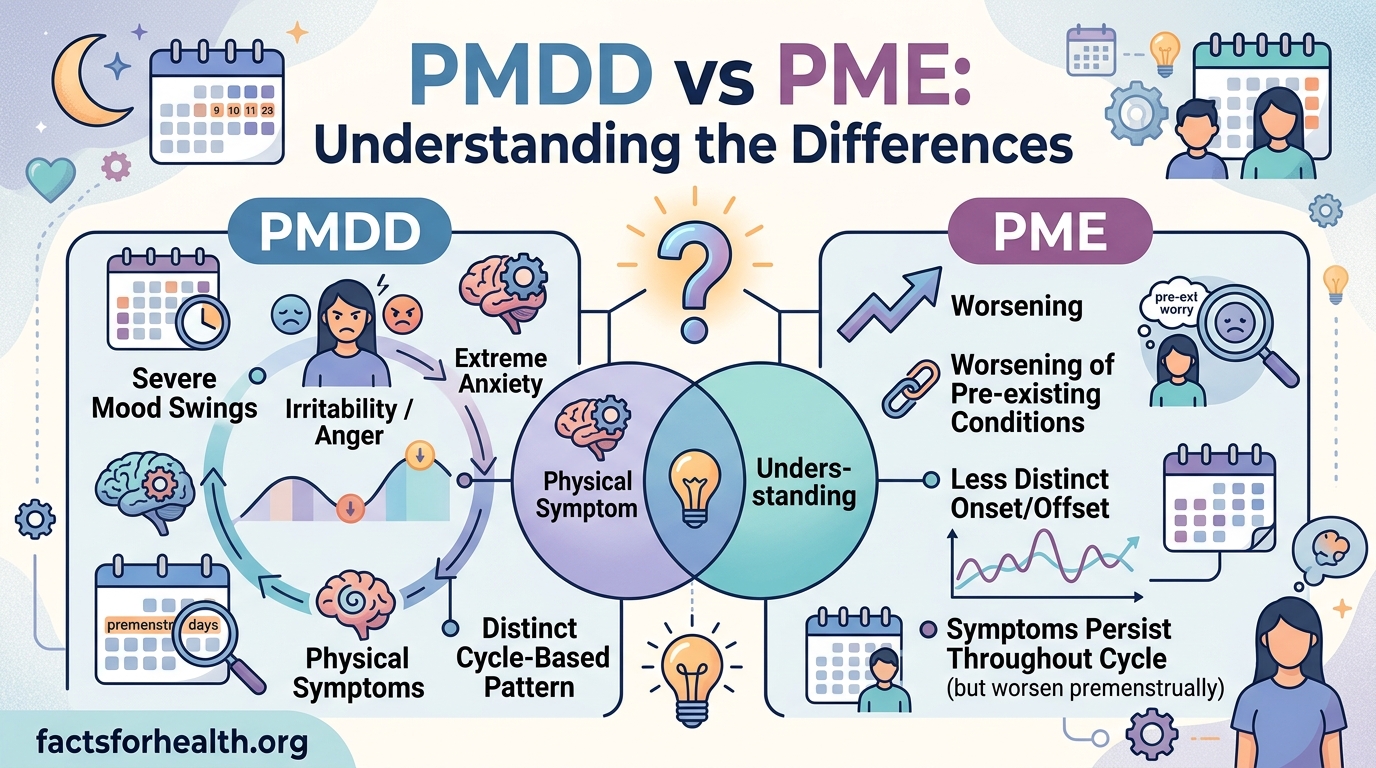
The critical distinction is that with PME, symptoms are present throughout your entire cycle, not just before your period. You might feel depressed all month long, but in the week or two before menstruation, that depression deepens. Your anxiety might be a daily reality, but it spikes dramatically in the premenstrual phase. The symptoms do not start and stop with your cycle the way they do with PMDD. They are always there, and the premenstrual phase amplifies them.
The International Association for Premenstrual Disorders (IAPMD) defines PME as the premenstrual worsening of another disorder’s existing symptoms. The key word is “worsening.” The symptoms already exist at a baseline level, and the hormonal shifts of the menstrual cycle make them worse temporarily before menstruation begins.
Here is where the confusion often starts. When someone with PME visits a healthcare provider reporting severe premenstrual mood symptoms, the provider may diagnose PMDD without looking closely at whether symptoms are truly absent during the rest of the cycle. This is why prospective symptom tracking over at least two full cycles is so important for an accurate diagnosis.
PME is not currently a formal diagnosis in the DSM-5, which adds to patient frustration. It is recognized by researchers, clinicians who specialize in menstrual mood disorders, and organizations like the IAPMD, but many general practitioners are unfamiliar with the concept. This gap in awareness is one of the biggest barriers to proper diagnosis and treatment.
PMDD Versus Premenstrual Exacerbation: The Key Differences
Understanding PMDD versus premenstrual exacerbation comes down to a few clear distinctions. While the premenstrual symptoms may look identical, the underlying pattern and origin are completely different. Here are the five most important differences to understand.
1. Symptom timing throughout the cycle. With PMDD, symptoms exist only during the luteal phase and resolve shortly after menstruation starts. During the rest of the cycle, you are symptom-free. With PME, the underlying condition’s symptoms are present all month long. The premenstrual phase makes them worse, but they never fully disappear.
2. Whether a preexisting condition exists. PMDD is a standalone disorder. It does not require any underlying condition to be present. PME, by definition, requires a preexisting condition. If you have PME, you also have a base condition such as major depressive disorder, generalized anxiety disorder, bipolar disorder, or another diagnosed condition that is being worsened by the menstrual cycle.
3. Response to standard PMDD treatments. PMDD often responds well to luteal-phase-only SSRI treatment, meaning you take the medication only during the two weeks before your period. It can also respond to oral contraceptives that suppress ovulation. PME typically does not respond to these approaches because the underlying condition requires continuous treatment, not intermittent dosing.
4. The nature of symptom resolution. With PMDD, symptoms reliably resolve within a few days of menstruation beginning. The relief is clear and predictable. With PME, symptoms may decrease after menstruation starts, but they return to the baseline level of the underlying condition rather than disappearing completely. You feel better, but not symptom-free.
5. Diagnostic framework. PMDD has formal diagnostic criteria in the DSM-5 and can be diagnosed using structured tools like the Daily Record of Severity of Problems (DRSP). PME does not have its own DSM-5 entry. It is identified through clinical assessment, symptom tracking, and the presence of a known underlying condition that worsens premenstrually.
These five differences are not just academic distinctions. They directly determine which treatments will work, which medications to consider, and what kind of symptom relief you can realistically expect. A wrong diagnosis means months or years of ineffective treatment.
Conditions Commonly Affected by PME
Premenstrual exacerbation can worsen virtually any psychiatric or neurological condition, but research and clinical experience point to several conditions that are most commonly affected. If you have any of the following conditions and notice predictable premenstrual worsening, PME may be part of your clinical picture.
Major Depressive Disorder. Depression is the most common condition associated with PME. If you have major depressive disorder, you may notice that your low mood, loss of interest, fatigue, and feelings of worthlessness intensify in the days before your period. This is extremely common, and many women with treatment-resistant depression actually have undiagnosed PME contributing to their symptom fluctuations.
Generalized Anxiety Disorder. Women with GAD frequently report that worry, restlessness, physical tension, and panic symptoms spike during the luteal phase. The hormonal shifts appear to amplify the underlying anxiety rather than creating it from scratch.
Bipolar Disorder. Premenstrual worsening is well-documented in bipolar disorder. Women with bipolar may experience more depressive episodes, increased mood instability, or more severe mood swings during the premenstrual phase. This is one of the more clinically significant forms of PME because it can affect mood stabilization and medication management.
Panic Disorder. The frequency and intensity of panic attacks can increase during the luteal phase for women with panic disorder. Some research suggests that the premenstrual phase lowers the threshold for panic triggers, making attacks more likely and more severe.
Borderline Personality Disorder. Women with BPD may experience intensified emotional dysregulation, impulsivity, and interpersonal difficulties during the premenstrual phase. The hormonal fluctuations can amplify the core symptoms of the disorder, making this period particularly challenging.
Obsessive-Compulsive Disorder. OCD symptoms, including the frequency and intensity of obsessive thoughts and compulsive behaviors, can worsen during the luteal phase. Some women report that intrusive thoughts become more persistent and harder to manage premenstrually.
PTSD and Trauma-Related Disorders. Women with PTSD may experience heightened hypervigilance, more frequent flashbacks, and increased emotional reactivity during the premenstrual phase. The hormonal shifts appear to interact with the trauma response in ways that increase symptom severity.
Other conditions that can be affected include eating disorders, substance use disorders, and attention-deficit disorders. The general pattern is the same across all of them. The underlying condition exists throughout the cycle, and the premenstrual phase makes it worse.
How Hormones Drive Both Conditions
Both PMDD and PME are triggered by the hormonal fluctuations of the menstrual cycle, but the way those fluctuations interact with your brain chemistry differs. Understanding the basic hormonal mechanism helps explain why symptoms follow a cyclical pattern and why some people are more sensitive than others.
During the luteal phase, progesterone levels rise significantly after ovulation. The body metabolizes progesterone into a compound called allopregnanolone, which normally acts on GABA-A receptors in the brain to produce a calming effect. Think of it as a naturally occurring antianxiety substance.
In women with PMDD, something goes wrong with this process. Research suggests that their brains may have altered sensitivity to allopregnanolone, so instead of feeling calm, they experience increased anxiety, irritability, and mood instability. The same hormone that soothes most people destabilizes them. This appears to be related to differences in how GABA-A receptors function in PMDD brains.
The serotonergic system is also involved. Serotonin, the neurotransmitter targeted by SSRIs, is influenced by estrogen and progesterone fluctuations. In PMDD, the rapid shifts in these hormones during the luteal phase may disrupt serotonin signaling, contributing to mood symptoms. This is why SSRIs can be effective for PMDD even when taken only during the luteal phase.
In PME, the mechanism is slightly different. The hormonal fluctuations do not create new symptoms from nothing. Instead, they amplify existing dysfunction. If you already have depression involving the serotonergic system, the additional disruption from hormonal shifts during the luteal phase pushes your already-compromised system further out of balance. Your baseline symptoms get worse because the hormonal changes add stress to an already struggling neurochemical system.
This distinction matters because it explains why the same hormonal trigger produces different outcomes. In PMDD, the trigger creates symptoms in a brain that is otherwise functioning normally outside the luteal phase. In PME, the trigger worsens symptoms in a brain that is already dealing with an ongoing condition.
How to Tell Whether You Have PMDD or PME
The single most important tool for distinguishing PMDD from PME is prospective symptom tracking. This means recording your symptoms every day for at least two complete menstrual cycles, not trying to remember what happened after the fact. Retrospective recall is notoriously unreliable for this purpose.
Step 1: Choose a tracking method. You can use a paper chart, a notes app on your phone, or a dedicated tracking tool. The Daily Record of Severity of Problems (DRSP) is the gold standard validated instrument used in research and clinical settings. The IAPMD offers free downloadable versions on their website. Whatever you choose, it needs to track symptoms daily, not weekly or monthly.
Step 2: Track the right symptoms. Record both emotional symptoms (mood, anxiety, irritability, hopelessness, feeling overwhelmed) and physical symptoms (fatigue, bloating, breast tenderness, sleep changes, appetite shifts). Also track the severity of each symptom on a scale, and note where you are in your cycle. Most importantly, mark the first day of each period clearly.
Step 3: Look at the pattern. After two cycles, review your data for the critical question. Do your symptoms exist only during the luteal phase, the one to two weeks before your period, and then disappear after menstruation starts? If yes, that pattern points toward PMDD. Do your symptoms persist throughout the entire cycle but get worse during the luteal phase? If yes, that pattern points toward PME.
Step 4: Consider whether you have an underlying condition. If you already have a diagnosis of depression, anxiety, bipolar disorder, or another psychiatric condition, and your symptoms follow a worsening-then-baseline pattern, PME is likely part of your clinical picture. If you have no underlying condition and your symptoms come and go completely with the cycle, PMDD is more likely. This is not a substitute for professional evaluation, but it gives you and your doctor critical data to work with.
One important note from patient communities: many women who were initially diagnosed with PMDD later discover they actually have PME when their PMDD treatments do not work. If you have been treated for PMDD and are not seeing improvement, ask your provider whether PME has been considered. This conversation can change the entire direction of your treatment.
Treatment Approaches: Why the Diagnosis Changes Everything
Getting the right diagnosis between PMDD and PME is not about labeling. It directly determines which treatments will work. The approaches that help PMDD often do little for PME, and vice versa. Here is how treatment typically differs.
For PMDD, the most evidence-based treatments include SSRIs taken either continuously or only during the luteal phase. Luteal-phase-only dosing works because PMDD symptoms are confined to that window, so medication is only needed then. Many women respond within days of starting an SSRI for PMDD, which is much faster than the typical four to six weeks seen in depression treatment.
Oral contraceptives containing drospirenone, particularly the FDA-approved formulation Yaz, are specifically approved for PMDD treatment. These work by suppressing ovulation and stabilizing hormone levels, which eliminates the luteal phase fluctuations that trigger symptoms. For women who do not respond to SSRIs or oral contraceptives, GnRH agonists like leuprolide can temporarily shut down ovarian hormone production entirely, though these have significant side effects and are typically a last resort.
Lifestyle and behavioral approaches also help with PMDD. Cognitive behavioral therapy, regular exercise, adequate sleep, reduced caffeine and alcohol intake, and stress management can all reduce symptom severity. Some women benefit from supplements like calcium, magnesium, vitamin B6, and chasteberry (Vitex agnus-castus), though the evidence base varies.
For PME, the treatment strategy is fundamentally different. Since PME involves a preexisting condition that worsens premenstrually, the primary focus is on optimizing treatment for the underlying condition. If you have PME of depression, your depression treatment needs to be effective at a baseline level first. Luteal-phase-only SSRI dosing typically does not work for PME because the underlying condition requires continuous treatment.
This is where the mismatch happens. Women with PME who are incorrectly treated as if they have PMDD may be prescribed luteal-phase-only SSRIs, which leave their underlying condition untreated for half the cycle. They may be prescribed oral contraceptives that suppress ovulation but do nothing for the base condition. When these treatments predictably fail, the patient is left feeling like nothing works, when in reality the wrong condition was being treated.
If you have PME, your provider may need to adjust your existing medications to better cover the premenstrual phase. This might mean increasing the dose of an antidepressant during the luteal phase, adding a second medication, or adjusting the timing of your current regimen. The treatment is about managing the underlying condition more effectively across the full cycle, not trying to suppress the premenstrual phase alone.
The Emotional Toll of Misdiagnosis
The clinical and biological differences between PMDD and PME are important, but the emotional impact of living with either condition, and of being misdiagnosed between them, deserves attention too. Patient communities, particularly on forums like Reddit’s r/PMDD, are filled with stories of frustration, confusion, and relief when people finally understand what is happening.
Many women describe feeling dismissed when a diagnosis changes from PMDD to PME. PME is not formally recognized in the DSM-5, and some patients feel that their suffering is taken less seriously without a formal diagnostic label. Others describe years of trying PMDD treatments without success, only to discover they had PME all along and needed a completely different approach.
One common experience shared in forums is the frustration of being told that symptoms should resolve completely after menstruation starts, only to find that they do not. Women with PME may feel like they are failing at having PMDD because they do not fit the expected pattern, when in reality they have a different condition altogether.
The good news is that awareness is growing. Organizations like the IAPMD, the MGH Center for Women’s Mental Health, and researchers publishing in peer-reviewed journals are all working to improve understanding of PME. More healthcare providers are learning to look beyond the surface symptoms and ask the right questions about whether symptoms truly disappear outside the luteal phase.
If you have been struggling without answers, the most empowering thing you can do is start tracking your symptoms prospectively. That data gives you something concrete to bring to your healthcare provider. It moves the conversation from vague descriptions to clear patterns that can guide diagnosis and treatment decisions.
Frequently Asked Questions
What is the difference between PMDD and PME?
PMDD (Premenstrual Dysphoric Disorder) is a standalone mood disorder where symptoms appear only during the luteal phase and disappear after menstruation begins. PME (Premenstrual Exacerbation) is the premenstrual worsening of symptoms from a preexisting condition like depression or anxiety, with symptoms present throughout the entire cycle but intensified before your period.
What is PME (Premenstrual Exacerbation)?
PME is the premenstrual worsening of existing symptoms from another disorder, such as major depressive disorder, generalized anxiety disorder, bipolar disorder, or other psychiatric conditions. The underlying symptoms are present all month and become more severe during the one to two weeks before menstruation.
Can you have both PMDD and PME at the same time?
Yes, it is possible to have both conditions. Some women have a preexisting condition that worsens premenstrually (PME) while also experiencing additional PMDD-specific symptoms during the luteal phase that resolve completely with menstruation. Both fall under the umbrella of menstrual-related mood disorders.
What is the treatment for premenstrual exacerbation?
PME treatment focuses on optimizing treatment for the underlying condition across the full menstrual cycle. Unlike PMDD, luteal-phase-only SSRI dosing typically does not work. Your provider may adjust existing medications, increase dosages during the luteal phase, or add complementary treatments to better manage the premenstrual worsening.
Why does my depression get worse before my period?
Hormonal fluctuations during the luteal phase can amplify existing depression symptoms through interactions with serotonin and GABA systems in the brain. If you have major depressive disorder and notice predictable premenstrual worsening, you may be experiencing premenstrual exacerbation of depression rather than PMDD.
What conditions can be worsened by premenstrual exacerbation?
PME commonly worsens major depressive disorder, generalized anxiety disorder, bipolar disorder, panic disorder, borderline personality disorder, obsessive-compulsive disorder, and PTSD. It can also affect eating disorders, substance use disorders, and attention-deficit disorders.
How is premenstrual exacerbation diagnosed?
PME is diagnosed through prospective symptom tracking over at least two menstrual cycles, typically using tools like the Daily Record of Severity of Problems (DRSP). The key finding is that symptoms are present throughout the cycle at a baseline level and worsen during the luteal phase, combined with the presence of a known underlying condition.
Conclusion
Understanding PMDD versus premenstrual exacerbation is more than an academic exercise. For the estimated 40 percent of women seeking PMDD treatment who actually have PME, getting this distinction right can mean the difference between years of ineffective treatment and finally finding relief.
PMDD is a standalone cyclical disorder where symptoms come and go with the menstrual cycle. PME is the premenstrual worsening of a preexisting condition where symptoms persist all month and intensify before your period. The treatment approaches are fundamentally different, and the wrong diagnosis leads to predictable treatment failure.
If you take away one thing from this guide, let it be this: start tracking your symptoms daily for at least two full cycles. That data is the foundation of an accurate diagnosis. Bring it to your healthcare provider and have a direct conversation about whether your pattern fits PMDD, PME, or possibly both. You deserve a treatment plan that matches your actual condition, not just the one that was easiest to label.
For more information, resources, and support communities, organizations like the International Association for Premenstrual Disorders (IAPMD) and the MGH Center for Women’s Mental Health offer reliable, up-to-date information. You are not alone in this, and the right diagnosis is the first step toward real relief.