
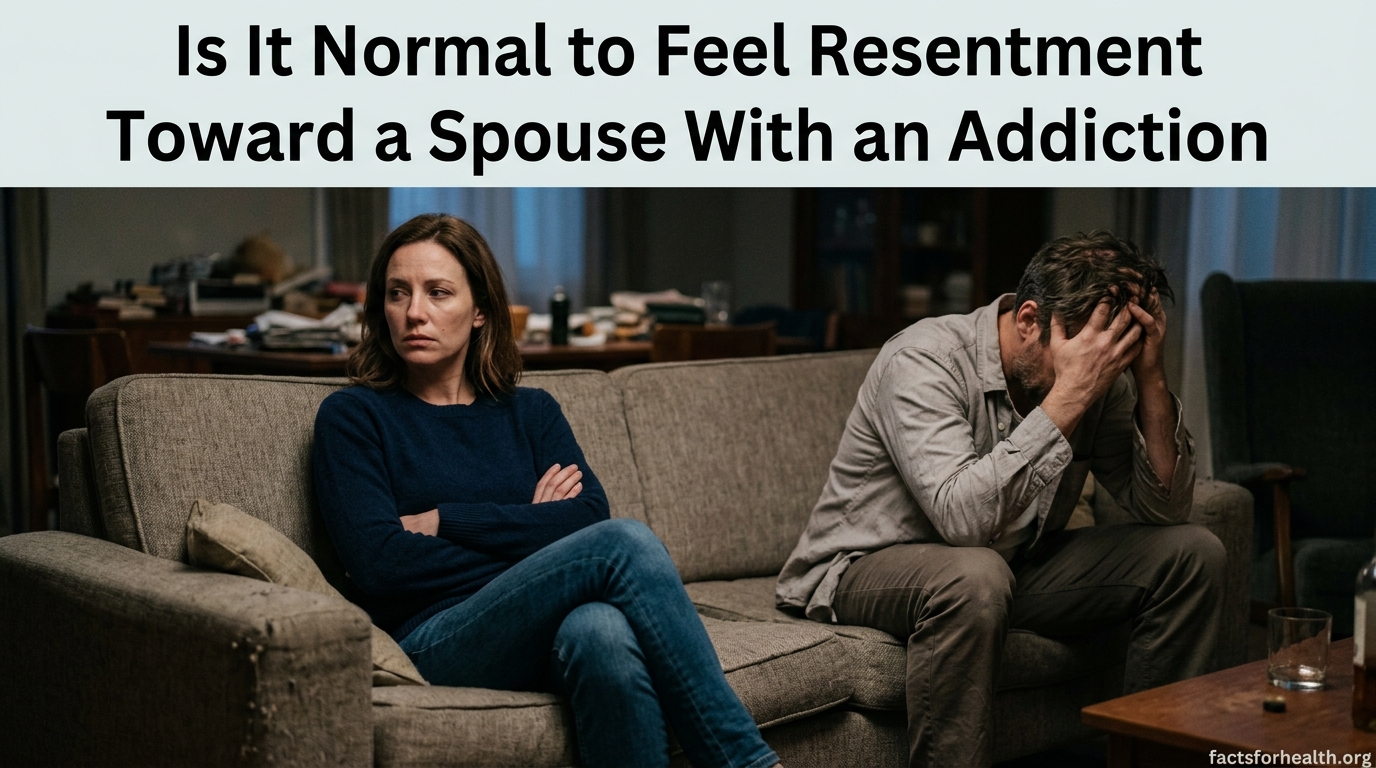
Yes, it is completely normal to feel resentment toward a spouse with an addiction. If you are reading this and feeling guilty about your anger, frustration, or bitterness, you are not alone. Thousands of spouses in your situation experience the exact same emotions every single day.
Resentment builds when you have been hurt repeatedly, when promises get broken, and when you carry the emotional weight of a relationship that was supposed to be a partnership. Addiction reshapes a marriage in ways that leave the non-addicted partner feeling abandoned, exhausted, and sometimes deeply angry.
In this guide, we will explore exactly why resentment happens, what makes it so common, and what you can do to cope. We will also address the guilt that often accompanies these feelings and offer real, practical strategies that spouses in similar situations have found helpful.
Our team has reviewed research on addiction’s impact on families, analyzed forums where spouses share their real experiences, and compiled guidance from addiction counselors and marriage therapists to bring you a resource that validates where you are right now.
Table of Contents
Why Resentment Toward a Spouse With an Addiction Is Completely Normal
Resentment is not a character flaw. It is not a sign that you are unsupportive or unloving. It is a natural emotional response to ongoing hurt, instability, and unmet needs.
When you married your spouse, you likely envisioned a partnership built on trust, shared responsibility, and emotional availability. Addiction disrupts every one of those foundations. The person you love may still be there, but their addiction often comes first, leaving you in a distant second place.
Therapists who specialize in addiction and family dynamics consistently confirm that resentment is one of the most common emotions reported by spouses. It does not mean you want your marriage to fail. It means you are grieving the relationship you thought you would have.
Many spouses also carry guilt about their resentment. They tell themselves they should be more patient, more understanding, more compassionate. But here is the truth: feeling angry at the situation does not make you a bad partner. It makes you human.
In forums like r/AlAnon on Reddit, spouses frequently describe struggling with resentment and then feeling terrible about it. One common theme is the fear that expressing negative emotions will somehow undermine a partner’s recovery. But suppressing those feelings does not protect anyone. It only deepens the emotional toll on you.
Root Causes of Resentment in Addiction-Affected Marriages
To understand your resentment, it helps to look at where it comes from. Resentment rarely appears overnight. It accumulates layer by layer, fed by specific experiences that repeat over months or years.
Broken Trust and Broken Promises
Trust is the foundation of any marriage, and addiction erodes it relentlessly. Promises to quit, promises to get help, promises that this is the last time. When those promises are broken repeatedly, the emotional damage compounds.
Each broken promise teaches you to expect disappointment. Over time, that expectation hardens into resentment. You stop believing words and start bracing for the next letdown, which is a perfectly rational response to being let down over and over.
Financial Strain
Addiction is expensive. Money that should go toward household expenses, savings, or your children’s needs may disappear into funding the addiction. Hidden debts, drained accounts, and surprise expenses create a financial pressure that falls disproportionately on the non-addicted spouse.
Even when the addicted partner is not actively spending on substances, the cost of treatment, legal fees, or lost income can strain a household budget to the breaking point. Carrying that financial burden alone breeds deep resentment.
Emotional Neglect and Loneliness
One of the most painful aspects of being married to someone with an addiction is the loneliness. Your spouse may be physically present but emotionally absent. Conversations become superficial. Intimacy fades. You stop feeling like a couple and start feeling like a caregiver.
Spouses in online support communities frequently describe feeling like they are married to a stranger. The person they fell in love with seems replaced by someone whose entire focus is on obtaining, using, or recovering from their substance of choice.
Communication Breakdown
Addiction thrives in secrecy, and secrecy destroys communication. Honest conversations become minefields. You may find yourself walking on eggshells, avoiding certain topics, or hiding your true feelings to prevent conflict.
Over time, this pattern of guarded communication creates emotional distance. When you cannot speak openly with your own spouse, resentment fills the silence.
The Confusing Truth: Resentment During Recovery
Here is something that catches many spouses off guard. Resentment can actually intensify when a partner enters recovery. This feels counterintuitive, and it causes enormous guilt.
One spouse shared in a recovery forum: “The confusing thing about this resentment is it seems to show up most often when my husband is doing really well.” That experience is incredibly common, and there are clear reasons for it.
When your spouse is in active addiction, survival mode keeps you focused on the immediate crisis. But when they enter recovery, the crisis subsides and you finally have space to process everything you went through. All the hurt, fear, and anger you had to suppress comes rushing to the surface.
Additionally, recovery programs often require significant time and energy from your spouse. Meetings, therapy sessions, and sponsor calls can feel like yet another thing competing for attention that was already scarce. It is normal to feel resentful even as you feel proud of their progress.
You are not being unfair. You are processing grief, and that takes time.
How to Cope With Resentment Toward an Addicted Spouse
Understanding your resentment is important, but you also need strategies to manage it. Here are approaches that spouses and therapists consistently recommend.
Set Healthy Boundaries
Boundaries are not punishments for your spouse. They are protections for you. A boundary might mean refusing to cover for your spouse’s mistakes, declining to lend money, or insisting that certain conversations happen sober.
The key is communicating boundaries clearly and holding them consistently. When you set a boundary, expect pushback initially. Change is uncomfortable, but firm boundaries are essential for your emotional well-being.
Practice Self-Care
This advice gets repeated so often that it can sound hollow, but it matters deeply. When you are married to someone with an addiction, your own needs get pushed aside constantly. Reclaiming even small pockets of time for yourself is not selfish. It is necessary.
Self-care can mean individual therapy, exercise, time with friends, a hobby, or simply quiet time alone. The goal is to maintain your identity outside of your spouse’s addiction.
Find the Right Support System
Isolation feeds resentment. Connecting with others who understand what you are going through can be transformative. Support groups specifically for spouses of addicts provide a space where you can speak honestly without judgment.
You do not have to navigate this alone, and talking to people who have been in your shoes often provides more relief than any article ever could.
Supporting Without Enabling: The Critical Difference
One of the most common sources of confusion for spouses is knowing where the line falls between supporting and enabling. Supporting means encouraging recovery, attending therapy together, and being emotionally present. Enabling means shielding your spouse from the consequences of their addiction.
Examples of enabling include calling in sick for your spouse, paying off their debts, making excuses to family, or bailing them out of situations they created. Enabling feels like love in the moment, but it prolongs the addiction and deepens your resentment over time.
Learning to support without enabling is one of the most important skills you can develop. It protects your spouse’s recovery journey and your own emotional health simultaneously.
When to Seek Professional Help
Professional help is not a last resort. It is a tool, and the right time to use it is whenever you feel overwhelmed. Individual therapy gives you a confidential space to process your emotions. Couples counseling, particularly approaches like Behavioral Couples Therapy, can help both partners rebuild trust and communication.
Certain signs indicate it is time to seek help immediately. If you are experiencing symptoms of depression or anxiety, if your physical health is deteriorating, or if you feel hopeless about the future, a therapist can help you find your footing.
If there is any form of abuse, whether emotional, verbal, or physical, your safety comes first. Reach out to a domestic violence hotline or a trusted professional who can help you assess your situation and plan next steps.
Can a Marriage Survive Addiction and Resentment?
Yes, many marriages do survive addiction and the resentment that accompanies it. But survival requires two things: your spouse must be committed to recovery, and both partners must be willing to do the hard work of rebuilding.
Recovery does not erase the past. Couples who successfully navigate this journey often describe it as building an entirely new relationship rather than returning to the old one. That process takes patience, professional support, and honest communication.
It is also completely valid to decide that staying is not the right choice for you. Leaving does not mean you failed. It means you recognized that your well-being could not be sustained within the relationship. There is no single right answer, and anyone who tells you otherwise does not understand the complexity of what you are facing.
FAQs
Is it normal to feel resentment toward a spouse with an addiction?
Yes, feeling resentment toward a spouse with an addiction is completely normal. Resentment is a natural response to broken trust, repeated disappointment, emotional neglect, and the financial and emotional strain that addiction places on a marriage. Therapists and addiction counselors consistently confirm that resentment is one of the most common emotions reported by spouses of addicts.
Why am I starting to resent my spouse?
Resentment typically builds from specific, repeating experiences: broken promises, financial strain caused by the addiction, emotional neglect, loneliness, and a breakdown in honest communication. When your needs consistently go unmet and trust is repeatedly broken, resentment accumulates as a natural emotional response to being hurt over time.
What are signs of resentment in a marriage?
Common signs include feeling emotionally distant from your spouse, avoiding conversations, feeling irritated by small things, experiencing a loss of intimacy, frequently replaying past hurts in your mind, and feeling like you are carrying the relationship alone. You may also notice increased cynicism, sarcasm, or a sense of hopelessness about the marriage improving.
Can a marriage survive years of resentment?
Yes, a marriage can survive resentment, but it requires active work from both partners. The addicted spouse must be committed to recovery, and both partners usually need professional support such as individual therapy and couples counseling. Many couples describe rebuilding as creating a new relationship rather than returning to the old one.
How to get over spousal resentment?
Start by acknowledging your feelings without guilt. Set healthy boundaries to protect your well-being. Seek individual therapy to process the emotional toll. Consider couples counseling if both partners are willing. Connect with support groups like Al-Anon or Nar-Anon. Practice self-care to maintain your identity outside the marriage. Most importantly, give yourself time, as healing from resentment is a gradual process.
When to leave a drug addict husband?
Consider leaving if there is any form of abuse, if your spouse refuses to seek help despite multiple opportunities, if your mental or physical health is seriously deteriorating, or if children in the home are being negatively impacted. Leaving is a valid and sometimes necessary decision. It does not mean you failed. A therapist or counselor can help you evaluate your specific situation and plan next steps safely.
Are there support groups for spouses of addicts?
Yes, several support groups exist specifically for spouses and family members of addicts. Al-Anon supports families affected by alcoholism. Nar-Anon serves those affected by drug addiction. SMART Recovery Family and Friends offers a science-based approach. Codependents Anonymous addresses codependent patterns. Many of these groups offer both in-person and online meetings.
Moving Forward: You Are Not Alone in This
If you take one thing away from this article, let it be this: it is normal to feel resentment toward a spouse with an addiction. Your feelings are valid, they are common, and they do not make you a bad person.
Resentment is not the end of your story. It is a signal that something needs to change, whether that means setting boundaries, seeking therapy, joining a support group, or making a difficult decision about the future of your marriage. Whatever path you choose, it should be informed by your own well-being, not by guilt or outside judgment.
Start where you are. Reach out to a support group like Al-Anon or Nar-Anon. Talk to a therapist who understands addiction’s impact on families. Reconnect with friends or family members you may have distanced yourself from. You deserve support just as much as your spouse does.
The road ahead is not easy, but you do not have to walk it alone. Understanding why resentment happens is the first step. Taking action to care for yourself is the next. And that step is entirely in your hands.