
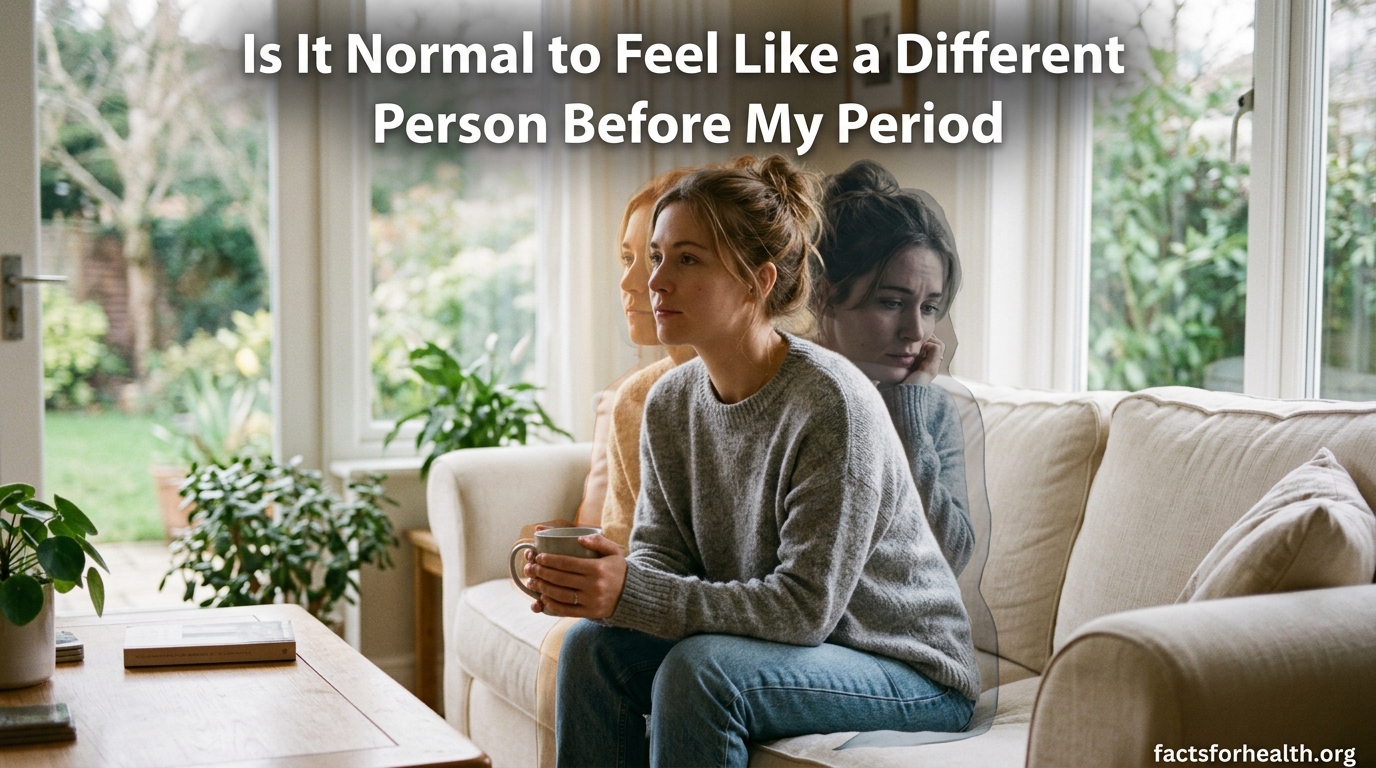
Yes, it is normal to feel like a different person before your period. Up to 75 percent of people who menstruate experience emotional and physical changes during the days leading up to bleeding, a condition known as premenstrual syndrome (PMS). Hormonal fluctuations during the luteal phase alter brain chemistry, causing mood swings, irritability, anxiety, and fatigue that can make you feel unlike yourself.
However, if the changes are so severe that you feel like a completely different person, losing control of your emotions, relationships, or sense of identity, you may have premenstrual dysphoric disorder (PMDD). PMDD affects approximately 3 to 8 percent of menstruators and is a serious, treatable condition recognized by the DSM-5.
If you have ever searched “is it normal to feel like a different person before my period,” you are far from alone. This is one of the most common concerns raised in menstrual health forums, doctor visits, and late-night searches from people trying to understand their own bodies. The sheer relief of learning that this experience has a name, and that millions of others share it, can be life-changing.
In this guide, we break down exactly why you feel this way, how to tell whether your symptoms are normal PMS or something more, and what you can do about it. We also cover the topics that most articles skip, including how PMDD interacts with ADHD, why so many people are misdiagnosed with bipolar disorder before discovering they have PMDD, and how premenstrual symptoms affect relationships and work.
Table of Contents
What Causes Premenstrual Mood Changes
The short answer is hormones. Specifically, the dramatic rise and fall of estrogen and progesterone during the second half of your menstrual cycle, known as the luteal phase. These hormones do not just affect your reproductive system. They directly influence neurotransmitters in your brain that regulate mood, sleep, appetite, and cognition.
The Luteal Phase Explained
Your menstrual cycle has two main phases. The follicular phase begins on the first day of your period and lasts until ovulation. The luteal phase begins after ovulation and lasts roughly 14 days, ending when your next period starts.
During the luteal phase, estrogen levels peak and then drop sharply, while progesterone rises to its highest point. If you do not become pregnant, both hormones crash in the days before menstruation. This hormonal cliff is what triggers premenstrual symptoms.
What is the luteal phase? The luteal phase is the period between ovulation and the start of your next period, typically lasting 12 to 14 days. It is during this phase, particularly the final 5 to 7 days before bleeding, that PMS and PMDD symptoms occur. Once your period starts, hormone levels begin to stabilize, and symptoms typically resolve within a few days.
The Serotonin Connection
Estrogen and progesterone influence how your brain produces and uses serotonin, a neurotransmitter that regulates mood, sleep, and appetite. When hormone levels shift during the luteal phase, serotonin activity can drop.
Lower serotonin is linked to depression, irritability, carbohydrate cravings, and sleep disturbances. This is why SSRIs (selective serotonin reuptake inhibitors), which increase serotonin availability, are one of the most effective treatments for PMDD.
Why Some Brains React More Strongly
Not everyone who has a menstrual cycle experiences severe mood changes. Research suggests that people with PMDD do not necessarily have abnormal hormone levels. Instead, their brains are more sensitive to normal hormonal fluctuations.
A 2017 study from the National Institutes of Health (NIH) found that women with PMDD have a genetic difference in how their cells respond to estrogen and progesterone. This means the hormone levels themselves are normal, but the brain’s reaction to them is amplified. This is why PMDD is not a hormone imbalance but rather a neuroendocrine sensitivity.
This distinction matters. It means that telling someone with PMDD that their hormones are “normal” misses the point entirely. Their brain is reacting to those normal levels in an extreme way.
PMS vs PMDD: Understanding the Difference
Understanding the difference between PMS and PMDD is the first step toward getting the right help. Both conditions are tied to the menstrual cycle, but they differ dramatically in severity, impact, and treatment.
PMS (premenstrual syndrome) is extremely common. Most menstruators experience at least mild symptoms before their period, such as bloating, mild irritability, or fatigue. These symptoms are annoying but generally manageable.
PMDD (premenstrual dysphoric disorder) is far less common but far more severe. The DSM-5 classifies PMDD as a depressive disorder. Symptoms are severe enough to disrupt work, relationships, and daily functioning. People with PMDD often describe feeling like they become a completely different person for one to two weeks each month.
PMS vs PMDD Comparison
| Characteristic | PMS | PMDD |
|---|---|---|
| Prevalence | Up to 75% of menstruators | 3 to 8% of menstruators |
| Symptom severity | Mild to moderate | Severe and disabling |
| Emotional impact | Mild irritability, moodiness | Depression, rage, suicidal thoughts, panic |
| Daily functioning | Usually maintained | Significantly impaired |
| Relationship impact | Minor friction | Relationship damage, conflict, isolation |
| Work or school impact | Minimal | Missing days, impaired performance |
| Duration | Few days before period | 1 to 2 weeks before period |
| Treatment needed | Lifestyle changes usually sufficient | Often requires medication and therapy |
| Feeling like a different person | Occasionally, mildly | Yes, dramatically and regularly |
What is premenstrual magnification? Sometimes, PMS does not cause new symptoms but instead makes existing mental health conditions worse. If you already have anxiety, depression, ADHD, or another condition, those symptoms may intensify before your period. This is called premenstrual magnification or premenstrual exacerbation. It is important to distinguish this from PMDD, because the treatment approach differs.
The 11 PMDD Symptoms (DSM-5 Criteria)
To be diagnosed with PMDD, the DSM-5 requires that you experience at least 5 of the following 11 symptoms during the week before your period, across most menstrual cycles for a year. Symptoms must improve within a few days after menstruation starts, and the pattern must be confirmed by daily symptom tracking for at least two consecutive cycles.
- Depressed mood or feelings of hopelessness
- Anxiety, tension, or feeling on edge
- Sudden mood swings, sadness, or tearfulness
- Anger, irritability, or increased interpersonal conflicts
- Decreased interest in usual activities
- Difficulty concentrating or brain fog
- Lack of energy or fatigue
- Changes in appetite, food cravings, or overeating
- Sleeping too much or insomnia
- Feeling overwhelmed or out of control
- Physical symptoms such as breast tenderness, bloating, joint or muscle pain, or headaches
At least one of the first four symptoms (depressed mood, anxiety, mood swings, or anger) must be present for a PMDD diagnosis. This is what distinguishes PMDD from severe PMS, which may involve only physical symptoms.
Common Emotional Symptoms: What It Actually Feels Like
The emotional symptoms of premenstrual conditions go far beyond “mood swings.” For many people, the experience is profound and disorienting. Here is what the most common emotional symptoms actually feel like, based on clinical descriptions and lived experience reports from menstrual health forums.
Depression and Hopelessness
This is not ordinary sadness. Many describe a sudden, crushing certainty that their life is terrible, their relationships are failing, and nothing will ever improve. One Reddit user described it as feeling like the world is ending, even though their life was objectively going well.
The danger of this symptom is that it feels completely real in the moment. You cannot think your way out of it because the feeling is chemically driven. Once your period starts and hormones shift, the darkness often lifts, leaving you confused about why you felt that way.
Anxiety and Panic
Premenstrual anxiety can range from a vague sense of unease to full-blown panic attacks. You may suddenly worry about things that did not bother you a week ago. Racing thoughts, a pounding heart, and an inability to relax are common.
This anxiety often centers on relationships. You may become convinced your partner is upset with you, your friends do not really like you, or you have done something wrong. This is connected to rejection sensitivity, which we explore in the ADHD and PMDD section below.
Rage and Irritability
Premenstrual rage can feel like a transformation. Things that normally roll off your back become unbearable. Small noises, minor inconveniences, or a slightly wrong tone of voice can trigger disproportionate anger.
This is one of the most distressing symptoms because it directly affects the people around you. Forum users frequently describe snapping at loved ones, sending angry texts they later regret, or having blow-up arguments that feel unavoidable in the moment.
Crying Spells
Uncontrollable crying before your period is extremely common. You may cry at a commercial, a passing thought, or seemingly nothing at all. The crying feels involuntary, as if your body is releasing emotion faster than your mind can process it.
If you find yourself crying daily in the week before your period, or crying to the point of exhaustion, this is worth tracking and discussing with a healthcare provider.
Brain Fog and Dissociation
Many people describe difficulty concentrating, forgetfulness, and a sense of being disconnected from themselves or their surroundings during the luteal phase. This brain fog can make work, studying, and even conversation feel effortful and overwhelming.
Some describe a sensation of depersonalization, feeling as though they are watching themselves from the outside. This can be frightening, especially the first time it happens, but it is a documented symptom of severe premenstrual conditions.
Lived Experience: “For about 10 days every month, I become someone I do not recognize. I am angry at everything. I cry for no reason. I am convinced my boyfriend is going to leave me. Then my period starts, and within two days, I feel completely normal again. The whiplash is exhausting.” This pattern, shared countless times across PMDD support communities, captures exactly why the question “is it normal to feel like a different person before my period” resonates with so many.
Common Physical Symptoms
While the emotional symptoms often dominate the conversation, the physical symptoms of PMS and PMDD are equally real and can compound the emotional toll.
Bloating and digestive changes affect the majority of menstruators before their period. Hormonal shifts slow digestion and cause water retention. You may feel uncomfortably full, gassy, or notice that clothes fit differently.
Breast tenderness is another hallmark symptom. Breasts may feel swollen, heavy, or painful to the touch. This is caused by rising progesterone and prolactin levels during the luteal phase.
Fatigue before your period can be overwhelming. Even with adequate sleep, you may feel drained. This is partly hormonal and partly the result of poor sleep quality, which is common during the luteal phase.
Headaches and body aches are frequent complaints. Estrogen withdrawal can trigger migraines in susceptible individuals. Joint and muscle pain may feel like a low-grade flu.
Sleep disruption takes many forms. You may have trouble falling asleep, wake frequently during the night, or feel unrefreshed even after a full night’s rest. Poor sleep worsens every other symptom on this list.
ADHD and PMDD: The Comorbidity Nobody Talks About
If you have ADHD and your premenstrual symptoms feel unbearable, you are not imagining things. The connection between ADHD and severe premenstrual symptoms is one of the most discussed topics in forums like r/adhdwomen and r/PMDDxADHD, yet it remains barely covered in mainstream medical content.
Research is beginning to catch up with what patients have known for years. Studies suggest that women with ADHD are significantly more likely to experience PMDD than the general population. One study published in the Journal of Psychiatric Research found that roughly 45 percent of women with ADHD met the criteria for PMDD, compared to about 5 percent of women without ADHD.
Why ADHD Makes Premenstrual Symptoms Worse
The connection comes down to estrogen and dopamine. Estrogen enhances dopamine signaling in the brain. During the luteal phase, when estrogen drops, dopamine availability decreases.
For people without ADHD, this dip is manageable. But for people with ADHD, whose brains already struggle with dopamine regulation, the luteal phase drop can feel like their medication has suddenly stopped working. Focus disappears. Executive function crumbles. Emotional regulation becomes nearly impossible.
This is why many women with ADHD report that their stimulant medication feels less effective, or stops working entirely, during the week before their period. The brain simply has less dopamine to work with.
Rejection Sensitive Dysphoria and PMDD
Rejection sensitive dysphoria (RSD) is a well-known experience among people with ADHD. It involves intense emotional pain triggered by real or perceived rejection, criticism, or failure. During the luteal phase, RSD can become overwhelming.
Combined with PMDD, this creates a perfect storm. You may become convinced that everyone is upset with you. A delayed text response from a friend can feel like proof that you are unlovable. A minor critique at work can feel like a devastating personal attack.
Forum users describe this combination as the hardest part of their month. The emotional pain is so intense that it can trigger suicidal ideation, even in people who never experience those thoughts during the rest of their cycle.
What to Discuss With Your Doctor
If you have ADHD and suspect PMDD, tell your provider explicitly about the cyclical pattern. Many doctors are not trained to recognize the ADHD-PMDD connection, so you may need to be specific about when your symptoms occur and how they relate to your menstrual cycle.
Some providers adjust ADHD medication dosing during the luteal phase. Others may recommend adding an SSRI during the premenstrual window. Tracking both your ADHD symptoms and menstrual symptoms together can provide powerful data for your treatment team.
PMDD Misdiagnosis: When It Looks Like Something Else
One of the most frustrating themes in PMDD forums is misdiagnosis. It is shockingly common for people with PMDD to spend years being treated for the wrong condition before someone connects their symptoms to their menstrual cycle.
PMDD vs Bipolar Disorder
Bipolar disorder and PMDD can look similar on the surface. Both involve dramatic mood shifts, irritability, and depressive episodes. But the pattern is entirely different.
PMDD symptoms are strictly tied to the menstrual cycle. They begin during the luteal phase, peak in the days before bleeding, and resolve within a few days after menstruation starts. This cycle repeats monthly.
Bipolar disorder follows a different pattern. Depressive episodes last for weeks or months. Manic or hypomanic episodes are not tied to any phase of the menstrual cycle. The mood shifts in bipolar disorder do not disappear when your period starts.
The problem arises when a healthcare provider sees someone during their luteal phase without knowing where they are in their cycle. The intense depression, rage, or emotional volatility can look exactly like a bipolar episode. Without daily symptom tracking data, the distinction is easy to miss.
PMDD vs Borderline Personality Disorder
Borderline personality disorder (BPD) shares several features with PMDD. Both can involve intense anger, fear of abandonment, emotional instability, and relationship conflicts. This overlap leads to frequent misdiagnosis.
The key difference is timing and duration. BPD symptoms are chronic and present throughout the menstrual cycle, though they may worsen premenstrually. PMDD symptoms are absent entirely during the follicular phase (the first half of the cycle) and appear only during the luteal phase.
This is why tracking is so critical. If your symptoms vanish for two weeks after your period and return predictably before your next one, PMDD is far more likely than BPD.
Premenstrual Exacerbation: When Both Exist
It is also possible to have an underlying mental health condition that gets worse before your period. This is called premenstrual exacerbation, and it complicates diagnosis.
If you have generalized anxiety disorder, major depression, or bipolar disorder, your symptoms may intensify during the luteal phase. This does not mean you have PMDD. It means your existing condition is sensitive to hormonal fluctuations.
Correctly distinguishing between PMDD and premenstrual exacerbation matters because the treatments differ. PMDD may respond to luteal-phase SSRIs or specific birth control pills. Premenstrual exacerbation requires optimizing treatment for the underlying condition.
Why misdiagnosis matters: Multiple forum users report being prescribed antipsychotics or mood stabilizers for suspected bipolar disorder, only to discover years later that their symptoms were PMDD all along. The correct treatment, often an SSRI taken during the luteal phase, brought relief that years of incorrect medication never did. If you suspect you have been misdiagnosed, ask your provider about tracking your symptoms daily for two to three full cycles.
The Impact on Relationships and Work
Premenstrual symptoms do not happen in a vacuum. They affect the people around you, your career, and your daily obligations. This real-world impact is one of the most discussed topics in forums, yet it is rarely addressed in medical articles.
Romantic Relationships Under Strain
Partners of people with PMDD describe the experience of living with someone who transforms for one week each month. Forum posts from partners echo the same themes: confusion, helplessness, walking on eggshells, and not knowing which version of their partner they will get.
For the person experiencing PMDD, the guilt can be devastating. You may lash out over something minor, say things you do not mean, or withdraw emotionally from someone you love. When the episode passes, you are left to repair the damage, knowing it will happen again next month.
This cycle creates a unique kind of relationship strain. The person with PMDD feels trapped by their own biology. The partner feels helpless and sometimes resentful. Without understanding that PMDD is a medical condition, both partners may blame each other or the relationship itself.
Communication Strategies
If you have a pattern of premenstrual episodes, open communication during a symptom-free time can help. Let your partner know what happens, that it is tied to your cycle, and that you are seeking treatment. Agreeing in advance on how to handle difficult moments, such as taking a pause during arguments, can prevent some of the damage.
Some couples find it helpful to track the cycle together. When both partners know when the luteal phase is approaching, they can approach that week with extra patience and lowered expectations.
Workplace and Academic Impact
Beyond relationships, premenstrual symptoms can seriously affect your professional and academic life. Brain fog makes concentrating difficult. Fatigue drains your energy. Anxiety and depression make even simple tasks feel overwhelming.
Forum users describe missing work days, underperforming during presentations, and falling behind on deadlines, all during a predictable window each month. Some have quit jobs or changed career paths because they could not sustain performance during symptomatic weeks.
If your symptoms are affecting your work, you are not alone, and you are not lazy. This is a documented medical issue. Tracking your symptoms and their impact on your productivity can provide evidence for accommodations or medical leave if needed.
The Emotional Aftermath
One of the most painful aspects of PMDD that forum users describe is the aftermath. After the symptoms lift, you are left to deal with the consequences. You may need to apologize to a partner, repair a friendship, catch up on missed work, or process the dark thoughts you experienced.
This aftermath can be almost as exhausting as the episode itself. The cycle of symptom, damage, and repair, repeated monthly, takes a cumulative toll on mental health and self-esteem. Acknowledging this is an important part of the healing process.
Some people find that building in recovery time, scheduling lighter days after their period starts, and practicing self-compassion during the repair phase helps. Therapy can be invaluable for processing the emotional residue of repeated episodes.
Management Strategies: What Actually Helps
Whether you are dealing with mild PMS or severe PMDD, there are evidence-based strategies that can reduce your symptoms and improve your quality of life. The key is finding the combination that works for you, which often requires some trial and error.
Step 1: Track Your Symptoms Daily
This is the single most important step you can take. Daily symptom tracking serves multiple purposes. It helps you see patterns, confirms whether symptoms are tied to your cycle, provides data for your doctor, and validates your experience.
Use a period tracking app, a journal, or a simple spreadsheet. Record your emotional symptoms, physical symptoms, sleep, and where you are in your cycle each day. After two to three complete cycles, you should have clear data showing whether your symptoms follow a premenstrual pattern.
Step 2: Adjust Your Lifestyle
Lifestyle changes can make a meaningful difference, especially for mild to moderate PMS. While they may not be enough for severe PMDD on their own, they form the foundation of any treatment plan.
Exercise regularly. Aerobic exercise has been shown to reduce premenstrual symptoms by boosting endorphins and improving mood. Even 30 minutes of moderate exercise, such as brisk walking, three to five times per week, can help.
Prioritize sleep. Sleep deprivation worsens every premenstrual symptom. Aim for 7 to 9 hours of quality sleep, especially during the luteal phase. If sleep is disrupted before your period, talk to your doctor about short-term strategies.
Modify your diet. Reducing caffeine, alcohol, salt, and sugar during the luteal phase can ease physical symptoms like bloating and breast tenderness. Some research suggests that increasing complex carbohydrates may boost serotonin and improve mood.
Consider supplements. Several supplements have research support for premenstrual symptoms. Calcium (1,200 mg daily) has been shown to reduce PMS symptoms in multiple studies. Magnesium (200 to 400 mg) may help with bloating and mood. Vitamin B-6 (up to 100 mg daily) has shown benefit for premenstrual depression. Always talk to your doctor before starting supplements, especially if you take other medications.
Step 3: Explore Medical Treatments
If lifestyle changes are not enough, several medical treatments are available. These are particularly important for PMDD, which often requires medication to manage effectively.
SSRIs are considered first-line treatment for PMDD. Sertraline (Zoloft), fluoxetine (Prozac), citalopram (Celexa), and escitalopram (Lexapro) have all shown effectiveness. Some doctors prescribe SSRIs continuously, while others recommend taking them only during the luteal phase (the 14 days before your period). Luteal-phase dosing works for many people and reduces overall medication exposure.
Birth control pills can help by preventing ovulation and stabilizing hormone levels. The FDA has approved a specific oral contraceptive containing drospirenone and ethinyl estradiol (sold under brand names like Yaz) for PMDD treatment. Not all birth control pills help with mood symptoms, and some can make them worse, so this requires careful discussion with your provider.
Cognitive behavioral therapy (CBT) has been shown to reduce premenstrual symptoms and improve coping strategies. CBT can help you reframe catastrophic thinking, develop emotional regulation skills, and create actionable plans for managing difficult days.
GnRH agonists are a last-resort treatment for severe PMDD that does not respond to other approaches. These medications induce temporary menopause by shutting down ovarian hormone production. They are typically used for short periods due to significant side effects.
Step 4: Build a Support System
Do not go through this alone. Whether it is a trusted friend, a partner, a therapist, or an online support community, having people who understand what you are going through makes a difference. PMDD support groups, both in-person and online, can be particularly validating.
Knowing that others share your experience, that the darkness will lift when your period starts, and that effective treatments exist can provide hope during the hardest days of your cycle.
When to See a Doctor About Premenstrual Mood Changes
Many people suffer for years before seeking help for premenstrual symptoms. If your symptoms are mild and manageable, lifestyle changes and tracking may be sufficient. But certain signs indicate it is time to see a healthcare provider.
Red Flags That Require Immediate Attention
- Suicidal thoughts during the luteal phase, even if they disappear when your period starts
- Symptoms that disrupt your daily life, including missing work, school, or social events
- Severe relationship conflict that follows a premenstrual pattern
- Inability to function at your normal capacity for several days each month
- Symptoms that are getting worse over time rather than staying consistent
- Feeling out of control or afraid of what you might do during symptomatic days
- Self-harm urges or behaviors that appear before your period
If you experience suicidal thoughts, call 988 (Suicide and Crisis Lifeline in the United States) or go to your nearest emergency room. Suicidal ideation tied to PMDD is a medical emergency, even if you know the feelings will pass with your period.
How to Prepare for Your Appointment
Bring at least two months of daily symptom tracking data. This is the most important thing you can bring to a doctor’s appointment about premenstrual symptoms. Without tracking data, your provider cannot distinguish PMDD from other conditions.
Be specific about the timing. Emphasize that symptoms occur only during the luteal phase and resolve after your period starts. Mention the emotional symptoms first, as these are what distinguish PMDD from regular PMS.
List how symptoms affect your daily life. Mention missed work, relationship conflicts, or anything else that demonstrates the functional impact. Providers take symptoms more seriously when they see concrete evidence of disruption.
What if Your Doctor Dismisses You?
This is unfortunately common. Many forum users report being told their symptoms are “just stress” or “normal PMS” before eventually receiving a PMDD diagnosis. If your provider dismisses your concerns, you have options.
Ask for a referral to a gynecologist or psychiatrist who has experience with PMDD. Look for providers who mention premenstrual disorders in their practice description. Consider telehealth services that specialize in women’s mental health. You deserve to be taken seriously.
The International Association for Premenstrual Disorders (IAPMD) maintains a provider directory that can help you find a PMDD-informed healthcare professional in your area.
Frequently Asked Questions
Why do I feel like a different person when I’m on my period?
Hormonal fluctuations in estrogen and progesterone during the luteal phase (the week before your period) affect neurotransmitters like serotonin, which regulates mood. This can cause irritability, anxiety, depression, and brain fog. For most people these changes are mild (PMS), but for some they are severe enough to feel like a complete personality change (PMDD). Symptoms typically resolve within a few days after your period starts.
Why does PMDD make me feel like a different person?
PMDD causes severe emotional reactions because the brain is hypersensitive to normal hormone changes. Research shows that people with PMDD have a genetic difference in how their cells respond to estrogen and progesterone. This amplified response can trigger intense depression, rage, anxiety, and suicidal thoughts during the luteal phase, fundamentally altering behavior and personality for one to two weeks each month.
What SSRI is best for PMDD?
Common SSRIs prescribed for PMDD include sertraline (Zoloft), fluoxetine (Prozac), citalopram (Celexa), and escitalopram (Lexapro). Research shows that all four are effective for PMDD. Some doctors recommend taking SSRIs only during the luteal phase (the two weeks before your period) rather than continuously, which works well for many patients. The best SSRI for you depends on your individual response and any side effects.
Why am I so crabby before my period?
Irritability before your period is caused by hormonal fluctuations, particularly the drop in progesterone and estrogen after ovulation. These changes affect serotonin levels in the brain, which regulates mood. Lower serotonin is linked to irritability, anger, and mood swings. Physical discomfort from cramps, bloating, and poor sleep can also contribute to feeling cranky.
What is the difference between bipolar disorder and PMDD?
PMDD symptoms are tied to the menstrual cycle, starting during the luteal phase (5 to 8 days before your period) and resolving within a few days after bleeding begins. Bipolar disorder involves mood episodes (depression, mania, or hypomania) that last for weeks or months and are not linked to the menstrual cycle. The key difference is timing: PMDD follows a predictable monthly pattern, while bipolar episodes do not. Daily symptom tracking for two to three cycles can help distinguish between the two.
How long do premenstrual mood changes last?
For most people, PMS symptoms last 2 to 4 days before the period and resolve within 1 to 2 days after bleeding starts. For people with PMDD, symptoms can begin 10 to 14 days before the period (during the luteal phase) and may not fully resolve until 2 to 3 days after menstruation begins. This means some people with PMDD lose one to two weeks each month to symptoms.
Can birth control help with PMDD?
Yes, certain birth control pills can help manage PMDD symptoms by preventing ovulation and stabilizing hormone levels. The FDA has approved specific oral contraceptives containing drospirenone and ethinyl estradiol for PMDD treatment. However, not all birth control pills improve mood symptoms, and some can make them worse. It is important to work with a healthcare provider to find the right option, and to track your symptoms to determine whether the pill is helping.
Are mood changes before a period a sign of mental illness?
No, mood changes before your period are not a sign of mental illness on their own. They are a normal biological response to hormonal fluctuations. However, if mood changes are severe enough to disrupt your daily life, relationships, or sense of self, they may indicate PMDD, which is a recognized medical condition in the DSM-5. PMDD is treatable and does not mean anything is wrong with you as a person.
Conclusion: You Are Not Losing Your Mind
If you have been wondering whether it is normal to feel like a different person before your period, the answer is a resounding yes. Hormonal fluctuations during the luteal phase have a real, measurable effect on brain chemistry. For most people, these changes are manageable. For those with PMDD, they can be severe, but they are also treatable.
The most important step you can take is to start tracking your symptoms today. Whether you use an app, a notebook, or a simple calendar, daily tracking will give you and your healthcare provider the data needed to understand exactly what is happening and find the right treatment.
You are not “crazy.” You are not weak. You are not making it up. Your experience is real, it has a name, and there are proven treatments that can help. If your symptoms are severe, reach out to a healthcare provider who takes premenstrual disorders seriously. Relief is possible, and you deserve it.
If you are in crisis or experiencing suicidal thoughts, please call or text 988 (Suicide and Crisis Lifeline) or contact your local emergency services immediately. Help is available right now.