
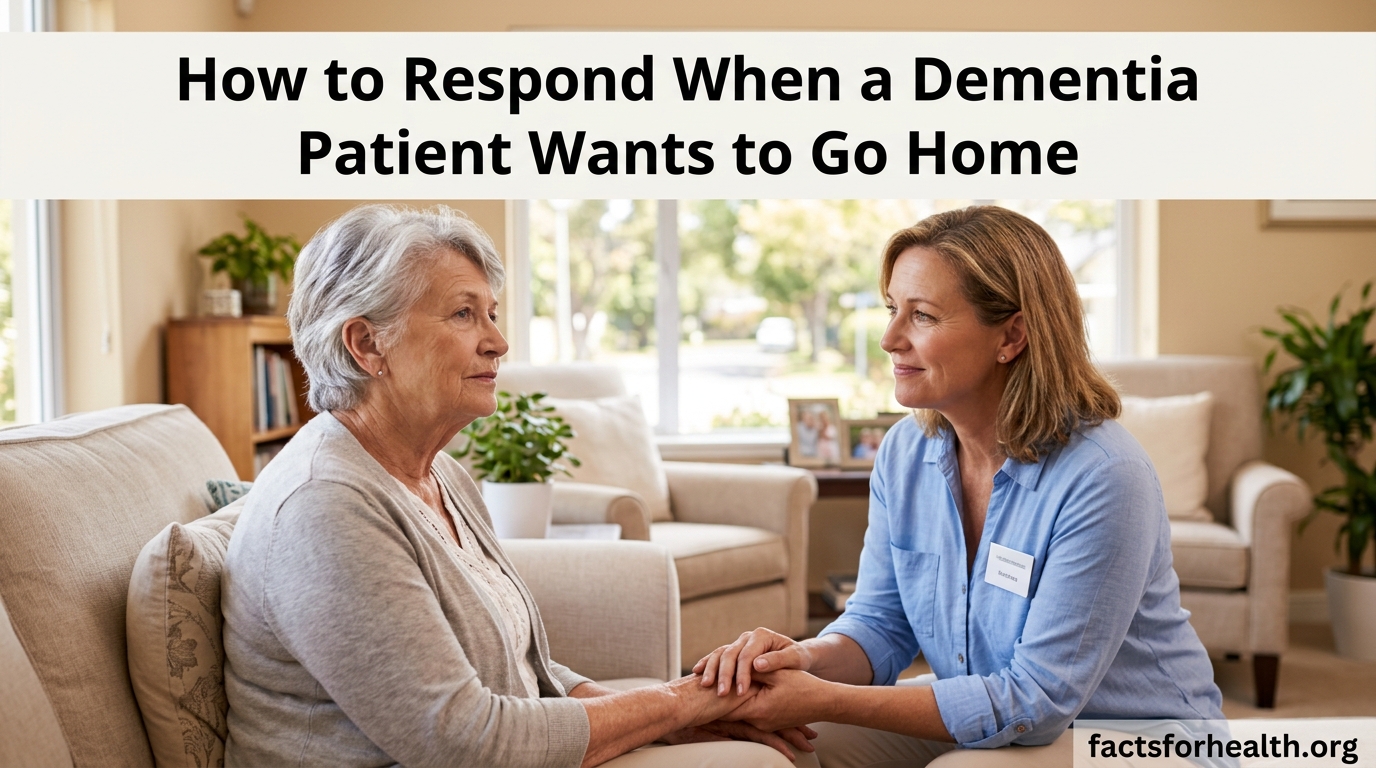
If you are caring for someone with dementia, you have likely heard the phrase “I want to go home” more times than you can count. It is one of the most common and emotionally difficult behaviors caregivers face, sometimes repeating for hours on end with no obvious solution.
Learning how to respond when a dementia patient wants to go home can transform your daily caregiving experience. The right words, tone, and approach can calm agitation, reduce repetition, and bring comfort to someone who feels lost in their own world.
In this guide, our team breaks down exactly why this behavior happens, what to avoid saying, and seven proven response strategies you can use today. We also cover caregiver self-care because we know from real caregiver stories that this behavior takes a serious emotional toll.
Table of Contents
Understanding Why Dementia Patients Say “I Want to Go Home”
Before you can respond effectively, it helps to understand what is actually happening. When someone with dementia says they want to go home, they are almost never making a literal request for transportation. They are expressing an emotional need for safety, comfort, and familiarity.
Think of “home” as a feeling rather than a place. For a person living with dementia, home represents a time when things made sense, when they felt secure and in control. The brain damage caused by dementia strips away that security layer by layer.
What “Home” Really Means to a Dementia Patient
Many caregivers assume their loved one is asking for a specific house or address. In reality, research and caregiver experiences show that “home” often refers to a childhood residence, a place where the person felt happiest, or simply a state of being where they did not feel confused.
One caregiver on a dementia support forum shared that her mother kept asking to go home even while sitting in the living room she had lived in for forty years. This illustrates the core truth: the request is emotional, not geographical. Your loved one is saying “I do not feel safe here” or “I do not recognize this place as home anymore.”
When advanced dementia patients say “go home,” caregivers consistently report that they are seeking comfort. The confusion in their brain makes the present moment feel unfamiliar and threatening, so they reach for the word that represents the ultimate safety.
The Brain Science Behind This Behavior
Dementia progressively damages two key areas of the brain that drive this behavior. The hippocampus, which handles memory formation and spatial orientation, deteriorates early in the disease. This means the person genuinely cannot remember where they are or how they got there.
The prefrontal cortex, responsible for logical reasoning and impulse control, also breaks down. So even if part of the person recognizes their surroundings, they cannot use logic to reassure themselves. The emotional brain takes over, and the result is an urgent, repetitive plea to go somewhere safe.
This is why arguing or explaining does not work. The parts of the brain that would process logical explanations are exactly the parts that are damaged. You are asking a broken tool to fix itself.
Unmet Physical and Emotional Needs
Sometimes “I want to go home” is a signal that something physical is wrong. The person may be in pain, hungry, thirsty, too hot, too cold, or needing the bathroom. Because dementia damages language skills, they cannot say “I need water” or “my back hurts.” Instead, the discomfort surfaces as a general feeling of wrongness that they express as wanting to leave.
Emotional needs matter just as much. Boredom, loneliness, overstimulation from noise or clutter, and anxiety can all trigger this phrase. Before trying any response strategy, run through a quick mental checklist of possible unmet needs.
Caregivers on support forums consistently report that addressing basic physical needs first resolves the behavior in a surprising number of cases. A glass of water, a bathroom trip, or a warm blanket can sometimes work better than any verbal technique.
What NOT to Do When They Say “I Want to Go Home”
Well-meaning caregivers often default to responses that actually make the situation worse. Here are the most common mistakes and why they backfire.
Do not correct them or insist they are already home. Saying “But you ARE home” creates conflict and increases agitation. Remember, the logical brain is damaged. Your correction will not register as helpful information. It will feel like an argument.
Do not use logic or reasoning. Explaining that they moved here years ago, that their old house was sold, or that this is where they live now will not help. The information cannot be processed properly, and it may cause distress if they learn their old home no longer exists.
Do not take it personally. This is hard. When your parent or spouse looks at you in a familiar room and says they want to go home, it can feel like rejection. It is not. The disease is speaking, not the person you love.
Do not show frustration or anger. Your tone matters more than your words. If you sound annoyed, the person with dementia will pick up on that emotion and become more anxious, which intensifies the behavior.
Do not promise to take them home later if you have no intention of following through. This may work in the moment but breaks trust over time and can cause bigger emotional reactions down the road.
Effective Strategies: How to Respond When a Dementia Patient Wants to Go Home
The most effective way to respond when a dementia patient wants to go home is to validate their feelings, avoid arguing about facts, and gently redirect their attention to something comforting and familiar. Here are seven specific strategies that caregivers and dementia care experts recommend.
1. Validate Their Feelings First
Validation means acknowledging the emotion without agreeing with the facts. Instead of correcting, you join them in their emotional reality. This shows you are listening and that you care, which alone can reduce anxiety.
Try saying: “You miss your home, don’t you? Tell me about it.” Or: “I can see this is really hard for you. I’m right here with you.” These phrases validate the feeling of loss and longing without arguing about where they physically are.
The Alzheimer’s Society recommends validation as a foundational technique because it meets the person where they are emotionally. You are not lying or enabling. You are providing the comfort their brain is desperately seeking.
2. Use Gentle Redirection
Redirection involves shifting attention to a new topic or activity after validating the emotion. The key is to redirect gently, not abruptly. A jarring topic change can feel dismissive and trigger more anxiety.
After validating, try bridging to something familiar: “Your home sounds wonderful. Speaking of wonderful places, would you like to help me water the plants?” Or: “I know you miss it. Let’s look at some photos from when you were growing up. I’d love to hear those stories.”
The best redirections connect to the theme of home and comfort rather than pulling completely away from it. Asking about their home honors their feelings while naturally moving the conversation forward.
3. Try the “Let’s Go” Approach
Dementia care expert Teepa Snow suggests that when conditions permit, you can say something like “Okay, let’s head on out” and then walk with the person to another room or area. The physical movement and the feeling of being heard often satisfies the urge to leave.
After a short walk together, many patients naturally settle into the new space and forget about wanting to go home. The act of moving and being accompanied addresses the restlessness without confrontation.
This approach works because it does not deny the request. You said yes, you took action, and the brain’s need for movement and agency was fulfilled. By the time you arrive in the new room, the emotional wave has often passed.
4. Ask About Their Home
Instead of trying to stop the conversation about home, lean into it. Ask questions that invite positive memories: “What was your home like? What did you love about it? Who lived there with you?”
This technique, sometimes called reminiscence therapy, channels the emotional energy into storytelling. As the person describes their home, they often feel the comfort of being there. The vivid memories can provide the emotional safety they were seeking.
You may hear stories you have never heard before. Many caregivers report that these conversations become some of the most meaningful moments they share with their loved one during the dementia journey.
5. Address Unmet Physical Needs
Run through a quick needs checklist every time the phrase comes up. Is the person hungry, thirsty, in pain, too warm, too cold, or needing the bathroom? Is something in the environment causing discomfort, like loud television noise, harsh lighting, or an unfamiliar visitor?
Offer a drink, a snack, or a bathroom visit without asking permission. Simply say: “Let’s get a nice cup of tea before we go” or “Let me help you to the bathroom first, and then we’ll figure out the home situation.” This addresses the physical need while honoring the emotional request.
Pain is frequently overlooked in dementia patients because they cannot articulate it. If the behavior is new or suddenly worse, consider whether a urinary tract infection, dental pain, or constipation might be contributing. These are common triggers that go undetected.
6. Use Distraction With Familiar Activities
Familiar, repetitive activities can absorb attention and reset the emotional state. Folding laundry, sorting objects, sweeping, gardening, or looking through a photo album all tap into long-term memory, which is often better preserved than recent memory.
The activity should feel purposeful. People with dementia often retain a deep need to feel useful. Giving them a simple task that matches their abilities can redirect energy from anxiety into engagement.
Music is one of the most powerful distraction tools available. Playing songs from the person’s young adult years can trigger positive emotions and memories, often calming the urge to leave within minutes.
7. Shift the Environment
If something in the immediate environment is prompting the desire to go home, try moving to a different room. A change of scenery can break the behavioral loop. Go outside if weather permits. Fresh air, natural light, and a change of temperature can reset the nervous system.
Sometimes a specific trigger in the room is causing distress. It could be a mirror reflection the person does not recognize, a clock showing a confusing time, or noise from another part of the house. Identifying and removing triggers is a powerful long-term strategy.
Pay attention to patterns. Does the behavior happen at the same time each day? Many caregivers report that late afternoon, a period sometimes called sundowning, brings a spike in wanting to go home. Anticipate these windows and prepare soothing activities in advance.
Creating a Reassuring Environment
The physical environment plays a massive role in how often and how intensely the “I want to go home” behavior occurs. A space that feels unfamiliar, clinical, or chaotic will trigger more episodes. A space that feels warm, personal, and predictable will reduce them.
Start by filling the living space with familiar objects. Family photos, favorite furniture, personal mementos, and familiar scents can all help the person feel anchored. Even if they cannot verbalize why, the familiarity registers on an emotional level.
Lighting matters more than most people realize. Harsh overhead lighting can feel institutional and disorienting. Use warm, soft lighting and maximize natural light during the day. Avoid shadows in the evening, which can create confusing or frightening visual stimuli.
Reduce clutter and noise. A chaotic environment overwhelms a brain that is already struggling to process information. Keep pathways clear, minimize background television, and create quiet zones where the person can relax.
Establish a consistent daily routine. Predictability reduces anxiety because the person does not have to wonder what happens next. Serve meals at the same time, structure activities in a familiar sequence, and create calming bedtime rituals. The brain thrives on repetition, even a damaged one.
Consider safety modifications that reduce exit-seeking behavior. Cover door knobs with cloth, place a dark mat in front of doors (which can appear as a hole to a dementia brain), and use signage that redirects. These modifications address the behavior at the environmental level.
Caregiver Self-Care During Repeated Episodes
If you have been through a ten-hour stretch of hearing “I want to go home,” you know how draining it is. Caregivers on support forums describe feeling helpless, exhausted, and guilty when nothing they try seems to work. Those feelings are valid, and you are not alone in having them.
The most important thing to understand is that sometimes nothing works, and that is not your fault. Dementia is a progressive brain disease. No technique will work every time. Accepting this truth can release you from the guilt of failing to fix something that cannot be fixed.
Build breaks into your day. Even five minutes alone in another room can reset your nervous system. If you have family or friends who can sit with your loved one, use that time to rest, not to catch up on chores. Your well-being is not a luxury. It is a requirement for sustainable caregiving.
Connect with other caregivers. Support groups, both in-person and online, provide a space to share frustrations and strategies with people who truly understand. The dementia subreddit and local Alzheimer’s Association chapters are excellent starting points.
Know when to seek professional help. If the behavior is escalating, if you are approaching burnout, or if safety becomes a concern, it may be time to bring in additional support. In-home care services, adult day programs, and memory care facilities all exist to share this load with you.
Watch for these signs that additional help is needed: the person is exiting the home unsafely, agitation is turning aggressive, you are losing sleep regularly, your own health is declining, or the emotional toll is affecting your relationships and work. None of these mean you have failed. They mean the disease has progressed and the care plan needs to evolve.
FAQs
Why does my mom keep asking to go home with dementia?
Your mom keeps asking to go home because dementia has damaged the hippocampus, the part of the brain responsible for memory and spatial orientation. She genuinely may not recognize her current surroundings as home. The word ‘home’ represents a feeling of safety and comfort that her brain can no longer find in the present moment. This is a normal symptom of the disease, not a personal rejection.
Is it normal for dementia patients to want to go home?
Yes, this is one of the most common behaviors in mid-to-late stage dementia. Wanting to go home is considered a normal expression of the confusion, anxiety, and loss of security that dementia causes. It appears across all types of dementia, including Alzheimer’s disease and vascular dementia.
How do you calm a dementia patient who wants to go home?
The best approach is to validate their feelings, avoid arguing about facts, and gently redirect their attention. Say something like ‘Tell me about your home’ to channel the emotional energy into positive memories. Address any unmet physical needs like hunger or pain. Try walking together to another room, playing familiar music, or offering a comforting activity that matches their abilities.
Why do dementia patients try to get out of bed?
Dementia patients may try to get out of bed due to a disrupted sleep-wake cycle, unmet physical needs like needing the bathroom, pain, or confusion about whether it is day or night. Sundowning behavior in the late afternoon and evening can also cause restlessness. Nighttime wandering is common and may require environmental safety measures like bed alarms and secured exits.
Conclusion
Learning how to respond when a dementia patient wants to go home is part technique and part mindset. The technique involves validation, gentle redirection, addressing unmet needs, and creating a reassuring environment. The mindset involves accepting that “home” is an emotion, not a destination, and that no strategy will work every single time.
The most powerful thing you can do is meet your loved one where they are. Join their emotional reality instead of fighting it. Offer comfort instead of corrections. And give yourself grace when the behavior continues despite your best efforts. This disease is relentless, but so is the love you bring to caring for someone through it.
If you are feeling overwhelmed, reach out for support. Talk to your doctor about resources in your area, connect with a caregiver support group, and explore professional care options before you reach a crisis point. You do not have to do this alone.