
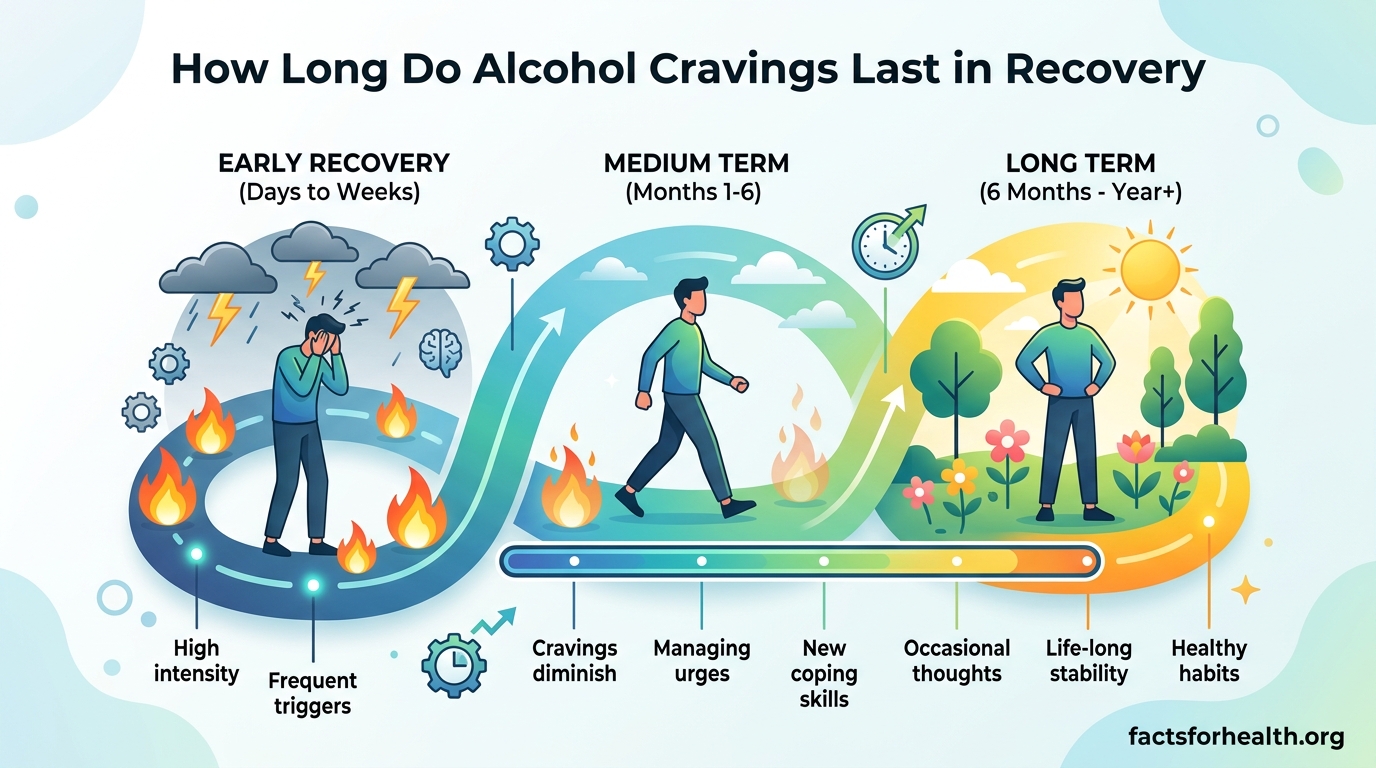
Individual alcohol cravings typically last 15 to 30 minutes, while the overall pattern of cravings in recovery can persist for weeks, months, or longer depending on your drinking history, support system, and treatment approach. According to the NIAAA, approximately 28 million people in the United States have alcohol use disorder, and cravings are a normal part of recovery for many of them. Most people find that craving intensity peaks during the first one to two weeks of abstinence and then gradually declines over the following months.
If you have ever wondered how long do alcohol cravings last in recovery, you are not alone. It is one of the most common questions people ask when they stop drinking, and the answer can provide real comfort during a difficult time. Knowing what to expect at each stage helps you prepare, stay motivated, and recognize that what you are feeling is normal.
In this guide, our team breaks down the full timeline of alcohol cravings in recovery using clinical research from SAMHSA and NIAAA, data from peer-reviewed studies, and real experiences shared by people in recovery communities like r/stopdrinking and r/REDDITORSINRECOVERY. We cover the brain science behind cravings, practical coping strategies you can use today, professional treatment options, and when to seek additional help.
One thing we want to be absolutely clear about: cravings are not a sign of weakness or failure. They are a biological response from a brain that is recalibrating after alcohol disrupted its reward system. Understanding this can change how you experience them entirely.
Table of Contents
What Are Alcohol Cravings?
Alcohol cravings are intense physical and emotional urges to drink that occur when someone with alcohol use disorder reduces or stops their alcohol intake. These urges can feel overwhelming, almost like a wave building inside you that demands relief through drinking. They are one of the most common and challenging symptoms of recovery.
People describe cravings differently, but common experiences include a sudden powerful thought about drinking, physical sensations like a tightening in the chest or stomach, restlessness, irritability, and an almost magnetic pull toward any place that serves or sells alcohol. As one Reddit user described it, the physical craving faded with abstinence, but it was replaced by a sort of mental obsession with drinking where the idea that a drink would feel good just kept looping.
Cravings typically have three components that recovery experts often reference: relief, reward, and obsession. The relief component is the desire to drink to escape discomfort, stress, or withdrawal symptoms. The reward component is the anticipation of pleasure or the familiar feeling alcohol once provided. The obsession component is the mental preoccupation with drinking that can persist even after physical withdrawal has passed.
What makes alcohol cravings in recovery particularly tricky is that they can be triggered by obvious cues, like walking past a favorite bar, or by subtle ones like a specific time of day, a song, or even a particular emotional state. The brain has built strong neural pathways connecting alcohol to comfort, celebration, stress relief, and social connection. Breaking those associations takes time, but it does happen.
How Long Do Alcohol Cravings Last in Recovery? The Timeline
The timeline of alcohol cravings in recovery follows a fairly consistent pattern, though individual experiences vary based on factors like drinking history, severity of alcohol use disorder, age, genetics, and whether you are receiving professional treatment. Here is a detailed phase-by-phase breakdown of what to expect at each stage.
Days 1 to 3: The Acute Phase
The first 72 hours after your last drink are typically the most intense period for both physical withdrawal symptoms and cravings. During this phase, the brain is reacting sharply to the sudden absence of alcohol, and cravings can feel constant and urgent. Physical withdrawal symptoms, including tremors, sweating, nausea, anxiety, and insomnia, often accompany cravings during this window.
This phase carries medical risks, particularly for heavy or long-term drinkers. Severe withdrawal can include hallucinations, seizures, and delirium tremens, which can be life-threatening. If you are going through this phase, medical supervision is strongly recommended. Detox programs can provide medications that ease both withdrawal symptoms and the intensity of cravings.
Cravings during days one through three are driven primarily by physical dependence. The body is signaling that it wants alcohol to restore a chemical balance it had adapted to. This is different from the psychological cravings that dominate later stages of recovery.
Days 4 to 7: Peak Craving Intensity
By days four through seven, acute physical withdrawal symptoms typically begin to subside for most people, but cravings often remain at or near peak intensity. This is a transitional period where the body is stabilizing physically while the brain is still demanding alcohol. Many people in recovery communities describe this week as a relentless mental battle.
During this first week, cravings can feel like they hit every few hours. They may be triggered by routine events that were previously associated with drinking, such as getting home from work, eating dinner, or winding down before bed. The brain is essentially testing whether the old patterns will resume. Each time you resist a craving, you weaken that neural pathway slightly.
Forum discussions from r/stopdrinking frequently highlight this week as the hardest. Many people report that the physical symptoms were difficult but manageable, while the mental obsession with drinking felt relentless. Staying busy, having a structured daily routine, and having someone to call can make a significant difference. As one community member shared, in early sobriety they met the urge to drink by drinking anything but alcohol, then getting busy with cooking, cleaning, laundry, and yardwork.
Weeks 2 to 4: Gradual Decline
Between weeks two and four, most people begin to notice a meaningful shift. Cravings do not disappear, but they generally become less frequent and less intense. Clinical observations from treatment centers suggest that strong alcohol cravings typically last anywhere from two to four weeks, after which they begin to taper off noticeably for most patients.
During this period, you may start experiencing what some in recovery call the pink cloud, a phase where early sobriety feels surprisingly good and cravings seem manageable. However, this can create a false sense of security. Cravings can return suddenly, especially when triggered by stress, social situations, or emotional lows.
This is also the phase where the mental obsession component of cravings becomes more apparent than the physical urge. You might find yourself thinking about drinking not because your body needs alcohol, but because your mind is drawn to the idea of it. This is where cognitive behavioral therapy and mindfulness techniques become particularly valuable.
Days 30 to 90: The Critical Window
The 30 to 90 day window is often described as a critical period in recovery. Research shows that the brain undergoes significant changes during this time, particularly in dopamine receptor availability and reward system function. Cravings during this phase tend to come in waves rather than being constant.
Many people report that cravings at this stage are more situational. A stressful day at work, a social event where alcohol is present, or an argument with a loved one can trigger a sudden, intense craving. But between these episodes, you may go days or even weeks without a significant urge to drink.
This is also the phase where building a solid support system pays dividends. People who engage with support groups like Alcoholics Anonymous or SMART Recovery during the first 90 days tend to report better outcomes. The structure, accountability, and shared experience of these groups provide tools for navigating cravings when they arise.
Months 3 to 6: Noticeable Improvement
By the three to six month mark, most people in recovery experience a substantial reduction in both the frequency and intensity of alcohol cravings. Forum discussions from people who have reached six months of sobriety frequently describe a sense that the mental fog has lifted and that brain recovery is significant at this stage.
However, this does not mean cravings are gone entirely. People at six months sober can still experience sudden cravings, particularly when encountering unexpected triggers. But these cravings tend to be shorter, less intense, and easier to dismiss. The neural pathways connecting alcohol to reward and relief have weakened considerably by this point.
Many people at this stage report that their default state no longer includes a background hum of wanting to drink. Instead, cravings become occasional visitors rather than constant companions. This shift can feel deeply encouraging and reinforces the motivation to continue.
One Year and Beyond: Long-Term Recovery
At one year of sobriety and beyond, most people find that alcohol cravings are rare and manageable. When they do occur, they are often mild and brief. The brain has done significant healing, and new neural pathways associated with sober living have been reinforced over thousands of repetitions.
However, recovery communities are quick to point out that cravings can still appear even after years of sobriety. A major life event, significant stress, or an unexpected encounter with a strong trigger can produce a craving that surprises you. As one long-term recovery community member shared, there are periods where cravings show up and linger for a while, and they have found themselves thinking about alcohol daily even knowing they should not.
The key insight from people in long-term recovery is that cravings become a minor background occurrence rather than a dominant force. Recovery is not about eliminating cravings entirely but about building the skills and support to handle them when they appear.
Why Do Alcohol Cravings Occur?
Understanding why alcohol cravings happen requires looking at what alcohol does to the brain over time. Long-term alcohol use fundamentally changes brain chemistry, particularly in the reward system, and these changes do not reverse overnight.
Alcohol affects several neurotransmitter systems, but the most relevant for cravings is dopamine. Dopamine is the brain’s reward chemical, released when we experience something pleasurable. Alcohol artificially triggers a large release of dopamine, creating a sense of pleasure and reinforcement that the brain begins to crave. Over time, the brain adapts by reducing its natural dopamine production and downregulating dopamine receptors. This is why early recovery can feel flat, joyless, or depressing.
The basal ganglia, a region deep in the brain involved in habit formation and reward processing, plays a central role in cravings. When you drink repeatedly in certain contexts, the basal ganglia creates strong associations between those contexts and alcohol. These associations are what make environmental triggers so powerful, sometimes months or years into recovery.
Cravings stem from three interconnected causes. Biological causes include the physical changes in brain chemistry and the body’s dependence on alcohol. Psychological causes include habit loops, emotional dependencies, and the mental associations between drinking and stress relief. Environmental causes include the people, places, and situations that trigger the brain’s learned associations with alcohol. This combination of factors is why quitting drinking is so difficult, and why cravings can feel so overwhelming in the early stages.
Post-Acute Withdrawal Syndrome (PAWS)
Post-acute withdrawal syndrome, commonly known as PAWS, refers to a set of symptoms that can persist for weeks or months after the acute withdrawal phase has ended. PAWS is directly relevant to alcohol cravings because it can extend the period during which cravings feel intense and frequent.
While acute withdrawal typically lasts one to two weeks and involves physical symptoms, PAWS is primarily psychological and emotional. Common PAWS symptoms include mood swings, anxiety, irritability, difficulty concentrating, sleep disturbances, and persistent cravings. These symptoms come and go in waves, which can make recovery feel unpredictable.
Not everyone experiences PAWS, but for those who do, it can last anywhere from a few weeks to several months. The good news is that PAWS does end. As the brain continues to heal and reestablish normal neurotransmitter function, PAWS symptoms gradually fade. Most people see significant improvement within three to six months, with full resolution typically occurring within the first year of sobriety.
Common Triggers for Alcohol Cravings
Triggers are the people, places, emotions, and situations that spark alcohol cravings. Learning to identify your personal triggers is one of the most effective things you can do to manage cravings and prevent relapse. Triggers generally fall into several categories.
The HALT acronym is widely used in recovery communities and stands for Hungry, Angry, Lonely, Tired. These four states are the most common emotional precursors to cravings. When you feel a craving coming on, checking whether you are hungry, angry, lonely, or tired can help you address the underlying need rather than reaching for alcohol.
Evening cravings are frequently reported as the hardest time of day. People in recovery communities describe intense urges after work, when the routine of having a drink to wind down was deeply ingrained. Having a plan for the evening hours, whether that is a sober social activity, exercise, or a hobby, can help fill that gap.
Boredom is another major trigger that recovery communities identify. Having nothing to do leads to dwelling on cravings, which amplifies them. Keeping a list of engaging activities that you can turn to when boredom strikes can prevent idle time from becoming a vulnerability.
Social situations where others are drinking are extremely triggering, especially in early recovery. Walking past a liquor store, attending a wedding, or seeing a beer commercial can all trigger cravings. In early recovery, modifying your environment by taking different routes, removing alcohol from your home, and declining high-risk invitations can reduce exposure while your neural pathways are still healing.
How to Manage Alcohol Cravings
Having a toolkit of coping strategies is essential for managing alcohol cravings in recovery. Different strategies work for different people, and what works may change as you progress through your recovery journey. Here are the most effective, evidence-based approaches.
The 3-3-3 Rule
The 3-3-3 rule is a grounding technique widely used in recovery communities for managing anxiety and cravings. It is simple, can be done anywhere, and takes less than a minute. Here is how it works: name three things you can see, name three sounds you can hear, and move three parts of your body.
This technique works because cravings pull your attention inward and narrow your focus to the urge. The 3-3-3 rule forces your brain to engage with your external environment, interrupting the craving cycle and grounding you in the present moment. Reddit users in recovery communities frequently reference this technique as one they return to during intense cravings.
Urge Surfing
Urge surfing is a mindfulness-based technique that involves observing a craving without fighting it or giving in to it. Instead of trying to suppress the craving, you watch it like a wave, noticing how it builds, peaks, and eventually subsides on its own. Since individual cravings typically last 15 to 30 minutes, if you can ride the wave, it will pass.
To practice urge surfing, when a craving hits, take a moment to notice where you feel it in your body. Notice the thoughts that accompany it without engaging with them. Remind yourself that cravings are temporary and that this one will fade. Many people find that simply acknowledging the craving rather than battling it reduces its intensity significantly.
Play the Tape Forward
Play the tape forward is a strategy widely used in recovery communities. When a craving hits and your mind starts romanticizing the idea of having just one drink, you mentally play out the full scenario of what would happen if you did. Not just the first sip, but the entire sequence of events that would likely follow.
This technique works because cravings focus your attention on the short-term reward of drinking while ignoring the negative consequences. By mentally walking through what typically happens after you start drinking, you interrupt that one-sided narrative and give your rational mind a chance to reassert itself.
Delay, Distract, and Substitute
The delay and distract approach involves committing to wait 15 to 30 minutes before acting on a craving. During that time, you engage in a distracting activity, whether that is going for a walk, calling someone, cooking, exercising, or doing a puzzle. Because individual cravings are time-limited, delaying often means the craving passes before the delay period is over.
For substitution, many people in recovery communities swear by sparkling water with lime as a go-to craving substitute. As one Reddit user put it, soda water with lime and ginger is a nice mocktail with a bit of a kick. Having a non-alcoholic beverage in hand satisfies the physical habit and ritual of drinking without the alcohol.
Additional Grounding Techniques
The 5-4-3-2-1 technique is another powerful grounding exercise: identify five things you can see, four things you can touch, three things you can hear, two things you can smell, and one thing you can taste. This sensory exercise interrupts the craving cycle and anchors you in reality.
Deep breathing exercises, such as box breathing where you inhale for four counts, hold for four, exhale for four, and hold for four, can calm the nervous system and reduce the intensity of a craving within minutes.
Food Cravings After Quitting Alcohol
One of the most common, yet rarely discussed, experiences in early recovery is the surge of sugar and junk food cravings that replace alcohol cravings. Multiple Reddit threads in r/stopdrinking, r/Sober, and r/stopdrinkingfitness document this phenomenon, with users expressing surprise and frustration at how intense food cravings become after quitting alcohol.
This substitution happens for a biological reason. Alcohol is high in sugar and causes significant blood sugar fluctuations. When you stop drinking, your body seeks that sugar rush from other sources. Additionally, the dopamine system that alcohol stimulated is still seeking reward, and sugary foods provide a partial substitute.
One user at six months sober reported that the evening food cravings were intense, describing an unexpected shift from alcohol cravings to sugar cravings. This experience is so common that recovery communities actively discuss strategies for managing it.
What to eat after quitting alcohol: focus on whole foods rich in B vitamins, lean proteins, complex carbohydrates, healthy fats, and antioxidants. Foods like eggs, fish, leafy greens, nuts, whole grains, and fresh fruits support brain healing. Eating regular, protein-rich meals helps stabilize blood sugar and reduces the physical signals that can be mistaken for alcohol cravings. Staying hydrated is also important, as thirst can sometimes masquerade as a craving.
Professional Support for Alcohol Cravings
For many people, professional treatment dramatically improves recovery outcomes and reduces the severity and duration of cravings. Treatment options range from medications to therapy to structured programs, and they can be combined based on individual needs.
Medication-Assisted Treatment
Several FDA-approved medications can help reduce alcohol cravings and support recovery. Naltrexone works by blocking opioid receptors in the brain that are involved in the rewarding effects of alcohol, reducing both cravings and the pleasure of drinking. Acamprosate helps restore neurotransmitter balance disrupted by long-term alcohol use and is particularly effective at reducing the distress and cravings of early abstinence. Disulfiram causes unpleasant physical reactions when alcohol is consumed, creating a strong deterrent effect for people committed to complete abstinence.
These medications are most effective when combined with counseling and behavioral therapies. If you are interested in medication-assisted treatment, talk to an addiction specialist or your primary care provider about which option might be right for your situation.
Therapy and Counseling
Cognitive behavioral therapy is one of the most widely studied and effective approaches for managing alcohol cravings. CBT helps you identify the thought patterns that lead to cravings and teaches you to reframe those thoughts. A thought like “I deserve a drink after the day I had” can be reframed as “I deserve real rest and self-care, not a substance that will make things worse.”
Therapy can be delivered individually or in group settings. Many people benefit from a combination of both. If therapy is accessible to you, it is one of the most impactful investments you can make in your recovery.
Support Groups and Peer Recovery
Support groups are one of the most accessible and effective resources for managing alcohol cravings in recovery. They provide community, accountability, shared wisdom, and a sense of belonging that can be hard to find elsewhere.
Alcoholics Anonymous is the most widely known and available support group, operating on a 12-step program with meetings in nearly every community worldwide. SMART Recovery is a science-based alternative that uses cognitive behavioral therapy and motivational interviewing techniques, focusing on self-empowerment and practical skill-building. Al-Anon supports family members and loved ones of people with drinking problems. Women for Sobriety is designed specifically for women, and SOS (Secular Organizations for Sobriety) provides a non-spiritual alternative.
If you need immediate help, the SAMHSA National Helpline is available 24 hours a day at 1-800-662-4357. This free, confidential service provides referrals to local treatment facilities, support groups, and community-based organizations. In the UK, the NHS Drinkline is available at 0300 123 1110. In Canada, contact the National Addiction Helpline. In Australia, the National Alcohol and Other Drug Hotline is available at 1800 250 015. These resources exist because you deserve support.
FAQs
How long do alcohol cravings last?
Individual alcohol cravings typically last 15 to 30 minutes. The overall pattern of cravings in recovery peaks during the first one to two weeks of abstinence, gradually decreases over the following weeks to months, and becomes rare for most people by the one year mark. According to SAMHSA, approximately 28 million Americans have alcohol use disorder and cravings are a normal part of recovery.
What stops alcohol cravings?
Several approaches help stop alcohol cravings: medication-assisted treatment with naltrexone or acamprosate, cognitive behavioral therapy, mindfulness techniques like urge surfing, regular exercise, proper nutrition, and participation in support groups like AA or SMART Recovery. The 3-3-3 rule and play the tape forward are effective in-the-moment techniques. Most people find combining multiple strategies works best.
What to eat after quitting alcohol?
Focus on whole foods rich in B vitamins, lean proteins, complex carbohydrates, healthy fats, and antioxidants. Foods like eggs, fish, leafy greens, nuts, whole grains, and fresh fruits support brain healing. Avoid excessive sugar, which can trigger blood sugar spikes that mimic alcohol cravings. Eating regular protein-rich meals and staying hydrated helps stabilize mood and reduce cravings.
Why is it so hard to quit drinking?
Long-term alcohol use changes brain chemistry, particularly the dopamine reward system. The brain reduces natural dopamine production and creates strong neural pathways associating alcohol with pleasure and stress relief. When alcohol is removed, the brain craves it to restore chemical balance. Combined with habit loops, emotional dependencies, and withdrawal discomfort, these biological changes make quitting genuinely difficult.
What can reduce alcohol cravings?
Five effective approaches to reduce alcohol cravings: 1) Remind yourself of your reasons for quitting, 2) Talk to someone in your support system, 3) Use healthy distractions like exercise or hobbies, 4) Challenge romanticized thoughts about drinking by playing the tape forward, and 5) Ride out the craving using urge surfing, knowing it will pass within 15 to 30 minutes.
What is the 3 3 3 rule for addiction?
The 3-3-3 rule is a grounding technique for managing cravings and anxiety. Name three things you can see, name three sounds you can hear, and move three parts of your body. This technique interrupts the craving cycle by forcing your brain to engage with the external environment, grounding you in the present moment. It takes less than a minute and can be done anywhere.
How long does it take for alcohol cravings to go away?
For most people, strong alcohol cravings last 2 to 4 weeks during early recovery. Cravings become noticeably less frequent by weeks 5 to 8, situational rather than constant by days 30 to 90, and increasingly rare by 6 months. By one year sober, most people experience only occasional mild cravings. However, some people may experience occasional cravings even after years of sobriety.
Why are alcohol cravings so strong?
Alcohol cravings are strong because prolonged drinking hijacks the brain dopamine system, creating powerful neural pathways that associate alcohol with reward and relief. When alcohol is removed, the brain’s reduced natural dopamine production leaves a deficit that the brain tries to fill. Environmental triggers, stress, and emotional states further amplify cravings through these learned associations.
Conclusion
Understanding how long alcohol cravings last in recovery can transform your experience of sobriety. The timeline follows a predictable arc: intense during the first week, gradually declining over weeks two through four, becoming situational during months one through three, and increasingly rare by six months to one year. Individual cravings last just 15 to 30 minutes, which means every craving you ride out is temporary.
The key to navigating cravings is preparation. Build a toolkit of coping strategies, connect with a support system, consider professional treatment, and make lifestyle changes that support brain healing. Cravings are a normal part of recovery, not a sign of failure. If you are struggling right now, reach out to SAMHSA at 1-800-662-4357 or connect with a local support group. You do not have to do this alone, and the brain does heal.