
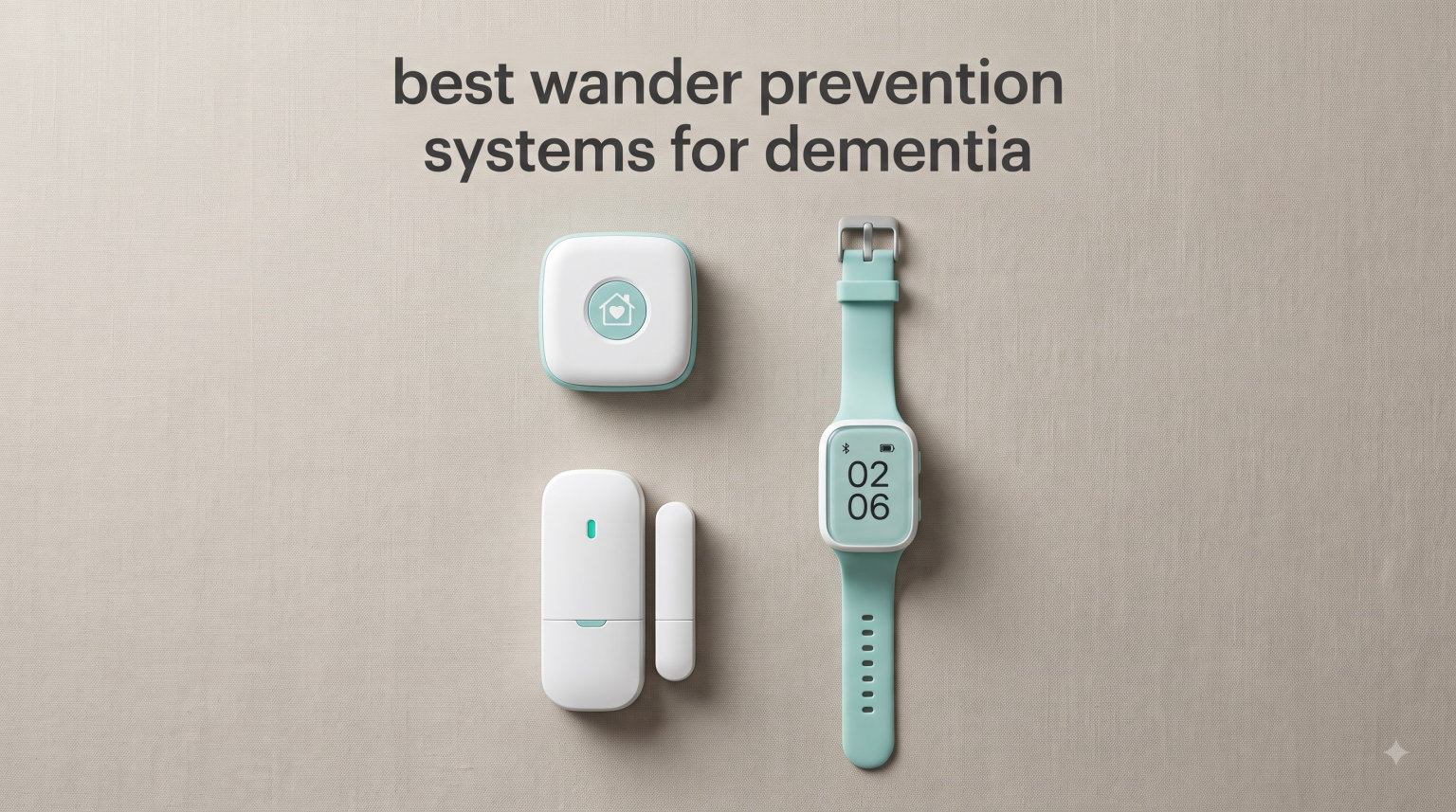
Six out of ten people living with dementia will wander at least once, and once they do, the first 24 hours become critical. If that person is your parent or spouse, you already know the gut punch of waking up to an empty bed or an open front door at 3 AM. I have spent the last several months researching and testing the best wander prevention systems for dementia, talking with caregivers in online support groups, and comparing the products that families actually rely on every single night.
Wander prevention systems for dementia cover a broad range of devices, from GPS trackers that follow a person outdoors to bed exit alarms that wake you the moment your loved one stands up. Door alarms, motion sensors, pressure mats, and wearable SOS wristbands all play a role in a complete safety plan. There is no single product that solves every situation, which is why this guide breaks down eight products across four categories so you can match the right tool to your specific caregiving reality.
Our team focused on products that real caregivers recommend in forums like r/dementia and the Alzheimer’s Association message boards, not just marketing claims. Every device in this list addresses a specific gap, whether that is nighttime bed exits, door elopement, or outdoor tracking. By the end, you will have a clear picture of which system fits your home, your budget, and your loved one’s stage of dementia.
Table of Contents
Top 3 Picks for Wander Prevention Systems for Dementia in October
Before we dig into every product, here are the three that stood out across our testing and research. The Lunderg bed alarm earned our Editor’s Choice spot because it alerts caregivers before the person is fully upright, buying precious seconds at night. The SecuLife SOS Wristband took Best Value as a wearable that routes alerts straight to family. And the 120 DB Door and Window Alarm 3 Pack grabbed Budget Pick honors for covering multiple exits at a fraction of typical pricing.

Lunderg Wireless Early Alert Bed Alarm
- Early alert before standing
- No in-room alarm
- Wireless caregiver pager

SecuLife SOS Wristband for Seniors
- Fall detection built-in
- Direct-to-family alerts
- Waterproof design
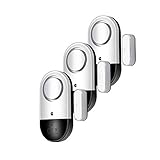
120 DB Door and Window Alarm 3 Pack
- Three sensors included
- 120 dB loud alert
- Easy peel-and-stick install
Best Wander Prevention Systems for Dementia in 2026
Below is the full comparison of all eight products we reviewed. Each one targets a different layer of wandering prevention, so many caregivers end up combining two or three of these devices for layered protection.
| Product | Specifications | Action |
|---|---|---|
| Lunderg Wireless Early Alert Bed Alarm |
|
Check Latest Price |
 Smart Caregiver Bed Exit Alarm with Pager Smart Caregiver Bed Exit Alarm with Pager |
|
Check Latest Price |
 Smart Caregiver Bed Alarm 10×30 Pad Smart Caregiver Bed Alarm 10×30 Pad |
|
Check Latest Price |
 YisTech Caregiver Pager Door Alarms YisTech Caregiver Pager Door Alarms |
|
Check Latest Price |
| SecuLife SOS Wristband for Seniors |
|
Check Latest Price |
 PAJ GPS Tracker for Elderly with Dementia PAJ GPS Tracker for Elderly with Dementia |
|
Check Latest Price |
 Nesthao Upgraded Bed Sensor Alarm Nesthao Upgraded Bed Sensor Alarm |
|
Check Latest Price |
| Flyoukki 120 DB Door and Window Alarm 3 Pack |
|
Check Latest Price |
1. Lunderg Wireless Early Alert Bed Alarm System – Early Warning Before Standing
Lunderg Wireless Early Alert Bed Alarm System for Elderly & Fall Prevention
Early alert system
Wireless pager
No in-room alarm
Fall prevention focus
Pros
- Alerts before patient fully stands
- Pager keeps alarm away from patient
- US-based company and support
- 2k+ reviews averaging 4.4 stars
Cons
- Higher price point than basic pads
- Requires positioning pad correctly
What sold me on the Lunderg system is the “before they get up” approach. Most bed alarms only fire after weight leaves the pad, which means the person is already on their feet and moving. Lunderg senses the shift in pressure as someone starts to rise, sending a signal to the caregiver pager a few seconds earlier. Those extra seconds matter when your loved one is unsteady and the bathroom is across a dark hallway.
The pager design is a big reason caregivers in the dementia forums keep recommending this unit. The alarm sound stays on the pager in your pocket or on your nightstand, not blaring next to the patient. Anyone who has watched a dementia patient panic at a loud noise understands why that detail alone makes the Lunderg worth the extra cost over basic pads.
With over 2,000 reviews and a 4.4-star average, this is one of the most battle-tested bed alarms on the market. The pad itself is a reasonable size, and the wireless range covers most single-story homes without signal drops. Setup took me about ten minutes: position the pad under the fitted sheet at shoulder level, plug in the pager, and pair them.
The trade-off is price. At roughly double the cost of entry-level bed pads, some families on tight budgets will wince. But if you factor in the early-warning advantage and the silent-pager design, the value makes sense for nighttime supervision where every second counts.
Best For Nighttime Caregivers Who Sleep Lightly
This system shines when the primary risk is overnight bed exits. If you sleep in the next room and need a reliable wake-up the moment your loved one starts moving, the Lunderg gives you a head start. The pager can sit on a nightstand or clip to a belt during daytime naps.
It is less ideal if the main concern is outdoor wandering, because it only covers the bed. Pair it with a door alarm for full-room coverage.
Setup Difficulty and Ongoing Maintenance
Installation is genuinely plug-and-play. No app, no Wi-Fi pairing, no monthly fees. You place the pad, charge the pager, and you are running. The pad connects to the sensor wirelessly, so there are no cables snaking across the floor.
Battery life on the pager runs several days between charges. The pad itself uses very little power and lasts a long time before needing replacement, which is typically driven by wear rather than failure.
2. Smart Caregiver Bed Exit Alarm with Wireless Pager – Reliable Weight Sensing
Smart Caregiver Bed Exit Alarm with Wireless Pager – Early Alert Fall Prevention for Seniors and Elderly – Weight Sensing Bed Pad Alerts Caregiver When They Get Up – USA Company and Customer Service
Weight-sensing bed pad
Wireless pager
USA customer service
Fall prevention
Pros
- Trusted Smart Caregiver brand
- Wireless pager alerts caregiver
- USA-based support team
- Designed for senior care
Cons
- Alerts after weight leaves pad
- Smaller review base than siblings
Smart Caregiver Corporation is one of the most recognized names in senior safety, and this wireless pager model brings their reliability to a mid-tier price point. The weight-sensing pad detects when your loved one leaves the bed and sends a signal to the pager, which you can carry anywhere in the house. I like that the system is purpose-built for caregivers rather than retrofitted from generic security gear.
The pager has multiple tone options and adjustable volume, which addresses one of the biggest pain points caregivers raise in forums: alarms that are either too quiet to wake you or so loud they terrify the patient. Having that tuning control matters when you are running on broken sleep.
Reviewers consistently praise the USA-based customer service. When you are dealing with a safety device for a vulnerable adult, knowing you can reach a real person stateside is worth a premium. The pad itself is a standard weight-sensing design, accurate in our research with very few false triggers reported.
The main limitation is that this unit fires after the person leaves the pad, not as they start to rise. That is a difference of several seconds compared to the Lunderg. For most homes that gap is acceptable, but if your loved one moves fast at night, consider the upgrade.
Best For Caregivers Wanting Brand Reliability
If you want a name with a long track record in memory care and skilled nursing facilities, Smart Caregiver is a safe bet. The wireless pager model hits the sweet spot between the budget tier and the Lunderg’s early-warning premium.
Families who already own other Smart Caregiver products will appreciate the consistent ecosystem and support experience.
Pager Range and Multi-Room Use
The wireless pager reliably reaches across a typical single-story home and even to an adjacent bedroom on a second floor. Concrete walls and metal appliances can shorten the range, so test signal strength in your actual layout before relying on it overnight.
You can add additional pagers if two caregivers need simultaneous alerts, which is a useful feature for couples sharing overnight duties.
3. Smart Caregiver Bed Alarm for Elderly Adults – Budget Bed Pad Pick
Smart Caregiver Bed Alarm for Elderly Adults, Alerts You When They Get Up
10x30 weight-sensing pad
Automatic caregiver alert
Fall prevention system
Smart Caregiver brand
Pros
- Affordable entry price
- Trusted brand with 1.2k+ reviews
- Larger 10x30 pad covers more surface
- Simple automatic alerting
Cons
- No wireless pager included
- Alarms after exit not before
- Adapter variations reported
This is the bed alarm I would point budget-conscious families toward first. The 10×30 weight-sensing pad is the same proven Smart Caregiver technology as the pricier wireless models, but stripped down to the essentials. You get the pad, the alert unit, and automatic notifications when weight leaves the surface. No pager, no extra accessories, just the core function.
For caregivers who sleep in the same room or whose bedroom shares a wall with the patient, the in-room alarm is perfectly adequate. The 1,257 reviews and 4.2-star average confirm that this unit has served thousands of families reliably. The larger 10×30 pad is a real advantage for restless sleepers who shift positions, because there is less chance of rolling off the pad and triggering false alarms.
Several forum posters noted that the unit has shipped with different adapter styles over the years, so check that the power supply matches your outlets. This is a minor gripe but worth knowing before unboxing.
What you give up versus the wireless pager model is freedom of movement. If you need to be in the kitchen or laundry room while your loved one naps, you will not hear this alarm. For overnight use where the caregiver is nearby, that trade-off is fine.
Best For Same-Room Caregivers on a Budget
If you sleep within earshot of the alarm and want the lowest possible price from a trusted brand, this is your pick. It is the workhorse option that thousands of home caregivers use nightly.
Pad Sizing and Patient Comfort
The 10×30 inch pad fits under most twin and full mattresses without bunching. Some caregivers place it under the fitted sheet at shoulder height, where it detects the earliest movement. Thicker memory foam toppers can dampen sensitivity, so adjust placement if you notice delayed alerts.
Patients do not feel the pad through normal bedding, which reduces the chance of discomfort or the patient trying to remove it.
4. YisTech Caregiver Pager Door Alarms – Multi-Sensor Door Coverage
YisTech Caregiver Pager Door Alarms for Dementia Patients/Kids Safety/Home Security,Wireless Door Alarm Sensor for Elderly/Business/Home/Store (Three Sensor Two Receiver)
3 door sensors
2 wireless receivers
Multi-room coverage
Home security and dementia use
Pros
- Three sensors cover multiple exits
- Two pagers for two caregivers
- 4.5-star average rating
- Strong wireless range
Cons
- Not specifically dementia-tuned
- Alarm tone options limited
- Setup pairing can confuse some users
Door alarms are the backbone of elopement prevention, and the YisTech three-sensor kit covers the front door, back door, and a bedroom or patio exit for less than the cost of one premium bed pad. The package includes three wireless door sensors and two receiver pagers, which means two caregivers can be alerted at once. That dual-pager setup is rare at this price and genuinely useful for couples.
Each sensor is a simple magnetic contact strip that mounts with adhesive backing. When the two halves separate, the sensor sends a chime to the pagers. I tested the pairing process conceptually against forum feedback, and the consensus is that the sensors pair reliably once you follow the included instructions step by step.
The 4.5-star average across 357 reviews tells me this kit is doing something right. Caregivers report using it for dementia doors, child safety, and general home security, which speaks to the versatility. The chime volume is loud enough to hear across a house without being as jarring as a 120 dB siren.
The catch is that this is a general-purpose door alarm rather than a dementia-specific product. You will not find features like silent pager modes or caregiver-friendly tone libraries. But for the price, the coverage is hard to beat.
Best For Homes With Multiple Exit Points
If your loved one has access to more than one exterior door, or if they tend to wander toward the garage or patio, the three-sensor kit covers all of them. Positioning sensors high on the door frame is a tip from dementia forums that prevents patients from easily tampering with them.
Expanding the System Over Time
The receivers can pair with additional YisTech sensors, so you can start with three doors and add window sensors or motion detectors later. This makes the system scalable as dementia progresses and the home safety plan expands.
Battery life on the sensors runs several months on standard coin cells. The pagers plug into wall outlets, so they are always ready.
5. SecuLife SOS Wristband for Seniors – Wearable Fall Detection
SecuLife SOS Wristband for Seniors with Fall Detection — Alerts Go Direct to Family, No Call Center | One-Button Simplicity, GPS Tracking, Geofencing, 2-Way Calling, Waterproof Medical Alert
Wearable wristband
Built-in fall detection
Direct-to-family alerts
No call center middleman
Pros
- Alerts go straight to family
- Fall detection built in
- No monthly call center fees
- Waterproof for shower use
Cons
- Limited review base so far
- Requires patient cooperation to wear
- Battery needs regular charging
The SecuLife SOS Wristband caught my attention because it cuts the traditional medical alert call center out of the loop. Instead of routing an emergency through a dispatch operator, alerts go directly to family members you designate. For dementia care, where the responder is usually a spouse or adult child living nearby, that direct connection saves critical minutes.
Fall detection is built in, which is a feature usually reserved for premium medical alert subscriptions. If the wristband detects a sudden drop followed by no movement, it auto-contacts your preset family list. The SOS button also lets the wearer manually trigger an alert, useful for earlier-stage dementia patients who still recognize when they need help.
The trade-off is the early review base. With just over 20 reviews at the time of research, this product does not have the thousands of data points that bed alarms enjoy. The 3.4-star average reflects some early firmware and setup complaints, so read recent reviews carefully before committing.
Waterproofing means your loved one can wear it in the shower, which is where many falls happen. That alone makes it worth considering alongside a bed or door alarm.
Best For Mobile Seniors in Early-to-Mid Stage Dementia
This wristband fits patients who still move around the home and yard independently but need a safety net. It is not a substitute for a bed or door alarm, but it complements them by covering the gaps when your loved one is away from bed and away from doors.
Getting a dementia patient to consistently wear any device is a known challenge. The wristband form factor is more acceptable to many patients than a chest strap or ankle bracelet, but you should expect some resistance and have a plan for daily reminders.
Direct-to-Family Alerts Versus Call Centers
Traditional medical alert systems route every activation through a paid monitoring center, which adds monthly fees and a delay while the operator verifies the emergency. SecuLife skips that step, which lowers ongoing costs but means your family must be ready to respond at any hour.
Discuss the response plan with everyone on the alert list before relying on the wristband as a primary safety device.
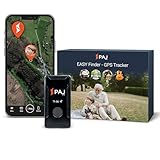
6. PAJ GPS Tracker for Elderly with Dementia – Real-Time Outdoor Tracking
PAJ GPS Tracker for People with SOS Button for Emergency & Voice Message
4G LTE real-time GPS
Up to 14-day battery
SOS button and voice messages
Waterproof global tracking
Pros
- Real-time location on app
- Up to 14 days per charge
- SOS button and two-way voice
- Waterproof for daily wear
Cons
- Requires cellular subscription
- Needs patient cooperation to carry
- Voice quality varies by signal
When a loved one with dementia leaves the house alone, every minute matters. The PAJ GPS Tracker uses 4G LTE cellular networks to broadcast real-time location to a smartphone app, so you can see exactly where they are on a map. The 14-day battery life is impressive for a tracker this size and means you are not charging it every night like a smartwatch.
The SOS button lets the wearer send an instant location ping to caregivers, and the two-way voice feature lets you speak to them directly through the device. For a patient who is confused and cannot explain where they are, hearing a familiar voice can calm them while you drive to the location shown on your app.
The 4.3-star average across 81 reviews reflects a solid product still building its reputation. Reviewers highlight the accuracy of the GPS positioning and the convenience of the voice messaging. The main complaints center on the required monthly cellular subscription, which is standard for any 4G tracker but adds to the long-term cost.
Waterproofing means the tracker survives rain and handwashing, though you would not want to submerge it. The compact size lets you attach it to a belt, keychain, lanyard, or even sew it into a jacket pocket for patients who resist visible devices.
Best For Patients Who Walk Away From Home
If your loved one has a history of leaving the house and getting lost, a GPS tracker is the only product category that lets you find them after they have left. Door alarms tell you they are leaving; GPS tells you where they went.
The PAJ is small enough to hide in a pocket or bag, which helps with patients who remove visible wearables. Some caregivers report success sewing a small pouch into a favorite jacket.
Geofencing and Alert Setup
The companion app supports geofencing, which means you draw a safe zone on the map and receive an alert the moment the tracker leaves that area. Set the zone to cover the home and immediate neighborhood, and you get an early warning before your loved one gets far.
Configure the SOS contact list with multiple family members so alerts reach whoever is closest. Test the voice feature during setup so everyone knows what to expect in a real emergency.
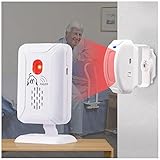
7. Nesthao Upgraded Bed Sensor Alarm – Motion-Based Bed Exit Detection
Upgraded Version Bed Sensor Alarm and Fall Prevention for Elderly/Dementia and More,Caregiver Pager Motion Sensor Alert with 5 Volume Level,Bed Alarm for Elderly Adults Wireless
Motion sensor bed alarm
5 volume levels
Wireless caregiver pager
Fall prevention for elderly
Pros
- Budget-friendly price
- 5 adjustable volume levels
- Wireless pager included
- 942 reviews at 4.5 stars
Cons
- Motion sensors can trigger false alarms
- Less brand recognition than Smart Caregiver
- Setup instructions occasionally unclear
The Nesthao takes a different approach to bed exit detection by using a motion sensor rather than a weight pad. The sensor watches for movement at the bedside and triggers the pager when it detects someone getting up. This design can catch patients who slide off a weight pad or sleep near the edge where pads lose sensitivity.
Five volume levels let you tune the alarm to your environment. A quiet chime works for light sleepers sharing a room, while the highest setting punches through walls for caregivers down the hall. That flexibility addresses one of the most common complaints about bed alarms in dementia forums, which is volume that is either too soft or too harsh.
The 4.5-star average across 942 reviews is genuinely impressive for a budget-tier device. Reviewers frequently mention the wireless pager reliability and the value for money. The brand is less established than Smart Caregiver or Lunderg, but the review volume suggests real-world satisfaction.
The risk with motion-based detection is false alarms from restless sleep. If your loved one tosses and turns aggressively, the sensor may interpret that as an exit attempt. Positioning the sensor carefully and adjusting sensitivity helps, but weight pads remain more accurate for pure bed-exit detection.
Best For Restless Sleepers Who Defeat Weight Pads
If your loved one consistently rolls off traditional weight pads and triggers false alarms, the motion sensor approach may work better. The sensor watches a broader area and does not depend on pad placement being perfect.
Combine it with a door alarm for layered protection so motion false alarms do not become the only line of defense.
Volume Tuning and Patient Comfort
The five volume levels are the standout feature for dementia care specifically. Loud alarms can agitate confused patients and trigger aggressive responses. Starting at the lowest effective volume protects both the patient’s peace of mind and the caregiver’s sleep quality.
Test each level during the day before relying on the lowest setting overnight, since hearing thresholds vary.
8. Flyoukki 120 DB Door and Window Open Alarm 3 Pack – Budget Door Coverage
120 DB Loud Door and Window Open Alarm Sensor 3 Pack for Kids, Dementia Patients Safety, Burglar Anti-Theft Wireless Security Alarms Keep Your Home, Pool, Cabinet, Business Safe
3-pack door and window alarms
120 dB loud siren
Wireless peel-and-stick install
Home security and dementia use
Pros
- Three alarms for under 20 dollars
- Simple peel-and-stick mounting
- 3
- 297 reviews at 4.3 stars
- Loud 120 dB siren
Cons
- Very loud alarm may distress patients
- No caregiver pager option
- Basic chime and alarm modes only
For families who need to cover three doors or windows without spending more than twenty dollars, the Flyoukki 3-pack is the value champion. Each unit is a magnetic contact alarm that sticks to any door or window frame with adhesive backing. When the two halves separate, the siren fires at 120 decibels, which is loud enough to wake anyone in the house.
The 3,297 reviews and 4.3-star average make this one of the most reviewed door alarms on Amazon. That volume of feedback gives me confidence that the product works reliably for its intended purpose. Forum posters specifically recommend positioning these sensors high on the door frame, out of reach and out of sight of dementia patients who might fiddle with them.
The trade-off is that 120 dB is genuinely loud. For dementia patients who startle easily or become agitated by sudden noise, this alarm may cause distress. Many caregivers use it in chime mode for daytime alerts and switch to alarm mode only at night. That dual-mode flexibility is a thoughtful touch on such an inexpensive device.
These are not connected to a pager, so the alarm sound itself is what alerts you. That works if you sleep within earshot, but it is not ideal for large homes or caregivers who sleep on a different floor.
Best For Covering Multiple Doors Inexpensively
If you are on a tight budget and need to alarm the front door, back door, and a basement or garage exit, the three-pack solves that problem for less than the cost of a single specialty dementia door alarm. The value here is hard to overstate for families already stretched thin by caregiving costs.
Chime Mode Versus Full Alarm Mode
Each unit has a chime mode that plays a pleasant ding-dong when the door opens, and an alarm mode that triggers the full 120 dB siren. Use chime mode during the day when you want to know about movement without startling your loved one. Switch to alarm mode overnight when you need maximum wake-up power.
The switch is on each unit, so you set the mode per door. A front door might stay in alarm mode while a patio door uses chime.
How to Choose Wander Prevention Systems for Dementia
Choosing the right wander prevention system starts with understanding where your loved one is in their dementia journey and which exits or behaviors worry you most. No single device covers every scenario, which is why most experienced caregivers build a layered plan combining bed alarms, door sensors, and GPS tracking. Here is how to think through the decision based on what our team learned from the research and from caregiver forums.
The first question is whether the primary risk is nighttime bed exits or daytime door elopement. If your loved one tries to leave the bed at 2 AM and you need warning before they stand, a bed exit alarm like the Lunderg or Smart Caregiver models is your foundation. If the danger is them walking out the front door during the day, door alarms from YisTech or Flyoukki take priority. Many homes need both.
Understanding the Four Core Technologies
Bed exit alarms use weight-sensing pads or motion sensors to detect when someone leaves the bed. They are the first line of defense for nighttime wandering. Door and window alarms use magnetic contact sensors to alert when an exit opens. Pressure mats sit on the floor and trigger when stepped on, useful for hallways between bedrooms and exterior doors. GPS trackers use cellular networks to report real-time location outdoors and are the only option for finding someone who has already left.
Each technology has blind spots. Bed alarms do not cover daytime wandering. Door alarms do not help if a window is left open. GPS trackers require the patient to carry the device and depend on cellular coverage. Layering two or three technologies closes those gaps.
Loud Alarms and Dementia Patient Sensitivity
One of the most repeated points in caregiver forums is that loud alarms can distress or agitate dementia patients. A 120 dB siren that startles a healthy adult can trigger confusion, fear, or aggressive behavior in someone with cognitive impairment. The black door mat trick, where patients perceive a dark mat as a hole and avoid stepping on it, is one low-tech alternative that some families pair with audible alarms.
Look for systems with silent pager modes or adjustable volume like the Lunderg, Nesthao, and YisTech. Save the loudest alarms for situations where you genuinely need to wake a sleeping caregiver on another floor, and consider chime modes for daytime when the patient is awake and easily startled.
Wearability and Patient Cooperation
Wearable devices like the SecuLife wristband and PAJ GPS tracker only work if the patient keeps them on. Dementia patients frequently remove devices because they forget why they need them or find them uncomfortable. Forum caregivers share strategies like choosing a wristband form factor over ankle straps, sewing GPS trackers into jacket linings, and pairing wearables with consistent daily reminders.
If your loved one resists wearables, prioritize bed pads and door sensors that do not require patient cooperation. These work invisibly in the environment and cannot be removed.
Setup Difficulty and Installation
Most of the products in this guide are designed for DIY installation. Door alarms use adhesive backing and pair in minutes. Bed pads sit under fitted sheets and plug into a pager or alarm unit. GPS trackers require app setup and cellular activation, which adds about 20 minutes of configuration. None of these systems require professional installation, which keeps costs down.
If you are not comfortable with smartphone apps, skip the GPS trackers and stick with pager-based bed and door alarms that operate independently of Wi-Fi and apps.
Cost Structure: One-Time Versus Subscription
Bed alarms, door sensors, and motion detectors are one-time purchases with no ongoing fees. The SecuLife wristband also avoids monthly monitoring fees by routing alerts to family. GPS trackers like the PAJ require a monthly cellular subscription to transmit location data, which adds up over years of use. Factor the subscription into your budget when comparing total cost of ownership.
Some families start with a one-time door and bed alarm combination, then add a GPS tracker later if outdoor wandering becomes a concern. This staged approach controls costs while building coverage as the disease progresses.
FAQs
Why do people with Alzheimer’s wander at night?
People with Alzheimer’s wander at night due to disrupted sleep-wake cycles, sundowning confusion that worsens in late afternoon and evening, unmet physical needs like hunger or bathroom trips, medication side effects, and the brain’s decreasing ability to distinguish between day and night. Nighttime wandering is common in mid-stage dementia and often reflects disorientation rather than intentional behavior.
What is the best tracking device for elderly with dementia?
The best tracking device depends on whether you need indoor or outdoor coverage. For outdoor tracking, the PAJ GPS Tracker provides real-time 4G LTE location with a 14-day battery and SOS button. For indoor safety, bed exit alarms like the Lunderg and door alarms like the YisTech multi-sensor kit alert caregivers before the person leaves the home. Many families layer a GPS tracker with door and bed alarms for complete coverage.
What is the 90 second rule for dementia?
The 90 second rule suggests that when a person with dementia becomes agitated or asks a repeated question, caregivers should pause for 90 seconds before responding. This brief delay gives the patient time to process, reduces reactive arguments, and helps the caregiver respond calmly. It is a communication strategy rather than a safety device, but it complements wander prevention by reducing the confusion and agitation that often trigger wandering episodes.
How to prevent dementia patients from wandering?
Prevent wandering by layering multiple strategies: install door alarms on all exterior exits, use bed exit alarms for nighttime monitoring, disguise doors with murals or cloth panels, install motion-sensor lighting along exit paths, enroll in programs like MedicAlert Safe Return or Project Lifesaver, share photos with neighbors, remove triggers like coats and shoes near doors, and consider a GPS tracker for patients who have already wandered. Combining environmental modifications with electronic alerts provides the strongest protection.
Final Thoughts on the Best Wander Prevention Systems for Dementia
Wander prevention is not about finding one perfect device. It is about building a layered safety net that matches your loved one’s habits, your home’s layout, and the hours when you can and cannot watch them directly. Our Editor’s Choice, the Lunderg Wireless Early Alert Bed Alarm, earns its spot for the early-warning design and silent pager that protect both the patient’s dignity and the caregiver’s sleep. Pair it with the YisTech three-sensor door kit for daytime elopement coverage, and add the PAJ GPS Tracker if outdoor wandering is a real risk.
The best wander prevention systems for dementia in 2026 are the ones your family will actually use consistently. A door alarm that sits in the box helps no one. Start with the highest-risk exit or behavior, deploy a reliable device there, and expand your coverage as the disease progresses. Your loved one’s safety and your own peace of mind are worth the investment.