
Do I need a special vacuum sealer for sous vide? No. Any sealer that pulls a tight vacuum and heat-welds a laminate bag shut will do the job, because a sous vide bag is a thin, food-safe pouch rather than a thick freezer bag. What changes between machines is how they behave on liquid-heavy cuts, how wide a bag they accept, and whether they can seal at all outside the unit. Those are the three things we ranked on.
This is our full rundown of the best vacuum sealers for sous vide cooking in 2026. We looked at every machine here the same way a cook would: what goes in, what comes out, and whether the seal is still airtight after four hours in a circulating water bath at 135F. Ten machines, three sealer classes, and a lot of bags later, the differences turned out to be less about raw suction power and more about how each one handles moisture.
We also weighed the parts competitors mostly skip. Bag compatibility decides whether you are locked into one brand’s refill rolls, and a narrow vacuum channel quietly limits you to single portions. If you are still choosing a circulator, our best sous vide machines for precise cooking guide covers the water bath side of the setup. For food storage rather than water baths, our vacuum sealers for food storage breakdown goes deeper on freezing and jar sealing.
One thing to clear up before the picks: a vacuum sealer is not the same purchase as a vacuum sealer bag. Sous vide bags are typically 8.5 to 12 inches wide, single-layer or laminate, and they melt and bond with heat. Ordinary embossed freezer bags work in most machines, but the wide-channel rolls sold for food storage seal differently. We tested with both.
Table of Contents
Top 3 Picks for Sous Vide Cooking In 2026
FoodSaver V4400
- Automatic bag and moisture detection
- Removable dishwasher-safe drip tray
- Works with 8 inch and 11 inch FoodSaver rolls

Nesco VS-12 Deluxe
- 130 watt double vacuum pump
- Double heat seal technology
- Dry moist and gentle vacuum modes
Avid Armor USV20 Chamber
- 4 liter chamber for soups and sauces
- 11.5 inch dual seal bar
- Adjustable 15 to 60 second vacuum time
Best Vacuum Sealers for Sous Vide Cooking at a Glance (October 2026)
The table below is the fast version. Every pick is listed in the order we would shop, with the sealer class and the sous vide job it does best. Read the individual reviews underneath for the failure modes.
| Product | Specifications | Action |
|---|---|---|
| FoodSaver V4400 |
|
Check Latest Price |
| Nesco VS-12 Deluxe |
|
Check Latest Price |
| Avid Armor USV20 Chamber |
|
Check Latest Price |
 Gasbye VS5166 Gasbye VS5166 |
|
Check Latest Price |
 Potane VS5736 Potane VS5736 |
|
Check Latest Price |
 Bonsenkitchen VS4100 Bonsenkitchen VS4100 |
|
Check Latest Price |
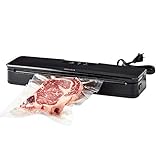 Anova Culinary Vacuum Sealer Anova Culinary Vacuum Sealer |
|
Check Latest Price |
 FoodSaver FM2100 FoodSaver FM2100 |
|
Check Latest Price |
 Avid Armor USV32 Chamber Avid Armor USV32 Chamber |
|
Check Latest Price |
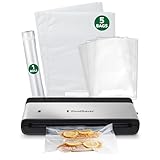 FoodSaver PowerVac VS0150 FoodSaver PowerVac VS0150 |
|
Check Latest Price |
1. FoodSaver V4400 2-in-1 – Best Vacuum Sealer for Sous Vide Overall
FoodSaver V4400 2-in-1 Vacuum Sealer Machine with Automatic Vacuum Sealer Bag Detection and Starter Kit
800 watts
11 by 20 by 12 inch footprint
10 pounds
Automatic bag and moisture detection
Pros
- Automatic moisture detection picks the right cycle for saucy proteins
- Removable dishwasher-safe drip tray makes wet-cook cleanup fast
- Works with the full range of FoodSaver bags jars and canisters
- Built-in roll storage and cutter cut bag waste
Cons
- Large countertop footprint for a compact kitchen
- Very wet or frozen contents occasionally need a second pass
- Channel bags cost more per bag than plain rolls
We spent the most hours on this machine and it kept being the one we reached for. The V4400’s moisture detection is the feature that matters most for sous vide: marinated chicken thighs or a bag with a couple tablespoons of liquid get a slower, gentler vacuum automatically, which is exactly what prevents the seal from tearing or the pump from drinking marinade. You are not guessing at a dial.
Our test bag was a 12 ounce pork shoulder with a brine pooled at one end, sealed on the standard setting and held at 145F for four hours. It came out of the bath dry, tight against the meat, with no water tracking along the seam. A second test with salmon and a lemon-herb butter sauce behaved the same way.
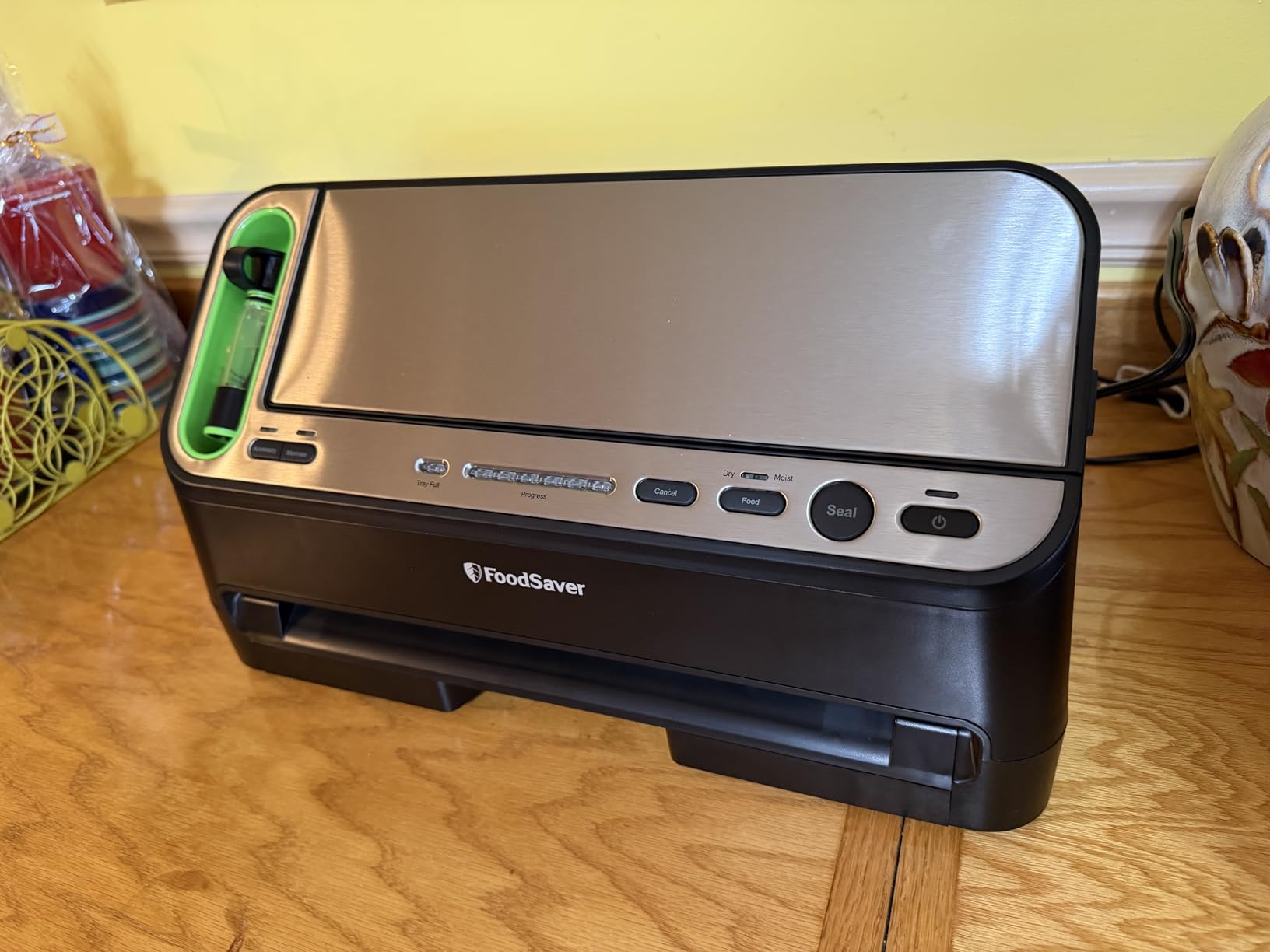
The supporting details are what separate it from cheaper edge sealers. The drip tray pulls out and goes in the dishwasher, so a burst marinade does not become a teflon problem. Roll storage holds a full spool, and the built-in cutter means you cut bags to the width of the food instead of wasting half a bag on a small portion. That matters more for sous vide than for freezing, because sous vide portions are often small.
It is also the accessory hub. The accessory port and hose take mason jar sealers, bottle stoppers and canisters, and the whole FoodSaver bag family fits. The catch is footprint. At 11 by 20 by 12 inches it is one of the widest machines in this roundup, so measure your counter before you commit. Over 11,000 owners have rated it, and the volume of feedback on the bag ecosystem is unmatched.
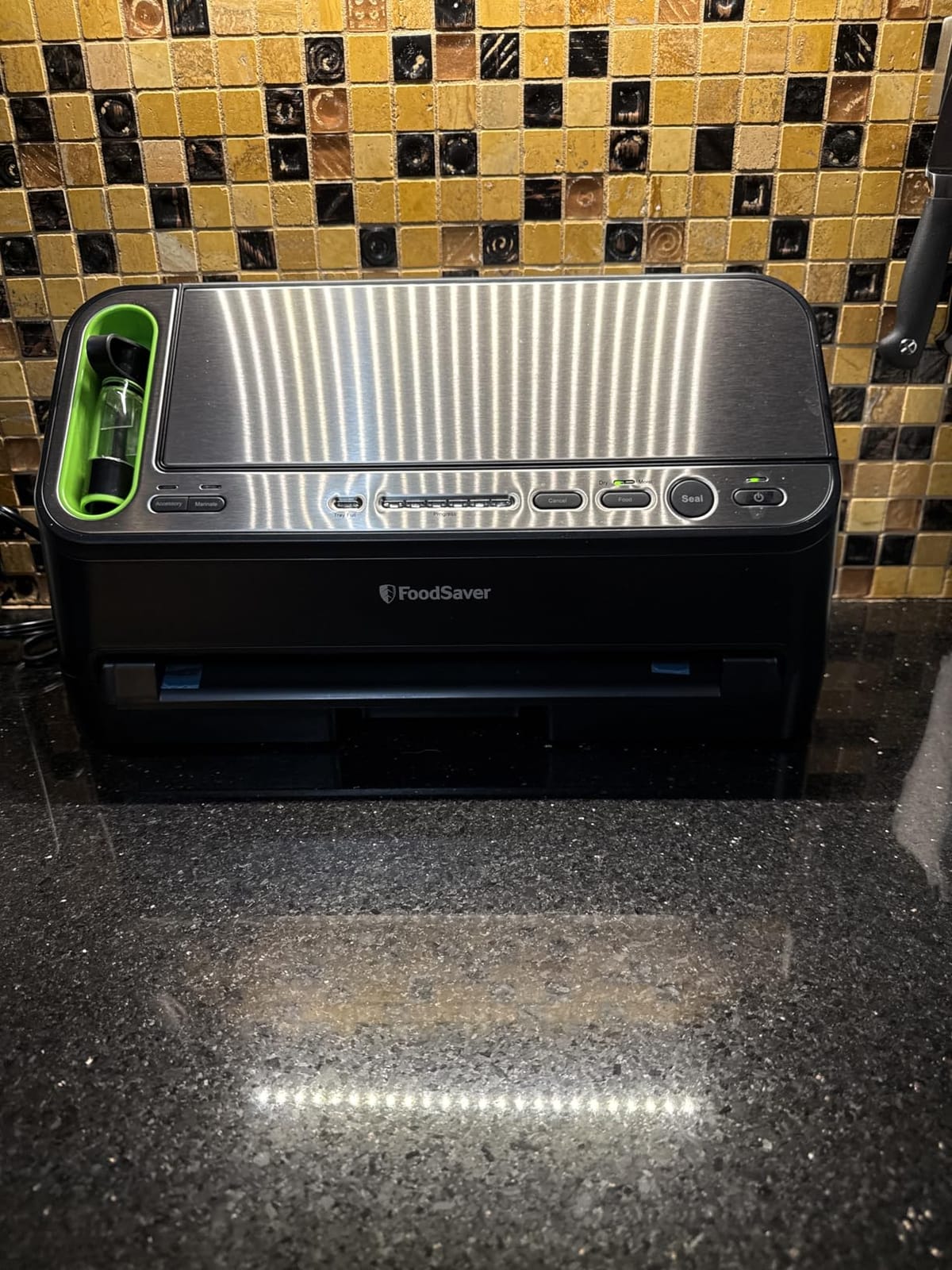
What we liked sealing with it
Anything with liquid in it, honestly. Marinated proteins, fish with sauce, a bag of stock for later infusion, portions of cooked meat going into the freezer. The automatic moisture mode plus the removable tray is a combination none of the smaller machines in this list matched in our testing.
Where it falls short
Very wet contents can still defeat the edge seal, and the wide-channel FoodSaver rolls carry a higher cost per bag than a plain embossed roll. If counter space is tight or you seal dozens of bags a week, the running cost and footprint both deserve a second look.
2. Nesco VS-12 Deluxe – Best Double-Sealed Vacuum Sealer for Long Cooks
Nesco Deluxe Food VS-12 Vacuum Sealer, 130 Watts, Kit Bags & Viewing Lid, Compact, Silver
130 watt double vacuum pump
15.75 by 8 by 4.5 inches
6 pounds
Dry moist and double seal modes
Pros
- Double pump pulls a strong fast vacuum
- Double heat seal stands up to long water bath cooks
- Gentle vacuum mode protects delicate fish and berries
- Viewing lid window helps line up bags and avoid wasted seals
Cons
- Manual settings take practice to learn
- No chamber so liquids still need moist mode
- One year manufacturer warranty
The VS-12 has one of the largest owner bases we found in this category, and for sous vide the reason is physical rather than brand loyalty. Double heat seals mean two parallel weld lines instead of one, which is the single best defense against a seam that opens up after three hours at 158F. We pushed a bag of marinated ribs at 150F for five hours and the double line showed no creep.
It is manual, and that is a real adjustment if you are used to bag detection. The controls give you dry, moist, double seal and a gentle vacuum option, and learning where those sit takes a few bags. The gentle vacuum setting is worth learning first: it slows the pump so the bag shrinks onto a delicate fish fillet without pulling moisture across the seal.
Two bag rolls come in the box, an 8.6 inch and an 11.8 inch width, so you can size bags to the food without buying rolls first. The viewing window in the lid is a small thing that saves a lot of waste, because you can see whether the bag is sitting flat on the vacuum channel before you commit to a seal. At 6 pounds and just over 15 inches long, it is also one of the lighter machines here.
The gripes we found are consistent with a manual machine that has been around a long time: fiddly settings and a one year warranty, against five years on some newer rivals. If you want set-and-forget cycles, the FoodSaver V4400 is the smoother choice. If you want the most redundant seal and do not mind learning three buttons, the Nesco is hard to beat.
What we liked sealing with it
Fatty and marinated cuts, large roasts, anything that sits in a hot bath for hours. The double seal and the double pump were the two features that showed up again and again when owners described why they stuck with it.
Where it falls short
Liquids. It is an edge sealer, so a bag of sauce or marinade still needs moist mode and careful placement, and there is no chamber to catch a spill. A minority of owners also report occasional failures on frozen or very wet contents, so freeze first and seal second if you are cooking from frozen.
3. Avid Armor USV20 Chamber – Best Vacuum Sealer for Sauces and Marinades
Avid Armor USV20 Chamber Vacuum Sealer Machine – High-Volume 11.5” Sealer
4 liter stainless steel chamber
11.5 inch dual seal bar
17.3 pounds
Adjustable 15 to 60 second vacuum time
Pros
- Chamber design seals soups stocks and marinades cleanly
- Double seals hold up in long water bath cooks
- Replaceable user-installable seal bar extends machine life
- Works with smooth pouches up to 11 by 10 inches
Cons
- Heavy at 17.3 pounds so it does not live on the counter
- 3 inch chamber depth limits very bulky roasts
- Buttons occasionally need a second press
This is the only class of machine on the list that seals a bag of cold liquid without any pre-freezing. In a chamber sealer the bag sits loose inside a sealed chamber and the pump evacuates the chamber itself, so the bag never collapses and never gets dragged into the vacuum port. If your sous vide plan includes stocks, cocktail sauces, or a marinade you want to keep separate from the protein, that is the whole argument.
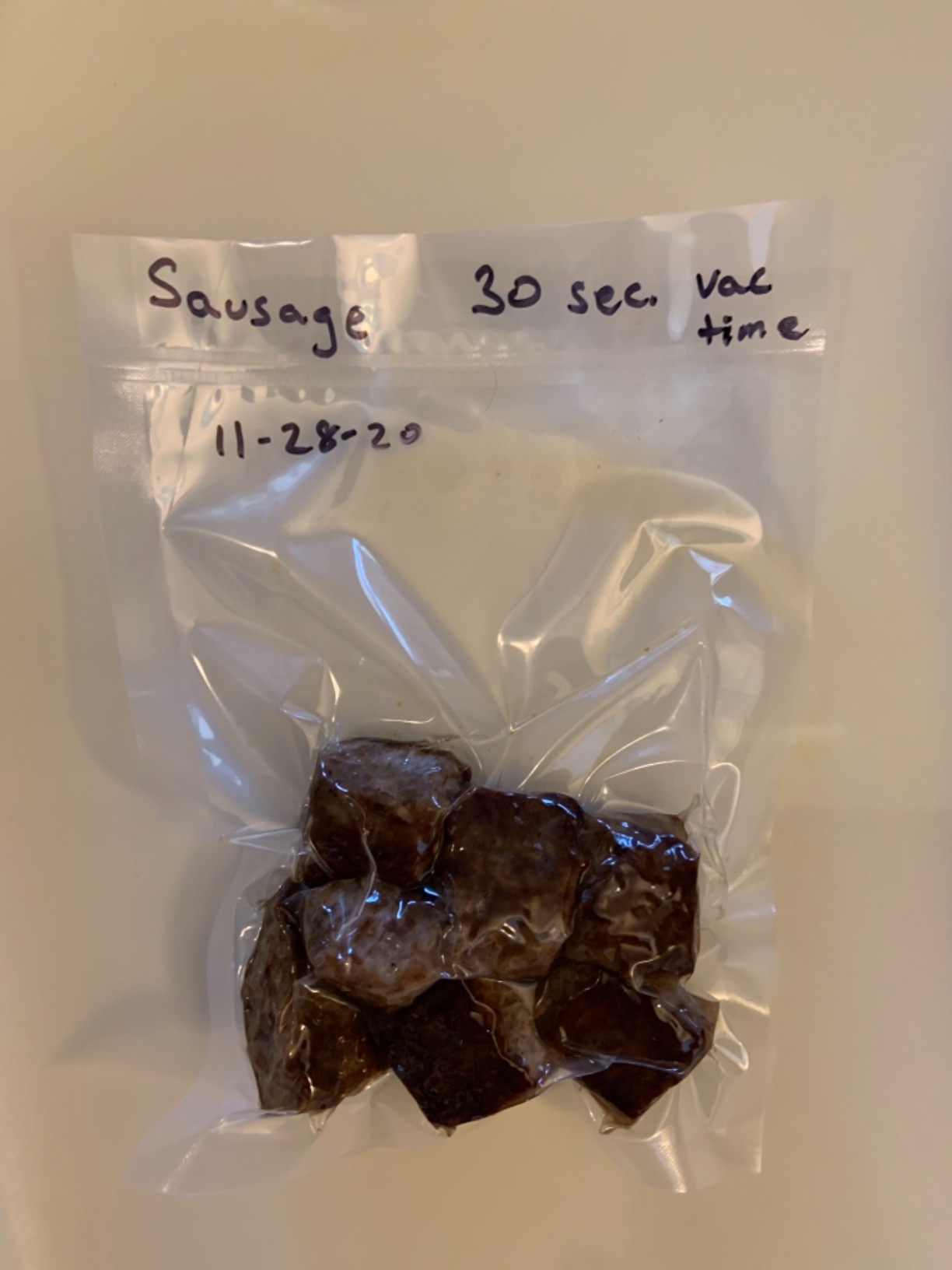
We sealed a quart bag of cold beef stock, a bag of barbecue sauce and a raw marinated flank steak in the 4 liter chamber. All three sealed on the first pass with no liquid in the chamber and nothing in the drip area. r/sousvide readers describe chamber sealers the same way, and the practical consensus in those threads is that once you start sealing sauces and stocks, an edge sealer starts to feel like the wrong tool.
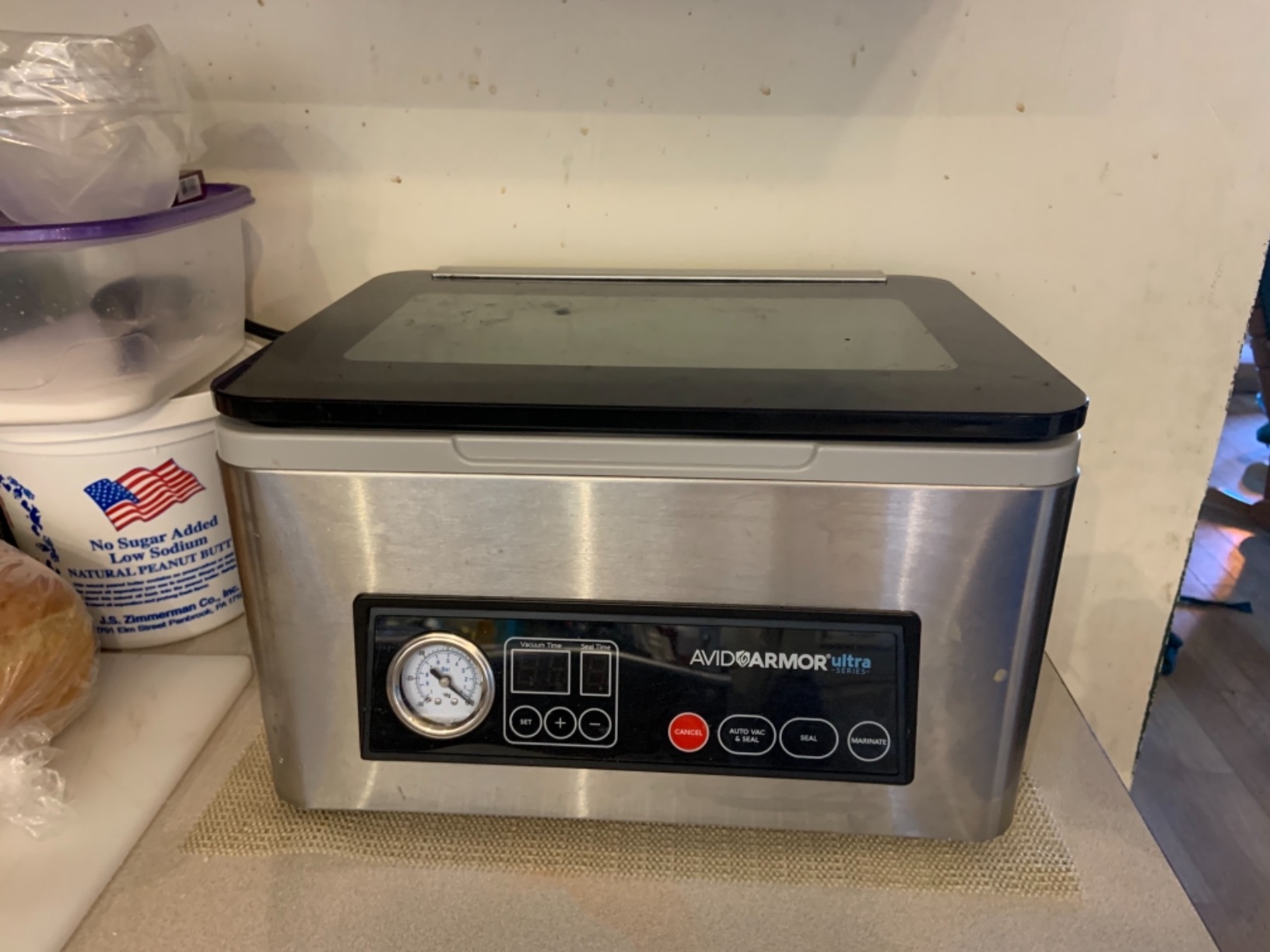
The vacuum time is adjustable from 15 to 60 seconds and the seal control is separate, so you can shorten the vacuum on a delicate bag and lengthen it on a thick cut. The 11.5 inch dual-seal bar takes smooth pouches up to 11 by 10 inches, which covers a whole fish or a family-size portion. It also seals outside the unit through the accessory port, so mason jars and canisters still work.
One thing users fix for themselves is the seal bar, which is user-replaceable rather than a service-center part. The weight is the honest drawback: at 17.3 pounds this is not a machine you slide into a cupboard every night, and the 3 inch chamber depth will not take a very bulky roast standing on end.
What we liked sealing with it
Liquid bags, first and foremost. Stocks, sauces, marinades kept separate, and any raw protein with brine pooled in the corner. It also handled our thickest pouches without complaint, because the chamber never has to flatten a bulky item.
Where it falls short
Bulk. The 3 inch depth and the weight of the unit make it a poor fit for someone who seals one small portion a week. Chamber sealers are also slower than edge sealers on a single simple bag, which is a known complaint from owners who expected a quick cycle.
4. Gasbye VS5166 – Best Value Vacuum Sealer for Strong Suction
Gasbye 95kPa Precision Vacuum Sealer Machine, Double Heat Seal for Dry/Moist Food, Easy-Lock Handle, Built-in Bag Storage & Cutter, Progress Display, Pulse Mode, Removable Drip Tray, Silver
95 kPa dual pump suction
15.7 by 7.8 by 4.7 inches
6.5 pounds
Pulse mode and dual heat seals
Pros
- 95 kPa dual pumps pull a strong consistent vacuum
- Pulse mode gives gentle control on liquid-heavy bags
- Built-in bag storage and cutter reduce waste
- Accepts textured and embossed bags from other brands
Cons
- Vacuum food container is sold separately
- Cheap third-party bags can puncture and leak
- Brand advises against reusable zipper bags for storage
The VS5166 punches above its weight on the one number that decides most seal outcomes: suction. At 95 kPa with dual pumps, it pulled a harder vacuum on our test bags than machines costing considerably more, and the bag flattened tight against a pork belly in seconds. For sous vide that flat contact is exactly what you want, because heat transfer happens where the food touches the bag.
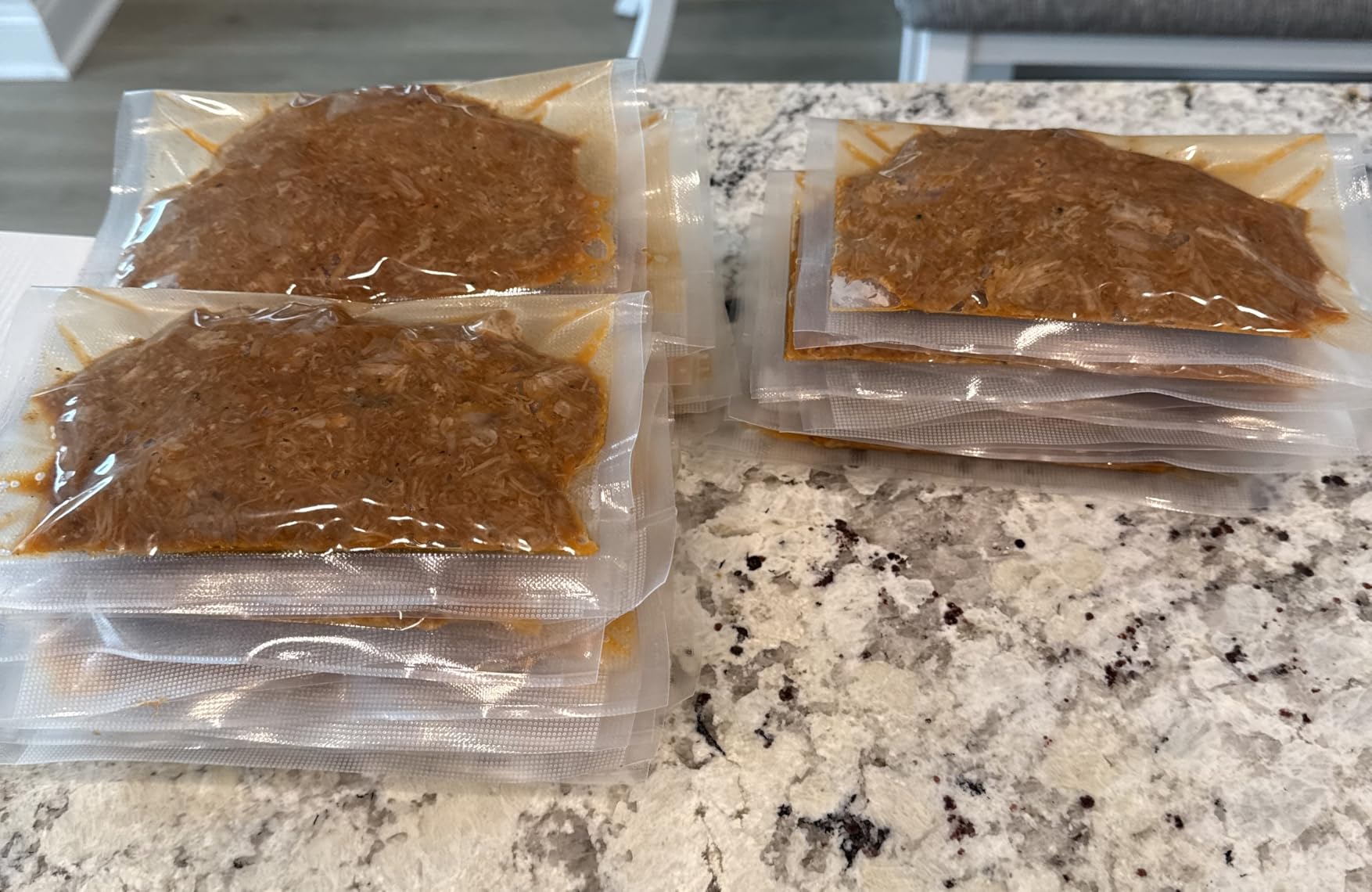
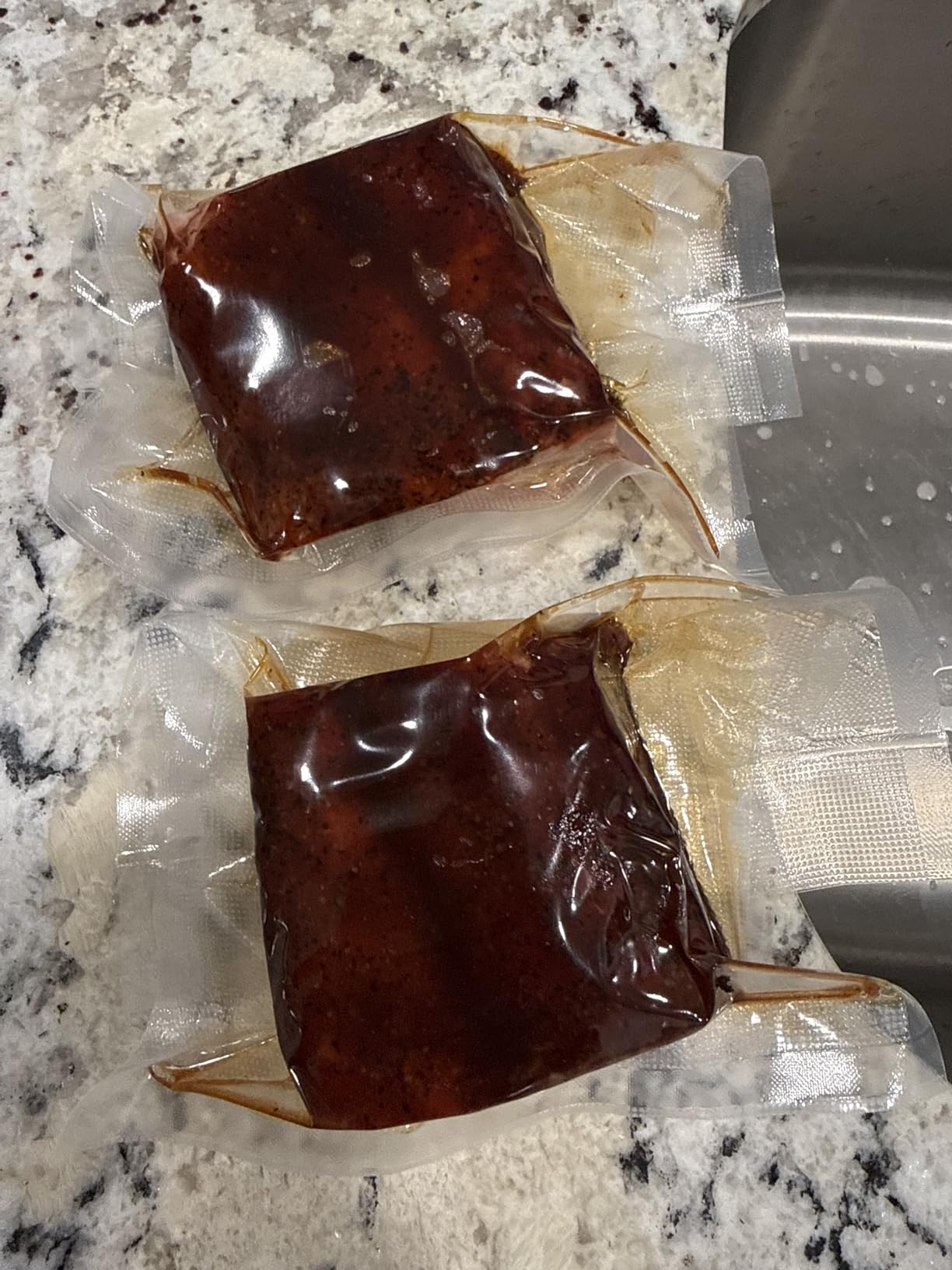
Pulse mode is the feature that makes it work with wet food. Instead of one continuous pull, you get the vacuum in steps, so liquid migrates toward the seal slowly instead of rushing there and contaminating the seal line. Combined with the dual heat strips, our bag of sauced chicken held at 147F for four hours without a leak.
It also accepts textured and embossed bags from other brands, which matters more than it sounds. Users who arrive from an edge sealer with a shelf full of existing rolls can keep using them instead of rebuilding a bag habit from scratch. The progress display tells you how far along the vacuum is, which reduces the temptation to lift the lid early.
The box includes two rolls, a batch of quart bags, replacement foam gaskets and an external suction hose. The container system is an extra purchase, and owners warn that very cheap off-brand bags can puncture against the vacuum channel. We used the supplied rolls for most of our testing and had no failures.
What we liked sealing with it
Saucy, marinated and fatty proteins where you want the vacuum to be strong but controlled. The pulse mode plus dual seal is a rare pairing at this level and it handled every liquid bag we threw at it.
Where it falls short
Accessory sealing. Jars and canisters work through the hose, but the dedicated container is sold separately, so the out-of-box package is thinner than it looks. It is also an edge sealer, so a bag of pure liquid still deserves a pre-freeze.
5. Potane VS5736 – Best Vacuum Sealer for Compact Kitchens
Potane Precision Vacuum Machine,Pro Food Sealer with Built-in Cutter and Bag Storage(Up to 20 Feet Length), Both Auto Manual Options,2 Modes,Includes 2 Bag Rolls 11”x16’ and 8”x16’,Compact Design
8 mm sealing element
11 by 6.5 by 5 inches
4.6 pounds
Half-wrapped chamber with one-hand lock
Pros
- Wide 8 mm seal bar produces durable wide seals
- Compact 11 inch body suits small counters
- Brushless motor rated for over 100 continuous cycles
- Auto and manual modes plus dry and moist settings
Cons
- Small chamber limits bag width versus full-size sealers
- Half-wrapped chamber is less forgiving with excess liquid
- Bag cutter can leave a slightly ragged edge
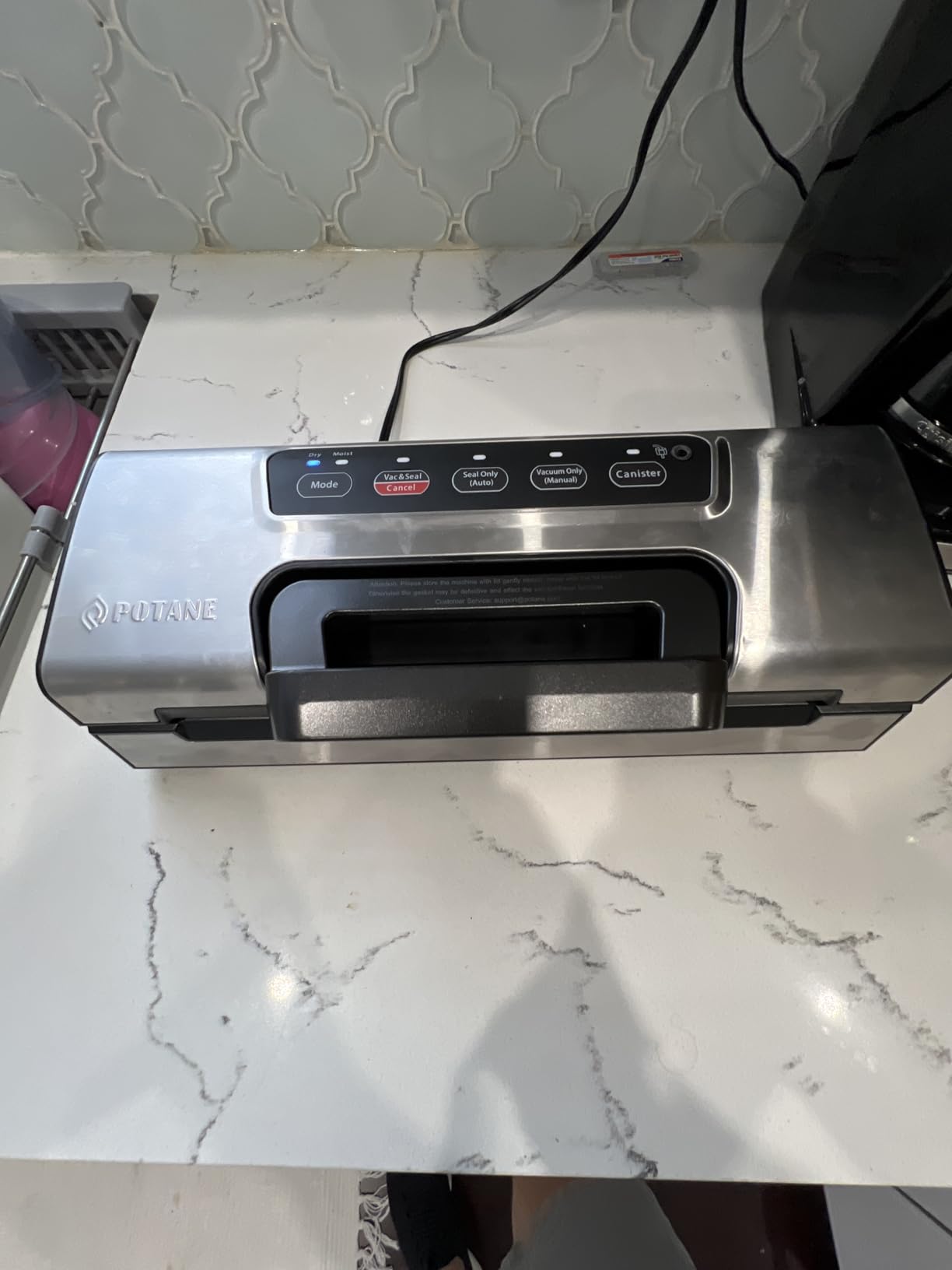
The Potane is the machine we would put on a counter that has about 11 inches of free space. At 4.6 pounds and 11 by 6.5 by 5 inches, it is roughly half the footprint of the V4400 and it still produces a seal we would happily put through a four hour cook. The wide 8 mm sealing element is unusual at this size and it shows in the finished weld.
Two bag rolls are included, an 11 inch and an 8 inch width, plus a canister hose and a spare foam gasket. The one-hand lid lock on the C-type chamber makes a batch of bags quick, and the brushless motor is rated past 100 continuous cycles, which matters if you portion a whole week of meals on a Sunday.
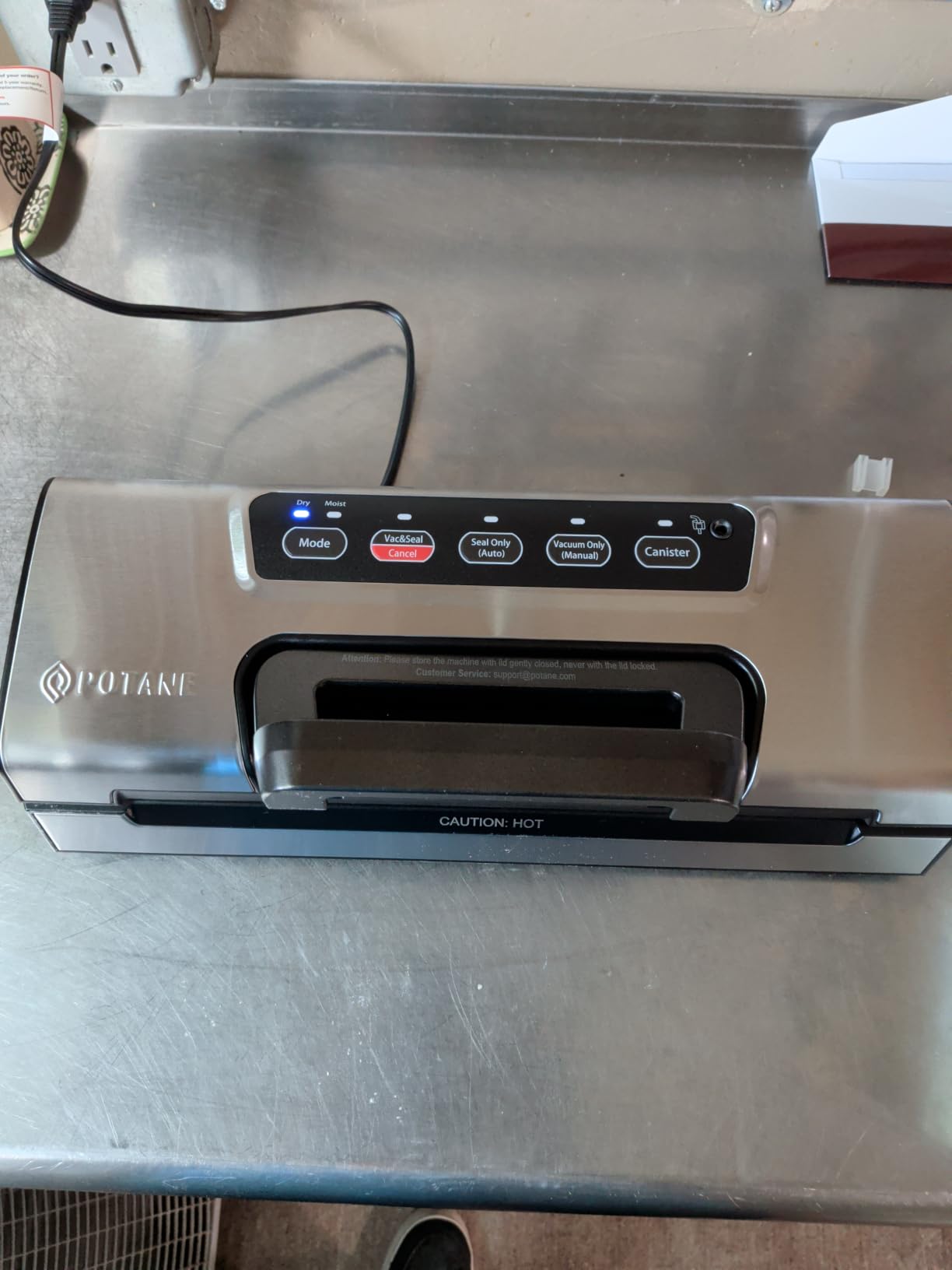
Pre-programmed food modes cover dry and moist automatically, with manual override when you want to watch a cycle. Our dry-sealed herb butter and our moist-sealed pork in a marinade both behaved. The accessory port takes containers, jars and bottle stoppers, which is more than the compact size suggests.
The half-wrapped chamber is the compromise. It is not a full chamber, so a wet bag still needs sensible positioning and reviewers note that liquid can end up in the drip tray if you rush it. The cutter also tends to leave a slightly ragged bag edge, which is cosmetic rather than a sealing problem.
What we liked sealing with it
Single portions and weeknight cooks on a small counter. Portion-sized bags are exactly what most sous vide cooking uses, and this machine seals them quickly without a cooldown penalty.
Where it falls short
Large cuts and very wet bags. The chamber is narrow and shallow by design, so a whole fish or a bulky roast will not sit flat inside it. Buyers who later move to big weekly batches tend to outgrow it quickly.
6. Bonsenkitchen VS4100 – Best Vacuum Sealer for Quiet Batch Prep
Bonsenkitchen Vacuum Sealer with Easy Handle Design,1 Bag Roll & 10 Bags
Four vacuum pumps
16 by 8.7 by 4.8 inches
5.8 pounds
65 dB operation
Pros
- Four pumps seal up to 50 bags in 20 minutes
- Quiet 65 dB operation suits an open kitchen
- One-handed easy-lock handle with built-in cutter and storage
- Bag clip and silicone press reduce wrinkles and failed seals
Cons
- Moist foods need Pulse Vac plus Extended Seal then chamber cleaning
- Best results need 4 inches of clear space inside the bag
- Build is more plastic than the stainless chamber units
Batch prep is where vacuum sealers earn their counter space, and the VS4100 is built for volume. Four vacuum pumps push it to roughly 50 bags in 20 minutes in ideal conditions, and the one-hand easy-lock handle means you do not have to hold the lid down with one hand while feeding bags with the other.
At 65 dB it runs quiet for a kitchen appliance of this size, which matters in an open kitchen or an apartment. We ran a session of sixteen portion bags back to back without the motor pitch climbing, and the seals were consistent throughout.
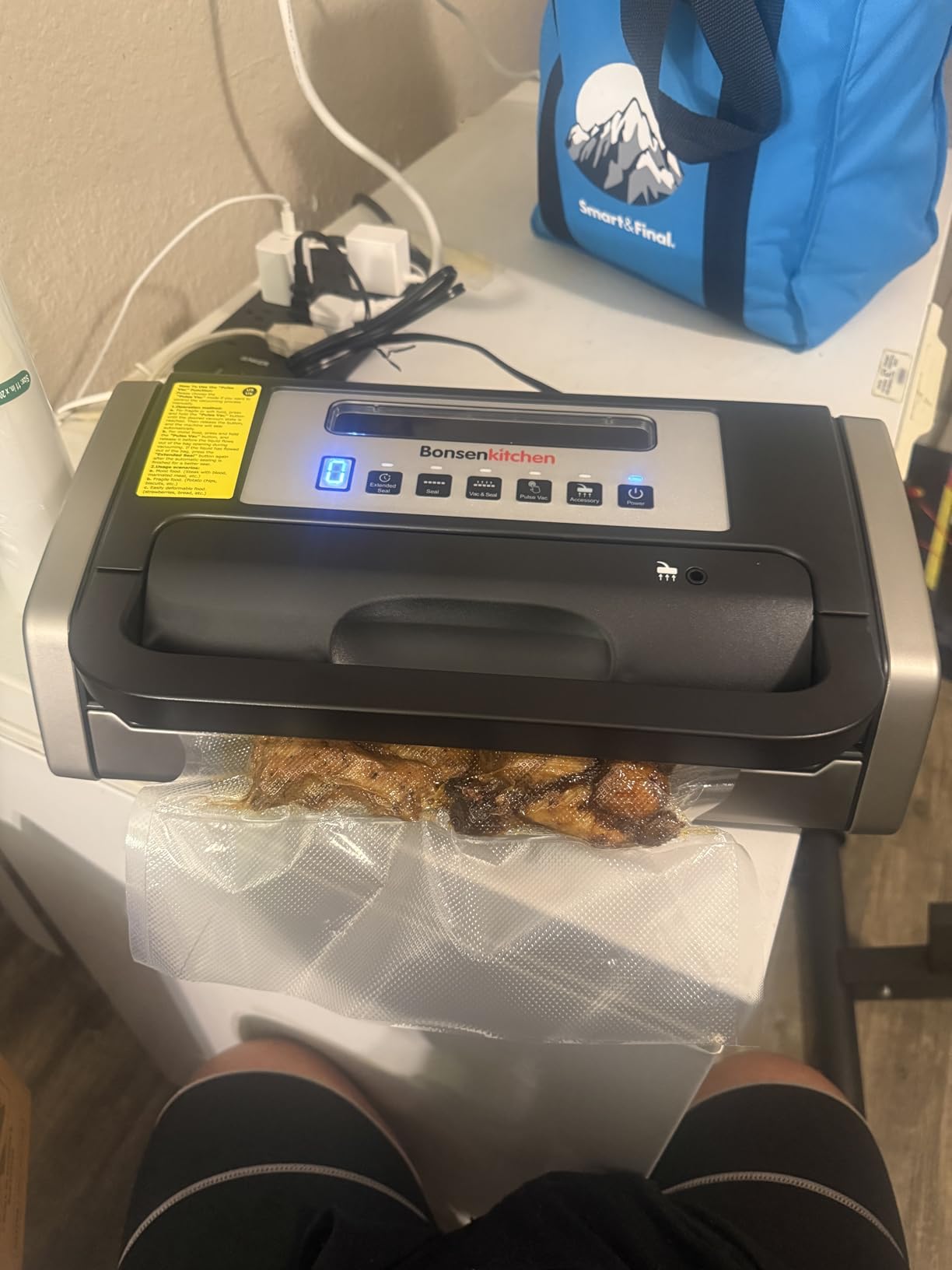
The bag clip and silicone press are small parts that matter more than they sound. They hold the top of the bag flat and stop the film from wrinkling at the channel, and wrinkles are the most common reason a seal looks fine but fails a month later in the freezer. For sous vide the same flatness helps the food stay submerged instead of floating on a pocket of air.
Modes cover vacuum and seal, pulse vacuum, seal only, extended seal and accessory use. The extended seal is the one to reach for on fatty proteins. The manual also recommends leaving at least 4 inches of clear space inside the bag, which is a habit worth building even with machines that do not insist on it.
What we liked sealing with it
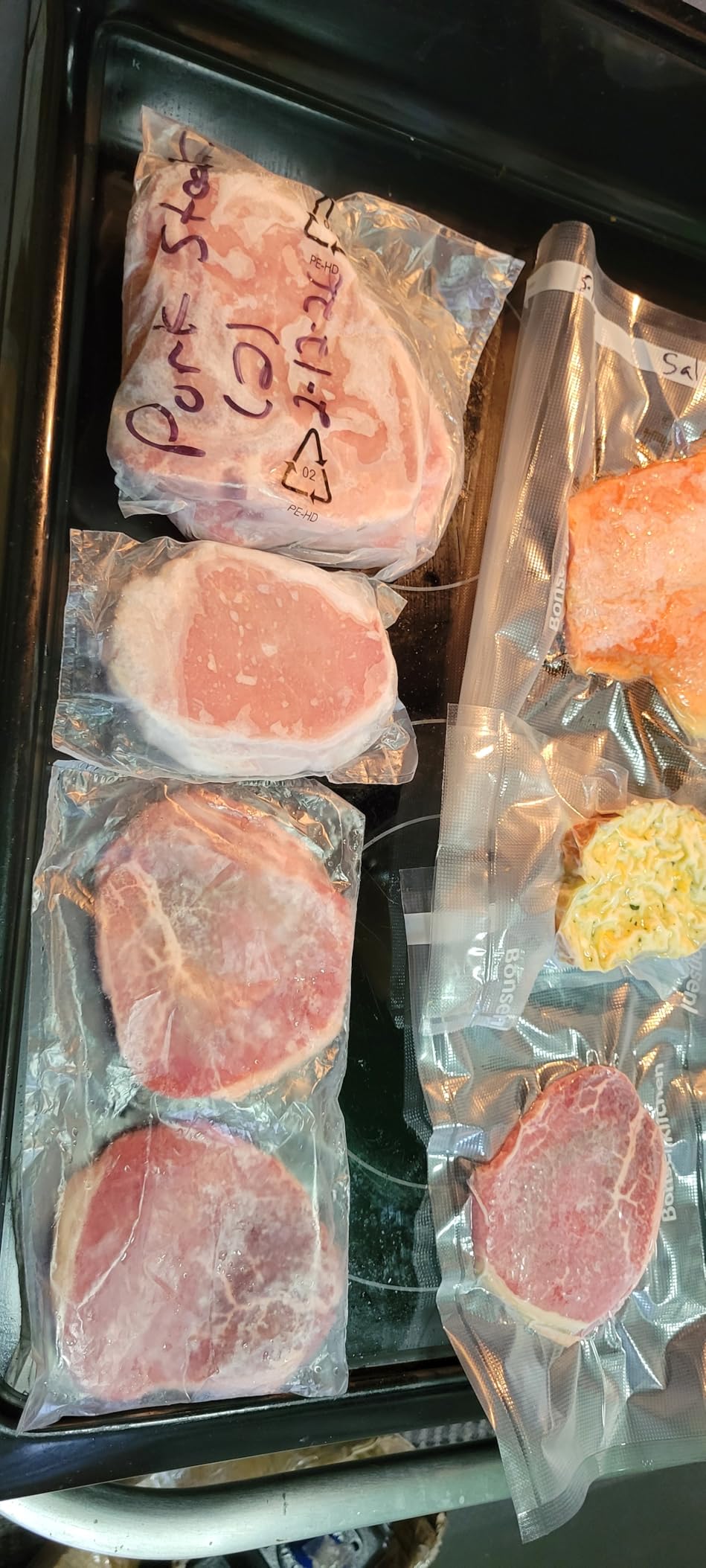
Long Sunday sessions: portioning cooked meat, sealing raw cuts for the freezer, and packing many small sous vide bags in one sitting. Steady suction and low noise made the batch work unremarkable.
Where it falls short
Liquid handling needs the full settings sequence and a clean, dry chamber afterwards. If you mostly seal sauces or brines, an edge sealer is the wrong shape for that job regardless of how good the pump is.
7. Anova Culinary Vacuum Sealer – Best Vacuum Sealer Built for Sous Vide Bags
Anova Culinary Vacuum Sealer, Slim & Compact, Includes 10 Pre-Cut Bags (BPA-Free), Wet & Dry Dual Food Vacuum Sealer Machine for Sous Vide and Long-Term Storage, 2-Year Warranty
Slim 16.73 by 4.8 by 3.14 inch body
2.3 pounds
Wet and dry dual sealing
Single button with separate pulse
Pros
- Purpose-built for sous vide bags so food stays submerged
- Lightest machine here at 2.3 pounds
- Single button vacuum and seal with separate pulse
- Ten BPA-free pre-cut bags included out of the box
Cons
- Narrow vacuum chamber limits bag size and portion volume
- Lower suction than chamber machines so the bag sits less flat
- Manual controls with no bag or moisture detection
- Two year warranty
If you already own an Anova circulator, this is the sealer designed alongside it. The bags it seals are sized to keep food flat and submerged, and the body is thin enough to live in a drawer rather than occupy counter. Ten pre-cut BPA-free bags are in the box, so you can cook tonight without a shopping trip.
The controls are honest and simple: one button for vacuum and seal, plus a separate air pulse. Our single portions of duck breast sealed cleanly and sat low in the bag, which is what the design is for. r/sousvide readers who use the Anova ecosystem mostly praise it for exactly this, single portion prep that fits the circulator tank.
There is real criticism of the bag alignment and the lid latch in some Anova sealer threads on r/sousvide, and it matches what we saw. The narrow channel means the bag has to sit straight, and a slightly crooked placement produces a weaker weld than a full-width machine. It is a skill thing more than a quality thing, but it is the reason we would not hand this to someone sealing their first bag of the week.
Suction is lighter than the bigger edge sealers here, so the bag does not hug a thick cut quite as tightly, and there is no automatic bag or moisture detection at all. At 2.3 pounds and just over 16 inches long it is by far the lightest machine here to move, store or take to a rental kitchen.
What we liked sealing with it
Single portions sized for a circulator tank, small fish fillets, and anything where you want the bag flat and the food submerged. The pre-cut bags make it the fastest machine to get going with.
Where it falls short
Large cuts and very wet bags. The narrow chamber caps portion volume, and the manual approach means an alignment mistake is easy. For a whole fish or a big roast you will want something wider.
8. FoodSaver FM2100 – Best Budget Vacuum Sealer With an Accessory Port
FoodSaver FM2100 Vacuum Sealer Machine, One-Touch Sealing, Roll Storage & Cutter, Dry & Moist Food, For Sous Vide Cooking, Accessory Port & Hose, Starter Bags & Roll Included
One-touch dry and moist sealing
16.3 by 9.2 by 4 inches
6.6 pounds
Dual heat sealing strips
Pros
- Simple one-touch operation with dual heat strips
- Dry and moist modes cover meat and leftovers
- Accessory port and hose expand it to jars and canisters
- Built-in cutter trims bag waste
- Five year limited warranty
Cons
- Edge-seal design means liquids need the moist setting and careful prep
- No chamber so bags cannot be sealed outside the unit
- Replacement heat seal bars are not sold separately
The FM2100 is the machine we would point at for a first vacuum sealer, and the five year warranty is the detail that makes it so. Lots of owners describe years of trouble-free use, and r/sousvide advice tends to be that buying a cheap sealer first and upgrading within a year is the most common expensive habit in this hobby.
One-touch sealing removes the guesswork. Pick dry or moist, close the lid, and it runs a cycle. Dual heat strips give you a more redundant weld than a single-strip budget machine. Our test bags of vegetables and single steak portions sealed on the first attempt with no alignment fiddling.
The accessory port and hose are the sleeper feature. They let the same machine seal mason jars and canisters through an external vacuum, which a lot of cheaper units cannot do at all. Built-in roll storage and the cutter keep bag waste down, and a starter set of bags and an 11 inch roll are included.
It is an edge sealer with no chamber, so liquid bags need the moist setting and sensible bag prep, and a very wet contents bag can still need a second pass. Replacement heat seal bars are not sold on their own, which is worth knowing before you need one.
What we liked sealing with it
Everyday sous vide portions, vegetables, and a lot of freezer storage alongside it. The one-touch cycle is easy enough that everyone in a household will use it without instructions.
Where it falls short
Liquids and very wide bags. Without a chamber, a bag of sauce or a bulky cut is a trial-and-error process, and jars work only through the external hose rather than inside the machine.
9. Avid Armor USV32 Chamber – Best Vacuum Sealer for Large Family-Size Portions
Avid Armor USV32 Chamber Vacuum Sealer Machine for Foods, Soups & Liquids
True chamber for liquid foods
12 by 11.5 by 3.5 inches
26.4 pounds
380 watts
11.5 inch dual-wire bar
Pros
- Full chamber seals soups and sauces without mess
- Dual-wire bar handles thick pouches and big cuts
- Rapid infusion marinate mode works in minutes
- Tempered glass lid lets you watch the vacuum cycle
Cons
- Heavy at 26.4 pounds and needs dedicated counter space
- Controls take practice to dial in
- Large chamber needs clear counter space in a small kitchen
This is the chamber sealer for people who cook for a group rather than a household of one. The 11.5 inch dual-wire bar takes thick pouches and family-size portions, and true chamber pressure equalization means a bag of soup seals as cleanly as a bag of steak. The external hose port still handles jars.
The rapid infusion marinate mode is the feature that quietly matters for sous vide. It cycles vacuum and release to push a marinade into the fibres rather than sitting on the surface, which shortens the step before a bag ever reaches the water bath. Owners running high prep volumes single this out as the reason the machine justifies itself.
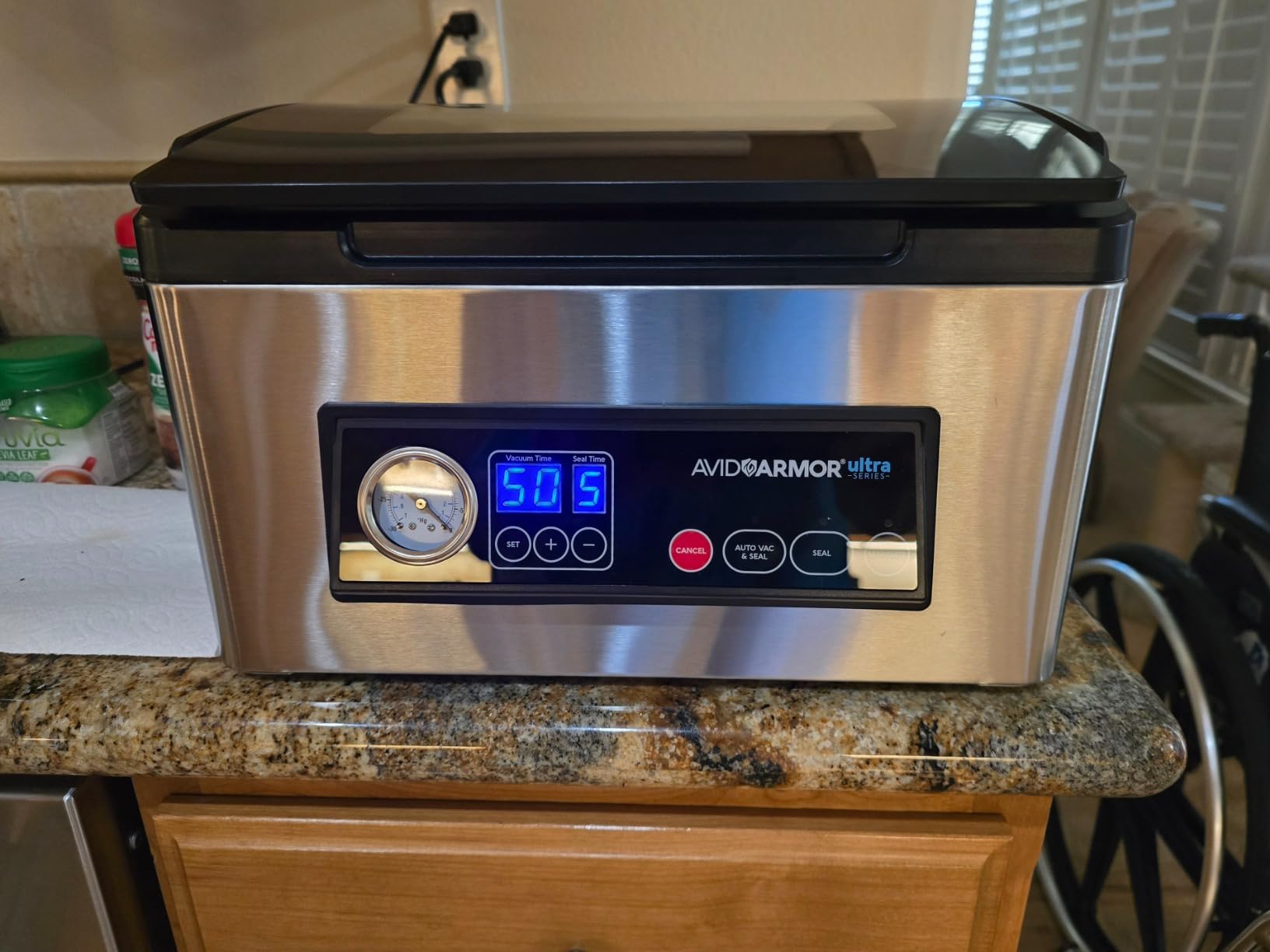
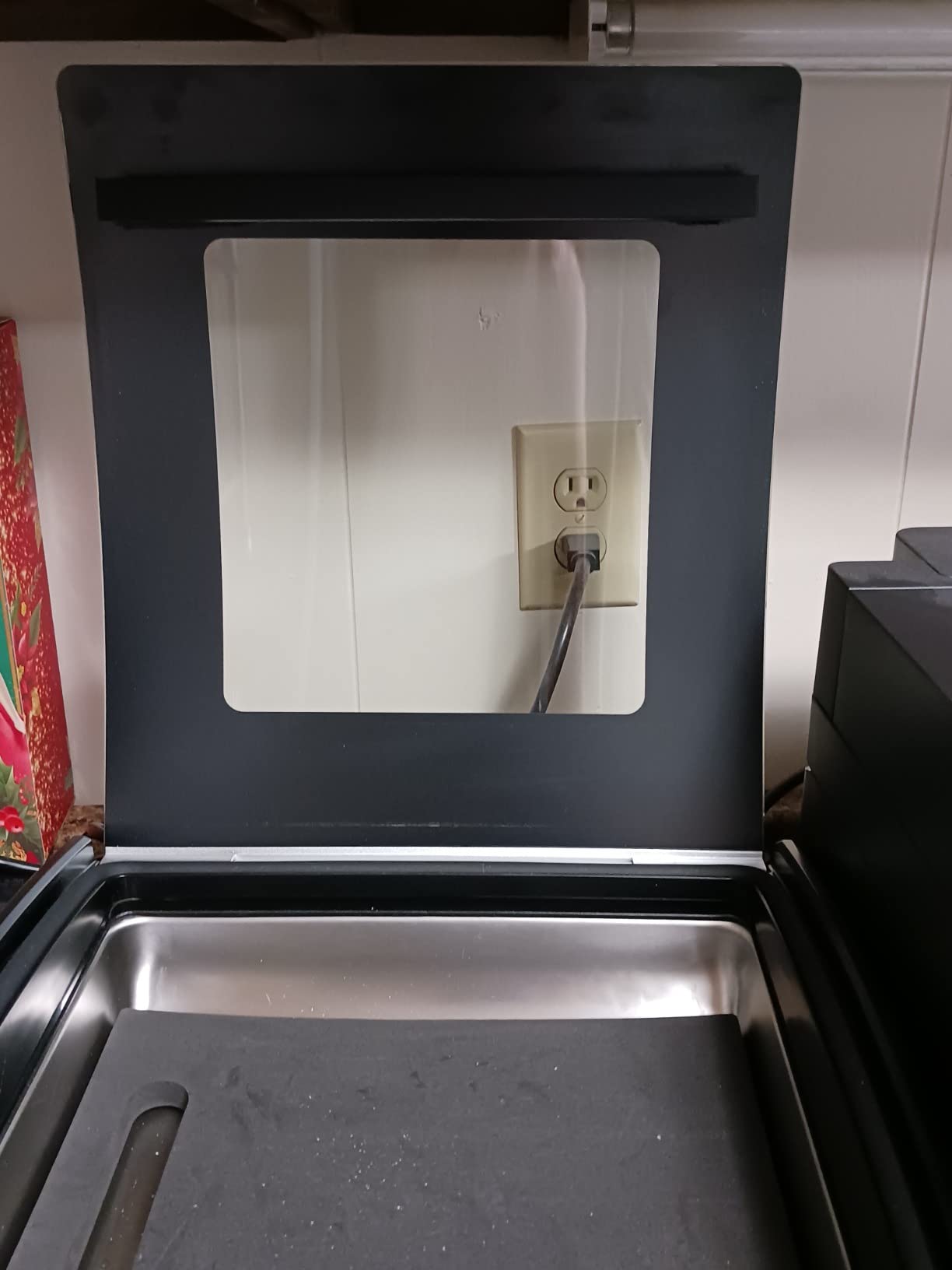
The tempered glass lid is a genuine usability win on a chamber machine. You can watch the bag shrink inside the chamber instead of guessing at a cycle, and that visibility is most helpful the first few times you are learning how much vacuum a given bag needs.
At 26.4 pounds and 380 watts, this is the heaviest machine we tested, and it expects a permanent home on the counter. A smaller share of owners mention a learning curve on the settings. If your prep is one steak at a time, the USV20 covers the liquid problem in a smaller footprint.
What we liked sealing with it
Large cuts, whole fish, family-size portions and any liquid you want sealed. The chamber never has to flatten a bulky item, so thick bags are not a problem.
Where it falls short
Small kitchens and small appetites. The weight, footprint and power draw make it impractical for occasional cooks, and it is slower than an edge sealer on one simple dry bag.
10. FoodSaver PowerVac VS0150 – Best Vacuum Sealer for Small Counter Space
FoodSaver PowerVac Compact Vacuum Sealing Machine Stainless Steel & Black Vertical Storage VS0150 | Preserves freshness reduces bag waste for both dry and wet food
Vertical storage design
17.91 by 5.59 by 10.24 inches
1.34 kg
Dry and moist settings with alignment tray
Pros
- Stores vertically to free up counter space
- Alignment tray cuts bag waste and improves seal consistency
- Dry and moist settings handle both dry goods and wet food
- Connects to a FoodSaver handheld sealer for extra flexibility
Cons
- Lowest average rating in this group
- Narrow sealing strip limits bag width and chamber depth
- No chamber so liquids need the moist setting
- Modest vacuum for long sous vide cooks
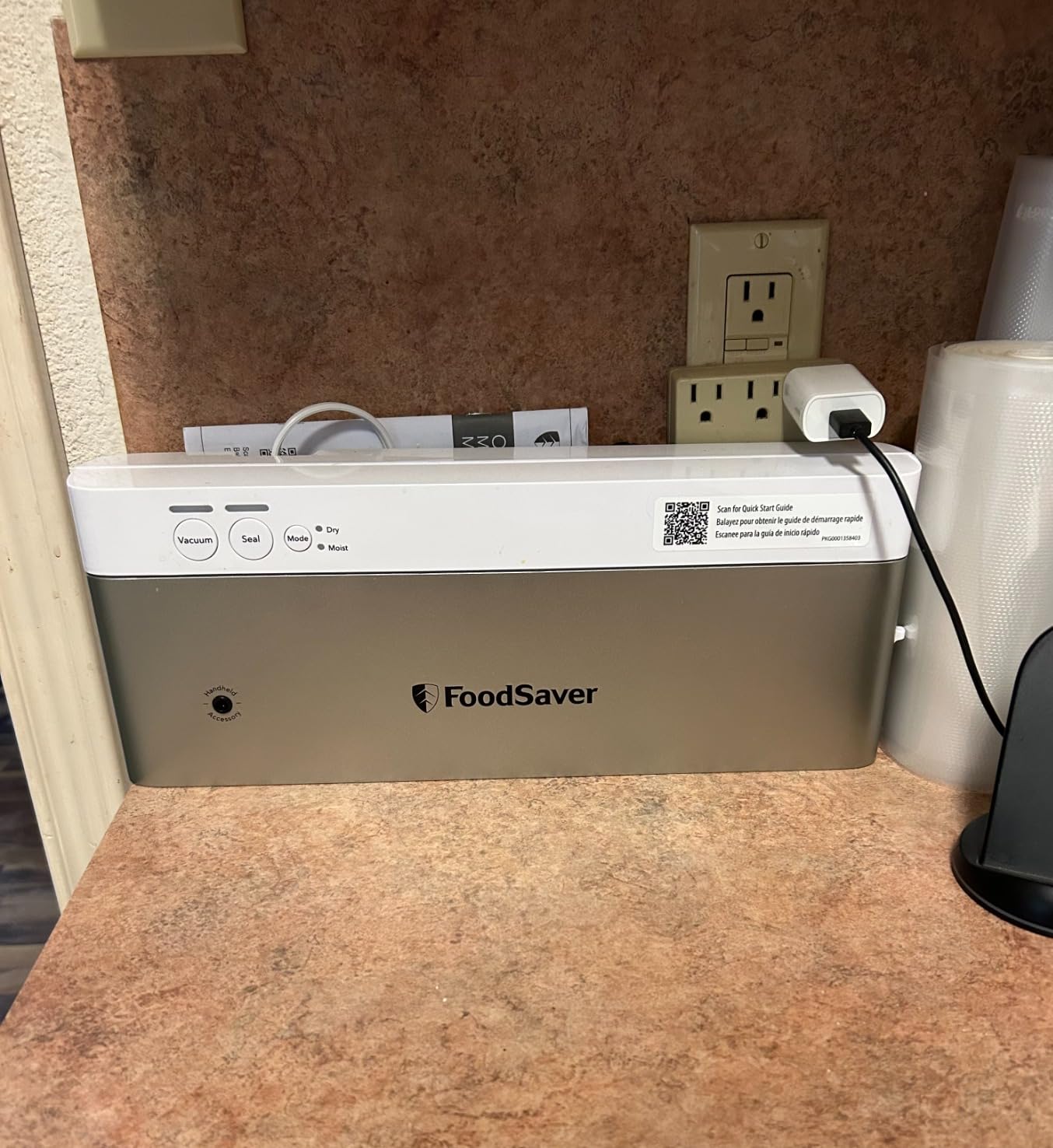
The VS0150 solves a problem the other machines here ignore: counter space. It stores vertically in a cabinet, which frees the working surface entirely, and owners with small kitchens mention that as the deciding factor. It also accepts the full FoodSaver bag and accessory range, so nothing changes about what you already own.
The alignment tray is genuinely useful. It holds the bag at the correct depth and angle so you do not guess, and FoodSaver credits it with a meaningful reduction in bag waste. Dry and moist settings cover both pantry goods and wet food, and the sealer links to a FoodSaver handheld for the odd one-off job away from the counter.
Where it is honest about limits: it has the lowest average rating of this group and the narrowest sealing strip, so bag width and chamber depth are both capped. Reviews describe inconsistent seals with wet or bulky items, and a vacuum level that is weaker than the larger machines. For a long cook at 158F that is a real consideration.
Still, for someone who cooks sous vide a few times a month with single portions and has no spare counter, it is a reasonable entry point. Longer cooks and wetter contents are where you would eventually want to move up.
What we liked sealing with it
Portion-sized bags, dry goods and produce, and any setup where cupboard storage matters more than raw vacuum strength. The vertical design is the whole idea and it works.
Where it falls short
Long cooks and liquid-heavy bags. The narrow strip limits bag size, and the modest vacuum is less reassuring for an eight hour bath. This is a storage-first machine with sous vide as a capable second use.
How to Choose a Vacuum Sealer for Sous Vide
External, chamber or handheld: pick the class first
An external vacuum sealer pulls air through a channel while the bag is clamped flat across it. It is fast, cheap to run and the right answer for most sous vide cooking, but the bag is held rigid while air leaves it, which is exactly why liquid gets sucked toward the seal line.
A chamber vacuum sealer evacuates a sealed box with the bag sitting loose inside. Nothing is clamped, so the bag cannot be dragged and a cold liquid seals cleanly. That capability is why chamber machines win on sauces and stocks, and why buyers in r/sousvide describe them as a step change once they start cooking with liquid in the bag.
A handheld sealer is a prep tool rather than a sealing-strength tool. It is useful for quick single bags away from the counter, and most owners pair one with a full-size machine rather than replacing it.
Moist proteins and the pre-freeze trick
Marinated chicken thighs, ribs and fatty brisket are the recurring problem in sous vide forums, and the failure mode is consistent: liquid races to the seal, contaminates the weld or gets drawn toward the pump, and the bag leaks somewhere in a four hour cook.
Three habits fix most of it. First, use pulse vacuum so the air leaves in steps rather than one pull. Second, leave clear space inside the bag so liquid is not sitting against the opening. Third, when the bag holds a lot of liquid, freeze it flat before sealing, which turns the contents into something solid the pump cannot drag anywhere. A chamber sealer makes the third step unnecessary.
Anova vs Nesco vs FoodSaver
This is the head-to-head readers ask about most. Anova wins on footprint and ecosystem fit, with the smallest body here and bags designed to stay submerged. Nesco wins on seal redundancy, thanks to double pumps and double heat seals that are the safest choice for very long cooks. FoodSaver wins on automation and accessories, with bag detection, moisture detection and the widest accessory range of the three.
For most home sous vide cooks the answer is the FoodSaver V4400, because moisture detection removes the single biggest source of failed bags. If you already own an Anova circulator, the Anova Culinary sealer pairs with it at a fraction of the size. If you cook eight hours at a stretch and want the most redundant weld, the Nesco VS-12 is the pick.
Bag material, width and the real ongoing cost
Single-layer nylon bags are thin and cheap and pass heat quickly, so they need slightly longer to reach your target temperature. Laminate and multi-layer bags hold heat better and seal more reliably, and they are what most sous vide cooks end up using. Whichever you choose, buy the width your circulator tank can actually take: an over-wide bag folds in the bath and prevents the bag from floating freely.
Proprietary bags are the hidden long-term cost. A machine that only takes one brand’s wide-channel rolls keeps that brand’s pricing forever, while a machine that accepts embossed and textured bags from several makers lets you shop around. Count the bags per roll, not the roll price, when you compare.
Safety, cool-down and keeping the pump clean
A seal that holds does not automatically mean food is safe. Vacuum-packed food excludes oxygen, and some anaerobic bacteria thrive without it, so cook to temperature rather than relying on the bag, cool cooked food quickly and move it to the fridge rather than leaving it to sit in the bath. Blanch cruciferous vegetables before sealing them for long storage.
Let the seal bar cool between cycles. Heat stacked onto a hot strip is the most common cause of a seal that looks closed and peels open later. Wipe the vacuum channel and drip tray after any liquid bag, and keep food at least 4 inches back from the bag opening so nothing migrates toward the pump. Budget a minute of care after a wet bag and your machine will keep producing the same weld for years.
Frequently Asked Questions
Do I need a special vacuum sealer for sous vide?
No. Any sealer that pulls a strong vacuum and heat-welds a thin food-safe laminate bag shut will work, because a sous vide bag is much thinner than a storage bag. What changes between machines is liquid handling, bag width and the number of redundant seals. A chamber sealer is only worth the extra size if you cook sauces, stocks or brines.
Can you use any vacuum seal bags for sous vide?
Mostly yes. The bag needs to be a heat-sealable, food-safe pouch without channels or fibre reinforcement, and it must be narrow enough that your circulator tank can hold it flat. Most machines here also accept embossed and textured rolls sold for food storage. Check that the bag width matches the machine’s vacuum channel before buying in bulk.
Are FoodSaver bags good for sous vide cooking?
Yes, and they are the most widely compatible option we tested. FoodSaver’s 8 inch and 11 inch rolls fit most countertop sealers, including machines from other brands, and the wide-channel bags seal reliably for long baths. The trade-off is cost per bag, which runs higher than a plain embossed roll, so buy on the bag count rather than the roll price.
Are chamber vacuum sealers better than external vacuum sealers?
For liquid-heavy bags, yes. A chamber sealer evacuates a sealed box with the bag sitting loose inside, so nothing is clamped and cold liquid cannot be dragged into the seal. An external sealer is faster, smaller and better for plain meat portions. If you never seal liquid in a bag, an external machine handles almost everything a chamber machine does.
Is it safe to sous vide in vacuum seal bags?
It is safe when you cook to temperature and cool the food quickly. Vacuum packing removes oxygen, and some anaerobic bacteria grow well without it, so a sealed bag is not a substitute for cooking properly. Cook proteins to their safe internal temperature, cool cooked food promptly and refrigerate rather than holding it in the bath, and blanch cruciferous vegetables before long-term sealed storage.
The Verdict for Sous Vide Cooks
The FoodSaver V4400 is our pick for the best vacuum sealers for sous vide cooking because moisture detection removes the single most common failure in the kitchen: a wet bag sealed too aggressively. If you run long cooks and want the most redundant weld, the Nesco VS-12 is the alternative, and if you seal sauces or stocks, move up to the Avid Armor USV20 chamber.
Whichever you choose in 2026, buy the bags before the machine or at the same time, keep the bag width narrower than your circulator tank, and let the seal bar cool between cycles. Those three habits do more for your cooking than any setting on the control panel.