
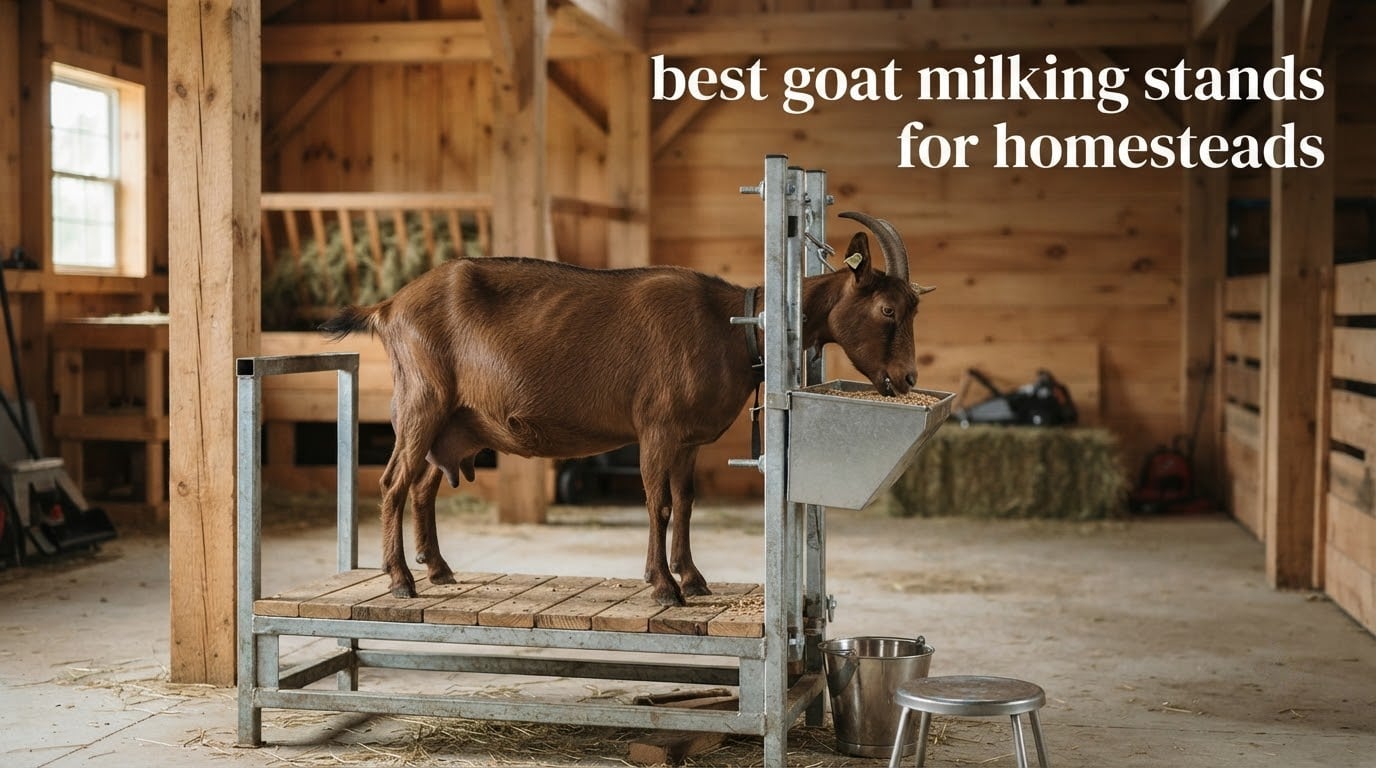
Most goat keepers buy a milking stand the same way they buy a bucket: on a whim, then discover a year later that the platform is the wrong height for their own back. The best goat milking stands for homesteads solve three problems at once, and they are all mechanical rather than cosmetic. They lift the udder to a working height you can actually stand at twice a day. They hold the animal still without a fight. And they clean down fast enough that you do not end up skipping the wash between sessions.
A goat milking stand is also called a goat stanchion, and the two words get used interchangeably. It is an elevated platform with a head restraint, usually paired with a feed bin that keeps the goat busy while you work. The platform does the ergonomic lifting, the headpiece does the restraining, and the tray does the calming. Take one of those three away and the routine gets harder, which is why we weighted all three equally when we read through the specs and customer reviews for the ten stands below.
We spent several weeks going through the review data, spec sheets and owner complaints on ten of the most commonly recommended stands for homestead herds, and cross-checked what experienced keepers say on Reddit and The Goat Spot about the things specs never mention. That last part matters, because the difference between a good stand and a frustrating one usually shows up in three places: whether the platform is slippery, whether the headpiece adjustment holds its setting, and whether one person can move the thing at all. All three come up again and again.
Below you will find our top three picks, a full comparison of all ten stands, ten individual reviews with real numbers, and a buying guide that walks through the measurements that actually decide whether you will enjoy or resent your stand. If you want the short version, the Weaver Livestock steel stand is the one we would put in our own barn, but the right answer for a small Nigerian Dwarf herd looks nothing like the right answer for a commercial Saanen operation.
There is a related angle here that a lot of new keepers miss. A stand is really a height tool, and the same problem of matching equipment to your own body shows up everywhere else on a homestead. Our guide to microphone stands for seated podcasting covers the ergonomics side in depth, and it transfers directly to how high your platform should sit.
If you are still deciding whether a stand is the right purchase at all, a simple DIY frame covers a lot of ground for a very small herd. We break the dimensions down further down, and it is worth reading before you commit to anything off the shelf.
Table of Contents
Top 3 Best Goat Milking Stands for Homesteads (October 2026)

Weaver Livestock Steel Stand
- Powder coated welded steel
- 170 lb animal weight guide
- 57 lb foldable frame
- Wire form headpiece

Lezbanz 600 lb Goat Stand
- 600 lb capacity
- Built-in feed bin
- Triangular frame
- 35 and 47 inch sizes
Goatzy Stand with Wheels
- 600 lb capacity
- Locking wheels and carry handle
- Folding legs
- Height adjustable headpiece
The Best Goat Milking Stands for Homesteads in 2026
All ten stands below are genuine options for a home herd, but they spread across a wide range of use. Two are built mainly for dwarf and pygmy goats. Two fold flat or roll on wheels. One is hot-dip galvanized for damp barns. The rest sit in the middle, offering adjustability and a feed bin at a sensible price. Read the key features column below, then jump to the full review for the one that matches your herd.
| Product | Specifications | Action |
|---|---|---|
| Weaver Livestock Steel Trimming Stand |
|
Check Latest Price |
| Goatzy Stand with Wheels and Feeder |
|
Check Latest Price |
| Lezbanz 600 lb Stand with Feed Bin |
|
Check Latest Price |
 Larrik 600 lb Stand with Feed Bin Larrik 600 lb Stand with Feed Bin |
|
Check Latest Price |
 Lezbanz 400 lb Stand for Dwarf Goats Lezbanz 400 lb Stand for Dwarf Goats |
|
Check Latest Price |
 Belinova Cast Iron 600 lb Stand Belinova Cast Iron 600 lb Stand |
|
Check Latest Price |
 VEVOR 47×23 inch Stand VEVOR 47×23 inch Stand |
|
Check Latest Price |
 Premier 1 Galvanized Stand Premier 1 Galvanized Stand |
|
Check Latest Price |
 Bknius Stand with Removable Feed Bin Bknius Stand with Removable Feed Bin |
|
Check Latest Price |
 Wepepy Stand with Anti-Slip Deck Wepepy Stand with Anti-Slip Deck |
|
Check Latest Price |
1. Weaver Livestock Steel Stand – Best Overall for a Working Barn
Weaver Livestock Steel Goat Trimming Stand with Wire Form Headpiece, Heavy Duty Adjustable Farm Stand, Foldable Gear for Cow, Goat, and More, Black
Powder coated alloy steel
170 lb animal weight guide
50.5 x 23.75 x 19 inches
57 lb, folds flat
Pros
- Highest rated and most reviewed stand here
- Powder coated steel with piano hinge weight distribution
- Three aluminium cross bars under the wire mesh floor
- Adjustable front legs and foldable frame
Cons
- Animal weight guide is 160 to 170 lbs
- Needs training and should never be left unattended
This is the stand we would put in our own barn first, and the reason is unglamorous: it is the highest rated and most reviewed stand in the whole group at 4.6 stars from 216 reviews, with 79 percent of that feedback at five stars. Ratings that hold up across hundreds of reviews tell you the frame does not wobble in month eight, which is when cheaper stands start complaining.
The construction details are what separate it. You get a black powder coated heavy duty steel frame on a wide pad base, and the way the weight is spread through the base and the piano hinges is what keeps a 150 lb doe from shifting the whole structure while you work underneath her. Three aluminium cross bars carry the wire mesh floor, so the deck itself is not the weak point.
The front legs adjust to different heights, which is the feature we would point a first-time buyer toward. It means the platform can be set for whichever animal is in the stand that morning rather than being locked to a single height for the life of the equipment. It also folds flat, so a two-person carry into the barn is realistic in a way it is not with a fixed frame.
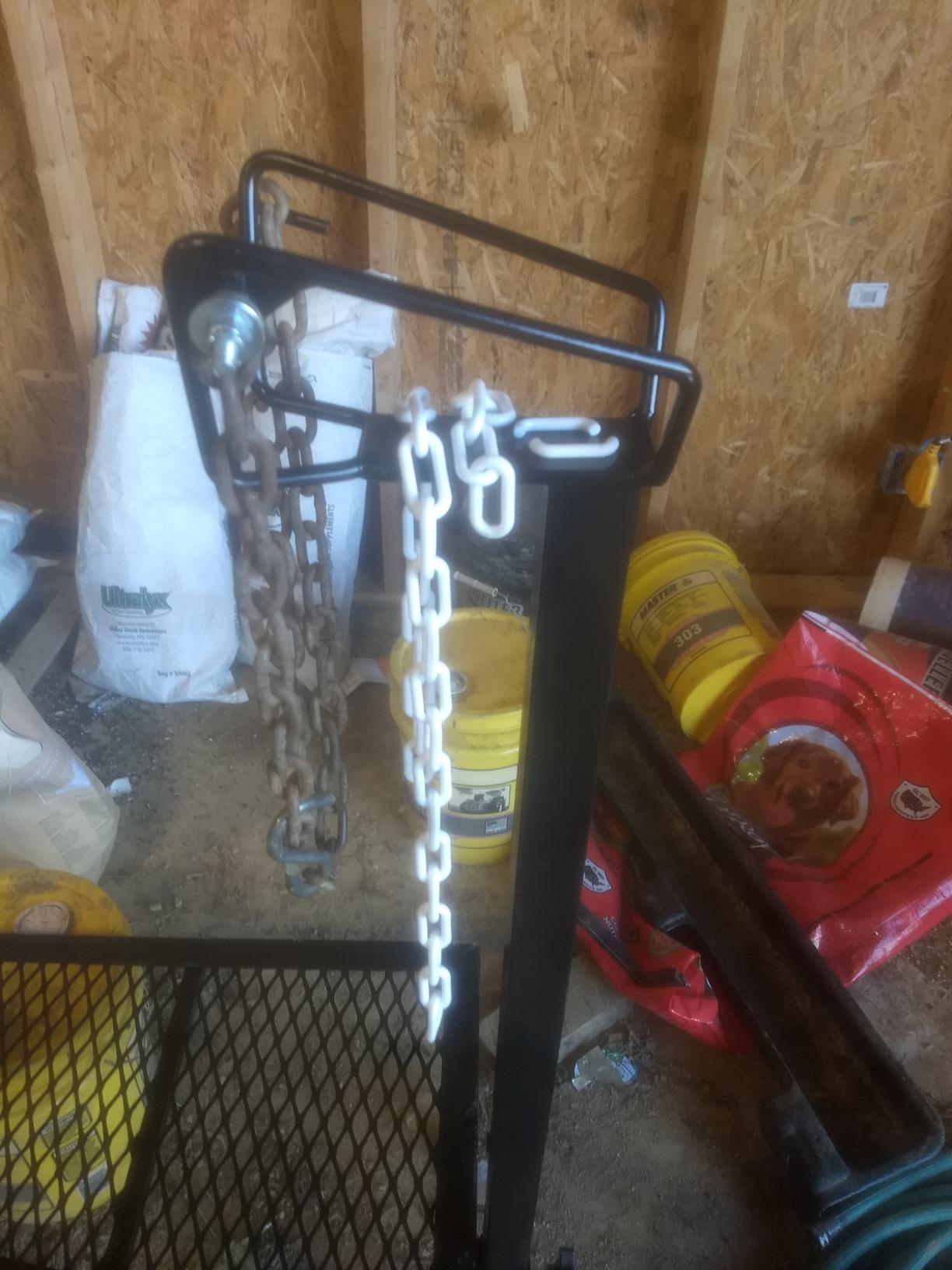
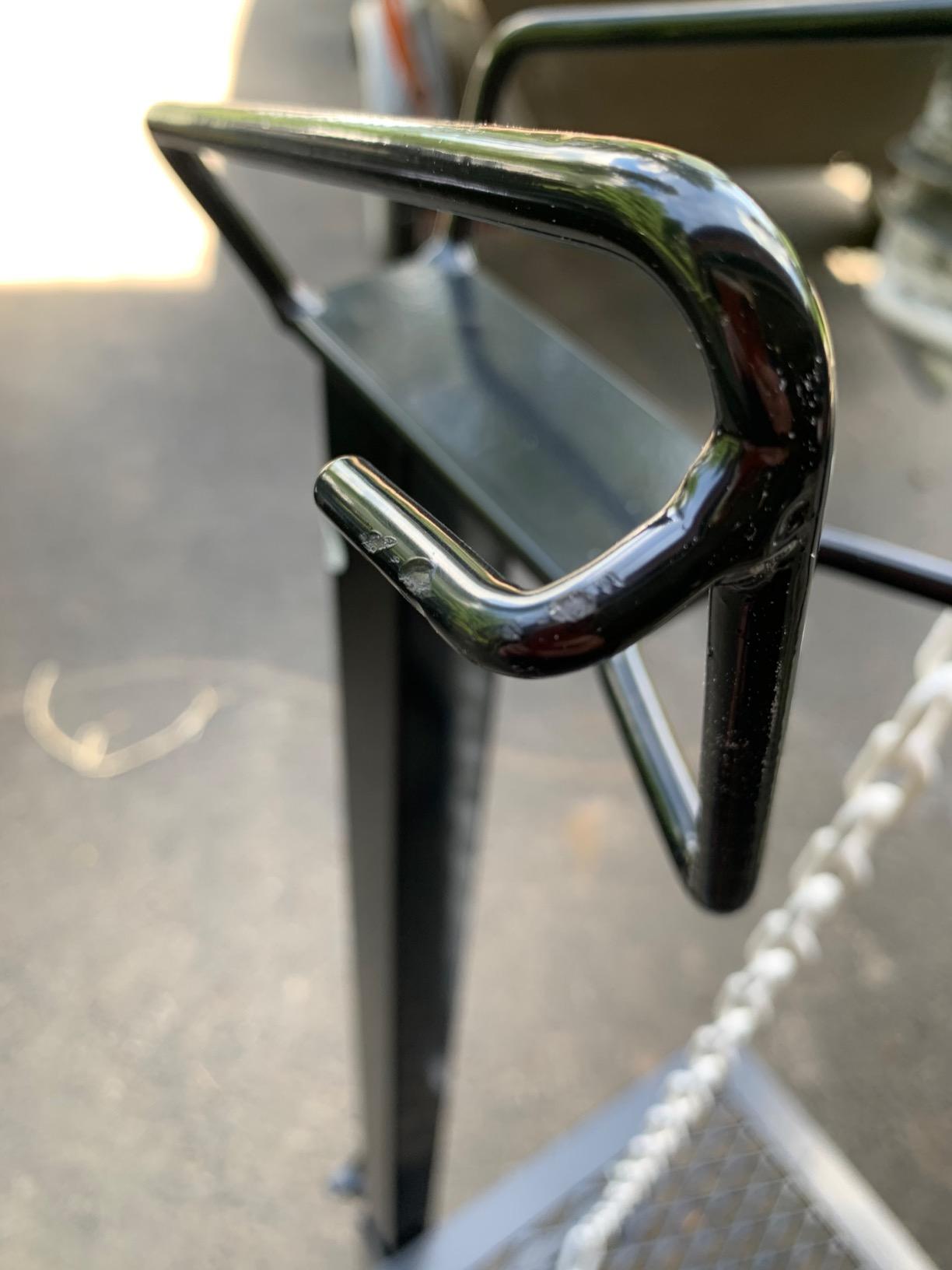
At 50.5 x 23.75 x 19 inches and 57 pounds, it is a substantial object without being immovable. We found the rounded corners worth mentioning, because a square edge at platform height is an invitation to a scraped leg on a goat that shifts at the wrong moment. The headpiece is a straight wire form, and it does its job well for holding an animal during trimming work.
The honest limitation is capacity. The listed load capacity is 170 pounds, and the guidance is to keep working animals at 160 to 170 lbs or under. That covers does and most young bucks comfortably, but it is the lowest rated animal weight of the heavier stands here. If you keep Boer or large Alpine males with heavy horn coverage, look at the Belinova cast iron model instead.
Reviews also carry the same instruction repeatedly: this is a trained-animal device, and nobody should be left unattended in it. That is not a flaw in the stand, it is a fact about restraint equipment in general, but it does mean the stand only pays off if your goats are already comfortable being handled.
What you should know before buying
The wire mesh floor is the piece to look at closely if you care about udder comfort over long sessions. It drains well and it is easy to hose down, but it is firm underfoot compared with a solid expanded-metal deck, so a rubber mat cut to the deck size is a worthwhile addition on a stand you will use twice daily for years.
Assembly is a smaller job than the frame size suggests. The stand arrives as a welded structure, so the build is closer to bolting on the headpiece and setting the leg height than to constructing anything from flat parts. Budget an evening rather than a weekend, and check that the powder coat has no chips at the welds before it goes outside.
Who should buy it and who should skip it
Buy this if you milk a moderate herd of does, want one stand that handles trimming, grooming and clipping as well as milking, and would rather have a proven frame than a bigger capacity number. The 216 reviews mean you will find owners answering questions about it in the listing, which is worth more than a spec sheet when something needs tightening.
Skip it if your heaviest working animals run past the 160 to 170 lb guidance, or if you need built-in wheels and want to roll the stand between barns without lifting. Those two gaps are real, and both are covered by other stands in this list.
2. Goatzy Stand with Wheels and Feeder – Best for Herds That Move
Goatzy Goat Stand with Adjustable Headpiece & Legs, Goat Milking Stand with Feeder, Rails & Wheels, Stanchion for Grooming & Hoof Trimming, Sheep Stand for Shearing Heavy-Duty Steel Platform, Black
Galvanized steel
600 lb capacity
59.84 x 25.2 x 71.26 inches
46.3 lb with locking wheels
Pros
- Locking wheels and carry handle for moving between barns
- Folding legs collapse for compact storage
- Height adjustable legs and width adjustable headpiece
- Removable side rails and feeder bowl
Cons
- Galvanized finish still weathers with outdoor barn use
- Listing colours rather than separate model families
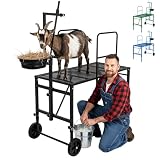
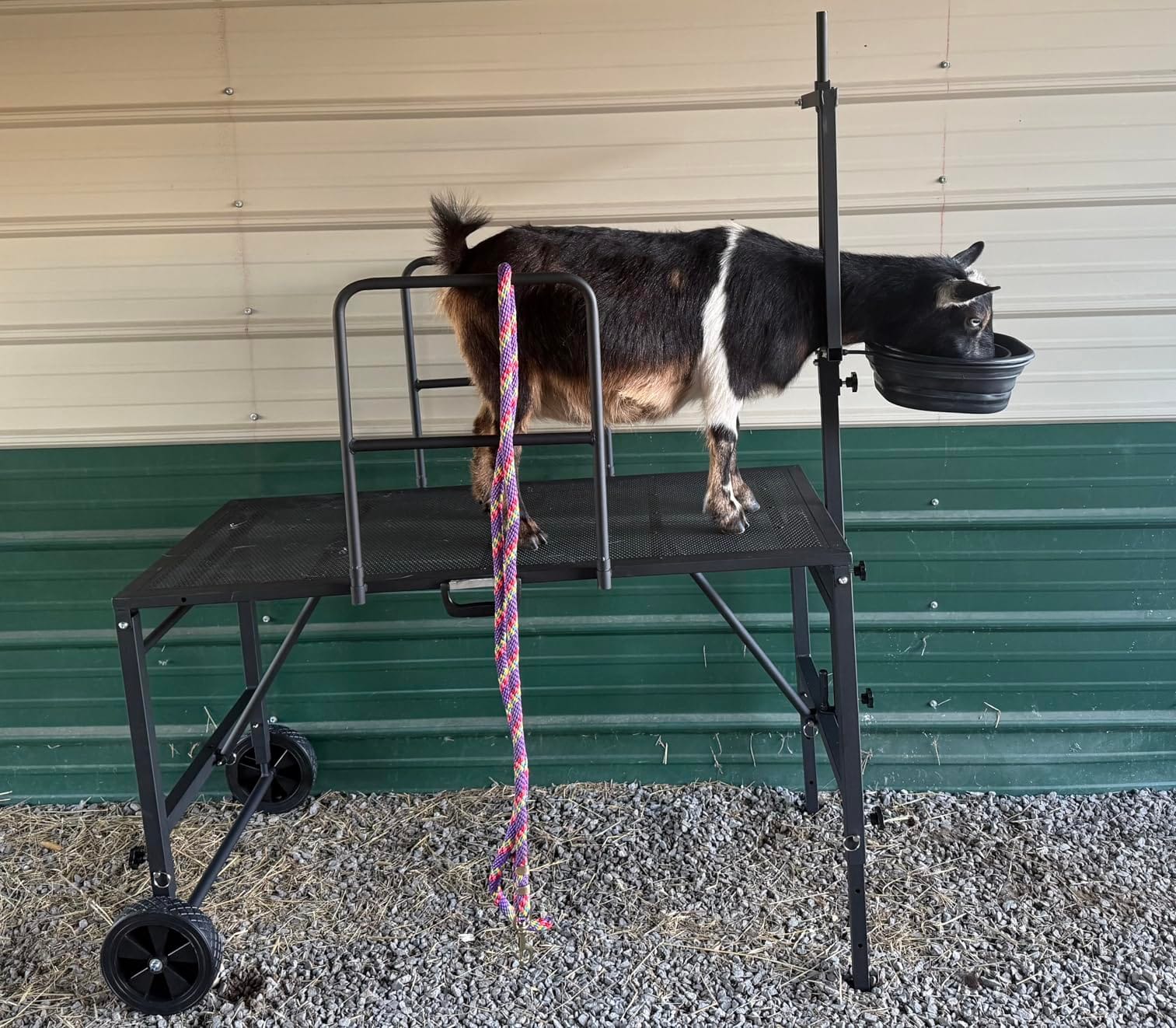
Wheels are the feature that turns a milking stand from a fixed piece of equipment into a portable one, and this is the only stand in our group with locking casters plus a carry handle plus folding legs in the same frame. If your does live in a field rotation, a barn that is too small for a permanent stand, or a setup that changes with the season, this solves a problem the others do not attempt.
The capacity is 600 lb on a galvanized steel platform, which covers every goat breed plus a fair margin of accidental weight. The height adjustable legs and width adjustable headpiece are specified to fit Nigerian Dwarf, Boer and dairy goats in one frame, which is a broader claim than most listings make and one that matches the review pattern, where owners use it across a mixed herd.
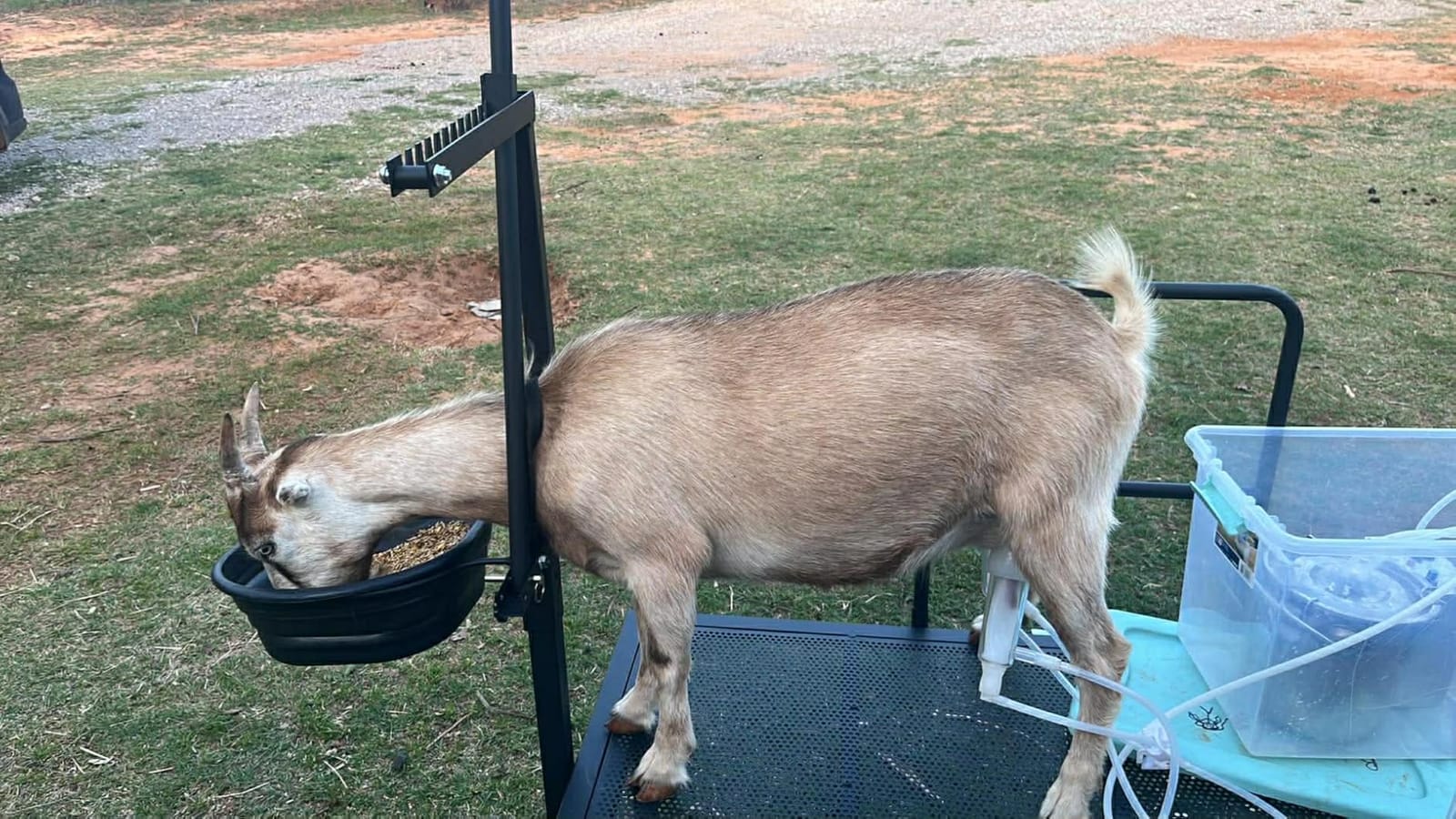
The removable side rails deserve a mention because they change how the stand is used. With rails fitted, a nervous animal feels contained rather than exposed. Take them off and you gain access for shearing and larger animals that need to be loaded without squeezing past a barrier. The feeder bowl comes out too, which is what makes a proper deep clean possible.
At 46.3 pounds and 59.84 x 25.2 x 71.26 inches, this is a tall, long frame. The height in that figure is the assembled standing height with the adjustable head, which is worth checking against your barn ceiling before you commit, especially in a low-roofed lean-to.
The rating sits at 4.2 from 151 reviews with 65 percent five stars. That is a solid rather than glowing score, and the review breakdown explains it: the complaints cluster around assembly experience and coating durability rather than core function. In other words, people like what it does and grumble about putting it together.
What you should know before buying
The wheels change the loading problem rather than solving it. A locking caster holds the stand steady once the goat is on, but getting a 140 lb doe up onto the deck still needs either a step or a second pair of hands, because a rolling platform is not something you want to load at an angle. Owners who have added the matching ramp generally report the smoothest loading experience.
Galvanized steel resists rust well, but resist is not the same as immune, and the reviews include owners noting the finish still dulls and weathers with extended outdoor barn use. If your stand lives outside under a roof, wipe it down at the end of the wet season and touch any bare metal spots.
Who should buy it and who should skip it
Buy it if you move animals seasonally, milk in more than one location, or have a barn where floor space is rationed. The folding legs plus the carry handle mean one person can move it, which no other stand here can claim. Mixed-breed herds also do well here because of the width adjustment.
Skip it if your barn has a low ceiling, if you need a very low platform for dwarf goats and hand milking while seated, or if you want a single fixed frame with no moving parts to maintain. The 4.2 average is worth weighing if you are sensitive to build quality reports.
3. Lezbanz 600 lb Stand with Feed Bin – Best Value for Daily Milking
Lezbanz 600 LBs Goat Stand with Feed Bin, Goat Milking Stand for Sheep Trimming and Milking, Hoof Trimming Stand Adjustable Size, with Feeder, Iron Blue
Spray coated iron
600 lb capacity
35 or 47 inch platforms
37 lb package weight
Pros
- Feed bin is the core feature and reviewers notice
- Triangular frame feels stable in daily use
- Two added load bearing beams under the expanded metal
- Light at 37 lb so one person can reposition it
Cons
- Paint chips with regular outdoor use
- Included fasteners loosen and are often replaced
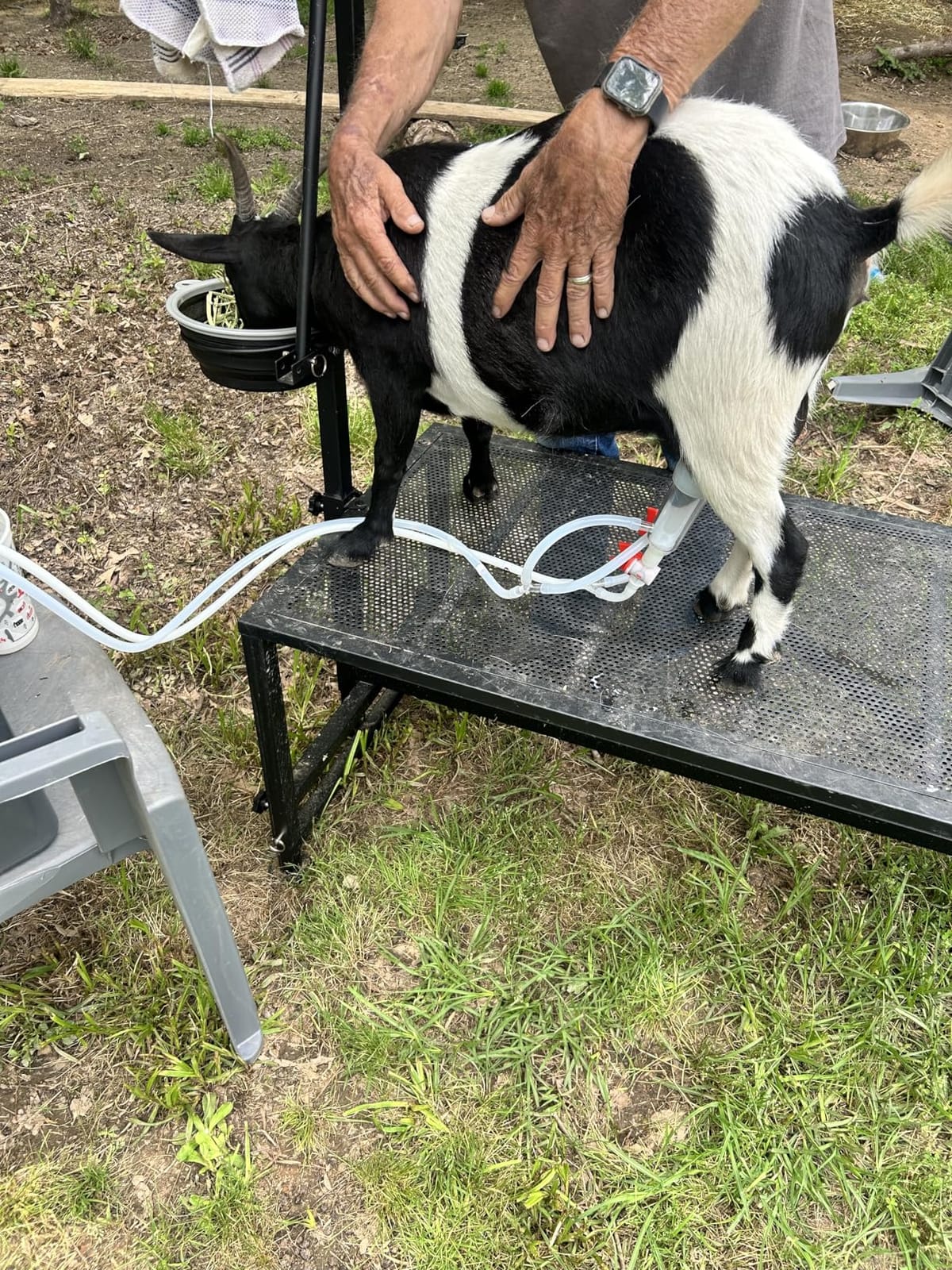
This is the stand that shows up most often in hobby farmer conversations, and the reason is the feed bin. A goat standing with its head in a grain bin is a goat that is not stepping around while you try to attach a milker, and several owners describe the bin as the feature that made their herd workable rather than merely manageable.
It rates 4.5 from 110 reviews with 70 percent five stars. Buyers consistently name three things: the feed bin, the simple assembly, and the fact that working at this stand saves their back. That last point is not marketing copy, it is the reason people buy stands at all, and it is the theme that runs through almost every positive review of this category.
The frame is quality iron with a spray coating, rated to 600 lb, and reinforced with two additional load bearing beams over the expanded metal platform. The triangular frame geometry is doing real work here, spreading load into the legs rather than letting the deck flex in the middle, which is exactly the failure mode owners report in cheaper stands after a year of use.
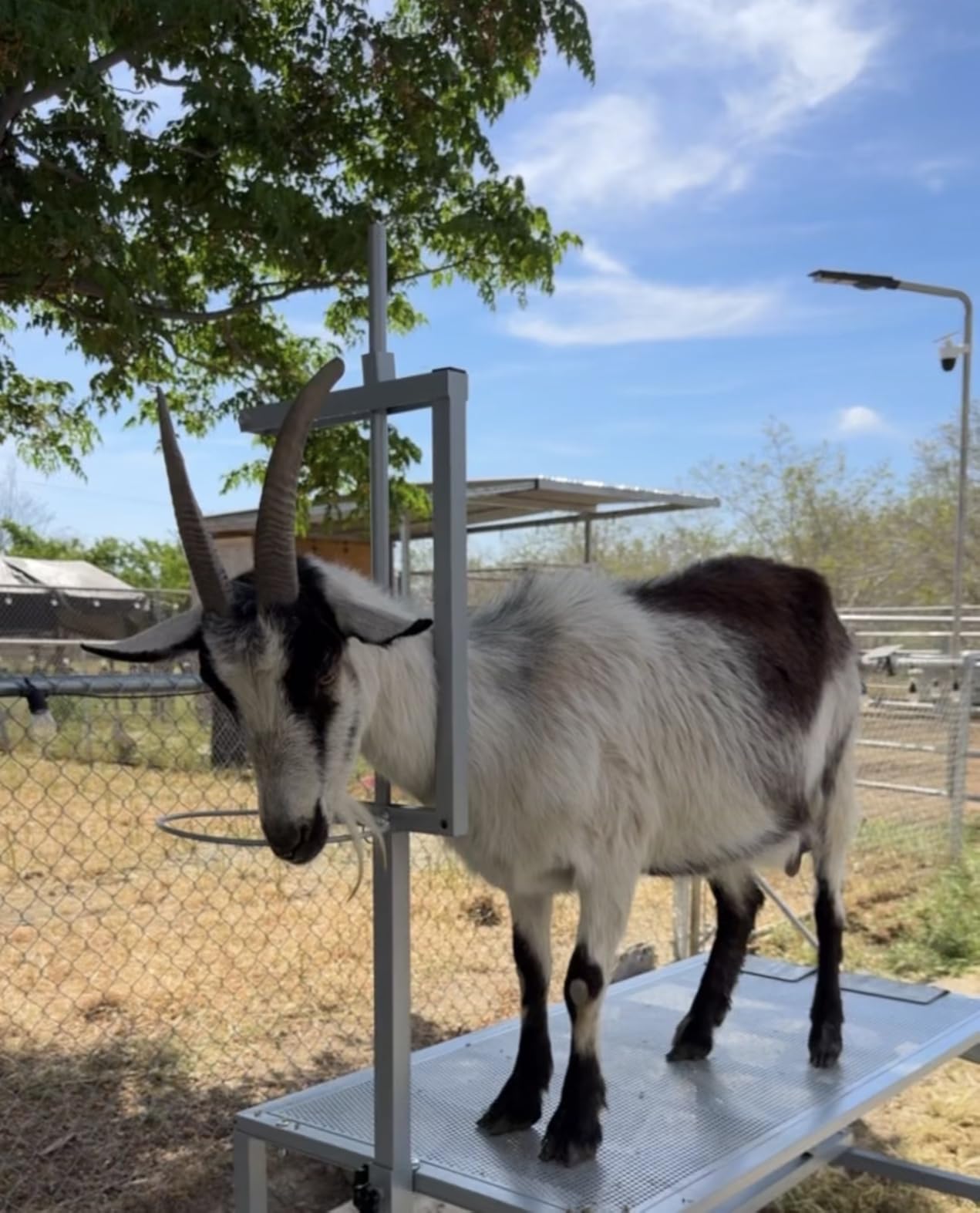
Leg height, head pole height and head width spacing all adjust, so the same frame covers a 35 inch platform for smaller goats and a 47 inch platform for full sized does. That is the practical meaning of the adjustable size claim, and it matters more for a mixed herd than any capacity number.
Owners also call out the weight. At 37 pounds for the package, this is light enough for one person to carry into position, which for a twice daily routine is a bigger quality of life gain than it sounds. A heavier galvanized stand that has to be dragged is a stand you will end up milking around instead of using.
The most repeated theme in the reviews is hardware. Owners report the included fasteners loosening or falling out and replacing them with better bolts as the first modification they make. Wing nuts on the headpiece are the common upgrade mentioned across homestead forums for this style of adjustment.
What you should know before buying
Two caveats deserve attention before you commit. The smooth metal base offers little grip for reluctant or unruly goats, and owners working around that problem cut a rubber stall mat to the platform size, which costs little and fixes the most common complaint in this category. Second, the stand height can run tall even at its lowest setting, and some owners remove the leg extensions to get down to a comfortable seated milking height.
There is also a fair challenge to the 600 lb figure. One long term owner rates the real strength closer to 250 lb. If your heaviest animal is a big buck or a Boer, treat the published capacity as a ceiling rather than a working load and check the frame yourself before committing.
Who should buy it and who should skip it
Buy it if you are training does that are new to the stand, if you want a feed bin as standard, or if you are replacing a wooden homebuilt platform that was never comfortable to work at. Owners mention the back saving effect as the reason the purchase justified itself within weeks.
Skip it if you already own quality hardware and dislike tinkering, or if your goats are heavy on their feet and nervous on smooth surfaces. If you cannot commit five minutes to replacing bolts and cutting a mat, pick a stand with fewer known weak points.
4. Larrik 600 lb Stand with Feed Bin – Best Straightforward Starter Stand
Larrik 600 Lbs Goat Milking Stand with Feed Bin, Heavy Duty Goat Stand for Milking, Hoof Trimming & Grooming, Adjustable Goat Stanchion for Sheep and Goats, Iron Blue
Painted alloy steel
600 lb capacity
35 or 47 inch platforms
Five sturdy crossbeams
Pros
- Built-in feed bin keeps goats focused while you work
- Adjustable leg height raises the platform to reduce bending
- Reinforced frame with 5 crossbeams
- Light weight and simple instructions
Cons
- Smooth platform surface can be slippery for hooved animals
- Some orders arrive with hardware that needs replacing
Where the Weaver stand wins on proven reviews and the Goatzy stand wins on portability, this one wins on doing the basic job with very little fuss. The built-in feed bin sits where the animal can reach it without reaching over the neck bar, adjustable leg height raises the platform to cut bending, and the headpiece adjusts in both height and neck width.
It holds 4.3 stars from 73 reviews with 62 percent five stars. The review base is thinner than the leaders, so treat it accordingly, but the pattern in the reviews is consistent and worth hearing plainly: most of the satisfaction comes from value and easy setup rather than from premium construction.
The frame is reinforced alloy steel with five sturdy crossbeams and a 600 lb rating. Five crossbeams under a platform is a genuinely good number, and it is the same specification level that the more established stands in this family use, which tells you something about the tier this product sits in.
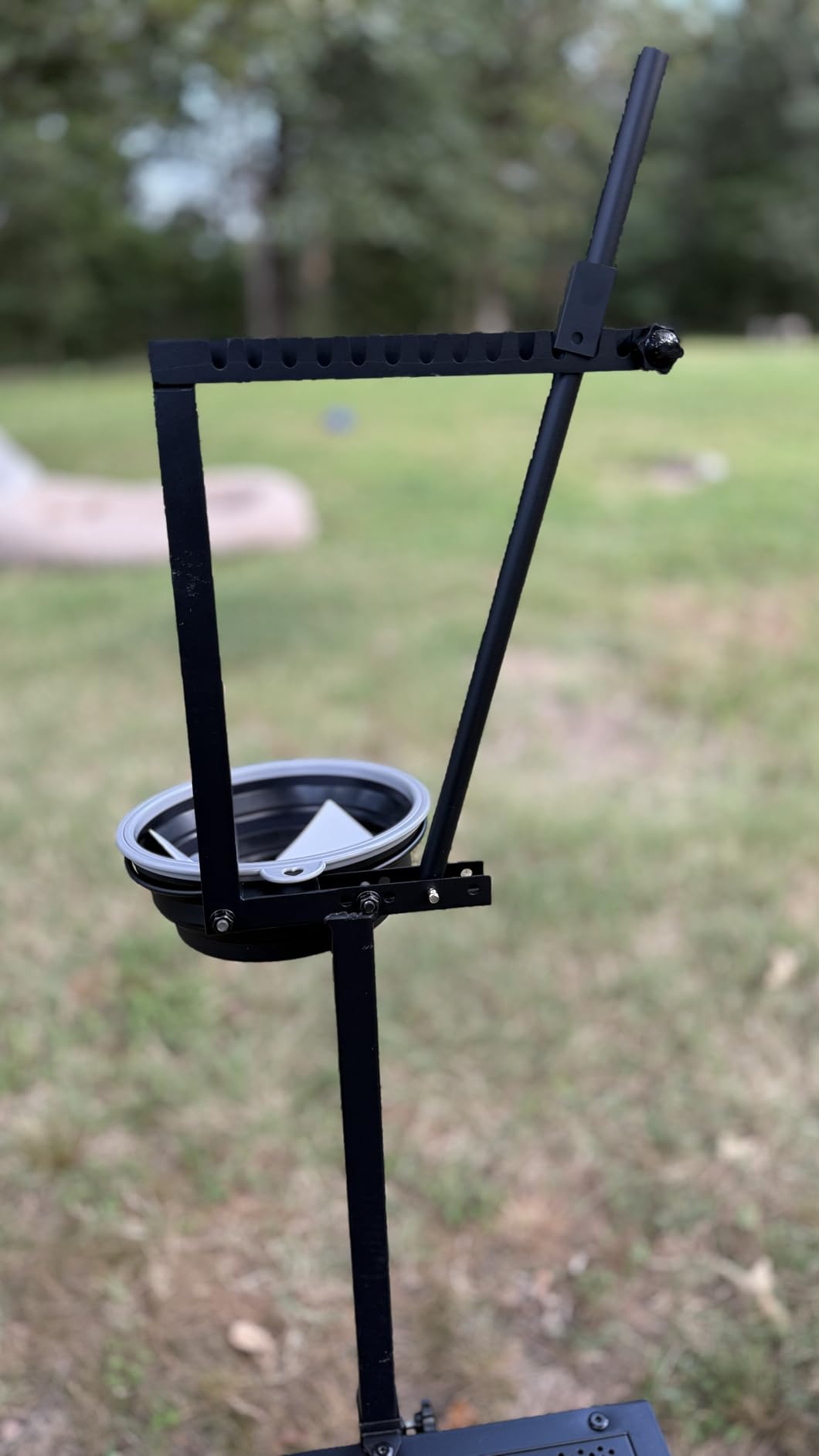
It comes in 35 x 18 inch and 47 x 23 inch footprints, in black and blue, which is the standard sizing split across this category. The smaller deck suits dwarf and pygmy herds, the larger one suits full sized dairy does, and you are choosing between them at purchase rather than by adjustment.
Owners describe it as suited to small farms, homesteads and daily livestock care, which is an accurate summary of where this stand earns its keep. It handles milking, hoof trimming, grooming, feeding and general herd handling without pretending to be a show piece or a race finish stand.
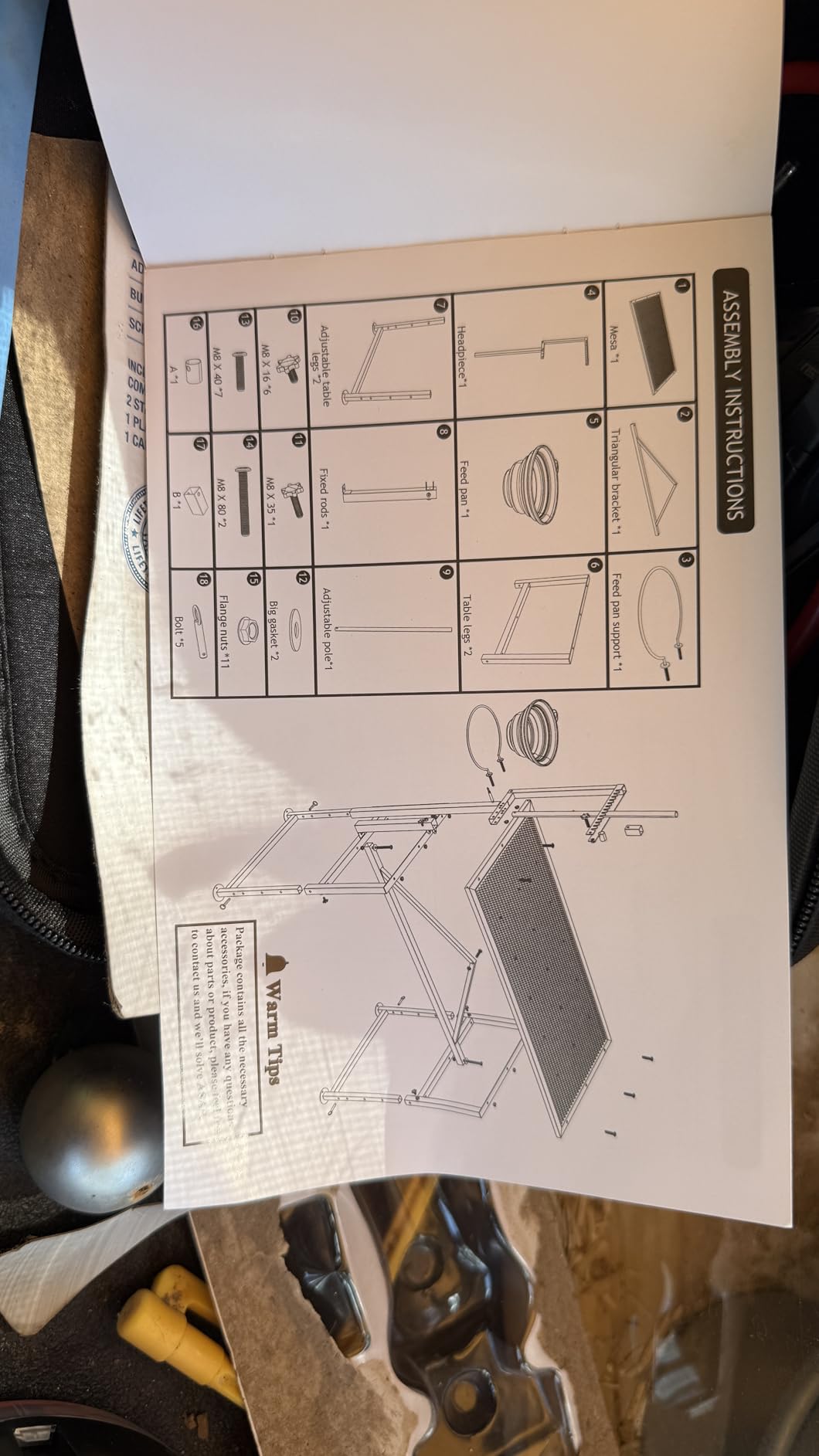
The frame is light enough that one person can set it up from the instructions alone. That is not a throwaway detail for new goat keepers, because a stand you cannot assemble is a stand that stays in the corner of the barn while you hand milk in a bending position.
What you should know before buying
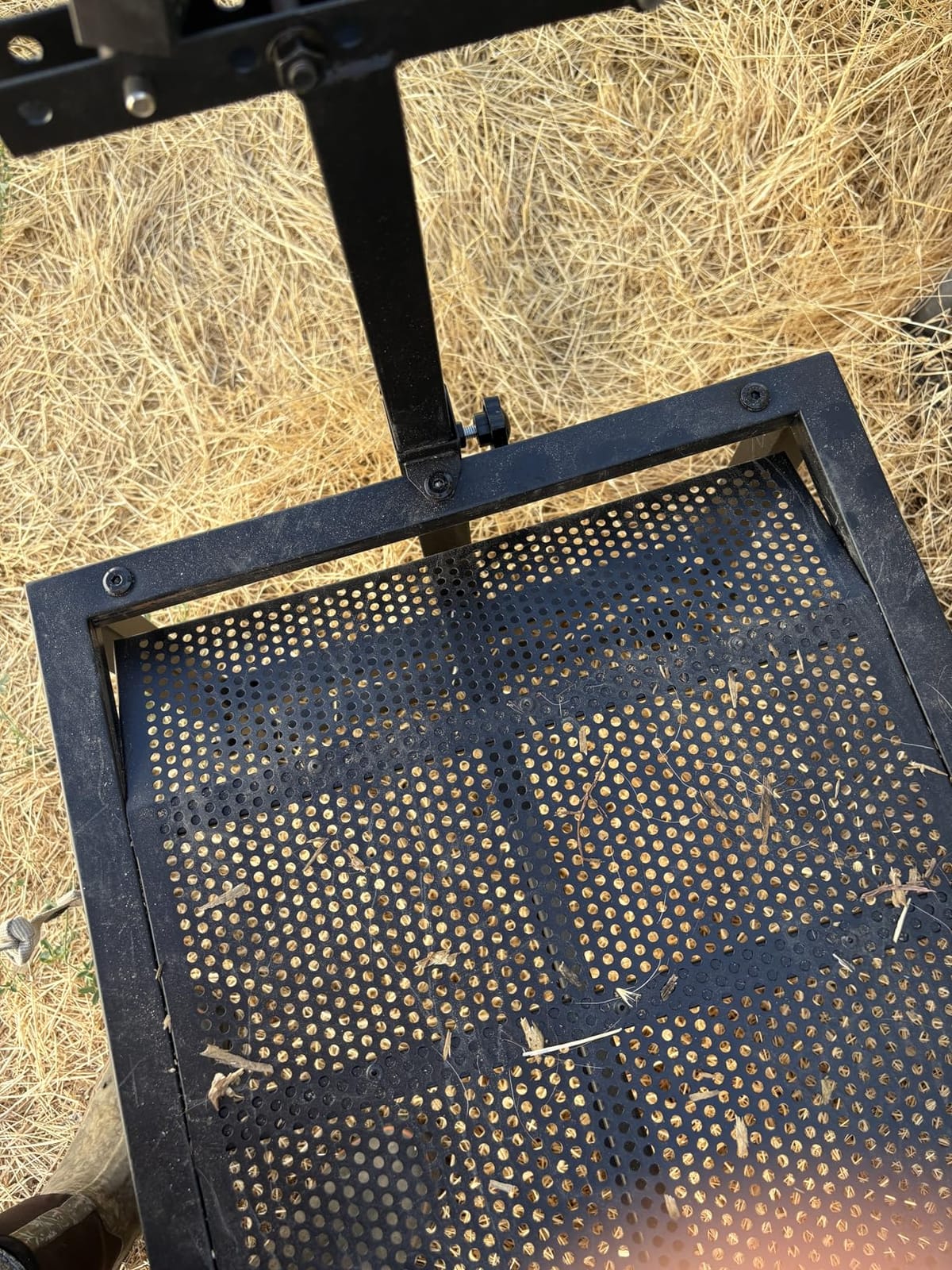
This shares the smooth platform characteristic of this style of adjustable iron stand, so the same non-slip remedy applies. A cut rubber mat or a grip mat on the deck removes the most common source of frustration, and it also helps young goats learn that the platform is a safe place to stand.
Expect to inspect the hardware on arrival. Listings in this family sometimes arrive with fasteners that need replacing after a season of use, and a quick check plus a swap to quality bolts in the first week is cheaper than discovering loose bolts during a morning milking.
Who should buy it and who should skip it
Buy it if you are building a first proper stand for a homestead herd, want the feed bin feature, and prefer the simplest assembly experience you can get. The adjustable leg height is the feature owners mention most often for reducing bending during a twice daily routine.
Skip it if you need wheels, folding storage, or a low platform setting for seated hand milking with dwarf goats. Those needs are better served by the wheeled model or the dedicated dwarf stand later in this list.
5. Lezbanz 400 lb Stand – Best for Pygmy and Dwarf Goat Herds
400 LBs Goat Milk Stand for Pygmy and Dwarf Goats, Goat Stand with Feed Bin, Goat Milking Stand for Sheep Trimming and Milking, Hoof Trimming Stand Adjustable Size, Iron Blue
Spray coated iron
400 lb capacity
35 or 47 inch platforms
27.6 lb frame weight
Pros
- Designed specifically for pygmy and dwarf goats
- Lightest frame here at 27.6 lb
- Feed bin plus adjustable leg and head pole height
- Two added load bearing beams
Cons
- 400 lb rating is the lowest here for large breeds
- Shares the smooth platform and hardware complaints of this family
If your herd is Nigerian Dwarf, Pygmy or another small breed, this is the stand sized for the job rather than a large frame with the head cranked in tight. It rates 4.3 from 63 reviews with 69 percent five stars, and the satisfaction centres on portability and easy assembly rather than raw capacity.
The 400 lb rating is the lowest capacity number in this group, but read it against the animals it is aimed at. A full grown Nigerian Dwarf doe is a fraction of that. Matching capacity to the breed you actually keep is the whole point of this stand existing.
It carries the same core layout as its larger sibling, which means the feed bin, adjustable leg height, adjustable head pole height and adjustable head width spacing are all present. Two additional load bearing beams reinforce the expanded metal, and the triangular frame gives the same stable feel owners describe in the larger version.
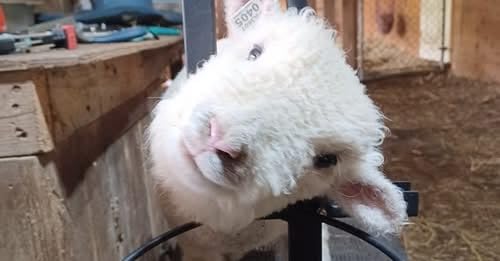
At 27.6 pounds, this is the lightest frame we looked at. For a small barn where you are moving the stand between a sheltered corner and a milking area, or for anyone who is not sure they will want a permanent fixture, weight matters more than most spec sheets suggest.
The 35 inch platform is the size most owners of small herds actually want, and forum discussion on this category keeps coming back to the same point, that dwarfs need a shorter platform than the tall frames are designed for. Getting the height wrong for a dwarf is the fastest way to make milking unpleasant for both of you.
Spray coated iron handles corrosion and rust reasonably, which is enough for a covered barn. Owners report simple, easy to follow assembly instructions and a stand one person can put together in a single session.
What you should know before buying
Do not treat the 400 lb rating as future proof. If you add a larger breed later, or if you plan to use the stand for other handling tasks with heavier animals, the frame and the 35 inch footprint are both working against you, and the reviews flag exactly that limitation.
The smooth platform and the family hardware complaints apply here as they do to the larger model in this style. Mat the deck and replace the fasteners early. Both fixes are cheap and both address the two things owners complain about most.
Who should buy it and who should skip it
Buy it if your herd is small goats, your barn space is tight, or you want a stand light enough to carry between two locations without asking for help. The feed bin is still there, which matters even more for training young dwarfs that have never been milked.
Skip it if you keep any large dairy breeds alongside your dwarfs, or if you want one stand to cover trimming work on bigger animals. The lightweight frame that makes this a pleasure to move also makes it the wrong tool for heavy goats.
6. Belinova Cast Iron 600 lb Stand – Best for Heavy Animals
Belinova Goat Milking Stand 600Lbs Goat Stand Sheep Stand for Trimming Metal Livestock Stand with Adjustable Headpiece Goat Shearing Livestock Stand Height Adjustable, Black
Cast iron construction
600 lb capacity
47 x 23 x 20.5 inches
Platform adjusts 20.5 to 31.5 inches
Pros
- Cast iron frame with wrought iron welds
- Baked high temperature finish instead of paint
- Platform adjusts across an 11 inch range
- Four uprights plus a tripod for stability
Cons
- Heaviest duty frame and the higher ticket item here
- Large share of four star reviews on platform fit
This is the frame to buy if your goats are large, horned, or simply not interested in cooperating. The cast iron construction with wrought iron welds gives it a rigidity that stamped steel frames in this category cannot match, and it holds 600 lb without the flex you get from lighter gauge tubing.
It rates 4.3 from 54 reviews, but the distribution is unusual, with 54 percent five stars and 32 percent four stars. That middle band tells you something specific: most owners are satisfied, a few are not, and the difference usually comes down to expectations about platform and headpiece comfort rather than structural strength.
The height adjustment is the standout specification here. The platform runs from 20.5 inches up to 31.5 inches, an 11 inch range, and the adjustable head sits 24.8 to 41.3 inches above the platform. That range covers everything from a small dairy doe to a tall, heavy buck, and it is wider than most stands in this group manage.
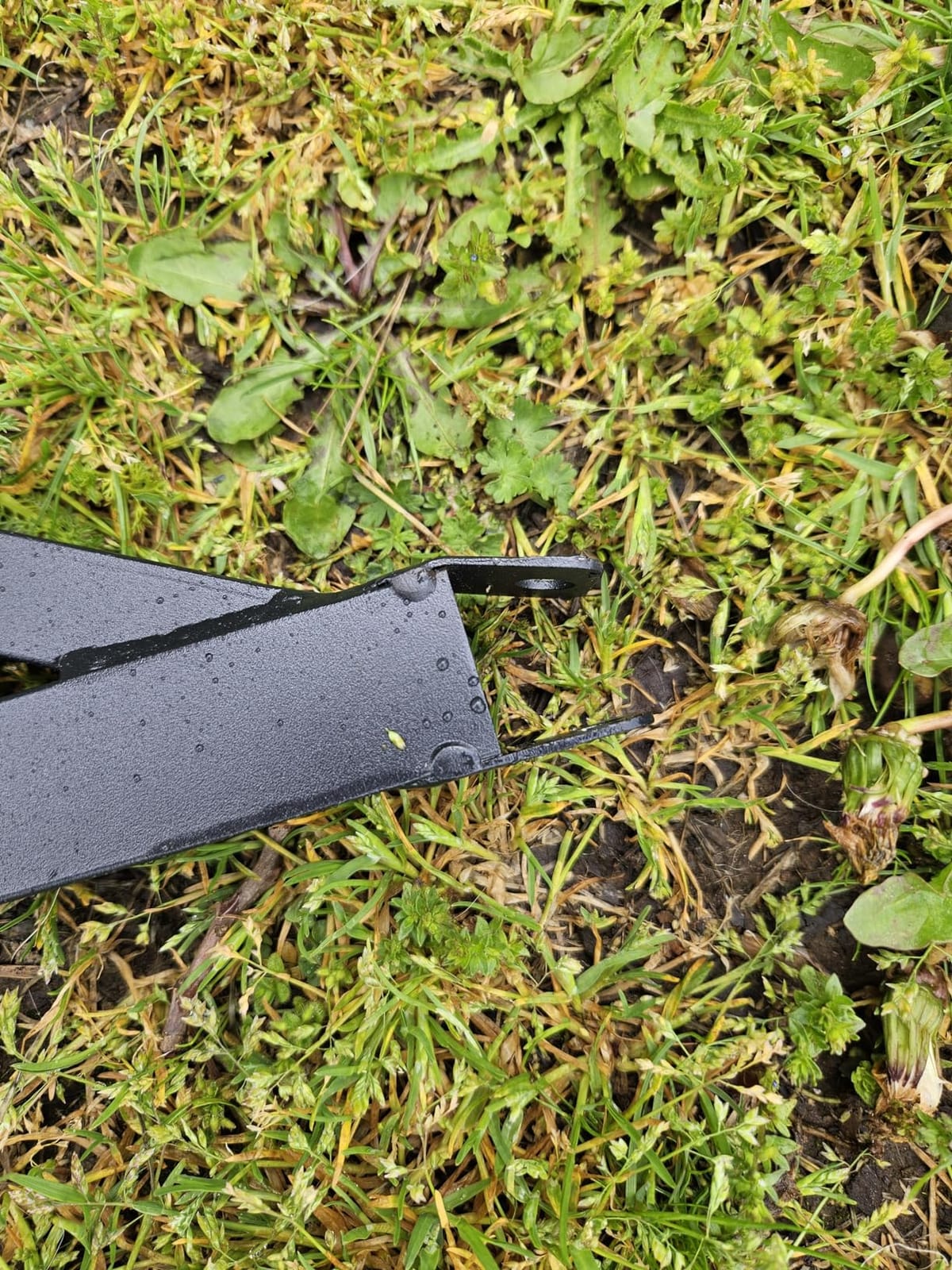
The finish deserves credit because it is genuinely different. This is a high temperature baked finish rather than paint, which means it is not a coating sitting on top of the metal that chips when a goat scrapes a rail. For rust resistance over years, baked finishes and hot dip galvanizing are the two approaches worth paying for.
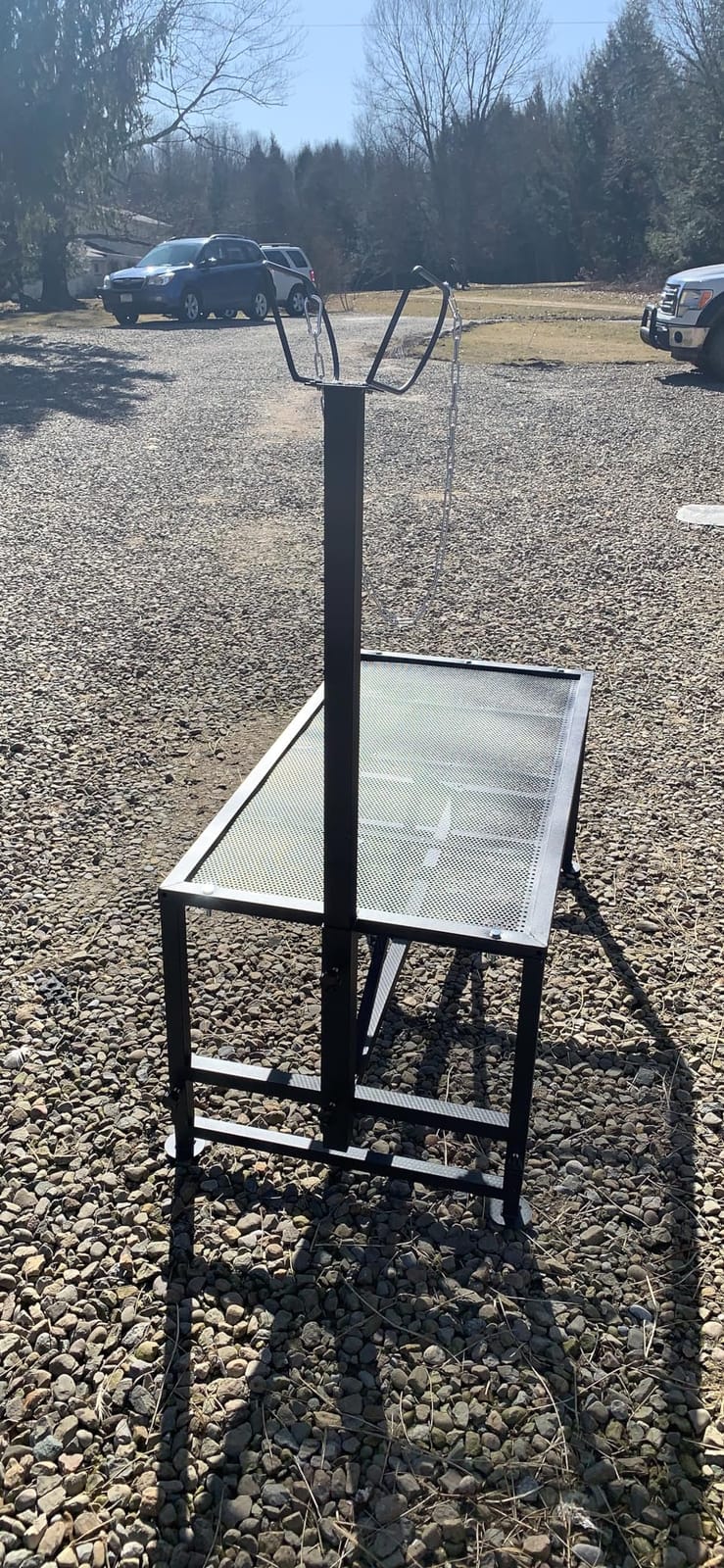
Four uprights plus a tripod add stability, which is not decorative when a 200 lb animal shifts its weight mid session. Rounded corners and the reinforced frame make it usable for more than milking, with owners using it for shearing, hoof trimming, bathing and even general veterinary examination.
The 47 x 23 x 20.5 inch base footprint is the full size pattern, and the manufacturer includes all installation fittings plus a QR code in the manual linking to an installation video. That video detail is small but it matters, because assembly is the step most owners dread.
What you should know before buying
Two things temper the recommendation. First, this is the more expensive frame in the group, and that spend only makes sense if you are handling large animals or keeping the stand for many years. If you have three small does, the money is better spent on feed and a good stool.
Second, the rating spread suggests the platform and headpiece may not suit everyone out of the box. If your animals are on the smaller side, test the headpiece fit early, because a headpiece that is too tight causes the discomfort that shows up as a four star review later.
Who should buy it and who should skip it
Buy it if you keep Boer, large Alpine, Saanen or any intact horned male, if your stand doubles as an examination and handling station, or if you want one frame that will still be adequate when the herd grows. The baked finish and cast iron body are the reasons to expect a long service life.
Skip it if you are outfitting a small dwarf herd on a tight budget, or if you need to move the stand regularly. Cast iron does not have a carry handle and it does not fold, so portability is not part of this design.
7. VEVOR 47×23 inch Stand – Best for Show Preparation and Transport
VEVOR Goat Milking Stand – 47×23 inch Metal Livestock Shearing Stand, Adjustable Height 21″ to 33″, with Headpiece and Nose Loop, 500lbs Capacity, Perfect for Sheep and Goats, White
Painted iron
500 lb capacity
47 x 23 inch tabletop
4 levels from 21 to 33 inches
Pros
- Four level height adjustment from 21 to 33 inches
- Light enough to carry between shows and locations
- Integrated nose loop works for sheep and goats
- Reinforced tabletop welds and a pin-lock system
Cons
- Smooth tabletop is slippery without an added mat
- No side rails so sheep can slide off the edge
Show families and anyone who changes location care about weight, and this stand is light at 38.6 pounds with a simple frame that two people can carry. It rates 4.2 from 51 reviews with 65 percent five stars, and the review pattern is consistent: owners like the height range and the portability, and warn about the tabletop surface.
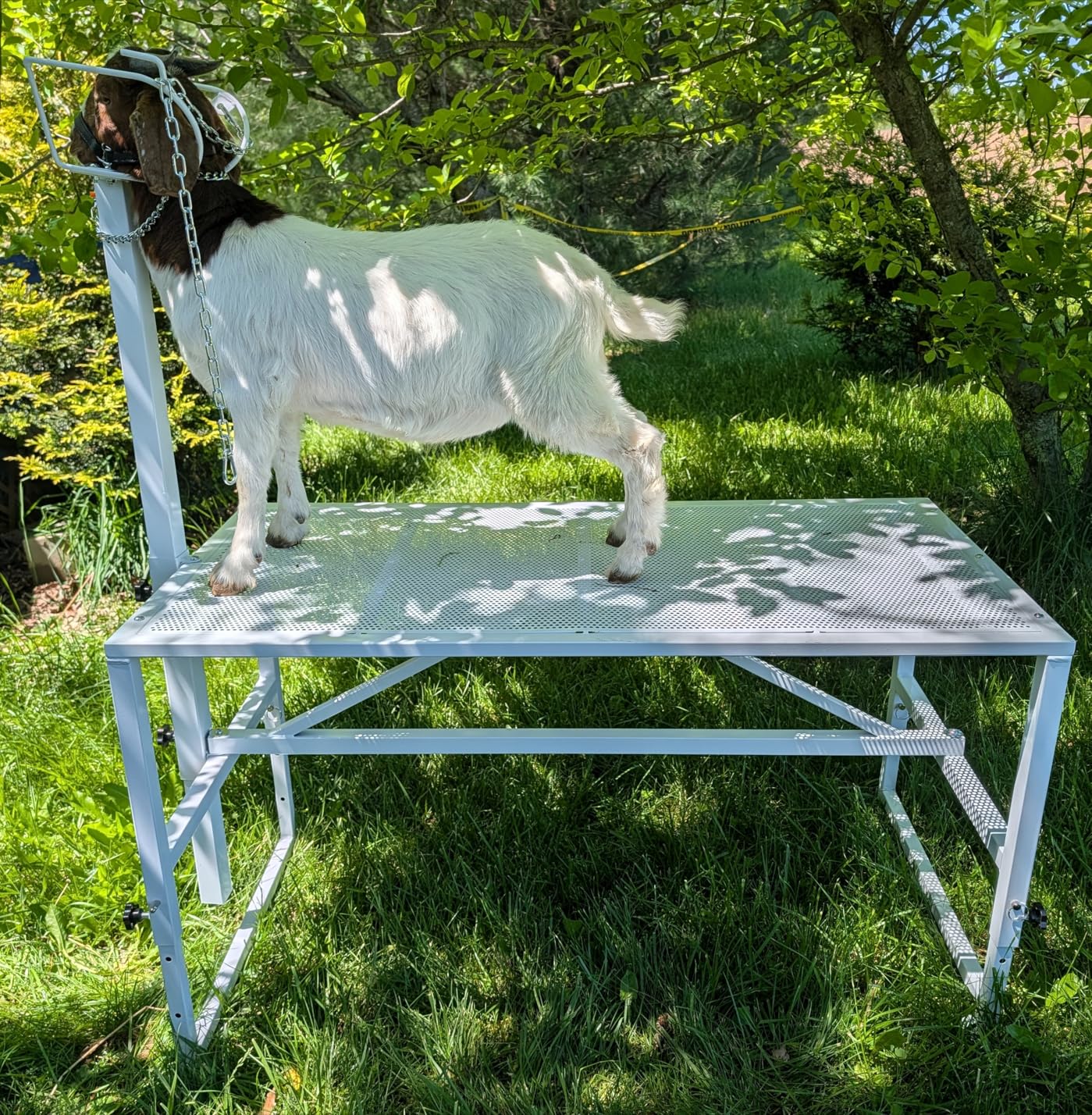
The four level height adjustment is genuinely useful and unusually simple. It steps between 21, 25, 29 and 33 inches using a pin-lock system and an adjustment knob, which is fast to change between a small goat and a large one. Owners mention specifically being able to raise it for smaller goats and avoid bending over.
The 47 x 23 inch tabletop is spacious for its size class, with reinforced tabletop welding and iron pipes coated in rust proof spray paint. An integrated nose loop fastens around the animal head for trimming and handling, and it works for both sheep and goats.
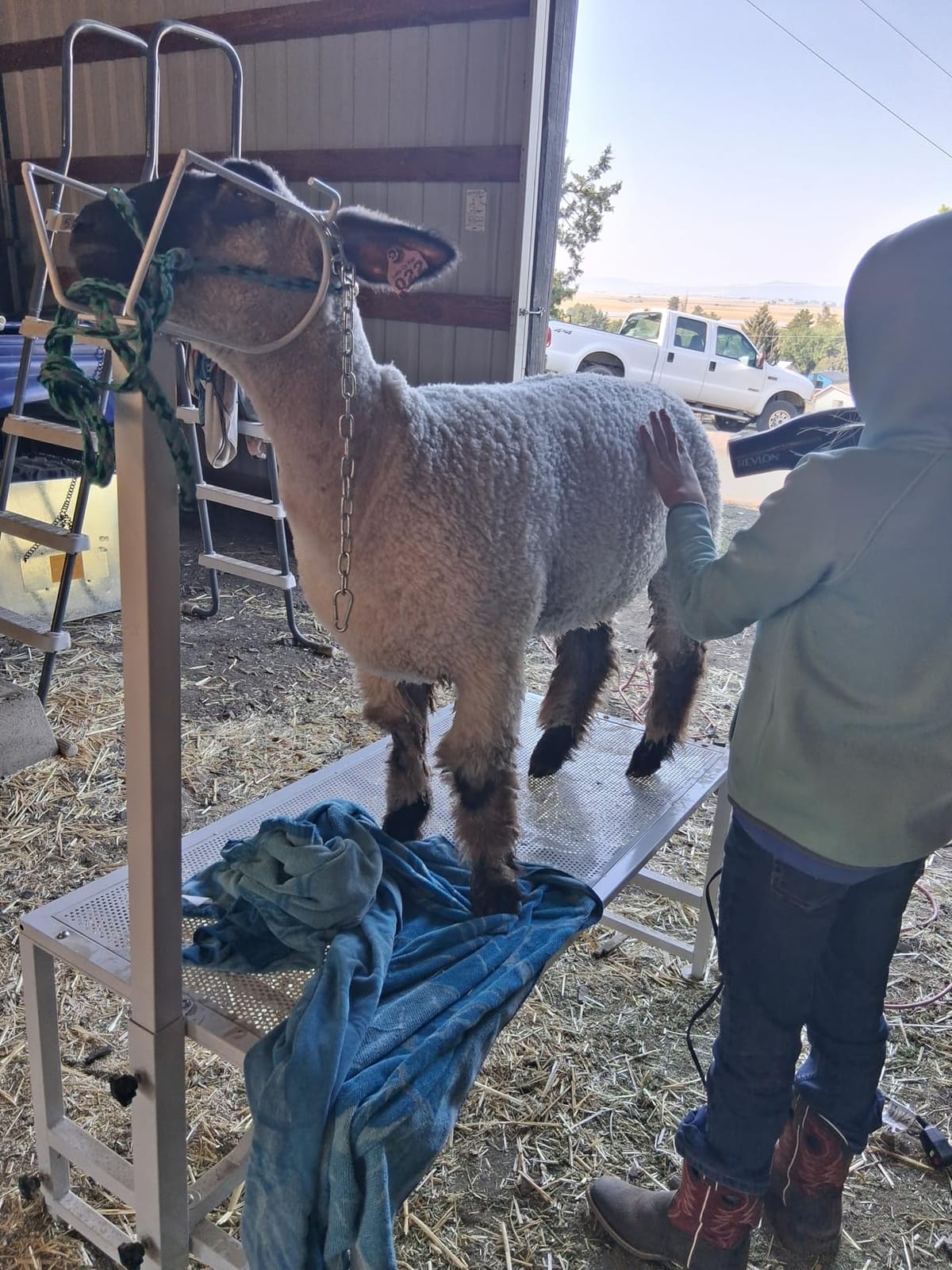
Be aware of the no side rails situation, because it is the most important practical difference between this and several others here. A sheep can slide off the side of an open platform, and loading a heavier animal may take two people. Several owners in this category add a matching ramp or feed bin version to solve it, and this model family is offered in variants with both.
The included chain and nose loop can also run small for some goats, so owners commonly tie a halter to the headpiece instead. That is a two second change once you know to do it, but it is not obvious until the goat is already standing there.
Assembly is quick with illustrated instructions and labelled accessories, which is one of the reasons this listing appeals to people setting up quickly. Keep the instruction sheet, though, because a small number of owners report arriving models with missing parts and mis-drilled holes.
What you should know before buying
The slipperiness of the smooth tabletop is the dominant caution in the reviews, and several owners add an anti-slip mat as the first modification they make. If you take one action after buying this stand, make it that one. A mat on a smooth platform also reduces the startle response that turns a first milking into a fight.
The lowest setting still runs fairly high for very small breeds, so if your herd is mostly dwarfs this is not the platform to reach for. Check your barn ceiling too, since the assembled dimensions run to 68.5 inches with the head frame in place.
Who should buy it and who should skip it
Buy it if you show, if you move between locations, or if you want a lightweight stand you can set up and take down without tools each season. The 21 to 33 inch range suits a mixed herd of standard breeds well.
Skip it if you work with sheep that need containment, if your goats are mostly dwarfs, or if you need a fixed stand that will never need moving. The open platform and light frame are advantages for portability and drawbacks for containment.
8. Premier 1 Galvanized Steel Stand – Best Rust Resistance for Damp Barns
Premier 1 Galvanized Steel Trimming Stand for Sheep & Goats – 20″W x 48″L
Hot-dip galvanized steel
20 x 48 inch deck
Stands 22 inches off the ground
98.7 lb, folds flat
Pros
- Hot-dip galvanizing resists rust for years
- Folds flat for storage and transport
- Arrives largely assembled and is stable once set up
- Folding handle prevents legs being caught
Cons
- No side rails or ramp included
- Head catch will not go low enough for small breeds
This is the one to buy if your barn is damp. Hot-dip galvanizing bonds zinc to steel at the metallurgical level rather than coating the surface, and it is the finish that forum keepers most often single out for showing no rust after years in a humid barn. Owners with galvanized stands report the same result.
It rates 4.3 from 49 reviews with 63 percent five stars, and reviewers consistently call it well built, stable once set up, and easy to fold and carry. It arrives largely assembled, which for a 98.7 pound frame is a considerable courtesy compared with building one from parts.
The deck measures 48 inches long by 20 inches wide and the stand puts you 22 inches off the ground, which is a comfortable standing working height. An easy to turn thumbscrew makes quick height adjustments between tall and short animals without hunting for pins or pins falling out.
The folding handle does double duty. It makes the stand portable between storage and the milking area, and it prevents sheep or goat legs being caught in the frame, which is a real injury risk on open stands that owners do not always think about.
A chain secures around the back of the animal head for clipping, shearing and hoof trimming on both polled and horned animals. That versatility is why this stand tends to earn its place as the handling station rather than only the milking station.
Reviews describe it as a back saver when standing to work, which fits the pattern across this whole category. The ergonomic case for a stand is simple, and every owner who has used one says some version of the same thing.
What you should know before buying
Two gaps show up repeatedly. It comes without side rails and without a ramp, and both are worth adding for a herd that includes animals needing to be loaded regularly. The 22 inch standing height means larger animals still need lifting unless a ramp is fitted.
The second gap is the head catch, which does not go far enough down for small breeds such as Nigerian Dwarf goats. Owners who shorten the bar report that it then no longer folds properly, so if dwarfs are a meaningful part of your herd, this is not the stand.
At 98.7 pounds it is the heaviest frame here and awkward for one person to reposition. That is the trade for the galvanizing, but plan where it will live rather than where you might like it to live.
Who should buy it and who should skip it
Buy it if your barn is humid, you keep horned animals, or you want a stand that doubles as a trimming and shearing station and will last for years with no surface corrosion. Arriving largely assembled is a real bonus at this weight.
Skip it if you have dwarf goats to milk, if you need to move the stand regularly on your own, or if you want the lowest possible purchase cost. You are paying for the finish and the build, and that is a fair trade only if you use it hard.
9. Bknius Stand with Removable Feed Bin – Most Versatile for Small Herds
Goat Milking Stand with Removable Feed Bin, 600LB Heavy Duty Goat Stand for Hoof Trimming & Grooming, Adjustable Livestock Stanchion for Goats & Sheep, Steel (Black, L-47 * 23Inch)
Reinforced steel
600 lb capacity
47 x 23 inch platform
36.2 lb package weight
Pros
- Removable feeder keeps goats occupied during work
- Adjustable headpiece and legs plus adjustable feeder bowl
- Smooth platform rinses clean quickly
- Owners milk Nigerian Dwarfs on it without difficulty
Cons
- Feed bucket sits loosely and can be knocked out
- Platform metal can sag around the support beams over time
This is a low-cost way into a stand with a removable feeder and a 600 lb rating, and for a small herd it does the daily job. It rates 4.1 from 88 reviews, the lowest average in this group, with 60 percent five stars and 10 percent one star. That spread is worth reading honestly rather than glossing over.
What owners like is the removable feeder, which keeps goats occupied during milking, grooming and health checks, and the fact that the feeder, headpiece, legs and bowl all adjust. Nigerian Dwarf owners report milking their herds on it without difficulty, which is a good sign for smaller animals.
The reinforced steel platform carries five crossbeams and a smooth surface that rinses clean in seconds. At 36.2 pounds it is light enough for one person to move, and the package measures 49 x 29.1 x 4 inches.
What owners complain about clusters in two places. The feed bucket sits loosely in the wire well and goats knock it out while eating, and the platform metal can sag around the support beams after roughly a year of regular use. Neither is dangerous, both are irritating, and both are predictable on this class of stand.
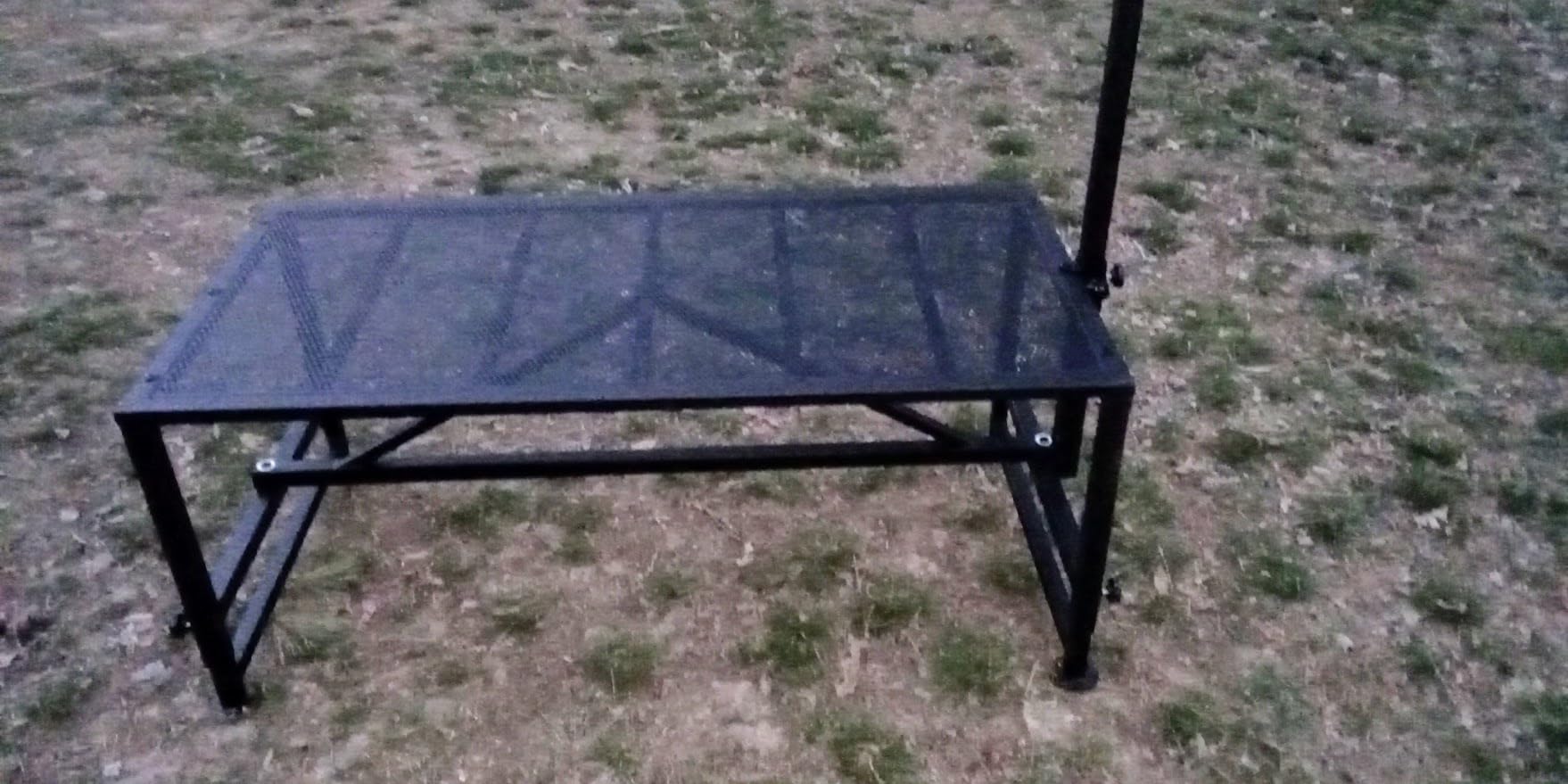
Owners also note it is not substantial enough for Boer or other larger breeds, and one order arrived with a head lock whose assembly did not match the written instructions. Assembly took longer than expected for some buyers, which is worth knowing if you are building it alone on a busy day.
Multiple owners confirm the headlock holds goats comfortably and securely once set, which is the single most important thing for a milking stand to do. If you adjust it once and tighten it properly, the remaining complaints do not come up.
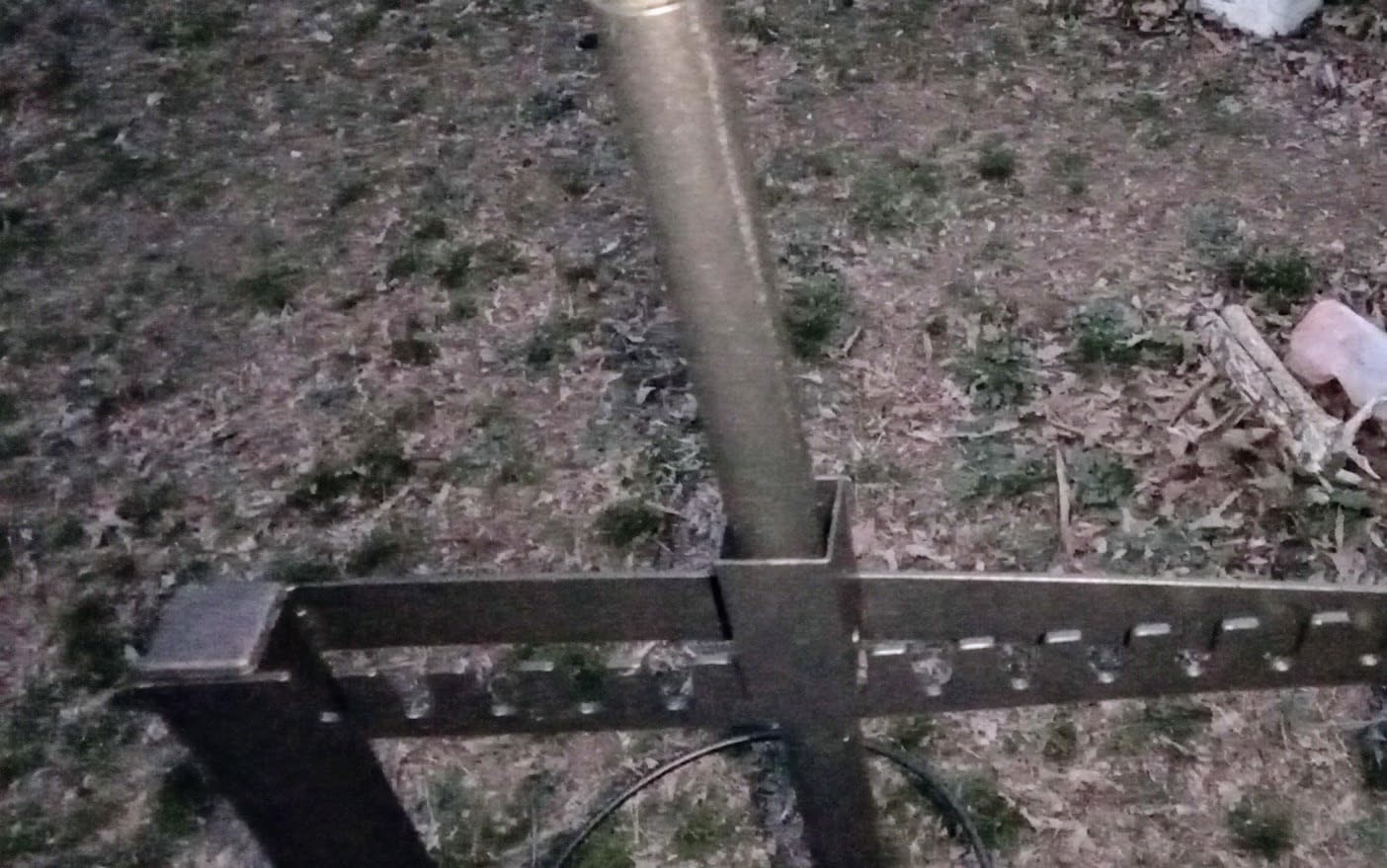
What you should know before buying
The feeder fit is the first thing to fix on arrival. Because the bucket sits loosely in the wire well, a cheap clip or a short length of light chain around the rim stops it being knocked out, and it takes a few minutes. Owners who do this report the problem disappears for good.
Watch the platform over time, especially if you work large animals on it daily. The sagging reported after about a year shows up first in the middle between the support beams, and it is a good reason to keep the load realistic rather than testing the 600 lb figure.
Who should buy it and who should skip it
Buy it if you have a small or medium herd of standard or dwarf goats, want a removable feed bin, and want to spend as little as possible on a stand that will do the work. The smooth platform is genuinely the easiest to rinse down in this group.
Skip it if you keep large meat breeds, if you want a frame that stays rigid for a decade of daily use, or if you would rather not modify anything on day one. The value here is real but it is bought with a little tinkering.
10. Wepepy Stand with Anti-Slip Deck – Best Traction for Nervous Goats
Wepepy Upgrade Goat Milk Stand with Feed Bin, 600lbs Goat Stand for Grooming & Hoof Trimming, 1mm Thick Platform & Anti-Slip Design, Goat Grooming Stand with Firm Head Lock and Adjustable Head
Thickened 1.0 mm steel platform
600 lb capacity
23 x 47 x 37 inches
Head adjusts 8 to 22 inches
Pros
- 1.0 mm platform is thicker than the common 0.8 mm frame
- Anti-slip openings reduce wobbling during milking
- Upgraded locking ring is harder for goats to open
- Detachable feed bin and flat panel rinse clean
Cons
- Some orders arrive with bolt holes that do not line up
- Best suited to smaller goats rather than large animals
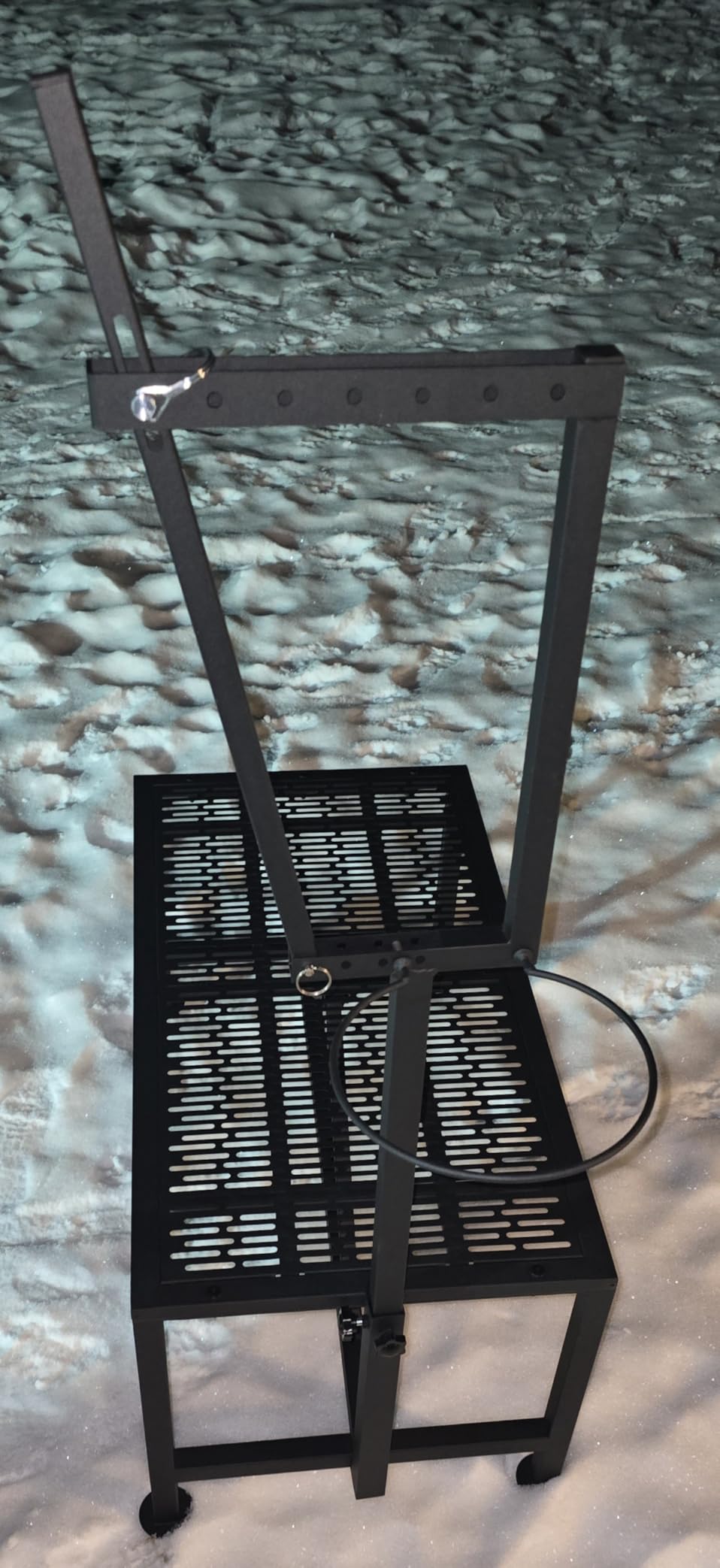
Slipperiness is the single most repeated complaint across every stand we reviewed, and this one addresses it at the manufacturing stage rather than with an add on mat. The platform is thickened 1.0 mm steel against the common 0.8 mm used on most frames in this price tier, and the panel has anti-slip openings cut to reduce wobbling during milking or grooming.
It rates 4.3 from 32 reviews with 66 percent five stars. This is the newest listing in the group and the smallest review base, so treat the score as encouraging rather than settled. The 4.3 sitting alongside a 600 lb rating is a good sign, but the sample is thin.
The head adjustment is dual direction and spans 8 to 22 inches, which covers a very wide range of goat sizes from dwarfs up to standard does. The upgraded locking ring is the detail that matters day to day, because it is designed to be harder for a determined goat to open with a nudge.
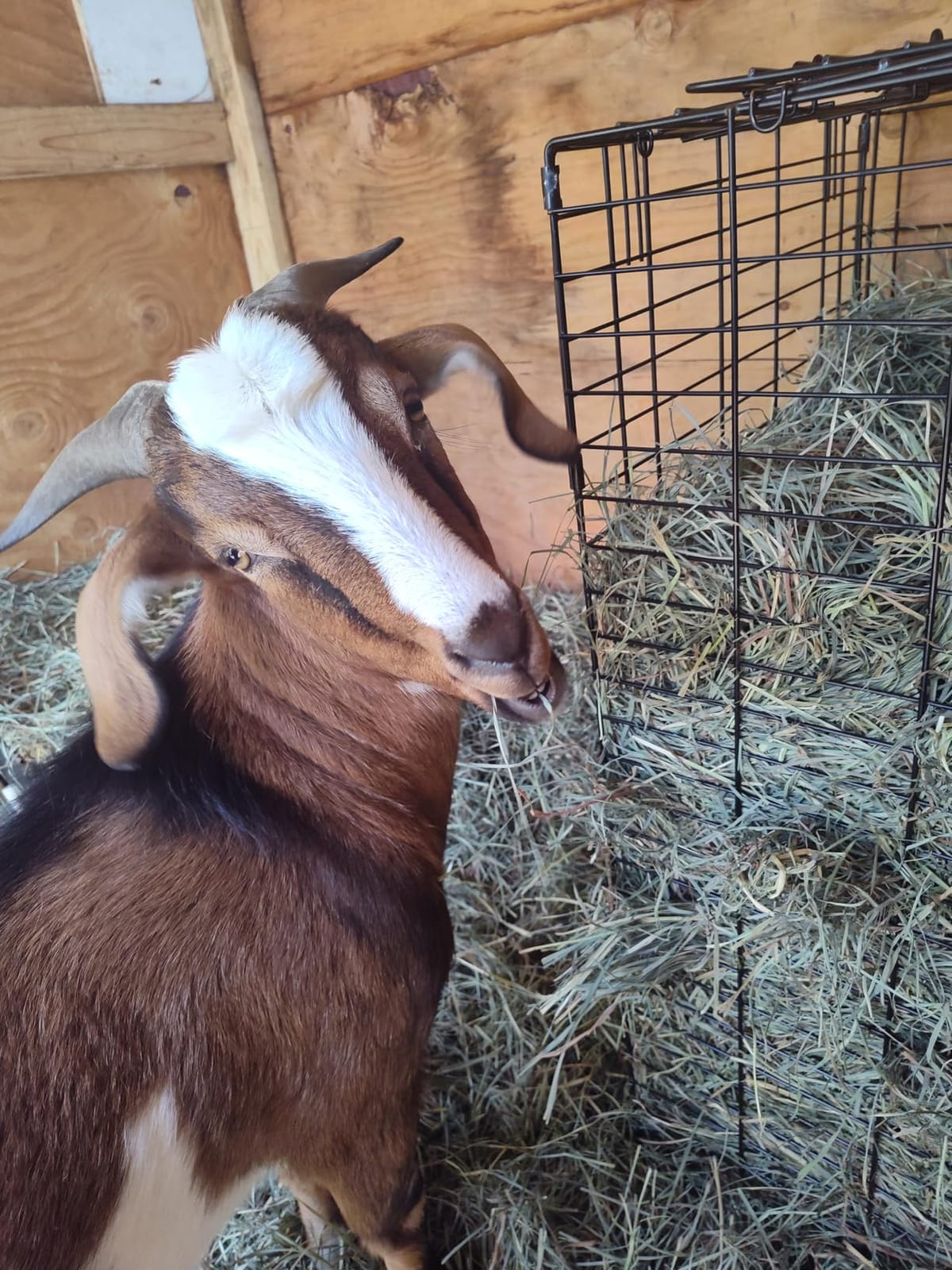
The built-in feed bin is detachable, which means it comes off for a proper clean, and the flat panel wipes and rinses without scrubbing. The finish is a smooth rust resistant powder coat, and at 35.5 pounds the stand is light enough to move between pastures or barns by one person.
Owners report the thicker platform feels noticeably more solid underfoot than the thinner frames, and that the anti-slip openings do reduce wobbling. Both claims are consistent with the specification, and both matter on a goat that is not yet trained to stand still.
Reported issues cluster around assembly fit and head-lock sizing. Some orders arrive with bolt holes that do not line up, and one adjustable pole was not cut all the way through, though the seller replaced that piece. Check the parts against the manual before you start tightening bolts.
What you should know before buying
The head bar is the part owners fiddle with most. It is described as either too tight or too loose depending on goat size, which usually means the adjustment range is generous and the setting needs tuning per animal rather than one set position for the herd. Spend the first session setting it properly.
There is a capacity reality here too. The published rating is 600 lb, but one owner found it not sturdy enough for a mother goat and another reports larger animals over 100 lbs wobbling. It is a good fit for smaller and standard goats rather than for a herd of heavy bucks.
One reviewer saw steel begin rusting after about a month outdoors despite storing it enclosed. That is an outlier against the rest of the feedback, but it is a reminder to keep it under cover or touch bare spots with the coating manufacturer recommended paint.
Who should buy it and who should skip it
Buy it if you have nervous goats, if you have tried a cheaper stand and lost the battle with slipperiness, or if you want a heavier deck gauge in this group without moving up a size. The detachable feed bin and clean-rinse panel suit a twice daily routine well.
Skip it if you need a very large review base for confidence, if you keep heavy animals over 100 lbs as your main milking group, or if you cannot tolerate a short setup check on arrival. The design is right for many herds, it is just early in its life.
How to Build a DIY Goat Milking Stand With Dimensions
Most homesteaders with only two or three does never need a manufactured stand, and a simple frame will do everything the product pages promise at a fraction of the effort. The build is straightforward because a milking stand is four parts: a deck, four legs, a neck bar, and a feed bin. Get those four right and the rest is convenience.
Set your deck height first, and this is where the measuring from earlier in this guide pays off. Cut four legs to bring the deck top to your standing elbow height minus the deck thickness, which lands most people between 18 and 22 inches off the floor. A platform in that range is comfortable for hand milking and low enough for dwarf goats.
For the deck itself, use a sheet of expanded metal, welded wire mesh or perforated steel sheet cut to about 20 inches wide by 48 inches long for standard breeds. Cut it 35 inches long for dwarfs. Expanded metal and mesh both give grip under hoof and drain well, and both rinse clean faster than solid plywood. If you use plywood instead, cut it an inch larger and drill drainage holes across the surface.
Brace the legs with cross members low down and diagonal supports on two sides, and this is what keeps a 150 lb doe from racking the frame when she leans. A simple triangular leg on each side is stronger than four straight posts and is the same geometry the metal stands in this roundup use.
The neck bar is the part most DIY builds get wrong. Make it a vertical post at the front of the deck with a sliding horizontal bar that closes behind the animal head, and lock it with a bolt or a carriage bolt and wing nut rather than a plain screw. A loose head restraint is the one failure mode that makes the whole build unusable. Add a second bar at udder height if you have horned goats.
Mount the feed bin at nose height on the front of the neck post so the animal reaches the grain by stretching slightly forward, not by craning upward. Bolt it on rather than welding it if you want it removable, because a detachable bin is the part you will wash every single session.
The one job a wooden build will not outlast metal on is wet barn life. Seal every cut edge and screw head, and keep the feet off the floor on small blocks or short lengths of pipe so the legs do not sit in standing water. Finish the deck with an outdoor paint rated for a livestock surface, and expect to retouch anywhere a hoof finds an edge.
If you would rather not build, our related reads cover the same height logic for different gear: the best microphone stands for seated podcasting is a good primer on getting equipment to the right height for your body, and the best motorcycle stands covers the same weight capacity and anchoring questions a heavy livestock frame raises.
How to Choose the Right Goat Milking Stand
The measurement that matters most is not the one printed on the box. It is the distance from your elbow to the deck when you stand the way you actually milk, because that is the height you will work at twice a day for years. Measure yourself first, then choose a platform whose adjustment range covers that number. If you prefer to sit, measure your seated elbow height instead and confirm the stand can go low enough, since several stands here run tall at their lowest setting.
Platform length matters next, and the standard split across this category is a 35 inch model for dwarfs and a 47 inch model for standard and large breeds. A dwarf goat that has to stand with its back legs hanging off the back edge will not settle, no matter how good the feed bin is. Measure the length of your longest goat from nose to tail base and buy one platform length longer.
Capacity is the least useful number on the page. Listings here range from 400 lb to 600 lb, and one long term owner of a 600 lb rated stand estimates the real strength closer to 250 lb. Treat the rating as a ceiling, think about the heaviest animal you will actually put in the frame, and add a safety margin.
The headpiece decides whether a session is calm or a fight. Wire form headpieces hold well for trained animals, nose loops are quick but can run small, and width adjustment matters more than most buyers expect when a herd includes both wide faced and narrow faced breeds. If you keep horned goats, a head restraint that sits behind the horns rather than across them is worth the extra care, and shortening a bar to fit dwarfs can stop the frame folding properly on some models.
Material and finish decide how long it lasts. Powder coated steel is the common middle option and chips under repeated scraping. High temperature baked finishes bond better. Hot-dip galvanizing resists corrosion harder than either surface coating, which makes it the right answer for damp barns, and it is why owners with galvanized stands report no rust after years. If your stand lives outside under an open roof, galvanizing or a baked finish is worth paying for.
The feed tray is a training tool, not a decoration. Grain in the bin keeps a goat still and gives you a reason to lead it in, and most goats accept the stand within one to two weeks when grain is involved. Start first fresheners with the headpiece open and grain only, then close the head restraint once they settle. A removable bin is more useful than a fixed one, because it comes off for cleaning.
Surface texture is worth more attention than most buying guides give it. Expanded metal, wire mesh and smooth plate all get reported as slippery, and the fix is usually a cut rubber mat or a grip mat sized to the deck. On a goat that is anxious, a mat often removes more problems than a better headpiece does.
Cleaning routine decides whether raw milk stays clean. Rinse the platform after every session, remove the feed bin and wash it separately, and dry the frame so trapped moisture does not sit on the welds. A monthly check of bolts, the headpiece adjustment and the coating for chips keeps small problems from becoming structural ones.
Electric milker compatibility comes down to clearance rather than brand. A stand works with a machine if there is room under the udder for the cluster, the frame does not sit where the bucket hangs, and the platform is high and stable enough that a hose cannot snag. Before buying a stand to pair with a milker, measure the vertical clearance under the deck with the animal standing normally.
The buying order for a livestock frame follows the same logic as picking a motorcycle stand: load rating first, anchoring and stability second, adjustability third. Only the animal changes, and it changes nothing about how you weigh those three.
Finally, decide honestly whether you will use one stand for milking, trimming, grooming, shearing and health checks. If the answer is yes, weight and rigidity matter more than the lowest possible purchase cost, and a frame you can move, fold or roll is worth paying for once rather than replacing in three years.
Frequently Asked Questions
What is a goat milking stand called?
It is usually called a goat milking stand or a goat stanchion, and the two terms mean the same thing. A goat hoof trimming stand or livestock stand describes the same frame used for trimming, grooming and shearing rather than milking.
How long should a goat milking stand be?
For standard dairy breeds, a platform around 47 inches long gives the animal room to stand naturally, and 48 inches is the other common length. Dwarf and pygmy goats do better on a shorter platform of about 35 inches. Buy one length longer than your longest goat so all four hooves sit on the deck.
How do I get my goat to use a milking stand?
Use grain. Lead the goat onto the platform, keep the headpiece open for the first session, and let it eat while you stand nearby. Most goats settle within one to two weeks, and first fresheners need more patience than established does.
Can I build my own goat milking stand?
Yes. A functional DIY stand needs a deck about 20 inches off the ground, a triangular leg frame, a vertical neck bar with a head catch, and a feed bin at nose height. Pallet and lumber builds work well but need a secure head restraint, and a metal frame outlasts wood in wet barn conditions.
Should I choose a wood or metal goat milking stand?
Metal stands are lighter, hold a higher load rating and resist rot in damp barns. Wood gives better natural traction and is cheaper to build, but it absorbs moisture and needs sealing. Choose metal if you move the stand often or keep large animals, and wood if traction and low cost come first.
Do all goat milking stands work with electric milkers?
Most do, as long as there is clearance under the udder for the cluster and a stable place for the bucket or hose to hang. Measure the vertical space under the deck with the animal standing normally, and check that no frame member sits where the hose will run.
Final Thoughts on the Best Goat Milking Stands for Homesteads in 2026
The best goat milking stands for homesteads are the ones that fit your animals, your height and your barn. For most households we would start with the Weaver Livestock steel stand, because 4.6 stars across 216 reviews and a foldable powder coated frame make it the safest default in this group. Pick the Lezbanz with the feed bin if training new does is your priority, the Goatzy stand if you need to move the stand between locations, and the Premier 1 galvanized model if a damp barn is the enemy you are fighting.
Whichever one you choose, measure your elbow height before you order, and pick a platform length that suits your longest goat. Those two decisions solve more daily frustration than any other feature on the list, and both cost nothing to get right.