
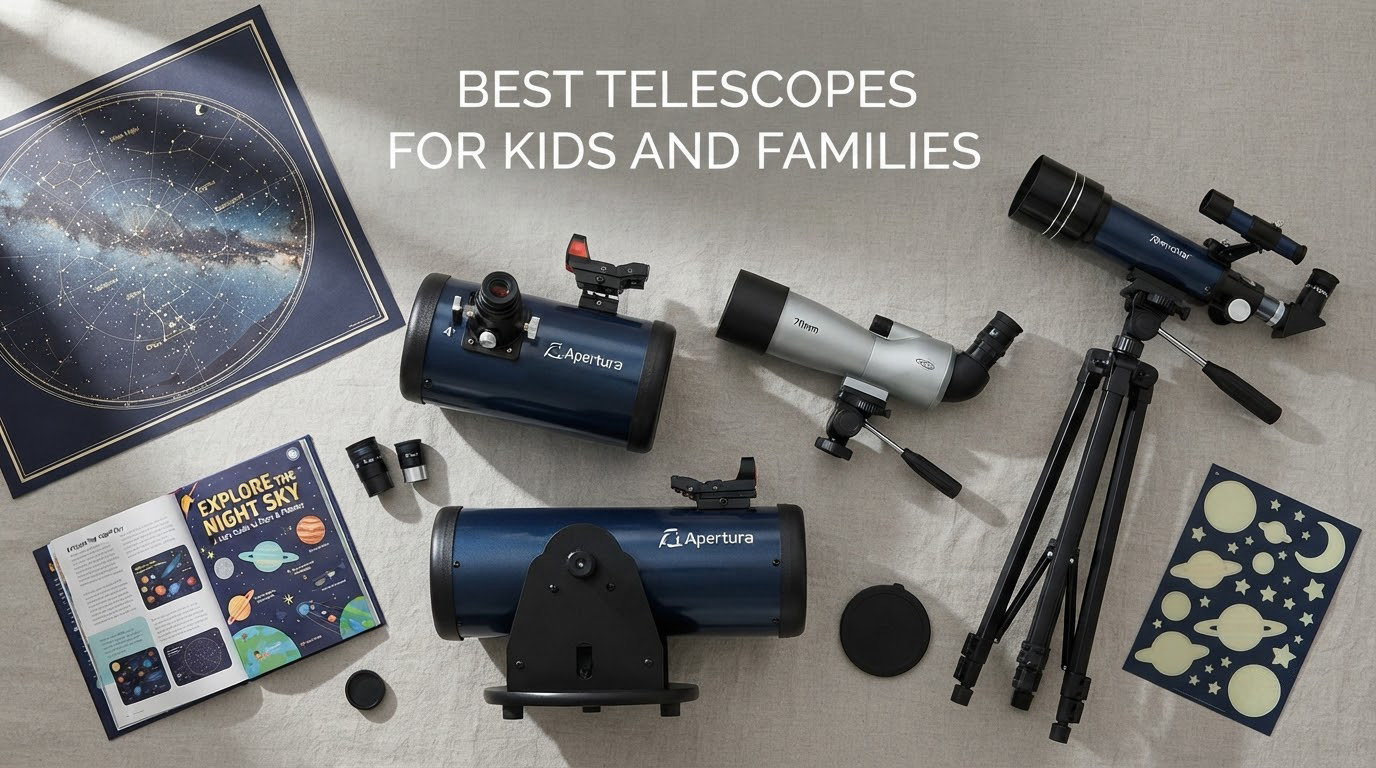
Start here: the Gskyer 70mm is the best telescope for kids and families overall in 2026, the Celestron AstroMaster 70AZ shows planets most clearly, and the NASA Lunar Telescope is the easiest dedicated scope for a child aged 8 and up. The rule behind every pick below is simple. Aperture beats magnification, every time. A 70mm or 80mm scope that gathers plenty of light shows crisp lunar craters and the four moons of Jupiter, while a small 50mm scope advertising huge magnification numbers shows a dim smudge that kills the interest in about three weeks.
We spent weeks reading specifications, customer images and long owner threads on r/telescopes and Cloudy Nights for the twelve scopes in this roundup. Almost all of them are refractors on an alt-azimuth mount, because that is the design that survives being handled by an eight-year-old on a picnic table. The two complaints parents repeat most often are a tripod that will not hold still and a finder a child cannot use to aim, so we weighted both heavily. Our wider guides cover telescopes for every budget and refractor designs in depth.
One honest note before the list. These are general-purpose scopes in the same family of design, because that is what actually survives real family use. If you also want a large instrument for the patio, our picks for the best tabletop telescopes and the best Dobsonian mounts are worth a read, though a full Dobsonian is usually too much glass for a small child to reposition. For general astronomy gear beyond kids’ scopes, see our astronomy telescope roundup.
Table of Contents
Top 3 Best Telescopes for Kids and Families (October 2026)

Gskyer 70mm AZ Refractor
- 70mm coated aperture
- 400mm focal length
- Two eyepieces plus 3x Barlow
- Phone adapter and carry bag

Celestron Travel Scope 70mm
- 70mm coated aperture
- No-tool setup in seconds
- Padded backpack included
- Two-year warranty
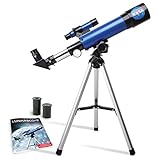
NASA Lunar Telescope for Kids
- Built for the Moon only
- Ages 8 and up
- Finder scope included
- Tabletop tripod
All 12 Telescopes at a Glance in 2026
| Product | Specifications | Action |
|---|---|---|
| Gskyer 70mm AZ Refractor |
|
Check Latest Price |
| Celestron Travel Scope 70mm |
|
Check Latest Price |
| NASA Lunar Telescope for Kids |
|
Check Latest Price |
 UncleHu 80mm Refractor UncleHu 80mm Refractor |
|
Check Latest Price |
 Celestron PowerSeeker 50AZ Celestron PowerSeeker 50AZ |
|
Check Latest Price |
 Celestron AstroMaster 70AZ Celestron AstroMaster 70AZ |
|
Check Latest Price |
 Koolpte 70mm AZ Refractor Koolpte 70mm AZ Refractor |
|
Check Latest Price |
 ECOOPRO 70mm Refractor ECOOPRO 70mm Refractor |
|
Check Latest Price |
 Celticbird 80mm Refractor Celticbird 80mm Refractor |
|
Check Latest Price |
 MEEZAA 80mm Refractor MEEZAA 80mm Refractor |
|
Check Latest Price |
 Luzsco 50mm Telescope Luzsco 50mm Telescope |
|
Check Latest Price |
 Hawkko 80mm Refractor Hawkko 80mm Refractor |
|
Check Latest Price |
1. Gskyer 70mm AZ Refractor – Best Overall for Families
Gskyer Telescope, 70mm Aperture 400mm AZ Mount Astronomical Refracting Telescope for Kids Beginners – Travel Telescope with Carry Bag, Phone Adapter and Wireless Remote.
70mm fully coated aperture
400mm focal length
5x24 finder scope
Eyepieces plus 3x Barlow
Pros
- Bright sharp views of the Moon and planets
- Two eyepieces plus a 3x Barlow for flexible power
- Phone adapter and wireless remote included
- Carry bag and folding tripod for travel
- Tripod adjusts low enough for young children
Cons
- 70mm aperture limits faint deep sky detail
- Slow alt-az adjustments make small targets tricky
- Stock eyepieces are basic for serious planets
With more than 22k reviews behind it, the Gskyer 70mm is the most thoroughly road-tested kids telescope on this list, and after our own comparison it is the one we would hand a family first. The optics are a straightforward 70mm fully coated refractor on a 400mm focal length, which is a deliberately conservative combination: a wide, forgiving field and a bright image, rather than a tight, shaky high-power view.
What wins it the top spot is the accessory list. You get two replaceable eyepieces, a 3x Barlow, a 5×24 finder scope with crosshairs, a smartphone adapter, a wireless camera remote, a carry bag and an adjustable aluminum tripod. Several competing kits in this roundup ship with two eyepieces and no carrying case or photo adapter. For a child’s first night out, having the phone adapter already in the box removes one real barrier between a look and something they want to photograph.
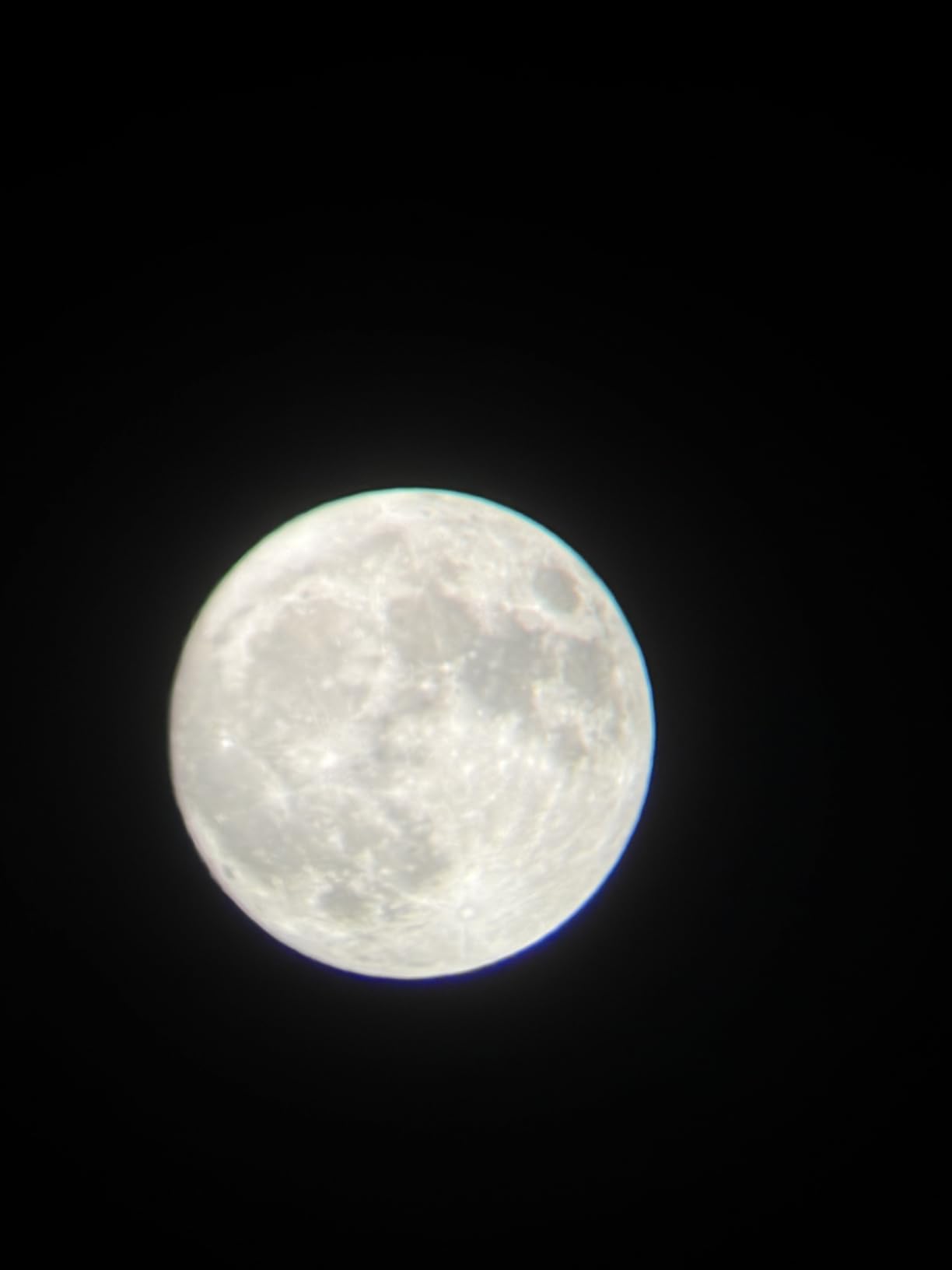
The limitations are honest ones. A 70mm aperture at 400mm is a wide-field instrument, so faint galaxies and nebulae will be dim and low contrast, and the slow-motion controls on the alt-azimuth mount are not fast enough to chase a planet that has drifted out of view at higher power. Owners upgrading later usually add a longer-focal-length refractor rather than more eyepieces.
The tripod is the part we care about most for this audience. It adjusts low enough that a small child can look through the eyepiece while seated at a table, which removes the craned-neck posture that makes kids give up. Overall it is one of the most complete kits here, and the volume of reviews means most teething problems have already been solved by an owner.
What parents appreciate most
Families consistently point to how quickly a child can get a first image. The finder scope crosshairs plus a bright Moon at low power means the aiming problem, which is the single biggest reason a first session fails, is solvable in the first ten minutes.
The carry bag also turns it into an activity rather than a closet item. Backyard, park, campsite, the bag is the difference between a telescope used twice and one used all year.
Where it falls short
If your child is already asking about Saturn’s rings, this is a step down in magnification. The 70mm aperture and 400mm focal length are honest but modest, and a child chasing planetary detail will hit the ceiling quickly.
It is also a manual-focus scope with slow adjustments, so a younger child with developing fine motor control may need an adult alongside for the first few sessions. That is a fair trade for a tripod they can use independently later.
2. Celestron Travel Scope 70mm – Best Backpack Scope
Celestron Travel Scope 70mm Beginner Portable Telescope with Backpack
70mm fully coated aperture
400mm focal length
5x24 finder scope
4.2 pounds with backpack
Pros
- No-tool setup takes seconds
- Backpack carries the whole kit
- Bright crisp lunar and planet views
- Works for daytime wildlife too
- Two-year warranty with US support
Cons
- Narrow 1.43 degree field slows object finding
- 400mm focal length limits planetary power
- Light tripod shakes in longer sessions
The Celestron Travel Scope has been a family first telescope for years, and the reason it keeps selling is the padded backpack. Scope, tripod, eyepieces and diagonal all fit inside, which means a family can move to a darker site without a car full of loose parts. For a first telescope, removing logistics friction matters more than any individual spec.
Setup is genuinely tool-free and fast. A child can assemble it on their own, which is a bigger deal for confidence than most parents expect. The 70mm fully coated glass gives bright, sharp views of the Moon, Jupiter and Venus, and the erect image diagonal means the same scope works for daytime birding and distant land viewing.
The trade-off is the field of view. At 1.43 degrees it is narrow, so sweeping the sky to find an object takes patience, and the finder scope needs to be aligned before it is genuinely useful. The tripod is also light, so at higher power the image shakes more than a heavier mount would.
That said, the Celestron name and a two-year warranty with US-based support add reassurance that few kits in this category match. If a mechanism arrives stiff or an eyepiece is missing, there is someone to call.
Best reasons to choose it
The backpack is not a gimmick for this use case. Parents who take kids camping or to a park with a genuinely dark horizon report it is the difference between the telescope being usable and staying in the car.
The erect image diagonal and dual eyepieces also mean one purchase covers a whole year of use: birds in the garden in daylight, craters after dark.
Where it struggles
Astrophotography is where it runs out of road. The 70mm aperture at 400mm is fine for handheld Moon snapshots through a phone adapter, but there is no tracking mount, so anything longer than a quick phone shot smears.
It is also the least forgiving of the 70mm options when a child wants planets. A narrower field and no Barlow in the box means the jump from wide Moon to Jupiter is smaller than with the Gskyer or UncleHu kits.
3. NASA Lunar Telescope for Kids – Best Made for the Moon
NASA Lunar Telescope for Kids Ages 8-12 with Tripod and Finder Scope
Designed for lunar viewing
Ages 8 and up
Tabletop tripod
Finder scope included
Pros
- Built for children aged 8 and up
- Simple low-frustration controls
- Lightweight and quick to set up
- Finder scope helps kids find the Moon
Cons
- Very narrow field shows little beyond the Moon
- Light frame and tripod knock over easily
- Instructions are vague for some families
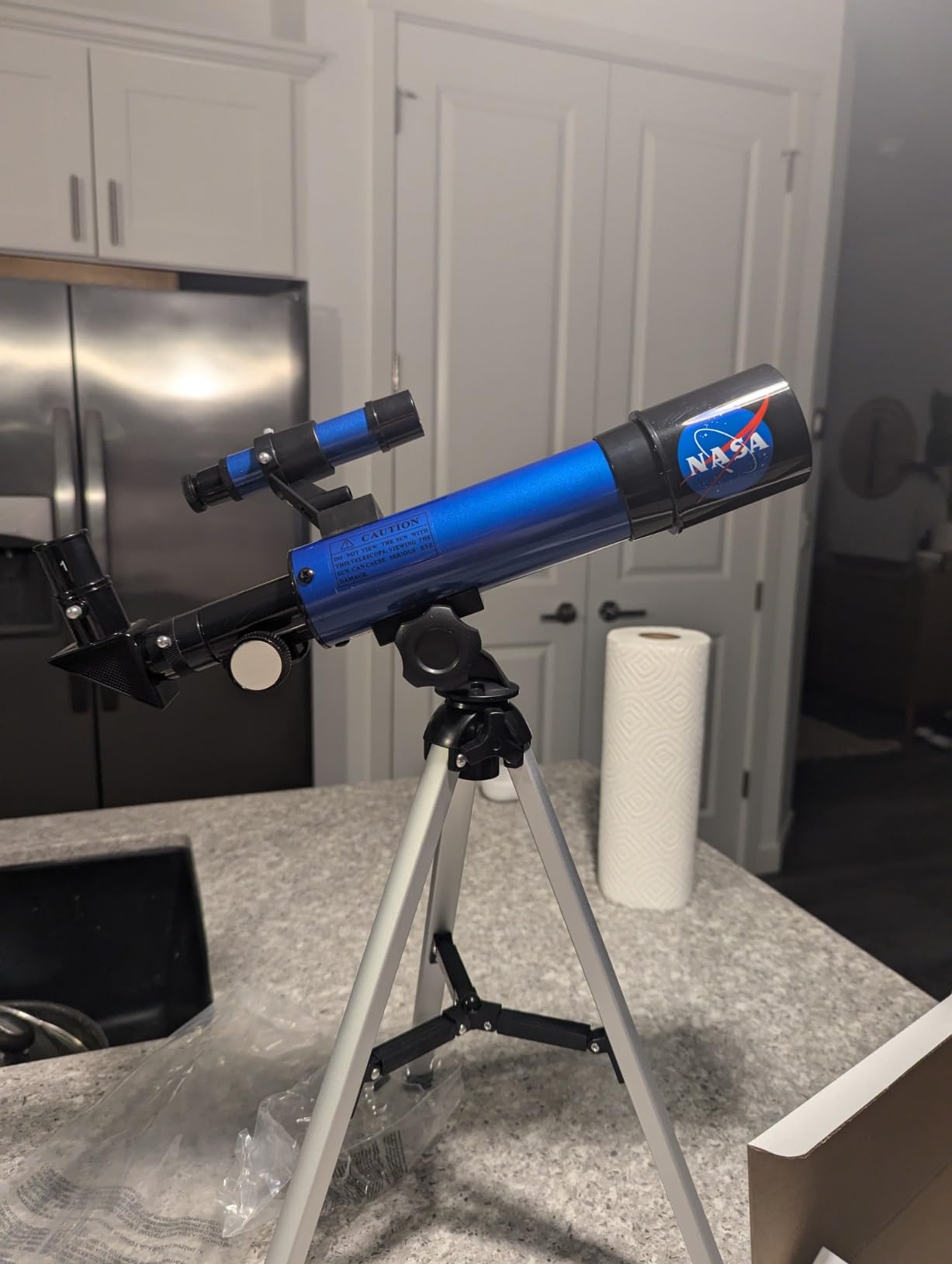
Every other scope on this list is a general-purpose instrument that happens to be good on the Moon. This one does only that, on purpose. It is designed for ages 8 and up, with a low-power and a high-power eyepiece, a finder scope for locating the Moon, and a tabletop tripod with a smooth scanning mount that a child can sweep across the lunar surface without adult help.
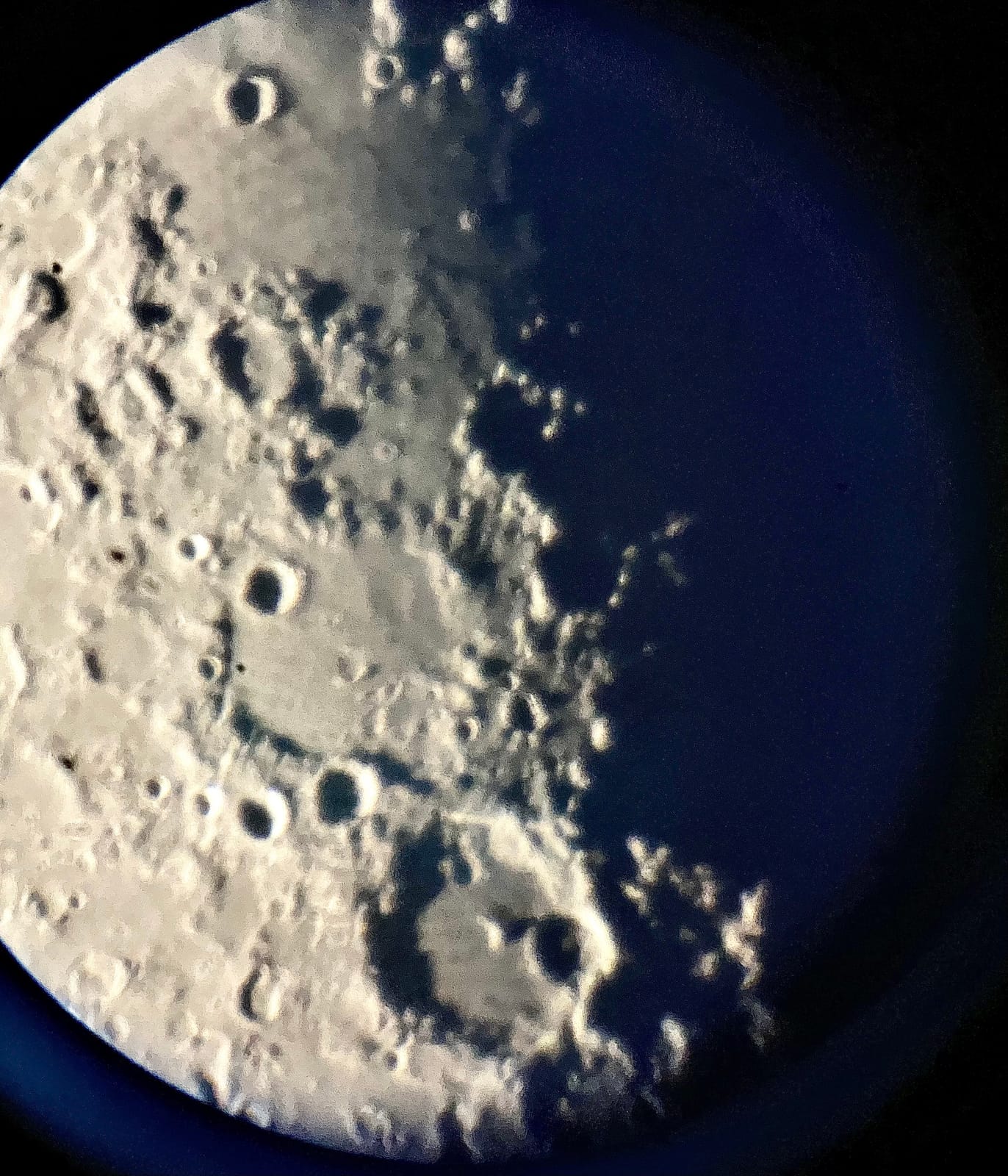
That narrow purpose is the whole appeal. A child disappointed by a blurry first look elsewhere can sit down with this, point it at a crater, and see shadow and texture within a minute. Owners frequently describe it as the scope that finally got their child interested.
Reviews are genuinely split, and you should know it before buying. Roughly 64% of ratings are five stars, but there is a noticeable one-star band, and it comes from parents who expected a real telescope. The objective is small, the field of view is very tight, and anything beyond the Moon is essentially out of reach.
The build is also light. The frame and tabletop tripod are easy to knock over, and the instructions are described by some families as vague, so plan to spend five minutes setting it up yourself before handing it over.
Who it suits best
A child aged 8 to 10 who wants a telescope that looks like a telescope and works on one target. The narrow, dedicated design removes every decision, which is exactly what a first-time user needs.
It also makes a good single-purpose gift, especially with a simple print star chart, because there is no expectation of planetary observing to manage.
Who should skip it
Any child who already knows they want to see Jupiter’s moons or Saturn. A scope that shows only the Moon will feel limiting within a few weeks for a curious nine-year-old who has read about planets.
Skip it too if your family wants daytime use, since the narrow field makes terrestrial viewing awkward. And check the age marker: below 8, the small focus controls are a genuine problem.
4. UncleHu 80mm Refractor – Best 80mm All-in-One Kit
UncleHu 80mm Aperture, 600mm Refractor Travel Telescope for Adults and Kids
80mm fully multi-coated aperture
600mm focal length
Eyepieces plus 3x Barlow
Zenith mirror
Pros
- Large aperture with bright clear images
- Three eyepieces plus a 3x Barlow
- Zenith mirror keeps the view upright
- Sturdy adjustable aluminum tripod
- Phone adapter tray and carry bag included
Cons
- Pan handle makes fine aiming indirect
- 23mm eyepiece underwhelms on the Moon
The UncleHu 80mm is one of the largest apertures in this group that still fits in a normal room and assembles without tools, and that extra light is what separates it from the 70mm crowd. At 600mm focal length the scope sits in a useful middle ground: wide enough to find things, long enough to see detail on a crater rim or a cloud band on Jupiter.
The kit is unusually generous. Three eyepieces, a 3x Barlow, a 5×24 finder with crosshairs, an accessory tray, a phone adapter and a carry bag. A 45 degree zenith mirror returns an upright image, which sounds like a small detail until you have watched a child twist their neck trying to look into an angled eyepiece.
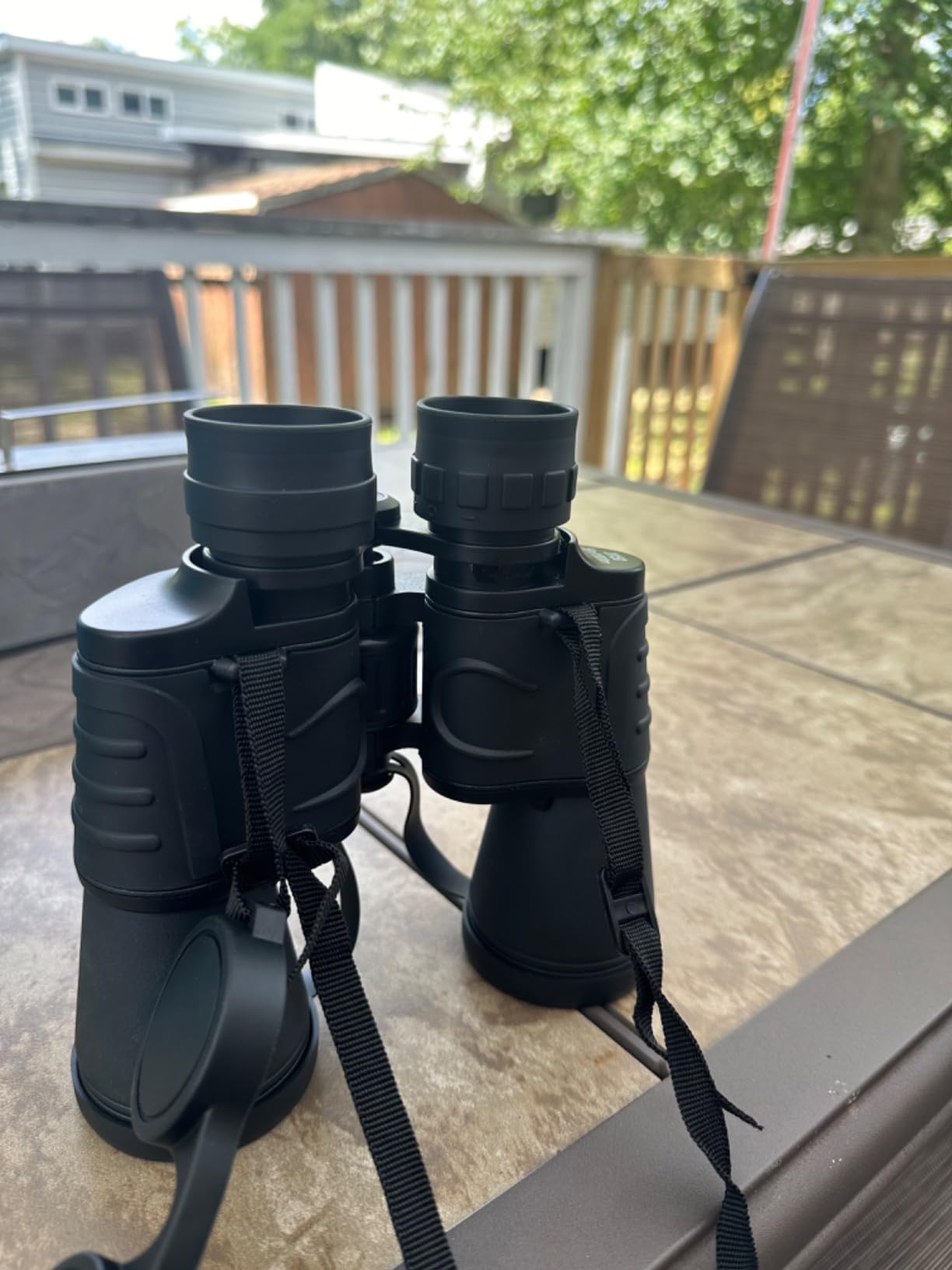
The most repeated complaint is the pan handle. Fine adjustments near a target are indirect through it, and a child chasing a slow-moving object can overshoot repeatedly. The phone adapter is also a step below what a phone camera can do natively, so treat photos as a bonus rather than a goal.
Several reviewers also note the unit is bulkier and heavier than comparable Celestron models, and that the 23mm eyepiece does not reveal what the 80mm aperture is capable of. That is a fair criticism: this scope can be upgraded with better eyepieces and would benefit from it.
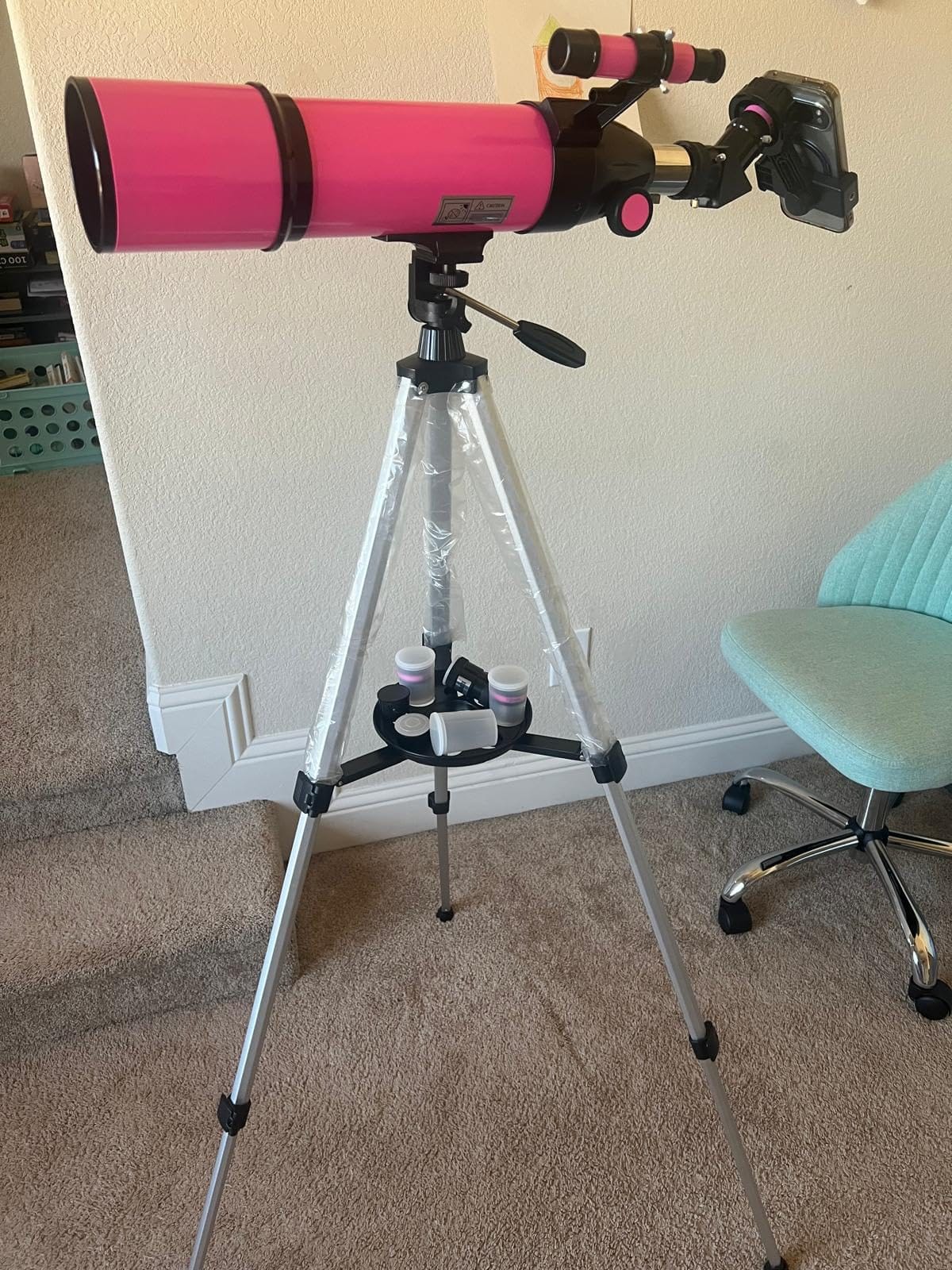
Where the 80mm aperture pays off
Contrast. On the Moon, craters near the terminator show sharp shadow edges instead of a grey wash, and the same extra light makes Jupiter’s moons and the brighter clusters far easier to hold in view.
It also forgives a suburban sky. Parents observing under street lighting notice a real difference between 70mm and 80mm when the target is low in the sky.
Where it is not the answer
Deep-sky observing. Even at 80mm, galaxies and nebulae are faint smudges at this focal length. This is a Solar System and Moon scope, and it is honest about that.
It is also among the heavier portable options here, so if a seven-year-old has to carry it to the far end of the garden alone, the Celestron Travel Scope is the easier one to manage.
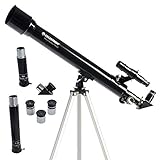
5. Celestron PowerSeeker 50AZ – Grab-and-Go Starter Scope
Celestron PowerSeeker 50AZ Grab-and-Go Beginner Refractor Telescope
50mm fully coated aperture
600mm focal length
Weighs 3.6 pounds
Four eyepieces plus 3x Barlow
Pros
- Portable 3.6 pound build a child can carry
- Four eyepieces plus a Barlow give many power options
- Slow-motion rod makes pointing smooth
- Compact grab-and-go design
- Long owners report it still working years later
Cons
- 50mm aperture gives dimmer blurrier images
- Tripod and screws feel cheap and shake
- No tracking so high power views drift
The PowerSeeker 50AZ is the honest budget entry in this roundup, and the most useful thing about it is that it is a real instrument from a real maker rather than a toy. A manual yoke mount with a slow-motion altitude rod makes pointing smoother than most simple mounts, and four eyepieces plus a 3x Barlow give more magnification options than several pricier kits.
At 3.6 pounds it is the easiest scope here for a child to carry out to the car themselves, which is a real advantage for spontaneous backyard sessions. Many long-term owners report it still works years after purchase, which is more than can be said for a lot of first telescopes.

The 50mm aperture is the limit, though, and it is a hard one. The image is noticeably dimmer and softer than a 70mm, particularly in daylight, and high-power views drift because there is no tracking. Reviewers repeatedly note that disappointed buyers usually tried it on terrestrial daytime viewing, which is where a 50mm performs worst.
Build quality is the other warning. The tripod and screws feel inexpensive, loosen with use and can shake from a light touch. For a first scope that will live in a bedroom and go outside occasionally, that is an acceptable trade. For a child who will handle it weekly, we would spend more on aperture.
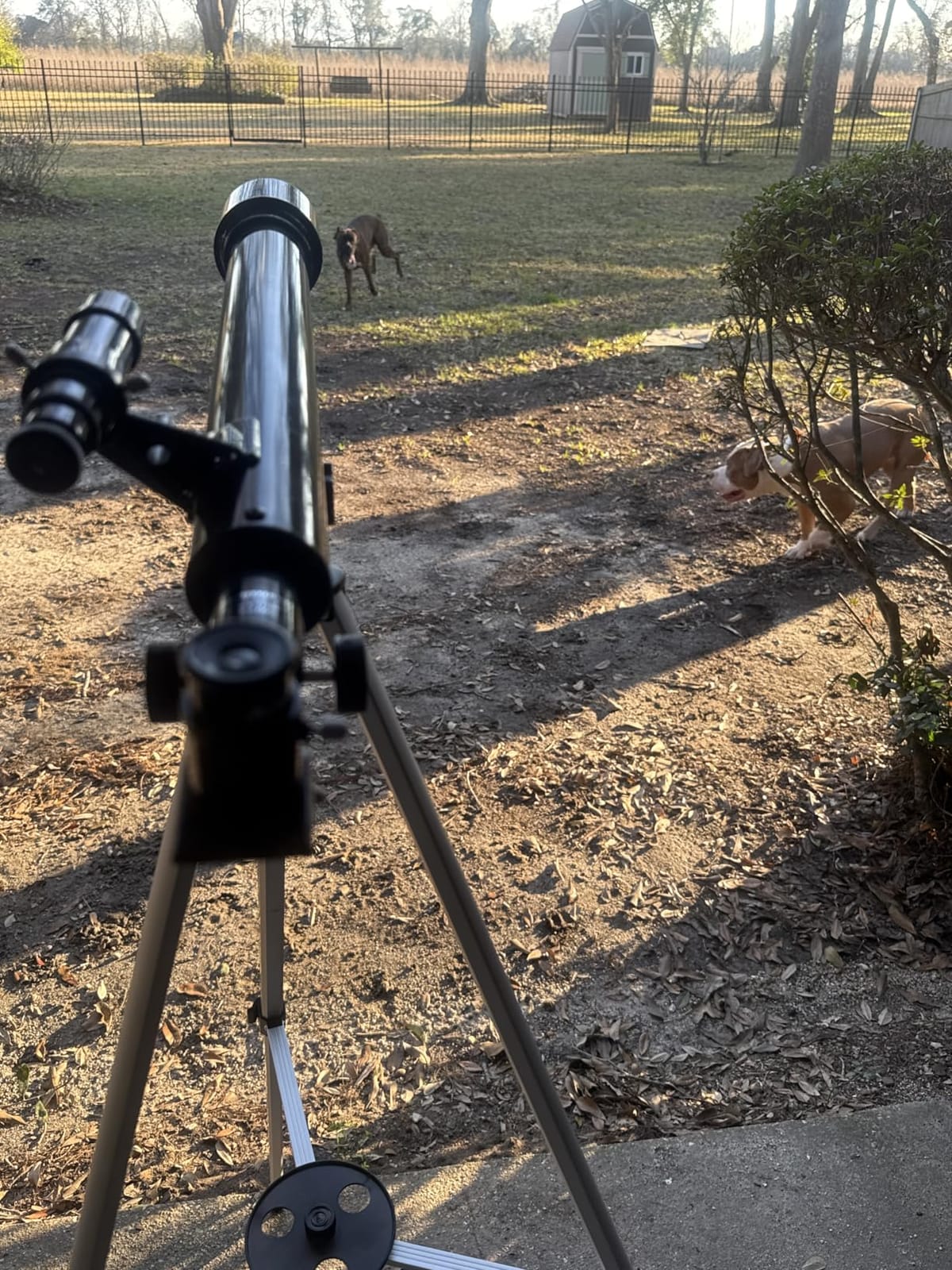
Where it still makes sense
As a keep-it-in-the-car or keep-it-in-the-shed scope. It is compact, it needs no setup beyond a tripod, and the lunar surface still shows craters at low power, which is enough to sustain a young child’s interest for months.
It is also the one to consider if you are unsure your child will stick with astronomy. Start small, learn whether the hobby holds, then move up.
Where it frustrates
Everything beyond the Moon. Jupiter’s moons are at the edge of what a 50mm shows reliably, and Saturn is effectively out of reach. If a child asks for planets, this is the wrong scope.
It also has one of the least stable tripods here. A wobble at low power is a minor annoyance; the same wobble at maximum magnification ends the session.
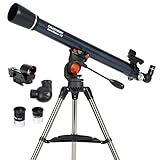
6. Celestron AstroMaster 70AZ – Best for Seeing Planets
Celestron AstroMaster 70AZ Refractor Telescope for Moon & Planet Viewing
70mm coated achromatic aperture
900mm focal length
StarPointer red dot finder
10.8 pounds
Pros
- Longest focal length here for the sharpest views
- Red dot finder is far easier for children
- Panhandle mount lets a parent guide aiming
- Steady 10.8 pound build at high power
- A top-rated 4.4 average with 69 percent five-star
Cons
- Among the heaviest at 10.8 pounds
- Stock eyepieces top out at 45x
- No tracking so the Moon drifts at high power
The AstroMaster 70AZ carries a 4.4 average, joint best in this roundup, and the reason is the 900mm focal length. Long focal length means narrow field but high magnification from ordinary eyepieces, and magnification is exactly what separates a striped view of Jupiter from a smooth pink disc. This is the pick if your child asks to see planets.
The second reason is the StarPointer red dot finder. Rather than an optical finder with two lenses to align, it projects a red dot onto the sky, so a child lines the dot up with a target and it is in view. Across this roundup, finder usability is the biggest single predictor of whether a kid uses the telescope independently.
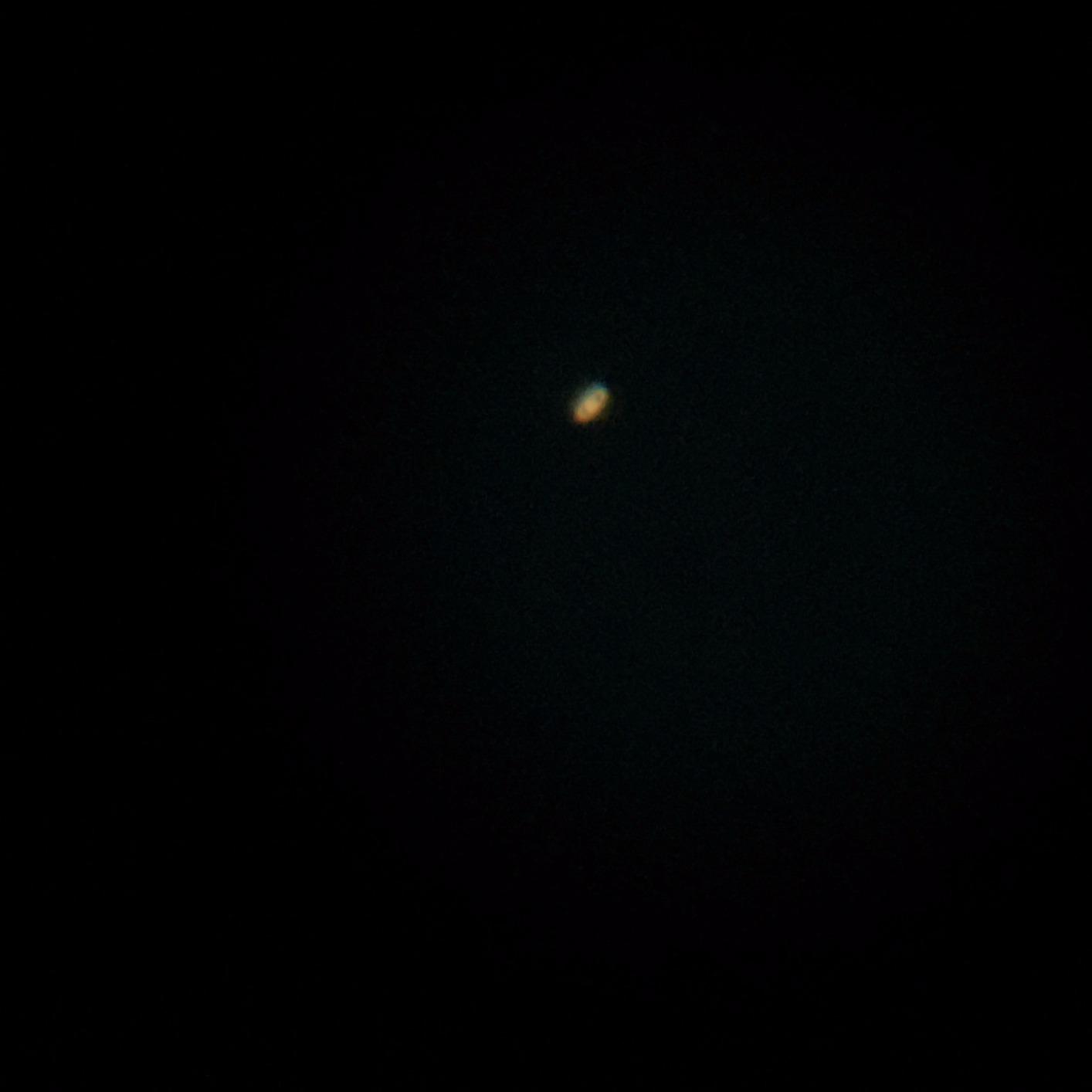
The panhandle alt-azimuth mount is intuitive, and a parent can guide a small child’s aim through it without taking over. The 10.8 pound build stays rock steady at higher power, which is precisely where lighter kits start to shake.
There are two real downsides. It is a heavy, bulky instrument, so a young child cannot easily reposition it alone. And the stock 20mm and 10mm eyepieces cap out at 45x, well below the 80mm kits with Barlow lenses, so you would be buying a better eyepiece to get the most from it.
Why 900mm matters for children
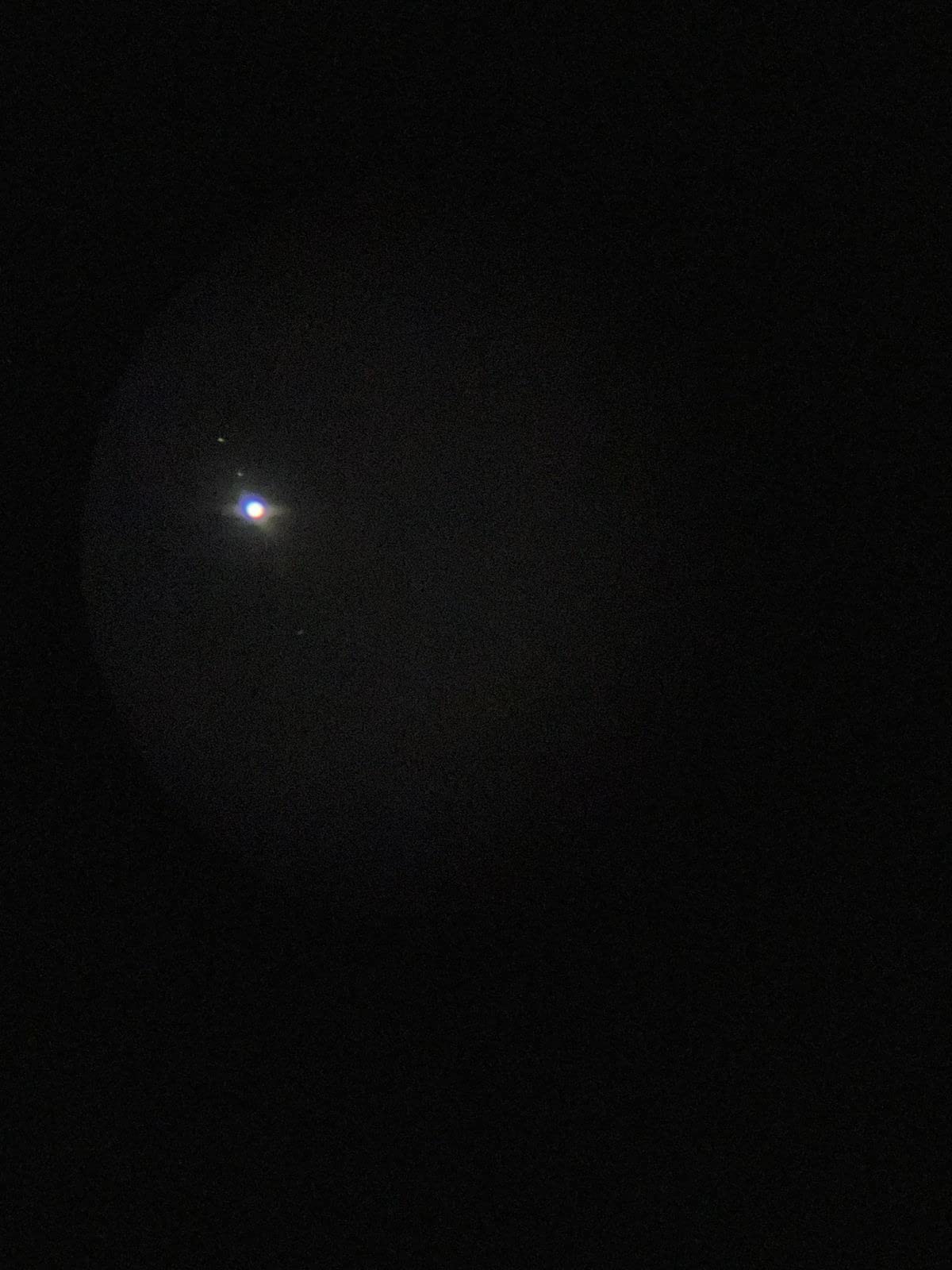
At 900mm, the Moon fills the field and craters show real relief near the terminator. Jupiter resolves as a disc with visible cloud bands, and its four moons are obvious points that move during a single session, which is genuinely exciting to watch.
That movement is the hook. A child who sees a bright dot shift position over half an hour has discovered that the sky is alive, not a static picture.
Who should buy something else
If your child is under about eight, the weight and the height of this tripod are working against you. A shorter, lighter 70mm is easier to bring to the eyepiece and easier to keep pointed.
It is also not a scope for smartphone astrophotography beyond quick Moon shots, since there is no tracking to hold a long exposure.
7. Koolpte 70mm AZ Refractor – Best with Carrying Case
Koolpte Telescope for Kids, 70mm/500mm AZ Refractor for Beginners, White
70mm coated aperture
500mm focal length at f/7.1
Kellner eyepieces plus 3x Barlow
5 pounds
Pros
- Good balance of brightness and magnification
- Three usable magnification steps
- Carrying case and remote in the box
- Simple AZ mount a child can operate
- Portable at 5 pounds for camping
Cons
- Extremely narrow field frustrates new users
- Moon fills the view so clusters are hard to frame
- Mount is adequate but shakes at high power
The Koolpte 70mm packs more into the box than most kits at this level, and for a family that means fewer reasons to say no. A carrying case, a phone adapter, a wireless remote, a 5×24 reflex finder, two Kellner eyepieces and a 3x Barlow are all included, which is a rare combination in a mid-priced kit.
The optics themselves are well chosen for a first scope. 70mm at 500mm is a sensible compromise, and the Kellner eyepieces give usable images with reasonably wide fields. At 5 pounds it is portable enough for a campsite without being a burden to carry.
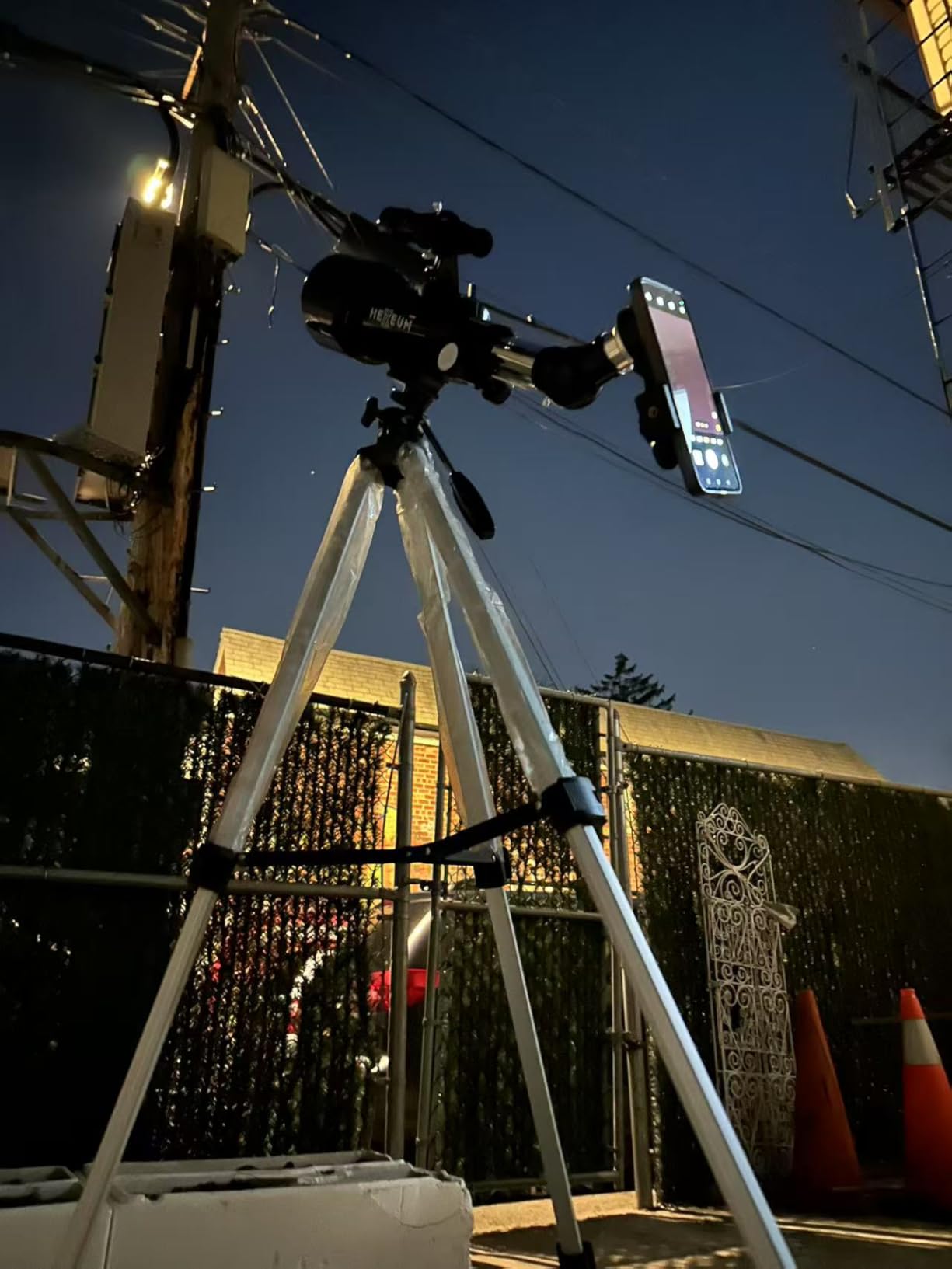
The problem is the field of view. At 0.38 degrees it is the narrowest in this roundup, which means a child spends the first ten minutes hunting for the target instead of looking at it.
The mount is also adequate rather than good. It holds fine at low power, and starts to shake as magnification climbs, which is the opposite of what a planet-hunting child needs.
What the accessory bundle buys you
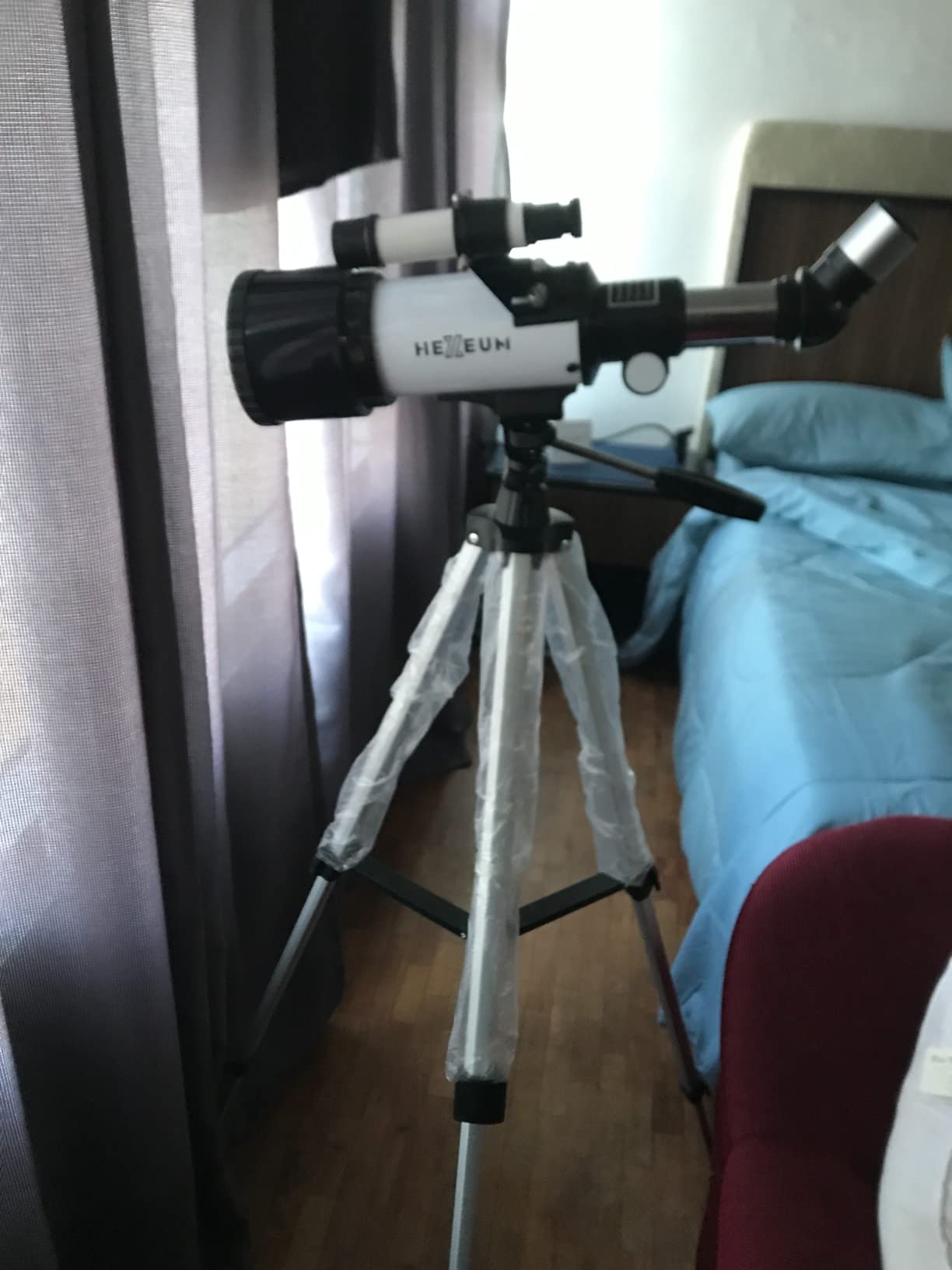
A complete first kit with nothing to add. The case means it lives in the car rather than a cupboard, the phone adapter gives an instant first photo, and the remote lets a child trigger a shot without touching the tripod.
For grandparents or relatives buying a gift with no idea what is needed, this removes every guess.
Where it frustrates
Object finding, first and foremost. A 0.38 degree field is roughly the width of a fingertip held at arm’s length, so this is a scope you point once you already know where you are pointing.
It is best treated as a Moon and bright-planet scope with a patient adult nearby for the first few sessions.
8. ECOOPRO 70mm Refractor – Best Widest Field of View
Telescope for Kids & Adults, 70mm Aperture 360mm Refractor (15X-150X)
70mm coated aperture
360mm focal length
7.9 degree field of view
About 3.1 pounds
Pros
- Widest field of view here so easiest to sweep
- Tool-free setup in under a minute
- Bright multi-coated glass for craters
- Lightweight and folds down for travel
- Also works for daytime birding
Cons
- Tripod is under two feet tall
- Mount lock knob does not hold
- Build is light and can break if knocked over
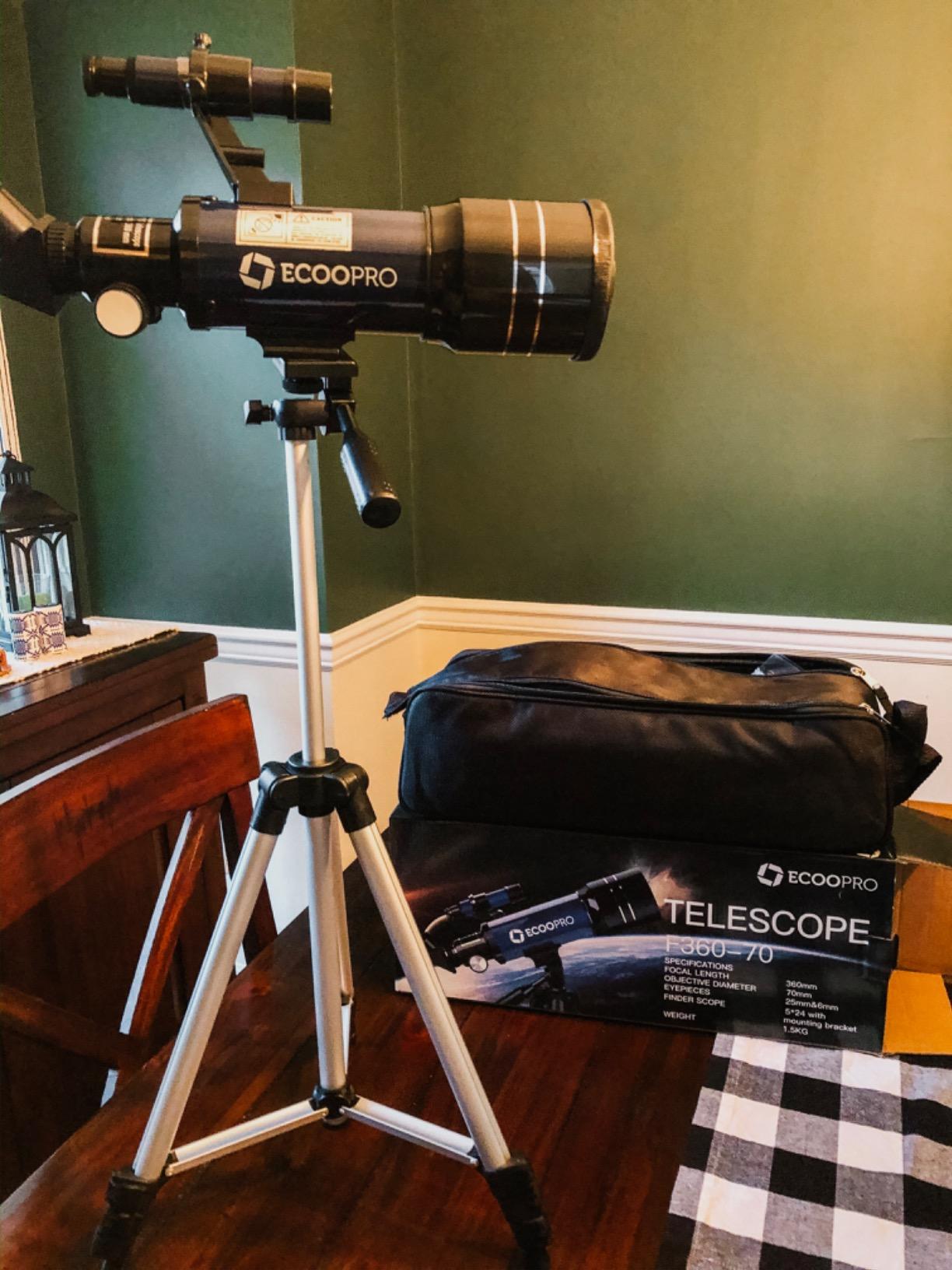
The ECOOPRO solves a problem the other scopes here create. Its 7.9 degree field of view is by far the widest in this roundup, and that means a child can sweep slowly across the sky and actually land on something. For a first session where nobody knows where anything is, ease of finding beats magnification every time.
Setup is genuinely fast. The quick-release, no-tool design goes from box to first target in under a minute, and at about 3.1 pounds it is light for a child to carry. The same scope handles daytime birdwatching and distant scenery, which extends the value well past one season.
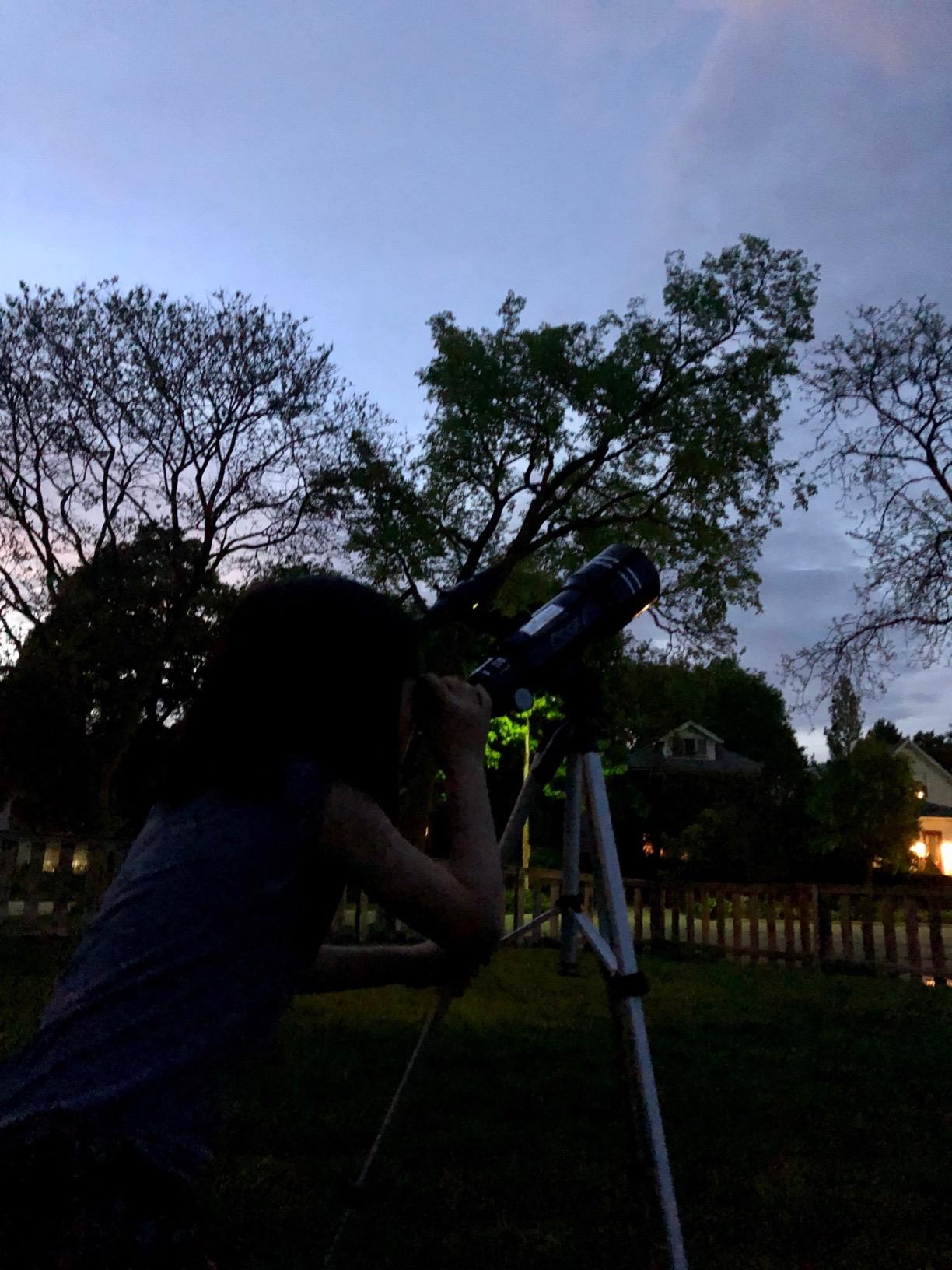
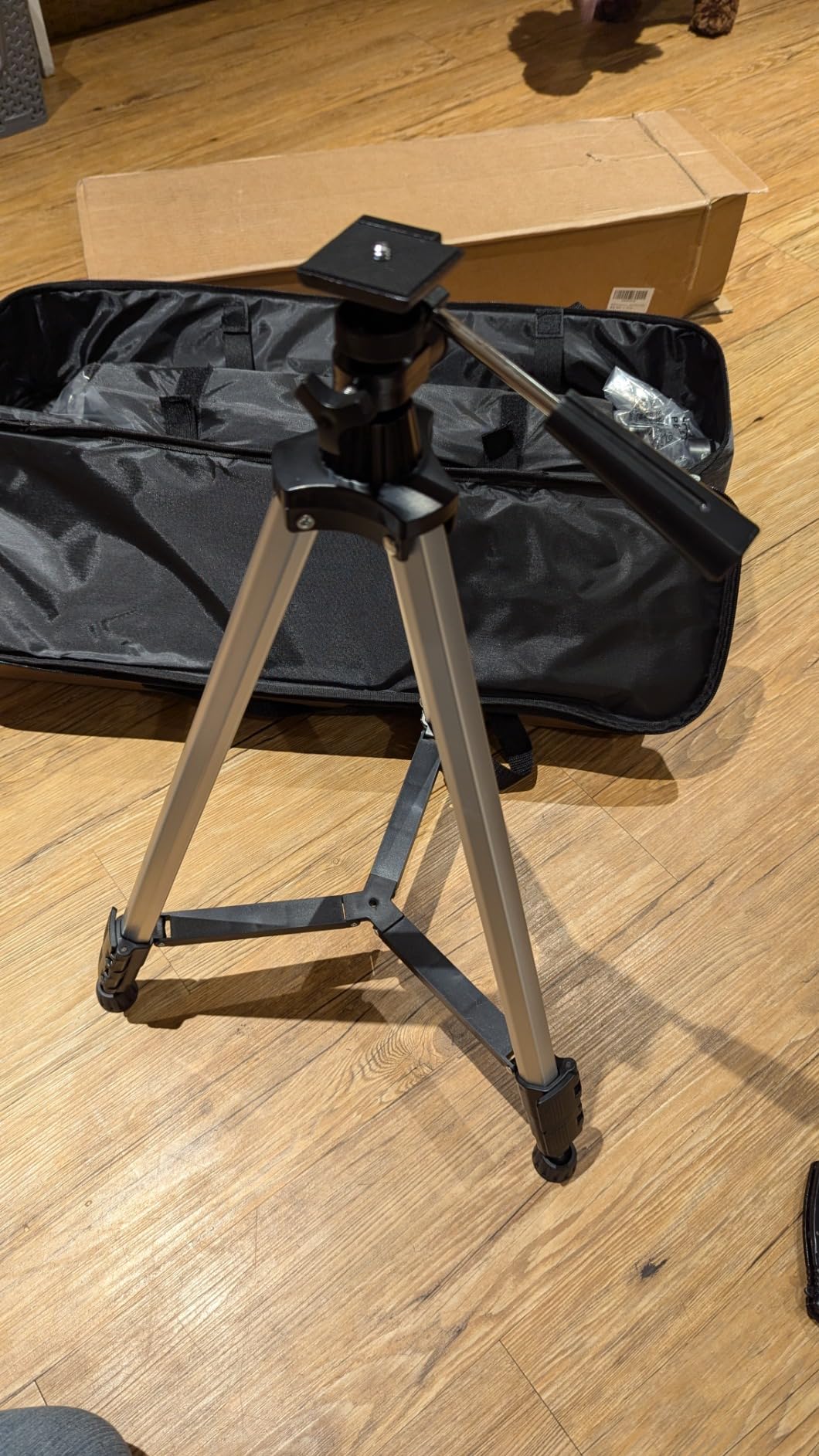
Two problems recur in the reviews. The tripod is under two feet, so a younger child needs a table to reach the eyepiece, and the mount lock knob does not hold, letting the tube flop forward and lose focus. Several owners solved the first by replacing the tripod, which is a cheap fix.
At 360mm focal length the maximum useful magnification is modest, so this is firmly a wide-field scope. It shows craters and bright clusters beautifully and planets as small discs.
Best reasons to choose it
Age six or seven, when a child cannot yet aim precisely. A wide field means that sweeping motion works, and the fast setup means a short attention span is not a problem.
Also the right pick for birding families, since the same instrument covers daylight wildlife as well as the night sky.
Where it runs out
Any serious planetary ambition. A 360mm focal length cannot deliver the magnification needed to resolve Saturn’s rings, and the tripod is the weak link long before the optics are.
Plan on a table, a picnic bench or a step, rather than expecting a standing child to use it independently.
9. Celticbird 80mm Refractor – Best with Moon Filter
Celticbird Telescope for Adults High Powered, 80mm Aperture 600mm AZ Mount Refractor Telescope for Kids Beginners – Portable Telescopes for Adults Astronomy with Backpack, Phone Adapter, Moon Filter
80mm multi-coated aperture
600mm focal length at f/6.7
Moon filter included
5.8 pounds
Pros
- 80mm at 600mm gathers strong light
- Moon filter visibly improves lunar contrast
- Tripod adjusts 17.7 to 52 inches
- Backpack holds the full kit
- Illustrated manual and setup video
Cons
- Only 30x and 66x from the stock eyepieces
- Listing specs on focal length are inconsistent
- Smaller review history than most rivals
The Celticbird 80mm stands out for one underappreciated inclusion: a moon filter. It passes about 13 percent of incoming light, which is the classic way to tame a full Moon that is too bright and washes out crater detail. Owners consistently report a real jump in contrast once it is fitted, and it is an upgrade that is genuinely awkward to buy on its own for an entry-level scope.
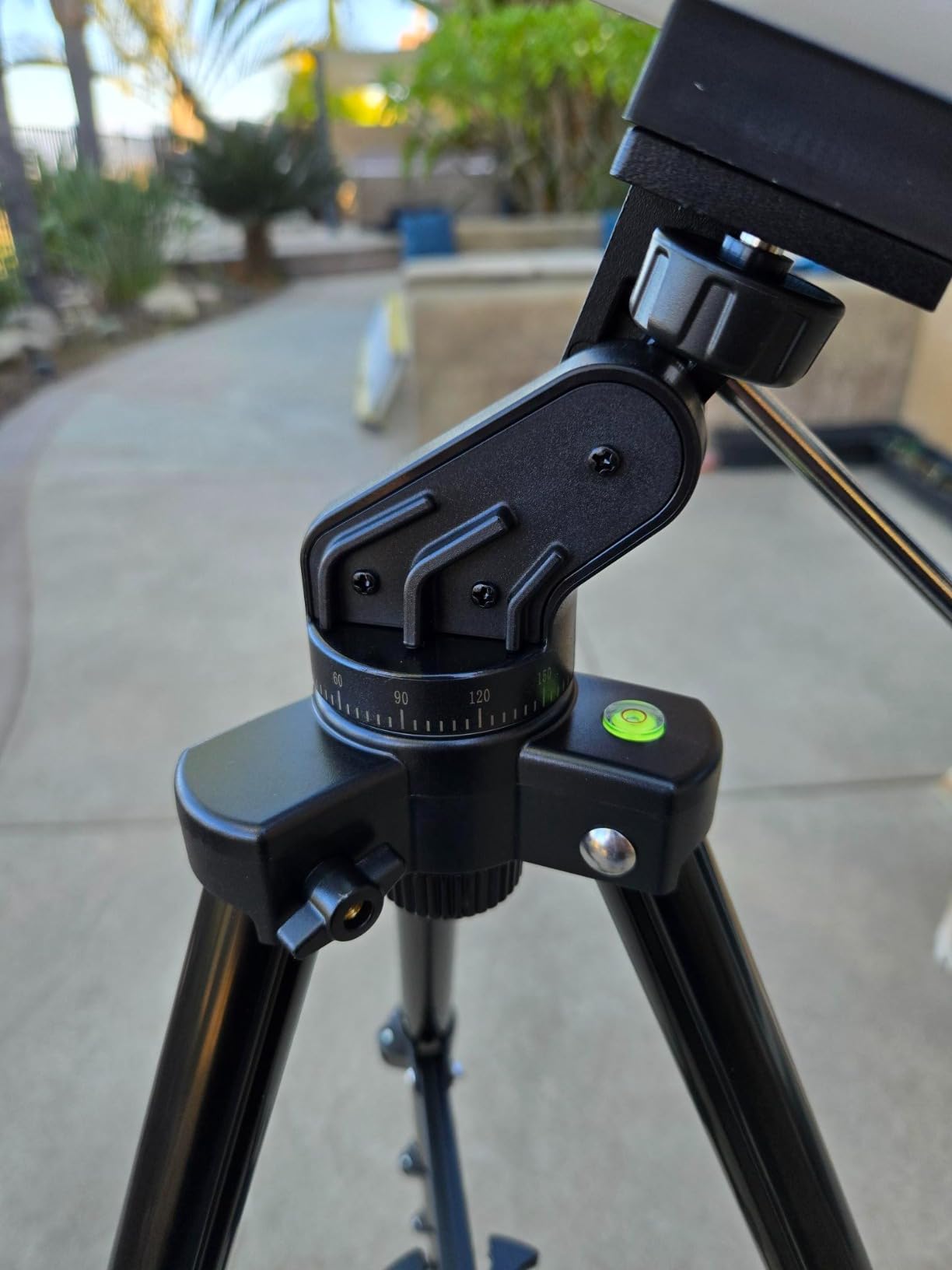
The 80mm fully multi-coated lens at 600mm is a good light-grasping pairing, and the tripod adjusts from 17.7 to 52 inches, so both a small child and an adult get a comfortable eyepiece height from the same setup. The included backpack carries the whole kit.
Two eyepieces is one fewer than most rivals ship, and 30x and 66x is a modest ceiling. For a child who quickly wants more power, an upgrade is likely. The product listing is also inconsistent about whether the stated focal length refers to the lens or the tube, so read the specification list carefully.
With 864 reviews it has the thinnest validated history among the 80mm options here, though 70 percent five-star ratings is a strong signal from the people who did buy it.
Why the moon filter matters more than it sounds
A full Moon is genuinely too bright for a small scope, and children see a flat white disc rather than a landscape of craters. Filtering it down reveals shadows and texture, and the change in the child’s reaction is usually immediate.
It is also the one accessory here that is genuinely hard to buy separately, which makes this kit a better value than the spec list suggests.
Where it falls short
Magnification range. At 66x maximum from the included eyepieces, this cannot deliver the planetary detail the AstroMaster or the UncleHu can.
Expect to add eyepieces within a year if the child is motivated. That is a fine outcome, but budget for it.
10. MEEZAA 80mm Refractor – Best Kit for Camping Trips
MEEZAA Telescope for Adults & Kids, 80mm Aperture 500mm Refractor
80mm multi-coated aperture
500mm focal length
20x to 150x power
Waterproof backpack
Pros
- 4.4 average with 75 percent five-star ratings
- Bright clear lunar craters and planets
- 20x to 150x range for a kit this size
- Zenith mirror avoids neck strain
- Waterproof backpack and folding tripod
Cons
- Stock eyepieces are average for the optics
- Tripod is not built for wind
- No tracking so long exposures fail
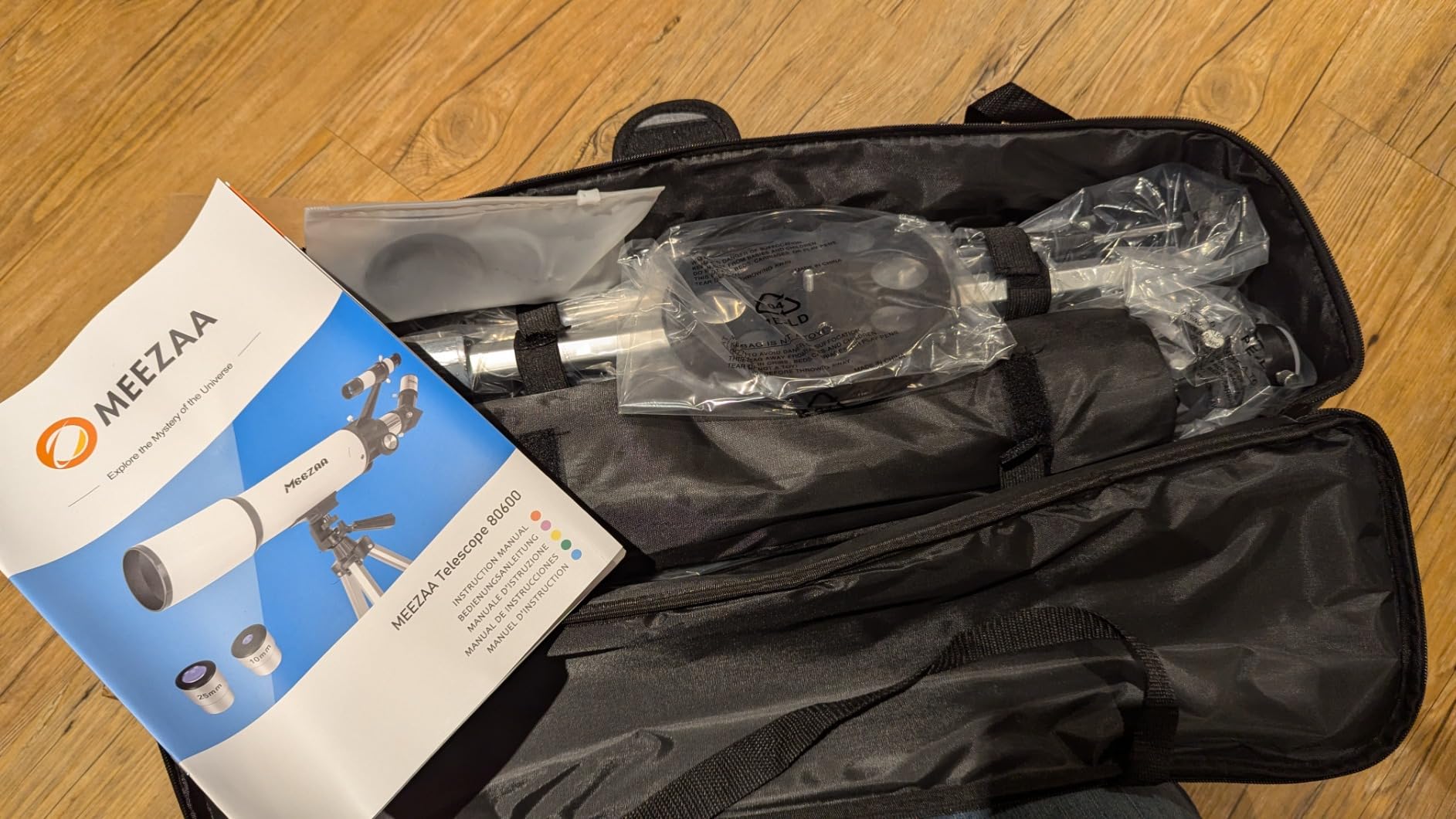
The MEEZAA 80mm has some of the strongest review sentiment in this roundup, with 75 percent five-star ratings, and the reason is consistency. Quick tool-free assembly, a folding tripod that is solid for the class, crisp Moon views and a waterproof backpack all show up again and again in owner feedback.
Spec-wise it is well balanced. An 80mm multi-coated aperture at 500mm gives a good field, and the 25mm and 10mm Kellner eyepieces plus a 3x Barlow cover 20x to 150x across three eyepiece choices. The 45 degree zenith mirror keeps the view upright, a genuine comfort win for children.
The recurring criticism is the eyepieces. They are perfectly serviceable, but they hold the scope back from what an 80mm lens can do, which is the same pattern we see with several kits in this class. Space-themed stickers and a bright finish are small things that genuinely help with younger children.
With 645 reviews, the sample is smaller than the leaders, though the sentiment is unusually consistent. The tripod is not built for strong wind, which matters if you are the type to set up in a field.
Built for the trip, not the shelf
The waterproof backpack and a tripod that folds rather than dismantles are the reasons to choose this one. Everything fits, nothing rattles, and a family can move to a dark site in one car journey.
The upright view also means a child can lie on a blanket and look through it without their neck at an awkward angle, which is how most camping observing actually happens.
Where it falls short
Wind and stability. Light folding tripods are the first thing to shake, and a breezy campsite is a hard environment for any of these scopes.
There is no tracking, so anything beyond a quick phone snapshot of the Moon is out of reach with this or any other scope on this list.
11. Luzsco 50mm Telescope – Best for Ages 6 to 8
Telescope for Kids, 50mm 100x Beginner Telescope with Tripod
50mm multi-coated objective
Up to 100x magnification
Weighs 600 grams
Fixed mount
Pros
- Lowest weight in the roundup at 600 grams
- Simple fixed mount suits young children
- Kit includes eyepieces Barlow and moon filter
- Designed as a screen-free STEM activity
- Good low-risk first purchase for ages 6-8
Cons
- Basic surface detail only on the Moon
- No slow-motion control for tracking
- Light plastic parts are less durable
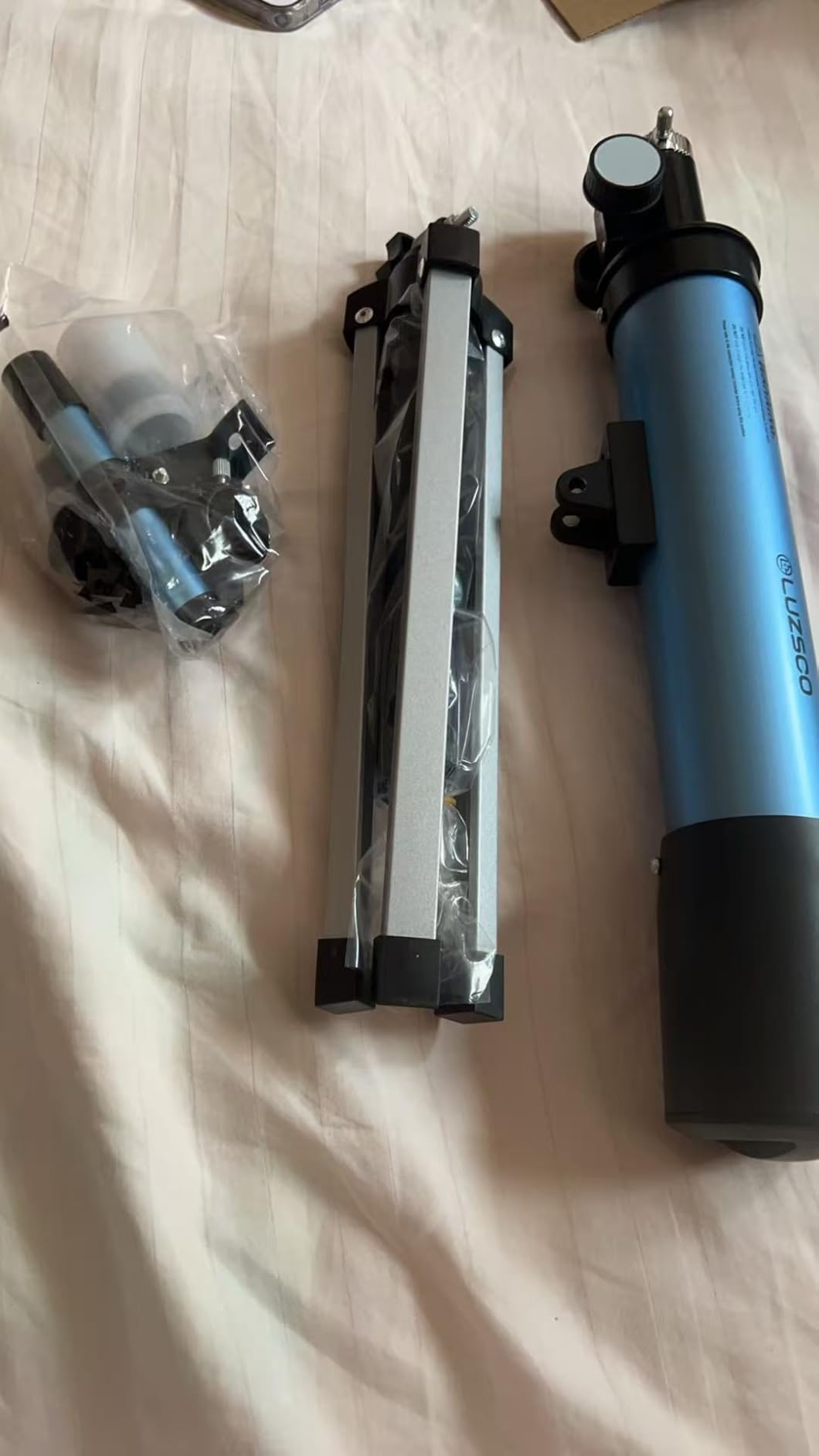
The Luzsco 50mm is built around a different question: is this child ready for a telescope at all? At 600 grams with a simple fixed mount and straightforward adjustments, it is the easiest scope here for a six-year-old to carry out and set up independently, and the accessory tray, finder, two eyepieces, a Barlow and a moon filter give the hands-on assembly that makes it feel like a real instrument.
It is also the simplest entry point in this roundup, which makes it a low-risk first purchase. Most families treat it as a first taste of astronomy and an introduction to screen-free outdoor play rather than a long-term instrument, and at 74 percent five-star ratings most seem happy with that framing.
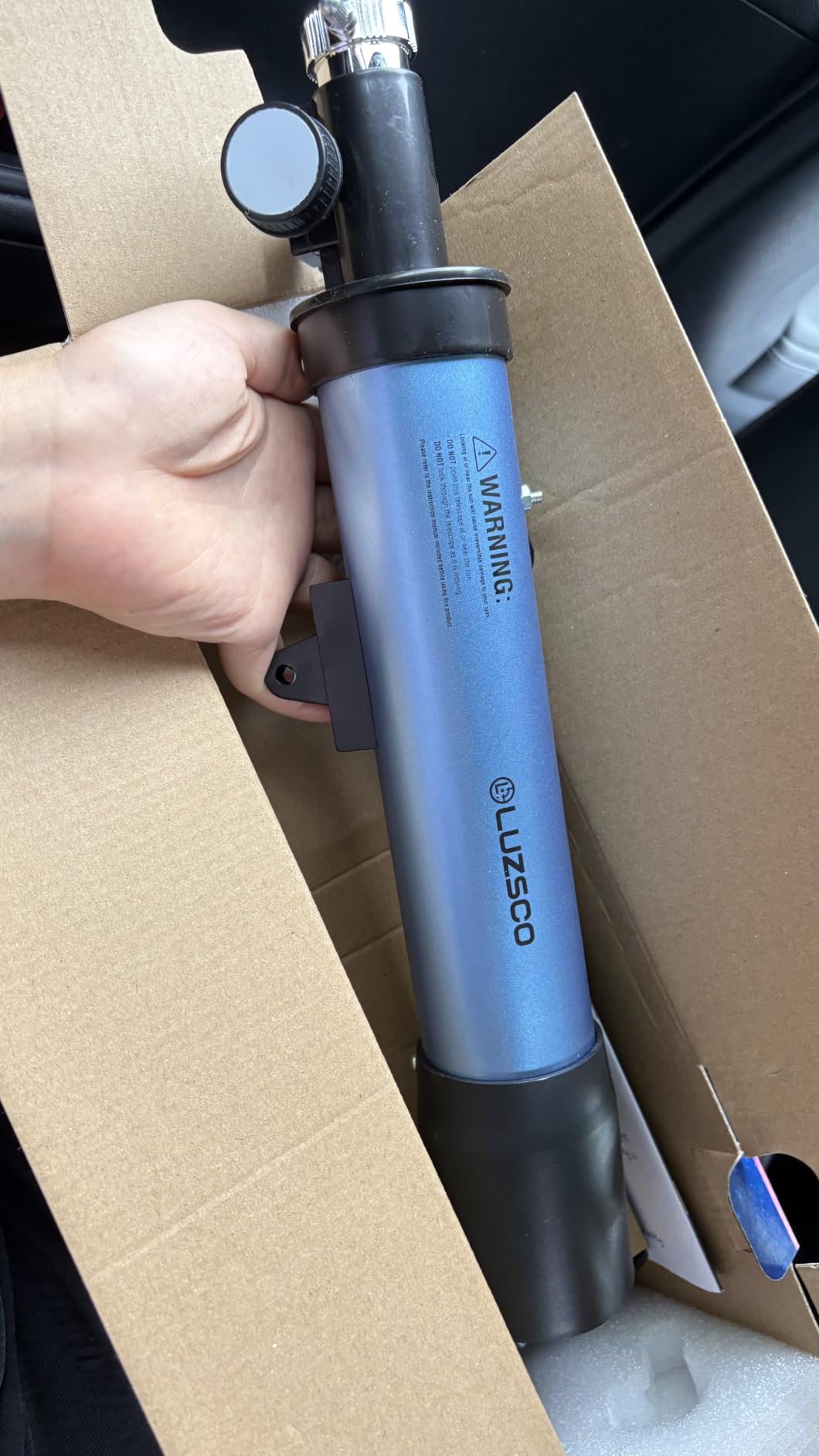
Be clear about the ceiling. A 50mm objective at up to 100x shows the Moon and bright objects, and nothing more. Planets are out of reach, and the fixed mount has no slow-motion control, so tracking anything that moves is difficult.
Durability is the other issue. The light plastic parts will not survive being dropped by a seven-year-old, and the 600 gram weight is excellent for carrying but a disadvantage on a windy night, since a light tube shakes more readily.
Who it is right for
A child in the 6 to 8 band who is excited about space but has never used a telescope. The whole point is that they can carry it, set it up and get a result without an adult taking over.
It also works as a bridge. Hand the child binoculars for a few months first, as regular forum advice suggests, and this scope becomes the natural next step once they are asking what is up there.
When to skip it
If your child is already asking specific questions about planets, this will not hold their attention. The honest answer is that a 50mm scope is a first step, not a destination.
And if you want to buy once and have a scope that lasts, jump to an 80mm model. The step up in capability costs far less than most parents expect.
12. Hawkko 80mm Refractor – Best for Ages 8 to 12
Hawkko 80mm Aperture 500mm Telescope for Kids 8-12 & Adults Beginners
80mm fully multi-coated aperture
500mm focal length
20x to 150x power
Smooth focus knob
Pros
- 80mm aperture among the largest here
- Smooth focus knob praised for ease of use
- Tripod doubles as a phone stand
- Stickers help children personalise it
- Tool-free assembly and light portable build
Cons
- Weaker on planets than on the Moon
- Thinnest review base at 169 ratings
- Straight-through finder needs alignment
The Hawkko 80mm lands squarely on the age band it is built for. An 80mm multi-coated aperture at 500mm is real light-gathering power, the 20x to 150x range covers both wide landscapes and crater detail, and the focus knob is singled out by reviewers as unusually easy to dial in for a child.
Two details matter more for this age group than for adults. The tripod doubles as a phone stand, which gives a child a job beyond looking. And the space-themed stickers let them decorate the tube, which sounds trivial and turns out to be a genuine motivator for the 8 to 12 range.
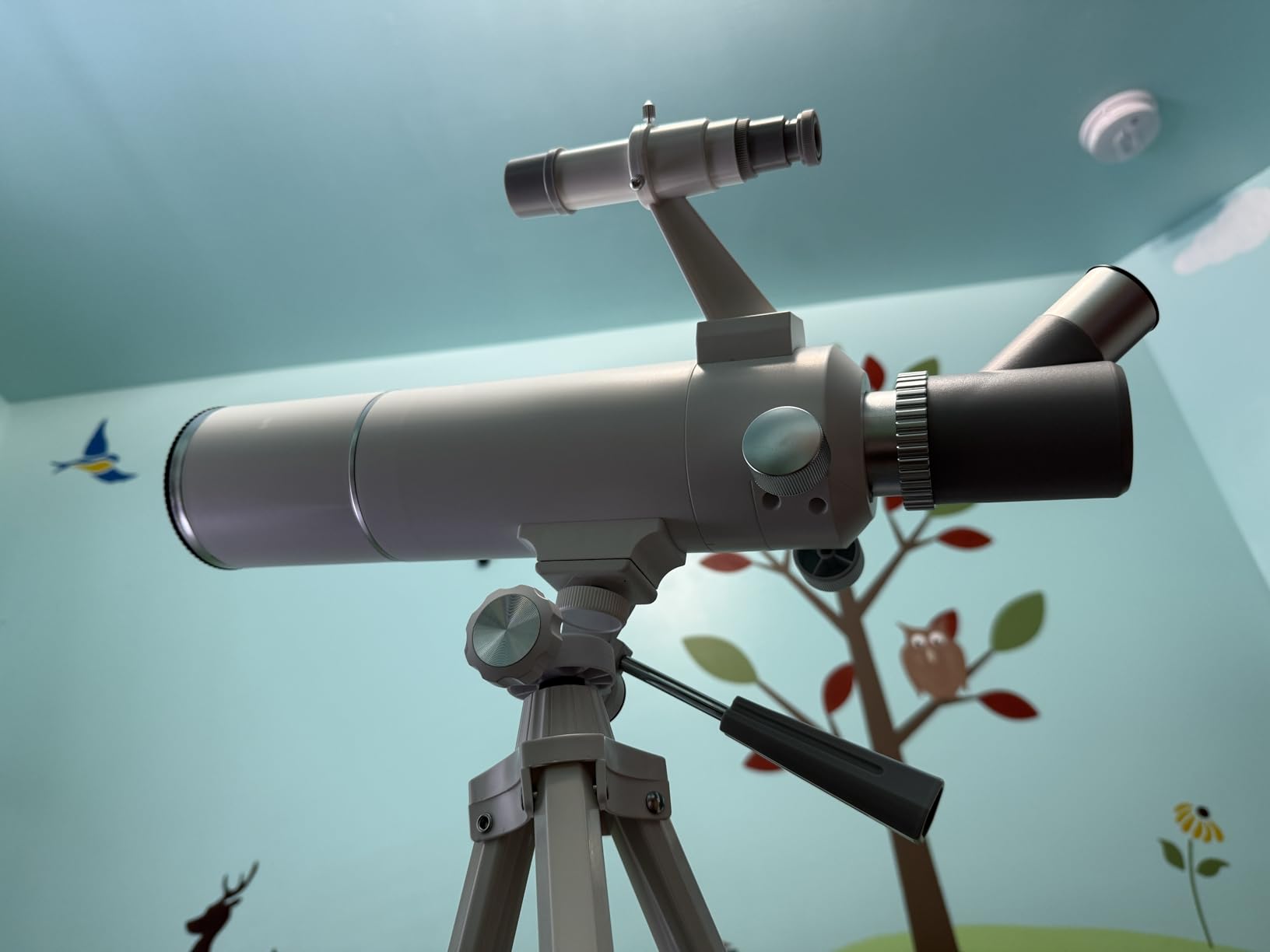
Honest caveats. It is weaker on planets than on the Moon, which is where most reviews say its limit sits, and the straight-through finder scope needs aligning before it is genuinely useful. At 169 ratings it also has the thinnest validation of anything on this list, so you are trusting a smaller sample.
Despite that, 75 percent five-star ratings with 9 percent four-star suggests the people who bought it were broadly satisfied, and the optical claim that an 80mm gathers around 60 percent more light than a 70mm is directionally correct.
Why this one holds an eight-year-old’s attention
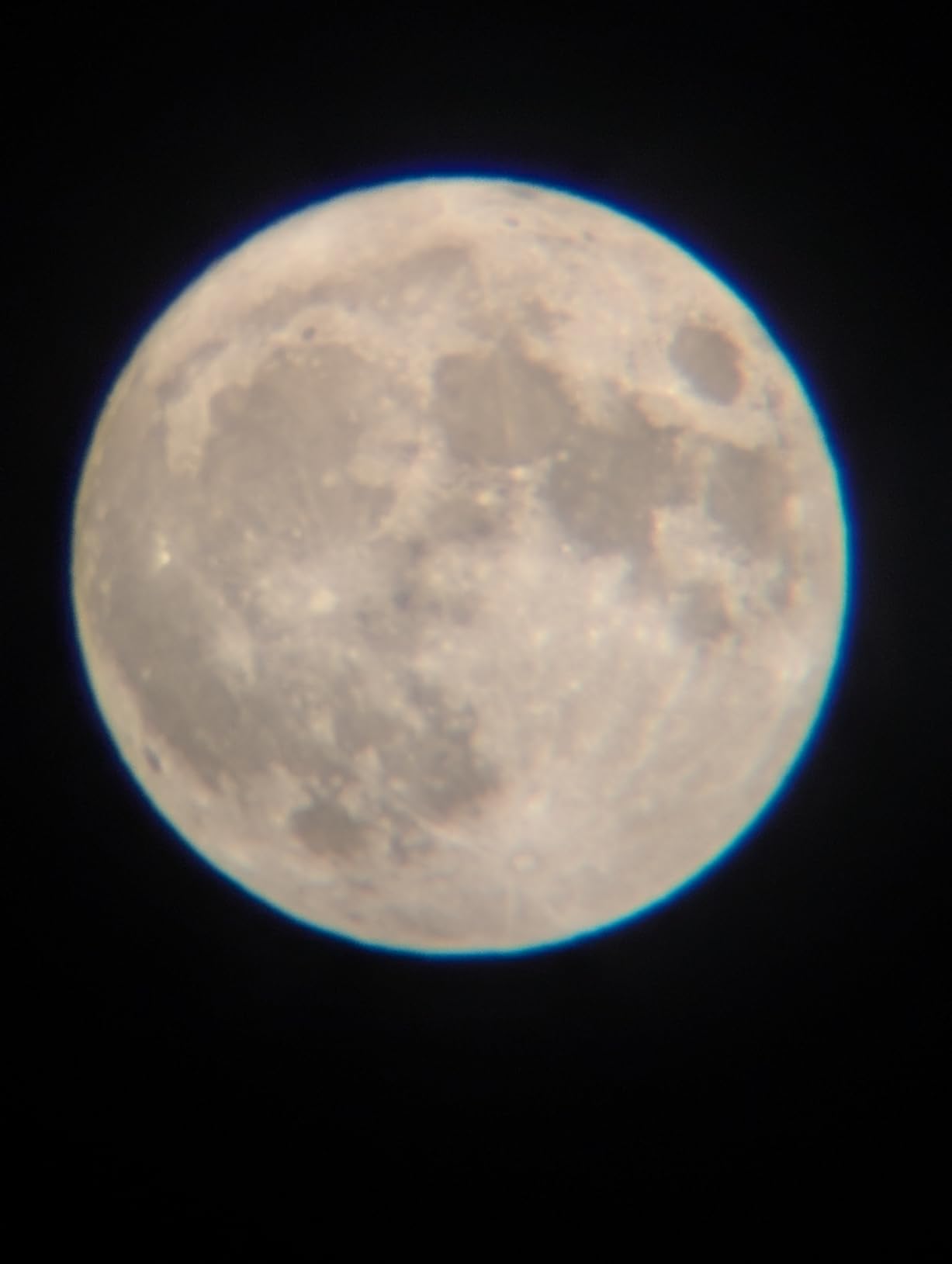
It is a scope that gives a child a real range of choices: wide for the whole Moon, narrow for a crater, or out to the horizon during the day. That range of views is what turns a telescope into a repeat activity.
Tool-free assembly also means a child can set it up themselves, which is the point at which a hobby becomes theirs rather than something an adult runs.
Where it stops short
Planetary viewing. At 500mm with a small eyepiece, Saturn is a small oval rather than a ringed planet. If planets are the goal, the AstroMaster’s longer focal length serves better.
Given the short review history, check the return window and the two-year manufacturer warranty carefully before the first session.
How to Choose a Telescope Your Child Will Actually Use
1. Aperture is the number that matters most
Aperture is the diameter of the main lens or mirror, and it determines how much light you gather. Light is what makes crater shadows visible and planet bands resolvable. Two scopes with the same advertised magnification can look completely different, because the larger one is showing you a real image rather than an empty, magnified one.
For a family, the useful thresholds are these. At 50mm you will see the Moon as a disc with craters and little else. At 70mm you will see crater relief, Jupiter as a banded disc with its four moons, and some bright clusters. At 80mm the same targets look noticeably brighter and higher in contrast. Every step up in aperture is a real, visible gain for a child.
2. Ignore the magnification number on the box
A listing that leads with huge magnification is usually a small scope being marketed badly. Magnification is simply focal length divided by eyepiece focal length, so a long-focus scope can hit high power on a modest aperture, but a cheap barrel can also claim 500x on a 50mm lens and produce a dim, unusable image.
Above roughly 2x your aperture in millimeters, magnification produces no more detail, only a dimmer, blurrier image. Everything useful in this roundup stays at or below that. Judge a scope on aperture, mount and finder, and treat the magnification claim as marketing.
3. Pick the mount for the child, not the sky
An alt-azimuth mount moves in two directions, left and right, then up and down, which is how children naturally think. It needs no polar alignment, no counterweight, and no setup beyond a tripod. For a family, that is the right default.
A fixed mount, as on the Luzsco, is simpler still and fine for a very young child, but it cannot follow anything. A tabletop Dobsonian is the best of both worlds for older children, because friction and balance make aiming feel natural, and our picks for Dobsonian telescopes cover the trade-offs. Whatever you choose, weight matters. A wobbly tripod gets blamed on the telescope, and it is usually the tripod.
4. The finder scope decides whether they use it alone
The eyepiece shows a fraction of a degree of sky, which is a needle in a haystack. The finder is how a user points. A red dot finder, as on the Celestron AstroMaster, is far easier for a child than an optical finder with two lenses to align and collimate.
Whichever finder you get, align it in daylight before the first night out. Five minutes there saves an hour of frustration later.
5. Match the telescope to the age band
At 3 to 5, most children are better served by a planetarium visit or a simple toy viewer than by a real telescope. The coordination and patience a telescope asks for are usually beyond them.
From 6 to 8, prioritise low weight, a fast setup and a wide field. The ECOOPRO and the Luzsco are built for that stage. From 8 to 12, an 80mm scope with a Barlow and a red dot finder opens up real targets, and the Hawkko or UncleHu fit well. From 13 upward, a 900mm focal length refractor such as the AstroMaster starts to make sense, because the child can handle pointing, focusing and swapping eyepieces independently.
What your child can actually see
This is the question parents ask most and answers rarely address. With a 50mm scope, expect the Moon as a bright disc with visible craters near the terminator, plus the brightest stars and planets as points. With 70mm, expect crater relief across the whole lunar surface, Jupiter as a small banded disc with its four moons moving during a session, Venus and Mars as bright points, and some open clusters.
With an 80mm scope and a moon filter, contrast on the lunar surface improves markedly, and Jupiter’s moons become straightforward. Saturn’s rings are the honest limit of this list. At 70mm and 80mm, a well-aimed scope will show Saturn as a small oval, and the rings are visible but not resolved into detail. Getting a crisp ringed Saturn is a step up in aperture, not a step up in magnification.
Your first family moonwatching night
1. Wait for the Moon. A first session on a moonless evening in a bright suburb is the most common reason parents conclude the telescope is broken. Start with a Moon that is neither a thin crescent nor a blinding full disc; a three or four day old Moon shows the most crater contrast.
2. Get away from direct light. A backyard or a nearby field beats a back step under a security lamp. The scope gathers faint light, and street lighting washes it out.
3. Use a red flashlight. White light destroys your dark adaptation and undoes the point of a dark site. Cover a phone light with red film if you do not have one.
4. Aim with the finder, not the eyepiece. Line the finder target up first, then look through the eyepiece.
5. Start at the lowest magnification. Wide and dim is better than narrow and confusing, and you can always add power afterwards.
6. Give the child the eyepiece, not the tripod. Let them adjust focus and sweep, and step in only when they ask.
Four signs of a hobby killer to avoid
The most common failure in this category is not a bad scope, it is a scope a child cannot use. Watch for these. A magnification claim above 200x on an aperture under 50mm. A tripod with no adjustment for a seated child, or one that wobbles when touched. A finder scope that ships in the box but is not attached or not adjustable. And an equatorial mount with a counterweight, which adds setup steps and confusion to an already fiddly process.
None of the twelve scopes in this roundup has an equatorial mount or a counterweight. That is deliberate.
A safety note about the Sun
Never point any telescope at the Sun without a certified solar filter fitted over the front aperture, and never use a finder scope to aim at it. Unfiltered sunlight through a telescope can cause permanent eye damage in a fraction of a second. Several of the scopes here include a moon filter, and a moon filter is not a solar filter. The safe route to viewing the Sun is a dedicated solar telescope built for it.
What each buying tier actually gets you
The spread between a toy and a genuinely usable instrument is narrower than parents expect, and capability tiers are a better way to shop than a number on a box. The very cheapest plastic barrels with huge magnification claims are the ones that end up in a cupboard, because the tripod shakes and the finder cannot be aligned.
The middle tier is where most of this list sits: 70mm and 80mm refractors with a finder, multiple eyepieces and a tripod that can be adjusted for a seated child. That tier shows crater relief, Jupiter’s moons and, honestly, only a hint of Saturn.
The step above it buys focal length, steadier mechanics and better optics rather than more accessories, and that is the Celestron AstroMaster tier, worth it for a child genuinely chasing planets. The most common early mistake is spending far more on a mount and accessories than the optics need; a moon filter and a better eyepiece are the first upgrades that actually change what you see.
Frequently Asked Questions
Which telescope is best to see planets for children?
The Celestron AstroMaster 70AZ in this roundup is the best for planets, because its 900mm focal length delivers up to 45x from the supplied eyepieces, enough to show Jupiter as a banded disc with its four moons. A 70mm or 80mm aperture matters more than magnification for planets, since contrast is what reveals detail. A 50mm scope will show planets as bright points but not as discs.
Can you see planets with a kids telescope?
Yes, with the right aperture. A 70mm scope shows Jupiter as a small banded disc with its four moons and Venus and Mars as bright points. An 80mm scope gives noticeably better contrast, and adding a moon filter helps lunar detail. Saturn’s rings are the limit for most family scopes: they appear as a small oval rather than a fully resolved ringed planet. Seeing more requires a larger aperture, not more magnification.
What is a good starter telescope for a child?
The Celestron AstroMaster 70AZ is our pick for a child aged around ten and up, with its 900mm focal length, red dot finder and steady mount. For a younger child aged six to eight, the Gskyer 70mm is the better starter because of its complete accessory kit and tripod that adjusts low. In both cases look for 70mm or more of aperture, an alt-azimuth mount, and a finder a child can align.
What age should a child get their first telescope?
Most children are ready between six and eight, once they can point steadily, adjust focus and stay out after bedtime. Between three and five, a planetarium visit or a simple toy viewer is usually more rewarding than a real telescope. Ages eight to twelve suit an 80mm scope with a Barlow lens, and teenagers handle a 900mm focal length refractor well.
What is the best telescope to buy for a 10 year old?
For a ten-year-old, the Celestron AstroMaster 70AZ is the strongest choice, with a StarPointer red dot finder a child can align and a panhandle mount that makes pointing smooth. If carrying weight is a problem, the UncleHu 80mm has a similar aperture in a more portable kit. Either way, the deciding factor is whether the child can find an object independently.
What magnification is best for a kids telescope?
For most family scopes, 25x to 50x is the useful range for the Moon and planets, and around 100x is a reasonable ceiling. Magnification above roughly twice the aperture in millimeters adds no detail and only dims and blurs the image. This is why a 50mm scope advertising 500x performs worse than a 70mm scope at 100x.
Do I need a motorized telescope for my child?
No. An alt-azimuth mount with no motor is simpler to aim, needs no polar alignment and no counterweight, and is more reliable for a child. None of the twelve scopes in this roundup has a motor. Motorized GoTo mounts add alignment steps and can take a long time to set up, and finding an object manually with a wide field is easier than most parents expect.
Are cheap department store telescopes worth it?
Rarely. The recurring complaint in owner forums is that very cheap scopes with plastic tripods and huge magnification claims frustrate children within weeks, and the scope ends up in a cupboard. The failure is usually a tripod that shakes and a finder a child cannot align, not the optics. Spending a little more on a 70mm or 80mm refractor with a real mount is what keeps a child interested.
Bottom Line: Where to Start in 2026
If you want one answer to the best telescopes for kids and families question, it is the Gskyer 70mm AZ Refractor. It has the largest body of owner feedback in the category, the most complete accessory kit, and a tripod that adjusts low enough for a young child to use without an adult crouching beside them. Buy it once and you will not be replacing it after a term.
Make one adjustment based on your child. If they are already asking about planets, step up to the Celestron AstroMaster 70AZ for its longer focal length and red dot finder. If they are under eight, choose the ECOOPRO for its wide field and fast setup, or the Luzsco for a genuinely lightweight first instrument. If you are packing for a campsite, the MEEZAA’s waterproof backpack earns its place.
And keep the first night simple. Moon, dark site, red flashlight, low power, and let the child hold the eyepiece. Everything else on this list is a detail compared with that.