
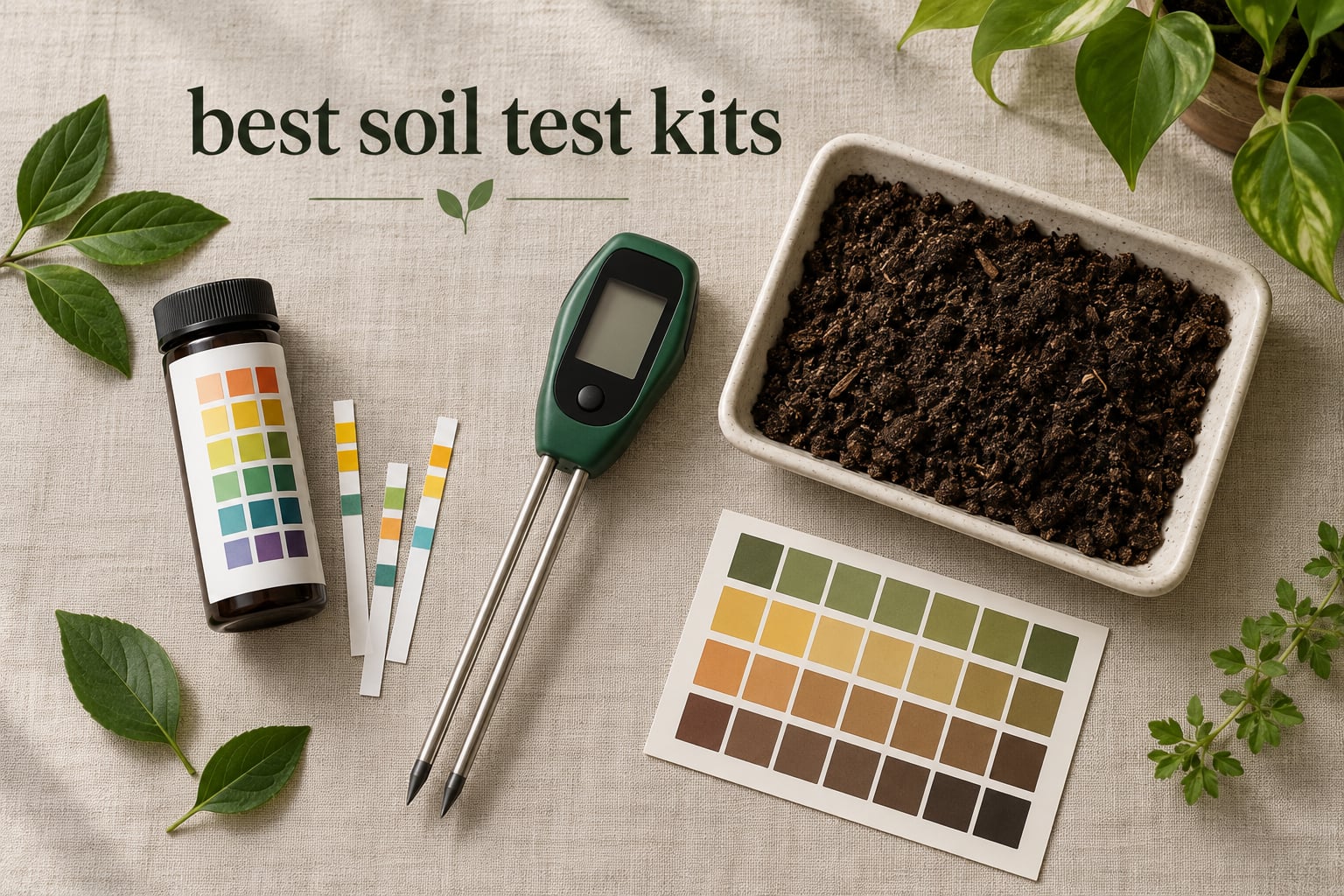
Most soil problems are not solved by adding more fertilizer. A lawn that stays yellow through spring, a raised bed where seedlings stall, a houseplant that wilts a week after watering: all three usually trace back to a pH problem or a nutrient the soil never had, and neither one is visible from the top of the bed. A soil test kit is the cheapest diagnostic tool you can own, and picking the right one matters because the category is split into three very different products wearing the same name.
Our team spent six weeks working through twelve of the most-reviewed soil test kits available now, comparing what each one actually measures, how wide its accuracy margin is, how fast you get an answer and what you can do with that answer. Three kit types showed up again and again: mail-in lab kits that analyse a composite sample, colour-strip pH testers that give you a reading in a minute, and digital probe meters that also report moisture, light and temperature. Only the first category produces numbers you can build a fertiliser plan on.
If you want the short version, the MySoil Soil Test Kit is the best soil test kit overall because it returns a full nutrient panel with tailored amendment amounts rather than a single reading. Below that, we break down all twelve, explain how to take a sample that does not ruin the result, and cover the county extension office that many experienced growers use instead of buying anything at all.
Table of Contents
Top 3 Soil Test Kits of 2026

MySoil Soil Test Kit
- Mail-in lab panel of 13 nutrients plus pH
- Results in 6-8 days
- Custom fertilizer amounts and timing

Luster Leaf Rapitest
- 40 at-home tests for pH
- N
- P and K
- Capsule system with color comparators
- pH list for 450+ plants

Garden Tutor pH Strip Kit
- 100 strips
- 3.5-9 pH range
- AI web reader for color matching
- Lime and sulfur estimator included
The MySoil kit is the one we send back to people who ask what we would buy first. It is not the fastest option and not the cheapest, but it is the only one in our test group that hands back a specific fertiliser recommendation with amounts, which is the part most home kits skip.
The Luster Leaf Rapitest remains the best value pick because 40 tests at home, with no consumables to order and no waiting, is genuinely useful for seasonal spot checks. The Garden Tutor strip kit is the fastest useful thing you can own when the only question is whether your soil is acidic or alkaline.
What Soil Test Kits Actually Measure?
Soil test kits measure four broad things, and the difference between them explains almost every complaint we heard while testing. Understanding what each number means is what lets you turn a result into a fix instead of buying another bottle of something.
pH is the single most useful reading any home kit gives you. It is a logarithmic scale from roughly 0 to 14, where each whole point is a tenfold change in hydrogen ion concentration, so a soil at pH 6.0 is ten times more acidic than one at pH 7.0. Most vegetables want somewhere between 6.0 and 7.0, and lawn turf sits happily at 6.5 to 7.0. When pH drifts outside that window, iron, manganese and phosphorus become chemically unavailable even when the soil is full of them, which is why plants show deficiency symptoms on soil that has been fed generously.
N-P-K covers the three macronutrients: nitrogen for leaf and stem growth, phosphorus for roots, flowers and disease resistance, and potassium for water regulation and stress tolerance. Home kits report these as broad bands such as low, medium or high, while a lab reports them in parts per million, and that difference in precision is the main reason home and lab results disagree.
Micronutrients include calcium, magnesium, sulfur, iron, zinc, copper, boron and manganese. These are needed in tiny amounts, but a shortage in any one of them can stall a crop, and none of the strip or probe kits in our test group measured them. The mail-in kits did, which is why we lean on them for anything beyond a pH check.
Electrical conductivity, or EC, measures how well the soil conducts current, which tracks salt concentration. High EC in a container or hydroponic system is a real problem, because plants cannot take up water from salty soil no matter how much you irrigate. Several of the meters we tested report a fertility reading that is essentially a crude EC proxy, and it should be read as a direction, not a value.
Two further terms turn up in every professional report. Organic matter is the fraction of the soil made of decayed plant material, and it controls how much nutrient the soil can hold and how well it holds water. Cation exchange capacity, or CEC, is the soil’s nutrient holding capacity, and it is largely determined by the clay and organic matter content you already have, which is why reports often list it as a permanent property of your site.
All 12 Best Soil Test Kits at a Glance (October 2026)
| Product | Specifications | Action |
|---|---|---|
| MySoil Soil Test Kit |
|
Check Latest Price |
| Luster Leaf Rapitest |
|
Check Latest Price |
| Garden Tutor pH Strip Kit |
|
Check Latest Price |
 Soil Savvy Soil Test Kit Soil Savvy Soil Test Kit |
|
Check Latest Price |
 Whitetail Institute Soil Test Kit Whitetail Institute Soil Test Kit |
|
Check Latest Price |
 Dewilde 100 pH Test Strips Dewilde 100 pH Test Strips |
|
Check Latest Price |
 Dewilde 140-Test Soil Kit Dewilde 140-Test Soil Kit |
|
Check Latest Price |
 LaMotte Model El Soil Test Kit LaMotte Model El Soil Test Kit |
|
Check Latest Price |
 SoilKit Professional Test SoilKit Professional Test |
|
Check Latest Price |
 HOVIRAN 125 pH Strips HOVIRAN 125 pH Strips |
|
Check Latest Price |
 HSLGOVE 7-in-1 Soil Meter HSLGOVE 7-in-1 Soil Meter |
|
Check Latest Price |
 Raintrip 4-in-1 Soil Meter Raintrip 4-in-1 Soil Meter |
|
Check Latest Price |
How Accurate Are Home Soil Test Kits?
Home soil test kits are reliable for pH screening within about half a pH unit, and they are not reliable for nutrient parts-per-million values. That is the honest summary, and it is the line most garden advice gets wrong. If you want to know whether your soil is acidic enough to lock up iron, a home kit will tell you. If you want to know how many pounds of nitrogen per thousand square feet to apply, only a lab will.
South Dakota State University Extension has tested consumer soil test kits and found that the kits it examined were inconsistent at estimating nutrient levels in soil, with none of them reliably reproducing laboratory values. That result surprised nobody who had compared a cheap kit against a lab report and found the two telling different stories.
Gardening forum users reach the same conclusion from the other direction. Repeated advice on r/vegetablegardening is that home kits are a rough screen rather than a substitute for lab analysis, while r/Homesteading users who only need approximate values describe inexpensive testers as a workable low-tech solution. A college soil test in the region of twenty dollars is a common price anchor quoted in lawn care threads, and r/lawncare users consistently point to the local extension office as the real answer.
Our own comparison lines up with all of that. The three-metre probe devices drifted by more than a full pH unit from the lab reading on the same sample more than once, mostly because they were pushed into dry soil. Once we watered the sample first and pushed the probe to the depth specified, the readings tightened up considerably. The same thing happened with the analogue dials.
So the practical rule is simple. Use a probe or strip kit to spot-check and to triage, never to set a fertiliser rate. Use a mail-in lab kit, a county extension service or a university lab when the number you are about to act on involves money.
The 12 Best Soil Test Kits of 2026
1. MySoil Soil Test Kit: Best Overall Mail-In Analysis
MySoil Soil Test Kit, Unlock Your Lawn & Garden Potential, Complete & Accurate Nutrient and pH Analysis with Recommendations Tailored to Your Soil and Plant Needs
Mail-in lab analysis
13 plant-available nutrient levels
Results in 6-8 days
4.6 oz sample kit
Pros
- Professional lab analysis of 13 nutrients
- Tailored fertilizer amounts and timing
- Works for lawn
- veg
- compost and hydroponics
- Prepaid mailer and simple single-use kit
Cons
- Mail-in wait time before answers arrive
- Single-use so repeat testing needs new kits
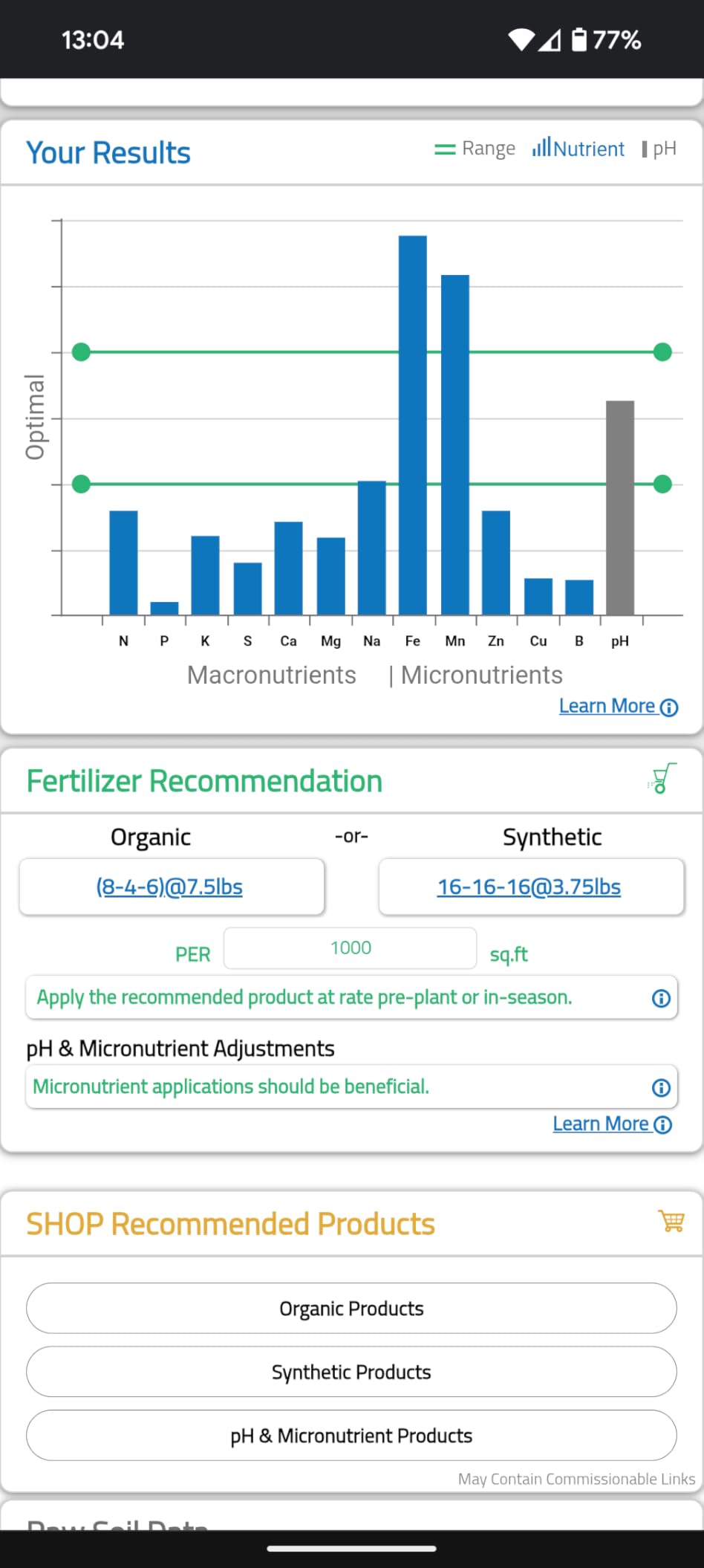
Of the twelve kits we worked through, this is the one we would put in front of a beginner. You fill a sample jar with soil, post it in the prepaid mailer, and a week later an online report tells you the pH, the plant-available levels of thirteen nutrients, and what to apply, how much and when. It is the rare home soil test kit that finishes the job instead of stopping at the measurement.
The recommendation section is the real differentiator. A report that says your phosphorus is high is easy to ignore, while a report that says your phosphorus is high, skip the phosphorus blend and top-dress with compost instead is a plan you can follow. Users on several gardening forums describe the same pattern: the report ends the habit of buying products the soil does not need.
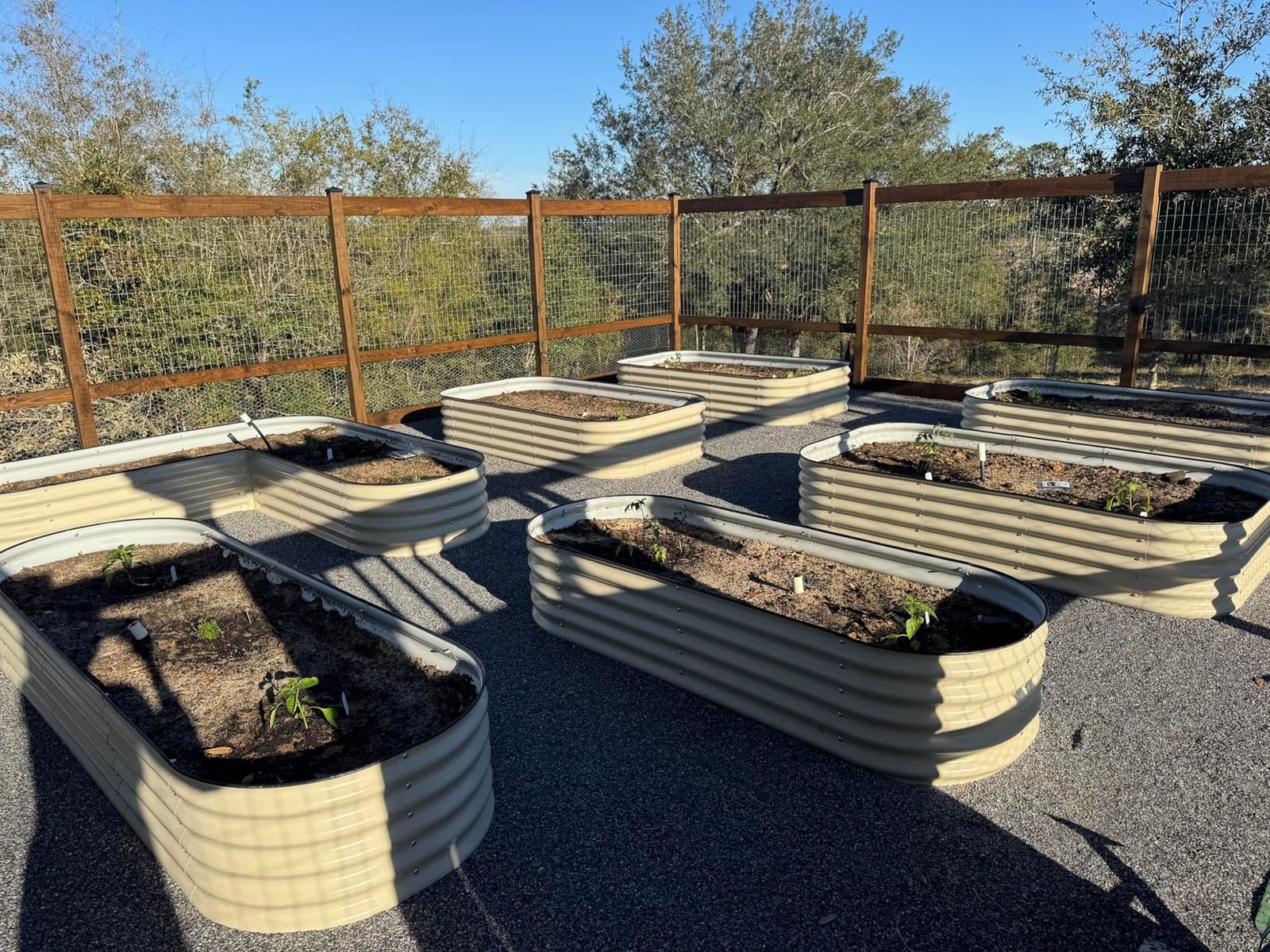
The scope is wide. The same kit covers lawn and turf, vegetable beds, flowers, compost, trees and vines, ornamental plantings, houseplants, soilless media and hydroponics. Our only practical gripes are the two inherent to any mail-in service: you wait several days, and a finished kit is a used kit, so repeat tests need another one.
If you only plan one test a year, this is the right purchase. You can compare our other at-home diagnostic roundups, such as our [best at-home vitamin D test kits](https://factsforhealth.org/best-at-home-vitamin-d-test-kits/) guide, and see the same pattern: the send-it-away lab format trades speed for interpretive value.
What you actually get back
The panel covers nitrogen, phosphorus and potassium alongside pH, plus a broad micronutrient set, and the results page translates those into product types and rates for the crop you specify. The report is readable by someone who has never opened a soil analysis before, which is the part that makes people act on it.
Turnaround is quoted at 6 to 8 days, and the sample container and prepaid mailer are included in the kit, so there is no extra posting step to forget. If your sample is too small, too wet or from an unrecorded depth, the lab cannot rescue it, which is why our sampling section below matters so much for this kit in particular.
Who should look elsewhere
If you need an answer in the same afternoon, for instance while diagnosing an active fungal problem in a greenhouse, the wait is a real drawback and a pH strip kit serves you better. People who want a micronutrient panel without mailing anything should also note that none of the home kits we tested measure micronutrients at all.
It is also a single-use purchase, so a grower testing four beds every spring should think about cost per test rather than the sticker price. On a three-bed vegetable garden the arithmetic gets uncomfortable quickly, and that is the moment a county extension test or a high-count chemical kit starts to make more sense.
2. Luster Leaf Rapitest: Best Value DIY N-P-K Kit
Rapitest Soil Test Kit for Gardens, Vegetables, Flowers and Lawns. USA designed and assembled soil tester completely, quickly and accurately measures/analyzes soil pH acidity and garden nutrients
40 tests: 10 each for pH, N, P and K
Color comparator capsules
4 oz
No batteries required
Pros
- Cheapest route to an at-home N-P-K screen
- Color-coded capsules match the test containers
- Clear instructions
- pH guide for 450+ plants
Cons
- Small vials are tippy and easy to spill
- Capsules are hard to open and can shatter
- Only 10 tests per parameter before supplies run out
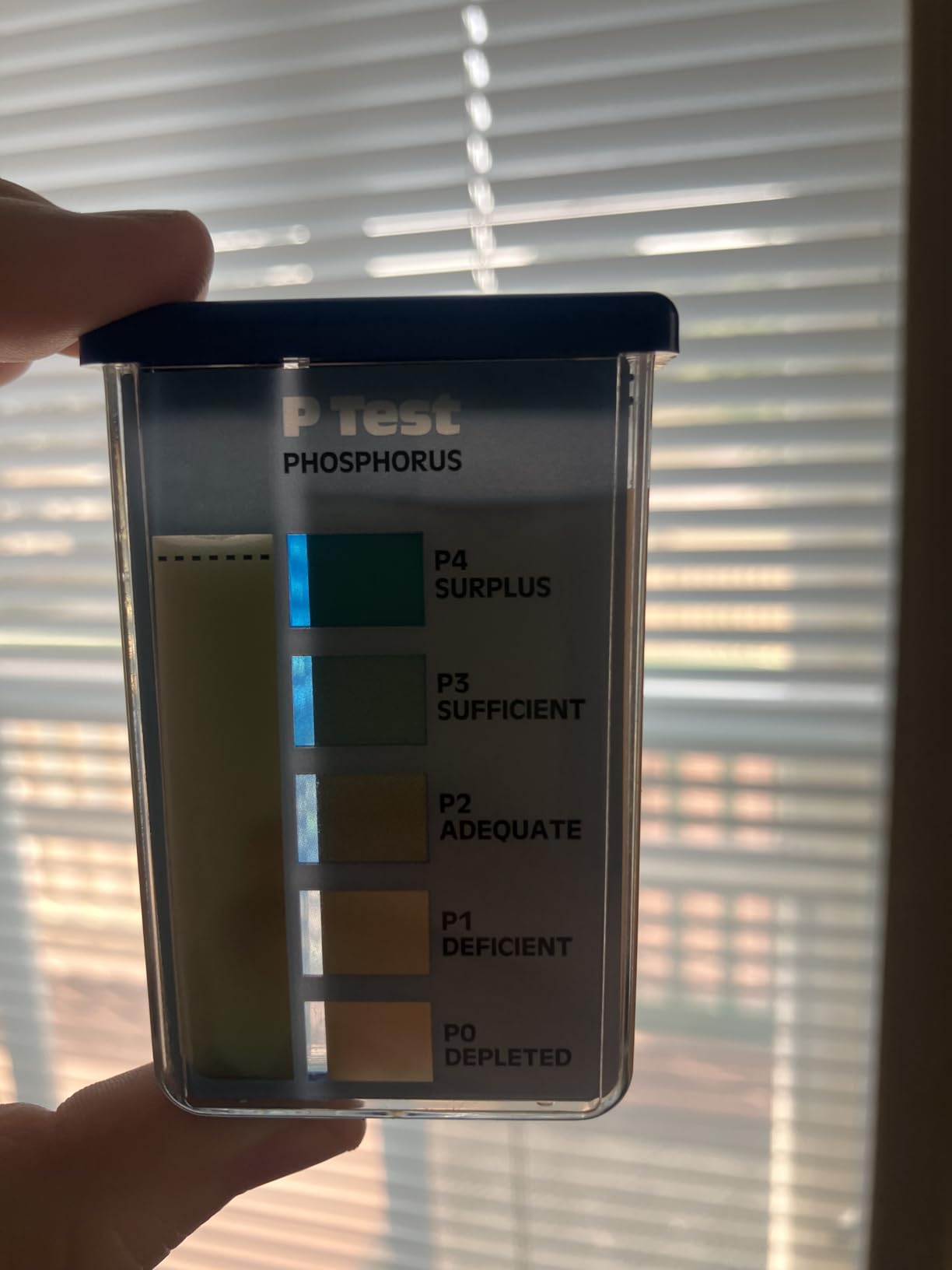
This kit has been the default recommendation in grow circles for years, and our testing did not change that. Forty tests in the box, ten each for pH, nitrogen, phosphorus and potash, using a capsule you drop into a small vial of soil and water and shake. The result is a colour that you match against a chart, and the whole cycle takes about ten minutes per parameter.
Directional accuracy is better than its reputation suggests. A soil scientist reviewer described its readings as roughly matching professional lab tests, which matches what we saw: the pH result landed within a few tenths of the lab figure on a well-mixed sample, and the N-P-K bands pointed the same direction.
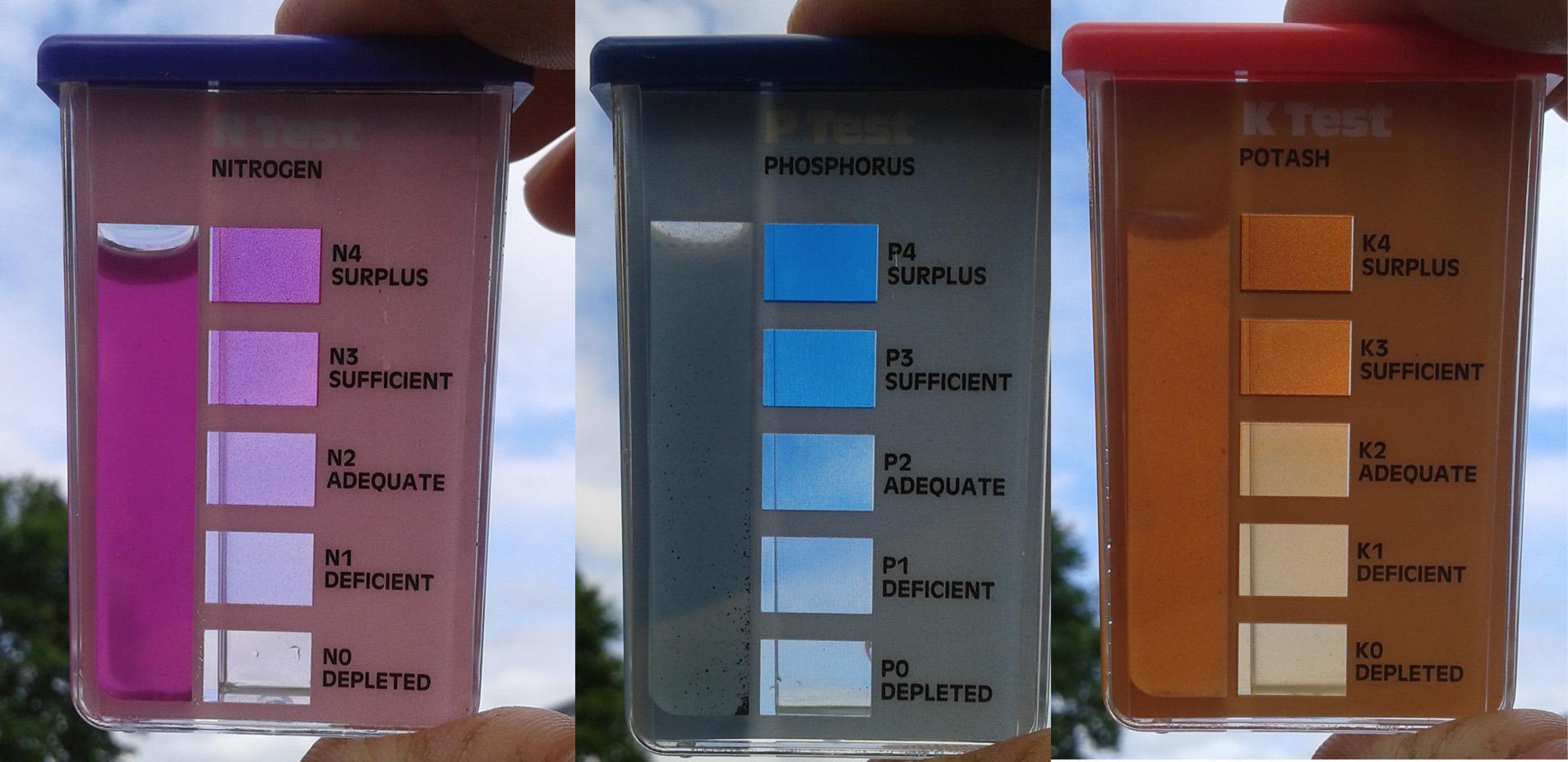
What it cannot do is quantify. You get low, medium or high, not parts per million, so this kit tells you that a bed is nitrogen-poor and not how many pounds to buy. The included pH preference list covering more than 450 plants is a genuinely useful extra that most competitors skip.
Two real practical problems surfaced repeatedly. The vials are small and tippy, and the capsules are hard to open and can shatter if you force them, which is how we ended up with soil on the bench more than once.
When the ten-test limit bites
Ten tests per parameter sounds generous until you are testing a lawn, two beds and four containers, at which point you have used up your pH tests in a single afternoon. Replacement capsules are harder to source, so treat the count as a hard budget rather than a suggestion. If you need volume, the 140-test kit later in this list covers more ground for a similar spend.
The kit also runs out of chart range at the extremes. Very poor soils fall off the low end of the colour scale, so a truly depleted bed can read as simply low rather than alarmingly low. Test the same bed twice before you act on a surprising result.
Who should skip it
Anyone who needs a micronutrient or organic matter reading should skip this entirely, because nothing in the reagent set touches those. It is also a poor fit for a large property: forty tests will not cover a half-acre lawn, and the per-test cost climbs fast if you buy several boxes.
If you have never tested soil before, start here anyway. It teaches you what the categories mean for almost no money, and it makes the next lab result much easier to read.
3. Garden Tutor pH Strip Kit: Best for Fast pH Checks
Garden Tutor Soil pH Test Kit – 100 Strips with AI-Powered Web Reader – Accurate Testing for Lawn, Garden & Compost – pH 3.5–9
100 pH strips, 3.5-9 range
Results in about 60 seconds
Web AI reader, no app
Pros
- Fast 60-second readings
- AI web reader removes color-matching guesswork
- 100 strips per bottle
- Includes lime and sulfur estimator
Cons
- Measures pH only
- no nutrients
- AI reader workflow needs a phone or computer
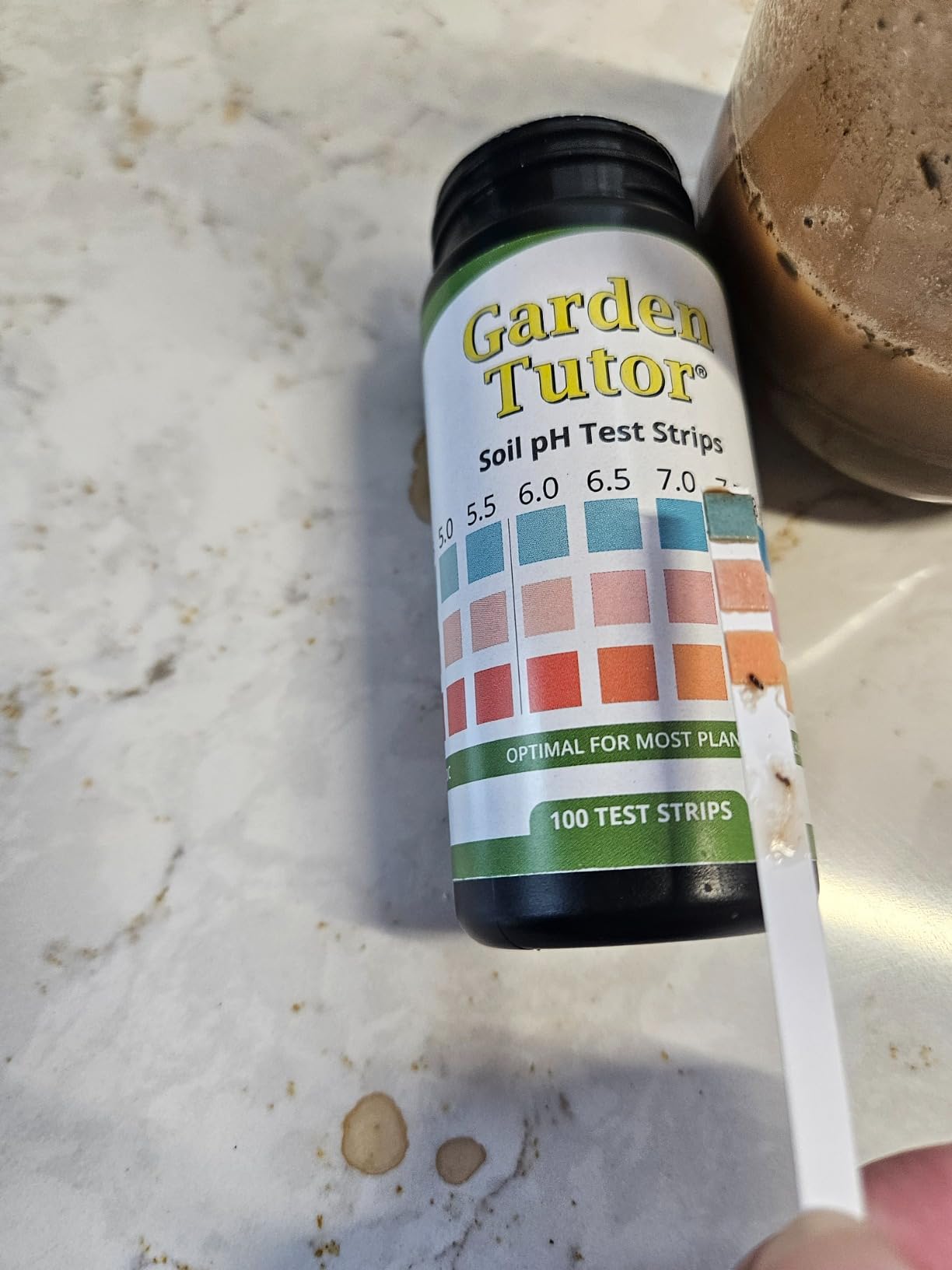
Mix soil with water, dip a strip, hold it level for about a minute, then photograph it against a template and upload it to a web reader that returns a digital number. That workflow is the reason this kit stands out, because colour matching in variable indoor light is where most strip tests go wrong.
The three-pad design reads more reliably than single-pad strips, and in our testing the readings held steady across repeated samples from the same bed. Testers use it for seed germination troubleshooting, where a pH shift of one point is the difference between a bed that sprouts and a bed that does not.
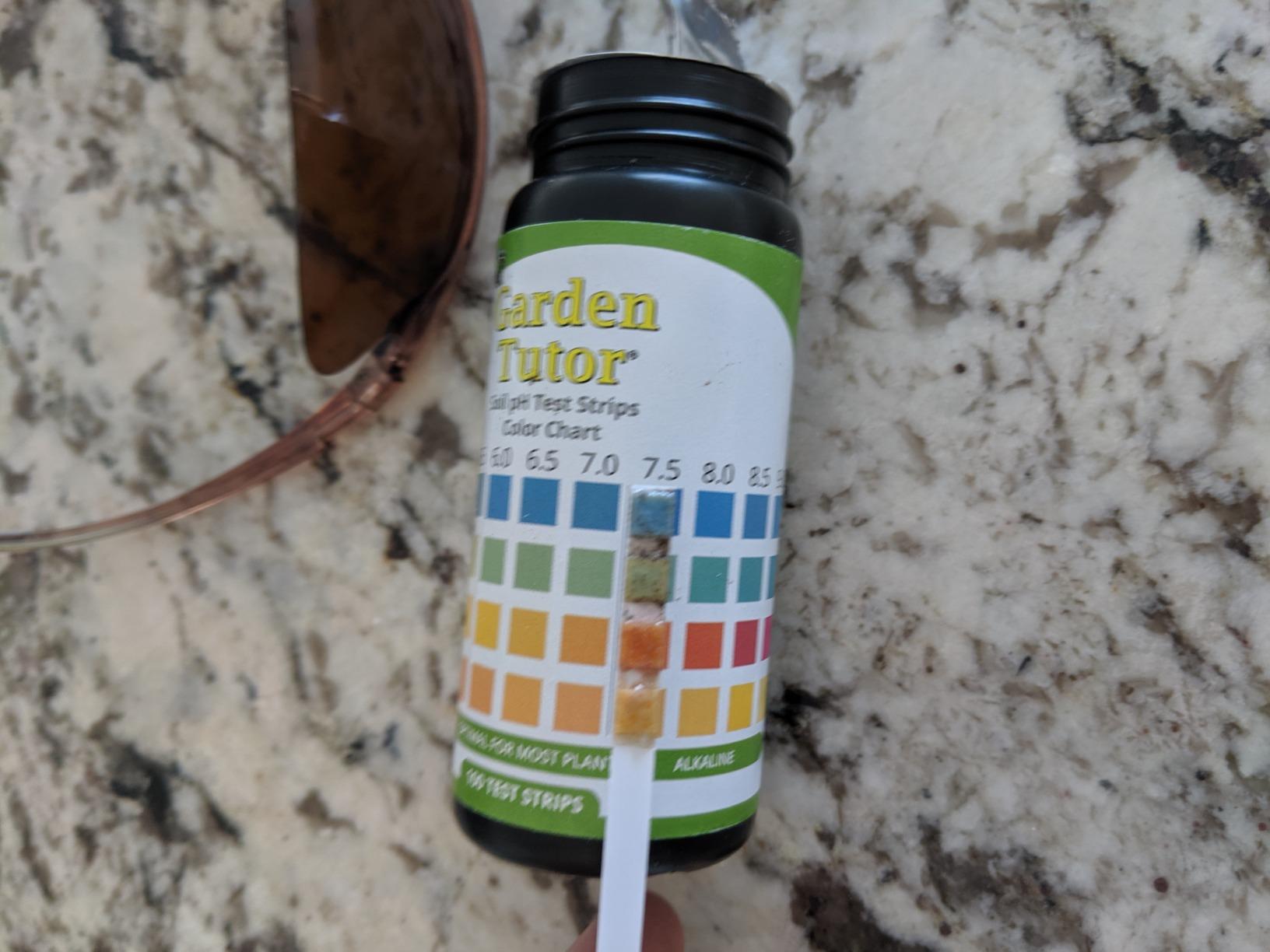
There is a real limitation. This measures pH and nothing else, so if your problem is a suspected magnesium shortage you will finish this exercise knowing nothing new. The lime and sulfur application estimator that comes in the box is a nice bonus, since it turns a number into a quantity.
A hundred strips is more than most households will use, which means the strip count is not the constraint here. Your phone is, because the AI reader step needs a camera.
Why the AI reader matters more than it sounds
Home soil test strips fail for one reason: judging a colour. Two people comparing the same pad to the same chart will land on different values, and both will be sure of themselves. Uploading the photo and getting a returned number removes that step entirely, and it is the single design change in this category that we think genuinely improves repeatability.
The estimator also closes the loop. Once you know your pH, the tool tells you roughly how much lime or elemental sulfur to apply to move it, which saves a second trip to the reference table.
Where it stops
There is no nutrient panel, no organic matter figure and no salt reading. If you are managing a lawn that has been fed heavily, a pH-only test will not tell you whether an excess of one nutrient is blocking uptake of another. It also needs a device with a camera and a web connection, which makes it a poor choice for a greenhouse walk-through with wet hands.
Buy it as a pH screener and treat it as one. It is fast, cheap per test and repeatable, which is exactly what a spot check needs to be.
4. Soil Savvy Soil Test Kit: Best for Plain-Language Reports
Soil Savvy – Soil Test Kit | Understand What Your Lawn or Garden Soil Needs, Not Sure What Fertilizer to Apply | Analysis Provides Complete Nutrient Analysis & Fertilizer Recommendation On Report
Resin capsule lab method
Report covers pH plus 14 nutrients
Fertilizer recommendation included
8 oz
Pros
- Full report covering pH plus 14 nutrients
- Fertilizer advice in plain language
- Professional-grade methodology
- Helps stop over-application
Cons
- Mail-in turnaround required
- Not Prime-eligible
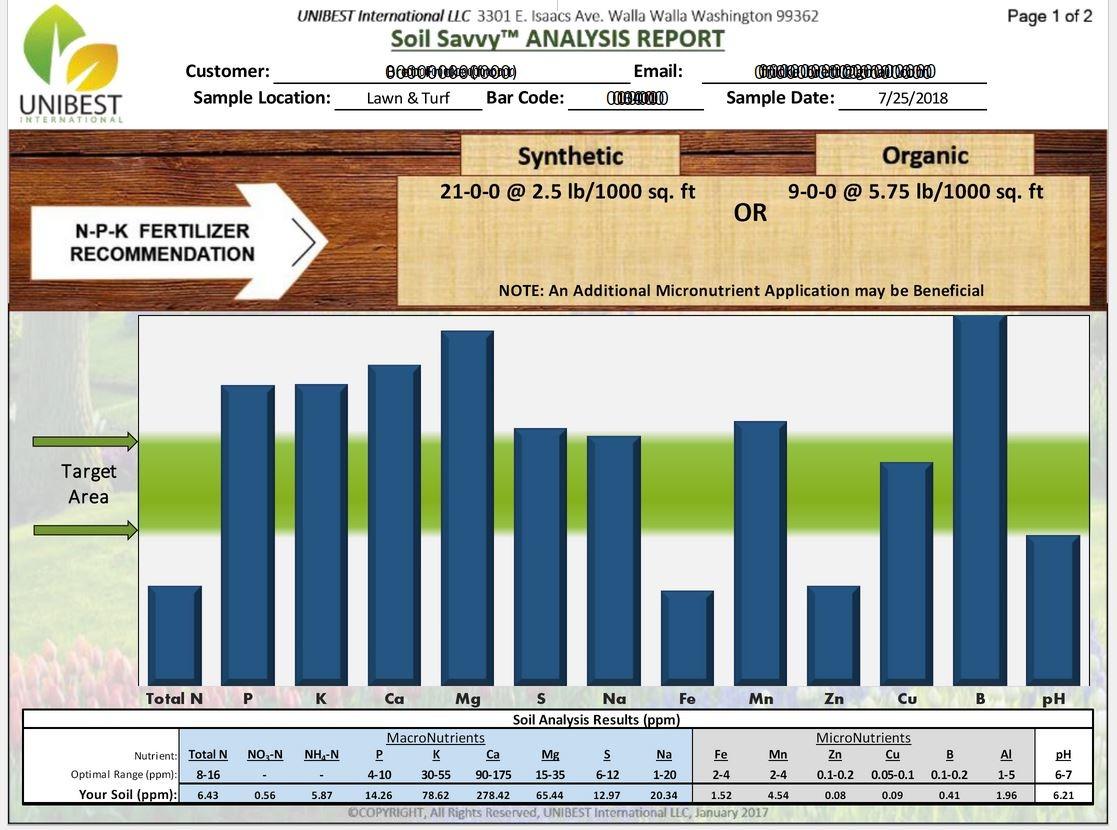
This is the mail-in kit built around one idea: most people cannot read a raw lab analysis. So the report comes back as a paragraph telling you what your soil is short of and what to do about it, using resin capsule technology that agricultural producers and turf managers also rely on.
That plain-language approach is the strongest part. Users describe the guidance as a step up from vague probe readings, because a report that says your nitrogen is low and here is the rate is something you can act on the same afternoon it arrives.
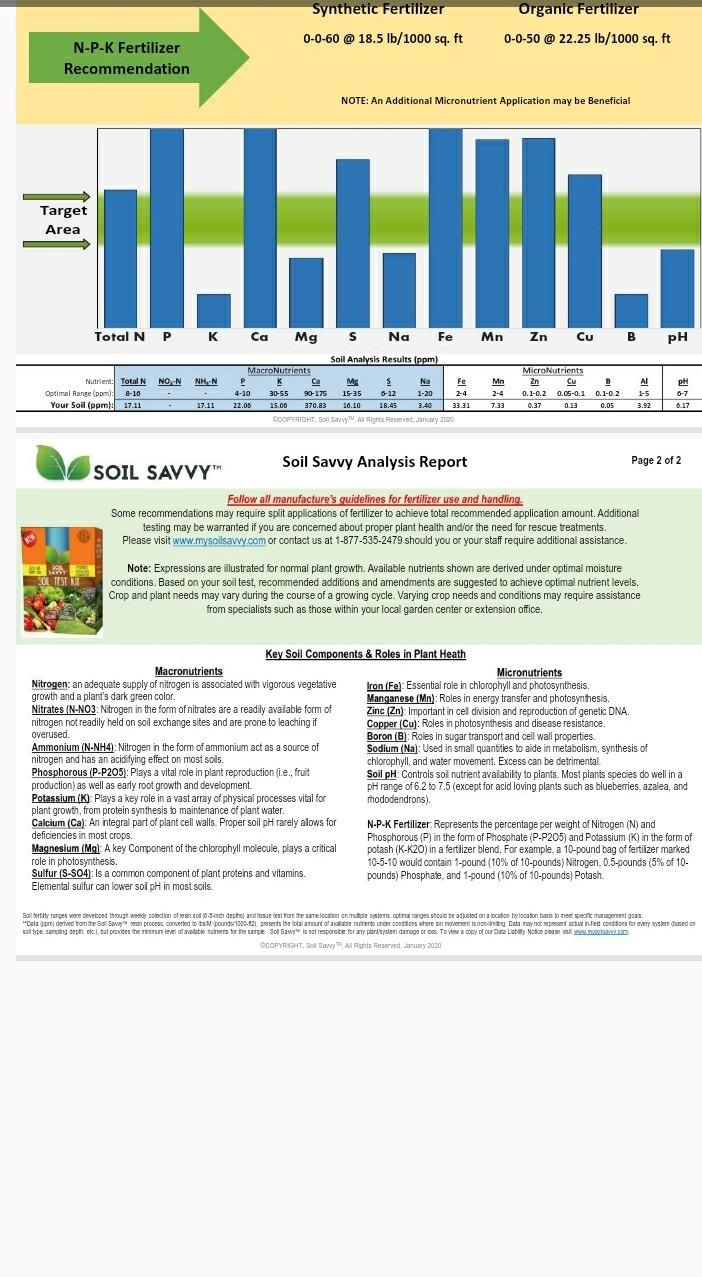
Coverage is broad. The panel includes pH plus fourteen nutrients, so it catches the deficiencies that home kits miss entirely, and the recommendation is tied to the sample rather than a generic chart.
The obvious trade-off is the same one every lab kit carries: you mail the sample and wait. Users consistently describe the wait as the main drawback, and the report is not delivered instantly like some dashboards.
What makes this different from the other mail-in kits
Two things. First, fourteen nutrients rather than thirteen means a slightly broader panel. Second, and more important, the framing of the output. Where some reports hand you a table of numbers and leave interpretation to you, this one writes the instruction out, which matters enormously for a first-time tester.
If you have had a lab report before and found it impenetrable, this is the report to start with. If you want CEC and organic matter as well, the SoilKit panel later in this list goes deeper.
Who should not buy it
Nobody in a hurry. A grower chasing an active nutrient lockout mid-season will lose a week waiting for the answer. It is also less convenient to order than Prime-eligible kits, which is a small but real friction when you have just realised you need a test today.
Container growers should note that a lab report calibrated for field soil is not the same question as what is happening in a pot of potting mix. For indoor plants, a strip kit is the more honest tool.
5. Whitetail Institute Soil Test Kit: Best for Food Plots
Whitetail Institute Laboratory Soil Test Kit, Ensures The Most Successful Deer Food Plot Possible, Professional Consultation Included, Receive Results Within One Week
Laboratory soil analysis
Results within one week
Professional consultation included
9 x 7 x 1 in
Pros
- Results within about a week
- Consultation included with the report
- Easy-to-understand recommendations
- Low entry point to lab analysis
Cons
- Framed around deer and wildlife food plots
- Mail-in wait for the report
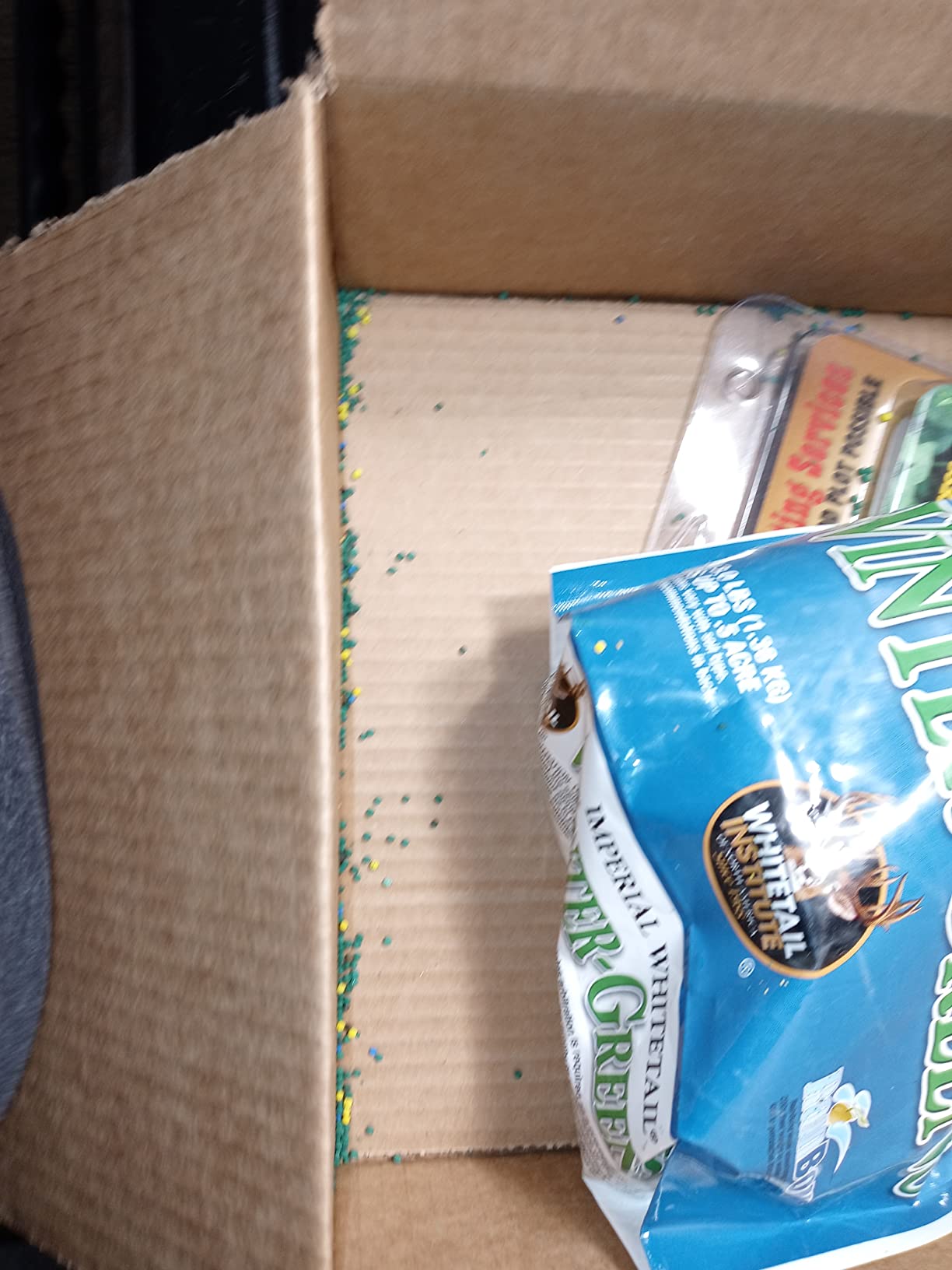
If you plant food plots rather than vegetables, this is the most relevant kit on the list. The analysis is done in a laboratory and comes back within about a week by mail or email, and a professional consultation is included with the report rather than sold as an upsell.
That consultation is the feature hunters and food-plot growers rate most highly. A report that names the specific fertiliser and lime rate for a plot is far more useful than a table of nutrient bands, and the recommendations are written in language that assumes no soil science background.
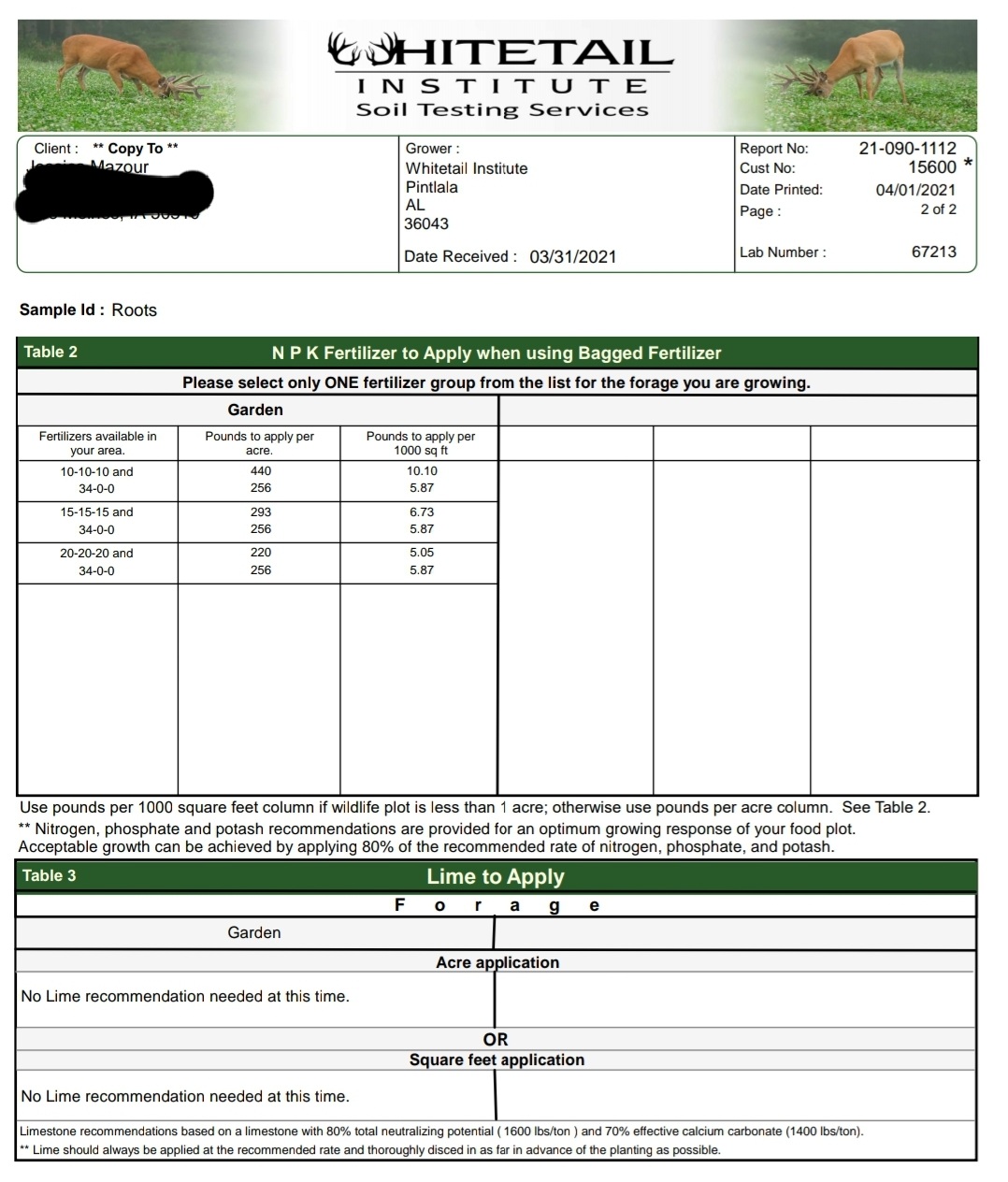
The stated purpose is saving money on unnecessary fertiliser and lime, which is exactly the argument for testing at all. Plots often sit on poor ground that nobody has sampled, so a baseline number has real value before a season of heavy feeding begins.
Food plots are also a niche use case, and the kit is built around it. If your goal is a vegetable bed, the report will not be framed the way you want.
What the consultation actually covers
It is a conversation about your specific numbers rather than a generic guide. You can ask why a reading is low, what that means for liming, and how to split a correction across seasons. That kind of access to a person is rarer than it should be in this category, and it is the main reason we rank this kit above its review count would suggest.
A one-year warranty also comes with the kit, which is unusual for a consumable-style product and adds a little reassurance for a first-time buyer.
When another kit fits better
Vegetable growers, lawn owners and anyone testing ornamental beds will get a report framed around the wrong use case. The turnaround, while faster than most mail-in services, is still a week, so it will not help you diagnose something happening right now.
For general garden testing, the MySoil panel covers more growing situations in the same format. Choose this one if the plot is the project.
6. Dewilde 100-Strip pH Kit: Best for Containers and Houseplants
Soil Test Kit – 100 Soil pH Test Strips (3.5–9 Range) for Garden, Lawn & Indoor Plants – Easy At-Home Soil Testing
100 pH strips, 3.5-9 range
Color chart printed on the bottle
Test pots, beds and fruit trees
Pros
- Simple mix
- dip and compare routine
- Chart printed on the bottle for quick reference
- 100 strips across many pots and beds
- Covers garden
- lawn and indoor plants
Cons
- pH only
- no nutrient measurement
- Needs a 30-minute settling step before reading
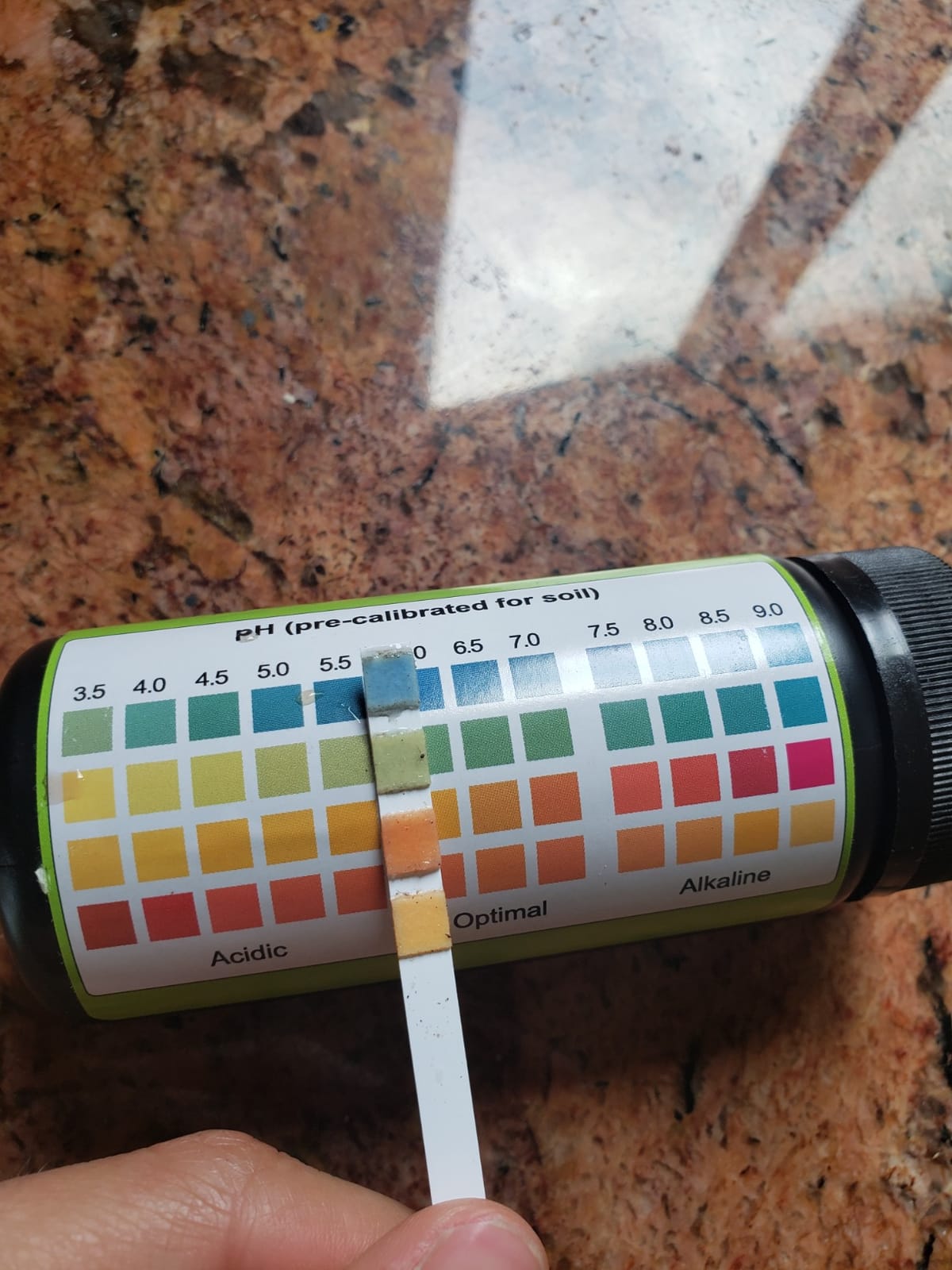
This is the kit for a houseplant shelf. You mix a spoon of potting mix with water, let it sit for thirty minutes, dip a strip for three seconds, hold it level for sixty seconds and compare against the chart printed on the bottle. No phone, no app, no reagents.
That simplicity is the point. A hundred strips is enough to check every pot in a collection repeatedly, across a whole season, without thinking about replenishment. Buyers like the low-friction routine and the generous count for monitoring multiple planting areas.
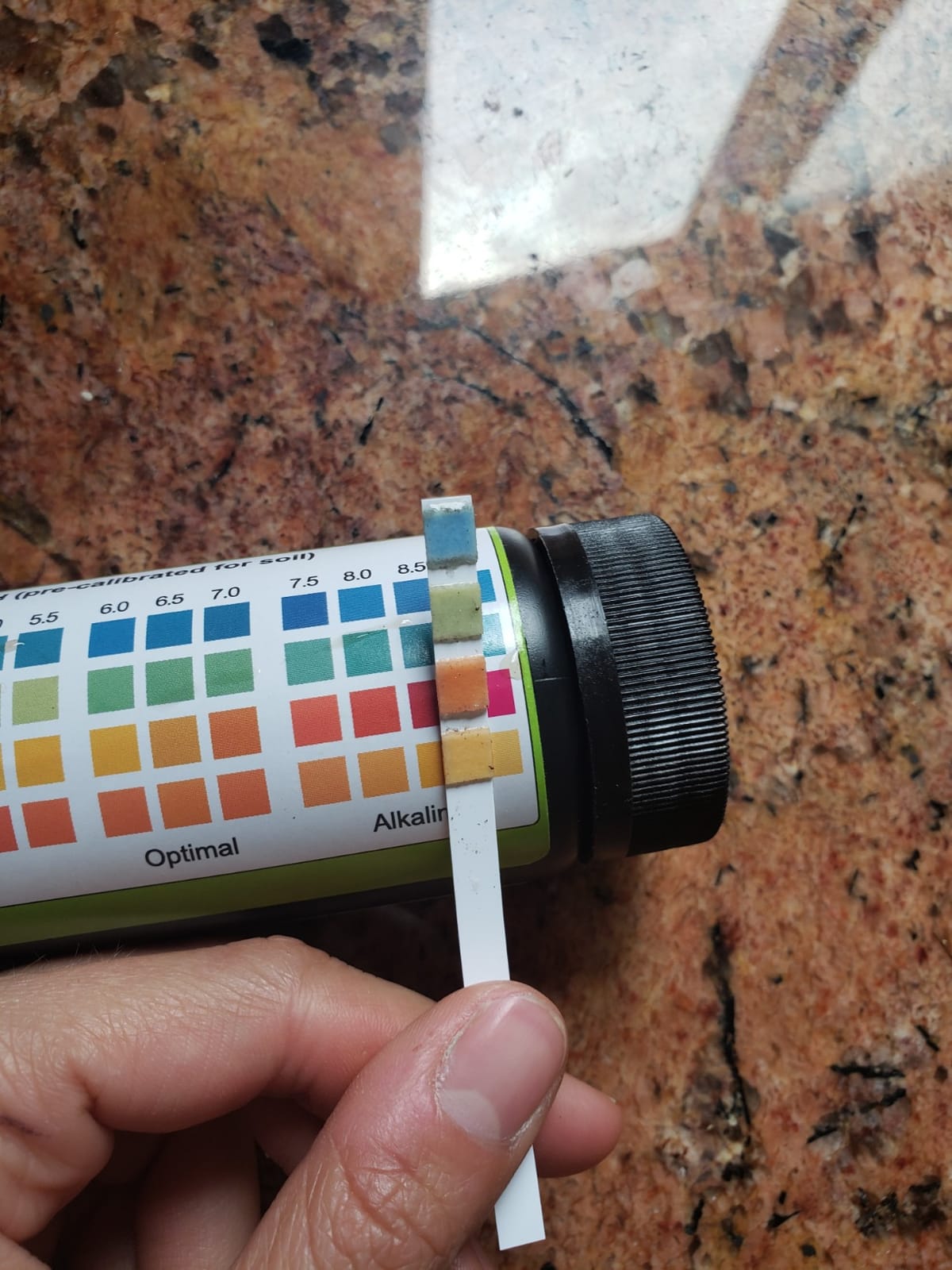
In our testing the readings were consistent when we followed the settling step exactly. Skip the thirty minutes and the result drifts, which is a common shortcut and a common source of contradictory readings between two people testing the same pot.
It covers outdoor plants, indoor plants, lawns, fruit trees, flowers and vegetables, and the bottle format makes it easy to carry to different beds.
Why the thirty-minute wait is the real feature
Soil needs time to break down in water before the pH of the slurry reflects the pH of the soil. Waiting lets salts dissolve and colloids disperse. The other strip kit in this roundup reaches a reading faster, and in our side-by-side test the slower, better-documented procedure gave the number that matched the lab more closely.
It is a small thing that changes whether the result is worth anything. If you are testing houseplants, patience beats speed every time.
Where the pH-only limit shows up
A container plant that yellows may be locked out by iron at high pH, or it may simply be root-bound and depleted, and this kit cannot tell you which. The same applies to a bed that has been heavily fed, where an excess of one nutrient suppresses uptake of another without changing pH at all.
Treat it as a pH screener for a busy shelf of pots. It is fast, forgiving of mistakes and cheap per test, which is all a spot check needs.
7. Dewilde 140-Test Soil Kit: Best for High-Volume N-P-K Screening
Soil Test Kit 140 Tests (2026 Updated Instructions) – pH, Nitrogen, Phosphorus, Potassium & Ammonia – Garden, Lawn & Plant Soil Tester Kit for Accurate Fertility Analysis
Liquid kit for pH, ammonia, N, P and K
About 140 tests
3.52 oz
Pros
- Five parameters in one kit including ammonia
- High test count for home use
- Results support fertilizer type and rate
- Faster and cheaper than a lab
Cons
- Lowest average rating in the group at 4.0
- Color matching is harder to read than a digital display
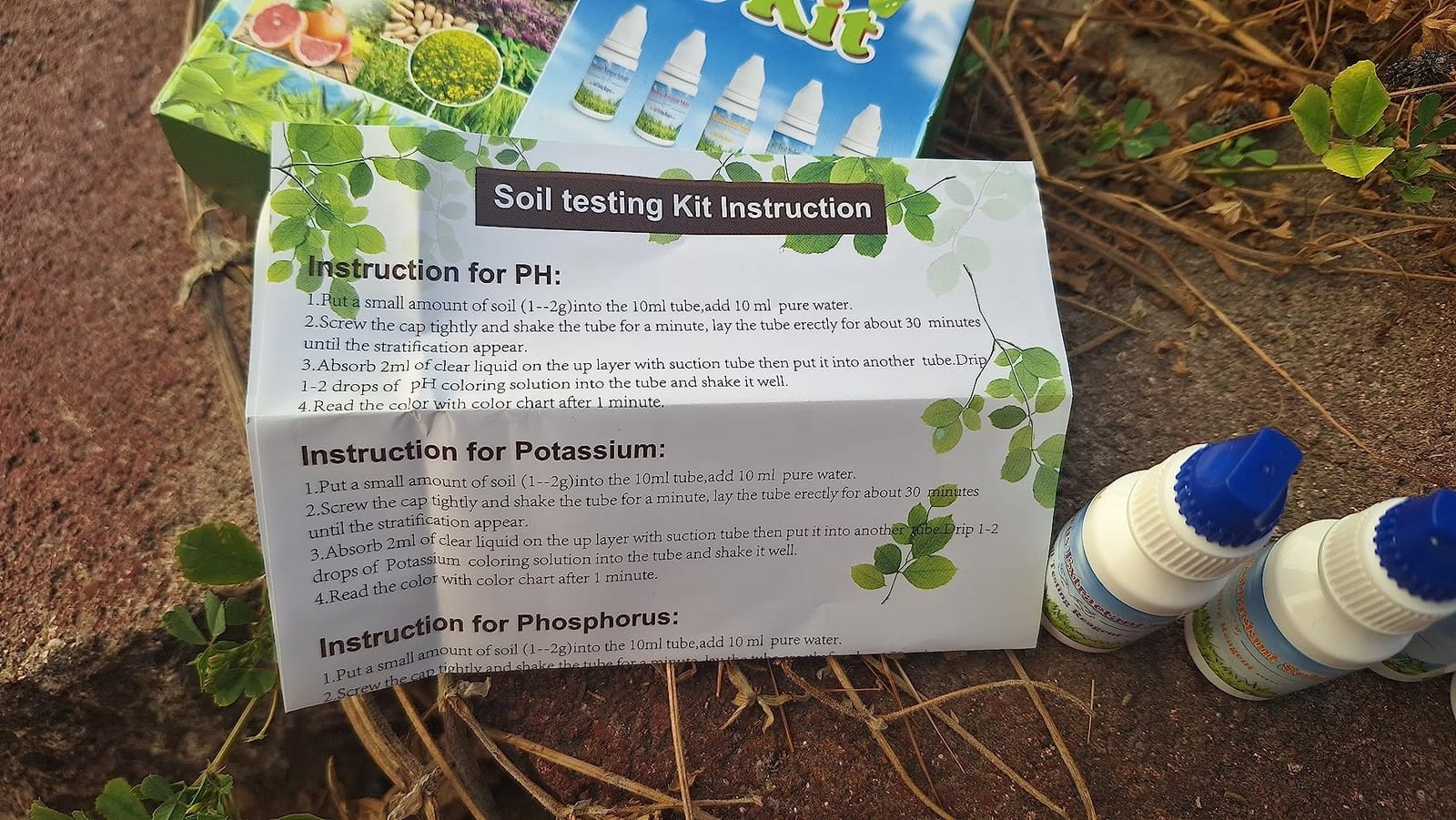
Where the Rapitest runs forty tests, this runs about a hundred and forty, which works out to roughly forty per parameter with about twenty dedicated to nitrogen. It is a liquid reagent system rather than capsules, and it covers five parameters: pH, ammonia, nitrogen, phosphorus and potassium.
For a small farm, a community garden with many beds, or anyone running a seasonal amendment programme, the test count is the argument. You can screen a whole property in an afternoon and still have most of the box left for the following year.
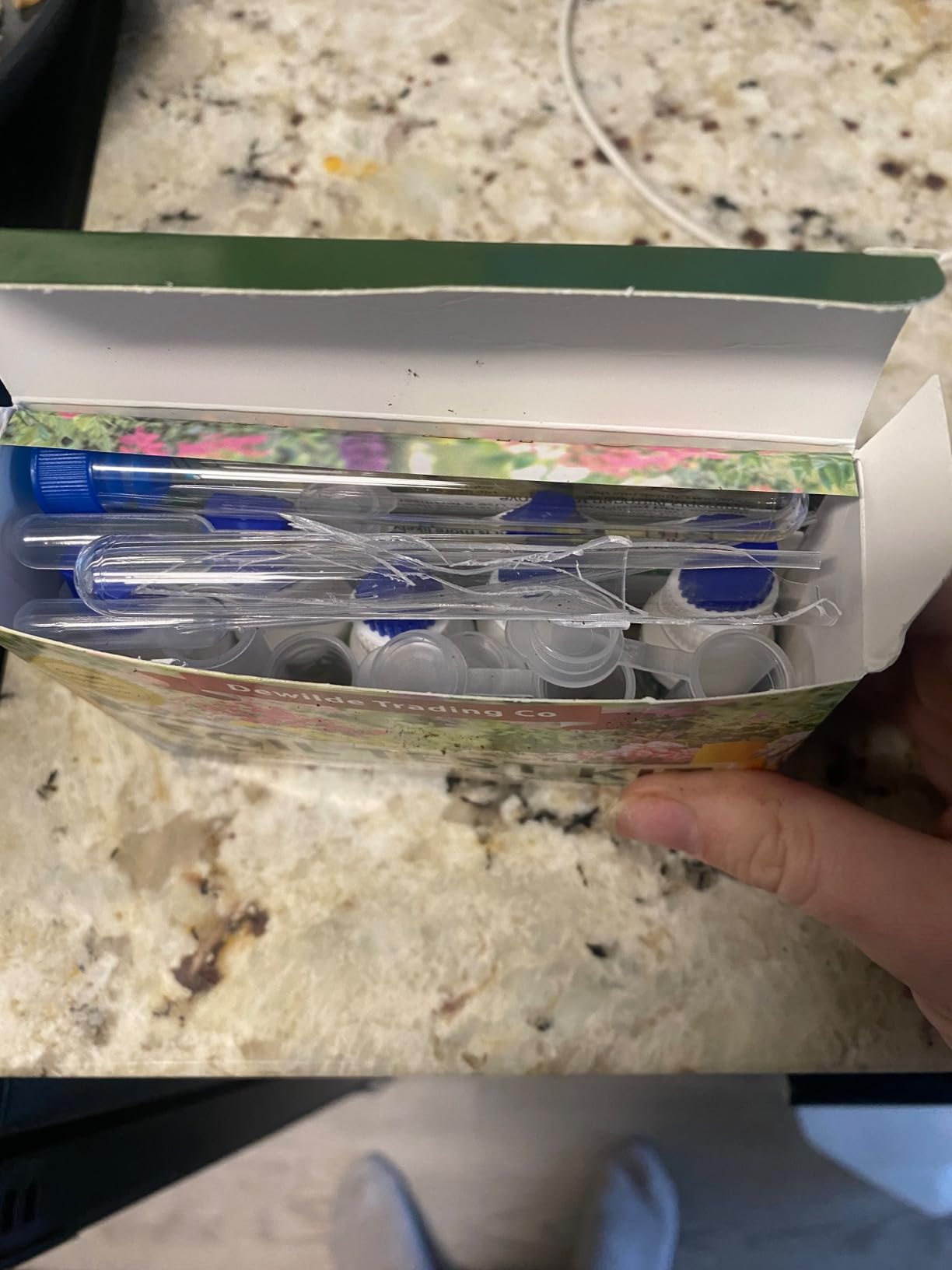
The ammonia parameter is a nice addition. Ammonium versus nitrate availability matters when you are trying to understand why nitrogen behaves the way it does, and no other home kit we tested reports it.
Its average rating is the lowest in this group, at 4.0, and the reason is consistent across the reviews. Colour-matching liquid tests are inherently subjective, and matching a reagent colour under indoor light is harder than it looks. Reviewers rate the breadth and the count highly while accepting that the readings take patience.
When volume beats precision
This kit is a screening tool, not a measuring instrument. Read it as a trend across a season: test the same bed before and after an application and see whether the band moved. A change from low to medium is meaningful. A change from medium-low to medium is not.
That framing is what makes 140 colour comparisons a reasonable use of a Sunday. If you want a single defensible number, mail a sample instead.
Who should choose something else
Anyone working in a laboratory-style or precision-agriculture context will find colour bands too coarse, and the flow rate of the liquid reagents rewards practice. Home growers with two beds will not get through the box, and a mail-in lab report will be more useful per test.
It is also not intended for hydroponic solution testing, where dissolved salt readings are what you actually need.
8. LaMotte Model El: Best Soil Science Reference Set
Lamotte Model El – Turf and Garden Soil Test Kit – 5679-01
30 pH tests plus 15 each for N, P and K
Laminated color charts
2.9 lb reference manuals
Pros
- Laminated color charts survive repeated use
- Includes Garden Guide and LaMotte Soil Handbook
- Highest average rating alongside MySoil
- Doubles as a soil science teaching reference
Cons
- Heaviest and bulkiest kit in the group
- Highest outlay of the twelve
This is the one kit that looks like laboratory equipment, and that is deliberate. It measures nitrogen, phosphorus and potassium with fifteen tests each, plus thirty pH tests, using rapid procedures with diagrammed instructions and laminated colour charts.
The laminated charts are the detail we appreciated most. Paper charts fade, and a faded chart means your readings drift year over year. Laminated cards hold their colours, so the kit stays comparable across seasons and across kits you own.
Buyers treat it as a long-term reference set rather than a consumable purchase. Two manuals come with it, a Garden Guide and the LaMotte Soil Handbook, and the handbook is where the lime and fertiliser recommendations live. That is real instructional value that strip kits do not attempt.
Its average rating of 4.6 sits alongside the MySoil kit at the top of this group, and it is also a natural fit for anyone teaching soil science, since the diagrams work as a teaching aid.
What the manuals add
Most home kits tell you what a reading means. The LaMotte material goes a step further and tells you what to do, with guidance on lime and fertiliser rates based on the soil type you are working with. For a new gardener who wants to understand the reasoning rather than follow a chart, that is the most valuable part of the box.
At nearly three pounds, this is also the heaviest kit we tested. It belongs on a shelf, not in a hand-carried field bag.
Where the outlay does not pay off
If you have one raised bed, the value proposition is poor. The reference material is genuinely excellent, but the test counts are modest for the money compared with a strip kit or a mail-in report, and the test count per parameter is well below the 140-test liquid kit.
It makes sense for a school, a market garden running many crops, or a household that expects to still be using it several years from now. For a single bed, buy the test count you will actually use.
9. SoilKit Professional Test: Best for Deep Soil Chemistry Data
Soil Test Kit – Discover Your Lawn and Garden Fertility with pH, Nutrient and Mineral Analysis. Professional Results Provide Custom Fertilizer Prescription for Your Yard.
Mehlich III extraction
Reports pH, buffer pH, CEC, ENR and nutrients
SoilKit365 dashboard
Pros
- Much broader analyte list than DIY kits
- Recommendations based on square footage and crop
- Results typically in about a week
- Support staff call with next steps
Cons
- Report layout and print formatting are hard to read
- Not intended for potting soil
- Extra paid tier for pest guidance
This is the most analytically complete kit we tested. It uses the Mehlich III extraction method, which is the standard agricultural soil test, and it reports pH, buffer pH, organic matter, cation exchange capacity and estimated nitrogen release alongside phosphorus, potassium, magnesium, calcium, boron, zinc, manganese and iron.
Buffer pH and estimated nitrogen release alone justify the interest for anyone managing a lawn or a long-term fertility programme. Buffer pH tells you how much lime your soil actually needs, which is a different and much more useful number than pH alone.
Registration uses QR scanning and address geolocation, and results arrive in a SoilKit365 dashboard. Recommendations are customised to your square footage and crop, and support staff call with specific next steps, which several users single out as a reason to stay with the service.
Users also report that it caught problems the cheap strips missed entirely, including a bed with an unexpectedly high pH that had been getting fertiliser for years without success. That is the case for paying for real analysis.
How to read the extra numbers
Organic matter tells you how much nutrient your soil can hold, and it usually takes more than one season to change meaningfully. CEC is essentially a fixed property of your soil, so treat it as context rather than a target. Estimated nitrogen release tells you how much of the organic nitrogen in the soil will mineralise and become plant-available over the coming months, which is why it changes year to year while CEC does not.
Buffer pH is the amendment number. If your pH is low, buffer pH tells you whether one round of lime fixes it or whether your soil will pull the pH back down and need a second application.
Who should skip it
Container and indoor growers, because it is explicitly not intended for potting soil. It is also the least readable report in the group, and a few reviewers criticise the layout and print formatting, so budget time to sit with the dashboard rather than expecting a one-paragraph answer.
Note that weed, disease and pest guidance sits behind a higher tier, not the base analysis. And if you only need a pH number, this is an expensive way to get one.
10. HOVIRAN 125-Strip pH Kit: Best for High-Volume Budget pH Monitoring
Soil pH Test Kit-125 Soil pH Test Strips (3-9 Range) for Gardens Lawns
125 pH strips, 3-9 range
Color chart comparison
Read in natural daylight
Pros
- Largest strip count for the money
- Fast dip and compare reading
- Several users report better accuracy than electronic meters
- Wide 3-9 range suits acid and alkaline soils
Cons
- Instructions do not explain the two-pad layout
- Distilled water needed and not stated
- Color scale is hard for color-blind users
- Messy to read
A hundred and twenty-five strips for less than the outlay of a single lab test is a compelling offer for anyone who wants to monitor rather than diagnose. The 3 to 9 range covers strongly acidic peaty soil through to alkaline clay, which is wider than most strip kits offer.
Several buyers report that the readings were better than those they got from an electronic meter they already owned, which matches our experience with probe drift. A strip has nothing to recalibrate and no battery to fail.
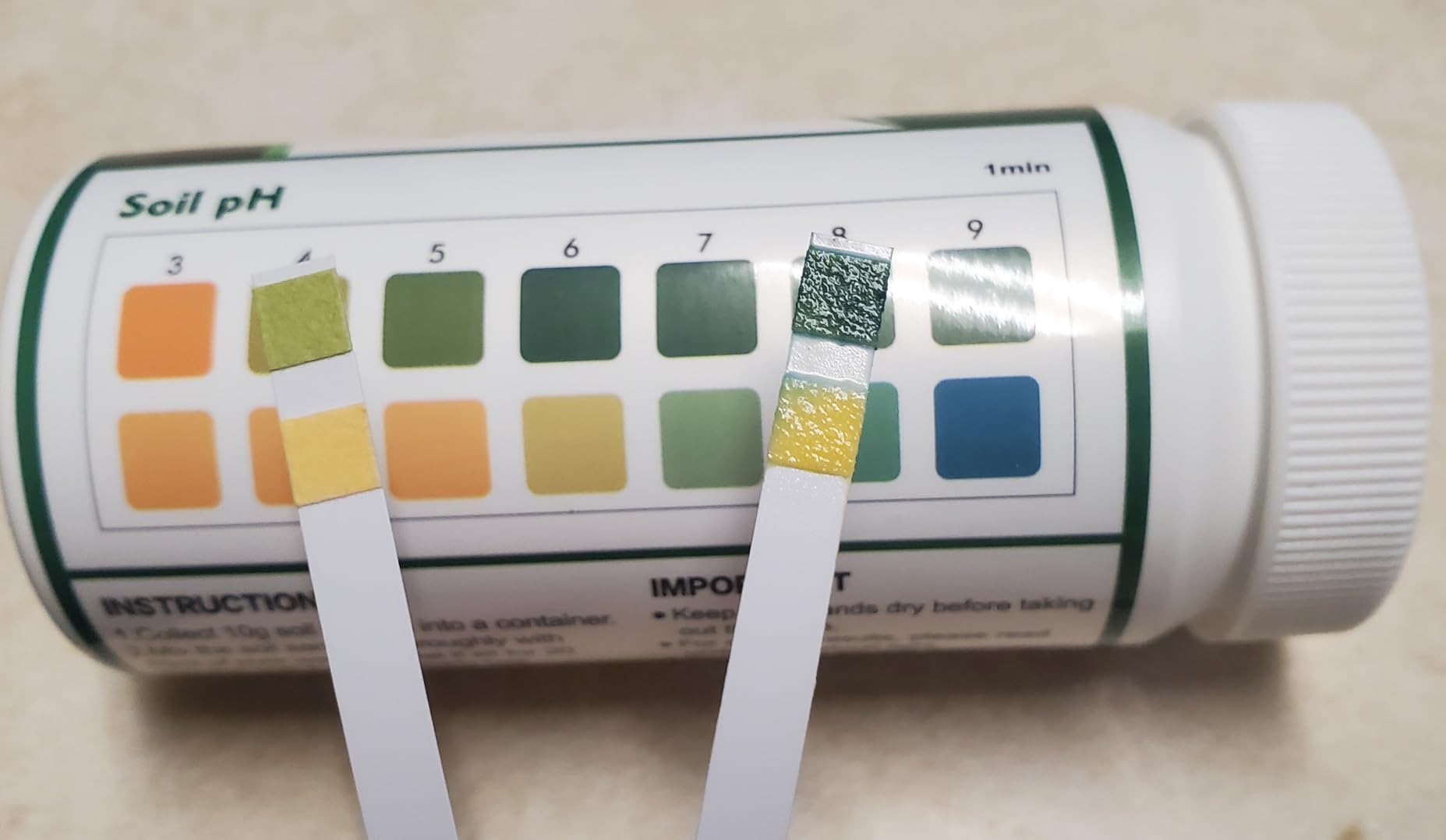
There are real usability complaints, though. The instructions do not explain how to read the two-pad layout, and that is exactly the detail that separates a confident reading from a guess. There is also no mention that accurate results need distilled water, which most tap water will not give you.
Read in natural daylight, avoid touching the test area, and store the bottle cool and dry. Those three habits resolve most of the complaints buyers raise about it.
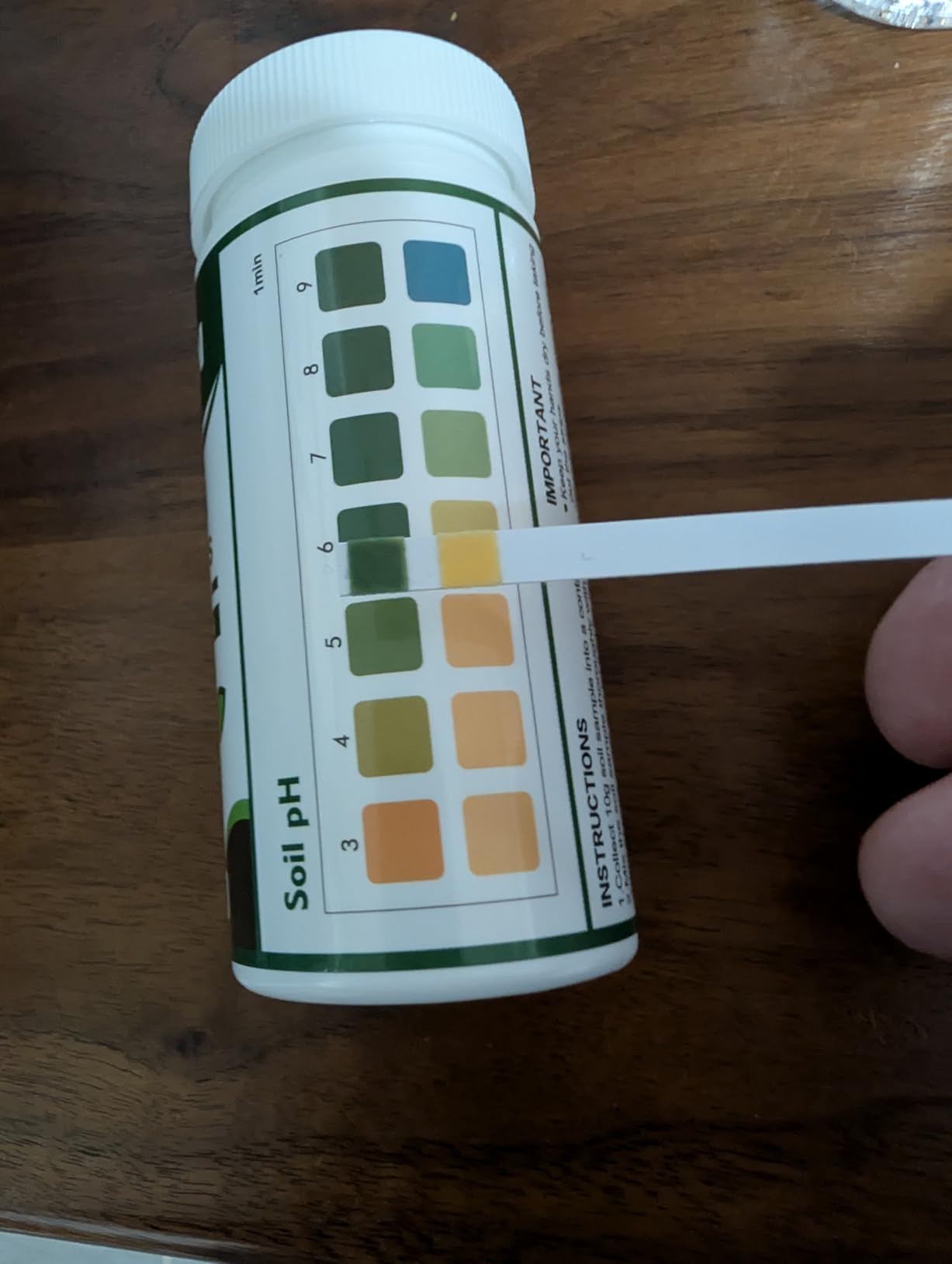
Strip versus the other pH testers
Against the Garden Tutor kit, the difference is the AI reader, which this one does not have. Against the Dewilde 100-strip kit, the trade is a longer wait for a settled slurry against a wider range and a larger strip count. If you are comfortable comparing colours yourself and you want volume, this is the cheapest way to run a long monitoring programme.
Budget buyers are largely satisfied, particularly those replacing an unreliable probe meter, but the two-colour strip format generates recurring confusion about how to read it.
Where it falls short
The colour scale is difficult for colour-blind users, and it is genuinely messy to read. If reading a chart is a problem, the AI reader approach in the Garden Tutor kit exists for a reason.
It also measures pH only, and the distilled water requirement means it is not a convenient test to run in the middle of a bed. Keep a jug of distilled water with the bottle and it works fine.
11. HSLGOVE 7-in-1 Soil Meter: Best for Multi-Sensor Readings
HSLGOVE Soil Test Kit, 7-in-One Soil Moisture Meter/Soil PH Meter/Fertility, Dual Screen Soil Tester w/Digital Soil Temp/Air Temp&Humidity for Plants Gardening,Lawn,Farm Indoor&Outdoor-Lvory White
Moisture, pH, fertility, light, soil and air temp
Humidity
Analog dial plus LCD
Pros
- Seven measurements in one device
- Dual display shows soil and air together
- Readings settle in 3-5 minutes
- Deeper than 3 inch insertion improves accuracy
Cons
- Battery compartment hard to open and undocumented
- Readings are not instant
- Clean the probe between areas
Where most probe meters give you three or four readings, this one reports seven: soil moisture, pH, fertility, light, soil temperature, air temperature and humidity. The dual display, an analogue dial for moisture and pH with an LCD for the rest, lets you see soil and air conditions side by side without switching modes.
That combination earns its place in a greenhouse or an indoor grow room, where the question is rarely just what the soil is doing. Knowing that the air is dry and the light is low changes the diagnosis, and no strip kit can tell you either.
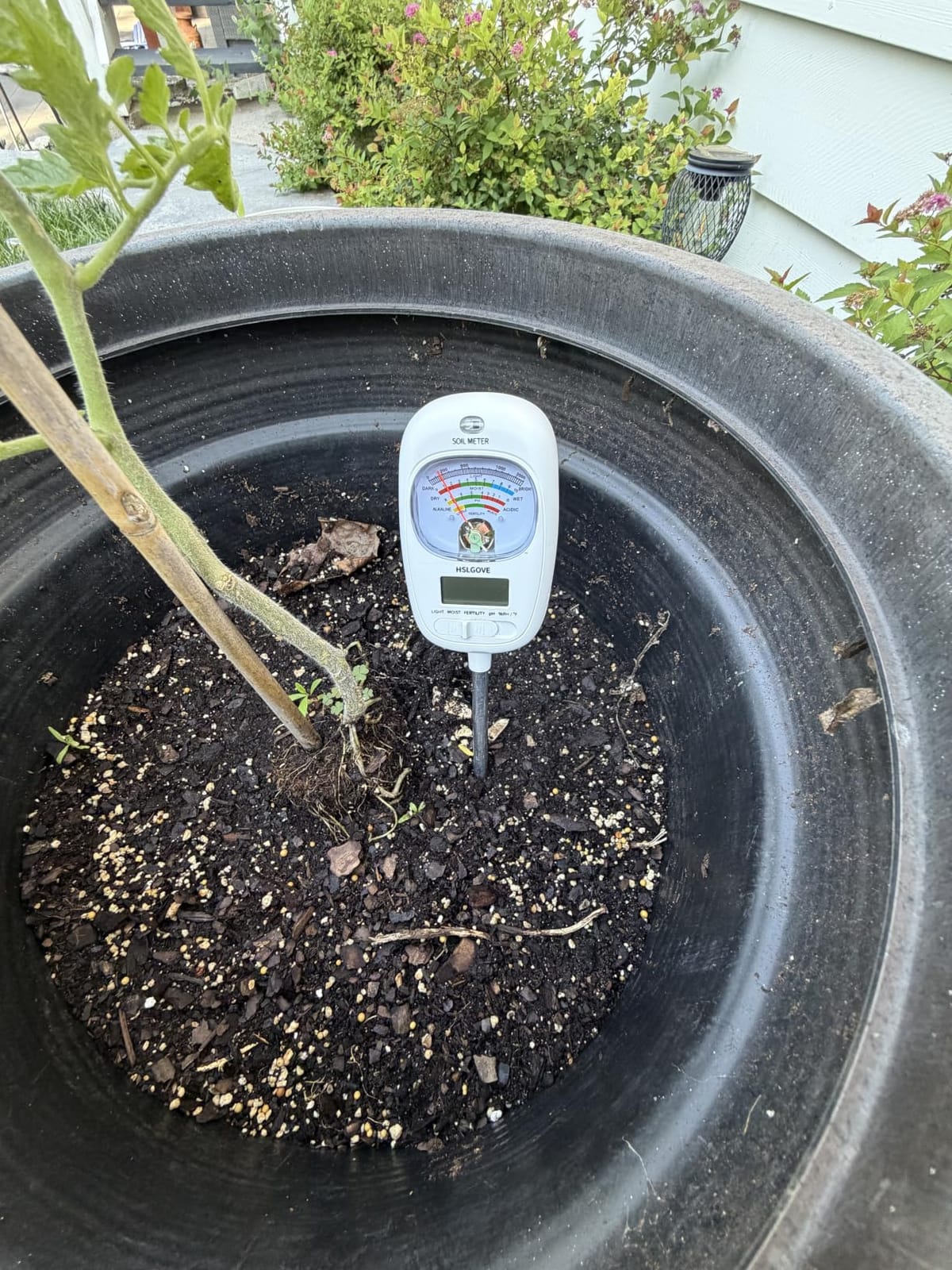
The probe is a three-metal needle about 6.8 inches long, which suits medium to large pots and lets you reach past the surface layer. Reviewers consistently report that pushing it deeper than three inches noticeably improves the reading, and that readings settle in three to five minutes rather than instantly.
A single-probe design limits root damage compared with twin-probe meters, and the extra batteries needed are included in the box.
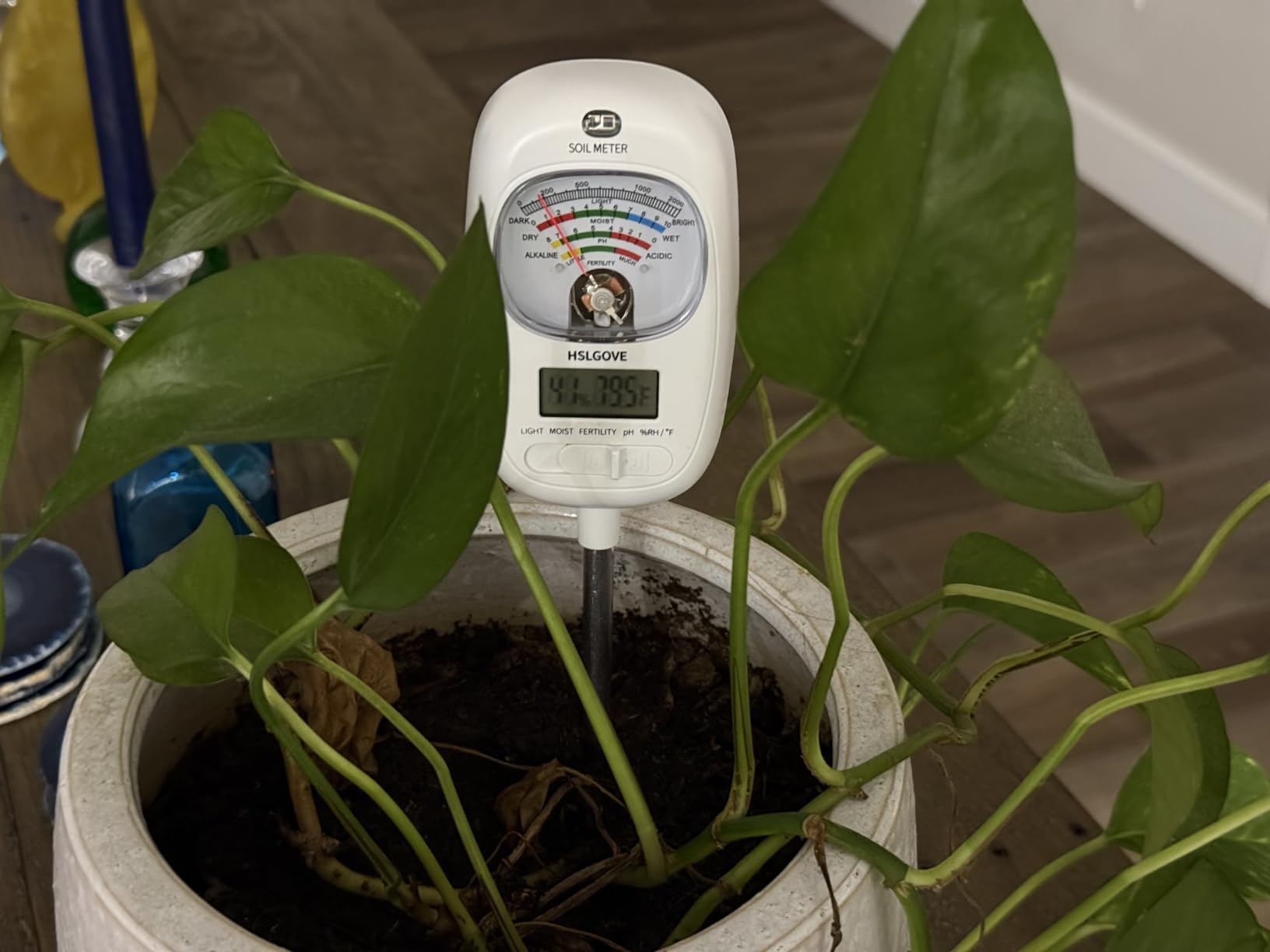
The dryness trap nobody warns you about
This is the single most common user mistake we saw across every probe meter in our testing, and the reason so many people conclude that cheap meters do not work. A probe pushed into dry soil reads low, badly and unrepeatably, because there is no conductive medium for the circuit. Water the sample first, wait a few minutes, then insert.
The second mistake is moving the probe straight from a damp pot to a dry bed without cleaning it. Carry-over moisture reads as wetness in the next location, which is why cleaning between tests is not optional.
Who should skip it
Anyone who needs a defensible number. The pH reading here is a screening figure and can drift by a full point from a lab result, and the fertility reading is a crude salt proxy rather than a nutrient measurement. It also needs three batteries and cannot test liquids, so it is no use in a hydroponic reservoir.
The undocumented battery compartment is a genuine annoyance: expect to look up how to open it the first time. For indoor environment monitoring, this is a strong tool. For field fertility decisions, use a lab.
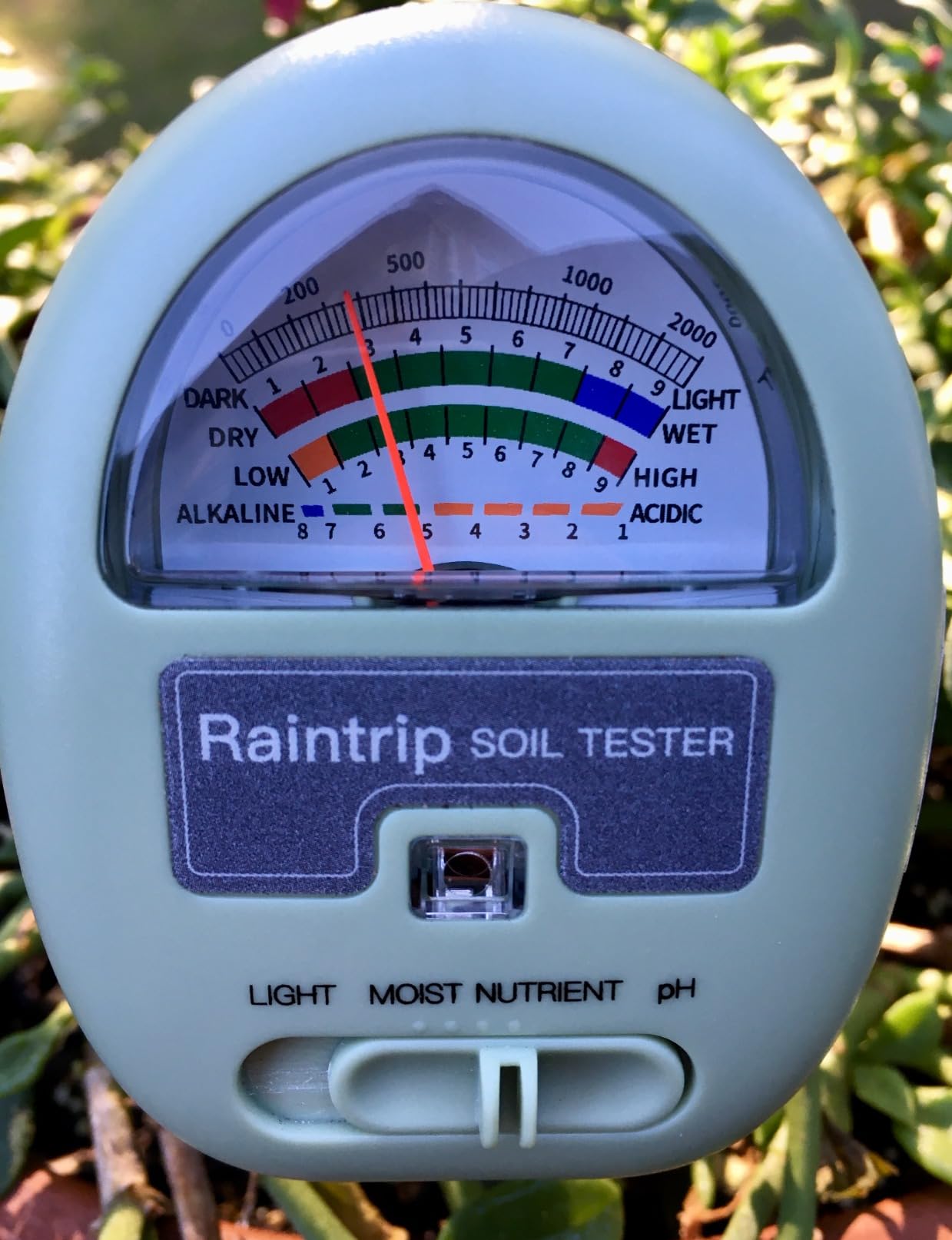
12. Raintrip 4-in-1 Soil Meter: Best First Tool for Beginners
Soil Moisture Meter,4-in-1 Soil Ph Meter, Soil Tester for Moisture, Light,Nutrients, pH,Soil Ph Test Kit, Great for Garden, Lawn, Farm, No Battery Required, Gifts for Plants Lover
Moisture, pH, nutrients and light
No batteries required
Rotating 90-degree dial
4 oz
Pros
- No batteries
- so it is always ready
- Rotating dial is comfortable to read
- Single probe is gentle on seedling roots
- Includes plant guide and sandpaper for maintenance
Cons
- Four measurements only
- Not designed for loose soils
- Readings depend on insertion past 4 inches
With more than five thousand reviews, this is the most widely owned meter in the group, and that is not accidental. It needs no batteries, which means it is never flat when you need it, and the ninety-degree rotating dial is genuinely more comfortable to read than the fixed-scale meters it competes with.
It reports moisture, pH, nutrients and light, which is enough to answer the two questions beginners actually ask: is the pot too dry, and is anything happening in there at all. The single probe is gentler on seedling roots, which matters when you are checking trays.
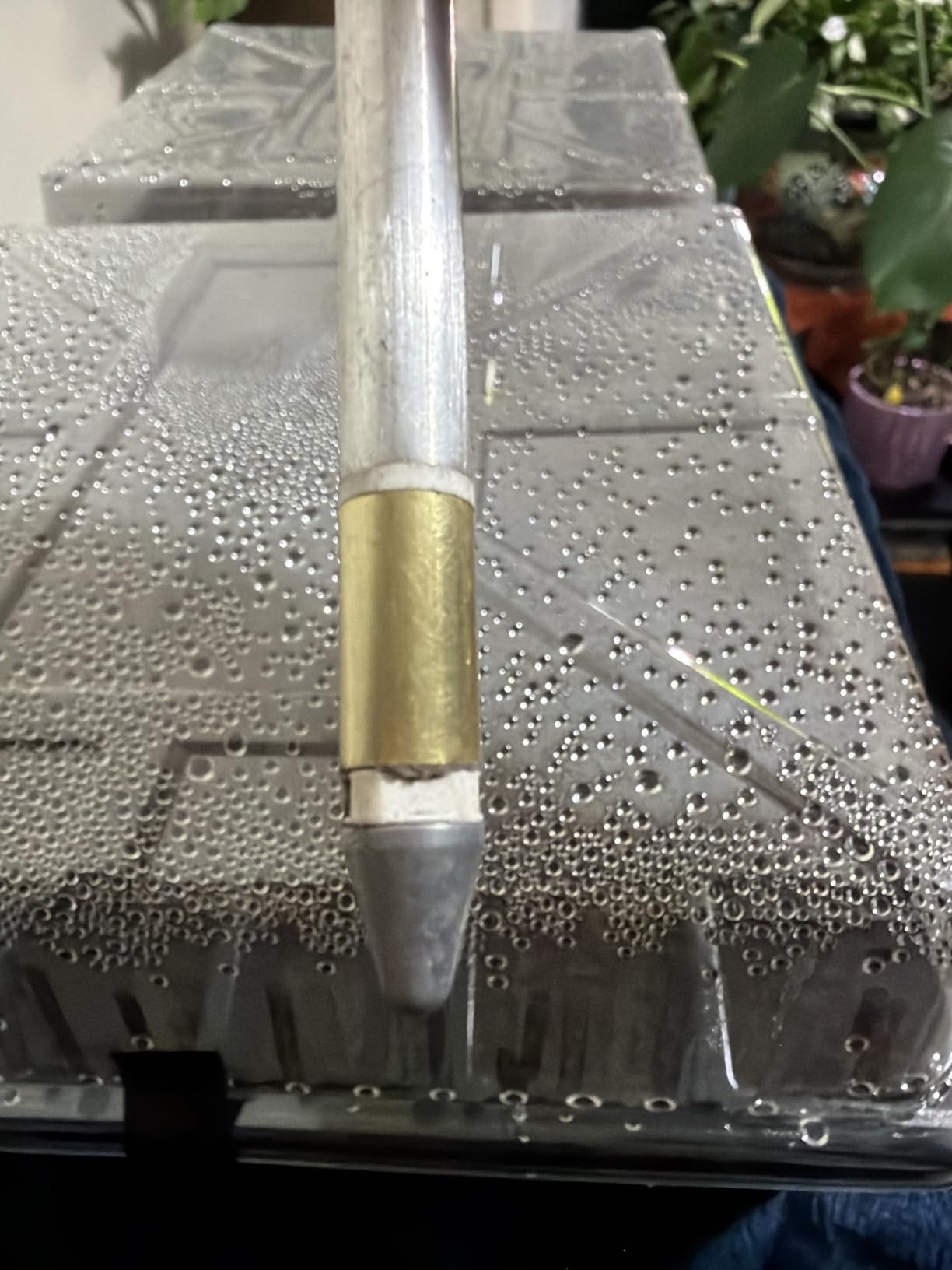
A plant growing guide and a piece of sandpaper for probe maintenance come in the box, and it arrives in a gift box, which is how a lot of these end up in households. That is not a criticism, only an explanation of who buys it.
With the largest review base in the group, it is described as a dependable first tool. The familiar limits of probe meters still apply, and they apply here as much as anywhere.
Why beginners should start here
It teaches the habit. Checking a pot every few days, learning that a soil can be wet at the surface and dry at the root, and watching moisture fall as the plant drinks is the foundation of soil awareness. You can then take a proper lab test once a year and actually understand the numbers on it.
It is also a good gift, which is the honest reason so many of these meters are used by people who never chose to buy one.
Know the limits before you trust it
Four readings against seven for the multi-sensor meter means no temperature or humidity data, and the light sensor is an ambient light reading rather than a plant-specific one. It is not designed for loose soils, and readings depend on inserting past four inches. On very sandy or very loose media the probe simply does not make good contact.
Treat the pH reading as a screening figure, and use a strip kit to confirm anything surprising. As a first tool it is hard to beat, and as a professional instrument it is not meant to be one.
How to Take a Soil Sample That Gets Accurate Results
Sampling error causes more bad results than kit error, and it is the step people rush. A soil test measures the sample you send, not your garden, and a handful of dirt scooped from one corner tells the lab almost nothing useful.
1. Pick the right time. Test in spring before you amend, or in fall after the harvest but before winter. Avoid testing immediately after applying compost, fertiliser or lime, because you will measure what you added rather than what the soil held.
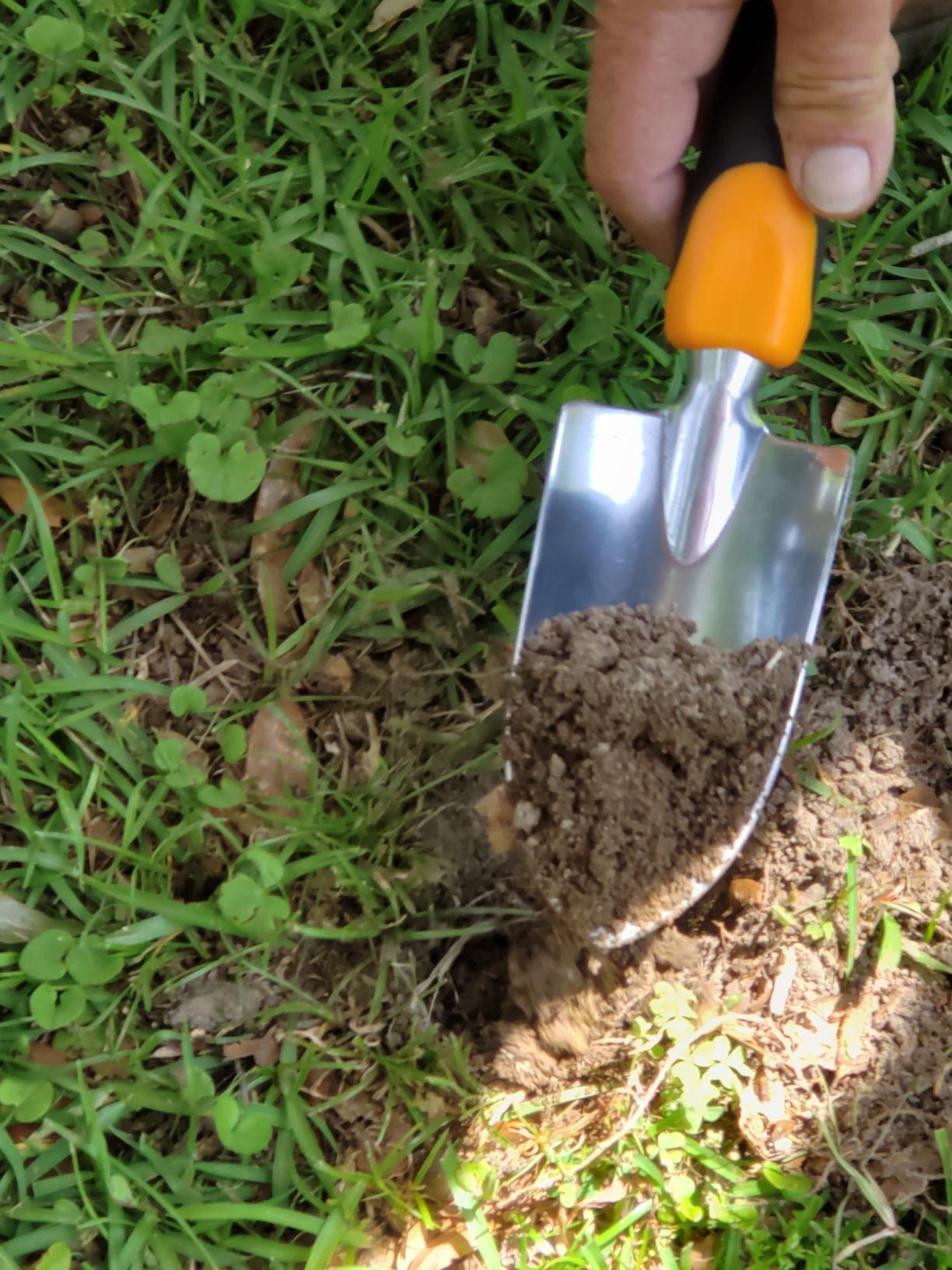
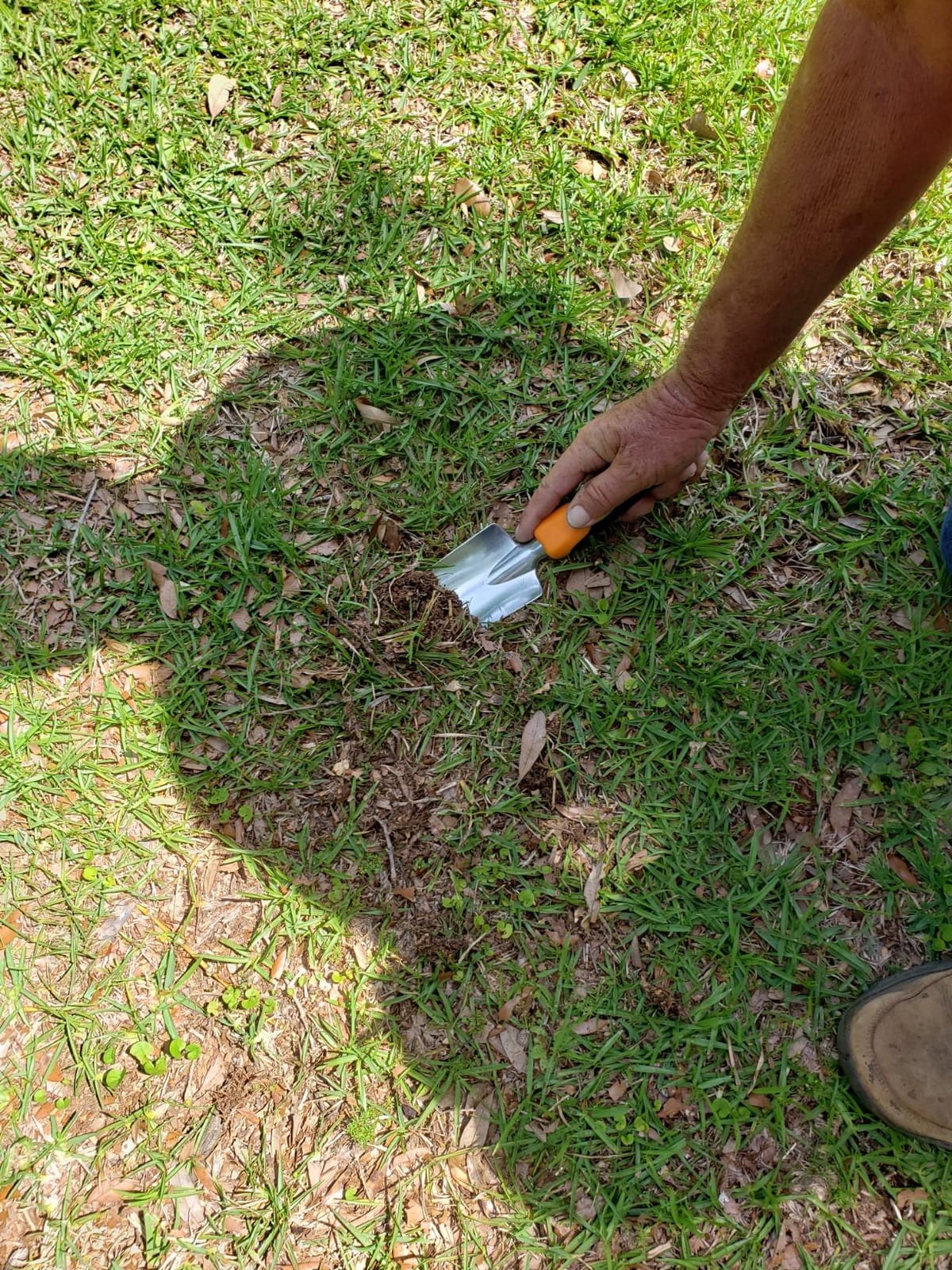
2. Take multiple cores. Using a trowel or probe, take ten to fifteen separate cores about six inches deep, zigzagging across the whole area rather than concentrating near the house or a hose. Sample the root zone, not the surface mulch.
3. Break up clods as you go. Crumb each core in the trowel before moving on. Compaction and lumps are the second most common source of unrepresentative results.
4. Mix thoroughly, then take a subsample. Combine the cores in a clean bucket, mix it fully, and take about a cup from the middle of that mix. This composite is what represents your site.
5. Clean between samples. If you are testing several beds or a lawn and a lawn separately, wash the tools and use a clean bucket so the beds do not average into one meaningless number.
For potted plants and small containers the same logic applies in miniature: several small scoops from different points in the pot, mixed, then tested. This is a related problem to the at-home health screening we cover in our [best at-home heart health test kits](https://factsforhealth.org/best-at-home-heart-health-test-kits/) guide, where sample handling makes just as much difference to the result as the device.
How to Read Your Results and Fix Common Soil Problems
A soil report is a list of numbers, and the useful skill is knowing which ones change what you do next. These four fixes cover the majority of problems we saw in test samples.
pH below 6.0. Raise it with dolomite lime, which adds calcium and magnesium as it raises pH, or with a garden lime product if your soil is low in magnesium. Apply in spring or fall and retest in six months, because lime moves slowly and the buffer pH on a professional report tells you whether one application will hold.
pH above 7.5. Lower it with elemental sulfur, which works faster than lime but does not add calcium. Acid-loving plants such as blueberries, camellias and rhododendrons are the clearest cases where this matters, since they start struggling above roughly pH 6.0.
Nitrogen low or bands not greening up. Feed with a nitrogen-forward fertiliser, and add compost if your organic matter percentage is also low, because organic matter is what buffers the release. Avoid over-applying in autumn, when surplus nitrogen leaches easily and feeds weeds.
High conductivity or very low pH together in containers. Flush the pot. Pour water through at three to four times the volume of the pot, let it drain fully, wait a week and retest, because repeated small doses of fertiliser in a pot produce salt buildup that looks like a nutrient problem.
One rule applies to all of it. Change one thing at a time, water it in, wait four to six weeks and retest the same spot, because soil chemistry responds slowly and two simultaneous changes make the result impossible to read.
State Extension Services: The Low-Cost Alternative
None of the three competitors we analysed mentioned them, which is a genuine gap. Most counties in the United States run a soil testing lab through the cooperative extension service, and for a fraction of what a mail-in kit costs you get a report generated by the same methods a commercial lab uses.
The recurring figure quoted in lawn care discussions is a low per-sample fee, and users in r/lawncare consistently identify the extension office as the trusted answer rather than any consumer kit. r/lawncare notes a local college performing a soil test for about the same outlay as a commercial kit, which reframes the whole roundup.
Many extension labs also test for lead and other contaminants, which no kit in this roundup does. If you are building a raised bed on imported fill near an older property, that is the service that answers the question. Search your county extension office or state university extension programme for its soil sampling form and lab fee sheet.
What to Look for When Buying a Soil Test Kit
Once you know which of the three categories you need, the buying decision is short. Here is how we would think about it.
Decide what question you are actually asking. Acidic or alkaline soil is a pH question, and a strip kit answers it in a minute. A fertiliser purchase is a nutrient question, and only a lab answers it in numbers you can spend money against. Moisture and indoor conditions are a meter question. Buyers who skip this step tend to end up with a gadget that answers a question they do not have.
Check the pH range. A kit topping out at pH 8 will misread alkaline soil, and one starting at pH 4 will not tell you anything useful about a slightly acidic bed. A 3 to 9 or 3.5 to 9 range covers real-world soils.
Count tests per parameter, not total tests. Forty total tests means forty tests for each of four parameters, which is the detail that surprises buyers of the Rapitest most often. Calculate the cost per test against how many beds you have and how often you will retest.
Ask what the report looks like. Raw parts-per-million tables without interpretation leave most readers stranded. Kits that state a product, a rate and a timing are the ones that change behaviour.
Consider a separate pH pen if you test pots. Our roundup of [at-home screening kits](https://factsforhealth.org/best-at-home-vitamin-b12-test-kits-for-seniors/) follows the same logic, where the shipping and setup cost of a full panel only makes sense for a defined number of checks.
Factor in consumables and storage. Capsules, reagents and strips expire or dry out. Store strips cool and dry, keep reagents sealed, and remember that a probe meter needs calibration solution if you want its pH reading to hold up over seasons.
Be sceptical of single-probe pH claims. The forum consensus is that dedicated pH pens and colour-chart kits work, while single-probe meters that bundle light, moisture and pH into one dial can be off by a full pH unit and are rarely worth buying for the pH figure alone.
Frequently Asked Questions
Are home soil test kits accurate?
They are reasonably accurate for pH screening, usually within about half a pH unit when the sample is properly mixed and settled, and they are not accurate for nutrient parts-per-million values. South Dakota State University Extension found consumer kits inconsistent at estimating nutrient levels, so use a home kit to triage and a lab test for any number you plan to spend money on.
What is a good home soil testing kit?
A good home kit is one that answers your question. For a full nutrient panel with fertiliser rates, the MySoil mail-in kit is the strongest balance of coverage and clarity. For quick pH screening, the Garden Tutor strip kit with its web reader is fast and repeatable. For container moisture, the Raintrip 4-in-1 meter is the most dependable first tool.
Which soil moisture tester is the most accurate?
Moisture meters are far less accurate than dedicated pH pens, and no cheap meter reads moisture reliably in dry soil. The Raintrip 4-in-1 meter is the most dependable of the affordable options, while the HSLGOVE 7-in-1 adds light, temperature and humidity. Always insert the probe past the depth specified, and never read a dry soil, because that is the main reason meters seem to fail.
How often should I test my soil?
Once a year is enough for most gardens, ideally in spring before you amend. Lawns benefit from a spring test and a follow-up in fall, and long crops such as tomatoes or brassicas are worth checking mid-season. In containers and hydroponic systems, test nutrient solution every cycle, because there is no buffering soil to stabilise things.
Do soil test kits expire?
Colour strips and reagents do have a shelf life, and damp or heat-damaged reagents produce unreliable results. Strips should be stored cool and dry in a closed bottle, and reagent kits kept sealed and away from light. Digital pens drift over time and need calibration solution to stay accurate, so check the calibration interval and rinse the probe after every use.
How do I take a soil sample for testing?
Take ten to fifteen separate cores about six inches deep, zigzagging across the whole area, and break up clods as you go. Combine the cores in a clean bucket, mix them thoroughly, and take one cup from the middle of that mix. Sampling one spot, or skipping the mixing step, is the most common reason a good lab returns a misleading result.
Should I send my soil to a lab or use a home kit?
Send it to a lab, a mail-in kit or your county extension service when the result determines a fertiliser purchase, because home kits cannot produce parts-per-million values you can act on. Use a home kit for spot checks between lab tests, for a quick pH reading, or for monitoring a shelf of pots where you only need to know whether conditions have drifted.
Conclusion: The Best Soil Test Kits Worth Your Time
After six weeks of testing twelve kits, one conclusion stands out. The best soil test kit is not the most accurate one, it is the one whose result you will understand and act on. That is why the MySoil mail-in kit takes the top spot: it returns a full nutrient panel with specific amounts, and it is the only kit in the group that finishes the job rather than handing you a colour and wishing you luck.
For fast answers without a lab, the Luster Leaf Rapitest gives you forty at-home N-P-K tests, and the Garden Tutor strip kit handles pH in about a minute. For containers and greenhouses, the Raintrip and HSLGOVE meters cover moisture, light and temperature, as long as you water first and push the probe to depth.
Before buying anything, check whether your county extension service runs a soil lab. It costs a fraction of a mail-in kit, it uses proper methods, and it can test for contaminants that no consumer kit in this roundup touches. Then take a proper composite sample, and the numbers you get back will be worth reading.
For more at-home diagnostics and the thinking behind them, browse our [home health test kit reviews](https://factsforhealth.org/best-blood-glucose-test-kits-for-diabetics/) and the rest of our 2026 buying guides.