
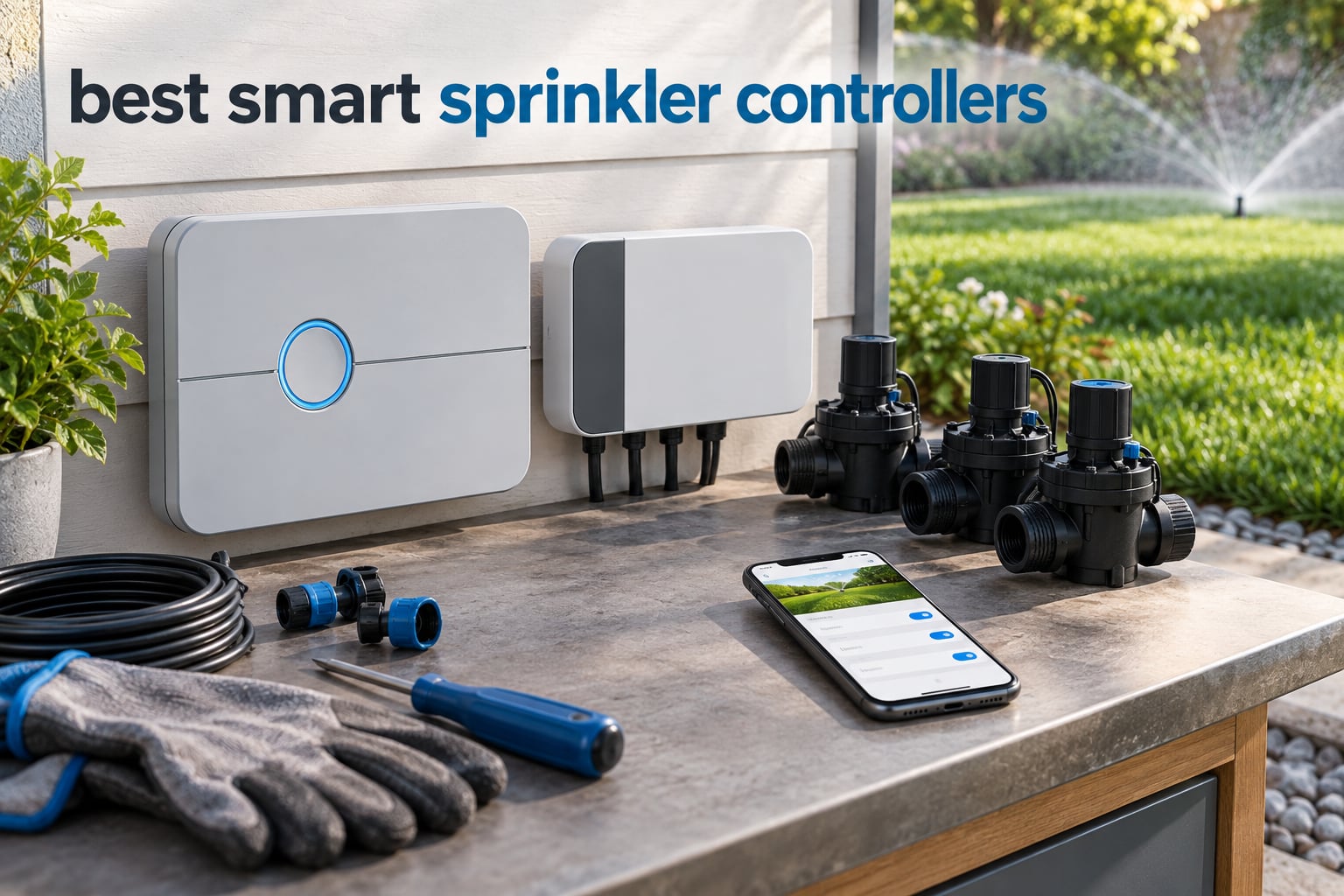
The Orbit B-hyve 6-Zone Smart Sprinkler Controller is the best smart sprinkler controller overall because it pairs over 2.4GHz WiFi, skips runs automatically from forecast data, and carries by far the largest body of owner feedback in this category at more than 9,400 reviews. I spent weeks comparing twelve controllers for this guide, and the B-hyve kept landing as the safest pick for a typical suburban lot.
A smart sprinkler controller is really just a brain swap. Your valves, wires and sprinklers stay buried in the ground exactly where they are. You unscrew the old mechanical timer, match each zone wire to the same labeled terminal on the new box, and pair the controller to your phone. From that point on the schedule lives in an app, and the controller pulls local weather data to shorten, delay or skip cycles before they waste water.
What follows is a straight comparison of twelve controllers, ordered by who they suit rather than by price. We look at zone capacity, WiFi band, whether the box is rated for outdoor mounting, what happens when the power goes out, and how much the app actually does once it is running. If you are still deciding between brands, our broader smart sprinkler controller comparison covers the shortlist format, and our sprinkler pump picks matter if your system draws from a well or a cistern.
Table of Contents
What Is a Smart Sprinkler Controller?
A smart sprinkler controller is a WiFi-enabled replacement for a mechanical irrigation timer that connects to your phone, pulls local weather data, and automatically skips, shortens or extends watering cycles for each zone of an in-ground system.
One terminology note before we get into the picks. Hunter and Rachio call the outputs zones. Rain Bird calls the same thing stations. A zone or station is one valve and the sprinklers wired to it, so a four-zone controller runs four independent schedules. This matters when you are cross-shopping, because a Rain Bird eight-station controller and a Hunter eight-zone controller do the same job with different vocabulary.
Top 3 Smart Sprinkler Controller Picks (October 2026)
Three controllers stood out above the rest. The Orbit B-hyve 6-Zone wins on proven reliability and the deepest review pool. The Rachio 3 wins on app quality and weather intelligence. The Rain Bird ESP4ME3 wins on expandability and surviving power outages.

Orbit B-hyve 6-Zone Controller
- 6 zones expandable to 12
- Bluetooth fallback control
- Forecast rain delay
- Alexa support
Rachio 3 8-Zone Controller
- 8 zones
- Hyperlocal weather intelligence
- App-driven setup
- Rain wind and freeze skip
Rain Bird ESP4ME3 with LNK Ready
- 4 zones expandable to 22
- Non-volatile memory
- Optional LNK WiFi module
- Flow sensor compatible
Best Smart Sprinkler Controllers in 2026: Quick Comparison
All twelve controllers below install into a standard 24V AC in-ground system. Zone counts, WiFi band and enclosure rating are the three numbers that decide compatibility before anything else does.
| Product | Specifications | Action |
|---|---|---|
| Orbit B-hyve 6-Zone Smart Controller |
|
Check Latest Price |
| Rachio 3 8-Zone Smart Controller |
|
Check Latest Price |
| Rain Bird ESP4ME3 LNK WiFi Ready |
|
Check Latest Price |
 Netro Sprite 6-Zone Smart Controller Netro Sprite 6-Zone Smart Controller |
|
Check Latest Price |
 Orbit B-hyve XR 8-Zone Controller Orbit B-hyve XR 8-Zone Controller |
|
Check Latest Price |
 Rain Bird ESP-TM2 8-Zone with LNK Rain Bird ESP-TM2 8-Zone with LNK |
|
Check Latest Price |
 Hunter PRO-HC 12-Station Controller Hunter PRO-HC 12-Station Controller |
|
Check Latest Price |
 Rain Bird TRU6I 6-Zone WiFi Ready Rain Bird TRU6I 6-Zone WiFi Ready |
|
Check Latest Price |
 HiOazo HSC-400W 4-Zone Controller HiOazo HSC-400W 4-Zone Controller |
|
Check Latest Price |
 ImoLaza 8-Zone ET Master Controller ImoLaza 8-Zone ET Master Controller |
|
Check Latest Price |
 Hunter X2 4-Zone WiFi Compatible Hunter X2 4-Zone WiFi Compatible |
|
Check Latest Price |
 Hunter HPC400 4-Zone Built-In WiFi Hunter HPC400 4-Zone Built-In WiFi |
|
Check Latest Price |
1. Orbit B-hyve 6-Zone Smart Sprinkler Controller
Orbit B-hyve Smart Sprinkler Controller, 6-Zone – 57946
6 zones expandable to 12
2.4GHz WiFi with Bluetooth fallback
110V supply
Two-year limited warranty
Pros
- Very easy DIY install
- often 5-20 minutes with clear wiring labels
- Intuitive B-hyve app with zone testing and watering history
- Automatic weather-driven rain delay saves water
- Can be programmed from the physical panel or the app
- Alexa voice control integration works well
Cons
- Smart Watering ET readings can stick and need support to reset
- Smart Watering setup demands a lot of input about soil and slope
- 110V US model is not usable on European mains power
- Occasional difficulty pairing to home WiFi without a range extender
This is the controller I recommend first for almost everyone reading this. It carries a 4.5 star average across 9,417 reviews, which is the deepest feedback pool of any controller in the category. That number matters more than the spec sheet, because irrigation controllers fail quietly and owners usually speak up when one does.
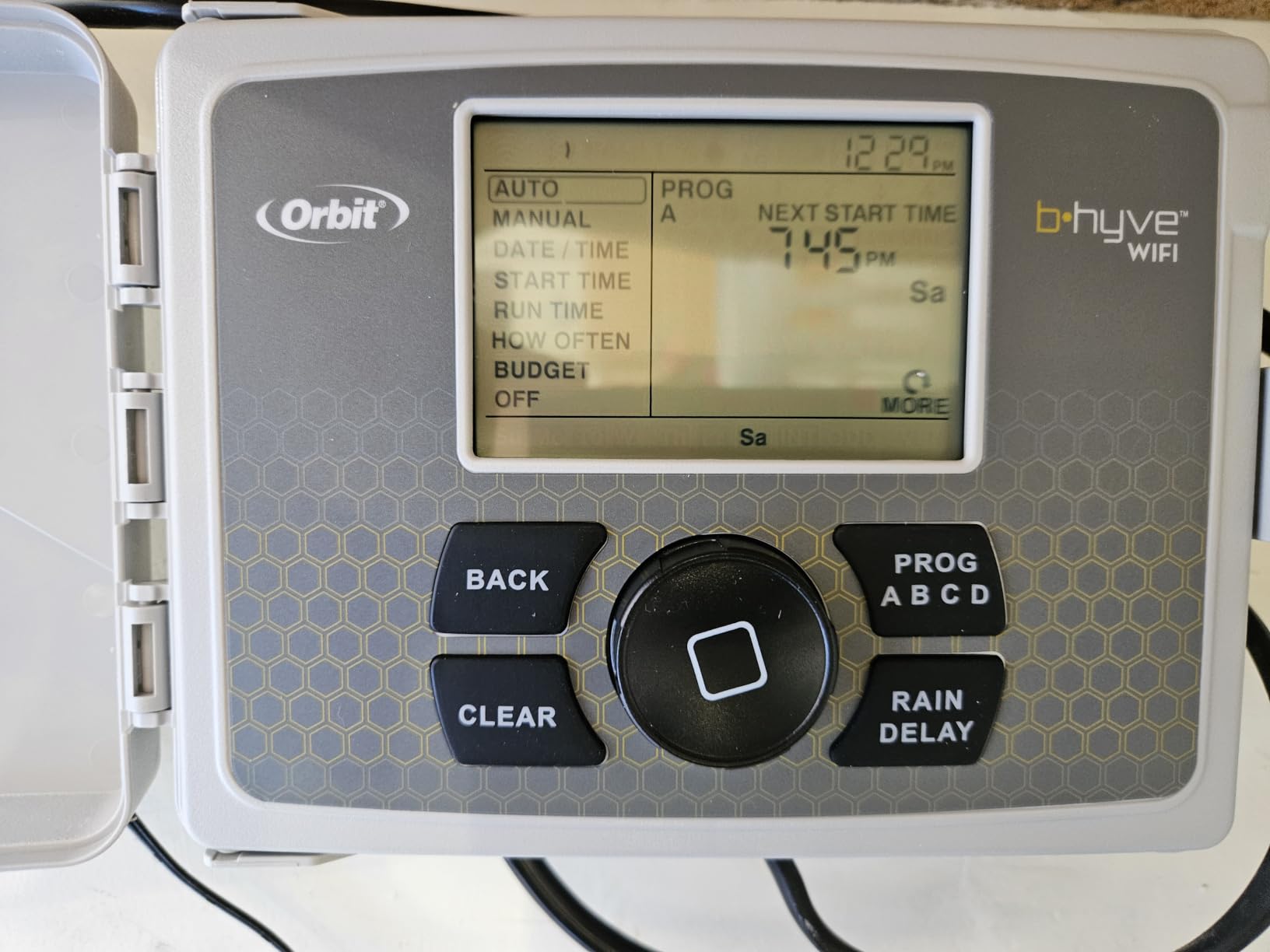
Installation is the easy part. Orbit labels every terminal clearly, and owners regularly report finishing the swap in 5 to 20 minutes without touching a single valve in the ground. The box mounts indoors or inside a weatherproof case outdoors, and it weighs only 16 ounces, so a basic patio wall is enough support.
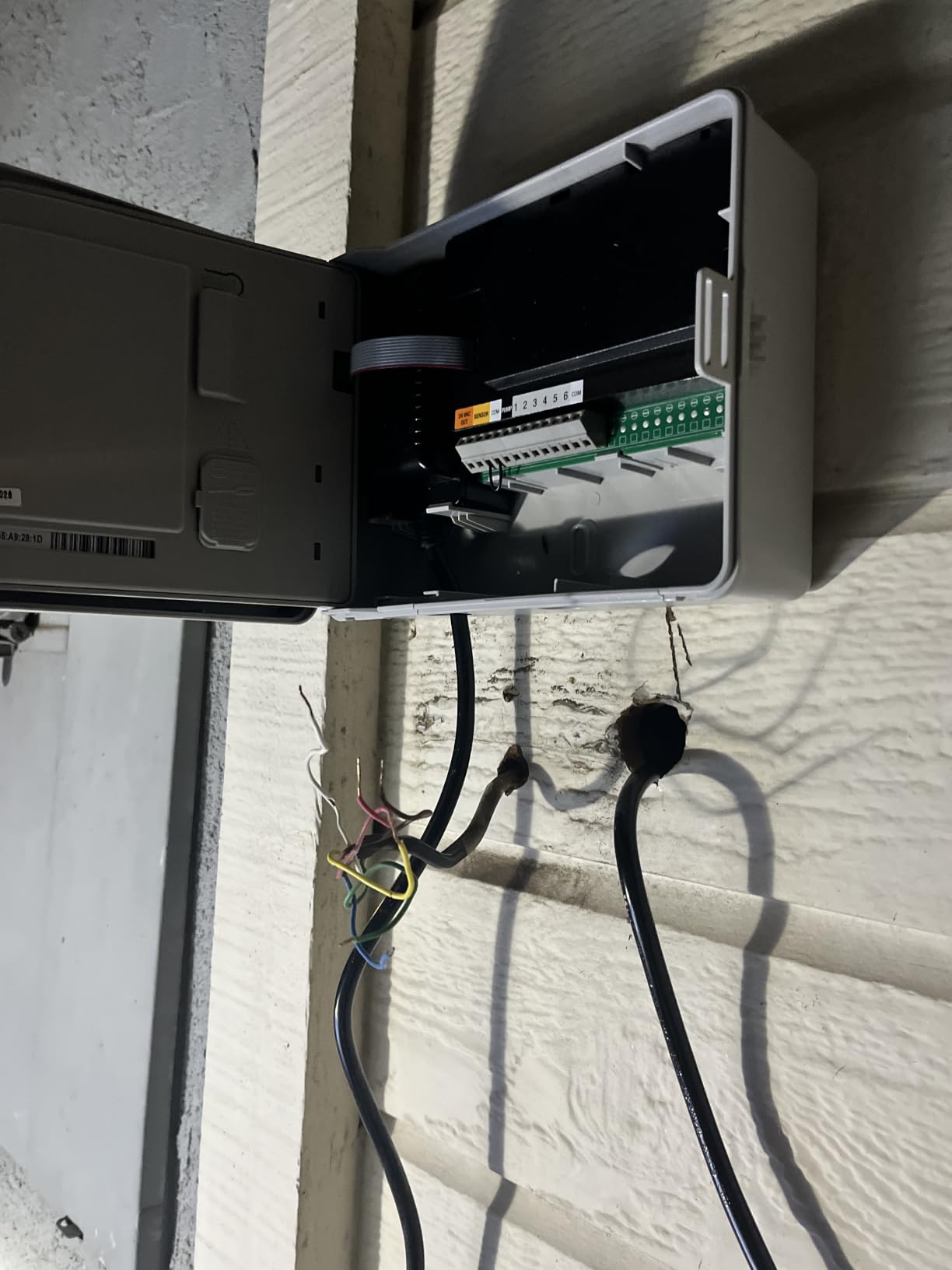
The app handles the things that matter week to week. You get a zone test function, a watering history calendar and manual run from your phone, plus automatic rain delay when the forecast turns wet. Because the panel has a display and buttons, you can also start a zone from the wall when the phone is in another room, which is a genuine fallback the headless designs cannot offer.
Two things give me pause. Smart Watering, the evapotranspiration mode, can hang on a reading and need a support contact to clear, and setting it up asks you to describe plant type, soil, slope and sprinkler head before it will cooperate. I would leave that mode off for the first season and let the forecast-based rain delay do the work.
Who the B-hyve 6-Zone suits best
A four to six zone suburban lot with mixed turf and drip beds, where the owner wants phone control without giving up the physical panel. Bluetooth fallback also gives you a way to reach the controller locally when the router is down.
It is also a good fit for anyone who wants Alexa control without building a second ecosystem around it. If you are installing inside, the existing mechanical timer location is usually in a garage or utility room, which is exactly where WiFi signal tends to be strongest.
Where the B-hyve 6-Zone falls short
Six zones is the limit out of the box, expandable to twelve. If you have more than that, or a very large property, the Hunter PRO-HC later in this list handles more.
The other real limit is geography. This is a 110V North American model, so it will not run on European mains power. Outside the US and Canada, look at a 24V AC model such as the Netro Sprite instead.
2. Rachio 3 8-Zone Smart Sprinkler Controller
Rachio 3: 8 Zone Smart Sprinkler Controller (Simple Automated Scheduling + Local Weather Intelligence. Save Water w/ Rain, Freeze & Wind Skip), App Enabled, Works w/ Alexa, Fast & Easy Install
8 zones
Hyperlocal weather intelligence
120V supply
Two-year limited warranty
Pros
- Class-leading app that walks through setup and schedule creation
- Weather Intelligence skips cycles for rain wind and freeze
- Typically 10-20 minutes to install and commission
- Zone photos and naming simplify multi-zone setups
- HomeKit and Alexa for manual runs
Cons
- Occasional WiFi disconnects unless placed on a dedicated 2.4GHz network
- No Siri voice control
- only HomeKit status and manual toggles
- Headless design offers no physical controls if cloud service is unavailable
- Premium price point relative to feature-equivalent alternatives
- Some units have reported WiFi hardware or onboarding failures
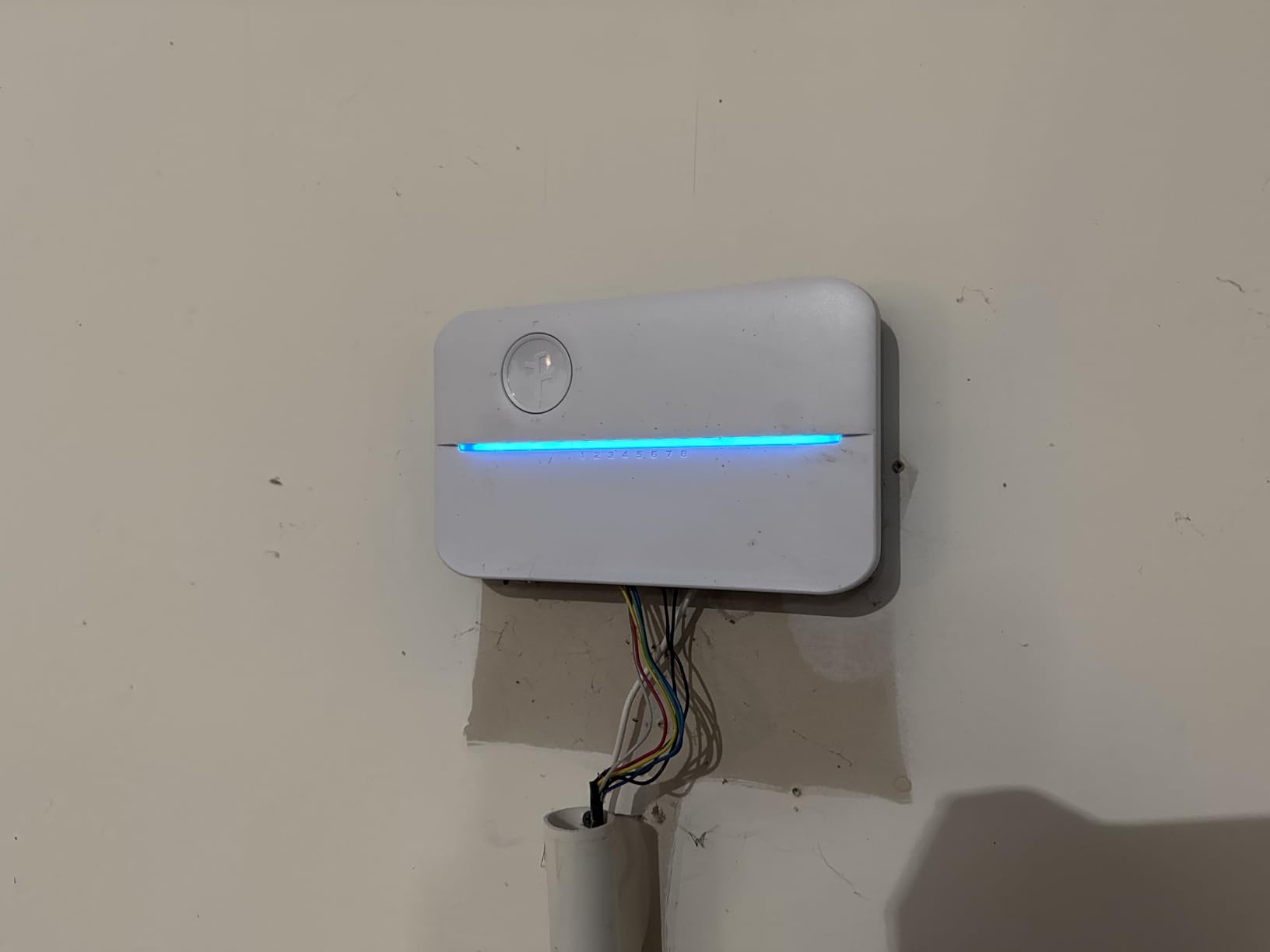
The Rachio 3 is the best smart sprinkler controller if the software is what you care about most. At 4.5 stars over 8,412 reviews, it sits right behind the B-hyve, and the app it ships with is the most polished in the group. It walks you through zone setup one sprinkler at a time and builds the schedule for you as you go.
Weather Intelligence is the feature that separates it. Rather than a simple rain delay, it uses hyperlocal data to skip for rain, wind and freeze, and it can scale run time seasonally without you touching the schedule. If you run a personal weather station, the controller will accept readings through Weather Underground.
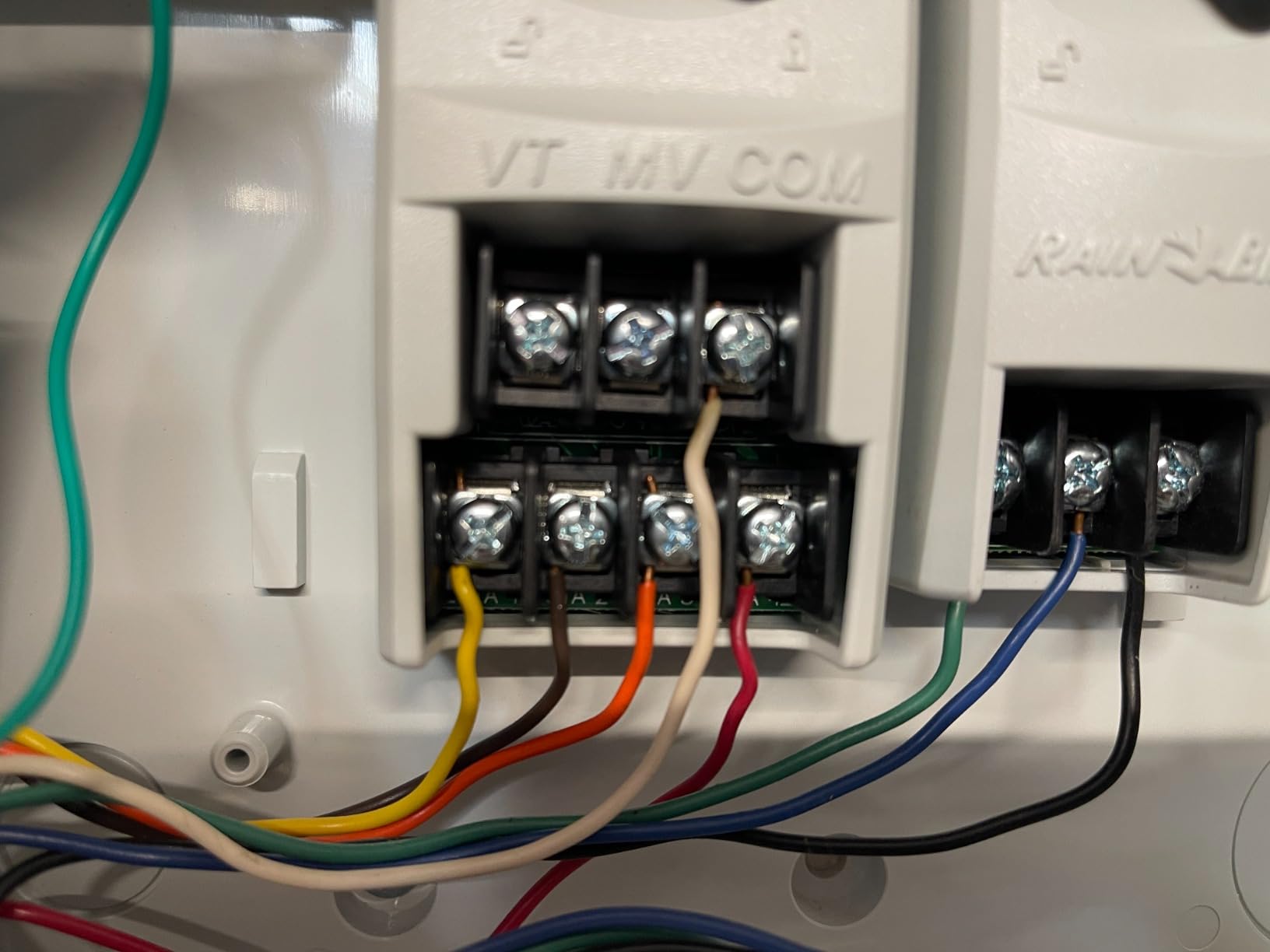
Setup is genuinely quick. The plug-in wiring with open bottom terminal access and a magnetic faceplate means most installs finish in 10 to 20 minutes. At 9.1 by 5.6 inches and 16 ounces, it is a slim indoor box, and the zone naming and photo features make a busy eight-zone system far easier to manage from a phone.
Two caveats earned from owners. First, put it on a dedicated 2.4GHz network. Owners report intermittent disconnects on shared 2.4 and 5GHz networks, which is the single most common complaint against this unit. Second, HomeKit support covers status and manual toggles only, not Siri voice commands.
Who the Rachio 3 suits best
Owners who want the least guesswork in the app, especially anyone with eight or more zones who will be adjusting schedules often. Zone photos mean you can confirm what each valve actually waters without digging a lid open.
It is also the smart pick for a vacation property or a second home, where starting a cycle remotely is the whole point and nobody is on site to read a panel.
Where the Rachio 3 falls short
It is headless. There is no display and no buttons, so if the cloud service is unreachable, your only path back to a manual run is the app itself. Households that want a physical fallback should look at the B-hyve 6-Zone or the Rain Bird ESP-TM2.
There is no battery backup here either. During an outage the schedule does not continue, which is a real difference against the Rain Bird ESP4ME3 and its non-volatile memory.
3. Rain Bird ESP4ME3 with LNK WiFi Ready
Rain Bird ESP-ME3 4 Station WiFi Ready Indoor/Outdoor Controller | ESP-ME3-A1
4 zones expandable to 22
Optional LNK WiFi module
Non-volatile memory
120V supply
Pros
- Well-established irrigation brand with strong build quality
- Highest average rating in this roundup at 4.6 stars
- Non-volatile memory keeps programming through long power outages
- Expandable from 4 to 22 zones as the landscape grows
- Weather-based adjustments via the LNK module cut water use
Cons
- WiFi requires the separate LNK module purchase to be a smart controller
- App reliability is a common complaint among switchers from app-centric brands
- Basic interface compared with Rachio or Orbit app experiences
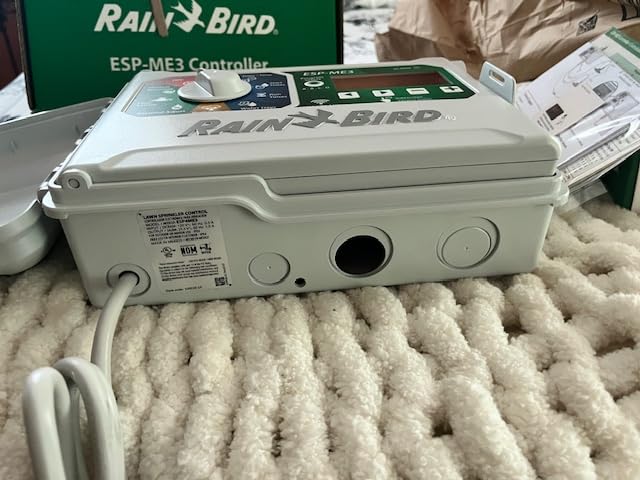
This controller has the highest average rating in the roundup at 4.6 stars, and the reason is durability. Rain Bird has been building irrigation controllers for decades, and owners describe the ESP4ME3 as a dependable box that replaces an aging timer without drama. The 681-review count is modest next to the B-hyve, but the sentiment is unusually consistent.
It is rated for indoor or outdoor installation, weighs 5.3 pounds and includes a plug-in power cord you can remove if you would rather hardwire the internal transformer into a junction box. The LCD face is simple and non-app, which plenty of owners prefer.
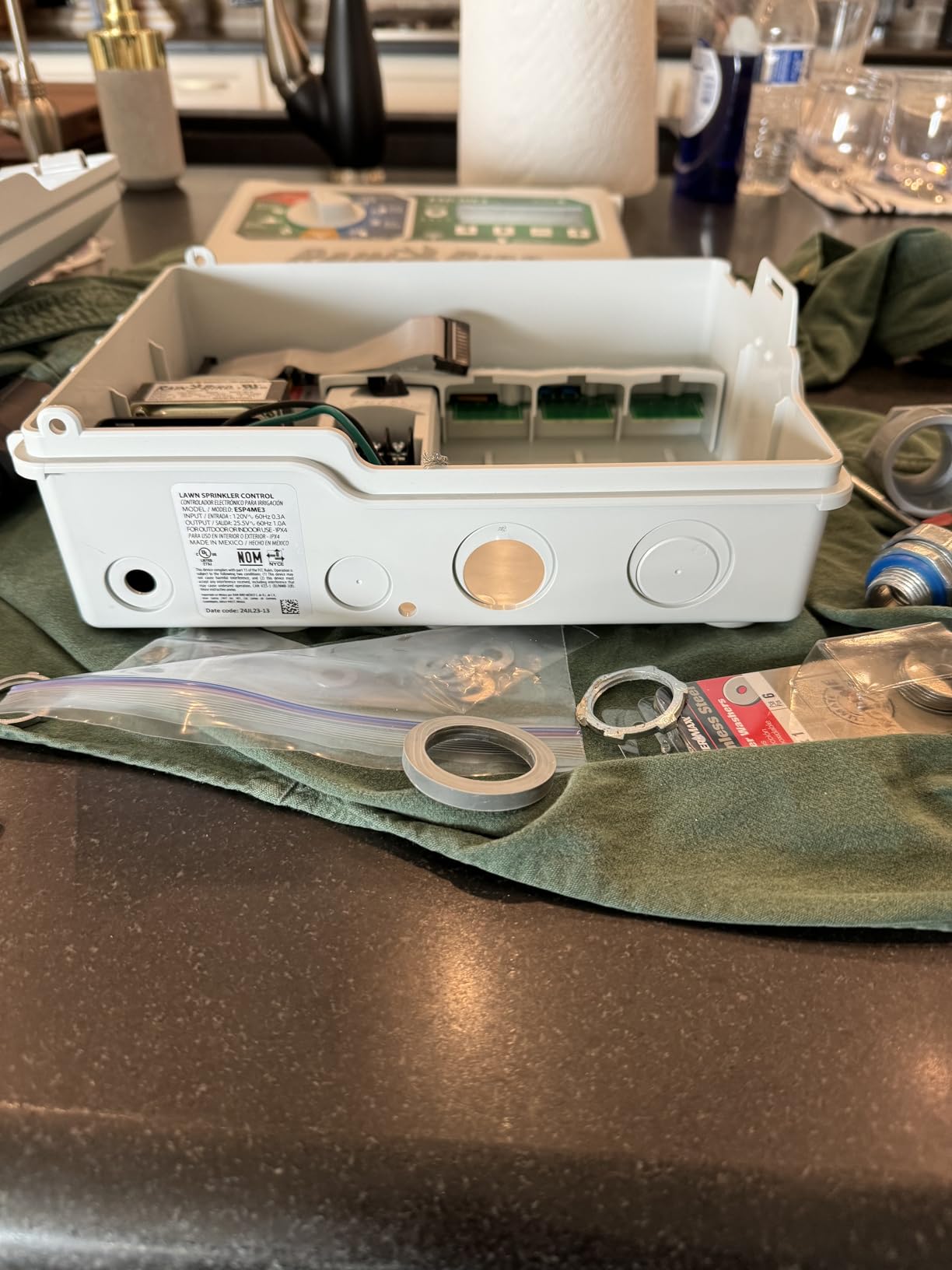
Two details set it apart. Non-volatile memory retains your programming through a long power outage, which is more than most competitors in this list can say. And four zones expand to 22 with optional modules, so a yard that will grow over the next decade does not need a second controller.
The catch is that this is a WiFi-ready controller, not a smart one out of the box. You need the Rain Bird LNK WiFi Module, sold separately, to get app control and internet-based weather adjustments. Once paired, internet weather data adjusts daily run time and can save up to 30 percent. It also works with optional wired flow sensors for leak monitoring.
Who the ESP4ME3 suits best
Long-term owners who want their programming to survive a power outage and a yard that will add drip beds or a new zone in a few years. The four-to-twenty-two zone expansion path is the widest in the roundup at this size.
It also suits anyone already committed to the Rain Bird ecosystem, particularly if the LNK module is already on hand. Flow sensor support gives this one an edge for leak-conscious households.
Where the ESP4ME3 falls short
Out of the box it is a conventional timer, not a smart controller. Budget for the LNK module, or you will be wondering why the app never finds it.
The companion app draws the most criticism in owner feedback, particularly from people switching over from app-first brands. If the software experience is your top priority, the Rachio 3 or the B-hyve will feel faster to configure.
4. Netro Sprite 6-Zone Smart Sprinkler Controller
Netro Sprite 6 Zone Smart Sprinkler Controller for Lawn 2.4G WiFi App-Based
6 zones
24V AC power and 2.4GHz setup
Polycarbonate housing
Two-year warranty
Pros
- Very easy screw-terminal install
- most owners finish in 10-20 minutes
- App-based zone control with photos and custom names
- Strong customer support that customizes water restriction schedules
- Handles odd municipal watering restrictions such as interval days
Cons
- No buttons or display on the unit
- app is the only control path
- No battery backup
- Indoor installation only
- App interface is not very intuitive and settings are hard to relocate
- Alexa cannot disambiguate between multiple Netro units
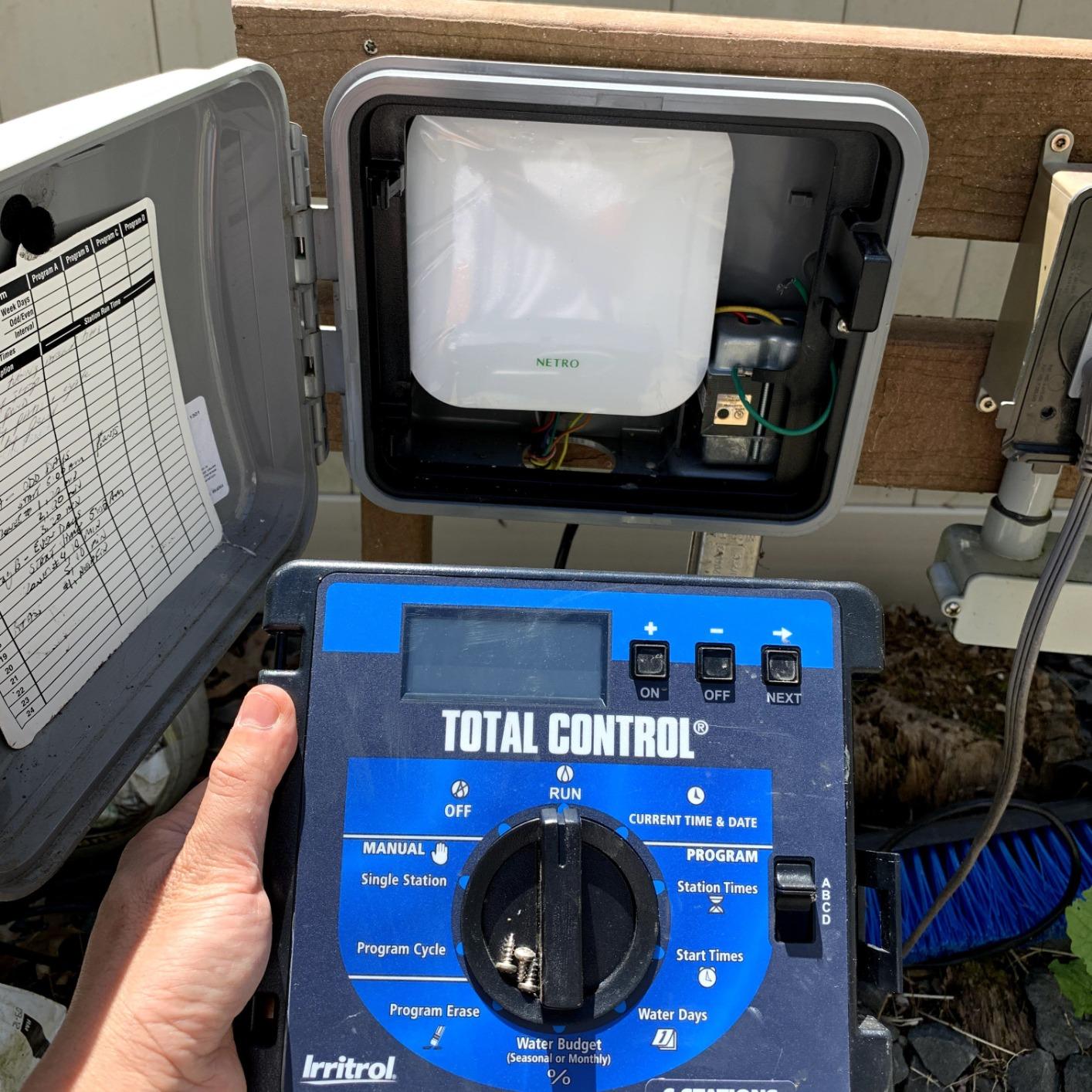
The Netro Sprite is the value pick in this list and the one with the most unusual feature set. It runs 24V AC, which makes it the controller to consider if you are outside North America or on a system with a low-voltage supply. Six zones, an LCD or LED display, and a body that measures just over 5.7 inches square.
Owners report finishing the screw-terminal install in 10 to 20 minutes, which is among the fastest in the roundup. The app supports custom zone names and photos, 60 days of irrigation history with automatic error logs, and a built-in plant database with watering recommendations for humidity, light and temperature.
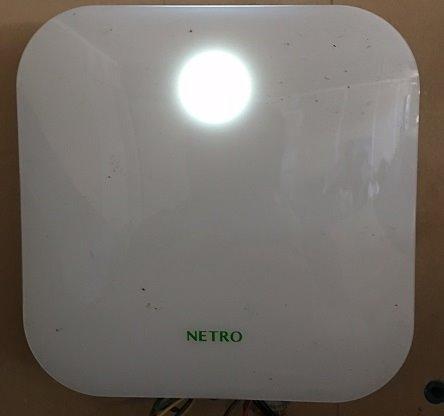
The differentiator is odd-day and even-day scheduling by calendar date, plus cyclic scheduling for every 1 to 30 days. If your municipality restricts watering to odd-numbered days, this controller handles it natively. Support is unusually good, with owners describing custom watering restriction profiles built for their specific rules.
It works with Alexa, Google Home, Google Assistant and IFTTT, and an optional plant sensor handles soil moisture, sunlight and temperature. The limitation is that setup uses 2.4GHz WiFi, so plan the router accordingly.
Who the Netro Sprite suits best
Owners under a municipal odd/even day watering rule, which very few competitors handle cleanly. It is also the natural pick anywhere a 24V AC supply is the norm rather than North American 110V.
Budget-conscious buyers who want weather data, plant guidance and history logging without paying for the premium brands will find more here per dollar than anywhere else in this list.
Where the Netro Sprite falls short
There is no battery backup, so the controller must stay plugged in, and it is rated for indoor installation only. If your existing timer sits outside, you will need a separate weatherproof enclosure.
The app is the only control path, there is nothing physical on the unit, and owners rate its interface as cluttered with settings that are hard to relocate later. Alexa also cannot tell multiple Netro controllers apart.
5. Orbit B-hyve XR 8-Zone Smart Sprinkler Controller
Orbit B-hyve XR 8-Zone Indoor/Outdoor Smart Sprinkler Timer – 57985
8 zones
Switches between 2.4GHz and 5GHz
Weatherproof enclosure
Two-year manufacturer warranty
Pros
- Works right out of the box with clear written instructions
- Automatic rain delays driven by forecast data reduce water waste
- On-unit display and buttons plus app control give a fallback option
- Dual-band WiFi switching improves reliability over earlier B-hyve models
- Phone notifications confirm watering events complete
Cons
- Smart watering and freeze skip can schedule unexpected runs or fail to delay
- iOS app quality and calendar accuracy have drawn heavy criticism
- No user-selectable band
- which can cause pairing trouble
- Rain delay only postpones a run
- 110V and 60Hz only
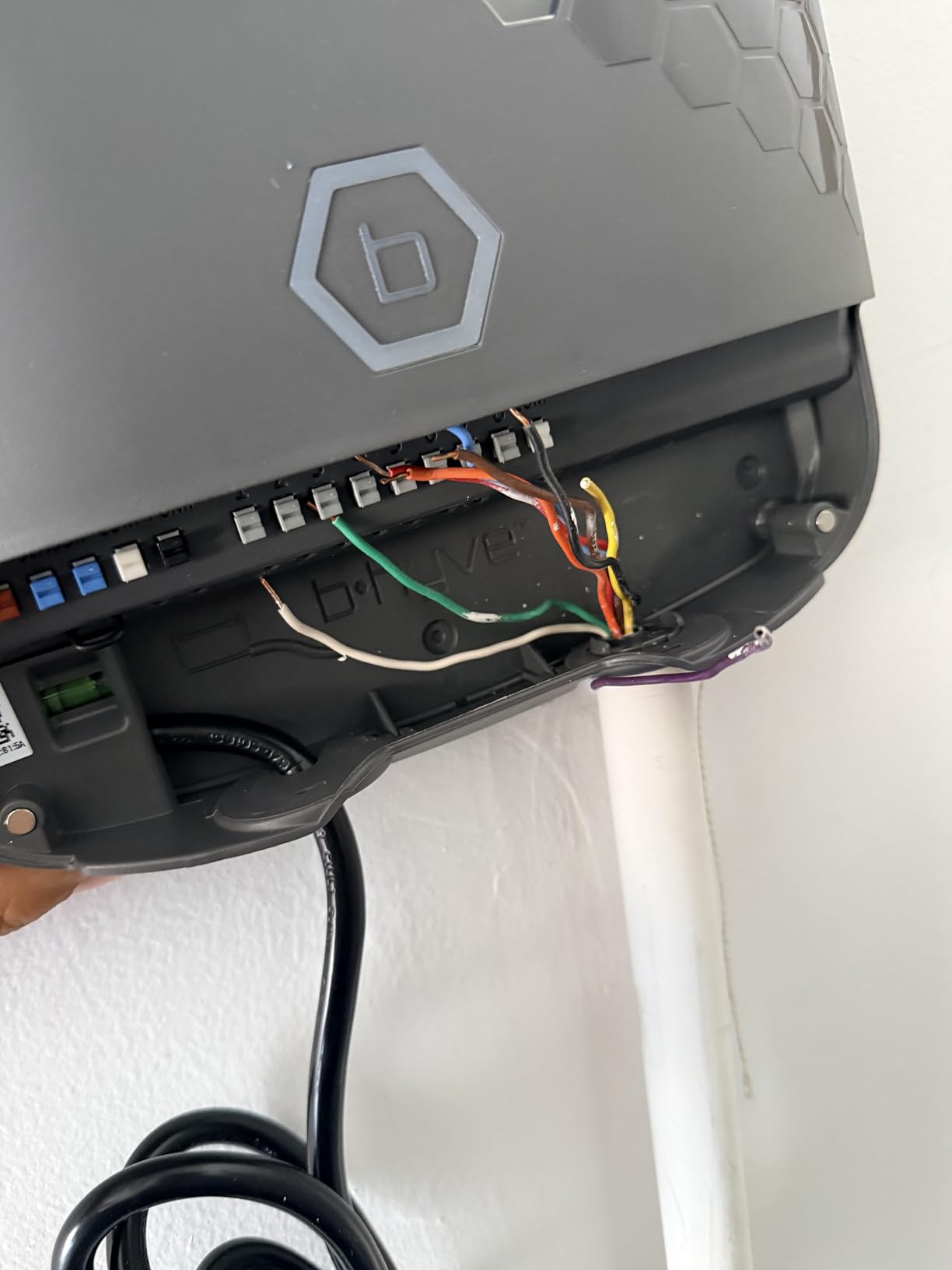
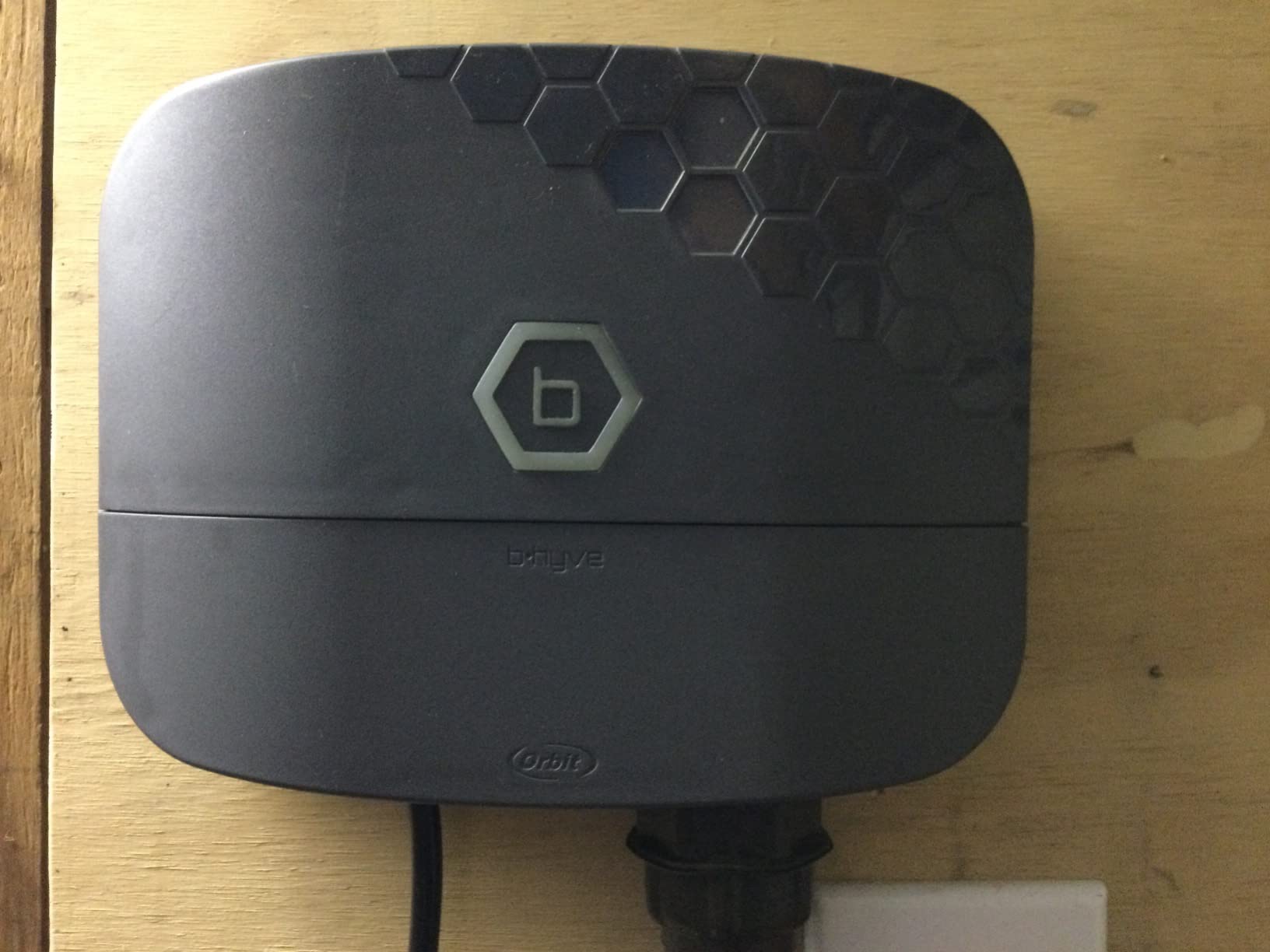
The B-hyve XR is the B-hyve for people whose router separates the 2.4 and 5GHz bands. Rather than forcing you to disable one, this model switches between them for a steadier connection. It carries 8 zones, a physical display with buttons, and a weatherproof enclosure rated for indoor or outdoor mounting. Owners rate it 4.3 stars across 1,341 reviews.
Like its sibling, it works out of the box with clear instructions, and automatic rain delays driven by forecast data reduce waste without any schedule changes. The on-unit display and buttons give you a fallback when the app is not within reach, and phone notifications confirm when a watering event actually finishes.
The honest weakness is the smart watering logic. A meaningful group of owners report unexpected runs, missed freeze delays and calendar entries that appear or vanish without explanation. Rain delay also only postpones a run to the next day rather than skipping it, so the controller still waters a soaked yard.
Two smaller notes. The band switching is automatic, not user-selectable, so a crowded 5GHz network can still complicate pairing. And at 110V and 60Hz, it is a North American model. The enclosure runs 4 by 9 by 11 inches, which is taller than the other Orbit box.
Who the B-hyve XR suits best
Owners with a modern dual-band router, especially anyone who has fought pairing problems on a 2.4GHz-only network. It also suits eight-zone yards that want the Orbit app and a physical panel in one box.
Outdoor mounting is a genuine advantage here, since the enclosure is weatherproof from the factory rather than dependent on a separate case.
Where the B-hyve XR falls short
If you rely on automated freeze protection or evapotranspiration scheduling, this is not the controller for you. Reviewers repeatedly describe the smart watering behavior as unpredictable.
The iOS app draws sharp criticism on calendar accuracy, and because the band is not user-selectable, you cannot force it onto a quieter network if pairing misbehaves.
6. Rain Bird ESP-TM2 8-Zone with LNK WiFi Module
Rain-Bird ESP-TM2 Indoor Outdoor Irrigation WiFi Zone Controller Timer Box and Link Lnk WiFi Mobile Wireless Smartphone Upgrade Module Sprinkler System (8 Zone)
8 zones
Backlit LCD and physical panel
LNK WiFi module included
Factory-installed outdoor rated cord
Pros
- Combines familiar physical panel controls with full app control
- Large backlit display is easy to read outdoors
- Very easy to install by matching zone wires from the old controller
- Automatic weather adjustments cut water use substantially
- Works with iPhone and Alexa
Cons
- WiFi is 2.4GHz only with a weak antenna
- causing intermittent cloud drops
- Dropped connections mean run times are not logged in the cloud portal
- App version 2.0 was a downgrade from the original app
- Bundled pricing is high for the feature set
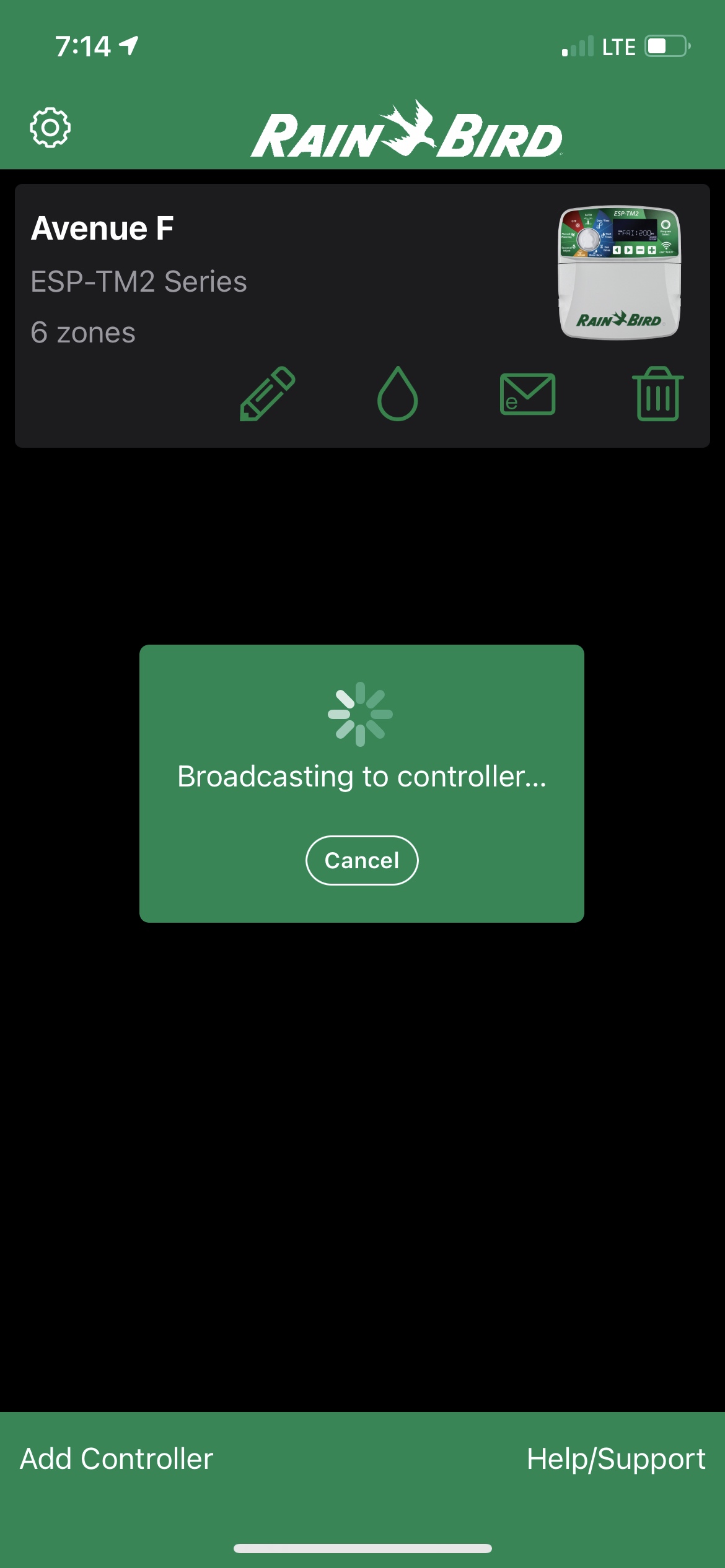
Where the earlier ESP models give you a bare panel, the ESP-TM2 bundle pairs a familiar physical interface with full app control. It is rated 4.6 stars across 392 reviews, and owners consistently call out the large backlit LCD as readable in direct sunlight, which is exactly what you need on a controller mounted outside.
Programming takes three steps, and Contractor Default lets a landscaper save a schedule that any later owner can restore. Rain delay runs up to 14 days and resumes automatically, and the LNK module works as a wireless remote both on site and off it.
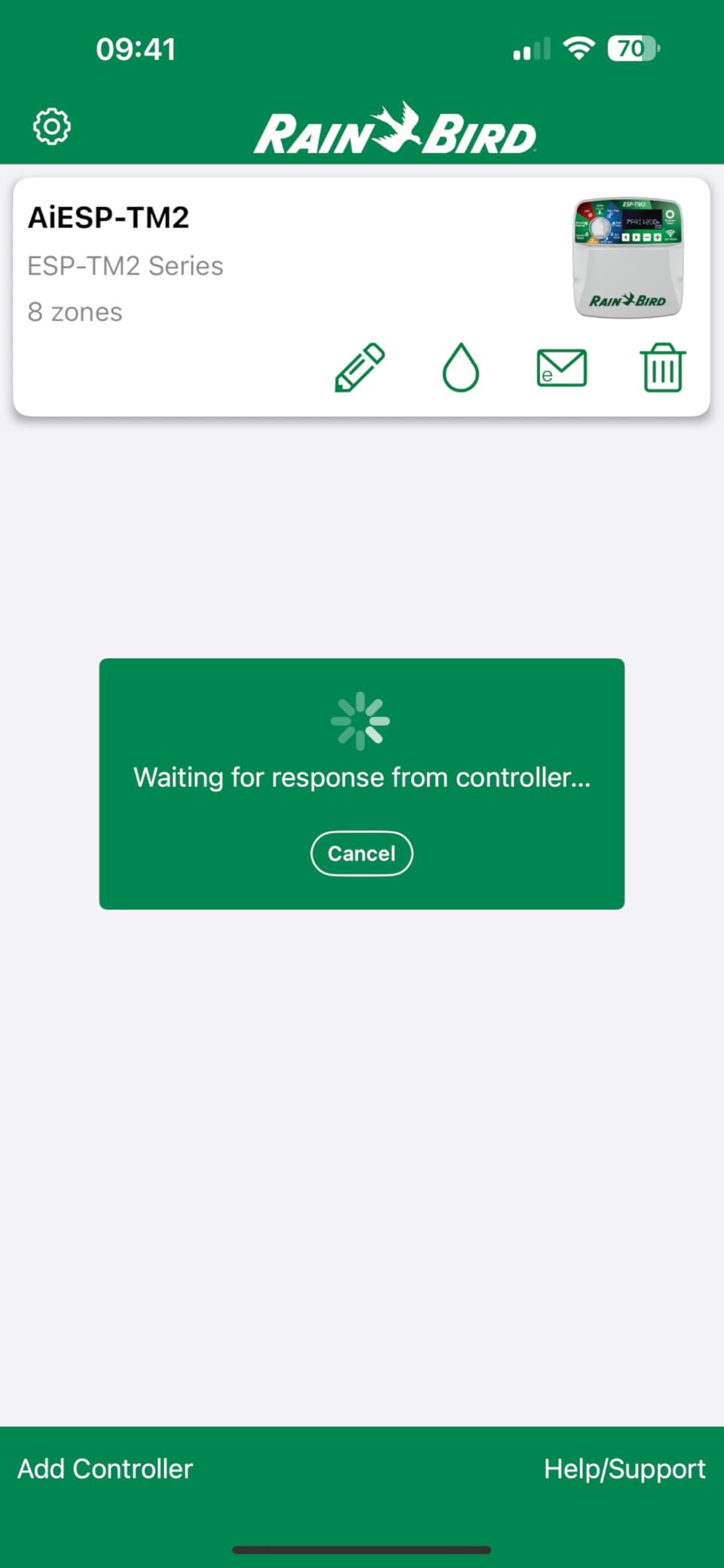
Weather-based adjustments through the LNK module change daily run time and can save up to 50 percent. Installation is easy if you match zone wires from the old controller, and the factory-installed six-foot outdoor rated power cord removes a common source of install problems.
The consistent complaint is the WiFi antenna. It is 2.4GHz only and weak, so owners report intermittent cloud drops, and when the connection drops, run times do not log to the cloud portal. The current app version is also widely regarded as a downgrade from the original. At 3.5 pounds, it is a solid box for an outdoor install.
Who the ESP-TM2 bundle suits best
Owners who want to set watering times on the panel without a phone, and who still want remote access for travel. The backlit screen and weatherproof cord are made for a controller mounted beside the valves.
Anyone working with a contractor will appreciate Contractor Default, which stores a proven schedule and restores it after a service visit.
Where the ESP-TM2 bundle falls short
Weak 2.4GHz WiFi is the main issue. If your controller sits in a basement or at the back of a garage, this is the wrong box, and you will lose run logs along with the connection.
Some owners also report that app version 2.0 is a downgrade, and the bundled pricing is high compared with buying an equivalent standalone controller and module. The Hunter HPC400 avoids the separate module entirely.
7. Hunter PRO-HC 12-Station WiFi Controller
Hunter PRO-HC PHC-1200 Residential Outdoor Professional Grade Wi-Fi Controller with Hydrawise Web-Based Software – 12 Station
12 stations
Outdoor rated enclosure
Hydrawise web-based control
Shared account access
Pros
- Professional-grade 12-station capacity for large or complex yards
- Hydrawise web platform allows remote control and monitoring
- Hunter build quality with a long service life in the field
- Weather-aware scheduling reduces unnecessary watering
- Outdoor-rated housing suited to exposed installations
Cons
- Highest price point in this roundup
- No feature bullets or detailed specs published on the listing
- Few customer reviews given the size of the category
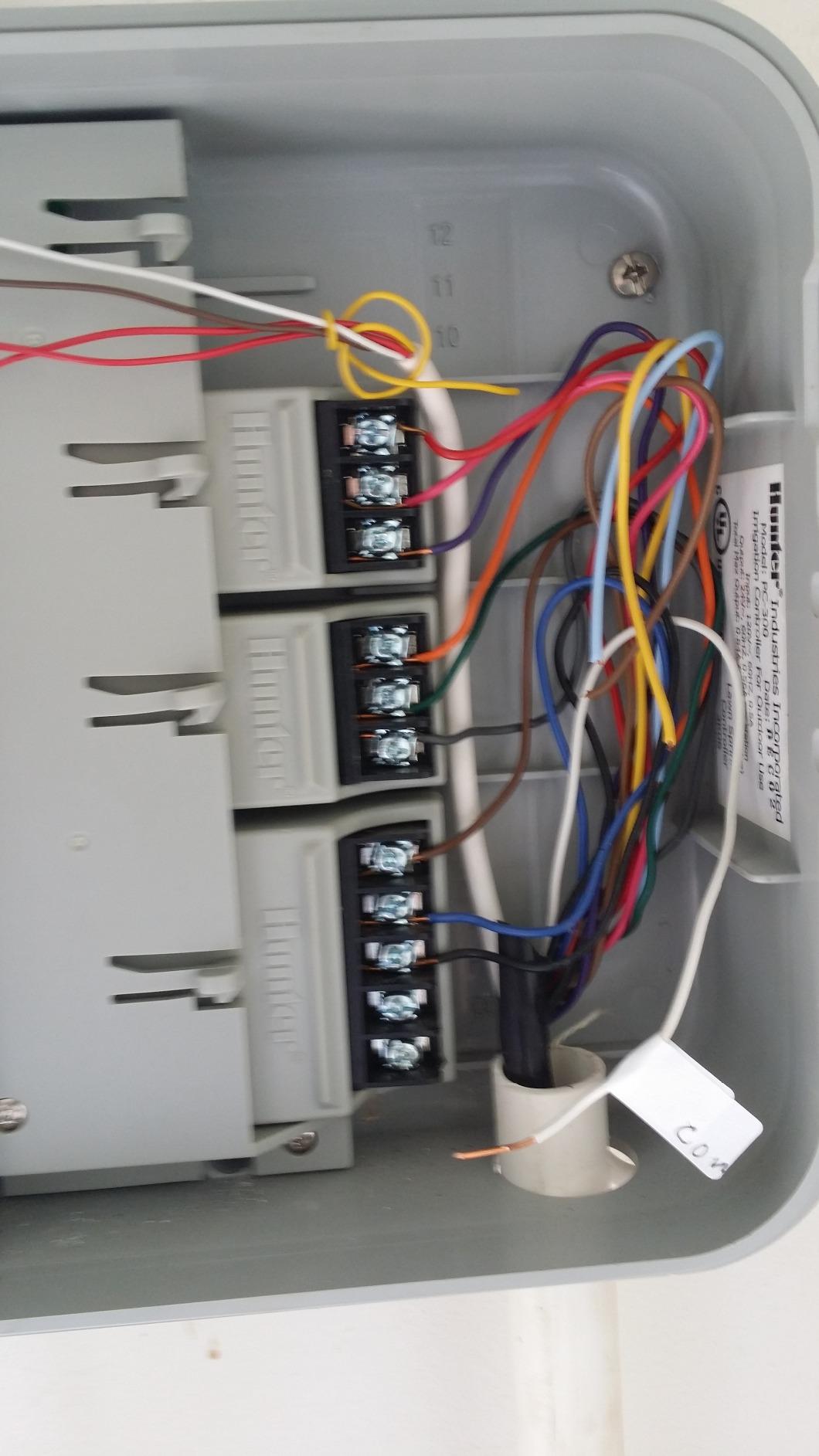
Twelve stations in an outdoor-rated housing is the headline here, and it is what makes this the controller for a large estate or a property with many small drip and shrub zones. It carries a 4.6 star average from 302 reviews, and unlike the Hunter X2, the WiFi is built in. There is no WAND module to buy.
Control happens through Hydrawise, the web-based platform, rather than a touchscreen. That web access is genuinely useful for contractors and property managers because you can share account access with other users, so a landscaper can adjust a schedule without physically visiting the site.
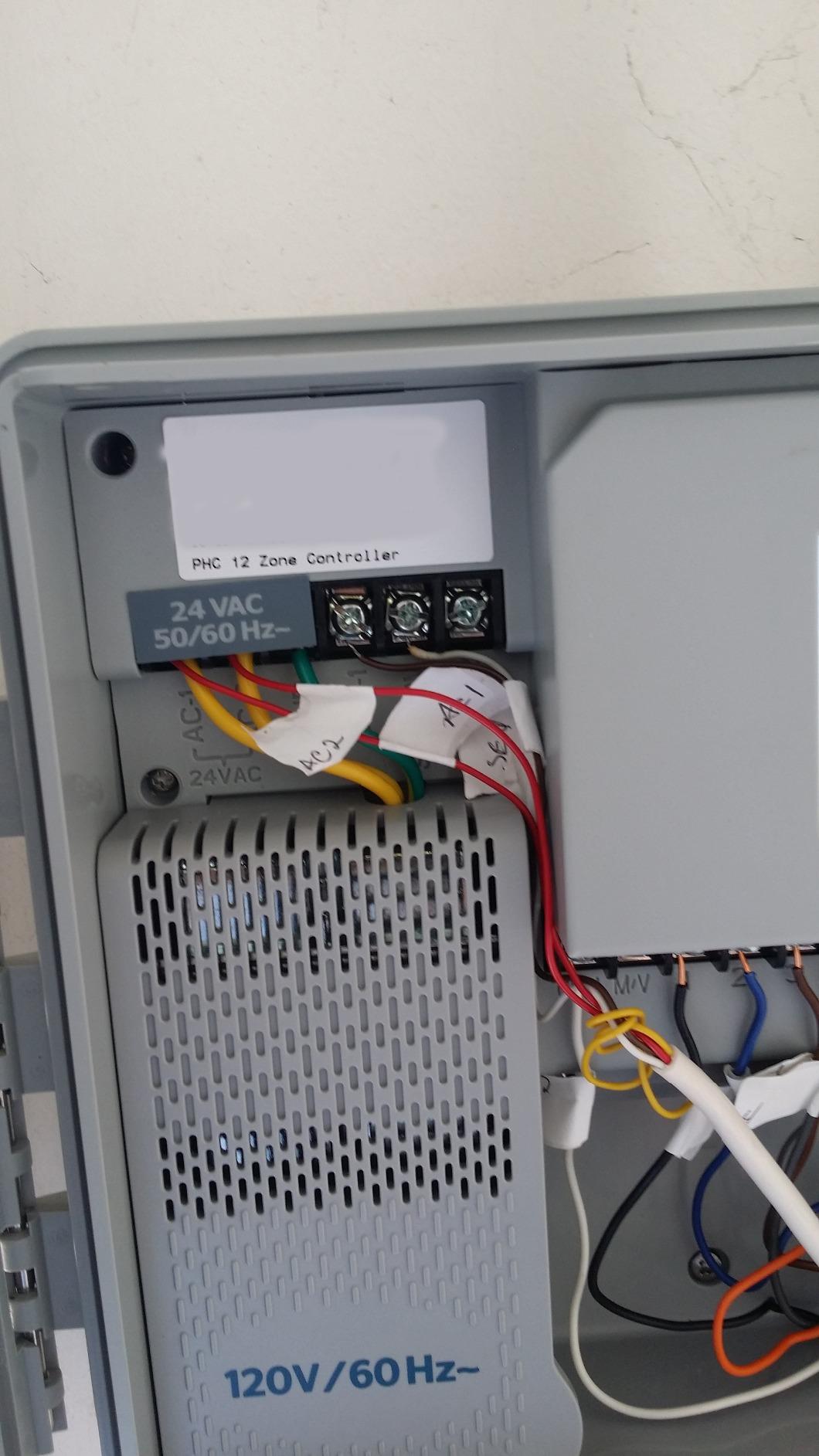
Weather-based automatic scheduling adjustments reduce unnecessary runs, and the residential outdoor housing is designed to be exposed rather than tucked into a plastic case. The body measures 10 by 4 by 9 inches, which is a real box on a wall but not unreasonable.
The published review volume is small for the size of the category, and the listing carries limited detail beyond core specifications. On the r/Irrigation forum, contractors who post about their preferred installs name the Pro-HC as one they specify regularly, with Rachio as the other common choice.
Who the PRO-HC suits best
Properties with ten or more zones, especially estates, large lots with extensive drip irrigation, or anyone managing a system on behalf of a client. Sharing Hydrawise access is the deciding feature for contractors.
It is also the one to pick if you will never add the WAND module and want WiFi in a box that is already rated for outdoor mounting.
Where the PRO-HC falls short
It is the most expensive controller in this roundup by a wide margin, and the published review pool is thin for a product this size. You are buying capacity and enclosure more than software.
Hydrawise is a web platform rather than a touchscreen, so scheduling adjustments happen on a phone or computer. Owners who want a physical panel will find more familiar ground with the Rain Bird ESP-TM2.
8. Rain Bird TRU6I 6-Zone WiFi Ready Timer
Rain Bird TRU6I Program-Based Indoor Irrigation Controller/Timer, WiFi Ready, 6-Zone/Station
6 valves
Season adjust 5 to 200 percent
WiFi via optional LNK2 module
Indoor installation
Pros
- Very flexible program-based scheduling with per-zone control
- Straightforward programming dial and LCD for non-app users
- Reliable construction reported to match long-lived Rain Bird units
- Season adjust and rain delay cover the most-used seasonal needs
- Good value relative to other Rain Bird controllers
Cons
- Display is hard to read in poor lighting
- User manual is unclear and has small print
- WiFi is only possible by adding the separate LNK2 module
- Wiring work is required and legacy wire bundles can be confusing
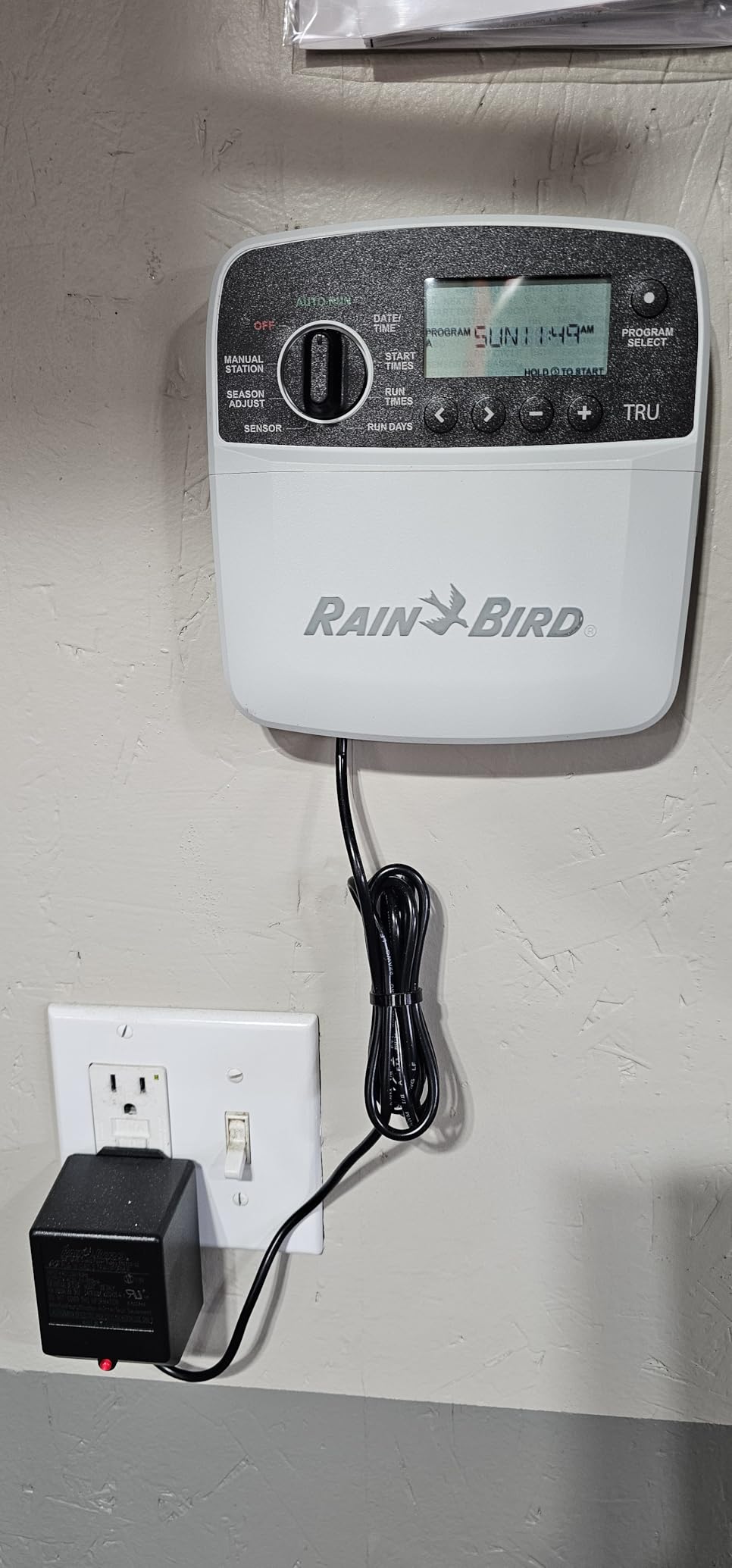
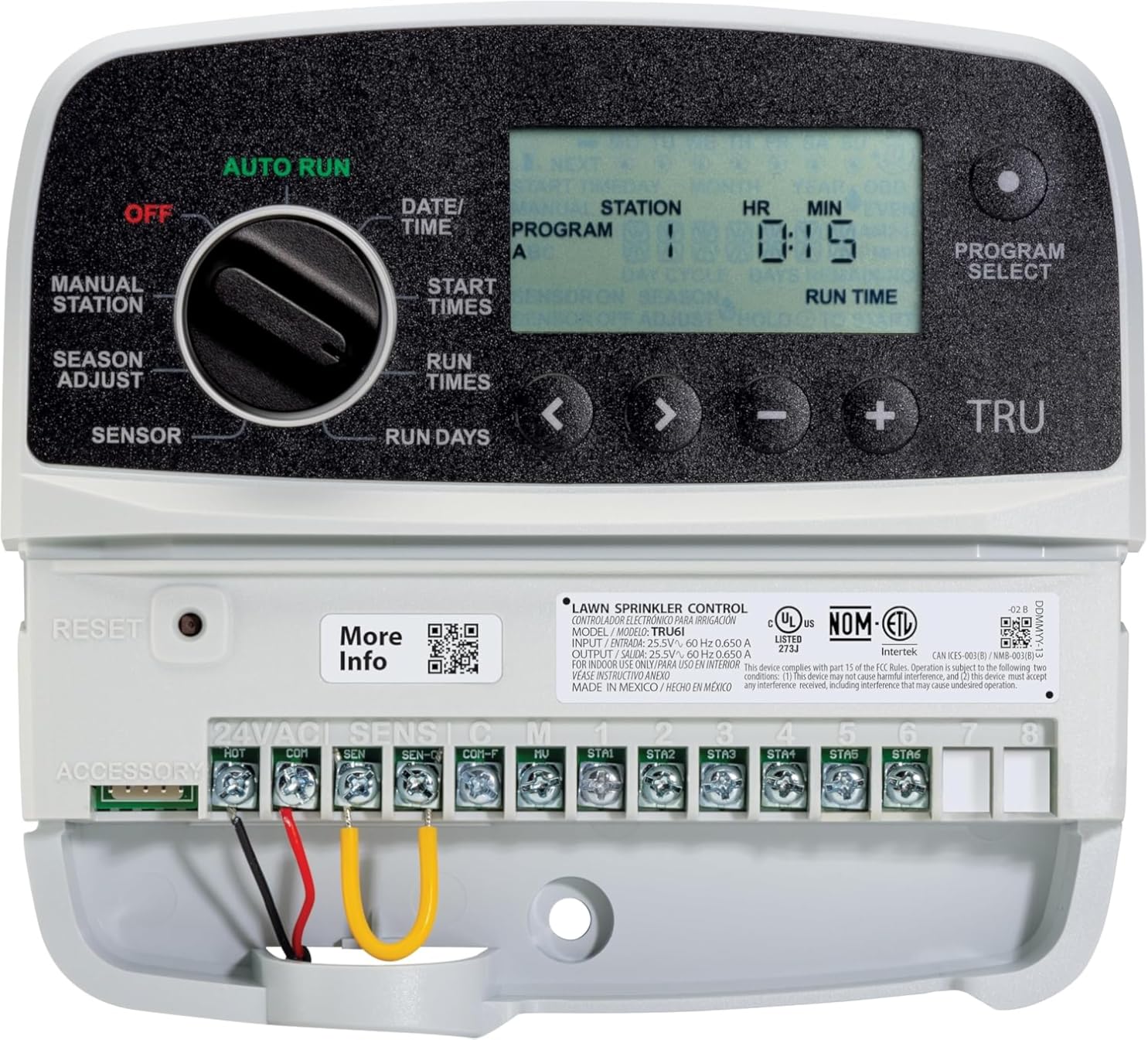
The TRU6I is the cheapest way into a Rain Bird system and, at 4.5 stars across 477 reviews, one of the better-rated budget options. It is a six-valve controller with A, B and C programs, up to four start times per program and as many as 12 start times per zone. Run times stretch from one minute to six hours.
It is genuinely a program-based controller rather than an app product, and owners working without a phone tend to like the programming dial and multi-function LCD. Season adjust runs from 5 to 200 percent globally or per program, rain delay covers 1 to 14 days, and permanent Days Off handle scheduled landscaping visits.
There are real professional touches underneath. Interstation delay can be set from one second to nine hours, rain sensor bypass works per zone, and save/restore protects your programming. Scheduling options include days of the week, odd and even calendar days, or a cyclic interval of 1 to 30 days.
It is WiFi-ready through the separately sold LNK2 module, which is the deal breaker for some buyers. The display is also hard to read in poor lighting and the manual uses small print. At 2.5 pounds and just over 6.6 inches square, it is an indoor box, and wiring work with legacy wire bundles is the fiddliest part of installation.
Who the TRU6I suits best
Households replacing an aging Rain Bird timer on a budget, especially anyone with odd and even day watering rules or a monthly maintenance schedule. Six valves with three programs is real capacity at this tier.
It suits people who want a dial-and-display controller now and do not mind adding the LNK2 module later if phone control becomes important.
Where the TRU6I falls short
Out of the box it is not a smart controller. Everything network-related requires the extra LNK2 module, so the total cost to get app control is higher than the ticket suggests.
The dim display and thin manual are more annoying than deal-breaking, but they add friction in an outdoor install or at the end of a long day. If you want app control with no extra purchase, the Hunter HPC400 or the ImoLaza 8-Zone fit better.
9. HiOazo HSC-400W 4-Zone WiFi Controller
Smart Sprinklers Controller 2.4GHz WiFi, Irrigation Controller Easy Use App Enabled, 4 Zones + 16 Plans, Save Water Auto Skip Rain, Freeze & Wind, 10 Minutes Install
4 zones
2.4GHz WiFi and 24VAC
16 watering plans
Indoor use
Pros
- Very low price for a 4-zone app-enabled controller
- Installs in roughly 10-20 minutes with included labels and wire connectors
- App is straightforward for scheduling and running zones remotely
- Rain freeze and wind skip features work as advertised
- Notifications report rain skips sensor status and water usage
Cons
- Setup requires disabling 5GHz on the router
- App does not allow overlapping schedules or seasonal schedule presets
- Some users report the controller dropping off the network and losing saved schedule names
- Not EPA WaterSense certified like premium controllers
- Small navigation arrows in the app are hard to see in sunlight
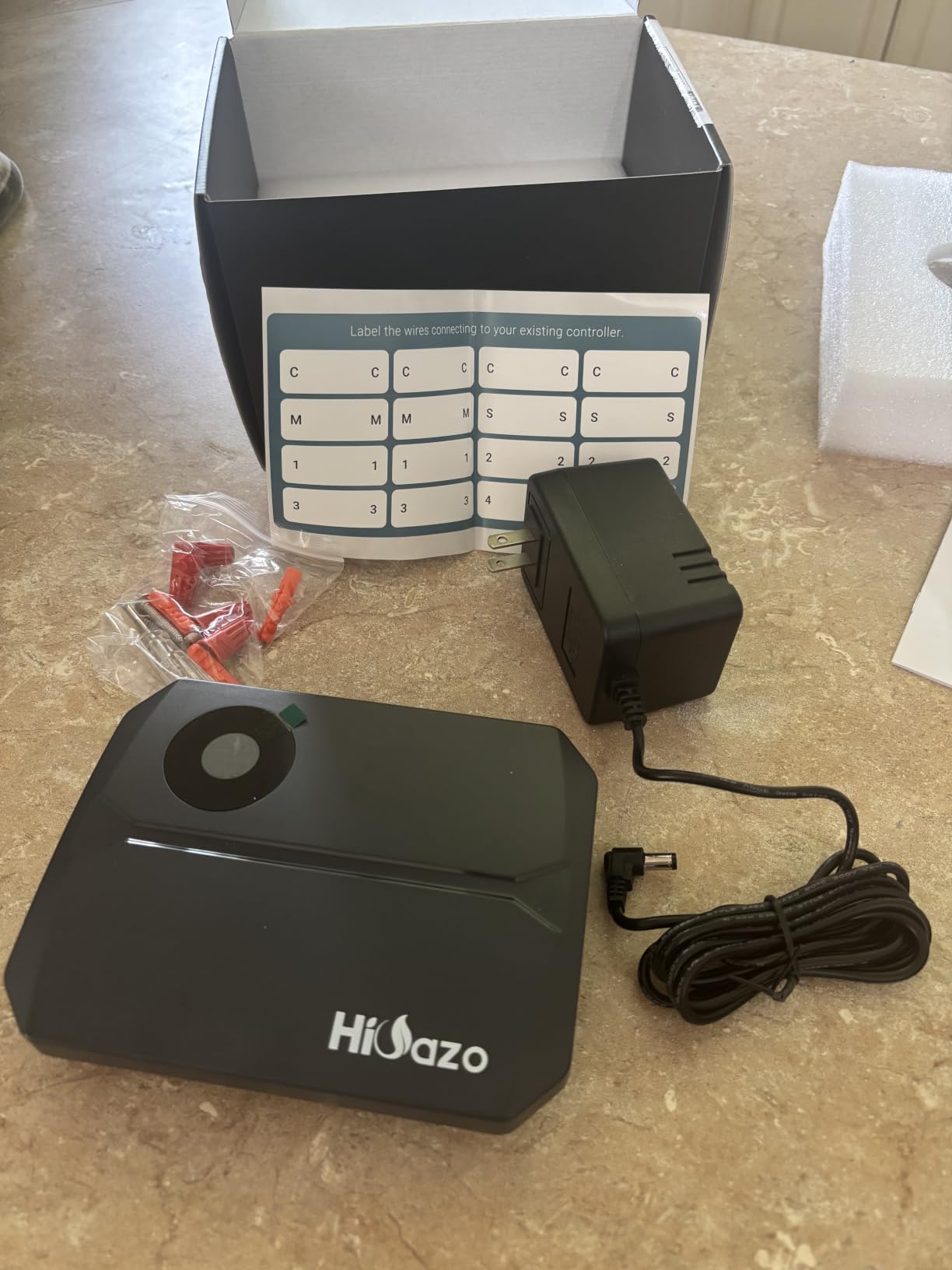
The HSC-400W is the cheapest app-enabled controller we looked at, and for a small yard it does an honest job. It runs four zones with up to 16 watering plans, pairs over 2.4GHz WiFi, and offers automatic skip on rain, freeze and wind. The listing claims a roughly ten-minute install, and the box includes three screws, a power adapter, labels and four wire connectors.
Two irrigation modes are supported, standard continuous and soak, which matters on clay soil where a long single cycle runs off before it soaks in. If you enter a flow rate in gallons per minute, the controller will estimate water usage and report it. The warranty is listed as three years of care.
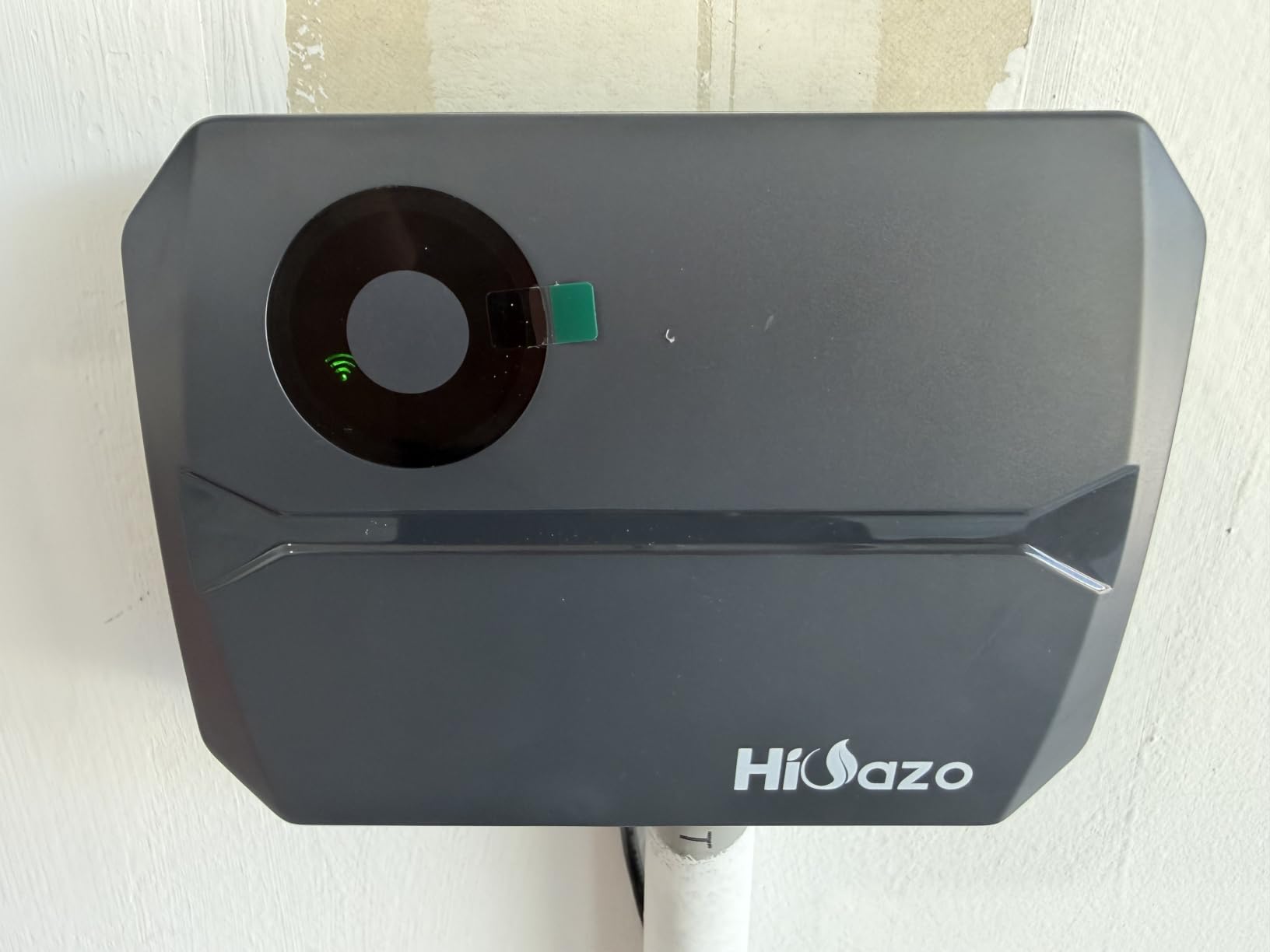
Owners consistently call the app straightforward for scheduling and running zones remotely, and notifications cover rain skips, sensor status and water usage. It runs on 24VAC and is intended for indoor installation, which makes it another reasonable option outside North America.
The drawbacks are real. Setup requires you to disable 5GHz on the router, the app does not allow overlapping schedules or seasonal schedule presets, and a minority of owners report the controller dropping off the network and losing saved schedule names. It is not EPA WaterSense certified like the premium brands, and the navigation arrows are small in direct sunlight.
Who the HSC-400W suits best
A small yard, patio or townhouse garden with up to four zones, run by an owner who wants phone control at the lowest entry point. The soak mode is a genuine bonus on heavy soil.
It also suits anyone comfortable in their router settings. Turning off the 5GHz band is a one-time job, but it is a job you have to actually do.
Where the HSC-400W falls short
There is no seasonal schedule preset, so seasonal watering means editing plans by hand each time the season turns. Losing saved schedule names after a network drop is the complaint that would worry me most over a long ownership.
Four zones is the hard ceiling, there is no battery backup, and it is indoor rated only. For anything beyond a small property, step up to the Orbit B-hyve 6-Zone.
10. ImoLaza 8-Zone ET Master WiFi Controller
ImoLaza 8 Zone WiFi Smart Sprinkler Controller, ET Master Irrigation Timer
8 zones
Real-time ET with up to 60 percent savings claimed
No subscription fee
Two-year warranty
Pros
- ET-based scheduling automatically skips rain wind freeze and saturated soil days
- No monthly subscription unlike some competitors
- Easy plug-and-play install replacing older Rain Bird controllers
- New Grass schedule supports up to 24 start times per day
- Responsive customer support including remote troubleshooting sessions
- Compact unit can power a second controller for larger systems
Cons
- Did not pair with mesh WiFi routers such as Eero until a firmware patch
- On-device manual runs are limited to about three minutes per press
- One report of the controller ceasing to run its programmed schedule after roughly two years
- A waterproof enclosure for outdoor mounting is sold separately
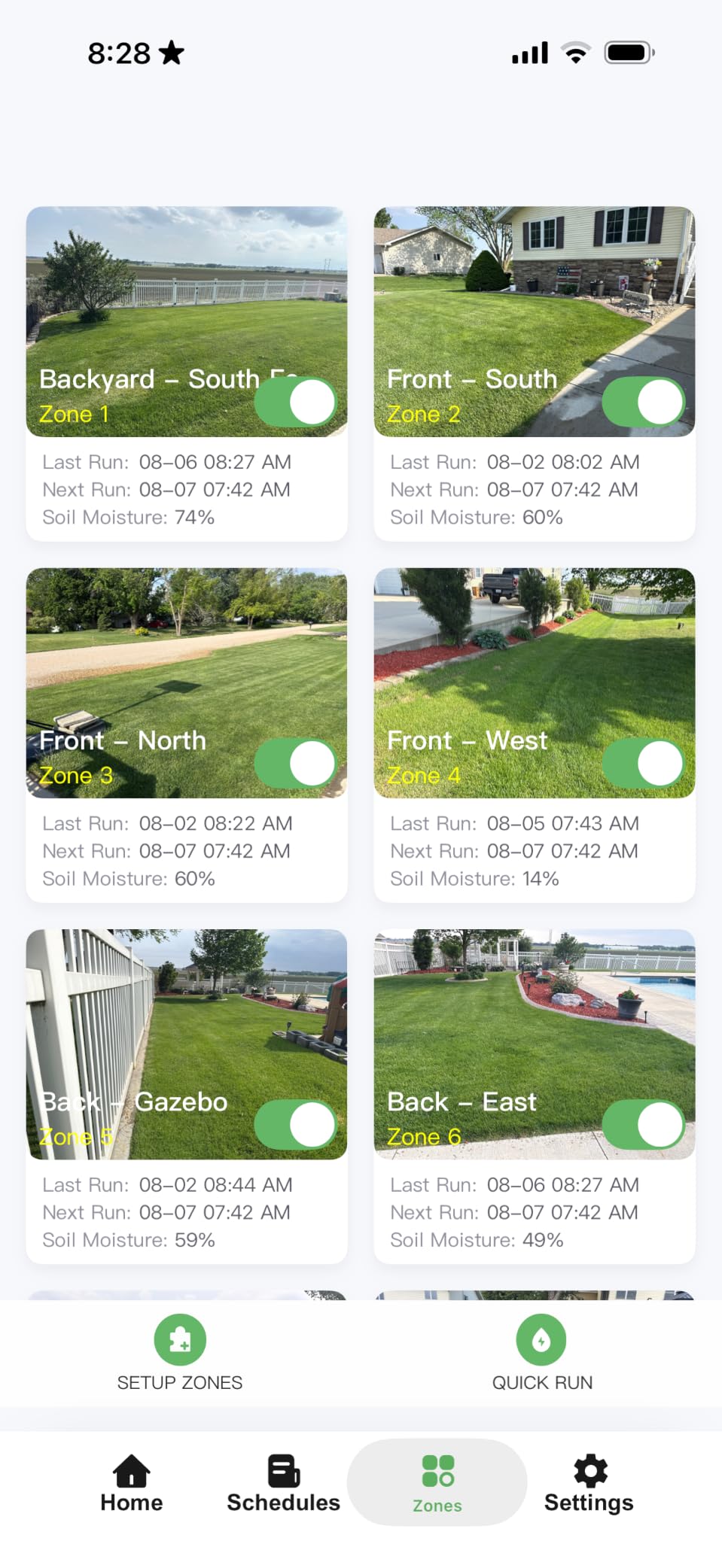
The ImoLaza is the pick for anyone who wants evapotranspiration scheduling without a recurring fee. It uses real-time ET data plus hyperlocal weather to skip runs for rain, wind, freeze and saturated soil, with savings claimed at up to 60 percent. Owners rate it 4.5 stars across 350 reviews and frequently call it a cost-effective alternative to Rachio.
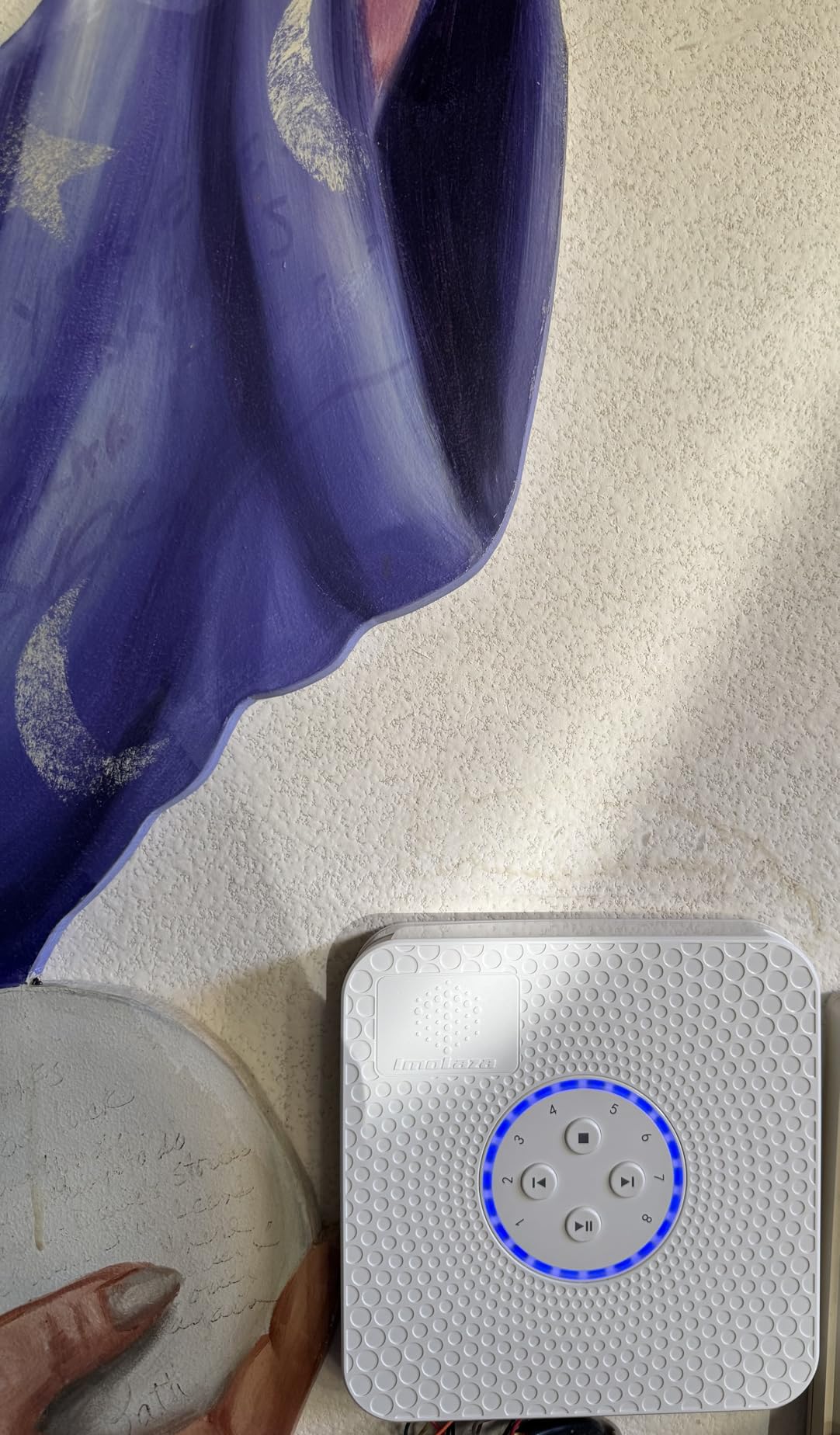
It handles eight zones and offers three schedule types: Smart ET, Fixed Cycle and New Grass, with up to 24 start times per day for new seed. Smart Cycle and Soak reduces runoff on slow-draining soil, and the compact 6.3 inch square body can power a second controller for larger systems. Operating range runs from -13 to 140 degrees F.
Diagnostics are unusually thorough for this class. Real-time fault detection flags open and short circuits, an offline controller and weather data outages, and an optional flow meter adds continuous low-flow and high-flow leak detection. Over-the-air firmware updates mean lifetime upgrades without a service visit.
The recurring complaints are mostly about setup and small hardware limits. Mesh routers such as Eero did not pair until a firmware patch, and on-device manual runs cap at roughly three minutes per press. A waterproof case for outdoor mounting is a separate purchase, and one owner reported the controller stopping its programmed schedule after about two years.
Who the ImoLaza suits best
Owners who want weather-driven automation and full flow monitoring without paying a monthly fee. Alexa and Google Assistant are supported at no recurring cost, which is unusual at this feature level.
It is a strong candidate for anyone planting new seed, given 24 daily start times, and the fault detection makes it attractive on a system with a lot of drip and poly tubing that can leak quietly.
Where the ImoLaza falls short
There is no weatherproof enclosure in the box. If the controller is going outside, you are buying a case on top, and a 2.4GHz-only network is assumed.
The three-minute manual run limit on the buttons is genuinely annoying when you are testing a zone. And the single long-term failure report is a reminder to check the schedule after the first full season.
11. Hunter X2 4-Zone WiFi Compatible Controller
Hunter X2 4 Zone Sprinkler Controller, WiFi Compatible Sprinkler Timer
4 zones
WiFi via optional WAND module
3 programs with 4 start times each
Backlit LCD
Pros
- Very easy 1-for-1 swap install from an older Hunter controller
- Backlit LCD and physical controls let you set timers without a phone
- Reliable and precise timing once programmed
- Cycle and soak and seasonal adjust cover common irrigation needs
- Good value for a 4-zone system
Cons
- WiFi requires the separate WAND module and pairing can take several attempts
- Reports of board failures after 3-5 years in hot climates
- Sealed battery backup cannot be replaced when it dies
- A few reports of the unit restarting its cycle after completion
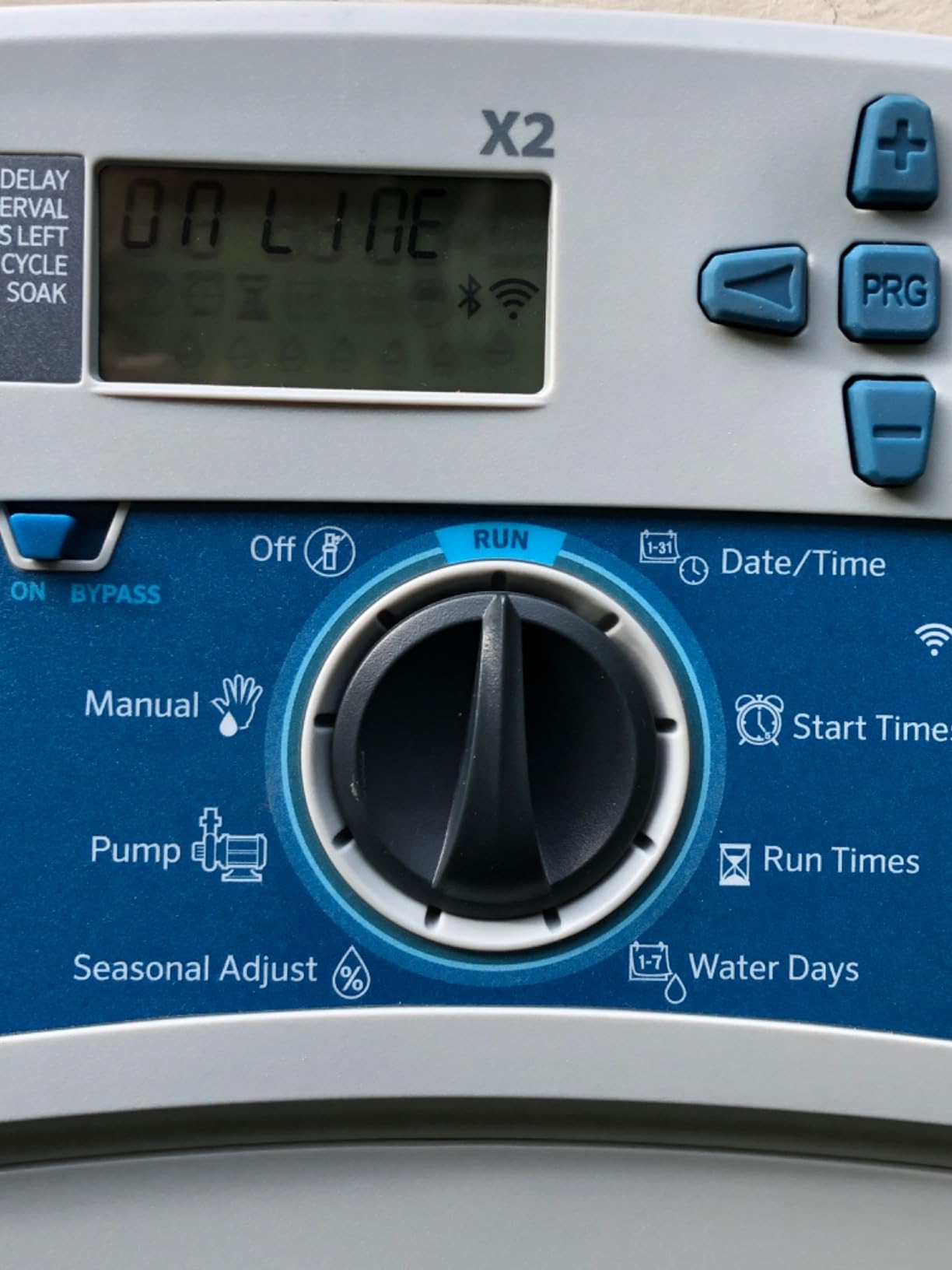
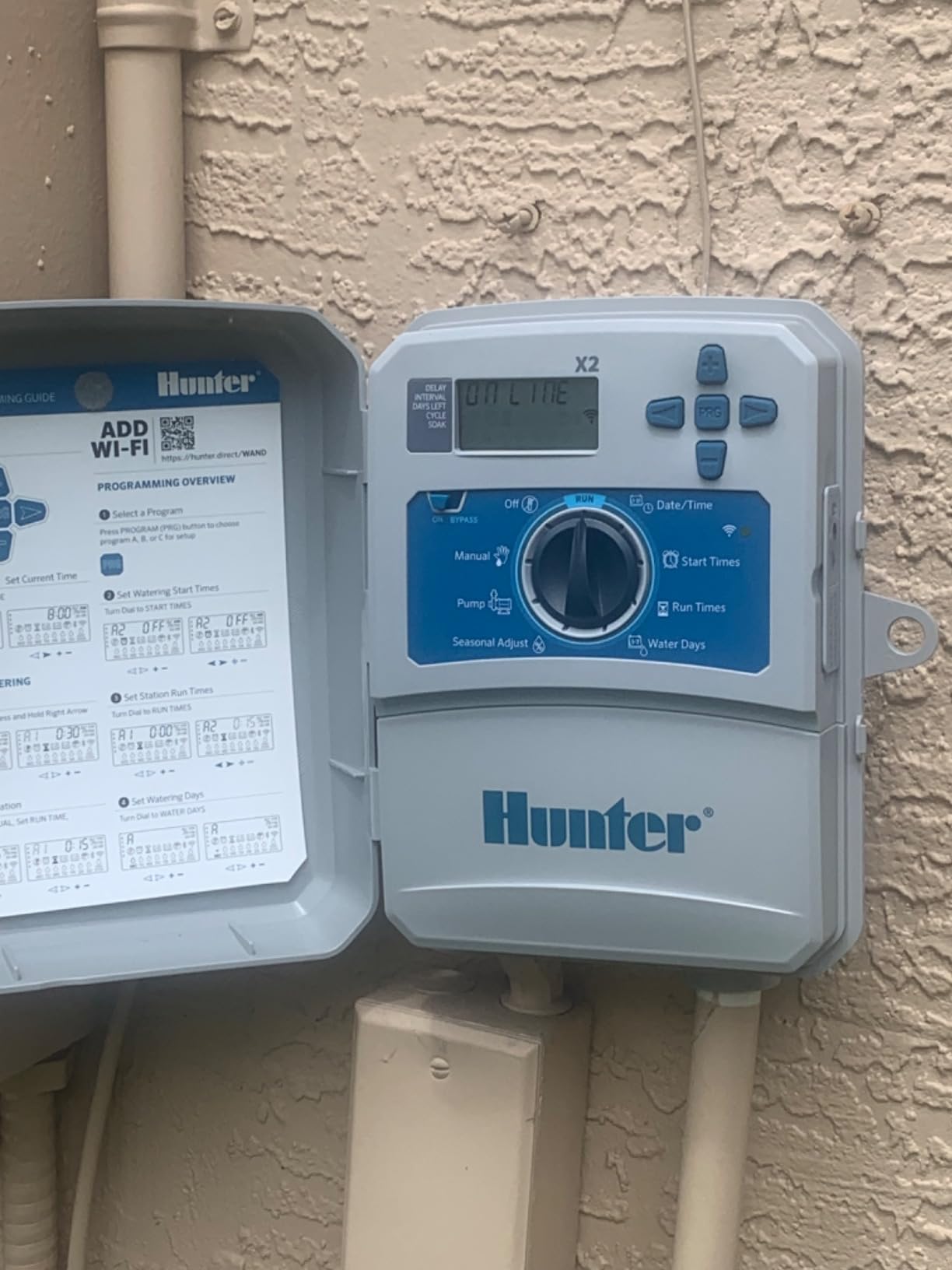
The X2 is the upgrade path for a household already running a Hunter controller. It is a four-zone box with three custom programs, four start times per program and run durations up to six hours, and owners report a simple one-for-one swap from an older Hunter unit. At 4.4 stars across 242 reviews, the sentiment is practical rather than effusive.
The physical interface is the appeal. A bright backlit LCD and full button set let you set timers without a phone, which is why a lot of owners stay on Hunter hardware. Cycle and soak improve absorption and prevent runoff, and automatic seasonal adjustment plus suspend up to 99 days cover the common irrigation cases.
Two diagnostic features are worth knowing. QuickCheck inspects wiring problems, and Easy Retrieve backs up your schedule so a failed unit does not mean reprogramming from scratch. That backup function is the more valuable of the two in practice.
The long-term reliability record is the concern owners raise most. There are reports of board failures after three to five years in hot climates, and the sealed battery backup cannot be replaced when it dies. Pairing the WAND module can also take several attempts, and a few owners report the unit restarting its cycle after it completes.
Who the X2 suits best
Owners replacing an older Hunter timer who want to keep the same ecosystem and add WAND-based Hydrawise control later. Cycle and soak on a four-zone system with mixed turf and drip is a real benefit.
It is also the right call for anyone who wants a controller they can fully program from the panel, because the app is optional rather than central.
Where the X2 falls short
Smart control is an add-on, not standard. The WAND module purchase and the pairing process are both friction points that the Hunter HPC400 simply does not have, since its WiFi is built in.
Reported board failures after three to five years in hot climates are the main durability flag, and the backup battery is not user-replaceable. Owners running a controller through a hot summer should take that seriously.
12. Hunter HPC400 4-Zone Built-In WiFi Controller
Hunter HPC400 Sprinkler Controller, 4 Zone, WiFi Smart Sprinkler Timer
4 zones expandable to 32
WiFi built in
Weather-resistant lockable enclosure
Touchscreen panel
Pros
- Built-in WiFi with no separate module needed
- Hydrawise app and touchscreen make setup and daily control straightforward
- Heavy-duty weatherproof and lockable outdoor enclosure
- Expansion modules add zones quickly as the yard grows
- Users report lower water bills from weather-based adjustments
Cons
- Printed instructions cover three controllers and an add-on in five languages
- which is confusing
- Hydrawise website and desktop app criticized as hard to navigate for registering a new unit
- App has a learning curve for less technical users
- Enclosure is bulky and needs adequate wall space
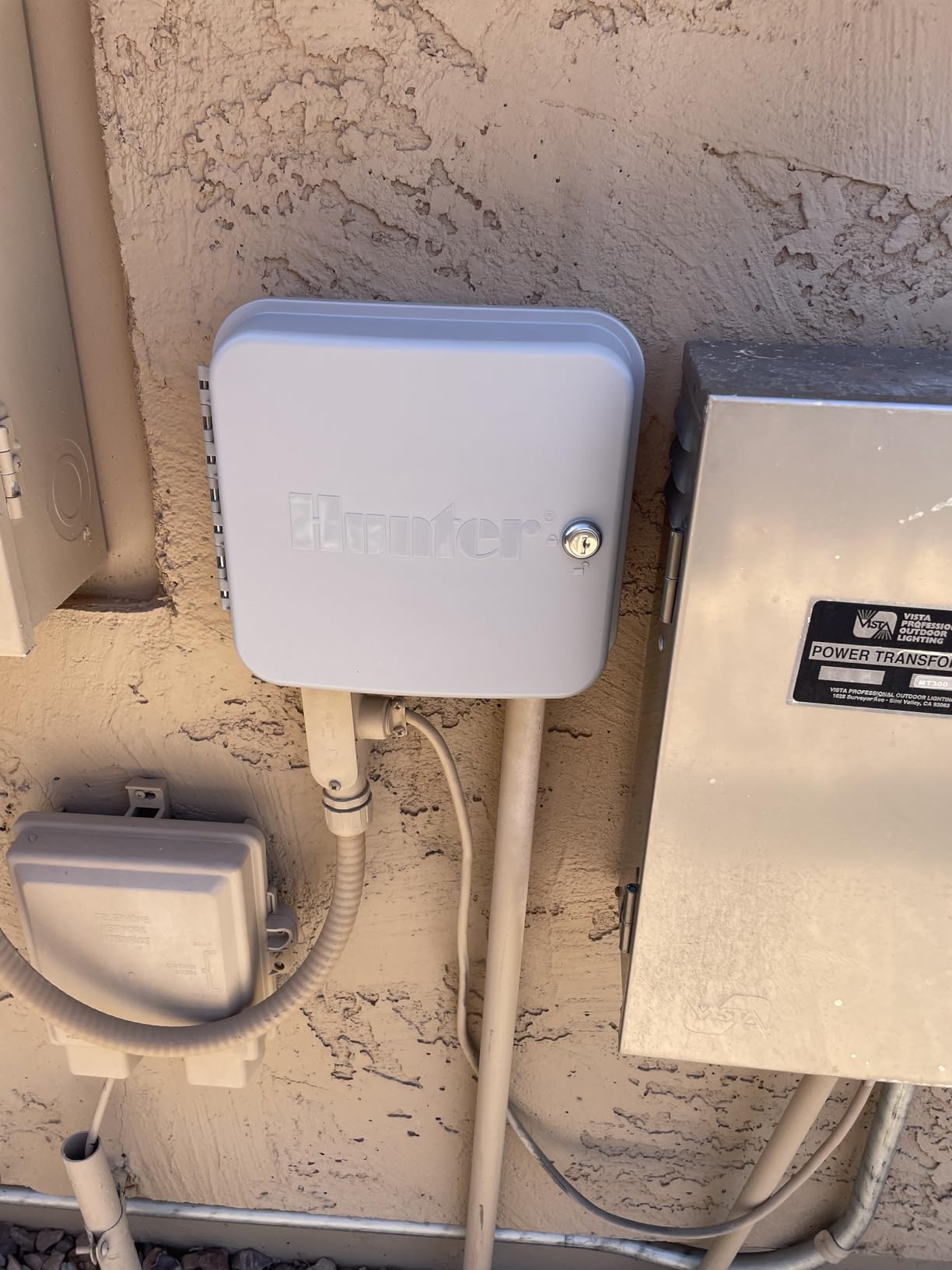
The HPC400 is the most flexible option if you expect to grow, because four zones expand to 32 with modules. That expansion path outruns every other controller in this list, and it matters more than it sounds for anyone adding drip zones, a pool or a new front bed over the life of the system.
WiFi is built in, so there is no WAND module to buy and nothing to pair beyond the app itself. The Hydrawise app plus a touchscreen on the unit make setup and daily control straightforward, and weather-based watering adjusts run times from local forecasts with up to 50 percent savings claimed. Owners report lower bills after the switch.
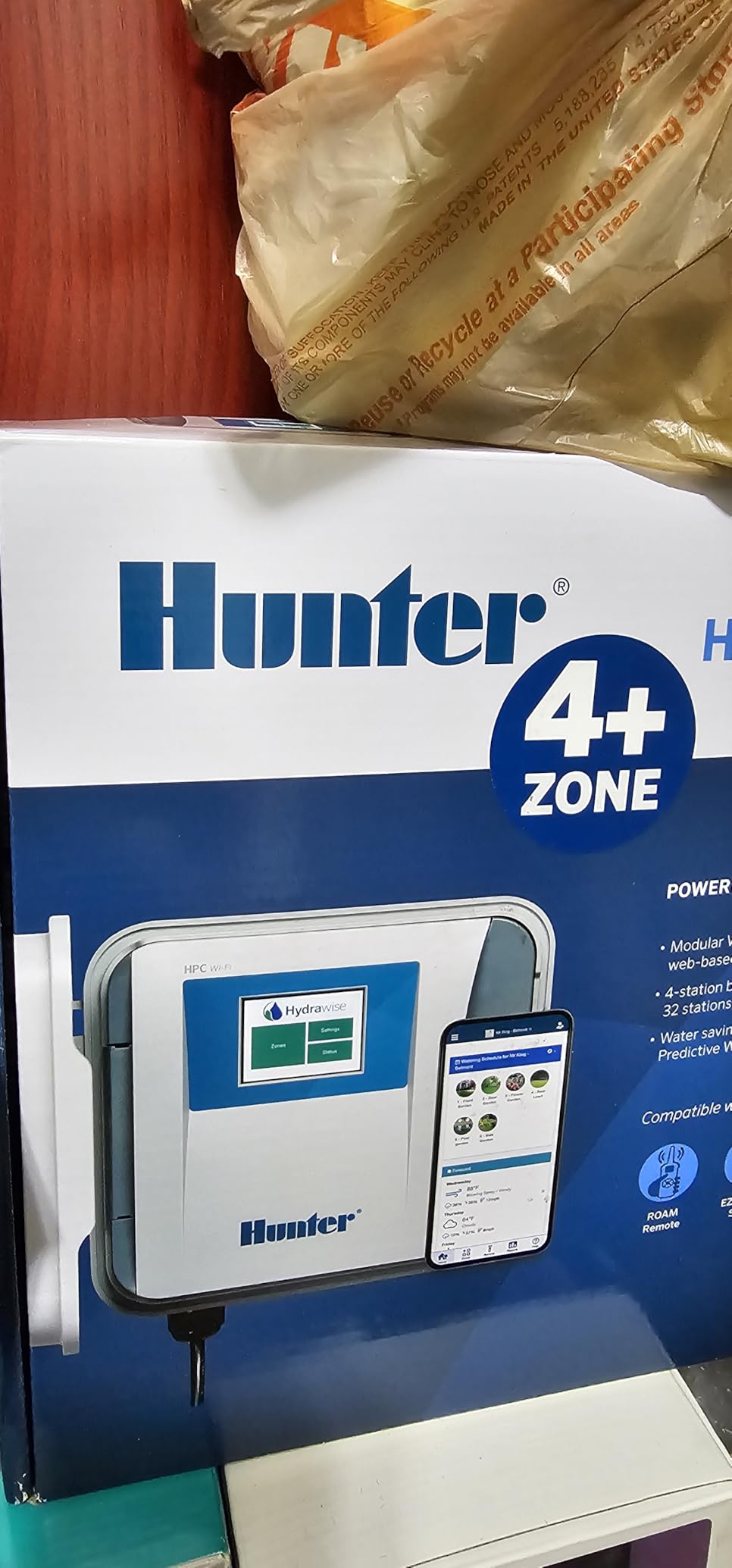
The enclosure is genuinely heavy duty. It is weather resistant, outdoor rated and lockable, which is the right answer for a controller mounted beside the valves where a plastic indoor case would be a liability. At 5.7 pounds and 4.5 by 10 by 9 inches, it is bulky and needs real wall space.
Setup is guided by a touchscreen and labeled wiring terminals. The friction is documentation. The printed instructions cover three controllers and an add-on module in five languages, and owners report difficulty navigating the Hydrawise website and desktop app during initial registration. The app also has a learning curve for less technical users.
Who the HPC400 suits best
Homeowners planning to add zones over time, and anyone mounting the controller outdoors who wants a lockable, weatherproof case without buying an enclosure separately.
It is also a good fit for a large existing Rain Bird or Hunter system being converted to smart control, because the expansion modules map onto zone counts you may already be planning around.
Where the HPC400 falls short
Registering the unit through the Hydrawise website and desktop app is the step owners stumble on most, and the multi-model instruction sheet does not help. Budget extra time for setup.
At 4.4 stars from 157 reviews, it has the smallest feedback pool in the roundup, so long-term reliability data is thinner than for the B-hyve or the Rain Bird units. The bulky enclosure is also a real constraint in a tight garage.
How to Choose a Smart Sprinkler Controller
Count your zones, then add headroom
Every controller in this list runs standard 24V AC in-ground valves, so compatibility is rarely the issue. Capacity is. Count the wires connected to your current timer, subtract the common wire, and divide by two. That is your zone count. Buy for the yard you have plus two zones, because adding a drip zone later is far cheaper than replacing the controller.
Four zones covers most townhouse and small-lot yards. Six to eight covers a typical suburban property. Anything above ten means a large property, and the Hunter PRO-HC with 12 stations or the Hunter HPC400 expanding to 32 are the two to consider.
Check your WiFi band before you buy
Most smart controllers pair on 2.4GHz only, because that band reaches further and penetrates walls better. If your router splits 2.4 and 5GHz onto separate networks, the controller will not see it until you join the 2.4GHz network or disable the band. The HiOazo requires this step explicitly, and the Rachio 3 owners who report dropouts are almost all on shared networks.
Test the signal where the controller will physically sit, not where your phone is. A phone in the middle of the house tells you nothing about a garage wall behind a water heater. The B-hyve XR is the one pick here that switches between both bands on its own, and the Rachio 3 is happy on either if you give it a dedicated 2.4GHz network.
Decide between a complete controller and a WiFi module
This is the most common purchase mistake in the category, and it is the one that generates returns. A complete controller is the whole box, WiFi included. A WiFi-ready controller is a conventional timer that only becomes smart after you buy a separate module.
The modules in this category are the Rain Bird LNK and LNK2, and the Hunter WAND. The LNK pairs with the ESP4ME3 and ESP-TM2, the LNK2 with the TRU6I, and the WAND with the Hunter X2. If you want app control on day one and do not want to hunt down a second part, pick a complete controller such as the B-hyve 6-Zone, the Rachio 3 or the Hunter HPC400.
Match the enclosure to the mounting location
Controllers rated for indoor installation cannot go in an outdoor box that gets baked in July. The Rain Bird ESP4ME3, ESP-TM2, the B-hyve 6-Zone, the B-hyve XR, the Hunter PRO-HC and the Hunter HPC400 are all rated for outdoor mounting. The Netro Sprite, HiOazo HSC-400W, Rain Bird TRU6I and the Hunter X2 are indoor units, so an outdoor install needs a separate weatherproof enclosure.
For a headless design with no display, keep a phone or laptop nearby during setup. Without physical controls, the app is your only path to starting a zone if something goes wrong.
Factor in the subscription before you commit
Subscription models in this category are the most common source of buyer frustration, because weather features people assume are free sometimes sit behind a paid tier. Two picks here have no subscription at all: the ImoLaza 8-Zone ET Master, which includes ET scheduling and Alexa and Google Assistant support with no monthly fee, and the HiOazo HSC-400W at the entry tier.
For the rest, the honest pattern is that basic scheduling, manual run and forecast-driven rain skip work without a paid plan. Before you enable any advanced or pro tier, check what the free app already does, because the core value of a smart controller is skipping water when it rains. That should never be behind a paywall.
Look at what happens during a power outage
This is the specification most buyers overlook and most regret later. The Rain Bird ESP4ME3 has non-volatile memory, so programming survives an outage. The Hunter X2 has Easy Retrieve schedule backup, which does the same job by storing a copy. The Netro Sprite and the Rachio 3 have no battery backup, so a long outage means the schedule stops running until power returns.
If you are in an area with frequent outages, that difference is worth more than any app feature. Test your controller after the first storm season to see how it behaves.
Do smart sprinkler controllers actually save water?
The savings come from one simple behavior: a mechanical timer keeps watering through a rainstorm. A smart controller reads the forecast and skips the run, and the manufacturers who publish numbers put the reduction in the 30 to 50 percent range for weather-based models. Rain Bird claims up to 30 percent for the ESP4ME3 with the LNK module and up to 50 percent for the ESP-TM2 bundle, and the Hunter HPC400 claims up to 50 percent. ImoLaza claims up to 60 percent with its ET mode.
Those are ceiling figures under specific conditions, not promises. The realistic return for a typical residential lot comes from eliminating the four to six unnecessary runs per month that happen during a wet season, and the payback on the controller is usually a single season.
Match the controller to the reliability record
Long-term owner reports matter more than feature sheets in this category. On r/AZlandscaping, one commenter summarized the field view directly, saying B-hyve takes the cake as most reliable currently with Hunter a close second, but noting that their timers can fail out. On r/Irrigation, installers describe the Hydrawise as a solid alternative to Rachio with better reliability and the same or more features, and name the Pro-HC as the model they install most.
The same forum carries a more pointed critique of Rain Bird smart controllers, calling them second tier at best, with Orbit B-hyve offered as a lower-cost alternative. Take the pattern rather than any single comment: the app-first brands lead on software, the traditional brands lead on enclosure and build, and reliability reports are better for the Orbit line than for the Hunter X2 in hot climates.
How to Install a Smart Sprinkler Controller Without Rewiring Your Valves
Almost every smart controller is a like-for-like swap with the timer you already own, because the wiring convention did not change. Plan on 15 to 30 minutes with a phone and a basic screwdriver, and do the work in daylight with power off.
Photograph the existing controller before touching anything. Label every wire with tape as you remove it, because the color conventions are inconsistent between installers and you will want a reference later.
Turn off the water supply at the main valve, then kill power at the breaker for the timer circuit. Open the panel and note which wire is the common, which is ground and which pair belongs to each zone.
Test each zone by manually touching the zone wire to the common wire. The sprinkler in that zone should run. This confirms which zone goes where before you have programmed anything.
Mount the new controller in the same location, or within range of the 2.4GHz network. If you are moving it, confirm the signal strength at the new spot first.
Connect the wires to the labeled terminals. Most units print the zone numbers right next to the terminal block, which is why the install goes quickly on an Orbit or Netro box.
If your system has a pump, find the pump start relay wire and move it to the pump terminal. Skipping this is the most common cause of a system that works on the panel but not from the app.
Restore power, then pair the controller to your phone on the 2.4GHz network before you leave the mounting location.
Run every zone from the app once, confirm each one waters the right area, and then set the schedule. Adjust run times using catch cups rather than guesses.
If your old system has no common wire, or you have more zones than the new controller supports, stop and call an irrigation installer. That is a wiring problem, not a shopping problem.
Frequently Asked Questions
Which smart sprinkler controller is the best?
The Orbit B-hyve 6-Zone is the best overall for most yards. It pairs over 2.4GHz WiFi, skips runs from forecast data, offers a physical panel as a fallback, and has more than 9,400 owner reviews. The Rachio 3 is the pick if app quality matters most, and the Rain Bird ESP4ME3 if you want programmable settings that survive a power outage.
Are smart sprinkler controllers worth it?
For most households with an existing in-ground system, yes. A mechanical timer keeps watering through rain, while a smart controller reads the forecast and skips the run. Weather-based models from Rain Bird, Hunter and ImoLaza publish savings of roughly 30 to 50 percent. Remote shutoff adds a second benefit that does not show up in the water bill at all.
Which is better, Rain Bird or Hunter controller?
Hunter leads on zone capacity and build quality. The PRO-HC runs 12 stations in an outdoor rated case, and the HPC400 expands from 4 to 32 zones with built-in WiFi. Rain Bird leads on expandability from a small footprint and on memory safety. The ESP4ME3 starts at 4 zones and reaches 22 while retaining programming through an outage.
Is Rachio better than Hunter?
It depends on what you value. Rachio 3 has the better app and hyperlocal weather intelligence, but it has no physical controls and no battery backup. Hunter controllers have backlit panels, cycle and soak, and schedule backup, and Hunter enclosures are rated for outdoor mounting. Rachio suits owners who live in the app, Hunter suits owners who want a working panel.
Is Hydrawise worth the money?
For larger systems, often yes. Hydrawise is the web platform behind the Hunter PRO-HC and HPC400, and it lets you share account access with contractors or family members. The PRO-HC gives you 12 stations in an outdoor case and the HPC400 expands to 32 zones. On a small three or four zone yard, the cost is hard to justify.
Is Orbit or Rachio better?
Rachio wins on software. Its app guides setup zone by zone and the Weather Intelligence engine skips for rain, wind and freeze using hyperlocal data. Orbit wins on hardware and price. The B-hyve adds a display and buttons for a physical fallback, Bluetooth control when WiFi drops, and the largest review base of any controller we tested.
The Bottom Line: Which Smart Sprinkler Controller Should You Buy?
Buy the Orbit B-hyve 6-Zone if you want the best smart sprinkler controller overall: the deepest review pool, a physical panel as a backup, and Bluetooth control when the router is down. Choose the Rachio 3 if the app is the deciding factor, the ImoLaza 8-Zone if you refuse to pay a subscription, the Hunter PRO-HC for twelve zones, and the Rain Bird ESP4ME3 if your programming must survive a power outage.
Whatever you pick, photograph your existing wiring and count your zones before you order. That one hour of preparation prevents nearly every complaint we saw in owner feedback across 2026.