
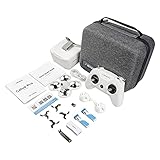
The BETAFPV Cetus Pro FPV Kit is the best racing drone for beginners overall, because it is the only kit in this list that gives you a drone, a radio transmitter, FPV goggles, two batteries and a charger in one box, and it flies in Normal, Sport and Manual modes so you can move up to acro at your own pace. Everything else in this roundup is either a step up from there or a bare aircraft that assumes you already fly with a radio.
That distinction matters more than any spec sheet. A racing drone is flown through goggles using a radio link, with no GPS, no self-leveling and no return to home in most modes. You keep it in the air by holding constant stick input, which is a skill you build in a simulator like Liftoff or VelociDrone before you ever risk a real aircraft. Pilots on r/fpv and mavicpilots repeat the same order every time: simulator first, then a small prop-guarded whoop, and only much later a larger freestyle quad.
Below are 10 real racing drones, from complete ready-to-fly kits to bare BNF whoops that assume you already own a radio and goggles. I ranked them on the three things that decide whether a first drone is fun or frustrating: how well it survives a crash, whether it lets you learn at your own pace, and how much gear you have to buy separately to make it fly.
Updated for 2026. Rankings are based on published specifications, owner review patterns, and the real-world experience of pilots who put these aircraft through indoor tracks and outdoor freestyle sessions.
Table of Contents
Top 3 Best Racing Drones for Beginners in 2026
All 10 Picks Compared Side by Side (October 2026)
| Product | Specifications | Action |
|---|---|---|
| BETAFPV Cetus Pro FPV Kit |
|
Check Latest Price |
 EMAX Tiny Hawk RTF Micro Indoor Racing Drone EMAX Tiny Hawk RTF Micro Indoor Racing Drone |
|
Check Latest Price |
 BETAFPV Meteor75 Pro BETAFPV Meteor75 Pro |
|
Check Latest Price |
 Tiny Hawk EZ Pilot Pro FPV Drone Set Tiny Hawk EZ Pilot Pro FPV Drone Set |
|
Check Latest Price |
 APIZCUK FPV Drone with VR Goggles APIZCUK FPV Drone with VR Goggles |
|
Check Latest Price |
 CADDXFPV Curve Micro 16 1S Whoop CADDXFPV Curve Micro 16 1S Whoop |
|
Check Latest Price |
 BETAFPV Air75 II Brushless Whoop BETAFPV Air75 II Brushless Whoop |
|
Check Latest Price |
 Mobula7 1S 75mm Micro FPV Whoop Mobula7 1S 75mm Micro FPV Whoop |
|
Check Latest Price |
 HAPPYMODEL Mobula6 65mm Whoop HAPPYMODEL Mobula6 65mm Whoop |
|
Check Latest Price |
 STARTFPV R8 ELRS FPV Whoop RTF Combo STARTFPV R8 ELRS FPV Whoop RTF Combo |
|
Check Latest Price |
1. BETAFPV Cetus Pro FPV Kit – The Best Racing Drone for Beginners Overall
BETAFPV Cetus Pro FPV Kit, LiteRadio 2 SE Transmitter, VR02 FPV Goggles
Brushless whoop
3 flight modes with speed settings
2 x 450mAh LiPo
Turtle mode recovery
Pros
- Brushless whoop takes hard crashes without breaking
- Three flight modes give a clear progression path
- Altitude hold and self-protection make indoor hovering easier
- Turtle mode rights the drone after an upside-down landing
- Kit includes drone plus transmitter goggles batteries and charger
Cons
- Battery life is roughly 3-5 minutes per pack and only two are included
- Fixed-focus goggle screen with no diopter adjustment
- Camera angle is fixed which makes tight indoor flying harder
This is the kit I hand to anyone who says the words “I want to try drone racing.” The Cetus Pro is a brushless whoop with a full prop cage, so when a beginner clips a doorframe at full throttle the props bend instead of the frame snapping. That single design choice removes most of the first-month frustration.
The three flight modes are the real reason it wins. Normal mode self-levels and holds altitude, Sport mode flies faster with less assistance, and Manual mode is true acro where the drone does exactly what you tell it and nothing more. Owners report moving from Normal to Manual within days rather than weeks, which is a much healthier learning pace than being dropped straight into acro.
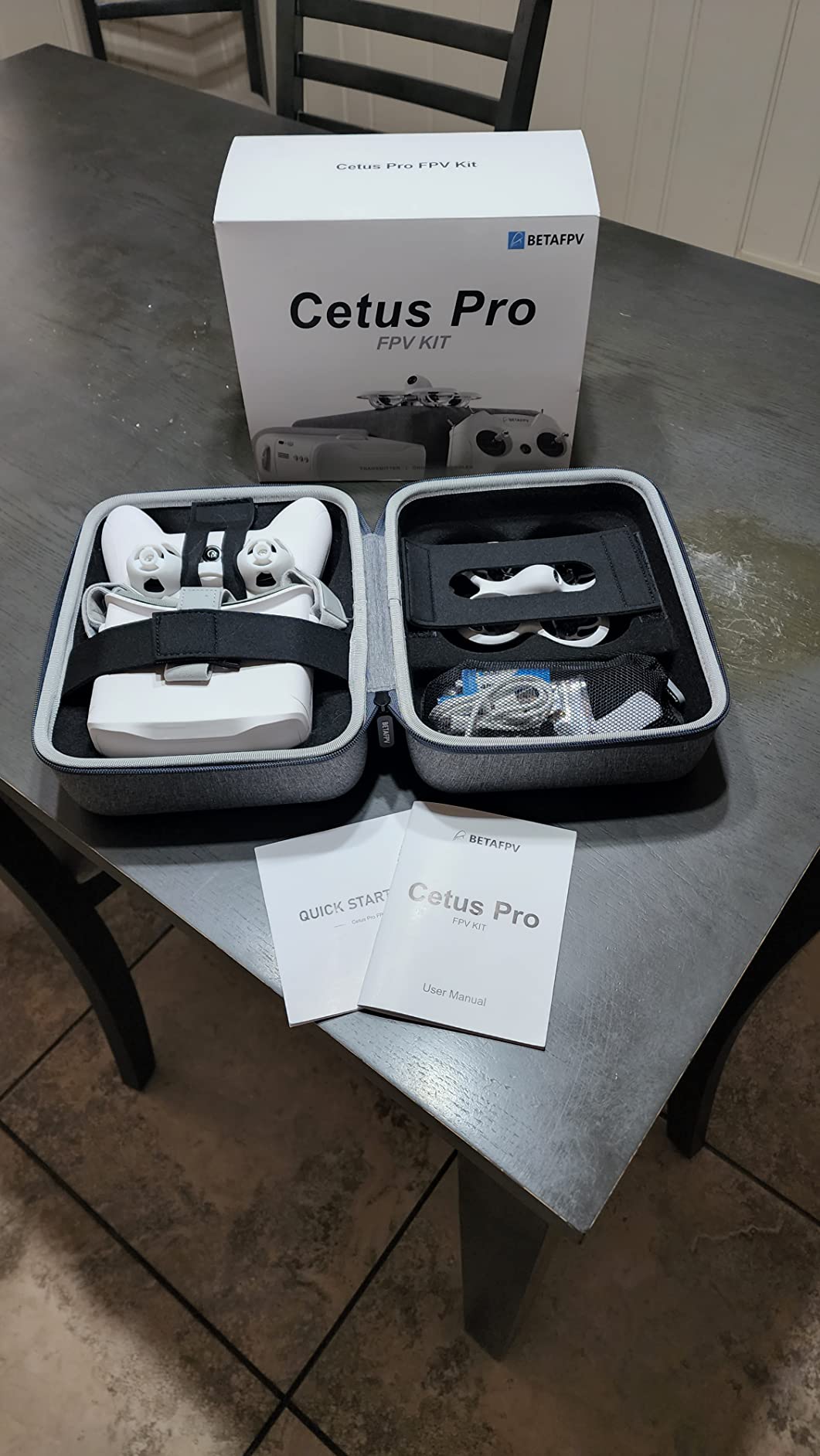
Everything needed to fly is in the box: the quadcopter, a LiteRadio 2 SE transmitter on the FrSky D8 protocol, VR02 FPV goggles, two BT2.0 450mAh 1S LiPo batteries, a charger with a voltage tester, a USB-C cable, a prop removal tool, four 40mm three-blade props, a screwdriver and a storage bag. For a first purchase, that completeness is worth more than a longer spec list.
The transmitter also plugs into a PC, so the same radio that flies the drone can run Liftoff or VelociDrone. That is the single most useful thing in this kit for anyone who takes the simulator-first advice seriously, and it costs nothing extra.
What the Cetus Pro does better than the alternatives
Altitude hold and self-protection do the heavy lifting for indoor learning. The drone lands itself on signal loss or low battery and disarms on a hard collision, so a beginner who loses orientation indoors does not also destroy the aircraft.
Turtle mode flips the drone upright after an upside-down landing, which on a whoop is the most common crash of the kind you will hit first. You tap one button instead of picking it up, turning over, resetting and arming again.
Where new pilots get frustrated
Battery life is the biggest complaint, and it is not a flaw unique to this kit. Three to five minutes per pack means you spend as much time charging as flying at the start, so plan on buying a parallel charging board and several extra BT2.0 packs within the first month.
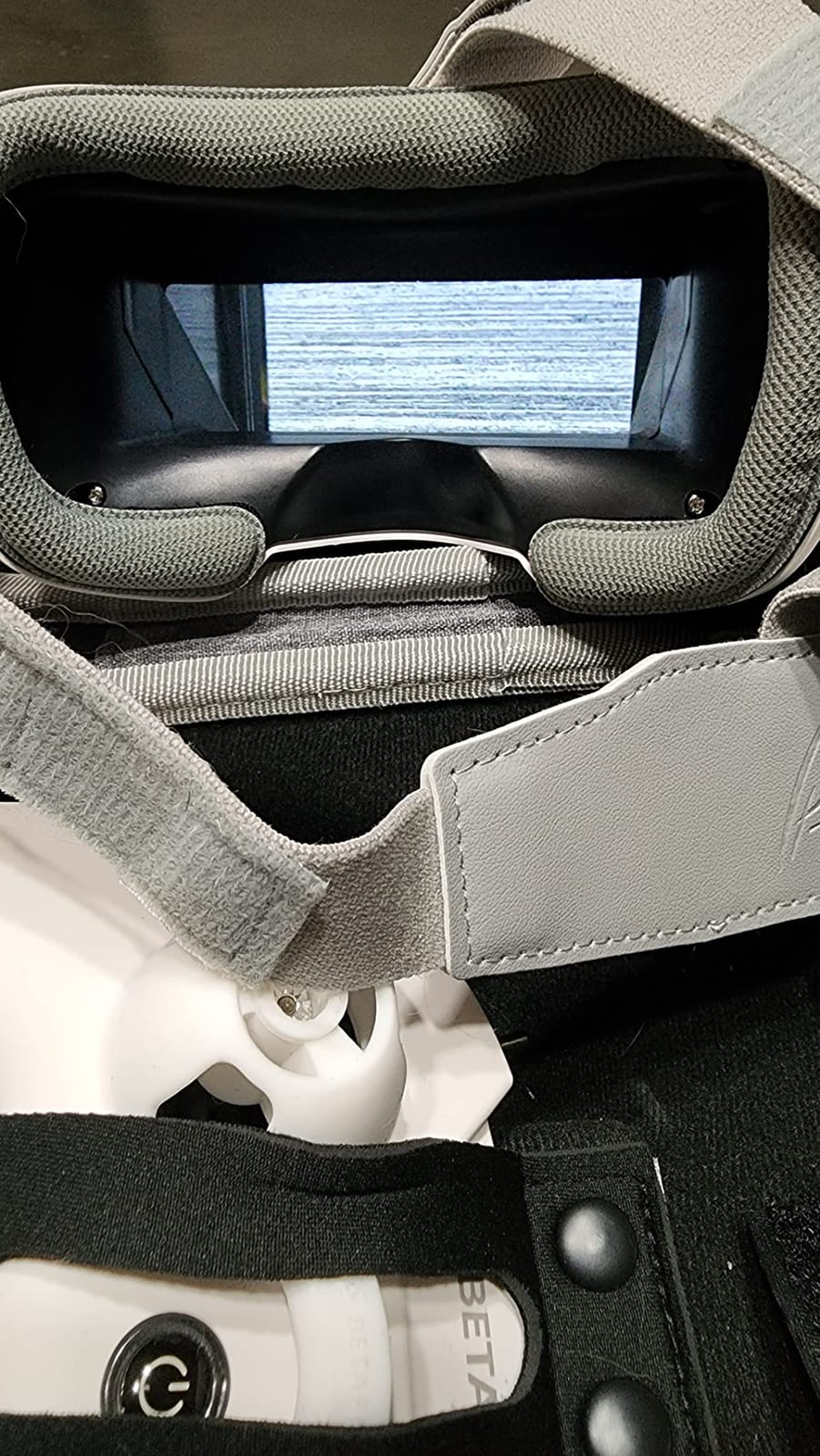
The VR02 goggles are fixed-focus with no diopter adjustment, which leaves some wearers uncomfortable after a few minutes, and the camera angle is fixed rather than tilt-adjustable, so tight indoor lines are harder to see. Video is analog, so expect visible static compared with an HD digital system.
2. EMAX Tiny Hawk RTF Micro Indoor Racing Drone – Best Value Starter Kit
Tiny Hawk RTF Micro Indoor Racing Drone with FPV Goggles and Controller for Beginners
RTF kit with analog FPV goggles
Controller included
Reaches up to 35 mph
Carrying case included
Pros
- Completely ready to fly with goggles and controller in the box
- Real analog FPV video rather than a Wi-Fi phone feed
- Lightweight durable airframe that tolerates beginner crashes
- Fast enough for real racing practice on a small track
- Carrying case makes transport easy
Cons
- 720p video resolution with low on-screen detail
- Speeds are modest next to modern brushless whoops
- Small battery capacity limits continuous flight time
The Tiny Hawk RTF has been a reference first FPV kit for years, and with 508 owner reviews and a 4.0 average it has one of the largest proven support bases in this roundup. If a local club asks what to buy for a complete newcomer, this is a very common answer.
What you get is a genuinely analog FPV experience, which matters. Too many cheap “FPV” drones stream a delayed Wi-Fi feed to a phone screen, and that teaches you habits that do not transfer to real racing. The Tiny Hawk sends live first-person video to proper goggles from a distance of up to 200 feet.
Top speed is around 35 mph, which is quick enough to run a small indoor track and chase a friend through a park without feeling underpowered. The airframe is light plastic with full prop protection, and it is built to be thrown at a wall and flown again.
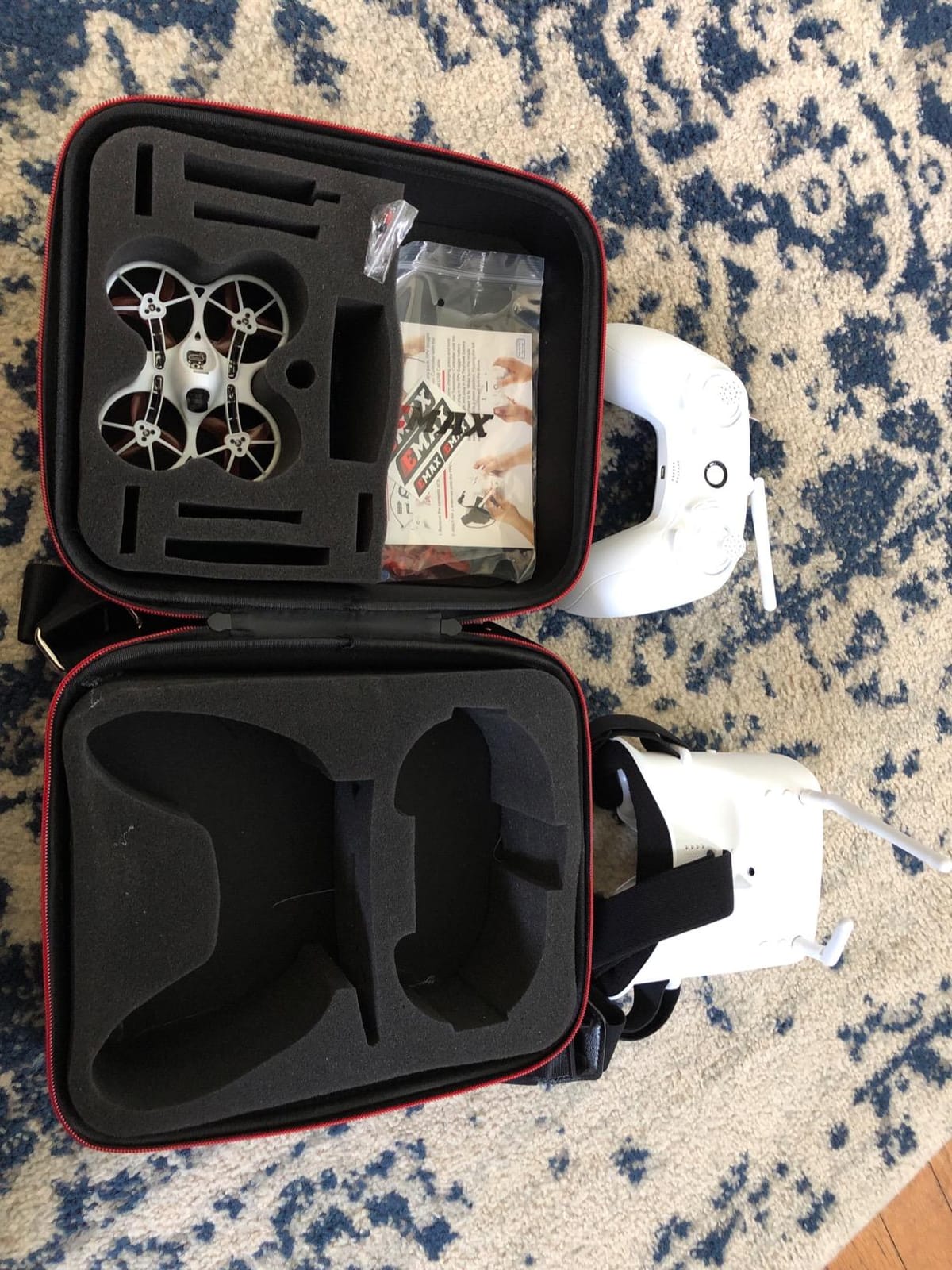
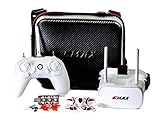
Two batteries, a controller and a set of analog goggles are all in the box, so the only thing standing between delivery and your first flight is charging a pack and binding nothing at all. There is no firmware step, no VTX setting to change and no solder joint to fix.
Why this is still worth buying in 2026
Analog video is not a compromise here, it is the training tool. Every analog video system shows the same ghosting and static, so what you learn on this kit transfers directly to any analog racing quad you buy later, including race-spec setups.
The carrying case matters more than it sounds. A whoop that has to live in a backpack gets flown less often. One that lives on a desk by the door gets flown every evening, and habit is what builds acro muscle memory.
What you give up compared with newer kits
The camera records 720p and the on-screen detail is thin, so footage looks soft compared with the C03 and ANT cameras on modern whoops. It is a video quality gap rather than a control problem.
Speeds are modest against current brushless whoops, and the small 450mAh battery caps how long you can stay up. Owners who want more punch typically move to a 1S whoop like the Meteor75 Pro after a few months.
3. BETAFPV Meteor75 Pro – Best for Outdoor Racing and Progression
BETAFPV Meteor75 Pro Matrix 1S Brushless Whoop Quadcopter for FPV Racing
Largest 1S whoop
Matrix 1S 5IN1 flight controller
25-400mW VTX
2 x 580mAh batteries
Pros
- Largest and fastest 1S whoop with responsive racing performance
- Matrix 5IN1 flight controller boosts computing speed by 55%
- Solder-free motor plugs make motor swaps straightforward
- Frame survives heavy crashes
- Two 580mAh batteries plus charger and props included
Cons
- Aggressive default camera angle is awkward in tight spaces
- Flight time is about 4-6 minutes per 1S pack
- Replacement parts for this model are harder to find
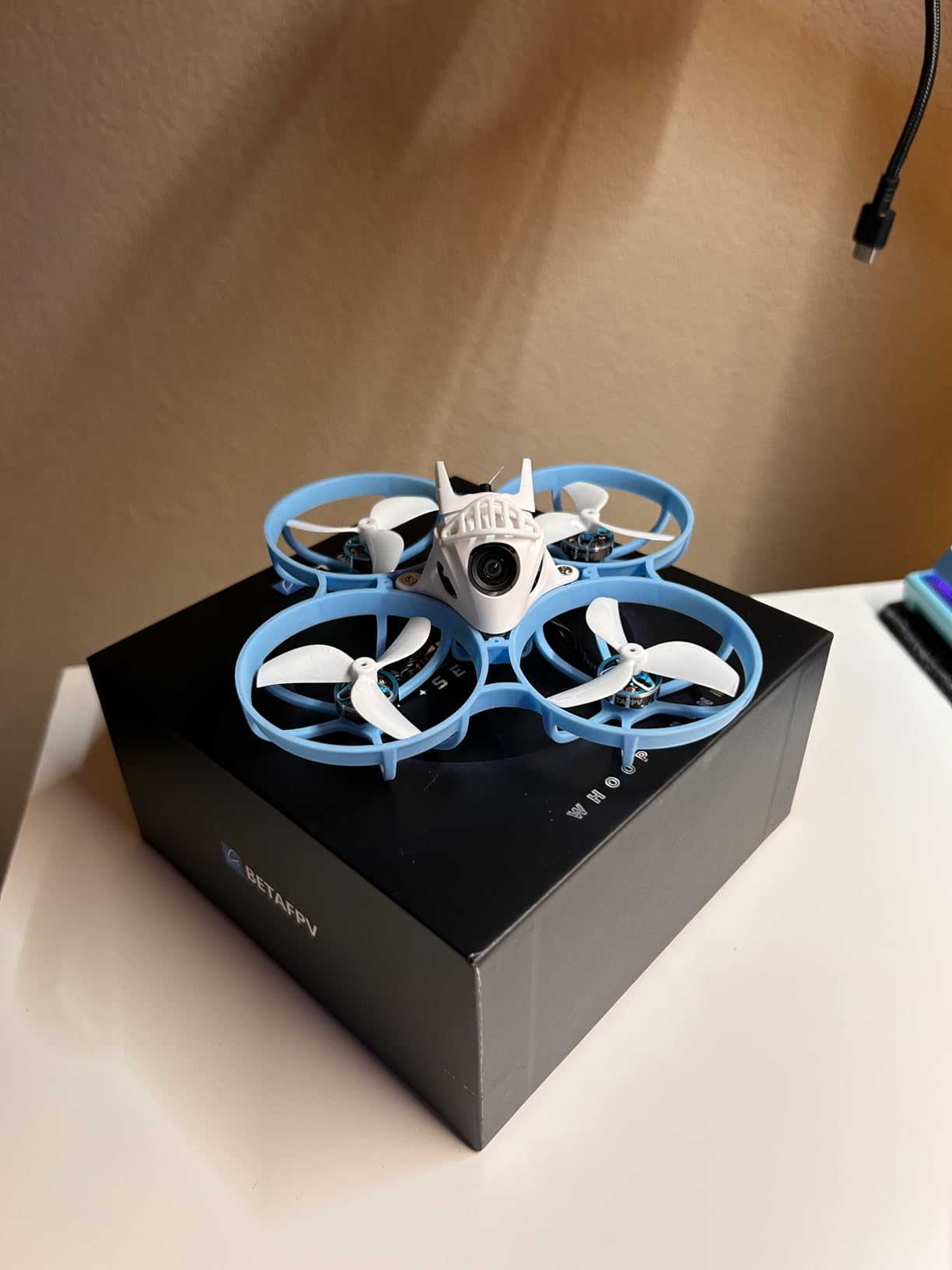
The Meteor75 Pro is the drone I recommend to anyone who has already put 10 to 20 hours into a simulator and wants to start flying a real racing line. At 8 ounces and 5.1 inches square it is the largest 1S whoop on the market, which means it holds speed through corners far better than a 65mm or 75mm indoor quad.
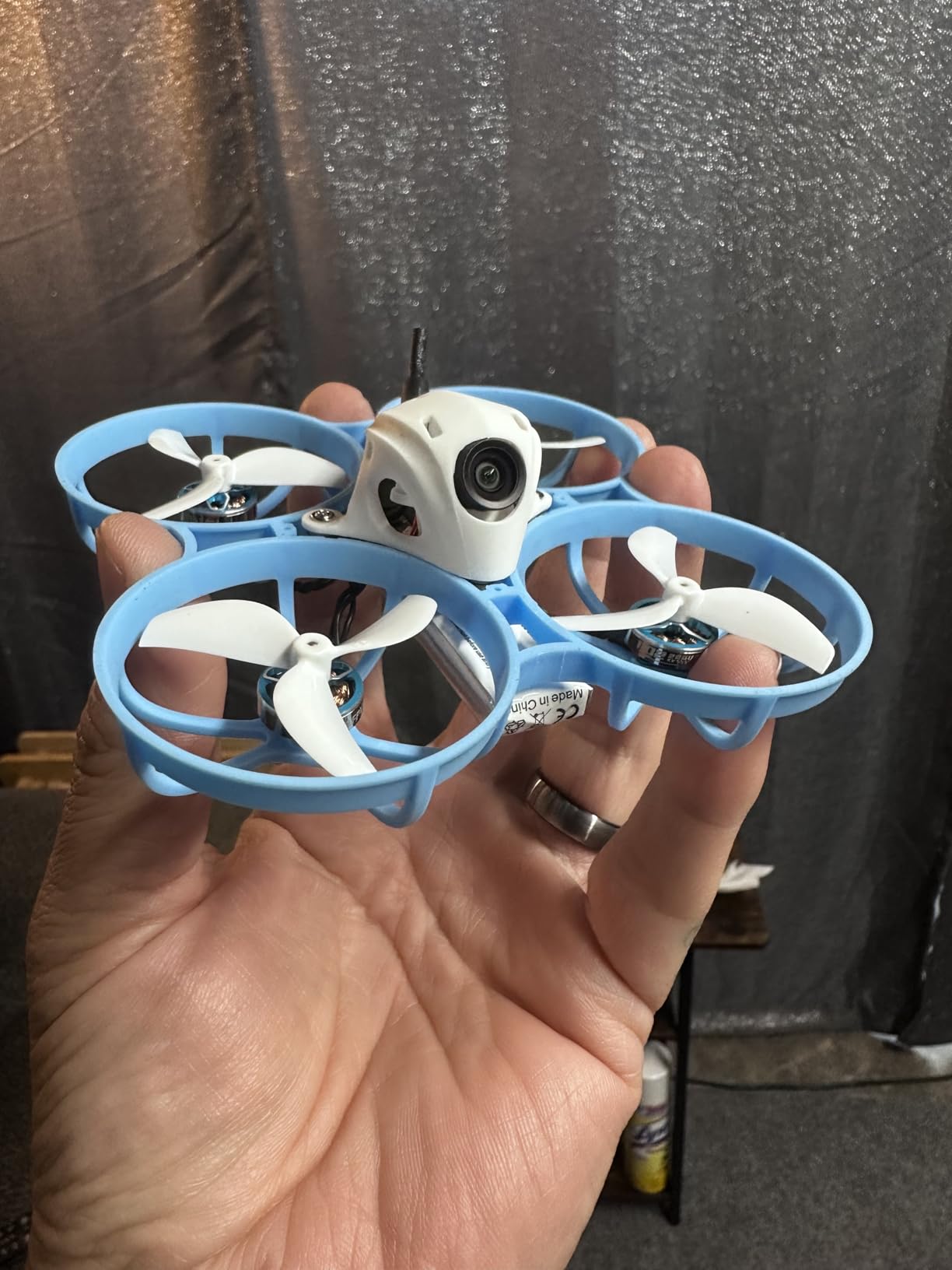
The hardware is genuinely current. The flight controller is a 5-in-1 board with a G473 processor that BETAFPV says computes 55% faster than the previous generation, and the board itself is 1mm thick for impact resistance. Solder-free motor plugs are the detail that matters most for a beginner, because they mean a snapped motor wire is a 30-second swap instead of a soldering iron session.
The C03 camera weighs 1.45g and the onboard video transmitter is adjustable from 25mW to 400mW, so you can drop power indoors and crank it outdoors where range and penetration matter. You get a BT2.0 charger, four 45mm three-blade props, a screwdriver and two LAVA II 1S 580mAh batteries.
Owners with 73% five-star ratings describe it as one of the best-flying 1S whoops for outdoor racing and freestyle, and the recurring positives are speed, durability and good battery options. That is exactly the combination you want in an aircraft you will crash at full throttle for a year.
Why it handles outdoor racing better than any other 1S whoop
Size is the reason. A larger airframe carries more momentum, so it does not lose all its speed when you tip it into a turn the way a lighter whoop does. On an outdoor track with gates spaced more than a few metres apart, that difference shows up immediately.
ELRS is the default protocol with V3 firmware, so the drone binds to almost any modern radio including the RadioMaster models that dominate the sim community. Your radio choice does not lock you out of this airframe.
The catch: it is not a gentle first drone
The default camera angle is aggressive, which is exactly what you want at speed and exactly wrong in a small room. Expect to dial the angle in Betaflight during your first evening, or to clip a wall frame while you get used to it.
Flight time is about four to six minutes per 1S pack, and the extra weight makes it less maneuverable than lighter whoops in tight technical courses. At 119 reviews, owners broadly describe the frame as nearly indestructible, though a few have reported AIO board failures unrelated to crashes, and spare parts for this specific model are harder to find than for mainstream whoops.
4. Tiny Hawk EZ Pilot Pro FPV Drone Set – Best for Kids and Shared Households
EZ Pilot Pro FPV Drone Set for Kids and Adult Beginners with Real 5.8g Goggles and Controller Easy to Fly Quadcopter
480p FPV feed
Detachable goggle screen
Durable flexible frame
Reusable radio and goggles
Pros
- Real-time FPV feed with a detachable goggle screen
- Durable flexible frame that survives hard crashes
- Radio and goggles can be reused on a larger drone
- Marked as easy to learn for kids and adult beginners
Cons
- Goggles have no DVR despite what the listing implies
- 480p video resolution is very low by current standards
- Some pilots describe the handling as erratic
The EZ Pilot Pro exists for a specific situation: a household where a child or a non-technical adult wants first-person view flying, and the person buying it does not want to assemble or research a hobby. Everything needed is in the box and the learning curve is the shortest of any kit here.
The detachable goggle screen is the clever part. The small screen sits in the goggles for FPV flight, then detaches and works as a standalone monitor, which means a second person can watch what the pilot sees without buying a second pair of goggles. That makes it a genuinely good two-player setup for a first afternoon.
At 12g with a durable flexible frame, it is also the easiest to hand to a nervous beginner. The flex in the frame absorbs the impacts that would end a rigid frame, and the radio and goggles carry over when the pilot moves on to a larger drone later.
Where it works well for younger pilots
The drone is forgiving in the ways beginners need. Light weight and a flexible frame mean it can be flown in a bedroom or a large hall without the repair bills that come with heavier aircraft, and there is no soldering or firmware work anywhere in the setup.
Because the goggles and radio are reusable, this is not a dead-end purchase. When the pilot is ready for something faster, the same radio controls a better drone rather than starting from zero again.
Why serious pilots should look elsewhere
The video is 480p, which is the weakest image in this roundup, and the listing implies the goggles record footage when they do not. If you want to replay your lines or share clips, this is the wrong kit.
Handling is described as erratic by some pilots, and with only 13 reviews the long-term reliability picture is thin, including one report of a unit that would not power on after charging. Treat it as a fun indoor toy-plus-FPV experience rather than a path into racing.
5. APIZCUK FPV Drone with VR Goggles – Best for Steady Hovering and Camera Work
FPV Drone with Camera and VR Goggles for Adults, Brushless Quadcopter Kit
Brushless motors
Optical flow positioning
One-key takeoff and land
VR-style goggles included
Pros
- VR-style goggles and remote give a real-time first-person view
- Brushless motors with optical flow positioning fly steadily
- One-key takeoff and landing simplifies first flights
- Dual cameras with an electrically adjustable angle
- Two batteries plus spare props and an 8GB microSD card included
Cons
- Very small review base so long-term reliability is not well documented
- Designed primarily as a camera and hover drone rather than a pure racing airframe
- FPV feed relies on VR-style goggles rather than low-latency FPV racing goggles
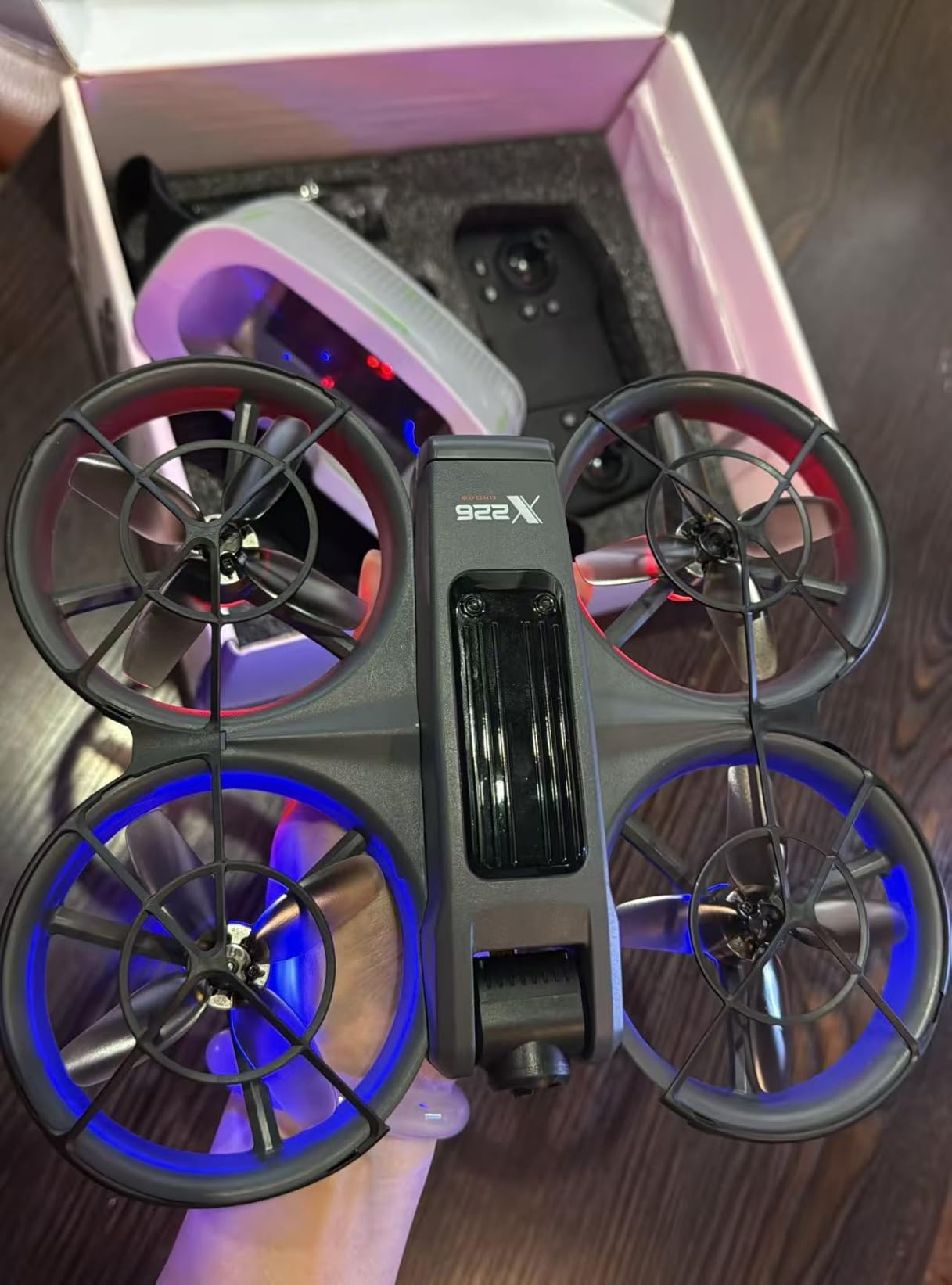
Be clear about what this is. The APIZCUK is a hover-and-film drone with a first-person feed, not a racing quad, and its 5.0 rating comes from just four reviews. It earns a place here because for a lot of total beginners, learning to hover confidently comes before learning to race at all.
The feature list is unusual for a kit at this level. Brushless motors and optical flow positioning give it steady, self-correcting flight that a pure acro whoop cannot offer, and one-key takeoff and landing removes the two most common beginner crashes. Headless mode and a six-channel gyroscope make the orientation less confusing when you are still learning which way is forward.
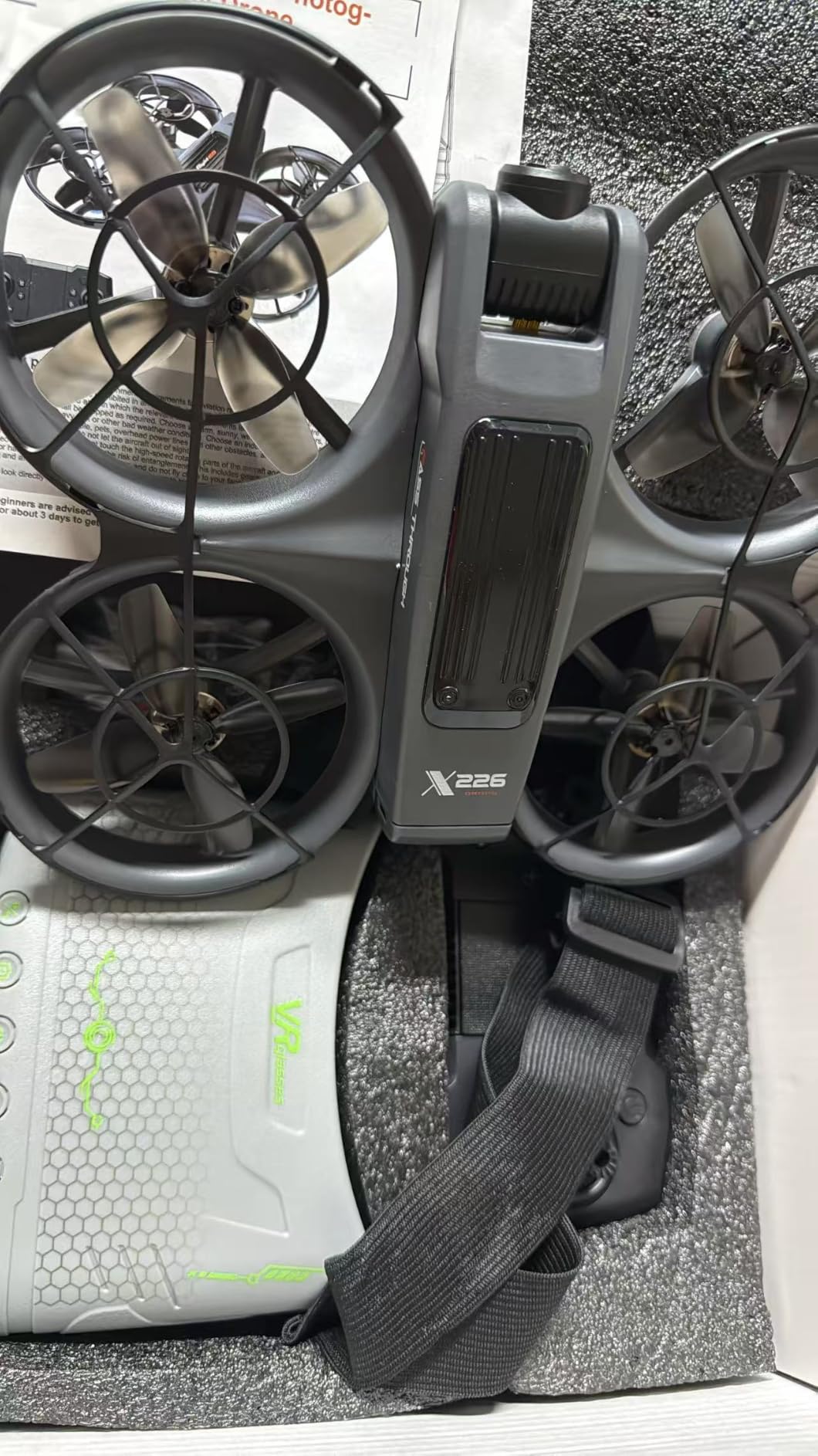
The electrically adjustable camera angle and dual cameras are genuinely useful, and unlike every other product here it includes an 8GB microSD card and card reader so you can record footage straight away. Spare props, prop guards, two modular batteries, USB cables and a screwdriver round out a very complete box.
If your interest is partly in what the camera sees rather than purely in lap times, our picks for the best drones with cameras cover the imaging side in more depth.
Why it is a good confidence builder
Optical flow positioning holds position without GPS, which is what lets it hover steadily indoors. A beginner who spends a month learning to hold a hover indoors will find acro mode much less intimidating than someone who jumps straight in.
The prop guards and spare props mean the first ten crashes cost nothing. That matters more here than any camera specification, because the whole purpose of this drone is to be crashed repeatedly.
What it cannot do
There is no acro mode, no Betaflight tuning and no racing performance envelope. If your goal is to learn to fly a gate at speed, this drone will not get you there and the transition means buying a real whoop anyway.
The VR-style goggles are not low-latency FPV racing goggles, and with only four reviews there is no long-term durability data to lean on. Buy it as a first-person-view camera drone, not as a first racing drone.
6. CADDXFPV Curve Micro 16 1S Whoop – Best for HD Digital Video
CADDXFPV Curve Micro 16 1S White FPV Whoop Drone, ELRS, 1080p 120fps, 500mW
1080p digital video at 120fps
30ms latency
147 degree field of view
32g with prop guards
Pros
- HD digital video up to 1080p and 120fps with 30ms latency
- 147 degree field of view makes gates and tight lines easier
- 32g frame with 1102 22000KV motors and 12A ESC
- One-piece molded frame with full prop protection
- ELRS 2.4GHz BNF pairs with mainstream ELRS radios
Cons
- Radio and FPV goggles are not included
- Digital HD system needs compatible Ascent goggles
- Very small review base limits reliability data
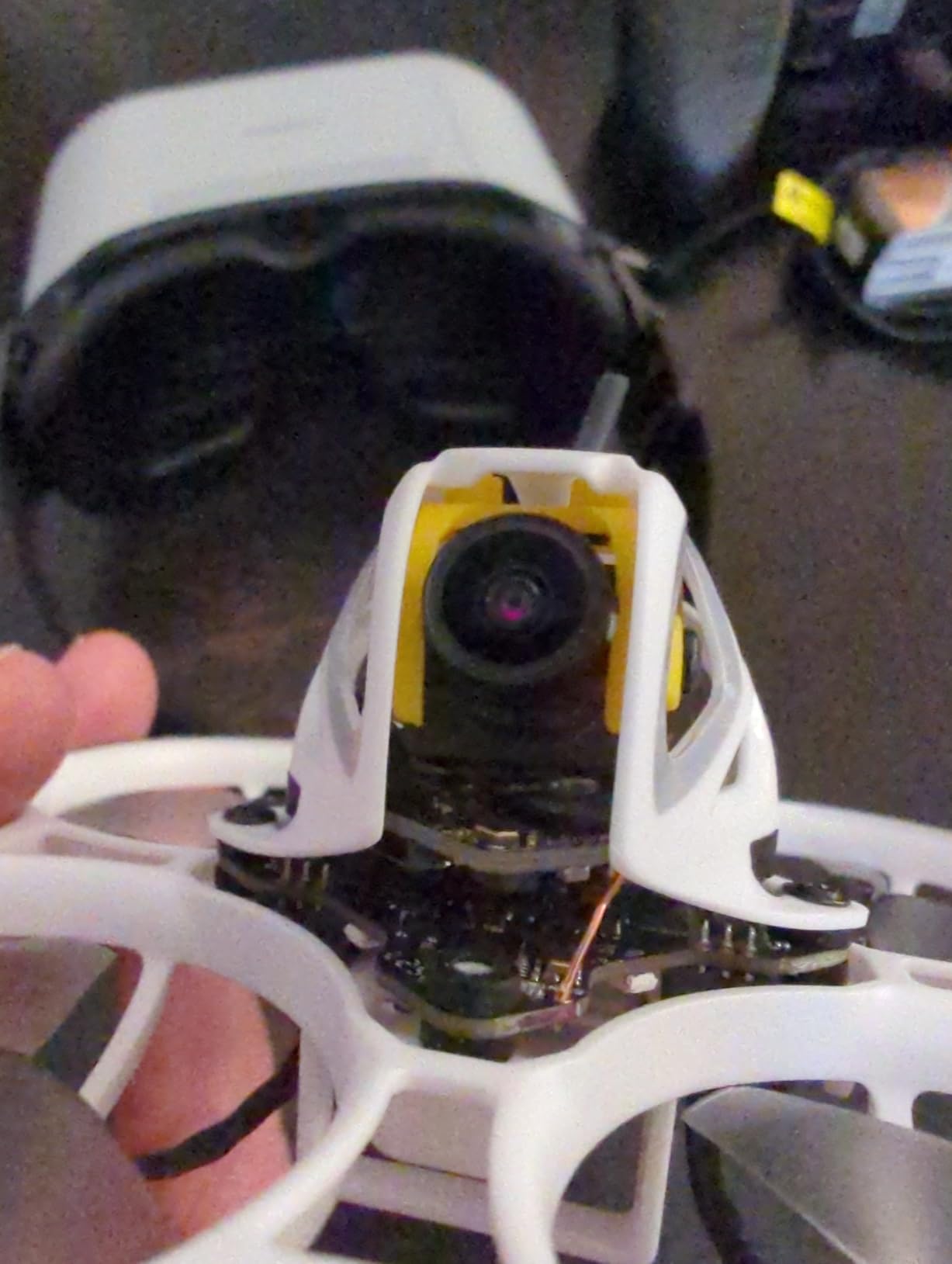
The Curve Micro 16 is the only drone in this roundup with a modern digital HD video system, and that changes what you see. The Ascent Lite+ camera pushes 1080p at up to 120fps with 30ms latency and a 147 degree field of view, which is a cleaner and wider picture than anything analog in this list.
For a beginner, field of view matters more than resolution. A wide lens means you can see the gate before you reach it and you can pick up the horizon when the drone is inverted, and 147 degrees is unusually wide for a whoop this small.
Power comes from 1102 22000KV motors on a 12A ESC with up to 500mW of video output, and the 32g one-piece injection-molded frame has full prop protection so it can be flown into walls. The A30 battery connector takes 1S 580mAh and 680mAh packs for roughly six minutes of flight, and a Type-C six-channel charger is included.
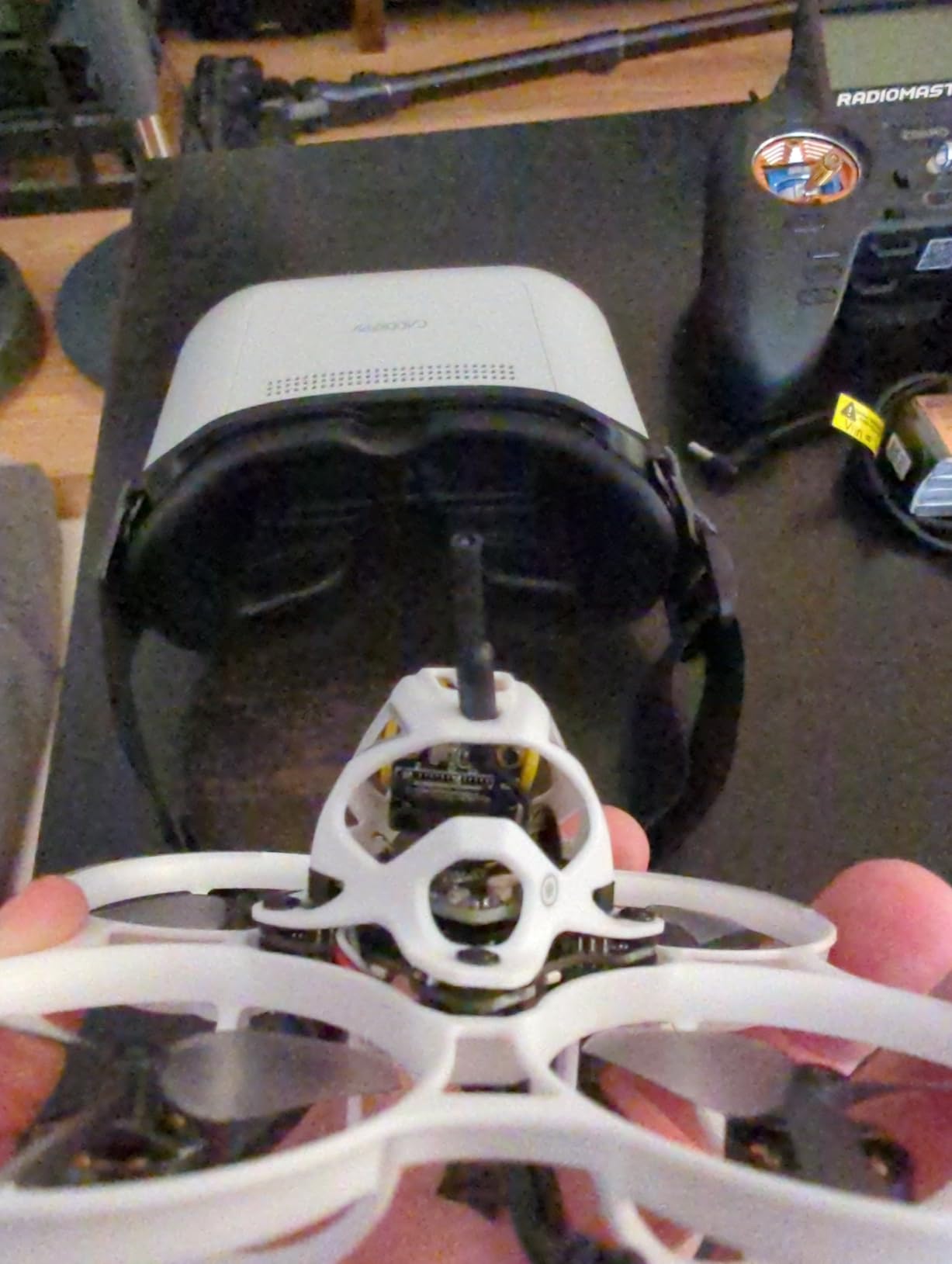
The pilot who owns this one describes it as a genuinely fast 75mm whoop with image quality and latency that hold up on technical lines. At 32g it is heavier than a 65mm racer, which is the trade for the prop protection and the wider frame.
Why digital video changes the learning curve
Analog video ghosts and breaks up when the signal is marginal, and beginners read that artifact as their own mistake. Digital video stays clean until it drops entirely, so what you see on screen is what the drone is actually doing.
The lower latency also makes gates feel tighter. At 30ms you can push a line harder before the picture feels like it is lagging behind the aircraft, which is where a lot of early gate crashes come from.
What this costs you
The radio and FPV goggles are not included, and the HD digital system needs compatible Ascent goggles rather than standard analog gear. That makes this a purchase for someone who already has an ELRS radio and who is willing to commit to one video ecosystem.
With four reviews there is not enough owner data to judge battery life in real conditions or repair experience. The electronics look excellent on paper, but you are buying ahead of the review history.
7. BETAFPV Air75 II – Best for Technical Courses and Racing Lines
BETAFPV Air75 II Brushless Whoop Quadcopter Ultralight for FPV Drone Racing
0802 25000KV motors
12A continuous 18A peak ESC
15-45 degree camera angle
75mm whoop
Pros
- Extremely light 75mm whoop tuned for racing with sharp throttle response
- 3-point mounted flight controller cuts impact damage by up to 80%
- 1.0mm thickened PCB adds crash resilience
- 0802 25000KV motors tuned for technical course agility
- Camera angle adjustable from 15 to 45 degrees
Cons
- BNF package includes only propellers and screws
- Batteries
- radio and goggles must be sourced separately
- Only one review is available for this listing
The Air75 II is the racing-first whoop in this roundup. Where most 75mm quads are designed to be gentle, this one is built for tight technical courses: split-S gates, switchback chutes and the kind of line that punishes hesitation.
The new 0802 25000KV brushless motors use a stator core BETAFPV describes as the first of its kind at 0.1mm, and the throttle response is noticeably sharper than a brushed or older-generation whoop. The 12A continuous ESC with 18A peak headroom means the motors are not current-limited when you punch out of a corner.
Crash survivability is designed in rather than hoped for. The Matrix 5IN1 II flight controller mounts on three points instead of a single screw location, which BETAFPV says reduces component damage in impacts by up to 80%, and the board is 1.0mm thicker than standard.
Where it out-flies the other 75mm options
The adjustable camera in the reinforced Air II canopy moves from 15 to 45 degrees, so you can set a nose-down angle for racing and a flatter angle for slow technical lines in the same session. That is a real advantage when you are flying indoors on a tight track.
Because the whoop is so light, it holds a racing line and rolls into recovery far better than heavier 1S quads. If your goal is speed on a small outdoor track rather than hover-and-film, this is the airframe to learn on.
Why it is not a first drone
This is a BNF package. The box contains propellers and screws, so you need batteries, a radio and goggles before it flies, and if you have never bound an ELRS receiver the first setup session is a genuine barrier.
There is exactly one review for this listing, which means you are buying on engineering claims rather than owner reports. It is a strong second drone for a simulator-trained pilot, not the place to start.
8. LIBOQIAO Mobula7 1S 75mm Micro FPV Whoop – Best Upgrade-Ready Whoop
Happymodel Mobula7 1S 75mm Micro FPV Whoop Drone – 5-in-1 AIO Flight Controller with ExpressLRS 3.0, RS0802 20000KV Motors, 1S Whoop Quad for Indoor & Outdoor Freestyle, Mini FPV Drone (Drone)
5-in-1 AIO with ELRS 3.0
OpenVTX up to 400mW
RS0802 20000KV motors
About 5 minutes per pack
Pros
- Very light 75mm whoop that is agile and durable
- 5-in-1 AIO integrates receiver
- VTX
- ESC and OSD
- OpenVTX supports race power modes up to 400mW
- Caddx ANT 1200TVL camera supports 16:9 and 4:3
- Parallel charging board and spare canopy included
Cons
- No battery
- radio or goggles included
- Only one review is available for this listing
- Arrives tuned for 1S and needs changes for other setups
The Mobula7 1S packs an unusual amount into a 20g frame. The 5-in-1 all-in-one board integrates an ExpressLRS 3.0 receiver, an OpenVTX video transmitter, a 12A BLHeli_S ESC and a Betaflight OSD, which leaves the build clean and tangle-free with no loose wiring to snag on a prop.
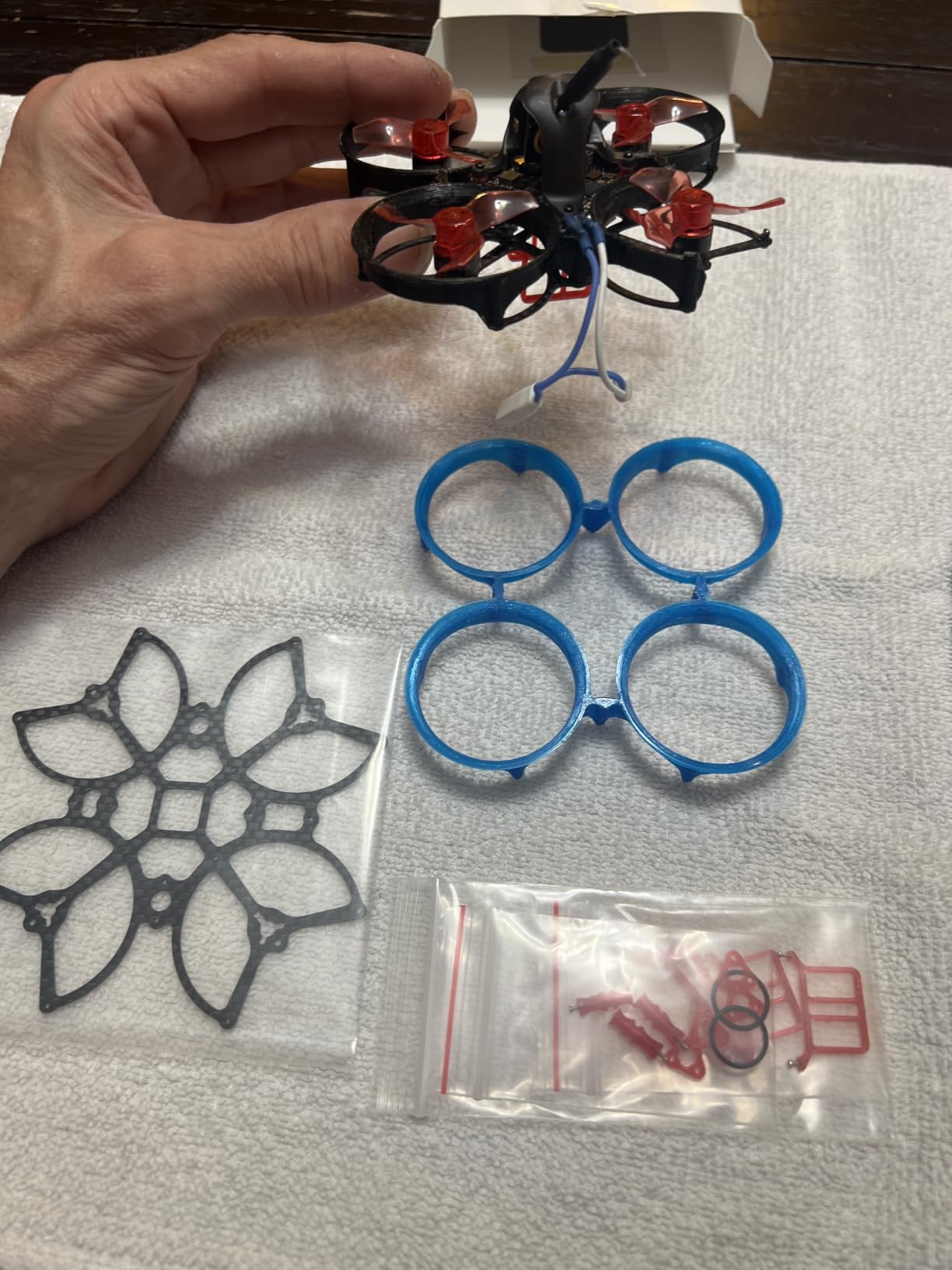
The Caddx ANT camera is the highlight. It replaced the discontinued Nano3 and delivers 1200TVL from a 1/3-inch CMOS sensor in both 16:9 and 4:3, so you can set up the framing that matches your goggles rather than being stuck with a stretched image.
For racing specifically, the OpenVTX transmitter adjusts from 0 to 400mW and supports RCE and PIT modes, which are the low-power and pit-lane settings race organizers use so pilots do not interfere with each other on the frequency band.
Why experienced pilots rate it so highly
The RS0802 20000KV motors use unibell construction with a 1.5mm shaft, which is the durable option for a quad that will be crashed daily. Prop durability is the hidden cost saver in a first year of flying.
It runs on 1S 450mAh to 650mAh packs for roughly five minutes of flight, and a parallel charging board plus a spare canopy are included. Battery and radio are not, so budget for those before the first flight.
What to know before you commit
It arrives with factory Betaflight settings tuned for 1S, so you will need to connect to the flight controller and adjust if you ever change configuration. That is a normal task for anyone who has used Betaflight before and a genuine obstacle for a complete beginner.
With one review there is not enough data to judge broader reliability, and the owner who did review it used it as a spare board rather than a primary aircraft. Treat this as a second or third drone.
9. HAPPYMODEL Mobula6 65mm Whoop – Best for Tight Indoor Spaces
Happymodel Mobula6 2024 1S 65mm Ultra-Light Micro FPV Whoop Drone BNF with SuperX ELRS 5-IN-1 AIO (400mW VTX, SE0702 28000KV) – 17.7g Tiny Racing Drone for Indoor/Outdoor – No Battery, No GPS
17.7g 65mm whoop
ELRS 5-in-1 AIO with F4
OpenVTX 25mW-400mW
800TVL CMOS camera
Pros
- Very light 17.7g 65mm whoop with a tangle-free AIO build
- OpenVTX adjustable up to 400mW penetrates well indoors
- SE0702 28000KV motors tuned for 1S LiHV
- FX17-B camera performs well in low light
- Compact build stays agile in tight tracks
Cons
- No battery
- radio or goggles included
- 800TVL analog camera is dated next to HD digital systems
- Marked for experienced pilots rather than absolute beginners
- Control range is limited to roughly 100 meters
The Mobula6 is a 65mm whoop at 17.7g, and that size is the entire point. A 65mm whoop will fit through gaps and around obstacles that a 75mm quad simply cannot, which makes it the natural choice for a small indoor track or a garden course built from household gates.
The SuperX ELRS 5-in-1 AIO integrates an F4 flight controller, 5A ESC, SPI ELRS receiver and a current sensor on one board. The OpenVTX transmitter is adjustable from 25mW to 400mW via SmartAudio and ships pre-set to 25mW, which is the correct default for indoor flying where you need to share the band with other pilots.
For a racing drone this small, low-light performance is unusually good. The FX17-B 800TVL 1/3-inch CMOS camera has a wide dynamic range, so indoor courses lit only by room lighting remain flyable late in the evening.
Why small beats big in a living room
Weight is what makes a quad agile. At 17.7g the Mobula6 changes direction faster than any other aircraft in this roundup, and that responsiveness is what lets a beginner hold a tight line around a chair leg instead of overshooting every corner.
The SE0702 28000KV motors are tuned for 1S LiHV packs, which is the lighter, higher-voltage chemistry that suits a quad this size. A 1S 300mAh to 450mAh pack with a PH2.0 or BT2.0 connector is the right fit, and none is included.
Where it will frustrate you
This listing is explicitly positioned for experienced FPV pilots and adult hobbyists, and that is fair. There is no battery, radio or goggles, no GPS and no return to home, and the control range is around 100 meters, which is short for outdoor flying.
The 800TVL analog camera is dated next to HD digital systems, and with two reviews there is limited owner feedback. This is a superb little racer for someone who already has the gear, and a frustrating purchase for a first-time buyer.
10. STARTFPV R8 ELRS FPV Whoop RTF Combo – Best Complete Trainer Package
R8 ELRS FPV Whoop Drone RTF with Radiomaster Pocket Controller,4 Batteries,6In1 Charger,FOV160°,Matrix G4 5IN1 FC,0802 20000KV Brushless Motor-Ideal for FPV Freestyle Racing Training Indoor Outdoor
80mm duct-guarded frame
0802 20000KV motors
Radiomaster Pocket included
4 x 450mAh batteries
Pros
- Complete package with drone
- Pocket controller
- four batteries and charger
- Duct guards and low aerodynamic center hold stability in tight turns
- 1:4 thrust-to-weight ratio for punch-outs and consecutive rolls
- Betaflight firmware pre-tuned out of the box
- ELRS receiver binds quickly to common transmitters
- Top-mounted battery and skids protect the pack
Cons
- FPV goggles are not included
- A transmitter battery must be supplied separately
- Positioned as a step-up trainer rather than a first drone
- Only a single review is available
The R8 Combo solves one specific problem better than anything else here: it bundles a proper RadioMaster Pocket radio with a drone and four batteries, so you can move up from a basic whoop without buying a transmitter, spare packs and a charger separately.
That RadioMaster Pocket is no throwaway controller. It is an ELRS radio that binds to the R8 and to almost anything else you buy later, and it runs simulators on a laptop, so the same box that flies the drone also trains the pilot. Goggles are the one gap, and you will need a pair of analog FPV goggles to see anything.
The airframe is a low-profile 80mm design at 26g with duct guards and a low aerodynamic center, which keeps it stable in sharp turns and narrow gaps. The 0802 20000KV motors deliver 33g of thrust each for a 1:4 thrust-to-weight ratio at 38g takeoff weight, and the Matrix G4 flight controller uses a G473 MCU with an ICM-42688P gyro. Betaflight is pre-tuned, so it flies well out of the box.
Why four batteries changes the practice curve
Most starter kits give you two packs and a single charger, which caps practice at a handful of flights a day. Four 3.8V 450mAh batteries at roughly six minutes each, combined with the six-in-1 charger that comes in the box, roughly triples the flying you can get through an evening.
The top-mounted battery position and landing skids protect the pack on takeoffs and landings, which is where new pilots do most of their damage. The ELRS 2.4G receiver binds quickly to Radiomaster Pocket, Boxer and TX15 units as well as Happymodel and Jumper transmitters.
Why it is a second drone, not a first
You still need FPV goggles and a transmitter battery, so this is not a complete first-time purchase despite the RTF label. And the drone itself is a progression trainer rather than a forgiving beginner aircraft.
With a single five-star review there is not enough owner data to establish a reliability pattern. The spec sheet describes a well-built indoor progression quad, and the package contents are the strongest argument for buying it.
How to Choose Your First Racing Drone
The choice comes down to three questions: do you want a complete kit or a bare aircraft, are you flying indoors or outdoors, and how much do you already know about radio links and firmware. Answer those honestly and the right drone falls out of the list almost automatically.
What makes a racing drone beginner friendly
Prop guards are the number one feature. A whoop with a full duct or prop cage can be flown into a wall at full throttle and flown again, while an open-frame quad at the same speed will shed props and crack arms. Every drone in this roundup except the bare BNF whoops has meaningful prop protection.
Flight mode selection is the second feature. Angle or Normal mode self-levels, so the drone returns to a neutral attitude when you release the sticks. Acro or Manual mode does not. A drone offering both lets a beginner hover safely in week one and move to acro when the simulator hours are done.
Self-protection and turtle mode come third. Auto-landing on signal loss, auto-disarm on hard collision and a one-button flip from upside down are the features that decide whether a bad landing is a five-second fix or the end of the aircraft.
Pick a size class before you pick a drone
Size is the decision that gets beginners stuck, so here is the short version. A 65mm whoop weighs around 17g and flies through gaps a 75mm quad cannot, which makes it the best choice indoors. A 75mm whoop at 20g to 32g is the all-round sweet spot and handles both indoor courses and a small outdoor track. Anything larger is a freestyle or racing build that belongs on your second or third aircraft, not your first.
Our general rule is to match the drone to the space you have. If you are flying in a hall, a room or a garden with homemade gates, stay at 65mm or 75mm. If you have open field access and want real speed, look at the largest 1S whoop you can find, which is the Meteor75 Pro in this list.
If you want a broader look at FPV aircraft beyond the racing niche, our guide to the best FPV drones covers the camera and cinematic side of the hobby too.
Analog or digital video, and why it matters
Analog video is lighter and has more options. Every channel competes with every other channel, so you can get static or interference, but the equipment costs less and any analog system works with any analog goggles. This is why most training happens on analog.
Digital video gives you a clean HD image with very low latency and a wide field of view, which is easier to learn on. The catch is that you are locked to one brand’s ecosystem, so the drone, the goggles and the controller all have to come from the same system.
For a first purchase, we lean analog with a wide field of view unless the digital system you are considering also includes goggles. A drone like the CADDX Curve Micro 16 is an outstanding piece of hardware, but it does you no good without matching Ascent goggles.
RTF, BNF and PNP explained in plain English
RTF means ready to fly. Everything you need to fly is in the box, which is the Cetus Pro, the Tiny Hawk RTF and the EZ Pilot Pro. This is the right choice if you want to be airborne within an hour of delivery and have never bound a receiver.
BNF means bind and fly. The drone is complete but the radio, goggles and batteries are not, and you must bind the receiver to your transmitter before it will respond. This is the right choice if you already own an ELRS radio, which is what the sim community uses anyway.
PNP means plug and play, which sits between the two: you supply the radio and the battery, and the receiver is already wired up. Whichever label you see, check the box contents carefully, because listings are inconsistent about what counts as included.
What you need beyond the drone
For a beginner, a radio transmitter is the most important purchase after the drone, and it is also the one that lasts longest. RadioMaster models such as the Pocket and TX16S come up repeatedly in pilot discussions, and any ELRS radio will bind to most of the BNF whoops here. Using the same radio in the simulator and in the air is what makes practice transfer.
Goggles are the second essential item. Every complete kit here includes a pair, so an RTF purchase covers this. If you buy a BNF whoop, budget for analog FPV goggles and pick a wide field of view, ideally 140 degrees or more, because a narrow lens makes gates much harder to see.
Batteries and a charger are the third line. Expect three to six minutes of flight per pack on any whoop in this roundup, so buy at least four or five packs and a parallel charging board. A single-cell charger means a twenty-minute wait after every flight, and that wait is how most people quit.
Finally, add a set of spare props from the start. Props are the fastest-wearing part of any quad, and a bent prop costs a fraction of what a replacement frame costs. Our guide to drones for beginners covers the wider entry-level market if you also want an outdoor camera drone for sightseeing alongside the racing kit.
FAA Rules for FPV and Racing Drones in the USA
FPV drones are not illegal in the USA. The FAA Recreational Drone Rule treats an FPV racing quad the same as any other small drone, and the rules that matter most for a beginner are the weight threshold, altitude limit and line-of-sight requirement.
Drones under 250 grams do not need to be registered with the FAA, and every complete kit and whoop in this roundup falls under that threshold. The catch is that you are still responsible for knowing where you can fly, so registration is not the question to ask. Whether the park allows drones is the question to ask.
You must keep the aircraft under 400 feet above ground level, stay within visual line of sight, and never fly over people or moving vehicles. Racing through a course of gates does not create an exception to the line-of-sight rule, so a public race is run under an organizer who has arranged the airspace, not by ten pilots each making their own judgement call.
If you want to race competitively, joining a national model aviation organization gives you access to sanctioned events, covered sites and insurance, which removes most of the legal ambiguity from flying a fast quad near other people.
How Long a Racing Drone Flies on One Battery
Plan on three to six minutes per pack, and treat that as normal rather than a defect. The Meteor75 Pro runs about four to six minutes on a 1S 580mAh pack, the Mobula7 sits around five minutes on 450mAh to 650mAh, and the CADDXFPV Curve Micro 16 is quoted at roughly six minutes on 580mAh or 680mAh packs.
The Cetus Pro is the tightest at three to five minutes with only two packs in the box, which is why so many owners immediately add a parallel charging board. Pilots on r/fpv describe single-battery sessions as the normal early pattern, and most people reach comfortable flying after around six months of near-daily short sessions.
Two extra numbers are worth planning around. High-current 1S packs are affordable, and buying four or five at the start removes the single biggest constraint on practice. The charger matters just as much, since a one-at-a-time charger turns a five-minute flight into a twenty-minute wait.
Frequently Asked Questions
What is the best starter drone for beginners?
The BETAFPV Cetus Pro FPV Kit is the best starter drone for beginners because it ships with the drone, a LiteRadio 2 SE transmitter, VR02 FPV goggles, two batteries and a charger, and it offers Normal, Sport and Manual modes so you can move to acro when you are ready. Its brushless frame and prop guards survive the crashes that end most first aircraft.
Are FPV drones illegal in the USA?
No. The FAA treats an FPV racing drone the same as any other small recreational drone. Drones under 250 grams do not need registration, but you must still fly under 400 feet above ground level, keep the aircraft within visual line of sight, and avoid flying over people and moving vehicles. Local park and land rules still apply.
What size FPV drone is best for a beginner?
A 75mm whoop is the best size for most beginners, weighing roughly 20g to 32g. A 65mm whoop at about 17g is even more agile and better for very tight indoor spaces, while anything larger is a freestyle build that is too demanding as a first aircraft. Match the size to the space you have available.
How long do racing drones fly on one battery?
Most 1S whoops fly for three to six minutes per pack, and that is normal for the class. The BETAFPV Meteor75 Pro runs about four to six minutes, the Mobula7 about five minutes, and the BETAFPV Cetus Pro three to five minutes. Buy four or five spare packs and a parallel charging board so charging does not limit your practice.
What is the best FPV setup for beginners?
The best beginner setup is a ready-to-fly whoop kit, an ELRS radio transmitter, analog FPV goggles with a 140 degree or wider field of view, four or five spare batteries, a parallel charging board and a simulator such as Liftoff or VelociDrone. The radio is the piece most beginners skip, and it is the one that lets you practise in a simulator with the same controls you will use in the air.
Do you need goggles to fly a racing drone?
Yes, FPV goggles are what make it a first-person view drone rather than a normal camera drone. Every complete kit in this roundup includes a pair, but BNF whoops such as the Mobula6, the Air75 II and the R8 Combo require you to buy goggles separately. A phone screen or a Wi-Fi feed will not teach you racing lines.
The Bottom Line for New Racing Pilots
For most people searching for the best racing drones for beginners, the BETAFPV Cetus Pro FPV Kit is the answer. It is the only complete package here with a real radio transmitter, proper FPV goggles and a three-mode flight path from self-levelling hover to full acro, and its brushless prop-guarded frame is built for the crash rate that comes with learning.
Buy the EMAX Tiny Hawk RTF if you want the simplest possible first flight with the smallest learning curve, and buy the BETAFPV Meteor75 Pro once you have put real simulator hours in and want to fly fast lines outdoors. Everything else in this list is a good aircraft pointed at a pilot who already has a radio and goggles.
Before any of them leave the box, put 10 to 20 hours into Liftoff or VelociDrone using a radio transmitter, not a gamepad. That single habit is the difference between a first month of fun and a first month of broken frames.