
The Peak Design Travel Tripod Carbon is the best carbon fiber travel tripod for travel photographers in 2026, because it folds to 15.4 inches, carries 20 lb of gear, and deploys in seconds with lever cams that need no twisting. Every pick below was judged the same way: packed length first, then weight, then how honest the load rating turned out to be in the hands of people who actually carried it.
Here is the spec block for our top pick, up front, so you can compare it against anything else in seconds:
Best overall: Peak Design Travel Tripod Carbon
Weight: 1.29 kg (2.8 lb)
Folded length: 15.35 inches
Height range: 5.5 to 60 inches
Load capacity: 20 lb
Leg sections: 5, lever locks
The thing that trips up most travel photographers is not weight. It is packed length. A tripod that folds to 16 inches disappears into a side pocket, while one that folds to 21 inches is a rigid object that occupies a whole compartment and pulls you toward leaving it at the hotel. We weighted every pick in this roundup accordingly.
Load capacity is the second thing worth demoting. Manufacturers rate the head and collar to failure, which is why a tripod rated for 26 lb often feels wrong under a 6 lb mirrorless kit with a 35mm lens. The number tells you the ceiling, not the working range. What you actually feel is torsional stiffness in the upper leg sections, and that is where the tripods in this group separate.
All twelve models below ship with a ball head except where noted, and all but two accept Arca-Swiss style plates. We have included a broader travel tripod guide for readers who also want table-top and full-size options, but everything reviewed here is a genuine packable carbon travel tripod.
Table of Contents
Top 3 Best Carbon Fiber Travel Tripods for 2026

Peak Design Travel Tripod Carbon
- Folds to 15.35 inches
- 20 lb load
- 5-section lever locks
- 1.29 kg

NEEWER TP17B Carbon Travel Tripod
- Folds to 16.3 inches
- 13 lb load
- converts to a monopod
- 3.2 lb

GEEKOTO Carbon Fiber Tripod
- 26.5 lb load rating
- monopod conversion
- 79 inch max height
- 3.4 lb
Quick Comparison of All 12 Carbon Fiber Travel Tripods (October 2026)
Every tripod below folds to under 21 inches and weighs under 3.5 lb. Read the folded length column first, then check whether the load rating clears your rig with room to spare.
| Product | Specifications | Action |
|---|---|---|
| Peak Design Travel Tripod Carbon |
|
Check Latest Price |
| NEEWER Basics TP17B Carbon Travel Tripod |
|
Check Latest Price |
| GEEKOTO Carbon Fiber Camera Tripod |
|
Check Latest Price |
 SIRUI Traveler 7C Carbon Tripod SIRUI Traveler 7C Carbon Tripod |
|
Check Latest Price |
 NEEWER LITETRIP LT32 Carbon Travel Tripod NEEWER LITETRIP LT32 Carbon Travel Tripod |
|
Check Latest Price |
 Benro Slim TSL08CN00 Carbon Kit Benro Slim TSL08CN00 Carbon Kit |
|
Check Latest Price |
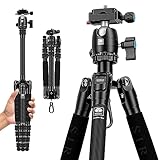 SIRUI Traveler 5CX Carbon Tripod SIRUI Traveler 5CX Carbon Tripod |
|
Check Latest Price |
 AOKA Mini Carbon Travel Tripod AOKA Mini Carbon Travel Tripod |
|
Check Latest Price |
 Manfrotto Befree Advanced Twist Carbon Kit Manfrotto Befree Advanced Twist Carbon Kit |
|
Check Latest Price |
 K&F Concept 60 inch Carbon Tripod K&F Concept 60 inch Carbon Tripod |
|
Check Latest Price |
 SIRUI Traveler 5C Carbon Tripod SIRUI Traveler 5C Carbon Tripod |
|
Check Latest Price |
 Freewell Carbon Fiber Travel Tripod Freewell Carbon Fiber Travel Tripod |
|
Check Latest Price |
1. Peak Design Travel Tripod Carbon: The Best Overall Packable Carbon Tripod
Peak Design Travel Tripod, Carbon Fiber, Compact Design, Quick Setup and Takedown, Pro-Level Stability, Ergonomic Ball Head, Compact and Portable Travel Tripod for Camera and Phone, 20 lb Capacity
Folds to 15.35 inches
1.29 kg
20 lb load capacity
60 inch max height
Pros
- Folds to about the diameter of a water bottle
- Deploys in seconds with lever cams
- Holds a full-frame body with a telephoto
- Integrated phone mount in the center column
Cons
- Swivel ball head has less vertical travel
- Lock levers can pinch fingers
- Third-party head needs the Universal Head Adapter
The lever cams on this tripod are the reason it wins. Most travel tripods use twist locks, which need two hands and a set of gloved fingers you do not have at 6 a.m. on a wet trail. Peak Design replaced that with a lever that you flick open with one thumb and shut with a squeeze, so going from bag to shooting position takes about fifteen seconds.
Packing is the other story. The legs fold back alongside the center column into a cylinder roughly the width of a water bottle, which is why it fits in a side pocket rather than a compartment. It is also the only tripod in this group with a phone mount that pops out of the center column without a separate bracket.
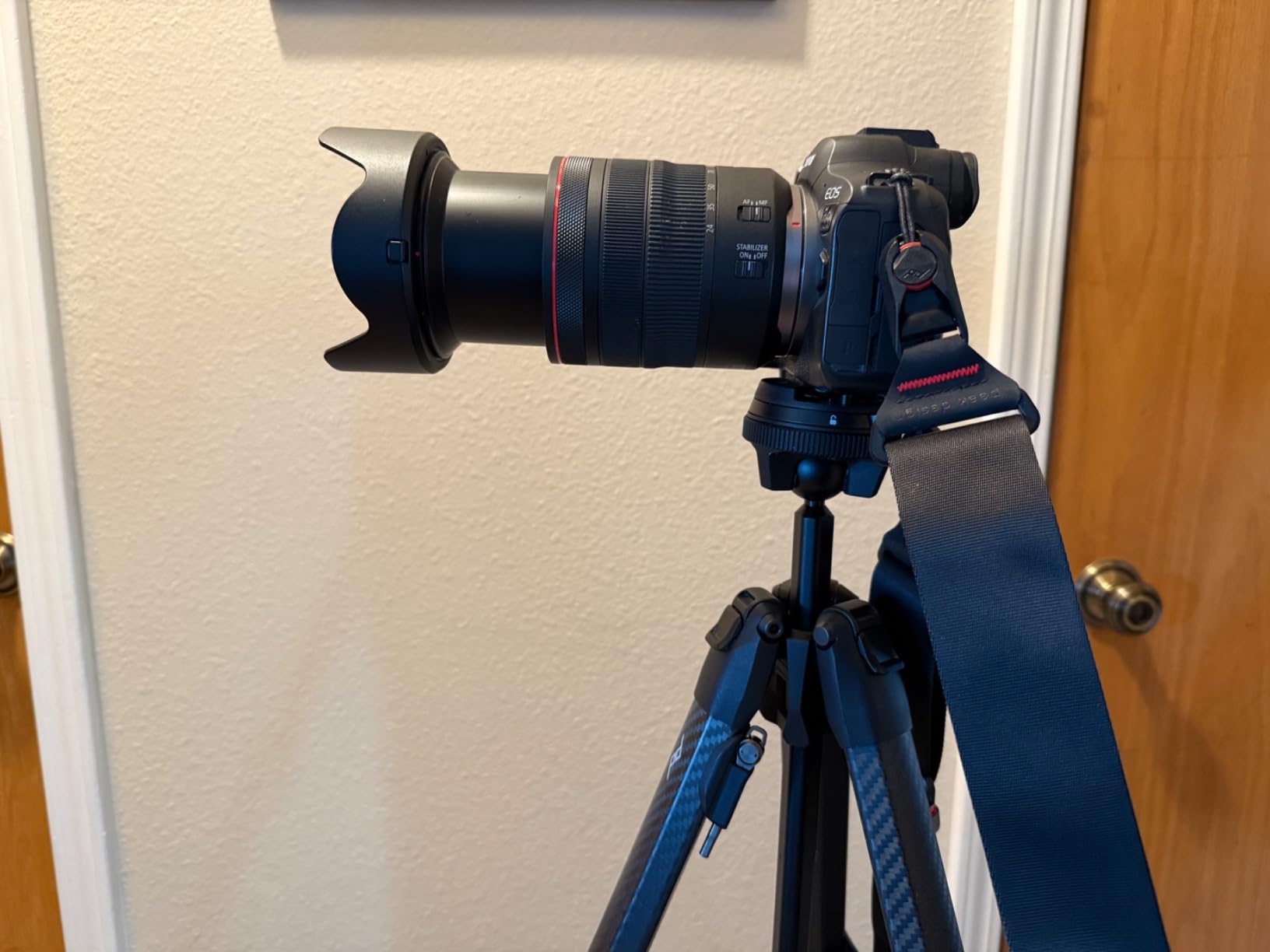
Stability is genuinely good for a 15-inch pack. Owners report it carrying a full-frame body with a telephoto lens up to the 20 lb rating, and the five-section leg layout means you have real height control rather than one long reach. My one caution is over-telescoping: the fourth and fifth sections are thin, and extending all of them with a heavy rig is where the wobble starts.
The included head is the weak point. It is an anodized aluminum swivel head with a single adjustment ring, and it gives you less vertical mobility than a conventional ball head, which matters when you are trying to frame a building from ground level. Swapping in your own head is possible, but it needs the Universal Head Adapter.
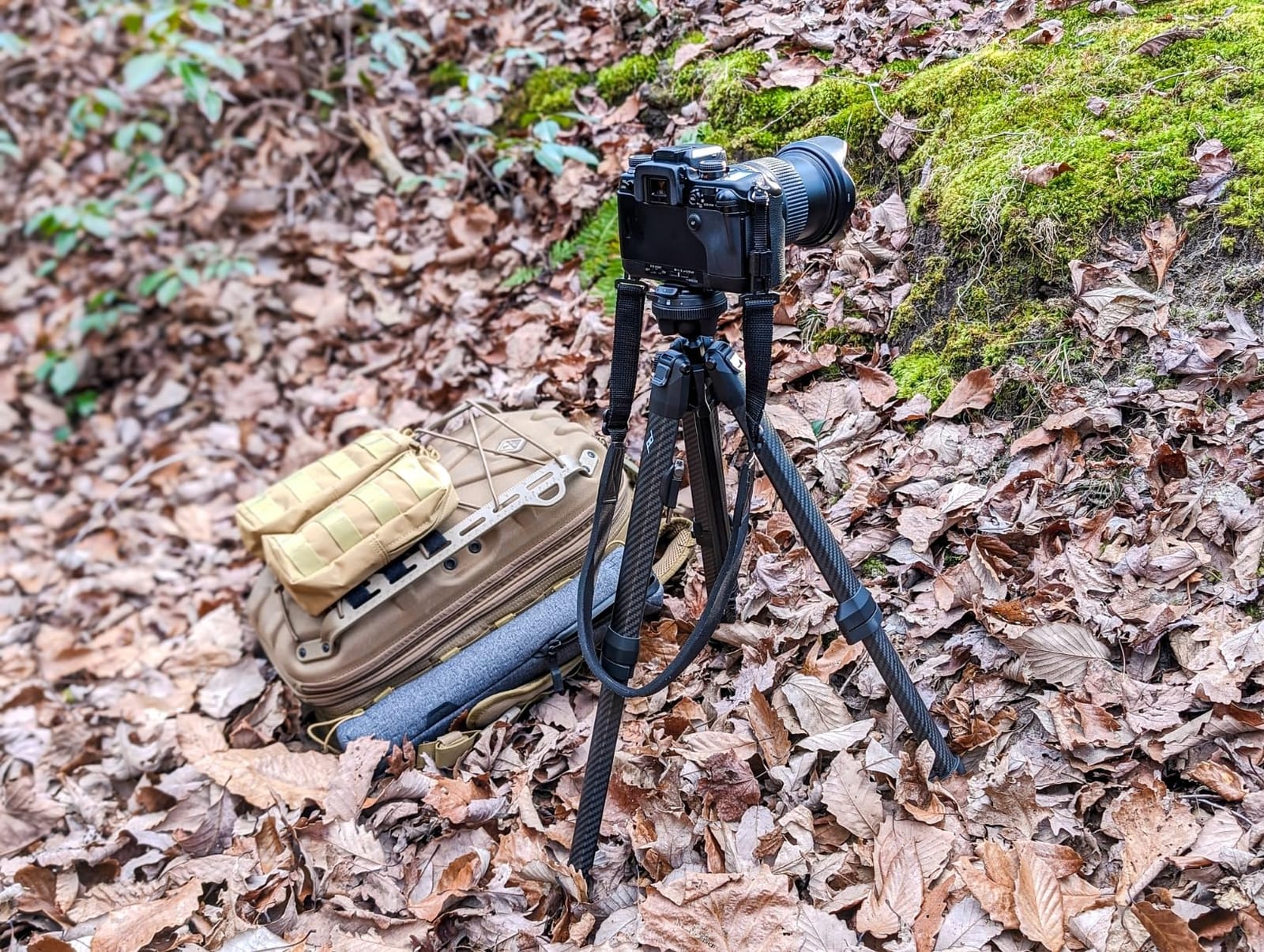
What you should check before buying this one
Make sure the 20 lb rating comfortably exceeds your rig. A full-frame body plus a 70-200mm and a spare battery often lands near 6 lb, which leaves plenty of headroom.
Also check that you are comfortable with a swivel-style head. If you switch lenses often or shoot low to the ground, practice the vertical range before you leave home.
Where this tripod falls short
The lock levers can pinch fingers, which is genuinely unpleasant when you are wearing gloves and working fast. The bundled hex key holder also ejects the tool easily, so expect to lose the key in a bag at some point.
If your work is heavy wildlife or long telephoto from a hide, the small upper sections will feel soft compared with a full-size carbon tripod. This one is built for mobility first.
2. NEEWER TP17B Carbon Travel Tripod: Best Value With Monopod Conversion
NEEWER Basics Carbon Fiber Travel Tripod Monopod, 64″ Compact, TP17B
Folds to 16.3 inches
3.2 lb
13 lb load capacity
64 inch max height
Pros
- Converts to a monopod for crowded places
- Arca-style plate and bubble level included
- Large review count for a budget carbon kit
- Smooth ball head for the money
Cons
- Thin legs wobble at full extension
- Ball head friction is on off rather than adjustable
- Heavier than a carbon travel tripod should be
More than three thousand reviews sit behind this one, and the reason is straightforward: nothing else at this tier gives you a two-section center column, a reversible leg system, and a monopod conversion in the same kit. For street and travel work where you are constantly moving, unscrewing one leg and using it as a handheld support is worth more than a slightly stiffer frame.
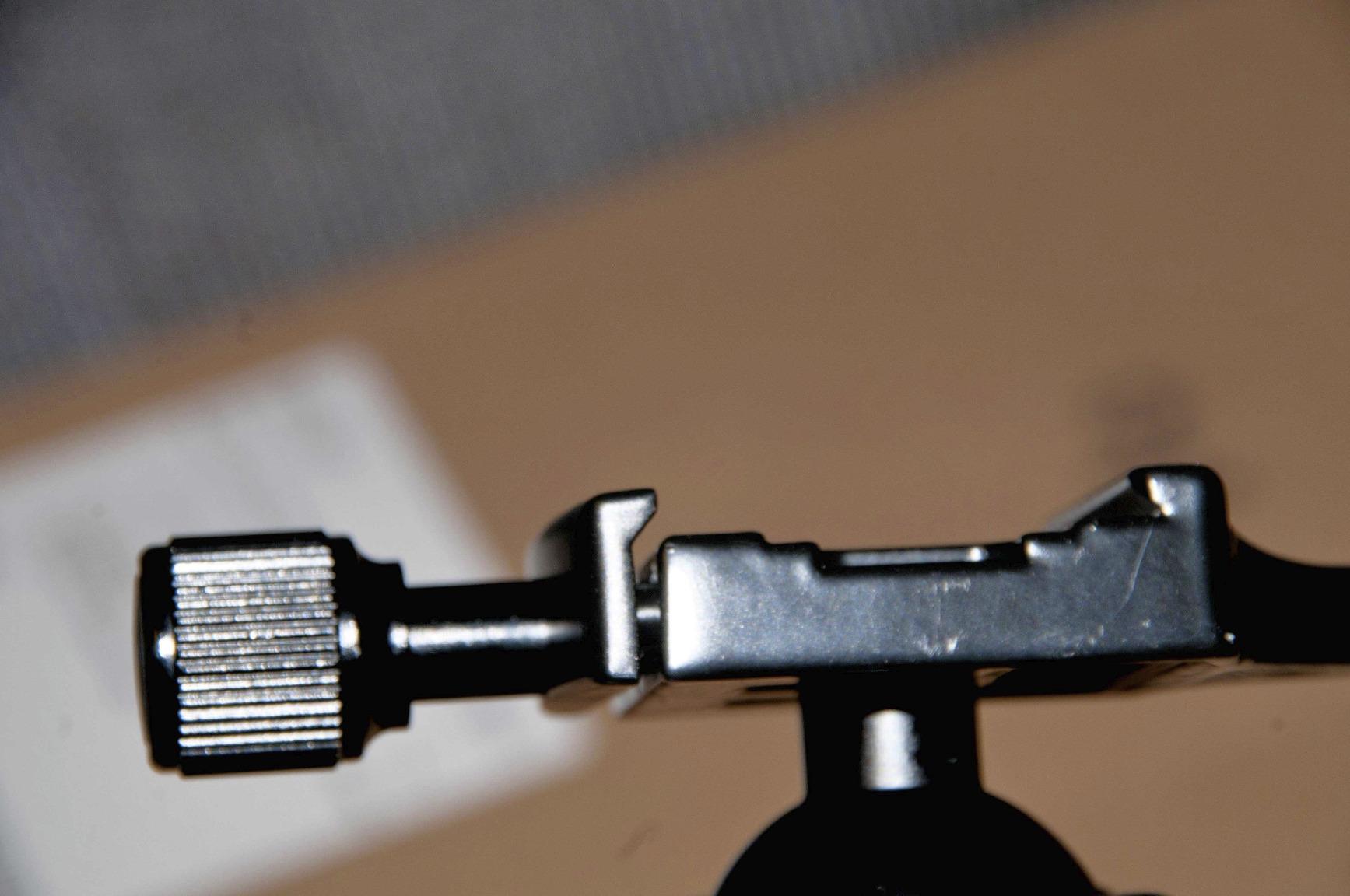
The Arca-type quick release plate and bubble level in the box are a genuine bonus at this level. Most competitors make you buy the plate separately, and a bubble level quietly saves you a lot of reframing on long exposures.
Where it struggles is at full extension. The lower leg sections are thin, and owners repeatedly report visible wobble with anything above a lightweight mirrorless kit. Height range goes to 64 inches, which is generous for a travel tripod, but you will get real stability out of the first couple of sections rather than the last.
The bundled ball head is smooth but its friction control is effectively on or off, not a continuous adjustment. That means it either holds a camera or slowly tips until you touch it, which is unpleasant for panoramas and unsuited to telephoto work at an angle.
What you should check before buying this one
Count your camera and lenses against the 13 lb rating. A mirrorless body with a 35mm and a 23mm sits comfortably; add a 70-200mm and you are close to the ceiling before you have counted the battery grip.
Decide whether you will actually use the monopod mode. If not, the GEEKOTO below offers a higher load rating for a similar weight.
Where this tripod falls short
At 3.2 lb it is heavier than most carbon travel tripods in this group, which undercuts the main argument for buying carbon in the first place. A few owners also report that the tubes may be aluminum with a carbon-look wrap, so verify the material yourself if that matters to you.
The head wandering slightly when fully locked is a recurring complaint. It is minor for static tripod work but visible in video.
3. GEEKOTO Carbon Fiber Tripod: Best for Heavier Rigs on a Budget
GEEKOTO Carbon Fiber Camera Tripod with 1/4″ Quick Release Plate,Foldable
Folds to 20.8 inches
3.4 lb
26.5 lb load capacity
79 inch max height
Pros
- Highest stated load rating in this group
- Converts to a monopod or hiking pole
- Quick release plate swaps cameras fast
- Invertible center column for low work
Cons
- No ball head friction control
- Longest packed length here at 20.8 inches
- Slower twist-lock setup than lever designs
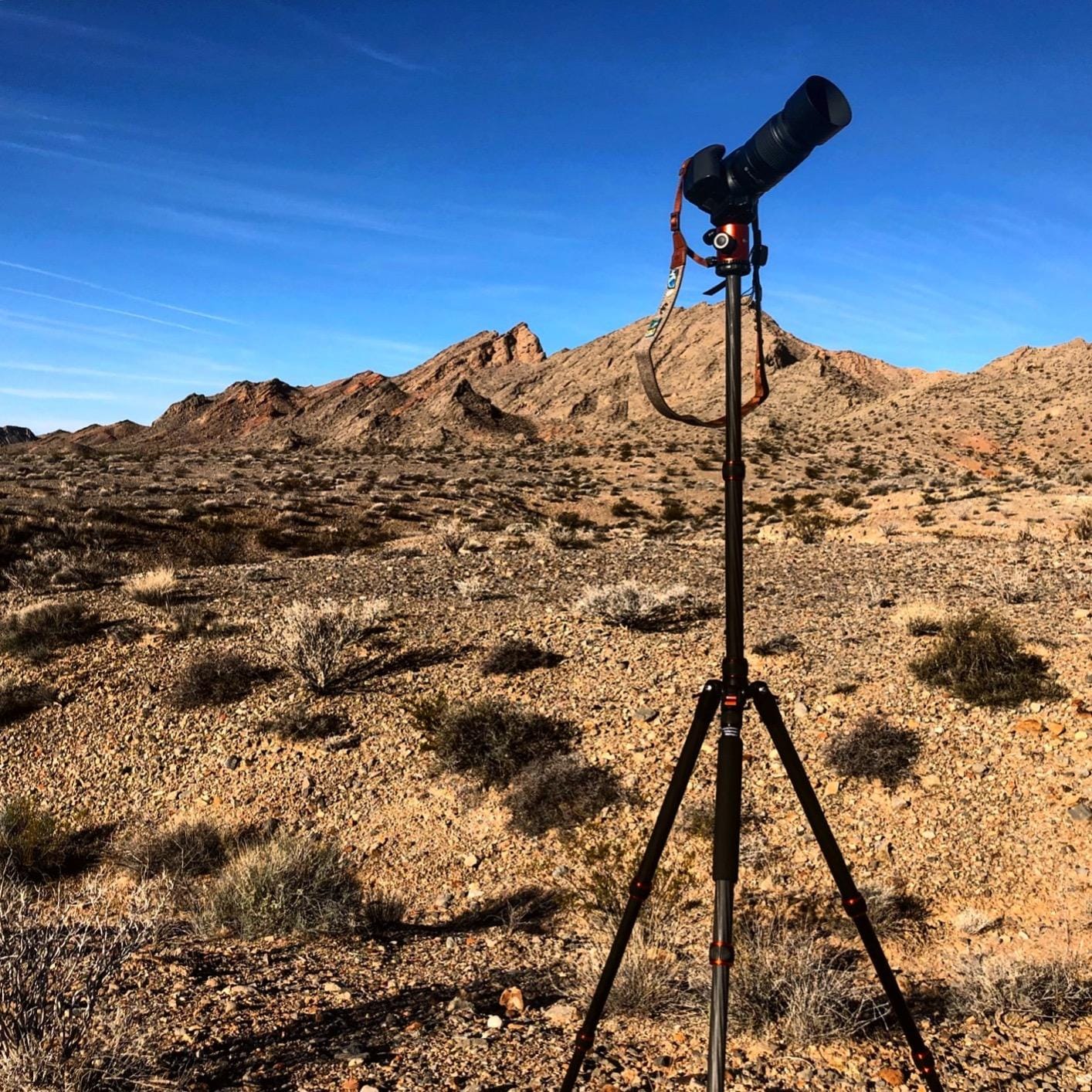
Most travel tripods are built for a mirrorless body and a prime. This one is rated to 26.5 lb, which puts a full-frame DSLR with a telephoto lens inside the working range rather than at the marketing ceiling. If you are moving down from a full-size tripod and want the load rating to transfer, that headroom is the reason to look here.
The monopod and hiking pole conversion takes about a minute and works well for static travel portraits and wildlife where a tripod leg in the other hand keeps you stable. The quick release plate swaps cameras in about two seconds, which is faster than most travel heads manage.
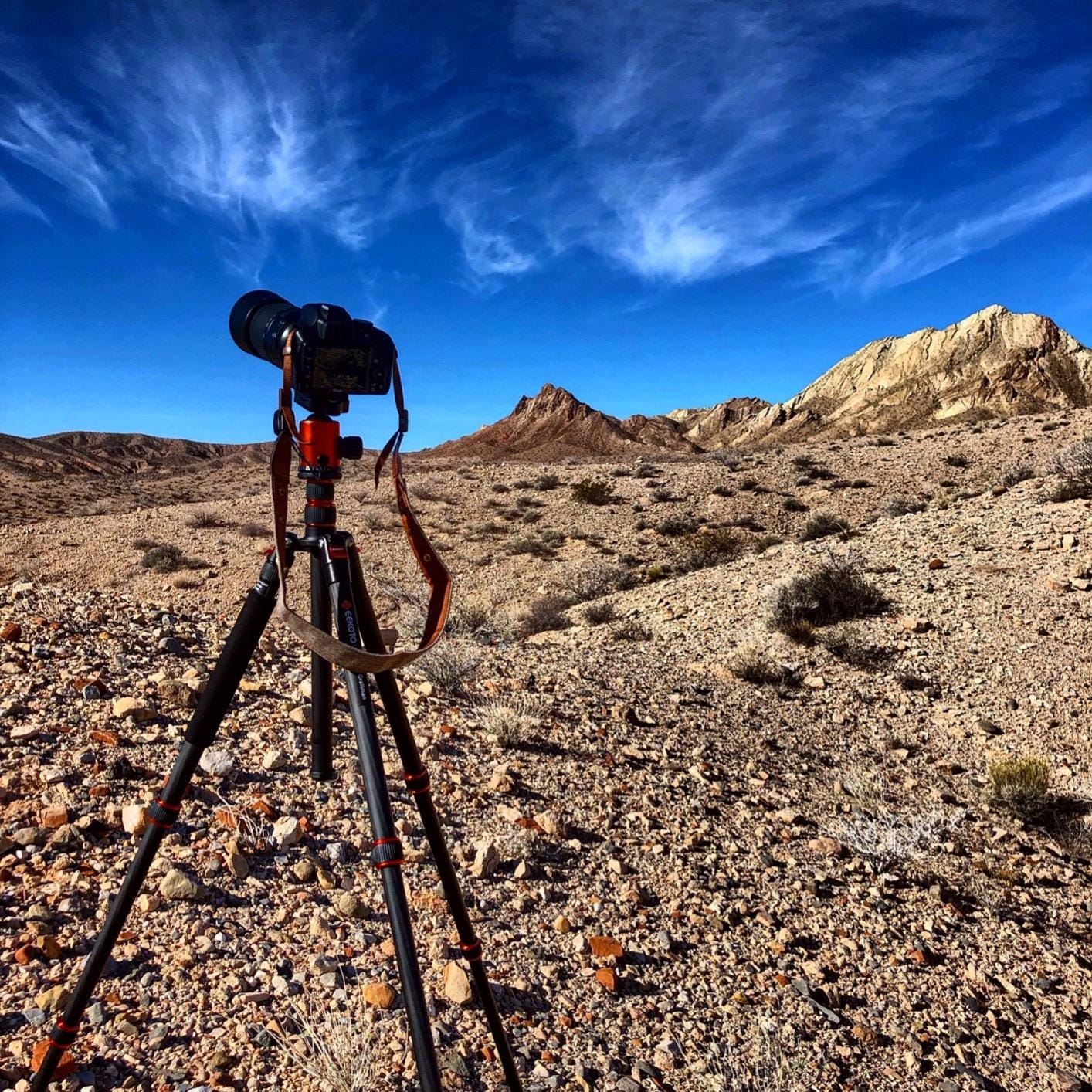
Two things work against it. The 79 inch maximum height is unusually tall for a travel kit, and reaching it means extending thin sections, which is exactly where stability drops off. Most people should treat this tripod as a working-height model and ignore the headline height.
The second is the missing friction control on the ball head. There is no tension dial at all, so the head either locks rigid or releases fully. That is workable for stills on level ground and frustrating the moment you need a slow tilt.
What you should check before buying this one
Measure your bag. At 20.8 inches folded this is the longest pack in the group, and that extra length is the trade you make for the higher load rating.
Check the twist locks in cold weather. Three-section twist locks are reliable but slower than lever cams when your hands are cold.
Where this tripod falls short
Setup speed is the honest flaw. Compared with a lever-lock travel tripod, the twist locks add meaningful seconds to every deployment, and that compounds across a long day of shooting.
The bundle is legs and a basic head. If you already own a good Arca-compatible head, budget for swapping it.
4. SIRUI Traveler 7C: Best for Inverted Low Angles With a Full Telephoto
SIRUI Traveler 7C Camera Tripod 65.55 inches Carbon Fiber Arca Tripod with E-10 360° Panorama Ball Head and Arca Swiss Quick Release Plate Load Capacity Up to 17.6lbs, Convertible to Monopod
Folds to 18.9 inches
3.46 lb
17.6 lb load capacity
65.5 inch max height
Pros
- Strong load rating for its weight
- True invertible center column
- Arca-Swiss plate included
- Six-year warranty
Cons
- Not as compact folded as shorter travel models
- Twist locks deploy slower than lever locks
This is the tripod to consider if your travel shots include low ground-level compositions. The center column reverses properly, so you can mount the camera underneath the apex and shoot straight up at flowers, rock formations, or a person standing above you on a trail, which is a shot most travel tripods cannot make.
The 17.6 lb load rating with four leg sections and an Arca-Swiss plate means a full-frame body with a 70-200mm sits in the middle of the range rather than at the edge. That middle-of-the-range placement is what separates it from the lighter models in this list.
The monopod conversion uses the center column plus a removable leg, which gives you a genuinely useful single-leg setup for crowded street scenes. Owners who convert one leg for long lenses report it works well for static travel portraits.
Two caveats. At 18.9 inches folded it does not shrink to a water-bottle cylinder, so plan on a bag with a dedicated tripod slot. And the four-section twist locks take slightly longer to deploy than lever locks, which you will notice when the light is going.
The E-10 ball head pans through 360 degrees and comes with an Arca-Swiss compatible plate already fitted, so nothing else needs buying before a first outing. EU spare part availability is listed at 10 years, which matters if you intend to keep this one for a decade.
What you should check before buying this one
Check your usual lens ceiling. A tripod this size works comfortably with lenses up to about 200mm, and beyond that you want a heavier collar or a monopod mode.
Confirm the inverted column suits your low-angle work. It is the reason to buy this model rather than a lighter one, and no other packed carbon tripod in this roundup reverses its column as reliably.
Where this tripod falls short
Packed size is the compromise. It is smaller than a full-size carbon tripod but noticeably longer than the 12 to 16 inch packs that dominate this list, and that length has to live somewhere in your luggage.
The included ball head is fine for stills and underwhelming for anything requiring precise tension control.
5. NEEWER LITETRIP LT32: Best for Video and Time-Lapse Work
NEEWER LITETRIP LT32 62″ Travel Tripod Carbon Fiber with +/-5° Leveling
Folds to 17 inches
2.6 lb
22 lb load capacity
62 inch max height
Pros
- Quick leveling ball head with dual U slots
- Spring flip buckles confirm lock clearly
- Spikes and removable foot pads included
- Arca plate works with Peak Design plates
Cons
- Stock ball head is limited and awkward
- Drifts at steep tilt angles with telephoto
- Carry bag fits the tripod only
The LT32 is built for moving images. The quick leveling ball head offers plus or minus 15 degrees of correction in 5 degree steps, and the dual U slots let you slide a camera forward or back for video framing. That is the feature that makes it useful for solo video and time-lapse, where a plain ball head forces you to re-level by hand every time.
The spring flip buckles are a smart choice for field use. They give clear tactile and audible confirmation when a section locks, so you are less likely to leave a leg partly unlocked and discover it when the frame is blurred.
There is a weight discrepancy worth flagging. The listing shows 1.18 ounces, which is not plausible for a tripod, while the feature copy states 1.18 kg, or 2.6 lb. We use the feature copy figure, and you should treat the published weight as approximate until you weigh it yourself.
Owners frequently buy this as a legs-only product and pair it with their own head, which is the sensible move if you shoot video seriously. The stock head is the weakest part of an otherwise well-considered package.
What you should check before buying this one
Decide early whether you will keep the stock head. If you already own an Arca-compatible video or ball head, this is an excellent legs platform and the head cost is worth it.
Check the leveling range against your shooting angle. It helps most on flat ground and slopes.
Where this tripod falls short
The bundled ball head is limited and awkward for precise horizontal adjustment, and it drifts slightly at steep tilt angles with longer telephoto lenses.
Stability drops a little at full extension because of the thin lower sections, and the supplied carry bag is sized for the tripod alone, not for a mounted camera.
6. Benro Slim TSL08CN00: Best Three-Section Build for Stiffness
Benro Slim Tripod Kit with Ball Head, Carbon Fiber, 4 Sections, Twist Lock Legs, 57.6″ Maximum Height, 8.78 lb. Load Capacity- Black (TSL08CN00)
Folds to 20.1 inches
3 lb
8.8 lb load capacity
57.6 inch max height
Pros
- Fewer leg sections means fewer joints to flex
- Carbon legs with a magnesium alloy shoulder
- Arca-Swiss plate included
- Removable N00 ball head
Cons
- 8.8 lb rating suits mirrorless bodies
- Longest folded length here at about 20 inches
- Twist locks slower than lever locks
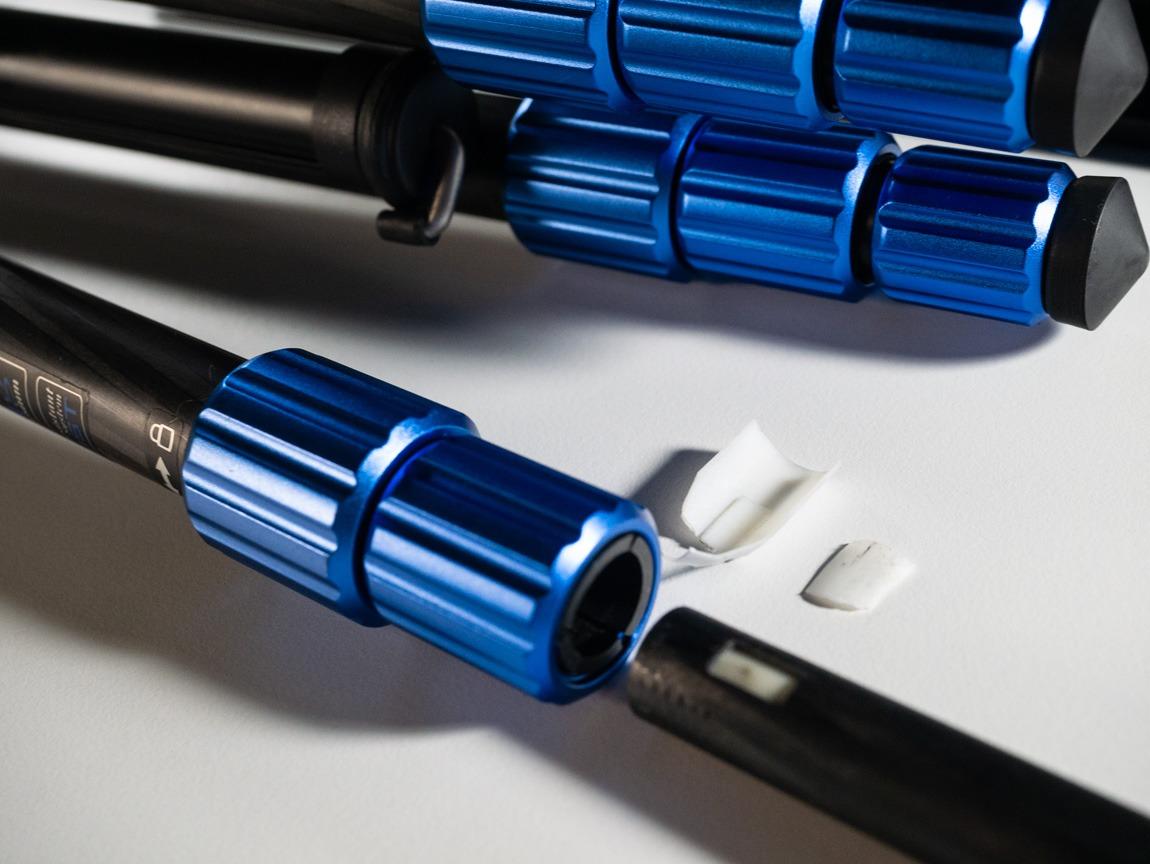
There is a mechanical argument for fewer leg sections. Every section boundary is a joint that can twist, and a three-section leg is meaningfully stiffer under load than a five-section leg of the same diameter. The Benro Slim is the clearest example of that in this group, and it is why its carbon tubes hold position better than lighter multi-section kits.
The magnesium alloy shoulder at the apex adds stiffness exactly where it is needed, at the junction between legs and center column. That area is the usual failure point for twist locks on travel tripods, and reinforcing it pays off over years of use.
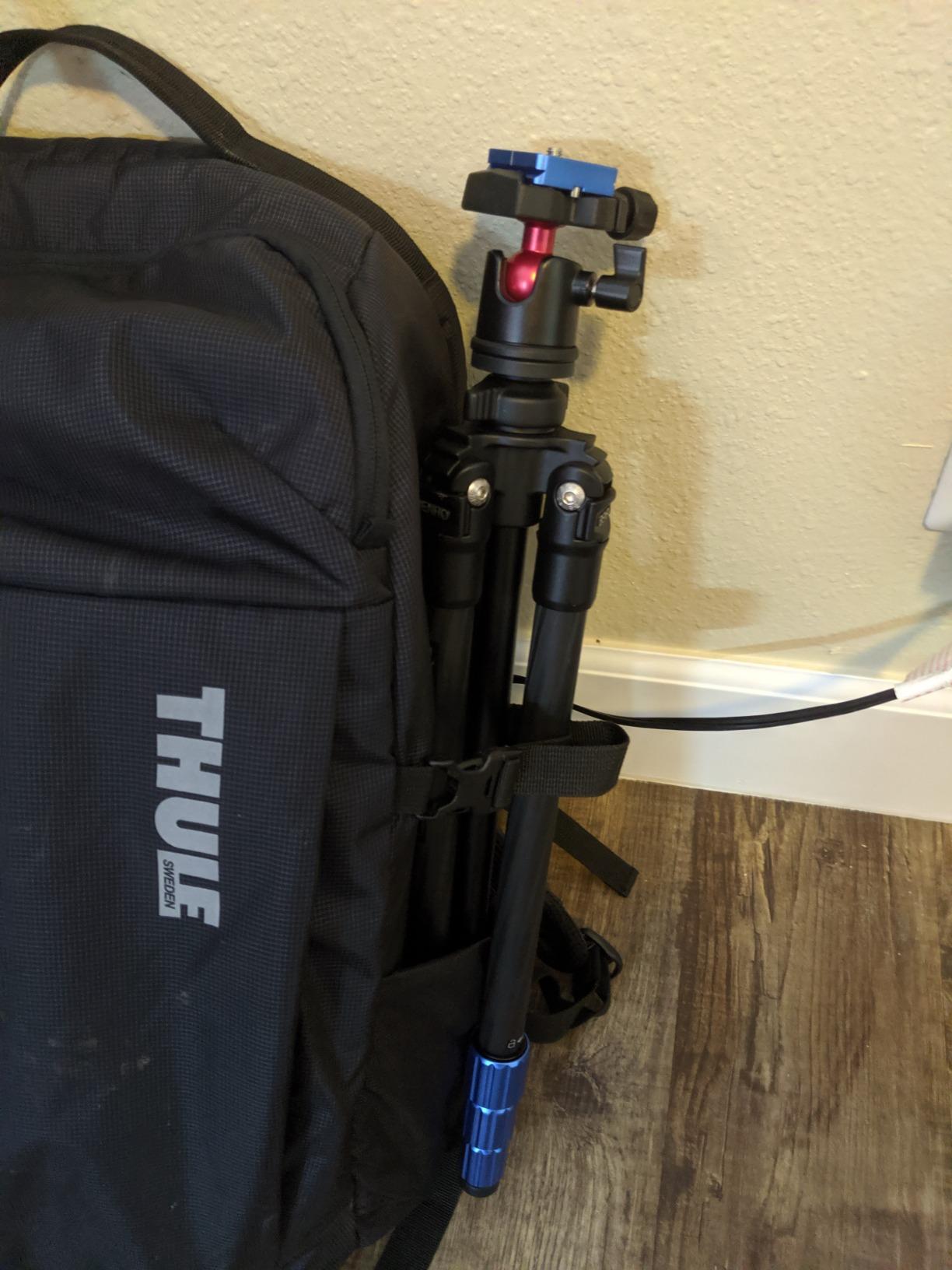
Three leg-angle positions plus a reversible center column give you real low-angle options, and the removable N00 ball head with an Arca-Swiss plate means you can upgrade the head later without replacing the legs. The warranty is three years standard and extends with online registration.
The 8.8 lb load rating is the real limit. It suits mirrorless bodies and compact DSLR kits rather than heavy pro bodies with big telephotos, and you should not buy it planning to grow into a larger system.
What you should check before buying this one
Add up your heaviest single combination. If your working rig exceeds about 6 lb, this rating gets tight quickly and a higher-capacity model will serve you better for longer.
Measure your packed space. At roughly 20 inches folded, this is one of the longest packs in the roundup.
Where this tripod falls short
Stiffness does not compensate for a modest load ceiling. The frame stays rigid, but the rating means you are carrying a mirrorless kit rather than a pro body with a telephoto.
Twist locks are slower than lever cams, which is the general trade-off with this traditional three-section layout.
7. SIRUI Traveler 5CX: Shortest Folded Length in the Group
SIRUI Lightweight Carbon Fiber Travel Tripod, 52″ Compact Camera Tripod with 360°Ball Head Kit, Detachable Center Column, Max Load 13.23lbs/6kg, Traveler 5CX
Folds to 12.4 inches
2.03 lb
13.23 lb load capacity
52 inch max height
Pros
- Shortest pack here at 12.4 inches
- Only about 2 lb while carrying 13.23 lb
- Removable column doubles as a short monopod
- Wide height range from 3.54 to 52 inches
Cons
- Legs flex at full extension with heavier payloads
- Column is removable but cannot invert
- Too light for astrophotography or big telephoto
Nothing else here packs smaller. At 12.4 inches folded, the Traveler 5CX fits inside a normal daypack without a dedicated tripod slot, which changes what you can carry on a long walk. The 2 lb weight also makes it the obvious choice when every gram counts on a multi-day hike.
Despite that, the 13.23 lb rating is genuinely usable with a full-frame body and a standard zoom. Reviewers describe it as the ideal lightweight ultra-compact travel tripod, which tells you how the compromises are understood.
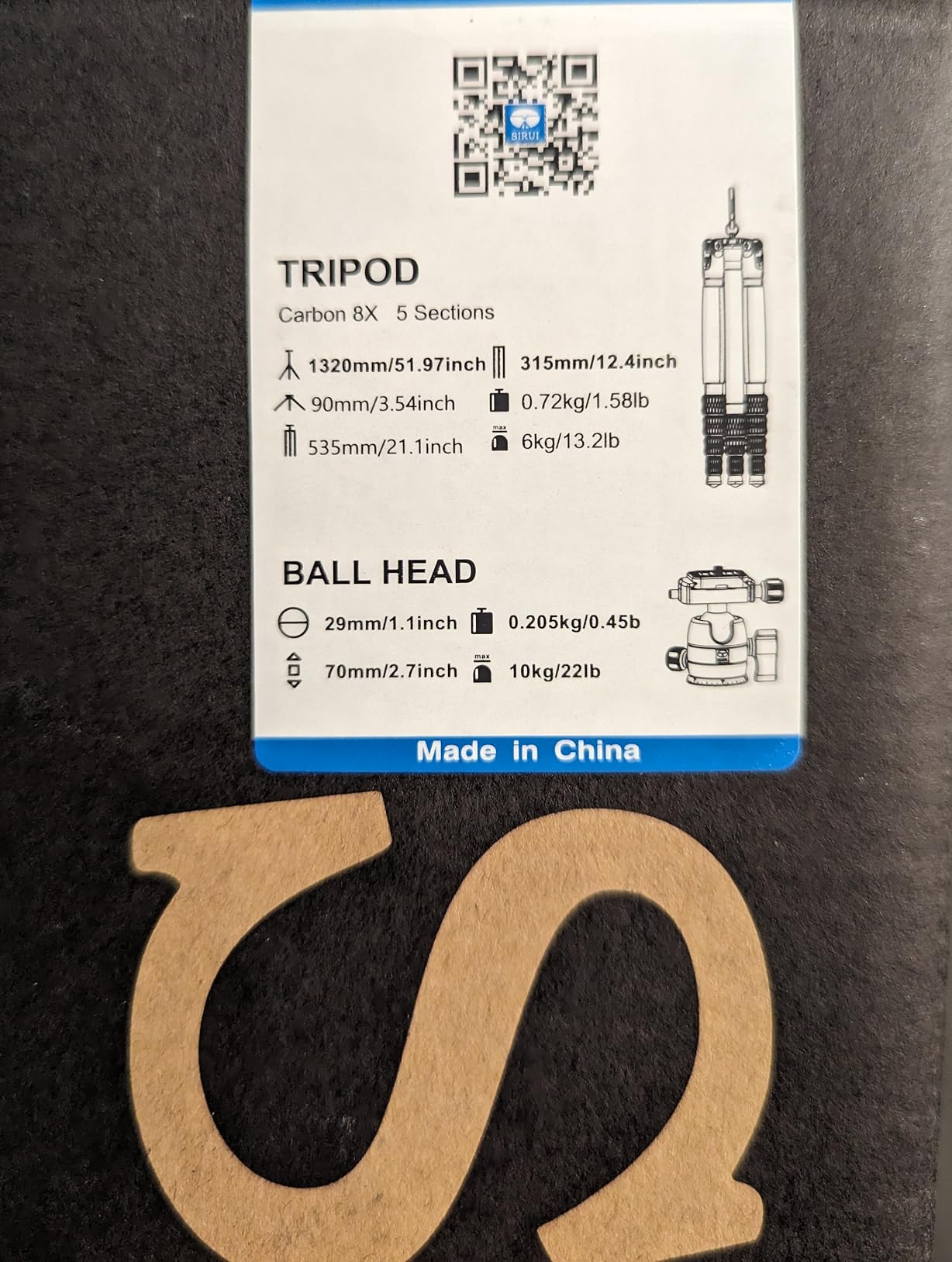
The height range is unusually wide, running from 3.54 inches to 52 inches, and three leg-angle positions extend the working options beyond the raw numbers. The removable center column doubles as a short monopod or cane, which is handy on wet ground or when your hands are full.
Accept the flex. Owners report leg movement at full extension with heavier payloads, and that is the price of a five-section layout at 2 lb. Keep the working height moderate and the tripod feels solid.
What you should check before buying this one
Ask yourself whether packing size or stability matters more on your trips. If you hike all day with a heavy kit, this is not the right tripod, and the GEEKOTO is.
Check that you do not need an inverted column. This one removes the column but will not flip it upside down.
Where this tripod falls short
It is too light and too flexible for astrophotography or heavy telephoto work. Long exposures at full height will show movement, which is a real limitation for a photography tripod.
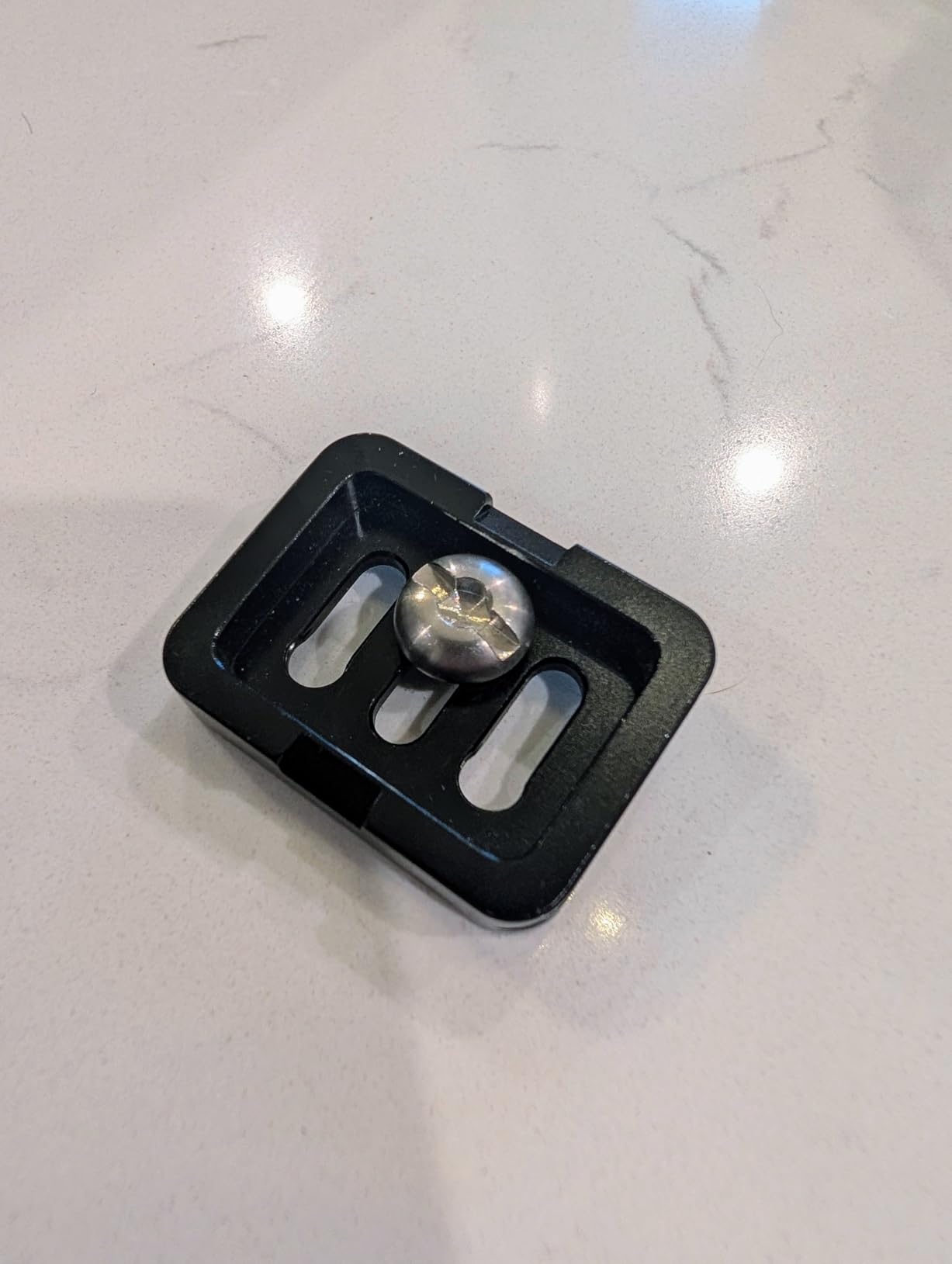
Some owners report limited lifespan on plastic threads, so avoid forcing the column threads.
8. AOKA Mini Carbon Travel Tripod: Lightest Overall for Hiking
AOKA Carbon Fiber Mini Travel Tripod with 360° Ball Head
Folds to 14.6 inches
1.1 lb
6.6 lb load capacity
28 inch max height
Pros
- About 1.1 lb
- the lightest here
- Folds to 14.6 inches with a 2 inch diameter
- Metal twist locks are simple and reliable
- Built-in Arca plate in the ball head
Cons
- Center extension pole flexes when fully extended
- Ball head controls are hard to use with gloves
- Not rated for telephoto lenses
At roughly 1.1 lb, this is hiking gear that happens to be a camera tripod. If you carry a compact camera or a small fixed-lens body and walk serious distances every day, halving a kilogram of pack weight is a bigger practical gain than any stability improvement.
The 2 inch folded diameter means it slides into a jacket pocket or a bottle pouch. The integrated Arca quick release plate in the ball head removes one more loose part from your kit, and the metal twist locks are simple and reliable even after years of use.
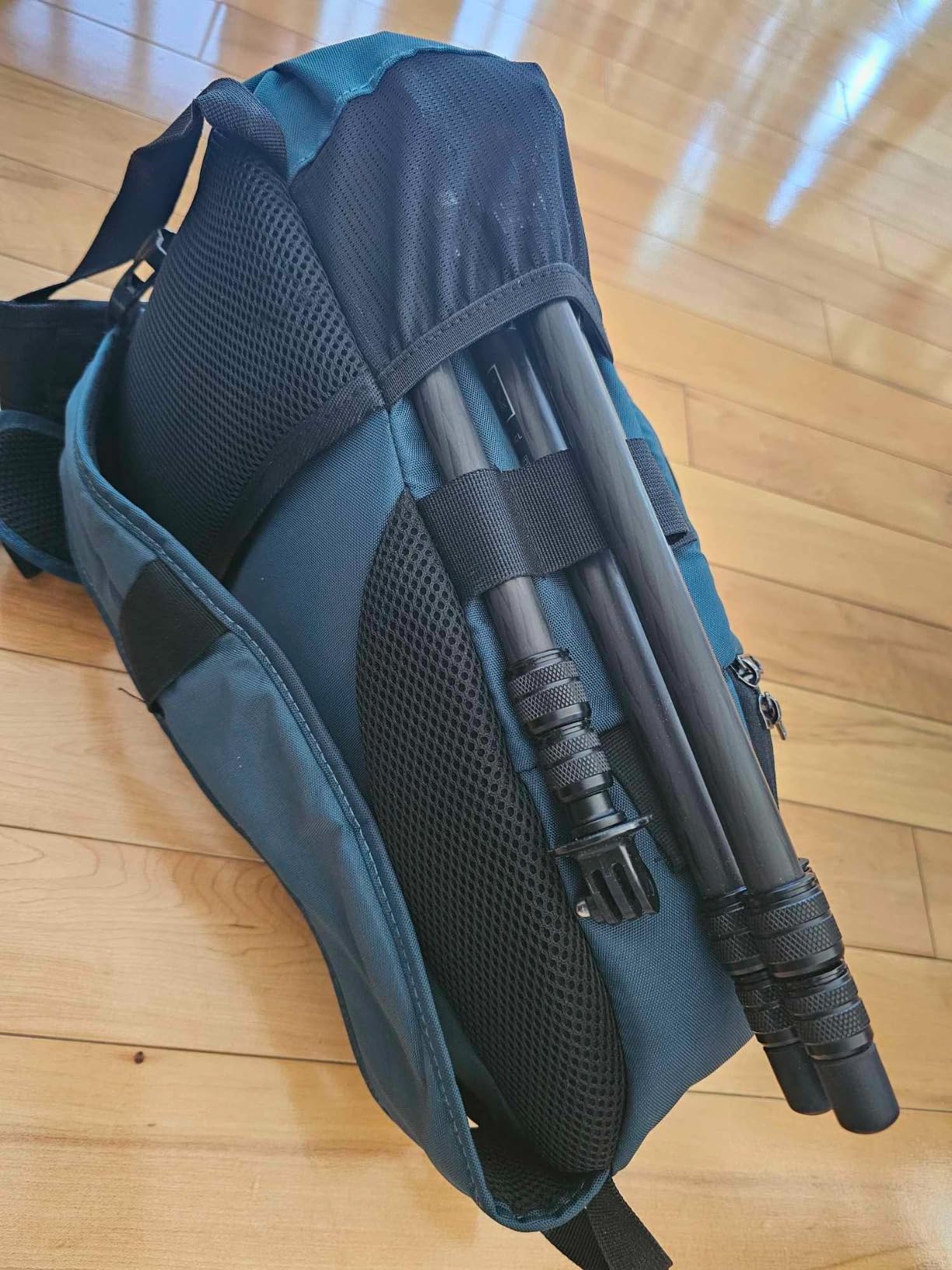
What you give up is height and load. Maximum height is around 28 inches, which means no standing portraits of people and no overhead work, and the 6.6 lb rating restricts you to a light mirrorless kit or a compact body with a short lens.
The extension pole flexes and vibrates when fully extended, which is the flaw most likely to reach your photos. Keep the working height short and the mini ball head still performs for panoramas and time-lapse.
What you should check before buying this one
Check that your heaviest rig is well under 6.6 lb. This tripod is for compact setups, not full-frame plus telephoto.
Decide whether 28 inches of height is enough. If you photograph people, that is the dealbreaker.
Where this tripod falls short
The extension pole vibration shows up in any exposure long enough to matter, and the ball head controls are bunched and awkward with gloves on, which undercuts the hiking premise.
Unscrew speed makes it slower to deploy than lever-lock designs, and the head screw insert can loosen over time.
9. Manfrotto Befree Advanced Twist: Best Leg Lock System on a Full-Size Frame
Manfrotto Befree Advanced Twist Camera Tripod Kit, Travel Tripod Kit with Fluid Head and Twist Closure, Portable and Compact, Carbon Camera Tripod for DSLR, Reflex, Mirrorless, Camera Accessories
Folds to 16.1 inches
2.8 lb
17 lb load capacity
59 inch max height
Pros
- Under 3 lb while supporting 17 lb
- Locks open all three sections at once
- Spider connectors lock at three angles
- Reversible center column and 360 degree panning
Cons
- 494 head takes only Manfrotto RC2 plates
- Friction knob has no useful sweet spot
- Rubber feet can pull out permanently
Manfrotto has been building travel tripods longer than most brands on this list, and the leg lock design shows it. A single selector releases all three sections at once rather than one at a time, so you go from folded to working height in a few movements instead of a sequence of individual twists.
The spider connectors lock the legs at three angles and the center column reverses for low work. Long-term owners describe the carbon frame as light and sturdy, and at 2.8 lb with a 17 lb rating the numbers are genuinely well matched.

The included Manfrotto 494 ball head is the frustrating part. It accepts only Manfrotto RC2 plates, not generic Arca-Swiss L-brackets, so if your other gear uses standard Arca plates you are carrying a second plate system for no benefit.
The friction control knob also has no useful sweet spot and drifts over time. For long exposures that means checking the frame before every shot, which is a small tax that adds up.
What you should check before buying this one
Check your plate standard first. If you already own Arca-Swiss L-brackets, budget for a replacement head rather than working around the RC2 system.
Confirm the 16 inch minimum height works for your low-angle work, because the reversible column helps here.
Where this tripod falls short
The plate incompatibility is the biggest issue, and it is the kind of thing that only shows up once you are packing a bag with three other pieces of gear that all use Arca plates.
The rubber feet are flimsy and can be pulled out permanently on rough ground, and some buyers report broken legs or seized leg locks after extended use.
10. K&F Concept 60 Inch Carbon Tripod: Best for Monopod Conversion and Full Height
K&F Concept 60″ Carbon Fiber Camera Tripod, Detachable Monopod for SLR DSLR
Folds to 13.8 inches
2.2 lb
17 lb load rating
60 inch max height
Pros
- Only about 2.2 lb with a 17 lb headline rating
- Folds to 13.8 inches
- inside carry-on norms
- Detachable leg becomes a monopod or trekking pole
- Invertible center column for low angles
Cons
- Resin ball head clamp has a bridged side
- Minimum height near 18 inches is high for low work
- Carry bag zipper fails quickly
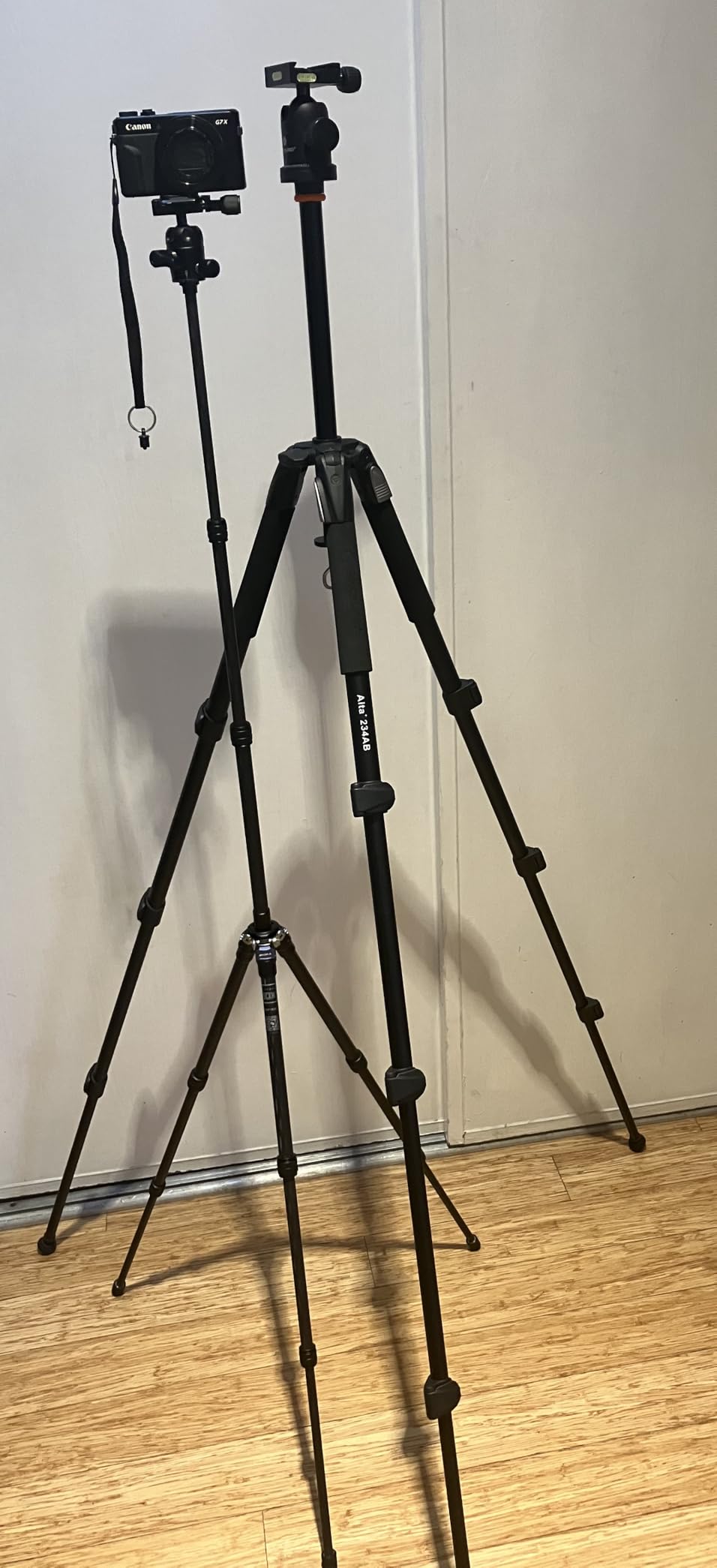
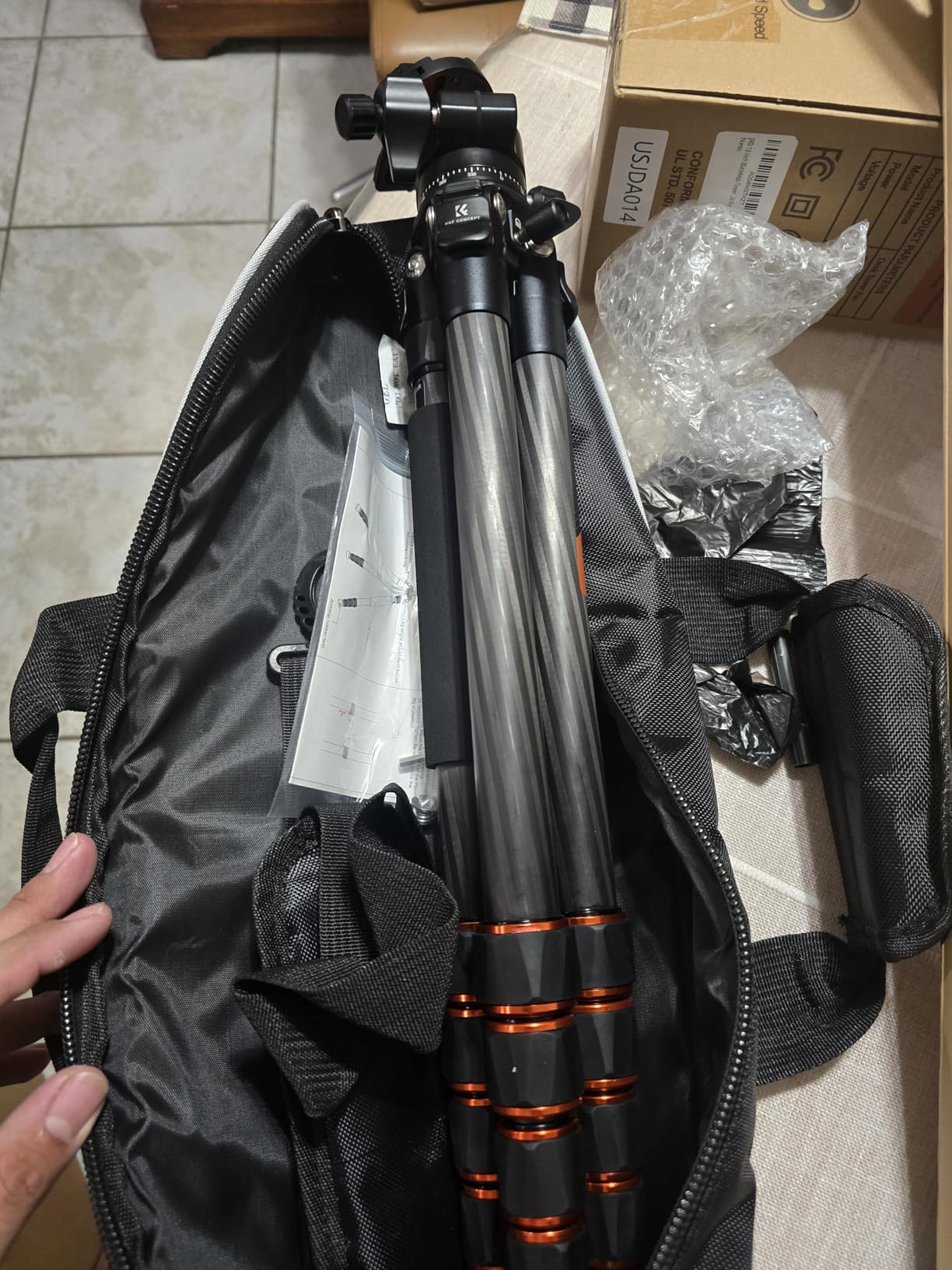
This is the value pick for anyone who needs real height. Five-section carbon legs extend to 60 inches, and at 13.8 inches folded the whole thing sits comfortably within typical airline carry-on dimensions, which few 60 inch tripods manage.
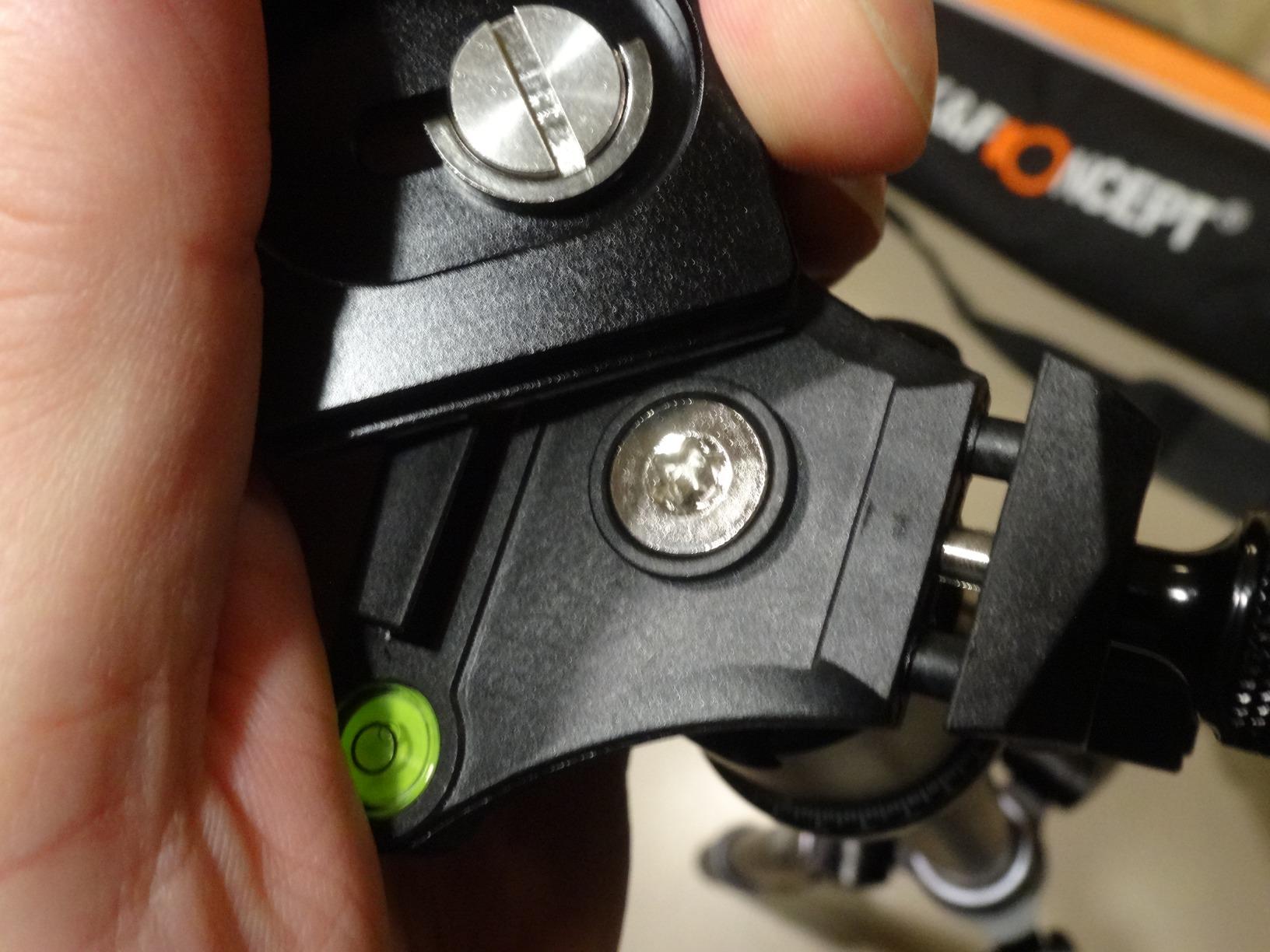
The detachable leg is the feature that separates it. Unscrew one leg and you have a monopod working from 14.6 to 62 inches, which is useful for travel portraits and crowded street scenes where a tripod is a liability. Reviewers also like the bubble level and 360 degree scale on the head for accurate framing.
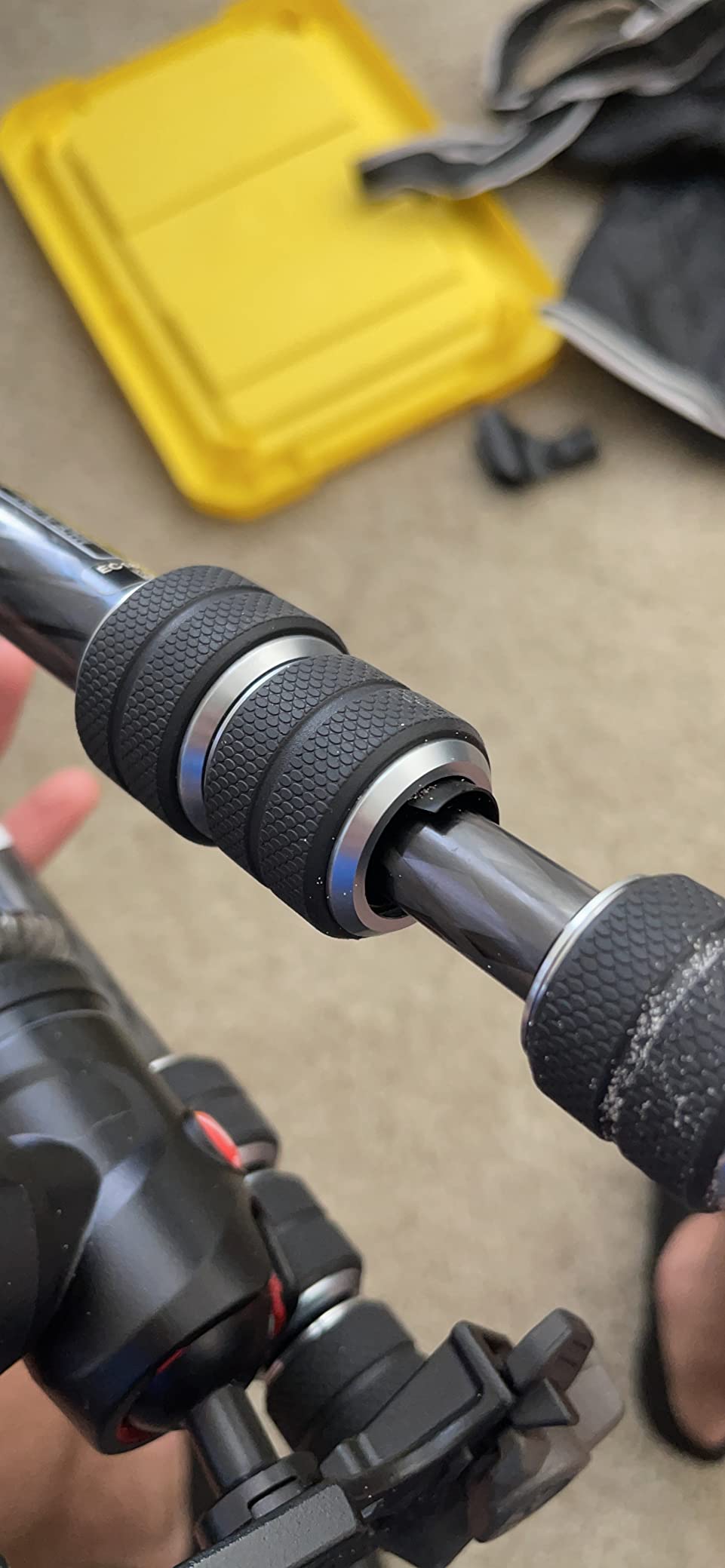
Five-section metal knob locks are straightforward and fast enough in normal temperatures. The invertible center column handles low ground-level and macro angles, which the AOKA in this list cannot do at all.
The weakest component is the included ball head clamp. It is resin rather than metal, and the raised clamp housing will not let longer Arca plates center fully, which matters if you use a lens with a longer plate than the one included.
What you should check before buying this one
Measure against your lenses. If your longest lens has a long Arca plate, check the clamp width before committing, since the housing limits centering.
Decide whether the monopod mode is a real part of how you shoot, because that is the strongest reason to choose this over a lighter three-section kit.
Where this tripod falls short
The minimum height of about 18 inches is too high for true low-angle landscape or macro work even though the column inverts. If ground-level shots matter, choose a model with a lower minimum.
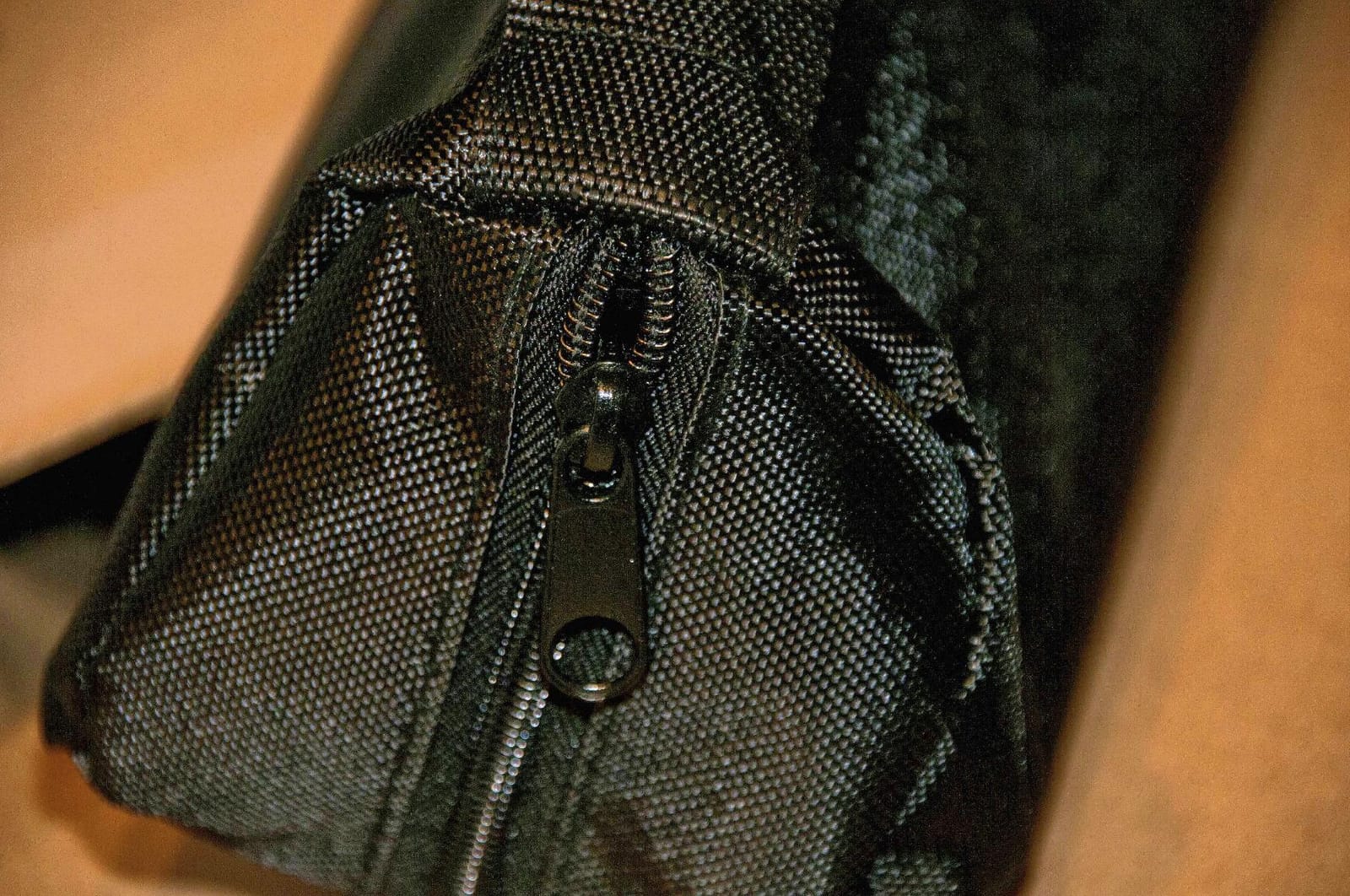
Customer service is praised when leg-angle latches fail, but the carry bag zipper is reported to fail quickly, so plan on a separate bag.
11. SIRUI Traveler 5C: Best for Lightweight Point-and-Shoot Setups
Sirui Compact Traveler 5C Tripod 54.3 inches Lightweight Carbon Fiber Travel Tripod for Camera with 360° Panorama Ball Head for Arca Swiss Quick Release Plate, Max Load 8.8lbs
Folds to 13 inches
1.87 lb
8.8 lb load capacity
54.3 inch max height
Pros
- Lightest load-rated option at 1.87 lb
- Folds to 13 inches for dedicated tripod holders
- Twist locks hold their adjustment over time
- Removable ball head on a standard thread
Cons
- Thin legs flex at full height
- Ball head loosens during use and needs a retwist
- Listing claims an inverted column that does not invert
This is rated lowest in the group, and the reasons are consistent rather than mysterious. At 1.87 lb with five-section legs, the tubes are thin, and owners report visible flex at full extension. For a compact body with a short lens that never leaves the first two sections, the flex is irrelevant.
What it does well is pack. At 13 inches folded it fits dedicated tripod holders on camera bags and hiking packs, and the drawstring bag with accessory pouch, hex keys and carabiner is included, which is more than most kits at this level offer.
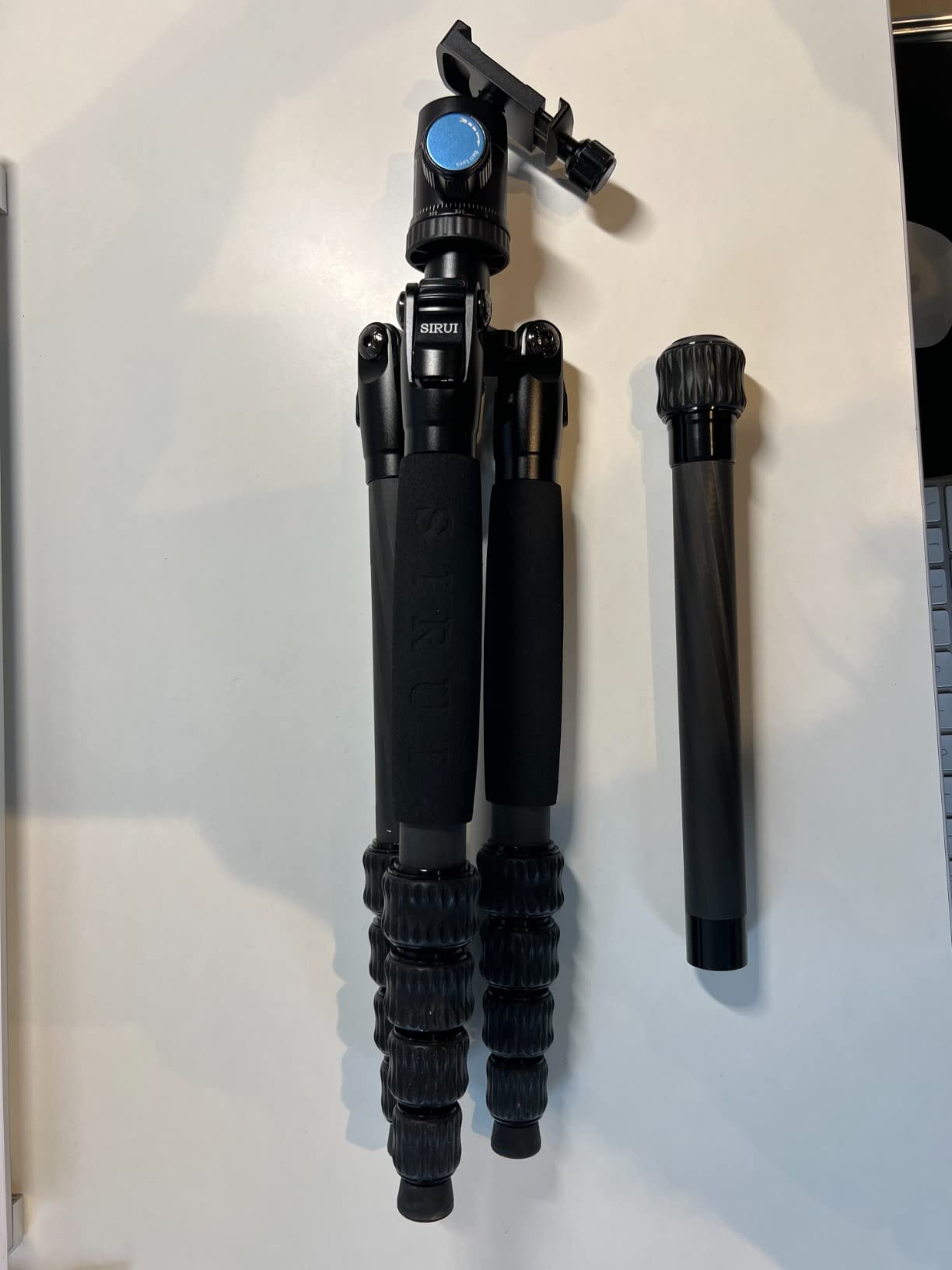
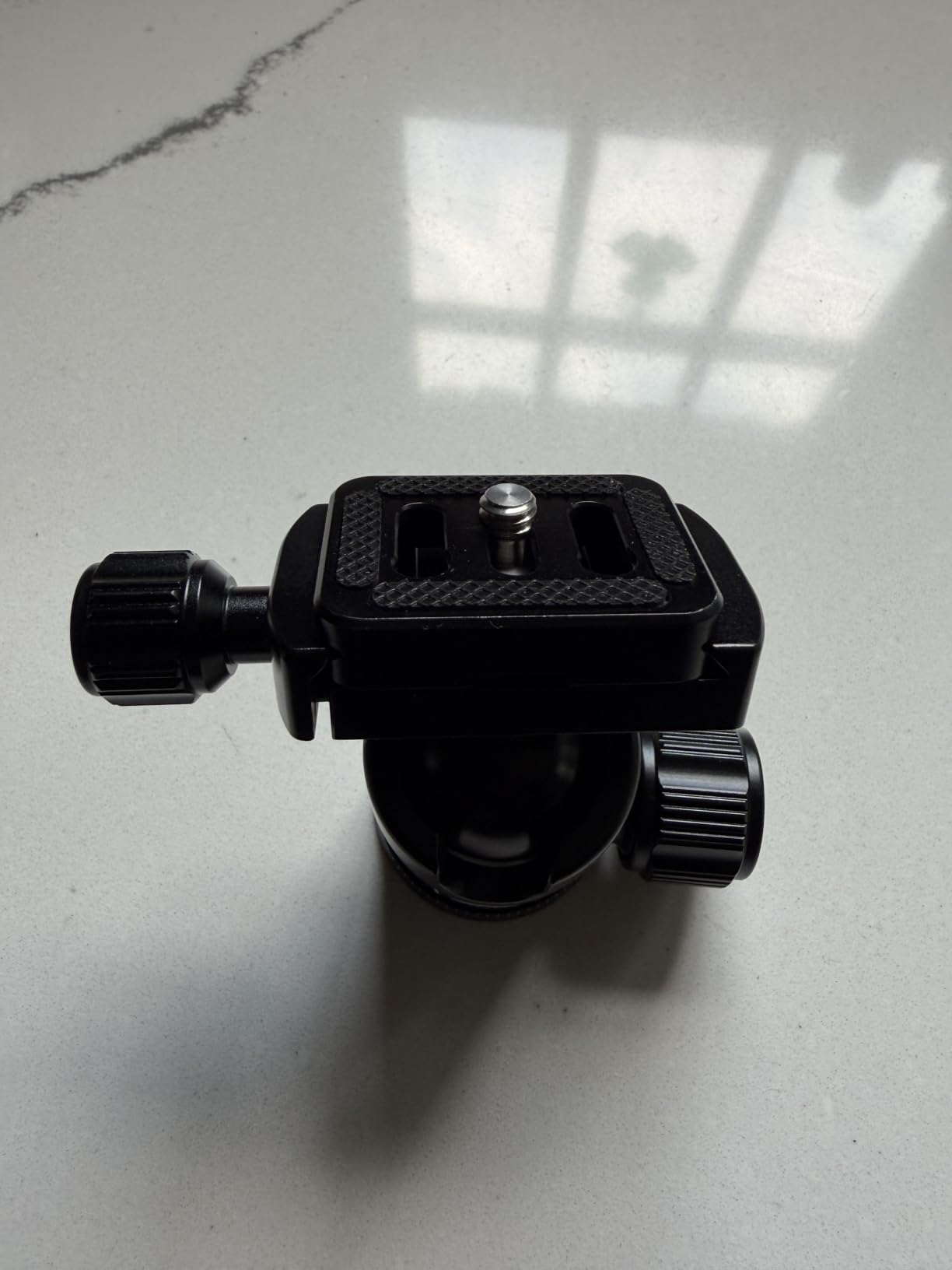
The twist locks hold their adjustment over long use, which removes one of the common travel tripod complaints. The ball head has a fluid 360 degree panning collar and comes off a standard thread, so you can replace it with your own head without adapters.
Two claims in the listing do not match the product. The center column does not truly invert despite what the listing says, and the flipped legs do not lock. That matters if low-angle work was part of your reason to consider it.
What you should check before buying this one
Compare the real weight against an aluminum travel tripod. Owners report the savings are smaller than marketing implies, and at this end of the market the difference may not justify the material on its own.
Check whether your lenses stay under about 200mm. Beyond that, the thin legs are the limiting factor.
Where this tripod falls short
The ball head can loosen during use and needs a quick retwist, which is the flaw most likely to ruin a frame you thought was set.
Flex at full height makes it a poor choice for long exposures or low light, and the inaccurate center column claim costs you a feature you were counting on.
12. Freewell Carbon Fiber Travel Tripod: Best for Creator Setups and Accessories
Freewell Carbon Fiber Travel Tripod 59.1″ Lightweight 1.98lbs Photo/Video 360°Ball Head (Max Load 5kg/11 lbs), Monopod, Quick-Release Plate, for DSLR Cameras & Smartphones
Folds to 16.9 inches
1.98 lb
11 lb load capacity
59 inch max height
Pros
- Under 2 lb with a smooth ball head for panning
- Three threaded accessory holes for lights and microphones
- AirTag compartment inside a leg
- Monopod conversion for tight spaces
Cons
- Leg mechanism becomes balky and stiff over time
- One leg can jam after repeated use
- Not stable enough for heavy telephoto kits
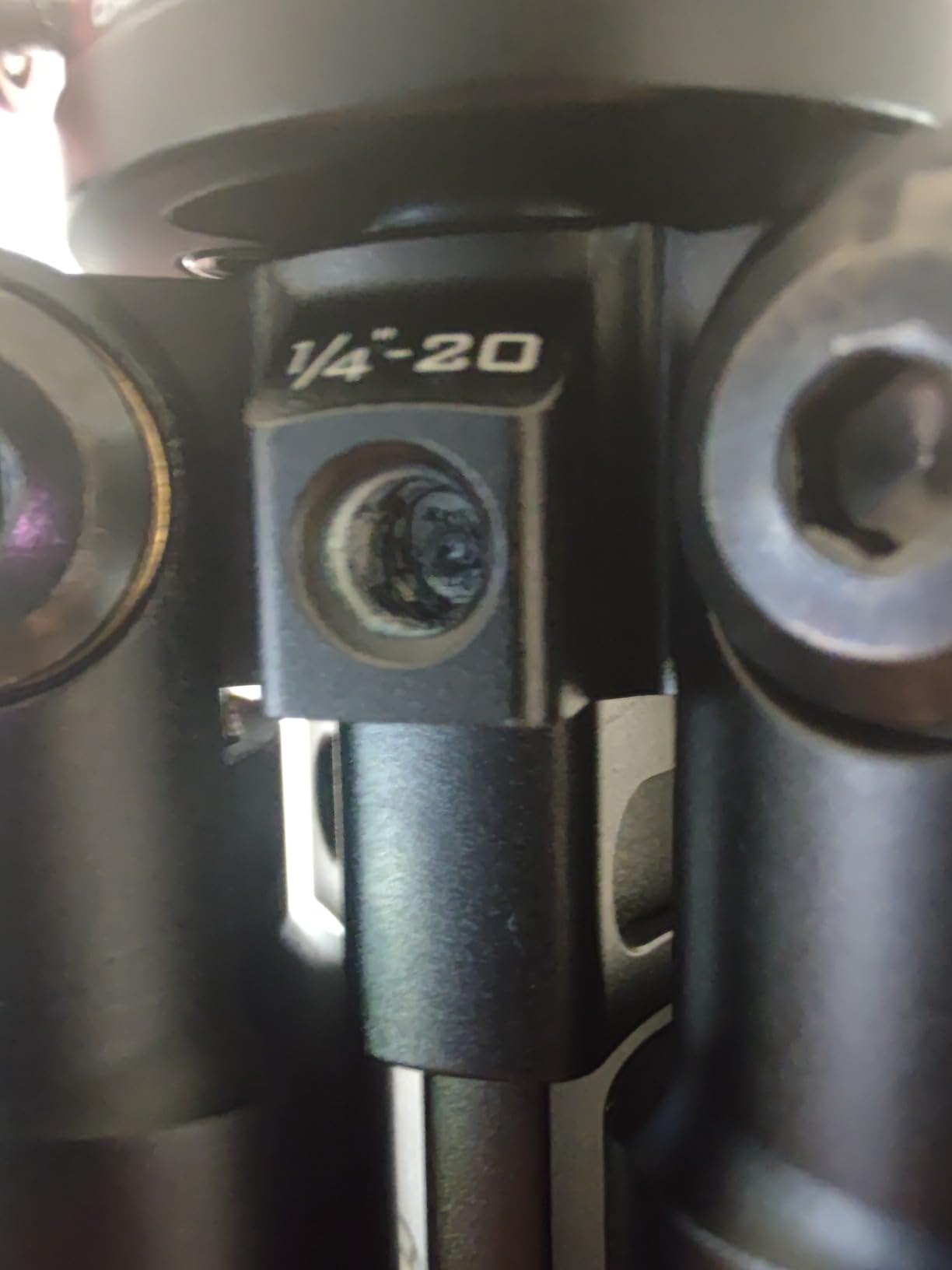
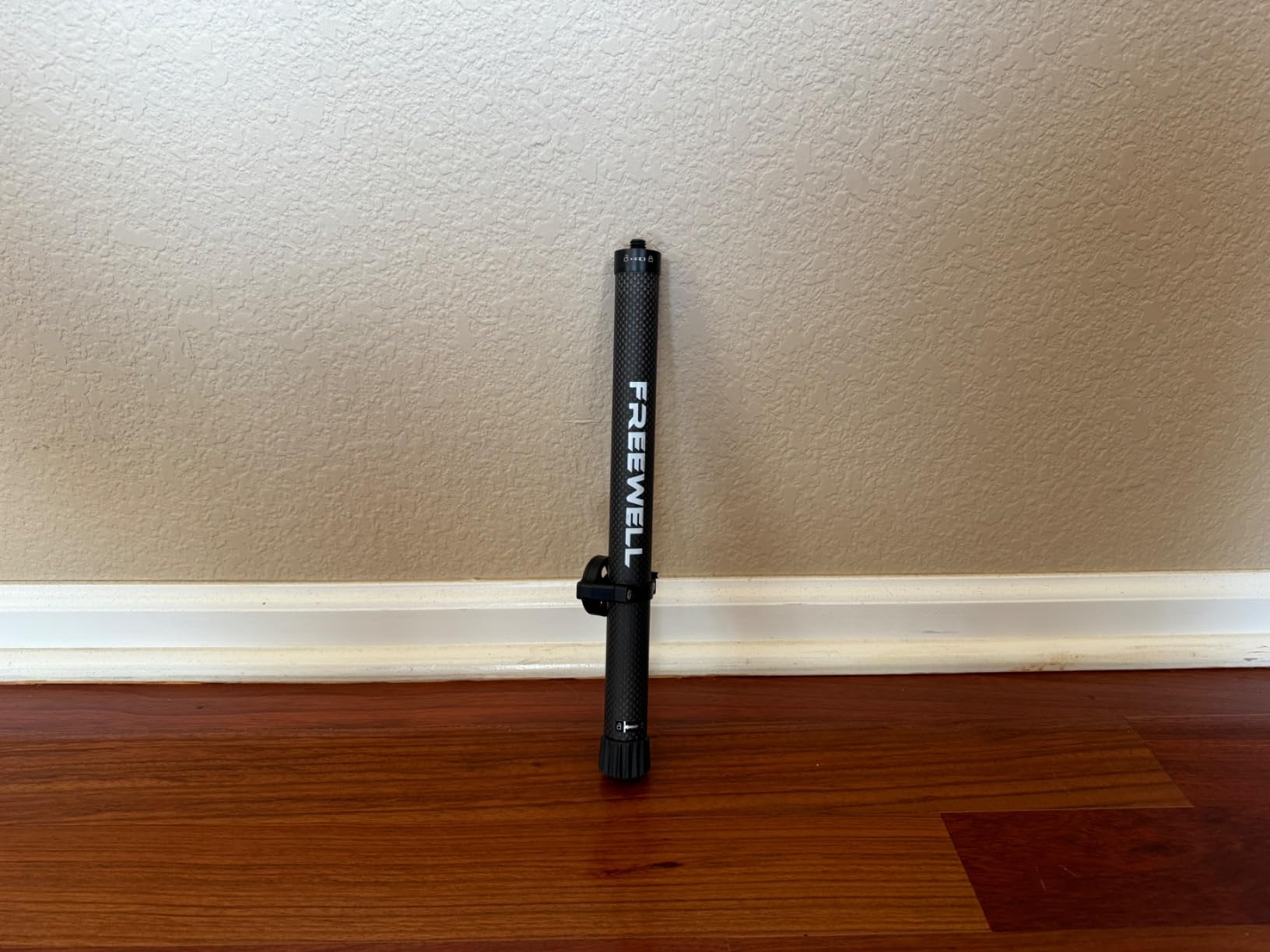
Nobody else in this roundup is built for video-first work. Three 1/4-20 threaded expansion holes let you screw on a light, a microphone, or a monitor arm without a separate cage, and the AirTag compartment inside a leg is a small, genuinely thoughtful touch for a tripod that travels.
The ball head is smooth with fluid movement for video panning, which is what most vloggers and solo content creators need. It extends to 59 inches with a reversible column for low angles, and the quick release plate doubles as a phone mount.
The monopod conversion is straightforward: unscrew one leg and you can work in spaces where three legs are in the way. The reversible center column, bubble levels and a counterweight hook round out an unusually considered feature list for a 1.98 lb package.
The mechanical caveat is real. Several owners report the leg mechanism becoming balky or stiff with use, one leg sticking after repeated operation, and some needing graphite powder at the joints. The sliding mechanism can also fail after use in rain.
What you should check before buying this one
Match the 11 lb rating to your heaviest rig. It is comfortable with mirrorless systems and short lenses, and inadequate for a heavy telephoto setup.
Confirm you will use the accessory threads. That is the main reason to choose it over a lighter or more rigid alternative.
Where this tripod falls short
The leg mechanism durability is the biggest concern, and the reports of a stuck leg after use are frequent enough that you should inspect the joints regularly.
The ball head does not hold very heavy lenses in tilted positions, and reviewers specifically note it is not stable enough for a Nikon Z8 with a 24-120mm. No owner manual is included in the box.
Are Carbon Fiber Tripods Worth It for Travel?
Yes, but only if the weight saving changes what you can carry. Carbon fiber buys roughly 25 to 40 percent less weight than aluminum at the same stiffness, and that difference decides whether you bring a tripod at all on a walking trip. If you would leave an aluminum tripod behind, carbon is worth the premium; if you would carry either, a cheaper aluminum kit serves you just as well.
The material also damps vibration better than aluminum, which matters for long exposures and telephoto frames. It does not make a wobbly tripod stable. Stiffness still comes down to leg diameter, section count, and lock design, and no material change fixes a head with no friction control.
Durability myths do circulate, and the reality is more reassuring. Carbon fiber tubes bend before they snap, and a bent section can often be replaced rather than discarded. The failure modes to watch are the plastic threads on lightweight models and the leg locks, not the tubes themselves.
Carbon Fiber vs Aluminum for a Travel Kit
Aluminum is heavier, cheaper, and dent-resistant. It tolerates being dropped on gravel and does not care about salt spray or sand. For anyone working on a hard deadline in bad weather, that resilience is worth real money.
Carbon fiber is roughly a quarter to a third lighter at equivalent stiffness, which is the entire argument for it. On long hikes that saving compounds, and the layered construction reduces the high-frequency vibration that shows up in long exposures.
Most of the tripods in this roundup list carbon fiber as the material, but check the details. A few budget kits use aluminum tubes with a carbon-look wrap, and owners have flagged that on more than one model here. Ask for the material before you commit.
Load Capacity and Stability: How to Match a Tripod to Your Rig
Start with your heaviest working combination rather than your lightest. Add the body, the lens, the battery grip, and any plate or filter, then compare against the rating. Aim to have the rating sit at least double your rig weight, because the published number is a failure load, not a working load.
For a mirrorless body with a prime or a standard zoom, anything above 10 lb of rating works. Every tripod on this list clears that bar, including the AOKA mini at 6.6 lb, though its low maximum height is the real limit.
For a full-frame body with a 70-200mm, you want 17 lb or more and four sections or fewer. That points to the Peak Design, the SIRUI Traveler 7C, the Manfrotto Befree Advanced Twist, and the K&F Concept. Each of those has the rating in the middle of the range rather than at the ceiling.
For a long telephoto kit above 200mm, the situation changes. No packed carbon travel tripod in this group is the right tool, and the honest answer is to convert a leg to a monopod, as the GEEKOTO, SIRUI 7C, and K&F Concept all allow.
Leg section count is the variable nobody advertises. Reviewers consistently report that two or three sections is the practical limit for full-frame stability, with the fourth section kept collapsed. A five-section tripod that reaches 79 inches is not more capable than a four-section model at 65 inches; it is just more flexible at the top.
Leg Locks, Heads and Arca-Swiss Plates
Twist locks or flip locks, in short: lever and spring-flip designs deploy in seconds and work with cold hands, while twist locks are more widely serviceable and hold their adjustment better over years. For cold weather or gloves, the Peak Design and the NEEWER LT32 are the easiest to operate one-handed.
Head tension matters more than most buyers expect. A head with no friction control, like the GEEKOTO, either locks rigid or releases fully, and neither is useful for a slow tilt. Look for a head with a separate pan lock and a continuous tension dial.
Arca-Swiss compatibility is worth verifying before you buy. Most models here include an Arca-style plate, but the Manfrotto Befree Advanced Twist ships with a 494 head that takes only Manfrotto RC2 plates, which is a genuine mismatch with the rest of a standard Arca-Swiss kit.
Check whether the clamp is wide enough for your longest plate. Raised clamp housings, as on the K&F Concept, stop longer plates from centering properly, and a slightly off-centre camera is visible in panoramas.
Carry-On Packing and Care for Carbon Tubes
Packed length is not the same as folded length. Folded length is the tripod’s longest dimension when collapsed; packed length adds the diameter of the bundle. A 15.35 inch folded tripod with a 3.11 inch width still needs a slot wide enough for both.
Anything under about 17 inches folded fits most carry-on allowances, and the models in this list at 12.4 to 16.3 inches pack without a dedicated compartment. The 20 inch packs need a tripod sleeve or a checked bag, which is a different decision.
Protect the tubes rather than the tripod. Fill the legs so they cannot flex against each other, keep the bag away from the sharp edges of a laptop or a tool roll, and check the locks before you leave the terminal. A twist lock loosened in transit is the single most common complaint from owners here.
Rinse carbon parts after beach days. Salt crystallises in the leg joints and inside lock mechanisms, and a rinse with fresh water followed by a dry cycle does more for longevity than any coating. Wipe the legs before they go back in the bag, not after.
Frequently Asked Questions
What is the best carbon tripod for travel?
The Peak Design Travel Tripod Carbon is the best all-round choice. It folds to 15.35 inches, weighs 1.29 kg, extends to 60 inches, and holds up to 20 lb. Lever-based leg cams deploy and collapse in seconds without twisting, and the integrated phone mount removes another loose piece from your kit. For lighter loads, the SIRUI Traveler 5CX folds even smaller at 12.4 inches.
What is the best travel tripod for the current year?
The best travel tripod in 2026 depends on your rig rather than the year. A mirrorless body with a standard zoom is well served by the SIRUI Traveler 5CX or the NEEWER LT32. A full-frame body with a 70-200mm needs 17 lb or more of rating, which points to the SIRUI Traveler 7C or the Manfrotto Befree Advanced Twist. Check packed length against your bag before anything else.
Are carbon fiber tripods worth it?
Yes, when the weight saving changes what you carry. Carbon fiber is roughly 25 to 40 percent lighter than aluminum at the same stiffness, and that is what decides whether you bring a tripod on a walking trip at all. It also damps vibration better for long exposures. It does not rescue a tripod with thin legs or a head with no friction control, so judge stiffness separately from material.
Which travel tripod is best for travel?
The Peak Design Travel Tripod Carbon is the most complete option, with lever locks, a 15.35 inch fold and a 20 lb rating. The SIRUI Traveler 7C is the strongest for low-angle and telephoto work thanks to a true invertible column and 17.6 lb rating. The NEEWER TP17B is the value pick, converting to a monopod for crowded streets. The AOKA mini is the lightest at about 1.1 lb.
What is the best sturdy tripod for travel?
Sturdiness comes from leg diameter and section count, not material. The Benro Slim uses three carbon sections and a magnesium alloy shoulder for the stiffest frame in this group, though its 8.8 lb rating suits mirrorless bodies. The GEEKOTO Carbon Fiber Tripod carries the highest rating at 26.5 lb, with the 17.6 lb on the SIRUI Traveler 7C a close second. Keep upper sections collapsed for stability.
Which Peak Design travel tripod is better, the aluminum or carbon fiber?
The carbon fiber version is the one to buy for travel. It weighs 1.29 kg against roughly 1.6 kg for the aluminum version and folds to 15.35 inches, with a 20 lb load capacity. The aluminum model makes more sense only if you want to avoid the carbon premium, work somewhere the tubes could be dropped on rock, or already own a compatible head and plate system.
The Best Carbon Fiber Travel Tripod for 2026
After weighing all twelve, the Peak Design Travel Tripod Carbon is the best carbon fiber travel tripod for travel photographers in 2026. It is the only one in the group that pairs a sub-16-inch fold with a 20 lb rating, and its lever cams solve the cold-hands and one-handed setup problem that twist locks create.
Pick it if you carry a full-frame body and move every day. If your rig is lighter and your walks are longer, the SIRUI Traveler 5CX at 12.4 inches folded is the better trade. For low-angle and telephoto work, the SIRUI Traveler 7C, and for value with monopod conversion, the NEEWER TP17B.
Whichever you choose, check the packed length against your bag before you buy, and keep the upper leg sections collapsed unless you genuinely need the extra height. Those two habits solve most of the complaints owners report about carbon travel tripods.
Start with the top pick here and compare the spec numbers against the other eleven against your own rig weight. If your heaviest combination exceeds the rating, step up rather than saving the weight.