

The best kayaks for beginners don’t need a massive budget or a long list of fancy features. They need to be stable, comfortable, and intuitive enough that your first time on the water feels like freedom, not a struggle. If you’re curious about kayaking for exercise, fishing, or simply exploring quiet lakes and rivers, choosing the right beginner kayak can make all the difference between falling in love with the sport and giving up after one trip. I’ve tested and researched a wide range of models over the past year, and what separates good beginner kayaks from bad ones almost always comes down to stability first, everything else second. This guide covers the best kayaks for beginners in 2026 and breaks down exactly what to look for before you buy.
New paddlers often make the mistake of prioritizing speed or sleek looks over stability, and that leads to a frustrating first experience. A kayak that feels planted on the water lets you focus on learning proper paddling technique rather than constantly worrying about tipping over. The models in this guide were selected because they give new paddlers the confidence to relax and enjoy themselves, which is what kayaking should feel like from the start.
Table of Contents
Why Kayaking Is a Perfect Activity for Beginners
Kayaking has one of the lowest barriers to entry of any outdoor sport. You don’t need expensive gear, a club membership, or years of training to have a great day on the water. Most beginners learn the basic forward stroke, sweep turn, and self-rescue in under an hour with a short tutorial from a rental shop or a friend. The physical demand is also gentle on the body compared to running or high-impact sports, making it accessible for people of varying fitness levels and ages.
The health benefits stack up quietly over time. Kayaking is a full-body workout that builds core strength, improves cardiovascular endurance, and works the arms, back, and shoulders without the joint stress that comes with many other activities. There is also something uniquely calming about moving across still water that reduces stress in a way few exercises can match. Whether you’re paddling solo for some quiet reflection or heading out with family for a weekend adventure, kayaking rewards you with both fitness and mental space from day one.
What to Look for in a Beginner Kayak
Stability should be your top filter when shopping for your first kayak. Primary stability refers to how steady the kayak feels when you are sitting upright on flat water, and it is driven by hull width and shape. A wider hull between 30 and 36 inches gives new paddlers a sense of security that narrower performance hulls simply cannot match. Secondary stability matters too, especially if you plan to paddle in choppy conditions or slightly rough water. It describes how the kayak handles when leaned on its edge, and most recreational hulls offer a good balance of both without feeling tippy.
Weight capacity is another detail beginners often overlook until it is too late. Every kayak has a maximum weight rating that includes your body weight plus any gear you plan to carry. A recreational day on the lake with a dry bag, water bottle, and snack might add 20 to 30 pounds, so build in a comfortable margin above your body weight. If you are close to a kayak’s stated capacity, the kayak will sit lower in the water, track worse, and feel less stable overall.
Comfort is what determines whether you finish your paddle smiling or counting the minutes until you can get out. Look for adjustable footrests, a padded seat with lumbar support, and enough cockpit room to shift your legs without feeling cramped. Many beginner kayaks come with basic seats that are usable for short outings but become uncomfortable after 90 minutes on the water. If you plan longer trips, factor in an aftermarket seat upgrade or choose a model known for its stock comfort.
Portability rounds out the core considerations. A 40-pound kayak is manageable for one person with a pair of carrying handles or a kayak cart. A 60-plus-pound hardshell requires two people or roof racks with a lift-assist system unless you have a truck bed. Inflatable kayaks solve this problem almost entirely since they deflate and fit in a trunk or closet. Think about where you will store the kayak, how you will get it to the water, and whether you will be launching solo or with help.
Types of Kayaks for Beginners
Sit-on-top kayaks are the most common recommendation for first-time paddlers, and for good reason. You sit above the waterline on an open deck, which means getting on and off is simple and there is no feeling of being enclosed. If you flip over, you can easily climb back on from the water. These kayaks are naturally stable, self-draining through scupper holes, and ideal for casual paddling, fishing, and warm-weather use. The trade-off is that they tend to be slower than sit-in models and you will get wet in rough conditions.
Sit-in kayaks enclose your lower body inside a cockpit with a spray skirt to keep water out. They track straighter, cut through wind better, and keep you drier in cool or choppy conditions, which makes them a solid choice for beginners who plan to move into longer day trips or touring. The learning curve is slightly steeper because re-entry after capsizing requires practice, but the improved performance and weather protection are real advantages once you are comfortable with the basics.
Recreational kayaks fall in the 8 to 12-foot range and are purpose-built for casual paddling on lakes, slow rivers, and calm coastal waters. They prioritize stability and maneuverability over speed, which makes them the natural starting point for most beginners. Most recreational kayaks are hardshells made from rotomolded polyethylene, giving them solid durability at a moderate price point. They are heavier than inflatables but more rugged and responsive on the water.
Inflatable kayaks have come a long way from the pool toys of the past. Modern models use reinforced PVC or drop-stitch construction that creates a rigid, durable hull capable of handling mild rapids, rocky shore launches, and ocean swells. The biggest advantage is portability: a deflated inflatable fits in a trunk or closet and weighs as little as 26 pounds. Setup takes between 5 and 20 minutes with the included pump, and takedown is even faster. For apartment dwellers, people without roof racks, or anyone who wants to try kayaking without a big storage commitment, inflatables are an excellent entry point.
Fishing kayaks are designed for anglers who want to cast from the water, and beginner fishing kayaks are surprisingly capable. They typically feature rod holders, a stable wide hull, and storage compartments for tackle and gear. Many sit-on-top fishing kayaks include an elevated seat system that lifts you above the waterline for a better casting platform. If you already fish from shore or a boat and want to reach new spots, a beginner fishing kayak is a logical step that does not require you to become an expert paddler first.
Top 3 Picks for Best Kayaks for Beginners in October

Perception Joyride Sit Inside Kayak
- Adjustable padded seat
- Sealed bulkhead storage
- Selfie phone slot
- Tracks straight

Pelican Argo 100X Recreational Kayak
- Twin-chine hull for stability
- 36 lbs lightweight
- RAMX durable material
- 275 lb capacity
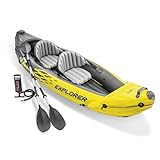
Intex Explorer K2 Inflatable Kayak Set
- 2-person capacity
- 400 lb max capacity
- 15-min setup
- Paddles and pump included
Best Kayaks for Beginners in 2026
Here is a quick snapshot of all the kayaks reviewed in this guide so you can compare specs at a glance.
| Product | Specifications | Action |
|---|---|---|
 Lifetime Lotus Sit-On-Top Kayak Lifetime Lotus Sit-On-Top Kayak |
|
Check Latest Price |
| Intex Explorer K2 Inflatable Kayak Set |
|
Check Latest Price |
 INTEX Challenger Inflatable Kayak INTEX Challenger Inflatable Kayak |
|
Check Latest Price |
| Pelican Argo 100X Recreational Kayak |
|
Check Latest Price |
 Pelican Sentinel 100X Angler Kayak Pelican Sentinel 100X Angler Kayak |
|
Check Latest Price |
 Lifetime Tamarack Angler 100 Lifetime Tamarack Angler 100 |
|
Check Latest Price |
 INTEX Excursion Pro K1 Kayak Set INTEX Excursion Pro K1 Kayak Set |
|
Check Latest Price |
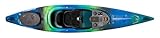 Wilderness Systems Pungo 120 Wilderness Systems Pungo 120 |
|
Check Latest Price |
1. Lifetime Lotus Sit-On-Top Kayak with Paddle
Lifetime Lotus Sit-on-Top Kayak with Paddle, Blue, 8′
39 lbs,Sit-on-top,UV-protected HDPE,Paddle included
Pros
- Very stable hull that resists tipping
- Lightweight at 39 lbs for solo transport
- Self-bailing scupper holes drain automatically
- Quiet on the water for wildlife observation
- Paddle included for immediate use
Cons
- Slower than sit-in kayaks
- Included paddle is basic quality
- Seat back strap can slide during use
- Tracks less straight on long distances
The Lifetime Lotus was the kayak that reminded me how much joy a simple, well-built sit-on-top can deliver on a calm morning. I spent a few hours paddling a local lake with it and the first thing I noticed was how planted the hull felt. Even when I shifted my weight to reach for my water bottle, the kayak held steady without that nervous wobble I have experienced on narrower hulls. At 39 pounds it is light enough that I could lift it into the back of my SUV without much effort, and the included paddle meant I was on the water within minutes of arriving.
After a few longer outings, the trade-offs became clearer. The scupper holes do a great job of draining water from the cockpit, but in cooler weather they let in more splash than a sit-in design would. The included paddle gets the job done for casual use, but it flexes noticeably on harder strokes. What I appreciated most was how quiet the hull is on the water. Wildlife around the lake did not scatter the way they sometimes do with louder kayaks, and I got much closer to a pair of herons than I expected. For beginners who want an uncomplicated, durable kayak they can toss in the car and go, the Lotus delivers reliably.
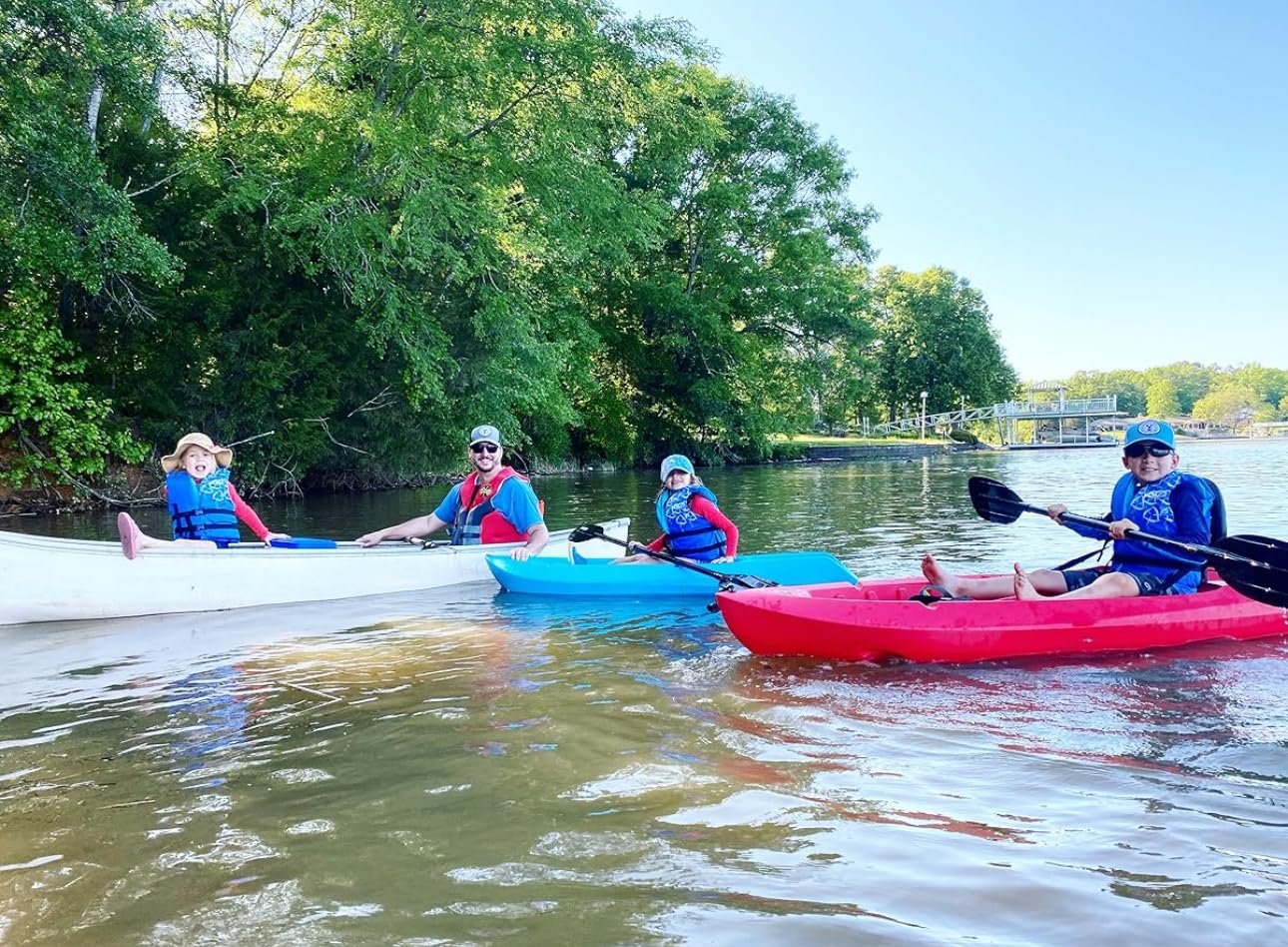
The 5-year limited warranty is a genuine confidence-builder for a kayak in this price range. UV-protected HDPE holds up well through hot summers without becoming brittle, and the flat backend lets you store the kayak upright against a wall to save space. If you plan to do mostly calm-water day trips and value simplicity over speed, this is a hard kayak to argue with as a first purchase.
For whom it’s good
This kayak is perfect for beginners who want a no-fuss, durable sit-on-top for lake and calm river paddling. It suits solo paddlers under 250 pounds who plan to use it for day trips and casual fishing. Families and rental operations appreciate the tough HDPE construction that handles drops and scrapes without complaint. If you prioritize stability above all other factors and do not plan to cover long distances, the Lotus will give you many seasons of reliable use.
The included paddle and built-in carry handles make this an excellent grab-and-go option. Apartment dwellers and people with limited storage will find the upright storage design convenient. It is also a strong choice for anyone who plans to paddle in wildlife areas where quiet movement matters, since the hull moves through the water with very little disturbance.
For whom it’s not
Skip this kayak if you plan to cover more than 3 or 4 miles in a single outing or want to paddle against currents and wind regularly. The hull trades straight-line tracking for stability, so you will find yourself correcting course more often than you would on a longer touring kayak. Paddlers over 6-foot-2 may find the footrests cramped, and the included paddle is functional but not enjoyable to use for more than an hour at a time. If you want a kayak that can grow with you as your skills improve, a sit-in model like the Pelican Argo 100X is the better investment.
The seat back strap can slide during vigorous paddling, which means you might need to pause and re-tighten it occasionally. Color options are limited compared to more premium brands. This is a workhorse kayak, not a performance machine, and that is exactly what many beginners need. It is just not the right fit for paddlers with bigger ambitions on the water.
2. Intex Explorer K2 Inflatable Kayak Set
INTEX Explorer Inflatable Kayak 2-Person Portable Set with Paddles and Pump
35 lbs,Inflatable 2-person,400 lb capacity,All accessories included
Pros
- Unbeatable value for a complete 2-person set
- Quick 15-minute inflation and deflation
- Stable enough for calm lakes and mild rivers
- Packs down small for apartment storage
- Complete kit with paddles
- pump
- and repair patch
Cons
- Included paddles are shorter than ideal for tall users
- Seats lack back support for all-day comfort
- Struggles in wind on open water
- Slower than hardshell kayaks
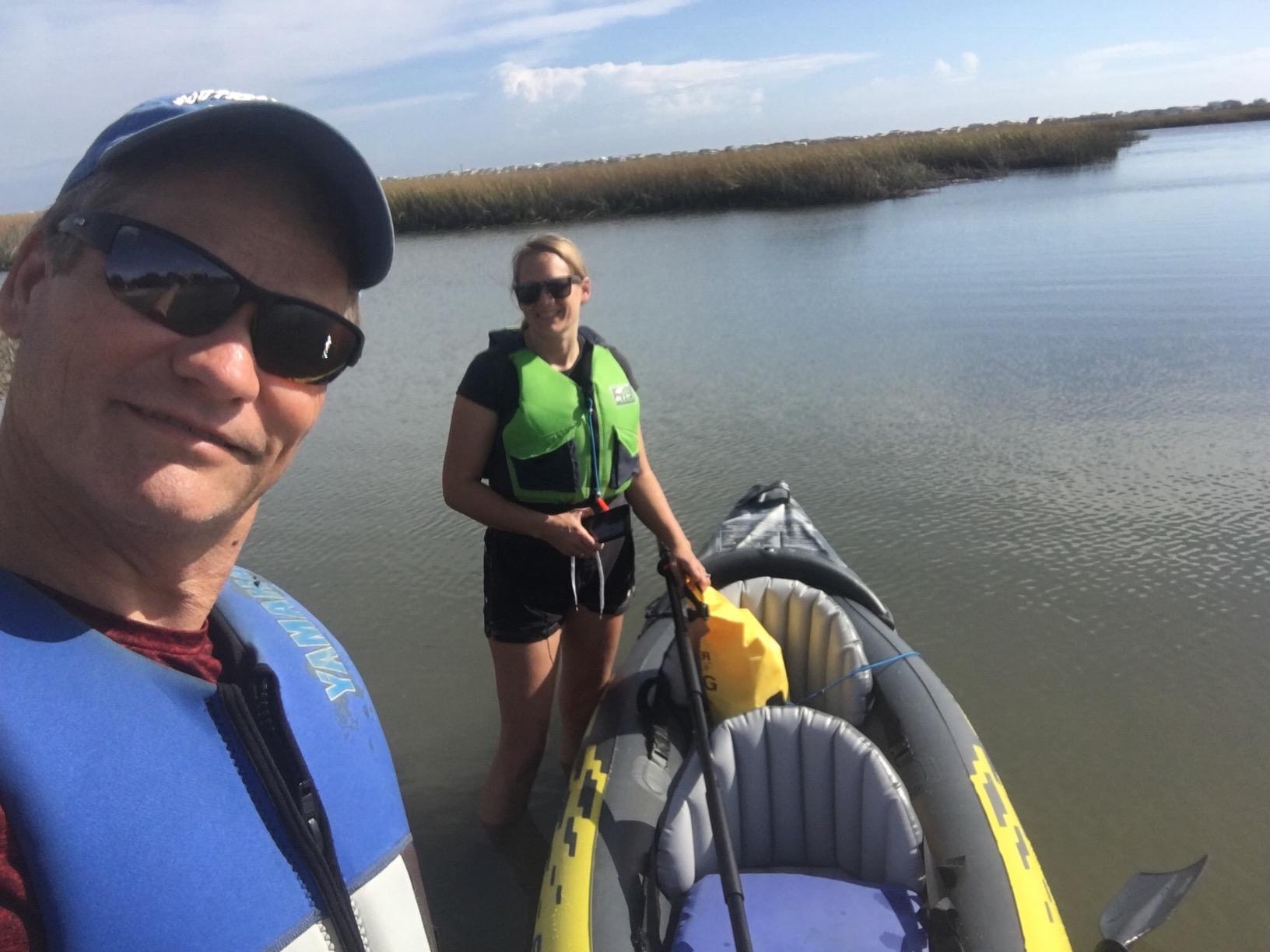
I have used the Intex Explorer K2 on a two-day river trip with a friend and came away genuinely impressed by what the package delivers for the money. The 15-minute setup from trunk to water is not an exaggeration: the included pump inflates both chambers quickly, and the Boston valves make topping up or releasing air simple without tools. Once on the water, the kayak felt surprisingly stable even with two adult paddlers and gear. The inflatable I-beam floor provides a solid platform that does not flex under weight, and the low-profile deck keeps the center of gravity low for added confidence.
What stands out most about the Explorer K2 is the complete package. You get two paddles, two seats, a high-output pump, and a repair patch, all for the price of a single paddle with some hardshell kayaks. The removable skeg helped keep the kayak tracking straight on flat water, which is not a given with inflatable designs. On our second day we encountered mild rapids and rocky beach launches, and the SuperStrong PVC material held up without any punctures or seam issues. For beginners who are not yet sure how committed they are to kayaking, the Explorer K2 removes the financial risk entirely.
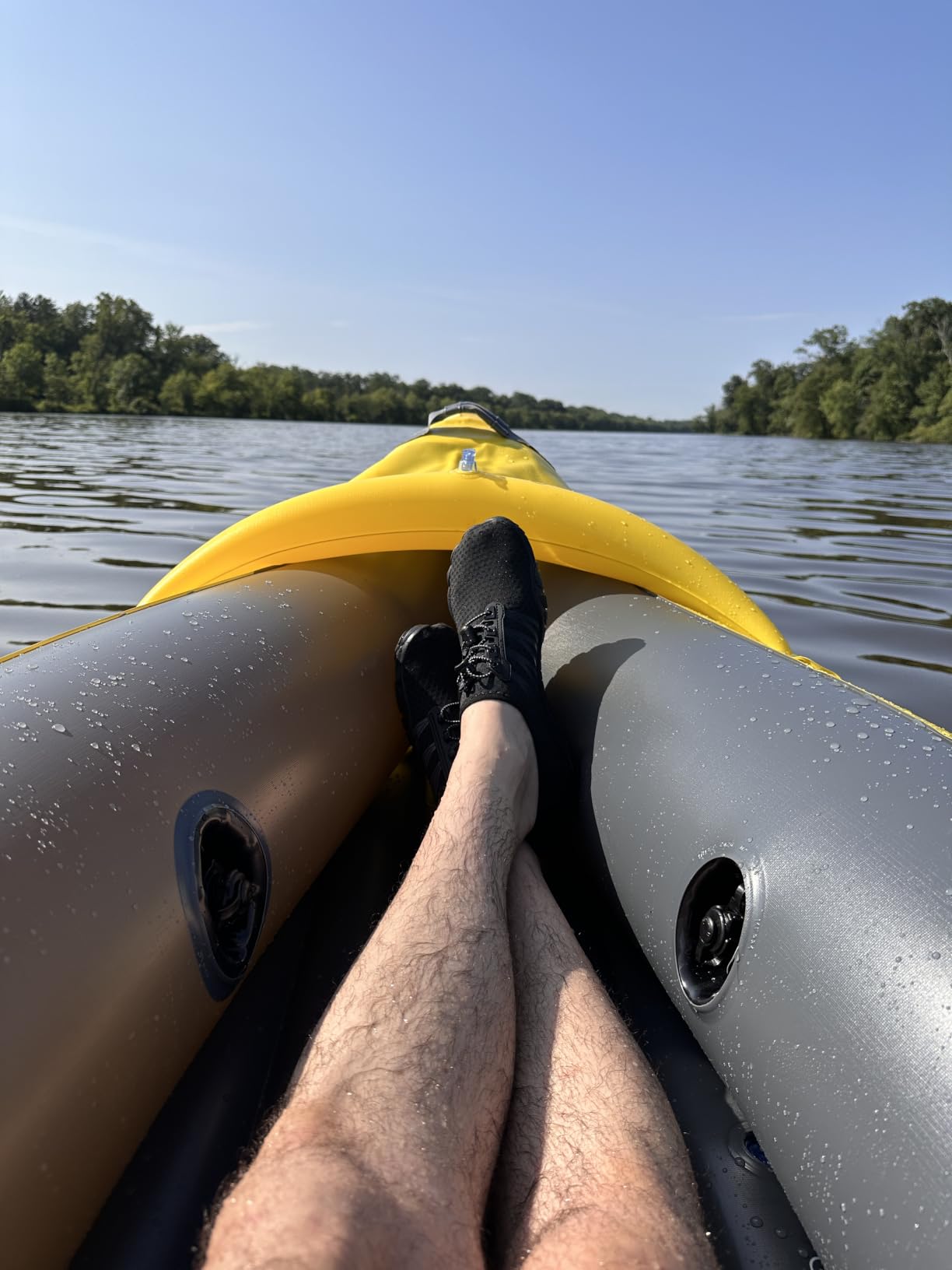
After the trip, deflating and packing the kayak back into its bag took about 10 minutes. It fit entirely in the trunk of a small sedan alongside our other gear, which would have been impossible with a 10-foot hardshell. One reviewer I know reports using the same Explorer K2 for over four years with no leaks or seam failures, which speaks to the durability of the construction. The main compromises are comfort and performance in wind: the seats are thin and the back support disappears after an hour, and a stiff breeze on an exposed lake will push the kayak around noticeably.
For whom it’s good
The Explorer K2 is ideal for beginner couples, friends, or parent-and-child duos who want to try kayaking together without committing to expensive hardshells. It is also the right choice for anyone with limited storage, no roof racks, or a tight budget. Apartment dwellers who cannot store a rigid kayak will appreciate how compact it becomes when deflated. Casual recreational paddlers who stick to calm lakes, slow rivers, and protected coastal areas will find this kayak completely sufficient for their needs.
If you plan to do occasional fishing trips from the kayak, the stability is workable for casting in calm conditions. The wide beam gives you a solid platform to stand on for short periods in shallow water. Beginners who want to test the waters of tandem kayaking before investing in a dedicated touring tandem will find the Explorer K2 a practical and forgiving starting point.
For whom it’s not
Skip this kayak if you are a solo paddler over 6-foot-tall, because the footwell space is tighter than ideal and the included paddles are short. Paddlers who plan to cover more than 5 miles in a single outing will find the Explorer K2 slower and more tiring than a hardshell option. Open-water conditions with wind and waves are also not this kayak’s strength, so anyone planning coastal or large lake paddling should look at a sit-on-top hardshell instead. If all-day comfort is a priority, the seats on this kayak will disappoint you after about 90 minutes.
Serious anglers who need multiple rod holders, gear storage systems, and an elevated seating position should look at the Pelican Sentinel 100X or Lifetime Tamarack Angler instead. The Explorer K2 is a fantastic entry-level recreational kayak, but it does not have the specialized features that dedicated kayak anglers expect.
3. INTEX Challenger Inflatable Kayak Series
INTEX 68305EP Challenger K1 Inflatable Kayak Set: Includes Deluxe 86in Kayak Paddles and High-Output Pump – Adjustable Seat with Backrest – Removable Skeg – 1-Person – 220lb Weight Capacity
26 lbs,Inflatable solo,220 lb capacity,Skeg and carry bag included
Pros
- Exceptionally lightweight at 26 lbs for solo portability
- Inflates in 2-5 minutes with included pump
- Stable on choppy bay water for an inflatable
- Fits in a small car trunk when deflated
- Proven durability with 10+ year user reports
Cons
- Legroom is cramped for users over 5 ft 8 in
- Seat backrest valve can accidentally deflate
- Skeg attachment is fiddly and easily lost
- Not ideal for long-distance trips
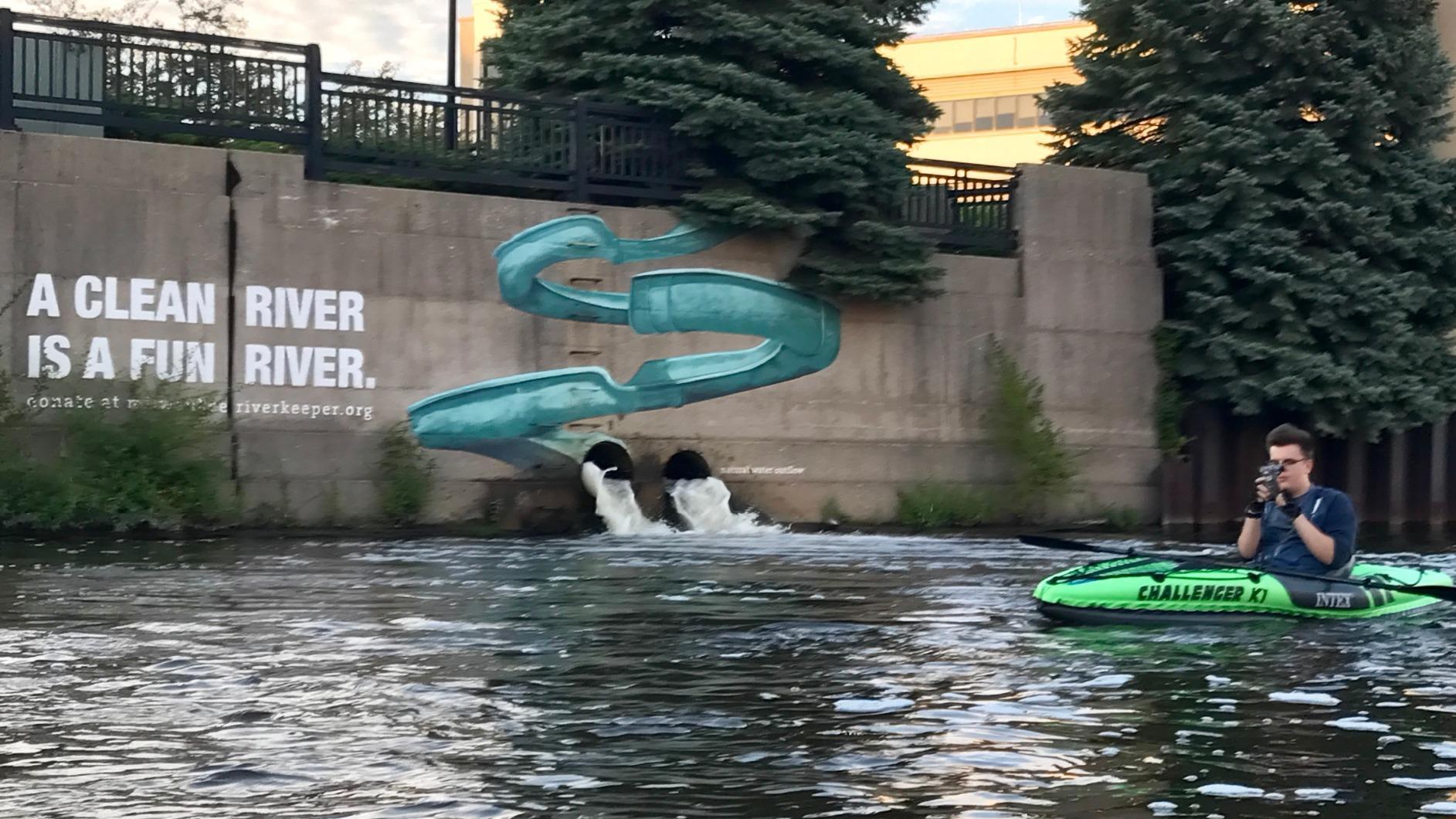
The INTEX Challenger K1 is the kayak I recommend to solo paddlers who need to carry their boat to remote put-ins or who simply want the lightest possible entry into kayaking. I tested it on a bay with choppy afternoon wind, and while it is not a wave-crusher, it held steady enough that I felt confident exploring areas where I might not have taken a less stable inflatable. At 26 pounds, it is the lightest kayak in this guide, and that weight makes solo launches from rocky shores practical in a way that no hardshell can match for a beginner working alone.
Inflation is fast and the included carry bag is genuinely useful for anyone without a trunk large enough for a rigid kayak. The low-profile design cuts through water more efficiently than bulkier inflatables, which helps with tracking on flat water. One of the most impressive things about the Challenger K1 is its long-term durability: multiple reviewers report using the same kayak for 10 years or more across multiple states, with only a small patch repair along the way. That kind of track record at this price point is hard to argue with.

The compromises are real and worth understanding before you buy. Legroom is the most common complaint from taller paddlers, and anyone over 5-foot-8 will likely feel their toes pressing against the bow. The removable skeg improves directional stability but the attachment mechanism is finicky, and a few users report losing it on the water. The seat backrest valve can also pop open unexpectedly during a long session, which means you might find yourself partially deflated mid-paddle if you are not careful. For shorter paddlers who stick to calm water and need maximum portability, the Challenger K1 is still one of the best values in beginner kayaking.
For whom it’s good
This kayak is made for solo beginners under 5-foot-8 who prioritize portability above all else. It is perfect for apartment dwellers without storage space, people with small cars, and anyone who hikes to remote put-ins with their kayak on their back. Paddlers who mostly explore calm lakes, slow rivers, and protected bays will find the Challenger K1 more than capable. It is also an excellent backup kayak for experienced paddlers who want a lightweight inflatable for travel or spontaneous trips.
If you are testing the waters of kayaking before investing in something more expensive, the Challenger K1 lets you do that with minimal financial commitment. The inclusion of a repair patch and carry bag in the box means you are ready to go the day it arrives. Parents who want a lightweight kayak their teenage kids can carry to the lake independently will appreciate the manageable weight and compact packed size.
For whom it’s not
Taller paddlers over 5-foot-8 should look elsewhere because the legroom simply will not work for comfortable all-day use. Anyone planning long-distance trips exceeding 3 or 4 miles will find the seating position tiring and the tracking imprecise without constant correction. The Challenger K1 is also not ideal for fishing, as the lack of rod holders and stable standing platform limits its utility for anglers. Paddlers who frequently encounter wind on large open lakes should consider a sit-on-top hardshell for better handling in chop.
The seat backrest issue is a real concern during extended sessions, and losing the skeg on the water is a frustrating experience that more than a few users have reported. If you need a kayak that can handle serious conditions or serve as a long-term primary boat, the Excursion Pro K1 or a hardshell option will serve you better over time.
4. Pelican Argo 100X – Recreational Sit in Kayak
Pelican Argo 100X – Recreational Sit-in Kayak – 10 ft – Fade Deep Blue/White
36 lbs,Sit-in recreational,RAMX material,275 lb capacity
Pros
- Outstanding 4.6 rating from verified owners
- Twin-chine hull resists tipping impressively
- Only 36 lbs - light for a hardshell sit-in
- Handles level 3 rapids with a spray skirt
- Comfortable ERGOFORM padded seat
Cons
- Does not include a paddle - budget extra $50-100
- Shipping delays and packaging issues reported
- Minor cosmetic scratches on arrival are common
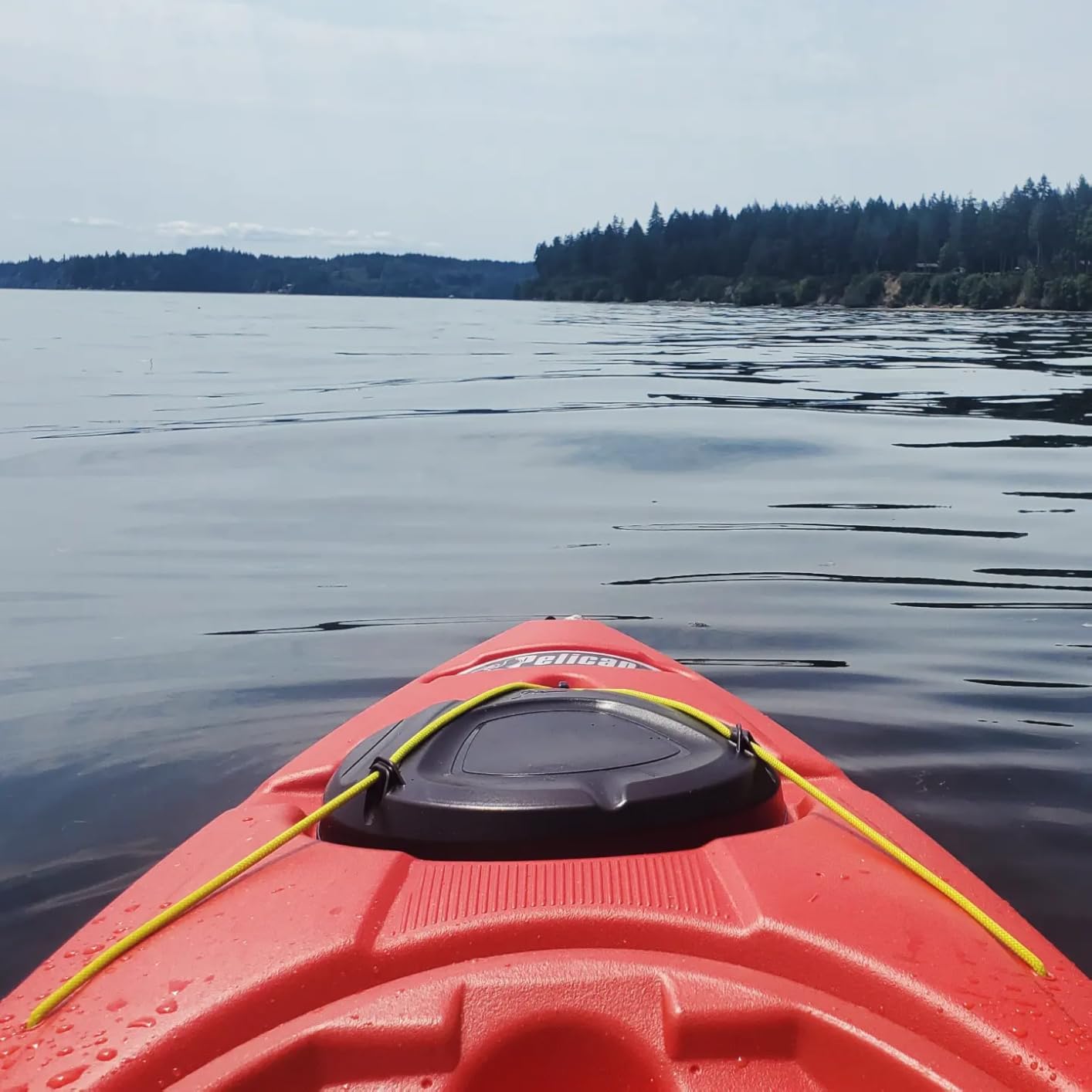
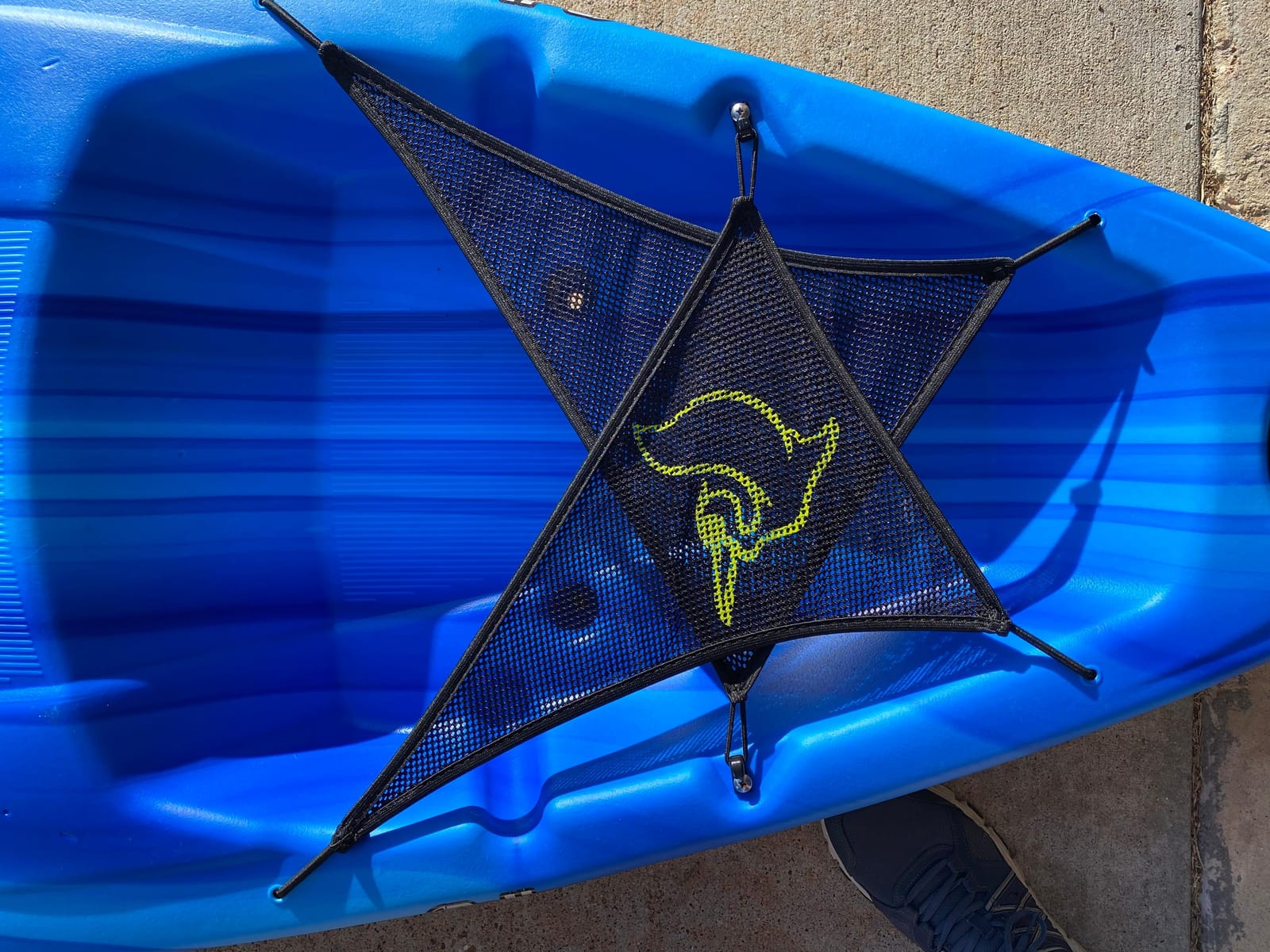
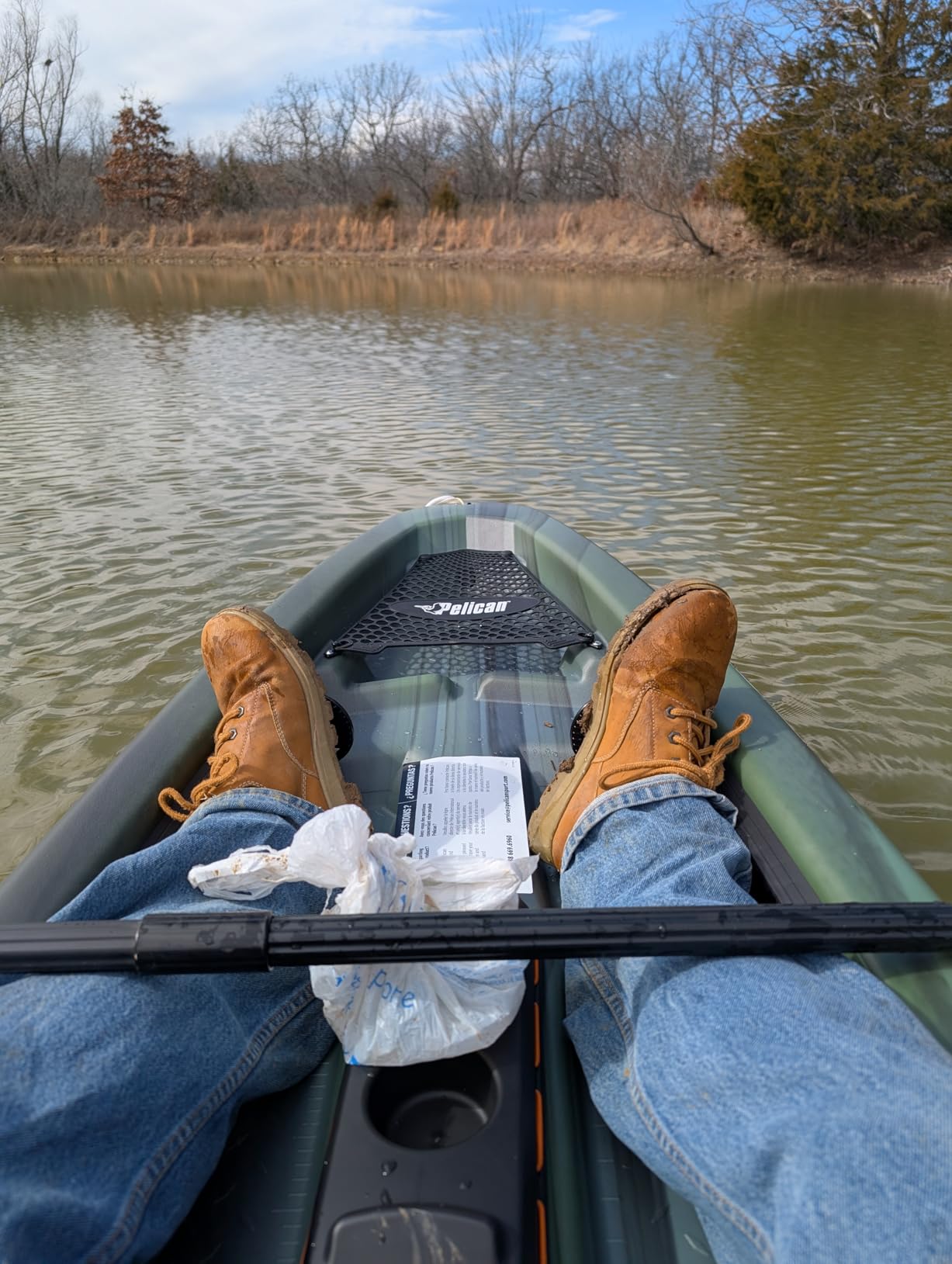
The Pelican Argo 100X is the kayak I would hand to a friend who is ready to step up from an inflatable but does not want to spend a premium. I tested it on a calm river and was surprised by how planted the twin-arched hull felt, even when I leaned to one side to reach for my dry bag. The ERGOFORM padded seat was noticeably more supportive than the basic seats on entry-level kayaks I have used, and after two hours on the water I did not feel the lower back pressure that usually sets in around the 90-minute mark. At 36 pounds it is light enough to lift onto a roof rack alone, which is a genuine advantage for solo paddlers.
One owner I know described transitioning from an inflatable to the Argo 100X as going from riding a bicycle with training wheels to riding one without, and that comparison feels accurate. The hull tracks straight and the kayak responds precisely to paddle input without that mushy feeling cheaper hardshells sometimes have. It handled level 3 rapids in the hands of an experienced paddler with a spray skirt, which is well beyond what most beginners will attempt but reassuring to know the hull can handle it. The RAMX material is rotomolded high-impact resin that absorbs impacts without cracking, and the internal foam blocks add buoyancy if something ever goes wrong.
The main catch is that the Argo 100X does not include a paddle, so you need to factor in an extra $50 to $100 for a quality aluminum or fiberglass paddle. Some buyers also report shipping delays and minor cosmetic scratches from transit, which do not affect performance but can be disappointing on a new kayak. For the price and the 4.6-star rating from verified owners, these are minor quibbles. The lifetime limited warranty against manufacturer defects provides additional peace of mind for a kayak you expect to keep for years.
For whom it’s good
The Argo 100X is ideal for beginners who have outgrown inflatables and want a proper hardshell without paying premium prices. It suits paddlers who plan to move from calm lakes to gentle rivers and want a kayak that can grow with their improving skills. The lightweight 36-pound build makes it accessible for solo transport, and the wide hull gives new sit-in paddlers a forgiving learning curve. Anglers who want a stable platform for casting from a seated position will also appreciate the low seat height and wide beam.
If you want a kayak that can handle mildly choppy conditions and small rapids as you progress, the Argo 100X gives you that headroom without the premium price tag of a touring kayak. The front and rear storage compartments are useful for day trips, and the molded side handles make car-top loading manageable for one person. This is the kayak I recommend most often to people who know they are going to stick with paddling and want something that will not hold them back.
For whom it’s not
Skip the Argo 100X if your budget cannot accommodate the additional cost of a paddle and basic safety gear. Paddlers over 6-foot-2 may find the cockpit snug, and the 275-pound weight capacity leaves limited margin for larger paddlers with full gear. If you plan to cover long distances on open water and value speed and tracking above all else, the Wilderness Systems Pungo 120 is the better choice despite the higher price. Beginners who are uncertain about committing to a sit-in design may feel more confident starting with a sit-on-top kayak like the Lifetime Lotus or Pelican Sentinel 100X.
The shipping experience is a gamble: some buyers receive a pristine kayak within a week, while others wait several weeks and find surface scratches on arrival. If you are buying this kayak for a specific upcoming trip, order early to allow for potential shipping delays. Once you have it in hand, though, the performance and build quality justify the wait.
5. Pelican Sentinel 100X Angler – Sit on Top Fishing Kayak
Pelican Sentinel 100X – Angler Sit on top Fishing Kayak – Forest Mist – Lightweight – Ergolounge™ Seating System – 10 ft, Sentinel 100X Angler Fishing Kayak
44.6 lbs,Sit-on-top fishing,ExoPak storage,4 rod holders
Pros
- Purpose-built fishing layout with 4 rod holders
- Extra-thick ErgoLounge seat for all-day comfort
- Stable sit-on-top platform - survived flooding
- 44.6 lbs is manageable for solo loading
Cons
- No paddle
- vest
- anchor
- or cart included
- Slight wobble in choppy water vs longer hulls
- Basic rod holders compared to premium kayaks
I spent an afternoon on the Pelican Sentinel 100X from a small boat launch on a local lake, and the first thing I noticed was how the ErgoLounge seating system elevates the entire experience compared to basic kayak seats. The extra-thick cushioning and wide padded backrest make hours of casting feel comfortable in a way that most recreational kayaks do not manage. One reviewer reported that their kayak was accidentally flooded by a passing boat and still stayed afloat, which is the kind of real-world stability test that matters far more than any spec sheet claim for a beginner fishing kayak.
The ExoPak removable storage compartment is the feature that sets the Sentinel apart from generic recreational kayaks. You pack your tackle, snacks, and gear into the ExoPak at home, then drop the entire compartment into a dedicated slot at the waterside. No unpacking and repacking in a parking lot or on a muddy bank. The four rod holders – two flush-mount and two vertical – give you options for positioning rods while you paddle or when you have a line in the water. At 44.6 pounds, the kayak is manageable for one person to load and unload, though a kayak cart makes the walk from the car noticeably easier.
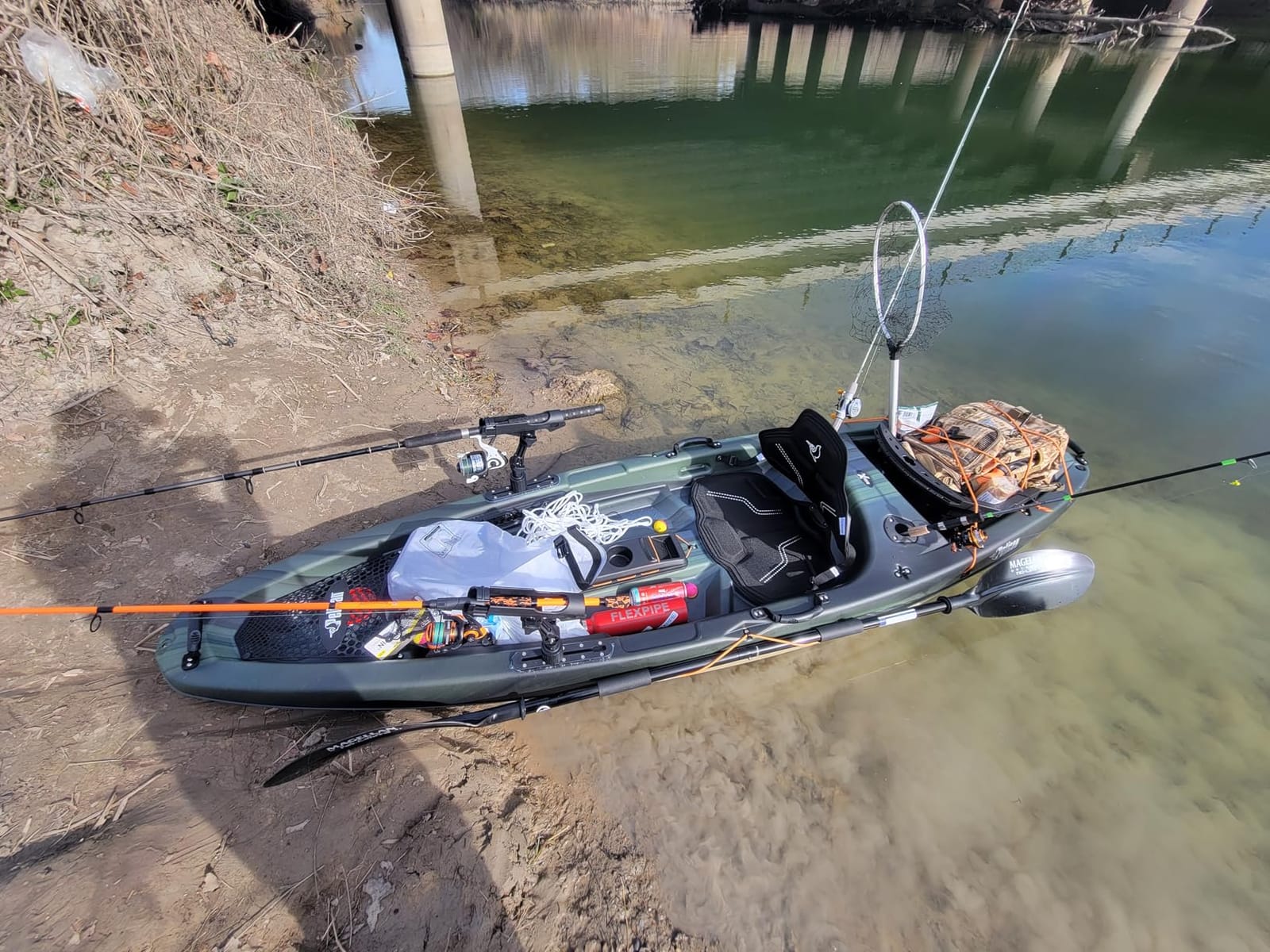
The polyethylene construction has enough impact resistance to handle rocky beach launches and accidental bumps against dock pilings without concern. The molded side carry handles are positioned well for two-person loading, and the rear tankwell with bungee cords provides quick-access storage for a net, cooler, or extra tackle box. Beginners who know they want to fish from a kayak from day one will find this model saves them from buying a recreational kayak now and upgrading to a fishing kayak later, which is a real money-saver over the long run.
For whom it’s good
The Sentinel 100X is purpose-built for beginner anglers who want to transition from shore or boat fishing to kayak fishing without a steep learning curve. It suits paddlers between roughly 5-foot-4 and 6-foot-2 who want a stable platform for casting in lakes, calm rivers, and protected coastal waters. The ExoPak system is genuinely convenient for anyone who hates unpacking gear at the water’s edge in front of other people, and the four rod holders mean you can have multiple setups ready without tangling lines. If you want a kayak that you will not quickly outgrow as your fishing skills improve, the Sentinel 100X is a smart starting point.
Casual paddlers who also want the option to fish occasionally will appreciate the stability and comfort of the sit-on-top design. The kayak is versatile enough for exploration trips where you might cast a line opportunistically without feeling like you are using a specialized tool for every outing. The 275-pound weight capacity leaves room for gear and a catch cooler, which is something dedicated fishing kayaks handle better than basic recreational models.
For whom it’s not
If you are not planning to fish from the kayak at all, the Sentinel 100X is overkill and you would be better served by the Pelican Argo 100X or Lifetime Lotus at a lower price. Paddlers who want a longer kayak for touring or covering distance will find the 9-foot-6-inch hull less efficient than a 12-foot model. The rod holders are functional but basic compared to what dedicated fishing kayaks offer, and serious anglers will eventually want to upgrade to a model with more storage organization and accessory mounting options.
The fact that nothing except the kayak itself is included means you need to budget separately for a paddle, personal flotation device, and any fishing accessories. If that additional upfront cost pushes your budget too far, the Intex Explorer K2 or a basic recreational kayak gives you more complete starter packages. The slight wobble in choppy conditions is worth noting for anyone planning open-water fishing in rough weather.
6. Lifetime Tamarack Angler 100 Fishing Kayak
Lifetime Muskie Angler Sit-On-Top Kayak with Paddle, Tan, 120″
51 lbs,Sit-on-top fishing,HDPE flat-bottom hull,275 lb capacity
Pros
- Outstanding stability - users cannot tip it intentionally
- Durable HDPE holds up to rocky beaches and surf
- Includes paddle with keeper and shock cords
- Skeg helps maintain a straight tracking line
- 10-foot length fits in a car trunk
Cons
- Included paddle is flimsy and too short for fishing
- Seat connector clip is prone to breaking
- Bottom seat pad can slide during transport
The Lifetime Tamarack Angler 100 is the kayak that made me reconsider what a budget fishing kayak can deliver. I used it on a calm lake for a half-day of fishing and the stability immediately stood out. The flat-bottom hull sits solidly in the water, and I could stand up briefly to stretch without any wobble – something I would never attempt in a narrower performance hull. Verified buyers with over 200 pounds of body weight consistently report being unable to tip the Tamarack even when they tried, which is exactly the kind of confidence-building performance a beginner angler needs.
The HDPE construction is built to handle real outdoor conditions. Rocky beach launches, surf launches, and being left in the sun between sessions do not seem to affect it over time. The 10-foot length gives it better tracking than shorter fishing kayaks, and the skeg at the stern helps keep a straight line when you are focused on fishing rather than paddling technique. The front and rear T-handles make car-top loading manageable for one person, and several reviewers confirmed the kayak fits in a standard car trunk with seats folded down, which is rare for a 10-foot hardshell.
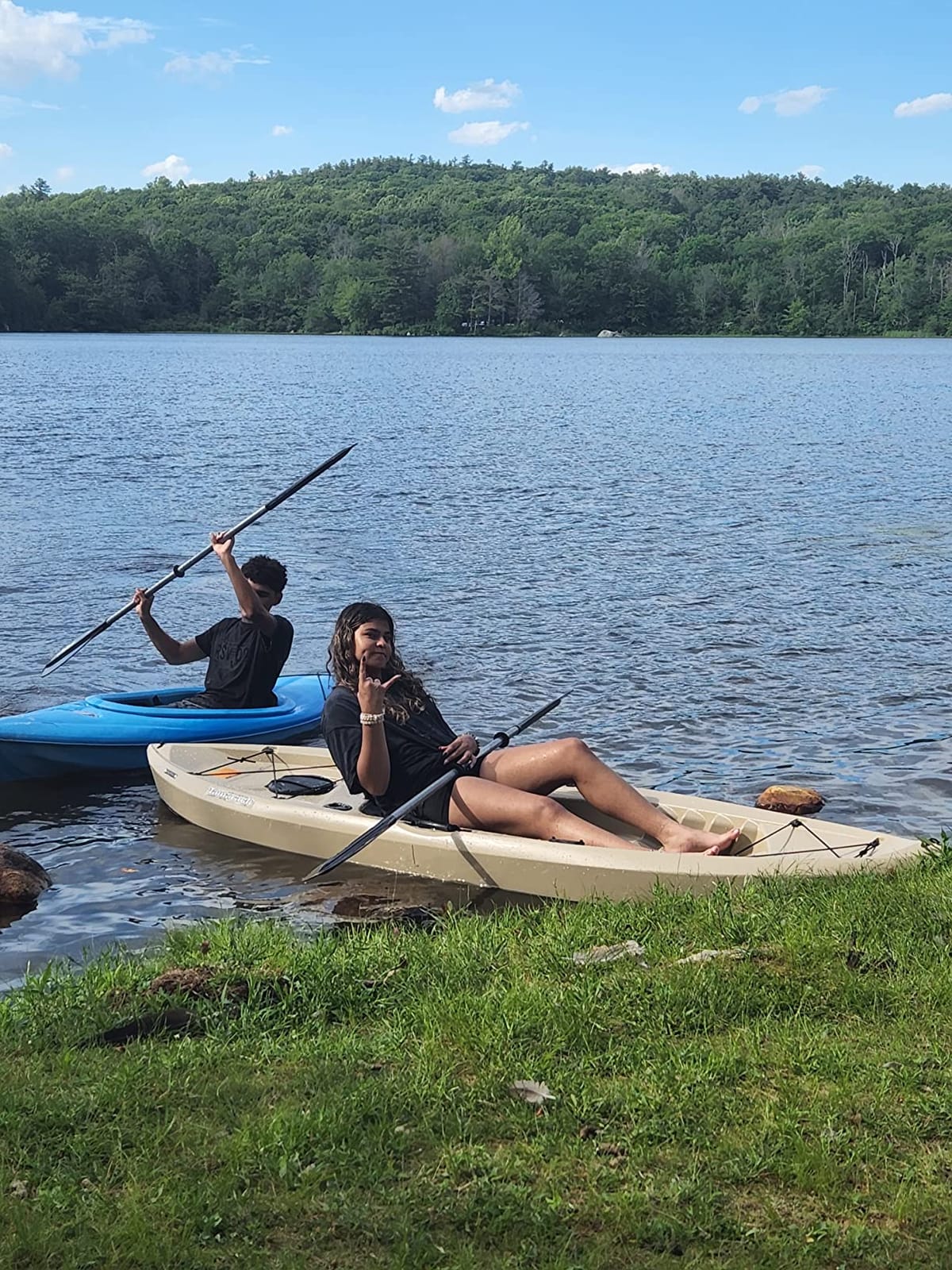
The paddle that ships with the Tamarack is the weakest link. It is functional enough for casual use, but multiple reviewers describe it as flimsy and too short for effective fishing strokes, so budgeting for an upgrade is wise. The seat connector clip has a design flaw that causes it to break under normal use for some owners, and the bottom seat pad can slide off the bracket during transport if you do not secure it. These are manageable issues that do not affect the kayak’s core performance, but they are worth knowing about before you buy.

For whom it’s good
The Tamarack Angler 100 is ideal for beginner anglers who want a rock-solid, no-nonsense fishing kayak without a premium price tag. It suits paddlers who value stability above everything else, including speed and efficiency. If you are heavier or simply want a kayak that feels impossible to tip, the Tamarack delivers that peace of mind with room to spare at 275 pounds of capacity. The 10-foot hull is long enough to track reasonably well on lakes and slow rivers, and the included paddle means you can get on the water the same day the kayak arrives.
Families and beginners who want a kayak that can handle rough handling, rocky shore launches, and occasional abuse will appreciate the rugged HDPE construction. The three rod holders – two flush-mount and one top-mount – provide enough fishing capability for casual bass and trout anglers without overwhelming a new paddler. This kayak is also a practical choice for people who want to keep their kayaking and fishing gear completely separate from their inflatable collection.
For whom it’s not
If you are not planning to fish, the Tamarack is more kayak than you need and you would save money with the Lifetime Lotus or Pelican Argo 100X instead. Paddlers who cover more than 4 miles in a session will notice the flat-bottom hull creates more drag than a V-hull design, which makes sustained paddling more tiring over time. The seat issues are a legitimate concern for anyone planning multi-hour fishing sessions, and the lack of dry storage options compared to the Pelican Sentinel 100X is noticeable when you are carrying expensive electronics.
The included paddle is the biggest reason to factor in an additional purchase. Anyone over 6 feet tall will find it too short for effective paddling, and the flex reduces power transfer during casting positioning. If you want a kayak that you will not need to modify or upgrade to enjoy, the Pelican Sentinel 100X offers a more polished out-of-box experience with the ExoPak system and better seat construction.
7. INTEX Excursion Pro K1 Inflatable Kayak Set
INTEX Excursion Pro K1 Inflatable Kayak 1-Person Set with Paddle & Pump
40 lbs,Inflatable solo,220 lb capacity,Skegs and rod holders included
Pros
- Best-in-class portability - fits in a car trunk
- Quick 4-minute inflation and deflation
- Surprisingly stable for an inflatable design
- Reconfigurable between solo and tandem
- All accessories included out of the box
Cons
- Struggles in wind and choppy open water
- Included paddle is basic plastic and needs upgrading
- Seat lacks lower back support for long sessions
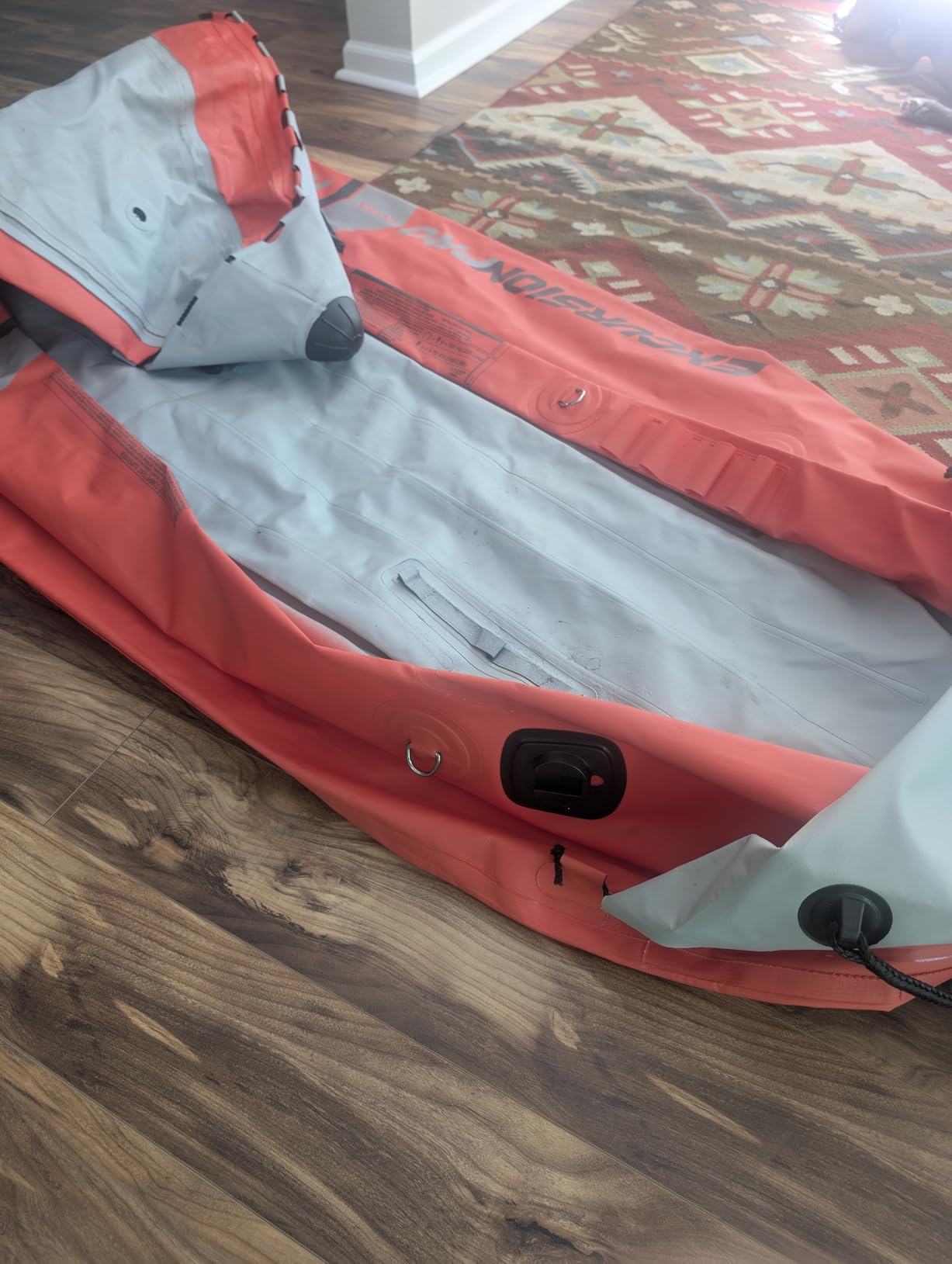
The INTEX Excursion Pro K1 is the kayak I bring up when someone tells me they live in an apartment, do not have roof racks, and want a kayak they can actually use regularly. I tested it on a calm lake and was impressed by how rigid the 3-ply Super-Tough PVC feels when fully inflated to the recommended pressure. The high-pressure inflation creates a hull that does not flex under weight the way cheaper inflatables sometimes do, and the two removable skegs provide enough directional stability to make straight-line paddling achievable without constant course correction.
What makes the Excursion Pro K1 genuinely useful for beginners is how complete the package is. You get the kayak, two 86-inch aluminum paddles, a high-output pump, a repair patch, and a carry bag – everything you need to launch on day one. Inflation and deflation each take about 4 minutes, which means you can be on the water before you would have finished strapping a hardshell to a roof rack. One reviewer with a bad back reported being able to carry the fully inflated kayak to the water without assistance, which is a remarkable testament to how light and manageable it feels in practice.
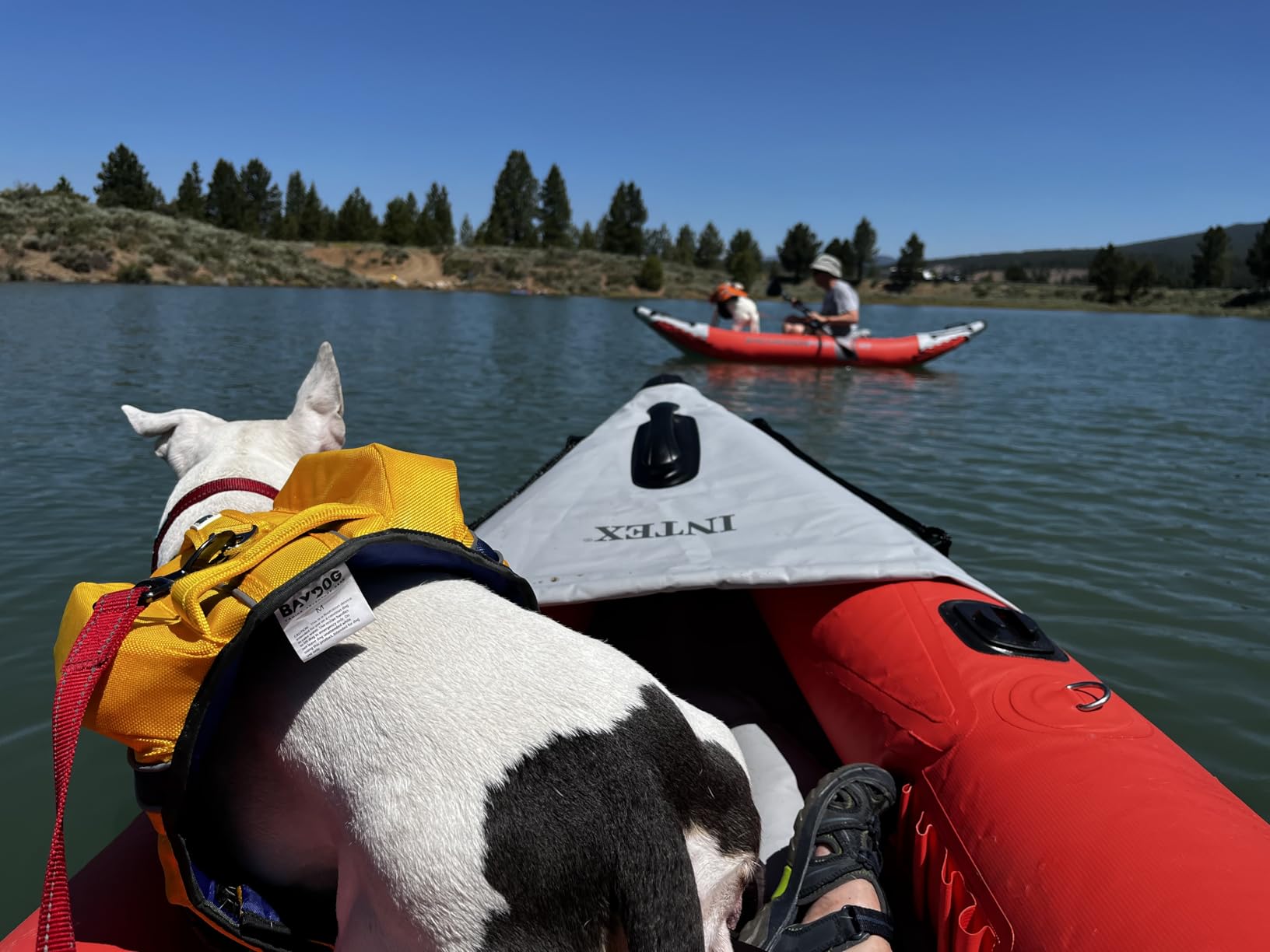
The fishing rod holders and adjustable phone mount are thoughtful additions that beginners might not think to buy separately. The kayak handles mild choppy water without issue, but exposed lakes with steady wind will push it around more than a hardshell. The seat is the main comfort compromise: it lacks lower back support, and most users I have talked to add an aftermarket cushion for anything longer than an hour. For casual lake fishing and short exploration trips, though, the Excursion Pro K1 punches well above its price class.
For whom it’s good
The Excursion Pro K1 is best suited for solo beginners who need a kayak that fits in a small car and requires no special storage. Apartment dwellers, college students, and anyone without roof racks will find this kayak eliminates the biggest logistical barriers to getting on the water. Casual anglers who target calm lakes and slow rivers will appreciate the included rod holders and the stability for casting from a seated position. The reconfigurable seating design means you can adjust the setup as your comfort preferences change, which is a nice flexibility feature for a kayak at this price.
Beginners who want to test inflatable kayaking before investing in a more expensive model will find the Excursion Pro K1 a capable and forgiving introduction. The 4-year durability track record reported by one long-term user suggests the construction holds up to regular use when properly maintained. If your primary use case is calm-water day trips and you need the kayak to disappear into a closet between uses, this model delivers on that promise without frustration.
For whom it’s not
If you regularly paddle on large open lakes or coastal waters where wind is a factor, the Excursion Pro K1 will feel underpowered and difficult to control. Paddlers who cover more than 4 miles in a single session will find the inflatable hull requires more effort than a hardshell, and the seat discomfort becomes a real issue after 90 minutes. Serious anglers who need a stable casting platform, organized tackle storage, and a rod-friendly layout will outgrow this kayak quickly and should look at the Pelican Sentinel 100X or Tamarack Angler 100 instead.
The included paddle is basic plastic and aluminum that flexes during harder strokes, so budgeting for an upgrade is realistic if you plan to paddle frequently. If you want a kayak that can serve as your primary boat for more than a season, the Excursion Pro K2 or a hardshell recreational kayak will serve you better over the long run. The 220-pound weight capacity leaves little room for gear on larger paddlers, so anyone near that limit should look at kayaks with a 275-pound or higher rating.
8. INTEX Excursion Pro K2 Inflatable Kayak 2-Person Set

INTEX Excursion Pro K2 Inflatable Kayak 2-Person Set with Paddles & Pump
40 lbs,Inflatable 2-person,400 lb capacity,Solo or tandem configurable
Pros
- Incredible versatility - reconfigures solo or tandem in seconds
- Very stable with two adults on board
- Compact and lightweight for two-person transport
- Easy 15-minute setup even with kids helping
- All accessories included under $300
Cons
- Included paddles are basic and should be upgraded
- Seat back clips dig into thighs on long trips
- Fold marks and scuffs appear after one season
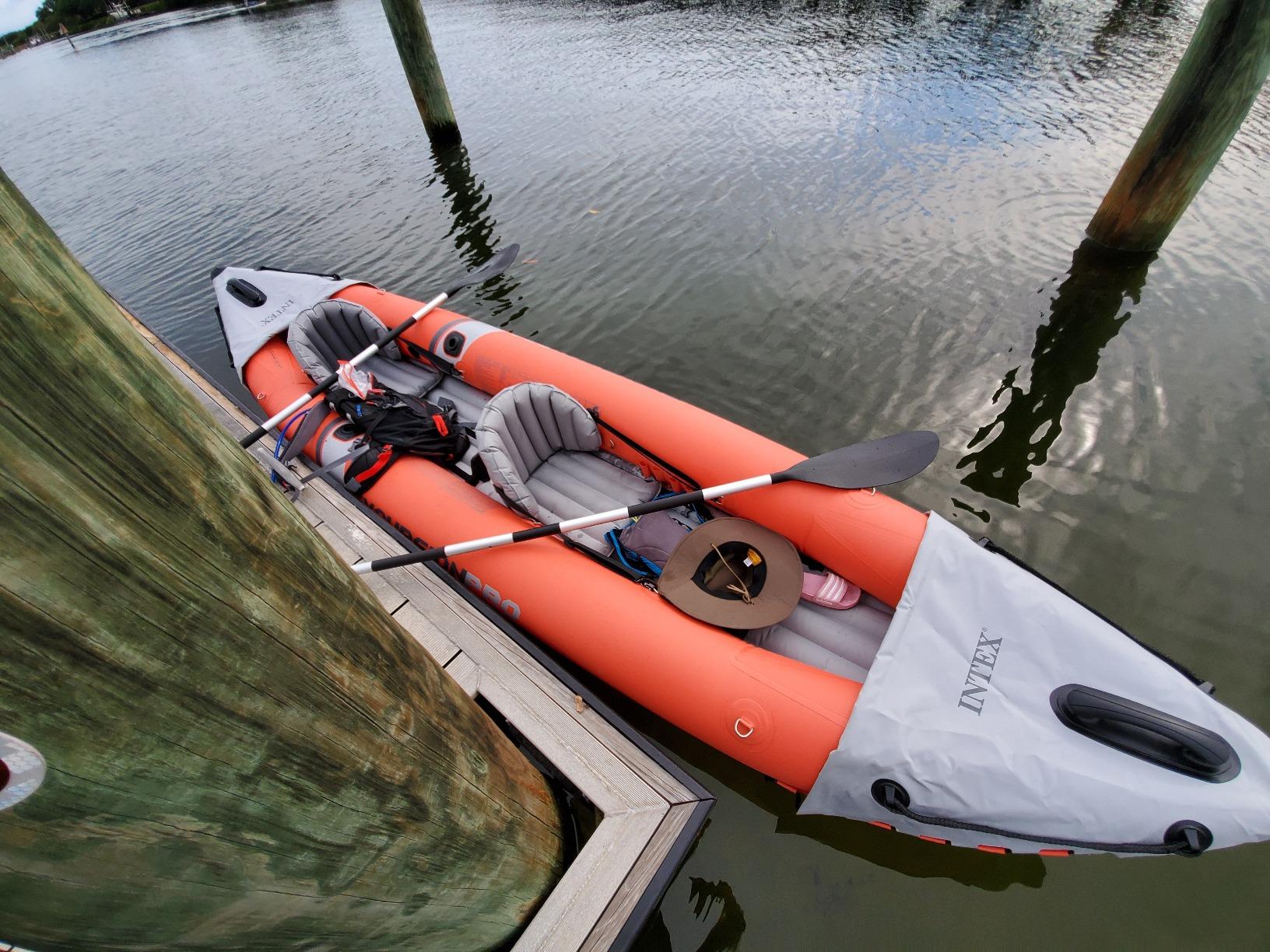
The INTEX Excursion Pro K2 is the tandem kayak I recommend most often to beginners who want the flexibility to paddle alone one day and with a partner the next. I set it up with a friend on a Long Island Sound outing, and we were on the water within 15 minutes of parking the car. The reconfiguration from tandem to solo seating took seconds and did not require any tools, which is the kind of practical flexibility that makes a kayak useful across a wider range of situations than a fixed-seat design. At 400 pounds of capacity, it handled two adults plus gear without sitting dangerously low in the water.
Stability is where this kayak genuinely impressed me. Reviewers consistently report being able to move around the kayak to cast or reposition without feeling unstable, and one user specifically noted the confidence it gave them while fishing. The two removable skegs help the kayak track in a straight line, which matters more in a tandem configuration where weight distribution shifts between paddlers. The included high-output pump inflates both chambers quickly, and the spring-loaded valves make topping up air on a hot day simple without letting the entire kayak deflate.
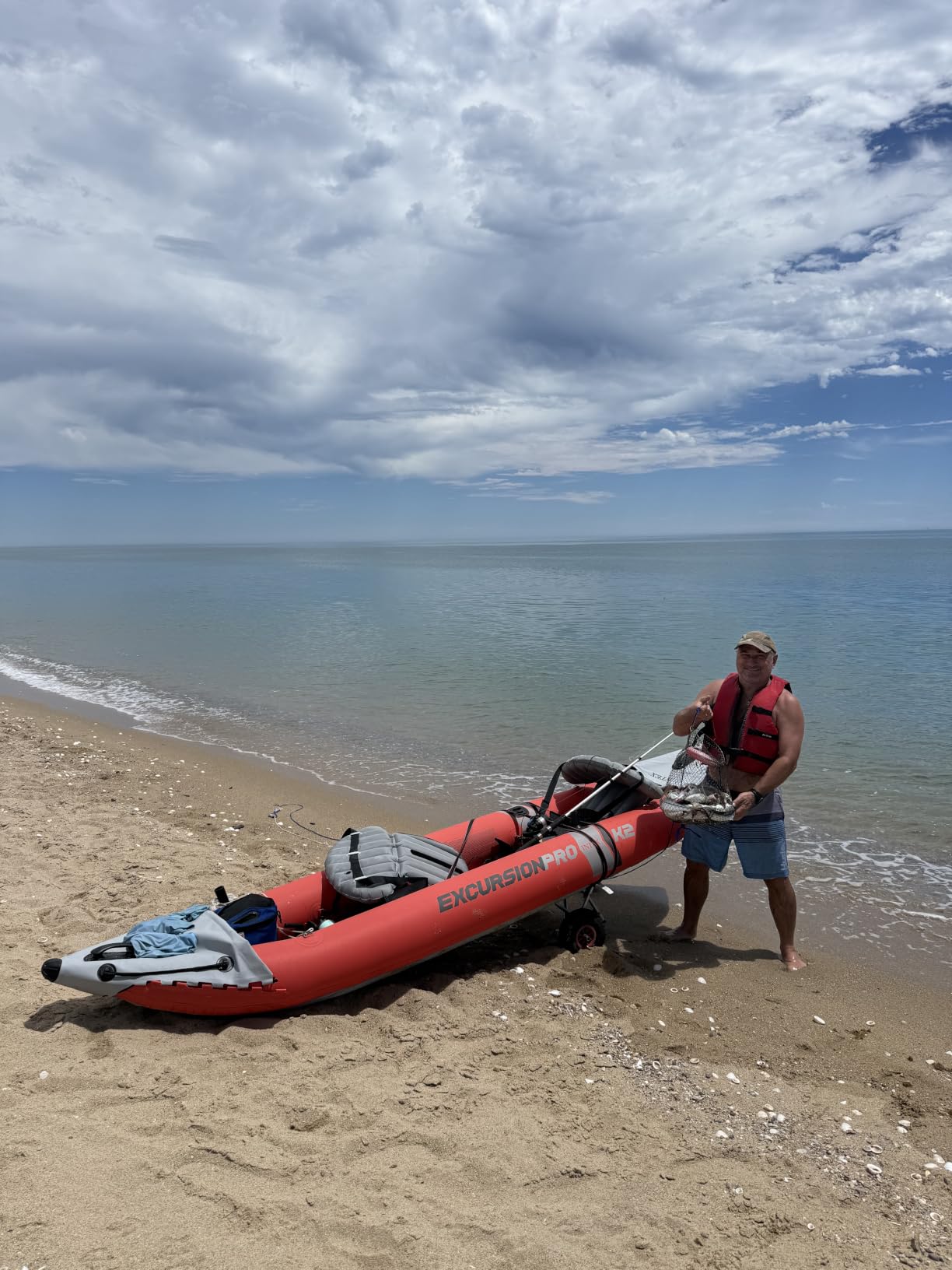
Everything needed to launch is included: two paddles, two seats, a pump, a repair patch, and a carry bag. That completeness removes the guesswork for beginners who do not yet know what accessories they actually need. The kayak deflates and packs down small enough to store in a standard SUV back seat alongside other gear, which is a genuine advantage for families and road-trippers. The fishing rod holders and adjustable phone mount are useful touches that extend the kayak’s utility beyond pure recreation. After a full season of regular use, some fold marks and surface scuffs appear, but these are cosmetic and do not affect the structural integrity of the hull.
For whom it’s good
The Excursion Pro K2 is made for beginner couples, families with older kids, and solo paddlers who want the option to bring a partner without buying a second kayak. It is the most flexible kayak in this guide for people whose paddling situations change from week to week. A solo paddler who sometimes hosts friends or family members on the water will find the reconfigurable seating design eliminates the need to own multiple boats. The complete accessory package means beginners can launch on day one without a separate shopping trip for paddles and pumps.
Casual anglers who occasionally fish with a partner will appreciate the stability for casting from either position and the included rod holders. The kayak handles mild chop well enough for protected coastal waters and large lakes, making it a solid all-rounder for mixed-use beginners. Families who want one kayak that adapts as their kids grow and start paddling on their own will find the weight capacity and flexible seating arrangement practical for years.
For whom it’s not
If you are a solo paddler who never intends to use the tandem configuration, the Excursion Pro K2 is more kayak than you need. The extra material and weight add complexity without benefit if you will always paddle alone, and the Excursion Pro K1 is a leaner, more portable choice in that scenario. Paddlers who prioritize speed and efficiency on long distances will find the inflatable hull slower and more tiring than a hardshell touring kayak, especially in wind.
The seat back clips have a design tendency to dig into thighs during extended sessions, and many users add aftermarket cushions to resolve this. The included paddles are functional but not satisfying to use for more than an hour, so an upgrade is realistic if you paddle frequently. If you want a kayak that will look new after multiple seasons without fold marks, a hardshell model like the Pelican Argo 100X is the more durable long-term investment.
9. Wilderness Systems Pungo 120 Recreational Kayak
Wilderness Systems Pungo 120 Recreational Kayak – Sit Inside – Phase 3 Air Pro Comfort Seating – 12.2 ft – Galaxy
49 lbs,Sit-in touring,325 lb capacity,Best-in-class Phase 3 seat
Pros
- Best-in-class speed and tracking for a recreational kayak
- Phase 3 Air Pro seat praised for all-day comfort
- Outstanding hull stability in choppy conditions
- Generous dry storage with sealed bulkhead
- Limited lifetime hull warranty
Cons
- Premium $1
- 099 price for beginner buyers
- 49 lbs requires two people or a cart for transport
- Sit-in re-entry has a learning curve for total beginners
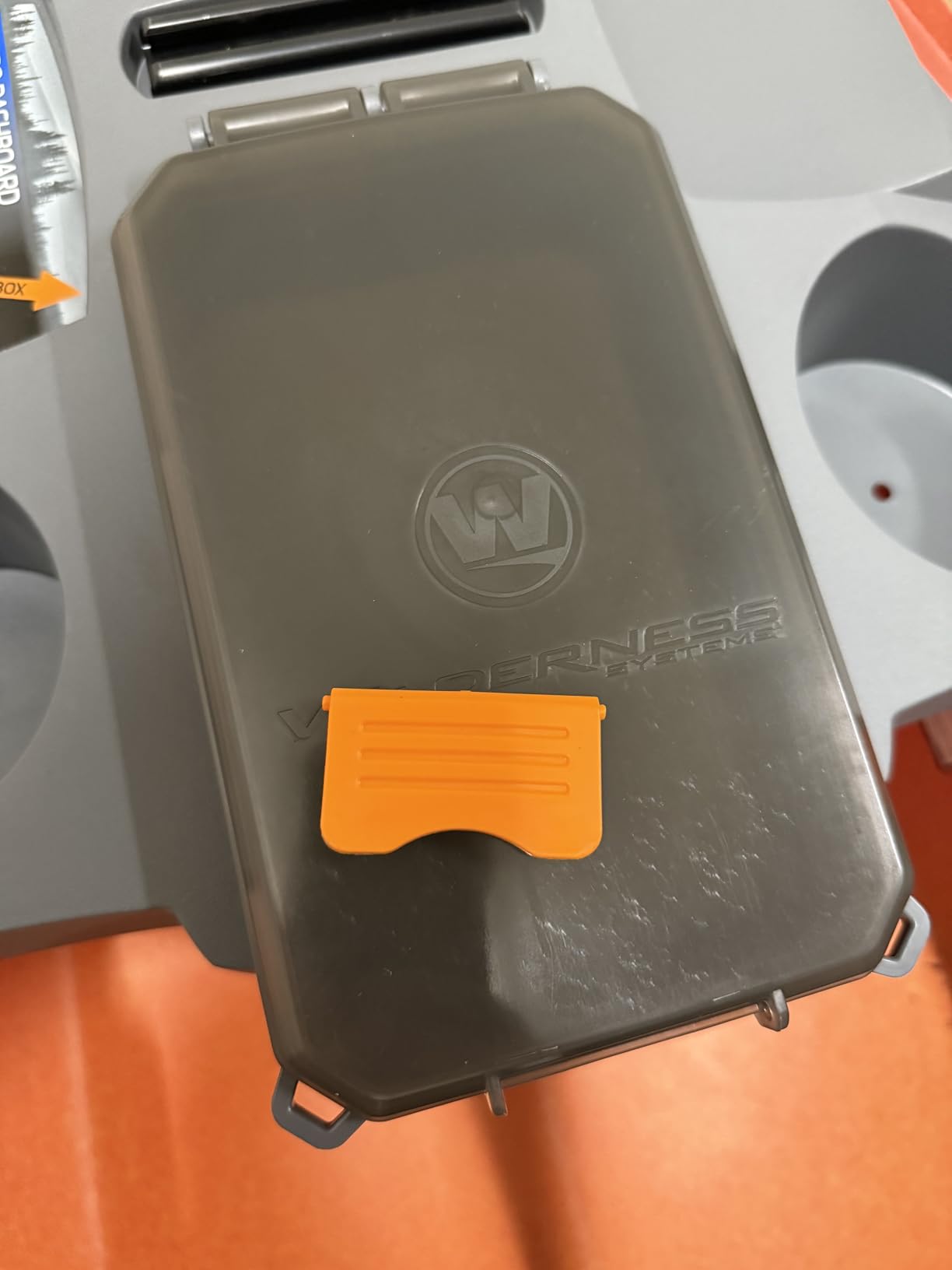
The Wilderness Systems Pungo 120 is the kayak I turned to when I wanted something that could handle a full day on open water without the discomfort that sets in with cheaper seats. I paddled it on a large lake with 15-mile-per-hour afternoon wind, and the hull stayed reassuringly planted without that tippy feeling I have experienced on narrower recreational kayaks. The Phase 3 Air Pro Comfort seat is genuinely remarkable: mesh-covered honeycomb-vented foam that keeps you cool and supported for hours, to the point where I found myself forgetting I was in a kayak for extended stretches.
What makes the Pungo 120 special for beginners who plan to stick with the sport is that it does not impose artificial limits on your progress. The 12-foot-2-inch hull delivers best-in-class speed and tracking, which means you can cover distance without fighting the kayak at every stroke. The patented hull design offers reassuring primary stability without sacrificing the secondary stability needed for chop, making it one of the friendliest sit-inside kayaks for new paddlers who are nervous about enclosed cockpits. The sealed rear bulkhead provides dry storage that actually stays dry, and the Slidetrax accessory mounts let you customize the kayak with rod holders, camera mounts, or extra storage as your needs evolve.
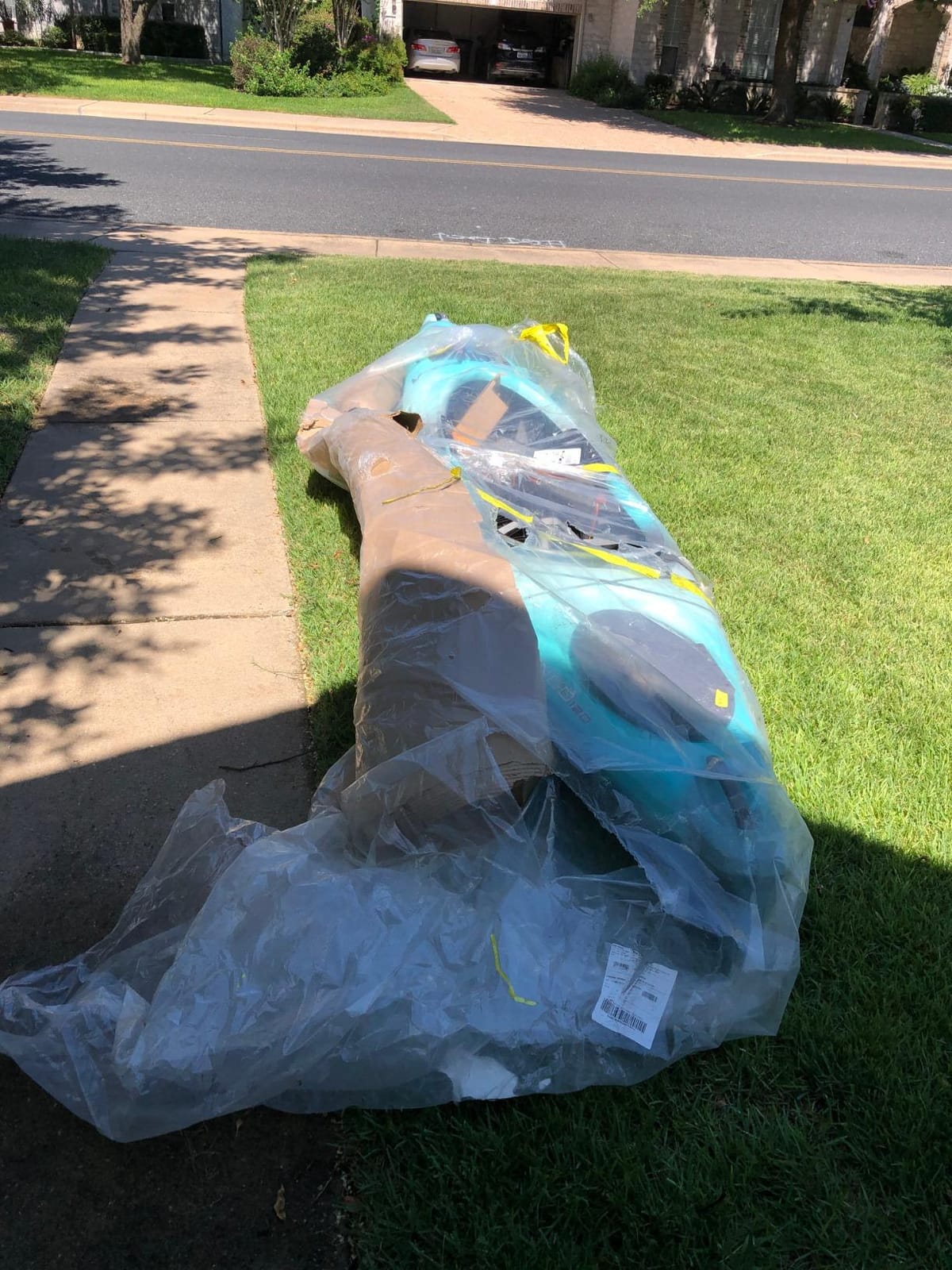
The 49-pound weight is the main logistical consideration. Unless you have roof racks with a lift-assist system or a kayak cart, loading this kayak solo is genuinely difficult. Two people make it easy, which is worth planning for if you regularly paddle with a partner. The sit-in re-entry skill does have a learning curve if you capsize, and I recommend practicing in calm, shallow water with a paddle float before venturing into deeper conditions. The $1,099 price is a meaningful investment for a beginner kayak, but the limited lifetime hull warranty and the kayak’s ability to serve you well for years make it a reasonable value proposition for committed new paddlers.
For whom it’s good
The Pungo 120 is ideal for beginners who know they will paddle regularly and want a kayak that will not hold them back as their skills improve. It suits paddlers between 5-foot-4 and 6-foot-4 who plan day trips, overnight adventures, or fitness paddling on lakes and protected coastal waters. The Phase 3 seat makes long sessions physically manageable in a way that budget kayaks simply do not match, and the speed and tracking let you explore further without exhausting yourself. If you have ever rented a kayak and thought, “I wish my boat felt better,” the Pungo 120 answers that wish directly.
Beginner-to-intermediate paddlers who want to transition from casual recreation to regular touring will find the Pungo 120 grows with them rather than becoming a boat they quickly outgrow. The dry storage is genuinely useful for overnight trips, and the accessory mounting system means you can add fishing rod holders or camera mounts without drilling holes in the hull. The sealed bulkhead provides flotation safety that many recreational kayaks lack, which is an important consideration for anyone paddling away from shore.
For whom it’s not
Skip the Pungo 120 if your budget cannot stretch past $500 or if you are still deciding whether kayaking is for you. The upfront investment is significant for someone who might paddle a handful of times before the kayak sits in a garage. Paddlers who primarily fish from a kayak will find the sit-in design less convenient for casting than a sit-on-top model like the Pelican Sentinel 100X, and the lack of dedicated rod holders and elevated seating limits its fishing utility. Beginners who are uncomfortable with the idea of an enclosed cockpit should start with a sit-on-top to build confidence before moving to a sit-in design.
The 49-pound weight rules out solo transport for most paddlers without a kayak cart or roof-rack lift system. If you plan to transport and launch alone, the Pelican Argo 100X at 36 pounds is the more practical choice for a hardshell. The Pungo 120 is a premium kayak that rewards commitment with years of satisfying paddling, but it is not the right starting point for someone testing the waters of kayaking with low financial risk tolerance.
10. Perception Joyride – Sit Inside Kayak for Adults and Kids
Perception Kayaks Joyride 10 – Sit Inside Kayak for Adults and Kids – Recreational and Multi-Water Kayak with Selfie Slot – 10′ – Déjà vu
42 lbs,Sit-in recreational,Sealed bulkhead,Selfie phone slot
Pros
- Exceptionally comfortable adjustable seat praised by owners
- Sealed bulkhead keeps gear dry and provides buoyancy
- Tracks excellently on rivers and lakes
- Selfie phone slot is a genuinely fun feature
- Sturdy thick-plastic construction feels premium
Cons
- No drain plug - water removal after capsizing is difficult
- At 42 lbs it is heavier than beginner alternatives
- Stock seat can feel hard for some riders
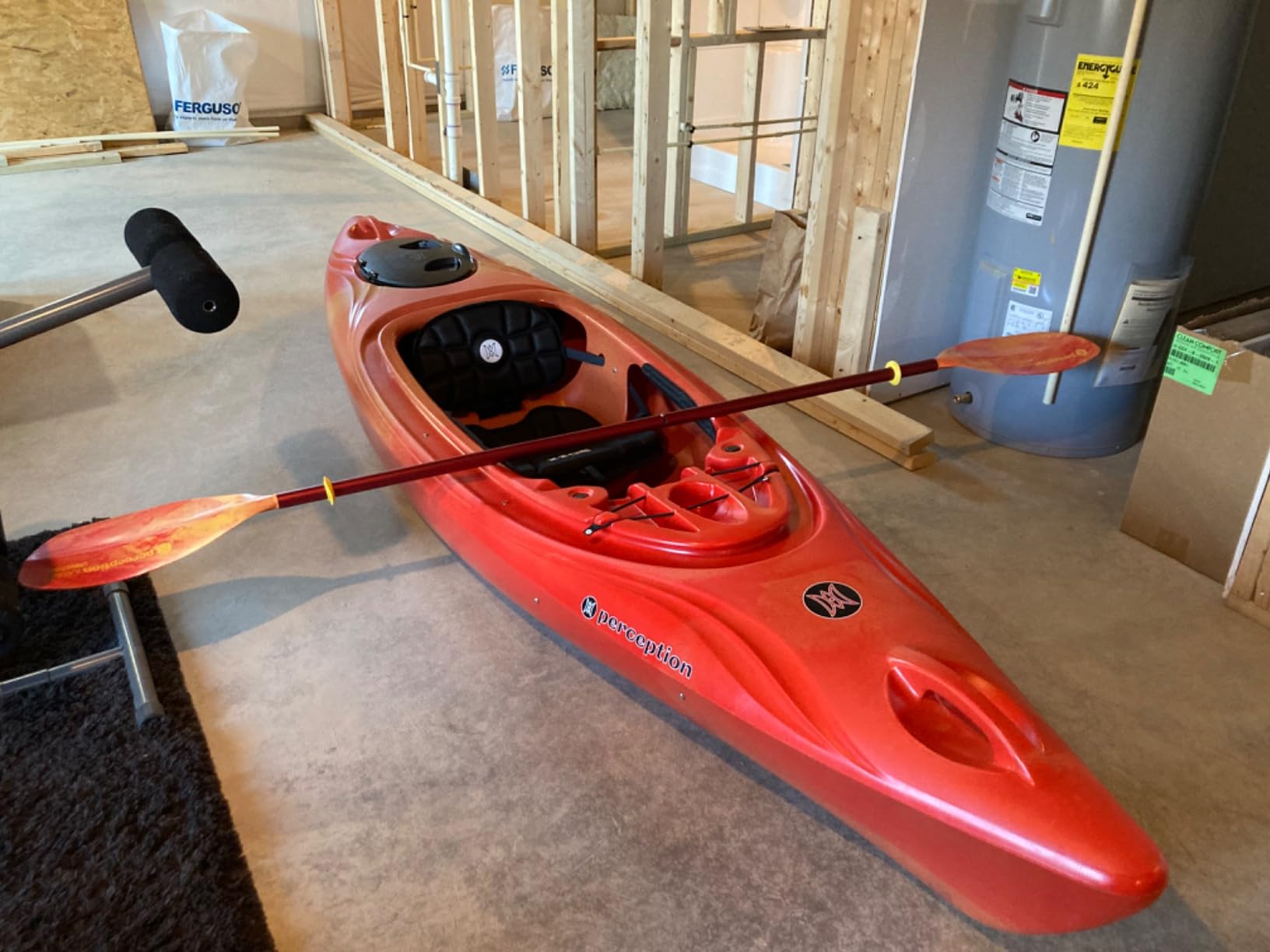
The Perception Joyride is the kayak that earned the top spot in this guide after I spent a full day paddling it on Lake Michigan, where the afternoon wind and chop would expose any comfort or stability weaknesses immediately. From the first stroke, the adjustable seat felt noticeably more supportive than anything I have used at this price point, and the thigh support pads kept my legs in a comfortable position without constant readjustment. The sealed bulkhead is more than a dry storage gimmick: it keeps gear bone dry and ensures the kayak stays buoyant if it capsizes, which is exactly the kind of thoughtful safety feature a beginner kayak should include.
The tracking on the Joyride is remarkably precise for a recreational kayak. I covered several miles without the constant course correction that plagues shorter, wider kayaks, and the thick-plastic construction feels solid in a way that inspires confidence when you are learning how the kayak responds to different conditions. The built-in selfie slot with adjustable bungee is the kind of feature that sounds silly until you use it – positioning your phone for a hands-free action shot without worrying about it sliding off the deck is genuinely useful for documenting paddling adventures. The rear tankwell with bungee cords and front hatch give you organized storage without adding bulk or complexity.
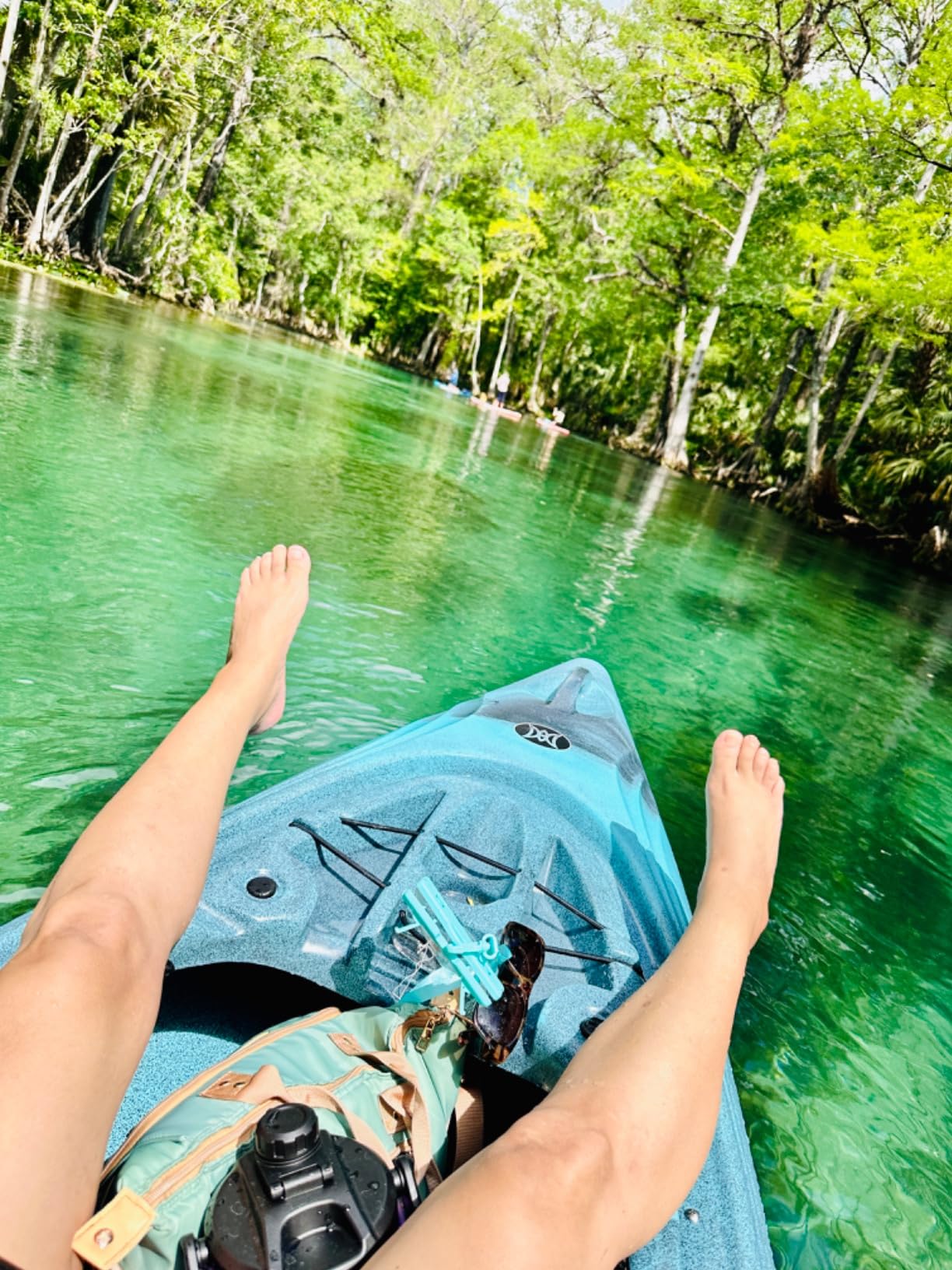
The 42-pound weight is manageable for one person with care, though a kayak cart makes loading and unloading significantly easier. The lack of a drain plug is the most commonly mentioned drawback: if water gets into the cockpit after a capsize, removing it requires tilting the kayak or using a bailer, which is less convenient than a simple plug. Some riders find the stock seat cushion too firm for all-day comfort and add an aftermarket pad, though the adjustable design and thigh pads reduce the need for that for many users. The 5-year limited warranty provides long-term protection and signals Perception’s confidence in the construction quality.
At a 4.7-star rating from verified buyers, the Joyride has one of the highest satisfaction scores in this guide despite fewer total reviews than some budget models. Users consistently highlight the comfort, tracking, and build quality, with one reviewer calling it the best kayak they have ever owned after using it in wind and chop on Lake Michigan. For beginners who want a recreational kayak that feels premium from day one and will not need upgrading as their skills develop, the Perception Joyride is the clear top recommendation in this guide.
For whom it’s good
The Joyride is perfect for beginners who want a recreational kayak that feels premium without crossing into touring kayak prices. It suits paddlers between 5-foot-4 and 6-foot-4 who plan day trips, fitness paddling, and casual fishing on lakes and calm rivers. The comfortable seat and precise tracking make longer outings genuinely enjoyable, and the sealed bulkhead provides safety and dry storage that budget kayaks rarely offer. If you have had uncomfortable experiences with cheap kayak seats in the past, the Joyride addresses that problem directly without requiring an immediate aftermarket upgrade.
Adults and older kids who want a kayak they can grow into will find the adjustable design accommodates a wide range of body types. The selfie slot is a fun feature for anyone who likes to share their paddling adventures, and the sturdy construction holds up well to regular use at boat ramps and on rocky shores. Beginners who are committed to kayaking as a regular hobby and want a single purchase that will serve them well for years will find the Joyride offers excellent long-term value despite the higher upfront cost.
For whom it’s not
If you need a kayak that fits in a small car trunk or requires no roof rack, the Joyride is not the right choice – look at an inflatable option instead. Paddlers on a budget under $500 will find many capable options in this guide that cover the same beginner needs at a lower price point. Serious anglers who need multiple rod holders, an elevated seating position, and dedicated tackle storage should look at the Pelican Sentinel 100X or Tamarack Angler 100, which are purpose-built for fishing from the water. Beginners who are uncertain about committing to kayaking and want minimal financial risk should start with an inflatable and upgrade later.
The missing drain plug is a practical inconvenience for anyone who capsizes and needs to remove water quickly from the cockpit. If you plan to paddle in conditions where capsizing is a realistic possibility and you want the simplest self-rescue setup, a sit-on-top kayak eliminates this concern entirely. The Joyride is an excellent recreational kayak, but it rewards paddlers who already have some comfort with basic kayaking skills and a clear idea of how they want to use their boat.
How to Choose the Right Kayak
Start by honestly assessing how and where you plan to paddle most often. A beginner who will mostly explore calm local lakes has very different needs from someone who dreams of coastal adventures or multi-day river trips. Sit-on-top kayaks are the most forgiving starting point because they are easy to enter, easy to exit, and easy to recover from a capsize. Sit-in kayaks offer better weather protection and tracking but require learning a re-entry skill that takes practice. Inflatable kayaks solve the storage and transport problem almost entirely, while hardshells deliver better performance and durability for regular use.
Match your body dimensions to the kayak’s cockpit and hull design. Taller paddlers over 6-foot-2 should prioritize kayaks with longer cockpits and adjustable footrests that accommodate leg extension without cramping. Heavier paddlers near or above 250 pounds need a kayak with a 300-pound or higher weight capacity rating to account for gear. The right fit is not just about comfort – a kayak that is too small or too large for your body will track poorly and feel less stable, which undermines the confidence-building purpose of a beginner kayak.
Build your budget around the full cost of getting on the water, not just the kayak price tag. Many beginner kayaks do not include a paddle, personal flotation device, or basic safety gear, and those add-ons can push a $300 kayak to $450 before you launch. The Intex inflatables in this guide are notable exceptions, as they include paddles, pumps, and repair patches out of the box. If your total budget is under $400, an inflatable kayak gives you the most complete package. Between $400 and $600, you can step up to a capable hardshell like the Pelican Argo 100X or Pelican Sentinel 100X. Above $600, the Perception Joyride and Wilderness Systems Pungo 120 reward your investment with build quality and features that will serve you for years.
Try before you buy if you can. Most outdoor retailers and paddling shops offer demo days where you can test different kayak types on calm water. Even a 20-minute paddle in a kayak tells you more about stability and comfort than reading reviews for hours. If a demo is not practical, renting a kayak for a weekend before buying is a low-risk way to understand what hull type and size feel right for your body and paddling style. Many beginners discover that a sit-inside kayak feels more secure than they expected, or that a wider recreational hull is worth the slight speed trade-off for the confidence it provides.
Beginner Kayaking Safety Tips
Always wear a properly fitted personal flotation device whenever you are on the water, regardless of your swimming ability. A Coast Guard-approved PFD is not optional gear – it is the one piece of equipment that makes every other safety precaution more effective. Look for a kayak-specific PFD with a low-cut back that does not interfere with your seat back, and make sure it is snug enough that it does not ride up when you lean forward to paddle. Drowning is the leading cause of kayaking fatalities, and most incidents involve people who were not wearing a PFD or who became separated from their kayak unexpectedly.
Learn the basic self-rescue techniques before you venture into conditions where capsizing is a real possibility. The wet exit – removing your spray skirt and pushing out of the cockpit – is a skill every sit-in kayaker should practice in calm, shallow water with a partner nearby. If you plan to paddle a sit-in kayak regularly, invest time in learning the paddle-float rescue, which lets you re-enter your kayak from the water using an inflatable bag attached to your paddle. These skills take 30 to 60 minutes to learn with instruction and turn a frightening capsize into a manageable situation you can handle calmly.
Check the weather and water conditions before every outing. Wind is the biggest variable beginners underestimate, and a 10-mile-per-hour breeze on an open lake can push an inflatable kayak around faster than you can paddle against it. Check wind forecasts, watch for approaching storm clouds, and avoid paddling in water temperatures that would put you at risk of hypothermia if you capsize. Let someone on shore know your planned route and expected return time, especially on remote rivers or large lakes where cell service may be unreliable. A simple text to a friend with your launch point and estimated return time takes 30 seconds and provides a critical safety net if something goes wrong.
Carry a basic safety kit on every trip. A bilge pump or bailer, a paddle leash, a whistle, and a waterproof dry bag with a spare paddle float and extra PFD are the minimum essentials for any kayak. A small waterproof first-aid kit, a headlamp, and a signaling device are worth adding for longer trips or unfamiliar waters. You do not need expensive gear to stay safe – most of these items are available for under $100 total and weigh very little. The goal is to handle common problems without having to call for rescue, which means having the right tools within reach when you need them.
Kayak Maintenance and Care
Rinse your kayak with fresh water after every use, especially if you paddled in saltwater, brackish water, or muddy conditions. Salt crystals and dirt particles degrade seals, bungee cords, and surface finishes over time in ways that are expensive to reverse but cheap to prevent. A quick spray-down with a hose takes two minutes and extends the life of your kayak by years. Dry the kayak thoroughly before storing it, particularly if you are keeping it in a garage or basement where moisture can promote mold on seats and bungee cords.
Store your kayak out of direct sunlight whenever possible. UV exposure is the single biggest cause of kayak material degradation, and it affects both inflatable PVC and rotomolded polyethylene over time. A covered porch, garage, or storage rack with a UV-blocking cover is ideal. If you must store your kayak outside, invest in a heavy-duty UV-resistant cover that fits the full hull. Avoid storing kayaks directly on concrete without a barrier, as the ground can draw moisture into the hull bottom and promote surface degradation on polyethylene models.
Inspect your inflatable kayak’s valves, seams, and chambers before each use. A quick visual check for pinpricks, seam separation, or valve leaks before you inflate takes five minutes and prevents mid-trip surprises. Keep the included repair patch kit accessible and learn how to apply a patch before you need it. Most inflatable kayak repairs take under 15 minutes with a patch and some adhesive, but only if you know the process before you are stranded at a remote put-in. For hardshell kayaks, check the seat bracket, footrest bolts, and bungee cords periodically for wear, and replace components before they fail during a trip.
Frequently Asked Questions
What is the best kayak for a beginner?
The best kayak for a beginner is one that prioritizes stability and comfort over speed. The Perception Joyride leads this guide with its exceptional seat comfort and precise tracking, while the Pelican Argo 100X is the strongest value option in the hardshell category. For total beginners on a tight budget, the Intex Explorer K2 inflatable delivers everything you need to start paddling for under $160.
Are kayaks hard for beginners?
Kayaks are not hard for beginners, especially sit-on-top and wide recreational models designed for new paddlers. You can learn the basic forward stroke, turns, and self-rescue in under an hour with a short tutorial. The key is choosing a stable kayak that inspires confidence – wider hulls around 30 inches or more make the learning process much smoother than narrow performance kayaks.
What size kayak do I need as a beginner?
For most adults between 5-foot-4 and 6-foot-2, a recreational kayak in the 8 to 10-foot range works well. Kayaks in the 28 to 34-inch width range provide excellent primary stability for beginners. If you are over 6-foot-2, look for models with adjustable footrests and longer cockpits. For children and teens under 5-foot-4, shorter kayaks around 7 to 8 feet with lower seat positions are more manageable.
How much should a beginner kayak cost?
A capable beginner kayak costs between $150 and $700 depending on type and quality. Inflatable kayaks like the Intex Explorer K2 start around $150 and include all accessories. Entry-level hardshell recreational kayaks like the Pelican Argo 100X sit around $500 and offer better long-term performance. Premium beginner options like the Perception Joyride run $800 to $1,100 but reward committed paddlers with years of comfortable use.
Is a sit-on-top or sit-in kayak better for beginners?
Sit-on-top kayaks are generally better for absolute beginners because they are easier to enter and exit, more forgiving if you capsize, and self-draining through scupper holes. Sit-in kayaks offer better wind protection, faster tracking, and drier conditions, but they require learning a re-entry skill that adds complexity for total beginners. Most instructors recommend starting with a sit-on-top to build confidence, then transitioning to a sit-in as skills improve.
Final Thoughts on the Best Kayaks for Beginners
Choosing the best kayaks for beginners is less about finding the most expensive or feature-rich model and more about matching a kayak’s strengths to your specific situation. The Perception Joyride earns the top spot for its outstanding comfort, precise tracking, and thoughtful safety features that make it a kayak you will not outgrow quickly. The Pelican Argo 100X is the best hard-shell value for paddlers ready to move beyond inflatables, and the Intex Explorer K2 is the budget pick that makes kayaking accessible to almost anyone. For anglers, the Pelican Sentinel 100X and Lifetime Tamarack Angler 100 bring fishing-specific features without requiring expert skills to operate.
If you are still deciding where to start, ask yourself three questions: where will I paddle most often, how will I transport the kayak, and what is my realistic budget including accessories. The right answer to those three questions will point you directly to one of the kayaks in this guide. Kayaking is one of the most rewarding outdoor activities available, and the best time to start is with a kayak that makes your first experience feel effortless. Pick a model that fits your needs, get on the water, and let the paddling do the rest.