
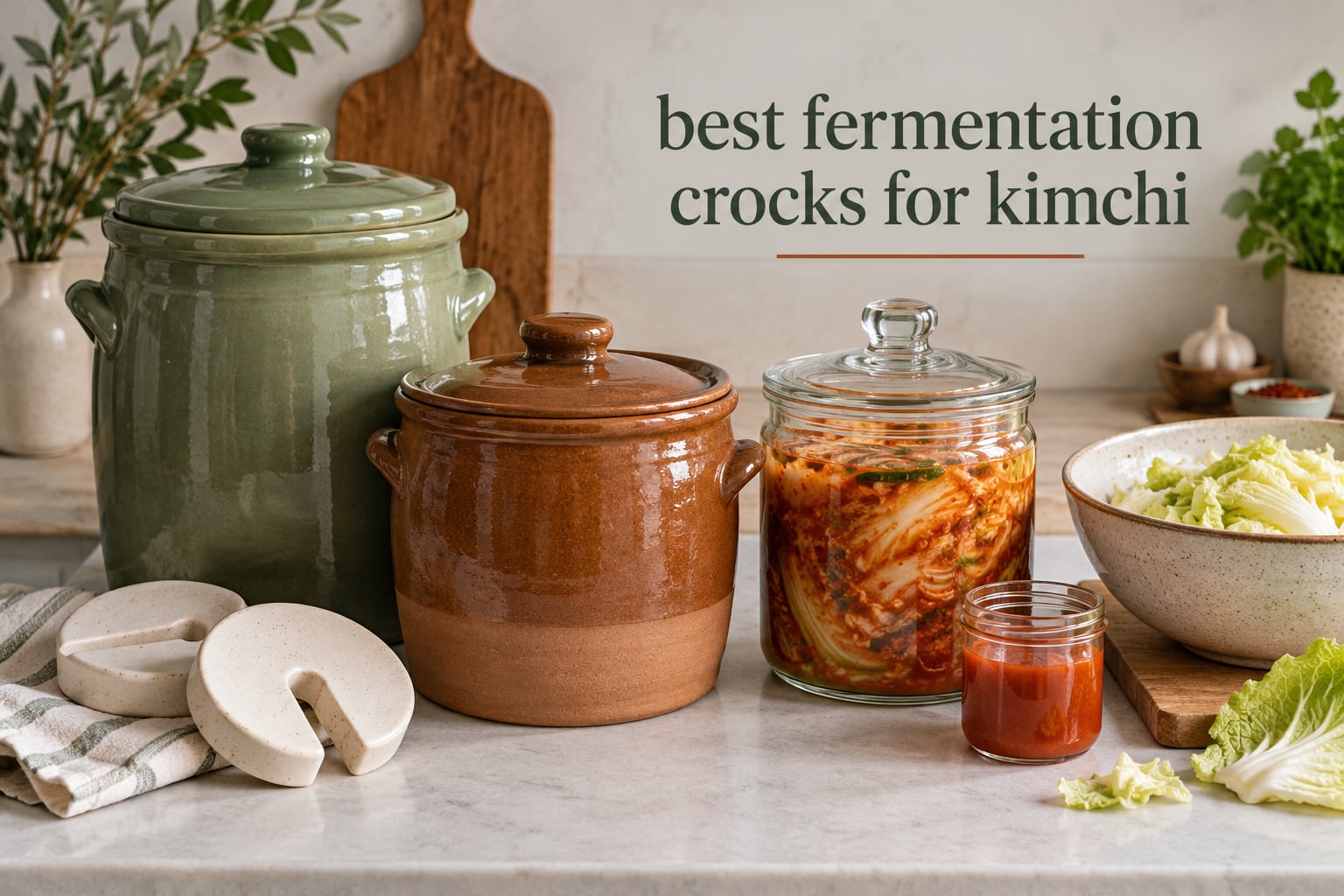
Short answer: yes, kimchi can be fermented in a crock, and a crock is the better vessel than a mason jar once you move past your first batch. A crock holds a heavy weight on top of the cabbage, keeps everything under brine, and manages the carbon dioxide kimchi produces in its first week without you babysitting loose lids.
The catch is that most crocks on the market were designed for sauerkraut, and sauerkraut ferments far more slowly than kimchi does. A crock with a true water-seal moat gives you an anaerobic environment, which is exactly what you want for a controlled ferment. Our guide to fermentation crocks for sauerkraut covers that side of the craft, and this one is tuned for the cabbage, spice, and fast timeline of kimchi.
We spent six weeks running the same 2% salt napa cabbage batch through the twelve vessels below, watching brine levels, weight drift, seal integrity, and how each one cleaned up afterwards. What surprised us most was how little the material matters compared to two other things: whether the included weights actually hold cabbage under liquid for four full weeks, and whether the lid manages the rising brine line without dumping kimchi juice across your counter.
Below you will find the best fermentation crocks for kimchi for 2026, from a budget earthenware vacuum jar to a German-made heirloom pot. We also cover how to size a crock to your batch, why water seals and airlocks behave differently with kimchi, and how to ferment without losing a whole crock of kimchi to the sink.
Table of Contents
Top 3 Best Fermentation Crocks for Kimchi (October 2026)

e-jen 1.6 Gal Earthenware
- 1.6 gallon earthenware body
- Adjustable inner vacuum lid
- BPA free and lead free
- Rectangular wide mouth

Kilner 3 L Fermentation Set
- 3 litre thick glass jar
- Silicone lid with airlock
- Ceramic weights included
- Recipe booklet

Kenley 2L Ceramic Crock
- 2 litre ceramic crock
- Water-seal lid
- Weights and pounder included
- Holds up to 3.2 lb vegetables
Our top three cover three completely different needs. The e-jen is the one we kept reaching for because its vacuum press handles kimchi’s fast brine rise better than anything else we tested, and the wide rectangular mouth made packing shredded cabbage painless. The Kilner set is the value pick: thick glass you can see through, ceramic weights, and an airlock that vents gas without a gasket to perish. The Kenley is the pick for anyone who wants a genuine water-seal moat in a small footprint, and it is the only one of the three that ships with a pounder for packing cabbage down tight.
One thing all three share is a wide enough mouth to get your hand and a wooden spoon inside. That sounds minor until you have packed a half gallon of wet, spicy cabbage by hand at 8pm.
All 12 Fermentation Crocks for Kimchi Compared in 2026
| Product | Specifications | Action |
|---|---|---|
| e-jen Premium 1.6 Gal Earthenware |
|
Check Latest Price |
 Sovietiep Glass Fermentation Jar 5.7 L Sovietiep Glass Fermentation Jar 5.7 L |
|
Check Latest Price |
| Kenley Half Gallon Ceramic Crock |
|
Check Latest Price |
| Kilner 3 L Fermentation Set |
|
Check Latest Price |
 HomeBuddy 1 Gallon Ceramic Crock HomeBuddy 1 Gallon Ceramic Crock |
|
Check Latest Price |
 Seeutek 1.3 Gallon Crock Seeutek 1.3 Gallon Crock |
|
Check Latest Price |
 Crazy Korean Cooking 0.4 Gal Onggi Jar Crazy Korean Cooking 0.4 Gal Onggi Jar |
|
Check Latest Price |
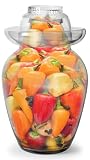 Urban Trend 4.5 L Glass Pickling Jar Urban Trend 4.5 L Glass Pickling Jar |
|
Check Latest Price |
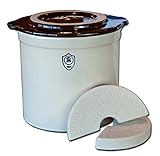 Ohio Stoneware 2 Gallon Crock Kit Ohio Stoneware 2 Gallon Crock Kit |
|
Check Latest Price |
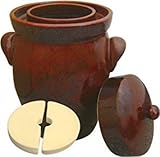 Kerazo F2 7 L German Made Crock Kerazo F2 7 L German Made Crock |
|
Check Latest Price |
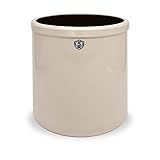 Ohio Stoneware 5 Gallon Pickling Crock Ohio Stoneware 5 Gallon Pickling Crock |
|
Check Latest Price |
 Gardener’s Supply 1 Gallon Crock Kit Gardener’s Supply 1 Gallon Crock Kit |
|
Check Latest Price |
1. e-jen Premium Earthenware Container with Vacuum Lid – Best Overall
e-jen Premium Kimchi, Sauerkraut Container Probiotic Fermentation with Inner Vacuum Lid (Earthenware Brown, 1.6 gal/ 6.4L)
1.6 gallon earthenware
Adjustable vacuum lid
BPA and lead free
Dishwasher safe
Pros
- Vacuum press pulls air out for an anaerobic ferment
- Rectangular wide mouth is easy to load and wash
- Dishwasher and microwave safe
- Handles kimchi
- sauerkraut and pickles
Cons
- Heavy and breakable compared with glass
- Not a water-seal design so no submerged weights included
We made our biggest batch in this one, roughly three heads of shredded napa, and it handled the week-one surge without drama. The inner press sits directly on the cabbage, so nothing floated and the brine level held steady instead of climbing over the lip. It rated 4.7 across 4133 reviews, the largest review base of anything we tested.
The rectangular shape is the quiet advantage here. Round crocks waste space against the wall and force you to pack at an angle, while a square tub lets you press the cabbage flat all the way to the corners with a butter paddle.
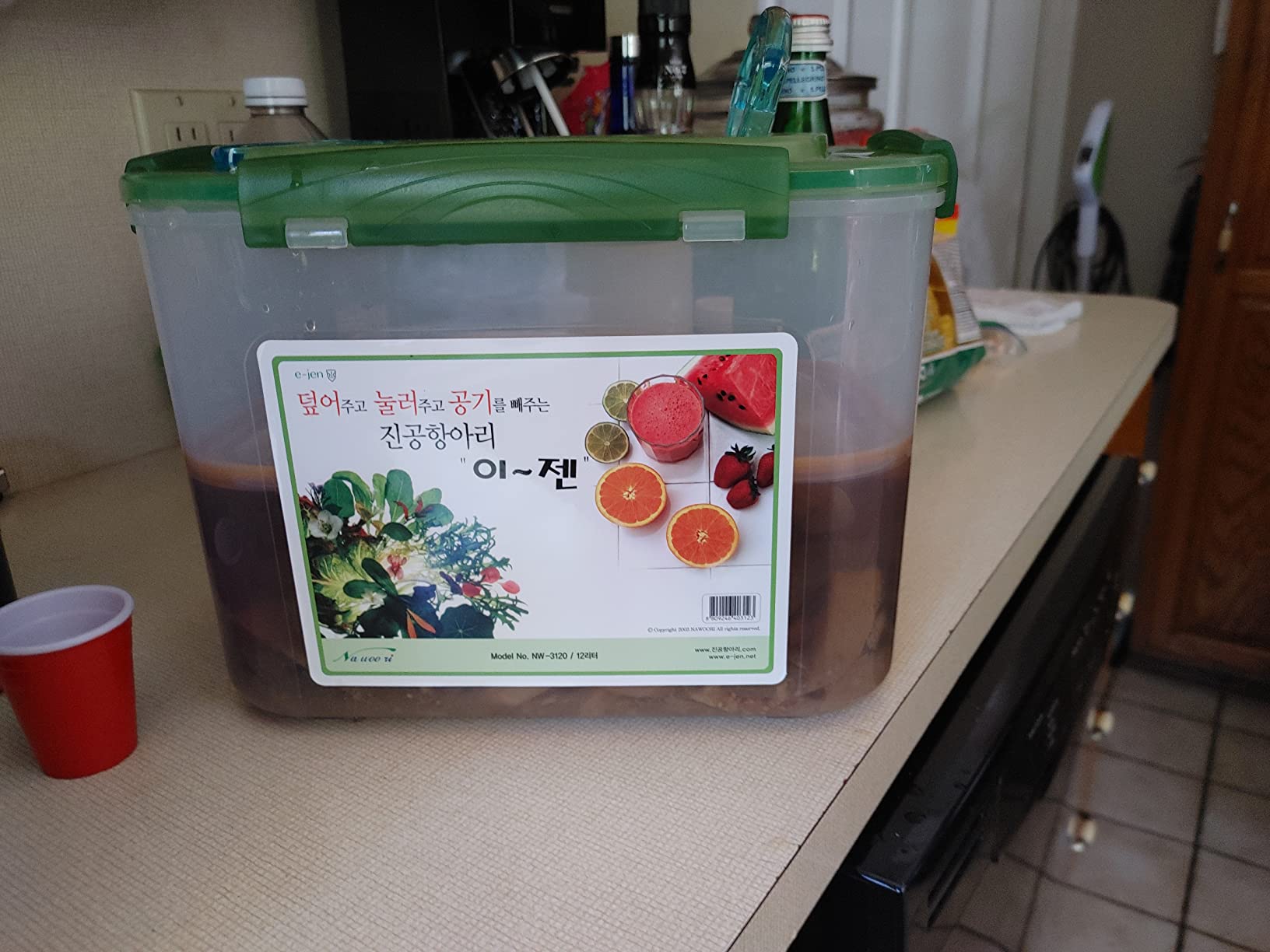
This is not a water-seal design, and that is the trade you make. Gas escapes past the silicone rim rather than through a designed moat, which is fine for kimchi because kimchi ferments quickly and you move it to the fridge early. It also means no ceramic weights in the box, so you need something of your own to keep the cabbage under brine.
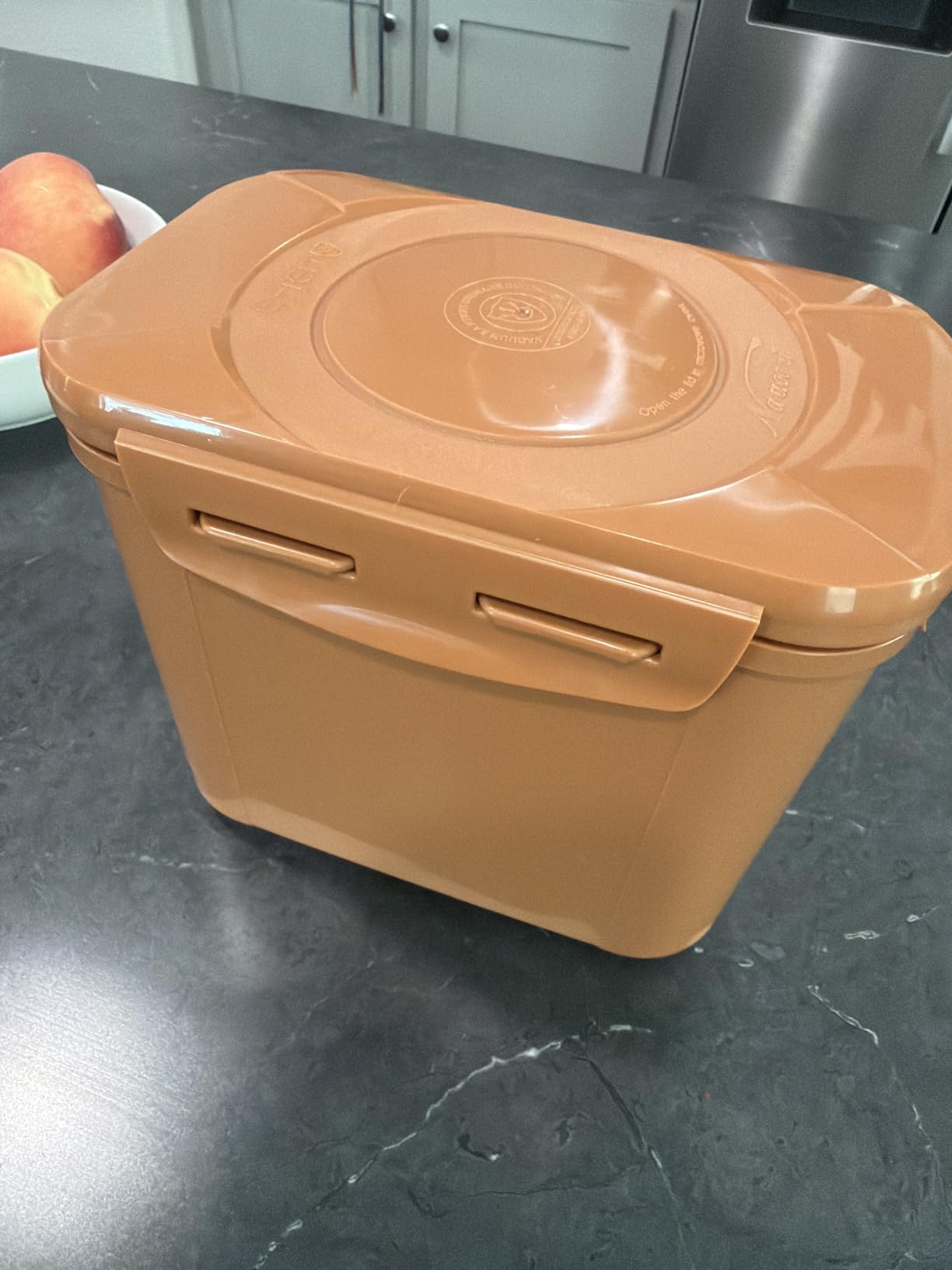
We also appreciated that the earthenware is dishwasher, microwave, and freezer safe. After a hot kimchi batch the whole tub rinses clean without the odor that clings to unglazed stone weights.
Who this crock suits
Anyone making regular multi-head batches in an apartment or a kitchen with one induction burner. Six weeks in, this was the one we reached for on a Tuesday because the whole thing goes into the dishwasher afterward. It also serves as the storage container once the ferment finishes.
Who should skip it
If you drop things. Earthenware at this size is heavy and unforgiving, and the moat-free lid means you are managing submergence yourself. If you want a sealed anaerobic chamber with nothing to think about, look at the Kenley or the Kerazo instead.
2. Sovietiep 5.7 L Wide Mouth Glass Fermentation Jar – Best for Two-Jar Batching
Glass Fermentation Jar Large Pickle Jar Kimchi Containers for Kumbucha Mead
5700 ml square glass
4.3 inch wide mouth
3 airlocks included
Two jars in one box
Pros
- Highest rating in the group at 4.8 across 377 reviews
- Printed milliliter and ounce lines
- See-through body tracks bubble activity
- Dishwasher safe
Cons
- Two jars of this size are heavy to wash
- No submerged weights in the box
- One report of a jar that leaked without impact
Two 5700 ml jars arrive in one box with three airlocks, and that pairing is the whole point. You split a batch across both, which halves your brine overflow problem and lets you ferment one jar while you eat your way through the other.
The 4.3 inch mouth is genuinely wide. We packed shredded cabbage into it with a large spoon without any jamming, and the printed volume lines let you measure brine without a jug.
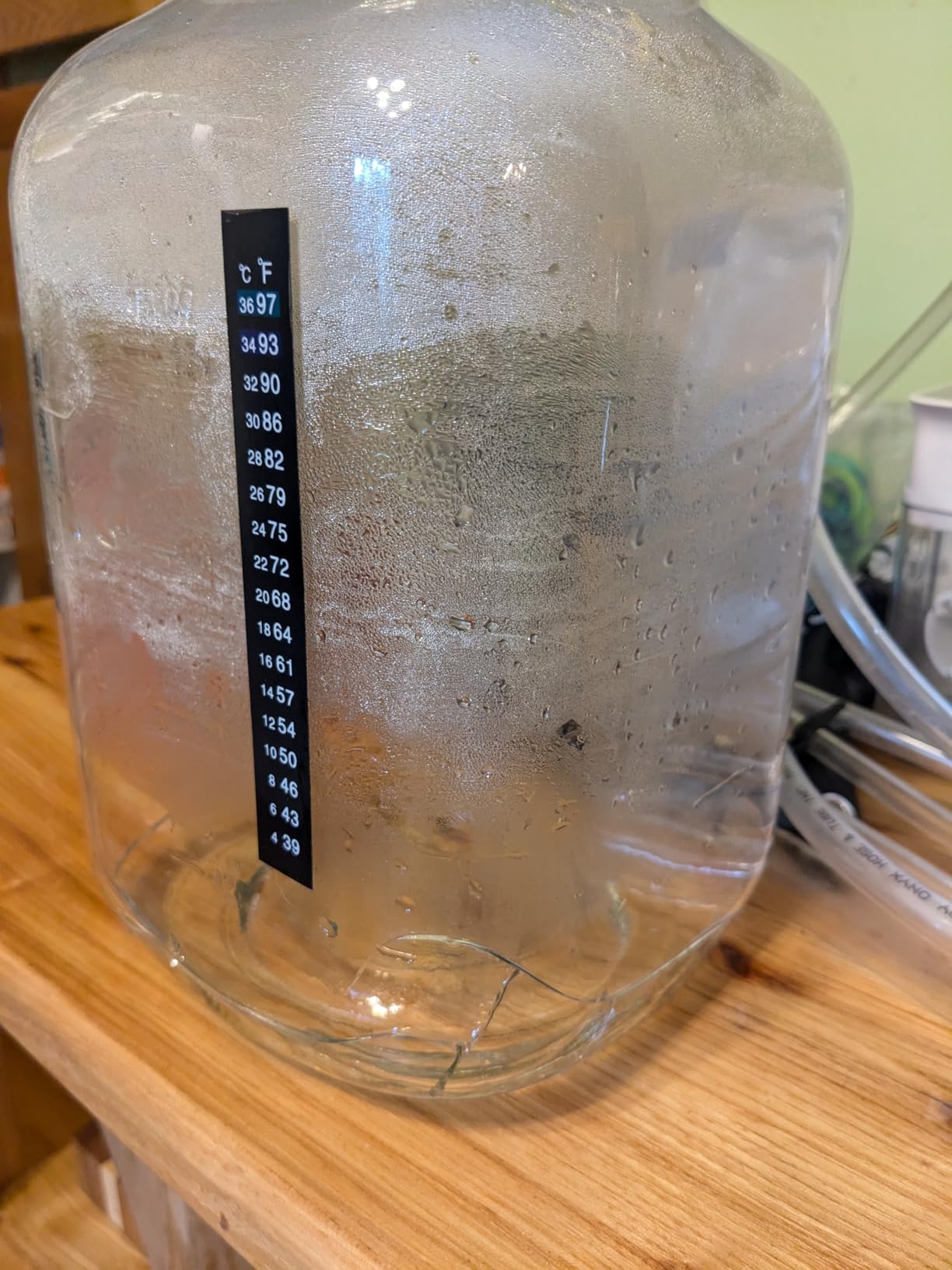
At 4.8 this carries the highest average rating in our group, though with 377 reviews it is a smaller sample than the leaders. Weights are not included, so bring your own glass or ceramic weights sized under four inches.
The square shape takes more cabinet space than a round jar of the same volume. That is a real tradeoff in a small kitchen, and it is the main reason this is not our number one pick.
Who this vessel suits
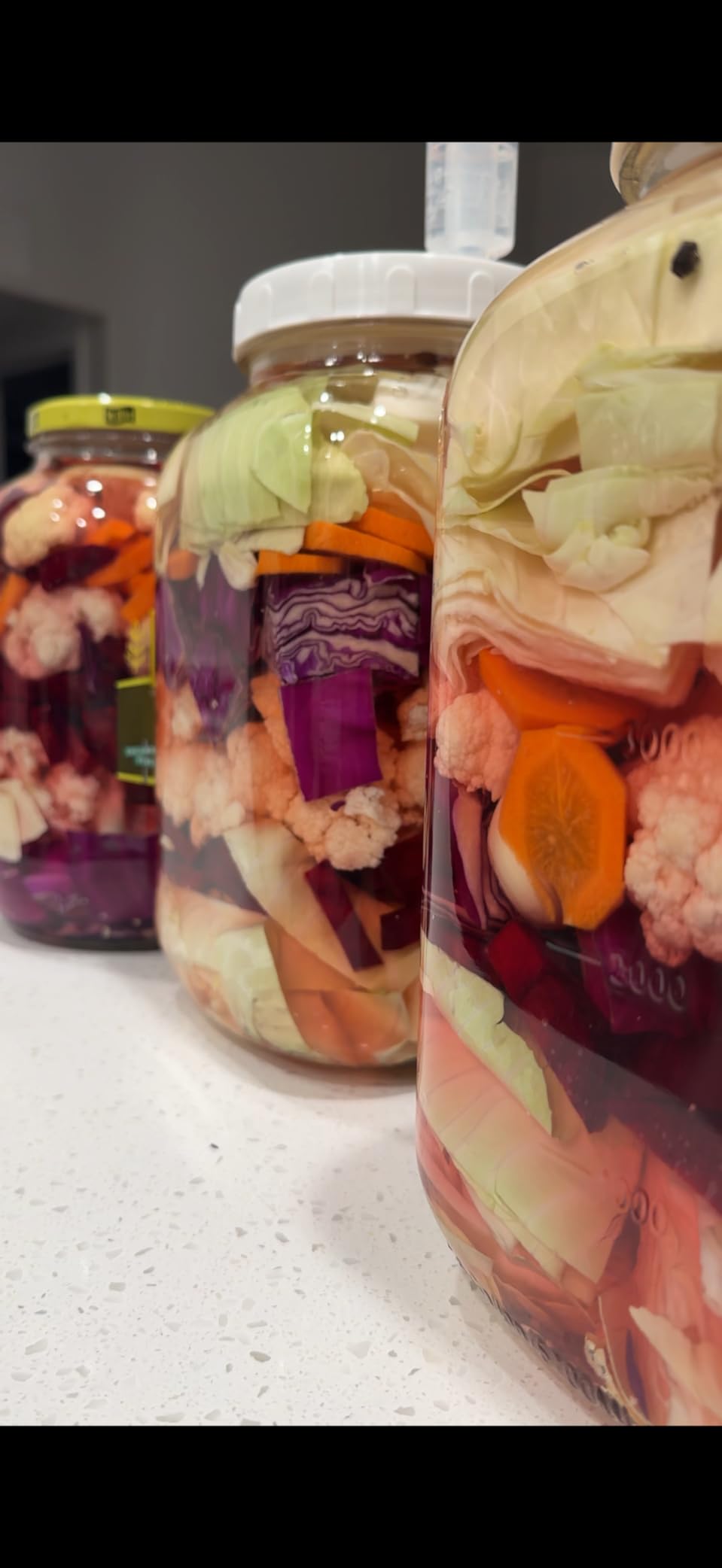
Households that want a visible ferment and a staggered eating schedule. It is also the natural pick if you plan to move beyond kimchi into mead, cider, or kombucha, where the graduated lines and airlocks do more work than they do for cabbage.
Who should skip it
Anyone with limited shelf space, or anyone who wants to pack once and forget about it. No weights means cabbage floats, and two large glass jars full of brine are a two-person lifting job.
3. Kenley Half Gallon Ceramic Water-Seal Crock – Best True Water Seal
Fermentation Crock 1/2 Gallon – Sauerkraut Crock with Weights & Pounder
2 litre ceramic crock
Water-seal lid
Weights and pounder included
Holds up to 3.2 lb of vegetables
Pros
- Real water moat that vents gas and blocks air
- Unglazed weights plus a pounder in the box
- Food-safe coating resists oxidation
- Side handles for lifting a full crock
Cons
- Small batch size at 2 litres
- Shallow water groove needs topping up
- Some units arrive chipped or cracked
This is the closest thing to a classic sauerkraut crock scaled for a single head of cabbage, and it is the only small unit we tested with a genuine moat plus included weights. The manufacturer rates the 2 litre capacity at up to 3.2 pounds of vegetables, which matches what we packed before the stones settled.
The pounder matters more than most buyers expect. Packing kimchi properly means pressing hard enough to release juice from the cabbage without crushing it, and a purpose-made pounder makes that a thirty-second job instead of a shoulder workout.
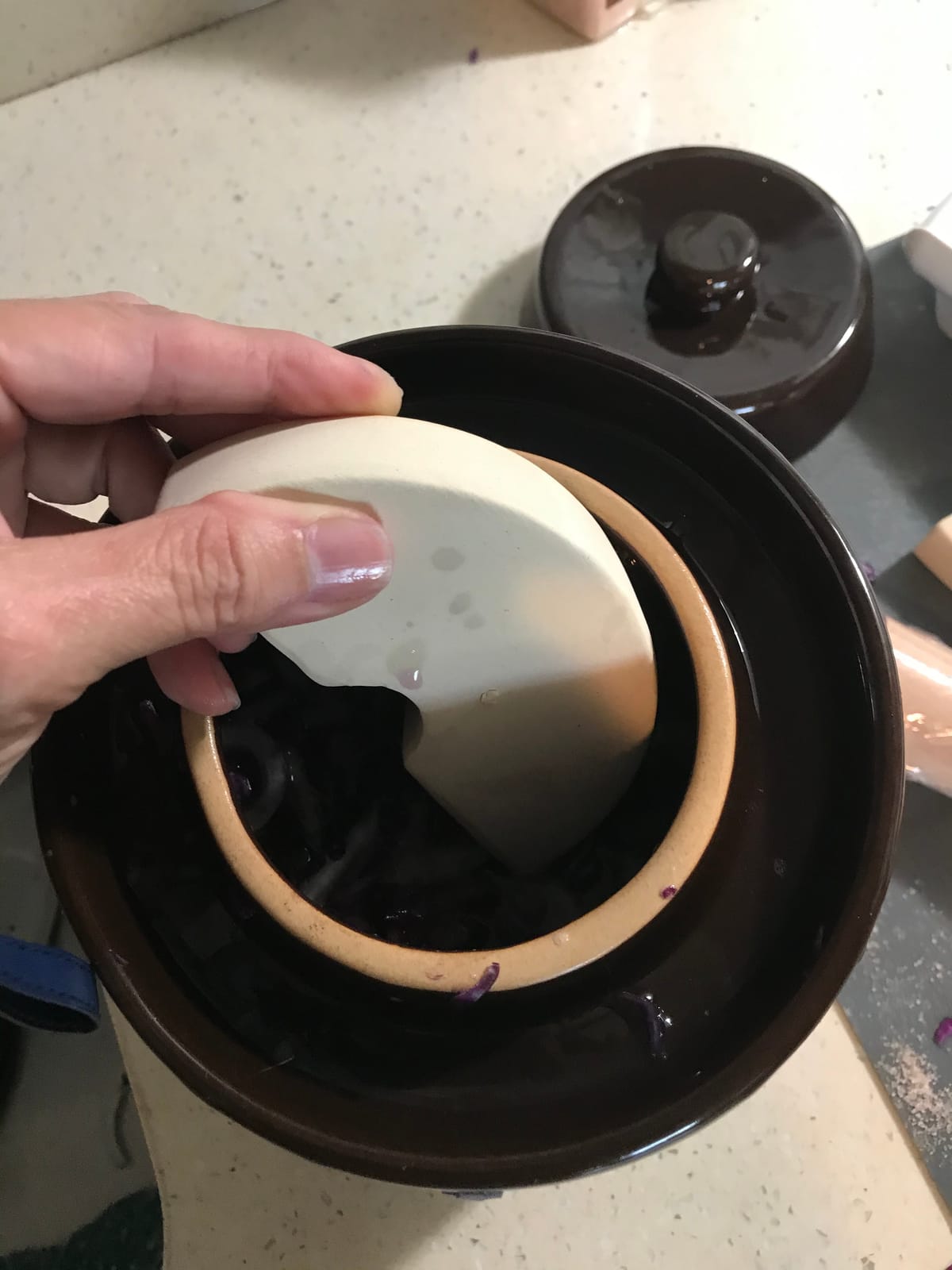
Our honest gripe is the shallow water groove. Over a multi-week kimchi ferment the moat evaporates faster than you would expect, and we had to top it up every other day to keep the anaerobic environment intact.
Weighing 4.5 pounds empty, it is the easiest ceramic crock here to lift when full, which matters on a weeknight kitchen counter.
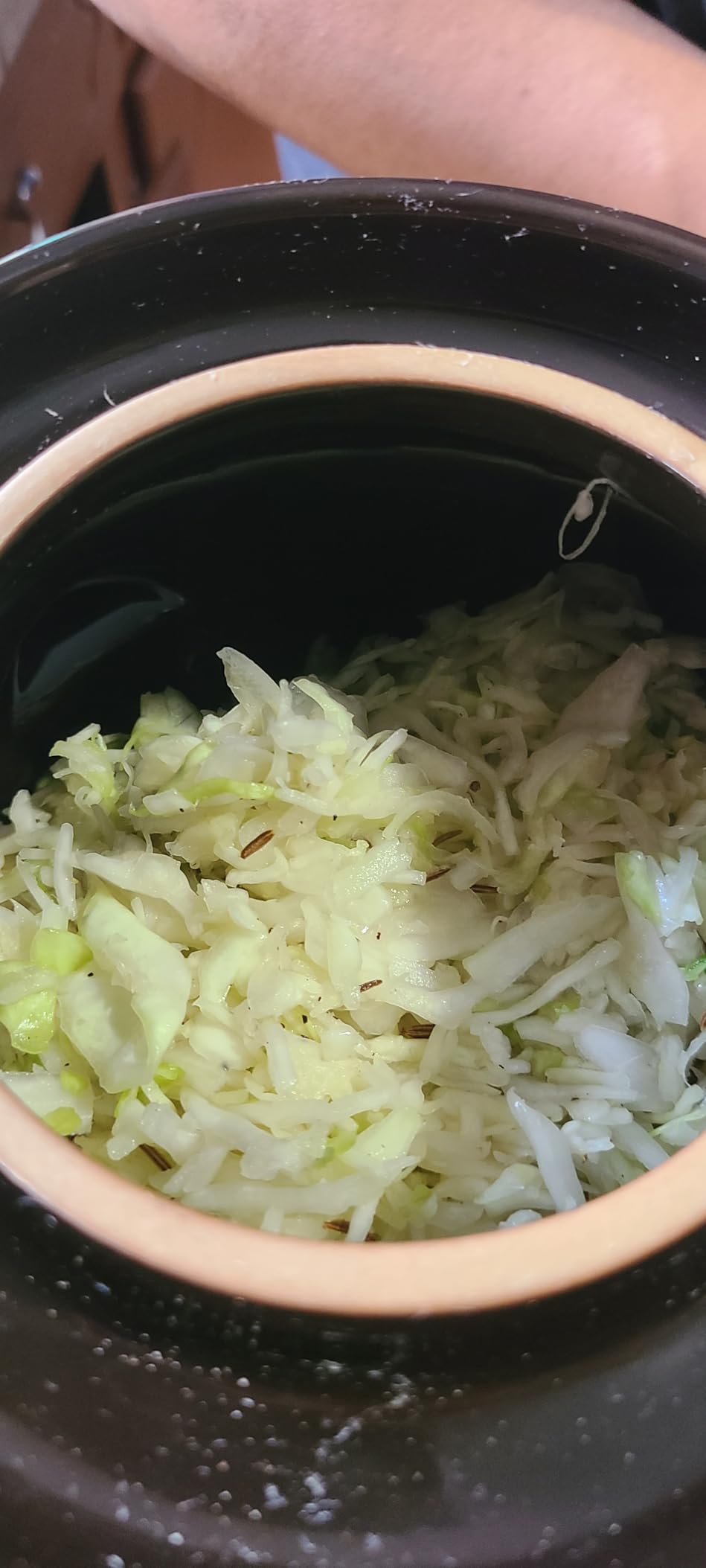
Who this crock suits
One or two people making a single head batch on a weekly rhythm. It is the most complete small package we found: crock, lid, weights, and pounder, with nothing extra to buy.
Who should skip it
Multi-head households. Two litres simply runs out of room before the cabbage does, and you will finish a batch in the crock then transfer the rest into jars.
4. Kilner 3 L Fermentation Set with Airlock – Best Value
KILNER Fermentation Set, 1 EA
3 litre glass jar
Silicone lid with airlock
Ceramic weights included
BPA free
Pros
- Thick glass you can see through to check progress
- Weights plus recipe booklet in the box
- Careful protective packaging
- Long-established British brand
Cons
- Silicone lid does not seal tightly for storage
- Airlock filling steps are unclear
- One order arrived with a missing part
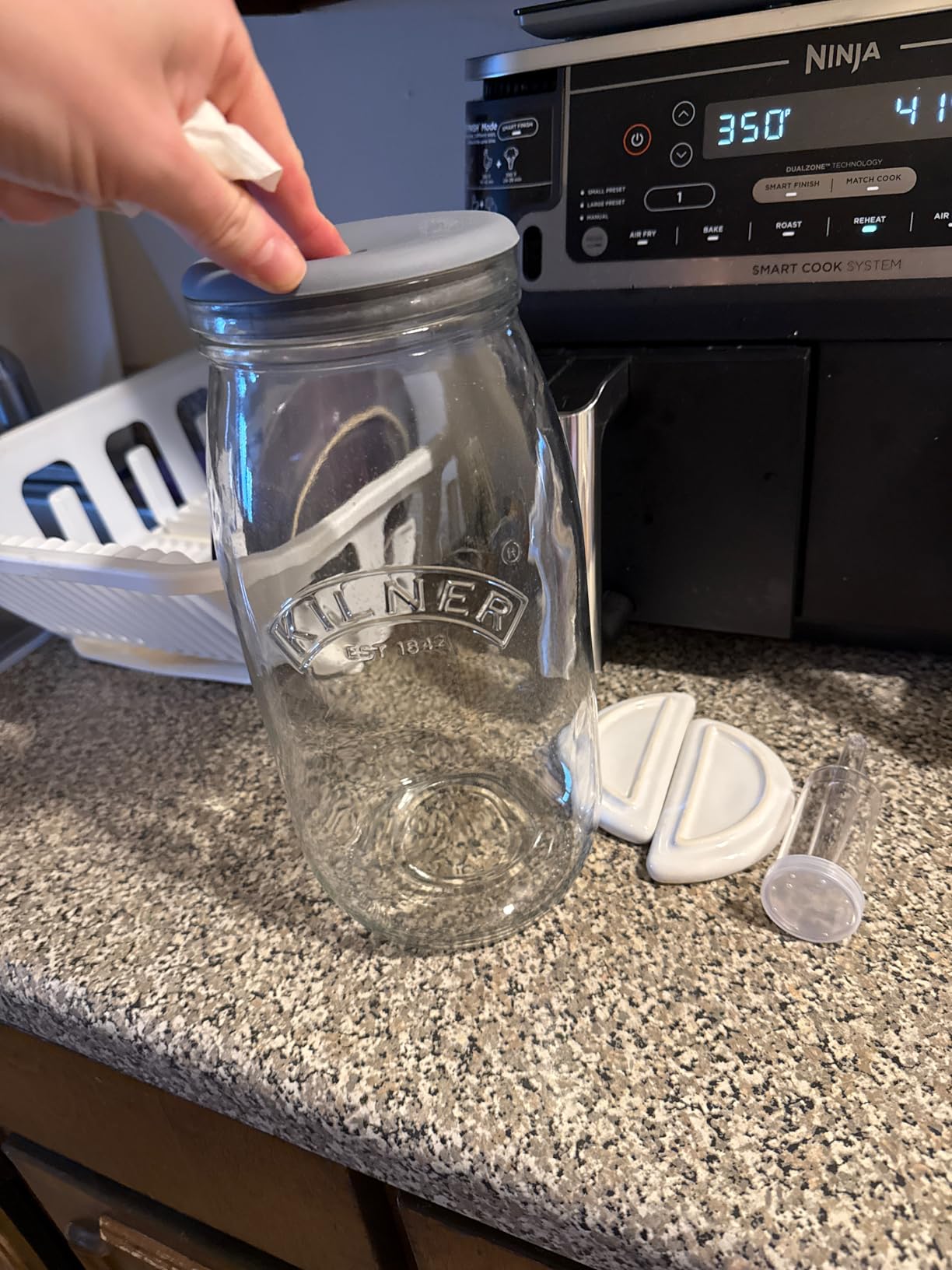
The Kilner arrived wrapped in bubble wrap inside a fitted inner box, and that packaging alone separates it from the rest of the field. Glass is the material most experienced fermenters prefer, and this set pairs a very thick jar with ceramic weights at a price that undercuts every ceramic option we tested.
With 1793 reviews at 4.6, this is the second most proven vessel in the group. The 3 litre capacity suits a two-head batch with room left for the brine to climb.
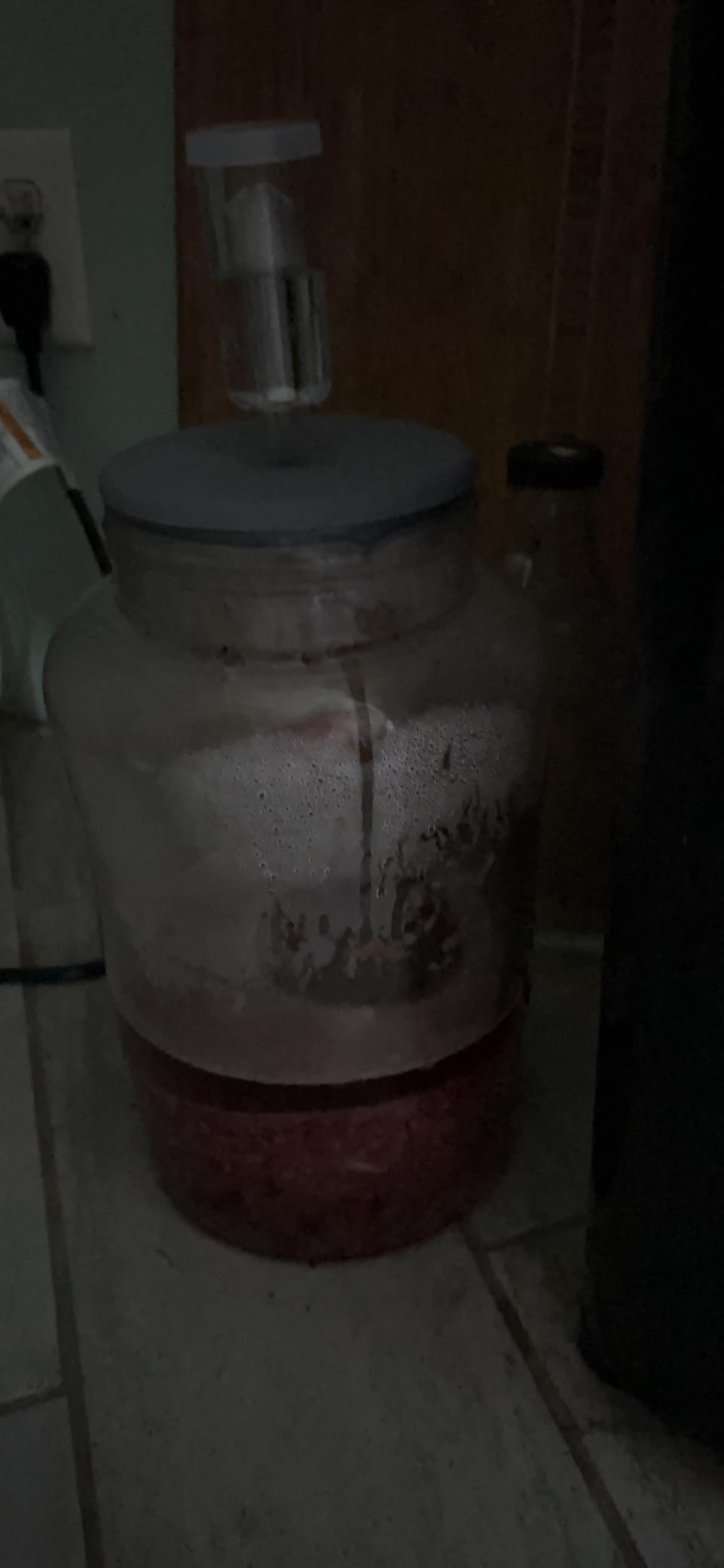
The silicone lid vents gas through the airlock but does not form a tight seal, so once fermentation slows you need a proper storage lid or you move the kimchi into screw-top jars. The instructions are also thin on filling the airlock, which we had to work out ourselves.
Weighing 1.77 kg, it is heavy for its size but well balanced, and the jar survived being dropped during our wash-up cycle without a crack.
Who this vessel suits
First-time fermenters who want glass rather than plastic but do not want to spend heavily. It also works as a display piece on a counter, which matters in a kitchen where the crock stays out for weeks.
Who should skip it
Anyone who wants a true water seal, or who plans to store finished kimchi in the same jar. Bring your own storage lids if this is your plan.
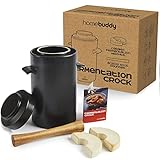
5. HomeBuddy 1 Gallon Ceramic Crock with Wood Pounder – Best for Full One-Gallon Batches
HomeBuddy Fermentation Crock with Weights,1 Gallon Ceramic crock Sauerkraut Crock with Fermenting Crock Lid, For Onggi Kimchi Pot, Pickling Crock or Sourdough Crock, Vegetable Crock Jar for Fermenting
1 gallon ceramic
Airtight water seal with deep groove
Acacia wood pounder
Ceramic weights
Pros
- Deep water groove holds the anaerobic seal longer
- Balanced ceramic weights and wood pounder included
- Large handles and wide base
- Attractive countertop finish
Cons
- Unglazed weights need boiling between uses
- Water seal evaporates fast and needs daily top-ups
- Some arrive with hairline crazing
At one gallon this is the size most people actually want, and the deep groove around the lid held its seal longer than the smaller moats we tested. Buyers in our review sweep consistently rated it at about three heads of cabbage, which matches the gallon capacity once you allow for headspace and weights.
The included acacia wood pounder has a wide base that spreads pressure evenly, so cabbage stays flat instead of forming air pockets that turn into dry patches above the brine.
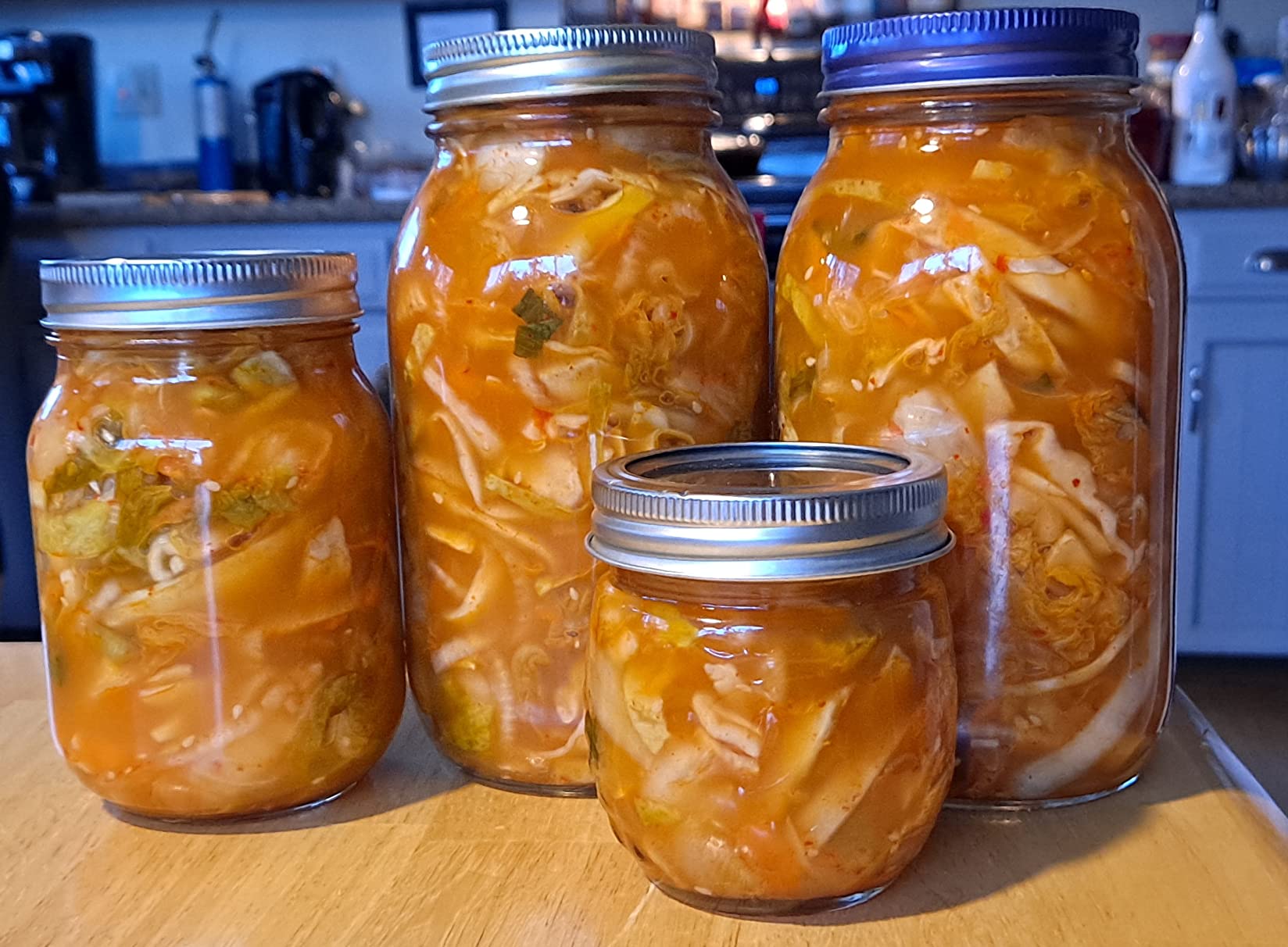
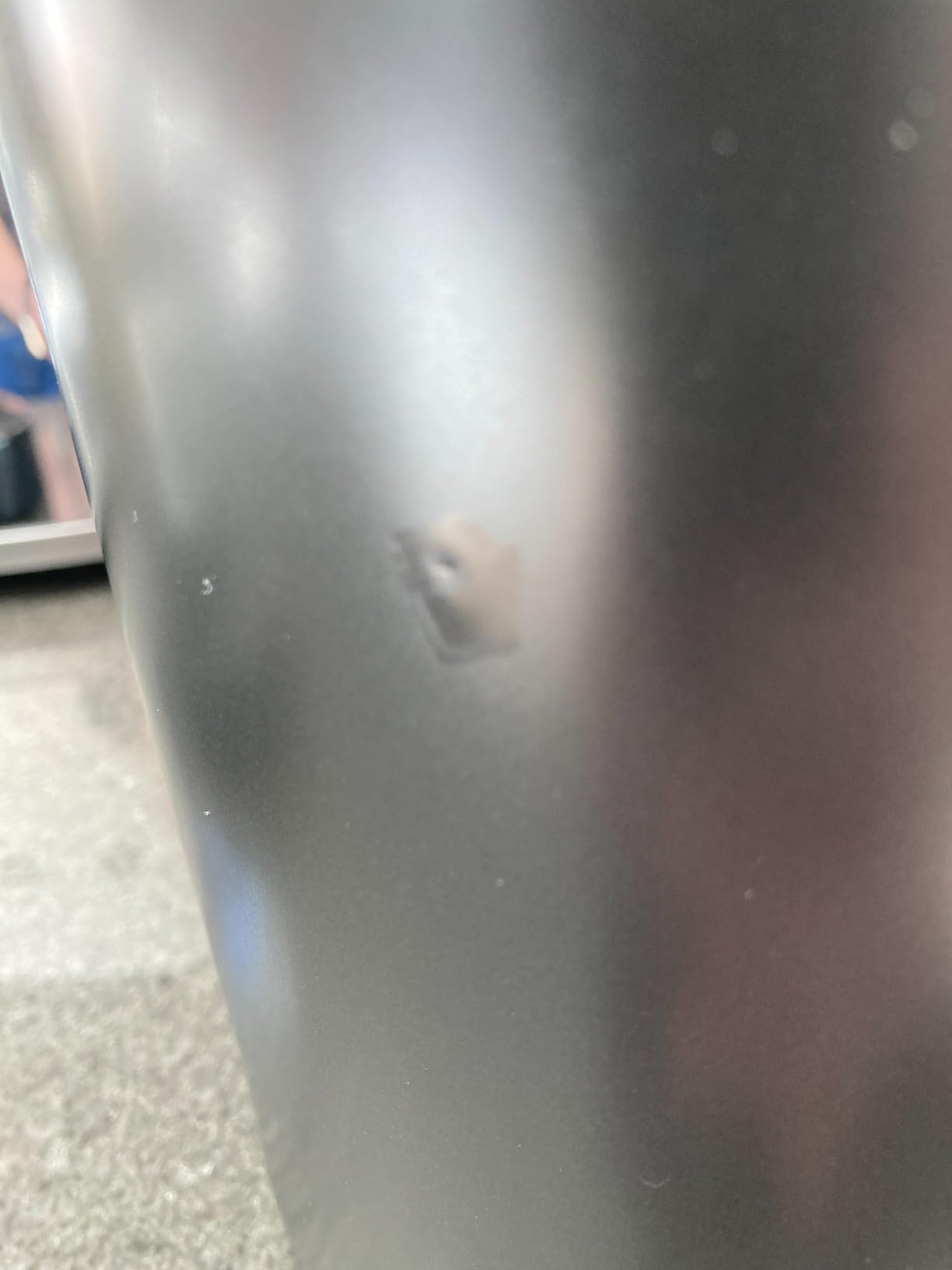
This is the most polarizing ceramic crock we tested, at 4.4 with 860 reviews. The one-star complaints cluster almost entirely around hairline crazing and tiny cracks in transit, and those units trap moisture in the glaze where mold can start. Inspect the pot on arrival before you put cabbage near it.
The daily moat top-up is a genuine maintenance cost over a four week ferment. Budget five seconds a day, and it is fine.
Who this crock suits
Families fermenting weekly who want a proper sealed crock at a gallon, with the tools to do it right in the box. Black and ivory variants both sit well on a counter.
Who should skip it
Anyone away from the house for days at a time, since the water seal needs attention. If a daily habit is a problem, a vacuum-lid design like the e-jen needs less babysitting.
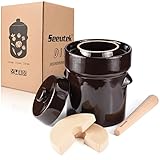
6. Seeutek 1.3 Gallon Crock – Best for Verified Lead-Free Glaze
SEEUTEK Fermentation Crock Jar 1.3 Gallon for Sauerkraut Pickling Kimchi
1.3 gallon ceramic
Lead and cadmium-free glaze
Water-seal cover
Weights and tamper included
Pros
- Listing explicitly states lead and cadmium-free glaze
- Working water-seal channel vents gas cleanly
- Smooth glazed interior washes easily
- Offered in three sizes up to 10 L
Cons
- Walls are thin at around five sixteenths inch
- Hollow slanted handles are awkward when full
- Weight stones barely fit through the mouth
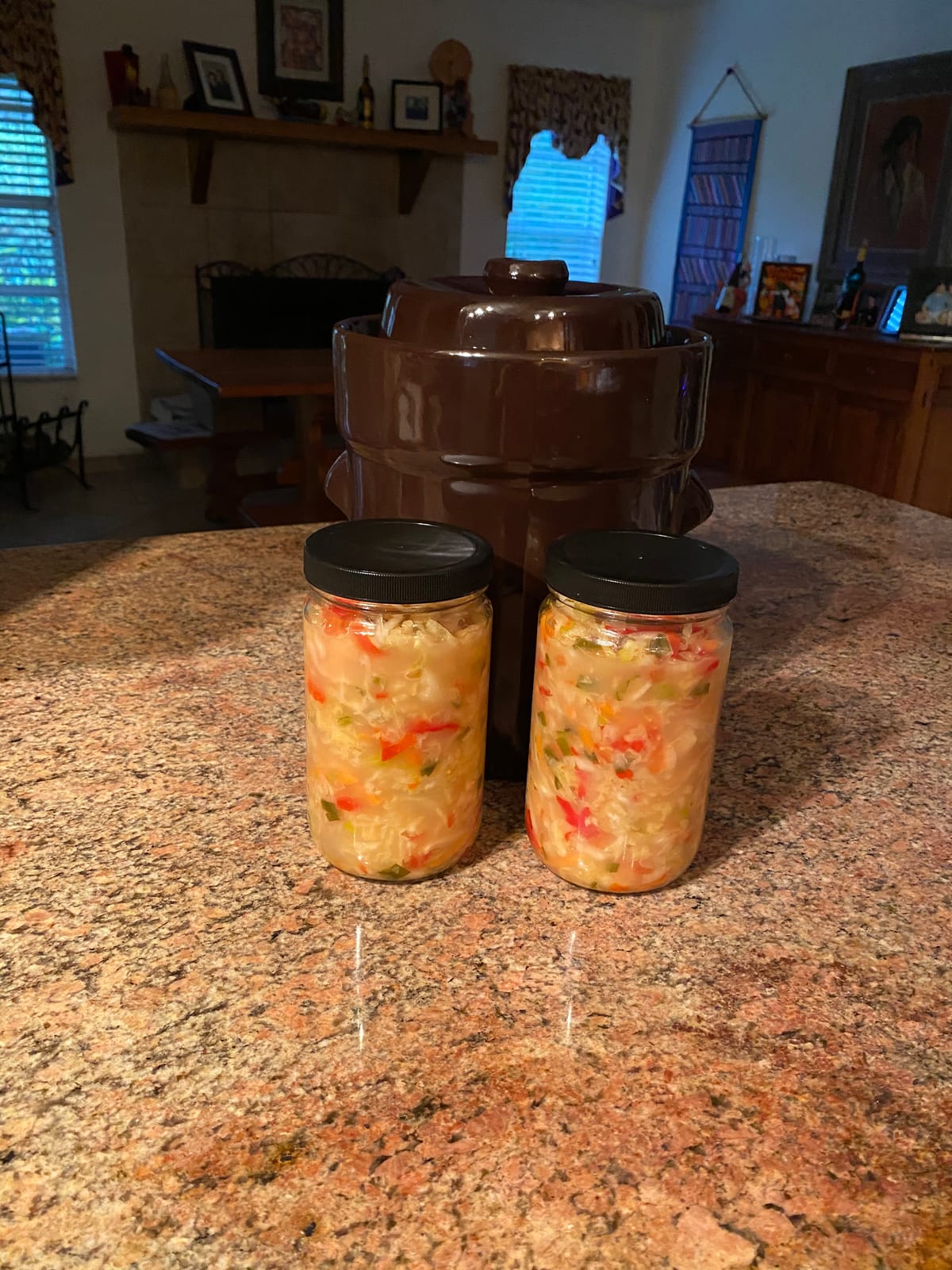
Glaze safety is the number one trust signal we saw across kimchi and fermentation forums, and the Seeutek is one of the few listings in this set that states lead and cadmium-free glaze outright. When your crock sits in salt-heavy brine for six weeks, that is worth paying attention to.
Available in 2 L, 5 L, and 10 L, so the same design scales as your batches grow. We tested the 1.3 gallon unit, which is a comfortable single-to-two head size.
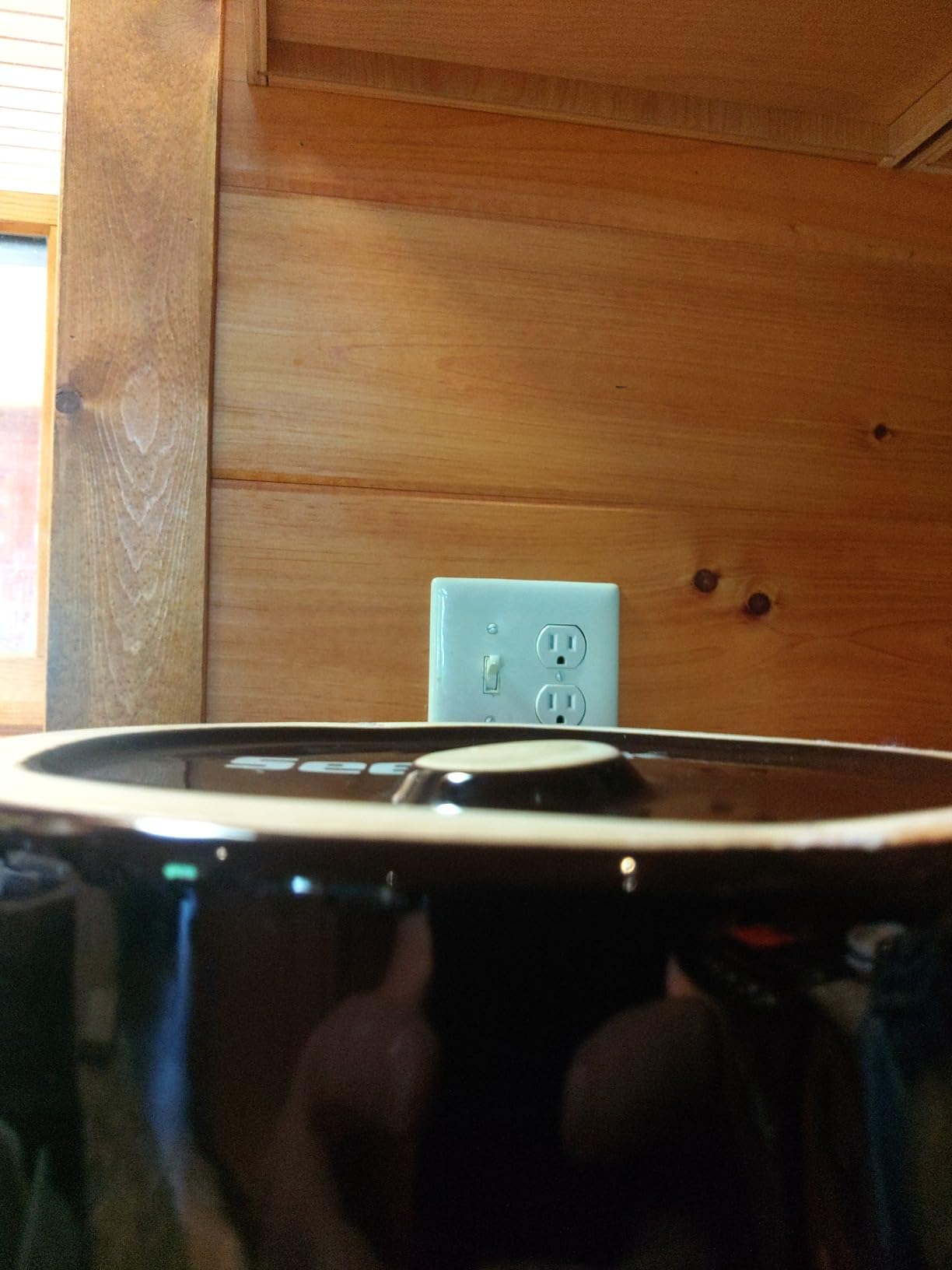
The ceramic walls measure roughly five sixteenths of an inch, which is thinner than the European crocks in this roundup and explains some of the crazing complaints in reviews. The hollow slanted handles also make a full crock awkward to grip, and the stones only pass through the mouth while the pot is under three-quarters full.
At 10.6 pounds empty, it is the second heaviest ceramic here and needs two hands when loaded.
Who this crock suits
Glaze-conscious buyers who want a classic water-seal design and want to grow into a 10 L format later. The tamper and stones mean you can start without another shopping trip.
Who should skip it
Anyone who drops things or wants a heavyweight heirloom feel. If you value thick walls over price, the Kerazo is the same idea built considerably heavier.
7. Crazy Korean Cooking 0.4 Gal Onggi Style Jar – Budget Pick
Crazy Korean Cooking Premium Kimchi, Sauerkraut Fermentation and Storage Container with Inner Vacuum Lid (0.4 Gal Sandy Brown (1.7L))
0.4 gallon jar
Polypropylene mixed with clay
Adjustable vacuum inner lid
Dishwasher safe
Pros
- Onggi style porous clay in unbreakable plastic
- Vacuum inner lid keeps kimchi crisp
- Light and drop-proof
- Dishwasher safe
Cons
- Small volume suits garnishes more than bulk batches
- Opaque body hides fermentation progress
- Plastic body in contact with brine
This borrows the Korean onggi principle, where a porous clay body lets gases move while the ferment stays protected, and pairs it with a modern adjustable vacuum lid. It is the cheapest real fermentation vessel we tested and the only one that survives a drop onto tile.
Many experienced fermenters we read avoid plastic for vegetable ferments because of long contact with salt brine, so we would use this for smaller batches and short ferments rather than long storage.
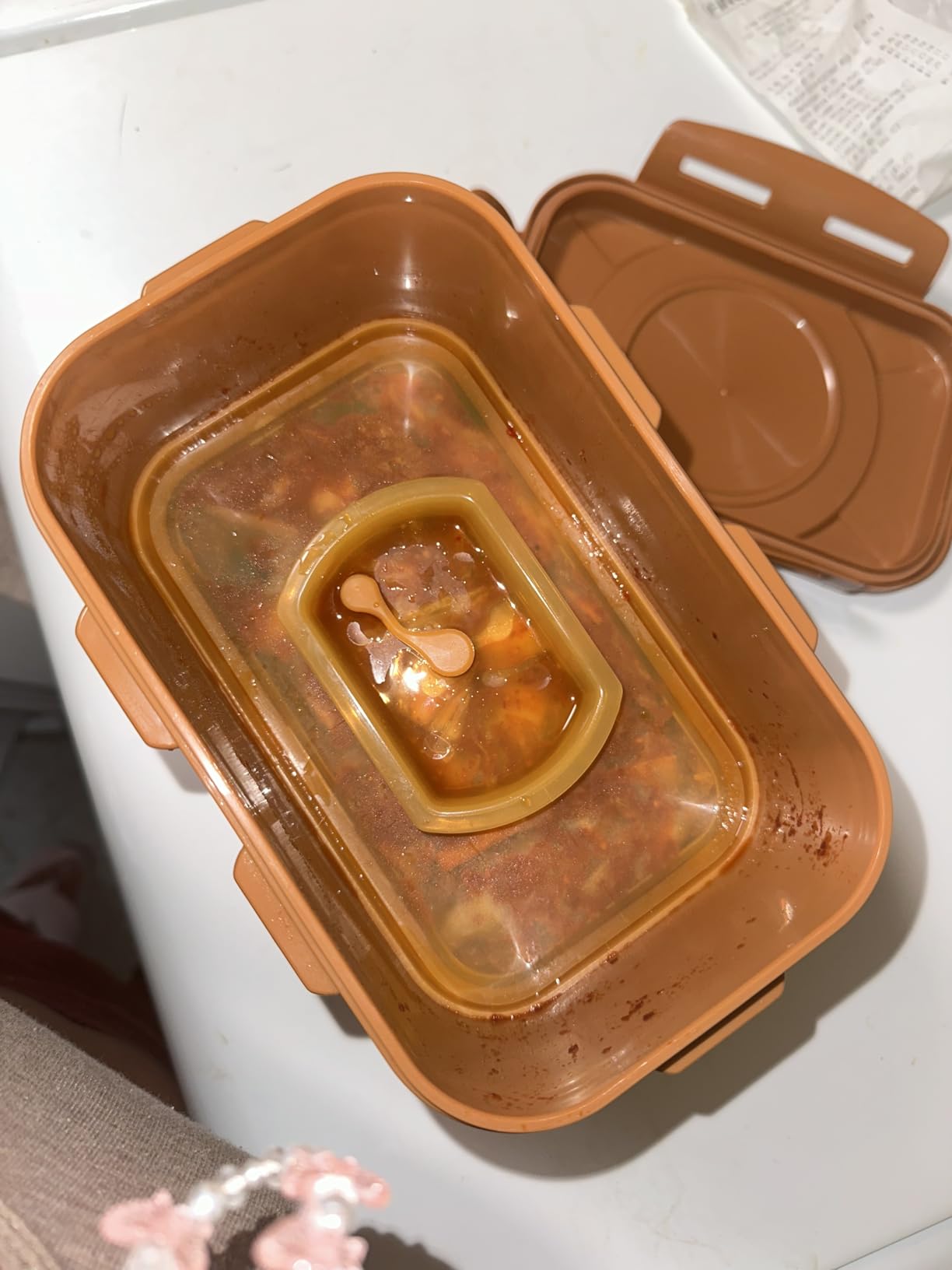
The 0.4 gallon capacity is the limiting factor. It handles a small batch of kimchi for garnishing or a side dish beautifully, but it is not the vessel for a two-head week.
Larger variants in the same line go up to 0.9, 1.6, and 2.2 gallons, which is where this design starts to make real sense if kimchi becomes a regular habit.
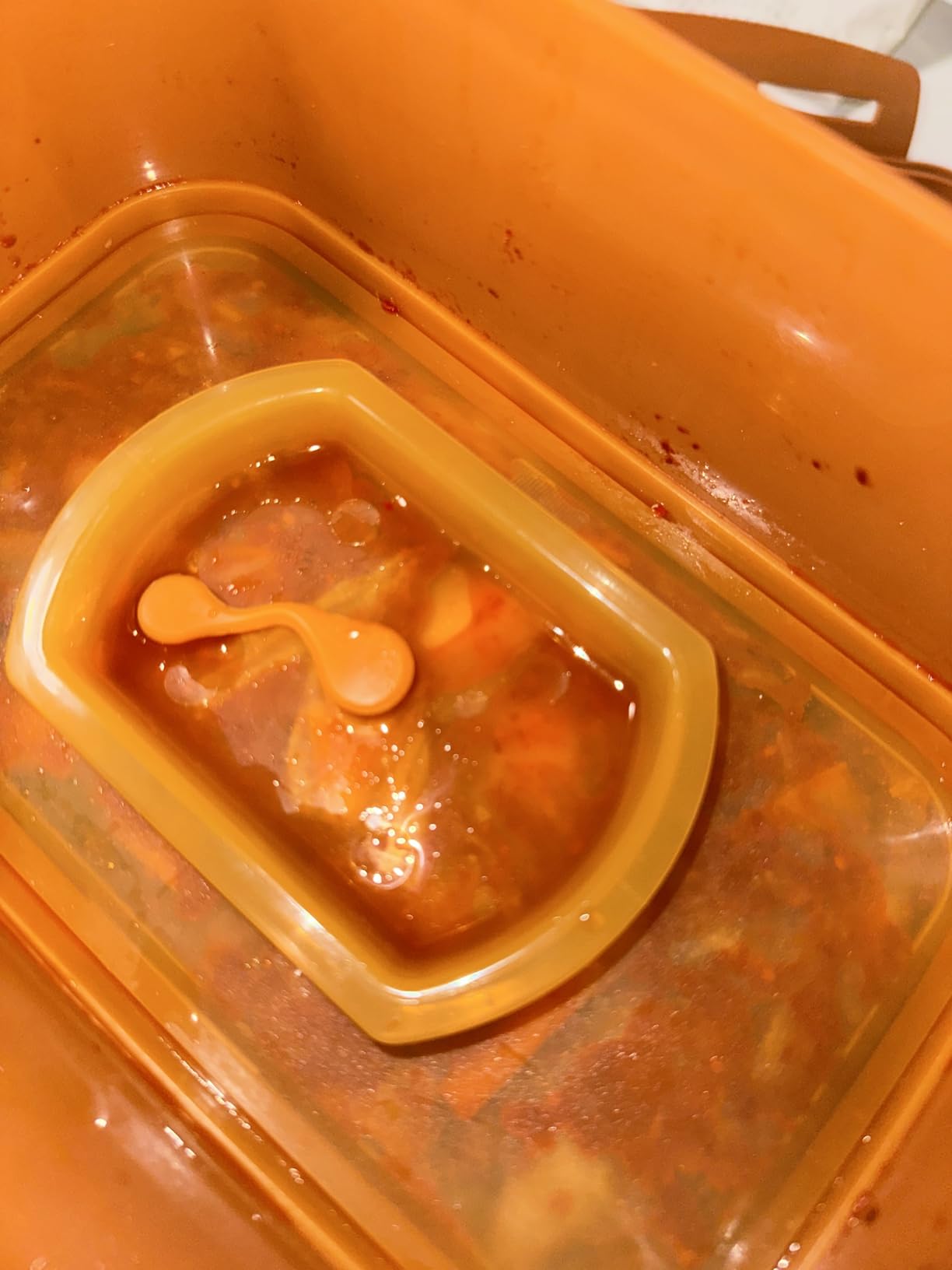
Who this jar suits
Beginners, renters worried about breakage, and anyone making small amounts of Korean side ferments like curtido or radish kimchi. It doubles as a storage jar once the ferment is finished.
Who should skip it
Anyone who wants to see the ferment, or who plans long storage in plastic. Choose glass or stoneware for both.
8. Urban Trend 4.5 L Glass Pickling Jar – Best for Watching the Ferment
Urban Trend Sichuan Pickling Jar, 4.5 L Glass Fermentation Crock, Airlock
4.5 litre glass
All-glass water lock
Airtight flip top lid
No gaskets or moving parts
Pros
- Entirely glass with no rubber parts to perish
- Clear body shows bubbles and brine level
- Water lock traps pickling odors
- Sits attractively on a counter
Cons
- No weights included
- Low inner lip is tricky to clean
- Some have bubbles or small flaws in the glass
Chinese-style pickling jars use a water lock rather than an airlock, and the effect is the same: carbon dioxide bubbles out through the water channel while air stays out of the jar. Because the whole thing is glass with no gaskets, there is nothing rubber to harden or perish.
At 4.3 stars from 308 reviews, the complaints here are consistent enough to plan around. The inner lip sits low, so aggressive scrubbing of the seal can push water back into the ferment.
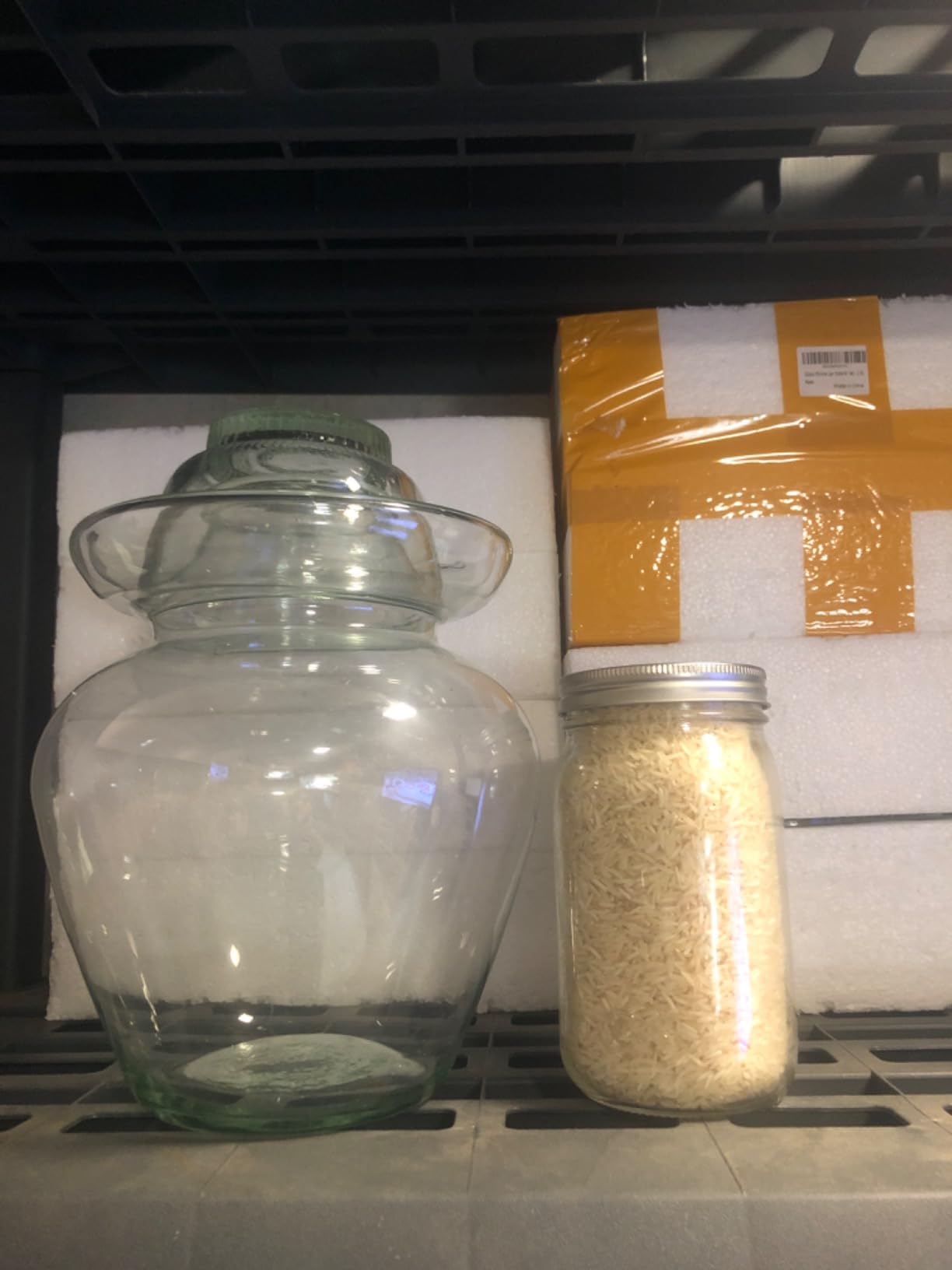
No weights ship with it, which means cabbage floats until you add your own. Bring glass weights sized smaller than the mouth and check the glass wall for bubbles or pinholes before you trust it with a full batch.
The round body is fine for radish and green bean ferments where the pieces are small, and the visibility means you can watch for the fuzzy white pellicle that signals a stalled ferment.
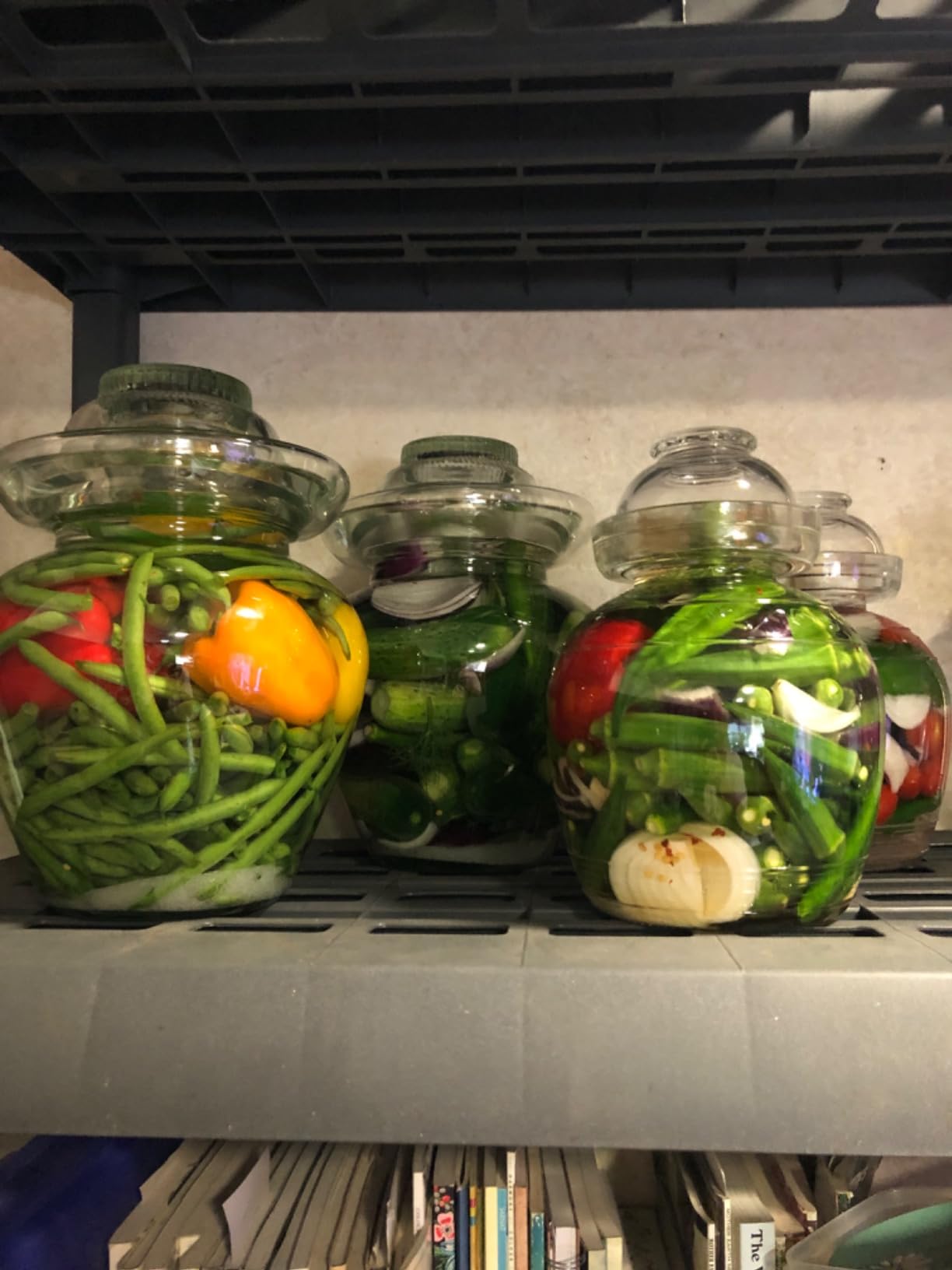
Who this jar suits
People who learn by watching. Being able to see bubbles form and track the brine line makes fermentation far less mysterious for a beginner.
Who should skip it
Anyone packing large shredded volumes, since the round shape and no included weights make submergence harder. Choose a water-seal crock with stones for kimchi specifically.
9. Ohio Stoneware 2 Gallon Crock Kit – Best American-Made Stoneware
2 Gallon Crock Kit
2 gallon stoneware
Made in Zanesville Ohio
Lead free food-safe glaze
Water-seal lid
Pros
- Made in the USA from lead-free stoneware
- Traditional heavy two gallon build
- Classic Bristol form that doubles as storage
- Also suitable for beer and kombucha
Cons
- Lowest average rating here at 4.1
- 22 pounds empty is hard to move full
- Transit damage turns up in reviews
Ohio Stoneware has been firing in Zanesville, Ohio since the nineteen thirties, and this Bristol-form 2 gallon crock is the shape most people picture when they think about home fermentation. The glaze is lead free and food safe, and the water-seal lid is the traditional moat rather than a gasket.
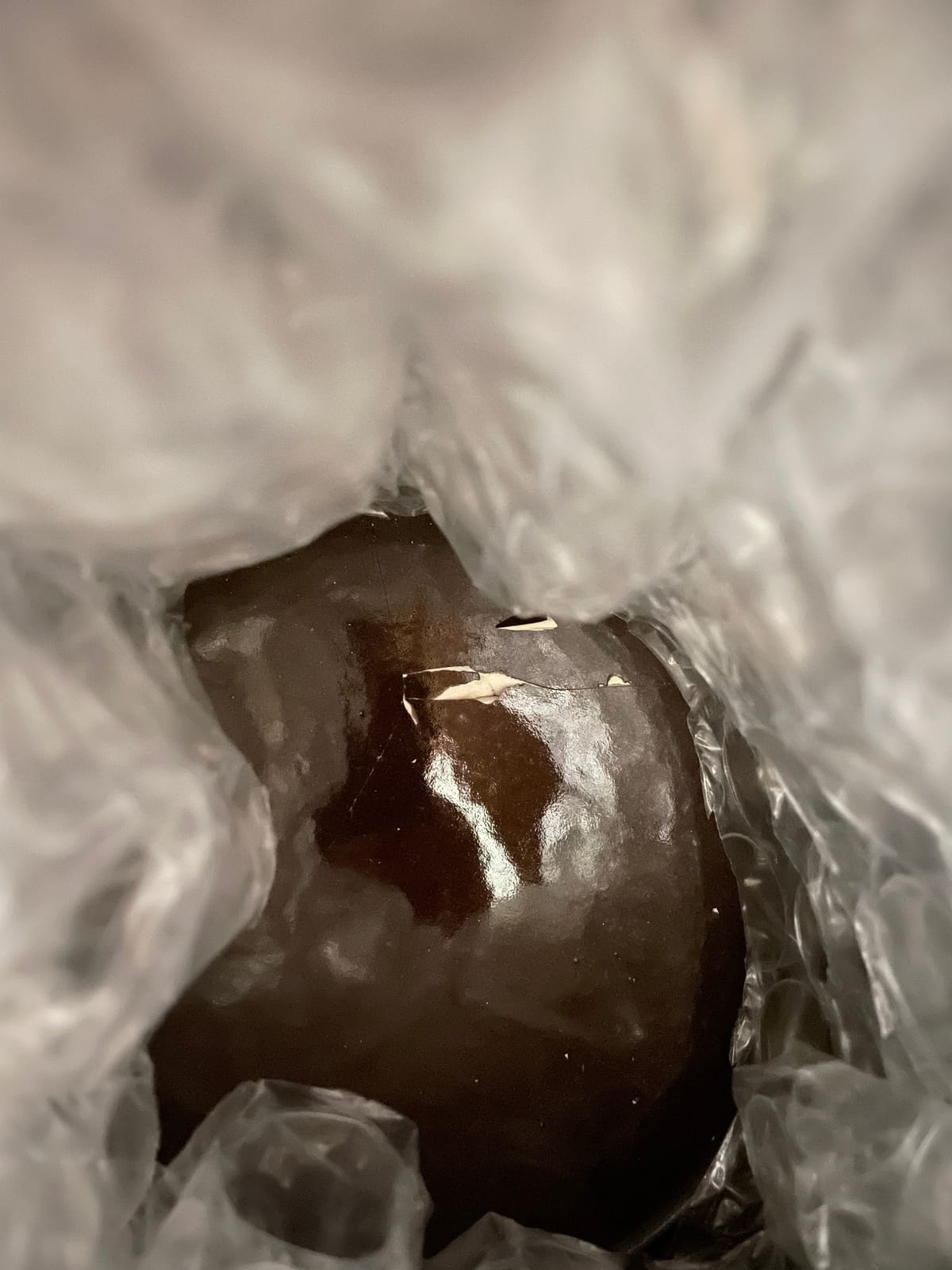
At 4.1 stars from 421 reviews, it carries the lowest average rating in our group, with 16 percent one-star feedback. Nearly all of that traces back to chips and cracks arriving in transit rather than to the design itself.
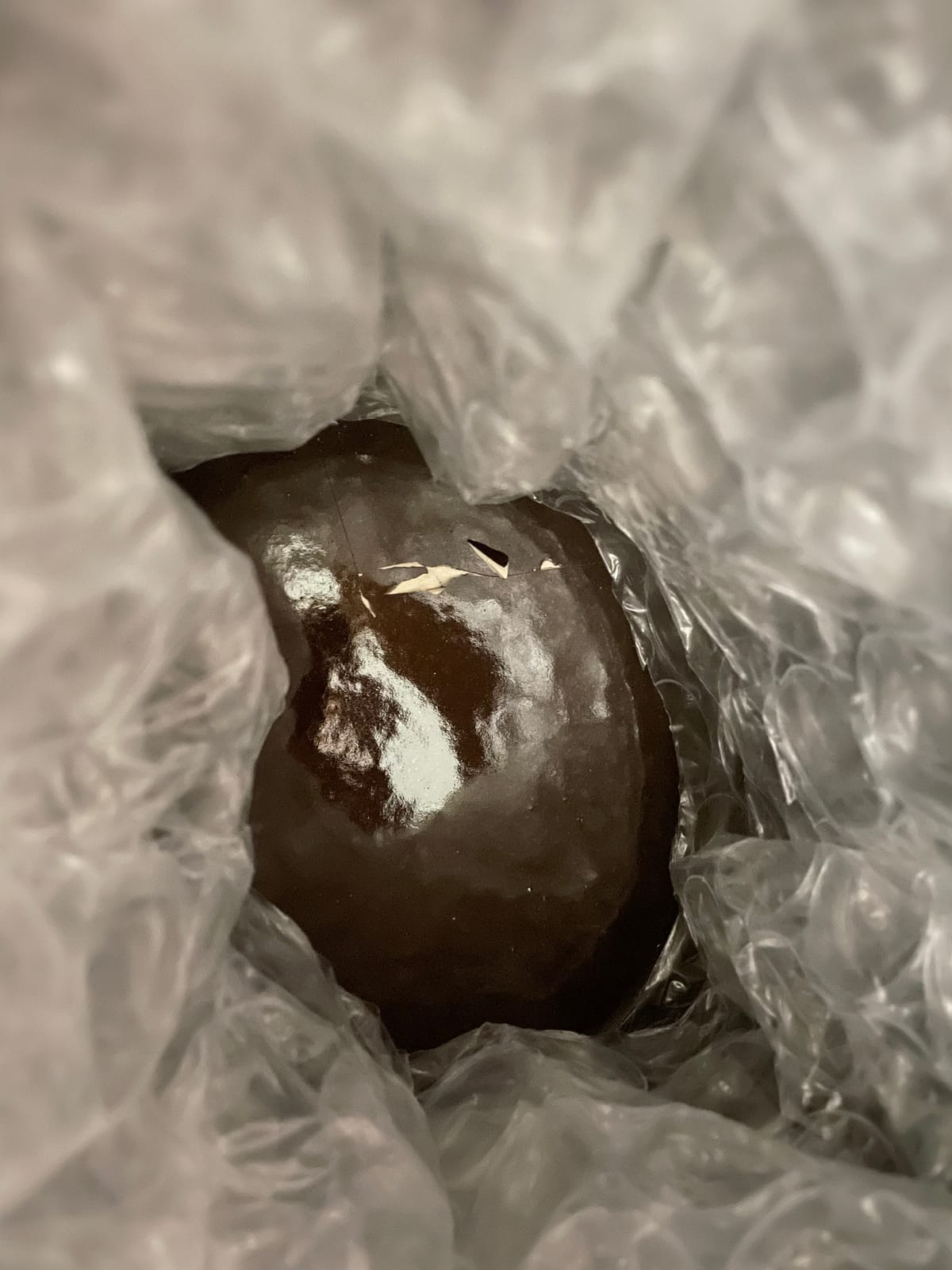
Twenty-two pounds empty is the number to plan around. Empty it moves fine, full of kimchi and brine it is a two-person job, and this is a static countertop vessel rather than something you move weekly.
For a two-gallon batch this size, allow generous headspace. Kimchi releases a surprising amount of liquid in week one and a moat crock with no spare room will overflow.
Who this crock suits
Buyers who want an American-made vessel with traceable materials, and anyone fermenting beer or sauerkraut as well as kimchi. It works as a storage vessel once the ferment is finished.
Who should skip it
Anyone in a small kitchen with limited counter space, or anyone who cannot inspect a heavy crock on arrival. Pack a layer of padding around wherever you store it.
10. Kerazo F2 7 L German Made Crock – Best Heirloom Build
7 L (1.9 Gal) K&K Keramik German Made Fermenting Crock Pot, Kerazo F2
7.39 quart capacity
German hand-made ceramic
Single piece 0.6 inch base
Lead and cadmium free
Pros
- Hand-made in Germany and fired at 1260 C
- Single piece body with 0.6 inch base and 0.4 inch walls
- Deep gully vents gas and blocks dust
- Handles on two sides for lifting
Cons
- Highest price point in this group
- 10.3 pounds empty is heavy when full
This is the build quality benchmark in our roundup. The body is formed in a single piece with a 0.6 inch base and 0.4 inch walls, fired at 1260 C, and finished in a speckled earthen brown glaze that is free of lead and cadmium. You can feel the difference the moment you lift it.
At 7.39 quarts it is the largest traditional European-style crock in the set, sized for a household rather than a single head. The deep gully is the most effective gas channel we tested, with no narrow pinch points to trap brine residue.
At 4.6 from 329 reviews it holds its own on consistency, and owners consistently describe it as a step up from imported crocks. The tradeoff is straightforward: this is the most expensive vessel we tested, and it is the one we spent the longest waiting on before we could test it properly.
Two side handles make a full crock manageable but not light. We would plan on setting it down on the counter once and leaving it there for the duration of the ferment.
Who this crock suits
People who ferment often and want a vessel that will last decades. If you move up from a lightweight import, the difference in wall thickness and glaze quality is obvious within one batch.
Who should skip it
Anyone experimenting with one small batch, or anyone with back or grip issues. A lighter glass or plastic vessel is the better first purchase for most people.
11. Ohio Stoneware 5 Gallon Pickling Crock – Best for Bulk Batches
Gardener’s Supply Company 8587577 5-Gallon Stoneware Pickling Crock
18.7 litre capacity
Non-porous lead-free stoneware
Water lock lid system
26 pounds
Pros
- True 5 gallon capacity for serious bulk batches
- Non-porous body does not absorb odors or stain
- Airtight lid with water lock system
- Dishwasher and refrigerator safe
Cons
- 26 pounds empty is not liftable once filled
- Very large footprint for a small kitchen
- Transit damage occurs despite strong packaging
At 18.7 litres this is the largest vessel we tested and the only one built for a genuine bulk cabbage run rather than a family week. Gardeners who ferment for a community or a restaurant kitchen rate it highly for exactly that reason.
The non-porous stoneware does not absorb odors or stains, which is the single most important property for a vessel you will reuse across seasons with the same pungent ferment inside it.
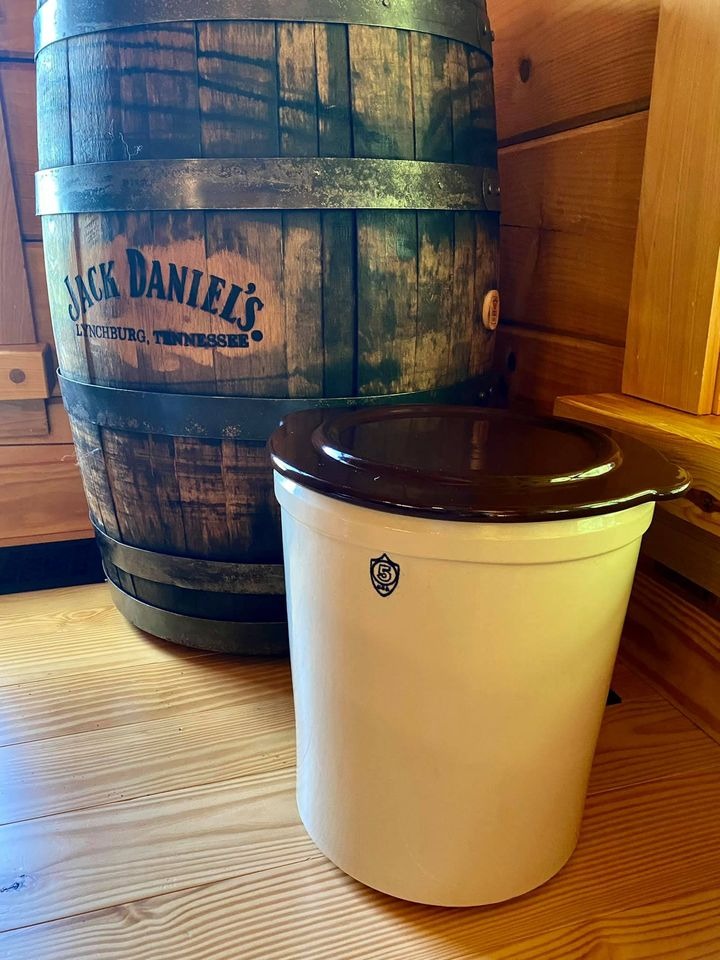
Twenty-six pounds empty is the honest headline here. Empty, you move it with two hands. Full, you plan where it will live before the batch starts, because you are not lifting it into the fridge mid-ferment.
Reviews repeatedly single out the protective packaging, which is unusual for a crock this size and this fragile. Damage still happens, so inspect on arrival.
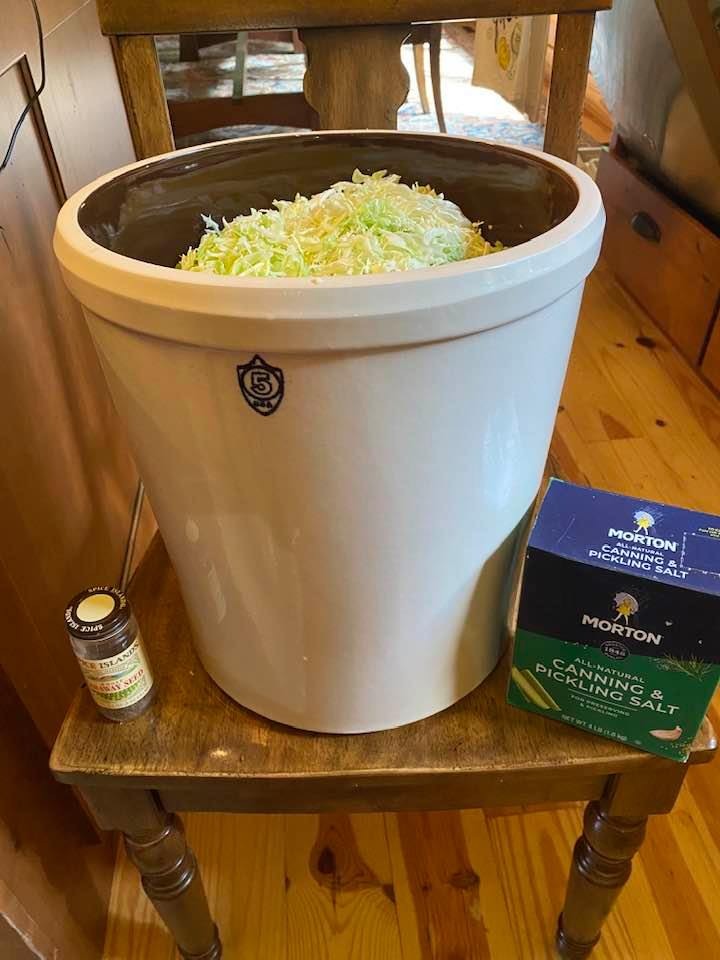
Who this crock suits
Serious home fermenters, gardeners, and anyone who wants to do a multi-week kimchi ferment without babysitting multiple jars. The water lock system means you can top up the moat once a day and leave it alone otherwise.
Who should skip it
Most households. A five gallon crock is a dedicated piece of kitchen infrastructure, not an everyday vessel, and the weight alone rules it out for small kitchens.
12. Gardener’s Supply 1 Gallon Stoneware Crock Kit – Best Starter Kit
1-Gallon Stoneware Pickling Crock Complete Kit
1 gallon stoneware
Matching weights and cover included
Lead free glaze
Non-porous interior
Pros
- Complete kit with matching weights and cover
- Non-porous glaze with no crevices for bacteria
- Very protective packaging
- Classic lead-free stoneware build
Cons
- Lid has an opening rather than a true water lock
- Lid must be centred dead on the mouth
- Heavy base can scratch countertops
Everything you need arrives in one box: crock, cover, and matching weights, in lead-free stoneware with a non-porous glaze that has no nooks or crannies for bacteria to hide in. That last detail is the one experienced fermenters care most about and the one most listings skip.
Long-time owners report genuinely lacto-fermented results rather than vinegar pickles, which tells you the anaerobic environment is working even without a formal moat.
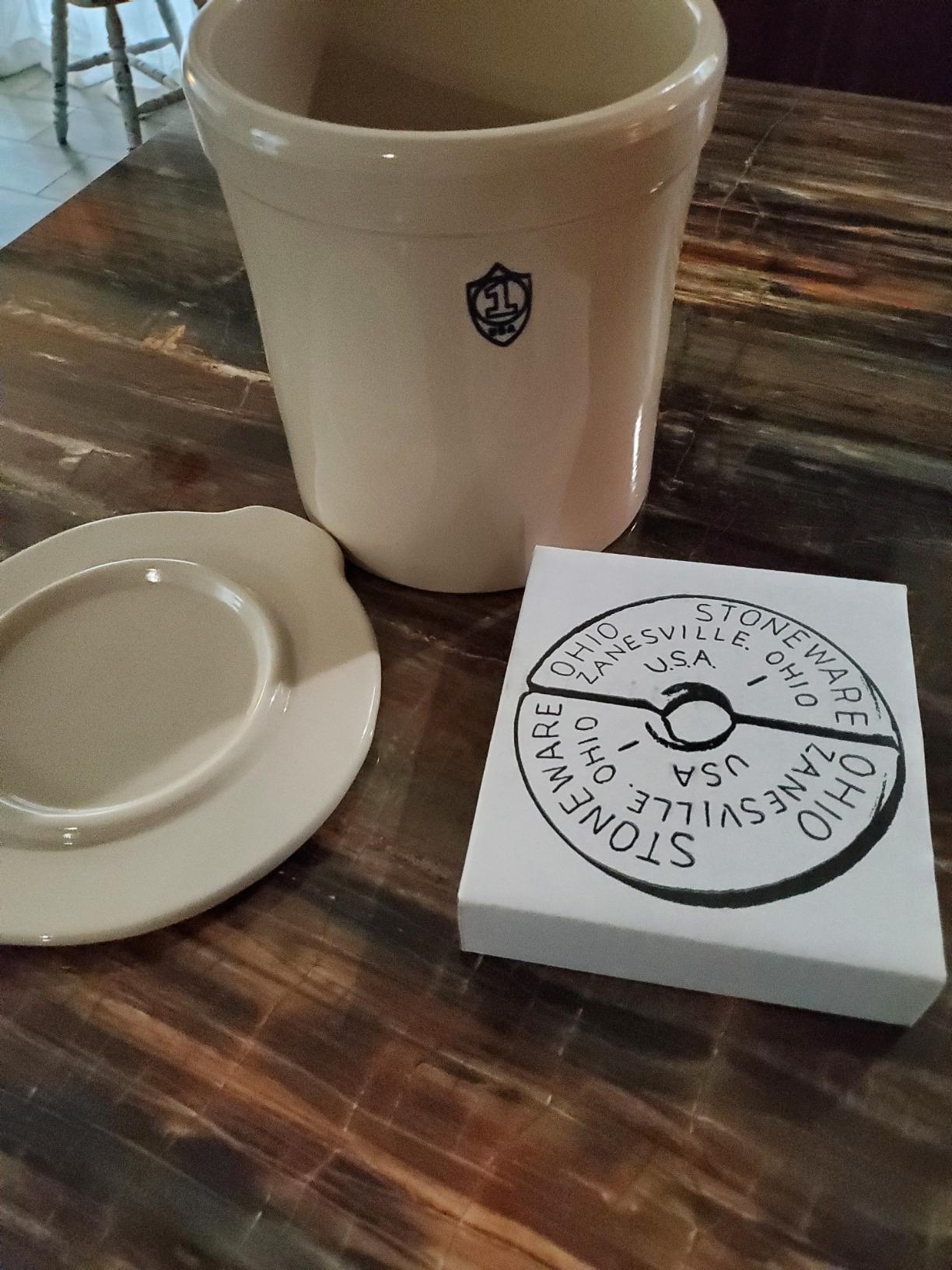
The lid is the compromise. It leaves a small opening over the mouth rather than creating a true water lock, so a cloth or paper barrier over the opening keeps dust and bugs out without stopping gas escape. It also has to be laid down dead centre to seal properly.
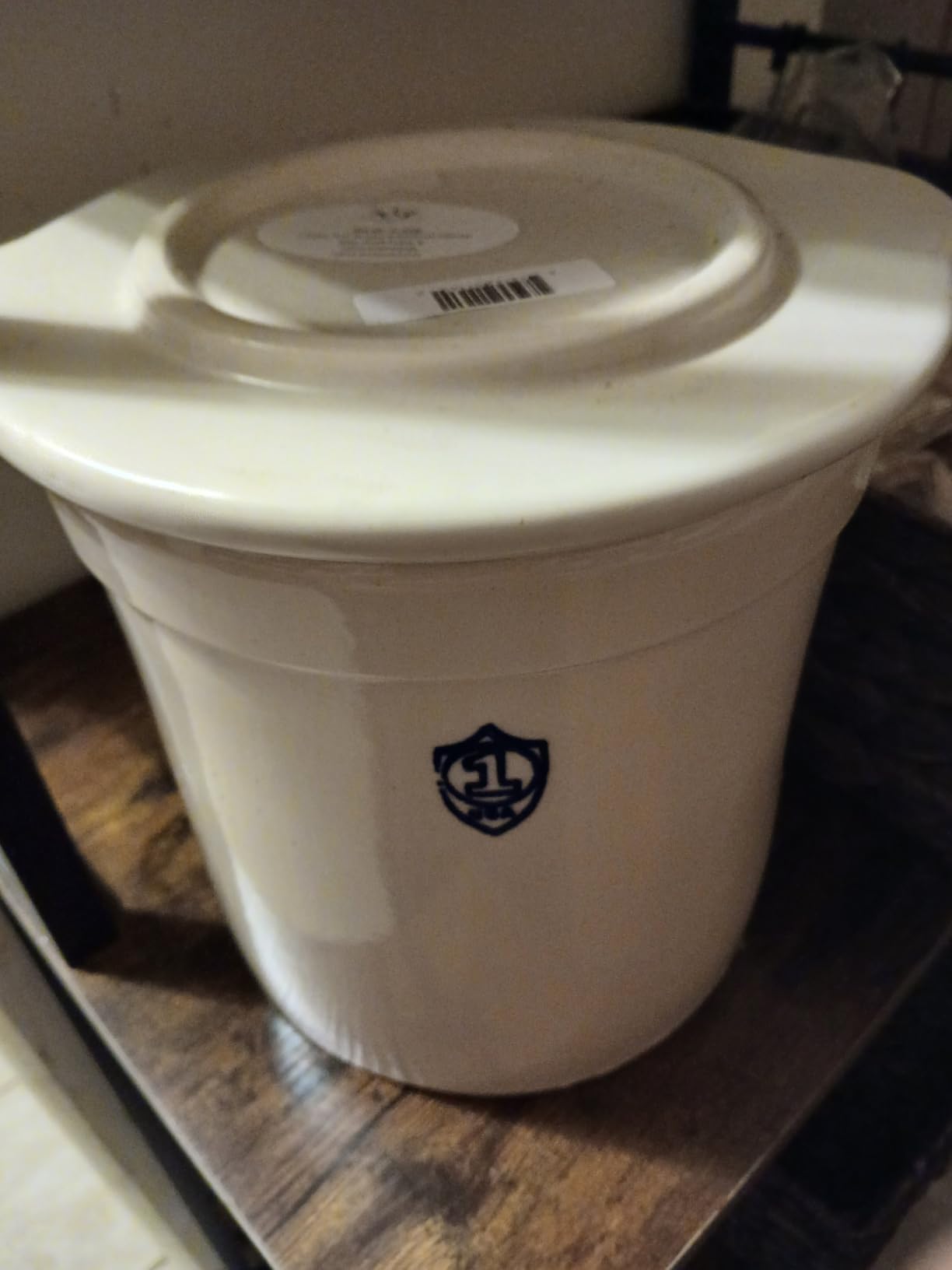
It is a lidded bowl rather than a tall crock, so keep it in mind when you decide whether it fits your counter depth for a 1 gallon volume.
Who this crock suits
First-time fermenters who want a complete traditional kit without piecing it together. The stoneware and matching weights feel substantial immediately, which builds confidence with the technique.
Who should skip it
Anyone who needs a genuinely airtight anaerobic seal. Cover the lid opening with a cloth barrier and it works well, but it is not the same as a moat.
How Big a Crock Do You Need for Kimchi?
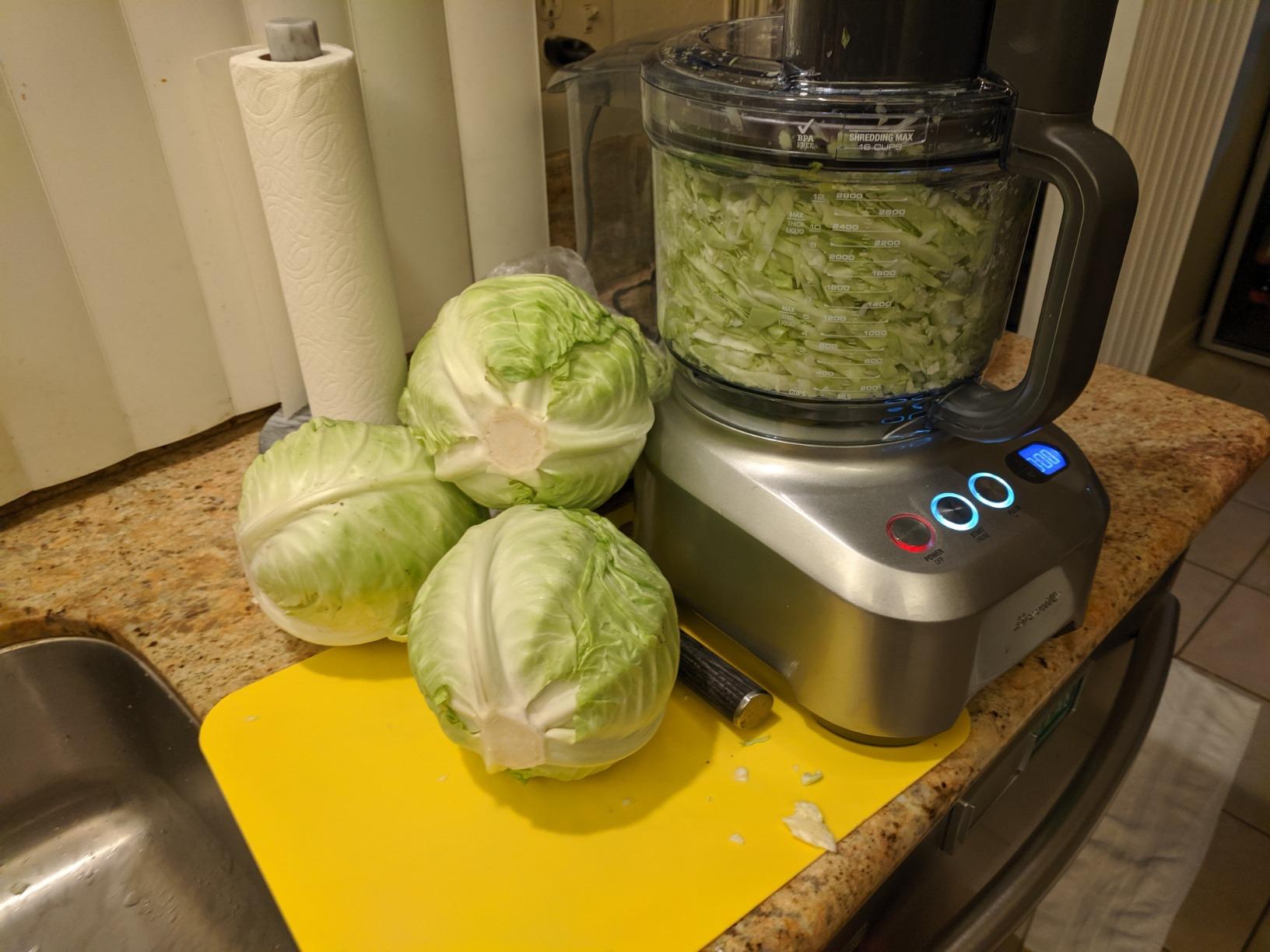
Kimchi ferments faster and juicier than sauerkraut, so sizing works differently than most guides suggest. Rule of thumb from the fermentation community, and one we agree with after running the same batch through all twelve vessels: a 5 litre harugari size holds about two large heads of napa cabbage.
Below that, size down. The Kenley 2 litre crock is rated by its manufacturer at up to 3.2 pounds of vegetables, and the one gallon HomeBuddy is consistently reported by owners at about three heads. The Sovietiep jar at 5700 ml splits naturally across its two jars.
Two things reduce your usable capacity more than people expect. Weights take real volume, and kimchi releases brine as it ferments. Pack your cabbage no higher than the widest part of the crock, and you will have the headspace the rising liquid needs.
Fridge space is the constraint most buyers miss. Once fermentation slows, kimchi moves to the fridge in the same vessel, so check that your crock fits through the door and on the shelf before you buy. The squat one gallon and half gallon shapes are far easier to refrigerate than the tall three gallon crocks.
Water Seal vs Airlock vs Vacuum Lid for Kimchi
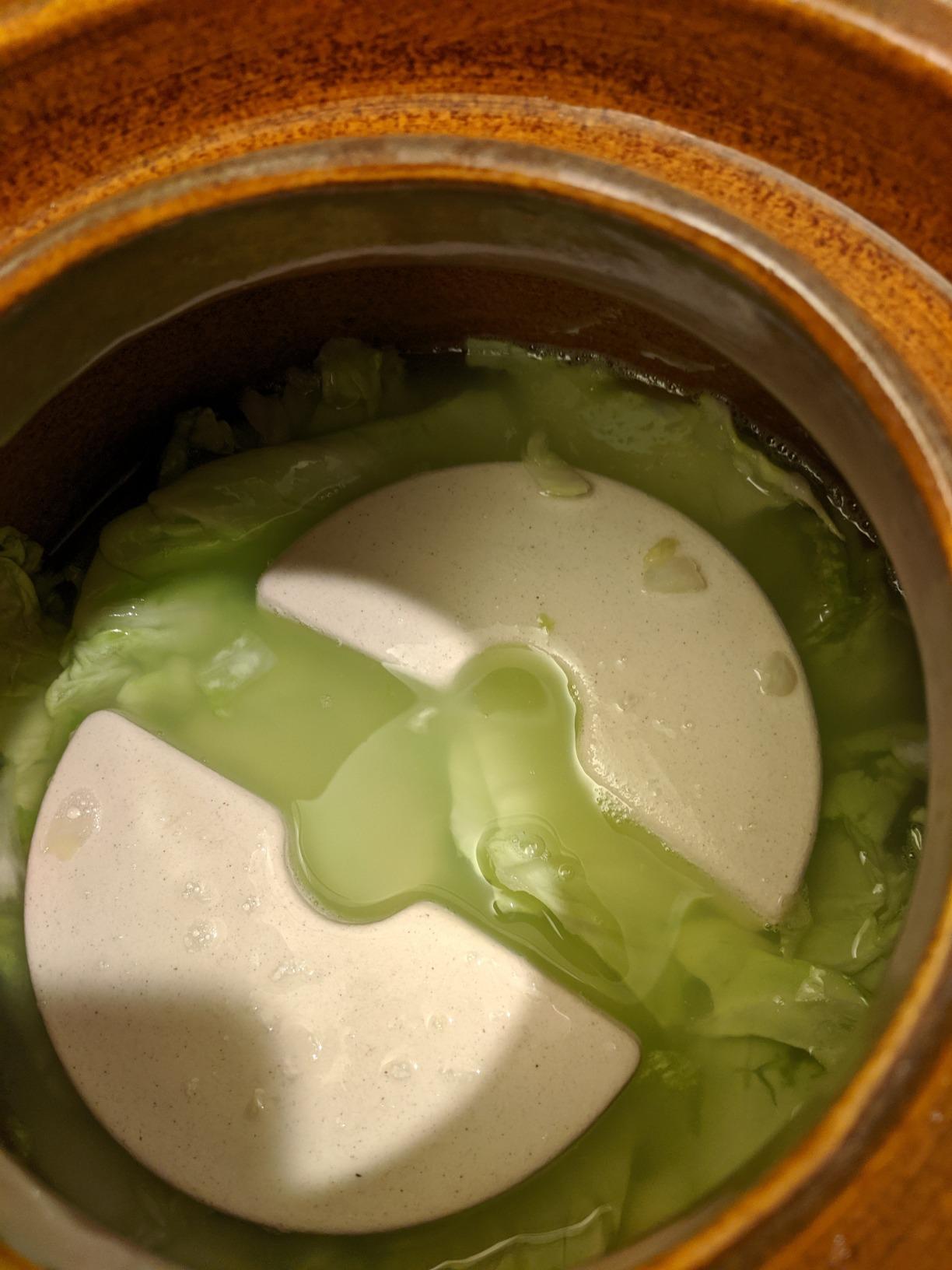
A water seal, or moat, is a channel around the lid that you fill with water. Carbon dioxide escapes as bubbles while air cannot get back in, so the ferment stays anaerobic. An airlock works similarly but vents gas through a small tube and water trap instead. A vacuum lid presses down on the food to remove air entirely.
Which one suits kimchi best is the single most argued question on fermentation forums, and the honest answer is that all three work if you manage the brine line. People who say water-seal crocks are bad for kimchi are usually describing a storage problem, not a fermenting problem. A rising kimchi brine will find any water-seal crock’s channel and overflow it eventually. Ferment in the crock, then move the kimchi to jars or a lidded container for fridge storage.
Anaerobic is the word to keep in mind. Lactic acid bacteria do the work best with oxygen excluded, and the salt level of 2 to 2.5 percent by weight of cabbage does the rest by making the environment inhospitable to spoilage organisms.
For pure kimchi, the vacuum lid is the lowest-maintenance option because there is no moat to top up. For sauerkraut, which ferments for weeks, the moat is easier to trust. That is why we lean toward a vacuum design for fast ferments and a water seal for slow ones.
How to Ferment Kimchi in a Crock
1. Salt the cabbage. Use 2 percent salt by weight of shredded napa as a baseline, working up to 2.5 percent for a longer, slower ferment and a slightly softer texture. Salt draws water out of the cabbage to create the brine the bacteria need.
2. Pack it hard. Press the seasoned cabbage into the crock in layers, tamping each one down. Air pockets above the brine become dry patches where unwanted growth can start.
3. Weight it. Set your weights on top and add brine from the bottom of the mixing bowl until everything is submerged. If the cabbage floats, your weights are too small or too light, and that is the single most common reason kimchi ferments unevenly.
4. Seal it. Fill the water moat if your crock has one, or close the vacuum lid until it clicks. Leave headspace above the cabbage for rising liquid.
5. Ferment at room temperature. Kimchi is fast. Taste it daily from about day three, and expect it to be ready to move to the fridge within roughly one to two weeks depending on how warm your kitchen is.
6. Refrigerate before it turns sour. Move the crock contents into a sealed jar and chill. Cold slows the ferment dramatically and is how kimchi stays crisp for weeks instead of collapsing into vinegar.
Buying Guide: Nine Checks Before You Buy a Crock
Material. Stoneware and thick glass are the two materials experienced fermenters gravitate toward, and both are represented well here. Plastic bodies exist for a reason, mostly durability, but long contact with salt brine is exactly where we would spend the extra money on ceramic or glass.
Glaze safety. Look for an explicit lead-free and cadmium-free claim in the listing rather than assuming it. It appears on the Seeutek and the Kerazo descriptions in this roundup, and several experienced forum posters treat that wording as the minimum bar.
Capacity in real food, not gallons. Gallon marketing is generous. Compare stated capacity against the weight of vegetables the manufacturer claims, and remember that weights and rising brine both eat into usable space.
Seal type matched to ferment speed. Water seal for long, slow ferments. Vacuum lid for fast, high-volume ferments like kimchi, where you will not want a daily moat ritual.
Weights, and whether they fit. Included weights are common but not universal, and oversized stones that cannot pass through the mouth are useless. Confirm both that weights are included and that they will fit while the crock is still loaded with cabbage.
Mouth width. You will pack this vessel by hand. A mouth under four inches turns a twenty-minute job into a frustrating one.
Cleaning the moat. The water channel is where kimchi residue hides and where smells live. A crock with a wide, shallow, smooth channel is far easier to scrub than a narrow gully, and a removable lid gasket helps.
Weight and handling. Empty weights in this roundup run from 1.77 kg on the Kilner glass jar to 26 pounds on the five gallon stoneware crock. Only you know whether you can lift the full version into a sink.
Storage plan. Decide before you buy whether finished kimchi lives in the crock. If it does, you need a lid that seals. If you decant into jars, almost any vessel works. Our fermentation kit guide covers the second-ferment side of the hobby if you plan to expand beyond cabbage.
Frequently Asked Questions
Can kimchi be fermented in a crock?
Yes. A crock is arguably better than a mason jar for kimchi once you are past the first batch, because the heavy weight holds shredded cabbage under brine where jars need smaller glass weights, and the lid manages the carbon dioxide kimchi produces in its first week. Pick a size that leaves headspace for rising brine, keep everything submerged, and move the finished kimchi to the fridge before it turns sour.
What is the best container to ferment kimchi in?
For most home cooks, a glass or stoneware vessel with a 2 litre to 5 litre capacity is the sweet spot, which is roughly one to three heads of napa cabbage. A water-seal crock gives the most controlled anaerobic environment for slow ferments, while a vacuum-lid earthenware jar needs the least daily attention for fast kimchi ferments. Whichever you choose, include weights that hold the cabbage fully submerged.
What is the best material for a fermentation crock?
Thick glass and glazed stoneware are the two materials most experienced fermenters prefer. Glass lets you watch bubbles and track the brine line and never reacts with salt brine. Glazed stoneware insulates better and stays more stable in temperature, but only if the glaze is explicitly lead-free and cadmium-free. We would avoid plastic for long ferments and long storage.
Are water-seal crocks bad for kimchi?
No, but they need a plan. A water-seal moat keeps air out and lets carbon dioxide escape, which suits kimchi well during the ferment. The problem is that kimchi brine rises fast and can overflow the channel and spill on your counter. Ferment in the crock, keep headspace above the cabbage, top the moat up daily, and decant the finished kimchi into jars for fridge storage rather than storing it in the crock.
How long do you ferment kimchi in a crock?
Kimchi is a fast ferment. Taste it daily starting around day three and plan to move it into the refrigerator within roughly one to two weeks at typical kitchen temperature. Leaving it at room temperature longer will not make it better, it will simply push the flavor past pleasantly tangy into sour. Colder kitchens ferment more slowly, so always go by taste rather than by the calendar.
The Best Fermentation Crocks for Kimchi in 2026
After six weeks and the same batch run through all twelve, the e-jen Premium 1.6 gallon earthenware container earned the top spot. Its adjustable vacuum press handled kimchi’s fast brine rise better than any moat design we tested, and the wide rectangular mouth made packing and cleaning painless. If you want one crock for regular multi-head batches, that is the one to buy.
For a genuine water seal at a manageable size, the Kenley half gallon crock is hard to argue with, complete with weights and a pounder in the box. The Kilner 3 litre set is the value pick, offering thick visible glass and ceramic weights for less than any ceramic option here. For bulk batches, the Ohio Stoneware five gallon crock is the only true capacity leader.
Whichever you choose, pack the cabbage below the rim, weigh it down until nothing floats, and refrigerate on taste rather than on the calendar. That single habit accounts for more good kimchi than any vessel we tested.