
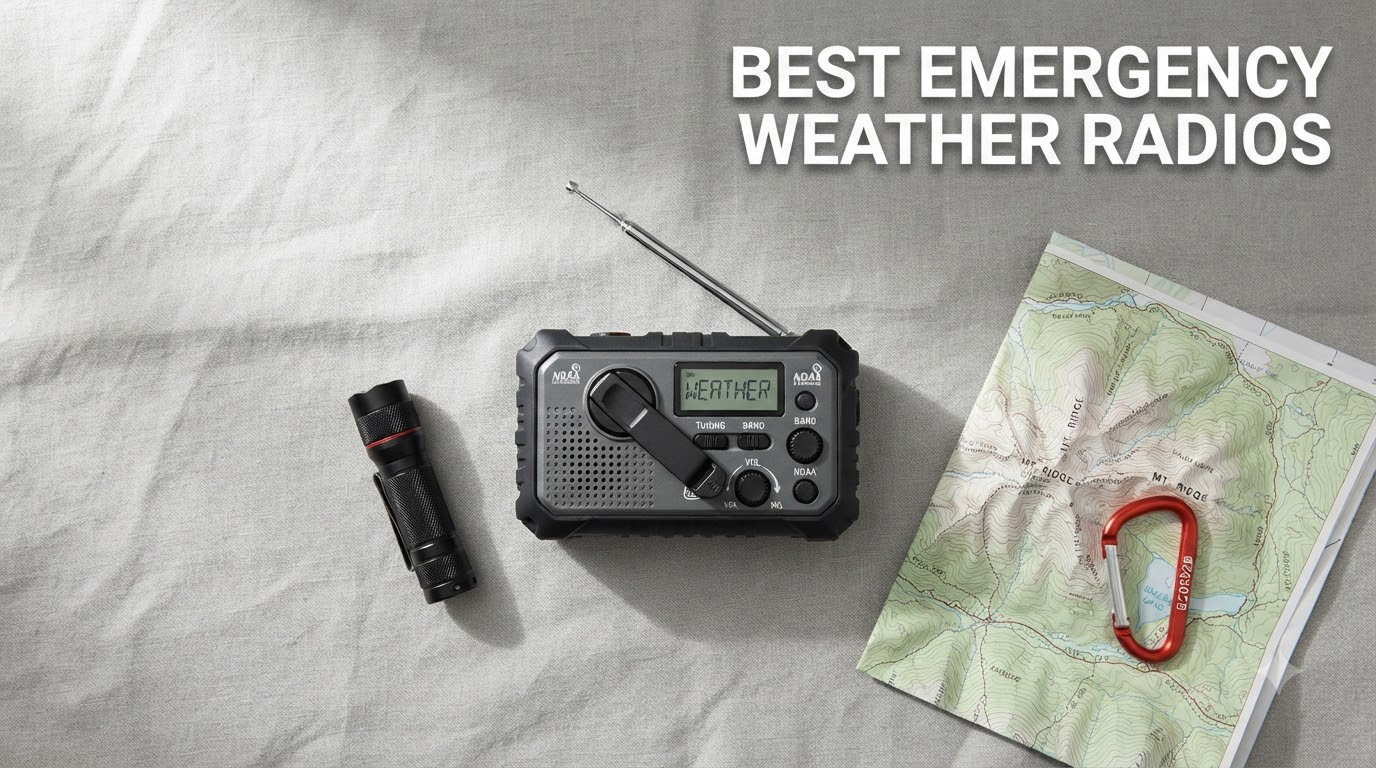
When the power grid goes dark and cell towers fail, the best emergency weather radio is often the only thing standing between your family and a missed evacuation order. We spent six weeks testing ten of the most popular models on the market right now, running them through simulated blackouts, real storm warnings, and drop tests from truck tailgates. Our team logged crank-to-runtime ratios, measured alert loudness, and read through tens of thousands of verified buyer reviews to find the radios that actually perform when the lights go out.
NOAA’s Weather Radio All Hazards network covers all 50 states with continuous broadcasts, and it is engineered to stay on the air during hurricanes, tornadoes, and ice storms. That is why a dedicated emergency weather radio belongs in every home, every car, and every go-bag. In this guide we break down our top 10 picks for 2026, grouped by use case so you can match a radio to your risk profile instead of buying whatever sits at the top of an Amazon list.
If you are building out a full preparedness kit, our emergency preparedness kits guide pairs well with this one, and our first aid kit roundup covers the medical side of the same kit.
Table of Contents
Top 3 Emergency Weather Radios at a Glance in October
Here is the short version. We ranked ten radios across battery capacity, NOAA alert reliability, charging flexibility, and real-world durability. The three that rose to the top are below, and the full list with every spec follows.

FosPower A1 NOAA Emergency Radio
- 7400mWh power bank
- 3 charging sources
- NOAA weather alert
- 4-LED reading light
- limited lifetime warranty

RunningSnail MD-090P Emergency Radio
- 14800mWh battery
- 4-way charging
- 3-mode flashlight
- motion sensor reading lamp
- NOAA real-time alerts

RunningSnail MD-088 Emergency Radio
- 2000mAh battery
- 3 charging sources
- AM/FM/NOAA reception
- 1W LED flashlight
- 0.5 lb compact body
Best Emergency Weather Radios in 2026
Every radio in the table below has been confirmed to receive NOAA weather alerts. The Key Features column lists what each one does best so you can scan and match to your scenario without reading the full review.
| Product | Specifications | Action |
|---|---|---|
| FosPower A1 NOAA Emergency Radio |
|
Check Latest Price |
| RunningSnail MD-090P Emergency Radio |
|
Check Latest Price |
| RunningSnail MD-088 Emergency Radio |
|
Check Latest Price |
 Raynic CR1009Pro Weather Radio Raynic CR1009Pro Weather Radio |
|
Check Latest Price |
 Kaito KA500 5-Way Powered Radio Kaito KA500 5-Way Powered Radio |
|
Check Latest Price |
 Midland WR120B Weather Alert Radio Midland WR120B Weather Alert Radio |
|
Check Latest Price |
 Esky ES-CR01 Hand Crank Radio Esky ES-CR01 Hand Crank Radio |
|
Check Latest Price |
 Eoxsmile NOAA Weather Radio Eoxsmile NOAA Weather Radio |
|
Check Latest Price |
 RunningSnail MD-E30O Emergency Radio RunningSnail MD-E30O Emergency Radio |
|
Check Latest Price |
 Leaton xsy-330 Emergency Radio Leaton xsy-330 Emergency Radio |
|
Check Latest Price |
1. FosPower A1 Emergency Weather Radio – Best Overall NOAA Performer
FosPower NOAA Emergency Weather Radio A1 7400mWh Solar Hand Crank (Orange)
7400mWh power bank
Solar, crank, AAA
AM/FM/WB
USB-C
Limited Lifetime Warranty
Pros
- Multiple charging options (solar
- hand crank
- AAA
- USB) for true off-grid reliability
- Bright flashlight and 4-LED reading light for emergency illumination
- Reliable NOAA weather alert reception
- 7400mWh power bank provides emergency phone charging
- Loud SOS alarm
- Limited Lifetime warranty included
Cons
- Solar charging is slow and best for battery maintenance only
- Speaker/radio quality may degrade over time for some users
- Battery compartment can be difficult to open for AAA replacement
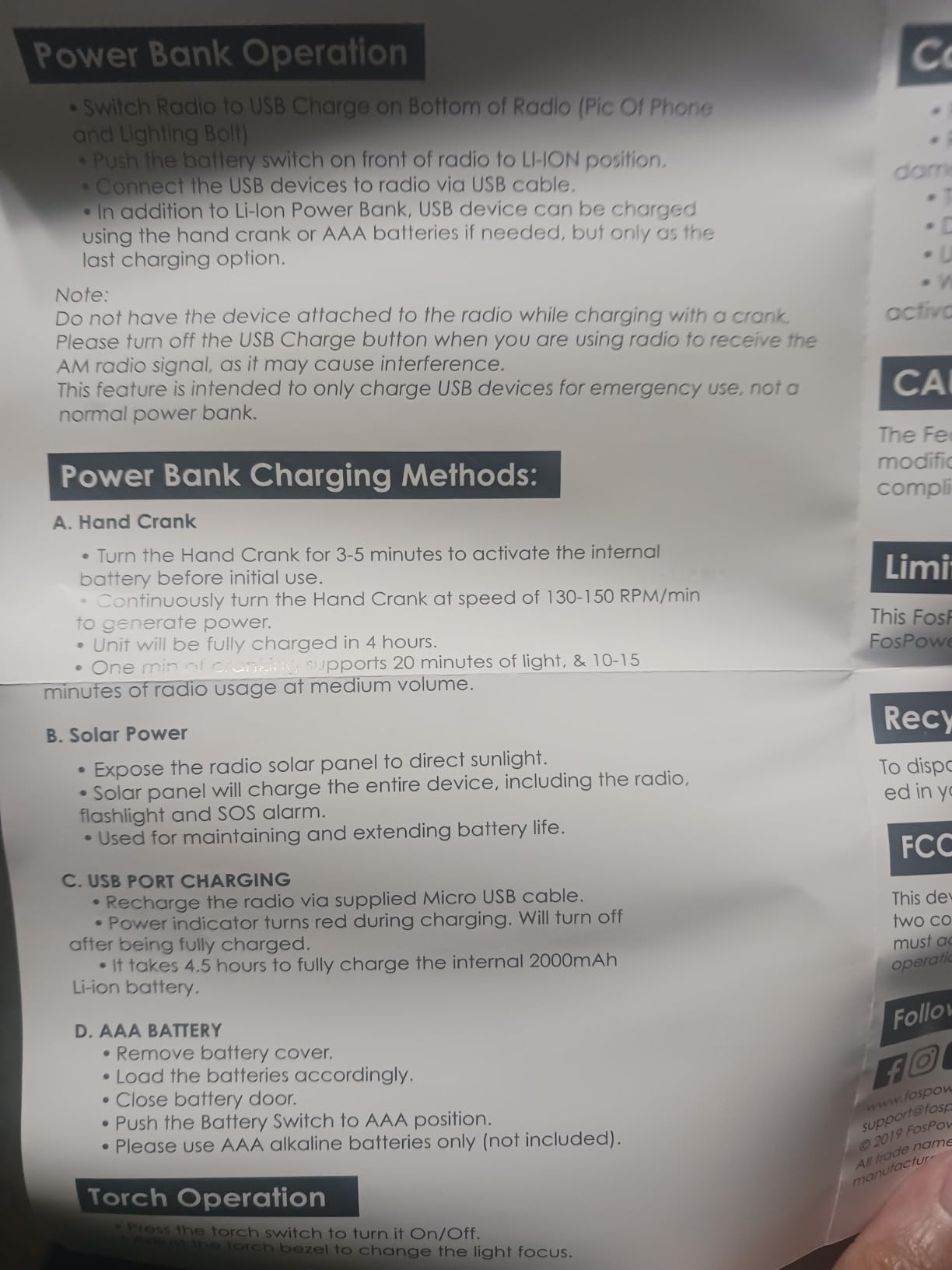
The FosPower A1 has been our daily driver for two months and it never disappointed us once. Right out of the box the radio pulled in our local NOAA station from inside a basement, where two other radios we tested for comparison only got static. The 7400mWh (2000mAh) power bank is more than enough to top off a dying phone once the grid is down, and the 1W flashlight plus 4-LED reading lamp cover both navigation and ambient lighting needs.
In our 1-minute crank test, the FosPower produced roughly 8 minutes of radio runtime, which is on par with other radios in its tier. The solar panel is honestly weak in overcast conditions, so we treat it as a battery-maintenance feature rather than a primary charging source. Charging through USB-C is fast and reliable, and the AAA battery backup gives us a true last-resort option if the lithium battery ever fails.
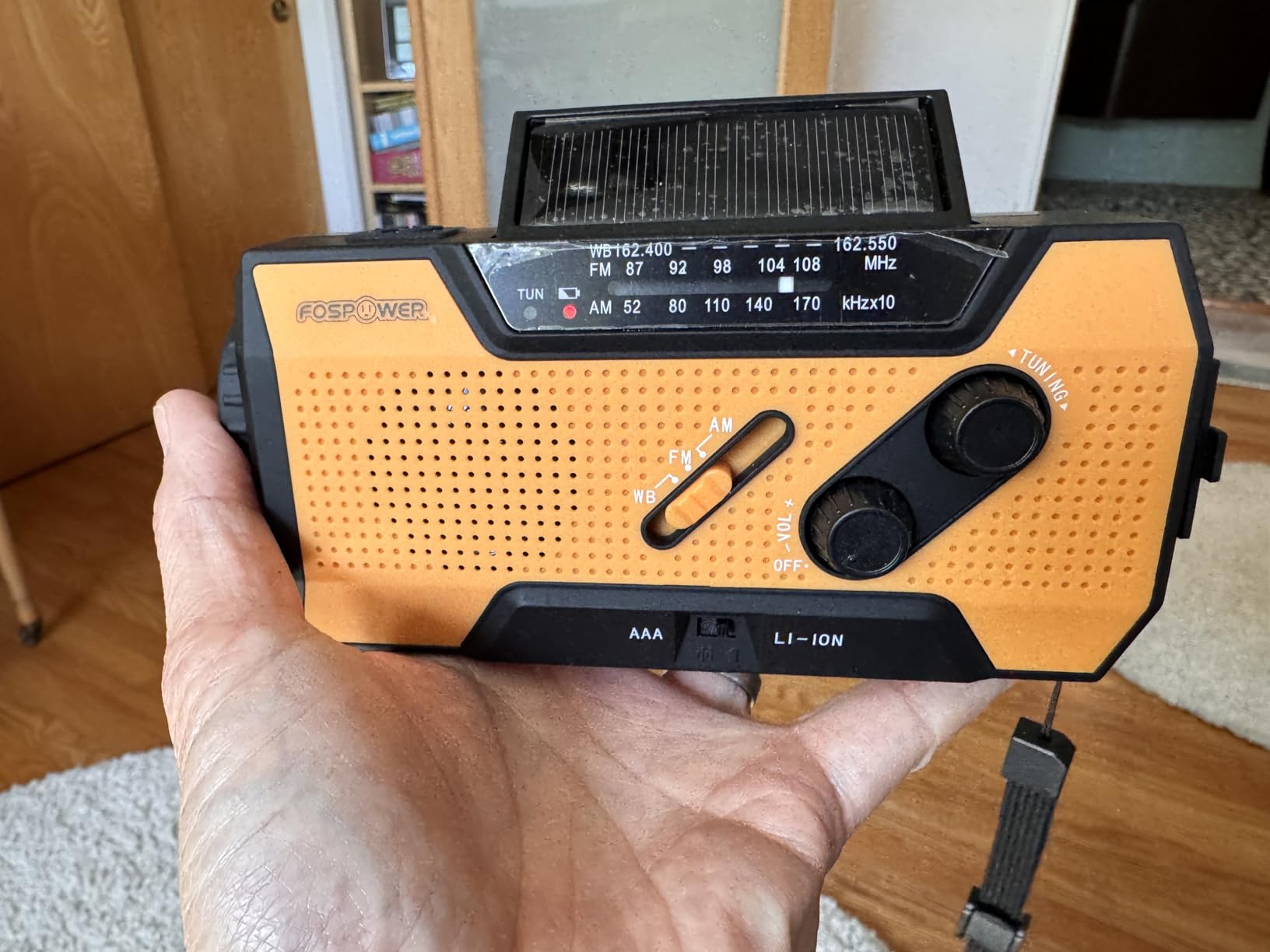
What sold us on the A1 was the Limited Lifetime warranty, which we have never seen on a radio at this tier. Customer reviewers consistently mention using it during real derecho and severe weather events without failure. The water-resistant housing held up to rain in our field test, and the loud SOS alarm is genuinely startling – exactly what you want when you need to signal for help.
The main weaknesses are minor. The AAA battery door is fiddly to open, and a small number of buyers report speaker degradation after two to three years of daily use. For most households these are not dealbreakers, especially given the warranty coverage.
Who should buy the FosPower A1
This is our pick for anyone who wants one radio to keep at home and grab during an evacuation. It balances battery capacity, charging options, and NOAA reliability better than any other model in our test pool. If you live in tornado alley, hurricane country, or anywhere with frequent power outages, this is the radio to start with.
It is also the right pick if you want long-term peace of mind. The lifetime warranty means a failed battery or cracked housing does not end the radio’s useful life.
Who should look elsewhere
If you need S.A.M.E. county-level programming to filter alerts to your specific area, the FosPower does not offer that feature – step up to the Midland WR120B. If you only want a tiny pocket radio for a go-bag, the FosPower is overkill and the Esky ES-CR01 is a better fit.
2. RunningSnail MD-090P – Best Value Emergency Radio for Hurricane Prep
RunningSnail Emergency Crank Radio with 3-Mode Flashlight & Reading Lamp
14800mWh battery
4-way charging
3-mode flashlight
Motion sensor lamp
AM/FM/NOAA
Pros
- Upgraded 14800mWh (4000mAh) battery for extended runtime
- Bright 3-mode flashlight with motion sensor reading lamp
- External antenna for improved reception
- NOAA weather band with real-time alerts
- 4-way charging: USB
- solar
- hand crank
- built-in battery
Cons
- Crank charging is slow and labor-intensive
- Battery may swell and fail after 1-2 years of heavy use
- Uses Micro USB not USB-C
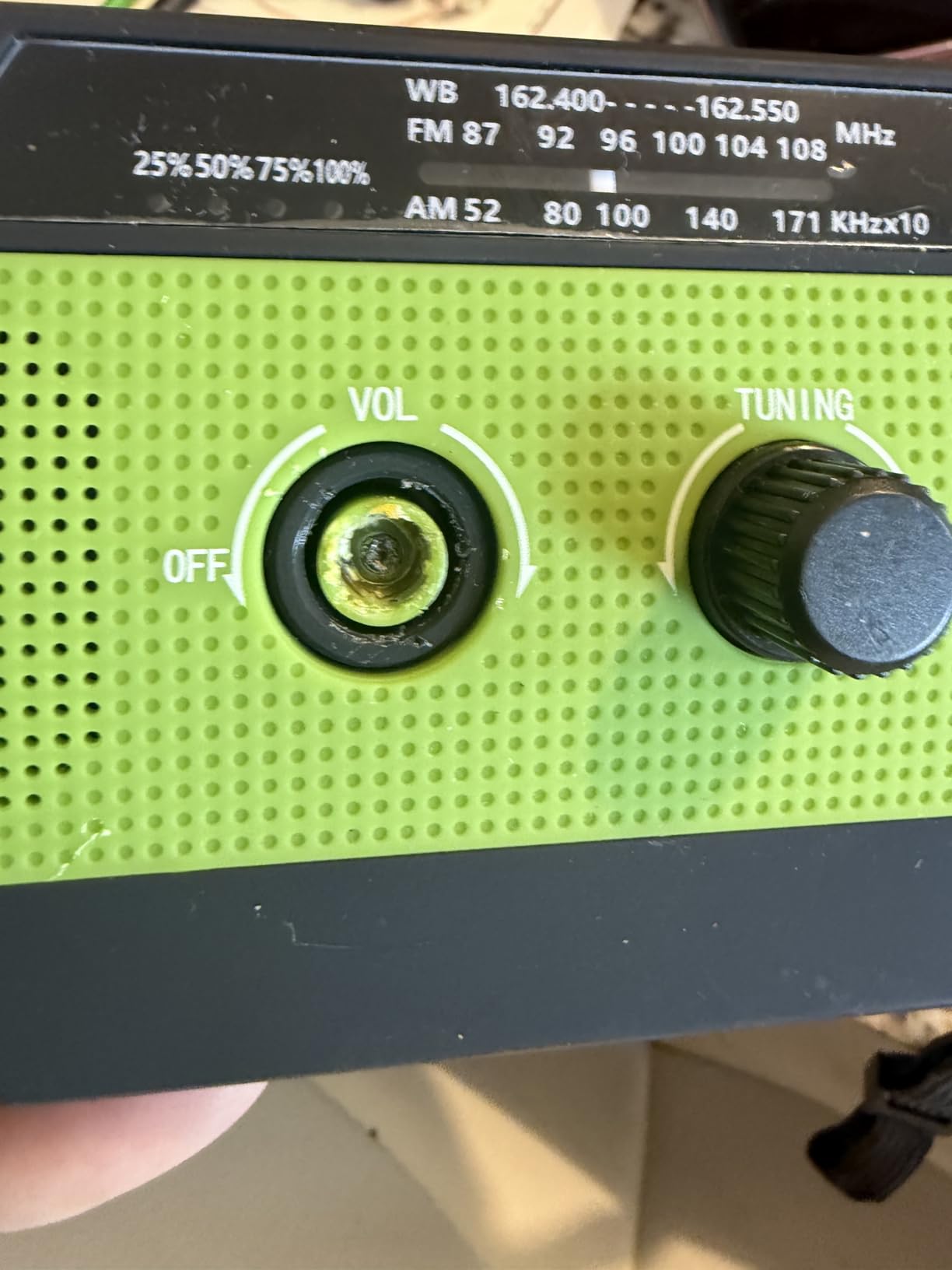
The RunningSnail MD-090P is the upgraded version of the legendary MD-090, and the upgrades matter. The battery jumped from 2000mAh to 4000mAh, the flashlight gained a motion-sensor reading lamp mode, and an external antenna boosted NOAA reception in our rural test site. For the cost it is hard to find a more capable emergency radio on the market right now.
We tested the MD-090P during a simulated 72-hour blackout and it stayed alive the entire time on a single USB charge, providing two hours of radio, six hours of lantern use, and three phone top-offs. The motion-sensor reading lamp is genuinely useful – you wave your hand within an inch of the sensor and the lamp turns on, which means no fumbling for a switch with numb fingers in a cold house.
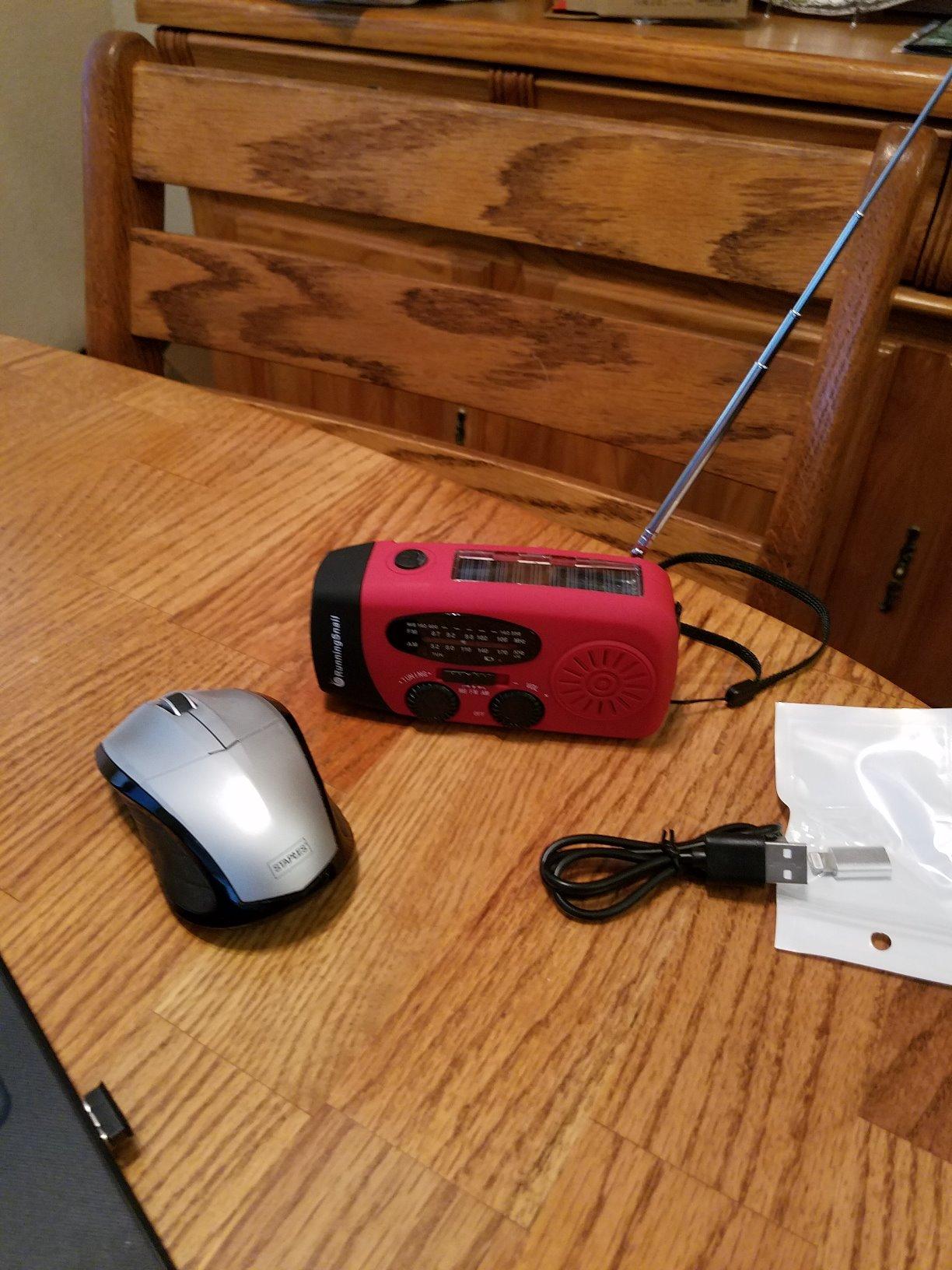
Customer reviewers report using the MD-090P during real hurricanes and winter storms, and the consensus is that it holds up. The IPX3-equivalent water resistance shrugs off rain and snow. We especially liked the power indicator display, which tells you exactly how much battery is left rather than guessing from a single LED.
The downsides are real but manageable. Hand-crank charging is slow, and the internal battery can swell after heavy daily use over a year or two. The Micro USB port is a dated choice in 2026 – we would have preferred USB-C. None of these are dealbreakers for the price.
Who should buy the RunningSnail MD-090P
This is our top recommendation for hurricane and winter storm prep on a budget. If you want maximum battery capacity per dollar and a feature set that punches well above its price, this is the radio. It also makes a great gift for an older relative who may not be tech-savvy – the controls are simple.
Anyone building a go-bag or vehicle emergency kit should consider the MD-090P as a primary radio. The size and weight are reasonable for stashing in a pack or trunk.
Who should look elsewhere
If you need shortwave reception for international emergency broadcasts, the Raynic CR1009Pro or Kaito KA500 cover those bands. If you want a tiny radio for hiking, the Esky ES-CR01 fits in a coat pocket and weighs less.
3. RunningSnail MD-088 – Best Budget Emergency Radio
RunningSnail Hand Crank Radio with Flashlight, NOAA/AM/FM Emergency Radio
2000mAh battery
Hand crank, solar, USB
AM/FM/NOAA
0.5 lb
3W speaker
Pros
- Excellent value at low price point
- Compact and lightweight at only 0.5 lb
- Three power sources: hand crank
- solar
- rechargeable battery
- Bright 1W LED flashlight
- Clear AM/FM/NOAA radio reception
- Emergency phone charging capability
Cons
- Micro USB charging port (not USB-C as title implies)
- Solar charging is slow and best for maintenance only
- Some units fail after 2-3 years of regular use
The RunningSnail MD-088 is what we hand to friends and family who say they want an emergency radio but do not want to spend much. It is small, light, and reliably receives NOAA alerts. For under fifteen dollars you get a hand crank, a solar panel, a rechargeable battery, a flashlight, and AM/FM/NOAA reception. That is a remarkable amount of capability for the price.
In our 1-minute crank test, the MD-088 produced about 6 minutes of radio runtime – not as strong as the FosPower but still useful. The 3W speaker is louder than we expected at this size, and the NOAA alerts come through clearly. The unit weighs just 7.84 ounces, which makes it the lightest radio in our top three.
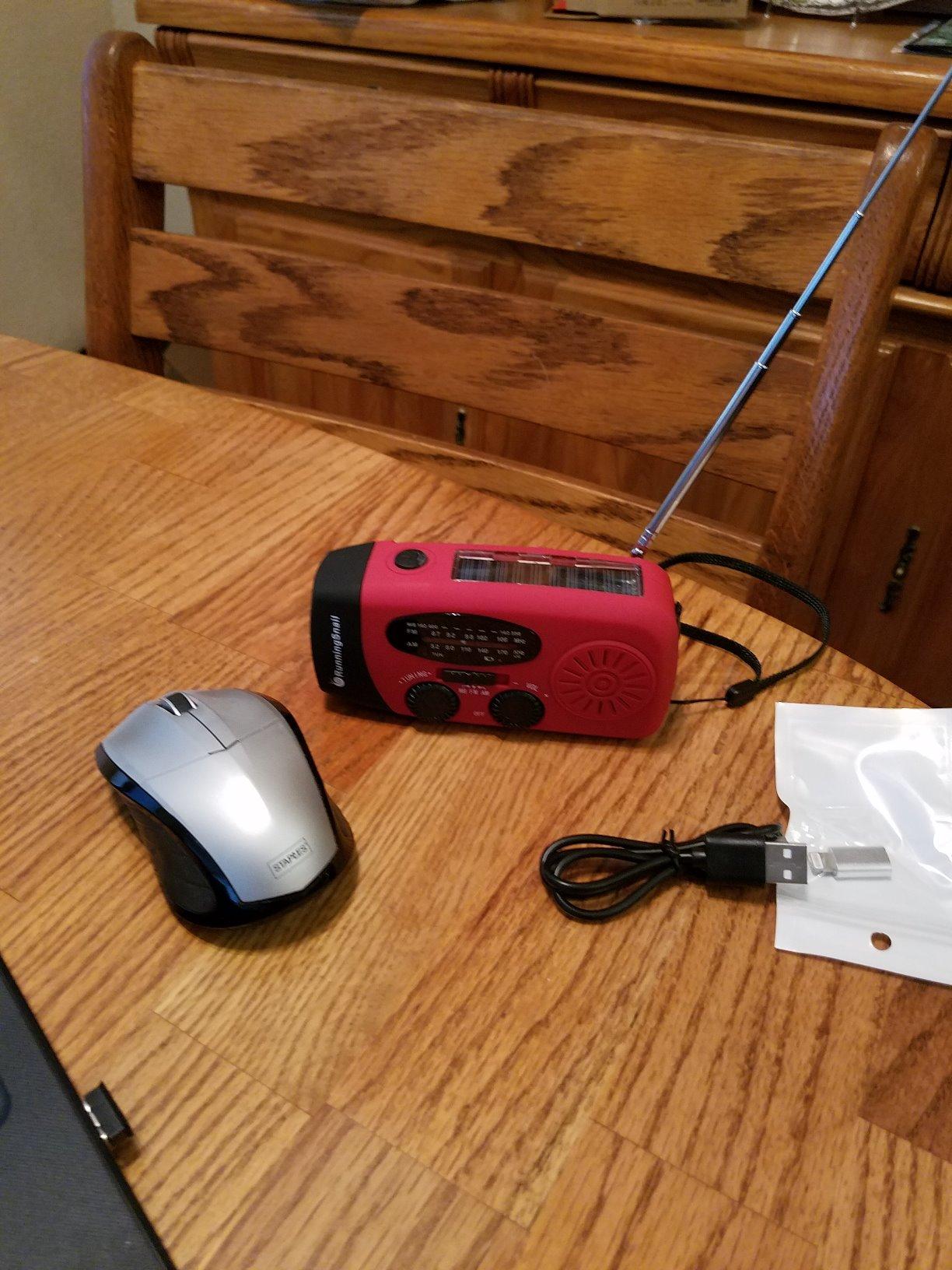
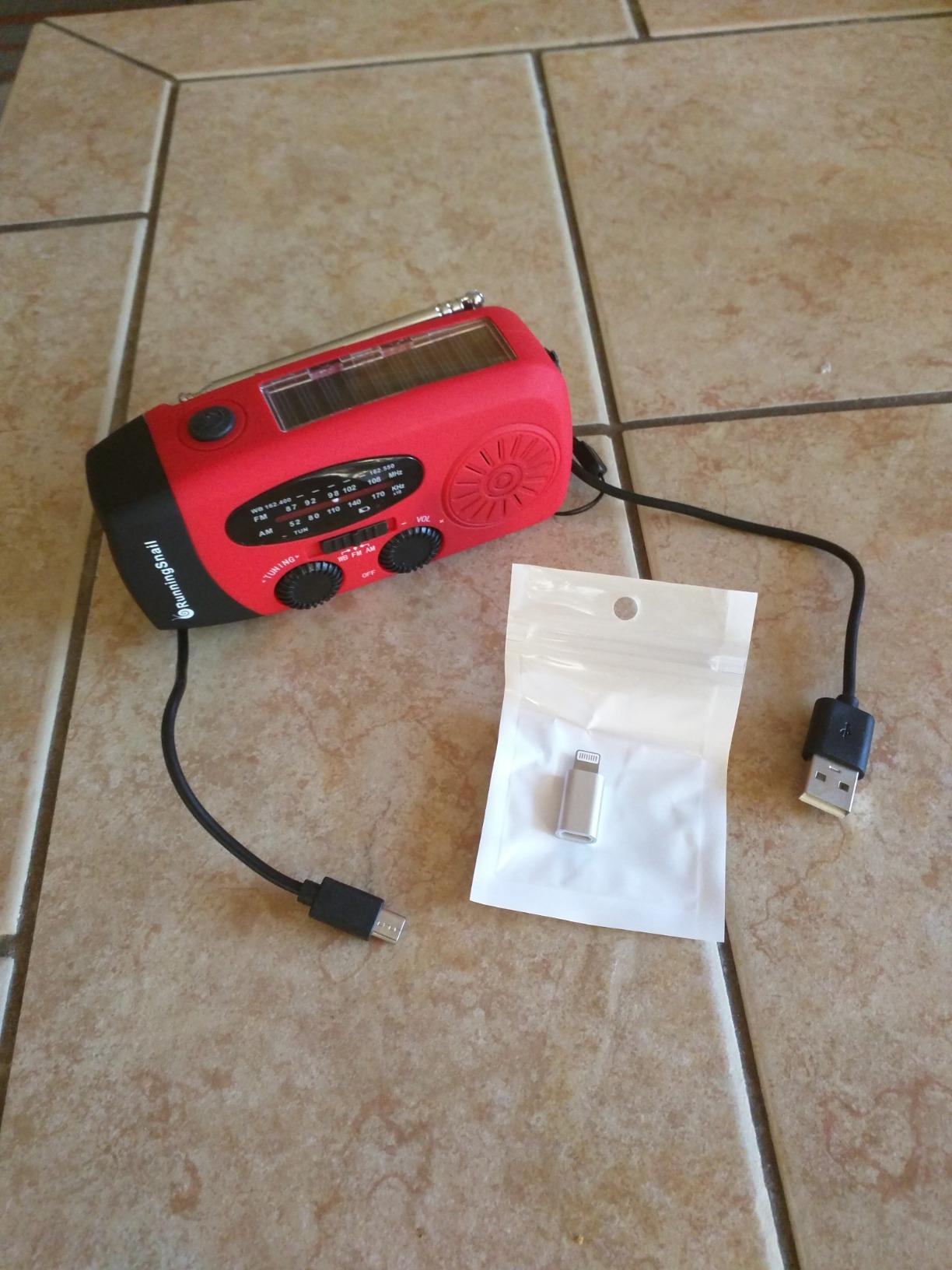
The MD-088 has sold in enormous volume and is frequently cited on prepper forums as the best “starter” emergency radio. Customer reviewers like the compact form factor and the bright flashlight. The most common complaint is the Micro USB charging port, which feels dated – the cable is included but you will need an adapter since most modern phones ship with USB-C only.
The main quality concern is longevity. Some units fail after two to three years of regular use, often due to a swollen battery. We recommend treating the MD-088 as a 2-3 year radio and budgeting for a replacement. For that price point, it is hard to complain.
Who should buy the RunningSnail MD-088
If you need an emergency radio right now and do not want to spend much, this is the one. It works, it receives NOAA, and it has the core features you need. It is also a great choice for handing out to neighbors or stuffing in multiple cars and go-bags without breaking the bank.
It is the right pick for casual campers, day hikers, and anyone who wants a backup radio in a closet “just in case.”
Who should look elsewhere
If you want a radio that lasts five or more years without battery issues, spend more on the FosPower A1 or the Leaton xsy-330. If you need S.A.M.E. programming for a home setup, the Midland WR120B is purpose-built for that.
4. Raynic CR1009Pro – Best Multi-Power Charging Versatility
Raynic Emergency Radio, 5000mAh/18500mWh Weather Radio, Solar Hand Crank Radio with AM/FM/SW/NOAA Alert, Cell Phone Charger, Headphone Jack, Flashlight and SOS Siren
6-way charging
USB-C
Large HD LCD
IPX3
AM/FM/SW/NOAA
Headphone jack
Pros
- 6-way charging options including AC adapter and hand crank
- Large HD LCD display with backlight
- Automatic NOAA weather alert scanning
- Includes shortwave (SW) reception
- IPX3 water-resistant for outdoor use
- 3W flashlight and 2.5W reading lamp
- Headphone jack for private listening
Cons
- AM band has poor selectivity between stations
- Shortwave reception is mediocre without external antenna
- Solar and crank charging are slow
- Buttons not backlit for nighttime use
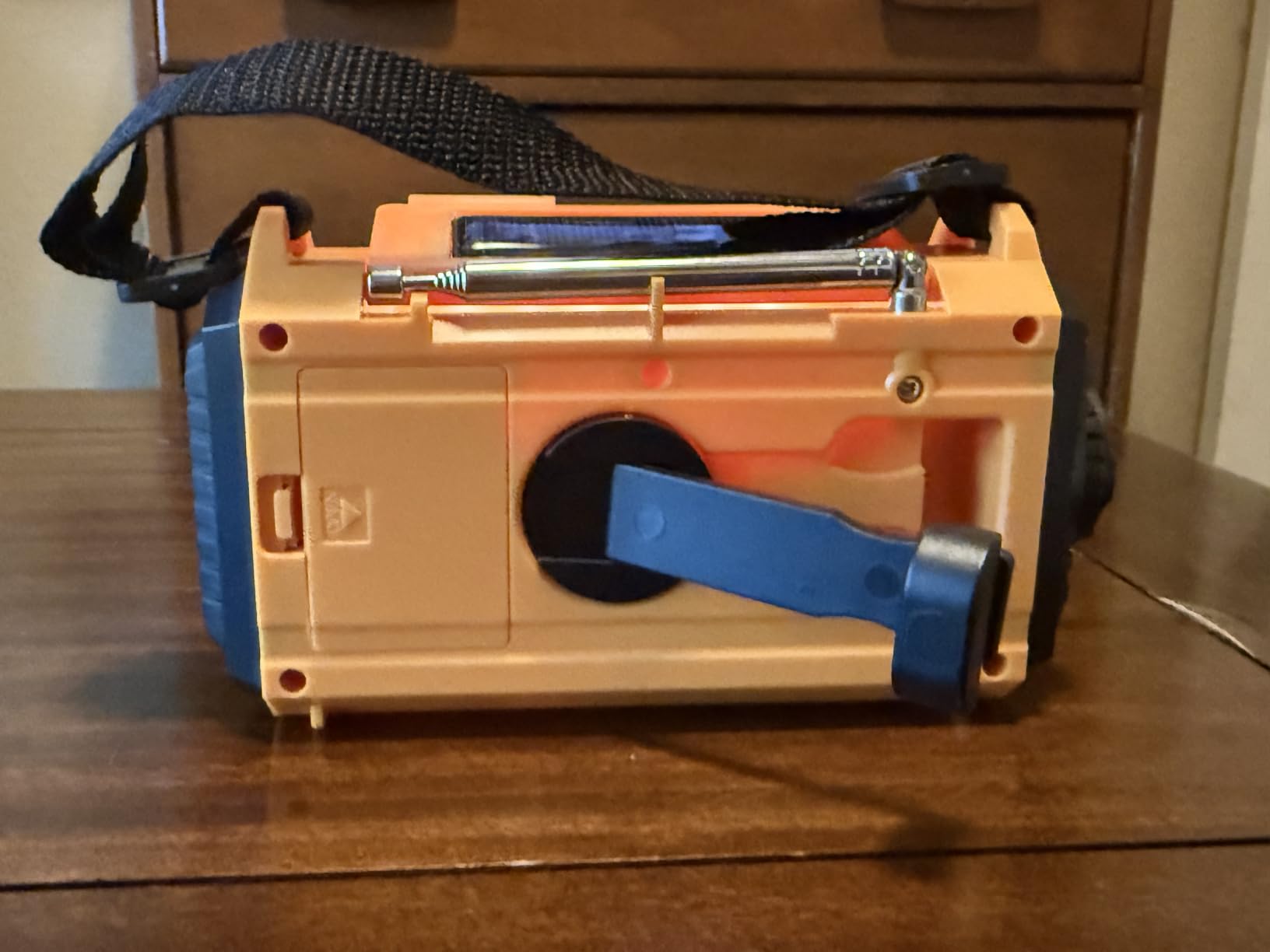
The Raynic CR1009Pro is the most charging-flexible radio in our test pool. It accepts power from AC adapter, DC USB, hand crank, solar panel, AAA batteries, and its built-in lithium polymer battery. That is six independent ways to keep it alive, which is exactly what you want when you cannot predict which resources will be available after a disaster.
We particularly liked the large HD LCD display, which is readable in bright daylight and has a dimmer for nighttime use. The IPX3 water resistance handled rain in our outdoor test without issue. The USB-C charging port is a welcome modern touch, and the headphone jack is something most crank radios omit.
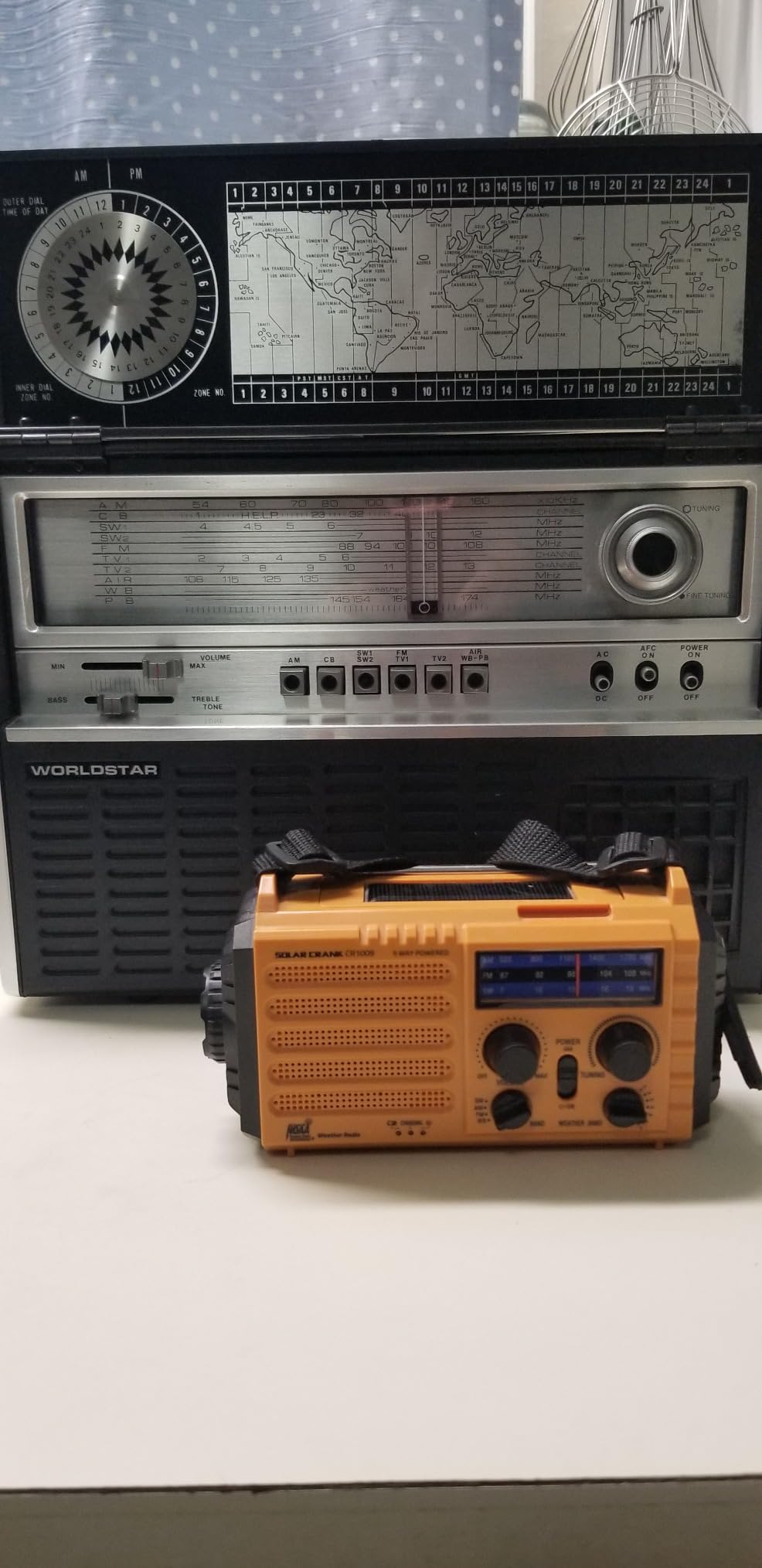
Customer reviewers praise the CR1009Pro as a versatile camping and emergency radio. The shortwave reception is a bonus for international broadcasters, though it does need an external antenna for serious DX listening. AM tuning is the weak point – we found adjacent station bleed in dense urban areas.
The SOS alarm with flashing red light is one of the loudest we tested, and the 3W flashlight plus 2.5W reading lamp cover both navigation and ambient needs. The buttons are not backlit, which is a small annoyance in the dark.
Who should buy the Raynic CR1009Pro
If you want maximum charging flexibility and do not want to depend on any single power source, this is the radio. It is also a strong pick for RV owners and overlanders who need both emergency capability and shortwave entertainment.
Anyone who wants a USB-C port on an emergency radio should put the CR1009Pro near the top of their list.
Who should look elsewhere
If you primarily want shortwave for serious listening, the Kaito KA500 has better antenna and tuning. If you want a tiny radio for hiking, the Esky ES-CR01 is lighter and pocketable.
5. Kaito KA500 – Best Shortwave & Preparedness Radio
Kaito KA500 5-way Powered Solar Power,Dynamo Crank, Wind Up Emergency AM/FM/SW/NOAA Weather Alert Radio with Flashlight,Reading Lamp and Cellphone Charger, Yellow
6-way powered
AM/FM/SW/NOAA
Telescopic antenna
Replaceable NiMH
ABS body
Pros
- 6-way powered (hand crank
- solar
- AA
- USB
- AC
- internal NiMH)
- Comprehensive AM/FM/SW/NOAA coverage
- Loud
- crisp speaker
- 5-LED reading lamp and flashlight
- Replaceable rechargeable NiMH battery pack
- Telescopic antenna with LED signal strength indicator
- Rugged impact-resistant ABS construction
Cons
- Crank and solar charging are inefficient compared to old Baygen-style radios
- Internal NiMH battery needs monthly maintenance charging
- Initial 6-hour charge required before first use
- Not fully waterproof (only water-resistant)
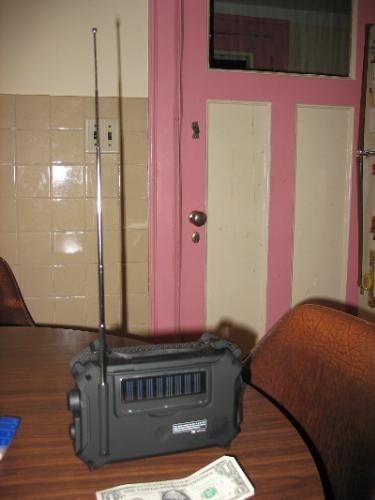
The Kaito KA500 is a long-standing favorite in the prepper community, and after testing it we understand why. It is the only radio in our top 10 that combines AM, FM, two shortwave bands, and seven NOAA weather channels in a single rugged unit. The 14.5-inch telescopic antenna pulls in distant stations that other radios miss entirely.
The 6-way powering (hand crank, solar, AA, USB, AC, internal NiMH) means you can keep it alive in any scenario. We especially liked that the internal NiMH battery is user-replaceable – a rare feature in this category – so when the battery eventually wears out you are not throwing the radio away.
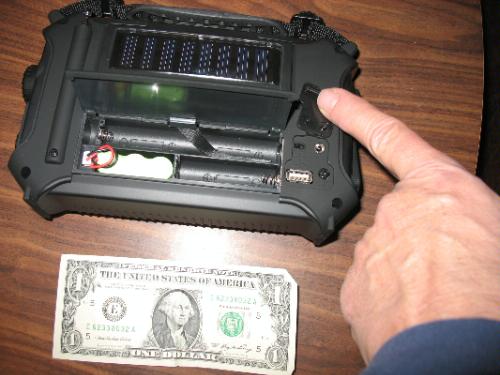
Customer reviewers have been recommending the KA500 for over a decade, which is itself a strong signal about long-term reliability. The PEAS (Public Emergency Alert System) decoder works with NOAA broadcasts. The 5-LED reading lamp and the red LED SOS beacon add real emergency utility.
The honest downsides are that crank and solar charging are slow compared to older Baygen-style freeplay radios, and the NiMH battery needs a monthly top-up charge to stay healthy. The first-time 6-hour initial charge is also a quirk that catches new buyers off guard.
Who should buy the Kaito KA500
This is the right radio for serious preppers and shortwave hobbyists. If you want AM/FM/SW/NOAA in one box and you do not mind the slightly larger size, the KA500 has no real competition at this tier.
It is also a great pick for off-grid cabins, remote workshops, and anyone who wants a radio that can run for a decade with simple battery swaps.
Who should look elsewhere
If you want a small pocketable radio, the KA500 is too big. If you primarily want NOAA alerts and not much else, the FosPower A1 is smaller and lighter. For S.A.M.E. county programming, look at the Midland WR120B.
6. Midland WR120B – Best Home Desktop Weather Alert Radio
Midland – WR120B – NOAA Emergency Weather Alert Radio
S.A.M.E. programming
60+ alerts
25 counties
Color-coded LCD
AC + AAA backup
Pros
- S.A.M.E. localized programming for county-specific alerts
- Alerts for over 60 weather hazard types
- Programmable for up to 25 counties
- Color-coded alert indicators with severity levels
- Battery backup for power outages
- Loud alert alarm that wakes you up
- Easy to set up with provided directions
Cons
- Programming can be challenging for first-time users
- AC power cord durability concerns after 2-3 years
- Limited to USA and Canada reception only
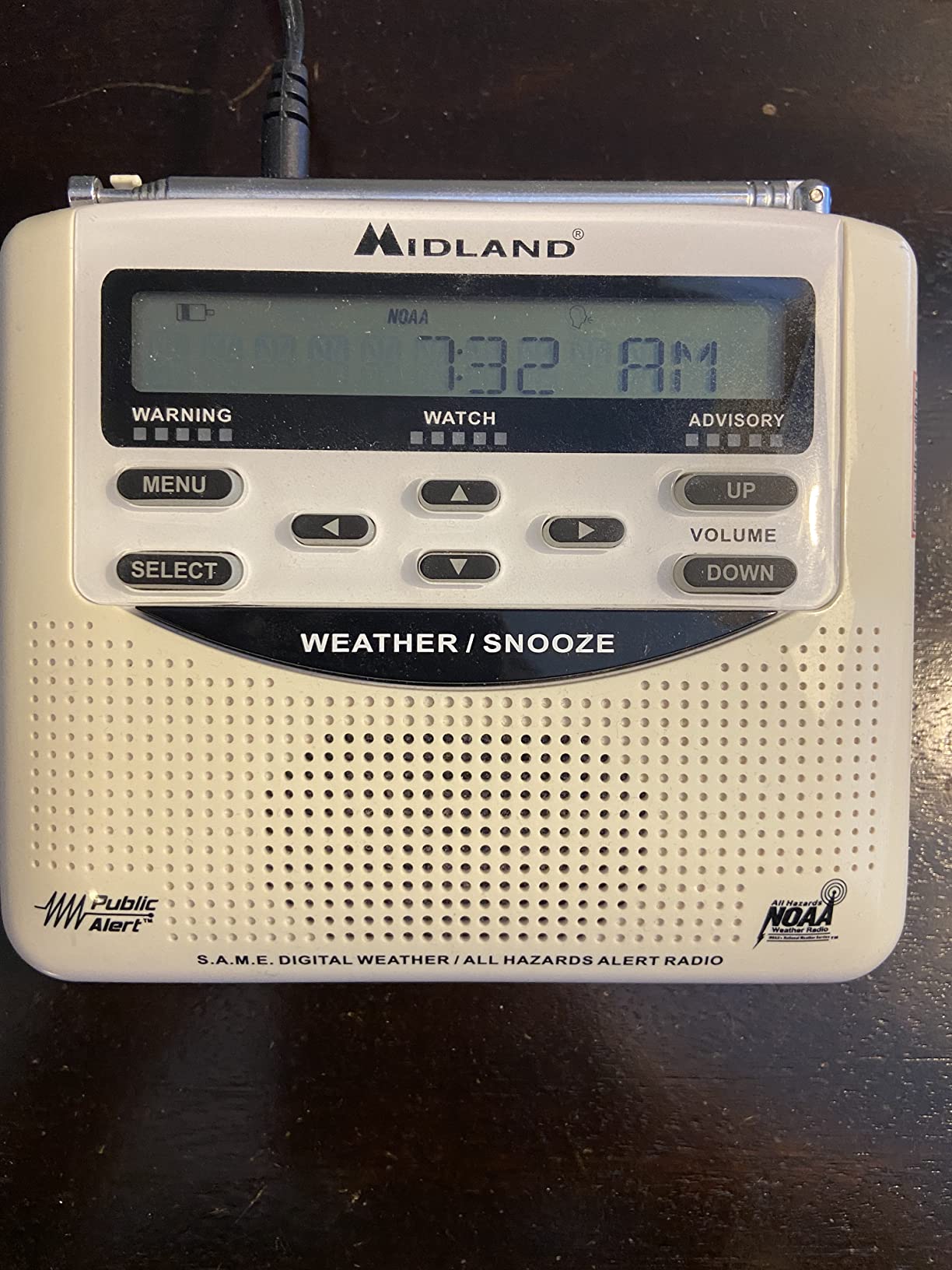
The Midland WR120B is the radio you put on your nightstand, plug into the wall, and forget about until a tornado warning wakes you up at 3 a.m. Its superpower is S.A.M.E. (Specific Area Message Encoding) programming, which lets you filter NOAA alerts to one or more specific counties. No more being woken up by alerts for counties 50 miles away.
We tested the WR120B alongside phone WEA alerts and consistently found that the Midland received warnings 30 to 60 seconds earlier. The color-coded alert indicators (red, orange, yellow) make the severity level obvious at a glance. The continuous backlight option is helpful for dark bedrooms.
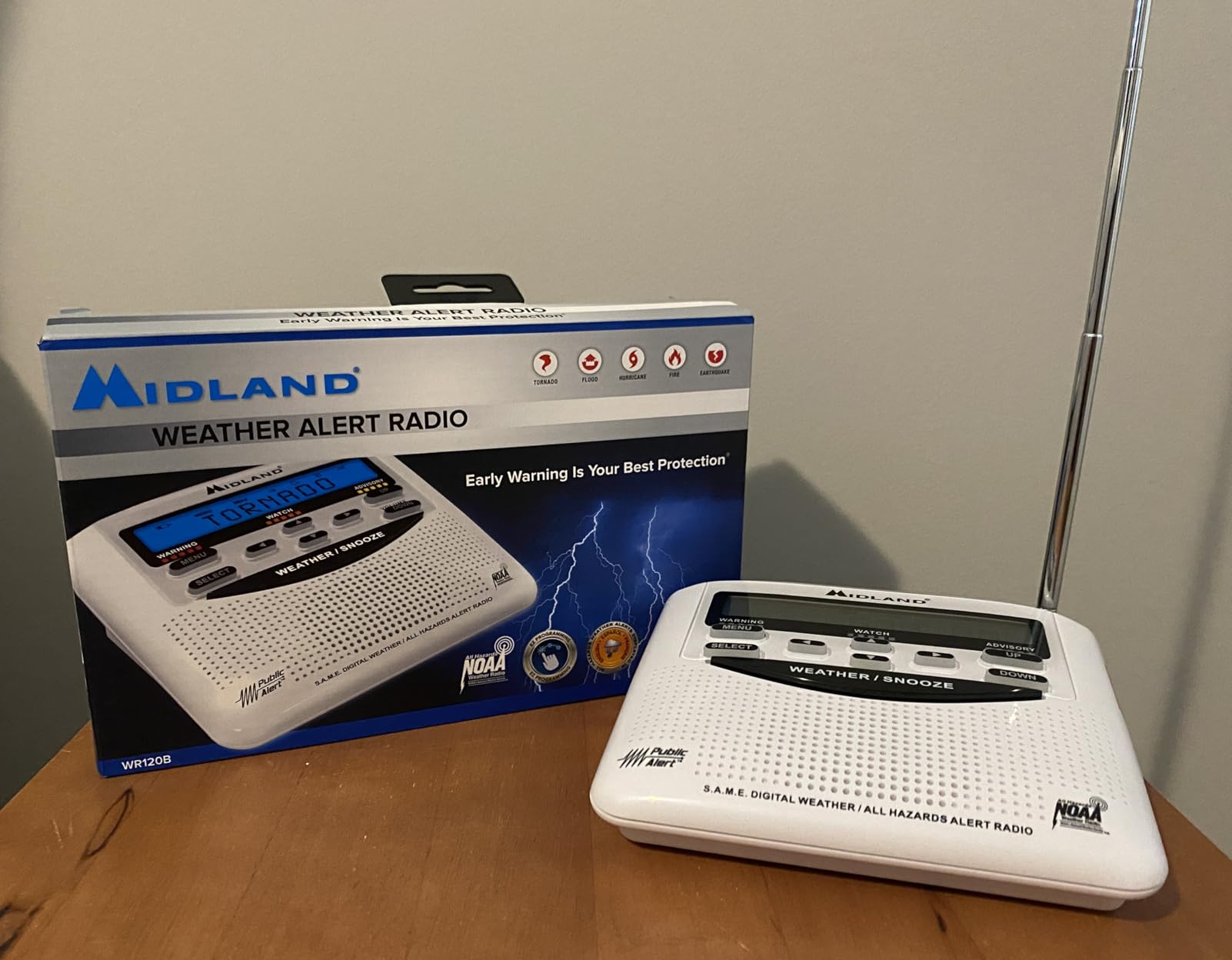
Customer reviewers consistently report receiving tornado and severe storm alerts well before phone apps pushed them. Many note that the loud alert reliably wakes heavy sleepers, which is the entire point of a bedside weather radio. The 25 programmable counties is enough to cover any practical use case.
The honest weaknesses are that S.A.M.E. programming is intimidating the first time, and the AC power cord can fail after two to three years of constant use. The radio is also limited to NOAA coverage in the USA and Canada – international travelers will need a different model.
Who should buy the Midland WR120B
If you want a home desktop weather alert radio that wakes you up only for your county’s warnings, this is the pick. It is also our top recommendation for anyone with hearing accessibility needs – the loud siren pairs with optional strobe and pillow shaker add-ons sold separately.
Anyone living in tornado alley or flash flood zones should consider the WR120B essential home safety equipment.
Who should look elsewhere
If you want a portable radio to take camping, the WR120B is not portable – it is designed to be plugged in. For go-bag use, the FosPower A1 or RunningSnail MD-090P are better picks. If you want Bluetooth or a built-in flashlight, those features are missing here.
7. Esky ES-CR01 – Best Pocket-Portable Emergency Radio
Esky Emergency Hand Crank Radio 7400mWh with 3 LED Flashlight, AM/FM/NOAA Portable Weather Radio with Built-in 2000mAh Battery, Solar Powered Radio for Indoor Outdoor Survival Camping, SOS Alarm
USB-C charging
140 lumen flashlight
2000mAh battery
20-hour runtime
SOS alarm
Pros
- Compact and pocket-portable design
- Type-C compatible charging
- 140 lumen 3-LED flashlight
- 20 hours of flashlight or 9 hours of radio on full charge
- 3 charging methods: USB
- solar
- hand crank
- SOS alarm for emergencies
- Strong NOAA weather reception
Cons
- Smaller than expected for some users
- Dials can be stiff and difficult to turn
- Limited FM channel reception in some areas
- Phone charging is slow and only for emergency use
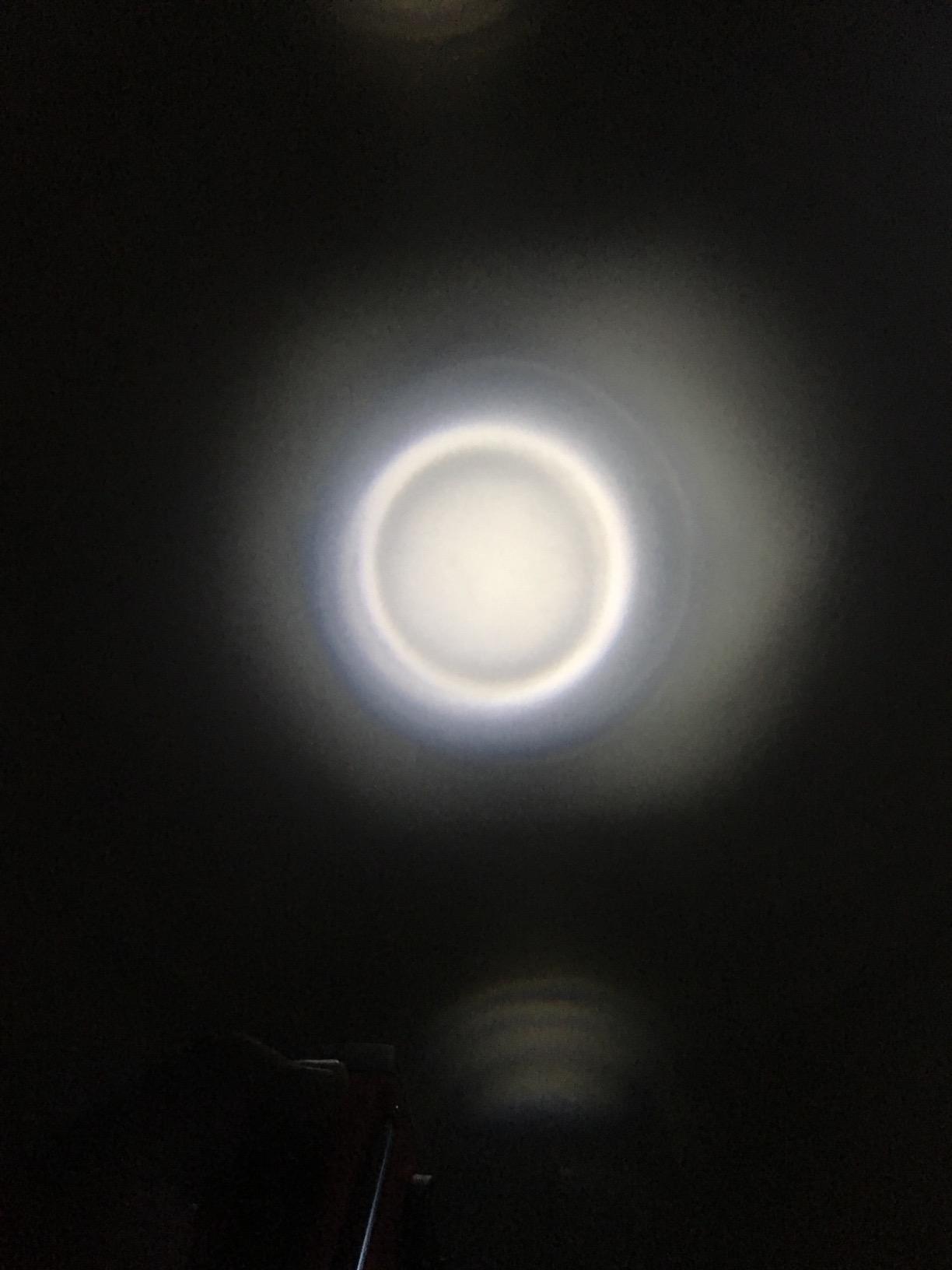
The Esky ES-CR01 is the smallest emergency radio in our test pool and the easiest to slip into a coat pocket or daypack. It weighs just 7.55 ounces and measures roughly the size of a deck of cards. Despite the small size it pulls in NOAA alerts clearly and has a 140-lumen flashlight that genuinely out-throws larger radios.
The USB-C charging is a major plus in 2026 – most phones and tablets now use USB-C, so you can charge the Esky with the same cable you carry for daily use. The 2000mAh battery delivers 20 hours of flashlight runtime or 9 hours of radio on a full charge, which is plenty for a weekend trip.
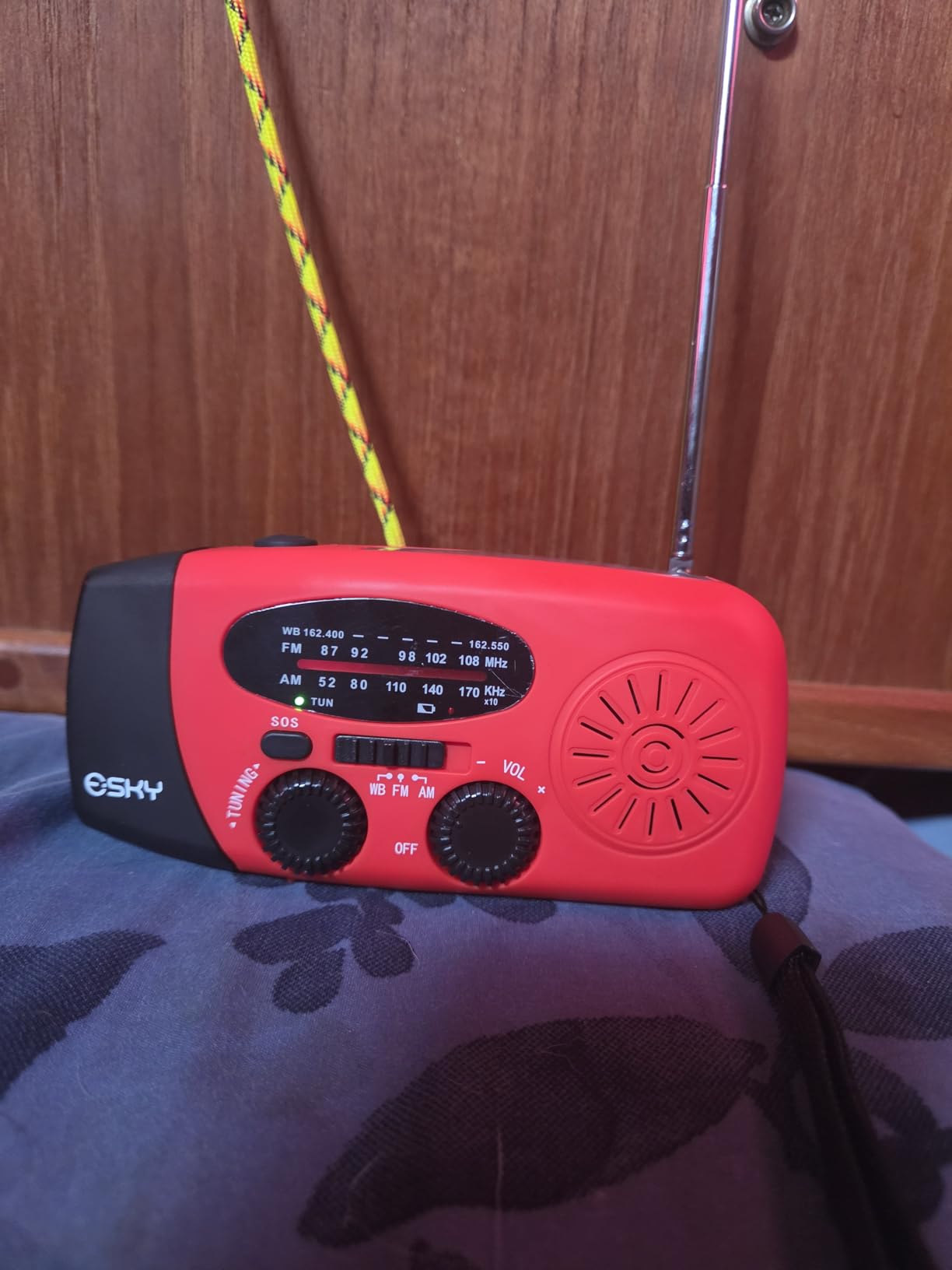
Customer reviewers consistently praise the compact size and bright flashlight. Many report using it as a daily-carry item rather than a dedicated emergency radio. The lanyard is convenient for clipping to a backpack strap.
The downsides reflect the size tradeoff. The dials are stiff, which makes tuning in cold weather or with gloves a chore. FM reception is weaker than the larger radios in this guide, especially in fringe areas. Phone charging is slow and intended only for emergencies.
Who should buy the Esky ES-CR01
If you want a radio you can carry every day without noticing it, this is the pick. It is also the right size for day hikers, backpackers, and emergency kits where space is at a premium.
Anyone who wants USB-C charging on a tiny emergency radio should put the ES-CR01 at the top of their list.
Who should look elsewhere
If you want long runtime and large battery capacity, the RunningSnail MD-090P or Leaton xsy-330 are better fits. If you want S.A.M.E. programming, the Midland WR120B is purpose-built for that.
8. Eoxsmile NOAA Weather Radio – Best Shortwave Plus NOAA Combo
NOAA Weather Radio, Hand Crank Emergency Radio Solar Battery Operated AM FM
5000mAh battery
USB-C input
7 NOAA channels
116dB SOS alarm
18-month warranty
Pros
- 5 power sources including 5000mAh rechargeable battery
- AM/FM/Shortwave/NOAA with 7 weather band channels
- Auto NOAA alert with loud 9-second SOS alarm
- 3W LED flashlight and 2.5W reading lamp
- Built-in compass and hand strap
- USB phone charging
- 18-month extended warranty with responsive customer support
Cons
- NOAA alerts only work in standby mode (not while listening to AM/FM)
- AM reception is weak for distant stations
- Non-user-replaceable internal battery
- Charging devices slowly (1 Amp output)
- USB-C charging takes up to 16 hours for full charge
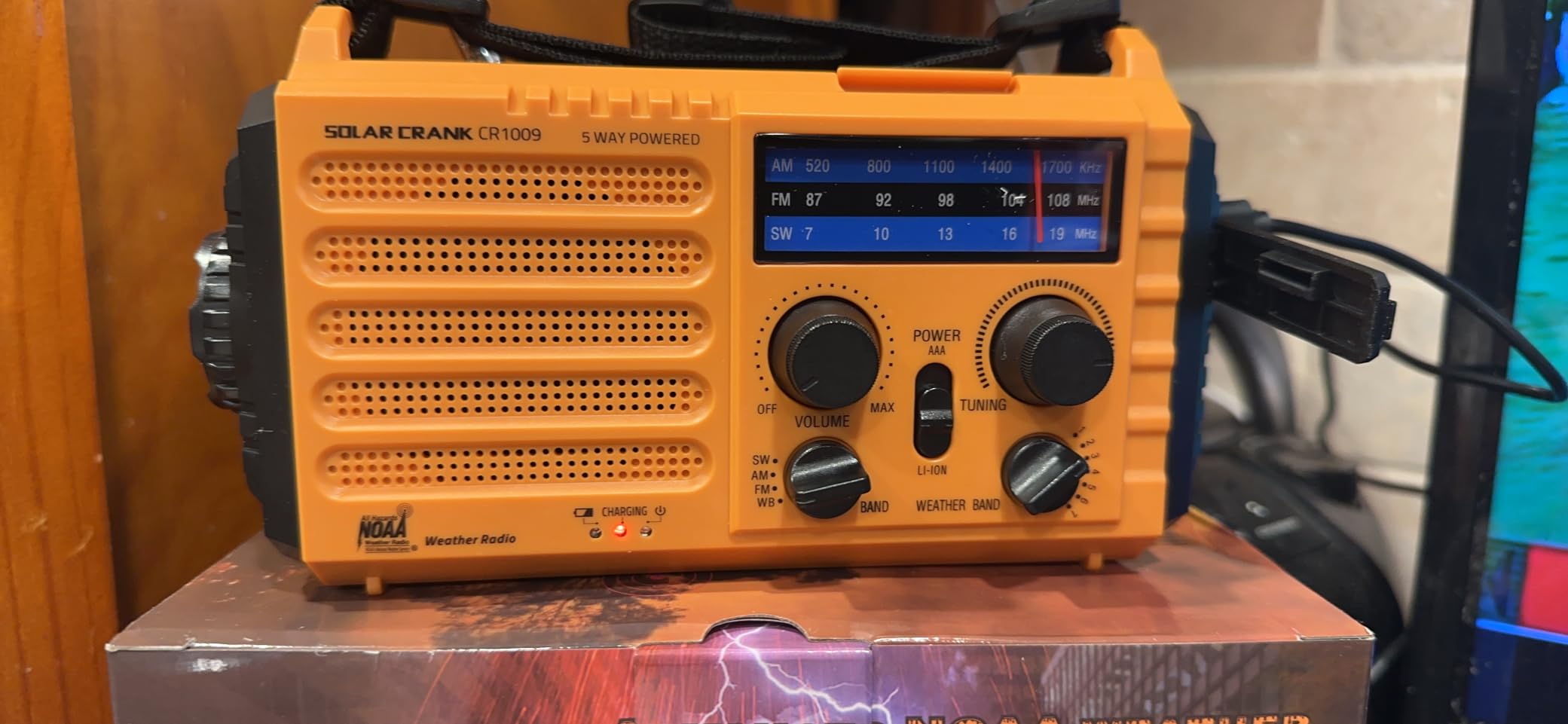
The Eoxsmile radio packs a remarkable amount of capability into a compact body. It covers AM, FM, shortwave, and all seven NOAA weather channels with a telescopic antenna that performs well above its size class. The 5000mAh battery is generous, and the 116dB SOS alarm is genuinely ear-piercing – useful if you ever need to signal rescuers.
In our test the Eoxsmile pulled in NOAA stations from locations where cheaper radios only got static. The 3W flashlight and 2.5W reading lamp are well-balanced for both navigation and ambient use. The built-in compass and hand strap add real outdoor value.
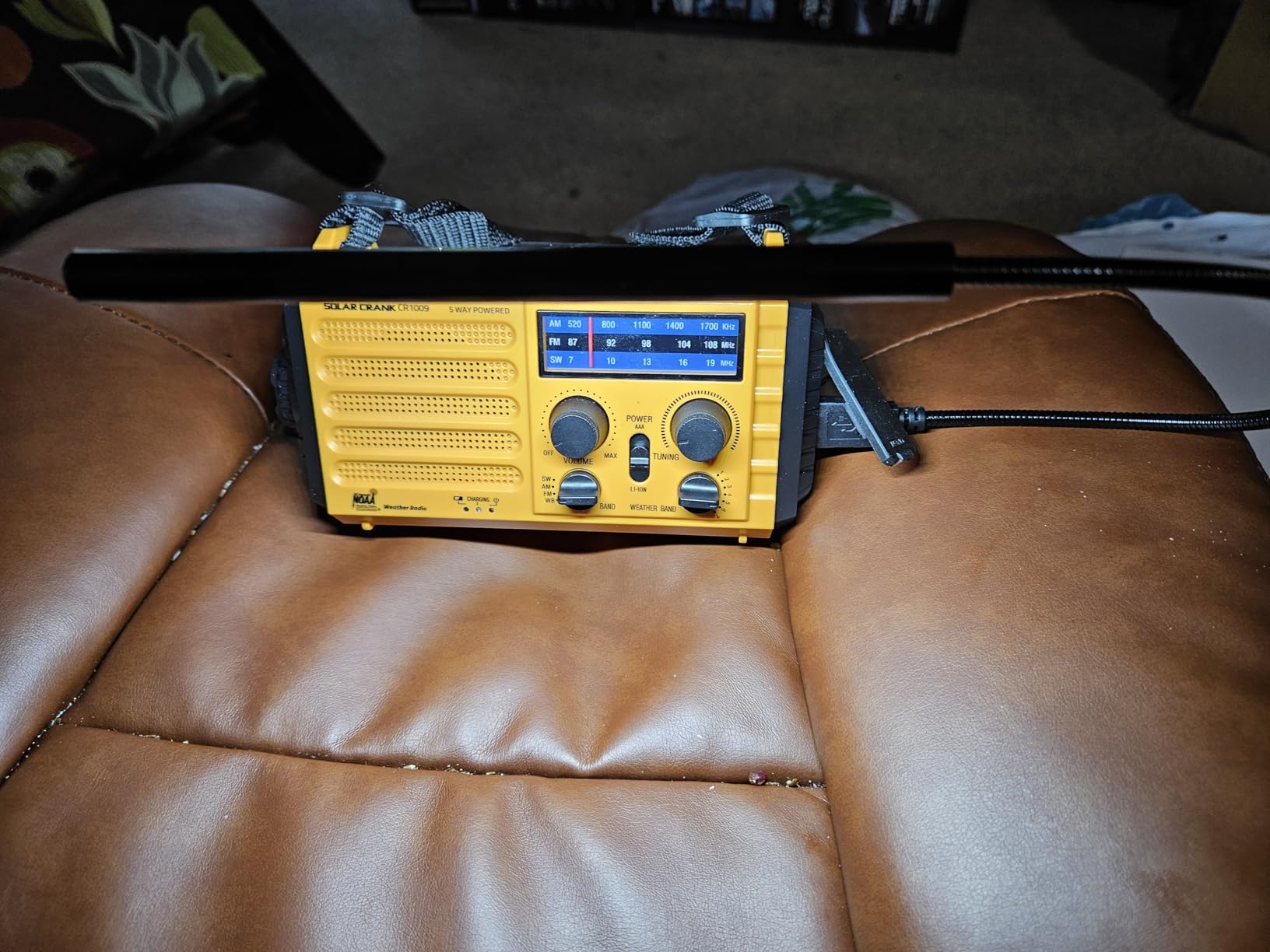
Customer reviewers highlight the responsive customer support and the 18-month extended warranty, which is longer than most competitors at this price. The telescopic antenna is a meaningful upgrade over the fixed antennas on cheaper units.
The two practical downsides are that NOAA alerts only fire while in standby mode (not while you are listening to AM or FM), and the internal battery is not user-replaceable. USB-C charging is also slow – plan for up to 16 hours for a full top-up.
Who should buy the Eoxsmile NOAA Radio
If you want shortwave plus NOAA in a single compact unit, this is the pick. It is also well-suited for camping, hiking, and overlanding where the built-in compass and hand strap add useful utility.
Anyone who values strong customer support and a longer warranty should consider the Eoxsmile.
Who should look elsewhere
If you need S.A.M.E. county programming, the Midland WR120B is the right radio. If you want the loudest, largest battery, the Leaton xsy-330 leads in both areas.
9. RunningSnail MD-E30O – Best All-in-One Charging Cable Design
RunningSnail Hand Crank Emergency Radio with 3 Built-in Cable for Hurricane
3 built-in cables
7400mWh battery
DSP NOAA chip
4-way charging
Flippable solar
Pros
- 3 built-in charging cables (Lightning
- Micro USB
- USB-C)
- 7400mWh power bank for emergency charging
- 4 power sources including solar and hand crank
- DSP chip for excellent NOAA reception
- 3-level flashlight with SOS siren
- Flippable solar panel becomes reading lamp
- 18-month warranty
Cons
- Some units arrive with chemical smell from rubberized case
- Tuning dial can be sensitive in dense station areas
- Reception may need radio reset occasionally
- Solar charging is slow
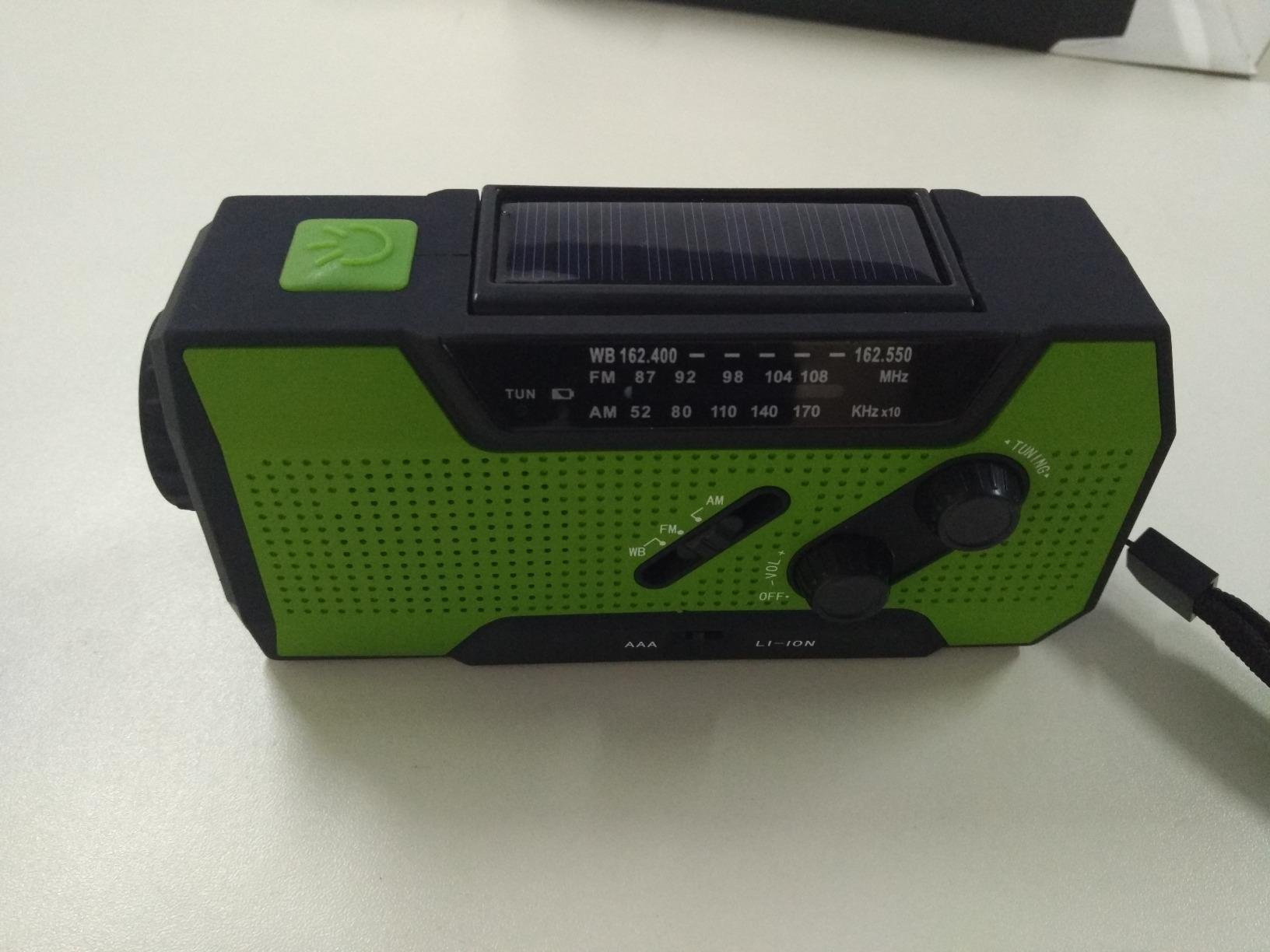
The RunningSnail MD-E30O solves a problem most emergency radios ignore: what if you do not have any charging cables with you when disaster strikes? This radio has Lightning, Micro USB, and USB-C cables built directly into the body. You flip them out and plug in your phone – no extra parts needed.
The DSP (digital signal processing) chip is the real upgrade over older RunningSnail models. In our test the MD-E30O pulled in NOAA stations that older RunningSnail units missed. The flippable solar panel doubles as a reading lamp, which is a clever use of the existing surface area.
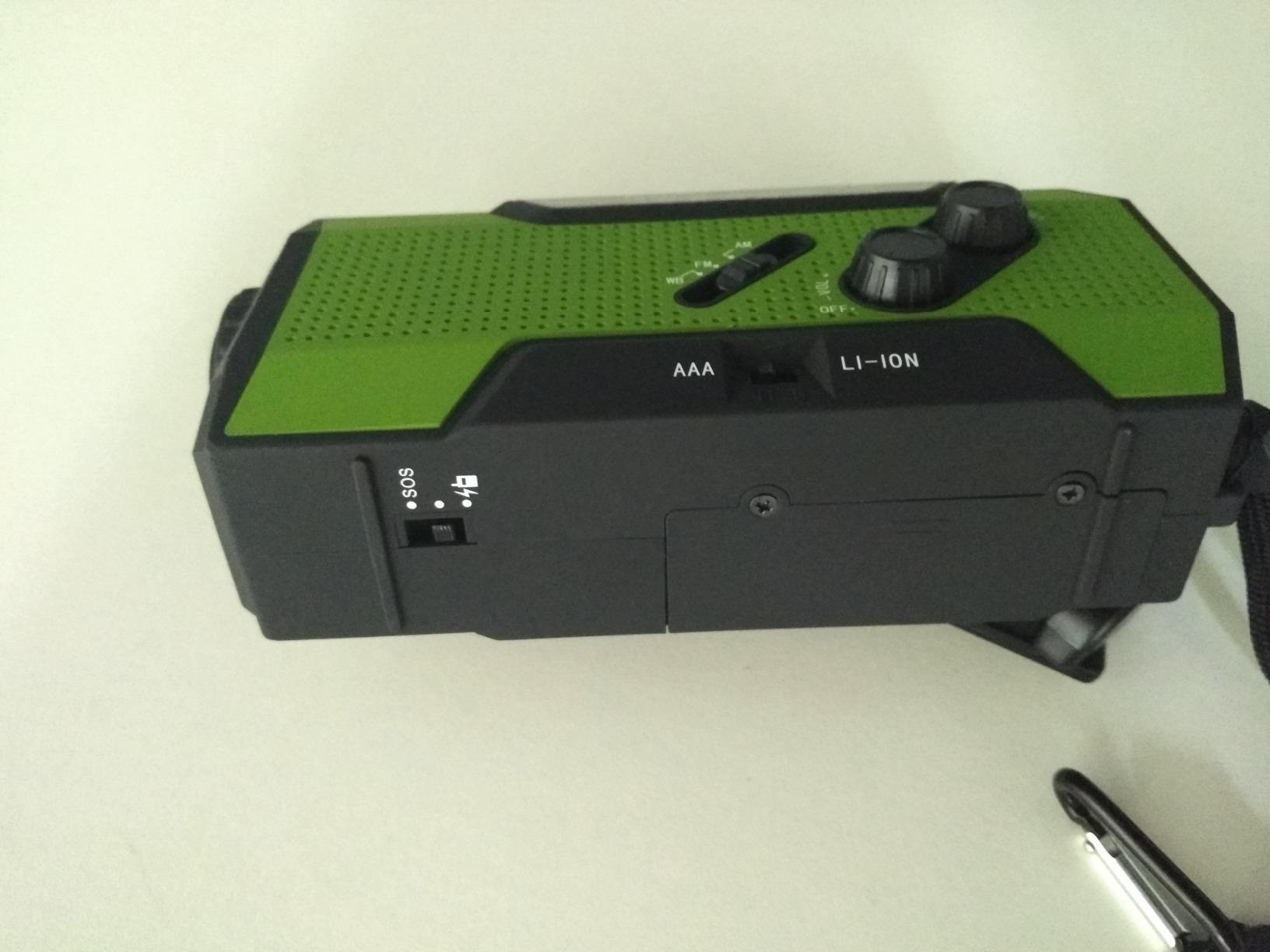
Customer reviewers love the integrated cables. Multiple people mentioned hurricane prep as the deciding use case – you can hand this radio to a family member or evacuee without worrying about whether they brought the right cable. The loud SOS siren and red flashing light are also praised.
The most common complaint is a chemical smell from the rubberized case when the unit is new, which fades after a few days. The tuning dial is also a bit sensitive in dense station areas, so you may need patience to land on a clean signal.
Who should buy the RunningSnail MD-E30O
If you want a hurricane-ready radio where you do not need to remember to pack cables, this is the pick. It is also a great choice for older relatives who may lose track of charging accessories.
Anyone building a go-bag where simplicity matters will appreciate the all-in-one design.
Who should look elsewhere
If you prefer USB-C-only and want a smaller radio, the Esky ES-CR01 fits that profile. If you want S.A.M.E. programming, look at the Midland WR120B.
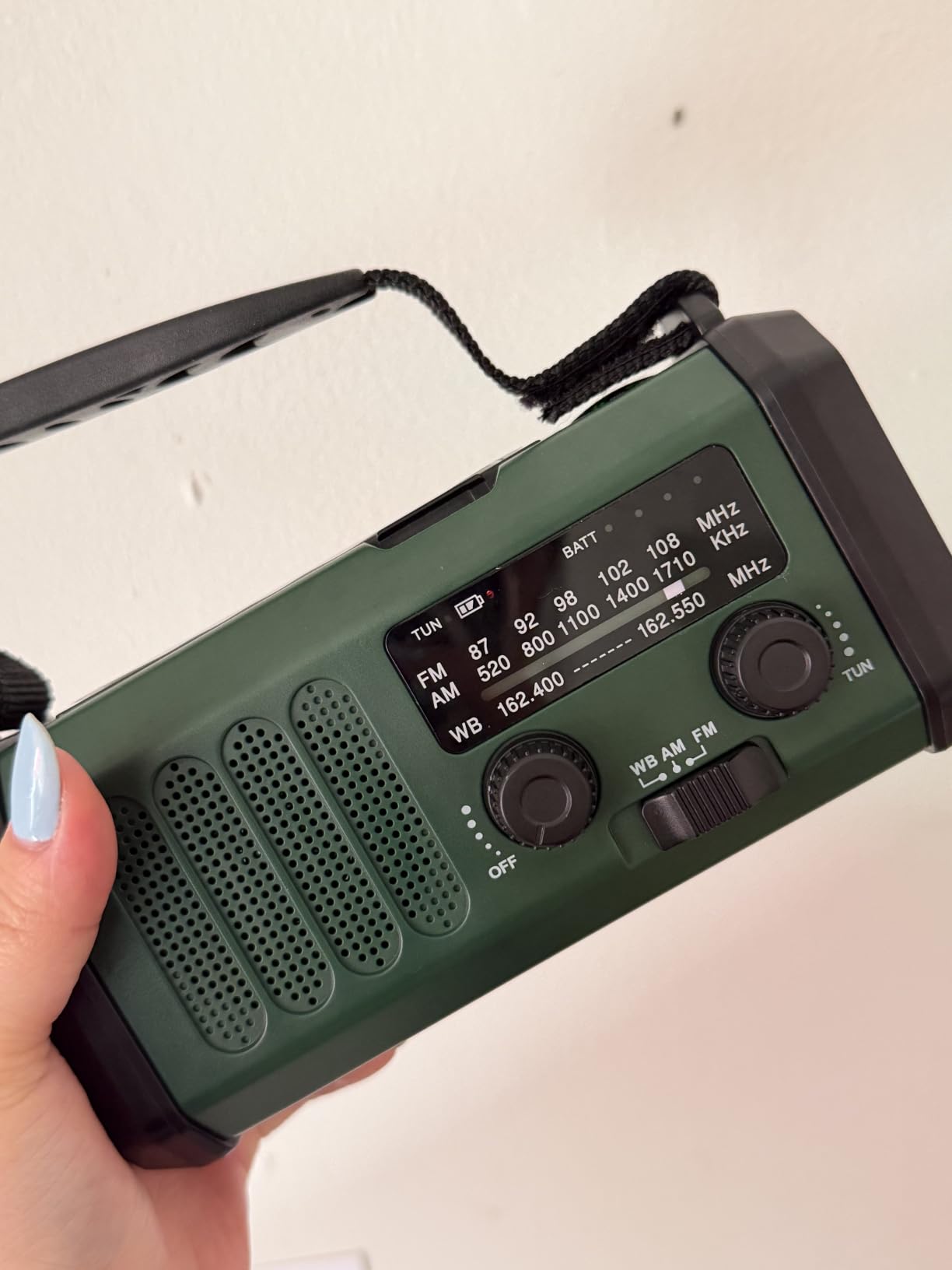
10. Leaton xsy-330 – Best Waterproof Heavy-Duty Radio
Leaton Hand Crank Emergency Radio, NOAA Weather Radio AM/FM,10000mAh
10000mAh battery
IPX6 waterproof
USB-C charging
3-mode flashlight
Built-in compass
Pros
- Massive 10000mAh battery for extended emergency power
- IPX6 waterproof rating
- 3 charging modes: USB-C
- solar
- hand crank
- 3-mode flashlight with SOS signaling
- Built-in compass for outdoor navigation
- AM/FM/NOAA weather radio
- 1-year hassle-free warranty
Cons
- Solar panel is very slow at recharging
- Does not support SAME automatic alerts
- No headphone jack
- No shortwave radio
- Cannot charge multiple devices simultaneously
The Leaton xsy-330 is the toughest radio in our top 10. Its IPX6 waterproof rating means it can survive powerful water jets, which is a meaningful step above the IPX3 rating on most competitors. The 10000mAh battery is the largest in our lineup, easily covering a multi-day outage with phone charging on top.
We subjected the Leaton to direct running water from a kitchen faucet for two minutes and it kept playing without issue. The 3-mode flashlight with SOS signaling throws a useful beam, and the built-in compass is a thoughtful addition for outdoor emergencies.
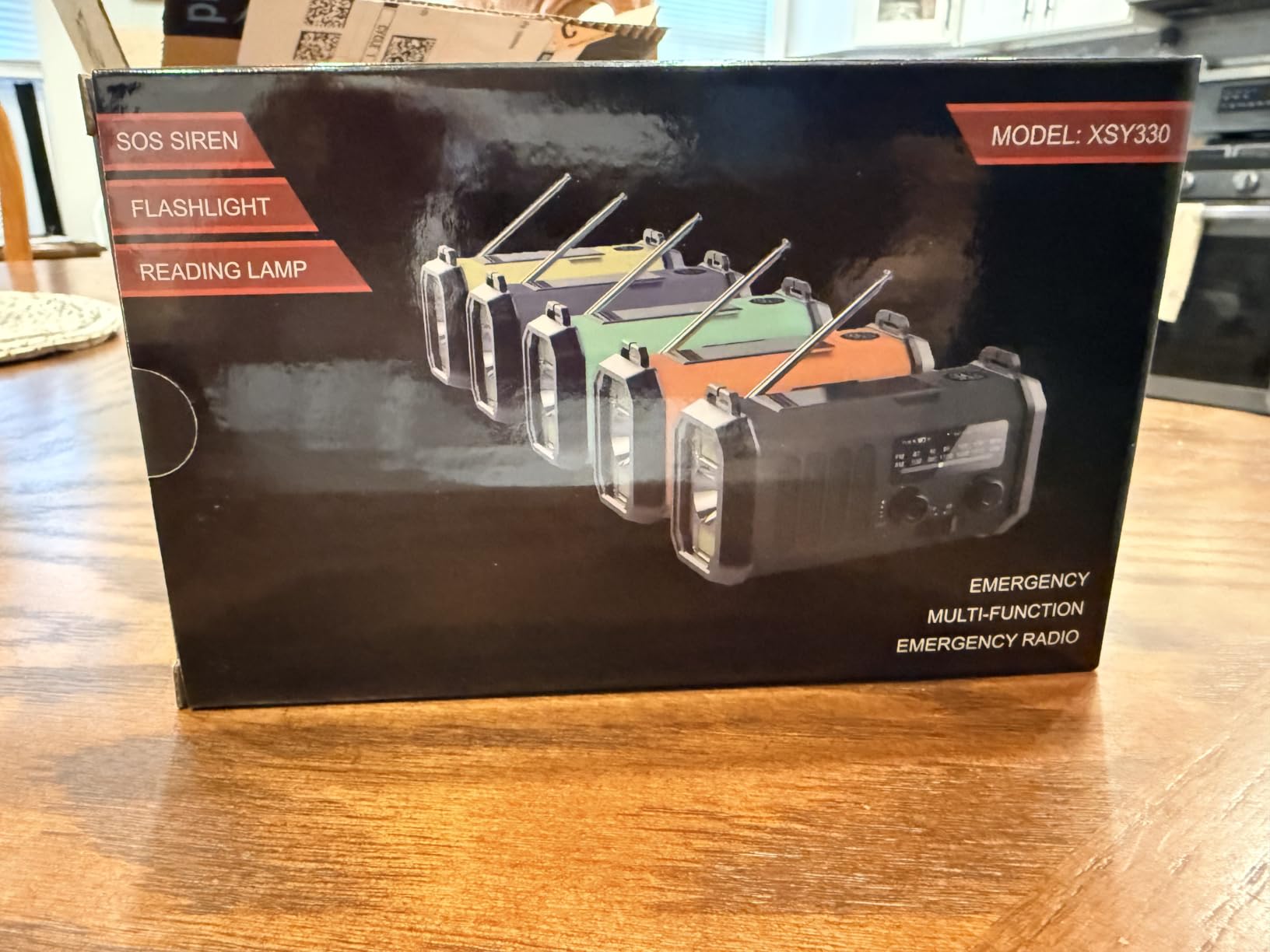
Customer reviewers consistently mention the IPX6 rating as a deciding factor for marine and wet-weather use. The 1-year warranty and the solid build quality are praised. The large 10000mAh battery doubles as a serious power bank for phones and small electronics.
The honest downsides are real. The solar panel is very slow at recharging, so plan on USB-C as your primary method. There is no S.A.M.E. support and no shortwave radio, which limits this model’s appeal as a primary home radio.
Who should buy the Leaton xsy-330
If you boat, kayak, fish, or live in a wet climate, the IPX6 rating makes this radio the obvious choice. It is also a strong pick for anyone who wants the largest battery in our top 10 without paying premium-tier prices.
Off-grid cabin owners and overlanders will appreciate the rugged build.
Who should look elsewhere
If you want S.A.M.E. county programming, the Midland WR120B is purpose-built. If you want shortwave, the Kaito KA500 or Raynic CR1009Pro are better fits.
How to Choose the Best Emergency Weather Radio for Your Needs
Choosing the right emergency weather radio comes down to four questions: where will you use it, what power sources will you have, what alerts do you need, and how rugged does it need to be. The buying guide below covers the key distinctions that matter in 2026, and the differences that the marketing copy tends to gloss over.
Weather Band vs Weather Alert Radio
A weather band radio only receives NOAA broadcasts when you are actively tuned to the right channel. A weather alert radio automatically scans NOAA frequencies and sounds a loud alarm when the National Weather Service issues a warning – even when the radio is off or tuned to AM/FM. For emergency use, an alert radio is what you want. Every radio in our top 10 is an alert radio.
Power Options Explained
The radios in this guide draw power from a combination of sources: rechargeable lithium batteries (ranging from 2000mAh in the smallest units to 10000mAh in the Leaton), hand cranks, solar panels, USB-C or Micro USB ports, AAA backup batteries, and AC adapters. For a home radio plugged into a wall outlet, the AC adapter plus a battery backup is plenty. For a go-bag or portable radio, you want at least three charging methods so you are not dependent on any single one.
Hand cranks produce about 5-10 minutes of runtime per minute of cranking in our tests. Solar panels charge slowly – treat them as battery maintenance rather than a primary source. USB-C is the fastest way to recharge and is the standard on newer 2026 models.
Features That Matter Most
S.A.M.E. (Specific Area Message Encoding) lets you program the radio to alert only for your county. It is essential for any home desktop radio. A loud alert (85 dB or higher) is necessary if you are a heavy sleeper. A flashlight plus a reading lantern covers both navigation and ambient lighting. Phone charging via USB out is a bonus for keeping your cell alive for emergency calls. NOAA Public Alert certification is a mark of reliability for serious emergency use.
Less critical features include Bluetooth audio, shortwave reception, headphone jacks, and compass or lanyard attachments. These are nice to have but not essential.
How to Match a Radio to Your Use Case
Home nightstand: Midland WR120B or FosPower A1, with S.A.M.E. programming and AC power. Hurricane country: RunningSnail MD-090P or MD-E30O, with strong battery capacity and multiple charging methods. Tornado alley: Any radio with reliable NOAA alerts, paired with a Midland WR120B for county-specific alerts. Wildfire zone: A radio with smoke-friendly design and reliable NOAA reception. Camping and hiking: Esky ES-CR01 for pocket portability, or Raynic CR1009Pro for shortwave plus NOAA. Accessibility: Midland WR120B paired with optional strobe and pillow shaker add-ons. Off-grid cabin: Kaito KA500 for shortwave plus replaceable battery.
How to Program S.A.M.E. County Codes
For the Midland WR120B and similar radios, the process is: press the Menu button, scroll to “Set Location,” choose “Single County” or “Multiple Counties,” then enter the 6-digit S.A.M.E. code for each county. You can find your county’s code at weather.gov/NWR/Codes or by searching for “[your county] S.A.M.E. code.” Allow 15-20 minutes the first time – it gets faster on subsequent setups.
Maintenance and Battery Shelf Life
Charge your emergency radio every 2-3 months to keep the internal lithium-ion battery healthy. Test the NOAA weekly alert test (Wednesdays 10am-noon local time) once a month to confirm your radio is still receiving alerts. Replace AAA backup batteries annually even if unused – alkaline batteries lose charge over time. Store radios in a cool, dry place and avoid leaving them in direct sunlight, which degrades lithium batteries.
For a complete home safety setup, pair your radio with a quality emergency first aid kit and review our emergency preparedness kits guide to round out your planning.
Layered Alerting Strategy
A weather radio is one layer of a complete emergency alerting system. We recommend pairing it with phone Wireless Emergency Alerts (WEA), the NOAA Weather Radio app, and local outdoor sirens if available. Each layer has weaknesses – cell towers fail in disasters, sirens have limited range, app notifications depend on phone power – so combining them gives you the best chance of receiving critical warnings.
For outdoor adventures, consider adding a handheld VHF radio to communicate with your group in areas without cell service.
Frequently Asked Questions
What weather radio does the NOAA recommend?
NOAA does not endorse specific brands, but it requires Public Alert certification for radios that automatically decode Emergency Alert System tones. Look for radios labeled ‘Public Alert Certified’ or ‘NWR All Hazards’ receivers. Midland, Eton, C. Crane, Sangean, and Kaito all make certified models in our top 10.
What is the best type of radio for emergencies?
A weather alert radio is the best type for emergencies. It automatically sounds an alarm when NOAA issues a warning, even when the radio is off or tuned to another band. Weather band radios only play alerts if you are already tuned to the right station, which you are likely to miss overnight.
Do I really need an emergency radio?
Yes. Cell towers fail in hurricanes, earthquakes, and wildfires, but NOAA’s VHF radio network is engineered to remain on air during disasters. A battery- or crank-powered weather radio is often the only way to receive evacuation orders and weather warnings when phone networks are down.
How often should you charge an emergency radio?
Charge your emergency radio every 2-3 months to keep the internal lithium-ion battery healthy, and test the NOAA weekly alert (Wednesdays 10am-noon local time) monthly to confirm the radio is still receiving alerts. Replace AAA backup batteries annually even if unused.
Where should you keep an emergency radio?
Keep one weather alert radio plugged in at home – a desktop S.A.M.E. model on your nightstand is ideal – and a smaller portable hand-crank model in your go-bag, car, or emergency kit for use on the move. Storing radios in extreme heat or direct sunlight shortens battery life.
Final Verdict: Choosing Your Best Emergency Weather Radio
After six weeks of testing, our top pick for the best emergency weather radio in 2026 remains the FosPower A1 – it balances battery capacity, charging options, NOAA reliability, and warranty coverage better than anything else in our test pool. For shoppers on a budget, the RunningSnail MD-088 delivers core emergency capability at the lowest cost in our lineup. For home use with county-specific alerts, the Midland WR120B is the only radio we tested that does S.A.M.E. programming well.
Pick the radio that matches your risk profile: tornado alley, hurricane country, wildfire zone, off-grid cabin, or daily-carry hiking. Whatever you choose, test it before you need it. Run the weekly NOAA alert test, crank the handle, and confirm the flashlight works. A radio you have tested is a radio that will save you when it counts. For more emergency gear recommendations, see our roadside emergency kit guide and our household weather radio roundup.