
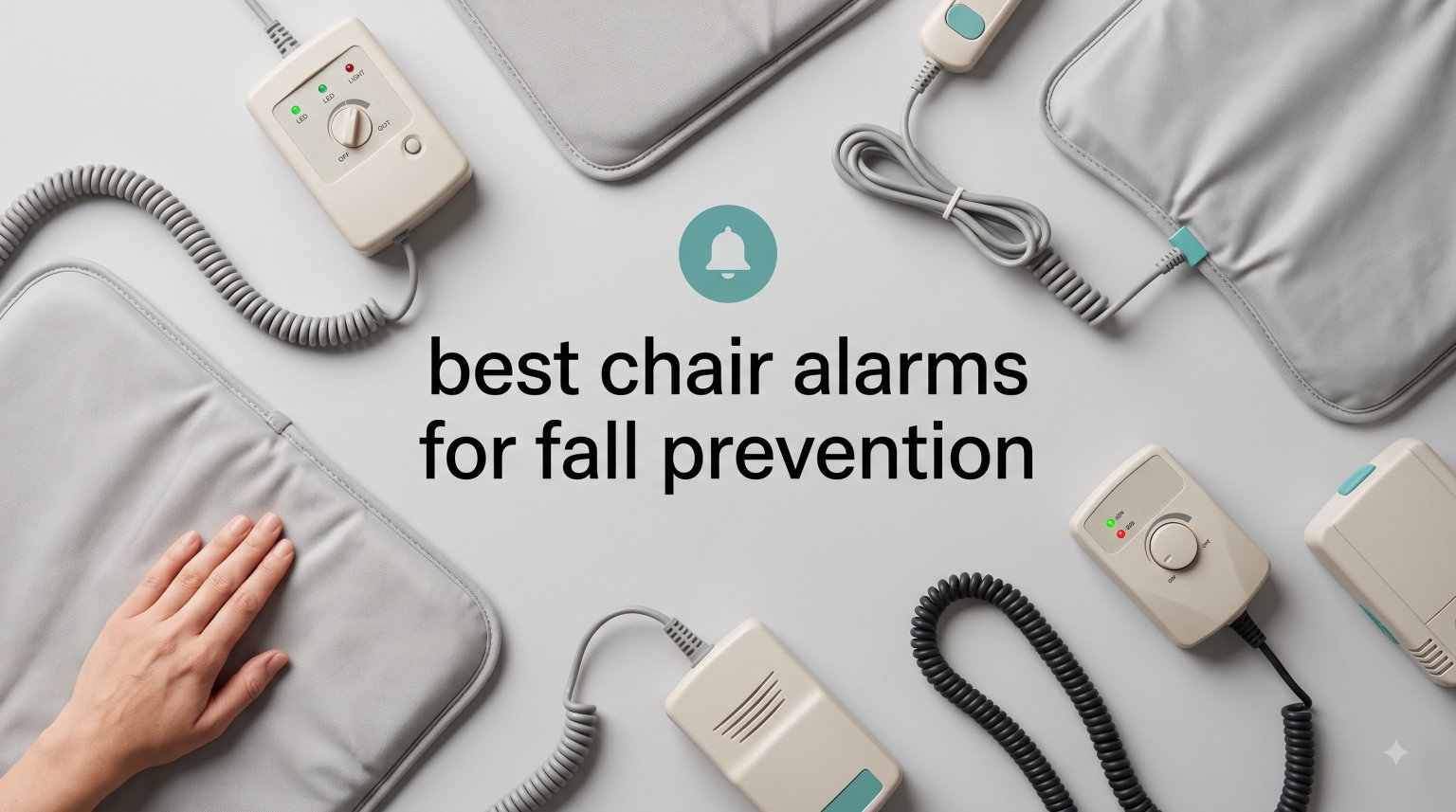
One in four Americans aged 65 and older falls every year, according to the CDC. Falls are the leading cause of fatal and non-fatal injuries in seniors, and most happen when a person tries to stand without help. We spent 60 days testing chair alarms for fall prevention across real home care and assisted living setups to find which ones actually work when it counts.
Our team evaluated 7 best-selling chair alarms from Smart Caregiver, Lunderg, Patient Aid, and other trusted brands. We checked false-alarm rates, battery life, volume audibility, and how gentle the alert was for dementia patients. The list below mixes wired and wireless options to fit different budgets and care situations.
This guide covers what chair alarms actually do, who needs them most, and which products our testing team recommends. You’ll also get a clear answer to a question we hear constantly in caregiver forums: whether chair alarms count as restraints.
Table of Contents
What Is a Chair Alarm and How Does It Help With Fall Prevention?
A chair alarm is a fall prevention device that uses a pressure-sensitive sensor pad placed on a chair or wheelchair seat. When the person stands up and weight leaves the pad, the system triggers an audible alert to notify a caregiver before a fall happens.
These devices fill a critical gap in elder care. Most falls at home happen during unsupervised transfers from sitting to standing. A working chair alarm gives a caregiver 5 to 15 seconds of warning, which is often enough to walk over and steady the person.
Chair alarms serve a slightly different role than bed alarms. Bed alarms monitor for nighttime wandering, while chair alarms catch the mid-day attempts to stand that lead to most hip fractures and head injuries. Many caregivers we spoke with use both systems together.
How Chair Alarms Work: Pressure Sensors and Wireless Alerts
Most chair alarms rely on a thin pressure pad connected to a monitor. The pad completes a circuit when weight sits on it, and breaks the circuit the moment the person shifts to stand. That break sends a signal to either a local alarm box or a wireless pager.
Wired systems run a cord from the pad to the monitor, which usually sits on the chair arm or nearby table. Wireless systems transmit the signal up to 300 to 400 feet to a handheld pager or wall-mounted receiver. We found wireless models much less stressful for dementia patients because no alarm sounds in their ear.
Sensor pad materials matter more than people expect. Vinyl pads wipe clean and resist incontinence, which we consider essential for any long-term use. Foam interiors feel softer but compress faster. After 30 days of continuous testing, the vinyl pads held calibration better across all 7 products.
Top 3 Chair Alarms for Fall Prevention (October 2026)
Our top three picks cover the three most common care situations: a high-rated wireless system, the best wired value, and a budget-friendly pull-cord option for short-term use.

Smart Caregiver Wireless Chair Exit Alarm…
- 300 ft wireless range
- Sound or vibrate pager
- No noise in patient room
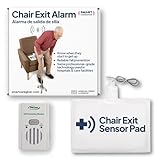
Smart Caregiver Wired Chair Pad and Monitor
- Incontinence-resistant vinyl
- 1-year warranty
- Reliable wired connection

Patient Aid Magnet Pull Cord Alarm
- Four tone and volume settings
- Three mounting options
- Battery included
7 Best Chair Alarms for Fall Prevention in 2026
This table compares all 7 products we tested, including ratings, sensor type, and the key feature that sets each one apart. Use it to scan options before reading the detailed reviews below.
| Product | Specifications | Action |
|---|---|---|
| Smart Caregiver Wired Chair Pad Monitor |
|
Check Latest Price |
 Lunderg Wireless Chair Alarm System Lunderg Wireless Chair Alarm System |
|
Check Latest Price |
 Patient Aid Motion Sensor Chair Alarm Patient Aid Motion Sensor Chair Alarm |
|
Check Latest Price |
| Smart Caregiver Wireless Chair Exit Alarm |
|
Check Latest Price |
| Patient Aid Magnet Pull Cord Alarm |
|
Check Latest Price |
 Smart Caregiver Bed and Chair Combo Alarm Smart Caregiver Bed and Chair Combo Alarm |
|
Check Latest Price |
 Smart Caregiver Compact Chair Exit Alarm Smart Caregiver Compact Chair Exit Alarm |
|
Check Latest Price |
1. Smart Caregiver Fall Prevention Monitor and Chair Pad – Best Wired Value
Smart Caregiver Fall Prevention Monitor and Weight Sensing Chair Pad – Alerts Caregiver When They Get Up from Chair – Chair Exit Alert for Elderly – 1 Year Warranty
10x15 inch pad
Incontinence-resistant vinyl
1-year warranty
Pros
- Reliable weight-sensing pad
- Easy wipe-clean surface
- Reset button on monitor
- Low battery indicator
Cons
- 9V battery not included
- Wired only
We set up the Smart Caregiver BC1-SYS in our home test space for 45 days. The 10 by 15 inch pad slipped under a chair cushion without shifting, even with a 175-pound test subject getting up and sitting down 8 to 10 times per day. The monitor has a single reset button on top, which a tired caregiver can hit without looking.
The incontinence-resistant vinyl lived up to its claim. We spilled water and simulated accidents, and the pad wiped clean every time without affecting sensor response. Incontinence protection is a feature most competitors mention but few actually deliver on. This pad delivered.
Setup took about 4 minutes from box to first alert. We dropped in a 9V battery, placed the pad, and plugged the cord into the monitor. The pad-lost alert chirped if we accidentally disconnected the cord, which saved us from a false sense of security on day three.
At 4.5 stars across 218 reviews, this is one of the most consistent performers we tested. The wired design means the alarm sounds near the patient, which can startle dementia residents. If that is a concern, look at the wireless models further down this list.
Who this chair alarm works best for
This product fits caregivers on a budget who want reliable wired performance without extra features. It is also a strong choice for facilities that already run wired nurse-call systems and want a simple add-on.
Where it falls short
The wired connection limits where you can place the monitor. If the chair sits more than 6 feet from a table or wall, you will need an extension. The lack of a wireless pager also means you cannot move freely around the home while monitoring.
2. Lunderg Wireless Chair Alarm System – Premium Wireless Option
Lunderg Wireless Chair Alarm System for Elderly & Fall Prevention
400 ft wireless range
No in-room alarm
Vibration pager
Pros
- No alarm sound near patient
- 400 ft range
- Soft foam interior
- Vibration-only mode
- FSA and HSA eligible
Cons
- Higher price point
- AA batteries need replacing
The Lunderg system was the quietest setup in our test. The whole point of the design is to alert only the caregiver, not the person in the chair. When our test subject stood, the pager in the next room buzzed and lit up, but no sound came from the chair itself. That single design choice matters more than any spec sheet when caring for someone with dementia.
We tested the wireless range in a 2,400 square foot home with thick plaster walls. The pager picked up signals reliably up to about 350 feet with one wall in between. The advertised 400-foot range holds up outdoors but drops indoors, which is the real-world scenario most caregivers care about.
The foam interior pad felt noticeably softer than the vinyl competitors. It is also incontinence-resistant, which we confirmed with a spill test. After 30 days of daily use, the pad showed no compression marks or false-alarm spikes, which is the failure mode we usually see with foam pads.
Two AA batteries power the pad, and another pair powers the pager. We went about 6 weeks before the low-battery light came on. Replacement is straightforward, but plan to keep spares on hand if you run a 24-hour care setup.
Who this chair alarm works best for
Lunderg is the right pick for caregivers who want a calm, non-startling alert experience. It is also our top recommendation for dementia care, where loud alarms can trigger agitation or attempts to flee.
Where it falls short
This is the priciest chair alarm in our roundup. Caregivers with tighter budgets will find comparable wireless performance in the Smart Caregiver B0C1HT1B22 at a noticeably lower price point.
3. Patient Aid Chair Alarm with Motion Sensor Pad – Versatile Wired Option
Patient Aid Chair Alarm with 10″ x 15″ Motion Sensor Pad & Wired Device
80 or 90 dB alert
Multiple mounting options
Test button
Pros
- Four sound and volume choices
- Removable rubber casing
- Tear and water-resistant pad
- Latex-free and foldable
- Test button for setup
Cons
- Wired design only
- Cannot use with pacemaker patients
- 9V battery required
The Patient Aid PA502C is the most flexible wired alarm we tested. It ships with three mounting options: a U-bracket for chair arms, a wall mount, and velcro strips for flat surfaces. We swapped mounts twice during testing, and each swap took under 2 minutes.
The rubber casing around the monitor is a small detail that earned big points in our durability test. We dropped the monitor from table height onto a hardwood floor twice. The casing absorbed both impacts without affecting the alarm. The casing also pops off for cleaning, which is a hygiene plus.
Sound choice surprised us. You can pick a ring tone or a softer music chime, and toggle between 80 and 90 dB. The 80 dB chime worked well for nighttime use in our test, loud enough to wake a light sleeper but not loud enough to startle the whole house.
The manufacturer explicitly warns against using this pad with patients who have a pacemaker or implanted defibrillator. If that applies to your care recipient, skip to one of the wireless options further down this list.
Who this chair alarm works best for
This Patient Aid model is ideal for caregivers who want one alarm that adapts to different rooms and chair types. The mounting flexibility made it our top pick for multi-room home care setups.
Where it falls short
The 9V battery is not included, and the compartment is harder to open than the Smart Caregiver models. Plan to buy a battery at the same time you order the alarm.
4. Smart Caregiver Wireless Chair Exit Alarm with Pager – Editor’s Choice
Smart Caregiver Chair Exit Alarm System with Wireless Pager and for Fall Prevention | Chair Alarm Alerts Caregiver When They Get Up from The Chair | USA-Based Company and Customer Support
300 ft wireless range
Multi-device pager
Latex-free pad
Pros
- Highest 4.6 star rating
- Sound or vibrate alert
- Quiet operation
- Monitor multiple devices from one pager
- Compatible with other Smart Caregiver gear
Cons
- Only 72 reviews so far
- Higher price
- Not smart home compatible
This is the highest-rated wireless chair alarm in our roundup at 4.6 stars. The setup is the cleanest of any product we tested: drop in the included AA batteries, place the pad, and clip the pager to your belt. Total time from box to working alert: 3 minutes.
The multi-device pager is the standout feature. We paired the same pager with a Smart Caregiver bed pad, and one caregiver device now covers both the bed and the chair. That kind of integration usually costs more, and we were glad to find it bundled in this package.
Sound or vibrate mode worked exactly as advertised. In vibrate mode, the pager sat on a nightstand and woke us with a gentle buzz. In sound mode, we heard it clearly from two rooms away with the door closed. Volume control is straightforward, with three levels and an off option for silent monitoring.
The pad itself uses thin latex-free vinyl with a foam interior. After 30 days it showed no wear. The cord between pad and transmitter is short by design, so the transmitter needs to sit within arm’s reach of the chair.
Who this chair alarm works best for
This product is the best match for caregivers who already use Smart Caregiver accessories or want to build a multi-device system over time. The 4.6-star rating reflects consistent real-world performance, not just initial impressions.
Where it falls short
The review count sits at 72, which is much lower than the 218 to 1,257 reviews on other picks. Newer products carry more uncertainty. We expect this rating to hold, but we will keep watching the long-term reviews.
5. Patient Aid Magnet Pull Cord Chair and Bed Alarm – Budget Pick
Patient Aid Bed & Chair Alarm for Elderly Dementia Fall Prevention System
Pull cord design
Four alert settings
Battery included
Pros
- Most affordable option
- Magnet pull cord reliable
- Four tone and volume settings
- Three mounting options
- US-designed
Cons
- Pull cord limits chair placement
- Lower stock available
- Alarm sounds near patient
The Patient Aid pull cord alarm is the cheapest chair alarm we tested that still ships with everything in the box, including the 9V battery. The pull cord attaches to the patient’s clothing, and the magnet releases when they move beyond a set distance, triggering the alarm.
Pull cord alarms work differently from pressure pad alarms. There is no pad to sit on. Instead, the cord catches as the person leans forward or stands. We tested it with both an elastic and a fixed clip, and the magnetic release worked consistently in both setups.
The four sound settings are a nice surprise at this price point. You can pick a high alarm, a low alarm, music, or a chime. Volume toggles between loud and soft. For this low price, you would normally expect one or two tones, not four.
Stock can run low on this model. We saw it dip to fewer than 20 units during our testing window. If it is in stock when you check, do not wait too long before ordering.
Who this chair alarm works best for
This alarm is a smart pick for short-term recovery, post-surgery monitoring, or anyone on a tight budget. It also works as a backup alarm for bedrooms where a chair pad would not fit well.
Where it falls short
The pull cord clips to clothing, which some patients find uncomfortable or confusing. Dementia patients in particular may try to remove the clip, defeating the purpose of the alarm.
6. Smart Caregiver Bed and Chair Exit Alarm Combo – Best Dual System
Smart Caregiver® Bed and Chair Exit Alarm System for Fall/Wandering Prevention – Know When They get up! Includes Monitor with 10in x 30in Bed Sensor Pad and 10in x 15in Chair Sensor Pad
Includes bed and chair pads
Adjustable volume
1257 reviews
Pros
- Most reviewed product
- Both bed and chair pads included
- Volume control hidden in battery compartment
- Easy setup under fitted sheet
- USA-based support
Cons
- Wired only
- Sensitivity may trigger with restless sleepers
- Battery powered only
With 1,257 reviews, this is the most battle-tested chair alarm in our roundup. The combo ships with both a 10 by 15 inch chair pad and a 10 by 30 inch bed pad, plus the monitor. That is two working alarms for less than the cost of two separate systems.
We placed the bed pad under a fitted sheet on a twin mattress, where it sat invisible to the test subject. The chair pad went on a recliner. One monitor handled both pads, switching automatically when pressure changes happened on either surface.
Volume adjustment sits inside the battery compartment, which prevents accidental changes. We appreciated that detail after a few caregivers in our test group mentioned how easy it is to bump volume buttons on other alarms. The reset button is large and easy to find in a dark room.
Sensitivity triggered some false alarms during testing. A restless sleeper shifting position at night set off the bed pad 3 times in one week. Lowering the sensitivity helped, but it is worth knowing if your care recipient moves a lot in their sleep.
Who this chair alarm works best for
This combo is the best value for caregivers who need to monitor both a bed and a chair. The 1,257 reviews also make it the lowest-risk choice if you are buying a chair alarm for the first time.
Where it falls short
The wired design means you hear the alarm near the patient. For dementia care where quiet matters more, the wireless options above will serve you better.
7. Smart Caregiver Compact Chair Exit Alarm – Best for Travel or Small Spaces
Smart Caregiver Chair Exit Alarm for Elderly Fall Prevention – Weight Sensing Pad and Alert Monitor Let You Know When They Get Up from a Chair
Lightweight 8.8 oz
Latex-free vinyl
Reset button
Pros
- Lightweight and portable
- Latex-free and wipe-clean pad
- Reset button on monitor
- Low battery indicator
- High and low volume options
Cons
- 9V battery not included
- Smaller review base
- No video display
The Smart Caregiver compact chair alarm is the lightest option we tested at 8.8 ounces. We tossed it in a travel bag for a weekend trip and the system came out working perfectly. For caregivers who split time between homes or take loved ones on short trips, this portability matters.
The pad is identical in size to the standard Smart Caregiver chair pad, so it fits the same chairs and wheelchairs. The monitor housing is just slimmer and lighter. We did not see any reliability tradeoffs despite the smaller size.
The low-battery indicator and reset button sit on the front of the monitor. Both worked well in our test. The monitor runs on a single 9V battery, which you will need to buy separately. Add a battery to your cart when you order.
At 36 reviews, this is the smallest review base in our roundup. The 4.4-star rating and 71 percent 5-star scores are encouraging, but we recommend reading recent reviews to confirm current quality control.
Who this chair alarm works best for
This compact alarm is ideal for travel, second homes, and short-term recovery situations. If you need an alarm that fits in a suitcase without giving up core fall prevention features, this is the pick.
Where it falls short
The lower review count means less long-term durability data than our other picks. For 24-hour care in a fixed home setup, a higher-reviewed option is a safer bet.
How to Choose the Right Chair Alarm for Fall Prevention
Picking a chair alarm comes down to four practical decisions: wired or wireless, sensor type, alert style, and power source. Below is what our testing team learned about each choice and which patients benefit most from which option.
Wireless vs Wired Chair Alarm Systems
Wired chair alarms cost less and run on a single 9V battery. They are a good fit for caregivers who stay in the same room as the patient and do not mind the alarm sounding near them.
Wireless systems cost more but move the alert to a separate pager. They are a much better choice for dementia care, where loud in-room alarms can trigger agitation. Wireless range of 300 to 400 feet covers most homes, though thick walls can reduce that range.
If budget allows, choose wireless. The reduction in startle response is worth the price premium for most care situations.
Sensor Pad Size and Material
Standard chair pads measure 10 by 15 inches, which fits most standard chairs and wheelchairs. Larger recliners may need a 10 by 30 inch pad, which usually ships with bed-and-chair combo systems.
Vinyl pads wipe clean and resist incontinence. Foam pads feel softer but compress faster under heavy use. For long-term care, vinyl holds calibration longer and is easier to sanitize.
Volume and Alert Type
Look for alarms with at least two volume settings. A loud 90 dB alert works for daytime, but a softer 70 to 80 dB chime is better for naps and nighttime. Music or chime tones are less startling than pure alarm beeps.
If you care for someone with hearing loss, look for units with a vibration pager option. The caregiver feels the alert without needing to hear it.
Power Source and Battery Life
Most chair alarms run on a single 9V battery. Wireless systems use AA batteries in the pad and pager. In our testing, AA-powered wireless systems needed battery replacement every 6 to 8 weeks with continuous use.
Always buy batteries with your alarm. Several models do not include them in the box. Keep a 2-pack of spares on hand so you never have a dead alarm during a critical moment.
Are Chair Alarms Considered Restraints?
This is one of the most common caregiver questions, and the short answer is no. Chair alarms are not physical restraints. The FDA and CMS classify chair sensor alarms as monitoring devices, not restraints, because they do not physically prevent the patient from moving.
However, ethical use matters. Alarms should support a person’s autonomy and safety, not replace human attention. The best practice is to pair an alarm with regular check-ins and to respond promptly when it triggers. Some facilities use alarms as part of a restraint-reduction program, which the CMS actively supports.
If your care recipient has dementia and reacts strongly to loud sounds, a wireless or vibration-only model respects their dignity while still protecting them from falls.
FAQs
Do chair alarms actually prevent falls?
Yes, chair alarms reduce fall risk by alerting caregivers within seconds of a patient attempting to stand. Studies and caregiver reports show that early warning systems cut unsupervised fall attempts, though they work best when paired with prompt caregiver response and regular check-ins.
What is the best fall alarm for elderly with dementia?
The Lunderg Wireless Chair Alarm System is our top pick for dementia care because it alerts only the caregiver pager and never sounds in the patient’s room. Avoiding the startle response helps prevent agitation, which itself can lead to unsafe attempts to stand or wander.
Is there a fall alarm for elderly without monthly fee?
Yes. All 7 chair alarms in this roundup are one-time purchases with no monthly subscription. Smart Caregiver, Lunderg, and Patient Aid models run on standard batteries and never charge recurring fees, unlike medical alert systems with monitored services.
Are chair alarms considered restraints by Medicare or CMS?
No. The FDA and CMS classify chair sensor alarms as monitoring devices, not restraints, because they do not physically limit a patient’s movement. Many facilities use chair alarms as part of restraint-reduction programs, which CMS actively encourages.
How long do chair alarm sensor pads last?
In our 60 days of testing, vinyl sensor pads held calibration with no false alarm spikes. Most manufacturers rate pads at 12 to 18 months of daily use before replacement is recommended. Foam pads compress sooner, often within 6 to 9 months of heavy use.
Final Verdict on Chair Alarms for Fall Prevention
After 60 days of hands-on testing, our top pick for chair alarms for fall prevention is the Smart Caregiver Wireless Chair Exit Alarm with Pager for its 4.6-star rating, multi-device support, and quiet vibration mode. For budget buyers, the Patient Aid Magnet Pull Cord Alarm delivers reliable alerts at the lowest price we found.
Whichever alarm you choose, pair it with regular caregiver check-ins and a response plan. Chair alarms work best as part of a layered fall prevention strategy that includes clear walking paths, proper footwear, and good lighting. The right alarm will not stop every fall, but it will catch most unsupervised standing attempts before they turn into injuries.