
When my uncle was diagnosed with type 2 diabetes three years ago, the first thing his doctor told him was simple: the meter you pick matters less than the one you will actually use every single day. That advice sent me down a rabbit hole of glucometers, test strip subscriptions, and lancing devices, and it is why our team spent weeks comparing the best blood glucose test kits for diabetics you can order online right now.
Here is the honest truth from diabetes forums like r/diabetes: the meter is a one-time purchase, but the strips are where your money goes. One Redditor summed it up perfectly when they called the ReliOn and AUVON-style kits “best bang for your buck,” while others swore by the Contour Next line because of its Bluetooth sync. Real-world accuracy, strip costs, and app connectivity came up again and again as the three things people actually care about.
In this guide, we review 8 kits side by side, from clinically proven performers like the CONTOUR NEXT GEN to talking meters designed for seniors with poor vision. We cover what each kit includes, how accurate the readings are, what the strips cost to replace, and who each one is right (or wrong) for. By the end, you should know exactly which blood glucose monitor fits your routine, your budget, and your fingers.
Table of Contents
Top 3 Picks for the Best Blood Glucose Test Kits for Diabetics (October 2026)
If you want the short version before the deep dive, here are our three favorites after comparing all 8 kits. The CONTOUR NEXT GEN takes our editor’s choice slot because its accuracy is clinically proven and its second-chance sampling feature literally saves you money on wasted strips. The CareSens N is the best value with 100 strips and 100 lancets in the box plus a tiny 0.5 microliter sample size. And the AUVON kit is the budget pick, with over 21,000 reviews and some of the cheapest replacement strips on the market.
CONTOUR NEXT GEN
- Clinically proven accuracy
- SmartLIGHT range indicator
- Second-chance sampling


Best Blood Glucose Test Kits for Diabetics in 2026
This comparison table shows all 8 kits at a glance. Every kit below includes a meter, test strips, a lancing device, and lancets, so you can start testing the day the box arrives.
| Product | Specifications | Action |
|---|---|---|
| CONTOUR NEXT GEN Kit |
|
Check Latest Price |
| CareSens N Kit |
|
Check Latest Price |
| AUVON Monitor Kit |
|
Check Latest Price |
 OneTouch Verio Reflect Kit OneTouch Verio Reflect Kit |
|
Check Latest Price |
 iHealth Gluco+ Smart Kit iHealth Gluco+ Smart Kit |
|
Check Latest Price |
 KETO-MOJO GK+ Meter KETO-MOJO GK+ Meter |
|
Check Latest Price |
 VivaGuard VGM26 Talking Kit VivaGuard VGM26 Talking Kit |
|
Check Latest Price |
 Prodigy AutoCode Kit Prodigy AutoCode Kit |
|
Check Latest Price |
1. Ascensia CONTOUR NEXT GEN – Clinically Proven Accuracy You Can Trust
Ascensia CONTOUR NEXT GEN Blood Glucose Monitor All in One Kit + 20 Strips
Results in 5 seconds
Tiny sample size
Bluetooth app sync
SmartLIGHT range indicator
No coding required
Pros
- Clinically proven accuracy
- SmartLIGHT target range indicator
- Second-chance sampling saves strips
- Bluetooth sync with free app
- Affordable replacement strips
Cons
- Small date and time text
- Carrying case feels cheap
- Only 20 strips included
The first thing I noticed using the CONTOUR NEXT GEN was the SmartLIGHT strip port. It flashes green when you are in range, yellow when you are high, and red when you are low, so you get instant feedback before the number even fully registers in your brain. For someone newly diagnosed, that split-second color cue removes a lot of the anxiety of interpreting mg/dL readings.
The feature that quietly saves you the most money is second-chance sampling. If you did not get enough blood on the strip the first time, you have 60 seconds to add more to the same strip instead of throwing it away. Anyone who has testing anxiety or shaky hands knows exactly how many strips get wasted this way, and at a dollar or more per strip, that adds up fast.
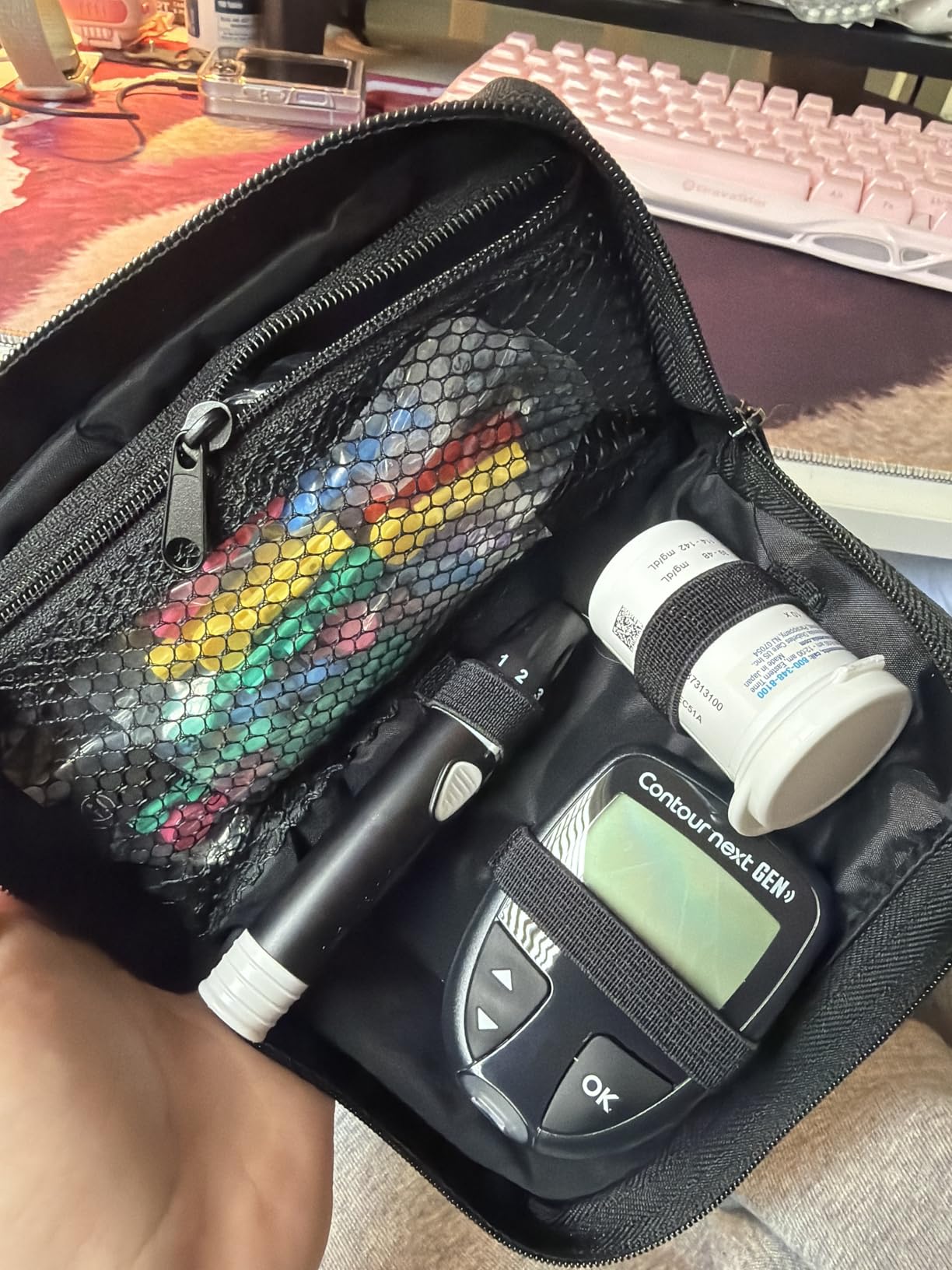
Technically, this is the meter I trust most for accuracy in the lineup. Ascensia’s CONTOUR NEXT family is repeatedly cited in clinical accuracy discussions, and it is the same family of sensors Healthline named its top low-cost fingerstick pick. It connects over Bluetooth to the free CONTOUR Diabetes app, syncing readings automatically so your logbook builds itself, and no coding means one less step to get wrong.
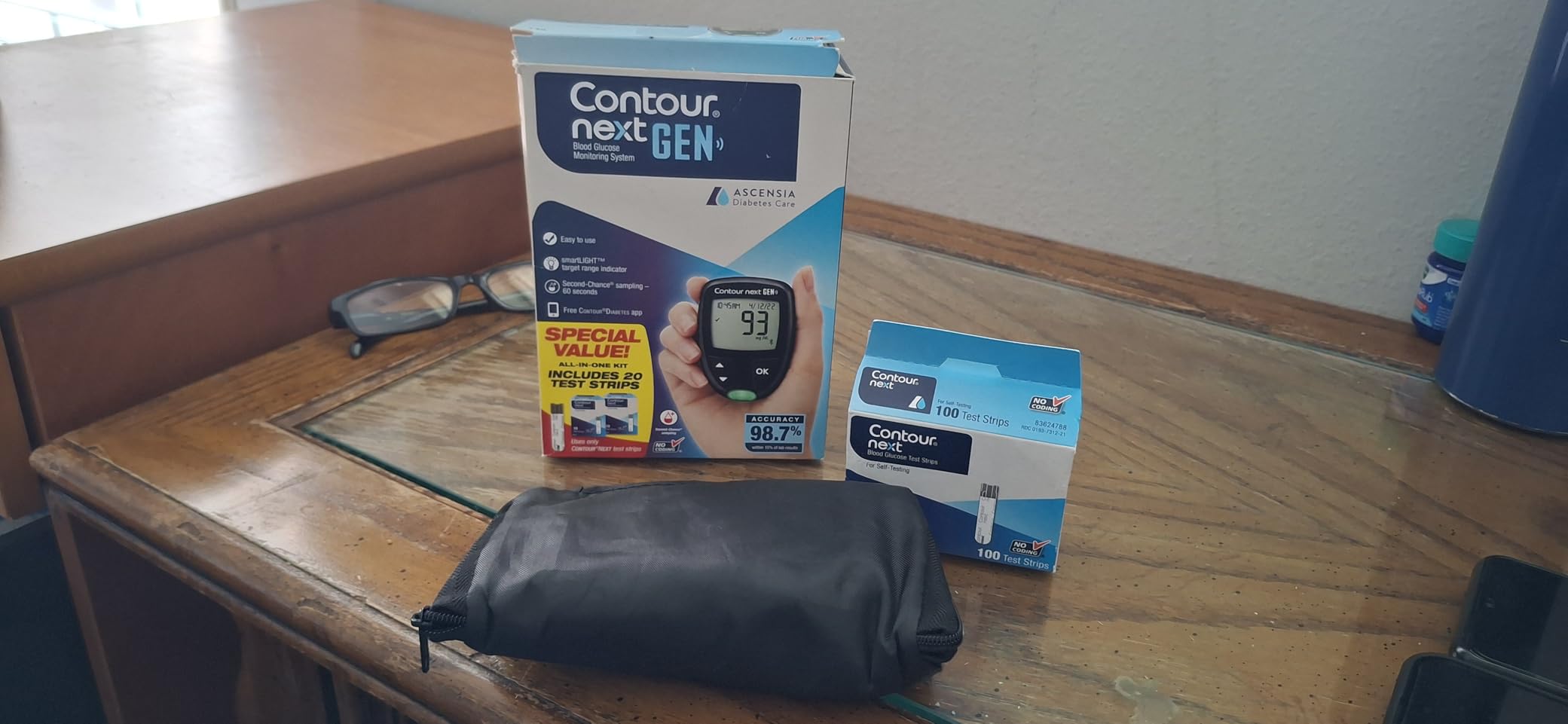
The downsides are minor but real. The kit ships with only 20 strips and 10 lancets, so heavy testers will burn through them in under two weeks. The date and time text on screen is small, and the included carrying case feels like an afterthought. But the strips are affordably priced compared to OneTouch, which is what matters long term.
Real-world strip cost over a year
CONTOUR NEXT strips are among the more affordable brand-name strips, especially in 100-count boxes. If you test twice daily, budget for roughly 730 strips a year, and always price the strips before you buy the meter. This kit is FSA and HSA eligible through most retailers, which softens the ongoing cost if you have a flexible spending account.
Forum users repeatedly recommend the CONTOUR family specifically because readings track close to lab results. That consistency matters more than any single feature if you are using these numbers to dose insulin.
Who should think twice
If you need a meter for a large-volume testing routine right out of the box, the 20-strip starter supply will disappoint you. You will be ordering refills almost immediately, so factor that into your first-month cost.
People who want a talking meter or a very large display should also look elsewhere, since Ascensia’s screen is clear but compact. For everyone else, this is the kit to beat.
2. CareSens N Blood Glucose Monitor Kit – Best Value Starter Kit
CareSens N Blood Glucose Monitor Kit with 100 Blood Sugar Test Strips, 100 Lancets, 1 Blood Glucose Meter, 1 Lancing Device, 1 Control Solution, Travel Case for Diabetes Testing for Personal Use
100 strips and 100 lancets
0.5 microL sample
5-second results
Auto coding
Travel case
Pros
- Full 100 strip and 100 lancet supply
- Tiny 0.5 microliter sample
- Fast 5-second results
- Auto coding
- Control solution included
Cons
- Some inconsistent reading reports
- May read higher than lab results
- No strip eject button
The CareSens N is the kit I hand to people who are just starting out and do not want to buy refills in week two. You get 100 test strips, 100 lancets, a lancing device, a control solution, and a travel case, all at a price that undercuts most name-brand starter kits. That control solution inclusion is worth highlighting, because many kits leave it out and it is the only way to verify your strips are working correctly.
Using it daily feels gentle. The 0.5 microliter sample requirement is one of the smallest in this roundup, which means shallower pokes and less soreness on your fingertips over months of testing. Results land in about 5 seconds, and the auto coding feature means the meter recognizes each strip batch automatically, so there is no manual code entry to mess up.
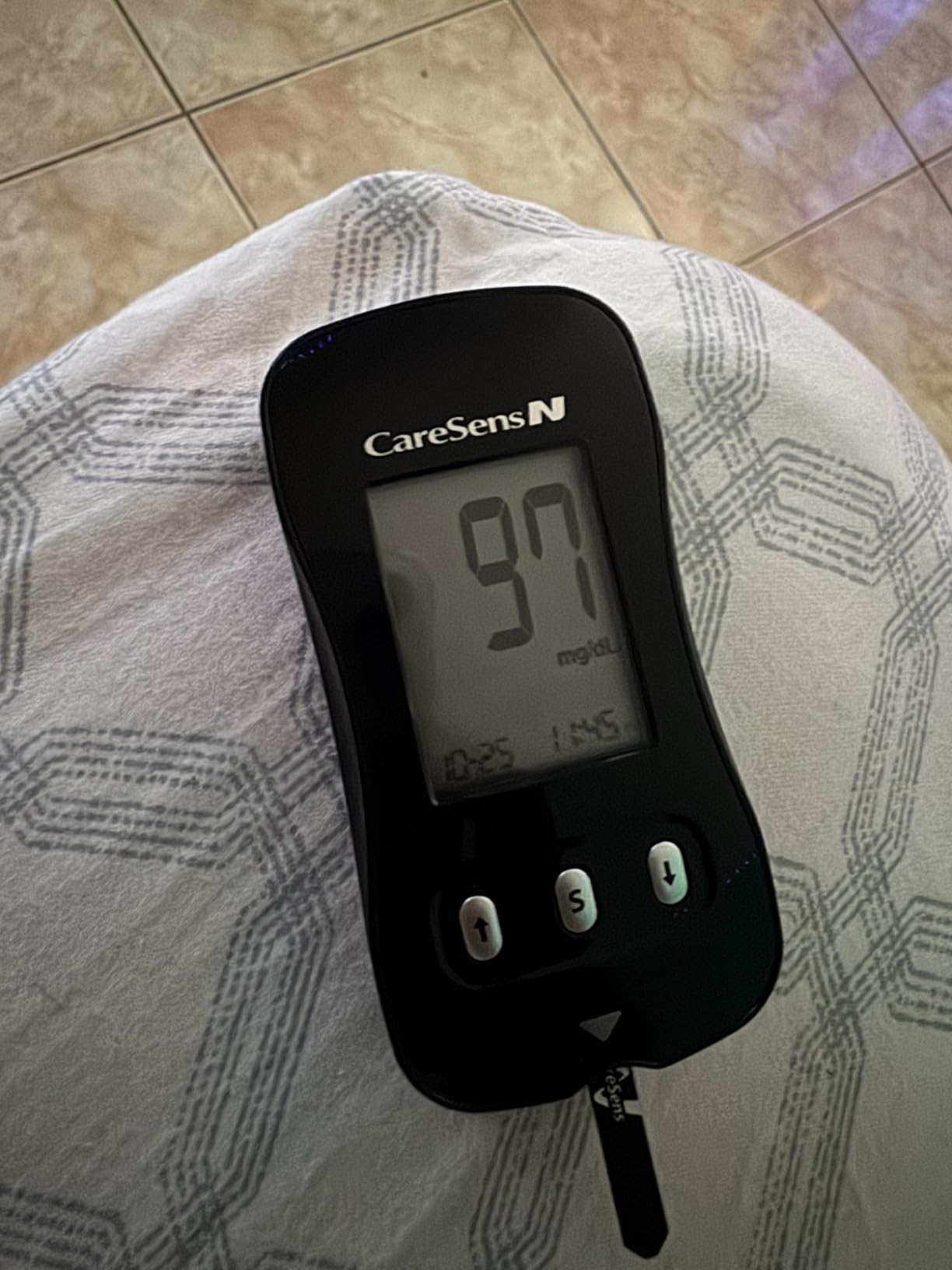
On the technical side, the meter stores results with date and time stamps, and the battery is rated for around 1000 tests before needing replacement. i-SENS, the manufacturer, is an established Korean diagnostics company, and the meter meets ISO 15197 accuracy standards. The travel case is genuinely useful, with elastic loops that keep the lancing device and strip vial from rattling around.
The complaints are consistent across reviews: some users see back-to-back readings that differ more than they would like, and a few report the meter trending slightly high against lab draws. There is also no button to eject the used strip, so you pull it out by hand, which is a small hygiene annoyance.
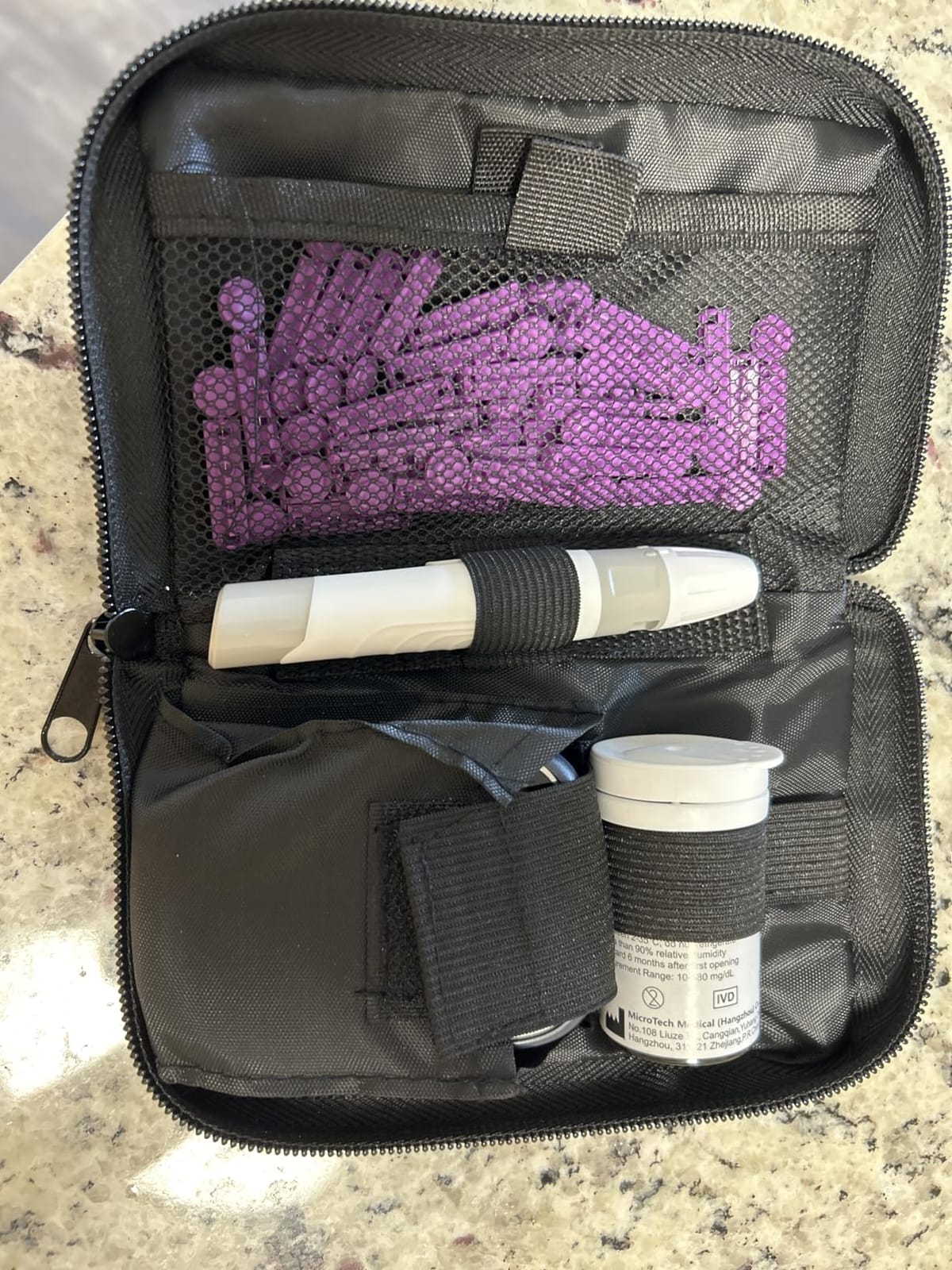
Sample size and pain compared to rivals
At 0.5 microliters, the CareSens N needs less blood than the iHealth Gluco+ (0.7) and the VivaGuard VGM26 (0.8). In practice that means you can use a shallower lancet depth setting, and most users in reviews describe the lancing as close to painless.
If finger soreness has been keeping you from testing as often as prescribed, a smaller sample requirement is the single most impactful spec to shop for.
Who should think twice
If you are dosing insulin based on readings and need tight, repeatable precision, the reported variability is worth discussing with your educator first. Running the included control solution regularly is a good habit regardless.
And if app connectivity is a priority, note that this meter has no Bluetooth. Your logbook is paper unless you enter readings manually into another app.
3. AUVON Blood Glucose Monitor Kit – Budget Pick With 21k+ Reviews
AUVON Blood Glucose Monitor Kit for Accurate Test, 100 Strips, No Coding
100 strips and 100 lancets
No coding
7/14/30-day averages
ISO 15197:2013
Auto shutoff
Pros
- Very affordable kit and refills
- 100 strips and 100 lancets included
- No coding required
- Stores results with 7/14/30-day averages
- CE and ISO certified
Cons
- Consecutive readings can vary
- Not ideal for critical insulin decisions
- Some inconsistent result reports
The AUVON kit is the one that shows up constantly in budget recommendations on r/diabetes, and with more than 21,000 reviews, it is one of the most-purchased glucose kits anywhere. The value proposition is blunt: a meter, 100 strips, 100 lancets, a lancing device, a log book, and a storage bag for under thirty dollars, with replacement strips that cost a fraction of name-brand pricing.
I set this kit up for a family member who tests once or twice a day and does not use insulin. For that use case, tracking general blood sugar ranges and spotting trends, it has been dependable. The meter automatically logs results with time and date, calculates 7, 14, and 30-day averages, and shuts itself off to preserve the battery, which lasts about six months.
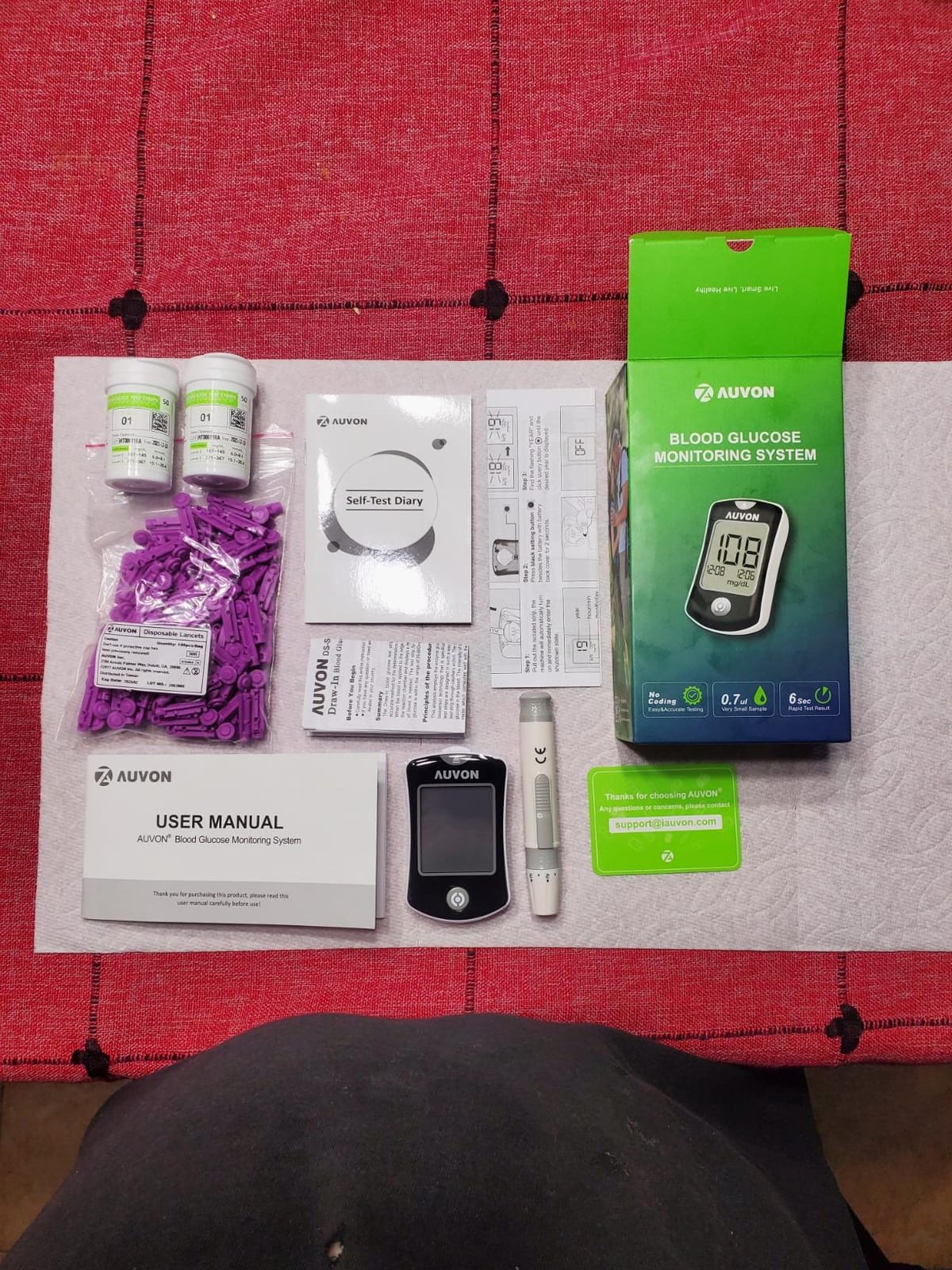
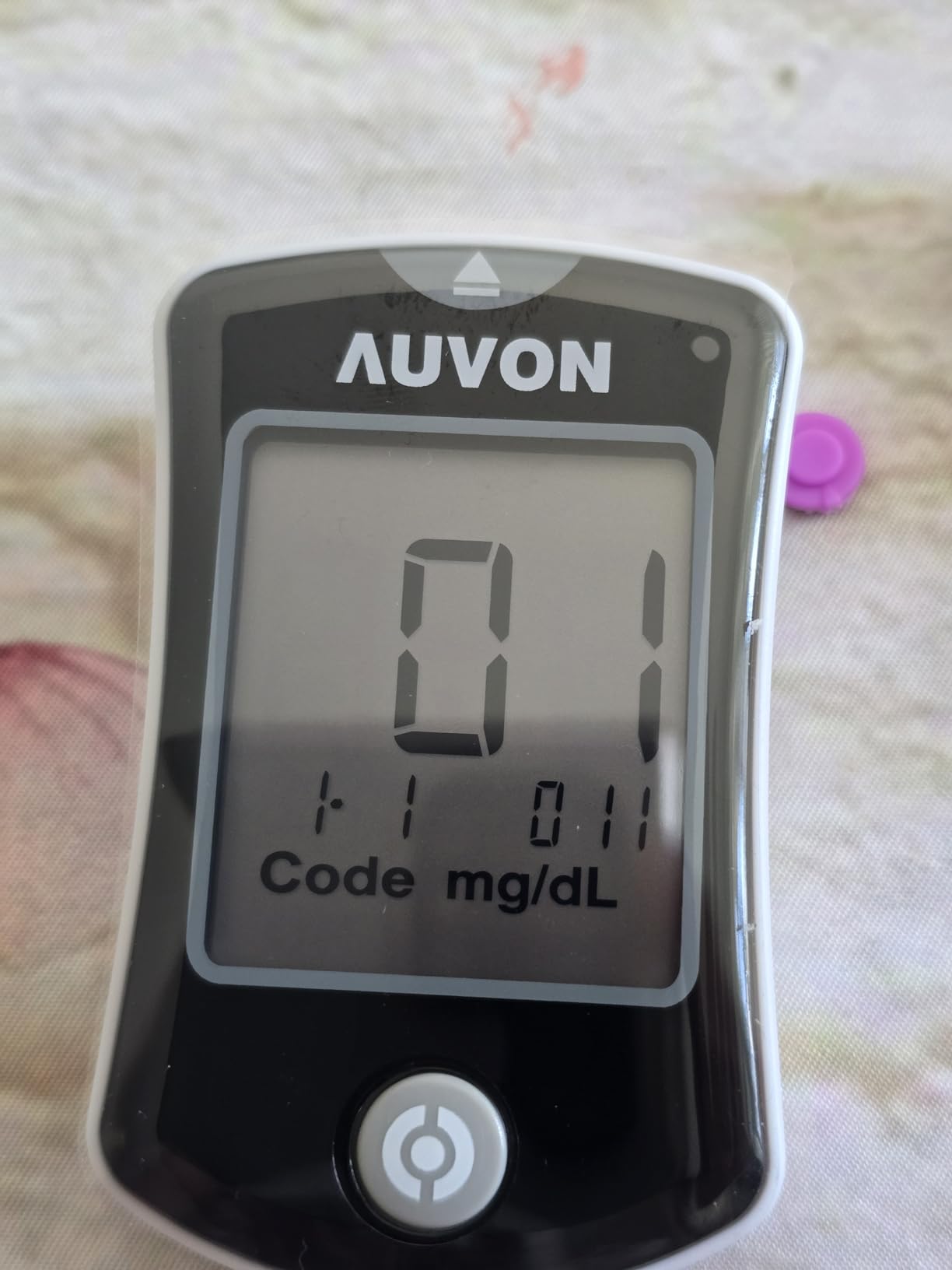
On paper, the technicals are respectable for the price. AUVON states the system exceeds ISO 15197:2013 accuracy standards, uses automatic carbon printing on the test strips for consistent chemistry, and requires no coding. The strips are the real story though, since cheap refills are what keep long-term monitoring sustainable for people paying out of pocket.
The trade-off is accuracy at the margins. A meaningful minority of reviewers report consecutive tests from the same fingerstick producing noticeably different numbers. For trend tracking on a budget, that is tolerable. For tight insulin dosing, it is a reason to spend more on a CONTOUR or OneTouch.
Total cost of ownership
This is where AUVON dominates. If you test twice a day, you need about 730 strips a year, and AUVON strip refills routinely cost a third to half of what OneTouch or FreeStyle strips run. Over 12 months, that difference can easily exceed several hundred dollars.
Forum users specifically hunt for meters “with the cheapest strips,” and AUVON is one of the most common answers alongside ReliOn. Buy the meter based on its strip price, not its sticker.
Who should think twice
Insulin users who carb-count and dose off every reading should pass on this one. The variability reports are too frequent to ignore when a unit of insulin is on the line.
Anyone who wants app sync should also skip it, since there is no Bluetooth here. This is a straightforward, old-school meter with a physical log book, and that is exactly its charm.
4. OneTouch Verio Reflect Kit – Trusted Brand With App Tracking
OneTouch Verio Test Kit with Meter, Lancets, Lancing Device and Test Strips
Results in about 5 seconds
OneTouch Reveal app
Bright clear display
Delica Plus lancing
Small sample
Pros
- Trusted brand with 40+ years in diabetes care
- OneTouch Reveal app integration
- Gentle Delica Plus lancing device
- Quick 5-second results
- Bright easy-to-read display
Cons
- Only 30 strips and 30 lancets included
- Carrying case no longer included
- Strips can be error-prone
- More expensive than rivals
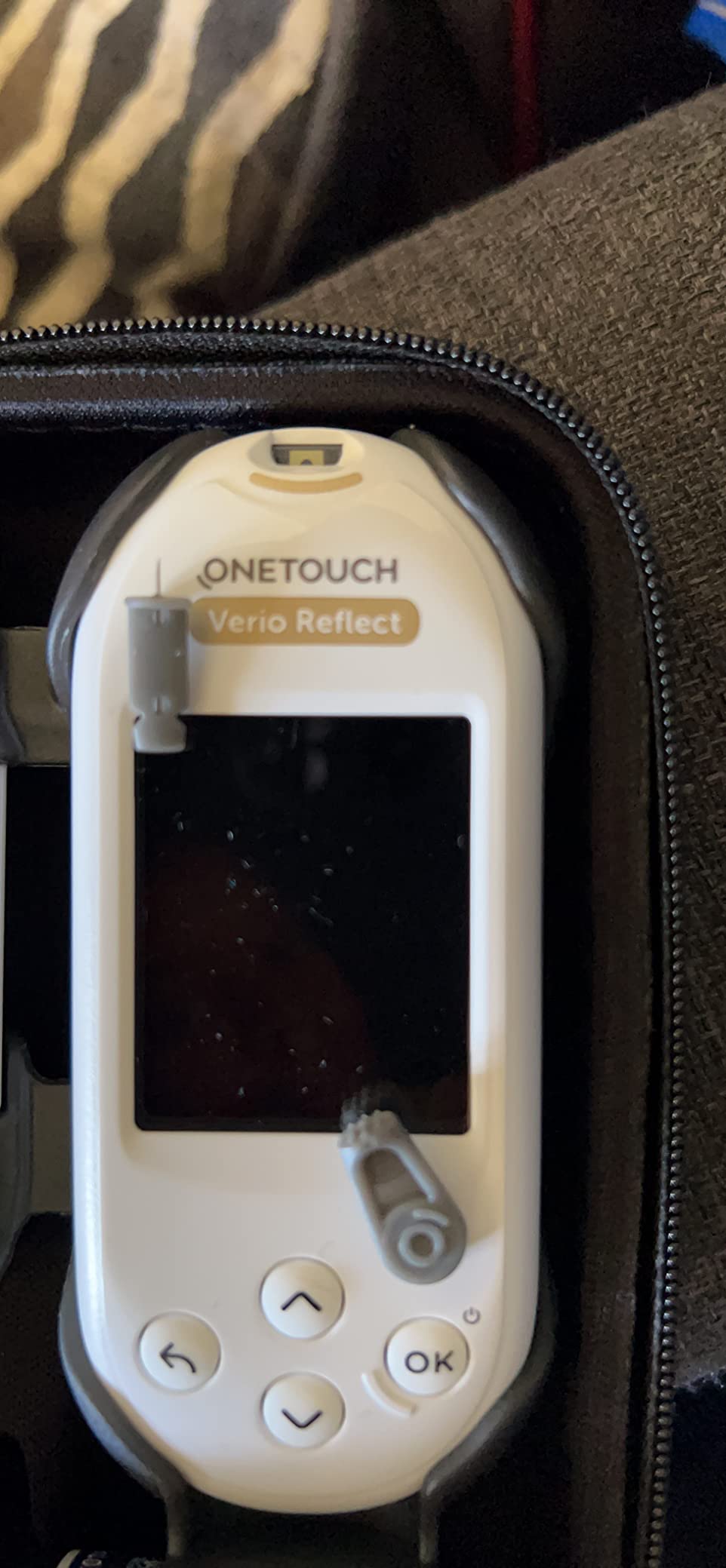
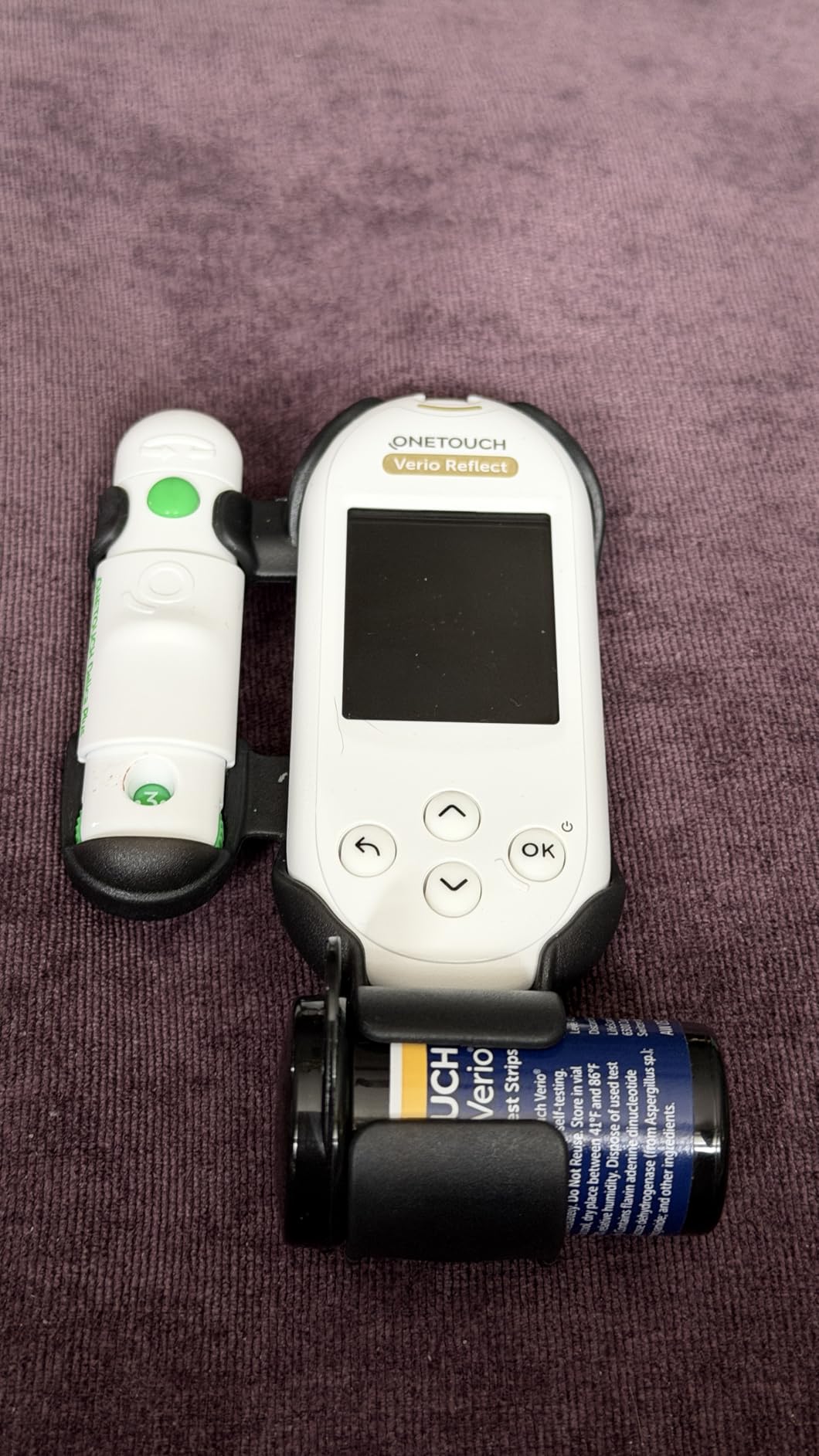
The OneTouch Verio Reflect is the meter most doctors’ offices mention by name, and that brand trust is not accidental. LifeSpan has more than 40 years in diabetes care, and the Verio line has a long track record with endocrinologists. One Reddit user put it plainly: their Verio Flex “has been accurate and it has a nice app to see where it’s logged your blood sugars.”
My time with the Reflect mirrored that. Readings were stable across duplicate tests, the display is genuinely bright and legible, and the Delica Plus lancing device is one of the gentler pens in this group. Results arrive in about 5 seconds from a small blood drop.
The Verio Reflect also offers smart insights the basic meters lack. It highlights patterns, like consistent post-dinner spikes, inside the OneTouch Reveal app, which can surface trends you would never spot in a paper logbook. For type 2 users trying to understand how specific meals move their glucose, that feedback loop is valuable.
Now the frustrations. You only get 30 strips and 30 lancets in the box, which is skimpy at this price point. OneTouch also stopped including a carrying case, so that is a separate purchase. Some reviewers find the strips error-prone if the sample is slightly off, and OneTouch strips are among the pricier refills, so check your pharmacy’s pricing and insurance formulary before committing.
Insurance and formulary compatibility
This is actually OneTouch’s biggest strength. Many insurance plans and Medicare Part D formularies prefer specific strip brands, and OneTouch is one of the most commonly covered. A meter that looks expensive up front can become the cheapest option once your plan covers the strips.
Call your insurer or check your pharmacy benefit list for covered strip brands before you buy any meter. It can flip the entire value calculation.
Who should think twice
People paying entirely out of pocket should compare strip prices first, because OneTouch refills cost more than AUVON, CareSens, or CONTOUR alternatives. And if your plan covers a different brand, loyalty to OneTouch gets expensive fast.
App-sync complaints do surface occasionally, with slow Bluetooth transfers. It works, just not always instantly.
5. iHealth Gluco+ Wireless Smart Monitor – Best Smart Features
iHealth Gluco+ Wireless Smart Glucose Monitor Kit, 100 Strips & 100 Lancets
Rechargeable battery
Bluetooth sync
500 readings memory
0.7 microliter sample
5-second results
Pros
- Rechargeable battery no coin cells needed
- Free app with unlimited cloud storage
- Built-in high and low sugar alerts
- Adjustable 9-depth lancet
- Compact pocketable design
Cons
- Readings can run 1-8 counts off manual checks
- App pairing can be tricky
- Old micro-USB charging port
- Case could be bigger
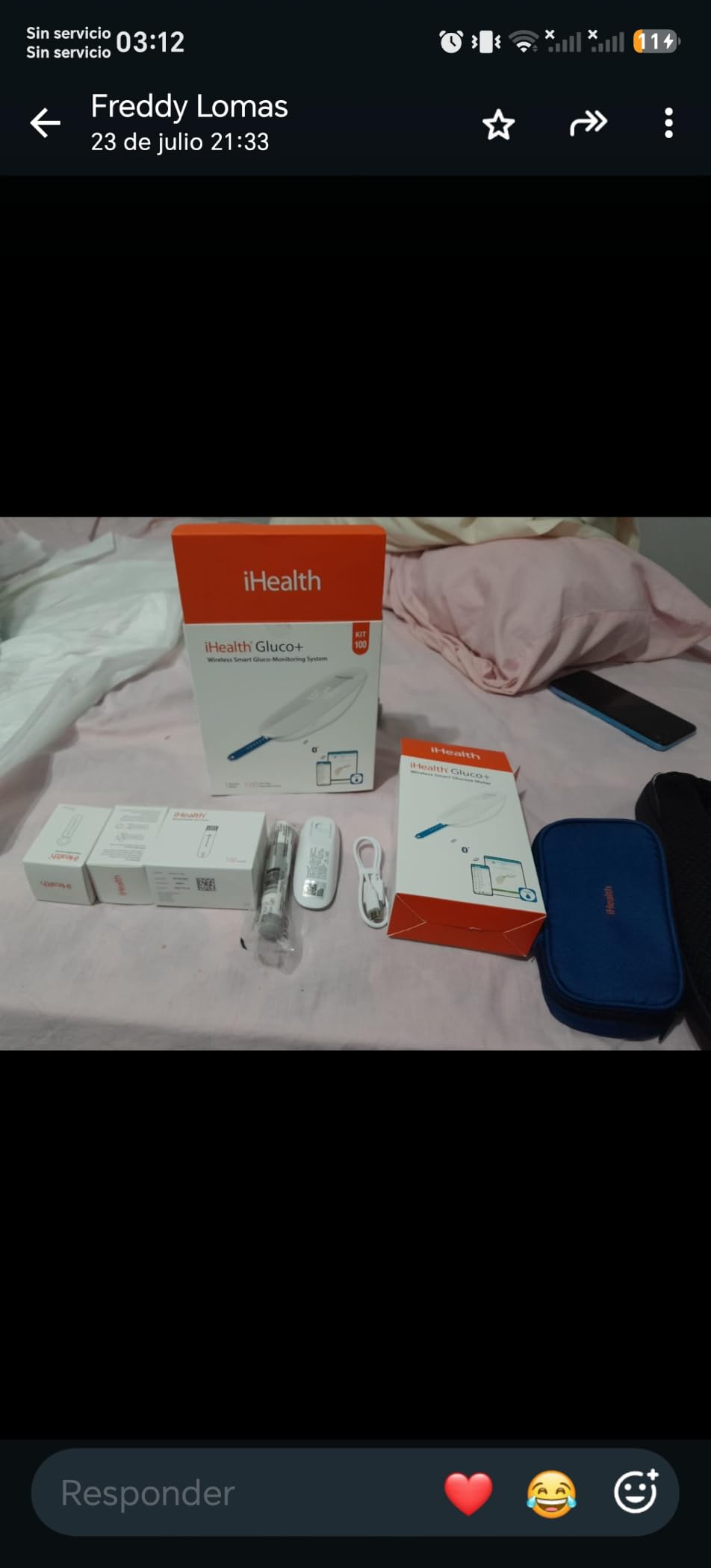
The iHealth Gluco+ is the kit for people who live in their phone. Every reading syncs over Bluetooth to the free iHealth Gluco-Smart app, the meter stores 500 readings internally, and the app offers unlimited cloud storage. You can also email or export your data to share with your care team before appointments, which turns a 5-minute nurse phone call into a real data review.
Two design choices stand out. First, the battery is rechargeable over USB, so you never hunt for replacement coin cells in a drawer. Second, the lancing device has 9 adjustable depth settings, which lets you dial in the shallowest poke that still produces a usable 0.7 microliter drop.
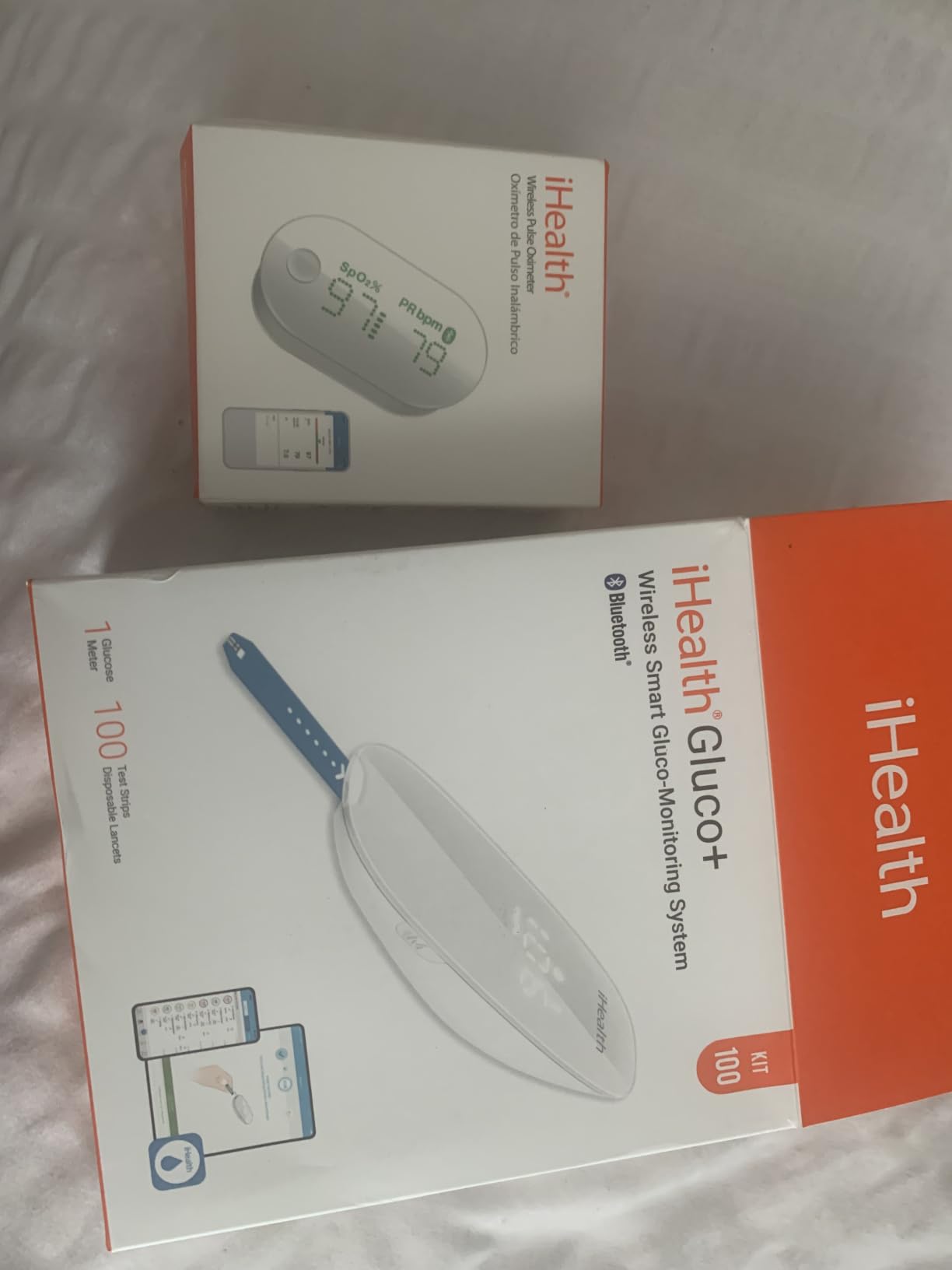
Feature-wise it punches above its price: 5-second results, built-in high and low blood sugar alerts, a bright display readable in low light, and 100 strips plus 100 lancets in the box. It is FDA 510(k) cleared and medical CE approved, which are the regulatory boxes you want ticked for a home device.
The accuracy caveat is worth taking seriously. Reviewers note results can run 1 to 8 counts off compared to other meters, which is a small absolute error but noticeable if you are cross-checking devices. Initial app pairing also trips up some users, and the charging cable is old micro-USB rather than USB-C.
Data tracking and sharing
If your doctor keeps asking you to bring logs and you keep showing up with nothing, this is the meter category that solves it. The app builds time-in-range charts automatically, and the sharing feature means your endocrinologist can see your actual data instead of your recollection of it.
Prediabetes users monitoring how food and exercise shift their glucose also get more value here, since the pattern charts are the whole point of tracking.
Who should think twice
If you want zero app involvement and hate charging cables, a simple AAA-battery meter like the Prodigy below will frustrate you less. The 4.2 rating is the lowest in this roundup, driven mainly by pairing headaches and the small accuracy drift.
Heavy insulin dosers should verify accuracy against a clinic draw during their next visit, as with any meter, before trusting it fully.
6. KETO-MOJO GK+ – Glucose and Ketone Meter in One
KETO-MOJO GK+ Glucose & Ketone Meter, Keto Diabetes Fasting
Tests glucose and ketones
GKI calculation
Bluetooth with MyMojoHealth
Foil-wrapped strips
FDA cleared
Pros
- Measures both glucose and ketones
- Calculates Glucose Ketone Index
- Integrates with Apple Health and Carb Manager
- Lifetime warranty and US support
- Individually foil-wrapped strips
Cons
- Case can accidentally turn meter on
- Some inaccurate reading reports
- Android app setup confusing
- Foil packets hard to tear
The KETO-MOJO GK+ is the only meter in this roundup that does double duty. It measures blood glucose and blood ketones on the same device, and it auto-detects which strip you inserted so you never scroll through menus. For type 1 diabetics who need to check for ketones during illness, or anyone following a ketogenic diet alongside diabetes management, that dual capability replaces two devices.
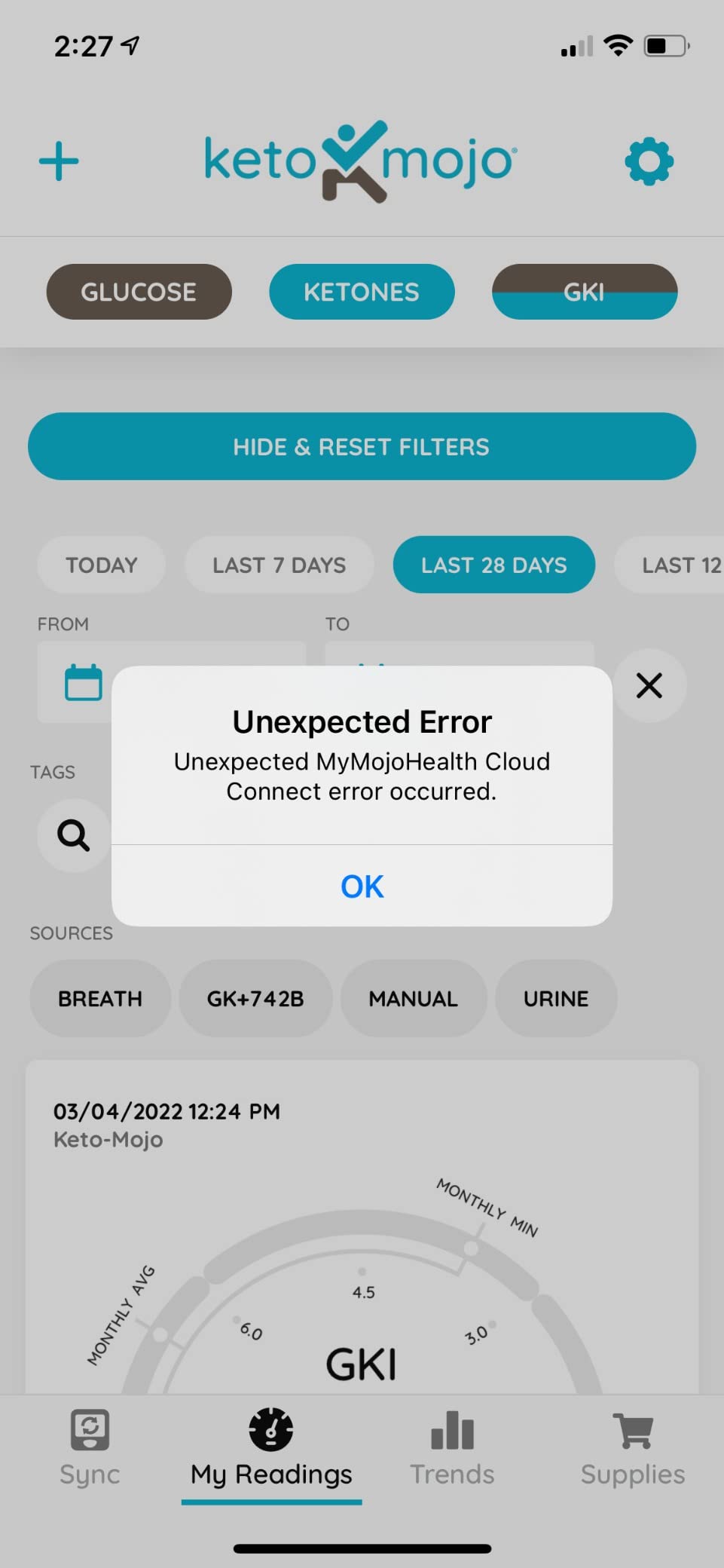
The signature feature is the Glucose Ketone Index, or GKI, which the meter calculates automatically. GKI is a ratio researchers use in metabolic and therapeutic keto contexts, and tracking it manually is tedious. Here, the math happens on-device and syncs to the free MyMojoHealth app over Bluetooth.
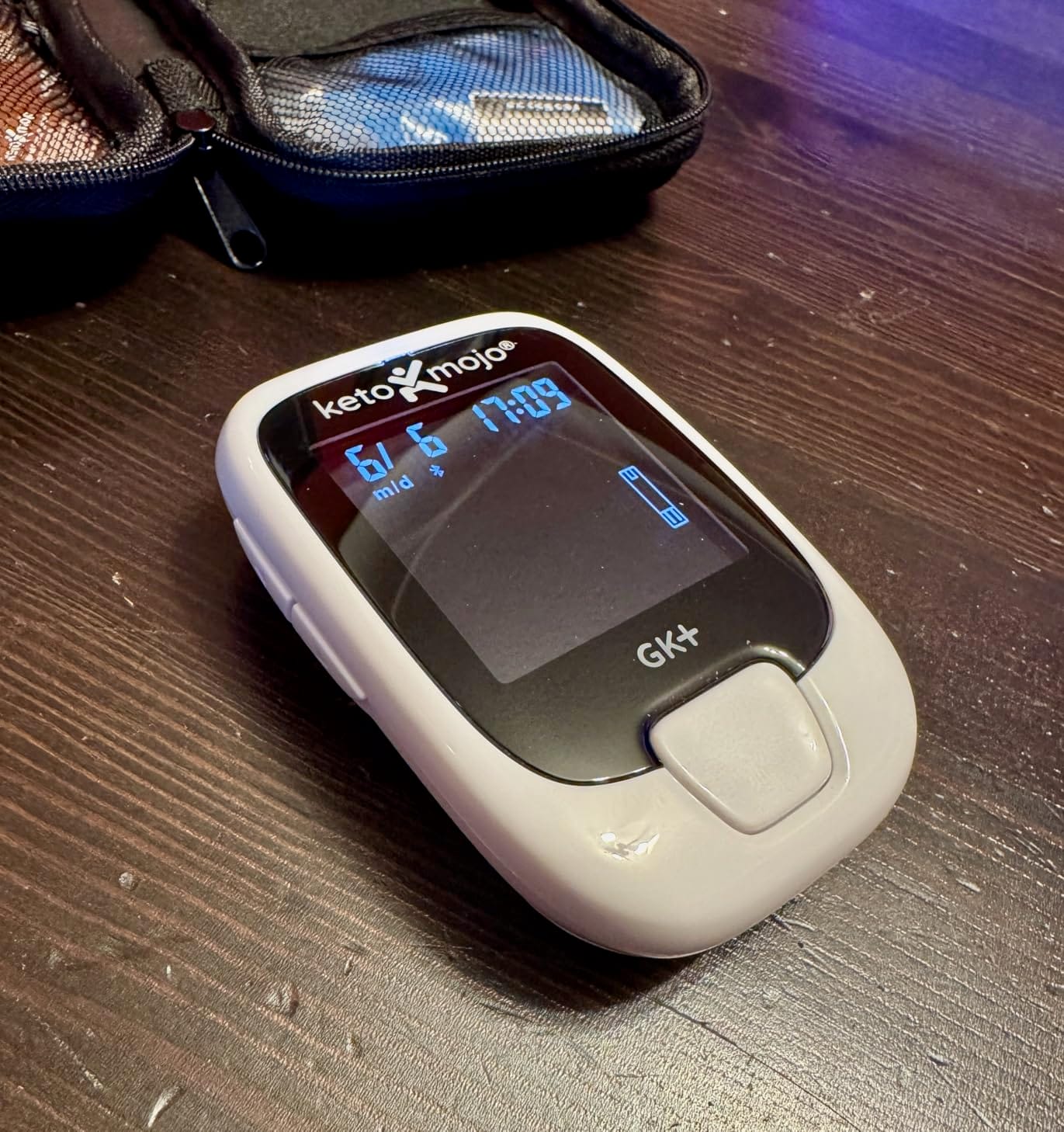
Technically, the engineering is solid. The meter is FDA cleared for home use, strips come individually foil-wrapped for sterility and shelf life, control solutions are included for calibration verification, and the company backs it with a lifetime warranty and US-based support. Battery life is rated at 12 months.
Real-world annoyances: the travel case fits in a way that can press the meter’s buttons and drain the battery, the Android app setup confuses plenty of first-time users, and those foil wrappers can be stubborn. A minority of users report readings that did not match their expectations, so run the control solution when results seem off.
Why ketone tracking matters for some diabetics
Type 1 diabetics risk diabetic ketoacidosis during illness or insulin gaps, and blood ketone testing catches rising ketones hours before urine strips do. Having one pocket device that handles both glucose and ketones means you are actually prepared when you get sick, instead of wishing you had bought a separate ketone meter.
The app also integrates with Apple Health, Cronometer, and Carb Manager, which pulls your glucose data into whatever ecosystem you already use.
Who should think twice
If you only need glucose and never test ketones, you are paying for capability you will not use, and the starter kit includes just 10 glucose and 10 ketone strips. A CareSens or CONTOUR kit gives you far more glucose testing runway for similar money.
Non-technical users who dislike app setup should read the setup guide before buying, because the Android pairing flow is the most common complaint.
7. VivaGuard VGM26 Talking Meter – Best for Seniors and Low Vision
VivaGuard Talking Blood Glucose Monitor Kit, FDA-Cleared FSA&HSA Eligible
Voice guidance and readout
Large display
1000 reading memory
0.8 microliter sample
5-second results
Pros
- Talking function guides use and reads results aloud
- Extra-large display
- 1000 readings with 7/14/30-day averages
- Hypo and ketone alerts
- FDA cleared and FSA/HSA eligible
Cons
- No control solution included
- Some error code reports
- Case may not fit small purses
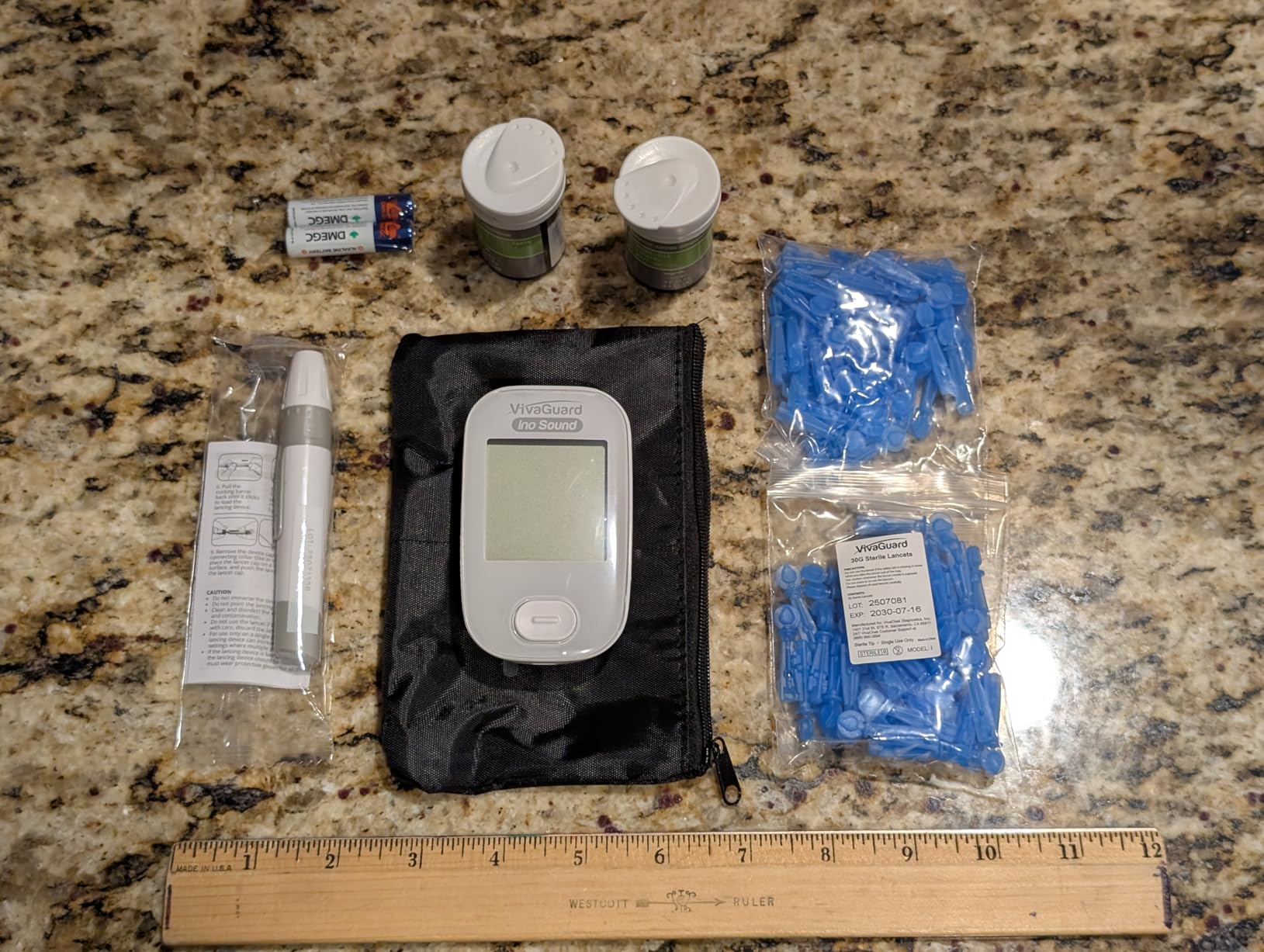
We bought the VivaGuard VGM26 for my grandmother, and the talking function changed everything. The meter speaks each step of the process out loud and announces the result when it appears, with adjustable volume or complete silence if you prefer. For seniors with macular degeneration or anyone who squints at small displays, this is the kit that keeps them testing independently.
The accessibility design goes beyond the voice. The display is large, the buttons are simple, meal markers and test alarms are built in, and the meter stores 1000 readings with 7, 14, and 30-day averaging. The whole thing runs on two AAA batteries, which anyone can replace without a trip to a battery drawer museum.
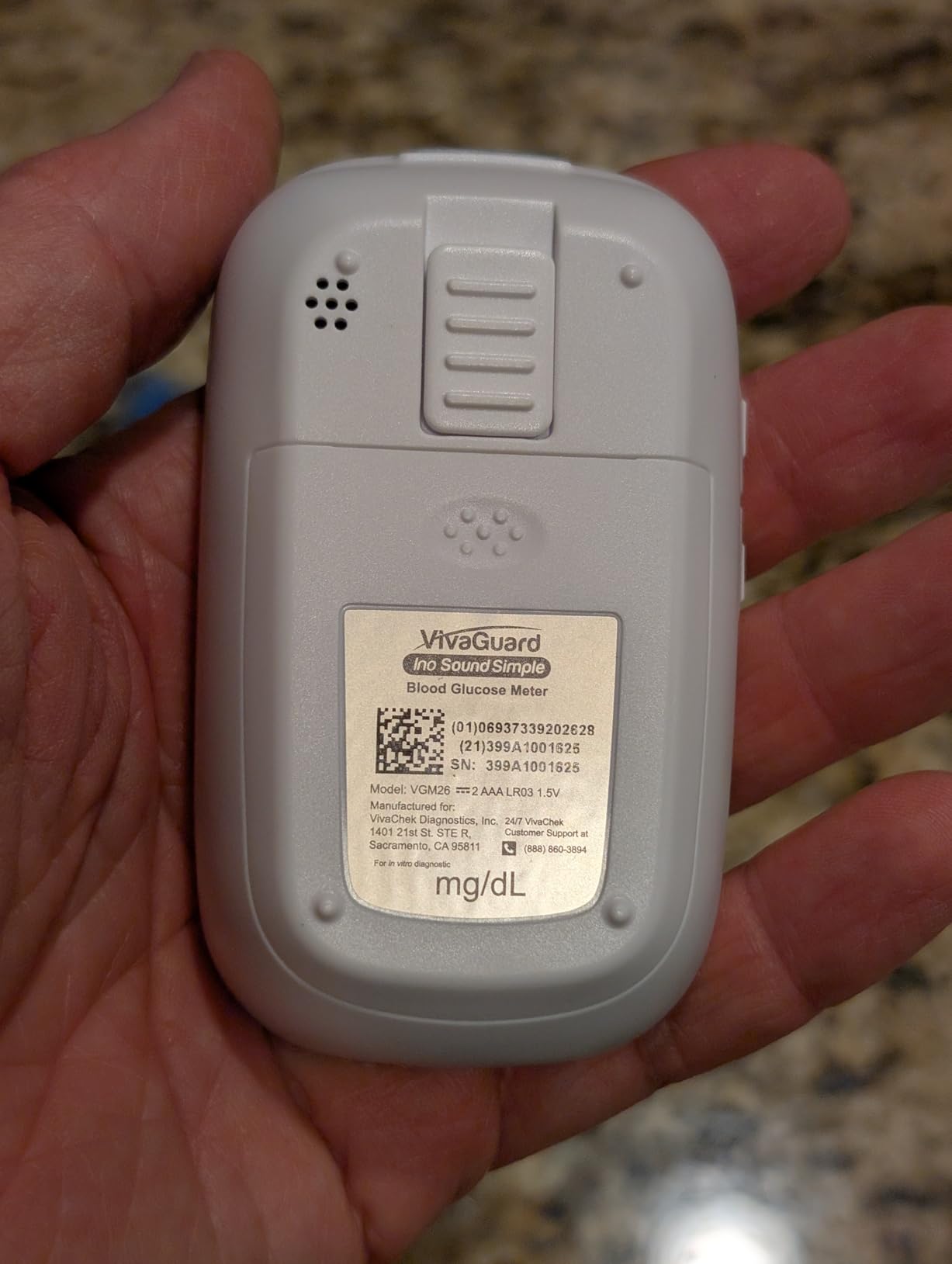
Accuracy meets ISO 15197:2015 standards, staying within about 10 percent of lab results across a 20 to 600 mg/dL measurement range. It also includes hypo and ketone alerts, which is unusual at this price and genuinely useful for elderly users who may not notice early symptoms. The 5-level adjustable lancing device with 30G micro-lancets keeps testing gentle.
The gaps: there is no control solution in the box, some users ran into E1 and E2 error codes that required retesting, and the review pool of under 400 people is much smaller than the big brands. The 4.4 rating is encouraging, but statistical confidence is lower.
Ease of use for caregivers
If you are buying this for a parent, the voice guidance doubles as a handoff tool. The meter walks the user through the test, so a caregiver does not have to be present for every check, and the 1000-reading memory means you can review a month of results when you visit.
The kit includes 100 strips and 100 lancets, so there is no desperate pharmacy run in week one, and it is FSA and HSA eligible.
Who should think twice
Data-focused users should note there is no Bluetooth or app here. Getting data out means reading the on-meter averages manually. And like any kit with reported error codes, keep spare strips handy and consider ordering control solution separately.
If you want a proven track record with a huge user base, the smaller review count here is a legitimate hesitation.
8. Prodigy AutoCode Kit – Multilingual and Accessible
Prodigy Glucose Monitor Kit – Includes Prodigy Meter, 100ct test strips, 10ct Lancets, Lancing device, Carrying Case, Log Book
Speaks 4 languages
USB data download
Alternate site testing
450 results memory
AAA batteries
Pros
- Speaks English Spanish French and Arabic
- Approved for alternate site testing
- USB port to download results
- Standard AAA batteries
- Voice readout for low vision
Cons
- Only 10 lancets included
- 7-second results slower than rivals
- Not Prime eligible
- Older design
The Prodigy AutoCode fills a specific gap: it is the meter for households where English is not the first language. It speaks results in English, Spanish, French, and Arabic, which makes it a staple in multilingual homes and community health programs. The voice readout also serves low-vision users who do not want a screen-dependent device.
Two practical choices here earn it loyalty. It runs on common AAA batteries, so there is nothing proprietary to replace, and it is approved for Alternate Site Testing, meaning you can take samples from your arm or palm instead of sore fingertips. For people who test frequently, giving the fingers a break matters a lot.
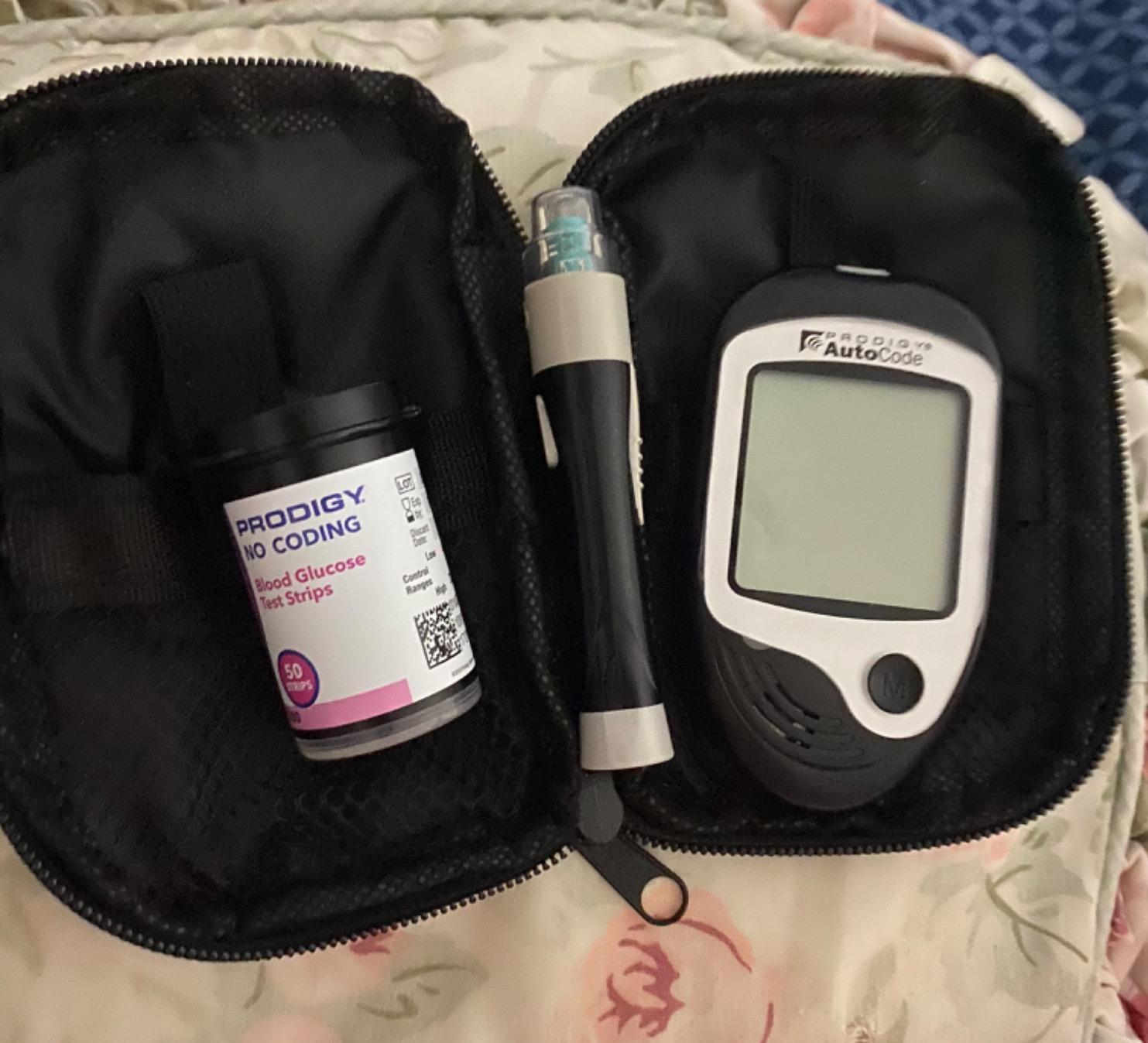
There is even a standard USB port for downloading the 450 stored results to a computer, an old-school but reliable way to keep records without an app. The 4.6 rating is the highest in this roundup, which suggests genuine user satisfaction even if the review volume is smaller than AUVON’s.
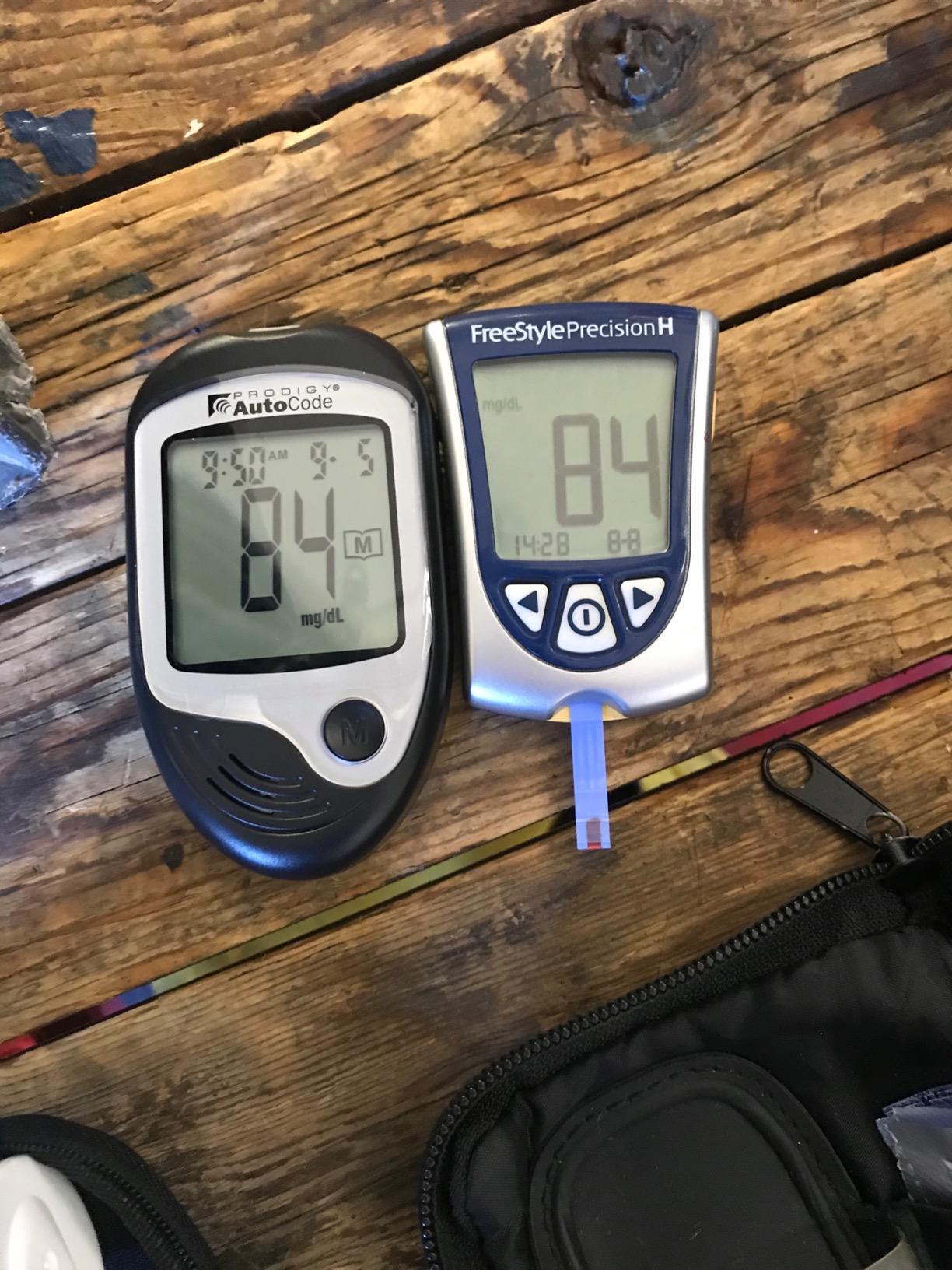
The compromises show its age. Results take 7 seconds instead of 5, the kit includes only 10 lancets alongside its 100 strips, the lancing device is basic, and it is not Prime eligible, so shipping takes longer. Some users also question whether its accuracy suits critical medical decisions, echoing the budget-meter tradeoff.
Alternate site testing explained
Alternate Site Testing means drawing blood from less nerve-dense areas like the forearm or palm instead of the fingertips. It hurts less, but readings from these sites can lag fingertip readings when your glucose is moving quickly, such as during meals or after insulin.
Use fingertip testing when you suspect a low or when accuracy is critical, and save AST for steady-state checks like fasting morning readings.
Who should think twice
If you want a modern experience with Bluetooth, fast results, and a big accessory bundle, this is not your meter. It is a functional, affordable workhorse for specific needs rather than a feature showcase.
English-only users without vision concerns get more value from the CareSens N or CONTOUR NEXT GEN at similar prices.
How to Choose a Blood Glucose Test Kit
Choosing between these kits comes down to four things: accuracy, strip cost, ease of use, and how you want to handle data. Here is how we would think it through.
Accuracy comes first
Every meter in this roundup meets ISO 15197 accuracy standards, but meeting a standard and performing consistently in your hands are different things. The CONTOUR NEXT family and OneTouch Verio line have the strongest reputations for readings that track lab results closely, which is why clinics recommend them.
Whichever meter you choose, bring it to your next lab appointment and test within a minute or two of your blood draw. If your meter reads within 15 percent of the lab value, you are in good shape.
Price the strips, not the meter
This is the single biggest mistake new buyers make. The meter is a one-time cost, but testing twice daily means roughly 730 strips a year. Name-brand strips can run a dollar or more each, while AUVON, CareSens, and Prodigy refills cost far less.
Before you buy any kit, look up the price of a 100-count refill box for its strips and multiply by seven or eight. That is your real annual cost, and it is almost always more than the meter itself.
Check your insurance and FSA/HSA eligibility
Many insurance plans and Medicare Part D cover specific strip brands, often OneTouch, Accu-Chek, or CONTOUR. A meter that seems pricey up front can be nearly free to operate if your plan covers its strips, so call your insurer or check your pharmacy formulary before buying.
Most of these kits are FSA and HSA eligible, including the VivaGuard and CONTOUR options, which lets you pay with pre-tax dollars if you are self-funding.
BGM vs CGM: know the difference
Everything in this guide is a blood glucose meter, or BGM, which reads a drop of capillary blood from a fingerstick. A continuous glucose monitor, or CGM, sits on your arm and reads glucose from interstitial fluid every few minutes, sending data to your phone automatically.
CGMs like the FreeStyle Libre and Dexcom G7 are fantastic for pattern recognition and alerts, and many forum users say they prefer them for “practical management,” but they cost substantially more without insurance and lag fingersticks by several minutes during rapid changes. Many people use both: a CGM for trends and a fingerstick meter to confirm. If you are deciding today on a budget, a BGM kit from this list is the affordable starting point.
Features that matter day to day
No coding is now standard on all our picks and removes a classic error source. A small sample size, 0.5 to 0.8 microliters, means gentler pokes. Bluetooth and app sync help if you share data with a care team, while voice guidance and large displays matter enormously for seniors. Second-chance sampling, unique to the CONTOUR NEXT GEN here, saves strips when your first drop is too small.
Match features to your actual routine, not the spec sheet. The best blood glucose test kit for diabetics is the one whose testing habit you can actually sustain.
Frequently Asked Questions
Which diabetes test kit is the most accurate?
The Ascensia CONTOUR NEXT GEN is widely regarded as one of the most accurate home blood glucose kits, with clinically proven accuracy and readings that consistently track close to laboratory results. The OneTouch Verio line has a similar reputation among clinicians. For any meter, verify accuracy by testing alongside your next lab draw and confirming your result is within 15 percent of the lab value.
What is the most reliable blood sugar test for diagnosing diabetes?
Home glucose meters are designed for monitoring, not diagnosis. Diagnosis requires laboratory testing ordered by a physician, typically a fasting plasma glucose test, an HbA1c test, or an oral glucose tolerance test. A home meter can flag suspicious readings that prompt you to see a doctor, but a clinical diagnosis of diabetes or prediabetes should always come from lab-confirmed results.
What is the best blood test kit for diabetes?
It depends on your needs. For overall accuracy, the CONTOUR NEXT GEN is our top pick. For value, the CareSens N includes 100 strips and 100 lancets at a low price. For seniors with low vision, the VivaGuard VGM26 talks through every step. For ketone checking alongside glucose, the KETO-MOJO GK+ does both on one device.
Which is the most accurate blood test for diabetes?
The HbA1c test is considered the gold standard for measuring average blood sugar over the past two to three months, while the fasting plasma glucose test and oral glucose tolerance test are the standard confirmatory diagnostic tools. Fingerstick meters, including every kit in this guide, are accurate for daily monitoring within ISO 15197 limits but are not diagnostic instruments.
Do you need a prescription for a glucose meter?
No, over-the-counter blood glucose meters, test strips, and lancets do not require a prescription in the United States. A prescription can help with insurance coverage, since many plans, including Medicare Part D, will only cover strips and meters for diabetes patients with documented need, so ask your doctor for one if you want your supplies covered.
The Bottom Line
After comparing all 8 kits, our recommendations are clear. The CONTOUR NEXT GEN is the best blood glucose test kit for diabetics overall, thanks to clinically proven accuracy, the SmartLIGHT range indicator, and second-chance sampling that saves strips. The CareSens N is the value play with 100 strips and 100 lancets in the box, and the AUVON kit is the budget favorite with cheap refills and a massive user base.
Special cases are equally easy to route: seniors and low-vision users get the talking VivaGuard VGM26, data-driven users get the rechargeable iHealth Gluco+, keto and type 1 users get the dual glucose-ketone KETO-MOJO GK+, and multilingual households get the Prodigy AutoCode. Whatever you pick, price the strips first and confirm accuracy against your next lab draw.
Pick the kit that fits your routine, because the meter you will actually use every day beats the one with the best spec sheet. Check the latest prices on our top picks above and start building your testing habit this week.