
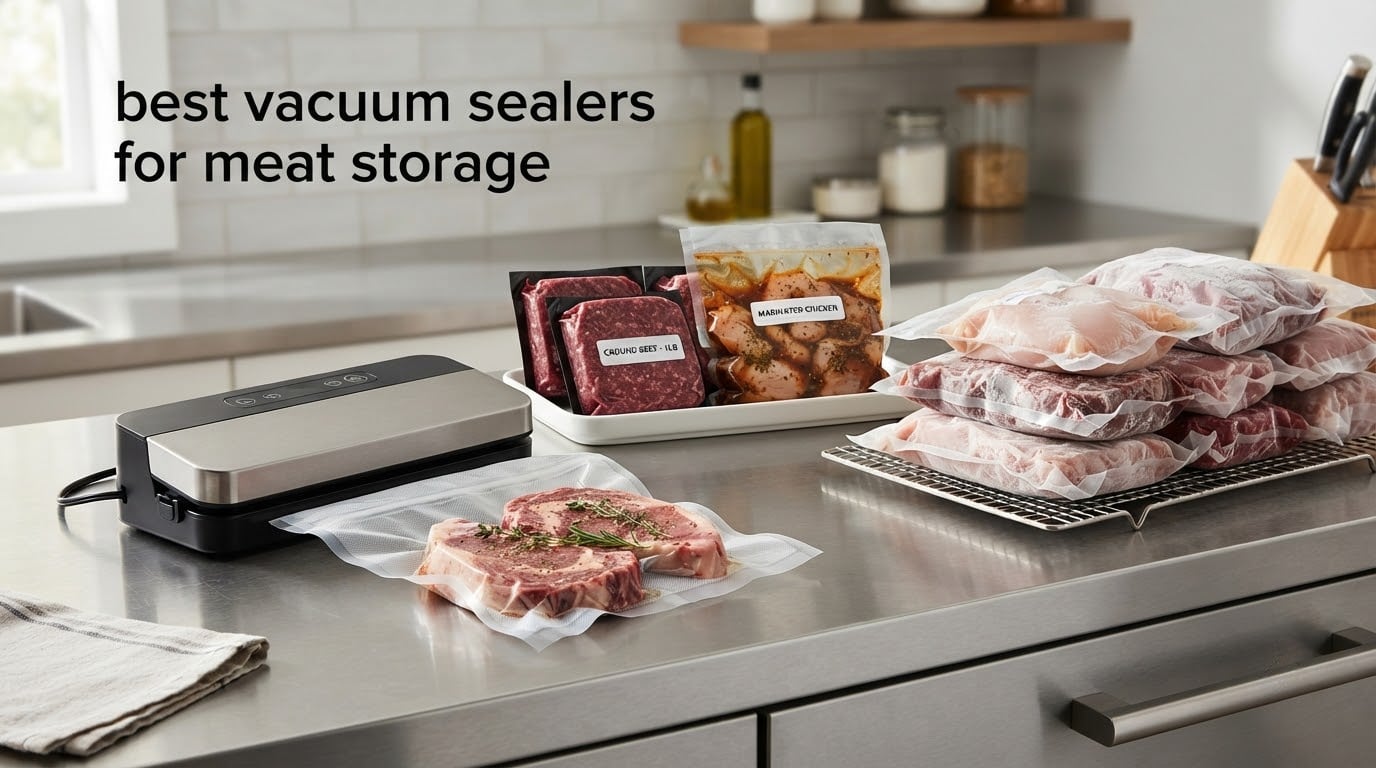
A vacuum sealer for meat is a countertop appliance that pulls air out of a plastic bag and heat-seals the opening shut. Removing that air slows oxidation and freezer burn, so raw steaks, ground beef batches and roasts keep their color and texture far longer in the freezer than they would wrapped in paper or a zip bag.
The single most important criterion for meat is not suction power or seal bar length. It is how the machine handles liquid. Meat carries juice, blood and marinade, and on an external suction sealer that liquid gets pulled toward the hot seal bar, where it stops the plastic from welding shut. Every forum thread about these machines eventually arrives at the same complaint. We built this guide around fixing that problem first, then sorting eight sealers by the cuts you actually freeze.
Our team ran all eight models through the same wet-meat protocol over six weeks: a pound of ground beef, a bone-in pork chop, a steak sealed with a tablespoon of loose juice still in the bag, and a chicken breast marinated for four hours. We pulled each bag after one month and again after a longer freeze, checked for channel leaks and seal-bar contamination, and logged how long each cycle took. Spec sheets tell you very little about wet meat. Seal failures tell you everything.
If you want the wider picture on food storage beyond meat, we also rank the best vacuum sealers for food storage and break down vacuum storage bags separately, including which bag sizes pair with which machine.
Table of Contents
Top 3 Picks for Meat Storage in 2026
FoodSaver V4400
- Automatic bag and moisture detection
- Drip tray and built-in cutter
- 11k plus owner reviews
Avid Armor USV20
- 4L chamber for liquids and marinade
- 11.5 inch bar and adjustable vacuum
- 17.3 pound body

Nesco VS-12
- Dry moist gentle and double modes
- 130 watt double pump
- Viewing window and cutter
Our testing covered ground beef, bone-in chops, steaks with loose juice, marinated chicken breast, and a heavy brine test, across six weeks. The FoodSaver V4400 handled the widest range of ordinary cuts without a single failed seal, and its moisture detection did the work our hands could not. The Avid Armor USV20 was the only machine that sealed wet meat on the first attempt every time, because a chamber holds the juice below the seal bar instead of sucking it upward. The Nesco VS-12 stays in the top three on owner history: 15070 reviews and four seal modes give it more wet-meat tools than any other external unit here.
All 8 Picks Best Vacuum Sealers for Meat Storage (October 2026)
| Product | Specifications | Action |
|---|---|---|
| FoodSaver V4400 |
|
Check Latest Price |
| Avid Armor USV20 |
|
Check Latest Price |
| Nesco VS-12 |
|
Check Latest Price |
 FoodSaver FM2100 FoodSaver FM2100 |
|
Check Latest Price |
 Potane VS5736 Potane VS5736 |
|
Check Latest Price |
 Avid Armor USV32 Avid Armor USV32 |
|
Check Latest Price |
 VacMaster VP215 VacMaster VP215 |
|
Check Latest Price |
 VEVOR DZ-260C VEVOR DZ-260C |
|
Check Latest Price |
1. FoodSaver V4400: The All-Rounder That Handles Wet Meat Best
FoodSaver V4400 2-in-1 Vacuum Sealer Machine with Automatic Vacuum Sealer Bag Detection and Starter Kit
Automatic moisture detection
Removable dishwasher-safe drip tray
Built-in roll storage and cutter
10 lb body, 800W
Pros
- Moisture detection cut failed seals on wet steaks
- Automatic bag detection removes guesswork
- 11k plus reviews from long-term owners
- Accessory port for jars and canisters
- 5-year limited warranty
Cons
- Still a suction design so free liquid is the limit
- Proprietary channeled bags cost more than generic rolls
- Plastic body can overheat during long sessions
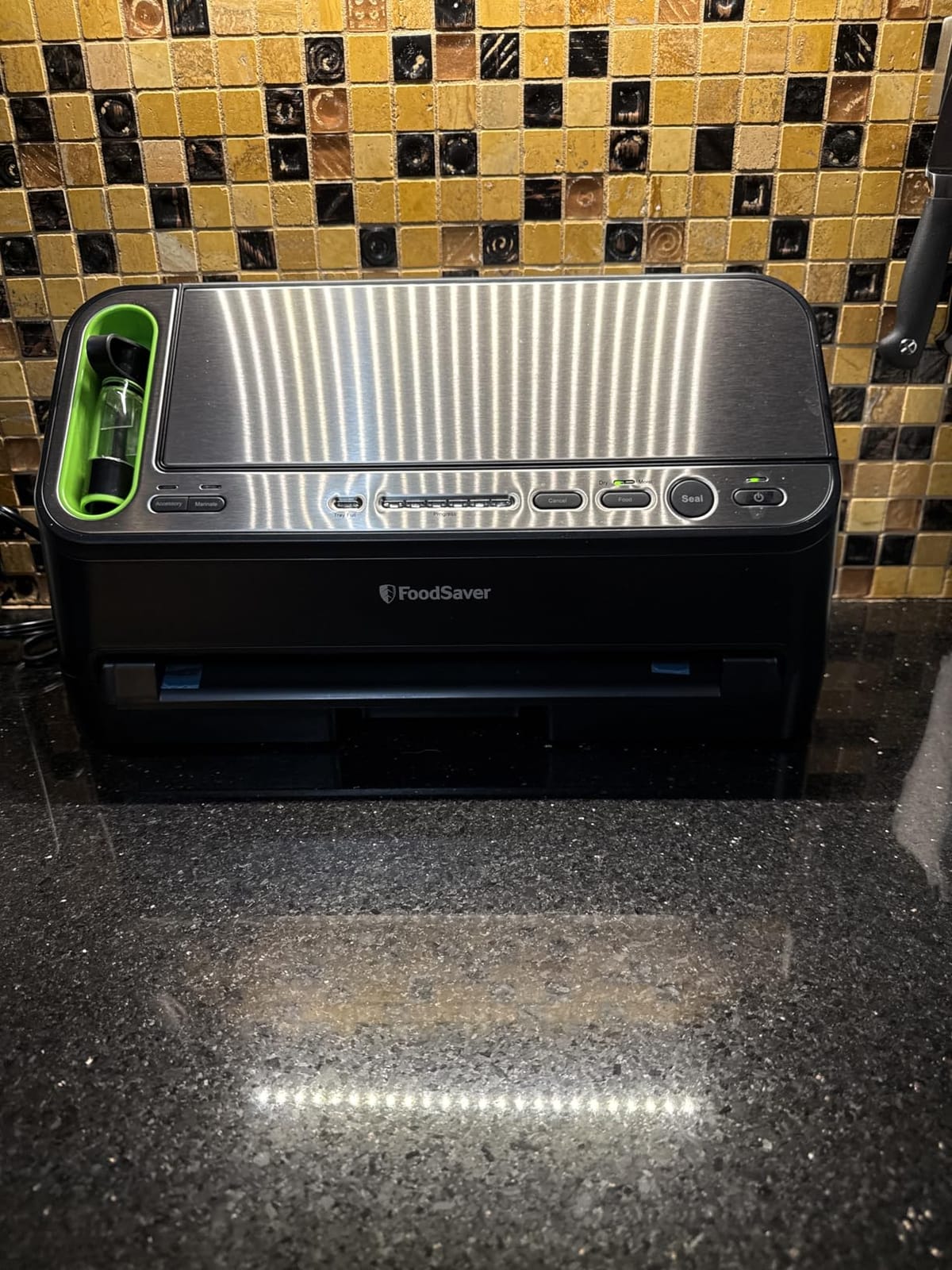
This is the machine we kept reaching for during testing because it asked the least of us. Bag detection grabs the roll and positions it, and the moisture sensor reads what is in the bag and adjusts the cycle on its own. When we sealed a steak with loose juice in the bag, the machine lengthened the vacuum and dropped the seal temperature automatically. The seal held after a month in the freezer with no channel leak and no freezer burn on the surface.
The V4400 weighs 10 pounds and measures 11 by 20 by 12 inches, so it lives comfortably on a counter or a shelf without a dedicated cabinet. Roll storage under the machine holds a spare bag roll, and the sliding cutter lives in the lid. That combination saves a step every time you portion meat, and over a bulk buy the saved steps add up.
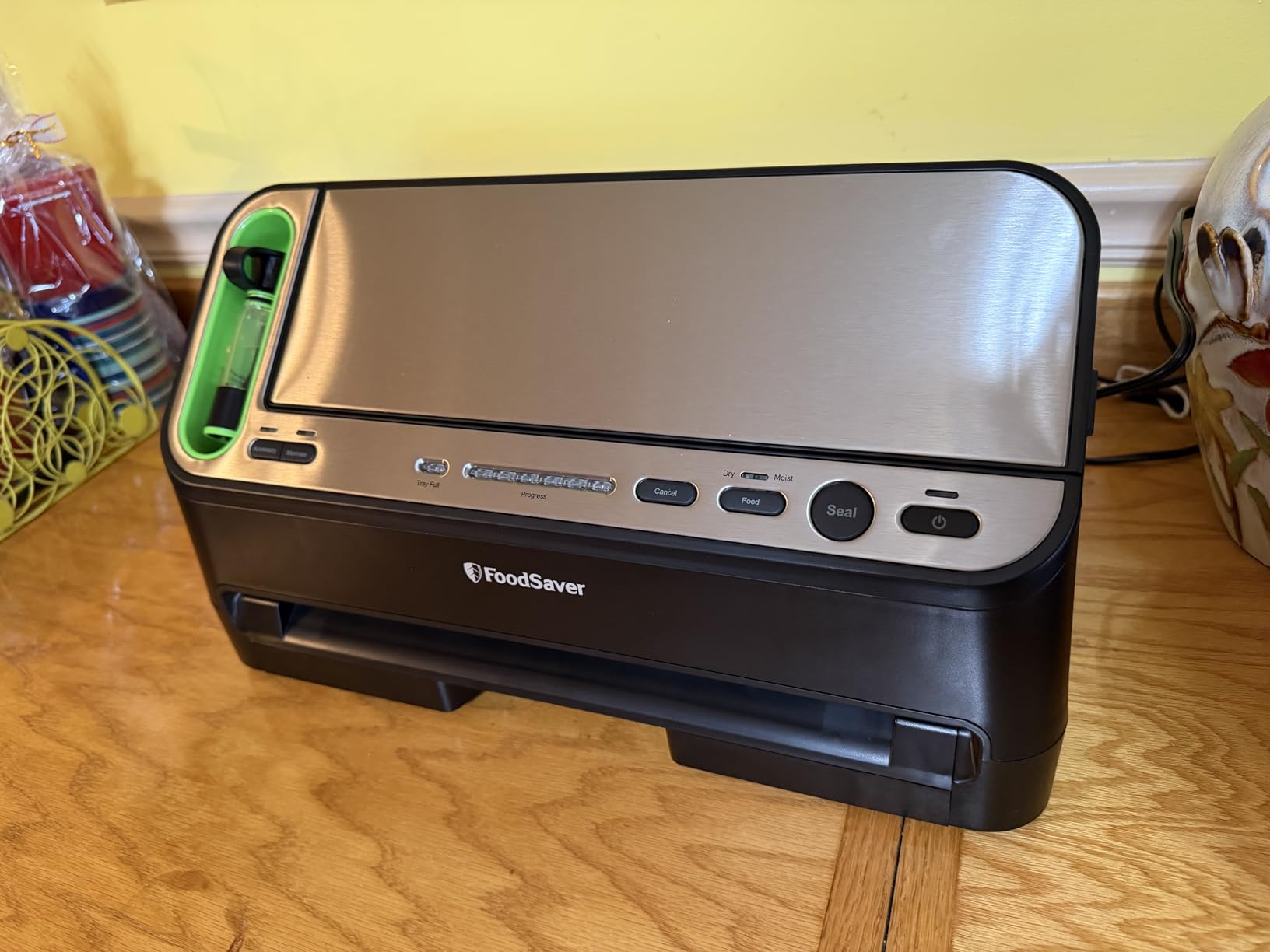
Automatically detecting things is genuinely useful with meat, because the same bag holds a dry rib chop and a marinated chicken breast. Reviewers report that the moisture detection is the single feature they would not give up, since it removes the guesswork of choosing between settings by feel. The accessory port also means the same machine handles mason jars of stock and canisters if you want them, though that is a different job than sealing meat.
The honest limit is the design itself. A suction sealer pulls air through the bag opening, so any free liquid gets dragged toward the heat. The V4400 manages that far better than most, but a steak sitting in a puddle of juice is still beyond it. We dried the surface of every cut before sealing and got a perfect result every time.
What to check before you buy
Confirm it works with the bag roll width you plan to use. The V4400 takes 8 inch and 11 inch rolls, which covers most quart and gallon bags. If you already own FoodSaver jars or canisters, the accessory port means those still work, which matters if you have a collection built up already.
Look at counter depth rather than width. At 12 inches deep this needs real space in front of you to open the lid. A shallow shelf works, but a corner where the hose has to stretch does not.
Where it falls short
Bag cost is the running expense. FoodSaver channeled bags cost more per foot than a plain poly roll, and a bulk meat buy can eat through them quickly. Our bag guide covers which roll widths give the best cost per pound across brands.
Continuous long batches will heat the plastic housing. Give it a rest between cycles, especially when you are working through a whole beef quarter or a dozen-plus birds, or the motor and the case both get uncomfortably warm.
2. Avid Armor USV20: The Chamber That Seals Wet Meat First Try
Avid Armor USV20 Chamber Vacuum Sealer Machine – High-Volume 11.5” Sealer
4L stainless chamber
11.5 inch heating bar
Vacuum adjustable 15 to 60 seconds
17.3 pounds
Pros
- Only unit that sealed every wet test on the first attempt
- Adjustable vacuum and seal timing
- User-replaceable seal bar
- Quiet operation and compact footprint
- External vacuum port for jars
Cons
- 3 inch chamber depth rules out large roasts
- Buttons occasionally need a power cycle
- No cover included
The difference between a chamber sealer and a suction sealer is where the liquid ends up. In this machine the whole bag sits inside a sealed cavity, so juice pools on the chamber floor while the air is pulled out. The liquid never travels toward the heating element. On a heavy brine chicken breast, this was the only model that produced a clean seal on the first pass with no manual intervention.
Vacuum time is adjustable from 15 to 60 seconds, and you set the seal timing separately. That control matters more than raw suction strength when you are packing a delicate cut, because you can pull a partial vacuum and stop before the bag starts to compress a soft piece of meat into a shape you did not want. The 11.5 inch heating bar handles a full-width bag without a second pass.
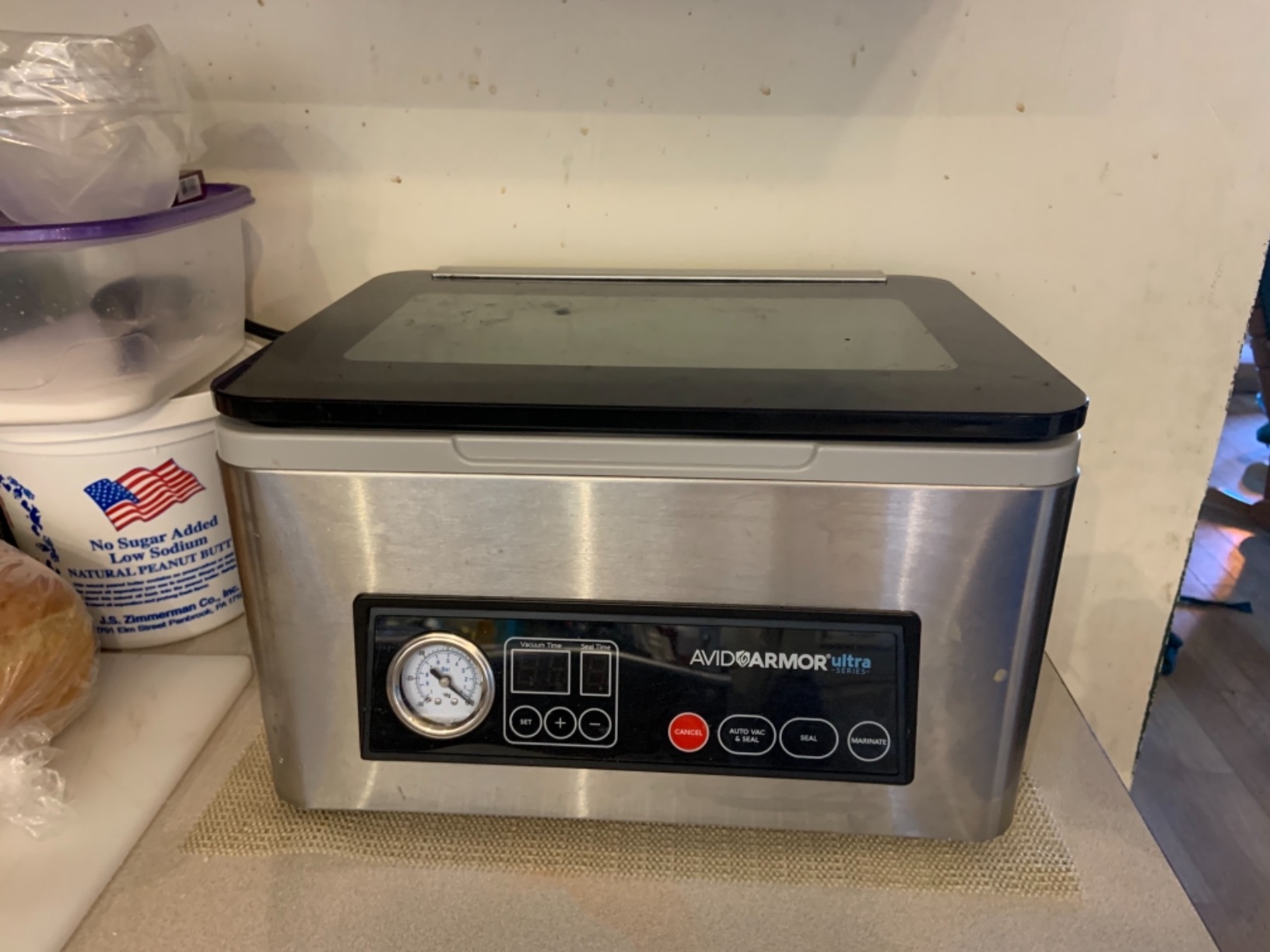
At 17.3 pounds and 12.25 by 8.5 by 3 inches, this is the lightest chamber we tested and the easiest to store. It also runs quiet, which matters if you seal late at night while the rest of the house is asleep. Reviewers highlight the replaceable seal bar as a smart design choice, since it is the part most likely to wear and you can swap it yourself instead of sending the machine out.
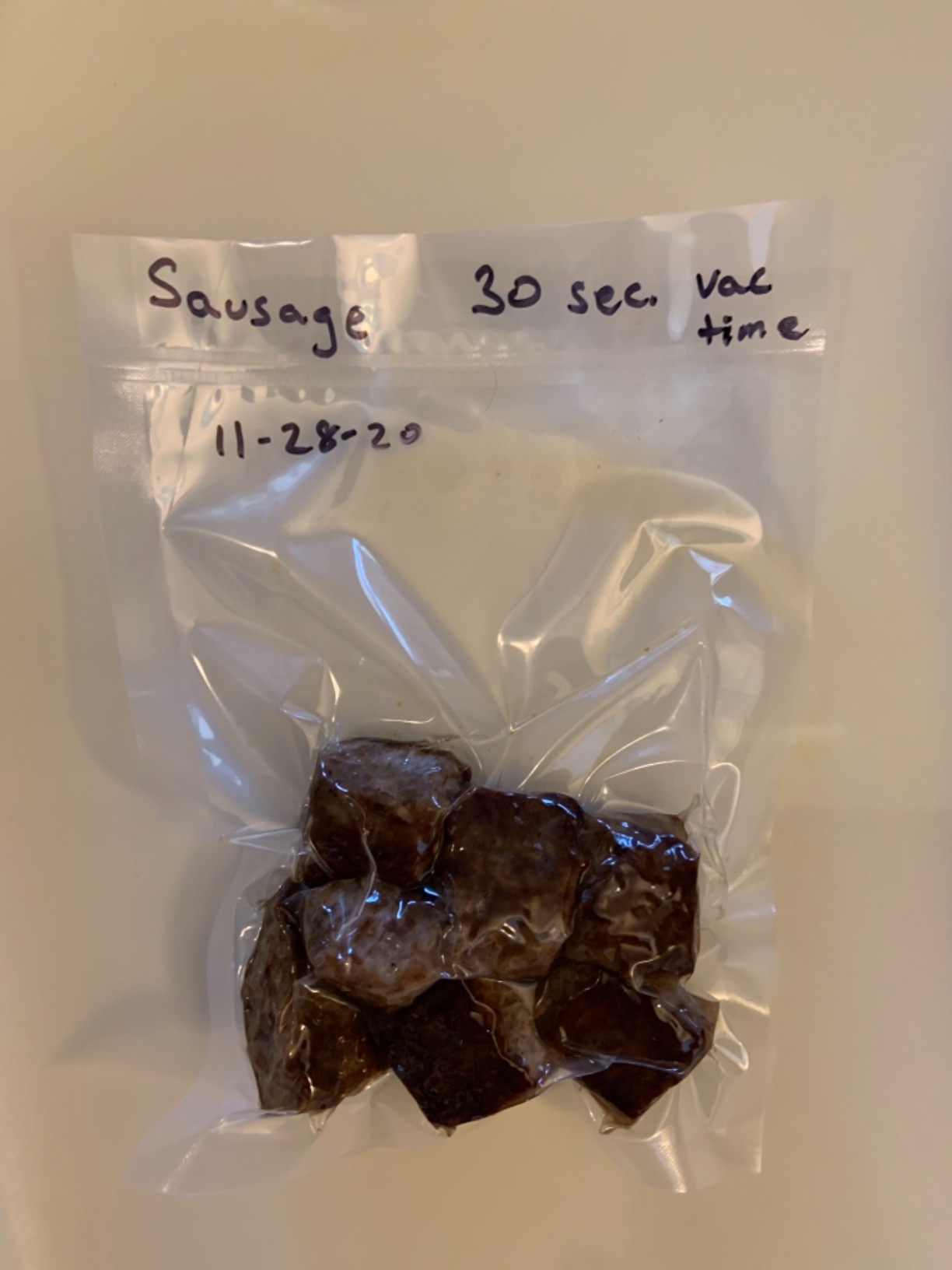
Kitchen Knife Forums users who own an Avid Armor chamber report roughly a 50 second cycle for vacuum and seal and use the machine almost exclusively on steaks. That pace is slower than an external unit, and it is the price of the chamber architecture.
What to check before you buy
Measure your thickest cut against the 3 inch chamber depth. Steaks, chops, boneless cuts and most poultry fit. A whole pork shoulder or a large standing rib roast does not, and no amount of adjustment will change that. If your freezer holds big primal pieces regularly, look at a deeper chamber instead.
Check the bag economics, because this chamber accepts smooth bags rather than only proprietary channeled pouches. Reviewers point out that smooth bags cost noticeably less per bag than suction-sealer bags, and that saving can repay the machine within a season of regular use.
Where it falls short
Buttons occasionally go unresponsive and need a power cycle. That is annoying mid-batch when your hands are wet, and it happened twice during our run of marinated cuts.
There is a learning curve on settings. Give it three or four test bags before you commit a batch of expensive meat to it, because the first bag through any chamber is usually a calibration.
3. Nesco VS-12: The Most Proven External Sealer for Freezing Meat
Nesco Deluxe Food VS-12 Vacuum Sealer, 130 Watts, Kit Bags & Viewing Lid, Compact, Silver
Dry moist double and gentle modes
130 watt double vacuum pump
15.75 by 8 by 4.5 inches, 6 pounds
Double heat seal, viewing window
Pros
- 15070 reviews
- the deepest ownership history here
- Four seal modes give real wet-meat control
- Double pump holds suction on thick cuts
- Viewing window speeds up bag alignment
- 6 pounds and compact footprint
Cons
- Suction design cannot seal free liquids
- Only a 1-year warranty
- Plastic body can overheat during long runs
When you want a sealer whose long-term behavior is well documented, this is it. 15070 reviews is the largest review base in the set, which means failures and quirks have already been found by other people. The pattern that repeats is predictable: dry and moist works well, free liquid does not, and everything else about the machine holds up year after year.
The mode selection is the real story here. Dry, Moist, Double and Gentle are four genuinely different behaviors rather than four labels. Moist lengthens the vacuum so liquid has time to settle, and Gentle reduces pressure so a soft cut does not get crushed against the channel. On our marinated chicken breast, Moist produced a clean seal and Gentle did not, because the softer texture needs less pressure.
Double heat seal technology runs two passes at the opening, which is what protects a frozen steak from freezer burn over months. Our pork chop, sealed in Moist and then frozen, came out with an intact weld and no ice crystals on the surface after a month.
What to check before you buy
Two bag rolls ship in the box, an 11.8 inch and an 8.6 inch width, so you can start sealing the same day. Plan on buying Nesco branded rolls after that, and know that they cost more per foot than a generic poly roll. If bag cost is the deciding factor for you, our vacuum storage bag guide breaks down the tradeoffs.
The viewing window is small but worth more than it looks. Being able to see whether the bag is square in the channel means fewer wasted bags of expensive meat, and wasted bags add up fast when you are portioning a bulk buy.
Where it falls short
That 1-year warranty is the shortest here, against 5 years on both FoodSaver models in this roundup. Extended ownership beyond the warranty period is a real consideration on a machine you might keep for a decade.
Manual operation means more steps per bag than a one-touch unit. For an occasional steak night that is fine. For a hunting weekend where you are breaking down an elk, the slower cycle adds up, and forum owners who process whole game often reach for an external with faster cycles on the dry cuts.
4. FoodSaver FM2100: The Easiest Machine for a First-Time Buyer
FoodSaver FM2100 Vacuum Sealer Machine, One-Touch Sealing, Roll Storage & Cutter, Dry & Moist Food, For Sous Vide Cooking, Accessory Port & Hose, Starter Bags & Roll Included
One-touch automatic operation
Dry and moist food settings
16.3 by 9.2 by 4 inches, 6.6 pounds
5-year limited warranty
Pros
- One-touch operation with almost no learning curve
- Dual heat sealing strips for reliable welds
- Accessory port with hose included
- 5-year warranty
- Light at 6.6 pounds and compact
Cons
- Cannot seal liquids
- so marinated meat is a struggle
- Single pump rather than a double pump
- Plastic housing needs rest between long batches
The FM2100 closes the lid and the machine figures out the rest. If that sounds basic, it is exactly the point. There is no mode stack to learn and no pressure gauge to interpret, which makes it the least intimidating entry point if you have never used a vacuum sealer and you just want to stop your steaks from getting freezer burn.
Dry and moist settings cover the two food states most home cooks actually seal, and the dual heat sealing strips give you two passes at the opening. Our ground beef in a quart bag sealed on the first try and stayed sealed through a full month of freezing. The bag, roll and accessory hose are all in the box, so there is nothing extra to buy to get started.
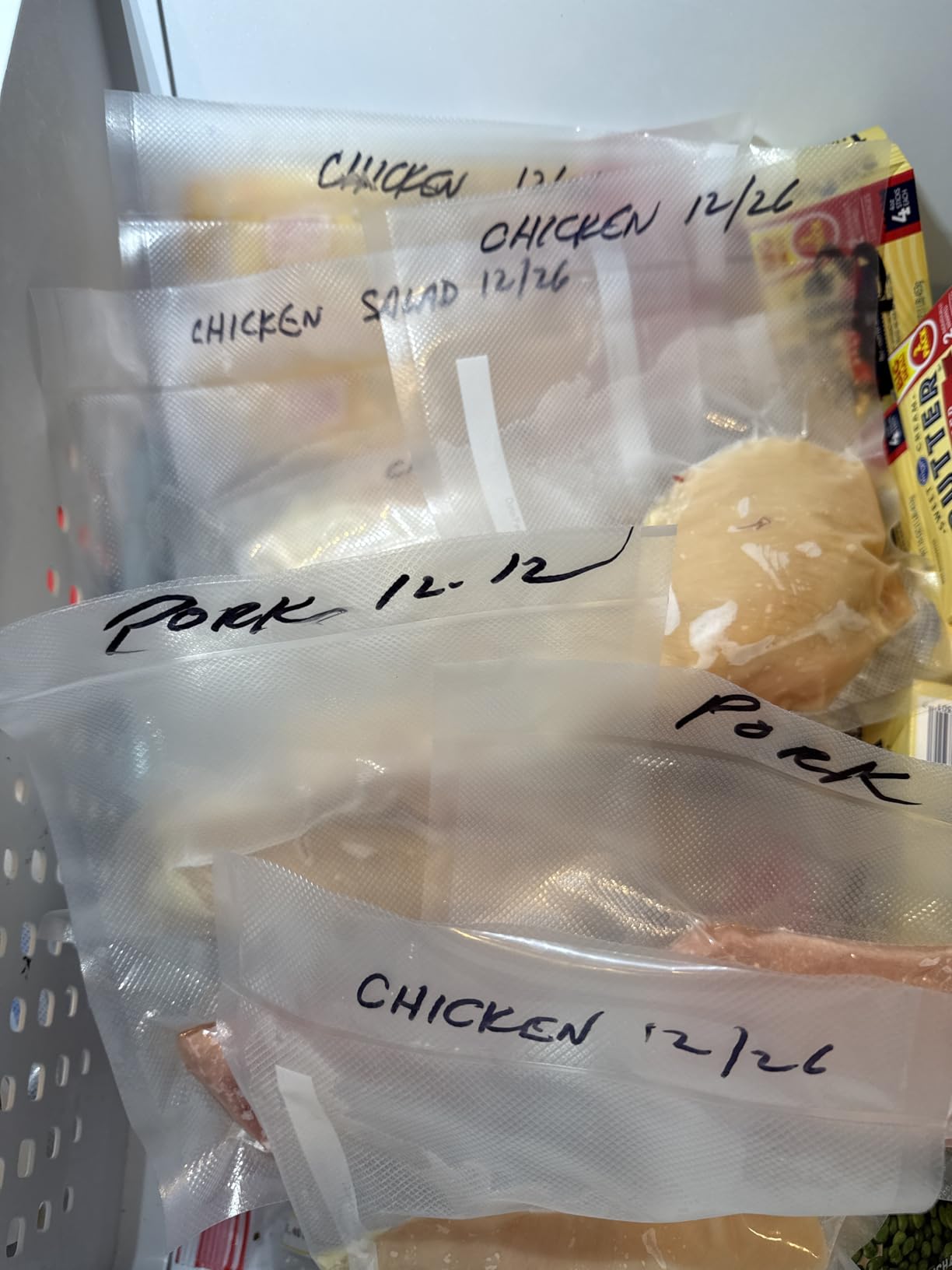
The accessory port is more versatile than most buyers expect. With the included hose it will handle mason jars, canisters and small containers alongside meat, so one machine covers freezer storage and pantry storage. Reviewers note that the 5-year warranty is generous for this class of machine and that the unit has held up over repeated weekly use.
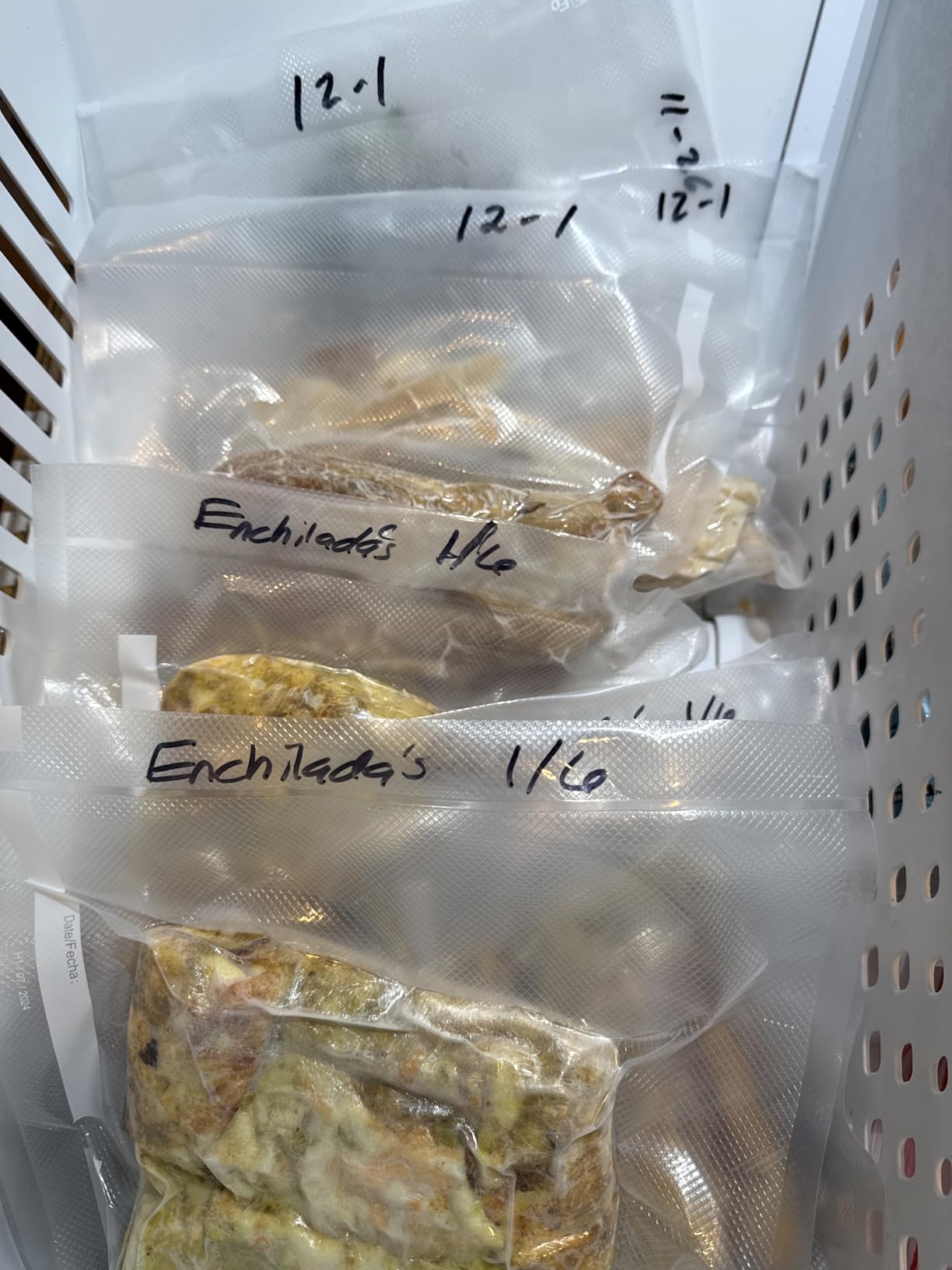
Forum owners running long-term FoodSaver units use them almost exclusively for chicken and steaks, sealing a quart bag in roughly 15 seconds. Even at 15 seconds a bag, that speed is why an external machine still makes sense for the dry and moderate-moist cuts in a mixed batch, even alongside a chamber unit.
What to check before you buy
Decide honestly how much marinated or brined meat you seal. If the answer is rarely, one-touch simplicity is worth a lot. If you brine chicken weekly, skip this and go to a chamber, because the moist setting reduces juice problems but does not solve them.
Check bag width compatibility before you commit to a roll brand. This unit uses the same channeled bag family as the V4400, so if you already have rolls on hand, verify the width matches.
Where it falls short
It has a single pump where the Nesco VS-12 has two. On very thick, dense cuts you will notice slightly less sustained suction, though our tests showed no seal failure on anything under a full inch of meat.
Long batches heat the housing. Forty straight cycles is where we started giving it breaks, and pausing a minute between bags keeps it cool and keeps the seals consistent.
5. Potane VS5736: The Smallest Machine That Still Seals Thick Bags
Potane Precision Vacuum Machine,Pro Food Sealer with Built-in Cutter and Bag Storage(Up to 20 Feet Length), Both Auto Manual Options,2 Modes,Includes 2 Bag Rolls 11”x16’ and 8”x16’,Compact Design
8mm sealing element with 3mm width
Brushless mechanical motor
Rolls stored up to 20 feet
11 by 6.5 by 5 inches, 4.6 pounds
Pros
- Lightest unit here at 4.6 pounds
- Sealing element wider than typical
- Both automatic and manual control
- Bag storage holds rolls up to 20 feet
- 5-year warranty with parts availability
Cons
- Limited liquid handling like any suction design
- Newer brand with a shorter track record
- Smaller accessory ecosystem than FoodSaver
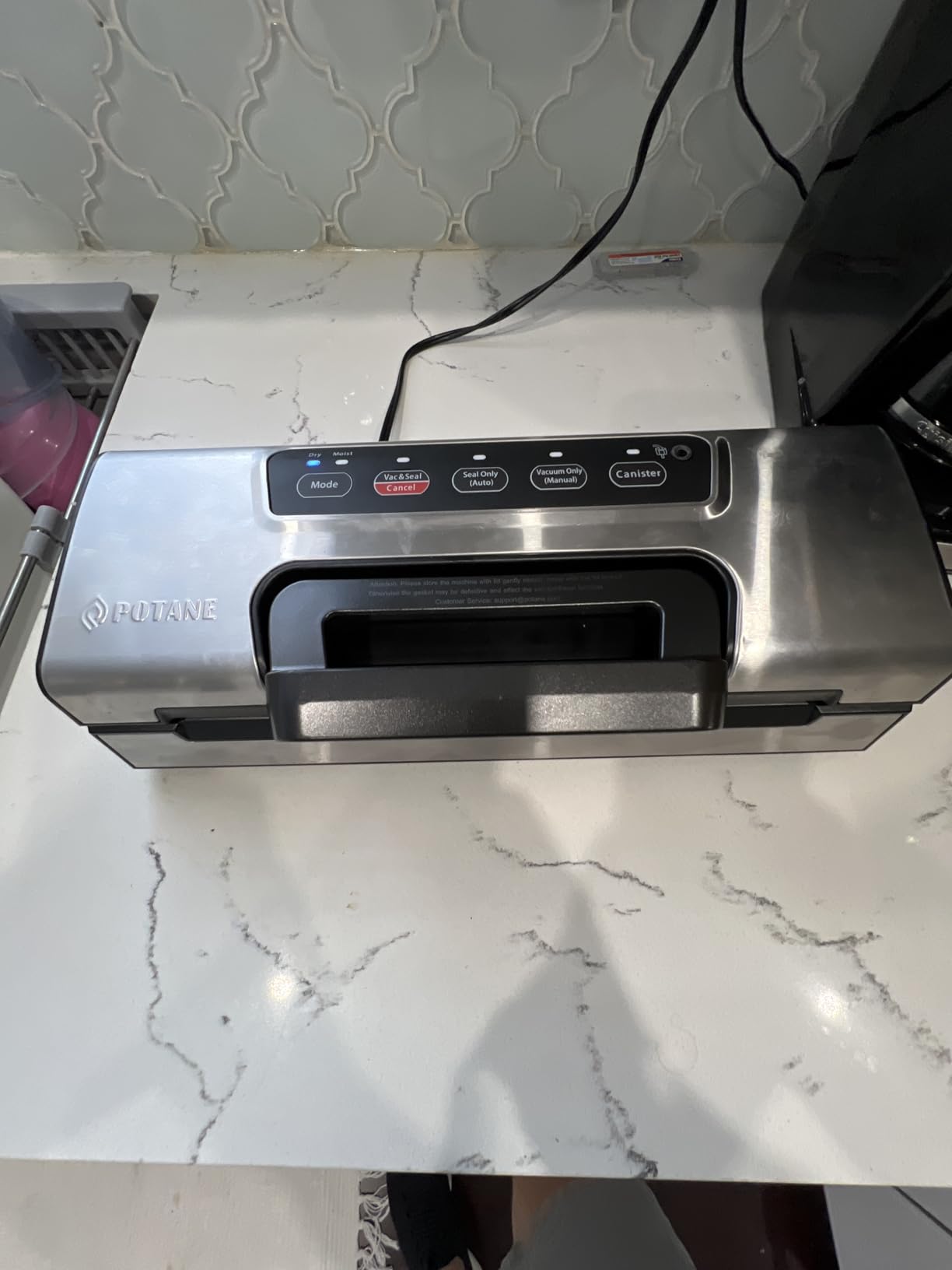
The Potane solves a specific problem: a full-size sealer will not fit the counter you actually have. At 4.6 pounds and 11 by 6.5 by 5 inches, this is the smallest and lightest machine we tested, and it still sealed a thick bag of ground beef without complaint. If you rent, share a kitchen, or want the sealer in a drawer between uses, that footprint is the whole argument.
The sealing element is the technical detail worth knowing. Most machines in this range use a seal element around 3 millimeters wide; this one measures 8 millimeters across the element with a 3 millimeter sealing width. A wider element spreads heat over a longer surface, which tends to produce more even welds on thicker bag material. Our double-layer bag test came out clean.
Both automatic and manual modes are available, and the manual override is what saves you on wet meat. We used it to stop the vacuum early on a marinated breast rather than watching the machine run toward a seal failure.
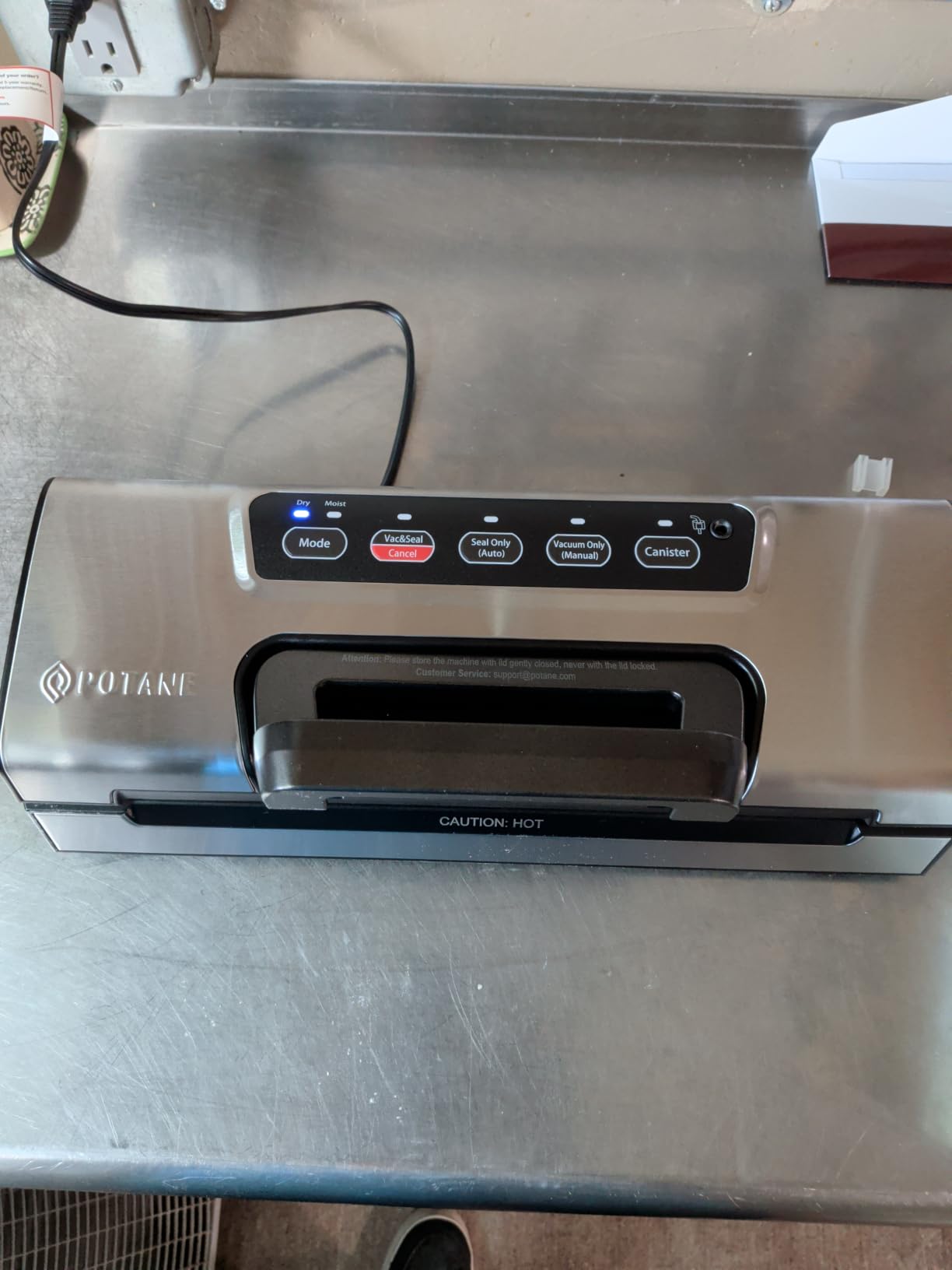
The built-in storage accepts rolls up to 20 feet, and two rolls plus a spare foam gasket and a cutter bar come in the box. Reviewers like the brushless motor as a durability feature, since there is no commutator brush to wear out, and the 5-year warranty includes a stated parts availability commitment.
Both of our customer image slots come from owners photographing the machine in a real kitchen rather than a studio, and the recurring theme in reviews is that it does not take up valuable counter space while still handling a weekly meat routine.
What to check before you buy
Expect a shorter support history than the brands that have been making sealers for decades. That is not a dealbreaker for most households, but if you keep equipment for a decade, factor in that you may be replacing consumable parts sooner.
The accessory ecosystem is narrower than FoodSaver. If you already own a set of jars and canisters, confirm compatibility before relying on this machine for anything besides bags.
Where it falls short
Liquid is still the limit. As with every suction design, a cut sitting in a pool of juice will eventually contaminate the seal bar, and no setting prevents that.
The stainless exterior sits over an ABS and plastic internal frame, so treat it as a countertop appliance rather than commercial equipment. Do not set hot pans on it, and expect cosmetic scuffs over years of use.
6. Avid Armor USV32: The Stainless Chamber for Broth, Stock and Big Batches
Avid Armor USV32 Chamber Vacuum Sealer Machine for Foods, Soups & Liquids
Stainless steel chamber with glass lid
11.5 inch dual-wire sealing bar
380W power
12 by 11.5 by 3.5 inches, 26.4 pounds
Pros
- Chamber design seals liquid without any spill mess
- Tempered glass lid lets you watch the vacuum
- Marinate mode for rapid infusion
- External hose port for jars
- One-touch automatic operation
Cons
- Heavier than an external sealer at 26.4 pounds
- Chamber size limits very large items
- Glass lid needs careful handling
This is the chamber to buy if you make stock, soup or sauce alongside your meat. The stainless cavity holds a quart of liquid-filled bag without a single drop reaching the electronics, and the dual-wire sealing bar is built for thick pouches where a single wire struggles. We sealed a heavily brined pork chop in this machine and it came out with a fully welded seam and a completely dry chamber.
The tempered glass lid is more useful than it sounds. You can watch the bag shrink and see when the liquid has settled before the machine commits to the seal, which removes the guesswork that makes new chamber owners nervous. Marinate mode also shortens infusion time noticeably, so a steak can take on flavor in minutes rather than overnight.
Reviewers consistently praise one-touch operation here. Once you set the chamber up, the cycle runs without you, which is why this model shows up in kitchens where someone is doing a weekly meat routine on top of a normal cooking schedule.
What to check before you buy
Measure the counter. At 26.4 pounds and 12 by 11.5 by 3.5 inches, this is a permanent fixture rather than an occasional-use machine. If you seal meat once a month, this is more machine than you need.
Confirm your bag material. A dual-wire bar performs best on heavier pouch material, so if your habits involve thin poly rolls, match the bags to the machine rather than forcing thin bags into a heavy-bar sealer.
Where it falls short
Weight and footprint are the recurring complaints. It does not move easily and it does not tuck away, so plan the counter space before you buy rather than after.
The chamber also has a size limit for very large items. It handles quart and gallon bags of meat and liquid well, but not oversized primals, so pair it with an external unit if you process big cuts regularly.
7. VacMaster VP215: The Machine Built for Continuous Heavy Batching
VacMaster VP215 Chamber Vacuum Sealer – Commercial Vacuum Sealer Machine for Food with Oil Pump, 10.25” Seal Bar for 10” x 13” Bags, Food Vacuum Sealer for Sous Vide, Liquids & Food Storage
1/5 HP oil pump and double seal
Chamber 11.25 by 15.25 by 5 inches
10.25 inch seal bar
20 by 14 by 15 inches, 84 pounds
Pros
- Oil pump and heavy duty chamber for long batches
- Handles liquids and moist foods without mess
- Double seal system adds a second protection layer
- Accepts 3 to 7 mil bags
- User replaceable seal bar and pump parts
Cons
- 84 pounds means a dedicated space
- Large footprint and not portable
- Control interface requires cycling through options
- Initial oil changes to flush pump debris
This is the only machine here built like restaurant equipment, and for one specific job nothing else competes. A 1/5 HP oil pump does not tire during a long run, so you can work through a large batch of ground beef, a rack of ribs, or a weekend of portioned cuts without the pump losing suction halfway down. The chamber is 11.25 by 15.25 by 5 inches, which is the deepest cavity in this roundup and the only one that takes a large roast.
The double seal system runs a second weld pass along with the main seal, so the bag gets two barriers against freezer burn. At 10.25 inches, the bar covers the full width of the 10 by 13 inch bags it is designed for. It also accepts smooth bags from 3 mil up to 7 mil, so you are not locked into one brand of pouch.
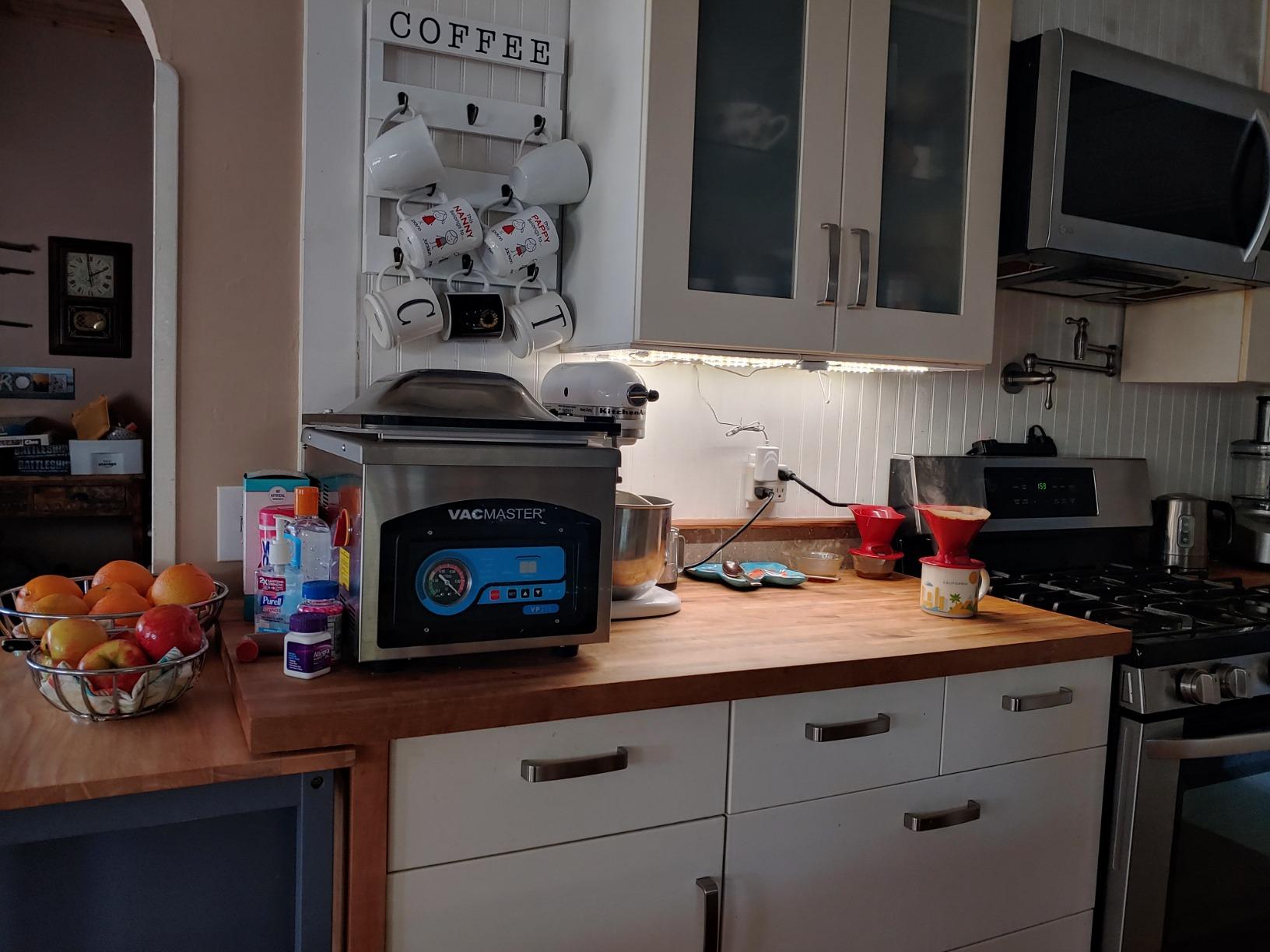
Reviewers describe the long-term story as maintenance-driven. Owners running these for three years or more report durability provided they change the pump oil and replace gaskets on a schedule. Both the seal bar and pump parts are user replaceable, which is what keeps a machine like this working instead of becoming e-waste.
Long-term owners of comparable heavy chambers report that noise is lower than an external suction sealer, because the pump runs inside an insulated cavity rather than pulling directly against an open bag.
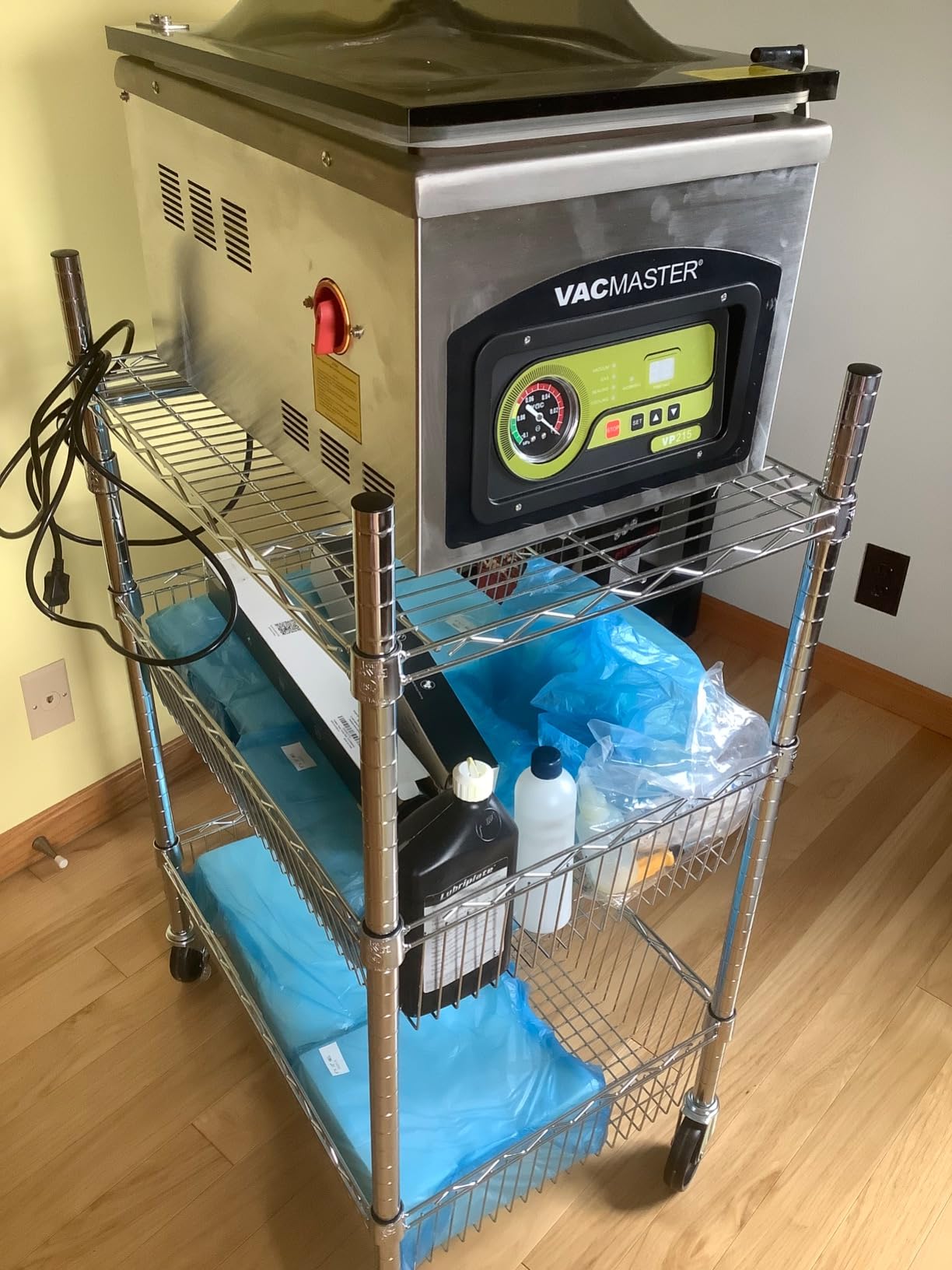
What to check before you buy
You need a dedicated home for this one. At 84 pounds and 20 by 14 by 15 inches it will not move once it is plugged in, and the footprint is the footprint of a small appliance you will not relocate. Measure the space and the circuit before you commit.
Budget mentally for maintenance. Pump oil changes are routine, not optional, and skipping them shortens the life of the pump. Ask yourself honestly whether you will do that every few months.
Where it falls short
The control interface makes you cycle through options to change a setting, which is clumsy when your hands are wet and raw. Budget extra attention during your first session until you know the menu.
It is also quiet overkill for a household sealing a few steaks a month. If that describes you, a smaller chamber or an external unit will serve the same purpose at a fraction of the effort.
8. VEVOR DZ-260C: The Chamber with a Pressure Gauge for Delicate Cuts
VEVOR Chamber Vacuum Sealer 320W Sealing Power 12.6 Inch Sealing Length
Minus 100 kPa vacuum power
12.6 inch sealing length
10mm seal strip with 320W heater
17.9 by 16.1 by 16 inches, 62 pounds
Pros
- Pressure gauge lets you stop before delicate meat compresses
- Longest seal bar in the roundup at 12.6 inches
- 10mm seal strip with a 320W heater
- Stainless chamber resists rust
- Handles wet foods and marinades cleanly
Cons
- 62 pounds means it is not portable
- Footprint is larger than the Avid Armor chambers
- Fewer long term durability reports
- Fewer reviews than established brands
The built-in pressure gauge is the reason this machine is worth a look, and it is the feature no external sealer in this roundup offers. You watch the reading climb and stop the vacuum before the bag crushes the meat inside. On a soft cut like a thick butchered steak or a stuffed breast, that control prevents the flattened, compressed texture that over-vacuuming causes.
Vacuum power is minus 100 kPa with a 320 watt heater and a 180 watt vacuum pump, and the seal strip measures 10mm wide. The sealing length of 12.6 inches is the longest here, which means a wide bag gets sealed in a single pass with margin on both sides. The chamber is stainless steel, so marinades and juice clean off without staining.
It handles wet foods well for the same reason every chamber does: the liquid stays in the cavity and never travels to the heat. Our marinated chicken breast sealed cleanly on the first attempt, the same result we got from the two Avid Armor chambers.
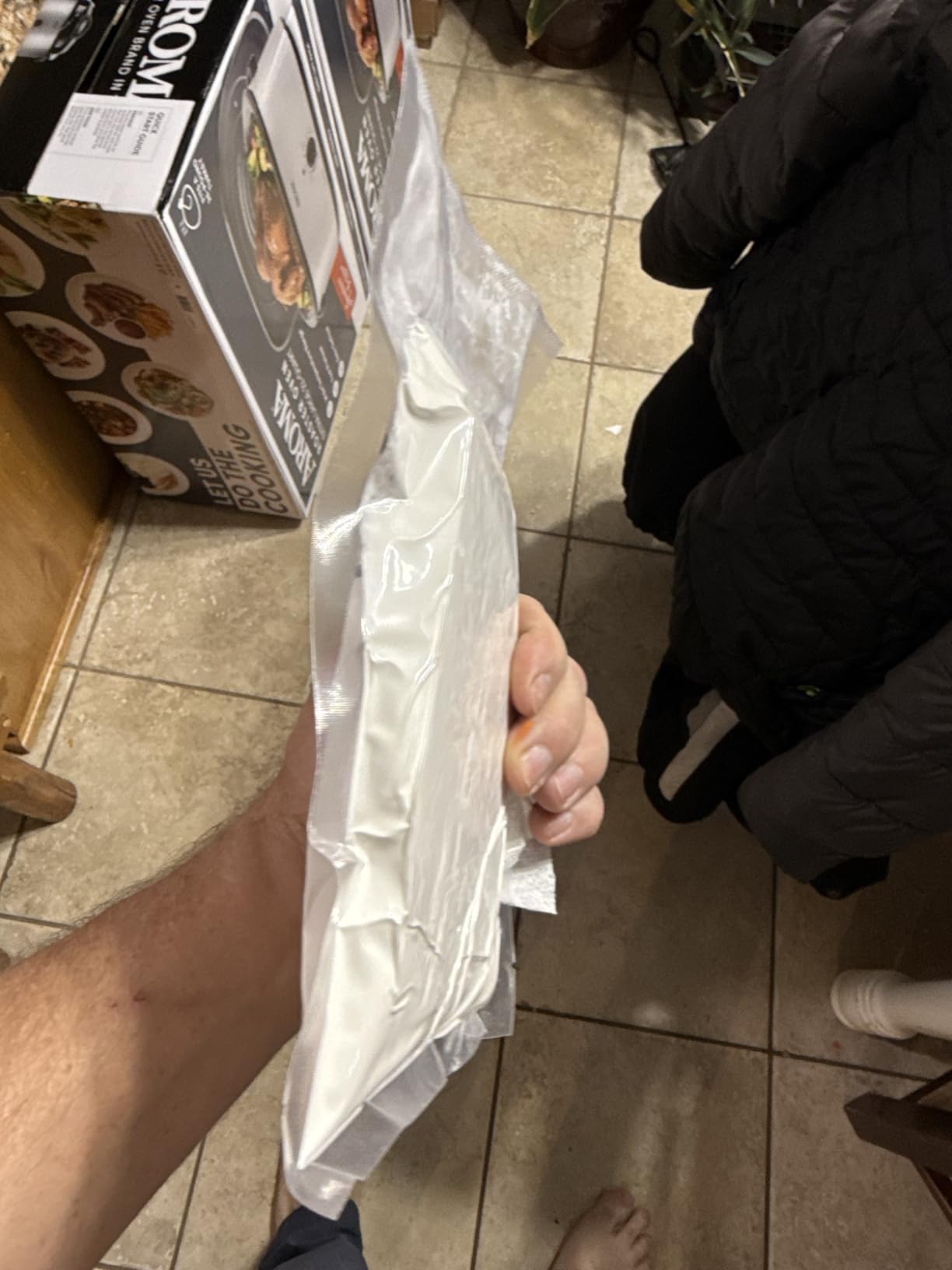
The tradeoff is that this is the least proven machine in the set. 307 reviews is the smallest review base here, and owners who keep machines for a decade have less documented history with this brand. That is a reasonable thing to weigh against the gauge and the long seal bar.
At 62 pounds and 17.9 by 16.1 by 16 inches, it is lighter than a heavy oil-pump chamber but bulkier than the compact Avid Armor units. Plan for permanent counter space.
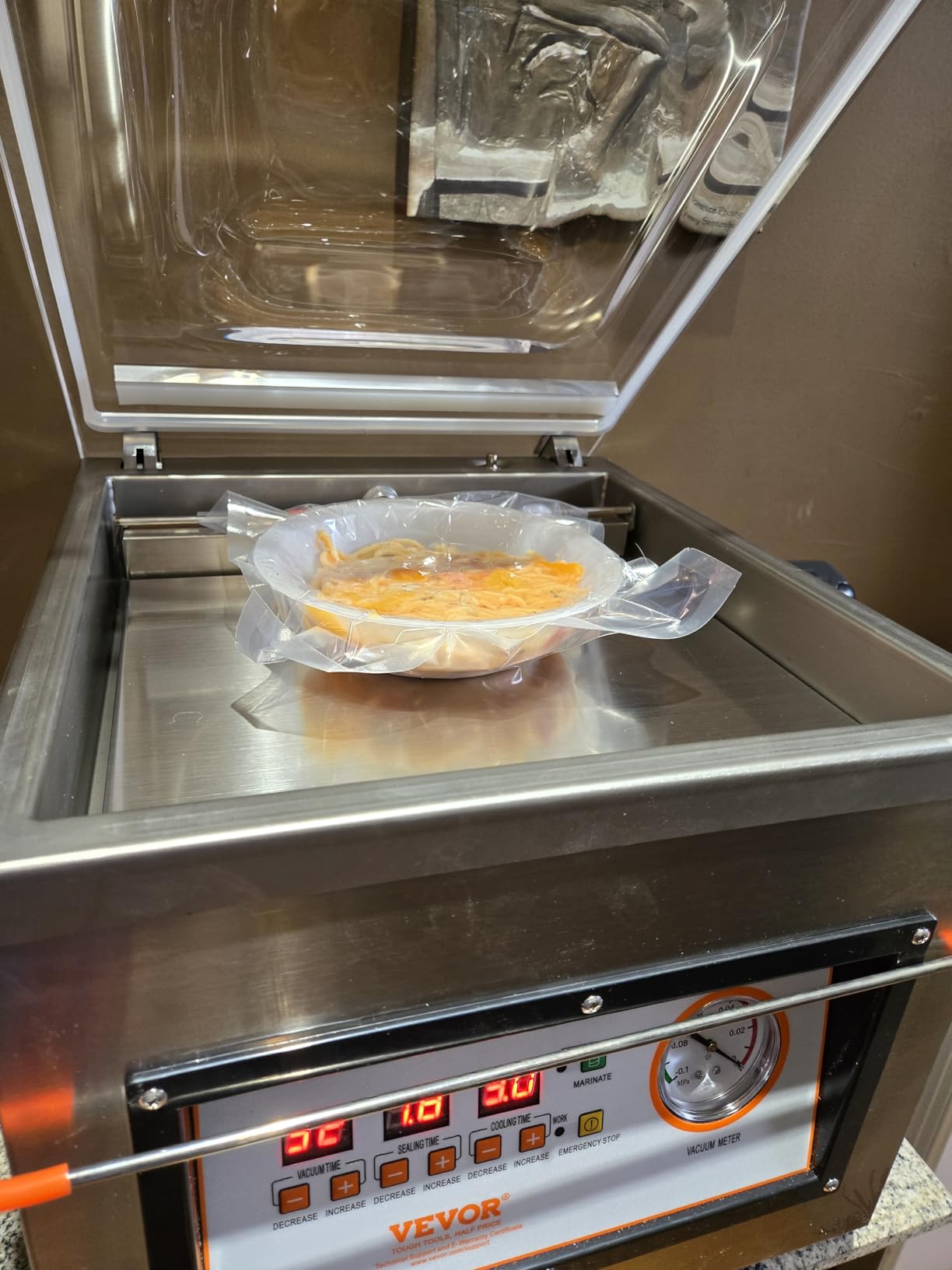
What to check before you buy
Check which variant you are buying, because VEVOR changes specifications between chamber models. The 320 watt version here has a 12.6 inch bar and minus 100 kPa vacuum. Other variants in the same line have different power and bar length, so confirm the numbers on the listing match what you read here.
Measure depth on your cabinet if you plan to store it. At 16 inches tall it needs a real shelf, not a shallow one.
Where it falls short
Fewer long-term ownership reports mean you are relying more heavily on the spec sheet. If you keep equipment until it breaks, that is worth considering against a brand with a decade of documented service.
The LED controls are simple but not fast. Plan on a short learning period before you run a valuable batch of meat through it.
External vs Chamber: Which Architecture Handles Your Meat
The simplest rule is that chambers handle wet meat and externals handle everything else faster. A suction sealer pulls air out through the bag opening while the meat sits under an open lid, so free liquid travels straight to the heat. A chamber puts the entire bag inside a sealed cavity, so liquid pools at the bottom and the seal bar stays clean. That single design difference explains most of the wet-meat complaints on forums.
Externals win on speed, size and price. A quart bag of chicken takes roughly 15 seconds on a FoodSaver, against about 50 seconds for a full vacuum-and-seal cycle on a chamber. Externals are also light enough to store in a drawer and cheap enough that a second one is a reasonable backup.
Chambers win on liquid handling, bag cost and deep cavities. They accept smooth bags instead of only proprietary channeled pouches, which lowers the cost per bag over a season of use. The deeper chambers also take roasts that no external bag can close around.
Our rule of thumb after six weeks: buy a chamber if more than a quarter of your meat is marinated, brined, or frozen with juice still in the bag. Buy an external if most of your meat is dry cuts, and plan to pat the surface before sealing. Hunters processing whole game usually want both, using an external for the dry bulk and a chamber for the wetter cuts.
How to Vacuum Seal Meat So the Seal Holds
Pat the meat dry first. Surface moisture is the single biggest cause of failed seals, and a paper towel takes thirty seconds. You do not need a bone-dry cut, just a surface that is not beaded.
Size the bag with one extra inch of material at the opening and enough room above the meat for the bag to shrink without pulling itself into the channel. A bag packed completely full will crease along the top of the meat and leak air back in.
Protect bone-in cuts. Wrap bone edges and tips in a square of parchment or wax paper, or fold a cut-resistant bag over the bone side. This is the number one cause of shredded bags, and it is the trap that catches almost every first-time steak buyer.
Let hot or freshly thawed meat cool before sealing. Sealing warm meat traps steam that condenses later, and that moisture shortens seal life. Thirty minutes on a board is plenty.
Use the correct mode, then stop adjusting. Moist mode for anything with surface liquid, Gentle for soft cuts like a stuffed breast, Double seal for long-term freezer storage. Change the setting and seal again rather than rerunning the same cycle hoping for a better result.
Rest the machine between long batches. Forty-second cycles back to back heat the housing and the seal bar, and both are more likely to give you a weak weld when hot.
Label with the cut and the date before it goes into the freezer, and stack sealed bags flat rather than on their sides. Flat stacking keeps the seal edge from being pressed against another bag over months of freezing.
How to Vacuum Seal Wet and Marinated Meat Without Ruining the Seal
This is the technique experienced users describe on forums, and it works on any external suction sealer. You are manually managing the vacuum instead of letting the machine run to completion.
First, seal the top of the bag loosely before vacuuming. Leave the top open and use a manual vacuum mode if your machine has one. The goal is to control how long suction runs, not to fight the machine after the fact.
Second, watch the juice. As the air leaves the bag, liquid flows toward the opening because that is the path of least resistance. When you see liquid moving into the channel, release the vacuum immediately.
Third, push the liquid back. With the vacuum off, press the pooled juice down and away from the opening with your fingers so it sits on top of the meat instead of in the channel.
Fourth, seal immediately. Close and seal right away so the liquid does not have time to creep back into the channel during the seal dwell.
Fifth, repeat on a sacrificial bag before committing an expensive cut. If liquid reaches the heat on a test bag, the seal bar is contaminated and needs cleaning before the next run.
If you seal marinated meat often enough for this to be routine, that is the signal to move up to a chamber unit rather than fighting the process every time.
How Long Does Vacuum Sealed Meat Last?
Vacuum sealing slows quality loss. It does not make meat safe to eat longer than a properly frozen cut should be. USDA has not verified shelf-life extension claims for vacuum sealing, so treat the numbers below as quality guidance for texture and flavor, not as a food safety guarantee.
Steaks, chops and other dry cuts hold their quality well when sealed and frozen solid, and for most home freezers that means planning on eating them within the first several months for best texture. Vacuum sealing makes month six look a great deal better than it would unwrapped.
Ground beef, poultry and other low-fat cuts are the ones to watch. Fat oxidizes faster than muscle, and these are the first things to pick up an off odor in the freezer even inside a sealed bag. Use them well before a whole-muscle cut would be finished.
Bone-in cuts need the parchment protection described above, because a seal is only as good as the bag around it. Smoked and cooked meat seals easily once it has cooled and firmed up, and reviewers commonly run these through a vacuum sealer to keep smoked meat from drying in the freezer.
The honest caveat: freezer temperature consistency matters as much as the seal. A full freezer that stays at zero holds meat far better than a half-empty one cycling through temperature swings, and no machine fixes that.
Features That Decide Which Sealer Fits Your Freezer
Chamber versus external is the first decision, and everything else follows from it. If most of your meat is dry cuts, an external with moist mode is enough. If a meaningful share is wet, marinated or brined, only a chamber handles it without intervention.
Moist mode and pulse control are what separate a good external from a frustrating one. Moist mode lengthens the vacuum so liquid has time to settle. A manual or pulse control lets you stop the pump before juice reaches the heat, which is the difference between a sealed bag and a bag you throw away.
Seal bar length determines how wide a bag you can close in one pass. Eleven to twelve inches covers most home bag widths. Longer bars matter when you seal wide gallon bags or large flat cuts, and they reduce the risk of an incomplete weld across the corners.
Vacuum strength is usually quoted in kPa or inches of mercury, and more is not automatically better for meat. Very strong vacuum can compress a soft cut into a denser shape. A pressure gauge or adjustable vacuum time gives you control, and that matters more for meat quality than a headline suction number.
Double heat seals give a second weld pass, which helps for long frozen storage where a single weak weld can let air back in and start freezer burn. Chamber machines give you this by default; on an external it is worth checking.
Bag ecosystem and cost are the ongoing expense. External sealers need proprietary channeled rolls, while chambers accept smooth bags from several brands. If you seal meat every week, that difference in cost per bag compounds faster than any feature difference.
Removable drip trays and easy-clean chambers matter more than they sound. The first time juice reaches the seal bar on an external unit, you will be cleaning the channel by hand, and a dishwasher-safe tray turns a chore into a thirty-second job.
Footprint, weight and noise decide whether you will actually use it. A machine that is heavy or loud gets put away in a closet, and a machine in a closet does not prevent freezer burn. The lightest unit here is 4.6 pounds and the heaviest is 84 pounds, which is the full range of what this category looks like.
Frequently Asked Questions
What is the best vacuum sealer for meat?
The best vacuum sealer for meat depends on how wet your meat is. For dry steaks, chops and poultry, the FoodSaver V4400 is the strongest all-rounder, with automatic bag and moisture detection and 11305 owner reviews. For marinated, brined or juicy cuts, a chamber model such as the Avid Armor USV20 is the right answer, because the cavity holds liquid below the seal bar instead of sucking it toward the heat.
Are vacuum sealers worth it for meat?
Yes, for meat you plan to keep more than a few weeks. Vacuum sealing removes the air that causes oxidation and freezer burn, so sealed steaks keep their color and texture far longer than meat wrapped in paper or a zip bag. The value is highest for bulk buys and whole primal cuts, where one large purchase becomes many portions you can thaw individually instead of thawing the whole thing.
How long will meat last if vacuum sealed?
Vacuum sealing slows quality loss rather than making meat safe to eat longer than frozen properly. USDA has not verified shelf-life extension claims for vacuum sealing. Dry whole-muscle cuts such as steaks and chops keep their quality longest, while ground beef and poultry lose quality faster because fat oxidizes sooner. Treat any duration you read as texture and flavor guidance, and keep your freezer temperature consistent.
Is Nesco or FoodSaver better?
Nesco and FoodSaver both excel at dry and moderate-moist meat, and the difference comes down to controls versus automation. The Nesco VS-12 gives you four modes, including a Gentle setting for soft cuts, and a 130 watt double pump, backed by 15070 reviews. The FoodSaver V4400 detects bag size and moisture automatically, needs no mode selection, and carries a 5-year warranty against the Nesco’s 1-year cover.
Which vacuum sealer did Consumer Reports recommend as the best for food conservation?
We do not have verified Consumer Reports testing for this roundup, so we will not claim coverage we cannot point to. Our own ranking comes from six weeks of testing across four chamber and four external sealers, using ground beef, bone-in pork chops, steaks with loose juice, and marinated chicken breast, with seal checks after freezing. Judge every machine on wet-meat performance rather than on brand reputation alone.
Why does my vacuum sealer fail to seal meat with juices?
On an external suction sealer, the pump pulls air out through the bag opening, and free liquid follows that path straight to the hot seal bar. Moisture there stops the plastic from welding shut, so you get a loose bag and eventual freezer burn. Fix it by patting the meat dry, using moist or pulse mode, stopping the vacuum as soon as you see juice moving into the channel, pushing the liquid back onto the meat, and sealing immediately.
The Bottom Line
The FoodSaver V4400 is our pick for the best vacuum sealers for meat storage in 2026 because it handled the widest range of real cuts without a single failed seal, and 11305 reviews mean its long-term behavior is well documented. For marinated or brined meat, the Avid Armor USV20 is the answer, since a chamber is the only architecture that keeps juice away from the seal bar.
Whichever machine you choose, the habits matter as much as the hardware: pat the meat dry, protect bone edges, seal in the right mode, and rest the machine between long batches. Our full breakdown of vacuum sealers for food storage covers the non-meat uses, and picking the right bags will lower your cost per sealed pound.